Archive
My Brother’s Keeper, The competitive drive MLB Hall of Fame pitcher Bob Gibson’s older brother, Josh, instilled in him (from my Omaha Black Sports Legends series, Out to Win: The Roots of Greatness)
The first time I met Major League Baseball Hall of Fame pitcher Bob Gibson he threw me for a loop, pun fully intended, when instead of the hour or so interview he agreed to he accorded me nearly five hours of his time. I had been steeled to expect the worst, having read and heard how difficult he could be to media types like me, but he was thoroughly charming, patiently answering question after question. Only once or twice I was on the receiving end of his icy stare, the same glowering, suffer-no-fools-gladly stare that had intimidated hundreds of batters. That marathon interview ended up feeding two profiles I did of him on the occasion of his second autobiography’s release.
The following story resulted from a second interview he gave me, this time by phone, that concentrated on his relationship with his late older brother Josh. He confirmed for me what an important figure Josh was in his life and in the lives of many young blacks in north Omaha. As the story reveals, it was Josh who really drove Bob to be the supreme competitor we came to marvel at. It was Josh, himself a fine athlete and coach in his day, who like so many blacks of an earlier era never got his own chance to shine.
A version of this story first appeared in The Reader (www.thereader.com) as part of an Omaha black sports legends series I wrote called Out to Win: The Roots of Greatness. I later updated it for Nebraska Life Magazine.

My Brother’s Keeper, the competitive drive MLB Hall of Fame pitcher Bob Gibson’s older brother, Josh, instilled in him (from my Omaha Black Sports Legends series, Out to Win: The Roots of Greatness)
©by Leo Adam Biga
Originally published in Nebraska Life Magazine (2005); an earlier version published in The Reader (2004) as part of my Omaha Black Sports Legends series, Out to Win: The Roots of Greatness
When Hall of Fame pitcher Bob Gibson dreams, he dreams baseball. “Oh, I dream all the time about it. It drives me crazy. I guess I’m going to do that the rest of my life,” he said. He may even relive some of the boyhood nights spent throwing from the crude mound his oldest brother Josh fashioned for him. He may see himself pitching and Josh catching, critiquing his every move. Together again, two brothers linked in a legacy of competitive excellence.
Gibson perfected the art of intimidation in a 17-year playing career with the St. Louis Cardinals. From atop the mound, he threw glaring daggers into batters, who felt the fury of his inscrutable game-face. Those foolish or brazen enough to lean-out over the plate got his trademark calling-card — a 95-mile-per-hour fastball, riding-in high-and-tight, perhaps grazing their shirt or helmet, sending the cowed interlopers cartwheeling backwards or even sprawling face down in the dirt.
The brushback or knockdown pitch sent a clear message: Back off, sucker, or I’ll put you down if you crowd the plate. It was all a mind game meant to gain Gibson an edge. He was a master at it. If anyone molded him to be this ultimate competitor it was his late brother, Leroy Josh Gibson, a guru, mentor, coach, teacher and worst nightmare all rolled into one. Growing up in the Logan Fontenelle Housing Projects of north Omaha, Bob learned from Josh how to be a winner.
‘Big Guy’
Born into a poor family, Bob was the asthmatic youngest of five brothers whose father, Pack, died before he was born, leaving much of his rearing up to Josh, 15 years his senior. From the time Josh wrapped a sickly 3-year-old Bob in a quilt and carried him to the hospital, his big brother was his “protector.” The formidable Josh was a hard-boiled World War II Army vet disenchanted by racism in the service and at home. A standout athlete, he briefly attended Alabama State, where he played some football. He was also adept at basketball and baseball. Bob wasn’t around to see Josh in his athletic prime, but he said even in his 30s his older brother “could run. He could move for a big guy.
Intent on being a public school teacher and coach, Josh found opportunities denied him and settled, temporarily, for a Swift packinghouse job. He began working at the local north Omaha YMCA and Boys Club, organizing and coaching teams in basketball, baseball and softball (with the late Marty Thomas), all the while pursuing a bachelor’s degree from then Omaha University and, later, a master’s from Creighton University. Before they were called select teams, Josh recruited top athletic talent from north O to form the High Y Travelers, an elite adult basketball team, and the High Y Monarchs, a crack youth baseball team. “He got the best of the best,” said former Traveler John Nared. The teams, comprised wholly of blacks, took on all-comers across Nebraska, western Iowa and northern Kansas.
Josh left a big impression on Bob and hundreds more he taught athletic and life lessons to. “More than anything else, he was a father-figure to most of the kids down in the housing projects, me included,” Bob said. “There were a lot of kids there like me that didn’t have fathers at home and he was respected even more for the role he played in that capacity than for being a coach. What impressed us more than anything else was him coming down to the ballpark carrying his college text books, which he’d put aside to train us. We figured, Hell, here’s an ‘old man’ still going to school — it’s gotta be important. You’d be surprised how many of those kids out of the housing project were influenced by that.”
Jim Morrison, a teammate of Bob’s, said Josh had “the ability to elicit the best out of young potential stars. He started with the head down, not the body up. He taught you how to compete by teaching the fundamentals.”
Indeed, Bob called Josh “a fundamentals freak.” Bob explained, “We would have a basketball practice and everybody, you know, wanted to shoot and score points and, instead, he’d make us play defense for I-don’t-know-how-long while he and some of his friends played offense. He made sure we knew how to play the game and that every one of us knew exactly what to do and when to do it. He taught us to think on our feet more than anything else.”
Josh was not content with players knowing the basics and going hard. They had to win, too. “You know how you’re growing up and people are always telling you, It’s not whether you won or lost, but how you played the game? Well,” Bob said, “he didn’t have that thought. Winning is everything — that’s the attitude he had, and I grew up with that. It was like, Hey, I’m not out here just to play and have fun — I’m out here to win. I want to be better than the next guy.”
Josh’s fire burned so deep he sometimes lit off during games when he felt his team was getting jobbed or dis’sed. “Oh, no, he wouldn’t stand for it at all,” Bob said. “He was a fierce competitor.” He recalled how during Monarchs road game, typically played in some backwoods town, an irate Josh would get so worked-up he’d walk “out to the middle of the field… challenging to fight everybody there. Nobody wanted to take him on. You know, he was a pretty big guy. I mean, he was an imposing figure…about 5’11 and 240 pounds.”
That defiance came to define Bob’s own disposition. “You see that stuff and that gets in the back of your mind,” he said, “and you ask yourself, Is this the way it’s supposed to be? Maybe you’re supposed to fight like that. Well, I had no problem fighting.” Bob also felt Josh’s fury during pick-up basketball games, something the Gibson brothers often engaged in. Even with his little brother, Josh gave no quarter, “Oh, yeah, Josh was a bully,” Bob said, laughing. “He wouldn’t hesitate to run right over you…It was really kind of funny because as a real young kid I was small and skinny. I was 5’0 tall and weighed 99 pounds when I got to high school. But as I got older and I got bigger he used to try and run over me and couldn’t do it because I was just as much a competitor as he was.”
‘Professional Man’
As hard as Josh drove his charges, he drove baby brother hardest. In his 1994 book Stranger to the Game Gibson writes, “There were…times when I wondered if Josh was going kill me himself. He was much harder on me than he was on the rednecks…no doubt because I had committed myself to becoming a pro ballplayer and Josh wasn’t going to let me default on the commitment. The other guys on the team would watch silently after practice when Josh would order me back on the field and hit me vicious ground balls until the sun set.”
It was the summer of 1947 when Josh first sat him down for a tough lecture about the then-11-year-old’s future as a “professional man,” by which Josh meant a pro athlete, a once distant dream made more real that summer by Jackie Robinson’s breaking the color barrier in major league baseball. Bob recalls Josh talking to him about making “the commitment” to become a ballplayer and for the next few years the big brother pushed his young sibling to the edge and back. Bob, who says his best sport from early youth on through college was basketball, naturally figured playing hoops would be his best shot at the pros. “I was actually a better basketball player and he realized that, too.” But he suspects Josh saw baseball as his ultimate ticket out of the ghetto. Indeed, it was Josh who first taught the future Hall of Famer how to pitch, even catching the wild but hard throwing youngster on a makeshift diamond outside Kellom School. Josh built-up a mound and marked-off a spot for home plate for what became a daily ritual.
“He used to have me pitch a lot,” Bob said.” He’d correct me on various things and teach me things. After I got a little bit older and I started doing a little thinking on my own, I disagreed with him a lot…the way kids do.” Under Josh’s tutelage, Bob’s natural gifts became apparent. “From March until the snow flew I had him out there throwing at me — starting at 10-minute stretches and moving up to a half hour,” Josh said in a 1964 Omaha World-Herald interview. “It wasn’t long before Robert could really hum that ball. There were times when he wanted to be off with the other boys, but I kept him at it.”
In games, Josh rarely pitched Bob. “I played outfield or shortstop most of the time, but I also played first base and I caught, too,” Bob said. The molding of Gibson did not go unnoticed and led to Bob and his friend, the late Jerry Parks, playing for different legion and sandlot teams. The pair were even recruited to play for a frequent road competitor — the Woodbine (Iowa) Whiz Kids, coached by Red Brummer. “We were kind of like ringers.”
But baseball was neither Gibson’s first love, nor his best sport. Former college basketball great and NBA All-Pro Bob Boozer, a teammate of Gibson’s for a short time at Omaha Technical High School and with the High Y Travelers, said, “He was a finer basketball player than baseball player. He could play. He could get up and hang.” When Gibson was coming up, word traveled fast that Josh’s kid brother had game. The buzz was, “This kid can really jump, man,” Tech teammate Lonnie McIntosh recalled. “He had to duck his head to dunk.”
As a prep hoops star, Gibson had few peers. His Tech High basketball coach, Neal Mosser, said, “He could have played today — that’s how good he was.”
Despite the time he spent developing his skills on the mound, Bob said Josh did not try swaying him to pursue baseball in favor of basketball. “He never tried to influence me one way or the other which I should do. Not at all.”
While his baseball prowess was more raw potential than reailty, Jim Morrison said, “He threw so hard, we called it a radio ball. You couldn’t see it coming. You just heard it.” He said Gibson exhibited his famous ferocity early on. “On the sideline, Bob could be sweet as honey, but when he got on the mound you were in big trouble. I don’t care who you were, you were in big trouble.”
During the summer American Legion baseball season before his junior year at Tech, Gibson earned all-city honors as a utility player. His talent was such that before graduating he got an offer from the Kansas City Monarchs of the Negro Leagues and long looks from scouts of several major league clubs. Even those credentials could not overcome racism back home in an era when public school coaches were uniformly white and either openly opposed playing blacks or did so sparingly. He even found himself turned-away by then-Tech baseball coach Ken Kennedy. It wasn’t until his senior year, under new coach Tom Murphy, he even got a chance to play baseball for Tech, making the team at shortstop.
Where the hard-driving Josh left off grooming Bob, Tech’s Mosser took over. “Neal Mosser was so much like my brother,” Bob said. “He taught fundamentals, too. He did a lot as far as me going from a young boy to a young man. It was more the way he carried himself than anything else and the respect he had for us as players.” By all accounts, Mosser was color-blind. “Race just never seemed to be a part of his thinking,” Gibson said. “As a matter of fact, we went to the state tournament in Lincoln my senior year and he started five black players. I give him a lot of credit for that. That night, you could hear a pin drop. And he didn’t give a shit. He just wanted to win.”
With the fast-breaking Tech team frustrated by Fremont High’s slow-down tactics, the referees seemingly conspired to give the edge in the nip-and-tuck stalemate to the Tigers. It was neither the first time nor the last time that a predominantly black team from Omaha got the shaft. As if he still can’t accept it, Gibson said, “By the end of the first-half four out of our five starters fouled-out, and within a couple minutes of the second half I fouled out, and I never fouled out. They were cheating us. It was that blatant. And Mosser did the same thing Josh did — he was out in the middle of the floor screaming, and I thought he was going to have a heart attack.”
There was nothing Mosser or anyone could do. Tech lost 40-39. Losing a game is one thing. Having it taken away is quite another. The pain of it made Gibson cry. He said it was the last time he ever shed a tear over a loss.
‘Desire to Win’
Gibson had his sights set on a major college hoops scholarship. He played summer AAU ball in an effort to capture the interest of powerhouse Indiana University. When Mosser contacted the Hoosiers’ head coach, he was told the program already had its “quota of blacks.” At Josh’s urging, hometown Creighton courted Bob and he accepted their scholarship offer, thus breaking the sports color line in the modern era there. He became CU’s career scoring leader. He also showed promise on the mound, further cementing his status as a pro prospect with his play in summer semi-pro ball.

Bob Gibson at Creighton University
Upon graduation, the only NBA feelers came from the Minneapolis Lakers, but when his play for a college all-star team sparked a rare win over the famed Harlem Globetrotters, he was promptly offered a contract to join the traveling hoops circus. Around the same time, he also signed with the St. Louis Cardinals. For a year, he pulled a Bo Jackson — playing two pro sports, pitching for the Cardinals Class A club in Omaha and, in the off-season, hooping it up with the Trotters on cross-country tours.
He moved quickly up the Cardinals’ farm system, joining the big league club in 1959. He became an everyday starter in ’61 and, by the mid-’60s, established himself as one of baseball’s premiere pitchers. In a 10-year stretch from 1963 to 1972 he was arguably the game’s best hurler, posting a 191-105 record, winning two Cy Young Awards, annually ranking near the top in strikeouts and ERA and leading the Cardinals to two World Series titles, capturing the series MVP award each time. His dominant 1968 MVP season was, as he put it in his book, “the year I mastered my craft.” In compiling a 1.12 ERA, 13 shut outs and 28 complete games, he enjoyed perhaps the best single year performance by a pitcher in the modern era.
Gibson, who’s observed his share of fine athletes during his days as a pitcher, coach (with the New York Mets and Atlanta Braves) and broadcaster, believes all the greats share some qualities. It’s no coincidence they include some of the same characteristics Josh helped instill in him years before. “Desire to win. Desire to be better than average,” he said. Then there are the unteachable things. “The will to stick with it. The focus to block out everything else going on around you. Ability doesn’t hurt, either.”
Along the way, Josh reveled in Bob’s ride to stardom and 1981 first-ballot induction into the Hall of Fame, although the two rarely talked about it. Not long before his enshrinement, Bob paid Josh the ultimate compliment, saying, “He’s the one who taught me to be an athlete.”
‘Mutual Respect’
During and after his career Gibson earned a reputation as a blunt, uncompromising man in speaking out against unfair housing practices and employment opportunities in St. Louis and Omaha, where he had various business ventures. For the past two decades, he’s lived with his second wife and family in Bellevue. Today, he maintains ties with the sports world by serving as a Cardinals special instructor in spring training and participating in fantasy baseball camps. From 1997 to 2004, he hosted an annual charity golf tournament that brought in dozens of sports legends.
He enjoys getting together with other athletes from the past and reminiscing about their shared youth. “I think one of the things that makes athletes different than the rest of society,” he said, “is that regardless of what game you play it allows you to remain as a youth…a child. You don’t get any older. You have that same type of feeling. As an athlete you want to cry when you have to quit. It’s something you’ll never be tired of.”
Hanging with Sandy Koufax or Bill Russell, Gibson feels young again. Then, too, there’s the unspoken warrior fraternity he and the others embody.
“There’s a mutual respect you have without even talking about it. It’s just simply understood.”
It’s the same way he and Josh felt about each other.
Related Articles
- It’s finally the Year of the Pitcher again (denverpost.com)
- Forever Connected (slidingintohome.blogspot.com)
- Ubaldo Jimenez, Roy Halladay, Armando Galarraga and now Stephen Strasburg — it’s the Year of the Pitcher in baseball, and we love it (sports.espn.go.com)
- Gibson (joeposnanski.si.com)
- Book Review: Sixty Feet, Six Inches by Bob Gibson & Reggie Jackson (othemts.wordpress.com)
- Back in the Day, Native Omaha Days is Reunion, Homecoming, Heritage Celebration and Party All in One (leoadambiga.wordpress.com)
- The Ties that Bind, One Family’s Celebration of Native Omaha Days (leoadambiga.wordpress.com)
- Lifetime Friends, Native Sons, Entrepreneurs Michael Green and Dick Davis Lead Efforts to Revive North Omaha and to Empower its Black Citizenry (leoadambiga.wordpress.com)
When Omaha’s North 24th Street brought together Jews and Blacks in a melting pot marketplace

Image by john.murden via Flickr
I never experienced it, but I was long intrigued by a period of North 24th Street history in Omaha that saw African-Americans and Jews co-exist in a mutually dependent way. For the most part, Jews owned businesses of all kinds up and down and around that strip and blacks were their primary customers. North 24th Street cuts through the heart of Black Omaha going north and south and in the years when blacks were restricted to living in that area by red lining practices, Jewish merchants naturally catered to the resident population. Jews and other European ethnic groups had settled the area and some continued to reside there as blacks moved in, although most Jews and Italians, et cetera, moved elsewhere. But enough Jewish merchants remained to create this intriguing multicultural stew.
Some blacks were also employed in Jewish stores and homes. Some black businesses and professionals also operated in this hub. The symbiotic relationship between Omaha Jews and blacks lasted through much of the 1960s, effectively ending when civil disturbances destroyed many of the business properties and much of the goodwill that had long thrived there.
The following story I wrote about it all appeared in a 2007 issue of The Jewish Press.
When Omaha’s North 24th Street brought together Jews and Blacks in a melting pot marketplace
©by Leo Adam Biga
Originally appeared in the Jewish Press
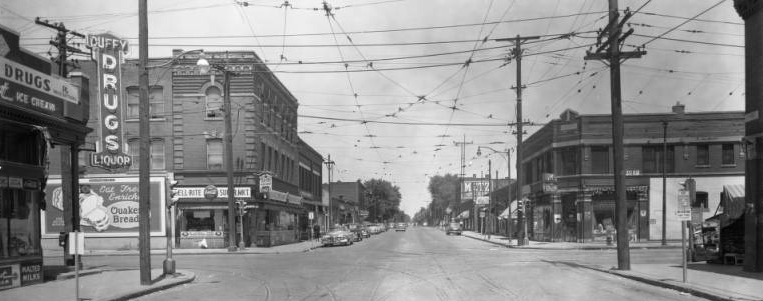
North 24th Street. Today, this distressed stretch running through largely African-American northeast Omaha is a hodgepodge of mercantiles, community service organizations and social agencies interspersed with empty structures and vacant lots. The sidewalks are mostly empty. Save for some new construction and streetscape improvements in the 24th and Lake environs, block after block is blighted. Signs of renewal peek through here and there in refurbished buildings, new commercial centers and handsome housing developments.
Visions of new grandeur lie in initiatives targeting the area, known as the Flatlands, for redevelopment. Still, current reality is a long way from those dreams and a far cry from North 24th’s heyday in the 1930s and ‘40s. Then, rows of buildings lining each side of the street — from Cuming south to well past Lake north — housed dozens of small businesses, many Jewish-owned, some black-owned.
It was a lively social-cultural enterprise zone/marketplace where a promenade of ethnicities filled the sidewalks and streets from dawn to well past dusk.
“Almost like Maxwell Street in Chicago,” said former North 24th resident Joe Kirshenbaum, referring to Chi-Town’s multicultural hub. “It was a city in itself. It was busy all the time. The only time there wasn’t any business was sun down Friday night, when everything was closed. Everybody knew everybody, blacks, whites, they were all alike. We used to leave our doors open at home at night or we’d sleep on the porch because we never had to worry…”
“On a Saturday night it was busy. It was a real hustling place,” said Mort Glass, who worked in his father’s Omaha Kosher Meat Market on 24th.
Jews and other European immigrant groups, including Italians, settled in north Omaha in the first decades of the last century. There was always an African American presence but the real wave of blacks came as part of the great migration from the South in the 1920s through the post-World War II era.
There was a time when North 24th, a major artery connecting north Omaha with downtown, was the nexus of commerce for two historically oppressed peoples, Jews and blacks. Not only did they comprise most of the area’s merchants, service providers and professionals from the ‘20s through the ‘50s, they were its primary residents and, therefore, customers, too. So it was that synagogues stood next to Baptist churches, kosher and soul food could be had on the same block and blacks and Jews were educated together, played together and did business together.
For Jews, North 24th was the Miracle Mile. For blacks, the “Deuce Four.” For many northeast Omaha residents, it represented a Street of Dreams where virtually any good or service could be found. The district enjoyed a self-sufficiency it’s not seen again, one in which residents could and did do for themselves.
Black-Jewish interaction was an every day thing. Reverends and rabbis kvetched over pickle barrels or meat counters. Each group learned things about the other, especially about their respective religious traditions.
For the Sabbath Jews called upon black neighbors to turn off the gas and lights in their Orthodox homes. Some blacks practiced their faith in tent revival meetings whose rousing spirituals and shouts of hallelujah and amen drew curious Jews.
Outside these transactions, there were occasions, like live radio broadcasts of Joe Louis fights, when everyone came together to cheer. When Louis won, people flowed into the streets to party. Blacks led the parade.
“It was wonderful,” said Helen (Handler) Rifkin-Chorney, who grew up near North 24th and spent many an afternoon and evening there. “After a Joe Louis fight, when he was the champ, everybody was dressed in their Sunday finest and they were celebrating, too, because one of their own was the world champion. I used to think that was one of the greatest things in the whole world. It was wonderful.”
Then there was the pageantry of Easter Sunday, when Christian folks got decked out in all their fancy new finery.
“You never saw nothing until you saw Easter Sunday on 24th Street. Dressed to kill,” former North 24 denizen Nate Shukert said. “We used to go down just to watch,” ex-24er Gloria Friedman said. “It was beautiful. The parade of colors was amazing,” Rifkin-Chorney added.
“It was Omaha’s version of the Easter parade on Fifth Avenue in New York,” said Martha (Hall) Melton, who grew up just off the famous thoroughfare.
Community leaders hoping to revitalize the area look to recapture some of its rich, robust past. A past that saw an abundance of mom-and-pop grocery stores, butcher shops, fish markets, bakeries, cafes, delis. Hardware, appliance, clothing, shoe and department stores. Tailor shops, repair shops, pawn shops, barber shops, beauty shops. Ice houses, a junk yard, a lumber yard. Drug stores. Doctors offices. Laundries, cleaners. Dance halls, night clubs, bars, billiard parlors, movie theaters. Social halls, fraternal clubs, gyms. After-hours joints. Whore houses.
“We had everything out here,” said north Omaha native Vera (Mitchell) Johnson. “You name it, we had it. We really didn’t have to go out of the neighborhood for anything.” North 24th was, as fellow lifer Charles Carter said, “it’s own entity.”
Glass-fronted brick buildings spread the length of 24th, gleaming in the sun.
“When I was in the wholesale liquor business I made calls on 24th, and when I got there at 7 in the morning and the sun was shining, you’d think it was a sea out there…a sea of glass,” Irv Forbes recalled.
A whole social stratum of attire was on display. Grocers, butchers and bakers in aprons. Businessmen in fedoras and three-piece suits. Construction, packinghouse, railroad laborers in overalls. Domestic workers and porters in uniforms. Ladies in fine dresses and feathered hats. Religious in yarmulkes, prayer shawls and Sunday whites. Children in school clothes. Hep cats in zoot suits. Cops in blue.
Peddlers pushing carts and delivery men, driving horse-and-wagon outfits in the early days and trucks later on, sold everything from rags to milk to ice to produce.
Melton recalls a peddler who came by to sharpen knives. Shukert remembers one vendor, who wore a conductor’s cap and hung a lamp on his cart, hawking tamales with, “‘Get your hot tamales today, they’ll be gone tomorrow.’”
Street vendors shined shoes and sold newspapers. The blare of radio broadcasts, the melody of Yiddish, Hebrew, Italian and English voices, some Southern-tinged, others European-accented, the shrill of live chickens and crying babies and the clatter and roar of autos and streetcars created a kind of music. The yeasty, oven-fired aroma of fresh baked bread, rolls and bagels, the sweetness of pickled herring and watermelon rinds, the sour of pickles and the spice of corned beef blended with the smoky fragrance of barbecue and savory goodness of greens.
“When you hit this area, you smelled it,” Shukert said. “Whew, it would give you a smack, boy.”
This feast for the senses only added to the North 24th experience.
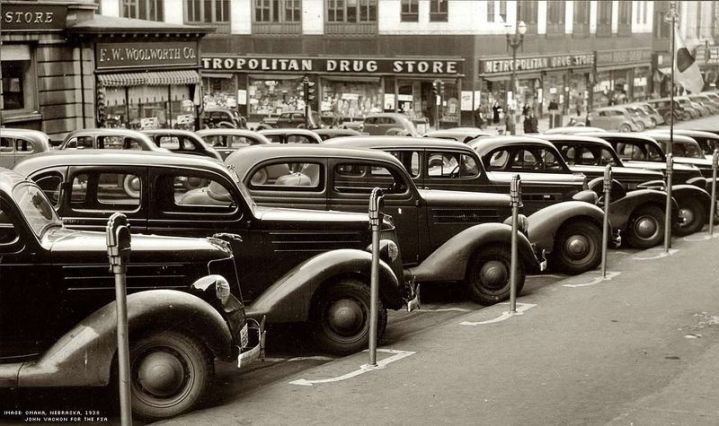
In an era when Jews and blacks were excluded from much of mainstream white society, the walls of segregation largely disappeared on this strip, where interracial commerce flourished. That’s not to say all was rosy, especially for blacks. Prior to the ‘60s entire sections of northeast Omaha, even portions of North 24, were closed off to blacks. Some establishments refused to serve or hire them. A few public schools were integrated, but most were divided along strict racial lines.
Forbes, whose father and uncles ran the commercial Forbes Bakery on 24th, recalls that as late as the ‘20s, even the ‘30s, Jews and blacks were still wary of the Klan, which was active in the state for decades.
Still, North 24th was an oasis, much as South 24th was, compared to wider Omaha.
Jews and blacks lived and worked in close proximity to each other and, by all accounts, coexisted in relative harmony. Despite obvious differences, people made this relationship work for the most practical of reasons — they had to. After all, each group relied on the other for survival. In a symbiotic relationship of mutual co-dependence, Jewish businesses provided essential goods and services to blacks, not to mention jobs, while blacks provided a major customer base for many Jewish merchants. Practicality made tolerance the order of the day.
“You have to understand this getting along wasn’t because there was this great big love affair, but it was a toleration. You tolerate me, I’ll tolerate you, and that’s the way we lived,” said Shukert, whose family’s meat market was a North 24th fixture. “We’re both here. You’re not going to leave, we’re not going to leave, so we might as well understand the situation and make the best out of it. We knew how to live with people. I don’t think color meant that much.”
“Well, we grew up with them — that’s the way it was,” said Friedman, whose father had a shoe store on 24th. “Right, if they were your next door neighbor, they were your next door neighbor,” Rifkin-Chorney said.
“You learned to tolerate” each other’s differences, Melton said. The way Shukert sees it, “We could have taught the world a lesson in how to be tolerant.”
Mort Glass said it was “a joining of two widely diverse people that really cohabited pretty much there for a long time.” Shukert said “the real miracle was that we all got along.” Charles Hall, whose soul food eatery the Fair Deal Cafe was a landmark there from 1953 to 2001, said the North 24th experience proves hatred is taught.
In purely economic terms, Shukert believes Jewish-owned grocery stores and suppliers of other perishable staples were most dependent on the black trade.
“Basically we got along with the Jews because they owned the grocery stores and all of the markets,” said John Butler, a North 24th veteran. Hall goes so far as to say, “It was a known fact that if you had a business and the blacks didn’t support you, you couldn’t make it.”
Shukert said blacks were not only vital customers but key laborers. “We hired them,” he said. “We didn’t care what their color was as long as they could work, and they liked to work.” “Most of the time the Jews would hire some blacks to do stocking, deliveries…They had a lot of blacks work for them,” Butler said.
Butler’s first jobs as a kid were shining shoes inside Pomidoro’s Shoe Repair shop and making deliveries, with a wagon he pulled behind him, for Hornstein’s Grocery. He said the Hornsteins “used to help me with my schoolwork.” Butler had a brother that worked at Tuchman’s Market. Hall worked several years at Frank Marks and Irv Rubinow’s Parker Street Market before opening his own business.
Dorothy (Stansberry) Freels-Smith earned the sobriquet “The Black Jew of 24th Street” after decades behind the counter at Reid’s Drug Store and as the first black butcherette at the Jewish-owned Sell-Rite supermart, where her boss was Sol Lincoln. “I knew all those Jews on 24th Street and I got to be very close to all of them,” she said. “Most all of them were very nice.”
Well-off Jews employing black domestic workers in their homes, Shukert said, understood their housekeepers struggled to get by and therefore often provided their “help” extra food and clothes. Butler, who grew up on 24th, said his mother, like many black women at the time, cleaned house for Jews in Dundee and confirmed it was common for domestics to get care packages from their employers.
Relationships formed between Jewish and black families.
“When I was a girl we had a black lady by the name of Lucille White who cleaned house for my family,” said Rifkin-Chorney, “and when a family member died she’d be the first one there. This woman would come if it was the middle of the night to be helpful and we felt the same way about her family. I mean, it was not a matter of color. It really and truly wasn’t.”
Rifkin-Chorney said family and community were at the core of Jewish and black life. In an era when extended families lived together or within walking distance, there were few strangers. Not just relatives, but neighbors, beat cops and merchants kept watch over kids. Butler said a trip to the market or to school was nothing like it is now. He’d encounter any number of figures, black and white, who knew him and inquired after him and his folks. “…the Jewish store owners knew all the kids in the neighborhood and they knew what family you belonged to,” he said. “Everybody knew everybody. It was almost like a family thing,”
It was a time when adults checked kids’ behavior, irregardless of race. Freels-Smith said she could tell any child, “You know better than to do that. I’ll tell your mom.”
Credit was extended to poor families, again irrespective of race.
“You’d run a tab and you didn’t have to pay until the end of the week when dad got paid. They would let us get all the groceries we’d want. Of course, they knew how much we could afford,” Butler said. Shukert said, “My dad never turned anybody down. He said, ‘Hey, look, people have got to eat.’”
Generosity between neighbors was common. Martha Melton, her brother Charles Hall and their family lived next door to the Shukerts, who kept a strict Orthodox home. Melton recalls her and her sister turning off the gas and lights at the Shukert home to keep them in compliance with the Sabbath.
The Halls’ other neighbors, the Levines, kept, sold and slaughtered live chickens and shared their bounty. “They would give us chickens and things,” Melton said. When some Jewish households served hallas, non-Jews would be invited to partake. Shukert said his mother would schmeer slices with butter and jelly as a treat for neighborhood kids — black and white — who came by.
More than once, Melton said, white friends aided her poor family. She said two Central High schoolmates, Nate Shukert and Nuncio Pomidoro, “knew our circumstances. Many a day I had no lunch money and they would pay for my lunch, which was a generous thing to do. They helped that way.”
“Poor blacks knew that without us a lot of them would have gone hungry. They had nothing to eat and they weren’t ashamed to take it,” Shukert said.

Gloria Friedman said her father supplied free shoes — as part of a city shoe fund — to Kellom School students, many of whose families were too poor to afford them.
Freels-Smith gave away food and other stores to poor kids, black or white, that stopped by Reid’s. “Color didn’t matter to me,” she said. She’d let them snatch penny candy. She’d make a batch of soup and dish it out to anyone who “wanted something warm” and she kept cold beers on ice for the beat cops.
Rifkin-Chorney surmises that good relations between Jews and blacks “had something to do with the fact we’re talking mostly about Depression times, when we were all poor.” “That’s why we all got along,” Shukert agreed, “because they had nothing and we had just a little bit more. So economically we were pretty much on the same plane, except we had a little bit more, so we could share it with you.” “Yeah…that’s the truth. Jewish folks had maybe a small store or something and they were just making a living,” Hall said. North 24th Jewish merchants were, Butler said, “working class people in business.”
Any angle or sideline was exploited to help make ends meet. “Everybody was doing what they could to make a living,” Melton said.
As a boy Butler helped his father sell fresh vegetables grown on three family gardens. His dad, a Cudahy packinghouse worker by day, also sold “real silk hosiery door to door.”
Not everything was legal. A black man who worked at Shukerts, Andrew “Babe” Bender, was also a pimp who ran brothels behind the store, Shukert said. “He was like the Duke of 24th Street. He made a lot of money.” From the back of the market Shukert could identify the johns frequenting these dens of inequity. “I was amazed by some of the people I would see going in there. People that I knew. Yeah, God’s chosen,” he said.
A few Jewish grocers were known to not play square by rigging the scales or ringing up bogus purchases. Some had open contempt for blacks. But in the main blacks were “treated well” by most Jewish merchants, Hall said.
Butler feels an important reason why Jews and blacks were simpatico is their shared legacy of struggle. “Well, you must remember they were segregated too at the time,” he said. “They knew how we felt and we knew how they felt.”
Rifkin-Chorney said there was an unspoken understanding that blacks and Jews shared a similar struggle as “minorities that are persecuted. It’s a common denominator.” By and large, she added, Jews recognized blacks have a much harder time. They can’t hide their color and so they are discriminated against.”
“That’s why they have to fight for themselves,” Shukert observed.
“And they have to go to more extremes,” Rifkin-Chorney said. “They’ve had to do their marches. We fought, too. We didn’t do it in the same way, because we didn’t have the numbers…”
“We did it by going to school…getting educated. We got smart enough to know how it was to change your life,” Shukert said. “The Jews bartered this, bought that, got a little property, saved their money and bought themselves into a better life.” “The black people have to take it on themselves to do the job,” Forbes said. “They’re never going to get it done unless they do it themselves.”
That sentiment is the theme of new black empowerment-covenant efforts underway in Omaha.
If there was ever a time when Jews and blacks were in sync, it was the height of the civil rights movement in the ‘50s and ‘60s. “There were probably as many Jews as there were blacks at some of those marches because we were marching really for a common cause. We had the same reason,” Rifkin-Chorney said. As Shukert said, “We were white, but we had the same reason.”
Joe Kirshenbaum, whose father delivered bread for Himmelbloom Bakery, said the north side had geographic boundaries for affluent and less affluent Jews.
“It seemed like the majority of Jews who were middle income and lower income lived in this particular area,” he said, referring to the North 24th corridor. “If you lived west of 30th Street you were pretty well off and if you lived in Dundee you were really pretty well off.”
As a boy Shukert dreamed of making it to the other side.
“I always wanted to make it across 30th Street,” he said, “because that’s when you had it made. You got to go around with all the big shot kids. I was home from the service and my folks told me we’d moved west.” Where did you move? he asked excitedly. The family’s new address — 2935 Nicholas — put him “right to the brink,” but still outside the promised land. “I never made it across to 30th.”
There was also the feeling that a high tide raises all boats.
Hall recalls something the wife of the grocer he worked for said. “She told me what the black man doesn’t realize is, every boost the black man gets in life is a boost for the Jews. It made sense because they were ostracized and picked on, too.”
A live-and-let-live attitude prevailed.

“I think things were extremely amicable…everyone got along,” Hall said. “It was a black-Jewish neighborhood and everyone went to their jobs and came back home and they went to 24th Street and different areas there to enjoy themselves.”
People in similar straits made the best of tough times.
“At that time it wasn’t a thing of black, white, Jew, Catholic, Protestant, it was just people,” Melton said. “See, if you give respect, you’ll get respect. They respected us and we respected them.”
When Rifkin-Chorney was newly married to her first husband, the late Ben Rifkin, the couple went to North 24th every weekend. Ben grew up there. His father and uncle were peddlers and then property owners. When she and Ben would walk down the Deuce Four she learned how thick Jewish-black relations ran.
“We passed at least half-a-dozen young black men and they all knew my husband. They all called him ‘Binny.’ I asked him, ‘How do you know everybody and how do they all know you?’ And he said, ‘They’re all my neighbors.’ Again, it was with great fondness and affection and he felt the same way towards them.”
Shukert said multi-racial fraternizing extended to recreation. Whether it was kick-the-can, pickup softball, baseball or football, Jews and blacks “played together” in the streets and the parks around 24th. Then-North Omaha YMCA director Marty Thomas, a giant black man who commanded awe, oversaw organized youth sports.
“We respected him so much. If he told you to do something, you did it,” Shukert said. “You talk about race, he was a man ahead of his time. He saw to it all the rules were the same, no matter who you were, black or white. He was the best.”
Mixed crowds danced at the Dreamland Ballroom to the swinging sounds of stellar black performers like Cab Calloway, Count Basie, Duke Ellington and Ella Fitzgerald.
A shared sense of community was lost when the Jewish exodus began in the late ‘40s. By the ’50s, most Jewish residents were gone, including Shukert, Friedman, Kirshenbaum and Rifkin-Chorney. Some Jewish businesses remained into the ‘60s, but Mort Glass said “it was dwindling…a pretty sharp decline.” While Jews were free to most anywhere, blacks were not, restricted by red lining-covenant practices that prohibited or discouraged the sell of property to “non-whites.”
“We were held back,” Hall said.
The final Jewish hurrah on North 24th came in the wake of late ‘60s public disturbances in which businesses were burned, damaged or looted. The disorder was an expression of black anger over inequality and injustice. The worst riot, in ‘69, was sparked by the fatal shooting of a black girl by a white police officer. Charles Hall, who still lives near 24th, recalls a white man asking him at the time, “‘What’s wrong — what do they want? “I said, ‘They want the same thing you want, and that’s an even chance to make money and to make a decent living.’”
Jewish businesses were largely spared, said John Butler, who patrolled North 24 during the ‘69 riot as part of a brigade of community-minded citizens. “Some of us stayed there and tried to protect them,” he said. “Some blacks stood in front of Jewish grocery stores and wouldn’t let the mob burn them down,” Kirshenbaum said. “One like that was Abe Schloff’s,” said Shukert. “They stood right in front of his store, with guns and said, ‘Don’t touch this man’s store.’ Because he always treated them straight.”
While most Jewish concerns survived unscathed, the psychological trauma of the riots spurred the last of North 24th’s Jewish merchants to leave.
“They all got afraid,” Smith said. “They moved out after that because things started getting different,” Butler said. “It wasn’t just them moving out. We began moving out then, too. It started a migration of both races.”
Butler moved north, to an area once off-limits to blacks. Melton and her late husband Billy moved a couple miles west. Smith also moved west.
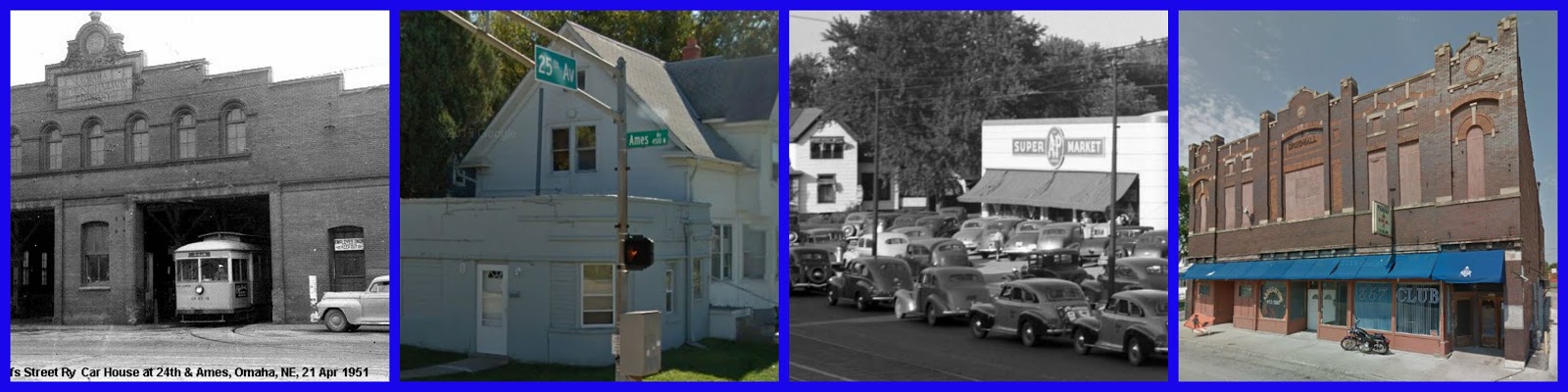
Relatively few new businesses sprang up in the ensuing years to replace the Jewish-owned ones that left. With mom-and-pop operations a thing of the past, the area lost grocery stores, drug stores and many suppliers of basic items it was once rich in. Where other parts of town saw large chains come in to fill the gaps, North O does not. High crime stats don’t help. Existing businesses get squeezed by a dwindling economic base as middle income whites and blacks exit the inner city.
“It’s a matter of confidence. If you’re going to invest a couple hundred thousand dollars in something there you want to be reasonably assured it’s a safe investment,” Shukert said.
Two groups once close, grew apart. An innocence was lost. Perceptions put a new spin on things. For example, the Yiddish term for a black person, Shvartzer, was acceptable once, but as Rifkin-Chorney noted, this vernacular was deemed demeaning in the context of the civil rights-black power era.
“It wasn’t meant that way, but it could be determined as a derogatory way to speak about someone,” she said.
Shukert thinks it’s tragic that blacks became the object of fear. He said a white person walking down a street thinks nothing of an approaching group of whites, but gets alarmed at the sight of a group of blacks. “For some reason whites have always been afraid of blacks,” he said. “Why have we put that stigma on them?”

He and others are dismayed by the shootings that plague the north side these days. He knows it’s just a few “bad apples” causing the trouble, but it’s made him and old friends fearful of visiting North 24th for a nostalgic tour.
“It’s too bad you can’t, in 2007, feel free to go any place you want to, but that’s just the way it is,” he said.
Shukert and his contemporaries don’t understand why so many people resort to violence now as a means to resolve disputes or to gain respect. That’s not the way things were done in their day, when words or fist fights sufficed.
“We would never do anything to disgrace our neighborhood, our church, our family,” Martha Melton said. “It’s a shame young people don’t know the unity that there was. It does break my heart to see 24th the way it is now. It will never be the same. I have fond, fond memories of the way it was.”
All the changes and the population shifts have dislocated people from their roots. “It looks like we’re divided more now than ever,” Dorothy Freels-Smith said.
John Butler, who lives around 26th and Evans, sees hope in the new diversity emerging in northeast Omaha. “In my two-block area I’ve got whites, blacks, Hispanics living next door to each other or across from each other. Integration sometimes is good — if people get along, and I see they’re getting along.” What’s different, he said, is that people don’t know each other the way they used to.
Back in the day on 24th, diverse people mixed and mingled in close-knit quarters. “It made a better person out of me,” Butler said. Said Hall, “I got an education working down in the neighborhood.” “We knew people better then,” said Shukert.
Speculation about the future of North 24th centers on proposed mixed use developments for transforming the area into a model of urban gentrification. These discussions bring up new issues, such as the displacement of longtime residents and what stake blacks will have there. Old-timers like Shukert believe no matter how much the strip is built back up it will not be the melting pot marketplace he knew.
“It’s never going to be,” he said. “The memories are great. I never will forget the way it was. So many people don’t have memories like that of North 24th Street, because they didn’t live it. I can tell you story after story after story, but unless you lived it it’s just a story.”
Related Articles
- Black and Jewish, and Seeing No Contradiction (nytimes.com)
- Café Serves All, Lubavitch Style (online.wsj.com)
- Omaha Native Steve Marantz Looks Back at the City’s ’68 Racial Divide Through the Prism of Hoops in His New Book, ‘The Rhythm Boys of Omaha Central’ (leoadambiga.wordpress.com)
- TONI MORRISON: The Pain Of Being Black (time.com)
- Back in the Day, Native Omaha Days is Reunion, Homecoming, Heritage Celebration and Party All in One (leoadambiga.wordpress.com)
- Chef Mike Does a Rebirth at the Community Cafe (leoadambiga.wordpress.com)
- Big Bad Buddy Miles (leoadambiga.wordpress.com)
- Native Omaha Days: A Black is Beautiful Celebration, Now, and All the Days Gone By (leoadambiga.wordpress.com)
- Native Omahans Take Stock of the African-American Experience in Their Hometown (leoadambiga.wordpress.com)
- A Rich Music History Long Untold is Revealed and Celebrated at the Omaha Black Music Hall of Fame (leoadambiga.wordpress.com)
- Walking Behind to Freedom, A Musical Theater Examination of Race (leoadambiga.wordpress.com)
- Omowale Akintunde’s In-Your-Face Race Film for the New Millennium, ‘Wigger,’ Introduces America to a New Cinema Voice (leoadambiga.wordpress.com)
- Coming to America: The Immigrant-Refugee Mosaic Unfolds in New Ways and in Old Ways In Omaha (leoadambiga.wordpress.com)
Goodwin’s Spencer Street Barber Shop: We Cut Heads and Broaden Minds, Too
Growing up, I knew of a certain barbershop in northeast Omaha for one reason and one reason alone, it is where former Nebraska State Sen. Ernie Chambers held court as a barber and firebrand activist. I never drove past Goodwin’s Spencer Streeet Barber Shop nor walked into it until a few years ago, when I went there to file a story on the special place it holds in the local African-American community beyond the usual gathering and gossip stops that barber and beauty shops serve.
Chambers is one part of the story, but another is the shop’s namesake, Dan Goodwin, who in his own way is an activist every inch that Chambers is. When they worked the shop together at the height of the civil rights movement and racial tensions in Omaha, they made a formidable duo of strong, socially conscious black men cutting their way to freedom.
©photo, Tom McLaughlin
Goodwin’s Spencer Street Barber Shop: We Cut Heads and Broaden Minds, Too
©by Leo Adam Biga
A version of this story appeared in The Reader (www.thereader.com) in 2006
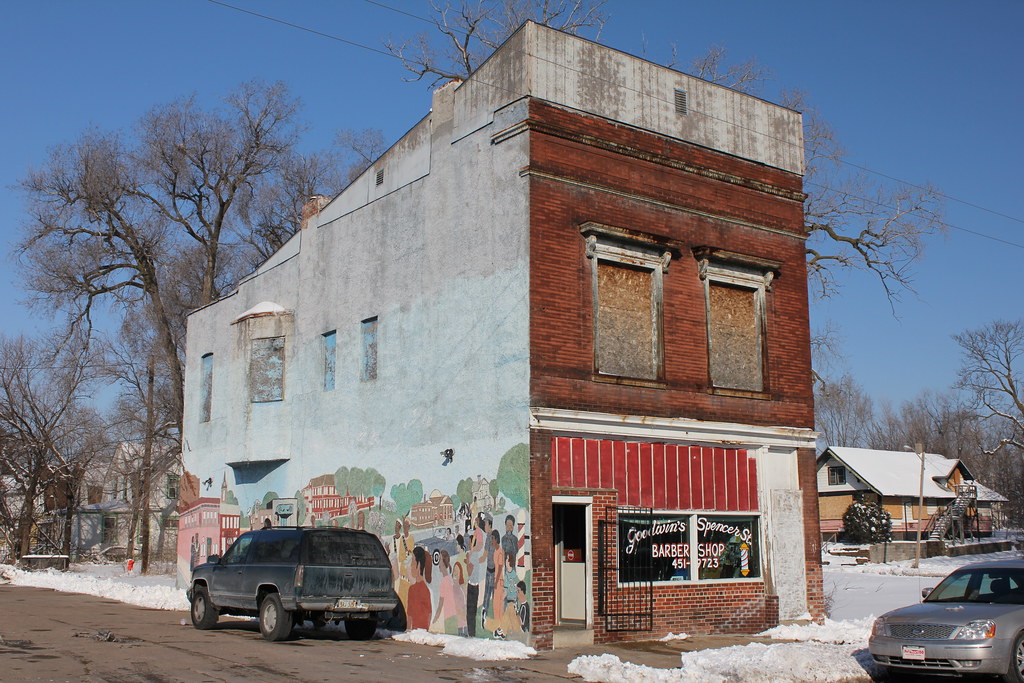
The splintered front window of Goodwin’s Spencer Street Barber Shop, 3116 North 24th Street, might as well read: We Cut Heads and Broaden Minds, Too. Amid all the jive, the shop’s a forum for street-wise straight talk, scholarly debate, potent ideology and down home lessons from its owner and master barber, Dan Goodwin, and the gallery of young fellas and Old Gs (old guys) that hang there.
That was never more true than during the Black Power movement and Civil Rights struggle of the 1960s and ‘70s. That’s when the Spencer was a must-stop for anyone partaking in the vital brew of philosophy, polemic, dialectic and rhetoric coursing through black America. The “star” attraction was a then-young Ernie Chambers, the barber-provocateur-activist turned-politician. Between razor cuts, relaxers and jeri curls, he and Goodwin made like Malcolm and Langston, interpreting the times in an eloquent spoken word style that was part call-and-response sermon and part lecture. They were variously protagonists or antagonists. The customers and curious onlookers, their disciples or students or foils.
“It was like open line every day of the week down there,” said Omaha photojournalist Rudy Smith. “All the conversation topics were about relevant things that were not talked about on radio/TV or written about in newspapers or discussed in school. Whenever you went there you were always intellectually challenged and stimulated.
“People would always bring in books and articles and things, and they would read them there and discuss them. Sometimes, people would come there and not even get their hair cut. They’d just come to listen. Others would come just to vent.”
“You’d go at ten in the morning and you may not leave until two or three in the afternoon. You’d sit around and listen to a lot of positive things,” Omahan Richard Nared said. “You’d go and get a lot of ‘mother wit’ (knowledge).”
Things could get intense. Smith said Goodwin, Chambers and company “could be confrontational. Sometimes they’d take the opposite position just to stimulate your thinking and to broaden your perspective. But it wasn’t meant to destroy you — it was meant to strengthen you. Now, I didn’t always agree with ‘em, but I didn’t always oppose ‘em either. I enjoyed it and other people did, too.”


Smith said “the salient” subjects batted around included “Malcolm X, Eldridge Cleaver, Hughie Newton, racism, economic development, the lack of black teachers in the public school system, housing discrimination, police violence” and any “issues relating to our people.”
Memories of Vivian Strong and other victims of police gunfire still elicit strong responses. Goodwin refers to the 1969 fatal shooting of the 14-year-old Strong as “murder.” The incident ignited disturbances that he said were branded a riot.
Unlike some leaders who’ve done more reading about The Struggle than living it, Goodwin speaks from the harsh experience of a man who’s encountered his share of police harassment and brutality, including the cold hard steel of a double barrel shot gun pressed to his temple and the butt of that same gun jammed into his gut. He’s been rousted and arrested for “driving while black.”
His social consciousness was stirred in the U.S. Navy. He left Tech High at age 17 to enlist. “It was a good experience. But I went through a lot in the military. I went through boot camp with only one other black in my company. In the tent I was in in the Philippines, I was the only black. I’d hear things. I didn’t start nothin’, but I wouldn’t take nothin’. Every time I had a fight, they thought they could just say anything — the ‘n’ word, you name it — and I didn’t take it. But, you know what, it wasn’t that I was tough. I was dealing with cowards and they weren’t looking for much of a reaction. I must admit sometimes after I finished off one of those people, the other Caucasians would say, ‘Man, he had it coming.’”
Back home, he hit the streets protesting injustice as a member of the 4CL (Citizens Coordinating Committee for Civil Liberties). Unlike other organizations here reluctant “to confront” the system, the 4CL “believed in going out and demonstrating. It was an action group,” he said. “We integrated different places and we petitioned for jobs and open housing. We marched on city hall. We did things like this that brought about some changes. We were considered troublemakers and that’s what it takes to get the changes.”
He marched on Washington in 1963, a witness to Martin Luther King, Jr.’s “I Have a Dream” speech. He helped sponsor a 1964 Omaha speaking appearance by Malcolm X, a personal favorite whom he met. In 1996, Goodwin got on the bus and went to Washington again for the Million Man March.
Over the years, he’s filed complaints about police misconduct and other improper behavior directed at him and his people, making enemies along the way. All that’s bound up in him and in his shop is symbolized in the cracked glass out front he’s never fixed. Bullets hit it one night years ago. It’s a reminder of past incidents. Once, he got an anonymous call saying cops shot out the window at his old place. A warning to tone it down and to play like Uncle Tom. For many, the broken glass at the present site symbolizes hostility toward blacks. It’s also a defiant proclamation that Goodwin will not be intimidated or silenced or run off.
“I can handle anything that comes down,” Goodwin said.
As a visceral reminder of that resolve, he’s made the shop a fertile ground for developing not just the mind, but the body, too. The muscular Chambers introduced weight training there. Goodwin started lifting at age 40. With a ripped body that testifies to his dedication, Goodwin has in recent years become a world-class power lifter in the masters division. He’ll wear you out in the makeshift gym he has in a corner of the shop or wear you down with his treatise-like arguments. Some of the trophies, plaques and ribbons he’s won take up one side of the shop, whose walls are filled with clippings/photos of some of the sports greats to get their hair cut there (Bob Gibson, Bob Boozer, Gale Sayers, Ron Sayers, Ron Boone, Johnny Rodgers, etc.).
Along with the Fair Deal Cafe, the shop was the place to be for any politically aware person interested in serious dialogue about the black experience.

If you were a Black Muslim or Panther or garden variety activist, then you went there to hear the latest thinking. Whether you supported Malcolm or Martin, read Cleaver or Chrisman and marched in step with the NAACP or the Urban League, you were ripe for the Spencer Street indoctrination.
“Dan Goodwin and Ernie Chambers had a great influence on us. They made sure we were accountable. They had high standards for us,” said Frank Peak, a former Black Panther member in Omaha. “They were mentors.”
If you were a minister, you’d better go prepared to recite the Bible chapter and verse or defend your theology. If an elected official or a candidate seeking the black vote, you tested the waters there.
If you were an idealistic white student or adult civil rights sympathizer, you came as an acolyte to learn at the feet of the black men who, by virtue of the oppression they endured and resisted, earned the right to hold court there.
If you were a reporter looking to measure the pulse of the community, you no sooner flipped open a note pad or switched on a tape recorder then you got more than you bargained for in the way of unvarnished views.
“It wasn’t always serious, now,” Smith said. “There was a lot of laughter. And sometimes people laughed to keep from crying.”
Nothing much has changed. The same issues persist, only the incendiary talk has been somewhat muted and the rallies that got their start there have been relegated to the history books except for an occasional revival.
At age 77 Goodwin commands respect from young and old alike for still being a relevant spokesman and soul brother.
“He’s like the father of this barbershop,” customer Charles Taylor said. “I’ve noticed a lot of the young men that come in here refer to him as Mr. Goodwin. That shows respect.”
Goodwin’s not lost the fervor to fight injustice or to do the right thing. But there is an edge of resignation in his words and in his voice today. Chalk it up to all the shit he’s seen go down from his perch on North 24th, where the promise of a better tomorrow hasn’t been realized the way he hoped.
“I feel a lot of frustration. I was naive enough to believe that by now it would be different for our youngsters,” he said. “Racism is everywhere. It’s just a little more sophisticated now, that’s all.”

His vintage red brick building, only a stone’s throw from Lothrop Magnet Center, Littlefield’s Beautyrama and Church of Jesus Christ Whole Truth, is a symbol for the once teeming area gone to seed. The upper floor windows are boarded up. On the north wall, a faded advertisement for “Uneda Biscuits, 5¢,” faces a vacant lot upon which other buildings and businesses once stood. The south wall is awash in a celebratory mural portraying “the way things used to be,” said Goodwin. The mural depicts a parade in which young people hold a banner that exclaims, “Beating the Path to Freedom,” something he’s invested the better part of his life doing.
It hurts him to see his community a shadow of its once vibrant self and to be still embroiled in the quest for equal rights, yet unable, in this era of divided ranks, to marshal the support a systemic movement takes.
“I think this community like all communities in the inner city in America has big problems and the problems are even bigger now than they have been. Schools are in trouble. The job situation is bad. Drugs. There are so many things plaguing us now. It’s really interfered with what we called The Struggle. In my judgment, were a lot more fragmented today, to the point where we can’t come together to bring about real change. I miss the unity and the organization — when people were more focused on trying to bring about improvements. A lot of our young people are not even enlightened about the things we did struggle to try to change. I don’t feel real good about it sometimes, but you can’t put up your hands. You just do what you can and keep pushing.”
He rues the loss of moral constraints that allows, as he sees it: an unjust war to continue; elected leaders to lie; war profiteers to flourish; corporate execs to cheat; celebrities to set an indecent example; and drugs and gangs to proliferate.
“There used to be rules. Nobody was perfect, but at least we knew right from wrong. There were certain lines you wouldn’t cross. Now, there’s no line. The message now is, Whatever you want to do, it’s OK. It’s out there. It’s a whole different culture, the drug and gang culture. I don’t blame kids. I blame my generation. We allowed the rule book to get thrown out. And I’m not a fool or anything. I’m not even into religion. I’m into right. I’ll believe in right till I die.”
He sees a corrupt ruling class setting a precedent of greed and malice that only serves to widen the gap between the haves and have nots and to reaffirm the anything-goes mantra.
“Too many people can’t see past what’s happening to them right now. They don’t look at the consequences of what they’re doing today,” he said. “There was a time when you really felt like there were people that really wanted to see some things different. But there just wasn’t enough people that wanted to see the right kind of change. Now we’ve reached a time when liberal has been turned into a dirty word and decent people run from it. That says a lot about this country. I don’t feel good about that or the fact black people get done in just for telling the truth.”
Lively discourse has always been part of the scene at the Spencer Street, but was at its peak when Goodwin took on Ernie Chambers, a loquacious minister’s son and law graduate who used his barber chair as a lectern. Chambers proffered doctrine there from the mid-’60s through the early ’90s, a period that saw him build a constituency, first as a grassroots leader, and then as a state senator (District 11). He was the only black in the Nebraska Legislature during the entire four-decades he served as a member of that conservative, otherwise lilly-white body.
 Rudy Smith
Chambers came to the shop after being fired from the U.S. Postal Service. The then-Creighton law student was an outspoken activist. It was a perfect match.
In Goodwin, Chambers found a kindred spirit. “I liked the kind of person he was. We got along very well. He’s true to his beliefs. He rented me a chair and I stayed there for years and years,” Chambers said. In Chambers, Goodwin found “a young man who could articulate like nobody I’ve ever known. He always had answers. He did his homework. He knew what he was doing and saying. People were really impressed with him. And we communicated real good. We were really seeing things so much alike.” Not that they didn’t disagree. “Oh, we used to argue nose to nose. We had some good ones,” Goodwin said.
“It just so happened Ernie fit in with the atmosphere and then he began to exert himself,” Rudy Smith said. “I think the shop gave Ernie a platform to grow, as it did a lot of other people.”
They made a formidable team. Their give and take, something to behold. They were arrested together. They traveled together when Chambers made lecture stops.
“As Ernie grew, so did Dan,” Smith said. “Dan wasn’t an intellectual, but he became that as he expanded his knowledge and his sphere of understanding issues socially, politically, psychologically. Ernie spearheaded that. He’d stimulate him.”
“Dan didn’t go to college, but whatever conversation came up he could talk about it. No matter where he goes, people stop and talk to him” Richard Nared said.
The pair’s persuasive powers are immortalized in the 1967 Oscar-nominated documentary A Time for Burning. The film filters the era’s militancy through the charismatic figure of Chambers, who’s captured, alongside Goodwin, eloquently making points in the manner that made the shop a hotbed of impassioned ideas. Amid sports memorabilia on the walls were images/articles/cartoons that graphically illustrated the opression blacks lived under. An in-your-face reminder to pale-faced do-gooders of what The Struggle was all about.
“A lot of people came down to this barbershop to hear him speak to the problems. To be honest, a lot of people feared him because he spoke out so strong. He’s tough. Even now, he asks no quarters and he gives no quarters. He says what he wants to say and he’ll say it the way he wants to say it,” Goodwin said.
“A lot of people came to talk to me to discuss issues and it was a place where others would meet when they wanted to talk and just speak freely about what was on their mind. It was like a gathering place,” Chambers said.

Roger Sayers of Omaha said the shop was “kind of the northside human relations department for folks who felt their rights were being trampled on by the police or the school board or the city. If Dan and Ernie thought you had a case, they would try to help you resolve the problem with a letter or a referral or a phone call.”
Richard Nared said the duo were among the cooler heads to prevail at a time when agitators interpreted “by any means necessary” as a call to violence. “A lot of things happened in north Omaha,” Nared said. “People would come in and talk to them about wanting to hurt somebody that’d messed them over. ‘Man, I ought to go kill him.’ Well, Dan and Ernie would say, ‘Hey, man, do what you’re supposed to do, and walk away. It’s not that serious. Life is too short to get hung up on some petty mess. It’s not worth it. You’ll end up two ways — in jail or dead.’ I feel to this day Ernie and Dan were a big factor in keeping the peace.”
Even though Chambers long ago left his barber chair, the two men remain close. “We talk all the time,” Goodwin said. “He’s a great influence. I’m just impressed with his brilliance. So, it’s friendship and mutual respect.”
He loathes the possibility of Chambers being forced out of office by term limits. “It’ll be a big void. Nobody’s more committed. His whole life is what he does in the legislature. I mean, everyday he’s working on something involving the people.”
As much as Goodwin’s been influenced by Chambers, he’s his own man.
Goodwin set the agenda for the shop and made it into what Smith calls an “institution of higher learning.” “That’s exactly what it was,” Smith said. “It fostered an arena of ideas. It’s still going on — without fail. The barbers there were all like teachers and professors and in many ways they were more articulate in espousing their points of views. I was stimulated more sometimes in the barbershop than I was in college. It’s the only barbershop of it’s kind. It should be on the national historic registry.”
Goodwin’s much admired for remaining in the community, where he and his shop provide stability and continuity. “And especially when he continues to grow personally and intellectually,” Chambers said. “It lets people know that not everybody who could go someplace else is going to do that. This is home and this is where we stay. People do need to see that, especially the young ones. When they can see people (like Goodwin) who are in a position where they don’t have to hang around, but they choose to, that lets them know there’s something of value in our community and a benefit to staying here.”
For Goodwin, staying put is a matter of “this is where I feel comfortable. I don’t even consider retiring. I’m doing what I like. I’m doing what takes care of me. It’s mine.” There’s no chance he’ll mellow. “I don’t believe in turning the other cheek. I do believe in non-violence. But the truth is the truth. I have to tell it like it is.”
Related Articles
- Hip-hop barbers break down race barrier (theglobeandmail.com)
- Rev. Eric Lee: Travesty of Justice (huffingtonpost.com)
- Eric Deggans: The frightening prospect of seeing Glenn Beck and Sarah Palin use big media to rewrite civil rights history (huffingtonpost.com)
- De-romanticizing the Black Barbershop in the 21st Century (revolutionarypaideia.wordpress.com)
- ‘Shop Talk’: Will Revelations About Malcolm X Tarnish Legacy? (npr.org)
- Omaha Native Steve Marantz Looks Back at the City’s ’68 Racial Divide Through the Prism of Hoops in His New Book, ‘The Rhythm Boys of Omaha Central’ (leoadambiga.wordpress.com)
- Today’s Exploration: Omaha’s History of Racial Tension (theprideofnebraska.blogspot.com)
- Back in the Day, Native Omaha Days is Reunion, Homecoming, Heritage Celebration and Party All in One (leoadambiga.wordpress.com)
- A Change is Gonna Come, the GBT Academy in Omaha Undergoes Revival in the Wake of Fire (leoadambiga.wordpress.com)
- Native Omahans Take Stock of the African-American Experience in Their Hometown (leoadambiga.wordpress.com)
- Native Omaha Days: A Black is Beautiful Celebration, Now, and All the Days Gone By (leoadambiga.wordpress.com)
- A Rich Music History Long Untold is Revealed and Celebrated at the Omaha Black Music Hall of Fame (leoadambiga.wordpress.com)
- Community has ‘Soul’: Barbershop owner says new cafe fits vision for Mechanicsville (knoxnews.com)
- North Omaha Champion Frank Brown Fights the Good Fight (leoadambiga.wordpress.com)


 Leo Adam Biga's My Inside Stories