Archive
Alexander Payne and Kaui Hart Hemmings on the symbiosis behind his film and her novel “The Descendants” and how she helped get Hawaii right
Alexander Payne and Kaui Hart Hemmings on the symbiosis behind his film and her novel “The Descendants“ and how she helped get Hawaii right
©by Leo Adam Biga
Published in The Reader (www.thereader.com)
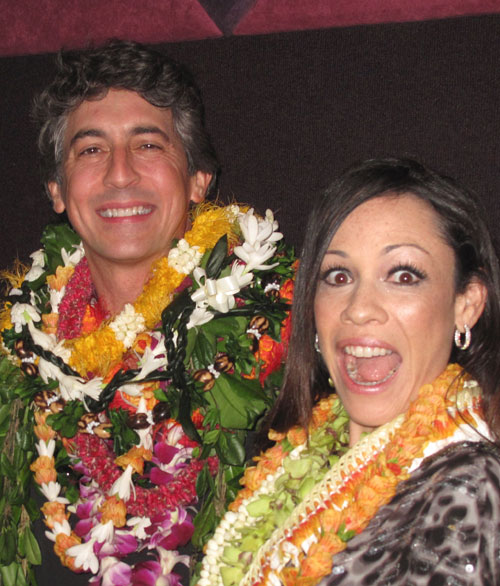
When Alexander Payne‘s turn came to speak in the glow of The Descendants winning best motion picture drama at the Jan. 15 Golden Globes, he made sure to thank the people of Hawaii and author Kaui Hart Hemmings.
He did something few directors do by involving Hemmings, a Hawaii native and resident, in the adaptation, preproduction and production of the George Clooney-starring film. He’s widely credited her vital role in helping him get a fix on the island state’s particular culture, or as much as a mainlander like himself can attain. For all the time he spent researching, writing, prepping and shooting there, mainly in Honolulu, he never lost sight of being a visitor in need of expert advice.
Of course, the well-received 2007 Hemmings novel is the reason there’s a movie at all. He knows golden material when he sees it and he remained true to the book beyond her expectations.
“I’ve had the privilege of seeing Alexander making this film, from location scouting and casting to directing and filming. His attention to the minutiae of Hawaiian life, his humor and restraint, his casting decisions – I felt like I’d be surprised if it wasn’t a good film. Still, I couldn’t prepare myself for how good,” says Hemmings. “It’s a film that sticks with you, teaches you something without being at all didactical. It brings Hawaii to the big screen, something that’s never been done before, in an authentic way. I never insisted on him being faithful to my novel, but he did, and I’m pretty happy about that since it led to results like these.”
His respect for her work and inclusion in his process is why he told a world-wide Globes audience, with some prompting from his Ad Hominem Enterprises producing partner and former co-writer, Jim Taylor, “…thanks to Kaui Hart Hemmings – she gave us a beautiful gift.”
“I don’t need the public thank you but…it sure does please the locals. I spent a lot of time with Alexander, the crew and George, so it was just fun times,” says Hemmings. “I’m a big fan of this movie. I have the privilege of feeling like I contributed to it in some way and so it’s nice to be acknowledged.”
In adhering closely to her tale of a good man negotiating personal upheavals, the film’s struck a responsive chord with critics and audiences…
YOU CAN READ THE REST OF THE STORY IN MY NEW BOOK-
Alexander Payne: HIs Journey in Film – A Reporter’s Perspective 1998-2012
A compilation of my articles about Payne and his work. Now available for pre-ordering.


Related articles
- Cinematographer Phedon Papamichael, Producer Jim Burke and Actress Shailene Woodley Discuss Working with Alexander Payne on ‘The Descendants’ and Kaui Hart Hemmings Comments on the Adaptation of Her Novel (leoadambiga.wordpress.com)
- Alexander Payne Achieves New Heights in ‘The Descendants’ (leoadambiga.wordpress.com)
- The Descendants by Kaui Hart Hemmings – READ THE BOOK FIRST (Drool Over Clooney in the Film Later): (booktopia.com.au)
- Alexander Payne and Kaui Hart Hemmings on the Symbiosis Behind His Film and Her Novel ‘The Descendants’ and Her Role in Helping Him Get Hawaii Right (leoadambiga.wordpress.com)
- Payne Delivers Another Screen Gem with ‘The Descendants’ and Further Enhances His Cinema Standing (leoadambiga.wordpress.com)
- Alexander Payne Delivers Graceful Oscar Tributes – The Winner for Best Adapted Screenplay Recognizes Clooney, Hemmings and His Mom (leoadambiga.wordpress.com)
Related articles
From the Archives: About Payne – Alexander Payne on “About Schmidt,” Jack Nicholson and the comedy of deep focus

From the Archives:
About Payne – Alexander Payne on “About Schmidt,” Jack Nicholson and the comedy of deep focus
©by Leo Adam Biga
Originally published in The Reader (www.thereader.com)
Where Citizen Ruth and Election were accorded the kind of lukewarm studio backing (from Miramax and Paramount/MTV Films, respectively) that idiosyncratic movies get when “the suits” don’t fully endorse or understand them, Schmidt is getting the type of red carpet treatment from New Line Cinema execs that signals they see a potential winner, read — moneymaker, here. And why not?
The film, making its Nebraska premiere December 10 at the new Mary Riepma Ross Media Arts Center (formerly the Mary Riepma Ross Film Theater) in downtown Lincoln, appears to have everything going for it heading into Hollywood’s big ticket winter season, when prestige pictures are positioned at the cineplex for box-office leverage and Academy consideration.
The timing of Schmidt’s release seems right. There’s the snob appeal that comes from boffo Cannes and New York Film Festival screenings of the film this past spring and summer. There’s the raves it received from Stephen Holden in the New York Times, Kenneth Turan in the Los Angeles Times and a slew of other name critics for major media outlets. There’s also serious Oscar talk for Jack Nicholson’s celebrated turn as dour Omaha Everyman Warren Schmidt and for Payne and writing partner Jim Taylor’s sardonic take on middle American mores.
Then there’s the priceless mojo Nicholson’s mystique brings to the Nebraska-made project.
Of course, none of this guarantees Schmidt will do any business, especially in light of the fact Payne’s films have so far fared better in home-market release, where they have time to be discovered and appreciated, than in theaters. That his films appeal to a discriminating audience is logical given his wry, sagacious work, which is really in the realm of social commentary.
Film critic David Denby called Payne and Taylor “perhaps the only true social satirists now working in American movies.” But satire can be a hard pill for filmgoers to swallow. They may feel the sting hits too close to home or they may prefer something lighter to go with their concessions.
According to Dan Ladely, director of the Ross Media Arts Center, Schmidt is “a little bit of a departure from Alexander’s two previous films, which were known for their kind of biting satire. This film is a little bit more nostalgic.” While perhaps gentler, it is, like the others, a painfully honest and ironic examination of how good people lose their way and court despair even amidst the so-called Good Life.
In today’s spoon-fed movie culture, bleak is a hard sell unless accompanied by big action set pieces, and the only thing passing for action in Schmidt is Nicholson’s comic struggle atop a water bed. That scene closes a sequence in which the tight-assed, buttoned-down Schmidt is disgusted by the outrageous new family he inherits via his daughter’s impending wedding.
The son-in-law’s mother, Roberta, is, as deliciously played by Kathy Bates, a brazen woman whom, Payne said, “is the type of person that will say anything to anyone.” At one point she tries seducing Schmidt in a hot tub by “telling him about how sexual she is and how she had her first orgasm in ballet class at age six,” said Payne, delighted with offending every propriety Schmidt holds dear. “Oh, it’s so fun to torture your characters.”
In this scene, as in much of the film, Nicholson’s performance rests more on his facial-physical reactions than words. Indeed, instead of explosions, verbal or otherwise, moviegoers get the implosion that Nicholson’s Warren Schmidt, a retired and widowed Woodmen of the World Life Insurance actuarial, undergoes.
Severed from the twin tethers of job and wife that defined him and held his orderly life together, he begins questioning everything about his existence, including the choices he made. He lets himself go.
The state of his disillusion is captured in the film’s ad campaign in which Schmidt appears as a shell-shocked, disheveled man shadowed by a dark cloud overhead in an otherwise clear blue sky.
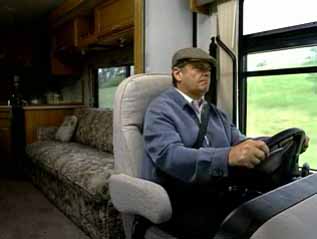
In the throes of this mid-life crisis, he sets off, in a huge, unwieldy motor home that is an apt expression of his desperate inadequacy, on an existential road trip across Nebraska. His destination is Denver, where he heads ostensibly to heal his wounded relationship with his daughter and to save her, as he sees it, from the mistake she is about to make in marrying a frivolous man. Along the way, he conveys his troubles to an odd assortment of people he turns to or rails against in a kind of unfolding nervous breakdown. Unable to express his real feelings to those closest to him, he instead pours out his soul, in writing (and in voice-over), to an African orphan he sponsors, Ndugu, who can’t possibly understand his dilemma.
Regarding Nicholson’s portrayal of a man in crisis, Dan Ladely calls it “probably one of the most subdued performances he’s ever given and maybe one of his best. I’d be really surprised if he doesn’t get nominated for an Oscar. It’s a role where he really stretched himself, and I think probably a lot of the credit for that could be given to Alexander, because Alexander is a director who works well with actors. He gets a lot out of them.”
Directing Nicholson allowed Payne to work with an actor he greatly admires and solidified his own status as a sought-after filmmaker. He found Nicholson to be a consummate professional and supreme artist.
“Nicholson does a lot of work on his character before shooting. Now, a lot of actors do that, but he REALLY does it. To the point where, as he describes it, he’s so in character and so relaxed that if he’s in the middle of a take and one of the movie lights falls or a train goes through or anything, he’ll react to it in character. He won’t break.” Payne said Nicholson doesn’t like a lot of rehearsal “because he believes in cinema as the meeting of the spontaneous and the moment. His attitude is, ‘What if something good happens and the camera wasn’t on?’”
YOU CAN READ THE REST OF THE STORY IN MY NEW BOOK-
Alexander Payne: His Journey in Film, A Reporter’s Perspective 1998-2012
A compilation of my articles about Payne and his work. Now available for pre-ordering.


Related articles
- From the Archives: A Hollywood Dispatch from the set of Alexander Payne’s Sideways – A Rare, Intimate, Inside Look at Payne and His Process (leoadambiga.wordpress.com)
- From the Archives: A Road Trip Sideways – Alexander Payne’s Circuitous Journey to His Wine Country Film Comedy (leoadambiga.wordpress.com)
- From the Archives: Alexander Payne, an Exclusive Interview Following the Success of ‘Sideways’ (leoadambiga.wordpress.com)
- From the Archives: About ‘About Schmidt’: The Shoot, Editing, Working with Jack and the Film After the Cutting Room Floor (leoadambiga.wordpress.com)
- From the Archives: Conquering Cannes, Alexander Payne’s Triumphant Cannes Film Festival Debut with ‘About Schmidt’ (leoadambiga.wordpress.com)
- When Laura Met Alex: Laura Dern & Alexander Payne Get Deep About Collaborating on ‘Citizen Ruth’ and Their Shared Cinema Sensibilities (leoadambiga.wordpress.com)
- Alexander Payne on ‘The Descendants’ (variety.com)
- From the Archives: Alexander Payne Discusses His New Feature ‘About Schmidt’ Starring Jack Nicholson, Working with the Star, Past Projects and Future Plans (leoadambiga.wordpress.com)
- Alexander Payne Achieves New Heights in ‘The Descendants’ (leoadambiga.wordpress.com)
- Omaha’s Film Reckoning Arrives in the Form of Film Streams, the City’s First Full-Fledged Art Cinema (leoadambiga.wordpress.com)
- Payne Delivers Another Screen Gem with ‘The Descendants’ and Further Enhances His Cinema Standing (leoadambiga.wordpress.com)
- Alexander Payne Delivers Graceful Oscar Tributes – The Winner for Best Adapted Screenplay Recognizes Clooney, Hemmings and His Mom (leoadambiga.wordpress.com)
From the Archives: Conquering Cannes – Alexander Payne’s triumphant Cannes Film Festival debut with “About Schmidt”

From the Archives: Conquering Cannes, –Alexander Payne‘s triumphant Cannes Film Festival debut with “About Schmidt”
©by Leo Adam Biga
Originally published in the Omaha Weekly
Press accounts of Alexander Payne’s conquest of the Cannes Film Festival, where his new film About Schmidt created a buzz in the main competition, have largely focused on the film losing out on any awards or on the critical hosannas directed toward him and his star, Jack Nicholson.
But, as Payne noted during a recent Omaha visit, Cannes is a phantasmagorical orgy of the senses that cannot be reduced to mere prizes or plaudits. It is at once an adoring celebration of cinema, a crass commercial venue and a sophisticated cultural showcase. It is where the French bacchanal and bistro sensibilities converge in one grand gesture for that most democratic art form — the movies. Only a satirist like Payne can take the full, surreal measure of Cannes and expose it for all its profundity and profanity.
“I likened it to the body of super model Gisel (Bundchen),” he said, “which is extraordinarily beautiful and draped in the most elegant clothes on the planet, yet, also possesses…bile and all sorts of fetid humors inside of it. The festival is all of those things. I mean, one thing is the elegance — the red carpet, the beautiful tuxes and gowns, the fabulous beach parties and all that stuff. Another thing is the best filmmakers in the world showing work there.
“And still another side is the marketplace, which is like a bazaar, with people talking about how many videocassette units your film’s going to sell in Indonesia. It’s that kind of sordid marketplace that gives cinema its vitality. And you can’t have the cinema body without all of it. So, it’s really like a beautiful woman. It’s extraordinary to look at from the outside, but once you cut it and look inside, you could throw up.”
He said the confluence of glitz, glamour and garishness reminded him of Las Vegas. “It’s all kind of Vegasy. You see really elegant things and you see really tacky things, which I liked. I was in such a good mood, that I just loved everything.”
So, what do you do for an encore when your third feature film makes a splash at the mecca of world cinema? Well, if you’re riding a wave of success like Alexander Payne, your hot new film is next chosen to open the New York Film Festival (NYFF), September 27 through October 13, at Lincoln Center. “It’s an honor,” he said regarding Schmidt’s recently announced selection to open the Big Apple event. “That will keep the awareness of the film afloat. A lot of the New York press and international press and kind of the tastemaker-types will see it, I’m told.”
To be accepted as an opening night feature there, a film must be making its North American premiere, which forced New Line Cinema to decline invitations for Schmidt to play other major festivals on the continent, including those in Toronto and Telluride. No matter. The word-of-mouth momentum attached to Schmidt from its Cannes screenings is so strong that early industry patter is already positioning the film as an award-contending late fall release.
For the filmmaker, Cannes (May 15-26) marked a milestone in a still young career whose sky-is-the-limit ceiling has his work being compared to and his name being mentioned with the most celebrated cinema artists in the world today. An indication of his growing stature is the fact that during a recent Omaha visit he was shadowed by a New York Times reporter preparing a major profile on him. He fully recognizes, too, what Cannes means for his reputation, although the sardonic Payne points out the absurdity attending such puffery.
“It was a huge honor just to be there…and it’s a nice stepping-stone,” he said.. “As far as I’m concerned, it’s bigger than being nominated for an Oscar (he and writing partner Jim Taylor earned Best Adapted Screenplay nods for Election) because it’s international. It’s also really political and full of bullshit to some degree, but what isn’t? But given that reality of the world, it’s still about pure love of cinema, not Hollywood people slapping each other on the back and awarding movies like A Beautiful Mind. Ugh.”
YOU CAN READ THE REST OF THE STORY IN MY NEW BOOK-
Alexander Payne’s Journey in Film: A Reporter’s Perspective, 1998-2012
A compilation of my articles about Payne and his work. Now available for pre-ordering.

Related articles
- From the Archives: About ‘About Schmidt’: The Shoot, Editing, Working with Jack and the Film After the Cutting Room Floor (leoadambiga.wordpress.com)
- From the Archives: Alexander Payne – Portrait of a Young Filmmaker (leoadambiga.wordpress.com)
- From the Archives: A Road Trip Sideways – Alexander Payne’s Circuitous Journey to His Wine Country Film Comedy (leoadambiga.wordpress.com)
- From the Archives: A Hollywood Dispatch from the set of Alexander Payne’s Sideways – A Rare, Intimate, Inside Look at Payne and His Process (leoadambiga.wordpress.com)
- When Laura Met Alex: Laura Dern & Alexander Payne Get Deep About Collaborating on ‘Citizen Ruth’ and Their Shared Cinema Sensibilities (leoadambiga.wordpress.com)
- From the Archives: Alexander Payne, an Exclusive Interview Following the Success of ‘Sideways’ (leoadambiga.wordpress.com)
- Alexander Payne Achieves New Heights in ‘The Descendants’ (leoadambiga.wordpress.com)
- From the Archives: Alexander Payne Discusses His New Feature ‘About Schmidt’ Starring Jack Nicholson, Working with the Star, Past Projects and Future Plans (leoadambiga.wordpress.com)
- Omaha’s Film Reckoning Arrives in the Form of Film Streams, the City’s First Full-Fledged Art Cinema (leoadambiga.wordpress.com)
From the Archives: About “About Schmidt”: The shoot, editing, working with Jack and the film After the cutting room floor

©by Leo Adam Biga
Originally published in the Omaha Weekly
Ever since Omaha native Alexander Payne wrapped shooting on About Schmidt, the hometown movie whose star, Jack Nicholson, caused a summer sensation, the filmmaker has been editing the New Line Cinema pic in obscurity back in Los Angeles.
That’s the way Hollywood works. During production, a movie is a glitzy traveling circus causing heads to turn wherever its caravan of trailers and trucks go and its parade of headliners pitch their tents to perform their magic. It’s the Greatest Show on Earth. Then, once the show disbands, the performers pack up and the circus slips silently out of town. Meanwhile, the ringmaster, a.k.a. the director, holes himself up in an editing suite out of sight to begin the long, unglamorous process of piecing the film together from all the high wire moments captured on celluloid to try and create a dramatically coherent whole.
Whether Schmidt is the breakout film that elevates Payne into the upper echelon of American directors remains to be seen, but it is clearly a project with the requisite star power, studio backing and artistic pedigree to position him into the big time.
An indication of the prestige with which New Line execs regard the movie is their anticipated submission of it to the Cannes Film Festival. Coming fast-on-the-heels of Election, Payne’s critically acclaimed 1999 film that earned he and writing partner Jim Taylor Oscar nominations for Best Adapted Screenplay, Schmidt will be closely watched by Hollywood insiders to see how the director has fared with a bona fide superstar and a mid-major budget at his disposal.
Regardless of what happens, Payne’s unrepentant iconoclasm will probably keep him on the fringe of major studio moviemaking, where he feels more secure anyway. As editing continues on Schmidt, slated for a September 2002 release, Payne is nearing his final cut. The film has already been test previewed on the coast and now it’s just a matter of trimming for time and impact.
While in town over Thanksgiving Payne discussed what kind of film is emerging, his approach to cutting, the shooting process, working with Nicholson and other matters during a conversation at a mid-town coffeehouse, Caffeine Dreams. He arrived fashionably late, out of breath and damp after running eight blocks in a steady drizzle from the brownstone apartment he keeps year-round.
He and editor Kevin Tent, who has cut all of Payne’s features, have been editing since June. They and a small staff work out of a converted house in back of a dentist’s office on Larchmont Street in Los Angeles. Payne and Tent work 10 -hour days, six days a week.
“As with any good creative relationship we have a basic shared sensibility,” Payne said of the collaboration, “but we’re not afraid to disagree, and there’s no ego involved in a disagreement. We’re like partners in the editing phase. He’ll urge me to let go of stuff and to be disciplined.”
By now, Payne has gone over individual takes, scenes and sequences hundreds of times, making successive cuts along the way. What has emerged is essentially the film he set out to make, only with different tempos and tones than he first imagined.
“Rhythmically, it’s come out a little slower than I would have wanted it,” he said. “I think it’s been something hard for me and for those I work with to accept that because of it’s subject matter and for whatever ineffable reason this is a very different film in pacing and feel than the very kinetic and funny Election, which got so much praise. It has, I think, the same sensibility and humor as Election but it’s slower and it lets the drama and emotion play more often than going for the laugh. I think it just called for that. With this one, we don’t go for the snappy edit.”
Even before Schmidt, Payne eschewed the kind of MTV-style of extreme cutting that can detract from story, mood, performance.
“Things are over-covered and over-edited these days for my tastes. There’s many exceptions, of course, but the norm seems to be to cut even though you don’t need to. And, in fact, not only don’t filmmakers need to, their cuts are disruptive to watching performance and getting the story. I like watching performance. My stuff is about getting performance. I like holding within a take as long as possible until you have to cut.”
YOU CAN READ THE REST OF THE STORY IN MY FORTHCOMING BOOK-
Alexander Payne’s Journey in Film: A Reporter’s Perspective, 1998-2012
A compilation of my articles about Payne and his work. Available this fall as an ebook and in select bookstores.

Related articles
- From the Archives: Alexander Payne Discusses His New Feature ‘About Schmidt’ Starring Jack Nicholson, Working with the Star, Past Projects and Future Plans (leoadambiga.wordpress.com)
- From the Archives: Conquering Cannes, Alexander Payne’s Triumphant Cannes Film Festival Debut with ‘About Schmidt’ (leoadambiga.wordpress.com)
- From the Archives: A Hollywood Dispatch from the set of Alexander Payne’s Sideways – A Rare, Intimate, Inside Look at Payne and His Process (leoadambiga.wordpress.com)
- From the Archives: Alexander Payne – Portrait of a Young Filmmaker (leoadambiga.wordpress.com)
- From the Archives: A Road Trip Sideways – Alexander Payne’s Circuitous Journey to His Wine Country Film Comedy (leoadambiga.wordpress.com)
- From the Archives: Alexander Payne, an Exclusive Interview Following the Success of ‘Sideways’ (leoadambiga.wordpress.com)
- Jim Taylor, the Other Half of Hollywood’s Top Screenwriting Team, Talks About His Work with Alexander Payne (leoadambiga.wordpress.com)
- When Laura Met Alex: Laura Dern & Alexander Payne Get Deep About Collaborating on ‘Citizen Ruth’ and Their Shared Cinema Sensibilities (leoadambiga.wordpress.com)
- Alexander Payne Achieves New Heights in ‘The Descendants’ (leoadambiga.wordpress.com)
From the Archives: Alexander Payne discusses “About Schmidt” starring Jack Nicholson, working with the iconic actor, past projects and future plans
From the Archives: Alexander Payne discusses “About Schmidt” starring Jack Nicholson
Working with the iconic actor, past projects and future plans
©by Leo Adam Biga
Originally published in the Omaha Weekly
Citizen Ruth announced him as someone to watch on the independent film scene. Election netted him and his writing partner, Jim Taylor, an Oscar nomination for best adapted screenplay. The commercial success of Meet the Parents, whose script he and Taylor contributed to, led to another high profile hired gun job — a rewrite of Jurassic Park III.
Now, with About Schmidt, which began filming in his hometown of Omaha this week, filmmaker Alexander Payne finds himself playing in a $30 million sandbox in his own backyard and sharing the fun with one of the biggest movie stars ever — Jack Nicholson. It is the culmination of Payne’s steady climb up the Hollywood film ladder the past seven years. It has been quite a journey already for this amiable writer-director with the sharp wit and the killer good looks. And the best still appears ahead of him.
During an exclusive interview he granted to the Omaha Weekly at La Buvette one recent Sunday afternoon in the Old Market (fresh from seeing off his girlfriend at the airport) Payne discussed the genesis and the theme of his new film, his collaboration with Jack, his take on being a rising young filmmaker, his insider views on working in the American movie industry and his past and future projects.
Although About Schmidt gets its title from the 1997 Louis Begley novel, it turns out Payne’s film is only partly inspired by the book and is actually more closely adapted from an earlier, unproduced Payne screenplay called The Coward.
As he explained, “When I first got out of film school 10 years ago I wrote a script for Universal that had the exact same themes as About Schmidt…a guy retiring from a professional career and facing a crisis of alienation and emptiness. Universal didn’t want to make it. I was going to rewrite it and come back to Omaha and try and get it made, and then Jim Taylor and I stumbled on the idea of Citizen Ruth, so I pursued that and put this on the back burner. Then, about three years ago, producers Harry Gittes and Michael Besman sent me the Begley book, which has similar themes, although set in a very different milieu.”
Nicholson, who had read the book, was already interested. Payne first commissioned another writer to adapt the novel but that didn’t pan out. “I didn’t relate very much ultimately to the adaptation and then I turned to Jim Taylor and said, ‘You know that thing I was writing 10 years ago? How would you like to rewrite that with me under the guise of an adaptation for this thing.’” Taylor agreed, and the film About Schmidt was set in motion, with Gittes and Besman as producers.
Taking elements from both the earlier script and the Begley book, the character of Schmidt is now a a retired Woodmen of the World actuary struggling to come to terms with the death of his longtime wife, the uneasy gulf between he and his daughter, his dislike of his daughter’s fiance and the sense that everything he’s built his life around is somehow false. Full of regret and disillusionment, he sees that perhaps life has passed him by. To try and get his head straight, he embarks on a road trip across Nebraska that becomes a funny, existential journey of self-discovery. A kind of Five Easy Pieces meets a geriatric Easy Rider.
“What interested me originally was the idea of taking all of the man’s institutions away from him,” Payne said. “Career. Marriage. Daughter. It’s about him realizing his mistakes and not being able to do anything about them and also seeing his structures stripped away. It’s about suddenly learning that everything you believe is wrong — everything. It asks, ‘Who is a man? Who are we, really?’”
Typical of Payne, he doesn’t offer easy resolutions to the dilemmas and questions he poses, but instead uses these devices (as he used abortion politics and improper student-teacher activities in his first two films) as springboards to thoughtfully and hopefully, humorously explore issues. “I don’t even have the answers to that stuff, nor does the film really, at least ostensibly. But, oh, it’s a total comedy. I hope…you know?”
For Payne, who derives much of his aesthetic from the gutsy, electric cinema of the 1970s, having Nicholson, whose work dominated that decade, anchor the film is priceless. “One thing I like about him appearing in this film is that part of his voice in the ‘70s kind of captured alienation in a way. And this is very much using that icon of alienation, but not as someone who is by nature a rebel, but rather now someone who has played by the rules and is now questioning whether he should have. So, for me, it’s using that iconography of alienation, which is really cool.”
Beyond the cantankerous image he brings, Nicholson bears a larger-than-life mystique born of his dominant position in American cinema these past 30-odd years. “He has done a body of film work,” Payne said. “Certainly, his work in the ‘70s is as cohesive a body of work as any film director’s. He’s been lucky enough to have been offered and been smart enough to have chosen roles that allow him to express his voice as a human being and as an artist. He’s always been attracted to risky parts where he has to expose certain vulnerabilities.”
YOU CAN READ THE REST OF THE STORY IN MY FORTHCOMING BOOK-
Alexander Payne’s Journey in Film: A Reporter’s Perspective, 1998-2012
A compilation of my articles about Payne and his work. Available this fall as an ebook and in select bookstores.


Related articles
- From the Archives: About ‘About Schmidt’: The Shoot, Editing, Working with Jack and the Film After the Cutting Room Floor (leoadambiga.wordpress.com)
- From the Archives: Conquering Cannes, Alexander Payne’s Triumphant Cannes Film Festival Debut with ‘About Schmidt’ (leoadambiga.wordpress.com)
- From the Archives: Alexander Payne – Portrait of a Young Filmmaker (leoadambiga.wordpress.com)
- From the Archives: Alexander Payne, an Exclusive Interview Following the Success of ‘Sideways’ (leoadambiga.wordpress.com)
- From the Archives: A Road Trip Sideways – Alexander Payne’s Circuitous Journey to His Wine Country Film Comedy (leoadambiga.wordpress.com)
- Jim Taylor, the Other Half of Hollywood’s Top Screenwriting Team, Talks About His Work with Alexander Payne (leoadambiga.wordpress.com)
- When Laura Met Alex: Laura Dern & Alexander Payne Get Deep About Collaborating on ‘Citizen Ruth’ and Their Shared Cinema Sensibilities (leoadambiga.wordpress.com)
- Alexander Payne Achieves New Heights in ‘The Descendants’ (leoadambiga.wordpress.com)
Omaha’s film reckoning arrives in form of Film Streams, the city’s first full-fledged art cinema
The much-ballyhooed rise of Omaha’s culture scene got a major boost with the addition of the city’s first full-fledged art cinema, Film Streams, in 2007. I wrote the following cover story for The Reader (www.thereader.com) on the eve of Film Stream’s much anticipated opening. It’s an analytical piece that examines the viability of the enterprise in this market and the various things that this art cinema’s founder and director, Rachel Jacobson, put in place to give it sustainability. Because I was a film programmer myself for several years in Omaha I have a certain informed perspective on what the art cinema scene looked like before and after Film Streams.
Five years later, there’s no doubting that Film Streams is a runaway success and that Jacobson is the main reason why. She’s cannily secured both a strong endowment and membership base from Omaha’s movers and shakers, along with steady grant support, as backing for the world-class programming she and her staff have presented right from the start. She’s also cultivated two star advisory board members in Alexander Payne and Kurt Andersen who help give the venue cachet and credibility well beyond Omaha. If you’re a local and you haven’t been to Film Streams yet, shame on you. If you plan to visit, be sure to make it one of your stops. Payne has been instrumental in the theater hosting some high profile film names at special fundraising events, including Laura Dern, Debra Winger, and Steven Soderbergh. My stories on the Dern, Winger, and Soderbergh events can be found on this blog.
The theater’s next special guest, for a spring-summer event, is a genuine cinema legend. More on that in a few months. Check out everything Film Streams at http://www.filmstreams.org.
And if you’re so inclined, check out my deep store of film stories on this blog.

Omaha‘s film reckoning arrives in form of Film Streams, the city’s first full-fledged art cinema
©by Leo Adam Biga
Originally appeard in The Reader (www.thereader.com)
Rachel Jacobson’s Film Streams dream turns reality this weekend. That’s when the non-profit art cinema she’s synonymous with opens in North Downtown. The Ruth Sokolof Theatre at 14th and Webster joins Slowdown, the Saddle Creek Records live music bar that shares the same shell, as the next-big-thing in Omaha culture.
In truth, her dream is one many area cinephiles harbored over time, but she’s the first with the means and the moxie to have gone after it. Audaciously, she’s not hitched the theater to an entrenched cultural institution, such as a university or museum. Instead, Film Streams is an “autonomous nonprofit.” While Saddle Creek doesn’t have an active business interest in it, as the building’s builder, owner, landlord and neighbor, Saddle Creek Records is an institutional partner in spirit.
In some respects, it’s a case of good karma, as Jacobson articulated her vision just as Omaha’s much-discussed synergy of ambitious new art-cultural endeavors took off. Since 2000 the city’s seen come to fruition: various public arts projects; Qwest Center Omaha; the Riverfront Jazz and Blues Festival; the Holland Performing Arts Center; the downtown Omaha Lit Fest; the Great Plains Theatre Conference; the Omaha Film Festival and the Blue Barn Music Festival. Slowdown and Film Streams only add to the growing mix of can-do, cosmo, entertainment projects.
With an urban industrial look, from the clean, simple lines of its red brick and black steel exterior to the airy, open, many-windowed loft-style lobby-offices, the building plays off the retro-gentrified face of its eclectic environs. The interior’s exposed precast concrete and steel infrastructure and metal panel-encased windows lend a vaguely 19th century factory vibe. The pastel walls, natural finished Maple woods, Omer Arbel decorative lighting and Bludot furniture, plus a neoclassic Dineresque concessions stand, add a post-modern touch. A huge lithograph on one wall is of iconic Robert Mitchum from Night of the Hunter (a Jacobson favorite), adding a splash of drama and color to the light, Pop-style lobby.
The two auditoriums, one seating 206, the other 96, are intimate spaces with such requisite creature comforts as high-back, cup-holder chairs, and with such techno features as ample sound panels and multiple projection systems.
Surrounding the building is a mix of manufacturers, warehouses, divey boarding houses, pawn shops, bars, a homeless shelter and a day care center. To the west and north is trendy residential living in Creighton University dorms and Tip Top loft apartments, respectively. Hotels along the emerging Cuming Street Corridor to the north are going up fast. Bohemian spots like the Hot Shops, a few blocks north, are few and far between. The InPlay sports bar and Rick’s Cafe Boatyard are the nearest nice eateries. A couple blocks east is the whole riverfront scene. Traffic to and from the Qwest Center and Civic Auditorium may generate some walk-ins.
The building, set off by its striking black and white marquee and a wide, tree-lined curb, is the subject of much buzz. On a recent afternoon, as workers streamed in and out installing auditorium seats and unpacking assorted boxes in the lobby, passersby on foot and in cars rubbernecked for a glimpse inside.
Film Streams is situated in the projected hub of NoDo, the North Downtown redevelopment district the city’s pinning high hopes on. It could blow up into a destination place or just stagnate. Directly west is a vacant lot overgrown by weeds, a speculative site for a baseball stadium that some consider the missing anchor piece of this puzzle. For now though NoDo has a solid toe-hold and Film Streams is well-positioned as a cool modern throwback — a downtown neighborhood theater attached to the Saddle Creek-Slowdown star.
“Yeah, it couldn’t be a better location, really,” the lithe, long-haired Jacobson said from the Film Streams conference room, with its great view of the cityscape. “I mean, it’s amazing timing…it’s right place, right time, right people involved.”
It’s been a three-year love-fest for Jacobson. With her Cameron Diaz good looks, expatriate return from New York to her hometown, Saddle Creek hook up, Alexander Payne endorsement and philanthropic connections, she’s wrapped her fingers around the Big O!. Per her Revlon-smiling presence in those First National Bank television spots, she’s viewed as a poster girl for the Cool Young Urban Entrepreneurial set that local movers-and-shakers covet.
She’s also an example of the reverse brain drain this state needs; namely, she’s among the long line of Nebraska’s best and brightest to leave, only she’s the exception by coming back to realize her dream here. It’s a Chamber-made PR story.


All the attention has her a little queasy.
“This has been so tied to my personality the past two years because so much of it was in my head,” she said, “but now there’s a building, there’s people invested in it, it’s an organization. So I’m hoping it won’t be so synonymous with my name and my identity because that’s a little bit awkward and it also doesn’t bode well for the future…You want it to take on a life of its own and I hope it does.
“I think it’s important it have its own specific voice and personality just like any interesting small business.”
Rare for any start-up, much less a non-profit arts group venturing into unknown territory, i.e. a full-fledged art house in a burg that’s never really seen one, she’s gotten donors to pony up big time. Shaping Omaha’s cool quotient is a seductive thing and may help explain why Film Streams has attracted such widespread support.
“I think a lot people’s motivation for giving and being engaged with this organization is to have an affiliation with everything that’s going on in the arts scene in Omaha and to feel a part of it,” she said.
Her first home run was getting the Saddle Creek Boys, Robb Nansel and Jason Kulbel, to build the theater as part of their new NoDo headquarters complex, which includes Slowdown. The Saddle Creek-Film Streams relationship is a case of young urban professionals who share like-minded visions getting together. She lived and worked in New York when she ran into Nansel in 2002 and they laid out their dreams.
“Initially we were talking to Rachel as a friend and trying to help her figure out a place that would work for a theater in Omaha,” Kulbel said. “We had already been on some real estate searches for a similar sized space so we knew what was out there — nearly nothing, unfortunately. There was a fair amount of time that passed between first talking with her about it and approaching her about the idea of doing it downtown. I was personally very into the idea before we were involved on a business level. I have always seen it as something that would really help out the culture of Omaha, so I have really been into supporting the idea any way I could.”
Kulbel and Nansel serve on the Film Streams advisory board.
Then, with the help of her dad, Kutak Rock chair David Jacobson, she launched a capital campaign. It’s raised $1.7 million for theater operations and an endowment.
“You can’t underestimate the connection thing,” she said in reference to her father and the fact he heads a well-heeled law firm with a history of arts philanthropy. Her family’s standing in the Jewish community has also paid big dividends, including the Sokolof family gift recognized by the theater’s name. Even so, getting old farts to fork over serious dough for an art cinema took some doing in a town unused to thinking of film the way it does music or fine art.
“It’s not a new concept obviously, but it’s a new concept for Omaha,” she said. “There were definitely people in the beginning who gave me quizzical looks and with whom I had to use examples of older art forms, like theater or opera or symphony, and how these things have had to become nonprofit and how film is the great art form of the 20th century. So it just makes sense to have an organization devoted to celebrating film in that sort of reverential way.”
She feels her New York experience, including stints at Miramax and WNYC, gave her a foundation for thinking and speaking about film as a legit art form.
“In New York film is seen in the kind of light I’m talking about,” she said. “Werner Herzog is a household name. Even more obscure directors are known, not only by people who consider themselves to be film buffs, but just by anyone engaged in the cultural environment of the city. So I knew what needed to be articulated here. I don’t know if I could have done this without having lived there…”
New York’s vital arts community also instilled in her an “attitude that anything’s possible” asdding,”My friends there have been so supportive of this project — they all got it in like two seconds.” She’s found enough cinema sophisticates here to move forward.
Snagging an Oscar-winning filmmaker in Payne and a best-selling author and national public radio personality in Kurt Andersen for her board helped seal the deal.
The Payne name adds sizzle and legitimacy. It opens doors and check books. “I never imagined he would be involved to this degree,” said Jacobson, referring to his curating the inaugural repertory series. “His involvement is so significant.”

Alexander Payne has lent his support to Rachel Jacobson and Film Streams
Any skeptics left soon drank the Kool Aid when she secured mucho bucks from such community stalwarts as the Peter Kiewit Foundation and Dick Holland.
Besides getting heavyweights to embrace and fund her project, she’s done her homework, asked all the right questions and put in place a fundraising-membership structure that holds hope this experiment might bear fruit and have a future.
Experiment is the operative word, as no one knows whether Omaha can support an art cinema. Why? Start with there not having been one here before. Sure, there’s the Dundee Theatre, but it often shows titles that also play the cineplexes, it has no education component and its single screen, mid-town location and loyal fan base make comparisons difficult.
Then ask yourself, what size of an audience really exists for new indie American and first-run foreign pics that outside a few crossover titles a year do little business anywhere? Or for classics now readily accessible via NetFlix or cable?
If anyone knows it’s Danny Lee Ladely, director of the Mary Riepma Ross Media Arts Center in Lincoln, one of the nation’s longest-lived art cinemas.
“There’s a good reason why there aren’t more art theaters in Lincoln and Omaha,” he said, “and that’s because the markets here really aren’t large enough to sustain them. The only way the Ross has been able to survive over all these years is by having lots and lots of subsidies through grants, donations, memberships.”
Ladely also serves on the Film Streams advisory board.
Just how tough it is to get butts in the seats for art films is revealed by a recent study Ladely’s business manager did. “For every two-week run of a film we show we lose $3,500,” he said. It’s only the occasional art house darling, like The Piano or Fahrenheit 9/11 that makes a profit, much less a killing. Most lose money. He’s curious to see how the Film Streams repertory program, which features classics, does. He long ago stopped showing older titles as they drew fewer and fewer moviegoers.
If Omaha history is any gauge then there’s a limited pool to be sure. Many alternative film efforts have come and gone. As recently as six years ago the Brandeis Art Cinema tried and failed to be a Dundee Theatre at the Southroads Mall. Nontheatrical causalities in the ’90s included student-sponsored film programs at the University of Nebraska at Omaha and Creighton University, various series at the Joslyn Art Museum and a short-lived series at the Blue Barn Theatre. The New Cinema Coop., a part-time presenting group, had a long run in the ’70s-’80s. The Old Market Puppet Theatre and Edison Exchange preceded it.
Until now, the nearest art cinema has been the Ross, which might as well be Siberia for the few Omahans who trek down I-80 to catch a flick. Distance alone seems to negate head-on competition. Jacobson believes the two venues serve separate markets. Ladely mostly concurs, though he worries about losing the “handful” of Omaha faithful who go there. He sees a bigger conflict between Film Streams and the Dundee, but Jacobson says she’s after different titles than that mid-town theater and is willing to work cooperatively to avoid booking issues.
Likewise, Dundee Manager Matt Brown is willing to consult with Jacobson. It makes sense for them to talk, as each desires exclusive runs. Double bookings at theaters four miles apart would hurt one or both. He said Film Streams is definitely new “competition,” but not one that necessarily “conflicts” with the Dundee.
He feels the two theaters will largely go after different titles, with Film Streams eying more pure art films and the Dundee art films with more mainstream appeal. Jacobson confirms this. Still, there’s bound to be times when the two vie for the same features. The Dundee’s current attraction, Once, would seem to be an Film Streams fit. Film Stream’s opening first-run attraction, the subtitled French film La Vie en Rose, is not standard Dundee material, but who’s to say future titles won’t be?
Where things could get dicey for Film Streams, Brown said, is finding enough art material outside what the Dundee and the AMC chain show that boast the kind of strong reviews and word-of-mouth needed to build audiences. Reviews can make or break things, he said, and only a few titles captivate critics and audiences. Brown said AMC may pose a problem, as it shows many art titles as loss leaders. However, Jacobson said studios/distributors tell her they prefer these titles play in an art cinema that nurtures them rather than in a cineplex that buries them.
It may take time for Film Streams to find its niche. While the Dundee books first-run features months in advance, Film Streams, at least for now, takes a more fluid approach. Jacobson’s eying several titles from the 2007 Cannes Film Festival for her fall/winter schedule. Her upcoming repertory programs after the Payne series include an Adaptations series and a Nebraska series.
Jacobson’s oft-stated belief, one shared by Brown, that the addition of Film Streams can help grow audiences for art fare and therefore benefit everyone sounds good. But the problem gets back to the relatively few folks who go see films that are obscure, subtitled or both or that can be readily viewed at home. Each tells you the city can enjoy a vital art cinema scene with multiple venues. But with two year-round operations here, it stands to reason one or both will be squeezed in the process.

To cover a projected $800,000 annual operating budget Film Streams won’t need the volume of bodies and receipts suburban cineplexes generate. Film Streams expects to offset its smaller attendance/take the same way the Ross does — with grants, donations and membership revenue. Through last week Film Streams had sold 500 memberships, which are $50 for individuals and $35 for students/seniors.
“That’s the whole business plan,” she said. “That’s exactly why we diversified our income streams. We plan to keep every single one of those income streams afloat if we can. Box office and concessions and even rentals of our space will only amount to just over 50 percent of our operating budget. Everything else will have to come from membership contributions, corporate sponsorships, foundation gifts…People in the community have to continue to support this in order for us to exist.”
A small staff will keep overhead low. Besides Jacobson, chief programmer and fundraiser, there’s operations manager Ann Ploeger and communications coordinator Casey Logan. Box-office/concessions workers and union projectionists will be contracted per show.
Whereas the Ross is insulated to a degree from poor attendance by its association with the University of Nebraska-Lincoln, Film Streams stands alone, on an island.
“The Ross has an advantage that has really been important in the survival and the success of the program and that is that it’s part of the university,” Ladely said.
On the other hand, Film Streams has formed an endowment, something the Ross, contrary to popular belief, doesn’t have. As Ladely noted, it’s true the center’s namesake Mary Riepma Ross donated millions, but all of it went toward building its new center. The Friends of the Ross does have a small endowment.
Just as the Ross is utilized by UNL for classes, Film Streams plans to invite organizations to rent the space for its own or collaborative programs. “We can make it into more than just a movie theater and bring people here who aren’t necessarily cinephiles. That’s going to be a huge part of what we do,” said Jacobson, who envisions partnering with existing events, such as the Omaha Lit Fest or Omaha Film Festival, and with organizations that have a natural cultural connection to Film Streams films/series.

Photo by Chris Machian
Public radio host Kurt Andersen interviews the director of the new film “Nebraska,” Alexander Payne, and stars Will Forte and Bruce Dern in Omaha, Neb. Later, another of the film’s actors, June Squibb, surprised the audience by joining the conversation. The event celebrated Film Streams’ Ruth Sokolof Theater, Omaha’s non-profit cinema. In excess of 1,600 people attended, and more than $300,000 were raised to support Film Streams programs.
Previous art film efforts in town lacked the cool, state-of-the-art digs and amenities Film Streams delivers. Joslyn’s flirted with cinema but despite its splendor it lacks a bona fide theater space and has never really committed to film. The closest anyone came is when the New Cinema screened alternative fare at the old Center Street Theatre and when the Park IV ran a repertory classics series, but as legit as those venues were their poverty row quarters, budgets and revenues spelled failure.
Jacobson was so intent on doing an art cinema she was at one time prepared to marry it to a Joslyn or do it on the cheap — “like squatting in an old warehouse.”
The way things worked out, she’s got the real thing. The Ross in Lincoln is a model for it, as are landmark programs back East, including those at the George Eastman House, the Museum of Modern Art, the Brooklyn Academy of Music and New York’s Film Forum. “Film Forum was the one I looked at most frequently,” she said. “It’s completely autonomous and it’s devoted to film and that’s the mode I really wanted to emulate. That’s how I felt you could be most true to the mission, because if you’re within someone else’s mission then you just have to make too many compromises. So I’m very happy it turned out the way it did.”
That’s not to say she doesn’t consult people. She bends the ear of veterans like the Ross’ Ladely and her booker, Amherst, Mass.-based Connie White, who programmed the Coolidge Corner and Brattle Theatres in Boston. She also has the advantage of a network of industry contacts, Payne among them, who should help steer major film artists here for lectures, panels, symposiums, retrospectives, et all.
“I’m really excited about the potential for that,” she said.
In terms of anticipation, there hasn’t been anything like this for a new local arts facility since the Holland opened in 2005. A much larger, costlier project, it was the first major new performing venue here in a long time, thus it netted high attention and expectation. Film Streams is not only the first comprehensive art/repertory house here, it’s the first cinema of any kind downtown since the early ‘90s, when the New Cinema converted a storefront at 15th and Davenport.
Unlike Film Streams, the Holland has a built-in fan base as the home to the Omaha Symphony, whose members it markets to. The Holland is also located right in the heart of downtown, not on its northern fringes. Slowdown’s niche indie music model is much closer to Film Streams and its specialized cinema offerings.
The question now is: Will enough people buy memberships and fill seats to keep the theater a viable center that donors want to support? Only time will tell. Meanwhile, Jacobson’s focused on “executing” what till now has been a run-through. The dress rehearsals are over and now the screen lights up for real.
“One thing I’m constantly thinking about is sustainability. That’s really the ultimate goal,” she said. “My biggest fear with this is that it will fizzle out in five years. I mean, I don’t think it’s going to…I think we planned this out and we have enough people invested in it that it won’t, but who knows.
“If everyone who says they’re going to be here all the time is here some of the time, then we’ll do OK.”
Jacobson was reminded of what someone asked her recently — what’s it like to do a job that’s your passion? “It was always my dream to do something I loved, but one thing is you can never, ever escape it. You’re always working, because it is me.”
Related articles
- When Laura Met Alex: Laura Dern & Alexander Payne Get Deep About Collaborating on ‘Citizen Ruth’ and Their Shared Cinema Sensibilities (leoadambiga.wordpress.com)
- Alexander Payne Achieves New Heights in ‘The Descendants’ (leoadambiga.wordpress.com)
- From the Archives: Alexander Payne – Portrait of a Young Filmmaker (leoadambiga.wordpress.com)
- Cinematographer Phedon Papamichael, Producer Jim Burke and Actress Shailene Woodley Discuss Working with Alexander Payne on ‘The Descendants’ and Kaui Hart Hemmings Comments on the Adaptation of Her Novel (leoadambiga.wordpress.com)
- Omowale Akintunde’s In-Your-Face Race Film for the New Millennium, ‘Wigger,’ Introduces America to a New Cinema Voice (leoadambiga.wordpress.com)
- Native Omaha Days: A Black is Beautiful Celebration, Now, and All the Days Gone By (leoadambiga.wordpress.com)
- Jeff Slobotski and Silicon Prairie News Create a Niche by Charting Innovation (leoadambiga.wordpress.com)
- From the Archives: Conquering Cannes, Alexander Payne’s Triumphant Cannes Film Festival Debut with ‘About Schmidt’ (leoadambiga.wordpress.com)
- From the Archives: About ‘About Schmidt’: The Shoot, Editing, Working with Jack and the Film After the Cutting Room Floor (leoadambiga.wordpress.com)
- From the Archives: Alexander Payne Discusses His New Feature ‘About Schmidt’ Starring Jack Nicholson, Working with the Star, Past Projects and Future Plans (leoadambiga.wordpress.com)
- Vincent Alston’s Indie Film Debut, ‘For Love of Amy,’ is Black and White and Love All Over (leoadambiga.wordpress.com)
From the Archives: Alexander Payne – Portrait of a young filmmaker

From the Archives: Alexander Payne – Portrait of a young filmmaker
© by Leo Adam Biga
Originally published in The Reader (www.thereader.com)
Darryl Zanuck. Fred Astaire. Henry Fonda. Dorothy McGuire. Montgomery Clift. Marlon Brando. Sandy Dennis. Nick Nolte. Enduring film icons and Nebraskans all. Now add the name of writer-director Alexander Payne, 36, to this list of native sons and daughters who’ve made their mark in cinema. Born and raised in Omaha, Payne made an impressive feature debut with the funky 1996 abortion comedy,Citizen Ruth, and is sure to make waves again with his second feature, Election, which wrapped shooting in Omaha December 15 and is slated for a summer release.
The made-in-Omaha Citizen Ruth netted wide critical praise for its satiric take on the pro life-pro choice debate, revealing Payne to be a keen social observer with an ironic sensibility. Payne, who is single and lives in Los Angeles, is a gifted artist. He’s smart, witty, confident, yet refreshingly grounded. He knows exactly what he’s after and how to get it. He’s also brash and passionate enough to make delightfully subversive films far outside the Hollywood mainstream. Those who know him admire his agile mind, him unmannered sincerity, his barbed humor.
He has the cachet to make films anywhere, but continues coming back here to shoot his quirky independent pictures. Indeed, he remains fiercely loyal to his hometown, whose currents reverberate deeply within him. “I feel so strongly about shooting in Omaha,” he said. “In nursing and nudging Election along, I made it clear I wanted to shoot here, and the producers said, ‘Well, you can shoot this anywhere.’ But I don’t want to fake it. It’s not the same thing. There’s an atmosphere I want to get and be faithful to — about how people are. I want it to be real, I want it be where I’m comfortable and where deep buttons in me are pressed.”
Election co-producer Albert Berger feels Payne is well attuned to Omaha’s Zeitgeist. “I had never been in Omaha before, but interestingly enough I sensed an attitude that was very much Alexander’s,” Berger said. “There’s a sort of courteous, formal presentation or exterior of normality, with a bizarre, eccentric, biting humor just beneath it, and I saw that time and time again…so I’m not surprised Alexander came from Omaha and he’s making the type of movies he is there. I feel he is very much of that place.”
Payne agrees, but can’t quite pinpoint the source of his sardonic streak other than to speculate: “Maybe historically, the fact the weather is so cruel on the Plains that for survival there’s bred a sense of humor about it all.” If nothing else, his humor is informed by Omaha’s small town-bit city schizophrenia. “There’s always this tight-assed conservative element here that’s very irritating,” he said. “That doesn’t think anything is funny except Marmaduke and Family Circus. But then there’s this whole other Omaha I grew up with of really smart, funny, caustic people.”
His cutting humor has no shortage of targets. In Citizen Ruth he lampooned the hypocrisy of pro life-pro choice extremists. In Election he exposes the hollowness of School-Suburbia USA rituals.
The role of satirist seems to fit Payne well, but he feels his career is too young to assign him a signature style just yet: “I don’t like to analyze it too closely,” he said, “because so far this type of stuff is just what comes naturally to me. And I almost fear that analyzing it too much will make me too self-conscious or make me think there’s no rules. You know? I’m still just figuring it out.”
Election, which Payne and his Citizen Ruth writing collaborator, Jim Taylor, adapted from the soon-to-be-published novel of the same name by Boston writer Tom Perrotta, promises to be Payne’s breakthrough film. Why? Because the material retains the mordant, mercurial sensibility of his debut feature, but is neither likely to be as difficult for its studio (Paramount) to market nor as hard for audiences to stomach as the earlier film was, with its raw-nerve subject matter. Plus, Election stars two young, appealing crossover actors in Matthew Broderick and Reese Witherspoon who should attract the very demographic the film will surely target (ages 18-34).
The film, like the book, revolves around a high school teacher, Jim McAllister (Broderick), who, in the midst of a mid-life crisis, acts rashly and rigs a student election, setting in motion a series of seriocomic events that change the lives of everyone involved. Broderick should have just the right innocent deadpan persona (like his idol Buster Keaton) for the part. Much of the script’s sly humor stems from normally upstanding folks behaving badly under pressure. As Payne puts it, “All these horrible, pathetic things happen, but it’s not as though any of the characters is bad, they’re just doing it all for the first time. They just don’t know any better.”
For all its strengths, Citizen Ruth never quite fleshed-out the title character, Ruth Stoops. Payne and Taylor used her more as a siphon and symbol to comment on the absurd lengths pro life-pro choice activists go to, rather than develop her as a person with complex emotional shadings. Her escape at the end makes a strong statement, but tells us nothing we don’t already know. While it’s hard to believe anyone with a sense of humor could be offended by Citizen Ruth, the film surely put off some viewers who strongly identify with one side or the other of the abortion issue.
With Election, Payne isn’t shying away from skewering more sacred cows, but is mining a richer vein of Americana than he attempted before. Where Citizen Ruth often settled for broad sketches, Election promises to probe more deeply into the lives of characters and the milieu they inhabit. And, at least as scripted, the new film allows room for its protagonists to grow somewhat through their ordeal.
Payne feels Election, with its fuller palette of colors, should prove to be “ a much stronger film” than his first feature. “Citizen Ruth is particular in it’s having fun with stereotypes,” he said. “It’s funny and interesting, but this is a richer piece of material. It’s got a more complex, nuanced human canvas. There’s nothing schematic about it. I mean, once you figure out what’s going on in Citizen Ruth you still might enjoy the film, but you kind of know where it’s heading. This one, you don’t really know what’s going to happen next.” Ask him what Election is all about and he sighs, wearily weighing your question with one of his own: “How to articulate it? I don’t know…It’s very human and it’s very real, It’s about life. It’s like life — I can’t sum it up. I hope always to make movies that can’t be easily summed up.”
Payne doesn’t pander to audiences. His leading characters don’t neatly conform to Post-Modern Hollywood’s idea of winning protagonists. Instead, they’re whimsically, tragically, unpredictably human. And because they’re so authentic they engage us in ways “nice” characters often don’t. Ruth Stoops is a pregnant inhalant addict who’s made a mess of her life and is unrepentant about it. She’s also street-smart and disarmingly honest. Jim McAllister is a philandering hypocrite who takes his hurt out on one of his students. He’s also hard-working and surprisingly vulnerable.
YOU CAN READ THE REST OF THE STORY IN MY NEW BOOK-
Alexander Payne: His Journey in Film, A Reporter’s Perspective 1998-2012
A compilation of my articles about Payne and his work. Now available for pre-ordering.


Reese Witherspoon as the indomitable Tracy Flick


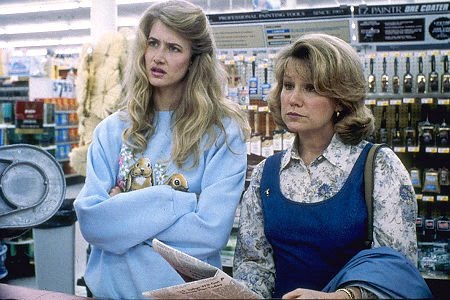
Kelly Preston and Laura Dern in Citizen Ruth

Related articles
- Alexander Payne Achieves New Heights in ‘The Descendants’ (leoadambiga.wordpress.com)
- Cinematographer Phedon Papamichael, Producer Jim Burke and Actress Shailene Woodley Discuss Working with Alexander Payne on ‘The Descendants’ and Kaui Hart Hemmings Comments on the Adaptation of Her Novel (leoadambiga.wordpress.com)
- When Laura Met Alex: Laura Dern & Alexander Payne Get Deep About Collaborating on ‘Citizen Ruth’ and Their Shared Cinema Sensibilities (leoadambiga.wordpress.com)
- Jim Taylor, the Other Half of Hollywood’s Top Screenwriting Team, Talks About His Work with Alexander Payne (leoadambiga.wordpress.com)
- From the Archives: A Hollywood Dispatch from the set of Alexander Payne’s Sideways – A Rare, Intimate, Inside Look at Payne and His Process (leoadambiga.wordpress.com)
- From the Archives: A Road Trip Sideways – Alexander Payne’s Circuitous Journey to His Wine Country Film Comedy (leoadambiga.wordpress.com)
- From the Archives: Alexander Payne, an Exclusive Interview Following the Success of ‘Sideways’ (leoadambiga.wordpress.com)
- About Payne: Alexander Payne on ‘About Schmidt,’ Jack Nicholson and the Comedy of Deep Focus (leoadambiga.wordpress.com)
- From the Archives: About ‘About Schmidt’: The Shoot, Editing, Working with Jack and the Film After the Cutting Room Floor (leoadambiga.wordpress.com)
- From the Archives: Conquering Cannes, Alexander Payne’s Triumphant Cannes Film Festival Debut with ‘About Schmidt’ (leoadambiga.wordpress.com)
- From the Archives: Alexander Payne Discusses His New Feature ‘About Schmidt’ Starring Jack Nicholson, Working with the Star, Past Projects and Future Plans (leoadambiga.wordpress.com)
- Alexander Payne on ‘The Descendants’ (variety.com)
Alexander Payne achieves new heights in “The Descendants”

Alexander Payne achieves new heights in “The Descendants”
©by Leo Adam Biga
As Alexander Payne‘s new film The Descendants opens in more cities the rest of the fall and into early winter, it will be coming, if it already hasn’t, to a theater near you. No matter how you feel about his work to date, see this picture. If you’re not a big fan of his movies, this one may or may not change your mind, but if you’re being fair I think you’ll at least have to admit that it’s a highly accomplished feat of filmmaking. If you’re already a Payne devotee, then this will be preaching to the choir, but you will see in it his richest, deepest work to this point in his career and further evidence that his maturation as a director is ever growing.
I saw the film for the first time last night (Nov. 20) at Film Streams, the Omaha art cinema whose advisory board he serves on. Like most in the audience I was not only impressed but moved by The Descendants. The film confirms Payne is a masterful writer-director whose work continues to ripen from film to film, indicating that his best work may yet be ahead of him.
Below, are some thoughts I intend to bounce off of Payne in a new interview I’m doing with him this week. I would like to coalesce my thoughts with his comments into a new story before the Oscars. I will be discussing with him certain aspects of the film, including his striking use of many tight shots, the fluidity of the scenes, his restrained yet glowing treatment of the beautiful Hawaiian environs, his subtle yet emphatic emphasis on the deep currents of ancestry and heritage Matt King feels beholden to, the artful way the dying wife is treated, and the deeply felt performances by George Clooney, Shailene Woodley, Robert Forster, and Judy Greer.
Payne seems increasingly comfortable to let emotions play out in extended moments and scenes where early in his career he tended to satirtically deflect or defuse these passages. He’s also made his scene simpler in the way they are shot. His transitions from scene to scene are more fluid. To me, this is evidence of a dawning patience and confidence to let the emotions carry the story and capture the audience rather than to impose some filmic punctuation or comment on the proceedings.
The close-ups that director of photography Phedon Papamichael began getting Payne to use in Sideways are even tighter and more numerous here. It’s rare for a contemporary film to use extreme close-ups to this extent. It’s more in line with Old Hollywood. But it suits this material and Payne and Papamichael and the cast make this stark intimacy pay off with incredibly intimate work that, often wordlessly, conveys deep stirrings of emotion and thought. There’s no hiding or faking it or throwing it away when the camera’s in that close, and thees moments certify just how good this cast is. Clooney has never been better. Woodley is good enough to deserve a Best Supporting Actress nomination. Forster nearly steals every scene he’s in. Greer shows many dimensions in a small but telling part. Everyone is very good.
Then there’s the surprisingly affective performance by Patricia Hastie as Liz, the comatose wife of King. The almost entirety of her screen time is confined to lying unresponsive in a hospital bed. I remember a year and a half ago or so when I first interviewed Payne about the project and his rhapsodic praise for Hastie making her seemingly do nothing part a vital element and her investing everything she had into it. Until seeing the film I was incredulous to imagine how she could do much to make an impact given the great constraints on her character, but now that I have seen it I understand what Payne meant and just how present she is in those scenes with characters variously berating her and saying goodbye to her at her bedside. Hastie took great pains to look like a progressively wasted away human shell who may or may not be able to hear anything being said.
The Descendants is by my estimation and by a lot of people’s estimation Payne’s best film to date. Critical reception to it is universally positive, and as Film Streams director Rachel Jacobson indicated in some of her remarks last night some of the critical response is flat out ecstatic. Audience response seems to be the warmest to any Payne film, which is not surprising given its tragic-comic subject matter, but of course it’s the subtle, sure way he and his collaborators have handled the emotionally charged material that is eliciting this overwhelming response. As he noted himself last night, the film is off to a remarkable box office showing – 10th this past weekend – considering that it is currently in only 29 theaters compared with thousands of theaters for the other nine pictures on the box office rankings list.
YOU CAN READ THE REST OF MY ANALYSIS IN MY NEW BOOK-
Alexander Payne: His Journey in Film, A Reporter’s Perspective 1998-2012
A compilation of my articles about Payne and his work. Now vailable for pre-ordering.

Related articles
- Cinematographer Phedon Papamichael, Producer Jim Burke and Actress Shailene Woodley Discuss Working with Alexander Payne on ‘The Descendants’ and Kaui Hart Hemmings Comments on the Adaptation of Her Novel (leoadambiga.wordpress.com)
- Hail, Hail ‘The Descendants’ – Alexander Payne’s First Feature Since ‘Sideways’ a Hit with Critics, and the George Clooney-starring Comedy-Drama is Sure to be an Awards Contender (leoadambiga.wordpress.com)
- Jim Taylor, the Other Half of Hollywood’s Top Screenwriting Team, Talks About His Work with Alexander Payne (leoadambiga.wordpress.com)
- When Laura Met Alex: Laura Dern & Alexander Payne Get Deep About Collaborating on ‘Citizen Ruth’ and Their Shared Cinema Sensibilities (leoadambiga.wordpress.com)
- From the Archives: A Hollywood Dispatch from the set of Alexander Payne’s Sideways – A Rare, Intimate, Inside Look at Payne and His Process (leoadambiga.wordpress.com)
- From the Archives: Alexander Payne, an Exclusive Interview Following the Success of ‘Sideways’ (leoadambiga.wordpress.com)
When Laura met Alex: Laura Dern & Alexander Payne get deep about collaborating on “Citizen Ruth” and their shared cinema sensibilities

When Laura met Alex: Laura Dern & Alexander Payne get deep about collaborating on “Citizen Ruth” and their shared cinema sensibilities
©by Leo Adam Biga
Originally published in The Reader (www.thereader.com)
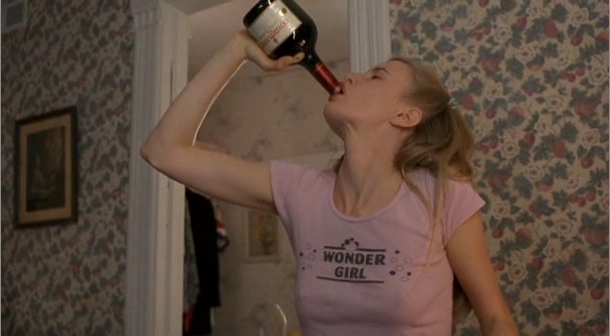
When Alexander Payne and Laura Dern chat on the Holland Performing Arts Center main stage July 13 for Films Streams’ first annual fundraiser they’ll naturally get around to Citizen Ruth. The 1996 abortion comedy he co-wrote with Jim Taylor marked Payne’s directorial debut and Dern’s portrayal of title character Ruth Stoops earned her critical acclaim.
What the pair may or may not discuss is how pivotal their collaboration proved.
Sixteen years ago Payne was still an aspiring feature filmmaker. His UCLA graduate thesis project from a few years before, The Passion of Martin, turned heads. The newcomer showed enough promise to land a studio development deal, analogous to a college baseball star getting drafted by a major league franchise, inking a fat contract and getting assigned to the high minors.
But he hadn’t broken through yet. He and Taylor did finish their abortion comedy script, then-known as The Devil Inside, that fall. They were trying to get it set up for Payne to direct. The script made the rounds, generating heat, but nobody wanted to finance it. Too risky. Too political. Too controversial. It didn’t help that Payne was untested in features.
Cut to Dern, by then established as an edgy screen actress for bare-her-soul performances in Joyce Chopra’s Smooth Talk, Peter Bogdanovich’s Mask, David Lynch’s Blue Velvet and Wild at Heart and Steven Spielberg’s Jurassic Park. She was already Oscar-nominated as the free spirit title character in Martha Coolidge’s Rambling Rose, for which her mother, Diane Ladd, was also nominated. Her acting genes extend to her father and fellow Oscar nominee, Bruce Dern.
Reminiscent of a young Barbara Stanwyck in her ability to play innocence and guile, sweetness and toughness, Dern was a catch for any director. Payne was a big fan of her work but never thought of her for messed-up Ruth Stoops. He probably didn’t think he could get her. That changed when, unbeknownst to him, Dern’s then-beau, actor Jeff Goldblum, got ahold of the Devil script and gave it to Laura.
“And I just was obsessed the moment I read it,” she said by phone from the L.A. set of a short film she’s appearing in. “I just forced their hands.”
What did she respond to so strongly?
“Well, in terms of the material,” she said, “it’s a very unique and hilarious and extremely honest voice about this country and about what happens when you get two opposing sides in America, on any subject frankly. And the idea of putting this not just flawed but impossible protagonist at the middle of it is just completely genius. I felt I had something to bring to it that was unique.
“My love for finding empathy and voice in untenable human territory made me determined to force myself on them. I could love nothing more as an actor than one specific challenge — which is finding an empathetic place for a character we would ordinarily have disdain for, and Alexander happens to love that, too. Alexander, Jim and I have the same sensibility and that’s a very rare thing to find.”
YOU CAN READ THE REST OF THE STORY IN MY NEW BOOK-
Alexander Payne: His Journey in Film, A Reporter’s Perspective 1998-2012
A compilation of my articles about Payne and his work. Now available for pre-ordering.


- Jim Taylor, the Other Half of Hollywood’s Top Screenwriting Team, Talks About His Work with Alexander Payne (leoadambiga.wordpress.com)
- From the Archives: Alexander Payne, an Exclusive Interview Following the Success of ‘Sideways’ (leoadambiga.wordpress.com)
- From the Archives: A Hollywood Dispatch from the set of Alexander Payne’s Sideways – A Rare, Intimate, Inside Look at Payne and His Process (leoadambiga.wordpress.com)
- Cinematographer Phedon Papamichael, Producer Jim Burke and Actress Shailene Woodley Discuss Working with Alexander Payne on ‘The Descendants’ and Kaui Hart Hemmings Comments on the Adaptation of Her Novel (leoadambiga.wordpress.com)
Related articles
- Film Streams at Five: Art Cinema Contributes to a Transformed Omaha Through Community Focus on Film and Discussion (leoadambiga.wordpress.com)
- Will Forte and Bruce Dern Confirmed for Alexander Payne’s ‘Nebraska’ (slashfilm.com)
- When Omaha Independent Filmmaking Took a New Turn or Did It? (leoadambiga.wordpress.com)
- Alexander Payne’s NEBRASKA Moving Forward with Will Forte and Bruce Dern (collider.com)
- Bob Odenkirk and Stacy Keach Join Alexander Payne’s NEBRASKA (collider.com)
Jim Taylor, the other half of Hollywood’s top screenwriting team, talks about working with Alexander Payne


Jim Taylor, the other half of Hollywood’s top screenwriting team, talks about working with Alexander Payne
©by Leo Adam Biga
Originally published in The Reader (www.thereader.com)
There’s an alchemy to the virtuoso writing partnership of Alexander Payne and Jim Taylor, Oscar winners for Sideways (2004) and previous nominees for Election (1999), that resists pat analysis. The artists themselves are unsure what makes their union work beyond compatibility, mutual regard and an abiding reverence for cinema art.
Together 15 years now, their professional marriage has been a steady ascent amid the starts and stops endemic to filmmaking. As their careers have evolved, they’ve emerged as perhaps the industry’s most respected screenwriting tandem, often drawing comparisons to great pairings of the past. As the director of their scripts, Payne grabs the lion’s share of attention, although their greatest triumph, Sideways, proved “a rite of passage” for each, Taylor said, by virtue of their Oscars.
Taylor doesn’t mind that Payne, the auteur, has more fame. ”He pays a price for that. I’m not envious of all the interviews he has to do and the fact his face is recognized more. Everywhere he goes people want something from him. That level of celebrity I’m not really interested in,” he said by phone from the New York home he shares with filmmaker wife Tamara Jenkins (The Slums of Beverly Hills).
With the craziness of Sideways now subsided and Payne due to return soon from a month-long sojourn in Paris, where he shot a vignette for the Paris, I Love You omnibus film, he and Taylor will once again engage their joint muse. So far, they’re being coy about what they’ve fixed as their next project. It may be the political, Altmanesque story they’ve hinted at. Or something entirely else. What is certain is that a much-anticipated new Payne-Taylor creation will be in genesis.
Taylor’s an enigma in the public eye, but he is irreducibly, inescapably one half of a premier writing team that shows no signs of running dry or splitting up. His insights into how they approach the work offer a vital glimpse into their process, which is a kind of literary jam session, game of charades and excuse for hanging out all in one. They say by the time a script’s finished, they’re not even sure who’s done what. That makes sense when you consider how they fashion a screenplay — throwing out ideas over days and weeks at a time in hours-long give-and-take riffs that sometimes have them sharing the same computer monitor hooked up to two keyboards.
Their usual M.O. finds them talking, on and on, about actions, conflicts, motivations and situations, acting out or channeling bits of dialogue and taking turns giving these elements form and life on paper.
”After we’ve talked about something, one of us will say, ‘Let me take a crack at this,’ and then he’ll write a few pages. Looking at it, the other might say, ‘Let me try this.’ Sometimes, the person on the keyboard is not doing the creative work. They’re almost inputting what the other person is saying. It’s probably a lot like the way Alexander works with his editor (Kevin Tent), except we’re switching back and forth being the editor.”
For each writer, the litmus test of any scene is its authenticity. They abhor anything that rings false. Their constant rewrites are all about getting to the truth of what a given character would do next. Avoiding cliches and formulas and feel-good plot points, they serve up multi-shaded figures as unpredictable as real people, which means they’re not always likable.
”I think it’s true of all the characters we write that there’s this mixture of things in people. Straight-ahead heroes are just really boring to us because they don’t really exist,” said Taylor, whose major influences include the humanist Czech films of the 1960s. “I think once we fall in love with the characters, then it’s really just about the characters for us. We have the best time writing when the characters are leading us somewhere and we’re not so much trying to write about some theme.”
Sideways’ uber scene, when Miles and Maya express their longing for each other via their passion for the grape, arose organically.
“We didn’t labor any longer over that scene than others,” he said. “What happened was, in our early drafts we had expanded on a speech Miles has in the book (Rex Pickett’s novel) and in later drafts we realized Maya should have her own speech. At the time we wrote those speeches we had no idea how important they would turn out to be. It was instinctive choice to include them, not something calculated to fill a gap in a schematic design.”
He said their scripts are in such “good shape” by the time cameras roll that little or no rewriting is done on set. “Usually we’ll make some minor changes after the table reading that happens right before shooting.” Taylor said Payne asks his advice on casting, locations, various cuts, music, et cetera.
Their process assumes new colors when hired for a script-doctor job (Meet the Parents, Jurassic Park III), the latest being I Now Pronounce You Chuck and Larry.
Alexander Payne: His Journey in Film, A Reporter’s Perspective 1998-2012
A compilation of my articles about Payne and his work. Available this fall as an ebook and in select bookstores.


Related articles
- Cinematographer Phedon Papamichael, Producer Jim Burke and Actress Shailene Woodley Discuss Working with Alexander Payne on ‘The Descendants’ and Kaui Hart Hemmings Comments on the Adaptation of Her Novel (leoadambiga.wordpress.com)
- From the Archives: Alexander Payne, an Exclusive Interview Following the Success of ‘Sideways’ (leoadambiga.wordpress.com)
- From the Archives: A Road Trip Sideways – Alexander Payne’s Circuitous Journey to His Wine Country Film Comedy (leoadambiga.wordpress.com)
- From the Archives: A Hollywood Dispatch from the set of Alexander Payne’s Sideways – A Rare, Intimate, Inside Look at Payne and His Process (leoadambiga.wordpress.com)
- Hail, Hail ‘The Descendants’ – Alexander Payne’s First Feature Since ‘Sideways’ a Hit with Critics, and the George Clooney-starring Comedy-Drama is Sure to be an Awards Contender (leoadambiga.wordpress.com)
- Alexander Payne to Talk Cinema with Kindred Spirit Jane Fonda at Film Streams Feature Event in Omaha (leoadambiga.wordpress.com)
Related articles
- Alexander Payne to Talk Cinema with Kindred Spirit Jane Fonda at Film Streams Feature Event in Omaha (leoadambiga.wordpress.com)


 Leo Adam Biga's My Inside Stories