Archive

Posts Tagged ‘Film’

Cautionary tales of cinema, the culture war and Donald Trump

January 28, 2017 2 comments

Cautionary tales of cinema, culture war and Donald Trump

©by Leo Adam Biga

Author of Alexander Payne: His Journey in Film


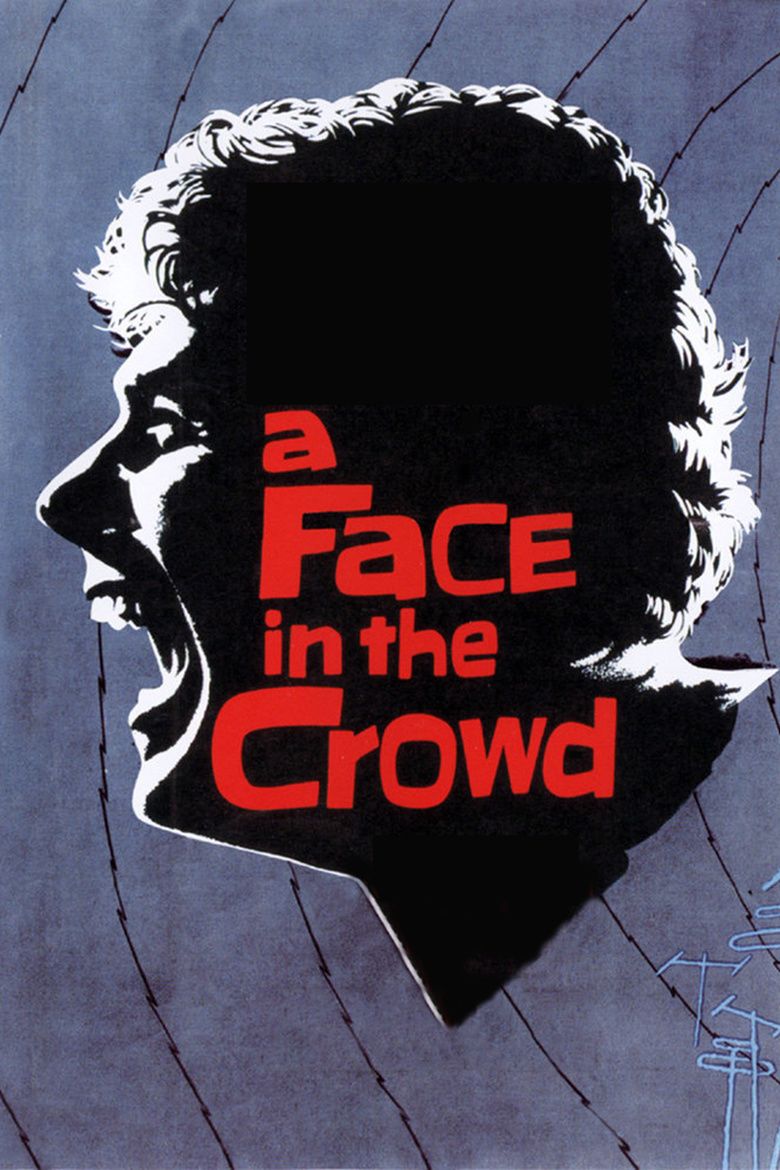
As a film buff and cultural journalist I naturally look for connections between cinema and social-political currents. There’s been much written about the parallels between a certain 1950s film’s fictional themes and today’s real-life the rise of Donald Trump to the seat of American power. I refer to Elia Kazan’s scathing 1957 “A Face in the Crowd” written by Budd Schulberg (the two previously teamed for “On the Waterfront”) that imagines a narcissist reprobate named Lonesome Rhodes, magnificently played by Andy Griffith, seducing segments of the nation through his insistent, cloying presence in the media and coming to a position of high influence. Only in “A Face in the Crowd” this egoist is exposed for the fraud and monster he is by those closest to him. But nothing dramatic like that happened in the case of Trump. So far. Instead of being called out and brought down, Trump rode waves of racism, classism, isolationism and xenophobia to win his party’s nomination and eventually the presidency. I mean, plenty of people outside the Trump camp pointed out reasons why he is unfit for the job but those cautionary notes about his character were variously ignored, dismissed, discounted and countered by Trumpsters who would stop at nothing to see their champion of alternative facts gain the Oval Office. What the Kazan-Schulberg film failed to anticipate is that unlike in the 1950s, when there were very limited primary means of people getting information – print, radio and TV – the number of news, information and opinion channels has exponentially increased. Where Rhodes used radio and especially TV to fool people into loving him and then became the victim of that same medium, Trump largely bypassed traditional media and used social media to directly appeal to his base and thus build a movement unaffected by the three major networks or PBS or CNN. We are far past the time when an Edward R. Murrow or Walter Cronkite or Ted Koppel or some other trusted media news figure can make a difference by taking an editorial stand. There are far too many clamoring voices for any one pundit to count in the culture war being fought.


 A Face in the Crowd (film) movie poster


Then there’s the old but new phenomenon of some of the electorate and public turning a blind eye and ear to data, reason, even common sense out of sheer naked allegiance to ideas based in fear, not fact, and without the discernment to separate real news from false news or irrefutable facts from alternative facts.

Is there someone brave enough in the Trump inner circle to go rouge and reveal whatever may be the darkest, damning secrets and lies behind what we already know about his house of cards private business empire, his shady dealings, his fascist leanings? Or will it take someone in a prosecutorial or oversight role looking from the outside in to let in the light and awaken the sleeping masses of his supporters?

Two earlier films starring the same actor, one based on a famous novel. “All the King’s Men” and the other based on a hit play, “Born Yesterday,” have Broderick Crawford portray bellicose men whose blind ambition and power corrupts them absolutely. Whatever populist ideals they once espoused and perhaps even believed have been corroded by rank avarice. There are some obvious overtones with Trump in these characters and stories.


broderick-crawford

Broderick Crawford laying on couch and pointing in a scene from the film 'Born Yesterday', 1950.

Broderick Crawford laying on couch and pointing in a scene from the film ‘Born Yesterday’, 1950.


But the more I think about it, the film that most particularly speaks to the venal way Trump operates is “Sweet Smell of Success” (1957), whose J.J. Hunsecker is the true antecedent of The Donald. The character of Hunsecker was patterned after such predatory real-life columnists as Walter Winchell, Hedda Hopper and Louella Parsons who could make or break careers with their alternately golden and poison pens.
Sweet Smell Of Success


Alexander Mackendrick directed the black and white classic that he co-wrote with Ernest Lehman and Clifford Odets. In the figure of Hunsecker, brilliantly played by Burt Lancaster, they imagine a vain, mean-spirited big city newspaper columnist who wields inordinate influence through his opinions, many of which are thinly veiled innuendoes, attacks and disparagements. Hunsecker cows people by threat, coercion, vendetta and the force of a bullying, overbearing personalty and a dark, sinister character that can neither tolerate the light of scrutiny nor the flame of truth. Hunsecker is at the center of his own world that he expects to orbit around him to pay him fealty. He’s also more than ready to do verbal battle with and to threaten acton against anyone he views as an opponent or obstacle. As far as Hunsecker’s concerned, your either with him or against him. There’s no middle ground. Hunsecker sees only black and white and he’s predisposed to see the worst and weaknesses in people because that’s what he preys upon in order to exert influence and to extort favors.

A figure like Hunsecker can only survive by appealing to the lowest common denominator, i.e. an uneducated population’s fears and resentments, and by parlaying the weird cult of celebrity and authority that attends anyone in the public eye. A Hunsecker can only rule if he’s aided and abetted by toadies, stooges and functionaries who gladly put aside morals and scruples to further his ends and their own agendas. And a Hunsecker is only as powerful as the public’s gullibility allows.

Does this sound like anyone who’s recently maneuvered his way into the halls of power in our present day real world?

The difference being that Hunsecker, just like his real-life inspirations, never got this much power. The closest that an American political reactionary got to this much power in the last century was Sen. Joseph McCarthy, who was nothing more than a gangster and opportunist posing as a public servant. McCarthy was undone in large part by how poorly he came off on television. Trump plays poorly in the media to those predisposed to dislike him but he apparently comes off well to those inclined to support him, which may speak to both the idealogical divide and the weird space occupied by reality TV figures and their followings. If Trump could get this far with so little to offer other than his huge personal bankroll and eventual big GOP dollars, then who’s to say someone even more outlandish or dangerous than Trump might not rally enough support to follow in his footsteps?

In these reactionary times amid decentralized new media and dumbed-down public education, the once unthinkable notion of a Trump coming to power in America has happened. What comes next may be even scarier.


Atticus Finch-Barack Obama give way to Bob Ewell-Donald Trump in this post-“To Kill a Mockingbird” world

January 24, 2017 2 comments


Hot Movie Takes  Atticus Finch-Barack Obama give way to Bob Ewell-Donald Trump in this post-“To Kill a Mockingbird” world

©by Leo Adam Biga

Author of “Alexander Payne: His Journey in Film”


In this 57th anniversary year of the debut of Harper Lee’s 1960  novel “To Kill a Mockingbird” and the 55th anniversary of the 1962 film adaptation’s release, I reflect on some sobering truths taken from that classic, much beloved story. Truths reflective of today’s American civil-societal-political landscape.

The irony is that the story’s revered figure of Atticus Finch, a fictional white Southern lawyer who represents so many universally admired qualities, found his most direct expression in this nation’s first black president, Barack Obama. The comparison was obvious  and Obama’s admiration for what Atticus embodies was made evident when in his farewell address he quoted something that fictional character utters in the book and film. Obama said, “If our democracy is to work in this increasingly diverse nation,  each one of us needs to try to heed the advice of a great character in American fiction, Atticus Finch: ‘You never really understand a person until you consider things from his point of view. Until you climb into his skin and walk around in it.'”


Barack Obama farewell

Associated Press


Yes, Atticus turns out to have racist leanings in the long-delayed sequel “Go Set a Watchman” but that’s hardly surprising given the time and place he came from. None of us are free of sin or fault. Good principles and actions don’t require perfection. The revelation that Atticus attended KKK meetings and opposed integration while still defending a black man accused of a rape he didn’t commit is simply acknowledgement of how complex race is and how far as a nation we have to go in addressing it. In his farewell speech Obama told blacks to learn the struggles of other minority groups and he admonished whites to acknowledge the stain of this country’s earlier generations are not gone. When minority groups “voice discontent,” he said. “they’re not just engaging in reverse racism or practicing political correctness; that when they wage peaceful protest, they’re not demanding special treatment, but the equal treatment our Founders promised.”

Barack Obama gave Atticus Finch his good name back and naturally, literature fans on Twitter

During his two terms the diplomatic, gentlemanly Obama championed social justice and opposed infringements on freedom and equality. Like Atticus, he walked the walk of virtue and idealism, of fair play and public service, and he extended his hand to the equivalents of Boo Radley and Tom Robinson in our midst. Though Obama had considerable support within the Democratic party and even more broadly throughout the nation and world, he was repeatedly criticized and stonewalled by the Republican controlled Congress. Many of us surmised this was due to the gridlock of entrenched, unwieldy party politics grinding the tried and true American system of across-the-aisles idealogical compromise to a halt. Racism may have been the bigger issue in play. The recent election revealed how reviled Obama is by a sizable segment of the American populace whose elected representatives are some combination of Republican, conservative and fundamentalist. Not every Obama detractor and Trump supporter is an out and out racist but it’s true about enough of them to show a clear pattern.

Trump’s angry man campaign was filled with bigoted, misogynistic, nationalistic rhetoric that put big business and capitalism ahead of human rights, civil rights, women’s rights, social safety nets and environmental protections. He referred to harsh law and order crack downs on those deemed to be disloyal dissidents and enemies of the state. He threatened closing borders and deporting undocumented millions. He connoted militarism with nationalism, patriotism and Christian values. In his first few days in office he seems hell-bent on following through on his alarming agenda.

All of this has gave permission to white supremacists and other hate mongers to react violently against people of color and different origins, to disrespectfully treat women, to ignore clear and present danger realities such as global warming and to override the will of the people by renewing projects that history tells us will deface and pollute precious lands and waters.


Donald TrumpDonald Trump.getty


It is as if Barry Goldwater, George Wallace, Ross Perot and Rudy Giuliani have somehow been melded together in the amoral heart of Trump. Just when America needs an Atticus Finch in its top leadership position, we now have someone who seemingly speaks more to the Bob Ewells of the world than to those of us who believe in the better angels of a more perfect union.

Instead of a voice of calm reason, considered compassion, resolute peace and sincere unity, we have a strident, histrionic voice of acrimony and division who speaks for the supposed moral majority and special interests of privileged white males. In movie-movie terms, I am reminded of the Franklin Schaffner adaptation of Gore Vida’s “The Best Man.” where the choice for a presidential nominee came down to a reactionary opportunist played by Cliff Robertson and a thoughtful, progressive essayed by Henry Fonda. It is unfortunate that Trump did not face anyone like the statesmen Fonda portrayed in “Young Mr. Lincoln,” “Advise and Consent,” “The Best Man” and “Fail Safe” or the socially conscious Everymen he played in “The Grapes of Wrath,” “The Oxbow Incident” and “12 Angry Men.” Hillary Clinton embodied some of these same ideals, but America just wasn’t ready for her or for a woman like her as President.

How unfortunate, too, that there isn’t someone like the noble Atticus Finch or other figures of high character that Gregory Peck played (“Twelve O’Clock High,” “The Big Country,” “Captan Newman M.D.”) to lead us.


Then again, we had our Atticus Finch situated in the most powerful post in the world and a chunk of this nation rejected him and what he espoused. Obama even sounded a lot like Atticus when he called on people who want a more perfect union to not merely be bystanders but to be participants: “Show up, dive in, stay at it…Presuming a reservoir of goodness in others can be a risk, and there will be times when the process disappoints you. But for those of us fortunate enough to have been a part of this work, to see it up close, let me tell you, it can energize and inspire. And more often than not, your faith in America — and in Americans — will be confirmed.”

For all its enduring popularity, “To Kill a Mockingbird” still only speaks to those willing to learn its lessons. Too many Americans, I’m afraid, are still unprepared to accept The Other represented by Boo Radley and Tom Robinson. Even in 2017 the notion of embracing all people, regardless of color, ethnicity, religion, socioeconomic status, physical-mental capability, is still too radical for a whole lot of folks to follow. These are the very same things Christians are called to do by 2,000 year-old teachings. Yet many bristle at the core idea of loving their fellow man even though this is the basis and essence for the very organized religions they’re baptized in and purport to believe.


To Kill a Mockingbird. Atticus Finch, Scout, Boo Radley... Just riveting, these relationships, these people.:


All of which tells us we are one hot mess of a nation. There’s nothing new about that, it’s just that events of the past few years make it easier to see things for how they really are. The cloak of civility and cooperation has been lifted. Maybe it’s a good thing the hate is there for the viewing and not all concealed or dressed up as something else. Now that it’s out in the open, at least we know who and what we’re dealing with moving forward.

We need all the Atticus Finch’s and Harper Lees amongst us to stand up and be counted lest the Boo Radleys and Tom Robinsons continue to be oppressed. The conspiracy of hearts who love what “To Kill a Mockingbird” and works like it teach about tolerance and love need to raise their voices against injustice. If this book and film that have touched so many can lead to social action, then their collective impact will be far greater than all the sales, box-office receipts and rentals they’ve earned over these last six decades.


1950s Cinema: An under-appreciated decade of film and ferment

January 24, 2017 1 comment

1950s Cinema: An under-appreciated decade of film and ferment

©by Leo Adam Biga

Author of Alexander Payne: His Journey in Film


I am amused by the persistent myth that 1950s America was somehow this sterile time capsule when the mass consumer population became lulled into a kind of stupor that made them numb or oblivious to reality. Or that it’s a decade when nothing much happened compared, say, to the 1960s. Nothing could be further from the truth.

To portray the ’50s as a big bore or big nothing is as inaccurate as purporting that everyone in the ’60s was active in the counterculture movement, protesting in the streets, experimenting with drugs, et cetera, when in reality relatively very few people did those things. When it comes to social phenomena, most people are observers, not participants. But that’s not to say they’re unaffected by those same forces. They very much are.

The movies of any decade offer a somewhat reliable reflection of whatever is on the minds and in the hearts of artists and audiences during that time frame. The caveat to this is that you will inevitably find what you’re looking for if you examine any decade with a certain predisposition or agenda.

Sure, there was a lot of purely escapist fare released in the ’50s  courtesy the glorified soap operas, big studio musicals, sword and sandal epics and romantic comedies that filled screens. But there were also many pictures dredging up the fears, anxieties, neuroses and complexes over any number of social-political topics. Groundbreaking troubled youth pics, film noir classics, anti-war movies, socially conscious westerns and psychological science fiction flicks were among the genre films to take on sensitive subjects.

The ’50s was full of conflicting social, cultural, political, upheaval and the best film artists mirrored those currents in their work, if not overtly than metaphorically.

The canvas was even richer and deeper when considering the Hollywood films of auteurs like Ford, Kazan, Mann, Zinnemann, Boetticher, Hitchcock in combination with the best foreign films of that decade. The neo-Realists of italy, Bergman in Sweden, Kurosawa in Japan, Wajda in Poland, Ray in India, Bunuel in Mexico and Spain and the French New Wave vanguard of Godard and Truffaut took cinema to new heights of form and meaning.

Here is only a partial sampling of the very real issues that either became full-out movie fodder or that informed dramatic plot-points and throughlines in ’50s-era films:

Rock ‘n’ roll’s advent

The Cold War 

McCarthyism

The Black List

Civil rights

The Korean War 

The Military Industrial Complex

The Iron Curtain

The Space Race

Suburbia

Television

The Baby Boom

The Mob

The Beat Movement

Folk music

Films as disparate as “”The Blackboard Jungle” (Richard Brooks) “Rebel Without a Cause” (Nicholas Ray) and “East of Eden” (Elia Kazan) capture the youth angst Zeitgeist wave.

“Pickup on South Street” (Samuel Fuller) “High Noon” (Fred Zinnemann) “Stalag 17” (Billy Wilder) “On the Waterfront” (Elia Kazan),  “Touch of Evil” (Orson Welles) pand “12 Angry Men” pose the ethical dilemma of choosing to remain silent in the face of corruption or risking everything to stand up for the greater good.

Alexander MacKendrick’s adaptation of Clifford Odets’ “Sweet Smell of Success” presents the moral quagmire that comes with be willing to do anything to get ahead.

Everything from the films of Douglas Sirk (“Imitation of Life,” “The Tarnished Angels,” “Written on the Wind,” “All That Heaven Allows,” “Magnificent Obsession,” “There’s Always Tomorrow”) to Fred Zinnemann’s “From Here to Eternity,” Robert Wise’s “The Day the Earth Stood Still,” Don Siegel’s “Invasion of the Body Snatchers,” Joshua Logan’s “Picnic” and Mark Robson’s “Peyton Place” juxtapose the dull, cold routine of conformity with the hot desires of the human heart.

Elia Kazan’s “A Face in the Crowd” offers a prescient view of the mass media and general public raising a figure to a position of influence out of all proportion to their gifts and then bringing him down to a terrible fall.

“The Steel Helmet” (Sam Fuller) “Attack” (Robert Aldrich), “Paths of Glory” (Stanley Kubrick) “Men in War” (Anthony Mann) and “The Bridge on the River Kwai” (David Lean) show the cruel futility of war.

“No Way Out” (Joe Mankiewicz) “The Searchers” (John Ford), “Giant,” “The Big Country” (William Wyler) and “Odds Against Tomorrow” (Robert Wise) depict the poisonous evil of bigotry.

“South Pacific” and “Sayonara” (Joshua Logan), “The King and I” (Walter Lang), “House of Bamboo” (Sam Fuller) and “The World of Suzie Wong” (Richard Quine) examine race within the arc of interracial relationships that play out in larger contexts.

“Baby Doll” (Elia Kazan), “Anatomy of a Murder” (Otto Preminger),  “Some Like it Hot” and “The Apartment” deal maturely with sexual subject matter.

George Cukor’s “Born Yesterday,” Robert Wise’s “Executive Suite” and Nunnally Johnson’s “The Man in the Gray Flannel Suit” critiqued American consumerism.

Billy Wilder’s “Sunset Boulevsrd,” Joseph Lewis’ “Gun Crazy,” Anthony Mann’s “Winchester 73,””Elia Kazan’s A Streetcar Named Desire,” Mann’s “The Furies,” Fritz Lang’s “Clash by Night,” MGM’s “Forbidden Planet,” Budd Boetticher’s “The Man from Laramie,”Alfred Hitchcock’s “Rear Window” “Vertigo” and “Psycho” Budd Boeticher’s “Ride Lonesome” and “Comanche Station,” Sam Fuller’s “Forty Guns”are among a great number of films from that decade that delve into Freudian themes.

The ’50s even produced an unapologetic and uncompromising art film, Charles Laughton’s “The Night of the Hunter,” that broaches all kinds of sensitive subjects through audacious use of symbolism and allegory. This masterfully crafted black and white film plays as a fairy tale with its dark themes, evil villain, innocent children in peril and episodes of magic realism. The whole film operates on the level of a fevered dream-state or trance that’s triggered and ended by trauma.

So, don’t ever fall for the notion the ’50s represented a blank slate, cinematically or otherwise. Its screen stirrings are replete with potent content, context and subtext that will make your head spin or at least make you think twice about this supposedly banal, complacent and complicit decade. Yes, there was conformity and consumerism, but when hasn’t there been since the 1920s? But the masses were far from moving in lockstep and thinking alike. Diversity, division and rebellion were present. So were the nascent civil rights, black power and feminist movements. It just took the 1960s for it to more fully come to the surface.


100 Greatest Movies of the 1950s

A list of the 100 greatest movies of the 1950s compiled by Digital Dream Door.
Source: digitaldreamdoor.com · Added by Ilsa Lund
 3,339 users · 74,821 views
 Avg. score: 29 of 100 (29%)
 Required scores: 1, 10, 18, 31, 47
 How many have you seen?
1
Seven Samurai (1954)
2
On the Waterfront (1954)
4
The Bridge on the River Kwai (1957)
5
The Seventh Seal (1957)
6
Sunset Boulevard (1950)
7
Rear Window (1954)
8
Rashomon (1950)
9
All About Eve (1950)
10
Singin’ in the Rain (1952)
11
Some Like It Hot (1959)
12
North by Northwest (1959)
13
Tokyo Story (1953)
14
Touch of Evil (1958)
15
A Streetcar Named Desire (1951)
16
Diabolique
17
Rebel Without a Cause (1955)
18
The African Queen (1951)
19
12 Angry Men (1957)
20
La Strada (1954)
21
Ben-Hur (1959)
22
Wild Strawberries (1957)
23
The Searchers (1956)
24
High Noon (1952)
25
The Night of the Hunter (1955)
27
The 400 Blows (1959)
28
The Ten Commandments
30
Strangers on a Train (1951)
31
Kiss Me Deadly (1955)
32
From Here to Eternity (1953)
33
Mr. Hulot’s Holiday
34
A Christmas Carol
36
The Day the Earth Stood Still (1951)
37
Roman Holiday (1953)
38
Old Yeller (1957)
39
Early Summer (1951)
40
Anatomy of a Murder (1959)
Page 1 of 3

Next Page


Film Noir, Donald Trump and art imitating life (or is it the other way around?)

January 20, 2017 Leave a comment

Donald the Imperious is now the President. For some, this movie-movie moment of a real estate tycoon and reality TV star reaching the Oval Office despite losing the popular vote in an unusally divisive election marked by his ugly rehtoric casts a dark pall over the land. This melancholic sentiment, combined with the grey, misty, foggy weather in Omaha, got me to thinking that Trump bears many of the characteristics of heavies in my favorite cinema genre – Film Noir. That cinema of dark intents, moods, goings-on and settings usually has as its villainous center a suave mastermind or crass boss. You decide which Trump is. The protagonist is generally an anti-hero private eye, cop, attorney or newspaperman going up against steep odds and powerful, sinister forces to expose an underbelly of misdeeds. My screen-fired imagination can easily see this playing out in a real way. Would Trump and his gang get away with it, whatever it is, or would he take the fall and get his comeuppance? Who knows? But the speculation is fun. As for me, I content myself with the thought that we’ll likely to have Trump for only four years. Even if his time in office should play out like a film noir and take us down some shadowy paths, I take faith in the notion that a trench-coated tough guy with a five o’clock shadow and a crooked nose for the truth will make Trump heel and, if need be, bring lawbeakers to justice, even if that means the chief executive himself. Of course, nothing like this may happen at all, but it sure would make a good movie. However this dark art-imitating-life or life-imitating-art episode in American history plays out, it should never be boring and like any good film noir story it should be filled with some interesting plot twists and turns.


Film Noir, Donald Trump and art imitating life (or is it the other way around?)

©by Leo Adam Biga

Author of Alexander Payne: His Journey in Film
The grey, misty, foggy gloom that’s settled over Omaha, combined with the United States presidential inauguration and transfer of executive power taking place today, has me in a Film Noir state of mind. The dark, ill-fated world of that cinema genre contains a certain beauty in its interplay of light and shadow, stark cityscapes, back alley brawls, smoky back room dealings, white hot neon seduction and cold betrayal. it is a dog-eat-dog, predatory world of nihilism and existenialism, of bald avarice, greed and lust. The genre grew out of German Expressionism and took root in a World War Ii America of waning innocence and idealism and had its heyday from about 1941 through 1959. The genre reflected the undercurrent of anxieties of those times: economic depression, hot war, cold war, the bomb, racial strife, organized crime and corruption, et cetera. Every once in a while film noir gets an update or homage when the genre seems a good template for a particulalry troubling period, and so “The Long Goodbye,” “Chinatown” and “Body Heat” spoke to their time. Even the most famous American film about a Whte House occupant brought down by an investigation, “All the President’s Men,” is at its heart a film noir.

Film noir is as apt a metaphor as I can find for the tenor that the new Commander in Chief and his henchmen are asserting as the new gang in town in this time of division and uncertainity.

Viewed in a certain noirish, fatalistic light, our nation’s capitol is a battleground between opposing mobs, syndicates and special interests that we just happen to call administrations, political parties, departments, think tanks, consultants and lobbyists. None may meet the technical or legal definition of crooks or criminal enterprises, but the corruption, under-handed dealings, budgetary overruns, hush money, slush funds, scandals, threats and vendettas are real. They certainly come with the territory. Some of our elected officials navigate this underworld with some subtlety. Others are more brazen about it.

Donald Trump is a lot like some of the heavies in classic noir. He doesn’t pose to be anyone than who he is – a rich, powerful man who will stop at nothing to get his way. Think of the character Noah Cross (John Huston) in “Chinatown” or – and how’s this for irony? – Ronald Reagan as Jack Browning in the 1964 made-for-TV adaptation of Hemingway’s “The Killers.” Yes. Trump has the part down pat. Calculating when it serves him and impulsive when things get tight. Ruthless, vindictive, self-centered, vain. A misogynist with a decorative dumb blonde on his arm. Always scheming to get what he sees as his. You cross him at your own risk. He’s right out front in his I’m-above-the-law attitudes and actions. Smug in his confidence that nothing, not even the rule of law, can touch him.


(credit: Paramount)  Reagan as the Bad Guy

Where before Trump had only partners and shareholders to answer to, he now has a nation, a party, a congress and an administration to hold him accountable. But will we? Will the office and responsibility he now holds change him? Will he grow emotionally and intellectually into the position? Will the system of oversight work to reign him in when necessary? Or will this rank opportunist find ways and loopholes to get around every modulating check and balance to feed his ego and greed?

What about his agenda? Is there really anything more to it than his nationalistic appeal to make America great again, whatever that means? Isn’t it just all about lining the pockets of rich people like himself? Will small business people and low to middle class workers really see any benefits, especially if they have to pay for health care themselves and if inflation spikes and interest rates go up? Won’t average homeowners and taxpayers pay the brunt of his plan?

Won’t Trump be just another CEO or Boss in this economic political landscape that puts the interests of corporations above the greater good? If he gets his way and follows through on his promises to deport the undocumented, to close borders, to crack down on undesirables, to force loyalty oaths and to cut the safety net for the vulnerable, won’t he be a capo or despot by any other name?

So, in this scenario who is the film noir equivalent of the hardboiled character that will take on Trump and his gang? if it comes down to it, who will help expose him in a journalistic or criminal investigation that looks deep into the shadows of some wrongdoing rising to the level of impeachable offense? Might it be a grizzled reporter or cop or attorney or even senator who has the guts and I’ve-got-nothing-to-lose chutzpah to poke his nose where it’s not wanted and risk getting it broken or slashed? Would any traditional media or law enforcement officer or court or elected official have the will and courage to risk everything to expose such things? Or would it have to come from an outlier like an Edward Snowden?

Let’s hope it doesn’t come to needing a Sam Spade or Jake Gittes to haunt those dark streets in search of answers to secrets and lies, plots and scandals. But if it does, I will try to view the brooding, menacing, treacherous America of Trumpland as a sprawling film noir and hope that a femme fatale or false move undoes it all and humbles him before our eyes.

Alexander Payne: His Journey in Film

January 11, 2017 Leave a comment

FINAL FRONT COVER 6-28-16


Author Leo Adam Biga is pleased to present the new edition of his acclaimed book “Alexander Payne: His Journey in Film”about one of cinema’s great artists (“”About Schmidt,” Sideways,” “The Descendants,” “Nebraska”). This second edition features expanded and enhanced content.

This is the time to get the book, too, because it recaps the Oscar-winner’s last film “Nebraska” and anticipates his new film “Downsizing.” Once “Downsizing” opens, his career’s likely to reach even new heights.

The book charts the Oscar-winning filmmaker’s rise to the elite ranks of his industry. It explores the arc of Payne’s career from brash new indie filmmaker to mature, consummate world cinema artist. Articles and essays take you deep inside the artist’s creative process. It is the most comprehensive look at Payne and his work to be found anywhere. This new edition includes significant new material related to “Nebraska” and “Downsizing” and the addition of a Discussion Guide with Index for all you film buffs, critics, filmmakers, educators and students. The book is also a great resource for more casual film fans who want a handy Payne primer and trivia goldmine.

Biga’s book explores the arc of Payne’s career from brash new indie filmmaker to mature, consummate world cinema artist.

The book has received strong praise and positioned Biga as an expert on Payne:

“This is without question the single best study of Alexander Payne’s films, as well as the filmmaker himself and his filmmaking process. In charting the first two decades of Payne’s remarkable career, Leo Adam Biga pieces together an indelible portrait of an independent American artist, and one that’s conveyed largely in the filmmaker’s own words. This is an invaluable contribution to film history and criticism – and a sheer pleasure to read as well.” –Thomas Schatz, Film scholar and author (“The Genius of the System”)

National film critic and best-selling author Leonard Maltin included “Alexander Payne: His Journey in Film” in his end of year movie book survey. He wrote, “In this revised edition of his book about one of today’s most gifted writer-directors, Biga brings the narrative up to date with a chapter on ‘Nebraska’ and Payne’s long-awaited ‘Downsizing,’ which has recently completed production. With the filmmaker’s participation and cooperation, this is certainly the definitive guide and companion to the works of Alexander Payne, who has given us such modern gems as ‘Citizen Ruth,’ ‘Election,’ ‘About Schmidt,’ ‘Sideways,’ and ‘The Descendants.’”

Leonard earlier wrote, “Alexander Payne is one of American cinema’s leading lights. How fortunate we are that Leo Biga has chronicled his rise to success so thoroughly.”

The new edition is from River Junction Press in Omaha, NE and sells for $25.95.

The book is a available at Barnes & Noble and other fine booktores nationwide, as well as on Amazon and for Kindle. In Nebraska, you can find it at all Barnes & Noble stores, The Bookworm and Our Bookstore in Omaha, Indigo Bridge Books in Lincoln and in select gift shops statewide. You can also order signed copies through the author’s blog leoadambiga.com or via www.facebook.com/LeoAdamBiga or by emailing the author at leo32158@cox,net. You can also call 402-445-4666.

Purchase the book at–


For more information. visit–

https://www.facebook.com/pg/AlexanderPayneExpert/about/?ref=page_internal

Purchase your signed copy of “Alexander Payne: His Journey in Film” directly from me

January 3, 2017 Leave a comment

Purchase your signed copy of “Alexander Payne: His Journey in Film” directly from me. I know several of you planned on attending my book events and talks last fall, and so if you’re still without your signed copy of edition number two, then contact me directly here, through a Facebook inbox, by email at leo32158@cox.net or by calling 402-445-4666. I will be happy to put one in your hands. If you’re out of town, I’ll be glad to ship one to you.

Leonard Maltin included “Alexander Payne: His Journey in Film” in his end of year movie book survey. He wrote, “In this revised edition of his book about one of today’s most gifted writer-directors, Biga brings the narrative up to date with a chapter on ‘Nebraska’ and Payne’s long-awaited ‘Downsizing,’ which has recently completed production. With the filmmaker’s participation and cooperation, this is certainly the definitive guide and companion to the works of Alexander Payne, who has given us such modern gems as ‘Citizen Ruth,’ ‘Election,’ ‘About Schmidt,’ ‘Sideways,’ and ‘The Descendants.'”

And here is what one of America’s leading film historians says about the book:

“This is without question the single best study of Alexander Payne’s films, as well as the filmmaker himself and his filmmaking process. In charting the first two decades of Payne’s remarkable career, Leo Adam Biga pieces together an indelible portrait of an independent American artist, and one that’s conveyed largely in the filmmaker’s own words. This is an invaluable contribution to film history and criticism – and a sheer pleasure to read as well.” –Thomas Schatz, Film scholar and author (“The Genius of the System”)

Also available via Amazon, Barnes & Noble, The Bookworm, Our Bookstore and select other booksellers and gift shops. 

$25.95, plus tax.


FINAL FRONT COVER 6-28-16

Gabrielle Union: A force in front of and away from the camera

December 27, 2016 1 comment

On a per capita basis, Nebraska has been sending oodles of talent to Hollywood from the start of the industry through today. Then and now that talent has been variously expressed in front of the camera and behind the camera. While there are many name actors from the state, past and present, actresses from here who’ve made a splash in film and television are a rarer commodity. The few really big name and familiar face actresses with strong Nebraska connectiosn include Dorothy McGuire, Sandy Dennis, Inga Swenson, Marg Helgenberger, Stephanie Kurtzuba and Yolonda Ross. In terms of pure popularity and exposure though I’m not sure any of them compare with Gabrielle Union,, whose movie and TV work extends over nearly 25 years now. In addition to a very large, active body of work as an actress, she’s lately moved into producing and she’s always made a mark as a beauty pitchwoman, as an outspoken advocate, as a talk show guest and as the subject of countless glam and profile spreads in major magazines. Of course, she gets added fame and attention for being one half of a celebrity couple – her husband is NBA champion and future Hall of Famer Dwyane Wade. Like many peer actresses sharing Nebraska roots, she’s maintained close ties to her home turf. I touch on a variety of these and other things paramont in her life and career in this new Omaha Magazine (http://omahamagazine.com/) piece I wrote about Gabrielle. I’ve been covering her for 15-plus years and it’s been fun to see her development.

You can link to my other Gabrielle Union stories at–
https://leoadambiga.com/?s=gabrielle+union


gabrielleunion1


Gabrielle Union

A force in front of and away from the camera

December 22, 2016
Photography by Contributed
Appearing in the Jan/Feb 2017 issue of Omaha Magazine (http://omahamagazine.com/)

Actress Gabrielle Union projects her natural intelligence and feistiness in whatever role she undertakes. The Omaha native is never at a loss for words or opinions. She decries Hollywood’s male-dominated, white-centric ways and lack of opportunities afforded to women of color. She recounts her experience as a rape survivor and preaches the need for women to speak up against violence.

It took Union a while to be regarded a serious artist. Early roles included that of a wealthy suburban teenager in 10 Things I Hate About You, followed a year later by a role as a cheerleader in Bring It On. Twenty years later she’s matured into a real force both in front of and behind the camera. She expertly balances being a fashion- and fitness-conscious celebrity, the wife of NBA superstar Dwyane Wade, and a mother, actress, producer, and activist.

It is not surprising that as her life has broadened, so has her work.

Ambitious projects such as Think Like a Man and Top Five find her giving deeper, more complex performances or satirizing her own mystique. Today, as the star of the popular and critically acclaimed BET series Being Mary Jane, she represents the modern American black woman navigating her way through personal and professional relationships. In mid-October, the actress sued for breach of contract and negligent misrepresentation, claiming the network is combining seasons four and five to lower her pay and extend her contract.

Further proof of her take-no-prisoners attitude was her role in one of the most talked about films of 2016, The Birth of a Nation.

The film dramatizes the historic Nat Turner-led slave revolt, a subject of interest for Union that goes back to her Omaha childhood.

“It was a story my mom made sure I knew about. I remember going to the library and her telling me to do research on him. It wasn’t until later I realized my mom had noted I was very passive in the face of adversity and injustice, and I wasn’t willing to speak up, not only for myself, but for anyone else. She thought I might need some additional heroes to look up to and she introduced me to the story of Nat Turner,” Union says.

The interest in Turner continued for years.

“In college I learned even more about Nat Turner and I was drawn to the sense of pushback against oppression–the idea that there are stories situated in slavery where we are not waiting for someone else to save us but that we were actively trying to save ourselves. Really the story of black resistance and black liberation, I’ve always been drawn to.”

gabrielleunion2When the script first came to her attention, she says she determined that, “I had to be a part of telling this incredibly powerful chapter of American history.”

That chapter took years to produce. The film’s producer-writer-director, Nate Parker, who also portrays Turner, had a hard time getting financing for the project.

“There’s a reason the Nat Turner story has never made it to the big screen [before now],” Union says. “There’s a lot of fear of black resistance and black liberation. We see that with what’s happening with Colin Kaepernick and the rest of the professional, college, and high school athletes who are taking a knee to combat and shed light on racism, discrimination, police brutality, inequality, oppression everywhere. We see the pushback, we see people protesting [being] labeled as unpatriotic. I feel quite the opposite. I don’t think there’s anything more American or patriotic than resistance to oppression.”

With such a struggle ongoing, Union says, “I think there’s never been a better time for The Birth of a Nation to come out.”

Union plays an unnamed character who does not speak. The part was written with dialogue but she and Parker decided the woman should be mute.

“I just felt it would be much more symbolic and realistic if we stripped her of her voice, of the ability to speak, of the ability to have power over her own body and over the bodies of her family and her community,” Union says. “That was true for black women during slavery, and it’s still true for so many women, specifically black women, who are voiceless and powerless at the hands of oppressors. Sexual violence and racial inequality have always existed for black women at that very crucial intersection.

She says it was liberating to play a background character.

“Part of that was just being much more committed to the character than when I was younger. When you’re starting out, you want to stand out in every single role. I’m not as concerned about that anymore. I have enough projects where my face is recognizable and my name is out front…I’m much more interested in being fulfilled creatively.”

The film was shot on an actual Georgia plantation that stood in for the site where the historical events took place in Virginia. The dark spirit of the plantation’s past weighed heavy on Union and company.

“Every actor of color on that set felt the pain and the horror that our ancestors felt. It’s in the soil, it’s in the air. You can’t escape it, you really can’t escape it.”

She is offended that the former plantation used in the film is rented out for weddings and parties.

“It’s unfathomable,” she says.

She considers the conversations she and Wade must have with their boys about the threats facing young black males “infuriating.”

“How do you explain that to children?”

She’s banking on Birth to trigger change.

“What we keep saying is, it’s not a movie, it’s a movement. No one I know who’s seen the film is unmoved and unchallenged to re-examine everything. So I hope people walk out of the theater energized and inspired to do better, to really identify oppression and to fight back against it.”

Visit bet.com/shows/being-mary-jane for more information.


My Favorite Christmas Movies

December 26, 2016 Leave a comment

In thinking about Christmas movies the other day, it occurred to me that my favorites, almost without exception, are among the bleaker stories with that holiday as a theme or backdrop. These movies mostly have happy endings, mind you, it’s just that they are rooted in the difficult journey that is life, regardless of the time of year or the cheeriness of this particular holiday season in question. Like it is for a lot of people, this holiday can be hard for me. It’s filled with expectations and schedules set by others when my one true desire is to be quiet and at peace. Growing up, holidays were perhaps the most stressful times in an already strained household. That said, there are beloved family traditions I inherited and continue to this day, most of them revolving around food, which is my preferred way of gift giving to others. I love cooking and serving the traditional Christmas Eve baccala dinner that many of my fellow Italian-Americans enjoy.

But what I really want to do with this post is to share some of my thoughts about the Christmas movies that mean the most to me. One of my litmus tests for movies on my list is that they must be films that I will sit down and watch regardless of the season. Though Christmas is a clear theme in the movies, these movies work independent of that holiday and time of year. My list is sure to be missing many of your favorites. Frankly, I haven’t seen most of the more commercial contemporary Christmas movies. Perhaps I can interest you enough in some of my favorites you’re not already familiar with that you’ll seek them out and give them a try. Perhaps some of them will make their way onto your own favorites list.

My 15 favorite Christmas movies–

The Shop Around the Corner (1940)

This is Ernst Lubitsch at his most masterful. A perfect balance of comedy and drama, sarcasm and schmaltz. The much-imitated storyline is handled with great finesse that only a Lubitsch could juggle so deftly in collaboration with the impeccable cast and crew – all at the peak of their powers. James Stewart and Margaret Sullivan work together beautifully as antagonistic shop workers whose pen pal relationship spawns love but this is ultimately Frank Morgan’s film. He’s the beleaguered shop owner whose lost hope is restored. This romance amidst despair will move you to laughs and tears without ever making you feel manipulated. It just flows, it just happens, like real life, and you can’t help but respond.


shop-around-the-corner-1


Meet John Doe (1941)

As caustic as Billy Wilder satires could be, Frank Capra could be every bit as dark and sardonic in his work. In one of the sharpest critiques of American greed ever put on screen, a female reporter (Barbara Stanwyck) concocts a circulation-boosting scheme that catapults a hobo (Gary Cooper) to fame and spawns a populist movement only to have malicious forces usurp it for their own power grabbing ends. A fateful deadline looms when Cooper, feeling the weight of the world on his shoulders for having fronted a fraud, opts to follow through on his alter-ego’s plan to jump from a building on Christmas to protest the ills of the world. Stanwyck, who’s fallen in love with him and feels awful for the betrayal, races to the top of the building to save her man.


It’s a Wonderful Life (1946)

I recently did an entire post about this movie. It is, for my tastes anyway, as profound a statement on the human condition as can be found in a cinema entertainment vehicle. I mean, it’s all there. Man’s inhumanity to man posed right alongside man’s self-sacrifice and the enduring qualities of love, faith. loyalty and dreams. George Bailey is our Every Man stand-in and the heartache of his perpetually deferred dreams and seemingly worthless life leave him on the brink of ruin and suicide. Even if you’ve never been that low, though I suspect most of us have for at least a moment or an interlude, we can identify with George ultimately finding wholeness and oneness in the simple pleasures of family and community, service and self-sacrifice. It is a beautifully evocative lesson in the power of humility, gratitude, redemption and forgiveness.


"It's a Wonderful Life": The most terrifying movie ever


Miracle on 34th Street (1944)

I love this urbane take on a pair of career-driven single New Yorkers who use a child’s affections and an old man’s eccentricities to broker their on-again, off-again relationship. Single mom Maureen O’Hara is a hard driving Macy’s marketing executive whose little girl. Natalie Wood, has adopted her pragmatist views on frivolous matters like Santa Claus. O’Hara’s character may be a bit too brittle at first considering how quickly she softens at attorney John Payne’s overtures, but that’s a minor quibble. The real story concerns Edmund Gwenn as the charming, charismatic Kris Kringle. He plays matchmaker for the couple by winning over Wood, who doubts he’s the real McCoy until she learns to trust her imagination. Mom follows suit and an instant family is born, but not before Kris proves his good name in court.


The Apartment (1960)

Billy Wilder caught the soulless character of modern corporate America and the misogyny of the male animal in this brutally honest portrait of what an Every Man might be willing to do to get ahead under the right circumstances. Jack Lemmon is just another number at a big insurance company before he agrees to let executives use his apartment for their extramarital trysts in exchange for a promotion. Shirley MacLaine is an elevator operator there whose dalliance with big shot Fred MacMurray plays out at Lemmon’s pad. Lemmon hates himself and MacMurray when he discovers his boss has no intention of fulfilling his promise to MacLaine of leaving his wife for her. Lemmon must decide between his career and doing the right thing.


Holiday Affair (1949)

This is an unusually mature look at adult romantic entanglements for a 1940s-era Hollywood Christmas movie. Attorney Wendell Corey and department store secret shopper Janet Leigh have a long-term thing going. She’s a single mom not ready to settle down again, at least not with Corey, even though he’s a nice guy who adores her and is just waiting for her to say yes. Trouble is, her young son doesn’t much cotton to Corey. Meanwhile, the boy and his mother fall for the charms of Robert Mitchum, a veteran and drifter who drops into their lives through meet-cute plot turns that make the two men rivals for the affection of this fetching mother-son package. Corey is the pragmatist. Mitchum, the dreamer.


HA5


The Dead (1987)

John Huston was dying when he directed this beautifully muted tone poem based on the James Joyce short story. In a career of understated masterworks, Huston achieved a purity and simplicity in this work that ripples with deep currents of love and loss. It is a melancholic tale that on the surface appears to be a trifle but then layer by layer reveals itself to be about the perplexing vagaries of life and death and what it means to be a couple who’ve endured the loss of a child for which no solace seems possible. It, too, is about the nature of family and community and the ritual of gathering together over a meal to share our humanity and to find some warmth and light amidst the cold and dark. There is stark beauty and gravity attached to every word, inflection, gesture and touch in this autumnal drama where memories cling to the season like freshly fallen snow. In cinematic terms, it is a real lesson in the effective use of negative space and subtext.


The Dead (1987)


A Christmas Memory (1966)

I recall seeing this television adaptation of the Trumam Capote story on television as a child and being captivated by its intimacy and nostalgia. This movie is available for free on YouTube and I intend watching it between now and New Year’s. It will mark the first time I’ve seen it in perhaps 45 or 50 years. Geraldine Page is magnificent as the fey middle-aged woman who is best friends with her young cousin Buddy. The pair live in a rural home with stern older relatives. The woman and boy treasure being companions because their warm, close confederacy girds against the harsh world outside them. Much of the story revolves around the two preparing for Christmas – gathering pecans and buying the necessary stores for making fruit cakes they send to people they admire. Then there’s the finding and chopping down of the tree, lugging it back and decorating it. And finally, the exchange of gifts and flying their kites on what will be their last Christmas together. All of these things are acts of love. Capote adapted his own story with Eleanor Perry and Frank Perry directed.


A CHRISTMAS MEMORY (1967).:

A Christmas Story (1983)

Bob Clark’s adaptation of the Jean Shepherd story doesn’t try to be too coy or cute but plays its rich satire and occasional cynicism for all its worth. The movie portrays classic holiday family and childhood scenarios most of us can identify with, even though the story’s set in the 1940s and many of its references are obscure for folks born after, say 1968. The themes of bullying, bickering parents, childhood dreams and Santa anxiety are pretty universal. Peter Billingsley is spot-on as Ralphie, an All-American boy still young enough to believe in fables but getting just old enough to know all things aren’t as they seem. Darren McGavin and Melinda Dillon are pitch-perfect as his harried but loving parents. For all the things that get mocked by this tale, it’s a sweet, nostalgic retelling of Americana innocence gone by.


How the Grinch Stole Christmas (1966)

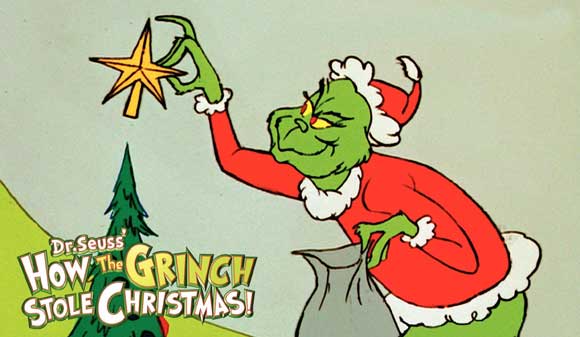
Perhaps the most inspired Xmas story of them all is this animated TV adaptation of the Dr. Seuss classic that gives us one of cinema’s greatest villains, the Grinch, in all his mendacity, arrogance and theatrics. Who knew that Dr. Seuss was prescient enough to create an ego-maniacal character that anticipated Donald Trump? We can only hope that somewhere under the president-elect’s cold, hard exterior beats a heart that even the Grinch possessed. We just have to hope that something happens to humble Mr.Trump so that he can soften his avarice against today’s equivalent of the Who’s. Cartoon master Chuck Jones directed this classic and Boris Karloff indelibly voiced the Grinch. The primary colors and dynamic action sequences are eye-poppingly cool. Albert Hague composed the memorable music.


The Grinch steals a star from the tree


A Charlie Brown Christmas (1965)

The languid, zen-like idyll of Peanuts reached its zenith in this TV special that has sad-sack Charlie Brown learn the true meaning of Christmas with help from his family of friends: Lucy, Linus and Snoopy. I believe the genius of Charles Schultz with his Peanuts characters was tapping into the longings at the core of the basic human condition. We all desire to be loved and we all want attention to be paid and just like Charlie Brown we’re willing to suffer indignities in pursuit of these things. Having a few friends we can count on sure helps. They may drive us crazy but we know they’re there for us in the end. The minimalist jazz score is so right on for the simple images and messages.


Charlie Brown Christmas


White Christmas (1954)

For a feel-good Christmas movie, this one’s hard to beat. Having seen the stage play adapted from it, I can see why this story has legs that crosses generations and mediums. The characters are likable and the situations engaging. In my opinion this movie works as well as it does because of Bing Crosby and Danny Kaye. They make a great team as the veteran entertainers who conspire to help out their old commanding officer from World War II. In fact, I like Crosby and Kaye better than the Road movie tandem of Crosby and Bob Hope. As the retired general fallen on hard times, Dean Jagger has just the right blend of stoicism and sweetness. Rosemary Clooney and Vera Allen lack charisma and a couple dance sequences nearly stop the picture cold, but aside from those quibbles this Christmas chestnut still holds up as funny, heartwarming escapist fare. Director Michael Curtiz could still keep a story moving but this was grade B material compared to the great films he helmed earlier, Casablanca among them.


snow


Going My Way (1944)

Bing Crosby is the avuncular Father O’Malley come to rescue a failing Catholic parish whose curmudgeonly old pastor, Father Fitzgibbon, played by Barry Fitzgerald, resists change and resents being put out to pasture. This is old-fashioned Hollywood hokum that tickles the funny bone and tugs at the heartstrings. Director Leo McCarey had a light touch with sentimental material and though he comes close to going over the top with this one’s rather precious, nearly saccharine moments, he manages to keep things moving along and undercutting the maudlin bits with sharp humor and repartee.


goingmyway00017


Scrooged (1988)

Nobody does obnoxious better than Bill Murray and here he veers dangerously near alienating viewers but always pulls back from the brink, though I must admit the first time I saw this pic his performance and the overall tone of the film turned me off. But after seeing the picture a few more times, my estimation of him as a megalomaniac media czar and of this updating of A Christmas Carol has risen considerably. Murray makes a fine if loopy Scrooge and in keeping with the Tim Burton-like approach (Richard Donner directed), Carol Kane and David Johansen bring original takes to the Ghosts of Christmas Past and Present, respectively. There are some nice supporting performances by Alfre Woodard and Michael J. Pollard. But this is all about Murray’s character rediscovering his heart for his fellow man.


scrooged


Carol for Another Christmas (1964)

Rod Serling wrote and Joseph Mankiewicz directed for television this dark as night fantasy that tackles nothing less than the human condition and humanity’s fate. In the very year that Sterling Hayden co-starred as a raving mad general who instigates nuclear war in Dr. Strangelove, he stars here as an embittered, bigoted Cold War patriot grown callous to the brotherhood of man. His Daniel Grudge is a Scrooge for the modern era whose hardened heart and cold calculus represent the madness of nationalism and the cruelty of the military industrial complex. Haunted by guilt and grief over the loss of his son. he’s visited by spirits who show him horrors and hopes that make him see things in a new way. Though didactic, preachy and slow in places, it’s well worth your time. The eclectic cast includes Ben Gazzara, Peter Sellers, Robert Shaw. Pat Hingle, Percy Rodriguez, James Shigeta, Britt Ekland and Eva Marie Saint. Henry Mancini did the music, The movie can be viewed for free on YouTube.


Some more Xmas movies that I admire:

Meet Me in St. Louis (1944)

We’re No Angels (1955)

3 Godfathers (1948)

Holiday Inn (1942)

The Polar Express (2004)

Rudolph the Red-Nosed Reindeer (1964)

Frosty the Snowman (1969)


40th Anniversary of “Rocky”

December 18, 2016 Leave a comment

40th Anniversary of “Rocky”

By writing the screenplay for “Rocky,” holding out to play the title character and then delivering the goods in a surprise monster hit that earned industry praise, Sylvester Stallone pulled off a miracle every bit as dramatic as his fictional alter-ego Rocky Balboa going the distance with Apollo Creed.

Stallone literally wrote his own ticket to stardom. When he made the deal to sell the script to United Artists on the condition he star in it, he was an obscure character actor with no real prospects for a feature career. Stallone, much like the character of Rocky himself, had nothing to lose. That’s why he could afford to decline big money offers to sell the material so that the studio could cast Ryan O’Neal, Burt Reynolds, James Caan, Robert Redford or some other established star as the lead. He was in a once-in-lifetime bargaining position to say, you either make the movie with me or I take it somewhere else. Of course, there was no guarantee UA or any other studio would want his script bad enough to accept his terms.

Rocky is an interesting property because it bridges old and new trends. On the one hand, it’s very much in the tradition of old Warner Bros. urban dramas with the requisite love story and comedic relief thrown in. On the other hand it’s very much in tune with the new humanistic, ultra realism of late ’60s-early ’70s cinema that’s stripped away of easy sentiment. Under John Avildsen’s direction, the story is anchored in that dour, gritty, work-a-day world truth yet, when called for, it’s carried away by delirious, romanticized sentiment. The movie even anticipates the flawed Marvel superheroes who would come to dominate the American cinema box office decades later. As over the top as the ending of “Rocky” gets, it somehow all works and I think it’s because of the cumulative weight of all that transpires before it and by how much we invest emotionally in the lovable loser characters Stallone created.

Stallone followed his heart,, passion and instinct in drawing on real life elements and populist themes to create an original script that had box office written all over it but that no one outside Stallone, producers Robert Chartoff and Irwin Winkler and director Avildsen believed he could carry. Sure, any number of actors could have played the role, but no one knew the character as well as Stallone because Rocky Balboa grew out of his own personal and professional struggles. Stallone tapped his own demons and aspirations to conceive this anti-hero and then he used all those emotions again to bring that character to life on the set and on the screen.

Rocky hit at just the right time, too, in terms of the national zeitgeist. America was cynical and weary coming out of Watergate and Vietnam and so the moviegoing public was ready for an escapist, feel-good experience, Just as “American Graffiti” and “Jaws” had before it and just as “Star Wars” and “Superman” did after it, Rocky caught the wave of popcorn fare, only not relying on nostalgia or thrills or special effects like other blockbusters of that era, but on good old-fashioned storytelling and richly developed characters. Rocky was much closer in tone and content to, say, “On the Waterfront,” than to the other major boxing-themed movies of that period, John Huston’s “Fat City,” Martin Ritt’s “The Great White Hope” and Martin Scorsese’s “Raging Bull.” Which is to say that at the end of the day Rocky, like those other pictures, is not so much a boxing movie per se as it is a slice of life portrait of someone who just happens to be a boxer. “On the Waterfront” is essentially a crime film and morality play whose protagonist, Terry Malloy, is an ex-prizefighter. “Fat City” is a stark, nihilistic view of down-and-outers in skid-row Los Angeles, where a veteran club fighter mentors a new arrival. “The Great White Hope” profiles a black man, Jack Johnson, who refuses to live by the white man’s rules. “Raging Bull” is an expressionistic look at the demon’s that drove Jake LaMotta.

In my opinion, there are better movies about boxing than “Rocky,” such as “Creed,” “The Fighter,” “The Set-Up” “Ali,” and “Cinderella Man.” The fight scenes in “Rocky” are just too unrealistic for my tastes, though they mostly do work dramatically. But, again, “Rocky” transcends the boxing genre into something else again.

“Rocky” is a classic redemption story. In this first iteration of Rocky Balboa, Stallone gives us a man who could have been something as a fighter but has given up on himself just as others have given up on him. Then, he finds the love of a good woman and when presented with an extraordinary opportunity, he rededicates himself to his craft and rises to the challenge of facing the champ. Stallone was able to pour himself into the character in writing the script because he could so closely identify with the story of a guy everyone considers a loser who gets one chance to make things right. Art imitated life again when the studio relented and bankrolled his movie with him in the lead despite their grave reservations and he turned this million to one shot into the talk of the 1976 movie season and the catalyst for a career and, as it happened, for a four-decade long franchise.

In the sound era when has an actor been as responsible for his or her own star-making vehicle as Stallone was with Rocky? After all, he wrote the part that launched him into mega-stardom and gave him an enduring character he’s still playing 40 years later. The closest comparisons I can come up with are Orson Welles in “Citizen Kane,” which he co-wrote, directed and starred in, though that film didn’t really make him a star, and Matt Damon and Ben Affleck in “Good Will Hunting,” which “the boys” co-wrote and co-starred in, though Damon already had several major screen credits before Hunting.

Of course, in the silent era Charlie Chaplin and Buster Keaton wrote and directed pictures starring themselves and in the process created their own signature comic personas. In the early talkies era Mae West wrote the scripts for her own popular starring vehicles.

Surely other come-out-of-nowhere Hollywood stories have followed, but I doubt if any compare to what Stallone did with Rocky. First, there’s the enduring appeal of that original film that won Oscars for Best Picture, Best Director and Best Editing. Everything had to come together to make Rocky work and it did. Stallone found the right producers in Robert Chartoff and Irwin Winkler and the right director in John Avildsen and the right supporting actors in Talia Shire, Burt Young, Burgess Meredith and Carl Weathers.

The authentic locations in Philadelphia brought a real sense of verisimilitude to the action.

Then there’s the fact that Rocky was hardly an isolated experience for Stallone. He has “screenplay” and “written by” credits on dozens of films. including some very good ones: “F.I.S.T.”; “Paradise Alley”; “Rocky II”; “First Blood”; “Rocky Balboa.” And his interpretations of Rocky in the franchise’s later movies, as the character’s moved into middle age (“Rocky Balboa”) and beyond (“Creed”) are richer and more nuanced, filled with the experience of a life lived. Even though I am not that big a fan of his work, I personally rooted for him to win the Best Supporting Actor Oscar for “Creed” because I thought he gave a superb performance that totally anchored that very good movie. I actually think his work in “Paradise Alley”, as an actor. writer and director is among the best he’s ever done but that cult favorite remains little seen and appreciated and apparently the studio forced him to make cuts against his wishes. I also admired what he did as an actor in “Cop Land,” when he played against type, though I think the script and direction by James Mangold undercut the power of Stallone’s performance by making his character’s slow burn too gradual.

Now that Stallone has aged into character roles, I love that he’s playing a succession of mobsters in upcoming projects: “Scarpa”; “Omerta”; and “Idiot’s Eye”. He has the presence, the charisma and the chops to bring his own take to these familiar types and to perhaps make them new.

Stallone’s path after “Rocky” has followed the inevitable highs, lows, excesses, failures and comebacks that accompany anyone’s life and career over a long span of time. It’s been 40 years since he gave us “Rocky.” It’s a testament to the indelible figure of Rocky Balboa he created that the film, the character and the resulting franchise still resonate this many years later. The “Rocky” brand is still going strong alongside other movie franchises. But unlike the others, “Rocky” doesn’t rely on visual effects and superhuman conceits. Even with its occasional flights of fancy, the “Rocky” series is firmly rooted in reality. That’s saying something in today’s CGI cinema universe.

I had an idea for an anniversary screening of “Rocky” in Omaha with hometown world champ Terence “Bud” Crawford introducing the film and serving on a panel after the screening. Fellow panelists would have included Ron “The Bluffs Butcher” Stander and Bruce “The Mouse” Strauss. Sadly, I couldn’t get support for the project. Oh, well, maybe for the 50th.

“It’s a Wonderful Life” speaks to our troubled times – calling us to be agents of change and hope

December 15, 2016 1 comment


“It’s a Wonderful Life” speaks to our troubled times – calling us to be agents of change and hope 

©by Leo Adam Biga, author of “Alexander Payne: His Journey in Film” (now available online and in bookstores)


For many of us, the ugly, vitriolic tenor of the presidential election combined with the incendiary comments and divisive ideas expressed by president-elect Donald Trump have cast a dark pall on things. That’s why there’s no better time than now to watch that great American chestnut of cinema, “It’s a Wonderful Life,” than this particular holiday season.

Film Streams in Omaha is screening this tragic-comic masterwork directed by Frank Capra beginning Dec. 17 on select days through Christmas. The project was Capra’s response to the horrors of the recently concluded Second World War and the recent Great Depression. What Americans today forget is that while the Allied victory over Germany and Japan was greeted with relief and jubilation, the scars of that conflict and of the harsh realities experienced by those who fought it took a deep psychic toll on the nation. Just as America lost its innocence during the Civil War and World War I, it lost any pretense of an idealized world following WWII. Oh, sure, the nation bt on with the business of work, marriage, family and the creation of the consumer age we’re now hostage to, but Capra knew that Americans were an insecure, wounded people behind all that bluster and bravado. It’s no coincidence that that dark cinema of film noir found its apex of expression in the years immediately following the war.

The message of the 1946 film has never been more relevant now as people reeling from the last few months despair over what policies and executive orders will undo the fabric of a nation that for all its inequities does have programs and measures in place to protect the vulnerable among us.

Many folks upset with the election results and fearful of what might be in store the coming four years. feel hopeless, as if their votes and wishes don’t count, and perhaps even harbor a sense that they just don’t matter in the cold calculus of the new world order.

If you’re familiar with the plot, then you know that protagonist George Bailey played by James Stewart is a small town dreamer forever putting off his personal desire for adventure in service to his family’s proletariat building and loan. The business is the last hold out against ruthless Bedford Falls tycoon Mr. Potter, a banker and real estate magnet whose power grab lust will make him stop at nothing to crush his competition. Where George and his late father before him have worked with clients of all races and ethnicities to get them in or keep them in modest homes they could afford, Potter’s only interest is the bottom-line, and if that means pricing them out, then so be it. He represents the bourgeoisie at its most heartless.

It is the classic conflict between the Everyman and the Privileged Man, between the haves and the have-nots, between the forces of good and the forces of evil, between fascism and pluaralism. All sorts of parallels can be found between Potter and Trump. Both are pompous assess who are unfeeling and unbending in their pursuit of wealth and power and they make no apologies for the corners they cut, the contracts they break, the lies they tell and the damage they do.

George Bailey is a young progressive who would have supported FDR then and would have backed Hilary or Bernie today. The disenchanted majority who feel Trump usurped their presumptive president elect by using fear and hate mongering rhetoric are adrift now, no longer at all certain that the democratic process works the way it was intended. Many have thrown up their hands in frustration and worked themselves into fits of anger, desperation and anxiety in anticipation of the Trump administration. In the movie. George loses his faith in America and humanity when things go from bad to worse and it appears to him that all his work and life have been a waste. The tale, which can best be described as a light romantic comedy fantasy meets gritty film noir fable, has George grow so depressed that he contemplates suicide, uttering the wish that he’d never been born. A surreal heavenly intervention shows him how different the world would have been and how empty the lives of his family and friends would be without him having made his mark.

The populist message with spiritual overtones is a reminder, even a challenge that life is a gift that we are expected to cherish and that our imprint, no matter how small or insignificant we believe it to be, is irreplaceable and unique only to us. In this spirit, “It’s a Wonderful Life” calls each of us to do our part in finding our path and following it to do unto others as we would have them do to us. We may not like or understand the path, especially when it grows hard and we grow weary, but it is in the doing that we fulfill our destiny.

In a recent interview I did with Oscar-winning filmmaker Alexander Payne he expressed his immeasurable regard for the professional extras who once populated the Hollywood studio factory system. He marveled at how perfectly cast these variations of character actors were and how fully realized, detailed, curated and directed were the business they did and the wardrobe they wore, whether in the background or foreground of shots. He used the example of “Casablanca” as being the epitome of this. “It’s a Wonderful Life” illustrates the same. By the way, the reason why Payne discussed extras at some length with me is that he used a lot of them, as in several hundred, perhaps even a few thousand, not ever all together in any one shot or scene mind you, in his new movie “Downsizing.” He and Kevin Tent are editing the film right now and presumably getting it ready to show at Cannes in May.

Look for a new post this week about “Downsizing” and why you should start the countdown to its fall release. Here’s a hint: its themes become ever more prescient with each new American blunder and world crisis.

Just as “Downsizing” will reflect back to us where America and the world have come and where it might go, “It’s a Wonderful Life” is an ageless morality play in the Shakespearean mold are that reveals universal truths of the human heart and soul in extremis.

“It’s a Wonderful Life” has had a profound effect on me the many times I’ve seen it and I have no doubt it will move me again.

http://www.filmstreams.org/film/its-a-wonderful-life/


One of the most beloved holiday films of all time, IT’S A WONDERFUL LIFE stars James Stewart as George Bailey, a good man who’s spent his entire life putting other people before himself. When George falls victim to the antics of a greedy banker, he’s cast into a life-threatening despair — that is, until a guardian angel named Clarence shows George what the world would have been like had he never been born.

Additional Information

Also Shown: December 19, 20, 24 & 25, 2015

December 14 -17, 2012

December 17-18, 22, 24-25, 29, 2011

Directed By
Frank Capra

Starring
James Stewart
Donna Reed
Lionel Barrymore
Thomas Mitchell
Henry Travers
Beulah Bondi
Frank Faylen
Ward Bond
Gloria Grahame

Running Time
130 minutes

MPAA Rating
PG

Distributed By
Paramount Pictures

Country of Origin
USA

Language
In English

Release Year
1946

Year Shown Last
2015