Archive
John and Pegge Hlavacek’s globe-trotting adventures as foreign correspondents
This is a story about an amazing couple, John and Pegge Hlavacek, I met only a few years ago, decades removed from their adventures as globe-trotting foreign correspondents. Their fascinating stories are from way before my time but they are timeless because they personally speak to adventure, romance, intrigue, news, and history that they were there to experience and witness for themselves. Their life together was like something from a movie or a play or a book. John has published a series of memoirs written by himself and by his late wife Pegge that document much of their intrepid adventures. As my article notes, they don’t make couples like this anymore. The piece originally appeared in the New Horizons.

John and Pegge Hlavacek’s globe-trotting adventures as foreign correspondents
©by Leo Adam Biga
Originally published in the New Horizons
Prior to meeting, John and Pegge Hlavacek were young, intrepid reporters filing stories from news making capitals around the world. Then, when fate brought them together in Asia in 1951, they forged a life together that fed their mutual curiosity and hunger for adventure. It was all so Bogey and Bacall. Two dashing Americans falling in love in post-colonial India and the promise of its new democracy.
He was a breezy foreign correspondent. She, a posh former reporter-turned-public affairs officer. After marrying in Bombay and honeymooning in Rome, their whirlwind life took on all the intrigue and romance of a movie as they trailed after news from one exotic port of call to another. There was travel to fantastic spots. Hong Kong, Delhi, Darjeeling, the North Pole. Interviews with compelling world figures. Nehru, Indira Gandhi, the Dalai Lama. Memorable sights. The Taj. The Himalayas. Meeting visiting Chinese and Soviet premieres. Visiting palaces, temples, ruins, museums. Haggling in crowded bazaars. Rushing to catch trains, planes, boats, ferries. And, always, hurrying to meet deadlines and beat the competition.
Just like they broke the mold with Bogey and Bacall, they don’t make couples like the Hlavaceks anymore. What a match they made. He with his boyish enthusiasm, rakish charm and rugged good looks. She with her fresh, feisty, unspoiled spirit and down home wile. As exciting and enchanting a lifestyle as they led, what made it more storybook was that when Pegge met John, she was a widowed mother of fraternal twins she had with her first husband, who was killed in China. Gallant John took on the instant family and he Pegge soon added three children of their own.

The Hlavaceks’ years chasing stories and kids are told in two new books authored by Pegge, Diapers on a Dateline and Alias Pegge Parker, a pair of great reads written in her clean, colorful prose style. She actually wrote the manuscripts in the 1960s, but when she could not find publishers she put them away. After being stricken with Alzheimer’s a few years ago, John, who still cares for her at their Rockbrook area home in Omaha, unboxed the pages, read them again, and impressed, sent them off to an editor friend, who agreed they deserved a life in print. John then got them published via iUniverse, a vanity press in Lincoln, Neb.
Now 86, Hlavacek is proud of his wife’s work and glad, after all these years, to have finally seen her accounts of their rich lives on bookshelves. “She is a much better writer than I am,” he said. “Pegge has the gift of putting down in words a picture. She’s an excellent writer. I’m just a journeyman.” In a reflective mood these days, he’s writing his own memoirs from the diaries he kept and the letters he wrote during his early years overseas. In conversation, this unadorned man blithely recalls one fascinating chapter after another of his and Pegge’s foreign adventures, leaving the listener, if not himself, awed by the sheer magnitude of their stimulating lives.
A native of LaGrange, Illinois and a graduate of Carleton College (Minn.), where he was a star athlete, Hlavacek originally came to the Far East in 1939 to teach English in Chinese mission schools. He went on a fellowship from the Carleton-in-China exchange program, which his football teammates signed him up for while he recovered from appendicitis. The way it all came about, he said, is indicative of “how accidental my whole life is.” It was not the last time his life took a major detour as the result of some seemingly random act. Not a religious man, he chalks up all these events to “serendipity,” saying: “I’ve got a little star following me around. All of my life, nothing’s been planned. It just happened.”
Going to the other side of the world then was far from routine. “My folks were not too thrilled with the idea of my going,” he said. “In 1939…all they knew about China was famine and disease, and they thought they would never see me again. It was like going off to war.” War came soon enough.
In Peking, he took intensive language courses. By the end of his stay at the mission schools, where his status as the only American made him “a celebrity,” he spoke passable Chinese. On holidays, he traveled widely in-country and also got his first glimpses of India and Pakistan, visiting Rangoon, Calcutta, Agra, Dehli, Peshawar, the Khyber Pass and Kashmir. The first of two schools he taught in was comfortably outfitted. “We had a cook and a bearer and a valet.” At the second, situated on an old temple site, life was more “primitive,” he said. “I just had a little room for my office and another room for my bed. We had vegetable oil lamps.” He enjoyed his time over there. “I liked the Chinese. I got along with them very well. I had a ball.”
With the outbreak of WWII, he felt compelled to help the beleaguered native populace and, so, he signed on with the International Red Cross. He “fell in” with a group of Welshmen driving medical supplies over the Burma Road, a “rugged” job, as daunting for the red tape as the conditions. “Every time we went out, we had to get permits from the local officials to show where we were going and what we were doing,” he said. “Much of the road was mountainous, with switchback turns. Trucks had accidents. They got stuck in mud. Springs broke. Batteries died. But, fortunately, none of the people I was with ever got killed.”
He saw flashes of the war from places like Chintang and Chungking. “Japanese bombers would go over us, heading for Chengtu. One time, I was fortunate to survive a bombing raid,” he said.” We were down in a hotel dugout when a bomb landed on the front of us and another on the back of us. There was a lot of explosions.” After his Red Cross duty ended, he applied his language skills to the U.S. military attache as a decoder and interpreter, helping track troop movements.
In another example of the way things have fallen into place for Hlavacek, he was in a Chungking hotel one “cold, dreary, wet night” in February 1943 when he struck up a conversation with John Morris, eastern manager for the United Press news service. Hlavacek recreates the scene: “We had lots to drink and we were sobering up in the morning in front of a big fireplace when I said, ‘Mr. Morris, what does it take to be a United Press correspondent?’ He said, ‘What have you done?’ And I told him, ‘I’ve taught English and I speak Chinese.’ ‘You’re hired,’ he said. Thus, without a shred of newspapering experience, Hlavacek talked his way into a foreign correspondent’s job he made his life’s work the next 25 years.
One of his early assignments overseas saw him covering the American 14th Air Force commanded by Major General Claire Chennault. “I got a big scoop. I was the only American journalist when they evacuated the city of Heng Yang. The Japanese were coming down from Changsha. I was in the last jeep leaving the city.” On their way out, U.S. forces destroyed key installations to spoil the invaders’ advance, and by joining-in the patriotic Hlavacek found himself part of the story. “We blew up an airfield. We threw grenades into buildings to make them burn up,” he said. “It was a great story and I sent it in and they (UP editors) killed it. It never got published. You see, we had censorship at that time.” But his actions were recognized when he received a citation from Gen. Chennault for aiding the military.
It was not the last time Hlavacek aided those in need. His wife writes about a 1955 episode in which he and another journalist pulled wounded Indian protesters to safety after Portuguese troops fired on them. It was all in the line of duty, he said.
After Heng Yang, Hlavacek fell ill. Recuperating back in the states, he got a baptism-by-fire on the UP’s New York night cable desk. Sent back abroad, he rose through the ranks to bureau chief in Bombay, getting news from London by Morse code, editing and printing it off and then sending it out to papers via bicyclists. His territory extended across all of India and into Pakistan, Afghanistan and Ceylon. He employed stringers, but also reported, snapped pics and, later, shot TV footage himself, often doing all three on one story. “I got to know how to do all this just by doing it,” he said of his self-taught news career. It helped, he said, “to be nosey.”
He was there for the press conference announcing the partition of India. He lived through the Bombay riots of 1946 and ‘47. He once walked two hours with Mahatma Gandhi. He saw Nehru’s rise to and fall from grace and power. Everywhere he went, the big affable American was known for his good humor and winning way with kids. Besides a few scrapes with rebels, including being imprisoned in Nepal, and some bouts of dysentery, he emerged from Asia unscathed. The bachelor lived and breathed news in his UP post, which saw him cover everything from riots to celebrations and untouchables to heads of state, but nothing prepared him for the dark-haired American girl who stole his heart.

A native of Harrisburg, Pa., the former Margaret Lyons displayed an early aptitude for spinning tales and seizing opportunities, like the time, at age 17, she convinced the publisher of the Harrisburg Telegraph to start a youth column, Teen Topics, which she wrote while still a high school student. She wrote under the pen name Pegge Parker, which remained her non de plume the rest of her writing life. The column proved so popular that when she decided to try her luck in Washington, D.C., the publisher kept it as a regular feature. In the nation’s capital, Pegge landed a night reporting job with the Washington Times Herald, where she became a pet of its owner, Cissi Patterson, who liked the way she took the measure of congresswoman Clare Booth Luce in a piece. Plucky Peg’s wartime reporting from the homefront included first-hand features she did on maneuvers with the Tenth Armored Division and the Paratroop School in Fort Benning, Ga., complete with pics of “the Amazon girl” atop a Sherman tank and harnessed in a control tower chute.
One of the biggest exclusives she scored was an interview with Margaret Mitchell, who had retreated from public life after the sensation of her book, Gone With the Wind, and the mega-hit movie made from it.
Soon, however the beltway beat’s political wrangling and society finagling grew tiresome for Pegge. Her restlessness peaked so much that, in 1943, she got as far away from Washington as possible by taking a reporting job with the Daily News Miner in Fairbanks, Alaska. The great white wilderness, then not long removed from its untamed gold rush days, proved a rich news source for the young journalist, who met its salty characters, viewed its rough-hewn beauty and traveled to its remotest regions, even venturing to the Aleutian Islands and the North Pole. One of her stories, about a lottery awarding a gaudy cash prize to anyone guessing the exact time the ice breaks on a river, was published in the Readers Digest. Years later, Pegge said of her time in Alaska, “I loved every minute of it.”
Wanderlust called again in 1949 when, without knowing a word of the language, much less a single solitary soul, she embarked for China. She went, minus even a reporting gig, on pure blind faith things would work out. They did, too. The New York Daily News picked up the stories she filed from the Great Wall, Shanghai, Peking and the frontier mountain regions. Even though he didn’t know her yet, Hlavacek appreciates the spunk she exhibited then as “the girl on the go. Where I just kind of went along with things,” he said, “she went out and pursued them.”
It was in China she met and married her first love, Doug Mackiernan, an American scientist serving as an American vice consul in a distant and politically sensitive part of China. She bore him fraternal twins. When Communist-fired tensions rose there, she and the twins went to live in America, where Pegge got the news he’d gone missing. Weeks passed before it was confirmed he was killed by Tibetan border guards while fleeing China. At the time, the Chinese publicly accused Mackiernan of being a spy, allegations Pegge and U.S. officials refuted. Years later, it was revealed MacKiernan had indeed been a CIA agent.
Grief-stricken, she accepted her husband’s old post. Leaving the twins in the care of his parents in Boston, she went off to serve as a vice consul in Lahore, Pakistan before ending up a public affairs officer in Karachi. It was in Pakistan she met John. Despite a testy first encounter, the news hounds knew they’d found their match.
“We didn’t like each other at first. You have to understand, she was working for the government and I was a reporter, and there’s a natural antipathy there,” he said. Then there was the way he upbraided her for leaving her children at home while she went gallivanting about Asia. She explains in Diapers on a Dateline how, at first, she was enraged at his impudence. Then, she felt guilty, because she knew he was right. Finally, she was fascinated by this man who took such interest in reuniting a mother and her children. The die was cast. Their Bombay marriage took place in 1952 in the chapel of St. Xavier’s College, presided over by a friend of Hlavacek’s who was a Spanish Jesuit priest.
Headstrong personalities are bound to clash, and while John and Pegge have enjoyed 51 years of marital harmony, there’ve been times they’ve butted heads. “We’ve had our fights,” he said. “We’re both competitive.”
Raising five kids largely in a downtown Bombay hotel, with the family’s suite also serving as an office to Papa John, who was often away on assignment, the Hlavaceks somehow made it all work. Pegge ran things while he was gone, the ever-present typewriter strewn with diapers and toys. As if not hard enough making ends meet with seven mouths to feed, 11 counting the family’s bearer, driver, cook and their beloved aiha (nanny), Tai Bhai, the UP’s chintzy pay and shoestring budgets made matters worse. Pegge writes humorously about her obsession with shopping for bargain trinkets and relics from the wallas (peddlers-merchants) she could never refuse. The couple’s many homes have been adorned with the artifacts and just plain junk they’ve acquired over the years.
What hardships the family endured, they will tell you, were more than made up for by the enriching experiences they shared among themselves and with the world.
The Hlavaceks broke some of their biggest news stories in India. John befriended Tenzing Norgay, head sherpa on Sir Edmund Hillary’s historic Everest ascent, and told his tale for the first time in a UP story syndicated around the world. When John learned famed Italian filmmaker Roberto Rossillini, then married to Ingrid Bergman, was having an illicit tryst with a much younger married woman, he enlisted Pegge to get the scandalous goods, and she did. Pegge also made a splash when she co-authored a story with Nehru’s sister about the Indian prime minister.

When the rival Associated Press cut into UP’s India market, John lost his job in 1957. With things looking bleak he then received — “out of the blue” — the Council of Foreign Relations’ Murrow Fellowship at Columbia University, a windfall, he said, “which saved our bacon.” The family lived a year in New York. Hankering to be where the action was in the Cold War, he studied Russian for an expected Eastern bloc assignment, but instead he and Pegge followed their nose for news to the Caribbean and the region’s growing political strife. The family lived in Jamaica, a haven for the rich, the famous and the infamous.
From their hillside bungalow near San San as their island base, John fed radio and TV reports to NBC News and he and Pegge filed stories for Time-Life. They did pieces on exiled dictators Juan Peron and Zeldivar Batista, who despaired to the Hlavaceks, “They call me a murderer,” and John nabbed a world beat exclusive on the assassination of Rafael Trujilla. On a lighter note, the couple cultivated stories on famed composers Rodgers and Hammerstein, fading matinee idol Errol Flynn, evangelist Billy Graham and James Bond author Ian Fleming and they hobnobbed with the vacationing Kennedys and Johnsons and Princess Margaret.
With Castro’s ascent to power in Cuba, John went there as NBC’s primary correspondent, getting jailed and deported once for pressing too hard on a story. He interviewed all of Castro’s cabinet, but never “got to” the leader himself.
By 1964, Hlavacek’s network contract was up and his search for a news gig brought him and his family to Omaha’s then-NBC affiliate, KMTV, for whom he became a news analyst and roving correspondent. In a rare move for a local station, then news director Mark Gautier and general manager Owen Sadler let Hlavacek, with Pegge at his side, go far afield for news gathering sojourns, including trips to Vietnam, Africa and Europe. His Vietnam dispatches from the battlefront, which profiled ordinary GIs from the heartland, proved popular. He was a one-man crew, too — reporting, writing and filming. Between his field reports and analysis, he was part of a serious era in local TV news that’s long gone. “Well, it’s all fun and games now. Mark Gautier was a strict newsman. He didn’t believe in the happy talk that’s all the rage now,” said Hlavacek, who marvels at the instant news allowed by today’s digital-satellite technology and “the big production” TV makes of things.
Pegge’s pen was busy, too, as she wrote columns for the Sun Newspapers and Council Bluffs Nonpareil, among other publications, and hosted a radio show.
In the ‘70s, Hlavacek, a Democrat, scratched an itch to run for public office, losing a Congressional bid before winning a seat on the Omaha City Council. By showing his political colors, he found his journalism career closed. “Nobody would hire me,” he said. Still needing to earn a buck and looking to stay put in Omaha, where the family had put down roots, he started a travel agency, TV Travel, that capitalized on his and Pegge’s globetrotting expertise. After selling the business in 1983, he and Pegge remained in Omaha but continued hopscotching the world for pleasure, including several trips to China, where they visited old haunts and new sites.
Their grown children, all Westside High grads, are doing well. Two are doctors. One’s an airline pilot. Another’s in e-commerce. And still another’s an author.
Now, John’s days revolve around Pegge and memories of their high times. He takes her to an adult day care, after which they go to the Swanson branch library, where they pore over newsapapers. “We’re news junkies,” he said. “She’s at her best in the morning. She knows who I am and everything else. But at night she’s not quite sure whether she’s in Harrisburg or in Omaha. It’s rather discouraging…this terrible disease. I don’t know how many more years we’ve got.”
Rummaging through a lifetime of mementos at their home, everything he comes across evokes a story from their halcyon days as reporters. “I’ve got lots of stories,” he said.
Related Articles
- ‘I’m always looking for trouble’: Why Dom Joly heads for the planet’s more difficult destinations (independent.co.uk)
- On the road with China’s Foreign Ministry (theworld.org)
- Women at war: Profiling the female foreign correspondents in Iraq (blogs.journalism.co.uk)
- Foreign Correspondents Worry About Limited Access Following McChrystal Article, Gates Order (huffingtonpost.com)
- Can journalists ever be heroes? (independent.co.uk)
Thomas Gouttierre: In Search of a Lost Dream, An American’s Afghan Odyssey

Image via Wikipedia
Thomas Gouttierre’s work with Afghanistan has drawn praise and criticism, moreso the latter as of late given what’s happened there with the war and some of that nation’s top leadership having been befriended and trained by Gouttierre’s Center for Afghanistan Studies at the University of Nebraska at Omaha. The following profile I did on Gouttierre appeared in 1998, long before U.S. involvement there escalated into full military intervention. Regardless of what’s happened since I wrote the piece, the essential core of the story, which is that of Gouttierre’s magnificent obsession with that country and its people, remains the same.
The story originally appeared in The Reader (www.thereader.com).
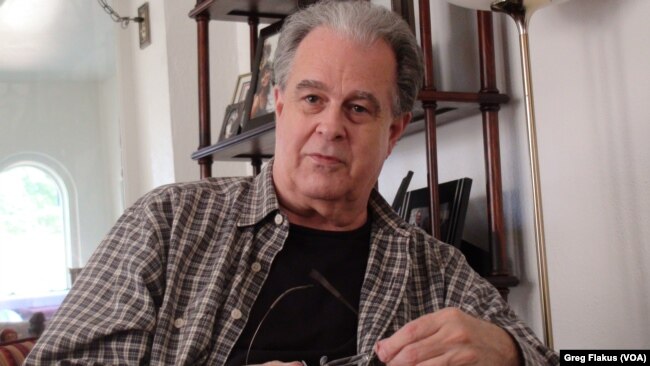
Thomas Gouttierre: In Search of a Lost Dream, An American’s Afghan Odyssey
©by Leo Adam Biga
Originally appeared in The Reader (www.thereader.com)
Like a latter-day Lawrence of Arabia, Omahan Thomas Gouttierre fell under the spell of an enigmatic desert nation as a young man and has been captivated by its Kiplingesque charms ever since.
The enchanting nation is Afghanistan and his rapture with it began while working and living there from 1965 to 1974, first as a Peace Corps volunteer teaching English as a second language, then as a Fulbright fellow and later as executive director of the country’s Fulbright Foundation. His duties included preparing and placing Afghan scholars for graduate studies abroad. During his 10 years there, Gouttierre also coached the Afghan national basketball team. Sharing the adventure with him was his wife and fellow Peace Corps volunteer Marylu. The eldest of the couple’s three sons, Adam, was born there in 1971.
Before his desert sojourn, the Ohio native was a naive, idealistic college graduate with a burning desire to serve his fellow man. When he got his chance half-a-world away, it proved a life transforming experience.
“It’s the place where I kind of grew to a mature person,” he said. “I was there from age 24 to 34 and I learned so much about myself and the rest of the world. It gave me an opportunity to learn well another language, culture and people. I love Afghanistan. It’s people are so admirable. So unique. They have a great sense of humor. They’re very hospitable. They have a great self-assurance and pride.”
But the Afghanistan of his youth is barely recognizable now following 19 years of near uninterrupted carnage resulting from a protracted war with the former Soviet Union and an ongoing civil war. Today, the Muslim state lies in shambles, its institutions in disarray. The bitter irony of it all is that the Afghans themselves have turned the heroic triumph of their victory over the vaunted Soviet military machine into a fratricidal tragedy.
Over the years millions of refugees have fled the country into neighboring Pakistan and Iran or been displaced from their homes and interred in camps across Afghanistan. An entire generation has come to maturity never setting foot in their homeland or never having known peace.
The nation’s downward spiral has left Gouttierre, 57, mourning the loss of the Afghanistan he knew and loved. “In a sense I’ve seen what one might call the end of innocence in Afghanistan,” he said, “because for all its deficiencies, Afghan society – when I was living there – was really a very pleasant place to be. It was a quite stable, secure society. A place where people, despite few resources and trying circumstances, still treated each other with a sense of decency and civility. It was a fantastic country. I loved functioning in that Afghanistan. I really miss that environment. Not to be able to go back to that culture is a real loss.”
Through it all, Gouttierre’s kept intact his ties to the beleaguered Asian nation. In his heart, he’s never really left. The job that took him away in 1974 and that he still holds today – as director of the Center for Afghanistan Studies at the University of Nebraska at Omaha – has kept him in close contact with the country and sent him on fact-finding trips there. He was there only last May, completing a tour of duty as a senior political affairs officer with the United Nations Special Mission to Afghanistan. It was his first trip back since 1993 (before the civil strife began), and what he saw shook him.
“To see the destruction and to learn of the deaths and disappearances of so many friends and associates was very, very sad,” he said from his office on the UNO campus, where he’s also dean of the Office of International Studies and Programs. “Much of the country looks like Berlin and Dresden did after the Second World War, with bombed-out villages and cities. Devastation to the point where almost no family is left unaffected.
“Going back for me was very bittersweet. With every Afghan I met there was such despair about the future of the country. The people are fed up with the war…they so want to return to the way things were. People cried. It was very emotional for me too.”
Everywhere he went he met old friends, who invariably greeted him as “Mr. Tom,” the endearing name he’d earned years before. “In every place I visited I wound up seeing people that I have known for most of my adult life. Individuals that have been here at the University of Nebraska at Omaha – in programs that we’ve sponsored – or people I coached in basketball or people I was instrumental in sending to the U.S. under Fulbright programs or people who taught me Persian and other languages of Afghanistan. So, you know, there’s kind of an extended network there. In fact, it was kind of overwhelming at times.”
Colleague Raheem Yaseer, coordinator of international exchange programs in UNO’s Office of International Studies and Programs, said, “I think he’s received better than any ambassador or any foreign delegation official. He’s in good standing wherever he goes in Afghanistan.”
Yaseer, who supervised Gouttierre in Afghanistan, came to America in 1988 at the urging of Gouttierre, for whom he now works. A political exile, Yaseer is part of a small cohesive Afghan community in Nebraska whose hub is UNO’s Center for Afghanistan Studies. The center, which houses the largest collection of materials on Afghanistan in the Western Hemisphere, provides a link to the Afghans’ shared homeland.
Aside from his fluency in native dialects, his knowledge of Islamic traditions and sensitivity to Afghan culture, Gouttierre also knows many of the principals involved in the current war. It’s the kind of background that gives him instant access and credibility.
“I don’t think there’s any question about that,” Gouttierre said. “The Afghans have a phrase that translates, ‘The first time you meet, you’re friends. The second time you meet, you’re brothers.’ And Afghans really live by that – unless you poison that relationship.”

According to Yaseer, Gouttierre’s “developed a skill for penetrating deep into the culture and traditions of the people and places he visits. He’s able to put everything in a cultural context, which is rare.”
It’s what enables Gouttierre to see the subtle shadings of Afghanistan under its fabled veil of bravado. “When people around the world wonder why the Afghans are still fighting, they don’t realize that a society’s social infrastructure and fabric is very fragile,” said Gouttierre. “They don’t realize what it means to go through a war as devastating as that which the Afghans experienced with the Soviet Union – when well over a million people were killed and much of the traditional resources and strengths of the country were destroyed. When the Soviets left, the Afghans tried to cobble together any kind of government and they were unsuccessful.
“Now they’re trying to put this social-political Humpty-Dumpty back together again, and its just very difficult.”
Under Gouttierre’s leadership the center has been a linchpin in U.S.-U.N. efforts to stabilize and rebuild Afghanistan and has served as a vital conduit between Afghans living inside and outside the country and agencies working on the myriad problems facing it. With nearby Peshawar, Pakistan as a base, the center has operated training and education programs in the embattled country, including a new program training adults in skills needed to work on planned oil and gas pipelines.
Gouttierre himself is a key adviser to the U.S. and world diplomatic community on Afghan matters. He’s served as the American specialist on Afghanistan, Tajikistan and South Asia at meetings of the U.S.-Russian Task Force (Dartmouth Conference) on Regional Conflicts. He’s made presentations on Afghan issues at Congressional hearings and before committees of the British Parliament and the French National Assembly.
And last year he was nominated by the U.S. State Department to serve as the American representative on the U.N. Mission to Afghanistan. “It was quite an honor,” said Gouttierre. “And for me to go back and work among the people again was very appealing and very rewarding.”
The aim of the U.N. mission, whose work continues today, is to engage the combating parties in negotiations toward a just peace settlement. German Norbert Holl, a special representative of the U.N. secretary general to Afghanistan, heads the mission, whose other members are from Russia, Japan, England and France.
On two separate month-long trips to Afghanistan, Gouttierre met with representatives of the various factions and visited strategic sites – all in an effort to help the team assess the political situation. His extensive travels took him the length and breadth of the country and into Pakistan, headquarters for the mission. He talked with people in their homes and offices, he visited bazaars, he viewed dams, irrigation projects and opium fields and traversed deserts and mountains.

Marylu Gouttierre said her husband’s involvement with Afghanistan and commitment to its future stems, in part, from a genuine sense of debt he feels. “He feels a responsibility. It is his second home and those are his people. He’s not only given his heart, but his soul to the country.”
He explains it this way: “Afghanistan has a special place in my professional and personal life and it has had a tremendous impact on my career. It’s been so much an instrument in what I’ve done.”
To fully appreciate his Afghan odyssey, one must review how the once proud, peaceful land he first came to has turned into a despairing, chaotic killing field. The horror began in 1978, when Soviet military forces occupied it to quell uprisings against the puppet socialist regime the USSR had installed in the capital city of Kabul. The Soviets, however, met with stiff resistance from rebel Mujaahideen freedom fighters aligned with various native warlords. Against all odds, the Afghans waged a successful jihad or holy war that eventually ousted the Soviets in 1989, reclaimed their independence and reinforced their image as fierce warriors.
The Afghans, whose history is replete with legendary struggles against invaders, never considered surrender. Said Gouttierre, “The Afghans felt they were going to win from the start. They felt they could stick with it forever. They had a strong belief in their own myth of invincibility…and to everyone’s surprise but their own, they did force the Soviets to leave.”
But the fragile alliance that had held among rival factions during the conflict fell apart amid the instability of the post-war period. “The Soviets left someone in charge who had been their ally in power. That was Najeebullah. His government fell in 1992. That only helped exacerbate things. The cycle of fighting continued as the Afghans who had fought against the Soviet army continued their fight against Najeebullah, who was captured, tried and executed by the Taliban (an Islamic faction) in September of 1996 for his crimes against the Afghans, which were considerable.” Gouttierre knew Najeebullah in very different circumstances before the war, when the future despot was a student of his in a class he taught at a native high school.
After Najeebullah’s fall, a mad scramble for power ensued among the Mujaahideen groups. As Gouttierre explains, “The leaders of these groups had become warlords in their own regions. They kind of got delusions of grandeur about who should be in control of the whole country and they began to struggle against each other.”

In the subsequent fighting, one dominant group emerged – the Taliban, a strict Islamic movement whose forces now command three-quarters of the country, including the capital of Kabul – with all its symbolic and strategic importance. A loose alliance of factions oppose the Taliban.
“As the Taliban (Seekers of Islam) grew in strength, they began intimidating and even fighting some of the minor Mujaahideen commando groups, and to a lot of people’s surprise, they were successful,” said
Gouttierre, whose U.N. assignment included profiling the Taliban. “They are very provincial, very rural – and in their own minds – very traditional Muslims and Afghans. They’re not that philosophically sophisticated in terms of their own religion, but they are very sophisticated in terms of what they understand they want for their society, and they’re able to argue and discourse on it at length without giving any quarter. And they’re willing to go to war over it.
“Each region where they’ve gone, they’ve been aided by the fact that the people living there were disenchanted with those in control. Most of the other groups, unfortunately, lost any credibility they had because of their failure to bring about peace, stability, security and reconstruction. The people were willing to support almost anything that came along.”
The Taliban has drawn wide criticism, internally and externally, for its application of extreme Islamic practices in occupied areas, particularly for placing severe restrictions on women’s education and employment and for imposing harsh penalties on criminals. Gouttierre said while such actions elicit grave concerns from the U.N. and represent major stumbling blocks in the Taliban’s quest for full recognition, the movement has effectively restored order in areas it controls.
“I have to say that in the areas of Afghanistan I traveled to which they control, the Taliban had confiscated all the weapons, removed all the checkpoints people had to pass through, eliminated the extortion that was part of the checkpoints and instilled security and stability,” said Gouttierre. “You could travel anywhere in Kabul without having to be in any way concerned, except for the mines that haven’t been cleared yet.”
Conversely, he said, the Taliban has exhibited brutal politics of intimidation and blatant human rights violations, although other factions have as well. “It’s not a question of who’s good and who’s bad,” he adds. “There’s plenty of blame and credit to be shared on all sides.”


He found the Taliban a compelling bunch. “One of the things I was impressed with is that all of the leaders I met were in some ways victims of the war with the Soviet Union. They all exhibited wounds, and they acquired these wounds heroically carrying out the struggle against the Soviet Union, and I respect them for that. That needs to be taken into account.”
In addition to pushing for a ceasefire between the Taliban and its adversaries, Gouttierre said the U.N. mission consistently makes clear that in order to gain credentialing from the U.N. and support from key institutions like the World Bank, the Taliban must do a better job of protecting basic human rights and ensuring gender equity.
He said the main barrier to reaching a cease fire accord is the Taliban’s nearly unassailable military position, which gives them little reason to make concessions or accept conditions. Another impediment to the peace process is the nation’s rich opium industry, whose interests diverge from those of the U.N. And a major complicating factor is the support being provided the warring factions by competing nations. For example, Pakistan and certain Persian Gulf states are major suppliers of the Taliban, while Iran and Russia are major suppliers of the opposition alliance.
Taliban and opposition leaders did meet together at several U.N. sponsored negotiation sessions. The representatives arrived for the talks accompanied by armed bodyguards, who remained outside during the discussions. The tenor of the meetings surprised Gouttierre. “It was far more cordial than I had anticipated. These men got along remarkably well, in part because they all know each other. That’s not to say there weren’t disagreements. When offended, Afghans can be exceedingly formidable to deal with.”
At Gouttierre’s urging, the mission began holding intimate gatherings at which representatives of the warring parties met informally with U.N. officials over food and drinks and “where translators were not the main medium for communication and where everybody wasn’t on guard all the time.” He hosted several such luncheons and dinners, including ones in Kandahar, Baamiyaan and Kabul. The idea was to create a comfortable mood that encouraged talk and built trust. It worked.
“In diplomatic enterprises often the most effective periods are at the breaks or the receptions, because you’re sometimes able to get people off to the side, where they’re able to say off the record what they can’t say officially. And that’s exactly what happened. Those of us in the U.N. mission got a better sense of who the Taliban are. They’re not irrational. They do have a sense of humor. And they got a better sense of who we are – that we’re not just officials, but that we also have a long-term interest in Afghanistan.”
Gouttierre said the mission has overcome “high skepticism” on the part of Afghans, who recall the U.N. granted Najeebulah asylum despite his being a war criminal. He said the Afghans’ estimation of the mission has moved from distrust to acceptance. And he feels one reason for that is that the present mission has “more clout and recognition than any previous mission to Afghanistan.” Supplying that essential leverage, he said, is the “unstinting support of influential countries like the U.S., France, England, Russia and Japan.”
Despite recent news stories of military inroads made by opposition forces, especially around Kabul, the Taliban remain firmly entrenched. Gouttierre believes that unless a major reversal occurs to change the balance of power, the Taliban will continue calling the shots. If the Taliban eventually consolidate their power and conquer the whole nation, as most observers believe is inevitable, the hope then is that the movement’s leaders will feel more secure in acceding to U.N. pressure.
Gouttierre said that despite the failure to gain a ceasefire thus far, “the fact remains the two sides are meeting with each other, and that’s the first step in any peace process. We don’t have agreements on anything yet, but at least the channels for continuing dialogue have been opened.”
As Gouitterre well knows, the process of binding a nation’s wounds can be frustrating and exhausting. He stays the course though because he wants desperately to recapture the magical Afghanistan that first bewitched him. “I guess one of the things that keeps me at this is that I am ever hopeful that somehow, some way those admirable qualities of Afghan culture which I came to love so much will to some degree be restored. So I keep pursuing that.”
Related Articles
- Afghan president criticizes timeline for U.S. withdrawal (seattletimes.nwsource.com)
- Market bombing in northern Afghanistan town kills 3 police, 2 civilians, wounds 15 (foxnews.com)
- The Challenge of Training Afghan Troops, Police (cbsnews.com)
- An Old Partnership Takes a New Turn: UNO-Kabul University Renew Ties with Journalism Program (leoadambiga.wordpress.com)
- Afghanistan: U.S. Intelligence Failures Led To Civilian Casualties (huffingtonpost.com)
Three old wise men of journalism – Hlavacek, Michaels and Desfor – recall their foreign correspondent careers and reflect on the world today

Image via Wikipedia
As a kid I watched John Hlavacek on a local network television affiliate’s newscasts and documentaries, and as a young man I was aware of him serving on the Omaha City Council, and operating his own travel agency. I vaguely knew that he had been a foreign correspondent. It was only a few years ago though that I met him for the first time and got to know more of his story. He and his late wife Pegge were both reporters in the Golden Age of American journalism. Their life stories of living and working around the world are as amazing as those of the historical events and figures they covered. In the last few years John has had published several books authored by himself and Pegge that recount their adventures. I have also posted the story I wrote about John and Pegge and their adventures, but the following piece is about John and two old reporter friends of his from back in the day. The three men hadn’t seen each other in decades until John arranged for their meeting in Omaha for a panel discussion. I covered the event and wrote this story for The Reader (www.thereader.com).
Three old wise men of journalism – Hlavacek, Michaels and Desfor – recall their foreign correspondent careers and reflect on the world today
©by Leo Adam Biga
Originally appeared in The Reader (www.thereader.com)
They were three young lions of American journalism when they met far from home, a long time ago. John Hlavacek of Carleton College (Minn.) and Jim Michaels of Harvard were green United Press foreign correspondents based in post-World War II India. In wartime Hlavacek trucked medical supplies over the Burma Road for the International Red Cross. Michaels drove an American Field Service ambulance. Each was imprisoned there: Hlavacek for days; Michaels for months. New Yorker Max Desfor covered the war in the South Pacific as an Associated Press photographer.
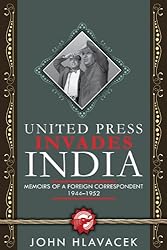
The paths of these three men crossed in 1946, when their lives-careers intersected with India’s historic bid for independence from British colonial rule. Last spring, they came together for the first time in 60 years with the publication of a book, United Press Invades India, by Hlavacek, an Omaha resident who invited his colleagues to participate in public forums about their intrepid reporting days. The men shared stories and observations during two panel discussions in Omaha.
After being out of touch all that time Hlavacek began the process of reestablishing contact with his old colleagues while working on his memoir. Facts needed checking and where Hlavacek’s memory faltered, he relied on Desfor and Michaels to fill in the blanks. By the time the book was completed, Hlavacek suggested he and his comrades reunite. The men still correspond today.
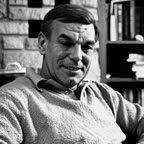
John Hlavacek
The book that helped bring the old colleagues together was Hlavacek’s second volume of memoirs based on his overseas adventures in India and China, where he taught English in an American mission school in Fenyang as part of the Carleton in China exchange program. Hlavacek now has a third volume of memoirs out, Freelancing in Paradise, that recounts the years he and his wife Pegge, a fellow journalist he met and married in India, filed stories from the Caribbean for national media outlets. He’s also published two books authored by Pegge about her own far flung news career and the couple’s remarkable feat of raising five children while working in India, New York, Jamaica and Omaha.
For Hlavacek and Michaels, now in their late 80s, India began long, distinguished careers in journalism. As bureau chief in Bombay, Hlavacek built up UP’s presence there and under his aegis the news service proved a formidable rival to their bitter rival, the AP. He won what’s now called the Edward R. Murrow Fellowship for study at Columbia University, he covered the Caribbean and after moving with his family in the early 1960s to Omaha, where he was a television news correspondent/commentator, he filed a series of reports from Vietnam on area residents serving in the war.
Michaels got the scoop of a lifetime when he broke the story of Mahatma Gandhi’s assassination in 1948. He joined Forbes Magazine in 1954, was made editor in 1961, a post he held until 1999. He’s credited with turning Forbes into one of the world’s most read financial pubs. A VP today, he can be seen Sundays on Forbes On Fox.
Before India, Desfor already made memorable images: of the Enola Gay crew upon their return from the mission that dropped the atom bomb on Hiroshima; and of the Japanese surrender to the allies on the USS Missouri. Soon after his arrival in India in 1946, he snapped a famous picture of Gandhi and India’s first prime minister, Jawaharlal Nehru, in an unguarded moment of friendship. “You see the interchange, the compatibility, the simpatico. It’s just an enormous moment,” he said. The iconic pic was used as the basis for a popular Indian postage stamp.
Desfor won a Pulitzer Prize for news photos for his work in the Korean War. In all, he shot five wars, many conflicts and much civil strife. He later served as an AP photo executive/editor before retiring in 1979. That same year though he joined US News and World Report as director of photos. He made his 1984 retirement permanent, but he’s till snapping pics, only now with a digital camera. He’s 93.

Max Desfor posed in front of picture taken of himself during the Korean War
These young lions turned wise old men of journalism reunited for panel discussions in Omaha in 2006. They took to their role as pundits well. They spoke about the momentous events they reported on, the way the news biz has changed and how the India and China of today differ from the developing nations they knew then.
Hlavacek said the troika may be the only surviving American journalists to have met Gandhi. While his colleagues minimize Gandhi’s ultimate influence, Desfor said “he had a moral effect” of lasting import. Michaels said by the end Gandhi was “almost irrelevant” for opposing “industrialization or modernity. Had Gandhi lived, he said, “he would have been loved but nobody would have paid attention to his views.”
The ascetic led a huge movement yet was quite approachable. Unlike today’s restrictive climate, the press had unfettered access to major public figures then.
“A journalist’s access to events in those days was so much more intimate than it is today,” Michaels said. “Gandhi was a world figure, yet he had these prayer meetings when he was in Delhi that the public could come to. If you got there early you could sit right up in front and ask him questions. Or, as John (Hlavacek) did, you could go right up to him and ask for an interview. Today, you wouldn’t be able to get through the masses of hired guards, spin meisters, the whole lot.”
“Once, I wanted to interview the number two man in the cabinet of Independent India, Vallabhbhai Patel, a very important figure in Indian independence,” Michaels said. “So, I drove up in my little car to his place, knocked on the door, a servant answers and says, ‘What do you want?’ I say, ‘I’m from the United Press of America — I’d like to interview Vallabhbhai Patel’ He says, ‘Wait a minute,’ takes my card and five minutes later ushers me into the garden, where Patel and I had tea together and I had an interview. That kind of immediacy today simply does not exist.”
When Hlavacek wanted to interview Mohammed Ali Jinnah, a Muslim leader in the free India movement, he simply stopped by his flat. He had similar access to presidents (Nehru, Indira Gandhi), religious leaders (the Dalai Lama), royalty (Aga Kahn) and dictators (Juan Peron of Argentina, Zaldivar Batista of Cuba).
“There are many great stories I had the opportunity to cover,” Hlavacek said. “It was interesting. I had a lot of fun. I had a lot of worries from time to time, too. And you were always in competition. You were always trying to beat someone.”
“It was a wonderful era for being a correspondent,” said Desfor, who with his Speed Graphic made pictures of great personalities that “will live forever in history books. This is what gives me such great pleasure,” he said.
When Michaels arrived at the scene of the estate where Gandhi lay fatally shot, he was among the first there. The grounds were open and he could move freely about to ask questions and make observations. After sending off his first dispatches at a nearby cable office, he returned to find the area cordoned-off by police and a large group of reporters and peasants gathered outside the closed and guarded front gates. The reporters there earlier with him were now inside.
“I thought, Oh, my God, I’m going to get beat on this story. I better do something,” Michaels said. “So I went around the back. I knew the area pretty well. And I climbed through the hedges and, wow, staring me right in the face was an Indian constable. I desperately searched in my wallet for my old Geneva card, which I carried as an ambulance driver during the second world war. I flashed this card, which was very impressive, and he said, ‘OK, sahab.’ So I got in. I saw as they brought Gandhi’s body out on the balcony for the people to see. I saw a famous woman photographer (and correspondent) for Life Magazine, Margaret Bourke-White, thrown out physically when she refused to stop taking pictures.
“I saw all these great Indian leaders sitting around crying. I witnessed Nehru, the first prime minister of India, get up on the wall with tears streaming down his face declaring, ‘The father of our country is dead.’ I witnessed all these scenes.”
The phalanx of competing news groups was far smaller then, too, compared to the unwieldy mobs that descend on news events today.
“The independence of India was one of the great events of the century. It was huge news. Yet it was covered by less than 100 journalists,” Michaels said. “When Hong Kong became independent less than a decade ago, there were 8,000 journalists covering it and the ones that got there had to cover it by watching it on TV. Today, everything is staged. Access to events is tightly controlled.”
In the process, Michaels said, “something is lost between what you read and what happens. The whole nature of the profession has changed — I don’t think necessarily for the better. The news business today belongs more to presenters.” “You have to be an actor,” Hlavacek interjected.” “You have to be a performer,” Michaels agreed, “and what you get is filtered through these presenters.”
Another major difference between then and now is the rate at which news is disseminated. Filing stories from the field in Third World nations once meant getting the news out via mail or cable or teletype, all of which took time. Sometimes just getting from a news event to a dispatch office could take hours of travel. Now, stories can be filed from the most remote or dangerous regions, even war zones, almost instantaneously due to satellite phone lines and the Internet.
“The speed of communication is what’s really changed,” said Hlavacek, who adds “the 24-hour circuit” of news coverage puts hard copy newspapers in a tough spot. “You used to break a story in a special edition. It’s too late now.” Michaels believes the ever growing online info world “is killing newspapers.” To those who worry a point-and-click universe prevents analysis, Hlavacek said, “No, it doesn’t, but this is spot news and it never did. Analysis can come later.” He marvels at “the emergence of the Internet” and is encouraged that “there’s so much information out there. I don’t think you can control it. At least I don’t see that you can.”
The dynamic economies and rising technocracies of India and China have caught the men’s notice. Michaels often goes back to India, where he’s interviewed current prime minister Manmohan Singh. Michaels said India’s ascendancy “is one of the great unheralded revolutions of our time.” He said the planned socialist state under Nehru and his successors resulted in an India that “stagnated from the time of independence right through 1989.” Michaels, who calls Singh “a very impressive man,” credits him with engineering “a revolution from the top” that urged Indian leadership to abandon the old system in favor of “a free enterprise model.” The result, he said, is a “booming” economy. While India prospers, its caste system’s inequities still pervade the society, said Hlavacek, who’s also been back. The India-Pakistan divide, they agree, is one born of religious-political differences.
Last fall Hlavacek visited the mission school in Fenyang, China he taught at under Japanese occupation. On his 10-day China trip he was most impressed by all “the change,” he said. “That’s the difference.” He said while China is still “ostensibly a Communist country, they’re the greatest capitalists in the world.” “They call themselves Communists,” said Michaels, who’s been there, “but everybody winks and nobody really believes that.” The journalists believe China and India will grow as trading partners with each other and with the U.S. as their economies continue to grow. As the world changes at an ever faster rate, Hlavacek said journalism remains “a higher calling.”
For three old men, a lifetime of curiosity has not waned. The world is still their oyster. The news, their metier.
Related Articles
- Journalism veteran Daniel Schorr dies at 93 (cbc.ca)
- ‘Great Soul’: Joseph Lelyveld tells Mahatma Gandhi’s larger-than-life story (seattletimes.nwsource.com)
- Jesuit Photojournalist Don Doll of Creighton University Documents the Global Human Condition One Person, One Image at a Time (leoadambiga.wordpress.com)
- Omaha Address by Cuban Archbishop Jaime Ortega Sounds Hopeful Message that Repression in Cuba is Lifting (leoadambiga.wordpress.com)
- Returning To Society: New community collaboration, research and federal funding fight to hold the costs of criminal recidivism down (leoadambiga.wordpress.com)
Seafarer Doug Hiner and His Cuban Medical Supply Runs

Image via Wikipedia
A couple acquaintances introduced me to Doug Hiner and he immediately got on my radar as someone I’d like to profile when I learned he regularly sailed down to Cuba on missions that were partly about delivering medical supplies and partly about secreting back contraband, as in cigars. Hiner is a wheeler-dealer type who denied the illegal trafficking at the time I interviewed him, then expressing upset at my story’s suggestion that he engaged in anything like that, but subsequent events confirmed his smuggling activity because he got caught in the act down in Florida and faced serious federal charges. He pleaded guilty to one count and received 36 months probation.
Aside from the intrigue, which occurred after my story appeared, his story is really a classic tale about his taste for adventure and his passion for all things Cuban. A version of the following story appeared in The Reader (www.thereader.com).
Seafarer Doug Hiner and His Cuban Medical Supply Runs
©by Leo Adam Biga
A version of this story appeared in The Reader (www.thereader.com)
More than any other country, Cuba both seduces and vexes Americans. This island of paradoxes is at once a natural paradise fulfilled and a socialist promise unrealized. In a place where bare necessities do not go for want, chronic shortages make hustlers out of peasant and professional alike. Within a closed society and controlled economy, anything, for a price, is a black market possibility.
Fidel Castro may or may not own Cubans’ hearts and minds, but the land and culture definitely hold residents and exiles transfixed.
Social/economic problems don’t change the fact that Cuba, at least geographically, is a tropical island idyll. Sun, ocean, jungle, mountains — much of it pristine. Politicians/bureaucrats aside, the people embrace life with a live-and-let-live Latino insouciance. Music, dance, food, art, love, sun, surf. Fun prevails, if not for all, for tourists.
Omahan Doug Hiner sees the schizoid nature of Cuba every time he sails there on his 53-foot cutter, the Vitamin Sea. He captains the Tampa-docked boat on voyages that transport medical equipment to hospitals and clinics on the island. He’s been making runs like this to Cuba for seven years, a period when official American policy toward that intransigent Caribbean nation has gone from rigid to ultra hard-line. Embargoes of one kind or another have limited trade with Cuba and, in some cases, denied aid.

Doug Hiner
With Fidel’s recent stomach surgery making his mortality and his grip on power a renewed subject of world interest, Hiner prepared for a late December sail to bring in another boatload of supplies. But the gringo’s boat blew an engine, pushing the trip back until this month. He arrived February 10 in Havana, where the gear still sits, waiting for the red tape to be cut so he can move stuff inland.
His artist wife, Christina Narwicz, usually joins him on these maritime adventures but she wasn’t feeling up to it when he shoved off this time around.
The Man and the Sea
Hiner, 67, is a former hair dresser and a retired real estate developer and landlord. He made and lost a fortune. He’s not oblivious to the political realities that hold Cuba hostage in a state of suspended animation. Far from it. He has strong views on what Cuba and its paternalistic neighbor to the north should do to ease restrictions and tensions. His awareness of Cuban medical needs drives his missionary trips there, even as he brings in and takes back his share of contraband.
His journeys go well beyond idol curiosity. Hiner and his wife feel they have a fair handle on Cuba by virtue of not only having traveled there several times — it’s 15 trips and counting for him and about the same for her — but their stays usually last weeks or months at a time. They get around to different parts of the island and really immerse themselves in the place.
“We’re not tourists, we’re travelers,” Hiner said. “A tourist wants to have MacDonald’s no matter where he’s at. We like to enjoy the cultures of different countries and not live like Americans. We try to blend and be friendly with the people, and that’s all it really takes to be accepted. They love Americans, especially if you’re friendly to them. They don’t like the ugly-American types.”
Whatever motivates him, he ultimately makes these journeys because they put him in touch with three of his favorite things — sailing, the sea and people.
Though he grew up in landlocked South Dakota and Nebraska, Hiner long ago felt the call of the open sea.
“I’ve always been fascinated by the sea,” he said, “and I’ve always had this dream of having a boat to sail around the world.”
Years ago he and Christina “were planning to do a sail around the world …” when his “business fortunes changed,” making such a trip “impractical.” Circumnavigating the globe is not such a passion now, not with the expanse of warm southern waters to explore. “You can spend your whole life in an area like that and never see everything,” he said. “The Caribbean is a whole chain of islands. We’ve never been to Colombia or Central America, so eventually I’d like to do that.”
Besides, it’s the carefree, unrestricted, port-of-call lifestyle he enjoys, more than the challenge of seeing how far Hiner can push his sailing skills.
“A boat is like your home. You’ve got everything on it. You’re totally self-sustaining … It’s a real nice feeling,” he said. “You can anchor anywhere you want for nothing. We spent a couple New Years Eve’s anchored off of Key West, one of the liveliest New Years places in the world.”
Still, the allure of cruising wave and wind is like the call of the sirens — hard to resist. Half the challenge is dealing with weather and the other half comes with the inevitable mishaps.
“Weather on the high seas — that’s your biggest danger,” Hiner said. “We’ve gone through some pretty turbulent stuff, some accidentally, some on purpose because we had to. But it’s never been a safety issue. You’re never really out of ear shot of weather” reports via radio/radar.
Nature-related or not, things do go wrong. Take the couple’s 1999 trip to Cuba for instance.
“Going down on the second trip we blew out the sail. We ran into some bad weather. We had to have it repaired. It’s usually mechanical problems. It’s like, not if it’s going to break, but when it’s going to break. The last time we left Cuba the autopilot failed and we had to hand steer for 40 hours. Oh, and coming back from Cuba once we lost our fresh water pump, so we had no engine. There was no wind and we drifted for a day-and-a-half or two days before we finally got close enough to Key West to get a boat to tow us in.
“Our boat is about 20 years old and it needs extensive rewiring and stuff and I really haven’t been able to afford that, so we just kind of patch things together. It’s safe but it’s always a little bit of an adventure.”
Sea-faring is an apt avocation for an inveterate beach bum who, whether inland or coastal, enjoys kicking it with friends over drinks in the Old Market, where he developed some of the first condos, or partying on his boat.
He enjoys the simple, well-done pleasures of good food, good drink and good company. His wife’s the same. The residence they fashioned from an old brick-faced bar and parking lot on South 13th Street reflect their shared interests. The grounds’ richly decorated Great Wall that fronts 13th Street has a gated entry whose mammoth door opens onto a large courtyard filled with her plantings.
Hiner’s no stranger to graceful living, as he once owned a Fairacres mansion “back,” as he likes to say, “when I was rich and famous.” He made big bucks and moved in tony circles in the ’70s and ’80s. Then it all crashed. He alludes to a business partner running his development company into the ground.
The house, featured in the Spring 2000 edition of Renovation Style magazine, is designed with walkouts along the length of the courtyard that connect to a wood deck, creating a veranda. The interior opens up to a loft master bedroom and guest quarters, revealing a 32-foot-high ceiling and a bank of large windows that stream light in. At one end of the property is a screened-in porch. At the back of the lot is Christina’s well-lit studio. It all works toward a cozy hacienda feel.
As soon as he laid eyes on the spot he knew “it was exactly what I had in mind.” When he bought the former Glass Front Bar it was only a shell. But, he said, “I had this vision.” He designed the place himself. The work fit neatly into his years of “retrofitting old buildings. I’ve always had a knack for design and style and just living comfortably.” The result, he said, adheres to “the European concept of zero lot lines…where you basically use the whole property. We don’t have a back yard or front yard or side yard — we have a court yard. The same with our house. We utilize the whole house. We don’t have formal spaces. It’s just more practical and creative in my estimation. It’s just a feeling of well-being.”
His passion for this getaway within the city dovetails neatly with his ardor for Cuba. It always comes back to communing with people.
“It’s just a wonderful country. The people are so friendly and so caring and loving,” he said. “It’s hard to explain. I’ve traveled all over the world and I don’t think I’ve ever been to a country that is so warm and safe. There’s virtually no crime in Cuba. It’s true there’s a policeman on almost every corner, but the people there are so law-abiding. They’ll steal, but their attitude is, ‘If you don’t lock your bicycle up with a chain or padlock, then you must not want it.’ I’ve never had anything stolen off my boat in the marina and I can’t say that in almost any other country.”
Years living under the thumb of a dictatorship has its palliative effects.
“If a policeman on the corner points to a driver and signals him to stop,” Hiner said, “he’ll almost come to a panic stop to obey the order. They wouldn’t even think of not [stopping]. A police chase over there would be unheard of.”
Back to the contradictions bound up there, he said Cuba can seem chaste one minute and carnal the next. “It’s a real straight-laced island. Pornography is totally illegal. Drugs — zero tolerance. One marijuana cigarette would throw you in jail for a week before you’d be expelled from the country and told never to come back.” On the other hand, he said, “Cuba’s a very sexually open country. Even though prostitution is illegal…a lot of people are shocked by the young women that are readily available for sexual encounters. One, there’s a serious lack of men on the island. And two, their culture is not uptight about sex at all. I mean, geez, if some foreigner wants to give you twenty bucks, that’s even better.”
Besides, he said, “Cuba’s all extended families — there’s four-five generations that live under the same roof, and so it’s everybody’s responsibility to help support the family group.”
While Cuba prides itself on a system that accounts for citizens’ basic needs, rampant poverty compels most everyone to be on the make.
“You see very little begging, yet the young Cuban kids and the old folks are out hustling for the family,” Hiner said. “Everybody is sort of doing whatever needs to be done to provide extras. They have to have some access to dollars to really have any quality of life.”
Amid all this naked human need, Cuba takes great pains to put on a good face. “They sweep each block of Havana every day. If you don’t have anything to do, they’ll put a broom in your hands,” he said.
By Western standards, he said, Cubans lack everything we take for granted. He tries to give friends there some creature comforts otherwise unavailable to them.
“I’ve taken personal things down for people, like a microwave oven or VCR or DVD player, because all that stuff is illegal. Everything’s illegal in Cuba. Mainly, if it plugs into the wall, it’s illegal. They have an energy problem and they’re just trying to keep people’s lives basic.”

Even more basic than that, he said, he brings items like toothbrushes and razor blades that are “not a big deal here, but are a big deal there.”
He’s also brought back, on consignment, works by Cuban artists he and Christina sold in Old Market art shows, the proceeds going toward supplies for the artists.
Beat the Bushes, ‘Bend a Few Rules’
He’s sympathetic to the plight of the Cuban people, whose deprivation goes deeper than a lack of material things, to essential services. Sure, Cuba provides free health care, but many clinics and hospitals lack equipment and technology that can not only improve care but save lives. And while average Cubans and natives of nearby Latin American countries have access to free care, some medical centers are reserved for the elite. It’s why he got involved as a medical supplier in the first place. His awareness began on his inaugural visit to Cuba in 1998. The marina in Havana introduced him to fellow travelers, including many Americans, some of whom became a model.
“I met a lot of people that first time. A lot of just normal people. Some were bringing medical equipment on their boats down there,” he said. He soon discovered an informal network of doctors and suppliers. “As I met people in the marina and friends of theirs I was put in touch with various doctors and got lists of things they needed.”
Over the next year Hiner beat the bushes and made contact with “various organizations” that run aid into Cuba.” He cultivated the names of key suppliers, like Jack Oswald in Chicago, and key recipients, like surgeon Gilberto Fleites in Havana. When Oswald, who works with a group called Caribbean Medical Transport, ran a check on Hiner’s then-fledgling medical mission activities he was duly impressed.
“The medical equipment he gets is a cut above most of the stuff humanitarian aid groups get and I’ve been doing this a long time. His stuff is absolutely flawless,” Oswald said. “I went with him on his last trip because he was packing some really heavy equipment…I came from Chicago to help him figure out a way to put some of this stuff on the boat without it sinking. We put thousands of pounds on the bow…and you no longer could see to navigate…so we had to have somebody at the front of the boat calling instructions out to the captain just to avoid the reefs and boats and weather we came across on our way to Cuba. It got a little adventurous here and there.
“I’ll tell you, the guy’s fearless, he really is. He’s mission-oriented, there’s no question about it. Almost militaristically I might add. He doesn’t really let anything get in his way. Some of the stuff he does is a bit risky. And sometimes he doesn’t have the money, the equipment or even the plan…but he just keeps doing it. I think both sides are willing to let him operate, maybe even bend a few rules here and there…because they know what he’s doing is valuable.”

Joining Oswald, Hiner and his wife Christina on the voyage was a Cuban American physician who brought medical supplies to a cousin physician in Cuba. The Americans also brought art supplies for an artists collective there. Oswald said of Hiner and Narwicz, “They just know a whole lot of people and they just really enjoy Cuba. The folks I met that know them are like family.”
On Hiner’s first supply run in 2000 he was introduced to Dr. Fleites. “I met Gilberto and his wife Teresa and they were really neat people and we became really close friends and we had a really wonderful time there,” Hiner said.
Hiner calls Dr. Fleites “a bit of a renegade. He ran the national cancer institute in Havana. He was on the Cuban ethics board. He tried to get some doctors removed from practice because he thought they were killing more people than they were saving,” Hiner said. “But his superiors kicked him off the board because he wasn’t ‘a team player.’ He still performs surgeries … but only on important people because they know he’s very, very good. He’s sort of like freelance. It’s kind of a bizarre situation.”
The Omahan’s “become sort of an emissary” to Dr. Fleites. “I get lists of stuff from him” the Cuban medical community “needs,” he said, “and come back and hustle my friends. I know a lot of doctors from when I used to be rich and famous.” As Hiner’s refined his networking, tons of things get donated — once, an entire operating suite. Omaha’s Children’s Hospital donated an anesthesia machine. He works with established humanitarian nonprofits that authorize him use of their license for delivering free medical goods abroad. Much of what he takes there goes to Pedro Kouri Institute of Tropical Medicine, an AIDS hospital directed by Dr. Jorge Perez. It’s not an impersonal process for Hiner, who’s visited there and other sites he’s supplied. He’s impressed by Cuba’s “incredible medical system.”
What began as annual trips became twice-a-year voyages. Their last trip, in 2005, they were in Cuba four months.
He’s transported medical gear worth hundreds of thousands of dollars, including mechanical operating tables and surgical instruments ranging from forceps to retractors to endoscopic devices. The goods ship to a central location and, when there’s enough for a full haul, he loads a truck and drives it to his boat in Tampa. After everything is securely stored and lashed aboard, he rigs his boat and sails for Cuba. Once there everything must be checked and approved by customs officials, a process that can take weeks. Various government stamps and seals are needed. From start to end, a single supply mission can take months.
He cuts what red tape he can with “gifts” to marina workers and ministry officials.
For the current trip, he amassed a large inventory that includes an entire delivery room donated by a hospital, complete with delivery table, incubators and monitors. So large is the haul he left half the load in Florida for a return trip next month.
Donations have never been better, but he said navigating the bureaucratic waters to get them to Cuba has become more problematic. He blames the Bush administration for “tightening travel restrictions,” especially since 9/11. He said the feds have made it harder for the nonprofits he works with to obtain or renew licenses. The main clearance he needs is from the U.S. Coast Guard that grants free passage through “an imaginary security zone between Key West and Havana that no one can define.” Without the permit, he said, “they can seize your boat, fine you $250,000 and put you in jail for 10 years.” When things were more “more relaxed,” he could slide by. Not now.
There are also new Commerce Department and Council of Foreign Currency Control approvals needed.
Cuba’s hardly immune from bureaucracy, but the tropics make the paperwork and graft more bearable. Besides, as “well accepted” as Hiner is there, he can play Lord Jim. He hopes a meeting he’s been angling for with Fidel, whom he admires, happens one day. He knows just what he’d say to the dictator. “I would tell him he needs to make more opportunities. The people there are very industrious but he keeps stifling any kind of private enterprise,” Hiner said. “He’s getting old and overly restrictive. I would tell Fidel, ‘You’ve got to loosen up. If you were a young man today you’d start a revolution against yourself.’”
To Cuba with Love
Ironically, Hiner’s romance with Cuba may never have happened if not for an accident. It was late 1998. Doug and Christina were on one of their Caribbean sailing jags and had put into port in Jamaica. There, Christina took a fall and broke her ankle, putting her in a cast. He hired a young Jamaican boy to help him crew. The trio sailed to the Camyan islands, where Christina’s pain worsened. Doug sent her home by plane. That left Doug and the boy. The idea was to make for Florida, but Doug knew the boy would be denied entry without papers.
“So, we decided to go to Mexico,” Hiner said. “I got in big trouble there because, unbeknownst to me, a Jamaican needs a visa to get into Mexico. They almost threw us in jail. I talked my way out of that.”
Next, Hiner set his sights on Key West, but learned that, too, was off-limits. Desperate, he asked officials, “Where can we go?’ ‘Cuba,’ they told him. “So, the next morning off we went to Cuba. That was my first time. We were there almost 10 days before I was able to get a plane to fly him out to Montego Bay. And while in Cuba I just loved the country. When I got back home I told Christina, ‘I loved it so much we need to go back there.’” Go back they did.
Related Articles
- Governor seeks release of American held in Cuba (reuters.com)
- The Cuban Embargo Myth (pajamasmedia.com)
- Cuba stubs out cigarette rations for older people (guardian.co.uk)
- US company in Haiti blames Cuba for loss of barge (sfgate.com)
- Cubans dream of being tourists – abroad (worldblog.msnbc.msn.com)
- New rules usher in a tasty comeback for Cuban food (seattletimes.nwsource.com)
The Artful Dodger: Lou Leviticus survived the Holocaust as an escape artist
The story more or less appeared as it is here in The Reader almost a decade ago. It was later reprinted in The Jewish Press. I have always hoped to share the story with a wider audience.
NOTE: Leviticus has subsequently told his own story in a book he wrote.
|

The Artful Dodger: Lou Leviticus survived the Holocaust as an escape artist
©by Leo Adam Biga
Originally published in The Reader (www.thereader.com) and then reprinted in The Jewish Press
“I’ve been an escape artist all my life.”
The apt words belong to Lincoln, Neb. resident Lou Leviticus, a square-headed terrier of a man who as a youth in his native Holland survived the Holocaust partly due to his talents as an artful dodger. He escaped the Nazis more than once, even when those closest to him were caught and put to death. As an orphan on the run he became one of scores of hidden children in The Netherlands, his survival dependent on a cadre of strangers that cared for him as one of their own.
Today, when telling his saga to young Hebrew students at Temple Israel Synagogue in Omaha, the spoken truth sounds less like glib bravado than it does a solemn proverb. And, like an answered prayer, members of the Dutch underground rescued him. Families working with the underground risked their very lives taking him into their home and shielding him from danger. He regards those that helped him, especially Karel and Rita Brouwer, as his “heroes” and “protectors.”
During his time in hiding Leviticus endured and did some unspeakable things. An archly unsentimental sort, he sheds no tears over what happened. Despite it all, he emerged a life-affirming dynamo. The retired University of Nebraska-Lincoln agricultural engineering professor first came to America in the mid-1950s (by way of Israel, where he resided after the war) to obtain his Ph.D. He married, raised a family, got divorced. He wed his present wife, Rose, a native of Great Britain, in 1982. He became a U.S. citizen four years ago. While at UNL he also headed the Nebraska Power Lab and Tractor Testing Laboratory. Today, he is an agricultural engineering consultant.
Until quite recently he kept his story to himself. That changed when the Survivors of the Shoah Visual History Foundation requested he tell it for the sake of posterity. The Los Angeles-based Foundation, which filmmaker Steven Spielberg formed after completing Schindler’s List, is dedicated to recording and preserving the largest repository of Holocaust survivor stories in the world. Since 1996 the organization has been conducting videotaped interviews with survivors from every corner of the globe. To date, some 50,000 interviews have been cataloged for use by scholars and for dissemination in schools and libraries.
In 1996 Leviticus shared his story with Omahan Ben Nachman, a Holocaust researcher and Shoah-trained interviewer who’s collected dozens of testimonies. Since then, Leviticus has written his memoirs and related his tale to youths at schools and synagogues. Why, after all this time, is he bearing witness now?
“The only reason I do it,” Leviticus said, “is to maybe make somebody think about it and realize how fortunate they are. That they should not take their lives so easily for granted. That they have a little more gratitude for what they have…because what happened then can happen again. It is happening again. Look at Chechnya. Look at Kosovo. Look at the skinheads in this country. There is hatred. People are cruel. And I do now feel it as an obligation, not necessarily to this generation, but to my school buddies, my parents, my grandmother, and to all those people. If I don’t tell their story, what else is left of them except their names in a register?”
  |
|
| Lou Leviticus, professor emeritus and volunteer curator at the Larsen Tractor Museum on East Campus, holds a copy of his recently published memoirs detailing his childhood in the German-occupied Netherlands. His parents were killed at Auschwitz in 1942. Photo by Brett Hampton. |
Because ethnic cleansing seems far removed from the modern American experience, it is easy to distance oneself from such evil. But the truth is no one thinks it can happen to them, ever. That’s exactly how most Dutch Jews felt when Nazi Germany overran their nation in May of 1940. That’s why the only way to understand what happened is to recall the insidious events that systematically isolated Jews from mainstream Dutch life, all because they were deemed “different” and ultimately expendable. How else can one explain a child having to flee and hide to save his own life? Unthinkable, yet it occurred.
In a recent interview with The Reader, Leviticus recalled those years. Speaking from the deck of his comfortable tree-shaded home in Lincoln, the scene could not have been more incongruous with what he described. Despite what eventually transpired, his homeland was a tranquil place before the invasion. Pre-war Holland, after all, was a civilized society. Its large Jewish population enjoyed complete freedom, if not full acceptance. Leviticus and his parents led a privileged life in Amsterdam. As foreign correspondent for a large recycling company, his father, Max, handled relations with foreign clients. An outdoorsman, Max enjoyed long bicycle rides and walks in the countryside. Lou’s mother, Sera, was a socialite and spiritualist who gave bridge parties and hosted seances at the family’s large home.
“My mother was pretty deeply into spiritualism — mediums and seances and astrology — which was very fashionable in those days. I can still see her working with these charts on a table, trying to figure out what the hell was going on in the world. I’ve always wondered about that — if she could see what was going to happen to us or not,” Leviticus said.
As a boy he often joined his mother at Heck’s Cafe, a swank gathering spot for the smart set, where he listened to live band music while she hobnobbed with friends.
Music, especially opera, held young Lou enthralled. He had his own radio and spent endless hours listening to favorite tenors and to detective programs. An avid reader, he fancied the adventure tales of German author Karl May. Despite being undersized, he was athletically adept and belonged to swimming and soccer clubs. A cinema lover, he skipped Hebrew school to catch the latest movies.
His family lived quite close to Anne Frank’s family. A cousin of hers, Paul Frank, was a friend and playmate of Lou’s. Because she was two years older than Lou, he only knew her casually, but recalls her as a “nice girl. She was more mature than me.”
Admittedly “a spoiled brat” doted on by his maternal grandmother, Leviticus lived a carefree life. His parents, who employed a servant, had their every need met.
The family’s idyll ended May 10, 1940 when Germany invaded Holland. The Dutch, who remained neutral during World War I, had felt protected from the brewing storm in Europe despite Germany’s increasingly ugly rhetoric and military incursions. Caught unprepared, Holland’s meager defenses were quickly overwhelmed by the blitzkrieg. The Netherlands capitulated five days after the attack began. Even though he was not quite 9-years-old, Leviticus recalls it all.
“I remember all five days. For us kids it was the greatest adventure in the world. We didn’t see the sickness. We heard people were being killed, but we didn’t see it. We did see German planes in the air and men shooting at them. It was exciting.”
Perhaps his most vivid memory then is the sight of a city under siege at night, its lights darkened and streets emptied owing to the mandated curfew and blackout. As a child, the horror of the invasion was finally brought home when he saw adults around him shattered by the events. His father, a WWI vet, had been called up to serve in the civil defense corps. On May 15, the day the Dutch surrendered, Lou was shocked to find his father sobbing at home. “I can still see him sitting in the side room crying. It was the first time I saw my dad cry. I remember asking him, ‘What’s the matter?’ But he couldn’t talk.”
According to Leviticus, who has researched events leading up to the German conquest and the ensuing terror campaign, much of the Dutch ruling class held pro-Nazi sympathies and as such these Fifth Columnists aided Germany in subduing The Netherlands. Beyond politics or prejudice, he said, the compliant nature of the Dutch people, combined with a meticulous citizen registration system, made it easier for the Nazi regime to exert its will there.
“My feeling is that the Dutch have always been very obedient to authority — any authority. The Germans had the authority and when they installed a Dutch puppet government, that was the government, and therefore they were obeyed. The Dutch also had a population registration system in place unparalleled in its accuracy in Europe. In fact, (Adolph) Eichmann liked it so much he copied it in other countries under Nazi rule. That system should have been destroyed when the Germans occupied The Netherlands, but the people who ran it were so proud of their work and so pro-Nazi they handed it over in full to the Germans, who used it to curtail the activities of Jews and other undesirables.”
He said people were so accustomed to registration few saw danger in its application by occupying forces. “Nobody thought much of it, and so they re-registered.” He added the Germans were “very cunning” in passing decrees that, step by step, cut-off Jews from the general populace. “It started with very little things. In June, Jews were forbidden from being part of the civil defense. In July, they were excluded from the labor draft. Then there was a ban on ritual slaughter. In September, Jews were banned from selling in the regular markets. The Germans never targeted the whole population. Otherwise, that would have probably created unrest. Instead, they targeted sections, making each segment register and abide by restrictive laws. First, it was physicians, then pharmacists, then lawyers. Each week there was a different order affecting some group, and the others said, ‘Well, it’s only them,’ and in the end it was everybody. The noose was tightening, but most people didn’t realize it, and by the time they did it was too late.”
The first anti-Jewish regulation affecting him was a 1941 law banning Jews from all movie theaters except the single Jewish-owned cinema in Amsterdam. “I was an avid moviegoer and the only theater left I could go to soon became too dangerous because there were always Nazi youths waiting outside to cause mischief. We were yelled at, spit on, and so forth. It became impossible to go there unless you were with grown-ups and even then it sometimes got a little bit hairy.” He next felt the sting of anti-Semitism when Jews were forbidden from entering parks and from holding membership in sports clubs. In a cruel display of public humiliation, he was drummed off his soccer team by the coach in front of jeering teammates.
At the same time, the Nazi propaganda machine worked overtime inflaming anti-Semitic fervor. He recalls placards affixed everywhere with slogans like “The Eternal Jew,” “The Dirty Jew” and “Watch Out for the Jew” emblazoned on them. The posters typically depicted grotesque, deformed, horned figures with the Star of David displayed on their chest or forehead. Soon, all Jews — their businesses and residences too — were required to bear the yellow star. “When you got the star you were a marked person,” he said. “Now you couldn’t hide behind your looks. There were always groups of Hitler youths running around terrorizing people. They started making life very difficult. We, as kids, were beaten up — quite severely at times. Grown-ups didn’t interfere. They were afraid. The police seldom intervened.” Schoolmates he counted as friends turned on him, yelling epithets. “I went to school with great trepidation. I took a terrible beating one day and adults stood by laughing. Things got worse and worse, until every aspect of my life was affected. You felt you were an unworthy person. That you didn’t have the right to walk the same streets as other people. It made me feel terrible, awful, angry.”
Schools were finally segregated, which Leviticus viewed as a welcome relief. “We were a pretty intelligent and rowdy bunch and we had a lot of fun in fact. We were all in the same boat. We were all together. That was the best part of it.”
By 1942, people started disappearing. Rumors spread the missing persons were hauled away to camps to be gassed or shot. “Nobody talked about it,” Leviticus said. “Not the teachers, not the parents. They didn’t know how to talk about it. They didn’t want to believe what was happening.” The fear turned personal when his girlfriend, Anita, was arrested along with her mother and sister. “I was very, very heartbroken for a long time because she was really my pal. We did homework together” He later learned she and her family died at Sobidor concentration camp.
As early as 1942 Jewish men were rounded up and taken away. It happened to Leviticus’ father, who ended up in the work camp, Ommen, where men worked clearing forests for agriculture, but in truth awaited transit to concentration camps and certain death. When the elder Leviticus learned of his group’s impending transport, he concealed himself in one of the deep trenches the men dug and escaped at night. Lou has since documented his father was the only prisoner from his work detail to escape alive. While in hiding, Max got word of his escape to Sera, who fled to a prearranged safe house in the country. Lou, in school at the time, was unaware of the unfolding intrigue. His first inkling of it came when an unfamiliar man came there one day with a note from his mother.
“My mother’s note said for me to go with him. The man told me, ‘Your mother’s waiting for you. Don’t worry.” Of course I was worried. I didn’t know what was happening. I had never seen him before, but I knew my mother’s handwriting, so I went. He took me into a hallway, took my coat off, gave me another coat without a star on it, grabbed my hand and we walked away. We went on a train. The train trip was frightening for me. We had to pass German police controls at various stations. By then I had been brainwashed so that I was sure I looked like any of those pictures of the Eternal Jew. I was afraid of anyone who had a uniform or boots or a dark coat on because those things represented Nazis. By then, I didn’t trust anyone any more. I’d lost my trust in the grown-up world.”
The pair passed through police checkpoints without a hitch. They got off at Amersfoort, a town 40 kilometers southeast of Amsterdam, where, it turned out the boy’s mysterious escort, a Mr. Van Der Kieft, was a plain clothes detective. Secretly, he was also a top operative in the Dutch underground movement that provided false identity papers, ration cards and safe havens to fugitives. As Leviticus soon found out, the underground network would be his lifeline. Van Der Kieft took Leviticus by bike to the farmhouse his mother had gone to. His father joined them days later. After two months in hiding, the family had to find refuge elsewhere when the farmer sheltering them demanded more money than they could pay. Leviticus said there were any number of people ready to help then, whether “out of good will or for good money.”
Thanks again to the efforts of the underground, the family was put up at a house in Amersfoort belonging to a coachman, who lived on the ground floor. Lou’s family shared a pair of small rooms on the third floor. Between the two rooms were sliding doors. The back room opened on a veranda with a railing. The family had to be on guard at all times. “We had to keep very quiet during the day and not show ourselves in front of the windows,” he said. “We couldn’t close the curtains then, as that would arouse suspicion in Holland, where there’s little light. When the bell rang at the main door below we would freeze. We could hear the bell, but we couldn’t see who was calling. At night we could become a little more active because then we could close the doors and curtains. But if there were guests we had to sit still. We couldn’t use the toilet then, so we used a chamber pot.”
Father, mother and son passed the time reading and playing board games. “I don’t remember that as being terrible because there was so much to read,” he said.
Then, one October afternoon in 1942, the bell rang and the word “police” was spoken at the bottom of the stairs. Raised voices barked, “Stay where you are. Don’t move.” Leviticus recalls his mother “started crying.” They knew the authorities had come for them. With police bounding up the stairs to the family’s third-floor hideaway, young Lou made a fateful split-second decision and, without a word, clambered to the veranda opening, hopped atop the railing, and jumped. That moment of fear and flight was the last he saw his parents alive.
“Before I jumped the last thing I remember is seeing my dad close the doors behind me. That gave me enough time to get away. My dad didn’t hesitate. It happened so fast. Below me on the ground floor, luckily, was a large awning jutting out. I hit the awning, slid over it, landed on my feet and whew, I was gone. I didn’t look back. I didn’t run either — a good thing, too, because police were out searching the grounds. One policeman probably saw me, but lost me when I climbed over a bunch of fences. I came to a house and climbed up on a rain pipe. I got to another porch, climbed over the railing there and found a big wash tub. I pulled the wash tub over me — it made a helluva racket — but nobody was home.”
He credits his quick actions to “pure self-preservation,” adding, “It was just pure instinct. I don’t know where it came from, except maybe the Karl May stories inspired me not to be caught. I knew what I had to do. I had seen other people being picked up by the police on the street and they never came back, and that wasn’t going to happen to me.” He does not second-guess his fleeing. He only wishes his folks escaped too or at least knew he was safe. “I knew I’d done the right thing because, number one, I’m alive. I’m sorry I couldn’t say goodbye and hug my mother and father. That is my only regret. That, and the fact they suffered and I couldn’t do anything.” His parents, like most of his family, were soon killed.
After eluding the police, he waited until dark, then fumbled his way to the home of a man who was active in the underground. When he arrived there the man’s frightened family explained the head of the house was in hiding. Earlier that day police had cracked down on the local underground cell and come looking for the man, who’d escaped. The family feared the police’s return. Leviticus felt safe for the moment but as he lay in bed that night he overheard the family discussing turning him over to authorities. “When I heard that I decided that wasn’t going to happen. Early the next morning I stole some clothes and food, opened the door, and went on my own to the east.” Fending for himself in a world intent on his destruction, he learned to live by his wits’ end, foraging for food and shelter at local farms. But as a child on his own, he stood little chance for long. After days on the road, he came to the same farm he and his family began their hidden life at.
Fearing the farm was not a secure hideout, Leviticus was relieved when the underground placed him with Karel Brouwer, then a 24-year-old civil servant with a new wife and young child. Neither the first nor the last person Brouwer rescued, Leviticus stayed with him and his family for much of the remainder of the war. “He’s a remarkable man. He took me to his home in Hamersveld. He practically adopted me. He never intended to be a hero, but somehow it was thrust upon him, and he risked everything to feed, shelter and keep me and others out of harm’s way.” Lou still keeps in touch with his “second family.” In a fateful twist, the first refugees Brouwer helped were Lou’s aunt, uncle and maternal grandparents. Through his position in local government, Brouwer’s covert network used the registration system to provide hunted Jews and non-Jews alike with false names and documents. Thus, Lou took on the identity of Rudi Van Der Roest, a Christian boy his own age from Amsterdam. Researcher Ben Nachman said such actions underscore how Holland was rife with contradictions. For example, while a high percentage of its native Jews were murdered, the country’s active underground movement shielded a great number in hiding.
As Rudi, Lou lived the unencumbered life of a non-Jewish child — attending school, playing in parks, traveling freely. Whenever detained, his cover story was that he was away from home due to hardships caused by the war. The deception worked. “Each of us in hiding were stopped and interrogated by the Germans at least once or twice, so we knew how to lie with a straight face. You got very adept at that. Every time you did something to thwart the Nazis it made you feel good.” He enjoyed freedom but guarded what he said and did so as not to compromise his true identity and therefore risk endangering himself, the Brouwers and the underground. “I had to be careful. I couldn’t afford any slips of the tongue, so I couldn’t get close to a lot of people. Whatever I wasn’t told, I didn’t ask. You learned that very quick. I knew the less I knew, the better it was.”
Life with the Brouwers was sweet. “A lot of beautiful things happened during the war,” Leviticus said. “There were times when I forgot the misery. I was extremely lucky to get through that experience, not unscathed exactly, but well-looked after.” He adds that not all hidden children were as lucky as himself. “The Brouwers loved me. They were good to me. In many cases, though, kids were shuttled from place to place and mistreated by their host families.”
As a base for the underground the Brouwer home witnessed many comings and goings. All the activity must have raised suspicions because, in February 1945, the police raided it. The whole family, including Lou, then 14, was home that day. The police found mounds of incriminating evidence — from papers to ration cards to guns. Everyone was interrogated on-site. Crying after being roughed up, Lou regained enough composure to hatch another escape. He explains: “I asked if I could use the toilet, and the police said I could if I left the door open. The toilet was situated behind a stairway, and when the bathroom door was opened it hid another door which led to a side room, which led outside. As soon as I entered the bathroom, I went through the side door and ran.”
He ran all the way to the city hall building, where he knew underground contacts operated. There, he found that Brouwer, who’d also escaped, had arranged for his transport to a new safe house — a farm belonging to Peel Van Den Hengel. It was there he worked and stayed until war’s end. When the Van Den Hengels insisted he be baptized Catholic, he complied. In April 1945, events unfolded at the farm that gave Leviticus a taste of Old Testament revenge. Blood was spilled, lives taken, eye-for-an-eye revenge extracted. It began when two German soldiers arrived to plunderthe farm at gunpoint, ordering Leviticus and his fellow farmhands to load-up food and other supplies. Earlier, one of the soldiers molested a young maiden. Then they went too far, pushing Lou and another farmhand past the breaking point.
“I was cutting silage with a very sharp spade but I wasn’t working fast enough for one of the soldiers. He poked me in the kidneys with his gun, and that hurt. I turned around with that spade and I hit him straight in the throat and opened him up all the way. He sank to his knees. He didn’t utter anything. He bled to death on the spot. The other soldier came running, but didn’t see behind him one of the other boys, who struck him with a pitchfork. There was so much anger in us that we just went bezerk and cut them up into pieces. It’s something you wouldn’t do to a dog. I’m not very proud of it, but I’m not sorry about it. I wanted my revenge.”
After Germany’s unconditional surrender, he returned to live with the Brouwers. Then, much to his dismay, a humanitarian organization enforced a separation by placing him in a Jewish orphanage. “I hated it.” Always the escape artist, he hightailed it out of there and went back to the Brouwers. Upon completing high school, he toured Europe with a jazz band. When a rift caused the group to split-up in Marseilles, Leviticus stayed on. He later took to sea as a merchant seaman, applying his mechanical aptitude to the ship’s engines. In 1951 he made his way to Israel, not out of idealism, but rather the lure of a pretty blonde, whom he followed to a kibbutz in Haifa. Finding communal life too restrictive, he left to study at the Israel Institute of Technology, where he earned an engineering degree.
After obtaining his Ph.D. in the states (at Purdue University) he returned to Israel. He served in two wars against Egypt — in 1957 and in 1973 (The October War). In the latter conflict he was a liaison between the U.S. and Israeli armies, working with the armored division and corps of engineers on the mobility of military vehicles and their off-road conditions. He helped engineer a bridge crossing the Suez Canal. He came to live in the states for good in 1974, joining the UNL faculty in 1975.
Although he downplays it, his wartime experience has haunted him. How could it not? All during the war, and even long after it, he did not know his parents’ fate. “I never was sure, really. I think I really didn’t want to know. I was always hoping they were still alive somewhere,” he said. Only much later did he confirm they were gassed to death at Auschwitz just a few months after their capture. He remains as unforgiving about what was done to his family as he is unrepentant about what he did to prevail. “I’m not very, shall we say, humanitarian in my beliefs. I still adhere to the principle that your best enemy is a dead enemy, which I know is not a very Judeo-Christian thought, but I don’t give a damn — that’s the only way I survived.”
Related Articles
- Jews, Muslims Make Pilgrimage To Auschwitz (huffingtonpost.com)
- ‘American Schindler’ helped 4,000 Jews escape the Nazis (telegraph.co.uk)
- Anne Frank: The Life, The Book, The Afterlife, By Francine Prose (independent.co.uk)
- Sun wins justice on Nazi fiend (thesun.co.uk)
- Leo Adam Biga’s Survivor-Rescuer Stories Featured on Institute for Holocaust Education Website (leoadambiga.wordpress.com)
- Sisters of the Shoah: Three Survivor Tales, Three Golden Fates, Three Iron Wills (leoadambiga.wordpress.com)


 Leo Adam Biga's My Inside Stories