Archive
North Omaha rupture at center of PlayFest drama
North Omaha rupture at center of PlayFest drama
©by Leo Adam Biga
Appearing in the May 2018 issue of The Reader (www.thereader.com)
In her original one-act More Than Neighbors, playwright Denise Chapman examines a four-decades old rupture to Omaha’s African-American community still felt today.
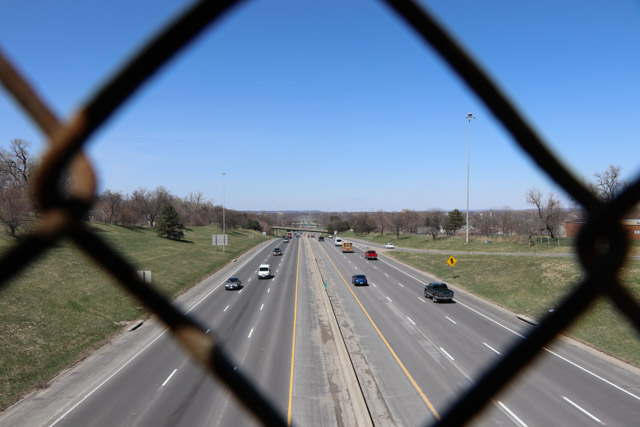
North Freeway construction gouged Omaha’s Near North Side in the 1970s-1980s. Residents got displaced,homes and businesses razed, tight-knit neighborhoods separated. The concrete swath further depopulated and drained the life of a district already reeling from riots and the loss of meatpacking-railroading jobs. The disruptive freeway has remained both a tangible and figurative barrier to community continuity ever since.
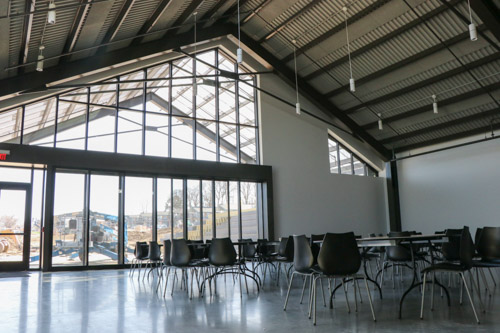
Chapman’s socially-tinged piece about the changed nature of community makes its world premiere Thursday, May 31 at 7:30 p.m. as part of the Great Plains Theatre Conference’s PlayFest.
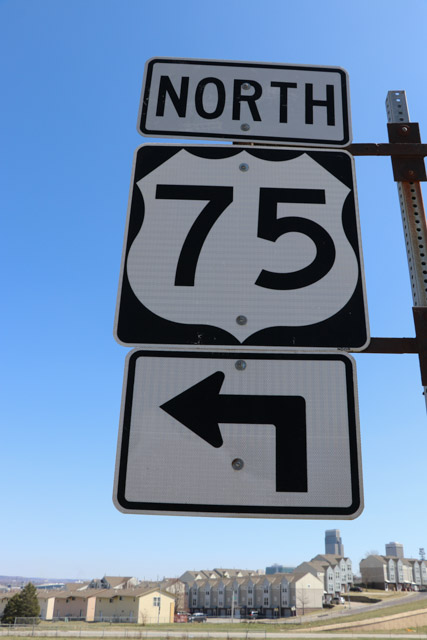
The site of the performance, The Venue at The Highlander, 2112 North 30th Street, carries symbolic weight. The organization behind the purpose-built Highlander Village is 75 North. The nonprofit is named for U.S. Highway 75, whose North Freeway portion severed the area. The nonprofit’s mixed-use development overlooks it and is meant to restore the sense of community lost when the freeway went in.
The North Freeway and other Urban Renewal projects forced upon American inner cities only further isolated already marginalized communities.
“Historically, in city after city, you see the trend of civil unrest, red lining, white flight, ghettoizing of areas and freeway projects cutting right through the heart of these communities,” Chapman said.
Such transportation projects, she said, rammed through “disenfranchised neighborhoods lacking the political power and dollars” to halt or reroute roads in the face of federal-state power land grabs that effectively said, “We’re just going to move you out of the way.”
By designating the target areas “blighted” and promoting public good and economic development, eminent domain was used to clear the way.
“You had to get out,” said Chapman, adding, “I talked to some people who weren’t given adequate time to pack all their belongings. They had to leave behind a lot of things.” In at least one case, she was told an excavation crew ripped out an interior staircase of a home still occupied to force removal-compliance.
With each succeeding hit taken by North O, things were never the same again
“There was a shift of how we understand community as each of those things happened,” she said. “With the North Freeway, there was a physical separation. What happens when someone literally tears down your house and puts a freeway in the middle of a neighborhood and people who once had a physical connection no longer do? What does that do to the definition of community? It feels like it tears it apart.
“That’s really what the play explores.”
Dramatizing this where it all went down only adds to the intense feelings around it.
“As I learned about what 75 North was doing at the Highlander it just made perfect sense to do the play there. To share a story in a place working to revitalize and redefine community is really special. It’s the only way this work really works.”
Neighbors features an Omaha cast of veterans and newcomers directed by Chicagoan Carla Stillwell.
The African-American diaspora drama resonates with Lorraine Hansberry’s A Raisin in the Sun and August Wilson’s Jitney with its themes of family and community assailed by outside forces but resiliently holding on.
Three generations of family are at the heart of Chapman’s play, whose characters’ experiences are informed by stories she heard from individuals personally impacted by the freeway’s violent imposition.
Faithful Miss Essie keeps family and community together with love and food. Her bitter middle-class daughter Thelma, who left The Hood, now opposes her own daughter Alexandra, who’s eager to assert her blackness, moving there. David, raised by Essie as “claimed family,” and his buddy Teddy are conflicted about toiling on the freeway. David’s aspirational wife, Mae, is expecting.
Through it all – love, loss, hope, opportunity, despair, dislocation and reunion – family and home endure.
“I think it really goes back to black people in America coming out of slavery, which should have destroyed them, but it didn’t,” Chapman said. “Through our taking care of each other and understanding of community and coming together we continue to survive. We just keep on living. There are ups and downs in our community but at the end of the day we keep redefining communityhopefully in positive ways.”
“What makes Denise’s story so warm and beautiful is that it does end with hope,” director Carla Stillwell said.
Past and present commingle in the nonlinear narrative.
“One of the brilliant things about her piece is that memory works in the play in the way it works in life by triggering emotions. To get the audience to experience those feelings with the characters is my goal.”
Feelings run deep at PlayFest’s Neighborhood Tapestries series, which alternates productions about North and South Omaha.
“The response from the audience is unlike any response you see at just kind of a standard theater production,” GPTC producing artistic director Kevin Lawler said, “because people are seeing their lives or their community’s lives up on stage. It’s very powerful and I don’t expect anything different this time.”
Neighbors is Chapman’s latest North O work after 2016’s Northside Carnation about the late community matriarch, Omaha Star publisher Mildred Brown. That earlier play is set in the hours before the 1969 riot that undid North 24th Street. Just as Northside found a home close to Brown and her community at the Elk’s Lodge, Neighbors unfolds where bittersweet events are still fresh in people’s minds.
“The placement of the performance at the Highlander becomes so important,” said Chapman, “because it helps to strengthen that message that we as a community are more and greater than the sum of the travesties and the tragedies.
“Within the middle of all the chaos there are still flowers growing and a whole new community blossoming right there on 30th street in a place that used to not be a great place – partly because they put a freeway in the middle of it.”
Chapman sees clear resonance between what the characters in her play do and what 75 North is doing “to develop the concept of community holistically.”
“It’s housing, food, education and work opportunities and community spaces for people to come together block by block. It’s really exciting to be a part of that.”
ChapMan is sure that Neighbors will evoke memories the same way Northside did.
“For some folks it was like coming home and sharing their stories.”
Additional PlayFest shows feature a full-stage production of previous GPTC Playlab favorite In the City in the City in the City by guest playwright Matthew Capodicasa and a “homage collage” to the work of this year’s honored playwright, Sarah Ruhl, a MacArthur Fellowship recipient. Two of Ruhl’s plays have been finalists for the Pulitzer Prize.
Capodicasa uses a couple’s visit to the mythical city-state of Mastavia as the prism for exploring what we take from a place.
“It’s about how when you’re traveling, you inevitably experience the place through the lens of the people you’re with and how that place is actually this other version of itself – one altered by your presence or curated for your tourist experience,” he said.
In the City gets its world premiere at the Blue Barn Theatre on Tuesday, May 29 at 7:30 p.m. Producing artistic director Susan Clement-Toberer said the piece is “a perfect engine” for the theater’s season-long theme of “connect” because of its own exploration of human connections.” She also appreciates theopen-ended nature of the script. “It’s evocative and compelling without being overly prescriptive. The play can be done in as many ways as there are cities and we are thrilled to bring it to life for the first time.”
You Want to Love Strangers: An Evening in Letters, Lullabies, Essays and Clear Soup celebrates what its director Amy Lane calls Ruhl’s “poetic, magical, lush” playwriting. “Her plays are often like stepping into a fairytale where the unexpected can and does happen. Her work is filled with theatre magic, a childlike sense of wonder, playfulness, mystery. We’ve put together a short collage that includes monologues, scenes and songs from some of her best known works.”
The Ruhl tribute will be staged at the 40th Street Theatre on Friday, June 1 at 7:30 p.m.
All PlayFest performances are free. For details and other festival info, visit http://www.gptcplays.com.
Play considers Northside black history through eyes of Omaha Star publisher Mildred Bown
Upcoming Great Plains Theatre Conference PlayFest productions at nontraditional sites examine North Omaha themes as part of this year’s Neighborhood Tapestries. On May 29 the one-woman play Northside Carnation, both written and performed by Denise Chapman, looks at a pivotal night through the eyes of Omaha Star icon Mildred Brown at the Elks Lidge. On May 31 Leftovers, by Josh Wilder and featuring a deep Omaha cast, explores the dynamics of inner city black family life outside the home of the late activist-journalist Charles B. Washington. Performances are free.
Play considers Northside black history through eyes of Omaha Star publisher Mildred Bown
Denise Chapman portrays the community advocate on pivotal night in 1969
©by Leo Adam Biga
Originally appeared in the May 2016 issue of The Reader (www.thereader.com)

As North Omaha Neighborhood Tapestries returns for the Great Plains Theatre Conference’s free PlayFest bill, two community icons take center stage as subject and setting.
En route to making her Omaha Star newspaper an institution in the African-American community, the late publisher Mildred Brown became one herself. Through the advocacy role she and her paper played, Brown intersected with every current affecting black life here from the 1930s on. That makes her an apt prism through which to view a slice of life in North Omaha in the new one-woman play Northside Carnation.
This work of historical fiction written by Omaha theater artist Denise Chapman will premiere Sunday, May 29 at the Elks Lodge, 2420 Lake Street. The private social club just north of the historic Star building was a familiar spot for Brown. It also has resonance for Chapman as two generations of her family have been members. Chapman will portray Brown in the piece.
Directing the 7:30 p.m. production will be Nebraska Theatre Caravan general manger Lara Marsh.
An exhibition of historic North Omaha images will be on display next door at the Carver Bank. A show featuring art by North Omaha youth will also be on view at the nearby Union for Contemporary Art.
Two nights later another play, Leftovers, by Josh Wilder of Philadelphia, explores the dynamics of an inner city black family in a outdoor production at the site of the home of the late Omaha activist journalist Charles B. Washington. The Tuesday, May 31 performance outside the vacant, soon-to-be-razed house, 2402 North 25th Street, will star locals D. Kevin Williams, Echelle Childers and others. Levy Lee Simon of Los Angeles will direct.
Just as Washington was a surrogate father and mentor to many in North O, Brown was that community’s symbolic matriarch.

Denise Chapman
Chapman says she grew up with “an awareness” of Brown’s larger-than-life imprint and of the paper’s vital voice in the community but it was only until she researched the play she realized their full impact.
“She was definitely a very important figure. She had a very strong presence in North Omaha and on 24th Street. I was not aware of how strong that presence was and how deep that influence ran. She was really savvy and reserved all of her resources to hold space and to make space for people in her community – fighting for justice. insisting on basic human rights, providing jobs, putting people through school.
“She really was a force that could not be denied. The thing I most admire was her let’s-make-it-happen approach and her figuring out how to be a black woman in a very white, male-dominated world.”
Brown was one of only a few black female publishers in the nation. Even after her 1989 death, the Star remained a black woman enterprise under her niece, Marguerita Washington, who succeeded her as publisher. Washington ran it until falling ill last year. She died in February. The paper continues printing with a mostly black female editorial and advertising staff.
Chapman’s play is set at a pivot point in North O history. The 1969 fatal police shooting of Vivian Strong sparked rioting that destroyed much of North’s 24th “Street of Dreams.” As civil unrest breaks out, Brown is torn over what to put on the front page of the next edition.
“She’s trying her best to find positive things to say even in times of toil,” Chapman says. “She speaks out reminders of what’s good to help reground and recenter when everything feels like it’s upside down. It’s this moment in time and it’s really about what happens when a community implodes but never fully heals.
“All the parallels between what was going on then and what we see happening now were so strong it felt like a compelling moment in time to tell this story. It’s scary and sad but also currently repeating itself. I feel like there are blocks of 24th Street with vacant lots and buildings irectly connected to that last implosion.”

Mildred Brown and the Omaha Star offices

During the course of the evening, Chapman has Brown recall her support of the 1950s civil rights group the De Porres Club and a battle it waged for equal job opportunities. Chapman, as Brown, remembers touchstone figures and places from North O’s past, including Whitney Young, Preston Love Sr., Charles B. Washington, the Dreamland Ballroom and the once teeming North 24th Street corridor.
“There’s a thing she says in the play that questions all the work they did in the ’50s and yet in ’69 we’re still at this place of implosion,” Chapman says. “That’s the space that the play lives in.”
To facilitate this flood of memories Chapman hit upon the device of a fictional young woman with Brown that pivotal night.
“I have imagined a young lady with her this evening Mildred is finalizing the front page of the paper and their conversations take us to different points in time. The piece is really about using her life and her work as a lens and as a way to look at 24th Street and some of the cultural history and struggle the district has gone through.”
Chapman has been studying mannerisms of Brown. But she’s not as concerned with duplicating the way Brown spoke or walked, for instance, as she is capturing the essence of her impassioned nature.
“Her spirit, her drive, her energy and her tenacity are the things I’m tapping into as an actor to create this version of her. I think you will feel her force when I speak the actual words she said in support of the Omaha and Council Bluffs Railway and Bridge Company boycott. She did not pull punches.”
Chapman acknowledges taking on a character who represented so much to so many intimidated her until she found her way into Brown.
“When I first approached this piece I was a little hesitant because she was this strong figure whose work has a strong legacy in the community. I was almost a little afraid to dive in. But during the research and what-if process of sitting with her and in her I found this human being who had really big dreams and passions. But her efforts were never just about her. The work she did was always about uplifting her people and fighting for justice and making pathways for young people towards education and doing better and celebrating every beautiful accomplishment that happened along the way.”
Chapman found appealing Brown’s policy to not print crime news. “Because of that the Star has kept for us all of these beautiful every day moments of black life – from model families to young people getting their degrees and coming back home for jobs to social clubs. All of these every day kind of reminders that we’re just people.”
For the complete theater conference schedule, visit https://webapps.mccneb.edu/gptc/.


 Leo Adam Biga's My Inside Stories