Archive
For love of art and cinema, Danny Lee Ladely follows his muse
When I wrote the following article in the early 2000s the alternative cinema landscape in Nebraska was very different than it is today. The profile subject of the story, Danny Lee Ladely, headed the only dedicated art cinema in the state, what was then called the Mary Riepma Ross Film Theater but which came to be known as the Mary Riepma Ross Media Arts Center , located in Lincoln, Neb. At roughly twice the size of Lincoln, Omaha had no such venue. Neither could one be found anywhere else in the state. That’s changed with the addition of Film Streams in Omaha, where Rachel Jacobson is the metro’s equivalent to Ladely in running and programming a full fledged art cinema complete with screenings of the best in contemporary film, along with repertory programs, visiting filmmakers, Q&As, and panel discussions. The Omaha Film Festival has added another dimension to the film scene. And there have been concerted efforts to restore long abandoned neighborhood and small town theaters. This is all familiar territory for me, as I used to be a film programmer in Omaha and I appreciate any attempts to engage and energize the cinema culture here. Ladely was way out in front of anyone in Nebraska in nurturing an alternative film culture and what he’s accomplished with the Ross in Lincoln is remarkable, including the new facility he got built courtesy of the cinema’s major patroness and namesake, Mary Riepma Ross. My piece for The Reader (www.thereader.com) appeared as the facility was under construction. It’s been operational for years now and now that Film Streams in Omaha has provided a comparable venue in Omaha, the area’s once rather stark art cinema landscape has turned bountiful. It took the vision and will of Ladely and Jacobson (who’s profiled on this blog) to make it happen.
For love of art and cinema, Danny Lee Ladely follows his muse
©by Leo Adam Biga
Originally appeared in The Reader (www.thereader.com)
With his braided pony tail, arrowhead-pattern shirt, blue jeans, boots and Stetson hat, Nebraska film guru Dan Lee Ladely looks like a holdover from the 1960s, when the Gordon, Neb. native was in fact an anti-war demonstrator in college. During his undergrad days at the University of Nebraska-Lincoln, where he earned a degree in English lit between showing films for the student council, he once led a takeover of the campus ROTC building. These days the 50-something Ladely is an activist for the aesthetic, educational and entertainment value of the moving image and more and more his cinema dreams loom large on the horizon.
As construction proceeds on the new Mary Riepma Ross Film Theater (MRRFT) at 13th and P Streets in Lincoln, the new home for the nationally recognized alternative film program Ladely’s overseen since 1973, he daily watches his dreams taking shape from the temporary office he and his small staff occupy a block away. Once the theater opens in early 2003 he plans an ambitious exhibition schedule that will give cinephiles access to see American independent, first-run foreign and classic films the way they’re meant to be seen and opportunities to meet emerging and established filmmakers. Two auditoriums, equipped for film, digital and video projection, will provide flexible exhibition space to show a large, diverse menu of feature, documentary and short films as well as video art pieces. Plans call for the theater’s Great Plains Film Festival, a celebration of regional indie film which Ladely inaugurated, to continue unreeling there every other year.
The new theater will replace the auditorium the program exhibited in at the Sheldon Memorial Art Gallery, located within a block of the new site.
The MRRFT is an anomaly. Where art houses and alternative film series have failed in more populous Omaha, Ladely’s program has survived 30 years in Lincoln of all places and now, in the midst of a recession, is embarking on a new building program.
It is a stunning accomplishment, especially in the capitol of such a conservative state, because the pitfalls to success in the art film market are legion. Among the obstacles to running any art house in today’s environment are: the tight economy; the fact that indie films regularly play at commercial cineplexes; and the encroaching presence of cable television, video-DVD and the Internet, media formats that feature much of the same kind of fare art houses used to be the exclusive outlet for.
Now, a film buff outfitted with a home theater system can select from the market’s glut of viewing choices and, in effect, be his or her own film programmer. In addition to this competition, Ladely’s program faces additional constraints in the form of: budget cuts, as his theater is partly subsidized by the University of Nebraska-Lincoln, where it is a department within the College of Fine and Performing Arts; the whims of private and public contributors it depends on for the bulk of its funding; and ever higher operating costs. All of which might lead one to wonder if this is the right time to build a new theater?
“There still is a place and a need for this program and I think people will respond,” a reflective and soft-spoken Ladely said. “I think people will come out, at least at the beginning out of curiosity, in pretty good numbers. The new building is going to do one thing for us. We were sort of hidden in the Sheldon Art Gallery. I think being in an art museum kind of put some people off and now that we won’t be there we have the possibility of a whole new audience.”
The mission of the theater, which he said he “sort of created out of thin air” over the years, has always been “to provide an alternative venue for true commercial cinema and to bring films here that wouldn’t get shown here otherwise.”
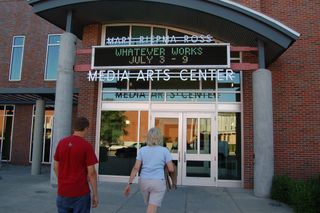
He said the proliferation of art films on cable and video/DVD has made it “harder and harder” to stay true to that vision. But the one thing MRRFT can still provide is a state-of-the-art space where you can watch these films in the manner in which they were meant to be seen, namely, a theater. He said regardless of how elaborate one’s home theater system is, “it’s still not the same” as the real thing. “No matter what happens in the future there’s always going to be a place for the film theater because film is really still a social event. Even though you’re there in the dark, there’s an audience and the audience reacts and that’s part of the experience. It’s totally different when you’re home alone.” Plus, there’s the dearth of alternative film exhibition in Nebraska, where except for the Dundee Theater, art houses have come and gone, the most recent being the short-lived Brandeis Art Cinema.
As Ladely points out, “There isn’t any other alternative place in this whole area right now where you can see these films.”
Much of what Ladely envisions has already been done from its old site in the currently closed Sheldon Art Gallery, where a major renovation under way has put a halt to the film program’s exhibition schedule until the new theater is completed. For years the program has been the state’s best and most consistent venue for presenting what used to be called underground cinema and the people who make it.
Where many like programs in Omaha once thrived but eventually folded, including those of the New Cinema Cooperative, the Joslyn Art Museum and the UNO Student Programming Organization, Ladely’s has continued uninterrupted for 30 years. How? Part of the answer lies in the fact the Lincoln program has enjoyed a measure of institutional support unknown elsewhere in this state owing to the legacy of the man who formed it and hired Ladely to run it, Sheldon’s director emeritus Norman Gesky, and to Ladely’s own passion for creating something of world-class stature. Ladely also had hands-on experience running two theaters in his native Gordon. Long a step-child of the Sheldon, where the MRRFT eventually lost favor under the man who succeeded Gesky as director, George Neubert, who cut the exhibition schedule and made life uneasy for Ladely, the theater is now poised to have its own stand-alone facility and identity.
And then there’s the one factor separating the theater from its imitators — Mary Riepma Ross. The retired New York lawyer is not only the theater’s namesake but its most ardent patron, biggest contributor and tenacious protector. A former UNL undergraduate student who fell in love with the movies as a young girl living in Lincoln, she was serving on the University Foundation board of trustees in the 1970s when then-chancellor Durwood “Woody” Varner put her in touch with the Sheldon’s Geske, a fellow film buff just beginning to shape plans for a full-fledged film program. She bought into Geske’s vision and, according to Ladely, “pledged she would support the program, which she’s obviously done. She started very early on sending us financial donations.”
In 1990, with the then Sheldon Film Theater struggling financially after a round of state budget cuts and slowly but surely being squeezed into oblivion by a director (Neubert) unfriendly toward the program, Ladely sent her a letter outlining his bold dream for a new theater space that would give the program a solid, independent foundation for survival and growth. It was just an idea. Ladely didn’t even ask for money. Amazingly, her response was to donate 3.5 million dollars in an irrevocable trust, a giant windfall for an arts organization of any size anywhere, but a truly extraordinary and unprecedented commitment for a film series in the Midwest. The Sheldon Film Theater quickly became the Mary Riepma Ross Film Theater.
Ladely, who has a portrait of his benefactress hanging in his office, said, “She’s actually the perfect patron. She has really impeccable tastes in film and she loves the kind of films we show. She sees them in New York and often writes to me and sends in articles about films she’s seen and makes recommendations to me. And very often they’re films we’re considering and we end up showing.”
In the new space Ladely anticipates reviving some activities he was forced to abandon during leaner times, such as film retrospectives, artist showcases and screening seven nights a week. In the past he has brought to Lincoln prominent filmmakers and actors with local ties, including Joan Micklin Silver, Peter Fonda and John Beasley. And now for the first time the theater will sell concessions, including popcorn, a new revenue stream he’s counting on to help defray expenses. He would also like to resume the theater’s long dormant touring film exhibition program and to share programs with other organizations, such as a film series it cooperatively presented with the Joslyn a few years ago.
There’s even more Ladely would like to do, but he admits all his plans are ultimately “contingent upon whether or not we can come up with enough money to keep the program going.” That’s why Ladely is using this down time while the MRRFT marquee is blank to write grants and solicit funds. Even if successful in securing enough money for the new theater’s operating budget, he is left with the nagging realization that attendance just isn’t what it used to be for documentaries by Emile De Antonio, Ricky Leacock, Albert Maysles and D.A. Pennebaker (all of whom appeared at the old theater at one time or another) or for Hollywood classics or for the best emerging cinema from places like Iran.
Even in its fattest years, he said, “if the university hadn’t been paying all the utilities…we couldn’t have survived as a stand-alone theater in a market this size.” That, and the fact the theater is about to come out of the shadows and expand in every way, has made for “sleepless nights” for Ladely, who is left “wondering how we’re going to do it.”
But, if nothing else, Ladely is an evangelist for film. He has a way of making you see the stars in his eyes when he discusses the kind of cinema he sees at the Telluride and Sundance festivals and that makes him compelled to share it with audiences here.
“I’m really interested in what’s going on now. What’s coming out. What’s the next big thing. Who’s doing what. I’m always interested in new filmmakers. And I’m very interested in what’s happening locally. One of the major things we’ll be doing in the small theater is have an open screening night where local filmmakers show their films. We’ll be able to show them in almost any format.” He said he keeps tabs on the local filmmaking scene and expects more new filmmakers to surface as technology makes moviemaking, especially the digital variety, more accessible and affordable, “That’s going to be very exciting — to see what comes out of that.”
Despite shrinking attendance for things like politically-charged documentaries, he will continue programming quality cinema regardless of how little box office potential it has, because that is part of what an alternative film series is all about, particularly one allied with a university.
“We have to balance this out between showing stuff that’s very esoteric and very important, even if there’s just one person in the audience, and showing stuff that’s more popular and generates a bigger audience. Just like there are classes that are real popular and classes that aren’t popular but are really important and you have to have, there are some kinds of films people don’t want to see but it’s absolutely important that, for example, film students see them in order to get a well-rounded education. The university has these burgeoning film studies and new media programs and I think our program definitely serves a need for those students.” Reality also dictates the theater at least break even, which means Ladely must show slightly more mainstream fare or at least indie cinema with a strong buzz behind it in the hope that better box office returns offset losses incurred on more obscure selections.

Related articles
- Jane Fonda Takes Center Stage at Film Streams, Where Her Life in Film is Celebrated this Summer (leoadambiga.wordpress.com)
- Alexander Payne to Talk Cinema with Kindred Spirit Jane Fonda at Film Streams Feature Event in Omaha (leoadambiga.wordpress.com)
- Cary art-house theater gets eviction notice (newsobserver.com)
- Film Connections, An In-Progress Story of How a 1968 Convergence of Future Cinema Greats in Ogallala, Neb. Resulted in Multiple Films and Enduring Relationships; From the Melting Pot of Coppola, Lucas, Knight, Duvall, Caan and two Ranch-Rodeo Families Cam (leoadambiga.wordpress.com)
Alexander Payne talks cinema with kindred spirit Jane Fonda at Film Streams Feature Event in Omaha
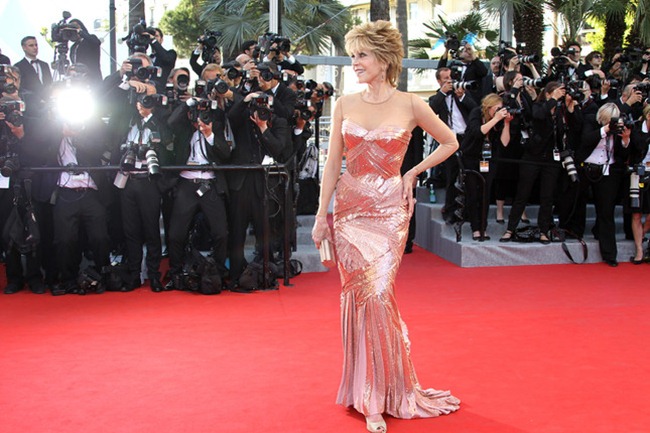
One of the world’s leading writer-directors and a legendary actress he admires from America’s last golden age of film may just be made for each other, artistically speaking that is, which makes the “tete-a-tete” they will engage in July 22 at the Film Streams Feature Event in Omaha all the more interesting. The filmmaker is Alexander Payne and the leading lady is Jane Fonda and they will undoubtedly spend a fair amount of time discussing American cinema from the late 1960s through the late 1970s, a period that Payne adores and that saw Fonda do her best work. There’s also the Fonda Family legacy to be considered, one with deep resonance to Nebraska because her famous father, the late stage and screen star Henry Fonda, was born and raised in Nebraska and began acting at the Omaha Community Playhouse. That’s where Jane and her brother Peter made their stage debuts. When the lone picture she made with her father, On Golden Pond, premiered she accompanied the movie to Omaha for a red carpet extravaganza at the Orpheum Theatre. Now she’s back 30 years later to talk shop with a native Nebraska filmmaker. Full circle.
I have a companion story on the blog that gives details about the Jane Fonda repertory series at Film Streams to run from late June through August 30. She also selected two favorite films that will be getting screened, her father’s personal favorite among his own films, 12 Angry Men, and the great Preston Sturges social satire, Sullivan’s Travels, which is also one of the most scathing looks ever at the corrupt Hollywood ethos. Film Streams is also screening Peace, Love & Misunderstanding, which features Jane’s most recent film acting performance.

Alexander Payne talks cinema with kindred spirit Jane Fonda at Film Streams Feature Event in Omaha
©by Leo Adam Biga
To appear in the July issue of Metro Magazine
When Omaha’s own Alexander Payne talks cinema with Jane Fonda at the July Film Streams Feature Event he won’t be at a loss for material.
He’ll converse with an intelligent artist he admires and whose best work came in his favorite decade of American movies, the ’70s. Then there’s all the noted directors and actors she’s worked with and the legacy of her famous father and brother to discuss.
It’s apropos that a renowned filmmaker from Omaha will review Fonda’s own legendary career before an audience of Nebraskans since her family is so tied to this place. Her adored father Henry remains an enduring native son. The loyalty the late stage and screen star showed to the state is not lost on Jane or Peter, who are adopted Nebraskans.
The threesome’s cinema paths rarely crossed. Just as Henry’s career waned, Jane’s and Peter’s took off. But there was a golden moment when they all converged. As the Old Hollywood studio system died out a brash new group of creatives crashed the gates to usher in the New Hollywood in the late 1960s. In that emerging space of permissiveness and artistic freedom depictions of sex and violence reached new extremes, more humanistic stories came in vogue, locations gained favor over sound stages and stylistic devices, like flash cuts, took hold. Amid this liberated landscape the Fondas made films that forever changed things.
Jane paradoxically struck a blow for both misogyny and feminism in Roger Vadim’s sexually bold adaptation of the adult comic strip Barbarella. Henry went rouge playing completely against type as a sadistic killer in the Sergio Leone Western Once Upon a Time in the West. Peter became a counterculture hero in the hippie, Harley, drug-fueled road picture classic Easy Rider.
Then, in a dramatic career transformation, Jane went from frothy sex symbol to first-rate dramatic actress of social conviction, winning Oscars for her risk-taking work in Klute and Coming Home. Later, she found the project that became her ailing father’s cinema swan song and their only film together, On Golden Pond. Fast forward a generation and Peter channeled his father in his Oscar-nominated lead role in Ulee’s Gold.
While the Fondas contributed to the unrestrained new cinema a young Alexander Payne cut his teeth on ’70s films as an audience member at the Dundee and Indian Hills Theatres. As Payne acknowledged in accepting his Oscar for The Descendants last February, his mother Peggy was his most devoted filmgoing companion.
He was an intellectually precocious youth with a preternatural appetite for adult art fare. He made his own short films with an 8 mm camera his restauranteur father, George, received as a bonus from Kraft Foods for customer loyalty.
Payne, a Creighton Prep graduate, considered studying journalism but fixed on history and Spanish literature at Stanford University. He didn’t formally study film until he entered UCLA, where his thesis project, The Passion of Martin, played festivals and netted him a production deal from Universal Studios.
By the time he made features in his hometown in the mid-1990s and early 2000s, repeatedly shooting in the same Dundee neighborhood where he and Henry Fonda grew up, Jane was already retired from movies.
For Citizen Ruth Payne cast a strong, socially committed woman not unlike Fonda in Laura Dern to play the title character of Ruth Stoops. Interested in making uncompromising films akin to those he fell in love with during the ’70s, Payne unflinchingly took on the abortion debate in the picture.
His next movie, Election, placed Reese Witherspoon in the kind of catty vixen part a young Jane would have been just right for.
Payne’s subsequent male-dominated films co-star women in roles that put men in their place. In About Schmidt Connie Ray is a trailer park wife sympathetic to Jack Nicholson recently losing his wife until he makes a pass at her and she throws him out. One can imagine Fonda in that part. In Sideways Sandra Oh is the cool wine pourer babe who goes ballistic when she discovers Thomas Haden Church has been lying to her and Virginia Madsen is the cool Earth Mother who sees past Paul Giamatti’s shortcomings. Fonda’s played similar characters.
As a good woman wronged in The Descendants Judy Greer finds the right balance of tenderness and rage Fonda delivered as Cat Ballou, Bree Daniels (Klute), Lillian Hellman (Julia) and Kimberly Wells (The China Syndrome).
No doubt Payne would have loved to work with Fonda in her prime. Who knows, now that she’s acting again perhaps they’ll be a part for her in one of his future projects. Just not his next one, Nebraska, a road movie that follows an embittered Nebraskan (Bruce Dern) living in Montana hell-bent on claiming a sweepstakes prize his estranged son (Will Forte) knows doesn’t exist. The son is sure his father will come to his senses long before they reach their destination of Lincoln, Neb. The journey revisits the old man’s dispiriting past and en route the sympathetic son decides to give his fool of a father the gift of saving face.
Payne’s angling to shoot the project in Nebraska this fall. He and casting director John Jackson are hard at work trying to find authentic Nebraska types as extras.
Related articles
- Jane Fonda Takes Center Stage at Film Streams, Where Her Life in Film is Celebrated this Summer (leoadambiga.wordpress.com)
- At 74, Jane Fonda learned how to be a hippie (todayentertainment.today.msnbc.msn.com)
- Dena Krupinski Makes Her Hollywood Dreams a Reality as a Turner Classic Movies Producer (leoadambiga.wordpress.com)
- Film Streams at Five: Art Cinema Contributes to a Transformed Omaha Through Community Focus on Film and Discussion (leoadambiga.wordpress.com)
- Jane Fonda Comes Home (leoadambiga.wordpress.com)
Jane Fonda Takes Center Stage at Film Streams, Where Her Life in Film is Celebrated this Summer
The Omaha art cinema Film Streams is making a habit of saluting prominent American screen actresses. The way it works is a guest star comes for a special evening in which Film Streams board member and world acclaimed filmmaker Alexander Payne interviews her live on stage, ala Inside the Actors Studio. A repertory series of her work is part of the deal. Laura Dern got the treatment the first time. Debra Winger came next. Jane Fonda is this year’s feted subject. Depending on your age or aesthetic or political affiliation Fonda means different things to different people. For some, she’s an enduring star. For others, a faded one. Depending on your tastes, she boasts an impressive body of stand-the-test-of-time work or else a decidedly uneven euvre outside a few notable exceptions. Many still find unforgivable her anti-war protests and vilify her every move. Many more feel affectionate and nostalgic about her as the daughter of Henry Fonda and as one of the 1960s and 1970s biggest stars. She’s prettty much done it all as a cinema diva – from ingenue to sex symbol to serious Method actress, the star of box office hits and critically acclaimed prestige pics, gobs of Golden Globe and Oscar nominations, two Academy Award wins for Best Actress, an Emmy for Best Lead Actress. Retiring from the screen at age 50 and making a comeback at nearly 70. Now, of course, as a woman of a certain age (74) she’s a supporting player or character actress who brings a rich persona and background to any role she takes. Part of the context of Jane Fonda today is that her adventurous personal life informs her work. Her boarding school and debutant upbringing. Her early modeling career. Studying under Lee Strasberg. Her marriages to Roger Vadim, Tom Hayden, and Ted Turner. Her activist years. Becoming a Hollywood Player as a producer. Making herself a fitness guru. Her forever strained relationship with her famous father. And her identity today as a healthy aging advocate and author. You’ll find plenty of film stories by me on this blog. Many happy cinema returns.
Jane Fonda Takes Center Stage at Film Streams, Where Her Life in Film is Celebrated this Summer
Appeared in the July issue of Metro Magazine
The Fonda Legacy
This summer Film Streams celebrates the many faces of actress Jane Fonda.
She and one of her biggest fans, Alexander Payne, converse live on stage July 22 at the Holland Performing Arts Center for Feature Event IV, the art cinema’s annual fundraiser. A Fonda repertory series runs through August 30.
The Fonda legacy in Nebraska looms large. Her late iconic father Henry Fonda was born here. He started acting at the Omaha Community Playhouse, where Jane and brother Peter trod the boards. Henry retained deep ties to the state and the Playhouse. He once brought the entire production of his Broadway triumph Mister Roberts to town. In 1955 he, fellow Playhouse alum Dorothy McGuire and 17-year-old Jane appeared in a benefit production of The Country Girl directed by Joshua Logan.
Peter, who attended the University of Omaha, occasionally visits the Playhouse.
When the only film pairing the famous father and daughter, On Golden Pond, made its Midwest premiere at the Orpheum she came.
Unlike her father’s beloved public persona, Jane’s is complex.
Incarnations
For much of the 1960s she was a spirited ingenue and sometime vixen plying her cover girl looks and wiles more than her acting chops in cinema trifles. Her comedic work in Cat Ballou and Barefoot in the Park hinted at star potential.
Film Streams founder-director Rachel Jacobson, an admirer, says Fonda “always had a deeper, more introspective quality even when playing the lighter roles.”
When Fonda’s French filmmaker husband Roger Vadim exploited her sex symbol status in Barbarella she could have been typecast. Instead, she did a makeover from vapid party girl and blonde bimbo to social activist and serious actress.
She earned acclaim for her dramatic turns in They Shoot Horses Don’t They? (1969) and Klute (1971), the latter earning her the Best Actress Oscar. That’s when “she came out from behind the shadow of both her father and brother” (Peter made it big with Easy Rider), says film historian Bruce Crawford of Omaha.
She also drew ire for her anti-war comments and protests. By the time she divorced Vadim and married activist Tom Hayden she was branded “political.” Fonda made socially conscious projects in Julia (1977), Coming Home (1978) (another Best Actress Oscar) and The China Syndrome (1979).
Her career peaked in the late ’70s-early ’80’s with Nine to Five, On Golden Pond and her Emmy-winning performance in TV’s The Dollmaker (1984). By then she’d morphed into a home workout video diva. After divorcing Hayden she surprised many by marrying media tycoon Ted Turner and promptly retiring from the screen at age 50. Her recent return to movies comes on the heels of her best-selling memoirs and healthy aging advocacy.
“She’s continually reinvented herself and her image,” says Jacobson. “She’s just very deliberate about how she thinks about herself and her own evolution. She’s a fascinating person.”
Payne curates the Feature Event and in Fonda, 74, he’s once more chosen a dynamic figure to talk cinema shop, following Steven Soderbergh, Debra Winger and Laura Dern. Jacobson says, “The people he’s interested in having conversations with are really strong artists with great careers.” She says Payne won Fonda over by saying her appearance would support the arts in Omaha. “That’s why she’s coming.”


The series:
Cat Ballou
She hits all the right notes as an aspiring schoolmarm turned outlaw seeking to avenge her father’s death. Lee Marvin steals the show in the dual roles of killer Tim Strawn and gunman Kid Shelleen.
Barbarella
She fearlessly plays an over-the-top sex object in highly suggestive scenes bordering on soft-core porn in this tripped-out fantasy directed by Vadim.
They Shoot Horses Don’t They?
Her transformation began with this unadorned portrayal of a desperate, ill-fated dance marathoner under the direction of Sydney Pollack.
Klute
As high end call girl Bree Daniels she’s a raw-nerved neurotic mixed up in a dangerous liaison with small town detective Donald Sutherland in the big city.
Julia
Fonda plays the kind of strong woman, Lillian Hellman, she clearly emulates. Her playwright character embarks on a dangerous mission abroad for a friend, Julia (Vanessa Redgrave), opposing the Nazis.
Coming Home
She makes believable the evolution from naive war bride to anti-war sympathizer who falls for paraplegic activist vet Jon Voight. The fictional awakening reverberates with Fonda’s own coming-of-age.
The China Syndrome
Playing an ambitious TV reporter fighting to cover a nuclear reactor accident the authorities want suppressed Fonda is in her element. Her subdued conviction is a welcome contrast to high-strung Jack Lemmon and Michael Douglas.
Nine to Five
Sardonic Lily Tomlin and sassy Dolly Parton are long-suffering office workers harassed by womanizing boss Dabney Coleman. Pert Jane is the innocent newbie. The women execute a militant plan to turn the tables in this feminist farce.
On Golden Pond
Jane plays out real life issues with her dad in this tale of an estranged daughter starving for affection from a father who has trouble giving it. Katharine Hepburn co-stars in the poignant drama.
Tickets for the 6:30 p.m. Feature Event are $35. For pre and post-event party tickets and for series screening dates-times, visit www.filmstreams.org.
Related articles
- Photos: Jane Fonda Wows at Cannes (abcnews.go.com)
- Regina Weinreich: Jane Fonda: More Than the Sum of her Parts (huffingtonpost.com)
Film Connections: How a 1968 convergence of future cinema greats in Ogallala, Nebraska resulted in multiple films and enduring relationships
From the melting pot of Francis Ford Coppola, George Lucas, Shirley Knight, Robert Duvall, James Caan and two ranch-rodeo families came “The Rain People,” “We’re Not the Jet Set” and more
An In-Progress Story and Film Event Project
©Leo Adam Biga
An unlikely confluence of remarkable cinema talents descended on the dusty backroads of Ogallala, Neb. in the far southwest reaches of the state in the summer of 1968.
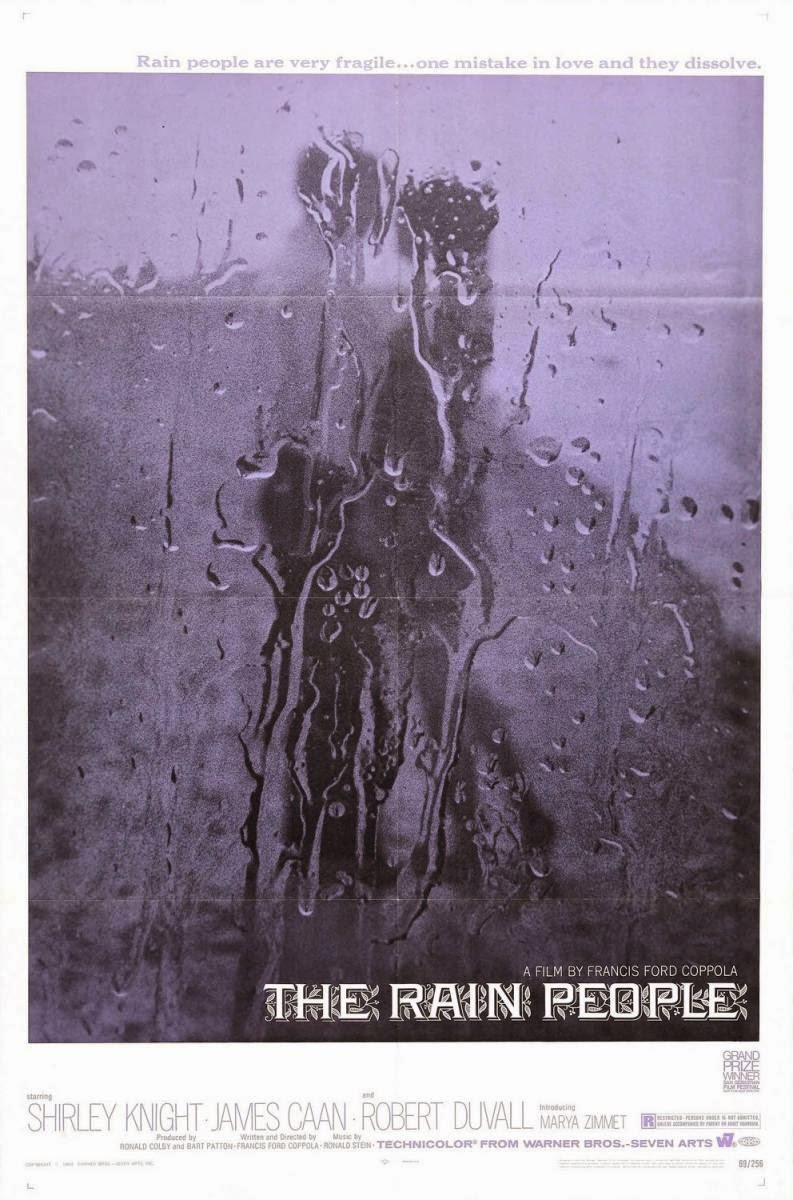
None other than future film legend Francis Ford Coppola led this Hollywood caravan. He came as the producer-writer-director of The Rain People, a small, low-budget drama about a disenchanted East Coast housewife who, upon discovering she’s pregnant, flees the conventional trappings of suburban homemaking by taking a solo car trip south, then north and finally west. With no particular destination in mind except escape she gets entangled with two men before returning home.
Coppola’s creative team for this road movie included another future film scion in George Lucas, his then-protege who served as production associate and also shot the documentary The Making of The Rain People. The two young men were obscure but promising figures in a changing industry. With their long hair and film school pedigree they were viewed as interlopers and rebels. Within a few years the filmmakers helped usher in the The New Hollywood through their own American Zoetrope studio and their work for established studios. Coppola ascended to the top with the success of The Godfather I and II. Lucas first made it big with the surprise hit American Graffiti, which touched off the ’50s nostalgia craze, before assuring his enduring place in the industry with the Star Wars franchise that made sci-fi big business.
Rain People cinematographer Bill Butler, who went on to lens The Conversation for Coppola and such projects as One Few Over the Cuckoo’s Nest, Jaws and The Thorn Birds, was the director of photography.
Heading the cast were Shirley Knight, James Caan and Robert Duvall. Though they enjoyed solid reputations, none were household names yet. Caan’s breakthrough role came two years later in the made-for-television sensation Brian’s Song (1970). The pair’s work in Coppola’s The Godfather elevated them to A-list status. Rain People was not the last time the two actors collaborated with the filmmakers. Duvall starred in the first feature Lucas made, the science fiction thriller THX-1138. The actor went on to appear in Coppola’s first two Godfather pictures as well as The Conversation and Apocalypse Now. After his star-making performance as Sonny Corleone in The Godfather Caan later teamed up with Coppola for the director’s Gardens of Stone.
Among Rain People’s principals, the most established by far then was Knight, already a two-time Best Supporting Actress Oscar nominee (for The Dark at the Top of the Stairs and Sweet Bird of Youth).
The experience of working together on the early Coppola film forged relationships that extended well beyond that project and its small circle of cast and crew. Indeed, this is a story about those connections and their reverberations decades later.
For example, Duvall and Caan were already horse and Old West aficionados when they were befriended by a couple of Nebraska ranch-rodeo families, the Petersons and Haythorns. The interaction that followed only deepened the artists’ interest in riding and in Western lore. This convergence of New York actors and authentic Great Plains characters produced some unexpected spin-offs and helped cement enduring friendships. Duvall and Caan remain best buddies to this day.
Duvall became so enamored with the colorful, cantankerous Peterson clan, a large, boisterous family of trick riders led by their late patriarch, B.A. Peterson, that he made a documentary about them and their lifestyle called We’re Not the Jet Set. The actor returned to Nebraska several times to visit the family and to shoot the film with a skeleton crew. It was his first film as a director and it’s easy to find resonance in it with his future directorial work (Angelo My Love, The Apostle, Assassination Tango).
He and the Petersons became close enough that at his invitation some of them visited the The Godfather set. The family and the actor have kept in touch all these years and some have visited Duvall’s Virginia farm.
On one of Duvall’s visits to Nebraska the Petersons introduced him to the Haythorns and the true-life stories of that family’s early, epic cattle drives became the inspiration for Duvall’s mini-series Broken Trail.
Meanwhile, Caan sufficiently learned the ropes from working alongside the Haythorns and their hired hands to become a professional rodeo competitor, an activity the suits in Hollywood increasingly frowned on as his career exploded.
With their reputation as expert horsemen and women preceding them, several of the Petersons ended up in the film industry as wranglers, trainers and stunt people, boasting credits on many major Hollywood projects. One member of the family, K.C. Peterson, even ended up working on a film Duvall appeared in, Geronimo, An American Legend.
None of it may have happened if that band of filmmaking gypsies hadn’t come west. Their presence certainly got the attention of the locals while it lasted but no one could have predicted the Coppola production would lead, at least indirectly, to other films and deeper connections that played out over several years.
It’s hard to imagine how else Duvall would have happened upon the Petersons as the subjects for a film.
The man responsible for bringing Duvall to Nebraska, Coppola, was a fish-out-of-water here. His parents were musicians and he grew up in urban Detroit and Queens, New York, immersed in a life of art, literature, theater and the movies. The Hofstra theater arts grad entered UCLA’s fledgling film studies program, where his work soon attracted the attention of Hollywood.
At the time he made Rain People he was finding his way at Warner Brothers. Like all the major Hollywood studios then, Warners struggled adapting to changing audience tastes and escalating production costs and began entrusting young upstarts like Coppola with productions traditionally assigned old veterans.
While directing Finian’s Rainbow for Warners-Seven Arts Coppola met Lucas, a Modesto, Calif. native and USC film school product. Eager to break from studio constraints and make their own personal art films, the two were kindred spirits, When Coppola enlisted a small band of like-minded artists for Rain People, Lucas was a natural choice. The experience of making that film convinced them to launch American Zoetrope, a counter-culture answer to the old studio system that like United Artists decades before put the creatives in charge of production. The studio’s first two projects were the Lucas written and directed films THX-1138 and American Graffiti.
The producing partners parted ways in the mid-’70s.
But for a magical time the career arcs of these and other cinema stalwarts intersected to produce some of the most satisfying collaborations of the 1970s. As fate would have it a crucial part of that intersection unfolded in rural Nebraska among area denizens whose rough-and-tumble work-a-day lives were far removed from the distorted, make-believe reality of Hollywood. Lucas’ making-of doc about the experience records it for posterity.
Situated just below the southeast corner of the Nebraska Panhandle, Ogallala was about the last place you’d expect to find a gathering of the soon-to-be New Kings of Hollywood. But that’s exactly what transpired. This is the story of how those connections led Duvall to make We’re Not the Jet Set, an underseen film that may be getting new life courtesy of art cinemas.

The entire company of cast and crew on The Rain People


I was a burgeoning film buff in 1974 when the Omaha World-Herald‘s now defunct Magazine of the Midlands ran a piece on a documentary film that Robert Duvall, who had recently gained acclaim for his work in the first two Godfather films, was directing in Ogallala, Neb. about a ranch-rodeo family there, the Petersons. The film, entitled We’re Not the Jet Set (1977), sounded promising enough but what really got my attention was the fact that Duvall only came to meet the Petersons and to make his film about them as a result of coming to Nebraska a half-dozen years earlier for a few weeks work on the art road movie, The Rain People (1969), a film written and directed by Francis Ford Coppola and assisted by George Lucas. Rain People starred Shirley Knight and co-starred James Caan and Duvall. The Petersons had a horse pen just across from the motel the cast and crew stayed at and Duvall and Caan got to know the family by riding some of their horses. Duvall became so intrigued with this colorful clan that he returned again and again to immerse himself in their life and to shoot the documentary. It was the actor’s first directorial effort of what’s turned out to be a distinguished body of work as a director (Angelo My Love, The Apostle, Assassination Tango).What most struck me then and now is how these figures, who at the time were obscure, except for Knight, would in a few years come to be major players in Hollywood. I loved the fact that they converged in the middle of nowhere for a small film that led to another film. And as I’ve come to find out, the experience of making these films in rural Nebraska led to enduring relationships and collaborations and the inspiration for yet another film. For example, Duvall and Caan have stayed in contact with the Petersons, several of whom have wound up in the film industry as wranglers, trainers, and stunt riders. And it was through the Petersons that Caan and Duvall met a more prominent ranch family, the Haythorns, and the actors’ interactions with them led to Caan becoming a professional rodeo competitor and to informing Duvall’s later Western mini-series Broken Trail.Jet Set was released in 1977 to mostly strong reviews from its featured screenings at film festivals, in select art house cinemas, and on public television. Since then the film has pretty much been unseen. There are reasons for that. As I have come to find out, its virtual disappearance from the market is a real travesty because the work stands with the best docs from that era. As it happened, I saw Rain People well before seeing Jet Set, a film that until a few years ago only existed for me in terms of the few write-ups I’d found about it. When I finally decided in 2010 to develop a story about all of this, including the connections and relationships around the films, I contacted Duvall’s then-production company, Butcher’s Run, and they were nice enough to both send me a DVD of the pic and to arrange an interview with Duvall himself. Jet Set was a real revelation for me. It’s a superb example of cinema verite filmmaking and it comes as close to pure cinema as any film, dramatic or documentary, that I’ve seen from that era, and I’ve seen a lot.
Duvall led me to his good friend Caan, whom I also interviewed. I also got in touch with several of the Petersons and interviewed them as well. Since then I’ve interviewed some more of the principals behind Jet Set, notably cinematographer Joseph Friedman and editor Stephen Mack. I subsequently secured interviews with Knight, Coppola and Rain People cinematographer Bill Butler.
But I’m getting ahead of myself. For years, decades really, that Herald story about the film I referred to earlier stuck in my mind. It gnawed at me all the while I worked as a film programmer and publicist in Omaha and then when I transitioned into freelance journalism. In the era before the Internet it was hard to find much reference to the film. It certainly wasn’t available for rental through any distributor I ever came upon. The last 15 years or so I’ve consistently looked for opportunities to write about film and this blog is a good showcase for the many film stories I’ve filed. The story of Rain People and Jet Set is one I longed to tell. Since leaving the film programming world in the early 1990s I also longed to organize some film event. Now I am combining the two longings in one project. My in-progress story is slated to be published in some Nebraska publications and I’m working with the publisher of The Reader (www.thereader.com) and the director of the Omaha art cinema Film Streams on possible screenings and other events related to my story.
I have all the interviews I need for the piece. The only player in this story I have not able to connect with is George Lucas. i will try again but the story does not depend on his participation.
My main purpose with all this is to bring this story to light and to help revive interest in these films, particularly We’re Not the Jet Set. Recently, Turner Classic Movies added The Rain People to its rotating gallery of films shown on the cable network. But Jet Set remains inaccessible. I would also like to see the Lucas documentary, The Making of the Rain People, revived since it is a portrait of the early Coppola and his methods a full decade before his wife Eleanor shot the documentary Hearts of Darkness about the anguished making of Apocalypse Now. The story I’m telling is also an interesting time capsule at a moment in film history when brash young figures like Coppola, Lucas, Duvall, and Caan were part of the vanguard for the New Hollywood and the creative freedom that artists sought and won.


TO BE CONTINUED…
Editor’s Note: As I further develop the story, I’ll be making more posts. And when screenings and other events are scheduled in conjunction with the story, I’ll be sure to post that info as well. I’m posting my interviews with all the key figures in this story-event project.
Related articles
- Filmmaking tips from a legend – Interview with Francis Ford Coppola (eoshd.com)
- Lucasfilm Names Kathleen Kennedy Co-Chair As Successor To George Lucas (deadline.com)
- Duvall stars as cantakerous hermit in ‘Get Low’ (ctv.ca)
- George Lucas retiring to make ‘hobby movies’ (guardian.co.uk)
- ‘The Godfather’ Turns 40 (sanfrancisco.cbslocal.com)
- Dena Krupinski Makes Her Hollywood Dreams a Reality as a Turner Classic Movies Producer (leoadambiga.wordpress.com)
Related articles
- Shirley Knight Interview (leoadambiga.wordpress.com)
- Alexander Payne’s ‘Nebraska’ Comes Home to Roost: The State’s Cinema Prodigal Son is Back Filming Again in his Home State after Long Absence (leoadambiga.wordpress.com)
Two-time Oscar-winner Alexander Payne delivers another screen gem with “The Descendants” and further enhances his cinema standing
UPDATE: Alexander Payne has added to his growing legendaric status by picking up his second Oscar for Best Adapted Screenplay. He, Nat Faxon, and Jim Rash shared the Academy Award for their work on The Descendants. Payne shared the same award with Jim Taylor for their Sideways script. It seems only a matter of time before Payne is recognized with a Best Director Oscar.
Here’s a capsule take on Alexander Payne and The Descendants, the latest in the filmmaker’s seriocomic forays into the existential angst, folly, fragility, and yearning of the human condition. If you’re a fan of Payne, the film, or of cinema in general, then check out the batch of stories on this blog about about him, this picture, his other movies, and a slew of other films and filmmakers from cinema’s past and present.

Two-yime Oscar-winner Alexander Payne delivers another screen gem with “The Descendants” and further enhances his cinema standing
©by Leo Adam Biga
Appeared in Omaha Magazine
Until The Descendants opened to golden reviews last fall, seven years elapsed between feature films for its celebrated writer-director Alexander Payne.
The Omaha native and Creighton Prep grad came of age as a film buff here. He made his first three features (Citizen Ruth, Election, About Schmidt) in his hometown, each moving him up the ranks of elite moviemakers. His surprise 2004 hit, Sideways, took him to Southern California’s wine country. The combination road-buddy picture and unconventional love story confirmed Payne as a film industry leading light, earning him a Best Adapted Screenplay Oscar.
He then busied himself writing-producing films for other directors. When he couldn’t find financing for his own pet project, Downsizing, he made The Descendants. Before shooting it in late 2010 the only directing he did in this period was a segment of Paris, I Love You and the pilot for HBO’s Hung.
The Golden Globes won by Descendants star George Clooney for best dramatic actor and by Payne and producing partners Jim Burke and Jim Taylor for best drama harbors well heading into the Oscars, where the film will be well-represented with five nominations (for Best Picture, Best Director, Best Adapted Screenplay, Best Editing and Best Actor). The three friends share their own production company, Ad Hominem Enterprises, which produced the picture for Fox Searchlight, with whom Ad Hominem has a first-look deal. The pic’s strong showing with critics and award shows is reminiscent of Sideways. Like that film, this one took Payne far from the Midwest – to Hawaii. A decade after working with iconic Jack Nicholson on About Schmidt, Payne teamed with another icon, Clooney.
As land baron attorney Matt King, Clooney is a man in crisis. His wife Liz lies in a coma after a boating accident. After years of indifferent parenting he’s suddenly in charge of his two girls. He’s burdened, too, by the valuable land entrusted to his care by ancestors. When his older daughter Alexandra (Shailene Woodley) reveals her mother’s infidelity, Matt sets off on a journey that begins in retribution but ends in forgiveness. Payne says “two acts of love” are what drew him to adapt the Kaui Hart Hemmings novel.
The story shares in common with Schmidt and Sideways and Payne’s forthcoming Nebraska a beleaguered protagonist trying to mend an unraveling life.
“It’s just the comic archetype Jim Taylor (his producing partner and former co-writer) and I came up with and I’m continuing of the middle-aged guy who’s really unconscious and has a bunch of anguish and frustration in life,” says Payne. “It’s a guy with good intentions but who’s bought the wrong package. I think it’s funny.”
Extracting equal amounts pathos and humor from human folly is what Payne does.
“I’m just always drawn to material that remains human. You don’t need guns and spaceships and great contrivance to have a movie and a meaningful one. I don’t think those elements are necessarily bad – I like movies of every genre, but what I’m drawn to is trying to somehow explore and express and mock the human heart.”
Descendants is being called Payne’s most fully realized work. “I hope so,” he says, adding that any new maturity reflects his more accrued life experience at age 50 and his evolving film craft. Some observers note he seems more comfortable letting tender emotions play out on screen.”Well, that’s what this story called for,” he says. “I mean, it could be a new vein of filmmaking in me or could just be I was serving this particular story as a professional, workman-like director. I have no idea.”
Staying true to his Omaha roots, he attended the movie’s local premiere at Film Streams, where Descendants smashed box office records. Payne enjoys sharing his work at the art cinema whose board he serves on. Before an appreciative crowd of friends and supporters he announced the film was among the highest grossers nationally its first week. By early February its domestic take stands at $66 million-plus, makeing it the top indie flick released in 2011.
Exuding grace and humility, Payne personally greeted audience members before and after the opening night screenings here. In accepting his Golden Globe, Payne deflected praise to cast and crew, to the people of Hawaii and to Hemmings, whose “beautiful gift” of a novel he made his own.
He’s conquered Cannes, Toronto, New York, Hollywood, but he proves he can come home again. Payne, who keeps a condo here, plans shooting the father-son road pic Nebraska in various Panhandle locales come spring. Home is where the heart is and he’s always happy to return where his cinema dreams were first fired.
Related articles
- Alexander Payne Achieves New Heights in ‘The Descendants’ (leoadambiga.wordpress.com)
- Alexander Payne and Kaui Hart Hemmings on the Symbiosis Behind His Film and Her Novel ‘The Descendants’ and Her Role in Helping Him Get Hawaii Right (leoadambiga.wordpress.com)
- Cinematographer Phedon Papamichael, Producer Jim Burke and Actress Shailene Woodley Discuss Working with Alexander Payne on ‘The Descendants’ and Kaui Hart Hemmings Comments on the Adaptation of Her Novel (leoadambiga.wordpress.com)
- From the Archives: Alexander Payne, an Exclusive Interview Following the Success of ‘Sideways’ (leoadambiga.wordpress.com)
- About Payne: Alexander Payne on ‘About Schmidt,’ Jack Nicholson and the Comedy of Deep Focus (leoadambiga.wordpress.com)
- Jim Taylor, the Other Half of Hollywood’s Top Screenwriting Team, Talks About His Work with Alexander Payne (leoadambiga.wordpress.com)
- From the Archives: About ‘About Schmidt’: The Shoot, Editing, Working with Jack and the Film After the Cutting Room Floor (leoadambiga.wordpress.com)
- Payne named filmmaker of the year (bbc.co.uk)
- From the Archives: Conquering Cannes, Alexander Payne’s Triumphant Cannes Film Festival Debut with ‘About Schmidt’ (leoadambiga.wordpress.com)
- From the Archives: Alexander Payne Discusses His New Feature ‘About Schmidt’ Starring Jack Nicholson, Working with the Star, Past Projects and Future Plans (leoadambiga.wordpress.com)
- When Laura Met Alex: Laura Dern & Alexander Payne Get Deep About Collaborating on ‘Citizen Ruth’ and Their Shared Cinema Sensibilities (leoadambiga.wordpress.com)
- Living the Dream: Cinema Maven Rachel Jacobson – the Woman Behind Film Streams (leoadambiga.wordpress.com)
- Joan Micklin Silver’s Classic ‘Hester Street’ Included in National Film Registry (leoadambiga.wordpress.com)
- My Forthcoming Book, ‘Alexander Payne: His Journey in Film,’ Due for a Fall 2012 Release (leoadambiga.wordpress.com)
Living the dream: Cinema maven Rachel Jacobson – the woman behind Film Streams
Since its late 2007 start Film Streams has given Omaha a much-needed and celebrated infusion of art cinema. This still young nonprofit theater already enjoys a strong following and a national reputation. Film Streams is the vision of founder and director Rachel Jacobson, an Omaha native who left here only to come back with a mission of giving her hometown its first full-fledged art cinema. Until she came back from New York City with her dream of forming a center devoted to film as art this metro area of more than 800,000 never had a theater dedicated to screening the best of old and new cinema and to presenting educational programs around the films. Thanks to her, Omaha finally has a film home befitting its large population. She’s not only made her dream a reality but she’s made this Midwest theater nationally known thanks to first-rate screenings and programming and the involvement of board member Alexander Payne, whose clout has allowed Film Streams to nab some major guests, including Laura Dern, Debra Winger, and Steven Soderberg. 2012 will make the biggest splash yet when this year’s special guest is revealed. A true film icon. My short profile of Rachel is the cover story in the new issue of Metro Magazine.

Living the dream: Cinema maven Rachel Jacobson – the woman behind Film Streams
©by Leo Adam Biga
The cover story in the February 2012 Metro Magazine (http://issuu.com/metmago/docs/metromagazine-february-2012)
Film Streams is coming off its fourth and most successful year yet, capped by the record-breaking, exclusive run of Alexander Payne‘s The Descendants. With the art cinema riding high, it’s easy overlooking the determination founder-director Rachel Jacobson, 33, showed in turning her dream into reality.
Film buff in the making
The success has made her a respected leader among the young creatives and professionals set that’s helping transform Omaha’s once amorphous culture into an identifiably cool scene.
The Omaha Central High graduate left here to attend the University of Illinois at Urbana-Champaign and to get her professional start but her plan always included coming back to her hometown. When she returned in 2005 the then-20something set about selling philanthropists on the idea of a film center in the barrens of North Downtown.
Most embraced her vision. Some expressed reservations. But anyone who dealt with her soon fell under the sway of her informed passion to support the project.
Before coming back to pursue her dream, she laid the groundwork for it back East. She immersed herself in an intensive arts administration course at New York University and made a study of art cinemas, all to formulate the nonprofit public film model Film Streams follows. She strategically worked at a SoHo art gallery, Miramax Films and WNYC public radio to learn lessons for making her Omaha cinematheque sustainable.
“It was sort of grad school without having to pay for it,” she says.
She never intended going to New York City. Chicago was her choice out of college. But once there, she says, “I just fell in love with the city.”
She often describes an epiphany she had in college as the defining moment when she abandoned law school plans to pursue being a film curator-exhibitor. Her cinephile leanings began long before that, as a girl, when she accompanied her parents to see movies at the Indian Hills Theatre. “It was such a beautiful theater. It felt like this grand experience,” she says. The Dundee Theatre and then-AMC Westroads 8 became frequent haunts. As a college English and political science major she fell ever more under cinema’s spell via film studies courses and art movie house screenings.

A public film theater model
Her film education continued in New York, where she devised the core principals behind her Omaha cinema. True to her vision she’s made it “a mission-based” showcase for film as art. With support from memberships, grants, donations and other contributed revenue almost equal to box office-concession revenue, she’s freed Film Streams from commercial pressure and compromise.
“A big part of why I wanted to work in film is I wanted to figure out ways to get beyond the fact that film is seen as a product. Yyou need to have a way to fight against that commodity perspective,” she says.
Her serving on a National Endowment for the Arts grants panel has helped Film Streams win NEA and Academy of Motion Picture Arts and Sciences funding.
Not having to turn a profit or pack the house means Jacobson can schedule the kind of limited appeal movies cineplexes rarely play: first-run American independent and foreign features, repertory classics, documentaries and shorts. Unlike mainstream theaters, Film Streams presents panel discussions, educational programs and extras, often in partnership with community organizations.
She strives for a schedule reflecting world cinema. “An important part of our mission is to be a platform for those under-heard voices,” she says.
Early 2012 season highlights reflect this diversity. There’s a 10-film repertory series of international masterworks on restored 35 millimeter prints. Partnership screenings-panels are scheduled around documentaries about urban planning, education, women’s self-image and developmental disabilities. First-run narrative features include Pariah and We Need to Talk About Kevin, both by women directors on tough subjects.
There’s also the annual Oscar-winning shorts series.
As for the remainder of the year, she’s working on bringing prominent filmmakers and eying a possible film noir series. Ingmar Bergman may be the focus of the next Great Directors series. The biennial Cinemateca of Spanish-language films is slated for September. The 2012 gala promises a film-pop culture icon in August. Past guests of honor have been Laura Dern, Debra Winger and Steven Soderbergh. Board member Alexander Payne gives Film Streams pull in attracting major names.

Growing a film community
Just as Jacobson’s cultivated a close relationship with Payne and other celebs, she’s nurtured a growing audience at Film Streams, where ticket sales climbed to 54,000 last year. Memberships have held steady at nearly 2,000.
“I feel really great about where we are as far as audience. Hopefully it indicates more people are seeing the kinds of films we’re showing than would have if we didn’t exist.
“The interesting thing about what we’ve become that I didn’t imagine is that I feel like people perceive us as not just a place for cinephiles but also as a community space because of the discussions and the partnerships we do. I feel like that’s what makes us distinctive because that helps us reach new, wider audiences that may not otherwise come. Those connections help us serve the entire community.”
She strikes a balance serving both hardcore film buffs and casual movie fans. Along the way, she hopes general audiences sample more challenging fare.
Film Streams has also expanded its administrative staff and budget. “It’s over a million dollars now,” she says. “We’ve just kind of grown incrementally every year.”
She’s perhaps most pleased by how Omaha has gotten behind Film Streams. There’s a sense of ownership in it, and that’s precisely what she wants.
“We’re all sort of stakeholders in it – Omaha, our members, the board.”
A creative life and career
The island that Film Streams, Slowdown and Saddle Creek Records anchors is gaining a foothold in North Downtown along with Creighton University, Tip Top, Hot Shops, the Mastercraft and TD Ameritrade Park. She sees development there as a mixed-bag but the entrepreneurial spirit and energy on display make her optimistic.
She feels young creative class professionals like herself and her friends are more and more being heard. She likes the vibrant Omaha that emerged while she was away and that continues spinning off creative new ventures. She’s a big advocate of Omaha’s indie music scene.
“There’s something distinctive about what people are creating and there’s a strong community around it,” she says.
Film Streams gives her a little slice of the Big Apple in Omaha, where her life and work revolve around art, beauty, creativity, rock music, friends, donors and social entrepreneurs. “This job is that,” she says. Best of all, she gets to share her film passion. “I love that experience so much. It’s a way to connect with people. It feels really great to show someone something they appreciate. Man, I love that.”
Visit http://www.filmstreams.org.
Related articles
- Omaha’s Film Reckoning Arrives in the Form of Film Streams, the City’s First Full-Fledged Art Cinema (leoadambiga.wordpress.com)
- From the Archives: Alexander Payne – Portrait of a Young Filmmaker (leoadambiga.wordpress.com)
- From the Archives: About ‘About Schmidt’: The Shoot, Editing, Working with Jack and the Film After the Cutting Room Floor (leoadambiga.wordpress.com)
- About Payne: Alexander Payne on ‘About Schmidt,’ Jack Nicholson and the Comedy of Deep Focus (leoadambiga.wordpress.com)
- From the Archives: Conquering Cannes, Alexander Payne’s Triumphant Cannes Film Festival Debut with ‘About Schmidt’ (leoadambiga.wordpress.com)
- From the Archives: Alexander Payne Discusses His New Feature ‘About Schmidt’ Starring Jack Nicholson, Working with the Star, Past Projects and Future Plans (leoadambiga.wordpress.com)
- From the Archives: Alexander Payne, an Exclusive Interview Following the Success of ‘Sideways’ (leoadambiga.wordpress.com)
- When Laura Met Alex: Laura Dern & Alexander Payne Get Deep About Collaborating on ‘Citizen Ruth’ and Their Shared Cinema Sensibilities (leoadambiga.wordpress.com)
- Alexander Payne Achieves New Heights in ‘The Descendants’ (leoadambiga.wordpress.com)
- Alexander Payne and Kaui Hart Hemmings on the Symbiosis Behind His Film and Her Novel ‘The Descendants’ and Her Role in Helping Him Get Hawaii Right (leoadambiga.wordpress.com)
- Omaha Film Festival Celebrates Seven Years of Growing the Local Film Culture (leoadambiga.wordpress.com)
- Bringing Back Classic Movies and the Old-Time Ballyhoo, Bruce Crawford Shows ‘King Kong’ the Red Carpet Treatment (leoadambiga.wordpress.com)
Alexander Payne and Kaui Hart Hemmings on the symbiosis behind his film and her novel “The Descendants” and how she helped get Hawaii right
Alexander Payne and Kaui Hart Hemmings on the symbiosis behind his film and her novel “The Descendants“ and how she helped get Hawaii right
©by Leo Adam Biga
Published in The Reader (www.thereader.com)
When Alexander Payne‘s turn came to speak in the glow of The Descendants winning best motion picture drama at the Jan. 15 Golden Globes, he made sure to thank the people of Hawaii and author Kaui Hart Hemmings.
He did something few directors do by involving Hemmings, a Hawaii native and resident, in the adaptation, preproduction and production of the George Clooney-starring film. He’s widely credited her vital role in helping him get a fix on the island state’s particular culture, or as much as a mainlander like himself can attain. For all the time he spent researching, writing, prepping and shooting there, mainly in Honolulu, he never lost sight of being a visitor in need of expert advice.
Of course, the well-received 2007 Hemmings novel is the reason there’s a movie at all. He knows golden material when he sees it and he remained true to the book beyond her expectations.
“I’ve had the privilege of seeing Alexander making this film, from location scouting and casting to directing and filming. His attention to the minutiae of Hawaiian life, his humor and restraint, his casting decisions – I felt like I’d be surprised if it wasn’t a good film. Still, I couldn’t prepare myself for how good,” says Hemmings. “It’s a film that sticks with you, teaches you something without being at all didactical. It brings Hawaii to the big screen, something that’s never been done before, in an authentic way. I never insisted on him being faithful to my novel, but he did, and I’m pretty happy about that since it led to results like these.”
His respect for her work and inclusion in his process is why he told a world-wide Globes audience, with some prompting from his Ad Hominem Enterprises producing partner and former co-writer, Jim Taylor, “…thanks to Kaui Hart Hemmings – she gave us a beautiful gift.”
“I don’t need the public thank you but…it sure does please the locals. I spent a lot of time with Alexander, the crew and George, so it was just fun times,” says Hemmings. “I’m a big fan of this movie. I have the privilege of feeling like I contributed to it in some way and so it’s nice to be acknowledged.”
In adhering closely to her tale of a good man negotiating personal upheavals, the film’s struck a responsive chord with critics and audiences…
YOU CAN READ THE REST OF THE STORY IN MY NEW BOOK-
Alexander Payne: HIs Journey in Film – A Reporter’s Perspective 1998-2012
A compilation of my articles about Payne and his work. Now available for pre-ordering.


Related articles
- Cinematographer Phedon Papamichael, Producer Jim Burke and Actress Shailene Woodley Discuss Working with Alexander Payne on ‘The Descendants’ and Kaui Hart Hemmings Comments on the Adaptation of Her Novel (leoadambiga.wordpress.com)
- Alexander Payne Achieves New Heights in ‘The Descendants’ (leoadambiga.wordpress.com)
- The Descendants by Kaui Hart Hemmings – READ THE BOOK FIRST (Drool Over Clooney in the Film Later): (booktopia.com.au)
- Alexander Payne and Kaui Hart Hemmings on the Symbiosis Behind His Film and Her Novel ‘The Descendants’ and Her Role in Helping Him Get Hawaii Right (leoadambiga.wordpress.com)
- Payne Delivers Another Screen Gem with ‘The Descendants’ and Further Enhances His Cinema Standing (leoadambiga.wordpress.com)
- Alexander Payne Delivers Graceful Oscar Tributes – The Winner for Best Adapted Screenplay Recognizes Clooney, Hemmings and His Mom (leoadambiga.wordpress.com)
Related articles
Omaha’s film reckoning arrives in form of Film Streams, the city’s first full-fledged art cinema
The much-ballyhooed rise of Omaha’s culture scene got a major boost with the addition of the city’s first full-fledged art cinema, Film Streams, in 2007. I wrote the following cover story for The Reader (www.thereader.com) on the eve of Film Stream’s much anticipated opening. It’s an analytical piece that examines the viability of the enterprise in this market and the various things that this art cinema’s founder and director, Rachel Jacobson, put in place to give it sustainability. Because I was a film programmer myself for several years in Omaha I have a certain informed perspective on what the art cinema scene looked like before and after Film Streams.
Five years later, there’s no doubting that Film Streams is a runaway success and that Jacobson is the main reason why. She’s cannily secured both a strong endowment and membership base from Omaha’s movers and shakers, along with steady grant support, as backing for the world-class programming she and her staff have presented right from the start. She’s also cultivated two star advisory board members in Alexander Payne and Kurt Andersen who help give the venue cachet and credibility well beyond Omaha. If you’re a local and you haven’t been to Film Streams yet, shame on you. If you plan to visit, be sure to make it one of your stops. Payne has been instrumental in the theater hosting some high profile film names at special fundraising events, including Laura Dern, Debra Winger, and Steven Soderbergh. My stories on the Dern, Winger, and Soderbergh events can be found on this blog.
The theater’s next special guest, for a spring-summer event, is a genuine cinema legend. More on that in a few months. Check out everything Film Streams at http://www.filmstreams.org.
And if you’re so inclined, check out my deep store of film stories on this blog.

Omaha‘s film reckoning arrives in form of Film Streams, the city’s first full-fledged art cinema
©by Leo Adam Biga
Originally appeard in The Reader (www.thereader.com)
Rachel Jacobson’s Film Streams dream turns reality this weekend. That’s when the non-profit art cinema she’s synonymous with opens in North Downtown. The Ruth Sokolof Theatre at 14th and Webster joins Slowdown, the Saddle Creek Records live music bar that shares the same shell, as the next-big-thing in Omaha culture.
In truth, her dream is one many area cinephiles harbored over time, but she’s the first with the means and the moxie to have gone after it. Audaciously, she’s not hitched the theater to an entrenched cultural institution, such as a university or museum. Instead, Film Streams is an “autonomous nonprofit.” While Saddle Creek doesn’t have an active business interest in it, as the building’s builder, owner, landlord and neighbor, Saddle Creek Records is an institutional partner in spirit.
In some respects, it’s a case of good karma, as Jacobson articulated her vision just as Omaha’s much-discussed synergy of ambitious new art-cultural endeavors took off. Since 2000 the city’s seen come to fruition: various public arts projects; Qwest Center Omaha; the Riverfront Jazz and Blues Festival; the Holland Performing Arts Center; the downtown Omaha Lit Fest; the Great Plains Theatre Conference; the Omaha Film Festival and the Blue Barn Music Festival. Slowdown and Film Streams only add to the growing mix of can-do, cosmo, entertainment projects.
With an urban industrial look, from the clean, simple lines of its red brick and black steel exterior to the airy, open, many-windowed loft-style lobby-offices, the building plays off the retro-gentrified face of its eclectic environs. The interior’s exposed precast concrete and steel infrastructure and metal panel-encased windows lend a vaguely 19th century factory vibe. The pastel walls, natural finished Maple woods, Omer Arbel decorative lighting and Bludot furniture, plus a neoclassic Dineresque concessions stand, add a post-modern touch. A huge lithograph on one wall is of iconic Robert Mitchum from Night of the Hunter (a Jacobson favorite), adding a splash of drama and color to the light, Pop-style lobby.
The two auditoriums, one seating 206, the other 96, are intimate spaces with such requisite creature comforts as high-back, cup-holder chairs, and with such techno features as ample sound panels and multiple projection systems.
Surrounding the building is a mix of manufacturers, warehouses, divey boarding houses, pawn shops, bars, a homeless shelter and a day care center. To the west and north is trendy residential living in Creighton University dorms and Tip Top loft apartments, respectively. Hotels along the emerging Cuming Street Corridor to the north are going up fast. Bohemian spots like the Hot Shops, a few blocks north, are few and far between. The InPlay sports bar and Rick’s Cafe Boatyard are the nearest nice eateries. A couple blocks east is the whole riverfront scene. Traffic to and from the Qwest Center and Civic Auditorium may generate some walk-ins.
The building, set off by its striking black and white marquee and a wide, tree-lined curb, is the subject of much buzz. On a recent afternoon, as workers streamed in and out installing auditorium seats and unpacking assorted boxes in the lobby, passersby on foot and in cars rubbernecked for a glimpse inside.
Film Streams is situated in the projected hub of NoDo, the North Downtown redevelopment district the city’s pinning high hopes on. It could blow up into a destination place or just stagnate. Directly west is a vacant lot overgrown by weeds, a speculative site for a baseball stadium that some consider the missing anchor piece of this puzzle. For now though NoDo has a solid toe-hold and Film Streams is well-positioned as a cool modern throwback — a downtown neighborhood theater attached to the Saddle Creek-Slowdown star.
“Yeah, it couldn’t be a better location, really,” the lithe, long-haired Jacobson said from the Film Streams conference room, with its great view of the cityscape. “I mean, it’s amazing timing…it’s right place, right time, right people involved.”
It’s been a three-year love-fest for Jacobson. With her Cameron Diaz good looks, expatriate return from New York to her hometown, Saddle Creek hook up, Alexander Payne endorsement and philanthropic connections, she’s wrapped her fingers around the Big O!. Per her Revlon-smiling presence in those First National Bank television spots, she’s viewed as a poster girl for the Cool Young Urban Entrepreneurial set that local movers-and-shakers covet.
She’s also an example of the reverse brain drain this state needs; namely, she’s among the long line of Nebraska’s best and brightest to leave, only she’s the exception by coming back to realize her dream here. It’s a Chamber-made PR story.


All the attention has her a little queasy.
“This has been so tied to my personality the past two years because so much of it was in my head,” she said, “but now there’s a building, there’s people invested in it, it’s an organization. So I’m hoping it won’t be so synonymous with my name and my identity because that’s a little bit awkward and it also doesn’t bode well for the future…You want it to take on a life of its own and I hope it does.
“I think it’s important it have its own specific voice and personality just like any interesting small business.”
Rare for any start-up, much less a non-profit arts group venturing into unknown territory, i.e. a full-fledged art house in a burg that’s never really seen one, she’s gotten donors to pony up big time. Shaping Omaha’s cool quotient is a seductive thing and may help explain why Film Streams has attracted such widespread support.
“I think a lot people’s motivation for giving and being engaged with this organization is to have an affiliation with everything that’s going on in the arts scene in Omaha and to feel a part of it,” she said.
Her first home run was getting the Saddle Creek Boys, Robb Nansel and Jason Kulbel, to build the theater as part of their new NoDo headquarters complex, which includes Slowdown. The Saddle Creek-Film Streams relationship is a case of young urban professionals who share like-minded visions getting together. She lived and worked in New York when she ran into Nansel in 2002 and they laid out their dreams.
“Initially we were talking to Rachel as a friend and trying to help her figure out a place that would work for a theater in Omaha,” Kulbel said. “We had already been on some real estate searches for a similar sized space so we knew what was out there — nearly nothing, unfortunately. There was a fair amount of time that passed between first talking with her about it and approaching her about the idea of doing it downtown. I was personally very into the idea before we were involved on a business level. I have always seen it as something that would really help out the culture of Omaha, so I have really been into supporting the idea any way I could.”
Kulbel and Nansel serve on the Film Streams advisory board.
Then, with the help of her dad, Kutak Rock chair David Jacobson, she launched a capital campaign. It’s raised $1.7 million for theater operations and an endowment.
“You can’t underestimate the connection thing,” she said in reference to her father and the fact he heads a well-heeled law firm with a history of arts philanthropy. Her family’s standing in the Jewish community has also paid big dividends, including the Sokolof family gift recognized by the theater’s name. Even so, getting old farts to fork over serious dough for an art cinema took some doing in a town unused to thinking of film the way it does music or fine art.
“It’s not a new concept obviously, but it’s a new concept for Omaha,” she said. “There were definitely people in the beginning who gave me quizzical looks and with whom I had to use examples of older art forms, like theater or opera or symphony, and how these things have had to become nonprofit and how film is the great art form of the 20th century. So it just makes sense to have an organization devoted to celebrating film in that sort of reverential way.”
She feels her New York experience, including stints at Miramax and WNYC, gave her a foundation for thinking and speaking about film as a legit art form.
“In New York film is seen in the kind of light I’m talking about,” she said. “Werner Herzog is a household name. Even more obscure directors are known, not only by people who consider themselves to be film buffs, but just by anyone engaged in the cultural environment of the city. So I knew what needed to be articulated here. I don’t know if I could have done this without having lived there…”
New York’s vital arts community also instilled in her an “attitude that anything’s possible” asdding,”My friends there have been so supportive of this project — they all got it in like two seconds.” She’s found enough cinema sophisticates here to move forward.
Snagging an Oscar-winning filmmaker in Payne and a best-selling author and national public radio personality in Kurt Andersen for her board helped seal the deal.
The Payne name adds sizzle and legitimacy. It opens doors and check books. “I never imagined he would be involved to this degree,” said Jacobson, referring to his curating the inaugural repertory series. “His involvement is so significant.”
Alexander Payne has lent his support to Rachel Jacobson and Film Streams
Any skeptics left soon drank the Kool Aid when she secured mucho bucks from such community stalwarts as the Peter Kiewit Foundation and Dick Holland.
Besides getting heavyweights to embrace and fund her project, she’s done her homework, asked all the right questions and put in place a fundraising-membership structure that holds hope this experiment might bear fruit and have a future.
Experiment is the operative word, as no one knows whether Omaha can support an art cinema. Why? Start with there not having been one here before. Sure, there’s the Dundee Theatre, but it often shows titles that also play the cineplexes, it has no education component and its single screen, mid-town location and loyal fan base make comparisons difficult.
Then ask yourself, what size of an audience really exists for new indie American and first-run foreign pics that outside a few crossover titles a year do little business anywhere? Or for classics now readily accessible via NetFlix or cable?
If anyone knows it’s Danny Lee Ladely, director of the Mary Riepma Ross Media Arts Center in Lincoln, one of the nation’s longest-lived art cinemas.
“There’s a good reason why there aren’t more art theaters in Lincoln and Omaha,” he said, “and that’s because the markets here really aren’t large enough to sustain them. The only way the Ross has been able to survive over all these years is by having lots and lots of subsidies through grants, donations, memberships.”
Ladely also serves on the Film Streams advisory board.
Just how tough it is to get butts in the seats for art films is revealed by a recent study Ladely’s business manager did. “For every two-week run of a film we show we lose $3,500,” he said. It’s only the occasional art house darling, like The Piano or Fahrenheit 9/11 that makes a profit, much less a killing. Most lose money. He’s curious to see how the Film Streams repertory program, which features classics, does. He long ago stopped showing older titles as they drew fewer and fewer moviegoers.
If Omaha history is any gauge then there’s a limited pool to be sure. Many alternative film efforts have come and gone. As recently as six years ago the Brandeis Art Cinema tried and failed to be a Dundee Theatre at the Southroads Mall. Nontheatrical causalities in the ’90s included student-sponsored film programs at the University of Nebraska at Omaha and Creighton University, various series at the Joslyn Art Museum and a short-lived series at the Blue Barn Theatre. The New Cinema Coop., a part-time presenting group, had a long run in the ’70s-’80s. The Old Market Puppet Theatre and Edison Exchange preceded it.
Until now, the nearest art cinema has been the Ross, which might as well be Siberia for the few Omahans who trek down I-80 to catch a flick. Distance alone seems to negate head-on competition. Jacobson believes the two venues serve separate markets. Ladely mostly concurs, though he worries about losing the “handful” of Omaha faithful who go there. He sees a bigger conflict between Film Streams and the Dundee, but Jacobson says she’s after different titles than that mid-town theater and is willing to work cooperatively to avoid booking issues.
Likewise, Dundee Manager Matt Brown is willing to consult with Jacobson. It makes sense for them to talk, as each desires exclusive runs. Double bookings at theaters four miles apart would hurt one or both. He said Film Streams is definitely new “competition,” but not one that necessarily “conflicts” with the Dundee.
He feels the two theaters will largely go after different titles, with Film Streams eying more pure art films and the Dundee art films with more mainstream appeal. Jacobson confirms this. Still, there’s bound to be times when the two vie for the same features. The Dundee’s current attraction, Once, would seem to be an Film Streams fit. Film Stream’s opening first-run attraction, the subtitled French film La Vie en Rose, is not standard Dundee material, but who’s to say future titles won’t be?
Where things could get dicey for Film Streams, Brown said, is finding enough art material outside what the Dundee and the AMC chain show that boast the kind of strong reviews and word-of-mouth needed to build audiences. Reviews can make or break things, he said, and only a few titles captivate critics and audiences. Brown said AMC may pose a problem, as it shows many art titles as loss leaders. However, Jacobson said studios/distributors tell her they prefer these titles play in an art cinema that nurtures them rather than in a cineplex that buries them.
It may take time for Film Streams to find its niche. While the Dundee books first-run features months in advance, Film Streams, at least for now, takes a more fluid approach. Jacobson’s eying several titles from the 2007 Cannes Film Festival for her fall/winter schedule. Her upcoming repertory programs after the Payne series include an Adaptations series and a Nebraska series.
Jacobson’s oft-stated belief, one shared by Brown, that the addition of Film Streams can help grow audiences for art fare and therefore benefit everyone sounds good. But the problem gets back to the relatively few folks who go see films that are obscure, subtitled or both or that can be readily viewed at home. Each tells you the city can enjoy a vital art cinema scene with multiple venues. But with two year-round operations here, it stands to reason one or both will be squeezed in the process.

To cover a projected $800,000 annual operating budget Film Streams won’t need the volume of bodies and receipts suburban cineplexes generate. Film Streams expects to offset its smaller attendance/take the same way the Ross does — with grants, donations and membership revenue. Through last week Film Streams had sold 500 memberships, which are $50 for individuals and $35 for students/seniors.
“That’s the whole business plan,” she said. “That’s exactly why we diversified our income streams. We plan to keep every single one of those income streams afloat if we can. Box office and concessions and even rentals of our space will only amount to just over 50 percent of our operating budget. Everything else will have to come from membership contributions, corporate sponsorships, foundation gifts…People in the community have to continue to support this in order for us to exist.”
A small staff will keep overhead low. Besides Jacobson, chief programmer and fundraiser, there’s operations manager Ann Ploeger and communications coordinator Casey Logan. Box-office/concessions workers and union projectionists will be contracted per show.
Whereas the Ross is insulated to a degree from poor attendance by its association with the University of Nebraska-Lincoln, Film Streams stands alone, on an island.
“The Ross has an advantage that has really been important in the survival and the success of the program and that is that it’s part of the university,” Ladely said.
On the other hand, Film Streams has formed an endowment, something the Ross, contrary to popular belief, doesn’t have. As Ladely noted, it’s true the center’s namesake Mary Riepma Ross donated millions, but all of it went toward building its new center. The Friends of the Ross does have a small endowment.
Just as the Ross is utilized by UNL for classes, Film Streams plans to invite organizations to rent the space for its own or collaborative programs. “We can make it into more than just a movie theater and bring people here who aren’t necessarily cinephiles. That’s going to be a huge part of what we do,” said Jacobson, who envisions partnering with existing events, such as the Omaha Lit Fest or Omaha Film Festival, and with organizations that have a natural cultural connection to Film Streams films/series.

Photo by Chris Machian
Public radio host Kurt Andersen interviews the director of the new film “Nebraska,” Alexander Payne, and stars Will Forte and Bruce Dern in Omaha, Neb. Later, another of the film’s actors, June Squibb, surprised the audience by joining the conversation. The event celebrated Film Streams’ Ruth Sokolof Theater, Omaha’s non-profit cinema. In excess of 1,600 people attended, and more than $300,000 were raised to support Film Streams programs.
Previous art film efforts in town lacked the cool, state-of-the-art digs and amenities Film Streams delivers. Joslyn’s flirted with cinema but despite its splendor it lacks a bona fide theater space and has never really committed to film. The closest anyone came is when the New Cinema screened alternative fare at the old Center Street Theatre and when the Park IV ran a repertory classics series, but as legit as those venues were their poverty row quarters, budgets and revenues spelled failure.
Jacobson was so intent on doing an art cinema she was at one time prepared to marry it to a Joslyn or do it on the cheap — “like squatting in an old warehouse.”
The way things worked out, she’s got the real thing. The Ross in Lincoln is a model for it, as are landmark programs back East, including those at the George Eastman House, the Museum of Modern Art, the Brooklyn Academy of Music and New York’s Film Forum. “Film Forum was the one I looked at most frequently,” she said. “It’s completely autonomous and it’s devoted to film and that’s the mode I really wanted to emulate. That’s how I felt you could be most true to the mission, because if you’re within someone else’s mission then you just have to make too many compromises. So I’m very happy it turned out the way it did.”
That’s not to say she doesn’t consult people. She bends the ear of veterans like the Ross’ Ladely and her booker, Amherst, Mass.-based Connie White, who programmed the Coolidge Corner and Brattle Theatres in Boston. She also has the advantage of a network of industry contacts, Payne among them, who should help steer major film artists here for lectures, panels, symposiums, retrospectives, et all.
“I’m really excited about the potential for that,” she said.
In terms of anticipation, there hasn’t been anything like this for a new local arts facility since the Holland opened in 2005. A much larger, costlier project, it was the first major new performing venue here in a long time, thus it netted high attention and expectation. Film Streams is not only the first comprehensive art/repertory house here, it’s the first cinema of any kind downtown since the early ‘90s, when the New Cinema converted a storefront at 15th and Davenport.
Unlike Film Streams, the Holland has a built-in fan base as the home to the Omaha Symphony, whose members it markets to. The Holland is also located right in the heart of downtown, not on its northern fringes. Slowdown’s niche indie music model is much closer to Film Streams and its specialized cinema offerings.
The question now is: Will enough people buy memberships and fill seats to keep the theater a viable center that donors want to support? Only time will tell. Meanwhile, Jacobson’s focused on “executing” what till now has been a run-through. The dress rehearsals are over and now the screen lights up for real.
“One thing I’m constantly thinking about is sustainability. That’s really the ultimate goal,” she said. “My biggest fear with this is that it will fizzle out in five years. I mean, I don’t think it’s going to…I think we planned this out and we have enough people invested in it that it won’t, but who knows.
“If everyone who says they’re going to be here all the time is here some of the time, then we’ll do OK.”
Jacobson was reminded of what someone asked her recently — what’s it like to do a job that’s your passion? “It was always my dream to do something I loved, but one thing is you can never, ever escape it. You’re always working, because it is me.”
Related articles
- When Laura Met Alex: Laura Dern & Alexander Payne Get Deep About Collaborating on ‘Citizen Ruth’ and Their Shared Cinema Sensibilities (leoadambiga.wordpress.com)
- Alexander Payne Achieves New Heights in ‘The Descendants’ (leoadambiga.wordpress.com)
- From the Archives: Alexander Payne – Portrait of a Young Filmmaker (leoadambiga.wordpress.com)
- Cinematographer Phedon Papamichael, Producer Jim Burke and Actress Shailene Woodley Discuss Working with Alexander Payne on ‘The Descendants’ and Kaui Hart Hemmings Comments on the Adaptation of Her Novel (leoadambiga.wordpress.com)
- Omowale Akintunde’s In-Your-Face Race Film for the New Millennium, ‘Wigger,’ Introduces America to a New Cinema Voice (leoadambiga.wordpress.com)
- Native Omaha Days: A Black is Beautiful Celebration, Now, and All the Days Gone By (leoadambiga.wordpress.com)
- Jeff Slobotski and Silicon Prairie News Create a Niche by Charting Innovation (leoadambiga.wordpress.com)
- From the Archives: Conquering Cannes, Alexander Payne’s Triumphant Cannes Film Festival Debut with ‘About Schmidt’ (leoadambiga.wordpress.com)
- From the Archives: About ‘About Schmidt’: The Shoot, Editing, Working with Jack and the Film After the Cutting Room Floor (leoadambiga.wordpress.com)
- From the Archives: Alexander Payne Discusses His New Feature ‘About Schmidt’ Starring Jack Nicholson, Working with the Star, Past Projects and Future Plans (leoadambiga.wordpress.com)
- Vincent Alston’s Indie Film Debut, ‘For Love of Amy,’ is Black and White and Love All Over (leoadambiga.wordpress.com)
Alexander Payne achieves new heights in “The Descendants”

Alexander Payne achieves new heights in “The Descendants”
©by Leo Adam Biga
As Alexander Payne‘s new film The Descendants opens in more cities the rest of the fall and into early winter, it will be coming, if it already hasn’t, to a theater near you. No matter how you feel about his work to date, see this picture. If you’re not a big fan of his movies, this one may or may not change your mind, but if you’re being fair I think you’ll at least have to admit that it’s a highly accomplished feat of filmmaking. If you’re already a Payne devotee, then this will be preaching to the choir, but you will see in it his richest, deepest work to this point in his career and further evidence that his maturation as a director is ever growing.
I saw the film for the first time last night (Nov. 20) at Film Streams, the Omaha art cinema whose advisory board he serves on. Like most in the audience I was not only impressed but moved by The Descendants. The film confirms Payne is a masterful writer-director whose work continues to ripen from film to film, indicating that his best work may yet be ahead of him.
Below, are some thoughts I intend to bounce off of Payne in a new interview I’m doing with him this week. I would like to coalesce my thoughts with his comments into a new story before the Oscars. I will be discussing with him certain aspects of the film, including his striking use of many tight shots, the fluidity of the scenes, his restrained yet glowing treatment of the beautiful Hawaiian environs, his subtle yet emphatic emphasis on the deep currents of ancestry and heritage Matt King feels beholden to, the artful way the dying wife is treated, and the deeply felt performances by George Clooney, Shailene Woodley, Robert Forster, and Judy Greer.
Payne seems increasingly comfortable to let emotions play out in extended moments and scenes where early in his career he tended to satirtically deflect or defuse these passages. He’s also made his scene simpler in the way they are shot. His transitions from scene to scene are more fluid. To me, this is evidence of a dawning patience and confidence to let the emotions carry the story and capture the audience rather than to impose some filmic punctuation or comment on the proceedings.
The close-ups that director of photography Phedon Papamichael began getting Payne to use in Sideways are even tighter and more numerous here. It’s rare for a contemporary film to use extreme close-ups to this extent. It’s more in line with Old Hollywood. But it suits this material and Payne and Papamichael and the cast make this stark intimacy pay off with incredibly intimate work that, often wordlessly, conveys deep stirrings of emotion and thought. There’s no hiding or faking it or throwing it away when the camera’s in that close, and thees moments certify just how good this cast is. Clooney has never been better. Woodley is good enough to deserve a Best Supporting Actress nomination. Forster nearly steals every scene he’s in. Greer shows many dimensions in a small but telling part. Everyone is very good.
Then there’s the surprisingly affective performance by Patricia Hastie as Liz, the comatose wife of King. The almost entirety of her screen time is confined to lying unresponsive in a hospital bed. I remember a year and a half ago or so when I first interviewed Payne about the project and his rhapsodic praise for Hastie making her seemingly do nothing part a vital element and her investing everything she had into it. Until seeing the film I was incredulous to imagine how she could do much to make an impact given the great constraints on her character, but now that I have seen it I understand what Payne meant and just how present she is in those scenes with characters variously berating her and saying goodbye to her at her bedside. Hastie took great pains to look like a progressively wasted away human shell who may or may not be able to hear anything being said.
The Descendants is by my estimation and by a lot of people’s estimation Payne’s best film to date. Critical reception to it is universally positive, and as Film Streams director Rachel Jacobson indicated in some of her remarks last night some of the critical response is flat out ecstatic. Audience response seems to be the warmest to any Payne film, which is not surprising given its tragic-comic subject matter, but of course it’s the subtle, sure way he and his collaborators have handled the emotionally charged material that is eliciting this overwhelming response. As he noted himself last night, the film is off to a remarkable box office showing – 10th this past weekend – considering that it is currently in only 29 theaters compared with thousands of theaters for the other nine pictures on the box office rankings list.
YOU CAN READ THE REST OF MY ANALYSIS IN MY NEW BOOK-
Alexander Payne: His Journey in Film, A Reporter’s Perspective 1998-2012
A compilation of my articles about Payne and his work. Now vailable for pre-ordering.

Related articles
- Cinematographer Phedon Papamichael, Producer Jim Burke and Actress Shailene Woodley Discuss Working with Alexander Payne on ‘The Descendants’ and Kaui Hart Hemmings Comments on the Adaptation of Her Novel (leoadambiga.wordpress.com)
- Hail, Hail ‘The Descendants’ – Alexander Payne’s First Feature Since ‘Sideways’ a Hit with Critics, and the George Clooney-starring Comedy-Drama is Sure to be an Awards Contender (leoadambiga.wordpress.com)
- Jim Taylor, the Other Half of Hollywood’s Top Screenwriting Team, Talks About His Work with Alexander Payne (leoadambiga.wordpress.com)
- When Laura Met Alex: Laura Dern & Alexander Payne Get Deep About Collaborating on ‘Citizen Ruth’ and Their Shared Cinema Sensibilities (leoadambiga.wordpress.com)
- From the Archives: A Hollywood Dispatch from the set of Alexander Payne’s Sideways – A Rare, Intimate, Inside Look at Payne and His Process (leoadambiga.wordpress.com)
- From the Archives: Alexander Payne, an Exclusive Interview Following the Success of ‘Sideways’ (leoadambiga.wordpress.com)
When Laura met Alex: Laura Dern & Alexander Payne get deep about collaborating on “Citizen Ruth” and their shared cinema sensibilities

When Laura met Alex: Laura Dern & Alexander Payne get deep about collaborating on “Citizen Ruth” and their shared cinema sensibilities
©by Leo Adam Biga
Originally published in The Reader (www.thereader.com)
When Alexander Payne and Laura Dern chat on the Holland Performing Arts Center main stage July 13 for Films Streams’ first annual fundraiser they’ll naturally get around to Citizen Ruth. The 1996 abortion comedy he co-wrote with Jim Taylor marked Payne’s directorial debut and Dern’s portrayal of title character Ruth Stoops earned her critical acclaim.
What the pair may or may not discuss is how pivotal their collaboration proved.
Sixteen years ago Payne was still an aspiring feature filmmaker. His UCLA graduate thesis project from a few years before, The Passion of Martin, turned heads. The newcomer showed enough promise to land a studio development deal, analogous to a college baseball star getting drafted by a major league franchise, inking a fat contract and getting assigned to the high minors.
But he hadn’t broken through yet. He and Taylor did finish their abortion comedy script, then-known as The Devil Inside, that fall. They were trying to get it set up for Payne to direct. The script made the rounds, generating heat, but nobody wanted to finance it. Too risky. Too political. Too controversial. It didn’t help that Payne was untested in features.
Cut to Dern, by then established as an edgy screen actress for bare-her-soul performances in Joyce Chopra’s Smooth Talk, Peter Bogdanovich’s Mask, David Lynch’s Blue Velvet and Wild at Heart and Steven Spielberg’s Jurassic Park. She was already Oscar-nominated as the free spirit title character in Martha Coolidge’s Rambling Rose, for which her mother, Diane Ladd, was also nominated. Her acting genes extend to her father and fellow Oscar nominee, Bruce Dern.
Reminiscent of a young Barbara Stanwyck in her ability to play innocence and guile, sweetness and toughness, Dern was a catch for any director. Payne was a big fan of her work but never thought of her for messed-up Ruth Stoops. He probably didn’t think he could get her. That changed when, unbeknownst to him, Dern’s then-beau, actor Jeff Goldblum, got ahold of the Devil script and gave it to Laura.
“And I just was obsessed the moment I read it,” she said by phone from the L.A. set of a short film she’s appearing in. “I just forced their hands.”
What did she respond to so strongly?
“Well, in terms of the material,” she said, “it’s a very unique and hilarious and extremely honest voice about this country and about what happens when you get two opposing sides in America, on any subject frankly. And the idea of putting this not just flawed but impossible protagonist at the middle of it is just completely genius. I felt I had something to bring to it that was unique.
“My love for finding empathy and voice in untenable human territory made me determined to force myself on them. I could love nothing more as an actor than one specific challenge — which is finding an empathetic place for a character we would ordinarily have disdain for, and Alexander happens to love that, too. Alexander, Jim and I have the same sensibility and that’s a very rare thing to find.”
YOU CAN READ THE REST OF THE STORY IN MY NEW BOOK-
Alexander Payne: His Journey in Film, A Reporter’s Perspective 1998-2012
A compilation of my articles about Payne and his work. Now available for pre-ordering.
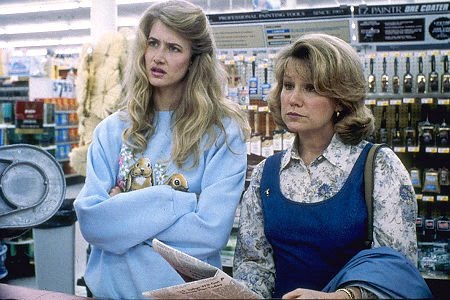

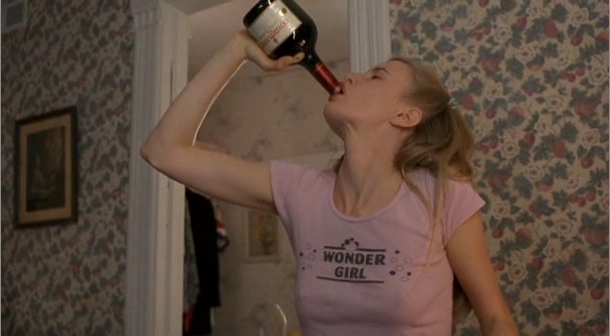

- Jim Taylor, the Other Half of Hollywood’s Top Screenwriting Team, Talks About His Work with Alexander Payne (leoadambiga.wordpress.com)
- From the Archives: Alexander Payne, an Exclusive Interview Following the Success of ‘Sideways’ (leoadambiga.wordpress.com)
- From the Archives: A Hollywood Dispatch from the set of Alexander Payne’s Sideways – A Rare, Intimate, Inside Look at Payne and His Process (leoadambiga.wordpress.com)
- Cinematographer Phedon Papamichael, Producer Jim Burke and Actress Shailene Woodley Discuss Working with Alexander Payne on ‘The Descendants’ and Kaui Hart Hemmings Comments on the Adaptation of Her Novel (leoadambiga.wordpress.com)
Related articles
- Film Streams at Five: Art Cinema Contributes to a Transformed Omaha Through Community Focus on Film and Discussion (leoadambiga.wordpress.com)
- Will Forte and Bruce Dern Confirmed for Alexander Payne’s ‘Nebraska’ (slashfilm.com)
- When Omaha Independent Filmmaking Took a New Turn or Did It? (leoadambiga.wordpress.com)
- Alexander Payne’s NEBRASKA Moving Forward with Will Forte and Bruce Dern (collider.com)
- Bob Odenkirk and Stacy Keach Join Alexander Payne’s NEBRASKA (collider.com)


 Leo Adam Biga's My Inside Stories