Archive
The Magnificent Obsession of Art Storz Jr., the Old Man and the Mansion
The late Art Storz Jr. was a strange, lovely man whose fierce devotion to his family and to their legacy as successful beer brewers, as civic leaders, as philanthropists, knew no end. He was a mass of contradictions. Generous to a fault. Shy, unassuming, and eccentric to the end. Getting him to give me an interview the first time was like pulling teeth, and then when he did what should have taken an hour or two became a marathon session of three or four hours, followed by another, before he finally got comfortable with me. The following story, which appeared in the New Horizons, was the first I wrote about him. I did a subsequent piece, which I have also posted. The mansion in the headline or title of the story offered here really was Art’s magnificent obsession. He finally did have to leave there for a nursing home, where I visited Art a few years ago. He was as sweet and squirrelly as ever. A little broken-hearted, too. He’s gone now but hardly forgotten. He will always remain one of the most unforgettable characters in my life.
Arthur C. Storz Jr. or as I knew him, Art Storz Jr.
The Magnificent Obsession of Art Storz Jr., the Old Man and the Mansion
©by Leo Adam Biga
Originally published in the New Horizons
First-time visitors to the historic Storz mansion are unsure what to make of the shy, self-effacing old man greeting them at the front door. In his ball cap, T-shirt, baggy trousers and sneakers, he might be mistaken for hired help or an overripe guest when actually he’s a reluctant heir to the Storz Brewing Co. fortune.
The 77-year-old eccentric is Art Storz. He lives austerely in the brawny, brick Farnam Street mansion that his beer baron grandfather, Gottlieb, had built in 1907. While the sole occupant of the imposing, gabled, gargoyle-adorned home on Omaha’s fabled Gold Coast, he’s never quite alone there. Not with a well of precious memories to tap. Memories of a golden bygone era that, for him, is never far away or forgotten.
Anyone familiar with his oft-troubled past must find it ironic that this one-time “heller” ended up master of the mansion after committing some highly publicized indiscretions. The most infamous episode came in 1943 when, as a U.S. Army Air Forces pilot, he guided his four-engine Flying Fortress dangerously low over a wide swath of Omaha for the thrill of “buzzing” his hometown.
During the brazen stunt, which he describes today with both sheepish regret and cockeyed pride, he used St. Cecilia Cathedral’s spires as pylons to angle the massive B-17 bomber right past the Blackstone Hotel and over the mansion. Then he repeated the maneuver. The sight and roar of a low flying bomber caused a minor panic, including a stampede of pedestrians and rash of auto pile-ups.
“Thank God nobody got hurt,” he said in a recent interview at the opulent mansion. “If I would of ever hit anything, I’d of wiped out things for blocks. I could have killed a lot of people. I think I was a good enough pilot that I didn’t have to worry about that, but it’s easy to say that now.”
Amazingly, after causing all that commotion mid-town he headed west to “buzz” the homes of an uncle and aunt. “My uncle was shaving with a straight-edge razor when I went through his backyard. He damn near became Robert “Van Gogh” Storz because he nearly clipped off his ear,” the nephew recalls impishly, adding that his aunt, who liked imbibing, was so shaken that she “was fishin’ bottles out of the chandeliers.”
The stunt got him in hot water with civilian and military officials and he was ultimately given a general court-martial. He remained in the service, but never went overseas and never rose beyond the rank of captain during a 29-year Air Force reserve career. His punishment might have been more severe if not for his late father, Arthur C. Storz, a former flier and well-connected aviation supporter.
It was a scandal the family found hard living down. There were to be others, including a divorce. Always, Storz most acutely felt the disapproval of his father, a stern family brewing chief and taskmaster. “My dad used to like to put me down because I was kind of the Peck’s Bad Boy of the family,” he said. “But I deserved to be put down. I was an embarrassment to the family – and he didn’t like it. And he didn’t let me forget it. He really was a good guy, but boy, was he tough. He’d really take it out on you if you got out of line. He had a stringent yardstick.”
Storz also lived in the shadow of his younger brother, Robert Hart Storz, an Abel to his Cain and the apple of their father’s eye. Art suffered by comparison. Where he was a self-described “rebel,” Bob was a model citizen. Where he disgraced his uniform, Bob was a decorated hero. Where he was barely tolerated at the brewery, Bob was made a top executive.
Controversy followed Art in later years too, most notably in the battle he waged in the 1980s to hold onto the mansion in the wake of foreclosure proceedings. Despite his black sheep image, he has a genuine personal stake in the Storz success story. He was, after all, the brewery’s advertising director during some of its fattest years – designing multi-media campaigns that won numerous awards, even if his father discounted them.

Inside the 27-room home today, he’s surrounded by mementos that recall an era when his family’s empire still reigned – before national brewers’ predatory pricing strategies forced the sale of the company in 1966. “It was like cutting my heart out when Storz Brewing Co. was sold,” he said, “because I’d always hoped my brother and I would get a chance to run it. I loved the brewing business.”
For three-quarters of a century Storz beer dominated the Nebraska market, flowing from taps like pure gold. At peak capacity, the firm’s north
Omaha plant employed hundreds of workers, ferrying its own fleet of refrigerated box cars and trucks. The Storz name carried enough clout to open doors and get things done.
Storz likes nothing better than immersing himself in such sweet remembrances of things past. Of rich old times at the mansion – when the family entertained on a grand scale with lavish parties, fancy balls and sumptuous feasts. When prominent industrialists, politicians, military officials and screen idols were feted there and well-trained servants manned each of its three floors. When it wasn’t just a home, but a showplace. If its walls could only talk, oh, the stories they might tell. Of back room business deals and garden romances. Of juicy gossip and heated debate. Of late nights filled with music, laughter and lively conversation.
Fortunately, Storz is around to serve as storyteller and guide, even if it comes hard for someone so shy. He’s never been comfortable being the son of industrial titans and society mavens.
“I was terribly intimidated by it all. My family left some big footprints and I’ve always been very insecure because I’ve known I was never going to walk in any of their footsteps. I just wasn’t cut out to be what they were.”
To avoid meeting people he’d make himself scarce at social functions. “It was so painful for me that I would take a powder. My brother and sister were just the opposite. They were polished and self-assured. I never had that. I just always felt very inadequate. And I still deal with that to this day.”
Yet for all his insecurity, he loves showing off the home. It’s held special meaning for him as long as he can remember. After his grandparents’ deaths, he moved there with his siblings and parents in 1939. He’s lived there continuously since the mid-’50s. His father died at home in 1978, and his mother, Margaret, lived there until shortly before her death in 1981. He helped care for his parents in their final years. Near the end, his father finally uttered the words he’d always craved: “He said, ‘Art, I love you,’ and he kissed me on the side of the face. I always knew he loved me, I’d just never heard him say it,” he emotionally recalls.

| Arthur C. Storz Sr., a World War I Airman and influential Omaha civic leader, helped developed Strategic Air Command (SAC) at Offutt Air Force Base. Storz was a charter member of the SAC Consultation Committee, serving as chair from 1963 to 1971 and Chair Emeritas from 1971 until his death in 1978.
Storz was a respected spokesperson for civil aviation and exercised leadership in expanding the Omaha Municipal Airport into the Jet Age. He helped motivate the Omaha City Council to establish the Omaha Airport Authority, serving as its first chair from 1959 to 1969 and Chair Emeritasfrom 1969 to 1978. In recognition of his dedicated efforts and accomplishments, the expressway between Eppley Airfield and the Interstate is named in his honor.
|
A promise he made to himself in 1981– to stay in the home and care for it – still drives him today. His fondness for it runs so deep that he’s risked everything to save it. He nearly lost it several times in the face of legal challenges and financial crises. His fight to retain the home even pitted him against family members. What made him persevere and pay such a steep personal price?
“It’s been a love affair,” he said. “It really is a deep feeling of love for the place and for the history of the Storz family. I doubt if any home in Omaha can even come close to it as far as its history and as far as the significant people that have been in and out of here. There’s too much history here for me to walk away…I’d go to hell for this house today. I would give up anything for it – anything. I’d even give up my life.”
Some say it is his life. When people arrive for tours, his dour demeanor visibly changes. His eyes brighten, voice lightens, posture straightens and step quickens as he swells with pride at the prospect of telling the Storz saga again. And what a saga it is. A dynasty marked by entrepreneurial spirit, philanthropic generosity, civic boosterism, visionary deeds and fabulous bashes.
Gilded memories are among the few luxuries Storz has allowed himself since renouncing his inheritance during a 1981estate dispute with his siblings. Aside from straining his relationship with his brother and sister, he said, “That wasn’t hard, because money’s never been important to me. What hurt really bad was when my kids got control of the money and tried selling me down the river.” He alludes to when his two adult children, from whom he’s now estranged, tried ousting him from the home.
Since the early ‘80s he’s subsisted almost entirely on his monthly Social Security check, a small pension and the largess of friends. He has no car and can often be found pounding the pavement many blocks from home. Except for a part-time helper, he maintains the extensive, well-manicured grounds himself. While recent hernia surgery has slowed him, his passion for the home and its vibrant history remains unabated.
Only with the help of friends has he nourished his dream for the mansion. A dream for this Omaha landmark and National Register of Historic Places designee to be preserved as a museum and lasting monument to the Storz legacy.
He has indeed made the home a kind of shrine to his family’s storied past. Throughout are displayed photos, paintings, letters, awards and assorted other memorabilia that document far-ranging activities and accomplishments.
He’s turned a basement room into “The Eagle’s Nest.” There, framed photos and newspaper clippings salute his father’s prominent role in aviation, which had its beginnings in World War I flying alongside ace Eddie Rickenbacker. Over the years, the elder Storz kept in touch with the flying fraternity and keenly followed aviation advances. As WWII dawned, he counted among his close friends such Air Force luminaries as Gen. James “Jimmy” Doolittle, Gen. Curtis LeMay and Brig. Gen. James Stewart, the late beloved actor. During the Cold War, he played a key role in selling top military brass on the idea of locating the Strategic Air Command here and he spearheaded the development of Eppley Airfield. He was awarded the military’s highest civilian honors.
Another passion of Papa Storz’s was the great outdoors, and his son has converted a basement room into a mini-“Ducklore Lodge” – the family’s beloved hunting resort near Lisco, Neb. – whose walls practically sag from the weight of so many trophy fish and fowl the old man hooked and bagged. Family brewing patriarch Gottlieb Storz built the home and two equally impressive family palaces nearby as conspicuous symbols of Storz success. Edifices to the American Dream made good. While all three homes survive, only the Farnam mansion remains in the family. Nothing was spared in its design or construction, which took three years. Much of it appears as it did in its heyday. A glaring exception is the interior’s painted-over walls and ceilings, which obscure their original quarter-sawn oak finish. Storz one day hopes to have the paint stripped and the wood restored, but that project – like others on hold – awaits needed funding.
The mansion’s Old World craftsmanship survives in leaded-glass doors, stained-glass windows, Tiffany lamps, ornately carved woodwork, mosaic tile fireplaces, exquisite murals and countless other fine details. The pale brick facade includes limestone panel carvings depicting the stuff of the brewmaster’s art – barley, hops, corn.

The third-floor ballroom, where the legendary Fred and Adele Astaire began dancing, is off-limits while awaiting renovation. The main-floor solarium is a sublime replica of the sun room aboard the famed Bremen oceanliner his grandparents sailed on. The study, music room, parlor and dining room are arranged and decorated in period detail.
Storz can offer insights about every room, antique and feature and recall anecdotes of stars (Wallace Beery, Robert Taylor, Arthur Godfrey) and dignitaries (Doolittle, LeMay) who dined there.
Those close to him agree his near obsession with the home is a Prodigal Son’s symbolic attempt to win his father’s approval. Storz himself said hopefully: “I think my father would probably say, ‘Art, you did a helluva job.’ I think he really would be proud of me.”
The demands of maintaining an elaborate old home have strained his own meager finances and those of the Storz Preservation Foundation he created in 1982. Things have gotten so tight at times that the utilities have been shut off. “I was in some terrible messes,” he recalls. “I was totally broke once, and I was petrified.” When he first took on the project, friends and family members considered it Art’s latest folly. “I felt that way, yes,” said his brother. “I felt it was too much. There was too much involved to preserve it.”
Art said he was tempted to sell the home – “to take the money and run” – rather than keep it. “The reason I wanted to run is because I was afraid I would embarrass the family name. I really couldn’t visualize managing this operation. It’s a helluva big job. I knew it was going to cost a lot of money. And I thought, ‘Where the hell is it going to come from?’”

But he stubbornly stayed on. “I never did run because the love’s too great,” he said. He takes satisfaction in the fact he eventually kept the mansion despite the many hurdles, long odds and nagging doubts. “I gave it everything I had – my heart and soul – because I love the place. I think I’ve really been tested. There were times when it felt like I’d been in the ring with Muhammad Ali. I hung in even when I was whipped.”His brother, with whom he’s grown close again, has come to respect his devotion: “I give him credit. I don’t know how he did it. I have admiration for him. He loves that house. It’s a love affair – it really is.”
Others still marvel he pulled it off: “I was afraid he was going to lose the whole shootin’ match and end up on his rear out in the cold,” said Omahan Dick Deaver, a fellow flier and lifelong friend. “I give him credit for seeing it through.”
The constant struggle did take its toll. As Art explains, “The pressure was just tremendous. That kind of stress had a disastrous effect on me. I got really depressed. I was just browbeat so bad that I didn’t even want to be around anybody. I let the place go. And I hate to even admit this, but I got suicidal.” He purchased a gun for the deed. “I was really going to knock myself off, but I never could pull the trigger,” he said. Storz, who still suffers from depression, adds, “I’d rather take a good whippin’ physically then take one that emotionally tears you into little pieces.” In the end, he couldn’t bear disgracing his family that way. Besides, he still had his mission – the home.
Retired Omaha World-Herald reporter Howard Silber, who’s known Storz for years, said, “I don’t think he’d be alive today if it weren’t for that mission and that zeal. He lives for that.”
Storz survived his darkest days with the aid of friends. “When I look back and think about the people who helped me, I just thank God I had friends like that. I’ll never forget what they did for me. And don’t think it wasn’t hard for me to accept. I feel a great debt.”
His lowest point came in 1988 when, due to delinquent property tax payments totaling more than $73,000, the home was auctioned off at a forced sheriff’s sale. It was purchased by a bidder who planned turning it into a restaurant. A judge gave Storz two years to redeem the taxes and allowed him to remain in the home. When an effort to raise the needed money failed, things looked bleak. With the deadline only weeks off, a father-son tandem of Las Vegas gambling magnates came to the rescue. The father, Jackie Gaughan, was a classmate of Storz’s at Creighton University, and when he heard his old chum was in trouble he enlisted his son Michael’s support. Once the taxes were paid and the home reclaimed, Michael Gaughan became its legal owner and Storz its chief trustee. A trust fund helps defray the property’s operating costs and taxes.
“If the Gaughans hadn’t bailed me out, I would have gone down,” said Storz. “They were my biggest benefactors.” He’s also grateful to the local media for its sympathetic coverage of his plight. “The media made me sort of like David and the people trying to knock me out like Goliath,” he said. That depiction suits him fine. “I’m a staunch competitor. I would never quit.”
Even with the home’s immediate future secured, he frets what will happen after he dies. “I’ve got 16 years here of fighting for my life and I don’t want to lose it now. Everything I’ve done has come from my heart. When I’m gone I hope somebody says, ‘Well, he’s carried it far enough – it should be kept intact.’”
Related Articles
- Great dynasties of the world: The Bushes (guardian.co.uk)
- Time-warp mansion opens after century in dark (cnn.com)
- Gothic Mansion in London Reopens (intransit.blogs.nytimes.com)
- Is tony montana’s mansion a real mansion (wiki.answers.com)
Fight Girl Autumn Anderson
I have to admit that when I saw an article about a female boxer in Omaha it was her picture, a provocative image of an attractive young woman, more than her story that enticed me to want to meet her and profile her for a local paper. When I met her at the gym she trains at she turned out to be every bit as good looking as that picture suggested but she was not at all stuck on herself or her good looks. Instead, I found a hard working athlete and U.S. Army Reservist who is dedicated to her sport and to her military commitment, and someone who has some high level goals she wants to achieve. She’s very much aware of how people perceive her and she’s quite smart about how she deals with all that. My story about her originally appeared in the Omaha City Weekly (www.omahacityweekly.com), a now defunct newspaper.
Fight Girl
©by Leo Adam Biga
Originally published in the City Weekly (www.omahacityweekly.com)
By rights, Autumn Anderson shouldn’t be boxing. Even ignoring the propriety of women duking it out, she doesn’t fit the fight girl profile. Not this bumble gum Reese Witherspoonesque blond whose self-described “girly-girl” good looks earn her modeling gigs. In nothing more revealing than a bikini in case you’re wondering.
Still, the 22-year-old Omahan looks more like the ring card girl than the main event fighter. More soft and feminine than chiseled bad ass.
“Every time, it works to my advantage,” she said, “especially with the black and Hispanic girls because they’re like, ‘White girl, huh — oh, she thinks she’s tough?’”
On close inspection Anderson’s hard, compact body is anything but delicate. Her 15-9 record backs up her ability to handle herself inside the ropes. Still, why risk such a pretty face in the ring? She’s heard it all before from her parents.
Her answer explains why she got into boxing to begin with.
“I kind of wanted to prove to people females could do anything they put their minds to,” said Anderson, who took up the sport at 16, “because a lot of males especially doubt women and their abilities, especially physical abilities.”
A one-time competitive swimmer and runner, she craved “something with contact” — that challenged her toughness on a more instinctual level.
“I wanted to do a more individual sport. Something more aggressive,” she said.
Her commitment to boxing’s been tested by the only two long-term boyfriends she’s had and the only prolonged layoff she’s taken from boxing.
“It’s always my boyfriends being like,“‘Why do you box?’ Blah-blah-blah. My first one convinced me not to. I’d go to the gym, there’d be all guys, and so it’d make him insecure. It made me not want to go because it made him uncomfortable. Then we broke up and then I got back into it like hardcore.”
She said there’s no reason a man should feel threatened by what she does. “When I go to the gym I dress like a guy. I don’t wear short-shorts or tank tops to show off anything. I wear bandanas. I don’t let my hair down. I’m here for business. I’m not here to like pick-up guys or to be distracting. I’m more like a tomboy.”
Anyone who’s a drag on her dreams, which include Olympic glory, she cuts loose, with the exception of her folks, who’ve since come around to support her.
“Everything’s a life-learning experience, especially when you have opportunities and somebody’s holding you back and they don’t support you,” she said. “You just have to let them realize you’re going to follow your dreams and nothing’s going to stop you. I’m pretty stubborn. If somebody feels I can’t do something, I have to prove them wrong.”

Despite proving doubters wrong boxing still seems an unlikely choice. Besides her cover girl puss there’s her background, which reads more Girl-Next-Door idyll than Girl-from-Ghetto trial.
Raised by a single mom, she’s technically from a broken home, but it’s not like she grew up scratching and clawing her way out of the projects. No, she grew up in the burbs of Kansas City, Mo. and Baltimore, Md. She says almost apologetically that she’s never been in a fight outside the ring.
She’s been on her own since age 16, first in Nebraska City, where she lived with an older sister, later with friends, and then in Omaha. Her first boxing mentor was a crusty old coach in Sidney, Iowa. Then she was taken by the late Kenny Wingo at the famed Downtown Boxing Club here.
Whatever gym she landed in it was always the same — show us you belong.
“That’s what they always do with a new girl,” she said. “They want you to get in the ring and spar and see if you have any heart. See if you’ll last. If you get your butt kicked once, are you going to quit. So, I’ve gotten beat-up a couple times, and I kept coming. I just fell in love with the sport.”
Her ringworthy rite-of-passage was more difficult than most.
“I definitely didn’t grow up fighting people in the streets, which is different than a lot of boxers. I had to learn to be mean. I had to learn to be aggressive.”
Hitting girls in the face didn’t come naturally for Anderson, who was into ballet and modeling from a young age. She’s always been athletic, but before boxing the most physical things she’d done were dancing, running and swimming.
When that guy she later dumped got her to hang up her gloves for a whole year, she ran cross country and track at William Penn College (Iowa). But, she said, “something was missing in my life. I was like, ‘Man, this is boring,’ I came back to boxing.” Not exactly a classic path to the Sweet Science. That’s not all that defies expectations about her. Anderson’s a full-time college student majoring in real estate and economics at the University of Nebraska at Omaha. She’s intent on getting her master’s in business administration.
She’s also a sergeant in the U.S. Army Reserves. This Motor Transportation Operator in the 443rd Transportation Company in Omaha does her battle assembly drills and training on weekends. She does her amateur fighting thing both inside and outside the confines of the Army, which has made her a poster girl.

The goarmy.com web site profiles Anderson’s multi-faceted life as reservist, student, boxer and young woman-going-places. She looks fetching in a portrait shot with an American flag backdrop. She stands tall, all 5-foot-5 of her, wearing a red tank top, her arms folded across her chest, her long blond hair framing her determined face and her gloves fecklessly slung over one shoulder. It’s a strong, sexy, confident, patriotic image.
Other photos show her in her Army fatigues and dress blues. She said snippets from the promo can be seen in GoArmy television spots. She felt like a pampered star when last July the Army sent a large production crew to the house she shares. “It took two days, about 12 hours each day. They did my hair and makeup,” she said.
“It’s a cool story for people who are interested in the Army,” she said.
Portraying her as a warrior is not a stretch. Not when you see her throw some leather in the ring. She can bring it. She’s tough enough to own the nation’s No. 5 women’s amateur ranking at 132 pounds. That ranking’s significance is debatable given the few women in the sport. But watch her spar and it’s clear she packs some power and possesses more than rudimentary skills. She has serious intent.
When not competing in Army tournaments she trains at the Northside Boxing Club in northwest Omaha. It’s an apt setting, given that the gym operates from one of the low-slung concrete block structures, Building 203, that housed elements of a former U.S. Air Force radar base. These days the multi-acre fenced-in compound at 11000 North 72nd Street belongs to construction Local Labor Union 1140.
While in training she’s at the gym five times a week. She’s now preparing for the August 4-9 Ringside World Amateur Boxing Championships in K.C., a signature event for a young woman with high aspirations.
My dream is to be a national champion and to fight in the Olympics,” she said.
Turning pro is another goal. Laila Ali has shown that talent and looks in the ring can lead to fame and fortune. But Anderson wants that trophy or medal first.
A national title may soon be within her reach. The Olympics will have to wait as its international governing body has not sanctioned women’s boxing. She hopes girl fighters like herself get their chance at the 2012 summer games.

Female boxing’s a fringe thing. Women’s Golden Gloves is still in its infancy. The small number who compete makes it difficult finding matches. Anderson’s fought one girl five times. To get action she must often travel. One of her last Nebraska fights stole the show on a 2007 Melee at InPlay card.
Sparse local/regional competition makes any national or international boxing event that much more important to her ambitions of being a title holder. Actually, she already owns one. She won the 2007 Armed Services Championships’ 132-pound division at Lackland Air Force Base in Texas. But she acknowledges she didn’t have the stiffest draw and captured the title on the basis of only two wins, both against fellow servicewomen. No, the championship she really wants is a civilian one, in an open tourney like Ringside that features more top drawer talent.
Her coaches, led by former Omaha amateur boxer Tim Pilant, had high hopes for her in the National Women’s Golden Gloves tourney earlier this year but she got sick and didn’t make the trip. Two years before Anderson stopped one opponent at these same nationals before dropping a 5-0 decision in her second bout.
Pilant, who runs the Northside Boxing Club with a crew of grizzled ring veterans, “adopted” Anderson three years ago at a national tourney in Colorado Springs when she didn’t have anyone working her corner. Her original coaches and boxing father figures had both died and she was competing on her own. Pilant cornered her and invited her to train at Northside back home. She’s been there ever since.
He admires her “commitment” and “dedication.”
To date, Anderson’s been stymied at the highest levels by two women who’ve dominated her weight class — Naquana Smalls and Carrie Barry. Smalls has since retired, leaving Barry as the foe Anderson must go through to realize her dream.
Preparing for her first nationals in 2003 Anderson saw a picture of Smalls, already a legend, and was, well, intimidated. “I remember looking at her face in the brochure and going, ‘Man, I hope I don’t fight that girl right away.’ She did. In the mismatch Smalls stopped her. She fared better with Barry but still lost a unanimous decision.
One day Anderson wants to be the woman nobody wants to face.
“That’s exactly right. I’ve actually built myself up that way. All you have to do is work towards it and it can be you. You just have to tell yourself it’s going to be you,” she said.
She may not ever be a Million Dollar Baby but her looks and her smarts, combined with her heart, should help her go the distance.
Related Articles
- NZ’s top women’s boxer could get world title fight (3news.co.nz)
- Sara Kuhn: Ready for her pro debut on September 11 (timesunion.com)
- Coloradans stand up and fight (denverpost.com)
- Canceled FX Boxing Show, ‘Lights Out,’ May Still Springboard Omahan Holt McCallany’s Career (leoadambiga.wordpress.com)
- Laila Ali Welcomes Second Child (bleacherreport.com)
- The Pit Boxing Club is an Old-School Throwback to Boxing Gyms of Yesteryear (leoadambiga.wordpress.com)
Lauro play “A Piece of My Heart” dramatizes role of women in war zones

Image by cliff1066™ via Flickr
This is a story I did about a play whose subject matter brought me into contact with some women who fulfilled various capacities during wartime service, whether as nurses or USO performers. The women I interviewed are sort of the real-life equivalents of some of the characters in the play.
The story originally appeared in The Reader (www.thereader.com), and I hope you find the words of the women, fictional and nonfictional alike, as gripping as I did.
Lauro play “A Piece of My Heart” dramatizes role of women in war zones
©by Leo Adam Biga
Originally appeared in The Reader (www.thereader.com)
As U.S. military action in Iraq unfolds, old war stories take on new capital. With women now on the front lines, their wartime roles gain added import. While their presence on the battlefield is new, American women have participated on the sidelines of war — as nurses, clerks, reporters, missionaries, performers — for generations, only their legacy seems lost in the heat of combat.
But since the 1993 dedication of the Vietnam Women’s Memorial in Washington D.C., a bronze sculpture by artist Glenna Goodacre of three fatigue-wearing females comforting an injured soldier, women have begun writing and talking about their wartime service as never before, the fruits of which can be seen in the acclaimed play, A Piece of My Heart, running now through April 27 at the Blue Barn Theatre.
Playwright Shirley Lauro based the characters of her impressionistic drama on interviews with real-life veterans, including those profiled in a book of the same name by Keith Walker. Lauro uses fast-moving vignettes to tell the larger story of American women in Vietnam. The six women characters represent varied backgrounds, roles and attitudes. There are military nurses, from stalwart Martha to sweet young Sissy to flower child Leeann. There’s the aristocratic Red Cross “donut dolly” Whitney. There’s the hard-ass intelligence officer Steele. And the playful, soulful USO trouper MaryJo. Whether sewing sutures, spreading cheer or performing on stage, they are angels of mercy for soldiers trapped in a hellish quagmire.
The women cope with laughter, tears, booze, pot. Some erect “the wall.” Others fool around. The nurses regret not knowing what happens to the boys whose bodies they patch up and spirits they boost. They fear no matter how many lives they save or how many smiles they elicit, they never do enough. Then, when their wartime service is over, they return home as forgotten as their G.I. brothers, wanting to put the war behind them but finding they can’t.

Even though each character tells her own story, they really all speak in one voice about the shared female experience of being thrust into the surreal, carnage of war. Regardless of where they hailed from or did their tour or what job they held or beliefs they espoused, they were all volunteers who elected to go there.
“The common ground we had, which is why I felt so strongly about honoring these women, was that not a single one of us had to be there,” said Diane Carlson Evans, a veteran in-country Army nurse who spearheaded the creation of the women’s memorial. “We were not drafted. We were not conscripted. Nobody put a gun to our head and said, Go to Vietnam and do your duty. We could have stayed home, got our master’s degree, had our kids, played golf and tennis and had a good life. But every one of us — Red Cross, military, USO — said, I want to do my part, and did during a very unpopular war. We didn’t have a lot of support from home, from peers or from our country…We just thought it was the right thing to do.”
Evans, who made remarks before the Blue Barn’s April 5 show, used her appearance to givr tribute to “the diverse contributions women made” in the war. “I am proud of the women I worked with and how hard I saw them work and how they asked for nothing in return. It was always, Do I need to give blood? Or, Can I work an extra shift? It was that always going above and beyond and never complaining because we had a job to do. I saw how these women saved lives at the risk of their own. And I just believe so strongly they deserve credit from a grateful nation. A grateful nation that needs to acknowledge they participated in a really extraordinary way.”
The story of women’s wartime service is, for many of us, unknown. “I’m just so glad this story’s being told because I lived through Vietnam and I didn’t hear nothing about the nurses…not a thing,” said Omaha actress Phyllis Mitchell-Butler, who portrays Steele. “The nurses went through as much as any of the soldiers. They saw the devastation first-hand. I’m just amazed how long they kept themselves together with all that inside them. All they had was what was inside and they had to keep that. They couldn’t let it go.”
In her role as state commander of the Nebraska Council of Vietnam Veterans of America, Dottie Barickman, who served at Offutt Air Force Base in the Vietnam era, has come to appreciate what women did in that war.
“I’ve never walked in their shoes, but I’ve heard their stories and I understand what they mean when they say they sacrificed their youth and their emotions. They were the nurturing ones for a lot of young boys hurting over there. Combat soldiers always mention to me that if they ever saw a nurse it was like Welcome Home, and that is what these women were…a touch of home that took them away from that war zone for a few hours.”
The stories in A Piece of My Heart echo those of thousands of women that served in Nam or nearby environs. Diane Carlson Evans is one of them.
“I was 21…right out of college…and I was assigned first to the 36th Evacuation Hospital in a beautiful place (Vung Tau) right on the South China Sea beach. I didn’t feel the war there as much as I did when I was transferred up north…to Pleiku, in the central highlands jungle near the Cambodian border,” Evans said. “I was with Two Corps supporting the 4th Infantry Division (in the 71st Evacuation Hospital).
“The war was very different there. It was the spring of ‘69…a pretty bad time. The 4th Infantry had something like a 75 percent casualty rate. I was made head nurse in a post-surgical unit where the patients were very sick. We had them on respirators and blood transfusions and chest tubes. It was very hard to see so many young men with such horrific wounds. We had to deal with patients dying on us and, in triage, we had to deal with setting aside dying patients to attend to the most salvageable ones. We blamed ourselves. We carried the guilt. And we were young…and so on our little time off we filled our days in human ways, whether it was playing volleyball or getting drunk or doing drugs or going on dates or falling in love.”

Playwright Shirley Lauro
In addition to the stress of dealing with crushing trauma patient loads, the threat of death was ever near. “Pleiku was not a safe area. We were under attack many times. We got to know the difference between the outgoing artillery and the incoming rockets and mortars that would fly in and hit our hospital, sending shrapnel everywhere. We were not only worrying about our patients — we had concern for our own safety,” said Evans, a Helena, Montana resident.
Since getting the Vietnam women’s memorial installed, Evans, whose efforts to make it a reality took 10 years, has become THE champion for female volunteers in that conflict, focusing her efforts on “encouraging women who served to share their stories…so we can understand what the memorial is all about.”
She helped start a storytelling program at the memorial site and on the web that invites women to speak their piece. She said telling it like it was is “very painful. It takes a lot of courage for women to admit how scared they were some young soldier was going to die on their watch or how they were so tired they could have made a mistake or how they were sexually assaulted or harassed. All of this anger and anguish comes out in the play.”
An admirer of the Lauro work, which had its debut in Philadelphia and has been performed across the country, Evans feels it gets to the heart of women’s Vietnam odyssey. “It does not show our service through rose-colored glasses — that we were all these heroic young women who went off to save the world and wore white halos — but instead it shows we were young women who went to Vietnam and did the very best we could amid all this crazy stuff going on. That’s what makes it very real, very authentic.”
As the war in Iraq rages on the director of the Blue Barn show, Susan Clement-Toberer, feels the conflict lends the play added urgency.
“Knowing that it’s happening now it brings it all very close and deepens everything we’re doing,” she said. “It’s real, just like the stories of these women are all real…taken from a myriad of interviews with different women.”
Cast member Erika Hall, who plays the USO entertainer, said, “You know, before it was important to do this piece, and now like it’s necessary.” Most of the cast and crew are too young to remember the war and therefore have immersed themselves in it via books, articles and tapes and by talking to actual veterans.
“What an interesting learning experience this is for me,” Hall said. “I was born after Vietnam and, you know, you read about it in school but you don’t really understand what they (vets) went through.” In her own research Clement-Toberer said she was surprised to learn “the extremes the women survived. I knew Vietnam was a dirty war, but I just didn’t realize they (the women) saw such extremes so quickly. I understand now why these women went and what they mean by honor…they believed in their country. It’s just a very strong feeling in what is right and what is true and what needs to be told.”
The characters have real-life counterparts in Nebraska. Lincolnite Judy Knopp, a former Army nurse at Camp Zama, Japan, treated G.I.s choppered in from Vietnam; Martel native and longtime Lincoln resident Brenda Allacher toured Nam as a member of the all-girl country-western band The Taylor Sisters; and Marie Menke of Superior, Neb. was a fellow Army nurse with Diane Evans at the 36th evac in Vung Tau, regarded as an in-country R & R site except for the grueling recovery and care that went on there. For vets like these, Vietnam seared into their memories and hearts the best and worst of humanity.
“I joined the Army nurse corps and in six weeks did my basic training at Fort Sam Houston and went straight to Japan…Camp Zama, 35 minutes southeast of Tokyo and an hour by chopper from Saigon. I was charge nurse in the orthopedic ward of a 1,000 bed hospital,” Knopp said. “Back then, we had to make our own IVs and pump our own blood and everything. After the Tet Offensive we were working 12 hour shifts, seven days a week. They used to call us the zombie squad. We didn’t even eat. We went home and slept…then came back. We’d have 30 to 40 evacs a day…20 to 30 surgeries a day, just on my ward. One-half of our cases were dirty wounds…shrapnel wounds or single and multiple amputees. Guys with half their faces blown off. One young man I especially remember…Billy. He was 18. He’d stepped on a land mine and everything was gone from the belly button on down. He was unconscious. We were pumping him full of blood. You wanted to save him but…you wanted him to go, too, because there was no way he could live.
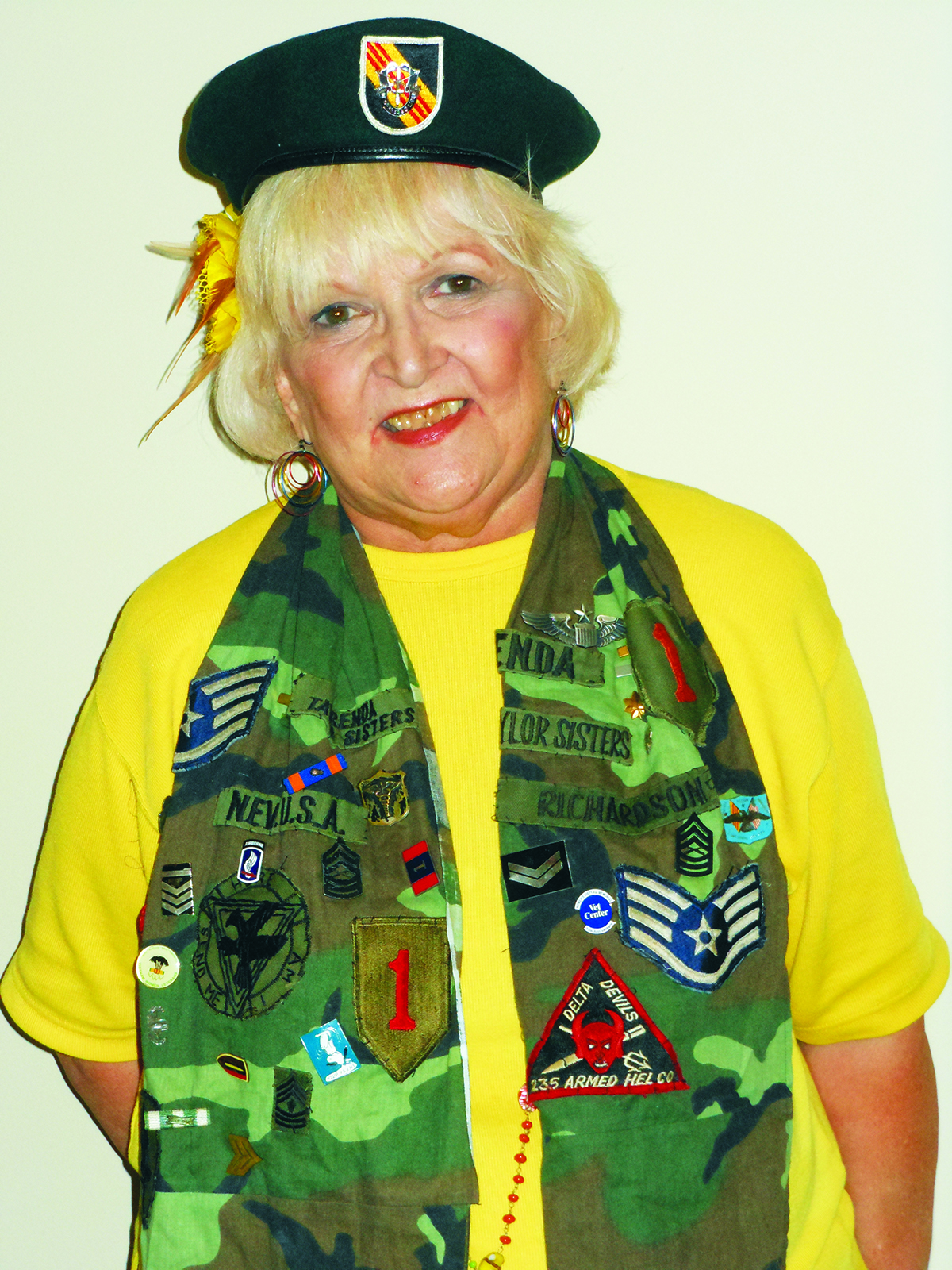
Brenda Allacher
“The guys, they were so young. They used to call me grandma and I was 22. They were all like little brothers. We used to stay up with the guys at night who were crying over having killed women and children. They had a real hard time dealing with what went on over there and the stuff they had to do to survive. A lot of ‘em came back injured and a lot of ‘em we never saw again. We never knew what happened to ‘em. The ones going back to the states we’d iron their uniforms, sew on their patches and go to the chopper to kiss ‘em goodbye. I have very fond memories of the guys and just atrocious memories of the wounds.”
She still regrets how, when her ward was busy, “there was no time for dignity with death…to get patients prepared and stay with ‘em and see ‘em through it. It was like, OK, this one’s dead, clean out the bed…there’s another one coming in.”
A Piece of My Heart cast members marvel at what women like Knopp endured at such a tender age. “They all have stories of their first day…just like in the play where my character takes off a soldier’s boot and his severed foot is in it,” Christine Schwery said. “They were so fragile and so young and yet they survived,” Julie Huff said. “With a lot of alcohol and a lot of drugs,” Schwery chimed in. “Yeah, but they survived and they saved a lot of lives,” Huff added.
Riverdale, Neb. native Marie Menke, then Daake, was a 22-year-old nursing school grad when she got to Nam. Nothing could prepare her for what she saw:
“I was pretty naive about the war. It was very shocking to most of us to see the kinds of wounds and the tragic loss of life,” she said. “It just shouldn’t be. My thoughts about the war didn’t matter because we were there and people were getting hurt and we had an enormous job to do. We were tremendously needed. It was beyond comprehension almost. The nurses did do a lot but most of us downplayed it. We were just there to do our job and to take care of patients and to support them.”
Besides caring for American G.I.s, nurses treated Vietmanese, including children.
An estimated 265,000 American women service in support of the war. U.S. Army estimates place the number in-country between 10,000 and 12,000. Most were nurses, either Army or Marine enlistees or even civilians attached to field hospitals or more rear echelon units. American Red Cross volunteers were so-called “donut dollies” — a sort of comfort girl corps boosting morale with their short-skirts, smiles and care packages. Others were entertainers touring under the auspices of the USO or, like Brenda Allacher, as contract entertainers via private booking agencies that provided minimal security and scant creature comforts.

Blue Barn Theatre’s Susan Clement Toberer
Allacher, then known by her stage name Brenda Allen, got to see a lot of Nam during her three-and-half month tour in ‘69. She has bittersweet memories of her time in Chu Lai, a central coastal area manned by the Americal Division:
“That was one of our favorite places because we had privacy taking a shower. I remember the commanding officer, ‘Big Daddy’ Richardson, said, ‘I’m going to work your butts off, but when you come back at night your favorite food and drink will be sitting in front of you.’ And it was, too. Lobster and blackberry brandy and Cutty Sark scotch. We’d do five and six shows a day for that man,” she said. “The men, they just wouldn’t let us quit and we weren’t about to leave those boys. The guys were just absolutely beautiful. They called me ‘Crazy Legs’…I’d do wild dancing and kick my legs up. They just went bonkers.
“We’d come back exhausted. One night, we’d come back from a show and a few of us were in the officers club drinking when there was a loud CLAP and the building just shook. A G. grabbed me and threw me down under the bar.” It was the start of a prolonged mortar attack. “We took 16 rounds over a period of four or five hours. We just laid there on the floor and got drunk. I was so scared. Around daylight a young man came running in, shouting, ‘They got a nurse at the 312 Surg-Evac,’ which was like a block away.”
The victim, 1st Lt. army nurse Sharon Ann Lane of Canton, Ohio, was the first Army nurse to die under hostile fire in Southeast Asia and one of 68 American women in all — military and civilian — to die in the conflict. The incident shook Allacher to her core.
“What really gets me is it very easily could have been me, and not her.” she said. She recalls happier times there, too, like when the Taylor Sisters did an impromptu show for Nebraska National Guard troops, leading off with “There’s No Place Like Nebraska.” “The tin roof went off on that quonset hut. They just went nuts.” Or when she was secreted away to give a private performance for some special ops forces who, upon her finishing, “lined up and saluted me” she said tearfully. “As I was walking out, the commanding officer placed his Green Beret on my head.” She still has it. “I wouldn’t trade those experiences for anything.”
Allacher and Knopp have made the recognition of women’s work in Vietnam a personal mission. Together eith Evans they are featured in a NETV documentary, Not On the Frontline, that follows their story from the wartime service they rendered to the emotional “culmination” of seeing the women’s memorial dedicated, something Knopp worked for as state coordinator of the project. More recently, Allacher, who describes herself as “a straight shooter…full of piss and vinegar,” was instrumental in bringing A Piece of My Heart to the attention of local theaters. She and her big booming laugh have become fixtures at the Blue Barn.
For Allacher, Knopp and Evans, the stories told in the play and documentary are part of the healing that’s taken place after the war. Acceptance of women’s service has come slowly, even as they have died alongside their veteran brothers from Agent Orange-related illnesses and have suffered from post-traumatic stress disorder.
Evans said there was once resistance to honoring women’s war record because “I don’t think people wanted to look at women as warriors — as soldiers. But women are soldiers, too. We fought just as hard as the men. We just fought with different instruments.” Or, as Judy Knopp puts it, “The guys were on the physical front lines, but we were on the psychological front lines trying to hold it all together. And we did it with a loving heart.”
Related Articles
- Woman who says she was nurse from WWII photo dies (dailycaller.com)
- Honouring nurses (bbc.co.uk)
- What did many American Women hold jobs as (wiki.answers.com)
- Walking Behind to Freedom, A Musical Theater Examination of Race (leoadambiga.wordpress.com)
Three old wise men of journalism – Hlavacek, Michaels and Desfor – recall their foreign correspondent careers and reflect on the world today

Image via Wikipedia
As a kid I watched John Hlavacek on a local network television affiliate’s newscasts and documentaries, and as a young man I was aware of him serving on the Omaha City Council, and operating his own travel agency. I vaguely knew that he had been a foreign correspondent. It was only a few years ago though that I met him for the first time and got to know more of his story. He and his late wife Pegge were both reporters in the Golden Age of American journalism. Their life stories of living and working around the world are as amazing as those of the historical events and figures they covered. In the last few years John has had published several books authored by himself and Pegge that recount their adventures. I have also posted the story I wrote about John and Pegge and their adventures, but the following piece is about John and two old reporter friends of his from back in the day. The three men hadn’t seen each other in decades until John arranged for their meeting in Omaha for a panel discussion. I covered the event and wrote this story for The Reader (www.thereader.com).
Three old wise men of journalism – Hlavacek, Michaels and Desfor – recall their foreign correspondent careers and reflect on the world today
©by Leo Adam Biga
Originally appeared in The Reader (www.thereader.com)
They were three young lions of American journalism when they met far from home, a long time ago. John Hlavacek of Carleton College (Minn.) and Jim Michaels of Harvard were green United Press foreign correspondents based in post-World War II India. In wartime Hlavacek trucked medical supplies over the Burma Road for the International Red Cross. Michaels drove an American Field Service ambulance. Each was imprisoned there: Hlavacek for days; Michaels for months. New Yorker Max Desfor covered the war in the South Pacific as an Associated Press photographer.
The paths of these three men crossed in 1946, when their lives-careers intersected with India’s historic bid for independence from British colonial rule. Last spring, they came together for the first time in 60 years with the publication of a book, United Press Invades India, by Hlavacek, an Omaha resident who invited his colleagues to participate in public forums about their intrepid reporting days. The men shared stories and observations during two panel discussions in Omaha.
After being out of touch all that time Hlavacek began the process of reestablishing contact with his old colleagues while working on his memoir. Facts needed checking and where Hlavacek’s memory faltered, he relied on Desfor and Michaels to fill in the blanks. By the time the book was completed, Hlavacek suggested he and his comrades reunite. The men still correspond today.
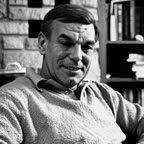
John Hlavacek
The book that helped bring the old colleagues together was Hlavacek’s second volume of memoirs based on his overseas adventures in India and China, where he taught English in an American mission school in Fenyang as part of the Carleton in China exchange program. Hlavacek now has a third volume of memoirs out, Freelancing in Paradise, that recounts the years he and his wife Pegge, a fellow journalist he met and married in India, filed stories from the Caribbean for national media outlets. He’s also published two books authored by Pegge about her own far flung news career and the couple’s remarkable feat of raising five children while working in India, New York, Jamaica and Omaha.
For Hlavacek and Michaels, now in their late 80s, India began long, distinguished careers in journalism. As bureau chief in Bombay, Hlavacek built up UP’s presence there and under his aegis the news service proved a formidable rival to their bitter rival, the AP. He won what’s now called the Edward R. Murrow Fellowship for study at Columbia University, he covered the Caribbean and after moving with his family in the early 1960s to Omaha, where he was a television news correspondent/commentator, he filed a series of reports from Vietnam on area residents serving in the war.
Michaels got the scoop of a lifetime when he broke the story of Mahatma Gandhi’s assassination in 1948. He joined Forbes Magazine in 1954, was made editor in 1961, a post he held until 1999. He’s credited with turning Forbes into one of the world’s most read financial pubs. A VP today, he can be seen Sundays on Forbes On Fox.
Before India, Desfor already made memorable images: of the Enola Gay crew upon their return from the mission that dropped the atom bomb on Hiroshima; and of the Japanese surrender to the allies on the USS Missouri. Soon after his arrival in India in 1946, he snapped a famous picture of Gandhi and India’s first prime minister, Jawaharlal Nehru, in an unguarded moment of friendship. “You see the interchange, the compatibility, the simpatico. It’s just an enormous moment,” he said. The iconic pic was used as the basis for a popular Indian postage stamp.
Desfor won a Pulitzer Prize for news photos for his work in the Korean War. In all, he shot five wars, many conflicts and much civil strife. He later served as an AP photo executive/editor before retiring in 1979. That same year though he joined US News and World Report as director of photos. He made his 1984 retirement permanent, but he’s till snapping pics, only now with a digital camera. He’s 93.

Max Desfor posed in front of picture taken of himself during the Korean War
These young lions turned wise old men of journalism reunited for panel discussions in Omaha in 2006. They took to their role as pundits well. They spoke about the momentous events they reported on, the way the news biz has changed and how the India and China of today differ from the developing nations they knew then.
Hlavacek said the troika may be the only surviving American journalists to have met Gandhi. While his colleagues minimize Gandhi’s ultimate influence, Desfor said “he had a moral effect” of lasting import. Michaels said by the end Gandhi was “almost irrelevant” for opposing “industrialization or modernity. Had Gandhi lived, he said, “he would have been loved but nobody would have paid attention to his views.”
The ascetic led a huge movement yet was quite approachable. Unlike today’s restrictive climate, the press had unfettered access to major public figures then.
“A journalist’s access to events in those days was so much more intimate than it is today,” Michaels said. “Gandhi was a world figure, yet he had these prayer meetings when he was in Delhi that the public could come to. If you got there early you could sit right up in front and ask him questions. Or, as John (Hlavacek) did, you could go right up to him and ask for an interview. Today, you wouldn’t be able to get through the masses of hired guards, spin meisters, the whole lot.”
“Once, I wanted to interview the number two man in the cabinet of Independent India, Vallabhbhai Patel, a very important figure in Indian independence,” Michaels said. “So, I drove up in my little car to his place, knocked on the door, a servant answers and says, ‘What do you want?’ I say, ‘I’m from the United Press of America — I’d like to interview Vallabhbhai Patel’ He says, ‘Wait a minute,’ takes my card and five minutes later ushers me into the garden, where Patel and I had tea together and I had an interview. That kind of immediacy today simply does not exist.”
When Hlavacek wanted to interview Mohammed Ali Jinnah, a Muslim leader in the free India movement, he simply stopped by his flat. He had similar access to presidents (Nehru, Indira Gandhi), religious leaders (the Dalai Lama), royalty (Aga Kahn) and dictators (Juan Peron of Argentina, Zaldivar Batista of Cuba).
“There are many great stories I had the opportunity to cover,” Hlavacek said. “It was interesting. I had a lot of fun. I had a lot of worries from time to time, too. And you were always in competition. You were always trying to beat someone.”
“It was a wonderful era for being a correspondent,” said Desfor, who with his Speed Graphic made pictures of great personalities that “will live forever in history books. This is what gives me such great pleasure,” he said.
When Michaels arrived at the scene of the estate where Gandhi lay fatally shot, he was among the first there. The grounds were open and he could move freely about to ask questions and make observations. After sending off his first dispatches at a nearby cable office, he returned to find the area cordoned-off by police and a large group of reporters and peasants gathered outside the closed and guarded front gates. The reporters there earlier with him were now inside.
“I thought, Oh, my God, I’m going to get beat on this story. I better do something,” Michaels said. “So I went around the back. I knew the area pretty well. And I climbed through the hedges and, wow, staring me right in the face was an Indian constable. I desperately searched in my wallet for my old Geneva card, which I carried as an ambulance driver during the second world war. I flashed this card, which was very impressive, and he said, ‘OK, sahab.’ So I got in. I saw as they brought Gandhi’s body out on the balcony for the people to see. I saw a famous woman photographer (and correspondent) for Life Magazine, Margaret Bourke-White, thrown out physically when she refused to stop taking pictures.
“I saw all these great Indian leaders sitting around crying. I witnessed Nehru, the first prime minister of India, get up on the wall with tears streaming down his face declaring, ‘The father of our country is dead.’ I witnessed all these scenes.”
The phalanx of competing news groups was far smaller then, too, compared to the unwieldy mobs that descend on news events today.
“The independence of India was one of the great events of the century. It was huge news. Yet it was covered by less than 100 journalists,” Michaels said. “When Hong Kong became independent less than a decade ago, there were 8,000 journalists covering it and the ones that got there had to cover it by watching it on TV. Today, everything is staged. Access to events is tightly controlled.”
In the process, Michaels said, “something is lost between what you read and what happens. The whole nature of the profession has changed — I don’t think necessarily for the better. The news business today belongs more to presenters.” “You have to be an actor,” Hlavacek interjected.” “You have to be a performer,” Michaels agreed, “and what you get is filtered through these presenters.”
Another major difference between then and now is the rate at which news is disseminated. Filing stories from the field in Third World nations once meant getting the news out via mail or cable or teletype, all of which took time. Sometimes just getting from a news event to a dispatch office could take hours of travel. Now, stories can be filed from the most remote or dangerous regions, even war zones, almost instantaneously due to satellite phone lines and the Internet.
“The speed of communication is what’s really changed,” said Hlavacek, who adds “the 24-hour circuit” of news coverage puts hard copy newspapers in a tough spot. “You used to break a story in a special edition. It’s too late now.” Michaels believes the ever growing online info world “is killing newspapers.” To those who worry a point-and-click universe prevents analysis, Hlavacek said, “No, it doesn’t, but this is spot news and it never did. Analysis can come later.” He marvels at “the emergence of the Internet” and is encouraged that “there’s so much information out there. I don’t think you can control it. At least I don’t see that you can.”
The dynamic economies and rising technocracies of India and China have caught the men’s notice. Michaels often goes back to India, where he’s interviewed current prime minister Manmohan Singh. Michaels said India’s ascendancy “is one of the great unheralded revolutions of our time.” He said the planned socialist state under Nehru and his successors resulted in an India that “stagnated from the time of independence right through 1989.” Michaels, who calls Singh “a very impressive man,” credits him with engineering “a revolution from the top” that urged Indian leadership to abandon the old system in favor of “a free enterprise model.” The result, he said, is a “booming” economy. While India prospers, its caste system’s inequities still pervade the society, said Hlavacek, who’s also been back. The India-Pakistan divide, they agree, is one born of religious-political differences.
Last fall Hlavacek visited the mission school in Fenyang, China he taught at under Japanese occupation. On his 10-day China trip he was most impressed by all “the change,” he said. “That’s the difference.” He said while China is still “ostensibly a Communist country, they’re the greatest capitalists in the world.” “They call themselves Communists,” said Michaels, who’s been there, “but everybody winks and nobody really believes that.” The journalists believe China and India will grow as trading partners with each other and with the U.S. as their economies continue to grow. As the world changes at an ever faster rate, Hlavacek said journalism remains “a higher calling.”
For three old men, a lifetime of curiosity has not waned. The world is still their oyster. The news, their metier.
Related Articles
- Journalism veteran Daniel Schorr dies at 93 (cbc.ca)
- ‘Great Soul’: Joseph Lelyveld tells Mahatma Gandhi’s larger-than-life story (seattletimes.nwsource.com)
- Jesuit Photojournalist Don Doll of Creighton University Documents the Global Human Condition One Person, One Image at a Time (leoadambiga.wordpress.com)
- Omaha Address by Cuban Archbishop Jaime Ortega Sounds Hopeful Message that Repression in Cuba is Lifting (leoadambiga.wordpress.com)
- Returning To Society: New community collaboration, research and federal funding fight to hold the costs of criminal recidivism down (leoadambiga.wordpress.com)
The Two Wars of Ben Kuroki

Image via Wikipedia
Somewhere I read something about an old World War II U.S. military veteran receiving an award. The fact that his surname was Japanese caught my attention. When I looked into his story, it became readily apparent his wartime record was nothing short of extraordinary if for no other reason than the overwhelming barriers he had to navigate just to get into the service and then to see action. Ben Kuroki has been much honored in his lifetime and he realizes the recognition he receives always presents a new opportunity to educate the public about duty, sacrifice, the greater good, and fairness.
I first wrote about Ben for the New Horizons newspaper in Omaha. Then I adapted that story for Nebraska Life Magazine, a statewide publication published in Norfolk, Neb. I also wrote a short version of Ben’s story that was picked up by newspapers around the country. The long version here is what appeared in Nebraska Life.
The Two Wars of Ben Kuroki
After Pearl Harbor, Ben Kuroki wanted to fight for his country. But as a Japanese-American, he first had to fight against the prejudice and fear of his fellow Americans. The young sergeant from Hershey, Neb., proved equal to the task.
©by Leo Adam Biga
Originally published in Nebraska Life Magazine.
“I had to fight like hell just for the right to fight for my own country,” said Hershey, Neb., native Ben Kuroki. During World War II, he became one of only a handful of Japanese-Americans to see air combat, and was America’s only Nisei (child of Japanese immigrant parents) to see duty over mainland Japan.
For Kuroki, just being in the U.S. Army Air Corps was an anomaly. At the outset of war, Japanese-American servicemen were kicked out. Young men wanting to enlist encountered roadblocks. Those who enlisted later were mustered out or denied combat assignments. But Kuroki was desperate to prove his loyalty to America, and persisted in the face of racism and red tape. As an aerial gunner, he logged 58 combined missions, 30 on B-24s over Europe (including the legendary Ploesti raid) and 28 more on B-29s over the Pacific.
Between his European and Pacific tours, the war department put Kuroki on a speaking tour. He visited internment camps where many of his fellow Japanese-Americans were being held. He spoke to civic groups, and one of his speeches is said to have turned the tide of West Coast opinion about Japanese-Americans.
Few have faced as much to risk their life for an ungrateful nation. Even now, the 90-year-old retired newspaper editor asks, “Why the hell did I do it? I mean, why did I go to that extent? I was just young. I had no family – no children or wife or anything like that. I was all gung-ho to prove my loyalty.”
A new documentary film about Kuroki, “Most Honorable Son,” premiered in Lincoln in August and will be broadcast on PBS in September. For filmmaker Bill Kubota, who grew up hearing his father tell of Kuroki’s visit to the camp at which he was interned, Kuroki’s story is unique.
“It’s very rare you find one person that can carry a lot of different themes of the war with their own personal experience,” Kubota said. “He saw so many different things… It’s a remarkable story no matter who it is, but throw in the fact he’s basically the first Japanese-American war hero and you have even more of a story. He’s more than a footnote in Japanese-American history. One that needs to be better understood and more heard from. It’s a unique, different story that not only Asian Americans can relate to, but all Americans. That’s why I like this story.”
For years after the war he kept silent about his exploits. The humble Kuroki, like most of his generation, did not want a fuss made about events long past. He married, raised a family and worked as a newspaper publisher-editor, first with the York (Neb.) Republican and then the Williamston (Mich.) Enterprise. He later moved to Calif. where he worked as an editor with the Ventura Star-Free Press.

His story resurfaced with WWII 50th anniversary observances in the 1990s. At the invitation of the Nebraska State Historical Society he cut the ribbon for a new war exhibit. On the anniversary of Pearl Harbor he was the subject of a glowing New York Times editorial. More recently, he’s been feted with honors by the Nebraska Press Association and his alma mater, the University of Nebraska-Lincoln. As a result of all the new-found attention Kuroki and Shige have been invited guests to the White House on several occasions, most recently in May.
One key to what Kuroki calls his “all guts no brains” loyalty is his upbringing. His parents “pounded it into their children to never bring shame to yourself or your family,” he says in the film. “I hated the fact I was born Japanese. I wanted to try and avenge what they (Japan) had done for causing what we considered shame.”
From his home in Camarillo, Calif., where he lives with his wife, Shige, Kuroki added, “But I think in the long run I have to thank my Nebraska upbringing, my Nebraska roots for playing a real credible role in giving me a solid foundation for patriotism. It really was a way of life. Freedom was always something really I had the best of.”
Kuroki came from a poor family of 10 children. His parents emigrated from Japan with scant schooling and speaking no English. His father, Sam, arrived in San Francisco and worked his way west on Union Pacific section crews. The sight of fertile Nebraska land was enough to make the former sash salesman stay and become a farmer.
A small Japanese enclave formed in western Nebraska. Times were hard during the Great Depression and the years of drought, but Ben enjoyed a bucolic American youth, playing sports, hunting with friends and trucking potatoes down south and returning with fresh citrus.
Though accepted by the white majority, the newcomers were always aware they were different. “But at the same time,” Kuroki said, “I never encountered racial prejudice until after Pearl Harbor.”
On December 7, 1941, he was in a North Platte church basement for a meeting of the Japanese American Citizens League, a patriotic group fighting for equality at a time of heightened tensions with Japan. Mike Masaoka from the JACL national office was chairing the meeting when two men entered the hall and, without explanation, said something to Masaoka and led him out.
“Just like that, he was gone. We were just baffled,” Kuroki said, “so we just sort of scattered and by the time we got outside the church someone had a radio and said, ‘My God, Pearl Harbor has been bombed by the Japanese.’ That was a helluva experience for us the way we found out… It really was a traumatic day.”
They soon learned that Masaoka had been arrested by the FBI and jailed in North Platte. “I guess all suspects, so to speak, were taken into custody,” Kuroki said. Masaoka was soon released, but his arrest presaged the restrictive measures soon imposed on all Japanese-Americans. As part of the crackdown, their assets – including bank accounts – were frozen. As hysteria built on the West Coast, Executive Order 9066 forced the evacuation and relocation of individuals and entire families. Homes and jobs were lost, lives disrupted. As the Kurokis lived in the Midwest, they were spared internment.
Soon after Pearl Harbor, Kuroki and his younger brother Fred were surprised when their father urged them to volunteer for the armed services. As Kuroki recalls in the film, their father said, “This is your country, go ahead and fight for it.”
They went to the induction center in North Platte. They passed all the tests but kept waiting for their names to be called. “We knew we were getting the runaround then because all our friends in Hershey were going in right and left,” Kuroki said. The brothers left in frustration. “It was about two weeks later I heard this radio broadcast that the Air Corps was taking enlistments in Grand Island and so I immediately got on the phone and asked the recruiting sergeant if our nationality was any problem, and he said, ‘Hell, no, I get two bucks for everybody I sign up. C’mon down.’ So we drove 150 miles and gave our pledge of allegiance.”
The Omaha World-Herald ran a picture of the two brothers taking their loyalty oaths.
While on the train to Sheppard Field, Texas, for recruit training, the brothers got a taste of things to come. Kuroki recalled how “some smart aleck said, ‘What the hell are those damn Japs doing in the Army?’ That was the first shocker.”
Things were tense in the barracks as well. “I’ll never forget this one loudmouth yelled out, ‘I’m going to kill myself some goddamned Japs.’ I didn’t know whether he was talking about me or the enemy and I just felt like I wanted to crawl in a damn hole and hide.”
But at least the brothers had each other’s back. Then, without warning, Fred was transferred to a ditch-digging engineers outfit.
“My God, I feared for my life then,” Kuroki said.
As Kuroki learned, it was the rare Japanese-American who got in or stuck with the Air Corps – almost all served in the segregated 442nd Infantry Regiment that earned distinction. The brothers corresponded a few times during the war. Fred ended up seeing action in the Battle of the Bulge.
From Sheppard Field, Kuroki went to a clerical school in Fort Logan, Colo., and then to Barksdale Field (La.) where the 93rd Bomber Group, made up of B-24s, was being formed. As a clerk, he got stuck on KP several days and nights.
“I knew damn well they were giving me the shaft,” he said. “But I wasn’t about to complain because I was afraid if I did, the same thing would happen to me that happened to my brother – that I’d get kicked out of the Air Corps in a hurry.”
He took extra precautions. “I wouldn’t dare go near one (a B-24 bomber) because I was afraid somebody would think I’m going to do sabotage. That’s the way it was for me for a whole year. I walked on egg shells worried if I made one wrong move, if I was right or wrong, that would be the end of my career,” he said.
Then his worst fear came to pass. Orders were cut for him to transfer out, which would ground him before he ever got over enemy skies. That’s when he made the first of his pleas for a chance to serve his country in combat. He got a reprieve and went with his unit down to Fort Myers, Fla. – the last stop before England. But after three months training, he once again faced a transfer.
“I figured if I didn’t go with them then I’d be doing KP for the rest of my Army life,” he said. “And so I went in and begged with tears in my eyes to my squadron adjutant, Lt. Charles Brannan, and he said, ‘Kuroki, you’re going with us, and that’s that.’ All these decades later I’m forever grateful… because if it wasn’t for him I probably would never have gotten overseas.”
He made it to England – the great Allied staging area for the war in Europe – but he was still a long ways from getting to fly. He was still a clerk. But after the first bombing missions suffered heavy losses, there were many openings on bomber crews for gunners. Not leaving it to chance, he took his cause directly to his officers.

“I begged them for a chance to become an aerial gunner and they sent me to a two-week English gunnery school. I didn’t even fire a round of ammunition.”
In late ’42, Kuroki got word his outfit was headed to North Africa… and he was going with it. It took beseeching the 93rd’s commander, Ted Timberlake, whose unit came to be called The Flying Circus, before Kuroki got the final go-ahead. He was delighted, even though he had “practically no training.” As he would later tell an audience, “I really learned to shoot the hard way – in combat.”
Training or not, he finally felt the embrace of brother airmen around him.
“Once I got into flying missions with a regular crew and I was with my own guys, the whole world changed,” he said. “On my first mission I was just terrified by the enemy gunfire but I suddenly found peace. I mean, for the first time I felt like I belonged. And by God we flew together as a family after that. It was just unbelievable, the rapport. Of course we all knew we’re risking our lives together and fighting to save each others’ lives.”
One of his crewmates dubbed Kuroki “The Most Honorable Son.” It became the nickname of their B-24.
At the same time, Kuroki was reading accounts of extremists calling for all Japanese-Americans to be confined to concentration camps. Some nativists even suggested Japanese-Americans should be deported to Japan after the war.
But by then, Kuroki’s own battles were more with the enemy than with the military apparatus. His first action came on missions targeting the shipping lines of the “Desert Fox,” Erwin Rommel, whose Panzer tank divisions had caused havoc in North Africa. Kuroki was on missions that hit multiple locations in North Africa and Italy.
Kuroki and his crewmates made it through more than a dozen missions without incident. Then, on a return flight in ’43, their plane ran out of fuel and made an emergency landing in Spanish Morocco. Armed Arab horsemen converged on them. They feared for their lives, but Spanish cavalry rode to their rescue. The Spanish held the crew more as reluctant guests than as prisoners. But Kuroki tried to escape.
“I just had to prove my loyalty,” he says in the film. He was caught.
What ensued next was a limbo of bureaucratic haggling over what to do with the captured airmen. They were taken to Spain, where they were told they might sit out the rest of the war. For a time, it was welcome news for the crew, who stayed in luxurious quarters. But soon they felt they were missing out on the most momentous events of their lifetime.
Finally, the way was cleared for them to rejoin the 93rd, which soon moved to England for missions over Europe. Of all those bombing runs, the August 1, 1943 raid on Ploesti, Rumania, is forever burned in Kuroki’s memory. In a daylight mission, 177 B-24s came in at treetop level against heavily-fortified oil refineries deep in enemy territory. Nearly a third of the bombers failed to return. Hundreds of American lives were lost.
The legend of Kuroki grew when he reached the 25-mission rotation limit and volunteered to fly five more. His closest call came on his 30th trip, over Munster, when flak shattered the top of his plexiglass turret just as he ducked.
On an official leave home in early 1944, Kuroki was put to work winning hearts and minds. At a Santa Monica, Calif., rest/rehab center, he gave interviews and met celebrities. Stories about him appeared in Time magazine and the New York Times.
Then he was invited to speak at San Francisco’s Commonwealth Club. In preparation for the talk, Sgt. Bob Evans asked him to outline his experiences on paper, which Evans translated into the moving speech Kuroki gave. “He did a terrific job,” Kuroki said.

But before making the speech, Kuroki tried getting out of it. He was intimidated by the prospect of speaking before white dignitaries, and feared a hostile reception. A newspaper headline announced his appearance as “Jap to Address S.F. Club,” and the story ran next to others condemning Japanese atrocities during the Bataan Death March. Even the officer escorting Kuroki worried how the audience would react. Kuroki was the first Japanese-American to return to the West Coast since the mass evacuation.
“I realized I had a helluva responsibility,” Kuroki said.
Kuroki’s speech was broadcast on radio throughout California, and received wide news coverage.
“I learned more about democracy, for one thing, than you’ll find in all the books, because I saw it in action,” Kuroki told the audience. “When you live with men under combat conditions for 15 months you begin to understand what brotherhood, equality, tolerance and unselfishness really mean. They’re no longer just words…”
He went on to recount how a crewmate caught a piece of flak in his head on a mission. The co-pilot came back to give him a morphine injection, but Kuroki waved him off, remembering training that taught morphine could be fatal to head injuries at high altitude. The wounded airman recovered.
“What difference did it make” what a man’s ancestry was? “We had a job to do and we did it with a kind of comradeship that was the finest thing…”
He described his “nearly continuous struggle” to be assigned a flight crew. How he “wanted to get into combat more than anything in the world, so I kept after it.” How he was “waging two battles – one against the Axis and one against intolerance of my fellow Americans.” The prejudice he felt in basic training was so bad, he said, “I would rather go through my bombing missions again than face” it.
Reports refer to men crying and to a standing ovation that lasted 10 minutes. Kuroki confirmed this. Even his escort was in tears.
The reaction stunned Kuroki. He didn’t realize what it all meant until a letter from Club doyen Monroe Deutsch, University of California at Berkeley vice president, reached him overseas and reported what a difference the address made in tempering anti-Japanese sentiment.
Filmmaker Bill Kubota’s research convinces him that the address brought the matter “back to the forefront around the time it needed to be.” It helped people realize that “this is an issue they should think about and deal with.” Kubota said the speech is little known to most Japanese-American scholars because the JA community was prevented from hearing the talk; vital evidence for its profound effect is in Kuroki’s own files, not in public archives.
Before Kuroki went back overseas he appeared at internment camps in Idaho, where his visits drew mixed responses – enthusiasm from idealistic young Nisei wanting his autograph, but hostility from bitter older factions.
Kuroki’s ardent American patriotism and virulent anti-Japan rhetoric elicited “hissing and booing from some of those dissidents,” he said. “Some started calling me dirty names. This one leader called me a bullshitter. It got pretty bad. I didn’t take it too well. I figured I’d risked my life for the good of Japanese-Americans.”
Among the young Nisei who idolized Kuroki was Kubota’s father, a teenager who was impressed with the dashing, highly-decorated aerial gunner.
“My dad regards him as a hero, which is how pre-draft age Japanese-Americans saw him,” Kubota said. Because of the personal tie, the film “means more to me because it means more to my father than I had earlier realized.”
Liked or not, Kuroki said of his public relations work that he “felt very much used and I wasn’t cut out for that sort of thing. I got my belly full of it. I wanted to quit.”
Once back overseas, his bid for Pacific air duty was soon stalled. When Monroe Deutsch learned that a regulation stood in Kuroki’s way, he and others pressured top military brass to make an exception. Secretary of War Henry Stimson wrote a letter granting permission.
“They certainly were unusual people to go to bat for me at that time when war hysteria was so bad,” Kuroki said.
Even with his clearance, Kuroki still encountered resistance. Twice federal agents tried to keep him from going on flights – once at Kearney (Neb.) Air Base, and then again at Murtha Field (Calif.), where the agents carried sidearms. Each time he had to dig in his barracks bag to produce the Stimson letter.
“My pilot and bombardier were so damn mad because by this time they figured we were just getting harassed for nothing,” he said.
His B-29 crew flew out of Tinian Island, where their bomber was parked next to Enola Gay, the B-29 that would soon drop the first atomic bomb. Meanwhile, the fire bombings of Japanese cities left a horrible imprint.
While on Tinian, Kuroki could move safely about only in daylight, and then only flanked by crewmates, as “trigger-happy” sentries were liable to shoot anyone resembling the enemy. And after completing 58 missions unscathed, Kuroki was nearly murdered by a fellow American. When a drunken G.I. called Kuroki “a dirty Jap,” Kuroki started for him, but was waylaid by a knife to the head. The severe cut landed him in the hospital for the war’s duration.
“Just a fraction of an inch deeper and I wouldn’t be here talking today,” he said. “And it probably would never have happened if he hadn’t called me a Jap.”
As he says in the film, “That’s what my whole war was about – I didn’t want to be called a Jap.” Not “after all I had been through… the insults and all the things that hurt all the way back even in recruiting days.”
The irony that a fellow American, not the enemy, came closest to killing him was a bitter pill. Yet Kuroki has no regrets about serving his country. As Kubota said, “I think he knows what he did is the right thing and he’s proud he did it.”
“My parents were very proud, especially my father,” said Kuroki, who earned two Distinguished Flying Crosses during the war. “I know my dad was always bragging about me.” Kuroki presented his parents with a portrait of himself by Joseph Cummings Chase, whom the Smithsonian commissioned to do a separate portrait. When he was awarded the Distinguished Service Medal in 2005, Kuroki accepted it in his father’s honor.
Outside of Audie Murphy, Kuroki may have ended the war as the best known enlisted man to have served. Newspapers-magazine told his story during the war and a 1946 book, Boy From Nebraska, by Ralph Martin, told his story in-depth. When the war ended, Kuroki’s battles were finally over. He shipped home.
“For three or four months I did what I considered my ‘59th mission’ – I spoke to various groups under the auspices of the East and West Association, which was financed by (Nobel Prize-winning author) Pearl Buck. I spoke to high schools and Rotary clubs and that sort of thing and I got my fill of that. So I came home to relax and to forget about things.”
Kuroki didn’t know what he was going to do next, only that “I didn’t want to go back to farming. I was just kind of kicking around. Then I got inspired to go see Cal (former O’Neill, Neb., newspaperman Carroll Stewart) and that was the beginning of a new chapter in my life.”
Stewart, who as an Army PR man met Kuroki during the war, inspired Kuroki to study journalism at the University of Nebraska at Lincoln. After a brief stint with a newspaper, Kuroki bought the York Republican, a legal newspaper with a loyal following but hindered by ancient equipment.
He was held in such high esteem that Stewart joined veteran Nebraska newspapermen Emil Reutzel and Jim Cornwell to help Kuroki produce a 48-page first edition called “Operation Democracy.” The man from whom Kuroki purchased the newspaper said he’d never seen competitors band together to aid a rival like that.
“Considering Ben’s triumphs over wartime odds,” Stewart said, the newspapermen put competition aside and “gathered round to aid him.” What also drew people to Kuroki and still does, Stewart said, was “his humility, eagerness and commitment. Kuroki was sincere and modestly consistent to a fault. He placed everyone’s interests above his own.”
Years later, those same men, led by Stewart, spearheaded the push to get Kuroki the Distinguished Service Medal. Stewart also published a booklet, The Most Honorable Son. Kuroki nixed efforts to nominate him for the Medal of Honor, saying, “I didn’t deserve it.”
“That’s the miracle of the thing,” Kuroki said. “Those same people are still going to bat for me and pulling off all these things. It’s really heartwarming. That’s what makes this country so great. Where in the world would that sort of thing happen?”
Related Articles
- California Apologizes for Past Internment of Italian-Americans (immigration.change.org)
- ‘442’ tells of Japanese American WWII soldiers (sfgate.com)
- What if you were a Nisei would you have served in the war (wiki.answers.com)
Billy Melton served with Omaha’s “Sweet Sixteen” in the all black 530th Quartermaster Battalion

Image via Wikipedia
The late Billy Melton was a source and friend to me on many story projects. This dear man really knew how to live and he was a fountain of information about the African-American community in Omaha, where he seemed to know every one of a certain age. Billy led me to many great stories but a half dozen times or so he was either the sole subject of articles I wrote or a principal character in them. The following story, orginally published in the New Horizons newspaper about a decade ago, is an example of the latter. It chronicles the all black Quartermaster battalion he and several other Omahans served in during World War II.
©by Leo Adam Biga
Originally published in the New Horizons
In February the nation remembers the often overlooked achievements of black Americans. When the 50th anniversary of World War II was commemorated a few years ago, the general public learned of the Tuskegee Airmen and other black fighting units who distinguished themselves in the conflict. Blacks serving in the armed forces then fought two wars. One against the enemy. Another against racism. And aloong the way, they proved themselves the equal of anyone.
The role blacks played in WWII didn’t end there, however. Another chapter in their little known wartime saga is revealed in the story of the 530th Quartermaster Battalion, an all black Army service unit whose ranks included several Omahans. The 530th was deployed overseas in August 1943 and participated in the African, European and Pacific Theaters of operation. The Quartermasters (called Logistics in today’s Army) handled the supply side of the war — loading, unloading, stockpiling and guarding the essential equipment and material (everything from bullets to bread to bedding) that armed, fed and clothed the frontline troops.
The job the Quartermasters did in WWII has been obscured by the exploits of combat units. Some of the men of the 530th want to change that. They want their story told, not for glory, but for posterity. Their experience, which has largely gone untold until now, is another piece of African-American heritage that should not be lost. It is the story of how an all black battalion, commanded by white officers, formed a cohesive unit in the still segregated Army and, in the face of enemy fire and American intolerance, performed its job well, doing its part to win the war. In the end, the men simply want their efforts acknowledged alongside those of others.
“In the Quartermasters we handled ammunition, gasoline, food, clothing. We moved millions of pounds of supplies. We gave it our all. But we never got respect, we never got credit. The Air Force got all the credit. The Marines got all the credit. The Navy got all the credit. Even the Red Ball Express finally got its notice. Why not us? The bottomline is, they all had to eat in the morning. They couldn’t shoot those guns unless they got ammunition. And they had to come to us for their supplies. That’s what we were all about, supply,” said William “Billy” O. Melton of Omaha, a 530th veteran who is the battalion’s most vociferous supporter.
Melton, 76, is also the outfit’s unofficial historian. A serious collector, he’s preserved in scrapbooks memorabilia documenting what life was like in the 530th, including photos (many which he snapped himself) of comrades at work and play, Stars & Stripes clippings and official Army documents. At his urging battalion veterans began holding reunions nine years ago. He, along with fellow Omaha 530th vets Richard “Fritz” Headley, Cornelius “Kingfish” Henderson and Rever McCloud, organized and hosted the first reunion in Omaha in 1990. The men and their wives have attended every reunion since, traveling to Ohio, Michigan, West Virginia, California and Missouri. The ‘98 event is set for September in Kansas City, Mo.
For Melton and the others, reliving the distant afterglow of war is an occasion for both joyous reminiscence and solemn reflection. Each year the group’s numbers dwindle some more, and the survivors remember their fallen comrades with moving tributes. Gone but not forgotten.
The men who remain renew deep bonds forged more than half a century ago and recount indelible events seared in their collective memory. The ties that bind are even greater for the native Omahans, many of whom were friends before the war. Sixteen Omahans served more than two years together in the outfit. The men dubbed themselves “The Sweet Sixteen.” Along the way they shared things that would forever link them. From weathering basic training in the Deep South to crossing oceans and seas to storming fortified beaches to surviving air raid attacks to moving an endless stream of supplies to visiting historic landmarks.
The stark contrasts of war linger for each veteran as well. How they were met with warmth by liberated Italian and French citizens and with bigotry by some Americans. How they ate three meals a day in the middle of war, yet were surrounded by starving refugees. Each member left home a young, green draftee and returned a tough mature man. “It made us grow up in a hurry,” Melton said. “It taught us a lot about life, about discipline.”
To appreciate just how far a journey they made, one must go back to the beginning. While no one man’s experience can fully encompass that of an entire battalion, Melton’s story comes near. Like most of the others, he was drafted at the end of 1942. He was a single 21-year-old jobless Tech High School graduate with “no sense of direction.” He and his two brothers lived with an aunt, Mattie McDowell Lett, who’d raised them after the death of their widowed mother several years before. Their father had died (as a result of grave wounds suffered in World War I) when they were small children.
In January 1943 Melton and 29 other Omaha black draftees were assembled at the Elks Hall on Lake Street and processed at Fort Crook in Omaha. They left home by train that February, arriving in Fort Leavenworth, Kansas for their Army induction. From there they railed to Camp Butner, N.C., where they underwent basic training. This raw black battalion had just months to gel before going overseas, and they did.
Few of the Omaha contingent had been south of the Mason-Dixon Line and most were unprepared for what they found. “I used to read about how prejudiced things were, but I didn’t believe it. Not in a country like this. But then I went to get a drink of water in the train station and a sign said, ‘Colored drink here’ and “White drink here.’ When I saw that, it was an education. This was the bitter South. That’s the way it was,” Melton said.
Rever McCloud, 86, said, “It was just like being in another world down there. In our barracks in North Carolina was a map that showed where you could go and where was off-limits if you were black. That’s why I didn’t go to town.” Richard Headley, 76, and a local girl attended a movie in a nearby town, but he never went again after being forced to use an alley entrance and to sit in the balcony. “I couldn’t take that,” he said.

There was one incident where Melton lost his temper. He and Headley needed a ride back to camp, so they boarded a bus. The back portion, where blacks were required to sit, was full. Tired of bowing to Jim Crow laws, they tried sitting up front, where there were ample empty seats, but a white passenger barred their way with his foot. “I told him to move,” Melton recalls, “but he said no, and so we had a little altercation.”
The “altercation” involved Melton belting the bigot in the mouth with his fist, breaking the man’s jaw. The driver pulled the bus to a halt and read the soldiers the riot act, but instead they staged their own mini-Civil Rights demonstration. Melton said, “We understood we were in the South and all, but we told him we weren’t going to move. This old black fellow in back said, ‘I don’t know who you young fellas are, but I’m sure glad this happened.’” Adds Headley, “The black people threw the driver off the bus and somebody — I don’t know who — drove the bus on to camp.”
The miffed driver called the MPs, who escorted Melton and Headley to camp. “From then on, we never had much problem,” Melton said. He adds that racial disputes within the Army were rare while stateside. “That racial thing — we never had that until we sent overseas, and then we had it with our own American soldiers. But the white officers were very nice to us. Discipline wasn’t hard for us because we accepted authority.”
He fondly recalls his company commander, Capt. Robert Coleman, a born and bred white Southerner. “We called him ‘Old Hickory’ because he went by the book. But he was a fair man. An amiable man. He had our respect. And he respected us.” Coleman, who lives in Bassett, Va., said leading an all-black company didn’t faze him. “No, I had no misgiving. I had worked with black people all my life. And I’ve always been thankful and proud of my Quartermaster comrades. They were well-organized, efficient, thoroughly prepared soldiers.”
Although a service outfit, the battalion was infantry-trained. The men drilled relentlessly, made forced marches, snaked through obstacle courses and sharpened their marksmanship on the rife range. “I’ve never been through anything as rigorous as that in my life,” Melton said.
The daily routine revolved around the barracks, mess hall and PX, with reveille every dawn. Black music wafted through camp, ranging from Count Basie and Duke Ellington recordings to men singing spirituals.
Melton, who’d had ROTC training at a vocational school he attended in Kansas, was quickly made a drill sergeant. “I wasn’t liked by all the guys in the outfit, but they had a lot of respect for me, and I had a lot of respect for them,” he said. They continued calling him ‘Sarge’ even after being busted to private (three times) for insubordination. “I liked those guys for that,” he said. “Even today, when we go to reunions, they call me ‘Sarge.’”
From Camp Butner, Sgt. Melton and company traveled to an embarkment center in New Jersey, where they boarded a troop ship bound for Oran, Algeria in North Africa. The ship, carrying more than two thousand men, cruised the Atlantic in a convoy that zig-zagged through U-boat infested waters. Due to a shortage of crew members, the men of the 530th were trained to man their ship’s 20 millimeter guns.
Upon reaching Oran, a port city situated on the coast of the Mediterranean Sea, the men found a different Africa than the one they’d envisioned. “All we knew about Africa was lions and tigers,” Melton said, “but when we finally docked there we saw a beautiful country.” After learning they would participate in the invasion of southern Italy, the men drilled intensively for their mission over the next month. The 530th, attached to Gen. Mark Clark’s 5th Army, hit the beaches near Salerno, Italy on the invasion’s third wave and made its way north up the coastline.
When Naples fell, the 530th moved in and opened a supply depot. For weeks, the battalion worked around the clock unloading supplies off ships and loading them onto trucks for delivery to the front. They also supervised Italian civilian workers.
Naples was home to the 530th for the next 10 months. The Germans, who controlled the area just miles to the north, bombed the harbor virtually every night. The attacks were so regular, always coming just after darkness fell, that the men nicknamed their adversary “Bed Check Charlie.” It would start with the intermittent drone of German aircraft engines in the distance, followed by an uneasy silence as the planes cut their motors to swoop in and drop flares that made the night sky bright as day. Next, wailing air raid sirens sounded and banks of searchlights scanned the sky. Then, as Melton describes it, “All hell would break loose.”
Amid thunderous explosions, hundreds of Allied anti-aircraft batteries opened up on the bombers, their phosphorescent tracers streaking the night like Fourth of July fireworks. Joining the cacophony was the steady buzz of Allied fighter planes intercepting German aircraft. “The firepower was awesome. And through it all we had to work unloading ships, handling live ammunition. It was frightening. here were many close calls” Melton said. In the heaviest attacks, McCloud adds, “shrapnel was falling like rain.”
Since the pup tents the battalion was billeted in offered no protection, the men sought cover wherever they could find it. If they were on ships, they climbed inside the belly. If they were on land, they scrambled for the nearest foxhole or trench. Some even dived into open wells.
As the Italian campaign wore on, the 530th was rewarded for its work by being given guard duty. The men guarded the various supply dumps as well as a growing number of German prisoners of war, who were put to work loading and unloading supplies. They got on well with the POWs.


Just when it seemed the battalion was fully accepted by the Army’s higher command, it got a slap in the face. As Melton explains, “We came to work one night and there were Italians on guard duty and we were back to hauling supplies. We wondered why. We were told, ‘The Italians are defeated, they’re with us now.’ This we resented. We went to our first lieutenant and complained. Later on that night an Italian (sentry) shot one of our fellas as he was going to get some food or something. That did it. We told the officers, ‘Unless you end it now and we get our rifles back, we’re going to start World War III right here.’”
The men essentially staged a strike. Ordered back to their tents, they complied, but the gauntlet had been laid down. They had support for their grievance too. “Our company commanders backed us up. They didn’t like it either,” Melton said. The incident caused such a stink, he said, that top brass flew in from the states. They took a hard line at first, calling out the entire battalion to read the Articles of War and the grave consequences of disobeying orders in wartime. Melton credits the 530th’s officers with mediating the dispute. “Our C.O. told ‘em our side — pro and con — and in two or three days we had our rifles and guard duty back. The Army knew that what it had done was wrong. It was just prejudice.”
War brings no shortage of hardship for combatants and civilians alike. But perhaps the toughest part for the men of the 530th was the sight of starving Italian refugees. “The worst thing I ever encountered over there was seeing the hungry Italian people,” Melton said. “I saw them eat live snails. I saw them walk up to dead horses in the street and cut off a piece of meat. Every time we got through eating in camp, we’d scrape our leftovers into the garbage and 150 to 200 Italian civilians would be milling around with buckets in hand and take our garbage and eat it right away. They’d even offer money for food, but we didn’t want their money.”
With its enormous surplus, Melton said, the Army quickly took on the role of aid workers in addition to liberators: “We fed ‘em. We gave away everything. Well, we had everything to give.”
He can never forget the scene in the Naples harbor as the Allies departed for southern France. “When the ships pulled out…Italian men, women and children followed us all the way out into the water, crying, throwing flowers. It was something to see. They almost drowned. That’s how much they hated seeing us Americans leave.”
The Americans hated leaving too. Melton and his comrades had grown attached to Italy’s people, culture, food and language. In what would have been taboo back home, interracial romances bloomed. “Everybody lived like there was no tomorrow,” Melton said.
Elelments of the 530th stormed German-occupied French soil on D-Day Plus Two — June 7, 1944. Landing with the second wave, Melton, McCloud, Headley and the rest of Company C came under fire as they waded in chest-high water off a beach near St. Tropez. Even though men were dropping all around them, the 530th suffered few casualties. After the beachhead was secured the 530th moved, en masse, inland. They were stationed for most of the remainder of the war in Marseilles, serving the 5th and 7th Armies, and for a brief time, Gen. George Patton’s 3rd Army.
They found the French just as inviting as the Italians, and just as sorry to see them go. “One family I got close to had me over their house many times,” McCloud said. “I ate there, I bathed there, I slept there. When we were ready to ship out, they treated me like I was leaving home. The mother went to the market and fixed the biggest dinner that night. The whole family was there. They were crying. That really got to me.”
In contrast with the warm welcome accorded by the Italians and French, the men endured racial epithets from some of their fellow GIs. “We’d go into town to unwind and we’d get into it with the white soldiers because they didn’t want us to drink with them in the bars. That happened often. We had to be careful with our own soldiers,” Melton said. Sometimes it went beyond harsh words. On those occasions, Headley said, there was nothing to do but “just fight, and that was it.”
The irony of the situation — of feeling more at home with foreigners than their own countrymen — was not lost on the men of the 530th. “Believe me, no one hated going overseas more than me,” said McCloud, “but after I arrived there, I found out I would rather soldier over there, than here in the states because the people were so nice to me.”
As the war dragged on and the men’s overseas duty stretched to a year, then two, spirits sagged. The Omahans in the outfit counted themselves lucky to be with hometown buddies. “It was a tremendous help to talk with someone every day from home. A morale booster,” Melton said. “We were friends before we went in the service, and we remained friends.” They staged a Native Omaha Day near the end of their stay in France. Together, they mourned FDR’s death and celebrated Germany’s surrender.
The Omahans were dispersed into separate units of the 4135th battalion. Some went to the Philippines (McCloud), others to Okinawa (Melton and Headley), where they guarded Japanese POWs. A few transfered to infantry units. Most were in the Pacific when news of the Japanese surrender came. “We were elated,” Melton said. “We were coming home.”
The 530th received some decorations and citations, including he Bronze Service Arrowhead and Service Medals for their duty in the Africa, Europe and the Pacific, but otherwise their contributions went ignored.
But the men and their memories tell the whole story. One of duty and bravery. “I’m proud. We did an important job,” said Ben Austin of Omaha, the 530th’s oldest vet at age 89. And the fact they were all black made it even sweeter. “I wouldn’t have wanted it any other way,” Melton said.
Related Articles
- Omaha Native Steve Marantz Looks Back at the City’s ’68 Racial Divide Through the Prism of Hoops in His New Book, ‘The Rhythm Boys of Omaha Central’ (leoadambiga.wordpress.com)
- Back in the Day, Native Omaha Days is Reunion, Homecoming, Heritage Celebration and Party All in One (leoadambiga.wordpress.com)
- The Ties that Bind, One Family’s Celebration of Native Omaha Days (leoadambiga.wordpress.com)
- ‘Happy we all survived.’ (waronterrornews.typepad.com)


 Leo Adam Biga's My Inside Stories