
Archive
Archive for the ‘Theater’ Category
Playwright Carlos Murillo’s work explores personal mythmaking
July 26, 2012
1 comment
When interviewing an artist there’s always the point where you ask the obvious question, Where do your ideas come from? or What influences does your work draw on? And, of course, the answers are at once right in front of us, because ideas spring from life, and concealed, because ideas also germinate in the imagination and subconscious. And since every artist’s life is individual there are as many variations to those inspirational sources as there are artists. Playwright Carlos Murillo is someone I interviewed many months ago in anticipation of one of his plays being performed at the University of Nebraska at Omaha. Our conversation veered into some of the touchstone experiences that help shape who he is and what he writes about.
Playwright Carlos Murillo’s work explores personal mythmaking
©by Leo Adam Biga
Originally appeared in El Perico
Playwright and DePaul University theater professor Carlos Murillo has established a national reputation with such works as Dark Play or Stories for Boys, which UNO Theatre is staging Feb. 23-26 and March 2-5.
The theater world is small. For example, a University of Nebraska at Omaha grad student met Murillo at a Kennedy Center theater festival in Washington, D.C. Aware Murillo’s Dark Play was slated for production by UNO, the student set the wheels in motion for the playwright’s campus visit in January. At UNO Murillo guest taught a class, observed a rehearsal and attended a reading and a discussion of his work.
“It was a really fun experience,” says Murillo, who spoke to El Perico by phone from Chicago.
He enjoys interacting with students and teachers over his work.
“It’s a really cool thing when a group of people you don’t know are engaging with something you’ve created. Making theater is like solving a very complex problem,” he says, adding he likes contributing to the process of unlocking a play’s mysteries. His participation, he says, is “sort of honoring that people are committing to something that’s meaningful to them and that hopefully will have some impact in their training or in their thinking about the world.”
Catching up to productions of his plays “is sort of like visiting your kid after they graduate from college,” he says. “They’re trucking along doing their own thing and you meet up with them every now and then and check in.”
The concepts or issues his work explores become talking points in the classes he teaches. “It keeps the mind in shape and it serves as a great laboratory of ideas,” he says. While he didn’t set out to be an educator, he’s come to embrace the role.
“I do love it.”
There’s also a more practical side to teaching.
“Making a living as a playwright is next to impossible,” he says, “Most of the writers I know either have teaching gigs or write for TV or do other stuff because it’s very difficult to make a living just off of ones playwriting.”
His path has been both traditional and nonconventional.
Born in the U.S to immigrant parents — his mother’s Puerto Rican and his father Colombian — Murillo mostly grew up in Long Island, NY. As a boy he spent three years in South America, where his father was transferred by his employer, Bank of America. Wherever Murillo lived, he was drawn to creative expression.
“As far as writing’s concerned it was something I was always interested in from the time I was a kid. I was always writing poems and short stories and stuff like that. I also had a real passion for theater early on. I acted in a lot of plays in junior high and high school, and those twin passions kind of merged and I became a playwright.”
During a long theater apprenticeship his family encouraged him and still does.
“My parents are remarkably supportive. I’m grateful for that.”
Murillo attended Syracuse University to study acting but dropped out and traveled for a time before returning to New York to work at various theaters. All the while, he continued writing. He learned under several master practitioners, including acclaimed director Robert Woodruff. “He was a huge influence,” says Murillo.
As the Public Theater’s associate literary manager Murillo came into contact with “a parade of extraordinary artists,” adding, “It’s an amazing institution and it was kind of like the best grad school you can imagine.”
A writers group led him to “two hugely influential teachers” — Eduardo Machado and Maria Irene Fornes.
Murillo went from self-produced plays in small Manhattan venues to being invited to developmental residencies and his work being widely read and produced.
A consistent theme in his work, he says, is “the idea of personal mythmaking — the stories we tell ourselves or tell to other people about ourselves and the relationship of those stories to the actual reality of who we are.” Dark Play examines what happens when a character spins fictions that have real life consequences.
As a playwright Murillo straddles different worlds and must be a quick study in each, skills he’s well practiced in because of the way he grew up. “While my parents spoke Spanish and English at home my cultural references were rock music, TV and all the pop culture things most Americans have,” he says. “I had the experience of living in South America as well. It’s like having one foot in two different identities.”
He writes about Latino identity in oblique and direct ways. Never Whistle While You’re Pissing is autobiographical about what it means to be Latino in America. A fictional playwright, Javier C., is a recurring character in his plays.
Related articles
- Video: Latino playwright Nilo Cruz sees each of his plays as a “miracle” (latinalista.com)
Mario Frangoulis, When Dreams Come True
July 14, 2012
Leave a comment
I had never heard of hearthrob tenor Mario Frangoulis when I got the assignment to interview and profile him in advance of Omaha concerts he gave a few years ago. He was a lot of fun to speak with and his music was passionate if not exactly my style. But he has a worldwide following, so what do I know. He has a good story behind him too. When you put together the voice, the looks, the international flavor, and the whole romantic aura about him, it’s easy to understand why he’s a star.

Mario Frangoulis: When Dreams Come True
©by Leo Adam Biga
Originally appeared in Metro Magazine
Wherever Greek tenor Mario Frangoulis performs he sings of love, home, family, themes that reappear in his repertoire because they have such deep meaning for someone who “had a very troublesome childhood.” Born to Greek parents in Rhodesia, he lived in that African nation until age 4. When anti-aparthaid uprisals erupted there, he was left in the care of an aunt in Greece.
It meant separation from his parents and siblings.
“It was meant to be for a little while until things calmed down and unfortunately they got worse and it took me four years until I saw my parents again,” he said by phone from London, where he was headlining at Royal Albert Hall. “I lost my country, my best friend, my family. It was all very different in Greece. And, of course, I love Greece and I am Greek, but I was born in Africa.”
He knows now it was done “so I could be out of danger,” but as a child he “felt rejected. I felt like it was my fault. I was very upset for a long time and always searching for answers and always looking for a way out of myself and I guess I found this outlet through music — a great way for releasing a lot of the anger and hurt feelings. Music was a very positive force in my life. I feel very privileged to have had not just the want and the need to express myself but to have some kind of talent that I could then take advantage of and share with the rest of the world.”
When he appears in concert with the Omaha Symphony Orchestra for the first time on Nov. 7 ay 8 p.m. he’ll be with young people who’ve overcome their own adversity. Thirty-six current and previous Horatio Alger Scholarship winners in Nebraska will be featured during the Holland Performing Arts Center program. The need-based scholarships go to at-risk youths. Frangoulis, who’s given several concerts in support of the association, identifies with these kids.
“I’m so proud to be part of the Horatio Alger Association. Their scholarships give young people a chance to better themselves and to create their own future. I was very lucky because there were some people who believed in me and I think every child needs someone to believe in them, and the Horatio Alger Association does that. This is the best way to give — to be generous to young people, because young people are the future. And if it wasn’t for people supporting me at a young age I’m not sure what I would have done in my life.”
His aunt first recognized his musical gifts. Said Frangoulis, “If it wasn’t for my aunt I don’t think I would be in this business. She truly saw a talent and always encouraged me to study. She influenced me in so many good ways, and I think it all starts from home anyway. Greece became my home and she became my mother. In fact, I think I adopted her rather than the other way around.”
Frangoulis, who debuted professionally at age 17 in 1998, studied at Guildhall in London and Juilliard in New York. He’s done musical theater on the West End. He’s performed in major opera productions. He’s featured in the musical film De Lovely. He’s enjoyed crossover hits with the Sony Classical singles “Sometimes I Dream” and “Follow Your Heart.” He starred in a PBS special. He performed at the opening ceremonies of the 2004 Athens Olympic Games. He’s toured America. He’s worked with such artists as Placido Domingo, Justin Hayward and Natalie Merchant.
Frangoulis is touring the world to promote his debut album, Sometimes I Dream, which he describes as “an extension of what I believe about good music and life.” Those enduring themes of love, home and family resound on it. “As a human being there’s always a need to be loved and to share the love you have with people,” he said, “whether it’s in a relationship or on stage with an audience.”
The album contains “a lot of personal songs,” he said, including the title track. “It has a very strong connection to what I thought I might be one day.” He said the songs are replete with “great images and great poetry.”
Opera-classical music, he said, “is my biggest love.” Why? “I don’t know,” he said, “I guess opera with its big feelings and huge sentiments has always been part of my life, so in a sense it’s like my feelings found a home in opera. It doesn’t necessarily mean it’s the only way of expressing myself. I’ve found a way of expressing my life through various styles of music — through a musical theater piece or a great rock song or a great jazz piece. I think they all have greatness. Music, if you’re open to allow it to affect you, it can affect you in so many different ways.”
He said audiences in Omaha can expect a diverse program.
Performing live is the ultimate expression of his art.
“The most honest moment between the audience and myself,” he said, “is the live performance — when the audience shares the song with you and the passion for your music, when you’re both in the same place responding to each other. I feel we are like mirrors — whatever you give to people they will respond to that and give you back. This is the magic of performing live.
“It’s up to you how open you are in allowing yourself to be a channel of communication through your music. It’s up to you to create and recreate yourself within this world. It’s a wonderful journey.”
Frangoulis will perform two additional concerts with the Omaha Symphony, Nov. 8 at 8 p.m. and Nov. 9 at 2 p.m., also at the Holland.
The special Nov. 7 program honoring young scholars will be hosted by the Horatio Alger Association of Distinguished Americans. Horatio Alger friend Steven H. Durham and family are honorary hosts. Durham’s the son of the late Charles W. Durham, an Alger member. Alger Chairman Emeritus Walter Scott Jr. and his wife, Suzanne, and President/CEO David L. Sokol and his wife, Peggy, will host the events.

Dreamy Mario Frangoulis
©by Leo Adam Biga
Originally appeared in The Reader (www.thereader.com)
Greek tenor Mario Frangoulis is a world-class crossover artist. His serious vocal chops, eclectic tastes, adaptable style and abundant stage presence find him at home in different genres and mediums. Not quite 30, he’s already made a mark in opera, popular music theater, film, television, concerts and records.
This hunk and heartthrob with the soaring, multi-octave voice and smoldering Mediterranean passion is the classical equivalent of a rock star. Super Mario headlines three Omaha Symphony Orchestra concerts this weekend at the Holland Performing Arts Center on a world tour promoting his debut album, Sometimes I Dream. He described the work as “an extension of what I believe about good music and life” by phone from London.
Frangoulis, who debuted professionally at age 17 in 1998, studied at Guildhall in London and Juilliard in New York. He’s created roles on the West End. He’s performed in major opera houses. He’s featured in the musical film De Lovely. He’s enjoyed crossover hits with the Sony Classical singles “Sometimes I Dream” and “Follow Your Heart.” He starred in a PBS special. He performed at the opening ceremonies of the 2004 Athens Olympic Games. He’s toured America. He’s worked with such artists as Placido Domingo, Justin Hayward and Natalie Merchant.
His repertoire is filled with themes of love, home and family because of what’s happened in his life. “I had a very troublesome childhood,” he said.
Born to Greek parents in Rhodesia, he lived in that African nation until age 4. When anti-aparthaid uprisals erupted there, he was left in the care of an aunt in Greece.
It meant separation from his parents and siblings.
“It was meant to be for a little while until things calmed down and unfortunately they got worse and it took me four years until I saw my parents again. I lost my country, my best friend, my family. It was all very different in Greece. And, of course, I love Greece and I am Greek, but I was born in Africa.”
Feeling lost, he turned to music for solace. It became his salvation. “I was very upset for a long time and always searching for answers and always looking for a way out of myself and I guess I found this outlet through music — a great way for releasing a lot of the anger and hurt feelings,” he said. “Music was a very positive force in my life. I feel very privileged to have had not just the want and the need to express myself but to have some kind of talent that I could then take advantage of and share with the rest of the world.”
His aunt first recognized his gift. Professionals soon took notice, taking him under their wing. The debt he owes to others led to his involvement with the Horatio Alger Association, whose scholarship program helps at-risk youth pursue dreams. On Friday, Nov. 7 at 8 p.m., the first of Mario’s three Omaha concerns will recognize on stage 36 current and previous Horatio Alger Scholarship winners in Nebraska.
Mario’s happy to share the spotlight with young people he sees himself in.
“I was very lucky because there were some people who believed in me and I think every child needs someone to believe in them, and the Horatio Alger Association does that. Their scholarships give young people from some very troublesome backgrounds a chance to better themselves and to create their own future. If it wasn’t for people supporting me I’m not sure what I would have done in my life.”
During his visit he’s meeting with the Omaha South High and Omaha Central High student choirs to offer words of inspiration and hope.
His album’s title track touches on the possibilities he imagined for himself on stage once people encouraged him. “It has a very strong connection to what I thought I might be one day,” he said. Opera’s his first love but he enjoys all kinds of music.
“I guess opera with its big feelings and huge sentiments has always been part of my life, so in a sense it’s like my feelings found a home in opera. It doesn’t necessarily mean it’s the only way of expressing myself. I’ve found a way of expressing my life through various styles of music — through a musical theater piece or a great rock song or a great jazz piece. I think they all have greatness. Music, if you’re open to allow it to affect you, it can affect you in so many different ways.”
Categories: Entertainment, Mario Frangoulis, Music, Opera, Theater, Writing
Greek, Mario Frangoulis, Tenor
A Theater Twinning
July 10, 2012
Leave a comment
A few years ago two very different Omaha theater companies did a twinning in the same space to help save costs. The Blue Barn Theatre is known for cutting-edge contemporary work. The Brigit Saint Brigit Theatre Company specializes in classics. During this pairing of convenience each organization remained autonomous. The arrangement and relationship proved satisfactory and in short order the Brigit Saint Brigit found enough support to go its own independent way, producing at a revolving slate of sites with the hope of finding a permanent home. The Blue Barn meanwhile consolidated its strong niche in the community and is well positioned for the future. My story for The Reader (www.thereader.com) appeared in the afterglow of the twinning experiment.

©photo by PGornell
A Theater Twinning
©by Leo Adam Biga
Originally appeared in The Reader (www.thereader.com)
The venues comprising Omaha’s theater scene have their own identities, each as recognizable as any character or setting in a play.
The grand dame of them all is the Omaha Community Playhouse. She’s the well-heeled matriarch and life-of-the-party who throws sumptuous bashes in her plush digs. Her costumes and decorations are to-die-for but that glitter is sometimes more show than substance. Love her or loathe her, you must give the old gal her due. Secretly every ham desires to shine on her stage.
The other extreme is represented by the intimate Shelterbelt, a small, plucky poverty row entree that wears its penchant for arresting new work on its sleeve. This classic overachiever does wonders despite limited resources, consistently garnering top Theatre Arts Guild awards. The John Beasley Theater & Workshop is in a category all its own as Omaha’s only dedicated African American dramatic arts forum. While the shows aren’t always as polished as they could be, no one can question their heart or authenticity.
Then there’s the bohemian Blue Barn Theatre, which enters its 20th season as this burg’s undisputed home for cutting edge contemporary work, and the aristocratic Brigit Saint Brigit Company, now in its 16th season of presenting classics from the American and Irish stage. Although they seemingly focus on incompatible ends of the spectrum both are committed to professional quality theater. They also share a decidedly serious approach to everything from the fringe to celebrated standards of the theater canon.
Despite glowing reputations the Blue Barn and BSB have always just struggled by. That comes with the territory but things are tougher in these hard economic times. As a way to hedge their bets this pair of Omaha theater fixtures has joined forces to secure their present and realize their ambitious vision for the future.
Last summer the Blue Barn was in debt. The Old Market-based theater held an Aug. 25, 2007 fundraiser to help get its financial house in order. Supporters turned out in droves. Contributions poured in. The immediate threat was resolved but Blue Barn artistic director Susan Clement-Toberer, along with her board, sought a long-term alternative to what she called the theater’s “treadmill” existence.
“We’ve dealt with debt before. But after 19 seasons it was time to either grow into something new or to stop,” she said. “I talked to the board and to the founding members. None of them were willing to come back and get back on the treadmill either. So we made the decision that if things did not change, if we did not change our view of what we could be, that we would close.”
Around this same time BSB contemplated losing its home at the College of Saint Mary, which gave the company until mid-2008 to find new quarters. Financially healthy but with no permanent facility lined up for its 16th season, doubt hung in the air. Artistic director Cathy Kurz and executive director Scott Kurz searched for a new home. Wherever the couple looked they found sky high rent. Nothing fit.
That’s when Clement-Toberer called with a solution to both theaters’ dilemmas. She proposed partnering by sharing residence in the Blue Barn space at 614 South 11th Street. The principals were already friends and colleagues who shared a similar forward-thinking, dream-big mindset. All parties concerned viewed it as a good fit aesthetically, philosophically and financially.
Teaming up, as Scott Kurz noted, only made sense. “It’s a win-win. Everybody comes out ahead,” he said. “I think it’s not just smart in a business sense but as an opportunity to present the entire gamut of theater in one place and to see both companies flourish in a way that supports the people who are creating the art.”

This marriage between two of Omaha’s most respected theaters got a dry run during a combined production of Arthur Miller’s The Crucible at the Playhouse this past spring. BSB’s Scott Kurz and Amy Kunz starred and the Blue Barn’s Clement-Toberer directed.
With the 2008-09 theater season kicking off this month, the two organizations will soon find out how their partnership is received in a space that, until now, has been associated with the Blue Barn. In recognition of the bookend theaters operating out of the same location the shared collaborative site is now called The Downtown Space, lending it a fresh, neutral name in what is a new beginning for each organization. A new sign out front announces the change.
With the two companies under the same roof, using the same stage, will this union dilute the audience base for one or both or will it rejuvenate things and grow audiences? No one knows.
Such questions are important in light of a long term goal the two theaters have of founding a combined professional repertory company in a new space. It was a goal each theater was independently desiring already. Now that they’re partners it’s only natural they pursue this vision together.
“The vision came out of a place of stagnation,” Clement-Toberer said. “We were no longer willing to produce theater in the treadmill way.”
BSB artistic director Cathy Kurz said, “We’re wanting to establish a repertory company where actors and other artists are paid an honorable wage.”
It’s rare, BSB executive director Scott Kurz said, that theater artists can make a living in Omaha practicing their art. “And that’s what we’ve both been working towards as companies since the very beginning. It’s the reason we started doing it because it’s our career, it’s not just a hobby.”

Susan Clement-Toberer

Cathy Kurz

Scott Kurz
Despite the theaters being in the same physical space it doesn’t mean they’ve merged. The artists describe their union as “a partnership,” which has to do with cooperation and sharing resources. The theaters are not morphing into some hybrid that negates or obscures their signature brands. They remain artistically and administratively autonomous but in a mutually supportive environment.
Each theater is keeping its own identity, maintaining its own budget and retaining its own board and membership base while alternating shows in their respective schedules and collaborating on select other shows.
They have their own separate contacts for both individual show tickets and season subscriptions. They have their own distinct web sites.
The theaters share administrative, storage, technical space and pool some resources to effect cost savings. To accommodate BSB’s office-costuming needs some physical changes have been made to the site’s back stage area.
Along the way, it’s meant “figuring out the new rhythms” of two theaters working side by side.
Clement-Toberer said the new model brought about by the relationship offers a best of both worlds scenario. “We stay separate entities creating theater under the same roof and creating a vision to grow towards a true repertory company.”
For Scott Kurz, it’s all about freedom and possibility. Each theater, he said, retains “the flexibility to do the things we do best. The cool thing about where we are right now is the future is ours. It’s a blank piece of paper and we can incorporate any way we see fit. The benefits to the community we provide in terms of art and theater are only enhanced by our independence. That independence will be used as a selling point because you’re getting two for the price of one.”
“The whole is greater than the sum of its parts,” Cathy Kurz said.
Combining the seasons of two companies has meant some adjustments — the end result being more theater opportunities for audiences. The BSB is now running each of its productions four weekends instead of three and adding Thursday shows to its usual Friday-Saturday-Sunday mix.
Programmatically, the theaters’ alternating productions offer a diverse lineup of old and new classics.
BSB presents: Orpheus Descending by Tennessee Williams, Sept. 4-27; The Seafarer by Conor McPherson, Feb. 5-28; and The Little Foxes by Lillian Hellman, April 23-May 30. The Blue Barn presents: The Goat or Who is Sylvia? by Edward Albee, Oct. 16-Nov. 8; Wit by Margaret Edson, Mar. 19-April 11; and Reefer Madness: The Musical, book by Kevin Murphy and Dan Studney, June 18-July 11.
A collaborative holiday production by the two theaters presents Neil Simon’s The Odd Couple Nov. 28-Dec. 20. The schedules do reflect a broad sampling of theater.
Clement-Toberer said the partnership is already paying dividends in the overwhelming response being felt from the theaters’ patrons. “It’s a very smart business deal,” said Clement-Toberer, who reports “increased” individual and corporate support. The theaters are exploring joint venture grants.
For the first time in either theater’s history, endowments are being started to provide the kind of long term security they’ve never known before.
As Clement-Toberer said, ticket sales alone “do not keep your doors open. In order to grow and to be able to continue to produce theater you have to have donors.”
People are jumping on the bandwagon, the artists say, because they see two established theater companies taking steps to assure their sustainability.
“If one thing has staved both theater companies to the longevity we’ve had it’s been the reputation for the work we do,” Scott Kurz said. “I think we’re finding more doors are open to us because we’re together. The idea of an artistic venue being smart and responsible enough to pool their resources and move forward is a good indicator to corporations and larger foundations that we’re serious about what we say.”
“There are so many true philanthropists that are behind both theaters and they’ve very excited,” said Cathy Kurz, adding that each company brings “credibility” to the table.
It’s a fact of life that small theaters struggle. But none of these artists was willing to settle anymore for what Clement-Toberer described as a “hand-to-mouth” scramble to just get by. Being on that treadmill was exhausting.
“Money never leaves your mind. It’s like a vacuum and it’s sucking out your creativity,” Cathy Kurz said. “So then the thing that is your vocation becomes less fulfilling.”
“The vision had to change to get us out of that rut and that’s what happened,” Clement-Toberer said. “The vision became broader and more direct into what we wanted to do and become.”
Money is being raised. A new space is being sought. Chances are it will be an existing site that’s renovated for reuse. Whatever happens though, the two theaters will continue moving ahead together towards their vision.
‘Experience has shown that it’s always about moving forward,” Scott Kurz said.
“There’s a unique energy that’s coming together. It’s a renewal. It’s like a rebirth,” Cathy Kurz said. “We’re actively looking at our own future,” Scott Kurz added, and that future, Clement-Toberer said, “is bright.”
“We’re going to produce great theater here this season — both companies — and I think possibly some shows better than we’ve done before because we’ll be collaborating,” Clement-Toberer said. “We are going to grow into the premier regional professional company in the Midwest. I see that happening.”
Related articles
- Actor Kelcey Watson Fills Role of a Lifetime on Short Notice in Blue Barn Production of ‘Six Degrees of Separation’ (leoadambiga.wordpress.com)
- Lara Marsh’s Breath of Life (leoadambiga.wordpress.com)
- John Beasley Has it All Going On with a New TV Series, a Feature in Development, Plans for a New Theater and a Possible New York Stage Debut in the Works; He Co-stars with Cedric the Entertainer and Niecy Nash in TVLand’s ‘The Soul Man’ (leoadambiga.wordpress.com)
- You: Critic’s Notebook: The joys and challenges of the L.A. small-theater scene (latimes.com)
- Shakespeare Theatre Company Sues to Stay in Building (legaltimes.typepad.com)
Actor Kelcey Watson fills role of a lifetime on short notice in Blue Barn production of “Six Degrees of Separation”
July 9, 2012
2 comments
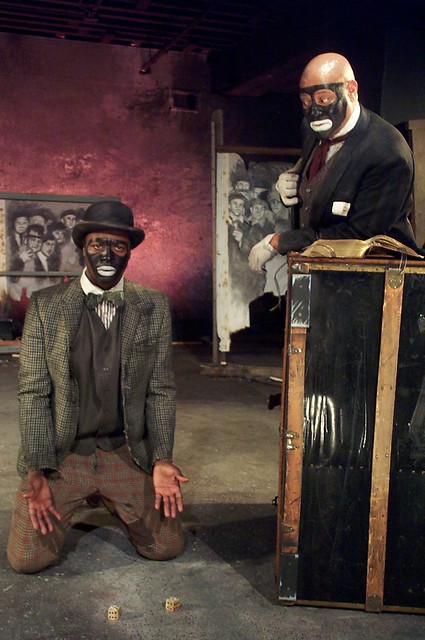
What actor Kelcey Watson did a few years ago in taking on the lead role in a play only eight days before the curtain went up doesn’t quite rise to the 42nd Street legend of a chorus girl replacing the leading lady on opening night. But considering the part and the script were demanding and the world famous playwright would be in attendance Watson pulled off a minor miracle in not only learning his lines but giving a performance that made it appear as if he’d been rehearsing for weeks or months, not days. He performed his feat in service of a Blue Barn Theatre (Omaha, Neb.) production of Six Degrees of Separation and its author John Guare witnessed the actor’s spot-on work and praised him for it. Director Susan Clement-Toberer found herself in the uneviable position of replacing the actor originally cast as Paul slightly more than a week before opening night. And as my story explains she was about to bring in someone from out of town when Watson, who had shined in a Blue Barn staging of Minstrel Show (by Max Sparber) called offering his services. It all worked out better than anyone could have imagined and my story puts the pieces together of how this conspiracy of hearts made it happen with so short a lead time. Watson from time to time does work at the John Beasley Theater & Workshop in Omaha. This blog contains numerous stories I’ve written about the theater and its namesake, actor John Beasley.

Kelcey Watson, ©photo by Max Sparber
Actor Kelcey Watson fills role of a lifetime on short notice in Blue Barn production of “Six Degrees of Separation”
©by Leo Adam Biga
Originally appeared in The Reader (www.thereader.com)
On April 11 Omaha actor Kelcey Watson got wind a lead part was coming available with only eight days before the Blue Barn Theatre opened John Guare’s Six Degrees of Separation. Director Susan Clement-Toberer replaced the actor originally cast as Paul — the axis around which the farce revolves. She was about to bring in someone from out-of-town when Watson called. She took it as fate.
The two met the 11th. She knew Watson, a veteran actor who won strong notices for his role in Minstrel Show at the Blue Barn last year. He’s a member of the Omaha Magic Theatre troupe.
Watson had never seen Six Degrees on stage or on screen, much less read the script. He only knew the story’s premise of how a young, homeless black man (Paul) insinuates himself into the lives of white Fifth Avenuers.
Watson got the pivotal part after assuring Clement-Toberer he was cool having to kiss a man on stage and learning a role full of intricate dialog in a week. Oh, by the way, she added, John Guare will be here opening weekend. Gulp. Serious pressure.
She began working with Watson that same day. It was a crash course of blocking and intentions and memorizing and running lines. Lots of notes and discussion. When it would all get to be too much, they’d cat nap on the set’s pair of red vinyl sofas. Then he joined the cast for a 6 to 10 p.m. rehearsal. They did a full run-through the very first night. He followed that same schedule for a week.
Before he knew it, preview night arrived on the 18th. “It was like, whoosh, and I was there…a whirlwind of nicotine and caffeine and play reading,” Watson said. His motivation was “not failing the cast. These people had worked hard for weeks and I just happened to join in. They were really welcoming toward me. They made it kind of easy to fall into the work.” He used whatever nerves he felt to inform his part. He said, “The stakes were so high. I infused that anxiety into the character. The hardest part was getting it word perfect. It was a lot of complex verbiage to kind of eat and take in and digest.” For him “the mountain” was mastering “the thesis speech” in which he delivers a manifesto about schizophrenia, imagination, the human need to connect and Catcher in the Rye. “I knew I had the part down cold if I could do this speech.”
He’s nailed it enough to earn accolades. He couldn’t have done it, he said, without Clement-Toberer, whom he calls “a very gifted and giving director.” Of their rapport, he said, “We really did have this link that was very earnest and very sensual in some ways.” As she puts it, “We became fast and furious buddies in those eight days. I knew pretty quickly I had made the right decision. He was able to memorize his lines so rapidly and to inhabit the character and fill him out.” She said the way he brings Paul to life is “beautifully done.”
She’s never had an actor have to learn so much so fast. “It’s a helluva role and to have to jump into it in an eight day rehearsal period was a pretty intense process, but also exhilarating. I think Kelcey worked really well under those circumstances. He really rose to the occasion.”
Why did he want the part badly enough to put himself through all that, not to mention risk being unprepared with the play’s author looking on?
“I really, really wanted to do this,” the 29-year-old said. “It really was a rare opportunity that something like this comes up.”
On a deeper level, he identified with Paul. Watson calls Paul “a lost soul” and he said the character’s desperate search for acceptance paralleled his own a few years ago. In 2001 the Omaha native, Benson High grad and former ska band lead singer left to follow his acting dream in New York. He studied at the American Academy of Dramatic Art. Things didn’t go his way. A bad attitude didn’t help.
“One of the reasons I left New York is because it really did a number on me. It kicked my ass,” he said. “I got kicked out of the Academy. I couldn’t work with people. I was such an asshole. I was trying really to find myself. I didn’t really know who I was.”
It’s why, Watson said, “I connected with Paul immediately, because he’s a loner. He’s trying to find a home.” Like Paul in the play, Watson didn’t have a place of his own in New York. He scrounged to get by, reinventing himself as needed. He said, “I’ve been down. I’ve been out. I’ve had to stay at people’s houses a few weeks here and there.”
The lure of “doing black theater” with John Beasley brought him back to Omaha. He did Two Trains Running and The Piano Lesson at the Beasley Theatre. But he ultimately came back because “Omaha’s my home. It’s a place I feel safe at.”
Kelcey Watson and Carl Brooks in Minstrel Show
His rediscovery of his love of acting continued at the famed Steppenwolf Theatre Company in Chicago, where he did an intensive three-month workshop in 2004. “Going through Steppenwolf I learned ensemble acting,” he said. “This time I was so receptive. I learned how to trust people…to let myself go.” He brought his nuanced approach with him back home.
Omaha is where he’s come of age as an artist and as a man. Besides the comfort of his hometown, there’s the home he’s found, too, in local theater. In his search to connect with people and ideas and emotions, he’s looking “to find that space where you can really express yourself and your feelings and be vulnerable.” The Blue Barn may be that space. “They bring the stakes up higher,” he said.
The stakes couldn’t have been higher in Six Degrees. The fact things turned out so well confirms he’s doing what he’s supposed to. “It’s amazing to me the cast said things like, ‘You’re our hero’ and ‘Thanks for saving us.’ This is what I love to do,” he said. “I went to school for this stuff. I’m still in debt because of it.”
Clement-Toberer said when told what Watson had to do to ready himself for the part that Guare, who attended the April 20 show, complimented the actor, saying, “It was as if he was inventing it right on the spot.” Watson said that before Guare left the theater, the playwright turned to him and said, admiringly, “Eight days, huh?.” Watson could only smile.
She said Guare explained how he “thinks of characters in colors” but often finds oranges miscast as purples. “He felt with this production the cast of colors was appropriate across the board. He said, ‘Of course, if you can’t find the right color, then you cast Kelcey.’” It’s the kind of comment theater legends are born of.

John Guare
Related articles
Lara Marsh’s breath of life
July 8, 2012
1 comment
Here’s a story I did a couple years ago or so about an Omaha theater stalwart, Lara Marsh, who’s touched many people with her winning personality and generous spirit and those good vibes and works have come back to her ten fold as she battles cystic fibrosis and faces the prospect of a double lung transplant. This story appeared on the eve of a fundraiser for her, one of many such events that the local theater community has organized on her behalf.

Lara Marsh’s breath of life
©by Leo Adam Biga
Originally appeared in The Reader (www.thereader.com)
“Got Oxygen? This question on top of Pikes Peak at 14,110 feet is very funny and ironic at the same time. I immediately bought a T-shirt and the expression always makes me smile. But this question, in Omaha at 936 feet, somehow loses all its humor.”
Cystic Fibrosis survivor Lara Marsh in her online journal/blog
Veteran Omaha stage manager Lara Marsh is in a fight for her life with Cystic Fibrosis. The inherited, chronic disease produces a thick, sticky mucus that impairs the respiratory and digestive systems. She needs $55,000 to get the double lung transplant required for her only chance at anything like a normal life span. She’s already exceeded CF life expectancies.
“When I was 4 the doctors told my parents I would never see 5. When I was 5, I wasn’t supposed to make it past 8. At 8, the average life expectancy was 14. The average death age for a female now is 37, and I’m 39, so I’ve done really well, but for me it’s unacceptable to die that young.”
Her sister Amy had her life cut short by CF at 18. By contrast, Lara’s married and the step mother of five children. She travels. She’s a college graduate (University of Nebraska at Omaha). She enjoys a career as Nebraska Theatre Caravan Artistic Coordinator/Apprentice Coordinator at the Omaha Community Playhouse, where she also stage manages. She’s beaten the odds. She also can’t recall when illness was not part of her life.
“It doesn’t define me and yet it’s made me a big part of who I am. It’s just all I remember. I am very much a positive person always striving for goals,” she said. “I remember as a small child joking but not really joking with my doctor, ‘You can’t retire until I die because I’m going to be the oldest living CFer in the world.’
Of course, the older you get reality comes into play, seeing the progression of the disease, knowing where I’m really at compared to where I wish I was at. Another whole side of this is the pride factor of showing people I’m a human being dealing with this. I don’t like to show the negativity, I don’t like to show the weakness.”
Lara’s lately revealed more about living with the disease via campaigns raising funds for her transplant needs. Her thespian peers, along with the Children’s Organ Transplant Association, have organized Places, Please! benefits at area theaters. Playwright/director Kevin Lawler said Lara’s positive vibe attracts much support. “She is the most talented stage manager I have ever worked with, a real artist, and one of the most fantastic people I have ever met. She is deeply beloved by the entire theater community in Omaha. A truly exceptional person.” He said her “extraordinary story” is literally “a race against time.”
More than $45,000 has been raised on her behalf. COTA matches some monies raised. Proceeds from this Saturday’s noon to 6 p.m. Lungs for Lara event at Sumtur Amphitheater at Walnut Creek in Papillion will go toward her transplant fund. The organizers are Random Acts of Kindness, COTA, Places, Please! and Cells for Life. There will be raffles, booths, a karaoke competition, a bounce house, live bands and food. Admission is a used cell phone or ink cartridge or a $5 donation.

Lara’s symptoms sometimes prevent her from attending such events. It may be exhaustion or infection. Coughing jags are frequent. The worst thing about CF, she said, “is knowing it’s never going to get better without the transplant. And as much as I try to do the regimens (respiratory treatments, antibiotic IVs, exercise) I’m supposed to and live life and be positive and do this, and do that, the progression still happens, and I really got hit in the face with that last year. Big time.” Her Forced Expiratory volume levels dropped, necessitating she go on oxygen.
“It’s not like I did anything to bring it on, it just happened, and so as much as I try to do to prevent it my body reminds me, Hey, this is still going to happen, whether you like it or not. Essentially, I’m not a 39 year-old. My insides are more like a 60-somethings. And so when I catch a cold or whatever it’s slower for my body to recover. You never know about side effects or other things that could go wrong, especially with a transplant.”
A reminder of the dangers is the experience of Amy, who died of complications from the procedure.
“I’m not afraid to get the transplant,” said Lara. “I already decided a long time ago I would do it. I just want to get it over with, really. I’m ready to move on with my life. But I’m nervous about how my body will react and how long it will take to recoup.”
Periodic hospitalizations take Lara away from what she loves most — friends, family, the theater. Because CF’s been her lifetime companion she’s had the bittersweet experience of befriending and losing fellow travelers.
“There’s been some CFers I’ve gotten close with and most of them have died. All the ones I knew growing up have passed. This one gal I knew, we had a 20-year friendship, and she passed last year. She’s the last one.”
Still, Lara seeks out other sufferers, even though meeting entails risks. “We can be a danger to each other if we are near one another and are contagious, and so we exercise what we call the three-foot rule — stay at least three feet from each other. And don’t touch. It’s harder for us to get to know each other now because of HIPPA privacy laws.” Despite red tape, she manages finding folks who defy the odds. “I’ve definitely been exposed to enough negative results that I need to find some positive ones, so I’ve been meeting some patients who are doing really well .”
She resists limitations. “One thing my doctors and I recently talked about is my CF could reach a point where I have to quit work, and I told them I can’t fathom it, it’s unacceptable…” Her precious travel could also be curtailed. “It’s one of my favorite things to do in life. Something CF has contributed to is me wanting to experience the most out of life, to see anything and everything I can. I have a goal to see all 50 states. I have about seven left. I’ve been very fortunate.”
Her “ultimate dream” is visiting Australia, and not just for the beaches. “I’ve loved Koalas since I was a little kid…I want to go pet a Koala.”
“Recovery is not like it used to be and that is disturbing.”
Lara Marsh blog entry
Visit COTA’s Web site for Lara, which contains her blogs, at www.cotaforlaram.com.
Related articles
- Cystic Fibrosis No Longer a Kids’ Disease (abcnews.go.com)
- Cystic fibrosis breakthrough reveals why females fare worse than males (medicalxpress.com)
- May is Cystic Fibrosis Awareness Month (sacbee.com)
- Foundation Hopes To Raise Funds, Hope For Cystic Fibrosis Month (detroit.cbslocal.com)
From the Archives: Nancy Duncan’s journey to storytelling took circuitous route
April 1, 2012
1 comment
Unforgettable Nancy Duncan. The late actress, theater director, administrator, and professional storyteller was not someone you could easily dismiss or forget or walk away from unaffected. Her positive energy, whether her bright eyes, smile and laugh or her sunny outlook on life, swept over you like a cool breeze on a warm day. She made you feel good. Her intelligence and truth challenged you to listen and think. Her generous spirit reminded you of the gratitude you ought to demonstrate. Her humility reminded you that the world does not revolve around yourself. Later, when she got sick, I witnessed her courage in the face of a life and death struggle. Even then, she was still giving and sharing, using her battle with cancer to teach and maybe preach a little about how absurd and precious life is. You’ll find a number of stories on this blog that I did about Nancy and her passion for storytelling over the years.
NOTES: I don’t go into it in the following story, but Nancy’s husband Harry Duncan was one of the world’s most highly respected fine book press printers. His Cummington Press earned he and the books he printed many awards and much praise.
The children’s theater Nancy led changed names from the Emmy Gifford Children’s Theatre to the Omaha Theater Company for Young People and its home changed from 35th and Center to 20th and Farnam in The Rose, a performing arts for children and families space.
Also, this story doesn’t discuss the long-running storytelling festival in Nebraska Nancy helped found and run and it barely alludes to her becoming a much-in-demand and beloved storyteller at festivals around the country. Some of my other Nancy Duncan stories do explore these facets of her work.
Nancy Duncan
From the Archives: Nancy Duncan’s journey to storytelling took circuitous route
©by by Leo Adam Biga
Originally appeared in the Omaha Metro Update
Omaha actress-storyteller Nancy Duncan has always been an independent sort. Born In Indiana, she grew up a tomboy in Illinois suburbs and Georgia backwoods and chafed at her mother’s attempts to make her a debutante. Even after she became a successful performer years later Duncan couldn’t win her approval.
“My mother was a real Anglophile. She was never pleased with my theater work because she wanted me to do glamorous characters, and Baba Yaga was the antithesis of glamour,” Duncan said with her diaphram-rattlng laugh. Baba Yaga is a witch Duncan adapted from Russian literature to create the character she is most closely identified with. “She wanted me to do parts where I wore beautiful clothes but if there was a lizard part in a play I wanted it. It’s always frustrated me I couldn’t play Caliban,” she said, referring to the deformed, half-human slave of Shakespeare’s The Tempest.
The former executive director of the Emmy Gifford Children’s Theatre is now a full-time performer doing precisely what she wants and loving every minute of it. Duncan appears as Baba Yaga & Friends, the name of her theatrical enterprise, before school and community audiences across the nation. Much of her performing is done under the auspices of state arts council touring programs, including those in Nebraska, Iowa and Missouri. She recently joined the Mid-America Arts Alliance roster of artists touring Kansas, Oklahoma, Arkansas and Texas.
She spoke recently about her life in the theater at the home she and her husband Harry Duncan share in mid-town Omaha. Curled up cross-legged on a sofa, she was every inch the storyteller and actress with her attentive eyes, animated body movements and expressive hands and voice. She was still excited about a summer sojourn in the United Kingdom. Inspired by the stories of Scotland’s Duncan Williamson, she studied with him and his big family. She said she had written him asking “permission to tell his stories and to absorb th econtext the stories came out of and to get some feeling of what they meant to him and why he told them.”
She got permission, too, returning, she said, “with five more of his books – five you can’t get in the States. I’m well-armed for the next couple years to tell these great stories, and they are wonderful. They’re all stories of the supernatural. And really some of them are very scary,” she said in a hushed voice. “There are real confrontations with the devil.”
Duncan enjoys staying at people’s homes when touring. “Usually that turns out to be a really fun situation and I learn a lot and make friends, and I like to do that. For a storyteller, it’s a nice give and take situation. And I gather a lot of stories that way, too.”
Sponsors booking her may choose from her large repertoire of one-woman shows, whose stories and telling differ greatly. As Baba yaga she is a 600-year-old witch with the disposition to match her warts and fright wig. For “Good Old Crunchy Stories” Duncan appears as herself, yarning folk, fairy and other tales from a variety of cultures. Many stories are borrowed from literary sources. Others are taken directly from families’ history and lore, preserved by the oral tradition. Some are meant for children, others for adults.
An adult show is “Nebraska ’49,” in which she tells the stories of actual pioneer women in their own words, drawing from their diary accounts a portrait of the 1849 transcontinental migration. The trek by wagon train was arduous, often tragic.
“It’s the untold story about what women had to go through on that journey,” said Duncan. “It’s not the glamorized depiction of Little House on the Prairie. Liza (Wilcox) doesn’t want to go. There are things about it she loves but she goes into detail about a lot of the hardships. Liza’s son gets killed in Ash Hollow. The death of her son is just devestating and it was caused by an accident, which is how most deaths on the wagon train occurred. They weren’t caused by run-ins with Indians.”

A new show called “Why the Chicken Crossed the Road” is a humorous children’s hour with characters taken from David Macauley’s book of the same name. It’s one show were laying an egg is part of the fun. Like most of her performances “Why the Chicken” contains simple morals and truths about who we are and “how we live,” she said.
Like our chicken natures.
“At the very beginning I ask the kids if they’ve been called chicken, and most of them have. Then I say, ‘Are you a chicken?’ And they say, ‘No.’ At the end I tell them, ‘I hope you go home and find a way to celebrate the chicken in yourself’ because essentially that’s what the show is – a celebration of my chicken nature, which is the opposite of Baba Yaga, who is, you know, Aaargh…”
Baba Yaga has been a sensation since Duncan first played her in 1981 at the Emmy Gifford. She said kids deluged the theater with letters and phone calls wanting to talk to Baba Yaga. Some even sent breath mints. Although the old hag is still a hit Duncan said Baba Yaga often elitcs disruptive opposition from some Bible-thumpers.
“Fundamentalists picket me all the time because Baba Yaga is a witch and they don’t want their kids exposed to Satanism and witchcraft,” she said sarcastically. “They don’t want their kids to hear fairy tales either. They only want them to hear Bible stories. Not too long ago in Lee County, Iowa the sheriff had to meet me at the county line and escort me to the school. I was flanked by two policemen to protect me from these five crazies.”
Such incidents are not confined to rural areas. Duncan said a Des Moines school turned down her doing residency there “because of flak over Baba Yaga. Just crazy.”
She expects similar protests against her new “Spooky Stories” show populated with witches, wraiths and pranksters.
To needle her adversaries Duncan’s promotional brochure bills “Why the Chicken” with this zinger: “If you are not brave enough to book Baba Yaga and risk losing a few pin feathers, this is the show for you.” She said, “It’s not only me who’s chicken, but the sponsor,” and laughed up a storm.
Duncan does leave audiences spellbound – but with stagecraft, not witchcraft. “In traditional storytelling circles they talk about this sort of hypnotic effect you have on your audience. You look out and see people staring with these slack faces, mouths hanging open and eyes frozen, like they’re daydreaming. It’s kind of nice to see kids or adults totally transported,” she said of the experience of holding a crowd in rapture.
Her charmed audiences range from those at elementary and secondary schools to colleges and universities to libraries, community centers and festivals. She is doing more adult work than ever but whatever their age she always prefers “a captive audience. I don’t like situations where people come and go and eat. I like to be where an audience makes the commitment to come and be there for a while. My goal is to transform it into a give and take situation where they become partners in the telling. It’s the same in the theater. You want to get that audience in cahoots with you. Every audience is different because they listen differently. That give and take transforms your telling.”
 This former movie theater was the home of the children’s theater when Nancy led it. It’s now an auction house.
She said when she and an audience really connect “it becomes a mystical experience and is very moving. Something is happening, both of you are changed because of it, and that’s really, really exciting. That’s what I’m always seeking. It doesn’t always happen.”
Duncan said storytellers are “very much in touch with their audience all the time. It’s like having a good conversation with somebody. It’s not a lecture, you’re there listening and giving back.”
A good audience response, she noted, “may be a special kind of silence or the way they laugh. It’s all in the little things they pick up on. There are certain places where they can’t avoid laughing unless they’e asleep. But there are other many more things they’ll get if they’re really with you. Beyond that, if they give themselves to you, then you discover new things in the performance and telling.”
That happened last October at a Philadelphia area high school. “I was doing a show about self-esteem, and that’s a great theme for that age level. They really went with it and I discovered a bunch of stuff that I didn’t even realize was either moving or funny.”
Duncan first developed an appreciation for storytelling on the lap and at the feet of her grandmother. “She shared a bedroom with me from the time I was 5 until she died when I was 16. My two brothers and I spent a lot of time with her. She was great. She’d smoke a pipe and tell stories. She loved the B’rer Rabbit stories and could do them with a great dialect. And my father was a great storyteller. He liked to perform the story.” She said her father’s animated telling was more like her own than her grandma’s.
As a girl Duncan indulged in rich fantasy play, assuming different identities like so many hats. “I was a leopard woman for a whole summer. My friend and I made leopard suits and claws. We would hide in bushes and jump out and scare our friends.”
When the family moved from Illinois to north Georgia Duncan found a fertile place for her imagination to run wild in the woods near their home. She and her playmates learned the outdoors on “safaris,” she said. “We built little houses and became primitive people living there as long as we could. Our mothers never really had to babysit us – they had a hard time getting us home. It was a safe place. Now, I don’t know whether children could do that.”
The only close call was when moonshiners ran the girls off.
By high school she had years of private art and elocution lessons behind her but she was still a tomboy at heart. When forced to choose between playing basketball and acting, for example, she opted for sport. She played four years.
Her thespian days began at Agnes Scott College in Atlanta, a private women’s school. “I was always frustrated there. I wanted to go away to college but I didn’t because my father was ill. He died after my first year.”
Still, she said, she enjoyed school and did very well majoring in English and minoring in art and theater. The 1958 graduate was an aspiring writer and earned a full tuition fellowship to the prestigious Writers Workshop at the University of Iowa. She “hated” the experience. Intimidated by more aggressive students and kowtowing to her advisers she finished the workshop without doing much writing. She then focused on theater and soon met Harry Duncan, who taught journalism and hand printed fine press books at the university. He taught her typography. Student and teacher fell in love and married in 1960.
After earning an MFA in theater she taught at a Quaker school in Iowa. “That was a wonderful laboratory in experimental theater because I did six plays a year for about eight years – productions which I could not do in Omaha.” One was a German language version of Mother Courage.
By the early ’70s she and Harry were raising a family of three children and Nancy was getting restless. To her rescue came the news that Harry had accepted an offer to teach and operate a small press at the University of Nebraska at Omaha, which is how they both ended up here.
“I was thrilled because Omaha is a big enough city where we could be two totally independent people. In a university town like Iowa City you’re always a faculty wife, and I didn’t want to be a faculty wife anymore.”
She went through a period questioning whether the theater was her true calling, taking classes at UNO with the notion of pursuing a medical career.
“But I realized I’d invested eight years training myself to be in the theater and it was ridiculous to start all over again when my children were teenagers and needed to be home. So I recommitted myself to theater.”
Her start here came as associate director of the Omaha Community Playhouse (1973-’76), where she staged experimental work. Then the Children’s Theatre entered her life through its founder and namesake – Emmy Gifford – whom she met at a Playhouse awards night.
“We sat on the stage afterwards and talked and we got to know each other that evening. Emmy designed shows for me, too, so we got to be really good friends. She kept asking me to come to the Children’s Theatre but they didn’t even have a building at the time and I didn’t want to start all over again.”
Gifford and two other friends on the Children’s Theatre board kept after Duncan until she said yes, but only if certain conditions were met. Namely, Duncan wanted the amateur organization to become a professional theater that would commit to hiring a multiracial staff and to do color blind casting. She also asked for support of the modern dance company she had started. To her surprise, they said yes on all counts. “It was an amazing commitment that I think very few places would make,” she said.
By the time she joined the theater it had moved to its present site at 35th and Center Streets. But major hurdles remained. “It was very hard work because there were only two of us and we had a budget of $24,000. It was just a mess the first three years.”
When she left in 1986 to go it alone as a professional storyteller the Gifford had “transitioned,” she said, “into a professional theater with a budget of $550,000.” The turning point came in the form of three large CETA grants. “Without that money we wouldn’t have been able to make that transition.” Another key was getting the Omaha Public Schools to sanction class trips to the theater. “Once we got OPS approval it just snowballed.”
The theater board also kept its promises, giving many minorities and dancers opportunities lacking elsewhere. Along the way the Gifford became a success story on the burgeoning children’s theater scene nationally. Today, it’s the fourth largest children’s theater in the U.S. and Duncan is proud of that.
As it grew, however, she had less time for performing and the artistic side. Instead, she found herself saddled with fundraising and marketing duties. “I really burned out on the fundraising. I think that was the part of it I came to hate most. I hated seeing people as dollar bills.”
After deciding to leave she found it hard to let go. “I thought I would have some say in what decisions were made and when I realized that, no, nobody wanted to listen to what I had to say that was really painful. Now I realize it’s absolutely essential that people who take over reject everything that went before because they have to find their own way.”
She feels her messy exit served her well. “If it had been a comfortable, easy departure I don’t think I would have been spurred ahead to do my own stuff as much as I have.” Life as a freelance artist “was kind of scary that first year,” she said, “because my income dropped about a third. That whole business of starting out and adventuring into something new is pretty scary but after the first year it’s really grown. I’m pretty well booked up for this coming school year.” She just returned from a storytelling festival in Wyoming.
But the lean days are not so far removed that she can’t appreciate what an Alex P. Keaton clone said at a Wisconsin grade school she played that first year: “A sixth grader asked, ‘Nancy, would you be able to do what you do if you were not heavily subsidized by your husband’ she recalled with a whoop. “I said, ‘No,’ and I told the teacher he should get an A-plus for ‘heavily subsidized.’ I still don’t have to, you know, pay my rent because my husband does that,” she said with a wink.
Related articles
- Storytelling: Community through . . . Competition? by Katie Knutson (gracewolbrink.wordpress.com)
Categories: Entertainment, Nancy Duncan, Omaha, Omaha Community Playhouse, Storytelling, Theater, Writing
Nancy Duncan, Storyteller, Storytelling, Theater
Doing time on death row: Creighton University theater gives life to “Dead Man Walking”
January 10, 2012
1 comment
I don’t go to a lot of theater, but I go to enough to have a good sense for what good theater looks and sounds like, and one of the better amateur productions I’ve ever seen was the Creighton University staging of the Tim Robbins play, Dead Man Walking, from some years ago. It’s hard to go wrong with this gripping material, but then again I’ve seen enough strong source material mishandled that I know anything can be done badly. This was a case of fully realizing a play’s potential. The play, like the movie Robbin wrote and directed, is based on the book by Sister Helen Prejean about her transformative experience counseling a death row inmate that basically began what’s turned into her nationwide crusade against capital punishment. I see now that Dead Man Walking has been adapted into an opera as well, which doesn’t surprise me because the dramatic moments and thematic concerns and emotional upheavals in the story certainly lend themselves to such expressive treatment. I hope the opera is staged one day where I live, Omaha, which is also the home to Creighton University, a Jesuit school with a fine reputation for its professional colleges. Its liberal arts offerings, including theater, ethics, social entrepreneurship, and journalism, are quite strong, too.
Doing time on death row: Creighton University theater gives life to “Dead Man Walking”
©by Leo Adam Biga
Originally published in The Reader (www.thereader.com)
To kill or not to kill? That question hovers over every moment of Dead Man Walking, the new Tim Robbins play that covers similar ground as the actor-filmmaker’s acclaimed 1996 film of the same name. In this meditation on the death penalty, the ramifications of taking one life for another is considered. Do we have the right to? Is it justice or revenge? Can execution ever be meted out fairly?
The play, making its Omaha premiere in a Creighton University main stage production opening this weekend, forces viewers to confront a subject most would rather not contemplate. And the humanistic way it presents this struggle ensures that it goes beyond being mere polemics or abstraction. It is high drama truthfully distilled in the very real conflict of a convicted murderer’s life hanging in the balance. Will ending his life compensate for the lives he took? Does he deserve to die? Did his victims? The dilemma only grows deeper when the killer shows remorse. Too late it turns out. No matter what side you’re on before the play, you won’t come out of it unaffected after witnessing a night of theater in which an execution by lethal injection is enacted before your very eyes.
“It’s very riveting. I mean, we’re going to execute somebody on stage,” said the show’s director Alan Klem, CU assistant professor of theater. “I hope to leave the audience with the same feeling I had after reading the play, and that is — I can’t ignore this. I think what the playwright is trying to get across is that we can’t take a passive view point on this issue. It’s better to take a strong stance, one way or the other, than to say, ‘It doesn’t concern me.’ It does concern us. Basically, we’re shedding light on executions, which are carried out at midnight when people are asleep. Why do do it then? Because the state doesn’t want you to know what it’s like. Death row is a terrible, terrible place. We’re trying to recreate that feeling the best we can that this is a terrible, terrible place.”
After the final curtain on opening night, a panel discussion on the death penalty follows. The panel includes Creighton law professor Christine Wiseman, a vocal death penalty opponent who, in 1995, exhausted the appeals process on behalf of Texas death row inmate Billy Conn Gardner. Serious questions were raised about his arrest, trial and murder conviction, but not enough to stop his execution.
What better forum for this discussion than a Jesuit institution with its historical social justice mission? At Robbins’ behest, a draft of the unpublished play has been offered to select, mostly Jesuit, colleges and universities to be performed during the 2004-2005 academic year. It’s part of his Dead Man Walking School Theatre Project, whose intent is to elicit dialogue on capital punishment, an ugly reality usually shrouded in the dark of night, far away from public scrutiny.
Creighton is among only a few school’s mounting a production of Dead Man this year. The school’s Department of Fine and Performing arts is staging its version over seven nights in February and March. Show dates and times are: Thursday through Saturday, February 24 through 26, at 7:30 p.m.; Sunday, February 27 at 2 p.m.; and Thursday through Saturday, March 3 through 6, at 7:30 p.m. The show’s on-campus venue is the Lied Education Center for the Arts at 24th and Cass.
Both the play and movie are based on the best-selling book by Sister Helen Prejean, whose real life story recounts her 1980s experience as spiritual advisor to Angola State Prison (La.) death row inmate Patrick Sonnier. He was ultimately put to death. In her book and in Robbins’ adaptations, the one constant is a convicted killer awaits his reckoning via a lethal injection date. Alone, with no prayer of his sentence being commuted, he makes a desperate plea for help, A naive but caring nun answers the call — setting in motion events neither seems prepared to handle.
Just as there’s no doubt where the protagonist, Prejean, stands on the issue, it’s clear Robbins vehemently opposes the death penalty, but to his credit, he doesn’t allow his drama to turn political diatribe. “It tries to give both sides of the issue,” Klem said. “It’s important it not come off as a sermon.” Indeed, a reading of the play reveals a balanced work delineating how people find moral, Biblical mandates for or against execution. While the troubling and divisive themes are ever-present, the core conflict is the tug-of-war between Prejean and her soon-to-be-put-to-death charge, Matthew Poncelot. It is a struggle between her unconditional love and his unrepentant heart. Between her search for the truth and his denial of it.
The conflict is also an internal one, within the mind of Prejean, whose self-reflective stream of consciousness drives and defines the action. She becomes our witness, our guide and our narrator to the events that unfold. She even “preaches to the audience, trying to open their eyes,” said the actress playing her, CU senior Jeanne Tiehen. “But she doesn’t come down on them. It’s more like, ‘Listen to this story.’ It’s all about awakening the discussion about capital punishment.”
At times, we’re privileged to hear Prejean’s innermost misgivings. She’s plagued too by the harsh but righteous anger of the victims’ parents and the cynical disapproval of the victims’ themselves, who remind us of promising young lives violently cut short. The insistent voices and haunting figures receive expressionistic treatment by Klem, who with CU theater coordinator and technical director Bill Van Deest, has come up with a striking set dominated by a depressive death row cell block below, where the condemned fret and wait, and a surrealistic catwalk above, from where the dead look down. All is black save for the rust-toned bars and handrails. Adding context are stark, projected images on an overhead screen. Together with the disturbing, fated presence of Poncelot, a sneering, conniving hate-monger bursting with pent-up anger, fear and regret, it becomes an existential space.
At first, Poncelot tries playing Prejean the way he has everyone else. After all, she comes to the prison and criminal justice system as an innocent. When he sees she has, as Klem calls it, “backbone,” he begins to respect her. Before she knows it, she finds herself in the uncomfortable position of being an advocate and confessor for a monster. Along the way, she makes enemies. But she cannot turn back.
In the eyes of Tiehen, a CU senior theater arts major whose experience researching, rehearsing and performing the role is her thesis project, Prejean is like Alice in the rabbit hole. “Once she falls, she just keeps going and going, and what I like about this script is that as soon as she gets a grasp of one thing, all of a sudden she’s dealt a whole new layer of challenges, and it’s overwhelming. There’s plenty of points in the play when she goes, ‘What am I doing here?’ It’s kind of like she’s propelled along by events. It gives you a real sense for how this thing steamrolled. There’s not a moment’s rest. And there is no getting off for her.”
So, why does Prejean stay the course? “She sees this person who needs help and when he turns to her for it, she can’t turn away from that,” Tiehen said. “She feels a responsibility for this guy’s soul. For his well-being. For his life.” Klem said, “She becomes not only a tower of strength for him, but also the conscience for him.”
Poncelot is played by CU senior Rusty Perry, a regular at the Millennium Theater, He feels the condemned man finally opens up to Prejean out of “his trust” in her. “She sort of pulls it out of him. When he first meets with her, he blows smoke in her face. He doesn’t feel she deserves any more consideration than anyone else. Yet she still cares for him,” he said. “He’s like one of the strays she took in as a child. It’s his first experience of love — of someone caring for his life.”
For Tiehen, a veteran of such CU productions as Tom Stoppard’s The Real Inspector Hound and Beth Henley’s Crimes of the Heart, Prejean is a woman to admire and a character to covet. “She’s an amazing person. Her involvement in the movement just happened, and rather than running away from it — she embraced it. You don’t find many female characters like her that are intelligent and strong, and still warm and compassionate.” She said playing a public figure in Prejean, now an icon in the fight to abolish the death penalty, is “daunting. Here is this woman who’s become such a strong face and force in the movement…and how do I still make her somebody that’s approachable and not just a figurehead?” The key, she said, is expressing her “compassion and her faith something good will come out of this.”
Then there’s the fact that at the time of these events, Prejean was an unknown navigating her way through a crazy system that, once its wheels were set in motion to put someone to death, it could not be stopped. “She’s kind of the Everyman in the situation,” Tiehen said. “She’s scared. She’s frustrated. She gets angry. She’s not someone who’s just pious, tempered and passive all the time.” She’s real.
Tackling a part and a piece as heavy as this, Tiehen said, is taxing. “It’s extremely challenging. It’s demanding a lot of me, and all of us. But it’s been very educational to chronicle the journey of this process. It’s a huge opportunity.”
Klem said cast and crew have tried keeping things light in rehearsal. “It’s not an easy play to do. But even as heavy as it is, you’ve still got to have fun doing it.” Aside from the potent themes, he said its cinematic structure — with short, impressionist scenes and quick transitions — makes it “difficult to stage.”
In a play filled with “religious connotations” that pose Old Testament eye-for-an-eye arguments versus New Testament turn-the-other-cheek admonitions, “there is a communion going on,” Klem said. “It’s almost like a liturgy in a sense.” Amen.
Related articles
- Man on death row for 21 years has murder conviction overturned (thegrio.com)
- Delaware to hear final mercy appeal for death row inmate abused as child (guardian.co.uk)
- Neb. Supreme Ct. rules against death row inmate (mysanantonio.com)
- Death row American’s lawyer calls for compassion from Iran (cnn.com)
- Execution date sought for Oklahoma death row inmate who killed his wife (newsok.com)
A queen gets his day in the sun: Music director Jim Boggess let’s it all out in “Jurassic Queen” cabaret
January 4, 2012
2 comments
Covering the Omaha arts-culture scene as I have for some 20 years I’ve met a lot of people doing a lot of fine work. There are always newcomers to the scene, of course, whom I meet in completing assignments. But there is a surprising number of veterans on the scene who for one reason or another or for no reason at all I miss connecting with all these years until the fates align and I subsequently meet them for the first time. Jim Boggess is one of these. He’s done a bit of everything in music and theater and I finally caught up with him on the eve of his doing a one-man diva show, Jurassic Queen, a couple years ago. I think you’ll like Jim as much as I did for his warmth and honesty and absolute determination to be himself, no excuses or apologies, thank you.

Jim Boggess making friends with theatergoers, ©photo cornstalker.blogspot.com
A queen gets his day in the sun: Music director Jim Boggess let’s it all out in “Jurassic Queen” cabaret
©by Leo Adam Biga
Originally published in The Reader (www.thereader.com)
Omaha Community Playhouse Music Director Jim Boggess likes big, brassy numbers. Sundays, he indulges his penchant for belt-it-out show-stoppers directing the Freedom Choir at Sacred Hearth Catholic Church. His dynamic, stand-up-and-shout lead at the piano cues the choir to make raise-the-rafters gospel sounds.
He’s been an “MGM kind of guy” since growing up in Estherville, Iowa, where his flamboyance fed off the movie musicals he watched at the Grand Theatre. He set his sights on show biz after seeing a high school production of Carousel. Being gay in a small, conservative Catholic community spelled trouble. Songs he’s written for his new cabaret at the P.S. Collective, Jurassic Queen: A One Diva Show, touch on those years.
“‘Gotta Go Away’ is about how I felt in that little town. I had to get out of there. It was not a safe place for me to be,” he said. No matter how ugly things got, he found refuge within his big Catholic clan. “My family was always wonderful to me.”
There’s a tribute to Barbra Streisand, long a figure of infatuation and inspiration. The diva’s music transported him beyond narrow-minded townies. “Listening to her when I was a kid got me through a lot of crap,” he said. He pokes fun at his over-the-top exuberance seeing her in concert for the first time last year.
One tune satirizes Catholic school. Two personal songs bracket the show. The opening title number “Jurassic Queen” defines him as “a survivor with a sense of humor who’s not afraid to talk about the amount of hair growing out of my nose.”
The closing ballad “is about never giving up the fight and about friends who are gone who can never die as long as you remember them,” he said. “I’ve lost my parents. I’ve lost friends – some to AIDS, one to suicide. I think about them every day. I miss them every day. There’s a period in you life when you really feel like you’re Typhoid Mary because everybody you know is dying. That’s a damn hard time to get through.”

The show is a declaration of what it means to be an aging gay man in America. Boggess insists it’s not some self-righteous polemic but a celebration of a rich life.
“I’ve had a helluva time and I’ve got some great stories to tell and some great songs to sing that aren’t just mine,” he said. “And I’ve got some funny stuff, too. There isn’t anything more boring than somebody coming on the stage and going, ‘I am gay and you must respect me.’ You have to have a sense of humor about yourself.”
The show also expresses the defiant attitude Boggess has cultivated. “I really just don’t give a damn what anybody thinks,” he said. “I mean, I care what my friends think but as far as total strangers and large legislative bodies I don’t.”
Omaha singer/actor Seth Fox, whose Royal Bohemian Productions is staging Jurassic Queen, said having the show at the P.S. Collective in Benson rather than a gay venue like The Max, where it previewed, makes a statement.
“It says we’re not afraid to be here and you have no reason to be afraid either,” he said. “This helps us to bring gay cabaret out of the gay bar into the mainstream. Make it less about being a gay-themed show and more about being a human interest show. Granted, some of the humor is going to cater to gay audiences but not all of it. There is something for everyone.”
“It’s not a drag show,” Boggess said. “I don’t wear a dress. I’m just who I am. It’s just me and a piano and a couple of cutouts.”
Besides, Boggess said, being gay is just one aspect of him.
“I’ve never ever defined myself by my preferences,” he said. “I define myself by the kind of person I am. It is certainly a part of me, an intrinsic part of me, but it is by no means all of me. There’s a lot more there.”
For a long time Boggess felt disapproval from the very institution that was supposed to love him unconditionally – the church.
“The exclusion of many different kinds of people made me very bitter towards the church. I never ever thought I would set foot back there again.”
But he did, finding “acceptance and inclusion” at Sacred Heart in north Omaha, where the gospel music he performs speaks to him. “It’s survival,” he said. “Show me any good gospel singer and I’ll show you somebody who’s survived.” The Freedom Choir he directs there is mostly white but they sure know how to get down with gospel.
“I’m as white as they come but I think there must have been some funny business in my family earlier because I feel a big affinity for it,” he said.
Versatility’s kept Boggess working steadily 35 years. He can sing, play, arrange and direct music. He acts. He came to Omaha in 1974, via the Mule Barn Theatre in Tarkio, Mo., to work in the Firehouse Dinner Theatre’s pre-show Brigade. He, along with Jim and Pam Kalal, formed the trio Best of Friends. Their dreams of Las Vegas revue stardom fizzled. He freelanced as music director at the Firehouse and the Upstairs Dinner Theatre. He toured two years with the Nebraska Theatre Caravan, composing two musicals with Cork Ramer. He played the pit at the Playhouse, where he also starred in La Cage Aux Falles. All of it, he said, proved “a great training ground.”
He’s held his present Playhouse gig for 11 years. His devotion to theater is a love affair. “You have to really have a passion for this to survive,” he said. He lives for those rare times when everything comes together.
“There are moments in shows and in music when it goes right, when it truly is an expression of you and the other performers and the chemistry and connection between you and the audience has an undefinable magic. It’s equal parts instant gratification and pride. Those moments don’t happen all the time but, boy, when they hit there ain’t nothing like them.”
He often collaborates on cabarets headlining others, including Fox, Jill Anderson and Camille Metoyer-Moten. He felt the time was ripe for his own one-man turn.
“It’s just another side of me that I thought I’d let out,” he said.
Better do it now, he thought, at age 55. “I mean, how long will I be presentable?”
Related articles
- Dick Boyd Found the Role of His Life, As Scrooge, in the Omaha Community Playhouse Production of the Charles Dickens Classic ‘A Christmas Carol’ (leoadambiga.wordpress.com)
- Being Jack Moskovitz, Grizzled Former Civil Servant and DJ, Now Actor and Fiction Author, Still Waiting to be Discovered (leoadambiga.wordpress.com)
- John Beasley and Sons Make Acting a Family Thing at the John Beasley Theater & Workshop and Beyond (leoadambiga.wordpress.com)
- From Omaha to Paris to Omaha, with Love, Anne-Marie Kenny’s Journey in Song and Spirit (leoadambiga.wordpress.com)
Tyler Perry’s brand of gospel play coming soon to theater near you
January 3, 2012
2 comments
The Tyler Perry franchise of movies has introduced to mainstream America the black gospel play genre, something the writer-actor-director already franchised across the country. With perhaps one exception I have yet to sit through an entire Perry film, though most of what I’ve seen to date has been entertaining enough. But there’s no question his work resonates with millions and that’s made him a bankable name and brand as a filmmaker and as a dramatist. The following short piece for The Reader (www.thereader.com) is from a few years ago. It took a cursory look at this phenomenon on the eve of one of Perry’s touring plays coming here. For context, I spoke with two of the play’s stars, David and Tamela Mann, and with an Omaha gospel playwright, Llana Smith. You can find my profile of Llana and her gospel playwriting on this blog.
Tyler Perry’s brand of gospel play coming soon to theater near you
©by Leo Adam Biga
Originally published in The Reader (www.thereader.com)
Tyler Perry’s all the rage these days with his smash, pseudo-gospel plays and movies. Some signature characters, such as Madea and the Browns, will soon be staples on television, too. He’s become rich by tapping a largely ignored resource tailor-made for his work – black churches, whose legions of members, with their millions of dollars in disposable income, turn out in droves for his shows/films. All this love and box office success has revived and legitimized the old Chitlin Circuit.
No clearer example of this can be found in Omaha. Bus loads of fans, drawn from congregations like that at Salem Baptist Church, travel to see his work in Kansas City, the nearest place his live stage shows have played, until now. His newest touring production, What’s Done in the Dark, is selling out fast for March 13-14 shows at the Orpheum Theatre. It’s the first time a Perry play has come here and the local black church community plans to come out in force.
Llana Smith is going with a group of her girlfriends from church. The women got tickets as soon as they went on sale. Smith, drama ministry director at Salem, Omaha’s largest Baptist church, is not your ordinary Perry admirer. She writes gospel plays herself, just as her mother Pauline did. Two of her own, Big Momma’s House and These Walls Must Come Down, were produced last summer in Macon, Ga. and Wichita, Kansas, respectively. Just as Perry’s work travels, there is talk Momma’s House will tour down south, maybe even to Perry’s home base of Atlanta.

Tyler Perry
There’s a long tradition of gospel plays, also known as message or inspirational plays. Most are scriptural-based and performed in churches or social halls, where they must be somewhat circumspect. But Smith said Perry’s work resonates with younger, hipper audiences by pushing the secular boundaries of the form.
“So many young people are into Tyler Perry, it’s just unreal,” Smith said. “He has broken a mold and paved a way that’s never come before. He’s taken it up to another level. He’s put his own stamp on it. His plays talk about gay life, which is a taboo within the church. When he acts in his shows, he plays male and female characters. And then there’s the language. It isn’t cursing outright, but he’ll have lines like, ‘Damn, I’m sick of you,’ or, ‘Hell, if you don’t get up out of there…’ We know good and well it’s how people talk.”
She said his plays capture the spirit of the African-American experience. “A lot of them are reality. It’s just life in the black family, in the black home..and it’s like we can relate to it.” She said in order for a gospel play to live, it has to get “our lingo” right, and Perry gets the black urban patios and slang down pat. As she exhorts the casts in her own plays, “Y’all got to make this real. People gotta be able to feel.”
“The main thing is it comes from a very real place,” said David Mann, the holy roller Mr. Brown in What’s Done. Mann’s real life wife, Tamela Mann, appears as his busy-body daughter Cora. Mr. Brown and Cora are recurring characters in the Perry canon and the Manns are veteran players in his shows. They’ve gone on this incredible rise with him since the late ‘90s. Mann said Perry’s plays “deal with a lot of issues that happen in our community” – illicit drugs, STDs, deadbeat parents – and are replete with familiar family-church situations and stock characters that “everyone can kind of identify with. People recognize what they see every day.”

David and Tamela Mann
What’s Done is set in a hospital, where the plot conveniently addresses many health problems afflicting blacks, including diabetes and high blood pressure. As in a soap opera, anything that can go wrong, does.
True to its gospel roots, this play and others like it portray strong matriarchs and a gallery of archetypal, some say stereotypical, sinners, saints, comic foils, heavies, conflicts and reunions. Not everyone is saved or condemned. Any lessons or morals are for audiences to glean. It’s not church, after all, it’s entertainment. Still, in the tug of war between good and evil, a redeeming, comforting message is left.
“It’s like a roller coaster – you get your laughter, you get your drama and everything in between,” Tamela Mann said. “It’s more of an inspiration. If you’re going through something it’ll help you get through whatever you’re going through.”
“This actually hits you in real subtle ways,” said David Mann. “You get to laugh, you get to cry, you get to rejoice. There’s some really good singing in the show. It’s really kind of a public service announcement, wrapped in comedy, drama and music, without being a public service announcement, without being too preachy.”
Part of the appeal is the savvy casting of name singers, even film/TV stars. The Manns are among many noted gospel, R & B and soul recording vocalists in What’s Done. The couple hit their stride performing with acclaimed gospel artist Kirk Franklin. They later headlined Perry’s play Meet the Browns, a TV sit com spin off of which they star in next summer.
While gospel plays by other authors come here, they’re confined to the Music Hall, not the Orpheum, another indication of Perry’s breakout success. While she’s seen some “excellent ones,” Smith said none capture “our lifestyle” the way Perry’s do. “He’s so every day.”
Related articles
- Meet The Browns Season Three DVD Review (screenhead.com)
- Things You Didn’t Know About The Leading Ladies Of “Madea’s Big Happy Family” [PHOTOS] (hellobeautiful.com)
Dick Boyd found role of his life, as Scrooge, in Omaha Community Playhouse production of Charles Dickens classic “A Christmas Carol”
December 24, 2011
3 comments
As hometown traditions and staples go, the Omaha Community Playhouse musical production of the Charles Dickens classic A Christmas Carol is a must see for lots of folks, and not just here either because the original production designed by Charles Jones tours nationwide courtesy the Nebraska Theatre Caravan company. This has been going on for two generations and I have to admit I’ve never bothered to catch the show. The closest I came was watching part of a rehearsal for the following profile I wrote about Dick Boyd, the man who portrayed Scrooge in the production for decades. He was still very much the voice and face of Scrooge here when I did the piece, but it wasn’t long after the story appeared that he announced his retirement from this role of a lifetime. I hope my article didn’t in some way hasten his abandoning the part he’d become so strongly identified with. As the story reveals, Boyd enjoys a very full life outside the Scrooge persona, which is of course far removed from his real demeanor.

Dick Boyd as Scrooge in 2005, ©photo by Mikki K. Harris, USA TODAY
Dick Boyd found role of his life, as Scrooge, in Omaha Community Playhouse production of Charles Dickens classic “A Christmas Carol”
©by Leo Adam Biga
Originally appeared in the New Horizons
For generations of audiences Charles Dickens’ perennial classic tale A Christmas Carol has come to represent the transforming power of the Yuletide season. When the story begins, its lonely, tightfisted, bitter old protagonist, Ebenezer Scrooge, tyrannically administers to his cold, spare counting-house, running roughshod over cowed clerks, denying them the comfort of coal-fueled fires or even the courtesy of retiring early to be with their families on Christmas Eve. Only the plight of sweet Bob Cratchit’s crippled son, Tiny Tim, seems to move him. Otherwise, the craggy Scrooge dismisses the holiday and its celebrants with his trademark “Bah-humbug!”
But then, in a series of apparitions, ghostly visitors reveal to him the wayward, misspent path of his life. By the end, the stingy skinflint repents, expressing regret for hardening his heart and for coveting monetary gain over cultivating mortal kindness. Redeemed, Scrooge embraces life again, opening his coffers and rejoining the human race with renewed vigor. His being born again proves it’s never too late to change but also serves as a cautionary tale that the pursuit of material wealth can lead to ruinous end. So embedded is Scrooge in the popular culture that mentioning the name elicits an image of cold-hearted, penny-pinching avarice. The word long ago entered the lexicon as the embodiment of a “mean-spirited miser” — precisely how the American Heritage Dictionary defines it.
All of which brings us to Dick Boyd, the very unScrooge-like fellow who’s been portraying Ebenezer for 28 years now in the Omaha Community Playhouse’s candy-coated production of A Christmas Carol, a spectacular that’s become a holiday staple for generations of area families. The play runs now through December 21.
A veteran actor on area stages for many decades, Boyd, who along with his wife and sometime acting partner Miriam, are longtime Council Bluffs residents, has made the part his own. He’s played Scrooge in each of the nearly 700 main stage Carol productions performed since former Playhouse director Charles Jones first adapted the story and staged it in 1976. In all that time, covering all those shows, the trouper, a longtime educator in Nebraska and Iowa public schools, has never missed a single performance. When he launched the role he was a 53-year-old English instructor. Now a robust 81, he’s long retired from teaching and a grandpa many times over. In what is surely one of the longest-running theater engagements an actor’s ever had, anywhere, Boyd swears he never tires of the role.
“No, never, certainly not, or I wouldn’t be doing it 28 years,” he says in his basso profundo voice. “It’s a joy. There’s a lot of aspects that make it a joy. The people involved are probably some of the greatest people you’ll ever associate with and every year you get a few fresh new faces in there. Everybody brings something new to each part every year. There’s always different reactions, so it never gets stale.”
Back in 2000 rumors circulated he was wanting out of the role, but he says that was unfounded. “I don’t know who started that, but people seem to be surprised I’m still at it. People have been asking me about it. But as I told Carl,” he says, referring to Playhouse artistic director Carl Beck, “any time you get tired of me, let me know. I’ll go as long as I’m able.”
Besides being a richly-contoured part that allows Boyd to play a wide gamut of emotions before packed houses every night, there’s the side benefit of being rejuvenated by the character’s spiritual rebirth. “It’s the ultimate experience every night for me. Very few people get redeemed 20 or 30 times in a Christmas season,” he says, meaning the approximate number of times he plays the role each year. He feels it’s this quality of redemption that makes the Dickens story such an enduring classic and one retold over and over again in print and film and on radio, television and stage. “I just think people enjoy the spirit of the thing more than anything. They just really like the idea of somebody being renewed.”
Boyd’s association with the story goes back a long time, all the way to his childhood in Nebraska City, Neb. “As for the story itself, I’ve been involved with it ever since I can remember. I’ve always read the story…I always find something new in it. In the good old days of radio Lionel Barrymore did his annual interpretation (of Scrooge). We were always gathered around our old Majestic waiting for that to come on.” Reading the tale and playing the role as long as he has, Boyd’s developed a keen understanding of Scrooge, a symbolic figure he believes is too easily caricatured but one he finds all too human. “I, of course, have changed my opinion of Scrooge over these 70-80 years. Well, he’s a hard-nosed and flinty miser, but I’ve come to realize Scrooge is no different than the rest of us. He has his foibles and his protective devices he uses. His protective device is he simply withdraws from the people that have given him trouble and hurt him, to more of an extreme than most of us, but still, in all, he’s just a human being under all of it.”
In true Dickensian fashion, Scrooge’s coming of age reads tragic. “He’s taken back to his childhood, which shows he was kind of a cast-off,” Boyd says. “He apparently lost his mother at an early date and his little sister, whom he adored, died off in her early marriage. There’s a couple scenes where he’s left by himself in this boarding school, kind of a shabby one at that, and has to spend his Christmas alone and rely on himself. So, in his early youth a lot of things were taken away from him and not much was given to him. And, so, he got to the point where money and success were important things and relationships were kind of tentative. The money was something he could hold onto…the one thing he could grasp and keep without it fading away. His Scrooge behavior is all a defense mechanism to cover his hurt.”
After the spirits force him to confront everything he’s lost by virtue of his vindictiveness and to view the suffering his spendthrift ways might yet inflict on the Cratchits and their ailing son, Tim, Scrooge’s humanity surfaces, most poignantly in befriending the struggling family. “You see, his affinity to Tiny Tim is that they’re both cripples, really,” Boyd says. “I mean, he’s an emotional cripple and Tim is physically. They kind of mesh there.” It is the shock of recognition that turns Scrooge around. “As soon as he’s shown why he’s doing these mean things, he starts snapping out of it,” notes Boyd. “I guess the popular concept today is you go see a psychiatrist and he talks you through these past (traumatic) experiences, where Dickens uses the device of these ghosts.”

Dick Boyd with Mary Peckham, 1977
Still, the figure of Scrooge has become so identified with the image of an unfeeling tightwad that Boyd acknowledges “it’s kind of hard” to make him a real flesh-and-blood man rather than a stereotype. “After having done this role for so long I always ask Carl (Beck) to make sure that we’re not getting into any cardboard type of characterization. I know that we overblow the part a little bit. Of course, on the stage, you have to do that to get it across, but we try to steer clear of too much of that aspect. Hopefully, it’s a human portrayal.”
Touchingly human it is. When the part calls for it, Boyd dominates the proceedings with his early rendering of Scrooge as the mean, willful, narrow-minded old cuss. He groans, grouches, growls and grumbles with the best of them. But as Scrooge’s gaunt facade crumbles in the face of the cruelty he glimpses from his past, present and future, Boyd is appropriately nostalgic, afraid, exasperated and remorseful. At Scrooge’s most vulnerable, when viewing the wreckage of his life, Boyd essays a deeply wounded, apologetic soul.
The actor’s own bigger-than-life presence makes Scrooge’s fall and subsequent rise all the more telling. Boyd is a great lion of a man — from his mane of silver-gray hair to his impressive stature to his sonorous voice to his courtly manner, he carries himself with a certain majesty that only magnifies Scrooge’s callousness, making him seem smaller in the process, and that later elevates the character’s kindness, making it seem grander in comparison.
To his credit, Boyd avoids a cliched performance. Not by accident either. Rehearsals for A Christmas Carol began October 19 and ran through November 20 and during this stretch Boyd worked on both the broad strokes and fine nuances of his performance. In a mid-November rehearsal, he showed remarkable range in the scene where the Ghost of Christmas Past has him revisit his youth as an apprentice under dear old Fezziwig, who celebrated Christmas by treating all his friends, loved ones and employees to a big party. Face to face with the bright young Ebenezer, Boyd’s Scrooge acts overjoyed, as much by facial expression, gesture and carriage as by words, at the holiday merriment and warm human interaction he once indulged in. Forgetting he’s invisible, Scrooge joins the party, upset he cannot break through the bonds of time. When the ghost chides Fezziwig for his unrequited generosity, Scrooge defends his beloved old boss, practically sermonizing about how it’s better to give than to receive, before realizing he’s contradicting his own parsimonious ways.

When Scrooge looks at himself as the earnest young apprentice, he sees the promise for happiness he once held and that he foolishly squandered away in blind pursuit of wealth. He cannot bear it when young Ebenezer spurns the affections of a girl and the prospect of a happy life together for the toil of work and the tinkle of coin, desperately wishing he could reverse the lonely course his life took. Later, when it’s revealed what an object of derision he’s become to some and what a figure of melancholy he represents to others, Boyd expresses profound anguish in the contortions of his face, the collapse of his body and the caterwauling wail of his voice. Everything about him is heavy, slow, sad.
By the end, when a repentant Scrooge pledges in front of his own tombstone to reform — “I’ll be good from now on” — he’s a man reborn. His burden has been lifted. Everything about him seems lighter, brighter, bolder. This scene, along with the final one when he greets everybody with rousing wishes of “Merry Christmas,” are among the actor’s favorites.
Boyd, who makes a point of rereading Dickens’ original A Christmas Carol in preparation for the play, describes how his take on Scrooge has changed as his own experience has caught up with the character’s. “I like to think you get a little more understanding as you get older anyway,” he says. “You see some of the things underneath the outward appearances of people. I know more about Scrooge than I did 28 years ago. Quite a bit more about him.” For a long while, though, the actor didn’t suspect his characterization had altered from the start. “I thought I was pretty much the same as always until I looked at some tapes from past performances and saw there has been a little bit of growth over the years. I think I show more of a change from the earlier character to the redeemed character. I carry the last scene a little farther than I used to. I used to be within myself more and now I try to involve more of the other characters on stage…as many as I can get a hold of, and I think it shows a little more warmth than it used to.”
He credits Charles Jones, the man who originally adapted and staged the Dickens classic at the Playhouse, for emphasizing the warmth of the piece. “He saw all the joy that’s bound up in it and I think that’s really one of the reasons why this has become so successful around here,” Boyd says. “Nobody ever leaves that show feeling bad because he always gives them that lift.”
Something else Jones encouraged Boyd and his fellow actors in is developing back stories to anchor their characterizations in a context that provides motivation for their actions. Scrooge’s background is basically all there in the Dickens tale, but not so for supporting-peripheral characters, and it’s with these parts, Boyd says, that Jones made sure every actor, down to the last extra, developed a story that described, “Who are you, what are you doing, and why have you been doing it? It’s not just coming on the stage, it’s living the part,” is how Boyd explains it.
He says the production has not changed appreciably since Jones left the Playhouse in 1998. The approach still centers on making the drama as fresh and alive as any current event. That includes the authentic sets designed by set designer James Othuse. “One thing about James Othuse’s sets is that when you step on stage you feel like you’re in the place he’s trying to recreate. In other words, you feel like you’re on a street in Victorian London. James is probably a genius at this. Whenever you get the snow falling and the crowds moving and all the color with the shops in the background, it sets a mood.”

©photo by Mikki K. Harris, USA TODAY
Like any performer, Boyd gets a charge from the high energy the cast and crew and audience give off during performance nights. “You can’t explain it. It’s kind of an electricity you feel.” He says working with a new cast practically every year keeps him on his toes. “A lot of if depends on who you’re working with on stage. If you get some dullards in there, it kind of drags things down, but that’s the nice thing about this one — we never get any of those. Of course, the kids have boundless energy. They’re ready to go every night. I guess we oldsters kind of feed off of that. I have a new Cratchit this year and a new Tiny Tim. Everybody has a little different approach to it and then of course you have to react to that.” As for audience reactions, he says, “It’s a horrible feeling if they’re not with you, I’ll guarantee you. You get feedback from them. It’s a give and take situation. If your audience is good, well, you may not be so good, but you act a little harder.”
Audiences anticipate his bellicose bellowing of that most signature Scrooge line, “Bah-humbug,” and Boyd knows it, so he plays to their expectations. “I listen to the audience.” he says. “It always gets kind of a snicker the first time it comes out. You can pretty much gauge if you’ve done it right.” He suspects that during hearing impaired performances the signer assigned to shadowing him on stage may “sign something other than bah-humbug,” perhaps an expletive “you wouldn’t exactly repeat in public, because the audience sure gets a snicker out of it.”
As closely identified as Boyd is with Scrooge, including being recognized on the street, the part hardly defines his performing life. His stage credits are impressive. He even has an award named after him at the Playhouse, whose most prestigious acting honor, the Fonda/McGuire Award, he’s won. Two of his favorite roles came as noble Atticus Finch in the Chanticleer Theater’s production of To Kill a Mockingbird and as curmudgeon Norman Thayer, opposite the legendary Mary Peckham, in On Golden Pond. He recently collaborated again with Charles Jones in a Grande Olde Players staging of The Three Penny Opera. Boyd and his wife of 53 years, Miriam, who appears with him in Carol, have been active members of the St. John Lutheran Church (Council Bluffs) choir and the Omaha Symphonic Chorus.
Although acting’s been an avocation, not a livelihood, it’s filled a large portion of his life. His performing days date back to high school in Nebraska City, where music became an early passion. After two years at Scottsbluff Junior College his university studies were interrupted by a three-and-half-year hitch in the Army signal corps that took him to the South Pacific during World War II. Upon returning stateside, he studied music and drama at Midland Lutheran College in Fremont, Neb. Already possessing a fine bass voice, he sang in the school’s touring a cappella choir, and it was on one tour that he fell for fellow choir member and future wife Miriam, whose father was the then-president of Midland. He eventually earned an education degree and spent the next few years teaching and serving as a school superintendent in Shelby and Ceresco, Neb. Miriam also became a teacher.
It was in Shelby, in the early ‘60s, where Boyd first got greasepaint fever. The late artist Terence Duren recruited him to play the lead, opposite Miriam, in the Shelby community theater production ofDirty Work at the Crossroads. “I was the hero and she was the heroine,” Boyd recalls. A few years later, after moving their growing family to Council Bluffs, the Boyds, at Miriam’s urging, landed chorus parts in a Playhouse staging of Kiss Me Kate. “We went on from there and did quite a number of shows,” he says, encouraged by Omaha’s then leading arts mavens, the Levines. Joe Levine was the Omaha Symphony director and his wife Mary, a musician and theater patron. The Boyds also performed with the Omaha opera company. When the couple’s four children were quite young, they often accompanied their parents to the theater and concert hall, playing backstage. “Oh, they had a ball,” Boyd says. Three of their adult offspring have worked in theater, one on the technical end, another as a music director and a third as an opera singer.
By the time he went up for the coveted role of Scrooge in 1976, he figured he had no shot at it. After all, his stiff competition included accomplished actor and former vaudevillian Bill Bailey. When, to his surprise, Boyd bagged the flamboyant part, he never imagined he’d still be at it. So, is there any downside to being Scrooge? Besides a danger of “letting a little Scrooge creep into my other acting, no, none. It’s a joy,” he says. Any worries about typecasting? “Bah-humbug!”
Related articles
- How Would Ebenezer Scrooge Use Social Media? (forbes.com)
- The Best Scrooge Movie (sjdriscoll.wordpress.com)


 Leo Adam Biga's My Inside Stories