Archive
“Walking Behind to Freedom” – A musical theater examination of race
I don’t see a huge amount of live theater, but I attend more than enough shows to give me a good feel for what’s out there. My hometown of Omaha has a strong theater scene and one of the more dynamic works I’ve seen here in recent years came and went without the attention I felt it deserved. It was called Walking Behind to Freedom, and it deal head-on with many persistent aspects of racism that tend to be trivialized or distorted. The fact that a fairly serious piece of theater dared to tackle the issue of race in a city that has long been divided along racial lines took courage and vision. Playwright Max Sparber, a former colleague and editor of mine at The Reader (www.thereader.com) based the play, which unfolds in a series of vignettes, on interviews he did with folks from all races around the community. He asked people to share experiences they’ve had with racism and how these encounters affected them. A local musical group called Nu Beginning wrote songs and music that expressed yet more layers of insight and emotion behind the dramatized experiences. A diverse group of cast and crew collaborated on a rousing, moving, thought-provoking night of musical theater. I had a personal investment in the show, too, in that my partner in life played a couple different speaking parts. She was quite good. My story about the show appeared in The Reader.
“Walking Behind to Freedom” – A musical theater examination of race
©by Leo Adam Biga
Originally published in The Reader (www.thereader.com)
The subject of race is like the elephant in the room. Everybody notices it, yet nobody breathes a word. The longer the silence, the more damage is done. Seen in another light, race is the label comprising the assumptions and perceptions others project on us, soley based on the shade of our skin or sound of our name. Seeing beyond labels sparks dialogue. Stopping there erects barriers to communication.
Race is as uncomfortable to discuss as sex. Yet, attitudes about race, like sex, permeate life. It’s right there, in your face, every day. You’re reminded of it whenever someone different from you enters your space or you’re the odd one out in a crowd or issues of profiling, preferences and quotas hit close to home.
It often seems Omaha’s predominantly white population wishes the topic would go away in a weary — Oh, didn’t-we-solve-racism-already? tone — or else makes limp liberal gestures toward more inclusion. Then there’s the majority reaction that pretends it’s not a problem. Take the Keystone neighborhood residents now opposing the Omaha Housing Authority’s planned Crown Creek public housing development. Opponents never mention race per se, but it’s implicit in their expressed concerns over property values being adversely affected by public housing whose occupants will include blacks. Nothing like rolling out the old welcome wagon for people trying to get ahead.
On the other side of the fence, militant minority views claim that race impacts everything, as well it might, but such sweeping indictments alienate people and chill discussion. How much an issue race is depends on who you are. If you have power, it’s not on your radar, unless it’s expedient to be. If you’re poor, it’s a factor you must account for because someone’s sure to make you aware of it.
If you doubt Omaha is beset by wide rifts along racial lines, you only need look at: its pronounced geographic segregation; its mainly white police presence in largely Latino south Omaha and African-American north Omaha; its rarely more than symbolic multicultural diversity at public-private gatherings; its few minority corporate heads and even fewer minority elected public officials. Then there’s the insidious every day racism that, intentionally or not, insults, demeans, excludes.
It’s in this climate that, last fall, Omaha Together One Community (OTOC) said: We need to talk. A faith-based community organizing group focusing on social justice issues, OTOC commissioned an original musical play, Walking Behind to Freedom, as a benefit forum for addressing the often ignored racial divide in Omaha and the need for more unity. It’s the second year in a row OTOC’s staged a play to frame issues and raise funds. In 2003, it presented a production of Working, the Broadway play based on the book of the same name by Studs Terkel.
With a book by Omaha playwright Max Sparber and music by the local quartet Nu Beginning, Walking Behind to Freedom premieres May 7 and 8 at First United Methodist Church. Performances run 7:30 p.m. each night at the church, 69th and Cass Street. Free-will donations of $10-plus are suggested. Proceeds go to underwrite OTOC operational expenses.
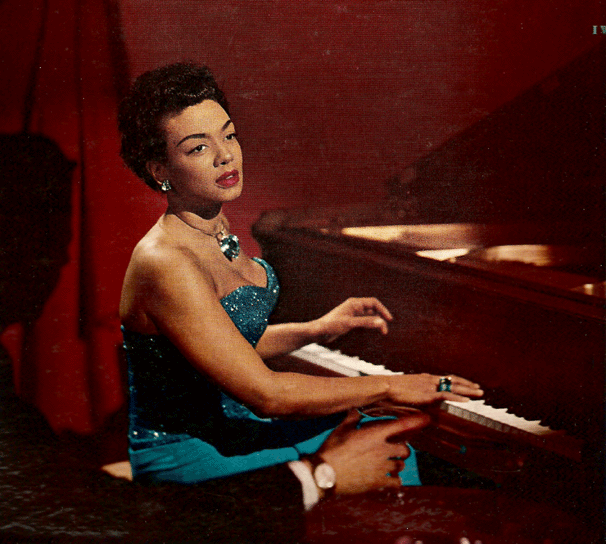
The play’s title is lifted from a famous quote by the late entertainer and Civil Rights activist, Hazel Scott, who posited, “Who ever walked behind anyone to freedom? If we can’t go hand in hand, I don’t want to go.” The show coincides with the 40th anniversary of Congress passing landmark Civil Rights legislation in 1964.

Max Sparber
As a foundation for the play, OTOC did what it does best: organize “house meetings” where citizens shared their anecdotes and perspectives on racial division. Sparber and Nu Beginning attended the meetings, held at OTOC-member churches city-wide, and the ensuing conversations informed the non-narrative play, which is structured as a series of thematic monologues, dialogues and songs.
“I built my script based on some of these interviews, along with some broader themes,” said Sparber, whose Minstrel Show dealt with an actual lynching in early Omaha. “We got some great stories out of it. The people who came to the meetings were very interested in the subject and I certainly got some stories that were invaluable. More than anything, we wanted this play to be specific to Omaha, and therefore we wanted its origins to be within Omahans’ own experiences.”
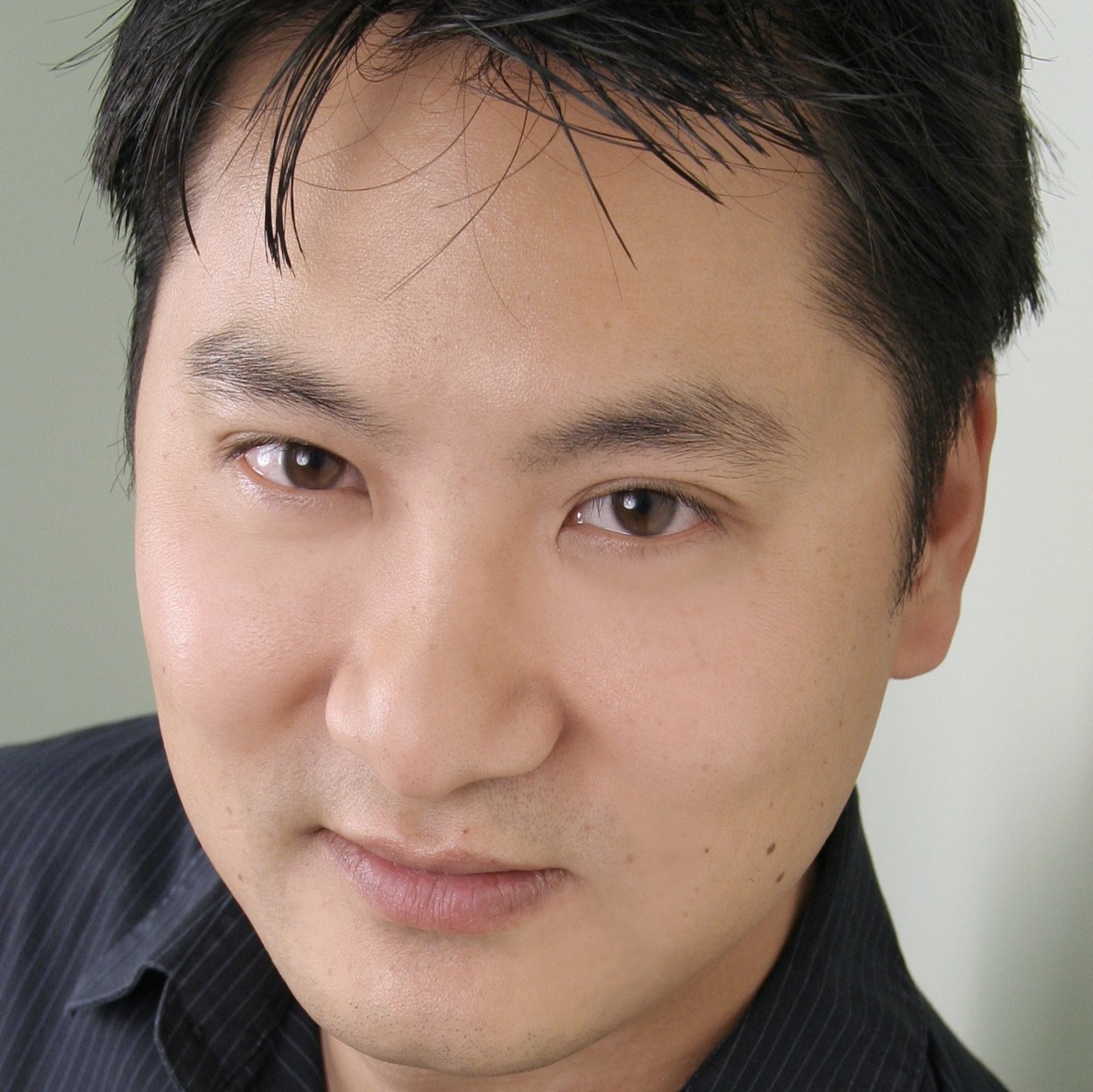
Surfacing prominently in those sessions was the theme of division and how by going unspoken it only deepens the divide. “This is a town that’s very separated geographically. The majority of blacks live in north Omaha. The majority of Latinos live in south Omaha. The majority of whites live in west Omaha. And, as a result, there’s not a lot of crossover,” Sparber said. “It’s really sad how closed up Omaha is,” said the play’s director, Don Nguyen, lately of the Shelterbelt Theater.
“Along with that, race is quickly becoming an undiscussed element in Omaha,” added Sparber. “I think a lot of whites believe we live in a post-racism world and, therefore, it’s not a subject that needs to be addressed. Whereas, black people experience this as not being a post-racism world at all and are kind of startled by this other viewpoint. So, there’s this disconnection based on understanding.”
 |
Two lines in the play comment on this dichotomy: “I think a lot of white people feel that racism ended in the Sixties, with Martin Luther King. The only thing about racism that ended in the Sixties WAS Martin Luther King.”
Any impression all the work is done alarms Betty Tipler, an OTOC leader. “A lot of us are in our comfortable spaces. We go inside our houses with our two garages and we think things are okay. Things are not okay. The issue of race has not been cured and, if we’re not careful, things will go backward,” she said. Despite the illusion all’s well, she added, the play reminds us people of color still contend with bias/discrimination in jobs, housing, policing. “We may as well face it.”
According to OTOC leader Margaret Gilmore, the process the play sprang from is at the core of how the organization works. “We’re about bringing different people in conversation with each other to talk about what’s in their hearts and minds,” she said. “It’s a process of learning to talk to each other and listen to each other and then seeing what we have in common to work together for change.” She said the meetings that laid the play’s groundwork crystallized the racial gulf that exists and the need to discuss it. “We don’t talk about this stuff enough. We don’t talk about it on a personal level and how it affects us, which is what I think this play gets to. When we ask the right questions and we’re willing to listen, then the experiences that people tell in their own words are dramatic and provocative.”
“It’s very important we listen to real people’s stories. The only way you can come up with the truth is to go to the people. We haven’t watered down or changed their stories, but literally portrayed them,” said OTOC’s Tipler, administrator at Mount Nebo Missionary Baptist Church, which hosted some of the house meetings.
Indeed, the vignettes carry the ring of reportorial truth to them. Most compelling are the monologues, which unfold in a rap-like stream-of-consciousness that is one part slam-poet-soliloquy and one part from-the-street-rant. Some stories resemble the bared soul testimony of people bearing witness, yet without ever droning on into didactic, pedantic sermons, lectures or diatribes. The language sounds like the real conversations you have inside your head or that spontaneously spring up among friends over a few drinks. Often, there’s a sense you’re listening in on the privileged, private exchanges of people from another culture as they describe what’s it like to be them, which is to say, apart from you.
Don Nguyen
For director Nguyen, the “real life testimonies” add a layer of truth that elevates the material to a “more powerful” plane. “I think it will definitely work for us that people know this is real. It’s not an overall work of fiction. This is real stuff.”
The misconceptions people have of each other are voiced throughout the work, often with satire. You’ve heard them before and perhaps been guilty yourself assigning these to people. You know, you see an Asian-American, like Nguyen, and you reflexively think he’s fluent in Vietmanese or expert in martial arts, some assumptions he’s endured himself. “Oh, yeah, my personal experiences definitely help me to relate,” he said. “Growing up in Lincoln I got in fights all the time. People making fun of me. Thinking I knew kung-fu or I only spoke Vietmanese, which is not true. But it’s not just the blatant racism. It’s the underlying stuff, too. Sometimes it’s not even intentional, but it’s just there. And it’s that gray stuff I think these pieces capture pretty well and that people need to hear more of.”
In the vignette Tricky, some women lay out the subtle nature of racism in Omaha. “…it’s like a fox. It’s tricky. It’s sly. You’ll be standing in line at a store, and the cashiers will be helping everybody except you…and you’re the only black person in line…and because it’s so sly, I think white people don’t notice it at all.”
The play also looks at racism from different angles. One has a guilt-ridden realtor rationalizing the unethical practice of steering, which is another form of red lining. The other has a new generation bigot defending his right to espouse white pride in response to black heritage celebrations. The concept of reverse racism is explored in the real life case of students protesting their school’s special recognition of black achievers at the expense of other minorities. And the wider fallout of racism is examined in the confession offered by an insurance agent, who reveals rates for car-house coverage are higher for residents of largely black north Omaha, including whites, because of the district’s perceived high crime rate.
The vignettes touch on ways race factors into every day life, whether its the unwanted attention a black couple attracts while out shopping or the hassle African-American men face when driving while black, or DWB, which is all it takes to be stopped by the cops. The shopping piece uses humor to highlight the absurd fears that prompt people to act out racist views. Music is used as heightened counterpoint to the boiling frustration of the DWB victim, whose cries of injustice are accompanied by the soulful strains of doo-wop singers.
Bridging the play’s series of one-acts are songs by Nu Beginning, whose music is a melange of hip-hop, R & B, soul, pop and gospel. A little edgy and a lot inspirational, the music drives home the unity message with its uplifting melodies, which are sung by choruses comprised of diverse singers.
Some pieces are heavier or angrier than others. Some are downright funny. And some, like Mirrors, speak eloquently and wittily to the concept of how, despite our apparent differences, we are all reflections of each other. Here, Nguyen employs a diverse roster of performers to represent the mirror symbol. Perhaps the most telling piece is Function. This beautifully-rendered and thought-provoking discourse is delivered by an architect, who suggests racism has survived as both an ornament of the past, akin to a Roman column on a modern house, and as a still-functional device for those in power, as when a politician plays the race card.
Whatever the context, there’s no dancing around the race card, which is just how Nguyen likes it, although when he first read the script he was surprised by how brazenly it took on taboo material, such as its use of the N-word.
“Typically, a script or show sugarcoats the issue of race. It’s a very cautious topic. You don’t want to offend or patronize people by saying the wrong stuff. But this piece is much different. All of its pretty much in your face,” Nguyen said. “What I mean is, it’s very direct. Max (Sparber) makes no bones what he’s writing about, which is great. It’s a big risk to take as a writer, but essentially it’s the most interesting path to take, too. And I’m all for stirring up trouble. I’m fine with that.”
OTOC’s Betty Tipler feels racial division is too important an issue to be coy about. “We’ve got to come out of the closet, so to speak, and talk about racism and differences” she said. “We tend to shy away from talking about it, but it won’t go away. We have got to come together, put it on the table, take a look at it and deal with it — no matter how much it hurts me or how much it hurts you. But before we can do that, we’ve gotta put it out there. We won’t get anywhere until we do. And I believe this play is a step toward doing that.”
Christy Woods, a singer/songwriter with Nu Beginning, said the play is about hope. “I believe if people are open to change, we can go hand-in-hand to freedom. Just because I’m this and you’re that, doesn’t mean I have to be one step behind you. Why can’t we go together? We want people to feel inspired to go out and make a change. We want to touch, but also to teach, and I believe this musical does that.”
Nguyen hopes the play attracts a mixed audience receptive to seeing race through the prism of different experiences. “That’s where I’m trying to aim the show. As we go through these vignettes, I want some people to identify with them and some people to be like, ‘Oh, I didn’t know that.’ That’s what I want to create.”
Related articles
- Back in the Day, Native Omaha Days is Reunion, Homecoming, Heritage Celebration and Party All in One (leoadambiga.wordpress.com)
- Kevyn Morrow’s Homecoming (leoadambiga.wordpress.com)
- The Ties that Bind, One Family’s Celebration of Native Omaha Days (leoadambiga.wordpress.com)
- Omaha Native Steve Marantz Looks Back at the City’s ’68 Racial Divide Through the Prism of Hoops in His New Book, ‘The Rhythm Boys of Omaha Central’ (leoadambiga.wordpress.com)
- Hey, You, Get Off of My Cloud! Doug Paterson – Acolyte of Theatre of the Oppressed Founder Augusto Boal and Advocate of Art as Social Action (leoadambiga.wordpress.com)
- Omaha Theater as Insurrection, Social Commentary and Corporate Training Tool (leoadambiga.wordpress.com)
- Polishing Gem: Behind the Scenes of the Beasley Theater & Workshop’s Staging of August Wilson’s ‘Gem of the Ocean ‘ (leoadambiga.wordpress.com)
- Arno Lucas, Serious Sidekick (leoadambiga.wordpress.com)
- Native Omahans Take Stock of the African-American Experience in Their Hometown (leoadambiga.wordpress.com)
- Native Omaha Days: A Black is Beautiful Celebration, Now, and All the Days Gone By (leoadambiga.wordpress.com)
- Luigi’s Legacy, The Late Omaha Jazz Artist Luigi Waites Fondly Remembered (leoadambiga.wordpress.com)
Kevyn Morrow’s homecoming
Up for best male actor in a musical at the 2011 Tony Awards was Omaha native Andrew Rannells in The Book of Mormon, the smash show from the creators of South Park that dominated the awards show. A few years before that another Omaha native, John Lloyd Young, was up for and won a Tony for his role in Jersey Boys. All of this reminded me of yet another stage thespian son of Omaha, Kevyn Morrow, who’s enjoyed his own share of theater success, albeit not starring on Broadway, though he’s appeared in several notable Broadway shows. He hasn’t landed a starring or featured role there yet, but that isn’t to say it still can’t happen. He has however made waves on The West End in London and in other theater strongholds. I wrote about Morrow when he was back in town to head the cast of the musical Ragtime for an Omaha Community Playhouse production. The show set records and Morrow and his fellow players received rave reviews. My story for The Reader (www.thereader.com) charts his journey as a workingman actor in musical theater just outside the heights of Broadway stardom.
More recently, Omaha native Q Smith (Quiana Smith) came back with the Broadway touring production of Mary Poppins to wow her hometown fans. You can find my story on her on this blog. These contemporary actors are following in the tradition of many others from here who’s found success on and off Broadway (Fred Astaire, Henry Fonda, Dorothy McGuire, Montgomery Clift, Marlon Brando, Sandy Dennis, Swoosie Kurtz). More will surface with time.
Kevyn Morrow’s homecoming
©by Leo Adam Biga
Originally published in The Reader (www.thereader.com)
Passion got actor Kevyn Morrow out of Omaha, onto Broadway and to London’s West End, and now it’s taken him home. His triumphant return this spring, by special engagement only, as Coalhouse Walker, Jr. in the smash Omaha Community Playhouse production of Ragtime has brought back a conquering hero from the world of theater. Nightly during the six-week run, ending this Sunday, he brings down the house to ovations. Every night is a coronation. In the greeting line afterwards, a reunion unfolds with handshakes and hugs from his childhood teachers, coaches, neighbors and friends as well as from total strangers. It’s a communal embrace that says, Bravo — for making it and sharing it with us.
The warm homecoming pricks his heart. “I treasure the response. I’ve had that kind of response before in my career, but it hasn’t affected me the same way that it does here. It’s kind of overwhelming. I really can’t explain it.”
Long before local wonder boy John Lloyd Young’s Tony Award-winning portrayal of Frankie Valli in Jersey Boys, Morrow paid his dues on Broadway. He was in the original companies of The Scarlett Pimpernel and Smokey Joe’s Cafe, a revival of Dreamgirls and the closing company of A Chorus Line. His big break came years earlier in the national touring company of Chorus Line. He’s fresh off London stage gigs in 125th Street and Ragtime, for which his Walker performance earned him an Olivier Award nod. He’s made films and recurring guest appearances on television. He’s performed with legends Phylicia Rashad, Audra McDonald, Ann-Margret and Cher. But he’s still hungry, still filled with dreams. He wants it all and now that he’s felt the love from his homies, he wants more of that, too.
“I’ve done so much in theater. I love it. It’s my first passion,” said the Northwest High grad. “I’m not where want to get to yet. I’m still on my way. I would like a little more notoriety in terms of my New York work, which seems like it’s coming. It’s just a longer process as a black actor. It’s been a long road — Lord. Anything I may achieve nobody will be able to take it away from me because I will have worked a long time to get there. I got there honestly and with a lot of work. I own it.”
As yet unrealized dreams are to star in his own TV series or land a fixed role in one. He’d like to do more films. Directing for theater — he’s helmed shows here (Chorus Line at the Center Stage) in L.A. and New York — is another ambition. “I would love to come back here and direct something. That’s another segment of my career I’d like to do more of, but I’m still working on performing.”
His Ragtime turn in Omaha, where he was born, raised and married, has whet his appetite for more homecomings. “I really need this more in my life,” he said. “The slower pace. The easier existence. I don’t know how I’m going to achieve that…”
Recognized as a precocious talent here in early adolescence by Claudette Valentine, his piano teacher and church’s music director, Morrow performed in Omaha Public Schools and community theater shows and Omaha Ballet productions. Retired OPS drama teacher Jim Eisenhardt cast him in white roles when that sort of thing raised the ire of bigots. His work with local dancing instructor Valerie Roche led to a Joffrey Ballet scholarship for a summer training program in New York. “I wanted to be the next Arthur Mitchell or the black Mikhail Baryshnikov.”

Seeing his first Broadway shows convinced him the theater was his destiny. His commitment to an actor’s life came when he called his folks to say he was quitting college to tour with Chorus Line. “They realized I wasn’t calling for their permission, I was calling for their blessing. It was my first adult decision. Were they amused? No. Were they supportive? Eventually. They were parents.” They’ve since embraced his career — seeing him perform in New York, Paris, London, etc.
That he’s made the role of Coalhouse Walker, Jr. his own speaks to the deep conviction he feels for what he felt fated to play. “When I first saw the movie Ragtime I remember going, ‘God, I would love to play a role like that — an articulate black man in a period piece who’s not chucking and jiving and carrying on. I can’t think of another leading black male musical role where he is your hero- protagonist. It’s a rarity. I knew I was going to play that role someday. I just knew. When it happened to come about for me it seemed serendipitous.”
His experience with it here reminds him good things follow good thoughts.
“I expected it to be really, really good because this is one of those shows people are dying to do. I figured the cream of what Omaha has to offer would be assembled and that’s the case. I didn’t expect it to be as really wonderful as it is. The thing that’s really getting me is these actors really wants to be here. The energy of them coming together…and seeming to enjoy me being with them — it’s like this give and take, back and forth. We’re having a blast. I know I am.”
It’s also confirmation dreams come true for those driven enough to see them through. “You have to believe. You have to have the passion and you have to see it, is what I’ve found,” he said. “And when I don’t see it is when it doesn’t transpire.” He thinks it “would be the bomb” if his appearance here inspires others to follow their star. Dream on Ragtime man, dream on.
Related articles
- Great Plains Theatre Conference Grows in New Directions (leoadambiga.wordpress.com)
- Great Plains Theatre Conference Ushers in New Era of Omaha Theater (leoadambiga.wordpress.com)
- Tony Awards: Book of Mormon Wins Big, Neil Patrick Harris Rocks, & Spider-Man Still Funny! (eonline.com)
- John Beasley and Sons Make Acting a Family Thing at the John Beasley Theater & Workshop and Beyond (leoadambiga.wordpress.com)
- From the Archives: Golden Boy Dick Mueller of Omaha Leads Firehouse Theatre Revival (leoadambiga.wordpress.com)
- Song Girl Ann Ronell (leoadambiga.wordpress.com)
Change is gonna come: GBT Academy in Omaha undergoes revival in wake of fire

Mary Goodwin-Clinkscale
One of my favorite personalities from the last few years is Dr. Mary Goodwin-Clinkscale, who applies her passion for the Lord, for youth, and for the arts in a dynamic educational program she runs called the GBT Academy. She is its heart and soul, but she has a lot of help by a lot of people who believe in her and her mission, which is really a ministry. I spent some time with her and her staff and some of the young people they work with as the academy prepped for a fund raiser performance to help restore the auditorium that a vandal-set fire partially destroyed. I first became aware of the academy at a program that featured their recreation of a famous incident in late 1960s Omaha. The sheer energy and conviction the performers brought to the performance made me take notice. Then, a year or two later when I read in the paper about the fire and the academy’s intention to go on, I decided it was time I wrote about the program. I still hadn’t met Dr. Clinkscale or Dr. C as she’s called, but no sooner than I did then I realized she needed to be the focus of my story. Her commitment to the program is unwavering. I still want to tell an expanded story about her one day. But for now my piece below for The Reader (www.thereader.com) will have to do.
GBT Academy in Omaha undergoes revival in wake of fire
©by Leo Adam Biga
Originally published in The Reader (www.thereader.com)
Mary J. Goodwin-Clinkscale considers herself “a survivor.” That’s why when a June 29, 2008 arson fire destroyed the auditorium of the Greater Beth-El Temple, the black Apostolic church that sponsors her nonprofit GBT (Growing and Building Together) Academy of the Arts at 1502 No. 52nd St., she and fellow church officials resolved to rebuild. Proceeds from GBT’s July 2 7 p.m. Through the Fire program at the UNO Strauss Performing Arts Center will help refurbish the auditorium, now just a shell awaiting a new floor, ceiling and stage, plus seating.
The fire deferred the dream of turning the former Beth Israel Synagogue into the church’s new sanctuary and GBT’s new home. Services unfold at the church’s old 25th and Erskine site in the interim. Greater Beth-El purchased the abandoned 52nd St. property in 2004 in the largely white Country Club neighborhood. The church runs the academy along with after-school and day-care programs from the mid-town campus. The church’s extensive landscaping has transformed what was an eyesore into a showplace. Interior work to the pale brick building converted offices into classrooms and updated HVAC systems. Volunteers donate all the work.
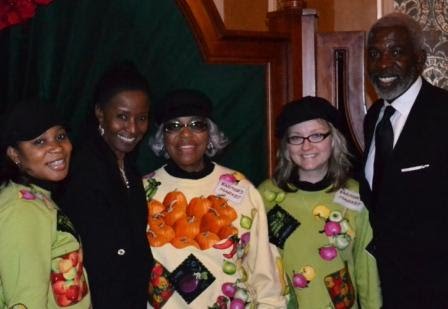
Academy executive director Goodwin-Clinkscale — Dr. C — has built a dynamic, multi-media, Christian-based curriculum serving at-risk, school-age youths. Her staff conducts music, dance, drama, speech, creative writing, art classes. GBT members are known for their poise and enthusiasm. They really know how to project. Life skills are integrated into lessons. She coined the Academy’s mantra, “Through the performing stage to the stage of life,” and its mission “to equip youth with the character values of respect, discipline, teamwork, perseverance and leadership through diverse forms of artistic expression.” She said, “We’re trying to instill things that will take these children where they want to go.”
The neighborhood teens who set the fire aided the clean-up as part of their community service work. Dr. C said, “I really believe the kids are sorry for what they did.” GBT will dramatize the story of the fire and its consequences at UNO. “We’re trying to show that if there were more places like this, then youths would have a place to go after school,” she said. “Our plea is, Help us to help them. That’s what this is all about. We’re trying to offer a place of safety, of refuge.”
Assistant Ella “Pat” Tisdel said GBT provides avenues for kids to express themselves “in constructive rather than destructive ways. We’re seeing that if we can pull that creativity out of children it helps them to feel better about themselves and they actually do better in school.”
Mary Goodwin Clinkscale in the center
The Academy was incorporated in 2000 but Dr. C’s used the arts as empowering tools since ‘78. She produces/directs its energetic performances. Adults and kids collaborate on script, choreography, music, set design, costumes. African-American themed programs, some secular, others predominate. Performers as young as 6 share the stage with 20-somethings. Her five sons are GBT grads, including veteran television actor Randy Goodwin (Girlfriends). He’ll be back for the show along with special guest, stage/film/TV actor Obba Babatunde (Dreamgirls original cast).
Dr. C’s showcased GBT’s diverse talents at such high-profile gigs as the Holiday Lights Festival, Omaha Entertainment Awards and Omaha Black Music Hall of Fame. In 2006 her troupe performed a Tuskegee Airmen tribute in Milwaukee, Wis.
For this proud matriarch, the UNO show’s title refers not only to GBT rising-from-the-ashes and the arsonists finding redemption but to her own crucible. She was a high school drop-out and married teenage mother before turning her life around. A daughter of Arkansas sharecroppers, she worked the fields in the Jim Crow South, picking 300 pounds of cotton per day at age 10. “It takes a lot of cotton to weigh 300 pounds,” she said. She endured the back-breaking labor. Anything that doesn’t kill you makes you stronger, she believes.
She survived segregation and poverty. “I’ve always wanted more in life because we had nothing,” she said. She survived a fire to her family’s home. She was living with her grandmother then — her mother and uncles having gone to Omaha to work packinghouse jobs. After the fire Dr. C’s late mother brought her here, where she grew up in the Spencer Projects. She learned tough lessons from her Big Mama, a cook at the old Paxton Hotel downtown. “I got my work ethic from her.”
Dr. C earned her GED at Metropolitan Community College, where she won a scholarship for continuing education. “I went from there and started doing things.” Doctorates in theology and organizational administration from the International Apostolic University of Grace and Truth in Columbus, Ohio followed.
Her academic and youth ministry achievements only came after a born-again experience at Greater Beth-El in 1974. She was adrift then, without a church. “I just didn’t know what direction to go and the Lord led me to these people here,” she said. “I’d been looking for a church that offered something more than fashion or just a place to go hang out. I wanted truth.” She found it. “Before, my life didn’t have any meaning. There was no purpose until I came to the church. That’s when my life really began.” After being baptized she assumed lay leadership roles.
She was inspired “to implement” the teachings of her pastor in skits that engaged youth. “When I see a need, I go after it,” she said. Despite no formal arts background she said she felt prepared because “I’ve always been attracted to beauty. Raising my kids, decorating my home, making a garden, all that to me is an artistic expression. In everything you do there’s an art form to it. You just don’t throw things together. All my life I’ve been able to take a little something and make a lot out of it. I always strive for the best.” Two-hundred plus performances worth.
A perfectionist and task-master who describes herself as “hard but fair,” she views next week’s benefit as GBT’s coming-out party. “We started in January putting this together and we have worked our fingers to the bones on this production. It’s showcasing all the different facets of our talents. We want people to see there is something going on in this big historic building we can all be proud of.”
Her work with GBT has been recognized by the YWCA, UNO, Woodmen of the World, et cetera. GBT just received its first Nebraska Arts Council grant. She believes big things are ahead. She keeps meaning to step aside but, she said, “I never leave a job undone. I have to complete it.” As the soul song goes, “A Change is Gonna Come,” and she wants to be there to see her vision through the fire.
Related articles
- The Ties that Bind, One Family’s Celebration of Native Omaha Days (leoadambiga.wordpress.com)
- An Omaha Legacy Ends, Wesley House Shutters after 139 Years – New Use for Site Unknown (leoadambiga.wordpress.com)
- Back in the Day, Native Omaha Days is Reunion, Homecoming, Heritage Celebration and Party All in One (leoadambiga.wordpress.com)
- Great Plains Theatre Conference Ushers in New Era of Omaha Theater (leoadambiga.wordpress.com)
- Jo Ann McDowell’s Theater Passion Leads Her on the Adventure of Her Life: Friend, Confidante, Champion of Leading Playwrights, Directors, Actors and Organizer of Major Theater Festivals and Conferences (leoadambiga.wordpress.com)
- Native Omahans Take Stock of the African-American Experience in Their Hometown (leoadambiga.wordpress.com)
- Native Omaha Days: A Black is Beautiful Celebration, Now, and All the Days Gone By (leoadambiga.wordpress.com)
- After a Steep Decline, the Wesley House Rises Under Paul Bryant to Become a Youth Academy of Excellence in the Inner City (leoadambiga.wordpress.com)
- Overarching Plan for North Omaha Development Now in Place, Disinvested Community Hopeful Long Promised Change Follows (leoadambiga.wordpress.com)
- Luigi’s Legacy, The Late Omaha Jazz Artist Luigi Waites Fondly Remembered (leoadambiga.wordpress.com)
What happens to a dream deferred? John Beasley Theater revisits Lorraine Hansberry’s “A Raisin in the Sun”
It’s only in the last few years I finally saw both a stage production and a television production of the classic play A Raisin in the Sun, and while I found each impressive, the thing that really turned me onto the work was reading Lorraine Hansberry’s famous work. Its intensity and truth burn on the page. After reading the play I knew I had to see a performance of it, and that motivation is what led me to write the following piece for The Reader (www.thereader.com). When I was still in the good graces of Omaha’s Beasley Theater’s I watched part of a rehearsal there and then saw a performance of the play in its entirety. Not too far removed from that experience I caught the TV version with Phylicia Rashad, Sanaa Lathan, Audra McDonald, and Sean Combs. The themes of Raisin resonate with me on many levels, but it is its dramatic interpretation of the Langston Hughes line, “What happens to a dream deferred?” within the context of a man and family struggling to get their small piece of the American Dream that deeply affects and disturbs me.

Ruby Dee and Sidney Poitier from the 1961 film adaptation of Hansberry’s play
What happens to a dream deferred? John Beasley Theater revisits Lorraine Hansberry‘s “A Raisin in the Sun”
©by Leo Adam Biga
Originally published in The Reader (www.thereader.com)
After its 1959 opening at the Ethel Barrymore Theatre in New York, A Raisin in the Sun was the talk of Broadway and the play’s 28-year-old author, the late Lorraine Hansberry, was the toast of the theater world. Hansberry became the first black whose work was honored with the New York Drama Critics Circle’s best play award.
The Youngers, a poor, aspiring black Chicago tenement family, are the prism through which she looks at the experience of oppression in segregated USA. Her modern story of assimilationist pressures and deferred dreams offers a realistic slice of black life unseen till then. The politically-aware Hansberry, who studied under W.E.B. DuBois and wrote for Paul Roberson’s Freedom magazine, took the play’s title from a Langston Hughes poem that asks: “What happens to a dream deferred. Does it dry up, like a raisin in the sun? Or fester like a sore…Or does it explode?”
Lena is the stalwart, widowed matriarch holding her family intact. Ruth, the eldest daughter, is the beleaguered wife of Walter, a bitter chauffeur striving to move up in the world. Beneatha, Ruth’s younger sister, is a collegian who rejects God and embraces Africa. Her hopeful beau, George Murchison, is the bourgeois American counterpoint to her sweet-on admirer, Joseph Asagai, a politically-minded Nigerian.
When the prospects of a fat insurance check threaten tearing the family apart, Lena acts rashly and buys a house in a restricted white neighborhood. Then, just as Walter’s dreams of owning a business are crushed, the alarmed residents offer the Youngers a buy-out. What Walter will do next is at the crux of the family crisis.
With its successful Broadway revival in 2003-04, Raisin proves its themes are still relevant today and that’s one reason why the John Beasley Theater is staging it now through October 10. While not revolutionary, Raisin reveals some hard truths.
“What we have for the first time with Hansberry in the ‘50s is a dignified, realistic portrayal of the complexities of black life,” said poet and essayist Robert Chrisman, chair of the Department of Black Studies at the University of Nebraska at Omaha and founding editor of The Black Scholar. “With Walter, you have the young black man who wants his chance. Mama (Lena) represents the stolid, powerful, tenacious will of black people to keep on keeping on. She is the moral center of the play. These are all realistic, engaging portraitures of black people. You don’t have any stereotyped servants. I think dignity is key in Raisin because it’s finally to assert his fundamental human dignity Walter turns down the buy out.”
For Chrisman, “the single strongest theme in Raisin is the tenet that if you have your dignity, you have the potential for everything and if you do not maintain and courageously uphold your dignity and freedom as a human being, you have nothing. And I think all of that was new in the portraiture of blacks in white theater. What preceded it up to the 1950s was usually something based on the minstrel-entertainment genre — the shuffling chauffeur, the maid, the bell hop, the clown. In black theater you had legitimate efforts at portraying blacks, but I think it’s with Hansberry you get the breakthrough. She sets the stage for the subsequent work of August Wilson and Charles Fuller, who deal with issues of generations, dreams and career aspirations and frustrations. In a way, she did for modern black drama the same thing that Richard Wright did for the modern black novel.”
Directing the Beasley production is UNO dramatics arts professor Doug Paterson, who said the play “became the springboard for black theater” in the latter half of the 20th century. “Black theater exploded in all kinds of directions,” he said. He added that the militant dramatists who followed Hansberry, such as Amiri Baraka, were critical of her “drawing room kind of drama” when they “felt what was necessary was to be bold…different…experimental.” However, Chrisman reminds, “Baraka was writing at the cusp of the ‘60s and the movement of this more militant vision forward. I think what Hansberry is saying is that whether Walter goes down as a freedom rider or starts a riot is immaterial. Asserting his dignity is what matters.”
Although it stops short of radical redresses to racism and inequality, her work is full of red hot anger and indignation. Paterson said, “She revealed so much. She anticipated sort of everything that happened in civil rights, black power and integration.” He said the original production was also influential in terms of the contributions to American theater and film that its cast and crew have made. Among the lead actors, Sydney Poitier, Ruby Dee, Claudia McNeil, Ivan Dixon and Louis Gossett are household names. Douglas Turner Ward is a co-founder of the Negro Ensemble Theater. Lonne Elder III is a major playwright. Director Lloyd Richards is perhaps Broadway’s most acclaimed dramatic interpreter. “It’s an extraordinary play for what it did historically. That’s why we study it,” said Paterson, who’s taught it for years. “I always wanted to give it a shot” directorially.
Chrisman well recalls the impact of the 1961 film version, whose adaptation Hansberry wrote. “There was a tremendous surge of pride and dignity in audiences,” especially black audiences, at the time. The concerns of Raisin, he said, still reverberate today. “I think in some ways it’s still very contemporary because you still have the same kind of interest in the African experience that Beneatha had in young folks today. And you still have, perhaps even more desperately, the need of the young black man to start a business of his own.”
The play ends with the Youngers deciding to move where they’ll clearly be unwelcome, but it doesn’t show the struggle of blacks living in a white enclave organized to oust them. As Chrisman said, “There should be a sequel to it, because it ends on the affirmative note…You could have another play that shows the ostracism, harassment, graffiti, coldness and so on that have been reported by first-generation integrating blacks.” And that’s ironic, as the playwright’s own family underwent that very trial by fire when she was a young girl. Her educated parents were social activists in Chicago and when their move into a white section met with resistance, they fought the injustice all the way to the Supreme Court.
For her next play, The Sign in Sidney Brustein’s Window, Hansberry disappointed some by telling a Jewish story. She died of cancer, at age 34, the day that play closed on Broadway. Other works were posthumously adapted into books and plays by her former husband, Robert Nemiroff, a writer and composer. In 1973, Nemiroff and Charlotte Zaltzberg adapted her first play into the Tony-winning musical Raisin.
Related articles
- Philip Rose, ‘Raisin’ and ‘Purlie’ Producer, Dies at 89 (nytimes.com)
- Anthony Chisholm is in the House at the John Beasley Theater in Omaha (leoadambiga.wordpress.com)
- Hansberry Project honors Regina Taylor (seattletimes.nwsource.com)
- Alicia Keys helping produce a Broadway play (ctv.ca)
Anthony Chisholm is in the house at the John Beasley Theater in Omaha
For a six-seven year period I devoted much time and energy to reporting on Omaha native John Beasley, a respected film, television, and stage actor and the director of his own namesake theater in his hometown. You’ll find on this blog several of the stories I did about John and his theater, including productions mounted there, and various guest artists who performed there. The following story for The Reader (www.thereader,com) is about one of those guest artists, actor Anthony Chisholm. My reporting about Beasley and his theater came to an abrupt end a few years ago when he took such strong exception to a review I wrote of one of his productions that it spoiled that particular beat for me. For all I know, he’s forgotten about the incident. But the verbal excoriation he gave me was so unsettling that I haven’t had the urge or the guts to contact him again, much less set foot in his theater. I did right by John and his theater for years, and he knows it, and so I do hope we can be friends again in the sense of my covering his work. The ironic thing is that that review was the only review I ever wrote – everything else was a feature or profile, and he never had any problem with those. Can’t we all just get along?
By the way, he’s picked up a recurring part in the HBO drama Treme and he hopes to have his recurring role in the NBC serio-comic series Harry’s Law continue. He continues to develop a feature film on Marlin Briscoe, the NFL’s first black quarterback.
Anthony Chisholm is in the house at the john Beasley Theater in Omaha
©by Leo Adam Biga
Originally published in The Reader (www.thereader.com)
Actor Anthony Chisholm, a great interpreter of the late August Wilson’s work, is in Omaha for the second time in three years at the invitation of the John Beasley Theater. Chisholm’s originated roles in several Wilson plays about the African-American experience. He was a close friend of the playwright.
Chisholm once played opposite JBT founder John Beasley in a regional theater production of Wilson’s Two Trains Running. A friendship was born. In 2004 Chisholm came here to be part of the ensemble cast for Wilson’s Jitney at the JBT. Now, fresh off a Tony nomination for his featured role in Wilson’s Radio Golf, Chisholm is back at the JBT in Athol Fugard’s Master Harold…and the Boys. The show opens October 26 and runs through November 18.
This marks the first time that Chisholm, a veteran of regional theater, off-Broadway, Broadway, television and film, has worked in a piece by the South African Fugard. Chisholm met Fugard through the late director and drama instructor Lloyd Richards, a key figure in each man’s life. Chisholm studied under Richards, who brought Fugard’s work to the States at the Yale School of Drama and on Broadway.
Chisholm, a resident of Montclair, N.J., was destined to be an actor from the time his mother, an unpublished poet and novelist, encouraged him to recite prose and verse as a child in his hometown of Cleveland, Ohio. A young Chisholm wowed family, friends and fellow congregants at East Mount Zion Baptist Church with his resonant bass voice and perfect diction.
“I remember my uncle Pete telling me that was my ‘calling.’ He said it in such a deep and placed way that that stuck somewhere back in me,” Chisholm said.
One of Chisholm’s favorite childhood haunts was the Karamu House, a social settlement offering arts and crafts, dance and theater. The Karamu House Theatre, whose notables have included Langston Hughes, Ruby Dee, Brock Peters, Ivan Dixon and Halle Berry, gained fame for its integrated productions.
Intent on an architectural career, Chisholm entered Case Western Reserve University. He waited tables at a posh Washington, D.C. nightclub, the Junkanoo, to earn enough so he could continue his studies. This was the mid-1960s. As the Vietnam War grew hotter and the draft loomed larger, Chisholm’s number came up and he landed in the U.S. Army. His commanding presence found him a drill sergeant — barking orders to a regiment of 1,500 old-timers.
While in uniform he won a dramatic reading contest that earned him a scholarship to Yale. He never used it. On a leave home he visited the Karamu and found himself shanghaied into a reading of Douglas Turner Ward’s A Day of Absence. Cast on the spot, he had to beg off due to his military commitment. But Chisholm recalled the director encouraging him by saying, “’When you get out of the Army you come back here — we’re going to get you started.’ And so it was.”
Not before Chisholm got his orders for Nam. He served as an M-60 gunner on an armored personnel carrier with the 4th Armored Calvary, 1st Infantry Division. He saw his share of firefights. He survived the shit and just six months after returning home he began doing rep at the Karamu. Things happened fast. Paramount Pictures came to Cleveland to shoot a feature, Up Tight!, and he was cast alongside Roscoe Lee Browne and Raymond St. Jacques. Seven more film roles came in short order, including a pair of cult classics — Putney Swope and Where’s Poppa?.
He’s continued to act on the small and big screen, including parts in Beloved and in the new Adam Sandler-Don Cheadle film, Reign Over Me, playing opposite Cicely Tyson. He’s also done many guest shots on episodic TV and played a recurring character, Burr Redding, in the acclaimed HBO series Oz. But he’s mainly a stage actor. As a young man he hooked up with the Negro Ensemble Company, where he studied under Richards in a master class. He’s gone on to act with such leading theaters as the Goodman and Steppenwolf in Chicago, the Mark Taper Forum in Los Angeles and the Seattle Repertory. Then there’s his association with August Wilson, whom he first met in 1990. He considers himself a disciple of Wilson’s.
“There was something very holy about him. He was a prophet-philosopher. He was just this very unusual individual. If you read his writing so many of the things he says in storyline, as characters speaking, are so philosophical and deep,” Chisholm said. Doing Wilson, he added, “has made me a beter actor without a doubt because working with well-written material brings out the best in you.”
An actor’s journey is all about discovery — about one’s self, one’s craft. It’s very much a life-long, self-taught process. “You teach yourself and you borrow from observation and every now and then you’re informed of something — an eye-opener,” Chisholm said. “So, yes, it’s always continuous.”
Arriving at the truth is the goal. It means being vulnerable and letting go.
“I know my own truth serum,” he said, “and if I don’t believe it, nobody else is going to believe it. Each role, as I move along, gets more truthful. You have to listen. I’ve been working on listening more. I don’t even think when I go out on stage or in front of the camera. I just throw myself out there. That’s a conditioning I’ve got to at this point, where I try to keep my head clear — a blank slate.
“I don’t care if I have a million lines, I don’t think about those words. As I observe and I feel, when it’s time to respond, it vomits out. The words will be there because I know the words back and forth. And that’s the way we are as people. Stuff comes out of us as we bounce things off one another.”
Related articles
- Polishing Gem: Behind the Scenes of the Beasley Theater & Workshop’s Staging of August Wilson’s ‘Gem of the Ocean ‘ (leoadambiga.wordpress.com)
- Back in the Day, Native Omaha Days is Reunion, Homecoming, Heritage Celebration and Party All in One (leoadambiga.wordpress.com)
- Great Plains Theatre Conference Ushers in New Era of Omaha Theater (leoadambiga.wordpress.com)
- Playwright/Director Glyn O’Malley, Measuring the Heartbeat of the American Theater (leoadambiga.wordpress.com)
- Playwright John Guare Talks Shop on Omaha Visit Celebrating His Acclaimed ‘Six Degrees of Separation’ (leoadambiga.wordpress.com)
- What Happens to a Dream Deferred? Beasley Theater Revisits Lorraine Hansberry’s ‘A Raisin in the Sun’ (leoadambiga.wordpress.com)
- Yolonda Ross is a Talent to Watch (leoadambiga.wordpress.com)
- Kevyn Morrow’s Homecoming (leoadambiga.wordpress.com)
- Crowns: Black Women and Their Hats (leoadambiga.wordpress.com)
Omaha theater as insurrection, social commentary and corporate training tool
My usually eclectic blog has been theater heavy this week because I decided to celebrate the 2011 Great Plains Theatre Conference, which ends June 4, by sharing some of my theater stories from the recent and not so recent past. I’ll continue posting theater stories well after the conference closes because I discovered I have a nice cache of them, but I’ll also be back to showcasing the diversity of my work that regular followers have come to expect. I did the story below for The Reader (www.thereader.com) and it’s a look at how some Omaha theater professionals variously utilize the art form as insurrection, social commentary and corporate training tool.
Omaha theater as insurrection, social commentary and corporate training tool
©by Leo Adam Biga
Originally published in The Reader (www.thereader.com)
Making Images
Something subversive happened in the Old Market one recent Saturday evening.
From out of the blue, pedestrians converged on sidewalk corners and molded their bodies into dramatic sculpted “images.” One image included a man on his back cringing in terror as an assailant stood over him with a raised boot. Another posed father-and-son partners sealing a deal with a handshake that suddenly, inexplicably broke. A third linked people in a solid human chain until some unseen force rudely disturbed it.
If the symbolic frieze frames did not adequately convey their message of oppression, someone hanging anti-Initiative 416 (Defense of Marriage Amendment) signs around the individuals did, including one placard labeling the assault victim as a “Gay Man.” Just to be sure, another demonstrator handed out anti-416 leaflets.
These human tableauxs, so suggestive of figurative sculptures taking shape in front of your eyes, were in fact street theater pieces being used to focus awareness on the divisive 416 measure. The unfolding scenes were meant to make a statement, draw attention and engage people in dialogue about the issue. As the theater action progressed that night, a few curious passersby did stop to stare and proffer off-handed remarks. Then, when a plant in the crowd posing as an antagonist began spouting Biblical admonitions about same sex marriage and another plant posing as an initiative supporter began refuting his every protestation, some onlookers vigorously joined the debate on either side.
The ensuing discussion was the moment when this unorthodox piece of theater melded with genuine crowd reaction and, in so doing, accomplished exactly what organizers intended.
The Boal Way
So, was this event an example of art or theater or political activism? A little of all three, according to its instigator, University of Nebraska at Omaha Dramatic Arts Professor Doug Paterson. A self-described “insurrectionist” from the ‘60s, Paterson leads the UNO-based Thespis troupe (Theater Helping Everyone Solve Problems in Society), which follows many of the theories of Brazilian director Augusto Boal and his Theater of the Oppressed (T.O.) movement.
Boal, who came to Omaha in 1996 to give workshops, developed T.O. as a political tool to aid oppressed peoples around the world in their struggle for liberation. That night in the Market Paterson led his players in applying Boal’s image and invisible theater techniques (The professor played the antagonist in the crowd.). In keeping with their revolutionary roots, the drama that night was sprung – guerrilla-style – on unsuspecting folks in public spaces for the purpose of eliciting responses to a socially relevant issue. The ultimate aim, then or any time, is to incite action. Paterson organized a second theater event around the 416 measure at an October 31 rally on campus. Previous events have tackled the enduring UNO parking crisis.
Another Boal technique favored by Paterson – forum theater – utilizes workshops in which everyday people address problems at work or in their community through discussion and role playing led by a facilitator. In this interactive, outside-the-box approach to theater, the idea is to break down the Fourth Wall traditionally separating practitioner from audience and to build bridges connecting the two via conversation that works toward some resolution.
“Boal developed a theater that differs from the Western approach of pacifying you in the audience while actors describe a reality that you then take to be true. As an audience, you are powerless to change the story. You’re told, ‘This is the way it is,’ especially if you’re a minority. Boal believes in twisting things in a fun, open, community-based way that gives people a way to change the story. It’s what he calls interrogative theater. Rather than declare reality, it interrogates reality. It challenges the notion that it has to be this way — that it can’t be something else. It suggests new possibilities,” said Paterson, who has studied with Boal in Brazil.
Working It Out
Paterson has conducted forum theater workshops for many organizations, including the Omaha Public Schools, Creighton University and UNO. Workplace diversity issues are most commonly confronted, but not in the we talk-you listen vein.
“In forum theater we first play games to relax people and get them interacting with each other. Then we perform scenarios depicting some oppression, like a secretary given a last minute project by her boss when she needs to be someplace else,” he said. “The secretary tries overcoming her obstacle, but she just can’t. At some point we turn to the audience and say, “Okay, what would you do if you were her?’ Instead of having the audience sit there quietly we encourage them to talk to each other and share ideas to find some new solution.
“We encourage them to show how they would handle the situation differently, and it’s interesting because then it’s really them in the moment feeling sympathy for that character and the words almost become their own. Our attempt is to see if the audience is willing to be so moved and engaged by what’s happening that they really want to do something. Once they see something from their own life represented or dramatized, they think, ‘That’s me up there.’”
He said the response by participants is usually enthusiastic. “Often we can’t get through all the scenarios because there’s so much discussion. People get up and intervene and are very excited. I’ve never seen it fail.”
All the World’s a Stage
This grassroots theater has been a passion of Paterson’s since he discovered how deeply it resonated with his own emerging social consciousness amid the civil unrest in America a generation ago.
“I’ve been engaged in Theater for Living, Theater for Change or what has come to be known as Community-Based Theater since the mid-’70s,” he said. “I actively resisted the war in Vietnam while at Cornell University and it was during that time I formulated all my thinking about how culture works and how it is part of the oppressive process. I was really taken by the idea that if we could stake out new audiences, then we’d find a way to create a new culture in theater.
“Later, I started a small professional company in South Dakota whose purpose was to go into rural areas and engage farmers and ranchers in a kind of cultural salvage work where we found people’s stories and turned those into plays that we performed in these small towns.” He repeated the process when he came to UNO in 1981 – exploring the farm crisis with students in an original play (It Looks Good from the Road).
His students there included Omaha playwright Doug Marr and actress Laura Marr who, along with Paterson and others, formed the proletarian Diner Theater, which took this theater-happens-everywhere philosophy to heart. “
It drew a different group of people who might not have felt comfortable going to a regular theater setting,” Paterson said. “It was more neighborhood. It was more working class. It was site-specific. It was very exciting.”
Dramatic Results
The Marrs, along with fellow UNO theater grad Brent Noel, are adherents of Boal’s work and together operate a venture, Dramatic Results, incorporating the tenets of Boal in forum theater workshops at corporations.
“The trend today in business is to develop creativity and decision-making in employees, and Boal’s exercises are effective in helping build problem-solving skills,” Noel said. “We don’t offer answers or solve problems. We’re more interested in asking the right questions and encouraging people to think about possibilities. We offer a process whereby employees discover solutions. It’s empowering.” Noel said while many businesses are not yet ready to welcome theater techniques into their staid office settings, clients that do are satisfied. “Once they see how it works, most realize the value of it. It works in everything from sales to diversity to critical thinking training.”
Related articles
- A Q & A with Theater Director Marshall Mason, Who Discusses the Process of Creating Life on Stage (leoadambiga.wordpress.com)
- Jo Ann McDowell’s Theater Passion Leads Her on the Adventure of Her Life: Friend, Confidante, Champion of Leading Playwrights, Directors, Actors and Organizer of Major Theater Festivals and Conferences (leoadambiga.wordpress.com)
- Playwright John Guare Talks Shop on Omaha Visit Celebrating His Acclaimed ‘Six Degrees of Separation’ (leoadambiga.wordpress.com)
- A Q & A with Playwright Caridad Svich, a Featured Artist at the Great Plains Theatre Conference (leoadambiga.wordpress.com)
- Great Plains Theatre Conference Ushers in New Era of Omaha Theater (leoadambiga.wordpress.com)
- action, alternatives and responsibility (artsandcraftscollective.wordpress.com)
- Walking Behind to Freedom, A Musical Theater Examination of Race (leoadambiga.wordpress.com)
- A Q & A with Edward Albee: His Thoughts on the Great Plains Theatre Conference, Jo Ann McDowell, Omaha and Preparing a New Generation of Playwrights (leoadambiga.wordpress.com)
- Hey, You, Get Off of My Cloud! Doug Paterson – Acolyte of Theatre of the Oppressed Founder Augusto Boal and Advocate of Art as Social Action (leoadambiga.wordpress.com)
- Anthony Chisholm is in the House at the John Beasley Theater in Omaha (leoadambiga.wordpress.com)
- Great Plains Theatre Conference Grows in New Directions (leoadambiga.wordpress.com)
- Luigi’s Legacy, The Late Omaha Jazz Artist Luigi Waites Fondly Remembered (leoadambiga.wordpress.com)
- What Happens to a Dream Deferred? Beasley Theater Revisits Lorraine Hansberry’s ‘A Raisin in the Sun’ (leoadambiga.wordpress.com)
- Shakespeare on the Green, A Summertime Staple in Omaha (leoadambiga.wordpress.com)
- Kevyn Morrow’s Homecoming (leoadambiga.wordpress.com)
Hey, you, get off of my cloud! Doug Paterson is acolyte of Theatre of the Oppressed founder Augusto Boal and advocate of art as social action
I love University of Nebraska at Omaha theater professor Doug Paterson’s passion. In the following story for The Reader (www.thereader.com) I profile how he’s melded his art and his social activism in a seamless way through Theatre of the Oppressed, a theater form he’s mastered under founder Augusto Boal. My story appeared in advance of the international Theater of the Oppressed Conference that Paterson and UNO hosted a couple years ago. I am posting the story here to highlight different aspects of Omaha theater in the wake of the 2011 Great Plains Theatre Conference, which wraps up June 4.
Hey, you, get off of my cloud!
Doug Paterson is acolyte of Theatre of the Oppressed founder Augusto Boal and advocate of art as social action
©by Leo Adam Biga
Originally appeared in The Reader (www.thereader.com)
Doug Paterson’s always used theater as an instrument of his insurrectionist principles. As a student in the 1960s he actively protested against the Vietnam War and other burning social issues and gravitated to progressive theater that challenged the status quo.
But it wasn’t until he saw Brazilian Augusto Boal’s Theatre of the Oppressed in action that his social activism and his art merged into a philosophy and a way of life. Seventeen years later the University of Nebraska at Omaha professor is a leading adherent, practitioner, facilitator and teacher of T.O., as much a political movement dedicated to social change as a form of theater.
Much of T.O.’s work involves developing scenarios with audiences around the issues of racial, gender and class inequalities. The idea is to spark dialogue among citizens in a living or social theater environment. The end goal is to generate dialogue with decision-makers in the real world as a framework for addressing these matters with concerted action, even legislation.
It is meant to be an empowering process.
“We see something that affects us. Some oppression or injustice or wrong and we identify with it, we understand it and we yell, ‘Stop.’ To Boal the very act of saying we can stop this is by itself important,” Paterson said.
The premise of T.O., he said, is that the oppressed are “dictated to” by a privileged, power-wielding elite. “They’re not in the loop of determining what’s going to be the agenda of their life. They’re told what it’s going to be and often through force of violence.” What T.O. helps people do, he said, is “learn techniques and methods to interrogate the world. It’s developing a critical sensibility so they can talk to power and demand dialogue.”
Why theater as a device to elicit participation in the political process?
“Boal’s phrase is, ‘We’re all theater.’ We can all do this. We’re all doing it all the time because we’re all actors who can change the world,” Paterson said. “In Theatre of the Oppressed we just give it a little bit of shape — to help draw the power out of a person or a community, because it’s already there.”
Theater also provides a well-founded structure for protagonist-antagonist conflicts.
The UNO educator has studied with Boal, a short-list nominee for the Nobel Peace Prize, and “jokered” dozens of workshops with him and his son Julian Boal. Paterson’s led T.O. workshops in about a dozen states as well as in Canada, Israel, Palestine, Iraq and Africa.
T.O.’s organic, democratic system for giving the disenfranchised a voice is the focus of the May 22-25 International Pedagogy & Theatre of the Oppressed Conference in Omaha. Both Augusto and Julian Boal will give workshops using exercises and games that lead into T.O.’s Forum, Image, Invisible, Cop in the Head, Rainbow of Desire and Legislative theater.
The public’s invited to a free demonstration of Legislative Theatre at 7 p.m. on Thursday, May 22 in the Omaha City Council Chambers.
Six area elected officials will convene a mock legislative body to hear a set of scenes developed over three days of Forum workshops. These scenes built around local issues will be enacted and the floor thrown open for anyone to discuss, intervene, offer solutions. By the end of the session “legislation” will be devised and presented to the “council.” Paterson said Boal will then pose a question to the panel: “Would you support this legislation proposed by this temporary community?” That’s when the real dialogue and debate begins.
Paterson said to expect “a room “humming with activity,” lively discussion, laughter. “Nothing is coerced,” he said.

The dynamic interplay needs no formal introduction or explanation.
“If you see it you understand it immediately what it is and you can participate,” Boal said by phone from New York.
For Boal, T.O.’s not about finding solutions to problems but engaging people in exchanges that at least explore ways to combat or relieve oppression.
“I always say we should strive to have peace but the worst enemy of peace is passivity,” Boal said. “We must abolish passivity to try to do things in order to have real peace.”
True believers like Boal and Paterson believe in fighting oppression in whatever form it takes — violence, discrimination — through “the solidarity of the oppressed.” It is a movement of individuals and groups banded together in the belief that change is possible.

Paterson, who’s previously brought Boal to Omaha for this same conference, is a founder of the P.T.O. organization that puts the event on. This makes the seventh time Omaha’s hosted the event. It may also be the last, as Paterson plans to let new leadership take over.
The Omahan’s first direct exposure to T.O. came in Seattle in 1991. He was familiar with the tenets of Boal’s work but merely reading about it didn’t captivate him the way a demonstration did. Although Paterson had engaged in grassroots theater through the Dakota Caravan in the Black Hills and the Diner Theater in Omaha, he was still largely bound to traditional theater and its imposed world view that offer no mediation in or deviation from the end result.
Standing in stark contrast to that approach is T.O., which does not respect any fixed narrative or resolution. It’s all about inviting audiences and participants to intervene in and alter the story as a means for confronting and, if possible, ending oppression. Where traditional theater’s a monologue, T.O.’s a dialogue.
“I never got it,” Paterson said. “It sounded too serious. But then I saw it and it was so much fun and so interactive and so liberating that I said, ‘That’s it — I found where I’ve been heading for all my life.’ It just opened up possibilities. It’s asking through educational theater is it possible to transform the world to an equitable place economically, socially and politically.”
In Paterson’s view T.O. provides a structure for affecting change.
“Dealing with oppressed populations requires real dialogue…negotiation,” he said.
The goal, he said, is creating “a fair, equitable, humane world, a rational world where people have enough food and safe shelter, where crime is not encouraged by the economy, such as it is here, where poverty is not enforced, where violence is not the way of life. That’s what we want and all of us believe it’s possible.”
More than an academic or aesthetic construct, the work’s designed with real life applications in mind. Boal applies its techniques and forms to all kinds of community organizing, including his early-1990s bid for and election to the Rio de Janeiro city council as a member of the left-wing Workers Party. He used T.O. as an on-the-streets forum that gave people a sounding board to tell him what they wanted changed and he introduced legislation to try and bring about that change.
The more Paterson immersed himself in this new theater the more committed to it he became. The better he got to know Boal his conversion only deepened.

Augusto Boal
“I know Augusto as a mentor and quasi-father figure,” Paterson said. “I’ve spent a lot of time with him and we’ve talked far into the night. I really admire his work. I admire the mind that conceived of this and just kept relentlessly developing it. By continuing to work he made a path.”
Boal overturned his own traditional theater background in the ‘60s in response to oppressive military regimes in Brazil. At the time he headed the country’s national Arena theater, whose members began to resist the censorship and other government imposed strictures. Caught up in the struggle, Boal became politicized to a more militant, even radical stand. Branded a troublemaker, he was arrested, interrogated and tortured. Pressure from the West got him released but he soon became a political exile in Argentina and France.
He devised T.O. while in exile, drawing much inspiration from the late educational theorist Paulo Freire, author of Pedagogy of the Oppressed.
Boal was little known in the U.S. outside “a very narrow circle” when Paterson first contacted him and brought him to the states for the 1992 Association for Theatre in Higher Education national conference in Atlanta, Ga.
“Boal came to the conference and just carved a whole new channel for how to make theater and who to make theater for in the United States,” said Paterson. “It was a wonderful experience and we had a wonderful connection.”
T.O. is now practiced around the globe. It operates centers in several countries. Where the movement got scant media notice a decade ago it’s well covered today.
Paterson said there’s some resistance to the movement because “the word oppressed scares people.”
In Boal’s homeland, where he lives once again, the Workers Party-controlled state government has a program called Cultura Viva (Culture Alive) that, Boal said, “helps us spread the Theatre of the Oppressed all over Brazil.” The program enables T.O. to work with schools, mental health facilities, prisons and other entities.
“This is the first time the government has supported the work that we do,” said Boal, an outspoken critic of Brazilian government since the ‘60s.
Just as for Boal the work is not an abstraction, neither is it for Paterson or for conference registrants, who include theater educators and community activists from across the U.S., Europe and other parts of the world.
Locally, Paterson hopes it’s a model groups adopt for presenting grievances to local elected officials that address some of Omaha’s long-standing oppressions. He referred to African Americans’ disproportionate poverty here.
“We’ve really violated their human rights and we need dialogue,” said Paterson, noting Omaha’s high incidence of black on black crime and sexually transmitted diseases and the ongoing segregation that divides blacks and whites. “There’s so much to do.”
Related articles
- Playwright/Director Glyn O’Malley, Measuring the Heartbeat of the American Theater (leoadambiga.wordpress.com)
- Great Plains Theatre Conference Ushers in New Era of Omaha Theater (leoadambiga.wordpress.com)
- Great Plains Theatre Conference Grows in New Directions (leoadambiga.wordpress.com)
- Polishing Gem: Behind the Scenes of the Beasley Theater & Workshop’s Staging of August Wilson’s ‘Gem of the Ocean ‘ (leoadambiga.wordpress.com)
- A Q & A with Theater Director Marshall Mason, Who Discusses the Process of Creating Life on Stage (leoadambiga.wordpress.com)
- action, alternatives and responsibility (artsandcraftscollective.wordpress.com)
- Playwright John Guare Talks Shop on Omaha Visit Celebrating His Acclaimed ‘Six Degrees of Separation’ (leoadambiga.wordpress.com)
- Omaha Theater as Insurrection, Social Commentary and Corporate Training Tool (leoadambiga.wordpress.com)
- What Happens to a Dream Deferred? Beasley Theater Revisits Lorraine Hansberry’s ‘A Raisin in the Sun’ (leoadambiga.wordpress.com)
Playwright-director Glyn O’Malley, measuring the heartbeat of the American theater
For all you theater wonks and aficionados out there, here’s another piece of mine from a years back, this one based on an interview I did with playwright/director Glyn O”Malley. Not many months after I spoke with him he passed awat, lending a poignancy to his comments about the future of the American theater, for which he held out great hope. He came to Omaha, as so many leading theater figures do, for the Great Plains Theatre Conference. The 2011 event runs through June 4. I am posting stories I’ve written about the event, some its many luminaries, and other aspects of Omaha theater. O’Malley is not the only Great Plains guest artist whose loss has been felt. Actress Patricia Neal was a regular and much-beloved fixture at the festival, and she’s gone now. Founder Jo Ann McDowell was also close to other giants of the American theater, namely Arthur Miller and August Wilson, and they too are gone. The point is though their work lives on, as does the theater.

Playwright-director Glyn O’Malley, measuring the heartbeat of the American Theater
©by Leo Adam Biga
Originally published in The Reader (www.thereader.com)
Playwright/director Glyn O’Malley of New York epitomized the distinguished guest artists here for the Great Plains Theatre Conference that closed last Saturday. Over the course of the eight-day gathering O’Malley, a Fellow at the Cherry Lane Theatre and a faculty member at Lehman College/SUNY, joined other major figures of the American theater in considering various aspects of stagecraft. They addressed everything from the work of new and established playwrights to the role of playwrighting in society to the richness of Omaha’s theater community, whose artists presented plays in lab readings and staged performances.
For O’Malley, just as for Edward Albee, the esteemed playwright whose imprimatur is on every aspect of the conference, it is neither a lark nor a vacation, but a working event that puts them through their paces. “There’s an awful lot to do,” said O’Malley. “I came in earlier to do a preconference workshop with 39 playwrights and then there are morning and afternoon panels and evening programs. So, there’s always something. It’s very intense, very packed.”
Artists use the occasion to measure the health of the American theater, whose state Edward Albee lamented at a Great Plains salute to the late Arthur Miller and August Wilson when he said, “our losses seem to keep outweighing our gains.” But O’Malley said the promise of a vital theater could also be seen in the conference.
“I have hope. There are new young voices emerging that, while they perhaps don’t have the gravitas yet to handle some of the larger questions, they’re touching and pulling up small pieces of the turf and handling it in ways that certainly exhibit an ability to grow into that. There’s work all along the fringes of Broadway that’s hopeful and inspiring. It’s simply a matter of time here in terms of maturation. Everyone who keeps doing this long enough and well enough carves out a place for themselves, a specific niche, and one can stay in it or move on,” O’Malley said.
Events such as the Great Plains, he said, showcase “an abundance of all sorts of plays and playwrights at different stages of maturation.” He added playwrights “all have things we’re attracted to and lean to — plays that are basically captivating enough to pull us into their orbit because of how they approach their subjects.”
What he’s seen of the Omaha theater scene gives him more reason for optimism.
“Well, I think it’s phenomenal. I’m thrilled you’ve got so many good people here — so many good theaters. I can’t believe how much theater there is,” he said. “I guess I’m surprised there isn’t a dominating professional regional theater here, but that may in fact be one of the reasons Omaha has such an abundance of different sorts of theaters that address specific missions and specific visions. I’m extremely impressed by that. There’s a lot going on here and I’ve wondered why it’s stayed relatively off the radar, because I would never have known about it had this conference not moved here.”
As home to the conference, reconstituted here from Valdez, Alaska, Omaha’s now at the center of the American theater’s process for new play development, which at its “core,” O’Malley said, “creates an environment where young playwrights just finding their way on the page can have discourse with people who have done it, done more of it and taken some of the risks they want to take. I think the only person who can really speak to a playwright in terms of really helpful sorts of response is another playwright, a director or an actor. It’s a very specific craft.”
He said if theater is “to gain, we’re going to have to do this right and keep it going” via events and programs that nurture new artists and new works. “These are all really important because otherwise the opportunities for new plays in the commercial market are very, very slight and they get slimmer each year. I think persistence is something we need to encourage. Not everyone’s going to have the trajectory in their careers that Edward Albee’s had. He’s a phenomenon. There is hope as long we encourage and promote responsible thinking and courageous, daring, bold, innovative plays…as opposed to merely good entertainment writing. There’s an abundance of that. There’s a lot of people who can do that. But there aren’t a lot of who can move an audience and cause them to turn over a thought in their mind, to walk out of the theater with it and discuss it over dinner, and let it haunt them for days after until they’ve made up their own mind about it.”
O’Malley, a one-time assistant to Albee and a leading interpreter of his work, agreed with remarks his mentor made at a May 29 Miller-Wilson salute, when Albee said: “Both Arthur and August understood playwrighting is a deeply profound social, philosophical, psychological and moral act. A playwright may not lie because a playwright at his very, very best is believed and must tell whatever truths he knows as clearly and in as tough a fashion as he possibly can. They understood what playwrighting is all about. They understood a play has no excuse for being merely escapism…merely frivolous. They understood the act of creating the play is holding a mirror up to people in the audience and saying, ‘Look, this is who you are, this is how you behave. If you don’t like what you see, don’t turn your back — change.’”

O’Malley embraces the weight Albee attaches to playwrighting, saying, “Plays need to open up worlds that other areas of society have concluded about, so that we can go in and personally experience them and begin to ask questions for ourselves. Most of the time we relegate somebody else to answer these things for us. But it’s always about the next question. I think that’s what one has to do. I’m led by that. That informs my choices of subject matter and how I write about it. I’m not interested in what’s known and concluded. I’m interested in finding my own way into things and then I find how I feel about them as well.”
He said Albee’s work “has always been” about probing, challenging the status quo, “and my own view is very much in agreement with that. I have very little patience with the merely frivolous. Obviously we have a great deal invested right now in our society into the pulling away from reality. If you come to New York and go to the theater you won’t be asked to think very often. You’ll be certainly entertained.”
Echoing something Albee declared in 1988, when he was last in Omaha and said, “If we prefer ignorance to dangerous thought, we will not be a society that matters,” O’Malley’s own play Paradise “was stopped from reaching production in Cincinnati. People were afraid of its power and what it would do. It examines how a 17-year-old Palestinian girl was coerced into becoming the third female suicide bomber. It is a very dangerous play because it is right on top of both…an Israeli and a Palestinian position. People want this very much to be an answer play, and it’s impossible. I don’t have the answers. It’s a question box play. It’s a play full of them and they’re all questions we need to be asking ourselves.”
Theater’s capacity to “be dangerous” and “an impetus for change,” O’Malley said, stems from its “immediacy. Theater is very much the vehicle by which we still gather together and view in the first-person with real live people. There isn’t the detachment one has with film. where you can sit back because it happened before and was put together before.” Or, as Albee likes to say, “film is then, theater is now.”
O’Malley, Albee and the rest are expected back next year for Great Plains II.
Related articles
- Attention Must Be Paid: Arthur Kopit Invokes Arthur Miller to Describe Great Plains Theater Conference Focus on Playwrights and Their Work (leoadambiga.wordpress.com)
- Great Plains Theatre Conference Ushers in New Era of Omaha Theater (leoadambiga.wordpress.com)
- A Q & A with Edward Albee: His Thoughts on the Great Plains Theatre Conference, Jo Ann McDowell, Omaha and Preparing a New Generation of Playwrights (leoadambiga.wordpress.com)
- Playwright John Guare Talks Shop on Omaha Visit Celebrating His Acclaimed ‘Six Degrees of Separation’ (leoadambiga.wordpress.com)
- Great Plains Theatre Conference Grows in New Directions (leoadambiga.wordpress.com)
- A Q & A with Playwright Caridad Svich, a Featured Artist at the Great Plains Theatre Conference (leoadambiga.wordpress.com)
- What Happens to a Dream Deferred? Beasley Theater Revisits Lorraine Hansberry’s ‘A Raisin in the Sun’ (leoadambiga.wordpress.com)
- Walking Behind to Freedom, A Musical Theater Examination of Race (leoadambiga.wordpress.com)
- Anthony Chisholm is in the House at the John Beasley Theater in Omaha (leoadambiga.wordpress.com)

Q & A with theater director Marshall Mason, who discusses the process of creating life on stage
Here’s another of my past Great Plains Theater Conference pieces, this time a Q & A with noted director Marshall Mason. In keeping with the theme and subject of several recent posts, I am repurposing theater stories and interviews I’ve done about that event and some of its guest artists as well as about other aspects of Omaha theater, all in celebration of the 2011 Great Plains Theatre Conference (through June 4) in Omaha.

Q & A with theater director Marshall Mason, who discusses the process of creating life on stage
Based on an interview Leo Adam Biga did with Marshall Mason for The Reader (www.thereader.com)
Though not a household name outside theater circles, director Marshall Mason owns the kind of credits that befit a luminary. He’s a five-time Tony nominee, a five-time Obie winner and a co-founder of the famed Circle Repertory Company in New York. He’s also been recognized with several lifetime achievement awards for his directing. The veteran artist brings his expertise to Omaha for the May 26-June 4 Great Plains Theatre Conference, where he’ll conduct directing workshops.
In the early 1960s the Texas native was a directing prodigy at Northwestern University. Soon after graduating he left for New York to work off-off-Broadway. He soon established himself a consummate director at the experimental theaters Cafe Cino and Cafe LaMama. Those venues introduced him to playwright Lanford Wilson (The Hot L Baltimore, Fifth of July, Talley’s Folly), whose work Mason would become the primary interpreter of. In ‘69 Wilson and Mason, then only 29, formed the Circle Rep, where they made their legends the next two decades.
Mason has directed extensively for Broadway, regional theater and theaters around the world, including a 1985 revival of Edward Albee’s Who’s Afraid of Virginia Woolf? at the National Theatre of Japan in Tokyo. He’s also directed television adaptations of some of his greatest stage successes. He’s also a noted teacher. Now semi-retired, he divides his time between Mazatlan, Mexico and New York, only taking an occasional directing gig. These days, he said, “I’ve now put all my energies really into writing.” His book Creating Life on Stage: A Director’s Approach to Working with Actors was recently published. He’s writing two new books, one on the Circle Rep’s founding and another on the many icons with whom he’s worked.
This will be his first visit to Nebraska, home to two figures from his New York heyday. Playwright Megan Terry is a longtime Omaha resident who was playwright-in-residence at the Omaha Magic Theatre. Her Hot House was produced at the Circle Rep. Actress Swoosie Kurtz is an Omaha native. She won a Tony in Mason’s production ofFifth of July.
Mason, speaking by phone from his New York apartment, exuded a youthful voice and gracious manner.
LAB: Theater is a living, breathing experience that communicates the human condition with an audience. Is a director’s ultimate task to bring the text to life?
MM: “That couldn’t have been a more perfect question because Heinemann (Press) has just published my first book…in which I make that exact point. That a director’s main job is to bring the text of a play to spontaneous life on stage so that the audience experiences the play.”
LAB: Did the process of writing the book help you coalesce your own ideas/theories on directing and, in a sense, reinvigorate your approach to your craft?
MM: “Absolutely, yes. It was a long process. I started writing the book around 1990 or so when I was living in Los Angeles. Then in 1994 I moved to Tempe, Arz., where I became a professor of theater at Arizona State University…I taught both acting and directing and as a result had to find a way to communicate my ideas about these subjects to the students. It was tremendously instructive to me in terms of clarifying my thoughts and giving me the ability to systemize in away what I was talking about. The big breakthrough for me, however, came when I wrote theater criticism for a weekly newspaper there called the Phoenix New Times.
“I had an editor who was very exacting about the use of words…and I learned so much in terms of being simple and direct and clear. That was a step that was so tremendously important in terms of my being able to take what is a difficult thing to describe — the creative process — and find a way to make it clear and simple enough to understand.
“My mentor Harold Clurman, who was a great director and teacher, was of course a critic. When I was first in New York…I became a participant at the Actors Studio directing unit. Lanford Wilson also was participating — in the playwriting unit. We both studied there with Clurman and (Lee) Strasberg…Clurman was our regular playwrighting teacher and I attended all his sessions.
“Then of course later after I started the Circle Repertory Company Clurman became one of our really, really good friends. He was a critic who loved our work and wrote about it in glowing terms and was the person to whom we could turn and actually ask advice. He had been with the Group Theatre and we were coming along sort of in the footsteps of the Group and trying to create our own living theater in New York.”

Circle Rep production of Julie Bovasso play, Angelo’s Wedding
LAB: Do you have a sense for why you felt pulled to be a director?
MM: “When I directed my first play, Cat on a Hot Tin Roof, at Northwestern when I was 19, I discovered I had been a director all my life. I’d just not really known it. Back in the 3rd grade I wrote a Halloween play that I ‘put on,’ The Night the Witches Rode. That’s what you call it in 3rd grade — putting on a play. Later you understand putting on a play is what a director does.”
LAB: How old were you when you first went to New York?
MM: “I was 21. I was the youngest member of the Society of Stage Directors and Choreographers when I joined the SSDC in 1963 when I was 23 and became essentially a professional director. And then many years later I became the president of that union.”
LAB: You really were a prodigy breaking new ground.
MM “As a matter of fact when I started directing in New York young people didn’t direct. It was something only middle-aged people did. I was the only director of my age and when I would have auditions actors twice my age would come in the room, look around and say, ‘Where’s the director?’ And I’d say, ‘It’s me!’ It was strange.
“Of course since then there’s been a profusion of (young) directors, in film particularly. People now go to school and get an MFA in directing and come out and try to start a career. When I was in school people became directors from some other position. Usually they were stage managers first…and then they would eventually take over directing. It was not common practice when I was at Northwestern to study directing as a profession. Now it’s very common.”
LAB: Did your real education in theater commence once you got to New York?
MM: “I would say both yes and no. Certainly I continued to learn a great deal in New York, but the basis of my work really had been laid in firmly by the great teacher Alvina Krause at Northwestern. So I had a firm grip of my techniques when I came to New York; what I learned is how to apply them in professional situations.”
NOTE: Krause was a legendary figure in Northwestern’s fine theater department. Besides Mason, other Krause-trained notables include Oscar-winning actors Charlton Heston, Jennifer Jones and Patricia Neal. Neal will join Mason in Omaha.
MM: “I was trained in the classics. I would call Ms. Krause from New York and say, “I really want to do the classics. When do you think I’ll be ready?’ And she said, ‘You’re ready now.’ But when I got to New York, especially at the Cafe Cino, I began to meet young American writers.”
LAB: Like Megan Terry…
MM: “Like Megan Terry and many others. But it was Lanford Wilson who basically said to me, ‘You should really concentrate on new plays because these old dead guys like Shakespeare don’t need you. We need you — to put our reflection of our contemporary world on stage.’”

Marshall Mason and Lanford Wilson
LAB: What accounts for you and Wilson enjoying this long, simpatico relationship?
MM: “It’s because of trust Lanford has had in me as a director. We first worked together on his Balm in Giliad. He felt I understood his play. I told him the fact his play is set among drug addicts and prostitutes is incidental because what his play is really about is the commerce between people, and it could happen just as well on Wall Street as it could on the streets. He was tremendously impressed by that because that’s exactly what he had in mind.
“The first thing I did in my first rehearsal was to break the play down into beats of action for the actors to mark in their scripts. Lanford was sort of fascinated by this because he’d never seen a director do this before.
“That first production was enormously successful and after that, sort of as a self-preservation thing, he said, ‘If you’ve got something that really works, why would you take a risk and try some other director?’ He’s worked with many directors of course over time, but the two of us found a compatibility with the way we thought about theater. He valued acting that didn’t look like acting and I was able to deliver performances that didn’t seem like acting.”
LAB: Is it true you and Wilson got off to a rocky start?
MM: “Yes. It was our very first meeting. Joe Cino introduced us. Lanford had already done four productions at the Cino. I had seen all four. The current one was Home Free. I’d seen an earlier production of it, too. The play is about an incestuous relationship between a brother and a sister. In the original production you didn’t discover they were brother and sister until the last moment of the play, which was tremendously powerful. But Lanford changed the play and the brother-sister thing came in right in the first line of the play.
“When we met he said, ‘Haven’t I done a really wonderful job of revising it?” and I said, ‘No, I think you’ve ruined it’ — starting our relationship off with a disagreement right up front. I think the good thing about that was he recognized right away I was going to deal honestly and tell him what I thought, no matter what.
“I’ve now come around to feeling he was probably right to do it that way (reveal the bombshell at the start).”
LAB: You two developed this phenomenon known as the Circle Rep.
MM: “Balm in Giliad was such a remarkable ensemble of a living play that Lanford said, ‘My God, we’ve got to keep these people together…’ He was a very important influence in terms of insisting we at some point form a company. It was actually four years later that I bit the bullet and said, ‘OK, let’s do it.’” At first I thought, I’m too young to do this. But by the time I was 29 I didn’t feel so young anymore. The first production I did at the Circle Rep was Chekhov’s Three Sisters in two contrasting productions that played in rotating rep. One was a traditional approach like Stanislavsky (the Russian actor/director/theoretician who developed an influential system of dramatic training) and everybody had always used with Chekhov. The other was a truly experimental Chekhov.”

LAB: The Circle Rep became known for its lyric realism style.
MM: “In a way I regret the phrase because the critics picked up on it and it sort of became our tag, The thing is the Circle Rep did many, many plays of all different kinds of styles. But we got tagged with this thing of lyric realism, probably because it’s what we did best.”
LAB: How do you define lyric realism?
“What is it? It has a surface of realism. As the New York Times put it, ‘Real plays about real people’ with a rather linear plot you can follow. However unlike let’s say (William) Inge, who wrote realism but was never able to lift the experience above the mundane, lyric realism elevates the realistic experience to a poetic experience through things like eloquent language.
“Lanford was recognized…as being the next voice of lyrical writing in America since Tennessee Williams. Their writing is in the same vein, only Lanford’s is less florid. Tennessee’s first play, Battle of Angels, had its first New York production under my direction. It was 30 years from the time he wrote it until if came to New York. Tennessee and I were just planning to begin work on a new production of Night of the Iguana with William Hurt when he died.”
LAB: What kind of shape was Williams in when you worked with him?
MM: “He was in great shape. It was after his druggie days. I was terribly afraid of meeting Tennessee. I admired his work so much and I heard such terrible things about his personal life that I didn’t want my idol to have feet of clay…The New York Times did a big spread on the Circle Rep and me and I mentioned Tennessee had been my inspiration from high school on up, so he called up and asked me to come to dinner. If he actually invites you to dinner you can’t say, ‘No’…So I went to dinner and it was an amazing experience.”
LAB: Do you attend many gatherings like the Great Plains Theatre Conference?
MM: “I haven’t for a long time. Edward Albee and I went to Valdez, Alaska to help Jody (Metro Community College President Jo Ann McDowell) found her Last Frontier conference up there. She first met me, and Edward too, at the Inge Festival (in Independence, Kan.). Edward’s been a tremendous supporter of hers. This year I was persuaded it would be a good thing to go again. I’m really looking forward to it. I feel especially with the book I’ve got a lot of new ideas to share…”
LAB: Are forums like this vital for theater artists who live outside of New York?
MM: “It is really great because it decentralizes the theater and makes it available in the far reaches of the country. People can come to Omaha that would find it really difficult to come all the way to New York or, on the other hand, Alaska. So I think the Great Plains is a wonderful place to have a theater conference.”
Related articles
- Playwright John Guare Talks Shop on Omaha Visit Celebrating His Acclaimed ‘Six Degrees of Separation’ (leoadambiga.wordpress.com)
- A Q & A with Edward Albee: His Thoughts on the Great Plains Theatre Conference, Jo Ann McDowell, Omaha and Preparing a New Generation of Playwrights (leoadambiga.wordpress.com)
- Great Plains Theatre Conference Ushers in New Era of Omaha Theater (leoadambiga.wordpress.com)
- Great Plains Theatre Conference Grows in New Directions (leoadambiga.wordpress.com)
- Attention Must Be Paid: Arthur Kopit Invokes Arthur Miller to Describe Great Plains Theater Conference Focus on Playwrights and Their Work (leoadambiga.wordpress.com)
- Celebrated playwright, Lanford Wilson, dies at 73 (seattletimes.nwsource.com)
Playwright-screenwriter John Guare talks shop on Omaha visit celebrating his acclaimed “Six Degrees of Separation”
Back when the Great Plains Theatre Conference and its founder Jo Ann McDowell brought in a veritable who’s-who of American theater, playwright John Guare was one of those luminary figures who came and dazzled locals. The following story I wrote for the City Weekly was based on a phone interview I did with the artist. The Omaha appearance referenced in the story was not for the festival itself, but for a production of his play Six Degrees of Separation by the Blue Barn Theatre. Guare made himself available to the cast and crew and was reportedly quite impressed with the production. I saw the show directed by Susan Clement Toberer and I must say it was well done.

Playwright-screenwriter John Guare talks shop on Omaha visit celebrating his acclaimed “Six Degrees of Separation”
©by Leo Adam Biga
Originally published in the City Weekly
Metropolitan Community College president Jo Ann McDowell’s world class theater ties made possible this weekend’s Omaha appearance by celebrated New York playwright John Guare. Guare is a Tony, Obie and New York Drama Critics Circle Award winner. He’s coming here at McDowell’s express invitation to discuss his best known work, Six Degrees of Separation (1990).
He’ll be in residence at MCC’s Fort Omaha campus, host of the May 26-June 4 Great Plains Theatre Conference (GPTC) that McDowell co-directs with Pulitzer Prize-winner Edward Albee. Guare can’t make that event, but his April visit is a nod to the theater colony McDowell’s forging at Metro and a preview of the GPTC, which is all about craft.
In Omaha Guare will introduce the Blue Barn Theatre’s April 21 production of Six Degrees and participate in a talkback session. On April 22 at Metro he’ll present a noon screening of the same-titled 1993 film he adapted from his own play and attend a 1:30 p.m. reception.
By phone, Guare discussed his work, the state of American theater and why theater angels like McDowell are important.
Six Degrees is inspired by a real-life incident in which a young black man posing as actor Sidney Poitier’s son insinuated himself into the lives of rich, white Fifth Avenuers. The piece unfolds as a breathless tell-all that’s meant to, as Guare says, “go like the wind. It’s a story these people couldn’t wait to tell us. So urgent, we had to grab the audience by the lapels and tell it to them.” Thus, characters directly address the audience at times.
“This is really life or death that they tell this most extraordinary thing that’s come into their lives,” Guare said.
To accentuate this naked need to bare all, the staging calls for a minimalist set that exposes people in stark relief. “I just wanted to concentrate on the story and not get tied down in all naturalistic trappings,” he explained.
For the film version, which he “loved,” he never considered having characters talk to the camera. “You can’t do that. See, movies are essentially…a documentary medium. The color camera is recording documentary reality. The theater is a place of poetry, where the text creating the scenery, the lighting, the costumes creates the life of the play in our engaged, enrapt minds.”
He uses farce to express the greed, ego, white guilt and fear behind these WASPish “victims” compulsive retelling of events. “We see how the story helps them rise up the social scale as more and more people want to hear this story,” he said. “Their main fear is losing their life(style). That they’re just one step ahead of the sheriff.”
Laid bear is the human conceit of ever knowing someone different than ourselves.
Even when he focuses on lower class denizens, as in his play The House of Blue Leaves or his screenplay Atlantic City, his work is about lost dreams and disconnected lives. Or, as he puts it, “what people tell themselves in order to get through the day and what happens when that gets challenged, and that’s the same thing whether it’s people in the trailer park or on Fifth Avenue.”
Desperation drives his characters. He’s written that “avoiding humiliation is the core of tragedy and comedy and probably of our lives.” Otherwise, he leaves the idea of his themes “for critics.”
He enjoys farce. “Well, I just love to laugh. I mean, I love the freedom. You come to the theater to let down your guard and there’s no better way to let down your guard than through laughter,” he said. That liberation allows him to express our modern hysteria. “That’s exactly it,” he said. “I think we live in farcical times.”
That’s not to say all his works are farces. “My Lydie Breeze play are certainly not farces,” he said, “although they have farcical elements in them. You don’t write out of the same mode every time. It’s what the material demands. And that’s what makes it hard for critics because you keep changing your hats all the time. You have to keep changing your hats so you don’t become bored or become stale.”
He adores Omaha native Swoosie Kurtz. She won a Tony for Blue Leaves “and was brilliant,” he said, filling in for Stockard Channing in Six Degrees. He knew this was Kurtz’s hometown, but was surprised it’s the adopted home of playwright Megan Terry (Viet Rock), a Yale Fellow with he and Sam Shepard in 1966. Terry, a veteran of New York’s Open Theatre, was playwright-in-residence at the Omaha Magic Theatre. “I have very fond memories of Megan,” he said. His only previous stop in Nebraska came on a ‘64 cross-country road trip. When he couldn’t pay a speeding fine, he holed up at a Lincoln Y until friends sent him the money.

Guare’s also well aware Omaha’s a theater haven thanks in part to Metro’s Jo Ann McDowell, whom he credits for nurturing American theater.
“I’ll tell you something,” he said. “Jody is an absolute fountainhead of inspiration. You should know how lucky Omaha is to have Jody, who is this force of nature about ensuring there’ll be a future and bringing the generations together and getting the best out of everybody.”
He said figures like McDowell are vital given the “perilous state” of theater in America, where “things are difficult because the arts get meager support from the government compared to every other nation in the Western civilized world.”
Events like the Great Plains allow established artists such as himself to pass the torch. “You’re passing it on,” he said. “You have to let young people know there’s a theater out there waiting for them. I love teaching. I love working with other playwrights.” The Queens native has taught at Yale and previously at Harvard and New York University. He began the playwrighting program at Juilliard.
Despite challenges, he’s encouraged by what lies ahead for theater. “There’s work today that’s absolutely thrilling,” he said. “A student of mine at Yale named Terrell McCraney is just the future. He’s just a magnificent young writer.”
Guare and his wife Adele Chatfield-Taylor live in New York and, for three months each year, in Rome, Italy, where she’s president of the American Academy, a center for artists and scholars doing independent study. Located on 11 acres on the highest part of Rome, he’ll be at work there while the GPTC unfolds here. He has a new play opening at New York’s Public Theater next season.
Related articles
- Great Plains Theatre Conference Ushers in New Era of Omaha Theater (leoadambiga.wordpress.com)
- Great Plains Theatre Conference Grows in New Directions (leoadambiga.wordpress.com)
- A Q & A with Edward Albee: His Thoughts on the Great Plains Theatre Conference, Jo Ann McDowell, Omaha and Preparing a New Generation of Playwrights (leoadambiga.wordpress.com)
- Attention Must Be Paid: Arthur Kopit Invokes Arthur Miller to Describe Great Plains Theater Conference Focus on Playwrights and Their Work (leoadambiga.wordpress.com)
- Jo Ann McDowell’s Theater Passion Leads Her on the Adventure of Her Life: Friend, Confidante, Champion of Leading Playwrights, Directors, Actors and Organizer of Major Theater Festivals and Conferences (leoadambiga.wordpress.com)
- John Guare’s Fame Lesson (thedailybeast.com)
- What Happens to a Dream Deferred? Beasley Theater Revisits Lorraine Hansberry’s ‘A Raisin in the Sun’ (leoadambiga.wordpress.com)
- Anthony Chisholm is in the House at the John Beasley Theater in Omaha (leoadambiga.wordpress.com)
- Kevyn Morrow’s Homecoming (leoadambiga.wordpress.com)
- Walking Behind to Freedom, A Musical Theater Examination of Race (leoadambiga.wordpress.com)


 Leo Adam Biga's My Inside Stories