Archive
Arno Lucas, Serious Sidekick
Another in my series of stories about Omaha musicians who’ve made it big features Arno Lucas. My profile of him appeared in The Reader (www.thereader.com) when he came back to perform with Gladys Knight. He’s performed with many legends. I am highlighting some of the artists like Lucas who have been honored by the Omaha Black Music and Community Hall of Fame. Inactive the last few years, the Hall is returning this year, July 29 at Slowdown, as part of Native Omaha Days. Lucas was inducted early on into the Hall, which has become a fine and fitting showcase for the immense talent that’s come out of this place, by which I mean Omaha and its African American community. Look for more of my stories about Black Omaha, past and present, on this blog. I am also posting a piece about a fondly recalled band Lucas played with called Crackin’ that held a reunion concert back here a couple years ago.
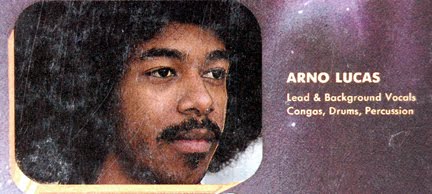
Arno Lucas, Serious Sidekick
©by Leo Adam Biga
Originally published in The Reader (www.thereader.como)
Arno Lucas is among many artists from Omaha to forge a serious music career. The percussionist-vocalist-composer returns home this weekend from a gig at the Apollo to do what he does best, serve as a consummate sideman, this time backing Gladys Knight for her headlining of Joslyn Art Museum’s 75th anniversary gala concert.
He’s played with more legends than he can count: Michael Jackson, Don Henley, Jackson Browne, James Taylor, Bonnie Raitt, Rickie Lee Jones, Chaka Kahn, Yolanda Adams, Bette Midler, Harry Belafonte, Randy Newman. If you’ve not heard of him it’s because his job is to “augment” — not show up — stars like Knight, whom he’s worked with extensively.
Lucas moved to Omaha with his family at age 10 from Berkeley, Calif. He sang at Clair Memorial United Methodist Church. It was the 1960s, a rich time for the Omaha music scene. While a North High student he had his own singing group, The Creations, and later sang with L.A. Carnival, a fondly remembered local funk outfit, and the Les Smith Soul Band, before joining R&B-rock fusion ensemble Crackin’. As a teen he was making $300 a week gigging.
It was also a time of free love, flower power, peace signs and racial tension. Moving from ultra-liberal Berkeley to segregated Omaha was a “culture shock,” he said. “It was just very, very different the way people treated other people. You could tell there was this race thing. I hated high school to be honest because of the prejudice thing. It was brutal.” Music was a refuge where racial lines faded at places like Sandy’s Escape, a teen club. “Whites and blacks would go and it was cool. It was remarkable, especially in Omaha. There was a great humanistic feeling at that time in Omaha. Even though there was definitely a color thing going on, the circles we traveled in that wasn’t the case, and that was the best thing about it.”
He also came under the influence of Luigi Waites, whose group The Contemporaries he joined. “It was an R&B approach to what marching bands do,” he said. “Very interesting. Luigi just had this vision about this. We’d go and play these small little towns in outer Nebraska. Only whites would be in the audience, and they dug it.”
While peers got caught up in a life of crime, Lucas honed his craft. “It was the thing that kept me focused and kept me out of trouble,” he said. He regards Waites as a “mentor, teacher, stepfather” who showed him music as a way out. “For me, he was the guy, man, who made it possible for me to see these things.” He plans to catch up with Waites, family and friends while in town. Besides Lucas, The Contemporaries produced another major artist in jazz drummer-composer Victor Lewis, best known for his work with icons David Sanborn and Stan Getz.
:format(jpeg):mode_rgb()/discogs-images/R-1154297-1227041876.jpeg.jpg) Crackin’ and L.A. Carnival also introduced killer players in drummers Lester Abrams and Leslie Smith and bassist Ron Cooley. Lucas said Omaha was filled with national-caliber musicians who were “really happening, really great. These people were just as talented as anyone else on the planet. Some of them got out of Omaha. Some of them didn’t. I was one that did.” Crackin’s first shot at fame came when invited to Woodstock, N.Y., to record for Albert Grossman, the manager of Bob Dylan, Janis Joplin and The Band.
Crackin’ and L.A. Carnival also introduced killer players in drummers Lester Abrams and Leslie Smith and bassist Ron Cooley. Lucas said Omaha was filled with national-caliber musicians who were “really happening, really great. These people were just as talented as anyone else on the planet. Some of them got out of Omaha. Some of them didn’t. I was one that did.” Crackin’s first shot at fame came when invited to Woodstock, N.Y., to record for Albert Grossman, the manager of Bob Dylan, Janis Joplin and The Band.Touring and session work soon came his way. His song “Maryann” was on a triple-platinum New Edition album. He wrote songs for Dionne Warwick and other big-name artists. He settled down when he joined Gladys Knight’s show at the Flamingo in Las Vegas. He liked being in one place for a change. He and his wife bought a home there. He commuted weekends to L.A. to write, do session work or tape TV specials. He’s also written songs for Al Jarreau and co-wrote one tune, “All I’ve Got,” performed by Jarreau for the Meg Ryan-Omar Epps movie Against the Ropes.
Music’s taken him around the globe and provided a lifestyle beyond his dreams. “For me, that’s the way it’s rolled for 35 years … getting on planes … going to these unbelievable places,” said Lucas, who lives a couple hours outside L.A. He enjoys the relative anonymity of being a sideman, unlike the stars he works with who deal with groupies and entourages. “The greatest thing about what I do is I get to fly in under the radar,” Lucas said. “I get to walk away after the show is over and I can go hang and nobody bothers me.” ,
Related articles
- Back in the Day, Native Omaha Days is Reunion, Homecoming, Heritage Celebration and Party All in One (leoadambiga.wordpress.com)
- The Ties that Bind, One Family’s Celebration of Native Omaha Days (leoadambiga.wordpress.com)
- A Change is Gonna Come, the GBT Academy in Omaha Undergoes Revival in the Wake of Fire (leoadambiga.wordpress.com)
- Legend Gladys Knight honored in Las Vegas (cbsnews.com)
- Get Crackin’ (leoadambiga.wordpress.com)
- A Rich Music History Long Untold is Revealed and Celebrated at the Omaha Black Music Hall of Fame (leoadambiga.wordpress.com)
- Enchantress “LadyMac” Gets Down (leoadambiga.wordpress.com)
- Big Bad Buddy Miles (leoadambiga.wordpress.com)
- Walking Behind to Freedom, A Musical Theater Examination of Race (leoadambiga.wordpress.com)
- Native Omaha Days: A Black is Beautiful Celebration, Now, and All the Days Gone By (leoadambiga.wordpress.com)
- Native Omahans Take Stock of the African-American Experience in Their Hometown (leoadambiga.wordpress.com)


 Leo Adam Biga's My Inside Stories