
Archive
Posts Tagged ‘History’
Omaha’s Old Market: History, stories, places, personalities, characters
June 19, 2016
6 comments
Omaha’s Old Market: History, stories, places, personalities, characters
©by Leo Adam Biga
The Old Market represents different things to different people but it is undeniably one of the few go-to destinations Omaha has to offer. It is a concentrated mish-mash of local culture, though still predominantly a white-bread, precious experience. It could use a healthy dose of diversity and grit, which is to say it could use some broader community representation that brings in some fresh entrepreneurial and cultural experiences and perspectives. But however you feel about it or view it, the Old Market holds some of the richest history in this city and it has been home to a fascinating mix of places, personalities and characters. Here is a compilation of some of my Old Market stories featuring some of that history and some of those venues and figures.
One of the biggest champions of Omaha’s Old Market and the history of the place has died. George Eisenberg devoted much of his life to the historic warehouse district. As boys and young men he and his brother Hymie worked alongside their father, Benjamin, manning a fruit and vegetable stand when the area was home to the Omaha Wholesale Produce Market. Later, the brothers revolutionized the family business to become niche suppliers of potatoes and onions to major food processors, operating out of offices in the commercial center. When the wholesale district declined and largely disbanded altogether the area was transformed into an arts-culture haven and George, who never left and owned substantial property there, became a landlord and an active Old Market Association member. In his later years he was advocate and amateur historian for the Old Market and proudly led an effort to get decorative street lamps installed and other improvements made. He contributed some anecdotes to a section I wrote on the history of the Old Market for a recent book, Memories of the Jewish Midwest: Mom and Pop Grocery Stores published by the Nebraska Jewish Historical Society. An excerpt with that section can be found on this blog. George was one of the last of the go-to sources who personally worked in the Omaha City Market. He enjoyed reliving that history and as he saw it educating the public about a way of commerce and life that is largely no more. His enthusiasm for the subject will be missed. I did the following short profile of George about five years ago for Omaha Magazine and now as fate would have it I will soon be writing an in-memoriam piece about him for the same publication. That rememberance will join one I wrote about another Old Market legend who died recently, Joe Vitale. You can find the Vitale story on this blog.
George Eisenberg’s Love for Omaha‘s Old Market Never Grows Old
@by Leo Adam Biga
Originally appeared in Omaha Magazine
Old Market icon George Eisenberg has more than the usual attachment to the historic warehouse district that once was the area’s nexus for produce dealers, buyers and transporters. His late father Benjamin was a peddler in what used to be called the City Market. As boys Eisenberg and his brother Hymie worked alongside their dad in the leased open air sidewalk stalls whose overhead metal canopies still adorn many of the 19th century-era buildings preserved there. Once home to wholesellers and outfitters, the brick structures now house the Old Market’s mix of condos, restaurants, shops, artist studios and galleries.
After serving in the U.S. Army in World War II Eisenberg rejoined his father, delivering items by truck, and by the early ‘60s he’d modernized and expanded the enterprise and bought out papa. In 1972 his brother Hymie partnered with him. Innovations gave the company such a competitive advantage that the brothers were dubbed “the potato and onion kings of the United States” supplying millions of pounds a week to commercial customers across America and into Canada. They made their fortune and retired in 1983. Hymie died in ‘91.
The 83-year-old is proud to be a peddler’s son. He’s also proud of his continuing relationship with the district. He’s a property owner and an active volunteer with the Old Market Business Association and Downtown Omaha Inc.. Eisenberg secured the authentic lamp posts that lend such a distinctive design element to the 10th Street Bridge. He played a key role, too, in making the 11th and Jackson Street parking garage a reality. Downtown Omaha Inc. honored him with its 2007 Economic Development Award.
He’s a model landlord for the tasteful restoration he’s done and solid tenants he’s brought to his 414-418 South 10th Street buildings, properties originally owned by his father for wholesale storage, distribution and offices.
Generous with advice, he’s given counsel to many Old Market entrepreneurs, including Nouvelle Eve/Jackson Artworks owner Kat Moser.
As much as he’s involved in the “new” Old Market’s destination place identity and as much as he supports the emerging SoMa and NoDo developments, he enjoys looking back to the Market’s past. Back when ethnic blue collar produce vendors pitched their wares in the ancient tradition of the open air market. When pockets took the place of cash registers and vendors took a break from 14-hour days by reclining on bales of hay or overturned crates. It was a boisterous, press-the-flesh carnival of men, women and children using sing-song chants to hawk fresh fruits, vegetables, flowers and plants. Shoppers hailed from all walks of life.
A chorus of Eisenberg shouting, “Get your watermelon — red, ripe and sweet watermelon,” blended with the pitch, dicker and banter of hundreds of merchants-customers. Accents were common among the mostly Jewish, Italian and Syrian vendors. “English was the primary language spoken,” he said, but many foreign-born merchants, like his Russian immigrant father, “conversed among themselves in their native tongues. Every ethnic group was represented in one way or another.”
All those peddlers packed in a small space shouting to get customers’ attention created quite a racket. “Our advertisement was our voice,” he said. “It was noisy, yeah.” But that noise was sweet “music.”” Besides, he said, the ruckus and color “were part of the charm of the market.”
Hawking’s not for wallflowers. “If you’re shy you don’t belong in marketing,” he said. Things only quieted down, he said, after a warning from the market master, whose job was to collect monthly fees from vendors and mediate disputes among them. Once gone, the din began again. It was a special time and place.
“It was fun,” Eisenberg said. “There was excitement.”
He said his father steeped him in the market’s history. Ben Eisenberg got into the trade through his father-in-law Solomon Silverman, whose daughter Elsie became Ben’s wife and George and Hymie’s mother. Just as Silverman began as a door-to-door peddler with a horse and wagon, Ben followed suit. Just as Solomon leased stalls in the market, so did Ben. In the early 1900s, Eisenberg learned, a bidding process divvied up the stalls. Some locations were better than others. Getting outbid caused sore feelings and fistfights broke out. The bidding system was disbanded, he said, and exisiting stalls grandfathered in. Ben had four choice spots at the northeast corner of 11th and Jackson as well as his own wholesale house.
In an era before “Thanks for shopping…come again,” he said many vendors lacked good customer relation skills. His dad, though, had a gift with people.
“My dad was a really good salesman and he separated himself from everybody else because he was very polite, businesslike, and his word was his bond. If my dad said, ‘You got it,’ you didn’t need a contract — that’s it.” Eisenberg said.
He said his father “bought and sold in big quantities,” a practice Eisenberg continued. Many of Ben’s grocery-supermarket customers were former peddlers like himself. “My dad knew all the peddlers, so when he got in the wholesale business all the peddlers came to do business with dad. They knew he was going to give them the right price and not insult them.”
Like his father before him, Eisenberg served as vice president of the Omaha Wholesale Fruit Dealers Association, a predecessor of the Old Market Business Association. In some ways he’s still hawking, still looking after the best interests of his beloved Old Market. “I love business. I love marketing. I welcome anybody who wants to hang up their shingle and start their business.” He embraces the growing community there. “That’s the district’s salvation — it’s a neighborhood now.”
Related articles
- In Memory of a Omaha Old Market Original, Fruit and Vegetable Peddler Joe Vitale (leoadambiga.wordpress.com)
- Allan Noddle’s Adventures in the Food Industry Show Him the World (leoadambiga.wordpress.com)
_____________________________________________

Oh, for the days when there was almost literally a grocery store on every corner and a movie theater in every neighborhood. I only know those days through articles, books, movies, photographs, and reminiscences and I am sure the reality did not match my romanticism about them. As fate would have it, the Mom and Pop grocery phenomenon I only got a glimmer of during my childhood became the subject of an assignment I was offered and gladly accepted: as co-editor and lead writer for a NebraskaJewish Historical Society book project that commemmorates and documents the Mom and Pop Jewish grocery stores that operated in and around the Omaha metropolitan area from approximately the beginning of the 20th century through the 1960s-1970s. But it was Ben Nachman, along with Renee Ratner-Corcoran, who I worked with on the project, that truly realized the book . Ben’s vision and energy got it started and Renee’s commitment and persistence saw it through. I just helped pick up the pieces once Ben passed away a year or so into the project. Ultimately, the book belongs to all the families and individuals who contributed anecdotes, stories, essays, photos, and ads about their grocery stores.
Immediately below is Jewish Press story about the project, followed by an excerpt from the book.
The book is dedicated to the man who inaugurated the project, the late Ben Nachman, who was responsible for starting what is now my long association with both the Jewish Press and the Nebraska Jewish Historical Society. Ben led me to many Holocaust survivor and rescuer stories I ended up writing, many of which can be found on this blog. My stories about Ben and his work as an amatuer but highy dedicated historian can also be found here. I also collaborated with Ben and Renee, as the writer to their producder-roles, on a documentary film about the Brandeis Department Store empire of Nebraska. A very long two-part story I did for the Jewish Press on the Brandeis family and their empire served as the basis for the script I wrote. You can find that story on this blog.
Historical Society publishes grocery store history
by Rita Shelley
11.11.11 issue, Jewish Press
Freshly arrived from Europe a century ago, thousands of men and women found work in South Omaha’s packinghouse and stockyards.
South 24th Street grocer Witte Fried, also a first generation American and a widow with children from ages 2 to 7, knew something of her neighbors’ struggles to survive and prosper. She also knew they needed to eat. According to her descendants, Fried took care to mark prices on the merchandise in her store in several languages. She wanted her customers, regardless of their German, Irish, Italian, Russian, Polish, Greek, Czech or other origins, to have an easier transition into their new world.
Fried’s story is one of many featured in Memories of the Jewish Midwest: Mom and Pop Grocery Stores. Scheduled to be published in November by the Nebraska Jewish Historical Society (NJHS), the book includes recollections of Jewish grocers and members of the families who operated stores throughout Omaha, Lincoln, Council Bluffs and surrounding areas from the early 1900s to the present.

“A history of Jewish owned stores is also a history of the grocery business,” Renee Ratner-Corcoran, NJHS executive director, said. “Beginning with peddlers who traveled from farm to farm to trade their wares for farm produce to sell in the cities, through one-room Mom and Pop stores with adjoining living quarters, to the first large self-service grocery stores, to today’s discount stores that sell housewares and groceries under the same roof, the Jewish community played a vital role in the grocery industry.The book was a dream of Dr. Ben Nachman, an NJHS volunteer whose father owned a small store on North 27th Street. Dr. Nachman died in 2010; publication of the book is dedicated to his memory.
Children of early Jewish grocers who were interviewed for the book or submitted recollections recall the hustle and bustle of buying produce from open air stalls downtown (today’s Old Market) as early as 4 a.m. to stay ahead of the competition. Before there were automobiles, grocers’ children were responsible for the care of the horses that pulled delivery buggies. Mixing the flour and water paste to use for painting prices of the week’s specials on the front window was also the responsibility of children. So were dividing 100-pound sacks of potatoes into five- and 10-pound packages, grinding and bagging coffee, and feeding the chickens. (A kerosene barrel and a chicken coop were located side-by-side in at least one family’s store.).
The book’s publication was underwritten by the Herbert Goldsten Trust, the Special Donor Advised Fund of the Jewish Federation of Omaha Foundation, the Milton S. & Corinne N. Livingston Foundation, Inc., the Murray H. and Sharee C. Newman Supporting Foundation, Doris and Bill Alloy, Sheila and John Anderson, Edith Toby Fellman, Doris Raduziner Marks, In honor of Larry Roffman’s 80th Birthday, and Stanley and Norma Silverman.Increasing prosperity meant housewives had more money to spend. Innovations in transportation and refrigeration also brought changes to the grocery industry, and Jewish grocers were among the first to embrace those changes. More recently, Jewish Nebraskans “invented” some of the country’s first discount chains and wholesale distribution networks, as well as the data processing innovations that made them profitable.
For additional information, contact Renee Ratner-Corcoran by e-mail at rcorcoran@jewishomaha.org or by phone at 402.334.6442.
Excerpts from the book-
©by Leo Adam Biga
Memories of the Jewish Midwest: Mom and Pop Grocery Stores Omaha, Lincoln, Greater Nebraska and Southwest Iowa

Jews have a proud history as entrepreneurs and merchants. When Jewish immigrants began coming to America in greater and greater numbers during the late 19th century and early 20th century, many gravitated to the food industry, some as peddlers and fresh produce market stall hawkers, others as wholesalers, and still others as grocers.
Most Jews who settled in Nebraska came from Russia and Poland, with smaller segments from Hungary, Germany, and other central and Eastern European nations. They were variously escaping pogroms, revolution, war, and poverty. The prospect of freedom and opportunity motivated Jews, just as it did other peoples, to flock here.
At a time when Jews were restricted from entering certain fields, the food business was relatively wide open and affordable to enter. There was a time when for a few hundred dollars one could put a down payment on a small store. That was still a considerable amount of money before 1960, but it was not out of reach of most working men who scrimped and put away a little every week. And that was a good thing too because obtaining capital to launch a store was difficult. Most banks would not lend credit to Jews and other minorities until after World War II.
The most likely route that Jews took to becoming grocers was first working as a peddler, selling feed, selling produce by horse and wagon or truck, or apprenticing in someone else’s store. Some came to the grocery business from other endeavors or industries. The goal was the same – to save enough to buy or open a store of their own. By whatever means Jews found to enter the grocery business, enough did that during the height of this self-made era, from roughly the 1920s through the 1950s, there may have been a hundred or more Jewish-owned and operated grocery stores in the metro area at any given time.
Jewish grocers almost always started out modestly, owning and operating small Mom and Pop neighborhood stores that catered to residents in the immediate area. By custom and convenience, most Jewish grocer families lived above or behind the store, although the more prosperous were able to buy or build their own free-standing home.
Since most customers in Nebraska and Iowa were non-Jewish, store inventories reflected that fact, thus featuring mostly mainstream food and nonfood items, with only limited Jewish items and even fewer kosher goods. The exception to that rule was during Passover and other Jewish high holidays, when traditional Jewish fare was highlighted.
Business could never be taken for granted. In lean times it could be a real struggle. Because the margin between making it and not making was often quite slim many Jewish grocers stayed open from early morning to early evening, seven days a week, even during the Sabbath, although some stores were closed a half-day on the weekend. Jewish stores that did close for the Sabbath were open on Sunday.
Jewish grocery stores almost always became multi-generation family affairs. The classic story was for a husband and wife to open a store and for their children to “grow up” in it. In some families there was a definite expectation for the children to follow and succeed their parents in the business. But there were as many variations on this story as families themselves. In some cases, the founder, almost always a male, was joined in the business by a brother or brothers or perhaps a brother in law. Therefore, a child born into a grocer family might have one or both parents and some combination of uncles, aunts, siblings, and cousins working there, too.
Of course, not every child followed his folks into the family business. Because most early Jewish grocers did not have much in the way of a formal education, the family business was viewed as a springboard for their children to complete an education, even to go onto college. It was a means by which the next generation could advance farther than their parents had, whether in the family grocery business or in a professional field far removed from stocking shelves and bagging groceries.
Some Jewish grocers went in and out of business in a short time, but many enjoyed long runs, extending over generations. Some proprietors stayed small, with never more than a single store, while others added more stores to form chains (the Tuchman brothers) and others (like the Bakers and the Newmans) graduated from Mom and Pop shops to supermarkets. Some owners made their success as grocers only to leave that segment of the food business behind to become wholesale suppliers and distributors (Floyd Kulkin), even food manufacturers (Louis Albert).
Whatever path Jewish grocers took, the core goal was the same, namely to provide for their families and to stake out a place of their own that offered continued prosperity. For a Jewish family, especially an immigrant Jewish family, owning a store meant self-sufficiency and independence. It was a means to an end in terms of assimilation and acceptance. It was a real, tangible sign that a family had arrived and made it. Most Jewish grocers didn’t get rich, but most managed to purchase their own homes and send their kids to college. It was a legitimate, honorable gateway to achieving the American Dream, and one well within reach of people of modest means.
For much of the last century Jewish grocery stores could be found all over the area, in rural as well as in urban locales, doing business where there were no other Jews and where there was a concentration of Jews. In Nebraska and Western Iowa there have historically been few Jewish enclaves, meaning that Jewish grocers depended upon Gentiles for the bulk of their business. Dealing with a diverse clientele was a necessity.
In some instances, Jewish grocers and their fellow Jewish business owners catered to distinct ethnic groups. For example, from the 1920s through the 1960s the North 24th Street business district in Omaha was the commercial hub for the area’s largely African-American community. During that period the preponderance of business owners along and around that strip were Jewish, including several grocers, some of whom lived in the neighborhood. These circumstances meant that Jews and blacks in Omaha were mutually dependent on each other in a manner that didn’t exist before and hasn’t existed since. When the last in a series of civil disturbances in the district did significant damage there, the last of the Jewish merchants moved out. Only a few Jewish owned grocery stores remained in what was the Near Northside.
Until mechanical refrigeration became standard, customers had to shop daily or at least every other day to buy fresh products to replenish their ice boxes and pantries. Having to shop so frequently at a small, family-run neighborhood store meant that customers and grocers developed closer, more personal relationships than they generally do today. Grocers not only knew their regular customers by name but knew their buying patterns so well that they could fill an order without even looking at a list.
Home delivery was a standard service offered by most grocers back in the day. Some stores were mainly cash and carry operations and others primarily charge and delivery endeavors. Taking grocery orders by phone was commonplace.
Most grocers extended credit to existing customers, even carrying them during rough times. It was simply the way business was conducted then. A person’s word was their bond.
Fridays were generally the busiest day in the grocery business because it’s when most laborers got paid and it’s when families stocked up for the big weekend meal most households prepared.
Jewish grocers were among the founders and directors of cooperatives, such as the United Associated Grocers Co-op or United AG and the Lincoln Grocers Association, that gave grocers increased buying power on the open market.
With only a few exceptions today, the intimate, family neighborhood stores are a thing of the past. As automobiles and highways changed the landscape to accommodate the burgeoning suburbs, newer, larger chain stores and supermarkets emerged whose buying and selling power the Mom and Pops could not compete with on anything like an even basis. Thus, the Mom and Pop stores, Jewish and non-Jewish alike, began fading away.
Because Jewish grocers were such familiar, even ubiquitous fixtures in the community, the majority population gave little thought to the fact that Omaha Jewish merchants like the Bakers (Baker’s Supermarkets) or the Newmans (Hinky Dinky), who began with Mom and Pop stores, led the transition to supermarket chains. For much of the metro’s history then, Jews controlled a large share of the grocery market, helping streamline and modernize the way in which grocers did business and consumers shopped.
It is true the one-to-one bond between grocer and consumer may have all but disappeared with the advent of the supermarket and discount store phenomenon. The days of grocers filling each customer order individually went by the wayside in the new age of self-service.
One thing that’s never changed is the fact that everybody has to eat and Jews have been at the forefront of fulfilling that basic human need for time immemorial. The Jewish grocer was an extension of the friendly neighborhood bubbe or zayde or mensch in making sure his or her customers always had enough to eat.


 _____________________________________________
Omaha’s signature arts-entertainment district the Old Market was never a foregone conclusion. It only came into being because a few people with the vision and guts to make it happen could see the potential of a derelict old produce center to be the base for a mixed-use urban village with residences, restaurants, shops, galleries, bookstores, live music, theater, and all sorts of funky creative spaces. What long ago became a chic destination place was forged from rough-hewn beginnings that to most looked unpromising. A band of artists, hipsters, and entrepreneurs applied their individual and collective talents to transforming a history-laden area into something entirely new and 45 years later it continues to be a vital melting pot for culture and creativity. The following story for The Reader (www.thereader.com) attempts to explore how the Old Market emerged and who was there at the beginning to see its possibilities and to help shape those possibilities into reality.
Once Upon a Time an Urban Dead End Became Omaha’s Lively Old Market
Popular Arts-Entertainment District Emerged in Late 1960s-Early ’70s Thanks to Artists and Entrepreneurs
©by Leo Adam Biga
Originally appeared in The Reader (www.thereader.com)
In a state with few destination attractions, Omaha‘s Old Market arts-entertainment district packs them in. The draw is not any one or two venues, but a collective of shops, restaurants, bars, galleries and creative spaces, along with the historic character of those places.
Designer Roger duRand opened one of the first businesses there, the head shop The Farthest Outpost, with Wade Wright in 1968. duRand later designed businesses and apartments there. He was struck then as he is now by the area’s contiguous array of late 19th-early 20th century warehouses.
“I was really charmed by how coherent the neighborhood was. It was really intact. The buildings all had a relationship with each other, they were all of the same general age. They were all designed in a very unselfconsciously commercial style. They’re very honest buildings.”
If density and diversity define vital urban areas, then the Market is Omaha’s most lively concentration of eclectic spots.
It’s also a neighborhood whose residents add to the vibe.
“Having people live here makes it a 24-hour alive place,” says Ree Kaneko, an Old Market artist, arts administrator and resident whose presence there goes back 40-plus years.
Nicholas Bonham-Carter a nephew of the Market’s late godfather, Sam Mercer, says, “The Old Market works because of the multiplicity of things going on. In other historical districts they have no residence portion at all so at night when the shops close it looks dead. But in the Old Market when the shops close you know people are living upstairs. Even if you can’t see them the knowledge they’re there gives it life;”
In this same year the Market turned 45 years old its guiding light, Sam Mercer, died (Feb. 5). The Mercers are longtime property owners and landlords there. When the idea for it surfaced they were perhaps the only locals with the resources and inclination to make it over on the scale required to turn the abandoned produce center into a chic oasis.
In the mid-’60s Mercer began heeding advice that the dying wholesale district could be revived for a new use. It took vision and guts as the old buildings were in bad shape and no one knew if enough entrepreneurs would take the plunge. The four-square block area became a real life assemblage or installation that creatives reclaimed and rebirthed, one building, one endeavor at a time
Cedric Hartman and Judy Wigton put the proverbial bug in Mercer’s ear. He’s an internationally known lighting and furniture designer who keeps a low profile at his factory on the Market’s southeast edge. She’s an arts lover. Their shared appreciation for the finer things led them to open a mid-town high-end shop, The Afternoon (the Omaha store by that name today has no relationship to the earlier store).
In 1964 the business partners went on a buying trip to Chicago and discovered Old Town – a mix of quality shops in repurposed buildings.
Wigton recalls coming back and driving around Omaha’s city market “looking for a likely area” to relocate The Afternoon and finding a For Rent sign. She made the necessary inquiries and, she says, “On a very cold day in Dec. 1964 we met Sam Mercer. He showed us the property. We indicated it wouldn’t work if we were the only ones down there. We wanted there to be a number of shops. He seemed very doubtful about our idea for a community of shops and restaurants.”
But Wigton and Hartman persisted and kept pitching the concept.
“We became great friends. One evening we took Sam to see Jim Shugart’s wonderful house in a former Budweiser building at 1215 Jones. It made a good impression on Sam who then said that maybe what we were talking about would work. Eventually he seemed to be coming around. He certainly had a great appreciation for old buildings and also a need to fill the empty places with new tenants.
“We also appreciated old buildings. Cedric and I had special interest in architectural history. I had started the drive to try to save the old Omaha City Hall from destruction, but when we met with Mayor (A.V.) Sorenson about it, he made it clear a serious goal of his and city fathers was to get rid of old buildings. That conflict continued for years.
“All through 1965-1967 we talked about possibilities for the area.”

Sam Mercer
The Market happened in spite of meek support and sometimes outright opposition from Omaha city government and business leadership. The very idea of it flew in the face of conservative, parochial Omaha.
Old buildings were razed with alarming frequency then. Aging inner city neighborhoods were neglected. The Great Suburban Boom was on and new was preferred to old. Downtown Omaha was already slipping and would soon find its once vibrant retail base gone. Flipping, reinventing, transforming massive buildings simply didn’t occur here.
Bonham-Carter echoes others in arguing the Market “provided sort of the initial shove for the rebirth of downtown.”
The Market’s success undoubtedly made Omaha more receptive to preservation and revitalizing areas like the riverfront and north downtown. Even its example though couldn’t save Jobbers Canyon and its historic buildings just east of the Market.
Hard as it may be to imagine now, the warehouses comprising the Market were mostly viewed as eyesores, not assets.
Hartman and Wigton saw things differently and their dogged pursuit of what to others seemed a pipe dream paid off.
Kaneko says few realize how vital they were to the Market coming into being.
“Nobody wanted to take on these brick warehouses. The idea was planted with Sam with Cedric’s help and as these Old Market spaces were renovated Cedric provided much good advice.”
Bonham-Carter, who spearheaded the creation of the Passageway in the Market, says Hartman “sowed the seeds of what could be done. He’s a real genius.”

The Passageway
Hartman was so convinced of its potential he recalls “I couldn’t stop on the subject. Judy was enthused too.” His motivation was to break Omaha from its dull status quo. He’d lived in Chicago and New York, studied in France, and upon returning to Omaha found “it dreadful, nothing happening here, it seemed like a very unsophisticated place to me. I was interested in seeing something happen downtown.”
He says there was resignation nothing would really ever change.”Most people droned, ‘It seems like nobody will ever do that here, this is Omaha, forget it.'” He wasn’t deterred. “I just kept talking it up.”
In Mercer Hartman and Wigton found the receptive audience they craved and someone in a position to do something about it.
“We were quite surprised to find such a person,” says Hartman.”He was very smart and a very worldly and sophisticated character with great personal charm. We were both flabbergasted, dazzled by his personal style. We were taken with him and in his way he was with us.
“He did respond to us in a great way and I think he was genuine. We were a couple of really arty kids and he was really arty, too, so it couldn’t have been a better association. He was a kindred spirit in so many ways.”
Hartman recalls walking around the Market with Mercer when it was a warehouse graveyard “trying to imagine what could be done.”
With Mercer on board Wigton helped raise public awareness of the proposed redevelopment by hosting luncheons at the old Omaha Club where Mercer bent the ear of stakeholders and tastemakers.
“Sam was invariably charming and interesting and would lay out the possibilities in a very persuasive way. I especially remember a lunch there with (the late columnist) Robert McMorris which seemed to result in dozens of favorable stories in the World-Herald. Another was with city planning director Alden Aust, whose advocacy became invaluable.”
The initial businesses in the fledgling district opened in 1968. Percy Roche’s British Imports was the first.
Omaha businessman Tom Davis invested in several ventures there.
The French Cafe
It was very much a combination of the right people in the right place at the right time,” says Wigton “And then it was very fortunate that Sam’s family, Mark and Vera Mercer and Nicholas and Jane Bonham-Carter were able to move here when they did and keep everything going. It hasn’t been easy and I don’t think any other family could have done it.”
Wigton suggests, and others agree, that “perhaps it really began to come together” when the French Cafe was born in 1969. But even that anchor, signature eatery only happened because Hartman was in the right place at the right time. He spotted a condemnation notice posted on the Solomon Gilinsky Fruit Market building and contacted Mercer.
“That’s a building I promoted finding. It was not a Mercer property, it belonged to the Gilinsky family. I said, ‘Sam, we really ought to buy this building.'” Hartman’s concern was that if the structure, situated mid-way on Howard St., were razed it would interrupt the flow of what they hoped to do with the other buildings.
“If we were working on separated buildings and somebody would do something else that didn’t quite fit in that could have destroyed the atmosphere for the whole place,” says Bonham-Carter.
Mercer and Gilinsky made the deal but even then last minute fast talking was required because, Hartman says, Gilinsky had a contract with a wrecking firm to take the building down. Demolition was set for the following morning. After some frantic calls the order was canceled.
The idea to open a French restaurant there was entirely Sam’s. Hartman designed the space. He admires the chance Mercer took.
“It was a risky thing for them. Who knew if that would work?”

Roger duRand
Kaneko says if Hartman hadn’t prevailed on Mercer at that critical juncture there might not have been a French Cafe or Old Market.
She says “credit for building the Old Market belongs to many people over the years who put their ideas, dreams and patina on the spaces in these handsome, left behind buildings. Yes, it’s true the Mercer family had the financial ability to make lots of things happen and the flare to do it right, but I would guess had it not been for Cedric Hartman who called Sam Mercer in Paris to inform him that a building in the middle of the block of Howard St. was about to be torn down that maybe it would not have happened at all.
“Paris is a long ways away for one to keep an eye on what’s happening down the block. The idea was planted with Sam…And so it started this way – the idea, the saving of a structure, then the investment in the renovation and all the wonderful ideas and people that followed.
“So many interesting people shaped this area with their ideas and energy. Each person added to the growth of the dream. They were the fiber of the place. They came to work here, they lived here, they ate here, they hung out here. They were neighbors…they were friends.”
Bonham-Carter says, “I think everyone who was down here was in some way or another very unique and we couldn’t have done it without them.”
The Edison Exposure and Omaha Magic Theatre were cutting-edge venues. The Antiquarium and Homer’s were counter-culture bastions.
The French Cafe helped legitimize or mainstream the district.
“It was getting the so-called aristocracy of Omaha to come down to our area. It was very sophisticated and its image rubbed off on the rest of the Old Market. so I think it was very important. And it generated traffic. It became sort of a magnet,” says Bonham-Carter, who helped shepherd the Cafe its first couple years.
Bonham-Cartern notes that the Market ultimately benefited from the family having meager development funds because it reinforced leaving the buildings largely alone, to retain their historic integrity. “We had a lot of bricks and mortar but not much money,” he says, “so we were always having to sort of economize and so as a result that probably made it less likely for us to make some expensive mistakes.”
The last thing the family wanted was to make the Market a glossy theme park whitewashed of age.
For Kaneko the great attraction was “space, space and more space. It’s just what artists needed. And at that time the visual arts were the poor sister in town. So this was a big deal.” She was among the early vanguard to move in as working artists. She says despite a lack of creature comforts they felt impassioned.
“It was a no-man’s land but very exciting because you were making a change happen. We felt we were doing something very important and very radical. We were saving this wonderful architecture and bringing new life to these discarded places. We had nothing but our dreams and hard work and intense desire to make it happen.”

The Bemis
duRand, who was there even earlier, says, “It was exhilarating really because it was all new and it was a creative process. The whole venture was kind of an artwork really. Making something out of nothing – that was really the fun part.”
He recalls the Market as “a really interesting urban environment” where hippies and artists commingled with blue collar laborers. Some wholesalers were still operating. Cafes catered to truckers and railroaders. “A lot of jobbing went on – suppliers of all kinds of mechanical stuff. The railroad cars would go up and down the alleys at night where freight was loaded and unloaded.”
For years Sam’s son Mark Mercer and his wife Vera Mercer have stewarded the family’s various holdings and ventures. Mark developed V Mertz restaurant in the Passageway. The couple later created La Buvette and The Boiler Room. They’re now developing a new eatery at the site of the French Cafe, which closed last year. Mercer says their guiding philosophy is the same as Sam’s was:
“We want to create things that are attractive and different than other places that have been infected by chains and franchises or things like that because than it’d be just like anywhere else. We pick things we think to rent to or to do ourselves that fit our tastes and our interests.”
“Something that has made the difference between the way we did it and the way other people would do it is that we determined the only businesses we would get there would be home grown, locally owned,” says Bonham-Carter. “I think we are today exactly where we hoped we would be in having a pretty good mix of tenants down there.”
Kaneko says, “The Mercers are wonderful at allowing things to take shape. They know it is a slow process, so if you come to them with a good idea and they believe it fits with their dream for the Old Market you could probably have a good chance at succeeding. They have a great sense of the mix of things that need to happen to make the Market exciting.”
duRand says the Market succeeded “because it was genuine, it wasn’t really contrived. it evolved authentically. The main criterion wasn’t profit it was for interesting things to happen. The Mercers made it very easy for interesting people to get a foothold here. A lot of times the rent was negligible. You could give receipts for improvements in lieu of rent money, and it helped everybody. It helped people on a shoestring build something for themselves and the owners got improvements at no expense to them, so it was a win-win.”
“For a long time,” he says, “Mercer Management kept the rents low and took a percentage of profit so that if people were struggling it didn’t cost them so much to be here and then if they were successful the Mercers shared in that success. It was a nice formula.”

Mark Mercer
Mercer says it didn’t take long for the Market to attract tenants.
“It really did take off pretty quickly in the sense of these groups of artists and the French Cafe and then M’s Pub in 1972, and the galleries. Rusty Harmsen did the Toad and Spaghetti Works. Then a little bit later we did the Passageway and V Mertz.
“A lot of people were excited because maybe there wasn’t something like that in Omaha, a place where you could combine music and art and new kinds of food. We didn’t have any French restaurants in Omaha at that time. There was a hunger too for a pedestrian area and arts and books and different kinds of movies that could combine. So it all seemed to get established in a couple-three years, although there were still problems with how to deal with building code inspectors. But it seemed it had gained enough momentum by then to attract people and as long as people were coming and finding it exciting…”
Kaneko says, “Things were happening and being presented in the Old Market you could not find anywhere else in the region.” Arts were always a part of the scene but the early emphasis was all local artists. The Bemis artist residency program she founded in 1981 with Jun Kaneko, Tony Hepburn and Lorne Falk introduced artists “from all over the world who added to this conversation,” she says. “The spillover into the community has been the benefit. Hard to measure but it’s alive and it’s there. The more artists and creative people in your community from all walks of life, makes for a much better place to live.”
It’s helped that the Mercers are art lovers. Sam painted as a hobby. Vera’s a noted photographer and painter. Mark’s designed the family’s restaurants.

Vera Mercer
Not everyone agrees with the direction the Market’s gone. duRand feels it’s over-gentrified compared to its counter-culture roots. Underground newspapers were published there. Edgy film, theater and art happened there. The drug culture flourished there.
Mercer concedes it may have been more adventurous early only.
“Maybe in the beginning it was a little more rebellious and exciting in finding different things,” he says. “In the early days it was, well, newer. Maybe a little more controversial and a little more avant garde.”
Hartman despairs the Market’s overrun with bars and restaurants.
Bonham-Carter feels it might be time for another big project, adding that “a little extra sprucing up might be nice to do over the years – tuck pointing here and there. We don’t want it to look too worn out or too overdone.” The recently announced $12.8 million Jones13 apartment project at 13th and Jones may be the next large scale endeavor. It’s being developed by a private company.
Mark Mercer says, “As long as we can I guess we’ll keep trying to do new things and find new things that will enhance the Market, enhance the area,” Vera Mercer says the passion still burns. “I think we are as excited as before about doing something new. We are still looking for new things.” As for who will carry the torch in the future since the couple have no children, he says, “We have to think more about that.”
Kaneko, who with her husband, artist Jun Kaneko, has developed an arts campus there says the district illustrates how the arts act as a catalyst for renewal. Looking ahead, she says, “The next period of time in the Old Market’s life is what I call cultural in-fill. A time of refinement. If we are lucky and if we are wise we will maintain the quality, respect and excitement that this urban area needs and this city deserves.”
Related articles
- Omaha for Art Lovers (apartmentguide.com)
- Tapestries to celebrate Omaha neighborhoods; Theater by any other name (leoadambiga.wordpress.com)
- Jazz Pianist Paul Serrato is Back in His Hometown of Omaha After Decades in New York City (leoadambiga.wordpress.com)
- Artists running with opportunity to go to the next level; Carver Bank resident artists bring new life to area (leoadambiga.wordpress.com)
_____________________________________________
Any urban place worth its salt as a destination to visit bears the imprint of the people who shaped it. Omaha isn’t known for much outside Nebraska but one area just south of downtown has become its primary tourist destination, the Old Market, which at its core is a historic district whose collection of late 19th and early 20th century warehouses offers the city’s most eclectic concentration of restaurants, shops, and arts-cultural venues. Many people have had a hand in molding the Old Market but the most critical guiding hand belonged to the late Sam Mercer, who had the vision to see what only a few others saw in terms of the potential of transforming this old produce warehouse market into a arts-culture-entertainment haven. My story about Mercer and the small coterie of fellow visionaries he developed a consipiracy of hearts with in creating the Old Market appears in Encouner Magazine. You’ll find some other Old Market-related stories on this blog and coming this spring I will be postiing a retrospective piece on how this creative hub became the Old Market and how it survived and thrived against all odds. I will introduce you to the people who turned the spark of an idea into reality.
 Sam Mercer, center ©Photograph by Vera Mercer
The Old Market’s Late Godfather Samuel Mercer Casts Long Shadow in Omaha
©by Leo Adam Biga
Originally appeared in Encounter Magazine
Sam Mercer; By: THE WORLD-HERALD
The Old Market’s undisputed godfather, Samuel Mercer, passed away Feb. 5 at his home in Honfleur, France. He was 92. Services were held at Trinity Episcopal Church in Omaha.
This continental bon vivant was not a typical Nebraskan. The son of prominent Omaha physician and landowner Nelson Mercer, he was born and raised in privileged circumstances in London, England and educated at Oxford and Yale. After living in Washington D.C. he based his law practice in Paris, where he mostly lived the rest of his life. He held dual citizenship.
In Paris he cultivated relationships with avant garde artists, A watercolorist himself, he made artist Eva Aeppli his second wife.
On his handful of trips to Omaha each year he cut an indelible figure between his shock of shoulder-length gray hair, his Trans-Atlantic accent and his waxing on far-ranging subjects. He spoke perfect French.
“He projected an aura of unpretentious aristocracy…I liked him immediately and enormously,” says designer Roger duRand, who with Percy Roche opened the Old Market’s first business, The Farthest Outpost.
When the death of his father in 1963 Mercer inherited his family’s property holdings and he took charge of their Mercer Management company here. He appreciated the century-old brick warehouses, some Mercer-owned, comprising the wholesale produce market just southeast of downtown. But it was someone his junior, designer Cedric Hartman, who first advocated doing something with those buildings, which by the mid-1960s were largely abandoned and in disrepair.
Hartman, an acclaimed designer of lighting and furniture pieces made at his 1414 Marcy St. factory, recalls the genesis of the Old Market. He and Judy Wigton were partners in a high end gift shop. Like Mercer they admired the dying produce district’s buildings and in 1964 began meeting with him about these structures as potential sites for exciting new ventures, such as fine shops, galleries and restaurants. Those conservations in turn sparked Sam’s efforts to preserve and repurpose the Market as an arts-culture haven.
“We were quite surprised to find such a person,” says Hartman. “He was a very smart, very worldly and sophisticated character with great personal charm. We were both wowed by him and in his way he was with us.”
Wigton says, “He certainly had a great appreciation for old buildings and also a need to fill the empty places with new tenants.”
“He did respond to us in a great way,” Hartman notes. “We were a couple of really arty kids and he was really arty, so it couldn’t have been a better association. He was a kindred spirit in so many ways.”
Those early encounters formulated the vision for what became the Old Market.
“I remember we walked around the streets trying to imagine what could be done. I’d say, ‘Now look at this building, here’s we could do this with it,’ and he’d just respond right in kind,” says Hartman. “I couldn’t have done that with anybody else. He hooked into all this stuff really fast.”
A sense of urgency set in when city officials and property owners began eying some Market buildings for demolition.
Hartman tipped off Mercer to the condemnation of the Gilinsky building that sat in the middle of Mercer-owned properties on Howard Street. It was Hartman too who brokered a meeting between Mercer and Peaches Gilinsky. A deal was struck that led Mercer to acquire the site.
By 1968 Mercer moved strategically to gain control of a collection of buildings there.
“Sam did not want anything said about the project until he could acquire options on enough other properties in the area to insure the success of the redevelopment,” says Wigton.
It was Mercer’s idea to make the groundfloor space of the former Gilinsky fruit company into a French restaurant. There, Hartman designed the Old Market’s signature spot, the French Cafe, as well as apartments above it. Ree Kaneko, a fellow Old Market pioneer, says the restaurant, opened in 1969, was “very important” in helping solidify and legitimize the Market.
“It was a risky thing for him to do,” Hartman says “Who knew if that would work? However, it was a great success.”

Mark Mercer, left, with Sam Mercer in 1982. By: THE WORLD-HERALD
More anchor attractions followed – Homer’s, M’s Pub, Mr. Toad, the Spaghetti Works, Nouvelle Eve, eh Firehouse Dinner Theater, the Bemis.
Designers duRand and Hartman advised Mercer and his son Mark, daughter-in-law Vera, nephew Nicholas Bonham-Carter on this never planned but organically developed area. The Mercers created one of the Market’s most distinct features, The Passageway, and later opened their own distinguished enterprises – V Mertz, La Buvette and The Boiler Room.
“We worked to shape the Old Market neighborhood in the most authentic and benign ways possible, gently guiding new tenants away from the cliched and vulgar, and to more thoughtful and honest approaches to development of the beautiful old structures,” says duRand. “Even though Sam lived and worked in Paris, his presence was in every decision of significance in nurturing the Market. He made frequent visits to Omaha in the early days, and was instrumental in bringing the city fathers around to acceptance, then eventual approval, and finally enthusiasm for the preservation and rebirth of our neighborhood.
“His passing leaves a permanent and poignant void.”
Sam Mercer viewed the Market as an evolving social experiment and art project aligned with his own desires. Mark Mercer says the family’s continued that philosophy by encouraging unique ventures that “fit our tastes and interests.” He and his wife, artist Vera Mercer, say “creating” new things is their passion.
Ree Kaneko has high praise for the Mercers’ stewardship and their “allowing things to take shape” by nurturing select endeavors. She adds, “They know it’s a slow process,. They have a great sense of the mix of things that need to happen to make the Market exciting.”
“It hasn’t been easy and I don’t think any other family could have done it,” Wigton says.
Mark and Vera Mercer say Sam remained “very interested” in the Market. They vow retaining the vibrant charm of this historic neighborhood he lovingly made happen.
____________________________________________
Omaha’s popular arts-culture district the Old Market didn’t happen by accident, it evolved with the careful nurturing of landlords, entrepreneurs, and artists whose vision for the city’s historic wholesale produce center went against the tide at a time the district’s future was up for grabs. The late 19th and early 20th century warehouses that now are home to shops, restaurants, galleries, and condos might easily have been lost to the wrecking ball if not for visionaries and pioneers like Roger duRand, a designer who took a firm hand in becoming a creative stakeholder there. This short profile of duRand for Encounter Magazine provides some insight into the forces that helped shape the Old Market in the face of certain obstacles.
Roger duRand
Old Market Pioneer Roger duRand
©by Leo Adam Biga
Originally appeared in Encounter Magazine
Omaha designer Roger duRand didn’t invent the Old Market, but he played a key role shaping the former wholesale produce and jobbing center into a lively arts-culture district.
His imprint on this historic urban residential-commercial environment is everywhere. He’s designed everything from Old Market business logos to chic condos over the French Cafe and Vivace to shop interiors. He’s served as an “aesthetic consultant” to property and business owners.
He’s been a business owner there himself. He once directed the Gallery at the Market. For decades he made his home and office in the Old Market.
The Omaha native goes back to the very start when the Old Market lacked a name and identity. It consisted of old, abandoned warehouses full of broken windows, and pigeon and bat droppings. City leaders saw no future for the buildings and planned tearing them down. Only a few visionaries like duRand saw their potential.
He’d apprenticed under his engineer-architect father, the late William Durand, a Renaissance Man who also designed and flew experimental aircraft. The son had resettled in Omaha after cross-country road trips to connect with the burgeoning counter-culture movement, working odd jobs to support himself, from fry cook to folk singer to sign painter to construction worker. He even shot pool for money.
He and a business partner, Wade Wright, ran the head shop The Farthest Outpost in midtown. A friend, Percy Roche, who had a British import store nearby, told them about the Old Market buildings owned by the Mercer family. Nicholas Bonham Carter, a nephew of Mercer family patriarch Samuel Mercer, led a tour.
“We trudged through all the empty buildings and I was really charmed by how coherent the neighborhood was,” says duRand. “It was really intact. The buildings all had a relationship with each other, they were all of the same general age, they were all designed in a very unselfconsciously commercial style.
“They were such an asset.”
Remnants and rituals of the once bustling marketplace remained.
“When I first came down here the space where M’s Pub is now was Subby Sortino’s potato warehouse and there were potatoes to the ceiling,” recalls duRand. “Across the street was his brother John Sortino, an onion broker. There were produce brokerage offices in some of the upper floors. There were a couple cafes that catered to the truck drivers and railroad guys. There was a lot of jobbing, with suppliers of all kinds of mechanical stuff – heating and cooling, plumbing and industrial supplies. The railroad cars would go up and down the alleys at night for freight to be loaded and unloaded.
“A really interesting urban environment.”
He thought this gritty, rich-in-character built domain could be transformed into Omaha’s Greenwich Village.
“I had in mind kind of an arts neighborhood with lots of galleries and artist lofts.”
That eventually happened thanks to Ree (Schonlau) Kaneko and the Bemis Center for Contemporary Arts.
duRand and Wright’s head shop at 1106 Howard St. was joined by more entrepreneurs and artists doing their thing.
The early Market scene became an underground haven.
“In 1968 it was really artsy, edgy, political, kind of druggy,” says duRand.
Experimental art, film, theater and alternative newspapers flourished there.
City officials looked with suspicion on the young, long-haired vendors and customers.
“We had all kinds of trouble with building inspectors,” whom he said resisted attempts to repurpose the structures. “The idea of a hippie neighborhood really troubled a lot of people. This was going to be the end of civilization as they knew it if they allowed hippies to get a foothold. It was quite a struggle the first few years. We really had a lot of obstacles thrown in our path, but we persevered. It succeeded in spite of the obstructionists.
“And then it became more fashionable with the little clothing stores, bars and gift shops. Adventuresome young professionals would come down to have cocktails and to shop.”
The French Cafe helped establish the Old Market as viable and respectable.
Te social experiment of the Old Market thrived, he says, “because it was genuine, it wasn’t really contrived, it evolved authentically,” which jives with his philosophy of “authentic design” that’s unobtrusive and rooted in the personality of the client or space. “Sometimes the best thing to do is nothing at all. The main criterion wasn’t profit, it was for interesting things to happen. We made it very easy for interesting people to get a foothold here.”
Having a hand in its transformation, he says, “was interesting, exciting, exhilarating because it was all new and it was a creative process. The whole venture was kind of an artwork really. I do have a sense of accomplishment in making something out of nothing. That was really the fun part.”
He fears as the Market’s become gentrified – “really almost beyond recognition – it’s lost some of its edge though he concedes remains a hipster hub. “I’m a little awed by the juggernaut it’s become. It’s taken on a much bigger life than I imagined it would. I never imagined I would be designing million-dollar condos in the Old Market or that a Hyatt hotel would go in.”
duRand and his wife Jody don’t live in the Market anymore but he still does work for clients there and it’s where he still prefers hanging out. Besides, all pathways seem take this Old Market pioneer back to where it all began anyway.
Learn about his authentic design at http://rogerdurand.com.

A duRand designed interior
Related articles
- Carver Building Rebirthed as Arts-culture Haven; Theaster Gates, Rebuild and Bemis Reimagine North Omaha (leoadambiga.wordpress.com)
_____________________________________________
The Old Market. Make that Omaha’s Old Market. Sure, it’s a place, in this case a historic warehouse district that’s been gentrified into an arts-cultural hub and destination stop for locals and tourists alike. But like any place worth it’s salt, it’s the people that make it. One of the real holdover characters there from when the Old Market was still a wholesale produce center was Joe Vitale. As the area transformed from industrial to retail consumer mecca he stayed on with his fruit and vegetable stand , still doing his thing amidst head shops, galleries, restaurants, bars, and live music spots. When Joe passed away a couple years ago a little piece of the Old Market passed with him. The following story for Omaha Magazine is a kind of homage to Joe and the slice of Old World commerce he kept alive.

Vitale Corner
Remembering Omaha Old Market Original, Fruit and Vegetable Peddler Joe Vitale
©by Leo Adam Biga
Originally appeared in Omaha Magazine
The late Joe Vitale was the last of the old-time produce vendors plying his trade in the Old Market. Long after the Omaha City Market closed, Joe stayed on.
The World War II combat veteran made a good living back in the day, first working for his parents Angelo and Lucia, and then with his business partner, Sam Monaco. By the time the Old Market took off, Vitale was set for life and well past retirement age, but he hung on there, wintering in Las Vegas.
Why keep at it, even into his 80s?
“He did it because of the love of doing business, being self employed, selling to new customers and former customers who wanted to buy something from the historic Old Market,” says George Eisenberg, a former wholesaler who did business with Joe.
“He was not only a throwback but he was the only one of the original market vendors that lasted that long.”
“I guess he enjoyed being down there with the people and doing his work,” says Tootsie Bonofede, who grew up with Joe. “You know, when you enjoy something you don’t want to give it up.”
Joe stayed through the area’s transformation from a wholesale-retail produce center to its rebirth as a cultural district. Manning the corner of 11th and Howard, he and his stand were fixtures before the modern Omaha Farmers Market started up.
Vitale, who died March 29 at age 92, was a popular figure among tourists, business owners and residents, who viewed him as a vital, living remnant of what used to be.
“He brightened up that corner,” says Mary Thompson, whose mother, Lucile Schaaf, was an Old Market entrepreneur and favorite of Joe’s. “He was a super guy. He was an energetic, happy person, and he always had a good word to everybody. He had been there for so many years, you could say he was almost the last of the originals.”
More than a merchant dealing in fruits and vegetables, Vitale was an engaging presence. “He had a lot of personality,” says Bonofede.
Douglas Country Commissioner and former Omaha mayorMike Boyle, a longtime Old Market resident, recalls helping Joe out with an insurance claim once and being repaid with a basket of plums.
“That was about the lowest fee I’ve ever collected,” says Boyle. “Joe was really one of life’s great characters. He had a wonderful sense of humor and added a lot of color to that corner.”
Samuel Troia recalls he and his brothers going to Joe for business advice, not expecting much, but getting more than they bargained for.
“It was a great meeting and he helped us out tremendously, and with nothing to gain, other than to help these young kids, because we were in our 20s. He sat us down and said, ‘OK, this is who to talk to, and I’ll make a phone call for you.’ He told us about delivering what you promise. Joe talked to us just like he was our father.”
From that time on, says Troia, “every time he saw me he’d holler, ‘Troia,’ and my wife and I would walk over and buy fruit, and he’d wash it for us. It was so nice and refreshing to see him. It was just like having a family member down there in the Old Market.”
Joe treated everyone like a family member or friend.
“He was one of the most down to earth guys you’d ever want to meet,” says Troia.
“Everybody knew him and everybody loved him,” says Bonofede. “They can’t say anything bad about Joe. He was so kind to everybody.”
Related articles
- George Eisenberg’s Love for Omaha’s Old Market Never Grows Old (leoadambiga.wordpress.com)
_____________________________________________
For better or worse, the following story for the New Horizons is a reflection of what I do as a writer when allowed the opportunity to tell a story at length. I don’t claim that there’s anything special about my work, but if it is distinguished by anything, it is my interest in tapping into stories of passion and magnificent obsession, which is very much how I think of the subject of this piece – the late Lucile Schaaf. I then take that interest and try to express it to the best of my ability. I always wanted to tell this particular story, that is Lucile’s story. I never met the woman, but I heard tales about her and then I got to know one of her daughters, Mary Thompson, who is quoted extensively in the piece. I earlier profiled Mary in a story you can find on this blog entitled, Extremities. Mary’s mother, Lucile, the profile subject of the story below, was a kind of patron saint of the Old Market, the historic district in Omaha, Neb. that has been transformed from the former wholesale produce center to the cultural hub of the city. To get to the heart of a story like hers requires some space, and New Horizons editor Jeff Reinhardt is about the only one left around here that accords me the space I need to tell a story like this at the length I believe I need to communicate its layers and nuances. The Old Market was made by people like Lucile, eccentric visionaries who did their own thing and followed their own muse. There are many more Old Market stories I would like to tell. Writing this piece also only confirmed my very intentional niche as a journalist who tells the stories of people, their passions, and their magnificent obsessions. Like I said at the top, for better or worse it is my brand as a writer and it is what keeps me doing what I do.
My story about Lucile’s daughter, Mary Thompson, who is much quoted here, can be found on this blog. It’s entitled, “Extremities.”

Lucile looking out a window of her Old Market residence
Lucile’s Old Market, Mother Hubbard Magnificent Obsession: From One Eccentric to Another – Mary Thompson on her Late Mother, Lucile Schaaf
©by Leo Adam Biga
Originally published in the New Horizons
As once upon a time stories go, the late Lucile Ann Schaaf’s saga is a fractured fairy tale that like the pint-sized woman embodied herself, is made up of quirky twists and turns that leave you scratching your head or smiling.
When she passed away in 2009 at age 91, Schaaf was variously remembered as a mother, grandmother, entrepreneur, collector, preservationist, Christmas fanatic, and someone for whom the color orange was a personal brand.
After her marriage ended in divorce, Lucile, her children grown and flown the coop by then, asserted her independence and curiosity in a series of enterprising and creative adventures. Earlier in life, the former Lucile Duda exhibited an adventurous streak when, fresh out of Central High School, she left home to attend Scripps College, a women’s school in Claremont, Calif, where she studied art and architecture at a time when women pursuing higher education was a rarity.
Given the moxie it took to leave home for the west coast, it’s not surprising that years later she thought nothing of journeying all around the Midwest in search of architectural remnants from buildings and homes under the wrecking ball. Lucile developed a network of contacts in the demolition and salvage field that tipped her off to projects that might contain objects of interest. Whenever she got a lead on something, whether furniture or ornamental design elements, she set out to acquire it. Daughter Mary Thompson often accompanied Lucile on these treasure hunting jaunts.
“Mother became acquainted with a gentleman called Rock the Wrecker. I worked for him for many years driving a pickup and hauling all kinds of stuff. I would go to sites and I would help salvage and bring stuff back for Mother, and Mother and I would go on trips to demolition sites to gather materials. I carried wrecking tools behind the seat in my truck. Mom and I would take off and drive down to Kansas or over in Iowa or up to South Dakota if Rock would call to say, ‘We’ve got something, come get it,” said Thompson.
“We went to Des Moines (Iowa) one time time to get some marble clocks. It was rush hour and there were fire engines all over the place and when we finally got to the building it was on fire, but we got our stuff. Another time we drove to Coffeyville Kansas and we picked up an 18-foot chandelier, put it in the back of my El Camino and drove it back home.”
Then there was the time Lucile got it in her head that she had to have a double decker bus for sale two thousand miles away. This was in January. So, Thompson and her mother flew to High Point, N.C. and the intrepid duo drove the bus back to Omaha in the dead of winter.
“The whole trip was hilarious because we had all kinds of problems and everything else,” Thompson said of the experience as if were a big lark. “It was 20 below zero when we pulled into Omaha, wearing our snow mobile suits.”
But why a double decker bus?
“We used it for tours around the city,” said Thompson. “We’d take ladies groups, school groups. My kids were going to Jackson Elementary School at the time and anytime there was something the school needed to go to everybody from Jackson went in the double decker bus. They thought that was pretty nifty, and it was.”

Lucile’s daughter, Mary Thompson
The bus and tours were examples of Lucile and Mary, who closely resembles her mother, doing something just for the fun of it, no matter how impractical.
“That’s exactly right,” said Thompson,
Whatever Lucile thought up, her family fell right in line.
“We never questioned her or anything she did,” said Thompson. “It seemed, ‘Well, Mom did it, it must be right.’”
Thompson inherited Lucile’s sense of adventure and compulsion for collecting things. But where Mary’s collected most everything at one time or another, Lucile’s stockpiling was more focused on assembling stores of antique architectural details and Christmas decorations.
Said Thompson, “Her collecting was like anything, once you start, you can’t stop. You find a coin you’re really intrigued with and so you think, I’ll start collecting more coins like this, and pretty soon you’ve got an entire collection. If it’s a gorgeous stained glass window, well there’s another one, and so you get yourself to the point where pretty soon you’ve got a fabulous collection.”
For Lucile it meant acquiring everything from stained glass windows to bannisters to fancy doors to fireplace surrounds to built in wall units, and just about anything in between that caught her eye or captured her fancy.
“It just became more and more and more and more,” said Thompson. “People brought it to her too.”
The operating principle Lucile came to live by, said Thompson, is that “if it’s something that still has some life in it, it’s good, let’s not destroy it, let’s not put in the landfill. So she started acquiring all this stuff and saving it. It just goes back to the old adage that one person’s trash is somebody else’s treasure. That’s the fun of it ”
“Work with what you have” was one of Lucile’s favorite sayings.
In this sense, said Thompson, Lucile’s emphasis on recycling things and preservation was well ahead of the curve.
Lucile’s obsessive collecting accumulated so many objects that she turned her passionate hobby into a business. Needing a place to store everything, she bought an abandoned Danish Lutheran church near downtown Omaha and converted it into an antique shop that she called Steeple Studios.
According to Thompson, “At one time Mother had the largest collection of antique architectural details between Chicago and San Francisco and people came from all over the country because they knew she had all this stuff.”
Lucile brought her business acumen and appreciation for history to the Old Market, where she became one of the pioneering merchants and denizens of that then fledgling enclave. In the late 1960s she was one of the early shop owners and one of the few residents in the former wholesale produce district that most city leaders and developers viewed as a wasteland.
Jeff Jorgensen and Joe Montello, whose Tannenbaum Christmas Shop in the Old Market occupies the same bay Lucile did business in at the southwest corner of 10th and Howard, got to know her as a benevolent landlord and neighbor. Montello had worked for her at The Place. They respected her as an Old Market original.
“She was definitely one of the first people who saw the potential of the Old Market,” said Jorgensen, adding that she recognized the area as not only a burgeoning commercial center and cultural-arts oasis but as a historic district in need of preservation. “I think what motivated her was finding new value in old things. It’s what made her such a natural to be an Old Market pioneer.”
Lucile put her money where her mouth was as owner-operator of The Place, a gift shop that expressed her eclectic tastes. She later had the Christmas Shop, a one-stop decorations and collectibles store, and The T Room sandwich shop. Lucile laid the brick walkway in front of her Howard Street bays. She was also active in the Old Market Business Association.
“I always thought she was pleased to see a Christmas shop continue here within her domain,” said Jorgensen. I think the fact that Joe worked for her and was involved here meant a lot to her too.”
She purchased adjoining buildings between the southwest corners of 10th and Howard and 10th and Jackson and converted them into her personal residence. What once housed Frank’e Cafe, the Pickwick Bar, Pioneer Uniform, a flophouse and a whorehouse, among other enterprises, became this lovable eccentric’s home. A walled-in courtyard or secret garden was created in back to offer a tranquil, private sanctuary amidst the Market’s hustle and bustle.
Schaaf was a recognizable figure in the Market or wherever she went because of her penchant for dressing entirely in orange, no matter the occasion. It’s hard to find a color photo of Lucile that doesn’t picture here in her flaming shade of choice.
There is an orange room in the Old Market residence. At one time Lucile had it entirely done over in her favorite color, complete with decorations and clothes, beautiful things, plain things, but in all instances orange things.
Antique dealer Vic Chickinelli hired her once and when he went out one day he came back to find she had painted the walls and shelving a bright orange. If Chickinelli asked her, as many did, Why orange?, her comeback would have probably been what she always said when people questioned her about it:
“Is there any other color?”
“She decided that that was the color of her life,” is how Thompson explains it.
So identified was Lucile with the color that she came to be known affectionally as the Orange Lady. At her Old Market shops she not only greeted you in full orange regalia, from head to foot, but took to wearing a clock around her waist set to ten minutes to four, or tea time, a reference to the tea party in Alice in Wonderland, a story she loved. She also loved throwing tea parties.

All in all, she fit right in with the other free spirits, artists and bohemians populating the Old Market.
“It was a good place for her,” said fellow Old Market pioneer Roger Durand, a designer and architect who opened a head shop there. “She was a real character, she was a real original, and she was a very colorful personality. Back in the early days it really took an adventuresome spirit to try and establish anything down there. It was an uphill struggle.”
For 30-some years Lucile’s 10th and Howard building was as much a warehouse for her collection of salvaged architectural remnants as it was a residence. Her dream was to incorporate these myriad details into the decor.
Working with an old-school master craftsman, Walt the Carpenter, the project made progress but then Walt took a bad fall, breaking his leg, and then her arthritis began slowing her down. However, she remained active enough to teach a water aerobics class at the YMCA.
Another daughter, the late Stephanie Schaaf, took it upon herself to fulfill Lucile’s dream. She hired a team of craftsmen to install, in some cases repurposing, hundreds of items — ranging from chandeliers to doors to stained glass windows to wrought iron gates — throughout the 7,300 square foot structure.
A kindred spirit of Lucile’s, Omaha architectural recycler Frank Horejsi, also described as an “urban miner,” said he liked what Lucile was doing with the place and he assisted Stefanie with getting the project done.
“If they had problems, I was kind of a go-to guy. It’s neat to see that old historic stuff incorporated. It’s a neat place.”
The result is a mosaic of a home of mixed and matched elements:
• Griffons from the original First National Bank Building adorn the exterior sides of Lucile’s place facing 10th Street and Jackson Street
• Crown molding from the old Cornhusker Hotel gilds the foyer
• Skylights from the Packers National Bank bathe the foyer in natural light
• Mahogany walls and stained glass cabinets from the City National Bank appoint the dining room
• Murphy bed doors from the Morris Hotel serve as ceiling panels above the dining room
• The great room, where receptions or dinner parties are held today, utilizes office doors from the City National Bank as wall panels, some with the names of the executives who toiled away behind them
• Telephone booth walls from the City National cover the ceiling
• The solid oak fireplace and leaded glass window in the sunroom hail from the Wilcox house in Council Bluffs
• Massive cabinets come from a physician’s home in Norfolk, Neb.
• French doors come from an opera house in Carroll, Iowa
And so it goes, on and on.

Roger Durand said the home is an expression of “the architectural odds and ends she found unusual uses for, and in aggregate they create sort of a world of Lucile.”
Before she moved there, the space was long abandoned, its insides an empty shell.
“What people sometimes don’t comprehend is that there was nothing here, it was a blank canvas, and it was my mom’s vision in putting things together and making it a whole unit that brought it to life,” Thompson said with admiration.
Almost everything in Lucile’s Old Market retreat originated elsewhere, salvaged off-site and brought there, like pieces of a giant jigsaw puzzle. Only Lucile knew how they were supposed to fit together.
“She could find things and just know exactly where she was going to put the pieces in,” said granddaughter Amy Waskel, whose mother, Stefanie, became Lucile’s caregiver and legacy keeper.
Not everything Lucile collected at the Old Market place was used. There was so much inventory left over that an estate sale was held over two weekends.

The Old Market residence was not Lucile’s first salvage project. Thompson said her mother built a cabin near Merritt’s Beach using almost entirely recycled materials. There was apparently a recycle streak in the family’s DNA because Thompson said her grandparents built a farmhouse out of reclaimed materials long before that.
“The apple doesn’t fall too far from the tree,” is how Thompson puts it. “Mom had the ability to visualize something not for what it was but for what it could be, and I feel I’m blessed with that also because if you look at my house you see how I intertwined everything into it.”
Mary’s Little Italy area home and another she owns next door overbrim with the surplus of her own collecting habit. Her affliction for acquiring and holding onto things was portrayed earlier this year on TLC’s “Hoarding: Buried Alive” reality television series.
There is a like-mother-like daughter pattern at play in the family. Other ways Mary takes after her mother is with a flair for entertaining and a wardrobe fixation, not with a certain color per se, but with hats. Mary’s fondness for hats grew to a collection of hundreds. So identified is Mary with her crowns of glory that she’s known as the Hat Lady. Until “Hoarding” she was perhaps best known as the Tax Lady for all the returns she filed for people as an IRS agent and AARP volunteer.
Mary doesn’t mind being known as a hoarder now that she’s taken steps to declutter her life with the help of professionals, friends and family, including a “Stuff” sale at the Bancroft Street Market in September.
For a long time, said Mary, her mother’s Old Market residence was overrun with artifacts that sat unboxed and uncovered, subject to the effects of not just dust but of the many critters, mostly cats and dogs, she kept. Mary’s also a cat lover.
“Stuff had been heaped in piles for so long,” Thompson said of her mother’s place.
Lucile was renowned for how elaborately she decorated her previous home in the Gold Coast neighborhood, but for the longest time the Old Market residence was more a storage and work space then a living space — more potential than realization, awaiting the day when Lucile’s vision for it would be complete.
“It wasn’t a pretty house like she was used to,” said Waskel. “Moving in here she just got down and dirty. That’s why finishing it was so important and that’s why it’s fun showing it off now and why it’s going to be fun decorating it for the holidays.”
Even though Lucile’s gone now, Waskel said she and other family members feel her presence watching over them, noting their every move. “She knows we’re not going to do it as well as she did. The joke within the family is that she’s going to be sitting there going, ‘You should do this.’ She was a perfectionist.”
Despite never decorating the place for Christmas, Lucile’s main floor bedroom was trussed up for the holidays once she became bed-ridden in 2004, and even then she liked calling the shots.
“We would decorate her room for her,” said Waskel. “We would put up a little Christmas tree for her and she enjoyed that because she enjoyed telling people how to do it and it never being right — well, not to her standards.”
An incongruity about Lucile was that she could be a stickler about everything being just so, yet she could live like an Old Mother Hubbard surrounded by artifacts strewn loosely everywhere. Her Gold Coast home was impressive, said Mary, yet Lucile shared the place with her cats and even a pet rooster. Things only got more unkempt in the Old Market.
Waskel said Nebraska Educational Television did a story on her grandmother as an example of “how not to save your antiques — like this is what you don’t do. We have a lot of damage to wood. Some of the stuff is just so far gone. The whole back area was just full of wood and dust and dirt. A lot of it was junk.”
She said it took countless man hours to clean up the mess.
“We had to finish everything,” said Waskel, who helped Stefanie in completing Lucile’s dream. “And we’re still working on it.”
Waskel, who as event coordinator at what is now called Lucile’s Old Market is tasked with booking events there and maintaining the cavernous space, has a new appreciation for all that her grandmother and mother did.
“I’m here everyday and there’s not nearly the work to do that my mom did or that my grandmother did and I still feel overwhelmed and go, How the hell did they do it?”
Lucile’s is still in the family, only now as a singular rental showplace that hosts weddings, dinners and all manner of private parties and receptions. Tours are available by appointment. Old Market Gallery Walks generally include a stop there. And it’s a featured spot on the December 11 Holiday Lights Tour

The woman for whom the building is named never saw the project completed as her eyesight declined severely in old age. Due to her diminished vision she became somewhat reclusive near the end of her life. For a long time though she was a public figure whose passions grew into magnificent obsessions enjoyed by thousands.
First, there was her fixation with Christmas displays. For the first half of her life she contented herself with the usual yuletide garnishes. But when she moved into the big home at 38th and Dewey Avenue it’s like a switch went on and she felt inspired to trim the multi-story edifice from top to bottom, complete with fully dressed trees, wreaths, garland, candy canes, stockings, Santas and lights.
It all started with a Christmas tea organized by Lucile.
Mary Thompson remembers how what began as a small, semi-private affair for mothers and daughters grew into a public extravaganza:
“My older sister’s class was invited and we made little cut-out white bread finger sandwiches with butter and powdered sugar over them, and Mom had us stand in a receiving line to meet everybody. It became a Christmas tradition. Every year a little more was added. Pretty soon it got so that during the month of December Mom had the house decorated from top to bottom, and every year it got bigger and better.
“We invited people from church and school. Others heard about it and came. We would all dress up. The last Christmas tea we had became an open house and we probably had about a thousand people. People came from all around.”
The Christmas House became a destination stop, complete with tours.
By the time Lucile stopped putting on the Christmas tea in the 1970s, she and her soiree and decorations had become so well known, said Thompson, that “people that wanted to get a hold of Mother would address mail to the ‘Christmas House, Omaha, Neb.‘ and it actually came to the house.”
Lucile didn’t stop at decorating her home. She also took charge of decorating the sanctuary at First Presbyterian Church and the big Xmas tree at the old Union Station (Durham Museum). Then there was the Christmas Shop. It’s why Lucile was known as the Christmas Lady.
“The whole situation became such a passion for Mom,” said Thompson. “This was her outlet.”
Whether people knew her as the Orange Lady or the Christmas Lady, Jeff Jorgensen said “she enjoyed both of those roles very much. She made an impression on lots of people she came into contact with. She really wasn’t eccentric at all but if you thought she was I think that probably made her very happy.” On reflection, Jorgensen added, “Maybe she was a little.” Or as Joe Montello once described her: “She wasn’t afraid to be unique in her own way.”
The phrase “let your freak flag fly” refers to the uninhibited Luciles of the world.
The decorum at the fancy tea parties was sometimes shattered by a silly or peculiar happening, like the time Lucile’s pet rooster, Lucky, turned party crasher.
“One time this woman was sitting on the couch with her coffee and cake and there comes Lucky out of the kitchen. It looks around and comes over and takes that cake right off the lady’s plate,” said Thompson.
Another time, a visitor got more than she bargained for on a tour.
“When my two kids and I were living at Mother’s home our rooms were up on the third floor, and since the bedrooms were all decorated we slept in the 7-by-12 walk-in closets,” said Thompson. “This one time I put the kids to bed and Mother phoned from downstairs that these people were on their way up. So I stepped into my closet, closed the door and sat on a chair waiting for the tour to come through. I’m sitting in there when this woman opens the door — and the look on her face was priceless. I just said, ‘Hello,’ and she stepped backward, closing the door behind her. I could hardly wait for them to leave so I could run downstairs and tell Mother.”
They had a good laugh over that one.
Faux pause aside, Thompson said Lucile had a lot of Martha Stewart in her.
“She was a gracious, grand hostess, and she set a beautiful table. She was a fabulous cook. My sister and I learned all these culinary skills from our mother. These are things we did automatically and we didn’t even think about it.”
Lucile never got to play grand hostess at her Old Market residence, but she approved of opening it up to parties and took vicarious pleasure in the first events held there a few years ago. And even though by the end she couldn’t see much besides light, she helped guide her daughter Stefanie and her granddaughter Amy in finishing out the place. All concerned are satisfied the interior is a close approximation of what Lucile intended.
Until opened as a rental space, the building’s street-level windows were boarded up, peaking the curiosity of passersby, who could only make out tantalizing tidbits. Some peepers climbed the gates for a glimpse inside a second floor window.
Thompson said some naturally mistook the residence for an antique shop. Only family, friends and area merchants and residents knew the truth. Now that it’s a much-in-demand rental space, the reputation and history behind it, and the story of the woman who made it possible, Lucile Schaaf, are becoming more widely known. Yet Amy Waskel said most first-time visitors remark “we had no idea this was here.”
“The whole thing just started with, ‘I’ve got these things, I’ve got this place, I’ve got this box, I’ve got all these things inside it, let’s put it together. It was thinking outside the box,” said Thompson, “and look at what she’s got, she’s got a box of fabulous things and wonderful memories. I’m hoping one day it’s a museum. I think more people could enjoy it if we could do more with it. But it’s an old building and it needs a lot of things done to it.”
Old and imperfect as it is, Jorgensen said, “it’s perfect for the Old Market. I mean, it’s adaptive reuse, it’s work-with-what-you-have, it’s an example of finding new faces for old places. That’s what she did. She found new life for a building and an area that needed a new reason to exist. Lucile had that vision for what it could be.”
The Mercer family of Omaha, headed by Samuel Mercer, led early efforts in transforming the former City Market into the Old Market. Mercer Management, which Sam’s son, Mark, heads, is still the primary property owner and developer there. Mark said his father felt that he and Lucile “shared a desire to see the Old Market buildings restored and reanimated by local individual businesses. He always had a cordial and friendly relation with her.”
Artist and arts administrator Ree Kaneko, who first got to know Lucile during the Old Market’s emergence in the late ’60s-early ’70s, said, “the Lady in Orange was a wonderful soul.”
Jorgensen said not having Lucile around is “a major loss.” But her world lives on at Lucile’s Old Market, 510 South 10th Street. To book an event or arrange a tour, call 341-3100 or visit http://www.lucilesoldmarket.com.
Related Articles
- Gary Kastrick’s Project OMAHA Loses its Home Base (leoadambiga.wordpress.com)
- A Passion for Fashion (leoadambiga.wordpress.com)
- Long and Winding Saga of the Great Plains Black History Museum Takes a New Turn (leoadambiga.wordpress.com)
- Olde Good Things Store Profile (apartmenttherapy.com)
- A Guide to the New Ruins of Great Britain by Owen Hatherley (guardian.co.uk)
- Not Built to Last: China’s Overused Wrecking Ball (time.com)
_____________________________________________
The Old Market in Omaha is a both major attraction and a laidback state of mind that’s made up of the places and personalities, past and present, expressed there. Two of this historic arts and culture district’s longest sustained restaurants, M’s Pub and Vivace, share the same owners and executive chef, and in 2013 these each of these eateries celebrates a milestone anniversary. M’s Pub is 40 years old and Vivace 20 years old. Owners Ann Mellen and Ron Samuelson discuss their successful enterprises in the following story I did for The Reader (www.thereader.com) and along with Old Market pioneer Roger duRand they look back at the force of nature who started M’s, Mary Vogel, and who personified the visionaries and characters that have made the Market the singular destination and experience that it is.
Two Old Market Fixtures Celebrate Milestones
©by Leo Adam Biga
Originally appeared in The Reader (www.thereader.com)
Signature Old Market spot M’sPub celebrates 40 years in business this year. It’s a milestone for any independently owned restaurant. But reaching four decades takes on added meaning because when M’s opened in 1973 (a planned 1972 opening was delayed), the fledgling Market’s survival looked unsure.
The Market though went from counter culture social experiment to mixed use success story. M’s owners Ann Mellen and Ron Samuelson doubly appreciate a thriving Market as their highly reviewed eatery is a fixture along with a second respected restaurant they own there, Vivace, which marks its 20th anniversary this fall. The establishments are emblems of the district’s sustainability and growth.
The well-connected woman who founded “M’s” and was its namesake, the late Mary Vogel, wanted to be part of the emerging Market scene. She commissioned architect John Morford from the Omaha firm headed by Cedric Hartman, who designed the French Cafe, to transform the former Sortino Fruit Company warehouse into a sophisticated, cozy environs inspired by her favorite dining-drinking nooks from around the globe, particularly the pubs of England and Washington DC. Some argue M’s is more bistro than pub but whatever it is M’s owns a reputation for quality food, superior service and laid-back charm that’s both cosmopolitan chic and homespun Midwest.
The small space is dominated by a three-sided green marble topped bar, exposed white brick work, a high ceiling, large mirrors, which make the room seem bigger, and picture windows that provide a glimpse of 11th Street on the east and peer into Nouvelle Eve on the south. The open kitchen is about the size and shape of a train’s dining car and overflows with activity, though the culinary action mostly happens in the downstairs prep rooms.
“It’s just a great open plan,” says Samuelson. “Timeless. And that’s why we don’t change anything about it because we see a lot of fads come and go and as tempting as you might be to say, ‘Well, it seems like that’s what everybody’s doing today – maybe we should try that,’ it’s not going to work here.”

M’s is indelibly of the Old Market. Like its neighbor shops it resides in a historic, 19th century building that exudes character earned with age. It adheres to tradition. It pays attention to detail. Its personality can’t be replicated or franchised.
“I don’t think we could take our sign and throw it in a place out west or anywhere else really,” Samuelson says. “I just don’t think it would transfer.”
The affable, attentive, knowledgable wait staff wear crisp white and black uniforms with none of the attendant starch.
Samuelson says, “We’ve worked really hard for a really long time to position ourselves as a place where you can come sit by side with the table that has a $150 bottle of wine and a couple steaks and you can have a beer and a Greek sandwich and not be treated any differently by the waiter. A lot of our people have been around here for a really long time. We have people that we trust.”
When Vogel sold M’s in 1979 to Mellen’s parents Floyd and Kate Mellen she stayed on as hostess and matriarch. Ann Mellen began working there around then and she soon grew fond of this force of nature.
“She would sit at the bar every day after lunch and count how many drinks we sold,” Mellen says of Vogel. “She was a trip. A very energetic lady, very world traveled, very knowledgable, very opinionated. But very helpful – when things went wrong here she knew who to call.
“She had a passion for this place. She knew exactly what she wanted it to be and she did it right. She totally designed M’s after her favorite places all over the world. She was like the mother of M’s pub. It was her baby.”
Market pioneer Roger duRand writes:
“Mary Vogel was a dame, A socialite with a heart of brass (polished). Mary was equal parts Mayflower pedigree, finishing school gloss and ribald cocktail raconteur. When she courageously cast her lot with the Old Market demimonde of 1972, she found a welcoming environment among the artists and adventurers. Her vision of a tearoom for ‘ladies who lunch’ that doubled as a bistro for ‘lads who lust’ became the elegant and reliably satisfying M’s Pub that remains little changed from its first days.”
Samuelson, who went to work there in 1986 after restaurant experience in Omaha, Texas and Colorado and then quickly partnered with Mellen, admired Vogel’s “indomitable spirit,” adding, “I think she was way ahead of her time. I think that’s probably why she got along with the Mercers so well. They needed people like that to incubate ideas and to establish a core of anchor businesses.”
Mellen’s parents, who’d never operated a restaurant before, bought it with the intent of their restauranteur son Joe running it but when he passed Ann stepped in to lend her folks a hand. Her passion for the business bloomed.
“I liked working for myself basically,” says Mellen, a University of Nebraska-Lincoln journalism grad who worked as a reporter and advertising copywriter before M’s. “Then I came here and never left.”
She and Samuelson pride themselves on being hands-on owners. One or the other or both are at their restaurants most days. A tunnel connects the two sites.
Though an institution today, M’s first decade was a struggle.
“Times were hard,” she says. “The Old Market was a totally different place then.
The Omaha (homeless) mission was just up the street. A lot of people were afraid of the Old Market. But even then it had a family, neighborhood feeling and I liked that a lot.”
“It gets under your skin,” Samuelson says of the Market.
By the early ’80s, Mellen determined the Market was here to stay.
“It just got busier and busier and we saw more tourists coming to the area. You could just tell it was an exciting, upcoming area.”
She and Samuelson, both Omaha natives, make a good team.
“We’re a good fit personality-wise and professionally,” he says. “We share the same passion for the Old Market and the same visions and goals for M’s and Vivace. It’s rare we have a disagreement about and when we do we do it respectfully.”
“I don’t want to seem like an old married couple but a lot of people think we’re married. We’re not,” says Mellen.
She does all the books. An acknowledged foodie, he deals more with the culinary side. Both partners enjoy engaging with people.
“We feel the same way about how to treat people – our clientele as well as our employees,” he says.

The fierce devotion of M’s regulars is appreciated but it can be too much.
“Somebody who’s been coming here for awhile may have an opinion about what you’re doing and if you don’t take their advice you can ruffle some feathers that way,” says Samuelson. “We listen to people a lot and we always end up making decisions based on the good of the whole, which I think is responsible ownership.”
He says that with M’s “in good hands” he and Mellen decided to launch Vivace in 1993 ” to fill a gap we saw in the landscape of the restaurant scene in Omaha for Mediterranean-influenced Italian food. We wanted to fill a niche for the community but also complement what we do at M’s.” He’s proud of its pasta and pizza.
Vivace’s larger space is perhaps warmer than M’s but not as intimate.
Executive chef Bobby Mekiney is in charge of both kitchens. “He’s young and kind of bridges the generation gap for us in a lot of ways,” says Samuelson. “He’s as talented a guy as we’ve ever had here. He makes it work.”
Samuelson’s proud that M’s Pub and Vivace express the same “meticulously adhered-to, single-minded vision of passionate, locally-owned” venues that make the Market “a community treasure.”
For hours and menus, visit http://www.mspubomaha.com and http://www.vivaceomaha.com.
Related articles
- Old Market Pioneer Roger duRand (leoadambiga.wordpress.com)
- OmahaNightOutGuide.com Announces its Arrival as Omaha’s New Internet Directory for Dining, Entertainment and Night Life; Making it Easy to find something to do in Omaha. (prweb.com)
- The Troy Davis Story: From Beyond the Fringe to Fringes Salon (leoadambiga.wordpress.com)
____________________________________________
Here’s another story from deep in my archives, this one from 1990, about Dick Mueller and the revival he led of his Firehouse Theatre in Omaha. Though this bid to remake the former dinner theater into a nonprofit began promisingly enough it soon fell under its own weight. The tone of this piece is expressly optimistic because that’s how Mueller sounded a couple years into the experiment. Even though the Firehouse didn’t make it in its reinvented state, the topic of theater and arts sustainability, which was very much on Mueller’s mind at the time, remains as cogent today as it was then. Only a few weeks ago a well-known local theater, the John Beasley Theater & Workshop, announced it was on the verge of closing unless it could secure donations and pledges in excess of $10,000, which it thankfully did. Mueller did not have the best opinion of the Omaha theater scene then, and I wonder what he thinks of it today. In some respects, there’s been no change from the status quo, in that Omaha now as then has little in the way of professional, Equity theater. However, several new theater companies have sprung up in the intervening years and the Great Plains Theatre Conference has emerged as a vital event and presence.

From the Archives: Golden Boy Dick Mueller of Omaha Leads Firehouse Theatre Revival
©by Leo Adam Biga
Originally published in the Midlands Business Journal
It is tempting to frame Firehouse Theatre founder Dick Mueller’s story in dramatic terms. The 53-year-old impresario, director and actor has the youthful gleam and gait of, well, a Golden Boy whose future success seems assured despite adversity.
Like the boxer-violinst of the Clifford Odets play, Mueller is both a fighter and a dreamer who has battled steep odds to make his fondest wishes come true. He’s the Golden Boy of Omaha theater. He has recently rebounded from bankruptcy and the closing of the Firehouse to reopen the theater and set it on a bold new course he hopes will shake up lethargic old Omaha.
A life in the theater has been Mueller’s destiny since a night in 1961 when he saw a play and was stagestruck.
The Omaha native sang professionally at the time with a quartet called The Bachelors, which began at his alma mater – Central High School. The group was making the rounds on the national nighclub circuit and recording on the Epic Records label when Mueller followed a hunch and caught a new Broadway show. The show was Lerner and Loewe‘s My Fair Lady and “that theater experience is probably why I’m sitting here today in 1990,” said Mueller from the Firehouse stage. “I had no idea what theater was. I thought the ultimate entertainment experience was in a nightclub.”
He said, “I bought a standing room ticket for $3 and saw the original production of My Fair Lady, and there was no question in my mind when I walked out of that room three hours later that I was wrong – the nightclub did not offer the ultimate experience.
“Since then I’ve had 10 or 12 nights in the theater that really changed my life and I think it happened for other people in this room,” he said, referring to the Firehouse. “It has to do with what happens between a playwright, a good director and good actors telling a good story. It doesn’t happen very often, but you’ve got to have some of those nights…otherwise you stop going back to the theater. It can’t happen to me here (the Firehouse) because you really have to be a virgin. If you’re too involved in the production it won’t happen.”
Mueller turned his back on a singing career to do the starving actor’s bit. He returned home some years later a veteran of Broadway tryouts and Saratoga summer stock to start the Firehouse Dinner Theatre in 1972 in the then-fledgling Old Market. It was an instant hit. He and the theater, which dropped the buffett a few years ago, are synonomous. One cannot be discussed without the other.
After years of near uninterrupted success – revivals staged by the likes of Joshua Logan, critically praised world premieres and strong box office performances the Firehouse slumped in the mid-’80s. Eventually, Mueller declared bankruptcy and the theater closed New Year’s Day, 1989. The New York Times even chronicled Mueller’s travails in a January 1, 1989 article.
Always the scrapper and visionary, Mueller announced almost immediately he would be back. His never-say-die tenacity, combined with about $50,000 in donations from a fund-raising appeal, got the theater back on its feet and reopened by that April.
Mueller surprised many local arts observers by resurrecting the Firehouse in a new guise, Frustrated by his theater’s future hanging on uncertain box-office receipts – its primary source of income since Day One – the reorganized the for-profit business as a nonprofit corporation.
Mueller, who was the theater’s sole owner at the time of its demise, has given up proprietary interest and turned the facility’s management over to a board of directors and professional staff. He’s glad to do it, he said, because now as artistic director he can focus on the plays without worrying about the business.
Jeff Taxman, 37, has been hired as the theater’s managing director, and both he and Mueller sit on the board, whose president is Louis Lamberty.
So within two years the Firehouse has gone, as Mueller put it, “legit” – from a full-fledged commercial dinner theater to a non-profit producing organization with ambitions of being what he terms “the Heartland’s regional theater.”
According to Barbara Janowitz of Theater Communications Group in New York, which publishes American Theatre magazine, the Firehouse metamorphosis is indeed “unusual.”
Mueller said the jump from the for-profit to the non-profit world was his only option to secure the theater’s financial future and one he’d been contemplating.
“To be honest, this place has been 20 years of my life and I always saw it becoming a non-profit regional theater because I’d like to see it last. It wasn’t something that I wasn’t prepared to see happen at some point. I only wish it happened under better circumstances, but…by the time we ran into the wall financially the non-profit corporation was already in existence and just sped up the transition process.”
He didn’t want to sell the business to new owners who eventually might get tired of it. “Then it just dies and goes away,” he said.
He feels some factors made it diffiult for the Firehouse to survive on ticket sales alone. Principally, he blames the depressed economy of the mid-’80s for cutting into one of the theater’s most vital markets – the rural tourist trade.
“This theater has always drawn from hundreds of miles away. Bus loads from small towns put together by tour brokers or banks come to Omaha for their theater. And we lost an awful lot of that business because the people who supported it lost their income and in many cases lost their farms or buisnesses,” he said.
“Group sales have always veen a mainstay of this theater. We do 10,000-piece mailings to every tour group within 500 or 600 miles of here.”
The Greater Omaha Convention and Visitors Bureau ranked the Firehouse as one of the city’s top tourist attractions as recently as 1988. Mueller said the theater’s sales efforts to groups outside Omaha promote other attractions “because we feel it’s easier for us to get people to Omaha if there’s a variety of great experiences. We’ve been a minor Chamber of Commerce here for 18 years.”
He estimates “at least 50 percent” of its annual ticket sales are to patrons outside the city. He said after a slow start the theater is regaining its audience now that the bankruptcy and closing are old news and the farm economy has recovered.
“Thank God we’re beyond it and we’re building back. People have forgotten about that. We worked real hard to make good to all those people who had season tickets and gift certificates because we didn’t want them to think bad about our efforts to run this place.
“We opened with very little strength a year-and-a-half ago, but life is getting better for us. We wouldn’t be here today if it hadn’t started to come back a little already.”
The current production, Driving Miss Daisy, has “the largest pre-sale of group business of any show I can remember,” he said. Two mid-week matinees have been added “because the demand is there and probably 90 percent of that demand is from out of town. I hope we’ll build on that momentum and in a year from now it’ll be even better.”

Jeff Taxman said the realities of the business are such that “it takes 30 to 40 percent of the house to cover the cost of running the theater” or break even. “Daisy looks like it’s going to do better than that, so this will be a surplus.”
One of Mueller’s long-range goals is to average 80 percent of capacity per year. “Eighty percent would be a big surplus position and would create the capital to do all kinds of innovative things,” Taxman noted. The theater’s best one-year box-office showing netted a 70 percent house average.
Another factor Mueller said adversely affected the Firehouse was the competitive advantage he feels non-profit theaters have in seeking donations, grants and other public and private forms of funding generally unavailable to private business.
“We had no means, unless someone was crazy, to get donations because people wouldn’t get any tax benefits by giving their money to us,” he said.
“The funding of the arts, in some respects, has legislated business out of the arts. This place did very well as a commercial theater for a long time and today it’s very difficult for us to compete with the advertising that even small community theaters are seemingly able to muster. You add that to their volunteer help…and I think the non-profit world was successful to the detriment of the commercial world in the arts.”
He feels fortunate the Firehouse is an established entity now that it seeks funds from the same pool or resources as other non-profits. “I think it would be impossible to start something new in Omaha today. You’re not going to get funding right away because that’s sort of locked in – in the funding apparatus out there,” he said.
“And the public is not as curious and willing to function on their own as they were 15 years ago, so it’s more difficult to get people in the seats.”
He believes one reason why people are less adventurous is the lack of professional theater locally. The Firehouse, which uses Actors Equity performers, is the city’s only professional theater operating year-round and paying its actors a living wage. “The place plays 52 weeks, or close to it, a year,” said Taxman, “and that’s a unique aspect of what we do.”
“I’d like to see another professional theater right accross the street. I think it would be good for us, but I also think I’m totally alone in that philosophy,” Mueller said. “If they can excite their audience then I’ve got a chance of getting their audience.”
He added that another theater would also bolster Omaha’s shallow talent pool by enticing more artists to come here and more natives to stay. He noted Omaha was a theater hotbed in the early ’70s, when the Firehouse, Westroads Dinner Theater and The Talk of the Town all operated. “It was great fun and it was much easier to cast because there was more talent.”
Mueller feels Omahans suffer an acute case of provincialism in warily embracing new arts groups or concepts: “The arts community gets very protective of their own organizations and takes a very limited view. It’s always puzzled me.”
He wants to assuage any fear other theaters might have that the Firehouse is somehow a threat to them. The scenario reminds him of when the Guthrie Theatre opened amid “epidemic fear that it was going to kill all of the community theaters in Minneapolis. And, you know, the Guthrie did nothing but good for the theater community. It busted it wide open. None of those fears, I suspect, had any basis in reality.”
While Mueller has received a few letters indicating Omaha can survive nicely without the Firehouse, he said most of the reaction to its reopening has been positive.
Taxman, who is designing the theater’s development program, said, “I find those people I talk to are very happy to visit and are excited about the idea. The real measure in terms of opening checkbooks is still an open question, but we’ve only been at it three or four weeks.”
Mueller said that besides a $15,000 grant from Douglas County “our non-profit status has not produced any mother-lode. We’re still pretty much making it on our own.”
Taxman is working to change that. He is writing grant applications to private foundations, corporations and government agencies as well as coordinating a direct mail campaign aimed at the theater’s long-time patrons – its season ticket holders and group tour participants. He expects to conduct a community-wide public campaign by the fall.
He said individual giving is vital in demonstrating to grant review panels “there’s a lot of local support” and is confident that support will come. He anticipates the theater’s fundraising efforts to show “some significant” gains within 12 months. The theater, he said, sells itself.
“This is an institution that generates 90 to 100 percent of its nut from earned income. So every dollar you give really is leveraged 9 or 10 times in terms of the organization’s effectiveness. It’s been around for a long time and has a long track record of excellent performances.
“One of the positive aspects is that the amount of money that has to be raised to make this place work and healthy is not a staggering number. And because of that I think its future is very viable – without the community sagging under the burden of another institution to support.”
The Firehouse budget is $978,000. The theater is labor-intensive and about half the weekly $4,500-$5,000 costs of staging Daisy, for example, are for actors’ salaries. An expense that has risen dramatically in recent years is the royalties fee, which for Daisy is about 10 percent of the weekly box office take. Mueller recalls doing Noel Coward for $100 a week.
“The overhead of the theater is really very efficient and stable, so the variable is really the production costs,” said Taxman.
Another priority is recruiting board members who share Mueller’s vision of the theater. Although no longer the owner or manager, he is still very much the Firehouse Svengali. He’s proud and protective of its past and bullish on its future.

“This room has provided just a little over 9,000 weeks of gainful employment for theater talent – actors, directors and musicians – since it opened. And I don’t believe there’s ever been a theater in Nebraska that has even come close to that,” he said. “That room is as good as any in the country for a Daisy or Steel Magnolias, which is the kind of kind of material I really like to do – actor-intensive, not spectacle. Intimate theater.”
He said that while the “dinner theater concept made this place,” the new Firehouse is more to his liking. “It makes a much better, more comfortable and cleaner theater. Eighteen years ago dinner theater was really an exciting new thing and there are still some places making it work, but I think it’s had its major day.” Besides, he said the Firehouse can book dinner for patrons downstairs at Harrigans (a nouvelle pub) if they do wish.
Mueller wants the theater to continue doing what it’s done best in the past and to branch out in some new areas.
“I would like to see us do at least one new production a year. In five years it would be nice to think one of those had made it to New York or Chicago as a modest success.”
The Firehouse has presented four world premieres and is bringing another , Lawrence Broch’s Joan in October. Mueller is considering restaging a work that premiered there in 1982, Dale Wasserman’s Shakespeare and the Indians. To this day he rues not having the time or foresight to perfect that play and then take it to London, where he thinks audiences would have eaten it up.
“But that takes perspective and having other people to shoulder some of the day-to-day operations. We didn’t have that luxury then.”
The Firehouse does now and that’s why Mueller is anxious “to turn Omaha on its ear” with more premieres and “a broader menu of material.”
“I feel what we’ve done for 18 years is pretty much the program. It’s true I’d like to expand on that, but it’s not like we’re turning our back on everything we did and going in a different direction. We know we can do certain showd every bit as good on this stage as the Guthrie or Broadway could do on those stages. We’ve got a pretty decent national reputation right now and I’d like to see that improved.”
He does see a possibility of producing on other stages when it’s appropriate to the material, as the Firehouse did at the University of Nebraska at Omaha with Battle Hymn.
He also said the theater may one day tour productions. One thing he rules out is forming a resident acting company.
What he wants most, however, is for the Firehouse to lead a theater renasissance of sorts in Omaha. For the city to be a theater center where people can have more experiences like the one in New York 30 years ago that changed his life.
“I’d love to see every theater in town producing those kinds of experiences because then we’d have a potential audience in town that is far larger then what it is now. Good theater begets more and hopefully better theater and less is on the way to a ghost town.”
Related articles
- John Beasley and Sons Make Acting a Family Thing at the John Beasley Theater & Workshop and Beyond (leoadambiga.wordpress.com)
- Omaha Is Over-the-moon for Jersey Boys (boneaubryanbrown.com)
- For Chicago Actress, A Broadway Debut Opposite Connick in “On a Clear Day” (artsbeat.blogs.nytimes.com)
- From the Archives: Monika Kelly Recalls her Late Father, the Beloved Clown and Ringling Brothers and Barnum & Bailey Circus Legend, Emmett Kelly Sr. (leoadambiga.wordpress.com)
Categories: Artists, Arts-Entertainment-Culture, Cedric Hartman, Community/Neighborhoods, Creatives, Entrepreneurial, Historic Preservation, History, Old Market, Omaha Archdiocese, Roger duRand, Sam Mercer, Uncategorized, Writing
Arts Entertainment Culture District, Cedric Hartman, Historic Preservation, History, Old Market, Omaha, Roger duRand, Sam Mercer, The Mercers
Marlin Briscoe – An Appreciation
May 13, 2016
1 comment
Marlin Briscoe – An Appreciation
©by Leo Adam Biga
Some thoughts about Marlin Briscoe in the year that he is:
•being inducted in the College Football Hall of Fame
•having a life-size status of his likeness dedicated at UNO
•and seeing a feature film about himself going into production this fall

For years, Marlin Briscoe never quite got his due nationally or even locally. Sure, he got props for being a brilliant improviser at Omaha U. but that was small college ball far off most people’s radar. Even fewer folks saw him star before college for the Omaha South High Packers. Yes, he got mentioned as being the first black quarterback in the NFL, but it took two or three decades after he retired from the game for that distinction to sink in and to resonate with contemporary players, coaches, fans and journalists. It really wasn’t until his autobiography came out that the significance of that achievement was duly noted and appreciated. Helping make the case were then-current NFL black quarterbacks, led by Warren Moon, who credited Briscoe for making their opportunity possible by breaking that barrier and overturning race bias concerning the quarterback position. Of course, the sad irony of it all is that Briscoe only got his chance to make history as a last resort by the Denver Broncos, who succumbed to public pressure after their other quarterbacks failed miserably or got injured. And then even after Briscoe proved he could play the position better than anyone else on the squad, he was never given another chance to play QB with the Broncos or any other team. He was still the victim of old attitudes and perceptions, which have not entirely gone away by the way, that blacks don’t have the mental acuity to run a pro-style offensive system or that they are naturally scramblers and not pocket passers or that they are better with their feet and their athleticism than they are with their arms or their head. Briscoe heard it all, and in his case he also heard that he was too small.
After Briscoe swallowed the bitter pill that he would be denied a chance to play QB in The League after that one glorious go of it in 1968, he dedicated himself to learning an entirely new position – wide receiver – as his only way to stay in the NFL. In truth, he could have presumably made it as a defensive back and return specialist. In fact, he was primarily on the Broncos roster as a DB when he finally got the nod to start at QB after only seeing spot duty there. Briscoe threw himself into the transition to receiver with the Buffalo Bills and was good enough to become an All-Pro with them and a contributing wideout with the back to back Super Bowl winning Miami Dolphins. As unfair as it was, Briscoe didn’t make a big stink about what happened to him and his QB aspirations, He didn’t resist or refuse the transition to receiver. He worked at it and made it work for him and the teams he played on. The successful transition he made from signal caller to received is one of the most remarkable and overlooked feats in American sports history.
About a quarter century after Briscoe’s dreams of playing QB were dashed and he reinvented himself as a receiver, another great Omaha athlete, Eric Crouch, faced a similar crossroads. The Heisman Trophy winner was an option quarterback with great athleticism and not well suited to being a pro style pocket passer. He was drafted by the NFL’s St. Louis Rams as an athlete first, but ostensibly to play receiver, not quarterback. He insisted on getting a tryout at QB and failed. The Rams really wanted him to embrace being a receiver but his heart wasn’t in it and he loudly complained about not being given a shot at QB. He went from franchise to franchise and from league to league chasing a dream that was not only unrealistic but a bad fit that would not, could not, did not fit his skills set at that level of competition. Unlike Briscoe, who lost the opportunity to play QB because he was black, Crouch lost the opportunity because he wasn’t good enough. Briscoe handled the discrimination he faced with great integrity and maturity. Crouch responded to being told the truth with petulance and a sense of denial and entitlement. That contrast made a big impression on me. I don’t know if Crouch would have made a successful transition to receiver the way Brsicoe did, but he certainly had the skils to do it, as he showed at Nebraska. I always thought NU should have kept him at wingback and Bobby Newcombe at QB, but that’s for another post.
But the real point is that when the going got tough for Briscoe, he rose to the occasion. That strong character is what has allowed him to recover from a serious drug addiction and to live a sober, successful life these past two-plus decades. John Beasley is producing a feature film about Briscoe called “The Magician” and its story of personal fortitude will touch many lives.
Link to my profile of Marlin Briscoe at–
Link to my collection of stories on Omaha’s Black Sports Legends: Out to Win: The Roots of Greatness at–
OUT TO WIN – THE ROOTS OF GREATNESS: OMAHA’S BLACK SPORTS LEGENDS
Categories: African-American, College Football Hall of Fame, Football, History, Marlin Briscoe, Nebraska Black Sports Hall of Fame, NFL (National Football League), Omaha South High School, Race, South Omaha, Sports, University of Nebraska at Omaha, Writing
Buffalo Bills, Denver Broncos, History, Marlin Briscoe, Miami Dolphins, NFL, NFL's First Black Quarterback, Omaha South High, Quaterbacks, Race, South Omaha, UNO
Deadeye Marcus “Mac” McGee still a straight shooter at 100
March 15, 2016
4 comments
I met the late Marcus “Mac” McGee shortly after he turned 100 years old. He was a small man in stature but he exuded high character in the way he conducted himself. He spoke with rhythmic charm and he dressed in classic style. He was a gentleman through and through. Having come out of the Deep South to make a life for himself and his family in Omaha, you knew that he had seen a few things. The more I talked to him and to others who knew him from back in the day, I learned he had built a thriving business in North Omaha, the Tuxedo Barber Shop, that made him a pillar in his community. He gave and commanded respect. He was also something of a legend in his own time for his deadeye marksmanship as a hunter and trapshooter. He and his shop and the role they played in the community when a village really did raise a child represented something treasured and lost. Here is a profile I wrote about this unforgettable personality.
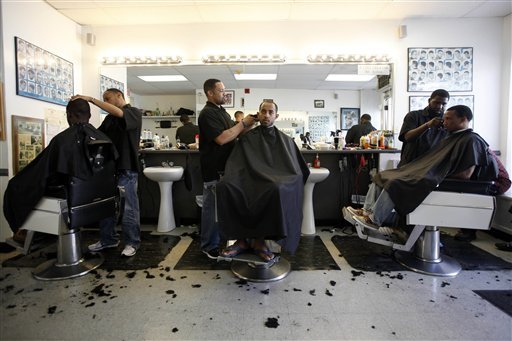
Deadeye Marcus “Mac” McGee still a straight shooter at 100
©by Leo Adam Biga
Originally appeared in the Omaha Weekly
As Americans enjoy increasingly longer life spans, octogenarians and centenarians grow more commonplace. But as 100-year-old Marcus “Mac” McGee of Omaha proves, no one who has lived a century should be taken for granted. Start with the fact this lifelong boxing fan sounds uncannily like one of his favorite prizefighers from the past – Muhammad Ali. Right down to the soft, melifluous voice and braggadocio style. A fiercely proud and stubborn descendant of both African-American slaves and white slave owners, McGee can be a cantankerous sort these days. He is entitled to sone orneriness though after spending the better part of a century forging a life of substance against all odds.
It would be easy to ignore McGee or any of his fellow residents at the Maple-Crest Care Center in Benson. But that would be a mistake, for these ancient ones are reservoirs of rich life experiences. Take McGee, for example. Talk to him for awhile and you soon learn about the beloved Tuxedo Barber Shop he owned and operated for decades on the Near North Side. While strictly against nursing home rules, McGee still plies his barber skills now and then by giving his roommate a trim and shave. He fussily lays out the tools of his trade on a tray. Clippers, tweezers, brushes, combs, creams, tonics, lotions. His small hands are surprisngly steady and his nimble fingers move with well=practiced precision. You learn too this avid sportsman was a crack shot and expert small game hunter. In his late 80s he could still hit 100 of 100 targets at trapshooting ranges. Even now, he maintains the lean body of an athlete. One of his fondest memories is going to New York City to see his idol, the great heavyweight black boxer Jack Johnson fight at Madison Square Garden.
“I sat there live and watched Jack Johnson knock a man’s natural teeth out of his mouth. I saw him do that, yeah,” he said.

Unlike many Maple-Crest residents, who are bedridden or wheelchair-bound, he navigates the sprawling complex on his own two feet, albeit with the aid of a cane. And where most residents appear disshelved, his features always remain well-groomed and his dress nattily-attired. He entrusts his own smartly-trimmed hair to one of his barbering proteges. Last September McGee cut a dashing figure for a 100th birthday party held in his honor at the social hall of Clair Memorial United Methodist Church, 5544 Ames Avenue. A crowd of friends and family, including dozens of grandchildren and great-grandchildren, gathered to pay tribute to this man of small stature but big deeds.
When he ponders what it means to have lived 100 years, he ponders a good long while. After all, considering a lifespan covering the entire 20th century means contemplating a whole lot of history, and that takes some doing. It is an especially daunting task for McGee, who, in his prime, buried three wives, raised five daughters, prospered as the owner of his own barber shop, served as the state’s first black barbershop inspector, earned people’s trust as a pillar of the North Omaha community and commanded respect as an expert marksman. Yes, it has been quite a journey so far for this survivor of Jim Crow and participant in the Great Migration.
One hundred years sure is a long time, someone suggested.
“It sure is,” McGee said in his sweet-as-molasses voice, his small bright face beaming at the thought of all the high times he has seen.
Escorted into the hall by his five daughters, his entrance sparked a rousing round of applause and cheers. Too bad he could not share it all with his wife of 53 years, LaVerne, who died in 1996. After two earlier marriages failed, McGee finally got it right with the former Laverne Lawson, who kept all the books at his shop. “They were quite a team,” said daughter Marcia Butler, an Omaha school teacher. As well-wishers offered congratulations or shared reminiscences, the party put in focus all that McGee once was and still is – a meticulous man of many roles and skills. While not as physically spry or mentally sharp as he would like, he remains a vibrant soul with a lifetime of stories to tell.
Born and raised along the Mississippi-Louisiana border in a period when the Ku Klux Klan still reigned, his family of ten escaped the worst of Jim Crow intolerance as landowners under the auspices of his white grandmother Kizzie McGee, the daughter of the former plantation’s owner. Kizzie, who lived nearby, maintained contact with the black side of the family. McGee’s people hacked out a largely self-sufficient life down on the Delta. The runt of the litter, McGee, toughened himself working on the livestock-laden farm. It was there he learned two skills that he would build his life around – shooting and barbering.
His father taught him how to handle a gun at a young age. Even though it was too much weapon for him at the time, he often used a single-barrel 12-gauge shot gun as a boy. He recalls an incident when the gun nearly got the better of him. “I was about 10 or 12 years old. A hog got out after the chickens. My mother ran out hollering at the hog. I got the gun. I dragged it outside by the barrel. My mother said, ‘What are you going to do with that?’ I said, ‘I’m going to kill that hog.’ I broke it (the gun) down, I put the shells in and I closed it up. I raised it up but the stock was too long for me. I looked down the barrel with my eyes open and I pulled the trigger, and the hog went one way and the gun went the other way and I went to the ground. My mother laughed. But from then on I could go out with my gun hunting and kill everything I shot at.”
He left school early to help provide for the family’s needs, variously bagging wild game for the dinner table with his deadeye marksmanship and cutting people’s hair for spare change with his dexterous mastery of scissors.
Just out of his teens he followed the path of many Southern blacks in what became the Great Migration to the North, where conditions were more hospitable and jobs more plentful. During his wanderings he picked up spending money by cutting heads, including those of railroad gang crewmen and field laborers he encountered out on the open road. Never one to back away from a challenge, he recalls how a large man in Falls City, Neb. teased him about his diminuitve size, whereupon McGee promptly threw him to the floor and pinned his shoulders down until the man begged for mercy.
He eventually made his way to Omaha in the early 1920s. Before the Great Depression hit the still new century was a fat time for most Americans, unless you happened to be black or Hispanic. “The hardest times I had was when I first got here. I didn’t have any money. I didn’t have a job.” Like many new arrivals to the area he finally found employment in the Omaha packing plants. “I went to work in a packing house cleaning hog innards. I didn’t like working there. I said to myself, What am I doing here? I should be in a barber shop. So, after two or three weeks there, I quit. I walked out and I never went back. I started cutting heads.”
That decision changed his life, as did his earning a state barber’s license in 1928. “When I got that license, that’s all I needed,” he said. He eventually opened his own place and it was at the Tuexedo Barber Shop in the historic Jewell Building on North 24th Street that he became his own man.
“The best times for me was when I got that shop there. I got the business going really good. It was quite a shop. We had three chairs in there. New linoleum on the floor. There were two other barbers with me. We had a lot of customers. Sometimes we’d have 10-15 people people outside the door waiting for us to come in. I enjoyed that. I enjoyed working on them, and I worked on them, too. I’d give them good haircuts. I was quite a barber, Yes, sir, we used to lay some hair on the floor. We sure did.”

 |
An abiding perfectionist. McGee has always been a sticler for doing things a certain way. His way. As a former barber under him said, “There may have been a better way, but his way stood.” For more than 50 years, McGee’s will prevailed. “I was particular about a lot of things,” he said. For one thing, no profanity was allowed in the shop. And no drinking or smoking on the job was tolerated. Obsessive about running a clean clip joint, McGee swept the floor incessantly and pressed his family into serve at night to wipe things down. “I didn’t let nothing get dirty,” he said. “I had it looking good.”
His fastidiousness no doubt led to him being appointed the state’s first black barber shop inspector, a post he held several years. Together with his longtime and equally bullheaded partner, the late James Bailey, the two made an indomitable pair.
Even into the 1970s the Tuxedo was strictly an old-school establishment – from the atmosphere to the discourse to the service. No fancy hair styles there. Just a neat, clean cut and a smooth, close shave. “If you didn’t see things the way Daddy and Mr. Bailey saw them, you might as well have gone to another shop. It was their way or no way, even down to the haircut,” said another daughter, Leanna Simmons. “If you said, ‘I’d like my hair this way,’ it was, ‘Nope,’ zip, zip, zip, okay, goodby. They cut it the way they wanted it cut.”
Leanna’s son and one of McGee’s many grandchildren, Anthony Lawrence Simmons, confirms that’s how it was. “Every grandchild would go down there to get their hair cut. Grandpa didn’t care what hair style you wanted. If it was the latest style out, you were not getting it. You only got what he wanted. He knew what was right. Yet his place was always busy, so everybody liked him. He gave a clean haircut. It may not have been what you wanted, but it looked good. He made sure you left his shop looking sharp.”
For proof of just how particular McGee and Bailey could be, the shop’s third chair sat vacant many years because the barbers they tried out turned out to be “loafers” in their eyes. Finally, an enterprising young clipper by the name of Clyde Deshazer measured up to their expectations and they took him on to stay. Except they couldn’t get used to his tongue-tripping name, so they nicknamed him Youngblood. The name stuck. Today, Youngblood’s Barber Shop is THE haircutting emporium in North O.
When McGee finally closed his own shop in the late ’70s, he went to cut at Youngblood’s, where he remained until 1988. It was a case of the master working under the former pupil. “He was set in his own ways,” Deshazer said, “He still wanted to charge like $2.50 for a haircut but we were charging $4 by then. I said, ‘When I worked for you, I went by your prices, now that you’re working for me, you go by my prices. Things have just changed a little bit.’ After that, we didn’t have any more problems. We got along fine. Like father and son.”
The Tuxedo was among dozens of thriving black-owned businesses in North Omaha before the expansion of the Interstate system and the explosion of the riots in the late ’60s resulted in disruption and decline. In its heyday the Tuxedo drew an eclectic mix of customers. Businessmen. Blue-collar workers. Squares. Hipsters. Pool sharks frequented a popular billiards hall adjacent to it. Jazz and blues musicians played the Dreamland Ballroom above it. In classic barber shop tradition, the Tuxedo was a hangout for guys to talk guns and sports, politics and women. McGee’s favorite topic, of course, was shooting.
“If you started talking about trapshooting you might be in that chair an hour, ” Deshazer said. “He loved that.”
For Keith A. Ross, who shined shoes there during the tumultous civil rights era, the shop was an awakening and an education rolled into one. “Besides learning to shoot pool at the pool hall next door, the shop was where I first learned about the NAACP and the Urban League. It was a friendly shop where people gathered and had conversations about different issues affecting the North Omaha community. It was grownup talk.”
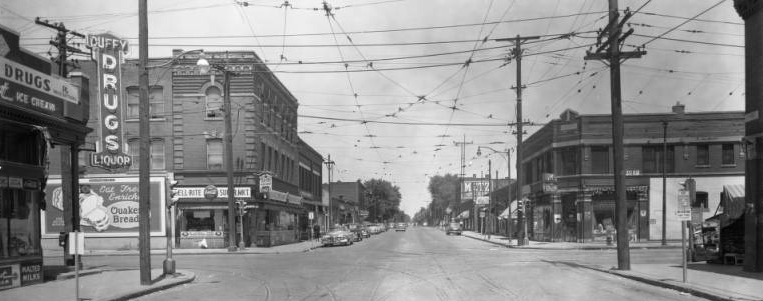 |
John Butler, former head of the local chapter of the NAACP, recalls, “We talked about a lot of issues there. As a matter of fact, Mr. McGee was instrumetnal in helping us and molding our ways,” he said, referring to early Omaha activists like himself.
Beneath the hard core exterior of the proprietor resided a soft heart.
“As ornery as he and Bailey were, they were good people,” Leeana said. “I remember Momma saying Daddy would sometimes accept in lieu of payment for a haircut a watch or a ring. It was kind of like a little pawnshop. Adds Marcia, “People would come in and get loans from him if they lost their job and they needed to pay their rent or something like that.”
Ross recalls McGee as a stern but benevolent figure. “The first job I ever had was shining shoes in his barber shop. He really treated me well. He was very protective and very caring. In order to get to the shop I had to walk through an area where the boys on the corner, so to speak, were dealing. Theirs was a flashy life, but it was ugly. I could have been on that track, too, but I always kept his form of discipline in mind. He said, ‘Always be on time or otherwise you suffer the consequences.’ I never found out what those consequences were because I was never late. I really didn’t want to let him down. I still don’t. It’s why I think I’ve got such a healthy work ethic now.”
According to Ross, his mentor was part of a different breed then. “Mr. McGee and owners of the other small businesses there gave you a real sense of the history of the development of the area. They would come out on the street and interact with us. It was a community feeling. I don’t see where we have that now. He probably developed in me my sense of peoplehood.”
Back in the day, North O was a community within a community where everybody looked out for everybody else and where, decades before the Million Man March, strong black men took a hand in steering young black males. McGee and Bailey were among a gallery of mentors along North 24th Street.
Richard Nared recalls, “Oh, we had a bunch of role models. John Butler, who ran the YMCA. Josh Gibson. Bob Gibson. Bob Boozer. Curtis Evans, who ran the Tuxedo Billiards. Hardy “Beans” Meeks, who ran the shoe shine parlor. Mr. McGee and Mr. Bailey who ran the Tuxedo Barber Shop. All of these guys had influence in my life. All of ‘em. And it wasn’t just about sports. It was about developing me. Mr. Meenks gave a lot of us guys jobs. In the morning, when I’d come around the corner to go to school, these gentlemen would holler out the door, ‘You better go up there and learn something today.’ or ‘When you get done with school, come see me.’
“Let me give you an example. Curtis Evans, who ran the pool hall, would tell me to come by after school. ‘So, I’d…come by, and he’d have a pair of shoes to go to the shoe shine parlor and some shirts to go to the laundry, and he’d give me two dollars. Mr. Bailey used to give me free haircuts…just to talk. ‘How ya doin’ in school? You got some money in your pocket?’ I didn’t realize what they were doing until I got older. They were keeping me out of trouble. Giving me some lunch money so I could go to school and make something of myself. It was about developing young men. They took the time.”
McGee’s son-in-law Larry Simmons (Leanna’s husband) values the life lessons his elder taught him. Simmons said McGee instilled in him and his friends a respect for rules, manners and traditions. “It was a high standard he made for all of us. You did not walk into his house with a hat on your head or your shirt outside your pants. He’s always been a fanatic about that kind of stuff. Even with his own dress today, his tie is neat, his shoes are shined, his belt is in its proper place. He has everything down to a tee. He taught us all of that.”

The fussy McGee’s penchant for tidiness and exactness extended to other areas of his life. At home, for example, he operated a sewing machine to make and mend his own own shooting-hunting vests and related apparel items. Veteran trapshooter Dick Gradowski of Blair, Neb. said McGee was a veritable fashion plate even at the range. “He was always neatly dressed. I don’t think I ever saw him in a pair of blue jeans. He was always very particular about his appearance. ” McGee was just as finicky about the shells he used – fashioning his own with a special machine. Hr built his own shooting gallery in his dirt basement. He carefully cleaned his large collection of Browning rifles and kept them safely locked in a case. Brought up to be self-sufficient, he harvested fruits and vegetables from country fields and his own backyard gardens for canning and freezing.
Choosy about what he ate, he avoided pork and salt and he whipped up elixder-like brews of honey, hot water and milk and blended fruit and vegetable concoctions. He bagged pheasants, quail, squirrel and all manner of small game on hunting outings and he hooked fish by the stringer-full at area lakes and rivers. He was, by all accounts, a good cook, too.
He won countless turkeys and hams, in addition to trophies, at area trapshootung tournaments. He also pocketed cold, hard cash from the many side bets he won from shooting companions. A member of an amateur trapshooting hall of fame. McGee’s love of the sport is such he turns most any conversation over to the many guns he owned, many of which are now classics, and to the many shooting exploits he compiled.
“Oh, man, I loved to shoot. I’d go out every Sunday. I don’t know how many turkeys and hams I won, but I had to rent a locker at Bickel’s Meats to store all that meat in a freezer there. I don’t know how much money I made, but I’d come home with a potful sometimes. Maybe $200-$300. My wife would say, ‘What’d you bring home?’ I’d say, ‘I brought a little change home.’ And she’d go, ‘Well, let me have it then.'”

His reputation for dominating the field scared off some in shooting cirlces. Fewer and fewer challengers were willing to take him on.
“I would break that target so easy. I’d tear it up every time. I’d whip them fellas down to the bricks. They wouldn’t tackle me. Oh, man, I was tough,” he said.
Butler, Deshazer and Gradowksi all saw him in action and attest to the fact his skill could discourage others. Butler said, “He had an eye. When he went hunting he used to wait for everybody else to shoot and if you missed your quail he would get it.”
DeShazer said, “Oh, yeah, he was a marksman. He once killed 17 quail out of 18 shots. Not too many people beat him. If you neat him, he was going to try to figure out a way a way to beat you,”
Gradowski added. “He was a very, very good shooter in his time. you had to watch out for him.”
At age 88 McGee finally had to give up his two loves – shooting and barbering – following a motor vehicle accident in which he suffered a severe head injury. He lapsed into a coma but regained consciousness a few days later. He made a full recovery except for the loss of some motor skills. Through a rehabilitation program that included weight training he got back most of his motor functions, although his shooting days were over. Shooting is never far from his thoughts, however.
“I miss everything about shooting,” he said.
He said he sometimes dreams of being back on the range. There he is again, locking, loading, sighting the soaring trap and firing. Naturally, he never misses.
“Yeah, man, I was one tough shooter.”
Categories: African-American, African-American Culture, Barber/Barber Shop, History, Marcus "Mac" McGee, North Omaha, Omaha, Tuxedo Barber Shop, Uncategorized, Writing
African American, African-American Culture, Black Barber Shop, Business, Entrepreneur, History, Marcus "Mac" McGee, North Omaha, Omaha, Tuxedo Barber Shop
A WASP’s racial tightrope resulted in enduring book partially set in 1960s Omaha
October 28, 2015
5 comments
White people don’t know shit about black people.
That’s an oversimplification and generalization to be sure but it largely holds true today that many whites don’t know a whole lot about blacks outside of surface cultural things that fail to really get to the heart of the black experience or what it means to be black in America. That was certainly even more true 50 years ago or so when the events described in the 1970 book The Education of a WASP went down. The book’s author, the late Lois Mark Stalvey, was a White Anglo-Saxon Protestant and thus WASP Omaha homemaker in the late 1950s-early 1960s when she felt compelled to do something about the inequality confronting blacks that she increasingly became aware of during the civil rights movement. Her path to a dawning social consciousness was aided by African-Americans in Omaha and Philadelphia, where she moved, including some prominent players on the local social justice scene. Ernie Chambers was one of her educators. The late Dr. Claude Organ was another. Stalvey talked to and learned from socially active blacks. She got involved in The Cause through various organizations and initiatives. She even put herself and her family on the line by advocating for open housing, education, and hiring practices.
Her book made waves for baring the depths of her white prejudice and privilege and giving intimate view and voice to the struggles and challenges of blacks who helped her evolve as a human being and citizen. Those experiences forever changed her and her outlook on the world. She wrote followup books, she remained socially aware and active. She taught multicultural and diversity college courses. She kept learning and teaching others about our racialized society up until her death in 2004. Her Education of a WASP has been and continues being used in ethnic stiudies courses around the country.
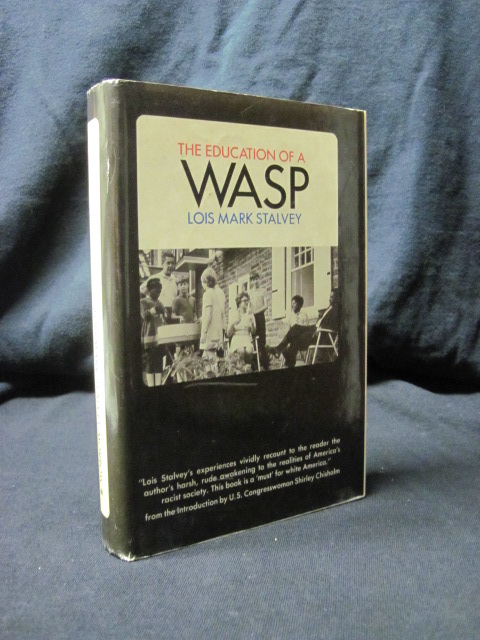
A WASP’s racial tightrope resulted in enduring book partially set in 1960s Omaha
©by Leo Adam Biga
Appeared in the November 2015 issue of The Reader (www.thereader.com)
You’ve got to be taught to be afraid
Of people whose eyes are oddly made,
And people whose skin is a diff’rent shade,
You’ve got to be carefully taught.
When a liberal, white middle-class couple with young kids moved to Omaha from Chicago in the late 1950s they entered this city’s weirdly segregated reality, not uncommon in almost every American city. It was not as public or overtly violent as the segregation in the former Confederate states of the South, but it was no less impactful on the African-American communities in Northern states. Homemaker Lois Mark Stalvey was a former advertising copywriter who once owned her own agency. Her husband Bennett Stalvey was a Fairmont Foods Mad Man.
The Omaha they settled into abided by a de facto segregation that saw blacks confined to two delineated areas. The largest sector, the Near North Side, was bounded by Cuming on the south and Ames on the north and 16th on the east and 40th on the west. Large public housing projects were home to thousands of families. In South Omaha blacks were concentrated in and around projects near the packing plants. Blacks here could generally enter any public place – a glaring exception being the outdoor pool at Peony Park until protestors forced ownership’s hand – but were sometimes required to sit in separate sections or limited to drive-thru service and they most definitely faced closed housing opportunities and discriminatory hiring practices.
This now deceased couple encountered a country club racist culture that upheld a system designed to keep whites and blacks apart. Neither was good at taking things lying down or letting injustices pass unnoticed. But she was the more assertive and opinionated of the two. Indeed, son Ben Stalvey recalls her as “a force of nature” who “rarely takes no for an answer.”
“She was stubborn to accept the accepted norm in those days and that piqued her curiosity and she took it from there,” he says. “She had grown up in her own little bubble (in Milwaukee) and I think when she discovered racial prejudice and injustice her attitude was more like, What do you mean I can’t do that or what do you mean I have to think that way? It was more just a matter of, “Hell, no.”
Though only in Omaha a few years, Stalvey made her mark on the struggle for equality then raging in the civil rights movement.
The well-intentioned wife and mother entered the fray naive about her own white privilege and prejudice and the lengths to which the establishment would go to oppose desegregation and parity. Her headstrong efforts to do the right thing led to rude awakenings and harsh consequences. Intolerance, she learned here and in Philadelphia, where the Stalveys moved after her husband lost his job due to her activism, is insidious. All of which she wrote about in her much discussed 1970 book, The Education of a WASP.
The title refers to the self-discovery journey she made going from ignorance to enlightenment. Blacks who befriended her in Omaha and in Philadelphia schooled her on the discrimination they faced and on what was realistic for changing the status quo.
Among her primary instructors was the late black civic leader and noted physician Dr. Claude Organ and his wife Elizabeth “Betty” Organ and a young Ernie Chambers before his state senator career. In WASP Stalvey only sparingly used actual names. The Organs became the Bensons and Chambers became Marcus Garvey Moses.
A Marshall, Texas native and graduate of Xavier University in New Orleans, Claude Organ was accepted by the University of Texas Medical School but refused admittance when officials discovered he was black. The state of Texas paid the tuition difference between UT and any school a denied black attended. Organ ended up at Creighton University and the state of Texas paid the extra $2,000 to $3,000 a year the private Jesuit school cost, recalls Betty Organ.
His civil rights work here began with the interracial social action group the De Porres Club led by Father John Markoe. Organ became Urban League of Nebraska president and later advised the Citizens Coordinating Committee for Civil Liberties (4CL). He was on the Catholic Interracial Council board and Mayor’s Biracial Committee.
“He built a lot of bridges,” son Paul Organ says.
Betty Organ got involved, too, supporting “any group that had something to do with making Omaha a better place to live,” she says.
So when Stalvey was introduced to the Organs by a black friend and determined to made them her guides in navigating the troubled racial waters, she couldn’t have found a better pair.
Stalvey met Chambers through Claude Organ.
Chambers says “This woman detected I was somebody who might have some things to offer that would help give her what she called her education. And when I became convinced she was genuine I was very open with her in terms of what I would talk to her about.”
Though it may not seem so now, Chambers says the book’s title was provocative for the time. WASP stands for White Anglo-Saxon Protestant, which defined Stalvey’s background, but racism was rampant across ethnic and religious lines in White America.
“WASP was a term that not everybody to whom it applied embraced. So by using that title she caught people’s attention.”
Ernie Chambers educating Pastor William Youngdahl in “A Time for Burning”
But he admired the “substance” behind the sensation. He admired, too, that the vitally curious Stalvey asked lots of questions.
“I never got the impression as used to happen when I was interviewed by white people that she was ‘studying’ me like a scientist in a lab would study insects. She genuinely was trying to make herself a better person and I think she succeeded.”
This ever apt pupil threw herself into The Cause. Her son Noah Stalvey says, “I can remember meetings at the house. She had a lot of the movers and shakers of the day meeting there. Her goal was to raise us in an environment of tolerance.”
“At times it was lively,” says Ben Stalvey. “There wasn’t much disagreement. We knew what was going on, we heard about things. We met a lot of people and we’d play with their kids.”
All par for the course at the family home in Omaha’s Rockbrook neighborhood. “It wasn’t until well into my teen years I realized my parents were fighting the battle,” Noah says. “I just thought that’s what all parents do.”
His mother headed the progressive Omaha Panel for American Women that advocated racial-religious understanding. The diverse panelists were all moms and the Organ and Stalvey kids sometimes accompanied their mothers to these community forums. Paul Organ believes the panelists wielded their greatest influence at home.
“On the surface all the men in the business community were against it.
Behind the scenes women were having these luncheons and meetings and I think in many homes around Omaha attitudes were changed over dinner after women came back from these events and shared the issues with their husbands. To me it was very interesting the women and the moms kind of bonded together because they all realized how it was affecting their children.”
Betty Organ agrees. “I don’t think the men were really impressed with what we were doing until they found out its repercussions concerning their children and the attitudes their children developed as they grew.”
Stalvey’s efforts were not only public but private. She personally tried opening doors for the aspirational Organs and their seven children to integrate her white bread suburban neighborhood. She felt the northeast Omaha bungalow the Organs occupied inadequate for a family of nine and certainly not befitting the family of a surgeon.
Racial segregation denied the successful professional and Creighton University instructor the opportunity for living anywhere outside what was widely accepted as Black Omaha – the area in North Omaha defined by realtors and other interests as the Near North Side ghetto.
“She had seen us when we lived in that small house on Paxton Boulevard,” Betty Organ says. “She had thought that was appalling that we should be living that many people in a small house like that.”

Cover of the book “Ahead of Their Time: The Story of the Omaha DePorres Club”
Despite the initial reluctance of the Organs, Stalvey’s efforts to find them a home in her neighborhood put her self-educating journey on a collision course with Omaha’s segregation and is central to the books’s storyline. Organ appreciated Stalvey going out on a limb.
Stalvey and others were also behind efforts to open doors for black educators at white schools, for employers to practice fair hiring and for realtors to abide by open housing laws. Stalvey found like-minded advocates in social worker-early childhood development champion Evie Zysman and the late social cause maven Susie Buffett. They were intent on getting the Organs accepted into mainstream circles.
“We were entertained by Lois’ friends and the Zysmans and these others that were around. We went to a lot of places that we would not have ordinarily gone because these people were determined they were going to get us into something,” Betty Organ says. “It was very revealing and heartwarming that she wanted to do something. She wanted to change things and it did happen.”
Only the change happened either more gradually than Stalvey wanted or in ways she didn’t expect.
Despite her liberal leanings Claude Organ remained wary of Stalvey.
“He felt she was as committed as she could be,” his widow says, “but he just didn’t think she knew what the implications of her involvement would be. He wasn’t exactly sure about how sincere Lois was. He thought she was trying to find her way and I think she more or less did find her way. It was a very difficult time for all of us, that’s all I can say.”
Ernie Chambers says Stalvey’s willingness to examine and question things most white Americans accepted or avoided was rare.
“At the time she wrote this book it was not a popular thing. There were not a lot of white people willing to step forward, identify themselves and not come with the traditional either very paternalistic my-best-friend-is-a-Negro type of thing or out-and-out racist attitude.”
The two forged a deep connection borne of mutual respect.
“She was surprised I knew what I knew, had read as widely as I had, and as we talked she realized it was not just a book kind of knowledge. In Omaha for a black man to stand up was considered remarkable.
“We exchanged a large number of letters about all kinds of issues.”
Chambers still fights the good fight here. Though he and Claude Organ had different approaches, they became close allies.
Betty Organ says “nobody else was like” Chambers back then. “He was really a moving power to get people to do things they didn’t want to do. My husband used to go to him as a barber and then they got to be very good friends. Ernie really worked with my husband and anything he wanted to accomplish he was ready to be there at bat for him. He was wonderful to us.”
Stalvey’s attempts to infiltrate the Organs into Rockbrook were rebuffed by realtors and residents – exactly what Claude Organ warned would happen. He also warned her family might face reprisals.
Betty Organ says, “My husband told her, ‘You know this can have great repercussions because they don’t want us and you can be sure that because they don’t want us they’re going to red line us wherever we go in Omaha trying to get a place that they know of.'”
Bennett Stalvey was demoted by Fairmont, who disliked his wife’s activities, and sent to a dead-end job in Philadelphia. The Organs regretted it came to that.
“It was not exactly the thing we wanted to happen with Ben,” Betty Organ says. “That was just the most ugly, un-Godly, un-Christian thing anybody could have done.”
Photos of the late Dr. Claude Organ
While that drama played out, Claude Organ secretly bought property and secured a loan through white doctor friends so he could build a home where he wanted without interference. The family broke ground on their home on Good Friday in 1964. The kids started school that fall at St. Philip Neri and the brick house was completed that same fall.
“We had the house built before they (opponents) knew it,” Betty Organ says.
Their spacious new home was in Florence, where blacks were scarce. Sure enough, they encountered push-back. A hate crime occurred one evening when Betty was home alone with the kids.
“Somebody came knocking on my door. This man was frantically saying, ‘Lady, lady, you know your house is one fire?’ and I opened the door and I said, ‘What?’ and he went, ‘Look,’ and pointed to something burning near the house. I looked out there, and it was a cross burning right in front of the house next to the garage. When the man saw what it was, too, he said, ‘Oh, lady, I’m so sorry.’ It later turned out somebody had too much to drink at a bar called the Alpine Inn about a mile down the road from us and did this thing.
“I just couldn’t believe it. It left a scorch there on the front of the house.”
Paul Organ was 9 or 10 then.
“I have memories of a fire and the fire truck coming up,” he says. “I remember something burning on the yard and my mom being upset. I remember when my dad got home from the hospital he was very upset but it wasn’t until years later I came to appreciate how serious it was. That was probably the most dramatic, powerful incident.”

The former Organ home in Florence where a cross was burned.
But not the last.
As the only black family in St. Philip Neri Catholic parish the Organs seriously tested boundaries.
“Some of the kids there were very ugly at first,” Betty Organ recalls. “They bullied our kids. It was a real tough time for all of us because they just didn’t want to accept the fact we were doing this Catholic thing.”
You’ve got to be taught
To hate and fear,
You’ve got to be taught From year to year,
It’s got to be drummed In your dear little ear
You’ve got to be carefully taught.
Daughter Sandra Organ says, “There were some tensions there. Dad would talk about how to handle these kind of things and to take the high road. But if they used the ‘n’ word we had an opportunity to retaliate because you defend your honor as a black person.
“An older neighbor man didn’t particularly like black people. But his grandson was thrilled to have these five boys to play with, so he became like an extra person in the family. The boy’s family was very kind to us and they kind of brought the grandfather around.”
Betty Organ says things improved with parishioners, too. “It got to the point where they got to know the family and they got to know us and they kind of came around after a few years.”
Sandra says when her brother David suffered severe burns in an accident and sat-out school “the neighborhood really rallied around my mom and provided help for her and tutoring for David.”
Stalvey came from Philadelphia to visit the Organs at their new home.
“When she saw the house we built she was just thrilled to death to see it,” Betty Organ says.
In Philadelphia the Stalveys lived in the racially mixed West Mount Airy neighborhood and enrolled their kids in predominantly African-American inner city public schools.
Ben Stalvey says, “I think it was a conscious effort on my parents part to expose us to multiple ways of living.”
His mother began writing pieces for the Philadelphia Bulletin that she expanded into WASP.
“Mom always had her writing time,” Ben Stalvey notes. “She had her library and that was her writing room and when she in the writing room we were not to disturb her and so yes I remember her spending hours and hours in there. She’d always come out at the end of the school day to greet us and often times she’d go back in there until dinner.”
In the wake of WASP she became a prominent face and voice of white guilt – interviewed by national news outlets, appearing on national talk shows and doing signings and readings. Meanwhile, her husband played a key role developing and implementing affirmative action plans.
Noah Stalvey says any negative feedback he felt from his parents’ activism was confined to name-calling.
“I can remember vaguely being called an ‘n’ lover and that was mostly in grade school. My mother would be on TV or something and one of the kids who didn’t feel the way we did – their parents probably used the word – used it on us at school.”
He says the work his parents did came into focus after reading WASP.
“I first read it when I was in early high school. It kind of put together pieces for me. I began to understand what they were doing and why they were doing it and it made total sense to me. You know, why wouldn’t you fight for people who were being mistreated. Why wouldn’t you go out of your way to try and rectify a wrong? It just made sense they were doing what they could to fix problems prevalent in society.”
Betty Organ thought WASP did a “pretty good” job laying out “what it was all about” and was relieved their real identities were not used.
“That was probably a good thing at the time because my husband didn’t want our names involved as the persons who educated the WASP.”
After all, she says, he had a career and family to think about. Dr. Claude Organ went on to chair Creighton’s surgery department by 1971, becoming the first African-American to do so at a predominately white medical school. He developed the school’s surgical residency program and later took positions at the University of Oklahoma and University of California–Davis, where he also served as the first African-American editor of Archives of Surgery, the largest surgical journal in the English-speaking world.
Claude and Betty Organ
Sandra Organ says there was some queasiness about how Stalvey “tried to stand in our shoes because you can never really know what that’s like.” However, she adds, “At least she was pricking people’s awareness and that was a wise thing.”
Paul Organ appreciates how “brutally honest” Stalvey was about her own naivety and how embarrassed she was in numerous situations.” He says, “I think at the time that’s probably why the book had such an effect because Lois was very self-revealing.”
Stalvey followed WASP with the book Getting Ready, which chronicled her family’s experiences with urban black education inequities.
At the end of WASP she expresses both hope that progress is possible – she saw landmark civil rights legislation enacted – and despair over the slow pace of change. She implied the only real change happens in people’s hearts and minds, one person at a time. She equated the racial divide in America to walls whose millions of stones must be removed one by one. And she stated unequivocally that America would never realize its potential or promise until there was racial harmony.
Forty-five years since WASP came out Omaha no longer has an apparatus to restrict minorities in housing, education, employment and recreation – just hardened hearts and minds. Today, blacks live, work, attend school and play where they desire. Yet geographic-economic segregation persists and there are disproportionate numbers living in poverty. lacking upwardly mobile job skills, not finishing school, heading single-parent homes and having criminal histories in a justice system that effectively mass incarcerates black males. Many blacks have been denied the real estate boom that’s come to define wealth for most of white America. Thus, some of the same conditions Stalvey described still exist and similar efforts to promote equality continue.
Stalvey went on to teach writing and diversity before passing away in 2004. She remained a staunch advocate of multiculturalism. When WASP was reissued in 1989 her new foreword expressed regret that racism was still prevalent. And just as she concluded her book the first time, she repeated the need for our individual and collective education to continue and her indebtedness to those who educated her.
Noah Stalvey says her enduring legacy may not be so much what she wrote but what she taught her children and how its been passed down.
“It does have a ripple effect and we now carry this message to our kids and our kids are raised to believe there is no difference regardless of sexual preference or heritage or skin color.”
Ben Stalvey says his mother firmly believed children are not born with prejudice and intolerance but learn these things.
“There’s a song my mother used to quote which I still like that’s about intolerance – ‘You’ve Got to be Carefully Taught’ – from the musical South Pacific.
“The way we were raised we were purposely not taught,” Ben Stalvey says. “I wish my mother was still around to see my own grandchildren. My daughter has two kids and her partner is half African-American and half Filipino. I think back to the very end of WASP where she talks about her hopes and dreams for America of everyone being a blended heritage and that has actually come to pass in my grandchildren.”
You’ve got to be taught before it’s too late,
Before you are six or seven or eight,
To hate all the people your relatives hate,
You’ve got to be carefully taught!
____________________________________________________________________________

Stalvey’s personal chronicle of social awareness a primer for racial studies
©by Leo Adam Biga
Appearing in the November 2015 issue of The Reader (www.thereader.com)
With America in the throes of the 1960s civil rights movement, few whites publicly conceded their own prejudice, much less tried seeing things from a black point of view. Lois Mark Stalvey was that exception as she shared her journey from naivety to social consciousness in her 1970 book The Education of a WASP.
Her intensely personal chronicle of becoming a socially aware being and engaged citizen has lived on as a resource in ethnic studies programs.
Stalvey’s odyssey was fueled by curiosity that turned to indignation and then activism as she discovered the extent to which blacks faced discrimination. Her education and evolution occurred in Omaha and Philadelphia. She got herself up to speed on the issues and conditions impacting blacks by joining organizations focused on equal rights and enlisting the insights of local black leaders. Her Omaha educators included Dr. Claude Organ and his wife Elizabeth “Betty” Organ (Paul and Joan Benson in the book) and Ernie Chambers (Marcus Garvey Moses).
She joined the local Urban League and led the Omaha chapter of the Panel of American Women. She didn’t stop at rhetoric either. She took unpopular stands in support of open housing and hiring practices. She attempted and failed to get the Organs integrated into her Rockbrook neighborhood. Pushing for diversity and inclusion got her blackballed and cost her husband Bennett Stalvey his job.
After leaving Omaha for Philly she and her husband could have sat out the fight for diversity and equality on the sidelines but they elected to be active participants. Instead of living in suburbia as they did here they moved into a mixed race neighborhood and sent their kids to predominantly black urban inner city schools. Stalvey surrounded herself with more black guides who opened her eyes to inequities in the public schools and to real estate maneuvers like block busting designed to keep certain neighborhoods white.
Behind the scenes, her husband helped implement some of the nation’s first affirmative action plans.
Trained as a writer, Stalvey used her gifts to chart her awakening amid the civil rights movement. Since WASP’s publication the book’s been a standard selection among works that about whites grappling with their own racism and with the challenges black Americans confront. It’s been used as reading material in multicultural, ethnic studies and history courses at many colleges and universities.
University of Nebraska-Lincoln associate professor of History and Ethnic Studies Patrick Jones has utilized it in two courses.
“In both courses students had a very positive response to the book,” he says. “The book’s local connections to Omaha literally bring the topic of racial identity formation and race relations ‘home’ to students. This local dynamic often means a more forceful impact on Neb. students, regardless of their own identity or background.
“In addition, the book effectively underscores the ways that white racial identity is socially constructed. Students come away with a much stronger understanding of what many call ‘whiteness’ and ‘white privilege” This is particularly important for white students, who often view race as something outside of themselves and only relating to black and brown people. Instead, this book challenges them to reckon with the various ways their own history, experience, socialization, acculturation and identity are racially constructed.”

Patrick Jones
Jones says the book’s account of “white racial identity formation” offers a useful perspective.
“As Dr. King, James Baldwin and others have long asserted, the real problem of race in America is not a problem with black people or other people of color, but rather a problem rooted in the reality of white supremacy, which is primarily a fiction of the white mind. If we are to combat and overcome the legacy and ongoing reality of white supremacy, then we need to better understand the creation and perpetuation of white supremacy, white racial identity and white privilege, and this book helps do that.
“What makes whiteness and white racial identity such an elusive subject for many to grasp is its invisibility – the way it is rendered normative in American society. Critical to a deeper understanding of how race works in the U.S. is rendering whiteness and white supremacy visible.”
Stalvey laid it all right out in the open through the prism of her experience. She continued delineating her ongoing education in subsequent books and articles she wrote and in courses she taught.
Interestingly, WASP was among several popular media examinations of Omaha’s race problem then. A 1963 Look magazine piece discussed racial divisions and remedies here. A 1964 Ebony profile focused on Don Benning breaking the faculty-coaching color barrier at the University of Nebraska at Omaha. The 1966 film A Time for Burning featured Ernie Chambers serving a similar role as he did with Stalvey, only this time educating a white pastor and members of Augustana Lutheran Church struggling to do interracial fellowship. The documentary prompted a CBS News special.
Those reports were far from the only local race issues to make national news. Most recently, Omaha’s disproportionately high black poverty and gun violence rates have received wide attention.
Categories: African-American Culture, Authors/Literature, Books, Civil Rights, History, Lois Mark Stalvey, Omaha, Race, Social Justice, The Education of a WASP
African-American Culture, Authors, Books, Civil Rights, History, Lois M. Stalvey, Lois Mark Stalvey, Omaha, Race, Social Justice, The Education of a WASP
THE GREAT MIGRATION: WHEREVER PEOPLE MOVE, HOME IS WHERE THE HEART IS
May 7, 2015
Leave a comment
I am posting for the first time an iBook I wrote for 3rd graders in the Omaha Public Schools. As explained below, the book is one of two I wrote for a series of Nebraska Department of Education iBooks that paired local authors and artists with educators in exploring various aspects of African-American history. This was all part of the OPS program Making Invisible Histories Visible. The book I’m sharing here covers the Great Migration. Many elements of the book are missing from this post but suffice to say that the actual iBook is a graphic-heavy, interactice experience meant to be used by teachers in classroom settings with their students. I am making a separate post with my second series book that looks at Civil Rights through the lens of the effort that integrated the Peony Park pool.
You can access the Great Migration book in PDF format at-
Click to access great_migration.pdf
Or you can download this and other books in the series at-
http://www.education.ne.gov/nebooks/ebook_library.html
MAKING INVISIBLE HISTORIES VISIBLE
THE GREAT MIGRATION: WHEREVER PEOPLE MOVE, HOME IS WHERE THE HEART IS
©BY LEO ADAM BIGA
©ILLUSTRATIONS BY VICTORIA HOYT
DEVELOPED BY OCTAVIA BUTLER
ABOUT THIS PROJECT
During the summer of 2013, eight Omaha Public Schools teachers each developed an iBook on a topic of Omaha and Nebraska history as it relates to African American history. I wrote two of the 3rd grade books: Civil Rights: Standing Up for What’s Right to Make a Difference and the one shared here, The Great Migration: Wherever People Move, Home Is Where the Heart Is.
Each book paired an Omaha author and artist. Not included in this post are photographs, documents, and other artifacts provided by local community members and through partnership with the Great Plains Black History Museum.
Each book in the series provides supplemental information on the role of African Americans in Omaha and Nebraska history topics.
ABOUT THIS BOOK
The Great Migration: Wherever People Move, Home is Where the Heart Is describes the Great Migration as it pertains to Omaha’s history. Topics covered include jobs, culture, historical events, and local figures. The piece itself is written similarly to a newspaper article, and interviews with local community members inform the majority of the story.
This book is meant to encourage students to compare the experiences of the people in the story to their own lives. There are several activities along the way that allow students to reflect critically on the content of the story. They will explore and analyze photos, newspaper articles, maps, and graphs. Students will examine not only the period of the Great Migration, but also the culture brought to Omaha and other parts of the North because of the Great Migration.
FREEDOM
Freedom means many things to many different people. For some, freedom means the right to be treated equally under the law. Others value the importance of being free to speak one’s mind. Freedom also means the ability to move and travel without limits. Indeed, freedom is about all of these things.
For African Americans, it was important that they be free to move to a place they would be able to express their beliefs, be treated equally under the law, and enjoy other benefits of an open society. With the end of slavery, African Americans began leaving the U.S. South for greater freedom and opportunity in the North and West.
There’s a long history of masses of people moving from one area of America to another. One of the largest internal movements occurred from the 1910s through the 1960s when millions of African Americans fled the South for other regions during the Great Migration.
During both World Wars, the movement of African Americans out of the South rose to such high levels that it became known as the Great Migration. One of the destinations for black people leaving the South was Omaha. African Americans came here not only to enjoy greater freedom but also to take advantage of employment and educational opportunities.
Imagine living some place where you’re made to feel less than a full citizen or even less than human simply based on the color of your skin. For many years African Americans living in the South were treated unfairly and cruelly because they were the black minority and whites were the ruling majority.
The discrimination blacks faced were remnants from the days of slavery. Blacks were denied the same educational, housing, job, voting, and recreational opportunities as whites. The threat of physical violence was real.
These were reasons enough for blacks wanting to leave the South. Other reasons included the hard times that the South experienced in the first half of the 20th century, where most blacks made their living working the land. When crop failures and natural disasters occurred there, some blacks felt they had no choice but to leave to find better fortune in other parts of the country.
Reflect: Can you think of a time you were treated unfairly?
How would it feel to have less rights than someone else because of how you look?
COMING AND GOING
JOBS
Blacks left the South to take advantage of the better paying jobs open to minorities in other parts of the nation. In Omaha, the railroads and the packinghouses were the main job magnets that pulled people here.
Black men could find work as Pullman Porters, baggage handlers and cooks with the railroads, and as laborers in packing plants. Porters dressed in crisp uniforms and prided themselves on giving great customer service to passengers on trains. Packinghouse workers performed physically demanding and dangerous duties. These jobs paid well enough that a black man could support his family and even buy a home.
The Omaha Monitor would promote businesses that hired members of the black community.
The railroad industry provided many jobs for black men
Black women found work as domestic help in well-to-do people’s homes, where they worked as maids, housekeepers, or nannies. Some cleaned offices. Black women were also employed as cooks, laundresses, cleaning help, and aides in hospitals and nursing homes.
It was very important for the black community to promote businesses that not only would serve black customers, but would also hire them for jobs.
Reflect: Why was this important to members of the community when looking for a job?
How did writing about these businesses in the newspaper help the black community?
OMAHA’S GROWTH
The Great Migration had dramatic effects on the communities African Americans left and the communities they moved to. For example, the first wave from 1910 to 1920 doubled Omaha’s black population.
Newcomers were not always warmly welcomed where they moved. Early on in Omaha, blacks lived in multicultural neighborhoods throughout the city. However, outbreaks of racial violence, including the 1919 lynching of a black man, Will Brown, gradually confined blacks to a few neighborhoods on the North and South sides.
Migrants came to Omaha as individuals, couples, families, and groups. They came by bus, train, and automobile. Often, one family member would make the move, find employment and housing, and after getting settled would send for another relative.

 Looking to Omaha out of agricultural despair in the South, African-American men “stepping up” from share-cropping to the meat-packing plants.
The vibrant, yet increasingly isolated, black community in North Omaha.

Feeling the effects of destructive segregation and racism from the same Omaha that offered new opportunities.

ESTABLISHING COMMUNITY
Blacks largely came here from Alabama, Mississippi, Arkansas, and Louisiana. A group of Christians from Brewton, Alabama, established Pilgrim Baptist Church in Omaha in 1917 during that first big migration movement. These church founders helped build a thriving congregation, which their descendants kept alive. Today, Pilgrim is nearly a century old and still going strong.
A half-century later the migration had slowed quite a bit, but was still in progress. Two women who left the South in the 1960s to make new lives for themselves in Omaha are Luriese Moore and Lorraine Jackson. Moore came from Boligee, Alabama. Jackson came from Brookhaven, Mississippi.
SEEKING A BETTER LIFE
Exactly why migrants left, the mode of transportation they used to get here, and how they did once they arrived differed. But generally speaking everyone wanted a better life, and most found it too. They were motivated to go by the chance for greater equality and freedom and glad to leave behind reminders of slavery.
In the South there were separate facilities and sidewalks for the races. “They had one side colored and the other side white,” Moore recalled. “You just didn’t get in on the white side because you knew where you were supposed to be. There were some stores we couldn’t even go in in my hometown, like exclusive stores that sold very fine clothes. It was just a way of life. We didn’t like it but it’s what was happening.”
Jackson, whose grandparents were sharecroppers, said blacks would go to town and head right back home because “we were expected to stay in our place. There was no hanging out downtown. You did what you had to do and left because you didn’t know what might happen. I mean, you really had to walk careful.”
Moore wanted to join the civil rights protests happening then but her mother wouldn’t let her. Her father transported demonstrators from their rural homes into town to participate in marches and demonstrations. It was a brave thing to do because if the Ku Klux Klan caught him doing it he could have been in serious trouble.
Moore left Alabama for Omaha after graduating high school and marrying. “I had never left the South before,” she said. “I came here on the bus. When I left Alabama I had to sit in the back of the bus and then by the time we got to St. Louis (Missouri) we could sit anywhere we wanted.”
Venturing North to start a new life stirred “mixed emotions” in her. She was recently married at the time, and her husband moved ahead of her to get work at a packinghouse.
Reflect: Have you ever moved to somewhere new before?
What plans did you have to make before moving?
MAKING A NEW START
Moore found life far different here than it was down South. “The integration and everything was all new to me. It was just totally different from where we were. I didn’t see the (colored only or white only) signs we saw in Alabama. You could just go anywhere you wanted to here. You could go to any store.”
However, not everything was open to everybody. Until the 1970s blacks could only live in certain areas and some businesses refused to serve or hire them. But things were far more limiting in the South.
Jackson said the stories she heard about the way things were up North made enough of “an impression” she decided “it was right for me to go.” She came by train. From Mississippi to Illinois, blacks had to ride in separate cars. When they reached Chicago, they could sit anywhere on trains headed West, East or further North. Lorraine headed West to Omaha.
Both she and Moore became beauticians and raised families here. The women, who were able to go into business for themselves here, say they encountered some racism in Nebraska, but overall they feel they made a good choice in coming to the Midwest.
Both have returned to the South almost every year. Their families still own land there. They marvel at how the South has changed. “I can’t believe all the mixed marriages there. And the white people are at the black church,” said Jackson. “I never dreamed I would be seeing this. We’ve got a black mayor there in our hometown. I’m just shocked because I never thought it would ever happen, but it has.”
DRAWING ON THE OLD TO MAKE NEW
African American migrants often feel a strong connection to the South, where their roots are. Their families hold regular reunions, sometimes in their childhood hometowns. Many blacks who left the South have reversed their migration and moved back. Moore said, “Boligee means so much to me because of how my dad risked his life. He could’ve got killed doing what he was doing, just to get the vote. He always preached to us, ‘Hey, when y’all get the chance to vote you vote,’ and I’ve never missed voting.”
Jackson, Moore, and their siblings all finished school and some went on to college. Looking back on how much they overcame, Jackson said it’s “amazing we’re successful – I think it was our upbringing. In that time we lived in we had to be strong and respectful. Faith was a big factor, too.”
Migrants brought their culture wherever they settled. Traditional African American music and food are now staples in the larger culture. North Omaha became a haven for jazz, blues, and gospel music, soul food, stepping, and Southern slang. Emma Hart of Omaha still uses the treasured family recipes for sweet potato pie, candied yams, collard greens, and cornbread dressing brought here from Arkansas by her family. The hospitality southerners are famous for was also brought North.
Similarly, migrants and immigrants of other races and ethnicities have brought and continue bringing their own sounds and flavors. This infusion or blending of cultures has created a richer stew than what existed before.
The Great Migration changed America by dramatically increasing the black population in cities across the land, thus creating a more diverse society.The migrant experience continues to play out in many locales around the world.
SPOTLIGHT: DAN DESDUNES
Dan Desdunes was one of the first major musicians to play in Omaha, and played a major role in North Omaha’s jazz scene and musical culture. He is considered the father of black musicians in Omaha.
Desdunes was born in 1873 in New Orleans, Louisiana. He started studying music when he was 17 years old. He learned to play the violin, cornet, trombone, and trap drums. In 1894, at the age of 21, Desdunes traveled as a musician with different theater companies. During this time, he began to learn to play wind instruments.
After he got married in 1904, Desdunes decided to settle in Omaha. He felt there were good musical opportunities in the city. Since Omaha was in the middle of many bigger cities along the Union Pacific Railroad, many musicians would stop here to perform.
In Omaha, he started the Desdunes Band and the Desdunes Jazz Orchestra. The Desdunes Band started in 1915, and Dan Desdunes led the band until his death in 1929. They played annually in the Ak-sar-ben Parade, and other events for the Chamber of Commerce. The Desdunes Jazz Orchestra was one of the first black orchestras to perform in Omaha.
Desdunes also trained many young musicians. He was a music teacher and bandleader for Father Flanagan’s Home for Boys during the last eight years of his life. He believed that the study of music made people better citizens.
Take a Stand
There were many positive reasons to leave the South and move North. However, the black community still experienced some discrimination in the North.
Make a list of the positive reasons to move North. Then list the struggles still faced in the North.
Think about each list. Next, decide whether you would choose to move North or stay in the South.
Defend your choice by explaining why you chose to move North or stay in the South.
MEET THE AUTHOR
Leo Adam Biga is an Omaha-based author-journalist- blogger best known for his cultural writing-reporting about people, their passions and their magnificent obsessions. His book “Alexander Payne: His Journey in Film” is the first comprehensive treatment of the Oscar- winning filmmaker. Biga’s peers have recognized his work at the local, state and national levels. To sample more of his writing visit, leoadambiga.com.
MEET THE ARTIST
Victoria Hoyt is an artist working in Omaha, Nebraska, the city she grew up in. She received her BA from Gustavus Adolphus College in St. Peter, Minnesota and her MFA from the University of Nebraska-Lincoln. You can find her making paintings and things that make her laugh in her North Omaha home studio, or teaching part- time at Metro Community College. To see more of her work, please visit her website at victoriahoyt.com.
Omaha history salvager Frank Horejsi: Dream calls for warehouse to become a museum
March 11, 2015
3 comments
In the spirit of somebody’s refuse being somebody else’s treasure, Frank Horejsi has made it his mission to save Omaha history by salvaging architectural remnants off of buildings slated for demolition. After decades of dedicating himself to this casue, he’s accumulated quite a collection at a near Old Market warehouse he hopes to turn into a museum. I hope you enjoy my Reaer (www.thereader.com) profile of Horejsi and his magnificent obsession. On this blog you can find my story about another Omaha salvager who shared his obsession, the late Lucile Schaaf.

©photo by Debra S. Kaplan
Omaha history salvager Frank Horejsi
Dream calls for warehouse to become a museum
©by Leo Adam Biga
Originally appeared in the March 2015 issue of The Reader (www.thereader.com)
South Omaha native Frank Horejsi doesn’t care if he’s called caretaker, curator, historian, picker, salvager, architectural remnants archeologist or his favorite, urban miner.
Just don’t call him late to a salvage site.
For 30-some years he’s scavenged vintage buildings slated for demolition. His keen eye spots ornamental details of historical and artistic value before they hit the rubble heap. He rescues carved finials, corbels, gables, cupolas, columns and assorted hand-crafted items.
He sometimes reclaims entire facades. He saved the upper two stories of glazed terra cotta on the 14-story Medical Arts Building before it was imploded. A crew working 100-plus feet off the pavement dismantled the facing piece by piece. Some was reassembled inside the atrium of the First National Bank tower that rose in the razed building’s place. Parts of the facade adorn a Lauritzen Gardens’ Victorian floral display.
“You have to have some sort of appreciation for art, history, plus you’ve got to be pretty strong and willing to take risks, too,” Horejsi says of his work.
He’s found several decorative elements for Dave Lanoha, who’s integrated many into his southwest Omaha garden center, including an Italian imported frieze from the long-gone Rialto Theater.
What Horejsi doesn’t sell or donate goes into his private collection, It’s housed in a 14th and Marcy warehouse he envisions as an Omaha history museum. The by-appointment facility, whose open-span layout and truss ceiling resemble the Kaneko, is adjoined by a four-story brick building he owns. It all sits directly east of the factory-studio of designer Cedric Hartman, an Old Market pioneer who champions Horesji’s single-minded focus on saving history before it’s lost.
What Horejsi describes as “a hobby” is clearly a passion,
“This is Omaha history. You can’t replace this. The stuff I’ve got is very high-end and historical,” he says while giving two guests a tour of his 10,000-foot space, Its contents are like pieces to a giant jigsaw puzzle of Omaha landmarks. Item by item, he describes the objects, the buildings they came from and any anecdotes about their salvage. Each has a story. The Medical Arts project stands out for sheer audacity.
“That was a very challenging job. Cold, hard, tedious. Risky. It took two months to do it. We had to label each piece, photograph it, crate it up – so it could be reassembled. There was close to 500 pieces, some weighing 500 pounds.”
The direct, personal provenance he has with most pieces separates what he does from many other salvagers.
“I document mine. Taking pictures to me is important to tell where the piece was. I like people to see a picture of the building we worked on and to know I was there to salvage it before its demolition.”
He traces his appreciation for holding onto history to his father, who junked-out old buildings. A young Frank assisted him. Downtown’s historic buildings captured Frank’s fancy as a kid.
“I grew up around it,” he says.
Then, as a young man working for Anderson Excavating, which won most bids razing Omaha’s old buildings in the 1970s and ’80s before historic preservation took hold, Horejsi found his calling to save history.
“It was just a matter that something should be done. In some cases I went in and fought to save the stuff. It wasn’t going to be saved. I did whatever I had to do to get it. I was on my own.”
When fire gutted an old streetcar barn in North Omaha except for an ornately inscribed facade he took it upon himself to rescue the front.
“That was the first time I pursued something hard. To get that was just a miracle. We had only a little area to work on top. Back then all I had was a pickup, pulleys and rope. We lowered pieces down. I didn’t even know what I was doing back then,” he says.
He’s since graduated to cranes.
He has remnants from iconic Omaha structures, including Jobbers Canyon warehouses, the Fontenelle Hotel and the Brandeis Theater, and from vanished landmarks outside Omaha, too.
Retrieving items can be hazardous. He nearly lot his life on a job he prefers not to specify except to say, “I fell 25 feet, hit the cement on my side and broke my hip.”
Not everything he owns is something he’s taken off a building himself. An 8,000-pound sandstone sculpture of Atlas from the old downtown YMCA building razed in 1968 was saved by someone else. He says, “It got moved around here and there and it ended up in Mount Pleasant, Iowa on a farm in the weeds. I was aware of its travels and so I convinced the guy who owned it it needs to come back to Omaha. So then I had this problem of how am I going to get it to Omaha.”
Enter Frank’s 15-minutes of fame on the A&E Network reality series, Shipping Wars that has haulers bid on oddball jobs. The trucker who won Frank’s gig, Jenn Brennan, enjoys a following for her model good-looks. Last year a crew captured her and fellow trucker Jess strutting and preening as they transported Atlas to its new home.
Horejsi welcomes any attention to his hoped-for museum. Citing City Museum in St. Louis as an attraction with a similar concept, he says, “This would be a neat thing for our community.”
There’s much work to be done though.
“It’s not at the level I want it to be. Things aren’t displayed on the walls as they should be. There’s no heat or running water in here.”
Despite its rough shape, he says “this building’s got a really good feel to it,” adding, “‘I’ve hosted parties for Restore Omaha and the Ak-Sar-Ben Foundation and people are curious, they ask questions, they want to see these things. It’s really satisfying to see people happy and that’s what this stuff does – it makes people happy.” Everyone from elected officials to celebrities – “Alexander Payne loves this place” – to students and historians are fans of what he’s assembled.
“Telling people where all this stuff came from is part of the fun for me.”
Omaha interior designer and preservationist Jill Benz admires Horejsi’s “heart and will from a very young age to save Omaha’s treasures,” adding, “We wouldn’t have these incredible fragments and facades from our past if it wasn’t for his hard work and determination.”
She first met him in the late ’70s, when the ruins of early Omaha were being auctioned off.
“Everyone was saying someone should be saving these. Frank came through and pursued saving our heritage.”
Horejsi says, “This is all about preserving the stuff for future generations. It needs to be kept intact.” He suggests he’s taken it as far as his resources can. “I’ve invested a lot of time, money and sweat in this building just to get it to this point. I’m not saying I’m burned out or anything but I’ve put in a lot of effort and sometimes you wonder, Is it worth it?. I’m 60 years old, I’ve done this for a number of years, I ain’t got much time left.”
He hopes a benefactor or investor shares his vision for making his warehouse into an educational center. He has plans for a sculpture garden out front and a condo in back.
He just wants to know his history crusade’s not been in vain and to prove the skeptics wrong.
“I’ve heard over and over, ‘What’s up with Frank?’ When I bought this building it was, ‘Why and the hell do you want to go down there? That’s a blighted area, it’s dangerous,’ blah, blah, blah.”
He’s been stubborn enough to stick it out.
“Nobody’s going to change my mind – I’m a stupid Bohunk. Once I get onto something, I keep pushing forward.”
Besides, he likes that his 1880s building was home to Chicago Lumber when the transcontinental railroad ran through.
“They’d offload lumber, stone, whatever. All these materials went to different building sites to build early downtown Omaha, so it’s ironic it came out of here and now I’ve brought it back.”
Horejsi wants to ensure this history is secure once he’s gone. With no wife or kids, his legacy is his collection. With a sweeping gesture at his bounty, he says, “I’m married to this building. I’m married to all this.”
To arrange tours or to rent his space, contact Horejsi at 402-699-0845
Durham Museum to celebrate 40-and-40: Forty years as train station and four decades as museum
March 4, 2015
1 comment
There was a time, not so long ago, when it seemed Omaha was hell-bent on tearing down its history. All manner of historic structures were razed: the old United States Post Office ; the Fontenelle Hotel, a huge tract of warehouses in Jobber’s Canyon, the Medical Arts Building. Thank God more jewels were saved than lost: the Old Market district; the Orpheum Theatre, the Rose Theater; Union Station, Burlington Station, the Brandeis Building, Joslyn Castle, the Storz Mansion, the Mastercraft, Omar Bakery, the Livestock Exchange Building, St. Cecilia Cathedral and many more that have been protected, renovated, and repurposed. Some of those survived narrowly escaped being razed. It took agitation, activism, vision, and purpose by determined people to save some if not all of those treasures. The tension between new development and historic preservation continues, as witnessed by the recent loss of the apartment buildings just east of Midtown Crossing and the Johnson & Johnson Mortuary on South 10th Street. One of the most signifcant saves was Union Station ,which today goes by the name Durham Museum to reflect its adapted reuse as a museum charting Omaha’s and the nation’s history. My new story about the Durham for Metro Magazine (/www.spiritofomaha.com/Metro-Magazine/The-Magazine/) explains how that building has now reached the same number of years, 40, in its role as a museum that it served as a passenger rail station for Union Pacific Railroad. It is one of those grand structures, certainly by Omaha terms, that never fails to mesmerize and impress me by its sheer size and grandeur. My eyes automatically fix on the far upper reaches of that proletarian palace. I never met or caught a train there, but I recently had the privilege of delivering a lecture there and I hope to have the opportunity to do so again in the near future.
Durham Museum to celebrate 40-and-40: Forty years as train station and four decades as museum
Dual milestone for historic landmark thriving in new use
Museum’s growth spurred by champion and namesake
©by Leo Adam Biga
Originally appeared in Metro Magazine (/www.spiritofomaha.com/Metro-Magazine/The-Magazine/)
Forty years. That’s the length of time the former Union Station in Omaha operated as a passenger train center and come 2015 that same Art Deco-style building marks 40 years as the Durham Museum.
It’s not often a grand public space celebrates a dual legacy with a shared milestone of service. From 1931 to 1971 millions of rail passengers passed through. Starting in 1975 the old Union Station became a cultural-historical venue that millions more have visited.
Much like the history it celebrates, Durham Museum was not built in a day. Neither was its home, Union Station. Union Pacific began construction on it in 1929, the year the Stock Market Crash triggered the Great Depression. The Gilbert Stanley Underwood-designed structure opened in 1931, the year when a congressional resolution officially made the “Star Spangled Banner” America’s national anthem.
As soon as Union Station closed in 1971 the site’s future lay in doubt. Its survival looked bleak the longer it sat abandoned and untended. Even after UP donated the place to the City of Omaha in 1973, most officials regarded it as a burden or albatross, not a gift. Many called for the “eyesore” to be torn down. Enter a group of preservationist-minded private citizens who formed the Western Heritage Society as a vehicle for reopening the former train station as a museum. If not for their efforts this monument to Omaha’s vigor may have gone the way of other historic buildings that got razed rather than saved.
Originally known as the Western Heritage Museum, the institution was resource-poor its first two decades yet managed to give new life to the old digs that had seen far better days. Most importantly it built a formidable body of artifacts related to early Omaha, including the Byron Reed Collection of rare coins and documents and the Bostwick-Frohardt Collection of late 19th century-early 20th century photographs. It also originated events, such as Christmas at Union Station, that became community traditions.
Durham executive director Christi Janssen admires the vision and fortitude of those angels, including Itey Crummer, Emi Baker and Ron Hunter, who made the old train station a museum.
“Their challenges were way different than our challenges today,” she says. “They were really fighting hard to raise money to turn the lights on essentially.”
Chuck to the rescue
Then, in the mid-1990s, the struggling museum that long postponed much-needed renovations and improvements for lack of funds was gifted with tens of millions of dollars through a Heritage Services drive. That campaign also brought the museum one of its greatest champions, the late Charles W. “Chuck” Durham, who grew HDR Inc. into a national engineering firm and became a major philanthropist.”Fortunately, Chuck Durham showed up with a keen architectural and engineering instinct. Walking into this Union Station Chuck could see beyond the collapsing roof, the peeling paint and the tarnished light fixtures and envision its magnificence with the right amount of money and the best of architecture and construction firms,” recalls Heritage Services President Sue Morris.As an active museum board member Durham committed himself to helping it reach its potential and restoring the building to its former glory. His children note their father saw great value in the work the museum did and in the history the building represented.Daughter Sunny Lundgren says, “He thought this is Omaha’s history and we need to preserve it and so the first thing he did was give money to this place and then he started knocking on doors and saying, ‘Do you know what an important building this is? It’s part of Omaha, we need to restore it.'”
“He led the charge in raising dollars from community leaders who responded generously,” daughter Lynne Boyer adds.
Among those Durham reeled in was then-Kiewit Corporation CEO Walter Scott. His support was recognized when the museum’s most iconic space was renamed the Suzanne and Walter Scott Great Hall.
“The building and I have something in common. We were both ‘born’ in 1931,” Scott says. “Many years later it was Chuck Durham who introduced me to its role as a museum. He convinced me to help him establish the museum’s relationships with the Smithsonian, Library of Congress and National Archives. Chuck had a vision for what the Durham Museum could become, and I think he’d be pleased to see the board and staff have realized a good part of his vision.”
Sue Morris says Durham was persuasive enough that the Heritage Services-directed campaign raised more than $30 million for the museum. The funds underwrote a major 1996 project that entailed constructing a new parking deck, installing a new roof as well as new mechanical and electrical systems and creating new office spaces, classrooms and permanent exhibits. The Great Hall was repainted and restored and interactive sculptures added. A 22,000 square foot addition was built over Track #1.
A new name and mission
In recognition of Durham’s efforts, the museum was renamed in his honor in 1997 as part of a general rebranding.”It’s always been centered on Omaha’s history and western heritage,” Janssen says, “but as the museum has evolved we have aspired to be much more than that. We want to be a gathering place. The events we host are a great way to celebrate traditions. Beyond Omaha’s history and its western heritage our mission is to share the nation’s story. We are a significant piece of that. We mirror the national story in terms of rail travel and the industry that built this community. So we have broadened our scope quite a bit over the years. Thus, we’ve been able to tap into a new audience.”Janssen says “a very strong education focus now takes front and center,” adding, “We get into school classrooms, we host school field trips and summer camps down here, we offer a scholars in residence education series that is much sought after.” The museum does special programming around various history months, such as Black History Month (February), Women’s History Month (March), Jazz Appreciation Month (April), National Hispanic Heritage Month (September) and Native American Heritage Month (November).The lecture hall is fully outfitted for distance learning. Presentations made there are regularly fed to classrooms, community centers and other sites around the nation. A mobile video camera unit allows educators to focus on various architectural details of the Great Hall, for example, as part of distance learning history curriculum.
“We continue to look for ways to engage people and to make the museum a presence wherever we can,” Janssen says. “We want people to realize it’s not just about the permanent and traveling exhibits, it’s about lectures, films, concerts, the Ethnic Holiday Festival, Christmas at Union Station, the authentic soda fountain and more.”
As the building transformed from dusty relic to gleaming palace once again and the museum grew its programming, attendance increased. In the first decade of the new millennium Chuck Durham contributed a generous match to new philanthropic gifts that funded several more infrastructure needs and the building of the Stanley and Dorothy Truhlsen Lecture Hall.


Public trust and uninterrupted growth
From that point forward the museum has seen its greatest growth in terms of attendance, membership and donations, Janssen says.”I think the thing that gets people to invest in us is a proven record and we have that now because of the growth we’ve enjoyed and the hard work we’ve been doing. We can get their attention because they see something happening here. They see we’re actually going to do what we say we’re going to do. That’s foundational for us – we never say we’re going to do something and then don’t. We’re intentional to always under promise and over deliver.
“But I think the thing that continues to get people excited about the museum is that everyone leaves with an appreciation for the history and the experience they find here. We are a repository of stories and we share those stories through our artifacts and our programs. We have been able to capture and retell those stories, and again this building speaks louder than words.”
With the museum’s finances stabilized and the institution becoming an affiliate of the prestigious Smithsonian Institution (in 2002), whose popular traveling exhibits show there, Durham was pleased by how far things had progressed and how bright the future looked.
“My father enjoyed watching the museum come alive with outstanding programs and exhibits which attracted large numbers of visitors from all over the city, state and country,” Boyer says. “It gave him a sense of great satisfaction to know the museum would continue to educate and entertain visitors of all ages for generations to come.”
Right up until his death in 2008 Durham, then wheel-chair bound, made a point of visiting the museum as often as he could.
“He enjoyed coming to the museum,” Janssen says. “Of course, it probably didn’t hurt that we had ice cream. He appreciated the opportunity to visit the soda fountain. He loved to eat a sundae.”
The Durham family remains involved. Lundgren formed the museum’s guild and served as its president one year. She supports various education efforts there and still volunteers at events. She says her family’s Christmas is not complete without visiting the museum.
Boyer enjoys taking her grandchildren there, saying, “When I visit the museum with them I view it through their eyes and gain an even greater appreciation for all it has to offer. It is an educational gem.”
Janssen says the Durham could not have blossomed without the generous support of individual members, families, corporations and foundations or without the committed work of board members, docents, volunteers and staff. She says the museum has been fortunate to have both good leadership and stewardship.
The Durham has become a major attraction – welcoming a record 204,000 visitors in 2013 and on pace to record a similar number in 2014. Its household membership base is over 7,000.

New directions and neighbors
That kind of support, she says, “just changes the way we can do business.” There’s no time to rest on laurels. “Our job is always to take it one step further,” Janssen says. “A big focus going forward is incorporating technology into the experience, both in digitizing our photo archive and in making our gallery exhibits more interactive.”
After years of being an outlier the Durham’s poised to be one of many anchor attractions along a revived South 10th Street. It can partner with such new neighbors as the House of Loom, the resurgent Little Italy district, KETV, which is moving into the restored Burlington Station, the new Blue Barn Theater and the coming Omaha Public Market. That’s in addition to North Downtown, the Capital District, the Old Market, Lauritzen Gardens and the Henry Doorly Zoo.
All of it, she says, speaks to “a new vibrancy” in the area. “It’s not just about us anymore. It’s about everybody around us. We can do so much more if we do it together and we become a destination corridor.”
Follow the 2015 anniversary events at durhammuseum.org.
Categories: Durham Museum, Education, Entertainment, History, Omaha, Writing
Durham Museum, Education, Entertainment, History, Omaha, Omaha History, Omaha Union Station
Nebraska’s Film Heritage presented by Leo Adam Biga: Tuesday, Feb. 17, 6:30 p.m., Durham Museum
February 16, 2015
Leave a comment
Join me for-
Nebraska’s Film Heritage Lecture
presented by Leo Adam Biga
Tuesday, Feb. 17, 6:30 p.m.
Durham Museum
PLEASE NOTE: Reservations are required. Email reservations@DurhamMuseum.org or call 402-444-5071.
Here is how the Durham is promoting my talk:
|

*Nebraska’s Film Heritage
presented by Leo Adam Biga
Tuesday, February 17, 6:30PM
Stanley and Dorothy Truhlsen Lecture Hall, Durham Museum
Omaha author Leo Adam Biga highlights the story of Nebraska’s rich legacy in cinema. Several native sons and daughters have made significant contributions and established major careers in the industry, both on screen and behind the camera. To this day, Nebraskans continue to make their mark in virtually every aspect of the industry and have received many honors, including Oscar recognition. Many hometown products are regarded as leaders, innovators and trailblazers, including the Johnson Brothers and their Lincoln Film Company, Harold Lloyd, Fred Astaire, Darryl F. Zanuck, Marlon Brando and Joan Micklin Silver.
Leo Adam Biga is an Omaha-based nonfiction author, award-winning journalist and blogger. His 2012 book Alexander Payne: His Journey in Film is a collection of his extensive journalism about the Oscar-winning filmmaker. Additionally, Biga is the coeditor of Memories of the Jewish Midwest: Mom and Pop Grocery Stores and the author of two e-books for the Omaha Public Schools. As a working journalist he contributes articles to several newspapers and magazines. His work has been recognized by his peers at the local, regional and national levels.
*Due to limited space, reservations are required. Please call 402-444-5071 or email reservations@DurhamMuseum.org to reserve your spot.. Cost of admission applies and members are FREE.
SCHEDULED TOURS
Join selected scholars for a special tour and commentary of Katharine Hepburn: Dressed for Stage and Screen.
*March 7, 2015, 9AM and 11AM
Rachel Jacobsen, Executive Director, Film Streams at the Ruth Sokolof Theater
*Due to limited space, reservations are required. Please call 402-444-5071 or email reservations@DurhamMuseum.org to reserve your spot. Cost of admission applies and members are free.
SPECIAL EVENTS
Hollywood Bootcamp
Saturday, March 28, 2015, 10AM-3PM
Bring your friends for a day of boot camp…Hollywood style! Walk the red carpet, learn expert tips in costuming and make-up design, star in your own movie and much more. Plus, get your own star on The Durham Walk of Fame!
Regular Museum Admission Rates Apply
Free to Members
Katharine Hepburn Movie Series
Now – March 30
The Durham Museum is proud to partner with Film Streams at the Ruth Sokolof Theater for a series of movies that coincide with the costume exhibit, Katharine Hepburn: Dressed for Stage and Screen.
All screenings will occur at Film Streams’ Ruth Sokolof Theater (1340 Mike Fahey Street). For details and showtimes visit http://www.filmstreams.org.
Filmmaker explores a Latina whose story defies all conventions; Maria Agui Carter to speak after El Museo Latino screening of her film “Rebel”
September 19, 2014
Leave a comment
A hybrid documentary employing dramatic elements explores the fascinatiing story of Loreta Valezquez, a Cuban immigrant who posed as a man to fight and spy for both sides in the American Civil War. Noted filmmaker Maria Agui Carter will discuss her film Rebel after a 7 p.m. screening at El Museo Latino in Omaha on Sept. 25. This is my Reader (http://www.thereader.com/) story about what drew Carter to the project and what she’s discoverd and surmised about Loreta, a woman she greatly admires. The film has been airing on PBS.
NOTE: Filmmaker Maria Agui Carter is pictured in the second photogaph below.
|

Filmmaker explores a Latina whose story defies all conventions; Maria Agui Carter to speak after El Museo Latino screening of her film “Rebel”
©by Leo Adam Biga
Now appearing in The Reader (http://www.thereader.com/)
Award-winning filmmaker Maria Agui Carter has much to say about her new film Rebel, the story of a Latina who posed as a man to fight and spy in the American Civil War. Agui Carter will discuss the film, which recently aired as a PBS special, and its protagonist, Cuban immigrant Loreta Velazquez, following a 7 p.m. screening on September 25 at El Museo Latino, 4701 South 25th Street.
An immigrant herself, Agui Carter is an independent filmmaker based in Mass. and founder of Iguana Films, a film and new media company making Spanish and English language works. She’s a graduate of Harvard University, where she’s been a visiting artist-scholar.
In a director’s statement and answers provided via email, she details what led her to do the 12-years-in-the-making project.
“I’m a history buff, I look for interesting characters, especially women and Latinos, in American history,” she says. “I came across an original copy of Loreta’s 1876 memoir in Widener Library (Harvard).”
Agui Carter found powerful themes in those accounts that speak to her experience as a Latina storyteller, immigrant to the U.S. and feminist.
“I felt uniquely qualified to tell the story. I’m fascinated by the question of citizenship and national identity, having been brought here as a child undocumented and raised ‘underground’ by my mother. I felt growing up I was deeply American, but I did not have the citizenship status.”
Loreta’s story touches on issues of gender, race and self-determination Agui Carter identifies with.
“I identify with Loreta and sympathize with her painful struggle to find acceptance within her community. Loreta presents a Latina’s and a woman’s perspective on a time period and a war we usually think of as exclusively black and white. But this is less a story about the Civil War and more the story of a complex woman who reinvented herself to survive the impossible circumstances in which she found herself. And that reinvention of self is a quintessentially American experience that resonates with so many Americans – that idea we are not what we are born, but what we make of ourselves.”
Agui Carter’s fllm answers and asks questions prompted by the memoir. “My film is a detective story trying to understand the woman, the myth and the politics of how we understand our own past.”
From the time Loreta published her memoir until now, her story’s been marginalized and contested, even called a hoax.
“She was attacked as a liar and a fraud by an unreconstructed Ex-Confederate general. Jubal Early, who read her memoir and thought her story preposterous. He was quite powerful and publicly dismissed her story. Subsequent generations generally followed his lead.”

To unravel the mystery, Agui Carter consulted historians, who informed her some 1,000 women disguised as men fought in the Civil War. They confirm Loreta fought under the name Harry T. Buford at First Bull Run and was wounded at Shiloh. At some point Loreta became a spy, first for the Confederacy, then for the Union. She went by many aliases, including Laura Williams and Loretea DeCaulp. Agui Carter’s hybrid documentary uses actors to dramatize certain scenes.
“We don’t know all the exact details of her service, nor that of the other documented women who fought disguised as men because they were hiding their tracks and identities,” she says.
As for why Loreta did what she did, Agui Carter says, “She had just lost her family and as a young girl she had dreamed of being a hero. it’s a complicated and deliciously twisted plot. ”
The filmmaker admires what Loreta did in carving out an unexpected, emancipated life and sharing her journey with the world.
“Her book popularized her story of a woman who broke the rules and social boundaries that, post-war, so many were trying to reconstruct. By writing her memoirs, she allowed others to imagine that they, too, might choose their own fates and go against the grain. This was considered dangerous at a time when men were returning from war and expecting the women to go back to their old roles.
“She refused to be bounded by the strictures of her time. She imagined a world for herself and went out and created it, regardless of what people told her she couldn’t do. She made the impossible possible for herself.”
Agui Carter has authored a new play, 14 Freight Trains, about the first American soldier to die in Iraq – an undocumented Latino. It has reverberations with Rebel and her own family’s experience.
“My mother married a Vietnam veteran who applied for citizenship for my mother and myself. War is a terrible, painful, transformative thing and yet people believe in this country enough to put their lives on the line for it, including generation after generation of immigrants. This is a profound experience and I am drawn to these stories of people who would believe in something so much they would risk their lives for it.”
She’s working on turning Loreta’s story into a narrative action feature..
See Rebel free with museum admission. Due to limited space, reservations are advised. Call 402-731-1137.
For more about the film and Loreta’s story, visit http://rebeldocumentary.com.
Art imitates life for “Having Our Say” stars, sisters Camille Metoyer Moten and Lanette Metoyer Moore, and their brother Ray Metoyer
February 5, 2014
1 comment
Americans are notorious for having short memories and that’s unfortunate when people and actions that merit rememberance are so quickly and easily forgotten. A pair of Omaha sisters, Camille Metoyer Moten and Lanette Metoyer Moors, are starring in an Omaha Community Playhous production of the Emily Mann play Having Our Say that features the real-life experiences of the Delany sisters, whose lives intersected with much of the African-American experience in the late 19th century and most of the 20th century. The Metoyer sisters are struck by the close parallels between the high achieving, activist Delany family and their own. In doing interviews to promote the play the Metoyers are getting the chance to educate the public about the important work their parents Ray and Lois Metoyer did in the civil rights movement here. My story about this art imitating life experience includes comments from the Metoyers’ brother, Ray.

Art imitates life for “Having Our Say” stars, sisters Camille Metoyer Moten and Lanette Metoyer Moore, and their brother Ray Metoyer
©by Leo Adam Biga
Originally appeared in The Reader (www.thereader.com)
Art imitates life when siblings Camille Metoyer Moten and Lanette Metoyer Moore evoke the Delany sisters in the African-American oral-history show Having Our Say at the Omaha Community Playhouse.
Just as the play’s real-life Sadie and Bessie Delany followed their family’s barrier-breaking path the Metoyers hail from high achievers and activists. The black branch of the Delanys’ mixed race Southern lineage produced land owners and professionals. Their father was the first black bishop of the Episcopal Church in America. Sadie became a teacher. Bessie, a dentist. Similarly, the Metoyers trace the mixed heritage on their father’s side to the Melrose Plantation in La. where ancestors formed a black aristocracy, Their mother and her family made the black migration from Miss. to the North for a better life.
The Metoyers, both veteran Omaha theater performers, say they’ve never before played roles whose familial-cultural threads adhere so closely to their own lives. Like their counterparts, the Metoyers put much stock in faith and education. The play’s also giving the sisters and their brother Raymond Metoyer, an Atlanta, Ga. broadcast journalist whose news career started in Omaha, a platform to discuss the vital work done by their late parents, Ray and Lois Metoyer, in the struggle to secure equal rights here. The couple were involved in the Nebraska Urban League, which the senior Metoyer once headed, the local chapter of the NAACP and the Citizens Coordinating Committee for Civil Liberties (4CL). They participated in marches. They had their family integrate a neighborhood. They sent their kids to white schools.
Their father was active in the 4CL’s predecessor, the De Porres Club.
“We knew our parents were trailblazers but we held a lot inside and this ([play) gives us a voice to be able to elevate them,” Lanette says.
“I’m really happy about this opportunity to bring to light all the things our parents did and worked so hard for,” Camille says.
“I’m very proud of my parents,” Raymond says. “They were very much strong foot soldiers in the civil rights movement in Omaha. They were part of a collective effort to improve housing, education and employment for minorities. They were more interested in the results than in individual glory, which seems to be something lost today. Working together to make things better was very much part of what they believed in and pushed for as a part of that collective.
“They instilled in us that same striving for being better.”
The siblings say their parents shared the Rev. Martin Luther King Jr.’s dream that blacks “will one day live in a nation where they will not be judged by the color of their skin, but by the content of their character.”
Lanette says her kid brother, L.A. musician Louis Metoyer “became exactly what our parents wanted for all of us because he got to reap all the benefits of us moving into an all-white neighborhood. He was able to play with white kids and make lasting friendships.”
Camille says, “Out of all of us I think he is the one who sees no color.”
Raymond says his folks believed in “leading by example” and thus his aspirational father, a Boys Town senior counselor and owner of the family’s barbecue joint on North 24th Street, took great pains with his appearance and speech.
“It wasn’t just about getting there. it was about how you handled yourself when you got there that made a difference,” he says.. “Our father always carried himself with dignity and strength. He projected the image he wanted people to see African-Americans could portray. He was just trying to show he belonged, that he was a significant member of the community because he had a right to be. My mother had that same persona. Both our parents instilled that in us. too.”
Raymond’s continued this leadership legacy in the National Association for Black Journalists and in his civil rights documentaries (Who Killed Emmett Till?). He admires his sisters for continuing the legacy as well.
“I’m so proud of my sisters being in this play because they’re carrying themselves with the same dignity they were brought up with.”
As kids the siblings got caught up in some of their folks’ activism.
Camille was 8 when she was taken out of school to accompany her parents in a 1963 4CL demonstration for open housing at City Hall.
The marchers proved well-schooled in nonviolent civil disobedience.
“We were walking around in a circle in the chambers carrying placards,” recalls Camille. “We were asked to disperse and of course we refused, and then they called the police in and we all sat down on the floor. I was with my dad in his lap when the police literally picked the two of us up and carried us out with me still on his lap.”
Before Metoyer, with Camille in tow, got transported to police headquarters officers let him down. As he carried Camille in his arms a news photographer snapped a picture of this dignified, loving black father comforting his adorable little girl, who sported braids and with tortoise shell frame eyeglasses. The photo made the wires.
The events made an impression on Camille.
“I remember being excited because there was so much energy. I knew what we were doing was something very important and I knew it was about fighting for our rights as black people. I remember being just a little bit scared by the police but my dad was there so I felt very safe with him.”

Lanette Metoyer Moore and Camille Metoyer Moten
Social justice was discussed in the Metoyer home.
“We were the family that all sat down to dinner together,” says Camille, “and all the conversation was about what was going on.”
The Metoyer children often tagged along with their progressive parents to meetings and gatherings. It meant getting to hear and meet Malcolm X and Jesse Jackson, in 1964 and 1969, respectively. Between those events the Metoyers integrated the Maple Village neighborhood in northwest Omaha in 1966.
“We knew it was something kind of groundbreaking but we were prepared because all of our lives we’d been taught to be on the frontlines,” says Lanette.
Raymond recalls the angry stares the family got just while driving through all-white areas. A petition circulated to try and prevent them from moving in. On move-in day some neighbors gathered outside to glare. At night his armed father and grandfather stood guard inside. It reminded his mother of what she thought she’d left behind in Miss. The house only got egged and shamed neighbors hosed off the mess.
Camille and Lanette remember threatening phone calls, nails scattered in the driveway, strange cars pulling up at night to train headlights in the windows, tense looks, awkward exchanges. At their various schools the kids encountered racism. They followed the example and admonition of their parents, whom Camille says “always addressed discrimination from an educational standpoint,” adding, “They were like, ‘Don’t get mad, just be enlightened.'”
Little by little the Metoyers found acceptance if not always fairness.
The OCP production of the Tony-nominated Having Our Say by Emily Mann, a past Great Plains Theatre Conference guest playwright, is a catharsis for the sisters.
“Doing this play has helped us in our relationship as sisters,” says Lanette. “We love to laugh just like the Delanys do. We’re storytellers like them. That tie between us now is stronger, especially after going through what Camille went through this past year (breast cancer).”
On another personal note, the play honors figures like their parents who had the courage of their convictions to stand up and be counted.
“It’s like finally they’re having their say,” says Camille.
The play runs through Feb. 9. For show times-tickets, visit http://www.omahacommunityplayhouse.com.
Categories: African-American Culture, Camille Metoyer Moten, Civil Rights, DePorres Club, Entertainment, History, Omaha Community Playhouse, Social Justice, Theater, Writing
African-American Culture, Camille Metoyer Moten, Having Our Say, History, Lanette Metoyer Moore, Omaha Community Playhouse, Ray Metoyer, Theater


 Leo Adam Biga's My Inside Stories