Archive
Bill Ramsey: A Korean War Story

Image via Wikipedia
Journalists look for hooks to hang their stories on, and anniversaries of major events are always convenient pegs to use. On the 50th anniversary of the Korean War I profiled the combat experience of Bill Ramsey, an amiable man who made a rich life for himself after the conflict as a husband, father, PR professional, and community volunteer. He has devoted much of his life to veterans affairs, particularly memorializing fallen veterans. He’s also authored a handful of books. He’s still quite active today at age 80. Anyone who survives combat has a story worth repeating, and it was my privilege telling his story in the New Horizons. Now, in conjunction with the 60th anniversary of the Korean War, I offer the story again as a tribute to Ramsey and his fellow servicemen who fought this often forgotten conflict.
Bill Ramsey: A Korean War Story
©by Leo Adam Biga
Originally published in the New Horizons
Fifty years ago, Americans were piecing their lives back together in the aftermath of World War II when the best and brightest of the nation’s youth were once more sent-off to fight in a distant land. This time the call to arms came in defense of a small Asian nation few Americans were even aware of then — Korea. In June of 1950, Communist North Korean forces (with backing from the Soviet Union and Red China) launched an unprovoked attack on the fledgling democratic republic of South Korea, whose poorly prepared army was soon overrun. With North Korea on the verge of conquering their neighbors to the south, the United States and its Western allies drew a line in the sand against Communist expansionism in the strategically vital Far East and led a United Nations force to check the aggression.
Among those answering the call to service was a tall, strapping 20-year-old Marine reservist from Council Bluffs named Bill Ramsey. His wartime experience there became a crucible that indelibly marked him. “The war will always be the most defining experience in my life,” said Ramsey, 70, whose full postwar years have included careers as a newsman, advertising executive and public relations consultant. He and his wife of 46 years, Pat, raised five children and are grandparents to 14 and great-grandparents to one. This is his Korean War story.
In the fall of 1950, Ramsey was preparing to study journalism at then Omaha University. His plans were put on hold, however, with the outbreak of hostilities overseas. He followed the unfolding drama in newsreel and newspaper accounts, including the U.S. rushing-in army divisions grown soft from occupation duty in defeated Japan. The invaders pushed South Korean and American forces down the Korean peninsula. Ramsey sensed reserves might be recalled to active duty. He was right.
He was assigned a front line unit in the 5th Marine Regiment, 1st Marine Division, Reinforced. He was excited at the prospect of seeing action in a real shooting war, even one misleadingly termed “a police action.” His anticipation was fed not by bravery, but rather heady youthful zeal to be part of the Corps’ glorious tradition. The conflict offered a once-in-a-lifetime opportunity to test himself under fire. After all, he was too young to have fought in his older brother Jack’s war the previous decade. This would be his war. His proving ground. His adventure.
“I wanted to be in the front lines. I didn’t want to go all that way to end up sorting letters in Pusan,” he said. “I was curious to know how I would hold up in action.”
No stirring salute or fanfare saw the Marines off as their Navy attack transport ship, Thomas Jefferson, pulled out of San Diego harbor in March 1951. Ramsey was one of hundreds of young men crammed in the hull. They had been plucked away from factories, offices, schools, homes and families. Ramsey left behind his mother, brother and an aunt (his father died when he was 12). The GIs were going to defend a land they did not know and a people they never met. Their mission lacked the patriotic fervor of WWII. There was no Pearl Harbor to avenge this time. No, this was a freedom fight in a growing global struggle for people’s hearts and minds.
Before ever setting foot on Korean soil, Ramsey smelled it from aboard ship in the Sea of Japan. Nearing Pusan harbor in the far southeastern tip of Korea, the heavy acrid odor of the war-ravaged countryside permeated the air. It was the stink of sulfur (the discharge from spent armaments), excrement (peasant farmers used it as fertilizer in their fields), fire and death. “That all mixed together made for quite a pungent odor,” he said. “It’s a stench that you never forget.”
Ramsey and his Able Company comrades were flown into a staging area near Chunchon in east-central Korea to await transport to the front. The city had sustained heavy damage. “It was pretty well leveled at that point,” he recalls. Standing on a wind-swept tarmac, he saw snaking down a road from the north a convoy of trucks carrying combat-weary GIs being rotated out of the line. These were veterans of the famous Chosin Reservoir Battle who defied all odds, including numerically superior enemy forces, to complete a withdrawal action that featured hand-to-hand combat. Ramsey and his green mates were their replacements.
“I remember when they got off the trucks they looked like zombies. Their faces were covered with a fine white powdery dust and their hands were blackened from the soot of the fires burning everywhere in the country,” Ramsey said. “I thought, ‘God, I’d give anything to have gone through what they’ve gone through and to be going home.” Among the dog-faced vets was a friend, Phil O’Neill, from Council Bluffs. “He tried to tell me what it was like. He didn’t exaggerate or try to make it any scarier than it was. He didn’t fool around or joke. He just gave me some good advice, like keep a low profile and keep your weapon dry.” After seeing and hearing what awaited him, Ramsey felt an overpowering desire to join the departing GIs. “They were going home. That really hurt. I was so envious.”

Ramsey’s unit headed for a position along the central front. Every village and field they passed was scarred and charred. “We drove all night. We could see fires burning. Again, we could smell the countryside,” he said.
Movement was the order of the day in a war of quickly shifting positions along the long and narrow Korean peninsula. “It was a very fluid war. We were moving constantly, sometimes by truck and sometimes marching 20 or 30 miles in a day to the next spot,” he said. Rough mountainous terrain, bad roads and inclement weather — marked by extreme temperatures, torrential rains, floods, snow and ice — made the going tough. “The farther north you go the more mountainous it becomes. You always had to go up a hill or some rocky face. No flat open fields. This was trees and rocks and cliffs. A really difficult place.” While he never had to endure the brutal winter, he described conditions “as miserably cold. And when it rained, which it did a lot, you were soaking wet, cold and knee-deep in mud. You thought you could never get through it, but you kept going.”
When his company first arrived, U.N. forces were striking out in a series of bold counteroffensives. By the summer, the war was bogged down in a stalemate. A single position (invariably a hill) would be taken, lost, and retaken several times. “It was pretty much hill by hill,” Ramsey said. Platoons were like firefighters rushing from one hot zone to another. A hundred yards or less might separate opposing forces. The basic objective was usually capturing or holding a perimeter on one of the endless sharp-edged ridge lines. Upon reaching a position, the Marines set-up machine gun posts and prepared cover by digging fox holes. Not only did the metal shards from incoming mortar and artillery pose threats, but splintered rock made deadly projectiles too. “
You always had to get some protection for yourself from shrapnel,” he said. Sleeping accommodations were standard-issue pup tents or makeshift bunkers (for extended stays). “Most of the time you stayed one night or two nights and then walked to another position, where you’d dig another hole.” The premium was on moving — no matter what. “You have aching feet. A sore back. You’re tired, discouraged. You’re cold, dirty. You’re sick (dysentery, encephalitis, etc.). But you can’t stop. You’re there, you’re on the move and there’s no way out unless a doctor says you just can’t go on and sends you to the rear.”
On rare occasions when his platoon remained in one spot, barbed wire was strung across the perimeter. The men had to be on constant alert for all-out charges or smaller probing raids looking for weaknesses in the line. “A lot of times they were through the position or in the position. They weren’t always stopped at the wire,” Ramsey said. Nightfall was the worst. The enemy preferred attacking then by frontal assault or flanking maneuvers. To keep a sharp defensive perimeter, men took turns sleeping and watching — two hours on and two hours off — through the night. “You never let your guard down. We were always ready,” he said, adding that the last two years of the conflict it got to be “almost like trench warfare.”
His first taste of combat came early in his hitch. His platoon was dug in for the night on some anonymous ridge line, the men extra wary because reconnaissance had spotted enemy massed nearby. “We were told the Chinese were going to be coming in some force. It was pretty hard to sleep anyway, and anticipating my first night under fire made it that much harder. Sure enough, they came that night. I remember a lot of noise. Mortars. Shots. All that firepower. I remember thinking, “I would love to be able to cram myself inside my helmet.” I somehow got through that night. The next morning they brought in some of our killed. They were in ponchos — their feet sticking out. They were carried down the hill.”
Sometimes, a noise from somewhere out in the pitch black warned of encroaching danger. Other times, a fire fight broke loose with no warning at all. “You would hear something or you would sense something. You laid down fire if you heard anything at all out there. Their movements might trigger a flare, which made it easier for you to see them moving but also made it easier for them to see you,” he said. “On occasion, they would purposely make some noise to try and shake you up. They would produce some tinny sound or blare a bugle or just shout out. It was a psychological ploy.” A dreaded eerie sound was the “zzziiippp” made by the infamous Chinese burp gun, an incredibly fast-firing tommy gun-like weapon.
Perhaps the most terrifying action he saw came the night his outfit’s position was nearly overrun. What began as a cold damp day worsened after sunset.
“We got to our positions pretty late that night. It was raining. We dug in as fast as we could. We’d been in quite a few fire fights in the days preceding that. We thought with the weather this might be one of those nights when the enemy didn’t do anything. We were wrong,” he said. “Our machine guns started firing, and when you heard those you knew they were coming. A few of the enemy broke through our position and came right in the camp. I was quite shocked. We’d never had that before. I saw them through flashes of fire. It was very confusing. A real nightmare. We finally pushed them back.”
There were casualties on both sides. Ramsey said the enemy took advantage of the night, the rain and his unit’s complacency. “They knew Americans were not that big on night fighting and that with the bad weather we might be more inclined to worry about staying dry than steeling for attack. I think what happened is somebody in our ranks did let down. That was the only time they got in our camp that way.” He said an enemy breaching the wire could “demoralize” the troops and, if not repelled, result in a much larger breakthrough.
He described “plenty of close calls” on Able Company’s grueling march north across the 38th Parallel to engage the Chinese in the Iron Triangle stronghold. There was the omnipresent threat of mortar and artillery fire. If you stayed in the field long enough, he said, “you could hear the difference in the sound” and distinguish mortars from artillery and what size they were. Where a mortar round or artillery shell whistling high overhead gave men time to find cover, the report of the Chinese mountain gun, which fired shells in a low trajectory, allowed little or no time to hit the dirt. “You heard the report and, BOOM, it was right there. It fired in on like a straight line.” And there was occasionally the danger of friendly fire, especially errant air strikes, raining hell down on you.
Fording the streams that flowed abundantly from the mountains in Korea presented still more hazards. As heavily weighed down as the men were with their poncho, pack, boots, rifle, helmet, and ammunition, one slip in crossing the clear, fast-rushing streams (more like surging rivers) could be fatal. “A few times I felt like I was going under for sure,” Ramsey said. “I wouldn’t have had a chance.” Carrying their rifles overhead to keep them dry, the men were sitting ducks for snipers. “We were exposed,” he said.

Once, he recalls his platoon just making it to the far bank when shots began splaying the shore from the hill above. “We couldn’t see too much because it was fairly steep. We finally did draw fire on this hill.” But when Ramsey got ready to fire his M1 rifle, he got a rude surprise. “I pulled the trigger and nothing happened. That was a terrible feeling. In all that sloshing through the water my weapon must have got wet. I used a wounded buddy’s carbine instead.”
A fire fight Ramsey will never forget erupted when his 1st squad was returning to the lines after completing a mission and saw the point squad ahead of them “get hit” in an ambush of machine gun fire. Several men were cut down in the ensuing action, including 1st’s squad leader and Ramsey’s good friend — Don Hanes. “He was shot in the chest. Another fellow and I went back up this hill to get him. The fire was really intense. I was amazed we weren’t all killed on the spot. We started taking him down and Don looked at us and said, ‘No, no, no, no, no…Just leave me. You’ve got to get out of here. I’m not going to make it.’ He was a brave fellow. He was hurt so badly. Well, we did get him out of there — across an open rice paddy. He was evacuated to a hospital, but it turned out he was mortally wounded. He died later. We had a number of other casualties we carried too. It was a grim day.”
At 20, Ramsey was named temporary squad leader. He already led a four-man fire team. In addition to M1s, the team carried a single Browning Automatic Rifle or BAR. Their mission: flushing out the enemy or scouting enemy lines. Sometimes, they ran sniper patrols. If the enemy was sighted (with the aid of a sniper scope), the team’s job was to “throw some fire in” and try to pick-off or pin down targets. “We wouldn’t necessarily hit them all the time,” he said. Days or weeks might pass without enemy contact. Once, Ramsey came face-to-face with his foe. It happened when taking a hill. He and another Marine surprised a North Korean soldier. “We both fired at him, and he fell dead. We went over to where he was lying on his back. There was a pouch. We opened it and found a photo of a woman and a child. I thought, ‘He’s just like me.’ We had been thinking of the enemy as a bunch of faceless fanatics, and here was a man with a wife and child. It made an impact.”
By November 1951, Ramsey had been in-country eight months. Despite steady combat, he’d escaped unscathed. He hoped his luck held out just a few months more — then his hitch would be up and he’d be back stateside. “You see people dropping everyday. You see friends maimed and killed. You see guys going out of their head. You wonder when your number’s going to come up next. You ask yourself, ‘How can I ever get out of here?’ It’s a sinking feeling,” he said. He feels what keeps men going in such awful conditions “is your intense desire to survive and to see your loved ones again. That kept me driving.”
On the morning of November 17, his fire team “headed out on a routine sniper patrol” down Hill 834. “It was one of our more permanent lines. The hill was a muddy mess. We weren’t out long when one of us tripped a land mine, and a piece of shrapnel caught my right arm.” The impact sent Ramsey skidding face down the hill. “I was in shock, but I knew it was pretty bad because my dungaree jacket was shredded and blood was all over the place.” Metal fragments had severed his ulnar nerve and fractured bones. His mates brought a Navy corpsman to his side. The corpsman applied a bandage and administered a shot of morphine. Ramsey’s buddies then carried him up the hill and down the reverse slope to a small, level clearing. There, a second casualty from down the line was stretchered in — missing a foot. Ramsey recalls an officer giving him a cigarette to drag on and saying, “You got a million dollar wound there, Bill…you’ll probably be going home.” Still, Ramsey worried he might lose his shattered arm, which burned with pain. A helicopter evacuated he and the other casualty to a nearby MASH unit.
Rushed into surgery, Ramsey awoke the next day to the news doctors had saved the arm. Wearing a cast, he was taken (by ambulance) to an Army hospital in the devastated capital of Seoul. “There was nothing standing,” he said. From there, he was flown (on a transport plane stacked with wounded) to an Army hospital in Osaka, Japan, spending days in agony (receiving no treatment as a non-Army patient) before transferred (via train) to a Navy hospital in Yukosuka, where he finally found some relief for the pain and slept for the first time in nine days.
In early December he hopped a four-engine prop bound for the states. He landed at Travis Air Force Base in southern California. His first impulse was to call home. He next reported to Oak Knoll Navy Hospital near Oakland, where he underwent skin grafts and three months of physical therapy. During his rehab, the Purple Heart recipient recalls being torn by two emotions: “I felt sick about leaving and letting my buddies down. But the other side of it was I was really thankful to get out. Eight months there was enough.” His long voyage back ended almost a year to the day his Korean odyssey began. A relieved Ramsey arrived to “the quiet of my wonderful home.” He downed a beer and thanked God the journey was over at last.
Upon his return (he graduated from Creighton University) he was dismayed by the indifference civilians expressed toward the raging conflict. From its start in June 1950 to its conclusion three years later, it never captured the public’s imagination. Many observers feel it came too quickly on the heels of World War II for Americans — then preoccupied with living the good life — to care. Cloaked under the murky misnomer “police action,” it became a shadow war.

President Harry S. Truman summed up the national mood when he called it “that dirty little war.” Its status as “the forgotten war” was sealed when it ended not with victory but an armistice leaving Korea still divided at the 38th Parallel (with a permanent American military presence there to keep the peace.) Lost on many was the fact the true objective — preserving a democratic South Korea — was accomplished. In the larger scheme of things, a free South Korea has emerged as a thriving economic juggernaut while a closed North Korea has withered in poverty. Ramsey saw for himself the economic miracle wrought in South Korea on a 1979 trip there. He met a people grateful for his and his comrades’ sacrifices. Monuments abound in recognition of the U.N. “freedom fighters.”
It is only recently, however, these veterans got their due in America. In 1995 the Korean War Memorial was dedicated in Washington, D.C. (Ramsey was there). In the late ‘70s Ramsey, whose post-war life has been devoted to causes, spearheaded the erection of a joint Korean-Vietnam War monument in Omaha’s Memorial Park. The monument has received a recent refurbishing and the addition of a flower garden. This year, he started a Nebraska chapter of the National Korean War Veterans Association.
For vets who went to hell and back, the war is never far from their thoughts. “I’m proud to have served. We stood fast. We saved the south. I can think of no higher compliment than to be called a freedom fighter,” said Ramsey, who, in 1997, faced a new enemy — prostate cancer. Aggressive treatments have left him cancer free. In August, he attended a reunion of his 1st Marine Division mates. “My admiration continues to grow for the Marines with whom I served,” he said. For their heroic actions there, the division received the rarely bestowed Presidential Unit Citation.
Related Articles
- Korean War veterans reunite to share memories (knoxnews.com)
- Legacy of the Korean War (theworld.org)
- The Korean War 60 years on: Images from the conflict (independent.co.uk)
Omaha’s Tuskegee Airmen

English: Pilots of the 332nd Fighter Group, “Tuskegee Airmen,” the elite, all-African American 332nd Fighter Group at Ramitelli, Italy., from left to right, Lt. Dempsey W. Morgran, Lt. Carroll S. Woods, Lt. Robert H. Nelron, Jr., Capt. Andrew D. Turner, and Lt. Clarence P. Lester. (U.S. Air Force photo) (Photo credit: Wikipedia)
Meeting real life heroes and historical figures is not an every day occurrence, even in my line of work, and so given the great legacy of the Tuskegee Airmen it was a real honor and treat interviewing a handful of these men living in and around Omaha. Like most individuals of great achievement, they are both quite proud o what they did but also exceedingly humble about it. I did the story for the New Horizons on the tail end of a wave of recognition coming the Tuskegee Airmen’s way. More has followed since. It’s all well-deserved. On personal note, my own father, the late Leo M. Biga, was a ball turret gunner on a B-17 that flew in the 96th Squadron, 2nd Bomber Group, Fifteenth Air Force, and he attested to the fact that the escort fighters flown by Tuskegee Airmen, the famed Red Tails, saved his and his fellow airemen’s bacon on many an occasion during bomb runs over Europe. When I interviewed the Tuskegee veterans I didn’t know enough to give them my father’s whereabouts and assignments and air service dates to see if they might have been flying at the same time, on the same missions. I’d like to think they were.
Omaha’s Tuskegee Airmen
©by Leo Adam Biga
Originally published in the New Horizons
At the start, they were ordinary young black men of varied backgrounds. They came from around the country. Most were college graduates or undergrads. Some were just out of high school. They were drawn to “the experiment” by a desire to serve their country in World War II and, in so doing, help overturn racist attitudes. The experiment was the Army Air Corps black cadet training center at Tuskegee Institute, an historically black institution of higher learning. It was meant by supporters to demonstrate blacks were as capable as anyone and by detractors to reinforce minorities’ supposed inferiority in a then-segregated military and society.
As history now notes, the Tuskegee Airmen decisively proved blacks the equal of their white counterparts. More than 1,000 men graduated from the aviation school, including pilots, navigators and bombardiers. All were pioneers and trailblazers. In combat, flyers with the 332nd Fighter Group, including the 99th Fighter Squadron, became heroes, distinguishing themselves above all other U.S. flying units. Tuskegee fighter pilots never lost a single bomber to enemy fire in 200 escort missions over Europe. An unprecedented achievement.
So impressive a record that once skeptical bomber groups hotly lobbied to be escorted by these “Red Tail Angels,” so named for the red tail markings on their aircraft. The leader of the Tuskegee group, Col. Benjamin Davis, had emblazoned on his aircraft “By Request” — a reference to the many requests bomber groups made for the 332nd to cover them.
As the exploits of the Tuskegee flyers mounted, their reputation preceded them, even to Germany, where they were known as the “Black Bird Men.”
Now, some 60 years since World War II’s end, the ranks of Tuskegee Airmen grow thinner just as their status as national treasures looms ever larger. Their legacy is a testament to perseverance, loyalty, passion, talent and sacrifice. Their barrier-breaking contributions aided the nascent Civil Rights Movement. Their deeds “paved the path” for blacks in the military and other fields, said Air Force veteran Bobby McGlown, founder of Tuskegee Airmen, Inc.’s local Alfonza Davis Chapter.
Robert Rose, an Air Force vet who entered the service long after the Tuskegee men made their mark, feels indebted to them. “I’m the benefactor of their labors and sacrifice. To accomplish what they accomplished with all of the hardships and rigors of segregation, racism and war, is just phenomenal.” Even though his career came in what was — theoretically — a fully-integrated military, Rose still met racism and is amazed how those who went before him endured what they did “without the force of law behind them.” He felt such gratitude that in 2002 he assumed the presidency of the Alfonza Davis chapter in order “to make sure their legacy is perpetuated. They’re my heroes. They’re my friends. And I’m willing to do whatever I can to make this organization something they can be proud of.”
His efforts are culminating this year in the local chapter hosting the 33rd Tuskegee Airmen national convention. It’s only right Omaha plays host to the August 3 through 8 event, as several Tuskegee Airmen call this place home. The city’s most decorated Tuskegee flyer, Alfonza Davis, for whom the local chapter is named, was Tech High valedictorian in the class of 1937 and, later, an Omaha University student. He went missing in action in 1944 and was declared presumed dead in ‘45. In all, at least seven Omahans trained in the Tuskegee military aviation program. All but one of the known native Nebraskan Tuskegee Airmen have passed away. A few other “originals,” as they’re referred to, have made Nebraska home after long military careers. One graduated from UNO. The stories of these men are told here:
Alfonza Davis
Captain Alfonza Davis graduated the top of his flight class at Tuskegee and was the first black military aviator from Omaha to earn his wings. He scored the highest rating in Moving Target Marksmanship in his class and was chosen squadron leader. His first combat assignment was with the 302nd Fighter Squadron in Italy. Later, he was attached to Group Headquarters for the 332nd Fighter Group as its assistant group operations officer. The group, operating with the 15th Air Force, escorted bombers that struck objectives in Italy, France, Germany and many other European nations. His final assignment came as squadron commander of the 99th Pursuit Squadron (later renamed the 99th Fighter Squadron). He led one mission in which his flyers destroyed 83 German aircraft. On what proved to be his last flight, he piloted his P-51 “Mustang” on a reconnaissance sortie to Munich, when he was lost in overcast weather near the Gulf of Trieste and never heard from again.
Among his many awards and decorations are: the Purple Heart and Distinguished Flying Cross. He was credited with one aerial victory in the Mediterranean Theater of Operations. He left behind a wife and brother.

Lt. Col. Charles Lane Jr.
Lt. Col. (Retired) Charles Lane, Jr.
One of 13 children born to Verna and Charles Lane in the black section of St. Louis known as “The Ville,” Charles Lane, Jr. was attending Harriett Beecher Stowe Teachers College when war broke out. He volunteered for the aviation cadet program rather than be drafted. “The draft at that time was not treating blacks very well,” he said. “They normally ended up in service units.” He was inspired to join the corps by a former high school classmate, Wendell Pruitt, who’d already made it through the program and was speaking at a war bond drive. “He gave us all insight into what to study for and how to apply ourselves, and a lot of us did. Out of 12 of us, eight passed the exam” that qualified them for training.
Oddly, the first black military aviators were mustered and trained down south, at places like Keesler Field in Biloxi. Miss., where their presence was least tolerated. “It seemed ironic to us, too, but that was politics in those days,” said Lane.
Out of Lane’s original class of 138 cadet candidates, 78 made it to the Tuskegee Institute in Tuskegee, Ala., where they first learned to fly. The tough training there further weaned the class to 38. He said some very good men washed out, not because they couldn’t fly, but due to an unwritten quota system that passed a bare minimum flyers. Those that made it, like Lane, knew they must meet stringent standards. “We had the same curriculum as white cadets, but we held ourselves to higher standards,” he said, as instructors looked for “any excuse” to axe them.
Early flight training was with black instructors and primary training under the supervision of whites. “Some of them, of course, didn’t like our being there and let you know it. That got your attention,” he said. “But then there were others who were behind you and supportive. My instructor was one of those types. He said, ‘I can teach anybody to fly, and I want you to learn real fast.’ He was friendly.”
Lane joined the 99th Fighter Squadron in Ramitelli, Italy, near Foggia. He was 19 when he piloted a P-51 in combat. The P-51 was lighter and fleeter than the P-47 he trained in. “It was a very fanciful airplane,” he said. “Speedy. Maneuverable. Extensive strike range. All those things a fighter jock needs — it had them.” He was a wing man, meaning he protected “the shooters” whose wing he flew on.
He flew 26 missions escorting B-17s and B-24s on bombing runs. Escort missions took him as deep as Berlin. By the end of fighting in Europe, he said, the Germans’ “max effort” saw them throw up a barrage of fighters and anti-aircraft flak. He saw his flight leader and fellow St. Louis native, Hugh White, shot down in front of him while flying his wing. Another friend, Thurston Gaines, was shot down behind him. Both men bailed out and survived as POWs. White, whom the St. Louis Tuskegee chapter is named, became an attorney and Gaines a physician.
Others weren’t so fortunate. Lane said while he and his fellow flyers were proud of their sterling record of not losing a single bomber to enemy fire, they didn’t forget those lost in action. “We paid a price. Sixty-six of us were killed in action and 38 more ended up as prisoners of war. So, of the 450 pilots who saw combat, more than a hundred — or, in other words, every fifth pilot — was considered lost.”
He said their “by-the-book” commander, Col. Davis, was the reason black pilots were so disciplined in carrying out their bomber cover duty. “He told us, ‘You’re over here boys to protect the bombers.’ If a German fighter got two miles away, we left him alone. We broke off and came back and rejoined the formation. We didn’t stray out there and try to chase him. Our primary mission was to protect the bombers, and that’s the attitude we had.” Lane feels the ramrod straight Davis, who went through hell as a lone black West Pointer, developed the esprit de corps and high standards of the group. “We felt honored to have him around.” Plus, he said, Davis forever gained their allegiance by going up the chain of command to fight rigged reports meant to discredit the Tuskegee track record.
The program only continued, Lane said, due to the intervention of figures like Davis, who got Gen. George C. Marshall to listen to facts. First Lady Eleanor Roosevelt did her part by taking a much-publicized ride with a Tuskegee pilot. But public recognition for the flyers’ accomplishments was long denied. Lane recalls the 99th Fighter Squadron’s win in the 1949 national gunnery meet being unlisted in the record books until black servicemen raised hell. It took a decade to get it corrected. School history books made no mention of Tuskegee Airmen until quite recently. “My thought was we were the best kept secret of World War II,” he said.
After the war, Lane found to his dismay, as did his black comrades, “no change” on the racial front back home. “Well, we thought we were first class citizens in the air, second class citizens on the base and third class citizens outside the fence.” Undaunted, he made the military a 27-year career. He flew fighters, transports and the B-52 in the Korean and Vietnam conflicts. He and his family settled here after assigned to SAC. From 1970 to 1992 he headed Greater Omaha Community Action (GOCA), an Omaha-based poverty program. He’s been active in the Civil Air Patrol.

Lt. Col. (Retired) Harrison “Harry” Tull
Reared by his grandparents on their Woodbury, NJ truck farm, Harrison Tull and his family were the only black folks for miles around. The racial harmony he knew growing up there would be severely tested in the service, when he was subjected to its harsh segregation practices and hostile policies. He’d already graduated from Wilberforce University (Ohio) — the first black college established north of the Mason Dixon Line — when the war erupted. While at college, where he majored in biology, chemistry and history, he’d heard about the black aviation cadet program. Then, when the opportunity presented itself, he volunteered. “I was always interested in flying. I used to make model airplanes out of wood,” he said.
Tull’s first several months in the service saw him bounce around from bombardier to gunnery to pilot training. He received his rated observer wings in 1944 and was commissioned a second lieutenant. His first operational assignment was with the 477th Bombardment Group out of Godman Field, KY to fly in the B-25.
Despite never going overseas in World War II, being in such an elite unit motivated he and his fellow officers to carry themselves with pride and panache. “The pride among Tuskegee Airmen has always been there. We dressed sharp. When we were in our pinks and greens (dress office uniforms) we used to say you could cut your finger on the creases in our pants. And when we marched, we marched without cadence.” Instead, the men kept count in their head.
It would not be the last time Tull faced discrimination in the military. In what turned out to be a 27-year Air Force career that saw him distinguish himself as a reconnaissance officer in the Korean War and as an electronic warfare officer in the Cold War, he found promotions slow to come and attitudes slow to change. For example, it took 11 years for this college graduate to make first lieutenant. And in what was supposed to be an integrated force, he ran head on into racism at Ellington Air Force Base, Texas. “They put me on a B-29 and the major who was the head of the crew said, ‘You can’t be on my crew because you’re the wrong color.’ So, they took me off and put another guy on. They put me with another crew, who voted on me. They were all from the north, except one, and they all voted to put me on the crew and that’s where I flew. We had a good crew, too.”
He ended his military service by commanding the 55th Electronic Intelligence Operations Squadron based at SAC. After his 1970 retirement he and his family remained in the area. The Bellevue resident taught biology in the Omaha Public Schools (at Tech and, later, at Northwest) and served as a counselor at Monroe Middle School. He’s a volunteer with several Bellevue organizations.
Lt. Col. (Retired) James Warren
Growing up in the bitter South, James Warren’s family felt the full, awful brunt of Jim Crow segregation and intimidation. At age two, the Gurley, Ala. native’s ailing father was refused a surgeon and operating room reserved for whites and was instead operated on by a general practitioner in a makeshift OR . “It was a botched appendicitis operation and he died on the operating table,” Warren said.
As a boy, Warren was “frightened to death whenever the Ku Klux Klan marched down the road in their white sheets. I’d run under the house and hide.” Racial division, he said, was “absolute, rigid, complete. In those days, segregation was very lethal. There were lynchings going on and things like that. My mother was desperate to protect her son. She was able to acquire a job as a live-in maid in Winnetka, Ill. She saved enough money to buy me a train ticket and sent for me.” He arrived in 1938 to culture shock and a new life. In Winnetka, a wealthy North Shore bedroom community of Chicago, he worked as “a house boy” for a young couple, doing all the cooking and cleaning. It made studying for school a chore, but it was worth it. “I ended up going to New Trier Township High School — one of the best schools in the country,” he said. It had everything. Until then, he’d “never seen a library” nor attended class longer than five months any school year.
He was working as a drugstore cowboy when he read an American Magazine article, I Wanted Wings, by Charles DeBow, one of the first black Tuskegee graduates. “It brought tears to my eyes,” he said. “Never in my wildest dreams did I think I could be anywhere close to flying an airplane. That was my inspiration to go for the top.”

Warren found “every level of the cadet training intense. You knew you had to be the best.” He and his mates were aware of “being very critically scrutinized” as the fate of the Tuskegee experiment rested on their shoulders. “Not only were we aware of it, we were proud of it. We enjoyed the challenge because we knew we could meet the challenge. All we needed was the opportunity and once we got the opportunity, the whole ball game was over.” It was also understood they carried the hopes of others. “There were thousands of young black Americans who wanted to serve their country in an elite group like the air corps. They were qualified, too. They just didn’t get the opportunity. We had to make sure our performance didn’t allow the government to claim blacks could not perform satisfactorily in the job.”
Still, attempts to humiliate black aviators continued. In 1945 Warren was part of an incident he wrote about in a book, The Tuskegee Airmen: Mutiny at Freeman Field. Seymour, Indiana. was home to Freeman Field, where he was among a group of black officers with the 477th Bombardment Group arrested for entering a whites-only officers club. He and 100 fellow officers made “a stand” by refusing to sign a form barring them from the club. The men were moved to Godman Field, KY to await court martials. Even though Gen. George Marshall had the men released before such drastic action took place, a reprimand on their service records remained — blocking any promotion — and was only deleted 50 years later.
While Warren and the others never made it overseas, their civil rights stand did “get the attention” of President Harry S. Truman, who, in 1948, signed executive order 9981 to begin integrating the armed forces. Warren went on to an impressive military career that saw him fly, as a navigator, 173 combat missions in Korea and Vietnam. When he was not on active duty during peacetime, Warren worked as an architect. In 1964, he took advantage of then-Omaha University’s Bootstrap program to complete the college degree he’d never finished. After retiring from a 35-year military career that saw him win numerous honors, he was a personnel specialist for General Dynamics Corporation. He and his wife live in California. His book on the mutiny at Freeman Field is in its fifth edition from Conyers Publishing Co.
Lt. Col. (Retired) Paul Adams and Others
Greenville, SC native Paul Adams realized a long-held dream of flying a plane as a Tuskegee fighter pilot cadet in 1942. In 1943, he shipped overseas with the 332nd Fighter Group in Italy. He was a P-40 “Warthog” jockey and later flew the P-39 Belaire Cobra while patrolling the Naples harbor. After the war his military service continued in various posts. In his 20-year career he served in nine major campaigns and received the Commendation medal with three Oak Leaf Clusters. His final posting was as deputy base commander in Lincoln. After retiring from the service in 1963, he and his family remained in Lincoln, where he embarked on a teaching career with the Lincoln Public Schools, becoming one of its first black instructors.

Omahans Ralph Orduna, Edward W. Watkins, Lawrence King Sr., John L. Harrison Jr. and Woodrow F. Morgan and Council Bluffs native Clarence A. Oliphant were among the locals who made it through Tuskegee’s aviation training. All are gone now. A survivor who didn’t make the cut is Robert Holts, a Central High grad who said washing out of the pilot training program left him “very low…very morose. It was a very intense feeling of just wanting to be part of it. I still have that feeling today when I’m around Paul Adams, Chuck Lane and Harrison Tull.” Holts enlisted with five friends from Omaha, one of whom, the late Joe Carter, became an air crew member with the 477th, he said. Even though Holts didn’t make it as an airman, he was, as Lane put it, “behind us and understood us,” and contributed to the war effort in a variety of ways, including serving in the base statistical control squadron at Godman Field, KY. Holts later worked for the IRS and the U.S. Postal Service.
Above all, the legacy of the Tuskegee Airmen is one of service. Service to country and community. For example, the local originals have kept giving back by speaking before school kids and other audiences. “They didn’t stop with their accomplishments in the military and rest on their laurels. They continued to open doors and to bridge that link between their experiences and the experiences of everyone that’s come behind them,” said Emerson Mungin, Jr., an Air Force vet and Omaha chapter historian. Chapter president Robert Rose said, “There are not a lot of heroes around for today’s youths to follow. Youths need to look to these guys as the examples, as opposed to the examples some seem to be following.”
The main site for the Tuskegee Airmen convention is Omaha’s Qwest Center. Many speakers and activities are on tap. A related exhibition, Tuskegee Airmen: African-Americans in World War II, is showing now through January 8, 2005 at the Strategic Air Command & Space Museum near Ashland, Neb. The exhibit includes artifacts from Nebraska’s own Tuskegee veterans. For Tuskegee event details, call 292-8912.
Related Articles
- Church salutes vanishing Tuskegee Airmen heroes (dispatch.com)
- Slideshow: The Tuskegee Airmen’s legacy still soars (thegrio.com)
- Tuskegee Airman Buried at Arlington Cemetery (theroot.com)
- Tuskegee Airman Bill Holloman (seattletimes.nwsource.com)
- Black Faces of War: A Legacy of Honor from the American Revolution to Today by Robert V. Morris (collectedmiscellany.com)
- Jazz legend Terence Blanchard to Score George Lucas’ RED TAILS (geektyrant.com)
The Storz Saga: A Family Dynasty – Their Mansion, the Brewery that Built It, the Man Who Loved It, a Legacy of Giving, the Loss of a Dream
The story that follows is a kind of sequel to the first story I did on Art Storz Jr., the beloved Omaha eccentric who had a magnificent obsession with his family dynasty and the mansion they built and that he tried to preserve as a lasting tribute. That initial story is also posted on this site. This follow up story was published in The Reader (www.thereader.com). Art fought the good fight to retain the mansion but in the end he had to give it up. The historic home was donated to Creighton University, which has since sold it to an Omaha couple who now reside in it and are restoring it. That would have made Art happy.
The Storz Saga: A Family Dynasty – Their Mansion, the Brewery that Built It, the Man Who Loved It, a Legacy of Giving, the Loss of a Dream
©by Leo Adam Biga
Originally published in The Reader (www.thereader.com)
Once the centerpiece of an Omaha German-American family’s brewing empire, the brawny Storz mansion at 3708 Farnam Street is the brewmeister house that beer built. Much like the Storz brewery ranked as a dominant family-run business for 90 years until sold by the clan in 1966 and shutting down five years later, the big gabled house was a high society icon during the 20th century but now, for the first time, it’s fallen out of the family’s hands.
This is a story about a house that defined an era in Omaha affluence and connoted the influence a family wielded in shaping the city. It is the tale of a magnificent obsession by one Art Storz, Jr., a third-generation heir and self-described black sheep of the family, who, with the aid of a gambling tycoon, warded off creditors in trying to make the house a brick-and-mortar tribute to the Storz heritage. It is a story of industry, intrigue, money, love, fear, desire, loss and legacy played out in public and private arenas.
A fitting symbol for a family enriched by their conspicuous manufacturing success and openhanded with their generous community support, the 27-room residence was built from 1904 to 1907 to the scale and opulence of the area’s affluent Gold Coast standards by Storz Brewing Co. founder Gottlieb Storz. The German emigre, an honored citizen in his native Benningenam, worked as a brewmaster before starting the company that bore his name at age 24. Boasting a third-floor ballroom serviced by an elevator, a sun room patterned after the solarium aboard the Bremen oceanliner, a music room, servants quarters, a grand foyer and a richly appointed decor featuring mosaic-tiled fireplaces, quarter sawn oak woodwork and stained glass windows, the mansion was designed by architects George Fisher and Harry Lawrie in the Jacobethan Revival style. The exterior includes relief panels displaying key ingredients in the brewer’s art: barley, hops, grain. A carriage house adjoins the mansion.

Guests were, by definition, members of the social elite and therefore feted in the Victorian era’s rich style. Family lore has it that as children Fred and Adele Astaire, son and daughter of Fritz Austerlitz, Storz Brewing Co. employee, often whirled around the ballroom at parties and recitals. Holidays were marked by extravagant celebrations and decorations. The house, which outside the Joslyn Castle has few local counterparts in its old-style grandiosity, is on the National Register of Historic Places. Preservation Magazine once featured it in a spread. “They’re not going to be building houses like that anymore,” said Art Storz, Jr., 82, the last member of the family to occupy it.
After the family patriarch, Gottlieb, died in 1939, the mansion was home to one of four sons, Arthur C. Storz, Sr., and his family. During his reign as master of the manor, Arthur, Sr., a brewery VP and president, made the home into what Art Storz, Jr., the eldest of Arthur’s two sons, called “a showplace.” A combination bon vivant and man’s man, Arthur C. Storz was a race car driver and World War I aviator, a rugged outdoorsman, an amateur gourmand, an astute business executive and a classic hail fellow-well met chap. He hosted lavish black-tie bashes, trimmed with elegant place-settings and floral arrangements, for an eclectic and gilded circle of friends.
For special occasions, the house was transformed into giant set pieces, once as a replica of a showboat and another time as an airplane. “They were just fantastic parties,” Art recalled. His father imported finely-trained German chefs and butlers to head the domestic staff. Art likes painting his folks as common people, saying, “My mother and dad were not ostentatious. If any of us kids would of showed any inkling of that, I think they would have kicked our butts.” Still, their privileged lifestyle set them apart. Art and his brother Bob actually grew up in a Field Club area home with an indoor boxing ring, rifle range and pool room.

THE WORLD-HERALD
A meticulous person who demanded order in everything he did, the old man ruled with an iron hand at home and at work. One who never suffered fools gladly, he could reduce anyone to putty with his withering stare and sharp tongue. “My dad scared a lot of people. He was a tough guy. He’d rip ya, but once it was all over, it was done. He’d never hold a grudge,” Art said. Expressions of affection were rare. “My dad knew the word love but he didn’t use it.”
With his charisma and connections the senior Storz became a powerful civilian advocate for the U.S. Air Force and the airline industry, using his abode and his storied hunting sanctuary, Ducklore Lodge, near Lisco, Neb., to court military brass, industry titans, politicos, celebrities and assorted movers-and-shakers. Among the who’s-who attending Storz sprees were cinema star Jimmy Stewart, a former flyer himself, broadcasting personality Arthur Godfrey, SAC commander Gen. Curtis LeMay, wartime hero Jimmy Doolittle, WWI ace and race car legend Eddie Rickenbacker, whom Arthur Sr. flew with and raced against, and various big-wigs, including Omaha moguls Peter Kiewit, W. Dale Clark and Leo A. Daly.
In son Art’s opinion, the mansion may be without peer locally as a historic residence: “I doubt if any home in Omaha can even come close to it as far as history and the significant people that have been in and out of there over the years.”
Arthur C. Storz Jr. or as I knew him, Art Storz Jr.
The same was true at the handsomely outfitted Ducklore refuge, where Arthur Sr. hosted everyone from Hollywood legends Wallace Beery and Robert Taylor to Air Force top dogs to the heads of General Motors and Union Pacific. But the place was not just reserved for blue bloods. Enlisted men were welcome there along with Storz employees. An annual Storz-led Armistice Day celebration in nearby Lisco fed and entertained thousands.
Also a strong advocate for the city and state, Arthur Sr. is credited with influencing the placement of the Strategic Air Command at Offutt Air Force Base as a player in the Air Force Association and steering the early growth of Eppley Airfield as Omaha Airport Authority chairman. His staunch support of air power netted him the Exceptional Service Award, the highest civilian citation the Air Force bestows. With Arthur Sr.’s death in 1978, his son Art said Omaha “lost a real champion for this area.”
Two of Arthur Sr.’s brothers and Art’s uncles made names for themselves, too. Adolph, who headed the United States Brewers Foundation, was a noted breeder and exhibitor of show horses. Through his two marriages he merged the Storz’ with two other preeminent American families, the Haydens, owners of the former Hayden Brothers Department Store, and the Anheusers, of the St. Louis brewing company fame.
Robert Herman Storz’s many interests included raising prized cattle, serving on such community boards as the Chamber of Commerce and Ak-Sar-Ben, spearheading the building of Clarkson Hospital and the development of Memorial Park, whose dedication President Harry S. Truman attended, and donating millions to the Joslyn Art Museum and Omaha Community Playhouse. Also a media baron, in 1949 he joined his son Todd in purchasing Omaha radio station KOWH, which anchored Storz Broadcasting Co., a chain of radio stations Robert Herman Storz became president of after the tragic 1964 death of his son, at age 39, of a cerebral hemorrhage.
As a long-standing family brewing dynasty, the Storz’ moved easily in the high society echelons of the brew world, where many German emigres made their fortunes. While the families socialized together, their empires engaged in fierce fights for consumer preference. “My folks were very close with the Coors’, the Metz’s, the Millers, the Strohs and others,” said Art, “but they were awful competitive, too.” At its peak, he said, Storz didn’t take a back seat to anyone. “We were an old-line company. We’d been successful, like the other companies, in selling the family name and been a leader for year after year after year.”
Art Storz, Jr. assumed his role in the brewery in the 1950s, directing its marketing and advertising. After its sale and the death of his parents, he dedicated his life to preserving the mansion. His late brother, Robert Hart Storz, was also a brewery executive. When World War II erupted each brother, like their father before them, became a flyer in the service of their country. But where Bob served with distinction, leading the famed 1943 raid on the Romanian Ploesti oil fields, Art got dressed-down for a stupid stunt. It would always be that way — with Bob, the dashing chip-off-the-old-block, seemingly doing no wrong and Art, the insecure one, never measuring up to their father’s “stringent yardstick.”
Besides making the house his residence, Art rented it out for receptions, gave tours and led an effort to turn the residence into a museum. His life there was a contradiction. Amid all the opulence, he lived austerely after renouncing his inheritance in a dispute with family members over the disposition of the home. He handled much of the house’s and property’s upkeep himself. He had no car. He dressed like a handyman, preferring corduroys, jeans or shorts, a t-shirt and a cap. Despite acute shyness, he often opened the home to guests and visitors.
Despite his near pauper status the Storz name gained him entry into powerbroker circles. While unable to raise sufficient funds for the house’s restoration or rebirth, he did make it a kind of living-working museum by keeping its possessions largely intact and displaying memorabilia relating to his father’s exploits. Eventually, he ran into financial difficulty, owing some $70,000 in back taxes, and came close to losing it all in the late ‘80s, but was bailed out by a family friend, Michael Gaughan, the son of Art’s former Creighton Prep-Creighton University classmate, Jackie Gaughan, who made millions as a Nevada casino-hotel owner. The younger Gaughan, also a well-monied Las Vegas casino-hotel magnate, paid the back taxes, bought the property and subsidized its upkeep. In an oft-quoted assessment of why he intervened Gaughan, who once worked at the brewery, said it wasn’t so much historic preservation as it was “to preserve Art” (Storz).
When, last June, Art took a bad fall at home, breaking a hip, his nieces convinced him it was no longer safe for him to be cooped-up all alone in such a massive place — there had been break-ins and items stolen — and moved him into the Westgate assisted living facility, where he remains today. He resisted the move. He wanted to return home. But since he was a tenant, not a title-holder, he had little say.


Meanwhile, the house he made into a shrine was donated to Creighton by its owner and his benefactor — CU alumnus Michael Gaughan. The university has not announced plans for the house, although it will likely host tony alumni affairs. Family members offered up a variety of objects and furnishings from the house in an estate sale last December at Collectors Choice. Storz, who hates being separated from the place he fought very public battles over, is upset with himself for not securing it as a permanent memorial to his family and their deeds.
“I saw this coming,” he said. “I get pretty down on myself over the home because I feel I didn’t do the job I should have done. I was in over my head with this thing, but I couldn’t walk away. I was in love with the whole damn place. And, well, now I guess Creighton’s paying the bills.” His mind often rehashes his fight to hang-on to the home. “I think it was kind of crazy, you know, trying to do what I was doing because I didn’t have this,” he said, rubbing his fingers together to indicate money. “I let my love get involved with it. It hurt me, too, boy. I feel bad because a lot of people helped financially, none more than the Gaughans, and I failed.”
Hardly a failure. After all, it still stands as a proud symbol. Since moving he’s received an outpouring of notes and cards from people expressing cherished memories of the home and admiration for his fight to save it.
As for the home itself, he hopes something of the Storz legacy is “retained” in whatever new life Creighton decides for it and that, under no circumstances, it be converted into a frat house, the fate of another vintage Storz mansion, at 40th and Dewey, also owned by Creighton. A third old Storz dwelling, at 39th and Harney, has found new life as the Renaissance Mansion. Two other Storz homes were long ago razed by the University of Nebraska at Omaha to accommodate parking and new construction on campus.
During his travails to retain the house Storz was dogged by the irony that he, of all his polished relations, should be carrying the Storz banner given youthful indiscretions that brought unwanted attention to the family.
There was the “buzz job” he pulled during World War II when, as an Air Force pilot he flew his Flying Fortress low over a wide swath of Omaha, just for the thrill of “showing off.” At one point he maneuvered the four-engine B-17 bomber close to the old Blackstone Hotel, right across from the mansion, swooped by the spires of St. Cecilia Cathedral and roared over the homes of an uncle and aunt. A general panic ensued and, once his superiors got wind of it, he was court-martialed, never rising above the rank of captain.

There was also his penchant for speeding in cars. “I was a rebel,” Art said of his heller days. “I took some tremendous chances.” Then, in the early ‘50s, a breech-of-promise suit surfaced weeks after his only marriage, which ended in divorce. His wife, a member of a Nebraska ranching family, got custody of their two kids. He’s had little contact with them over the years, especially after fighting-off his adult children’s attempts to claim the house in the ‘80s.
Being a Storz has often been a burden.
“I felt terribly intimidated by it all,” he said. It didn’t help that his milquetoast personality was no match for his father’s and uncles’ domineering presence and the looming shadows they cast. “I’ve always been very insecure because I’ve known there’s no way I was ever going to walk in any of my family’s footprints,” he said from the one-room apartment he’s turned into a mini-Storz hall of fame at the Westgate care center he resides in. “I just wasn’t cut out to be what they were. My family left some big footprints, you know.” They were, he said sheepishly, “a hard act to follow.”
Still, his devotion to his family never wavered. Perhaps it was his desire to still measure up in his father’s eyes, but he wanted the Storz’ many contributions to the community remembered. In a sense, they are. The Storz Expressway is named after his father and everything from a hospital wing to a museum gallery is named in honor of his uncle, Robert Herman Storz, and his wife Mildred, whose $1 million gift renovated the Joslyn fountain court.
“Our family played such a prominent role,” Storz said. “When you think of the economic contributions Storz Brewing alone meant and then how my family always got involved in so many civic things, I think we’re an awful important part of this area. It makes me proud.” The family keeps giving, too. The Robert Herman Storz Foundation, with assets of more than $7 million, supports a wide range of community organizations.
The thriving business that provided the capital to pay for the Farnam Street Storz mansion along with the other palatial Storz estates, and that made possible the family’s well-known civic philanthropy is largely unknown today except by oldsters. Only the red brick smokestack and a scattering of buildings, now in disrepair, still stand as reminders of this industrial juggernaut. Spread-out over a multi-acre site along North 16th Street, the Storz Brewing Co., which operated from 1876 to 1966 under family ownership, employed anywhere from 300 to 500 workers and produced more than 350,000 barrels of beer a year. A strong regional and select national brand in Nebraska, the Midwest and on Air Force bases (courtesy the family’s Air Force ties) Storz was the most prominent player in what was once a booming local brewing scene and a name that prompted strong loyalty among consumers.
Its state-of-the-art production and packaging operation, occupying more than 15 buildings, featured spotless red tiled floors and walls, burnished stainless steel and copper fixtures, millions of dollars worth of gleaming equipment, ranging from mashers and brew tubs to bottling and labeling machines, along with massive cellars for storing beer and huge garages for sheltering and maintaining the company’s large fleet of delivery trucks.
Railroad tracks ran right up to the back of one building to allow for direct box car access — with imported hops, barley and grain off-loaded and cases of beer on-loaded. A hospitality room, patterned after a brewhause and hunting lodge and adorned with the stuffed heads of big game bagged by Arthur C. Storz, treated employees and customers alike to food and beverages. A Storz-owned tavern, one of many the brewery had, was adjacent to the plant.
The whole works ran with the Prussian-like precision and efficiency demanded by the Storz’, who oversaw every step. To assure quality, early brewmasters were brought over from Germany, where Gottlieb himself learned the brewing arts, and later brewmasters trained under their fathers. It was, as Art likes to put it, “a class deal. Everything was immaculate. All I can say is is that everything was of the finest quality. We had a top-level operation.”
That quality extended to Storz marketing-advertising campaigns, which spared no expense in using the finest materials and devising the most discriminating images for positioning its beer as the purest brew around. Outdoors themes became a Storz trademark. A classic ad pictured snow-capped mountain peaks and green Douglas firs in the background as cowboys on horseback ford an icy-cold river and make their way to a big frothy mug of Storz beer in the foreground with the pitch — “Refreshing as the whole outdoors…take some home for your weekend pleasure” — scripted below the idyllic scene.

A cursory web search finds Storz memorabilia bringing prices comparable to bigger brand names. “It says to me we did things very well,” Art said. “Our material never looked ma-and-pa. It held its own against anybody.” He has the awards to prove it. Storz also got in on the ground floor of tying their product to sports, as the company hired gridiron legend Red Grange and diamond legend Leo Durocher as spokesmen for early network telecasts of NFL football and major league baseball, respectively, that Storz helped sponsor.
Almost from the start, the brewery enjoyed fat times. Then, when Prohibition went into effect in 1920, lean times hit. The company laid off much of its work force but unlike other breweries continued operating, making near beer, ginger ale, soft drinks and ice. When Prohibition was repealed in 1933, Storz picked up where it had left off. Over the years the Omaha-brew won medals in Paris and Brussels and gained increased market shares.
By the early 1960s Storz controlled 51 percent of the Nebraska market, outselling all its competitors combined. It finally met its match when national brewers began selectively underpricing their beer in Storz home markets.
“The national brewers never could make any inroads in our markets, but then they started playing dirty,” Art said. “It was pretty obvious they were trying to get us. That always burned me up, too. I will always wonder how they got away with that. That had to be a bitter pill for my dad. My father had great love for the business and he wouldn’t have sold unless” declining profits and rising expenses forced his hand.
In 1966 Arthur Sr. and one of his brothers, who together owned all the stock, sold the brewery to Iowa Business Investment Corp., a consortium of Iowa investors that then leased the operation to Grain Belt Breweries of Minneapolis, under whose management the brewery lasted a few more years before finally closing for good in 1972. The former brewery buildings have found some reuse in the years since.
Art rues that he and his brother Bob “never had the opportunity to carry-on the family business.” Art tried getting his father to meet the nationals “head-on, but he wouldn’t go for that,” opting instead to sell rather than fight.Art used to visit the old brewery site, but it’s too painful for him to see the ruins left behind.
“I could cry when I look at it now. It’s all torn to hell. My family worked very hard to make the Storz name whatever people think of it today. My family was one of Omaha’s very few industrialists. We made our own product and we marketed it successfully against the biggest names in the land.” As for the imposing family mansion that sits empty and that no he longer has a key to, he said, “I would have gone to hell for this house. I know it sounds crazy, but I would have died for this house. It was a love affair.”
Related Articles
- A. Marino Grocery Closes: An Omaha Italian Landmark Calls It Quits (leoadambiga.wordpress.com)
- The Ties that Bind, One Family’s Celebration of Native Omaha Days (leoadambiga.wordpress.com)
- Clever use of an old mansion to promote “new” thinking by students (thegrantcoaches.com)
- Knowsy Knoxville: Craighead-Jackson House at Blount Mansion (knoxnews.com)
- Consumerism: The Graceland Mansion Tour (popdose.com)
The Magnificent Obsession of Art Storz Jr., the Old Man and the Mansion
The late Art Storz Jr. was a strange, lovely man whose fierce devotion to his family and to their legacy as successful beer brewers, as civic leaders, as philanthropists, knew no end. He was a mass of contradictions. Generous to a fault. Shy, unassuming, and eccentric to the end. Getting him to give me an interview the first time was like pulling teeth, and then when he did what should have taken an hour or two became a marathon session of three or four hours, followed by another, before he finally got comfortable with me. The following story, which appeared in the New Horizons, was the first I wrote about him. I did a subsequent piece, which I have also posted. The mansion in the headline or title of the story offered here really was Art’s magnificent obsession. He finally did have to leave there for a nursing home, where I visited Art a few years ago. He was as sweet and squirrelly as ever. A little broken-hearted, too. He’s gone now but hardly forgotten. He will always remain one of the most unforgettable characters in my life.
Arthur C. Storz Jr. or as I knew him, Art Storz Jr.
The Magnificent Obsession of Art Storz Jr., the Old Man and the Mansion
©by Leo Adam Biga
Originally published in the New Horizons
First-time visitors to the historic Storz mansion are unsure what to make of the shy, self-effacing old man greeting them at the front door. In his ball cap, T-shirt, baggy trousers and sneakers, he might be mistaken for hired help or an overripe guest when actually he’s a reluctant heir to the Storz Brewing Co. fortune.
The 77-year-old eccentric is Art Storz. He lives austerely in the brawny, brick Farnam Street mansion that his beer baron grandfather, Gottlieb, had built in 1907. While the sole occupant of the imposing, gabled, gargoyle-adorned home on Omaha’s fabled Gold Coast, he’s never quite alone there. Not with a well of precious memories to tap. Memories of a golden bygone era that, for him, is never far away or forgotten.
Anyone familiar with his oft-troubled past must find it ironic that this one-time “heller” ended up master of the mansion after committing some highly publicized indiscretions. The most infamous episode came in 1943 when, as a U.S. Army Air Forces pilot, he guided his four-engine Flying Fortress dangerously low over a wide swath of Omaha for the thrill of “buzzing” his hometown.
During the brazen stunt, which he describes today with both sheepish regret and cockeyed pride, he used St. Cecilia Cathedral’s spires as pylons to angle the massive B-17 bomber right past the Blackstone Hotel and over the mansion. Then he repeated the maneuver. The sight and roar of a low flying bomber caused a minor panic, including a stampede of pedestrians and rash of auto pile-ups.
“Thank God nobody got hurt,” he said in a recent interview at the opulent mansion. “If I would of ever hit anything, I’d of wiped out things for blocks. I could have killed a lot of people. I think I was a good enough pilot that I didn’t have to worry about that, but it’s easy to say that now.”
Amazingly, after causing all that commotion mid-town he headed west to “buzz” the homes of an uncle and aunt. “My uncle was shaving with a straight-edge razor when I went through his backyard. He damn near became Robert “Van Gogh” Storz because he nearly clipped off his ear,” the nephew recalls impishly, adding that his aunt, who liked imbibing, was so shaken that she “was fishin’ bottles out of the chandeliers.”
The stunt got him in hot water with civilian and military officials and he was ultimately given a general court-martial. He remained in the service, but never went overseas and never rose beyond the rank of captain during a 29-year Air Force reserve career. His punishment might have been more severe if not for his late father, Arthur C. Storz, a former flier and well-connected aviation supporter.
It was a scandal the family found hard living down. There were to be others, including a divorce. Always, Storz most acutely felt the disapproval of his father, a stern family brewing chief and taskmaster. “My dad used to like to put me down because I was kind of the Peck’s Bad Boy of the family,” he said. “But I deserved to be put down. I was an embarrassment to the family – and he didn’t like it. And he didn’t let me forget it. He really was a good guy, but boy, was he tough. He’d really take it out on you if you got out of line. He had a stringent yardstick.”
Storz also lived in the shadow of his younger brother, Robert Hart Storz, an Abel to his Cain and the apple of their father’s eye. Art suffered by comparison. Where he was a self-described “rebel,” Bob was a model citizen. Where he disgraced his uniform, Bob was a decorated hero. Where he was barely tolerated at the brewery, Bob was made a top executive.
Controversy followed Art in later years too, most notably in the battle he waged in the 1980s to hold onto the mansion in the wake of foreclosure proceedings. Despite his black sheep image, he has a genuine personal stake in the Storz success story. He was, after all, the brewery’s advertising director during some of its fattest years – designing multi-media campaigns that won numerous awards, even if his father discounted them.

Inside the 27-room home today, he’s surrounded by mementos that recall an era when his family’s empire still reigned – before national brewers’ predatory pricing strategies forced the sale of the company in 1966. “It was like cutting my heart out when Storz Brewing Co. was sold,” he said, “because I’d always hoped my brother and I would get a chance to run it. I loved the brewing business.”
For three-quarters of a century Storz beer dominated the Nebraska market, flowing from taps like pure gold. At peak capacity, the firm’s north
Omaha plant employed hundreds of workers, ferrying its own fleet of refrigerated box cars and trucks. The Storz name carried enough clout to open doors and get things done.
Storz likes nothing better than immersing himself in such sweet remembrances of things past. Of rich old times at the mansion – when the family entertained on a grand scale with lavish parties, fancy balls and sumptuous feasts. When prominent industrialists, politicians, military officials and screen idols were feted there and well-trained servants manned each of its three floors. When it wasn’t just a home, but a showplace. If its walls could only talk, oh, the stories they might tell. Of back room business deals and garden romances. Of juicy gossip and heated debate. Of late nights filled with music, laughter and lively conversation.
Fortunately, Storz is around to serve as storyteller and guide, even if it comes hard for someone so shy. He’s never been comfortable being the son of industrial titans and society mavens.
“I was terribly intimidated by it all. My family left some big footprints and I’ve always been very insecure because I’ve known I was never going to walk in any of their footsteps. I just wasn’t cut out to be what they were.”
To avoid meeting people he’d make himself scarce at social functions. “It was so painful for me that I would take a powder. My brother and sister were just the opposite. They were polished and self-assured. I never had that. I just always felt very inadequate. And I still deal with that to this day.”
Yet for all his insecurity, he loves showing off the home. It’s held special meaning for him as long as he can remember. After his grandparents’ deaths, he moved there with his siblings and parents in 1939. He’s lived there continuously since the mid-’50s. His father died at home in 1978, and his mother, Margaret, lived there until shortly before her death in 1981. He helped care for his parents in their final years. Near the end, his father finally uttered the words he’d always craved: “He said, ‘Art, I love you,’ and he kissed me on the side of the face. I always knew he loved me, I’d just never heard him say it,” he emotionally recalls.

| Arthur C. Storz Sr., a World War I Airman and influential Omaha civic leader, helped developed Strategic Air Command (SAC) at Offutt Air Force Base. Storz was a charter member of the SAC Consultation Committee, serving as chair from 1963 to 1971 and Chair Emeritas from 1971 until his death in 1978.
Storz was a respected spokesperson for civil aviation and exercised leadership in expanding the Omaha Municipal Airport into the Jet Age. He helped motivate the Omaha City Council to establish the Omaha Airport Authority, serving as its first chair from 1959 to 1969 and Chair Emeritasfrom 1969 to 1978. In recognition of his dedicated efforts and accomplishments, the expressway between Eppley Airfield and the Interstate is named in his honor.
|
A promise he made to himself in 1981– to stay in the home and care for it – still drives him today. His fondness for it runs so deep that he’s risked everything to save it. He nearly lost it several times in the face of legal challenges and financial crises. His fight to retain the home even pitted him against family members. What made him persevere and pay such a steep personal price?
“It’s been a love affair,” he said. “It really is a deep feeling of love for the place and for the history of the Storz family. I doubt if any home in Omaha can even come close to it as far as its history and as far as the significant people that have been in and out of here. There’s too much history here for me to walk away…I’d go to hell for this house today. I would give up anything for it – anything. I’d even give up my life.”
Some say it is his life. When people arrive for tours, his dour demeanor visibly changes. His eyes brighten, voice lightens, posture straightens and step quickens as he swells with pride at the prospect of telling the Storz saga again. And what a saga it is. A dynasty marked by entrepreneurial spirit, philanthropic generosity, civic boosterism, visionary deeds and fabulous bashes.
Gilded memories are among the few luxuries Storz has allowed himself since renouncing his inheritance during a 1981estate dispute with his siblings. Aside from straining his relationship with his brother and sister, he said, “That wasn’t hard, because money’s never been important to me. What hurt really bad was when my kids got control of the money and tried selling me down the river.” He alludes to when his two adult children, from whom he’s now estranged, tried ousting him from the home.
Since the early ‘80s he’s subsisted almost entirely on his monthly Social Security check, a small pension and the largess of friends. He has no car and can often be found pounding the pavement many blocks from home. Except for a part-time helper, he maintains the extensive, well-manicured grounds himself. While recent hernia surgery has slowed him, his passion for the home and its vibrant history remains unabated.
Only with the help of friends has he nourished his dream for the mansion. A dream for this Omaha landmark and National Register of Historic Places designee to be preserved as a museum and lasting monument to the Storz legacy.
He has indeed made the home a kind of shrine to his family’s storied past. Throughout are displayed photos, paintings, letters, awards and assorted other memorabilia that document far-ranging activities and accomplishments.
He’s turned a basement room into “The Eagle’s Nest.” There, framed photos and newspaper clippings salute his father’s prominent role in aviation, which had its beginnings in World War I flying alongside ace Eddie Rickenbacker. Over the years, the elder Storz kept in touch with the flying fraternity and keenly followed aviation advances. As WWII dawned, he counted among his close friends such Air Force luminaries as Gen. James “Jimmy” Doolittle, Gen. Curtis LeMay and Brig. Gen. James Stewart, the late beloved actor. During the Cold War, he played a key role in selling top military brass on the idea of locating the Strategic Air Command here and he spearheaded the development of Eppley Airfield. He was awarded the military’s highest civilian honors.
Another passion of Papa Storz’s was the great outdoors, and his son has converted a basement room into a mini-“Ducklore Lodge” – the family’s beloved hunting resort near Lisco, Neb. – whose walls practically sag from the weight of so many trophy fish and fowl the old man hooked and bagged. Family brewing patriarch Gottlieb Storz built the home and two equally impressive family palaces nearby as conspicuous symbols of Storz success. Edifices to the American Dream made good. While all three homes survive, only the Farnam mansion remains in the family. Nothing was spared in its design or construction, which took three years. Much of it appears as it did in its heyday. A glaring exception is the interior’s painted-over walls and ceilings, which obscure their original quarter-sawn oak finish. Storz one day hopes to have the paint stripped and the wood restored, but that project – like others on hold – awaits needed funding.
The mansion’s Old World craftsmanship survives in leaded-glass doors, stained-glass windows, Tiffany lamps, ornately carved woodwork, mosaic tile fireplaces, exquisite murals and countless other fine details. The pale brick facade includes limestone panel carvings depicting the stuff of the brewmaster’s art – barley, hops, corn.
The third-floor ballroom, where the legendary Fred and Adele Astaire began dancing, is off-limits while awaiting renovation. The main-floor solarium is a sublime replica of the sun room aboard the famed Bremen oceanliner his grandparents sailed on. The study, music room, parlor and dining room are arranged and decorated in period detail.
Storz can offer insights about every room, antique and feature and recall anecdotes of stars (Wallace Beery, Robert Taylor, Arthur Godfrey) and dignitaries (Doolittle, LeMay) who dined there.
Those close to him agree his near obsession with the home is a Prodigal Son’s symbolic attempt to win his father’s approval. Storz himself said hopefully: “I think my father would probably say, ‘Art, you did a helluva job.’ I think he really would be proud of me.”
The demands of maintaining an elaborate old home have strained his own meager finances and those of the Storz Preservation Foundation he created in 1982. Things have gotten so tight at times that the utilities have been shut off. “I was in some terrible messes,” he recalls. “I was totally broke once, and I was petrified.” When he first took on the project, friends and family members considered it Art’s latest folly. “I felt that way, yes,” said his brother. “I felt it was too much. There was too much involved to preserve it.”
Art said he was tempted to sell the home – “to take the money and run” – rather than keep it. “The reason I wanted to run is because I was afraid I would embarrass the family name. I really couldn’t visualize managing this operation. It’s a helluva big job. I knew it was going to cost a lot of money. And I thought, ‘Where the hell is it going to come from?’”

But he stubbornly stayed on. “I never did run because the love’s too great,” he said. He takes satisfaction in the fact he eventually kept the mansion despite the many hurdles, long odds and nagging doubts. “I gave it everything I had – my heart and soul – because I love the place. I think I’ve really been tested. There were times when it felt like I’d been in the ring with Muhammad Ali. I hung in even when I was whipped.”His brother, with whom he’s grown close again, has come to respect his devotion: “I give him credit. I don’t know how he did it. I have admiration for him. He loves that house. It’s a love affair – it really is.”
Others still marvel he pulled it off: “I was afraid he was going to lose the whole shootin’ match and end up on his rear out in the cold,” said Omahan Dick Deaver, a fellow flier and lifelong friend. “I give him credit for seeing it through.”
The constant struggle did take its toll. As Art explains, “The pressure was just tremendous. That kind of stress had a disastrous effect on me. I got really depressed. I was just browbeat so bad that I didn’t even want to be around anybody. I let the place go. And I hate to even admit this, but I got suicidal.” He purchased a gun for the deed. “I was really going to knock myself off, but I never could pull the trigger,” he said. Storz, who still suffers from depression, adds, “I’d rather take a good whippin’ physically then take one that emotionally tears you into little pieces.” In the end, he couldn’t bear disgracing his family that way. Besides, he still had his mission – the home.
Retired Omaha World-Herald reporter Howard Silber, who’s known Storz for years, said, “I don’t think he’d be alive today if it weren’t for that mission and that zeal. He lives for that.”
Storz survived his darkest days with the aid of friends. “When I look back and think about the people who helped me, I just thank God I had friends like that. I’ll never forget what they did for me. And don’t think it wasn’t hard for me to accept. I feel a great debt.”
His lowest point came in 1988 when, due to delinquent property tax payments totaling more than $73,000, the home was auctioned off at a forced sheriff’s sale. It was purchased by a bidder who planned turning it into a restaurant. A judge gave Storz two years to redeem the taxes and allowed him to remain in the home. When an effort to raise the needed money failed, things looked bleak. With the deadline only weeks off, a father-son tandem of Las Vegas gambling magnates came to the rescue. The father, Jackie Gaughan, was a classmate of Storz’s at Creighton University, and when he heard his old chum was in trouble he enlisted his son Michael’s support. Once the taxes were paid and the home reclaimed, Michael Gaughan became its legal owner and Storz its chief trustee. A trust fund helps defray the property’s operating costs and taxes.
“If the Gaughans hadn’t bailed me out, I would have gone down,” said Storz. “They were my biggest benefactors.” He’s also grateful to the local media for its sympathetic coverage of his plight. “The media made me sort of like David and the people trying to knock me out like Goliath,” he said. That depiction suits him fine. “I’m a staunch competitor. I would never quit.”
Even with the home’s immediate future secured, he frets what will happen after he dies. “I’ve got 16 years here of fighting for my life and I don’t want to lose it now. Everything I’ve done has come from my heart. When I’m gone I hope somebody says, ‘Well, he’s carried it far enough – it should be kept intact.’”
Related Articles
- Great dynasties of the world: The Bushes (guardian.co.uk)
- Time-warp mansion opens after century in dark (cnn.com)
- Gothic Mansion in London Reopens (intransit.blogs.nytimes.com)
- Is tony montana’s mansion a real mansion (wiki.answers.com)
Three old wise men of journalism – Hlavacek, Michaels and Desfor – recall their foreign correspondent careers and reflect on the world today

Image via Wikipedia
As a kid I watched John Hlavacek on a local network television affiliate’s newscasts and documentaries, and as a young man I was aware of him serving on the Omaha City Council, and operating his own travel agency. I vaguely knew that he had been a foreign correspondent. It was only a few years ago though that I met him for the first time and got to know more of his story. He and his late wife Pegge were both reporters in the Golden Age of American journalism. Their life stories of living and working around the world are as amazing as those of the historical events and figures they covered. In the last few years John has had published several books authored by himself and Pegge that recount their adventures. I have also posted the story I wrote about John and Pegge and their adventures, but the following piece is about John and two old reporter friends of his from back in the day. The three men hadn’t seen each other in decades until John arranged for their meeting in Omaha for a panel discussion. I covered the event and wrote this story for The Reader (www.thereader.com).
Three old wise men of journalism – Hlavacek, Michaels and Desfor – recall their foreign correspondent careers and reflect on the world today
©by Leo Adam Biga
Originally appeared in The Reader (www.thereader.com)
They were three young lions of American journalism when they met far from home, a long time ago. John Hlavacek of Carleton College (Minn.) and Jim Michaels of Harvard were green United Press foreign correspondents based in post-World War II India. In wartime Hlavacek trucked medical supplies over the Burma Road for the International Red Cross. Michaels drove an American Field Service ambulance. Each was imprisoned there: Hlavacek for days; Michaels for months. New Yorker Max Desfor covered the war in the South Pacific as an Associated Press photographer.
The paths of these three men crossed in 1946, when their lives-careers intersected with India’s historic bid for independence from British colonial rule. Last spring, they came together for the first time in 60 years with the publication of a book, United Press Invades India, by Hlavacek, an Omaha resident who invited his colleagues to participate in public forums about their intrepid reporting days. The men shared stories and observations during two panel discussions in Omaha.
After being out of touch all that time Hlavacek began the process of reestablishing contact with his old colleagues while working on his memoir. Facts needed checking and where Hlavacek’s memory faltered, he relied on Desfor and Michaels to fill in the blanks. By the time the book was completed, Hlavacek suggested he and his comrades reunite. The men still correspond today.
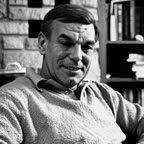
John Hlavacek
The book that helped bring the old colleagues together was Hlavacek’s second volume of memoirs based on his overseas adventures in India and China, where he taught English in an American mission school in Fenyang as part of the Carleton in China exchange program. Hlavacek now has a third volume of memoirs out, Freelancing in Paradise, that recounts the years he and his wife Pegge, a fellow journalist he met and married in India, filed stories from the Caribbean for national media outlets. He’s also published two books authored by Pegge about her own far flung news career and the couple’s remarkable feat of raising five children while working in India, New York, Jamaica and Omaha.
For Hlavacek and Michaels, now in their late 80s, India began long, distinguished careers in journalism. As bureau chief in Bombay, Hlavacek built up UP’s presence there and under his aegis the news service proved a formidable rival to their bitter rival, the AP. He won what’s now called the Edward R. Murrow Fellowship for study at Columbia University, he covered the Caribbean and after moving with his family in the early 1960s to Omaha, where he was a television news correspondent/commentator, he filed a series of reports from Vietnam on area residents serving in the war.
Michaels got the scoop of a lifetime when he broke the story of Mahatma Gandhi’s assassination in 1948. He joined Forbes Magazine in 1954, was made editor in 1961, a post he held until 1999. He’s credited with turning Forbes into one of the world’s most read financial pubs. A VP today, he can be seen Sundays on Forbes On Fox.
Before India, Desfor already made memorable images: of the Enola Gay crew upon their return from the mission that dropped the atom bomb on Hiroshima; and of the Japanese surrender to the allies on the USS Missouri. Soon after his arrival in India in 1946, he snapped a famous picture of Gandhi and India’s first prime minister, Jawaharlal Nehru, in an unguarded moment of friendship. “You see the interchange, the compatibility, the simpatico. It’s just an enormous moment,” he said. The iconic pic was used as the basis for a popular Indian postage stamp.
Desfor won a Pulitzer Prize for news photos for his work in the Korean War. In all, he shot five wars, many conflicts and much civil strife. He later served as an AP photo executive/editor before retiring in 1979. That same year though he joined US News and World Report as director of photos. He made his 1984 retirement permanent, but he’s till snapping pics, only now with a digital camera. He’s 93.

Max Desfor posed in front of picture taken of himself during the Korean War
These young lions turned wise old men of journalism reunited for panel discussions in Omaha in 2006. They took to their role as pundits well. They spoke about the momentous events they reported on, the way the news biz has changed and how the India and China of today differ from the developing nations they knew then.
Hlavacek said the troika may be the only surviving American journalists to have met Gandhi. While his colleagues minimize Gandhi’s ultimate influence, Desfor said “he had a moral effect” of lasting import. Michaels said by the end Gandhi was “almost irrelevant” for opposing “industrialization or modernity. Had Gandhi lived, he said, “he would have been loved but nobody would have paid attention to his views.”
The ascetic led a huge movement yet was quite approachable. Unlike today’s restrictive climate, the press had unfettered access to major public figures then.
“A journalist’s access to events in those days was so much more intimate than it is today,” Michaels said. “Gandhi was a world figure, yet he had these prayer meetings when he was in Delhi that the public could come to. If you got there early you could sit right up in front and ask him questions. Or, as John (Hlavacek) did, you could go right up to him and ask for an interview. Today, you wouldn’t be able to get through the masses of hired guards, spin meisters, the whole lot.”
“Once, I wanted to interview the number two man in the cabinet of Independent India, Vallabhbhai Patel, a very important figure in Indian independence,” Michaels said. “So, I drove up in my little car to his place, knocked on the door, a servant answers and says, ‘What do you want?’ I say, ‘I’m from the United Press of America — I’d like to interview Vallabhbhai Patel’ He says, ‘Wait a minute,’ takes my card and five minutes later ushers me into the garden, where Patel and I had tea together and I had an interview. That kind of immediacy today simply does not exist.”
When Hlavacek wanted to interview Mohammed Ali Jinnah, a Muslim leader in the free India movement, he simply stopped by his flat. He had similar access to presidents (Nehru, Indira Gandhi), religious leaders (the Dalai Lama), royalty (Aga Kahn) and dictators (Juan Peron of Argentina, Zaldivar Batista of Cuba).
“There are many great stories I had the opportunity to cover,” Hlavacek said. “It was interesting. I had a lot of fun. I had a lot of worries from time to time, too. And you were always in competition. You were always trying to beat someone.”
“It was a wonderful era for being a correspondent,” said Desfor, who with his Speed Graphic made pictures of great personalities that “will live forever in history books. This is what gives me such great pleasure,” he said.
When Michaels arrived at the scene of the estate where Gandhi lay fatally shot, he was among the first there. The grounds were open and he could move freely about to ask questions and make observations. After sending off his first dispatches at a nearby cable office, he returned to find the area cordoned-off by police and a large group of reporters and peasants gathered outside the closed and guarded front gates. The reporters there earlier with him were now inside.
“I thought, Oh, my God, I’m going to get beat on this story. I better do something,” Michaels said. “So I went around the back. I knew the area pretty well. And I climbed through the hedges and, wow, staring me right in the face was an Indian constable. I desperately searched in my wallet for my old Geneva card, which I carried as an ambulance driver during the second world war. I flashed this card, which was very impressive, and he said, ‘OK, sahab.’ So I got in. I saw as they brought Gandhi’s body out on the balcony for the people to see. I saw a famous woman photographer (and correspondent) for Life Magazine, Margaret Bourke-White, thrown out physically when she refused to stop taking pictures.
“I saw all these great Indian leaders sitting around crying. I witnessed Nehru, the first prime minister of India, get up on the wall with tears streaming down his face declaring, ‘The father of our country is dead.’ I witnessed all these scenes.”
The phalanx of competing news groups was far smaller then, too, compared to the unwieldy mobs that descend on news events today.
“The independence of India was one of the great events of the century. It was huge news. Yet it was covered by less than 100 journalists,” Michaels said. “When Hong Kong became independent less than a decade ago, there were 8,000 journalists covering it and the ones that got there had to cover it by watching it on TV. Today, everything is staged. Access to events is tightly controlled.”
In the process, Michaels said, “something is lost between what you read and what happens. The whole nature of the profession has changed — I don’t think necessarily for the better. The news business today belongs more to presenters.” “You have to be an actor,” Hlavacek interjected.” “You have to be a performer,” Michaels agreed, “and what you get is filtered through these presenters.”
Another major difference between then and now is the rate at which news is disseminated. Filing stories from the field in Third World nations once meant getting the news out via mail or cable or teletype, all of which took time. Sometimes just getting from a news event to a dispatch office could take hours of travel. Now, stories can be filed from the most remote or dangerous regions, even war zones, almost instantaneously due to satellite phone lines and the Internet.
“The speed of communication is what’s really changed,” said Hlavacek, who adds “the 24-hour circuit” of news coverage puts hard copy newspapers in a tough spot. “You used to break a story in a special edition. It’s too late now.” Michaels believes the ever growing online info world “is killing newspapers.” To those who worry a point-and-click universe prevents analysis, Hlavacek said, “No, it doesn’t, but this is spot news and it never did. Analysis can come later.” He marvels at “the emergence of the Internet” and is encouraged that “there’s so much information out there. I don’t think you can control it. At least I don’t see that you can.”
The dynamic economies and rising technocracies of India and China have caught the men’s notice. Michaels often goes back to India, where he’s interviewed current prime minister Manmohan Singh. Michaels said India’s ascendancy “is one of the great unheralded revolutions of our time.” He said the planned socialist state under Nehru and his successors resulted in an India that “stagnated from the time of independence right through 1989.” Michaels, who calls Singh “a very impressive man,” credits him with engineering “a revolution from the top” that urged Indian leadership to abandon the old system in favor of “a free enterprise model.” The result, he said, is a “booming” economy. While India prospers, its caste system’s inequities still pervade the society, said Hlavacek, who’s also been back. The India-Pakistan divide, they agree, is one born of religious-political differences.
Last fall Hlavacek visited the mission school in Fenyang, China he taught at under Japanese occupation. On his 10-day China trip he was most impressed by all “the change,” he said. “That’s the difference.” He said while China is still “ostensibly a Communist country, they’re the greatest capitalists in the world.” “They call themselves Communists,” said Michaels, who’s been there, “but everybody winks and nobody really believes that.” The journalists believe China and India will grow as trading partners with each other and with the U.S. as their economies continue to grow. As the world changes at an ever faster rate, Hlavacek said journalism remains “a higher calling.”
For three old men, a lifetime of curiosity has not waned. The world is still their oyster. The news, their metier.
Related Articles
- Journalism veteran Daniel Schorr dies at 93 (cbc.ca)
- ‘Great Soul’: Joseph Lelyveld tells Mahatma Gandhi’s larger-than-life story (seattletimes.nwsource.com)
- Jesuit Photojournalist Don Doll of Creighton University Documents the Global Human Condition One Person, One Image at a Time (leoadambiga.wordpress.com)
- Omaha Address by Cuban Archbishop Jaime Ortega Sounds Hopeful Message that Repression in Cuba is Lifting (leoadambiga.wordpress.com)
- Returning To Society: New community collaboration, research and federal funding fight to hold the costs of criminal recidivism down (leoadambiga.wordpress.com)
The Two Wars of Ben Kuroki

Image via Wikipedia
Somewhere I read something about an old World War II U.S. military veteran receiving an award. The fact that his surname was Japanese caught my attention. When I looked into his story, it became readily apparent his wartime record was nothing short of extraordinary if for no other reason than the overwhelming barriers he had to navigate just to get into the service and then to see action. Ben Kuroki has been much honored in his lifetime and he realizes the recognition he receives always presents a new opportunity to educate the public about duty, sacrifice, the greater good, and fairness.
I first wrote about Ben for the New Horizons newspaper in Omaha. Then I adapted that story for Nebraska Life Magazine, a statewide publication published in Norfolk, Neb. I also wrote a short version of Ben’s story that was picked up by newspapers around the country. The long version here is what appeared in Nebraska Life.
The Two Wars of Ben Kuroki
After Pearl Harbor, Ben Kuroki wanted to fight for his country. But as a Japanese-American, he first had to fight against the prejudice and fear of his fellow Americans. The young sergeant from Hershey, Neb., proved equal to the task.
©by Leo Adam Biga
Originally published in Nebraska Life Magazine.
“I had to fight like hell just for the right to fight for my own country,” said Hershey, Neb., native Ben Kuroki. During World War II, he became one of only a handful of Japanese-Americans to see air combat, and was America’s only Nisei (child of Japanese immigrant parents) to see duty over mainland Japan.
For Kuroki, just being in the U.S. Army Air Corps was an anomaly. At the outset of war, Japanese-American servicemen were kicked out. Young men wanting to enlist encountered roadblocks. Those who enlisted later were mustered out or denied combat assignments. But Kuroki was desperate to prove his loyalty to America, and persisted in the face of racism and red tape. As an aerial gunner, he logged 58 combined missions, 30 on B-24s over Europe (including the legendary Ploesti raid) and 28 more on B-29s over the Pacific.
Between his European and Pacific tours, the war department put Kuroki on a speaking tour. He visited internment camps where many of his fellow Japanese-Americans were being held. He spoke to civic groups, and one of his speeches is said to have turned the tide of West Coast opinion about Japanese-Americans.
Few have faced as much to risk their life for an ungrateful nation. Even now, the 90-year-old retired newspaper editor asks, “Why the hell did I do it? I mean, why did I go to that extent? I was just young. I had no family – no children or wife or anything like that. I was all gung-ho to prove my loyalty.”
A new documentary film about Kuroki, “Most Honorable Son,” premiered in Lincoln in August and will be broadcast on PBS in September. For filmmaker Bill Kubota, who grew up hearing his father tell of Kuroki’s visit to the camp at which he was interned, Kuroki’s story is unique.
“It’s very rare you find one person that can carry a lot of different themes of the war with their own personal experience,” Kubota said. “He saw so many different things… It’s a remarkable story no matter who it is, but throw in the fact he’s basically the first Japanese-American war hero and you have even more of a story. He’s more than a footnote in Japanese-American history. One that needs to be better understood and more heard from. It’s a unique, different story that not only Asian Americans can relate to, but all Americans. That’s why I like this story.”
For years after the war he kept silent about his exploits. The humble Kuroki, like most of his generation, did not want a fuss made about events long past. He married, raised a family and worked as a newspaper publisher-editor, first with the York (Neb.) Republican and then the Williamston (Mich.) Enterprise. He later moved to Calif. where he worked as an editor with the Ventura Star-Free Press.

His story resurfaced with WWII 50th anniversary observances in the 1990s. At the invitation of the Nebraska State Historical Society he cut the ribbon for a new war exhibit. On the anniversary of Pearl Harbor he was the subject of a glowing New York Times editorial. More recently, he’s been feted with honors by the Nebraska Press Association and his alma mater, the University of Nebraska-Lincoln. As a result of all the new-found attention Kuroki and Shige have been invited guests to the White House on several occasions, most recently in May.
One key to what Kuroki calls his “all guts no brains” loyalty is his upbringing. His parents “pounded it into their children to never bring shame to yourself or your family,” he says in the film. “I hated the fact I was born Japanese. I wanted to try and avenge what they (Japan) had done for causing what we considered shame.”
From his home in Camarillo, Calif., where he lives with his wife, Shige, Kuroki added, “But I think in the long run I have to thank my Nebraska upbringing, my Nebraska roots for playing a real credible role in giving me a solid foundation for patriotism. It really was a way of life. Freedom was always something really I had the best of.”
Kuroki came from a poor family of 10 children. His parents emigrated from Japan with scant schooling and speaking no English. His father, Sam, arrived in San Francisco and worked his way west on Union Pacific section crews. The sight of fertile Nebraska land was enough to make the former sash salesman stay and become a farmer.
A small Japanese enclave formed in western Nebraska. Times were hard during the Great Depression and the years of drought, but Ben enjoyed a bucolic American youth, playing sports, hunting with friends and trucking potatoes down south and returning with fresh citrus.
Though accepted by the white majority, the newcomers were always aware they were different. “But at the same time,” Kuroki said, “I never encountered racial prejudice until after Pearl Harbor.”
On December 7, 1941, he was in a North Platte church basement for a meeting of the Japanese American Citizens League, a patriotic group fighting for equality at a time of heightened tensions with Japan. Mike Masaoka from the JACL national office was chairing the meeting when two men entered the hall and, without explanation, said something to Masaoka and led him out.
“Just like that, he was gone. We were just baffled,” Kuroki said, “so we just sort of scattered and by the time we got outside the church someone had a radio and said, ‘My God, Pearl Harbor has been bombed by the Japanese.’ That was a helluva experience for us the way we found out… It really was a traumatic day.”
They soon learned that Masaoka had been arrested by the FBI and jailed in North Platte. “I guess all suspects, so to speak, were taken into custody,” Kuroki said. Masaoka was soon released, but his arrest presaged the restrictive measures soon imposed on all Japanese-Americans. As part of the crackdown, their assets – including bank accounts – were frozen. As hysteria built on the West Coast, Executive Order 9066 forced the evacuation and relocation of individuals and entire families. Homes and jobs were lost, lives disrupted. As the Kurokis lived in the Midwest, they were spared internment.
Soon after Pearl Harbor, Kuroki and his younger brother Fred were surprised when their father urged them to volunteer for the armed services. As Kuroki recalls in the film, their father said, “This is your country, go ahead and fight for it.”
They went to the induction center in North Platte. They passed all the tests but kept waiting for their names to be called. “We knew we were getting the runaround then because all our friends in Hershey were going in right and left,” Kuroki said. The brothers left in frustration. “It was about two weeks later I heard this radio broadcast that the Air Corps was taking enlistments in Grand Island and so I immediately got on the phone and asked the recruiting sergeant if our nationality was any problem, and he said, ‘Hell, no, I get two bucks for everybody I sign up. C’mon down.’ So we drove 150 miles and gave our pledge of allegiance.”
The Omaha World-Herald ran a picture of the two brothers taking their loyalty oaths.
While on the train to Sheppard Field, Texas, for recruit training, the brothers got a taste of things to come. Kuroki recalled how “some smart aleck said, ‘What the hell are those damn Japs doing in the Army?’ That was the first shocker.”
Things were tense in the barracks as well. “I’ll never forget this one loudmouth yelled out, ‘I’m going to kill myself some goddamned Japs.’ I didn’t know whether he was talking about me or the enemy and I just felt like I wanted to crawl in a damn hole and hide.”
But at least the brothers had each other’s back. Then, without warning, Fred was transferred to a ditch-digging engineers outfit.
“My God, I feared for my life then,” Kuroki said.
As Kuroki learned, it was the rare Japanese-American who got in or stuck with the Air Corps – almost all served in the segregated 442nd Infantry Regiment that earned distinction. The brothers corresponded a few times during the war. Fred ended up seeing action in the Battle of the Bulge.
From Sheppard Field, Kuroki went to a clerical school in Fort Logan, Colo., and then to Barksdale Field (La.) where the 93rd Bomber Group, made up of B-24s, was being formed. As a clerk, he got stuck on KP several days and nights.
“I knew damn well they were giving me the shaft,” he said. “But I wasn’t about to complain because I was afraid if I did, the same thing would happen to me that happened to my brother – that I’d get kicked out of the Air Corps in a hurry.”
He took extra precautions. “I wouldn’t dare go near one (a B-24 bomber) because I was afraid somebody would think I’m going to do sabotage. That’s the way it was for me for a whole year. I walked on egg shells worried if I made one wrong move, if I was right or wrong, that would be the end of my career,” he said.
Then his worst fear came to pass. Orders were cut for him to transfer out, which would ground him before he ever got over enemy skies. That’s when he made the first of his pleas for a chance to serve his country in combat. He got a reprieve and went with his unit down to Fort Myers, Fla. – the last stop before England. But after three months training, he once again faced a transfer.
“I figured if I didn’t go with them then I’d be doing KP for the rest of my Army life,” he said. “And so I went in and begged with tears in my eyes to my squadron adjutant, Lt. Charles Brannan, and he said, ‘Kuroki, you’re going with us, and that’s that.’ All these decades later I’m forever grateful… because if it wasn’t for him I probably would never have gotten overseas.”
He made it to England – the great Allied staging area for the war in Europe – but he was still a long ways from getting to fly. He was still a clerk. But after the first bombing missions suffered heavy losses, there were many openings on bomber crews for gunners. Not leaving it to chance, he took his cause directly to his officers.

“I begged them for a chance to become an aerial gunner and they sent me to a two-week English gunnery school. I didn’t even fire a round of ammunition.”
In late ’42, Kuroki got word his outfit was headed to North Africa… and he was going with it. It took beseeching the 93rd’s commander, Ted Timberlake, whose unit came to be called The Flying Circus, before Kuroki got the final go-ahead. He was delighted, even though he had “practically no training.” As he would later tell an audience, “I really learned to shoot the hard way – in combat.”
Training or not, he finally felt the embrace of brother airmen around him.
“Once I got into flying missions with a regular crew and I was with my own guys, the whole world changed,” he said. “On my first mission I was just terrified by the enemy gunfire but I suddenly found peace. I mean, for the first time I felt like I belonged. And by God we flew together as a family after that. It was just unbelievable, the rapport. Of course we all knew we’re risking our lives together and fighting to save each others’ lives.”
One of his crewmates dubbed Kuroki “The Most Honorable Son.” It became the nickname of their B-24.
At the same time, Kuroki was reading accounts of extremists calling for all Japanese-Americans to be confined to concentration camps. Some nativists even suggested Japanese-Americans should be deported to Japan after the war.
But by then, Kuroki’s own battles were more with the enemy than with the military apparatus. His first action came on missions targeting the shipping lines of the “Desert Fox,” Erwin Rommel, whose Panzer tank divisions had caused havoc in North Africa. Kuroki was on missions that hit multiple locations in North Africa and Italy.
Kuroki and his crewmates made it through more than a dozen missions without incident. Then, on a return flight in ’43, their plane ran out of fuel and made an emergency landing in Spanish Morocco. Armed Arab horsemen converged on them. They feared for their lives, but Spanish cavalry rode to their rescue. The Spanish held the crew more as reluctant guests than as prisoners. But Kuroki tried to escape.
“I just had to prove my loyalty,” he says in the film. He was caught.
What ensued next was a limbo of bureaucratic haggling over what to do with the captured airmen. They were taken to Spain, where they were told they might sit out the rest of the war. For a time, it was welcome news for the crew, who stayed in luxurious quarters. But soon they felt they were missing out on the most momentous events of their lifetime.
Finally, the way was cleared for them to rejoin the 93rd, which soon moved to England for missions over Europe. Of all those bombing runs, the August 1, 1943 raid on Ploesti, Rumania, is forever burned in Kuroki’s memory. In a daylight mission, 177 B-24s came in at treetop level against heavily-fortified oil refineries deep in enemy territory. Nearly a third of the bombers failed to return. Hundreds of American lives were lost.
The legend of Kuroki grew when he reached the 25-mission rotation limit and volunteered to fly five more. His closest call came on his 30th trip, over Munster, when flak shattered the top of his plexiglass turret just as he ducked.
On an official leave home in early 1944, Kuroki was put to work winning hearts and minds. At a Santa Monica, Calif., rest/rehab center, he gave interviews and met celebrities. Stories about him appeared in Time magazine and the New York Times.
Then he was invited to speak at San Francisco’s Commonwealth Club. In preparation for the talk, Sgt. Bob Evans asked him to outline his experiences on paper, which Evans translated into the moving speech Kuroki gave. “He did a terrific job,” Kuroki said.

But before making the speech, Kuroki tried getting out of it. He was intimidated by the prospect of speaking before white dignitaries, and feared a hostile reception. A newspaper headline announced his appearance as “Jap to Address S.F. Club,” and the story ran next to others condemning Japanese atrocities during the Bataan Death March. Even the officer escorting Kuroki worried how the audience would react. Kuroki was the first Japanese-American to return to the West Coast since the mass evacuation.
“I realized I had a helluva responsibility,” Kuroki said.
Kuroki’s speech was broadcast on radio throughout California, and received wide news coverage.
“I learned more about democracy, for one thing, than you’ll find in all the books, because I saw it in action,” Kuroki told the audience. “When you live with men under combat conditions for 15 months you begin to understand what brotherhood, equality, tolerance and unselfishness really mean. They’re no longer just words…”
He went on to recount how a crewmate caught a piece of flak in his head on a mission. The co-pilot came back to give him a morphine injection, but Kuroki waved him off, remembering training that taught morphine could be fatal to head injuries at high altitude. The wounded airman recovered.
“What difference did it make” what a man’s ancestry was? “We had a job to do and we did it with a kind of comradeship that was the finest thing…”
He described his “nearly continuous struggle” to be assigned a flight crew. How he “wanted to get into combat more than anything in the world, so I kept after it.” How he was “waging two battles – one against the Axis and one against intolerance of my fellow Americans.” The prejudice he felt in basic training was so bad, he said, “I would rather go through my bombing missions again than face” it.
Reports refer to men crying and to a standing ovation that lasted 10 minutes. Kuroki confirmed this. Even his escort was in tears.
The reaction stunned Kuroki. He didn’t realize what it all meant until a letter from Club doyen Monroe Deutsch, University of California at Berkeley vice president, reached him overseas and reported what a difference the address made in tempering anti-Japanese sentiment.
Filmmaker Bill Kubota’s research convinces him that the address brought the matter “back to the forefront around the time it needed to be.” It helped people realize that “this is an issue they should think about and deal with.” Kubota said the speech is little known to most Japanese-American scholars because the JA community was prevented from hearing the talk; vital evidence for its profound effect is in Kuroki’s own files, not in public archives.
Before Kuroki went back overseas he appeared at internment camps in Idaho, where his visits drew mixed responses – enthusiasm from idealistic young Nisei wanting his autograph, but hostility from bitter older factions.
Kuroki’s ardent American patriotism and virulent anti-Japan rhetoric elicited “hissing and booing from some of those dissidents,” he said. “Some started calling me dirty names. This one leader called me a bullshitter. It got pretty bad. I didn’t take it too well. I figured I’d risked my life for the good of Japanese-Americans.”
Among the young Nisei who idolized Kuroki was Kubota’s father, a teenager who was impressed with the dashing, highly-decorated aerial gunner.
“My dad regards him as a hero, which is how pre-draft age Japanese-Americans saw him,” Kubota said. Because of the personal tie, the film “means more to me because it means more to my father than I had earlier realized.”
Liked or not, Kuroki said of his public relations work that he “felt very much used and I wasn’t cut out for that sort of thing. I got my belly full of it. I wanted to quit.”
Once back overseas, his bid for Pacific air duty was soon stalled. When Monroe Deutsch learned that a regulation stood in Kuroki’s way, he and others pressured top military brass to make an exception. Secretary of War Henry Stimson wrote a letter granting permission.
“They certainly were unusual people to go to bat for me at that time when war hysteria was so bad,” Kuroki said.
Even with his clearance, Kuroki still encountered resistance. Twice federal agents tried to keep him from going on flights – once at Kearney (Neb.) Air Base, and then again at Murtha Field (Calif.), where the agents carried sidearms. Each time he had to dig in his barracks bag to produce the Stimson letter.
“My pilot and bombardier were so damn mad because by this time they figured we were just getting harassed for nothing,” he said.
His B-29 crew flew out of Tinian Island, where their bomber was parked next to Enola Gay, the B-29 that would soon drop the first atomic bomb. Meanwhile, the fire bombings of Japanese cities left a horrible imprint.
While on Tinian, Kuroki could move safely about only in daylight, and then only flanked by crewmates, as “trigger-happy” sentries were liable to shoot anyone resembling the enemy. And after completing 58 missions unscathed, Kuroki was nearly murdered by a fellow American. When a drunken G.I. called Kuroki “a dirty Jap,” Kuroki started for him, but was waylaid by a knife to the head. The severe cut landed him in the hospital for the war’s duration.
“Just a fraction of an inch deeper and I wouldn’t be here talking today,” he said. “And it probably would never have happened if he hadn’t called me a Jap.”
As he says in the film, “That’s what my whole war was about – I didn’t want to be called a Jap.” Not “after all I had been through… the insults and all the things that hurt all the way back even in recruiting days.”
The irony that a fellow American, not the enemy, came closest to killing him was a bitter pill. Yet Kuroki has no regrets about serving his country. As Kubota said, “I think he knows what he did is the right thing and he’s proud he did it.”
“My parents were very proud, especially my father,” said Kuroki, who earned two Distinguished Flying Crosses during the war. “I know my dad was always bragging about me.” Kuroki presented his parents with a portrait of himself by Joseph Cummings Chase, whom the Smithsonian commissioned to do a separate portrait. When he was awarded the Distinguished Service Medal in 2005, Kuroki accepted it in his father’s honor.
Outside of Audie Murphy, Kuroki may have ended the war as the best known enlisted man to have served. Newspapers-magazine told his story during the war and a 1946 book, Boy From Nebraska, by Ralph Martin, told his story in-depth. When the war ended, Kuroki’s battles were finally over. He shipped home.
“For three or four months I did what I considered my ‘59th mission’ – I spoke to various groups under the auspices of the East and West Association, which was financed by (Nobel Prize-winning author) Pearl Buck. I spoke to high schools and Rotary clubs and that sort of thing and I got my fill of that. So I came home to relax and to forget about things.”
Kuroki didn’t know what he was going to do next, only that “I didn’t want to go back to farming. I was just kind of kicking around. Then I got inspired to go see Cal (former O’Neill, Neb., newspaperman Carroll Stewart) and that was the beginning of a new chapter in my life.”
Stewart, who as an Army PR man met Kuroki during the war, inspired Kuroki to study journalism at the University of Nebraska at Lincoln. After a brief stint with a newspaper, Kuroki bought the York Republican, a legal newspaper with a loyal following but hindered by ancient equipment.
He was held in such high esteem that Stewart joined veteran Nebraska newspapermen Emil Reutzel and Jim Cornwell to help Kuroki produce a 48-page first edition called “Operation Democracy.” The man from whom Kuroki purchased the newspaper said he’d never seen competitors band together to aid a rival like that.
“Considering Ben’s triumphs over wartime odds,” Stewart said, the newspapermen put competition aside and “gathered round to aid him.” What also drew people to Kuroki and still does, Stewart said, was “his humility, eagerness and commitment. Kuroki was sincere and modestly consistent to a fault. He placed everyone’s interests above his own.”
Years later, those same men, led by Stewart, spearheaded the push to get Kuroki the Distinguished Service Medal. Stewart also published a booklet, The Most Honorable Son. Kuroki nixed efforts to nominate him for the Medal of Honor, saying, “I didn’t deserve it.”
“That’s the miracle of the thing,” Kuroki said. “Those same people are still going to bat for me and pulling off all these things. It’s really heartwarming. That’s what makes this country so great. Where in the world would that sort of thing happen?”
Related Articles
- California Apologizes for Past Internment of Italian-Americans (immigration.change.org)
- ‘442’ tells of Japanese American WWII soldiers (sfgate.com)
- What if you were a Nisei would you have served in the war (wiki.answers.com)


 Leo Adam Biga's My Inside Stories