Archive
Film is both a heart and a head thing for Diana Martinez
I recently posted about the influence that a high school teacher had on my twin passions of writing and film and now I’m glad to report that a similar thing happened to the subject of this story, Diana Martinez. She grew up a film buff in California and it was in college that a professor turned her onto the idea of film studies as a career. She is serving in the newly created position of education director at Film Streams in Omaha. Like me, she often writes about film. But unlike following the film programming path I took, she became a film educator, although I’ve always felt like my writing and exhibiting have been educational expressions in themselves. Diana is a great addition to the local film culture and the fact that Film Streams has taken things in this direction is another expression of how that art cinema is serious about enhancing the community’s appreciation of great, engaging filmmaking. My profile of Diana appears in El Perico.

Diana Martinez
Film is both a heart and a head thing for Diana Martinez
©by Leo Adam Biga
Author of Alexander Payne: His Journey in Film
Originally appeared in El Perico
Cinema’s been formational for Film Streams education director Diana Martinez since childhood. Growing up in Southern California, her El Salvadoran parents watched diverse movies to learn English and she watched right alongside.
Inheriting her ironworker father’s eclectic tastes, she’s steeped in Hollywood fare, independent film and world cinema. Her early screen stirrings ranged from Woody Allen to Quentin Tarantino to Alfred Hitchcock to telenovela-inspired shows.
She embarked on English literature studies at Cal-State San Bernadino before doing doctoral work in film and television at the University of Oregon. She taught writing and film-media courses there. Her thesis is titled “Funny Business: Women Comedians and the Political Economy of Hollywood Sexism.”
It wasn’t until college she realized movies and media could be more than entertainment but an educational avenue and a career. She shares her take on pop culture in articles she writes for Slate, The Atlantic, Indiewire and Dilettante Arny and in courses she teaches.
“While an undergrad I was first exposed to film criticism and film analysis as a thing scholars did. That’s what I wanted to bring to my students when i taught at Oregon, and now that’s what I do in the education program here.”
She said film-media are portals to limitless topics and she enjoys giving people the tools to examine things .
“Kids are rarely asked to engage with film critically. What I really love about our program is that it looks at film in the way I always wanted to and thought about even when I was young. Kids are actually really savvy watchers of movies and other media and if they’re just pushed on that you can transfer their skills to being really critical-thinkers, to finding ins to literature, to looking at our political situation and what’s happening on social media through a critical lens.
“Film engages so many more of your senses than a lot of other mediums and can help you be a better thinker overall. Students can take lessons and apply them to whatever they like.”
She said writing and teaching about film allows her to express ideas more quickly than she could as an academician.
“I can go see a film and immediately read all the reviews and posts about it and participate in that conversation. That’s not how academia works. I wanted to be part of a larger, in-the-moment cultural conversation.”
Her articles have considered the Netflix series Narcos, the CW show Jane the Virgin and indie feature writer-director Lisa Dunham and show-runner work for HBO’s Girls.
Martinez said she wasn’t overly conscious of being Latino in multicultural Southern California, but that changed in Oregon.
“My identity became really important and something I felt i had to take ownership over as like a political gesture.”
She felt a responsibility to the few Latino students she taught.
“They needed somebody they felt understood their experience. That’s when my work took a different turn. It became more identity-based. I became more interested in cultural politics, talking about women filmmakers. I think it’s really helped me contextualize all the experiences I’ve had.”
She’s adapted well to Omaha since arriving last summer.
“People are so welcoming. I’ve been told, ‘We’re really glad you’re here because of who you are.’ I keenly felt that. I realized I have this other point of view people really value, and that’s important when teaching kids how to analyze things critically. Writing about film and television from a different perspective is important.”
She’s already put her bilingual skills to use.
“In our education program we have some students come who don’t speak English and I’m able to do discussions in Spanish and English.”
She loves being immersed in a salon-like atmosphere.
“I’ve always been chasing the feeling of being in a creative space with likeminded people who really care about art. I’ve been lucky enough to find friends and coworkers who do make that their life. The education director position is uniquely suited to what I do. It uses everything I learned in grad school.”
Martinez enjoys enriching people’s cinema experience and empowering them to believe analysis isn’t something only scholars do.
“I love teaching. I love talking to students – I think they’re so smart. I love being that person who gives them that boost of confidence. Anyone can have really great analysis into art and film. Just because it’s in a textbook doesn’t mean it’s the be-all or end-all. Just because one scholar says this is how you interpret this theme doesn’t mean there isn’t room for other interpretations. That’s real valuable and I don’t think teachers do that enough.
“That’s what I love about our program because we’re not this elite institution – we’re a community movie theater where people feel safe to explore their ideas.”
Explorations occur via courses, screen chats and panel discussions she leads. Offerings will increase when Film Streams reopens the Dundee Theater. She’s happy to be part of this expanding cinema home.
“There should definitely be more of these places. It’s necessary because film is not just The Avengers or Captain America, it’s Moonlight, Denial and Certain Women. If you want a vibrant community, you need places that allow people to experience art because that stirs the collective creative juices.”
Vvisit http://www.filmstreams.org.
Marlin Briscoe: Still making history
Marlin Briscoe: Still making history
Now that he’s in the College Football Hall of Fame, will the Pro Football Hall of Fame be next?
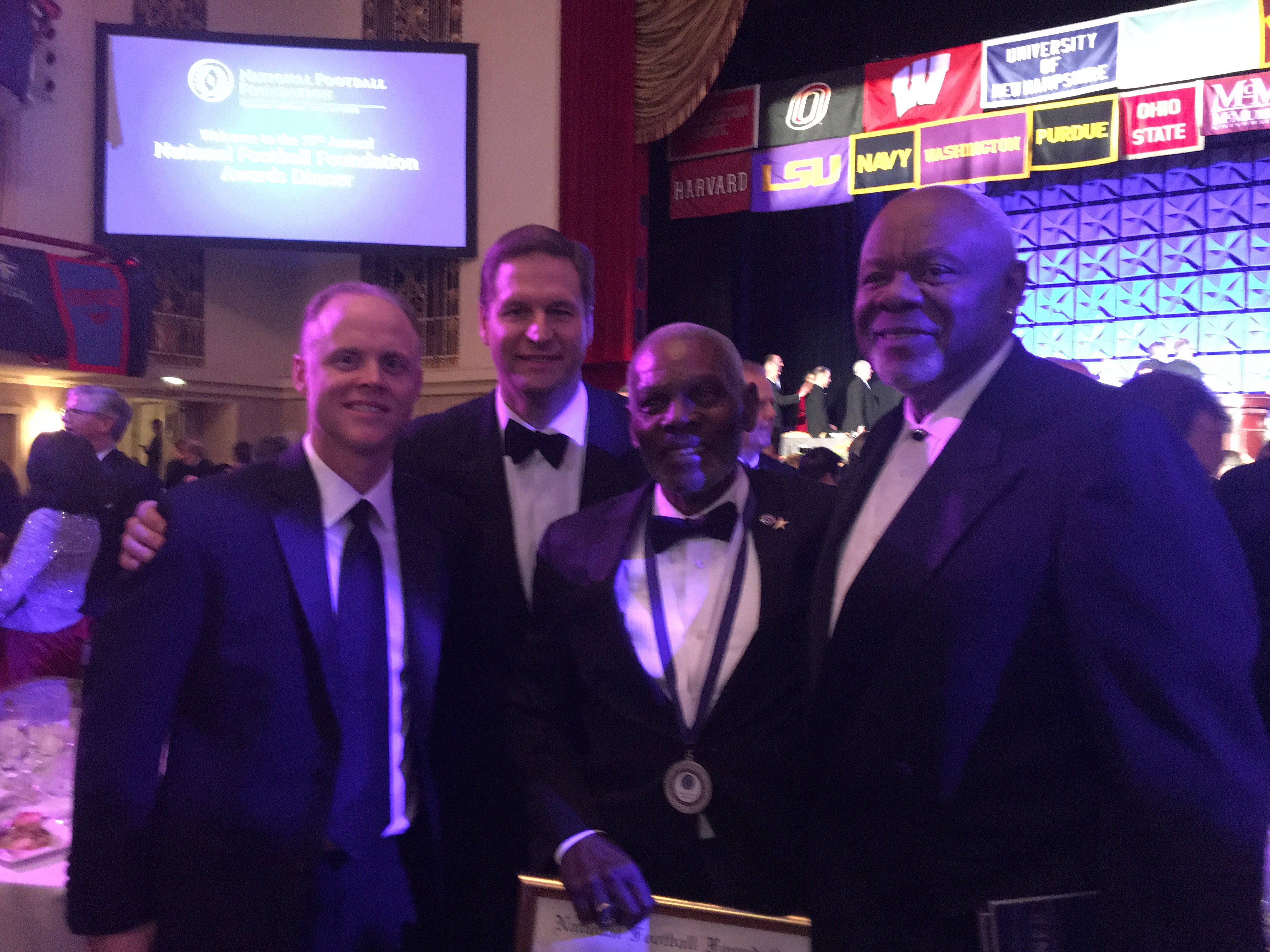
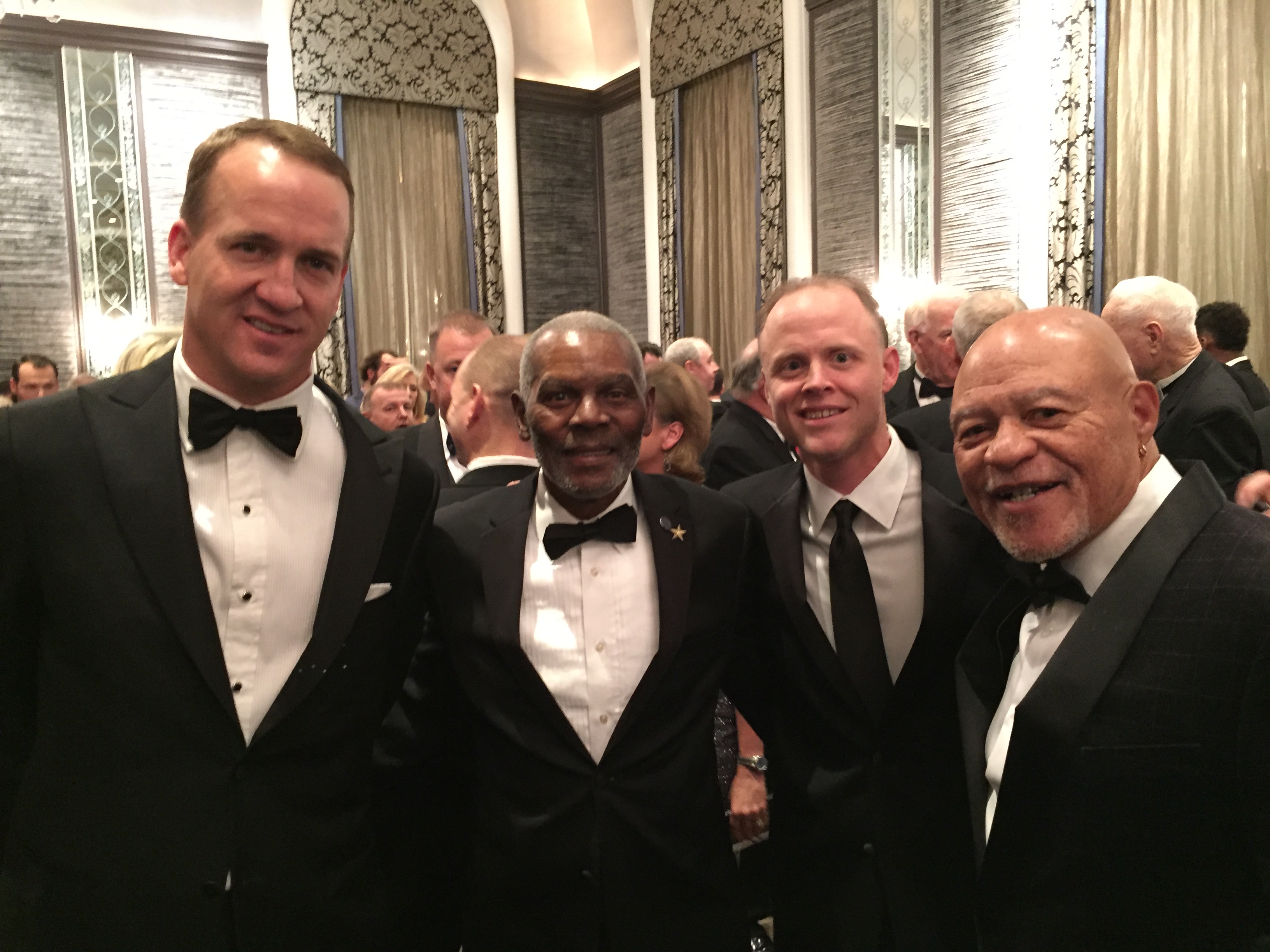
Marlin Briscoe was just inducted into the College Football Hall of Fame on Tuesday in New York City and a strong contingent of Omahans made the trek to honor one of their own. Here is a tribute video of Marlin that UNO Athletics created from the two-day ceremony earlier this fall that paid homage to this sports legend who, pound for pound, might have been the greatest athlete to ever come out of Nebraska.
Now that he’s in the College Football Hall of Fame, will the Pro Football Hall of Fame be next? I think it will happen sooner rather than later now. Certainly, all the attention that’s come his way the last couple decades helps and with the movie of his life in the works, it should be plenty to put him over the top with the Veterans Committee. What he did by making it in the NFL as a defensive back, a quarterback, a wide receiver and a holder, and playing nine productive seasons in the league, is more than enough to get him in. The fact that he was the first black starting QB should seal the deal. But in my opinion, his transitioning from a very good quarterback who nearly won Rookie of the Year honors to being a Pro-Bowl caliber wide receiver is enough all by itself to get him in.
Link here to an appreciatIon I wrote about Marlin on the occasion of that UNO recognition–
https://leoadambiga.com/…/marlin-briscoe-finally-getting-h…/
You can also link to this profile I wrote about Marlin as part of my Omaha Black Sports Legends series, Out to Win – The Roots of Greatness–
https://leoadambiga.com/…/prodigal-son-marlin-briscoe-take…/
And you can link to the entire Out to Win collection of stories at–
https://leoadambiga.com/out-to-win-the-roots-of-greatness-…/
Look for my coming Omaha Magazine feature on Marlin. And look for updates on the movie to be made about his remarkable life, “The Magician” is due to start shooting in the spring.
And look for a new post making the case for Marlin as the best athlete, pound for pound, that Nebraska’s ever produced.

Terence “Bud” Crawford is Nebraska’s most impactful athlete of all-time

Mikey Williams/Top Rank
Terence “Bud” Crawford is Nebraska’s most impactful athlete of all-time
©by Leo Adam Biga
Has there ever been a native Nebraska athlete who has made as big an impact as Terence “Bud’ Crawford? I submit there has not. In fact, it’s not even close when you consider the concentrated impact he’s made in a short time.
Mind you, I’m not suggesting he’s the best athlete to ever come out of here, but the one who’s had the greatest affect.
These things really can’t be measured because much of what I refer to by impact is intangible stuff like motivation, inspiration, popularity, hopes and dreams. However you look at it though, you have to concede that Crawford has surely given a lot of youth a new or renewed sense of possibilities because of how far he’s come from humble beginnings to being on top of the professional boxing world. That’s not to mention the sheer entertainment he’s provided by his winning performances in the ring, including three sold-out fights at his hometown CenturyLink Center, where there’s about to be a fourth sell-out for his championship fight this weekend against John Molina Jr. He has a following unlike anything we’ve seen around here before for a native born athlete.
Then there’s the pride he’s engendered in his huge hometown fan base who love his success and how he’s put Omaha on the map as a boxing city that matters for really the first time ever nationally, except for the time Ron Stander fought Joe Frazier in that heavyweight championship bout at the now reduced to rubble Civic Auditorium. But that was 44 years ago and it was a one-off event – there’d never been a title fight here before then and there hadn’t been one since then until Bud emerged as a title holder a few years ago. Thanks to Bud, it’s becoming a regular thing. This won’t last forever, but it’s a wonderful ride for him, for the city, for the sport and for anyone who needs affirmation that dreams do come true with enough talent and work.
Omaha also hosted the national Golden Gloves a couple of times, once notably when Bud lost a close, controversial decision in what turned out to be his final amateur bout. But by the time the city held those tournaments the Gloves were not what they used to be in a sport that had fallen far off most people’s radar.
Bud’s emergence as a world-class, perhaps one day hall of fame worthy fighter and his hugely embraced title defenses on his home turf, broadcast on HBO and pay per view no less, have taken boxing from irrelevance here to renewed interest. He has made boxing big time again, at least for his fights, and he’s become a local sports hero every bit as big or bigger than legends Bob Gibson, Bob Boozer, Gale Sayers, Marlin Briscoe, Johnny Rodgers, Mike McGee, Ahman Green and Eric Crouch ever were at their respective peaks. I mean, he’s even gotten a coterie of movers and shakers to endorse and advise him. Plus, he’s been feted in every way a sports figure can be – named athlete of the year, inducted in local athletic halls of fame, throwing out the first pitch at ballgames, using his name and fame to raise funds, being featured in big print spreads and in television documentaries. And on and on…
He’s big news and his fights mean big gates and presumably big business for downtown, Old Market, midtown and North Omaha bars and restaurants
Then there’s the fact that Bud has remained thoroughly rooted in his community. His family still lives in The Hood, an environment that he’s never really left and that’s never really left him, and his B&B Boxing Academy is right there within a stone’s throw of where he grew up and where he still trains part of the time.
As I have posted before, in my opinion the single greatest indicator of his impact is how he has dominated his sport over a few years time in a manner that no other Nebraska athlete has since Bob Gibson’s dominance from the mid-1960s through the early 1970s as a pitcher with the St. Louis Cardinals. Bud has a ways to go to match that extended period of mastery but he appears fully capable of doing it.
I have been privileged to help document some of Bud’s unfolding story and rise to greatness. You can find my collection of stories about him, including a trip to Africa I made with him, at the following link–
https://leoadambiga.com/?s=terence+crawford
Let me also reiterate a point I’ve made in previous posts that the trajectory of Bud’s career and the impact he’s made is similar in many ways to another native Omahan who’s risen to the top of his profession – filmmaker Alexander Payne. They are from the same city but from two totally different worlds and generations and yet their single-minded pursuit of their passion has gotten them to where they are and in that respect they both model the benefits of hard work, intense study, laser sharp focus and ultimate commitment to craft. Their rise to the top didn’t happen overnight but only with deliberate, intentional steps with their eyes always fixed firmly on the prize,
The same parallels can be seen in another Omahan, Warren Buffett, who has in fact jumped on the Crawford bandwagon because he recognizes a fellow winner when he sees one.
Win or lose this weekend, Bud’s story will continue to be one worth following because his legacy will only grow with time, not diminish. That’s how special what he’s done is and he has a whole lot of fighting left in him to ever more burnish his record and impact. But even if he were to quit fighting after the Molina match, I believe he’s already become the most impactful Nebraska athlete of all time. As someone who has covered Alexander Payne for 20 years, I believe the best is yet to come from the Oscar-winning filmmaker, and as someone who’s covered Bud for five years, I believe the best is yet to come from the world championship fighter. Bring it on.
My Early New Year’s Wish for America
My Early New Year’s Wish for America
©by Leo Adam Biga

Given the fear and hate-mongering the recent presidential campaign brought to the surface, my fondest wish for the new year is that each of us find it in our hearts to love The Other. Healing the nation must start inside individual hearts and minds before recovery from distrust and division can be expressed through words and actions.
America is a fractured mosaic created by tumults and traumas that the nation has never fully addressed. Revolution, slavery, immigration, migration, civil war, world wars, economic depression and recession, social movements, mass industrialization, ghettos, riots, illicit drugs, violent crime, mass incarceration, hate groups, suburban sprawl-white flight, urban renewal, states rights fights and regional wars are just a few of the ruptures to have shaped America. The individual and collective weight of these fissures are incalculable and generational. The resulting psychological, emotional, social, economic consequences affect policies and systems as well as group dynamics that in turn impact people’s lives.
So many defining events in the nation’s history pit people against each other on one side or the other of some issue or cause or reality. Competing self-interests collide at every turn. The harder, more unsure the times, people tend to be extra protective of what they have and wary of anyone different from them. That is human nature. Minorities are often targeted for their differences and made the scapegoat for the disenfranchised’s struggles or reversals of fortune. The less empowered people feel, the more they blame others who are different from them and the more they look to groups they identify with to be their sounding board or acting out cover.
The more people erect figurative or literal walls to isolate themselves from The Other, communities and neighborhoods cease being unifying, free, open spaces for engagement and interaction and instead become closed circles of self-interest that keep folks apart.
Here’s hoping that those holding a grudge against another group or fearing another group, whether justified or not, take the opportunity to try and authentically connect with someone from that group. If your attempt is rebuked, well, at least you tried. If your attempt is accepted, well, then maybe, just maybe a bridge has been made that positively impacts two lives and perhaps stimulates a larger ripple effect beyond them. Big things start in small ways, after all.
On a larger level, here’s hoping some breakthrough happens during the Trump presidency whereby the president himself along with senators, congressmen or cabinet members of different races or faiths model embracing The Other as acceptable, desired behavior. America needs all the reinforcing it can get from the nation’s leaders that interracial, interfaith communion is not only healthy for the United States but necessary for its survival as a pluralistic, democratic society.
Wouldn’t it be ironic if the outgoing president who preached inclusion and appealed to the better angels of our souls only to be opposed at every turn were to lead a unifying movement with this president-elect who preached division and pandered to the worst in us? That kind of strange bedfellows union that overlooks personal differences for the greater good would not be a first in American politics but it has been sorely lacking in this era of uncompromising agendas and silo building.
Is it just wishful thinking that these two men so opposite in their beliefs, values and world views could put their differences and animosity aside in service of healing and unity? I pray not. If they could be joined in this effort by Bernie Sanders, Al Gore, the Clintons, the Bushes, Condoleezza Rice, Gen. Colin Powell and other players from past elections and administrations, then so much the better.
Whatever the occupant of the White House does, here’s to all of us choosing to build bridges rather than silos in 2017.
On Being Human: Choosing Interracial
On Being Human: Choosing Interracial
©by Leo Adam Biga
As one half of an interracial couple living in the racialized America of the Black Lives Matter movement and the presidential election, more than a few thoughts find expression here.
What does it mean to be in an interracial relationship in 2016 America?
What extra responsibilities or burdens, if any. does this reality carry?
Is our being together a political statement in and of itself?
How are we perceived by whites and blacks? Does it really matter to people?
As a couple, do we-should we care what people think about us in this way?
Is there a natural kinship or fraternity between black-white couples?
Have there been real-life awkward Guess Who’s Coming to Dinner? or Something New or Guess Who? moments to our yoking? If so, how did we handle them?
If you find yourself in an interracial relationship, how have you handled these things?
Call us what you will:
Halfies
Mixed
Biracial
Blended
She’s black. I’m white.
But what do our skin colors actually say about us as a pair, as a union – about our couple-hood?
Why might some view us as traitors to our own kind for having “gone to the other side”?
Did she and I purposely, intentionally go looking for this combo?
Are we fetishizing being with someone from another race?
Or, at the end of the day, are we simply two people who found each other and fell in love and one just happened to be black and the other white?
Is it ever that simple when it comes to race in this country?
What are your experiences and thoughts regarding this?

How might we have invited trouble by getting together?
What price have we paid, if any, for our choice in partners?
Have we lost friends, have we alienated family?
How does race come up in our relationship as an issue or topic?
How might our opposite identifications sometimes create tension or misunderstanding? How has it worked out for you?
How can we possibly be defined by our skin color when we are the collection of a lifetime of experiences, even though those experiences come through the prism of our race?
How can we ever get beyond the words, the symbols, the cultural taboos and the historical-psychic weights that attach to being black and white in America?
If you’re not down with the whole interracial thing, why does it bother you? What does it threaten that you hold dear?
How do these questions and concerns take on added steam with Trump in office?
Are she and I modern day pioneers pushing the shaded boundaries of love? Or is this so routine now that it’s no big deal?
Unless maybe it happens to you or to a loved one, huh?
Where do black-white couples fit within the context of Black Lives Matter? What is our role in the growing multicultural scheme of things? Is this about to be a cold season for interracial couples, biracial children and multicultural families or will we help lead the way to this nation’s racial healing?
As you can see, this post isn’t about answers, it’s about questions – questions that only she and I can answer for ourselves and questions that only you as readers and observers can answer for yourselves.
Besides, the knowing is in the asking.
Tribute to educator who fired my passions for writing and film
Tribute to educator who fired my passions for writing and film
©by Leo Adam Biga
Author of Alexander Payne: His Journey in Film
Most of us, I suspect, end up doing what we do and loving what we love in large part because someone showed us the way or encouraged us to step out on a certain path that ended up being our calling or passion. In my case, the same person is responsible for nurturing the two deep heart streams that run hard and fast in my life: my love for writing and for film. His name is Michael Krainak. The retired high school teacher now serves as the art editor for The Reader. If you follow my work, then you know that I have a long, strong relationship with The Reader as a contributing writer. Thus, Mike and I are colleagues today.
As most of you know by now, I make my living as an author-journalist-blogger. As a lifelong film buff I have never felt compelled to make a movie, though I would like to try my hand at a documentary one day. Instead, my cinema fix comes via watching movies and reading and writing about movies and the people who make them. While I am not a full-time film journalist, I write enough about the subject to qualify. My book “Alexander Payne: His Journey in Film” is now in its second edition. Before I ever began writing on film for pay, I was a film exhibitor-programmer-publicist at three nonprofits: the University of Nebraska at Omaha, where I received my journalism degree; the Joslyn Art Museum; and the New Cinema Cooperative. The latter, which also went by New Cinema Coop, was sort of the precursor to Film Streams in Omaha.
I took English, journalism and film from Mike at Holy Name High School in North Omaha. The high school closed years ago but the elementary school, which I also attended, is going strong after some struggles. Some years after I graduated Hold Name, Mike went on to teach at North High and just as Holy Name’s journalism program and student newspaper fared well in statewide competitions under him so did the program and paper at North.
Mike taught my two older brothers before me at Holy Name. Greg and Dan had him strictly for English. I was the only writer in the family and it wasn’t until I came under Mike’s influence that I gave any thought to the idea of pursuing writing as a field of study, much less a career. While my brothers and I all enjoyed movies growing up, I pushed that interest in some unexpected ways as a result of Mike opening a world of cinema possibilities to me I never knew existed.
Mike came into my life at a critical juncture. As a kid I rarely went to see movies at theaters. Virtually all my cinephile stirrings happened at home watching whatever was available on the three commercial networks, the three local network affiliates as well as on PBS and NET. Even with those seemingly limited options, I availed myself of a pretty wide sample of old Hollywood and foreign films in addition to more contemporary pictures from the 1960s and 1970s.
I remember the strong feelings and awakenings that particular films evoked in me.
“On the Waterfront”
“It’s a Wonderful Life”
“The Manchurian Candidate”
“The Red Shoes”
“Spartacus”
“Odd Man Out”
“To Kill a Mockingbird”
“A Thousand Clowns”
“The Producers”
“Bonnie and Clyde”
“The French Connection”
“The Man Who Shot Liberty Valance”
“The Quiet Man”
“Lonely are the Brave”
“Cape Fear” (the original)
And hundreds more.
At home, spellbound by the reverie of film’s magic, the intensity with which I felt movies often overwhelmed me. I didn’t yet possess the emotional maturity and the necessary vocabulary to articulate or even identify what I was feeling and thinking. I just sensed that these were important works of art that were somehow affecting and changing me. They were a huge part of my education about the world and about the human condition, though as I would come to find out no adequate replacement for actual lived human experience and interaction. I couldn’t really express to my parents, try as I might, the revelations and inspirations that films were feeding me. My brothers were both out of the house by the time I came of age through film and so I really couldn’t share these things with them either. Mike’s teaching affirmed for me that the very films I was reacting so strongly to were indeed essentials and that confirmation opened new horizons to my intellectual curiosity. He also challenged some of my assumptions and that process alone made me a more rigorous thinker and writer.
Mike’s film class was remarkable for any high school in America but especially for an inner city parochial school in Omaha, Nebraska. For starters, he screened an amazingly diverse mix of films that included pictures with very adult themes and R-rated content such as “Point Blank” and “Walkabout” and groundbreaking older Hollywood films only just being rediscovered then:
“Paths of Glory”
“Touch of Evil”
“Night of the Hunter”
It was important that I got exposed to these work when I did. It was equally important that Mike first introduced me to the vocabulary of film language in a focused way. I was so caught up in the whirl of cinema that within a couple years of starting at the University of Nebraska at Omaha I did something radical for someone as insular and insecure as I was by applying to be the chairperson of the Student Programming Organization film series. I ended up chairing or co-chairing that series for four years as a student and then continuing on as an unpaid graduate consultant for another eight or nine years. It meant programming, booking and publicizing the films as well as supervising their exhibition. In my 20s and despite my shyness I was appearing on radio and TV and giving print interviews to promote the series. It was a big program by the way. At its peak, we screened something like 75 to 100 films a year, showing a wide range of content from American and foreign classics to more contemporary pics. The reason I felt confident in doing it was the foundation that Mike laid for me in high school, which I made stronger by seeking out film books and magazines at the UNO Library and at the Omaha Public Library in order to advance my education about the art form. I once subscribed to three film magazines. I accumulated a fairly large private collection of film books. I also began paying close attention whenever a filmmaker or film actor was interviewed or profiled on television. All of it was an education for me, greatly informing my appreciation and understanding of cinema, past and present.
Mike ended up teaching film studies coursse at UNO. I took one of the courses and it was again a seminal experience, though not quite the revelatory rite of passage that his high school class had been. A fellow film buff friend and I would also sometimes attend private screenings Mike would hold at his home of some film he was passionate about us seeing. In that formative time in my young adulthood from ages 20 through 35 I more and more identified as a film buff and my circle of friends and I shared similar interests. In the 1980s, 1990s and early 2000s I saw a whole lot of movies in theaters and on television – far more than I see today, though with Netflix I’m beginning to get back in the groove again.
I eventually evolved the SPO film series into a very different program that exclusively screened newer American and foreign films. many of them independent productions. We actually brought several films into town for their Omaha premiere screenings.
My efforts with the film series complemented and eventually supplanted my journalism studies at UNO. The assignments I wrote for class and for the UNO Gateway were not nearly as helpful to my development as a writer as were the many press releases and public service announcements I wrote and the brochure copy and film notes I wrote in support of the series.
Mike’s influence on me as a writer wasn’t as profound because that development came long after high school and even college. But thanks to Mike, I overcame my doubts and did follow his advice to study journalism. And if it wasn’t for that push, I would never have embreked on a career as a writer. My first real writing job was as head of public relations at the Joslyn Art Museum ,where fate reunited us because Mike ran a film series for the museum that I helped publicize. I also did some special film programming at the museum, including a Western film series in conjunction with River City Roundup. As my career transitioned into freelance writing, Mike continued to be an influence because I would attend some of the museum film screenings he presented and he attended some of the screenings I put on at the New Cinema Cooperative.
It was in the last year of the New Cinema Coop’s existence that we screened, on my recommendation, a student thesis film by a the unknown Omaha native and recent UCLA grad named Alexander Payne. His “The Passion of Martin” was showing at festivals around the nation and the world and getting high praise, not to mention getting him a deal with a major Hollywood studio. It was the first time I heard of him. We booked and exhibited his student film and five years later I did my first interview with him. Dozens of interviews have followed. 2017 will mark 21 years that I’ve written and reported about Payne and his work. During that time I’ve interviewed many other film artists from Nebraska and from well beyond Nebraska, including several legends and Oscar-winners.
Thanks to Mike, my cinephile leanings merged with my journalistic skills and I have since created a huge body of work that I have already turned into the book “Alexander Payne: His Journey in Film” and that I intend to turn into another book about Nebraska’s Screen Heritage.
It took me a long time but I came to a point of ever more identifying as a writer and associating myself with fellow writers. I enjoy interviewing and profiling writers. Just as an exercise, I recently culled through my mental and digital files to chart the number of writers of all types I have interviewed and written about over the years. Though the list I came up was surely incomplete I was rather startled to find thatIi have made something like 75 or 80 writers the subjects of stories. Some of these writers I consider colleagues and friends and they include leading literary lights.
The blessing and curse that has been my life as a lover of films and words is something I attribute to Mike. I told him that myself just the other night at a book event I was a part of and he reminded me that we ultimately all choose our own path. Yes, but it does take someone to nudge or guide us onto or along the path. Thanks, Mike, for seeing something in me and giving me a direction to follow. I don’t know where I would be without these two constant passions coursing through my life. You helped me find dual magnificent obsessions that have enriched me and given me my livelihood.
Signing “Alexander Payne: His Journey in Film” at Our Bookstore Holiday Party
Hope to see you at Our Bookstore’s Annual Holiday Party on Monday, Dec. 5 from 5 to 7 pm. I will be among a group of local authors signing books. It would be my pleasure to sign a copy of “Alexander Payne: His Journey in Film” for you or for the film lover in your life. It makes a great gift. $25.95

FROM OUR BOOKSTORE:
Celebrate the holiday season with us at our annual gathering.
Meet local authors:
Eileen Wirth, author of “From Society Page to Front Page and Images of America : Omaha’s Historic Houses of Worship”
Leo Biga author of “Alexander Payne: His journey In Film”
Michael Kelly author of “Uniquely Omaha”
Also attending:
Kira Gale, Connie Spittler, George Haecker,
John Prescott, Mark Langan, David Harding,
Jon Blecha, Joe Broghammer, Joan Fogarty
and Vicki Krecek
Come for libations, nosh, and a great collection of new books!
1030 Howard St, on the lower floor of the Passageway in the Old Market.
ALL ARE WELCOME!

Signing “Alexander Payne: His Journey in Film” at Our Bookstore – Monday, Dec. 5 from 5 to 7 pm
Thank you, Our Bookstore, for featuring “Alexander Payne: His Journey in Film” on your Facebook page. I will be among the local authors signing at the store’s annual Holiday Party from 5 to 7 pm on Monday, December 5. Our Bookstore is located in the Passageway of the Old Market. It is a cozy literary corner with a great, curated selection for such an intimate space. Hope to see you there. My book sells for $25.95. Hope to sign one for you.
“This is without question the single best study of Alexander Payne’s films, as well as the filmmaker himself and his filmmaking process. In charting the first two decades of Payne’s remarkable career, Leo Adam Biga pieces together an indelible portrait of an independent American artist, and one that’s conveyed largely in the filmmaker’s own words. This is an invaluable contribution to film history and criticism – and a sheer pleasure to read as well.” –Thomas Schatz, Film scholar and author (“The Genius of the System”)

“Alexander Payne: His Journey in Film” is a must-have resource about one of America’s and the world’s leading cinema artists. I have been in the unique position of covering the Oscar-winning filmmaker from Omaha for 20 years, The book is the culimination of all that reporting and writing about the acclaimed writer-director and his work. Through interviews, articles and essays I take you through the journey of his feature filmmaking career from “Citizen Ruth” to “Election” to “About Schmidt” to “Sideways” to “The Descendants” to “Nebraska” and even looking forward to his upcoming “Downsizing.”
The new edition is from River Junction Press in Omaha. It makes a great gift for the film lover in your life.
The book charts Payne’s rise to the elite ranks of world cinema and takes you deep inside his creative process. It is the most comprehensive look at Payne and his work to be found anywhere. This new edition includes significant new material related to “Nebraska” and “Downsizing” and the addition of a Discussion Guide with Index for all you film buffs, critics, filmmakers, educators and students. The book is great for more casual film fans who want a handy Payne primer and trivia goldmine.
More strong praise for the book:
“Alexander is a master. Many say the art of filmmaking comes from experience and grows with age and wisdom but, in truth, he was a master on day one of his first feature. Leo Biga has beautifully captured Alexander’s incredible journey in film for us all to savor.” – Laura Dern, actress, star of “Citizen Ruth”
“Last night I finished your wonderful new book and I enjoyed it so much! Alexander Payne is such a terrific director and I loved reading about his films in detail. Congratulations.” – Joan Micklin Silver, filmmaker (“Hester Street,” “Crossing Delancey”)
“Alexander Payne is one of American cinema’s leading lights. How fortunate we are that Leo Biga has chronicled his rise to success so thoroughly.” – Leonard Maltin, film critic and best-selling author
“I’d be an Alexander Payne fan even if we didn’t share a Nebraska upbringing: he is a masterly, menschy, singular storyteller whose movies are both serious and unpretentious, delightfully funny and deeply moving. And he’s fortunate indeed to have such a thoughtful and insightful chronicler as Leo Biga.” – Kurt Andersen, novelist (“True Believers”) and Studio 360 host
“Alexander Payne richly deserves this astute book about his work by Leo Biga. I say this as a fan of both of theirs; and would be one even if I weren’t from Nebraska.” – Dick Cavett, TV legend
“Leo Biga brings us a fascinating, comprehensive, insightful portrait of the work and artistry of Alexander Payne. Mr. Biga’s collection of essays document the evolution and growth of this significant American filmmaker and he includes relevant historical context of the old Hollywood and the new. His keen reporter’s eye gives the reader an exciting journey into the art of telling stories on film.” – Ron Hull, Nebraska Educational Television legend, University of Nebraska emeritus professor of broadcasting, author of “Backstage”
“Perhaps the most intriguing feature of the book is Biga’s success at getting Payne to speak candidly about every step in the filmmaking process. These detailed insights include the challenges of developing material from conception to script, finding financing, moderating the mayhem of shooting a movie, and undertaking the slow, monk-like work of editing.” – Brent Spencer, educator and author (“The Lost Son”)
“This book became a primer for me, and introduced me to filmmaking in a way that I had never experienced in my years at film school. The intimacy and honesty in Biga’s writing, reporting and interviewing– and Payne’s unparalleled knowledge of cinema introduced me to filmmaking and film history from someone I quickly came to respect: Mr. Payne.” – Bryan Reisberg, filmmaker (“Big Significant Things”)


 Leo Adam Biga's My Inside Stories