Archive

Archive for the ‘Blue Barn Theatre’ Category

Roni Shelley Perez staking her claim as Nebraska’s next “Broadway baby”

February 1, 2018 1 comment

Roni Shelley Perez staking her claim as Nebraska’s next “Broadway baby”

©by Leo Adam Biga

Soon appearing in El Perico


Nebraska is far from the theater capital of the world, yet many natives have trod the Broadway boards – from Henry Fonda to Sandy Dennis to Andrew Rannells. Actress-singer Roni Shelley Perez, 21, hopes to join their ranks. The Omaha Marian and University of Nebraska at Omaha graduate has graced several area stages and is now pursuing her dream in New York City during winter audition season.

This daughter of native Filipino parents has prepared for this all her life.

“I’ve been singing since I was very young. I sang-along to Barney songs ay 3. I started playing guitar at 8,” said Perez.

She also plays the ukelele.

She began performing for family functions and Filipino community gatherings at 11.

“I used to play guitar and sing Filipino covers.”

It earned her spending money.

But performing is, first and foremost, “a healing art” for Perez. “Stories told in songs can be relatable. People going through that same situation need to hear these stories. It’s hard for people to be vulnerable, so to see someone else vulnerable helps them to know it’s okay to feel.,” she said. “Performing arts can be very impactful. It’s a shareable, very much a collective experience.”

In SNAP Productions’ mounting of In the Heights at Omaha South High last spring, Perez’s character Nina mirrored her own life as the eldest child of aspirational immigrant parents in a tight ethnic community.

“Like Nina, there was all this pressure on me growing up to ‘Go, you can do this.’ That role answered a lot of questions for myself.”

She found support as a UNO Goodrich Scholarship Program recipient.

“Goodrich was like a family and definitely one of the best things I took from my undergrad. They believed in me and took a chance on me.”

Her parents were initially dubious when she majored in vocal performance and musical theater.

“Every immigrant parent is hoping for the American dream and I’m going into a field where financial stability is not really a thing. They were scared for me to go into music. But then as soon as opportunities started happening (scholarships, prizes, accolades), they realized, ‘Hey, you can do this.’ I feel like I’ve been doing it for so long and it’s been such a huge part of my life that I can make it into a career.”

The mainstream success Filipina performers enjoy, ala singer-actress Lea Salonga, gives added hope.

“She’s a big influence. She represents the Filipino community in musical theater.”

Filipino actresses have made waves in Hamilton in New York and London. “All these people are just very inspiring.” Then there’s singer-actress Sarah Geronimo. “Growing up, my mom would always play her music and I always looked up to her. She has a beautiful voice. I wanted to sing like her. I wanted to be like her.”

Perez dreams of Broadway but for now her goal is to “just perform professionally” as a working artist. “If it;s there, then I want to turn it into something bigger. I don’t even know what I’m capable of yet.”

It’s doubtful any performer from Neb. has been more prepared at such a young age. She boasts years of high-level training and performing. At 18, she won the part of Mary Magdalene in an Omaha Community Playhouse production of Jesus Christ Superstar. She’s worked with New York stage professionals at the Open Jar Institute, NYU Steinhardt’s Summer Study in Musical Theatre and Shetler Studios’ workshop of Zanna Redux.

“I’ve been going to New York every year now to see where I am ability-wise. I’ve been making connections.”

In Omaha, she got scholarships to Broadway Dreams Foundation Summer Intensive Workshops in 2013 and 2014, studying under and performing with Tony Award nominees and winners. It grew her confidence.

“It showed me what I need to continue working on but also it was like, ‘Hey, if I’m able to perform with them right now, I’ll be able to stand my ground and eventually get to their level too.’ It’s been very encouraging and definitely humbling. Like, I’m clearly not the best, but I can work at it and come to that level.”

She’s participated in master classes through Omaha Performing Arts. The 2016 National Student Auditions competition winner has been recognized by the Playhouse, Theatre Arts Guild and Omaha Entertainment and Arts Awards. Last year, she and a classmate won first place in the Musical Theatre Division of the National Opera Association’s Collegiate Opera Scenes Competition.

She attributes her drive to her hard-working parents, who own their own business.

“I want to give back and work just as hard. I can’t even fathom coming from a third-world country to the United States with poor English and trying to start a family and career. It’s very inspiring and always on my mind as I take on new roles and shows.”

At 20, Perez earned the lead in Heathers at Omaha’s Blue Barn Theatre. Her character sings the entire show, so she trained to build vocal stability and stamina. It was both her first lead and first paid acting gig.

“That role came very close to my heart,” she said. “I’m grateful the Blue Barn took a chance on me.”

She returned there this past summer as the title character in Priscilla.

Her most “demanding and rewarding role” came last fall in UNO’s production of Spring Awakening.

“This one really tested my vulnerability and sacrifice. I had to let everything go. That was very hard to do.

Everything I’m doing is giving me a better version of     myself or helping me be my best. There’s always something to learn – always. I love a good challenge.”

Blue Barn artistic director Susan Clement-Toberer, who’s twice directed Perez. is convinced she has what it takes to make it.

“I expect it and I’m exhilarated for the moment when that happens,” Clement-Toberer said. “She was born to do this. She’s got the vision of what she wants to do, and if there are nos along the way, it’s not going to stop her.”

Perez herself said she’s going after it now “because I think I do have what it takes to succeed.”

Follow her at www/ronishelleyperez.com.

Divas By Design: Camille Metoyer Moten & Kathy Tyree

October 5, 2016 Leave a comment

Cover Photo


MUST SEE ENTERTAINMENT!
Divas By Design –
Let timeless musical theater performers Camille Metoyer Moten and Kathy Tyree take you on a flashback nostalgic journey of their most celebrated signature songs over the last 30 years.

Part of the Blue Barn’s Out of the Blue Special Event Series.

Enjoy tunes from Hairspray, Funny Girl, Marvelous Wonderettes, The Wiz, Evita, Ain’t Misbehavin’, Leader of the Pack, Ragtime and other memorable musical theater shows these divas starred in.

Together, Camiille and Kathy, form a musical revue duo for the ages.

Blue Barn Theater
1106 South 10th Street,
Thursday, October 20th and Friday, October 21st
7:30 p.m. both nights

$35 in advance
$40 at the door
$120 reserved tables of four

Purchase tables or single tickets at–
http://www.kathytyreeproductions.com
or 402-575-1971
or 402-345-1576

Visit the FB event page at–
https://www.facebook.com/events/1782743872006881/

FINDING HOME: With its own home, the Blue Barn completes a long road to creating edgy theater

September 1, 2015 1 comment

Omaha has institutional-type theaters and grassroots-type theaters.  For most of its life the Blue Barn Theatre has been of the grassroots variety but now that a major capital campaign has allowed it to build its first permanent home, the Blue Barn is suddenly in a far more secure position than ever before.  Of course, that “suddenly” only came after decades of passion, struggle, invention and equity in building community capital.  And once the theater called in its chips and started rasing funds for the project, great pains were taken to retain its edgy, independent, homemade spirit in the beautiful new digs.  On a personal note, fate decreed that I write three stories about the Blue Barn’s momentous move into this new space, and for three separate publications no less, and all this after years of not writing about Blue Barn.  This is the second of those pieces and it appears in the September 2015 issue of The Reader (www.thereader.com).

The Reader September 2015

FINDING HOME: With its own home, the Blue Barn completes a long road to creating edgy theater

Past, present, future converge in new space

Appearing in the September 2015 issue of The Reader (www.thereader.com)

Until now the Blue Barn Theatre has been like Omaha’s many other small stage companies by operating on a shoestring in makeshift spaces. This grassroots passion project was born of a band of New York drama school transplants afire with the idea of starting their own troupe. Relying more on creativity, charity, thriftiness and ingenuity than real budgets, they mounted plays in rented and borrowed spaces.

Suddenly, Blue Barn’s done the unthinkable for such a by-the-seat-of-your-pants endeavor by parlaying years of scommunity equity and creative capital to build its own space. It’s Omaha’s first purpose-build independent theater to go up in decades. The arresting new digs at 10th and Pacific are the result of Blue Barn staying the course, remaining true to itself and letting philanthropists catch up to the edgy aesthetic that’s gained it a loyal following.

The theater occupied several improvised spaces from its start in 1988, never really securing a place to call its own. It did find stability at the 11th and Jackson Old Market warehouse site where it was housed the last several years. Though hamstrung by cramped quarters not really suited for theater and lacking amenities, Blue Barn made the intimate environment – exposed vents and all – work. Blue Barn personalized it with help from artists designing original posters and custom fixtures.

The new theater – part of a mixed used site with residential units, a restaurant and a public garden – features enlarged, upgraded facilities and a flex indoor-outdoor space opening onto the garden. As an ode to its name, the exterior evokes a hand-raised barn via weathered steel walls framed by rebar poles and the roof’s pitched gables. The interior captures the old Blue Barn in hand-crafted floor and wall elements. The theater seats are from the former site. The way the audience enters the auditorium follows the flow of the old space. Splashes of blue recur throughout.

The new theater is the culmination of a vision shared by original Blue Barners’ Kevin Lawler, Hughston Walkinshaw, Nils Haaland and Mary Theresa Green. Some took turns at the helm. Each moved on, though never breaking ties. All but Green attended the SUNY-Purchase theater school. Her then-marriage to Lawler brought her into the fold. As the legend goes, Lawler was visiting Omaha when Old Market denizens embraced his theater dream and offered space to realize it in. He got Walkinshaw and Haaland to come join him. Clement-Toberer arrived a year later. She’s now led Blue Barn longer than anyone.

Kevin Lawler

The group’s deep, familiar kinship was evident one August morning at the new space. Emotions ran high during a tour and roundtable discussion. All agree the site fulfills what they once only dared imagine.

“Yes, it is the embodiment of a dream,” Lawler said.. “It’s just glorious to see. When we were in school in New York we’d go to these small off-Broadway places and see incredible theater and I grew up in Minneapolis where there are a lot of small incredible theaters just like this. So that was always a dream and to see Susan be able to make that happen for the Blue Barn in Omaha is amazing.”

“Every dream we’ve had in our entire existence is embodied in this building and we can keep dreaming,” Walkinshaw said.

Realizing that dream has been replete with challenges, including one space that burned down and people who burned-out.

“It’s been a road,” Clement-Toberer said.

Keeping it going meant digging into personal finances.

“A lot of sacrifices, big life sacrifices,” Lawler said. “There’s blood, sweat and tears in here. Nobody at this table has a retirement account. Nobody at this table probably has a savings account. We’ve all given our adult lives into making this art. The rewards have been with each other and the people we’ve been able to share stories with, and you couldn’t ask for more than that. So, yeah, there’s a lot invested.”

Susan Clement-Toberer

Susan Clement-Toberer

They say it’s all been worth it, given how far Blue Barn’s come.

“There were times we were homeless and there were times where there was a real chance the theater wasn’t even going to survive.,” Walkinshaw said. “Now it has, and I’ll tell you what, I breathe a lot easier, I don’t have to worry about the Blue Barn sustaining. I feel relieved now – like the Blue Barn way will continue now permanentlyand all the sacrifices we made and the passion we gave now will live.

“We survived long enough that the town made this happen. It made Film Streams happen, it made Saddle Creek (Records) happen. It found those art forms a little bit earlier. Now it’s made this happen.”

For Clement-Toberer it means, “now we know we have a home that we can create in where we can dream big, we can dream in ways and forms of storytelling we were never able to do before.”

Walkinshaw said the new building is “the final stage” of Blue Barn’s evolution “in terms of having a permanent place to live, but this permanent place to live also has endless possibilities for what the Blue Barn can do in terms of storytelling and play production.”

“To have your own space is pretty phenomenal,” said Haaland, who acts there. “There’s a long list of people that have definitely helped us out. I can’t help but have tremendous respect for all those who have sort of paved the way. Mary and Kevin saved it a number of times out of their own pocket. Hughston stood up and was the leader for a long time. Kevin led for a very long time. And then I’m truly just humbled by what Susan has done. It does take one person to lead and she has done just an exemplary job. I mean, we are very fortunate to have her.”

Hughston Walkinshaw

Green said, “I’m very moved just by the generosity of everybody coming together to put this together. It’s breathtaking, really, the scope of how beautiful it is. It’s gorgeous. It’s a testament to the community’s support for the theater all of these years.”

The Blue Barn’s long been a darling of Omaha tastemakers, with the likes of Alexander Payne among its fan-support base. But it only recently got corporate sponsors such as Omaha Steaks and donors such as developer-philanthropist Nancy Mammel to buy in.

Despite many lean years the theater gained enough credibility to launch a capital campaign to fund construction of the new site as well as raise funds for an operating budget and endowment.

Clement-Toberer said that in the process of Blue Barn gaining its first permanent home her main concern was maintaining the theater’s funky, grassroots identity and intimate relationship with patrons.

“The biggest struggle for this building in creating our home has been to keep the Blue Barn voice clear and pure to who we are and to how we create theater. Everybody thinks they know what a theater should be and how we should produce theater. Even with this major transition of moving into our own space there have been times where people say, ‘But that’s not how you do that in theater, you need to do it this way.’ Well, we don’t have to do it that way.

“If we want to change something after we’ve opened, we change it because it’s not instinctually, organically right for the story.”


omahayp-news-bluebarn


Mary Theresa Green said the Blue Barn way is a process born of freedom, exploration and seizing inspiration where you find it, whether repurposing materials or calling in favors for props and set pieces.

“To me, it means producing something very organically and from a place of love and hope,” Green said. “Like the found objects and somebody who just happens to know somebody who has free things we can use and put together. Because everyone is so creative and imaginative and free and almost very childlike in creating the pieces, they become these deeply beautiful shows that really affect and touch people, way beyond just basic entertainment.

“I mean, a Blue Barn show to me is something where each audience member will take their own personal journey inside of themselves and connect with it on a really deep level personally.”

“A lot of times we are still scrapping, getting what we can to put up last minute stuff,” Haaland said. “But I think it’s really evolved now in that it’s much more methodical. With age there’s so much more experience, wisdom and maturity.”


Picture of Nils Haaland
Nils Haaland


Lawler, now Great Plains Theatre Conference producing artistic director, described Blue Barn’s guiding ethos.

“There’s a certain type of show I think we all just loved when we saw it and if I had to put it into words, it’s like what any great work of art will do when you see it or partake in it, you walk away from it being cracked open as a person and looking at and feeling the world differently. Even if it’s an incremental amount of growth, it happens, and it’s very distinct. You can ask all of us and we all knew then this is what we wanted to facilitate with every show we put up.

“It’s like, we don’t have any money, all we have is ourselves, but somehow we’re going to get to the heart of this story so deeply it will facilitate this experience of opening up a compassion, and the people who come and share in the story will have that experience. That to me has been the seed of the whole thing from the beginning.

“And then all this has happened around it,” Lawler said.

Clement-Toberer, who with managing director Shannon Walenta built the theater’s business side to balance the artistic side, believes she knows why the community’s repeatedly come through with support.

“I think it’s pretty simple – it’s our mission. What we do on stage has not changed over the years. Matured a little bit, which I think is good. But I think it’s the stories we tell and the way we produce theater. And the way we built this theater is the way we also produce theater – the Blue Barn way, which is found objects that become magnificent and sets we build at cost but create a great vessel to tell a story. Our budget’s a little higher but I’m still digging through dumpsters.

“I think this building is a great manifestation of the history all of our work over the ears and of our training at Purchase. It’s been the common thread and people have connected to that. We know how to tell a great story and how to produce a show without forgetting the heart of the piece.”

She found the right interpreters to articulate these things in the building in Joshua Dachs from New York-based international theater space planning and consulting firm Fisher Dachs and in architect Jeff Day of the Omaha and San Francisco-based architectural firm MinDay.


Jeff Day


“I think she sensed I would understand where she was coming from, which I did,” Dachs said. “When I visited the Blue Barn it was clear it’s a kind of artisanal handmade theater company. The old space had amazing show posters designed by artist friends – beautiful woodcuts and lino-prints – as well as handmade ceramics by Susan’s husband (Dan Toberer) and a hand-carved wood counter by an artist friend.

“The whole place had this wonderful, very specific spirit. And the biggest fear she had and that I wanted to help her avoid is that in moving to a new building it would somehow get sterilized and become generic and no longer reflect the spirit of the company and the character of the place it’s built up over many years.”

The very things bound up in Blue Barn drew Dachs to the project.

“What captured my imagination was the special quality and character of the Blue Barn,” he said. “It’s incredibly unique. The sort of mythology of how it was born and all of the artists that have played a role in making it what it is. The idea that this kind of artisanal theater company was going to make itself a home and fight the urge to become grand and formal and all of the things that happen a lot.”


Blue Barn Theatre - Omaha, NE, United States


Dachs admires the uncompromising stand Clement-Toberer’s taken to stay true to Blue Barn and not go for the slick or the inflated, like the 300-seat theater some pressured her to pursue. The new theater accommodates about the same number of patrons, 96, as before.

“It takes a really strong leader to fight that inclination and to stay within your means and to build something that’s right-sized, so that it can endure and sustain itself into the future. That’s really hard to do. But she’s really smart.”

Architect Jeff Day said, “There was a very strict sense of budget, so we knew from the very beginning how much they could spend on the building, and Susan was really on top of things to make sure this was achievable. We had to cut things out here and there. She was willing to make sacrifices on things they don’t really need.

“It’s not a showy building in the sense of being super-refined. It’s really a place for improvisation. We’re trying to leave a certain amount of open-endedness to it. The intention is that the building will allow them to grow into it and modify it over time. It’s really an evolving space. We thought of it as a framework for them.”


Mary Theresa Green


Just as Dachs did, Day found the project appealing because of how the theater does things.

“Blue Barn likes to think of itself as experimental and challenging,” Day said. “They’re not afraid of doing edgier things that might shock people or cause people to think. Obviously for an architect that’s exciting because it sort of gives us justification to do things that are unfamiliar as well, which we love to do.

“From a planning standpoint probably the most unique feature is that the back of the stage can open up to the covered outdoor space – we call it a porch yard. Then that opens up to the garden, so you really get continuity from theater to city. They can close the doors and have an acoustically-sealed space that will work like a black box or studio theater or they can open it up and have these events with really unique stagings.”

Many ways were found to give the new site the handmade qualities that distinguished the previous venue.

“There’s a lot of character in that theater which draws directly from the Blue Barn’s old space,” Day said. “It was really an attempt to break away from the neutrality of the black box theater type. For example, the old Blue Barn had this warehouse column structure and without replicating we brought some large timbers into the space to help create a framed area around the seating.”

Clement-Toberer calls it “the nest.”


Blue Barn Theatre

The lobby of the new Blue Barn Theatre features thousands of pieces of recycled wood and its floor was reclaimed from a demolished building.

MEGAN FARMER/THE WORLD-HERALD


“It brings the scale down to just slightly bigger than the old Blue Barn,” Day said. “It gives the sense of intimacy they’ve had while creating a sense of texture and character.”

Since collaboration is a hallmark of the company, the theater commissioned artists in different media to contribute their talents. The heavy timbers used in the new theater’s eight columns were salvaged and milled by Dan Toberer, a ceramist who collects felled trees and sawmill scraps he variously repurposes or uses in his wood-fired kiln.

“We identified different elements that could be turned over to artists and they weren’t working necessarily under our direction,” Day said.

Toberer also created original ceramic pieces and built the sinks in the bathrooms. He also sourced scrap wood that contractors used to clad the theater box in.

Omaha artist Michael Morgan did a piece of the lobby and vestibule in dark grey bricks with blue glazing.

Kris Kemp from the Hot Shops fabricated the enormous rear door that opens onto the green space.

Jim Woodhill of Kansas City, Mo. did lighting elements and furniture.

For Day, everything works together to create a mystique.

“I think of it as it almost being a character in a play. You can’t escape the fact this is the Blue Barn Theatre when you’re in there.”


Joshua Dachs


He said the theater’s been designed with the eclectic character of its delightfully messy residential-commercial surroundings in mind.

“It does replicate sort of in a way some of the forms you might find in this neighborhood, which is really mixed up. So the idea was to make this complex of buildings feel like it’s part of that.”

Much thought was put into the theater’s setting since it’s now part of a robust South 10th Corridor with the Old Market, the Durham Museum, the House of Loom, KETV, Little Italy, Cascio’s. No More Empty Cups and the Bancroft Street Market. Vic Gutman’s coming Omaha Market will be just to the south of the Blue Barn-Boxcar complex.

“It’s a site in the city that’s very prominent,” Day said. “It could be a demonstration for other ways Omaha could think about development. The fact that we essentially have three projects on one site all working together is quite unique. We’re thinking of this as a microcosm of the city that has public space, nonprofit cultural space and private space. We sought to design this as kind of an urban arts hub.”

Even with the new theater, Clement-Toberer’s wish list is not quite complete where the Blue Barn’s concerned. She said the family-like dynamic she and the founders used to fire their work together is something she’d like to recapture there.

“It makes me wish for an underwriter to underwrite something here like the Humana Festival in Louisville, Ky, where we all could be under this roof daily, creating. I’m waiting for the corporation in Omaha progressive enough to realize their connection with art will make whatever it is they do grow as well. I’m waiting – they’re out there.”

Blue Barn opens its 27th season on Sept. 24 with The Grown-Up. For details and tickets, visit http://www.bluebarn.org.


NEW BLUE: Blue Barn Theatre putting down new roots

August 4, 2015 2 comments

I do not write about theater a lot, but often enough to keep me in the game and I’m always eager to do it because there is nothing else like good live theater, and Omaha has more than its share of solid stage offerings. The Blue Barn Theater is one I’ve written about only from time to time. It is especially fulfilling to write about this well regarded institution again on the occasion of its soon to open new facility. Here is my new piece about the Blue Barn for Metro Magazine  (http://www.spiritofomaha.com/Metro-Magazine/The-Magazine/). It looks backwards and forwards. As fate has it, I will soon be writing more on the Blue Barn.

Ironically, I recently did another theater piece for the same magazine a few months ago, only that time on the Omaha Community Playhouse and its 90th anniversary. My opus on the Omaha Community Playhouse is at:

Celebrating 90 years, the Omaha Community Playhouse takes seriously its community theater mission


NEW BLUE: Blue Barn Theatre putting down new roots

©by Leo Adam Biga

In the August-September-October issue of Metro Magazine (http://www.spiritofomaha.com/Metro-Magazine/The-Magazine/)


Edgy material and intimate work have always defined “the Blue Barn way” and now this once nomadic theater finally gets a home of its own but remains committed to staying true to its rebel image.

When the Blue Barn Theatre celebrated 25 years in 2014, it joined the select ranks of Omaha’s longest-lived playmaking companies.

Now BB is putting down serious roots by moving into a new home at 10th and Pacific. A $7 million capital campaign is underwriting the newly constructed building ($5 million) with the imprint of a renowned theater consultant on it. Unusual for a theater this size, funding is to cover a $1 million operating endowment and a $1 million endowment.

Upon opening the 2015-2016 season there, BB will have in place what’s needed for another enduring run.

Stronger through the struggle
The cutting-edge theater’s founders never imagined this. They were fresh out of college diehards from New York City when they launched BB with little more than enthusiasm. Its first two decades saw consistently high quality theater tinged by crisis. The low points included a fire gutting one space, losing the lease on another, a homeless period, serious debt issues and a revolving door of leaders.

Kevin Lawler, now Great Plains Theatre Conference director, began the migration from the State University of New York in Purchase. He recalls building BB’s former Old Market space “on personal credit cards…then watching from across the street as it was destroyed by a giant fire before the first season there was completed.”

BB artistic director Susan Clement-Toberer, who’s led the theater longer than anyone else, feels it’s stronger for the struggles.

“These times when we were in financial stress and maybe made not such smart business decisions really I think strengthened the drive to create Blue Barn-style theater in this town and became a catalyst for needed growth within us. We wouldn’t be where we are now if we hadn’t gone through those tough times.”

Shared approach and consistent mission
BB’s found a niche doing provocative work. Its small but loyal following has stayed true through all the reversals of fortune.

A theater doesn’t survive on passion alone. Clement-Toberer says the BB’s made it by sticking to principles and finally growing up.

“Our mission statement from the beginning has been to produce theater that provokes thought, emotion, action and change. I think the reason we’re in the position we are now of putting down permanent roots is because we have always stayed true to our mission.”

From the start, BB set itself apart as a tight-knit cohort sharing the same ethos. Soon after Lawler’s arrival, SUNY-Purchase classmates Hughston Walkinshaw and Nils Haaland came. Mary Therese Green of Neb. joined this merry band of founders. Clement-Toberer followed.

“The voice of the Blue Barn was born through our training, individual talents, perspectives and passion for our art form,” Clement-Toberer says. “Our coming to Omaha really couldn’t be stopped whether we had one audience member or a hundred. We were kids and we were fired up, and still are, to tell stories.

“I think the play choices in the beginning were very unique and those voices were not being heard in Omaha at the time.”

“The whole endeavor was born of our deep longing to share exceptionally vibrant and surprising stories and to explore life together that way,” Lawler recalls. “When we began we had nothing more than that dream. That passion, free from any other agendas, is a big part of what makes the work at the Blue Barn so special.”

Omaha theater stalwart Jill Anderson is among several local stage artists who found something new there worth following, first as a fan, then as an actress and jill-of-all-trades. She describes how the “singular magic” of the work and “the unfettered, unconventional creativity” transfixed her and still does. “The things that set the Blue Barn apart are the consistent interest in pushing limits, exploring challenging subject matter, aiming really high in terms of talent and production values but keeping things at an intimate level so the audience feels they are a part of the story.”

For most of its history BB thrived aesthetically but lagged when it came to management.

“Artistically we’ve always been strong and we finally built our business side to kind of keep up with our artistic side,” Clement-Toberer says. “We’ve always run the Blue Barn on a shoestring budget. We’ve gone through a lot of different challenges. We’ve been through the ringer.

“But we’ve built from the very beginning the mentality of you don’t have to spend more to do great art and that’s still how the business is run.”

Resources or not, she says, BB’s always been “artistically driven.”

“It’s very unusual in its structure where the board does have say but the artistic director and the work we do is what drives our growth. It’s a very big gift that we’ve been able to retain the core values we began with 26 years ago.”

Along the way, she says, “our voice has matured in a wonderful way,” adding, “It’s still speaking the same language and feeling, just a little more fluently. Sometimes now we do a show more ‘commercially’-based, like 33 Variations. But our process remains intimate and story-driven.” The same with BB’s Our Town production to close last season.

Seeing things through
Relatively few local theater companies have enjoyed its longevity. There were periods when it wasn’t assured of making it another season, much less reaching the quarter-century mark.

“Hughston (Walkinshaw) and I took it over in 2001. Some programming choices that were big and bold ended up not getting underwritten. Then Hughston ended up leaving. I took over leadership fully.”

Looming debt threatened to dim the lights for good.

“I thought, what the hell, the worst thing I can do is close the doors. But I didn’t want the Blue Barn to close on my watch. I was like, ‘Uh-uh, not going to happen.’ It was a grow or go mentality,” Clement-Toberer says. “I think it was my time to run it. I surrounded myself with people i trusted and knew, like Shannon Walenta, my managing director. From 2008 on we started to build it. A fundraiser got us out of debt. From that point on with Shannon as my right-hand woman and the business aesthetic I learned from my father we have steered the Blue Barn to a great artistic and business balance that is fairly equal for the first time.

“I’ve learned to trust my instincts over what anybody else says. Not that I don’t take input but I’ve learned having my own voice is crucial to succeeding and growing. The same with hiring the right people.”

Production manager Amy Reiner and associate artistic director Randall Stevens are other members of her team.

Philanthropist Nancy Mammel says long before joining the BB board “I saw tremendous potential and ongoing growth for the company.” She champions its “dynamic vision” and “track record of excellence” and she feels its repaid “the generous community” support shown it.

Jill Anderson speaks for many in saluting Clement-Toberer.

“Susan has been a great steward of the theater. I think the power of her positive thinking has brought about great things for the Blue Barn. She keeps a strong and steadfast ‘can do’ attitude about the very difficult task of helming the theater. Her persistence is inspiring to me.”

Right place at the right time
There’s wide agreement, too, the theater should prosper at its new site, where it will neighbor with the Durham Museum, House of Loom, the restored Burlington Station, the booming Little Italy district and the coming Omaha Market.

“It’ll be a destination place. I love the area. It’s the perfect place for our home. I couldn’t see it anywhere else,” Clement-Toberer says.

Board member Ariel Roblin, president-general manager of KETV, which occupies the Burlington catty-corner from the new theater, says, “The Blue Barn is the perfect addition to the revitalization of South 10th Street.” She admires BB for “filling the space with great art born from a process that starts and ends with integrity and heart. This wonderful building is just a reflection of the art you will find going on inside the building.”

With the theater’s west wall opening onto green space, BB has an alfresco presence it’s never had before.

“Our indoor-outdoor convertible space is just outrageous and rife for great parties and great theater,” Clement-Toberer says. “It’s a unique set up that I believe will be limitless for opportunities to create our art.”

She says the expanded new digs and deeper resources will help BB to “stretch our wings and go to Chicago and and New York to bring in professional actors,” adding, “Our goal from the beginning has been to make the Blue Barn a regional theater.” BB also has a residence to house out-of-town actors and other artists.

She says the new theater space will retain the BB mystique.

“We’ve realized we are Blue Barn no matter where we are. Many people thought we should build a 250-seat black box and I said, ‘That’s not who we are, that’s not who we’ve ever been.’ We knew we wanted to keep the intimate quality between our audience and the stage.”

Noted project consultant Joshua Dachas suggested the new auditorium repeat the pillars that wrap around the old site’s seating area to create that same “nest-like feeling.” The pillars at the new site are fashioned from fallen trees. Area artists used reclaimed materials to fabricate various architectural features in the theater.

“All these are handmade and very Blue Barn in that nature,” Clement-Toberer says.

Reflections and appreciations
Kevin Lawler, who admires the “beautiful” new space, says, “I feel immense gratitude for having been able to be a part of the Blue Barn.”

“When we started the Blue Barn we just wanted to do theater that thrilled us. No knowledge of how to attract an audience. Just hoped they would show up,” Walkinshaw recalls. “In one of the early years we did a performance for one person. Now Blue Barn is part of Omaha’s cultural landscape and the new building totally seals that deal. To start a theater with only a dream and know it is set up now to thrive for years to come, well, being part of that legacy is profoundly gratifying.”

Clement-Toberer, too, is grateful to be there for its blooming.

“It’s an amazing adventure and opportunity for us to actually be putting down permanent roots in our own space and to do it really the Blue Barn way. It still sometimes doesn’t feel like it’s really real. But I do see an incredible stage light at the end of the tunnel as we create something that will be here long after we’re gone.”

For season details. visit http://www.bluebarn.org.

Arts Patron and Philanthropist Anne Thorne Weaver Gives Where Her Heart is


This is the second time I’ve profiled Omaha arts patron and philanthropist Anne Thorne Weaver, who makes a habit of giving to things she enjoys.  This piece for Omaha Magazine (omahamagazine.com) tries to convey in very few words her lifetime of giving back to what feeds her heart and soul. After my first profile of her appeared she sent me a beautiful card with a hand-written note expressing her appreciation for what I had written. I certainly don’t expect another card, though I would love one, but I mention what she did as an example of how caring and generous she is.


20141119_bs_8943

Anne Thorne Weaver

Arts Patron and Philanthropist Anne Thorne Weaver Gives Where Her Heart is

©Photography by Bill Sitzmann
Originally appeared in the January/February issue of Omaha Magazine


National Society of Colonial Dames diva Anne Thorne Weaver is at an age when she says and does what she wants. Fortunately for Omaha, this patron puts her MONEY where her mouth is in supporting the arts.

When the new Blue Barn Theater opens this spring, the box office will be named in her honor for a major gift she made to the company. She admires the Blue Barn’s edgy work.

“I’m just very impressed with what they do,” says Weaver. “There’s something about the intimacy of the smaller theater. I think they’ve done some wonderful productions. I think their new facility will be wonderful, and there won’t be any bats,” she adds in referring to a past production when an winged intruder darted overhead.

“I thought, that’s an interesting prop,” she quips, “and then realized it was a bat.Suddenly there was this thundering of shoes coming down in a mass exodus.”

Weaver likes that the theater’s new site on South 10th Street will be more visible than its Old Market digs. “I think it’s an exciting move and one of the things that’s really going to add to the Omaha scene.”

Her gift to Omaha Performing Arts made possible the Orpheum Theater’s Anne Thorne Weaver Lounge. The dedicated private space is a chic oasis for post-show receptions.

“I think it really puts a little wow into Omaha,” says its namesake, “and really adds a lot to any attraction you’re doing in the Orpheum.”

Outside the metro, her generosity’s recognized in the gift shop named after her at the Museum of Nebraska Art (MONA) in Kearney and the lobby gallery named for her at the Lake Art Center in Okoboji, Iowa. She also donated the center’s stained glass ceiling created by Bogenrief Studios.

She not only gives money but time to venues she believes in, serving on boards for Opera Omaha, the Omaha Symphony, the Omaha Community Playhouse, and MONA. She served on the Western Heritage Museum (now Durham Museum) board and was active in the Joslyn Women’s Association.

Weaver, whose civic volunteering includes the Nebraska Humane Society and the Junior League of Omaha, only gives to things she enjoys. “Life is too short, so why fuss around with something I don’t enjoy or work with people I don’t like. When you give, everything is given back.”

She traces her aesthetic appreciation to her late artist grandmother, Narcissa Niblack Thorne, renowned for her miniature rooms, dioramas, and shadow boxes. Some of her grandmother’s handiwork is displayed in framed cases hanging on the walls of Weaver’s exquisitely designed home, whose expansive sun room features two Bogenrief WINDOWS.

Surrounding herself with beauty comes naturally to Weaver, who grew up in the historic Terrace Hill home in Des Moines. The restored structure is now the Iowa governor’s mansion.

The well-traveled Weaver considers the vibrant arts scene here a cultural and economic asset that makes the city a more attractive place to live and visit. She takes pleasure helping the arts thrive and sampling all the region’s offerings.

“We all need music and art in our lives,” Weaver says.

20141119_bs_8943


A Theater Twinning


A few years ago two very different Omaha theater companies did a twinning in the same space to help save costs.  The Blue Barn Theatre is known for cutting-edge contemporary work.  The Brigit Saint Brigit Theatre Company specializes in classics.  During this pairing of convenience each organization remained autonomous.  The arrangement and relationship proved satisfactory and in short order the Brigit Saint Brigit found enough support to go its own independent way, producing at a revolving slate of sites with the hope of finding a permanent home.  The Blue Barn meanwhile consolidated its strong niche in the community and is well positioned for the future.  My story for The Reader (www.thereader.com) appeared in the afterglow of the twinning experiment.


photo
 ©photo by PGornell


A Theater Twinning 

©by Leo Adam Biga

Originally appeared in The Reader (www.thereader.com)


The venues comprising Omaha’s theater scene have their own identities, each as recognizable as any character or setting in a play.

The grand dame of them all is the Omaha Community Playhouse. She’s the well-heeled matriarch and life-of-the-party who throws sumptuous bashes in her plush digs. Her costumes and decorations are to-die-for but that glitter is sometimes more show than substance. Love her or loathe her, you must give the old gal her due. Secretly every ham desires to shine on her stage.

The other extreme is represented by the intimate Shelterbelt, a small, plucky poverty row entree that wears its penchant for arresting new work on its sleeve. This classic overachiever does wonders despite limited resources, consistently garnering top Theatre Arts Guild awards. The John Beasley Theater & Workshop is in a category all its own as Omaha’s only dedicated African American dramatic arts forum. While the shows aren’t always as polished as they could be, no one can question their heart or authenticity.

Then there’s the bohemian Blue Barn Theatre, which enters its 20th season as this burg’s undisputed home for cutting edge contemporary work, and the aristocratic Brigit Saint Brigit Company, now in its 16th season of presenting classics from the American and Irish stage. Although they seemingly focus on incompatible ends of the spectrum both are committed to professional quality theater. They also share a decidedly serious approach to everything from the fringe to celebrated standards of the theater canon.

Despite glowing reputations the Blue Barn and BSB have always just struggled by. That comes with the territory but things are tougher in these hard economic times. As a way to hedge their bets this pair of Omaha theater fixtures has joined forces to secure their present and realize their ambitious vision for the future.

Last summer the Blue Barn was in debt. The Old Market-based theater held an Aug. 25, 2007 fundraiser to help get its financial house in order. Supporters turned out in droves. Contributions poured in. The immediate threat was resolved but Blue Barn artistic director Susan Clement-Toberer, along with her board, sought a long-term alternative to what she called the theater’s “treadmill” existence.

“We’ve dealt with debt before. But after 19 seasons it was time to either grow into something new or to stop,” she said. “I talked to the board and to the founding members. None of them were willing to come back and get back on the treadmill either. So we made the decision that if things did not change, if we did not change our view of what we could be, that we would close.”

Around this same time BSB contemplated losing its home at the College of Saint Mary, which gave the company until mid-2008 to find new quarters. Financially healthy but with no permanent facility lined up for its 16th season, doubt hung in the air. Artistic director Cathy Kurz and executive director Scott Kurz searched for a new home. Wherever the couple looked they found sky high rent. Nothing fit.

That’s when Clement-Toberer called with a solution to both theaters’ dilemmas. She proposed partnering by sharing residence in the Blue Barn space at 614 South 11th Street. The principals were already friends and colleagues who shared a similar forward-thinking, dream-big mindset. All parties concerned viewed it as a good fit aesthetically, philosophically and financially.

Teaming up, as Scott Kurz noted, only made sense. “It’s a win-win. Everybody comes out ahead,” he said. “I think it’s not just smart in a business sense but as an opportunity to present the entire gamut of theater in one place and to see both companies flourish in a way that supports the people who are creating the art.”


This marriage between two of Omaha’s most respected theaters got a dry run during a combined production of Arthur Miller’s The Crucible at the Playhouse this past spring. BSB’s Scott Kurz and Amy Kunz starred and the Blue Barn’s Clement-Toberer directed.

With the 2008-09 theater season kicking off this month, the two organizations will soon find out how their partnership is received in a space that, until now, has been associated with the Blue Barn. In recognition of the bookend theaters operating out of the same location the shared collaborative site is now called The Downtown Space, lending it a fresh, neutral name in what is a new beginning for each organization. A new sign out front announces the change.

With the two companies under the same roof, using the same stage, will this union dilute the audience base for one or both or will it rejuvenate things and grow audiences? No one knows.

Such questions are important in light of a long term goal the two theaters have of founding a combined professional repertory company in a new space. It was a goal each theater was independently desiring already. Now that they’re partners it’s only natural they pursue this vision together.

“The vision came out of a place of stagnation,” Clement-Toberer said. “We were no longer willing to produce theater in the treadmill way.”

BSB artistic director Cathy Kurz said, “We’re wanting to establish a repertory company where actors and other artists are paid an honorable wage.”

It’s rare, BSB executive director Scott Kurz said, that theater artists can make a living in Omaha practicing their art. “And that’s what we’ve both been working towards as companies since the very beginning. It’s the reason we started doing it because it’s our career, it’s not just a hobby.”


Susan Clement-Toberer
Cathy Kurz
Scott Kurz


Despite the theaters being in the same physical space it doesn’t mean they’ve merged. The artists describe their union as “a partnership,” which has to do with cooperation and sharing resources. The theaters are not morphing into some hybrid that negates or obscures their signature brands. They remain artistically and administratively autonomous but in a mutually supportive environment.

Each theater is keeping its own identity, maintaining its own budget and retaining its own board and membership base while alternating shows in their respective schedules and collaborating on select other shows.

They have their own separate contacts for both individual show tickets and season subscriptions. They have their own distinct web sites.

The theaters share administrative, storage, technical space and pool some resources to effect cost savings. To accommodate BSB’s office-costuming needs some physical changes have been made to the site’s back stage area.

Along the way, it’s meant “figuring out the new rhythms” of two theaters working side by side.

Clement-Toberer said the new model brought about by the relationship offers a best of both worlds scenario. “We stay separate entities creating theater under the same roof and creating a vision to grow towards a true repertory company.”

For Scott Kurz, it’s all about freedom and possibility. Each theater, he said, retains “the flexibility to do the things we do best. The cool thing about where we are right now is the future is ours. It’s a blank piece of paper and we can incorporate any way we see fit. The benefits to the community we provide in terms of art and theater are only enhanced by our independence. That independence will be used as a selling point because you’re getting two for the price of one.”

“The whole is greater than the sum of its parts,” Cathy Kurz said.

Combining the seasons of two companies has meant some adjustments — the end result being more theater opportunities for audiences. The BSB is now running each of its productions four weekends instead of three and adding Thursday shows to its usual Friday-Saturday-Sunday mix.

Programmatically, the theaters’ alternating productions offer a diverse lineup of old and new classics.

BSB presents: Orpheus Descending by Tennessee Williams, Sept. 4-27; The Seafarer by Conor McPherson, Feb. 5-28; and The Little Foxes by Lillian Hellman, April 23-May 30. The Blue Barn presents: The Goat or Who is Sylvia? by Edward Albee, Oct. 16-Nov. 8; Wit by Margaret Edson, Mar. 19-April 11; and Reefer Madness: The Musical, book by Kevin Murphy and Dan Studney, June 18-July 11.

A collaborative holiday production by the two theaters presents Neil Simon’s The Odd Couple Nov. 28-Dec. 20. The schedules do reflect a broad sampling of theater.

Clement-Toberer said the partnership is already paying dividends in the overwhelming response being felt from the theaters’ patrons. “It’s a very smart business deal,” said Clement-Toberer, who reports “increased” individual and corporate support. The theaters are exploring joint venture grants.

For the first time in either theater’s history, endowments are being started to provide the kind of long term security they’ve never known before.

As Clement-Toberer said, ticket sales alone “do not keep your doors open. In order to grow and to be able to continue to produce theater you have to have donors.”

People are jumping on the bandwagon, the artists say, because they see two established theater companies taking steps to assure their sustainability.

“If one thing has staved both theater companies to the longevity we’ve had it’s been the reputation for the work we do,” Scott Kurz said. “I think we’re finding more doors are open to us because we’re together. The idea of an artistic venue being smart and responsible enough to pool their resources and move forward is a good indicator to corporations and larger foundations that we’re serious about what we say.”

“There are so many true philanthropists that are behind both theaters and they’ve very excited,” said Cathy Kurz, adding that each company brings “credibility” to the table.

It’s a fact of life that small theaters struggle. But none of these artists was willing to settle anymore for what Clement-Toberer described as a “hand-to-mouth” scramble to just get by. Being on that treadmill was exhausting.

“Money never leaves your mind. It’s like a vacuum and it’s sucking out your creativity,” Cathy Kurz said. “So then the thing that is your vocation becomes less fulfilling.”

“The vision had to change to get us out of that rut and that’s what happened,” Clement-Toberer said. “The vision became broader and more direct into what we wanted to do and become.”

Money is being raised. A new space is being sought. Chances are it will be an existing site that’s renovated for reuse. Whatever happens though, the two theaters will continue moving ahead together towards their vision.

‘Experience has shown that it’s always about moving forward,” Scott Kurz said.

“There’s a unique energy that’s coming together. It’s a renewal. It’s like a rebirth,” Cathy Kurz said. “We’re actively looking at our own future,” Scott Kurz added, and that future, Clement-Toberer said, “is bright.”

“We’re going to produce great theater here this season — both companies — and I think possibly some shows better than we’ve done before because we’ll be collaborating,” Clement-Toberer said. “We are going to grow into the premier regional professional company in the Midwest. I see that happening.”

Actor Kelcey Watson fills role of a lifetime on short notice in Blue Barn production of “Six Degrees of Separation”

July 9, 2012 2 comments

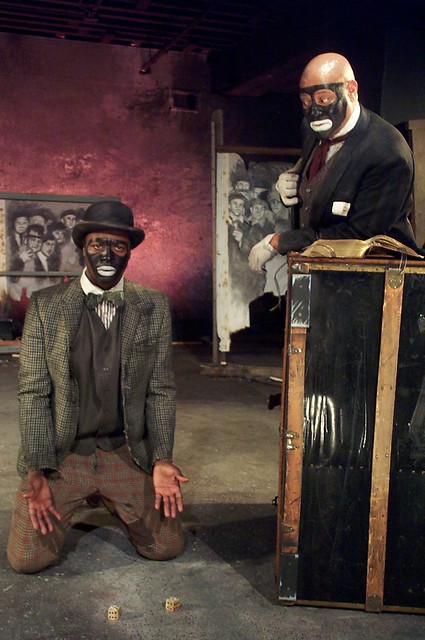
What actor Kelcey Watson did a few years ago in taking on the lead role in a play only eight days before the curtain went up doesn’t quite rise to the 42nd Street legend of a chorus girl replacing the leading lady on opening night.  But considering the part and the script were demanding and the world famous playwright would be in attendance Watson pulled off a minor miracle in not only learning his lines but giving a performance that made it appear as if he’d been rehearsing for weeks or months, not days.  He performed his feat in service of a Blue Barn Theatre (Omaha, Neb.) production of Six Degrees of Separation and its author John Guare witnessed the actor’s spot-on work and praised him for it.  Director Susan Clement-Toberer found herself in the uneviable position of replacing the actor originally cast as Paul slightly more than a week before opening night.  And as my story explains she was about to bring in someone from out of town when Watson, who had shined in a Blue Barn staging of Minstrel Show (by Max Sparber) called offering his services.  It all worked out better than anyone could have imagined and my story puts the pieces together of how this conspiracy of hearts made it happen with so short a lead time.  Watson from time to time does work at the John Beasley Theater & Workshop in Omaha.  This blog contains numerous stories I’ve written about the theater and its namesake, actor John Beasley.


photo
Kelcey Watson, ©photo by Max Sparber


Actor Kelcey Watson fills role of a lifetime on short notice in Blue Barn production of “Six Degrees of Separation”

©by Leo Adam Biga

Originally appeared in The Reader (www.thereader.com)


On April 11 Omaha actor Kelcey Watson got wind a lead part was coming available with only eight days before the Blue Barn Theatre opened John Guare’s Six Degrees of Separation. Director Susan Clement-Toberer replaced the actor originally cast as Paul — the axis around which the farce revolves. She was about to bring in someone from out-of-town when Watson called. She took it as fate.

The two met the 11th. She knew Watson, a veteran actor who won strong notices for his role in Minstrel Show at the Blue Barn last year. He’s a member of the Omaha Magic Theatre troupe.

Watson had never seen Six Degrees on stage or on screen, much less read the script.  He only knew the story’s premise of how a young, homeless black man (Paul) insinuates himself into the lives of white Fifth Avenuers.

Watson got the pivotal part after assuring Clement-Toberer he was cool having to kiss a man on stage and learning a role full of intricate dialog in a week. Oh, by the way, she added, John Guare will be here opening weekend. Gulp. Serious pressure.

She began working with Watson that same day. It was a crash course of blocking and intentions and memorizing and running lines. Lots of notes and discussion. When it would all get to be too much, they’d cat nap on the set’s pair of red vinyl sofas. Then he joined the cast for a 6 to 10 p.m. rehearsal. They did a full run-through the very first night. He followed that same schedule for a week.

Before he knew it, preview night arrived on the 18th. “It was like, whoosh, and I was there…a whirlwind of nicotine and caffeine and play reading,” Watson said. His motivation was “not failing the cast. These people had worked hard for weeks and I just happened to join in. They were really welcoming toward me. They made it kind of easy to fall into the work.” He used whatever nerves he felt to inform his part. He said, “The stakes were so high. I infused that anxiety into the character. The hardest part was getting it word perfect. It was a lot of complex verbiage to kind of eat and take in and digest.” For him “the mountain” was mastering “the thesis speech” in which he delivers a manifesto about schizophrenia, imagination, the human need to connect and Catcher in the Rye. “I knew I had the part down cold if I could do this speech.”

He’s nailed it enough to earn accolades. He couldn’t have done it, he said, without Clement-Toberer, whom he calls “a very gifted and giving director.” Of their rapport, he said, “We really did have this link that was very earnest and very sensual in some ways.” As she puts it, “We became fast and furious buddies in those eight days. I knew pretty quickly I had made the right decision. He was able to memorize his lines so rapidly and to inhabit the character and fill him out.” She said the way he brings Paul to life is “beautifully done.”

She’s never had an actor have to learn so much so fast. “It’s a helluva role and to have to jump into it in an eight day rehearsal period was a pretty intense process,  but also exhilarating. I think Kelcey worked really well under those circumstances. He really rose to the occasion.”

Why did he want the part badly enough to put himself through all that, not to mention risk being unprepared with the play’s author looking on?

“I really, really wanted to do this,” the 29-year-old said. “It really was a rare opportunity that something like this comes up.”

On a deeper level, he identified with Paul. Watson calls Paul “a lost soul” and he said the character’s desperate search for acceptance paralleled his own a few years ago. In 2001 the Omaha native, Benson High grad and former ska band lead singer left to follow his acting dream in New York. He studied at the American Academy of Dramatic Art. Things didn’t go his way. A bad attitude didn’t help.

“One of the reasons I left New York is because it really did a number on me. It kicked my ass,” he said. “I got kicked out of the Academy. I couldn’t work with people. I was such an asshole. I was trying really to find myself. I didn’t really know who I was.”

It’s why, Watson said, “I connected with Paul immediately, because he’s a loner. He’s trying to find a home.” Like Paul in the play, Watson didn’t have a place of his own in New York. He scrounged to get by, reinventing himself as needed. He said, “I’ve been down. I’ve been out. I’ve had to stay at people’s houses a few weeks here and there.”

The lure of “doing black theater” with John Beasley brought him back to Omaha. He did Two Trains Running and The Piano Lesson at the Beasley Theatre. But he ultimately came back because “Omaha’s my home. It’s a place I feel safe at.”


Kelcey Watson and Carl Brooks in Minstrel Show 


His rediscovery of his love of acting continued at the famed Steppenwolf Theatre Company in Chicago, where he did an intensive three-month workshop in 2004. “Going through Steppenwolf I learned ensemble acting,” he said. “This time I was so receptive. I learned how to trust people…to let myself go.” He brought his nuanced approach with him back home.

Omaha is where he’s come of age as an artist and as a man. Besides the comfort of  his hometown, there’s the home he’s found, too, in local theater. In his search to connect with people and ideas and emotions, he’s looking “to find that space where you can really express yourself and your feelings and be vulnerable.” The Blue Barn may be that space. “They bring the stakes up higher,” he said.

The stakes couldn’t have been higher in Six Degrees. The fact things turned out so well confirms he’s doing what he’s supposed to. “It’s amazing to me the cast said things like, ‘You’re our hero’ and ‘Thanks for saving us.’ This is what I love to do,” he said. “I went to school for this stuff. I’m still in debt because of it.”

Clement-Toberer said when told what Watson had to do to ready himself for the part that Guare, who attended the April 20 show, complimented the actor, saying, “It was as if he was inventing it right on the spot.” Watson said that before Guare left the theater, the playwright turned to him and said, admiringly, “Eight days, huh?.” Watson could only smile.

She said Guare explained how he “thinks of characters in colors” but often finds oranges miscast as purples. “He felt with this production the cast of colors was appropriate across the board. He said, ‘Of course, if you can’t find the right color, then you cast Kelcey.’” It’s the kind of comment theater legends are born of.


John Guare

Great Plains Theatre Conference ushers in new era of Omaha theater

May 28, 2011 27 comments

From the moment I learned of the Great Plains Theatre Conference being launched in 2006 in my hometown of Omaha, I knew it was something significant for the local arts scene and a must story for me to write about.  In one fashion or another I have written about various aspects of each of the six conferences, with the exception of one I believe.  That first conference or two drew much attention for the obvious reason that attached to the event were a half-dozen or more theater legends, including Edward Albee, Arthur Kopit, John Guare, Marshall Mason, Mark Lamos, Tammy Grimes, and Patricia Neal.  These luminaries followed, in a sense, the conference’s founder and Pied Piper driving force, Jo Ann McDowell, who came to Omaha as president of Metropolitan Community College and brought with her a track record of spearheading major theater festivals. Albee was closely associated with the first couple Great Plains conferences but then disassociated himself from the event, as did a couple more of the big names, which cost the conference some lustre and momentum.  Then, McDowell came under fire in her role as Metro’s president, and eventually resigned. In the midst of her embattled presidency, the newspaper I was mainly covering the conference for, The Reader (www.thereader.com), wrote a series of unfriendly pieces directed at her.  The paper also seemed to lose interest in the conference by its third, fourth, and fifth seasons, even though by then the event had rebounded and become stronger in some ways than before, even though it was missing the old lions of the American theater. The story below is the first piece I did on the event and was part of a Reader cover story previewing the inaugural conference. In the spirit of the conference becoming an established event, and the 2011 edition taking place May 28-June 4, I am posting my Great Plains Theatre Conference work as a journalist. You’ll find pieces related to the event itself and to McDowell, Kopit, Guare, Glyn O’Malley, and Caridad Svich, one of this year’s featured playwrights.  You’ll also find on this blog pieces about Omaha’s Blue Barn Theatre, Omaha Community Playhouse, Billy McGuigian, the John Beasley Theatre, the Theatre of the Oppressed, Diner Theater, Omaha Magic Theatre. Not to mention, profiles of some of Omaha’s own theater  legends: Megan Terry, John Beasley, Elaine Jabenis, Charles Jones, Dick Boyd, Doug Marr, Quiana Smith, Billy McGuigan,  And soon to come: pieces on the Brigit St. Brigit Theatre and Shakespeare on the Green.  Yes, it’s a vibrant theater scene here.
Great Plains Theatre Conference ushers in new era of Omaha theater 

©by Leo Adam Biga

Originally appeared in The Reader (www.thereader.com)


It may not be a stretch to say Omaha theater will not be the same after the first Great Plains Theatre Conference, May 27 through June 3, as organizers and presenters expect the occasion to invigorate the theater culture here. The basis for such optimism rests in the convergence of talent coming for a public assembly that is part rendezvous, jamboree, seminar and Chautauqua. Prominent figures in American theater, among them Edward Albee, Arthur Kopit, Lloyd Richards, Mark Lamos, Emily Mann and Kathleen Chalfant, will join other established playwrights, directors, actors, instructors and scholars from around the U.S., along with new playwrights and Nebraska’s top theater artists, for a communal focus on craft.

“This stands to be a defining moment for Omaha. Not only will we have the opportunity to meet and work with distinguished theater artists, but we will form relationships with new playwrights and further strengthen local ties. Every theater in Omaha will benefit from this conference in ways not yet imagined,” said Blue Barn Theatre founding member Hughston Walkinshaw, who will act and direct at the fest. “I am delighted to see an event of this magnitude here. I can only assume positive things will result from such a gathering of famous and aspiring playwrights,” said Creighton University drama teacher Alan Klem, a playwright and panelist. “I can tell you from personal experience how hard it is to get feedback of any kind on a new play. So, to have a play read in the presence of such esteemed playwrights, directors and theater practitioners is total nirvana for an aspiring playwright.”

Aside from feedback, the event’s play labs, master classes, panel discussions and staged readings will provide forums for visiting-resident artists to interact. It’s these crosscurrents that hold promise for: area theaters to find new works to produce; collaborations to form between companies; and new stage ventures to arise or existing ones to expand. Much of the shop talk/networking may occur after hours.

The woman who brought the model for the event here, Metropolitan Community College President Jo Ann C. McDowell, saw such developments grow out of the prestigious Last Frontier Theatre Conference she and Albee formed in Valdez, Alaska, her last stop before assuming the Metro post 10 months ago. The New York Times’ arts section featured it in 1999. National press will cover the Omaha event.

“When we started the theater conference in Valdez there was a large (theater) program in Juno and an emerging theater department in Anchorage and then when we ended up at the end of that run I believe there were like 20 that came out of it. The arts editor of the Anchorage Daily News said we renewed theater in Alaska and I know we did,” said McDowell, who led the Last Frontier event for 12 years.

She assumes what happened in Valdez will happen in Omaha, as “all these new playwrights coming here will get to know” Omaha theater artists. “They’ll all hang around after working together and these theater companies will see new work they’ll want to do and so they’ll invite those playwrights back here. And every year we’ll see these same folks get together. You will see collaborations and growth.”

She designed Last Frontier with Pulitzer Prize and Tony Award winning playwright Edward Albee and the two have fashioned the Omaha conference after it. When she left Valdez the theater giants she “built relationships” with, led by Albee, threw their support behind her and the Great Plains event, just as they did when she left Independence, Kan. and its William Inge Festival for Alaska 13 years ago.

Wherever McDowell goes, her celebration of theater follows the “vision” of Albee, whom conference participant Joel Vig, a Broadway actor, describes as “a nurturing force for playwrights.” “It’s a week for leading theater artists to get together and to immerse themselves in their craft. Harvard would be proud to have this event.” she said. The host site is Metro’s Fort Omaha campus, where guests will stay in Victorian-era dorms she calls “cozy” and the June 3 gala, emceed by Oscar and Tony winning diva Patricia Neal, will be held under a giant tent on the great lawn, all to further the theater “family” and “community” that Kopit, and others refer to.

“There’s a lot of synergy with all these scholars and academics from all over the country coming together, plus the luminaries, plus the new playwrights, plus the actors and directors,” McDowell said. “It’s an educational event. It’s all about
educating people about theater — the craft of the playwright. It’s all about craft.”

“These sorts of conferences can be enormously exciting and inspiring. As an artist they are a great opportunity for people to make contacts, see new work, get useful comments and direction,” said Minneapolis playwright Max Sparber, whose Buddy Bentley will get a staged reading at the event. “The enrichment that happens and the long-term effects are amazing, and you can see them from year to year in the friendships and connections. There’s any number of things that can happen from having this kind of confluence of good forces,” said Vig, who will introduce Neal for her May 31 “As I Am” speech about her life in and out of acting.

The conference encourages work by new writers and showcases that of veterans.

“A theater that does not nourish new plays and doesn’t do new work is moribund. You have to have a mix. You have to have tested plays and you have to have new work and an audience that participates in it. The healthiest theater community builds up a loyal audience to various theaters,” said noted playwright Arthur Kopit, the conference’s Edward Albee Award recipient, whose works Nine and Wings will get staged readings. “American theater is not New York theater. It’s all around the country and that’s the truth of it. It’s very important to connect with the rest of the country and so it’s important plays emerge from different regions of the country that are reflective of those people’s aspirations and dreams and fears and hopes.” “What I want to do is have a venue where we create a whole other generation of artists,” McDowell said.

More than new works, new perspectives will be in the offing.

“I have often felt Omaha would benefit greatly from being exposed to theater from elsewhere in America. But for occasional touring productions of Broadway plays, Omaha sees precious little of what goes on in theater communities outside Nebraska,” said Sparber, a former Omaha resident whose work has been performed extensively here. “The Omaha theater community is a very active, engaged, wonderful community, with a few world class small theaters, an exceptional community theater, some magnificent actors, some terrific writers, and an avid audience, but it has been waiting for a kick in the butt like this one.

“It just hasn’t been able to take the next necessary steps — toward developing semi-professional theaters, toward bringing in touring productions, toward developing a base of audience member/donor patrons. I think the community is eager to take the next steps, if uncertain about what those steps might be. This conference is an excellent opportunity to begin discussing and exploring possibilities for Omaha’s development as a theater community. More so, Omaha now has the chance to explore what its theater community means in the broader context of the American theater community.”


Theater doesn’t occur in a vacuum. Neither will the conference. Its open-to-the-public programs will add an audience dynamic to the “collective experience” Kopit said distinguishes theater. “There’s another outcome of this Edward (Albee) and I have spoken about — we’re growing audiences for theater,” McDowell said. “That’s one of our missions. What we do is teach people to be real theater enthusiasts.”

Vig said the arts depend on angels like McDowell, especially in an era of low federal funding. “It takes an enormous amount of dedication to bring off something like this and Jodie is a great force at bringing together people.” “It takes people with passion like Jodie McDowell who see the need for these kinds of gatherings,” Kopit said. “If I have any skills it’s making things happen and being committed. I’m very passionate. My only talent’s going out and trying to get people to buy into this mission and to make it available to people who really can’t afford it — students and artists,” McDowell said. “As a country we have to support our arts and I don’t mind spending a lot of my own time and energy on them. It’s been a gift in my life.”

She also sees this as a great marketing tool for Metro. “I hope the conference will get people to change their image of us and will get us invited to that circle of people involved in arts philanthropy. I think it will put Omaha-Metro on the map in kind of an exciting way.” In her perfect dream the college will build a theater of its own and form a theater arts department around its current theater technical degree program. “I think as Metro grows over the years there will be a theater,” she said. “Give me a little time.” She diffuses speculation about the conference’s future should she move on. “This is my last presidency. This is my last stop. I hope I’m here a decade. This is a perfect home for this conference and I hope we can build something so that if I do decide to retire then I can stay involved.”

Ultimately, she said the event is much larger than Metro, emphasizing the college “could never do it alone.” She appreciates how Omaha’s arts community “reached out” to embrace the event, providing spaces, stages, artists. Twenty area theater companies are participating. “It’s about all of us coming together. Once a year, I hope, it will be all of the theater community in Omaha having a family reunion.”

Radio DJ-actor-singer Dave Wingert, in the spotlight

August 25, 2010 28 comments

Microphone stands in spotlight

Image by kjeik via Flickr


UPDATE I: I have been noticing a major uptick in views of this Dave Wingert profile and I think at one point I even Googled his name to see if he was in the news, but I didn’t find anything. But the views kept right on aggregating. I just happened to email him Oct. 17 about something totally unrelated to this and he informed me he has been summarily let go by KGOR. Obviously a lot of you out there who listened to him knew about the situation. Apparently the dust-up had to do with an FCC violation – a listener calling-in unloosed a forbidden expletive on air that seems pretty tame to me and my ears, “bullshit,” and Wingy let it through and tried covering his ass just as you or I might do — and after serving a suspension he got canned for his trouble. Please explain how the many obscenities (and I don’t just mean words) of reality TV and shock-jock radio are acceptable, even in prime time, and yet its producers, writers, and hosts only seem to get richer, but a stray “bullshit” said over the radio is grounds for termination? He tells me he was fired without severance, only a goodbye and good luck. He wants to stay put and continue doing his radio gigging in Omaha. He and his agent are busily testing the waters. I hope he gets his wish and perhaps a measure of revenge against the station that dismissed him by killing them in the ratings.

UPDATE II: The story finally made the news, though the reports have him uttering the expletive. Does it really matter? I find it interesting that I broke the story via my blog Monday morning and yet that there was no mention by the Omaha World-Herald or other media of getting a lead on this news from this source and/or from readers of this blog, but I assume that’s precisely what happened.

UPDATE III: After fielding dozens of comments and questions about Wingert’s firing, I am happy to report what some of you probably already know – he’s landed at a new radio home in Omaha, KOOO-FM, 101.9, where he will be the morning host beginning Monday, Jan. 30.  The station plays hits from the 1970s through today and targets a 25-54 demographic.  Does this mean his loyal listeners from KGOR, many of them upset by the way he was let go, will follow him to the new station and boost its ratings?  I wonder how many listeners spurned KGOR in the aftermath of his firing?  Oh, well, all water under the bridge now.  He’s back in the saddle again and if his fans want to hear him they know where to find him.

In my 52 years in Omaha, Neb. I am aware of only a few entertainers and personalities who can compare with Dave Wingert, a multi-talented gentleman who makes whatever medium he’s working in, whether radio or television or theater or cabaret, appear effortless. Those of us who have been around the block a time or two know from experience that things only appear effortless from the outside looking in, and that that apparent ease is only arrived after tremendous study and work. After admiring Wingert from afar for so many years it was a delight to finally meet him and get to know him a bit.  I trust you will like the man I portray in this article for The Reader (www.thereader.com) as much as I do.


Radio DJ-actor-singerDave Wingert, in the spotlight

©by Leo Adam Biga

Originally published in The Reader (www.thereader.com)


The words fearless and morning radio personality don’t usually jive but they do in the case of Clear Channel KGOR 99.9-FM wake-up man Dave Wingert. Far from the madding crowd of shock jocks the veteran broadcaster and stage actor is brave enough to simply be himself on air. Enervating, effusive, empathetic, effeminate.

He’s gallant enough to have accepted the fact his biological father no sooner saw him as a newborn infant than went home and killed himself. His mother laid that messed-up heritage on him when he was a teenager.

“What do you with that?” Wingert asked rhetorically in an interview. What he did was learn all he could about his father, a man who was the love of his mother’s life but who also suffered from manic depression. The revelation of how he died came just as Wingert began pursuing radio and theater at Ohio University. That’s when he discovered his father had worked in those same fields in New York. Weird.

Wingert’s resilient enough to have survived a bullet to the chest in Omaha’s most famous shooting spree until the Van Maur tragedy. In 1977 he and Larry Williams had just begun their cabaret act before a packed house at now defunct Club 89 when Ulysses Cribbs opened fire with a 12-gauge shotgun. In a few seconds rampage that seemed to last forever the gunman killed one and injured 26, including Wingert, who luckily had the round deflect off his chest.

Superman went on the air the next day helping a city heal. He did the same after the Van Maur shootings. The earlier experience was a lesson in how precious life is. “Since that day I try not to take that for granted,” he said. A recent stalking incident made him relive some of that chaos. “Mr. Crazy” made veiled threats before being arrested. Wingert never missed a show.

A triple-threat actor/singer/dancer, he’s daring enough to take on demanding roles requiring huge commitments of time and energy. “I’m drawn to material, content,” he said. Recent roles in Six Degrees of SeparationUrinetown and The Goat fit the bill. Blue Barn Theatre artistic director Susan Clement Toberer, who directed him in Six Degrees andGoat, said, “His work ethic is purely professional yet he is very willing to try anything at least once. I love working with actors like Dave who are fearless and willing to jump off a ledge and not worry if they look the fool.”


Dave Wingert


He’s courageous enough to be an openly gay announcer in Omaha. Not in a flaming, militant way but with a breezy, emotive patter and Jewish motherly demeanor. By addressing, on-air, overtly heterosexual newsman Rich Dennison with, “Oh, honey!,” or female callers with, “Dahling.” He doesn’t use the show as a coming out platform but rather as context for being true to who he is.

“I have come out — if you listen for it. But it comes out in conversation. I haven’t made it a banner,” he said.

Three years ago Wingert showed the courage of his convictions by abandoning his dream for large market radio fame, which had led him from Omaha to the west coast, to venture back here in search of a permanent home to call his own.

More recently, Wingert proved he has the guts to leave a prime gig as a protest. In a show of solidarity with Omaha Community Playhouse artists who’d earlier resigned he and two fellow cast members deserted a production of Moonlight and Magnolias days before its scheduled opening last month. He, Ben Burkholtz and Connie Lee refused to go on in response to a dispute at the theater that led to the temporary departures of Playhouse artistic director Carl Beck, who directed Moonlight, and associate Susan Baer Collins. When Wingert and Co. exited, the show was canceled and Billy McGuigan booked as a fill-in.

Beck appreciated the gesture.

“I was terribly surprised and terribly moved. It received a lot of varied reaction around the city. Some people very much horrified actors would do that. Others, understanding what motivated the actors. I know those actors were taking an uncomfortable positiion and so I admire them seeing it through the way they have.”

Some may view what Wingert did as a grandstanding ploy that undermined the theater. Others, as the loyal action of a man guided by integrity. Either way, Wingert didn’t sit idly by while Rome burned.

Prompting this soap opera was a blunt force effort by executive director Tim Schmad and board president Mark Laughlin to bridge a budget shortfall. The pair reportedly told Beck and Collins their duties and salaries would be reduced. Beck and Collins balked and submitted their resignations. Insiders say it was a classic case of bean counters versus artists.

Once the story broke angry theater supporters deluged the Playhouse with calls and emails. Schmad and Laughlin faced the music at an April 16 open forum that announced the restoration of Beck and Collins to their original posts.

Wingert attended the session, which saw people rant against OCP administrators for what many viewed as their insensitivity, but the actor remained silent. Aside from a comment to a television reporter about Schmad’s well-publicized and much-derided lack of arts experience, Wingert let his actions speak for him.

“What’s really behind this is I keep a list of what I want to be here and do here and one is to make a difference, and this made such a huge difference as it played out,” said Wingert. “I think of that. I guess you could call it a protest. It was saying, ‘You can’t treat my friends this way, this is wrong, you can’t do this.’ It was all about people for me,” said Wingert, who’d worked with Beck before.


Wingert at a script reading


What impact the Wingert-led walkout made in causing Playhouse leaders to rethink their decision no one knows. While Beck and Collins are back on the job Moonlight never made it to curtain, unless you count the fully-dressed and lit but empty set that served as backdrop for the rancorous public forum. A fitting symbol for a show that would not go on in a house divided. Wingert equates what happened to a dysfunctional family airing out some issues.

“I think it’s much like a family having a blowup.”

He said “going to the brink” may have been just the “cathartic” awakening the complacent theater, which has lost much of its membership, needed in order to get both the business and art sides on the same page.

“I see this as all really good for the Playhouse, I really do,” said Wingert. “If this is a situation that has been brewing for some time than the place deserves to implode, it needs to get its shit together. Only time will tell.”

He feels the events that led to Moonlight being canceled sent a message to the Playhouse administration.

“It was more important not to do this show for the reasons we didn’t do it than to get on stage,” said Wingert, who refused overtures from management he reconsider his walkout. “Maybe it wasn’t meant to live.”

Still, he rues losing Moonlight. The play looks at a frantic few days in the making of Gone with the Wind. Wingert went after the plum role of screenwriter Ben Hecht, whose biography’s telling of these true-to-life events inspired the stage comedy. There’s discussion of finding new play dates for Moonlight but that may be difficult given the theater’s tight schedule. Wingert can hope though.

“I would love to play that part,” he said. “It’s so rich and fun.” Wingert said he initially had trouble finding Hecht’s voice, the instrument the actor relies on for fixing in on his characters. Once he did, he said, he “nailed the part.” What he hit upon, he said, was a wry, Woody Allenish, New Yorker smarty pants whine. “That voice had never come out of my mouth before.”


His real-life voice is a warm, mellifluous, inflection-rich concoction hinting at his Bensonhurst-Brooklyn background. It’s not hard to imagine this same voice charming listeners, especially when married with his dynamic personality. He seduces without resorting to blow-hard political agenda, cutesy alter-ago or phony banter. A more theatrical voice comes out for dramatic-comedic affect. “Well, radio lends itself to that, especially if you’re telling a story,” he said. “I mean, it is of course a little bit of extenuated realism there. There’s a bit of schtick.”

He projects a vaugely Jewish vibe, too, as the friendly mensch who says, “let’s check the morning schlep,” or, “love to schmooze with you.”

Filling time between playing what KGOR tags “the super hits of the the ‘60s and ‘70s” he indulges in canned jokes provided by a syndicator of prefab material. Most commercial stations subscribe to such services. The bits, mostly satiric pot shots at headline grabbers like OctaMom, stand on their own but work best when a host can riff on them. If nothing else, Wingert’s an extemporaneous whiz whose decades of live radio and theater experience make improvisation second nature to him.

It’s why he does his show, not from a chair but standing up, moving around, much the way he works on stage.

“I do my show standing up because I think best on my feet. It gives me more more energy.

A Woman Under the Influence: Robinlyn Sayers as Hattie McDaniel

July 5, 2010 2 comments

Vivacious Robinlyn Sayers seemingly came out of nowhere to mesmerize Omaha theatergoers with her captivating portray of Hattie McDaniel in a one-woman show at the Blue Barn Theatre.  The niece of football legend Gale Sayers and the daughter of the less well known but equally gifted Roger Sayers, Robinlyn was in the process of trying to reinvent herself when I met her.  She was already a distinguished medical professional but she also possessed serious chops as a singer and actress and was intrigued with the idea of doing something professionally with those skills, too, perhaps even transforming herself into a full-time performer.  The show at the Blue Barn was her Omaha stage debut and after its success she moved to Texas for another medical position.  I lost contact with her along the way and now I see she’s working as the chief financial officer for Family Service Center of Galveston County.  I trust she still performs now and then, because she’s been blessed with a great gift and it was her desire to heal people not just through health and medical services but through song and theater.  My story about her originally appeared in the Omaha City Weekly.


A Woman Under the Influence: Robinlyn Sayers as Hattie McDaniel

©by Leo Adam Biga

Originally published by the Omaha City Weekly


After a diverse medical career that ranged from molecular research to community health, Omahan Robinlyn Sayers, M.D., now applies a form of healing arts, with a capital A, in service of the theater, where she’s found a home for her many dreams and talents. Fresh off a one-woman tour de force portraying the late Academy Award-winning actress Hattie McDaniel in the Blue Barn Theater production of Larry Parr‘s Hi Hat Hattie, for which her singing and acting drew raves, Sayers sees a parallel between what she did in medicine and what she does in drama. That congruence is like the kinship she feels with McDaniel, a kind of alter ego for her.

“I feel like I’m still healing on the stage,” said Sayers, a living-out-loud figure whose juke joint voice drips with honey, gin, sex and smoke and whose round, expressive eyes fill easily with tears. “I always wanted to cure. I never wanted to be somebody to just push a thermometer or check a yeast infection. I never wanted to be that simplistic. Now, it’s so gratifying to go up there for two hours on the stage and make people cry or smile or forget what happened at home. I just want to make people feel inspired, motivated, hopeful. Afterwards, they come to you and they’re so fulfilled. Like this is the best thing in their life. It’s like I’m their wonder drug.”

Sayers herself finds acting such an elixir that she’s put her work in medicine on hiatus to forge a new life in the theater, an arena she plans using to reach people. “I’m going to be very selective in the types of pieces I become involved in,” she said. “I really want to only be involved in things that are both educational and entertaining. They need to have some element of truth to them. They need to convey some sort of a message or theme or issue or be somewhat political.”

That she made her Omaha dramatic debut as Hattie McDaniel, a woman whose story intersects with her own, makes it all seem fated. “It was just God for me to be able to do this show,” Sayers said. “My goodness…there’s so many things that are similar in our lives.” Both are the youngest of Midwest families. Each dreamed of going on stage from an early age. Each married more than once without bearing a child. Like Hattie, Sayers possesses what Blue Barn artistic director Susan Clement-Toberer, who directed her in the play, called “a zest for life and a passion for the work. She’s so intelligent and she has such a desire to tell the story.”

Like Hattie, she’s soldiered on. “I like the struggles and challenges of life,” said Sayers, whose Birth of the Blues rendition is a soul-stirring summation of the black experience. And, like high-living Hattie, she said, “I give the best parties in town.”

Throwing herself into the demanding one-woman show that encompasses 80 pages of dialog and song, Sayers did extensive research on McDaniel and the Jazz Era and spent extra hours working with Toberer on character nuances. “I had to be so focused for that show,” Sayers said. “I had to isolate everybody from my life. I put in six hours a day with Susan (Toberer), not to mention what I did at home. I put a lot into it.” During the February 6 through 29 run Sayers also cultivated some rituals to help her get in character and commune with Hattie’s spirit. For example, before the curtain went up she got in the habit of quickly running through the show backstage and she enlisted the crew, including Toberer and the play’s musical director, Keith Hart, who also played the mute pianist on stage, to pray with her.

“It was all about ushering in Hattie,” Sayers explained. “There were times when we had ushered in so many feelings, it would be scary. I wouldn’t even feel like me. I mean, there were times I felt like I was Hattie McDaniel. There was one night, and it was the last night, when I really, truly felt it. She’d won her Oscar 65 years ago that same day (as brassy Mammy in Gone with the Wind).”

“Even now,” months removed from the show, “I’m not quite separated from her,” said Sayers, adding the experience of getting so close to a figure she admires “was magical for me.” The connection she feels is so acute, she said she likes to think that “if Hattie could have chosen someone to do this role — someone with balls enough to really get her record straight for the fabulous actress and entertainer she was — that I would be the one to do it.”

She’s likely to get a chance at playing Hattie again if the Blue Barn can secure the rights to the show for an as yet undetermined revival that may go on tour.

Performing has been a dream of Sayers, a native of north Omaha’s Florence area, forever. But until a couple years ago, she’d done little to heed her hunger aside from playing the lead in two Little Theater dramas at Tuskegee University, where she earned a biology degree. Despite scoring successes on stage in college, her drama aspirations were deferred in favor of her burgeoning genetic research career.

She first made a splash in academia when her research won her awards and opportunities to present papers at national conferences. Then, using her bravura persona to get noticed, she landed a job, at age 24, with the National Cancer Institute, a part of the National Institutes of Health in Bethesda, MD. Her NIH stint found her working in the lab of Robert Gallo, the renowned medical scientist who first isolated the AIDS virus. It was the late 1980s, a momentous period in the scientific-medical community’s investigation of AIDS and a heady time for Sayers.

“I was able to get into it (AIDS research) when it was just blowing up,” she said. “All the talents I have and all the things I learned over the years — to be able to isolate and sequence and clone — I got from working with the AIDS virus. I was blessed to be right there when they were just starting to do some really fundamental things in molecular biology. It just opened up a whole bunch of other things for me.”

Sayers has been something of a curiosity in the various labs she’s worked in over the years because she’s an M.D. without a Ph.D. “My expertise as a molecular biologist is just from OST — On the Job Training,” she said, adding there’s a weird gulf between holders of the alphabet soup titles, so much so that Ph.Ds responded to her with incredulity. “They were like, ‘Who do you think you are? We’ve gone to graduate school and defended our dissertations. Why didn’t you go to graduate school?’ And I’d tell ’em, ‘Because I have a million other things I want to do.’ And I didn’t ever want to be just clinical. Never did.”


Hattie McDaniel

 
Hattie McDaniel


Doing cutting edge research appealed to Sayers’ sense of discovery, but since she didn’t want always to be confined to a lab, she went after and got her M.D. from the University of Nebraska-Lincoln. Any acting thoughts were put on hold during medical school, especially when she got married. The marriage didn’t last.

After college, she worked with Boys Town National Research Hospital’s renowned Dominic Cosgrove in exploring Alports Syndrome, an inherited kidney disease that can result in deafness. Then, she and her second husband moved to Texas, where she was a microbiology and immunology research associate at the Baylor College of Medicine. Her days revolved around research, leaving little time for anything else.

“It’s a very consuming life. You’re talking 80 hours a week, seven days a week,” she said. “There’s a tremendous amount of pressure I had to put on my technicians and on myself to pay very close attention to details. In science, you can’t have flaws. Your data has to be statistically significant and reproducible. You spend many hours not sleeping because you’re worried whether your incubation period is going to work out and if the temperature is going to be all right.”

Deferring one dream to pursue another has been the pattern of her life. Acting just had to wait until her passion for research ran its course. “I’m a dreamer. And the thing with me is…I have all these dreams and I know it’s just a matter of time before I knock them all out. I just go for one, and go for the other, and go for the other…and just live.” For a long time, she kept her performing ambition to herself. “A lot of times I’m afraid to share my dreams because people, you know, poison them and get you distracted and make you doubt yourself,” she said.

The youngest child of straight-laced parents, Roger Sayers and Madeline Adams Sayers, she never acted before college, but instead threw herself into her passion for animals — she was forever bringing home stray dogs — and science — she and her brother dissected salamanders and frogs. She worked for local veterinarian Bill Lofton. Her love for animals was so great, she began her Tuskegee studies in animal science, but she changed her mind after a mentor convinced her that as a bright, bold African-American female she could go far in human medicine.

As a kid, she did sing briefly with the Salem Baptist Church youth choir. Otherwise, the Northwest High grad strutted her stuff in cheerleading, gymnastics, swimming and track activities. The fact she found an outlet for self-expression in sports is no accident, as she hails from one of Nebraska’s most prominent athletic families. Her father Roger was a top American sprinter and NAIA football player at then-Omaha University in the early 1960s. Her legendary uncle, Gale, is a member of both the college and pro football halls of fame following All-America and All-Pro careers with Kansas University and the Chicago Bears, respectively.

All her other performing was done privately, before friends and family, or secretly, as when she learned all the lines of a play her siblings appeared in at north Omaha’s old Afro-Academy. She was, she said, “a closet performer.” As she got older, she rarely performed publicly. There were the two plays she starred in in college. Then, while an NU Medical School student, she let her hair down singing a cover of Roberta Flack’s The First Time I Ever Saw Your Face at an on-campus multicultural affairs concert. When an unexpectedly large crowd showed up, she got stage fright. As if the packed house wasn’t bad enough, she was unfamiliar with the lyrics. Then, the canned music went out mid-song, forcing her to finish acapella.

“I went all the way back in the closet,” she said of that performance nightmare.

It wasn’t until moving to Texas she ventured on stage again when, at the prodding of her second husband, who “loved to hear me sing,” she sang at a string of honky tonk karaoke bars. With a penchant for singing country music and overturning people’s stereotypes, she’d go into a black bar and defiantly belt out a Shania Twain hit. “When the twang would start up,” she said, “people would be like,’Wrong song, wrong song,’ and by the end they would be like, ‘Yee-haw.’ We’d have ’em going, and it’d be so great that I’d think, Hey, I might be kinda good.”

Still, she didn’t try out for her first play in Omaha for two years after moving back here in 2001. Her second marriage had ended. She wasn’t ready. “I was down that I couldn’t stick it out like other women and stay married,” she said. As usual, she immersed herself in work, this time at the Charles Drew Health Center, advocating  for the homeless and running the center’s chronic disease management program.

Finally, in 2003, she reached a now-or-never point in her drama dreams. “I was like, ‘I have left both of my husbands. I have no children. I’m about to turn 39, so go for it, girl, go for it.'” Without telling a soul, she auditioned for a staging of the Fats Waller revue Ain’t Misbehavin’ at the John Beasley Theater and won a part. Theater founder and guru, John Beasley, the film and TV actor, took her under his wing, telling her, “You∂ve got it” — meaning the acting gift. “She’s definitely got it,” he said. “She has the talent, the presence and the personality.”

She followed up Ain’t Misbehavin‘ with a part in Little Shop of Horrors at the Millenium. It was there she met Keith Hart, who told her she’d be perfect for Hi Hat Hattie, a production of which he’d worked in in Kansas City. He sold the Blue Barn on the play and about “how completely” Sayers “threw herself into a character and a song” and how “tough and gutsy” she was. “I knew Hattie needed to be kind of a tough broad,” Hart said. One thing led to another and the Blue Barn added the play to its season and Sayers won the part in an open audition.

As much as her talent impressed Toberer and Hart, her work ethic may have won them over even more. For the audition and rehearsal process, Sayers steeped herself in all things Hattie. Untrained as an actress, she gave herself over to Toberer’s direction, learning to “link” and “pull” emotions from her own life to serve her character; for certain scenes, she drew on troubled relationsips and disturbing memories of racism. “There was unlimited discovery for me,” she said.

Among the discoveries was a tolerance for things not going according to plan, something “the control freak” struggled with in the tyranny of the lab. “It’s made me, at 39, give myself a break in life,” she said. “The last week of the show, I felt like I was running track again. When you start rockin’ and you own the show, you feel like you’re in the starting blocks again. It’s fun…crazy…exciting. I love it.”

She hopes to “ride” the momentum from Hi Hat as long as it lasts. On John Beasley’s advice, she’s taken the plunge and is seeking regional theater and film gigs in larger markets, the very path he took in launching his career. Now residing in Galveston, Texas, she recently turned heads at a Houston audition where 25 theater directors saw her. “I’m auditioning like crazy. I get great comments every time. I have been using a monologue from Hi Hat Hattie. So Hattie is still helping me.” She’s intent on going after any role that interests her and on avoiding being typecast.  If acting doesn’t work out, well, she’s already been back to school preparing for a health administration career and is in the running for a research associate spot. Either way, she said, “This is what I’m supposed to do…inspire people to dream.”