
Archive
Archive for the ‘Civil Rights’ Category
Beaty’s one-man dramatization of the diaspora considers what freedom looks like for African Americans
February 8, 2013
1 comment
In the theater few artists have what it takes to pull off a one-man or one-woman show that requires creating multiple characters of all different ages and persuasions and that are both believable and compelling. Daniel Beaty is such a rare artist. He’s performing his one-man show Emergency Feb. 15 at the Holland Performing Arts Center in Omaha and it’s a must-see for its thought-provoking and entertaining take on what freedom means to African Americans in the context of the specter of slavery amidst the land of liberty. My story will soon be appearing in The Reader (www.thereader.com).

Beaty’s one-man dramatization of the diaspora considers what freedom looks like for African Americans
©by Leo Adam Biga
Soon to appear in The Reader (www.thereader.com)
When writer-actor-composer Daniel Beaty conjures the 25-plus characters he portrays in his provocative one-man show, Emergency, it’s well to remember his riffs on the African-American experience are informed by his own life.
His award-winning play, which he performs Friday at 7:30 p.m. at the Holland Performing Arts Center, is a bold meditation on freedom. It imagines a slave ship rising out of the Hudson River in front of the Statue of Liberty in present-day New York City. When this worst symbol of slavery rears its ugly head before our greatest symbol of freedom it throws into relief the inconvenient truth that liberty still eludes many African Americans.
“This is a metaphor for what stands in front of our freedom,” Beaty says. “Emergency is an exploration of what it means to be free – free to love, free to have hope, free to find one’s purpose and to live a life that’s bold and fully expressed.”
He says the ideas behind the show come from his own growing up as well as observations he made as a former New York City public schools arts educator, where every day reality contradicted America’s promise of equal opportunity.
“Because of my own personal upbringing and life story I really saw myself reflected in the lives of so many of these young people dealing with similar issues of parents battling incarceration or addiction or poverty,” he says. “It really clarified my purpose as a writer and performer to ask the questions, Why are we here? How can things be better? What world are we leaving for our children? It became clear to me the unhealed legacy of slavery is still impacting the hearts and minds of so many people. It goes back to the breakdown of the family that happened during slavery and our children not being told the story of our history in this country and not understanding the roots of economic disparity.”
For Beaty, the cyclical, generational problems that hold many blacks back have their origins in the psychic shackles of slavery.
“Why do you think there are more black people who are poor and in prison than any other group? Because we’re inferior? No. The ghetto is a modern-day plantation. And don’t get it twisted, I’m not just talking about poor people. You can have a six-figure income, a Ph.D., and still be a slave in your mind.
“I don’t believe in telling the story as excuse-making. People overcome and do the extraordinary every day. But I do believe in telling the story for the sake of context and saying, ‘You may have been born in the ghetto and your mom and your grandmother may have been in the ghetto and there’s a root for this economic disparity. But the same way there’s a root for that disparity there is a story of tremendous overcoming and possibility that can also inspire you to be greater than your circumstances may cause you to believe you can be.”
Beaty’s a case in point. The Dayton, Ohio native’s father became a career criminal and heroin addict. With his father in and out of prison Beaty and his older brother were raised by their social worker mother, Shirley Magee.
“My mother is a phenomenal woman. She grew up very poor in a small North Carolina town. She and her family participated in boycotts and sit-ins. She saw the becoming and the challenges of that period in our history. She’s just a fighter by nature, so in the midst of my father’s incarceration and addiction she made sure we were provided for at the expense of her own rest. She worked long hours and took care of her children.”

Daniel’s prodigious writing and speaking skills set him on a path to higher education. The Yale University and American Conservatory Theater graduate has written a string of solo (Through the Night) and ensemble (Resurrection) plays that have garnered acclaim.
Dedicated to being an “artist activist,” he says his activism is “rooted in everything I write anyway but I’m more and more being asked to participate in causes, in conversations around social issues. I personally believe that with a platform of fame or celebrity comes the responsibility to be a participant in the social discourse. With the privilege of people saying we listen to you, we want to hear from you comes a responsibility to give voice to those who don’t have that voice. That’s a big lesson I was taught by some of my mentors like Ruby Dee and Ossie Davis and Bill Cosby, who used the platform of their celebrity or performance to talk about important issues.”
He feels there’s also a healing and bridging his work offers audiences.

“One of the main reasons I choose to perform and write solo plays is because I believe inherent in seeing one person portray dozens of characters in a truthful, three-dimensional manner is the message that we are all connected. I sincerely believe our greatest problems as a world are rooted in the illusion we are separate from one another and different from one another. Certainly there are points of difference but I sincerely believe we are more alike than we are unalike,” he says.
“I think it’s in the space of understanding our shared humanity that we have the best possibility of healing the social economic disparities and ending the violence that plague societies. We are responsible to each other and for each other.”
He says his work falls in line with the African-American oral tradition and its contemporary spoken word off-shoots.
“One of the framing devices of the play is a nationally televised competition of slam poets called ‘America’s Next Top Poet,’ It’s a riff on the reality TV talent competitions we have today and a platform for various characters in the show who are thematically responding to the various things happening in the play.
“I look at slam poetry as having its roots in the black arts movement of the 1960s and while I certainly have respect for certain hip hop artists and particularly the roots of hip hop the slam poetry I endeavor to write is poetry about uplift, and investigating a social-political human scene in need of urgent, passionate exploration. I don’t write about things I would consider every day, mundane or not in support of us becoming our best selves as human beings. I write about things I feel are very urgent, like the state of our young people, the state of our families.”
Outside the New York theater scene he’s perhaps best known for having been a Def Poetry Jam regular. His performance there of the poem “Knock, Knock,” taken from his own Emergency, became a YouTube sensation. He uses slam poetry and spoken word as testimonies that comment on the incendiary events of his plays. He likes what can be expressed through the slam style.

“I actually call the moments of heightened poetic expression in my shows soul arias. They’re moments of direct address that are these passionate two to three minute explosions of poetic expression that crystalize not only an idea or theme but an emotional feeling in a powerful, poignant way that can parallel the aria in opera or the soliloquy in Shakespeare.
“‘Knock, Knock’ is a perfect example.”
The searing poem affirms that parents’ bad decisions need not define their children’s lives.
Knock knock for me.
For as long as you are free,
These prison gates cannot contain my spirit.
The best of me still lives in you.
Knock knock with the knowledge that you are my son,
But you are not my choices.
Yes, we are our fathers’ sons and daughters,
But we are not their choices.
For despite their absences,
We are still here,
Still alive,
Still breathing,
With the power to change this world
One little boy and girl at a time.
Knock knock,
Who’s there?
We are.

“Ultimately what I discovered is that no matter where we come from or where we are in terms of challenges or difficulties we have the power to create our lives,” Beaty says. “My deepest pain was the path to my highest purpose. By really dealing with the challenges of my past and looking at them straight in the face I discovered I have a story to tell. I’m able to create the kind of life I want out of clarity of who I’m choosing to be, not out of fear of who I could be based on my past.”
It’s a message he’ll share with youths during his Sherwood Foundation-sponsored Omaha visit in workshops at North, South and Central high schools and with the Young, Gifted & Black teen troupe at The Rose Theater.
For updates about the artist visit http://www.danielbeaty.com.
For tickets to Emergency, visit TicketOmaha.com.
Related articles
- Kelly: Yale grad bringing show – a ‘powerful’ statement on race – to Omaha (omaha.com)
- Def Jam Poetry: Daniel Beaty’s “Knock Knock”…Oldie, but a goodie! (komplexkulture.wordpress.com)
When New Horizons dawned for African-Americans seeking homes in Omaha
January 17, 2013
12 comments
The following story explores one of the first intentional interracial housing developments in Omaha and perhaps anywhere in the Midwest or the nation as a whole. The suburban New Horizons addition was created in the 1960s as a sanctuary free of the red lining practices and restrictive housing covenants that relegated blacks to specific, designated, and confining areas to live. Blacks found no barriers to build or rent or move into New Horizons, where their neighbors might be black or white. This social action or experiment largely worked, too, though decades later the neighborhood has lost the diversity it once had and is now mostly white. This story is very personal to me. You see, my late life partner, Joslen Johnson Shaw, grew up in New Horizons. She was African American, Her parents, George and Juanita Johnson, built there in 1969 and were among the first residents in the neighborhood, black or white. The Johnsons were barrier breakers in more ways than this. They didn’t let racism or discrimination stand in the way of their aspirations. Before moving to New Horizons Joslen accoompanied her folks to open houses and saw with her own eyes as realtors and homeowners shunned and ignored them. As Joslen’s mother, Juanita, put it, “It was if we were invisible.” My primary source for the story is Juanita, who still lives in New Horizons. Joslen and I bought a home of our own in New Horizons several years ago. It’s just around the corner from Juanita’s place. I’m sitting in my office in that home as I type and post this. The other main source is Joslen’s brother, Marty. I wrote the story for them and in memory of Joslen and her late father, George.
When New Horizons dawned for African-Americans seeking homes in Omaha
For The Reader (www.thereader.com)
©by Leo Adam Biga
It took the civil rights movement to bring segregation in the United States into sharp relief. The South was the epicenter of the racial equality battle but American-style apartheid as well as attempts to dismantle it were everywhere, including Nebraska.
Omaha prides itself on hospitality yet African Americans here could not always live or or work or play or attend school where they wanted through the 1960s. In response to housing and work discrimination, for example, protest marches, sit-ins and other advocacy efforts organized.
With homeowners, realtors and banks discouraging blacks from white neighborhoods, it took extraordinary measures for blacks to integrate some sections of the city. One remedy was the creation of a new subdivision, appropriately named New Horizons, located on the then-western outskirts of the city, just off 108th Street between Dodge and Blondo and just north of Old Mill. The backs of the western-most homes abut 108th Street and the easternmost residences face 105th Street. Homes also extend from Nicholas Street on the north to Burt Street on the south. The interracial developers designed the new addition as an integrated neighborhood open to all. By all accounts their vision was fulfilled.
Situated in what was then-countryside New Horizons was established in 1965 and the first houses were built soon after on the tiered land. Corn fields stretched south, west and east of this built-from-the-ground-up neighborhood only a stone’s throw away from small working farms and stables. The two major east-west thoroughfares in the area, Dodge and Blondo, were two lanes each then.
New Horizons neighborhood
This story chronicles the experiences of some past and present residents of this mixed race community, including what precipitated their moving there. They don’t necessarily view New Horizons as having been a social action or social experiment but that’s exactly what it was. It was revolutionary for the time, especially by Omaha standards, where even hometown icon and Major League Baseball Hall of Famer Bob Gibson was frustrated in his attempts to move into the neighborhood of his choice. If he couldn’t find satisfaction, then every day people like George and Juanita Johnson stood little chance.
In the mid-1960s the Johnsons were a college-educated, two-income married couple on an upwardly mobile track, but neither their names nor their positions gave them any influence to change that era’s prevailing discrimination. He was a Benson High art teacher. She was a North High math instructor and guidance counselor. They’d recently started a family and next sought buying a new, larger home near a park and good schools.
The North Omaha residents had built a house at 38th and Bedford but having outgrown it they set their sights on moving to wherever they could find their dream home. As African Americans, however, their aspirational pursuits, like those of countless other persons of color, were blocked.
It was a time when blacks were routinely subjected to unfair housing practices, some subtle, others blatant, that effectively confined them to living in a small geographic area. Regardless of means, if you were black in Omaha then you had little choice but to live, as the Johnsons did, in the area bounded by Cuming Street on the south, Ames Avenue on the north, 40th Street on the west and 16th Street on the east. The northeast inner city became the black “ghetto.” Getting out of it required a migration not alike that of blacks migrating from the Deep South.
In many ways Omaha’s de facto segregation was as pernicious and long lasting as any on the books in the South, resulting in a divided city that clearly demarcated the Near Northside as Black Omaha. Red lining real estate tactics, discriminatory banking practices, restrictive housing covenants and unfair hiring standards made it difficult if not impossible for blacks to live and work in many parts of their own city, denied and discouraged simply due to the color of their skin.
Though blacks live everywhere in the metro today, Omaha’s geographic segregation persists – with most blacks in Omaha still residing in North Omaha – in part due to the lasting imprint of the housing discrimination that once ruled the day.
Better opportunities in education, employment and housing slowly emerged in response to equal rights pleas, marches, mandates, laws and court rulings.
“Things were just beginning to open up with schools and jobs and activities in Omaha but you had to look for them. You know, you would see pictures in the paper of things happening, of activities that should have been open to everyone, but because of restrictive housing they really weren’t,” says Juanita Johnson.
She says an entire apparatus or conspiracy of bigoted hearts kept white areas off limits to blacks. Realtors and others acted as overseers in steering blacks to all black enclaves or to undesirable neighborhoods deemed ready for integration.
“We contacted some realtors and they showed us some places north. They told us we could be blockbusters and open up some new neighborhoods,” Johnson recalls. “The realtors decided which areas were going to integrate and which areas weren’t. They would watch the housing trends and determine, ‘We’ll let this block go now.” But the neighborhoods they were offering to us didn’t show much potential, they didn’t look like they were going to stay good working neighborhoods, they didn’t look like they were stable. There were several for rent signs on properties.”

Juanita Johnson today
She’s sure some realtors she and her late husband George dealt with were merely “going through the motions” to placate them. “They just showed us places that we would not have been interested in anyway – houses that were too small for what we wanted. We didn’t want a place that would have other houses six feet on either side. We wanted to find a house or build a house on a good-sized lot that had room for yard and play space for kids.”
Even though the Johnsons were eager and prepared to buy, it was as if their money was no good and their wishes didn’t matter. The more they looked for a home and were turned away the more incredulous they grew.
“We went to several open houses and at some of them it was as if we were invisible,” Johnson says. “I mean, they would greet people in front of us, they would greet people that were coming in behind us and it was just as if we weren’t there. I really can’t say there was anything (racial) said, it was more or less as if we were invisible walking through the places. We just thought they were stupid to behave in this way and we laughed at them.”
The Johnsons experienced the same frustration in their desire for a better life that the fictional Younger family encountered in Lorraine Hansberry‘s A Raisin in the Sun. Though the Youngers meet much resistance in the story, they eventually fulfill their goal of moving out of the inner city tenement they rent into a suburban home of their own. That play’s powerful dramatization, later adapted to the screen, made quite an impact on blacks facing the same issues in real life.
“I think that helped to motivate a lot of us in that it appeared to be possible and that this could happen to us as individuals,” says Johnson.
But there were societal-cultural roadblocks to achieving that dream. Being shunned, ignored and disrespected the way the Johnsons and so many of their black peers were elicited hard feelings in some, discouraged others and in the case of the Johnsons, motivated them even more.
The fact that we had been looking for a place and were just tired of running into barriers,” Johnson says, is what made the prospect of building a home in New Horizons “so attractive.” She says New Horizons represented a balancing-the-scales effort at “an integrated community of middle to upscale housing that was out far enough from the main part of the city that people wouldn’t say we were living in the ghetto – that we were in a suburban house just like anyone else.”
Moving to a racially blended suburb also promised a diversity fast disappearing in northeast Omaha, where white flight left the area predominantly African American. The suburbs also meant access to better performing schools.
“We wanted to be in a situation where we could have the best for our children, the best opportunities, and we wanted them to be exposed to the cultural advantages I knew other children were being exposed to,” she says. “We wanted our kids to have the opportunities to participate in whatever they were really interested in doing and not be kept out or let in because they were black. We knew we wanted an opportunity for the kids to have a really integrated education.”

Juanita, Joslen and George Johnson a few years before moving to New Horizons
Enter New Horizons. Its late developers were prominent Omaha veterinarian, Dr. A.B. Pittman, architect Golden Zenon and architect-civil engineer J.Z. Jizba. Pittman and Zenon were African American and Jizba was white.
For Pittman, New Horizons was an expression of a commitment to helping his own people realize their dreams and to bridging the divide between people of different races and creeds. He was president of the Omaha branches of the National Urban League and the National Council of Christians and Jews.
“My father was always concerned about getting people better housing,” says his daughter Antoinette “Toni” Pittman. “He was on the board of the Urban League Housing Foundation (now Family Housing Advisory Services), the Omaha Planning Board and the Omaha Housing Authority. Even before New Horizons he was involved in a housing development around 27th and Hamilton that the North Freeway took out. He was just concerned with people bettering themselves. He just did it, he didn’t talk about it.”
Pittman struck a personal blow for equal housing by buying a home at 97th and Dodge. In order to avoid potential obstacles or opposition he had a proxy buy it for him and then hand over the deed, explains his daughter, who grew up there. She says hers was the only black family there and fortunately they met no resistance.

Dr. A.B. Pittman
The Johnsons were friends with the Pittmans through the northeast Omaha Episcopal church they both attended, St. Philip’s.
“Probably George and A.B. and Zinnon had been talking about this and it just seemed it was available at the right time and we were in the right position to make that decision and build there. We were looking at getting settled before any more time went by,” says Johnson.
The Johnsons moved into their newly built split-level home in the spring of 1969. Their late daughter, Joslen Johnson Shaw, was 9 at the time and their son Marty 4.
She says finally getting into the house they’d so long sought brought a mix of feelings, including relief.
“We were just real anxious to get settled in what we knew was going to be our permanent home.”
Another black family there with the same surname, though no relation, felt the same sense of accomplishment.
“I remember the day we moved in there my father standing in front of the house and being so proud,” says Glenda Johnson Moore, whose parents Walter and Bernice Johnson had weathered the same frustrations George and Juanita did in seeking a new home. “Who would have ever thought my father would have moved in that neighborhood? That was unheard of. It was great. I mean, it was a big thing.”
It was enough of a newsworthy event that the Omaha World-Herald did a story.
For the most part, New Horizons lived up to its promise, with a nearly 50-50 split of blacks and whites at the start. A Hispanic family also became early residents there.
“It worked out fine,” says Juanita Johnson, who adds that the neighborhood association and occasional neighborhood picnics enjoyed nearly even black and white participation. Her best friends there were black and white. She suspects most if not all the whites who moved into New Horizons were not looking to make any kind of social statement about diversity.
“I think they were people that really didn’t care, they were just looking for housing.”
That was true of Corinne Murphy and her late husband William, who built their home in 1970 directly north of George and Juanita’s. Though the Murphys knew about the open integration policy it didn’t factor one way or the other in their decision. “We were just looking for a place where they were building houses and this happened to be one of the places they were building them,” says Corrine. “I just liked the neighborhood. It had a nice park. There weren’t too many people yet.”
She says the idea of living in a racially mixed neighborhood “didn’t bother us” and that, if anything, she admired her new black neighbors, most of whom were professionals. “They were a lot smarter and better off than I was. They all had good paying jobs and were well educated. I got along with them all.”
She says her five kids became fast friends with the black kids in the neighborhood.
“Marty Johnson and my son Rory were very good friends. There was a time when they were walking home from school and kids were picking on Marty and my Rory just got right in the middle of that argument with those kids and made sure he got home OK. Yeah, they were best friends, they really liked each other. They still do.”
Marty says neither the white kids he befriended there nor their parents ever betrayed any hint of racism.
“I was always up at their houses playing and their parents were always very friendly and welcoming to me, and they’d always come down and play at our house.”
Whatever sport was in season, he says, neighborhood kids would join in playing it, older kids, young kids, black kids, white kids.
“Looking back on it now somebody driving by having no idea what this neighborhood was about would probably be really surprised to see all these kids of different colors playing together. It was probably very unique. I look back at it and I think, ‘Oh wow,’ it was probably pretty groundbreaking.”
Lee Valley, an adjacent neighborhood built around the same time as New Horizons, stood in sharp contrast because it lacked any diversity. The Horizons kids would occasionally challenge the Valley kids to a game of football or baseball and the marked difference in their makeup was hard to ignore.
“We were this totally mixed group of kids playing these white kids,” Marty says.
The area school Marty and Joslen attended, Edison, was all white until the Johnson siblings and some of their fellow black Horizons neighbors attended there. Marty says he never ran into racism in the neighborhood but did at school.
Glenda Johnson Moore also had a hard time adjusting to otherwise all white schools but her Horizons experience wasn’t all peaches and cream.
“The people that lived across the street from us were extremely racist,” she says. “We were called names. It got better eventually but you felt it, you absolutely you felt it. It was uncomfortable for a long time.”
Overall, she’s grateful to have grown up there.
“I’m glad I had the diversity. It’s made me a stronger person, it’s made me who I am today. I can communicate to anybody. It was a good place, it was a good thing.”
Juanita Johnson says she wanted her kids to have the enrichment that comes from diverse experiences because her “progressive” parents wanted the same for her. Her father Saybert Hanger was one of the area’s first black attorneys and a federal meat inspector. Her mother Ione Hanger was an elementary school teacher in the Omaha Public Schools and later taught at Creighton University. Johnson says her parents wanted full opportunities for all kids “and I was fortunate enough that they pushed and encouraged me to break barriers.”
At Omaha Central High, circa 1945, Juanita was the only black student on the year book and school newspaper staffs. She received her master’s from Creighton University at a time when few blacks attended there. At the University of Nebraska-Lincoln’s International House she resided with students from around the world and she attended interracial camps that attracted students from the four corners.
Similarly, her husband cultivated black and white friends growing up in Marshalltown, Iowa and he integrated Wayne State (Neb.) College.
It’s not coincidental both Marty and Joslen involved themselves in activities, including her showing horses, that meant interacting mainly with whites. Joslen integrated Brownell-Talbot School. Many of their friends were white. Each ended up with a white life partner.
Marty says, “I think my well-rounded life is because my parents were always exposing me to different things. They really were pioneers in a lot of different things. This was the pattern of their life – breaking barriers. If there was a barrier they certainly eliminated it. They were groundbreaking and cool and somewhat courageous, too.”
His mother says all of it was meant to foster a time when “I didn’t want my children to have to look at the things they were doing as being barrier breakers. If they wanted to try out for something they could just go ahead and try and either be good enough to be accepted that every other child was accepted or refused because they weren’t good enough, but not because of their color.”
Juanita and George were also intentional about keeping their family’s ties to Omaha’s traditional African American community alive. For example, they continued attending their home parish, St. Philips, whose congregation was entirely black. Marty took music lessons from an instructor in northeast Omaha. Joslen was active in Jack and Jill, a social club designed to reconnect young blacks dispersed when their families moved from the Near Northside.
Marty says he appreciates “all that my parents exposed us to and always giving us opportunities. I feel very fortunate they made the choices they made. It’s pretty amazing to me how forward thinking they were.”
Juanita Johnson still lives in New Horizons and her next door neighbor is still Corinne Murphy. The neighborhood is not nearly as diverse as it once was and the homes show their age, but it’s held its own. Many old-line black residents have moved or died off and few new blacks have moved in. Johnson attributes the paucity of blacks there to the fact they have so many more options today. That was the whole point of New Horizons anyway – freedom to live where you want.
Now the metro’s replete with diverse neighborhoods just like New Horizons used to be and may be again.
Related articles
- Carver Building Rebirthed as Arts-culture Haven; Theaster Gates, Rebuild and Bemis Reimagine North Omaha (leoadambiga.wordpress.com)
- Parenting the Second Time Around Holds Challenges and Delights for Senior Kinship Caregiver Theresa Glass Union, Who Always Puts Family First (leoadambiga.wordpress.com)
- Free Radical Ernie Chambers the Subject of New Biography by Author Tekla Agbala Ali Johnson (leoadambiga.wordpress.com)
- American adoptee’s discovery of his birth parents reveals a story of interrupted romance and regal ancestry (leoadambiga.wordpress.com)
Free Radical Ernie Chambers subject of new biography by author Tekla Agbala Ali Johnson
December 5, 2012
4 comments
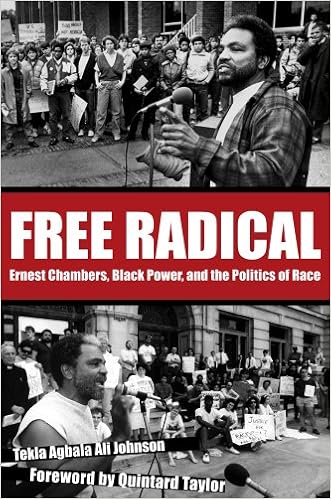
Ernie Chambers. His name variously polarizes, raises blood pressure, inspires, confounds, sparks discussion and debate, and generally elicits some kind of response . If you’re a Nebraskan, past or present, than you not only know the name but the context for why the mere mention makes it virtually impossible to take a neutral stand about this vociferous, independent, lone wolf figure who is an open book in some ways and an enigma in other ways. His name’s traveled widely outside Nebraska as well. He first gained local and national noteriety back in the 1960s for his stirring presence in the documentary A Time for Burning. He parlayed the stage that gave him and his grassroots work as activist, advocate, guardian, and spokesperson for Omaha’s African-American community to win election to the Nebraska Legislature. He served as that body’s only black representative for 38 years, finally leaving office because of term limits, but he’s just returned to his old District 11 seat after defeating incumbant Brenda Council in the Nov. 6 general election. When he was in office before he took many controversial and brave stands and he never, ever backed down from a fight, often employing his sharp wit and procedural mastery to humble opponents and win concessions. He’s back alright, armed with much the same rhetoric he’s used since the height of the black power and civil rights movements, which begs the question: What does the 75-year-old social justice warhorse have to offer his district in an era when many of his constituents need more education, relevant job skills, living wage jobs, and transportation solutions and want economic development in North Omaha that includes them, not excludes them? Is he in touch with younger generation and professional blacks who perhaps see things differently than he does and want specific, tangible progress now? This story doesn’t address those things but a future story I write just might. Instead, the following piece for an upcoming issue of The Reader (www.thereader.com) looks at a new political biography about Chambers by Tekla Agbala Ali Johnson, who offers some insights and opinions about the man she’s long admired. The book is aptly titled, Free Radical: Ermest Chambers, Black Power and the Politics of Race.

Ernie Chambers, ©photo courtesy the Nebraska Legislature
Free Radical Ernie Chambers subject of new biography by author Tekla Agbala Ali Johnson
©by Leo Adam Biga
Originally apepared in The Reader (www.thereader.com)
It’s fitting a new book taking the measure of Nebraska politico legend Ernie Chambers is out just as this old social justice warhorse has proven he still owns the people’s will.
In the Nov. 6 general election the 75-year-old Chambers demonstrated the pull he still maintains by decisively beating incumbent Brenda Council to regain his old state legislative seat. Public disclosure of Council’s misuse of campaign funds to support a gambling addiction undoubtedly hurt her. But she would likely have found Chambers a formidable opponent anyway.
Amid the struggle for racial equality in the 1960s, Chambers emerged as a black activist straight out of central casting. The longtime state senator was everything the white establishment feared or loathed: a young, brash, angry black man with an imposing physique, a rare eloquence, a brilliant mind, a devoted following and a dogged commitment. His goatee and muscle shirt effectively said, Fuck off.
When he saw a wrong he felt needed remedy he would not give in or remain silent, even in the face of surveillance, threat and arrest.
The Omaha native was forged from centuries of oppression and the black nationalist militancy of his times yet remained fiercely independent. He paid allegiance only to his grassroots, working poor base in northeast Omaha, whose District 11 residents elected him to nine terms in office. He stayed real cutting hair and holding court at Goodwin’s Spencer Street Barbershop for many years. He was forced out of office in 2009 only because of term limits, a petition effort widely seen as targeting him specifically.
At a Nov. 3 Community Day rally in North Omaha Chambers said:
“I don’t come to these kind of gatherings regularly. It’s not easy for me, even though I enjoy being around my brothers and sisters. But I’m a solitary person. Basically, I am a loner, and experience has created that persona for me because I’m in situations where bad things can happen and if I’m relying on somebody else and they don’t come through – I know what I would do but I don’t know what somebody else would do. I can’t depend on anybody else.
“So if I see an issue that needs to be addressed it’s for me to address it. I don’t go to committees, I don’t go to organizations, I don’t ask anybody for anything, and it’s not that I’m ungrateful or unappreciative. I just have to survive and my survival depends ultimately on me. So that’s why I do what I do.”
Author Tekla Agbala Ali Johnson well captures his enigmatic essence in the main title of her political biography, Free Radical, as he’s been a singularly reactive yet stable force these many decades. The subtitle, Ernest Chambers, Black Power and the Politics of Race, refers to the context of his public service role.
Chambers was not the first black leader in Nebraska. Nor was he the first to hold public office. But he was the first to command wide respect and wield real power. During a 38-year run in the legislature that made him the longest-serving state senator in Unicameral history he mastered the art of statecraft. Trained as an attorney and possessing a facile mind even his critics admired, he adeptly manipulated legislative rules and procedures. Though he represented a small, poor constituency and uttered divisive rhetoric, fellow senators needed his support if they wanted their bills advanced. He couldn’t be ignored.
The arc of his political career is a major focus of Johnson, who at one point was in charge of his personal papers.
“She had access to information that other people didn’t have access to,” he says of his biographer.
Overall, he’s pleased with the final product and its depiction of his career.
“I don’t have any objection to what she did.”
In terms of fairly and accurately capturing his work as an elected official, he says it’s right on “as far as it went,” adding, “Many articles have been written that go into more depth on some things than Tekla wrote about in her book.” He says he understands “there are things someone will emphasize that I wouldn’t and there are things I would emphasize that they wouldn’t. But that’s the way it goes. No two people see a complex issue the same way. Even people called historians are really interpreters. They can’t write everything about everything, so they select what they think is important in order to convey the message they have in mind.”
He says he had little input into the manuscript.
“There may have been something when she got through that she sent and I dealt primarily with grammar and inconsequential things. I didn’t try to change the thrust of it or tell her what to write.”
Johnson confirms the same, saying she only sought his opinion on certain matters and even then they sometimes disagreed. In order to maintain her scholarly freedom she says she only began writing the book after she left his employ and then had little contact with him during the writing process.
In the end, he’s flattered his political life has been documented.
“I appreciate the fact that somebody thought enough of the work that I’ve done to compile material between two covers of a book and make that available to whomever may choose to read it.”
He says he’s doing interviews in support of the book “mainly because of Tekla, the amount of time and effort she put into the work, and I don’t want to say or do anything that would diminish in any respect what she has done or the value that I place on it.”
Perhaps the most telling vantage point of Chambers she gained came when she worked as his legislative aide.
“I actually got to see the day to day process,” she says of the experience.

Tekla Agbala Ali Johnson
The book began as Johnson’s history thesis at the University of Nebraska-Lincoln. She served as a consultant to the Great Plains Black History Museum in Omaha and helped catalog its collection. Today, she’s an assistant professor of history at Salem College (N.C.). Her Texas Tech University Press published book is available wherever books are sold.
Johnson says when she hit upon the idea of making Chambers her thesis study a professor told her, “That’d be great, except he won’t let you. He won’t let anybody that close to him.” She found a way in, however. “I decided to go to his office. I didn’t actually ask him. I talked to his legislative aide, Cynthia Grandberry, and said, ‘Look, I want to write my dissertation on Sen. Chambers,’ and she said, ‘Sure, if you help me clean up the office.'”
This was 2001.
“He produced such enormous volumes of materials that despite an excellent filing system he literally had overrun the file cabinets many years before. I actually spent the first two years of the project processing his papers,” says Johnson.
The project was a labor of love about a figure she idolized as a girl.
“I grew up knowing about Sen. Chambers. I’m from North Omaha and he was always sort of somewhere there in the background. As a young woman I would occasionally see him speaking at an event, especially if there was something dire that had happened in the community.”
Immersing herself in his vast collection she says she acquired a new appreciation for his advocacy and for how her own coming-of-age intersected with his work.
“One of the things I first noticed in working on the collection is that almost a third, but a full fourth for sure, of his papers are about police violence and killings, police harassment, complaints from citizens in North Omaha. It took up a large section of one of the four rooms his papers are housed in. It was enormous.
“I also found I traced back to myself. I came across police incidents that happened when I was young that I remembered Sen. Chambers speaking out against. One of those was when I was 10 years old and living in Lincoln (Neb.). On our corner Sherdell Lewis was shot (and killed). We knew him. My sister and I were his papergirls. He was shot on his doorway by Lincoln police. Shortly after the shooting the black community came to my mother’s house because they needed a place nearby (to mourn and vent).”
Johnson says many questioned whether the shooting was justified.
“I had totally forgotten about that. There’s a picture in the book of Sen. Chambers leading a protest march along with the victim’s mother.”
Similarly, she says Chambers was a vocal critic of the shooting of Vivian Strong that sparked urban unrest in Omaha in 1969 and of other cases where excessive force was used.
She says any understanding of him must start with “the deep dedication of North Omahans to Sen. Chambers because even at his own expense he would not back down when he felt like the community was endangered or when he felt there was no respect for the lives and the civil rights and human rights of people in the community.” She says coming from a bi-racial home (her father’s African American and her mother’s Caucasian) she “sort of got to peek” at how blacks and whites viewed Chambers from different lenses. She also got to know how he understood that his rails against police brutality played differently to different audiences.
“He knew it was hard to believe for whites who lived in west Omaha or small towns. because those things were so far out of their experiences.”

She admires how he never let go of what he deemed important. His response to allegations of extreme police misconduct is illustrative, she says.
“In most cases when there was a police killing in the community he would request an investigation by the city. If that wasn’t done, if it was deemed a no-fault killing, if nobody were to be held accountable, then he went to other authorities. There are several (incidents) documented in the book where he filed for federal investigations into killings with the Department of Justice.”
She says one of his lasting achievements was sponsoring and winning passage of legislation requiring a grand jury be convened and an investigation be done anytime someone dies in police custody or in jail.
“I remember him having said, “We’re tired of our people being killed.’ So this is definitely an important part of the book to me. What he says happened in North Omaha I know it happened. It was real.”
Bad things continue happening. He grieves for the gun violence plaguing his community today, much of it black on black. In too many cases innocent folks are caught in the crossfire.
“I can’t tell you all what it does to me when I see something horrible happen to a young person, to anybody, but the helpless ones, the trusting ones, the ones who are trying for something better from us…they need help and we’re not there to offer it,” he said at the Nov. 3 rally.
In a public setting like the Community Day rally, the preacher’s son comes out in Chambers. the presumed agnostic, whose elocution has the melodic flair of the late jazz musician-radio host-lecturer Preston Love Sr. He holds an audience through his impassioned delivery and sheer magnetic presence. He sprinkles in metaphors and allegories from the Bible. It’s in settings like these the affinity between Chambers and the people becomes clear.
“He’s really in step with them. While Sen. Chambers didn’t form a group or join a group his ongoing dialogue with the community is the reason he maintained their trust and respect and why he actually was a liberating figure,” Johnson says. “To do that he insisted on passage of legislation that legislators could get collect calls, so he was able to get calls from all of his constituency. He also kept his job at the barbershop for years, in the summers and on the weekend, so people would have a place to come and talk with him personally.”

Ernie cutting heads and broadening minds in A Time for Burnng
Chambers himself says that even when he lost his legislative seat he was still the person District 11 residents turned to for help, not black elected officials. That doesn’t surprise Johnson, who says he long ago earned people’s trust.
“He wasn’t the first person to take the role of leader in the community. Charlie Washington was a point person before him community members would go to.
But Sen. Chambers, because of his unusual ability intellectually, rhetorically, in terms of statecraft and the law and just his down to earth nature, earned an enormous following.”
Another of his greatest achievements, say Johnson and others, was getting district elections for the Omaha City Council, the Omaha School Board and the Douglas County Board of Commissioners. It’s resulted in many black elected officials for North Omaha. His open disdain for many of those representatives, whom he considers stooges for the white power structure, has distanced him from portions of the black elite class. Chambers being Chambers, he doesn’t much care.
“I think what has happened is they have been absorbed by the Democratic party and he chose to remain independent and I think that is probably the biggest divide,” says Johnson. “He was and is utterly completely free.”
Johnson believes he arrived at a point where he realized that as the lone black representative in the legislature representing a poor black constituency, the most he could do was to be their voice.
“All the legislators have to list their occupation and for a number of years he listed barber, but I think when he changed his written vocation to ‘Defender of the Downtrodden,’ it actually marked a change and a decision on his part that sort of is fatalistic. He decided that because of the politics and power lobbying that go on within the formal political parties and because of his own independence and insistence on speaking for the most disenfranchised, the poorest, and insisting government should haven in place support for their needs, he got to the point when he thought he would not be able to change the way that government in Neb. functions with respect to low income people.
“I think it was also the point when he was refused chairmanship again and again of the judiciary committee.”
In terms of legacy, she says, “he was at once respected but feared and unpopular among some of the senators. He would stop their bills if he didn’t get some of what he wanted and what he wanted was legislation or concessions that protected his people, that didn’t allow, for example, the Omaha Housing Authority to go into closed session and make decisions without public input. He did all kinds of things like that. He fought tooth and nail legislation to reduce allocations to people on aid to families with dependent children. He really fought those battles.”
“He’d get so frustrated, saying, ‘Y’all don’t know what it takes to make it on $320.’ Yes, it was rhetoric but it was heartfelt. He’s seen people struggling and he felt it was within the power of the state legislature to provide some relief. He felt at times they didn’t do it because of petty politics, because of western Neb. versus eastern Neb., because of racism, because of just indifference, and that made him angry.”

Ernie holding court at the barbershop today, ©danielj-v.tumblr.com
She says even though he often stood alone, he knew how to play politics.
“He never compromised his principles but he is a politician. He would come in on the weekends during the summer when session was out – this is what I gained from being able to actually observe – because he wanted to read up on all the other bills. He read up on what the interests of the other senators were. He knew their backgrounds, he knew everything about them. It’s not just the rules he employed, he played politics in terms of, ‘Look, if you want something from me, if you don’t want me to stop your bill or to filibuster, then you’re going to have to provide some concessions to things my constituents need.'”
Johnson says, “I don’t think he could have been more effective by doing it any other way. They dubbed him Dean of the Legislature because he was maximum effective for that base. I think the only way he could have been more effective is if those other senators had read as much about him and learned as much about the community he served and actually taken an interest, and I’m not saying a few didn’t, in how do we raise the standard for everybody in the state. If they had taken that position and cooperated with him more then he could have been more effective.”
Chambers operated much like his black peers in other states.
“African-American legislators across the country tended to be fairly effective just like Sen. Chambers in stopping legislation and not as effective at passing legislation. The ones who tend to be the most effective in working for the community tended to be on the out with the majority because they were battling all the time and they were always having to stand firm.”
Johnson wishes Chambers prepared the way for a successor.
“I do have a critique of him and it’s something I’ve openly talked to him about. He didn’t groom anybody (to replace him). It’s something I wish would have happened.”
As far as legacy, she feels his efforts in making Neb. the first state to pass any resolution for divestment of state funds from South Africa in protest of its apartheid practices “may be the thing he’s remembered for.”
Though serving 38 years in the legislature involved “self-sacrifice” on his part, she says it clearly hurt him when he could not run in 2008.
“I think he was not just disappointed because he had to leave for four years but the subtext for his career, besides trying to end police violence and confronting racism, was to gain political power for his constituency relative to other legislative districts in the state. His having to leave office made him feel that what he’d worked for had gone backwards because he felt the will of the people was being overridden by term limits. His constituency couldn’t elect him if they wanted to.”
She notes he ran unopposed several times and that he kept running because “I don’t think he saw anybody else as talented as he was who could really do the job as well as he did. That and the fact people let him know they wanted him to run again.” Now that he’s returning to the legislature she’s fascinated by how he and his new colleagues will work together.
“The body has changed because of term limits. The expertise that was there is no longer there. It hasn’t necessarily served Neb. well to have a constantly revolving, often times very young body at the helm. Who knows, maybe they’ll be more open to working with him. Maybe they’ll be less entrenched.”
An obvious advantage he’ll have, she says, is his vast experience.
Remarking on what people can expect from him, Chambers says, “For better or worse people have to see what it is that I am. They have to know what they’re getting if they come this way, and if they don’t like what it is I’m not the least offended. I probably wouldn’t like somebody like me. I would respect somebody like me. But likability is not an anything I cultivate because it doesn’t mean anything, it doesn’t achieve anything.”
He simply promises to be the same person he’s always been, which is to say someone “who never yields, never wavers, never accepts handouts from anybody, and whose only loyalty to a group is to this community.”
Related articles
- Ernie Chambers, Brenda Council sharpen their barbs (omaha.com)
- Chambers returns to Legislature (omaha.com)
- Heineman welcomes Ernie back to the Chambers (AUDIO) (nebraskaradionetwork.com)
- Carver Building Rebirthed as Arts-culture Haven; Theaster Gates, Rebuild and Bemis Reimagine North Omaha (leoadambiga.wordpress.com)
- 5 things to watch as the Nebraska legislative session begins (omaha.com)
Categories: African-American Culture, Authors/Literature, Books, Civil Rights, Ernie Chambers, North Omaha, Politics, Race, Social Justice, Tekla Agbala Ali Johnson, Writing
Authors, Black Power and the Politics of Race, Books, Ernie Chambers, Free Radical: Ernest Chambers, Political Biography, Tekla Agbala Ali Johnson
Brown v. Board of Education: Educate with an Even Hand and Carry a Big Stick
July 7, 2012
1 comment
I filed this story for a traveling Library of Congress exhibition commemorating the 50th anniversary of the historic 2004 Brown v. Board of Education Supreme Court decision that changed the face of education in America by law if not always practice.

Brown v. Board of Education: Educate with an Even Hand and Carry a Big Stick
©by Leo Adam Biga
Originally appeared in The Reader (www.thereader.com)
The U.S. Supreme Court’s historic 1954 Brown v. Board ruling and its aftermath reveal how far America’s come on the issue of race and how far it still must go. Lauded as a landmark decision against segregated public schools and as a precursor to opening all public institutions, the decree bolstered the nascent civil rights struggle.
Brown was the end game in the NAACP Legal Defense and Educational Fund‘s challenge to the Plessy v. Ferguson separate-but-equal doctrine that sanctioned segregation. The NAACP legal team framed the argument for overturning Plessy in legal, social and moral terms.
The court’s unanimous decision held that school segregation violated the Equal Protection and Due Process clauses of the 14th Amendment. But the integration and equity mandated by Brown has proven elusive.
One only has to look at Omaha for how insufficient the remedies to implement that finding have been. Before and even long after the ruling, black public school students here were largely confined to a few buildings on the north side. Black faculty were assigned to all black schools. It took a federal lawsuit filed by concerned Omaha parents and a resulting 1975 court-ordered busing program before the Omaha Public School district opened all its doors to students of color.
Thirty years later Omaha, like other urban centers, “is close to the point we were when Brown was decided, which is an educational system that is divided, if not solely on the basis of race, then clearly on the basis of class,” said Omaha attorney and former mayoral candidate Brenda Council. She said the problem will not be fixed until “we openly discuss it and take steps to ameliorate it.”
The OPS One City, One School District plan is the latest remedy offered by proponents of educational equity.
Suburban districts oppose the initiative and counter with options promising incentives and quotas to increase minority student placements.
Anyone interested in what led to Brown and to efforts at undoing or resisting its mandate can get a good primer on the topic by viewing With an Even Hand: Brown v. Board at Fifty at the Durham Western Heritage Museum.
The 100-plus items on display from the Library of Congress include intimate glimpses inside the precedents and processes behind Brown. There are photos, original legal briefs, even handwritten notes from Supreme Court justices and NAACP lawyers, that delineate history in the making. Some Omahans have personal connections to this history. Brenda Council’s late aunt, Geraldine Gilliam, was the first black teacher to integrate the schools in Topeka, Kansas. “I’m proud of that fact,” Council said.


Topeka native Norman Stanley, who now lives in Omaha, attended pre-Brown Topeka’s Monroe Elementary School. He was the product of a schizoid system whose elementary schools were segregated, but junior highs were integrated.
“It made no sense. You segregate a kid for the first six years and then integrate for the rest? Nobody could ever explain that to me,” Stanley said.
Although proud of the education he received under segregation, he embraced change. He was in the Air Force overseas when the Brown decision came down. “‘Thank God it’s over,’ I said. ‘By the time my grandkids are in high school, everything will be solved.’ How wrong I was.”
A Nov. 8 Durham panel discussion made clear Brown’s legacy is still a potent touchstone for equal rights advocates. Council was joined on the panel by KETV Ch. 7 “Kaleidoscope” host/producer Ben Gray, Creighton University law professor Mike Fenner and Glenwood (Iowa) Community Schools superintendent Stan Sibley.
Council pointed out the sad irony that 50 years after Brown, debate continues on how to fulfill its charge. She spoke of the need for “an enlightened citizenry to engage in open, honest discussion of the issues.”
Gray said equal education remains unrealized as “race, class and white privilege” have “disenfranchised” blacks, who are relegated to schools that have fewer resources. He said equality “ought not just be the law, it ought to be the moral imperative.” A vocal advocate of the OPS plan, he said segregation is back because “we’ve never, ever had a meaningful dialogue about” the issues behind it. “People of goodwill are just going to have to get out of their comfort zone and address this seriously.”
Sibley, a former OPS administrator, said, “It is true that not all of the people in the city of Omaha have a vested interest in the education of all the children in Omaha, and they really ought to. The dialogue has to happen, and if the dialogue focuses on what’s good for kids, then I think it will work out.”
Council said given the debate sparked by the OPS proposal, “It’s almost serendipitous this exhibit has come here at this time in Omaha.”
Rendered by a timid court, Brown was a gerrymandered decision built on “one compromise after another,” Fenner said. Its ambiguous 1955 order to proceed “with all deliberate speed” allowed individual states and school districts to implement the law in fits and starts or to outright ignore or defy it. It took later rulings, including forced busing, to achieve even partial and temporary desegregation.
Social trends like white flight have created entrenched suburban enclaves whose tax-rich districts serve predominantly white student bodies, resulting in the kind of defacto segregation that existed before. As whites have fled older, poorer inner city districts populated mainly by minorities, inner city schools have come to primarily serve students of color. The demarcation that exists along racial and social economic lines in schools reflects the same segregation patterns in housing.
A less than comprehensive response to the conditions that cause segregation has left loopholes for circumventing the spirit of the law. Beyond stifling diversity in schools, segregation critics contend the practice creates an unequal distribution of educational resources, thereby compromising the education of students lacking basics like books, computers, pencils, et cetera.
Mandatory busing forced the hand of school districts like OPS to integrate schools. Since the end of court-ordered busing in Omaha in 1999, OPS has lost most of its upper and middle-class student-tax base. As more students opt out of OPS for the Millard, Ralston, Elkhorn or Westside districts, OPS loses revenues and any semblance of a racially and socioeconomically balanced educational system.
The Brown exhibit includes a ’50s-era political cartoon by Bill Mauldin that sums up the struggle for equality in America. Three black children push mightily against an oversized door with the words “School Segregation” on it. Despite their best efforts, the door is only opened a crack. The caption reads: “Inch by Inch.” Brown opened the door, but forces continue to try and push it shut.
“It was a decision the majority of the country wasn’t really ready for,” Norman Stanley said. “I’m not sure even today we’re ready to do what the court told us to do.”
Related articles
- Is Segregation Back in U.S. Public Schools? (nytimes.com)
- Brown v. Board site to mark ruling’s anniversary (kansas.com)
- Dept. of Education: School districts can use race-based policies to avoid segregation (wbez.org)
- Masterful: Omaha Liberty Elementary School’s Luisa Palomo Displays a Talent for Teaching and Connecting (leoadambiga.wordpress.com)
- Where Jim Crow survives: Alabama (salon.com)
A brief history of Omaha’s civil rights struggle distilled in black and white by photographer Rudy Smith
May 2, 2012
15 comments
Rudy Smith was a lot of places where breaking news happened. That was his job as an Omaha World-Herald photojournalist. Early in his career he was there when riots broke out on the Near Northside, the largely African-American community he came from and lived in. He was there too when any number of civil rights events and figures came through town. Smith himself was active in social justice causes as a young man and sometimes the very events he covered he had an intimate connection with in his private life. The following story keys off an exhibition of his work from a few years ago that featured his civil rights-social protest photography from the 1960s. You’ll find more stories about Rudy, his wife Llana, and their daughter Quiana on this blog.

Rudy Smith, ©photo by Chris Machian
A brief history of Omaha’s civil rights struggle distilled in black and white by photographer Rudy Smith
©by Leo Adam Biga
Originally appeared in The Reader (www.thereader.com)
Coursing down North 24th Street in his car one recent afternoon, Rudy Smith retraced the path of the 1969 summer riots that erupted on Omaha’s near northside. Smith was a young Omaha World-Herald photographer then.
The disturbance he was sent to cover was a reaction to pent up discontent among black residents. Earlier riots, in 1966 and 1968, set the stage. The flash point for the 1969 unrest was the fatal shooting of teenager Vivian Strong by Omaha police officer James Loder in the Logan Fontenelle Housing projects. As word of the incident spread, a crowd gathered and mob violence broke out.
Windows were broken and fires set in dozens of commercial buildings on and off Omaha’s 24th Street strip. The riot leapfrogged east to west, from 23rd to 24th Streets, and south to north, from Clark to Lake. Looting followed. Officials declared a state of martial law. Nebraska National Guardsmen were called in to help restore order. Some structures suffered minor damage but others went up entirely in flames, leaving only gutted shells whose charred remains smoldered for days.
Smith arrived at the scene of the breaking story with more than the usual journalistic curiosity. The politically aware African-American grew up in the black area ablaze around him. As an NAACP Youth and College Chapter leader, he’d toured the devastation of Watts, trained in nonviolent resistance and advocated for the formation of a black studies program at the University of Nebraska at Omaha, where he was a student activist. But this was different. This was home.
On the night of July 1 he found his community under siege by some of its own. The places torched belonged to people he knew. At the corner of 23rd and Clark he came upon a fire consuming the wood frame St. Paul Baptist Church, once the site of Paradise Baptist, where he’d worshiped. As he snapped pics with his Nikon 35 millimeter camera, a pair of white National Guard troops spotted him, rifles drawn. In the unfolding chaos, he said, the troopers discussed offing him and began to escort him at gun point to around the back before others intervened.
Just as he was “transformed” by the wreckage of Watts, his eyes were “opened” by the crucible of witnessing his beloved neighborhood going up in flames and then coming close to his own demise. Aspects of his maturation, disillusionment and spirituality are evident in his work. A photo depicts the illuminated church inferno in the background as firemen and guardsmen stand silhouetted in the foreground.
The stark black and white ultrachrome prints Smith made of this and other burning moments from Omaha’s civil rights struggle are displayed in the exhibition Freedom Journeynow through December 23 at Loves Jazz & Arts Center, 2512 North 24th Street. His photos of the incendiary riots and their bleak aftermath, of large marches and rallies, of vigilant Black Panthers, a fiery Ernie Chambers and a vibrant Robert F. Kennedy depict the city’s bumpy, still unfinished road to equality.
The Smith image promoting the exhibit is of a 1968 march down the center of North 24th. Omaha Star publisher and civil rights champion Mildred Brown is in the well-dressed contingent whose demeanor bears funereal solemnity and proud defiance. A man at the head of the procession holds aloft an American flag. For Smith, an image such as this one “portrays possibilities” in the “great solidarity among young, old, white, black, clergy, lay people, radicals and moderates” who marched as one,” he said. “They all represented Omaha or what potentially could be really good about Omaha. When I look at that I think, Why couldn’t the city of Omaha be like a march? All races, creeds, socioeconomic backgrounds together going in one direction for a common cause. I see all that in the picture.”
Images from the OWH archives and other sources reveal snatches of Omaha’s early civil rights experience, including actions by the Ministerial Alliance, Citizens Coordinating Committee for Civil Liberties, De Porres Club, NAACP and Urban League. Polaroids by Pat Brown capture Rev. Martin Luther King, Jr. on his only visit to Omaha, in 1958, for a conference. He’s seen relaxing at the Omaha home of Ed and Bertha Moore. Already a national figure as organizer of the Birmingham (Ala.) bus boycott and the Southern Christian Leadership Conference, he’s the image of an ambitious young man with much ahead of him. Rev. Ralph David Abernathy, Jr. joined him. Ten years later Smith photographed Robert F. Kennedy stumping for the 1968 Democratic presidential bid amid an adoring crowd at 24th and Erskine. Two weeks later RFK was shot and killed, joining MLK as a martyr for The Cause.
Omaha’s civil rights history is explored side by side with the nation’s in words and images that recreate the panels adorning the MLK Bridge on Omaha’s downtown riverfront. The exhibit is a powerful account of how Omaha was connected to and shaped by this Freedom Journey. How the demonstrations and sit-ins down south had their parallel here. So, too, the riots in places like Watts and Detroit.
Acts of arson and vandalism raged over four nights in Omaha the summer of ‘69. The monetary damage was high. The loss of hope higher. Glimpses of the fall out are seen in Smith’s images of damaged buildings like Ideal Hardware and Carter’s Cafe. On his recent drive-thru the riot’s path, he recited a long list of casualties — cleaners, grocery stores, gas stations, et cetera — on either side of 24th. Among the few unscathed spots was the Omaha Star, where Brown had a trio of Panthers, including David Poindexter, stand guard outside. Smith made a portrait of them in their berets, one, Eddie Bolden, cradling a rifle, a band of ammunition slung across his chest. “They served a valuable community service that night,” he said.
Most owners, black and white, never reopened there. Their handsome brick buildings had been home to businesses for decades. Their destruction left a physical and spiritual void. “It just kind of took the heart out of the community,” Smith said. “Nobody was going to come back here. I heard young people say so many times, ‘I can’t wait to get out of here.’ Many went away to college and never came back. That brain drain hurt. It took a toll on me watching that.”
Boarded-up ruins became a common site for blocks. For years, they stood as sad reminders of what had been lost. Only in the last decade did the city raze the last of these, often leaving only vacant lots and harsh memories in their place. “Some buildings stood like sentinels for years showing the devastation,” Smith said.
His portrait of Ernie Chambers shows an engaged leader who, in the post-riot wake, addresses a crowd begging to know, as Smith said, “Where do we go from here?’
Smith’s photos chart a community still searching for answers four decades later and provide a narrative for its scarred landscape. For him, documenting this history is all about answering questions about “the history of north Omaha and what really happened here. What was on these empty lots? Why are there no buildings there today? Who occupied them?” Minus this context, he said, “it’d be almost as if your history was whitewashed. If we’re left without our history, we perish and we’re doomed to repeat” past ills. “Those images challenge us. That was my whole purpose for shooting them…to challenge people, educate people so their history won’t be forgotten. I want these images to live beyond me to tell their own story, so that some day young people can be proud of what they see good out here because they know from whence it came.”
An in-progress oral history component of the exhibit will include Smith’s personal accounts of the civil rights struggle.
Related articles
- Carole Woods Harris Makes a Habit of Breaking Barriers for Black Women in Business and Politics (leoadambiga.wordpress.com)
- Blacks of Distinction II (leoadambiga.wordpress.com)
- The Great Migration Comes Home: Deep South Exiles Living in Omaha Participated in the Movement Author Isabel Wilkerson Writes About in Her Book, ‘The Warmth of Other Suns’ (leoadambiga.wordpress.com)
- Making the Case for a Nebraska Black Sports Hall of Fame (leoadambiga.wordpress.com)
- Part I of a Four-Part Q & A with Pulitzer-Winner Isabel Wilkerson On Her Book, ‘The Warmth of Other Suns: The Epic Story of America’s Great Migration’ (leoadambiga.wordpress.com)
- Part II of a Four-Part Series with Pulitzer-Winner Isabel Wilkerson, Author of ‘The Warmth of Other Suns: The Epic Story of America’s Great Migration’ (leoadambiga.wordpress.com)
- Part III of a Four-Part Q & A with Pulitzer-Winner Isabel Wilkerson on Her Book, ‘The Warmth of Other Suns: The Epic Story of America’s Great Migration’ (leoadambiga.wordpress.com)
- Part IV of a Four-Part Q & A with Pulitzer-Winner Isabel Wilkerson on Her Book, ‘The Warmth of Other Suns: The Epic Story of America’s Great Migration’ (leoadambiga.wordpress.com)
- Photojournalist Nobuko Oyabu’s Own Journey of Recovery Sheds Light on Survivors of Rape and Sexual Abuse (leoadambiga.wordpress.com)
Preston Love Jr. channels Adam Clayton Powell Jr. in one-man chautauqua
December 19, 2011
2 comments
In his final years I got to know musician Preston Love Sr. pretty well, or at least well enough to write several stories about him, most of which can be found on this blog. I know his eldest son and namesake, Preston Love Jr., less well. While he didn’t inherit his late father’s ability to play music, though he does sing well, he definitely does share some of the same ebullient, playful personality. Like his old man did, he knows how to work a room. He loves people and being the center of attention. All of which makes him a natural to portray the late civil rights leader Adam Clayton Powell. Love’s one-man show about Powell is the subject of the following article I wrote for The Reader (www.thereader.com).
Preston Love Jr. channels Adam Clayton Powell Jr. in one-man chautauqua
©by Leo Adam Biga
Originally published in The Reader (www.thereader.com)
Omahan Preston Love Jr. knows a charismatic figure when he sees one. After all, his late father, musician Preston Love Sr., exuded personality. In apple-not-falling-far-from-the-tree tradition the younger Preston’s put his own magnetic charm to use in corporate America, politics, community organizing, emceeing and gospel singing.
Therefore it’s no surprise the gregarious Love was drawn to do a one-man Chautauqua of his hero, the late charismatic civil rights leader Adam Clayton Powell Jr. In the year he’s performed it Love said the show’s “taken on a life of its own.” He next channels Powell in two free performances: 6 p.m. on Feb. 5 at Creighton University’s Skutt Student Center; 11 a.m. on Feb. 10 at Metropolitan Community College’s South Campus ITC Conference Center. After each show Love fields questions in-character.
Powell’s bigger-than-life presence had its base in Harlem, New York, home to the mega-Abyssinian Baptist Church he pastored. The firebrand leader staged marches, protests and boycotts decades before Martin Luther King Jr. He served 26 years in the U.S. Congress. As chair of the Education and Labor Committee he shepherded through key civil rights legislation during the Kennedy and Johnson administrations.
Love and others gravitated to Powell’s bold ideology, defiant stance and impassioned speech.
“The thing about Adam Clayton Powell that caught our imagination was he was so strong, so confident, so arrogant,” said Love. “He was just someone we looked up to because of what he stood up for. He was really the black Congressman for every black. That was really the role he played. He was our champion, and he stood head and shoulders above anyone else. His was the major voice.”
After studying the man, Love sees “parallels” in their lives as troublemakers. Public struggles with personal demons and a penchant for, as Powell said, “telling it like it is,” alienated them. It makes for good theater.
Powell’s flamboyance courted controversy. Congress sanctioned him in the late ‘60s in the wake of alleged improprieties. Love’s own fall from grace came after managing Jesse Jackson’s ‘84 national presidential campaign, the Rainbow Coalition and Harold Washington’s Chicago mayoral races.
A tendency to step on people’s toes cost Powell with his civil rights brethren just as Love said his own obstinateness makes it “tough” for him.
Adam Clayton Powell Jr.
“He was so strong, so independent, so outspoken, so unpredictable that he was at odds with the big civil rights leaders,” Love said. “They loved him when he did the right thing but they hated him when he took a position way off the deep end. He was never one of the boys, never one of the in-crowd, and they resented that.”
All of which has led to Powell becoming somewhat forgotten.
“He got lost in history because he was such a loner,” Love said, “and so as result there was no place for him to stick, history-wise. There’s nobody that does not respect what he did, but there’s nobody championing him (today).”
Love hopes his show, set during a ‘68 Harlem campaign rally, gives the man his due.
“The performance is the vehicle, it is not the object,” he said. “The object is I want you to have a snapshot of black political-social history at a point in time. More importantly, I want you to have an appreciation for Adam and the major, transactional role he played in civil rights history.”
Upon conceiving the one-man portrayal in late 2007 Love had second thoughts. He’d never acted before. “This is not something I do,” he said. Rather than let the idea die, he put himself on the line by booking performance dates.
“It’s an old technique I use,” Love said, “to set myself up. Then I started the research. It was bigger and harder than I thought. The scariest part was I had done the research but I had no clue how to turn that research into a performance, let alone perform it.”
With the first show looming closer, his muse awoke.
“It came to me one night all at once,” he said. “The whole thing just came like a big gift and laid itself out in my head. Like a mad man I wrote the script and I had a performance. But I didn’t know whether or not I was going to be able to rise to the script — to make this a performance worth seeing, something I’d be proud of.”
Like a politico shaping a platform, Love consulted advisers, including local historians and theater professionals. He tried out the show at colleges. The feedback helped him work out the “rough spots.” The resulting performance is an amalgam of Powell mannerisms, speeches and catch-phrases, including, “Keep the faith baby.” Love hopes his interpretation of Powell’s legacy has legs beyond Omaha.
Related articles
- Behind the Curtain; The Black Congressional Caucus and “Out on the Hill” sponsored by the National Black Justice Coalition (harlemworldblog.wordpress.com)
- Veteran Black Journalist Gil Noble Stable After Stroke (hiphopwired.com)
- Harlem Celebrates Dr. Ubert Conrad Vincent And Bellevue Hospital (harlemworldblog.wordpress.com)
Shirley Goldstein: Cream of the Crop – one woman’s remarkable journey in the Free Soviet Jewry movement
September 5, 2011
Leave a comment
In this extended, two-part Jewish Press story, I tell the remarkable journey of Omahan Shirley Goldstein in the Free Soviet Jewry movement and how this historic campaign changed her life and is remembered today. In Part One: The Education of Shirley Goldstein, the story of how this “typical” housewife became politicized and educated in the movement is explored. In, Part II: Activist, Humanitarian, Philanthropist, discover the lengths Goldstein went to in her human rights activist work and the generosity displayed, then and now, by her and her husband, Leonard “Buddy” Goldstein.
Shirley Goldstein: Cream of the Crop – One woman’s remarkable journey in the Free Soviet Jewry movement
Part I: The Education of Shirley Goldstein
©by Leo Adam Biga

Housewives and Students and…
They were housewives and students and teachers…They called America and many other Western nations home. Galvanized by the plight of Soviet Jews, this army of everyday citizens, together with activists inside the former Soviet Union, formed a grassroots human rights movement that began modestly enough but grew in force. Activists within the movement wanted nothing less than to make the USSR stop its systematic persecution of oppressed minorities. What made the task so daunting is that the target of this action was an authoritarian super power engaged in an ideological Cold War with the West. Nothing suggested this intractable juggernaut would ever bend.
But bend it did. Some say the freedom movement even contributed to the Soviet state’s eventual collapse. It’s one of the great triumphs over tyranny in human history. And Omaha’s own Shirley Goldstein played a part in this epoch. But she could only do it after she transformed herself from causalobserver to in-the-trenches activist. In a remarkable journey, she went from zero political involvement to fervent militant. Once caught up in themovement, she devoted much of her time to it, as she has to other causes since then. The experience changed her life.
“It opened up a whole new world,” Goldstein said.
Her diverse work on behalf of Soviet Jews found her, variously: meeting refuseniks and dissidents in Russian apartments or hotel suites; lobbying U.S. government leaders back home to voice criticism of Soviet human rights violations; discussing conditions and strategies with world statesmen and fellow activists at conferences in Washington, D.C. and overseas; and picketing on the streets, almost anywhere, the latest Soviet transgressions.
She saw and did so many things in the course of her involvement that her story provides a useful insider’s look at how the movement evolved and operated.
Like many who got involved in the fight, she found in it a higher purpose. As she put it recently, “What does one do with their life?” Serving others became a calling. “And I’ve loved every minute of it,” she said.
Her politicalization and activism mirrored that of others who came to the cause.
“Shirley was typical of the middle class women who normally would not take any part in politics as such. They were really concerned to do something to help the Soviet Jews. They felt it very deeply. I have a great deal of admiration for Shirley Goldstein. She was a leading light for giving morale and financial assistance to refuseniks and for helping them get out, and she did a great deal for those who managed to get out to resettle in Nebraska,” said Michael Sherbourne, a London-based activist who fed Goldstein information from his contacts in the Soviet Union.
 No Place to Be a Jew
Life behind the Iron Curtain was harsh for the mainstream populace, but even more intolerable for racial, ethnic and religious minorities. Long the target of anti-Semitic pogroms and policies, Soviet Jews were routinely denied such basic rights as the practice of their faith, employment in certain jobs, free travel within the country and emigration outside the USSR. An internal passport all Soviets carried was used to target Jews, whose documents, and whose documents alone, denoted their religion. Jews and sympathizers protesting such discriminatory practices could be arrested, interrogated, harassed or imprisoned.
By the mid-1960s the pleas of a few Jewish dissidents were heard — enough to coalesce the Free Soviet Jewry Movement. But much of the world remained unaware of or apathetic to just how bad things were and just how many Jews wanted out. Compared to the trickle allowed to leave each year, millions more wished to go but were refused. Once a visa was denied, the applicant was branded and blacklisted. Refuseniks automatically lost their jobs and what few privileges they enjoyed. Even more than before, they became outcasts in their own society.
From the mid-’60s through the early ‘90s, the movement — both within the Soviet Union and outside it — forged ahead despite political setbacks. Free Soviet Jewry committees organized. Under Goldstein’s leadership, Omaha had a particularly active one. Agitators like her from the West, both Jews and non-Jews, made pilgrimages to the Soviet Union to meet with refuseniks and dissidents and activists. She and other Western visitors smuggled in banned materials, such as Judaica, along with items like Levi jeans and Marlboro cigarettes, which brought much on the black market. They also made audio recordings of individuals, whose messages — testifying to the tough conditions and rallying support for freedom — were snuck out and then disseminated to Western media outlets.
Defying initial opposition from the Jewish establishment and the Israeli government and flying in the face of official U.S.-Soviet diplomatic channels, the campaign eventually gained widespread support. The pressure applied by the campaign and by detente succeeded in doing exactly what it set out to. Faced with sanctions and growing world condemnations, the stubborn Soviets finally ended reprisals and eased restrictions. The sweeping changes ushered in by Mikhail Gorbachev under Glasnost and the eventual dissolvement of the Soviet state, opened the borders for a flood of people to legally emigrate. In the end, 1.5 million Jews left, most for the U.S. and Israel. Some 200 families resettled in Omaha.

Becoming an Activist
Shirley Goldstein (formerly Gershun) seemed an unlikely candidate to make history. The Council Bluffs, Iowa native did part of her growing up in Schuyler, Neb., where her family moved, before returning to the Bluffs to complete her schooling. Upon graduation from Abraham Lincoln High School she did what any good Jewish girl did then — she worked (at the Martin bomber plant), got married, bore kids (four) and stayed home raising them. Her husband, Leonard “Buddy” Goldstein, had his own transportation business.
An “ordinary” housewife, mother and grandmother, she only became politicized in middle-age. It was the early ‘70s when the Free Soviet Jewry movement overtook her and she morphed into an impassioned advocate. There was a precedent in her past. Her merchant father, Ben Gershun, led the Council Bluffs resettlement of Jewish refugees from post-World War II Europe. She recalls refugees at his general store and at her parents’ home. Much like she’s embraced diversity in her own home, her family’s home was “always open to everybody.”
She feels she may also have been prepared for her activist role by the many years she and Buddy hosted international students and dignitaries, many from Asia, at their place. The couple even sponsored a Cambodian refugee family. She said, “I’ve always been interested in other peoples and cultures.”
Not content with merely educating herself on the subject, she went to the USSR seven times, meeting with leaders and rank and file Jews alike. She took chances, brazenly ignoring U.S. State Department warnings and Soviet orders to steer clear of “troublemakers.” Indeed, she became a familiar figure to refuseniks in Moscow, Leningrad, Kiev, Odessa and other cities. A benevolent angel from the West bearing contraband gifts. A tiny rebel with the brass of a cat burglar. She recorded testimonies and snapped pictures, concealing cassette tapes and film cartridges under her clothes. She sneaked things in and out with a kind of mischievous glee. A true believer unafraid to upset the Politburo or defy the KGB, who knew of her and tried discouraging her, she carried on anyway. She was on a mission.
“The world had to know what was happening. It was a priority. I would have rather done this than anything else,” she said.
As her involvement deepened, she made more contacts and increased the scope of her activities. She organized Omaha’s Free Soviet Jewry Committee and served on the board of the national Union of Councils for Soviet Jews. She led demonstrations (including ones outside the Orpheum Theatre and Joslyn Art Museum, using the appearances of Russian performing artists as the pretext or stage to protest Soviet policies), she walked in marches and she participated in vigils. She called on members of Congress. She attended meetings in Washington, D.C. and in Madrid, Spain (for the Helsinki Accords). She raised awareness and funds.
When not educating elected leaders herself, she recruited new blood, such as the late Ally Milder, to do so. In her role as an aide to U.S. Sen. Charles Grassley (D-Iowa), Milder brought him on board with the movement. Goldstein also spearheaded letter writing campaigns that sent morale-boosting notes to refuseniks and that made appeals for support to public officials. She organized relief drives that collected goods and shipped them to families in the USSR.
“In the big picture of the Soviet Jewry movement, Shirley was a really great foot soldier and the leaders knew that,” said former Omahan Stephanie Howard (Seldin), co-producer of Let My People Go, a new documentary on the movement. “Shirley’s is a great story because she rallied a whole Jewish community and they did great things, and they’re recognized for it. You talk to people in New York or San Francisco or Chicago who were in the movement and everybody knows Shirley.”
Goldstein never strayed from the fight. When Soviet Jews began coming, she picked up the mantle again and immersed herself in all facets of the resettlement program.
Through it all, Buddy Goldstein, was by her side, just as he remains today. He didn’t always accompany her on her far-flung travels, but he supported her and underwrote her activism, sharing her concerns and encouraging her efforts, even when some friends questioned if she was going too far. In a recent interview at their home, the couple recounted her remarkable journey from uniformed innocent to well-traveled activist.
It all started when the two returned from a 1972 trip to the USSR frustrated by the limited access they’d had to the Jewish proletariat and their daily lives. “I’d been doing a lot of reading. I was interested. But I wasn’t able to see anybody — I didn’t know how to do it. Being tourists, it was all surface. It was definitely controlled. We only saw what the government wanted us to see,” she said. She itched for a way to bypass approved itineraries in order to connect, on a human level, with Jews and learn first-hand their struggles.
“I wanted to see the real Russia and visit with some refusenik families.”
Enter Glenn Richter. A veteran of the civil rights movement and a founder of the Student Struggle for Soviet Jews, Richter is a brother-in-law of Goldstein’s. He’s married to her cousin Lenore. The couple live in New York.
“Glenn and Lenore had been to Omaha (on a cross-country speaking tour) not too much before we took our trip talking about a lot of the things that were going on in the Soviet Union,” she recalled. “After we got back, I called Glenn and said, ‘I want to know more about what’s happening.’ But first I registered for a couple courses on Russia at the university (then Omaha U.-now UNO). The courses culminated in a 1973 trip to the USSR led by chancellor Ron Roskens. I decided I wanted to go. I called Glenn and said, ‘I want to know how to meet these people, by which I meant refuseniks. We spoke every Sunday morning for weeks. Then he outlined it all for me on a sheet of yellow paper (now in the archives of Remember and Save, an Israeli-based initiative documenting the Jewish Aliya Movement of the USSR). Glenn told me what to do, what items to take, who to visit, what things to tell them and what information to bring back. He gave very good directions.”
“Without Glenn’s help I never would have gotten into this as I did,” she said. “I did exactly as he told me and it was very successful. I met many people. Each time I went it made me hungry to learn more. And that was the beginning of it.”
Richter recalled Goldstein being an avid student.
“We were dealing at that time with what was largely a hardly-understood situation, with few appeals coming out from the USSR, relying basically on facts known to us at that point, rather than the personal contacts which we all developed. Shirley was quite interested. She’s a good listener — and a good questioner,” he said.
He added she and Buddy were well-positioned to serve the cause.
“One of the great strengths of Jews in smaller Jewish communities, such as Omaha or Denver, is the long-term friendships they may have with people who get into political power. Shirley and Buddy were excellent examples. Their Congressmen and Senators became their advocates. Shirley knew which political buttons to press, and did so on behalf of individual refuseniks and prisoners and of the Jackson-Vanik Amendment — the landmark legislation linking Jewish emigration with trade credits for the USSR.”
He admired her dedication.
“Dogged, committed, focused, interested would be understatements when it came to Shirley’s advocacy for Soviet Jews,” he said. “I see the same traits in my wife Lenore. Perhaps it’s family genes.”
Goldstein’s involvement in the movement came just as it was picking up steam. Or, as she likes to put it, “When I came into it, everything was already going on.”
“I don’t think anyone of us in the early 1970s knew where the Soviet Jewry movement would take us,” Richter said. “By ‘73-’74 we were in the big leagues, utilizing Congress to take on the Kremlin head-to-head over the Jackson-Vanik Amendment. Shirley was in the thick of things, using all the political connections she developed (with Sen. Jim Exxon, Rep. John Cavanaugh, etc.). It was crucial for Congress to see pressure not only from the traditionally large areas of Jewish population, but from a wide swath of communities with smaller Jewish populations, as in Nebraska, Iowa, Minnesota and Colorado. Politicians will stick their necks out only if they believe their constituents are with them, and Shirley and her colleagues made sure of that.”
Richter said the famous Soviet dissident, Anatoly (now Natan) Sharansky, “often tells the story that his KGB interrogators tried to torment him by telling him he was only supported by Western ‘students and housewives.’ But that was the strength of the Soviet Jewry movement. We utterly believed in what we were doing. We didn’t let considerations that would sidetrack a ‘professional’ get in the way. From what I saw, Shirley was absolutely typical of the Jewish housewife who devoted the same focus and energy to Soviet Jews thousands of miles away as she did to her own family because, indeed, these Soviet Jews, became our family. I’d sit at meetings of the Union of Councils in Washington, DC and marvel at the truly diverse dozens of women and men who, for whatever personal reasons, simply decided that they had to get involved, and became heroines and heroes of the movement.”
“Most people watch history go by. Shirley and her colleagues simply decided, each on her/his own, that they were going to shape history. The core group of activists, like Shirley, seemed to utilize every waking hour to create new ways of advocating on behalf of our friends trapped in the USSR and to keep their spirits up,” he said.

To Russia with Love
By the time she made that ‘73 UNO trip to the USSR, accompanied by her daughter Gail Raznick, she was well-read on the Soviet Jewry issue. She’d been briefed by Glenn Richter and other Union of Councils members and been given contact names.
But her real education began abroad, meeting Russian Jews whose lives were filled with hardships in the totalitarian and anti-Semitic regime. She met them in their homes or in her hotel suites. She visited their synagogues and schools. Despite little hope for change, Soviet Jews yearned and struggled for freedom. That’s when it all hit home. That’s when the cause got in her blood. Until then, the problems faced by Soviet Jews were still abstract and far removed.
“Then you meet people, like I did, who can’t get out and, well…Once I met this young family — Aba and Ida Taratuta — I became totally committed, not only to work for Soviet Jews but people in all the Iron Curtain countries.”
In an interview she gave during the height of the movement, Goldstein explained why she threw herself into the fray: “These people cannot speak out for themselves, so other people must do it for them. I feel like what I am doing is something important. It’s hard for people in the U.S. to grasp what all they have to give up just for wanting to leave and how much support they need just to survive. Seeing all they endure makes you want to help just one more case. You get hooked. It’s like an addiction.”
She and Buddy were also alarmed by how the world kept relatively silent as the repression went unchecked. It was an ugly reminder of what happened during the Holocaust. “People didn’t speak out then about the oppression,” he said. “Those were atrocities,” she interjected. “Atrocities, yes, but a lot of people felt anything could happen” in the Soviet Union. “That’s right,” she added, “because people were disappearing in Russia. They’d just be taken off the street…for no reason. And we thought if they can do that, they can do anything.”
Then there was the outrageous situation of a government holding hostage, in effect, some of its own people, preventing them from practicing their professions and thus depriving the country of their talents — all as punishment for wanting to leave. “I never understood why,” Shirley said. “The Soviets weren’t using them. It wasn’t as if the refuseniks kept their jobs and were still vital to the economy. They weren’t. They lost their jobs. They were having a hard time. They were wasting their lives sitting around waiting to get out.”
She was also dismayed by the travel strictures and identity tags foisted on Jews.
Refuseniks she met expressed their despair. Sensing she was someone they could trust to get the truth out, they confided in her. The fact-finding and reporting she and others did there helped the movement gain momentum. Through networking and communication, the Free Soviet Jewry issue was kept alive. Getting information out meant taking risks.
 Testing the Limits, Courting Danger
Just how far Goldstein was prepared to go would be tested on that ‘73 trip and on later trips. Refuseniks Aba and Ida Taratuta, whom she met in Leningrad, witnessed her resolve. She’d been given their names by Glenn Richter. They were soon impressed by her sincerity and tenacity.
“She was interested in our life, financial situation, the possibility to leave the country and what to do and how to help,” Aba Taratuta said. “She was ready to do everything to help us. And from that visit there was just a constant contact between our families. She wrote a lot of letters describing what she did to help us and other refuseniks. She became very active in the struggle on our behalf.”
Goldstein came bearing gifts.
“Shirley brought many items — books, records, tape recorders — that helped us in studying Hebrew or in supporting Zionist activities. The same with cameras, watches and jeans, which we sold. And every time she would bring something personally for us, for our family,” Aba Taratuta said.
Let My People Go producer Stephanie Howard said Ida Taratuta recounted how once Shirley “came with a suitcase full of embroidered towels, fine soaps and things, and Ida told her, ‘I can’t accept this,’ to which Shirley said, ‘But for a twist of fate, I could have been in your place and you could have been in mine. Wouldn’t you do the same for me?’ And Ida replied, ‘How can I argue with that? Of course’”
But the little Jewish woman from Omaha came with an agenda far beyond trinkets.
“Shirley visited us in Leningrad several times and she was interested in seeing more people, more refuseniks. And for a foreigner in Russia it was not so easy to do,” Aba Taratuta said. “So we tried to gather as many people in our apartment as possible. She was interested in every one and taped the story of everyone and smuggled the tapes out on her person. And it was really dangerous.”
In turn, Goldstein said Aba “was one of the main figures in Leningrad. Gail and I were the first Americans to ever visit him, but he was already well known in the West.” She said he’d “have so many activists come to his apartment…they crowded to get into the rooms. I kept coming back to hear their stories. I made tapes.”
The couple were classic refuseniks-turned-activists. Their situation symbolized the problem, Goldstein said.
“They’d applied to emigrate and were released from their jobs. They were well-educated people. Both spoke good English. He had been a professor. She was a translator. He was reduced to being a caretaker where they lived. She was doing some translating on the side. Their son was taunted at school. I think maybe they were receiving some packages from the West and selling things on the black market. Mail and phone service was compromised. That’s the way it was.”
Goldstein’s good friend, Miriam Simon accompanied Shirley and her daughter on the ‘73 trip. Simon well recalls what it was like as Shirley went off to attend “clandestine meetings late at night.” “She took a lot of risks. We didn’t know for sure, but we thought everything was bugged. We were very careful what we said to each other,” said Simon. When Goldstein made later trips to the Soviet Union, Simon added, “We always worried if she would come back. They (Soviet authorities) got to know her and didn’t like her.”
“Shirley often did dangerous things,” Aba Taratuta confirmed. “For example, on her first visit to us, she and her daughter Gail brought some very important books and hid them in Gail’s boots. These visits were very important for us refuseniks. We felt, ‘We are not forgotten…there are people who care and want to help.’ We felt If we were known abroad, it was our best defense from the Soviet government. Then they could not do with us what they wanted.”
Below, in Part II of Shirley Goldstein: Cream of the Crop, One Woman’s Remarkable Journey in the Free Soviet Jewry Movement, you will read about how just far this Activist, Humanitarian, Philanthropist has gone for the cause of human rights.
____________________________________________________________________
Shirley Goldstein: Cream of the Crop, One Woman’s Remarkable Journey in the Free Soviet Jewry Movement
Part II: Activist, Humanitarian, Philanthropist
©by Leo Adam Biga

Testing Limits, Courting Danger Continued: Contacts, Safe Houses and Spy Games
Once swept up in the Free Soviet Jewry movement, Shirley Goldstein set about indoctrinating herself in the tactics of an underground activist. She read, she discussed, she kavetched. She formed Omaha’s Free Soviet Jewry Committee and joined the Union of Council for Soviet Jews. She became a part of an international network whose advocacy and activism sought relief and release for Soviet Jews denied basic human rights. She learned who to contact among refusenkiks, activists and dissidents in the former Soviet Union. She learned where and when it was safe to meet them. In short, she became a secret operative there, much the way a spy is, sneaking information and materials in and out of that oppressive regime.
Back home, she made calls, wrote letters, collected and shipped goods, appealed to politicians, etc., all in an attempt to ease the burden and secure the freedom of Soviet Jews. For the few refugees who made it out at first and then for the flood that followed, she helped their resettlement here.
But nothing she did compares to the missions she conducted in the USSR under the guise of “tourist.” This little Jewish lady carried on her work there despite becoming a person of interest to the KGB. When they tried scaring her off, she simply snubbed her nose at the mighty Soviet state. On a 1973 trip there, Shirley and her daughter Gail Raznick went as part of a UNO-sponsored tour. As Part I explored, Leningrad residents Aba and Ida Taratuta were among the first refuseniks she met. The Taratutas opened their lives and their hearts to her, using their apartment as a meeting place for fellow refuseniks to come and share their stories with Shirley, who faithfully documented it all via tape recorder. These meetings built her circle of contacts and added to the testimonies she collected.
Another key early contact she made, Edward Sorokin, was not a refusenik at all, but sympathetic to Soviet Jews’ plight and to her humanitarian mission. Shirley and Gail met Sorokin by accident in Leningrad. For Goldstein, such contacts were invaluable as she didn’t speak Russian and didn’t yet know her way around.
“He wasn’t even Jewish,” Goldstein said. “Edward and I became very good friends. He helped me on all my trips during the next 15-20 years. He made sure I got places. He was a big source for me. He became friendly with some of my other friends there…helping me if something went wrong. He made phone calls for me. When I got home, I’d send packages and he would see to it they got delivered.”
In Moscow, Shirley and Gail were unsuccessful locating the prominent dissident Vladimir Slepak, but they did meet an English-speaking couple, Galina and Victor Faermark, who soon put them in touch with all the leading Moscow refuseniks and activists. Among these were Benjamin Levich, for whom Victor Faermark served as translator. Levich had been one of the USSR’s most highly decorated scientists before he applied to leave, whereupon he was dismissed from his position and stripped of his medals. “One of Levich’s boys had been kidnapped off the streets in Moscow and sent to Siberia, just for being Levich’s son,” Goldstein said. “We became very good friends with Levich. While we were in Moscow he kept giving my name out and it became known, and before I knew it we were meeting Vladimir Slepak. All of them were intertwined. While we were at Slepak’s, people came in and out, including a woman who was a legend, Ida Nudel.”
Once back home, Goldstein acceded to a request by Levich. She prepared and shipped care packages, filled with dried foods, for his imprisoned son. She also returned to the states with lists of names of other Soviet Jews in need of various things. She enlisted the help of Russian emigres in Omaha to box the goods “We shipped out a lot of supplies,” she said. The Goldsteins’ home became a storehouse for hot ticket items, especially, jeans, large quantities of which she got donated from suppliers she appealed to.
Her return home from that ‘73 UNO tour of the USSR was nearly delayed, however, when she was detained at customs in Leningrad. Authorities objected to some posters she carried. It was one of many attempts made to hassle her and discourage her actions. They soon discovered she couldn’t be intimidated.
“I had visited a Jewish day school, whose children made drawings for me to bring back to children here in Omaha. As I went through customs, I carried the posters under my arm when the agents said, ‘Hand it over — you’re taking out important artwork.’ And I said, ‘No, it’s children’s artwork.’ And they said, ‘No, you can’t take them out.’ I argued, ‘But it isn’t anything…’ They wanted my purse, and I said, ‘No,’ and I just held onto those things under my arm. I was angry with them.
“Well, the other people in the tour group were saying, ‘Just give it to them…’ But I said, ‘No, it’s not theirs. It has no monetary value. Nothing.’ Well, the Russians still wanted it. The plane was held up and I could see either the group was going to leave without me or be stuck there with me, so I said, ‘OK, here it is, and I unrolled the posters and tore them up, piece by piece, right in front of the agents. I said, ‘If I can’t have it, you can’t have it.’ And they said, ‘Pick it up,’ and I walked right by them. When I got on the plane, everybody clapped. ”
“She was defiant,” her daughter Gail said.
Ask Shirley Goldstein if she was afraid, and she tells you, “I was never afraid of them because I knew they wouldn’t touch me. They didn’t want an incident.” “They could harass you though,” Buddy said. To which Shirley adds, “Yeah, they wanted you to know they had the upper hand. But I really felt in command. I really did. Besides, it was ridiculous. All that fuss over nothing.”
Ask Buddy if Shirley’s someone not to trifle with, and he says, “Oh, boy…”
Still, it took some negotiating before she could board the plane with her American tour party. She said Roskens and company flashed enough money and threw around enough names to secure her release. “Roskens could talk his way out of almost anything,” she said. That’s the way things worked there. “All the way along, if you had the bribes, you could do anything. I’m convinced of that,” she added. “I took cartons of cigarettes with me. You could show a cab driver a pack and go any place. I learned lots of little tricks…”
To avoid hassles, she carried official credentials and letters of recommendation.
“Before leaving for the USSR each time, I’d go to my Congressmen and have them write letters of referral for the authorities that said I was seeing people I knew and that the U.S. government would appreciate it if I were not bothered. When KGB or customs agents wanted to see my papers, those letters always came out first.”
To the end, it was a war of wills between her and the apparatchiks. When Goldstein made her last visit to the Soviet Union in 1989 she went with her friend Ruth Potash and then Jewish Press editor Morris Maline. Potash recalled how customs agents confiscated Shirley’s wedgies, even unscrewing the bottoms “to make sure she wasn’t smuggling any tapes in the heels of her shoes. She was on their list. But she was fearless.”
Gail said she and her mother often got crank phone calls in the middle of the night. That didn’t stop Shirley from slipping out of hotels after midnight to meet people.
“It was very spy-like. It was like you knew you were being watched but you couldn’t see anybody. I’m amazed by how courageous she was,” Gail said.
“She’s a gutsy lady,” Buddy said of his wife.
In Odessa, another attempt to scare off Goldstein at first angered her and then only emboldened her, but not before she had a good laugh at her own expense.
“I was asleep in my hotel room when I woke up to find a strange man standing inside the door, looking at me. He didn’t say a word. He just wanted me to know somebody was there. Harassing me. I told him to get the hell out. He did. After that, every time I went out of the room I walked backwards and sprinkled baby powder on the floor so I’d know if anybody came in. And, you know what? I was the first person to walk in and mark my own tracks,” she said, laughing at the memory.
Her chutzpah could be inspiring, Laura Bialis, the director of a new documentary film about the movement, Let My People Go, said: “David Selikowitz tells a great story about that. In the ‘70s he was a young American living in Paris who’d come to Moscow to drop off some stuff for refuseniks. He and a friend got to the apartment building, but he was scared by all the KGB cars lining the street. He said, ‘I can’t do this.’ The friend said, ‘Well, we’ve come this far, let’s try it.’ So, they go inside and find the apartment, and there is Shirley Goldstein with Ally Milder…schlepping in all these contraband items.
“And David said to himself, ‘Oh my God, here’s this housewife-grandmother from Omaha, and if she’s not afraid, why should I be?’ She encouraged him to start a French arm of the movement, which he did, and he ended up sending all kinds of people into the Soviet Union. It’s a great image of Shirley,” Bialis said, “because she’s so unassuming and so modest, and yet she did such incredibly brave things.”
Goldstein’s most historic trip to the Soviet Union came in 1975. It was an Omaha World-Herald sponsored tour that, as usual, she used as cover for her activist work or, as she called it, “doing my own thing.” The tour’s hosts were Herald reporter Wally Provost and his wife Irene. Shirley informed Wally what she planned doing and he agreed to tag along with her to a meeting of refuseniks.
“Well, he came with me the first night in Moscow and after that he said, ‘Every time you go see somebody, I want to go.’” Provost found enough material to write a series of articles, one titled Shirley Goldstein Goes to Russia, about the movement and how tough life was for Soviet Jews. “Wally’s series brought the issue to the forefront. It made a lot of difference. I got lots of calls and letters from that. And he and Irene really became dedicated Soviet Jewry activists.”
Another journalist she brought to the movement is former Jewish Press editor Morris Maline, who traveled with her to the USSR. Under his watch, the Press closely covered the Soviet Jewry struggle and local efforts to address it. She even filed occasional reports for the Press from some of her travels.
Also in her own role as a reporter for the movement, she took still pictures of an incident outside a synagogue in which a gathering of Jews were rousted by police. “It opened your eyes as to how they took care of affairs they didn’t want shown to the general public,” she said. Her pics were published around the world.

Sharansky
On that same ‘75 trip she was interviewing refuseniks one morning outside a Moscow synagogue closely watched by the KGB when someone asked her, Have you met Sharansky?
“And I answered with the now famous words, ‘Sharansky, who’s he? Never heard of him.’ Well, Anatoly Sharansky was the voice, really, of all the refuseniks. I don’t know why I didn’t recognize his name. I wasn’t into it deep enough yet I guess. Slepak said, ‘We will be at your hotel at one o’clock. I’ll bring Sharansky.’ So, a group of them came. There must have been 15-16 people in the room. And there was Sharansky. He was a young guy. Very vocal in meeting with people. I said to him. ‘I want the names at the top of the list for being refused and what’s happening to these people.’ And he went in the bathroom with my tape recorder, closed the door and made a recording. That became the famous ‘bathroom tape.’ He named people, how long they’d been held back and many of the details that weren’t well known in the West.”
Naming names, she said, helped ensure refuseniks were afforded better treatment. “If your name became known, Soviet officials knew the West was watching out for you, and so you were likely to have you mail and phone calls go through.”
Sharansky’s words, widely circulated thanks to Goldstein secreting out the tape, were a kind state-of-the-union address and call to action for the movement’s followers. Despite painting a bleak picture of the fate of Soviet Jews who dared assert their rights, his message was somehow optimistic and appealed to the international community to apply pressure on the USSR to do the right thing. Goldstein’s proud to have helped made his voice heard.
“I was the first person to bring a tape by Sharansky out. When I returned home, I sent the tape to the Union of Councils headquarters. I didn’t even think to make a copy of it. Look how I trusted the U.S. mail. When it got out I’d carried the tape, I got phone calls from all over.”
By her third trip, she was an expert at bringing banned articles in and out. She knew which American items brought the most on the blackmarket. While she knew a pair of jeans could be sold for enough rubles or bartered for enough food to last a family weeks, she didn’t realize just how vital that exchange was for survival.
“A few years ago a gentleman called us from Canada saying he’s coming through Omaha. He wanted to see Shirley, whom he’d met in Russia,” Buddy said. “We met him and he said to Shirley, ‘I was at your hotel and you gave me two pair of jeans and those two pair of jeans helped me survive for three years.”
The chance to impact a person’s life this way is why she continued to help.
“Well, you never want to hear of people suffering. And then seeing them and seeing how it was…and finding out what to do to help them and then doing those things — it was satisfying. When you look back on it, it was a lot of fun.”

The Fruits of Her Labor
Her last visit to the USSR came in 1989. She planned going once more, but by then she’d become such “a nuisance” to the Soviets they revoked her visa. Undaunted, she tried going in with a group of Catholic nuns before being rebuffed.
But by then the process she’d been part of to influence Soviet human rights reforms had merged with sweeping changes inside the USSR. “It was public pressure,” she said. “The Soviets hated a bad image and they had one.” She said when the U.S. and its allies tied future trade deals with the Soviets to their making human rights concessions, the USSR capitulated. For a time. Then tensions mounted and the borders re-closed. Pressure was applied again as Western leaders decried the USSR’s hard line. In the era of Glasnost, the Soviets finally relented. In the face of government and media denouncements, much of it fed by the movement, the borders reopened and Jews streamed out to stake their freedom.
Shirley Goldstein helped make it possible. She’s considered a hero in the struggle.So say her fellow activists in the movement and so say refugees whose freedom they feel is, at least in part, due to her work.
Glenn Richter, founder of the Student Struggle for Soviet Jews, considers her “the cream of the cream. We all marveled at her energy, devotion, focus and creativity. God gave her an opportunity to make up for American Jewry’s relative silence during the Holocaust. Shirley proved one didn’t need to be a political big shot, Hollywood star or billionaire to move mountains. She kept and kept at it — the mountains moved, and the Kremlin walls fell.”
“I love Shirley. I’m proud of her and I’m proud I’m among one of her friends. She’s an absolutely exceptional person. She did very much, not only for our family, but for every family wanting to come here. Shirley met with refuseniks and activists like us, people who believed in the right to be free. That’s why we fought for this. And finally, with her help, we won,” said Lydia Linde, who emigrated in 1990 with her husband Eugene thanks to the Goldsteins sponsoring them.
“If you think of the things she was able to do, she definitely could be considered a hero, because she was risking her well-being doing these things and getting the attention of people around the world to what was going on in Russia. Her work definitely helped people in Russia who wanted to be free. It rose a tremendous amount of awareness of how to help, how to fight, how to push governments to change their views,” said Anna Yuz-Mosenkis, who came to the U.S. with her husband Igor and their two children in 1991.
The story of the movement’s success endures in the lives and in the accounts of people like Richter, Goldstein, Linde and Yuz-Mosenkis. With each passing year, however, the number of surviving activists and refuseniks declines. Thus, there’s an urgency to recording this story for posterity. That’s what drives the makers of Let My People Go, the new film that tells the story of the movement through the experience of Goldstein and others. It’s also what drives the organizers of an archive, Remember and Save, dedicated to preserving the history of the movement with materials from activists like Goldstein.

Exodus and Resettlement
Waging the campaign for the release of Soviet Jews was one thing. Helping sponsor refugees once they came here to start a new life was quite another. Yet Goldstein aided Miriam Simon in leading the Omaha resettlement effort.
From 1971 to 1980, the USSR let tens of thousands of Jews emigrate each year. When tensions with the West increased, the USSR made people pawns by closing emigration to Jews. It wasn’t until the fall of the Soviet Union a decade later that a mass exodus happened. During the migration of the ‘70s, when cities across the U.S. were accepting refugees, Goldstein said she and Simon decided, “If we’re going to get them out, we ought to get some here. Miriam was the organizer. I was the instigator. We were like the mothers of the thing.”
The two women secured the support of the Jewish Federation. Jewish Family Service pitched in. Private donations from individuals and businesses like Nebraska Furniture Mart and Borsheims helped. The first families came here in 1975.
“As many families as we said we could take, HIAS would send,” Simon said. “In the beginning, the families that came had no relatives here. They didn’t know a soul. They couldn’t find us on a map. Before they came, we got them furnished housing. We met each family at the airport with flowers, gifts and welcome signs. Once settled, we helped them get jobs and arranged for them to learn English. We did all the things you have to do to bring someone from a totally different culture and make them American. It was a very exciting time, and Shirley helped with all that. Then, as families made lives for themselves, they started bringing over relatives.”
“Anytime somebody came or anytime there was a problem, we had it. We did everything we could for them. We really worked hard. It was an exciting time. The Federation’s done a great job resettling them, too” Goldstein said. “We’ve had such good rapport with refugees. I’ve been to their weddings and funerals and birthdays and graduations…So many have been successful in their careers and in the community, and now their kids are winning scholarships. It’s been great.”
Simon said refuseniks hold Goldstein in high regard because she not only worked to free them but was always there for them after they arrived. She’s been called “an angel” to Omaha’s Soviet Jews. “Whatever happened to anybody here, Shirley came to help,” said Lydia Linde. “She was very good and friendly and helped us a lot,” said Anna Yuz-Mosenkis. Well known for doing special things, Shirley’s donated money for the Kripke Library’s Russian-language section that Linde heads and she ensured pianist Yuz-Mosenkis got a piano of her own after she and her family came.
“They needed help and she responded,” said Simon. “She was committed to doing what she believed was the right thing to do. She never got tired of doing it. She didn’t give up. She didn’t abandon it and go onto the next thing. And she’s that way with everything. If it’s important, well then it’s important. This became her life. At times some of her friends thought she got carried away, and she really didn’t give a darn what they thought.”
As more refugees began leaving the USSR, the resettlement effort needed more funding and the Operation Exodus drive led by Tom Fellman and Jay Lerner raised more than a million dollars.

Giving Nature
Friends note Shirley and Buddy have continued taking up what Simon calls “wonderful causes,” adding, “She and Buddy are always sponsoring something.”
In 1999 the couple endowed the Shirley and Leonard Goldstein Lecture on Human Rights series at UNO, which annually features presentations on emerging human rights issues. They provided seed money for the documentary Let My People Go. They’ve supported Israeli resettlement efforts. They support the Jewish Historical Society, the Kripke Library and countless other things.
Their contributions have been recognized. In the 1980s Shirley won the Jewish Federation’s Humanitarian of the Year Award. In 1996 she received an honorary doctor of humane letters from UNO “for her timeless efforts on behalf of Soviet Jewry and the cause of human rights worldwide, for her conviction and example that one person can make a difference in the lives of others, and for her ability to inspire compassion and humanity, both near and far.” She’s also been honored by the Union of Councils for Soviet Jewry and the National Conference of Christians and Jews. In 2005 the couple received the My Brother’s Keeper Award from Chabad of Nebraska.
“If you know somebody who needs help, you call Shirley and she figures out ways to help,” said Ruth Potash. “I teach English as a second language to adult immigrants. I called her with a problem one of my students was having trying to get his wife here from Syria. I asked Shirley, ‘What can I do?’ She said, ‘We’ll go see Congressman Lee Terry (R-Neb.)’ She’s willing to help with anything. She has all these contacts. And she’s very direct…She tells you exactly what’s on her mind and what she wants done. And she accomplishes it. She’s not namby-pamby. I think Buddy deserves a lot of praise, too. He supports her. They’re definitely a team.”
Goldstein acknowledges she couldn’t do all she’s done without the support of her husband Buddy and children. “It wasn’t just me doing this alone. I had a good family that stayed behind me. They’ve always been there for me.”
Her work for the movement and for other causes has been all about the journey.
“I’ve made wonderful friends I still have today,” she said. “It’s been a great period of my life. Everybody’s got their thing. This is my thing. I’m not a card player. I’m not a golfer. I’ve had a great time.”
Like any giver, her life’s been enriched for her generosity.
“I’ve traveled places I never would have gone to. I’ve seen how Washington works. I’ve seen how Israeli politics work. I have friends in Europe and Israel and here in the States I never would have otherwise. I can go anywhere in the world and see friends. I’ve seen the families brought in. I’ve seen them resettled. I’ve seen their children grow and their accomplishments. It’s been a wonderful part of my life and I can’t imagine having done anything else. I’m pleased I was a part of the movement and that I did not sit by and not do anything about it. I hope it doesn’t happen again to the Jewish people.”
She reminds us anyone can make a difference. It starts with taking an interest and then acting on it.
“Anybody that does any reading can always find something good to work on.”

The Shirley and Leonard Goldstein Lecture on Human Rights series at the University of Nebraska at Omaha features talks by leading scholars, humanitarians and activists
Related articles
- Russian rights activist Yelena Bonner dead at 88 (ctv.ca)
- 20th Anniversary of the Soviet Fall (jenx67.com)

Rev. Everett Reynolds Gave Voice to the Voiceless
July 18, 2011
7 comments
Another Omaha elder leader has passed. The Rev. Everett Reynolds spent the better part of his life fighting the good fight against injustice. The following in memoriam piece I wrote appeared in The Reader (www.thereader.com).
Rev. Everett Reynolds leading a march, ©Lincoln Journal-Star photo
Rev. Everett Reynolds Gave Voice to the Voiceless
©by Leo Adam Biga
Originally published in The Reader (www.thereader.com)
Rev. Everett Reynolds was not from Nebraska but he’s remembered as someone who made a significant mark here.
The St. Louis, Mo. native passed earlier this week in Omaha at age 83.
As a United Methodist minister and community leader he led congregations, worked with parolees, headed the local chapter of the NAACP, founded Cox Cable television channel CTI-22 and advocated for civil rights.
His work followed that of his father and grandfather, who were preachers. But for a long time Reynolds resisted The Call.
As a youth, he moved with his family to Lincoln, Neb., where his father pastored a church. After his father took over at Clair Memorial United Methodist Church in Omaha, Reynolds attended Technical High School.
But school and church were far from his mind. He heeded another calling, music, to become a professional musician in touring dance bands. He sang ballads and blues and played bass violin. He sat in with such legends as Count Basie and Lionel Hampton. He also played for top Omaha Midwest touring bands led by Lloyd Hunter and Earl Graves.
It was a heady time, but as the years went by he got caught up in the night life. Women. Booze. His alcoholism made him a liability. Once, after a week-long bender, he woke up in Houston, unable to remember what happened. Exiled from the band, this Prodigal Son finally returned home.
In a 2004 interview he said after failing to kick his drinking habit, he asked for divine help, and this time he stayed dry. In 1950, he rejoined the church and married. He and his wife Shirley celebrated their 61st wedding anniversary last year. His fall from grace and his subsequent recovery and rebirth, he said, gave his ministry “a message” for anyone straying from The Word. “For I have been there.”
 He made his ministry an extension of his work as a Nebraska parole officer. In his duals roles he said he often shared with youth his own experiences.
Reynolds, who held a theology degree and a doctorate, eventually took over his father’s pulpit at Clair Methodist. A consistent theme he delivered as a preacher is that “we’re all created equal in the sight of God. One blood are we.” Black or white, he said, shouldn’t matter. “When we reduce our faith to race, we’ve reduced our faith. Each time we make an advance, it’s for all people, not one.”
“My father was against any kind of inequitable treatment of people, of any people,” says Trip Reynolds, one of the late pastor’s three sons. “That’s his hallmark. Some people talk it — my dad was frequently acknowledged for practicing what he preached.”
Rev. Reynolds went on to pastor Lefler United Methodist Church. During his tenure, he assumed leadership of the Omaha NAACP. It was a tough time for the organization, locally and nationally, with declining memberships and a flagging mission.
As a NAACP spokesman he made his voice heard on hot button incidents like alleged police brutality. He raised awareness. He advocated dialogue. He organized protests. He called press conferences. The cable channel he founded, which originated as Religious Telecast Inc. before changing names to Community Telecast Inc., was created as a forum for minority voices to be heard. Trip Reynolds ran the channel with his father and today is general manager.
The late minister is remembered as the conscience of a community.
“He was very strong and intense in what he believed in,” says Metropolitan Community College liaison Tommie Wilson.”Powerful, intelligent. He knew civil rights backwards and forwards, and he stepped out there and he did it — fighting for justice for everybody. He was a fine man and quite a leader.”
“He took on some really difficult and sometime controversial cases, and he did that knowing what the consequences were and being unafraid to address those consequences,” says Omaha City Councilman Ben Gray. “He also helped create alternative programming and an opportunity for different voices.”
Along the way, Reynolds made clear the NAACP’s watchdog mission is still relevant. “Our struggle continues. People are still hurting because of inequities in such areas as education, employment, voting and the criminal justice system,” he once told a reporter.
When Reynolds stepped down as Omaha NAACP president in 2004, he recommended Tommie Wilson succeed him.
“I feel Dr Reynolds is responsible for me appreciating my history and me wanting to follow those big shoes he wore,” says Wilson. “When he asked me to take over it intensified in me my desire to do all I could to do to make a difference.”
Clair United Methodist Church, 5544 Ames Ave., is hosting a Friday wake service from 6 to 8 p.m., and a Saturday funeral service at noon.
Related articles
- The Ties that Bind, One Family’s Celebration of Native Omaha Days (leoadambiga.wordpress.com)
- Walking Behind to Freedom, A Musical Theater Examination of Race (leoadambiga.wordpress.com)
- An Omaha Legacy Ends, Wesley House Shutters after 139 Years – New Use for Site Unknown (leoadambiga.wordpress.com)
- North Omaha Champion Frank Brown Fights the Good Fight (leoadambiga.wordpress.com)
The Two Wars of Ben Kuroki: New book out about Nebraskan who defied prejudice to become a war hero
December 30, 2010
3 comments

Image via Wikipedia
I am reposting this article because the person profiled in it is the subject of a new young reader’s book, Lucky Ears: The True Story of Ben Kuroki, World War II Hero. Author Jean Lukesh’s biography tells the inspirational story of how Kuroki, a Nebraska-born, Japanese-American, fought two wars — one against prejudice and one against the Axis Powers. I told the same story in a series of articles I wrote about Kuroki a few years ago, when he was receiving various honors for his wartime and lifetime contributions to his country and when a documentary about him was premiering on PBS.
Ben Kuroki, who grew up in Hershey, Neb., was one of 10 children and did not experience discrimination until he and his brother tried to join the Army right after the Japanese raid on Pearl Harbor. Ben was Nisei – an American born of Japanese parents. Kuroki had to fight like hell for the right to fight for his own country.
Finally allowed to become a gunner on a B-24 and flew his first mission in December of 1942. Life expectancy for a bomb crew member was ten missions. Kuroki flew 58 missions — and became the only American during WWII to fly for four separate Air Forces — and the only Japanese American to fly over Japan in combat in WWII.
As Kuroki friend Scott Stewart reported to me and other friends, on Nov. 10 in Washington D.C. Kuroki received the prestigious Audie Murphy Award — named after the most decorated American veteran in WWII. The American Veterans Center’s will present the award to Ben Kuroki at their annual conference gala.
Kuroki received little official recognition for his war efforts during his time in the service, but since 2005 the flood gates opened and the honors started flowing.
*Distinguished Service Medal — the Army’s third highest award in 2005 at a ceremony in Lincoln followed by the Nebraska Press Association’s highest honor, the President’s Award and the University of Nebraska honorary Doctorate of Humane Letters.
*Black Tie State Dinner at the White House with Japanese Prime Minister Junichiro Koizumi in 2006
*2007, Lincoln hosted the world premier showing of the PBS documentary on the Kuroki war story Most Honorable Son.
*Presidential Citation from President George W. Bush in May 2008
*Smithsonian dedicated a permanent display on Ben war record, May 2008
At his acceptance speech on Saturday Kuroki will say “words are inadequate to thank my friends who went to bat for me and bestowed incredible honors decades later. Without their support, my war record would not have amounted to a hill of beans. Their dedication is the real story of Americanism and democracy at its very best. I now feel fully vindicated in my fight against surreal odds and ugly discrimination.
As I mentioned above, this article is one of several I wrote about Kuroki around the time the documentary about him, Most Honorable Son, was premiering on PBS. I am glad to share the article with first time or repeat visitors to this site.

The Two Wars of Ben Kuroki:
New book out about Nebraskan who defied prejudice to become a war hero
Honors keep rolling in for much decorated veteran
After Pearl Harbor, Ben Kuroki wanted to fight for his country. But as a Japanese-American, he first had to fight against the prejudice and fear of his fellow Americans. The young sergeant from Hershey, Neb., proved equal to the task.
©by Leo Adam Biga
Originally published in Nebraska Life Magazine.
“I had to fight like hell just for the right to fight for my own country,” said Hershey, Neb., native Ben Kuroki. During World War II, he became one of only a handful of Japanese-Americans to see air combat, and was America’s only Nisei (child of Japanese immigrant parents) to see duty over mainland Japan.
For Kuroki, just being in the U.S. Army Air Corps was an anomaly. At the outset of war, Japanese-American servicemen were kicked out. Young men wanting to enlist encountered roadblocks. Those who enlisted later were mustered out or denied combat assignments. But Kuroki was desperate to prove his loyalty to America, and persisted in the face of racism and red tape. As an aerial gunner, he logged 58 combined missions, 30 on B-24s over Europe (including the legendary Ploesti raid) and 28 more on B-29s over the Pacific.
Between his European and Pacific tours, the war department put Kuroki on a speaking tour. He visited internment campswhere many of his fellow Japanese-Americans were being held. He spoke to civic groups, and one of his speeches is said to have turned the tide of West Coast opinion about Japanese-Americans.
Few have faced as much to risk their life for an ungrateful nation. Even now, the 90-year-old retired newspaper editor asks, “Why the hell did I do it? I mean, why did I go to that extent? I was just young. I had no family – no children or wife or anything like that. I was all gung-ho to prove my loyalty.”
A new documentary film about Kuroki, “Most Honorable Son,” premiered in Lincoln in August and will be broadcast on PBS in September. For filmmaker Bill Kubota, who grew up hearing his father tell of Kuroki’s visit to the camp at which he was interned, Kuroki’s story is unique.
“It’s very rare you find one person that can carry a lot of different themes of the war with their own personal experience,” Kubota said. “He saw so many different things… It’s a remarkable story no matter who it is, but throw in the fact he’s basically the first Japanese-American war hero and you have even more of a story. He’s more than a footnote in Japanese-American history. One that needs to be better understood and more heard from. It’s a unique, different story that not only Asian Americans can relate to, but all Americans. That’s why I like this story.”

For years after the war he kept silent about his exploits. The humble Kuroki, like most of his generation, did not want a fuss made about events long past. He married, raised a family and worked as a newspaper publisher-editor, first with the York (Neb.) Republican and then the Williamston (Mich.) Enterprise. He later moved to Calif. where he worked as an editor with the Ventura Star-Free Press.
His story resurfaced with WWII 50th anniversary observances in the 1990s. At the invitation of the Nebraska State Historical Society he cut the ribbon for a new war exhibit. On the anniversary of Pearl Harbor he was the subject of a glowing New York Times editorial. More recently, he’s been feted with honors by the Nebraska Press Association and his alma mater, the University of Nebraska-Lincoln. As a result of all the new-found attention Kuroki and Shige have been invited guests to the White House on several occasions, most recently in May.
One key to what Kuroki calls his “all guts no brains” loyalty is his upbringing. His parents “pounded it into their children to never bring shame to yourself or your family,” he says in the film. “I hated the fact I was born Japanese. I wanted to try and avenge what they (Japan) had done for causing what we considered shame.”
From his home in Camarillo, Calif., where he lives with his wife, Shige, Kuroki added, “But I think in the long run I have to thank my Nebraska upbringing, my Nebraska roots for playing a real credible role in giving me a solid foundation for patriotism. It really was a way of life. Freedom was always something really I had the best of.”
Kuroki came from a poor family of 10 children. His parents emigrated from Japan with scant schooling and speaking no English. His father, Sam, arrived in San Francisco and worked his way west on Union Pacific section crews. The sight of fertile Nebraska land was enough to make the former sash salesman stay and become a farmer.
A small Japanese enclave formed in western Nebraska. Times were hard during the Great Depression and the years of drought, but Ben enjoyed a bucolic American youth, playing sports, hunting with friends and trucking potatoes down south and returning with fresh citrus.
Though accepted by the white majority, the newcomers were always aware they were different. “But at the same time,” Kuroki said, “I never encountered racial prejudice until after Pearl Harbor.”
On December 7, 1941, he was in a North Platte church basement for a meeting of the Japanese American Citizens League, a patriotic group fighting for equality at a time of heightened tensions with Japan. Mike Masaoka from the JACL national office was chairing the meeting when two men entered the hall and, without explanation, said something to Masaoka and led him out.
“Just like that, he was gone. We were just baffled,” Kuroki said, “so we just sort of scattered and by the time we got outside the church someone had a radio and said, ‘My God, Pearl Harbor has been bombed by the Japanese.’ That was a helluva experience for us the way we found out… It really was a traumatic day.”
They soon learned that Masaoka had been arrested by the FBI and jailed in North Platte. “I guess all suspects, so to speak, were taken into custody,” Kuroki said. Masaoka was soon released, but his arrest presaged the restrictive measures soon imposed on all Japanese-Americans. As part of the crackdown, their assets – including bank accounts – were frozen. As hysteria built on the West Coast, Executive Order 9066 forced the evacuation and relocation of individuals and entire families. Homes and jobs were lost, lives disrupted. As the Kurokis lived in the Midwest, they were spared internment.
Soon after Pearl Harbor, Kuroki and his younger brother Fred were surprised when their father urged them to volunteer for the armed services. As Kuroki recalls in the film, their father said, “This is your country, go ahead and fight for it.”
They went to the induction center in North Platte. They passed all the tests but kept waiting for their names to be called. “We knew we were getting the runaround then because all our friends in Hershey were going in right and left,” Kuroki said. The brothers left in frustration. “It was about two weeks later I heard this radio broadcast that the Air Corps was taking enlistments in Grand Island and so I immediately got on the phone and asked the recruiting sergeant if our nationality was any problem, and he said, ‘Hell, no, I get two bucks for everybody I sign up. C’mon down.’ So we drove 150 miles and gave our pledge of allegiance.”
The Omaha World-Herald ran a picture of the two brothers taking their loyalty oaths.
While on the train to Sheppard Field, Texas, for recruit training, the brothers got a taste of things to come. Kuroki recalled how “some smart aleck said, ‘What the hell are those damn Japs doing in the Army?’ That was the first shocker.”
Things were tense in the barracks as well. “I’ll never forget this one loudmouth yelled out, ‘I’m going to kill myself some goddamned Japs.’ I didn’t know whether he was talking about me or the enemy and I just felt like I wanted to crawl in a damn hole and hide.”
But at least the brothers had each other’s back. Then, without warning, Fred was transferred to a ditch-digging engineers outfit.
“My God, I feared for my life then,” Kuroki said.
As Kuroki learned, it was the rare Japanese-American who got in or stuck with the Air Corps – almost all served in the segregated 442nd Infantry Regiment that earned distinction. The brothers corresponded a few times during the war. Fred ended up seeing action in the Battle of the Bulge.
From Sheppard Field, Kuroki went to a clerical school in Fort Logan, Colo., and then to Barksdale Field (La.) where the 93rd Bomber Group, made up of B-24s, was being formed. As a clerk, he got stuck on KP several days and nights.
“I knew damn well they were giving me the shaft,” he said. “But I wasn’t about to complain because I was afraid if I did, the same thing would happen to me that happened to my brother – that I’d get kicked out of the Air Corps in a hurry.”
He took extra precautions. “I wouldn’t dare go near one (a B-24 bomber) because I was afraid somebody would think I’m going to do sabotage. That’s the way it was for me for a whole year. I walked on egg shells worried if I made one wrong move, if I was right or wrong, that would be the end of my career,” he said.
Then his worst fear came to pass. Orders were cut for him to transfer out, which would ground him before he ever got over enemy skies. That’s when he made the first of his pleas for a chance to serve his country in combat. He got a reprieve and went with his unit down to Fort Myers, Fla. – the last stop before England. But after three months training, he once again faced a transfer.
“I figured if I didn’t go with them then I’d be doing KP for the rest of my Army life,” he said. “And so I went in and begged with tears in my eyes to my squadron adjutant, Lt. Charles Brannan, and he said, ‘Kuroki, you’re going with us, and that’s that.’ All these decades later I’m forever grateful… because if it wasn’t for him I probably would never have gotten overseas.”
He made it to England – the great Allied staging area for the war in Europe – but he was still a long ways from getting to fly. He was still a clerk. But after the first bombing missions suffered heavy losses, there were many openings on bomber crews for gunners. Not leaving it to chance, he took his cause directly to his officers.
“I begged them for a chance to become an aerial gunner and they sent me to a two-week English gunnery school. I didn’t even fire a round of ammunition.”
In late ’42, Kuroki got word his outfit was headed to North Africa… and he was going with it. It took beseeching the 93rd’s commander, Ted Timberlake, whose unit came to be called The Flying Circus, before Kuroki got the final go-ahead. He was delighted, even though he had “practically no training.” As he would later tell an audience, “I really learned to shoot the hard way – in combat.”
Training or not, he finally felt the embrace of brother airmen around him.
“Once I got into flying missions with a regular crew and I was with my own guys, the whole world changed,” he said. “On my first mission I was just terrified by the enemy gunfire but I suddenly found peace. I mean, for the first time I felt like I belonged. And by God we flew together as a family after that. It was just unbelievable, the rapport. Of course we all knew we’re risking our lives together and fighting to save each others’ lives.”
One of his crewmates dubbed Kuroki “The Most Honorable Son.” It became the nickname of their B-24.
At the same time, Kuroki was reading accounts of extremists calling for all Japanese-Americans to be confined to concentration camps. Some nativists even suggested Japanese-Americans should be deported to Japan after the war.
But by then, Kuroki’s own battles were more with the enemy than with the military apparatus. His first action came on missions targeting the shipping lines of the “Desert Fox,” Erwin Rommel, whose Panzer tank divisions had caused havoc in North Africa. Kuroki was on missions that hit multiple locations in North Africa and Italy.
Kuroki and his crewmates made it through more than a dozen missions without incident. Then, on a return flight in ’43, their plane ran out of fuel and made an emergency landing in Spanish Morocco. Armed Arab horsemen converged on them. They feared for their lives, but Spanish cavalry rode to their rescue. The Spanish held the crew more as reluctant guests than as prisoners. But Kuroki tried to escape.
“I just had to prove my loyalty,” he says in the film. He was caught.
What ensued next was a limbo of bureaucratic haggling over what to do with the captured airmen. They were taken to Spain, where they were told they might sit out the rest of the war. For a time, it was welcome news for the crew, who stayed in luxurious quarters. But soon they felt they were missing out on the most momentous events of their lifetime.
Finally, the way was cleared for them to rejoin the 93rd, which soon moved to England for missions over Europe. Of all those bombing runs, the August 1, 1943 raid on Ploesti, Rumania, is forever burned in Kuroki’s memory. In a daylight mission, 177 B-24s came in at treetop level against heavily-fortified oil refineries deep in enemy territory. Nearly a third of the bombers failed to return. Hundreds of American lives were lost.
The legend of Kuroki grew when he reached the 25-mission rotation limit and volunteered to fly five more. His closest call came on his 30th trip, over Munster, when flak shattered the top of his plexiglass turret just as he ducked.
On an official leave home in early 1944, Kuroki was put to work winning hearts and minds. At a Santa Monica, Calif., rest/rehab center, he gave interviews and met celebrities. Stories about him appeared in Time magazine and the New York Times.

Then he was invited to speak at San Francisco’s Commonwealth Club. In preparation for the talk, Sgt. Bob Evans asked him to outline his experiences on paper, which Evans translated into the moving speech Kuroki gave. “He did a terrific job,” Kuroki said.
But before making the speech, Kuroki tried getting out of it. He was intimidated by the prospect of speaking before white dignitaries, and feared a hostile reception. A newspaper headline announced his appearance as “Jap to Address S.F. Club,” and the story ran next to others condemning Japanese atrocities during the Bataan Death March. Even the officer escorting Kuroki worried how the audience would react. Kuroki was the first Japanese-American to return to the West Coast since the mass evacuation.
“I realized I had a helluva responsibility,” Kuroki said.
Kuroki’s speech was broadcast on radio throughout California, and received wide news coverage.
“I learned more about democracy, for one thing, than you’ll find in all the books, because I saw it in action,” Kuroki told the audience. “When you live with men under combat conditions for 15 months you begin to understand what brotherhood, equality, tolerance and unselfishness really mean. They’re no longer just words…”
He went on to recount how a crewmate caught a piece of flak in his head on a mission. The co-pilot came back to give him a morphine injection, but Kuroki waved him off, remembering training that taught morphine could be fatal to head injuries at high altitude. The wounded airman recovered.
“What difference did it make” what a man’s ancestry was? “We had a job to do and we did it with a kind of comradeship that was the finest thing…”
He described his “nearly continuous struggle” to be assigned a flight crew. How he “wanted to get into combat more than anything in the world, so I kept after it.” How he was “waging two battles – one against the Axis and one against intolerance of my fellow Americans.” The prejudice he felt in basic training was so bad, he said, “I would rather go through my bombing missions again than face” it.
Reports refer to men crying and to a standing ovation that lasted 10 minutes. Kuroki confirmed this. Even his escort was in tears.
The reaction stunned Kuroki. He didn’t realize what it all meant until a letter from Club doyen Monroe Deutsch, University of California at Berkeley vice president, reached him overseas and reported what a difference the address made in tempering anti-Japanese sentiment.
Filmmaker Bill Kubota’s research convinces him that the address brought the matter “back to the forefront around the time it needed to be.” It helped people realize that “this is an issue they should think about and deal with.” Kubota said the speech is little known to most Japanese-American scholars because the JA community was prevented from hearing the talk; vital evidence for its profound effect is in Kuroki’s own files, not in public archives.
Before Kuroki went back overseas he appeared at internment camps in Idaho, where his visits drew mixed responses – enthusiasm from idealistic young Nisei wanting his autograph, but hostility from bitter older factions.
Kuroki’s ardent American patriotism and virulent anti-Japan rhetoric elicited “hissing and booing from some of those dissidents,” he said. “Some started calling me dirty names. This one leader called me a bullshitter. It got pretty bad. I didn’t take it too well. I figured I’d risked my life for the good of Japanese-Americans.”
Among the young Nisei who idolized Kuroki was Kubota’s father, a teenager who was impressed with the dashing, highly-decorated aerial gunner.
“My dad regards him as a hero, which is how pre-draft age Japanese-Americans saw him,” Kubota said. Because of the personal tie, the film “means more to me because it means more to my father than I had earlier realized.”
Liked or not, Kuroki said of his public relations work that he “felt very much used and I wasn’t cut out for that sort of thing. I got my belly full of it. I wanted to quit.”
Once back overseas, his bid for Pacific air duty was soon stalled. When Monroe Deutsch learned that a regulation stood in Kuroki’s way, he and others pressured top military brass to make an exception. Secretary of War Henry Stimson wrote a letter granting permission.
“They certainly were unusual people to go to bat for me at that time when war hysteria was so bad,” Kuroki said.
Even with his clearance, Kuroki still encountered resistance. Twice federal agents tried to keep him from going on flights – once at Kearney (Neb.) Air Base, and then again at Murtha Field (Calif.), where the agents carried sidearms. Each time he had to dig in his barracks bag to produce the Stimson letter.
“My pilot and bombardier were so damn mad because by this time they figured we were just getting harassed for nothing,” he said.
His B-29 crew flew out of Tinian Island, where their bomber was parked next to Enola Gay, the B-29 that would soon drop the first atomic bomb. Meanwhile, the fire bombings of Japanese cities left a horrible imprint.
While on Tinian, Kuroki could move safely about only in daylight, and then only flanked by crewmates, as “trigger-happy” sentries were liable to shoot anyone resembling the enemy. And after completing 58 missions unscathed, Kuroki was nearly murdered by a fellow American. When a drunken G.I. called Kuroki “a dirty Jap,” Kuroki started for him, but was waylaid by a knife to the head. The severe cut landed him in the hospital for the war’s duration.
“Just a fraction of an inch deeper and I wouldn’t be here talking today,” he said. “And it probably would never have happened if he hadn’t called me a Jap.”
As he says in the film, “That’s what my whole war was about – I didn’t want to be called a Jap.” Not “after all I had been through… the insults and all the things that hurt all the way back even in recruiting days.”
The irony that a fellow American, not the enemy, came closest to killing him was a bitter pill. Yet Kuroki has no regrets about serving his country. As Kubota said, “I think he knows what he did is the right thing and he’s proud he did it.”
“My parents were very proud, especially my father,” said Kuroki, who earned two Distinguished Flying Crosses during the war. “I know my dad was always bragging about me.” Kuroki presented his parents with a portrait of himself by Joseph Cummings Chase, whom the Smithsonian commissioned to do a separate portrait. When he was awarded the Distinguished Service Medal in 2005, Kuroki accepted it in his father’s honor.
Outside of Audie Murphy, Kuroki may have ended the war as the best known enlisted man to have served. Newspapers-magazine told his story during the war and a 1946 book, Boy From Nebraska, by Ralph Martin, told his story in-depth. When the war ended, Kuroki’s battles were finally over. He shipped home.
“For three or four months I did what I considered my ‘59th mission’ – I spoke to various groups under the auspices of the East and West Association, which was financed by (Nobel Prize-winning author) Pearl Buck. I spoke to high schools and Rotary clubs and that sort of thing and I got my fill of that. So I came home to relax and to forget about things.”
Kuroki didn’t know what he was going to do next, only that “I didn’t want to go back to farming. I was just kind of kicking around. Then I got inspired to go see Cal (former O’Neill, Neb., newspaperman Carroll Stewart) and that was the beginning of a new chapter in my life.”
Stewart, who as an Army PR man met Kuroki during the war, inspired Kuroki to study journalism at the University of Nebraska at Lincoln. After a brief stint with a newspaper, Kuroki bought the York Republican, a legal newspaper with a loyal following but hindered by ancient equipment.
He was held in such high esteem that Stewart joined veteran Nebraska newspapermen Emil Reutzel and Jim Cornwell to help Kuroki produce a 48-page first edition called “Operation Democracy.” The man from whom Kuroki purchased the newspaper said he’d never seen competitors band together to aid a rival like that.
“Considering Ben’s triumphs over wartime odds,” Stewart said, the newspapermen put competition aside and “gathered round to aid him.” What also drew people to Kuroki and still does, Stewart said, was “his humility, eagerness and commitment. Kuroki was sincere and modestly consistent to a fault. He placed everyone’s interests above his own.”
Years later, those same men, led by Stewart, spearheaded the push to get Kuroki the Distinguished Service Medal. Stewart also published a booklet, The Most Honorable Son. Kuroki nixed efforts to nominate him for the Medal of Honor, saying, “I didn’t deserve it.”
“That’s the miracle of the thing,” Kuroki said. “Those same people are still going to bat for me and pulling off all these things. It’s really heartwarming. That’s what makes this country so great. Where in the world would that sort of thing happen?”
Related Articles
- Frank Emi, Defiant World War II Internee, Dies at 94 (nytimes.com)
- Ansel Adams’ Japanese American Internment Camp Photos At MoMA. Shhh! (greg.org)
- A search for truth for Japanese-American internees (seattletimes.nwsource.com)
Categories: Ben Kuroki, Civil Rights, Documentaries, Film, History, Military, Race, Social Justice, War, World War II, Writing
Ben Kuroki, Civil Rights, Distinguished Service Medal. Presidential Citation, Film, History, Japanese American, Military, Most Honorable Son, Race, Social Justice, World War II
Academy Award-nominated documentary “A Time for Burning” captured church and community struggle with racism
December 15, 2010
3 comments

Cover of A Time for Burning
Rarely has a film, fiction or nonfiction, captured a moment in time as tellingly as did A Time for Burning, the acclaimed 1967 documentary that exposed racism in Omaha, Neb. through the prism of a church and a community’s struggle with issues of integration at a juncture when the nation as a whole struggled with the race issue. The film really is a microcosm for the attitudes that made racial dialogue such a painful experience then. In truth, when it comes to race not as much has changed as we would like to think. It is still America’s great open wound and it will likely remain so for the foreseeable future. The following two articles appeared, as Part I and Part II, of a two-part series exploring the context for the film and the impact it had here and nationwide. The stories appeared in The Reader (www.thereader.com) around the time of the film’s 40th anniversary. If you’ve never seen the documentary, then by all means seek out a DVD copy or a screening. It’s a powerful piece of work that will provoke much thought and discussion. In fact, from the time the film was first released to this very day it is used by educators and activists and others as an authentic glimpse at what lies beneath the racial divide.
“A Time for Burning”
Part I
Academy Award-nominated documentary captured church and community struggle with racism
What Would Jesus Do Today?
©by Leo Adam Biga
Originally appeared in The Reader (www.thereader.com)
On the eve of the 1968 Oscars, a nominee for best documentary feature, filmed in Omaha, foretold the violence that was ripping America apart. Martin Luther King, Jr.’s assassination six days earlier in Memphis was the match that lit the fire. The riots that followed spread to more than 100 cities.
About once every generation a seminal film takes an unblinking look at race in America. Crash took the incendiary subject head-on in the 2000s. Spike Lee’s Do the Right Thing hit all the hot buttons in the 80s. Roots offered a hard history lesson in the 70s. A Time for Burning arguably made the most righteous contribution to the topic in the 60s.
The movie took a heavy toll locally, splitting Omaha’s largest and most established Lutheran congregation on the year of its 100th anniversary.
Produced at the height of the civil rights movement, Burning captures honest, in-the-moment exchanges about race. Shot here in 1965 and released in late ‘66, Burning’s candid, unadorned style was revolutionary then and remains cutting-edge today.
Turned down by the three major networks, it premiered on PBS to national acclaim. Burning earned an Oscar nomination and became a staple of school social studies curricula and workplace diversity programs. Selected for the National Film Registry in 2005 to be preserved by the Library of Congress, the picture may be viewed in a new DVD release.
Burning holds special significance for Omaha. The film that was a litmus test for racism then and is a prism for measuring progress today. Then the mood was rapidly turning acidic. The black frustration expressed in the film first erupted in violent protest mere months after production wrapped. The race riots of the late 60s tore apart the North Omaha community as the promise of a better future was dashed against new injustices piled on a century of oppression.
The film came at a crossroads moment in Omaha history. At a time when racism was on the table for discussion, the opportunity to address it was lost.
Burning follows self-described “liberal Lutheran” pastor Rev. Bill Youngdahl, on a quest for his all-white congregation at Augustana Lutheran Church to do some fellowship with black Christians living “less than three blocks away.” The son of a popular former Minnesota governor, Youngdahl had recently come from a Lutheran Church of America post in New York, where he led the national church body’s social justice ministry. He marched with the Rev. Martin Luther King Jr. in Washington, D.C. He traveled the country working for the passage of the 1964 Civil Rights Act and 1965 Voting Rights Act.
All of which led director Bill Jersey and producer Bob Lee to seek him out when he came to minister in that most typical American city — Omaha.
His “inclusive ministry” posed problems from the start of his arrival at Augustana. Church elders earlier made it clear he should steer clear of the homes of black families when evangelizing in the neighborhood. “I said, ‘I can’t do that. I won’t do that.’” The film project brought everything to a head.
“After filming began, some people began to question what was being documented. ‘Why aren’t they filming the smorgasbord and the choir?’ So, that became an issue,” Youngdahl said. “I had to call those two (Jersey and Lee) back from New York to appear before the council. We talked several hours and finally affirmed going ahead with the film as Bill wanted to do it.”
Members of the church council try to get this brash upstart to tone down calls for diversity. Caught in the fray is member Ray Christensen, who goes from the timid ranks of “we’re moving too fast” to vocal advocate of outreach.
Militant sage Ernie Chambers, pre-state senator days, dissects it all. Chambers held court then in Dan Goodwin’s Spencer Street Barbershop, where he cut heads and blew minds with his razor sharp activist ideology. A famous scene finds Chambers lecturing Youngdahl, who’s come to the shop to float his idea for interracial fellowship. The pastor sweats as Chambers, wary of this do-gooder’s intentions, critically analyzes him and foretells his fate.
As the film plays out, the black Christians stand ready to break bread and talk straight with whites, most of whom repeat the mantra “the time is not right.” Youngdahl asks his bishop, “If not now, when?”
Cinema Verite
Unseen but felt throughout is the guiding hand of Jersey — one of America’ most noted and honored documentarians. His projects range from the Renaissance to the Jim Crow era to a recent film on propaganda in modern society. He applied cinema verite techniques with his hand-held camera and available lighting. The approach registers an intimate naturalism. Point-of-view narration and jump cuts heighten the conflict. He was assisted on the shoot by the late Barbara Connell, who also cut the film.
“Nobody in that film appears because a filmmaker dragged them in,” said Jersey. “Everyone appears because they were in some way directly involved with what was going on in that community. I feel that is, in fact, its strength — it’s a story of individuals who faced one another and confronted one another. No one was ever set up to expose their prejudice.”
Jersey admits he influenced situations to further the story, suggesting a couples exchange to Youngdahl, sensing it would stir up trouble.
The climax comes when Youngdahl proposes the exchange with ten volunteer couples from Augustana meeting with ten couples at nearby black churches Calvin Memorial Presbyterian Church and Hope Lutheran Church. The mere idea of meeting for fellowship in each others’ homes polarized the Augustana congregation. The adult visits never come off, but a youth exchange does, setting off a firestorm.
Former Calvin member Wilda Stephenson helped escort the youths to Augustana. The retired Omaha educator recalled “the people in the congregation became very upset that they were there and participating, especially in their communion service. That bothered me. I wouldn’t have gone if I had thought we weren’t going to be received well that Sunday.”
The visit followed a warmly received visit by white Augustana youths to Calvin.
“We were really glad to see that happen and welcomed them,” Stephenson said. “And that was the situation whenever any white people attended our church. We just always made them feel welcome. For our youths to have been treated otherwise, I was really shocked about that.”
The Calvin youths who went to Augustana that Sunday included Central High students Johnice (Pierce) Orduna and Francine Redick. Orduna said they were not made to feel “unwelcome” by anything overtly said or done. Such is the “insidious face of racism.” They only learned of the upset their visit caused when Jersey, who always stirred the pot, told them what his cameras and mikes caught. He gathered the students for an on-camera forum in which they pour out their disappointment.
“There was a fair amount of anger, certainly some frustration, but I would say outrage and real surprise that Christians we thought had similar ideas about humanity and how to live lives would behave that way,” Redick said. “The visit seemed like such a small thing. I mean, it’s not like we wanted to marry their children. It was people worshiping together. At one point in the film I utter something like, ‘How can people who profess to be Christians and Christian ministers respond in this way?’ Even today that seems outrageous to me.”
“I’m sure whatever Bill preached was not that radical,” then-Calvin pastor Rev. James Hargleroad said. “The whole gist of the film is how such a minor thing could lead to such a momentous result when racism is rampant in a community. The civil rights movement was well under way then, but it was a little late getting to Omaha.”
Burning documents the fallout, including rounds of frank discussion that expose people’s naked fears and prompt serious soul searching, as the divisive climate increasingly makes Youngdahl’s position untenable.
Commissioned by Lutheran Film Associates to show a positive portrayal of the church engaged in racial ministry, Jersey made a film tacitly critical of its efforts.
“It didn’t spark conflict, it sparked dialogue,” Jersey said. “We didn’t do a film about Omaha. We didn’t really even do a film about a church. We did a film about individuals in a church structure struggling with the issue of race in a way that I think represented how America was dealing with race at the time,” he said. “Not the crazies in the South who were using fire hoses and attack dogs. Not the urbanites who were frustrated for many other reasons and setting fires to the banks. But average people being who they are authentically.
What Would Jesus Do Today?
The figure who most poignantly grapples onscreen with his own views is Christensen. His crisis of conscience marks some of Burning’s most human moments. At one point, he said, he wanted to quit the project. Everything was topsy-turvy. The placid church that once comforted him had turned battleground. Jersey convinced him the film was too important for him to abandon it.

“This was scary. I wanted to bail out. I was unsure. We were all unprepared,” Christensen said.
“The church was a retreat where you go to recharge your batteries and sing beautiful hymns — it’s not where you go to be disturbed and bothered. And then Bill (Youngdahl) wakes you up. Waking up is bothersome.”
But Christensen stayed the course, one that got even rougher when he and his late wife June were ostracized by old friends in the church. A moving scene depicts the couple in a state of emotional exhaustion. A tearful June says, “I just can’t do it anymore.” She appears opposed to going forward. The unseen back story is that she was sick with cancer. The rebuffs she and Ray endured took a further toll.
Far from disagreeing, he said, “We were totally together. As a matter of fact, we had agreed that whatever Bill said, we’d support. That’s how unified we were. It’s too bad the film implies otherwise. When she says she’s tired, she’s tired of the radiation treatments, the phone calls, the cold shoulders, the loss of her friends. She’d founded the altar guild and the acolyte guild and now she’s on the outside.”
“She’s crying for the people of the church,” he says in the DVD.
As Jersey explains in the DVD, “There’s a universal important lesson in the film — that change is hard. That change can be costly, but that resistance to change is a killer. It makes even the simplest efforts impossible.”
Youngdahl said the film is an accurate snapshot of where America and the church were then with regard to race. “Our country had not advanced very far.” Churches included. At its core, Jersey said Burning examines the human tendency for one group to distrust “the other.” “It’s fear that immobilizes people,” he said.
All along Jersey meant to “find a situation where there’s a potential conflict” but never intended showing the church turning its back on racial accord.
“I offered Lutheran Church officials the option to cancel the project and to take the footage, but I wasn’t going to change a thing. And to their ever lasting credit, they said, ‘No, this is the story. It’s an honest film — keep making it.’”
Still, “this isn’t what the church wanted to say about itself,” he said.
In the end though, Bob Lee said, officials “felt it was more important to see the church wrestling with the problem than to have a pat solution…The consensus was the film was a good way to deal with this problem because it generated all kinds of discussion and still does. That’s one of the reasons it’s out in DVD. It talks about the issue and is relevant today.”
Reaction by local church officials was not as positive. Nebraska Lutheran leaders filed a protest with the national executive council, branding the film “a disgrace to the church.”
Soon after its original PBS airing, the film ignited national discourse in reviews and essays. Jersey, Lee, Youngdahl and Chambers were much quoted. The earnest pastor and militant barber even made a joint speaking appearance. Their association with the film made them public figures. But Youngdahl was too embroiled in healing the divided house of his church to care. In the end, he couldn’t square his beliefs with the rancor and resistance at Augustana.
For Johnice Orduna, Burning still has the power to illuminate racism. “The film is a gift in that it reminds us we’re not there yet. It’s not a short war. I’m not going to see it ended in my lifetime,” she said. Racism, she said, is “still there, just a little more hidden, a little better couched. But it’s still burning. We still need to put some heat under it.”
Orduna’s done mission development work for the Lutheran church to promote integration, including anti-racist training workshops. She said, “I find the movie itself is a wonderful microcosm of the time. Watching can be a real wonderful remembrance, but it’s also a real frustration. I’m still dealing with the same frustration of, Why don’t they get it?”
Some years ago she consulted Augustana on blended worship services and found resistance still alive. She said bruised feelings remain among old-liners.
“They’re angry over the film. They feel they got set up. That it showed them at their very worst,” she said. “But that would have been any (white) congregation in this city 40 years ago. The fact it was them is sad for them. I think at their core they’re good people.”
She said few Omaha churches are integrated today. New Life Presbyterian Church — a merger of Calvin and Fairview — is an exception. She said Burning reminds us how far we have to go. “I think it’s wonderful it’s still making people itch…because the things that make us uncomfortable force us to change.”
“A Time for Burning “
Part II
©by Leo Adam Biga
Originally appeared in The Reader (www.thereader.com)
Forty-two years have not cooled the incendiary 1966 documentary A Time for Burning. Its portrayal of a failed social experiment in interracial outreach at Omaha’s Augustana Lutheran Church, 3647 Lafayette Ave., still burns, still illuminates.
What members were led to believe was a paean to the all-white congregation’s attempts at fellowship with the surrounding African American community turned into a de facto critique.
As pastor William Youngdahl and others pushed “civil rights” at the church, things were stirred up at Augustana. When a group of black high school students worshiped there one Sunday in 1965 — returning a visit white youths made to Calvin Memorial Presbyterian Church — it caused a ripple. When white couples considered hosting black couples in their homes it made waves. Burning captured the wake. The fallout led to a rift within the church’s leadership that resulted in Youngdahl’s ouster. Hundreds of members eventually left.
Augustana faced its biggest crisis on the 100th anniversary of its founding.
The film, shot hand-held style, immediately became a sensation for the naked emotions and stark black-and-white imagery that framed the problem of racism against the backdrop of the church. The dark-suited, male-centric piece has a chic Mad Men look today that belies the angst of its real-life, as-it-happened drama.
Near the end of the film the late Reuben Swanson, the church’s former pastor, asks how people can be persuaded “to change their hearts? This is the burning question … ”
Augustana’s remaining members could have closed their hearts and minds to introspection, growth, renewal. Instead, they pursued the more difficult path of facing and overcoming their bias.
“It wasn’t all a political thing, it was a spiritual struggle for people, and a very deep one,” said Vic Schoonover, who helped heal and guide the church in Burning’s aftermath. “This was a struggle for one’s soul and what they really believed.”
Omaha and New York City
This Friday, Oct. 17, the UNL College of Journalism will screen Burning at 1 p.m. with a Q & A to follow with Director Bill Jersey. On Saturday, Oct. 18. Film Streams will again screen Burning, at 2 p.m., with a panel discussion to follow, moderated by current Augustana Pastor Susan Butler . Jersey will participate, along with two key figures in the film. Ray Christensen is the Augustana member who had a change of heart — moving from opponent to timid supporter, and then to outspoken witness for change. Johnice Orduna is one of the teenagers from Calvin Memorial Presbyterian, who speaks out strongly against the response her youth group’s visit evokes at Augustana. On Sunday, Augustana Lutheran will be hosting an interfaith service at 10:30 a.m.
Similar programs are happening the following Monday in New York, where the Academy of Motion Picture Arts and Sciences is sponsoring a screening of Burning and panel discussion. Longtime Nebraska state Sen. Ernie Chambers, who plays a prominent “role” in the film, is appearing with filmmaker Bill Jersey.
‘Stirred people to their bones’
Today, Augustana is a beacon for an inclusiveness, crossing racial/ethnic lines, to sexual preference/identity. Butler said that as the only Reconciling Church in Christ congregation in the Nebraska Synod of the Evangelical Lutheran Church in America, Augustana “is welcoming, affirming and supporting of gay, lesbian, bisexual and transgendered believers.”
What transpired at Augustana wasn’t unprecedented. Ministers often get people’s backs up for taking unpopular stances. Tensions rise, disputes erupt. Members of First United Methodist Church in Omaha have endured their own schism, only over same sex marriage, not race.
What set Augustana apart is that its wrestling with controversy and discord was caught on film and aired nationwide. One could argue the parish might never have come to brand itself “a progressive, thinking, Christian church,” as it does today, without Burning as a backdrop for discussion, examination, inspiration and transformation. Longtime member Janice Stiles said the film initially “created a lot of hard feelings” within the church.
“I felt and most of the people felt they only picked out the bad parts,” she said.
Her perspective changed because, wherever she traveled, she met people familiar with the film, and they wanted to discuss it.
“I was really astounded. It gave me another outlook you might say; that maybe it did something good. Much more than we thought. It really was a blessing that we did that,” she said. “It really brought up the feelings and the discussion out into the open, and it needed to be done very much.”
Since the film’s release, the parish has fielded inquiries from around the world. People ask:
“How’s Augustana doing?” It still sparks discussion wherever it’s played. That is what Lutheran Film Associates intended when Burning was commissioned.
“Some of these memories are going to be brought back up again, for better or worse,” Augustana member Mark Hoeger told a recent gathering of church members who watched the film as part of adult forums he led there. The forums were meant to generate discussion and they succeeded, Hoeger said. He also screened a 1967 CBS special on the impact of Burning.
Butler views the programs at Augustana and at Film Streams as educational opportunities.
“My intention is to use this reunion weekend as a time to revisit a particular part of Augustana’s history,” she said. “I think it is always productive to review one’s story from time to time in order to see where we have come from, where we are now and where we are going.”
Butler said reviewing church history can only be healthy.
“I don’t think there is any healing that needs to be done at Augustana. I think we have moved on quite healthily,” she said.
The CBS News special about the aftermath of Burning was entitled A Time for Building.
Moderator Charles Kuralt, Burning co-director Bill Jersey, executive producer Bob Lee and Lutheran pastor Philip A. Johnson discussed reaction to the film.
For the special, Jersey had traveled nationwide and captured audience reactions, including church congregations.
The program ended with members of all-white Our Redeemer Lutheran Church in Seaford, N.Y. deciding to proceed with an interracial exchange. Pastor Bob Benke’s benediction offered thanks “for the willingness of the Augustana congregation to let themselves be seen; for we are well aware of the fact that we have problems here, too.”
Forty years later, Benke is in Portland, Ore., a town Youngdahl also calls home, though the two have not met. Our Redeemer did follow through with interracial youth fellowship, but Benke confirmed the attempt was not well received within his church.
Willing or not, Augustana members found their weaknesses laid bare on screen. for all to see, becoming a mirror for others to do their own inventories and ministries. Introducing the program, Kuralt described the buzz Burning had generated: “It is a film that has stirred people to their bones … “
-
 Augustana Lutheran Church
‘A social tide’
The Hoeger-led forums at Augustana were attended by dozens of parishioners. Most had seen Burning. Few had seen Building. There were lots of questions. For newer members, the most obvious was “What happened next?” The answer is best informed by the context of the film’s troublesome times. The mid-’60s marked the height of the civil rights movement. A great social tide was moving forward and an old-line, inner-city Swedish-American congregation in the Midwest like Augustana felt threatened by change that might disrupt its homogeneous traditions.
More blacks were moving into the area. Cries for black power, equal rights and change by any means necessary (as the late Malcolm X famously put it) disturbed many. Black discontent is well expressed in the film by a young Ernie Chambers as well as Earl Person, Rev. R.F. Jenkins and students from Central High/Calvin Memorial Presbyterian Church.
The exclusion blacks felt was tangible. Omaha’s pronounced geographic and social segregation meant whites and blacks lived parallel lives, separate and unequal. The era of white flight saw scores of Augustana members move to The ‘Burbs, a pattern that played out in inner cities across America. The tinderbox of racial tension exploded in riots here and elsewhere during the late ’60s.
Schoonover said those who left Augustana in the decade following the film did so for many reasons, “but the rapidity and the intensity of it I directly attribute to A Time for Burning.” Now a retired minister, he’s an active member of Augustana.
White-black interaction was so thoroughly circumscribed that the mere suggestion of interracial exchange concerned enough Augustana members that the proposal was defeated and Youngdahl forced to resign.
Heated discussions ensued, prejudices surfaced, conflict escalated and resistance held fast. Filmmakers Jersey and Barbara Connell captured fears and doubts that usually remain hidden or silent. The film is a prism for viewing all people’s struggles with race.
Burning uncovered racism among otherwise decent, churchgoers. Unfortunately, Augustana took the fall for the bigotry, cowardice and hypocrisy of the larger white Christian church and society. Its members scarred with the celluloid scarlet letter, when virtually any white congregation would have looked that way under the same scrutiny.
“I think A Time for Burning was a slice of the American church wherever you would have cut it in those days,” Schoonover said. “There was racial tension all over the city and the country. White congregations were not really ready to face the whole racism issue. They wanted it to go away.”
He said the film resonated with audiences everywhere.
“If people across the country hadn’t identified with that on a personal level as well as a just oh-my-gosh level, it would never had had the popularity that it did. It hit chords in people,” Schoonover said.
Hoeger agreed, saying “ … this was not the story of a single congregation, it was the story of our society, our community in general. People could see in this bunch of white Lutherans themselves.”
But for Augustana members, a stigma was attached to their church that made it/them a symbol or scapegoat for prejudice.
“To a certain extent the congregation was sacrificed for a greater good and in that sense probably deserves some credit,” Hoeger said. “The pain and suffering they went through as an institution led to a larger, better good. And frankly, we think, it’s a better congregation than if it had not gone through that experience.”
Indeed, as Building brought out, people admired Augustana for initiating steps to deal with race. Hoeger and Schoonover said they elected to worship there because of the church’s role in the film, not in spite of it.
Hoeger first saw Burning in grad school, where it was held up as the pinnacle of American cinema verite. He recalls being struck this searing drama set in his native Nebraska. When he and his wife moved to Omaha in 1980 their “church shopping” brought them to Augustana without realizing its connection to the film. The day they went there, Schoonover led the congregation in confessing their sexism, typical of the radical liberal sermons he delivered.
It was only then, Hoeger said, “it clicked in my head this was THAT church” from the film.
He was hooked. He was also intrigued by how Augustana had so drastically changed in 15 years. Hoeger discovered it had been a process led by Schoonover, fellow pastors and a lay leadership willing to “embrace change.” The groundwork for that change can be traced to Burning.
In 1969 Schoonover accepted a call to lead Lutheran Metropolitan Ministries in his hometown of Omaha. His social justice mission tasked him with confronting racism in the Lutheran Church and wider community. Following Youngdahl’s exodus Augustana had a “quiet-things-down, not-rock-the-boat” pastor in Merton Lundquist who, to his and his lay leadership’s credit, began doing more minority outreach, Stiles said.
Schoonover joined Augustana and within a decade was asked to pastor there. He shepherded to completion a year-long self-study begun by Lundquist at the church on its future. Ironically, the church that drove off Youngdahl got a bigger troublemaker in Schoonover.

Vic Schoonover today
‘Hit square in the jaw’
When Schoonover began preaching he sounded-off on integration, police-community relations, poverty, prejudice — both from the pulpit and in his work with the activist group COUP — Concerned Organized for Urban Progress. He quoted Stokeley Carmichael. He once called America “a structured racist prison.”
COUP’s overtures to and advocacy for the black community made Schoonover a target. “I had to move my family into a motel because we had anonymous threats of doing harm to us and to our property,” he said.
His less militant stands led him to co-found a handful of social service programs still active today, including the Omaha Food Bank, Together Inc. and One World Health.
Schoonover was attracted by what he found at Augustana. “I thought, here was a congregation that at the very least was forced to begin to look at the issues and maybe had made some progress,” he said.
The people were, he said, “in any other circumstance some of the most generous people I’ve ever known.”
“They would do anything for you. Really good-hearted. But on that issue (race) it was a blind spot,” Schoonover said. “It’s a dichotomy. But that’s what they were taught. Because I don’t think it’s possible for any white person to be raised in our country without being raised a racist and a sexist. I just think it’s in the air you breathe and in the systems you get socialized in.
That’s the milieu in which you live and — that’s what you absorb.”
Janice Stiles acknowledged the blind spot she had in those days. She recalled her feelings when blacks moved in.
“All I could think of was the price of my house going down,” she said.
She recalls when her son Mark became friends with a black schoolmate. At first, she was bothered by it. She gradually changed.
“I started looking at people and seeing what’s on the inside instead of the outside. I’m glad I got to know black people as people.”
Schoonover was also the product of a myopic vision. He grew up on Omaha’s north side, where his family kept moving, in white flight mode, as neighborhoods were integrated. His own “baptism” or “awakening” came as a young minister in Kansas City, where he “took a class taught by black clergy called Black Power for White Churchmen,” he said. “It cleared my eyes open to some of the problems.”
After interacting with Augustana members, he said, he “really became aware of their anguish” over the film and how it held them back.
Some felt it unfairly made them an example. Some accused the filmmakers of betraying their trust. Others believed the film presented a gross distortion of them and their church. After all, much of the conflict in the film went on behind the scenes, in private, in the inner circle of the church council. That’s why most members who went to the Omaha premiere were shocked by the friction Burning depicted.
“They all traipsed to the world premiere at the Joslyn in their best bib-and-tucker and got hit square in the jaw,” Schoonover said.

As if being exposed in that way were not enough, the film became a phenomenon — the subject of untold screenings, reviews, essays, articles, public programs, debates.
Burning aired coast to coast, prompting the CBS special. The film earned an Oscar nomination. It’s been used in film/social studies programs and diversity training. In 2005 it was selected for the National Film Registry.
Thirty-odd years ago the wounds were still fresh enough that Schoonover discovered members didn’t want to relive the film. Understandably, they didn’t appreciate being a whipping post, as they saw it, for a national dialogue on race. When he became co-pastor there in 1976, he decided to bring it out of the closet.
“It wasn’t mentioned, it wasn’t something talked about, it was something avoided in the congregation,” he said. “They were traumatized. They felt totally betrayed, misled. I knew we could never get healthy without confronting it, so we bought a copy of the film and began showing it. The young people were especially interested.”
Thus, Burning became a conscience or barometer for the parish to measure itself. Older members may not have realized it, but outside its walls Burning wasn’t viewed as an indictment or condemnation of Augustana, but as a challenge for America to confront the nation’s racial divide. That’s why the film endures beyond being a mere artifact of ’60s racial tension. Instead, this document of a congregation struggling with its worse nature was the impetus for that same congregation, and presumably others, to realize their better angels.
‘You’re already dead’
At the end of Augustana’s year-long self-study, the congregation was faced with several options. Stay and expand the ministry, merge/relocate, close or continue as is. The parish council recommended remaining and expanding its inner-city ministry. Put to a vote of the general membership, a majority opted for the council’s recommendation.
“It was a test for the parish and to their credit they said, yes, and we did,” Schoonover said.
His sermons helped sway the congregation to stay its new course. He cautioned against being mired in old ways, old attitudes.
“The past cannot be brought back,” he told them, “and the way things were is irretrievable.”
Janice Stiles said his preaching exerted much influence.
“Oh, yes, he opened our eyes to so many things,” she said. Rather than criticism she said “it was more like a challenge.”
Despite empathy for his flock’s distress, Schoonover didn’t let them off the hook or allow them to rationalize or minimize their reluctance to accept diversity.
“I told them, ‘Look, I understand your pain, but what the black people have felt far surpasses any pain you have felt.’ I was extremely blunt about what they faced and what it meant and what it would require of them. I said, ‘If you don’t do this, you’re already dead. You’ve got to change. You don’t have any choice.’”
One of his sermons put it this way: “ … There is no place you and I can go to hide from change. We might wish things would leave us alone but this will not be … Organized religion has often been in the conservative role of resisting change. This has often been at the cost of truth and integrity. A congregation can lose touch if it is static and immovable. It’ll become irrelevant … ”
From that crucible, Augustana evolved into the progressive place it is today. The rupture that divided the church allowed Augustana to reinvent itself.
“By splitting the church and creating this schism,” Hoeger said, “those who were left were the core of folks who were more socially aware, concerned, interested in embracing change then the folks that were upset … There are still some people here who I would consider very conservative, but what differentiates them is they were willing to stick with it.”
The film that created this house divided also helped repair the breach.
“In the end run I think whether they realize it or not the film was worth it … It certainly changed the direction of that congregation, that’s for sure,” said Schoonover.
It’s meant Augustana engaging in urban, interfaith service-mission ministries.
For example, the church is active in the ecumenical social action group Omaha Together One Community, OTOC offices there. Augustana’s Cornerstone Foundation addresses the inner city’s shortage of affordable-livable housing by buying-fixing up homes for low-price resale, or refurbishing residences that owners don’t have the means to renovate.
In the late ’60s Augustana and nearby Lowe Avenue Presbyterian Church launched Project Embrace, a summer youth enrichment program for minority kids. At one time, Embrace included an after-school tutoring program serving thousands of kids at six churches. It has dwindled to a summer-only program at Augustana and two other churches. The integrated Danner day care operated for years at Augustana.
Schoonover carried those relationships over to the larger black community through Augustana, where he performed weddings, funerals and confirmations for blacks. Some blacks began attending the church. A few became members. As did Hispanics. Several Laotians, whose immigration the church sponsored, joined Augustana. He said those experiences “helped win the congregation over.” Stiles was among them.
“It was our occasion of getting to know a different race,” she said.
Even as barriers at Augustana have vanished, blacks still comprise only a small fraction of the parish rolls.
Vic Schoonover would say Janice Stiles is representative of the changed hearts that can move institutions forward. He acknowledged much work remains to be done.
“I go from hope to despair on the whole racial issue,” he said. “From thinking, ‘Yeah, we have made some progress, to thinking, Geez, we’re not any further along. We’ve just become more subtle, more guarded about it. Not much has changed.’”
As Bill Jersey said in Building: “Until the individual is willing to say what I can do, we’re going to continue with all this pious dialogue and get nowhere.”
The tragedy in that, everybody agrees, is that as the beat goes on, the flames still burn. Who will put out the fire? And what will heaven say if we had the chance but didn’t act?
Related Articles
- Faith in Memphis: Color-blind church an audacious experiment (commercialappeal.com)
- Sunday morning remains segregated (religion.blogs.cnn.com)
- Reverend: If Heaven is integrated, why not churches? (cnn.com)
- Get On the Bus, An Inauguration Diary: My Story is a Companion Piece to New Documentary Charting An Inaugural Ride to Freedom (leoadambiga.wordpress.com)
- Today’s Exploration: Omaha’s History of Racial Tension (theprideofnebraska.blogspot.com)
- Walking Behind to Freedom, A Musical Theater Examination of Race (leoadambiga.wordpress.com)
- The Ties that Bind, One Family’s Celebration of Native Omaha Days (leoadambiga.wordpress.com)
- Omowale Akintunde’s In-Your-Face Race Film for the New Millennium, ‘Wigger,’ Introduces America to a New Cinema Voice (leoadambiga.wordpress.com)
- Everyone’s Welcome at Table Talk, Where Food for Thought and Sustainable Race Relations Happen Over Breaking Bread Together (leoadambiga.wordpress.com)
- Overarching Plan for North Omaha Development Now in Place, Disinvested Community Hopeful Long Promised Change Follows (leoadambiga.wordpress.com)
- North Omaha Champion Frank Brown Fights the Good Fight (leoadambiga.wordpress.com)
Categories: African-American Culture, Civil Rights, Documentaries, Ernie Chambers, Film, North Omaha, Race, Religion, Social Justice, Writing
A Time for Burning, African-American Culture, Bill Jersey, Ernie Chambers, Film, Lutheran Film Associates, National Film Registry, North Omaha Nebraska, Race, Social Justice


 Leo Adam Biga's My Inside Stories