


Archive
Archive for the ‘Community/Neighborhoods’ Category
My Joslyn Art Museum Community Pick is Thomas Hart Benton’s “The Hailstorm”
August 3, 2015
1 comment
My Joslyn Art Museum Community Pick is Thomas Hart Benton’s “The Hailstorm”
I am proud to join a diverse group of folks weighing in on our personal favorite artworks at the Joslyn Art Museum. It’s part of what I call a people’s choice art crawl that gives members of the community like me a chance to have a voice in what is, after all, art for the people, by the people. The Joslyn calls the project, Our Museum: Community Picks. My comments and those of the other “guest curators” shared here are part of Round Two of this very cool community engagement endeavor. My comments follow below. As a side note, I personally know and have met and in most cases interviewed at least nine of the guest curators.
Here’s how the Joslyn describes the project:
Our Museum: Community Picks (round two) is an exhibition, of sorts, with the community serving as curator. Joslyn visitors will find a collection of personal reflections, facts, and feelings shared by community members, posted alongside their favorite artworks in the galleries. See “picks” by a diverse group of people — from small business owners, nonprofit leaders, students, artists, educators, and more — each lending a unique voice, bringing a new perspective to a Joslyn treasure. We hope you enjoy the posted comments and that they encourage exploration, thought, and discussion. When you visit, stop by the My Pick station on Strauss Bridge to share a note about your favorite artwork. Or chime in via social media @joslynartmuseum. We want to hear from you!
Community Picks Meet & Greet
Thursday, August 6 @ 5:30 pm
Discover the “round two” gallery reflections and say hello to the contributors! Join us for conversation, light hors d’oeuvres, and cash bar in the Storz Fountain Court. All are welcome to attend this free event.
Leo Adam Biga
Author, Journalist & Blogger
My Pick: Thomas Hart Benton, The Hailstorm, 1940, Gallery 10
Why It Moves Me: Benton’s rolling, roiling work dynamically renders nature quaking in storm. A lightning bolt splits into two arcs, like prongs of a pitchfork or branches of a divining rod. Clouds press heavily, ominously, darkly. The sky erupts in electric, icy bombast. Tree, farmers, donkey, dugout sway in the charged air and furious wind. Man’s pursuits so puny against vast, powerful forces. Yet Benton roots these figures resolutely on the land, of the land, weather be damned. A swirl of determined life goes on. His visceral imagery makes me feel the windswept rain, hail, dirt and hear the clap of thunder, the bray of donkey, the curses and prayers of men. This iconic American landscape straddles modernism, regionalism and folk. It goes straight from Benton’s heart, gut and mind into my individual and our collective consciousness. It never fails to arrest my attention or to fill my senses.”

Categories: Art, Community/Neighborhoods, Jannette Taylor, Joslyn Art Museum, Leo Adam Biga, Linda Meigs, Nancy Williams, Omaha, Roger Weitz, Thomas Wilkins
Art, Community Picks, Jannette Taylor, Joslyn Art Museum, Joslyn Community Picks, Leo Adam Biga, Linda Meigs, Nancy Williams, Omaha, Roger Weitz, Thomas Wilkins
Better together: UNO Community Engagement Center a place for conversations and partnerships
March 3, 2015
Leave a comment
Somehow I missed it, but for years now my alma mater the University of Nebraska at Omaha has been making itself a national leader in local community engagement efforts and service learning projects. In doing this story for Metro Magazine (http://www.spiritofomaha.com/Metro-Magazine/The-Magazine/) about the still new UNO Community Engagement Center I was properly schooled on just how deeply interwoven the university is in the community. Just in the few months since filing this piece I’ve found myself drawn to that center for a variety of events.

Better together: UNO Community Engagement Center a place for conversations and partnerships
Collaboration the hallmark of new university facility
Center in line with UNO’s metropolitan university mission
©by Leo Adam Biga
Appearing in the February/March/April 2015 edition of Metro Magazine (http://www.spiritofomaha.com/Metro-Magazine/The-Magazine/)
Since opening last March the Barbara Weitz Community Engagement Center at UNO has surpassed expectations in its role as a bridge between the university and the community.
“We knew it was going to be a benefit to the community,” CEC director Sara Woods says, “we just didn’t anticipate how much use it was going to get and how many organizations were going to take as much advantage of it as they have.”
In its first eight months alone the two-story, 60,000 square foot building located in the middle of the Dodge Street campus recorded 23,000 visits and hosted 1,100 events. The $24 million structure was paid for entirely by private funds. It’s namesake, Barbara Weitz, is a retired UNO School of Social Work faculty member. She and her husband, Wally Weitz, are longtime supporters of UNO’s service learning programs. The Weitz Family Foundation made the CEC’s lead gift.
As an outreach hub where the University of Nebraska at Omaha and nonprofits meet, the center welcomes users coming for meetings, projects and activities. Interaction unfolds transparently. Conference rooms have windows that allow participants look out and passersby look in. The glass-fronted facade offers scenic views of the campus and lets in ample sunlight. A central atrium creates an open, airy interior whose enclosed and commons areas invite interaction.
“This is a very public place and we want to keep it that way.” Woods says.
She, along with UNO colleagues, students and community stakeholders, worked closely with Holland Basham Architects to envision a collaborative environment that, she says, “feels different than any other campus building and offers incredible flexibility.” Project designer Todd Moeller says, “Spaces were intentionally arranged so that users would be prompted to utilize several parts of the building, thus increasing the opportunity for the spontaneous meeting.”
Artwork by several community artists adorns the walls. UNO junior art major Hugo Zamorano joined community artists in creating a 120-foot mural in the center’s parking garage.
Zamorano is a former tagger who found a positive outlet for his graffiti at the Kent Bellows Mentoring Program, under whose supervision he worked on several community murals. Now a mentor for the program, he joined two other artist mentors and three high school artists in creating the CEC mural symbolizing community engagement after input from UNO and community leaders.

Diverse partners and spaces
Woods says the collaboration that went into the mural project mirrors the CECs intended purpose to “be a place where people gather, plan, collaborate to find ways to solve problems.” She says that’s exactly what’s happening, too. “People are holding workshops and meetings and conferences around critical community issues and these things are happening very organically, without any orchestration. We’re excited about the extent of use of it and the range of organizations using it. We’re excited about the debates, the dialogues, the forums.”
Nineteen entities – 11 nonprofits and eight university-based organizations – officed there last fall. Among the nonprofits are the Buffett Early Childhood Institute and Inclusive Communities. Signature UNO engagement efforts housed there include the Service Learning Academy and the Office of Civic and Social Responsibility. All have different focuses but each is in line with serving the common good.
“They all work side by side in this great collaborative environment we created,” Woods says. “Those organizations are thriving here with us. They’re great ambassadors. They take advantage of our volunteers, our interns, our graduate assistants, our service learning classes. They have students work on special projects for them.”
Service Learning Academy director Paul Sather and Office of Civic and Social Responsibility director Kathe Oelson Lyons report new partnerships resulting from the ease of collaboration the CEC fosters.
“I mean, you just walk down the hall to have conversations with people,” Sather says and new partnerships get formed.
Building namesake Barbara Weitz, who serves on many community boards, says the sheer variety and number of organizations that office or meet there means connections that might otherwise not happen occur.
“People engage in conversation and find they have common interests. There’s just so many possibilities. The communication just starts to ripple and in a way that’s easy for everybody and in an environment that encourages collaboration and creativity.”
She says many small organizations lack space of their own for meetings and the CEC, whose meeting rooms are free for nonprofits meeting certain criteria, provides a valuable central spot for confabs. Those rooms come in a range of sizes and are state-of-the-art.
Among the CEC’s many engaging spaces, the Union Pacific Atrium, honors the legacy of Jessica Lutton Bedient, a University of Nebraska-Lincoln graduate and UNL Foundation employee who devoted her short life to volunteering.
Nine additional organizations were slated to move in over the semester break. In a few years the current roster of community tenants will have moved out and a new group taken their place. Whoever’s there the center will continue being a funnel for community needs and a tangible expression of UNO’s metropolitan mission to respond to those needs.
Fulfilling a larger community mission
“A metropolitan university has an obligation and commitment to serving its urban community and we do that through purposely applying our student, faculty and staff resources through teaching, service and applied research,’ Woods says. “It’s reciprocal in that way. We don’t just treat the city as a laboratory, although we want to learn from it and gain knowledge from it, but we try to do work that benefits the community as opposed to being in an ivory tower where the university exists within a metropolitan area but doesn’t necessarily give back.
“We really see ourselves as a thriving part of the metropolitan community and because of that we have an obligation to contribute to it. That’s our metropolitan mission. Not only is it part of our DNA we believe urban universities like ours are going to become more and more important going forward.”
She says the ever enhanced reputation UNO enjoys in its hometown is a direct result of the university “connecting to our community and showing the value we offer our citizens in so many ways and you see a lot of these things come together in this building.”
Woods says UNO’s engagement legacy is strong and ever growing.
“There’s a sea change taking place in faculty seeing engagement, whether through their research or teaching or service, as a natural part of what they do. This campus allows that to happen. A lot of physical, student and faculty capital is going towards that. It’s wonderful watching it grow. The CEC is one giant mechanism to promote engagement throughout this campus. We hope to support, encourage and promote engagement wherever it takes place at UNO.”
She says the center is “the only stand-alone comprehensive engagement-focused facility of its kind in the United States,” adding, “We’re very unique and we’re getting a lot of national attention.” Because access is everything the center’s easily found just south of the landmark bell tower and has its own designated parking.
Service learning projects and volunteering opportunities connect students to community
Being intentional about engagement means that not only UNO faculty and staff connect with community at the center, so too do students, who use the CEC to find service projects and positions in the metro.
“We know those co-curricular experiences are really helpful in building a student’s professional portfolio,” Woods says. “If we can engage students as volunteers or inservice they are more likely to do well in school, to be retained, to graduate, to get a good job in a profession. When they are successfully employed they are more likely to be engaged in their community. We know that’s even more the case for first generation students and students of color.”
UNO annually offers more than 100 service learning courses across academic disciplines. In service learning projects UNO students gain experiential opportunities to apply classroom lessons to real-life nonprofits and neighborhoods. UNO students work collaboratively with K-12 students on projects. Some projects are long-standing, such as one between UNO gerontology students and seniors at the Adams Park Community Center. Other projects are nationally recognized, such as the aquaponics program at King Science Center, where UNO biology and chemistry students and urban farmer Greg Fripp teach kids to build and maintain sustainable systems for growing food.
A new project recently found UNO political science students partnering with the Northwest High School student council on the No Place to Hate dialogue process taught by the Anti-Defamation League’s Plains States Region. The ADL invited 100-plus students from nine high schools to the CEC for a discussion facilitated by UNO-ADL. In small groups participants shared views on bullying and racial attitudes and strategies to increase understanding and compassion.
“It’s very much integrated learning where you take learning and combine it with the needs of a nonprofit or a neighborhood or a community organization,” Woods says. “Part of students’ academic credit is earned working with a partner organization.”
Students find other service avenues through the Office of Civic and Social Responsibility (CSR), whose the Volunteer Connection and the Collaborative pair students with organizations’ short term and long-term needs, respectively. Woods says these service opportunities are designed to “put more meaning into students’ volunteer experiences” by putting them into leadership positions. In the Collaborative UNO students serve as project managers for a year with the nonprofits they’re matched with, giving students resume-enhancing experiences that assist organizations in completing projects or events.
CSR director Kathe Oelson Lyons says, “Corporations are more and more seeking employees who are willing to engage in the community. We know service enriches students’ educational experience and that stimulates success in academics and in the soft skills of learning how to interact with others and gaining an awareness of the greater community. We know our students will leave with a rich set of skills transferable to any work environment upon graduation.”
“Service is a great open door,” Lyons says. “Anybody can do it and everybody is welcome. It allows for access to all and that’s a wonderful leveler for community and university. When you have students out in a neighborhood rehabbing a home they’re interacting with neighbors, who see that these students aren’t so different from me. It’s a great equalizer. Students learn a great deal from the community, too. They learn more about what the needs are, what’s happening in areas of the community they’d never entered before.”
Lighting the way
As a conduit or liaison for community collaboration, Lyons says the center “isn’t the end point, it’s the connecting point – we still need to be out in the community” (beckoning-reaching out). “That’s the power of the building. It’s kind of a beacon. It always feels like to me it’s the lighthouse and it shines the light both ways. It’s a reflection of who the university is and the university is a reflection of who the community is.
“What a wonderful symbol of a metropolitan university – to be a lighthouse of stewardship and scholarship.”
Donor Barbara Weitz was turned on to the power of service learning as a UNO faculty member. She and her philanthropic family regularly see the benefit of engagement on the social justice causes they support. Weitz sees the UNO Community Engagement Center as the culmination of what UNO’s long been cultivating.
“For me it’s the embodiment of what everyone’s been working towards at UNO, including the chancellor. This idea that we’re a metropolitan university set in the middle of a community with rich resources but also huge needs. The fact that we can a have a place where we come together and through a variety of methods, not just service learning, and meet and talk about what we’re working, compare it with what other people are working on, and find ways to partner.
“It’s all about bringing people together to create the kind of energy it takes to make big change in a metropolitan area. It’s the kind of vital space that’s needed on a college campus.”
Connect with the CEC at http://www.unomaha.edu/community-engagement-center.
Categories: Community/Neighborhoods, Education, Omaha, University of Nebraska, UNO Community Engagement Center, UNO Service Learning, Writing, Youth
Community, Community Engagement, Education, Omaha, Service Learning, University of Nebraska at Omaha, University of Nebraska at Omaha Community Engagement Center, UNO, UNO Community Engagement Center, UNO Service Learning
All Abide: Abide applies holistic approach to building community; Josh Dotzler now heads nonprofit started by his parents
December 5, 2014
1 comment
North Omaha has seen its share of organizations over the years impose programs on the community to address some of the endemic problems facing that area’s most challenged neighborhoods, most of which have to do with poverty. As well intentioned as those organizations and programs may be, too often they end up as temorary or incomplete responses that come off as missionary projects designed to save the disadvantaged and misbegotten. Decades of this has resulted in a certain skepticsim, even cynicsm, and downright resentment among residents tired of saviors riding in to save the day, and then leaving when either the work is supposedly done or proves too daunting or the grant funding runs dry. To be fair, plenty of these do-gooders have stayed to fight the good fight and to make a postive difference, block by block, neighborhood by neighborhood. One of these is Abide, which also goes by Abide Omaha and which used to be called the Abide Network. Whatever its name, Abide has put down some serious roots in North Omaha over its 25 year history and the seeds of its community building work are just now beginning to blossom. Read about how Josh Dotzler, a son of Abide founders Ron and Twany Dotzler, is now leading the nonprofit in building Lighthouses in neighborhoods to provide hope, stability, fellowship, and community. Read my cover story about Abide now appearing in The Reader (http://www.thereader.com/).
NOTES: If you’re looking for a related story, then link to my 2013 piece on Apostle Vanessa Ward and the community block party she and her followers organize in a North Omaha neighborhood only a few blocks from where the Dotzlers and their Abide nonprofit operate: https://leoadambiga.wordpress.com/?s=vanessa+ward
Also, Ron and Twany Dotzler were one of the interracial couples I profile in a story I did at the start of 2014, Color Blind Love, that consistently gets dozens to hundreds of views a week: https://leoadambiga.wordpress.com/?s=color+blind+love
All Abide: Abide applies holistic approach to building community; Josh Dotzler now heads nonprofit started by his parents
©by Leo Adam Biga
Now appearing in The Reader (http://www.thereader.com/)
Former Bellevue West hoops star and Creighton University point guard Josh Dotzler has lived through the saga of Abide, the northeast Omaha ministry his parents started in 1989.
Twenty-five years ago Ron and Twany Dotzler stepped out on faith to move their large multi-cultural family – he’s white and she’s black – from the suburbs to the inner city to pursue a community-focused calling. Gangs were first asserting themselves. Shootings and killings became endemic. Through their nonprofit the couple responded to conditions giving rise to crime, poverty and hopelessness.
Josh and his family have lost neighbors and friends to gun violence. Others have ended up in prison. Residents are skeptical of do-gooders coming in from outside. As Abide’s front person Ron Dotzler battled credibility issues as a white preacher in a black community. The light-skinned Josh and his rainbow-hued siblings – all 13 of them – had to prove themselves, too. After establishing the ministry as one not just passing through but there to stay, Abide made traction. Josh’s parents have since handed the leadership reins over to him.
He admires his parents’ courage to climb out on a limb as a mixed-race couple doing street missionary work while raising 14 kids. His parents feel being an interracial duo has been a help not a hinderance.
“I think that’s why I love what we do,” Twany Dotzler says. “We can be a bridge to expose people to those differences, to people who may not think like you do, act like you do, look like you do. If you can just be intentional about getting to know them through relationships you’ll see what we do have in common and what we can do together.”
“Most of what happens to try and bring people together is dialogue and while there’s importance to that and it definitely brings awareness,” Ron Dotzler says, “the reality is most of us don’t really change by dialogue. For our work in this community we intentionally get people together. The last two years we’ve had 15,000 volunteers come into this community from outside this community and that means they are now interacting with people. The result of our diversity is our work together, not our conversation.”
He says the Bridge church he launched as part of Abide is “very diverse” and openly discusses race. “I don’t know of too many churches that do that. If we’re going to have the deep meaningful relationships God called us to we’ve got to be honest with this stuff.”
-

 Ron and Twany Dotzler
Twany feels Abide’s accepted because it values people “right where they’re at” and makes the effort “to build relationships, to break down those denominational walls, those racial walls, those economic walls.” Ron says, “We intentionally create multicultural environments. You have to have people that really want to be bridges and not take sides.”
Josh admires the path his parents blazed for him to follow and the sacrifices and risks they took staying true to it.
“I feel like they’re groundbreakers and have gone through incredible odds. There’s been times when we had no money and my parents didn’t know if they’d be able to provide Christmas presents for us or have groceries for the next week. I can think of multiple times when they hit some of those lows but as children we never felt it. We were broke and poor and people turned their back but my parents never let on to us, ‘I don’t know if we’re going to keep going on,’ even though my dad shares now there were times he felt that way.”
Josh’s folks always found a way. They converted a trashed-out former hospital laundry facility that had originally been a horse-and-buggy fire station at 3335 Fowler St. into the home for their growing family and the headquarters for their organization. Josh and his older siblings pitched in. The couple opened a second community center at 3126 Lake St. that became the worship space for Bridge, which targets at-risk youth. The couple turned a nearby home into a half-way house and “Lighthouse.”
Seven years ago Abide went from tackling select problems such as gang activity to taking a holistic, immersive neighborhood approach. Together with church partners it began “adopting” blocks to make its presence felt through celebrations and cleanups. It also started acquiring, rehabbing and occupying abandoned homes to create Lighthouses that bring stability to transient areas. Abide networks with contractors and churches for donated materials and human resources.
This new approach is modeled after what the Dotzlers did on their own block to build community. Following their lead, neighbors fixed up their houses. Front porch talks became common. Criminal activity dropped.

“We saw the change that was happening,” Josh says. The Omaha Police Department noticed, too. “The police came and said this neighborhood that was once one of the worst is now one of the best and we’d love to partner with you.” Dotzler says Abide is “the eyes and ears of the community.”
That partnership continues today. Omaha Police Department Capt. Scott Gray, who heads the Northeast Precinct that includes Abide’s operational territory, says, “We meet quarterly with them to discuss any issues that might be occurring in the neighborhood and how we can best solve them. They’ll communicate with us if there are any problems and they’ve actually been pretty instrumental in serving as a contact point for any police-community friction that needs to be resolved.”
He says Abide’s work to beautify properties and foster fellowship helps residents take more ownership in their community, which dovetails with OPD’s Neighborhood Stakeholder’s strategy. He says Abide’s well-attended events give police welcome opportunities to interact with the community in a positive light. He champions Abide taking rundown, vacant properties and flipping them into occupied homes again.
Dotzler says, “One abandoned house with broken windows can be a magnet for negative activity that messes up an entire neighborhood. We see that all over the place. Within a one-mile square radius of us there’s over 100 vacant homes. A Lighthouse can transform an entire community by providing light where there was dark.” He says these homes serve as safe anchors and resources. Lighthouse residents are supports and facilitators as well as conduits to Abide and Bridge.
“When we start to work on a Lighthouse we take on that entire neighborhood,” Dotzler says. “We go door to door to all the houses to connect with the families and invite them to community events. We have barbecues where we grill out front and invite everyone. We intentionally do things so neighbors get to know each other.”
He says because many inner city residents are in “survivor mode,” there’s “a relational drought” stemming from fear or mistrust. That’s why he says “building relationships is our biggest mission – it’s crucial.”
Lighthouse residents sign covenants pledging to engage neighbors in ongoing fellowship. It’s all part of Abide’s integrated approach to build community, one person, one family, one block at a time.

“You can’t just focus on one aspect of a person’s development or a community’s development,” he says. “You can’t just focus on education and expect crime to go down. You can’t just focus on building a house and expect that community to change. You have to focus on taking that dark side of the neighborhood, which was that abandoned house, fixing it up, putting a family or a person into that house that is a part of the change for that community, and providing the programs for people to develop, whether it’s in education or employment.
“You have to break down this huge challenge into bite size pieces, which is why we take a neighborhood approach (Better Together). You have to engage people at a grassroots level. You have to be in the neighborhood and community you want to see transformed. You have to have community buy-in, so most of our staff members actually live in the community we work in and many of them live in Lighthouses.”
Jennefer Avant, her husband Damone and their son DJ reside in a two-story, three-bedroom Lighthouse on Larimore Avenue. The family reaches out to people on their block to create community.
“We do a neighborhood block party and clean-up. We do one-on-one outreach to neighbors,” Jennefer Avant says. “We have a neighbor renovating a home with no running water and we’ve made our outside spout available for him along with our outside electric sockets. We have extended our own time to help if he needs us, we’ve shared our wood for his outside fire pit, and we’ve provided a warm meal.
“We have an elderly neighbor that also cares for her ailing son. We help with her yard and we check on her and her son to make sure they’re safe. If they need something beyond what we can do we forward their needs to Abide-Bridge. When we talk to our neighbors we find out exactly what is needed and then inform Abide. Not everything is about money. Mostly we provide companionship.”
Dotzler says, “All our programs are built around providing relationships with people who can paint a picture of what life can be like.” Much of Bridge’s work is directed at youth and young adults. “It’s mentors coming alongside young people, spending time with them, speaking into their life, encouraging them and helping them become who we believe they’re created to be,” he says.
Hanging from a wall at the Abide offices is a city map with pins charting every homicide committed in Omaha since 1989.
Another map shows the city’s churches. It saddens Dotzler that the two maps could be overlaid and look identical, suggesting the mere presence of churches doesn’t curb violence. For churches to make a difference, he says, they must minister in the streets. Therefore, Bridge aims to be “about change,” he says. “I think the powerful thing about Bridge is it’s a church in the community for the community. We go and engage people on their terms, in their turf. We keep it real. We say, ‘We’re not anybody better than you but we’d love to help you in any way we can.'” That approach has found a receptive audience. It helps, he says, that

Bridge leaders are from the community and thus “have the relational equity to engage” with everyone from elders to Young Gs.
Avant says. “No matter how small, we have to do our part to keep each other safe, especially our kids.” She says Abide has become a well known and accepted player in the inner city “because of the investment of volunteers and staff that have made a difference and gained the trust of our neighborhood.” She adds, “Young and old alike always ask when the next event is. Yes, prizes are given away, but it is more than that. People receive prayer, hugs, acknowledgement, someone to listen and connect. If Abide or the churches they partner with were not around, our neighborhood would be in much worse condition.”
Omaha Police Capt. Scott Gray says, “We’ve seen a reduction in incidents, especially with violent crime in the areas where they operate. They do a lot of outreach in the community. They get that sense of community re-instilled in the neighborhood.”
Abide’s increased imprint has seen it go from a single adopted block to 100 and from one to 20 Lighthouses. Seven new Lighthouses are being readied for occupancy. Abide block parties have gone from a couple hundred attendees to 2,000-plus, outgrowing the Abide site and moving to nearby Skinner Magnet Center at 4304 No. 33rd St. Similarly, Bridge has outgrown the Lake St. building and now holds services at North High School, where 500 followers gather on Sundays. Thousands of volunteers annually work on Abide projects and programs, from painting houses to mowing lawns to mentoring kids.

Skinner Magnet principal Tarina Cox says the block parties Abide throws at her school are inspiring.
“It is amazing to see the large number of kids, parents, volunteers, Abide Staff, community members, Skinner staff and members of Omaha Police Department come together to provide a fun and safe environment for our community.”
Skinner also partners with Abide on hosting an annual Thanksgiving dinner that draws hundreds as well as neighborhood festivals, Easter egg hunts, staff appreciation days and backpack giveaways.
Dotzler says he and his parents believe that overturning the foundational poverty that keeps people in despair or isolation requires addressing not only education, jobs and housing but “love, safety, care, nurture,” adding “People hunger for someone who actually cares and wants to see your needs met and see you become successful. At the heart of it is a hunger for spirituality, for purpose in life.
“In our holistic way of thinking you need housing, which provides safety and stability and which turns a negative spot in the community to a bright spot. You need family support programs which provide opportunities for individuals to grow and develop. You need community building activities and events to create a sense of camaraderie and neighborliness. We say we want to put the neighbor back in the hood. It’s a part of this bigger strategy in neighborhoods we’re working in on an ongoing basis and so it’s a building block.”
-
 An Abide Lighthouse under construction
Abide’s growth has coincided with its more organic approach.
“We have partners come in and take on these specific neighborhoods, again not just doing a program but building relationships in that community that carry on past just a house getting refurbished. It’s more than providing a service, we’re creating a whole new culture and where you’re creating a new culture you better make sure you’re addressing the different cultural realities there.
“By being in and living in the neighborhoods we’ve been the ones who have been changed because our eyes have been opened, our perspective has been broadened. The longer I’m in it the more I realize what I don’t know and the more we realize we need to continue to learn from the community and the people were working with. We’re always figuring it out and evolving.”
Above all, he says, “we’re not here to save the day – we don’t want to be the organization that comes in and has the answer for everything but we’re here to provide resources and relationships so that people’s lives can be enhanced.”
Dotzler loves his work but didn’t expect to be doing this. The 2009 Creighton grad saw himself playing ball overseas and going into business. There was no succession plan for him to take over Abide but seeing his parents grow it made an impression on him.
“I got to see a picture of what it looked like to live with purpose, passion and something that was bigger than yourself,” he says.
Besides, he adds, “I think everybody wants to make a difference.”
But he didn’t think he was up for the job and so he resisted it even as his parents nudged him to be more involved.
“I’ve never seen people step back with more humility,” he says of his parents. “I wouldn’t even be here if it wasn’t for them pushing me here.
It was them saying, ‘You have it in you, we believe in you, we want you here.’ I never thought I was equipped or the person to do this and didn’t want to be but through encouragement from my dad and the rest of the family, my leadership capabilities just kind of emerged. My parents got more confident in me and I got more confident in my role.”
Finally, with his older siblings variously away or enmeshed in their own careers, he committed to Abide and for his own family – he and his wife have three kids – to live in a Lighthouse.
“My wife gave me a three month ultimatum. She said. ‘Let’s move here for three months and then move somewhere else.’ We both said let’s give it a try and see what happens, and we’re still trying it out five years later. But we really feel like this is where we’re supposed to be.
“It’s been nothing but a blessing.”

He says a good day on the job can mean many things.
“It can look so different, whether I’m coaching the 1st and 2nd grade basketball team and a kid attitude or behavior-wise made a step or trying to make this Lighthouse program go to another level so we can impact more neighborhoods.”
Making progress in any area satisfies him.
“Progress in individuals, progress in our own process as an organization, always moving forward. When we get better everybody gets better. I love that process of trying to get better every single day – to make a community and individuals better.”
He says it’s not about plaudits, though his parents have received their share and have many admirers.
“In these neighborhoods people may or may not know the name Abide but they would know we’re the group that does the block parties or goes door to door passing stuff out or they would know Bridge church. They definitely would know our family.”
Jennefer Avant makes no bones about the impact the Dotzlers make.
“Ron and Twany Dotzler are amazing people. Caring, down to earth. God is definitely at work in their lives. Where they started to where they are now is such an awesome testimony to their faith and in turn strengthens mine. So many lives touched, including mine personally.”
Josh Dotzler just wants to take Abide where community needs lead it. He’d like to one day scale up to 700 Lighthouses. Whether that happens or not, he wants to make Abide a part of the solution.
“We feel very confident in terms of the pieces we have to see the neighborhoods transformed. Everything that’s happened over this past 25 years has kind of helped prepare us for this.”
Visit http://www.abideomaha.org.
Categories: Abide Omaha, African-American Culture, Community Block Party, Community/Neighborhoods, Family, Josh Dotzler, Neighborhoods, North Omaha, Ron and Twany Dotzler, Social Justice, Writing, Youth
Abide, Abide Network, Abide Omaha, Bridge Church, Community, Josh Dotzler, Neighborhood, North Omaha, Ron and Twany Dotzler
Art and community meet-up in artist’s public projects; Watie White mines urban tales
September 24, 2014
1 comment

Art and community meet-up in artist’s public projects; Watie White mines urban tales
©by Leo Adam Biga
Originally appeared in The Reader (http://www.thereader.com/)
Omaha artist Watie White’s humanist public art projects reveal the narratives of transitional urban neighborhoods. The dynamics of locations and the people living there shape his site-specific works.
Three 2014 projects, one completed and the others in-progress, all connect to community organizations whose social justice missions “align” with his own.
“The kind of organizations I am most attracted to are the ones who make a splash with a handful of incredibly passionate people that affect the lives of many families,” he says.
His new All That Ever Was, Always Is exhibition at two abandoned homes slated for demolition in northeast Omaha continues his work with Habitat for Humanity. In 2013 he repurposed an empty home in the same area with original paintings symbolizing the family that lived there and the neighborhood it was part of. He installed prints in the window frames. After the exhibit came down, the condemned house was razed. A vacant lot sits in its place awaiting a new build.
Habitat executive director Amanda Brewer says White’s projects add depth to the agency’s blight remediation work: “They celebrate the rich history that comes with older homes and neighborhoods. The time and respectfulness he puts into getting to know the neighbors, the history of the neighborhood and involving neighbors in his project strengthens Habitat’s efforts to involve the entire neighborhood in our work.”
The house(s) Habitat loans him – for his new project he tackled side by side houses at 1468 and 1470 Grant St. – become cultural excavation sites and art canvasses. He insinuates and immerses himself by doing interviews with neighbors and, where possible, with folks who lived in the dwellings, combing through contents for artifacts and narrative clues, taking photos, using subjects as models.
All of it inspired 51 original paintings he made for the two current structures. Acrylic vinyl prints were installed since July 19 and remain up through year’s end. The houses will then be razed for new homes to go up in their place. His assistant Peter Cales salvaged materials to make benches and tables as communal gathering spots. White’s planning public dinners and conversations at the site.
Dialogue’s a hoped-for by-product of the The Wheels Keep Turning murals Justice for Our Neighbors-Nebraska commissioned him to create. The agency provides legal, education, advocacy services for immigrants. The murals will go in immigrant-rich areas in South Omaha, North Omaha, Benson and Little Italy. White describes the subjects as “inspirational people every day making a positive influence in their neighborhood.”

Elisha Novak. JFON program director and mural project coordinator, says the murals are intended to shine a positive light on immigrant contributions and to empower more immigrants to share their stories.
“We will also host a series of public meetings, discussions and lectures around the unveiling of the murals to engage the public in a constructive dialogue about immigration-related issues. Additionally, we hope to increase awareness of immigrants and their needs, while incorporating a path to services through JFON.”
Among the models are 78-year-old Mexican immigrant Ramona Silva Gonzales and South Sudan refugee Mary Aketa George, a program officer with the Southern Sudan Community Association. White’s drawing on Ramona’s recollections of her and her cousins picking flowers in the fields of the farm she grew up on and singing ranchera songs. He’s incorporating Mary’s memories of the harsh refugee camp life she endured and how the experience motivated her to help people.
White hopes his murals, including one up at JFON, 2414 E St., “shifts the perception of what the immigrant and new Nebraskan face is.”
He’s placing the murals near where the subjects’ live. Ramona’s will be at the Intercultural Senior Center she’s found a second home at.
White’s inCOMMON Community Development project, You Are Here, will feature Park Avenue district murals and prints along that mid-town drag, plus a 100-foot tall banner mural on the Park North public housing tower, 1601 Park Ave., all reflecting diverse residents’ lives. Jay’s an itinerant musician with dreams of his own nightclub. Anthony’s a street activist-poet spitting do-the-right-thing rants.
inCOMMON director Christian Gray says the art’s meant to reduce the “disconnection and marginalization” public housing residents often feel,” adding, “This goal connects closely with InCommon’s mission of uniting and strengthening vulnerable neighborhoods in its effort of including-incorporating public tower residents within the life of the surrounding community.”
White knows the banner mural will draw much attention.
“It’s a resident community and people walk that neighborhood and this thing is just going to be gigantic. It’s going to loom over that neighborhood. It will inevitably be what everyone takes out of that community. It’s going to be so much louder than anything else. It will be the largest thing I’ve done. It feels like a lot of responsibility.”
His challenge is finding the right aesthetic-content balance. He wants the banner to feel of the community, not imposed on it. Neither too rosy, nor too negative but a “powerful” evocation of “personal, lived experiences – I want it to have that feeling their voice is in it.”
Park Avenue’s similar to the North Omaha section he’s worked in. Both feature compromised, underserved neighborhoods. He came to do houses in North O when he couldn’t find suitable mural spaces there.
“I was wanting to work in that community but there aren’t traditional walls to work on.”
When Habitat offered him condemned homes, he says, “I was like, ‘Yes, that gets me there, I can do something with that.'”
Paintings in the studio become something different installed behind broken glass in the distressed neighborhoods they reflect and inhabit.
“There is no way to see them in the same way when you drive through the neighborhood to get there. You park, you maybe say hi to the people sitting across the street, maybe people come over. All that changes those paintings a lot.”
Once in place the images generate questions and conversations, For him, it’s about connecting to the neighborhood and adding benefit to it.
“There’s a distinct shift in the community that starts with the people that had something to do with it. They then kind of own that space and that neighborhood in a way they didn’t before. For the models there’s a certain self-esteem boost from having their head be five feet tall in some capital A art that ends up in the paper. Part of this process is getting people to tell me their stories they don’t think are important and then have me treat them as important.”
The resulting media coverage gives subjects, their stories and neighborhoods a new currency, he says.
“All those things I feel like make this project better.”
As a white affluent artist dropping in on black poverty, he relies on partner organizations with deep stakes there to open doors for him.
“It gives me legitimacy in a community that is not mine. it allows me to have conversations with these people.”

Still, it takes time to build trust and rapport.
“It took the people on that 1400 block of Emmett a little while to kind of warm up to me and tell me those more true and awkward stories. It was several interviews in before I heard about the Hell’s Angels on the block and the role they played. They provided a safe space, they threw these parties and events that built community. The people really liked them. There was never a problem or racial issue with them.”
A neighbor, Miss Maybel, was inspired enough to start her own motorcycle club.
White traced the 1468 house to the family that last lived there, the Tribbles, whose matriarch, Jessie Tribble, was a single mother with aspirational dreams for her children.
Not everything White uncovers is positive.
“In doing these I feel like as an artist I have an obligation to express as much of the truth as I can find. Inevitably that leads me having to figure out what to do with unpleasant things.”
A daughter, Oretha Walker, confided a brother’s in jail for murder. White expressed in images positive and negative things about him. InCOMMON’s Gray says White’s careful handling of personal narratives like this dovetails with its own community listening approach.
“We believe under-resourced neighborhoods are rich with people who have dreams, talents and stories that can be leveraged toward community change and transformation. Watie has a highly unique talent for calling out these dreams and stories from within the communities he works.”
White also put in images discoveries from the 1470 house. An absentee owner rented it out as a daycare, then it was abandoned, then gutted by fire. A 1918 playbill from the long defunct corner Grand Theatre shows up as cinema bathing beauties. A piece of wall paper with John White penciled-in – the artist’s father’s name – gave Watie White permission to integrate his father and son in images.
Follow the artist’s projects at watiewhite.com.
Rabbi Azriel’s neighborhood welcomes all, unlike what he saw on recent Middle East trip; Social justice activist and interfaith advocate optimistic about Tri-Faith campus
September 6, 2014
2 comments
I sometimes end up revisiting subjects. Usually a span of a year or more goes by before I do. In the case of Rabbi Aryeh Azriel of Omaha, I ended up profiling him twice in the space of a year and going back another year or so I extensively interviewed him at least two more times for additional projects No worries of overkill or reptition with this man though as he has enough of a compelling personal and professional story to warrant ten profiles and a hundred interviews. His leadership at Temple Israel Synagogue and his work with the Tri-Faith Initiative alone can fill many notebooks and would in fact make a good book. You can find my other stories featuring him and his work on this blog. Immediately below are comments about the rabbi I didn’t have a chance to use – because of space limitations – in my most recent story about him in The Reader (www.thereader.com), which is the story that follows below the comments. With each interview and story I get to know him a little better and I could second many of the things said about him by his admirers, but they know him far better yet and so I will let their words speak for me.
Vic Gutman
“I am a member of Temple Israel. While I’m not a particularly observant Jew, I belong to Temple because of its commitment to social justice. Rabbi Azriel has been an outspoken advocate for social justice, not only at Temple Israel, but in the community. Immediately after 911, Rabbi led a group of Temple members to the only mosque in Omaha (at that time) to help defend it should anyone threaten its members or property. In my opinion, the Tri Faith Initiative would not have been possible without his enthusiastic support and leadership.”
Bob Freeman
“Aryeh would have been hugely successful in any city in the world. It was a great match for him and Omaha that he ended up here and chose to stay. He was able to have an enormous impact on a vibrant congregation and growing community, becoming a dynamic leader in both the Jewish and the secular Omaha communities. In turn, he grew strong, confident and assured he was on the right path, along with his wife and 2 kids. This inner strength enabled him to shape the thoughts of important people who in turn make policy and shape our community and others. He’s done this consistently, day in and day out, for 25 years, making for enormous impact. And he has brought to Omaha an unending stream of national and even international leaders who come here as his friends and confidantes, to draw inspiration from spending time with him while drinking from the same fountains of strength, stability and perspective that Omaha offers.
“Aryeh has profoundly impacted countless individuals, families, an entire congregation, his community and a wide circle of colleagues and friends. His body of work in interfaith and ecumenical affairs has been legion, and provides a strong base of experience and credibility for him to launch the Tri-Faith Initiative, an effort unprecedented in its ambition to model collaborative interfaith relationships.
“It has been my profound blessing to have been close to Aryeh for these 25 years; I know he’s helped make me the person I am today.”
Wendy Goldberg
“Rabbi Azriel is a force for good. His positive spirit and unending energy allow him to connect with people. Relationships are the foundation of his rabbinate. He motivates his team to work for social change. Most common phrase, ‘Let’s do it!'”
Nancy Kirk
“Rabbi Azriel is a man of prophetic vision combined with a clear grasp of the possible. From the earliest days of envisioning a new home for Temple Israel, he saw good neighbors as an essential element of the perfect location. Rabbi Azriel has a clear moral compass that guides his life and has guided the Tri-Faith Initiative. When life is complicated he has a special gift to see the clear center of the issue.”
Jane Rips
Aryeh’s 25 years have flown by in literally the blink of an eye! He has challenged us, guided us, loved us, and helped to create a vibrant and exciting Temple Israel. He is a man of limitless energy and vision. Although his hair is grayer than it used to be, to me he seems unchanged by the passage of time – still passionate about Judaism, Temple Israel and social justice.
Phyllis Glazer
“For 25 years, Rabbi Azriel has been a blessed presence in our midst. He has led our congregation with wisdom, compassion, new ideas, and a delightful sense of humor ALWAYS challenging us to learn, to listen, to think, and to grow. He has made me and my family proud to be a members of Temple Israel. In brief, Rabbi Azriel is my friend, my Rabbi, and a perfect fit!”

Rabbi Azriel’s neighborhood welcomes all, unlike what he saw on recent Middle East trip
Next generation of North Omaha leaders eager for change: New crop of leaders emerging to keep momentum going
August 21, 2014
1 comment

North Omaha’s prospects are looking up, even as longstanding problems remain a drag on the largely African-American community, and a strong, established leadership base in place is a big part of the optimism for the area’s continued revival. These leaders are in fact driving the change going on. Working side by side or coming up right behind that veteran leadership cohort is a group of emerging leaders looking to put their own stamp on things. The following article for The Reader (www.thereader.com) takes a look at this next generation of North Omaha leaders and their take on opportunities and vehicles for being change agents.
Thomas Warren and Julia Parker
Next generation of North Omaha leaders eager for change: New crop of leaders emerging to keep momentum going
©by Leo Adam Biga
Now appearing in The Reader (www.thereader.com)
If redevelopment plans for northeast Omaha come to full fruition then that long depressed district will see progress at-scale after years of patchwork promises. Old and new leaders from largely African-American North Omaha will be the driving forces for change.
A few years and projects into the 30-year, $1.4 billion North Omaha Revitalization Village Plan, everyone agrees this massive revival is necessary for the area to be on the right side of the tipping point. The plan’s part of a mosaic of efforts addressing educational, economic, health care, housing, employment disparities. Behind these initiatives is a coalition from the private and public sectors working together to apply a focused, holistic approach for making a lasting difference.
Key contributors are African-American leaders who emerged in the last decade to assume top posts in organizations and bodies leading the charge. Empowerment Network Facilitator Willie Barney, Douglas Country Treasurer John Ewing, Urban League of Nebraska Executive Director Thomas Warren and Omaha City Councilman Ben Gray are among the most visible. When they entered the scene they represented a new leadership class but individually and collectively they’ve become its well-established players.
More recently, Neb. State Senator Tanya Cook and Omaha 360 Director Jamie Anders-Kemp joined their ranks. Others, such as North Omaha Development Corporation Executive Director Michael Maroney and former Omaha City Councilwoman and Neb. State Sen. Brenda Council, have been doing this work for decades.
With so much yet to come and on the line, what happens when the current crop of leaders drops away? Who will be the new faces and voices of transformation? Are there clear pathways to leadership? Are there mechanisms to groom new leaders? Is there generational tension between older and younger leaders? What does the next generation want to see happen and where do they see things headed?

Some North Omaha leaders
Transformational Leadership
The Reader asked veteran and emerging players for answers and they said talent is already in place or poised to assume next generation leadership. They express optimism about North O’s direction and a consensus for how to get there. They say leadership also comes in many forms. It’s Sharif Liwaru as executive director of the Malcolm X Memorial Foundation, which he hopes to turn into an international attraction. It’s his artist-educator wife Gabrielle Gaines Liwaru. Together, they’re a dynamic couple focused on community betterment. Union for Contemporary Arts founder-director Brigitte McQueen, Loves Jazz and Arts Center Executive Director Tim Clark and Great Plains Black History Museum Board Chairman Jim Beatty are embedded in the community leading endeavors that are part of North O’s revival.
Seventy-Five North Revitalization Corp. Executive Director Othello Meadows is a more behind-the-scenes leader. His nonprofit has acquired property and finished first-round financing for the Highlander mixed-used project, a key Village Plan component. The project will redevelop 40 acres into mixed income housing, green spaces and on-site support services for “a purpose-built” urban community.
Meadows says the opportunity to “work on a project of this magnitude in a city I care about is a chance of a lifetime.” He’s encouraged by the “burgeoning support for doing significant things in the community.” In his view, the best thing leaders can do is “execute and make projects a reality,” adding, “When things start to happen in a real concrete fashion then you start to peel back some of that hopelessness and woundedness. I think people are really tired of rhetoric, studies and statistics and want to see something come to life.” He says new housing in the Prospect Hill neighborhood is tangible positive activity.
Othello Meadows
Meadows doesn’t consider himself a traditional leader.
“I think leadership is first and foremost about service and humility. I try to think of myself as somebody who is a vessel for the hopes and desires of this neighborhood. True leadership is service and service for a cause, so if that’s the definition of leadership, then sure, I am one.”
He feels North O’s suffered from expecting leadership to come from charismatic saviors who lead great causes from on high.
“In my mind we have to have a different paradigm for the way we consider leadership. I think it happens on a much smaller scale. I think of people who are leaders on their block, people who serve their community by being good neighbors or citizens. That’s the kind of leadership that’s overlooked. I think it has to shift from we’ve got five or six people we look to for leadership to we’ve got 500 or 600 people who are all active leaders in their own community. It needs to shift to that more grassroots, bottom-up view.”
Where can aspiring North O leaders get their start?
“Wherever you are, lead,” John Ewing says. “Whatever opportunities come, seize them. Schools, places of worship, neighborhood and elected office all offer opportunities if we see the specific opportunity.”
“They need to get in where they fit in and grow from there,” says Dell Gines, senior community development advisor, Omaha Branch at Federal Reserve Bank of Kansas City.
Empowerment Network board member and Douglas County Health Department health educator Aja Anderson says many people lead without recognition but that doesn’t make them any less leaders.
“There are individuals on our streets, in our classrooms, everywhere, every day guiding those around them to some greater destiny or outcome,” Anderson says.
Meadows feels the community has looked too often for leadership to come from outside.
“A community needs to guide its own destiny rather than say, ‘Who’s going to come in from outside and fix this?'”
He applauds the Empowerment Network for “trying to find ways to help people become their own change agents.”
Carver Bank Interim Director JoAnna LeFlore is someone often identified as an emerging leader. She in turn looks to some of her Next Gen colleagues for inspiration.
“I’m very inspired by Brigitte McQueen, Othello Meadows and Sharif Liwaru. They all have managed to chase their dreams, advocate for the well-being of North Omaha and maintain a professional career despite all of the obstacles in their way. You have to have a certain level of hunger in North Omaha in order to survive. What follows that drive is a certain level of humility once you become successful. This is why I look up to them.”
LeFlore is emboldened to continue serving her community by the progress she sees happening.
“I see more creative entrepreneurs and businesses. I see more community-wide events celebrating our heritage. I see more financial support for redevelopment. I feel my part in this is to continue to encourage others who share interest in the growth of North Omaha. I’ve built trusting relationships with people along the way. I am intentional about my commitments because those relationships and the missions are important to me. Simply being a genuine supporter, who also gets her hands dirty, is my biggest contribution.
“Moving forward, I will make an honest effort to offer my expertise to help build communication strategies, offer consultations for grassroots marketing and event planning and be an advocate for positive change. I am also not afraid to speak up about important issues.”
If LeFlore’s a Next Gen leader, then Omaha Small Business Network Executive Director Julia Parker is, too. Parker says, “There is certainly a changing of the guard taking place throughout Omaha and North O is not an exception. Over the next several years, I hope even more young professionals will continue to take high level positions in the community. I see several young leaders picking up the mic.” She’s among the new guard between her OSBN work and the Urban Collaborative: A Commitment to Community group she co-founded that she says “focuses on fostering meaningful conversation around how we can improve our neighborhoods and the entire city.”
Parker left her hometown for a time and she says, “Leaving Omaha changed my perspective and really prompted me to come home with a more critical eye and a yearning for change.”
Like Parker, Othello Meadows left here but moved back when he discerned he could make a “meaningful” impact on a community he found beset by despair. That bleak environment is what’s led many young, gifted and black to leave here. Old-line North O leader Thomas Warren says, “I am concerned about the brain drain we experience in Omaha, particularly of our best and brightest young African-Americans students who leave. We need to create an environment that is welcoming to the next generation where they can thrive and strive to reach their full potential.” Two more entrenched leaders, John Ewing and Douglas County Commissioner Chris Rodgers, are also worried about losing North O’s promising talents. “We have to identify, retain and develop our talent pool in Omaha,” Ewing says.

Tunette Powell
Omaha Schools Board member Yolanda Williams says leadership doors have not always been open to young transplants like herself – she’s originally from Seattle – who lack built-in influence bases.
“I had to go knock on the door and I knocked and knocked, and then I started banging on the door until my mentor John Ewing and I sat down for lunch and I asked, ‘How do younger leaders get in these positions if you all are holding these positions for years? How do I get into a leadership role if nobody is willing to get out of the way?’ They need to step out of the way so we can move up.
“It’s nothing against our elder leadership because I think they do a great job but they need to reach out and find someone to mentor and groom because if not what happens when they leave those positions?”
Ewing acknowledges “There has been and will always be tension between the generations,” but he adds, “I believe this creative tension is a great thing. It keeps the so-called established leaders from becoming complacent and keeps the emerging leaders hungry for more success as a community. I believe most of the relationships are cordial and productive as well as collaborative. I believe everyone can always do more to listen. I believe the young professional networks are a great avenue. I also believe organizations like the Empowerment Network should reach out to emerging leaders to be inclusive.”
Author, motivational speaker and The Truth Hurts director Tunette Powell says, “It’s really amazing when you get those older leaders on board because they can champion you. They’ve allowed me to speak at so many different places.” Powell senses a change afoot among veteran leaders, “They have held down these neighborhoods for so long and I think they’re slowly handing over and allowing young people to have a platform. i see that bridge.” As a young leader, she says, “it’s not like I want to step on their toes. We need this team. It’s not just going to be one leader, it’s not going to be young versus old, it’s going to be old and young coming together.”

Yolanda Williams
In her own case, Yolanda Williams says she simply wouldn’t be denied, “I got tired of waiting. I was diligent, I was purpose-driven. It was very much networking and being places and getting my name out there. I mean, I was here to stay, you were not just going to get rid of me.”
LeFlore agrees more can be done to let new blood in.
“I think some established leaders are ignoring the young professionals who have potential to do more.”
Despite progress, Powell says “there are not enough young people at the table.” She believes inviting their participation is incumbent on stakeholder organizations. She would also like to see Omaha 360 or another entity develop a formal mentoring program or process for older leaders “to show us that staircase.”
Some older leaders do push younger colleagues to enter the fray.
Shawntal Smith, statewide administrator for Community Services for Lutheran Family Services of Nebraska, says Brenda Council, Willie Barney and Ben Gray are some who’ve nudged her.
“I get lots of encouragement from many inside and outside of North Omaha to serve and it is a good feeling to know people trust you to represent them. It is also a great responsibility.”
Everyone has somebody who prods them along. For Tunette Powell, it’s Center for Holistic Development President-CEO Doris Moore. For Williams, it’s treasurer John Ewing. But at the end of the day anyone who wants to lead has to make it happen. Williams, who won her school board seat in a district-wide election, says she overcame certain disadvantages and a minuscule campaign budget through “conviction and passion,” adding, “The reality is if you want to do something you’ve got to put yourself out there.” She built a coalition of parent and educator constituents working as an artist-in-residence and Partnership 4 Kids resource in schools. Before that, Williams says she made herself known by volunteering. “That started my journey.”
Powell broke through volunteering as well. “I wasn’t from here, nobody knew me, so I volunteered and it’s transformed my life,” says the San Antonio native.
“The best experience, in my opinion, is board service,” OSBN’s Julia Parker says. “Young leaders have a unique opportunity to pull back the curtain and see how an organization actually functions or doesn’t. It’s a high level way to cut your teeth in the social sector.”

JoAnna LeFlore, ©omahamagazine.com
Chris Rodgers, director of community and government relations at Creighton University, agrees: “I think small non-profits looking for active, conscientious board members are a good start. Also volunteering for causes you feel deeply about and taking on some things that stretch you are always good.”
The Urban League’s Thomas Warren says, “We have to encourage the next generation of leaders to invest in their own professional growth and take advantage of leadership development opportunities. They should attend workshops and seminars to enhance their skills or go back to school and pursue advanced degrees. Acquiring credentials ensures you are prepared when opportunities present themselves.”
Gaining experience is vital but a fire-in-the-belly is a must, too. Yolanda Williams says she was driven to serve on the school board because “I felt like I could bring a voice, especially for North Omaha, that hadn’t yet been heard at the table as a younger single parent representing the concerns and struggles of a lot of other parents. And I’m a little bit outspoken I say what I need to say unapoligitically.”
Powell says young leaders like her and Williams have the advantage of “not being far removed from the hard times the people we’re trying to reach are experiencing.” She says she and her peers are the children of the war on drugs and its cycle of broken homes. “That’s a piece of what we are, so we get it. We can reach these young people because our generation reflects theirs. I see myself in so many young people.”
Just a few years ago Powell had quit college, was on food stamps and didn’t know what to do with her life. “People pulled me up, they elevated me, and I have to give that back,” she says. In her work with fatherless girls she says “what I find is you’ve got to meet them where they’re at. As younger leaders we’re not afraid to do that, we’re not afraid to take some risks and do some things differently. We’re seeing we need something fresh. Creativity is huge. When you look at young and old leaders, we all have that same passion, we all want the same thing, but how we go about it is completely different.”
Powell says the African-American Young Professionals group begun by fellow rising young star Symone Sanders is a powerful connecting point where “dynamic people doing great things” find a common ground of interests and a forum to network. “We respect each other because we know we’re all going in that direction of change.”
Sanders, who’s worked with the Empowerment Network and is now communications assistant for Democratic gubernatorial candidate Chuck Hassebrook, says AAYP is designed to give like-minded young professionals an avenue “to come together and get to know one another and to be introduced in those rooms and at those tables” where policy and program decisions get made.
Aja Anderson believes Next Gen leaders “bridge the gap,” saying, “I think this generation of leaders is going to be influential and do exceptionally well at creating unity and collaboration among community leaders and members across generations. We’re fueled with new ideas, creativity and innovation. Having this group of individuals at the table will certainly make some nervous, others excited and re-ignite passion and ideas in our established group.”

John Ewing
County treasure John Ewing sees the benefit of new approaches. “I believe our emerging leaders have an entrepreneurial spirit that will be helpful in building an African-American business class in Omaha.”
While Williams sees things “opening up,” she says, “I think a lot of potential leaders have left here because that opportunity isn’t as open as it should be.”
Enough are staying to make a difference.
“It’s exciting to see people I’ve known a long time staying committed to where we grew up,” 75 North’s Othello Meadows says. “It’s good to see other people who at least for awhile are going to play their role and do their part.”
Shawntal Smith of Lutheran Family Services is bullish on the Next Gen.
“We are starting to come into our own. We are being appointed to boards and accepting high level positions of influence in our companies, firms, agencies and churches. We are highly educated and we are fighting the brain drain that usually takes place when young, gifted minorities leave this city for more diverse cities with better opportunities. We are remaining loyal to Omaha and we are trying to make it better through our visible efforts in the community.
“People are starting to recognize we are dedicated and our opinions, ideas and leadership matter.”
Old and young leaders feel more blacks are needed in policymaking capacities. Rodgers and Anderson are eager to see more representation in legislative chambers and corporate board rooms.
Warren says, “I do feel there needs to be more opportunities in the private sector for emerging leaders who are indigenous to this community.” He feels corporations should do more to identify and develop homegrown talent who are then more likely to stay.
Shawntal Smith describes an added benefit of locally grown leaders.
“North Omahans respect a young professional who grew up in North Omaha and continues to reside in North Omaha and contribute to making it better. Both my husband and I live, shop, work, volunteer and attend church in North Omaha. We believe strongly in the resiliency of our community and we love being a positive addition to North Omaha and leaders for our sons and others to model.”
With leadership comes scrutiny and criticism.
“You have to be willing to take a risk and nobody succeeds without failure along the way to grow from,” Rodgers says. “If you fail, fail quick and recover. Learn from the mistake and don’t make the same mistakes. You have to be comfortable with the fact that not everybody will like you.”
Tunette Powell isn’t afraid to stumble because like her Next Gen peers she’s too busy getting things done.
“As Maya Angelou said, ‘Nothing will work unless you do,’ I want people to say about me, ‘She gave everything she had.'”
Read more of Leo Adam Biga’s work at leoadambiga.wordpress.com.
Categories: African-American Culture, African-American Empowerment Network, Community/Neighborhoods, JoAnna LeFlore, North Omaha, Omaha, Othello Meadows, Tunette Powell, Writing, Yolanda Williams
African American, African-American Empowerment Network, JoAnna LeFlore, John Ewing, North Omaha, North Omaha Leadership, Othello Meadows, Thomas Warren, Tunette Powell, Yolanda Williams
North Omaha Summer Arts Presents: Gospel in the Park
June 17, 2014
2 comments
My beloved, Pamela Jo Berry, has a big heart for her community. It’s what led her to found North Omaha Summer Arts, an annual festival that infuses different art forms into the underserved North Omaha community she grew up in and still resides in. This is the festival’s fourth year. Saturday, June 21 NOSA presents a gospel concert at Miller Park. Like all NOSA events, it’s free and open to the public. Details below. Before Pam and I became a couple, I profiled her and her passion behind the festival for The Reader. You can find that story, Matter of the Heart: Pamela Jo Berry’s Love for Her Community Brings Art Fest to North Omaha, on this blog. The link to it is: https://leoadambiga.wordpress.com/2013/08/08/pamela-jo-berry-brings-art-fest-to-north-omaha-artist-and-friends-engage-community-in-diverse-work/
In addition to the concert, there is a women’s writing workshop in progress. On Friday, August 8 from 6 to 9 p.m. there will be an Arts Crawl up and down a swath of the North 30th Street Corridor featuring works by some of Omaha’s leading artists. Venues to be announced.

North Omaha Summer Arts presents a joyous, music-filled occasion-
Gospel Concert 4Saturday, June 21
5:30-7:30 pm
24th and Kansas Ave. (next to the old ballfield)
Free and open to the public
Gospel Concert 4Saturday, June 21
5:30-7:30 pm
24th and Kansas Ave. (next to the old ballfield)
Free and open to the public
Bring a picnic dinner and blanket or enjoy free grilled hot dogs and cool refeshing lemonade courtesy of Trinity Lutheran Church for this family-friendly concert featuring some of Omaha’s most gifted performers.
Featuring-
Eric and Doriette Jordan
Trinity Lutheran Choir
Sudanese Worship Band
Cadence
New Bethel Church of God Choir
and more…
“…for the Lord is great and greatly to be praised.” Psalm 96:4
For more info, call NOSA founder Pamela Jo Berry at 402-502-4669.
New film “Growing Cities” takes road trip look at urban farmers cultivating a healthy, sustainable food culture
October 21, 2013
7 comments
Dirt, as in soil that you dig in with your hands, is becoming cool among a certain set of young people who are joining the multi-generational ranks of folks practicing urban farming as a response to the food deserts and unhealthy eating choices plaguing many American communities and the disconnect between Americans and the food they consume, most of which is highly processed, pre-packaged crap supplied by corporations that operate out of self-interest, not the public welfare. Two young men fresh out of college have produced a new documentary, Growing Cities, that takes a road trip look at the burgeoning urban farm movement and its cultivation of a healthy, sustainable food culture that aims to put the power of food back in the hands of the people. For their project filmmakers Dan Susman and Andrew Monbouquette traveled from our shared hometown of Omaha, Neb. across the country to both coasts and several stops in between before ending up back where they started. Growing Cities is playing festivals around the nation. It has a 7 p.m. Filmmakers Screening Oct. 29 at Film Streams in Omaha. Susman and Monbouquette will field questions from their hometown audience folliowing the show. My article about their new film will soon be appearing in The Reader (www.thereader.com). For related stories, check out my pieces on this blog about three Omaha endeavors: No More Empty Pots, Minne Lusa House and the culinary-horticulture marriage at Metropolitan Community College.
New film “Growing Cities” takes road trip look at urban farmers cultivating a healthy, sustainable food culture
©by Leo Adam Biga
Originally appeared in The Reader (www.thereader.com)
With words like justice, security, healthy and sustainable increasingly attached to food in America, two Omaha filmmakers with an undisguised POV have plugged into the sustainable edibles culture with a new documentary.
In Growing Cities urban agriculture advocates Dan Susman and Andrew Monbouquette present farming operations around the nation as smart remedies to inner city food deserts. The doc’s. 7 p.m. Film Streams screening on Oct. 29 will be followed by a Q&A with the creators.
Writer-director Susman, cinematographer Monbouquette and production manager Brent Lubbert logged 13,500 miles in a Dodge Caravan van on a three-month road trip to 20 cities in 2011. They searched out the best, biggest, most innovative urban agriculture models and found farmers not just in trippy spots but everywhere and farming everything from front and backyards to lots to rooftops to windows.
The quest was fueled by their disenchantment with scant local urban farming initiatives, though they acknowledge great strides have been made through No More Empty Pots and Big Muddy Farms, for example. The pair run their own mobile program, Truck Farm, that intros youth to growing things.
The urban ag movement has emerged in response to an industrialized food system that leaves consumers disconnected from the sources of what they eat and therefore reliant on processed, pre-packaged products.
Studies show a lack of ready access to fresh, organic foods may contribute to such health problems as obesity, diabetes, heart disease and hypertension.
Susman’s advocate-activist efforts got their start at Dartmouth College. The environmental studies major led a large outing club program, waged a sit-in at the president’s office and helped develop a Sustainable Living Center. He also co-directed a short film about the development of some pristine land.
The filmmakers obtained grants from Dartmouth to fund the Growing Cities road trip and raised $40,000-plus during a 2012 Kickstarter campaign. They’ve since found support among the same urban ag community they tout. Back home, they served as resident fellows at the Union for Contemporary Art and got free studio space there and at the Image Arts Building, whose owner, Dana Altman, became a producer.
The Central High grads lionize grassroots, community-based efforts that support natural, local food production.
Susman, a vegetarian who has a garden and chickens in his midtown backyard, feels they’ve caught a trend.
“What we tapped into is this intense support and desire by people to get involved. We made the film at the right time when I consider this wave because I know it’s only getting bigger,” he says.
“There’s so many different ways to get involved. You don’t have to be a farmer. You can grow a little bit. If you don’t like growing maybe you can cook or preserve or can. Or maybe volunteer at the local food bank. Eighty percent of our country lives in cities, so we have this huge population that could be doing this.”
The filmmakers contend there’s great interest in urban farming and that it can be practiced at some level by anyone, anywhere.
“There’s a lot of people who have never worked with a sustainable organization or who have never farmed but they’re super excited about it,” says Monbouquette. “It’s something everybody can do. The biggest thing for us is encouraging people to grow a little bit of something.”

Andrew Monbouquette and Dan Susman
“Grow where you are” is the mantra they’ve adopted
Monbouquette says, “I think our biggest goal was we wanted to inspire people to do something.”
He says warm receptions to the film at festivals indicate its message resonates widely. Susman says millennials are just as likely to recognize “it’s cool, fun, exciting and rewarding to grow your own food” as older folks.
Monbouquette suggests urban farming will scale up in direct proportion to the number of people who participate in it and the amount of resources devoted to it. He suggests the real question is, “How far can we really take all this positive energy around urban farming and solidify it in our culture and just make it one of the things that we do, so it’s not just for hippies and hipsters?”
“Nobody’s saying we’re going to grow everything we can ever eat in cities. We can grow a lot of things there though,” says Susman.
Urban farming has been popular in earlier eras before fading away.
“The closest thing we have to compare it to is the Victory Garden movement (of World War II).,” says Monbouquette. “The statistics from that are astounding. Urban farmers were growing 40 percent of the fruits and vegetables consumed.” Will the phenomenon last this time? “It just needs people to embrace and try it,” he says, adding government could do more to promote it by offering incentives to property owners to enter land use agreements that transform vacant lots into gardens.
Susman says some cities go so far as to have urban ag directors.
Rather than take a critical approach about “how screwed up everything is with E.coli or Mad Cow or industrial farming,” Susman says the film is “a really positive” spin on what we can all do to make our communities healthier and more inclusive.
Monbouquette says he became a convert to the cause by working on the film.
“The food and social justice issues really stuck a chord with me. Growing food is such a simple act but it can transform into this hugely motivational, inspiring, positive, productive thing in communities that really need it. You know, everyone has to eat and I subscribe to the view that we’re all in this together.”
For tickets, visit http://www.filmstreams.org.

Related articles
- A farmer’s journey from California to Vancouver’s Downtown Eastside (blogs.vancouversun.com)
- Growing Power: An urban farm that grew a million pounds of food on 3 acres (poorasfolk.wordpress.com)
- Agropolis – a transitional urban agriculture project in Christchurch’s city centre (thesolablog.wordpress.com)
- Lantzville hashes out urban farming options (nanaimobulletin.com)
- City-based rooftop farms could revolutionise urban food sustainability (blueandgreentomorrow.com)
- Urban agriculture is socio-economic beneficial (City Farmer News) (desertification.wordpress.com)
- Urban Farming (theecologist.org)
Categories: Community/Neighborhoods, Dan Susman and Andrew Monbouquette, Documentaries, Film, Growing Cities, No More Empty Pots, Omaha, Social Justice, Truck Farm, Urban Farming/IUrban Agriculture, Writing
Andrew Monbouquette, Dan Susman, Documentary, Film, Growing Cities, Sustainable, Urban Agriculture, Urban Farming
Minne Lusa House, a North Omaha Sanctuary for Canning, Conversation and Community
September 27, 2013
6 comments
Neighborhoods. It used to be the norm not the exception that neighbors knew one another and did things together. A yearning to return to that communal model inspired a pair of Omaha women, Sharon Olson and Beth Richards, to create a neighborhood space that encourages togetherness over a shared passion for people, canning, conversation and community. Their Minne Lusa House in North Omaha has become a popular gathering spot for folks looking to connect and collaborate. Read my New Horizons cover story about these ladies and their special house.

Sharon Olson and Beth Richards
Minne Lusa House, a North Omaha Sanctuary for Canning, Conversation and Community
©by Leo Adam Biga
Now appearing in the New Horizons
Close friends Sharon Olson and Beth Richards are the neighborhood moms, porch ladies and activists behind a popular project in northeast Omaha, the Minne Lusa House, totally of their own making.
Without a grant or loan to assist them, they bought and restored an old, run down house in their Minne Lusa neighborhood for the express purpose of making it a place of social engagement. It’s an expression of their shared love for people, conversation, canning and community.
The tan, stucco structure at 2737 Mary St. is a kind of neighborhood clubhouse where folks come for private canning lessons, public workshops and the every Saturday Morning Brew open house. Groups hold meetings there. Writers, artists and others use it as a quiet sanctuary for creative inspiration and meditation.
The women fixed up the house with the sweat equity of friends, neighbors and local contractors, tearing down walls, gutting entire rooms, replacing the attic floor and making many major improvements.
They’ve done it all with their own money and without the aid of a church or community organization or government program. “And never will as far as I’m concerned,” says Olson, who believes in self-sufficiency. “Why wait until you die and give your money to somebody who doesn’t even care what happens when you can spend your money and do things in a neighborhood that maybe will make a change?”
The cozy home includes a pantry with metal shelving units filled with jars packed to the brim with canned tomatoes, bruschetta, spaghetti sauce, salsa, pickled peaches, sweet and dill pickles, relishes, jams and jellies. The pantry has two antique tools used during the canning process – a hanging scale and a pestle and mortar from her druggist grandfather. More shelving units store the pickling spices, flour and other ingredients used in the canning and baking that goes on there.
When truck loads of corn or bushelfuls of tomatoes come in from community gardens and local farms there’s a buzz of activity as folks gather to shuck, peel, chop, boil, spice and can the bounty. It’s a throwback to the canning parties and barn-raisings of yesteryear.
Right-hand gals Diane Franson-Krisor and Diana McIntosh, part of the crew that helped Olson and Richards rehab the house, are regulars at the Saturday brews that feature hot coffee and tea and assorted homemade toppings and spreads to garnish freshly baked biscuits, turnovers and bagels. Richards is the canner and Olson is the baker.

Millard resident Betsy Scott has become a Saturday devotee.
“Instantly I felt welcomed,” she says. “I just felt at home with Sharon and Beth and Diane and Diana. Every week I kept coming back I got more and more excited to come up. It’s all about the apple turnovers and the fresh biscuits with the homemade jelly, it’s about ,’Here, try my tomato jam.’ It brings people together and that’s never a bad thing.”
Scott says the dozens of people who make it to those coffee klatches are attracted like she is to what Olson and Richards embody
“Their passion for community and for the house itself, their love of canning and their love of people. They make every single person feel welcome when they come in and by the time you leave you feel like you’ve known them forever. I think everyone walks away feeling like they’ve made some new friends. It’s kind of like Cheers but without the beer and without Norm.”
Franson-Krisor grew up in Minne Lusa and she cherishes what the project provides.
“I think it’s wonderful because every neighborhood needs a gathering place and they have really changed this area a lot. I’ve been here 52 years in a house on the corner and growing up was all about neighbors communing. That was the thing to do. All the mothers got together and the kids played. And this is bringing it back.
“Somebody referred to Beth and Sharon as the porch ladies, and that’s how it was when we were growing up. The women talked over coffee and the kids played, and that’s what’s coming back because of this place. It’s like we’re all one little family here.”
Because it’s neutral ground, elected officials and public servants come to hear concerns from their constituency. Everyone from Omaha City Council members to the police chief have visited there. It’s a safe house for children and adults escaping trouble at home. When there’s an issue in the neighborhood, whether illegal dumping or unkempt property or illicit drug dealing, residents view Olson and Richards as the go-to resources to contact the authorities. When there’s something that needs organizing, the “old ladies” at the Minne Lusa House are among the first ones people reach out to to get things done.
Richards says, “Some people who are afraid to call the police will call us and say, ‘This is going on on our block, can you help us out?’ Sharon is great politically. She’ll go to public hearings, listen and make her presence known. I’ll tell you right now when (Omaha City Council District 2 representative) Ben Gray sees Sharon he goes, Oh-oh.’ Sharon puts them to the task. They know her. That’s what it takes.”
“You have to be a tough person to be down here,” says Olson.
Both women are strong, assertive, plain-talking, live-out-loud types. Olson can be sarcastic. Richards is more diplomatic. Richards says they’re just enough different to “make it work because there is a balance between the yin and the yang.”

Minne Lusa House
Friends say they personify the do-it-yourself independence, give-the-shirt-off-your-back generosity, puff-out-your-chest pride and glad-to-know-you warmth that characterizes Minne Lusa.
Situated between Miller Park and Florence in a tucked away sector east of North 30th Street, Minne Lusa was formed in 1916 by Charles Martin, who designed a neighborhood with California Bungalow-style homes of wood, stucco and brick. The homes were built in what was a cornfield. A pretty boulevard runs through the heart of the area. Many homes and yards are beautifully maintained. The area’s enjoying a resurgence of interest because its character-rich homes featuring natural wood floors, ample windows, fireplaces, generous porches and detached garages sell at highly affordable prices.
Richards says part of the motivation behind their project is “to get the name Minne Lusa out there because nobody before knew where Minne Lusa was. We’re not Florence, we’re Minne Lusa. We’re here to promote the neighborhood and to get people to know each other.”
The house has hosted an arts and crafts show and may host another this fall. It also organizes the annual Trick or Treat on the Boo-Levard during Halloween. Minne Lusa Blvd. is decorated for the occasion.
Efforts are underway to get Minne Lusa designated a National Register of Historic Places district. Olson and Richards support the initiative because they are so devoted to the neighborhood and generating appreciation for it and what makes it different.
These women of a certain age grew up in a time when tight-knit neighborhoods were the rule, not the exception. Olson, a retired phone company employee, resides in the same Minne Lusa house she was raised in and she does all she can to preserve the sense of neighborliness and community she’s valued there all her life.
Richards, who fell hard for Minne Lusa during 15 years as a mail carrier there, bought a house in the neighborhood and the retired U.S. Post office employee has made the area her home ever since. She’s flipped some homes there and she takes pains to only sell her properties to buyers with the same sense of community she has. Much as Olson did Richards too came of age knowing her neighbors, only not in Omaha but in the small town of Garwin, Iowa she grew up in. The friendly people of Minne Lusa made an impression on Richards because they reminded her of how the people in her hometown related to each other and she wanted to be part of that again.
“I really like the people,” says Richards. “There’s something about the people. I just fell in love with this neighborhood. It’s got a lot of promise, it’s got great homes. When I carried mail here for 15 years I knew everybody who lived between 30th and 24th, from Whitmore Street up to Sharon Drive, and I’d think, ‘Well. it’s too bad these people don’t know these people because they’d really get along.’ And so now I think we’re slowly getting those people to know each other.”

Among those she got to know on her route was Olson.
“Sharon and I talked a lot and we became friends over time.”
Richards says they both joined the Minne Lusa Neighborhood Association about the same time.
Their idea for the Minne Lusa House was to create an open space that draws people together.
“Our goal always was just bringing the neighborhood together,” says Olson. “People don’t talk to each other the way they used to. When I grew up neighbors spoke to one another. You didn’t have to love them, you didn’t have to break bread with them, but you were nice to them and talked to them. We don’t do that anymore. Well, we do on my block. So the goal was always to bring that back somehow.”
For years Olson held a block party on the stretch of Martin Ave. she lives on.
“I thought that was a good way to get everybody to know everybody.”
Richards says it’s just one of many ways her friend “was working” on strengthening neighborhood and community before Minne Lusa House. For both women it’s a personal mission.
“The old neighborhoods are all fractured because we have issues with landlords that own properties that don’t take care of their places,” says Olson. “We have landlords that rent indiscriminately to anyone and then it just ruins a neighborhood.”
Richards says, “That’s one of the things that drew us together because we’re both angry about what the landlords are doing to older neighborhoods and to our neighborhood.”
They don’t take things lying down either. When renters in a neighborhood house were causing frequent disturbances with loud music and late night partying, Richards spring into action.
“I got the landlord’s name and when the neighbors were partying I’d call the landlord at midnight and leave messages, saying, ‘We’ve got a problem here on Mary, we can’t sleep, the cops have been here, and if we can’t sleep you can’t sleep.’ The landlord finally called me to say they were woking on it and finally those people moved out.”
Richards says the landlord promised to be more diligent about who she rents to.
“They’ve got nice people in there now,” she adds.
Olson says the problem of absentee landlords “isn’t just in our neighborhood, it’s anywhere east of 72nd. People can walk in and buy these houses for $20,000 or $10,000 and they do not put a dime into them and then they’ve got people renting that aren’t going to take care of anything. They don’t better your neighborhood, they destroy your neighborhood.” She and Richards say that many inner city vacant lots and abandoned homes are owned by landlords who live out of state and wont let go of the properties except for exorbitant prices.
Meanwhile, taxpayers absorb the costs of cutting overgrown weeds or razing structures. Neighbors are left to deal with the blight, eyesores and dangers that come with empty or unattended properties
“It’s wrong, this whole system,” says Olson.
“We’ve talked to Ben Gray about it,” says Richards. “We’re working on it.”
Opened in 2011, Minne Lusa House has become the very gathering spot and conduit for action the women envisioned
“When this house became available it was primary for us to say, ‘Let’s try this and see if it will work,’ and the means to doing that was canning. Canning brought people in. And as you can see there is nothing here that distracts them,” Olson says, referring to the TV-less kitchen, dining room and living room. The office, pantry and finished attic and basement have no TVs either. “People have to speak to one another and when you’re canning you have to talk to each other or you wont have a very good product when you get done.”
“The canning is fun,” says Richards.”The best part is when somebody tries it and goes, ‘Oh my God, this is great.’ That’s reward.”
Franson-Krisor says she’s learned to can, garden and do home improvement projects from working alongside Richards.
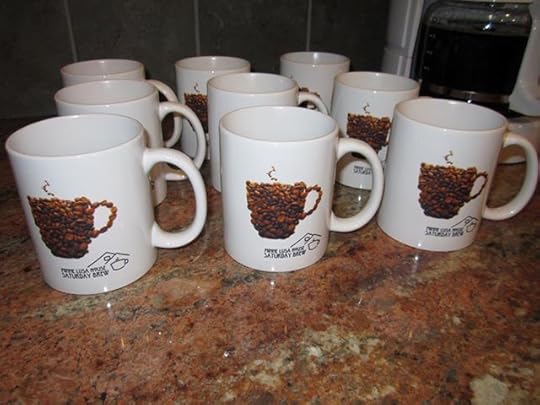
Olson fondly recalls a woman who learned to can at the house. “She sent the cucumber relish she made all over the country to her family and was the hit at Christmas, so she’s a memory to me.” Then there’s the mother and daughter team who come. The mother insists on sampling everything while the daughter busies herself canning. Upon leaving, the mother beams about how much “WE’VE canned.” The camaraderie is what she’s really after. A surprising number of young people, including families with small children, come to can.
Two more Saturday morning regulars are husband and wife ministers John and Liz Backus, who live across the street and pastor at nearby Trinity Lutheran Church. Lots of laughter and stories ensue.
“Those are things you just can’t put a price tag on,” says Olson.”I think we get more from this then maybe anybody else does. We get to meet all these fun, interesting people. We have a good time with them. We tell people, ‘Don’t come if you don’t want to have a good time.'”
“We’re going to have fun,” adds Richards.
The women didn’t expect all the attention their endeavor’s attracted, including an Omaha World-Herald feature that helped put the Minne Lusa House on the map. As a result the house has become a magnet both for folks in the neighborhood and from well beyond its borders.
“We’ve had people from Council Bluffs, Papillion, Ralston, Gretna come down here for canning lessons,” says Olson.
The way it’s caught on has taken the founders by surprise.
Richards says, “When we started this we didn’t know know where this was going to go. We had no clue. We didn’t see that coming. We were just going to be a little neighborhood house and then slowly spread it through the neighborhood.”
Minne Lusa House captures people’s imagination. Donated boxes of jars and other canning supplies regularly arrive on the front porch. Harvested produce is left for the women to can. Proceeds from the products they make go right back into the house. A Minne Lusa native living in Florida discovered the project and sent personalized coffee mugs.
Olson says, “We have wonderful support.”


She and Richards don’t believe in planning too far ahead or following a strict plan. They just ride the wave and take things as they come.
“Today if you asked us what we would do next year we cannot tell you that. It just falls,” says Olson. “We don’t set goals. I worked 30 years for the phone company. I’m not putting together any business plan. I’m done with that. We fly by the seat of our pants. Too many years of structure, Beth had structure with the post office for God’s sake. We don’t need that. Nobody needs to tell us what to do.”
They’re not sure what the house’s future may be when they’re gone or decide to step down.
“If something happens and we have to shut it down, then we shut it down, there’s no pressure,” says Richards.
Olson can’t see it continuing in its present form or with the same name under someone else’s leadership. “I mean, it’s the Minne Lusa House, it’s unique. If we couldn’t do it anymore and somebody wanted to buy it it couldn’t be Minne Lusa House anymore, at least not for me.”
Richards says it’s possible the house could always return to being a private residence. “We set it up that if we failed we’d probably lose money but we could sell it as a home for somebody to live in.”
The 1918 built home was occupied by several families over its history, the longest period, 45 years, by the Joseph and Clella Frolio family, who resided there from 1961 to 2005. The Frolio children left some indelible marks in the home, such as a pattern of BB gun pellet holes in one basement wall and handprints in another basement wall. Here and there are personal touches by Olson and Richards, including a vintage rocking chair that belonged to Beth’s great-grandmother.
A plaque hanging in the home’s front room details the chronology and names of the various people who dwelled there.
The women hope to create a Minne Lusa museum in the attic to display the photographs and articles they’ve collected about the neighborhood they feel such a kinship with.
The pair don’t like the bad rap North Omaha gets and they see the Minne Lusa House as a touchstone where people’s negative attitudes and perceptions about the area can be overturned.
“It’s a concept you have to change and it doesn’t get changed overnight,” says Richards.
“People go, ‘Oh my God, it’s North Omaha, there’s shootings, I can’t come there,” bemoans Olson. “People will not come down here because they’re scared they’re going to be shot. So when we have big groups of people we always say, ‘Do you know where you are?’ This is The Hood.’ Then they see for themselves what a beautiful area it is.”
Richards says, “We’re bringing people from out of the community into the community, where they find out it’s kind of nice up here. It’s by word of mouth and it spreads.” More than anything, she says, “what we’ve accomplished is that every day neighbors are getting to know each other.”
Keep up with doings there at http://www.facebook.com/minne.house.
Related articles
- Making Community: Apostle Vanessa Ward Raises Up Her North Omaha Neighborhood and Builds Community (leoadambiga.wordpress.com)
- Open Streets North Omaha – VOLUNTEERS STILL NEEDED (yperspective.wordpress.com)
- Learning Community Council OKs building $4.6M child care-adult ed center (omaha.com)
Show a Little Tenderness; For Her 40th Birthday Kirsten Case Asked Friends to Perform Acts of Kindness
December 14, 2012
Leave a comment
Here’s a feel good story for you. Kirsten Case, or as some of you may know her, Kirsten Romero Case, is a serial do-gooder in Omaha with a lifetime of community outreach work behind her. She recently decided she would celebrate her 40th birthday by asking people in her life to perform acts of kindness. They did and the story of why she put out this sweet intention and the ensuing good works that followed is detailed in this piece I wrote for Metro Magazine. She heads the Literacy Center in Omaha and before that she worked for the Greater Omaha Chamber of Commerce and for various nonprofit human services organizations. It’s quite clear that whaterver she does from this point forward will involve doing for others.

Show a Little Tenderness; For Her 40th Birthday Kirsten Case Asked Friends to Perform Acts of Kindness
©by Leo Adam Biga
Originally published in Metro Magazine
As her 40th birthday approached last fall Kirsten Case decided to celebrate the milestone in a most unusual way. The Literacy Center executive director used her personal blog to encourage friends and strangers alike to perform 40 Acts of Kindness in 40 days and to share these “simple, thoughtful” acts online.
Just like Kirsten
Case, a longtime Omaha transplant from Denver, has devoted her life to nonprofit human services work that delivers tender mercies to people in need. Wendy Hamilton and Angie Schendt are among those who granted Case’s birthday wish. They say the project fit her to a tee.
“It felt so natural that this idea came from her, and I was excited to participate,” says Hamilton, whose act of kindness involved reaching out to a young woman she didn’t know but who looked like she could use some friendly advice.
“Kirsten does have a big heart and it wasn’t surprising to me at all that she came up with this idea,” says Schendt, who honored Case’s request by organizing workmates to present a $500 check to a retiree who’d lost everything in a fire.
Shannon Smith, another friend who joined this mini-movement, says, “I’ve come to admire Kirsten both personally and professionally. She is one of the kindest people you will ever meet, always putting the needs of others before herself. When I first read her blog, I thought ‘of course.’ Of course Kirsten would come up with something compelling to motivate others to give back. Of course she would be selfless on her big day. Of course she would think big. The birthday request is everything that Kirsten is about.”
One way Smith fulfilled Case’s request was by befriending a female co-worker who rubbed her the wrong way.
“I could tell she needed a pick-me-up so I took her to lunch. We had a great chat, and I’m glad we did because I now have a greater understanding of where she’s coming from.”
Other acts people checked in ranged from reporting graffiti to giving someone a ride to donating unused clothes to a career closet to giving up a seat on a plane (twice) to making dinner for a sick friend to helping a dog owner find her lost pet in a park. Comforting words. Helpful advice. Lending a hand. Opening one’s heart.
Then there was the Saturday when Case and her daughter were in the family car in a ATM drive-thru when a man approached, speaking in broken Spanish. The bilingual Case made out he needed to deposit money and she assisted him. She says she drove off before realizing he could benefit from the Literacy Center, “and so I drove back and talked to him about it. It would have been easy to ignore him and been scared of him and to assume certain things but he was just a hard working guy that needed help.
A helping hand
Case says doing unto others is “the easiest and most inexpensive way we can improve the condition of somebody else’s life and our own. I mean, being kind or helpful to others isn’t just about them, it impacts our own life in a positive way, so it’s sort of a win-win.”
“The reality is any of us could be in a situation that could cause us to have to lean on a support network,” she says. “We’re all a heartbeat away from being in somebody else’s shoes. Besides, we’re always leaning on each other and so that’s why it really shouldn’t be a foreign concept to reach out and do something.”
She simply decided to be a conduit to help it happen.
“I just put stuff out there and hoped that maybe somebody noticed it. I really wanted to do something fun and special for my birthday. I have friends who’ve had big blow out parties and that didn’t feel comfortable. I spend a lot of my life trying to get other people to get involved in the community and do nice things for people and so it made perfect sense that way.”
She didn’t know who might respond and what they might do but as her birthday drew near she stumbled upon a Facebook event a friend created and to her delight she discovered plenty of folks heeded her request.
“It was the best birthday I’ve ever had. I was so excited to hear about things people were doing. It just brought me a lot of joy, it made me really happy to know they’d done things. I didn’t really know if people would do anything at all. I mean, how do you really ask people to do stuff? And I’m surrounded by people that are very giving and very involved, so how do you ask those people to do more?”
But more they did.
She says even though she and her friends already give-back to the community “a lot of us are working on a level where we’re not connected one-on-one, so it’s easy to get disconnected from the human side of the work that we’re doing.”
Paying it forward
She’s surprised her project’s elicited so much interest, saying, “A lot of people have talked to me about it,” and though the project ended Oct. 17, she adds, “Even now people still email me wanting to go to lunch because they want to talk about this. That part’s been fun – that people are still talking about it and telling me about things and wanting to do it themselves.”
Case says she doesn’t know how many acts of kindness overall resulted from her appeal because she hasn’t counted but she likes to think its ripple effect is ongoing. “My hope is that there’s a lot more that happened or that might happen that I don’t know about, although I do like hearing about it because it makes me happy.”
Encouraging kindness may just become her new birthday tradition.
“I do think I’ll have to do this every year now. Honestly, it really was my favorite birthday, hands-down. I feel like the people that did it did it because they do care about me and in fulfilling this request they cared about doing something. It was just so meaningful to me that somebody would honor a request like that.”
Related articles
- A different kind of birthday wish (whas11.com)
- 22 Random acts of kindness (blogs.windsorstar.com)


 Leo Adam Biga's My Inside Stories