Archive
Documentary shines light on civil rights powerbroker Whitney Young: Producer Bonnie Boswell to discuss film and Young
The name is familiar to some and totally unknown to others, but a new documentary leaves no doubt about the significant role Whitney Young Jr. played in the civil rights movement. The Powerbroker: Whitney Young’s Fight for Civil Rights makes a compelling case for Young being an overlooked giant of that progressive and momentous social justice effort to give African Americans the equality promised by law and practiced in every day life they were so long denied. The film’s producer, Bonnie Boswell, is the niece of the late Whitney Young, whose work to secure better lives for his people was largely done behind the scenes, in boardrooms and offices, rather than in public forums. My story about the film, Boswell’s motivation to do it, and her take on Young is in the current issue of The Reader (www.thereader.com). A screening and discussion with Boswell is scheduled March 28 at Film Streams in Omaha, where Young served as head of the Urban League of Nebraskas in the early 1950s.

Whitney Young during a meeting with President Lyndon Johnson in the Oval Office (AP Photo/LBJ Presidential Library, Yoichi Okamoto)
Documentary shines light on civil rights Powerbroker Whitney Young:
Producer Bonnie Boswell to discuss dilm and Young
©by Leo Adam Biga
Soon to appear in The Reader (www.thereader.com)
The civil rights and black power movements seem distant from Omaha until noting that Whitney Young Jr. cut his teeth as an advocate-organizer here and Malcolm X was born here.
While Malcolm X moved with his family from Omaha as a child and only returned once as an adult, Young served as Urban League of Nebraska president from 1950 to 1953. Young faced racism first-hand growing up in the South and serving in the U.S. Army. In Omaha he found blacks severely restricted in terms of where they could live, work, eat and recreate. He worked with DePorres Club president Father John Markoe and Omaha Star publisher Mildred Brown in mounting challenges to discrimination and segregation. He forged alliances with local business and civic leaders to try and improve opportunities for minorities.
Those mediating experiences undoubtedly informed his later work as National Urban League executive director from 1961 until his untimely death in 1971, a tenure that coincided with momentous civil rights events.
Young. who’s been called “the inside man of the black revolution,” is the subject of a new documentary produced by his niece, television journalist Bonnie Boswell. A free 7 p.m. screening of her PBS-telecast film, The Powerbroker: Whitney Young’s Fight for Civil Rights, is set for March 28 at Film Streams. A Q&A with Boswell follows.
Boswell says she was motivated in part to do the project to ensure Young’s role in history got “the credit” it deserved because his contributions had become obscured over time. “The other reason I wanted to do the film,” she says, “is that I think it’s important to lift up people like Whitney Young, of whom there are many, who do work behind the scenes people don’t necessarily know about, who get things done, who make cities work. I think it’s important for future generations to have a sense of, as they start thinking about their lives, it’s not necessarily about getting your name in the newspaper or your picture on the front of some magazine but about being effective and getting a job done. I think we need to encourage people to take pride in that.”

Bonnie Boswell

Whitney Young and Bonnie Boswell
The most enduring images from the struggle for self-determination remain the public protests, marches and speeches that pricked the heart and conscience of a nation divided by race. Beyond the raised fists and voices, however, was the largely unseen and unheard back room maneuvering of activists, lawyers, politicians, ministers and others. These social justice soldiers brokered most of the change that delivered equal rights protections to African Americans.
Young was perhaps the most significant inside player among this largely unheralded vanguard of freedom fighters. Trained as a social worker, he used his pragmatist problem solving and people skills to gain access to corporate boardrooms and the White House to advance the case for equality as a good thing for America. Though famous in his time, his work was overshadowed by that of Martin Luther King Jr., who remains the enduring face of the movement.
Boswell says she fixed on doing the film after speaking at a Whitney Young health center in 2002 and reflecting on how her uncle’s diplomatic approach to facilitating compromise amid the tumultuous ’60s could be instructive for leaders negotiating our own ultra partisan, divisive times.
“I was concerned America was continuing to engage in overseas wars and the gap between rich and poor was widening, and I was like, Can’t we do better? Then as I studied the role he played as a mediator and a bridge-builder I thought, This is exactly the kind of person we need to have as a role model and more people need to know his story so he really can be that role model.”

Young with LBJ

Young with JFK
Now that she’s helped reclaim his legacy, what does she imagine Young would make of America today?
“I think he would be gratified and also disappointed. I think we’ve clearly made a lot of progress in many areas. We have a lot of work to do for true equity and we should be about continuing that job. I think he would want us to be picking up the baton that others left.”
Boswell says viewers would do well to remember that both MLK and Young challenged America to live up to its larger ideal of creating a better America.
“It went far beyond race, it was about the beloved community, the just society, our democracy, so we have to continue that work.”
The documentary is also extremely personal. Boswell’s early rearing came at the hands of her uncle’s and mother’s parents at the Lincoln Institute in Kentucky, where her grandfather was principal. She learned the same values her grandparents taught them. As a girl she adored her uncle but as a afro-wearing young woman caught up in Black Power fervor she favored the militancy of Stokely Carmichael to the diplomacy of Whitney Young. Her film makes clear the movement required many approaches to affect needed change.
As a middle-aged woman today, she says, “I certainly have come to appreciate Whitney’s role and the subtleties of things he was dealing with that I didn’t have the maturity to really understand. I was much more emotional about discrimination, period. He grew up in a time when you couldn’t afford to be so emotional and I didn’t understand that. I can definitely appreciate his legacy more today.”
The civil rights champion’s name adorns schools, organizations and empowerment programs around the nation. In Omaha the Urban League of Nebraska’s Whitney Young Jr. Academy offers life and career skills to youths.
Ticket reservations for the film screening-discussion are recommended. Call 402-933-0259 or visit http://www.filmstreams.org.
Related articles
- ‘Independent Lens: The Powerbroker: Whitney Young’s Fight for Civil Rights’ (Review) (popmatters.com)
- Boardrooms And Beyond: Remembering Civil Rights ‘Power Broker’ Whitney Young (npr.org)
- New film tells story of unsung civil rights leader Whitney Young Jr (thegrio.com)
- New Film Tells Story Of Unsung Civil Rights Leader (huffingtonpost.com)
- ‘The Powerbroker: Whitney Young’s Fight for Civil Rights’ a New PBS Documentary (atlantablackstar.com)
Anti-Drug War manifesto documentary frames discussion: Cost of criminalizing nonviolent offenders comes home
Until the documentary The House I Live In the best film I’d seen about drugs was the Steven Soderbergh drama, Traffic. The director of the doc, Eugene Jarecki, does something very much akin to what Soderbergh did by taking a multi-perspective look at the insidious grip the illegal drug culture and the so-called War on Durgs exerts upon every one caught up in this human chain of destruction. My story below for The Reader is based on a recent screening and panel discussion of the film in Omaha.
Anti-Drug War manifesto documentary frames discussion:
Cost of criminalizing nonviolent offenders comes home
©by Leo Adam Biga
Appeared in The Reader (www.thereader.com)
The much-feted 2012 documentary The House I Live In provokes dialogue wherever it plays for its critique of America‘s domestic War on Drugs. Following a January 22 Film Streams screening before a full house a local panel discussed the film’s potent themes.
Director Eugene Jarecki’s (Why We Fight?) film indicts the war as failed public policy that’s wasteful, unjust and morally bankrupt for targeting nonviolent minority offenders. He suggests its true cost lies not only in the vast expenditures for arrest, prosecution and incarceration but in the disruption caused to families and communities. Every drug case has a spiral of consequences that can span generations.
The consensus of the experts and persons directly engaged in the war whom Jarecki enlists to comment on camera is that blacks are disproportionally targeted and punished. He explains he came to tackle the issue upon inquiring why a black family he knew from childhood struggled with poverty and crime. Its matriarch, Nannie Jeter, blames drugs for taking her late son James and leading other members down destructive paths.The film tells story after story of families impacted by addiction and imprisonment.

Eugene Jarecki
One observer notes, “We are engaged in a great experiment. What happens when you take large numbers of people, remove them from their neighborhoods, their families. What does this do to the broader community?”
Everyone from author Michelle Alexander (The New Jim Crow) to a prison chief of security agree the prison industrial complex has superseded prevention-intervention by incentivizing arrest, conviction and confinement and thus making it a big business prone to corruption that puts profit before humanity.
David Simon, creator of The Wire and a former journalist who covered the drug war, says, “Think about all the money spent on drug enforcement, on prisons and probation officers, on judges, on narcotics agents, on interdiction and everything else. But to what end? We’re the jailingest nation on Earth, yet drugs are purer than ever before, they’re more available.”
America’s draconian approach, he said. doesn’t work.
During the panel Impact One Community Connection founder Jannette Taylor reiterated a theme in the film that the war is actually a campaign to “marginalize people” that leaves havoc in its wake. “We need to look at the broader picture of the collateral damage from this fake war on drugs,” she said. “We need to be more realistic about what this fake war on drugs really is and how it affects poor communities and the people in it.”
She knows first-hand the personal fallout. The father of her daughter has served 17 1/2 years on drug charges. “My daughter has never had her father in her life. He was out only a short period of time before he resorted back to selling drugs and got caught up again and it’s basically because you become so marginalized. You can’t get a job, you can’t find a place to live, so you resort back to what you know – you resort to the economy that pays you.”
Jarecki introduces us to individuals for whom using and dealing were all they saw growing up. Naturally, they followed suit. Picking up a point Simon makes in the film, Taylor said the drug trade may be “the only flourishing economy” in some inner city neighborhoods and “given the limited opportunities poor inner city residents have it’s a rational decision to deal drugs.” Similarly, she said drugs become a way to medicate “if you’re living in a constant state of poverty, in depressed living conditions.”
Taylor said despite never using, dealing or serving time “I’m dealing with the same things, just from a different perspective. My daughter is caught up in this drug war because she doesn’t have a dad, so she’s being raised by a single mom. It was very hard. Once somebody gets sentenced into the system because of drugs their family’s affected. It’s like a crazy avalanche. The kids no longer have both parents, the other parent is pressured into making more money and that takes them away…It’s a domino effect. It’s a cycle and it never ends.”
Scholar Richard Lawrence Miller draws comparisons in the film between the war and “the chain of destruction” he says the ruling class historically applies to minorities in order to target, control, demonize and isolate them. He and others point to profiling, mass incarceration and mandatory minimum sentences as its manifestations.
Simon terms the drug war “a Holocaust in slow motion.”
“This is basically slavery in a new form,” said Taylor, who with others cautions, “If someone else’s rights can be compromised and violated then yours can too.”
Panelist Rodney Prince, who served a federal drug sentence, said, “I believe this war on drugs is a means, a guise to deal with a segment of the population no longer needed in this transforming economy. The intention for me doesn’t really matter, this thing is happening to people.”
Taylor and others advocate America recast the war as a public health issue that gives nonviolent addict offenders treatment rather than jail time.
Prince said, “This is an economic issue. If we know our economy can’t absorb everyone now then we have to push our elected officials and business leaders to act responsibly and to make more room for people in the economy.”
Douglas County District Court Judge Marlon Polk said education is the best deterrent to being caught up in the drug culture. Nebraska Corrections Youth Facility director Marilyn Asher and other panelists suggest we all have a stake in giving people the support and skills they need to prosper.
Robert Duvall Interview
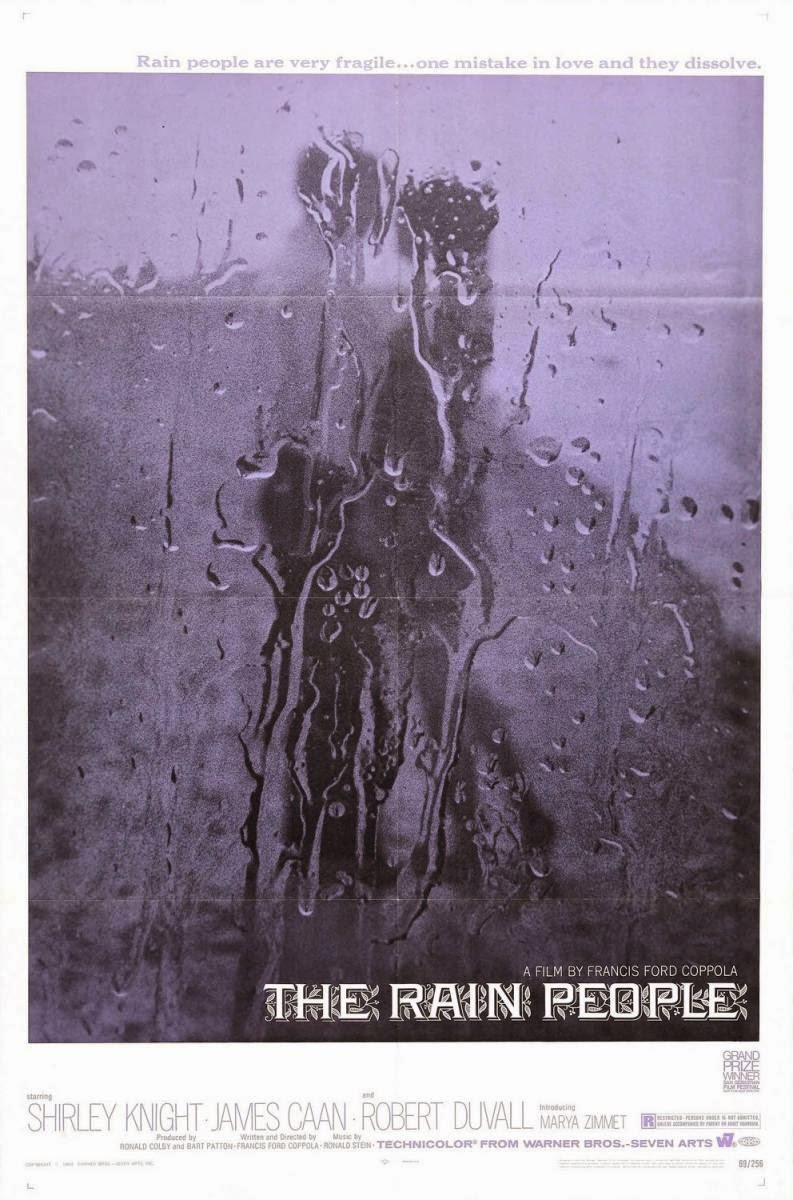
I am developing a film story-event project that’s piecing together what happened when a confluence of remarkable talents came together to make a low budget road movie in the late 1960s and their production journey brought them to western Nebraska. The road pic was Francis Ford Coppola’s art house special, The Rain People, starring Shirley Knight. That production cemented a relationship between Coppola and a young protege, George Lucas, who was along as a production associate and to document the making of the film. The project also connected Coppola with two actors who would go on to play prominent roles in his future pics: James Caan and Robert Duvall. That’s not all. The Rain People additionally led to Duvall starring in Lucas’ first feature, THX-1138, and to the actor directing his first film, the documentary We’re Not the Jet Set, which profiles an Ogallala, Neb. area ranch-rodeo family, the Petersons, whom Duvall became very close to. As I make progress on the story I will be posting interviews I’ve conducted with many of the principles involved in the films. What follows is an interview I did with Robert Duvall. I recently posted an interview from this project I did with James Caan. Look for upcoming interviews I did with Francis Ford Coppola, cinematographers Bill Butler (Rain People) and Joseph Friedman (Jet Set) and editor Stephen Mack.

Robert Duvall Interview: From My Film Connections Project (An In-Progress Film Story-Event Project)
©by Leo Adam Biga
LAB: Thanks for agreeing to speak with me about The Rain People and We’re Not the Jet Set.
RD: “I’m glad you called, man. I’m driving along in my car. I’ve got this little mobile phone but hopefully it’ll hold out OK. How ya’ doin’, good?”
LAB: Just fine. And how about yourself?
RD: “I’m all right. We’ve been traveling, but we like Virginia here, my wife and I. So we’re trying to settle in for a little while, and see what’s next. Life is full of what’s next, you know.”
LAB: And I’m speaking to you from Nebraska.
RD: “A nice state up there. A lot going on up in Nebraska. When are you going to do coach what’s his name from way back? Your teams aren’t like they used to be there at the university. The parity in college football. I bumped into Joe Theisman, that quarterback for the Redskins. And probably everybody would disagree with him and me, but I told him, ‘I think some of these college teams could beat some of the pros from about 30 years ago.’ And he said, ‘I’ll tell you, some of the college teams could beat some of the pro teams of today’ It’s possible. I think USC would play the Detroit Lions at 0-15 very well.
“Alright man, whatveer you want to ask me I’ll see what I can answer.”
LAB: Well, before we begin I wanted to let you know that I’ve spoken with members of the Peterson family you got to know so well when you came to Nebraska to act in Coppola’s The Rain People and then when you profile them in your documentary We’re Not the Jet Set.
RD: “Where was Casey (Peterson) at? Is he back in Nebraska?”
LAB: Yes, I believe he is.
RD: “But he lives in Calif., too, right?”
LAB: That I’m not sure about.
RD: “Oh, he’s a character that kid. He’s grown up now. What a character, my God.”
LAB: I’d like to begin with your experience on The Rain People.
RD: “Oh, yeah, with Jimmy Caan.”
LAB: Do I understand that you were not originally attached to that production in the role of the motorcycle cop?
RD: “I think another actor was scheduled to play the part and…he left or something and I came in, and I knew Jimmy, and I hadn’t known Francis (Coppola) yet when I came in to do that. He (Caan) kind of coordinated it. Jimmy Caan came out first and then I went out there.”
NOTE (Rain People cinematographer Bill Butler told me in a separate interview that Rip Torn was originally cast in the cop part but quit the project when he learned he wouldn’t be given the motorcycle he would be riding in the picture.)
LAB: The Nebraska part of the shoot mostly centered around the Ogallala area in the far southwest region of the state.
RD: “It was pleasant working there, I enjoyed working there and that’s how we met the Petersons because Jimmy wanted to go down…we liked horses. He said, ‘I’m going to a branding, you wanna go?’ I used to do that on my uncle’s ranch. It’s a lot of work. So I said, ‘No, Jimmy you can go do that.’ But we met them, the Petersons, because of the movie,.”
LAB: Denny Peterson remembers the initial meeting between you , Jimmy and his family as going something like this: you and Jimmy spotted Denny working with some horses in the family’s outdoor arena and you sidled up and asked if you could ride and he told you, ‘Hell, no, I make a living with these horses…’
RD: “No, I don’t think so, I think that’s a romantic aspect on Denny’s part. Maybe Denny said that to somebody. I don’t remember that at all. I’ll tell you the exact thing that happened. We went to their front yard, which was on the highway, the alternate road to Calif., and Shelley (Peterson) was riding a horse called Rock Red, which was a world champion cutting horse, and we started talking with the dad, B.A., and he said, ‘Are you boys from the movie?’ ‘Yeah.’ ‘You can come on down any time you want and ride some horses-You been getting any pussy?’ All in one breath. It was so funny. And we kept going down there and we formed a nice friendship.”
LAB: Horses and riding have been a big part of your life.
RD: “Not on his (Denny Peterson) level, but I’ve ridden a lot horses. But Denny was like a champion trick rider and everything like that.”
LAB: Did you know right away you’d come upon some authentic Western characters you could mine for inspiration?
RD: “Oh, boy, very unique, a very unique family, a rodeo circus mentality, you know. They were kind of an identity unto themselves even in that small community I think.”
LAB: In a sense the Petersons were following a bit in the tradition of William F. Cody and the Wild West Show troupe.
RD: “There were some pretty rough and tumble people back then. Like the Petersons. Lots of fist fights.”
LAB: For a lot of people HBO’s Deadwood became the definitive vision of the West come to life.
RD: “But I didn’t hear that kind of language from them. I think it was a different take on what the West was like, but I think there’s a definite connection maybe to the Petersons. I was talking to Denny and he said, ‘When my dad died I didn’t get the full impact of it till Walt ‘Waldo’ Haythorn died.’ He was the other rancher out there we met. That guy and B.A. were really good friends. He (Waldo) was probably like a surrogate uncle or something to Denny. Denny felt close to him. So he felt the full impact of his dad’s death when Waldo died a few years later. Because Waldo was a character, Jesus he was a character, too.
“So we’ve been involved with some good cowboys here and there.”
LAB: Didn’t the Haythorns’ real life early adventures on the Great Plains inform your mini-series Broken Trail?
RD: “Absolutely, the story of one of their grandfathers driving horses east from Oregon.”
LAB: You also grew close to the Haythorns, visiting their ranch a number of times.
RD: “They wanted me to be in the rodeo in North Platte. I hadn’t been on a horse in a couple years when I went up to do rope and trail up there. I bought a horse a year in advance to get ready because I busted some ribs on another project. The best horse I’ve ever been on in my life. He was three times a national bronc riding champion. They’re (the Haythorns) a wonderful family too. Not quite as wild (as the Petersons), but they have their wild side, too. Waldo, he let me use his personal horse and what a horse, my God, that horse was just…the best I’ve ever been on.
“And the Haythorns are out there still…They’ve gone down in Texas and won that (national ranch horse championship). You know the son, Craig, he’s getting old, too.
“When I was down in Argentina and I talked with the greatest polo player that ever lived, Adolfo Cambiaso..They own that, nobody can touch them in polo. He said he does like the American quarter horses as a breed a lot, although the thoroughbred’s better for polo because a little more endurance.”
LAB: Is it fair to say you’ve always had a fascination with the West?
RD: “Well, to a point, yeah. Ever since I was 12-13 I went and spent two summers on my uncle’s ranch in northern Montana and that gave me whatever wisdom, whatever knowledge, whatever enthusiasm I had for that, and respect for that to play those characters. I don’t know if I could have ever done Augustus McCrae in Lonesome Dove if i hadn’t maybe been introduced to that way of life as a young guy. I would say that’s true. Of course, they say the hardest part of that life way back then was to get a good night’s sleep on the ground, so it wasn’t as romantic as sometimes the movies portray.”
LAB: It seems like you’re drawn to down-to-earth, grassroots stories and settings and characters.
RD: “I like certain aspects of America, not just the two coasts.”
LAB: In B.A. Peterson you met a rough-hewn, bigger-than-life figure.
RD: “In that same place he was building a shed one time, and I wasn’t there, but the building inspector came down and said, ‘You don’t have a permit to build that,’ and B.A. said, ‘You keep staring at it and watch it go up.’ That was B.A., he didn’t back up from anybody.”


LAB: How did someone like Francis Coppola respond to the Petersons?
RD: “Coppola said about the Petersons, ‘Oh, they kind of scare me.’ Well, then he goes and makes a movie on the mafia (laughing).”
LAB: What was your experience like working on Rain People?
RD: “You know, it was a nice movie to work on. That’s when Coppola was doing those smaller films, before he did The Godfather and everything. It was a stepping stone to other things.”
LAB: What did you make of the young Francis Coppola?
RD: “He was a very serious guy, very preoccupied.”
LAB: Did you have a sense for how this road picture of a project was coming together?
RD: “It was hard to tell because it was a small film and they’d been working on it for a while. I came into it at the last minute.”
LAB: And what was Coppola like so far removed from his comfort zone?
RD: “I don’t think he felt he fit in there. He said the Petersons are dangerous. He wanted to go back to New York. I was more into Coppola on The Godfather I when the studio was against him. I gained a lot of respect for Coppola on Godfather I. It was Copolla’s picture. He was the one who made that film work. He had a lot on his plate.”
LAB: It was only in doing research for my project that I discovered George Lucas was part of The Rain People company and his main job was to shoot and edit the documentary, The Making of The Rain People.
RD: “I met George Lucas on that. He’s a nice guy, quiet kind of private guy. I did his (USC) thesis film (THX-1138). When we did The Rain People he was like 115 pounds and he had a camera and sound equipment strapped on himself, this little thin guy, and the documentary is as interesting as the movie.”
LAB: You and Jimmy Caan became fast friends on projects like that one and Robert Altman’s Countdown before working together more famously on The Godfather.
RD: “We had a lot fun between me and Jimmy Caan and his brother (who doubled for Duvall on the motorcycle in Rain People), who’s nuts, riding along on that motorcycle. and they didn’t have motorcycle police in Nebraska then. We got stopped and got a ticket. I had to learn how to drive that thing. One night I came in and parked the thing. It took ten takes, and then it fell over. Oh, man, we laughed so hard. But we had a good time out there. It was a memorable time working there for those weeks there in Nebraska. It was great.
“Jimmy’s great to work with. He gets restless though.”
LAB: I must tell you that I consider We’re Not the Jet Set a superb piece of filmmaking. It’s one of the better documentaries of that era.
RD: “Well, you know who else liked it a lot, unsolicited…I knew Peter Falk and he took it and showed it to John Cassavetes and Cassavetes loved that film.. Also, I wouldn’t call it a pure documentary because there were certain scenes we set up and then they could do them in a pure way like a documentary, you know what I’m saying? The bathing scene where B.A. hoses his little boy and then puts him in the bath tub, that was kind of set up, but it’s what they do and so it comes out a pretty pure behavior.”
LAB: There’s no way you could have portrayed the family as intimately as you did had you not become like an adopted family member immersed into the family scene.
RD: “Exactly, that’s what happened. When I worked with the gypsies (for his Angelo, My Love), the same way. I mean, you really gotta become part of something without trying to patronize, but tell it like it is. Do you know what I’m saying? Because so many films in Hollywood they do patronize the interior aspects of the United States between the two coast lines. But you gotta turn it around and let it come from them.”
LAB: It’s somewhat surprising to me that B.A. would have approved exposing himself and his family so starkly.
RD: “The first time we got out there he said, ‘What if I wouldn’t let you do this?’ I said, ‘Well, what are you going to do, we figured you would.’ Before they signed any releases or anything, there was no money exchanged because you know I didn’t have any money to do this. I think we went out six times in like two years or something like that.”
LAB: So you financed the project yourself?
RD: “Oh yeah, it was myself. I told Brando about it when I was doing Godfather I. He went for the truth. You know he used to watch Candid Camera to study to be an actor. He was that interested in real behavior, which I am and was.”
LAB: I like how Jet Set and your other films as a director are infused with little moments, gestures, asides, glimpses of authentic, truthful behavior, all of it unadorned, and much of it provided by nonprofessionals.
RD: “Yeah, I think so because once again we turned the camera around and let it come from them. It’s their life. I can’t tell them, ‘Do this, do that.’ And I think more feature film directors should do that – they should see what the nonactor comes up with. When you mix the nonactors with the actors sometimes they’ll put the professional actor on notice because they don’t have any bad habits. So I do try to go after reality, like lifelike behavior within the discipline of movie time.”
LAB: In addition to the colorful characters in Jet Set you captured the expressive Sandhills.
RD: “Oh yeah, the Sandhills country.”
LAB: It’s like another character unto itself in.
RD: “Oh totally, absolutely. There was one scene, we lost the footage. I wanted to start the film with it, where Casey was bathing his pony in like a big rain puddle. But we could never find it, it was unaccountable, so we started instead with some truck with Jake and B.J. I believe it was.”
LAB: The way B.A. comes off in the film and the way you describe him he was just savvy and ambitious and vain enough that the idea of a documentary obviously appealed to him. Besides, he was a showman and he probably saw promotional possibilities in agreeing to be featured in a way that anticipated Reality TV.
RD: “Our troubles were more internal. Our troubles were with a certain cameramen and certain guys that wanted to do it this way. That’s where the problems were, the problems weren’t with the Petersons. The problems were on our side of the camera, the egos there.
“It was tough to do. Usually the actors are prima donnas but the freaking cameraman was the prima donnas on that one.”

LAB: I’m curious to know if Jimmy ever accompanied you on your visits back to Neb. to shoot Jet Set?
RD: “No, he never did. Wilford Brimley did once. No, but they (the Petersons) liked Jimmy a lot and Jimmy’s the kind of guy I always say – ‘You change your telephone number every three months when you don’t have to.”
LAB: A bit mercurial is he?
RD: “Yeah, and also paranoid, I don’t know. He got out there and they were out there branding, and one of them said, ‘Hey there Hollywood, Caan – sounds Jewish.’ He said, ‘My grandparents were Dutch. I said, ‘Why didn’t you tell them you’re Jewish?’ He said, ‘Well , I don’t know, the way they were, I didn’t know what was going to happen.’ But they loved Jimmy, Jewish or whatever he was, they loved him. He and Waldo gave each other their hats.
“No, we had good times together. (Laughs). You’d tell him a joke and B.A. would laugh for five minutes. He had a great sense of humor that guy.”
LAB: Caan got so into the whole branding and herding scene that he ended up becoming a professional rodeo competitor.
RD: “He claims he was a professional rodeo guy. He was a header and heeler in team roping. He did quite a bit of that for a while.”
RD: “I talk to Jimmy all the time. He’s a good guy – one of the few actors I keep in contact with. We stayed friends. We’re trying to get a project off the ground. We may be going to Cuba. A guy’s going to write a script for me, Jimmy and Pacino. It’s a story about life there before the revolution.”
LAB: Is it fair to say then that Jet Set was a labor of love for you?
RD: “Yes, sir, absolutely and that helped me to play Westerns from then on out, being around those people, the real thing, that helped me when I went on to do things like…especially Lonesome Dove. That was my favorite part. Also that Broken Trail, that’s right up there with that. I loved doing that.”
LAB: It sounds like you’ve maintained ties with the Petersons all through the years.
RD: “Yeah, but we’re not as close. I hadn’t seen Casey in a few years and then when I saw him (on the movie Geronimo, An American Legend) he was almost 40 years old. He was working on that. It was like 20 years or so (since they’d last seen each other). They (the Petersons) got into movies, not because of me, I wasn’t instrumental. I’d like that to be known up front. They totally got that on their own. Shelley, the older daughter, her first husband was a rodeo clown and then she married another guy that was in the movies, and she still does that. And then Rex went off and he’s really done well. He worked under Corky Randall (famed animal wrangler). He’s done a lot of movies. He worked on The Horse Whisperer and a lot of other stuff. So they’ve done well.
“Back then (on Jet Set), everybody was young. Denny was the guy on horseback, and then Casey, athletically, he refined many things. Rex became kind of the star of the family without anybody having predicted that within the family, I think.”
LAB: The Petersons said they got close to your family and even visited you on the set of The Godfather.
RD: “My sterpdaughters at the time got on well with them. They came to the set of The Godfather.”
LAB: What about your Jet Set crew? For instance, your editor on that, Stephen Mack, has gone on to edit all of your films as a director.
RD: Steve Mack? Did a good job editing. He was a good editor for that.”
LAB: Were you nervous showing the finished film to the Petersons because of how close you’d become to them and of how unvarnished a portrait of them you made?
RD: “Yeah, because sometimes you get with the real deal and they want to see the artificial. I’m not saying that’s true in this case. Sometimes a cowboy or somebody else will want to see a Hollywood presentation more than they do the every day stuff they live and see, which is boring to them. You know what I mean? So, yeah, I wondered. I wasn’t sure because it’s a revealing thing. I think Denny was a little shy about it more than the others because he’s the oldest. I think it took him a while to accept it –that I’m not trying to make fun of them but that I do want to participate and enjoy the idiosyncrasies and the humor without condescending to it. Just show it, flat out, and I think that’s why a guy like John Cassavetes responded so strongly to the film. I mean, he really liked that film. I didn’t know him that well.”
LAB: In case you didn’t already know it, the Petersons all regard the film as a great gift you gave the family.
RD: “Well, I’m glad, it’s very moving to hear that because you never know if they’re going to accept something real. Like I took one guy out to help me film. It was the night of the graduation, and he said, ‘You’re invading these people’s privacy, how can you film?’ That was the point. I wasn’t invading to make fun, I was invading to show it as it is. And if you can’t get in there then you’re going to miss things, so we had to get in there and really rub elbows with them as we filmed.”
LAB: What would say to anyone who has a problem with the film and its subjects’ lack of political correctness?
RD: “If anybody would say anything I would say, ‘There’s the exit.’ My wife’s from Argentina, she’s very perceptive, she loved the film when she saw it.”
LAB: Before starting Jet Set did you consult with Coppola or any other established filmmaker?
RD: “No. just kind of plunged in.”
LAB: But you had a style in mind and it was patterned to a point on the work of some filmmakers you admired.
RD: “Kenneth Loach. Everybody says, ‘Your directorial comes from Cassavetes.’ I say, ‘Not really.’ The real influences were people like Kenneth Loach.”
LAB: Your projects as a director are so personal and idiosyncratic that it’s as if only you could have made them.
RD: “Maybe. The films I’ve directed have come from only stuff I could find from the ground up and develop from the ground up. It had to be from my point of view. I’ve had a few offers (to direct Hollywood films). I couldn’t have done it before. I could probably do it now. But it’d have to be stuff from the ground up.”
LAB: What kind of release, exposure did Jet Set get upon its completion?
RD: “I was going through a breakup with my wife then. It showed at Deauville, France and it did well. People enjoyed it, accepted it.”
LAB: Did it ever got a theatrical release?
RD: “Uh, just to a point. I didn’t get any money out of it. Some of my projects I’ve never made money off of them. The Apostle, I sold it. But the gypsy film, I never made money, I lost money.”
LAB: You didn’t get wide distribution of that.
RD: “No…it happened with my gypsy film. Some of it’s my fault – not working with the right people.But what are you going to do? You do it for the love of it. You gotta do certain things for the love of it and you make money on other projects you aren’t totally committed to but then it helps you pay for those that you want to do.
“It’s a strange and fickle business.”
NOTE (Jet Set enjoyed runs at New York and other big city art houses and it also played on national public television.)
RD: “I do care about it. I haven’t seen it in a long time. I do care about that one. Years ago it had been accepted at a film festival in Argentina. My wife saw it and she loved it. She’s very perceptive.”
LAB: After its initial release though Jet Set has pretty much been unseen. But the manager of your defunct production company Butcher’s Run was nice enough to send me a DVD of it.
RD: “We had to get a print to refurbish it so to speak. I’m terrible at keeping track of things. I want to sit down and watch it again one of these days. George Jones and Tammy Wynette, they gave us that song (the title track the film gets its name from). They waived the $10,000 fee. They gave us the title and song. She was a wonderful lady, Tammy Wynette. I showed it to Merle Haggard way back then. He liked it. I always thought Merle would make a good actor. I always meant to put him in a film. It just never happened.”
LAB: Speaking of actors, you’ve worked with some greats. You mentioned Marlon Brando before and your good buddy Jimmy Caan. What about John Wayne?
RD: “John Wayne was a far better actor than a lot of people gave him credit for. The Shootist is a brilliant performance.”
LAB: The movies have been very good to you and to some of your acting contemporaries like Caan, Gene Hackman, Dustin Hoffman, Jon Voight….
RD: “Cinema’s become like the in medium going into the 21st century. Young people instead of becoming writers they want to become directors or this and that.”
LAB: An actor with strong Omaha ties is our own John Beasley, who played opposite you in The Apostle.
RD: “Oh, yeah, a good guy, a good actor that guy. He’s a fine actor. They said, ‘Where’d you find that nonreactor?’ I said, ‘Well, that nonactor played Othello and King Lear up in Omaha.’ Oh, give him my regards, he’s a wonderful guy. When we were doing The ApostleI said to him, ‘I want to talk Johnny Rodgers,’ one of the greatest college football players, and he said, ‘No, I want to talk theater.’ I loved Johnny Rodgers, God almighty. I was talking football and he said, ‘I don’t want to talk football.'”
LAB: Well, since you brought him up, I think Rodgers one of the most underappreciated greats of all time.
RD: “Well, that’s because he went up to Canada I think rather than the NFL. He came from the same area as Gale Sayers.”
LAB: You’re still very busy as an actor.
RD: “I just did a film down in Georgia, Get Low, based loosely on fact. Bill Murray. Sissy Spacek. I did that other thing, The Road. I’ve got two things coming out this year that are as good as anything I’ve done in my life.”
LAB: “Actors of a certain age often find good parts are scarce, but you seem to be the exception to that rule.
RD: “It’s true, but you’ve got to find yours.”
LAB: Do you still ride much?
RD: “I started back three weeks ago after not riding for two-three years. My wife rides well. Once a year we have the oldest horse show in america (in Virginia). It’s a good hobby.”
LAB: And then there’s you love for the tango.
RD: “It’s all connected. It’s a hobby. I go down to Argentina. Buenos Aires. I love that city.”
Related articles
- James Caan Interview: From My Film Connections Project (leoadambiga.wordpress.com)
Documentary considers Omaha’s changing face since World War II
Omaha, my Omaha. I have something of a love-hate relationship with my city, which is to say I have strong feelings about it and I always want it to be better than it thinks it can, though the attitude problem or more specifically inferiority complex it suffered from for so long has been largely replaced by a bold new, I-can-do confidence. That metamorphosis is part of what drew me to a documentary some years back that took the measure of Omaha by charting the changing face ofrcityscape since World War II, and what a marked difference a half-century has made. In truth, and as the doc makes clear, the most dramatic changes have only occurred in the last decade or two, when the city poured immense dollars into transforming parts of downtown, the riverfront, midtown, and South Omaha. Left mostly untouched has been North Omaha, where the city’s major revitalization focus is now aimed. The film also deals with one of the city’s biggest missteps – the razing of the Jobbers Canyon warehouse district to appease a corporate fat cat who wanted to put his headquarters there in place of what he called the area’s “big ugly red brick buildings.” Those buildings were historic treasures dating back a century and today they would be home to well-established retail, residential, commercial developments that would be employing people and generating commerce, thus pouring money back into the city’s coffers.

Documentary considers Omaha’s changing face since World War II
©by Leo Adam Biga
Originally appeared in The Reader (www.thereader.com)
Omaha’s evolution into a homey yet cosmo metropolis that’s discarded, for better or worse, its gritty industrial-frontier heritage is the subject of a new documentary premiering statewide on the NETV network. Omaha Since World War II — The Changing Face of the City is a UNO Television production and a companion piece to UNO-TV’s popular 1994 If These Walls Could Speak.
What the new film does particularly well is frame the growth of Omaha over the past 60 years within a social, cultural and political context. Instead of settling for a Chamber of Commerce paean to development, the film makes a balanced effort at showing not only the dynamic explosion in Omaha’s ever-expanding boundaries and emerging 21st century cityscape but also some of the real tensions and costs that have come with that change. Using soaring, sweeping aerial footage shot from a helicopter video mount, the film provides insightful glimpses of Omaha’s famous sprawl and, even more tellingly, of the riverfront renaissance that’s remaking the city’s traditional gateway into a stunning new vista. Like the fits-and-starts pace of most Omaha development, major pieces in the Return to the River movement have taken decades to coalesce, but now that the new riverfront is emerging, it’s shaping up as a dramatic statement about the sleek, modern Omaha of the future.
While most of this period has seen real progress, valid concerns are raised about one neglected area and a pattern of disregarding history. For example, the film focuses on the decline of north Omaha in the wake of the devastating 1960s riots there and the equally hurtful severing of that community by the North Freeway several years later. News footage of burning stores and marching civil rights demonstrators, along with residents’ personal anecdotes of urban ruin, reveal a community in upheaval.
The late Preston Love Sr., ex-Omaha educator Wilda Stephenson and Omaha World-Herald photographer Rudy Smith paint vivid pictures of the jumping place that once was North 24th Street and of the despairing symbol it came to represent. As the $1.8 billion in downtown-riverfront revival continues (development dollars spent in the last six years, according to Omaha Chamber of Commerce figures), it’s apparent north Omaha’s been left behind. Unlike South Omaha, which remakes itself every few decades as an immigrant haven and finds new uses for old landmarks like the former stockyards site, North Omaha still searches for a new identity.
The film also examines how city/state leaders sacrificed the nationally historic Jobber’s Canyon district to the whims of corporate giant ConAgra in the 1980s. A man-made canyon of 22 massive, architecturally unique warehouse buildings closely tied to early Omaha’s booming river-rail economy, all but one Jobbers structure — the former McKesson-Robbins Building, now the Greenhouse Apartments — was razed when ConAgra decided the “eye-sore” must go if it was to keep its headquarters downtown. After seeing homegrown Enron uproot to Houston, Omaha caved to ConAgra’s demands rather than lose another Fortune 1000 company. The canyon was an incalculable loss but, as the film makes clear, the resulting corporate campus served as a catalyst for development.
The filmmakers rightly reference Omaha’s penchant for tearing down its history, as in the old post office, the original Woodmen of the World building, the Fontenelle Hotel and the Indian Hills Theater. Spinning the story in all its permutations are, notably, former Omaha city planning directors Alden Aust and Marty Shukert, architect and preservationist George Haecker, historians Harl Dalstrom, Thomas Kuhlman, Bill Pratt and Garneth Peterson, developers Sam and Mark Mercer and entrepreneur Frankie Pane.
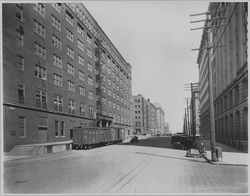 |
Jobbers Canyon before

The Jobbers Canyon debacle came at a time when downtown was reeling and in danger of being an empty shell. If not for major investments by a few key players. it may never have come back from the mass retail exodus to the suburbs it witnessed in the 1960s and ‘70s. In a real coup, the film features Old Market pioneers Sam and Mark Mercer, who describe the organic growth of this historic district into a cultural oasis — one that’s served as an anchor of stability.
The longest ongoing story of Omaha’s growth is its westward push. The film explains how this has been achieved by a liberal annexation policy that’s added subdivisions and even entire small communities to the tax rolls. The film touches on the fact that, outside a few developments, this sprawl has created a formless, characterless prairie of concrete and glass. The film also alludes to Omaha’s old neighborhoods, but only highlights one, Dundee, as an example of design and lifestyle merging.
Where the film doesn’t fare so well is in offering any real sense for the personality of the city. To be fair, filmmakers B.J. Huchtemann and Carl Milone didn’t intend to do that. Still, it would have been useful to try and take the measure of Omaha beyond its physical landscape. The only hint we get of this is via the many on-camera commentators who weigh in with their perspectives on Omaha’s changing face. And, to producer-director Huchtemann’s and co-producer-editor Milone’s credit, they’ve chosen these interpretive figures well. They’re an eclectic, eloquent, opinionated bunch and, as such, they reflect Omahans’ fierce independence and intelligence, which is at odds with the boring, white bread image the city often engenders. They are the film’s engaging storytellers.
Still, a film about the city’s changing face begs for an analysis of Omaha’s identity crisis. Mention the name, and outsiders draw a blank or recall a creaky remnant from its past or ascribe a boring blandness to it all. That’s before it had any “Wow” features. Now, with its gleaming new facade, Omaha’s poised to spark postcard worthy images in people’s minds. What is Omaha? What do we project to the world? The answers all converge on the riverfront. That’s where Omaha began and that’s where its makeover is unfolding. The monumental, sculptural pedestrian bridge may be the coup de grace. Interestingly, the film explains how much of what’s taking place was envisioned by planners 30 years ago. It’s all come together, in piecemeal fashion, to make the water’s edge development Omaha’s new signature and face.
So, what does it say about us? It speaks to Omahans’ desire to forge ahead and be counted as a premier Midwest city. No mention’s made of Hal Daub, the former mayor whose assertive energy drove Omaha, kicking and screaming, into the big time. He gave Omaha attitude. The film suggests this bold new city is here to stay.
Related articles
- From the Archives: An Ode to the Omaha Stockyards (leoadambiga.wordpress.com)
- Book Explores University of Nebraska at Omaha’s Rich History (leoadambiga.wordpress.com)
- In Memory of a Omaha Old Market Original, Fruit and Vegetable Peddler Joe Vitale (leoadambiga.wordpress.com)
- George Eisenberg’s Love for Omaha’s Old Market Never Grows Old (leoadambiga.wordpress.com)
- Remembering the Virginia Cafe and the Restauranter Family Legacy of Filmmaker Alexander Payne (leoadambiga.wordpress.com)
- A Synergy in North Omaha Harkens a New Arts-Culture District for the City (leoadambiga.wordpress.com)
- Everything Old is Newly Restored Again at Historic Sacred Heart Catholic Church in Omaha (leoadambiga.wordpress.com)
- Where Community, Neighborhood and Representative Democracy Meet (leoadambiga.wordpress.com)
- Jane Fonda Comes Home (leoadambiga.wordpress.com)
- Litniks Unite! The Downtown Omaha Lit Fest Brings Writers, Artists and Readers Together in Celebration of the Written Word (leoadambiga.wordpress.com)
For love of art and cinema, Danny Lee Ladely follows his muse
When I wrote the following article in the early 2000s the alternative cinema landscape in Nebraska was very different than it is today. The profile subject of the story, Danny Lee Ladely, headed the only dedicated art cinema in the state, what was then called the Mary Riepma Ross Film Theater but which came to be known as the Mary Riepma Ross Media Arts Center , located in Lincoln, Neb. At roughly twice the size of Lincoln, Omaha had no such venue. Neither could one be found anywhere else in the state. That’s changed with the addition of Film Streams in Omaha, where Rachel Jacobson is the metro’s equivalent to Ladely in running and programming a full fledged art cinema complete with screenings of the best in contemporary film, along with repertory programs, visiting filmmakers, Q&As, and panel discussions. The Omaha Film Festival has added another dimension to the film scene. And there have been concerted efforts to restore long abandoned neighborhood and small town theaters. This is all familiar territory for me, as I used to be a film programmer in Omaha and I appreciate any attempts to engage and energize the cinema culture here. Ladely was way out in front of anyone in Nebraska in nurturing an alternative film culture and what he’s accomplished with the Ross in Lincoln is remarkable, including the new facility he got built courtesy of the cinema’s major patroness and namesake, Mary Riepma Ross. My piece for The Reader (www.thereader.com) appeared as the facility was under construction. It’s been operational for years now and now that Film Streams in Omaha has provided a comparable venue in Omaha, the area’s once rather stark art cinema landscape has turned bountiful. It took the vision and will of Ladely and Jacobson (who’s profiled on this blog) to make it happen.
For love of art and cinema, Danny Lee Ladely follows his muse
©by Leo Adam Biga
Originally appeared in The Reader (www.thereader.com)
With his braided pony tail, arrowhead-pattern shirt, blue jeans, boots and Stetson hat, Nebraska film guru Dan Lee Ladely looks like a holdover from the 1960s, when the Gordon, Neb. native was in fact an anti-war demonstrator in college. During his undergrad days at the University of Nebraska-Lincoln, where he earned a degree in English lit between showing films for the student council, he once led a takeover of the campus ROTC building. These days the 50-something Ladely is an activist for the aesthetic, educational and entertainment value of the moving image and more and more his cinema dreams loom large on the horizon.
As construction proceeds on the new Mary Riepma Ross Film Theater (MRRFT) at 13th and P Streets in Lincoln, the new home for the nationally recognized alternative film program Ladely’s overseen since 1973, he daily watches his dreams taking shape from the temporary office he and his small staff occupy a block away. Once the theater opens in early 2003 he plans an ambitious exhibition schedule that will give cinephiles access to see American independent, first-run foreign and classic films the way they’re meant to be seen and opportunities to meet emerging and established filmmakers. Two auditoriums, equipped for film, digital and video projection, will provide flexible exhibition space to show a large, diverse menu of feature, documentary and short films as well as video art pieces. Plans call for the theater’s Great Plains Film Festival, a celebration of regional indie film which Ladely inaugurated, to continue unreeling there every other year.
The new theater will replace the auditorium the program exhibited in at the Sheldon Memorial Art Gallery, located within a block of the new site.
The MRRFT is an anomaly. Where art houses and alternative film series have failed in more populous Omaha, Ladely’s program has survived 30 years in Lincoln of all places and now, in the midst of a recession, is embarking on a new building program.
It is a stunning accomplishment, especially in the capitol of such a conservative state, because the pitfalls to success in the art film market are legion. Among the obstacles to running any art house in today’s environment are: the tight economy; the fact that indie films regularly play at commercial cineplexes; and the encroaching presence of cable television, video-DVD and the Internet, media formats that feature much of the same kind of fare art houses used to be the exclusive outlet for.
Now, a film buff outfitted with a home theater system can select from the market’s glut of viewing choices and, in effect, be his or her own film programmer. In addition to this competition, Ladely’s program faces additional constraints in the form of: budget cuts, as his theater is partly subsidized by the University of Nebraska-Lincoln, where it is a department within the College of Fine and Performing Arts; the whims of private and public contributors it depends on for the bulk of its funding; and ever higher operating costs. All of which might lead one to wonder if this is the right time to build a new theater?
“There still is a place and a need for this program and I think people will respond,” a reflective and soft-spoken Ladely said. “I think people will come out, at least at the beginning out of curiosity, in pretty good numbers. The new building is going to do one thing for us. We were sort of hidden in the Sheldon Art Gallery. I think being in an art museum kind of put some people off and now that we won’t be there we have the possibility of a whole new audience.”
The mission of the theater, which he said he “sort of created out of thin air” over the years, has always been “to provide an alternative venue for true commercial cinema and to bring films here that wouldn’t get shown here otherwise.”
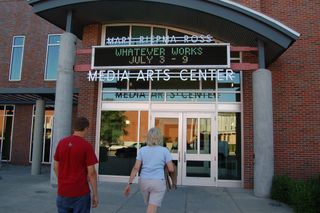
He said the proliferation of art films on cable and video/DVD has made it “harder and harder” to stay true to that vision. But the one thing MRRFT can still provide is a state-of-the-art space where you can watch these films in the manner in which they were meant to be seen, namely, a theater. He said regardless of how elaborate one’s home theater system is, “it’s still not the same” as the real thing. “No matter what happens in the future there’s always going to be a place for the film theater because film is really still a social event. Even though you’re there in the dark, there’s an audience and the audience reacts and that’s part of the experience. It’s totally different when you’re home alone.” Plus, there’s the dearth of alternative film exhibition in Nebraska, where except for the Dundee Theater, art houses have come and gone, the most recent being the short-lived Brandeis Art Cinema.
As Ladely points out, “There isn’t any other alternative place in this whole area right now where you can see these films.”
Much of what Ladely envisions has already been done from its old site in the currently closed Sheldon Art Gallery, where a major renovation under way has put a halt to the film program’s exhibition schedule until the new theater is completed. For years the program has been the state’s best and most consistent venue for presenting what used to be called underground cinema and the people who make it.
Where many like programs in Omaha once thrived but eventually folded, including those of the New Cinema Cooperative, the Joslyn Art Museum and the UNO Student Programming Organization, Ladely’s has continued uninterrupted for 30 years. How? Part of the answer lies in the fact the Lincoln program has enjoyed a measure of institutional support unknown elsewhere in this state owing to the legacy of the man who formed it and hired Ladely to run it, Sheldon’s director emeritus Norman Gesky, and to Ladely’s own passion for creating something of world-class stature. Ladely also had hands-on experience running two theaters in his native Gordon. Long a step-child of the Sheldon, where the MRRFT eventually lost favor under the man who succeeded Gesky as director, George Neubert, who cut the exhibition schedule and made life uneasy for Ladely, the theater is now poised to have its own stand-alone facility and identity.
And then there’s the one factor separating the theater from its imitators — Mary Riepma Ross. The retired New York lawyer is not only the theater’s namesake but its most ardent patron, biggest contributor and tenacious protector. A former UNL undergraduate student who fell in love with the movies as a young girl living in Lincoln, she was serving on the University Foundation board of trustees in the 1970s when then-chancellor Durwood “Woody” Varner put her in touch with the Sheldon’s Geske, a fellow film buff just beginning to shape plans for a full-fledged film program. She bought into Geske’s vision and, according to Ladely, “pledged she would support the program, which she’s obviously done. She started very early on sending us financial donations.”
In 1990, with the then Sheldon Film Theater struggling financially after a round of state budget cuts and slowly but surely being squeezed into oblivion by a director (Neubert) unfriendly toward the program, Ladely sent her a letter outlining his bold dream for a new theater space that would give the program a solid, independent foundation for survival and growth. It was just an idea. Ladely didn’t even ask for money. Amazingly, her response was to donate 3.5 million dollars in an irrevocable trust, a giant windfall for an arts organization of any size anywhere, but a truly extraordinary and unprecedented commitment for a film series in the Midwest. The Sheldon Film Theater quickly became the Mary Riepma Ross Film Theater.
Ladely, who has a portrait of his benefactress hanging in his office, said, “She’s actually the perfect patron. She has really impeccable tastes in film and she loves the kind of films we show. She sees them in New York and often writes to me and sends in articles about films she’s seen and makes recommendations to me. And very often they’re films we’re considering and we end up showing.”
In the new space Ladely anticipates reviving some activities he was forced to abandon during leaner times, such as film retrospectives, artist showcases and screening seven nights a week. In the past he has brought to Lincoln prominent filmmakers and actors with local ties, including Joan Micklin Silver, Peter Fonda and John Beasley. And now for the first time the theater will sell concessions, including popcorn, a new revenue stream he’s counting on to help defray expenses. He would also like to resume the theater’s long dormant touring film exhibition program and to share programs with other organizations, such as a film series it cooperatively presented with the Joslyn a few years ago.
There’s even more Ladely would like to do, but he admits all his plans are ultimately “contingent upon whether or not we can come up with enough money to keep the program going.” That’s why Ladely is using this down time while the MRRFT marquee is blank to write grants and solicit funds. Even if successful in securing enough money for the new theater’s operating budget, he is left with the nagging realization that attendance just isn’t what it used to be for documentaries by Emile De Antonio, Ricky Leacock, Albert Maysles and D.A. Pennebaker (all of whom appeared at the old theater at one time or another) or for Hollywood classics or for the best emerging cinema from places like Iran.
Even in its fattest years, he said, “if the university hadn’t been paying all the utilities…we couldn’t have survived as a stand-alone theater in a market this size.” That, and the fact the theater is about to come out of the shadows and expand in every way, has made for “sleepless nights” for Ladely, who is left “wondering how we’re going to do it.”
But, if nothing else, Ladely is an evangelist for film. He has a way of making you see the stars in his eyes when he discusses the kind of cinema he sees at the Telluride and Sundance festivals and that makes him compelled to share it with audiences here.
“I’m really interested in what’s going on now. What’s coming out. What’s the next big thing. Who’s doing what. I’m always interested in new filmmakers. And I’m very interested in what’s happening locally. One of the major things we’ll be doing in the small theater is have an open screening night where local filmmakers show their films. We’ll be able to show them in almost any format.” He said he keeps tabs on the local filmmaking scene and expects more new filmmakers to surface as technology makes moviemaking, especially the digital variety, more accessible and affordable, “That’s going to be very exciting — to see what comes out of that.”
Despite shrinking attendance for things like politically-charged documentaries, he will continue programming quality cinema regardless of how little box office potential it has, because that is part of what an alternative film series is all about, particularly one allied with a university.
“We have to balance this out between showing stuff that’s very esoteric and very important, even if there’s just one person in the audience, and showing stuff that’s more popular and generates a bigger audience. Just like there are classes that are real popular and classes that aren’t popular but are really important and you have to have, there are some kinds of films people don’t want to see but it’s absolutely important that, for example, film students see them in order to get a well-rounded education. The university has these burgeoning film studies and new media programs and I think our program definitely serves a need for those students.” Reality also dictates the theater at least break even, which means Ladely must show slightly more mainstream fare or at least indie cinema with a strong buzz behind it in the hope that better box office returns offset losses incurred on more obscure selections.

Related articles
- Jane Fonda Takes Center Stage at Film Streams, Where Her Life in Film is Celebrated this Summer (leoadambiga.wordpress.com)
- Alexander Payne to Talk Cinema with Kindred Spirit Jane Fonda at Film Streams Feature Event in Omaha (leoadambiga.wordpress.com)
- Cary art-house theater gets eviction notice (newsobserver.com)
- Film Connections, An In-Progress Story of How a 1968 Convergence of Future Cinema Greats in Ogallala, Neb. Resulted in Multiple Films and Enduring Relationships; From the Melting Pot of Coppola, Lucas, Knight, Duvall, Caan and two Ranch-Rodeo Families Cam (leoadambiga.wordpress.com)
Film Connections: How a 1968 convergence of future cinema greats in Ogallala, Nebraska resulted in multiple films and enduring relationships
From the melting pot of Francis Ford Coppola, George Lucas, Shirley Knight, Robert Duvall, James Caan and two ranch-rodeo families came “The Rain People,” “We’re Not the Jet Set” and more
An In-Progress Story and Film Event Project
©Leo Adam Biga
An unlikely confluence of remarkable cinema talents descended on the dusty backroads of Ogallala, Neb. in the far southwest reaches of the state in the summer of 1968.
None other than future film legend Francis Ford Coppola led this Hollywood caravan. He came as the producer-writer-director of The Rain People, a small, low-budget drama about a disenchanted East Coast housewife who, upon discovering she’s pregnant, flees the conventional trappings of suburban homemaking by taking a solo car trip south, then north and finally west. With no particular destination in mind except escape she gets entangled with two men before returning home.
Coppola’s creative team for this road movie included another future film scion in George Lucas, his then-protege who served as production associate and also shot the documentary The Making of The Rain People. The two young men were obscure but promising figures in a changing industry. With their long hair and film school pedigree they were viewed as interlopers and rebels. Within a few years the filmmakers helped usher in the The New Hollywood through their own American Zoetrope studio and their work for established studios. Coppola ascended to the top with the success of The Godfather I and II. Lucas first made it big with the surprise hit American Graffiti, which touched off the ’50s nostalgia craze, before assuring his enduring place in the industry with the Star Wars franchise that made sci-fi big business.
Rain People cinematographer Bill Butler, who went on to lens The Conversation for Coppola and such projects as One Few Over the Cuckoo’s Nest, Jaws and The Thorn Birds, was the director of photography.
Heading the cast were Shirley Knight, James Caan and Robert Duvall. Though they enjoyed solid reputations, none were household names yet. Caan’s breakthrough role came two years later in the made-for-television sensation Brian’s Song (1970). The pair’s work in Coppola’s The Godfather elevated them to A-list status. Rain People was not the last time the two actors collaborated with the filmmakers. Duvall starred in the first feature Lucas made, the science fiction thriller THX-1138. The actor went on to appear in Coppola’s first two Godfather pictures as well as The Conversation and Apocalypse Now. After his star-making performance as Sonny Corleone in The Godfather Caan later teamed up with Coppola for the director’s Gardens of Stone.
Among Rain People’s principals, the most established by far then was Knight, already a two-time Best Supporting Actress Oscar nominee (for The Dark at the Top of the Stairs and Sweet Bird of Youth).
The experience of working together on the early Coppola film forged relationships that extended well beyond that project and its small circle of cast and crew. Indeed, this is a story about those connections and their reverberations decades later.
For example, Duvall and Caan were already horse and Old West aficionados when they were befriended by a couple of Nebraska ranch-rodeo families, the Petersons and Haythorns. The interaction that followed only deepened the artists’ interest in riding and in Western lore. This convergence of New York actors and authentic Great Plains characters produced some unexpected spin-offs and helped cement enduring friendships. Duvall and Caan remain best buddies to this day.
Duvall became so enamored with the colorful, cantankerous Peterson clan, a large, boisterous family of trick riders led by their late patriarch, B.A. Peterson, that he made a documentary about them and their lifestyle called We’re Not the Jet Set. The actor returned to Nebraska several times to visit the family and to shoot the film with a skeleton crew. It was his first film as a director and it’s easy to find resonance in it with his future directorial work (Angelo My Love, The Apostle, Assassination Tango).
He and the Petersons became close enough that at his invitation some of them visited the The Godfather set. The family and the actor have kept in touch all these years and some have visited Duvall’s Virginia farm.
On one of Duvall’s visits to Nebraska the Petersons introduced him to the Haythorns and the true-life stories of that family’s early, epic cattle drives became the inspiration for Duvall’s mini-series Broken Trail.
Meanwhile, Caan sufficiently learned the ropes from working alongside the Haythorns and their hired hands to become a professional rodeo competitor, an activity the suits in Hollywood increasingly frowned on as his career exploded.
With their reputation as expert horsemen and women preceding them, several of the Petersons ended up in the film industry as wranglers, trainers and stunt people, boasting credits on many major Hollywood projects. One member of the family, K.C. Peterson, even ended up working on a film Duvall appeared in, Geronimo, An American Legend.
None of it may have happened if that band of filmmaking gypsies hadn’t come west. Their presence certainly got the attention of the locals while it lasted but no one could have predicted the Coppola production would lead, at least indirectly, to other films and deeper connections that played out over several years.
It’s hard to imagine how else Duvall would have happened upon the Petersons as the subjects for a film.
The man responsible for bringing Duvall to Nebraska, Coppola, was a fish-out-of-water here. His parents were musicians and he grew up in urban Detroit and Queens, New York, immersed in a life of art, literature, theater and the movies. The Hofstra theater arts grad entered UCLA’s fledgling film studies program, where his work soon attracted the attention of Hollywood.
At the time he made Rain People he was finding his way at Warner Brothers. Like all the major Hollywood studios then, Warners struggled adapting to changing audience tastes and escalating production costs and began entrusting young upstarts like Coppola with productions traditionally assigned old veterans.
While directing Finian’s Rainbow for Warners-Seven Arts Coppola met Lucas, a Modesto, Calif. native and USC film school product. Eager to break from studio constraints and make their own personal art films, the two were kindred spirits, When Coppola enlisted a small band of like-minded artists for Rain People, Lucas was a natural choice. The experience of making that film convinced them to launch American Zoetrope, a counter-culture answer to the old studio system that like United Artists decades before put the creatives in charge of production. The studio’s first two projects were the Lucas written and directed films THX-1138 and American Graffiti.
The producing partners parted ways in the mid-’70s.
But for a magical time the career arcs of these and other cinema stalwarts intersected to produce some of the most satisfying collaborations of the 1970s. As fate would have it a crucial part of that intersection unfolded in rural Nebraska among area denizens whose rough-and-tumble work-a-day lives were far removed from the distorted, make-believe reality of Hollywood. Lucas’ making-of doc about the experience records it for posterity.
Situated just below the southeast corner of the Nebraska Panhandle, Ogallala was about the last place you’d expect to find a gathering of the soon-to-be New Kings of Hollywood. But that’s exactly what transpired. This is the story of how those connections led Duvall to make We’re Not the Jet Set, an underseen film that may be getting new life courtesy of art cinemas.

The entire company of cast and crew on The Rain People


I was a burgeoning film buff in 1974 when the Omaha World-Herald‘s now defunct Magazine of the Midlands ran a piece on a documentary film that Robert Duvall, who had recently gained acclaim for his work in the first two Godfather films, was directing in Ogallala, Neb. about a ranch-rodeo family there, the Petersons. The film, entitled We’re Not the Jet Set (1977), sounded promising enough but what really got my attention was the fact that Duvall only came to meet the Petersons and to make his film about them as a result of coming to Nebraska a half-dozen years earlier for a few weeks work on the art road movie, The Rain People (1969), a film written and directed by Francis Ford Coppola and assisted by George Lucas. Rain People starred Shirley Knight and co-starred James Caan and Duvall. The Petersons had a horse pen just across from the motel the cast and crew stayed at and Duvall and Caan got to know the family by riding some of their horses. Duvall became so intrigued with this colorful clan that he returned again and again to immerse himself in their life and to shoot the documentary. It was the actor’s first directorial effort of what’s turned out to be a distinguished body of work as a director (Angelo My Love, The Apostle, Assassination Tango).What most struck me then and now is how these figures, who at the time were obscure, except for Knight, would in a few years come to be major players in Hollywood. I loved the fact that they converged in the middle of nowhere for a small film that led to another film. And as I’ve come to find out, the experience of making these films in rural Nebraska led to enduring relationships and collaborations and the inspiration for yet another film. For example, Duvall and Caan have stayed in contact with the Petersons, several of whom have wound up in the film industry as wranglers, trainers, and stunt riders. And it was through the Petersons that Caan and Duvall met a more prominent ranch family, the Haythorns, and the actors’ interactions with them led to Caan becoming a professional rodeo competitor and to informing Duvall’s later Western mini-series Broken Trail.Jet Set was released in 1977 to mostly strong reviews from its featured screenings at film festivals, in select art house cinemas, and on public television. Since then the film has pretty much been unseen. There are reasons for that. As I have come to find out, its virtual disappearance from the market is a real travesty because the work stands with the best docs from that era. As it happened, I saw Rain People well before seeing Jet Set, a film that until a few years ago only existed for me in terms of the few write-ups I’d found about it. When I finally decided in 2010 to develop a story about all of this, including the connections and relationships around the films, I contacted Duvall’s then-production company, Butcher’s Run, and they were nice enough to both send me a DVD of the pic and to arrange an interview with Duvall himself. Jet Set was a real revelation for me. It’s a superb example of cinema verite filmmaking and it comes as close to pure cinema as any film, dramatic or documentary, that I’ve seen from that era, and I’ve seen a lot.
Duvall led me to his good friend Caan, whom I also interviewed. I also got in touch with several of the Petersons and interviewed them as well. Since then I’ve interviewed some more of the principals behind Jet Set, notably cinematographer Joseph Friedman and editor Stephen Mack. I subsequently secured interviews with Knight, Coppola and Rain People cinematographer Bill Butler.
But I’m getting ahead of myself. For years, decades really, that Herald story about the film I referred to earlier stuck in my mind. It gnawed at me all the while I worked as a film programmer and publicist in Omaha and then when I transitioned into freelance journalism. In the era before the Internet it was hard to find much reference to the film. It certainly wasn’t available for rental through any distributor I ever came upon. The last 15 years or so I’ve consistently looked for opportunities to write about film and this blog is a good showcase for the many film stories I’ve filed. The story of Rain People and Jet Set is one I longed to tell. Since leaving the film programming world in the early 1990s I also longed to organize some film event. Now I am combining the two longings in one project. My in-progress story is slated to be published in some Nebraska publications and I’m working with the publisher of The Reader (www.thereader.com) and the director of the Omaha art cinema Film Streams on possible screenings and other events related to my story.
I have all the interviews I need for the piece. The only player in this story I have not able to connect with is George Lucas. i will try again but the story does not depend on his participation.
My main purpose with all this is to bring this story to light and to help revive interest in these films, particularly We’re Not the Jet Set. Recently, Turner Classic Movies added The Rain People to its rotating gallery of films shown on the cable network. But Jet Set remains inaccessible. I would also like to see the Lucas documentary, The Making of the Rain People, revived since it is a portrait of the early Coppola and his methods a full decade before his wife Eleanor shot the documentary Hearts of Darkness about the anguished making of Apocalypse Now. The story I’m telling is also an interesting time capsule at a moment in film history when brash young figures like Coppola, Lucas, Duvall, and Caan were part of the vanguard for the New Hollywood and the creative freedom that artists sought and won.

TO BE CONTINUED…
Editor’s Note: As I further develop the story, I’ll be making more posts. And when screenings and other events are scheduled in conjunction with the story, I’ll be sure to post that info as well. I’m posting my interviews with all the key figures in this story-event project.
Related articles
- Filmmaking tips from a legend – Interview with Francis Ford Coppola (eoshd.com)
- Lucasfilm Names Kathleen Kennedy Co-Chair As Successor To George Lucas (deadline.com)
- Duvall stars as cantakerous hermit in ‘Get Low’ (ctv.ca)
- George Lucas retiring to make ‘hobby movies’ (guardian.co.uk)
- ‘The Godfather’ Turns 40 (sanfrancisco.cbslocal.com)
- Dena Krupinski Makes Her Hollywood Dreams a Reality as a Turner Classic Movies Producer (leoadambiga.wordpress.com)
Related articles
- Shirley Knight Interview (leoadambiga.wordpress.com)
- Alexander Payne’s ‘Nebraska’ Comes Home to Roost: The State’s Cinema Prodigal Son is Back Filming Again in his Home State after Long Absence (leoadambiga.wordpress.com)
From the Archives: Minister makes no concession to retirement, plans busy travel, filmmaking schedule
I have had the opportunity to meet and interview many men and women of God and most of them exhibit a humility, gratitude, and generosity that I can best understand and articulate as grace. They cultivate the attitudes and take the actions of mercy and love that all of us are called to do, no matter what our faith tradition or even if we do not claim a faith that has a name or creed. The best ministers are open-minded and compassionate and committed to what they believe and do. They’re also unafraid to ask questions and to rattle the status quo now and then, even to challenge their own beliefs from time to time. The retired Rev. Richard Linde is such a man. I wrote this profile of him more than 20 years ago and in one way or another this piece has always stuck with me, not because of my writing, which is pedestrian at best, but because of the man and his unconditional embrace of life. I liked the fact. too, he was both a minister and a filmmaker and while his work making travel films didn’t have anything to do with the church or religion or spirituality per se it was still another expression of his love for humanity and the wonders of creation.
I was also impressed by Linde having studied at Princeton and Harvard, where he earned a business degree of all things, and having earned a doctorate as well. Again, like any good minister, he has always been a searcher and seeker in pursuit of knowledge.
NOTE: In preparing to post this I discovered that Rev. Linde now lives in Colorado and that he has authored a couple books: The Christ of Every Road, a fitting title for a man who has traversed so many paths: and Chaplain Richard Linde, We Also Fought, the chronicle of his own experience as a young navy chaplain during World War II counseling sailors readying for the planned invasion of Japan, casualties from the Pacific Theater, and submariners returned from torpedoing Japanese ships. I have no doubt that he followed his plans after leaving Countryside to make the film about the United Church of Christ and to do more traveling. I also have no doubt he’s still as active and engaged as his physical abilities allow and that he’ll remain a seeker in some way, shape, or form until his final breath.
From the Archives: Minister makes no concession to retirement, plans busy travel, filmmaking schedule
©by Leo Adam Biga
Originally appeared in the Omaha Metro Update
Retirement is a state of mind.
Take the Rev. Richard Linde for example. Although the 60-something Protestant minister is fast approaching his August 1 retirement date the veteran globe-trotter isn’t planning to slow down much. Sitting idle just isn’t his style.
Besides, Linde has better things to do, like chasing rainbows and memories half-way around the world.
Soon after stepping down from his 17-year post as senior minister at Countryside Community Church in west Omaha Linde will slip into his worn, but comfortable shoes as a traveling man and go off to meet old and new horizons.
Much of the United Church of Christ minister’s life has been a search to balance his fiercely independent and inquisitive nature with organized religion. His many travels mirror his quest to somehow square knowledge with faith. His guide, he said, has been God. “A lot of my life has been serving God as I feel God directs me, not as the church directs me to go.”
While long ago coming to peace with himself, he’s still a restless spirit and has many miles to go before retreating from life. “I’ve never been a person who hangs around the house and I don’t think I ever will be. I don’t want to be. I don’t want to play shuffleboard in Forida either,” he said. “I have some other things I want to do. I’m probably going to work nine months out of the year and my wife and I still like to travel.”
Linde concedes he may cut back his work schedule to 40 or 50 hours a week during “retirement.”
He will combine work and travel when he begins filming a documentary September 1 for the national United Church of Christ, a project that may take two years.
It may surprise some of Linde’s acquaintances that for 25 of his 45 years in the ministry he made travel films as both a hobby and second profession. Indulging his love for travel, he photographed the diverse cultures of the Middle East, Czechoslovakia, Jamaica, Iceland, Luxembourg, Monaco and other parts of the world. He lectured widely with his films and sold several to television.
While Linde hasn’t made a film for more than 10 years the United Church Board of Homeland Ministries knows they have a filmmaker in the fold. With his newly commissioned film they want him to retrace the church’s early Congregational roots in Europe and migration to America. The denomination is the result of a 1961 merger between the Congregational Christian Churches and the Evangelical and Reformed Church. Linde will document the historic route taken by church followers, including Pilgrims, by shooting overseas and in the States.
“We’re talking about staying in England, then in Switzerland, and coming to New England and Pennsylvania and later going across the Plains with the great migration to the West. And I’m hoping to end up in Hawaii because the Congregational story there is interesting. Author James Michener, in his story of Hawaii, downplays the part of the missionaries. I think his emphasis is wrong,” said Linde, who wishes to set the record straight as he sees it.
Hawaii has special meaning for Linde, who was stationed at Pearl Harbor while a Navy chaplian in the Second World War. At age 20 he was one of the youngest chaplains in the Pacific. Anxious to be part of the war effort before it ended, he left seminary college to enlist in the chaplain corps and was assigned to Pearl’s submarine base in 1945.

“The Royal Hawaiian Hotel was the rest and recuperation annex for the sub base and I became the chaplain of the hotel, holding my services in the Bamboo Room,” he said, laughing at the incongruity of it all. “It was neat duty. I had a lot of interesting counseling there. The officers and (enlisted) men were very, very tense. A lot of fighting would go on among themselves. There was blood and teeth through the Royal Hawaiian from sailors fighting.”
On a lighter note, he said big band leader Ray Anthony and his orchestra often gigged there. “Some of his instrumentalists would play for my service the next morning. They would be so tired from playing most of the night that I’d tell them, ‘Oh, c’mon guys, play a little faster,’ and they’s just go, ‘plunk, plunk, plunk,’ he recalled with glee.
Linde also traveled all over the Pacific on the sub fleet flagship tender, the USS Holland (AS-3), where he saw firsthand how superstitious sailors coped with fear. “The submariners were very individualistic. On most subs they had a Buddha (effigy) and before they would fire a torpedo they would rub the stomach of the Buddha for good luck. But the guys, surprisingly, were quite religious. At that time there was only one chaplain for every 1,000 sailors – there was a lot of counseling.”
 Photo: Royal Hawaiian Hotel
Although Linde never saw combat he said he was scared plenty of times.
The veteran returned to Hawaii with wife Randi three years ago. It was the first time he’d been back since the war. And at his wife’s urging they stayed at the Royal Hawaiian Hotel he’d been “bragging about all these years.” To his dismay the place had changed and the Bamboo Room was only a distant memory. He realized how much time had passed when, after regaling the desk clerk with his stories, the young man said, ‘I wasn’t even thought of then.”
Linde, who never preached in the base chapel because he was too “young and junior an officer,” found he’d gained stature with time. “When I went back I asked to go onto the base and they asked me to preach. All the ranking officers of the fleet were there lined up in front me,” he said proudly.
It’s doubtful whether Linde’s hoped-for return to another exotic port of call from his Pacific past – Shanghai, China – will prove as inviting given ongoing tensions between the U.S. and China. “I want to go back to Shanghai, live there a month or so and do some writing about the way it was then and the way it is now.” Then was 1946, when Linde was the only chaplain for 15,000 U.S. Navy personnel in Shanghai, which even then was a large cosmopolitan city and sea port.
“I loved Shanghai. The Bund (its waterfront), the Palace Hotel, the famous clubs. Like so many of the major cities in China it was built by western nations. I was on the edge of the Bund, where the ships were in the Whangpoo River. They would tie up there and the sailors would come ashore.
“I had my services in the Majestic Theater, which was very large, the size of the Orpheum (Theater in Omaha) I suppose. I would get written up in some Shanghain papers for things I would say. You see, there were some very conflicting things going on there,” he said, alluding to the city’s weird melding of sophistication and feudalism. “For example, they had just started to invoke the old Chinese custom of, when there is theft, cutting off the thief’s right hand, and thievery went way, way down.”
Crime, including a thriving black market, was rampant. So were anti-American feelings. Adding fury to the maelstrom were growing tensions between the country’s Nationalist and Communist factions.
“I remember one time I pulled up to the Park Hotel, where I lived, and ran up and ran right back down. In the little time I was up there all three of the locks of my jeep were stolen. I never did know whether they were thumbing their noses at the U.S. Navy or they just didn’t have time to steal the jeep. I was part of practically the last group to get out before the Communists took over.”
 |
USS Holland (AS-3)
After his discharge Linde finished his theological training, which began at Princeton, by getting his degree from Drew Theological Seminary in Madison, New Jersey. He also worked as youth director at a Los Angeles church for a time.
Still unsure of the ministry as his life’s work, he applied to the Harvard Business School. “The amazing thing was that I got accepted. That was a great surprise to me and I thought it was too good to pass up. I used my GI Bill to go there.” His Harvard years marked a turning point in his personal and professional life and a crucible of faith.
“The people that went there worked so hard, and I knew I’d be just like the rest of them if I went into business. I wouldn’t have any time then for religion. I decided my real emphasis, my real interest in life was religous faith. I decided to go with the church rather than do religious work as a sideline, which I had been thinking of.”
He did earn an MBA degree. But more importantly it ws while his back East that he met his wife of 40 years now. She was a Wellesley girl.
“I met her the night she had signed a contract to teach school in Turkey. She was leaving in two months and when she left she was wearing my (engagement) ring. We had a furious correspondence writing to each other every day. After about 10 months we met in Geneva, Switzerland. I came from Boston and she came from Izmir, Turkey. We were married in the Cathedral of Saint Peter, where John Calvin, the famous Medieval reformer, preached.”
Linde and his wife led a tour group to Geneva four or five years ago. When informed of the cathedral’s significance to the couple some group members had the sextant open the closed chapel where the Lindes took their vows. “We stood at the altar where we had been married and all the women had tears and the flashbulbs popped.”
He has been leading tours for many years, including recent excursions to England and Holland. He’ll lead a Scandinavian trip this summer.
Summers have long been Linde’s time to travel. Taking advantage of the month off he had each summer he used his vacations to “moonlight” as a filmmaker. He began tinkering with movie cameras in the 1950s while preaching in his native Ohio. It wasn’t long before he turned his 16 millimeter Bolex on the international sights he visited each summer.
The self-taught filmmaker became serious about his hobby when he discovered his low-budget productions were not only engaging but marketable. He sold eight of his films to national syndicated television networks.
“I guess I have a good eye for what a good picture is and what good action is,” he said. “I was showing one of my films in New York City to the Jamaican Trade Board and their officials said, ‘That’s the best film that’s ever been made on Jamaica. If you ever want to go again and update Jamaica you see us.’ So one summer I didn’t have anything else to do and they gave Randi and me plane tickets, reservations at the best hotels and a car.”
He said sponsors, such as national trade boards or airlines, usually paid his and Randi’s ways overseas. While he sometimes used local cinematographers on location he mostly handled the camera himself. He also scripted the movies after compiling and editing the footage. “It usually takes me two summers to make a film.”
Linde retained an agent to book himself and his film on the national lecture- travel film circuit. There were enough engagements that he had written into his ministirial contracts permission to travel on the road as needed. He spoke and presented the travelogues at universities and art centers nationwide. In 25 years he missed only one engagement – due to a raging snowstorm.
“I never ended up with any profit. The money went right back into the next film. It was something fun for me to do.”
A lecture stop 20 years ago introduced him to Omaha. “Impresario Dick Walter brought me here to lecture at Joslyn Art Museum for one of his travel film series. That’s when I first saw this beautiful city and became interested in living here. Before Dick Walter brought me out here I was like other people who thought this was someplace you fly over on your way to someplace else.”
After taking the Countryside Community Church position in 1973 Linde continued making films and lecturing for a time. He quit filming because new, more expensive technology overtook his grassroots methods. He sounds a little wistful talking about those halcyon days when he and his films were featured attractions. Perhaps that’s why he jumped at the chance to lead this United Church in Christ faith community. He thrived on all the travel then (and still does) because it relieved stress. “From a health standpoint I think it was really the making of my job. I could go an airplane and fly to Denver or Miami or Los Angeles. I’ve been blessed with a lot of energy in my life, so I can fly someplace, give a lecture and come back on the red-eye express and still be at my office the next morning. I was able for years and years to do that. And I considered it fun. I liked the plane ride, the people applauding and the whole thing. For me, it was a lot more interesting than puttering around the house.”
He also credits his wife for helping smooth his comings and goings. “Fortunately I have a wife who understands the necessity of my being away from home a great deal. Usually I am at home for dinner but if I’m not some evening it’s not a crisis.”
Although he said his film career really didn’t “have much to do with the church, that’s one reason I’ve liked what I’ve been doing because I’ve been involved in a lot interesting, different things.” His openness to new, eclectic experiences is consistent with the liberal underpinnings of his church.
“One reason I’m in the United Church of Christ is that there’s an enormous freedom. We call it autonomy. You really don’t have a hiearchy over you telling you what to do. It’s mostly a relationship between the people here at Countryside and the staff. That’s very important to me because I didn’t want to be a churchman as much as I wanted to serve people. Counseling has been important to people over the years and I decided just before I came here to go back to school and get a doctorate in counseling (from Butler Univrsity) so I could be a professional rather than just a gifted amatuer.”
He said his search for knowledge has helped resolve personal crises of faith. “I’ve gone through two maybe three periods of intense questioning of everything I believed, and I think I’ve come out with a much stronger faith each time.”
Early on he chafed at his fundamentalist upbringing. “Pretty much what I grew up on was, ‘Well, you have to take it on faith. Just believe.’ I didn’t want to do that. I wanted to know why. That’s partly why I went to get a doctorate – I wanted to know why.”

Despite straying from the fundamentalist teachings he was reared on in Ohio Linde said his early years “did give me a strong impetus toward religious faith.” He added, “My mother particuarly was very religious. She read Bible stories to me.” Even as a child Linde challenged prevailing wisdom: “I always thought I knew more than the Sunday school teachers, which I probably did.”
When as a young man he told his mother of his plans to enter the ministry, he said, “she was disappointed,” adding, “She wanted me to be a good Christian boy but she wasn’t quite sure about my going into the ministry. I was surprised by that but I went anyhow.”
“I’ve really wrestled with my faith and I’ve come out with answers that, to me, are satisfactory. But they’re not the answers I had when I was a little boy in Sunday school.”
Linde feels many of Countryside’s 2,000 members are, like himself, questioners who demand answers. Others, he said, are from conservative backgrounds. He welcomes them all. Whie\le describing his church as liberal, he adds, “It doesn’t mean we don’t beleieve in anything. It means we will accept people of many different variations of faith. We don’t stuff people into one little box and say, ‘This is what you have to believe.’ This is one reason why people join Countryside. In our denomination we’re one of the largest and fastest growing churches in the U.S.”
To appeal to what he calles “a very young congregation on the sunny side of 40,” Linde has adapted his preaching style.
“I was brought up in the era when you weren’t supposed to use any personal references or illustrations and preaching was pretty stuffy. Years ago I rebelled against that. Using Jesus as a model I’ve used more illustrations and stories, trying to show what life is like and what it can be like and sometimes what it isn’t like. The fact is I’ve tried to preach like I make movies – a series of sequences and images, without trying to explain what it means.”
In general, he said “churches are learning what people really need. There is an ethical, a values and a religious hunger. Whether you want to admit it or not, there is something deep down inside of each person that does want values. People will come to a place where you don’t try to pound it into them but where it’s openly discussed.”
He said people are just as receptive to men of the cloth today as in years past. He feels his role is as vital as ever and perhaps more so not only because times are hard but because he views his vocation differently than before.
“My own perception has changed. When I first started out I was embarassed to be a minister. I’m not anymore. I think what I’m doing is very important. The reason, for instance, I’ve been in the church doing counseling is that I think what the church, what religious faith has to offer is more important than what a secular counselor has. Just adding the element of faith to psychological knowledge is a plus.”
A new building on Countryside’s campus will help the church further address people’s needs. He said the Family Life Center, set for an Easter completion, will offer “counseling, therapy and enrichment” to families.
Overall, Linde said the church’s mission is “essentially to improve the quality of life in our community and city and world.” An example of its world outreach is Countryside aiding 18 children and their families in Amaititlan, Guatemala, where the Lindes visited recently. “My wife and I want to go back to Guatemala and go to language school. During our winter it’s their springtime and just beautiful down there.”
After all the trails he and his wife have followed, it’s not surpising then that the couple’s three grown sons have heeded their parents’ wanderlust ways and tranplanted themselves about the globe. One lives in Vail, Colo., another in New York City and the third in Taiwan.
Linde is not the type to dwell on his own many traveled roads because he’s always on the verge of some new journey. He confided, “I haven’t talked about myself this long in a long time.” But with his Countryside career about to draw to a close he thought the time right to reflect.
“We have an outstanding church here and I hope it will continue. I followed a good minister here (the Rev. Bob Alward) and we’ve continued to grow, the church has prospered in the 17 years I’ve been here, and I just hope the fella who follows me can continue what’s been done. Having the church prosper is very important to me.”
Related articles
- Military Chaplains Speak Out Against Military Same-Sex Marriage Ban (lezgetreal.com)
“The Bagel: An Immigrant’s Story” – Joan Micklin Silver and Matthew Goodman team up for new documentary
A highly anticipated project long-in-the-making is Joan Micklin Silver’s documentary, The Bagel: An Immigrant’s Story. She’s best known as a feature filmmaker (Hester Street, Between the Lines, Chilly Scenes of Winter, Crossing Delancey). With this project she has a great take on a favorite and familiar food that’s too easily taken for granted. Like any food that has ethnic origins, the bagel didn’t just show up out of nowhere in the States, it was brought here, in this case from Europe, and then it experienced its own assimilation process that saw it go from obscure ethnic enclave staple to ubiquitous item found in most any grocery store or bakery or coffees shop or convenience store. It’s even in some vending machines. The bagel’s become Americanized to the point few people associate it anymore with its Jewish provenance. But the bagel has a very particular history and heritage and its journey to America and its experience in the America melting pot parallels that of the human immigrants who brought it here, complete with its own labor disputes. Former Food Maven columnist and best-selling author (Jewish Food: The World at Table) Matthew Goodman is the documentary’s writer. I don’t know when the film will be completed and officially ready for screening, though you can find excerpts and rough cuts of it on the Web. My story below about the film actually appeared some years ago when Silver and Goodman were just launching the project and trying to find investors and sources for it. You’ll find several more stories by me about Joan Micklin Silver on this blog.
Silver was turned onto this story by noted food writer Matthew Goodman, author of the book Jewish Food: The World at Table and the former Food Maven columnist for The Forward. Co-producers on the project, Silver will direct Goodman’s script.
The bagel film project arose from a meeting Silver arranged with Goodman for his insights into the food of the Catskills, the famous East Coast Jewish resort that is the subject of a second documentary Silver is prepping. In the course of their Catskills conversation he mentioned his findings on the bagel and suggested it might make an interesting film.
According to Goodman, long an admirer of Silver’s films, she said, “’Would you like to work together on it?’ Of course, I was delighted. I think she has a wonderful literary sensibility when it comes to her work.”
As research by these first-time collaborators reveals, the rise of the bagel has strong reverberations with the greater immigrant story in America and the assimilation and discrimination that is part of it. “It came from Poland, it struggled and strained and went through everything most other immigrants do before it prospered,” Silver said. “That caught my imagination so totally when we figured that out that we decided, Okay, let’s do this.”

Joan Micklin Silver
Immigrant tales have long fascinated Silver, whose parents, the late Maurice and Doris Micklin, came here in the wake of the Russian revolution. Hester Street explores turn of the century life for newly arrived Jews on the Lower East Side and their struggles to blend in. Crossing Delancey eyes contemporary Jewish life in Manhattan and the conflict of traditional versus modern values.
The now ubiquitous bagel was brought here by Eastern European Jews, among whose members were artisan bakers steeped in the closely guarded tradition of Old World–read: handmade–bagel baking techniques.
“This was artisanal baking. These guys were the holders of the keys of the kingdom, as it were, when it came to bagels. This was the knowledge of the correct way to bake a bagel that had been passed down from generation to generation, going all the way back. The way to do it was a pretty tightly held secret,” Goodman said.
“They took great pride in their ability. It was not easy to do. The ovens were not easy to work. The dough unwieldy. It took a long time. You had to apprentice awhile before you became a member. So these guys really were craftsmen,” he said.
Unfortunately one of the things lost over time is that sense of artisanship, he added. “They were masters at making bagels. There was an art to it,” Silver said. “They were artists and they really cared about the quality of the product.”
Old-style bagels, much smaller than the modern variety, were distinctive for their hard crusts, chewy interiors and savory flavor. The International Bagel Bakers Union Local 338 formed to protect the recipes, methods and interests of the master bagel bakers. Only sons or nephews of current members could join. Every bagel in New York City came out of a union shop.
“Part of the story we’re telling in this film is that the demise of the union really led to the demise of the bagel as well,” Goodman said. “The machine just couldn’t make as good a bagel as the men could, for a number of reasons. One reason being the traditional bagel dough was too stiff to go through the bagel machine. It kept breaking down the machines. So bakery owners started adding water to the dough so it would go through the machines better, but that ended up making the bagel softer. And bagels since that time have gone through all sorts of changes with the addition of dough conditioners, which most bakeries use now, to relax the gluten in the dough immediately so bagels don’t have to sit overnight. It’s a big money saver for the bakery owners, but it reduces the flavor of the bagel significantly.
“A lot of places don’t even boil their bagels anymore before baking them, which is the hallmark of the bagel — boiled before baked. They just sort of steam them because they don’t want that hard crust. They think people don’t want to chew that hard.”
Goodman said the bagel’s transformation from hand-crafted, ethnic food stuff to homogenized, mass-produced staple reflects “the American public’s taste. The American public likes big, soft, bland, white baked goods. But that’s part of the story, too — that as the bagel became less Jewish and more mainstream American it had to take on more of mainstream America’s tastes.” A similar thing happened with pizza and many other ethnic foods whose authentic characteristics were diluted or distorted on the path to Americanization.
The story of the bagel in America is also the story of the IBBU Local 338. Bagel bakers fought hard to improve the arduous conditions they worked in, using their union as leverage in negotiations with employers.
“The conditions were terrible. The heat of the bakery while they were baking got to be like 110 degrees. Bakers often slept on benches in the bakery. They went through a lot. After a great deal of effort, they built a strong union. It was a terrific thing,” said Silver, who is doing much of her studies at the famed Yivo Institute of Jewish Research in New York, where former Omaha resident Leo Greenbaum is associate archivist-acquisitions archivist.
Goodman “discovered” the IBBU while doing research for an essay on the history of the bagel published in the Harvard Review. He’d never heard of the union.
“I just thought it was a fantastic thing, you know, a union composed entirely of bagel bakers,” he said. “And the more I looked into it the more fascinated I became by the story of a union that for several decades controlled all of the bagel bakeries in New York City and then within a span of less than a decade had been wiped out. I thought this was a really poignant story. It’s a little-known story. And also a story that allowed the telling of a larger story about the way ethnic foods assimilate in the larger society and also the demise of the labor movement.”

The IBBU, whose exclusive ranks never exceeded 300-some members at any one time, reached beyond New York, although that’s where it was centered.
“My sense of it is if you were a bagel baker anywhere in the country you were a member…It happened that the vast majority of bagel bakers were in New York, but I believe there were members in places like Chicago and Boston,” Goodman said.
Long before bagel machines replaced them and broke their union, Local 338 brethren faced challenges from bakery owners, who, Goodman said, used “strikebreakers and scabs” to try and crush their solidarity. Resistance to the union included the emergence of “non-union shops,” said Goodman, “many heavily subsidized by organized crime. So, there was certainly a lot to deal with.”
By the mid ’70s the union was no more.
“The older guys retired. Some ended up working in non-union shops, working in much poorer conditions than they had been working in previously. Some joined the general bakers union and went to work in other union shops, not necessarily baking bagels. A lot of the guys left New York and took off around the country to open their own bagel shops. That’s how bagels really got introduced to different parts of the country that had never known bagels before. That’s the first time places like Albuquerque or Sacramento had seen fresh baked bagels,” he said.
Goodman and Silver say a fair number of IBBU bakers are still around, but no one’s quite sure exactly how many. The filmmakers’ plans call for on-camera interviews with many of these men, some quite aged now. There’s a sense of urgency to record and preserve the bakers’ stories before the legacy of their craftsmanship and union is irretrievably lost. For his Harvard Review essay on the bagel Goodman interviewed some of the men, tapping memories of long ago.
Memories of favorite foods, especially aromas, are known to be among the strongest our brains store. As the bagel is a food bound up in ritual, whether along family ethnic lines or urban lifestyle lines or breakfast staple lines, it is a food that serves as a nostalgic “touchstone,” Silver said.
“People think about it and it’s sort of like Proust’s (Marcel) madeleines. It has kind of ringing memories for people.” Her own remembrances of things past take her back to when she was a little girl and her father brought her to a downtown Omaha bakery for “the best rye bread you can imagine and wonderful bagels.” Goodman too recalls the traditional bagels of his childhood.
The filmmakers are counting on the public’s bagel nostalgia, including memorabilia, to help illustrate their story. In a letter recently emailed to Jewish newspapers nationwide, the filmmakers made an appeal: “As part of our research for the film, we are interested in obtaining all manner of visual material concerning the history of bagels in America: old photographs of bagel shops or bagel bakers, home movies that include bagels, newspaper or magazine advertisements for bagels, etc.”
Readers with materials are asked to respond to bagelmovie@hotmail.com. The filmmakers’ letter ends with, “We would be very grateful for any assistance you might provide. We look forward to hearing from you.”
The pair hope to start production in late fall. They must first secure funding.
In a new immigrant twist on the bagel’s evolution in America, the filmmakers say the rare bagel made today in the traditional manner is usually crafted by…Thais. Oy vey!
Related articles
- Joan Micklin Silver’s Classic ‘Hester Street’ Included in National Film Registry (leoadambiga.wordpress.com)
- Last Location of New York City’s Legendary H&H Bagels Shut Down (laughingsquid.com)
- Are Florida’s “Brooklyn-Style Bagels” a Sham? [Food] (gizmodo.com)
- Man Who Brought Bagels to America Has Died (business-opportunities.biz)
Cuba’s “Illogical Temple” the subject of student Academy Award-winning film by UNL students
A fine Student Academy Award-winning documentary made several years ago by University of Nebraska-Lincoln students, Cuba: The Illogical Temple, is the focus of this story for The Reader (www.thereader.com). If you get a chance to see the film on your local educational television or public access channels, I highly recommend it.

Cuba’s “Illogical Temple” the subject of student Academy Award-winning film by UNL students
©by Leo Adam Biga
Originally published in The Reader (www.thereader.com)
The illogical nature of Cuba is explored in a Student Academy Award-winning documentary made by area student journalists whose reporting odyssey there reveals a people in love with their country despite its oppression. The risk of practicing independent journalism in Cuba is dramatically discovered by the students, who find some sources are government spies and one reporter profiled is among many dissidents later jailed.
The documentary is the result of an ambitious in-depth reporting project that sent about a dozen University of Nebraska-Lincoln student journalists to Miami and Cuba last year. The film offers a micro-macro view of the small island nation that’s loomed so large in U.S. politics and in Cuban exiles’ hearts and minds. The reporting team conducted more than 180 interviews with a cross-section of laborers, journalists, politicos and business leaders for the honored film, Cuba: The Illogical Temple, and a Pulitzer-nominated magazine, Cuba: An Elusive Truth. The film also won the national Eric Sevareid Award.
The film is the first UNL entry to win an award in the Academy of Motion Picture Arts and Sciences’ national competition. The hour-long film by Lindsey (Kealy) Gill and David Pittock is a complex meditation on the rich dichotomy of the last Communist hold-out in the Western Hemisphere. About the award-winning film, Gill said, “I guess I’m most proud of the sheer magnitude of what we took on in reporting on such an amazing, strange country.” She and Pittock were in the Los Angeles area last week for film industry-related activities culminating in the Student Oscar ceremonies on Sunday, June 13 at the Academy’s Samuel Goldwyn Theater in Beverly Hills. That night, the pair learned their film won a bronze medal in the documentary category and a corresponding cash prize of $2,000. The silver and gold medals (with cash prizes of $3,000 and $5,000) went to filmmakers from the University of California-Berkeley.
An award can create buzz in the industry. Already, such major film companies as Lion’s Gate and First Run Features have expressed interest in seeing the film. Gill and Pittock hope it’s selected to play a major festival, where it could get picked up for theatrical/video release. Some PBS stations have already acquired it.
As the Cuba project’s only broadcast majors, Gill and Pittock were its designated filmmakers. They collaborated in producing, directing, shooting, editing and writing the film. Gill, a UNL grad, is now a KMTV Channel 3 associate news producer, while UNL grad student Pittock is finishing up his master’s. Both want filmmaking in their future. “Travel the world and make documentaries. That would probably be my dream job. I love the fact it combines filmmaking and journalism,” Gill said.
“This experience makes me want to do more. To see the world and to document people, their lives and their personal stories. I would love to work on a narrative film. It’s opened up a lot of doors,” Pittock said.
The film explores Cuba from many perspectives, including that of rank and file Cuban nationals and government officials, Cuban exiles, U.S. officials and the students themselves. For most of the students, who studied the country’s history and culture prior to the trip, this was their first time in a nation with a state controlled media and where the penalty for crossing the party line can be grave.
The oppressive Castro regime is an ever-present character in the film. The high risk run by reporters daring to tell the truth is personally brought home when one of two independent journalists profiled turns out to be a spy. Upon their return home, the students discover the man posing as a journalist works for the government and is responsible for denouncing the other reporter as part of a large roundup of dissidents that occured after the UNL group left. The reporter who was betrayed by his supposed colleague is now serving a jail term of 20-plus years.
“That came as a huge shock,” said Gill. “It was appalling. Heartbreaking really, because the journalist now imprisoned was such a nice man. We were in his home. When we see people like him being persecuted for what we do on a daily basis, it’s sad. We take our freedom of speech so much for granted here.” Fellow student journalist Jill Zeman says in the film, “It was always in the back of my mind…if I use this person’s name or face, they could be thrown in jail. For once, I could see how my journalism would affect one person’s life. That’s a lot of pressure to have.”
Following their return, the students also uncover they were targets of Cuba’s insidious disinformation-agitprop campaign. Gill says in the film, “We thought we were getting the truth in Cuba and most of the time we did, but it was frustrating when we got back and found out that some people had outright lied to us. Even government officials. We knew the higher up government officials were feeding us a line. They told us a lot of the things they probably thought we wanted to hear.”
Much of the film focuses on Cuba’s stark contrasts. In one sequence, Cuban exile Felix Dominguez, now living in Norfolk, Neb., tells of the harrowing journey he made by boat in fleeing dictatorship for democracy. He saw many others who did not make it. His story is contrasted with that of his daughter, Jenny, whom he left behind. Now a single mother, Jenny lives in relative Havana squalor but fiercely defends her nation and lauds the free education and health care it provides. However, the film asserts nothing is really free in Cuba, where wages are so low that nearly everybody works scama, hustles or the black market on the side.
Despite crushing poverty, strict food rationing and pervasive material shortages made worse by the long-standing U.S. trade embargo, the film shows Cubans’ spirit and passion in their celebrations, warmth and wry wit. Then there’s the hypocrisy of Cuban dictator Fidel Castro criticizing the inequities of capitalism while welcoming North American-European tourist trade whose dollars create a cruel class system of tourist and non-tourist workers.
Everyday Cubans are seen and heard guardedly telling American visitors the harsh facts of life. The face of a disenchanted government worker is blurred to protect his identity. The palpable fear of speaking one’s mind is embodied in one man who, looking into the camera, says in hushed tones, “Your tourist guide was right behind you. Maybe I’m telling you things he don’t want you to know.”
The “guide” is among the functionaries assigned the Americans in restricting them to the official red carpet itinerary, complete with its press conferences and photo ops. Despite pressures to tow the line, Pittock says he and others managed to “go off and do our own thing” — interviewing people in the streets or in private homes.
The comments of an artist identified only as Gregorio inspire the film’s title and theme. “Cuba is an illogical temple,” he says. “You have to be Cuban to see it. It doesn’t make any sense, but I love my country.” Project participant Matthew Hansen, now a Lincoln Journal-Star reporter, says in the film that to grasp Cuba is “to be able to see the illogical temple. Things can be bad in a place… poor…its people oppressed. But that guy Gregorio still loved Cuba. He didn’t want to leave. He wouldn’t leave. In a sense, that’s illogical. Well, it’s not supposed to make sense. It’s about something deeper than logic or reason. It’s about loving Cuba.”
Related articles
- Cuba Wraps Up Dramatic Year Of Economic Revival (huffingtonpost.com)
- Miami Archbishop Holding Pilgrimage To Cuba For Pope’s Visit (miami.cbslocal.com)
- Castro slams ‘fracking’, frets about nuclear war (msnbc.msn.com)
- Censorship isolates Cubans (ecopoliticstoday.wordpress.com)
A degenerate’s work is never done: New film examines mob informant Henry Hill, whose story informed the book “Wiseguy” and the film “Goodfellas”
Hill is, if nothing else, a survivor and an egoist playing off his infamy. Once a snitch and con, always one. It just may be he’s every bit the actor that Ray Liotta, Robert De Niro, and Joe Pesci are and he’s just doing what he’s always done – putting it over on The Man or The System or anyone and anything else he can scheme or dodge or manipulate to his advantage. That said, I would have loved to have met and interviewed the guy. As it turned out, a couple years later I met someone very much like Hill in the figure of Clyde Waller, whose story I tell in the piece “Omaha’s Own American Gangster” on this blog.

A degenerate’s work is never done: New film examines mob informant Henry Hill, whose story informed the nook “Wiseguy” and the film “Goodfellas”
©by Leo Adam Biga
Originally published in The Reader (www.thereader.com)
When Lincoln, Neb.-based film producer Ron Silver learned mob informant Henry Hill left the U.S, Marshal’s witness protection program to live in North Platte, he went there hoping for the kind of inside mafia stories Hill furnished author Nicholas Pileggi for the book Wiseguy; Martin Scorsese adapted t into the film Goodfellas. Instead, Silver and director Luke Heppner found an unreformed derelict as the portrait for their new documentary Shooting Henry Hill. The film premieres tomorrow at 7 p.m. at the Mary Riepma Ross Media Arts Center in Lincoln.
Facing serious jail time for illicit drug trafficking and organized crime activities, Hill turned state’s evidence on the Lucchese crime family, of which he was an associate. In exchange for testimony that put away major bad guys, he and his family lived in various locales under assumed names. Kicked out of the program for drug-alcohol incidents, some violent, he was always reinstated. His screw ups finally led he and the feds to part ways. He took back his real name. When Kelly, a woman he was involved with, moved from L.A. to be near family in North Platte, he followed in 2004. Divorced from his wife Karen, with whom he has two children, he married Kelly. He soon got in trouble again for possession of cocaine and meth.
The broken man Silver found working as a cook at The Firefly restaurant in 2005 was ready to spill his guts, just not about the mafia. Silver said Hill, 63, agreed to be the subject of the film on one condition — it focus on his addiction, not his gangster past. Ray Liotta’s portrayal of a strung-out druggie gave a glimpse into Hill’s addict lifestyle. Still, Silver wasn’t prepared for the “wreck” of a man he met.
“I was surprised…disappointed…shocked a man his age was still faced with these addictions and was still acting out in this immature, reactionary way,” said Silver, a veteran theater actor-director-producer originally from L.A. “We imagine these guys as tough and fearless and powerful and dapper and he wasn’t those things and I’m not sure he was ever any of those things.”
Ironically, he said, it wasn’t so much the mafia life that hurt Hill and his family as it was his own degenerate behaviors.
The film introduces us to Hill drunk, his usual state of being. As the film progresses, he’s seen more and more sober.
“We made the decision to show Henry Hill in the order of how we experienced him,” said Heppner, an Omaha resident with local music videos and television credits to his name. “He was drunk basically the first few times we taped him. He was at the bottom of the barrel. When we very first see him in the film he’s fragile. As the film goes on you begin to see more of a stronger person. He looks completely different at the end than at the beginning. It’s the story Henry wanted to tell. It shows his life as a struggle. After all these years, this is who he is.”


On the first day of shooting “the star” was wasted, but Silver said when he suggested postponing things so Hill could dry out, Hill “kept saying over and over, ‘This is who I am.’ I think Henry felt by not hiding it, he would help people. And I thought by showing it we were just being honest.”
As filming proceeded last spring Heppner said the small crew got “sucked in” to the chaos and dysfunction of Hill’s life. “While we shot the movie, his wife (Kelly) left him, his friends betrayed him, he was assaulted, he was evicted, he was arrested. All these things happened,” he said. “We talked about how shooting Henry Hill is almost like making a wildlife documentary. We went out filming this (wild) creature going about his business” in a habitat full of intrigue and conflict. Silver said Hill’s wild mood swings, binges and nervous agitation make him difficult to capture.
The further they were drawn into his user ways, the crew found themselves part of the drama. “We went to be observers and ended up getting pulled into the story,” Heppner said. As a result, the filmmakers decided to insert themselves in the film in a fairly obtrusive manner. Silver, his wife Heather and Heppner comment at various points in the film on Hill, the unfolding madness and their reactions to it.
“It was a tough decision,” Silver said. “We realized we had crossed over into the ultimate intimate of his life. We experienced this together with Henry. We had part of the story to tell. We could fill in the blanks. We knew the audience would be reacting as we did. It made us uncomfortable, too. We felt we could let the audience off the hook by letting them know we felt very much as they do.”
A melodramatic framing device at the open and close of the film shows Silver seated on the porch of his house at night, speaking in hushed, weary tones. In these black and white scenes Silver intimates events have dragged he and the crew down. The closing scene, which ends the doc, has Silver holding an absurdly large hand gun as he informs us he’s been threatened by one of Hill’s enemies.

“Honestly, we were in a very dark place when we wrapped filming. I think the black and white is how we felt. Someone threatened to toss a grenade into my home. It’s one thing to know somebody wants to kill you and it’s another thing to know they can,” said Silver, referring to Dale, a felon now serving a stretch in Leavenworth.
As Silver found, getting involved in Hill’s life means dealing with the detritus that attends him. “It kind of takes over for awhile,” he said. Silver said Hill, released in 2005 from the Lincoln County (Neb.) jail to do an interview for Warner Brothers’ DVD reissue of Goodfellas, somehow gets people to overlook his misdeeds. Some celebs, notably Howard Stern, court him. It’s unclear who’s exploiting whom.
“People tolerate things from Henry they wouldn’t tolerate from their neighbor or a friend. I don’t know why,” he said. “I never felt that way. I never adopted Henry. I wasn’t going to be his baby sitter, and he kind of needs one, and when he doesn’t, he kind of spirals out of control. I would never be that guy. So, when he asked for money, I didn’t give him any. I gave him good advice.”
Silver still keeps in contact with Hill, whose problems persist. Some months back Silver said Hill was arrested in California for chugging booze he didn’t pay for in a grocery store, a crime that due to his priors brought a felony sentence of 10 to 15 years. A judge ordered Hill into rehab, which “he walked out of,” Silver said. Ordered back, Hill no sooner checked in than bailed out. Silver’s tracked him down to Venice Beach, where he said Hill’s in sharp decline.
“He’s in horrible condition. He’s just a fragment of even the guy you see in the film,” Silver said. “Barefoot, bearded, dishelved, sleeping on park benches. Henry’s on edge. I’m afraid he’ll get picked up soon and do his 10 to 15 years. But prison would be a good place for him right now. I think it might save his life. I am going to find him and hopefully he’ll clean up. I won’t abandon him as a friend.”
Silver’s considered the possibility Hill has “a death wish.” Why else would a man the mob wants whacked put himself out there in such a visible way? “I don’t think doing the film was his death wish,” Silver said. “I asked him about it. He said, ‘It (a hit) can still happen. But, look, if I live as Henry Hill and show people I’m not afraid and I become a public person, they wouldn’t dare.’ But he does have a death wish and I really do believe he’s killing himself slowly” with “his self-destructive behavior.”
There’s also a chance this is just an old con’s dodge, as Hill capitalizes on his mob persona via books, TV appearances and product lines. “I thought about that,” Silver said. “He is a con man…they function on…manipulation. But he’s not faking being a drunk and he’s not faking the pain he feels about his life. It’s a sad story. What’s hard for Henry is he has a conscience. He’s haunted.”
While he doesn’t feel it excuses Hill’s criminal past, Silver regards him “a hero” for ratting out the mob. “Henry always wanted out. Yeah, he did it to save his skin, but I believe people are alive today because of what Henry did,” he said. Besides, Silver said, the only thing Hill gained as a snitch, other than fame, was “a life in hiding.” One good thing, Silver said, is he did protect his family. His relationship with Karen is strained, but he’s on good terms with his grown kids, Gregg and Gina Hill, whose book about growing up underground, On the Run, Silver calls a “great read.”
Shooting Henry Hill will screen at the New York International Independent Film and Video Festival in September. Now weighing distribution offers, Silver’s at work on an Omaha screening.
Related articles
- Goodfellas & badfellas: Scorsese and morality (blogs.suntimes.com)
- For One ‘Wiseguy,’ A Permanent Place In Mobster Lore (npr.org)


 Leo Adam Biga's My Inside Stories