Archive
Hot Movie Takes: Three generations of Omaha film directors – Joan Micklin Silver, Alexander Payne, Nik Fackler
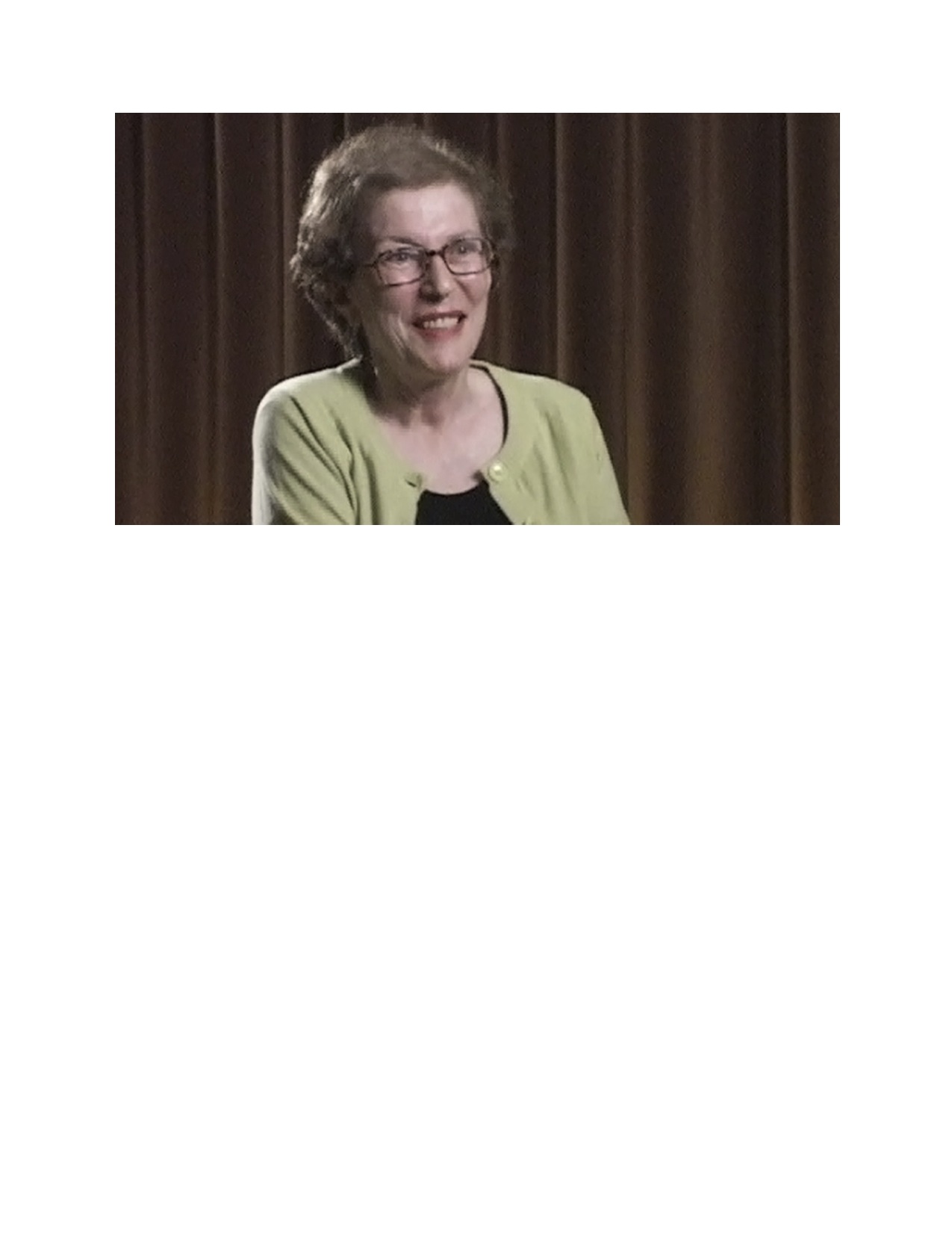
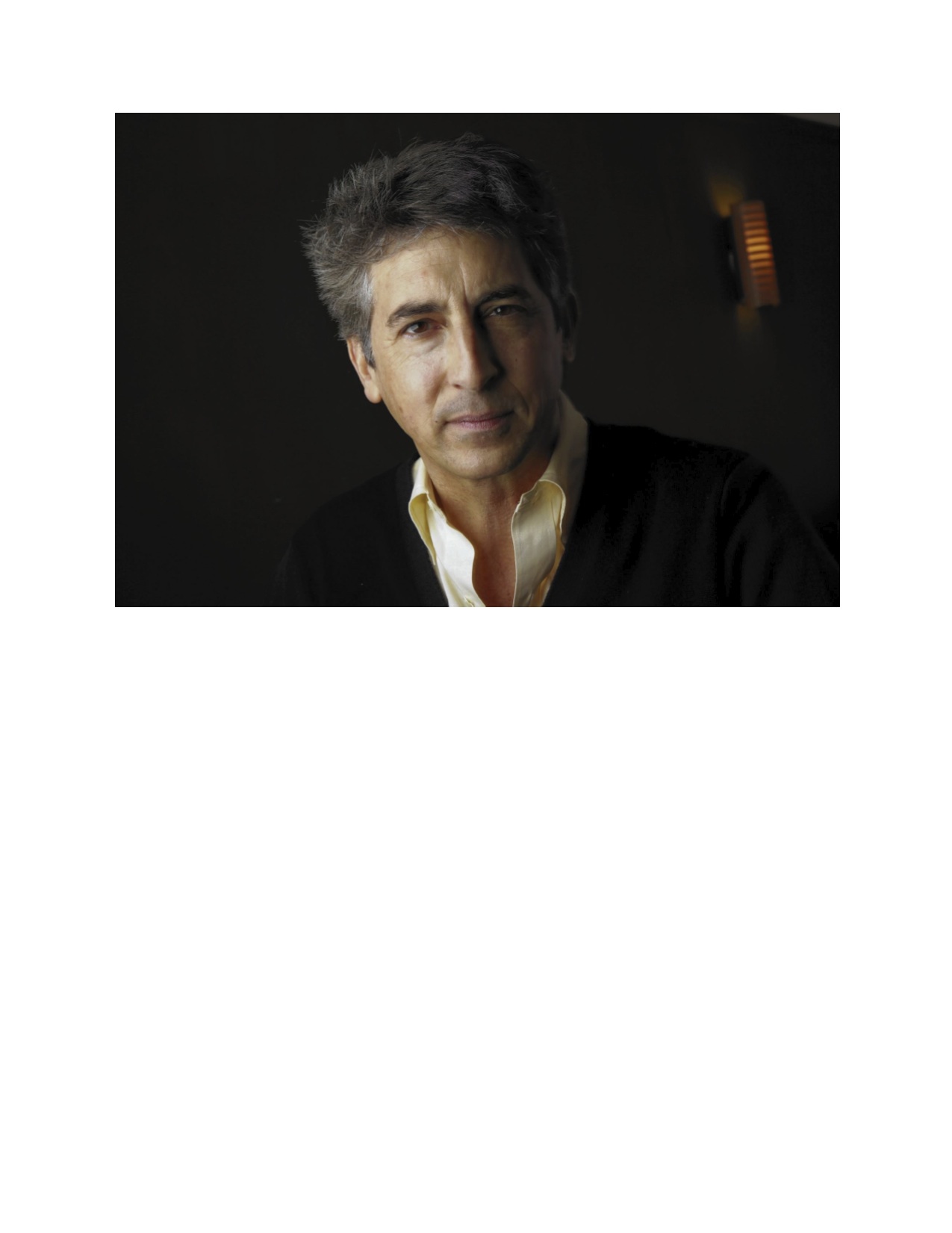
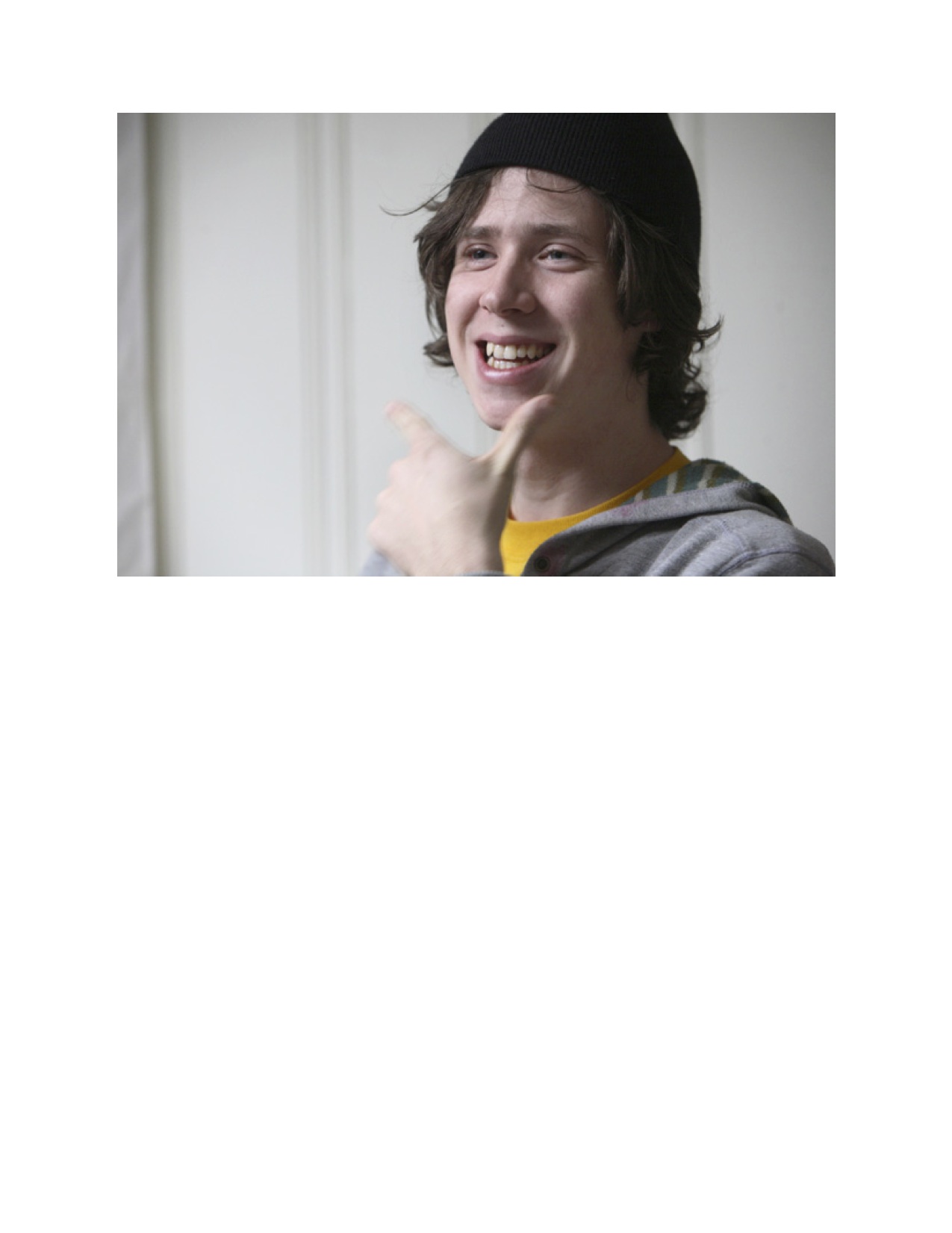
Hot Movie Takes: Three generations of Omaha film directors – Joan Micklin Silver, Alexander Payne, Nik Fackler
©by Leo Adam Bga, Author of “Alexander Payne: His Journey in Film”
Three filmmakers from Omaha who’ve made impressive marks in cinema as writer-directors represent three distinct generations but their work shares a strong humanistic and comedic bent:
Joan Micklin Silver
Alexander Payne
Nik Fackler
You may not know her name or her films, but Joan Micklin Silver is arguably the most important filmmaker to ever come out of Nebraska. Her feature debut “Hester Street” (1975) was something of a phenomenon in its time and it still resonates today because of how it established her in the film industry and helped open doors for other women directors in Hollywood.
Dorothy Arzner was a studio director in the early talkies era and then years went by before another woman filmmaker got the chance to direct. Actress Ida Lupino directed a small but telling batch of features from 1949 through the mid-1950s and became a busy television director. Lupino helmed the original “Twilight Zone’s” classic episode, “The Masks.” The last feature she directed “The Trouble with Angels” was a hit. Her subsequent directing was back in television for a large variety of episodic shows. But it was years before other women followed Lupino as studio directors and Elaine May and Joan Micklin Silver led that fledgling movement. They ushered in an era when more women directors began working in the mainstream: Lee Grant, Penelope Spheeris, Amy Heckerling, Barbra Streisand, Kathryn Bigelow. Hundreds more have followed.
Silver first came to the industry’s attention with her original story about the stateside struggles of wives of American POWs in Vietnam. No studio would let her direct and the story ended up in the hands of old Hollywood hand Mark Robson, who’d made some very successful pictures, and he brought in future director James Bridges to work on the script with her. Silver was not happy with the changes made to the story and though the screenplay bears her and Bridges’ names, she largely disowns the resulting shooting script and the movie Robson made from it, which was released under the title “Limbo” in 1972. However, Robson knew how much she wanted to direct and did something unheard of then: he invited her to be on set to observe the entire shoot and be privy to his interactions with cast, crew, producers, et cetera. She may have also had access to pre- and post-production elements. This experience allowed her an intimate study of how a major feature film production gets made. This, along with the films she’d been keenly watching since falling in love with cinema at the Dundee Theatre in Omaha, was her film school. Only a couple years after “Limbo” Silver was shopping around another script she penned, this one an adaptation of a novella about the Jewish immigrant experience in early 20th century America that was part of her own family’s heritage. The focus was on New York City’s Lower East Side and the travails of a young woman trying to reconcile the ways of the Old Country with the new ways of America. Jake has come ahead to America and sends for his wife, Gitl, and their son. Gitl is little more than chattel to Jake and she finds herself stifled by social, cultural, economic pressures. Much to Jake’s surprise, she rebels. Silver titled the story “Hester Street” and again no studio wanted her to direct and she was not interested in giving control of her script to another filmmaker. To be fair to the studios, on the surface the project did have a lot going against it. For starters, it was a heavily ethnic period piece that Silver saw as a black and white film. Indefensibly though, while Hollywood by that time was giving all sorts of untested new directors opportunities to direct, it wasn’t affording the same opportunities to women.
Silver and her late husband Raphael Silver, who was in real estate then, raised the money themselves and made the film independently. Her beautifully evocative, detailed work looked like it cost ten times her minuscule budget. She and Raphael shopped the finished film around and, you guessed it, still no takers. That’s when the couple released it themselves by road showing the film at individual theaters with whom they directly negotiated terms. And then a funny thing happened. “Hester Street” started catching on and as word of mouth grew, bookings picked up, not just in Eastern art cinemas but coast to coast in both art and select commercial theaters. Before they knew it, the Silvers had a not so minor hit on their hands considering the less than half a million dollars it took to make it. National critics warmly reviewed the picture. The story’s feminist themes in combination with the film having been written and directed by a woman made it and Silver darlings of the Women’s Liberation Movement. The film even got the attention of the Academy of Motion Picture Arts and Sciences, as the film’s then unknown female lead, Carol Kane, earned a Best Actress nomination.
Years later “Hester Street” was selected for preservation in the National Film Registry by the United States Library of Congress as a “culturally, historically or aesthetically significant” work. In designating the film for inclusion, the Library of Congress noted historians have praised the film’s “accuracy of detail and sensitivity to the challenges immigrants faced during their acculturation process in its portrait of Eastern European Jewish life in America.”
Silver is now writing a book about the making of “Hester Street,” which is also being adapted into a stage musical the adapters hope to bring to Broadway. A biography of Silver is also in the works.
The success of “Hester Street” allowed Silver to make a number of feature films over the next decade and a half, some with studios and some independently, including “Between the Lines,” “Chilly Scenes of Winter,” “Crossing Delancey” and “Loverboy” as well as some notable made for TV movies such as “Bernice Bobs Her Hair” and “Finnegan Begin Again.” These films show her deft touch with romantic comedies. I’ve always thought of her work as on par with that of the great Ernest Lubitsch in its sophisticated handling of male-female relationships and entanglements.
I recently saw “Finnegan Begin Again” for the first time and now I see what all the fuss was about for this 1985 HBO movie starring Mary Tyler Moore, Robert Preston, Sam Waterston and Silvia Sydney. It’s a thoroughly delightful, mature and surprising dramedy that features perhaps the two best screen performances by Moore and Preston, which is saying a lot. Waterston goes against type here and is outstanding. Sidney never lost her acting chops and even here, in her mid-70s, she’s very full in her performance. A very young Giancarlo Espositio has a small but showy part. Watch for my separate Hot Movie Takes post about the movie.
During the 1990s and on through 2003, Silver directed several more feature and television movies, “Big Girls Don’t Cry, They Get Even,” “A Private Matter” and “In the Presence of Mine Enemies” among them. The tlater two made for cable movies are straight dramas, which she also handled with a sure touch. I just saw “A Private Matter” for the first time and it is a searing true-life tale about a young American married couple with kids who become the center of the thalidomide scandal and tragedy. Sissy Spacek and Aidan Quinn portray Sherri and Bob Finkbine, who discover that the fetus Sherri is carrying will likely be born severely deformed due to the effects of the then widely prescribed drug thalidomide. When their intent to terminate the pregnancy goes public, it sets off a firestorm of controversy that nearly destroys them. In the midst of the medical deliberations, legal wrangling and media stalkings, the couple learn how widespread abortions are and how secret they’re kept. Silver brilliantly contrasts sunny, placid 1960s suburban family life with the dark underside of hypocrisy, greed, fear and hate that surface when issues of morality get inflamed. In this case and cases like it, what should be a private matter becomes a public controversy and the people involved are persecuted for following their own conscience. Spacek delivers a great performance as Sherri and I don’t think Quinn has ever been better as Bob. Estelle Parsons is excellent as Sherri’s mother. William H. Macy has a small but effective turn as a psychiatrist.
More recently, Silver had been working on some documentary projects that never came to fruition. And then her longtime life and professional partner, Raphael, died. Now in her early 80s, she’s seemingly more focused on archiving her work and sharing her experiences as a woman trying to shatter the American film industry’s glass ceiling.
Her maverick ways and superb films are highly regarded and yet she remains almost unknown in her own hometown, which both saddens and baffles me. The lack of recognition for her here is a real shame, too, because she’s one of the great creatives this place has ever produced and her exquisite films stand the test of time. I believe Alexander Payne, who is her junior by some 26 years, is one of the great American filmmakers to have emerged in the last half-century and I regard the best of Silver’s films on a par with his. And yet her name and work are not nearly as well known, which reminds us that even after all this time women filmmakers are still not accorded the same respect as their male counterparts. Even in their shared hometown, Payne is celebrated but not Silver. I’d like to do something to change that.
When Silver was eying a career in film starting in the late 1960s-early 1970s, the old studio contract system was dismantled and the New Hollywood hot shots from television and film schools were all the rage. Even guys who’d never directed anything were getting their shot at studio features. Women were still left out of the equation but for the rare exception like Silver, and even then it took her battering on the walls before she was reluctantly let in to that privileged Old Boys Network. Her path to breaking in was to learn her writing and directing chops in theater and television. It was her ability to write that got her a seat at the table if not at the head of the table. She had to make her own way the hard way. She’s lived long enough to see progress, if not enough yet, for women directors to now be almost commonplace.
Alexander Payne’s cinephile development came right in the middle of the New Hollywood revolution and his entrance into the industry happened right on the wave of the indie film explosion. But like Silver before him, there was no visible Hollywood presence around him when he was coming of age here as a cineaste. No one was making anything like grade A feature films locally. The industry was remote and disconnected from places like Nebraska. His entry into the industry was his student thesis film. But it wasn’t until he wrote “Citizen Ruth” and got financing for it that he arrived.
Dan Mirvish is another Omahan from the same generation as Payne whose directorial efforts bear discussion. He’s actually been the most ingenious in pulling projects together and getting them seen. None of his films have yet crossed over in the way that Silver’s, Payne’s and Fackler’s have, but he and his work are never less than interesting. He, too, is a writer-director.
A generation later, Nik Fackler came of age when the new crop of filmmakers were coming from film schools as well as the worlds of commercials and music videos. But just as Silver and Payne used their writing talents to get their feet in the door and their first films made, so did Fackler. His script for “Lovely, Still” was good enough to attract a pair of Oscar-winning legends in Martin Landau and Ellen Burstyn. He directed those Actors Studio stalwarts when he was in his early 20s. He was much younger than Payne and Silver were when they directed their first films but he had the advantage of having directed several short films and music videos as his film education. He also had the advantage of having seen a fellow Omaha native in Payne enjoy breakout success. But where Payne and Silver followed up their debut feature films with more projects that further propelled their careers, Fackler did not, It’s been nearly a decade since “Lovely, Still” and many of us are eager to see if Fackler can recapture the magic he found so early.
I find it interesting that Fackler, Payne and Silver all tackled tough subjects for their first features:
Alzheimer’s in Fackler’s “Lovely, Still”
Abortion in Payne’s “Citizen Ruth”
Jewish immigrant experience in “Hester Street”
Whereas Payne and Fackler have made most of their films in Nebraska, Silver, despite a desire to do so, has never shot here. There’s still time.
These three are not the only Nebraskans who’ve done meritorious work as directors, but they are in many ways the most emblematic of their times.
Wouldn’t it be fun to get Silver, Payne and Fackler on the same panel to discuss their adventures in filmmaking? I think so.
Meanwhile. a special screening of “Lovely, Still” in memory of Martin Landau is happening at Film Streams on Thursday, Oct. 12. Payne’s “Downsizing” is playing festivals in advance of its Dec. 22 national release. And Silver’s films can be found via different platforms, though a retrospective of her work here is long overdue.
Hot Movie Takes: The reviews are in and ‘Downsizing’ is the talk of the movie world


Hot Movie Takes – Alexander Payne and Mike Nichols

Hot Movie Takes – Alexander Payne and Mike Nichols
@By Leo Adam Biga, Author of “Alexander Payne: His Journey in Film”
Comparing artists, in this case film directors, is a hazardous business, but that isn’t stopping me from doing it. As someone who thinks and writes a lot about writer-director Alexander Payne, I sometimes search for resonance between his work and that of other filmmakers. When first exposed to his satirical cinema I was immediately reminded of Billy Wilder. Later, I saw parallels between Payne’s mis en scene and that of James L. Brooks, Joan Micklin Silver and Paul Thomas Anderson. More recently, I found continuity in the mordant, highly composed worlds of Payne and Stanley Kubrick. My newest reference point connects the work of Payne with that of the late Mike Nichols. The difficulty with this particular comparison is that Payne is a writer and director and Nichols was a director who, while I’m sure he had a great hand in the scripts he helmed, practically owned no writing credits. On the other hand, Nichols consistently worked with and interpreted great writers and the spirit of his satirical sensibilities is evident in his oeuvre. The term auteur is overused and misapplied to many filmmakers but it certainly fits both Nichols and Payne. Their work shares in common strong humanistic and satirical strains that reveal character in states of extremis. The comedy and tragedy in the stories they tell co-exist side by side and thus it’s hard to describe their movies as just one thing or another. Their movies are like life in that they are a mix of things. Nichols comes from an improvisational comedy, Actors Studio and Broadway stage background that gives his films a distinctive look, feel and sound that is at once realistic and poetic. Payne is most heavily influenced by classic world cinema and his films correspondingly have a formal narrative structure and compositional quality that also retain a sense of freedom and anarchy in line with their sharp tragic-comic turns.
These filmmakers are also both identified with producing thought provoking, highly literate work, I believe that is a reflection of how well read and rounded Nichols was and how-well read and rounded Payne is. Just as Nichols was steeped in literature, music fine art, theater and film, so is Payne. Bandying words and references with Nichols was a game played at your own risk because he seemingly had read everything. Payne is much the same.
But it’s one thing to have a great mind and it’s another thing to have a great heart, or vice versa, and here’s where these two separated themselves from many other directors of comedy. Their films show an intuitiveness and empathy that serve to leaven their sharp insights and harsh satire and to make their characters and situations, no matter how chaotic and desperate, more human and therefore more relatable. This is the same gift that their fellow comedy director masters shared and I’m referring here to:
Charles Chaplin
Buster Keaton
Frank Capra
George Stevens
Howard Hawks
Ernest Lubitsch
Preston Sturges
George Cukor
Billy Wilder
Woody Allen
James L. Brooks
I don’t know of Payne and Nichols ever met, but I have to think that if they did they would have hit it off and found they shared similar sensibilities and interests. At the very least, they would have made each other laugh.
My favorite Nichols films are “The Graduate,” “Catch 22,” “Silkwood,” “Working Girl,” “Postcards from the Edge,” and “Charlie Wilson’s War.” I don’t think there’s a great film among them, though those are all really good movies, and the rest of his career was pretty hit and miss. As for some of his other films, I admire “Who’s Afraid of Virginia Wolf?” and “Carnal Knowledge,” for example, but they’re not films I feel compelled to see again. His “Heartburn,” “Wolf” and “The Birdcage” are interesting but minor works. Full disclosure: I haven’t seen his “Angels in America.” But I’ve seen enough of his output to know that while he almost never made a flat out bad film, several of his works are flawed and inconsistent.
By contrast, Payne hasn’t missed yet. I have yet to see Payne’s new film “Downsizing,” but based on his six previous features and other work he’s done, I am very comfortable saying that Payne is a consistently better filmmaker than Nichols was even at the peak of Nichols’ career. Now, some may argue that Nichols directed touchstone pictures for different eras in “The Graduate” and “Working Girl” and may go on to question whether Payne has done the same. I would assert that “Sideways” is that equivalent picture in the Payne canon. I would also suggest that Payne has made at least five films that are timeless: “Election,” “About Schmidt,” “Sideways,” “The Descendants” and “Nebraska” and that it’s hard to find even a single Nichols film that could be so described with the possible exception of “The Graduate.” Some may further argue, and I can see the point, that Nichols was a more adventurous filmmaker than Payne in trying sometimes wildly different subjects and approaches from film to film, whereas Payne, to date anyway, has perhaps played it safe by staying within certain parameters and comfort levels that he likes revisiting. His new film “Downsizing” is definitely a departure for Payne in terms of scope – both physical and thematic – and we’ll soon know how well he handled that. Nichols made everything from social satires to farces to straight out dramas. I would counter that the few times Nichols departed from his own comfort zones resulted in some mis-steps – “The Fortune,” “The Day of the Dolphin,” “Wolf” and “What Planet Are You From?” – though Nichols does deserve an A for effort. Most observers count “Catch-22” as a mis-fire but I like its mordant tone and, unusual for Nichols, brilliant visuals. I actually think the best work he did that I’ve seen was the intense drama “Silkwood” and not the ironic, satiric pieces he’s best known for.
Granted, Payne may be taking fewer chances than Nichols did in terms of stretching himself, but I contend that even within the familiar confines of Payne’s work, he consistently goes deeper than Nichols usually did. For me, Nichols was more of a surface director, and Payne is more of an interior director, which is to say that in Nichols’ films the exterior lives of his characters predominate while in Payne’s films the interior lives of his characters speak to us Now, to be sure, there are exceptions to these artificial boundaries.
Certainly, the films of Nichols and Payne both show great respect for the written word and strong performances by actors. On this score, I think we can all agree.
Of course, all this is totally subjective and in the long run doesn’t really mean a hill of beans because they’re both among the best directors of comedy and of dramedies that have ever worked in Hollywood and they each have stand the test of time films to their credit.

Terence Crawford, Alexander Payne and Warren Buffett: Unexpected troika of Nebraska genius makes us all proud
Terence Crawford, Alexander Payne and Warren Buffett:
Unexpected troika of Nebraska genius makes us all proud
©by Leo Adam Biga
Author of “Alexander Payne: His Journey in Film”
Terence “Bud” Crawford has fought all over the United States and the world. As an amateur, he competed in the Pan American Games. As a young pro he fought in Denver. He won his first professional title in Scotland. He’s had big fights in Atlantic City, New Jersey, in Orlando, Florida, in Arlington, Texas. He’s showcased his skills on some of the biggest stages in his sport, including the MGM Grand in Las Vegas and New York City’s Madison Square Garden. He’s even traveled to Africa and while he didn’t fight there he did spend time with some of its boxers and coaches. But he’s made his biggest impact back home, in Omaha, and starting tonight, in Lincoln. Crawford reignited the dormant local boxing community with his title fights at the CenturyLink Center and he’s about to do the same in Lincoln at the Pinnacle Bank Arena, where tonight he faces off with fellow junior welterweight title holder Julius Indongo in a unification bout. If, as expected, Crawford wins, he will have extended his brand in Nebraska and across the U.S. and the globe. And he may next be eying an even bigger stage to host a future fight of his – Lincoln’s Memorial Stadium – to further tap into the Husker sports mania that he shares. These are shrewd moves by Crawford and Co. because they’re building on the greatest following that an individual Nebraska native athlete has ever cultivated. Kudos to Bud and Team Crawford for keeping it local and real. It’s very similar to what Oscar-winning filmmaker Alexander Payne from Omaha has done by bringing many of his Hollywood productions and some of his fellow Hollywood luminaries here. His new film “Downsizing,” which shot a week or so in and around Omaha, is about to break big at major festivals and could be the project that puts him in a whole new box office category. These two individuals at the top of their respective crafts are from totally different worlds but they’re both gifting their shared hometown and home state with great opportunities to see the best of the best in action. They both bring the height of their respective professions to their own backyards so that we can all share in it and feel a part of it. It’s not unlike what Warren Buffett does as a financial wizard and philanthropist who brings world-class peers and talents here and whose Berkshire Hathaway shareholders convention is one of the city’s biggest economic boons each spring. His daughter Susie Buffett’s foundations are among the most generous benefactors in the state. He has the ear of powerbrokers and stakeholders the world over Buffett, Payne and Crawford represent three different generations, personalities. backgrounds and segments of Omaha but they are all distinctly of and for this place. I mean, who could have ever expected that three individuals from here would rise to be the best at what they do in the world and remain so solidly committed to this city and this state? They inspire us by what they do and motivate us to strive for more. We are fortunate that they are so devoted to where they come from. Omaha and Nebraska are where their hearts are. Buffett and Crawford have never left here despite having the means to live and work wherever they want. Payne, who has long maintained residences on the west coast and here, has never really left Omaha and is actually in the process of making this his main residence again. This troika’s unexpected convergence of genius – financial, artistic and athletic – has never happened before here and may never happen again.
Let’s all enjoy it while it lasts.


Hot Movie Takes – My recap of Julianne Moore in conversation with Alexander Payne
Hot Movie Takes –
My recap of Julianne Moore in conversation with Alexander Payne
©By Leo Adam Biga, Author of “Alexander Payne: His Journey in Film”
Alexander Payne owns enough cachet as a preeminent writer-director that he can pretty much get any peer film artist to join him for a cinema conversation at the Film Streams Feature fundraiser in Omaha. His latest get was Oscar-winning actress Julianne Moore. Monday night (April 24) Payne, a two-time Oscar-winner himself, and Moore talked craft and life at the Holland Performing Arts Center before a packed house. This seventh feature event raised a record $350,000 in kicking off the art cinema’s project to renovate and return the Dundee Theater back into service as a historic cultural touchstone and film haven.
Before Payne and Moore came on, Film Streams founder and director Rachel Jacobson thanked the assembled crowd, including many of its top patrons. She described the affair as “a magical” night for Omaha and she referred to the “extraordinary and inspiring support” that not only made the evening event possible but that’s making the growth of Film Streams possible. She called this “a busy and exciting time for Film Streams,” which is coming up on its 10th anniversary and nearing completion on the renovation and return of the Dundee Theater. She signaled the theme of the event in saying that cinema as a medium can help shape our dreams and that cinema as a place can help shape our community. She then introduced a TCM-like short tribute film produced by Tessa Wedberg and Jonathan Tvrdick that heralded the history of Film Streams and of the Dundee Theater. Many familar faces contributed comments in the film, including Payne, who praised Film Streams as a nonprofit cinemateque and echoed remarks by Jacobson and others about the important role it plays in treating film as an art form and thus as a conveyor of ideas and a convener of diverse audiences and issues. Payne brought things full circle by saying about the Dundee Theater, “Before Film Streams it was the only reliable place to see an art film (in Omaha).” He added his delight in soon having the Dundee back because it means art cinema is “now rooted in a place in Omaha of historical significance.”
These Inside the Actors Studio-like Feature events are not exactly thrilling entertainment and the intrigue of seeing and hearing world-class film figures soon wears off, especially sitting in the nose-bleed section, where anything resembling an intimate exchange gets lost in translation. Usually there’s not much new we learn about either Payne or the special guest and their individual processes but just enough nuggets are revealed to make the evening worthwhile beyond merely a financial windfall for Film Streams.
Payne is a capable interviewer and he thoughtfully let Moore do most of the talking. In the buildup to the event it was noted that she has a significant Nebraska connection having lived four years of her childhood here while her military father was stationed in the area and completed law school studies here. Moore attended one year at Dundee Elementary School and her family lived in a Dundee duplex. Payne shared that had he started Dundee Elementary, where he ended up, he and Moore would have been in the same class. That reminded me that filmmaker Joan Micklin Silver and cinematographer Donald E. Thorin were classmates at Omaha Central and that Dick Cavett and Sandy Dennis were only a class or two apart at Lincoln High.
Moore told us how during her visit for the Feature event she toured her old Omaha haunts and remembered various aspects of her family home here, her playing in the paved alley and walking a few blocks to school.
Her family followed her father’s assignments, ending up in Germany, where she found a high school teacher who encouraged her interest in theater. It was the first time someone told her she could make a living at acting and steered her toward drama schools. Not surprisingly her parents were horrified at the prospect of her trying to forge a career as an actor. Family’s important to Moore, who spoke with genuine pride about being a mother and wife in addition to being an actress.
Payne noted to her that many actors share an itinerant growing up background, including the military brat experience, and Moore said she feels that all the moving around teaches one how “to be adaptable” and to be quick, careful studies of “human behavior.” Combined with her natural curiosity and a love of reading, and she had all the requisite attributes for an aspiring actor.
Moore found her calling for the stage at Boston University, where she learned the techniques that would help carry her into the theater. Her lessons there were both a blessing and a curse as she said she felt she was taught to do exterior rather than interior work. She acted at the Guthrie, the Humana Festival, in off-Broadway plays. She broke into television in the mid- 1980s working on a soap and by the early 1990s she’d done her fair share of episodic series work, made for TV movies and mini-series.
For the longest time, she lamented, “I couldn’t book a movie.” But then she started getting small but telling parts in buzz-worthy pictures like “The Hand That Rocks the Cradle,” “The Gun in Betty Lou’s Handbag,” “Body of Evidence,” “Benny & Joon” and “The Fugitive.” All decent movies, but purely popcorn fare.
She explained that her epiphany as an actor came when she learned to not just be prepared for something to happen in an audition or a performance but to freely let it happen. In fact, to invite it to happen. “It” being an emotional response.
Her career took a different turn when she found herself in larger, showier parts in independent films made by serious filmmakers: Robert Altman’s “Short Cuts,” Louis Malle’s “Vanya on 42nd Street” and Todd Haynes’s “Safe.” She got in on the very beginnings of the modern indie movement and embraced it as a home for exploring real, true human behavior.
Then, after a commercial venture or two, she cemented herself as an indie film queen in Paul Thomas Anderson’s “Boogie Nights,” the Coen Brothers’ “The Big Lebowski,” Altman’s “Cookie’s Fortune” and Neil Jordan’s “The End of the Affair.” That just brings us up to the end of the 1990s. In the proceeding 17 years she’s added to her impressive gallery of work performances in such films as:
“Hannibal”
“The Shipping News”
“Far from Heaven”
“The Hours”
“Children of Men”
“I’m Not There”
“Blindness”
“The Kids are Alright”
“Game Change”
“The English Teacher”
“Still Alice”
“The Hunger Games: Mockingjay Part I”
“The Hunger Games: Mockingjay Part II”
By the way, Film Streams is screening a repertory series of Moore’s films through May: Check out the series at–
I personally haven’t seen that much of her work, but what I have seen has impressed me. More importantly, her work impresses her peers. Count Payne among her biggest admirers. In his introduction he even referred to her as “our other Meryl Streep,” and hoped that she would take that loving comparison in the right way. She did. It turns out that Streep has been a major influence and inspiration for her. Payne said her interpretive, expressive skills are so finely honed that when watching one of her performance “we are truly seeing another person and, by extension, us.” Moore always gives whatever her character demands, thus taking on those vocal, physical, emotional traits, but never fails to give us herself as well. And I think Payne was also suggesting that, like Streep, she has that transformative ability to live inside very different skins from role to role without ever losing the humanity of those characters.
Payne and Moore got into an interesting discussion about how an actor’s responsibility is to study the director to know what film he or she is making. She said it’s important that she know what a director is trying to communicate in the frame in any given shot or scene and where the director’s eye is looking. Indeed, she said she believes the director’s main job is to direct the audience’s eye. She said she likes to see dailies to help her guage things but that some directors are overprotective and defensive about letting actors, even ones of her stature, see the work before it’s been refined and edited. Payne said it’s vital that the actors and the director are on the same page so that they know what film they’re making as co-storytellers.
Moore described movies as “an elaborate game of pretend” and she and Payne talked about how actors and directors have to find common ground with each other’s processes. In the end, they agreed, the script must be served, not egos. Payne also referenced something he told me in a recent interview: that because he only makes a movie every three or four years he’s often the least experienced person on the set and so he very much appreciates the experience and expertise that cast and crew bring. Moore seconded what a collaborative process any film is.
Interspersed through the conversation were clips from a handful of Moore’s films and even those brief excerpts demonstrated her intuitive talents and keen observations. She talked about the extensive research she ever more does for her parts in a never ending pursuit for what is present, real, truthful and alive. It is that pursuit that drives her. She said, “I become more and more deeply interested in it – human behavior.” She believes, as Payne believes, that we fundamentally want movies to reflect our experiences back to us. Invariably, the more human the movie, the more indelible it is.
Payne said to her, “I have the deep impression your best work is ahead of you, not behind you.” Interestingly, I feel the same way about Payne’s work. In some ways, his “Downsizing” may mark the end of a certain strain of themes in his work having to do with protagonists in crisis, mostly males, who set off on some journey. and it may also be the bridge to a new Payne cinema of big ideas and diversity.
It’s even possible the two artists may wind up working together in Omaha. Payne intimated as much. That might have just been wishful thinking or something one says in the giddiness of the moment, but it’s the kind of thing that Payne doesn’t usually say or do, especially not in public, unless he means it. His final words were, “She’ll be back.”
The discussion wasn’t entirely confined to career. Moore spoke glowingly of her roles as wife and mother. She tries to work on as many films as she can that shoot where she and her family live – New York City – so that she can have more time with her family. Payne pointed out she’s also the author of children’s books and he had her talk about her love for hand-crafted furniture and for home design and decor. It’s a passionate hobby of hers.
What Hollywood icon will Payne bring next? It’s anybody’s guess. My personal preferences would be for him to sit down and converse with more of the leading actors he’s worked with, including Matthew Broderick and Reese Witherspoon from “Election,” Paul Giamatti ad Thomas Haden Church from “Sideways,” Jack Nicholson from “About Schmidt,” George Clooney from “The Descendants” and Matt Damon from “Downsizing.”
Another preference would be Payne doing a similar program with fellow Nebraska natives in film, such as Joan Micklin Silver. Nick Nolte, John Beasley, Marg Helgenberger, Gabrielle Union and Yolonda Ross.
Then there’s my long-dreamed of event featuring Payne one-on-one with Robert Duvall, who in the late 1960s came to Nebraska to make the Francis Ford Coppola film “The Rain People” and later returned to make the great documentary “We’re Not the Jet Set” about an Ogallala area ranch-rodeo family. Link to some of the story behind the amazing confluence of talent that came to Nebraska for what became three films at–
https://leoadambiga.com/film-connections…ucas-caan-duvall/
Hot Movie Takes: Feature VII – Julianne Moore in conversation with Alexander Payne
Both a celebration of Film Streams’ mission and a vital source of support, our Feature fundraiser galas bring together the Omaha community and some of the greatest living artists in film.
Monday, April 24, 7pm
Holland Performing Arts Center

Academy-Award winning actress
Julianne Moore
in conversation with fellow Oscar-winner and Film Streams Board Member
Alexander Payne
Honorary Chairs:
Dana & Dani Bradford
Steve & Sue Seline
On Monday, April24, 2017, Academy Award-winning actress Julianne Moore will join fellow Oscar winner Alexander Payne at Film Streams’Feature VII for an on-stage conversation about her acclaimed career and perspective on the medium. Proceeds from the event, held at the Holland Performing Arts Center, support Film Streams’ day-to-day operations.
Single tickets for the event will start at $35, with additional gift levels featuring pre- and-post-party options.
In celebration of this wonderful event, the work of Julianne Moore will be the focus of a Spring repertory series.
Julianne Moore
Julianne Moore is a New York Times Bestselling author, an Academy Award- and Emmy-winning actress, and the ninth person in Academy history to receive two Oscar nominations in the same year. She also became the only American actress to be awarded the top acting prizes at all three major European film festivals: Berlin, Venice, and Cannes. Having appeared in more than 60 feature films, 2015 saw her win both the Oscar and BAFTA for Best Actress for her stunning turn in STILL ALICE. Julianne is an Artist Ambassador for Save The Children US Programs, is on the Advisory Council of The Children’s Health Fund, and is a supporter of Planned Parenthood and the Tuberous Sclerosis Alliance. She is married to writer-director Bart Freundlich (THE REBOUND, TRUST THE MAN, THE MYTH OF FINGERPRINTS). She lives with her family in New York City.
Fellow Oscar-winners Julianne Moore and Alexander Payne will get intimate about cinema tonight at Feature VII, the main fundraising event for Film Streams. Payne’s celebrated name and work means he can reach out to A-list peer film artists and get them to come to Omaha for these one-on-one movie chats. He’s previously brought Laura Dern, Debra Winger, Steven Soderbergh, Jane Fonda, David O. Russell and the principal players from his “Nebraska” – Bruce Dern, Will Forte and June Squibb. I will be there with notepad and pen in hand jotting down golden nuggets from the evening to share with you online later this week.
A repertory series of Julianne Moore’s films is showing at Film Streams through most of May. Meanwhile, Payne’s new film “Downsizing” is drawing ever nearer to its release in December. Read my latest exclusive feature about the film at–
https://leoadambiga.com/2017/04/19/hot-movie-takes-…cinema-landscape/
My book “Alexander Payne: His Journey in Film” is available on Amazon and at fine bookstores everywhere. Contact me for a signed copy.
More about the book at–
https://www.facebook.com/AlexanderPayneExpert/?fref=ts
Order the book at–
From Film Streams website–
Past Feature Events
Monday, Nov. 10, 2014
It is fitting that a celebration in support of Film Streams’ mission should bring together two of the greatest contemporary directors. Russell and Payne’s films have amassed dozens of Academy Award Nominations. Russell was nominated for Academy Awards for two screenplays, Payne for three (with two wins). Both have three best-director nominations. And, both have made three best-picture nominees. More than 1,300 guests attended, raising more than $330,000.
Sunday, November 24, 2013
For Feature V, the work of Alexander Payne took center stage when he and the stars of his wonderful film NEBRASKA – Bruce Dern, Will Forte, and June Squibb – joined Kurt Andersen for a lively conversation in which Mr. Dern (who has worked with Alfred Hitchcock, Hal Ashby, and Quentin Tarantino, among others) called Alexander “probably the greatest director I’ve ever worked with.” More than 1,600 attendees helped raise over $300,000 for Film Streams.
Sunday, July 22, 2012
For Feature IV, on Sunday, July 22, 2012, lauded actress Jane Fonda returned to Omaha, her legendary father’s hometown and the place where she spent summers acting on the Omaha Community Playhouse stage. Alexander Payne interviewed her at the Holland Performing Arts Center before an audience of 1,300, and surprise guest Laura Dern – our first-ever Feature guest back in 2008 – helped introduce the conversation. The event raised nearly $228,000 and welcomed an audience of 1,300.
Sunday, February 20, 2011
On Sunday, February 20, 2011, Academy Award-winning director Steven Soderbergh was interviewed onstage at the Holland Performing Arts Center by Film Streams Advisory Board Member Kurt Andersen, following an introduction by Alexander Payne. With more than 1,600 attendees, we raised over $217,000.
September 13, 2009
On September 13, 2009, Alexander Payne invited three-time Oscar-nominee Debra Winger to return to Nebraska, where the 1983 landmark TERMS OF ENDEARMENT was filmed. A crowd of 750 joined event chairs Annette and Paul Smith in support of Film Streams’ Ruth Sokolof Theater on Sunday, September 13, 2009, for a lively program at the Holland Performing Arts Center, raising $150,000 for Omaha’s nonprofit cinema. A crowd of 750 raised $150,000 for Omaha’s nonprofit cinema.
Feature 2008: Laura Dern in conversation with Alexander Payne
July 13, 2008
Feature, a gala fundraising event centered on conversation about film, was conceived in 2008, when Board Member Alexander Payne invited actress Laura Dern (WILD AT HEART, JURASSIC PARK) to Omaha. On July 13, 2008, event chairs Betiana and Todd Simon welcomed nearly 1,000 attendees at the Holland Performing Arts Center for a dinner followed by an onstage conversation between Dern and Payne. Payne directed the Academy Award-nominated actress in his breakthrough effort CITIZEN RUTH, which was filmed in Omaha. Nearly 1,000 attended.
Hot Movie Takes: Payne’s “Downsizing” may be next big thing on world cinema landscape
Usually, I intuit, I lose half or more of you right at the top when I post a story about Alexander Payne. I get it. I really do. Well, not entirely. It seems that for some of you Payne’s work doesn’t register as all that funny or entertaining or satisfying. This despite the fact that over the last 20 years his films have received as much or more critical praise and box office love as many directors whose movies you may more readily embrace, such as Quentin Tarantino, Clint Eastwood, Steven Spielberg, Martin Scorsese, David O. Russell, John Singleton, Antoine Fuqua, Jason Reitman and the Coen Brothers. I chalk it up to a taste thing. Fair enough. But I also have the sneaking suspicion that many of you have seen only a fraction of his films and that some of you have not seen any of them. If that’s true, then it’s a crying shame because you’re rejecting work based on perception without even trying it on for size. I mean, how do you really know if you like it or not if you don’t see it for yourself and purely base your appraisal on a trailer or a review or a stray comment or two? We all do it, of course, but I’m mainly addressing this to Nebraskans who, I would like to believe, should feel some natural affinity and curiosity, if not loyalty, for the work of one of their own. I know shared home state roots only go so far and Payne’s film worlds may seem very distant or disconnected from your own reality, but I don’t think that you would feel that way if you attended to them with an open mind. His humanistic films have something for everyone because they are drawn from the same human condition we all all subject to when it comes to love, loss and loneliness. If you watch his films and they still feel apart from you then his work may just not be for you but even then I suggest that that may change with his new film “Downsizing.” It’s interesting to say that because this film will intentionally be both very far removed from life as we know it and very close to it. It will depict worlds reminiscent of and different from mine and yours as it swings from some unnamed Middle Earth to very near future Omaha to a Leisure Land resort for miniaturized humans that includes a slum to Norwegian fjords and villages to various spots around the globe. In a first for Payne, much of the movie will be populated by characters representing diverse races and ethnicities to go along with the disparate locations. Visual effects will render the downsized-world alone and in juxtaposition with the normal-sized world. All of this is set against an end-of-world backdrop of extreme climatic, geo-political tensions and cosumer mania that pretty much mirrors where we’re at right now. The combination of little people. big ideas and a star-studded cast headlined by Matt Damon facing moral decisions and life and death questions amidst mind-blowing sets just might make this Payne’s first blockbuster. In which case he will be viewed in a whole new light by the industry and by some of you. Suddenly, Payne will be mentioned in the same breath with Michael Bay, J.J. Abrams, James Cameron and Christoper Nolan. Now wouldn’t that be a kick?
This is my new feature on “Downsizing” appearing in the April 2017 issue of The Reader (http://www.thereader.com/). It’s my latest read-all-about-it exclusive about the project informed by interviews with Payne, his co-writer Jim Taylor, cinematographer Phedon Papamichael, visual effects supervisor Jamie Price, second unit director Tracy Boyd, editor Kevin Tent and casting director John Jackson, Who knows, after reading this piece it might even whet your appetite for seeing the film when it releases in December. It would behoove you to see it since I’m suggesting the film might just be the next big thing on the world cinema landscape. But don’t take my word for it. Be sure to see it for yourself when it opens and make up your mind based on that. Trailers for it should be hitting online and theaters soon, so that will give us all a sneak peak at what to expect. For you Payne cynics out there, just keep an open mind.
Hot Movie Takes:
Payne’s “Downsizing” may be next big thing on world cinema landscape
©by Leo Adam Biga
Author of “Alexander Payne: His Journey in Film”
Story appears in the April 2017 issue of The Reader (http://www.thereader.com/)
Just as Stanley Kubrick’s 2001: A Space Odyssey marked a seminal movie event, Alexander Payne’s Downsizing has milestone written all over it.
Kubrick’s 1968 landmark inspired by writer Arthur C. Clarke’s musings pushed special effects to new heights and gave sci-fi films higher standards to aspire to in terms of visuals and ideas. Now, a half-century from the release of that opus, Payne’s putting final touches on his own bold vision of imaginative fiction.
The big budget, visual effects-laden Downsizing confronts relevant social, political, ecological issues. Only once previously, with Citizen Ruth’s hot takes on abortion, has Payne been so thematically current. With its withering look at corporate greed, hyper consumerism, minority marginalization and ego-maniacal pitch men, Downsizing hits the zeitgeist on a global scale.
“It’s a big movie,” he said. “Not just the visual effects but the scope of the story with more of an episodic structure that spans many years and different locations.”
Just as the late Kubrick made elaborate satiric observations on human frailties, so does Payne. Their films register cold for many but there’s more warmth there than you recall. Where 2001 is a speculative adventure about the role of extraterrestrial life on Earth and beyond, Downsizing’s own mediation on what it means to be human remains firmly planted here.
Months away from its December theatrical release, Hollywood’s curious to see what a filmmaker identified with intimate human comedies does with a picture of this scale. Ironically, for Payne to achieve a film about miniaturization he worked with a larger crew and budget, on more, bigger sound stages and in more practical locations than ever before. Locations spanned Los Angeles, Omaha, Toronto and Norway. Second-unit director Tracy Boyd traveled to South Korea, Malaysia, Morocco and Spain to accrue crucial montage footage.
Downsizing’s every bit as ambitious as 2001 but both films are relatively simple at their core. Amid all its visual interstellar trappings, 2001 intimately rests on astronaut David Bowman’s interior time-space journey. Instilling in audiences the necessary sense of awe and immersion required Kubrick and Douglas Trumball to advance effects by a generation.
It’s not surprising Kubrick made Bowman’s mind-blowing head trip the POV reference point since the late iconoclast’s films were quite inner-directed despite their big ideas and sometimes massive sets.
Just as Kubrick distilled epoch events into an intimate tableaux, Payne distills human kind’s hopes, fears, vagaries in the intersection of three people meeting in a strange new world. Paul (Matt Damon) is the Everyman mensch whose surreal ride from normal to small, from nobody to pioneer, we hitch onto. Goran (Christoph Waltz) is the Euro-trash hustler who befriends him. Ngoc Lang (Hong Chau) is the Vietnamese human rights activist who becomes his love interest.
To naturalistically realize the small world, Payne relied on visual effects supervisor Jamie Price. The former Industrial Light and Magic wizard oversaw artists from ILM and other companies in making micro humans more believable than ever seen before on screen. Pulling this off is critical because the film’s entire vision hangs on audiences investing in characters and incidents without the distraction of call-attention-to-themselves effects.
Downsizing, like 2001, depends upon intact illusions without seams or wires showing. Where 2001’s monumental effects depict deep space and infinity, Downsizing depicts human discourse.
Co-writer Jim Taylor said he and Payne took the same approach to their original story as with all their films. “Really what we love are the details – the tiny, every day interactions people have. It’s such a great irony and a lot of people don’t necessarily realize this – that the more specific you get, the more universal it is.”
Sure, the story’s replete with big concepts revolving around global warming’s dire consequences, but Taylor said, “We’re not making An Inconvenient Truth because that’s not our job. The themes are an excuse to enter this realm of relationships and personal struggles.”
Price said upon first reading the script he realized this project represented a whole new animal.
“What struck me about it immediately is that it really is an atypical visual effects movie. It’s a movie where the visual effects are used purely to serve the dramatic needs of the story. That’s a very refreshing and clever use of visual effects that drew me to it.
“Unlike building a set or having actors standing in a practical environment, there’s a lot that’s just not there when you’re rolling the camera and so you need to forge a good relationship and build the trust so that the director feels he’s going to get what he needs to tell the story the way he wants to tell it. Similarly, in visual effects, it’s our job to inform the director and the rest of the crew so that everyone has a good understanding of what we need to achieve the work successfully.”
In this case successful means making the effects look so real they blend in with the mundanity of every day life that Payne so exactingly extracts – just as Kubrick did.
“What I think makes Downsizing unique is its fresh take on a genre that’s been around for a long time,” Price said. “Movies in the past with small characters interacting with normal-sized humans have broadly fallen into three categories: science fiction, comedies, family movies or some combination. They often have a very different aesthetic than what Alexander intended.
“At one point producer Jim Burke asked me which movie in the past do I think most embodies the look we’re going for in Downsizing and I said, ‘I don’t think there is one.’ There’s pieces of movies with similar elements to what we want to achieve but there isn’t a movie that really has the same aesthetic.”
Downsizing’s its own thing, Price said, because it’s a movie crafted by an auteur. “Early on, Alexander asked me, ‘How do we make this special?’ And I said, ‘Well, the way you make it special is you make it an Alexander Payne movie, because none of these other movies are that. If you bring your sensitivity and style to it then it will become something unique and new,’ and I think it has.”
Payne said Price did things to “trick me into thinking I’m making a real movie, not a visual effects movie.”
“He did it in such a way that I could focus on what’s important, which is the story, the characters, the acting, and keep that front and center,” Payne said. “That’s not to say a lot of thought was not put into the look and to how the sets should be and what we we’re going to build and what we’re going to extend digitally. That’s a constant discussion. But through all of that I knew my job was to keep the eye on the ball of the story.
“I never want the heft of this film to mar any intimacy of tone or idiosyncrasy of humor.”
Payne relied on Price’s team to make actors at ease with the effects work. Even though this was Payne and Price’s first production together, they go back eight years to when Payne first tried getting the movie made. An advantage of the long wait between conception and production was technology advances. A constant was Payne’s desire to not interfere with the actors’ process.
“Alexander was very interested in maintaining the spontaneity of the performances, which is difficult when one of the actors isn’t there and is going to be shot later,” Price said.
It helped having a star in Matt Damon whom Payne confirms is “the total professional” he’s reputed to be.
“For Matt Damon or any actor isolated in a visual effects scene, I made sure there was a person opposite them,” Payne said. “The actor still had a true acting partner in the scene (reading lines off-camera).”
Price said, “We made some choices during the production process, such as the way we built sets or how we staged certain things, so that Alexander could sort of forget the fact there was a green screen back there or there was only one half of the performers in the scene because we were going to be shooting another element green screen later.
“We used 5-inch tall dolls as stand-ins. We placed them in the scene for the actors to look at and so the camera could frame them up. That way Alexander could see the relationship between the two. We paint them out later. We tried to recreate as much as possible the scenario described in the screenplay even though we were ultimately assembling it digitally later.”
Payne found Damon to be the Everyman he plays.
“Genuinely a delight. He is who you hope he is. And the ease with which he can do anything is really something to watch. He’s only too ready to help,”
For the lead, casting director John Jackson said he and Payne concluded Damon was the only marketable star “that could be that lower middle-class Omaha dude. He is our generation’s Jack Lemmon. He can do comedy, he can do drama, he can do everything. An audience can project whatever they need to project onto him.”

Matt Damon


Even though protecting story was Payne’s overriding concern, there’s no escaping technology with 650 visual effects shots. He said the great challenge is “having always to match the digital extension of what those sets would be.” Not just sets, but actors, too. Payne wore a motion capture suit to act out scenes’ physical movements. He knew them better than anyone having inhabited the characters and actions while writing them. The data recorded from his walk-through guided CGI artists in creating 3D-animated Previs (pre-visualization) views that served as digital storyboards.
Though the demands of visual effects sometimes required extra takes, Payne said, “I still tried to be as economical and precise as possible. I might have done more takes to get certain things right because of all the moving parts, the number of extras or something technical about the shot. Even Matt Damon told me, ‘You like to do a lot of takes, but at least I know almost every shot’s going to be in the film.’ He meant
there’s a lot of films where they shoot a ton of footage with little idea of how it might cut together. I may overshoot in takes but not too much in actual coverage.”
Payne depends on various departments to get things right. Director of photography Phedon Papamichael was among many Downsizing crew who go way back with him. The DP felt having this family of creatives around was important on a project with so many new elements,
“He was surrounded by a very experienced crew and team he’s familiar with and we were able to preserve some of that family environment on the set despite the scale,” Papamichael said. “He still knew every driver’s and grip’s name and not only their name but if they have a kid in college who plays football. All of that is different than your average big movie where the director doesn’t know the dolly grip’s name even after 14 weeks.”
Jim Taylor isn’t normally on set much but, he said,
“On this movie we thought I needed to be there all the time, so I was. There were contributions I could make. It doesn’t come up that often but Alexander likes to have someone around he can turn to and say, ‘What do you think? What does that look like to you?'”
Being there for the full 75-day shoot gave Taylor insight on where his writing mate’s come as a director.
“It was really interesting for me to see how much more masterful he was working with the actors, knowing what he needed and getting what he needed and all that.”
Payne’s primary casting director since About Schmidt has been Council Bluffs native and resident, John Jackson. On Downsizing he and Payne filled a larger than usual roster of speaking parts and background extras to reflect the story’s global reach.
“I had many more extras than I’ve ever had on a film before,” Payne said, “and extras of different races and nationalities as we tried to portray certain worlds accurately. And so just on the casting side John Jackson and I had to expand our personnel to corral all the right extras and than on the set to direct them well. That has huge impact down the chain – the assistant directors, costume, even props, get hit harder.”
Jackson usually doesn’t office where the film shoots, but he did at Pinewood Studios in Toronto, where the film’s epic sets filled mega sound stages. He was mesmerized by the production unfolding around him.
“It was every fantasy I had as a kid – being on the lot and being able to walk down onto the sound stages and onto the sets. To see it as it was happening, to see the scope of it, to see all the incredible amount of hard work, planning and organization by the different teams from the grips to the construction guys, and watch it call come together was really humbling and very exciting.”
One new creative collaborator was Italian production designer Stefania Ceila.
“She’s amazing,” said cinematographer Papamichael, “Very passionate, very vocal, expressive and stubborn, but it was a wonderful relationship. Visually. I think we definitely elevated to a new level and Alexander has embraced that. The language still has simplicity and not showing off, not getting in the way, still focusing on the humanity and the emotions of actors.
“Even with all the effects and the scale, filling up the largest stage in North America, we still applied the same Alexander Payne language. In the end hopefully the technology will all sort of go away and just blend in – fall into his style of storytelling and people will not really be aware they’re watching an $85 million effects movie.”
Payne acknowledged the experience was more overwhelming than past projects.
“I had moments on this film when I felt like not only did I not know what I was doing but I had never seen a movie before. It’s been a hard movie. You just get through it.”
Complicating matters, he herniated a disc in Toronto. “I suffered the indignity of directing from a wheelchair for about a week,” he said.

Papamichael said despite everything the experience was akin to other Payne movies, adding, “It was just physically and mentally more taxing because of the longer process.”
After wrapping in Canada, the production broke before reconvening in Norway the last two weeks.
“This was the dessert of the film -– shooting in Norway,” Payne said. “We were bowled over by the beauty of the fjords, where we were shooting north of the Arctic circle in a really beautiful region called Lofoten.”
He said the Norway sojourn involved “scouting and shooting from helicopter and boats.” “In the movie there’s a 1927 English yacht we shot on. We were living on a very large ocean liner currently not in use.”
Payne and editor Kevin Tent have been cutting since September. Rough cut screenings yield notes and feedback. Scenes get reassembled “in trying to figure out what the film wants to be,” Payne said. Frequent visual effects meetings, he said, hash out “what we’re going to put in the frame when when we shot there was only green – like literally what is that going to look like, and then tracking the execution of the visual effects artists to make sure it looks good.”
With 2001 Kubrick tackled nothing less than the dawn of man and humankind’s place in the universe. Much of his focus in that film and his other films was on the contrast between the ordinariness of life and its extremes. Under pressure, people do very wrong things. It’s an essentially pessimistic view that seems to suggest man’s inhumanity to man is inevitable and inescapable.
Meanwhile. Payne celebrates foibles as unavoidable traits of our shared imperfection. Unlike Kubrick, he’s hopeful we can navigate life without total ruin. Though divisions cause angst in Downsizing, a sense of community, sacrifice and even love prevails.
Payne said, “This film unites a lot of the themes Jim (Taylor) and I have been using in our previous films and I hope bringing them to a higher level. We will see about that. I don’t think in general it’s that different from what I’ve done before, it’s just a bigger canvas.
“When I think about movies with sprawling episodic structure I think of Fellini’s La Dolce Vita, 8 1/2 and Nights of Cabiria, where the story follows one protagonist through a series of adventures and by the end a moment happens that kind of in retrospect gives some thematic narrative cohesion to the story. It pulls a seemingly loose narrative thread suddenly taut. I do not wish to compare Downsizing to those greats but structurally I take inspiration from them.”
Payne and his team have given themselves over to this episodic framework.
“Phedon, Stefania and I in production and now Kevin Tent and I in editing have to accept that it’s a series of short films within one film. Each visually to some degree but now musically we just have to do what feels right in the film and hope to God it holds together.”
Editing is about finding-enhancing the film’s internal rhythms. Payne said, “Getting a handle on a picture of this scope” – he expects it to run 135-140 minutes – “takes a little doing.”
Downsizing contains elements that may remind one of other films, from 2001 to The Incredible Shrinking Man, but overall there’s really nothing to compare it to.
Papamichael said it’s the one Payne film he couldn’t get a visual handle on from the script “and now that I have done it I know why – it’s so diverse in looks and stories.” He said, “It goes through this arc, starting like a regular Alexander Payne movie in Omaha with an average guy at La Casa waiting for his pizza, to he and his wife going to Leisure Land and her leaving him to go through the downsizing process alone. That’s like the whole Kubrick episode of the film. It’s like going from something in About Schimdt to 2001: A Space Odyssey.”
He said the film’s juxtaposition of plastic Leisure Land’s “absurd embrace of American Consumerism” against sterile labs, awful slums, prosaic Omaha sites, world capitals, sublime fjords and an uncharted middle-Earth “really is like a series of short stories or short films that then all connect so beautifully through Paul’s adventure of self-discovery and subtle love story with Ngoc.”
Don’t expect anything but another low-key Paynsian ending that implies more than it shows. Like his other films, Payne said, Downsizing will “end with a feeling more than an event.” “I’m glad we’re able to have an ending to this big movie that hopefully will operate in that delicate space,” Taylor said.
Second-unit director Tracy Boyd, another of Payne’s longtime collaborators, referred to Payne’s consistent goal of surrendering any conscious, overt style to story.
“He so skillfully, masterfully hides the brushstrokes of what he’s doing and you’re fully submerged in what you’re seeing that you forget there’s a director behind all of that. He’s not trying to get you to think about who’s directing the picture as so many filmmakers do. It’s only with repeat viewings you recognize the subtle techniques and clarity behind every vision you see.”
Boyd, Taylor and others close to the project express confidence this promises to be a special, stand-the-test-of-time film. Papamichael disclosed “Paramount’s fully embracing the film – they actually think they have a commercial hit on their hands.” An awards contender, too. Everyone has high praise for the work of Damon and Hong Chau, whose breakout role this could be,
Only the box-office will tell, but Payne-Taylor say it’s their only movie that may have a sequel in the offing.
Should it resonate enough to enter the pop culture consciousness, this could be Payne’s The Godfather, Taxi Driver or Pulp Fiction. Taylor said it’s not as if Payne “wants somebody to give him a shot at some franchise movie.” He echoed Payne’s inclination to do anything but an effects movie as a follow-up. Maybe a long-talked about Western. Or shooting in Greece.
“I would like to do wildly different things,” Payne said.
“That would be fun. I don’t know what yet.”
Initial reviews should appear after major fall festival screenings. Omaha’s Ruth Sokolof or Dundee Theater will premiere Downsizing for its theatrical release.
Hot Movie Takes: PAYNE’S “DOWNSIZING’” – It may be next big thing on the world cinema landscape
Hot Movie Takes:
PAYNE’S “DOWNSIZING’” – It may be next big thing on the world cinema landscape
BY LEO ADAM BIGA, Author of “Alexander Payne: His Journey in Film”
April 2017 issue of The Reader

Hot Movie Takes: Alexander Payne’s ‘Downsizing’ promises to be a cinema feast
You can order signed copies by emailing me at leo32158@cox,net.
Here are links to some of my other “Downsizing” posts and articles:
https://leoadambiga.com/2017/02/17/the-incredible-s…s-60-years-apart/
https://leoadambiga.com/2016/07/31/stanley-kubrick-…ected-congruence/
https://leoadambiga.com/2016/08/28/downsizing-may-e…-cinema-universe/
https://leoadambiga.com/2016/04/01/lensing-april-1-…ous-film-to-date/
https://leoadambiga.com/2016/02/27/exclusive-on-ale…eese-witherspoon/
Movie buffs buzzing after early glimpse of Alexander Payne’s ‘Downsizing’

Director Alexander Payne, left, talks with Matt Damon before filming a scene for “Downsizing” in Omaha in April last year.


Alexander Payne’s next movie is already building some buzz, nine months ahead of its release.
Tuesday at the theater-owners convention CinemaCon, Paramount screened 10 minutes of footage from “Downsizing,” and audiences were reportedly blown away.
Payne’s sci-fi dramedy, parts of which were shot in Omaha last year, opens nationwide Dec. 22, a prime spot for movies seeking awards consideration.
“Downsizing,” starring Matt Damon, has been in the works for more than a decade. Payne and his writing partner, Jim Taylor, started the earliest version of the script in 2006. The film faced a few false starts along the way.
“It’s a movie that imagines what might happen if, as a solution to overpopulation and climate change, Norwegian scientists discover how to shrink organic material,” Payne said in an interview last spring. “The scientists propose to the world a 200- to 300-year transition from big to small as the only humane and inclusive solution to our biggest problem.”
In the film, Damon and Kristen Wiig play a married couple who decide to shrink themselves as a cost-saving measure.
The scale of the concept is new territory for the Omaha Oscar-winner, as are the bigger budget and heavy use of special effects.
In the clip screened at CinemaCon, Damon and Wiig attend a presentation about living the good life as a tiny person. An already-shrunk character played by Neil Patrick Harris makes the sales pitch. He lives in a dollhouse-sized mansion with his wife (played by Laura Dern). They get to live like kings for almost no money at all.
The convention clip also gave viewers the first look on what the shrinking process will look like. It apparently looks fantastic.
The Wrap reported that “the auditorium erupted in laughter at certain points throughout the clip, especially when the little miniature people came out of the shrinking machine. When the clip concluded, the audience cheered.”
Responses were across-the-board positive:
Variety: “‘Downsizing’ is something different entirely. It’s funny, to be sure, but it’s also Payne’s first foray into science fiction. Think of it as ‘Honey I Shrunk the Kids’ with a deeper social message.”
The Playlist: “Let’s be clear, Alexander Payne’s ‘Downsizing’ … was literally jaw-dropping. In a visual style and dramatic tone that is the most Kubrick-esque of his career, Payne screened what is effectively the first 10 minutes of the film. To say it’s one of the more original pieces of work I’ve seen in years is an understatement.”
Hollywood Elsewhere: “(The) CinemaCon preview of ‘Downsizing’ was awesome, brilliant, hilarious, sad and a tiny bit scary — an obvious Best Picture contender.”
The local reviews are good so far, too. Representatives of Aksarben Cinema got to see the footage. They said it’s amazing.
It’s of course impossible to judge a film on 10 minutes. But given the quality of Payne’s past work, the talent attached here, the warm reception the clip received and the prime holiday release Paramount is giving the film, this is one to maybe mark on your calendar.
Photos: Matt Damon, Kristen Wiig work on set in Omaha for Alexander Payne’s ‘Downsizing’

Director Alexander Payne plans a shot of the iconic La Casa sign at 4432 Leavenworth St, on Tuesday, April 12, 2016. Payne was filming his new movie, “Downsizing.” More photos.
Hot Movie Takes Friday – Indie Film: UPDATED-EXPANDED
Hot Movie Takes Friday
Indie Film
UPDATED-EXPANDED
©by Leo Adam Biga
Author of “Alexander Payne: His Journey in Film”
There’s a common misconception that indie films are something that only came into being in the last half-century when in fact indie filmmaking has been around in one form or another since the dawn of movies.
Several Nebraskans have demonstrated the indie spirit at the highest levels of cinema.
The very people who invented the motion picture industry were, by definition, independents. Granted, most of them were not filmmakers, but these maverick entrepreneurs took great personal risk to put their faith and money in a new medium. They were visionaries who saw the future and the artists working for them perfected a moving image film language that proved addictive. The original Hollywood czars and moguls were the greatest pop culture pushers who ever lived. Under their reign, the narrative motion picture was invented and it’s hooked every generation that’s followed. The Hollywood studio system became the model and center of film production. The genres that define the Hollywood movie, then and now, came out of that system and one of the great moguls of the Golden Age, Nebraska native Darryl F. Zanuck, was as responsible as anyone for shaping what the movies became by the projects he greenlighted and the ones he deep-sixed. The tastes and temperaments of these autocrats got reflected in the pictures their studios made but the best of these kingpins made exceptions to their rules and largely left the great filmmakers alone, which is to say they didn’t interfere with their work. If they did, the filmmakers by and large wouldn’t stand for it. After raising hell, the filmmakers usually got their way.

Zanuck made his bones in Hollywood but as the old studio system with its longterm contracts and consolidated power began to wane and a more open system emerged, even Zanuck became an independent producer.
The fat-cat dream-making factories are from the whole Hollywood story. From the time the major studios came into existence to all the shakeups and permutations that have followed right on through today, small independent studios, production companies and indie filmmakers have variously worked alongside, for and in competition with the established studios.
Among the first titans of the fledgling American cinema were independent-minded artists such as D.W. Griffith, Charles Chaplin and Douglas Faribanks, who eventually formed their own studio, United Artists. Within the studio system itself, figures like Griffith, Chaplin, Buster Keaton, Cecil B. De Mille, Frank Capra and John Ford were virtually unassailable figures who fought for and gained as near to total creative control as filmmakers have ever enjoyed. Those and others like Howard Hawks, William Wyler and Alfred Hitchcock pretty much got to do whatever they wanted on their A pictures. Then there were the B movie masters who could often get away with even more creatively and dramatically speaking than their A picture counterparts because of the smaller budgets and loosened controls on their projects. That’s why post-World War II filmmakers like Sam Fuller, Joseph E. Lewis, Nicholas Ray, Budd Boetticher and Phil Carlson could inject their films with all sorts of provocative material amidst the conventions of genre pictures and thereby effectively circumvent the production code.
Maverick indie producers such as David O. Selznick, Sam Spiegel and Joseph E. Levine packaged together projects of distinction that the studios wouldn’t or couldn’t initiate themselves. Several actors teamed with producers and agents to form production companies that made projects outside the strictures of Hollywood. Kirk Douglas and Burt Lancaster were among the biggest name actors to follow this trend. Eventually, it became more and more common for actors to take on producing, even directing chores for select personal projects, to where if not the norm it certainly doesn’t take anyone by surprise anymore.
A Nebraskan by the name of Lynn Stalmaster put aside his acting career to become a casting direct when he saw an opportunity in the changing dynamics of Hollywood. Casting used to be a function within the old studio system. As the studios’ contracted employee rosters began to shrink and as television became a huge new production center, Stalmaster saw the future and an opportunity. He knew just as films needed someone to guide the casting, the explosion of dramatic television shows needed casting expertise as well and so he practically invented the independent casting director. He formed his own agency and pretty much had the new field to himself through the 1950s, when he mostly did TV, on through the ’60s, ’70s’ and even the ’80s, when more of his work was in features. He became the go-to casting director for many of top filmmakers, even for some indie artists. His pioneering role and his work casting countless TV shows, made for TV movies and feature films, including many then unknowns who became stars, earned him a well deserved honorary Oscar at the 2017 Academy Awards – the first Oscar awarded for casting.

Lynn Stalmaster
Photo By Lance Dawes, Courtesy of AMPAS
In the ’50 and ’60s Stanley Kubrick pushed artistic freedom and daring thematic content to new limits as an independent commercial filmmaker tied to a studio. Roger Corman staked out ground as an indie producer-director whose low budget exploitation picks gave many film actors and filmmakers their start in the industry. In the ’70s Woody Allen got an unprecedented lifetime deal from two producers who gave him carte blanche to make his introspective comedies.
John Cassavetes helped usher in the indie filmmaker we identify today with his idiosyncratic takes on relationships that made his movies stand out from Hollywood fare.
Perhaps the purest form of indie filmmaking is the work done by underground and experimental filmmakers who have been around since cinema’s start. Of course, at the very start of motion pictures, all filmmkaers were by definition experimental because the medium was in the process of being invented and codified. Once film got established as a thing and eventually as a commerical industry, people far outside or on the fringes of that industry, many of them artists in other disciplines, boldly pushed cinema in new aesthetic and technical directions. The work of most of these filmmakers then or now doesn’t find a large audience but does make its way into art houses and festivals and is sometimes very influential across a wide spectrum of artists and filmmakers seeking new ways of seeing and doing things. A few of these experimenters do find some relative mass exposure. Andy Warhol was an example. A more recent example is Godfrey Reggio, whose visionary documentary trilogy “Koyaanisqatsi,” “Powaqqatsi” and “Naqoyqatsi” have found receptive audiences the world over. Other filmmakers, like David Lynch and Jim McBride, have crossed over into more mainstream filmmaking without ever quite leaving behind their experimental or underground roots.
Nebraska native Harold “Doc” Edgerton made history for innovations he developed with the high speed camera, the multiflash, the stroboscope, nighttime photography, shadow photography and time lapse photography and other techniques for capturing images in new ways or acquiring images never before captured on film. He was an engineer and educator who combined science with art to create an entire new niche with his work.
Filmmakers like Philip Kaufman, Brian De Palma, Martin Scorsese and many others found their distinctive voices as indie artists. Their early work represented formal and informal atttempts at discovering who they are as
Several filmmakers made breakthroughs into mainstream filmmaking on the success of indie projects, including George Romero, Jonathan Kaplan, Jonathan Demme, Omaha’s own Joan Micklin Silver, Spike Lee and Quentin Taratino.
If you don’t know the name of Joan Micklin Silver, you should. She mentored under veteran studio director Mark Robson on a picture (“Limbo”) he made of her screenplay about the wives of American airmen held in Vietnamese prisoner of war camps. Joan, a Central High graduate whose family owned Micklin Lumber, then wrote an original screenplay about the life of Jewish immigrants on New York’s Lower East Side in the early 20th century. She called it “Hester Street” and she shopped it around to all the studios in Hollywood as a property she would direct herself. They all rejected the project and her stipulation that she direct. Every studio had its reasons. The material was too ethnic, too obscure, it contained no action, it had no sex. Oh, and she insisted on making it in black and white,which is always a handy excuse to pass on a script. What the studios really objected to though was investing in a woman who would be making her feature film directing debut. Too risky. As late as the late 1970s and through much of the 1980s there were only a handful of American women directing feature and made for TV movies. It was a position they were not entrusted with or encouraged to pursue. Women had a long track record as writers, editors, art directors, wardrobe and makeup artists but outside of some late silent and early sound directors and then Ida Lapino in the ’50s. women were essentially shut out of directing. That’s what Joan faced but she wasn’t going to let it stop her.
Long story short, Joan and her late husband Raphael financed the film’s production and post themselves and made an evocative period piece that they then tried to get a studio to pick up, but to no avail. That’s when the couple distributed the picture on their own and to their delight and the industry’s surprise the little movie found an audience theater by theater, city by city, until it became one of the big indie hits of that era. The film’s then-unknown lead, Carol Kane, was nominated for an Academy Award as Best Actress. The film’s success helped Joan get her next few projects made (“Between the Lines,” “Chilly Scenes of Winter”) and she went on to make some popular movies, including “Loverboy,” and a companion piece to “Hester Street” called “Crossing Delancey” that updated the story of Jewish life on the Lower East Side to the late 20th century. Joan later went on to direct several made for cable films. But “Hester Street” will always remain her legacy because it helped women break the glass ceiling in Hollywood in directing. Its historic place in the annals of cinema is recognized by its inclusion in the U.S. Library of Congress collection. She’s now penning a book about the making of that landmark film. It’s important she document this herself, as only she knows the real story of what obstacles she had to contend with to get the film made and seen. She and Raphael persisted against all odds and their efforts not only paid off for them but in the doors it opened for women to work behind the camera.
The lines between true independent filmmakers and studio-bound filmmakers have increasingly blurred. Another Omahan, Alexander Payne, is one of the leaders of the Indiewood movement that encompasses most of the best filmmakers in America. Payne and his peers maintain strict creative control in developing, shooting and editing their films but depend on Hollywood financing to get them made and distributed. In this sense, Payne and Co. are really no different than those old Hollywood masters, only filmmakers in the past were studio contracted employees whereas contemporary filmmakers are decidedly not. But don’t assume that just because a filmmaker was under contract he or she had less freedom than today’s filmmakers. Believe me, nobody told Capra, Ford, Hitchcock, Wyler, or for that matter Huston of Kazan, what to do. They called the shots. And if you were a producer or executive who tried to impose things on them, you’d invariably lose the fight. Most of the really good filmmakers then and now stand so fiercely behind their convictions that few even dare to challenge them.
But also don’t assume that just because an indie filmmaker works outside the big studios he or she gets everything they want. The indies ultimately answer to somebody. There’s always a monied interest who can, if push comes to shove, force compromise or even take the picture out of the filmmaker’s hands. Almost by definition indie artists work on low budgets and the persons controlling those budgets can be real cheapskates who favor efficiency over aesthetics.
Payne is the rarest of the rare among contemporary American filmmakers in developing a body of work with a true auteurist sensibility that doesn’t pander to formulaic conventions or pat endings. His comedies play like dramas and they’re resolutely based in intimate human relationships between rather mundane people in very ordinary settings. Payne avoids all the trappings of Hollywood gloss but still makes his movies engaging, entertaining and enduring. Just think of the protagonists and plotlines of his movies and it’s a wonder he’s gotten any of them made:
Citizen Ruth–When a paint sealer inhalant addict with a penchant for having kids she can’t take care of gets pregnant again, she becomes the unlikely and unwilling pivot figure in the abortion debate.
Election–A frustrated high school teacher develops such a hate complex for a scheming student prepared to do anything to get ahead that he rigs a student election against her.
About Schmidt–Hen-pecked Warren Schmidt no sooner retires from the job that defined him than his wife dies and he discovers she cheated on him with his best friend. He hits the road to find himself. Suppressed feelings of anger, regret and loneliness surface in the most unexpected moments.
Sideways–A philandering groom to be and a loser teacher who’s a failed writer go on a wine country spree that turns disaster. Cheating Jack gets the scare of his life. Depressed Miles learns he can find love again.
The Descendants–As Matt King deals with the burden of a historic land trust whose future is in his hands, he learns from his oldest daughter that his comatose wife cheated on him. With his two girls in tow, Matt goes in search of answers and revenge and instead rediscovers his family.
Nebraska–An addled father bound and determined to collect a phantom sweepstakes prize revisits his painful past on a road trip his son David takes him on.
Downsizing–With planet Earth in peril, a means to miniaturize humans is found and Paul takes the leap into this new world only to find it’s no panacea or paradise.
Payne has the cache to make the films he wants to make and he responsibly delivers what he promises. His films are not huge box office hits but they generally recoup their costs and then some and garner prestige for their studios in the way of critical acclaim and award nominations. Payne has yet to stumble through six completed films. Even though “Downsizing” represents new territory for him as a sci-fi visual effects movie set in diverse locales and dealing with global issues, it’s still about relationships and the only question to be answered is how well Payne combines the scale with the intimacy.
Then there are filmmakers given the keys to the kingdom who, through a combination of their own egomania and studio neglect, bring near ruin to their projects and studios. I’m thinking of Orson Welles on “The Magnificent Ambersons,” Francis Ford Coppola on “One from the Heart”, Michael Cimino on “Heaven’s Gate,” Elaine May on “Ishtar” and Kevin Costner on “Thw Postman” and “Waterworld.” For all his maverick genius, Welles left behind several unfinished projects because he was persona non grata in Hollywood, where he was considered too great a risk, and thus he cobbled together financing in a haphazard on the fly manner that also caused him to interrupt the filming and sometimes move the principal location from one site to another, over a period of time, and then try to match the visual and audio components. Ironically, the last studio picture he directed, “Touch of Evil,” came in on budget and on time but Universal didn’t understand or opposed how he wanted it cut and they took it out of his hands. At that point in his career, he was a hired gun only given the job of helming the picture at the insistence of star Charlton Heston and so Welles didn’t enjoy anything like the final cut privileges he held on “Citizen Kane” at the beginning of his career.
Other mavericks had their work compromised and sometimes taken from them. Sam Peckinpah fought a lot of battles. He won some but he ended up losing more and by the end his own demons more than studio interference did him in.
The lesson here is that being an independent isn’t always a bed of roses.
Then again, every now and then a filmmaker comes out of nowhere to do something special. Keeping it local, another Omahan did that very thing when a script he originally wrote as a teenager eventually ended up in the hands of two Oscar-winning actors who both agreed to star in his directorial debut. The filmmaker is Nik Fackler, the actors are Martin Landau and Ellen Burstyn and the film is “Lovely, Still.” It’s a good film. It didn’t do much business however and Fackler’s follow up film,” Sick Birds Die Easy,” though interesting, made even less traction. His film career is pretty much in limbo after he walked away from the medium to pursue his music. The word is he’s back focusing on film again.

Other contemporary Nebraskans making splashes with their independent feature work include actor John Beasley, actress Yolonda Ross and writer-directors Dan Mirvish, Patrick Coyle, Charles Hood and James E. Duff.
These folks do really good work and once in a while magic happens, as with the Robert Duvall film “The Apostle” that Beasley co-starred in. It went on to be an indie hit and received great critical acclaim and major award recognition. Beasley is now producing a well-budgeted indie pic about fellow Omahan Marlin Briscoe. Omahan Timothy Christian is financing and producing indie pics with name stars through his own Night Fox Entertainment company. Most of the films these individuals make don’t achieve the kind of notoriety “The Apostle” did but that doesn’t mean the work isn’t good. For example, Ross co-starred in a film, “Go for Sisters,” by that great indie writer-director John Sayles and I’m sure very few of you reading this have heard of it and even fewer have seen it but it’s a really good film. Hood’s comedy “Night Owls” stands right up there with Payne’s early films. Same for Duff’s “Hank and Asha.”
Indie feature filmmaking on any budget isn’t for the faint of heart or easily dissuaded. It takes guts and smarts and lucky breaks. The financial rewards can be small and the recognition scant. But it’s all about a passion for the work and for telling stories that engage people.


 Leo Adam Biga's My Inside Stories