Archive
My Two Moms: Zach Wahls Brings His Message of Equality to UNO Human Rights Lecture Series
Zach Wahls may not be what you expect the son of same sex parents to look like. And that’s the point. He’s a strapping young man, an Eagle Scout and an entrepreneur who also just happens to be the product of lesbian partners he calls “my two moms,” which is also the title of his 2012 book. He became a gay marriage and gay parents advocate when his personal 2011 testimony before Iowa lawmakers in support of LGBT equality went viral on YouTube. He’s a much in demand speaker today and my story below for The Reader (www.thereader.com) appears in advance of his March 12 appearance for the Shirley and Leonard Goldstein Lecture on Human Rights in Omaha.

Zach Wahls testifying before the Iowa House Judiciary Committee
My Two Moms: Zach Wahls Brings His Message of Equality to UNO Human Rights Lecture Series
©by Leo Adam Biga
Soon to appear in The Reader (www.thereader.com)
With gay marriage being assailed during an Iowa House Judiciary Committee public hearing in 2011 Zach Wahls offered counter testimony that not only charged the proceedings but the national dialogue about the issue.
Raised by same sex partners, Wahls made the case that sexual preference has nothing to do with effective parenting. He used himself as a case in point. The 21-year-old University of Iowa student and Eagle Scout, who happens to be straight, owns and operates his own tutoring business, Iowa City Learns, that hires local high school students to tutor peer students.
What Wahls spoke that afternoon became a YouTube sensation and ever since he’s emerged as a leading LGBT advocate.
His 2012 book, My Two Moms: Lessons of Love, Strength and What Makes a Family, distills his thoughts and experiences as the son of a lesbian couple. The book’s message picks up where his testimony ended, when he said “the sexual orientation of my parents has had zero impact on the content of my character,” and frames his frequent public talks. He’s the featured speaker for the March 12 Shirley and Leonard Goldstein Lecture on Human Rights at the Thompson Alumni Center at the University of Nebraska at Omaha. His 7 p.m. address is free and open to the public.
Wahls will emphasize what unites people, not divides them.
“I obviously grew up in a family that is in some ways very different from the median American family,” he says, “but at the end of the day I think there’s much more that makes us similar to most other American families than makes us different. So my remarks are really going to be focused on trying to find this common ground.”

Wahls with his two moms, holding his speech, relaxing at home, ©Ackerman and Gruber for People Magazine
The 2011 plea he made before Iowa legislators did not stop the Republican-controlled Iowa House from passing the same sex ban, which the Democrat-majority Senate has thus far blocked. But the argument he made for gay marriage and parenting resonated far beyond the confines of that state debate.
“My family really isn’t so different from any other Iowa family,” he told lawmakers. “When I’m home, we go to church together. We eat dinner, we go on vacations. But we have our hard times too. But we’re Iowans. We don’t expect anyone to solve our problems for us. We’ll fight our own battles. We just hope for equal and fair treatment…
“So what you’re voting for here is not to change us. It’s not to change our families, it’s to change how the law views us, how the law treats us. You are telling Iowans, ‘Some among you are second-class citizens who do not have the right to marry the person you love.’ I’m sure we’re going to hear a lot of testimony about how damaging having gay parents is on kids. But not once have I ever been confronted by an individual who realized independently that I was raised by a gay couple.”a
His remarks went viral online overnight. Life hasn’t been the same since. He’s given national media interviews and appeared on The Daily Show and the Ellen DeGeneres Show.
“It’s an interesting place to find one’s self, no doubt about it, especially at such a young age,” he says of the notoriety. “The thing a lot of folks don’t necessarily understand is that when you are the son of a same sex couple, especially in a place like Iowa or Wisconsin, where I was born, you are already an ambassador simply because there aren’t a whole lot of us. And so growing up I was really the only kid that a lot of folks knew who had gay parents and that put a certain amount of pressure on me when I was younger.”

Active in the Scouts for Equality campaign to end the ban on gays in the Boy Scouts, he’s hopeful a policy change is near. He says the organization is listening to the Scout community and trying to formulate equality language to be voted on May 24 at the meeting of its national council.
He’s embraced the activist role that’s come his way and is encouraged by the support he’s encountered in his many travels.
“Over the last two years now I’ve had this incredible opportunity to go all over the country and have a conversation with people who are similar to me, who are different from me about this question and this debate the nation is currently having about marriage and family and tried to make some sense of it.
“My message really resonates with people both on the left and the right politically.
In my generation I’ve found there are increasingly very few people who view this as a partisan issue and it think that is a very good thing. As I’ve had the chance to speak with young conservatives and liberals and libertarians I’ve found there’s interest in coming together to find solutions and a desire for collaboration and problem solving and less interest in fighting this culture war that’s dominated American politics.”
He says his advocacy role “has absolutely changed me,” adding, “When my generation was growing up we were always told by our guidance counselors that we could change the world. I think a lot of us thought it was b.s.. We didn’t necessarily think it was true and this showed me that well, actually, it is true. There is nothing more powerful than an idea thats time has come.”
Several times now, he says, people have told him his words have helped change their minds about gay marriage and parenting and he calls this feedback “a very powerful reminder of the ability we all have to impact other people’s lives and to expose them to different ideas and new points of view.”
Follow Wahls on Facebook and via his website, http://www.zachwahls.com.
Related articles
- Author Wahls to speak at Owens (toledoblade.com)
- Zach Wahls’ plea on behalf of lesbian mothers became most-watched YouTube political video of 2011 (miamiherald.typepad.com)
- Zach Wahls presents 275,000 petitions to Boy Scouts, demanding group allow gays and lesbians (miamiherald.typepad.com)
- Zach Wahls On Boy Scouts: Ban Illustrates “Abdication Of Leadership” (queerty.com)
Anti-Drug War manifesto documentary frames discussion: Cost of criminalizing nonviolent offenders comes home
Until the documentary The House I Live In the best film I’d seen about drugs was the Steven Soderbergh drama, Traffic. The director of the doc, Eugene Jarecki, does something very much akin to what Soderbergh did by taking a multi-perspective look at the insidious grip the illegal drug culture and the so-called War on Durgs exerts upon every one caught up in this human chain of destruction. My story below for The Reader is based on a recent screening and panel discussion of the film in Omaha.
Anti-Drug War manifesto documentary frames discussion:
Cost of criminalizing nonviolent offenders comes home
©by Leo Adam Biga
Appeared in The Reader (www.thereader.com)
The much-feted 2012 documentary The House I Live In provokes dialogue wherever it plays for its critique of America‘s domestic War on Drugs. Following a January 22 Film Streams screening before a full house a local panel discussed the film’s potent themes.
Director Eugene Jarecki’s (Why We Fight?) film indicts the war as failed public policy that’s wasteful, unjust and morally bankrupt for targeting nonviolent minority offenders. He suggests its true cost lies not only in the vast expenditures for arrest, prosecution and incarceration but in the disruption caused to families and communities. Every drug case has a spiral of consequences that can span generations.
The consensus of the experts and persons directly engaged in the war whom Jarecki enlists to comment on camera is that blacks are disproportionally targeted and punished. He explains he came to tackle the issue upon inquiring why a black family he knew from childhood struggled with poverty and crime. Its matriarch, Nannie Jeter, blames drugs for taking her late son James and leading other members down destructive paths.The film tells story after story of families impacted by addiction and imprisonment.

Eugene Jarecki
One observer notes, “We are engaged in a great experiment. What happens when you take large numbers of people, remove them from their neighborhoods, their families. What does this do to the broader community?”
Everyone from author Michelle Alexander (The New Jim Crow) to a prison chief of security agree the prison industrial complex has superseded prevention-intervention by incentivizing arrest, conviction and confinement and thus making it a big business prone to corruption that puts profit before humanity.
David Simon, creator of The Wire and a former journalist who covered the drug war, says, “Think about all the money spent on drug enforcement, on prisons and probation officers, on judges, on narcotics agents, on interdiction and everything else. But to what end? We’re the jailingest nation on Earth, yet drugs are purer than ever before, they’re more available.”
America’s draconian approach, he said. doesn’t work.
During the panel Impact One Community Connection founder Jannette Taylor reiterated a theme in the film that the war is actually a campaign to “marginalize people” that leaves havoc in its wake. “We need to look at the broader picture of the collateral damage from this fake war on drugs,” she said. “We need to be more realistic about what this fake war on drugs really is and how it affects poor communities and the people in it.”
She knows first-hand the personal fallout. The father of her daughter has served 17 1/2 years on drug charges. “My daughter has never had her father in her life. He was out only a short period of time before he resorted back to selling drugs and got caught up again and it’s basically because you become so marginalized. You can’t get a job, you can’t find a place to live, so you resort back to what you know – you resort to the economy that pays you.”
Jarecki introduces us to individuals for whom using and dealing were all they saw growing up. Naturally, they followed suit. Picking up a point Simon makes in the film, Taylor said the drug trade may be “the only flourishing economy” in some inner city neighborhoods and “given the limited opportunities poor inner city residents have it’s a rational decision to deal drugs.” Similarly, she said drugs become a way to medicate “if you’re living in a constant state of poverty, in depressed living conditions.”
Taylor said despite never using, dealing or serving time “I’m dealing with the same things, just from a different perspective. My daughter is caught up in this drug war because she doesn’t have a dad, so she’s being raised by a single mom. It was very hard. Once somebody gets sentenced into the system because of drugs their family’s affected. It’s like a crazy avalanche. The kids no longer have both parents, the other parent is pressured into making more money and that takes them away…It’s a domino effect. It’s a cycle and it never ends.”
Scholar Richard Lawrence Miller draws comparisons in the film between the war and “the chain of destruction” he says the ruling class historically applies to minorities in order to target, control, demonize and isolate them. He and others point to profiling, mass incarceration and mandatory minimum sentences as its manifestations.
Simon terms the drug war “a Holocaust in slow motion.”
“This is basically slavery in a new form,” said Taylor, who with others cautions, “If someone else’s rights can be compromised and violated then yours can too.”
Panelist Rodney Prince, who served a federal drug sentence, said, “I believe this war on drugs is a means, a guise to deal with a segment of the population no longer needed in this transforming economy. The intention for me doesn’t really matter, this thing is happening to people.”
Taylor and others advocate America recast the war as a public health issue that gives nonviolent addict offenders treatment rather than jail time.
Prince said, “This is an economic issue. If we know our economy can’t absorb everyone now then we have to push our elected officials and business leaders to act responsibly and to make more room for people in the economy.”
Douglas County District Court Judge Marlon Polk said education is the best deterrent to being caught up in the drug culture. Nebraska Corrections Youth Facility director Marilyn Asher and other panelists suggest we all have a stake in giving people the support and skills they need to prosper.
Norman Krivosha’s life in law
I rarely do stories involving any aspect of law or justice and if I do it’s generally a profile like the following one I did a few years ago for the Jewish Press on Norman Krivosha, who at one time served as chief justice of the Nebraska Supreme Court. As you might expect from someone who has enjoyed a distinguished career on the bench and as an attorney Krivosha is a thoughtful, well-spoken individual. He’s well aware how fortunate he is to have found a profession and vocation that has engaged him for so long. He’s one of those blessed persons who proves that attitude can be everything. He’s definitely of the glass half-full fraternity.
Norman Krivosha’s life in law
©by Leo Adam Biga
Originally published in the Jewish Press
Norman Krivosha’s life is a classic case of the adage that behind every great man is a woman. The noted attorney and one time Nebraska Supreme Court Chief Justice and corporate counsel may not have been any of those things if the Detroit, Mich. native had not met a certain woman at the University of Nebraska-Lincoln when he arrived as a brash but undisciplined undergrad in the early 1950s.
Krivosha came to UNL at the urging of a cousin who taught microbiology there. The professor saw his cousin’s potential. The young Krivosha was bright. He’d done well at a select college prepatory public school in Detroit. He’d shown industry as a top notch sales clerk for the Mary Jane Shoe Store. He’d displayed an avid interest in politics, handing out pamphlets on the street for a cousin running for public office.
Only when Krivosha got to Lincoln — having never been further west than Chicago — he was the proverbial big city boy let loose in the sticks.
“I had to get out a map to see where Nebraska was. I vividly recall walking downtown the first Sunday I was there and I was the only person on the street. It was such a great transition for me coming from Detroit, but a very valuable one.”
Studying was not a priority. The former Helene Sherman changed all that. The studious young woman from a tradition-rich Lincoln family eventually became Mrs. Helene Krivosha, but long before marrying him she got him on track.
“The truth of the matter is had I not met my wife Helene when I did I would probably have retired as the general manager of the Mary Jane Shoe Store in Miami, Fla.” said Krivosha, who with his wife retired to Naples. Fla. three years ago.
“When I got to the university I was not very interested in worrying about studies.
But I met her and I’d go over to the library to take her for coffee and she’d say, ‘Well, we can go at 10 o’clock.’ And I’d say, ‘It’s 7 now — what do I do for three hours?’ She’d say, ‘Bring some books.’ So I started studying. Then I started taking some classes she was in so I could see her during the day. And before I knew it I got a Regent’s Scholarship and I was on my way to law school.”
There would be more mentors in his life. Before any of these guided him, however, his immigrant parents, neither of whom completed high school, stressed the importance of education to their only child. His mother was a homemaker and his father one in a long line of dry cleaners.
“Neither of them were well-educated.” Krivosha said. “Both of them were terribly literate. Going to college in my neighborhood was not a common sort of thing to do but my parents were determined that I should. We always talked about me going.”
The dutiful son attended Wayne University in Detroit but didn’t exactly buckle down. Between going to school by day and working for the post office at night, he said, “I was running with my friends.” That’s when he took up his egghead cousin’s offer to live with him in Lincoln and go to school there.
Krivosha carried his family’s hopes and dreams for a better life and finally aplied himself. With the help of Helene, some veteran lawyers and an ambitious newcomer to the political scene, Krivosha enjoyed a fast ride up the political-legal ladder. He readily acknowledges the aid he received along the way.
“I’m a great believer that nobody gets where they get on their own. That they all have help. Quite frankly, I resent when people seem to want to take claim for having made it ‘on their own.’”
From a macro perspective, he knows the opportunities given him resulted from the sacrifices and generosity of folks, some of whom he’ll never meet. He views his achievements as the return on an investment that others made in him.
“I did what I did because somebody in Scottsbluff, Nebraska got up at 4 o’clock in the morning and milked cows and paid his taxes so I could get a Regent Scholarship to go to law school. That’s what helped me become a lawyer and be successful.”
He believes fate has played a part in it all.

“Things work out the way they’re supposed to,” he said. “I was supposed to go to law school, I was supposed to be a lawyer, and that’s where I wound up.”
Funny thing is, he initially only studied law “because some friends were going to law school and that just seemed like something to do.” At some point law became more than a way to pass the time.
“I did well in law school. I finished high in my class. I started clerking in my second year in law school with a firm I ultimately became senior partner of.”
It was soon apparent he’d found his niche.
“I immediately enjoyed it. For me, law has always been a challenge — the ability to seek to analyze a situation, to design a solution. The practice of law was just something I loved to do. I never got up a single morning in my life not looking forward going to work.”
Past tense notwithstanding, he still practices law. This marks his 50th year in the profession. He cut his legal teeth with twin lawyers Herman and Joe Ginsburg in their Lincoln, Neb. firm. Krivosha had already clerked there three years by the time he finished law school. He became a lawyer with the firm as soon as he was admitted to the bar.
He said Herman Ginsburg “was extremely influential in my career. He was one of the best lawyers in the state if not the country — a fine, wonderful trial lawyer. He taught me a great deal.”
The Ginsburgs operated a general practice.
“In the late ‘50s-early ‘60s in Lincoln, Nebraska lawyers were probably what today would be described as country lawyers,” he said. “That is, we did everything. We did a great deal of trial litigation for other lawyers outstate who did not frequently go to court. We represented corporations, we probated estates, we did adoptions, we did divorces, we did personal injury cases. We did anything that came into the office. Our office was in Lincoln but we really practiced all over the state.”
That heavy, diverse case load made a good training ground.
“I think what it did was it made me a better lawyer and certainly made me a better judge ultimately because I had had all that experience.”
As a comparison of just how different his experience was from young lawyers starting out today, he used his daughter Terri Krivosha-Herring as an example.
“My oldest daughter is a lawyer in Minneapolis. A very fine, wonderful lawyer whose practice is limited to mergers and acquisitions. She’s great in her field but I don’t think lawyers today have the same broad background we used to have.”
Terri’s married to Rabbi Hayim Herring. Krivosha’s younger daughter, Rhonda Hauser, is married to lawyer Adam Hauser. “In our family you must either be a lawyer or marry a lawyer,” Krivosha joked. “If you’re smart you marry a lawyer, if you’re not so smart you become a lawyer.”
The Ginsburgs brought on a third partner, brother-in-law Hyman Rosenberg, before Krivosha became a partner with his name on the window. All the while he honed his legal skills he pursued a parallel interest in politics. His law partner Joe Ginsburg was active in Nebraska Democratic politics for years and became a political mentor.
“He sort of led me into it and it was sort of a natural for me. I’d been involved in Democratic politics all of my life and certainly all of my adult life in Lincoln. I was Lancaster Democratic Party County Chairman for a number of years. And I was state vice chairman. I was an alternate delegate for the 1968 National Democratic Convention in Chicago, although I never did wind up going. I was (Nebraska) campaign manager for Henry ‘Scoop’ Jackson’s presidential bid.”
He also managed Clair Callan’s only successful Congressional bid — a rare instance of a Democrat being elected from the Republican stronghold 1st District.
Political engagement was another way Krivosha hoped to make a difference.
“I cared. I believed Democrats were providing the answers to the country’s needs. Being involved in Democratic politics was a way of trying to make things better. I was never interested myself in holding public office but in helping others.”
Krivosha’s political stock in the state grew when he befriended a newcomer to the arena named Jim Exon, a future governor and U.S. senator.
“I nominated him as national committee man at the state Democratic convention in Hastings (in the early ‘60s), and that was really sort of the beginning of his political career,” said Krivosha.
Exon was elected Nebraska governor in ‘71 and asked Krivosha to join his inner circle.
“When he became governor he asked me to come be his general counsel,” Krivosha explained. “I didn’t want to leave the practice. And so I made an agreement with him that I would be his general counsel at no pay and I would come to the capitol every morning, maybe till one-two o’clock, do whatever he needed done, and then I would go downtown and practice law for the rest of the day and evening. I did that for four years.
“And during all that time we (his firm) agreed not to take cases involving the state.”
No conflict of interest that way.
“I had really sort of gotten used to that because in 1969 I was loaned by my firm to be City Attorney of the City of Lincoln, and I did that for 20 months.”
By the time Krivosha’s general counsel duties for the governor ended his next entree into state government presented itself when then-Nebraska Supreme Court Chief Justice Paul White “unexpectedly resigned” in 1978. Krivosha inquired if Exon would be OK if he submitted his name for the seat, which for the first time was to be appointed rather than elected.
Exon gave his blessing and Krivosha said just to avoid any hint of impropriety he didn’t speak with the governor from that moment until after he got the nod.
“There were 16 of us whose names were submitted and Jim (Exon) had an incredible way of advising you you’d been appointed. He sent a letter to everyone who had not been appointed, but you, telling them who had been appointed and thanking them for applying,” Krivosha recounted.
“I was in Judge Dale Fahrnbruch’s court on a Friday morning about to start trying a lawsuit before him. He and I had both been candidates for chief justice. He was opening his mail on the bench as we were getting ready to begin the case and he stopped suddenly and said, ‘I think we better take a recess.’ He called me into his chambers and said, ‘I suppose you’re not going to want to try your case today.’”
Krivosha didn’t know what the judge meant. It was left up to Fahrnbruch to inform him he was the state’s new chief justice. “That’s how I found put,” Krivosha said. He made it to the highest judicial seat without prior bench experience.
“Not unheard of,” he said. “You have to also remember I was the first appointed chief justice (of Nebraska). Up until then all the members of the Court had been elected and we had just recently changed to the merit selection system. It’s probably more common to have people come from the District Court to the Supreme Court, but not unheard of. There were people elected before and certainly there were people appointed later who had not been judges before.”
Not only was he serving his first judgeship on the state supreme court, he was perhaps the youngest member of that august and senior body.
“Some of the members of the court called me ‘Sonny,’ which they were entitled to. I mean, I was 44 years-old and some of them were in their 60s. But they were wonderful. It was a great experience.”
He’d argued many cases before the Nebraska Supreme Court prior to his appointment. After leaving the bench he argued cases before the court again, but only after all the members he’d served with had retired. from the court. While admitted to the U.S. Supreme Court he never argued before it.
He said his becoming chief justice was dependent on three key factors.
“You have to work very hard in law school and graduate at or near the top of your class. You then have to spend the next 20 years as a lawyer gaining a reputation of being a fine lawyer. And you need to become a close friend of a governor. And if you can’t do all of them, you must at least do the last one.
“The fact of the matter is I guess I can honestly say I did all three. I graduated well in my class, I think I had a reputation of being a good lawyer, and I was a close friend of Jim Exon.”

What made he and Exon click?
“We were both committed Democrats. We both felt the same way about things. I think we got along so well because we shared the same views about family, about ethics, about integrity,” Krivosha said. “He would never ask you to do anything you’d be embarrassed to tell your mother…He always did what was ethically and morally right even if it wasn’t politically right, but for him it always turned out to be politically right.
“Jim Exon in my view was one of the world‘s greatest public figures.”
Krivosha was Exon’s last appointment before he left to serve in the U.S. Senate in 1979. For Krivosha, serving on the bench was another facet of a rich legal career.
“I’ve been a practitioner, I’ve been a trial lawyer, I’ve taught, I’ve been a judge and I’ve been a corporate counsel. All of it was satisfying. I enjoyed very much the collegiality with my colleagues on the bench. I disagreed with them occasionally but nonetheless had a very close relationship with them.”
A fellow Nebraska Supreme Court justice, Judge Nick Caporale, was a classmate of Krivosha’s at UNL and remains a good friend.
Being a judge suited Krivosha.
“I enjoyed looking at the cases, trying to conclude an appropriate legal answer, but even more than that I guess as executive head of the judicial branch of government I enjoyed the administration of the court system.”
He introduced some innovations.
“We made some changes along the way,” he said, “many of which still exist today. We did away with the municipal courts in Lincoln and Omaha — merging them into the County Court system. This was a more efficient way at a financial savings. We instituted type-written briefs in the Supreme Court — doing away with printing the briefs — which certainly was a savings to litigants.”
He also instituted measures to ease the volume of cases heard.
“There was no Court of Appeals then, so the Supreme Court was a court as a matter of right. You could appeal to the Nebraska Supreme Court from Small Claims Court and we had to take the case,” he said. “So we appointed two district judges and we sat in divisions of five instead of a court of seven, which the statute allowed, in an effort to try to cut down the number of cases and to handle the volume in a more expeditious way.”
While presiding on the bench he wrote more than 600 opinions, meaning he decided far too many cases to single out just a few. Besides, he said, “once I finished a case I finished it. It’s done, it’s done. I didn’t have any second thoughts once I decided a case.”
He does take satisfaction, however, in knowing some of his dissents ultimately became the law. He was the lone dissenter when the court ruled a landowner with a ranch bisecting two states could not transfer water from Nebraska to Colorado to feed his cattle.
“I dissented on the basis it interfered with interstate commerce — that he had a perfect right to do that — and the U.S. Supreme Court agreed. It was reversed based on my dissent”
He said it’s unusual the highest court in the land opted to hear this water rights case in the first place since the Nebraska Supreme Court is usually the last word.
He served eight years as Chief Justice, stepping down in 1987.
“I did not leave because of any unhappiness. I delighted in being Chief Justice. I was 53 years old, about to turn 54, and somebody made me an offer I couldn’t refuse.”

Bankers Life Nebraska in Lincoln hired him as senior vice president, administration, and chief counsel and when the company became Ameritas Life Insurance Company he was executive vice president, secretary and corporate general counsel. He later worked as general counsel for Kutak Rock.
He retired a couple years ago.
Reviewing his long legal career is not something that occupies much of his time.
“It’s not my style to look back,” he said.
Still, he said, “I’ve been fortunate enough to do almost everything a lawyer can do.” All his years trying and hearing cases did not sour him on the system but rather reaffirmed his faith in it.
“I’m just more convinced it’s as good a system as I always believed it to be. I believe that courts by and large do a good job. There are exceptions. The law is an art, it is not a science, and therefore the answer you get depends on the question you see. The job of the lawyer, for instance, is not to convince the court what the law is but to convince the court what the question is. Once that happens the answer becomes obvious.”
These days he does a bit of arbitration work and sometimes litigates cases. Mostly, though, he serves as an expert witness in insurance fraud suits. His keen political mind is attuned to the presidential race. He reads The New York Times and watches the Sunday public affairs programs. Barack Obama’s chances excite him.
“Obviously as a Democrat I’m a great believer that we need to move in a different direction,” he said.
Is he ever tempted to return to the bench?
“No…Remember, I never look back.”
Related articles
- A Couple Tips for Young Lawyers (thecontractsguy.net)
- How to become a civil liberties crusader (ask.metafilter.com)
Justice for Our Neighbors: Treating the immigrant as neighbor
As long as immigrants are viewed as The Other and thus seen as apart from rather than as a part of there will be a need for programs like Justice for Our Neighbors, a faith-based response to the extra challenges immigrants face in a nation that’s not always immigrant-friendly despite being built by immigrants. This is a story about some of the efforts of the Justice for Our Neighbors-Nebraska office led by Emiliano Lerda.

Justice for Our Neighbors: Treating the immigrant as neighbor
©by Leo Adam Biga
Originally published iin El Perico
Welcoming the stranger in our midst is the mandate of Justice for Our Neighbors-Nebraska, a small nonprofit that holds monthly clinics for low income immigrants in need of legal counsel. The organization’s largely new staff held a March 25 open house.
The clinics, offered in both Omaha and Columbus Neb., provide a friendly, safe haven for individuals, couples and families stressed by uncertain legal status. For some, it may be their only recourse to try and avoid deportation. Potential complications are many. Cases can drag on for years.
Situations in which there’s abuse, illness, or poverty present, for example, make the need for action more urgent.
JFON staff offer free legal services, education and advocacy to help guide clients through the complex immigration maze. Its in-house attorney and legal assistants provide consultation. Referrals are made to community service providers as needed to address health care or employment or economic issues, for example.
Volunteers facilitate the clinics and extend the welcome mat by variously conducting the intake process, acting as interpreters, supervising children and serving food.
The agency’s part of the national Justice for Our Neighbors network the United Methodist Church on Relief Committee launched in 1999 in response to ever more complicated and stringent immigration laws. JFON clinics operate cooperatively with local churches. The Omaha clinic’s held at Grace United Methodist Church, 2418 E St., next door to the JFON-Nebraska office, 2414 E St.
The Nebraska chapter’s recently undergone a major turnover. Emiliano Lerda came on as JFON-Nebraska executive director in January. Charles “Shane” Ellison joined as lead attorney in February. The other two full-time staffers are also relatively new — office manager/legal assistant Darling Handlos and paralegal Shaun Downey.
Originally from Argentina, Lerda, 30, knows the immigrant experience first-hand. Now a U.S, citizen, he was drawn to America’s Midwest because its agricultural environment reminded him of his native Cordoba province. At the University of Northern Iowa he became the first international student elected student body president. After obtaining his law degree from Drake Law School he worked as government relations manager for the Iowa Corn Growers Association.
“When I got here what really grabbed me is the fact this community here has very similar values to the community I grew up in,” he says. “I love working with farmers and I hope at some point in the future I will have the chance again to work with farmers.”
He says JFON-Nebraska allows him to remain in the Midwest while serving the community of newcomers he feels a deep connection to.
“I’m an immigrant myself. I went through the process. I know how difficult it is. I received a lot in life through people that helped me without any self-interest. For years now I have been passionate about giving back to the community. I could not ignore the needs of people that are here in similar shoes that I wore, that are new to this community, that are far away from their family and friends.
“God gave me the talents and skills and the background, and so I thought it was a great fit for me to continue to make a difference by helping people that want to be a part of this community, that want to contribute to this community but cannot because their illegal status is stopping them.”

At its core the JFON-Nebraska mission is to help undocumented immigrants comply with the law and become legal residents, says Lerda.
“Some people may be living in constant fear because their status is not legal,” he says.
Many are separated from family members.
Not everyone has a case though, Lerda stresses.
“Immigration provides very few doors for people to come through, and if you don’t fit within those doors, I don’t care how hard a worker you are or how much you want to do the right thing, you’re just not going to be able to.”
Limited staffing restricts the number of clients served per clinic to 10. Clients are seen on an appointment-only basis.
Lerda’s frustrated that the demand for immigration legal services far outstrips JFON resources. However, JFON does refer to two sister agencies — Catholic Charities and Lutheran Family Services — that provide similar services at a nominal fee.
He says his agency is currently cleaning out a large backlog of old cases to better focus on new cases. JFON annually handles 300 cases. By year’s end he hopes to pass the bar or receive accreditation as an immigration law attorney.
The polarizing issue of immigration, he says, is best addressed by education, including JFON-Nebraska workshops for service providers and others in the community. To him, educating people about the benefits of being legal is both practical and neighborly.
“If we don’t help people that can be helped to be here legally, so they can go to school and they can make a contribution economically or civically, then I think I’m failing to do my part. That’s why I feel like God gave me this opportunity and I have to do it.”
For a clinic appointment, call 402-898-1349 the first day of the month.
Related articles
- Hundreds Attend OLLAS Conference Cumbre to Give and Get Diverse Perspectives on Migration Issues (leoadambiga.wordpress.com)
- Turning Kids Away from Gangs and Toward Teams in South Omaha (leoadambiga.wordpress.com)
- Fast Times at Omaha’s Liberty Elementary: The Evolution of a School (leoadambiga.wordpress.com)
- Methodist conference puts focus on immigration (reporternews.com)
- Jose Antonio Vargas: What Does It Mean To Be An American? (huffingtonpost.com)
- Omaha Tri-Faith Pioneers Seeing the Fruits of Their Interfaith Collaborative Take Shape (leoadambiga.wordpress.com)
Home is where the heart Is for activist attorney Rita Melgares

Home is where the heart Is for activist attorney Rita Melgares
Activist attorney Rita Melgares was a divorced single mother of four from the Southwest when moved here to attend Creighton University Law School. She didn’t intend staying. But 35 years later she’s still here, still helping her people, doing legal work for newcomer families, handling juvenile justice cases and some criminal law.
This mother and grandmother is still raising kids. She shares a home in Benson with a son who is a single father. She helps rear his three youngest, whom she refers to as “my boys.” It’s the latest path on a journey that’s kept family at the center of things.
Mexico is where her ancestral lines extend. New Mexico is where both her parents came from. She can trace her genealogy back three centuries there. Southern Colorado’s San Luis Valley is where the former Lourdes Rita Martinez was born and raised. But Omaha is where her interest in law and social justice coalesced. Her parents Esquipula and Jose Martinez modeled service for Rita and her seven siblings.
She said her parents did not join groups or pull boycotts, but expressed a sense of grassroots social justice by helping people in need. She recalls her folks feeding the less fortunate and working with the police to make sure the neighborhood was safe.
The Martinez children fulfilled an expectation of achievement and service. “All eight of us have an undergraduate degree and several of us went on to advanced degrees,” she said. “Three of us are attorneys. My sister is a retired schools administrator.”
Growing up Latino meant dealing with racism. The experience of oppression provides context for her work in protecting people’s rights. “The racism against Latinos had its own flavor in the area i grew up in. You felt it, you knew it, and it continues,” she said.
Another vital experience was the social ferment of the 1960s.
“I’m a product of the ’60s. I was fascinated with the civil rights struggles and I wanted to march with the people, I wanted to be an active participant in those struggles. Two of my brothers were very active in the anti-war movement and the Chicano movement in the Southwest. When we came of age there was a movement of people you could join. It was both noble and exciting. I matured into that. It’s an interesting part of my life and I don’t think I’ve ever left it behind.”
Thrusting herself into the fray had to wait because she married right after high school and became a mom. Her invovlement came while earning a secondary education degree at Adams State College and then teaching English there.
“I challenged every course I could and I graduated with honors from college in three years and I became an activist. The Chicano movement was working very hard to democratize the campuses of the Southwest and so I was active in the student movement. César Chavez and the farm workers union was very strong in Colorado. I also had the background of northern New Mexico and the land grant issue. Those were the pressing issues in that environment.”
Feeling she could make more impact outside the classroom, she followed two of her brothers in the study of law. She was accepted by several schools but chose Creighton. Her experience there was bittersweet.
“Creighton prepared me very well as an attorney but it was one of the loneliest experiences in my life. I was far from home, the only Latino in the College of Law and there was no social activism. The dean pulled me aside very early in my freshman year and gave me the name of the director of the Chicano Awareness Center (now the Latino Center of the Midlands) and said, ‘I think you should go and meet those people.’ I think he had a sense that with the social activism I came from I wouldn’t last at Creighton if I didn’t have something that would anchor me in the community.”
Melgares said she “became a great friend” of the center. She took a leave from school to work with youth there, along the way reconnecting with her cultural and social activist roots. “A lot of the same issues we found everywhere existed in Omaha. I could participate in the people’s movement here and it was doing that when I really fell in love with South Omaha. I realized this was where the struggle was, this was where i could find the nexus to Omaha and to my soul and spirit, and so I’ve just always been close to south Omaha since then.” Her office is a converted duplex at 3927 So. 24th St.
She served on the center’s board, one of many south Omaha boards she’s served on.
Upon graduating from Creighton in 1979 she won a fellowship that placed her with the Omaha Legal Aid Society, where she worked nine years with the disenfranchised.
Following a stint with a downtown law firm she made the break and went on her own in 1994. Family law became her focus. “That’s where I saw you could make a difference in helping people pull their lives together. It’s been my privilege to work for the undocumented. It is not a popular community to work for. Immigration issues have a huge impact on family. Unfortunately it can be a very negative influence, a very sad outcome when you have families separated, when you have parents always looking over their shoulder because deportation is on their back, people afraid to move right or left because they have no documentation.”
The disruption is made worse by the recession. She said it’s hard enough for U.S. born or visa holding citizens to find a job in this climate, but even harder for those with no social security number, little schooling and limited English. She bristles at critics of immigrants, saying south Omaha’s rejuvenation is due to the newcomer population.
“They breathed life back into south Omaha. Nobody’s getting rich on South 24th St. but my gosh the economic wheel is being moved and it’s being moved on the backs of the immigrant community. It’s exciting. I think the watering of the cultural roots helps the entire community. Everything Latinos bring with them, from whatever their country of origin, they share with each other and with the larger community. I think they help Omaha and Nebraska in every which way. I understand the numbers overwhelm schools and health care, but the numbers also bring spirit and economic life.”
Her passion for her people has seen her throw herself into the life of the Latino community. “You don’t gain a community’s trust just because you want to or you’re a good person or you have a good heart. I think you have to work at the vineyard first, and I did that,” she said.
Battling to gain Latinos an equal place at the table “wasn’t easy,” she said, but she “kept knocking at the door, sometimes gently, sometimes pushing” herself in. “I think long after I’m gone we will still be trying to dialogue meaningfully about race.”
Being twice recognized with lifetime achievement awards for her work in the Latino community, she said, only “underscores” the fact that despite not being from Omaha “I have really matured here and worked hard here. Wow, lifetime achievement, I guess I have spent a lifetime in Omaha. And it’s been a very good life.”
Related articles
- Turning Kids Away from Gangs and Toward Teams in South Omaha (leoadambiga.wordpress.com)
- Where Community, Neighborhood and Representative Democracy Meet (leoadambiga.wordpress.com)
- UNO/OLLAS Resident Expert on Cuban and Latino Matters Jonathan Benjamin-Alvarado (leoadambiga.wordpress.com)
- Hundreds Attend OLLAS Conference Cumbre to Give and Get Diverse Perspectives on Migration Issues (leoadambiga.wordpress.com)
- Episcopal Priest Rev. Ernesto Medina Never Forgets His Latino Hertitage (leoadambiga.wordpress.com)
- A South Omaha Renaissance (leoadambiga.wordpress.com)
- Institute for Latin American Concern at Creighton has Dominican Focus (leoadambiga.wordpress.com)
- Gray Matters: Ben and Freddie Gray Fight the Good Fight Helping Young Men and Women Find Pathways to Success (leoadambiga.wordpress.com)
Brown v. Board of Education: Educate with an Even Hand and Carry a Big Stick
I filed this story for a traveling Library of Congress exhibition commemorating the 50th anniversary of the historic 2004 Brown v. Board of Education Supreme Court decision that changed the face of education in America by law if not always practice.

Brown v. Board of Education: Educate with an Even Hand and Carry a Big Stick
©by Leo Adam Biga
Originally appeared in The Reader (www.thereader.com)
The U.S. Supreme Court’s historic 1954 Brown v. Board ruling and its aftermath reveal how far America’s come on the issue of race and how far it still must go. Lauded as a landmark decision against segregated public schools and as a precursor to opening all public institutions, the decree bolstered the nascent civil rights struggle.
Brown was the end game in the NAACP Legal Defense and Educational Fund‘s challenge to the Plessy v. Ferguson separate-but-equal doctrine that sanctioned segregation. The NAACP legal team framed the argument for overturning Plessy in legal, social and moral terms.
The court’s unanimous decision held that school segregation violated the Equal Protection and Due Process clauses of the 14th Amendment. But the integration and equity mandated by Brown has proven elusive.
One only has to look at Omaha for how insufficient the remedies to implement that finding have been. Before and even long after the ruling, black public school students here were largely confined to a few buildings on the north side. Black faculty were assigned to all black schools. It took a federal lawsuit filed by concerned Omaha parents and a resulting 1975 court-ordered busing program before the Omaha Public School district opened all its doors to students of color.
Thirty years later Omaha, like other urban centers, “is close to the point we were when Brown was decided, which is an educational system that is divided, if not solely on the basis of race, then clearly on the basis of class,” said Omaha attorney and former mayoral candidate Brenda Council. She said the problem will not be fixed until “we openly discuss it and take steps to ameliorate it.”
The OPS One City, One School District plan is the latest remedy offered by proponents of educational equity.
Suburban districts oppose the initiative and counter with options promising incentives and quotas to increase minority student placements.
Anyone interested in what led to Brown and to efforts at undoing or resisting its mandate can get a good primer on the topic by viewing With an Even Hand: Brown v. Board at Fifty at the Durham Western Heritage Museum.
The 100-plus items on display from the Library of Congress include intimate glimpses inside the precedents and processes behind Brown. There are photos, original legal briefs, even handwritten notes from Supreme Court justices and NAACP lawyers, that delineate history in the making. Some Omahans have personal connections to this history. Brenda Council’s late aunt, Geraldine Gilliam, was the first black teacher to integrate the schools in Topeka, Kansas. “I’m proud of that fact,” Council said.


Topeka native Norman Stanley, who now lives in Omaha, attended pre-Brown Topeka’s Monroe Elementary School. He was the product of a schizoid system whose elementary schools were segregated, but junior highs were integrated.
“It made no sense. You segregate a kid for the first six years and then integrate for the rest? Nobody could ever explain that to me,” Stanley said.
Although proud of the education he received under segregation, he embraced change. He was in the Air Force overseas when the Brown decision came down. “‘Thank God it’s over,’ I said. ‘By the time my grandkids are in high school, everything will be solved.’ How wrong I was.”
A Nov. 8 Durham panel discussion made clear Brown’s legacy is still a potent touchstone for equal rights advocates. Council was joined on the panel by KETV Ch. 7 “Kaleidoscope” host/producer Ben Gray, Creighton University law professor Mike Fenner and Glenwood (Iowa) Community Schools superintendent Stan Sibley.
Council pointed out the sad irony that 50 years after Brown, debate continues on how to fulfill its charge. She spoke of the need for “an enlightened citizenry to engage in open, honest discussion of the issues.”
Gray said equal education remains unrealized as “race, class and white privilege” have “disenfranchised” blacks, who are relegated to schools that have fewer resources. He said equality “ought not just be the law, it ought to be the moral imperative.” A vocal advocate of the OPS plan, he said segregation is back because “we’ve never, ever had a meaningful dialogue about” the issues behind it. “People of goodwill are just going to have to get out of their comfort zone and address this seriously.”
Sibley, a former OPS administrator, said, “It is true that not all of the people in the city of Omaha have a vested interest in the education of all the children in Omaha, and they really ought to. The dialogue has to happen, and if the dialogue focuses on what’s good for kids, then I think it will work out.”
Council said given the debate sparked by the OPS proposal, “It’s almost serendipitous this exhibit has come here at this time in Omaha.”
Social trends like white flight have created entrenched suburban enclaves whose tax-rich districts serve predominantly white student bodies, resulting in the kind of defacto segregation that existed before. As whites have fled older, poorer inner city districts populated mainly by minorities, inner city schools have come to primarily serve students of color. The demarcation that exists along racial and social economic lines in schools reflects the same segregation patterns in housing.
A less than comprehensive response to the conditions that cause segregation has left loopholes for circumventing the spirit of the law. Beyond stifling diversity in schools, segregation critics contend the practice creates an unequal distribution of educational resources, thereby compromising the education of students lacking basics like books, computers, pencils, et cetera.
Mandatory busing forced the hand of school districts like OPS to integrate schools. Since the end of court-ordered busing in Omaha in 1999, OPS has lost most of its upper and middle-class student-tax base. As more students opt out of OPS for the Millard, Ralston, Elkhorn or Westside districts, OPS loses revenues and any semblance of a racially and socioeconomically balanced educational system.
The Brown exhibit includes a ’50s-era political cartoon by Bill Mauldin that sums up the struggle for equality in America. Three black children push mightily against an oversized door with the words “School Segregation” on it. Despite their best efforts, the door is only opened a crack. The caption reads: “Inch by Inch.” Brown opened the door, but forces continue to try and push it shut.
“It was a decision the majority of the country wasn’t really ready for,” Norman Stanley said. “I’m not sure even today we’re ready to do what the court told us to do.”
Related articles
- Is Segregation Back in U.S. Public Schools? (nytimes.com)
- Brown v. Board site to mark ruling’s anniversary (kansas.com)
- Dept. of Education: School districts can use race-based policies to avoid segregation (wbez.org)
- Masterful: Omaha Liberty Elementary School’s Luisa Palomo Displays a Talent for Teaching and Connecting (leoadambiga.wordpress.com)
- Where Jim Crow survives: Alabama (salon.com)
Entertainment attorney Ira Epstein: Counsel to the stars
Where there is a celebrity, there is an attorney, and in the case of the entertainment attorney profiled here, Ira Epstein, this Beverly Hills-based lawyer never lost the taste for show business he acquired as a kid growing up in Omaha, Neb. In a diverse life and career he’s touched many different aspects of the human condition, the legal profession, and the entertainment industry, working with some genuine legends along the way.
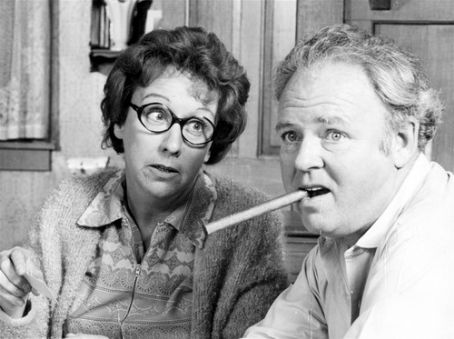
Entertainment attorney Ira Epstein, Counsel to the stars
©by Leo Adam Biga
Originally published in the Jewish Press
Veteran west coast entertainment attorney Ira Epstein, a counsel to high-profile clients in film and television, traces his show biz roots to growing-up in Omaha, where he and his brother, Arnold “Tuffy” Epstein, a well-known Omaha woodwind player, performed in area fairs and amateur shows during the Great Depression.
Born and raised here, the brothers, studied music at the prodding of their grocer parents, Harry and Jenny, the proprietors of their own mom-and-pop store, Epstein’s Grocery, originally located at 27th and Maple and later at 20th and Martha. The family lived above the stores. As kids, Ira and Tuffy were prevailed upon by their parents to entertain salesmen pitching wares. “Ira would play the accordion and I would sing,” Tuffy recalls, adding their stage mother booked them “wherever she could get us,” including two neighborhood movie theaters, the Roseland and Corby, where the boys were billed as Ruffy and Tuffy for amateur show performances. Their younger siblings, Allen and Gloria, also performed.
Graduating to the piano, Ira performed in music programs at his school, Central High, where he cut short his senior year in order to join a touring big band headed by Skippy Anderson. While he downplays his own musical talent, Ira was, in Tuffy’s estimation, “an excellent jazz pianist.” With the help of money his mother saved, Ira attended the University of Nebraska-Lincoln and took paying gigs to pay his tuition, room and board. “I worked my way through school playing in bands,” he says. Often, he and Tiffy found themselves jamming on the same stage.
By the time Ira started college, the Korean War erupted and the military draft loomed large. The then-social work major sought a field of study that would keep him in school. That’s when he and a pair of buddies decided “we’d take the law school exams. We didn’t have anything better to do.”
What began as “a lark” turned into a distinguished career nearing its half-century mark. But his frivolous attitude toward the exams nearly quashed his plans. Certain he’d failed, the silver-tongued Epstein proceeded to talk his way into law school with the personal chutzpah and charm that made him a natural for the courtroom.
As Epstein remembers, it happened this way: “The dean called me in and said, ‘Ira, you really didn’t do well on these tests.’ I told him why. That I left early every day to conduct cheerleading tryouts in my role as Yell King. That I was in every activity imaginable at Nebraska. I was a member of the gymnastics team, the student council, the Nebraska athletic board. I was active in Jewish activities, including AZA. I was president of the campus chapter of Sigma Alpha Mu. And the dean said, ‘Because of all your activities. we’re going to let you into law school.’ And that’s how I got started. I ended up enjoying the law and doing pretty well.”
In typical Epstein fashion, he ran with the opportunity, becoming editor of the campus law review and earning a law fellowship in trial procedure evidence. During his fellowship, Epstein got a chance to work with and learn under famous personal injury defense attorney Melvin Beli, who was trying a case in Omaha at the time. “He came into Omaha to try a medical malpractice case against a foot surgeon. Beli had a national reputation. He was the big man from the west coast up against a small town country lawyer, who was one of the best defense lawyers in the business. Beli took him to the cleaners…and back in those days you couldn’t easily recover against doctors. It was really tough. Beli brought me in to help do the research. He was a great scholar and a great guy. I was very impressed…I got some good experience and we got to be good friends.”

Coming out of college, Epstein harbored designs on working for one of Omaha’s prestige Gentile law firms, which he says then maintained an unspoken but nonetheless rigid country club policy barring Jews, regardless of their credentials. “When I graduated law school I was a pretty hot prospect with a lot of enthusiasm and I decided I wanted to break the barrier in Omaha and go into a non-Jewish law firm.” he says. “Well, I interviewed with most of the major non-Jewish firms…at least 10 of them…and I could not get hired. Here I was editor of the law review and, while I didn’t finish first or second in my class, I was in the top 20 percent, plus I was in all kinds of organizations, and yet I couldn’t break the barrier. That was anti-Semitism at its best. Now, it’s changed, of course.”
Then, in 1957, Epstein applied for and received a direct commission into the Air Force’s Judge Advocate General or JAG court. The recently married (to the former Noddy Schein of Omaha) JAG officer was first assigned to San Francisco, where he looked up Beli, who officed in the city on the hill, to see about joining the famed attorney’s practice and thereby supplement his low military salary. “I ended up working part-time for him while in the service. At that point I got a good flavor of personal injury law and decided that just was not my bag.” Meanwhile, his JAG duties helped him develop keen lawyering skills. “JAG was really a good experience for me. I tried a lot of cases…a lot of court martials. For being a closet introvert, I was a pretty good trial lawyer.”
He had no longer settled in his next station, cushy Long Beach, when a mid-air collision of Air Force and Navy planes over civilian air space caused severe property damage and personal injuries, resulting in a flood of claims he handled. This, too, proved a valuable training ground. “As a result of that very serious accident I spent a year settling claims for the government. It was a tremendous experience. By the time I joined a law firm in 1959 I was an experienced lawyer already.”
With his JAG commitment up, he interviewed with private L.A. law firms and got hired by an established entertainment law firm. It was familiar territory. “I felt comfortable from the very beginning,” he says. “I was always interested in entertainment. It was appealing to me.” Besides, as a former performer, he understood the fragile creative personality. “It’s not so much just temperamental artists, it’s temperamental producers, too. They’re all the same. They all have that mind set, which they’re entitled to. It’s an ego business. You have to have a particular kind of mentality to represent them. You have to be pretty patient. You have to be more of a psychologist, bordering on a psychiatrist, than a lawyer.”
Among his first clients was Larry Harmon Productions, whose stable of artists included TV’s Bozo the Clown. Another Harmon artist, animator Lou Scheimer, became one of Epstein’s closest friends. When Scheimer left Harmon to start his own animation shop, Epstein continued representing him. At the time, there were only a few independent animation companies, and when Epstein’s boss ordered him to drop Scheimer to avoid potential conflicts with competing animators, Epstein remained loyal to his friend. “I said, ‘Well, I’d just as well drop the firm than drop the client,’ which was a dumb thing on my part because the guy had nothing going. That was 1963. So, I went out on my own with this partner, and don’t ask me why, but we got a lot of clients. We were doing pretty well, only my friend Lou Scheimer was doing nothing.” That soon changed when CBS plunged into Saturday morning animation and a major player in comic books, National Periodical, sought somebody to animate their signature Superman franchise. Scheimer got the job and Epstein bought a piece of his studio, Filmation.
“Superman launched the company and really got me started in animation. After Superman we started doing all the action heroes. Batman. Aquaman. Captain Marvel. Then we branched into other animation series. We did Fat Albert. We did Masters of the Universe — that was a big series. We ended up selling the company in 1969 to a cable company called Teleprompter that was the predecessor of all the big cable companies. Teleprompter ended up selling to Westinghouse and as a result we made quite a bit of money for young guys at the time.”
Outside animation, a good share of Epstein’s early clients were in the music business. When he was still a law firm employee in the early ‘60s, he did work for Liberty Records, a kitsch pop label whose recording artists included Julie London, Bobby Vee and the Chipmonks. “I learned a little about the music industry, but I knew music anyway.” When he opened his own firm, he rode the wave of the soulful black music movement. “I set up the California corporation for Motown Records, which then moved from Detroit to Los Angeles. I worked with many Motown artists. My personal client from their stable was Hal Davis, who wrote and produced many Jackson 5 and Diana Ross hits.”
Then Cooper set about reinventing himself and his practice again. “In 1975 I left my then partner and went with another attorney, Jay Cooper, who was and still is the outstanding music lawyer in the country.” With the addition of a third partner, the firm of Cooper, Epstein and Hurewitz became a player in the entertainment law arena for 20 years. “We started with about six lawyers and built it up to about 60. We had one of the best entertainment law firms in Los Angeles,” he says. “We had a lot of good lawyers. We had a lot of good clients, It was really a major firm.”
Although Epstein did select legal work for legendary stars Marlon Brando, Barbra Streisand and Mary Tyler Moore, his biggest client during this time was Carroll O’Connor, the late actor forever identified with the role of Archie Bunker on the classic, ground-breaking CBS series All in the Family. “I represented Carroll through All in the Family, and all his battles with its producer Norman Lear, and up through his last series, In the Heat of the Night. I also represented him throughout all his problems with his late son and the lawsuits that evolved from that.”
More than a client, O’Connor was a friend, Epstein says. “We had great rapport with each other. We became extremely close. I shared all his joys and sorrows. It was a lasting relationship. I still represent the O’Connor estate.” Bigoted Archie Bunker was far removed from the man Epstein knew. “He was not that character. He was the antithesis of Archie Bunker. He was an extreme liberal. A champion of human rights.” Given that Epstein is a self-described “extreme conservative,” their friendship made for “an interesting relationship.” He says as different as O’Connor was from A.B., the actor struggled escaping the persona he so indelibly fixed in people’s minds. “I represented him on Broadway, where he was never able to have a successful play. It just wouldn’t work. He got so closely tied to the role of Archie Bunker that the public just wouldn’t buy him as a legitimate stage actor, where he got his start. But he was a great actor and a wonderful guy.”

The television landscape Epstein and his clients knew in the ‘70s an ‘80s was vastly different than the one that’s emerged today. Back then, the medium centered around the Big Three networks, monolithic television-focused businesses which got most of their product from independent producers. Today, technology has created an expanded television pie sliced up among dozens of networks and hundreds of channels while at the same time economic forces have seen a consolidation of power, programming and production among a few major multimedia giants. “The television business has been considerably impacted by consolidation,” he says. “An independent television producer today doesn’t have a chance because the majors have taken over almost all of the production. It’s all pretty much integrated vertically. It’s all just controlled by a very small group of people.”
Making television deals for clients today requires Epstein know more than just what the U.S. television market will bear. He must also be well-versed in foreign distribution and in the home video and spin-off markets. “The business has changed a lot. There was no such thing as a foreign television market in the early years. Now, foreign markets produce about 50 percent of the income for television series. With the advent of home video and product merchandising, I have to know these aspects. If you do a major animated show like Masters of the Universe, your income is coming out of merchandising as much as it’s coming out of television. I made a deal a couple years ago bringing the Japanese animated series, Yu-gi-oh to this country and it made all its money in the merchandising area.”
Other forces impacting his work include the ever changing home entertainment market, which has seen VHS and laser disk formats supplanted by DVD, and the proliferation of cable TV and its ever expanding programming menu to serve an insatiable viewing habit. In this wide open environment, anyone or anything can be a hit, as evidenced by the Reality TV phenomenon that makes people from all walks of life instant celebrities. In his quest to stay current, Epstein represents a professional gambler trying to make it on the popular TV poker playing circuit. He also represents Peter Funt, producer of Candid Camera and the son of the show’s creator, the late Alan Funt, who did Reality TV before it had a name. The growth of televised sports and the birth of sports celebrities is another sea change, says Epstein, who’s “done deals” for such figures as George Foreman and Hulk Hogan.
So. what’s the next big thing? Epstein says a mass-market, user-friendly technology to download movies off the Internet is sure to one day replace DVDs by virtue of the ease, speed and convenience of select-and-click home movie viewing.
By 1994, Epstein resigned as managing partner of Cooper, Epstein and Hurewitz and went into a semi-retired mode that saw him work some 10 years at Weissmann Wolf. Then, in 2002, at the urging of his former partner, Jay Cooper, Epstein joined the huge international firm Greenberg Traurig and its growing entertainment practice, where he’s rejoined his old friend. Epstein, who’s recently represented producers and distributors of mini-series and features, operates autonomously there. At age 72, he thinks of retiring, but remains too much in the game to leave now. “When I went into semi-retirement the whole idea was I would phase out and quit soon. Well, I’m still phasing out. I hope to quite real soon, believe me, but I don’t know, I seem to stay with it. I do very little of what is called the traditional practice of law. I advise my clients far beyond the lawyering. It’s fun.”
He also is a senior member of the board of directors for Image Entertainment.
A new challenge occupying much of his time these days is his presidency of the North Coast Repertory Theater in Solana Beach, Calif., whose move to a planned facility in a neighboring community he’s spearheading. His association with this theater company fulfills a dream to be “involved in the legitimate theater.”

Two days a week find Epstein in Los Angeles, attending to his law clients, and the rest of the week at his home in Rancho Santa Fe, a short drive from the theater. He and his wife Noddy are the parents of three grown sons and the grandparents of six — four girls and two boys. He rarely gets back to Nebraska these days, although he was here last fall for the 50th reunion of his Innocents Society pledge class. “We had a wonderful reunion…a lot of fun.” He stays in contact with family and “a lot of good friends in Omaha,” including former schoolmate Ben Nachman.
Related articles
- Steve Rosenblatt, A Legacy of Community Service, Political Ambition and Baseball Adoration (leoadambiga.wordpress.com)
- Allan Noddle’s Adventures in the Food Industry Show Him the World (leoadambiga.wordpress.com)
CSI: UNO/Forensic Services Unit

Image via Wikipedia
Here is a pair of stories I did for the spring 2011 issue of UNO Magazine (http://unoalumni.org/unomag), the official magazine of the University of Nebraska at Omaha, which is my alma mater (class of 1982). The stories fall in line with this particular issue’s focus on UNO alums and faculty working in various aspects of crime, safety, and justice. In the first piece I look at how a UNO faculty member provided expertise and technology to assist a local crime lab technician with valuable measurements in testing evidence from a crime scene. In the second piece I profile a UNO alum working as a crime scene technician back East and her finding a real niche for herself in the field, one that’s become glamorized by television portrayals in recent years.
CSI: UNO
He may not have any super powers, but Dana Richter-Egger does have a super spectrometer. And with a call for help from the Douglas County Sheriff’s Office in 2006, he joined the league of Omaha crime fighters.
©by Leo Adam Biga
Originally published in UNO Magazine (http://unoalumni.org/unomag)
By day, Richter-Egger is more about busting complex math and chemical equations than he is about busting bad guys. He’s an assistant professor of chemistry at UNO and director of its Math-Science Learning Center.
Four years ago, though, Christine Gabig, a forensic scientist in the Douglas County Sheriff’s Office, asked for help that only he could provide. Specifically, Gabig needed assistance determining whether glass fragments found at the scene of a crime matched shards found in a suspect’s car.
The crime occurred on Dec. 5, 2005. An Omaha Police Department undercover officer was in an unmarked vehicle on a north-side street when a car pulled up parallel to his. The driver then pointed a shotgun at the officer through an open window. The officer ducked for cover, firing several rounds through his own open driver-side window at the fleeing car.
A suspect in the case emerged when a man sought medical treatment at a hospital for gunshot and glass wounds. DNA linked him to the car with shattered windows but prosecutors needed evidence that definitively put him at the scene as the driver.
Gabig did initial tests on the glass fragments in her lab, but they were inconclusive.
“I knew I needed more detailed analysis,” she says, “and I immediately thought of Dana and ICP-MS.”
The Inductively Coupled Plasma Mass Spectrometer, that is.
A sophisticated trace element analyzer that enables sensitive measurements in many fields, the ICP-MS is housed in Durham’s Advanced Instrumentation Laboratories. It was purchased in 2004 in part with a $100,000 grant from the National Science Foundation.
UNO’s general chemistry students use it to measure area lead contamination levels and to perform drinking water analysis. Gabig, a UNL graduate, learned of the ICP-MS while taking a quantitative chemical analysis course at UNO taught by Egger.
The complex machine could help her answer a seemingly simple question — whether the glass fragments came from the same source.
Help in the Haystack
“ICP-MS really provides the best detection limits,” Richter-Egger says. “It’s going to find the smallest needle in the haystack relative to other techniques available. That provides the ability to look at and compare a great many more elements. It’s like being able to identify more points on a finger print to look for the match.”
The more data points tested, the stronger the case.
Gabig’s experience studying under Richter-Egger made her comfortable with the prospect of collaborating with the professor.
“I really respected his knowledge and I thought the (math-chemistry) program was fantastic,” she says. “I learned so much that was directly applicable to what I was doing here at the sheriff’s office. Also, I made contact with these great chemists who can help me.”
Further bolstering her confidence, she says, was the knowledge that ICP-MS results are “fully accepted in the courts.” The methods were based on standard procedures provided by the American Society for Testing Materials.
“That went a long ways to helping me feel good about what we were going to do,” Richter-Egger says. “After all, there’s somebody on the other end of this thing that is going to be in court and we’ve got to be sure we do our diligence and do a good job.
“Whatever the data is I want to make sure it is the highest quality possible so that when that evidence is presented it is accurate and that it helps to lead to the right decision in the courtroom. That weighed pretty heavily on my mind as we were considering this.”
In their research, Gabig and Richter-Egger discovered that manufactured glass in vehicles can be pinpointed to within 100 feet of a production line. That information, says Richter-Egger, meant that “if we could find there’s not any difference between these two glasses then that says a lot about the likelihood they actually came from the same window.”
The glass first was dissolved in acid and added to a controlled solution. The ICP-MS then required precise calibration. The instrument evaporated water in an ultra high vacuum and applied electric fields to separate atoms by mass. The device provided a spreadsheet readout of the elemental differentiation.
Richter-Egger says it’s a process whereby “electronics, engineering and chemistry meet.” After crunching the numbers and consulting UNO statisticians, he and Gabig went back and forth over the data, questioning each other and crosschecking information.
In her report, Gabig concluded that glass fragments from the suspect’s car and the scene “likely came from the same source” based on ICP-MS test results and statistical analysis that showed a high probability of a match.
In the end, the suspect took a deal, pleading to one felony assault count and one terroristic threat charge. Since the case did not go to trial, Gabig did not testify.
The forensic scientist and the professor collaborated on a slide presentation for a UNO chemistry department seminar. Gabig has also used the presentation to educate law enforcement agencies about trace evidence analysis.
Might UNO and CSI work together on another case?
“I could envision this happening again,” Gabig says. “Making use of data analysis at the university is a big benefit.”
Learn more about the Inductively Coupled Plasma Mass Spectrometer, including animations, athttp://water.unomaha.edu
Hot on the Trail of Cold Cases
©by Leo Adam Biga
Originally published in UNO Magazine (http://unoalumni.org/unomag)
Forensic Services Unit
It’s not every girl who grows up dreaming of becoming a “bloodstain pattern specialist.”
And while that might not have been Angela (Harbison) Moore’s girlhood fantasy, it became just that while attending classes at UNO, graduating in 2001 with a degree in chemistry.
Today Moore works as a forensic technician for the Newport News (Va.) Police Department conducting crime scene evidence analysis. It’s a career choice the former Goodrich Scholar says was inspired by work she did with UNO chemistry department faculty.
“We were doing a lot of neat stuff in Dr. Richard Lomneth’s bio chemistry lab that was applicable to forensic science,” Moore says. “It really piqued my interest. It was a turning point.”
Dr. Frederic Laquer also was influential. “He taught me how to be a true chemist, how to document things, and to this day I still think of him every time I do all the little things properly,” Moore says. “It’s a great batch of professors at UNO. They’re very rigorous.”
Moore later began forensic science graduate studies at George Washington University, but with her Air Force husband stationed at Offutt Air Force Base she transferred to Nebraska Wesleyan. While in grad school she worked as a chemist at UNO, preparing solutions for use by students in the Durham Science Center labs.
In 2007 Moore joined the CSI team in Newport News, where she’s a bloodstain pattern specialist. The unpredictability of when crime happens means her schedule is forever fluid.
“You can literally be at a scene and be called to another scene,” she says. It’s a job that demands “intense curiosity and attention to detail” and the ability to multitask.
Her work entails doing bloodstain analysis at crime scenes and in the lab, writing reports, assisting with autopsies, and testifying in court. She works the cold case unit. She also teaches college courses and makes presentations.
“I like to get into a lot of things,” she says. “I always try to challenge myself to be the best I can be in life.” Next year she will attend the National Forensic Science Academy in Tennessee. “I’m pretty excited about that.”
Nothing is more satisfying then when her work helps solve a case. She says her bloodstain pattern analysis led to a man being charged with murder years after the incident. In another instance she extracted DNA evidence that helped convict a serial rapist.
Some cases linger with her.
“Once they go to court there’s resolution and I feel better about them,” she says. “The child ones are really hard to deal with sometimes. But at the same time I feel like we’re helping people out.
“When I’m at a scene with a deceased person I feel it’s the shell of a person left over. Their spirit is someplace else. The body is to be utilized as another piece of evidence that can speak for that person.”
Related Articles
- Forensics: popular science? (guardian.co.uk)
- Forensic Science Service: hero or villain? (blogs.nature.com)
- Forensic Science is a Growing Field (socyberty.com)
Sam Cooper’s freedom road

Image by vaXzine via Flickr
I saw in the paper one weekend that someone I profiled a couple years ago passed away. Sam Cooper was a Douglas County Court judge in Nebraska. I believe my late mother, Gemma Pietramale, was a classmate of his at now defunct Mason Elementary School in Omaha. He was Jewish, my mom Italian, and the school a veritable melting pot of European ethnicities. A diminutive man in terms of height, his stature in local judiciary circles ranked high, as much for his fair, gentle manner as for his legal acumen. When I met with he and his wife it was clear to see he was on the fragile side physically, but his mind and spirit were sharp, and his abiding love for America and its freedom was evident in the way he spoke almost reverently about the opportunities this nation provide his immigrant family. My story on Cooper originally appeared in the Jewish Press, and I offer it here as a remembrance of this kind little man with a big heart.
Sam Cooper’s freedom road
©by Leo Adam Biga
Originally published in the Jewish Press
Retired Douglas County Court Judge Samuel V. Cooper’s immigrant parents always told him anything is possible in America. They were living proof. Sam, too. Like them, he came from “the old country,” and like they did he’s taken what America’s offered and made the most of it.
His success as a lawyer, as a Democratic Party operative and as a judge fulfilled the family’s dream of becoming productive American citizens. His life became the embodiment of the Great American Ideal he once wrote a prize-winning essay about. None of it would have happened without his family having the courage of their convictions and leaving totalitarian Europe for freedom in the United States.
He said his father, Martin Cooper, made his way here after escaping the turmoil of war-torn Europe. Martin (Mayer) was a Russian Army conscript in World War I and was taken prisoner by the Austrian-Hungarian Army. Once released, he yearned to follow his brother Harry to America. Harry ended up in Omaha, where he built his own successful construction company. His Cooper Construction Co. built the old Beth Israel and Beth El Synagogue buildings.
But before Martin made the leap he first settled in Chelm, Poland. That fateful move led to him meeting his future wife, Ida (Chaya), who operated a candy store. The couple married and began a family. Their two oldest children, Jack and Sam, were born in Chelm.
Memories of Chelm are still with Cooper. How, for instance, his family lived in an apartment complex with a central courtyard that contained a common well from which residents drew water.
Cooper said his father could no longer ignore the itch to find something better and, so, in 1924 he embarked on a new start for the family by going on ahead of them to America. In classic immigrant tradition he planned to establish himself in some trade and then send for his wife and kids to join him. No one could have imagined how long it would take for the family to be reunited.
Martin worked for a time with his brother in the construction company but found his niche in the grocery business, said Cooper. One of the stores Cooper’s father worked for was Tuchman Brothers. With $500 his father saved, Cooper said, the enterprising man opened his own grocery store at 21st and St. Mary’s Avenue. By 1929, nearly six years after leaving his family in Poland, Cooper’s father finally saved enough to buy passage for his wife and two sons.
The image of saying goodbye to friends and schoolmates at the seder he attended is still fresh in Cooper’s mind. He recalls sailing on the S.S. Leviathan, in steerage, and arriving in New York. After a few days there a train took him, Jack and their mother to Omaha. He recalls nobody was at Union Station to meet them. A taxi took them to the address Martin had sent. The reunited family was the subject of stories and photos in the Omaha World-Herald and the Omaha Bee News.
If they had stayed in Poland just a few more years they might well have become victims of the Holocaust. Family that remained behind were never heard from again.
Sam was 8 when he arrived in Omaha. He and his family lived in back of the store.
His parents had little formal education, he said, but were quite literate and well-informed. He said his “very well read” father “read The Forward religiously. The radio, of course, had news about world events and he was very up on that.” As his father “felt his foreignness,” he said his dad took pains to improve his English and thereby better assimilate. Growing up, Cooper worked in his father’s store.
He said his mother was “a simple woman” who had small aspirations for him — desiring only that he find some stable work, perhaps a store of his own. She spoke of nothing high falutin, such as the law. Besides, where would the money come from to study a profession in college?
Cooper was a good student at Mason Grade School, where he received special help with his English language skills. He got so proficient so fast he became editor of a mimeographed school newspaper. The oratory abilities that would help make him a lawyer and, later, a judge, found him serving as MC during the dedication for a school addition. But it was at Central High School where he really shined. Active in speech and debate, his coach encouraged Cooper to enter a national essay contest conducted by the Ladies Auxiliary of the Veterans of Foreign Wars.
His entry, entitled “The Benefits of Democracy,” swept local, regional and national honors, earning Cooper a $1,000 grand prize that he used to pay his way through Omaha University. He wrote the essay at a pivotal, anxious time in world history. It was 1940. Nazi Germany was on the march. Great Britain was under siege. The entire world would soon be at war. Most agonizingly for Cooper, Jews were being persecuted back in the country of his birth.
In a fervid paean to his adopted homeland, the young patriot expressed his love for America and its democratic ideals, contrasting the freedom he and his family enjoyed here with the tyranny they would have otherwise faced abroad.
“Democracy to me is not something abstract and far off. It is with me at home, on the street, at school…It is like the very air I breathe. We do not have to sit on a special bench, nor wear a certain type of clothing…None of us need fear that somebody will report us to a storm trooper. We can read any book, newspaper or magazine that is published and they are not censored. We can go to sleep at night and be assured that we will not be awakened and be dumped across a border. We can awake in the morning and hear footsteps and know it is the milkman, not the gestapo.”
Clearly, for Cooper, the unfolding tragedy in Europe was not an abstract or remote problem. Although his parents were not political, he said they, too, followed what happened. He said his father “did get involved with some of the newly arrived people. They met like on Saturdays and discussed things — the news especially. He also helped a lot of refugees after the Holocaust to get settled.”
Economics intrigued Cooper while at Omaha U. but the practical side of him ruled the field out when, he said, he discovered “you can’t make a living at it.” His studies were soon disrupted by the war. Drafted in the Army in 1943 he ended up in the Quartermaster Corps, serving in England and Belgium. After Germany’s defeat in early 1945 he and fellow servicemen were on a ship that sailed through the Panama Canal to the Philippines. They were en route to the South Pacific to supply troops for the planned invasion of Japan. When the atomic bombs were detonated over Hiroshima and Nagasaki, the world’s bloodiest war finally came to an end. A few months later Cooper headed home.
Inspired by a friend from his youth who became a lawyer Cooper used the GI Bill of Rights to study law at Creighton University, where he completed an accelerated program that saw him get his degree in two years. This Jew delighted in the Jesuit rigor he found at Creighton.
“I enjoyed the intellectual atmosphere. Most of the professors would stir up something in your mind.”
To this day he feels indebted to the framers of the GI Bill for giving him the opportunity to complete his higher education and enter a profession that became his career. He takes offense to any suggestion that, for example, the Social Security Act was the greatest legislation ever passed. “The GI Bill is a little bit above that,” he’ll tell you.
Upon passing the bar Cooper first practiced law with Joe Friedenberg. As the courts’ Referee in Bankruptcy Friedenberg appointed the young attorney Trustee, which meant Cooper dealt with creditors and collected assets from those filing bankruptcy, netting him $5 for each case he cleared. He applied his fee toward his office rental. Later, attorney Loyal Kaplan tabbed Cooper to join him in a practice dealing with interstate and intrastate commerce applications for truckers’ routes.
Cooper next joined Jack Mayer for “a whopping sum of $50 a month and office space.” He certainly wasn’t getting rich in law. Indeed, he was barely getting by. Things were tight, especially after he married the former Judith Steinhorn of Dallas, Texas and the couple started a family. Things weren’t much more lucrative after he, Norm Denenberg and Ed Mullery formed their own law firm.
Samuel Cooper
“I think we took any type of law business we could get, including divorces, filings for bankruptcy, drunk driving cases,” Cooper said.
He first entered politics in the mid-1950s. His abiding love for the democratic process and current events led him into that rarefied sphere.
“I got interested in politics,” is how he simply puts it.
Helping spur his interest were his struggles making ends meet as a lawyer. “I had time on my hands,” he said. “The law practice wasn’t going that great…” The opportunity was there to give back to America and he chose to take it.
“In the early years I ran for the original City Charter Convention that we’re operating under now in Omaha,” he said. “There must have been about 75 candidates running for 15 positions. The idea was to write up a modern charter. We met several times. We hired an expert that had done it in other places.
“One of the features, by the way, we placed in the charter was a provision requiring the mayor to appoint a review committee at least once every 10 years to assess if any alterations were needed in the charter. And I got appointed to two subsequent Omaha Charter Study Conventions.”
The first time around, in the ‘50s, he said, “I guess I was one of the younger members of the convention.” By his second time around, in the mid-’60s, he was a veteran politico who’d done his share of canvassing and campaigning.
“I worked for the Democratic Party on behalf of Adlai Stevenson, who was sort of a hero of mine. He sounded so well in his oratory.”
Cooper beat the bushes on voter registration drives and getting people out to vote for the Democratic ticket. Twice Stevenson opposed Dwight Eisenhower in the presidential general election and twice he lost. The egg head couldn’t defeat the war hero. Cooper said the dichotomy of the candidates then reminds him of the current presidential race that pits an intellectual dove in Democrat Barack Obama against a war hero hawk in Republican John McCain.
Election nights particularly appealed to Cooper. Whether his candidate won or lost, it was the culmination of the democratic process in action. Besides, he said, he enjoyed the party atmosphere on those electric nights full of anticipation and excitement. The hopes and efforts of weeks of work came to a head.
Omaha lawyer and political boss Bernie Boyle introduced Cooper to then-Nebraska Governor Ralph Brooks, who was responsible for Cooper becoming further entrenched in the political apparatus when he appointed the up-and-comer Douglas County Election Commissioner. “That was a fun job,” Cooper said. Again, he most fondly recalls the election night buzz that prevailed as ballot boxes came in and the results tallied. His wife made things homey by bringing in pans of baked chicken and all the fixings to tide Sam and his staff over as they worked into the wee hours.
Asked what he thinks of the ballot irregularities that have surfaced in recent U.S. general elections. he said, “We didn’t have any of those problems” under his watch at city hall. The controversy attending the disputed Florida results did not happen when Cooper presided over a recount here. When illness forced incumbent John Rosenblatt to retire in ‘61, the mayoral race came down to a dead heat between Jim Green and James Dworak. Green lost by a slim margin — a few hundred votes, Cooper recalled. The law required a recount. Cooper oversaw the process and he said the result “came pretty close to that same number.” End of story.
Cooper’s calm, cool demeanor and professionalism in that potentially volatile situation would become his trademark.
In 1964 Cooper once again took a leadership position within his party by serving as Douglas County Democratic Party Chairman, an experience he termed “great.” He said that year’s state convention “was one of the finest conventions we’ve seen here.” President John F. Kennedy had been assassinated the year before and as a memorial Cooper had printed “a sort of farewell” salute with photos and sayings of the slain leader of the free world.
By the fall of ‘68 the nation was reeling from the assassinations of three more leaders who inspired hope — Malcolm X, Martin Luther King Jr. and Robert Kennedy. Civil unrest plagued many big cities. Anti-war protests mounted. Amid this incendiary backdrop the rancorous Democratic National Convention unfolded in Chicago, where youth demonstrators were brutally dispersed by city boss Mayor Richard Daley’s thug police force outside the convention hall.
Cooper was there as an alternate delegate — not in the melee on the streets but inside the contentious, smoke-filled convention that finally nominated Hubert Humphrey. Chicago wasn’t his first national convention but it was his most memorable. While he didn’t witness any overt violence with his own eyes he said the wire mesh covering the windows of the bus that transported him and fellow delegates from the hotel to the hall was a stark symbol of the discord.
“We didn’t see much of the demonstrations going on,” he said. “We heard about it. Speakers talked about it.”
Reform legislation in the Nebraska Unicameral aimed at modernizing the county court system resulted in Cooper throwing his hat in the ring with other lawyers vying for a spot on the bench. Cooper won election in ’72 and later was retained. He said James Moylan was “very helpful in my election.”
Wearing the judge’s robe seemed a good fit for Cooper.
“When the opportunity came along,” he said, “it looked like steady money coming in and I thought I’d like the position. People said I had the temperament for it, and I think I did. I’d listen to both sides fairly and try to do the right thing in the case.
Did he enjoy the position as much as he thought he might? “Yes, very much so,” he said, adding he liked “the contact with lawyers and the contact with cases themselves.”
The country court’s “high volume” docket kept things humming. “I mean, we didn’t shy away from cases,” he said. “We had multiple jurisdictions. We had to get things done, which we did. We all kept busy. We had to be there at a certain time to start the court and to process the cases. On the other hand, we usually got through by 4:30 or something like that.”
He liked the variety of cases he presided over — from criminal to civil to probate matters. Another judgeship, perhaps in a higher court, never interested him. After 32 years on the bench he retired in 2005.
If his years on the bench taught him anything, he said, it’s that “it’s far more important to be fair than to be tough. It’s important not to lose patience, to listen and to give everybody a fair hearing.”
He still keeps his hand in the law by volunteering as a mediator with the Douglas County Prosecutor’s Office. In a non-binding atmosphere he meets with parties embroiled in legal disputes to discuss their case, putting his skills for communication and deliberation to work, sometimes getting the two sides to settle out of court or to drop the matter all together.
One of his four children, son Justin Cooper, followed him into the profession. “It’s nice to have another lawyer in the family,” the proud papa said.
Some time ago Sam Cooper wrote down reflections about his life. The gratitude he expressed in middle-age is of a man who’s never grown cynical or bitter about the state of the nation that he loves:
“In looking back over those years I consider myself a very lucky person. Lucky to have missed the Holocaust in Poland. Lucky to have come to America, a country of great opportunity, a country that has been very good to me. Lucky to have missed being injured or killed in my Army years. Lucky to have been educated as a lawyer under the GI Bill…Lucky to have become a judge, to have a loving wife, a happy marriage and four children who have grown into exceptional and successful adults and parents, and 11 grandchildren of whom I’m very proud to be my offspring.”
The man he’s become is very much what he imagined as a boy, when he wrote these words as a salute to the democratic ideals that offered him the opportunity to be whatever he wanted to be:
“Democracy is much more than the declaration of independence, the constitution and our laws…It is beyond paper and ink. There is something about the American people that continually seeks freedom. Perhaps it is our heritage and principles. Perhaps it is the ideals that have so long been embedded in our hearts. Perhaps it is the realization that men can live together in peace and happiness. Whatever it is I am glad I might take part in these benefits…I hope I can find my place in this American democracy.”
Sam Cooper found his place all right — as a dedicated public servant and defender of liberty and justice for all. At age 86 he lives the promise of America every day.
Related articles
- Back in the Day, Native Omaha Days is Reunion, Homecoming, Heritage Celebration and Party All in One (leoadambiga.wordpress.com)
- Sun Reflection, Revisiting the Omaha Sun’s Pulitzer-Prize Winning Expose on Boys Town (leoadambiga.wordpress.com)
- Dick Holland Responds to Far Reaching Needs in Omaha (leoadambiga.wordpress.com)
- A. Marino Grocery Closes: An Omaha Italian Landmark Calls It Quits (leoadambiga.wordpress.com)
- Community and Coffee at Omaha’s Perk Avenue Cafe (leoadambiga.wordpress.com)


 Leo Adam Biga's My Inside Stories