Archive
Nick and Brook Hudson, Their YP Match Made in Heaven Yields a Bevy of Creative-Cultural-Style Results – from Omaha Fashion Week to La Fleur Academy to Masstige Beauty and Beyond
Every city has its dynamic young professionals who help shape or in some cases help reset the creative-cultural-style bar, and that is most definitely the case with Nick and Brook Hudson of Omaha. They are a much-admired couple who embody the having-it-all ethos in their personal and professional lives. Their contributions to Omaha’s emerging aesthetic covers fashion, beauty, social entrepreneurship, education, and night life. Nick’s Nomad Lounge became THE high-end night spot in the Old Market. The Halo Institute he co-founded with Creighton University has now been absorbed into that school’s College of Business, where Brook was the marketing director. He co-founded Omaha Fashion Week and now he and Brook together are taking it to new heights. The same holds true for Omaha Fashion Magazine. And now the couple is coalescing OFW’s support for the burgeoning Omaha fashion scene with the new Omaha Fashion Institute, which you’ll be reading more about here in the coming months. Nick also has his beauty (Masstige Beauty) and social networking (Xuba) businesses and Brook has her mentoring program/finishing school, La Fleur Academy. There are a lot of moving parts in their life and work and all their activity touches a wide range of people and organizations here and beyond. You’ll find other stories on this blog about some of the things they’re involved in, including Omaha Fashion Week, an event growing so fast that it’s gaining some regional and national attention. There’s also a profile here about Nick. I am sure to be revisiting their story again down the road as they engage in new endeavors and adventures.

Nick and Brook Hudson, Their YP Match Made in Heaven Yields a Bevy of Creative-Cultural Results – from Omaha Fashion Week to La Fleur Academy to Masstige Beauty and Beyond
©by Leo Adam Biga
A version of this article was published in Metro Magazine
As fabulous Omaha young professional couples go, Brook and Nick Hudson are stars.
The former Brook Matthews won the 2004 Miss Nebraska crown. The Blair native and University of Arkansas graduate completed her MBA in 2010 at Creighton University, where she’s marketing director in the College of Business. She was honored as the school’s graduate woman of the year and the Omaha Jaycees have named her an Outstanding Young Omahan.
She volunteers with the American Heart Association, the Omaha YMCA and Junior League of Omaha. Her passion for etiquette and self-improvement led her to launch La Fleur Academy, a mentoring program for empowering girls and young women to tap their inner beauty and potential through the social graces.
“I love to see the difference I can make when I work one-on-one with girls.” she said.” It’s one of my favorite things to do.”
Advising her on La Fleur is hubby Nick, a business development and strategic marketing veteran of international beauty brand companies. He owns Nomad Lounge in the Old Market and founded Omaha Fashion Week. OFW grew out of Nomad, which doubles as cool entertainment venue and creatives hang out. Nomad showcases talent through meet-and-greets, exhibitions and performances.
The native Brit’s entrepreneurial instincts led him, in partnership with Creighton, to form the Halo Institute, a nonprofit incubator for nurturing start-up companies with a social entrepreneurship spirit. He’s now pursuing a new for-profit venture, Xuba, that seeks to leverage social networking sites with commercial opportunities.

Just as Nick consults La Fleur, Brook lends her marketing expertise to OFW and its goal to be a sustainable support system for the local design community.
Teamwork is a defining characteristic of this couple’s relationship.
“Our encouragement of each other in our endeavors really is what drives a lot of success,” said Brook. “We rely on each other, and we spend a lot of time talking and brainstorming and coming up with ideas.”
“We have really good complementary skill sets,” Nick said.
Their openness to being inspired by one another helped bring them together.
“We realized we are more than the sum of our parts, and I think that’s where we have an opportunity to make an even bigger impact in the community than we did as individuals,” said Brook. “We both feel confident we’re capable and intelligent and able to make a difference. It energizes us to be able to employ all of those talents for the betterment of our community. I think that’s what keeps us going.”
Said Nick, “Most people have different kinds of hobbies, but I think for me my hobby, my passion is I just love helping people create things and achieve things, and I think Brook and I are similar in that.” As Brook puts it, “The whole idea is building other people up and helping them achieve their dreams.”
“I’m not the best at doing certain things myself, but I’m quite good at encouraging other people to do things, and that’s just really satisfying,” said Nick.

Paying it forward is “a great reward,” said Brook, adding, “People have limitless opportunities — the only limits in life are the ones we place on ourselves — and I think Nick and I are all about helping people see past those self-imposed limits.” It’s no different than how they push each other. It’s why she calls Nick her “chief go-to mind” when she needs to run an idea by someone. He does the same with her.
“I’m learning so much from my best friend and from my soulmate because Brook is probably the best person at telling me where I need to improve and what I need to work and what I need to think about better or what can we do better,” said Nick.
“I appreciate him so much for encouraging me and my dreams — I don’t think I could do it all without him,” said Brook. “Nick’s the dreamer and I’m the realist. When I need to think bigger I call Nick and when Nick needs to be brought down to reality he calls me. It’s a beautiful thing. We’re good at giving each other tough love and encouragement when it’s needed. Not a lot of couples can communicate as openly as we do.”
A shared interest in social entrepreneurship helps.
“I think it’s just integral to the spirit of the young professional and what’s important to us. We want to be connected to something greater than ourselves and we want to collaborate to solve problems,” she said. “Omaha’s in an interesting place in its evolution because there will very soon be a big shift in power and wealth in the community and we’re all sitting back wondering, Well, who’s going to be the next Warren Buffet or next big corporate titan in Omaha? Looking around, it could be any one of us. It’s a great time to be a young professional in Omaha.”
“It’s pretty amazing what groups of young professionals are doing around Omaha — I’m really impressed,” said Nick. “I think there’s still so much more to do. I’m still just learning what the potential is and how we can do things.”
With Nomad, Halo, Fashion Week and La Fleur, the couple are actively engaged in helping people achieve their dreams.
Related articles
- Living the Dream: Cinema Maven Rachel Jacobson – the Woman Behind Film Streams (leoadambiga.wordpress.com)
- Omaha Film Festival Celebrates Seven Years of Growing the Local Film Culture (leoadambiga.wordpress.com)
- Omaha Fashion Past (leoadambiga.wordpress.com)
- Nancy Bounds, A Timeless Arbiter of Fashion Beauty, Glamour, Poise (leoadambiga.wordpress.com)
- Art as Revolution: Brigitte McQueen’s Union for Contemporary Art Reimagines What’s Possible in North Omaha (leoadambiga.wordpress.com)
- The Mastercraft Revival: A Building Dedicated to Craftsmanship Finds New Life as a Creatives Den (leoadambiga.wordpress.com)
“Memories of the Jewish Midwest: Mom and Pop Grocery Stores, Omaha, Lincoln, Greater Nebraska and Southwest Iowa”
“Memories of the Jewish Midwest: Mom and Pop Grocery Stores Omaha, Lincoln, Greater Nebraska and Southwest Iowa”
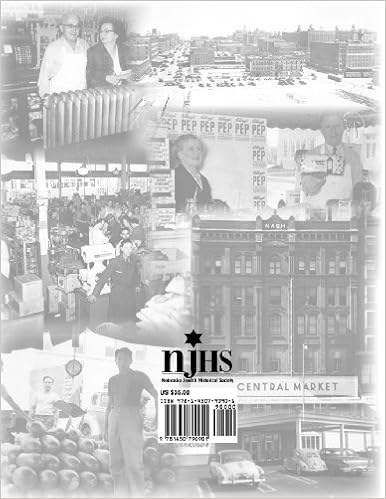
I contributed to a new book out by the Nebraska Jewish Historical Society that is an appreciation of the Jewish Mom and Pop grocery stores that once dominated the landscape in Omaha. From time to time I am posting an excerpt from the book to give provide a sample of the robust story it tells. For this post I chose a front section essay I wrote about the long defunct wholesale market that operated just southeast of downtown and that today is home to the popular historic cultural district known as the Old Market. While the market didn’t contain grocery stores, its many wholsalers serviced grocers. It was a bustling center of commerce abd characters that is no more.
For additional information or to order a copy of the book, contact Renee Ratner-Corcoran by e-mail at rcorcoran@jewishomaha.org or by phone at 402.334.6442.

Excerpt from the book-
The Old Market: Then and Now
©by Leo Adam Biga
Omaha’s Old Market is a National Register of Historic Places district abuzz with activity. Bounded by 10th Street on the east, 13th Street on the west, and extending from Leavenworth Street on the south end to Howard Street on the north end, the character-rich area is an arts and entertainment hub. Restaurants. Speciality shops. Art galleries. Performance spaces. Many venues housed in late 19th and early 20th century warehouse buildings.
Street performers and vendors “set up shop” there. Horse-drawn carriages transport fares over cobblestone streets. Streams of shoppers, diners, bar patrons, art lovers, theatergoers, sightseers, and residents file in and out, back and forth, all day long, through the wee hours of night. Summertime finds folks relaxing at restaurant and bar patios. Fresh flowers adorn planters arranged all about the Market.
Fifty years ago and for a half-century or more before that these same streets and warehouses were equally busy, the commerce transacted there just as brisk. Only instead of trendy eateries, boutiques, galleries, and studios, the urban environs contained Omaha’s wholesale center for fresh fruit and vegetables. Whatever was in season and sellers could lay their mitts on, the market carried it. Now and then, owing to untimely droughts or freezes in prime growing areas, certain items were in short supply. During wartime, rationing made much produce scarce. But most of the time the Market offered a great variety of fresh produce at reasonable prices.
In an earlier era, the Market, along with the Jobbers Canyon complex of wholesale and mercantile warehouses, meat packers, and outfitters a bit further to the east, supplied surveyors, land agents, speculators, railroad workers, steamboat crews, military personnel, trappers, and pioneers with the stores needed for settling the West. Jobbers Canyon, however, went the way of the wrecking ball, a fate that could have easily befallen the Market if not for a few interventionists.
The Way It Was
The Omaha Wholesale Produce Market House Company was an officially incorporated consortium of wholesalers and the Omaha City Market the city designated marketplace where the local produce industry concentrated. This American equivalent of the Middle Eastern bazaar or Old World farmer’s market consisted of two fundamental parts.
Multi-story brick buildings housing warehouses, mercantiles, and offices were where the major produce wholesalers and brokers did high volume, bulk business with major buyers. A single wholesale deal might have moved 40,000 pounds of watermelons, for example. At street level, the warehouses featured a system of docks and bays where trucks carting loads of produce parked, their contents emptied out onto sidewalk pallets for immediate resell to buyers or into storage for later resell.
Perhaps the biggest Jewish wholesaler in terms of volume handled was Gilinsky Fruit Company, whose two-story warehouse and offices became home to the French Cafe. When Sam Gilinsky’s business closed in 1941 several former employees, many of them Jews, opened their own wholesale businesses and wrote their own chapters as successful Market entrepreneurs. One of Omaha’s most recognizable and nationally branded businesses, Omaha Steaks, owned by another Jewish family, the Simons, did business in the Market when still known as Table Supply Meat Company.
An open air market located in a paved lot at 11th and Jackson Street saw vendors and peddlers doing business with neighborhood grocers and retail consumers. The merchants selling there rented stalls, where they displayed their wares in bushel baskets, barrels, crates, boxes, and bags arranged on benches. The hawkers benefited from a sheet metal canopy overhead. Tarps were stretched out for additional protection. Old-timers who worked there will tell you the conditions made for long days during the heat of summer, when the canopy and tarp would get burning hot to the touch and make it like a sauna underneath. Standing on the hard cement was tough on shoes and feet.
Across from these vendors were local truck gardeners and farmers, who turned an alleyway into a market of their own, selling bed loads of produce.
These were small family businesses. Men made up the vast majority of Market workers, but some women and children worked there, too. For most, it was a humble living, but more than a few sons of immigrant vendors and peddlers went on to become doctors, lawyers, educators, and to enter many other professions. In this way, the Market was an avenue to the American Dream for first and second generation families here.
The marketplace attracted a small army of workers and customers. Suppliers included farmers, gardeners, and greenhouse owners. Wholesale produce dealers ranged from giant operators buying and selling in train car lots or truckloads to smaller operators. The middle men included brokers, jobbers, and distributors.
Most of the vendors and peddlers were immigrants, including Jews from Russia, Poland, and Germany, along with Syrians and Italians. Yiddish was among the many languages heard wafting through the Market. The foreign-born merchants’ raised, heavily-accented voices mixed with various American accents to create a music all their own. Then there was the sonorous strain of the district’s very own Italian tenor, “Celery John” (Distefano), who would serenade the marketplace when the mood struck.
Veteran produce marketer Sam Epstein said Celery John “had a voice like you’d hear in an opera house,” adding, “It was absolutely marvelous to hear him.” Epstein said he would stand outside Celery John’s place and kibbitz as the erstwhile Caruso made up “soup bunches” and “plant boxes.” “His personality and his demeanor were just the same as his voice,” said Epstein “Just a wonderful human being.”
Don Greenberg, whose family’s wholesale Greenberg Fruit Company had a decades-long run in the Market, recalled Celery John once leading a group of workers in a rendition of the “Happy Birthday” song. The occasion celebrated the birthday of a veteran, well-liked merchant. The guys even got up enough dough to go in on purchasing a rather extravagant gift then — a television set.
It was a place where men in smocks, aprons, overalls, or dungarees and with nicknames like Dago Pete, Crowbar Mike, Montana, Shoes, Red Wolfson, and Popeye rubbed shoulders with men in suits. Brothers George and Hymie Eisenberg became known as the Potato and Onion Kings for the considerable nationwide market share they held supplying spuds and onions to large food processors.
The Eisenbergs had a much humbler beginning though as a family of produce peddlers. Many immigrants had established routes in neighborhoods around Omaha and on back country roads, where in the early days they traveled by horse and wagon before modernizing to trucks. Peddlers often operated stalls in the Market, too. Some peddlers and vendors, like the Eisenbergs, eventually became wholesalers.
The primary buyers at the Market were grocers, restaurants, hotels, institutions, and major food processors. Just like today’s Omaha Farmers Market, the general public went to get their pick of fresh produce during the summer from the open air market that operated there. Day in, day out, the Market saw a flow of people, trucks, and goods. George Eisenberg can attest to “a lot of hustle and bustle, a lot of competition” that went on.
Changing Times
The Market thrived as a produce center from at least the first decade of the 20th century, when it was incorporated and a city appointed superintendent of markets or market master put in place to collect rent, enforce rules, and settle disputes, through the late 1950s. By the early ‘60s the Market declined as wholesalers either disbanded or moved west, the peddler trade disappeared, and many neighborhood and country grocers went belly up. The emergence of supermarket chains had a ripple effect that drove the small independents out of business, thereby eating into the Market’s trade.
But the real death knell came when large grocers pooled their resources together to form their own wholesale cooperatives. The combined purchasing power of coops let them buy in huge quantities at bargain rates that smaller wholesalers and coops could not match. Grocers or supermarkets naturally bought from their own coop because they owned shares in it and any profits were returned as dividends.
The same few blocks comprising that wild and woolly marketplace then and that make up the more cultivated Old Market today were, by comparison, virtually barren of people by the mid-1960s, the huge warehouse structures largely abandoned and fallen into disrepair. The open air City Market was closed by the City of Omaha in 1964.
The overall Market district was saved from the wreckage heap by the vision and action of a family with longstanding business and property interests in the area, the Mercers, and by other enterprising sorts who despaired losing this vital swath of Omaha history.
During the late ‘60s-early ‘70s what was once the produce center of Omaha began undergoing a transformation, building by building, block by block. The renovations continued to take hold over the better part of a decade. The labor intensive, working man’s market that revolved around fruit and vegetable sales gave way to head shops, galleries, theaters, and restaurants that appealed to the counter culture and sophisticated set. What is known now as the Old Market emerged and the area gained landmark preservation and historic status designations in 1979.
By the late ‘70s, people began moving into loft-style living spaces above storefronts, an update on an old tradition that increasingly gained new traction. So many Old Market buildings have since been converted into mixed uses, with apartments and condos on the upper floors and businesses on the ground floor, that today the district is more than just a commercial center and tourist destination, but a urban residential neighborhood as well.
Not every remnant of the early Market disappeared. At least one old-line vendor, Joe Vitale, hung on through the 1990s.
Character and Characters
Old-time sellers were usually loud, animated, sometimes gruff, and by any measure assertive in trying to reel buyers in for themselves and thus steer sales away from competitors. If a vendor thought a rival was out of line or infringing on his turf or undercutting prices or, God forbid, stealing sales, there might be heated words, even fisticuffs. Customers did not always get off easy either. Some old-time vendors took exception if someone fussily handled the merchandise without purchasing or questioned the quality or price of the goods.
Sam Epstein recalled the time that Independent Fruit Company partners Sam “Red” Wolfson and Louie Siporin had just unloaded a batch of tomatoes when Tony Rotollo walked up to pick over the goods.
“Old Man Rotollo apparently asked Sam the price of tomatoes and he told Sam it was too high. Sam, who was loud and had a temper, started raving. He had a voice you could hear from miles away. Sam yelled, ‘Too high, you SOB I’m treating you right. You get out of here and don’t ever come back.’ And Louie, the refined guy of the business, came running out and said, ‘For God’s sakes, Sam, don’t talk like that out here. You gotta call him an SOB, take him in the back room.’ And Sam said, ‘He’s an SOB out here, he’s an SOB in the back room.’ Well, Old Man Rotollo went on his way and about a half hour later was back buying tomatoes from Sam, the two of them getting along just fine.”
Another hot head Epstein treaded lightly around was a banana house operator known to chase out persons he disliked with a sharp, curved banana knife.
Vendors had to be more brazen then because: (1) for most of them this was their single livelihood and so every sale mattered; and (2) most merchants followed the tradition practiced back in the Old Country, where markets were more expressive, the competition more cut throat, where decorum was put aside and survival meant outshining and outshouting the vendor next to you or across from you. You had to have some chutzpah and some get-and-up-and-go initiative in order to make it.
The give-and-take haggling, bartering, and bickering, good-natured or not, that was part and parcel of the classic marketplace is largely a thing of the past these days. For the most part, people today pay whatever price is set for goods without making a fuss. It’s all very polite, all very pleasant, all very banal.
George Eisenberg and his brother Hymie worked with their father Ben in the Omaha City Market in the years before, during, and after World War II. The brothers’ father went into the wholesale business with Harry Roitstein and the Eisenberg and Roitstein Fruit Company survived into the 1950s and beyond.
One of the few other Jewish wholesalers to last that long was Greenberg Fruit Company. Don Greenberg joined his father Elmer in the family business in 1959. He said when he got involved most of the company’s buyers were small independent grocers, many of them Jewish and Italian. Even as late as ’59, Greenberg recalled, “parking places were at a premium” in the Market. Over time, the traffic trailed off, so much so that Greenberg Fruit left to build a new warehouse, in tandem with another Jewish wholesaler, Nogg Fruit Company, in southwest Omaha.
“When we moved out of the Market,” said Greenberg, “parking spaces were no longer at a premium and there were very few independent grocers left.”
The Eisenberg family’s produce dealings nearly spanned the arc of the Market, as the patriarch, Ben, went from peddler to vendor to wholesaler. Son George then took the business into an entirely new realm by specializing in the wholesale potato and onion field. He found a lucrative niche selling directly to food processors. But it all began with Ben and his horse and wagon, later his truck, and then the stalls on 11th and Jackson Street.
“My dad didn’t speak really sharp English because he came from the Ukraine. He didn’t speak any English when he got here, but he learned to speak survival English. Either you spoke the language or you starved to death. You had to make a living,” said George. “My dad was a really good salesman. He was very polite, businesslike, very fair. His word was his bond. He used to tell us when we were kids, ‘Don’t lie, cheat or steal.’ It pays off — people are happy to do business with you.”
Legacy, Heritage, History, Memories
As the proud son of a successful immigrant, Eisenberg is glad to see his old stomping grounds active again, filled with people jabbering, jostling, buying, and selling. But you cannot blame him for being a little wistful at the loss of the colorful, boisterous characters and antics that populated the Market back in the old days.
With sellers noisily touting their goods like carnival barkers, all packed tightly together in a kind of vendors row, each vying for the same finite customer base, there was an every-man-for-himself urgency to the proceedings. There was no place Eisenberg would have rather been.
“I felt that’s where all the action in Omaha was — in the Market,” he said. “I mean, people were shouting like, ‘Watermelon, watermelon, get your red, ripe and sweet watermelon.’ ‘Strawberries, strawberries, get your strawberries.’ ‘We’ve got Idaho potatoes here, 25 cents a basket.’ It was fun. They were all shouting to people walking in the Market to bring attention to their location. That was our advertisement — our voice.”
Occasionally, things would get a little too rambunctious for some tastes.
“The city had a market inspector, and he’d come down and tell us, ‘You guys are going to have it to hold it down. People are complaining that you’re making too much noise hawking the merchandise.’ Some people used to say that was the charm of the Market, yet some complained.
“So we’d tell him, ‘Well, we can’t sell the stuff unless they hear what we got to sell.’ And he’d say, ‘I know, but just keep it down.’”
Eisenberg said he and his mates would then talk in muted tones, at least while the inspector was still around, but once he went on his way they would go right back to shouting. It was the only way to be heard above the din.

A typical day on the Market was not your average 9-to-5 proposition. Most vendors arrived by 4 or 5 a.m. to sell to commercial buyers seeking the best, freshest picks of the day. “If we thought we were going to be busy we might open the doors at 3 a.m.,” said Don Greenberg. “It was not unusual to work until 5 or 6 in the evening.” Some wholesalers and vendors stayed even later if business was good or if they had an excess of product they wanted to turn over before the next business day.
Greenberg remembers card and dice games as popular distractions among some Market workers, who had their favorite hangouts in surrounding cafes and other creature comfort joints. Sam Epstein, whose family bought Nogg Fruit Company from Leo Nogg, recalled that the owner of Louie’s Market often sat in on a standing card game, leaving instructions that anyone who called the Market inquiring after him be told he had not been seen. Epstein recounted how a broker known to have dalliances with women at work worked out a system whereby a friend would “pound like hell” on a metal pole downstairs as a signal someone was coming to interrupt his latest conquest.
Epstein’s business dealings in the Market began as a supermarket buyer. He made the rounds down there selecting and buying quantities of produce from truck gardeners or farmers, including a Jewish man named Herman Millman. Epstein worked for Nogg for a time and later became a part owner, eventually buying him out. Epstein said he and his family kept the Nogg Fruit Company name intact because “it had 60 years of name recognition.”
He said in a market the size of Omaha’s word got around fast about who you could and could not trust in business dealings. “There’s no secrets around the Market,” Epstein said.
Everything was done on a handshake and verbal basis then. All the transactions figured in ledger books or in people’s heads.
As the independent grocers were dying off, Nogg Fruit got into the food service and frozen food business and flourished in this new niche.
The Market’s band of brothers hung on as long as they could before the business faded away. As the big operators and small entrepreneurs left, one by one, and then all together, soon only photographs, articles, and memories remained.
The brawny Industrial Era buildings that survive in new guises today are physical testament to what once went on there. But aside from a few signs on building walls, some produce scales, and maybe some hooks for hanging bunches of bananas, tangible evidence is hard to see.
If you just close your eyes, though, perhaps you can imagine it all: the dance and ritual of shipments coming and going out; displays of produce being loaded, unloaded, handled, and haggled over; the jabbering commerce playing out from pre-dawn to past dusk between men in jaunty hats, their cigarettes, cigars or pipes ablaze. It was a colorful, lively place to work in and to shop at.
And maybe, just maybe, if you happen by the Omaha Farmers Market some Saturday, in your mind’s eye you can picture an earlier scene that unfolded there, and know that all of it, past and present, is part of an unbroken line. Just like it has always been, it remains a place where people come together to buy and sell, bargain, and trade. The memory of what once was and what still is brings a smile to George Eisenberg’s face.
- Memories of the Jewish Midwest: Mom and Pop Grocery Stores, Omaha, Lincoln, Greater Nebraska and Southwest Iowa (leoadambiga.wordpress.com)
- The Enchanted Life of Florence Taminosian Young, Daughter of a Whirling Dervish (leoadambiga.wordpress.com)
- Overarching Plan for North Omaha Development Now in Place, Disinvested Community Hopeful Long Promised Change Follows (leoadambiga.wordpress.com)
- From the Archives: Golden Boy Dick Mueller of Omaha Leads Firehouse Theatre Revival (leoadambiga.wordpress.com)
Art as revolution: Brigitte McQueen’s Union for Contemporary Art reimagines what’s possible in North Omaha
Change is coming to North Omaha and one of the change agents is Brigitte McQueen, one of those transplants to this place who brings a new energy and perspective that can help the community move in positive new directions. She’s just begun her work there with her fledgling Union for Contemporary Art but my bet is that she and her organization will wind up being long-term playera and change agents who make a difference.

Brigitte McQueen
Art as revolution: Brigitte McQueen’s Union for Contemporary Art reimagines what’s possible in North Omaha
©by Leo Adam Biga
Soon to be published in The Reader (www.thereader.com)
Brigitte McQueen is hell-bent on revolution.
The entrepreneurial arts maven first made a splash with Pulp in Benson. Then she revived the Bemis Underground in the Old Market. Now she’s about to shake up North Omaha via The Union for Contemporary Art, which she could have located anywhere.
She chose North Omaha.
“It’s one of the only communities in Omaha that does not have a dedicated, consistent art presence, and it shows in the neighborhood. There’s very little public art, the kids are not getting it in their after school programs, it’s not in the schools,” she says. “Kids there can go for weeks without seeing a piece of art or anything beautiful.”
The Union is leasing two eyesore buildings on a mostly empty plot between Patrick Ave. and Burdette St., and 24th and 25th Sts. One structure housed the landmark Fair Deal Cafe, where Charles Hall served soul food and welcomed community activists. The other is the former St. Martin de Porres food pantry.
-
 Former St. Martin de Porres Center is now home to the Union for Contemporary Art
A future capital campaign will attempt to raise the $400,000 to $500,000 she estimates renovations and repairs will cost. The cafe will be gutted, save for the tin ceiling, overhead fans, booths and lunch counter, and converted into a gallery. The bunker-like pantry will be opened up with more windows and reconfigured for artist studios, a classroom, a commons area and offices. Both buildings will be refaced. The design work is being donated by Leo A Daly, Alley Poyner Macchietto and BVH.
The Union will be home to artist residency and youth education programs. Visiting artists in the Studio Fellowship will receive a stipend for supplies and access to professional development and critique. At the end of their four to six-months stay participants will get an exhibition. During their immersion experience McQueen says artists “will have to be doing community service the entire time, whether teaching a class or curating a show or working with kids. They’ll be a part of the community and leave something tangible behind. It’s all about engaging the community in a constant dialogue about the arts.” McQueen says she has several artists lined up to teach upcoming youth art classes.
Board president Watie White, an Omaha artist, says, “The Union is working off the model of not-for-profit street-level arts activist organizations” that do community-based projects aimed at addressing real issues and transforming lives and neighborhoods. In return for the opportunities given, he says, the expectation is for “the creative generation we foster to pay it forward to the community they come from.”
-
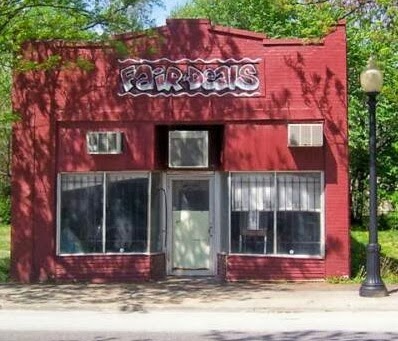 Former Fair Deal Cafe slated to be Union for Contemporary Art exhibition gallery
The Stockyard Institute in Chicago will be sending Windy City artists here and The Union will reciprocate with Omaha artists there.
“Ideally I would like to have relationships like that built with organizations all across the country so that we’re constantly sending people out but having people come in,” says McQueen.
Her “arts campus” is to include finished green space. Perhaps a sculpture garden. In three to five years she’d like to erect a new building housing artist live-work spaces and retail art bays.
As a North O resident McQueen is making a statement that contemporary art shouldn’t bypass a community based on perceptions and is creating a reason for greater Omaha to visit the area.
“Omaha is my adopted city and ever since I’ve been here I’ve been really aware of the segregation that exists. You can see the lines. It’s horrible we’ve divided ourselves up that strongly. I want Omaha to be a truly open city.
“Why can’t we build something that would provide all of this support to Omaha’s arts community and put it in a neighborhood that so desperately needs to have that influx of people? It adds a level of vibrancy to this community.”
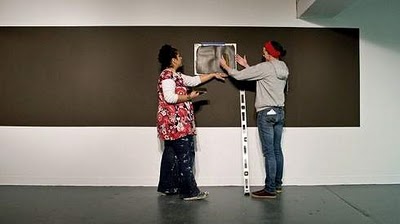
It’s about “building bridges and changing the way we think about Omaha and the lines we have made,” she says. “Nothing’s going to change until we start doing that and bringing people into the community. If I can open a small door and people from outside come to see stellar contemporary exhibitions, then maybe that’s how that migration north starts to happen.”
She says she’s doing something “dynamically different than what has been done before” to prove more than just social services or Afro-centric art-culture can flourish there.
After initial resistance she’s “overwhelmed” by the support The Union’s received from such stakeholders as the Omaha Economic Development Corporation, the Empowerment Network and the City of Omaha.
The Union is slated as the front door to a revitalized North 24’s mixed use arts- commercial-residential district.
“I think it makes perfect sense to have this place where creativity is celebrated as the entrance way and gateway,” she says.
The Union’s received grants from the Weitz Family Foundation and the Omaha Venture Group and will apply for funds to help underwrite programs and building makeovers.
Collaboration will be key. Last summer the Union partnered with Catholic Charities of Omaha on a kids art program at the Christ Child Center. It joined the Bellows Studio in bringing artist Lavie Raven here. Through Dec. 11 Birdhouse Interior Design and Birdhouse Collective is staging a Home exhibition at the Bancroft Street Market as a Union fundraiser. Early next year Union is collaborating with Peerless Gallery and Worksite on an art-in.
Until its own buildings are completely renovated some Union programming will occur off-site.
McQueen’s convinced the arts can make a difference in spurring North O’s renaissance.
“I want to make an impact. I want to change lives. It’s all about creating this cyclical process where The Union is supporting the arts and artists, the artists are encouraged to support the community and then hopefully the community feels a stronger connection and therefore wants to be more supportive of the arts.”
Up to six artists will begin using the former St. Martin de Porres space in January. A January community clean-up to get the building ready will be announced soon. Applications for the Studio Fellowship slots will be taken starting Dec. 16. Artists working in any contemporary art form are eligible to apply.
For application details and to follow Union developments visit http://www.u-ca.org.
Related articles
- Soon Come: Neville Murray’s Passion for the Loves Jazz & Arts Center and its Role in Rebirthing North Omaha (leoadambiga.wordpress.com)
- An Inner City Exhibition Tells a Wide Range of Stories (leoadambiga.wordpress.com)
- Tired of Being Tired Leads to a New Start at the John Beasley Theater (leoadambiga.wordpress.com)
- Nomad Lounge, An Oasis for Creative Class Nomads (leoadambiga.wordpress.com)
- Nancy Kirk: Arts Maven, Author, Communicator, Entrepreneur, Interfaith Champion (leoadambiga.wordpress.com)
- Native Omahans Take Stock of the African-American Experience in Their Hometown (leoadambiga.wordpress.com)
- Native Omaha Days: A Black is Beautiful Celebration, Now, and All the Days Gone By (leoadambiga.wordpress.com)
- The Ties that Bind, One Family’s Celebration of Native Omaha Days (leoadambiga.wordpress.com)
- Back in the Day, Native Omaha Days is Reunion, Homecoming, Heritage Celebration and Party All in One (leoadambiga.wordpress.com)
- North Omaha Champion Frank Brown Fights the Good Fight (leoadambiga.wordpress.com)
- A Synergy in North Omaha Harkens a New Arts-Culture District for the City (leoadambiga.wordpress.com)
- Omaha’s Malcolm X Memorial Foundation Comes into its Own, As the Nonprofit Eyes Grand Plans it Weighs How Much Support Exists to Realize Them (leoadambiga.wordpress.com)
Related articles
- North Omaha Champion Frank Brown Fights the Good Fight (leoadambiga.wordpress.com)
- A Synergy in North Omaha Harkens a New Arts-Culture District for the City (leoadambiga.wordpress.com)
- Omaha’s Malcolm X Memorial Foundation Comes into its Own, As the Nonprofit Eyes Grand Plans it Weighs How Much Support Exists to Realize Them (leoadambiga.wordpress.com)
“Portals” opens new dimensions in performance art – Multimedia concert comes home for Midwest premiere
Back in April I wrote a piece that appeared on this blog about a multimedia concert piece then in-progress called Portals. Omaha’s creative nurturing place, KANEKO, served as producer and its bow truss live event space is where some of the project’s principal filming was done. My story then – “Open Minds, Portals Explore Human Longing in the Digital Age” – quoted creative director and virtuoso violinist Tim Fain and co-lead filmmaker Kate Hackett explaining the concept behind the project. In addition to his playing and her visuals Portals features the poetry of Leonard Cohen, the music of Philip Glass and a bevy of other top composers, and the choreography of Benjamin Millepied. A preview that month gave me and a few hundred others glimpses of the work. It was stunning and definitely whet the appetite for more, certainly for seeing the finished project. The completed Portals had its world premiere in New York City in late September and last night (Oct. 5) the piece made its Midwest premiere in Omaha. The multimedia concert mostly delivered on its promise to explore the open spaces between and betwixt the real and virtual worlds. My two more recent stories below appeared just in advance of the Omaha performance and tried to further frame what Portals intended. Something I meant to include in my print Portals stories were some notes about the violin Fain performs on, but I offer it here now for your information.

“I often find people are very interested in the violin I play,” he says. “After concerts I get a lot of people asking. It’s a beautiful old Italian violin that’s on loan to me right now. It was made in 1717 by Francesco Gobetti, one of the real Italian masters. It’s on loan to me through an organization called the Stradivarius Society of Chicago. My patrons, who live in Buffalo, Clement and Karen Arrisson, are part of this network of people who think it’s cool to loan their zillion dollar instruments to players.
“While I do consider myself the biggest winner, everyboy wins because the instruments, if they’re not played on, they deteriorate a lot quicker. I’ve had the Gobetti for almost four years now. You really get to know the instrument in an entirely different way. It’s almost like I have the feeling I’m communing with another soul. Makers were able to invest a part of themselves in the instruments they made. It’s very mysterious – I don’t claim to understand it really.”
I can attest that Fain is one with his instrument and whatever spirit it possesses.
Portals opens new dimensions in performance art – Multimedia concert comes ome for Midwest premiere
©by Leo Adam Biga
Published in The Reader (www.thereader.com)
An April program at KANEKO offered a preview of the mixed media work, Portals. Virtuoso violinist Tim Fain and filmmaker Kate Hackett provided tantalizing glimpses of a phantasmagoric experiment in performance and social media. KANEKO director Hal France and the Portals creative team also laid the groundwork for a residency in the collaborative arts.
There’s great anticipation for the finished piece making its Midwest premiere here. The two shows follow on the heels of the work’s September 25th world premiere in New York, where Portals was well-received. It’s hard not being curious about a work that integrates multiple mediums and styles into a seamless experience. There’s music by acclaimed composers Philip Glass, Aaron Jay Kernis, Nico Muhly, Kevin Puts, Lev Zhurbin and William Bolcom. Images are by Hackett and Benjamin Milliepied, whose choreography is also featured. There are the words of Leonard Cohen. And the musicianship of Fain and pianist Nicholas Britell.
So, what is Portals exactly?
Think of it as a performance piece bridging the divide between real and virtual, live and digital, all expressed through a merging of set design, lighting, music, video, dance, literature, spoken word and the Web. It’s about finding new portals of communication and connection between old and new forms. New York Times reviewer Allan Kozinn felt Fain “succeeded admirably” in finding “new ways to frame the music.”
Where does the social media aspect come in?
During the concert Fain will perform live on stage, as will his accompanist, but he will also interact with several performers, even a virtual version of himself, seen via rear-projected videos that give the impression of social networking exchanges. It’s meant to be an immersive, sensory, boundaries-breaking, genre-bending experience.
KANEKO, along with Silicon Prairie News and local universities, is hosting a Live Social Media event that seeks “experimenters” to participate in the Portals experience and offer feedback. To sign-up, visit http://www.siliconprairienews.com.
What about the team residency?
Portals principles will conduct free previews, lectures, master classes and conversations in Omaha and Lincoln. Students from local universities are encouraged to attend. To register, visit thekaneko.org/portals/education.

‘Portals’ Unveiled
Last month a New York City audience embraced the world premiere of the multimedia concert piece, Portals, and now the work’s come back to its other home, Omaha’s KANEKO, for performances October 5-6.
As creative director, acclaimed violinist Tim Fain has integrated music by Philip Glass and other noted composers, including Pulitzer Prize winners Aaron Jay Kernis and William Bolcom, with the words of Leonard Cohen, choreography by Benjamin Millepied, visuals by Kate Hackett, and his own virtuosic playing.
KANEKO, whose Open Space for Your Mind mantra invites projects to explore creative boundaries, is a co-producer. The 1111 Jones Street venue’s bow truss space is where Hackett, a Los Angeles-based filmmaker known for multimedia work, did some principal taping-filming. KANEKO is also where Hackett, Fain and pianist Nicholas Britell presented a preview of Portals last April.
“Portals is really a celebration of music that epitomizes what I love and what I think is worth sharing, and the presentation of that music is meant to push what’s possible in a performance and bring it into the digital age in a way that does justice to the music and also to our times,” says Fain.
At its core is a new seven-movement partita Glass composed for Fain.
“This piece has as its inspiration one little moment from Philip’s (song-cycle) Book of Longing, where the whole stage went black except for a spotlight that came down on me as I launched into a two-minute, really intense piece for unaccompanied violin.”
Fain also wanted to “recreate that feeling as a performer where you walk into a hall before the performance and nobody else is around. It’s just you and the stage … The lighting is golden and beautiful. There’s this almost seductive feeling of privacy, intimacy and communing with the music. All leading up to sharing it with the audience …”
Portals is a “fluid collaboration between music and film” Hackett says. “There’s going to be sort of three prongs to this evening, three different feels, all of which come together. All of the pieces are going to be interconnected by spoken-word text. The films accompanying those pieces will have a Webcam feel as they show a day-in-the-life sense of the different collaborators going about their daily business. We’ll get the feeling they’re speaking to each other via Webcam and Skype.”
“The second prong will have a much more produced feel, where Tim will be on stage playing and projected behind him will be films of a violinist and a pianist playing,” she says. “The idea is these players have come together in the Webcam-Skype world and now they’ve created a concert together that only exists in their head space. The third prong is the dance films Benjamin created in New York to accompany the Philip Glass piece. Those films additionally feel like a collaboration that happens through these different portals.”
“The whole idea behind Portals,” says Fain, “is really to … make the multimedia and film element not only something cool and exciting to look at but also a very necessary part of the experience. Musicians and dancers and the audience will all in a sense be signing on to collaborate in an artistic expression through the digital medium.”
At certain intervals, Fain seemingly becomes part of the images projected around him. He hopes this melange creates “something meaningful and beautiful and human.”
This convergence of forms and ideas is what KANEKO seeks, says executive director Hal France. “This as a collaborative project is perfect for us. It’s cross disciplinary. It has a purpose.”
The outside-the-box merging of live and virtual performance creates a new kind of immersion-ensemble experience, he says, sure to provoke dialogue. That’s the point.
For tickets to the 7:30 p.m. shows call 402-341-3800 or visit http://www.thekaneko.org.
Related articles
- Music Review: ‘Portals,’ From Tim Fain, at Symphony Space (nytimes.com)
- New music for new virtuosos (the-unmutual.blogspot.com)
- From the Archives: Opera Comes Alive Behind the Scenes at Opera Omaha Staging of Donizetti’s ‘Maria Padilla’ Starring Rene Fleming (leoadambiga.wordpress.com)
- ‘Portals’ Opens New Dimensions in Performance Art – Multimedia Concert Comes Home for Midwest Premiere (leoadambiga.wordpress.com)
- Jeff Slobotski and Silicon Prairie News Create a Niche by Charting Innovation (leoadambiga.wordpress.com)
- Omaha Lit Fest: ‘People who like this sort of thing will find this the sort of thing they like’ (leoadambiga.wordpress.com)
From the Archives: Golden Boy Dick Mueller of Omaha leads Firehouse Theatre revival
Here’s another story from deep in my archives, this one from 1990, about Dick Mueller and the revival he led of his Firehouse Theatre in Omaha. Though this bid to remake the former dinner theater into a nonprofit began promisingly enough it soon fell under its own weight. The tone of this piece is expressly optimistic because that’s how Mueller sounded a couple years into the experiment. Even though the Firehouse didn’t make it in its reinvented state, the topic of theater and arts sustainability, which was very much on Mueller’s mind at the time, remains as cogent today as it was then. Only a few weeks ago a well-known local theater, the John Beasley Theater & Workshop, announced it was on the verge of closing unless it could secure donations and pledges in excess of $10,000, which it thankfully did. Mueller did not have the best opinion of the Omaha theater scene then, and I wonder what he thinks of it today. In some respects, there’s been no change from the status quo, in that Omaha now as then has little in the way of professional, Equity theater. However, several new theater companies have sprung up in the intervening years and the Great Plains Theatre Conference has emerged as a vital event and presence.

From the Archives: Golden Boy Dick Mueller of Omaha leads Firehouse Theatre revival
©by Leo Adam Biga
Originally published in the Midlands Business Journal
It is tempting to frame Firehouse Theatre founder Dick Mueller’s story in dramatic terms. The 53-year-old impresario, director and actor has the youthful gleam and gait of, well, a Golden Boy whose future success seems assured despite adversity.
Like the boxer-violinst of the Clifford Odets play, Mueller is both a fighter and a dreamer who has battled steep odds to make his fondest wishes come true. He’s the Golden Boy of Omaha theater. He has recently rebounded from bankruptcy and the closing of the Firehouse to reopen the theater and set it on a bold new course he hopes will shake up lethargic old Omaha.
A life in the theater has been Mueller’s destiny since a night in 1961 when he saw a play and was stagestruck.
The Omaha native sang professionally at the time with a quartet called The Bachelors, which began at his alma mater – Central High School. The group was making the rounds on the national nighclub circuit and recording on the Epic Records label when Mueller followed a hunch and caught a new Broadway show. The show was Lerner and Loewe‘s My Fair Lady and “that theater experience is probably why I’m sitting here today in 1990,” said Mueller from the Firehouse stage. “I had no idea what theater was. I thought the ultimate entertainment experience was in a nightclub.”
He said, “I bought a standing room ticket for $3 and saw the original production of My Fair Lady, and there was no question in my mind when I walked out of that room three hours later that I was wrong – the nightclub did not offer the ultimate experience.
“Since then I’ve had 10 or 12 nights in the theater that really changed my life and I think it happened for other people in this room,” he said, referring to the Firehouse. “It has to do with what happens between a playwright, a good director and good actors telling a good story. It doesn’t happen very often, but you’ve got to have some of those nights…otherwise you stop going back to the theater. It can’t happen to me here (the Firehouse) because you really have to be a virgin. If you’re too involved in the production it won’t happen.”
Mueller turned his back on a singing career to do the starving actor’s bit. He returned home some years later a veteran of Broadway tryouts and Saratoga summer stock to start the Firehouse Dinner Theatre in 1972 in the then-fledgling Old Market. It was an instant hit. He and the theater, which dropped the buffett a few years ago, are synonomous. One cannot be discussed without the other.
After years of near uninterrupted success – revivals staged by the likes of Joshua Logan, critically praised world premieres and strong box office performances the Firehouse slumped in the mid-’80s. Eventually, Mueller declared bankruptcy and the theater closed New Year’s Day, 1989. The New York Times even chronicled Mueller’s travails in a January 1, 1989 article.
Always the scrapper and visionary, Mueller announced almost immediately he would be back. His never-say-die tenacity, combined with about $50,000 in donations from a fund-raising appeal, got the theater back on its feet and reopened by that April.

Mueller surprised many local arts observers by resurrecting the Firehouse in a new guise, Frustrated by his theater’s future hanging on uncertain box-office receipts – its primary source of income since Day One – the reorganized the for-profit business as a nonprofit corporation.
Mueller, who was the theater’s sole owner at the time of its demise, has given up proprietary interest and turned the facility’s management over to a board of directors and professional staff. He’s glad to do it, he said, because now as artistic director he can focus on the plays without worrying about the business.
Jeff Taxman, 37, has been hired as the theater’s managing director, and both he and Mueller sit on the board, whose president is Louis Lamberty.
So within two years the Firehouse has gone, as Mueller put it, “legit” – from a full-fledged commercial dinner theater to a non-profit producing organization with ambitions of being what he terms “the Heartland’s regional theater.”
According to Barbara Janowitz of Theater Communications Group in New York, which publishes American Theatre magazine, the Firehouse metamorphosis is indeed “unusual.”

Mueller said the jump from the for-profit to the non-profit world was his only option to secure the theater’s financial future and one he’d been contemplating.
“To be honest, this place has been 20 years of my life and I always saw it becoming a non-profit regional theater because I’d like to see it last. It wasn’t something that I wasn’t prepared to see happen at some point. I only wish it happened under better circumstances, but…by the time we ran into the wall financially the non-profit corporation was already in existence and just sped up the transition process.”
He didn’t want to sell the business to new owners who eventually might get tired of it. “Then it just dies and goes away,” he said.
He feels some factors made it diffiult for the Firehouse to survive on ticket sales alone. Principally, he blames the depressed economy of the mid-’80s for cutting into one of the theater’s most vital markets – the rural tourist trade.
“This theater has always drawn from hundreds of miles away. Bus loads from small towns put together by tour brokers or banks come to Omaha for their theater. And we lost an awful lot of that business because the people who supported it lost their income and in many cases lost their farms or buisnesses,” he said.
“Group sales have always veen a mainstay of this theater. We do 10,000-piece mailings to every tour group within 500 or 600 miles of here.”
The Greater Omaha Convention and Visitors Bureau ranked the Firehouse as one of the city’s top tourist attractions as recently as 1988. Mueller said the theater’s sales efforts to groups outside Omaha promote other attractions “because we feel it’s easier for us to get people to Omaha if there’s a variety of great experiences. We’ve been a minor Chamber of Commerce here for 18 years.”
He estimates “at least 50 percent” of its annual ticket sales are to patrons outside the city. He said after a slow start the theater is regaining its audience now that the bankruptcy and closing are old news and the farm economy has recovered.
“Thank God we’re beyond it and we’re building back. People have forgotten about that. We worked real hard to make good to all those people who had season tickets and gift certificates because we didn’t want them to think bad about our efforts to run this place.
“We opened with very little strength a year-and-a-half ago, but life is getting better for us. We wouldn’t be here today if it hadn’t started to come back a little already.”
The current production, Driving Miss Daisy, has “the largest pre-sale of group business of any show I can remember,” he said. Two mid-week matinees have been added “because the demand is there and probably 90 percent of that demand is from out of town. I hope we’ll build on that momentum and in a year from now it’ll be even better.”

Jeff Taxman said the realities of the business are such that “it takes 30 to 40 percent of the house to cover the cost of running the theater” or break even. “Daisy looks like it’s going to do better than that, so this will be a surplus.”
One of Mueller’s long-range goals is to average 80 percent of capacity per year. “Eighty percent would be a big surplus position and would create the capital to do all kinds of innovative things,” Taxman noted. The theater’s best one-year box-office showing netted a 70 percent house average.
Another factor Mueller said adversely affected the Firehouse was the competitive advantage he feels non-profit theaters have in seeking donations, grants and other public and private forms of funding generally unavailable to private business.
“We had no means, unless someone was crazy, to get donations because people wouldn’t get any tax benefits by giving their money to us,” he said.
“The funding of the arts, in some respects, has legislated business out of the arts. This place did very well as a commercial theater for a long time and today it’s very difficult for us to compete with the advertising that even small community theaters are seemingly able to muster. You add that to their volunteer help…and I think the non-profit world was successful to the detriment of the commercial world in the arts.”
He feels fortunate the Firehouse is an established entity now that it seeks funds from the same pool or resources as other non-profits. “I think it would be impossible to start something new in Omaha today. You’re not going to get funding right away because that’s sort of locked in – in the funding apparatus out there,” he said.
“And the public is not as curious and willing to function on their own as they were 15 years ago, so it’s more difficult to get people in the seats.”
He believes one reason why people are less adventurous is the lack of professional theater locally. The Firehouse, which uses Actors Equity performers, is the city’s only professional theater operating year-round and paying its actors a living wage. “The place plays 52 weeks, or close to it, a year,” said Taxman, “and that’s a unique aspect of what we do.”
“I’d like to see another professional theater right accross the street. I think it would be good for us, but I also think I’m totally alone in that philosophy,” Mueller said. “If they can excite their audience then I’ve got a chance of getting their audience.”
He added that another theater would also bolster Omaha’s shallow talent pool by enticing more artists to come here and more natives to stay. He noted Omaha was a theater hotbed in the early ’70s, when the Firehouse, Westroads Dinner Theater and The Talk of the Town all operated. “It was great fun and it was much easier to cast because there was more talent.”
Mueller feels Omahans suffer an acute case of provincialism in warily embracing new arts groups or concepts: “The arts community gets very protective of their own organizations and takes a very limited view. It’s always puzzled me.”
He wants to assuage any fear other theaters might have that the Firehouse is somehow a threat to them. The scenario reminds him of when the Guthrie Theatre opened amid “epidemic fear that it was going to kill all of the community theaters in Minneapolis. And, you know, the Guthrie did nothing but good for the theater community. It busted it wide open. None of those fears, I suspect, had any basis in reality.”
While Mueller has received a few letters indicating Omaha can survive nicely without the Firehouse, he said most of the reaction to its reopening has been positive.
Taxman, who is designing the theater’s development program, said, “I find those people I talk to are very happy to visit and are excited about the idea. The real measure in terms of opening checkbooks is still an open question, but we’ve only been at it three or four weeks.”
Mueller said that besides a $15,000 grant from Douglas County “our non-profit status has not produced any mother-lode. We’re still pretty much making it on our own.”
Taxman is working to change that. He is writing grant applications to private foundations, corporations and government agencies as well as coordinating a direct mail campaign aimed at the theater’s long-time patrons – its season ticket holders and group tour participants. He expects to conduct a community-wide public campaign by the fall.
He said individual giving is vital in demonstrating to grant review panels “there’s a lot of local support” and is confident that support will come. He anticipates the theater’s fundraising efforts to show “some significant” gains within 12 months. The theater, he said, sells itself.
“This is an institution that generates 90 to 100 percent of its nut from earned income. So every dollar you give really is leveraged 9 or 10 times in terms of the organization’s effectiveness. It’s been around for a long time and has a long track record of excellent performances.
“One of the positive aspects is that the amount of money that has to be raised to make this place work and healthy is not a staggering number. And because of that I think its future is very viable – without the community sagging under the burden of another institution to support.”
The Firehouse budget is $978,000. The theater is labor-intensive and about half the weekly $4,500-$5,000 costs of staging Daisy, for example, are for actors’ salaries. An expense that has risen dramatically in recent years is the royalties fee, which for Daisy is about 10 percent of the weekly box office take. Mueller recalls doing Noel Coward for $100 a week.
“The overhead of the theater is really very efficient and stable, so the variable is really the production costs,” said Taxman.
Another priority is recruiting board members who share Mueller’s vision of the theater. Although no longer the owner or manager, he is still very much the Firehouse Svengali. He’s proud and protective of its past and bullish on its future.

“This room has provided just a little over 9,000 weeks of gainful employment for theater talent – actors, directors and musicians – since it opened. And I don’t believe there’s ever been a theater in Nebraska that has even come close to that,” he said. “That room is as good as any in the country for a Daisy or Steel Magnolias, which is the kind of kind of material I really like to do – actor-intensive, not spectacle. Intimate theater.”
He said that while the “dinner theater concept made this place,” the new Firehouse is more to his liking. “It makes a much better, more comfortable and cleaner theater. Eighteen years ago dinner theater was really an exciting new thing and there are still some places making it work, but I think it’s had its major day.” Besides, he said the Firehouse can book dinner for patrons downstairs at Harrigans (a nouvelle pub) if they do wish.
Mueller wants the theater to continue doing what it’s done best in the past and to branch out in some new areas.
“I would like to see us do at least one new production a year. In five years it would be nice to think one of those had made it to New York or Chicago as a modest success.”
The Firehouse has presented four world premieres and is bringing another , Lawrence Broch’s Joan in October. Mueller is considering restaging a work that premiered there in 1982, Dale Wasserman’s Shakespeare and the Indians. To this day he rues not having the time or foresight to perfect that play and then take it to London, where he thinks audiences would have eaten it up.
“But that takes perspective and having other people to shoulder some of the day-to-day operations. We didn’t have that luxury then.”
The Firehouse does now and that’s why Mueller is anxious “to turn Omaha on its ear” with more premieres and “a broader menu of material.”
“I feel what we’ve done for 18 years is pretty much the program. It’s true I’d like to expand on that, but it’s not like we’re turning our back on everything we did and going in a different direction. We know we can do certain showd every bit as good on this stage as the Guthrie or Broadway could do on those stages. We’ve got a pretty decent national reputation right now and I’d like to see that improved.”
He does see a possibility of producing on other stages when it’s appropriate to the material, as the Firehouse did at the University of Nebraska at Omaha with Battle Hymn.
He also said the theater may one day tour productions. One thing he rules out is forming a resident acting company.
What he wants most, however, is for the Firehouse to lead a theater renasissance of sorts in Omaha. For the city to be a theater center where people can have more experiences like the one in New York 30 years ago that changed his life.
“I’d love to see every theater in town producing those kinds of experiences because then we’d have a potential audience in town that is far larger then what it is now. Good theater begets more and hopefully better theater and less is on the way to a ghost town.”
Related articles
- John Beasley and Sons Make Acting a Family Thing at the John Beasley Theater & Workshop and Beyond (leoadambiga.wordpress.com)
- Omaha Is Over-the-moon for Jersey Boys (boneaubryanbrown.com)
- For Chicago Actress, A Broadway Debut Opposite Connick in “On a Clear Day” (artsbeat.blogs.nytimes.com)
- From the Archives: Monika Kelly Recalls her Late Father, the Beloved Clown and Ringling Brothers and Barnum & Bailey Circus Legend, Emmett Kelly Sr. (leoadambiga.wordpress.com)
Home Girl Karrin Allyson Gets Her Jazz Thing On
Omaha‘s gifted the world with at least two world-class chanteuses. Julie Wilson is a cabaret staple singing standards at posh Manhattan night clubs. More recently, jazz vocalist Karrin Allyson has made connoisseurs in New York City and other swank spots take notice with her live concerts and Grammy nominated recordings, Her new CD, Round Midnight, came out May 2. She describes her 13th release on Concord Records as “a very intimate, personal album” that recreates the vibe of a late night set.
Her February Holland Performing Arts Center concert with the UNO Jazz Ensemble marked a homecoming and reunion in several ways. Omaha is where she grew up. Her father and numerous friends still live here. The University of Nebraska at Omaha is where she earned her music degree (piano and choral). She’s performed with the UNO jazz band before and she usually gets back to gig once a year in her hometown, where she first cut her chops soloing at Ms Pub.
Allyson, who lives in New York, appreciates accolades by critics, fans and peers, but she said “for me it’s making music that’s the paramount thing.” The ever searching artist is always looking to evolve, whether rediscovering old standards or adopting French tunes or performing Brazilian numbers. Lately, she’s played more piano, acting as her own accompanist. On her new CD she did most of the arrangements herself. On stage and in the studio, she calls the shots. “I think from the very beginning I’ve been a bandleader. I’ve never had a music director,” she said, adding she subscribes to what a UNO choir teacher taught her: “I’m a musician who sings. I’m a part of the process, not standing outside it.”
Noted for her poise, Allyson said, “I want the audience to feel comfortable because I appreciate that as an audience member. I really want to be in the moment and to make it a special thing and to have that ease with the band to just let stuff flow.”
The classically-trained Allyson also led a rock band at one point but it was the improvisation of jazz and its huge repertoire that captured her. As her voice has ripened and she’s lived more of life, she’s grown into the music: “It’s true the older you get or the more experience you get the more you have to say. I want to tell a story — that’s my thing.” Her Omaha gig featured special big band and ballad arrangements. “I’m going to be playing a couple on piano myself — breaking it down as we say. It’s going to be a beautiful, varied evening,” she said in advance of the event.
In addition to Allyson and Wilson, Omaha has more chanteuse-cabaret talents in Anne Marie Kenny and Camille Metoyer Moten. My stories about them can be found on this blog. And if things work out, a story I hope to do about Julie Wilson will be joining the others here soon.

Home Girl Karrin Allyson Gets Her Jazz Thing On
©by Leo Adam Biga
Originally published in The Reader (www.thereader.com)
Even after three Grammy nominations, top festival and club gigs and comparisons to iconic divas, jazz vocalist Karrin Allyson is not resting on her laurels.
Staying hungry’s a survival instinct. Your passion and talent either grow or stagnate.
“There’s always a sense of having the feeling of doing what you need to do and following what you love,” Allyson said by phone from New York City. “It’s essential for any artist to question where they’ve been, where they are and where they’re going. It’s always a journey.”
The Great Bend, Kan. native was six when her parents moved the family to Omaha. Her pretty, pixie, girl-next-door looks belie an old soul. This girl has it. The plaintive, sultry, earthy, smoky, whiskey-wizened voice. The knowing inflection. The emotion, angst, irony, desire. An artist’s expressive range and register. A stylist’s interpretive skills. She works it. She’s real.
“That’s all you can do is to let your music speak for you,” she said. “I come from a very varied background musically and socially. I was brought up with a social conscience, which I think informs one as an artist as you go along. Now, that doesn’t mean I’m a Nina Simone singing freedom songs…but I love to sing about all sorts of different struggles and I love to sing all different styles — jazz, blues, the Great American song book. Different languages interest me.”
Her latest cultural immersion is Imagina, Songs of Brasil, a Best Jazz Vocal Album Grammy-nominated work on the Concord Records label.

Coming of age in Omaha she headlined an all-girl funk-rock band, Tomboy. Then she “discovered” jazz, steeping herself in Dinah Washington, Billie Holiday, et all. The University of Nebraska at Omaha classical music major got another kind of education at Kilgore’s and the Howard Street Tavern. “There was a (jazz) scene in Omaha,” she said. She became a fixture among the cats. “They let me sit in on jam sessions.” An M’s Pub gig followed. “I learned a lot. I cut my teeth in a lot of ways.”
She moved to Minneapolis and did “the scene there.” Then on to Kansas City, where she blossomed at uncle Ron Schoonover’s Phoenix club. In K.C. she met many of the musicians she still plays with today. One, guitarist Rod Fleeman, will join her for a 7:30 p.m. concert on Friday, June 19 at Joslyn Art Museum’s Witherspoon Concert Hall. Proceeds benefit Ted E. Bear Hollow and Hospice House — The Josie Harper Residence.
Her appearance is a special Father’s Day gift for her pops, former Augustana Lutheran Church pastor Vic Schoonover. She’s also singing for a Sunday, June 21 celebration at the church marking the 50th anniversary of his ordination. The special circumstances are sure to induce a catch in her voice.
“For me,” she said, “I think the truest, most beautiful thing about this medium is that it’s an expression of the life you lead. Your experiences come out through the music and enhance the music. Improvising in front of people is a pretty personal thing. You’re using your body, your heart, your intellect. If you’re tired you’re going to sing a little differently, if you’re joyful you’re going to sound a certain way, if you’ve had a hard time that will inform it as well.”
Expect a voice tinged with emotion when Allyson performs this weekend in memory of a grandmother who died in hospice and in honor of her father’s ministry.
Related articles
- Karrin Allyson’s emotive performance kicks off Spoleto’s jazz series (charlestoncitypaper.com)
- Arno Lucas, Serious Sidekick (leoadambiga.wordpress.com)
- Enchantress “LadyMac” Gets Down (leoadambiga.wordpress.com)
- Life is a Cabaret, the Anne Marie Kenny Story: From Omaha to Paris to Prague and Back to Omaha, with Love (leoadambiga.wordpress.com)
- Yolonda Ross is a Talent to Watch (leoadambiga.wordpress.com)
- Camille Metoyer Moten, A Singer for All Seasons (leoadambiga.wordpress.com)
- Song Girl Ann Ronell (leoadambiga.wordpress.com)
Nomad Lounge, An Oasis for Creative Class Nomads
Nick Hudson is one of several Omaha transplants who have come here from other places in recent years and energized the creative-cultural scene. One of his many ventures in Omaha is Nomad Lounge, which caters to the creative class through a forward-thinking aesthetic and entrepreneurial bent and schedule of events. This Metro Magazine (www.spiritofomaha.com) piece gives a flavor for Hudson and why Nomad is an apt name for him and his endeavor. Three spin-off ventures from Nomad that Hudson has a major hand in are Omaha Fashion Week, Omaha Fashion Magazine, and the Halo Institute. You can find some of my Omaha Fashion Week and Omaha Fashion Magazine writing on this blog. And look for more stories by me about Nick Hudson and his wife and fellow entrepreneur Brook Hudson.

Nomad Lounge, An Oasis for Creative Class Nomads
©by Leo Adam Biga
Originally published in Metro Magazine (www.spiritofomaha.com)
Another side of Omaha’s new cosmopolitan face can be found at Nomad Lounge, 1013 Jones St. in the historic Ford Warehouse Building. The chic, high-concept, community-oriented salon captures the creative class trade. Tucked under the Old Market’s 10th St. bridge, Nomad enjoys being a word-of-mouth hideaway in a shout-out culture. No overt signs tout it. The name’s stenciled in small letters in the windows and subtly integrated into the building’s stone and brick face.
The glow from decorative red lights at night are about the only tip-off for the lively goings-on inside. That, and the sounds of pulsating music, clanking glasses and buzzing voices leaking outdoors and the stream of people filing in and out.
Otherwise, you must be in-the-know about this proper gathering spot for sophisticated, well-traveled folks whose interests run to the eclectic. It’s all an expression of majority owner Nick Hudson, a trendy international entrepreneur and world citizen who divides his time between Omaha and France for his primary business, Excelsior Beauty. Nomad is, in fact, Hudson’s nickname and way of life. The Cambridge-educated native Brit landed in Omaha in 2005 in pursuit of a woman. While that whirlwind romance faded he fell in love with the town and stayed on. He’s impressed by what he’s found here.
“I’m blown away by what an amazingly creative, enterprising, interesting community Omaha is,” he said. He opened Excelsior here that same year — also maintaining a Paris office — and then launched his night spot in late 2006.
If you wonder why a beauty-fashion industry maven who’s been everywhere and seen everything would do start-up enterprises in middle America when he could base them in some exotic capital, you must understand that for Hudson the world is flat. Looking for an intersection where like-minded nomads from every direction can engage each other he opted for Omaha’s “great feeling, great energy.”
“We’re all nomadic, were all on this journey,” he said, “but there are times when nomads come together, bringing in different experiences to one central place and sharing ideas in that community. And that’s exactly what it is here. Nomad’s actually about a lifestyle brand and Nomad Lounge is just the event space and play space where that brand comes to life for the experimental things we do.”
He along with partners Charles Hull and Clint! Runge of Archrival, a hot Lincoln, Neb. branding-marketing firm, and Tom Allisma, a noted local architect who’s designed some of Omaha’s cutting-edge bars-eateries, view Nomad as a physical extension of today’s plugged-in, online social networking sites. Their laidback venture for the creative-interactive set is part bar, part art gallery, part live performance space, part small business incubator, part collaborative for facilitating meeting-brainstorming-partnering.
“That whole connecting people, networking piece is really exciting to us because it’s not just being an empty space for events, we’re actually playing an active role in helping the creative community continue to grow,” said Hudson.

Nick Hudson
Social entrepreneurship is a major focus. Nomad helps link individuals, groups and businesses together. “It’s a very interesting trend that’s going to be a big buzz word,” Hudson said. “Nomad is a social enterprise. It’s all about investing in and increasing the social capital of the community, creating networks, fostering creativity. My biggest source of passion is helping people achieve their potential.”
“He’s definitely done that for me,” said Nomad general manager-events planner Rachel Richards. “He’s seen my passion in event planning and he’s opened doors I never thought I’d get through.”
The Omaha native was first hired by Hudson to coordinate Nomad’s special events through her Rachel Richards Events business. She’s since come on board as a key staffer. With Hudson’s encouragement she organized Nomad’s inaugural Omaha Fashion Week last winter, a full-blown, first-class model runway show featuring works by dozens of local designers. “That was always a dream of mine,” she said.
Under the Nomad Collective banner, Hudson said, “the number of social entrepreneurs and small enterprises and venture capitalist things that are coming from this space from the networking here is just phenomenal. Increasingly that’s going beyond this space into start-up businesses and all sorts of things.” Nomad, he said, acts as “a greenhouse for ideas and businesses to expand and grow.”
Nomad encourages interplay. Massive cottonwood posts segment the gridded space into 15 semi-private cabanas whose leather chairs and sofas and built-in wood benches seat 8 to 20 guests. Velvet curtains drape the cabanas. It’s all conducive to relaxation and conversation. Two tiny galleries display works by local artists.
There’s a small stage and dance floor. The muted, well-stocked bar features international drink menus. Video screens and audio speakers hang here and there, adding techno touches that contrast with the worn wood floors, the rough-hewn brick walls and the exposed pipes, vents and tubes in the open rafters overhead. It all makes for an Old World meets New World mystique done over in earth tones.
Hudson embraces Nomad’s flexibility as it constantly evolves, reinventing itself. In accommodating everything from birthdays/bachelorettes to release/launch parties to big sit-down dinners to more intimate, casual gatherings to social enterprise fairs and presenting everything from sculptures and paintings to live bands and theater shows to video projection, it’s liable to look different every time you visit. Whatever the occasion, art, design, music and fashion are in vogue and celebrated.
Dressed-up or dressed-down, you’re in synch with Nomad’s positive, chic vibe.
“It’s this whole thing about being premium without being pretentious,” said Hudson. “Nomad is stylish, it’s trendy, it’s great quality. All our drinks are very carefully selected. But it’s still made affordable.”
In addition to staging five annual premiere events bearing the Nomad brand, the venue hosts another 90-100 events a year. Richards offers design ideas to organizations using the space and matches groups with artists and other creative types to help make doings more dynamic, more stand-alone, more happening.

Clearly, Nomad targets the Facebook generation but not exclusively. Indeed, Hudson and Richards say part of Nomad’s charm is the wide age range it attracts, from 20-somethings to middle-agers and beyond.
Nomad fits into the mosaic of the Old Market, where the heart of the creative community lives and works and where a diverse crowd mixes. Within a block of Nomad are The Kaneko, the Bemis Center for Contemporary Art, the Blue Barn Theatre and any number of galleries, artist studios, fine restaurants and posh shops. Nomad’s a port of call in the Market’s rich cultural scene.
“It’s such a great creative community. We want to help make our little contribution to that and keep building on all the great things going on,” said Hudson.
Besides being a destination for urban adventurers looking to do social networking or conducting business or celebrating a special occasion or just hanging out, Nomad’s a site for charitable fundraisers. Hudson and Richards want to do more of what he calls “positive interventions” with nonprofits like Siena/Francis House. Last year Nomad approached the shelter with the idea for Concrete Conscience, which placed cameras in the hands of dozens of homeless clients for them to document their lives. Professional photographers lent assistance. The resulting images were displayed and sold, with proceeds going to Siena/Francis.
New, on Wednesday nights, is Nomad University, which allows guests to learn crafts from experts, whether mixing cocktails or DJing or practically anything else. It’s a chance for instructors to market their skills and for students to try new things, all consistent with a philosophy Hudson and Richards ascribe to that characterizes the Nomad experience: Do what you love and do it with passion.
Related articles
- A Change is Gonna Come, the GBT Academy in Omaha Undergoes Revival in the Wake of Fire (leoadambiga.wordpress.com)
- Great Plains Theatre Conference Grows in New Directions (leoadambiga.wordpress.com)
- Where Hope Lives, Hope Center for Kids in North Omaha (leoadambiga.wordpress.com)
- Social Media Fashion PR: Geek Chic – Fashion Nomad App For Travelling Fashionistas (piercemattiepublicrelations.com)
- Alice’s Wonderland, Former InStyle Accessories Editor Alice Kim Brings NYC Style Sense to Omaha’s Trocadero (leoadambiga.wordpress.com)
- Native Omaha Days: A Black is Beautiful Celebration, Now, and All the Days Gone By (leoadambiga.wordpress.com)
- Back in the Day, Native Omaha Days is Reunion, Homecoming, Heritage Celebration and Party All in One (leoadambiga.wordpress.com)
- Separated Siblings from Puerto Rico Reunited in Omaha (leoadambiga.wordpress.com)
Omaha theater as insurrection, social commentary and corporate training tool
My usually eclectic blog has been theater heavy this week because I decided to celebrate the 2011 Great Plains Theatre Conference, which ends June 4, by sharing some of my theater stories from the recent and not so recent past. I’ll continue posting theater stories well after the conference closes because I discovered I have a nice cache of them, but I’ll also be back to showcasing the diversity of my work that regular followers have come to expect. I did the story below for The Reader (www.thereader.com) and it’s a look at how some Omaha theater professionals variously utilize the art form as insurrection, social commentary and corporate training tool.
Omaha theater as insurrection, social commentary and corporate training tool
©by Leo Adam Biga
Originally published in The Reader (www.thereader.com)
Making Images
Something subversive happened in the Old Market one recent Saturday evening.
From out of the blue, pedestrians converged on sidewalk corners and molded their bodies into dramatic sculpted “images.” One image included a man on his back cringing in terror as an assailant stood over him with a raised boot. Another posed father-and-son partners sealing a deal with a handshake that suddenly, inexplicably broke. A third linked people in a solid human chain until some unseen force rudely disturbed it.
If the symbolic frieze frames did not adequately convey their message of oppression, someone hanging anti-Initiative 416 (Defense of Marriage Amendment) signs around the individuals did, including one placard labeling the assault victim as a “Gay Man.” Just to be sure, another demonstrator handed out anti-416 leaflets.
These human tableauxs, so suggestive of figurative sculptures taking shape in front of your eyes, were in fact street theater pieces being used to focus awareness on the divisive 416 measure. The unfolding scenes were meant to make a statement, draw attention and engage people in dialogue about the issue. As the theater action progressed that night, a few curious passersby did stop to stare and proffer off-handed remarks. Then, when a plant in the crowd posing as an antagonist began spouting Biblical admonitions about same sex marriage and another plant posing as an initiative supporter began refuting his every protestation, some onlookers vigorously joined the debate on either side.
The ensuing discussion was the moment when this unorthodox piece of theater melded with genuine crowd reaction and, in so doing, accomplished exactly what organizers intended.
The Boal Way
So, was this event an example of art or theater or political activism? A little of all three, according to its instigator, University of Nebraska at Omaha Dramatic Arts Professor Doug Paterson. A self-described “insurrectionist” from the ‘60s, Paterson leads the UNO-based Thespis troupe (Theater Helping Everyone Solve Problems in Society), which follows many of the theories of Brazilian director Augusto Boal and his Theater of the Oppressed (T.O.) movement.
Boal, who came to Omaha in 1996 to give workshops, developed T.O. as a political tool to aid oppressed peoples around the world in their struggle for liberation. That night in the Market Paterson led his players in applying Boal’s image and invisible theater techniques (The professor played the antagonist in the crowd.). In keeping with their revolutionary roots, the drama that night was sprung – guerrilla-style – on unsuspecting folks in public spaces for the purpose of eliciting responses to a socially relevant issue. The ultimate aim, then or any time, is to incite action. Paterson organized a second theater event around the 416 measure at an October 31 rally on campus. Previous events have tackled the enduring UNO parking crisis.
Another Boal technique favored by Paterson – forum theater – utilizes workshops in which everyday people address problems at work or in their community through discussion and role playing led by a facilitator. In this interactive, outside-the-box approach to theater, the idea is to break down the Fourth Wall traditionally separating practitioner from audience and to build bridges connecting the two via conversation that works toward some resolution.
“Boal developed a theater that differs from the Western approach of pacifying you in the audience while actors describe a reality that you then take to be true. As an audience, you are powerless to change the story. You’re told, ‘This is the way it is,’ especially if you’re a minority. Boal believes in twisting things in a fun, open, community-based way that gives people a way to change the story. It’s what he calls interrogative theater. Rather than declare reality, it interrogates reality. It challenges the notion that it has to be this way — that it can’t be something else. It suggests new possibilities,” said Paterson, who has studied with Boal in Brazil.
Working It Out
Paterson has conducted forum theater workshops for many organizations, including the Omaha Public Schools, Creighton University and UNO. Workplace diversity issues are most commonly confronted, but not in the we talk-you listen vein.
“In forum theater we first play games to relax people and get them interacting with each other. Then we perform scenarios depicting some oppression, like a secretary given a last minute project by her boss when she needs to be someplace else,” he said. “The secretary tries overcoming her obstacle, but she just can’t. At some point we turn to the audience and say, “Okay, what would you do if you were her?’ Instead of having the audience sit there quietly we encourage them to talk to each other and share ideas to find some new solution.
“We encourage them to show how they would handle the situation differently, and it’s interesting because then it’s really them in the moment feeling sympathy for that character and the words almost become their own. Our attempt is to see if the audience is willing to be so moved and engaged by what’s happening that they really want to do something. Once they see something from their own life represented or dramatized, they think, ‘That’s me up there.’”
He said the response by participants is usually enthusiastic. “Often we can’t get through all the scenarios because there’s so much discussion. People get up and intervene and are very excited. I’ve never seen it fail.”
All the World’s a Stage
This grassroots theater has been a passion of Paterson’s since he discovered how deeply it resonated with his own emerging social consciousness amid the civil unrest in America a generation ago.
“I’ve been engaged in Theater for Living, Theater for Change or what has come to be known as Community-Based Theater since the mid-’70s,” he said. “I actively resisted the war in Vietnam while at Cornell University and it was during that time I formulated all my thinking about how culture works and how it is part of the oppressive process. I was really taken by the idea that if we could stake out new audiences, then we’d find a way to create a new culture in theater.
“Later, I started a small professional company in South Dakota whose purpose was to go into rural areas and engage farmers and ranchers in a kind of cultural salvage work where we found people’s stories and turned those into plays that we performed in these small towns.” He repeated the process when he came to UNO in 1981 – exploring the farm crisis with students in an original play (It Looks Good from the Road).
His students there included Omaha playwright Doug Marr and actress Laura Marr who, along with Paterson and others, formed the proletarian Diner Theater, which took this theater-happens-everywhere philosophy to heart. “
It drew a different group of people who might not have felt comfortable going to a regular theater setting,” Paterson said. “It was more neighborhood. It was more working class. It was site-specific. It was very exciting.”
Dramatic Results
The Marrs, along with fellow UNO theater grad Brent Noel, are adherents of Boal’s work and together operate a venture, Dramatic Results, incorporating the tenets of Boal in forum theater workshops at corporations.
“The trend today in business is to develop creativity and decision-making in employees, and Boal’s exercises are effective in helping build problem-solving skills,” Noel said. “We don’t offer answers or solve problems. We’re more interested in asking the right questions and encouraging people to think about possibilities. We offer a process whereby employees discover solutions. It’s empowering.” Noel said while many businesses are not yet ready to welcome theater techniques into their staid office settings, clients that do are satisfied. “Once they see how it works, most realize the value of it. It works in everything from sales to diversity to critical thinking training.”
Related articles
- A Q & A with Theater Director Marshall Mason, Who Discusses the Process of Creating Life on Stage (leoadambiga.wordpress.com)
- Jo Ann McDowell’s Theater Passion Leads Her on the Adventure of Her Life: Friend, Confidante, Champion of Leading Playwrights, Directors, Actors and Organizer of Major Theater Festivals and Conferences (leoadambiga.wordpress.com)
- Playwright John Guare Talks Shop on Omaha Visit Celebrating His Acclaimed ‘Six Degrees of Separation’ (leoadambiga.wordpress.com)
- A Q & A with Playwright Caridad Svich, a Featured Artist at the Great Plains Theatre Conference (leoadambiga.wordpress.com)
- Great Plains Theatre Conference Ushers in New Era of Omaha Theater (leoadambiga.wordpress.com)
- action, alternatives and responsibility (artsandcraftscollective.wordpress.com)
- Walking Behind to Freedom, A Musical Theater Examination of Race (leoadambiga.wordpress.com)
- A Q & A with Edward Albee: His Thoughts on the Great Plains Theatre Conference, Jo Ann McDowell, Omaha and Preparing a New Generation of Playwrights (leoadambiga.wordpress.com)
- Hey, You, Get Off of My Cloud! Doug Paterson – Acolyte of Theatre of the Oppressed Founder Augusto Boal and Advocate of Art as Social Action (leoadambiga.wordpress.com)
- Anthony Chisholm is in the House at the John Beasley Theater in Omaha (leoadambiga.wordpress.com)
- Great Plains Theatre Conference Grows in New Directions (leoadambiga.wordpress.com)
- Luigi’s Legacy, The Late Omaha Jazz Artist Luigi Waites Fondly Remembered (leoadambiga.wordpress.com)
- What Happens to a Dream Deferred? Beasley Theater Revisits Lorraine Hansberry’s ‘A Raisin in the Sun’ (leoadambiga.wordpress.com)
- Shakespeare on the Green, A Summertime Staple in Omaha (leoadambiga.wordpress.com)
- Kevyn Morrow’s Homecoming (leoadambiga.wordpress.com)
Life is a Cabaret, the Anne Marie Kenny Story: From Omaha to Paris to Prague and Back to Omaha, with Love
My writing brand focus is “telling stories about people, their passions, and their magnificent obsessions” and the following New Horizons profile I wrote about cabaret singer Anne Marie Kenny is an almost perfect match of writer and subject. She is a multi-talented woman whose love of music and adventure has driven much of her life. She is one of those bright spirits I feel drawn to, and I think you will too reading her story. She comes from a long line of Omaha women who have made careers as cabaret or torch or big band singers – from Anna Mae Winburn to Julie Wilson to Richetta Wilson to Camille Metoyer Moten to Karrin Allyson. These chanteuses all share in common at art and craft of interpreting a song. Indeed, they all feel a kinship with one another, and Kenny is quick to acknowledge that she adores Julie Wilson’s work. Much like Wilson had to once take an extended leave from the performing world she loves so, Kenny did as well. My story charts some of the ups and downs, twists and turns, and various adventures of her life in and out of music.

©by Leo Adam Biga
As appeared in the New Horizons
“What good is sitting alone in your room? Come hear the music play. Life is a cabaret old chum, come to the cabaret…”
Singer Anne Marie Kenny’s life is a cabaret alright. The story of how she left Omaha to follow her dream in Paris is storybook stuff. It only gets better when you learn she came back home to find true love in dashing advertising executive, John Bull. Then she left for Paris again, only this time with her man. The two lived an enchanted life as expatriates abroad. She sang, he painted…
But then like the tragic-romantic songs this chanteuse sings in clubs and concert halls, their fortunes changed. They struggled financially and then John fell ill. She gave up music to go into business, reinventing herself as an entrepreneur in the newly liberated Czech Republic. Just as her company took off and a new life dawned in Prague, John’s condition worsened. He later died.
That was 15 years ago. Since then Kenny’s reinvented herself again. She remarried, though this second union didn’t last long. She has no children of her own but is involved in the lives of her step-children.
After selling her company she resettled in Omaha, now the base for her intercultural consulting and training business. She’s fluent in French, Italian and Czech, Along the way she earned a master’s degree in organizational leadership from the College of Saint Mary..
Today, this vivacious world citizen, businesswoman, vocal coach, choir leader and cabaret singer still lives her performing dream. She looks forward to whatever life holds, certain she’s prepared to take the bitter with the sweet.
Growing up, Kenny’s musical family met tragedy when her father, attorney Dan Kenny, drowned at 35. While on a fishing trip with buddies his motorboat capsized. Everyone ended up in the chilly waters that fateful day. He was a good swimmer but between the cold, the heavy clothing he wore and his head likely hitting the motor, he didn’t survive.
Anne was not quite 3. She, her four older sisters, a brother and their mother, Veronica Janda Kenny, were on their own. Until the initial shock wore off, their Field Club home, usually filled with the sound of music, was silent except for weeping.
“My father played instruments, saxophone, a little bit of piano. My mother played the piano. My father had a great singing voice, so did my mother. They loved music — it was a big part of their lives,” said Kenny.
All the kids took piano lessons.
Soon, music took its rightful place again in the Kenny home, serving as healing therapy for the still grieving Irish (her father’s side) and Czech (her mother’s side) clan.
“I think the music redeemed whatever loss we had.”
This was the mid-1950s, long before professional counseling became de rigueur for children touched by trauma.
“In those days, no, you just forged ahead,” Kenny said. “I think the music was a godsend for us. I don’t know what we would have done if we had not had it. I think life might have been a little bit harder, but music was our outlet, and we harmonized.”
When old enough, Anne joined her sisters in the four-part harmony group, the Kenny Sisters. They performed at Show Wagons, service clubs, receptions and various other events. All her siblings have remained musical into adulthood.
Not all was peaches and cream. Anne’s mother, formerly a traditional stay-at-home mom, suddenly had to be the breadwinner.
“I can look back now and I realize what an amazing mother we had because she made sure she provided for us, there was no thought of welfare or anything for Mom,” said Kenny. “She had to go to work and she found a way. She worked hard. She started as a secretary in my dad’s old law firm.
“Then she moved to Creighton University, in the career placement office. Even though I’m sure we had very little money, we always looked good because Mother sewed all of our clothes. She made sure we had a parochial education.”
Anne attended St. Peter Elementary and Mercy High Shool.
Everyone pitched in to make ends meet. Mother Kenny made sure of it.
“She made us start working at a very early age, so that we helped with the finances,” recalls Anne, who with her sisters worked at St. James Orphanage. “I remember having to go get a work permit at age 13 or 14 to be a child care worker. I would pick up babies and feed them three nights a week.”
Meanwhile, Anne blossomed into a beauty with an angelic voice and a fetching personality. She couldn’t go to a party without being prevailed upon to sing. Her late ’60s repertoire included folksongs, Beatles hits, show tunes, et cetera.
“I didn’t know what I wanted to be when I was in high school, all I know is that everybody loved my music. I could play the guitar, I could sing, I could play the piano a little bit. I got the leads in the plays — the musicals, even the nonmusicals.
“When my mother asked me what I wanted to be, I said I wanted to be an actress, so I was thinking along those lines in those early days. And singing is acting, because you’re selling a song, you’re becoming the character of whatever the song is.”
It would be a few years yet before Anne became a polished vocalist but right from the start she understood the importance of breathing heart and soul into a song and winning over an audience.
“I learned early on, when I first started singing professionally at 21, that you have to lose yourself in the song, and that’s what you do when you’re acting. You have to lose the nerves, you have to lose the everybody’s-looking-at-me mentality and get into the music, interpret that music, let it take you away.”
That expressiveness, she said, only comes “after you do your homework and learn the words and learn the song, and learn some technique and how to deliver it.” It only comes, she said, “after you have really concentrated on studying it.”
One of Kenny’s musical idols is fellow Omaha native Julie Wilson, the legendary singer. Wilson’s a revered figure in New York City cabaret circles and is still going strong at 86. Kenny said no one does cabaret better than Wilson.
“Julie is a master at that. She really sells the song. You’ve heard that Rodgers and Hammerstein song a hundred times, yet you hear Julie Wilson sing it and it’s like you’ve never heard it before. It’s her phrasing and the color and tone she brings to it. And her diction is impeccable. I am a huge fan of Julie Wilson.”

She said unlike some singers who bore after awhile, Wilson holds you spellbound.
“Never do you feel you want it to get over. You’re hoping there’s another verse. She’s completely into it. I would say I am too when I sing but I don’t know if I get it across as well as Julie.”
Kenny said while Wilson’s voice is limited in range now, age has also ripened it. “She delivers it with such intensity and emotion,” said Kenny. “She just has it.”
All this insight was was still ahead of Kenny in 1973. Music then was an avocation, not a career. She tried office work for a time, but felt her creative impulses stymied.
“I knew it wasn’t for me, and that’s when I decided to move from Omaha. I was 21, I couldn’t figure out where I wanted to go, I just knew I needed to spread my wings.”
“Put down the knitting, the book and the broom, time for a holiday…”
In truth, Kenny knew exactly where she was headed: France. She studied French in school and became a Francophile. At 18 she made her first trip to Europe, to then-West Germany, where a sister and her military husband lived. Even though Anne didn’t make it to Paris that time, she said, “That trip did tell me I’m coming back to Europe and I always knew someday I was getting to France.”
That day came sooner than expected when she finally threw caution to the wind and booked passage there.
“It was just welling up in me and I still feel this way today — I cannot not do my art. If I don’t, I’m not healthy.”
Still, the idea of going off to Paris alone was daunting. Yes, she was adventurous but also insecure enough that she kept her plans secret. She was even too timid to tell herself she was pursuing a singing career.
“I didn’t dare tell anybody I was going to Paris. I didn’t know anyone there, I didn’t know anything, except I knew some French. So I sold my little Volkswagen Beetle, all my possessions. I knew I couldn’t tell anybody who would naysay. I’ve held that principle all my life — don’t talk about any big plans to anybody who cant help you or isn’t going to be encouraging. I knew my mother would talk me out of it, but I was old enough to do this, so I did.”
She found a great deal and made the voyage on a luxurious Italian oceanliner.
“That was an education in itself — this Omaha girl on a ship,” she said.
She disembarked in Marseilles, where she caught a train bound for Paris. En route, she said, a French passenger asked what her plans were, “and I don’t know why but I said, ‘I’m a singer, I’m going to sing,’ and that’s the first time I admitted that to myself. I remember being surprised to hear that come out of my mouth.”
Once in Paris the romance and reality of the City of Light set in.
“When I first moved there by myself I didn’t know a soul, but the minute I hit Paris I felt like I was home. Paris is about beauty and art all around you. That’s how I see it.”
That electric energy aside, there was still the matter of supporting herself.
“I only had like $2,000 to my name to last me — I had to start earning money. I did get a job as an au pair, so I at least had a secure place to live, and the family was just wonderful. It was a great job. I’m still friends with these people today.”
But how does an unknown young American break into the Paris music scene? In Kenny’s case, by pluck and luck.
“I put this sign up at a place called the Centra Americain that read, ‘Singer looking for musicians.’ I don’t know how I had the guts to do this by the way. And lo and behold a couple days later a phone call — this deep resonant voice on the other end. The person spoke French but I could tell it wasn’t a Frenchman. He was a guitarist named Carlos. He’d worked with a lot of singers.”
It was attraction at first sight. He, the tall, dark Argentine virtuoso. She, the lithe, lovely American song stylist.
“We didn’t even talk much. He started playing, and he just played with such purity and exactness. He’s the best guitarist I have ever heard. Anything I knew, he knew. We were very good together musically. After we had about 10-12 songs under our belt, he said, ‘I think we’re ready to perform in the streets.’ I said, ‘No way,’ but he talked me into it.
“He felt we should go to the Champs Elysees, the busiest street in Paris. We had crowds all around us listening. I passed a long glove. We made pretty good money.”
 Her first big break happened only days later when a talent scout discovered them.
“Somebody came along from ORTF radio and asked if we would come for an audition, and we did, and we got a job on the radio.”
She and Carlos appeared on the popular Le Petit Conservatoire de Mireille, a showcase for emerging talents.
“The French loved the show,” said Kenny. “We were on almost every week, and we got paid — not a whole lot, but enough to get me ‘off the streets’ so to speak.”
The duo also appeared on the show’s television spinoff. More offers poured in.
“It got me an agent, who was also a songwriter. He wrote songs that kind of fit my voice. He got me gigs in theaters around Paris.”
All this after being in Paris only weeks. She chalks it up as “meant to be,” adding, “I just think things do fall into place, and if they don’t maybe they’re not meant to be.” Plus, she sad, “I was determined.”
She and her Argentine dream boat were more than musical partners, they were lovers. But their romance and collaboration didn’t last. Se la vie, as the French say.
After a year living her dream, she ran short of funds. After all, singing is at best sporadic work. Besides, it was time to return home.
“No use permitting some prophet of doom, to wipe every smile away, come hear the music play…”
Kenny took her first formal voice lessons from teachers Diana Morrison and Mary Fitzsimmons Massie. After she performed Edith Piaf and Jaques Brel songs at an Omaha Alliance Francaise concert, the late Morrison offered to work with her.
“She got me started in a whole new world of learning the technique of singing,” said Kenny. “Now, before that, I had a good natural voice, but she got me into classical music. I must say I love it. But I love the Great American Songbook, too. With good technique you should be able to do it all, you should be able to sing operatic but then when you sing a pop song not sing it in the operatic style, but switch those gears.
“I don’t think there’s many people who have a cache of different voices to use.”
With training, she said, she’s learned to “try on different voices” to suit the song, the mood, the venue, the audience. Therefore, she can project, in a belting voice, in all the registers, but can also “pull it way back” to a soft, intimate purr. She likes leading off her opening set with a “wow” song, then throttling down a few notches, before closing with her favorite, “La vie en rose,” or saving that emotional number for her encore.
She’s further honed her instrument in master classes at Juilliard, Peabody and Ecole Normale de Musique de Paris. She’s fluent in the full French and Italian repertoire.
It was the late ’70s in the Old Market when Kenny became a hot item singing at M’s Pub, V Mertz and the French Cafe. Meanwhile, she’d met her future husband, John, socially. He was a Mad Man ad whiz from Chicago come to work at Bozell and Jacobs. His big account was Mutual of Omaha. Sparks flew when the two met and their mutual attraction developed into a full-blown courtship.
“Every time I performed, he was there. He clearly was interested in me.”
They married in 1980, honeymooning — where else? — in France.
Back in the States she sometimes traveled with him cross-country as he made syndication deals for Mutual of Omaha’s Wild Kingdom. Then one day he surprised her by announcing he’d quit his job and they were moving to Paris.
“We had talked about one day wouldn’t that be wonderful. He wanted to live his dream too — of painting. Talk about a risk taker. But it was a shared dream. So off we went to live our dream.”
They started their new life together in Paris in 1983.
“We lived the life. We were two artists in Paris. It was a beautiful life. We had a lot of fun, contact with other artists. We had musical parties. I would sing at his art shows, He was always so supportive of my music.
“We just blended so well. I heard life, he saw life. We would go places and he would notice things I would never even see. Likewise, I’d pick up on other things.”
The couple lived in an idyllic setting, too, in an apartment on the Iie Saint-Louis, an island in the River Sienne, right in the heart of Paris.
Whenever she visits Paris that’s where she heads — to that arrondissement or district where she still knows the butcher, the baker, the candlestick maker, as well as all the neighborhood cafe proprietors.
Her next big leap as a singer came under the formidable vocal coach Janine Reiss, who’s worked with world class artists Maria Callas, Luciana Pavarotti and Placido Domingo. Kenny knew it was a long shot that Reiss would take her on as a student but she no sooner phrased a few verses at an informal audition then Reiss agreed.
“I was shocked.”

Janine Reiss
They worked intensively together and are friends to this day.
“She was meticulous, you could not get by with anything,” said Kenny, who appreciates how much Reiss pushed her to improve, saying, “She took me deeper into my art.”
The student-teacher relationship “is way more than just the singing,” said Kenny. “Invariably you need to talk about what is this song saying and where do you find that emotion within yourself. It’s like method acting. You end up having very intimate conversations. You need to be very vulnerable with your teacher, and Janine would share as much about herself.”
Kenny applied her finely honed technique and artistry at some posh venues, such as the Oak Room at the Paris Ritz Hotel. “Probably one of my favorite gigs of all time,” she said, “They treated me so well and they’re real connoisseurs. Sophisticated.”

Anne-Marie Kenny
She found time, too, for the part of Miss Moneypenny in three feature films shot on the Riviera and principal roles in plays and operettas.
“Come taste the wine, come hear the band, come blow your horn, start celebrating…”
Life was grand, and then the bottom fell out. The American dollar took a dive and the unsteady income from her singing and John’s painting no longer allowed them to live in the manner to which they’d become accustomed. It meant downsizing and moving to the South of France, where things were less expensive.
“I sang a lot in the South of France, but they weren’t the same opportunities I had in Paris,” she said, “so I wasn’t as happy.”
When John fell ill, things became even harder.
Then something straight out of one of the sentimental songs she sings occurred. It was late fall 1989 and the Iron Curtain was falling in Eastern Europe. The Velvet Revolution in the Czech Republic was capturing people’s hearts and imagination. The new president, Vaclav Havel, a poet and playwright once imprisoned for his dissident views, took office in a bloodless regime change from communist to democratic rule.
Watching on TV Kenny was enthralled by the charismatic Havel, a fellow artist, at the head of this movement. She was moved too by his writings.
“He was the moral voice of the people,” she said. “If you read anything he’s written you would be inspired, too. He’s the Nelson Mandela of the former Soviet bloc countries.”
Amid the nationalistic fervor, she took new pride in her Czech heritage.
“I’m half Czech, so I felt extra connected. I hoped to go one day.”
Caught up in the spirit of it all, she did something rash.
“That was one of those moments when I think I had too much champagne,” she said. “We had just seen on TV the celebrations in the street and I went over to the piano and I wrote some English words for the Czech people to Jacques Brel’s song “If We Only Have Love” and I sent them to President Havel with a congratulatory note that said how moved we were to watch this happen.
“And by gosh I got a letter back on behalf of President Havel inviting me to sing that song at the Reduta Jazz Club.”
That Prague club is a national landmark and playing it is considered a high honor, so naturally she accepted the offer. Her performance there marked the beginning of her own Czech Spring, as she witnessed first-hand the opportunities being afforded by the country’s new found freedom. With John sick and the couple needing a stable income, she began looking at making a major life-career change.
“I knew we had to do something and I was ready to make a break with music.”
With the Wild Wild East wide open to economic development, Kenny learned that companies struggled finding enough employable talent. That’s when she hatched the idea of a training and staffing firm. There was little competition at the time.
“Everything was new, laws were changing and it was the best time to go in. It was just a great place to be. I was very inspired there. I also realized I would have to throw myself completely into it if I was going to start this business.”
But could she really walk away from music to become a CEO? It’s then that she recalled a meeting with her idol, Julie Wilson, years earlier at New York’s Algonquin Hotel. Kenny was there to see Wilson perform. The two had never met.
“Julie walked into the room and I was alone sitting at one of those wonderful round booths, and as she came by I said, ‘By the way, I’m from Omaha and I’m a singer, too, and I’m so excited to hear you.’ Julie said, ‘Do you have time for dinner afterwards?’ ‘Why, yes,” I stumbled. ‘Good, I’ll catch you after the show.’ And we just had a great talk over dinner.”
As Kenny weighed her options in Prague years later she thought back to something Wilson told her that night — how this queen of the stage and the cabaret set had to quit when her marriage failed and she needed to attend to her trouble-prone sons in Omaha.
“She told me right out there came a time in her career she had to stop and give up what she loved doing the most to work a regular job to support her kids. I was so touched by her story. I thought, That’s what I have to do, I have to give up music. And it wasn’t a huge hardship. I’d been doing it professionally 20 years. But it was different.”
Kenny said she also identified with and took solace in something else Wilson told her: that once an artist, always an artist, “even if life takes you away from it.” And as Wilson proved, you can always go back to it. It’s never too late.
All of Kenny’s deliberation was rewarded when her company flourished, becoming Easter Europe’s go-to staffing and training service for multinationals.
“I knew I could do it. I just wont accept failure. Once you stand up at the Oak Room of the Paris Ritz Hotel and sing to that clientele, you can sell yourself.”
She ended up living 10 years in Prague.
Just as Julie Wilson resumed her singing career, Kenny’s performing again. She works gigs in Omaha, in Florida, in the South of France, all around her busy business schedule. Her intercultural work is ever more in demand in this flat world, digital age, global economy, where cross-cultural competency is vital.
She also enjoys passing on her expertise to vocal performance students she trains at her Dundee home. A new passion is leading the Siena Francis House Singers, a spirited choral group comprised of that shelter’s homeless residents.
Kenny looks forward to whatever new adventures await.
“I don’t know what my future is, but I don’t expect it to be any less exciting than what my life has been so far.”
There is one dream she pines to fulfill: “I would love to do a cabaret show with Julie Wilson. The two of us back in Omaha. I just know we’d pack ‘em in.”
“Start by admitting, from cradle to tomb, isn’t that long a stay, life is a cabaret old chum, only a cabaret old chum, and I love a cabaret!”
Related articles
- Great Plains Theatre Conference Grows in New Directions (leoadambiga.wordpress.com)
- Great Plains Theatre Conference Ushers in New Era of Omaha Theater (leoadambiga.wordpress.com)
- Jo Ann McDowell’s Theater Passion Leads Her on the Adventure of Her Life: Friend, Confidante, Champion of Leading Playwrights, Directors, Actors and Organizer of Major Theater Festivals and Conferences (leoadambiga.wordpress.com)
- Life is a Cabaret (bbc.co.uk)
- Stratford cabaret: Saturday night’s all right for singing (thestar.com)
- Home Girl Karrin Allyson Gets Her Jazz Thing On (leoadambiga.wordpress.com)
- Camille Metoyer Moten, A Singer for All Seasons (leoadambiga.wordpress.com)
- A Rich Music History Long Untold is Revealed and Celebrated at the Omaha Black Music Hall of Fame (leoadambiga.wordpress.com)
- Arno Lucas, Serious Sidekick (leoadambiga.wordpress.com)
- A Queen Gets His Day in the Sun: Music Director Jim Boggess Let’s It All Out in His ‘Jurassic Queen’ Cabaret (leoadambiga.wordpress.com)
- A Martinez Music Legacy: 311′s SA Martinez Takes a Music Tradition Laid Down by His Father and Grandfather in a New Direction (leoadambiga.wordpress.com)
Alice’s wonderland: Former InStyle accessories editor Alice Kim brings NYC style sense to Omaha’s Trocadero
Alice Kim’s story reads like a pitch line for a new reality television series. Growing up back east she began cultivating an intense interest in Omaha of all places, and her fascination grew more acute with each encounter she would have with someone from this Midwest city. She never visited here, mind you, she just read about it and kept running into Omahans, and every encounter and exposure reinforced in her mind this idealized version of Omaha as the embodiment of the All-American city. The thing is, her magnificent obsession didn’t wane after she carved out a career in New York City’s fashion and style industry, primarily as an editor with InStyle magazine. In fact, she kept cultivating this fixation and then one day she left her life and career in the Big Apple behind in order to transform her life in the middle of the country, far from the tastemaking and trendsetting scene of New York. The following story and sidebar for The Reader (www.thereader.com) describe how Kim has transferred her fashionista sensibilities to my hometown of Omaha and reinvented herself at the same time as a first-time mom and soon to be bride. Her fairytale life change is the subject of her delightful blog, Postcards from Omaha, and of a book she hopes to complete by year’s end.
There’s a nice symmetry to her story as well: Now that this accessories maven is well ensconced in Omaha with her lifestyle boutique, Trocadero, she’s helping prepare young Nebraska women with designs on having career sin fashion and style in New York City realize their dreams.
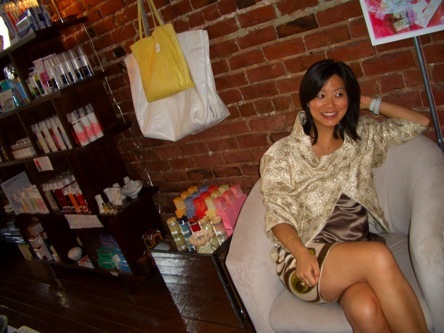
Alice’s wonderland:
Former InStyle accessories editor Alice Kim brings NYC style sense to Omaha’s Trocadero
©by Leo Adam Biga
As appeared in The Reader (www.thereader.com)
Alice Kim’s story of leaving New York City for Omaha has gotten much play.
In 2007, the then-InStyle magazine accessories editor acted on her admittedly “weird,” long-held preoccupation with Omaha by moving here and opening the Old Market lifestyles boutique, Trocadero.
“My store is in some ways InStyle come to life,” she says.
Her experience recommending the best of this or that gives Trocadero customers the benefit of her branded, expert, insider’s advice.
“I have that kind of finger on the pulse of what people want.”
Still, her store has struggled amid the recession and conservative Midwest buying habits that don’t mesh with her somewhat frivolous merchandise.
Cognoscenti, however, regard this Big Apple sophisticate as a style maven and tastemaker. Her exclusive, discriminating suggestions for just the right hand bag, pair of shoes or home decor item is heeded.
She cops to not being a salesperson but says, “I can always convince somebody that this is a great something or other.” Her spin, she says, goes something like: “’It’s a total New York brand, it’s not sold everywhere, it’s at a great price point.’ And all of a sudden there’s a story and they’re like, Really? And they buy it.
“It’s like sharing industry secrets,” she says. “I feel I have a unique angle, which is really telling people about the stuff that we as editors love.”
Everything she sells or endorses, she says, “I stand by.”
If her style sensibility were a tag line she says it would be “practically perfect,” adding, “It’s always going to be practical and it’s going to close to darn perfect.”
She has the professional chops and personal élan to articulate her discerning aesthetic without sounding smug, whether selecting things to sell in her shop or for her own wardrobe or excising the dull dross from a client’s closet.
“I feel very confident in my skills,” she says over sushi at Hiro 88 West. “I’ve always known how to style. I think a lot of it is innate. It’s just having the eye. It’s like being a good editor. But, of course, I’ve been trained. When I arrived in New York, from Pittsburgh, in 1992, I certainly was not a fashion diva then and I certainly didn’t look the part. I was doughty.”
She’s a long way from doughty today, though she felt that way while pregnant last year with her first child. Since the birth of her daughter Annabel she’s pined to retire her formless maternity clothes and return to some chic wear, such as the classic black dress she wore at lunch, accented by pearls.
“I don’t want to look messy anymore,” she says.
Kim is marrying Annabel’s father, entrepreneur Adrian Blake, this summer. She’s also step-mom to his two children as the two households recently merged.
Even before her pregnancy, Kim says she’d gotten lazy about her look and gained weight thanks to Omaha’s more sedentary lifestyle. Actually, she says her casual phase began near the burned-out close of her frenetic New York career.
“There were times when towards the end of my working days I just didn’t care anymore. I was just so busy. I’d wear flip flops because I was hoofing it all the time, walking from the garment district back to the office with bags of accessories. I wasn’t going to teeter in high heels.
“I was on the New York fashionista diet [champagne and finger food[. I was definitely much thinner when I lived in New York.”

Then there were those times, she says, “when I wanted to get dressed up, so then I’d wear a beautiful jacket with a dress and heels. It really depended on my day. If I knew I was going to be in the office all day then I would wear something nicer because I wouldn’t have to be schlepping around town for shoots and samples.
“When I first started the store [Trocadero],” she says, “I wanted to look nice — to be representative of fashion in New York in Omaha. I probably worked harder (at it) and then gradually just became more casual.”
For a year she bought her clothes at Target as a concession to mommy practicalities. Besides, she says, good style “doesn’t have to be super expensive.” Balancing being a new mom and fashionista at 41 means remaking herself, so she’s back to shopping at Von Maur to outfit herself more appropriately.
“I’m in my 40s — I really can’t keep dressing like a teenager. It’s just having to embrace that I’m an adult. I feel better now because I have grown-up clothes. I can look equally fine walking to the kids’ school or coming to lunch here or going to the supermarket.
“My thing is cardigans.”
Her lifetime hunt for the perfect black leather motorcycle jacket continues.
Making one’s self or home polished, she says, is all about investing in a few high quality things and making them pop with the right accessories.
“I think my house reflects my store, which is always about the accessories, the details, the accent pieces. Like I have this plain, white, Danish-modern couch. What makes it interesting is the hand-painted, embroidered pillows on it.”
When it comes to clothes, she says as clichéd as it sounds, “you start with a little black dress and the way you accessorize it is what gives it its style.”
It’s about transformation. Like opting to live out her version of the American Dream in Omaha. After a whirlwind start, she began doubting her life makeover, but now that she’s found her man and become a mother, she says, “I feel content.”
Her magnificent obsession is the subject of her blog,” Postcards from Omaha,” and a book she hopes to finish soon.
Trocadero is located at 1208 1/2 Howard St. in the Old Market. For more information call 402.934.8389 or visit shoptrocadero.com.
Living the NYC Fashion Dream
©by Leo Adam Biga
As appears in The Reader (www.thereader.com)
With all the fabulous things Alice Kim ‘s done in New York City and now her entrepreneurial foray in Omaha, she says what she’s proudest of is helping people.
At InStyle she says she found great satisfaction “helping small designers get nationwide recognition.”
The fashion business is all about networking, and Kim worked hard cultivating and nurturing relationships with designers, photographers and publicists.
At Trocadero she’s parlayed old contacts and made new ones. She’s also availed herself as a go-to resource for young people with designs on their own NYC fashion careers. Several area women who came to her with their aspirations ended up as Trocadero interns. Each is now pursuing life in the Big Apple.
They credit “Alice’s Fashion Finishing School” with preparing them.
“It was a great experience to learn from someone that had actually been in the industry and really knew what it was about. She’s been a great mentor and a kind of guardian angel,” says Hannah Rood, an account executive with LaForce-Stevens. “We learned so much about things like sense of urgency and attention to detail that have carried over into what I’m doing now.”
“Alice’s influence continues to impact my life,” says Kathleen Flood, an associate editor and blogger with The Creators Project. “When I was working for her, she was not only a boss and mentor, but a friend, and even an older sister figure at times.
“Now that I have my own interns, I’m starting to teach them little tricks she taught me.”
“She definitely expanded my vision of success … and has truly guided me to where I am today,” says Ellie Ashford, a freelance public relations assistant at Polo Ralph Lauren.
They all refer to doors Kim helped open for them. The Omaha transplants say they’re keeping a pact to stay connected.
As for Trocadero as a launching pad, Kim says, “I feel like I’ve created a special space that people really consider to be a home away from home. I offer myself as much I can.” Before she’ll recommend an intern to a New York contact, she says, “you have to prove to me you’re ready for the big time.”
Kim enjoys following her former interns’ progress. “They’re all leading their own lives and having their own adventures. They’re doing it — they’re doing what I did 20 years ago. They’re living the dream.”
Related articles
- 5 Easy Steps to Flawless Style with InStyle (beso.com)
- Home Girl Karrin Allyson Gets Her Jazz Thing On (leoadambiga.wordpress.com)


 Leo Adam Biga's My Inside Stories