
David Kaufmann
As Obama Care gets put through the ringer by the U.S. Supreme Court with no firm result in sight of whether it will survive intact or not, at least some uninsured folks do not fall through the health care safety net thanks to existing initiatives like that of OneWorld Community Health Centers Inc. in Omaha. Here’s a short story I did awhile back about OneWorld and its approach to caring for the underserved.
OneWorld Community Health: Caring, affordable services for a multicultural world in need
©by Leo Adam Biga
Originally appeared in El Perico
Even as OneWorld Community Health Centers Inc. has become South Omaha‘s largest health care provider and is now poised for expansion, CEO Andrea Skolkin says the not-for-profit tries keeping the spirit of its grassroots start alive.
In every measurable, from staff to providers to patients to services to facilities, OneWorld’s grown since a humble beginning in 1970 as the Indian-Chicano Health Center. This once small, all-volunteer endeavor has evolved into a large enterprise of salaried professionals and extensive medical and dental services.
OneWorld serves some 18,000 patients a year at its Livestock Exchange Building clinics, network provider partner sites, schools and community centers. Yet Skolkin says its founding culturally sensitive, social justice mission still permeates OneWorld. Serving anyone who comes and treating them with dignity, she says, is in the corporate DNA.
“It’s really who we are and we never forget to remind ourselves of where we came,” she says. “That is really important to us.”
At its core are decades-long partnerships with local providers and physicians, many of whom donate their services.
Originally targeting Native Americans and Chicanos, OneWorld sees a diverse patient base today, although predominantly Spanish-speakers. Skolkin says it’s the area’s largest primary care clinic with a majority bilingual and bicultural staff.
She says one way the federally qualified health center stays true to its community-based mission is a government mandate that 51 percent of the board be patients of the center, thus giving patients a voice in holding OneWorld accountable.
“We’re about providing the best health care we can to the most people we can,” says Skolkin, “especially people who are underserved. Trying to make sure everybody has access to health care is what it’s really about. Our board keeps that paramount and reminds itself of that mission every time we meet.”
She says OneWorld has stayed responsive to the working poor even as the organization’s grown. After outstripping the original location at 24th and Vinton, the center moved to 36th and Q in 1999, when it launched a Women, Infant and Children program. A more recent growth spurt began in 2001, when OneWorld was designated a federally qualified health center and received its first operating grant from the Bureau of Primary Health Care.
In 2003 the board adopted the current name to better reflect the clientele. In 2005 OneWorld moved to its present digs, in the lower three floors of the historic Livestock Exchange Building, thereby radically enlarging its clinical space. The move was necessitated, says Skolkin, by rising demand.
“We were turning away people right and left because we just had no space in those smaller clinics,” she says.
The new site appeared to resolve the space shortage, but the need has once again exceeded resources.
“We’ve started to turn patients away here because we’re full up and there’s no room,” says Skolkin. “Looking at the demographics of South Omaha and the surrounding area it became clear we either have to open up some more clinic locations throughout the city and/or expand what we have here, and our strategy is really both of those.”

In November she announced plans for the construction of two new buildings adjacent to the Livestock Exchange Building at 30th and L. The additions, adding 64,000 square feet of clinical space or roughly double current capacity, will give OneWorld more of a campus feel. The brick structures will contain a combination of health services and affordable housing units. A women’s health center will be housed in one building.
Skolkin expects the extra space will allow OneWorld to double the number of patients it serves. The expansion will also allow some satellite services to be consolidated on campus, creating more of a one-stop-shop experience. She says having an array of services together is important for patients who lack transportation or whose hourly jobs make multiple visits difficult.
The expansion is being financed by a $9 million federal grant and a combination of low income housing tax credits, city money and private philanthropy. Construction is expected to start in the summer, with a 2012 move-in. She’s also eying new satellite sites in southeast and southwest Omaha.
Skolkin says while some other community health care providers have come and gone, “we’re still standing and very strong now.” With the economic outlook still shaky and health care reform straggling, she says OneWorld’s role remains vital.
“Poverty is the main issue. Even the middle class are really stretched. People need support. They just can’t make it. We can’t rest until everyone has access to health care. It’s just unconscionable in a community as affluent as Omaha people should be not be able to take care of themselves when sick.”
Omaha’s African-American community is replete with doers, past and present, and every once in a while a local newspaper has me write profiles of some of these leaders, who range from community activists and small business owners to educators to administrators and executives. The following four individuals all made a difference here and though at least one has now passed on and another has retired and still another has moved out of the area, their impact remains. You’ll find a separate post on this blog titled Blacks of Distinction that profiles four different individuals. You’ll also find in the African American Culture category more than 100 stories about various facets and figures of the Omaha black community.
Blacks of Distinction II
©by Leo Adam Biga
Originally published in the New Horizons
Edmae Swain helped change the face of public education locally when, in 1964, she became the first African-American female principal in the Omaha Public Schools. Upon arriving in Omaha from St. Louis at the end of World War II, she got a job with OPS as a substitute teacher, the only option then available to black educators in Omaha’s segregated public schools. She subbed at Howard Kennedy School, one of a few all-black schools serving the near northside. In 1947 she was among the first blacks hired as a regular teacher. She was assigned to Long School. She remained there until OPS Superintendent Paul Miller appointed her principal of Lake School. Years before, Eugene Skinner became the first black administrator here. Until her hiring, there hadn’t been another. Progress seemed to had passed over Omaha.
That’s why news of her appointment, coming as it did the same year the Civil Rights Act was passed, made headlines as far away as Kansas City and her native St. Louis and touched off a celebration at the home she and her husband, Howard Swain, Sr., shared with their son, Howard, Jr. In the context of the fight for equal rights, hers was a victory for Omaha’s black community and the wider freedom struggle.
“Yes it was,” Swain said. “It’s certainly one of the positive results of the struggle,” said retired Omaha educator Edwardene Armstrong, a teacher under Swain at Lake.
Recently, in the comfortable Immanuel Village suite that Edmae and Howard, Sr., now reside in, the 88-year-old Swain paged through a scrapbook containing the congratulatory telegrams and letters she received 41 years ago. For her, the most meaningful message came from the man that showed confidence in her — Paul Miller. A controversial figure, he had only a brief tenure as superintendent here, she said, because “he was too progressive for Omaha.” In his letter to her, he alluded to the pressure Swain felt in assuming the mantle for her race:
“I am glad to know you are nervous because this is your recognition of the fact that it is a big step from the classroom to the principal’s office…” I am confident “you will make this step cautiously yet firmly and with resolution to serve.”
Swain recalls having “butterflies” in her stomach a long time after getting that long overdue, high-profile post. She didn’t want to do anything that could reflect badly on her or her people. “More was expected of me. Therefore, there were things I just couldn’t do and places I couldn’t go after I became principal. I felt like I was in a bubble. All eyes were on me,” she said. Failure, she added, was not an option. “I knew I had to do it. I had to succeed for myself and all black Americans. I had to do well to make it possible for anyone that came after me.”
Despite the pressure, she made the transition with her characteristic grace and reserve. Friend and fellow educator Thelma Costen said that Swain, as always, carried herself “in a dignified manner. She was very firm and maintained excellent discipline. Everything was done in a positive manner.” Edwardene Armstrong said Swain handled the situation well. “Whatever pressures there were, it didn’t show. Edmae Swain is kind of a born leader. Her organizational skills are among her great assets. She was more than capable” when the opportunity came.
A few years later, Swain once again made history. When named principal at predominantly white Jackson School, she became the first black educator assigned to an Omaha public school outside the near northside. “I don’t know if she thinks of herself as a pioneer, but she really is,” said Costen. As before, Swain took on the job with professionalism. For Swain, it wasn’t so much about making history as breaking down another barrier. About time, too. It was another steep challenge, but faced with those circumstances, she said, “You do what you have to do.”
Any misgivings Swain had about how she’d be accepted at Jackson were soon eased by the support parents showed her. She was relieved. “They really embraced me. They had a wonderful PTA. A husband and wife were presidents and they saw to it parents participated in everything. They were all very cooperative. Anything I thought I needed, they would get it for me. I couldn’t ask for anything more.” The reception, she noted, “could have been far different,” particularly as her appointment coincided with the school district’s court-ordered desegregation plan — a hot-button issue that incited violence in other communities.
When she got to Jackson hers was the only black face with the exception of a lone female student. “I said to her, ‘Well, there’s two of us here now. We’ve integrated the building.’” Even with forced busing, few blacks ended up going to school there. It remained that way, she said, until she retired from education in 1977. It was another case of “talking about integration” but not doing much about it.
Inequality, discrimination and segregation are evils that Swain, who’s active in the NAACP, Urban League, Zion Baptist Church and National Baptist Convention, fought against. She participated in civil rights demonstrations. Once, while a teacher at Long School, she called her principal to say, “’I won’t be coming in. The activists are having a walk-in at city hall and I have to march with the group.’ When I got to school, my principal complimented me for doing what I felt was the thing to do.”
A recipient of the NAACP’s Freedom Fighter Award, Swain led a sheltered life as a girl growing up in the black neighborhood of St. Louis known as The Ville. Her parents later explained to her they purposely kept her away from the prejudice blacks encountered outside the hood. It was only a matter of time, however, before Swain ran into racism. She got her first brush with Jim Crow on a train trip down south. At a railroad station, she saw a sign reading, For Whites Only. And on the train itself she found strictly segregated dining cars and waiting rooms.
“That was really when I first knew there was something different about us.”
With little formal schooling of their own, Swain’s hog carrier father and homemaker mother worked hard to ensure Edmae and her sister got an education that prepared them to move ahead. “They had no formal education but they knew the advantages of our getting an education, and they saw to it we went to museums and libraries and places they thought would be helpful.” Even as a girl, Edmae was enamored with the idea of being a teacher, making sure she always assumed the role when she and her friends played school. It wasn’t long before she graduated from Stowe Teachers College in St. Louis and began her 44-year education career.
Like any former educator, she enjoys the successes of her former students, many of whom have gone on to fine professional careers, including a judge and an attorney she stays in contact with. “It makes me feel good knowing what I did wasn’t in vain. Maybe I gave them something to strive for.”
She’s seen many changes in the education system and decries today’s loss of discipline at school and in the home. She feels things were better when a village really did raise a child. Even though she virulently opposes segregation, she said the black schools model of the past did have the advantage of students being taught by committed staff who looked and sounded like the kids. “There was a strength in that,” she said. Besides making sure her students left school every day “knowing something new,” she included black history lessons not in the standard curriculum.
It turns out Swain’s still a trailblazer all these years later. When she and her husband moved into Immanuel Village a few years ago, they became the community’s first black residents. One other black couple has followed them since. Another example of how the struggle for equality continues. Her deep faith tells her “all things are possible with God” and that “we shall overcome some day.”

Erline Patrick: A Professional Woman with a Social Conscience
For a newcomer, Erline Patrick has made her presence felt since coming to work at Creighton University in 2001 after years in public school administration and senior government management service. Community involvement is the hallmark of her accomplished, far-ranging life and career that’s featured challenging jobs in many locations. Her local activities reflect her interests in education, theater, music, women’s issues and multi-cultural diversity. In only a short time, this stunning African-American woman has touched many lives here. Soon, though, she’ll be leaving for an as-yet unknown new challenge. This time it’s Phoenix, where her husband, Omaha Housing Authority director Alphonso Patrick, has taken a new post. Public service runs in this couple’s blood, and where service calls, they go.
As interim associate dean of faculty affairs and development in the Creighton School of Medicine, Erline Patrick provides administrative support to the school’s faculty, oversees recruitment of minority medical professionals and prepares grants that funnel millions of dollars towards the institution’s research efforts. Yet, somehow she finds time to volunteer. Her many good works here include: serving on the boards of the Jesuit Middle School and the John Beasley Theater & Workshop and as a Governor-appointed member of the Women’s Health Initiative Advisory Council; performing as cantor at St. Cecilia’s Cathedral; and mentoring folks on campus and in the community. She offers advice. She puts people together. She contributes funds. She sends care packages. She frets. She prays.
All this comes naturally to Patrick, a big sister, mother, grandmother and wife whose heart has never really left the roles of teacher and principal she filled back east. She talks wistfully about “how much I’ve missed working with young people,” but still makes a point of “mentoring young people. It’s very dear to me.”
She began teaching in her native, then-segregated Charlotte, N.C. and, later, in Lancaster, Penn. and Hartford, Conn. She eventually headed schools in Charlotte and Hartford, turning around a troubled urban high school with her characteristic high expectations and down home ways. Like any good leader, she makes people want to please her. She exudes warm Southern charm and displays genuine hospitality. She holds fast to old school values. She shares wise counsel with a mix of managerial authority and motherly concern. She is at once a professional to admire and a friend to confide in. A real mensch.
“It’s very important to me to be able to empower people. To help people reach their potential. To feel that I’m making a difference,” she said. “Most of my adult life I’ve been in management and leadership positions. I guess I must be a kind of born leader. I’ll be quiet and not stand out in a crowd — until somebody needs to take over…then I’ll do whatever needs to be done.”
A stickler for getting things right, she demands much from those she leads. “Today, there isn’t nearly the strive for a superior product there once was. I will not accept a shoddy product. I still hold myself to that standard, and anywhere I work will be held to that standard. And I may not be liked for it, but that’s just the way I am. I try not to be a tyrant about it.” She feels enough isn’t expected of today’s youth. “It’s appalling to hear some of our young people talk and to read their writing. A lot of that ‘dumbing down’ has been driven by television and by less structured home environments. The standards just aren’t as high.”
Aiming high was embedded in her by her mother and teachers. Her parents had little formal education. They’d been farmers and sharecroppers. Once moved to the city (Charlotte, N.C.), her father worked factories and construction and cut hair on weekends. Her mother was a domestic for well-to-do whites. “Mama was the matriarch and really guided us. She encouraged us all to go to college.” Erline and three of her four siblings ended up with college degrees.
A star in and out of the classroom, Erline was into everything at school. Her precocious talents as a singer, orator and writer included penning a song for the Decca Records label. For a time, her fine, church-honed singing voice earned her “a little bit of money singing with big bands in Charlotte. I was quite a little shapely, attractive young thing. I had a lot of admirers. But Mama trusted me. Besides, I knew how to take care of myself and the guys knew not to bother me.” Her torch singer days ended with a scholarship to Talladega College in Alabama, where she acted in theater productions and sang in the choir. Her knack for science led her to major in biology. Instead of once hoped for careers in drama or medicine, she chose teaching. With her versatility, she could have done anything. As a professor told her — Take what you have, and make what you want. That credo, she said, “has helped me tremendously. It motivates me to feel that all things are possible.”
Always in search of new horizons, she no sooner began teaching then she started work on her master’s degree in urban education. Then came her 6th Year Degree in administration and supervision. She earned two National Science Foundation grants, including one from Columbia University. She was later a National Education Policy Fellow at George Washington University. It wasn’t long after she earned her Ph.D in educational administration that she left the field for the private sector. And then Washington politics called her, first as a U.S. Senate staff member and then as a senior manager with the Small Business Administration. She made the grade wherever she went. “One of my strengths is that I’m a quick study. Wherever I’ve gone, there’s been a steep learning curve that I’ve mastered,” she said. She credits coming so far so fast to her faith. “How else could I be where I am today? So many miracles have happened in my life. I just don’t know what I would do without the Lord and that strength,” she said.
What appealed to her about The Beltway? “I wanted to learn about the legislative system and how it worked. It was new. It was exciting. And one of my goals was to work for then-Vice President George Bush. Then, in that serendipitous way my life has about it, he was elected President and I got a Presidential Appointment. It’s purely political. Somebody recommends you to the President’s chief-of-staff. At the time, I was in the Senate with Lowell Weiker. He lost the election. So, I was looking for the next thing to do when, before I knew it, I had an interview for a position in the Small Business Administration.” She got the job.
Then she was hired to manage the Minority Small Business and Capital Ownership Development Program, which oversees billions in federal procurements. “It was a huge responsibility,” she said. She took an unusual route to this senior-most management level. “I won the position competitively over many other candidates. I never took a civil service test. It was the first time it had ever been done in the agency.” She paid a price for being viewed as an interloper, “I really thought that if you do a job well, you’ll be admired. But you’re not. It’s just the opposite. It’s almost as if they’re waiting for you to falter. I think a part of it has to do with race and gender. It’s the white male patriarchal thing. Even now, I can be sitting in a board room and I’ll say something everybody agrees with, but until it comes out of the mouth of a white male, no attention is paid to it. It’s also a function of being an outsider, and that’s been the story of my post-education career. It doesn’t matter what you bring to the table. If you’re from the outside and if you rise quickly through the ranks, you’re the target of viciousness.”
Later, she fought against such attitudes as head of the SBA’s Office of Equal Employment Opportunity and Civil Rights Compliance. Creighton’s been a different story. “To their credit, Dr. Dan Wilson (former School of Medicine dean) and Father John Schlegel (CU president) saw the strength of my being an outside. I’ve gained so much here. I’ve made so many friends. And I think I’ve brought about needed change.” Now, as she readies to relocate again, she wants to indulge her artistic side. “I want to do a little more now that satisfies my soul. I don’t think I’ve used the talent enough God gave me.” In Omaha, she’s shown glimpses of that talent. Her contralto, mezzo soprano voice graces St. Cecilia’s masses, where she sings an occasional spiritual, and Creighton functions. She was Mama in The Beasley Theater’s staging of A Raisin in the Sun, a part she played in college.
“She’s an incredible talent,” said theater namesake, John Beasley. “She’s done an amazing job for us. She’s a woman full of knowledge. She’s even kept me in check at times. ‘Now, John…’ she’ll say. “That’s why I have respect for her. And she has a tremendous heart. She’s very thoughtful of others. I think she’s just a treasure. We’ll miss her, but she’s assured us she will come back to work at the theater.”
Until then, look out, Phoenix. A whirlwind named Erline is coming your way.


Al Goodwin: Community Development Catalyst
North Omaha economic development catalyst Al Goodwin grew up in a near northside teeming with commerce. This self-described “product of the area” is proud of his roots. In the 1950s, it was a tight, self-sufficient, well-maintained district where residents could get any good or service imaginable from the rows of businesses operating up and down North 24th Street. Day and night, the streets flowed with a tide of folks shopping, running errands, taking in movies, dining out, catching live music acts, feeding their soul, hailing a cab or jumping a streetcar.
Of course, this enclave was enforced by defacto segregation that told blacks to “stay in their place.” In this apartheid system, blacks did for themselves because they had to and, in the process, created a thriving, cohesive environment built on strong families and institutions,. By the time Goodwin graduated from Omaha University in the late-’60s, the community was hemorrhaging from riots that destroyed properties and scared off many merchants and residents. By the ’70s, the once bustling North 24th strip was a tattered eyesore of boarded-up, abandoned buildings and weed-choked vacant lots. Then, like a stake in the heart, the North Freeway’s construction severed the community — uprooting hundreds of families and razing many fine homes. Finally, in the face of attitudes and practices that denied blacks fair housing, good jobs and equal rights, young and middle-aged blacks left Omaha in droves to pursue better opportunities elsewhere.
Ever since the riots and the later youth gang epidemic that surfaced in the ‘80s, the area’s real and perceived crime problems have cast a shadow of fear and doubt over the community that’s kept both potential business investors and home owners away. Today, the near northside lacks many basic goods and services and its old housing stock and sewer system is in need of repair. Recently, however, signs of a turnaround have been cropping up in a series of housing, commercial and public developments. Al Goodwin is behind some of these and plans to be part of more.
He’s remained through it all, devoting his entire professional life to reviving the community he regards as home. As president of the Omaha Economic Development Corporation (OEDC), which he’s headed since founding the non-profit 401C3 in 1977, he leads Omaha’s oldest and perhaps largest entity dedicated to inner city revitalization. His work has won him respect as a key architect for change.
“I’ve always had a deep interest in and genuine love for my community,” he said. “You have to enjoy what you do for a living, and I thoroughly enjoy having a vision to make things better and pulling together the resources to do what needs to be done and which others are not willing to step up and do.”
Unlike organizations that mainly give lip service to affecting positive change, Goodwin can point to brick and mortar evidence of progress in the various multi-family housing, commercial and renovation projects his company’s engineered. OEDC’s renovation of the historic Jewell Building, home of the Dreamland Ballroom, preserved a piece of North 24th Street’s rich legacy. It’s where OEDC offices at. The largest of its projects, Kellom Heights, is a seven-phased, mixed-use residential and commercial development completed during the 1990s. Bounded by Cuming on the north, Hamilton on the south, 24th Street on the east and the North Freeway on the west, the 40-acre project features 378 living units and a retail/office strip center. Associated businesses, notably a State Farm service center, have been drawn to the area by the renewed economic activity there.
Today, Kellom Heights is a bright flower blooming in a once depressed area. Despite it and other hopeful signs like it, the near northside is still dismissed by many outsiders as a ghetto. Few investors — then or now — have the vision to see beyond the blight. Yet, Goodwin’s somehow succeeded in selling enough people on the dream that OEDC has pumped $40 million of reinvestment into the area, not to mention the many homes, businesses, services and jobs generated. He said this success stems from its strong board, strategic planning and rigorous standards.
Goodwin, a math and economics major in college, can crunch the numbers with the best in making the case for north Omaha investment. He can dangle tax credits in front of investors. He can appeal to people’s social conscience.
“When we first started, there were many professionals that advised us not to do redevelopment in the area,” he said. “‘How are you going to attract people into the area?’ they asked. But in spite of those comments we put together a public-private community-based partnership that raised and leveraged more than $19 million to complete the (Kellom) development over a 10-year period.”
“Above industry” occupancy rates in Kellom’s living-retail-office spaces have more than justified the investments made in the project. “That’s certainly an example of what can be done,” he said. Another example is the now under construction Long School Marketplace that’s building a new 63,500 square-foot commercial center at 24th and Hamilton. Future plans envision going “further north” with commercial-residential efforts designed to “bring the population back into the area” as well as provide “assistance to residents who want to improve their own property.”
He said the monies invested in such projects come back in the form of an increased tax and spending base. “We take unused properties that were off the tax rolls and make them into revenue generating properties. It makes economic sense.” Besides, he said “there are unique business opportunities in north Omaha’s underserved market. In a four or five square mile area, there’s only one grocery store and no dry cleaning establishment. Basic, fundamental kinds of services are absent,” he said. Few are willing to take the plunge, however, due to the area’s bad rap. Despite perceptions to the contrary, he said North O boasts a strong work force, plentiful disposable income, stable institutions and safe neighborhoods. “One of the things we want to do is change the perception by making investments here and by attracting national and regional retailers into the area,” he said.
He feels the only way to rebuild the inner city is with investment and the only way to achieve long-term growth is if the area gains economic parity with the rest of Omaha. More homes, businesses and amenities will create more commerce. In addition to the new market potential the area holds, he said it’s well-positioned by its close proximity to the airport, freeway, convention center-arena, riverfront and Creighton University. With Creighton and the riverfront booming, Goodwin wants north Omaha to share in the growth and not be isolated from it.
“Any development taking place near there should and must include north Omaha. We can’t have a thriving area adjacent to a declining one. It certainly is to the advantage of those entities that have made investments nearby to see north Omaha revitalized, not deteriorated. And we want to be part of the planning and implementation process — not left out or behind. All the development taking place ought to be seamless. There should be connectivity. That way you get a bigger multiplier effect for all. As they say, all ships rise together. Omaha is small enough and our problems manageable enough that we can do this very successfully and without it taking masses amounts of money to make any significant change. And while I’ve seen some progress, there’s much more that needs to be done.”
Goodwin, a player in the emerging riverfront scene and Creighton expansion, said, “I think we’ve got to be careful that, unintentionally or otherwise, artificial barriers are not put in place that would turn their back on north Omaha.” He feels people of color should no longer have to settle for leftovers when it comes to opportunity. He hopes one day the words of Martin Luther King are fully realized and all people can “sit down together at the table of brotherhood.” His beliefs are a product of his formative years. Of the Civil Rights Movement and parents who stressed he and his siblings make a difference in the struggle for equal rights. “If ever you want to be remembered for anything, you should be remembered for making a difference. If I can look back at my life and career and say that I’ve made a positive difference, then I think I’ve accomplished a lot,” he said.
District 2 Omaha City Councilman Frank Brown said Goodwin already has. “He’s left his mark — no doubt. He’s improved areas the private sector would not touch. And hopefully that drive and energy will stick around. My only worry is that when Al Goodwin retires, who’s out there to replace him?” Goodwin is hopeful. “There are people with dreams and vision that are making things happen to capitalize on the area’s rich heritage of jazz and sports,” he said, referring to recent streetscape improvements along North 24th, the completed jazz park, the soon-to-open Love Cultural Arts and Jazz Center and reports of a new sports museum. “This can serve as a linchpin to attact people back into the neighborhood.”

Dan Goodwin: A Strong Man True to His Beliefs
©by Leo Adam Biga
Dan Goodwin’s Spencer Street Barbershop, a classic six-chair operation at 3116 No. 24th Street, is where it all comes down. Old-school owner Dan Goodwin has been cutting heads there for half-a-century. He’s been listening to the pulse of his people all that time, using the airy environs as a lively forum for free expression.
Like any barbershop, his place is where customers come to relax, get a cut or shave and say what’s on their mind. Goodwin likes good conversation. He invites an open exchange of ideas. He isn’t afraid of folks voicing strong viewpoints.
In the 1960s he took on a brash young man by the name of Ernie Chambers as a barber. Soon, the Spencer Street became a forum for Chambers and his advocacy of black concerns and criticism of white racism. Anyone wanting to know the current black thought came to hear Ernie or others sound off. Along with the Fair Deal Cafe and a few other north side spots, it’s where young blacks met to air grievances, address problems, float ideas and formulate strategies and tactics in the civil rights struggle and black power movement.
“A lot of people came down to this barbershop to hear him speak to the problems. To be honest, a lot of people feared him because he spoke out so strong. He’s tough. Even now, he asks no quarters and he gives no quarters. He says what he wants to say and he’ll say it the way he wants to say it,” Goodwin said.
“A lot of people came to talk to me to discuss issues and it was a place where others would meet when they wanted to talk and just speak freely about what was on their mind. It was like a gathering place,” Chambers said.
The shop is immortalized thanks to Chambers being filmed there for segments of the 1967 Oscar-nominated documentary A Time for Burning, which focused on white Omaha’s staunch resistance to the kind of black independence he embodied.
He remained a part-time barber there even after becoming a state senator. His barber chair not only served as lectern and pulpit but as an extension of his public office and a conduit for his District 11 constituents. This was all made possible by Goodwin welcoming a vital ideological discourse and debate in his shop.
“Definitely,” Chambers said.
As outspoken as Goodwin is himself, he said he couldn’t very well deny the floor to someone else who believes in the credo — “I have to tell it like it is.”
Chambers found in Goodwin a kindred spirit. “I liked the kind of person he was. We got along very well. He’s true to his beliefs. He rented me a chair and I stayed there for years and years.” In him, Goodwin found “a young man who could articulate like nobody I’ve ever known. He always had answers. He did his homework. He knew what he was doing and saying. People were really impressed with him. And we communicated real good. We were really seeing things so much alike.” Not that they didn’t disagree. “Oh, we used to argue nose to nose.”
Even though Chambers long ago left his barber chair to focus full-time on his duties in the Nebraska Legislature, the two men remain close. “We talk all the time,” Goodwin said. “He’s a great influence. I’m just impressed with his brilliance. So, it’s friendship and mutual respect.”
He loathes the possibility of Chambers being forced out of office by term limits. “It’ll be a big void. Nobody’s more committed. His whole life is what he does in the legislature. I mean, everyday he’s working on something involving the people.”
Goodwin isn’t loud or rash when offering his own considered opinions. He listens intently to what others say. But, make no mistake, he’s The Man in the shop. He commands respect by virtue of the dues he’s paid as a small businessman, community activist, role model and mentor.
In the ‘60s he hit the streets protesting injustice as a member of the 4CL (Citizens Coordinating Committee for Civil Liberties). Unlike other organizations here that were reluctant “to confront” the system, the 4CL “believed in going out and demonstrating. It was an action group,” he said. “We integrated different places and we petitioned for jobs and open housing. We marched on city hall. We did things like this that brought about some changes. We were considered troublemakers and that’s what it takes to get the changes.”
Now in his sixth decade in business at essentially the same location (his shop was originally housed in a building directly north of his present site), Goodwin has seen it all along North 24th Street. He’s been there for the high times and the low times. For the promenade of people and cars that once made this strip the hub and spot to see and be seen. For the riots that torched or trashed much of the business district. For the inevitable decline that brought a great community down and emptied out most of the buildings (his is the only one on the west side of his block). And for the revival now underway in north Omaha.
He’s never left the area, he said, “because this is where I feel comfortable.”
Chambers admires Goodwin and applauds him for remaining in the heart of the community, where he and his shop provide stability and continuity. “And especially when he continues to grow personally and intellectually. It lets people know that not everybody who could go someplace else is going to do that. This is home and this is where we stay. People do need to see that, especially the young ones. When they can see people (like Goodwin) who are in a position where they don’t have to hang around, but they choose to, that lets them know there’s something of value in our community and a benefit to staying here.”
One of 14 children, Goodwin’s bedrock values come from his late parents, Joseph and Martha. As their bible-inspired names suggest, he said, “they were “strong believers. They were the best examples of living right I ever saw in my life. If we were seeing more of that today, we wouldn’t have the kind of problems we have.”
As he looks around at the way society’s changed with its relaxation of morals and standards in things like language, clothes, drugs, music, sex and violence, he said: “I feel a lot of frustration. There used to be rules. Nobody was perfect, but at least we knew right from wrong. There were certain lines you wouldn’t cross. Now, there’s no line. The message now is, Whatever you want to do, it’s OK. It’s out there. It’s a whole different culture, the drug culture. I don’t blame kids. I blame my generation. We allowed the rule book to get thrown out. And I’m not a fool or anything. I’m not even into religion. I’m into right. I’ll believe in right till I die.”
It hurts him to see his community still embroiled in the quest for equality.
“I think this community like all communities in the inner city in America has big problems and the problems are even bigger now than they have been. Schools are in trouble. The job situation is bad. Drugs. There are so many things plaguing us now. It’s really interfered with what we called The Struggle. A lot of our young people are not even enlightened about the things we did struggle to try to change. I don’t feel real good about it sometimes, but you can’t put up your hands. You just do what you can and keep pushing.”
His own social-political consciousness was formed, in part, by his experiences in the U.S. Navy. He left Tech High at age 17 to enlist. “I was like a kid on an adventure. I never considered making it a career,” he said. “It was a good experience. But I went through a lot in the military. I went through boot camp with only one other black in my company. In the tent I was in in the Philippines, I was the only black. I’d hear things. I didn’t start nothin’, but I wouldn’t take nothin’. Every time I had a fight, they thought they could just say anything — the ‘n’ word, you name it — and I didn’t take it. But, you know what, it wasn’t that I was tough. I was dealing with cowards and they weren’t looking for much of a reaction. I must admit sometimes after I finished off one of those people, the other Caucasians would say, ‘Man, he had it coming.’”
Once back home he confronted racism all over again. “Racism’s everywhere,” he said. But as a service veteran he was outraged when an Omaha Public Schools official discouraged him from completing his high school education. And he was angry at the way his people were denied opportunities, mistreated in public places and brutalized by police. His activism began as soon as he graduated barber school and opened his own shop. Being his own boss and his own man is everything to him.
“See, I could work for anybody, but I have to be treated like everybody else. If you’re going to make it a double standard, I couldn’t take it.”
Always one to improve himself, Goodwin began weight training at 40, jogging in his 50s and competitive power lifting at 68. A world-class competitor in the masters division, the ripped 73-year-old holds many state and national records. He’s traveled as far away as India and South Africa to compete. “I’m having a lot of fun. I’m really enjoying it.” The same with barbering. “I don’t even consider retiring. I’m doing what I like. I’m doing what takes care of me. It’s mine.”
No story is an island. That’s never been more true than with the vast story told by Isabel Wilkerson in her book The Warmth of Other Suns: The Epic Story of America’s Great Migration, a meticulous chronicle of the successive waves of African-Americans who migrated from the South to the North and West during the first three quarters of the 20th century. These migrants went everywhere, including my hometown of Omaha, Neb., where the black population surged in the 1910s and ’20s and occasionally peaked again over the next few decades as blacks left the South for the meatpacking and railroad jobs once plentiful here. By the early ’70s the migration largely came to a halt and in Omaha at least a kind of reverse migration began that’s still going on today as many blacks left here for better opportunities elsewhere and, ironically enough, they often left for the New South, where cities like Atlanta and Birmingham offered far more employment and cultural opportunities for blacks than Omaha. But the following article is not so much about that as it is about how Omaha once was a secondary but important receiving center for blacks from the South. I attempt to balance Wilkerson’s work with the lived experience of a couple men who came here from Evergreen, Ala. – Rich Nared and Rev. Frank Likely. So while Omaha did not get nearly the influx of black migrants that Chicago or Detroit or a lot of other cities did, it got it’s share to sufficiently alter the cultural and socio-economic landscape here and really that’s beside the point anyway, because the migration’s greatest effects were on the people who participated in this great upheaval from one environment and way of life to another. The piece will appear soon in The Reader as a sort of preview of Wilkerson’s April 12 talk at Countryside Community United Church of Christ in Omaha, a faith community with a long history of social justice work.
NOTE: Rich or more properly Richard Nared has seved as a source, reference, referral, and liaison for me on several stories. He hails from a big family, he’s highly personable, and he’s a longtime track coach (he was a high school track star), all of which gives him instant entree with a lot of people, which in turn makes him an invaluable resource for someone like me. On this blog you’ll find several stories that deal with various elements and experiences of his family, including one – The Ties that Bind, One Family’s Celebration of Native Omaha Days – about the reunion his family holds during the city’s biennial black heritage celebration. Mr. Nared is is also related to a bona fide celebrity, actress Gabrielle Union, and you can read about the mega reunion she sometimes comes back here for in my piece – A Famil Thing, Bryant-Fisher Reunion. For that matter, you’ll find numerous stories about Native Omaha Days and other aspects of African-American culture here, past and present.
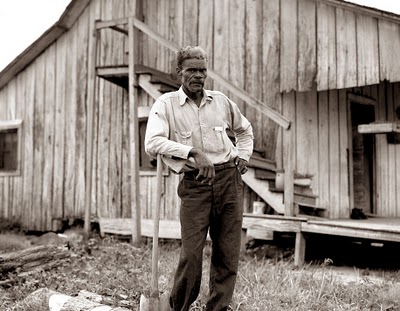
The Great Migration comes home: Deep South exiles living in Omaha participated in the movement Author Isabel Wilkerson writes about in her book, “The Warmth of Other Suns”
©by Leo Adam Biga
Appeared in The Reader (www.thereader.com)
The 20th century migration African-Americans made from the South to the North and West expanded black enclaves across the nation. While Omaha didn’t experience a huge influx like Chicago or Los Angeles, it was enough to alter the cultural and socio-economic landscape.
This epoch movement went little examined outside scholarly circles and literary works until Isabel Wilkerson‘s 2010 nonfiction book The Warmth of Other Suns: The Epic Story of America’s Great Migration.
The Pulitzer Prize-winning journalist will discuss her book in an April 12 talk at Countryside Community United Church of Christ, 8787 Pacific Street.
The 7 p.m. program is free. A free-will donation of $10 is suggested.
Rich Nared and his uncle Rev. Frank Likely migrated here separately from their shared hometown of Evergreen, Ala. The many branches of their large extended family includes the Olivers, Unions, Holts, Butlers, Turners and Ammons, all of whom are a presence in Omaha.
Unorganized, with no discernible leader, the Great Migration played out over generations on backroads and rail lines, by auto, truck, bus and any means necessary. From the 1910s through the 1960s millions pulled up stakes for their chance at self-determination.
A family relation, Clinton Nared, says families like his came North for “a new freedom” and “a better life.” Different lines of the family settled in different parts of the North and over the generations spread all over the country.
The sheer numbers of those migrating meant a demographic shift whose profound consequences persist. Many receiving cities, says Wilkerson, did not make proper provisions for the new population, with blacks relegated to poor, overcrowded districts abutting immigrants. Limited available employment led to tensions, further flamed by racism. Blacks were refused housing and denied jobs. Outright discrimination, protests, strikes, riots and other acts of violence further isolated blacks.
“That in and of itself is a tragedy because much of this happened as a result of a complete misunderstanding of who the people were,” says Wilkerson. “The people who had arrived in these cities came from different parts of the world but they were all people of the land who had made this great leap of faith that life might be better far from home. They landed in these big, forbidding, anonymous cities where their labor was wanted but there wasn’t clarity as what to do with the people. All of them were struggling, trying to make a way in this alien place.
“One group was pitted against the other as if they were direct competition to one another and what one got the other one was losing. We are still living with that to this day.”
Likely and Nared did well here. Each married and raised children in designated black northeast neighborhoods. Despite segregation and discrimination, they thrived compared to the conditions they left behind.
They estimate hundreds of relatives and friends ventured North. It’s not by accident or coincidence so many residents of a small, backroads Ala. town uprooted themselves from their sharecropping life for an unfamiliar Midwestern city. Transplants would return with news of better jobs and more opportunities. Expatriates not only extolled the North’s virtues, they often made a show of their improved fortunes.
Likely recalls former Evergreen resident Aaron Samuels coming back in style to tout Omaha’s “booming packing houses.” He was hooked.
“This guy was down there bragging and I decided I would go with him to make some of that big money.”
Likely got on at the Cudahy packing plant. Before long he, too, returned South, strutting his own success, encouraging others to follow.
“I looked successful and I was successful. dressing nice and driving a nice car. I had money in my pocket. Some of them rode back out here with me. Quite a few of them. They just liked what they seen of me.”
Until the ’70s blacks traveling to the South “had to be very careful,” Likely says, to mind lingering Jim Crow attitudes and practices.
He says the motivation to migrate was not to chase some promised land but to pursue a better life. Down South families like his could never get ahead, always in debt to owners. He recalls earning 35 cents an hour as a farm hand and a few dollars for picking 350 pounds of cotton versus making ten times that laboring in Omaha.
Wilkerson says the economic imperative is what drove most black migrants: “They saw themselves as making a decision for themselves and their families. Ultimately this was about a search for freedom. For the first time in their lives these people were the master of their own fate.”
The South’s cruelty and treachery were added motivations to flee. The man Nared’s named after, Richard “Bud” Nared, began the family’s exodus when he fled for his life. As his nephew tells it, Bud’s mother was riding home in a mule-pulled wagon from the local general store when several white men stopped and harassed her, tearing her blouse. When she got home, Bud extracted the men’s names, grabbed his Winchester and tracked them down, shooting and killing two of them. Under imminent threat of lynching Bud’s family and friends hid him in the woods before secreting him out at night. He went to Omaha, where Evergreen natives preceded him.
“Most of us came here because we had to. We had to leave the South in the middle of the night,” says Rich Nared.
Likely says some met their end or went missing. “I known ’em to get beat up, I known ’em to get killed, and some we don’t know what happened to ’em. Disappeared. Nobody’s seen ’em since. Had an uncle who left. Don’t know where he went.”
Wilkerson often encounters such stories. “I hear that all the time – that some act of violence or threat of violence propelled somebody in the family North,” she says.
Likely himself had reason to fear for his safety. He says he once got into an altercation with a white store owner and rather than be hit with a stick the man brandished Likely clanged a can of beans off his head. When the owner came looking for him, firing a pistol in the direction of his home, Likely got a shotgun and sprayed a buckshot warning towards the man, who fled. Another time, Likely was in his car headed to a dance when he came upon a group of Klansmen barricading the highway. The mob tried pulling him from the vehicle but Lively managed to navigate a ditch and outrace his pursuers to Bruton, Ala., where he was arrested and jailed.
When the North beckoned, he went.
“I was tired of the South. I heard about up North you didn’t have to tolerate the white people as we done there. I had enough of that. I would have been dead now anyway because I just wouldn’t take it.”
The prospect of escaping Jim Crow constraints and Ku Klux Klan dangers and making decent living wages proved a powerful lure. Exiled Bud Nared persuaded family to join him North. Rich Nared came with his family at Bud’s urging.
“He sent for us,” Nared says. “He’s the reason we came up here.”
It’s much the same pattern immigrant families followed.
Picking up and moving was harder for some than others. Strong attachment to family and land is why many stayed put. White bosses could make leaving difficult. Then there was the fear of the unknown.
Other migration patterns saw blacks recruited to fill wartime work shortages. The Omaha Public Schools brought black teachers from the South through a federal program offering new hires graduate studies.
Nared was 4 when he arrived but the South was never far for him and his brothers as they spent every summer in Ala. with their grandparents.
“I loved the South,” says Nared, who walked behind his grandfather as he plowed. “I’m a country boy at heart.”
He’s proudly kept his country ways, too.
Likely notes some blacks who migrated here later returned home for good. Many adult children relocated to the South, where, he says, “They’re doing better than we are. It’s changed a lot.”
The Evergreen exiles are holding a July reunion in Ala. God willing, Nared and Likely will do their elder best to educate the young’uns about what once was.
Wilkerson’s talk is part of an annual lecture series by Countryside’s Center for Faith Studies.
Omaha and progressive are usually not synonomous terms but a recent vote by the city council enacting equal employment protection and redress to gay, lesbian, bisexual, and transgender residents from workplace discrimination marked a step forward in this rather conservative enclave that prefers playing it safe on controversial issues like this. Most surprising to some was that the swing vote on the 4-3 decision approving the ordinance advanced by councilman Ben Gray was cast by Garry Gernandt, who up until the March 13 final deliberation had opposed the measure. This piece tries to give some insight into what may have made the enigmatic military veteran and ex-cop keep an open mind and ultimately change his mind and his vote. In an interview he says he didn’t do it so much to make Omaha a more progressive and welcoming and therefore attractive place to live and work in. Instead, he keeps coming back to the point that it was simply the right thing to do because discrimiation in the workplace is wrong and “we’re all in the human race.”

Garry Gernandt’s Unexpected Swing Vote Wins Approval of Equal Employment Protection for LGBTs in Omaha; A Lifetime Serving Diverse Constituents Led Him to ‘We’re All in the Human Race’ Decision
©by Leo Adam Biga
Origianlly appeared in The Reader (www.thereader.com)
After weeks of public testimony and closed door meetings on the hotly contested equal employment ordinance giving legal protection to gay and transgender residents, the Omaha City Council decided the issue March 13.
Three-term District 4 (South Omaha) representative Garry Gernandt surprised many when he reversed his position and cast the swing vote in favor. The Democrat had resisted the proposal, even broaching an amendment limiting protections to city employees, Then he withdrew the amendment and voted yes. The ordinance passed 4-3, straight down party lines. Mayor Jim Suttle signed it into law March 15. The new law took affect March 28.
As his turn to vote came Gernandt says he employed a favorite mental exercise to sort through the “dust storm of emotions” and arguments on both sides.
“I’ve trained myself to do a collage of things that go across my mind on very sensitive issues, and that’s what was happening on this one. Everything going across my mind all came back to the fact we’re all still part of the human race. That was pretty much the reasoning behind it.”
He insists “there was no arm twisting” from Suttle or party officials. “I’m telling you the bottom line on my vote on this thing is that we’re all in the human race. You don’t have to like the GLBT lifestyle, but what was before us was discrimination in the workplace based upon sexual identity and orientation.” He says giving citizens the right to file complaints with Omaha‘s Human Rights and Relations Department to seek redress for getting fired or suffering other workplace discrimination or being refused service due to their orientation “was just the right thing to do.”
“Let’s just realize that and move on,” he says, adding, “I’m sure I probably ticked off some people, and I have to live with that.”
Gernandt’s vote makes sense in the context of his life serving people. A moderate coalition-builder who shuns the spotlight, he grew up in the cultural melting pot of South O and saw yet more diversity as a U.S. Marine and career Omaha Police officer, retiring as a sergeant in 2000. He says while growing up in the 20th and Vinton Streets area his broad-minded parents encouraged him to sample the different ethnicities surrounding them.
“I think experiencing the diversity opened every corpuscle in my existence so that I became like a sponge and just soaked all these things up. I stayed open and learned.”
He says he followed the same mantra during his military and police careers, where he practiced his people and communication skills with a broad range of folks.
“I like people, I like being around people, I like helping people,” says Gernandt, who’s seen the immigrant base of South O change from European to Latin American and African.
For his first Council campaign he pledged to do a better job than incumbent Paul Koneck responding to constituent complaints and returning phone calls. “A couple very simple things I got very well-attuned to doing in the military and on the police department, where you thrive on information. You’ve got to pay attention, you’ve got to listen to people, you’ve got to get back in touch with them if they call you.

Decades of work with the Deer Park Neighborhood Association and 11 years on the Council have reinforced for him that politics is “the art of compromise.”
“If you’ve got a problem I try to get the solutions at the table and get the best possible result. If you’ve got arguing factions then let’s talk it out at a round table and see if we can come to some middle ground that everybody can live with.”
When District 2 City Councilman Ben Gray first floated the anti-bias ordinance in 2010 the debate turned ugly in the legislative chamber. Gernandt rejected it as too “thermal” to support then but he did promise to reconsider the matter should new data surface the next time.
Gernandt was turned off by the rancor two years ago.
“Both the proponents and the opponents came into the chamber barrels loaded, and in my opinion when you are that angry you should not be asking for something as far as major change,” he says.
Gernandt, often an ally of Gray’s, knew his colleague would bring the ordinance back and when he did the tenor of the deliberation was far different.
“Seventeen months went by and this thing came back to us in a more plausible, palatable way, very little emotion. Facts on both sides I think were eloquently stated. There may have been a little bit of fiction in there as well,” he says, referring to survey results purportedly showing broad support and scriptural passages offered as admonition against it.
“So I think the approach was a 180 degree turnaround from what it was.”
What turned him off this time were heavy-handed tactics by fundamentalist Christians denouncing the ordinance on moral grounds. For Gernandt this wasn’t about morality, it was about fairness, quality of life and equal protection. Period.
He expects the next hot button issue the Council will wrestle with is the police auditor. He’s opposed to it, but he’s willing to hear differing viewpoints and perhaps be swayed by another mental montage if and when it comes to a vote.
A fine Student Academy Award-winning documentary made several years ago by University of Nebraska-Lincoln students, Cuba: The Illogical Temple, is the focus of this story for The Reader (www.thereader.com). If you get a chance to see the film on your local educational television or public access channels, I highly recommend it.

Cuba’s “Illogical Temple” the subject of student Academy Award-winning film by UNL students
©by Leo Adam Biga
Originally published in The Reader (www.thereader.com)
The illogical nature of Cuba is explored in a Student Academy Award-winning documentary made by area student journalists whose reporting odyssey there reveals a people in love with their country despite its oppression. The risk of practicing independent journalism in Cuba is dramatically discovered by the students, who find some sources are government spies and one reporter profiled is among many dissidents later jailed.
The documentary is the result of an ambitious in-depth reporting project that sent about a dozen University of Nebraska-Lincoln student journalists to Miami and Cuba last year. The film offers a micro-macro view of the small island nation that’s loomed so large in U.S. politics and in Cuban exiles’ hearts and minds. The reporting team conducted more than 180 interviews with a cross-section of laborers, journalists, politicos and business leaders for the honored film, Cuba: The Illogical Temple, and a Pulitzer-nominated magazine, Cuba: An Elusive Truth. The film also won the national Eric Sevareid Award.
The film is the first UNL entry to win an award in the Academy of Motion Picture Arts and Sciences’ national competition. The hour-long film by Lindsey (Kealy) Gill and David Pittock is a complex meditation on the rich dichotomy of the last Communist hold-out in the Western Hemisphere. About the award-winning film, Gill said, “I guess I’m most proud of the sheer magnitude of what we took on in reporting on such an amazing, strange country.” She and Pittock were in the Los Angeles area last week for film industry-related activities culminating in the Student Oscar ceremonies on Sunday, June 13 at the Academy’s Samuel Goldwyn Theater in Beverly Hills. That night, the pair learned their film won a bronze medal in the documentary category and a corresponding cash prize of $2,000. The silver and gold medals (with cash prizes of $3,000 and $5,000) went to filmmakers from the University of California-Berkeley.
An award can create buzz in the industry. Already, such major film companies as Lion’s Gate and First Run Features have expressed interest in seeing the film. Gill and Pittock hope it’s selected to play a major festival, where it could get picked up for theatrical/video release. Some PBS stations have already acquired it.
As the Cuba project’s only broadcast majors, Gill and Pittock were its designated filmmakers. They collaborated in producing, directing, shooting, editing and writing the film. Gill, a UNL grad, is now a KMTV Channel 3 associate news producer, while UNL grad student Pittock is finishing up his master’s. Both want filmmaking in their future. “Travel the world and make documentaries. That would probably be my dream job. I love the fact it combines filmmaking and journalism,” Gill said.
“This experience makes me want to do more. To see the world and to document people, their lives and their personal stories. I would love to work on a narrative film. It’s opened up a lot of doors,” Pittock said.
The film explores Cuba from many perspectives, including that of rank and file Cuban nationals and government officials, Cuban exiles, U.S. officials and the students themselves. For most of the students, who studied the country’s history and culture prior to the trip, this was their first time in a nation with a state controlled media and where the penalty for crossing the party line can be grave.
The oppressive Castro regime is an ever-present character in the film. The high risk run by reporters daring to tell the truth is personally brought home when one of two independent journalists profiled turns out to be a spy. Upon their return home, the students discover the man posing as a journalist works for the government and is responsible for denouncing the other reporter as part of a large roundup of dissidents that occured after the UNL group left. The reporter who was betrayed by his supposed colleague is now serving a jail term of 20-plus years.
“That came as a huge shock,” said Gill. “It was appalling. Heartbreaking really, because the journalist now imprisoned was such a nice man. We were in his home. When we see people like him being persecuted for what we do on a daily basis, it’s sad. We take our freedom of speech so much for granted here.” Fellow student journalist Jill Zeman says in the film, “It was always in the back of my mind…if I use this person’s name or face, they could be thrown in jail. For once, I could see how my journalism would affect one person’s life. That’s a lot of pressure to have.”
Following their return, the students also uncover they were targets of Cuba’s insidious disinformation-agitprop campaign. Gill says in the film, “We thought we were getting the truth in Cuba and most of the time we did, but it was frustrating when we got back and found out that some people had outright lied to us. Even government officials. We knew the higher up government officials were feeding us a line. They told us a lot of the things they probably thought we wanted to hear.”
Much of the film focuses on Cuba’s stark contrasts. In one sequence, Cuban exile Felix Dominguez, now living in Norfolk, Neb., tells of the harrowing journey he made by boat in fleeing dictatorship for democracy. He saw many others who did not make it. His story is contrasted with that of his daughter, Jenny, whom he left behind. Now a single mother, Jenny lives in relative Havana squalor but fiercely defends her nation and lauds the free education and health care it provides. However, the film asserts nothing is really free in Cuba, where wages are so low that nearly everybody works scama, hustles or the black market on the side.
Despite crushing poverty, strict food rationing and pervasive material shortages made worse by the long-standing U.S. trade embargo, the film shows Cubans’ spirit and passion in their celebrations, warmth and wry wit. Then there’s the hypocrisy of Cuban dictator Fidel Castro criticizing the inequities of capitalism while welcoming North American-European tourist trade whose dollars create a cruel class system of tourist and non-tourist workers.
Everyday Cubans are seen and heard guardedly telling American visitors the harsh facts of life. The face of a disenchanted government worker is blurred to protect his identity. The palpable fear of speaking one’s mind is embodied in one man who, looking into the camera, says in hushed tones, “Your tourist guide was right behind you. Maybe I’m telling you things he don’t want you to know.”
The “guide” is among the functionaries assigned the Americans in restricting them to the official red carpet itinerary, complete with its press conferences and photo ops. Despite pressures to tow the line, Pittock says he and others managed to “go off and do our own thing” — interviewing people in the streets or in private homes.
The comments of an artist identified only as Gregorio inspire the film’s title and theme. “Cuba is an illogical temple,” he says. “You have to be Cuban to see it. It doesn’t make any sense, but I love my country.” Project participant Matthew Hansen, now a Lincoln Journal-Star reporter, says in the film that to grasp Cuba is “to be able to see the illogical temple. Things can be bad in a place… poor…its people oppressed. But that guy Gregorio still loved Cuba. He didn’t want to leave. He wouldn’t leave. In a sense, that’s illogical. Well, it’s not supposed to make sense. It’s about something deeper than logic or reason. It’s about loving Cuba.”
The role the U.S. has played in Afghanistan and with visiting Afghans in this country is fraught with controversy. The same holds true for what the University of Nebraska at Omaha’s Center for Afghanistan Studies has done and continues doing in terms of training and immersion opportunities offered to Afghan students and professionals who come here to participate in various programs. The controversy stems from the complex problems facing Afghanistan, economically, politically, culturally, and the strategic motivations by Americans to aid, occupy, and control that country. Whether you see controversy or not depends on your point of view. Leaving politics and motivations aside, UNO’s programs have provided a link or bridge unlike few others in giving Afghans some of the tools they need to rebuild and restore their embattled and ravaged nation. This story from several years ago profiles a project that saw scores of Afghan women educators come here to further their professional development. The story appeared in truncated form in The Reader (www.thereader.com) and here I’m able to present it in its entirety. This blog contains other stories I’ve written about UNO’s deep ties to Afghanistan.
©by Leo Adam Biga
Originally appeared in The Reader (www.thereader.com)
The latest cadre of teachers in the University of Nebraska at Omaha’s Afghanistan Teacher Education Project return home this weekend after a month of training and cultural exchange Nebraska. This is the third group from Afghanistan to come here in the last year-and-a-half. A new group is scheduled to arrive in the fall. The program, supported by a grant from the U.S. State Department’s Bureau of Cultural and Educational Affairs, is part of the UNO Center for Afghanistan Studies’ longtime efforts at repairing the war-ravaged Asian nation’s fractured education system.
Participants, all women, attend computer and intensive English language classes on the UNO campus and observe master teachers at two Omaha elementary schools. The women also visit schools and various attractions statewide, including the program’s satellite communities-schools in Oakland and Scottsbluff, Neb.
Once back in their homeland, the teachers share the skills and methodologies they acquired in the program with their peers. Each graduate is charged with training 10 colleagues from their school. That means the 37 graduates to date will soon have impacted some 370 teachers. Even more are reached via workshops and seminars the graduates present in conjunction with Ministry of Education officials. The women who completed the most training here were prepped for their American trip by their predecessors in the program. This trickle-down approach broadens the program’s reach, thus making a dent in the nation’s extreme teacher shortage.
The first group to come, in 2002, was an older, more tradition-bound bunch. The second, in 2003, were younger and more Westernized as would be expected from ESL teachers. This last cohort — all elementary school teachers — was further yet removed from the Taliban’s reach. Women are the focus of the program because their education was interrupted by prolonged fighting and then banned outright by the now deposed-Taliban. The radical fundamentalists made it a crime, punishable by beatings or reprisals, for females to teach and attend school. Some visiting teachers defied the ban and taught secretly under the repressive regime.
Aabidah, a teacher at Nazo Anaa Middle School in Kabul, is one of 12 women who attended the UNO program in April and May. She risked everything to practice her profession against Taliban edicts. “Yes, it was dangerous. I had six girls in my home. Daughters of friends and neighbors. It was done very secretly,” she said. Under the guise of teaching sewing, she instructed girls in Dari, Pashto and other subjects.
The teachers, ranging in age, experience and sophistication, have made an enduring impression on everyone they’ve met, including their host families and instructors. Robin Martens, who along with her husband, Gene, hosted Aabidah and another Afghan teacher, Lailumaa Popal, at their northwest Omaha home, is impressed with Aabidah’s fearlessness. “She seems to be a brave person. She has a strong personality and she kind of forges ahead even when she’s not sure about things. I like that about her,” Martens said. Regarding the quieter Lailumaa, a teacher at Lycee Zarghoonah in Qandahar, Martens observed, “She’s very caring and I think she must be a very good teacher because whenever I mispronounce a word in Dari, I laugh it off, but she insists I say it correctly.”
Barbara Davis, an Omaha Public Schools reading specialist, has hosted Afghan women in her Benson home. For Davis, they define what it is to be “courageous” under crisis. “If I were in the same situation I don’t know if I could have taught school in my home with the threat of my life. I really don’t know.”
In the capital city of Kabul, where most early training participants came from, women enjoy relative freedom to work and teach and go out on the streets sans chadri (or burqa), the traditional full-body veil. But even Kabul was a harsh place in the grip of the Taliban. “The Taliban was very bad. Very dangerous,” Aabidah said. “When they were in Kabul we don’t have jobs. We stay at home. We wear chadri. No, I don’t like chadri. It was very hot. I like the freedom. Now, we are free and happy. I like all of this in my country.” Things haven’t changed much in more provincial areas, where many recent participants reside and work. Women there must proceed with greater caution. “In Kabul, it’s OK. Outside Kabul, it’s bad,” Aabidah said referring to the current climate for women in Afghanistan.

Lailumaa fled with members of her family to Pakistan during the struggle for power in Afghanistan that erupted in civil war in the 1990s. Coming from a family of educators that regards teaching as a higher calling, Lailumaa said she greatly missed her students and her craft. After combined U.S.-Afghan forces ousted the Taliban in 2001, she returned to her homeland to resume teaching.
In the wake of the Taliban’s fall, Lailumaa, Aabidah and other women educators teach openly again. It’s the one thing they can do to restore their country. Aabidah said she teaches because “I love my children, my students, my people. I want a good future for them.” Baiza, a 2002 program grad who taught geography-history in a Mazar Sharif school, said then, “Students are part of my life.”
Sandra Squires, a UNO professor of speech-language-communication disorders, feels a kinship with her Afghan counterparts: “I realize that except for all the trappings, we’re all teachers,” she said. “We’re all very much alike. We love kids and we want to be doing something that can better the world, and that’s universal.” Aabidah feels the same. “Yes, I feel the teachers here are like my sisters,” she said.
In 2002, Baiza described the responsibility she and her fellow teachers feel to transform education at home with the “new concepts and skills” they learn here.
The Afghans have been motivated to be change agents, according to Anne Ludwig, assistant director of the ILUNA, the intensive language program at UNO. “What I see is women who are prepared, enthusiastic and eager to go home and make a difference in their lives and in the lives of other women,” Ludwig said. “I think they learn what they come to learn. One of them said what she would take back more than anything else was the idea that in the American classroom we want the students to feel good and positive, whereas back home the teacher is the autocrat and students are made to feel inferior. She liked the idea of opening up the classroom to where students feel safe, free to communicate and achieve.”
Practicums presented by Howard Faber, an Omaha Dodge Elementary 6th grade teacher fluent in Farsi, demonstrate good teaching practices the Afghans can implement in their own classrooms. He introduced the most recent group to Teacher Expectation Student Achievement or TESA, a set of methods promoting fairness and equality in learning, an issue of great import in Afghanistan, where ethnic-religious differences run deep. As former refugees resettle the country, he said, classrooms are filling with students of widely varying backgrounds and ages.
Faber feels the women symbolize their country’s hoped-for healing. “They’re from different places and different ethnic groups, and I think it’s very positive you have these people of varied cultural backgrounds working together on this common project. I think it bodes well for what might happen in Afghanistan, which now is a little bit like the United States was after the Civil War. You have deep feelings that are going to die slowly. Part of the healing there has to be that these cultural groups that fought so long work together.”
He said TESA alerts teachers to biases they harbor and offers strategies for giving “all children an equal opportunity to participate and to learn and to feel valued and welcomed. I show them what I do in my own classroom. They’re very practical things you don’t need a computer to do.” Later, he and the women discuss what transpired. “They ask me things…they really immerse themselves in the classroom. They even teach children a bit of their language. The kids are especially curious about them writing from right to left. It’s connected well with our studies.”
UNO’s Sandra Squires said the women’s devotion to teaching in the absence of basics makes her feel “very humbled. They’re doing things with absolutely nothing. I mean, they have to solve problems in ways I never had to dream about.” For their return trip, UNO gives each visiting teacher a laptop computer and a backpack filled with school supplies. But as UNO professor of education Carol Lloyd noted, “It still is barely a ripple in this ocean of need.”
Education is a mixed bag in Afghanistan. When schools reopened to great fanfare in 2002, far more students than expected flooded classrooms, which then, like now, were makeshift spaces amid rubble or cramped quarters. That surge has never let up as more refugees return home from camps in Iran and Pakistan. Overcrowded conditions and high student-teacher ratios continue to be a problem. Damaged schools are being rebuilt and new ones going up, but demand for classrooms far exceeds supply. For example, Aabidah’s school has 16 classrooms for its 3,000-plus students. Already scarce resources are siphoned off or entangled in red-tape.
“The schools are running by the enthusiasm of the parents and the commitment of the teachers, but there isn’t much government or international support for education,” said Raheem Yaseer, assistant director of UNO’s Center for Afghanistan Studies. “Schools don’t get enough funds and when they do get funds, a project that is started then stops because the funds dry up or are misused.”
Tom Gouttierre, director of UNO’s Center for Afghanistan Studies, said education is hindered by the “piecemeal application” the U.S. is taking to that nation’s recovery. “We’re trying to do Afghanistan on the cheap, because we’re focusing so many of our dollars on Iraq. So, we wind up bringing in a lot of other participants in a kind of donor conference approach to reconstruction and development. It leaves Kabul overrun by all kinds of different aid organizations, but with no coordination and no real firm Marshall Plan approach. It’s very hard for the Ministry of Education to coordinate it into one central educational plan for the country. It’s frustrating.”
“There is a great need for women teachers in the provinces and the women want to go, but they cannot. First, their families will not let them go and, second, the families themselves will not go because warlords and local commandos control the areas. People are scared. Also, parents are hesitant to let their girls go to school because the extremism and fanaticism in these regions is threatening,” Yaseer said.
Such fears are part of larger safety issues that find land mines littering roads and fields and Taliban loyalists and rebels waging violence. “There are some obstacles on the way to progress and security is number one,” Yaseer said. Aabidah agrees, saying that even above resources, “We want security. That’s our big problem.”
The challenge, too, is training enough teachers to educate a rising student enrollment. “The paradox is there hasn’t been any real formal education for teacher trainers for a long time and yet there are more kids in school now than ever before, and so that means the gap between the training needed and the numbers of students in classes is great,” Gouttierre said. “Among Afghans there’s a realization of something having been lost for generations and a determination not to let it get away from them again.”
Gouttierre said the fact this most recent crop of visiting Afghan teachers came from underrepresented areas, reflects UNO’s attempts to extend teacher training “in places where we haven’t been.” Part of that training is being undertaken by past graduates of UNO’s Afghan Teacher Training Project in concert with the center’s on-site master teacher trainers. The project is just the most visible branch of a much larger UNO effort. For years, its center has been: holding workshops and conferences for Afghan professionals and leaders involved in its various reconstruction efforts; training more than 3,000 Afghan teachers in workshops staffed by teacher trainers in Kabul and Peshawar, Pakistan; and writing textbooks and printing and distributing them by the millions.
These far away efforts are personified by the visiting Afghan teachers, who represent the face and future of education in their country. The diverse women all share a passion for their people and for teaching. Although their stays here are relatively brief, their impact is great. After hosting two older Afghan women who called her “our daughter,” Charity Stahl said, “I will never be the same.” Stahl, assistant director of the Afghan Teacher Education Project, later visited the women in their homeland while volunteering for an NGO. Of their emotional reunion, she said, “I still can’t believe it.”
For Barbara Davis, hosting is a cultural awakening in which her guests call her “mother,” teach her to make Afghan meals or get her to perform native folk dances. Despite a language barrier, she felt the women revealed their true selves behind the veil. “We really got to know each other,” she said. “We talked just like sisters. These are some of the warmest, dearest women I’ve ever met.”
The experience is equally meaningful to the Afghans. Aabidah called the training program “very interesting and very good” and described America as “not like in the movies. The people are very kind and hospitable. When I go back to Afghanistan, I’ll miss our dear host family and our American friends. They’re like my family in Afghanistan.” Coming to America, she said, “is like a dream for me.”
Her hosts, the Martens, will cherish many things. The pleasure Aabidah and Lailumaa took in cooking native dishes for them or in wiling away nights sitting around and talking, Or, what sharp bargain shoppers the women proved to be. Or, how thrilled they were to drive, for the first time, as the couple watched nervously on. “They’re people just like us. They want the same things we do. For themselves. For their families. We have so much to share with each other,” said Gene Martens.
When I profiled Anadelia Lamas seven years ago I admit I was smitten with her. Hard not to be. She’s engaging, self-effacing, talented, and attractive without trying to be. The profile appeared not too long into her tenure as South Omaha Weed and Seed Coordinator. She’s since married, hence her name now being Anadelia Lamas Morgan, and she’s moved to a new job – as development director and outreach coordinator at Our Lady of Guadalupe Church. She’s all about family and community and for a still young woman she’s made and continues making a tremendous difference in the South Omaha Latino barrio that is her life. She’s one of those human dynamos who’s seemingly always in motion, involved here, there, everywhere, getting things done and making things happen.
Young Latina’s unbridled energy making a difference in her community
©by Leo Adam Biga
Originally published in The Reader (www.thereader.com)
Unbridled energy. That’s what South Omaha Weed and Seed Coordinator Anadelia Lamas, a stunning, vivacious, bilingual Latina with an avowed goal of being “a key player” in the poor, mostly Spanish-speaking community she serves, radiates. From the salsa lilt in her voice to the dramatic ways she screws up her face to the animated gestures she uses to make a point, she practically pulsates with a palpable enthusiasm and vitality. She’s a blur of emotion, movement, expression.
For Lamas, realizing her federal program’s mandate of making at-risk urban neighborhoods like hers safer and stronger means attending to “the simple things.” That finds her turning on the charm at neighborhood association gatherings and Cinco De Mayo festivities in her mission to get residents on board with Weed and Seed enrichment initiatives. Those initiatives include organizing clean-up efforts and neighborhood watch groups, getting people to access health-human service agencies, delivering intervention-prevention messages and working with police and residents to weed-out chronic problems like gang graffiti and vehicular speeding.
She’s working with the police’s gang unit and with neighborhood associations to start-up a graffiti task-force.
More beat patrols have come to the barrio to improve police-community relations. Using her fluency in Spanish and her immersion in Latino culture, she tries building rapport and trust with newcomers leery of anything smacking of government.
“It’s just really important to have a common ground and familiarity with people. It makes them feel comfortable that I not only speak Spanish, but share a love for the culture. I love the music. I love the colors. I love the people. I don’t really like to send out mailers. I’d rather walk around and talk to people at events or in their own homes. Besides, people are kind of familiar with my face,” she says, referring to her singing as a member of the now disbanded Las Palomas mariachi band and as an actress with the Teatro Mestizo community theater troupe. Over the summer, she’s been laying down tracks on her first solo CD. “I get a lot of ‘Aren’t you that girl?” ‘Yeah,’ I tell them, ‘but I’m not doing that right now,’” she says, laughing freely, her lush hair tumbling fetchingly over her brow.
Named to her Weed and Seed post in February 2003, Lamas, 25, feels she’s landed in the right spot. “I wanted this position because it just seemed to fit me…I’m a nurturing person. I love to help people and I love to make a difference. Sometimes, a little too much. I get a little too involved with other people’s problems. I’m a very interactive, social person and I just feed from that energy. When I have an idea and it goes through, I’m like, ‘Yeah, I can do that.’ I was afraid at first, but it’s all about facing the challenges and being somewhat fearless,” she says, looking determined.
Not one to back away from challenges, Lamas, who, minus any preparation, completed the 2002 Chicago Marathon in 4 1/2 hours, understands Weed and Seed cannot work overnight miracles. “It’s a slow process. It’s focusing on endurance. I feel like I already have made a difference in making sure people know about the program.” She organized a July 31 Night Light event — an annual block party dedicated to uniting the community against violence — that drew some 600 people, many of whom she’d handed fliers during her outreach canvassing. “It’s more impactful when you personally invite people,” she says. What will make or break the program, she adds, is how much people buy into its neighborhood restoration concept. “They’re the key to having a greater community. It’s getting them to care and want to make a difference.” Towards that end, she’s planning events for youths and adults that emphasize community and that celebrate the area’s cultural diversity, including a growing Sudanese population.
When Lamas got the job, eyebrows were raised about her relative youth. “I don’t find it’s hindered me. People have been very open to me in any type of situation. I think maybe an advantage I have is people don’t find me intimidating. I’m a down-to-earth person. And I do have a lot of energy and ideas.” Then there’s her caring, which transcends age. She’s still haunted by a voice mail plea for help from a woman in marital strife. “She said, ‘I heard you solve problems,’ but she didn’t leave a number or a name. I panicked because I couldn’t do anything about it. I left that message there for about a month. It’s hard for me to see somebody in trouble and not do something about it. Little by little, I’m making the connections so that if I don’t know how to help you, I’m going to find somebody that can,” vows Lamas, seemingly poised to run after her next reclamation project. Catch her if you can.

What makes someone a hero? Does it require exposing oneself to physical danger? Or is it taking an action, any action, that no else is willing or able to take in order to save a life or at least remove someone from harm’s way? If you agree, as I do, that doing the right thing, whether there’s the threat of bodily harm attached or not, constitutes heroism, then the late Grand Island, Neb. businessman David Kaufmann qualifies. He repeatedly signed letters of affidavit that allowed family members to leave Nazi Germany for America and freedom. By acting as their sponsor, he not only helped give them new lives here, he essentially saved their lives by getting them away from the clutch of Nazis bent on The Final Solution. When Omaha authors Bill Ramsey and Betty Shrier collaborated on a book about Kaufmann titled Doorway to Freedom I ended up writing several stories about Kaufmann and his actions. Two of those stories follow. These are among some two dozen Holocaust-related articles I’ve written over the years, several of which, including profiles of survivors, can be found on this blog.
Holocaust rescue mission undertaken by immigrant Nebraskan comes to light:
How David Kaufmann saved hundreds of family members from Nazi Germany
©by Leo Adam Biga
Originally published in Nebraska Life Magazine
Grand Island, Neb. Jewish German emigre David Kaufmann is recalled as a Holocaust hero today despite the fact he never fired a shot, never hid anyone, never bribed officials, never forged documents. What he did do was sign letters of affidavit from 1936 to the start of World War II that enabled scores of famly members to escape genocide in Nazi Germany. With strokes of a pen this private citizen did more than some entire states in responding to the Nazis’ systematic eradication of Jews.
As the Holocaust unfolded an ocean away, he extended a lifeline from the middle of America to endangered family in his homeland. His sponsorship booked them safe passage, thus sparing them from near certain death. What makes this rescue effort unlike others from that grim time is that this merchant-entrepeneur managed it all from the small Midwest town he adopted as his own and made his fortune in.
“Yeah, Nebraska’s one of the last places one would think of to find a guy like that,” said retired Omaha Rabbi Myer Kripke, who presided over Kaufmann’s 1969 funeral in Grand Island. After years of ill health, Kaufmann did at age 93, his rescue work little known outside his extended family.
Kaufmann undertook this humanitarian mission at the height of his success as a business-civic leader with retail, banking and movie theater interests. Known as “Mr. Grand Island,” he’s best remembered for Kaufmann’s Variety Store there, the anchor for a south-central Nebraska chain of five-and-dimes.
But he did not act alone. The first family he got out of harm’s way were cousins Isi and Feo Kahn in 1936. With his help the young couple fled Germany for America. They headed straight for Grand Island, where their daughter Dorothy Kahn Resnick was born and raised. Resnick, who lived and worked in Omaha for a time, now resides in Greeley, Col. Her father worked in Kaufmann’s store until opening a used car dealership. Her mother was a “key” confidant of Kaufmann’s in the conspiracy of hearts that evolved. She kept in touch with family abroad and fed Kaufmann new names needing affidavits of support. Feo even brought Kaufmann the forms to sign.
Anti-Semitism made life ever more restrictive for Europe’s Jews, targets of discrimination, violence, imprisonment and death. People were desperate. Official, legal channels for visas dwindled. You needed a sponsor to get out. Dorothy said her mother went back repeatedly to Uncle David, as he’s referred to out of respect, saying, “‘Here’s someone else.’ Some were very distant relations. But she told me he never questioned her. He never wanted to know who they were and how they were related. He relied on her. He trusted her. He put his faith in her that if she said it was OK, he signed it. Uncle David and my mom just did the right thing. Maybe the simplicity of it is what’s so beautiful.”
“While Mr. Kaufmann had the wherewithal to do what he did, God bless him, it never would have happened without Feo,” said family survivor Guinter Kahn. “It was Feo’s doing — her persuasion — that got his agreement to get the others over.”
Kaufmann’s aid even extended after the war to those displaced by the carnage.
No one’s sure of the exact number he rescued. How he delivered people to freedom and therefore a new lease on life is better known. Escaping the Holocaust meant somehow securing the proper paperwork, making the right connections and scraping together enough money. No easy task. Even family living abroad was no assurance of a way out. It was the rare family that had someone who could take on the legal-financial burden of sponsorship. Then there were the shameful restraints imposed by governments, including the U.S., that made obtaining visas difficult. Nationalism, isolationism and anti-Semitism ruled. Apathy, timidity, fear and appeasement closed borders, sealing the fate of millions.
Few stepped forward to offer safe harbor in this crisis. One who dared was Kaufmann. On regular visits and correspondence home this self-made man kept abreast of the worsening conditions and made a standing offer to help family leave. When Isi and Feo took him up on his offer, they became liaisons between him and asylum seekers. Not all chose to leave. Most who didn’t perished.
Kaufmann didn’t need the risk of assuming responsibility for the welfare of distant relations during the Great Depression, when riches were easily lost. Not wanting publicity for his actions, which went against the tide of official and popular sentiment to keep “foreigners” out, he carried on his campaign in near secrecy. Despite all the reasons not to get involved, he did. This unflinching sense of duty makes him a laudable figure, say Omahans Bill Ramsey and Betty Dineen Shrier, authors of a forthcoming book on Kaufmann called Out of Darkness.
In their research the pair found a handful of signed affidavits of the many they determined Kaufmann signed. The affidavits represent perhaps dozens, if not hundreds of lives Kaufmann saved. He apparently left no record of how many he aided nor any explanation of why he did it. His legacy as a rescuer went largely untold outside family circles until a couple years ago. Kaufmann rarely, if ever, spoke of it. There are no press accounts. No mention in books. No journal-diary entries. Other than a letter he wrote a family he helped flee Germany, scant documentation exists.
Related by blood or marriage, the refugees included the Kahns, the Levys and other families. Most settled outside Nebraska. The few that began their new lives in Grand Island or Omaha eventually left to live elsewhere. The only ones to stay in-state were Isi and Feo Kahn, who in later life moved from Grand Island to Omaha, and Marcel and Ilse Kahn, whose two sons were born and raised in Omaha. The two Kahn couples saw more of Uncle David than their relatives and came to know a man who loved to entertain at his comfortable stone home, which sat on well-landscaped grounds. At sit-down dinners and backyard picnics he and his second wife Madeline gave, the couple regaled visitors with tales from their world travels.
Family, for this benevolent patriarch, was everything. Wherever family settled, he kept tabs on them. Upon their arrival in America, each received a $50 check from him. His support was far from perfunctory, just as the affidavits he endorsed were far from idle strokes of the pen. As their sponsor, he was responsible for every man, woman and child listed on the documents and liable for any and all debts they incurred. As the story goes, no one abused his trust.
As if to please him, Kaufmann’s charges distinguished themselves. “We’ve not met or talked to anyone yet that wasn’t very successful. There are doctors, lawyers, researchers. I mean, they were driven by this legacy. He gave them a chance to do something with their dreams and they made the most of it,” Ramsey said.
Underscoring this rich legacy of accomplishment is the fact none of it would have been possible without Kaufmann’s intervention. “The common thread is, If it wasn’t for him. we wouldn’t be here — our lives would have been lost. And they’re eternally grateful. That’s the message that goes through the whole story. They love this man. It just comes through,” Ramsey said.
“You needed someone to sponsor you and it took someone who had the resources, and Kaufmann was a king among kings in Grand Island,” Marcel Kahn said.
Kaufmann leveraged his wealth against his faith the refugees would succeed despite limited education and few job prospects. He vouched for them. If they failed, he was obliged to bail them out. “Keep in mind, it was the 1930s, a time of dust storms and depression,” Kahn said. “And for him to take the initiative that he did to sponsor as many as he did, it was just unreal.”
In February 1938 Marcel Kahn came over at age 6 with his brother Guinter and their parents on the maiden voyage of the New Amsterdam ocean liner. Months later the former Ilse Hessel made the crossing with her parents on the same ship.
The Kahns settled in Omaha. The Hessels in Astoria, New York, where she first recalls meeting The Great Man. “There was such excitement that Uncle David was coming,” she said, adding “if the President himself” came there wouldn’t have been more anticipation. “Whenever he would come we would put on the highest level of adoration you could imagine.” The best china was laid out. A lavish meal prepared. Everyone dressed in their go-to-synagogue finest. While always gracious, Kaufmann carried an “executive” air, Marcel said, that made others defer to him in all things.
On the eve of Uncle David’s 80th birthday, in 1956, Ilse and her aunt Frieda Levy discussed how the family might express their thanks to him.
“We knew we wanted to do something to honor this man because of what he had done for us,” Ilse said. “He gave us our lives. We talked about it for a while and we came up with a Tree of Life. I found an artist who painted it.” The painting included the names of families Kaufmann rescued. Trees were planted in Israel to symbolize the gift of life they’d been given. In return, Kaufmann planted two trees in Israel for every one his family did.
To Grand Islanders, Kaufmann was a businessman-philanthropist. To his family, he was a savior. Few knew he was both.
Before he was a hero, he was a dreamer. In Germany, his rural Orthodox family was in the cattle and meat business in Munsterifel, near Cologne. He left home for the city and found success as a retailer. He came to America in 1903, at age 27, with no prospects and unable to speak English. As an immigrant in New York he mastered the language and entered the retail trade. Then his path crossed with a man who changed his life — S.N. Wolbach. A native New Yorker, Wolbach followed Horatio Alger’s “Go west, young man” advice and found his pot of gold in Grand Island, where he owned a department store and bank. On a 1904 buying trip back east he visited the Abrams and Strauss store in Brooklyn, where the industriousness of a young clerk named David Kaufmann caught his eye. Wolbach convinced him his fortune lay 1,500 miles away working for him at Wolbach and Sons. Flattered, Kaufmann accepted an offer as floorwalker and window trimmer.

No sooner did he get there, than he wanted out. Ramsey and Shrier have come upon letters he exchanged with his brother in Germany in which David bemoans “the lack of pavement, the all-too frequent dust storms and the unimposing buildings.” Shrier said Kaufmann even asked his brother to find him a retail opening back in their homeland. By the time his brother wrote back saying he’d found a position for David, things had changed. “There was something about the old town that made me like it,” Kaufmann reflected years later in print. “There were no big buildings, but that doesn’t make a town. It’s the people who live in a place that make you love it. There was something about those old-timers and the ones who came after me that made me like Grand Island. There was something about the businessmen and the people…their willingness to cooperate in all worthwhile undertakings, that makes it a pleasure to work with them.”
Only a few years after his arrival, he went in business for himself, opening his store in 1906. He was a young man on the move and he’d let nothing stop him. “Some people would make a success at anything. All they need is an opportunity,” Marcel Kahn said. “I’m sure he would have been a success at just about any endeavor.”
Ramsey sees S.N. as “The Great Man model” Kaufmann aspired to. “Kaufmann was a doer and Wolbach was a doer as well,” Ramsey said. “He did a lot of charitable work. He was a well-to-do, respected person. And you get the feeling Kaufmann looked up to this man and figured maybe this is how you become a success.”
There is a perfect symmetry to the story. Just as Wolbach helped Kaufmann realize the classic immigrant-made-good success story and American Dream, Kaufmann helped his family achieve the same. The fact he brought them over at a time of peril makes it all the more poignant.
It may be, as survivor Joseph Khan surmises, “doing this good deed might not have been a big deal” to Kaufmann. “I’m not suggesting or implying it wasn’t. It was. Perhaps he was motivated to bring people over here so they could enjoy the same fruits of their labor as he did. That might have been as much a reason as anything.”
“The man came over with nothing and succeeded and he shared his success with his brothers, his cousins, his neighbors, his friends,” said Erwin Levy, of Palm Desert, Cal., who along with his brother Ernie survived the death camps before coming to America under the auspices of the Jewish aid agency Hais. The brothers were offered help by Kaufmann, though distantly related to him by marriage.
Survivors fully recognize what Kaufmann did was extraordinary.
“Mr. Kaufmann had the money…was in the United States…had the possibilities. Mr. Kaufmann used those possibilities and didn’t hold back at all. For this, he must be given credit. A rare person. An uncommon man. In the early 1930s he saw what was happening” in Germany and “he got us over. He really saved these families, including mine, and there’s no way we can express that thanks,” said Guinter Kahn.
No one asked Uncle David why he did it. For a man of such “humility,” it seemed an imposition. Ilse and Marcel Kahn have many questions today. She asks, “What did he know about the world war and Hitler? What thoughts did he have on the situation in Europe?” Marcel wonders, “Do you suppose he knew more than us?” He also wonders, “What made him do it, realizing there would be a lot of dollars involved if we were to default? And what did we display to make him confident to do such a thing?” He suspects Uncle David knew the family’s attitude of — “Just give us the opportunity” — mirrored his own enterprising spirit. They only needed a chance like the one S.N. gave him. “That’s all we were asking at the time,” he said.
As “he never talked about it,” Dorothy Kahn Resnick said, we’re left to guess. A great-nephew, Mayo Clinic researcher Scott Kaufmann, speculates Uncle David’s actions may have had something to do with “the upbringing” his great-uncle had in Germany. “His parents may have raised him with the idea that this is what you do for family.” He said the patriarchal role Uncle David filled was ironic given he had no children of his own, but the nephew recalls him as “always gracious and happy to see family members,” especially children.
Remarks from an acceptance speech Uncle David made may reveal a clue into what made him reach out to others. “Most of us have more good thoughts than we have bad ones,” he said, “and all we have to do is follow the good thoughts. The handicap is, the good thoughts are often not followed by required action.”
What makes his actions historic is that they may constitute the largest Holocaust rescue operation staged by a lone American. Omahan Ben Nachman has researched the Holocaust for decades and he’s sure what Kaufmann did is unique. He learned of Kaufmann’s deeds as an interviewer for the Survivors of the Shoah Visual History Project filmmaker Steven Spielberg launched after Schindler’s List.
“After having learned of the rescue of a family by David Kaufmann I began a search in an attempt to learn if any other American had done anything near what Kaufmann had done,” Nachman said. “In this search I was unable to find anyone who had” brought “as many families out of Germany, to this country…Additionally, I could not find anyone who had brought this many people out and assumed total responsibility for them. All of this done quietly with no publicity for his actions. If only there had been more David Kaufmanns.”
“The story is important, for Kaufmann was one of the ‘silent heroes’ who made it possible for over 100,000 Jews to be saved immediately before and after the Shoah,” said Jonathan Sarna, the Joseph H. and Belle R. Braum professor of American history at Brandeis University. “These heroes provided guarantees, jobs and funds — often for people they had never met, and usually with no thought that they would be reimbursed. We know all too little about these people. Most of the literature concerning America and the Holocaust describes what was not done. Happily, the Kaufmann story reminds us of what was done.”
Survivors were motivated to do well as repayment of the debt owed Uncle David. There’s no doubt of “the gratitude” survivors like Marcel Kahn say they feel for being what his wife Ilse calls “the recipients of his goodness.”
Marcel’s brother, Guinter Kahn, a Florida physician and the inventor of Rogaine, said, “Had he not done what he did, we probably all would have been gassed. It’s incredible. What luck. Talk about hanging from fine threads…Everybody has their saints, and he’s ours.” Guinter said there’s no way to repay such a gift but to make good on it. “I’ve always thought, I’ll do as well as I can, because I’ve been given a chance.” “No one went on the public dole. He never had to support any of the people he sponsored,” said Joseph Kahn of Pennsylvania. Joseph was 8 when he came with his twin brother Hugo, sister Therese, parents and grandfather. The Khans settled in Omaha, where Joseph and Hugo attended school.
“I realize he signed an affidavit of support for me and was responsible for me. But in no way did I want him to be that,” said Fred Levy, who immigrated from Israel, where he and his family fled before the worst of the Holocaust. “I felt an obligation when I came to this country to meet him and thank him in person.” It was Levy’s way of telling him he would carry his own weight.
Ilse Kahn said the family “was too proud” to ever ask for “charity.” This, despite “the tough time” they faced getting along, Marcel Kahn said. “Most of us, fortunately, became successes. Certainly, the second generation really did well in terms of financial success. But without that opportunity, my goodness, we’d be nothing more than a pile of bones or ashes,” he said. “One would assume our successes made him that much happier.”
Success was indeed enough, said Ilse Levy Weiner, an Illinois resident who came with her folks on the S.S. Washington courtesy of Uncle David. “He told my father once that as many as he brought to the United States nobody ever bothered him for one nickel,” she said. “I never forgot that. He was so proud of everybody he brought to this country because they all worked really hard and nobody ever asked him for anything.” “He just wanted them to find their way, get settled and become good citizens,” said Kansas City resident Joe Levy, who was a boy when he, his brother and their parents arrived here. The Levys lived in Omaha for a time.
The kindness Uncle David showed his family was consistent with his giving nature.
“At the center of the book is the generosity and the goodness of this man,” said author Bill Ramsey. Uncle David’s good will extended to caring for a sister struck down by polio, arranging for Grand Island restaurants to feed the homeless on holidays and setting up a Self-Help-Society that supplied hard-on-their-luck folks food and clothing in exchange for work. Long before it was common, he paid sales staff commissions and offered employee sick benefits.
 He led drives and made donations to build and improve the community. “He was involved with the Salvation Army, the American Red Cross, St. Francis Hospital…and every board he served on he rose to be the chairman,” Ramsey said. Even in death he keeps giving via the Kaufmann-Cummings Foundation begun by his second wife, Madeline. It awards scholarships to Grand Island area students and recently made a donation to help with the restoration of the Grand Theatre the couple owned.
For Ramsey, the book project is “a labor of love.” The manuscript has made the rounds with editors and publishers, attracting much interest, but so far no deal has been struck. Ramsey and co-author Betty Shrier are in search of funds to underwrite the cost of printing enough books to provide one in every school and library in Nebraska. Nebraska Educational Television is weighing a possible documentary based on the book.
Family members who owe their lives to Kaufmann appreciate the fact this chapter in history will be preserved. “Because of this book I’ve learned a lot more details about Uncle David and his involvement in the community, civic responsibilities, duties, charitable causes and so on,” Marcel Kahn said, “and just how great of an individual he really was. It’s probably a story that should be told for generations.”
A Man Apart: David Kaufmann’s Little Known Rescue of Hundreds of Jews
©by Leo Adam Biga
Originally appeared in The Reader (www.thereader.com)
As the shadow of the coming Holocaust darkened Europe, those sensing the dangers ahead looked for any means of escape. But getting away meant somehow securing the proper paperwork, making the right connections and scraping together enough money. No easy task. Even family living abroad was no assurance of a way out. It was the rare family that had someone who could take on the legal-financial burden of sponsorship. Then there were the shameful restraints imposed by governments, including the U.S., that made obtaining visas and entering another country difficult. Nationalism, isolationism and anti-Semitism ruled the day. Apathy, timidity, fear and appeasement closed borders, sealing the fate of millions.
Few stepped forward to offer safe harbor in the looming humanitarian crisis. One who dared was the late Jewish-German emigre David Kaufmann, a prominent business-civic leader in Grand Island, Neb. When others looked on or averted their eyes, he reached out and offered a lifeline to those facing persecution and peril. Recalled fondly as a philanthropist, he used the wealth and position acquired from his variety stores to spearhead community betterment projects. But he was far more than a good citizen. He was a hero unafraid to act upon his convictions.

David Kaufmann is pictured behind the lunch counter of Kaufmann’s Variety Store in Grand Island with one of his employees and a customer reading the menu. For more information on this photograph or other Hall County history, contact the Curatorial Department of Stuhr Museum of the Prairie Pioneer, 3133 W. Highway 34, Grand Island, NE 68801; 385-5316; research@stuhrmuseum.org; orwww.stuhrmuseum.org.
Courtesy photo
From 1936 until America’s engagement in World War II, Kaufmann responded to the growing threat overseas by endorsing affidavits of support for perhaps 250 or more people. The documents provided safe passage here under his patronage and his guarantee the refugees were sound risks. Affidavits were issued individuals, couples, siblings and entire families. His help extended to the post-war years as well, when he sponsored war victims displaced by the hostilities.
Kaufmann’s rescue of oppressed people from near certain imprisonment and probable death went untold outside his own family until last year. He rarely, if ever, publicly spoke of it. There were no press accounts. No mention in books. No radio-television interviews to shed light on it. Other than a letter he wrote a family he helped flee Germany, scant documentation exists, except for the few surviving affidavits of support he signed. More powerfully, there is the testimony of the men and women, now in their 70s, 80s and 90s, who found sanctuary here thanks to Kaufmann’s efforts to remove them from harm’s way.
These survivors came as children or young adults. Those that came during the Nazi reign of terror were fully aware of the terrible fate they avoided through his good graces. Some didn’t make it to the U.S. during the war. They escaped on their own or with the aid of family to havens like Palestine, where Kaufmann sent for them. Those that didn’t get out endured years of physical and emotional torture as prisoners, then more privation in refugee camps, before Kaufmann’s helping hands caught up with them and secured their travel to America.
Once here, the refugees received money and counsel from Kaufmann.
Some ended up in Grand Island and worked at his store. Others settled in Omaha. Most opted for big cities — New York, New Orleans, Chicago, et cetera. Wherever they went, Kaufmann kept tabs on how them. Over time, the family tree grew. Their American ranks must now number in the high hundreds. They own a rich legacy in America, too, where many members have distinguished themselves.
David Kaufmann’s gift of life only grows larger with each new birth and each new generation. Yet his name and good works remain obscure outside the clan and his adopted home. That’s about to change, however. The righteous actions of Kaufmann are the subject of a book-in-progress by Omaha authors William Ramsey and Betty Dineen Shrier that details all he did to ensure his family’s survival in the Shoah. Nebraska Educational Television producers are considering a documentary film on the subject. There is urgency in having the story recorded soon, as with each passing year fewer and fewer of the original Kaufmann wards survive.
 Collaborators on two previous books, Ramsey and Shrier were approached with the idea for the Kaufmann book by Ben Nachman, a retired Omaha dentist who’s devoted the past 30 years to Holocaust research. In the course of Nachman serving as an interviewer for Steven Spielberg’s Shoah Visual History Project in the early 1990s, he came upon survivors aided by Kaufmann. He knew it was a story that must be shared. Ramsey and Shrier agreed, accepting the assignment. They began work on it last year and have since interviewed dozens of figures touched by Kaufmann.
“This sounded like a big story. A national or international story. And I thought it was a story that had gone untold too long. That’s what really drove me,” said Ramsey, a well-known public relations man. “People of all backgrounds are moved by what happened in the Holocaust. And with it being the 60th anniversary of the end of World War II and the liberation of the death camps, the timing was perfect.”
For co-author Shrier, the sheer humanity of it all hooked her. “I think that I have never come across anyone who was so generous across the board to so many different people as David Kaufmann was,” she said. “And he didn’t discriminate with race or creed or philosophy. It made no difference to him. He was good to everybody. And I’ve never met anybody or heard of anybody with that kind of openness. The thing about it is, he was a great businessman. He was stern when it came to business principles, but he still knew how to give.”
Good works defined Kaufmann’s life. The entrepreneur was among a handful of Jewish residents in the south central Nebraska town, yet he assisted all kinds of people in need. His largess extended to everyone from relatives and friends to complete strangers. His contributions to various building committees helped transform Grand Island into a modern city.
Kaufmann kept his most personal good works quiet. Until the Grand Island Independent began reporting last winter on the book project, which has led the authors on repeated research trips there, few residents knew Kaufmann’s name and fewer still his legacy as a Holocaust rescuer. Before he became a hero, he was a man on a mission — hell-bent on improving himself and the lot of his family.
Uncle David, as he’s called in family circles, epitomized the great American success story. He came to this country in 1903 not knowing the language, but through his industriousness he mastered English, he worked his way up the retail trade, first in New York and then in Grand Island, and he soon went into business for himself. Only a few years after arriving here, he’d built a thriving chain of five-and-dimes and put his imprint on all aspects of community life. As Grand Island’s leading citizen, he didn’t need the hassle of vouching and assuming responsibility for the welfare of a sizable number of distant relations. He especially didn’t need the risk to his riches and reputation in the Great Depression, when fortunes and good names were easily lost. Not wanting publicity for his actions, which went against the tide of official and popular sentiment to keep “foreigners” outside the nation’s borders, he carried on his rescue campaign in near secrecy. Despite all the reasons not to get involved, he did. This unflinching sense of duty makes Kaufmann a compelling and laudable figure and is the focus of Ramsey and Shrier’s book.
“At the center of the book is the generosity and the goodness of this man,” said Ramsey. Kaufmann’s good will towards his family, including caring for a sister struck down by polio, was part of a pattern of kindnesses he exhibited in his lifetime. For example, he arranged for Grand Island restaurants to feed the homeless on holidays, reimbursing the eateries himself. He set up a Self-Help-Society that supplied hard-on-their-luck folks food and clothing in exchange for work. He sprung for free sundaes — preparing them himself — when employees did inventory on weekends. Long before it was common, he paid sales staff commissions and offered employee sick benefits. He hosted backyard picnics that fed small armies of friends, neighbors and workers. He led drives and made donations to build and improve the communities he lived in and did business in. “He was called Mr. Grand Island by many. He was involved with the Salvation Army, the American Red Cross, St. Francis Hospital…and every board he served on he rose to be the chairman,” Ramsey said.
Kaufmann died in 1969, but even in death he keeps on giving via the Kaufmann-Cummings Foundation started by his second wife, Madeline.
Then there’s the ripple effect his good works have had. Ramsey, Shrier and Nachman say that almost without exception the people he sponsored, as well as their descendants, have been high achievers, motivated to do well as repayment of the debt owed Uncle David for affording them America’s opportunities.
“We’ve not met or talked to anyone yet that wasn’t very successful. There’s doctors, lawyers, researchers. I mean, they were driven by this legacy. I think they felt their lives were saved, and they probably were. He gave them a chance to do something with their dreams and they made the most of it,” Ramsey said. “I think they were trying hard to please him because he sponsored them and they didn’t want to be a burden on him or on the United States. That was part of each affidavit he signed. It said he was responsible for these people if they don’t make it here. He was putting his name and fortune and everything else on the line.”

The only recompense Kaufmann wanted for his assistance was the assurance his wards were not a drag on society. That alone was reward enough for him said Bourbonnais, Ill. resident Ilse Weiner, who was 17 when she and her parents, Ludwig and Frieda Levy, came on the S.S. Washington courtesy their affidavit of support from Kaufmann. “He told my father once that as many as he brought to the United States nobody ever bothered him for one nickel,” she said. “I never forgot that. He was so proud of everybody he brought to this country because they all worked really hard and nobody ever asked him for anything.”
The gratitude felt by Kaufmann’s charges made them strive to please him. “I realize he signed an affidavit of support for me and was responsible for me. But in no way did I want him to be that,” said Fred Levy, whose affidavit from Kaufmann enabled him to immigrate from Israel, where he and his family fled before the Final Solution.
“I felt an obligation when I came to this country to meet him and thank him in person.” It was Levy’s way of telling him he would carry his own weight.
Even after her family established themselves here, Weiner said, he would visit them on buying trips to Chicago, always bearing gifts and making sure they were getting on OK, offering help with anything they needed. She said once when her father had trouble finding work, Kaufmann put in a good word for him. She said Kaufmann even aided a friend of the family, no blood relation at all, in relocating to America.
Survivors hold Kaufmann in the highest esteem. “They love this man. It just comes through,” Ramsey said. Weiner said, “He was a warm man. Thoughtful. He gave good advice. When we arrived in The States, he sent gifts and a check for $50. He was very generous. He was fantastic to us. He was such a good person. How should I say? We looked up to him like if he was God, because he saved our lives. What more can I say? He saved our lives.” The most famous family survivor, Rogaine inventor and medical doctor Guinter Kahn, has said, “Everybody has their saints, and he’s ours.”

On his 80th birthday, Kaufmann was presented “a family tree” that relatives commissioned an artist to paint. It includes the names of those he rescued and refers to trees planted in Israel to commemorate his life saving legacy.
If Kaufmann was inspired in his good deeds by anyone, it may have been S.N. Wolbach, the figure responsible for bringing him to Grand Island. A native New Yorker, Wolbach went west himself as a young man and found his pot of gold on the prairie, where he opened a department store and held banking interests. On a 1904 buying trip back east he visited the Abrams and Strauss store in Brooklyn, where he was impressed by the salesmanship and work ethic of a young clerk named David Kaufmann. Wolbach convinced Kaufmann his fortune lay 1,500 miles away working for him at Wolbach and Sons. Flattered, Kaufmann accepted an offer as floorwalker and window trimmer. Only nine months after his arrival in America, the enterprising emigre headed west to meet his destiny.
No sooner did he get there, than he wanted out. Authors Ramsey and Shrier have come upon letters Kaufmann exchanged with his brother in Germany in which David bemoans “the lack of pavement, the all-too frequent dust storms and the unimposing buildings.” Shrier said Kaufmann even asked his brother to find him a retail opening back in their homeland. By the time his brother wrote back saying he’d found a position for David, things had changed. “There was something about the old town that made me like it,” Kaufmann reflected years later in print. “There were no big buildings, but that doesn’t make a town. It’s the people who live in a place that make you love it. There was something about those old-timers and the ones who came after me that made me like Grand Island. There was something about the businessmen and the people…their willingness to cooperate in all worthwhile undertakings, that makes it a pleasure to work with them.”
Ramsey speculates Kaufmann’s mentor, Wolbach, “was The Great Man model” he aspired to. “Wolbach was a doer as well. He did a lot of charitable work. He was a well-to-do, respected person. And you get the feeling Kaufmann looked up to this man and figured maybe this is how you become a success,” Ramsey said.
As the Nazis came to power in Germany, Kaufmann was already a self-made man. In his occasional visits and regular correspondence home he kept abreast of the worsening conditions for Jews there and made a standing offer to help family leave. His first affidavit got Isi and Feo Kahn out in 1936. The young couple moved to Grand Island, where their daughter Dorothy Kahn Resnick was born and raised.
Dorothy said her mother was a “key” conduit and emissary in the conspiracy of hearts that evolved, staying in touch with family abroad and feeding Kaufmann new names needing affidavits of support. She even brought him the forms to sign.
As the Nazis clamped down ever more, “people were desperate,” Ramsey said. “They could see what was happening.” Official, legal channels for visas dwindled. Affidavits of support, forged documents or bribes were the only routes out. Dorothy said her mother went back repeatedly to Uncle David with new names, saying, “‘Here’s someone else.’ Some were very distant relations. But she told me he never questioned her. He never wanted to know who they were and how they were related. He relied on her. He trusted her. He put his faith in her that if she said it was OK, he signed it. Uncle David and my mom just did the right thing. They just did it. Maybe the simplicity of it is what’s so beautiful.”
As “he never talked about it,” Dorothy said, we’re left guessing why he acted. Remarks from an acceptance speech he gave may be as close as we’ll ever get to knowing what made him do it. “Most of us have more good thoughts than we have bad ones,” he said, “and all we have to do is follow the good thoughts. The handicap is, the good thoughts are often not followed by required action.” Hundreds lived because Kaufmann heeded his better self to take action.
After eliciting a firestorm for a phrase I used in a recent article that some found offensive, I was a bit wary when offered the following assignment to write about a race-ethnicity dialogue series. But it’s subject matter I know fairly well and so here is a preview of this new piece that will soon be appearing in The Reader (www.thereader.com). Omaha Table Talk is one of many attempts to bridge the racial divide, in this case by inviting people of different races and ethnicities to sit down and break bread together as a welcoming and disarming framework for discussion and dialogue about the things that often never get said or asked in mixed company. I would prefer to attend a Table Talk and do a story based on what I observe and hear, but this assignment called for me to do an advance story for the October 20 Table Talk, and thus I had to rely on interviewing organizers and participants for their takes on these forums. I do plan to attend the next Table Talk.
Everyone’s welcome at Table Talk, where food for thought and sustainable race relations happen over breaking bread together
©by Leo Adam Biga
Appeared in The Reader (www.thereader.com)
The uneasy place race inhabits in the collective American psyche leaves most discussions of the subject to academics, activists or attorneys. But its lived reality permeates much of the every day social-cultural fabric.
Rhetoric about race is common. Conversation, less so. In these politically correct times, with a topic so tinged by the emotional weight of the past, no one wants to offend, therefore often nothing is said at all. Except for brief times in U.S. history, race has not been at the forefront of a national dialogue. Keeping it at bay only adds to the existential angst, be it white guilt or minority outrage. In Omaha, where the geographic and socio-economic gulf between races is great, opportunities for exchange may be even fewer than in more diverse settings.
Given this weird dynamic, it’s not surprising then a formal apparatus exists for bringing people together over the very thing that often divides them. Omaha Table Talk (OTT), now in its seventh year, is a forum for individuals, couples, friends, acquaintances and complete strangers to share personal testimonies, discuss issues, watch films and hear presentations that touch on race.
It’s not alone, either. Since 2009 Progressive Omaha, First Unitarian Church, Nebraskans for Peace and other sponsors have sponsored Black-White Dialogues.
Table Talk’s free, October 20, 6:15 to 9 p.m. signature event will find hundreds gathering at homes, community centers, worship sites, companies and restaurants to talk openly about race-ethnicity over dinner. The idea is that breaking bread with The Other allows you to get to know someone beyond assumptions or roles.
Valerie Hankins signed up for a 2009 Table Talk to represent how a black woman like herself can be a professional and should not be reduced to some media image.
“I shared that as a person of color I find myself often proving I am intelligent, that I can speak using the King’s English, because there are stereotypes associated with being a black woman and I don’t feel that is fair to any individual, no matter what they are,” she says.
Hankins, staffing specialist at Sterling Computers, got about what she expected at the confab. “I truly felt there were people from diverse walks of life.” She says it was evident certain biases she and other black guests described dealing with were revelatory to some white participants. “I felt as if a lot of the things we discussed that night were things they were unaware of — they were oblivious to it. A lot of times people just don’t know what they don’t know.”
An average of eight to ten participants attend each dinner. There’s a host and a facilitator. A few set questions, such as Why are you here? and Have you experienced a racial incident? act as conversation starters.
Phyllis Brown has become such a Table Talk advocate she now serves on the nonprofit’s board.
“It just turns out each time I’ve attended, hosted or facilitated it was a great experience, it really was,” says Brown, Single Parent Displaced/Homemaker Coordinator at Metropolitan Community College.
She enjoys the liberating forum OTT provides.
“There’s things we may want to ask, things we may want to say, and you can really say it and do it in those settings,” Brown says. “Some of the subject matter is very heated. There’s some defensiveness. There’s yelling sometimes. But if you have a great facilitator who reminds people what we’re there for, you will walk away a changed person, you’ll take something away from that table. And if you don’t, you at least had that opportunity to have that dialogue.”
Yes, tempers can fly, she says, “but at the end of the day whatever that commonality is that brought us all together we end it on that. That’s the beauty to me.”
OTT executive director A’Jamal-Rashad Byndon is convinced the program makes a difference.
“Though it may seem insignificant there’s great things that come from these events. We just have to figure out how to measure that. The end result of this is, How do I build a relationship with the people in the room and how can we maybe continue this? Our tag line is, You come in as strangers, you leave as friends. It doesn’t take a lot but a meal to break the ice.”

A’Jamal-Rashad Byndon
He says Table Talk off-shoot “groups are starting to get together.” Miriam Aviva Datya facilitates one called ALLIES. It grew out of a 2010 Table Talk she facilitated that, she says. “was such a positive experience…we decided we wanted to continue the discussion.” The topic-oriented group meets monthly. Datya says, “Some of our previous topics include white privilege, use of the N-word. We also watched a documentary, The Color of Fear. What makes the group successful is we are willing to challenge each other in a way that’s courteous.”
Phyllis Brown says a dinner she hosted at her home led some women guests to invite her to join their book club.
“I now am a member of a great book club,” she says. “We do outings together. Some friendships have been forged from it. It’s probably a group I would never have connected with on any other level. I’m telling you, it has just been a beautiful experience. There’s some other groups I meet with that are spinoffs from Table Talk.”
These sprouts, say Brown and Byndon, are evidence the spirit of Table Talk can and does find new expressions. “If you come with an open mind it can just lead to some wonderful things — whatever you really want to do with it,” says Brown.
There is a preaching to the choir element to it all, as OTT attracts progressive, educated folks who already embrace racial harmony and support inclusion. Some, like Byndon, an activist and educator, work on the front lines.
Ironically, OTT itself has lagged in diversity says Byndon. “Our goal was to have one third to one half of participants be people of color, and that has not always been the case. That’s one of our biggest shortcomings.” He says African-Americans comprise the vast majority of racial minority participants, followed by Latinos.
Numbers aside, everyone is there to affirm interracial-multicultural unity.
“You don’t have non-choir members coming to these things,” says former OTT board member Frank Partsch. “Now, it would be nice if you could, it would be nice if you could go out and find the worst racist in town and get that person to come to Table Talk.”
Terri McFarland concedes “there is that perception you’re only preaching to the choir,” but adds, “Maybe you’re going to have a conversation you didn’t know you could have or you’re going to learn how to handle a conversation in a more meaningful manner. You maybe now have a different comfort level addressing issues.”
“In some ways,” says Mcfarland, “you might be preaching to the choir, but you never had the chance to find out there’s other people in the same choir, right? You didn’t know there were other choir members from around the city at the same table. Omaha’s perceived as a city of towers, but when you come to the table you find out there are other people that don’t see that the city has to be that way, and that you can make a difference in your neighborhood, at your grocery store, on your block.”
Inspired by a column syndicated journalist Leonard Pitts Jr. wrote about the Dallas Dinner Table diversity program, Table Talk began as an outreach of the Catholic Charities of Omaha social justice committee in 2004. Byndon, then senior director for public policy with Catholic Charities, joined fellow committee members McFarland and Partsch and chair Kathleen Jeffries in forming OTT.
Before going public, Catholic Charities staff and invited guests convened a trial dinner.
“And we had a delightful time,” says McFarland, operations director with Estate Strategies Group. “We had an opportunity to ask some questions and share some ideas that we didn’t feel comfortable in a different setting to discuss.”
That first dinner led to a couple more and before long OTT became a citywide event with ever increasing participation. While the numbers are no longer doubling as they did the first few years, Byndon says a record 500-plus folks met to eat and opine last year. He expects more participants this year.
As many as two-thirds who participate today are repeats, says Byndon, who followed the program when it left Catholic Charities in 2009 to become a freestanding nonprofit housed at the Neighborhood Center, 115 South. 49th Avenue.
What makes OTT a draw, he says, is the non-threatening framework it offers for addressing things that too often remain silent.
“Omaha is a very racially divided, silo community with our north, south, east, west divide. We’ve had a lot of issues and incidents, you name it, and people repeatedly say they want this type of venue or platform to share some of their positive and negative experiences. There aren’t a lot of organizations and entities who bring people from the grassroots and the treetops levels together to break bread and have conversations. As a city we need to do a much better job of bringing communities together”.
Byndon, whose late mother Lerlean N. Johnson was among a group of Omaha parents who brought the law suit forcing the city’s public schools to implement mandatory desegregation, says he was reared to promote integration and racial accord.
“I think Table Talk is a small way for some people to do that — to walk the talk.”
“I think there’s probably an unmeasured but very great hunger in this and every other community to do the right thing, and this is a painless way to do the right thing,” says Patrsch, retired Omaha World-Herald editorial page director.

The by-registration only event allows participants to self-select what level of dialogue they desire — entry, intermediate or advanced.
“The people that come to the table have varying levels of experience and different levels of comfort in talking about racial issues,” says McFarland.
Partsch says, “I think one of the most important things this program does is to find and attract the people who maybe have felt a need to do this kind of thing but didn’t know how to do it, who had never done it, who’d be uncomfortable initiating something on their own. We take them by the hand and lead them to the table.”
He likes that the program meets people where they’re at on the continuum of race talk.
“The people who are having these conservations on their own at a sophisticated level aren’t going to go hungry because they don’t have a Table Talk. They may participate at Table Talk, because it’s yet another experience and opportunity for them to have those conversations, But the fact is we offer to certain people an opportunity they don’t think they have otherwise and the broader we can extend that opportunity the more important our work can be.”
McFarland says she long yearned to connect with people of color, who were not where she worked, shopped, prayed or lived. Table Talk gave her that entree.
She says it’s not so vital what level you sign up for as simply being willing to listen and share. “This is not a lecture system,” she says. “The premise of this is to allow everybody that comes to the table to have a voice, and that’s the purpose of the facilitator, to not let one person run the conversation and get on their own platform.”
“You have a facilitator to be sure the train doesn’t come off the tracks,” says Partsch.
If a facilitator does it right, OTT organizers say, participants feel they have permission to say what’s on their mind without censoring themselves.
McFarland says, “It’s really an opportunity for people to tell their personal experience, where they’ve been, where they’ve come from, and then ask other people about their experiences, and not judge them but actually have a dialogue. It’s an opportunity for people to take their coat off, loosen their tie and not be judged and have stones cast at them for asking some of those questions that are taboo. It gives people a chance to have a voice with that stuff and to share it.”
Cathy Nelson recalls everyone at the 2010 Table Talk she attended leading with their weakness, sharing some vulnerable moment from their lives, from the man who served time to the college student who came out to his family as gay. She appreciates how “authentically” people communicated that night.
Partsch says participants like himself are invariably “visibly affected” by the shares.
Organizers say there’s almost always a nervous admission by one or two guests that this the first time they’ve sat down to dinner with a person of another race or visited the home of someone of a different race, Others admit they are visiting a part of town they’ve never been to before. And for still others Table Talk may be the first occasion they’re discussing race outside their own home or inner circle.
Nelson says, “Race was the least of issues for me. Going to dine with strangers was more of an issue. Who wants to go have dinner with people you’re not really comfortable with or you don’t have experience with?” But the Blackburn High School teacher leader appreciates the importance of pushing beyond her comfort zone to learn new realities. “People have got to get out of their neighborhoods and see what this city has to offer. We have to be open to each other.”
In her case, Nelson says she’s “really comfortable” talking about race “because I have high school students who are multi-ethnic and they are happy to bring up issues of race and culture. They want to talk about them, they want to share their opinions, and they want to explore those things.”
So for Nelson Table Talk is an extension of her classroom. “For me, part of an education and part of our role in society is to try and be as least judgmental as possible and open to others’ experiences. I think when we judge we start to deny other people’s feelings. I think it’s important to see where the open wounds in our community are, and even if they make us feel a little skittish to really listen to what other people are saying.”
McFarland says OTT has a way of teaching tolerance. As a result, she says, “My world has way opened up.” Partsch says, “If it has changed me it has made me a lot more optimistic about the community and its future seeing the amount of goodwill that’s out there.”
Byndon says, “One of the things I’ve learned from doing Table Talk is to have patience. Back in the day, if you didn’t agree with me you weren’t right. But I’ve learned you can be from the same racial group or a different racial group and have a different lived experience, and we can validate that. If we come with that notion that there’s going to be different perspectives and different world views then we can move forward.”
OTT also allows Byndon and others to live out a calling to bridge the racial divide.
“I want to be able to say during my time, on my watch, I gave as much as I could to bring those worlds together,” says Byndon. “I think it’s a chance for people to kind of live out their mission. If we believe in equality and fairness and justice, we believe in opportunities for all, and part of that is being able to be in proximity to people who may differ from you.”
For online registration, visit www.omahatabletalk.com. For a schedule of OTT panel discussions, open dialogues and other events, call 402-561-7594 or email omahatabletalk@gmail.com.

Brother Mike Wilmot‘s reputation as a tough guy precedes him, but like most tough guys he’s a pretty soft touch underneath the gruff exterior.
©by Leo Adam Biga
Published in The Reader (www.thereader.com)
Early in his life as a brother in the Society of Jesus, his superiors asked Mike Willmot what kind of work he wanted to do. The former Marquette (Milwaukee, Wis.) University High School three-sport athlete said he wanted to coach. Perhaps as a lesson in obedience or humility, the Jesuits instead had him learn cabinet making and welding.
It was hard to see the practicality of it. But the rough-hewn Wilmot eventually became a teacher, coaching basketball and football and serving as dean of students at Omaha Creighton Prep. “Looking back on it I’m glad that happened because I’ve used in my coaching and in my teaching those construction skills for many projects, and I’m still using them,” he says. “I’m still building and welding.”
Among other things, he integrates railroad spikes and other found metal in creating welded sculptures. A large cross he made adorns the grounds at St. James Catholic Church. His home-building mission came into focus when, during a mid-1990s sabbatical serving Sudanese refugees in Northern Uganda, he helped construct a school and thus fulfilled a basic tenet of his Jesuit calling.
“In anything that any of us do we want to make the world a better place to live in by spreading the kingdom of God and bringing that to all people, and housing-shelter is one of the ways you can do that,” he says.
His small Gesu Housing Inc. nonprofit is the latest manifestation of putting his building know-how to work in service of his faith. Acting as a developer, Gesu (Italian for Jesus) builds affordable, energy efficient homes for the working poor in north Omaha. Now in his 70s, Wilmot walks with a hitch in his step after decades of jogging wore out his hips and necessitated replacement surgeries.
“The mission of Gesu housing is to put people into houses and to make the neighborhoods better neighborhoods,” says Wilmot.
Unlike many who serve social justice needs in north Omaha but live elsewhere, Wilmot lives in the Clifton Hills neighborhood where he works. He and four Jesuits reside at Mulumba House, a Creighton University satellite Jesuit community with a dedicated inner city presence.
“We felt this was the place we wanted to live,” says Wilmot. “We thought it would be a good idea to live with the people that we’re working for.”
Gesu partially funds its projects through the federal Housing and Urban Development monies through the Omaha City Planning Department. The three-bedroom homes cost $180,000 to construct and sell at well-below market rates to qualified first-time home buyers through Omaha100, a consortium of public-private partnerships dedicated to making home ownership possible for families with low to moderate income.
When Eva Powell and her three foster children took possession of their Gesu home August 20 it marked the gratifying end to a two-year process of searching and applying for a home.
“Oh, it was awesome. It was emotional,” says Powell, who works at International Gamco Inc. “It’s my own. It’s my house.”
She enjoys the two-car attached garage and a wrap-around porch and plentiful closet space among other features. She plans turning the unfinished basement into a rec room. Powell praises the way she was treated in the home qualification process, says of Omaha100 loan processor Carlene Lewis: “When I was getting frustrated she was always there to lift my spirits up and keep me going. She just really reassured me I would have a house. Without her I don’t know if I’d have hung in there this long.” The support Gesu provided also impressed her. “Once Brother Wilmot knew I was serious about wanting the corner lot, he told me, ‘Well, that’s your lot — just hang in there.’ He was great, too.”
Buyers like Powell receive a $60,000 subsidy loan that comes off the cost of the home, keeping fixed monthly payments at about $600.
Money from HUD and buyers doesn’t cover everything. For each home Gesu builds, Wilmot must raise $40,000 to cover the difference. Asking for money isn’t his favorite chore, but it is vital it Gesu is to continue its work.
“We couldn’t survive without it. It’s hard work but it’s very interesting and you meet a lot of really good people,” he says. “Many things in this country are completed because of fund raising — like education. There’s a gap between what it costs and what people pay for it, so you’ve got to raise the gap, and the same here ….”
He recently secured $250,000 in matching grant money to allow Gesu to finish its most recent crop of homes.
To find those stop-gap dollars and keep construction costs low, Wilmot enlists support from of his extended Prep family. For example, Dan Hall of Hallmarq Homes, the general contractor for Gesu projects, played ball for Wilmot at Prep. After one meeting with his old coach, Hall says, “I bought in. It’s a great thing we’re doing down here — we’re changing the neighborhood one house at a time. I love doing it.”
Replacing vacant lots with new homes encourages existing homeowners to spruce up their own places. “There are other houses on this block since we started doing this that have been rehabbed, which is a good idea. Other people are fixing up their houses,” Wilmot says.
Hall says residents get involved in the revitalization, even going out of their way to protect new construction sites. “Everybody seems to know me and my truck now because I’ve been down here hundreds of times,” he says. “And there are some folks that watch houses for me. It goes a long way, you know, in establishing a relationship. You get some security out of it when you get people involved. If somebody isn’t supposed to be here they’ll run them off or they’ll call me.”
Whether it’s their place or someone else’s, he says, people “just want a nice house.” And a nice neighborhood.
Wilmot formed Gesu nearly a decade ago after working on a series of construction projects. They included additions to the then-Jesuit Middle School, now Jesuit Academy, at 2311 North 22nd Street, and to the Mulumba House at 4308 Grant. He was the school’s first assistant principal. But when he got involved building things using a fast, cost effective poured concrete process, he found inspiration for his new path.
“I worked closely with a friend of mine who’s another Prep alum, Phil McKeone of Daedalus Construction, and I said, ‘Phil, we’ve got to do something with this technology to build some houses, and he was dumb enough to go for it.”
Sister Marilyn Ross, director of Holy Name Housing Corp., urged him to start the home construction nonprofit. He did, and focused on the neighborhood where he lives. Gesu relies on donated and discounted labor and in-kind services.
Much of north central and northeast Omaha have a glut of vacant lots, condemned homes and unkempt rental properties that deflate property values of the area’s nice homes and solid neighborhoods. He says he once counted at least 25 vacant lots in the Clifton Hills section. With for-profit developers ignoring the district, nonprofits like Gesu and Holy Name fill the void for new home construction.
“I do know there’s not necessarily a lot of people breaking their necks to build houses down here,” says Wilmot. “I’m sure economics comes into it. All over this country I think we have to rebuild our cities from the inside out. We can’t just keep going out to 200th and plowing ground. There’s gotta be renewal and rebuilding.”
The inner city provides an attractive landscape for first-time home buyers with its affordable housing and proximity to Omaha’s cultural hub, parks and commercial corridors. He views the racially-ethnically diverse Clifton Hills community as a kind of test case for what urban living should be.
“There’s a lot of people that don’t want to move out to west Omaha,” he says. “They want to live close to downtown. There’s a lot of good neighborhoods here. We’re not just helping people get into houses but improving neighborhoods. It’s about people living together. The best neighborhoods are diverse — economically, culturally, ethnically. It’s whites, blacks, Hispanics, Asians living together.”
Gesu uses lots where homes previously stood, filling vacant properties with single-family homes.
“We work with the city very closely,” says Wilmot. “They identify lots and they do some of the site work and stuff like that and then they give it to us.”
The land Gesu uses isn’t always ideal. Some lots are rough and hilly; others choked by overgrowth and refuse. He points to a lot just west of a newly completed Gesu house and says, “There was a house here that was torn down and instead of throwing the debris away they threw it in a hole and covered it up. Now we have to get rid of that junk and take down a lot of this overgrowth.”
“We have to deal with the land the way we get it, and it costs money to do all the cleanup and hauling.” And headaches come with construction. “It rains when you don’t want it to rain, it doesn’t rain when you want it to rain, all that stuff,” he says. “You’re at the mercy of the weather.”
Eventually, the hassles are worth it.
“When you get done closing that house and you tell someone like Eva (Powell), ‘Congratulations, you’re a homeowner,’ that’s a real key time, and a joyous time.”
With more resources, Gesu could expand its reach. “Right now this is the area we’re working in but we’re not locked in here,” he says. “But we are locked into north Omaha.”
Wilmot is by all accounts a mellower man than the owly disciplinarian who patrolled the sidelines and hallways at Prep, and who continues coaching part-time at Omaha Roncalli.
“Coaching is teaching,” he says.
He doesn’t do as much hands-on construction work as he did at the start, but he’s still every bit as committed to Gesu’ social justice mission.
“Everybody should have a decent place to live, but it’s not the case, at least for a lot of people it isn’t. That’s what we’re trying to do.”
Visit http://www.gesuhousing.com or call 402-991-0138


 Leo Adam Biga's My Inside Stories