Archive
Documentary considers Omaha’s changing face since World War II
Omaha, my Omaha. I have something of a love-hate relationship with my city, which is to say I have strong feelings about it and I always want it to be better than it thinks it can, though the attitude problem or more specifically inferiority complex it suffered from for so long has been largely replaced by a bold new, I-can-do confidence. That metamorphosis is part of what drew me to a documentary some years back that took the measure of Omaha by charting the changing face ofrcityscape since World War II, and what a marked difference a half-century has made. In truth, and as the doc makes clear, the most dramatic changes have only occurred in the last decade or two, when the city poured immense dollars into transforming parts of downtown, the riverfront, midtown, and South Omaha. Left mostly untouched has been North Omaha, where the city’s major revitalization focus is now aimed. The film also deals with one of the city’s biggest missteps – the razing of the Jobbers Canyon warehouse district to appease a corporate fat cat who wanted to put his headquarters there in place of what he called the area’s “big ugly red brick buildings.” Those buildings were historic treasures dating back a century and today they would be home to well-established retail, residential, commercial developments that would be employing people and generating commerce, thus pouring money back into the city’s coffers.

Documentary considers Omaha’s changing face since World War II
©by Leo Adam Biga
Originally appeared in The Reader (www.thereader.com)
Omaha’s evolution into a homey yet cosmo metropolis that’s discarded, for better or worse, its gritty industrial-frontier heritage is the subject of a new documentary premiering statewide on the NETV network. Omaha Since World War II — The Changing Face of the City is a UNO Television production and a companion piece to UNO-TV’s popular 1994 If These Walls Could Speak.
What the new film does particularly well is frame the growth of Omaha over the past 60 years within a social, cultural and political context. Instead of settling for a Chamber of Commerce paean to development, the film makes a balanced effort at showing not only the dynamic explosion in Omaha’s ever-expanding boundaries and emerging 21st century cityscape but also some of the real tensions and costs that have come with that change. Using soaring, sweeping aerial footage shot from a helicopter video mount, the film provides insightful glimpses of Omaha’s famous sprawl and, even more tellingly, of the riverfront renaissance that’s remaking the city’s traditional gateway into a stunning new vista. Like the fits-and-starts pace of most Omaha development, major pieces in the Return to the River movement have taken decades to coalesce, but now that the new riverfront is emerging, it’s shaping up as a dramatic statement about the sleek, modern Omaha of the future.
While most of this period has seen real progress, valid concerns are raised about one neglected area and a pattern of disregarding history. For example, the film focuses on the decline of north Omaha in the wake of the devastating 1960s riots there and the equally hurtful severing of that community by the North Freeway several years later. News footage of burning stores and marching civil rights demonstrators, along with residents’ personal anecdotes of urban ruin, reveal a community in upheaval.
The late Preston Love Sr., ex-Omaha educator Wilda Stephenson and Omaha World-Herald photographer Rudy Smith paint vivid pictures of the jumping place that once was North 24th Street and of the despairing symbol it came to represent. As the $1.8 billion in downtown-riverfront revival continues (development dollars spent in the last six years, according to Omaha Chamber of Commerce figures), it’s apparent north Omaha’s been left behind. Unlike South Omaha, which remakes itself every few decades as an immigrant haven and finds new uses for old landmarks like the former stockyards site, North Omaha still searches for a new identity.
The film also examines how city/state leaders sacrificed the nationally historic Jobber’s Canyon district to the whims of corporate giant ConAgra in the 1980s. A man-made canyon of 22 massive, architecturally unique warehouse buildings closely tied to early Omaha’s booming river-rail economy, all but one Jobbers structure — the former McKesson-Robbins Building, now the Greenhouse Apartments — was razed when ConAgra decided the “eye-sore” must go if it was to keep its headquarters downtown. After seeing homegrown Enron uproot to Houston, Omaha caved to ConAgra’s demands rather than lose another Fortune 1000 company. The canyon was an incalculable loss but, as the film makes clear, the resulting corporate campus served as a catalyst for development.
The filmmakers rightly reference Omaha’s penchant for tearing down its history, as in the old post office, the original Woodmen of the World building, the Fontenelle Hotel and the Indian Hills Theater. Spinning the story in all its permutations are, notably, former Omaha city planning directors Alden Aust and Marty Shukert, architect and preservationist George Haecker, historians Harl Dalstrom, Thomas Kuhlman, Bill Pratt and Garneth Peterson, developers Sam and Mark Mercer and entrepreneur Frankie Pane.
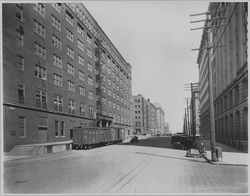 |
Jobbers Canyon before

The Jobbers Canyon debacle came at a time when downtown was reeling and in danger of being an empty shell. If not for major investments by a few key players. it may never have come back from the mass retail exodus to the suburbs it witnessed in the 1960s and ‘70s. In a real coup, the film features Old Market pioneers Sam and Mark Mercer, who describe the organic growth of this historic district into a cultural oasis — one that’s served as an anchor of stability.
The longest ongoing story of Omaha’s growth is its westward push. The film explains how this has been achieved by a liberal annexation policy that’s added subdivisions and even entire small communities to the tax rolls. The film touches on the fact that, outside a few developments, this sprawl has created a formless, characterless prairie of concrete and glass. The film also alludes to Omaha’s old neighborhoods, but only highlights one, Dundee, as an example of design and lifestyle merging.
Where the film doesn’t fare so well is in offering any real sense for the personality of the city. To be fair, filmmakers B.J. Huchtemann and Carl Milone didn’t intend to do that. Still, it would have been useful to try and take the measure of Omaha beyond its physical landscape. The only hint we get of this is via the many on-camera commentators who weigh in with their perspectives on Omaha’s changing face. And, to producer-director Huchtemann’s and co-producer-editor Milone’s credit, they’ve chosen these interpretive figures well. They’re an eclectic, eloquent, opinionated bunch and, as such, they reflect Omahans’ fierce independence and intelligence, which is at odds with the boring, white bread image the city often engenders. They are the film’s engaging storytellers.
Still, a film about the city’s changing face begs for an analysis of Omaha’s identity crisis. Mention the name, and outsiders draw a blank or recall a creaky remnant from its past or ascribe a boring blandness to it all. That’s before it had any “Wow” features. Now, with its gleaming new facade, Omaha’s poised to spark postcard worthy images in people’s minds. What is Omaha? What do we project to the world? The answers all converge on the riverfront. That’s where Omaha began and that’s where its makeover is unfolding. The monumental, sculptural pedestrian bridge may be the coup de grace. Interestingly, the film explains how much of what’s taking place was envisioned by planners 30 years ago. It’s all come together, in piecemeal fashion, to make the water’s edge development Omaha’s new signature and face.
So, what does it say about us? It speaks to Omahans’ desire to forge ahead and be counted as a premier Midwest city. No mention’s made of Hal Daub, the former mayor whose assertive energy drove Omaha, kicking and screaming, into the big time. He gave Omaha attitude. The film suggests this bold new city is here to stay.
Related articles
- From the Archives: An Ode to the Omaha Stockyards (leoadambiga.wordpress.com)
- Book Explores University of Nebraska at Omaha’s Rich History (leoadambiga.wordpress.com)
- In Memory of a Omaha Old Market Original, Fruit and Vegetable Peddler Joe Vitale (leoadambiga.wordpress.com)
- George Eisenberg’s Love for Omaha’s Old Market Never Grows Old (leoadambiga.wordpress.com)
- Remembering the Virginia Cafe and the Restauranter Family Legacy of Filmmaker Alexander Payne (leoadambiga.wordpress.com)
- A Synergy in North Omaha Harkens a New Arts-Culture District for the City (leoadambiga.wordpress.com)
- Everything Old is Newly Restored Again at Historic Sacred Heart Catholic Church in Omaha (leoadambiga.wordpress.com)
- Where Community, Neighborhood and Representative Democracy Meet (leoadambiga.wordpress.com)
- Jane Fonda Comes Home (leoadambiga.wordpress.com)
- Litniks Unite! The Downtown Omaha Lit Fest Brings Writers, Artists and Readers Together in Celebration of the Written Word (leoadambiga.wordpress.com)
The Garcia Girls
Success runs in certain families and most of America loves nothing better than classic immigrant success stories. That’s what the Jesus and Beatriz Garcia family of Omaha represents. Their success starts with the now elderly but still active parents who came from Mexico to make a better life for themselves and their six girls, who were all born in Mexico but primarily raised in America. My story for El Perico focuses on how the sisters have achieved much educationally and professionally, always guided by the hard-working, aspiring example of their parents. Just as the parents are inspirations to the Garcia girls so are the sisters inspirations to each other.

The Garcia Girls
©by Leo Adam Biga
Originally appeared in El Perico
When Jesus and Beatriz Garcia left Mexico for America decades ago their fervent wish was to give their family a better life. In that, there’s no doubt they succeeded. The couple captured the American Dream by working hard, owning their own home, becoming fixtures at Our Lady of Guadalupe Church and raising six girls.
The Garcias have seen their daughters, all born in Mexico, grow into accomplished women with families and careers of their own. The Garcia Girls carry on their parents’ tradition of serving others. At the 2011 Latino Heritage Awards the eldest, Magdalena “Maggie” Garcia, was honored for her work as El Museo Latino founder and executive director. Baby sister Maria Vazquez, associate vice president of student affairs at Metropolitan Community College, was named Latina of the Year.
“I’m amazed at Maggie’s and Maria’s accomplishments, and at all my other sisters.
They’re all working hard and continuing their education, and I’m doing the same thing,” says Silvia Wells, El Museo Latino managing director.
The sisters have all attended college as nontraditional students. The only one without a degree, Lori Ramirez, is working on it. Some have multiple degrees. Each has a chosen profession. It all stems from strong parental guidance. Maggie recalls, “My father sat me down and said, ‘My responsibility is to provide for you what you need. Your responsibility is to do the best you can.’ He never said you have to do this or that, he just said, you have to do the best you can. The demands were what each one of us placed on ourselves.”
Education was always stressed. “They put all six of us through Catholic school. They both worked. My dad sometimes had two and three jobs,” says Maggie.
Jesus trained in fine woodworking and construction in Mexico and his expert craftsman’s skills made him employable here. He repaired furniture for Nebraska Furniture Mart. Later, he opened his own shop, Jesse Garcia‘s Repair, at 13th and Vinton Streets in South Omaha, where the Garcias are an old-line Latino family.
He also built custom display cabinets for daughter Maggie’s museum. He closed his shop last year but still keeps his hands busy for select customers.
Beatriz, who learned seamstress skills in Mexico, labored 30 years at Pendleton Woolen Mills. She started as a sewer and retired as a supervisor. A talented cook, she makes her famous enchiladas and burritos for museum and church fundraisers. She marvels at what her daughters have made of themselves.
“I’m so proud of all my girls.”
In turn, the Garcia Girls admire their parents. Beatriz “Betty” Garcia Gonzalez, a licensed clinical social worker and mental health professional with two degrees, is struck by their “humility and determination.” She and her sisters appreciate the effort their folks made taking them to Mexico every summer for two-week immersions in family, heritage and culture. They value their devotion to church and their legendary work ethic. Wells says these values are “deeply rooted” in them all.
“I’m very happy my parents had the desire for us to complete our education and go further than just high school,” says Wells.
Maria says, “They’re the smartest people I know. They valued education. They always certainly encouraged us to do our best and to work hard and give back, and with that foundation we were able to do anything.”
Indeed, Silvia says her folks made her feel “I’m capable of reaching any goal I wish to attain.” She can count on “always having their support.” And the support of her sisters. “It is nice to always have someone encouraging you and I think we all encourage each other.” “We’re there for sounding boards,” says Maggie.
Tello says the family always pitches in to babysit as needed.
There’s some sisterly prodding, too. “If I’m thinking, This is difficult, there’s always someone there to say, ‘I know you can do it,’ or, ‘I did it, you can do it, too,” says Silvia. Patty was inspired to go back to school after seeing Silvia do it.
“I think we’ve challenged each other,” says Betty.
The striving continues. Silvia is midday through graduate studies at Bellevue University. Patty is studying for her master’s in childhood education at Concordia (Seward, Neb.) University. Vazquez is going after her Ph.D. in educational administration at the University of Nebraska-Lincoln.
Betty says the family’s left “a legacy.” “And there’s still more to come,” says Patty, adding, “We’re still pushing the envelope and seeing what more can we do.”
“We all try to be a part of the community we live in and make it a better place to live,” says Silvia.
As the oldest, Maggie led the way by embarking on a corporate career, then becoming the first in her family to attend college.
“Maggie was working full time and married when she started at UNO. I remember her taking me when she registered for classes. She wanted to expose me to that environment, to that other world,” says Maria, who went on to earn degrees from Metro and the University of Nebraska at Omaha.
After Maggie completed her master’s at Syracuse University she was unsure what to do next. “My father told me, ‘Whatever you decide to do you have our support in whatever way we can, but find something that makes you happy and you’re passionate about.’” She fulfilled her dream opening the museum. The whole family’s volunteered there.
As each Garcia Girl’s found success, the whole family’s shared in it. The legacy lives on.
When a building isn’t just a building: LaFern Williams South YMCA facelift reinvigorates community
All kinds of human services are delivered in buildings, including some nondescript, institutional edifices that can appear cold on the outside. But of course it is what goes on on the inside that matters. Take the South Omaha YMCA, for instance. I cannot even find an image of it on the Web, which is just as well since it’s a dull, quasi-governmental-looking structure that hardly hints at the warm embrace that staff extend to visitors or at the fun activities and programs offered to members. When a building truly engages a neighborhood and community the way this one does, it isn’t just a building anymore, it’s something much more personal.
When a building isn’t just a building: LaFern Willams South YMCA facelift reinvigorates community
©by Leo Adam Biga
Originally published in The Reader (www.thereader.com)
South Omaha’s renaissance unfolds on many fronts. From scores of new businesses to construction of a new community center, library and athletic stadium to the expansion of Metropolitan Community College’s south campus, the area’s booming again after a three-decade lull.
Facelifts also contribute to this turnaround. The most obvious makeover is to the 24th Street business district, whose once thriving streetscapes-storefronts dimmed but now overbrim with color and activity in a plaza-like marketplace.
More recently, a $1.25 million renovation to the LaFern Williams South YMCA at 30th and Q has infused new life into a community anchor that had seen better days.
The Y’s flip is not easily observed until you go inside, but it’s accounting for a surge of activity not seen there since the building’s heyday.
YMCA of Greater Omaha COO Linda Butkus said compared to a year ago the South branch has seen a 30 percent increase in member scans, a 25 percent increase in member revenue and 209 more individuals join as Y members.
“We’re seeing more use, we’re getting more memberships, were expanding beyond just kids to serving more families and adults as well,” she said, “and I think the renovations are the reasons for the increases.”
Three phases of capital improvements are complete. Interior upgrades encompass a redesigned lobby, a new gymnasium floor, enhanced lighting, fresh carpeting and paint, a refurbished fitness room, a large computer room, a new security system and a new chiller. Outside, a new parking overlay is done and a new roof in-progress. In line with the physical changes new programs have been implemented.
Butkus said, “We have more for individuals to do in the way of programming, we have more fitness equipment and the overall feel of the facility is much better. It was a dark and old interior. Now it’s very nice, it’s very bright. The amenities have been upgraded. It feels good to be there. It’s been a complete facelift. When you walk in you go, ‘Wow.’ That’s the feedback we’re getting.”
South branch executive director Brian Owens said the Y’s commitment has resulted in “a buy-in” from area residents. “It’s given people a sense of pride to say, ‘You’re investing in our community.’” He said members lost to other branches are returning now. To accommodate higher volume he’s expanded the hours of operation.
He said to stay in touch with the expectations of a diverse clientele “we’re being very intentional and diligent about launching our programs. We’re going out and asking our member base, ’What do you want in this building?’, instead of us telling them what they’re getting. That’s been pretty successful so far.”
Responding to the ever growing Latino population fitness classes infused with merengue and salsa are offered. ESL and Spanish language classes are possibilities.
“Our Latino base has grown tremendously,” he said. “That’s our demographic and we’re ecstatic that we do have that buzz in the Latino community.”
Smaller than some Ys and lacking a pool, the branch accentuates what it has that others Y don’t. Owens said, “We have a smorgasbord of cultures who frequent this branch” — Latinos, Sudanese, Native Americans, whites. “We have that unique opportunity to be able to cross cultures and to share with one another, and that’s a great scene.”
Brenda Kremlacek’s three boys attend the South Y, where, “they’ve met a variety of ages and nationalities, and that’s good,” she said. “I’ve seen a lot of progress with the boys’ attitudes. They look forward going. They have a lot of good friends.”
The absence of a swimming hurts but Owen said the branch compensates with “the largest gym in the (Omaha) association.” That gym sees heavy use for hoops, via basketball programs/leagues, and fitness/martial arts classes. He’s hoping when the nearby Kroc Center opens in 2009 his members will be able to access its pool.
He feels his Y’s proximity to the neighboring South Side Terrace Homes and “its 800-plus young people” is an advantage for attracting and retaining youth and family members. He’s keenly aware the facility’s long drawn many users from the Omaha Housing Authority’s South Terrace complex. The low-income housing project includes many at-risk youths who access the Y’s after-school and summer club programs and Kids Cafe, which provides free nutritious meals and snacks. An OHA liasion offices at the Y.
One of South Side’s own played a key role in pushing for the building, which was owned and operated by OHA from 1977 until 2007. The facility’s provided recreational, educational, community and social agency services and programs its entire life. It fulfilled the vision of LaFern Williams, a South Side tenant and community activist who “was very instrumental in convincing the powers-that-be” to construct a recreational/childcare facility for residents, said OHA executive director Stan Timm. Her dream of a safe haven for children was realized and the building became the LaFern Williams Center after her death.
The center also housed the award-winning Center Stage Theatre, whose alums include actor-directorJohn Beasley Owens said, “This facility was one of the most happening scenes in the ‘80s.” By the start of this decade the Center Stage was no more and the building showing its age and a decline in usage. A half-dozen years ago Beasley resurrected live theater there by forming the John Beasley Theater & Workshop. Even with the JBT’s success the center was not the beehive activity it was before. In 1999 the Y leased the ground floor to present an array of programs and activities. The name changed to South Omaha Community YMCA. Other tenants have included Educare, Head Start and South Omaha Weed & Seed.
When OHA could no longer afford the cost of maintaining the building, plans called for the center to be sold. An outcry led by South Side residents made the structure’s fate a public issue. That’s when the Y stepped in to buy and renovate it with the help of a $1 million challenge grant from the Peter Kiewit Foundation.
As an enticement for Beasley’s company to remain, the Y showed some love by installing new seats and carpeting in the auditorium housing his theater. Owens said having the theater there “is a unique opportunity and presence. Mr. Beasley’s a renowned artist and his productions are tremendous. We wanted to make the upgrades to let him know we respect him and appreciate what he provides.”
Additional plans for the auditorium call for the addition of a drop-down projector to accommodate Power Point II presentations, which Owens hopes will attract organizations to use the facility during the day for meetings and trainings.
As a nod to the legacy of the woman who made the center a reality, Y officials renamed it the LaFern Williams South YMCA. While Owens never met Williams he said, “we’re honored to carry Miss LaFern’s name and her mission to be a beacon or a cornerstone for this community. I’m proud to be that steward that fights for those whose arms get tired. I don’t take that lightly.”
He said the deep meaning the place has in the community is reflected by the fact it’s only been tagged once in the seven years he’s been there. “I think that has a lot to do with respect. That this is kind of off-limits. This is the hub. This facility has such a lineage and a history. A lot of young people’s parents, brothers, aunts, uncles participated here. It’s like we take care of our own.”

Related articles
- A South Omaha Renaissance (leoadambiga.wordpress.com)
- Turning Kids Away from Gangs and Toward Teams in South Omaha (leoadambiga.wordpress.com)
- Where Community, Neighborhood and Representative Democracy Meet (leoadambiga.wordpress.com)
- Home is Where the Heart Is for Activist Attorney Rita Melgares (leoadambiga.wordpress.com)
- El Puente: Attempting to Bridge the Divide Between Grassroots Community and The System (leoadambiga.wordpress.com)
- Omaha South High Buffett Outstanding Teacher Award Winner Maria Walinski-Peterson Follows Her Heart (leoadambiga.wordpress.com)
Maria Walinski-Peterson: Omaha South High Buffett Outstanding Teacher Award winner follows her heart
A lot of negative things are said about the state of American public education but most schools and teachers do a fine job within the parameters they’re given. If you ever find yourself despairing about the situation give this profile of a master teacher a read and you’ll likely feel a bit better about the caliber of people teaching our kids. Maria Walinski-Peterson may not be average or typical but she’s certainly not an aberration. The Omaha South High School social studies teacher is a product of the very system (Omaha Public Schools district) and school she teaches in. Yes, she’s won some major awards and been recognized as a stellar classroom instructor, but she’s one of many thousands of outstanding teachers fighting the good fight who’ve learned under great teachers before them and are influencing great teachers ahead of them.
Maria Walinski-Peterson:
Omaha South High Buffett Outstanding Teacher Award winner follows her heart
©by Leo Adam Biga
Originally published in El Perico
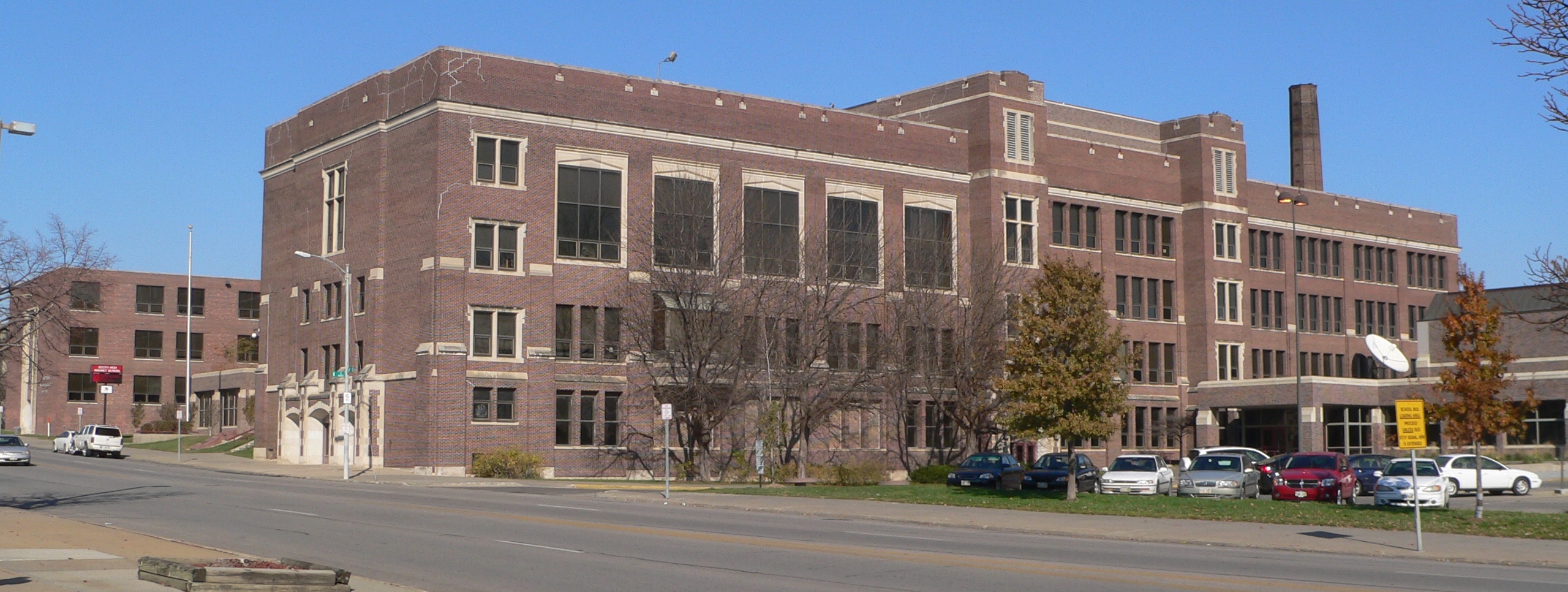
When Omaha South High Magnet School social studies teacher Maria Walinski-Peterson thinks about her 2011 Alice Buffett Outstanding Teacher Award, she’s reminded of master teachers she had as a student there. Teachers like Sally Fellows and Jim Eisenhardt.
“They were models of teachers who knew what they were talking about, who had some energy, some enthusiasm, and who made me want to pay attention. They had a kind of charisma. I wanted to do a good job for them,” says Maria.
“That’s a pretty tall order to get that breadth and depth. The fact that anybody thinks I have even a small piece of that…” she says, her voice trailing off. “When that call came about the Alice Buffett, I thought, Really? I’m not Sally Fellows yet, I’m not Jim Eisenhardt yet, I’ve only been doing this nine years, this is too soon.
“But I learned from the best, and I knew if I’m going to truly follow this vocation I have to give these kids something they’re not going to necessarily get from somebody else.”
The recognition and the $10,000 that come with the award means raised expectations.
“There are people looking at me like, ‘Really, you got a Buffet? What’s so great about you?” The pressure is enormous. Other people are like, ‘Oh, just relax and enjoy it.’” To which her response is, “Are you freaking kidding me?’ If students and colleagues have said you’re one of the best in your profession — guess what? — I have to be one of the best. I don’t get to slack off. People are watching.”
She may feel added pressure, she says, “because I’m relatively young. You don’t usually get a lifetime achievement award until you’ve put in a lifetime.”
There’s pressure, too, teaching where she once attended school, but she couldn’t see herself working anywhere else.
“I lobbied diligently to be here. After I got my teaching certificate and master’s degree at Drake University, I was sending emails and calling people back here saying, ‘Make sure there’s a spot for me — I need to student teach in this building, so that I can teach in this building.’ This place gave me so much. It’s simply payback. It’s a calling and I just knew this is where I had to be.”
If anything, her loyalty has only deepened. She says she recently declined “a cushy gig” at a suburban school to stay at South. In light of what happened last fall, she can’t imagine ever leaving. Days from being married, her best friend and intended maid of honor, fellow South social studies teacher Stacey Klinger, died when a truck struck her as she crossed the street in front of school.
Maria will never forget how students consoled her. “These kids literally and figuratively put their arms around me and said, ‘We’re here for you. What do you need?’ We bonded in a way you can’t bond in any other way. We have that history together. They have seen me at a level of humanity they don’t see too many teachers in.”
As an Academic Decathlon and African-American History Challenge coach she’s bonded with yet more kids. “I just know we’re always going to be like this,” she says, clasping her hands together. “I love those people and they love me back.”
The daughter of a retired Lutheran-Episcopal-Orthodox Christian priest, Maria was born in upper New York state. She likes saying she was at Woodstock, where her mother Joan was pregnant with her in 1969. At age 11 Maria moved with her family here when her father was assigned the pastorship at St. Martin of Tours Episcopal Church across from South.
She was expected to attend private school, but she preferred the more diverse public school experience afforded by South.
“I wanted to be in the real world,” she says.
This teacher of human geography loves the cultural melting pot there.
“South Omaha’s always had working class diversity and it’s always been an immigrant landing strip,” she says, “but now those immigrants are coming from other places than just western and eastern Europe. They’re coming from the Sudan. We’ve got a lot of Karen kids from Burma. We’ve obviously got a lot of Central and South American kids.
“South High is the most ethnically diverse high school in Nebraska. In any given class period I’ve got that rainbow looking right back at me. We have a microcosm of the planet right here.”
For her, geography is more than a subject. “It’s the world,” she says.“Geography is life.”
As teachers, she says she and her colleagues are “in the business of building people.” The art and science of reaching today’s kids with their shorter attention spans and passive learning habits can be frustrating.
“There are many days when I’m like, ‘I’m not doing this, this is hard, I’m going to quit,’ and my kids all just laugh and go, ‘You’re a lifer.’ Even my husband Glenn says, ‘If you told even one of those kids you’re going to give up teaching, the look on their face would change your mind like that,” she says, snapping her fingers.
She knows he’s right. Besides, she loves “the creativity” of lesson planning. Then too, she says, “I’m really not good for anything else. This is all I know.. so I guess I better stick it out.”
Related articles
- Masterful: Omaha Liberty Elementary School’s Luisa Palomo Displays a Talent for Teaching and Connecting (leoadambiga.wordpress.com)
- Turning Kids Away from Gangs and Toward Teams in South Omaha (leoadambiga.wordpress.com)
- Home is Where the Heart Is for Activist Attorney Rita Melgares (leoadambiga.wordpress.com)
- Where Community, Neighborhood and Representative Democracy Meet (leoadambiga.wordpress.com)
- Community Trumps Gang in Fr. Greg Boyle’s Homeboy Model (leoadambiga.wordpress.com)
- A South Omaha Renaissance (leoadambiga.wordpress.com)
- El Puente: Attempting to Bridge the Divide Between Grassroots Community and The System (leoadambiga.wordpress.com)
- Gray Matters: Ben and Freddie Gray Fight the Good Fight Helping Young Men and Women Find Pathways to Success (leoadambiga.wordpress.com)
Justice for Our Neighbors: Treating the immigrant as neighbor
As long as immigrants are viewed as The Other and thus seen as apart from rather than as a part of there will be a need for programs like Justice for Our Neighbors, a faith-based response to the extra challenges immigrants face in a nation that’s not always immigrant-friendly despite being built by immigrants. This is a story about some of the efforts of the Justice for Our Neighbors-Nebraska office led by Emiliano Lerda.

Justice for Our Neighbors: Treating the immigrant as neighbor
©by Leo Adam Biga
Originally published iin El Perico
Welcoming the stranger in our midst is the mandate of Justice for Our Neighbors-Nebraska, a small nonprofit that holds monthly clinics for low income immigrants in need of legal counsel. The organization’s largely new staff held a March 25 open house.
The clinics, offered in both Omaha and Columbus Neb., provide a friendly, safe haven for individuals, couples and families stressed by uncertain legal status. For some, it may be their only recourse to try and avoid deportation. Potential complications are many. Cases can drag on for years.
Situations in which there’s abuse, illness, or poverty present, for example, make the need for action more urgent.
JFON staff offer free legal services, education and advocacy to help guide clients through the complex immigration maze. Its in-house attorney and legal assistants provide consultation. Referrals are made to community service providers as needed to address health care or employment or economic issues, for example.
Volunteers facilitate the clinics and extend the welcome mat by variously conducting the intake process, acting as interpreters, supervising children and serving food.
The agency’s part of the national Justice for Our Neighbors network the United Methodist Church on Relief Committee launched in 1999 in response to ever more complicated and stringent immigration laws. JFON clinics operate cooperatively with local churches. The Omaha clinic’s held at Grace United Methodist Church, 2418 E St., next door to the JFON-Nebraska office, 2414 E St.
The Nebraska chapter’s recently undergone a major turnover. Emiliano Lerda came on as JFON-Nebraska executive director in January. Charles “Shane” Ellison joined as lead attorney in February. The other two full-time staffers are also relatively new — office manager/legal assistant Darling Handlos and paralegal Shaun Downey.
Originally from Argentina, Lerda, 30, knows the immigrant experience first-hand. Now a U.S, citizen, he was drawn to America’s Midwest because its agricultural environment reminded him of his native Cordoba province. At the University of Northern Iowa he became the first international student elected student body president. After obtaining his law degree from Drake Law School he worked as government relations manager for the Iowa Corn Growers Association.
“When I got here what really grabbed me is the fact this community here has very similar values to the community I grew up in,” he says. “I love working with farmers and I hope at some point in the future I will have the chance again to work with farmers.”
He says JFON-Nebraska allows him to remain in the Midwest while serving the community of newcomers he feels a deep connection to.
“I’m an immigrant myself. I went through the process. I know how difficult it is. I received a lot in life through people that helped me without any self-interest. For years now I have been passionate about giving back to the community. I could not ignore the needs of people that are here in similar shoes that I wore, that are new to this community, that are far away from their family and friends.
“God gave me the talents and skills and the background, and so I thought it was a great fit for me to continue to make a difference by helping people that want to be a part of this community, that want to contribute to this community but cannot because their illegal status is stopping them.”

At its core the JFON-Nebraska mission is to help undocumented immigrants comply with the law and become legal residents, says Lerda.
“Some people may be living in constant fear because their status is not legal,” he says.
Many are separated from family members.
Not everyone has a case though, Lerda stresses.
“Immigration provides very few doors for people to come through, and if you don’t fit within those doors, I don’t care how hard a worker you are or how much you want to do the right thing, you’re just not going to be able to.”
Limited staffing restricts the number of clients served per clinic to 10. Clients are seen on an appointment-only basis.
Lerda’s frustrated that the demand for immigration legal services far outstrips JFON resources. However, JFON does refer to two sister agencies — Catholic Charities and Lutheran Family Services — that provide similar services at a nominal fee.
He says his agency is currently cleaning out a large backlog of old cases to better focus on new cases. JFON annually handles 300 cases. By year’s end he hopes to pass the bar or receive accreditation as an immigration law attorney.
The polarizing issue of immigration, he says, is best addressed by education, including JFON-Nebraska workshops for service providers and others in the community. To him, educating people about the benefits of being legal is both practical and neighborly.
“If we don’t help people that can be helped to be here legally, so they can go to school and they can make a contribution economically or civically, then I think I’m failing to do my part. That’s why I feel like God gave me this opportunity and I have to do it.”
For a clinic appointment, call 402-898-1349 the first day of the month.
Related articles
- Hundreds Attend OLLAS Conference Cumbre to Give and Get Diverse Perspectives on Migration Issues (leoadambiga.wordpress.com)
- Turning Kids Away from Gangs and Toward Teams in South Omaha (leoadambiga.wordpress.com)
- Fast Times at Omaha’s Liberty Elementary: The Evolution of a School (leoadambiga.wordpress.com)
- Methodist conference puts focus on immigration (reporternews.com)
- Jose Antonio Vargas: What Does It Mean To Be An American? (huffingtonpost.com)
- Omaha Tri-Faith Pioneers Seeing the Fruits of Their Interfaith Collaborative Take Shape (leoadambiga.wordpress.com)
El Puente: Attempting to bridge divide between grassroots community and the system
When people refer to “the grassroots” in communities they are generally describing average men women busy living their lives, working jobs, raising families, and thus mostly disconnected from the official city apparatus, such as law enforcement, in place to protect and serve them. This is especially true of inner city neighborhoods with a high proportion of residents for whom English is a second language. There’s often a built-in distrust of The System. One attempt to bridge he divide in South Omaha’s barrios is El Puente, a joint effort by a local minister, Rev. Alberto Silva, and a local journalist, Ben Salazar, with deep ties to the Latino community there. This is their story.

El Puente: Attempting to bridge dvide between grassroots community and the system
©by Leo Adam Biga
Originally published in El Perico
Experience has taught two longtime South Omaha community activists that a gulf exists between some residents and those assigned to protect and serve them.
Nuestro Mundo publisher Ben Salazar and Grace United Methodist Church pastor Alberto Silva recognize the need for a confidential, community-based advisory service that operates independently of police or government.
“It doesn’t take a genius to figure out there is this fear on the part of many immigrants and Spanish speakers to come forward and speak to the police when an issue arises, so we know there’s a void there that we hope to bridge,” said Salazar.
That reality led Salazar and Rev. Silva to form El Puente or The Bridge as a conduit that links community members with professionals. A March 29 press conference at Grace announced the nonprofit, a companion project to the church’s Latino empowerment outreach program, La Casa Del Pueblo. Both are based at the church, 2418 E Street.
The men say many things explain why individuals remain silent rather than contact officials: a person’s illegal or undocumented status; fear/distrust of authority; language barriers; and unfamiliarity with the social service, law enforcement, justice systems.
Salazar and Silva say they and other volunteers staffing El Puente can directly assist inquirers or refer them to experts.
Already, Silva said El Puente’s fielded complaints of racial profiling, discrimination and domestic violence. Tips about criminal activity are welcome. Whenever possible, a person’s identity is kept private. As necessary, information is passed onto authorities or agencies. In many cases El Puente connects people to social and/or legal services.

Rev. Alberto Silva
Journalists and ministers don’t often work together, but this newsman and preacher saw they could do more together than apart.
“Since we both worked almost exclusively with the Latino community in different ways we knew that if we merged our experiences together in this effort it would be beneficial to the community because we know the void exists,” said Salazar.
Both want the community and police to view each other as allies, not adversaries.
“The whole thing for me is I want to see collaboration between the police and the Latino community,” said Silva. “The domestic violence issue is very prevalent right now, but there’s such a fear.”
As illustration, he said a young Latina at the press conference testified she did not report her former partner’s domestic violence against her because he was a U.S. citizen and she was not. Rather than jeopardize her residency status, her abuse went unspoken. Silva said the woman went on to say she and others in such predicaments would welcome a resource like El Puente.
Silva has a sense there’s a big problem out there. “I have been dealing with a lot of domestic violence cases. People keep calling with these types of issues, especially immigrant women,” he said. Ideally, he said, El Puente can link men or women or families to counseling or shelters or other assistance they need.
The need for a discreet sounding board may be greater than ever because the anti-immigrant climate imposes a chilling effect on people volunteering or reporting things, say Salazar and Silva. They feel the recent “green card” incident targeting South High athletes and fans was a symptom of racist fervor that “gives license” to prejudice.
“My opinion is that discrimination has been holding on fast like Jim Crow for years, maybe just not as blatantly as now,” said Salazar.
“It just went underground for a little bit,” said Silva. “It wasn’t socially acceptable to display it or talk about it like it is now again.”
Silva said soon after El Puente’s launch, several people reported loved ones being detained after traffic stops. Those kinds of incidents, he and Salazar say, diminish trust and discourage some Latinos from expressing their concerns or asserting their rights.
“How are they going to have that trust to come forward when they hear that people are getting stopped on the Interstate and being taken directly to the ICE (Immigration and Customs Enforcement) office and held for deportation?” Silva asked. “People are disgusted with the graffiti problem. They would love to come forward but how are they going to go to the police when you have this immigration enforcement mentality permeating the thought of the immigrant community?”
The absence of an Omaha police auditor office is a barrier to people reporting possible law enforcement misconduct, say El Puente leaders.
Southeast precinct captain Kathy Gonzalez acknowledges that “sometimes people don’t feel comfortable coming directly to the police department.” She endorses El Puente, terming its bridge or mediator role “a huge asset” and “a working partnership between the police and the community. She added, “Sometimes people don’t know where to turn…so it’s just one more step that can assist us with community outreach and it’s one more place they can go to get connected to resources.”
Retired Omaha Police Department officer Virgil Patlan sees El Puente, which he volunteers with, as “an extension” of the community policing efforts of the Nebraska Latino Peace Officers Association he headed up. “We can work with people in ways the police can’t,” he said. “It’s just better to have someone not in uniform that the community may feel more comfortable with. He frees up the police also.”
Patlan, Silva and Salazar say they have ample street credibility but “building trust” is an ongoing process. Silva said it’s critical people know what they say will be held in strictest confidence. Patlan said he and his El Puente compadres each bring something unique to the task: “We’re not from the same mold and yet we all complement each other in certain ways. We just love the community, there’s no doubt about that.” Each boasts extensive community connections.
Despite not being immigrants themselves, Salazar said they don’t feel “completely removed” “because our parents and grandparents were a part of that experience. And it’s not purely an immigrant experience per se we’re responding to. It is a Latino experience of living in this country. Discrimination is not limited to legal status. Often times even Latinos who are second-third generation born here are treated as outsiders, as immigrants, as not fully a part of the Anglo society.”
El Puente contact numbers are: (Silva) 650-0848, (Salazar) 731-6210 and (La Casa) 614-2820.
Related articles
- Turning Kids Away from Gangs and Toward Teams in South Omaha (leoadambiga.wordpress.com)
- Trailblazing Grassroots Advocate for Latino Journalists CCNMA To Be Inducted Into the Hall of Fame (nahj.org)
- School sprouts from rundown nightclub (jsonline.com)
- Push to Transform Brooklyn Armories to Health Centers (theepochtimes.com)
- Latino Leaders Gather in Chicago Before NATO (chicagotalks.org)
Home is where the heart Is for activist attorney Rita Melgares

Home is where the heart Is for activist attorney Rita Melgares
Activist attorney Rita Melgares was a divorced single mother of four from the Southwest when moved here to attend Creighton University Law School. She didn’t intend staying. But 35 years later she’s still here, still helping her people, doing legal work for newcomer families, handling juvenile justice cases and some criminal law.
This mother and grandmother is still raising kids. She shares a home in Benson with a son who is a single father. She helps rear his three youngest, whom she refers to as “my boys.” It’s the latest path on a journey that’s kept family at the center of things.
Mexico is where her ancestral lines extend. New Mexico is where both her parents came from. She can trace her genealogy back three centuries there. Southern Colorado’s San Luis Valley is where the former Lourdes Rita Martinez was born and raised. But Omaha is where her interest in law and social justice coalesced. Her parents Esquipula and Jose Martinez modeled service for Rita and her seven siblings.
She said her parents did not join groups or pull boycotts, but expressed a sense of grassroots social justice by helping people in need. She recalls her folks feeding the less fortunate and working with the police to make sure the neighborhood was safe.
The Martinez children fulfilled an expectation of achievement and service. “All eight of us have an undergraduate degree and several of us went on to advanced degrees,” she said. “Three of us are attorneys. My sister is a retired schools administrator.”
Growing up Latino meant dealing with racism. The experience of oppression provides context for her work in protecting people’s rights. “The racism against Latinos had its own flavor in the area i grew up in. You felt it, you knew it, and it continues,” she said.
Another vital experience was the social ferment of the 1960s.
“I’m a product of the ’60s. I was fascinated with the civil rights struggles and I wanted to march with the people, I wanted to be an active participant in those struggles. Two of my brothers were very active in the anti-war movement and the Chicano movement in the Southwest. When we came of age there was a movement of people you could join. It was both noble and exciting. I matured into that. It’s an interesting part of my life and I don’t think I’ve ever left it behind.”
Thrusting herself into the fray had to wait because she married right after high school and became a mom. Her invovlement came while earning a secondary education degree at Adams State College and then teaching English there.
“I challenged every course I could and I graduated with honors from college in three years and I became an activist. The Chicano movement was working very hard to democratize the campuses of the Southwest and so I was active in the student movement. César Chavez and the farm workers union was very strong in Colorado. I also had the background of northern New Mexico and the land grant issue. Those were the pressing issues in that environment.”
Feeling she could make more impact outside the classroom, she followed two of her brothers in the study of law. She was accepted by several schools but chose Creighton. Her experience there was bittersweet.
“Creighton prepared me very well as an attorney but it was one of the loneliest experiences in my life. I was far from home, the only Latino in the College of Law and there was no social activism. The dean pulled me aside very early in my freshman year and gave me the name of the director of the Chicano Awareness Center (now the Latino Center of the Midlands) and said, ‘I think you should go and meet those people.’ I think he had a sense that with the social activism I came from I wouldn’t last at Creighton if I didn’t have something that would anchor me in the community.”
Melgares said she “became a great friend” of the center. She took a leave from school to work with youth there, along the way reconnecting with her cultural and social activist roots. “A lot of the same issues we found everywhere existed in Omaha. I could participate in the people’s movement here and it was doing that when I really fell in love with South Omaha. I realized this was where the struggle was, this was where i could find the nexus to Omaha and to my soul and spirit, and so I’ve just always been close to south Omaha since then.” Her office is a converted duplex at 3927 So. 24th St.
She served on the center’s board, one of many south Omaha boards she’s served on.
Upon graduating from Creighton in 1979 she won a fellowship that placed her with the Omaha Legal Aid Society, where she worked nine years with the disenfranchised.
Following a stint with a downtown law firm she made the break and went on her own in 1994. Family law became her focus. “That’s where I saw you could make a difference in helping people pull their lives together. It’s been my privilege to work for the undocumented. It is not a popular community to work for. Immigration issues have a huge impact on family. Unfortunately it can be a very negative influence, a very sad outcome when you have families separated, when you have parents always looking over their shoulder because deportation is on their back, people afraid to move right or left because they have no documentation.”
The disruption is made worse by the recession. She said it’s hard enough for U.S. born or visa holding citizens to find a job in this climate, but even harder for those with no social security number, little schooling and limited English. She bristles at critics of immigrants, saying south Omaha’s rejuvenation is due to the newcomer population.
“They breathed life back into south Omaha. Nobody’s getting rich on South 24th St. but my gosh the economic wheel is being moved and it’s being moved on the backs of the immigrant community. It’s exciting. I think the watering of the cultural roots helps the entire community. Everything Latinos bring with them, from whatever their country of origin, they share with each other and with the larger community. I think they help Omaha and Nebraska in every which way. I understand the numbers overwhelm schools and health care, but the numbers also bring spirit and economic life.”
Her passion for her people has seen her throw herself into the life of the Latino community. “You don’t gain a community’s trust just because you want to or you’re a good person or you have a good heart. I think you have to work at the vineyard first, and I did that,” she said.
Battling to gain Latinos an equal place at the table “wasn’t easy,” she said, but she “kept knocking at the door, sometimes gently, sometimes pushing” herself in. “I think long after I’m gone we will still be trying to dialogue meaningfully about race.”
Being twice recognized with lifetime achievement awards for her work in the Latino community, she said, only “underscores” the fact that despite not being from Omaha “I have really matured here and worked hard here. Wow, lifetime achievement, I guess I have spent a lifetime in Omaha. And it’s been a very good life.”
Related articles
- Turning Kids Away from Gangs and Toward Teams in South Omaha (leoadambiga.wordpress.com)
- Where Community, Neighborhood and Representative Democracy Meet (leoadambiga.wordpress.com)
- UNO/OLLAS Resident Expert on Cuban and Latino Matters Jonathan Benjamin-Alvarado (leoadambiga.wordpress.com)
- Hundreds Attend OLLAS Conference Cumbre to Give and Get Diverse Perspectives on Migration Issues (leoadambiga.wordpress.com)
- Episcopal Priest Rev. Ernesto Medina Never Forgets His Latino Hertitage (leoadambiga.wordpress.com)
- A South Omaha Renaissance (leoadambiga.wordpress.com)
- Institute for Latin American Concern at Creighton has Dominican Focus (leoadambiga.wordpress.com)
- Gray Matters: Ben and Freddie Gray Fight the Good Fight Helping Young Men and Women Find Pathways to Success (leoadambiga.wordpress.com)
Turning kids away from gangs and toward teams in South Omaha
Omaha’s had a problem with gangs for a quarter century now. Most American cities share the same scourge, more or less. It’s good to be reminded that law enforcement efforts to deal with the problem don’t begin and end with patrolling hot zones or investing crimes or making arrests, they also include grassroots community engagement to try and steer young kids away from the pull of gangs into positive activities. The following story I wrote for El Perico a few years ago describes the community prevention-intervention work of one cop in Omaha, Det. Tony Espejo with the gang unit.
Turning kids away from gangs and toward teams in South Omaha
©by Leo Adam Biga
Originally appeared in El Perico
For Omaha Police Department Gang Unit detective Tony Espejo, being honored as National Latino Peace Officers Association Officer of the Year in Austin, Texas earlier this month brought full circle the community service his parents modeled for him.
As long as he can remember, he said his folks, Juana and Ezequiel Espejo, “have been advocates in the community…Growing up, we always opened our house up to people. My mom is a big advocate in the YWCA. A lot of people know her. She’s had a huge hand in helping a lot of immigrant families.”
Today, Espejo, who’s married with two children, serves that same community working out of the Southeast Precinct. It’s a different environment than the small, tight-knit environment he knew as a boy. Families then were more cohesive, youth activities more numerous.The Gross High grad dropped out of college, then entered the military.
“I wasn’t doing bad things but I wasn’t doing great things. Boy, the Marine Corps got me on the straight and narrow, it got me organized. I grew up is what I did.
When he returned home, he found a new immigrant population reenergizing the area. But there was a new problem: unsupervised youths running the streets, trafficking in drugs, engaging in driveby shootings.
“The graffiti and gang problem was probably the biggest shocker for me,” he said. “When I left in 1992 it was just starting. I think there was one Hispanic gang in south Omaha and I knew all the kids in it. We used to play sandlot baseball and football together. I came back and these guys were full blown gangsters and there were three or four different gangs by then. Before, there was not the violence I all of a sudden walked into here. This wasn’t the south Omaha I knew.”
Back home his desire “to make things better” prompted him to become a cop.
“There weren’t a lot of Mexican police officers at the time, you rarely saw any on the street,” he said. Eventually assigned his old stomping grounds, he joined the gang unit in 2004. He said, “I kind of looked at it from a problem-solving aspect. Why are these kids doing this? What is the root of the problem?”
In 2005 the example of two men he met planted a seed. In Chicago, Bob Muzikowski channeled kids from the notorious Cabrini-Green projects into baseball. Locally, Stoney Hays funneled kids into Boys and Girls Club activities. Espejo liked the idea of recruiting at-risk kids away from gangs into something structured and positive. His first inclination was baseball, but the youth he ran into had other ideas.
“I would drive around on patrol and see all these different groups of kids playing soccer.
I didn’t know anything about soccer, but it’s huge for these kids.”
He formed a soccer league with help from the Nebraska Latino Peace Officers Association. It’s grown from six to 18 teams. He enlists kids he happens upon.
“There’s always a leader,” he said.”I find that kid and make him responsible. I let the group pick their own team name, colors, uniform. It means something to them. I want the kids to be proud of being from south Omaha.”
He said young people crave “a sense of belonging. They’re ripe for the picking.” His intervention program tries reaching kids before gangs do.
He and fellow officers volunteer as coaches. The consistency of positive adult role models, he said, “is probably the biggest thing missing in a lot of families nowadays.”
Participation’s free. Uniforms provided. But, he said, “we aren’t just giving it out, they have to put out and practice.” They have to act right.
“We emphasize we’re not just coaches, we’re police officers, so if you do get in trouble we’re going to find out about it, and we’d hate for you to embarrass us because we’re here to help you guys out. I’ve had my disappointments. Two leaders turned out to be little gangsters. I recently arrested one of my guys. I take it personally, because I took my chance to change them. I can’t be there every day for them. You can only carry them so far. At some point you gotta let ‘em go, and hopefully that little bit of time we spend with them, they’re going to make the right decision.”
The relationships built, he said, allow kids “to see officers in a different light. It humanizes us. And it gives officers an idea of what it’s like to live down here for these kids. A lot of them come from dysfunctional homes. They tell us their problems.”
The kids he started with are graduating high school and moving on with their lives.
He’s since added a baseball league. He wants to expand his efforts into north Omaha.
Along with mentoring kids, he educates parents about the dangers of gang involvement. He said his bilingual skills and respected family name “open up doors for me.”
He described his award as “huge.” Meeting distinguished Latinos in Austin, he said, “was a big inspiration. Now I know I can achieve higher, I should achieve higher. It means a lot for me to be even considered that caliber of person. But I wouldn’t be where I’m at if I didn’t have other officers and volunteers helping me out on their own time.”
With 300 kids participating, he needs more fields, volunteers, sponsors. “This thing’s only limited by funding,” he said. “It’s a huge commitment, but it’s the right thing to do.”
To donate or volunteer, call 402-510-1495.
Related articles
- Where Community, Neighborhood and Representative Democracy Meet (leoadambiga.wordpress.com)
- Chicago gang database intends to predict violence (foxnews.com)
- NOPD targets group violence, gangs across city (wwltv.com)
- Gray Matters: Ben and Freddie Gray Fight the Good Fight Helping Young Men and Women Find Pathways to Success (leoadambiga.wordpress.com)
Where community, neighborhood and representative democracy meet

Where community, neighborhood and representative Ddmocracy meet
©by Leo Adam Biga
Originally appeared in El Perico
South Omaha Neighborhood Alliance (SONA) meetings at the Omaha Police Department’s Southeast Precinct bring together neighborhood association leaders with public servants for a Frank Capraesque community forum.
It’s classic American democracy in action. Dozens of participants at an August 5 meeting listened to reports from Southeast Precinct captain Kathy Gonzalez, mayoral liaison Roger Garcia, Omaha City Councilman Garry Gernandt and various SONA members. Anyone who wanted an opportunity to speak was afforded the chance.
Violent crime, graffiti, robberies, burglaries and drug-prostitution activity have been on the rise this summer, Gonzalez reported. Some neighborhood association presidents confirmed the same, posing specific questions about police response.
Frank, yet measured discussion ensued for two hours, even on hot button topics like Mayor Jim Suttle’s proposed tax hikes. Gernandt, who represents south Omaha’s District 4, addressed the city’s budget woes, fielding questions and recommendations. Neighborhood leaders also announced activities happening in their neighborhoods.
SONA serves as sounding board, network, organizer and catalyst for neighborhood residents and local government in addressing issues and sharing news.
“The advantage is anytime you bring people together to share information, best practices or activities then it can spur ideas that enhance neighborhoods” said Hanscom Park Neighborhood Association president Mike Battershell. He said SONA neighborhoods like his often “team up” to tackle cleanup and beautification projects.
SONA members are volunteer activists and advocates dedicated to making their community more livable. President Duane Brooks said, “It’s a labor of love.”
Battershell said he finds satisfaction in helping affect change in “my own backyard.”
For a neighborhood association, especially a small one, having its lone voice heard above the din is difficult. SONA amplifies things with its coalition of 45 neighborhood associations and community service organizations. Together, they raise the roof and speak as one unified voice to public-private partners and members.
“If you only have a hundred households, you don’t carry the same weight or clout with city hall or the state legislature that you do with more people, a larger constituency base,” said SONA member Don Preister. He should know. He served the interests of south Omaha in the Nebraska Legislature. He currently serves on the Bellevue City Council.
Back in the ‘90s Preister set in motion events that led to SONA.
“It was apparent we needed a greater area of south Omaha represented,” he said. “If one part of south Omaha had a problem then if we stood united we could bring more resources, more people, and we could get more city, county, state assistance. I invited all of the neighborhood association officers to a meeting and asked what they thought of the idea of us all banding together. It was unanimous, so we formed the organization.”
Originally called SONAR (South Omaha Neighborhood Action and Response), the group merged with the South Omaha Neighborhood Association to form SONA.
By whatever name it’s gone, Anita Rojas has seen the power of collective action. Her home looked out on the abandoned Wilson packing plant, a massive eye sore that posed safety problems and drove down property values. As Highland South Neighborhood Association president, she joined SONA’s efforts in getting the city to clear and abate the site. Today, it’s home to the $75 million Salvation Army Kroc Center. She said SONA helped turn a once “hopeless” scenario into something “beautiful.”
Currently, SONA’s Preister and others are working with public and private interests in the search for a south Omaha lead staging area. SONA members contributed to the South Omaha Development Project master plan. Some, like Preister, are working on its implementation. SONA’s keeping a close eye on the project, all part of holding themselves, project leaders and elected representatives accountable.
“SONA’s been an excellent conduit for sharing information, for uniting and bringing additional resources together,” said Preister. “Prior to SONA it was rare that elected officials would be a part of these meetings and activities but since the forming we’ve had the mayor attend somewhat regularly. We have state senators and city councilmen attend nearly all the meetings. We have the ear of elected officials, we have the ear of business owners for cooperating and being good neighbors and working with neighborhoods. We’ve got action on code enforcement.
“It was largely through SONA the police decided they could do something about graffiti. We worked with the police, we worked with prosecutors, then we got the judges on board and they recognized this is a crime against our community and the neighborhoods. Now we’re getting prosecutions.”
Gernandt regards SONA as a vital collaborative between government and citizenry:
“What better place could an elected official go to get 30 leaders of various neighborhood groups and organizations in one room for information and feedback? It’s a very open forum. If there’s anything the alliance can do to help government and if there’s anything government can do to help the alliance, we have the ability to make that connection.”
It’s not about bashing elected officials or making complaints.
“One thing SONA has done exceptionally well is not focus only on the problems,” said Battershell. “We’re as much about solutions and responding to neighborhood needs and being a pro-active partner with the city rather than only calling when there’s problems.”
Gernandt appreciates SONA’s approach, saying, “This group has never played the blame game. It’s always had constructive criticism.”
Related articles
- A South Omaha Renaissance (leoadambiga.wordpress.com)
- Grant saves money, restores park (omaha.com)
- Suttle: Graffiti will not be tolerated (omaha.com)
- From the Archives: An Ode to the Omaha Stockyards (leoadambiga.wordpress.com)
From the Archives: An Ode to the Omaha Stockyards

I grew up in North Omaha but most of my extended family lived in South Omaha, where my father was born and raised. On visits to South O to see my paternal grandparents, Adam and Anna Biga, the impossible to ignore acrid stench emanating from the stockyards and packing plants located only blocks from their home burned my nostrils and eyes. For that matter, anywhere in South O carried a whiff of the stink, which came to be known as the Smell of Money for the immense commerce those twinned industries represented. I had many relatives work at the packing plants and my father, his brothers, and my grandfather certainly knew their way around the stockyards. Growing up, my only contact with the yards was on a school field trip and my dad driving me and my brothers there a few times to catch the sights and sounds and, that’s right, smells, of that bustling place. By the time I worked as a journalist the stockyards was on it’s last legs, a true anachronism and eye sore in a city trying to break from its cow town past and reimage itself as a progressive, cosmopolitan metropolis. For a while there it looked like Omaha would never have the will and vision to do the necessary reset to rebrnad itself but as the national media has been reporting for a decade now the city got its collective act together and is in the midst of a full-scale makeover. The downtown and riverfront transformation gets most of the attention but the decline and eventual move of the Omaha Stockyards and the closing and razing of the packing houses, followed by the subsequent redevelopment of the huge tracts of land they stood on is every bit as impressive. Where the yards and plants operated are now apartments, businesses, a giant Kroc Center, a booming community college campus, and many more ameneties. The one remnant of that industrial behometh that survived is the Livestock Exchange Building, which has a new life of its own. This story, written and publsihed mere months before the stockyards shut down here and moved to Iowa, recounts all that was lost in this transition from the Old World to the New. The stockyards had to go to make way for the new Omaha but its impact was so vast that its history and contributions to building Omaha should never be forgotten. If you enjoy this kind of history, check out an even more extensive piece I did on the stockyards that I’ve posted on this blog.
From the Archives: An Ode to the Omaha Stockyards
©by Leo Adam Biga
Originally appeared in the New Horizons
By the turn of the century the historic Omaha stockyards will be gone from the site it’s operated at for 114 years, leaving an uncertain future for one of Omaha’s oldest active businesses. The move, prompted by a city-sponsored redevelopment project, will mark the end of a once mighty enterprise built on brains, brawn, guts and ambition. After surviving ownership changes, world wars and wild economic swings, the stockyards will finally succumb to changing times and attitudes.
A throwback to an earlier era, the stockyards was a male-dominated arena where high finance met Midwestern hospitality. Where a man’s word was his bond and an honest day’s work his measure. Its departure will close a rich, muscular chapter in Omaha’s working life — one whose like may not be seen again. One where men moved a constant flow of animals through a maze of tracks, chutes, alleys and pens spanning 200-plus acres.
“This was a huge, huge operation. A big mammoth place. At one time we employed 350 to 400 people. We stretched from the railroad yards at about 26th Street clear up to 36th Street. We were beyond ‘L’ Street to the north and beyond Gomez Avenue to the south. We ran crews 24 hours-a-day, seven days-a-week. There was always something going on. At times you never thought you had enough help with all the pens and animals to maintain,” said Carl Hatcher, a 43-year veteran at the yards and current manager of the Omaha Livestock Market.
The stockyards teemed with activity its first 100 years. In 1955 Omaha overtook Chicago as the nation’s largest livestock market and meatpacking center, a position it held until 1973.
Today, the stockyards is but a shell of its former self. With receipts in steady decline for three decades, it’s systematically shrunk operations to the present 15 acres, dramatically scaled back the market schedule and severely downsized the workforce. Abandoned pens and dilapidated buildings stand as forlorn reminders of its former greatness.
“We’re not the big yards we used to be,” Hatcher, 60, said. “It’s not a thriving business the way it used to be. The only way we’ve been able to keep in business is to reduce the facility in proportion to the reduced demand in the industry.”


Those, like Hatcher, who recall the glory years know there can never be a return to the daily spectacle along “L” Street when livestock-laden trucks arriving from points near and far lined-up in a procession running from 36th to 60th, waiting to unload their mooing, squealing, bleating cargo.
“It was a sight to see,” said the City of Omaha’s official historian, Jean Dunbar, who saw the epic lines of trucks with his own eyes.
James Rosse, 95, a former editor with the Daily Journal Stockman and past executive with Livestock Conservation Inc., recalls a banner 1944 pig crop brought a convoy of hog-filled trucks extending to 72nd Street.
The congestion got so bad that stockmen often doubled as traffic cops to keep trucks moving smoothly on and off the “L” Street viaduct. Truckers at the end of the line waited hours before unloading.
“We would on occasion send out coffee and sandwiches to the truckers,” recalls Harold Norman, 77, retired secretary-treasurer of the stockyards. To try and avert logjams, he said, stalled trucks were pushed to the side. The addition of chutes speeded up the delivery process.
While trucks replaced trains as the dominant mode of transporting livestock by the 1940s, large numbers of animals continued being shipped by rail through the ‘60s. The stockyards even operated its own railway to handle incoming and outgoing loads.
“It was a continuous thing of livestock coming in here one day, being sold and then moving out,” Hatcher said from his office in the Livestock Exchange Building, the grand South Omaha landmark that’s long been the headquarters and hub for the livestock industry here. “Whenever you’ve got thousands and thousands of head of livestock being moved, it’s a real challenge to do that on an orderly basis. You never had a time, even in the wee hours of the morning, that there wasn’t some livestock either arriving or being delivered out of here. It was amazing.”
“We were essentially a hotel for livestock — a place to bed, feed and water,” said Norman, adding the company had no stake in animal sales or purchases, but instead made money from yardage fees and office rentals.
More than a hotel, the yards constituted THE central market for livestock producers and buyers in the region. During its peak years, anywhere from 30,000 to 50,000 head of cattle, 40,000 to 60,000 head of hogs and 10,000 to 20,000 head of sheep arrived weekly via rail and truck. In a single year as many as six million head of livestock were received, with an estimated value of more than half-a-billion dollars. By comparison, a good week’s receipts today total 1,000 cattle and 3,000 hogs.
With such a huge volume of activity, crews had to work effiiciently unloading unruly animals, flogging them down chutes and herding them through alleys into open pens. Once stock was yarded, the real business of the marketplace commenced. Commission men representing producers negotiated with buyers to obtain the fairest price on cattle, hogs, sheep. Once a sale was made, the animals were driven to a scalehouse, weighed, and held in pens until the buyer led them off to slaughter or feed.
Somehow, it all worked like a well-oiled machine. And the next day, the process began all over again. It still works the same way today, only on a much smaller scale.
The bustling market was a melting pot of diverse interests and types. A central gathering point where rural and urban America merged. Where rich cattlemen in gabardine splendor and dapper bankers in double-breasted finery rubbed shoulders with overall-clad farmers and blood, mud, manure-stained laborers. The massive Exchange Building was an oasis where one could eat a good meal, down a few drinks, buy a cigar, get a haircut, send a telegram and dance the night away in its ballroom.
“I’d like to live those days over again,” Rosse said, “because that was exciting. There was always something new.”


For all the market’s staggering numbers and feats, one item bears special notice: Then, as now, livestock deals were made verbally, without a written contract, and sealed with a handshake.
“Millions of dollars changed hands there just on a handshake,” Hatcher said. “It’s not done in other businesses, where you gotta have contracts and a lawyer standing over each shoulder to make sure all the Is are dotted and Ts are crossed.”
“I can’t believe it yet,” said Rosse, who was also struck by the frank manner buyers and sellers transacted business. “The way they talked to each other, you’d think they’d never speak to each other again. They were rather a rough bunch. They didn’t spend much time at it. It was either yes or no, and away they’d go. It was a tough business, and yet they were pals again when they weren’t working. There was a lot of camaraderie.”
If the stockyards supplied the fuel for this powerful industrial machine, then its engine resided in the many meatpacking plants surrounding it. Between the plants’ smokestacks and the waste-ridden yards, an acrid odor formed that carried for miles. The yards, which earned the wrath of neighbors who daily lived with the stench, formed a Stink Committee to handle complaints and find solutions. “The Smell of Money,” as Omaha
historian Jean Dunbar describes it, was a small price to pay as the industry employed thousands and provided thousands more customers for area businesses (bars, eateries, stores) catering to the stock-packing trade.
Said Hatcher, “A lot of businesses sprang up around here and thrived and survived on the people who worked at the market and the packing houses.” Johnny’s Cafe, the noted steakhouse just east of the yards, benefited from the traffic streaming through. “There was just a huge concentration of people moving in and out of the ag business around here. We served meals around the clock to the truckers, the cattlemen, the bankers, the commission men…anybody that had anything to do with the livestock industry,” said Jack Kawa, Johnny’s proprietor and a son of its founder, the late Frank Kawa.
After selling livestock at market many producers spent their profits in South Omaha — on lavish meals or shopping sprees. “It was kind of a culmination and celebration of feeding cattle or hogs for six or nine months,” Kawa said. He adds these hearty men lived hard and played hard and concedes the restaurant’s heavy, masculine, western decor and emphasis on beef reflected their tastes.
The combined purchasing power of the stockmen and packers, as well as their customers, pumped countless millions into the South Omaha economy. Indeed, the community owes its very existence to the stockyards. What was farm and scrub land sprouted into the city of South Omaha soon after the yards opened in 1884. An envious Omaha coveted its neighbor to the south and after much resistance finally annexed it in 1916.
If Chicago could rightly be called the city of broad shoulders, then surely Omaha was its husky little brother. Early Omaha survived as an outfitting haven for Western pioneers and settlers. The growing city continued drawing industry here because of its direct river access and central location. The event that opened Omaha to serious expansion was the transcontinental railroad’s coming through in the late 1860s. With Omaha established as a major rail center, it fast became a convenient gateway for transporting goods and services east and west.
It wasn’t long before a group of Omaha businessmen, led by the formidable William A. Paxton, saw the potential for forming a stockyards that could provide a central market for western livestock producers and eastern packers. At the time, Chicago was the nearest market for western producers, but with further westward expansion it became burdensome to ship cattle so far east.
Paxton, an ex-mule skinner, cattle ranch operator and bridge builder, defended his stake in the venture from powerful interests that prized it too.
“He definitely was a guy who played hard ball. He was a very hard-driving guy. He was truly one of the ground-floor men,” said University of Nebraska at Omaha history professor Harl Dalstrom.
The stockyards deal swung on Paxton securing the backing of Wyoming cattle baron Alexander Swan, who craved a central market for his own vast herds. Together with such local powerbrokers as John A. McShane and John A. Creighton, these men formed what became known as the Syndicate. They bought 2,000 acres south of early Omaha, setting aside 200 for the stockyards and the rest for the community they envisioned developing around it. The Union Stockyards Company opened in 1884 and, just as expected, a full-fledged city soon emerged.
“South Omaha grew up all of a sudden…in less than a generation. It was a boom town,” said historian Jean Dunbar. “It did not create the instant rich men that oil or mining towns produced. South Omaha’s boom produced a lot of good jobs for a lot of immigrants. It was an immigrant community. A mosaic of Czechs, Poles, Irish and others. For them, it was an opportunity to find a new life. It was hard, dangerous work that took a strong, remarkable breed of men, just like the men it took to farm on the dusty, desert-like Great Plains.”
At first the yards served as little more than a feeding station for stock in-transit to Chicago, and would have remained so without meatpackers opening plants. To entice the packers the Syndicate gave away money, land, buildings and shares of stock in the company, and one by one they came, led by the Big Four — Cudahy, Swift, Armour and Wilson.
“The owners of the stockyards paid off these big packers and offered them inducements to do business here,” Dunbar said. “These were big,
powerful men of tremendous personality. Of course they were acting in their self-interest, but they also risked great sums of their own personal fortune to make Omaha a great city and Nebraska a great state.”
With the packers in place, the yards flourished. “The stockyards were only the catalyst. The packing houses were the key. They’re the ones that employed people by the thousands. The one’s the dog, the other’s the tail,” Dunbar said.
But after four generations of nearly unbroken success, the tide slowly turned and the frontier empire that rose up from nothing diminished in size and importance. There are many reasons for the decline, but it really all boils down to economics. It goes back to the mid-1960s, when a shift occurred away from central markets like Omaha’s to a more diffuse, direct marketing system. When the Big Four found their massive multi-story plants too costly to modernize, they closed them and built smaller ones in rural areas closer to producers and feeders.
Large producers soon realized they had no need to ship to a central market, much less consign livestock to an agent, since packer-buyers were eagerly knocking on their door. Instead, producers sold directly to buyers, who also found it a more economical way of doing business. Thus, the traditional role played by a central market like Omaha’s — of bringing together producers and buyers in a competitive arena, became obsolete for most large producers. The need for a middle man had vanished except for the smallest farmers or ranchers.
A concurrent trend found livestock being raised by fewer and fewer hands, as small farmers-ranchers were bought out or went belly up, leaving production in the hands of relatively few mega-producers who dealt directly with packers. Consequently, the stockyards lost much of its customer-base, causing receipts and profits to dwindle, forcing cutbacks, et cetera.
Another factor accounting for the decline was that as the local livestock industry shrunk, it lost the economic-political clout it once wielded. The stockyards also lost any leverage it might have still had when, in 1989, the Minneapolis-based United Marketing Services purchased the livestock operation from Canal Capital Corp. of New York. The deal let Canal retain ownership of all the stockyards’ property and structures, leaving United a tenant subject to the whims of its landlord. Prior to that the stockyards or its parent company always owned the property and buildings it occupied.

Making matters worse, as the stockyards consolidated on fewer and fewer acres, Canal let abandoned grounds and facilities fall into disrepair. The blighted areas gave the stockyards a black eye as the public assumed it owned the problem, when Canal actually held title to the land, including buildings the city deemed “unsafe and dangerous” and had begun condemnation procedures on.
“I think we’re taking the rap for their (Canal’s) bad management. Any of the property we’ve vacated has become an eyesore. It looks bad for the city. It looks bad for our livestock operation. We would dearly love to have it cleaned up and made presentable,” Hatcher said.
A face-lift can’t save the stockyards now, however. Bowing to pressure, the financially-ailing Canal entered negotiations two years ago with the city for the sale of 57 acres, including all of the stockyards. Last November, Mayor Hal Daub unveiled the city’s plans for an office park at the site — minus the stockyards. Metro Community College plans expanding there and is viewed as a magnet for attracting further development.
Hatcher and his bosses tried convincing city officials to allow the stockyards to remain on-site, even on half its present acreage, but officials wouldn’t budge, leaving the company with a December 31, 1999 deadline to leave. In September, the city completed its purchase of the site. Plans call for all traces of the stockyards to be razed, except for the Exchange Building, which is slated for renovation.
Meanwhile, Hatcher is looking for new office space for himself and his staff, as the Exchange Building must be vacated by March 31, and is searching for a new site the stockyards may relocate on. United is commited to keeping a livestock market in the area, but will only relocate if a new site “makes economic sense,” Hatcher said. The city is legally obligated to help pay the costs of any relocation.
Hatcher is unhappy with the stockyards’ rather ignoble fate, but he realizes why it came about. In part, it’s a sign of the times. As Omaha has moved further from its frontier roots and traditional ag-industrial base, the stockyards is viewed as an unwelcome remnant of the past in what is a politically-correct, environmentally-conscious age. Neighbors and public officials no longer want livestock, or the unpleasant trappings they bring, confined in the middle of a modern city whose mayor is “re-imaging” it as clean, new age, high-tech — not grimy, old world, blue collar.
“People are not tolerant that way anymore,” Hatcher said. “Manure being spilled on the streets is not tolerated today. The smells are not tolerated. The packing houses are not as welcome as they used to be. People don’t depend on them for their livelihood. A lot of the people in the city administration, on the city council and in the community don’t think the stockyards and packing houses pay a living wage. They don’t feel we’re the type of industry they want in their glorious city. And I feel sorry for them and feel doubly sorry for us and for our customers that depend on us.”
For Harold Norman, the stockyards ex-secretary-treasurer, it’s “a feeling of rejection, because the company was held in high repute for many, many years and now it seems like we don’t have any friends anymore. Over the years there were people who opposed us but we were big enough that we could stand our own with them, but today…”
“The negative influences created by the livestock market were not desirable to retain in the future,” said Bob Peters, Omaha’s Acting City Planning Director. “There is a great deal of respect and sympathy for the livestock market and its employees…and a great deal of warm and wonderful memories of the past heydays of the marketplace, however there is a realization that time has passed the market by.”
Hatcher disagrees. “The stockyards is still a viable, profitable business,” he said. “We paid all our bills. We paid our taxes. We had all our permits and licenses. We were not asking anyone to subsidize our business. But the city has told us they don’t want us here anymore. To see this all come to an end and to think…there will be no legacy…no more ongoing central market here in Omaha, yeah, that saddens me.”
He will miss the yards, but most of all the people. “I love the people and this business. It’s been my life. There are still some young people in the industry who would like to see this particular operation continue. There’s still a lot of producers out there that would like to see us continue because they have no other choice to market their livestock. This location is ideal for our customers in Nebraska and Iowa.”
According to James Rosse, “The city fathers have never appreciated what the stockyards meant to them or to the larger agribusiness economy. This was a livestock center of national and international importance, but they’re trying now to eliminate that picture of Omaha.”
However, Peters insists the city does recognize the stockyards’ significance. He adds the use of federal funds for the planned redevelopment requires the city to conduct an historic recordation of the stockyards so “the historical and cultural importance of that site is not lost and will be perpetuated forever in a series of documents, drawings, photographs and essays that deal with its development and its relationship to the development of the city and the region.” The materials will be filed with the Library of Congress.
With the stockyards’ days numbered, perhaps it’s time some thought be given to erecting a permanent display commemorating the enormous commerce it generated and the vital impact it made. Norman has tried unsuccessfully to launch such a display. The city has no plans for one.
“It’s obvious this is a big part of our history and I think it needs to be preserved and interpreted to subsequent generations as effectively as we can,” UNO’s Dalstrom said. Dunbar agrees, suggesting “a Magic City museum could tell the history of a great era in South Omaha.”
Absent any reminder, Omaha may re-cast itself as an ultra modern city but at the expense of sanitizing its rough-and-tumble roots right into oblivion. With the stockyards demise, more than its mere physical presence will be lost. Lost too will be a direct link to Omaha’s frontier heritage. It will join Jobbers Canyon as a casualty to ‘progress,’ leaving one less trace of the burly, brawling, booming industrial center Omaha has been and still is.
Ironically, “stockyards” will likely be part of any name chosen for the office park replacing it. The question is: Will future generations know the rich story behind the name?
Related articles
- A South Omaha Renaissance (leoadambiga.wordpress.com)
- Omaha Corpus Christi Procession Draws Hundreds (leoadambiga.wordpress.com)


 Leo Adam Biga's My Inside Stories