Archive
Alexander Payne Book News: Catch me on TV and Come to Signings

On select dates this week and next you can catch an encore presentation of the “Consider This” program that features me talking about Alexander Payne and my new book about him. Producer and host Cathy Wyatt does a great job with the interview and with clips from Payne’s films. The half-hour fairly flys by. The encore Nebraska Educational Television telecasts are:
NET 1
Thur. Feb. 7 at 11 pm
Sun., Feb. 10 at 11:30 am
NET 2
Fri., Feb. 8 at 12:30 pm
Tue., Feb. 12 at 12:30 pm
In other news, I am signing the Payne book at the PS Collective in Benson on Thur. Feb. 7 after my 6 to 6:30 pm talk about freelance writing. I will also be signing copies at the Omaha Public Library Author Fair from 1 to 4 pm on Sat. Feb. 16 at the downtown W. Dale Clark Library.
My book, “Alexander Payne: His Journey in Film – A Reporter’s Perspective 1998-2012” is available wherever books are sold, (Amazon.com and BarnesandNoble.com). It’s available for Kindle, et cetera. You can find it at The Bookworm store in Countryside Village in Omaha.
Related articles
Biga Talks Alexander Payne and Signs Copies of New Book at Omaha Press Club

Biga Talks Alexander Payne and Signs Copies of New Book at Omaha Press Club
As a freelance journalist most readily identified with the alternative, even fringe publications I contribute to, it’s rare to get an establishment media platform of any kind. That all changes this week when I gig as featured speaker for the Omaha Professional Development Series at the Omaha Press Club.
My topic, of course, will be the many years I’ve spent covering Alexander Payne. He’s the subject of my new book: “Alexander Payne: His Journey in Film – A Reporter’s Perspective.”
I promise you’ll come away knowing far more about the Oscar-winner, his methodology, and his place both in world cinema and in the pantheon of Nebraska film greats than you did before. You’ll also get behind-the-scenes observations and insights I’ve gleaned from visiting his sets and interviewing his collaborators, including what I glimpsed on the set of his new film, “Nebraska.”
Join me-
Thur. Jan. 17
5:30 to 7 pm
Omaha Press Club
1620 Dodge St., 22nd floor, old First National Bank Building
A no-host bar with hors d’oeuvres will open at 5:30 p.m. My presentation begins at 6 p.m., followed by open discussion and a book signing at 6:30. The cost is $10 for members and their guests, $15 for nonmembers and $5 for students. RSVP to 402-345-8008.
Whether you’re a fan of my blog or a Facebook friend or a media colleague or you’re just interested in everything about Alexander Payne, I invite you to join me for an evening of socializing and cinema chat. Hope to see you there.
Related articles
Upcoming Alexander Payne Book Events
A COFFEEHOUSE ALEXANDER PAYNE BOOK EVENT
The Alexander Payne book event tour continues…
Friday, Jan. 11
7-9 pm
…with a laidback gig at 13th Street Coffee & Tea in the Old Market, 519 South 13th St.
It’s the perfect venue for all you Beats and Hipsters. Have a cup of java as I talk about how I came to write about the filmmaker and why attention needs to be paid to him and his work. I’ll take questions and of course I’ll sign copies of “Alexander Payne: His Journey in Film.” The book makes a great gift and should be part of any film lover’s library. The event starts at 7 pm. I’ll do my last signings at 9 pm. Join me for a night of coffee and cinema in the Old Market.
Be there or be square.
AN OMAHA PRESS CLUB ALEXANDER PAYNE BOOK EVENT
Your friendly neighborhood author-journalist-blogger discusses reporting and writing about Alexander Payne…
Thurs., Jan 17
5:30-7 pm
…at the next Omaha Press Club Professional Development Series. The Press Club is at 1620 Dodge St., 22nd flr of the old First National Bank.
I’ve covered Payne from the start of the Oscar-winning filmmaker’s career. My unprecedented access to Payne and his collaborators has resulted in a body of work available online. I’ve compiled the collection into a new book, “Alexander Payne: His Journey in Film – A Reporter’s Perspective 1998-2012.”
The book is generating serious buzz, including an Indiewire exclusive in November. National film critic Leonard Maltin offers this: “Alexander Payne is one of American cinema’s leading lights. How fortunate we are that Leo Biga has chronicled his rise to success so thoroughly.”
Novelist and “Studio 360” host Kurt Andersen writes: “I’d be an Alexander Payne fan even if we didn’t share a Nebraska upbringing: he is a masterly, menschy, singular storyteller whose movies are both serious and unpretentious, delightfully funny and deeply moving. And he’s fortunate indeed to have such a thoughtful and insightful chronicler as Leo Biga.”
Acclaimed actress Laura Dern, the star of Payne’s first feature, “Citizen Ruth,” offered: “Leo Biga has beautifully captured Alexander’s incredible journey in film for us all to savor.”
Hear more from me on Jan. 17. A no-host bar with hors d’oeuvres will open at 5:30 p.m. My presentation begins at 6 p.m., followed by open discussion and book signing at 6:30. The cost is $10 for members and their guests, $15 for nonmembers and $5 for students. RSVP to 402-345-8008. Hope to see you there.
Related articles
- Laura Dern Endorses My Alexander Payne Book (leoadambiga.wordpress.com)
- Dick Cavett is the latest luminary to endorse my Alexander Payne book (leoadambiga.wordpress.com)
- Another sweet endorsement for my Alexander Payne book… (leoadambiga.wordpress.com)
- More Alexander Payne Book News: WE MADE INDIEWIRE!!! (leoadambiga.wordpress.com)
- Oscar-Winning Filmmaker Alexander Payne the Subject of a New Book (sys-con.com)
- Alexander Payne book news (leoadambiga.wordpress.com)
Free Radical Ernie Chambers subject of new biography by author Tekla Agbala Ali Johnson
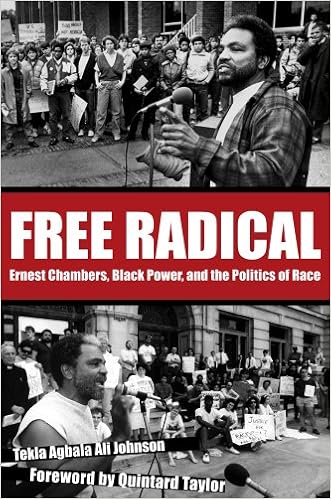
Ernie Chambers. His name variously polarizes, raises blood pressure, inspires, confounds, sparks discussion and debate, and generally elicits some kind of response . If you’re a Nebraskan, past or present, than you not only know the name but the context for why the mere mention makes it virtually impossible to take a neutral stand about this vociferous, independent, lone wolf figure who is an open book in some ways and an enigma in other ways. His name’s traveled widely outside Nebraska as well. He first gained local and national noteriety back in the 1960s for his stirring presence in the documentary A Time for Burning. He parlayed the stage that gave him and his grassroots work as activist, advocate, guardian, and spokesperson for Omaha’s African-American community to win election to the Nebraska Legislature. He served as that body’s only black representative for 38 years, finally leaving office because of term limits, but he’s just returned to his old District 11 seat after defeating incumbant Brenda Council in the Nov. 6 general election. When he was in office before he took many controversial and brave stands and he never, ever backed down from a fight, often employing his sharp wit and procedural mastery to humble opponents and win concessions. He’s back alright, armed with much the same rhetoric he’s used since the height of the black power and civil rights movements, which begs the question: What does the 75-year-old social justice warhorse have to offer his district in an era when many of his constituents need more education, relevant job skills, living wage jobs, and transportation solutions and want economic development in North Omaha that includes them, not excludes them? Is he in touch with younger generation and professional blacks who perhaps see things differently than he does and want specific, tangible progress now? This story doesn’t address those things but a future story I write just might. Instead, the following piece for an upcoming issue of The Reader (www.thereader.com) looks at a new political biography about Chambers by Tekla Agbala Ali Johnson, who offers some insights and opinions about the man she’s long admired. The book is aptly titled, Free Radical: Ermest Chambers, Black Power and the Politics of Race.

Free Radical Ernie Chambers subject of new biography by author Tekla Agbala Ali Johnson
©by Leo Adam Biga
Originally apepared in The Reader (www.thereader.com)
It’s fitting a new book taking the measure of Nebraska politico legend Ernie Chambers is out just as this old social justice warhorse has proven he still owns the people’s will.
In the Nov. 6 general election the 75-year-old Chambers demonstrated the pull he still maintains by decisively beating incumbent Brenda Council to regain his old state legislative seat. Public disclosure of Council’s misuse of campaign funds to support a gambling addiction undoubtedly hurt her. But she would likely have found Chambers a formidable opponent anyway.
Amid the struggle for racial equality in the 1960s, Chambers emerged as a black activist straight out of central casting. The longtime state senator was everything the white establishment feared or loathed: a young, brash, angry black man with an imposing physique, a rare eloquence, a brilliant mind, a devoted following and a dogged commitment. His goatee and muscle shirt effectively said, Fuck off.
When he saw a wrong he felt needed remedy he would not give in or remain silent, even in the face of surveillance, threat and arrest.
The Omaha native was forged from centuries of oppression and the black nationalist militancy of his times yet remained fiercely independent. He paid allegiance only to his grassroots, working poor base in northeast Omaha, whose District 11 residents elected him to nine terms in office. He stayed real cutting hair and holding court at Goodwin’s Spencer Street Barbershop for many years. He was forced out of office in 2009 only because of term limits, a petition effort widely seen as targeting him specifically.
At a Nov. 3 Community Day rally in North Omaha Chambers said:
“I don’t come to these kind of gatherings regularly. It’s not easy for me, even though I enjoy being around my brothers and sisters. But I’m a solitary person. Basically, I am a loner, and experience has created that persona for me because I’m in situations where bad things can happen and if I’m relying on somebody else and they don’t come through – I know what I would do but I don’t know what somebody else would do. I can’t depend on anybody else.
“So if I see an issue that needs to be addressed it’s for me to address it. I don’t go to committees, I don’t go to organizations, I don’t ask anybody for anything, and it’s not that I’m ungrateful or unappreciative. I just have to survive and my survival depends ultimately on me. So that’s why I do what I do.”
Author Tekla Agbala Ali Johnson well captures his enigmatic essence in the main title of her political biography, Free Radical, as he’s been a singularly reactive yet stable force these many decades. The subtitle, Ernest Chambers, Black Power and the Politics of Race, refers to the context of his public service role.
Chambers was not the first black leader in Nebraska. Nor was he the first to hold public office. But he was the first to command wide respect and wield real power. During a 38-year run in the legislature that made him the longest-serving state senator in Unicameral history he mastered the art of statecraft. Trained as an attorney and possessing a facile mind even his critics admired, he adeptly manipulated legislative rules and procedures. Though he represented a small, poor constituency and uttered divisive rhetoric, fellow senators needed his support if they wanted their bills advanced. He couldn’t be ignored.
The arc of his political career is a major focus of Johnson, who at one point was in charge of his personal papers.
“She had access to information that other people didn’t have access to,” he says of his biographer.
Overall, he’s pleased with the final product and its depiction of his career.
“I don’t have any objection to what she did.”
In terms of fairly and accurately capturing his work as an elected official, he says it’s right on “as far as it went,” adding, “Many articles have been written that go into more depth on some things than Tekla wrote about in her book.” He says he understands “there are things someone will emphasize that I wouldn’t and there are things I would emphasize that they wouldn’t. But that’s the way it goes. No two people see a complex issue the same way. Even people called historians are really interpreters. They can’t write everything about everything, so they select what they think is important in order to convey the message they have in mind.”
He says he had little input into the manuscript.
“There may have been something when she got through that she sent and I dealt primarily with grammar and inconsequential things. I didn’t try to change the thrust of it or tell her what to write.”
Johnson confirms the same, saying she only sought his opinion on certain matters and even then they sometimes disagreed. In order to maintain her scholarly freedom she says she only began writing the book after she left his employ and then had little contact with him during the writing process.
In the end, he’s flattered his political life has been documented.
“I appreciate the fact that somebody thought enough of the work that I’ve done to compile material between two covers of a book and make that available to whomever may choose to read it.”
He says he’s doing interviews in support of the book “mainly because of Tekla, the amount of time and effort she put into the work, and I don’t want to say or do anything that would diminish in any respect what she has done or the value that I place on it.”
Perhaps the most telling vantage point of Chambers she gained came when she worked as his legislative aide.
“I actually got to see the day to day process,” she says of the experience.

The book began as Johnson’s history thesis at the University of Nebraska-Lincoln. She served as a consultant to the Great Plains Black History Museum in Omaha and helped catalog its collection. Today, she’s an assistant professor of history at Salem College (N.C.). Her Texas Tech University Press published book is available wherever books are sold.
Johnson says when she hit upon the idea of making Chambers her thesis study a professor told her, “That’d be great, except he won’t let you. He won’t let anybody that close to him.” She found a way in, however. “I decided to go to his office. I didn’t actually ask him. I talked to his legislative aide, Cynthia Grandberry, and said, ‘Look, I want to write my dissertation on Sen. Chambers,’ and she said, ‘Sure, if you help me clean up the office.'”
This was 2001.
“He produced such enormous volumes of materials that despite an excellent filing system he literally had overrun the file cabinets many years before. I actually spent the first two years of the project processing his papers,” says Johnson.
The project was a labor of love about a figure she idolized as a girl.
“I grew up knowing about Sen. Chambers. I’m from North Omaha and he was always sort of somewhere there in the background. As a young woman I would occasionally see him speaking at an event, especially if there was something dire that had happened in the community.”
Immersing herself in his vast collection she says she acquired a new appreciation for his advocacy and for how her own coming-of-age intersected with his work.
“One of the things I first noticed in working on the collection is that almost a third, but a full fourth for sure, of his papers are about police violence and killings, police harassment, complaints from citizens in North Omaha. It took up a large section of one of the four rooms his papers are housed in. It was enormous.
“I also found I traced back to myself. I came across police incidents that happened when I was young that I remembered Sen. Chambers speaking out against. One of those was when I was 10 years old and living in Lincoln (Neb.). On our corner Sherdell Lewis was shot (and killed). We knew him. My sister and I were his papergirls. He was shot on his doorway by Lincoln police. Shortly after the shooting the black community came to my mother’s house because they needed a place nearby (to mourn and vent).”
Johnson says many questioned whether the shooting was justified.
“I had totally forgotten about that. There’s a picture in the book of Sen. Chambers leading a protest march along with the victim’s mother.”
Similarly, she says Chambers was a vocal critic of the shooting of Vivian Strong that sparked urban unrest in Omaha in 1969 and of other cases where excessive force was used.
She says any understanding of him must start with “the deep dedication of North Omahans to Sen. Chambers because even at his own expense he would not back down when he felt like the community was endangered or when he felt there was no respect for the lives and the civil rights and human rights of people in the community.” She says coming from a bi-racial home (her father’s African American and her mother’s Caucasian) she “sort of got to peek” at how blacks and whites viewed Chambers from different lenses. She also got to know how he understood that his rails against police brutality played differently to different audiences.
“He knew it was hard to believe for whites who lived in west Omaha or small towns. because those things were so far out of their experiences.”

She admires how he never let go of what he deemed important. His response to allegations of extreme police misconduct is illustrative, she says.
“In most cases when there was a police killing in the community he would request an investigation by the city. If that wasn’t done, if it was deemed a no-fault killing, if nobody were to be held accountable, then he went to other authorities. There are several (incidents) documented in the book where he filed for federal investigations into killings with the Department of Justice.”
She says one of his lasting achievements was sponsoring and winning passage of legislation requiring a grand jury be convened and an investigation be done anytime someone dies in police custody or in jail.
“I remember him having said, “We’re tired of our people being killed.’ So this is definitely an important part of the book to me. What he says happened in North Omaha I know it happened. It was real.”
Bad things continue happening. He grieves for the gun violence plaguing his community today, much of it black on black. In too many cases innocent folks are caught in the crossfire.
“I can’t tell you all what it does to me when I see something horrible happen to a young person, to anybody, but the helpless ones, the trusting ones, the ones who are trying for something better from us…they need help and we’re not there to offer it,” he said at the Nov. 3 rally.
In a public setting like the Community Day rally, the preacher’s son comes out in Chambers. the presumed agnostic, whose elocution has the melodic flair of the late jazz musician-radio host-lecturer Preston Love Sr. He holds an audience through his impassioned delivery and sheer magnetic presence. He sprinkles in metaphors and allegories from the Bible. It’s in settings like these the affinity between Chambers and the people becomes clear.
“He’s really in step with them. While Sen. Chambers didn’t form a group or join a group his ongoing dialogue with the community is the reason he maintained their trust and respect and why he actually was a liberating figure,” Johnson says. “To do that he insisted on passage of legislation that legislators could get collect calls, so he was able to get calls from all of his constituency. He also kept his job at the barbershop for years, in the summers and on the weekend, so people would have a place to come and talk with him personally.”

Chambers himself says that even when he lost his legislative seat he was still the person District 11 residents turned to for help, not black elected officials. That doesn’t surprise Johnson, who says he long ago earned people’s trust.
“He wasn’t the first person to take the role of leader in the community. Charlie Washington was a point person before him community members would go to.
But Sen. Chambers, because of his unusual ability intellectually, rhetorically, in terms of statecraft and the law and just his down to earth nature, earned an enormous following.”
Another of his greatest achievements, say Johnson and others, was getting district elections for the Omaha City Council, the Omaha School Board and the Douglas County Board of Commissioners. It’s resulted in many black elected officials for North Omaha. His open disdain for many of those representatives, whom he considers stooges for the white power structure, has distanced him from portions of the black elite class. Chambers being Chambers, he doesn’t much care.
“I think what has happened is they have been absorbed by the Democratic party and he chose to remain independent and I think that is probably the biggest divide,” says Johnson. “He was and is utterly completely free.”
Johnson believes he arrived at a point where he realized that as the lone black representative in the legislature representing a poor black constituency, the most he could do was to be their voice.
“All the legislators have to list their occupation and for a number of years he listed barber, but I think when he changed his written vocation to ‘Defender of the Downtrodden,’ it actually marked a change and a decision on his part that sort of is fatalistic. He decided that because of the politics and power lobbying that go on within the formal political parties and because of his own independence and insistence on speaking for the most disenfranchised, the poorest, and insisting government should haven in place support for their needs, he got to the point when he thought he would not be able to change the way that government in Neb. functions with respect to low income people.
“I think it was also the point when he was refused chairmanship again and again of the judiciary committee.”
In terms of legacy, she says, “he was at once respected but feared and unpopular among some of the senators. He would stop their bills if he didn’t get some of what he wanted and what he wanted was legislation or concessions that protected his people, that didn’t allow, for example, the Omaha Housing Authority to go into closed session and make decisions without public input. He did all kinds of things like that. He fought tooth and nail legislation to reduce allocations to people on aid to families with dependent children. He really fought those battles.”
“He’d get so frustrated, saying, ‘Y’all don’t know what it takes to make it on $320.’ Yes, it was rhetoric but it was heartfelt. He’s seen people struggling and he felt it was within the power of the state legislature to provide some relief. He felt at times they didn’t do it because of petty politics, because of western Neb. versus eastern Neb., because of racism, because of just indifference, and that made him angry.”

She says even though he often stood alone, he knew how to play politics.
“He never compromised his principles but he is a politician. He would come in on the weekends during the summer when session was out – this is what I gained from being able to actually observe – because he wanted to read up on all the other bills. He read up on what the interests of the other senators were. He knew their backgrounds, he knew everything about them. It’s not just the rules he employed, he played politics in terms of, ‘Look, if you want something from me, if you don’t want me to stop your bill or to filibuster, then you’re going to have to provide some concessions to things my constituents need.'”
Johnson says, “I don’t think he could have been more effective by doing it any other way. They dubbed him Dean of the Legislature because he was maximum effective for that base. I think the only way he could have been more effective is if those other senators had read as much about him and learned as much about the community he served and actually taken an interest, and I’m not saying a few didn’t, in how do we raise the standard for everybody in the state. If they had taken that position and cooperated with him more then he could have been more effective.”
Chambers operated much like his black peers in other states.
“African-American legislators across the country tended to be fairly effective just like Sen. Chambers in stopping legislation and not as effective at passing legislation. The ones who tend to be the most effective in working for the community tended to be on the out with the majority because they were battling all the time and they were always having to stand firm.”
Johnson wishes Chambers prepared the way for a successor.
“I do have a critique of him and it’s something I’ve openly talked to him about. He didn’t groom anybody (to replace him). It’s something I wish would have happened.”
As far as legacy, she feels his efforts in making Neb. the first state to pass any resolution for divestment of state funds from South Africa in protest of its apartheid practices “may be the thing he’s remembered for.”
Though serving 38 years in the legislature involved “self-sacrifice” on his part, she says it clearly hurt him when he could not run in 2008.
“I think he was not just disappointed because he had to leave for four years but the subtext for his career, besides trying to end police violence and confronting racism, was to gain political power for his constituency relative to other legislative districts in the state. His having to leave office made him feel that what he’d worked for had gone backwards because he felt the will of the people was being overridden by term limits. His constituency couldn’t elect him if they wanted to.”
She notes he ran unopposed several times and that he kept running because “I don’t think he saw anybody else as talented as he was who could really do the job as well as he did. That and the fact people let him know they wanted him to run again.” Now that he’s returning to the legislature she’s fascinated by how he and his new colleagues will work together.
“The body has changed because of term limits. The expertise that was there is no longer there. It hasn’t necessarily served Neb. well to have a constantly revolving, often times very young body at the helm. Who knows, maybe they’ll be more open to working with him. Maybe they’ll be less entrenched.”
An obvious advantage he’ll have, she says, is his vast experience.
Remarking on what people can expect from him, Chambers says, “For better or worse people have to see what it is that I am. They have to know what they’re getting if they come this way, and if they don’t like what it is I’m not the least offended. I probably wouldn’t like somebody like me. I would respect somebody like me. But likability is not an anything I cultivate because it doesn’t mean anything, it doesn’t achieve anything.”
He simply promises to be the same person he’s always been, which is to say someone “who never yields, never wavers, never accepts handouts from anybody, and whose only loyalty to a group is to this community.”
Related articles
- Ernie Chambers, Brenda Council sharpen their barbs (omaha.com)
- Chambers returns to Legislature (omaha.com)
- Heineman welcomes Ernie back to the Chambers (AUDIO) (nebraskaradionetwork.com)
- Carver Building Rebirthed as Arts-culture Haven; Theaster Gates, Rebuild and Bemis Reimagine North Omaha (leoadambiga.wordpress.com)
- 5 things to watch as the Nebraska legislative session begins (omaha.com)
New Alexander Payne book events for December and January
New Alexander Payne book events for December and January
My book “Alexander Payne: His Journey in Film” is getting crazy good endorsements (see below).
Come out and support the project at any of the new talks and signings I am doing in December and January. It would mean a lot to me to have you stop by. And for all of you Facebook friends I haven’t met in person, consider this a special invitation to make that happen. I look forward to signing copies of the book for each and every one of you.
The book makes a great gift for the film lover in your life.
UNO Criss Library
60th and Dodge campus
Thur. Dec. 13
6:30-8:30 pm
Greek Islands
3821 Center St.
Thur., Dec. 20
7-9 pm
Rose Blumkin Home
323 So. 132nd St.
Wed., Dec. 26
Noon- 1 pm
13th Street Coffee & Tea
519 So. 13th St.
Fri., Jan. 11
7-9 pm
Omaha Press Club
First National Bank Bldg., 1620 Dodge St., 22nd Flr
Thur., Jan. 17
5:30-7 pm
Here’s what others are saying:
“Alexander Payne richly deserves this astute book about his work by Leo Biga. I say this as a fan of both of theirs; and would be one even if I weren’t from Nebraska.” – Dick Cavett, TV legend
“Alexander is a master. Many say the art of filmmaking comes from experience and grows with age and wisdom but, in truth, he was a master on day one of his first feature. Leo Biga has beautifully captured Alexander’s incredible journey in film for us all to savor.” – Laura Dern, actress, star of “Citizen Ruth”
“Alexander Payne is one of American cinema’s leading lights. How fortunate we are that Leo Biga has chronicled his rise to success so thoroughly.” – Leonard Maltin, film critic and best selling author
“I’d be an Alexander Payne fan even if we didn’t share a Nebraska upbringing: he is a masterly, menschy, singular storyteller whose movies are both serious and unpretentious, delightfully funny and deeply moving. And he’s fortunate indeed to have such a thoughtful and insightful chronicler as Leo Biga.” – Kurt Andersen, novelist (“True Believers”) and “Studio 360” host
“Leo Biga brings us a fascinating, comprehensive, insightful portrait of the work and artistry of Alexander Payne. Mr. Biga’s collection of essays document the evolution and growth of this significant American filmmaker and he includes relevant historical context of the old Hollywood and the new. His keen reporter’s eye gives the reader an exciting journey into the art of telling stories on film.” – Ron Hull, Nebraska Educational Television legend, University of Nebraska emeritus professor of broadcasting, author of “Backstage”
Related articles
- Dick Cavett is the latest luminary to endorse my Alexander Payne book (leoadambiga.wordpress.com)
- Laura Dern Endorses My Alexander Payne Book (leoadambiga.wordpress.com)
- Alexander Payne book news (leoadambiga.wordpress.com)
- More Alexander Payne Book News: WE MADE INDIEWIRE!!! (leoadambiga.wordpress.com)
- Alexander Payne’s ‘Nebraska’ Comes Home to Roost: The State’s Cinema Prodigal Son is Back Filming Again in his Home State after Long Absence (leoadambiga.wordpress.com)
Dick Cavett is the latest luminary to endorse my Alexander Payne book
“Alexander Payne richly deserves this astute book about his work by Leo Biga. I say this as a fan of both of theirs; and would be one even if I weren’t from Nebraska.” – Dick Cavett

Dick Cavett is the latest luminary to endorse my new book, Alexander Payne: His Journey in Film – A Reporter’s Perspective 1998-2012.”.
“Alexander Payne richly deserves this astute book about his work by Leo Biga. I say this as a fan of both of theirs; and would be one even if I weren’t from Nebraska.”
Thanks, Dick. Some background: I’ve written extensively about Cavett over the years and those stories can be found on this blog.
His kind words join those of fellow world-class creatives:
“Alexander is a master. Many say the art of filmmaking comes from experience and grows with age and wisdom but, in truth, he was a master on day one of his first feature. Leo Biga has beautifully captured Alexander’s incredible journey in film for us all to savor.” – Laura Dern, actress, star of “Citizen Ruth”
“Alexander Payne is one of American cinema’s leading lights. How fortunate we are that Leo Biga has chronicled his rise to success so thoroughly.” – Leonard Maltin, film critic and best selling author
“I’d be an Alexander Payne fan even if we didn’t share a Nebraska upbringing: he is a masterly, menschy, singular storyteller whose movies are both serious and unpretentious, delightfully funny and deeply moving. And he’s fortunate indeed to have such a thoughtful and insightful chronicler as Leo Biga.” – Kurt Andersen, novelist (“True Believers”) and “Studio 360 host
“Leo Biga brings us a fascinating, comprehensive, insightful portrait of the work and artistry of Alexander Payne. Mr. Biga’s collection of essays document the evolution and growth of this significant American filmmaker and he includes relevant historical context of the old Hollywood and the new. His keen reporter’s eye gives the reader an exciting journey into the art of telling stories on film.” – Ron Hull, Nebraska Educational Television legend, University of Nebraska emeritus professor of broadcasting, author of “Backstage”
The book, released through Concierge Marketing Publishing Services and my own Inside Stories, may be previewed at www.facebook.com/LeoAdamBiga.
Available via Amazon, Barnes and Noble and for Kindle and other e-Readers.
Related articles
- Laura Dern Endorses My Alexander Payne Book (leoadambiga.wordpress.com)
- More Alexander Payne Book News: WE MADE INDIEWIRE!!! (leoadambiga.wordpress.com)
- Screenwriting 101: Alexander Payne (gointothestory.blcklst.com)
My Next Alexander Payne Book Event Comes to Florence
Looking for something different to do on your Tuesday night?
Then come to my next Alexander Payne book event:
Tuesday, Nov. 20, 6:15 pm,
Florence Branch Library, 2920 Bondesson St., Omaha
Your favorite Omaha writer talks about “Alexander Payne: His Journey in Film – A Reporter’s Perspective”
I am just returned from the set of Payne’s new film, “Nebraska,” and I will share my impressions of that production. My highly praised book about the filmmaker and his work will be available for purchase. It’s only $19.95. I will personally sign copies.
The book makes a great gift for the movie lover(s) in your life.
Get yourself a copy of the book and find out why it’s receiving such generous praise as this:
“Alexander is a master. Many say the art of filmmaking comes from experience and grows with age and wisdom but, in truth, he was a master on day one of his first feature. Leo Biga has beautifully captured Alexander’s incredible journey in film for us all to savor.” – Laura Dern, actress, star of “Citizen Ruth”
“Leo Biga brings us a fascinating, comprehensive, insightful portrait of the work and artistry of Alexander Payne. Mr. Biga’s collection of essays document the evolution and growth of this significant American filmmaker and he includes relevant historical context of the old Hollywood and the new. His keen reporter’s eye gives the reader an exciting journey into the art of telling stories on film.” – Ron Hull, Nebraska Educational Television legend, University of Nebraska emeritus professor of broadcasting, author of “Backstage”
“Alexander Payne is one of American cinema’s leading lights. How fortunate we are that Leo Biga has chronicled his rise to success so thoroughly.” – Leonard Maltin, film critic and best selling author
“I’d be an Alexander Payne fan even if we didn’t share a Nebraska upbringing: he is a masterly, menschy, singular storyteller whose movies are both serious and unpretentious, delightfully funny and deeply moving. And he’s fortunate indeed to have such a thoughtful and insightful chronicler as Leo Biga.” – Kurt Andersen, novelist (“True Believers”) and “Studio 360 host
I am counting on my Blog followers and Facebook friends to come out and show support.
Hope to see you there.
Media Alerts:
•I will be doing a live appearance on WOWT during the 4 pm news today
•KIOS Radio is airing a segment about me and the book at 7:30 am and 4:30 pm today
•Check out Indiewire’s feature on the book at-
Related articles
- Laura Dern Endorses My Alexander Payne Book (leoadambiga.wordpress.com)
- Alexander Payne book news (leoadambiga.wordpress.com)
- Another sweet endorsement for my Alexander Payne book… (leoadambiga.wordpress.com)
- More Alexander Payne Book News: WE MADE INDIEWIRE!!! (leoadambiga.wordpress.com)
- Alexander Payne’s ‘Nebraska’ Comes Home to Roost: The State’s Cinema Prodigal Son is Back Filming Again in his Home State after Long Absence (leoadambiga.wordpress.com)
Laura Dern Endorses My Alexander Payne Book

Acclaimed actress Laura Dern has remained good friends with Alexander Payne since she starred in his first feature, “Citizen Ruth,” and I was lucky enough to interview her a few years ago in advance of a program she did with him in Omaha. Now, I’m privileged to have her endorse my new book about the filmmaker.
Here’s what she says about “Alexander Payne: His Journey in Film – A Reporter’s Perspective 1998-2012”:
“Leo Biga brings us a fascinating, comprehensive, insightful portrait of the work and artistry of Alexander Payne. Mr. Biga’s collection of essays document the evolution and growth of this significant American filmmaker and he includes relevant historical context of the old Hollywood and the new. His keen reporter’s eye gives the reader an exciting journey into the art of telling stories on film.” – Ron Hull, Nebraska Educational Television legend, University of Nebraska emeritus professor of broadcasting, author of “Backstage”
“Alexander Payne is one of American cinema’s leading lights. How fortunate we are that Leo Biga has chronicled his rise to success so thoroughly.” – Leonard Maltin, film critic and best selling author
“I’d be an Alexander Payne fan even if we didn’t share a Nebraska upbringing: he is a masterly, menschy, singular storyteller whose movies are both serious and unpretentious, delightfully funny and deeply moving. And he’s fortunate indeed to have such a thoughtful and insightful chronicler as Leo Biga.” – Kurt Andersen, novelist (“True Believers”) and “Studio 360 host

The book, “Alexander Payne: His Journey in Film – A Reporter’s Perspective 1998-2012,” can be ordered at AlexanderPayneTheBook.com.
The Bookworm in Omaha carries it.
Now available, too, from Amazon.com and Barnes and Noble.com as well as for Kindle and other e-reader devices.
The book makes a great gift for the film lover in your life.
Preview it at www.facebook.com/LeoAdamBiga.
Book events:
Florence Branch Library, Tuesday, Nov. 20, 6:15 pm
Media Alerts:
Related articles
- More Alexander Payne Book News: WE MADE INDIEWIRE!!! (leoadambiga.wordpress.com)
- Another sweet endorsement for my Alexander Payne book… (leoadambiga.wordpress.com)
- Alexander Payne’s ‘Nebraska’ Comes Home to Roost: The State’s Cinema Prodigal Son is Back Filming Again in his Home State after Long Absence (leoadambiga.wordpress.com)
- Alexander Payne book news (leoadambiga.wordpress.com)
More Alexander Payne Book News: WE MADE INDIEWIRE!!!
WE MADE INDIEWIRE!!!
The Web’s leading site for independent film is running an exclusive feature this week on my Alexander Payne book, including an excerpt. This is our first national coverage. It coincides with the book becoming available, today, on Amazon.com, BarnesandNoble.com and for Kindle and other e-readers.
Read: Exclusive Excerpt From ‘Alexander Payne: His Journey in Film,’ A Book That Goes Behind-the-Scenes With the Oscar-Winning Auteur

The collection will be available November 13 from Amazon.com and BarnesandNoble.com, as well as for Kindle and other e-reader devices. Go HERE for more info.
Introduction
I first met Payne in the fall of ‘97, and my first story about him appeared at the start of ‘98. Though I have covered many other filmmakers and film projects since then, my body of Payne work remains unique for its duration, scope, and depth. Early on, I recognized in him an important cinema figure and the fruits of my cultivating that relationship are the stories that comprise this book.
I also saw in Payne an opportunity to write about one of the most significant Nebraskans in film to come along in a while. Many from the state have made major contributions to the film industry either by the prominence or quality or volume of their work….I have interviewed several of the contemporary figures…Payne is the preeminent filmmaker among them all…
Some of the fondest memories I retain from my professional life are the lively, engaging, one-on-one sessions I enjoy with Payne. They are as much conversations and explorations between two film guys as they are interviews between subject and journalist.
Payne, as you would expect, is a superb interview. Highly literate. Thoughtful. Composed. He is rarely less than frank. He can be both profane and flat out funny. He is only politically correct and circumspect when it serves a project. He generally knows what you are looking for but does not necessarily hand it to you on a silver platter, which is to say he will only give as good as he gets. He does so much press now that he does sometimes repeat quotable nuggets or tag lines from interview to interview. The strategic part of him has shown more as his career has exploded. Who can blame him?
Oh, I have my scripted questions at the ready all right, because I always feel I have to be extra prepared, not to mention be on my mental toes with him, certainly more than with most subjects. He is so damned smart that it can be a bit intimidating even now, 15 years into our relationship. I make sure to do my homework when possible. But I am also comfortable enough to go off script and wing it on occasion and to let him take these interludes wherever he wants to go with them. The best material often comes from these asides or addenda anyway, and so I am not about to curtail his digressions or flights of fancy. Or my own for that matter.
In preparing this book I was reminded of the rather comprehensive Payne archive I have been able to compile as a result of doing so many interviews with him over a decade and a half period that roughly covers his entire feature filmmaking career. It is an archive that no other journalist or author has been in a position to acquire. This body of work has accrued because I have persisted in covering him and cultivating our relationship and because he has responded by consistently granting me great access. The often exclusive interviews and unfettered access continue…

Some who know about my long-tenured coverage of Payne assume that he and I are friends or buddies. Not exactly. I mean, we are certainly friendly with each other. But we do not hang out together. Ours is definitely a closer relationship than most journalists have with a subject, but it is by no means a rare or unprecedented one. We never speak about it, but my sense is that he and I feel the same in that while it is fine we have this thing together, we do not push it so far that it compels him to meddle in my work or tempts me to compromise my journalistic integrity.
In other words, we do not cross certain lines. That includes not probing too deeply into our personal lives. I only rarely mention his life away from film in my stories. He has no financial stake in or editorial control over this book. He never interferes with what I write, just as I never think about censoring my work to please him. We both want it this way. It’s the right thing to do and it avoids weird conflicts of interest.
Because I am in the unique position of having covered him for so long and in such an in-depth manner, this book uses the interviews and stories I have done to chart the arc of his filmmaking career.
Related articles
- Alexander Payne book news (leoadambiga.wordpress.com)
- Get Your Greek On at My Next Alexander Payne Book Event (leoadambiga.wordpress.com)
- Another sweet endorsement for my Alexander Payne book… (leoadambiga.wordpress.com)
- Alexander Payne’s ‘Nebraska’ Comes Home to Roost: The State’s Cinema Prodigal Son is Back Filming Again in his Home State after Long Absence (leoadambiga.wordpress.com)
Get Your Greek On at My Next Alexander Payne Book Event
I am personally inviting you to attend my next Alexander Payne book event:
Friday, Nov. 16, St. John the Baptist Greek Orthodox Church, 6:30 pm 602 Park Avenue,
George and Peggy Payne Community Center (lower level, south entrance)
I will be signing copies of “Alexander Payne: His Journey in Film – A Reporter’s Perspective 1998-2012.”
Yummy Greek treats served.
Come mingle with Omaha’s Greek American community and enjoy the splendor of this recently restored Byzantine-style edifice. This is the very church the filmmaker and his family belong to. His grandfather helped found it.
I will talk a bit about Payne and the book and I will personally sign copies.
Hope to see you there.
Here’s what others are saying about the book:
“Leo Biga, through his extraordinary talent with words, brings us a fascinating, comprehensive, insightful portrait of the work and artistry of Alexander Payne. Mr. Biga’s collection of essays document the evolution and growth of this significant American filmmaker and he includes relevant historical context of the old Hollywood and the new. His keen reporter’s eye gives the reader an exciting journey into the art of telling stories on film.” –Ron Hull, Nebraska Educational Television, UNL emeritus professor of broadcasting, author of the new memoir, “Backstage”
“I’d be an Alexander Payne fan even if we didn’t share a Nebraska upbringing: he is a masterly, menschy, singular storyteller whose movies are both serious and unpretentious, delightfully funny and deeply moving. And he’s fortunate indeed to have such a thoughtful and insightful chronicler as Leo Biga.” –Kurt Andersen, novelist (“True Believers”) and “Studio 360” host
“Alexander Payne is one of American cinema’s leading lights. How fortunate we are that Leo Biga has chronicled his rise to success so thoroughly.” –Leonard Maltin, national film critic and best-selling author
Buy a copy or two or three. The book makes a great gift for the film lover in your life.
More about the book at AlexanderPayneTheBook.com.
Available November 13 from Amazon.com and Barnes and Noble.com as well as for Kindle and other e-reader devices.
Preview the book at www.facebook.com/LeoAdamBiga.
Related articles
- Alexander Payne book news (leoadambiga.wordpress.com)
- Another sweet endorsement for my Alexander Payne book… (leoadambiga.wordpress.com)
- Alexander Payne’s ‘Nebraska’ Comes Home to Roost: The State’s Cinema Prodigal Son is Back Filming Again in his Home State after Long Absence (leoadambiga.wordpress.com)


 Leo Adam Biga's My Inside Stories