Archive
Another sweet endorsement for my Alexander Payne book…
And the hits just keep on coming where my Alexander Payne book is concerned.
On top of Leonard Maltin’s recent thumbs up, we just received another sweet endorsement, this one from novelist (“True Believers”) and “Studio 360” host Kurt Andersen, who has bestowed on us a beautifuly worded and generous statement of support:
“I’d be an Alexander Payne fan even if we didn’t share a Nebraska upbringing: he is a masterly, menschy, singular storyteller whose movies are both serious and unpretentious, delightfully funny and deeply moving. And he’s fortunate indeed to have such a thoughtful and insightful chronicler as Leo Biga.” Kurt Andersen
Thank you, Kurt.
More big news about the book is just around the corner.
The book, “Alexander Payne: His Journey in Film – A Reporter’s Perspective 1998-2012,” can be pre-ordered at AlexanderPayneTheBook.com.
Available November 13 from Amazon.com and Barnes and Noble.com as well as for Kindle and other e-reader devices.
Preview the book at www.facebook.com/LeoAdamBiga.
Media Notes:
Watch me talk about the book, Payne, and his new film on “Heartland Focus” this Saturday, Nov. 3 at 6:30 pm on WOWT.
Listen to me do the same on the current “Worlds of Wayne” podcast at http://worldsofwayne.libsyn.com/
Book Events:
And I hope to see you at my next book event, Saturday, Nov. 10, The Bookworm, 1 p.m.

Related articles
- I Am Personally Inviting You to My Next Book Event…Sat. Nov. 10 at The Bookworm, 1 pm (leoadambiga.wordpress.com)
- Author Leo Adam Biga to Sign His Alexander Payne Book at Various Events as Shooting Continues on the Filmmaker’s New Picture, ‘Nebraska’ (leoadambiga.wordpress.com)
- Alexander Payne’s ‘Nebraska’ Comes Home to Roost: The State’s Cinema Prodigal Son is Back Filming Again in his Home State after Long Absence (leoadambiga.wordpress.com)
I Am Personally Inviting You to My Next Book Event…Sat. Nov. 10 at The Bookworm, 1 pm
I am personally inviting you to attend my next Alexander Payne book event:
Saturday, Nov. 10, The Bookworm, 1 p.m.
That’s at 8702 Pacific St. in Countryside Village, Omaha
I will be signing copies of “Alexander Payne: His Journey in Film – A Reporter’s Perspective.”
Leonard Maltin just gave the book a thumbs up.
Buy a copy or two or three. The book makes a great gift for the film geek or film buff in your life.
I hope to see you there.
If you can’t make it, you can pre-order at AlexanderPayneTheBook.com.
Available November 13 from Amazon.com and Barnes and Noble.com as well as for Kindle, iPad and other e-reader devices. Preview the book at www.facebook.com/LeoAdamBiga.
Related articles
- Author Leo Adam Biga to Sign His Alexander Payne Book at Various Events as Shooting Continues on the Filmmaker’s New Picture, ‘Nebraska’ (leoadambiga.wordpress.com)
- Alexander Payne’s ‘Nebraska’ Comes Home to Roost: The State’s Cinema Prodigal Son is Back Filming Again in his Home State after Long Absence (leoadambiga.wordpress.com)
Author Leo Adam Biga to Sign His Alexander Payne Book at Various Events as Shooting Continues on the Filmmaker’s New Picture, ‘Nebraska’


Litniks Unite! The Downtown Omaha Lit Fest brings writers, artists and readers together in celebration of the written word
Why I post what I post when I post it is sometimes a mystery even to myself. The subject of this story, the Omaha Lit Fest, doesn’t happen again until the fall and in this case the piece is about the very first fest from several years ago. But that’s precisely the point of my quirky blog: to get my work out there regardless of when I wrote it because, well, I feel like it. Besides, a good read is a good read no matter whether its story currency is in the here and now or in the past. All that’s relevant is whether the story holds your interest or not. I trust this will. Anyway, I’m quite partial to the festival and its founder-director, novelist Timothy Schaffert, and his offbeat sensibilities. From the start, his fest has found exceedingly clever ways to consider literature in panels, readings, exhibitions, and performances. I look forward to writing about this year’s event and you can be sure I’ll be posting that story in the fall.

Litniks Unite! The Downtown Omaha Lit Fest brings writers, artists and readers yogether in celebration of the written word
©by Leo Adam Biga
Originally appeared in The Reader (www.thereader.com)
When the inaugural Downtown Omaha Lit Fest “turns the pages” for the first time September 16 and 17 in the Old Market, it will unloose a roster of star scribes discoursing their work and offer a whimsical schedule of events, some predictable, some not, in celebration of the written word.
Recognizing the breadth of written expression, the festival does not play favorites, except for a preponderance of Nebraska writers, by embracing a sampler format exploring literature in all its variegated forms, minus such distinctions as “high” or “low” lit. When all is said and done, the event may just help unassuming Omaha finally shake off the last vestiges of the “aw-shucks” mentality dogging it all these years to assert its claim as a genuine cultural hotbed.
To the casual eye, Nebraska may lack the cache of a hip, plugged-in literary hub. But as even a cursory reading of festival participants’ credits reveals, there is a confluence of literary work connected to this place, by writers born or transplanted here or moved away, penning across a wide range of media and genres and, in many cases, writing about Nebraska, that compares favorably with any region’s collective body of work. The novelists, poets, essayists, journalists, scenarists, playwrights and so forth scheduled to give readings and participate in panel discussions represent some of the best contemporary practitioners of literary writing, period.
Then there’s the fact Nebraska writers are hot right now. Natives Michael Rips (The Face of a Naked Lady), Sean Doolittle (Burn) and Chris Ware (Jimmy Corrigan) are just killing it with their new works. Former Omaha radio DJ Otis Twelve is riding high after winning Britain’s Lit Idol contest for his novel On the Albino Farm and a Kurt Vonnegut prize for one of his short stories. Alexander Payne shared an Oscar for scripting his critical-commercial hit Sideways. Gerald Shapiro’s published collection Bad Jews and Other Stories served as the basis for the well-received film King of the Corner, whose screenplay he adapted with actor-director Peter Riegert. Ted Kooser is the reigning U.S. Poet Laureate and a Pulitzer Prize winner to boot. They’re joined by stalwarts Richard Dooling (White Man’s Grave), Ron Hansen (Mariette in Ecstasy), Kurt Andersen (Turn of the Century), Brent Spencer (Are We Not Men?), Susan Aizenberg (Peru) and many others in creating a vibrant literary pulse here.
Fest founder Timothy Schaffert is himself a major new voice on the national lit front between his first published novel The Phantom Limbs of the Rollow Sisters (2003), which earned high praise, and his forthcoming The Singing and Dancing Daughters of God (2005).
”It just seems there’s something about the writing of people in and from Nebraska that’s entering the national consciousness in a way that’s pretty huge. Alexander Payne won his award for writing Sideways, a movie that’s shaped pop culture and continues to do so. Conor Oberst has won a great deal of attention for his songwriting, as have other songwriters from here. There’s a fantastic poetry scene here. And there’s Ted Kooser, of course. So, there’s definitely some energy and some excitement about proclaiming Omaha as a cultural center. And it’s organic, too,” Schaffert said, rather than some glommed-on movement imported here or some fabricated event dreamed up by pricey consultants.
To be sure, this grassroots deal grew out of Omaha’s own literary community with a “Let’s-put-on-a-show” zeal for showcasing some of its best and brightest talents.

No less a cultural observer than Kurt Andersen, the Omaha born, New York-based satirist behind Spy magazine and public radio’s Studio 360, sees a rich lit stew brewing from his vantage point a coast away, where he’s coming from for the fest.
”It’s always been clear to me a youth spent in Nebraska correlates strongly with good writing later on, i.e. Willa Cather, Weldon Kees, Ron Hansen, Meghan Daum, Michael Rips, et cetera. However, when I was a kid in the ‘60s in Omaha, and former Nebraskan Ted Sorenson infamously said, more or less, Nebraska was a place to leave or a place to die, I took note, and left. But today with novelists like Richard Dooling and Timothy Schaffert doing their great work in Omaha, it seems to me it’s become a place for writers to live and not necessarily leave. In other words, from 1500 miles away the literary culture looks fairly healthy to me.”
Schaffert feels the props coming native writers way speak well for the area’s cultural currency and confirms, as Andersen said, this is a place where one can make it happen. “Each and every one of them are bringing great prestige to Omaha as a city of writers, which is what I think it’s becoming,” said Schaffert.
Omaha Public Library director Rivkah Sass applauds “the model” Schaffert’s come up with for the fest. “It’s quirky and edgy and fun and interesting and will open people’s eyes to what’s going on here, which is a literary scene that’s alive and wonderful, and I find that very exciting,” she said. She sees the event as a “convergence” of the arts that posits the library as a major cultural access point and center. “There’s every reason why Omaha should have a great library and why the library should be part of any number of great cultural events,” Schaffert said. “It’s been a great fit.”
The fest’s design of readings and panels interspersed with mixed media performances and exhibits interpreting literary works, all held in the center of the arts community, is the kind of Bohemian street fair once only associated with more cosmo burgs like Denver, Minneapolis or Chicago. But as more and more Omahans have begun saying — If they do it there, then why not here? — there’s a growing synergy underway that sees cool, indigenous developments, some already in place and others on the drawing board, breaking out on the local music, film, theater, art and literary scenes. These are the very elements that will help sustain and enliven the 24/7 downtown/riverfront lifestyle environment soon to take shape via Omaha’s planned urban condo, mixed-use neighborhoods.

The Lit Fest is right in line with the homegrown indie music phenomenon, led by Saddle Creek Records, making Omaha a pop culture reference point and pilgrimage stop. It’s part of the emerging cinema colony that has new film projects popping up every few weeks, the inaugural Omaha Film Festival slated for March and the Film Streams art movie house coming to No Do next summer. It complements the wide art experience available at the Hot Shops, Bemis, Kaneko, Joslyn and the town’s many diverse galleries. It spins off the lively theater scene, where funky new works, Broadway road shows and the classics can be had. Ambitious new theater projects in the offing promise bringing artists of national stature to area stages. That’s not to mention the new Holland Performing Arts Center and the leap it represents in local music hall aesthetics.
All this has traditionally self-effacing Omaha coming out of its shell. As large as area contributions are to jazz, blues, R & B, soul, gospel and indie folk/rock, Nebraska’s impact on the literary world is far greater. Such giants as John Neihardt, Willa Cather, Mari Sandoz, Wright Morris, Karl Shapiro, Loren Eiseley and Ron Hansen called Nebraska home. The Prairie Schooner published by the University of Nebraska is one of the oldest, most prestigious literary journals in the world. The creative writing and English programs at UNL, UNO and Creighton are well-regarded and staffed by leading literary figures in their own right.
The fest’s lineup of active writers with Nebraska ties is a who’s-who of the state’s deep talent pool. ”Nebraska’s always had a strong literary heritage,” Schaffert said, “but it seems like it’s at its strongest perhaps since Willa Cather’s time. It may be even stronger.”
Some of Nebraska’s finest writers will miss the event, such as writer-director Payne, who’s off in Paris shooting a vignette for the I Love Paris omnibus film, and novelist Ron Hansen, whose book The Assassination of Jesse James By the Coward Robert Ford is being filmed as a big screen western starring Brad Pitt. Regrettable as their absence is, the fest is bringing passionate writers and readers together in what should be an intimate, invigorating forum that’s all about sharing the love.
”It’s definitely a celebration of the written word and the writing process,” Schaffert said. “But with sort of a central focus on writers with some Nebraska or Midwestern connection. And I always want it to be kind of that way, you know. I want writers that speak to the voice of the Midwest or the Great Plains or the Greater Plains, or whatever we’re in.”
Future fests may add workshops and venues and run an entire weekend, he said. He’s steering the event free of the elitist imprimatur of, say, a university-museum sponsored conference or the drab propriety of a school or rotary reading, while still making it a serious gathering of litniks.
”I wanted to create an opportunity for writers to meet their readership in a way that is a little more festive, a little more sophisticated. So many times when you’re asked to read someplace, you’ll be reading under fluorescent lights in classrooms. I mean, to have any opportunity to present your work is great, but I thought it’d be cool to do it in the Old Market, in the gallery spaces, and to be able to have something to eat and to make it a more casual atmosphere. As well as great writers, Omaha has great resources and spaces to do that sort of thing in.”
Schaffert is a regular at the Nebraska Book Festival, a rather dowdy affair held mostly in back water venues long on scholarly rigor and short on impromptu charm, and while he appreciates the event, it’s a drag and it largely ignores contemporary fiction writers in favor of literary ghosts.
“Its focus has always seemed to me to be literary history. Willa Cather and Wright Morris…which is all extremely important, but I think sometimes the contemporary fiction writers end up kind of like afterthoughts. So that was something that after last year’s event novelist John McNally (The Book of Ralph) and I talked about. There was some conversation about how there could be a different kind of, maybe more urban event that was actually in more the heart of the city as opposed to a university campus. I wanted something that incorporated a variety of genres, that was relaxed and that was in my favorite part of the city, which is a lot of people’s favorite part of the city,” Schaffert said.
Another motivation, he added, was to provide a forum for fiction writers free of the hidebound, institutional restraints that make readings an awkward affair for writers and audiences alike. “Where poetry is very conducive to being read aloud, fiction reading — at the very mention of it — has this sort of feeling of having to sit through something and pay attention and show appreciation.”
Making it a folksy, communal gig will hopefully overturn notions of cranky, head-in-the-clouds writers reciting things beyond the reach of mortals.
”In reality, the stereotype of the crabby, solitary writer does not fit most of the people I know,” he said. “They’re gregarious, interesting, lively, charming, witty people that are great to hang out with. And they’ll all be reading and discussing their work in sessions that I’m sure will really sort of pop as people have the opportunity to come out behind their typewriters and go into the nuts and bolts.”
It’s not hard for him to imagine aspiring writers in the crowd hanging on their literary icons’ every word, as it wasn’t long ago he was an acolyte himself.
“I know when I was starting out writing at UNL in the writing program, they would bring writers in and we would literally sit at their feet. We’d go to their readings and then we’d see them in the classroom and then we might hang out with them at a party afterwards. You wanted every opportunity to soak up their presence and get a sense of the literary life. I don’t know if young writers are still like that, but it sure seems to make sense that an event like this could be a great opportunity to feel a little closer to the process and to the literary world in a way you don’t often get the opportunity to experience.”
New York author Liza Ward, who will read from her Outside Valentine, a novel about the Starkweather killing spree that claimed, among others, her grandparents, said even established writers like herself benefit from the interaction. “There is always something to learn from other writers, and because we tend to work alone, it is hard to connect with other people who understand what it’s like to face the blank screen every day — to invent something out of nothing and call it a job. It’s also nice to be around people who think books are important,” she said.
Gerald Shapiro, who teaches at UNL, said, “On the whole, being a writer is a lonely business. You don’t get to talk to people about what you’re doing and you certainly don’t get to hear people’s reactions to your work, so it’s a wonderful thing Timothy’s doing.”
It’s not only a chance for writers to interact with each other and the public, but for readers to discover writers and works for the first time.
“I’ve heard from a few people that they’ve been using the list of participants as like a summer reading list, and that’s exactly the point of the whole thing — all of us getting together and just letting people know that these writers and artists and works are out there for the taking. I love hearing that,” Schaffert said.
As for writers, it’s a chance to catch up or meet for the first time. Doug Wesselmann, better known as Otis Twelve, looks forward to renewing ties with Ward, Kava and Rips and getting to know “a favorite” — Andersen. O.T. is enough of a rising star to be an invited panelist on the crime writing panel, Criminal Behavior, and enough of a beginner that he’ll be an eager fly on the wall.
”I hope I can reveal just how amusing a book about crime can be and how deadly serious humor is at its heart. It will be good to hook up with writers working in my genre. Crime writers are, in my experience, a collegial lot. But, listen…I’m a rookie in this game, and I expect to pick up a few pointers – read: ‘steal stuff’. I expect I’ll learn more than I’ll impart”.
Andersen will read from his just finished Wonderstruck, a period novel partially set in what is now Omaha. He’ll also expound on writing funny for the panel Drink and Be Merry. His advice to would-be satirists?
”If you’re funny, let yourself be funny in your writing sometimes. But if you’re not, don’t force it. And writing doesn’t have to be either funny or very serious,” Andersen said. “My favorite things tend to be both.”
What does a lit fest really have to do with anything? Ward said, “A literary festival speaks to the fact the book will never die. There will always be loyalists who support good writing, who understand that it is fundamentally important. It will be wonderful and encouraging to be around so many people who make literature a part of their lives.” Andersen views it as a kind of rally for the lit crowd. “People who fever for good writing need to come together and celebrate that fever now and then, especially in places where there are fewer writers-per-capita than in, say, New York City. And I feel eager enough to be part of this iteration of that group hurrah to buy an airplane ticket and come.”
Out-of-town headliners like Andersen and Ward are coming on their own dime, too, as Schaffert’s “just above zero budget” precludes any air fare, lodging or honorarium support. If they can do it, then locals have no excuse not to show. Besides, there are cool opening and closing night parties to make like F. Scott and Zelda at. It’s a good cause, too, So, c’mon down and get your lit groove on.
Check out the full schedule of events and list of participants at www.omahalitfest.com.
Related articles
- From the Archives: Warren Francke, A Passion for Journalism, Teaching and Life (leoadambiga.wordpress.com)
- Great American Comedy Festival Presents Lineup of Up-and-Comers with Legends Paula Poundstone, Dick Cavett, Jimmie “JJ” Walker (leoadambiga.wordpress.com)
- Film Connections, An In-Progress Story of How a 1968 Convergence of Future Cinema Greats in Ogallala, Neb. Resulted in Multiple Films and Enduring Relationships; From the Melting Pot of Coppola, Lucas, Knight, Duvall, Caan and two Ranch-Rodeo Families Cam (leoadambiga.wordpress.com)
- Movie Maven Crawford Celebrates 20 Years of Classic Film Revivals that Bring Hollywood to Omaha, Special Guest Pat Boone to Appear at Screening of ‘Journey to the Center of the Earth’ (leoadambiga.wordpress.com)
Omaha Lit Fest: In praise of writers and their words: Jami Attenberg and Will Clarke among featured authors
You’ll find several stories on this blog that I’ve written about the Omaha Lit Fest. I’ve been covering the fall event since its inception in the mid-2000s. This is a piece I did on the eve of Lit Fest II. I feature two of the featured authors from that year’s event, Jami Attenberg (Instant Love, The Kept Man) and Will Clarke (The Worthy). The founder and primary organizer of the festival is Timothy Schaffert, who also happens to be one of America’s finest novelists (The Phantom Limbs of the Rollow Sisters, The Coffins of Little Hope). I expect I’ll be writing about Lit Fest 2012 come the fall.
Omaha Lit Fest, In praise of writers and their words:
Jami Attenberg and Will Clarke among featured authors
©by Leo Adam Biga
Originally appeared in The Reader (www.thereader.com)
The Sepember 15-16 (downtown) Omaha Lit Fest will offer the literati such bookish delights as readings, panel discussions, an altered book exhibition and the performance of a play. Guest writers from near and far will talk craft. Artists will pay homage to the written word. This second annual fest is the brainchild of Omaha author Timothy Schaffert. He promises a “whoopdeedoo” both more streamlined and expanded than 2005’s version.
Held at venues in and around the Old Market, the festival emulates the kind of hip, bohemian salon happening that Schaffert, a former editor of The Reader, said one expects to find in a cosmo city with a lively underground press and lit scene.
“In some ways, the festival has become an extension of the alt weeklies I’ve worked on, conveying some of the same sensibilities,” he said. “I take all of this very seriously, but I don’t want the event to feel at all stuffy. As a matter of fact, I want it to seem almost dangerously informal. Events often want to appeal to the biggest number of people imaginable, and homogenization ultimately results. It’s not my mission to convert non-readers into readers. My mission is to give the small cult of passionate booklovers a chance to meet writers, and to learn about other writers.”
For this year’s shindig, Schaffert said “we have loosely applied a theme: the literary fringe, with panels on small-press publishing, blogging, literary sex, death on the plains and stretching the truth in memoir, among others. We also salute the vanished poet, cult figure and Nebraska native Weldon Kees, and show his rarely screened experimental short film, Hotel Apex.”
Schaffert said the fringe is an apt theme for a gathering of writers whose work doesn’t “quite fit in the mainstream” and who make “speaking the truth, speaking their minds” a priority. “Very few of us on the list are best-selling authors,” with the exception of Omahan Alex Kava, whom he said “nonetheless writes some grisly, edgy stuff. So we know well the experience of trying to balance expressing ourselves honestly and getting published and promoted.”
How does Schaffert define the fringe? “Writers writing about things that move them, rather than what the marketplace demands. Writers working in different forms, genres, stepping along the margins,” he said. “Several of our fiction and nonfiction writers, and our poets, are published by small presses; and even those writers published by commercial presses often have to struggle to get word out about their work, while also asserting an original voice. I think most of us at the literary festival are inspired by the notion of creating work that is challenging and intriguing to the reader, rather than just spoon-feeding readers more of the same.”
He said if there’s a lesson to be gleaned from those who toil on the fringe “trying to make their work fit into a publisher’s marketing scheme,” it is that these “writers take their own direction, deal with the frustration and keep writing.”
Festival web site musings showcase Schaffert’s satiric style and include a send-up of the proverbial product “warning” list: “Do not attend Lit Fest if you’re hemorrhaging, cranky, prone to touching strangers inappropriately without an invitation or wear large view-obstructing hats; Lit Fest has not been approved by the FDA, and may cause drowsiness in small children; enjoy in moderation, but overindulge freely.” Gentle readers welcomed.
Most fest events are free. For more details, go to www.omahalitfest.com.
Profiled here are two of the writers featured at this year’s Lit Fest:
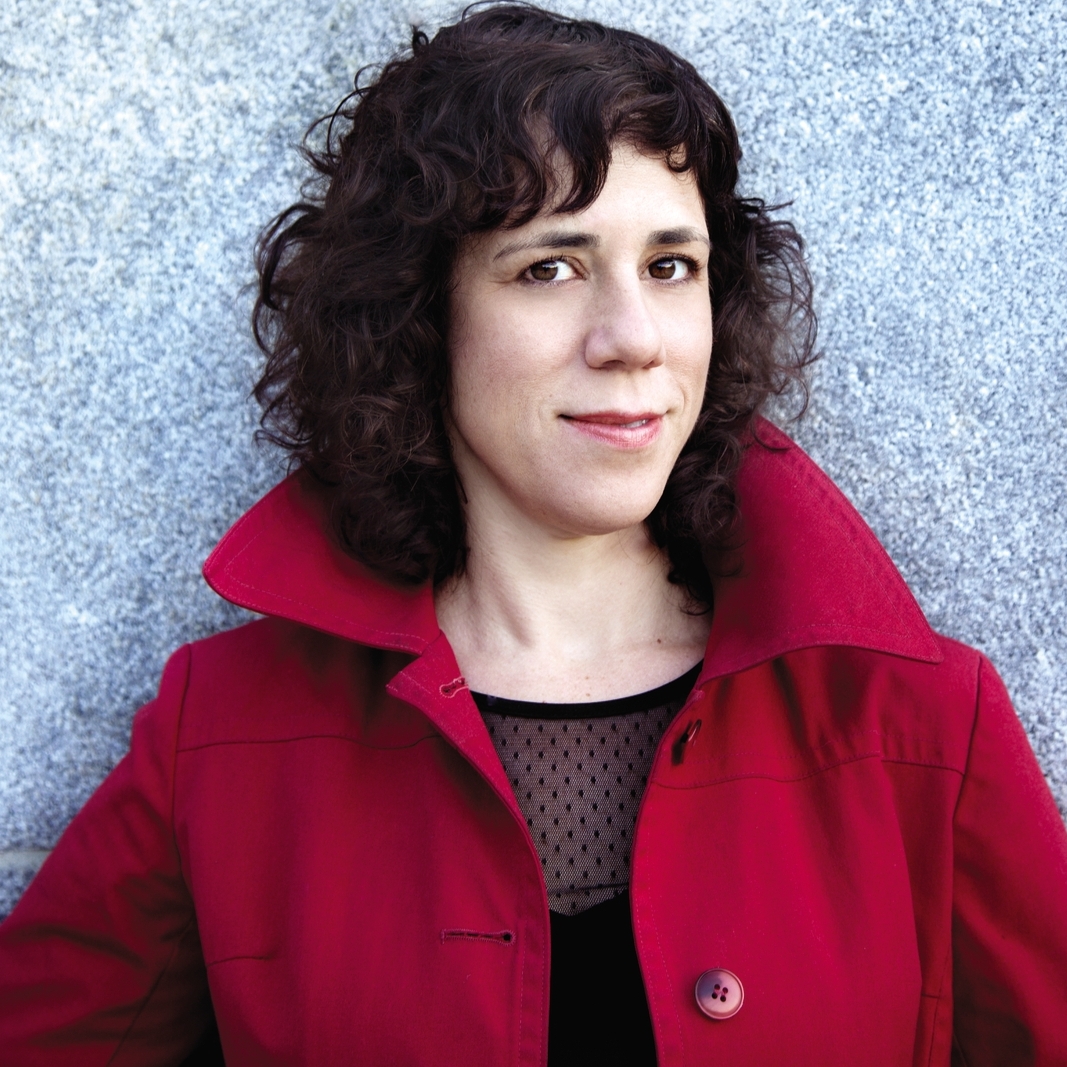
Jami Attenberg
Brooklyn-based Jami Attenberg travels to “out of the way places” to write. It’s no surprise then she’s spent the last few weeks in a residency program at Art Farm, a rural retreat for artists near Marquette, Neb., where she’s enjoyed her first real break from a recent book tour. Her debut collection of stories, Instant Love, charts with humor and candor the light-dark love journeys of three women, sisters Holly and Maggie and little girl lost Sarah Lee, over a two-decade period of experimentation, commitment, entanglement and self-realization.
Her soon-to-be-out new novel, The Kept Man, tells the story of a married woman whose artist husband is in a coma, the crucible that causes her to sell off his paintings one-by-one in order to keep him alive. In the process of elimination, the wife realizes her marriage isn’t what she thought it to be.
Attenberg feels she has something to say about the whole love trip. “I tend to fall in love in a sort of very temporary way very easily,” she said, “and I think that comes from living in New York and traveling, which I do.” With Instant Love “I guess I wanted to talk about the instant connection people can have and how each one of those connections is valuable, even if it’s fleeting.”
The author, whose work has appeared in Salon, Nylon, Print, the San Francisco Chronicle and Time Out New York, doesn’t pretend to dish out advice, but her own experiences in the game inform her very personal first book.
“When I think about love I think about an accumulation of things,” she said. “When I think about the person I might fall in love with there’s all these different qualities and all these different moments…and all those things are going to add up one day to just one person. So I guess I just wanted to kind of burrow a little bit into that.”
At readings she’s often asked what she’s learned about love. “What I can tell you,” she says, “is I understand what it takes to fall in love, but I have no understanding of what it takes to make a relationship work after that. The one thing I do know about making a relationship work is that it’s all about compromise. I’m terrible at compromise. I’ve certainly been in love and had good relationships and everything like that, but the book is not about how to make it work.”
She said men ask her, “Am I going to like this book as a guy?” She tells them, “No one gets off easy in this book. The women don’t get off easy and the men don’t get off easy. It’s honest about everybody.” She added, “It’s not like a I-Hate-Men book. I don’t think I would even say I’m cynical about love.”
The title is a wink and nod at people’s “tendency” to “fall in and out of love really quickly,” she said. In this disposable era of immediate gratification, lovers are dumped and replaced like old socks. She said we enter-exit trysts with the expectation “there’s always something better around the corner. And then, you know, with e-mail and IM and all these things to distract you from focusing on love, it’s amazing people can sort of work around it or integrate it to their lives.”
She can “definitely” imagine doing a book “in about 10 years” in which she checks back with Instant Love’s three female characters to “see how they’re doing.”
The book was originally a zine series and she expects to do a zine again next year. She touts the “many great small presses out there doing really cool things.” She said fringe publishers focus on authors “without having to worry about best-seller lists or large print runs. They know who their audience is.” The goal of Attenberg is to one day “work only on stuff I really enjoy…but you have to earn it, you have to constantly be working to get to that point, and I still have a long ways to go.”
Check out her blog at www.whatever-whenever.net or her web site at www.jamiattenberg.com.

Will Clarke
Will Clarke
Dallas, Texas-based author Will Clarke skewers the college Greek fraternity system in his second novel The Worthy: A Ghost’s Story. For his narrator Clarke uses the dispossessed soul of a frat boy killed in a hazing fit of rage. It is through the eyes of Conrad, the dead Louisiana State University pledge, we witness the excesses of a tradition grown as corrupt as the humid air in Baton Rouge.
As an LSU grad who pledged Gamma Chi Clarke is well-schooled in the cruelties of frat life. As a Shreveport native he’s well-qualified to describe the clashes that result when the state’s jambalaya of cultures — the north half Pentecostal and dry, the south half Catholic and wet — collide on campus. “Those two worlds do not really jive and that makes for a really interesting mystical satire,” said Clarke, whose first novel, the originally self-published Lord Vishnu’s Love Handles, is a genre-busting foray into good old boy magic realism. Both novels are being adapted into feature films.
Clarke, who said “I always knew I wanted to be a writer,” recognized even as his college experience unfolded that he was getting fertile storytelling material. “I just remember paying very close attention and thinking this could be a book,” he said. He made a kind of running commentary in his head. “I’ve always found myself giving narration to events going on around me,” he said. “Even as I was going through all that stuff I was a bit detached, not unlike a ghost.”
He wrote The Worthy not long after leaving LSU and Louisiana for Dallas, the closest oasis he could make in his Ford Festiva. Again, not unlike his ghost protagonist who pines for his physical self, Clarke was “longing for a life that was left behind.”
Hazing baffled him then and continues to now. “Hazing always perplexed me,” he said. “I never understood why there was a baptism of fire that had to occur.” But he contends the tenets of this practice are widespread. “I think in any fraternity, in any place you have pledgeship, where you have to prove you’re worthy, there’s hazing. You can say there’s not, you can hope there’s not, but there is.”
Pranks that may seem like harmless fun, he said, can “turn out to be phenomenally dangerous” when performed by “hormonally-challenged” young men fueled by “binge drinking.” Clarke reserves his greatest disdain for Ryan, Conrad’s killer and a symbol of the alpha male type.
“He represents that idea of All-American malehood,” Clarke said. “On the outside he’s the male ideal…athletic, handsome, the big man on campus, but on the inside there’s something really dark and crazy going on. It’s very hidden. That’s kind of what goes on with a lot of fraternities. On the outside it looks like the golden handshake, but on the inside there’s something really dead and morbid. It makes all of these golden promises to guys but to get there you have to undergo abuse.
“I think sometimes the shinier the facade, the less trusting I am of things. This forced image of perfection Ryan has makes him scarier to me. It’s amazing to see what these respectable, perfect people do in those circumstances. It turns Lord-of-the-Flies pretty fast.”
Clarke, who sees the characters in his books as extensions of “the imaginary friends” he cultivated long past when “it was age-appropriate,” is at work on a new novel about a man who doesn’t sleep. No insomniac — the guy just doesn’t need to. After the grind of a recent book tour, which Clarke found too much “like selling Amway,” he’s found himself contemplating the nature of sleep or the lack of it.
Visit his web site at www.willclarke.com or www.booktourvirgin.com.
Related articles
- In Praise of Small Publishers (wordservewatercooler.com)
- Herding authors at the Printers Row Lit Fest (chicagoreader.com)
Artist-Author-Educator Faith Ringgold, A Faithful Conjurer of Stories, Dreams, Memories and History
I tried to get an interview with artist-author-educator Faith Ringgold before and during her visit to Omaha a few years ago but her tightly packed schedule just wouldn’t allow it. So, with an assignment due and no interview to draw on I made the best of it by planting myself at the lecture she gave here and liberally borrowing some of her comments to inform my story. I also viewed an exhibition of her work here. At the conclusion of her talk I unexpectedly heard my name intoned over the auditorium’s amplifier system. I was summoned to the stage to meet Ms. Ringgold, who apologized for not being able to speak with me earlier and offered me the opportunity to ride with her to the airport and interview her enroute. I declined because I was already rather time-pressed to get the story in but I thanked her for the offer. I thought that was a gracious and generous thing for her to do and it’s certainly not something most celebrities would think to do in the aftermath of a gig and heading out of town. Her art is sublime. She taps deep roots in her work, which is infused with images of yearning, hope, joy, and life, and some pain, too. You feel the images speaking to you. There is energy in those visuals. You sense life being lived. It’s easy to get lost in the ocean of feeling and memory she evokes.

Artist-Author-Educator Faith Ringgold, A Faithful Conjurer of Stories, Dreams, Memories and History
©by Leo Adam Biga
Originally published in The Reader (www.thereader.com)
Artist-author-educator Faith Ringgold spoke about the power of dreams during an October 8 lecture at Joslyn Art Museum’s Witherspoon Concert Hall, whose nearly filled to capacity auditorium testified to the popularity of her work. The official role of her Omaha appearance was to give the keynote address at the Nebraska Art Teachers Association’s fall conference. But her real mission was to deliver a message of hope and possibility, as expressed in the affirming, empowering tales of her painted story quilts, costumes, masks and children’s books and her life.
Her visit coincided with her 75th birthday, which organizers celebrated in a musical program that moved Ringgold to tears, as well as two area exhibitions of her work. Now through November 20 at the UNO Art Gallery is Art: Keeping the Faith (Ringgold), a selection of illustrations from her children’s book Aunt Harriet’s Underground Railroad in the Sky, along with examples of her story quilts, tankas and mixed media pieces. Now through December 23 at Love’s Jazz and Art Center is a selection of book art from Dinner at Aunt Connie’s House, along with two of her finest story quilts combining fabric, painting and narrative.
The Harlem native has broken many barriers as an African-American female artist with works in major collections, books on best-sellers’ lists and art embraced by culturally and racially diverse audiences of children and adults.
“My art has been a celebration of my life, my dreams and my struggles and how I learned from other people,” she said.
Much of her work, whether story quilts combining painted canvas on decorative fabric or book illustrations done in acrylic, depict the struggles and contributions of historical black figures. Many are in praise of the Harlem Renaissance artists she came to know, such as Alfred Jacob Lawrence. Many are about strong females like herself, ranging from underground railroad conductor Harriet Tubman to Civil Rights heroine Rosa Parks. She often creates series of works. Coming to Jones Road deals with the trains of refugees on the underground railroad. Her most recent is a jazz series called Mama Can Sing and Papa Can Blow.
“For the image of a people to be celebrated is an important thing for their creative identity,” she said.
Her books often show her child alter ego, Cassie, interacting with men and women of achievement, whose life lessons “of being resourceful, being creative and being strong” offer inspiration. In Ringgold’s award-winning Tar Beach, which began as a quilt, Cassie takes imaginative leaps of faith that enable her to fly over the world and, in so doing, own it. Flight represents the liberation that comes with dreaming.
“That’s what flying is — it’s a determination to do something that seems almost impossible,” Ringgold said. “Cassie is an expression of that feeling — Who said I can’t do it? Unless I say it, it doesn’t mean anything.”
As she reminded her Joslyn audience, many of them teachers, “Every good thing starts with a dream. Children growing up without dreams is really no growing up at all.” The “anyone can fly” and “if she can do it, anyone can” themes from Tar Beach are so closely associated with Ringgold, who also wrote a song entitled Anyone Can Fly , that they’ve become the catch phrases for her vision. After her Joslyn lecture, the Belvedere Bels choir from Belvedere Elementary School in Omaha serenaded Ringgold with a soulful rendition of Anyone Can Fly.
Related to her visit and showings here, Omaha Public Schools students this fall are studying her work, viewing her exhibits and creating their own story quilts.
Her favorite medium, the story quilt, is rooted in two African-American traditions — oral storytelling and quiltmaking — traced to slaves, who created images on quilts that recorded family history, symbolized events and revealed coded messages. She’s the latest in a long line of master quiltmakers in her own family, going all the way back to her great-great grandmother, a slave, and down through her great grandmother, grandmother and her later fashion designer mother, from whose hands she learned the craft and with whom she collaborated on her first quilts.
Beyond the familial and cultural connections, quilts appeal to Ringgold for their practicality and accessibility.
“It’s the most fantastic way of creating paintings. You have it become a quilt by piecing it together, so that it doesn’t have that fragility of one piece of paper or canvas. A quilt is really two-dimensional, but it’s also three-dimensional, and that’s why I really love it,” she said. “You can make it as big as you like it and it doesn’t have weight to it. You can roll it up and carry it around.”

She enjoys, too, the communal aspects of the form.
“Quilting is something a group of people can do. You can have a lot of people engaged in the activity, so that your art doesn’t become such a solitary thing.”
Her impetus for doing story quilts arose when editors balked at publishing her autobiography unless she changed her story to conform to what she considered a stereotypical black female portrayal. She refused and instead found an alternative form, the story quilt and performance art, for charting her life and for sharing her perspectives on the figures, events and issues affecting her and her people.
“It made me really angry to think that somebody else could decide what my story was supposed to be or decide my story’s not appropriate to me, an African American woman. So, I started writing these stories,” she said. “I used performance and story quilts to get my story out there. Writing it in the art, when the art was published in a program — the words would be to, unedited.”
When her work hangs in museums or galleries, her simple or elaborate but always eloquent words can be appreciated by viewers. Often splayed all around the borders, the text acts as a narrative frame that focuses the eye on the central image she paints in her palette of sure brushstrokes and bold colors.
The many influences on Ringgold, who studied at City College of New York and has traveled the world to soak up art, are apparent in her folk-style work, including her rich African-American heritage, the traditions of European masters, the abstract expressionists and Tibetan tankas. A professor of art at the University of California in San Diego, she lives in Englewood, NJ, where she has her studio.
She continues a busy schedule of creating art, lecturing and dreaming.
Related articles
- People who turned their dreams to reality (cnn.com)
- An Artist Ends Ties to Museum in Harlem (nytimes.com)
- Faith Ringgold Paper Quilts (rakarchives.wordpress.com)
Author Scott Muskin – What’s a nice Jewish boy like you doing writing about all this mishigas?
One of the best reads for me the last few years was Scott Muskin’s debut novel, The Annunciations of Hank Meyerson, Mama’s Boy and Scholar, and the story below is my attempt to make sense of the 2009 book and its author, whose work has gained him some measure of noteriety. Expectantly awaiting his next novel.

Author Scott Muskin – What’s a nice Jewish boy like you doing writing about all this mishigas?
©by Leo Adam Biga
Originally published in Jewish Press
Omaha native Scott Muskin’s well-received first novel, The Annunciations of Hank Meyerson, Mama’s Boy and Scholar, tells a funny, enlightened, inconvenient journey of self-discovery taken by the title’s protagonist-narrator. This satirical adventure leaves Hank scarred, liberated and, better-late-than-never, wised-up.
The novel was the inaugural (2007) winner of the Parthenon Prize for Fiction, a national competition to boost unknown authors.The Prize, which honored Annunciations out of more than 350 submissions, netted Muskin $8,000, plus a full, traditional book publishing contract. The final judge was author Tony Earley (Jim the Boy). Muskin will be in Omaha for a 1 p.m. Bookworm signing on April 18.
Annunciations was released this winter by Hooded Friar Press, a Nashville, Tenn.-based literary house that describes itself as “dedicated to publishing high-quality books by new authors.” Muskin’s clearly arrived as a new voice deserving attention.
He’s the son of Omahans Linda and Alan Muskin, members of Beth El Synagogue. His mother was a Millard Public Schools teacher. His father owned Youngtown, a chain of stores selling children’s furniture, toys, assundries. Alan’s father and Scott’s grandfather, Stuart Muskin, co-founded Youngtown, originally a Kiddie-Cut-Rate. The father character in Annunciations is a toy merchant from Omaha whose two boys, Hank and Carlton, were raised there. Most of the book’s set in Minneapolis, where Muskin and his wife Andrea Bidelman live in a 1920s stucco faux-Tudor home near Lake Nokomis. Muskin’s anchored the fiction in a reality he knows.
His story’s a modern, urban walkabout for a middle-class, secular American Jew who’s somehow managed to graduate college, start a career and marry without ever really finding himself or figuring out what he needs. Much less how to get it. His dysfunctional family is a case study. Smart, charming Hank’s schlepped through life, failing to hold himself accountable, letting old wounds fester, ignoring the very things that fill him with unresolved anger, unanswered questions, unfulfilled desires, unmitigated regret. An academic and free spirit by nature, he’s more attuned to Emily Dickinson arcania than to real life emotions and actions.
“Hank expected more of himself. He had larger dreams, of living a more passionate life,” Muskin said by way of analysis in a phone interview from his home in the Twin Cities. “When he starts to act on those, that’s when the trouble starts. Be careful what you wish for — that’s what’s driving the plot of the novel.”
Hank, a smart-alleck nebish who cops a superior attitude, is long overdue a comeuppance and he gets a doozy. Along the way, the putz learns to be a mensch.
Well-meaning in that lackadaisical way men are, Hank’s flippant defiance mucks up the works whether dealing with his estranged wife Carol Ann, distant father Daniel, troubled brother Carlton or the memory of his dead mother. Morally weak Hank acts out with his sister-in-law June and promptly runs away from his problems. Like an addict who believes the world revolves around him and conspires against him, Hank’s submerged in a bathos of ego, lust, self-pity, resentment and entitlement. A saving grace is his humor, which can cut through the clutter of his myopic vision.
It’s a witty and poignant exploration of the self-centered male psyche in identity crisis. Hank represents a type of male many women are familiar with — the kind who require a rude awakening to grow up. His stumbling, guilt-ridden initiation into adulthood rings true. Especially resonant is his strained relationship with his father and brother, who represent aspects of himself and his past he’d rather forget.
“I think one of the central dynamics of the book is that tension between silence and the unspoken energy in a family or in a relationship and the ways that that silence ends up finding voice,” said Muskin. “It’s not like it’s not there. It’s just being said in different ways. A lot of the interactions between the characters are animated by the ways it’s being unsaid. It does come out sometimes quite messily.”
Like most first novels Annunciations is personal. Muskin wrote it, in part, as a catharsis for the rough patch he went through around the time he started it.
“Well, I was getting divorced at the time or I was just divorced,” he said, thus the book is on one level “a working out of some of those things.”
The drama. Life happens.
“And I then found this voice to fictionalize it, which is a must. You’ve got to fictionalize it,” he said, otherwise it’s a self-indulgent rant. “I’m into real people and the real struggles they go through. Flaws and idiosyncratic obsessions — everyone’s got them. Shining a light on people who take a hard look at those things in themselves I find fascinating.”
Muskin found in Hank a literary avatar.
“I’m a quite biographical writer in terms of being able to find the emotional core of a situation if I’ve been through it or somehow been there. I then turn it or filter it through the prism of the character, and that’s important because then it forces you to think about the character’s perspective on things. You create three dimensionalites just by doing that — the interaction of the author, the character and the reader. It’s a way of getting closer to the universal.”

How close is Scott to Hank and vice versa?
“There’s a lot of similarities between me and Hank,” said his creator, “but there’s also a lot of differences, and the differences were more generative and healthier for the novel then were our similarities.”
For example, Muskin has a sister, not a brother, and the two of them get on fine. Finding the right voice for his protagonist let Muskin examine sibling rivalry.
“The book really took shape when I stumbled upon this voice,” he said. “I had been reading Richard Ford’s Independence Day and I remember thinking, ‘This is the kind of voice I want — a narrator who’s introspective but sardonic, thoughtful but sharp-witted, sharp-tongued. In essence, complex and likable and not likable.’ That’s the protagonist I wanted. I tried to steal that voice for a short story, not very successfully. Only when I put it into my own context did it begin to take shape.”
Short story writing was Muskin’s literary form of choice at the time. He’d had success placing pieces in literary journals and magazines. A collection by him was a finalist for the 2005 Flannery O’Connor Award for Short Fiction. While his stories earned him admiration and praise and some were published individually, he said “no one was terribly interested” in publishing them as a collection.
A mentor of his in graduate school at the University of Minnesota first suggested his talents might best lay in novel writing.
“One of my teachers, Julie Schumacher, pushed me. She said, ‘You ought to write a novel. You seem like a natural for it,’ and I took that to heart, and I finally hit upon a voice that I felt could sustain the novel for the reader.”
So, what did Schumacher see that made her nudge him along the novelist’s path?
“She said that I was writing longish short stories anyway. It’s not uncommon for me working on a short story to generate 60 pages,” Muskin noted, “and that’s kind of a tough road to hoe because long short stories have less of a chance of getting published in magazines and things.”
Besides, he was already creating fiction from real life, lending it “a richness and complexity of character relationships, particularly family relationships, which are a lot of times the bread and butter of novels.” Except, he said, “I was expounding more than evoking.” It left him unsure if he was up to penning a fully-realized novel.
“I know a lot of writers who say, ‘My first novel’s still in a drawer,’ and I was terrified of that happening. It’s a terrifying endeavor to spend so much time on something and to not know what you have until you share it with a trusted reader. I wanted to make sure it was not puerile and jejune because first novels tend to be personal and you’re working out a lot of your own bullshit. I was certainly doing that, but I was hoping I was doing other things, too, to achieve like a universality.”
It was the fall of 2003 when Muskin delved into the project.
“I spent a month and a half in upstate New York at an arts colony. I did a lot of writing there. I just started writing and it sort of all spilled out. And I might have thought this would be a short story (to begin with) but as soon as I realized I was onto something I wanted to keep going with it.”
The novel’s development, which proceeded at different arts colonies, entailed a search.
“I started fumbling around for a narrative archetype to hang a story onto. I read a lot of Greek and Roman mythology and they’re just so great for giving evocative narratives where the grand passions are on display, and that’s what I felt I had in Hank — a grand passion he was trying to express.”
The evolutionary process of writing meant Muskin was open to literary influences and to reconfiguring plot lines, characters, et cetera. “I had envisioned the Carlton character as a friend whose domestic life Hank was going to be jealous of,” he said, “but once I realized Carlton wasn’t a friend but a brother that’s when I felt I had the triangulation I needed.”
The triptych of two brothers in conflict with each other and with their dissatisfied traveling salesman father hints at Death of a Salesman.
“That is definitely one of the archetypes,” said Muskin. “That Willie Loman character weighs heavily in this book, from the dad’s point of view. After all, he is a traveling salesman who’s not connected to his sons. His boys are competitive. And he has a favorite son. I’d be stupid to say I’m going to ignore” the parallels to that part of the Arthur Miller play, added Muskin, who said he took great pains to not make Daniel Meyerson “a postcard character” that’s a pale imitation of Loman.
Saul Bellow’s The Adventures of Augie March was another model of sorts. Muskin used an excerpt from the Nobel Prize-winner’s novel to set out the theme of Annunciations: “In any true life you must go and be exposed outside the small circle that encompasses two or three heads in the same history of love. Try and stay, though, inside. See how long you can.” The quotation from Augie is used by Muskin as an epigraph, along with a quote from an unpublished Emily Dickinson poem: “A single thrill can end a life or open it forever.”
For Muskin, it became important “to keep” Annunciations “true to” the Bellows observation that a life “encompassing the same circle of love” poses complications by the proximity of that love. “That was pretty powerful for me,” said Muskin, who was inspired to “have a novel where we have only four or five characters and they’re all related to one another — strong ties that you can’t really do without, and that Hank tries to do without. It generated the plot for me that Hank would stray from his marriage with his sister-in-law. It all kind of folds in on itself.”
The author doesn’t conceal his appreciation for Bellows. “I’m a big fan,” said Muskin, who enjoys how dense Augie is “with voice…thought patterns. Bellows gets into the micro-micro of this character’s life.” Muskin said when he employed a similar approach in looking at the minutiae of Hank’s life “things really took off.”
Muskin’s style has also been compared to that of Jonathan Franzen and Philip Roth.
Unlike many writers who come to their craft through reading Muskin flipped the script by having his early passion for writing spark his later reading habit.
“I always wrote, but I didn’t always read,” he said. “Maybe it’s a boy thing — the opposite of girls stereotypically always involved in a book. I can’t really say it wasn’t because books weren’t around, but I didn’t really dive in until later in life.”
“Key teachers were very important,” he said in recognizing his talent. “In 1st grade I wrote a poem about trees that my teacher actually accused me of plagiarizing. I was mortally offended. We worked it all out. I remember my parents and her having several conversations about how creative I was with language.”
Encouragement continued through elementary school (Columbian), junior high (Horace Mann) and high school (Burke). He earned his bachelor’s degree from Grinnell College (Iowa) and his master’s from Minnesota. He’s well-ensconced up north by now but he admits he gets verklempt being away from family in Nebraska.
It was never in the cards for him to take over for his dad at Youngtown, which Scott helped the father close out. Writing was always in the young man’s future.
Freelance copywriting jobs permit Muskin’s literary pursuits. A stable income’s more important now that he and his wife are parents to a baby girl, Campbell. Around the gigs that pay the bills he toils on literary projects from the home office he built in his spacious garage, which looks out onto a garden.
“I’m working on several short stories,” he said. “They’re in the drawer phase right now because I’m not sure what I have. I’m working on a new novel. I just got a grant to do some research for it in Spain. It’s about a grandfather-grandson relationship. They’re both at a crossroads in life. The grandfather’s a larger-than-life character. They’re going to have adventures — I’m just not sure what yet. It’s also going to cover the grandfather’s Sephardic Jewish experience. It’s something I don’t know much about. I just starting getting into this. It’ll examine this sense of dislocation and loss — of being a minority within a minority.”
Never one to maintain a rigid writing schedule, Muskin said, “I’m a firm believer that life should be lived. There can’t be one without the other. It’s a balance thing.”
Writer, wanderer, waitress: Author Colleen Reilly follows her father’s footsteps with her publishedbBooks
The late Bob Reilly was a mentor of mine. The former public relations-advertising executive taught journalism at the University of Nebraska at Omaha for several years. He was a husband, father, and grandfather of a large Irish Catholic family. He was a raconteur. He was an encourager. But most of all, he was a writer. He published scores of articles and books. One of his books, The Fighting Prince of Donegal, was optioned by Disney and made into a feature film whose script he helped write. At least two of his children became writers, Hugh and Colleen, and here I profile the latter. Colleen is, as the main title or headline, a writer, wanderer, and sometime waitress who, much like her father Bob did, lives a full life that somehow also leaves room for insatiable reading and writing.
Writer, wanderer, waitress: Author Colleen Reilly follows her father’s footsteps with her published books
©by Leo Adam Biga
Originally appeared in the City Weekly
Independence is something Colleen Reilly cherishes. Long marching to the beat of a distant drummer, this twice-married mother of two has chafed at conformity from the time she was a young woman, when she left behind the security of her large Irish Catholic family for a new life overseas.
A daughter of Omaha author and former UNO professor Robert Reilly, she’s followed in her father’s footsteps to become both a writer and teacher, but has also journeyed far afield from her family, faith and homeland. She first left the States in 1968 to attend college in Ireland, where she earned a bachelor’s degree in English literature and where she met her first husband. She returned to the U.S. only long enough to receive her master’s in English lit and give birth to her first child. Hungry to see more of the world and to make a fresh start for themselves, in 1973 she, then-husband Pat and son Declan moved lock-stock-and-barrel to New Zealand, which she called home for 20 years.
Down Under, she enjoyed her status as an American expatriate abroad. Hailing from a family of artists, actors, writers and attorneys, she forged a career as an American literature professor (at Victoria University of Wellington) before heeding her birthright and taking pen in hand. She wrote criticism for newspapers and eventually authored two novels and a book of short stories, all of which were published.
When home beckoned to her, she returned to America in 1994, resettling in the South with her second husband, Pearce, an over-the-road truck driver. Once here, she again chose an unconventional path by eschewing the comfortable life of an academic to work instead as a waitress and as a semi driver alongside her mate. “I don’t think Dad likes to hear this, but I am prouder of learning to drive a big truck than I am of my books or my degrees or anything else because it was so out of character and so far from my upbringing,” she said. “It was a huge challenge. I’ve heard so many women say, ‘I’ve always wanted to drive a truck.’ My mother is one of them. And I did it, and I’m so proud of that.”
Unlike teaching, which she enjoyed but felt shackled by, waiting tables and hauling freight have provided enough freedom for her to pursue her two passions — reading and writing. Then in 1998, spurred by a desire to be by her aging and ailing parents (Her father endured a quadruple bypass and her mother developed Alzheimer’s), this prodigal daughter finally came back to Omaha, where she and Pearce now live in “a cottage” of a house in Benson, mere blocks from where she grew up. While he continues driving an 18-wheeler, she writes at home during the day and waits tables at Trovato’s at night. As her agent searches for a publisher for her latest novel, Reilly’s sense of wanderlust keeps her dreaming of traveling to distant lands and of one day returning to New Zealand, where she and Pearce keep a home.
Reilly first felt the call to adventure at 17, when she went off to attend University College Dublin. The Emerald Isle is a special place for her Irish Catholic clan (She is one of 10 brothers and sisters.). Her father is a devotee of Irish literature and has written articles and books relating to various aspects of Irish heritage and lore. Colleen came to Ireland a “young naive American” and left a little older and wiser. It was 1968 and her mod apparel and liberal views were not accepted. Then there was the fallout from the Vietnam War.
“There was some holding me accountable.” Hardly an Ugly American, she was in fact an anti-war sympathizer. In between her studies, she tramped across the countryside. “Every holiday I had I’d go somewhere in Ireland. I don’t think there’s any corner of Ireland I haven’t seen. It’s a beautiful country. I miss it. I miss the talk. I don’t mean talking with people, but the eavesdropping talk of just sitting in a pub and just listening to these people’s amazing verbal facility.”

She also made forays into London and Paris, but regrets not seeing more of Europe when she had the chance. She has since traveled with Pearce to Morocco, Belize and other far-flung spots.
Aside from her travels, her major exploration has been an intellectual one. From early childhood on, reading has consumed her. She did dabble in writing, even winning a national scholastic poetry contest at 16 while a student at Marian High School, but it was reading not writing that sustained her and that continues sustaining her. “Reading is my real passion,” she said. “I still think of myself more as a reader than a writer. I can’t imagine not reading. It’s my great joy. I probably read five novels a week. I’m a great haunter of the new book shelves in the library and of second-hand book stores. If I bought new all the books I read, we’d be bankrupt.” She estimates her book collection numbers in the thousands.
By her late teens she got hooked on Russian literature. Her experience in The Old Country introduced in her a love for the great Irish writers. Then, while working on her M.A. at UNO she steeped herself in American literature and discovered the book that continues to stir her most deeply — Herman Melville’s masterpiece Moby Dick. “I just fell in love with that book. I’ve probably read it now 18 times, both to teach it and just for pleasure.” For her, Melville’s epic yet intimate fiction delivers everything she seeks in a book.
“The ideas. The passion and the compassion. The way he gives us both Ishmael and Ahab, two extreme American types, and lets you choose and makes you realize there’s heroism in each. And also the poetry of his language. In this 600-page novel you can take a paragraph and see the alliteration there that you would normally ascribe to poetry, not fiction, especially not in a 600-page fiction. It’s everything. It’s the beauty of the language, the beauty of his exploration of the ideas. Everything.”
Upon completing her M.A. in landlocked Nebraska Reilly followed an Ishmael-like hankering to be by the sea again. She wanted to return to Ireland while her then husband, Pat Cox, wanted to stay in America. So, they compromised and headed with their infant son Declan for New Zealand, which owing to Cox’s English citizenship granted all three permanent residency with minimal red-tape. For their home, they chose the sea-side capitol, Wellington, and never looked back.
“It’s on the southern tip of the north island,” she said. “It’s a beautiful hilly city surrounded by the sea. People say it looks a lot like San Francisco.” The place still exerts a powerful pull on her. It’s where her second son, Eoin, was born and where both her boys, now adults, still live. It’s where her best friends reside. Where she blossomed as a writer. And where she met her second husband, Pearce Carey, a fellow reading enthusiast.
“I miss my kids so much. I only get back to see them once a year. I miss them. I miss my friends. I miss the sea. We still keep a home in New Zealand where we will one day retire to. I would like to be back there by the time I’m 55, which is three years from now. I definitely intend to live out my old age there. I love New Zealanders. I love their humor. Their humor, like Australian humor, is a great distance from tragedy. They have a great sense of irony and fun. There’s just none of the self-pity and none of the victim mentality and none of the get-even mentality we have.”

Words carry more than the usual import for Reilly, who early on felt the expectations of her writer-father to display a like appreciation for and prowess with language. The pressure to write, as much self-imposed as anything, weighed heavily on her.
“Being Dad’s daughter there was this desire to please him and a feeling I should write. That made it difficult for me,” she said. However, she long ago overcame any timidity about him reading her work and now routinely trusts him to give uncensored feedback. Unlike her father, who writes every day, she struggles maintaining even the semblance of a strict schedule. “I still don’t write regularly. I’m constantly beating myself up for that. I just don’t have that kind of discipline. I’ll sometimes go two years before writing anything or I’ll get two chapters into something and then not finish it. When I am writing it’s never for more than three hours at a time. I’ll find anything to keep me away from it.”
After winning that youth poetry contest at 16 Reilly did not write again, save for academic papers, until almost 31. She only resumed it in the fallout of a personal crisis. “I did have a nervous breakdown. By that I mean all the defenses that had worked no longer worked, so I had to make new ones.”
Although she said there was nothing specific to trigger the breakdown, she had been in “a passionless marriage” that ended in divorce and that left her with two young kids to raise alone. And that’s when she sought comfort in the one thing that had always given her solace — words. “I remember talking with my best friend, Margaret, in the middle of all my crying and this stuff you do and saying, ‘I have to write,’ and her saying, like a typical New Zealander, ‘Yeah, so why don’t you? What’s the big deal?’” With such help, Reilly pulled herself together and got on with the business of living and writing. The fruits of her early work were a novella and several short stories, which were published in a collection of her short fiction.
Her short stories, along with the novels that followed, focus on loneliness and alienation, apt subjects for an introspective expatriate estranged from the religion she was raised in and separated so long from the family she grew up in.
“The theme of loneliness comes up again and again and again,” she said. “Different kinds of loneliness. Sometimes it’s a romantic loneliness. Sometimes it’s spiritual. Sometimes it’s social. But it’s all about…how not to be lonely, if one cannot be lonely, especially if you haven’t got the consolation of a religious belief, which I don’t have, and if you haven’t got the consolation of some great meaning to life, which I don’t have.”
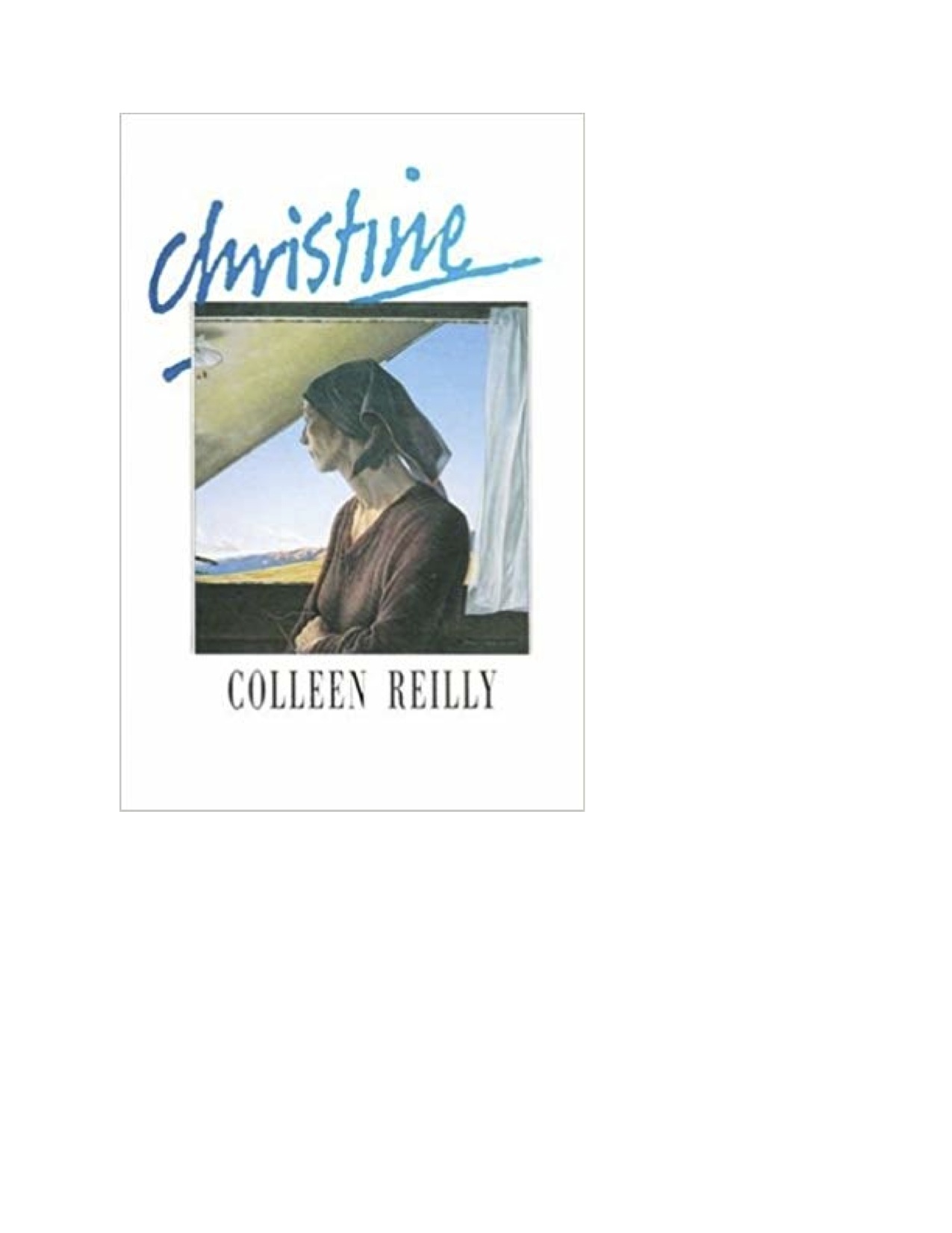
The separation she’s felt in her own life reverberates in her work. Her first novel, Christine (Allen & Unwin, 1988), is set in Omaha and Maine and offers a protagonist isolated from family and other ties by venturing far from home in an attempt to live alone in a seaside town. The title character is obsessed with the idea of a twin brother, whose life begins to assume a greater reality than the world around her. Once ‘cured,’ there is the question of how much Christine has given up in the process. Although Reilly completed Christine before starting her second novel, The Deputy Head (Allen & Unwin, 1986), the latter novel was published first. The Deputy Head concerns an uptight New Zealand high school principal and his rigid Anglophile views of and stagnant relationships with women.
Her latest novel, For Caroline, is the first she is trying to find an American publisher for and she expects its provocative take on abused women will make it a hard sell.
“It’s about an 80-year-old man and this obsession he has with this girl-into-a-woman named Caroline, which starts when she is an infant. It’s not a sexual thing. It’s a protective thing. He wants to protect her from the abusive men she’s attracted to. It’s written from his point of view and describes 50-odd years of protecting her. He blames mothers and specifically her mother for giving their daughters such low self-esteem that they will be attracted to abusive men. The first sentence of the book is, ‘All mothers hate their daughters…’ It’s politically-incorrect in that he believes the advice given to abused women is ridiculous. That instead of working things out it just should be, Get angry and get out. I’ll be surprised if I get a publisher, because it’s virtually saying the opposite of what’s being told women.”
While awaiting word on her novel’s publication prospects, she seeks a publisher for a piece she’s written on the hazards of waitressing, something she’s had seven years of experience doing. Beyond the occasional bad customer, she, like many an artist, has found a certain bliss in waiting tables.
“I really like it. I like the freedom more than anything, especially compared with teaching. When you’re a teacher, you never check out. You never leave the job. With waitressing, you clock in and you clock out. It’s the mental freedom you have. That’s the way writers should live.”
Teaching is something she’s considered resuming but always balks at after calculating she “can make twice as much waiting tables — and without the headaches. Besides, there’s all sorts of ways I feel like I’m still a teacher here with all the young people I work with. Granted, I’m more a teacher in life than in literature, but so what? I always have Pearce or Dad to discuss literature with.”
Related articles
- Short Story Writer James Reed, At Work in the Literary Fields of the Imagination (leoadambiga.wordpress.com)


 Leo Adam Biga's My Inside Stories