Archive

Posts Tagged ‘Film’

Hot Movie Takes: READ ALL ABOUT IT EXCLUSIVE – Alexander Payne’s “Downsizing” starring Matt Damon

February 27, 2016 2 comments

UPDATE: It turns out that Alec Baldwin did not participate in “Downsizing” after all. Insstead, his part of a real estate magnate was played by another name actor with a similar vibe and facility for playing smarmy – Bruce Willis.

Here is your first and only exclusive insider’s look at Oscar-winner Alexander Payne’s jusst under production new film, “Downsizing,” starring Matt Damon, Kristen Wiig, Christoph Waltz and other stars. From yours truly, Leo Adam Biga, the chronicler of this important writer-director since 1997 and the author of “Alexander Payne: His Journey in Film” – soon to be re-released with a new design, plus updated and expanded content.

UPDATE In its original version this story reported that Reese Witherspoon would co-star alongside Matt Damon, but only days before the April 1 production start it was announced she was no longer attached to the project and that Kristin Wiig had replaced her.

Since this story was first published in early March, Oscar-winning actor Christoph Waltz, along with Udo Kier, Paul Mabon and Warren Belle were officially added to the cast.


Hot Movie Takes:

READ ALL ABOUT IT EXCLUSIVE – Alexander Payne’s “Downsizing” starring Matt Damon

Film about miniaturized human life tackles big themes

“Downsizing” finally going before the cameras April 1

©by Leo Adam Biga, Your A.P. Expert and Author of Soon to Reboot “Alexander Payne: His Journey in Film”

Original story appeared in the March 2016 issue of The Reader (www.thereader.com)


The high concept behind Alexander Payne’s soon to shoot new feature, Downsizing, unfolds in a near future world where humans can opt to be miniaturized. Everything about the story, from the title to the characters to the plot-lines, gives Payne and co-scriptwriter Jim Taylor ample metaphorical opportunities.

The big budgeted Paramount picture starring Matt Damon, Kristen Wiig, Christoph Waltz, Neil Patrick Harris, Jason Sudeikis, Alec Baldwin, Paul Wabon, Warren Belle and Hong Chau endured a long gestation. A different cast was attached in 2008-2009 before the road to financing collapsed with the economy. The pieces almost came together again in 2014. All the while, the script, begun in 2006, got reworked and pared down to meet the budget cap Hollywood placed on this risky project marking Payne’s first foray into science fiction and visual effects..

The production is based at Pinewood Studios in Toronto, Ontario, Canada, where Payne will work for the first time on sound stages and with green screens, CGI and motion capture. Little or no forced perspective will be used.

The sprawling, three-month shoot rolls out April 1 for a week in Los Angeles, then comes to Omaha for a few days. The whole works heads off to Norway for more shooting but the bulk will occur across the border in Canada, where post-production will also happen.

Arch satirists Payne and Taylor use the downsizing premise to skewer the small-mindedness of persons, policies. constructs. In this new work the veteran scenarists, whose previous credits together include the Payne-directed Citizen Ruth, Election, About Schmidt and Sideways, suggest not only are Earth’s physical resources at risk but its intellectual-moral capital, too.

Downsizing’s all too real musings on diminishing returns and bankrupt values posits a redemptive protagonist in Paul, a South Omaha Everyman whom Matt Damon will play. Although the story has a fatalistic, end-of-world backdrop, it dangles hope that humankind, in whatever size survives, will muddle through somehow.

That Payne should use science fiction’s expansive prism to consider world crisis issues and explore the nature of humanity may seem at odds with his intimate dramedies about neurosis, infidelity, promiscuity, loneliness, yearning. Then again, all his work has churned the existential wheel with mundane characters bogged down by the weight of their own mess. Just think of the angst that Ruth (Citizen Ruth), Jim (Election), Warren (Schmidt), Miles and Jack (Sideways), Matt (The Descendants) and Woody (Nebraska) confront. For all its fantastic elements this new narrative is anchored in that same morass of folks dealing with adult dilemmas, conflicts and flaws. Problems dog them wherever they go, even the would-be miniature haven, Leisureland.

And why shouldn’t Payne dip his toes in the sci-fi pool when filmmakers equally identified with humanistic storytelling have done the same? John Sayles (The Brother from Another Planet) and Barry Levinson (Sphere) come to mind.

Besides, sci-fi is a liberating and therefore attractive gateway for artists to tackle large, serious subjects free of constraints. The genre invites storytellers to ponder endless what ifs. In that spirit Payne and Taylor lay out an imagined scenario and burrow down that rabbit hole of speculation to follow what they deem the inevitable consequences.

Downsizing hinges on a hero sensitively responding to a world around him transformed. The implications and stakes are deeply personal and global. At least on the page Payne and Taylor manage to make us care about the micro and macro. Paul’s journey pulls us along this upheaval of life as he knew it. Expectations, definitions and limitations are threatened or overturned. Ultimately, everything is on the line.


Matt Damon Picture  Kristen Wiig Picture  Christoph Waltz Picture


Unavoidably, the story echoes other speculative tales, including any dealing with miniature humans. It also resonates with themes from such disparate sources as Dr. Strangelove, 2001: A Space Odyssey, The Truman Show, Children of Men and The Hobbit. Payne and Taylor concoct a fable-like framework to hold the narrative together.

The most obvious if unintentional resonance – to The Incredible Shrinking Man – happens at the end, when our hero-pioneer once more enters the great unknown. As with Payne’s previous films, the story concludes with a feeling more than an event or a resolution.

Payne, now married to a native of Greece and coming off his stark tone poem Nebraska, recently spoke about Downsizing with The Reader.

“We always knew it would take a while, first to get the script right, then to secure the financing, and 10 years is a long time. Fortunately I was able to squeeze in two other features and a pilot during that time. But it feels right now. You know, it’s interesting that in life, not just film, you try to do something and you run into obstacles. You try again and you run into more obstacles, and you think, This is never going to happen. And then finally when it does it unfolds elegantly and without obstructions and you say, Wow, I guess this was the time it was supposed to happen. That has been my experience with Downsizing.”

As the 125-page script sits now, he says, “the story hums along with a good filmic rhythm.” Achieving that flow was challenging for the.”big idea” at its core. “So big,” he says, “it was difficult during our writing process to always discern where it breaks off because every idea you come up with for this idea has a very long series of chain reactions. So you just kind of drive yourself crazy with possibilities. The script goes in very unpredictable directions. I’m not saying they’re good because they’re unpredictable. They were unpredictable to us as we were writing. So to corral this story and to get it happening as efficiently and we hope elegantly from point to point to point took a while. Right now it looks good on paper. I hope it will lend itself to a good movie. I won’t know that until I’m in post-production.”

He says the big idea that propels the piece is rife with “social-political overtones” but that it’s the “human aspects of the story that most interest us.” Thus, he’s not getting hung up on its sci-fi pedigree. He just enjoys the unlimited canvas he has to work on.

Payne also isn’t stressing the visual effects world he’s entered though he acknowledges he’s a fish out of water.

“It’s a whole new focus for me and everything. I’m not worried but I’m curious to see how they’re going to work. There’ll be a certain amount of tedium involved because you have to shoot the same scene two, sometimes three times to get the different aspects and elements.

“I want to make sure the actors who are acting in a vacuum on a stage against green screen feel as comfortable and normal as possible.  That’s my job. The acting style should not suffer because of the means of production. But it’ll be fine. You know, who cares, it’s just a movie.”

One whose budget is reportedly double any of his previous pics.

“If they don’t spend it on that, they’re just going to spend it on something else.” he says by way of classic Hollywood reasoning.

 He feels in good hands with his visual effects supervisor, James Price, with whom he’s been in discussions since 2008-2009.

“He is my effects czar. He knows how to explain things to me to make things easy for me and how to teach me how these things are achieved – what I need to know, what I don’t need to know. It’s really exciting. The best thing those guys do is to free the director up to say, ‘I want a shot like this, can we do this?’ and they say, ‘Yeah, we can do that,’ and I say, ‘How?’ and they say, ‘Don’t worry about how, but we can do it.’ Between the visual effects supervisor, the DP, the production designer,  they have to trick the director as much as possible into thinking that he or she is just shooting a regular movie so that I don’t censor my imagination, or what I have left of it.”

Payne says Price is on the same page as he and cinematographer Phedon Papamichael in terms of the desired visual palette.

“James knows the aesthetic we want and he’s an avid film watcher and film guy and so that makes me feel good. What I aspire to from the visual effects for this movie is not how eye-popping they are but rather how banal they are. I don’t want the seams to show.”

Payne also hopes to keep the effects to a minimum and to “try to do things in camera as much as possible.”

In addition to Price and his visual effects team Payne is working with a new production designer, Stefania Cella. But he’s mainly surrounded by trusted old friends and collaborators in producer Jim Burke, casting director John Jackson, Papamichael and costume designer Wendy Chuck. His longtime editor, Kevin Tent, is on board as well.

After the seven year gulf between Sideways and Descendants, Payne’s happy to be making films in short order. His last, Nebraska, was received warmly in Greece, where he met his wife while vacationing with his mother (Payne’s father passed away in 2014.).

“I showed the film in Greece a couple times and people were only too quick to tell me they thought it was a Greek film, which surprised me. I said, ‘Why do you think it’s a Greek film?’ and they said, ‘Well. it has the elements of going back to the village where your people are from.’ ‘Okay,’ I said. And they connected with the part of dutifully ‘taking care of the parents who drive you crazy,’ and I said, ‘Well, I’m sure that’s not just Greek.’ I think that’s pretty universal.”

On the eve of finally making Downsizing after so long a wait and “jettisoning” subplots he admittedly “misses,” he’s content. “A movie is a movie is a movie and we have enough to make this movie, so it’ll be fine. And if the gods decree there might be a Downsizing 2, than we have other ideas that we’ve been collecting.”

Read more of Leo Adam Biga’s work at leoadambiga.com.


FINAL FRONT COVER 6-28-16

YOU CAN READ THE REST IN THE NEW EDITION OF MY BOOK-

Alexander Payne: His Journey in Film

(The new edition encompasses the Oscar-winning filmmaker’s work from the mid-1990s through Nebraska in 2013 and his new film Downsizing releasing in 2017 )

Now available  at Barnes & Noble and other fine booktores nationwide as well as on Amazon and for Kindle. In Nebraska, you can find it at all Barnes & Noble stores, The Bookworm and Our Bookstore in Omaha, Indigo Bridge Books in Lincoln and in select gift shops statewide. You can also order signed copies through the author’s blog leoadambiga.com or via http://www.facebook.com/LeoAdamBiga or by emailing leo32158@cox,net. 

For more information. visit– https://www.facebook.com/pg/AlexanderPayneExpert/about/?ref=page_internal

Creative couple: Bob and Connie Spittler and their shared creative life 60 years in the making

December 23, 2015 3 comments

A lot of you know me as a frequent and longtime contributor with The Reader, for whom I’ve written more than a thousand stories since 1996, including hundreds of cover pieces. Beyond The Reader, I am fortunate to own extended relationships with several other publications.  I was a major contributor to the Jewish Press for well over a decade.  My tenures with Omaha Magazine and Metro Magazine are both more than a decade old now.  But perhaps my longest-lived contributor relationship has been with the New Horizons, a monthly newspaper published by the Eastern Nebraska Office on Aging.  Editor Jeff Reinhardt and I are committed to positive depictions of aging that illustrate in words and images the active, engaged lifestyles of people of a certain age.  Older adult living doesn’t need to follow any of the outdated prescriptions that once had folks at retirement age slowing down to a crawl and more or less retreating from life.  That’s not at all how the people we profile approach the second or third acts of their lives.  No, our subjects are out doing things, working, creating, traveling, making a difference.  My latest profile subjects for the Horizons, Bob and Connie Spittler, are perfect examples.  They are in their 80s and still living the active, creative lives that have always driven their personal and professional pursuits.  He makes still and moving images.  He pilots planes.  She writes essays, short stories and books.  They travel.  They enjoy nature.  Sometimes they combine their images and words together in book projects.  Bob and Connie are the cover subjects in the January 2016 issue.  They join a growing list of folks I’ve profiled for the Horizons who embody such precepts of health aging as keeping your mind occupied, doing what you enjoy, following youe passion, cultivating new interests and discovering new things.  The Spittlers are also in a long line of dynamic older couples I’ve profiled – Jose and Linda Garcia, Vic Gutman and Roberta Wilhelm, Josie Metal-Corbin and David Corbin, Ben and Freddie Gray.  You can find many of my Horizons stories on my blog, Leo Adam Biga’s My Inside Stories at leoadambiga.com.

NOTE: ©Photos by Jeff Reinhardt, New Horizons Editor, unless otherwise indicated.


Spittlers looking at each other (Leo)

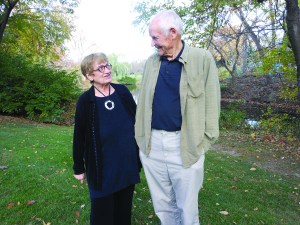
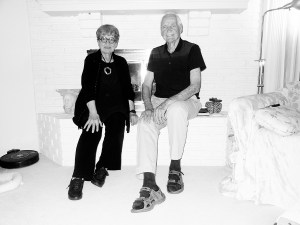
Bob and Connie Spittler outside their Brook Hollow home


Creative couple: Bob and Connie Spittler and their shared creative life 60 years in the making

©by Leo Adam Biga

Appeared in the January 2016 issue of the New Horizons

Once a creative, always a creative.

That’s how 80-something-year-olds Bob and Connie Spittler have rolled producing creative projects alone or together for six decades. Their work spans television commercials, industrial films, slideshows and books.

Bob, a photographer and filmmaker, these days experiments making art photos. Connie, a veteran scriptwriter, is now an accomplished essayist, short story writer and novelist. Her new novel, the tongue-in-cheek titled The Erotica Book Club for Nice Ladies, has found a receptive enough audience she’s writing a sequel. The book is published by Omaha author-publisher Kira Gale and her River Junction Press.

This past summer Bob and Connie hit the highway for a five-state book tour. Their stops included signings at the American Library Association Conference in San Francisco and the Tattered Cover in Denver. Following an intimate reading at a Berkeley, Calif. couple’s home she and Bob stayed the night. It harkened back to the RV road trips they made with their four kids.

On social media she termed the tour “an author’s dream.” It was especially gratifying given Bob endured a heart angioplasty and stent earlier in 2015.

Connie was also an invited panelist at an Austin, Texas literary event.

“All in all, an unforgettable year of healing, friendship, interesting places and great people,” she wrote in a card to family and friends.

Sharing a love for the outdoors, the Soittlers have applied their respective talents to splendid nature books. The Desert Eternal celebrates the ecosystem surrounding the home they shared in the foothills of the Catalina Mountains in Arizona, where they “retired” after years running their own Omaha film production biz

“When we want down to Tucson we weren’t going to be working together. We were just going to do our own thing,” she says. “We’ve always been able to kind of follow what we want to do. So I started writing literary things and he was out taking pictures. I had a lumpectomy and the day I came home I’m looking out at the Catalina Mountains and I thought, you know it’s strange Bob and I both think we’re doing our own thing when we’re doing the same thing, we’re just each doing it in our own way. We were both doing the desert.

“We lived between two washes the coyotes and other wildlife came through. I had seven weeks of radiation and I had the idea of putting our work together. I downloaded all my essays on the desert and every morning before radiation I’d go into his office and together we’d look through his photo archive for images he’d taken that matched the words I’d written. Well, by the time we got to the end we had 114 photos – enough for a book. Bob formatted it. It came back (from the printer) the day my radiation finished. It was just this cycle.”

Another of their books, The Legend of Sleepy Hollow, documents the wild-in-the-city sanctuary around the southwest Omaha home they’ve lived in since 2010, when they returned from their Arizona idyll. Their home in the gated Sleepy Hollow neighborhood abuts four interconnected ponds that serve as habitat for feathered and furry creatures. The inspiration the couple finds in that natural splendor gets expressed in her words and his images.

“Words and images are perfect for each other,” Connie says by way of explaining what makes her and Bob such an intuitive match.

The couple met at Creighton University in the early 1950s. They studied communications and worked on campus radio, television, theater productions together. He was from the big city. She was from a small town, But they hit it off and haven’t stopped collaborating since.


Spittlers' office (Leo)

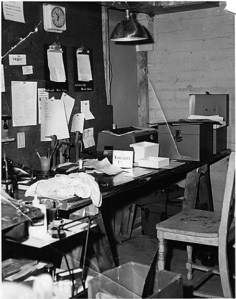
The couple’s original office, ©Bob Spittler


Her writerly roots
The former Connie Kostel grew up in South Dakota. This avid reader practically devoured her entire hometown library.

Connie developed an affection for great women writers. “I love Emily Dickinson. Her poems are short and kind of pithy. She always has one thought in there that just kind of sticks with you.” Other favorites include Elizabeth Barrett Browning, Christina Rossetti, Jane Austen.

“I like a lot of classics.”

Terry Tempest Williams is a contemporary favorite.

Success in school got her thinking she might pursue writing.

“I think it was in the sixth grade I won an essay competition. It had to be on the topic of how we increased production on our family flax farm. Well, there were some farm kids in my grade but I don’t think anybody grew flax. My father was a funeral director. But I got the encyclopedia and I found out some facts about flax and I wrote an essay and I won. I think I got $25 or something. i mean it was like, Wow, I think I should be a writer. That sparked my interest.”

She attended the Benedictine liberal arts Mount Marty College in Yankton, S.D., a then-junior college for girls.

“I got a scholarship there. I was interested in writing and I was going to have to transfer anyway and I began to see radio and TV as one way maybe I could make a living writing rather than writing short stories and novels and so forth. So I decided to do that. My parents researched it out and found Creighton University for me, It had one of the few programs with television, radio and advertising,”

His Army detour
Meanwhile, Bob graduated from Omaha Creighton Prep before getting drafted into the U.S. Army. In between, he earned his private pilot’s license, the start of a lifelong affair with flying that’s seen him own and pilot several planes he’s utilized for both work and pleasure. Prior to the Army he began fooling around with a camera – a Brownie.

He recently put together a small book for his family about his wartime stint in Korea. He had no designs on doing anything with photography when he began documenting that experience.

“Everybody bought a camera over there and I bought an Argus C3. I just got interested in taking pictures for something to do. I learned how to use it and I just took a lot of pictures. I didn’t think it was going anywhere. It was just a hobby, you know.”

But those early photos show a keen eye for composition. He was, in short, a natural. The book he did years later, titled My Korea 1952 to 1953, gives a personal glimpse of life in the service amidst that unfamiliar culture and forbidding environment.

The Army assigned Spittler to intelligence work.

“My specialty was artillery but I was put in what they called G2 Air (part of Corps Intelligence). I went to a school in Japan. Back in Korea I coordinated the Air Force with the artillery in the CORPS front.”

Spittler relied on wall maps and tele-typed intel to schedule flights by Air Force photo-reconnaissance planes. “When I first arrived P-51 Mustangs were the planes used. Then after about six months they shifted to the F-80 Shooting Star,” he writes. “In winter a little pot-bellied kerosene stove warmed our tent. At night it had to be turned off and lighting it on a cold morning, below zero, was painful, It took 10 minutes before it even thought about giving heat.”

The closest he came to action was when a Greek mortar platoon on the other side of a river running past the American camp fired shells into a nearby hill, causing the GIs to scramble for cover.

Though he didn’t pilot any aircraft there he did find ways to feed his flying fix.

He writes, “Since my job was using radio contact with reconnaissance flights every day I became ‘talking friendly’ with some of the pilots. One of them agreed to give me a jet ride…”


Bob at fireplace (Leo)

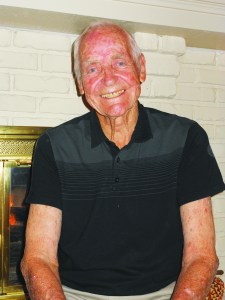
Bob Spittler


That ride was contingent on Spittler making his way some distance to where the sound-breaking aircraft were based. “Come hell or high water I wasn’t going to pass up that offer,” he writes. With no jeep available, he hitchhiked his way southwest of Seoul and got his coveted ride in a T-33. From 33,000 feet he sighted the “double bend’ of the Imjin River pilots used as a rendezvous landmark – something he’d heard them often reference in radio chatter.

At Spittler’s urging the pilot did some loops. Aware his guest was a flier himself the pilot let Spittler put the jet into a roll. But before he could complete the pull out the pilot took over when Spittler began losing control in the grip of extreme G-forces he’d never felt before. An adrenalin rush to remember.


Click to preview My Korea 1952 to 1953 photo book


Kindred spirits
After a year in-country Bob eagerly resumed the civilian life he’d put on hold. What he did to amuse himself in the Army. photography, became a passion. When he and Connie met at Creighton they soon realized they shared some interests and ambitions. They were friends first and dated off and on. She was entranced by the romance of this tall, strapping veteran who took her up in his Piper Cub. He was drawn to her petite beauty and unabashed intelligence and independence.

Besides their mutual attraction, they enjoyed working in theater productions. They even appeared in a few plays together. Connie’s passion for theater extended to teaching dramatic play at Joslyn Art Museum. She also enacted the female lead, Lizzie, in an Omaha Community Playhouse production of The Rainmaker.

The pair benefited from instructors at Creighton, including two Jesuit priests who were mass communications pioneers. Before commercial television went on the air in Omaha, Rev. Roswell Williams trained production employees of WOW-TV with equipment he set up at the school. He founded campus radio station KOCU to prepare students for broadcasting careers. He implemented an early closed circuit television systems used to teach classes.


Connie Spittler works the board as Rex Allen gets ready to shoot a scene in the 28-minute film on the story of Ak-Sar-Ben. Published Nov. 16, 1968. (Richard Janda/The World-Herald). Editor’s note: Turns out Connie Spittler, the woman in the photo, has a blog. You can find out more about the story behind this photo here. Also, how awesome is that cigarette behind her ear?

Connie Spittler works the board as Rex Allen gets ready to shoot a scene in the 28-minute film on the story of Ak-Sar-Ben. Published Nov. 16, 1968. (Richard Janda/The World-Herald).


“He was the person that brought television to Creighton University,” Connie says. “He was interested in it in students learning about it.”

Rev. Lee Lubbers was an art professor whose kinetic sculptures experimental, film offings and international satellite network, SCOLA, made him an “avant garde” figure.

“It was so unusual to have him be here and do what he did,” Connie says. “He stirred things up for sure.”

Right out of college she and Bob worked in local media. He directed commercials and shows at WOW-TV. She was a continuity director, advertising scriptwriter and director at fledgling KETV. She also worked in advertising at radio station KFAB.

Bob’s father was an attorney and there was an expectation he would follow suit but he had other plans.

“My father wanted me to be a lawyer and I just kept fighting that,” he recalls. “The gratifying thing about that is that after about 10 years of being in business he said, ‘I’m really kind of glad you didn’t go into it.'”

Bob calls those early days of live TV “fun.”

“I did little 10 second spots for Safeway. They’d just give me the copy and have me go shoot a banana or something. Well, one night I hung them up in the air and swung them and moved the camera and they were flying all over the place and Safeway just loved it.

“But it changed so much with (video )tape coming in. You can always look back and say, ‘Boy, what we could have done if we’d had that.'”


Spittlers at fireplace B & W (Leo)


Taking the plunge
Bob and Connie then threw caution aside to launch a film production company from their basement. Don Chapman joined them to form Chapman-Spittler Productions. While leaving the stability of a network affiliate to build a business from scratch might have been a scary proposition for some, it fit Bob to a tee.

“To be honest with you I’m not a team player and I’m not a leader. I’m kind of a loner,” he says. “I could see corporate-wise I wouldn’t get anywhere. I had ideas and things I wanted to do myself. When I did get something done it was always off by myself and I figured out that was the way I wanted it.”

The fact that Bob and Connie brought separate skill sets to the table helped make them work together.

“We didn’t do the same things, that was part of it, so we weren’t competing with each other,” she says. “One other very important thing she did – she kept the books,” Bob notes.

It was unusual for a married couple to work together in the communications field then. Connie was also a rarity as a woman in the male-dominated media-advertising worlds.

She’s long identified as a feminist.

“I was a working woman in the ’50. We were just women that wanted to be able to work, to be able to make a living wage, that wanted to have a family and kids if we chose to but not that we had to.”

There were a few occasions when her gender proved an issue.

“Northern Natural Gas was interviewing for a position and they said there’s no way we can accept a female for this because this job entails going to a lot of parties that get too rowdy, so we’re sorry. When I was at KETV we were doing a documentary about SAC (Strategic Air Command) in-air refueling missions. I wanted to go up so I could write about it, but base officials said we can’t send up a woman, so I couldn’t do that. The station did send up a male director and he came back and told me about it and I wrote the script

“Otherwise, I don’t think I did experience discrimination.”



Cub silouette (Leo)

Bob’s beloved Piper Cub, ©Bob Spittler


She wasn’t taking any chances though when she broke into the field.

“I was one of the first people hired before KETV went on the air. My job was as an administrative assistant to work with New York (ABC). That was one place where I didn’t know if there’d be any problem with my being a woman so instead of signing letters Connie Kostel (this was before she was married), I signed them Con Kostel, so they wouldn’t know what sex I was. I didn’t have any problems.”

Connie will never forget the time she wrote a promo for a Hollywood actor on tour promoting his new ABC Western series.

“I directed him in the promo. When I got home Bob said, ‘How’d it go with the guy from Hollywood?’ I said, ‘He’s nice looking but he’s a loser, He had the personality of a peach pit. I just didn’t get anything from him at all.'”

She was referring to James Garner, whose Maverick became a hit.

In retrospect, she chalks up his lethargy to being exhausted after a long tour. “Thank heavens I didn’t want to be a talent scout.”


The salad days
She says when she and Bob had their own business she was put “in charge of some really big sales meetings” by clients who entrusted her with writing-producing multi-screen slide shows. These elaborate productions cost tens, even hundreds of thousands of dollars and often involved name narrators, such as Herschel Bernardi and Rex Allen.

She wrote-produced a 9-screen, 14-projector show for Leo A. Daly having never produced even a single-screen slide show.

“Inspired in the late ’60’s by our plane trips to the Montreal World Fair and the San Antonio HemisFair, Bob and I were both excited by multi-screen shows.”

Once, Connie was asked to produce show in three days to be shown in a tent in Saudi Arabia.

“I always wondered about the extension cord,” she quips.

Bob says Connie was accepted as an equal by the old boys network they operated in. “I never saw any signs of any rejection.” Besides, he adds, “she got along real well with people” and “she was good.”

For her part, Connie felt right at home doing projects for Eli Lilly, Mutual of Omaha, Union Pacific, ConAgra, Ak-Sar-Ben, the Greater Omaha Chamber of Commerce and many other clients.

“I loved it, I absolutely loved it. And the thing I loved about the writing I did was that each one was a different subject. I’d go visit a big company like Leo A. Daly and they’d introduce me to their top people to interview. I’d be given all these research books and reports to read. It was like a continuing education. Working on the Daly account I learned a lot about architecture.

“Almost anything turned out to be really interesting once I talked to the people who worked there who were excited about their work.”

Their projects played international film festivals and earned industry awards. Bob worked with Galen Lillethorup at Bozell and Jacobs to produce the ‘The Great Big Rollin’ Railroad’ commercials for Union Pacific, which won the prestigious Clio for B & J. Bob recalls the North Platte, Neb. shoot as “fun,” adding, “We got a lot of attention out of it and we did get other business from it.” A few years later, Spittler Productions received their own Clio recognition for an Omaha Chamber project. Assignments took them all over the U.S. Bob would often do the flying.

“Bob either shot, scouted or landed for business purposes and I traveled to locations to research, write and produce sales meetings in every state in the U.S. with the exception of Alaska, Hawaii, Maine and Rhode Island,” Connie says.

One time when Bob let someone else do the flying he and a Native American guide caught a helicopter that deposited them atop a Wyoming mesa so he could capture a train moving across the wilderness valley.

“I sat up there with my Arriflex and that old Indian and waited for that train to come and neither of us could understand the other,” he recalls.

Connie once wrote liner notes for a City of London Mozart Symphonia produced by Chip Davis and recorded in Henry Wood Hall, London. Davis recommended her to Decca Records in London to write liner notes for a Mormon Tabernacle Choir album.

At its peak Chapman-Spittler Productions did such high profile projects the partners opened a Hollywood office. Spittler worked with big names Gordon McCrae and John Cameron Swayze.

The Nebraskans made their office a Marina del Rey yacht, the Farida, supposedly once owned by King Farouk and named after his wife.

“On one occasion I flew a Moviola (editing machine) out there and we edited one of the Union Pacific commercials on the boat over in Catalina,” Bob remembers.

An InterNorth commercial was edited there as well.

Connie adds, “I used the yacht as a wonderful place to write scripts.”

“Ours was 40-foot. We were able to sleep on it. I took the boat out a lot. When we left, that’s where it stayed,” Bob says. “Our boat was right next to Frank Sinatra’s boat off the Marina del Rey Hotel. His was a converted PT-boat.”

Bob also did his share of flying up and down the Calif. coast. Connie wedded her words to his images to tell stories.

One of Bob and Connie’s favorite projects was working with Beech Aircraft. Using aerial photography Bob shot in several states, they produced a film on the pressurized Baron and later a film on the King Air for the Beechcraft National Conference in Dallas, Texas

The variety of the projects engaged her.

“Curiosity is my favorite thing,” she acknowledges.

A hungry mind is another attribute she shares with her mate, as Bob’s a tinkerer when it comes to mechanical and electronic things.

“Bob is curious, too,” she says. “He’s always trying to think of something to invent. Years ago he went out and brought home one of the first PCs – a TRS 80. He wanted to play around with it. Then he pushed me into playing around with it and then he made all the kids learn it so they could do their college applications on the computer. So he dragged the whole family into the computer generation.”

The way Bob remembers it, “When I brought that first computer home we had it for a week and I was still trying to figure out how to turn the damn thing on and my son was programming it. He taught me. But that was neat. I’m way behind now on technology,” though he has digital devices to share and store his work.


Connie Spittler at table (Leo)

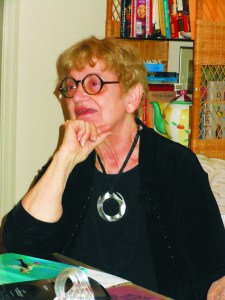
Connie Spittler


Reinventing themselves
Bob and Connie’s collaborations continued all through the years they worked with Don Chapman. When that partnership dissolved the couple went right on working together.

“We were complementary I suppose in many ways,” she says. “When we had the business I wrote and produced, he shot and edited, so it just worked.”

By now, Connie’s written most everything there is to write. Being open to new writing avenues has brought rewarding opportunities.

“You have to be open to writing about other things just to keep your mind going. I received a phone call in Tucson one day and this person said, ‘We heard about you and we wondered if you’d come read your cowboy poetry at our trail ride?’ I’d never written any cowboy poetry but it sounded so much fun. I said, ‘Let me think about that.’ Well, I like cowboys and nature and all these things, so I agreed to do it. Bob and I ended up making this little book Cowboys & Wild, Wild Things.”

When she got around trying her hand at fiction writing, it fit like a glove.

“I was writing my first fiction piece and Bob said to me, ‘Do you know for the first time since we’ve come down here every time you come out of your office you’re smiling?’ Before, my projects were all kind of heavy, fact-laden subjects. I mean, there was creativity but it was mostly how do you take this subject and make it interesting. With the novel, I could make it anything I want.”

She hit her fiction stride with the books Powerball 33 and Lincoln & the Gettysburg Address.

A project that brought her much attention is the Wise Women Videos series she wrote about individuals who embody or advocate positive aging attributes. The videos have been widely screened. For a time they served as the basis for a cottage industry that found her teaching and speaking about mind, body, spirit matters.

For the series, she says, “I found interesting women I thought other people should listen to. None of them were famous. They were just women introduced to me or once people knew I was doing the series they would say, Oh, you should talk to this person or that person.”

As the series made its way into women’s festivals and organizations she got lots of feedback.

“When I would get letters from cancer groups or prisons or abused women groups I thought good grief, how wonderful that can happen, that they can ‘meet’ these women through these videos.”

The series is archived in Harvard University’s Library on the History of Women in America.

She’s given her share of writing presentations and talks – “I love to attend book clubs to discuss my books” – but a class on memoir she taught in Tucson took the cake.

“The class was inspired by one of my Wise Women Videos and began with each student telling a story about their first decade in life. Then each time we met the women chose one important memory to tell the group about the next decade. The assignment was to write that story for family, friends or themselves. An interesting thing happened: When the class sessions reached the end of their decades and the class was finished the women were so connected from the experience they continued to meet independently for years afterward.”
 

Spittlers on deck (Leo)

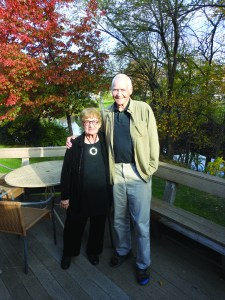
Bob and Connie on their deck


Legacy
Connie’s own essays and short stories are published in many anthologies. She achieved a mark of distinction when an essay of hers, “Lint and Light,” inspired by the work and concepts of the late Neb. artist and inventor Reinhold Marxhausen, was published in The Art of Living – A Practical Guide to Being Alive. The international anthology’s editor sent an email letting Connie know the names of the other authors featured in the book. She was stunned to find herself in the company of the Dalai Lama, Mikhail Gorbachev, Deepak Chopra, Desmond Tutu, Jean Boland, Sir Richard Branson and other luminaries.

“I almost fell off the chair. When that happened I was like, I wonder if I should quit writing because I don’t think I’ll ever top that.”

Bob says he always knew Connie was destined for big things. “It didn’t surprise me a bit.”

Much of her work lives on thanks to reissues and requests.

“It’s interesting how you do something and it isn’t necessarily gone,” she says. “Some of those things have a long life. I always say a book lasts as long as the paper lasts.”

Now with the Web her work has longer staying power than ever.

Meanwhile, one of Bob’s photographs just sold in excess of a thousand dollars at a gallery in Bisbee, Arizona.

Living in Tucson Connie says she was spoiled by the “absolutely wonderful writers community” there. She and some fellow women writers created their own salon to talk about art, music, theater and literature. “The one rule was you couldn’t gossip – it was just intellectual, interesting talk,” she says. “One night the subject of erotica came up. The next day I went to a bookstore and I said to this young female clerk, ‘Do you have a place for erotica here?’ And she said, ‘Oh erotica, yes, let me get my friend, she loves erotica, too!’ and they both took me off to the section and told me all their favorite books. I didn’t get any of their favorites, but I did get this one, Erotica: Women’s Writing from Sappho to Margaret Atwood.”

Connie found writers published in its pages she never expected.

“When I opened this book the first thing I saw was Emily Dickinson, then Jane Austen, Charlotte Bronte, all these well-known, respected authors. Their work is considered erotica for their time because it was romantic reading with sensual undertones. It’s in your mind, not graphic. I thought it so interesting that that could be erotica. It occurred to me a book club about erotica could be fun.”

Only Connie’s resulting book is not erotica at all but “a cozy mystery.”

“A librarian who gave it 5 stars said, ‘You would not be embarrassed to discuss this book with your mother.'” In the back Connie offers a list of erotica titles for those interested in checking out the real thing.

She’s delighted the book’s being published in the Czech Republic.

“My dad was a hundred percent Czech. I asked the publisher if I could add my maiden name and change the dedication to dedicate it to my dad and my grandmother and Czech ancestors and they said, ‘We’d love that.’ My dad’s been gone a long time and he didn’t have any sons and he always said to me, ‘That’s the end of my line,’ so now I thought it will live on – at least in the Czech Republic.”


Words to live by
Closer to home, Connie’s developed a following for the Christmas Card essays she pens. Her sage observations and sublime wordings are much anticipated. This year’s riffs on the fox that visits their property.

“Sometimes in the late evening he trots along the grasslands and pond. Bob, watching TV down in the family room, has spotted the scurrying fox several times – always unexpected and too quick for his camera lens. I haven’t seen this wild urban creature yet since I’m in bed during the usual prowling gorse. Still, imagining his billowing tail flying by int he dark adds a flurry of magic to the winter night…

“As our dancing, prancing fox moves in and out of focus and time, I think of the surprising people, pets, events and moments that visit our lives. They come and go with reminders to be grateful for unexpected things that happen along the way…fleeting or lingering…illusive…intriguing.

“This season our message comes from the fox, a wish for wisdom, longevity and beautiful surprises. Do keep a look out. You never know who you’ll meet or what you’ll see.”

Finally, as one half of a 57-year partnership, Connie proffers some advice about the benefits of passion-filled living.

“One beautiful thing about writing is that by picking up pencil and paper, or using computer, iPad, you can write anywhere. I’ve written on a beach, by a pool, a yacht and in an RV. I always encourage anyone interested in writing to sit down and go to it. It doesn’t cost any money to try and studies show the creativity of writing keeps the mind alert. And it’s a feeling of accomplishment, if you finish a piece or even if you finish a good day writing.”

The same holds true for filmmaking and photography. And for delighting in the wonders of wild foxes running free.

Follow the couple at http://www.conniespittler.com.

Down and out but not done in Omaha: Documentary surveys the poverty landscape

November 3, 2015 4 comments

Omaha famously ranks high in best places to live, do business and raise a family lists and it infamously ranks just as high in per capita poverty, STD and gun violence rates, particularly among African-Americans.  The economic dichotomy is an especially glaring scar on the Pleasantville face Omaha likes to project.  When it comes to poverty, Omaha goes out of its way to remove traces of struggle amiid the city’s high concentration of millionaires, white collar professionals, and high employment figures.  But if you look close and hard enough, the cracks in the picture emerge and the reality of poverty and homelessness, though often unseen, becomes quite real. More and more folks live paycheck to paycheck and are just one emergency or crisis or even bump in the road away from needing a food pantry or a shelter.  A new documentary commissioned by the helping organization Together and directed by filmmaker Jason Fischer, Out of Frame: Unseen Poverty in the Heartland, tries to paint a picture of the poverty landscape in Omaha.  It has a premiere screening November 12 at Aksarben Cinema. This is my story about the project and its subject in the November 2015 issue of The Reader (www.thereader.com).


slide-out-of-frame


Down and out but not done in Omaha: Documentary surveys the poverty landscape

©by Leo Adam Biga

Appeared in the November 2015 issue of The Reader (www.thereader.com)


Muddying Omaha’s high quality of life rankings are pockets of chronic poverty and growing new poor populations.

Identifiable impoverished sections, homeless communities and shelters exist, but most poverty here is insidious and invisible. It’s even in the suburbs. Thus, the title of a new documentary, Out of Frame: Unseen Poverty in the Heartland. It premieres November 12 at 6:30 p.m. at Aksarben Cinema. A panel discussion follows.

Surreal Media Lab owner Jason Fischer made the film for Together, a nonprofit that assists people out of poverty, hunger and homelessness into self-sufficiency and sustainable living. The project resonates with Fischer, who grew up in a poor, single-parent household.

“My mom never made a big deal about it,” he says. “I didn’t know how poor we were until I started thinking back, Oh, that’s why we ate peanut butter and banana sandwiches or pancakes for dinner. We shopped at Goodwilll, That’s what you did. You learn those survival skills. It was a mindset my mom had that she never let it be known we’re doing so bad. That was her superpower.”

Interviewing clients and caseworkers for the film, Fischer’s learned the local poverty landscape.

“It doesn’t feel like there’s a huge homeless sector here but the line between poverty and homelessness is fairly thin. That’s what you hear – that having a roof over your head and not having a roof over your head might just be a matter of days. It’s the working poor who are most vulnerable – the folks barely cutting it and living paycheck to paycheck.”

It’s someone like Rodgers, whose lack of living wage job skills puts him in precarious straits with advancing age and no nest egg or safety net.

Or someone like Air Force veteran Vernon Louis Muhammad, who suffered a severe work-related injury that prevented him from holding a job. His health issues and lost income, combined with a divorce, began a cascade that resulted in him losing his home and nearly everything else. As he recovers a semblance of his old life he helps other disabled and homeless vets find their footing, too.

Takina Humphrey lost her children to foster care when she went into treatment for meth addiction but since getting sober she’s reunited with them and working hard to make ends meet.

Fischer says he’s struck by “the variations and gradations of all the situations,” adding, “I want to give a face and add humanity to the complexities of poverty and homelessness, It’s not what you imagine. It’s not about the person who just gave up. It’s not just black and white. It’s not just the people down by the river and the railroad tracks. It may be a neighbor or a person at your church or someone at the grocery store. That’s the unseen part of it, even though it might be in plain view. And when we do see it, we avert our eyes.”

Together executive director Mike Hornacek says the problem in Omaha “is definitely not unemployment – we have one of the country’s lowest unemployment rates – it’s underemployment.” He adds, “We have a huge socio-economic divide in our community. We have tons of white collar professionals doing extremely well and then another huge blue collar, service-oriented population making $8 or $9 an hour. We’re missing that large segment of $16 to $18 an hour skilled trade sector jobs. So we’re seeing a trickle down effect of all kinds of people asking for help and services that never had to ask before.”

For example, he says nearly half of Millard public schools students are on free and reduced lunch – an indicator that struggles are not confined to the inner city. In this era of excessive cost of living and flat wages and salaries, he says one unforeseen disruptive event or major expense finds many families “suddenly teetering on the edge of working poor and needing to use a food pantry.”


Together Omaha

Mike Hornacek


Clients exhibit a gamut of causes and needs.

“Walking through our door on a daily basis is really a sliding scale of severity. On the minor side it’s somebody who needs to use a pantry for the first time. It may just be once. Maybe hings got tight at the end of the month with a high heating bill and the family couldn’t afford groceries. Not a lot of support services need to be involved.

“In the middle range is a single mom working two jobs, making minimum wage or more, doing the best she can, living paycheck to paycheck. Then her car needs repairing so she can continue going to work to support her family. She uses the rent money for the car and it turns into a snowball that sees her evicted. She comes to Together and we pay the back rent, supply one month to move forward and discuss budget. We cover basic skills to make sure she and her family are sustainable after we provide the help.

“On the extreme end, in a very severe crisis, you have somebody literally homeless or really close to homeless. maybe with PTSD syndrome and needing serious intervention just to be able to regain housing and sustain that on their own. They might need six to 12 months of intense case management to stabilize that living situation and ensure they are mentally stable and getting the right supports.

“The more near you get to homeless and the more years you live in poverty for generations a lot of times the root cause has to do with mental illness and behavioral health.”

Fischer’s discovered that just as many things trigger poverty “different variables go into creating stability.” “Stability comes through support groups, caring and community. No one organization does everything by itself. Several working interdependently, each doing its part, is really the key. That’s how Together came to be and true to its name it works collaboratively. That’s the strength of it.”

Hornacek says,”In a lot of those more medium to severe situations we can provide resources until we’re blue in the face but we’re not going to create any significant or lasting change unless we address those underlying issues and that comes through case management and connecting people to support services that help with mental health, medical needs, substance abuse and things like that.

“It is very complex. It is not one silver bullet that fixes the problem. And the person or family you’re trying to help has to want the help.”

But it’s first things first.

“It’s really unrealistic for us to expect individuals to just make those radical changes unless their basic needs are taken care of. Once past that threshold money doesn’t fix the problem…Then it’s all about education, guidance, mentoring and helping somebody work a plan to get where they want to go.”

Fischer is grateful to those who shared their struggles on film.

“They’re very courageous people for sharing their stories. I was surprised they were as open as they were. When you can see someone that hasn’t given up and is still pushing and still believes, and the hope they have, that’s inspiring. If that person’s still trying, then I have no excuses .”

Hornacek says he commissioned the film as an “advocacy tool.” He adds, “I hope people walk away with a better understanding that we do have some significant, pervasive issues in the greater Omaha area. We need to address families living in poverty and the economic divide. These things have repercussions,” including educational deficits, health problems, criminal activities,

“If we don’t get a handle on it, its going to get dramatically worse.”

Then the problem won’t remain hidden anymore.

The November 12 screening is part of Together’s gala fundraiser. Tickets are $35 per person or $60 for two. Visit http://www.AksarbenCinema.com or http://togetheromaha.org/.

Tim Christian: Changing the face of film in Nebraska

September 13, 2015 1 comment

Tim Christian may not look the part of a revolutionary figure in his three-piece suit and with his button-down manner, but what he’s doing in the film space in his hometown of Omaha is provocative enough to be considered far on the fringe stuff.  Well, at least it’s breaking new ground and shaking things up in this relative film financing wasteland.  My Omaha Magazine (http://omahamagazine.com) profile of Christian and what he’s doing that’s getting people’s attention follows.  Watch for a future story about Christian and his film endeavors on this blog. I have a distinct feeling I will be writing about him and his film projects for years to come.


Tim Christian

Tim Christian

Changing the face of film in Nebraska


September 9, 2015
Photography by Bill Sitzmann
Originally appeared in the September/October 2015 issue of Omaha Magazine (http://omahamagazine.com/)

Nebraska lacks an infrastructure to support a film industry. Omaha Creighton Prep graduate Timothy Christian is trying to change that. After years away pursuing a music industry and new media career, he’s returned to base his feature film financing and production company, Night Fox Entertainment, here.

Where most local film ventures are micro-sized with no-name talent, Christian backs real projects with $10 million-plus budgets boasting recognizable cast and crew. Case in point, Z for Zachariah. Shot in New Zealand, the post-apocalyptic drama stars Margot Robbie, Chiwetel Ejiofor, and Chris Pine. It’s directed by Craig Zobel, whose 2012 Compliance made waves. Z netted strong reviews at Sundance and will get a 2015 theatrical release.

In post-production now is the thriller Headlock starring Andy Garcia, Justin Bartha, and Dianna Agron.

Night Fox further limits investor exposure by only financing pictures with strong pre-foreign sales, capping individual contributions, and spreading capital around several projects. That model is securing local movers and shakers to buy into projects, including Tenaska’s recently retired Paul Smith, also a Night Fox partner.

Christian says film financing can be a “tough sell to people who are of a conservative investment nature,” adding, “They need to see kind of black and white what you have, what you’re doing, how the money looks, so we have to make sure the approach is right.” Once it “makes sense,” he says investors “are all interested in being part of growing a business not prominent in Omaha.”

Besides, having a piece of a project with stars, premieres, awards, trailers, and posters has a “cool” factor other opportunities don’t offer.

More than anything, Christian says people invest in him.

“People have to like you. Even if they don’t like the other people involved, they have to like you. If they don’t like you, they’re not going to want to work with you or give you their money.”

Being a Nebraskan helps him relate to investors.

“They like to deal with someone away from that Hollywood mindset. They want a straight shooter, someone who they deem as honest and down-home who has Midwest values. That goes a long way.”

Upon meeting him for the first time, some folks reveal surprise that he’s African-American.

“Once they understand I know the business, I know what I’m talking about, I know how to protect their money, then all that goes out the window.”

As a Nebraska film financier, he’s already an outlier. As an African-American doing it, he’s pushing new boundaries.

“From a cultural standpoint I think it’s really significant because it gives some hope to other young African-Americans in terms of what they can do. That means a lot.”

Christian, married with one child, mentors at Jesuit Middle School in North Omaha.

An advantage to being in Nebraska (Night Fox also has an office in L.A.) is giving investors first shots at projects otherwise being shopped only on the coasts.

His next step in making the state a film player is East Texas Hot Links adapted from the Eugene Lee play. Omaha’s own John Beasley is a producer and actor in it. Samuel L. Jackson is an executive producer. The film may shoot in-state. If not, Christian’s committed to bringing future projects here as he believes film production can be an economic engine that employs people and boosts tourism.

Tim Christian 2

Here’s what makes it all worthwhile…

August 18, 2015 2 comments

Here’s what makes it all worthwhile…

And here, dear friends, is ultimately why I do what I do in spite of the sparse pay and the insecurity that comes with being a writer. It is a mashup of two heartfelt emails sent me by a young, then-aspiring filmmaker named Bryan Reisberg who shared how impactful my Alexander Payne book has been for him. As you will read below, since first writing me he found financing to direct his screenplay Big Signficant Things. More recently yet he’s informed me that the film premiered well at the South by Southwest Film Festival and that he found a theatrical distributor for it. His pic is now showing in select theaters this summer. He may even come to Omaha with it before the year’s out. Reading how my accounts of a world-class filmmaker inspired this talented young man to recalibrate his own approach to film and to get his vision from page to screen is perhaps the greatest compliment I’ve ever received. Credit must also go to Alexander Payne, for his insights that I shared with the world.

File this one under you never know how your words or work or actions affect someone. Thank you, Bryan, and I look forward to meeting you one day.

Dear Mr. Biga,

I’m writing to thank you for your wonderful book.

You don’t know me but I’m a young filmmaker in NYC and I purchased your book on Alexander Payne I think back in November of 2012. I was always a fan of Alexander Payne’s work, and was simply searching for anything I could find on him. I wanted to write and tell you that your book has helped me immeasurably as a filmmaker.

I read your book a few months ago when I was finishing a screenplay, with the hopes of turning that into my directorial debut. I immersed myself into your articles, and then further into Payne, his inspirations, references, and then dove headfirst into classic American and Italian Cinema from the 40s, 50s, 60s, and 70s. The started the most focused and intensely rigorous academic study of film I’ve done, and it was nearly 4 years after graduating from college. Probably because I was working towards a physical film.

I graduated from NYU’s Tisch School of the Arts in 2009 and work with my friend and production partner, Andrew D Corkin, whose last feature film he produced was 2011’s Martha Marcy May Marlene.

I imagine now, being a bit older than I was while in film school I have much more of an interest in the academia of filmmaking.

Your articles and interviews became a critical (and previously absent) entry point to discover and dig deeper into learning more about directors, films, and film history. I came to not only respect and admire Payne as a filmmaker, but also as one of the best teachers I’ve ever had. And I can say that to date, starting with your book, what I’ve learned about the craft and history of cinema has been unparalleled and invaluable.

Well, since reading your book, I’ve completely changed how I watch films, what I watch, and it has given me such a wonderful tool and jumping off point to film that I don’t feel I’ve ever had before. And since reading your book, and working on developing this first film, as of 2 weeks ago, we’re fortunate to have gotten this project, my first feature, fully financed. We head down to Mississippi in 2 weeks to prep, and then shoot in the month of May. It’s pretty surreal, since I’m sure you know that indie film financing is very difficult…

…I was fortunate enough to have my screenplay financed so that I could direct my first feature, BIG SIGNIFICANT THINGS, which I completed back in May of 2013.

And it was just announced that my film will have it’s World Premiere at the 2014 SXSW Film Festival. Mark Orton, who I’m sure you know did the score for NEBRASKA, is composing the score for my film.

I wouldn’t be here without Alexander Payne and your book. Well, maybe I’d be here, but I wouldn’t be nearly as (hopefully) knowledgeable and skilled as a filmmaker.

So I just wanted to extend my gratitude, and thank you from the bottom of my heart.

Best,

Bryan Reisberg

This is a digital download of the feature film “Big Significant Things”
BIGSIGNIFICANTTHINGS.COM

Brent Spencer’s fine review of my Alexander Payne book in the Great Plains Quarterly


Brent Spencer’s fine review of my Alexander Payne book in the Great Plains Quarterly

I only just now became aware of this fine review of my Alexander Payne book that appeared in a 2014 issue of the Great Plains Quarterly journal. The review is by the noted novelist and short story writer Brent Spencer, who teaches at Creighton University. Thanks, Brent, for your attentive and articulate consideration of my work. Read the review below.

NOTE: I am still hopeful a new edition of my Payne book will come out in the next year or two. it would feature the additon of my extensive writing about Payne’s Nebraska. I have a major university press mulling it over now.

Alexander Payne: His Journey in Film—A Reporter’s Perspective, 1998–2012 by Leo Adam Biga
Review by Brent Spencer
From: Great Plains Quarterly
Volume 34, Number 2, Spring 2014

In Alexander Payne: His Journey in Film—A Reporter’s Perspective 1998–2012, Leo Adam Biga writes about the major American filmmaker Alexander Payne from the perspective of a fellow townsman. The Omaha reporter began covering Payne from the start of the filmmaker’s career, and in fact, even earlier than that. Long before Citizen Ruth, Election, About Schmidt, Sideways, The Descendants, and Cannes award-winner Nebraska, Biga was instrumental in arranging a local showing of an early (student) film of Payne’s The Passion of Martin. From that moment on, Payne’s filmmaking career took off, with the reporter in hot pursuit.

Biga’s book contains a collection of the journalist’s writings. The approach, which might have proven to be patchwork, instead allows the reader to follow the growth of the artist over time. Young filmmakers often ask how successful filmmakers made it to that point. Biga’s book may be the best answer to this question, at least as far as Payne is concerned. Biga presents the artist from his earliest days as a hometown boy to his first days in Tinseltown as a scuffling outsider to his heyday as an insider working with Hollywood’s brightest stars.

If there is a problem with Biga’s approach, it is that it occasionally leads to redundancy. The pieces were originally written separately, for different publications, and are presented as such. This means that an essay will sometimes cover the same material as a previous one. Some selections were clearly written as announcements of special showings of films. But the occasional drawback of this approach is counterbalanced by the feeling you get that the artist’s career is taking shape right before your eyes, from the showing of a student film in an Omaha storefront theater to a Hollywood premiere.

Perhaps the most intriguing feature of the book is Biga’s success at getting Payne to speak candidly about every step in the filmmaking process. These detailed insights include the challenges of developing material from conception to script, finding financing, moderating the mayhem of shooting a movie, and undertaking the slow, monk-like work of editing. Biga is clearly a fan (the book comes with an endorsement from Payne himself), but he’s a fan with his eyes wide open.

Leo Adam Biga's photo.

Making the cut: Music video editor Taylor Tracy

May 8, 2015 2 comments

I have a weakness for Nebraskans working in film or in anciliary media and so when I found out that Omaha native Taylor Tracy edits music videos of major hip hop and rap artists for an en vogue L.A. production house, I was all in.  Here is my Omaha Magazine (http://omahamagazine.com/) piece about her and her work.

TaylorTracy

  • Making the cut

    Music video editor Taylor Tracy

©Photography by Bill Sitzmann
Appearing in the May/June issue of Omaha Magazine (http://omahamagazine.com/)

Film and video production is still a rather male-centric domain, but the realm of editing is much more gender-balanced. Omaha native Taylor Tracy, a music video editor for L.A.-based London Alley, feels right at home in a long lineage of women cutters.

“At the start of the film industry, women were very prominent as film editors,” Tracy says. “It was an extremely delicate process. They used scissors to precisely cut the film. It’s interesting how that role for women as editors has carried through to today’s digital revolution.”

Tracy, whose work can be seen at TaylorTracy.com, has edited videos for Nicki Minaj, Busta Rhymes, Future, Rich Gang, Ciara, K. Michelle, SoMo, Ariana Grande, and Jess Glynne.

Even in the youth-driven music video field, the 2007 Millard West graduate is young at 25. Before landing on the Left Coast, this lifelong music lover earned her chops in music, theater, dance, and photography, teaching herself to shoot and edit video.

She heeded her creative instincts making comedic shorts that gained YouTube followings. She honed her craft at Omaha Video Solutions.

“I knew I wanted more,” says Tracy, who moved to L.A. in 2013 to intern with London Alley director Hannah Lux. It was a homecoming for Tracy, who was born in Long Beach. She shadowed Lux on set and performed post-production duties. She’s still enjoying the ride.

“I love doing music videos because you get to be so creative with your edit,” Tracy says. “With each project I’m trying to find a new style for the specific video and push and grow my style personally.”

All editing is about rhythm, perhaps especially so for music videos.

“I love to let the music guide me. I listen to the undertones of the songs, I follow what I feel in the music. If there’s a nice, long instrumental, I love to see slow motion footage, maybe a nice gradual close-up rather than very quick cuts and lots of movement.”

She says the “demanding, fast-paced environment” allows only a week to condense hours of footage into a three-minute video. Tracy also assists with visual effects and coloring. Additionally, she helps directors complete visual treatments for pitching labels and artists.

Tracy meets some of the artists whose videos she cuts. Despite their often misogynist personas, she says the male hip hop and rap musicians she’s met have been “gentlemanly-like and professional.”

The most viral of videos she’s worked on are Future’s “Move that Dope” and Ariana Grande’s “Love Me Harder.” Her personal favorite is Grammy-winner Jess Glynne’s “Hold My Hand.”

“I really enjoyed the pacing of it. It starts out very slow, with very long cuts. It’s like you’ve spent an entire day with Jess Glynne. I love getting inside the artist’s head and really giving the viewer a chance to see who the artist is and take them on a journey.”

Tracy has ambitions beyond editing music videos. “I’d love to experiment with television—editing a TV show.”

Directing interests her, too.

“That’d be a really great step,” she says. “Seeing the directors in action on set, I’ve learned exactly what goes into making a production happen.”

TaylorTracy

For Omaha Film Festival guru Marc Longbrake, cinema is no passing fancy

April 23, 2015 2 comments

Those of us who make our living in full or in part as film artists, exhibitors, historians, or journalists all come to our love of cinema differently.  It’s a very personal thing.  Marc Longbrake, one of the founders and directors of the Omaha Film Festival and a veteran crew member on Nebraska-made indie films, followed his own path in losing it at the movies.  Read my Omaha Magazine (http://omahamagazine.com/) piece about him and his film love affair.
Marc Longbrake Web

Marc Longbrake

No Passing Film Fancy

April 22, 2015
©Photography by BIll Sitzmann
Originally published in Omaha Magazine (http://omahamagazine.com/)

Techie Marc Longbrake was in college when he lost it at the movies. Intrigued with doing something in cinema, he managed computer-aided drafting designers for his 9-to-5 but crewed on local independent film projects for his moonlighting fix.

Fast forward to today, when he’s a veteran lighting technician on area shoots, including a feature recently accepted into Sundance, Take Me to the River. Longbrake is also a co-founder of the Omaha Film Festival (OFF).

The March 10-15 festival at Marcus Village Pointe Cinema celebrates it 10th season this year. Longbrake and fellow movie enthusiasts Jeremy Decker and Jason Levering distinguish their event from other fests here with an ambitious, multi-day slate of features, documentaries and shorts, a conference of film industry panelists, and meet-and-greet parties.

The event receives 600-plus entries from multiple states and nations. A screenplay reading series complements the script competition. A team of judges spends months viewing films and reading scripts to determine which submissions make the final cut.

“It’s a pretty intense process,” Longbrake says. Getting all the moving parts in sync is a feat. He and his partners divvy up duties. Longbrake oversees the technical side.

“I deal a lot with the projection. We take great pride and care in the way we project the films we show. That’s a huge part of it.”

He also makes sure the fest connects to the local film community via social media.

This labor of love is fueled by shared passion. “It’s not been easy, it’s not been without sacrifice,” says Longbrake, a still-video photographer and lighting grip. “The fact we’ve stayed together all this time and managed to get along and to remain on the same page—I mean we’re all very different people with very different opinions—has made for a good marriage that helps us put a good product in front of our attendees.”

Longbrake and Co. displayed vision and courage launching OFF when they did as it preceded Omaha’s much-embraced art cinema, Film Streams. They saw an indie void and filled it with the help of sponsors.

He says despite the fact “we’re all broke from this, at the end of the day we know it’s a good cultural thing for the city to have,” adding, “We’ve got enough of a fan base that if we were not to do it there’d be some disappointment. I don’t know who would pick up the ball and run with it, so we feel sort of an obligation to keep it going.”

Besides, he says “it’s pretty cool to be a part of Omaha’s cultural renaissance the last 10 years.”

Occasionally, OFF features break big, giving Omaha audiences sneak peaks of awards contenders. Then there’s moments like the one a few years ago when Longbrake introduced filmmakers Logan and Noah Miller to their idol, screenwriting guru Lew Hunter, at an OFF screening of the brothers’ debut feature, Touching Home. The twins had read Hunter’s Screenwriting 434 to learn how to write a script.

“It was a great moment for the brothers and Lew to meet and it was a great moment for me to be able to put them together.”

He enjoys it, too, when Nebraska film artists such as Yolonda Ross, Mauro Fiore (see related story on page 117), Mike Hill, Dana Altman, and Nik Fackler make OFF appearances to share their passion with audiences.

Now they’re pushing for Alexander Payne to be a future guest.

Marc Longbrake Web

Hot Stuff: American comedy classic ‘Some Like It Hot’ pushed boundaries


Hot Movie Takes – “Some Like It Hot”
©By Leo Adam Biga, Author of “Alexander Payne: His Journey in Film”


Ribald comedies are old hat in Hollywood.  If prostitution is the oldest profession, than comedies with a good dose of sexual intrigue in them, whether you call them romantic comedies or screwball comedies, comprise one of the oldest genres since the dawn of the sound era.  However, it’s one thing to use sex as a comic linchpin or prop – I mean, anyone can do that – but it’s quite another thing to go beyond being merely risque or naughty and fashion a really good story to support the old nudge, nudge, wink, wink, as a Monty Python bit put it, and present three-dimensional characters.  As my story for The Reader (www.thereader.com) argues, Billy Wilder’s 1959 classic Some Like it Hot miraculously turns what would essentially be a one-joke premise or sketch in the hands of most filmmakers into a satisfying two-hour farce tinged with pathos.  Wilder’s great script. expert direction and perfect cast pull it off.  Omaha film impresario Bruce Crawford is reviving this gem for one night only on the big screen, April 24, at the Joslyn Art Museum.  Introducing the film will be Kelly Curtis, a daughter of Tony Curis, the magnetic actor who was never better than in this tour de force performance in which he plays the straight man for most of the picture until his character wondefully imitates Cary Grant in order to seduce Marily Monroe’s Sugar Kane.  Curtis and Lemmon are great in drag and Monroe is never more fully Monroesque than in this film, where her voluptuous figure, sensual power, and emotional fragility create a most alluring combination.

Hot Stuff: American comedy classic ‘Some Like It Hot’ pushed boundaries

Tony Curtis’ daughter, Kelly, to introduce film in Omaha

©by Leo Adam Biga

Originally appeared in April 2015 isssue of The Reader (www.thereader.com)

The 1959 gender-bending film farce Some Like It Hot came at an interesting juncture in the careers of writer-director Billy Wilder and stars Tony Curtis, Jack Lemmon and Marilyn Monroe.

For each legend it marked a career boost. It reaffirmed Wilder as a comedy genius after a succession of mediocre mid-’50s.dramas and comedies. It further stretched Curtis. It began Lemmon’s long, fruitful collaboration with Wilder. It represented Monroe’s last great comic role.

Paying tribute to a classic named the funniest American movie of all-time by the American Film Institute is a no-brainer for Omaha impresario Bruce Crawford. He’s presenting a one-night revival April 24 at Joslyn Art Museum as an Omaha Parks Foundation benefit.

“Some Like It Hot is to film comedy what Casablanca is to film romance,” says Crawford.

Casablanca found a magical mix of perfect casting, memorable lines and universal themes to make its wartime romance work for any generation, Hot miraculously made a one-joke men-in-drag-meet-sex goddess premise into a timeless romp of provocative puns, innuendos, sight gags and set pieces.

The 7 p.m. event will have special guest Kelly Curtis, the oldest daughter of Tony Curtis and Janet Leigh, introduce the picture. Her sister is actress Jamie Lee Curtis.

Kelly accompanied her late mother to Omaha for a 1994 Crawford event feting Alfred Hitchcock and Psycho. This time she’ll share reminiscences and insights about her father, who died at age 85 in 2010. In a recent Reader interview she spoke about how Hot came at a crucial time in his Hollywood ascent.

Starting with Trapeze, Sweet Smell of Success, The Vikings, The Defiant Ones and on through Hot and Spartacus, Curtis showed a heretofore unseen range in rich, demanding parts of enduring quality.

“I think he wanted to prove to himself and to the world he was more than than just a pretty face and those films gave him a great opportunity to do that,” Kelly says. “He loved that he was given a real gift in Some Like It Hot to be able to show his comedic talents as fully as he did. Doing comedy like that is very difficult.”

The plot finds two down-on-their-luck Depression-era Chicago musicians, Joe (Curtis) and Jerry (Lemmon), needing to skip town after witnessing a St. Valentine’s Day Massacre-style slaying. The only open gig is with a touring female band and so they pose as women musicians. Aboard the Florida-bound train they fall for the band’s woman-child singer,s Sugar Kane (Monroe), only Joe’s more determined to bed her once they hit the beach.

Mail Attachment-1

Kelly Curis

Kelly says her father’s idea to impersonate Cary Grant within the context of his character posing as a millionaire in order to seduce Sugar Kane, reveals much about the man who became Tony Curtis.

Born Bernard Schwartz in the Bronx to Hungarian parents, he grew up running the streets with a gang. Talent agent-casting director Joyce Selznick discovered the aspiring actor at the New School in 1948. His quick rise to movie stardom as a Universal contract player was the American Dream made good. Kelly says it only made sense he would pay homage to Grant because the actor was his model for learning how to court women and to project a sophisticated facade.

“Once he had money my father really took to the trappings of being a suave, debonair, European-style playboy. He loved fine houses, fine wines, fine cars. He loved living the life of an Italian count. That was one of his personas and stages he went through. So I think jumping into a role like that to woo a woman is what he’d been playing at his whole life. Even back when he was in a Hungarian Jewish gang, he used his black hair, blue eyes and olive skin to pass as Italian so he could spy on the rival Italian gang I think he always pretended to be something he wasn’t just to survive.”

Much as Grant transformed himself from his poor Bristol origins as Archie Leach into the screen’s most desirable gent, Kelly says, “Tony Curtis was an avatar – it’s the man he invented for himself, which was an amalgamation of all his parts, yes, but it definitely was not Bernard Schwartz.” She adds, “Tony of the Movies is what he liked to call himself and that’s what he aspired his legacy to be.”

She says the multifaceted man she knew took his off-screen work as a painter, photographer, assemblage artist and sculptor seriously.

“It was much more than a hobby. He was constantly creating and he exhibited and sold his art late in his life.”

His heritage was important to him, too.

“My father was a lot more a Jewish man than he presented himself to the world. I think he had a deep sense of Jewish values and a deep love for Judaism. I think he wanted to be more religious but with his lifestyle and interests it just wasn’t to be.”

Kelly worked with her father on the Emanuel Foundation in raising money for the restoration of cemeteries and synagogues in Hungary damaged during World War II.

“It’s something he was very committed to and proud of and during that time we got very close. It was a very good time for us.”

Despite a “libertine” way of life as a notorious Hollywood wild man, she says her father was a staunch American patriot and conservative Republican. Yes, she says, he fell prey to the excesses of fame with his multiple marriages (six), infidelity and substance abuse problems, but he appreciated how far America allowed him to rise.

“Here’s this immigrants’ child who made it, who became rich and famous, which is why he considered himself an American prince. It’s why he loved America as a land of opportunity. The possibilities are endless. He said you just have to want it bad enough, have the talent to back it up and really go for it.”

X

She says her father’s career descent after The Great Race and The Boston Strangler was largely self-made.

“He didn’t transition very well into New Hollywood. He wanted to but he wasn’t really interested in letting down the facade of the young virile guy by playing older roles. It bothered him until his death he wasn’t asked to do more but he burned a lot of bridges. He went through a lot of dark years in the late ’60s, ’70s and ’80s. That could have been a lot riper time for him had he not fallen to prey to his demons.

“Here was this gorgeous man getting older, going through a mid-life crisis and perhaps an existential crisis of trying to figure out who he was and what he was. It was a very troubling time for him.”

There were a couple bright spots (The Last Tycoon, Insignificance) but mostly Tony Curtis was an artifact from a long gone Hollywood. He did live the last several years of his life sober. As his old studio peers died away and his own health failed, he could take solace in having made several stand-the-test-of-time films.

He thought enough of Hot to write a book about its making. Kelly says the movie allowed him to show “his chops” as an actor. He wrote that during the shoot he had an affair with Monroe, whom he claimed was his lover years before. Kelly says, “I don’t know if it’s just one of my father’s stories, but I would love to know.”

Tickets are $23 and available at all Omaha Hy-Vee stores.

For more info, call 402-926-8299 or visit http://www.omahafilmevent.com.

10th Annual Omaha Film Festival a showcase for indie writer-directors; Patty Dillon documentary about executioners among films to check out

March 11, 2015 1 comment

Don’t take my word for it, but the Omaha Film Festival is one of the last best kept secrets of Omaha’s evolving cinema scene.  You would think that after nine years running and with its 10th annual festival happening March 10-15 that the OFF would be ingrained in the local film culture by now, but my guess is that most residents of Omaha don’t even know it exists.  If true, then that speaks to how hard it is to get your event message heard and received amid all the competing messages out there.  For those who know about it but don’t patronize it, it’s an indication of how much there is to do in Omaha when it comes to cultural activities and entertainment options.  The festival hasn’t helped itself by changing locations a few times in its short history.  But the festival is a well-mounted event that’s worth your time if you make the effort to seek it out.  My Reader (www.thereader.com) story about the 2015 festival highlights a few films that you might want to check out.  One of these is the fine documentary There Will Be No Stay  by Omahan Patty Dillon that finds a provocative way into the death penalty debate by focusing on the trauma of two executioners.


Showcase for indie writer-directors


10th Annual Omaha Film Festival a showcase for indie writer-directors

Patty Dillon documentary about executioners among films to check out

©by Leo Adam Biga

Now appearing in the March 2015 issue of The Reader (www.thereader.com)


The metro’s work-in-progress cinema culture has lately come of age due to a montage of things. Alexander Payne making movies and bringing world-class film artists here. A surge of indigenous indie filmmakers. The advent of Film Streams. The slate at Omaha’s “original art cinema” – the Dundee Theatre.

Often overlooked as contributing to this invigorating mix is the Omaha Film Festival, celebrating 10 years with the March 10-15 edition at Marcus Village Pointe Cinema. OFF showcases work by indie writer-directors from near and far. Three short film blocs are dedicated to Neb-made films. To commemorate the fest’s history there’s a separate bloc screening audience favorite shorts from the first nine years,

Among the feature-length documentaries is a moving and provocative work about the death penalty, There Will Be No Stay, by Omaha transplant and former stuntwoman Patty Dillon. The pic recently had its world premiere at the Big Sky (Mont.) Documentary Film Festival and will be making the national festival circuit rounds. CNN’s Death Row Stories will feature Dillon and her project in an upcoming segment. Series narrator Susan Sarandon champions Dillon’s film, calling it “a powerful and unique perspective on the death penalty.”

The film flips the typical death penalty debate by profiling two men, Terry Bracey and Craig Baxley, who worked as executioners in the same state prison and by charting the trauma that carrying out those awful duties caused them. They’re still paying the price today.

This is Dillon’s debut film as a director and getting to its premiere was a five-year endeavor. About the experience of Big Sky, she says, “It was truly a warm and gentle place to birth a first film. It was a bit surreal. You work on a project for so many years, revolve your life completely around it, then let it go for the world – hopefully – to see. You have taken your subject’s trust and just hope tyou have served their stories. It is such a controversial issue and I think the assumption is agenda or activism and that is certainly understandable. The foundation of the film is really more about dissolving human opposition, period. I was pleasantly surprised how receptive the audiences were. It’s intense watching people watch your film. They laughed, gasped, shook their heads and greeted me with many unexpected hugs and hand shakes.”


On getting the blessing of Sarandon, whose role in the death row dramatic film Dead Man Walking earned her a Best Actress Oscar, Dillon says, “Susan and her camp have been incredible. She was initially going to narrate the film and after the final re-writes she insisted I do it. She felt it served the story better. I had just received two festival rejection letters when I got the email from her assistant she had posted the trailer on Facebook and Twitter. Irony. It’s been a crazy ride indeed and I intend to keep riding it with loads of gratitude.”

OFFs roots are squarely in the state’s small but robust and ever expanding indie film scene. Founders Marc Longbrake, Jeremy Decker and Jason Levering have a history making or working on indie projects. A decade ago they saw a gap in the Omaha film scene, which never really had a full-fledged annual festival before, and they filled it.

Now that Omaha has its own version of bigger, better known festivals, area residents can see work unlikely to play cineplexes otherwise.

Festivals are the take-what-you-get buffet of cinema-going. There are choices representing different cultures, styles, genres and influences. But the menu wholly depends on what films are entered and curated for this screen feast. Some entrees (features) and sides (shorts) are safer bets than others. Some come with a track record and others are unknowns. With upwards of 100 films in play there are hits and misses, and so the operative advice is watch-at-your-own-risk.

However, if you’re a film buff with an appetite for something different, then you owe it to yourself to try this cinema smorgasbord. You can always design a sampler menu of your own choice.

Longbrake says there is a place for a mid-size festival like OFF that lacks world premieres of marquee industry and indie titles.

“There’s a ton of people out there making movies that aren’t part of the Hollywood system,” he says. “The only way to really see independent films in a theater, except for the off-chance they’re picked-up by a Hollywood distributor, is by going to film festivals. So you’re seeing a different kind of movie. Sometimes low budget, sometimes without a recognizable star, although familiar faces do turn up.

“People sometime think indie-low budget are code words for lesser quality. I would argue independent filmmakers tend to worry a bit more about the art and the story than the makers of big budget Hollywood pictures. Indie filmmakers are putting their passion, their guts, their heart, their soul and their grandpa’s money into making a film that’s personal to them as opposed to Hollywood studios that tend to be motivated to make something that needs to make them money back.”

The fest’s not all about the voyeuristic ritual of viewing movies either. The art and craft is explored at the OFF Filmmakers Conference and Writer’s Theatre program. A slate of OFF parties bring film geeks, fans and artists together for celebrating and networking.

In addition to Dillon’s film, others to check out include:

Documentaries
Shoulder the Lion
This self-conscious art film portrays three disparate people whose physical disabilities don’t stop them from being fully engaged artists. Alice Wingwall is a much-exhibited Berkeley, Calif-based photographer and filmmaker who happens to be blind. Graham Sharpe is a musician with a severe auditory condition. In his native Ireland he writes and performs music and runs a major music festival. Katie Dallam is a Spring Hills, Kan. visual artist who suffered traumatic brain injury in a boxing match that inspired Million Dollar Baby. Her art before and after her injury is markedly different.

In the spirit of Errol Morris, filmmakers Patryk Rebisz and Erinnisse Heuer-Rebisz use assertive techniques to create a visually stunning if sometimes overdone palette that gets inside the head of its subjects.

On Her Own
Morgan Schmidt-Feng’s portrait of the dissolution of a Calif. farm family, the Prebliches, plays like a dramatic film as tragedy and ill-fate befall the clan. The troubles of these salt-of-the-earth folks symbolize what happens to many small farm families. The story’s emotional heart belongs to Nancy Prebilich, who carries on despite losing it all.

Narrative Features
The Jazz Funeral
When an unhappy man fears his adult son may be turning into him, he concocts a scheme to spend a week with him in New Orleans to set him straight. As the pair’s insecurities and resentments come tumbling out, their relationships with the women in their lives come undone. James Morrison and Bobby Campo find the right notes as this awkward, strained yet loving father and son, respectively.

Slow West
This opening night film debuted at Sundance. It follows the adventures of 16-year-old Jay, who travels from Scotland to the 19th century American frontier in search of the woman he’s infatuated with. Newcomer Kodi Smit-McPhee stars as Jay. Co-starring are Michael Fassbender as Silas, the mysterious man Jay hires to protect him, and Ben Mendelsohn as one of the hard characters Jay confronts.

Cut Bank
The closing night film is another young man in peril story, this time set in contemporary Montana. In his rural town Dwayne (Liam Helmsworth) captures something on video he shouldn’t have and bad men with mean intentions come for after him and his girl. Co-starring Teresa Palmer, Billy Bob Thornton, John Malkovich, Bruce Dern and Oliver Platt.

For tickets and festival schedule details, visit omahafilmfestival.org.