Archive
A matter of faith: Beth Katz and Project Interfaith find bridges to religious beliefs
A matter of faith, Beth Katz and Project Interfaith find bridges to religious beliefs
©by Leo Adam Biga
Originally appeared in the City Weekly (www.omahacityweekly.com)
Growing up in predominantly Catholic and WASP Omaha, Beth Katz was often the lone Jew in the room. That meant fielding questions about her faith. This sense of Otherness, combined with her natural curiosity, led the Central High grad to ask Christians about their traditions.
It all came to a head at Jesuit Creighton University in the early 2000s. She assumed living among Christians her whole life told her all she needed to know about Christianity. Then she found out different. “I might know something about Christianity in a cultural sense,” she said, “but I have a very shallow understanding of what it means in a spiritual sense. Don’t confuse familiarity with knowledge — they’re not the same thing.” When she had no answers to several questions friends asked about Judaism, she said, “I realized just how shallow my own knowledge of my faith was and it made me go back and investigate some of these issues. That was a very spiritual experience for me.”
When a required theology class glossed over Judaism and other non-Christian world religions, she raised the issue about inclusion.
“I got active on campus to try and change some of the curriculum requirements,” she said. That effort led her to CU’s Campus Ministry, whose then-director, Father Bert Thelen, “really wanted to create an environment where all students felt welcomed and felt their spiritual needs were met,” she said. “He encouraged us to become involved. The Muslim Student Association had just formed and we were just forming a Jewish Student Association. We created a multi-faith student group and started holding dialogues and different programs on campus that would engage students about issues of faith and identity.”
Fast forward to 2005. Katz, fresh from graduate studies in social work, public policy and community organizing at the University of Michigan, came home to do “something I felt called to do.” That was founding Project Interfaith, a resource and facilitator for interfaith and religious diversity issues. The nonprofit, which she directs with the aid of a part-time paid assistant and volunteers, is an extension of the mission she began at Creighton. More deeply, it’s an expression of her faith.
“I am such a product of Judaism. It’s really shaped who I am,” she said. “Community has always been so important to me. It’s not just about you, you have to think of yourself in the context of others.”
She felt so strongly about community she passed on a federal fellowship in the executive branch to, instead, create “a sustainable interfaith program for Omaha. I felt like the time was right and this was something that was needed,” she said. She laid the groundwork by talking to a cross-section of folks. Finding only “scattered, sporadic, grassroots interfaith initiatives, she saw an opportunity for “a formal, multi-pronged, comprehensive approach to engaging people on these issues.”
“I saw a hunger in our community to have these sorts of interactions, conversations, resources,” she said. “I think part of it is people don’t know where to go, and we can help connect people…I feel like we’re really doing something that’s meaningful, that’s making the community better.”
Project Interfaith is an affiliate of the Anti-Defamation League Plains States Regional Office. Reflecting the diversity Katz espouses she’s formed an advisory council and board of directors made up of representatives from 13 different religious communities and two universities. Religious tensions would have made such cooperation difficult in the not so distant past. The modern interfaith movement, Katz said, began in 1965 when the Second Vatican Council issued Nostra Aetate, a document reconciling strained Catholic-Jewish relations, affirming shared values-histories and encouraging outreach and dialogue between faith groups.
Katz, who by virtue of not being a religious studies scholar and not aligning her organization with any one group avoids even the hint of favoritism, diplomatically brings parties to the table for discussion.
“We want to broker relationships. We like to partner with a lot of different organizations so that we can bring as many people into the conversation as possible,” she said. “I just want to…get people learning and talking and ultimately creating relationships. That’s really what we’re trying to do.”
She also works to include “people across the ideological spectrum.” Said Katz, “I am so sick of how polarized things are. We want to offer an opportunity to transcend all that.”
An array of Project Interfaith programs and activities promote understanding and reflect her belief “interfaith work is multidimensional — it’s not just about sitting in a circle talking about your faith. We want to give people a lot of different ways to be involved…”

Community Conversations bring nationally known speakers to discuss interfaith issues. Vanderbilt University-based author and scholar Amy-Jill Levine presented a January 8 address entitled, “From the Academy to the Pews: What Clergy, Lay Leaders, Scholars and Community Members Need to Know About the Origins, Evolutions and Future of Jewish-Christian Relations.” Coming up on April 3 is a presentation by Krista Tippett, host of National Public Radio’s Speaking of Faith.
Perodic Jewish-Christian-Muslim Study Circles aim to foster an appreciation and respect for both the commonalities and differences of these faith traditions.
The annual Interfaith Architectural Tour on March 9 visits the Hindu Temple and St. John the Baptist Greek Orthodox Church. The theme is the role icons and imagery play in shaping art and architecture in religious communities.
She organized a conference on interfaith dialogue in a post-9/11 world.
Katz plans reprising the Interfaith Storytelling Festival co-sponsored with the Omaha Community Playhouse, the Rose Theatre and the Omaha Children’s Museum in 2006. The event featured Jewish, Christian and Muslim storytellers and various art activities for youths and families. She’d like to expand the number of storytellers and faith traditions represented. An interfaith film festival is a possibility.
“I love to use the arts as a way to teach about religious diversity, as a vehicle for people to express and explore their faith,” said Katz.
In collaboration with the Cathedral Arts Project, a fall exhibition called Images of Faith: Private and Public Rituals is planned around the five major world religions — Buddhism, Christianity, Hinduism, Islam and Judaism. A collection of sacred objects from each will be displayed. Photo essays will examine the role ritual plays in these communities. A Web-based component will invite the public to submit images for posting online. A curriculum is being formulated with lesson plans built around the exhibit that teachers can implement in schools.
Project Interfaith’s formal educational side offers religious diversity trainings to educators, health care providers and nonprofit agency workers. The goal of these workshops is to help participants be sensitive to the religious orientations of the constituencies they serve. She said professionals want this training because “they recognize how religiously diverse our population is and they’re struggling to make sure they’re meeting the needs” of everyone.
“We do identity exercises where people look at their own attitudes about religion,” Katz said. “We develop a common language for talking about religious diversity issues. We bring in a legal expert to look at the legal parameters of dealing with religion in public schools.”
She said schools find the trainings useful because educators are given “concrete ways to teach about religion in public schools that are academic, neutral, constitutional and totally appropriate. We also give some guidance on what sort of accommodations are appropriate for students that do not impinge on their First Amendment right for religious freedom.”
The same considerations, she said, apply to students who do not affiliate themselves with any religion or who identify as atheist.
Katz, who hopes Project Interfaith can have an impact beyond Omaha, said schools in Wichita, Kan. and Lincoln, Neb. “have invited us to offer our religious diversity training for educators.” She added that an interfaith alliance in Des Moines, Iowa “wants to meet with us and learn more about what we do.”
She said Project Interfaith is doing “ground breaking work” that “can translate to other communities — locally, nationally, even potentially beyond that. We try to think outside the box. We deconstruct the box. Anybody, really, is a potential partner. I know a lot of businesses pilot products in Omaha — it’s a great test market — and I think we can be a test market for innovative interfaith work.”
Amy-Jill Levine has high praise for what Project Interfaith does. She said the January program she spoke at “demonstrated Omaha’s triumph over the religious and cultural battles that beset American society.”
Katz said Omaha’s well-suited for interfaith action because its individual faith communities don’t split “along ideological and ethnic lines” as they do elsewhere.
All Project Interfaith programs, she said, invite discussion. “It’s in a safe environment where people can be honest and we can get to the heart of some of the stereotypes and myths that are out there and break those down. I really feel honored at the amount of trust people give me and Project Interfaith because it takes a lot of guts to be honest and open. Faith is so personal, you know, and so fundamental to how people understand themselves in the world.”
One myth she said Project Interfaith tries overturning “is that we all have to agree or that at the end of the day we’re all the same. We don’t have to agree on everything but in order to get along we have to learn something about each other. Hopefully that understanding will evolve into respect. It’s important people appreciate their commonalities and recognize their similar values, but also explore and understand the differences that are so interesting and that create such rich and fertile conversations.”
She said another myth is that interfaith work weakens one’s own faith identity.
“My own personal experience is that it only tends to strengthen your identity,” she said, “because it’s provocative. As you’re asking questions of the other you’re beginning to reflect and understand and explore your own faith. I think it makes you want to go deeper and learn more about your own faith tradition.”
Two trips in 2007 affirmed this for her. Apropos for someone dedicated to interfaith exchanges, she made her first trip to Israel with a group of Christians. Then she went to the Vatican with a Catholic priest, a brother and a theology teacher as Omaha’s representatives at a conference on Catholic-Jewish relations.
She said each experience reinforced for her the importance of interfaith action. She came away with a better sense for the progress that’s been made, the challenges that persist and the path to take from this point forward.
“I love what I do. I feel inspired by the work and by the people I meet doing it.”
Related Articles
- Religious Hiring Spat: Conservative Religious Groups Push Against Employment Rules In Federal Funding (huffingtonpost.com)
- NYC mosque draws interfaith support in California (sfgate.com)
- Paul Raushenbush: Finding Your Religion at College: 3 Questions to Guide You (huffingtonpost.com)
- Training Pastors, Rabbis, and Imams Together (time.com)
- First World Interfaith Harmony Week (passionistsinternational.wordpress.com)
- Interfaith work is under way (thejc.com)
- Rabbi Eric H. Yoffie: Why Interfaith Dialogue Doesn’t Work — And What We Can Do About It (huffingtonpost.com)
- The Interfaith Movement On Twitter (policyabcs.wordpress.com)
- Omaha Tri-Faith Pioneers Seeing the Fruits of Their Interfaith Collaborative Take Shape (leoadambiga.wordpress.com)
Joan Micklin Silver: Shattering cinema’s glass ceiling

Image by snacktime2007 via Flickr
I’ve always been fascinated by the many film artists who have come out of my home state Nebraska to forge significant careers in and out of Hollywood. Almost from the very start of the film industry Nebraskans have played major roles in every facet of production. I mean, just consider this partial list of Nebraskans in film from the silent era through the present day:
Harold Lloyd, Darryl Zanuck, Ann Ronnell, Fred Astaire, Robert Taylor, Ward Bond, Henry Fonda, Dorothy McGuire, Montgomery Clift, Marlon Brando, Lynn Stalmaster, David Jansen, James Coburn, Sandy Dennis, William Dozier, Lew Hunter, Joan Micklin Silver, Nick Nolte, Swoosie Kurtz, Marg Helgenberger, Mike Hill, Monty Ross, Alexander Payne, Gabrielle Union, Patrick Coyle, Jon Bokenkamp, Nik Fackler.
Oscar winning cinematographer Mauro Fiore (Avatar) has made Nebraska his adopted state. Leading editor Tom Elkins, who will be directing a big budget horror film this fall, has made Omaha his adopted hometown.
I’ve never thought the state has done a good job of celebrating its film heritage. For example, few Nebraskans know that one of the most important filmmakers from the 1970s and ’80s – Joan Micklin Silver – grew up in Omaha and still has family here. Micklin Silver may not be a household name today, but her films Hester Street, Between the Lines, Chilly Scenes of Winter, and Crossing Delancey were among the best of that era and were all the more significant because she was the rare woman making features films then. Her work in the industry helped open doors traditionally closed to women.
She fought many battles to get as far as she did and took a hard, lonely path to get there as an independent. When Kathryn Bigelow won for Best Director at this year’s Oscars the first person I thought of was Joan. I called her and she expressed great admiration for Bigelow’s film and described it as a great moment for women in film and perhaps making it more possible for women to be viewed on equal terms with men in such a male-dominated field.
The following story appeared in The Reader (www.thereader.com) more than a decade ago and is my attempt at putting Joan’s career in proper perspective. This long piece appeared more or less as is in an era when newspapers and magazines were more prone to running stories of length like this. Today, it would be chopped by a third or in half. Look for more of my Joan Micklin Silver stories in future posts. My blog also includes a story on Peter Riegert and his fine feature directorial debut, King of the Corner, which he also stars in.
Joan Micklin Silver, Shattering cinema’s glass ceiling
©by Leo Adam Biga
Appeared in a 1999 edition of The Reader (www.thereader.com)
Aside from a brief golden time early this century and then again only until quite recently, the mere suggestion a woman might direct a motion picture was met with outright scorn by movie moguls. While Hollywood rewarded screen sirens and goddesses with huge fees and royal perks, it was loathe to share with women the reins of power men wielded behind the scenes.
It is only in the last two decades chauvinism softened enough for women to reemerge as a viable force behind the camera. Nora Ephron, Jane Campion, Martha Coolidge, Penny Marshall, Barbra Streisand, Jodie Foster, Mira Nair and Joan Micklin Silver are just a few of the directors shattering the cinema’s glass ceiling.
From the start women challenging the unwritten rule that directing is a man’s job were branded troublemakers or worse. How bad did it get? Just listen to writer-director Joan Micklin Silver, an Omaha native whose 1975 debut feature Hester Street, along with her later work, helped open doors for women in film:
“When I started, there were no women directing at all in the so-called industry. There were no women cinematographers. There were very few women producers, and the ones there were were usually partnered with a man. I actually had an executive say to me, ‘Feature films are expensive to make and expensive to market, and women directors are one more problem we don’t need.’ So, yes, it was that blatant. Unless you’re of a certain age you can’t quite believe it was that awful, but it was. I couldn’t get a job directing at all. At that time the only job I was suitable for in the industry was writing,” she said in a phone interview from her New York home.

The film history traditionally taught in schools has made it appear women played no significant part in the medium’s formative years. Not true. Sure, the one-time street peddlers-turned-dream merchants who transformed the flickers from mere storefront curiosities into must-see movie palace phenomena were men. And, like other industries, the movies operated as an Old Boys Network relegating females and racial minorities to narrowly defined roles on-screen and off.
But, it turns out, more than a few pioneers bucked the system.
Recent books, videos and CD-ROMs point to the vital contributions of such silent era women directors as Alice Guy Blache´, Nell Shipman and Lois Weber. Hardly household names, sure, but the point is, other than D.W. Griffith, Cecil B. De Mille, Charlie Chaplin, Buster Keaton and Erich von Stroheim what influential male silent Hollywood directors can you name?
The sound era introduced many lady trailblazers but perhaps none more potent than Mae West, who scripted wicked double-entendres and personified sexual liberation in pushing the boundaries of film content. In the 1920s and ‘30s, editor-turned-writer-turned-director Dorothy Arzner helmed a diverse mix of films (Working Girls) for major studios. In the 1950s, actress-turned-director Ida Lupino made several hard-edged independent films (The Hitchhiker) for her own company before settling in TV land. Despite this proven track record, the directing ranks soon became a men’s only club. What happened? Well, consider that Hollywood was a brash, anything-goes town and the medium itself a still developing mode of expression unrestricted by social convention. In such a climate, coinciding as it did with the Suffragist movement, women flourished behind the scenes.
But with the dawn of talkies the movies grew fatter and more conservative. By the advent of wide screen epics and blockbuster pics, the stakes got ever higher, and thus, the keys to the kingdom fell into fewer and fewer hands. What few women filmmakers there were were confined to directing underground, avant garde or experimental work.
Then, taking a cue from the cinema-verite, guerilla-style approach of John Cassavetes (Shadows, Faces) and the maverick model of Ida Lupino, women like Shirley Clarke (Jason’s Story), Barbara Loden (Wanda) and Elaine May (A New Leaf) made their voices heard. In classic independent fashion each worked outside the Hollywood mainstream to complete personal features that, if not commercial hits, proved once again women could persevere to get their vision on-screen despite filmmaking’s inherent obstacles, especially the low budget variety.
Another turning point came when Joan Micklin Silver’s Hester Street proved an unexpected but unqualified critical and commercial success. The film, scripted by Micklin Silver and produced by her husband Raphael (Ray) Silver, takes a gritty, witty look at the Jewish immigrant milieu of New York’s Lower East Side, circa 1896, and features a Best Actress Oscar-nominated performance by Carol Kane. Unlike some period pieces that content themselves with depicting history in dull, flat terms, Hester Street sharply evokes the lives of a transplanted people at a particular place in time. Fourteen years later the filmmaker revisited the Lower East Side for the winning Crossing Delancey, only this time focusing on contemporary Jewish life and its intersection with old world traditions.
 the
the


Hester Street
Informed by a strong feminist sensibility, Hester Street is really about the awakening of a meek, innocent emigre named Gitl (Kane) who, upon arriving in America, finds her husband an unfaithful scoundrel with no respect for her or their shared past. Torn between cherished old values and strange new ones, Gitl finds emancipation while remaining true to herself.
The idea of transforming one’s self without losing one’s identity is something Micklin Silver, 64, could readily relate to. “I’ve always loved film very much, and I wanted to make it in that field. I wanted to direct, but I didn’t want to be a man. I wanted to be a woman. I wanted to be myself,” she said.
Her deep love for the movies was first nurtured in Omaha.
“I grew up in the days when you’d take the streetcar downtown and see double-features for 35 cents. Those were still the days of stage shows (preceding the main movie bill). It was just marvelous entertainment. It really was. I remember those theaters in Omaha very well. The Brandeis. The Orpheum. I think I was probably most influenced by the traditional Hollywood films I saw as a kid.”
Among her favorite early moviegoing experiences were film noirs. “I remember very specifically a movie I saw then called Shadow of a Doubt. It’s a great Hitchcock film, and I can remember how terrified I was. I’ve always loved film noirs.” A genuine cinephile, she started collecting movies on videocassette in the ‘80s. “I still have a fantastic collection of them. I would say the best course in feature filmmaking is just watching films.”
Besides the movies, reading and writing held her interest. She attended Central High School (graduating in 1952) and Temple Israel Synagogue, writing sketches for school plays. Her departure from Omaha, at age 17, occurred right around the time her father died. She attended Sarah Lawrence College in New York State, met Silver, married, and moved with him to Cleveland, where he worked in real estate. She bore three daughters and in between raising a family continued haunting cinemas and began writing for local theater.
Inspired by what was happening in film at the time, including the exciting work of independents like Cassavetes and Clarke, Micklin Silver yearned to be part of this vital scene. But Cleveland offered little hope for launching a project.
“You need other people to make films with, and in those years there wasn’t much of a film community yet in Cleveland.”
Then fate intervened. She explains: “I was at a party for Carl Stokes, who was then a mayoral candidate in Cleveland. At that party I met Joan Ganz Cooney (a founder of the Children’s Television Workshop), who was writing the grant proposal for Sesame Street, and I talked to her about what I was interested in doing. She gave me some names, and one of those names was Linda Gottlieb (who went on to produce Dirty Dancing), then an executive with an educational film company. I met Linda and we hit it off. She gave me some freelance (script writing) work. Then I went to the head of the company and I said, “I want to direct as well as write’. He said, ‘Why, so you can make your mistakes on me?’ And I said, ‘Yes.’ He told me, ‘Go ahead,’ and thank goodness he did. I wrote and directed, and Linda produced, three short educational films. They were like little features.”
One short subject dealt with immigration, and in researching the piece Micklin Silver came across the novella, Yekl, she would later base Hester Street on.
“Later, Linda and I formed a production company of our own. The idea was that I would write and she would produce and I would eventually start directing.”
Meanwhile, the Silvers moved to New York. With Joan’s properties laying dormant and no directing jobs in the offing, she despaired. Then, one of her scripts, Limbo, an anti-war story about the oblivion wives of Vietnam POWs and MIAs faced, sold to Universal Pictures and the studio brought her out west.
“A director there by the name of Mark Robson (Champion) wanted to do the film but he had a very different take on it. He saw it as more of a women-without-men kind of thing when it was meant it be a gritty look at the difficulties these women faced and the fact they really couldn’t get a straight story from the military as to where their husbands were or when they were coming home. I went out there and I explained how I felt about the film, and when I got back to New York I was told I was going to be replaced,” she said.
Despite being taken off the picture, she found an unlikely ally in Robson.
“Although I didn’t like what he did with my script, he knew I wanted to be a director and he invited me to come and spend any amount of time I wanted on the set. I spent about 10 days there for my first exposure to the Hollywood moviemaking apparatus…with all the cranes and dolleys and budgets. It was very helpful.”
She said seeing the process up close “emboldened me to come back to New York and to make films right away. I said to my husband, ‘I don’t want anybody else to do that to a script of mine.’ And I always remember what he said: ‘Go ahead, jump in the water. If you can’t swim now, you won’t be able to swim 10 years from now. This is your chance to try and find out.’ If he had said, ‘Well, what do you know about it? Why don’t you apprentice at film school first?’ I would have probably said, ‘Oh, yeah, you’re right.’ But he didn’t. He gave me support and a sort of permission to try.”
The Silvers developed Hester Street under the banner of their Midwest Films. Besides the novella Yekl, the guts of the film grew out of Micklin Silver’s Omaha childhood and her beguilement with the tales her Russian-Jewish emigrant family told of their coming to America — their crossing, culture shock and assimilation. Joan and her older sister Renee (who still resides in Omaha) are the daughters of the late Maurice and Doris Micklin.
Their father founded Micklin Lumber Co. Joan said her father, who was 12 when he and his family arrived from Russia, “had very distinct memories of coming over and what it was like to be young, excited and terrified at having to learn a new language in a strange country…and he told those stories very vividly.” Her mother, only a toddler when she arrived, had no recall of the experience, but her older siblings did and Joan’s uncles and aunts shared their memories with her during visits to the family’s Yiddish-flavored home.
“So many families don’t want to talk about the experience of immigration,” Micklin Silver said. “It’s traumatic. They want to become Americans as soon as possible and they want to leave it all behind them. But my family was of the other variety — that loved to tell the tales. I was always fascinated by all the stories they told. Of the people that made it. The people that didn’t. The people that went crazy. The people that went back. I remember sitting around the dinner table and hearing stories that were very funny and enjoyable and strong and interesting and serious. So I was attracted to those stories in the first place.”
Her immersion in those tales not only gave her the subject matter for her first film, but later informed her direction of the acclaimed National Public Radio series Great Jewish Stories from Eastern Europe and Beyond. Although not a Jewish director per se, she has often explored her heritage on film, most recently in the 1997 Showtime movie, In the Presence of Mine Enemies. Based on a Rod Serling TV script originally produced live on Playhouse 90, the film stars Armin Mueller-Stahl as a rabbi trying to hold his community and family together in the Warsaw ghetto of World War II. Mine Enemies marked the first time she dealt overtly with the Holocaust in her work.
In 1995 the National Foundation for Jewish Culture (NFJC) honored Micklin Silver with a Jewish Cultural Achievement Award in the media arts category, which she accepted in memory of her parents. Her fellow honorees included Pulitzer Prize-winning playwright Arthur Miller.
Referring to Micklin Silver’s work, NFJC executive director Richard Siegel said, “In Hester Street and Crossing Delancey in particular she does something that very few other filmmakers have done, which is to look at the American-Jewish experience in some depth and with considerable insight, from the inside, as it were.” In her acceptance speech she explained how someone from such a goy hometown “could become so addicted to Jewish stories and characters.” She referred, of course, to the stories her family told “…dotted with a pungent Yiddish and much laughter at the human comedy of it all. Such were my introductions to the magnificent and terrifying history of the Jews. When I began making movies I was inevitably drawn to stories which had so much emotional weight for me as I grew up,” she said.
When, despite great reviews at festivals, Hester Street failed attracting a distributor, Ray Silver called Cassavetes for advice and was told: “Distribute it yourself.” Ray, who has described it as the “most significant call I’ve made in the film business,” released the film with help from Jeff Lipsky. Made for $400,000, it grossed more than $5 million — then-record earnings for an indie feature.
![Silver, Joan - still image [media]](https://i0.wp.com/jwa.org/sites/jwa.org/files/styles/scale_width_300px/public/mediaobjects/Silver-Joan.jpg)
She followed Hester Street with two decidedly non-ethnic features (Between the Lines and Chilly Scenes of Winter) that fared well with critics but less well with general audiences. In the past two decades she has directed numerous features as well as cable films for HBO, Showtime and Lifetime. She has worked inside and outside the Hollywood system. She’s also directed for the theater to great acclaim (A…My Name is Alice). Along the way, she’s become a leading figure in American indie circles and a guiding spirit for the vibrant new women’s cinema scene, serving on the advisory board of the New York Women’s Film Festival.
“I used to make it my business to go to every film directed by a woman, just as a kind of show of solidarity” she said, “but I could not possibly do that now because they’re all over the place. They’re making everything from music videos to television films to feature films.”
Often sought out for advice by new filmmakers — male and female alike — she’s gladly shares her wisdom. “Of course, I’m flattered by it. I enjoy meeting with filmmakers and talking to them and comparing notes. They’re looking for almost any kind of help they can get that might help them get projects off the ground.”
More than most, she appreciates the progress women have made in film. “Absolutely. It’s great. Women are definitely in a better place today. Talented women do get opportunities. It’s not nearly as bleak a picture as it was.”
She attributes this breakthrough as much to women pounding at the studio gates long and hard enough to finally gain entry as to any contribution she and peers like actress-director Lee Grant (Tell Me a Riddle) made. Whether due to inroads made by these modern pioneers or not, once closed doors have undeniably opened. To wit, her daughters, who grew up on their mother’s movie sets, boast film careers of their own. Marisa has directed features (License to Drive), although these days she’s raising a family. Dina is a producer. And Claudia is a director with an acclaimed new short film (Kalamazoo) out.
Of her daughters’ following her footsteps, Micklin Silver said: “I think they all felt at home with the process and I don’t think they had an unrealistically rosy view of it all. They’ve certainly been aware of the various things I’ve gone through, but they’ve seen for the most part that I’ve enjoyed it and am proud of what I’ve achieved and am still at and so on. So, I hope they’ve been encouraged by it.”
Ironically, it took the doggedness of Micklin Silver and others to finally position women back in film where they had been decades before. Yet, even after the success of Hester Street, she still could not get Hollywood backing for her next project, Between the Lines (1977), which examines an underground newspaper staff’s struggle to balance their revolutionary zeal with dollars-and-cents reality. With its large, talented ensemble cast (John Heard, Jeff Goldblum, Lindsey Crouse, Marilu Henner), gonzo sensibility and free-wheeling look at office and bedroom politics, the story accurately captures its time yet remains utterly fresh today.
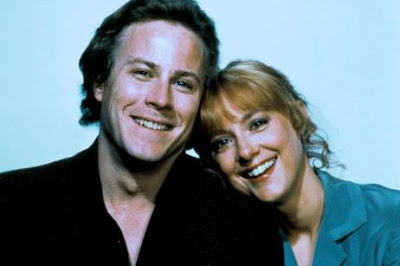
John Heard and Mary Beth Hurt from Chilly Scenes of Winter
A major studio, United Artists, did attach itself to her third project, Chilly Scenes of Winter, a 1979 film that steers clear of cliches in charting the ups and downs of a romantic relationship (the lovers are brilliantly played by John Heard and Mary Beth Hurt). Micklin Silver’s association with UA turned sour when, after completing the picture, the studio ordered a new ending (to a less ambiguous one) and a changed title (to the frivolous Head Over Heels) against her wishes. Apparently, execs deemed her achingly honest, funny and painful modern romance too offbeat despite the fact UA fully embraced Woody Allen’s “relationship” comedies Annie Hall and Manhattanand took a hands-off policy concerning them. Her critically praised film was a box office bust, but she ultimately prevailed when she got the UA Classics division to release her director’s cut in 1982.
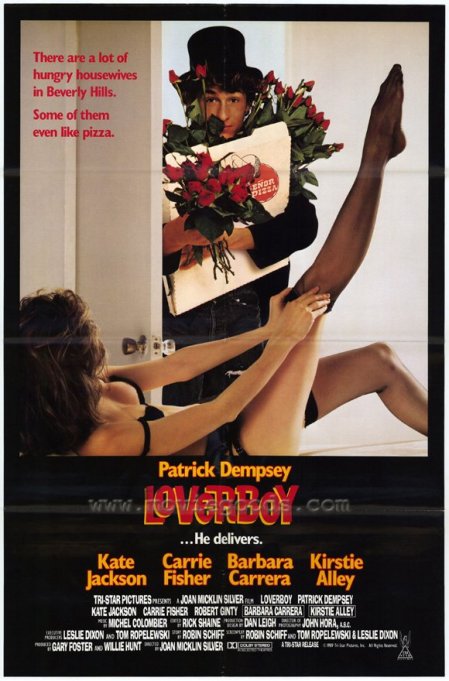
A decade removed from the UA debacle, she finally danced with the studios again when her Crossing Delancey (adapted from the Susan Sandler play) was picked-up by Warner Bros. and when she was brought in as a hired-gun to direct two screwball comedies, Loverboy (a 1989 Tri-Star release) and Big Girls Don’t Cry (a 1991 New Line release), which she did not originate. While she enjoyed doing the latter two projects, she far prefers generating her own material.
“In the end it’s more satisfying to me to be able to make films that I just feel more personally,” she said.
Her most recent work, Invisible Child, is a new original Lifetime movie drama starring Rita Wilson.
Along the way, there have been many unrealized projects. Not one to dwell much on what-might-have-beens, she feels an even playing field might have meant more chances but considers her career a validation of women’s gains, noting, “Well, you know, one always feels one could have done more. But I’ve managed to make films for many years now in a field that was extremely unfriendly to women and to make the films I wanted.” She is quick to add, however, filmmaking is a tough field “for everyone. It’s extraordinarily competitive. There are many, many, many more people who want to be in film than there are jobs.”
Besides her gender, she feels her own idiosyncratic vision has limited her options. “I think that my own bent has always been that I want to make certain kinds of films, and they aren’t necessarily the films that are seen as Hollywood-type films.” Long attracted to exploring the complex give-and-take of intimate male-female relationships, she has created a string of serio-comic pictures that compare favorably with the work of the best romantic comedy directors in history. The romantic partners in her films are far from perfectly happy and, indeed, often flounder in search of equilibrium if not bliss, as in her 1998 feature, A Fish in the Bathtub, starring Jerry Stiller and Anne Meara as a Queens couple, Sam and Molly, whose 40-year marriage finally goes on the fritz.
“It (A Fish) falls into a special category of film I like very much — human comedy,” Micklin Silver said. “It’s real, wrenching and strikes a chord.”
Unafraid to tackle the silly, messy, chaotic side of relationships, she probes issues like obsession, desire, infidelity, possessiveness, loneliness, rejection, regret. Like the smart repartee associated with Lubitsch, Wilder, Cukor or Hawks, she delights in verbal sparring matches that deflate gender myths and romantic idylls.
In Chilly Scenes the single Charles (Heard) is lovesick over the unhappily married Laura (Hurt), whom he can’t forget despite her breaking off their affair. While still attracted to Charles she feels guilty at having cheated as well as smothered by his aggressive wooing of her. She tells him, “You have this exalted view of me, and I hate it. I can’t live up to this thing you have about me.” He pleads, “Why would you choose someone who loves you too little over someone who loves you too much?” She replies, “Because it makes me feel less of a fraud.” Exasperated, he can only think to say what he feels, “Oh, I’m going to rape you.”
Micklin Silver’s men and women are equally strong-willed and neurotic. Despite their flaws, the men remain sympathetic figures for risking love in the first place and for staying true to themselves in the process. That is never more evident than in Crossing Delancey, where Sam (Peter Riegert), the pickle man, patiently waits for the upwardly mobile Izzy (Amy Irving) to come down off her high horse and finally see him for the decent if unflamboyant guy he really is. The story is also very much about the uneasy melding of old and new Jewish culture and the conflicting agendas of today’s sexual politics. Izzy is the career-minded modern woman. Sam is the tradition-mired male. Each pines for affection and attachment, but are unsure how to get it. In the end, a matchmaker and bubby bring them together.

Peter Riegert and Amy Irving in Crossing Delancey
About the male-female dynamic in her work, Micklin-Silver said, “That is something I’m quite interested in. Why? I have no idea, other than a life lived, I guess. In my own life experience I had a really wonderful father who was interested in me and paid attention to me and to my ideas, and all the rest of it. And God knows I have a wonderful, supportive husband whom I’ve had three great daughters with. I haven’t had the experience of abuse by men, so basically what I’ve done is more observe the differences (in the sexes) than the struggles.”
She and husband Ray (a producer and director in his own right) continue to partner on some projects and to pursue others separately. Their Silverfilm Production company is housed in offices on Park Avenue.
Although she rarely gets back to her home state anymore, she did come to accept the Mary Riepma Ross Award at the 1993 Great Plains Film Festival in Lincoln. On that visit, she drove across the state and was reminded just how “beautiful” the endless horizons of far western Nebraska are. “I Iove western Nebraska. It’s just so beautiful. I love a landscape that’s long and flat, and where there’s so little in the middle distance that your eye goes on and on.”
A landscape reminiscent of that is the backdrop for a project she’s developing called White Harvest, which is set on a sugarbeet farm in far northeastern Colorado. Based on a book called Second Hoeing, it is a period piece about a young girl wanting to escape her tyrannical immigrant father. “It has a great feeling for the place. It’s also a wonderful love story,” Micklin Silver said.
If the project ever flies, it would realize a long-held desire to capture the Midwest on film. “I’ve always wanted to shoot something in Nebraska. It still hasn’t happened but I want so much to come back to that world.” There’s also a film noir script she’s been honing and still hopes to make. Next spring she is slated to direct a film adaptation of the Paul Osborn play, Mornings at Seven, for Showtime.
Ideas are what feed her work and her passion. “I’m never without something I want to do. It’s your life. What you’re doing…what you’re thinking,” she said.
Meanwhile, she’s excited by the prospect of a more dynamic cinema emerging from the rich new talent pool of women and minority filmmakers.
“Yeah, it’s going to be a much richer stew, and something all of us can enjoy.”
Related Articles
- Paramount Projects Revealed: Kathryn Bigelow to Direct Will Smith?, Movement on Jason Reitman’s ‘Young Adult’, and More (slashfilm.com)
- All eyes on the prize (variety.com)
- John Farr: A Woman’s Touch: Ten Great Films From Female Directors (huffingtonpost.com)
- Actor Peter Riegert Makes Fine Feature Directorial Debut with ‘King of the Corner’ (leoadambiga.wordpress.com)
- Why I love Joan Micklin Silver (bookpod.wordpress.com)
- Yolonda Ross Takes It to the Limit (leoadambiga.wordpress.com)
Kitty Williams finally tells her Holocaust survivor tale
I have been profiling Holocaust survivors for two decades. A survivor in the Omaha metro area who put me off for several years finally agreed to tell me her story last year so that I could share it with the general public. Her name is Kitty Williams and she lives across the Missouri River from Omaha in Council Bluffs, Iowa. I am glad I persisted in getting her story but moreover I’m glad she gifted the world with it. The article appeared in Omaha publication, The Jewish Press.

Image via WikipediaI
This story won a 2009 Nebraska Press Association award in the feature story category. It’s one of a half-dozen or so Holocaust pieces I’ve written to have been so recognized. Using the honor as a hook, The Jewish Press interviewed me for a profile about my life and work as a writer.
My article about Kitty was reprinted in the 2014 book, The Holocaust (Genocide and Persecution) – http://www.amazon.com/The-Holocaust-Genocide-Persecution-Jeff/dp/0737768975 – as part of a series from Greenhaven Press.
Kitty Williams finally tells her Holocaust survivor tale
©by Leo Adam Biga
Originally published in the 2009 Jewish New Year’s edition of the Jewish Press, a publication of the Jewish Federation of Omaha (Neb.)
For the longest time, Holocaust survivor Kitty Williams of Council Bluffs didn’t think her story warranted telling. She considered her suffering insignificant amid the weight of Nazi atrocities. Other tragedies far surpassed her own. Nobody could find hers interesting or edifying. It’d all been said before.
She’s keenly aware that despite the cruelties her Hungarian-Jewish family endured, others endured more, such as a camp mate who lost nearly all her 50-some aunts, uncles, cousins, nephews, nieces. Kitty can still hardly believe she and two sisters survived Auschwitz-Birkenau. Another sister escaped certain demise on the Budapest Death March. Two brothers made it out of forced labor camps.
“Miraculously, six of us lived. We’re an exception. We were very fortunate that as many lived as did,” said the former Katalin Ehrenfeld.
She was made reticent, too, by Holocaust depictions of incalculable losses. To Kitty, 85, her own losses seemed almost trivial by comparison. But how can losing an adored father be minimized? He was her whole world.
Then there was the survivor guilt Kitty felt. Why was I spared? Why should I be singled out for attention? “I had it relatively easy, and that’s why I feel guilty telling you my story,” she told a reporter. This despite imprisonment in ghettos, at Auschwitz-Birkenau and in a forced labor camp. Her father and a brother killed, their home desecrated, her innocence violated. All sacrificed to the machinations of the Final Solution. She’d already lost her mother and a sister to typhus at age 7.

Kitty Williams prays at her mother’s grave
The permutations of her story, when taken together, make it singular: hiding and “passing” to escape capture; accepting Christian neighbors’ kindnesses; falling for a wounded German airman; finding and nursing her sister Magda at Auschwitz-Birkenau; being chosen for a life-saving detail of women laborers at a German munitions factory. After liberation Kitty married an American airman and came to live with him in Council Bluffs. At his request she concealed her heritage. She then experienced her own private holocaust of a failed marriage and a son’s suicide.
Her reluctance persists despite reminders that every survivor’s tale is a vital link to the body of eyewitness testimony that forms the historical record. Only those who actually lived the Shoah can bring history to life and give lie to the deniers. The larger story is not complete unless the smaller individual stories are documented.
As the number of survivors fast dwindles here and around the world, the need to preserve every untold story becomes more urgent. Kitty recognizes that, which is why she first testified for the Survivors of the Shoah Visual History Project. Omahan Ben Nachman interviewed her and her words are now part of the project’s massive archives. But perhaps no one outside her family will ever see that video.
Last May the Omaha World-Herald sketched the bare bones of her story after she met an American liberator at the Heartland Honor Flight reunion. Now, the Jewish Press presents Kitty’s odyssey in its entirety. She may still feel an unworthy subject, but perhaps her story’s publication will validate her travails.
“That’s when we became very scared”
Born in 1924, Kitty grew up in the Eastern Hungarian town of Sarand, near the Rumanian border. She was the second youngest of eight siblings. Their father, Mor Ehrenfeld, was a World War I combat veteran who incurred wounds fighting in the Austro-Hungarian army. However, losing the mother of his children, his beloved wife Anna, cut deeper than any shrapnel.
“It changed everything,” recalled Kitty. “It’s almost like there was a life before my mother that was beautiful and there was a life after my mother died that was sad. Of course, my father took it very hard and really I don’t think he ever recovered from the loss. He did not want to bring a step-mother into our lives. I remember he got us together and said, ‘We’ll make it, somehow we’ll make it.’”Kitty said, “I think most of all of the love that radiated between us is how we made it.”
Her sister Magda, 12 years her senior, became Kitty’s surrogate mother.
The family were the only Jews in the vicinity, except for the Leitners, whom they were not close to prior to the Holocaust, Circumstances would thrust the families together on a harrowing journey. Before the madness, Kitty recalls an idyllic life.
“I have beautiful memories mostly because of my large family. Most of my siblings were very musical and played instruments — that was our entertainment, sitting on the porch, my brothers playing these heartbreaking love songs on the violin. They’re still etched in my memory. We were so close as family, and since socially we really weren’t accepted in town, it was a wonderful feeling.
“We always had a lot of books in our house. We had probably the first radio — a crystal set. We got a newspaper from Budapest every day, although a day old.”
Her father’s 3rd grade education belied wisdom. He ran a general store in town, he dealt in grain, he owned a vineyard. Harvest time marked a communal peasant celebration. “Half the town would come and pick the grapes,” said Kitty. “It was kind of like 4th of July here. It was a get together for a lot of people.”
Kitty said her father was admired for his advanced ag techniques and many skills.
“The school board approached him every year with different parcels of land for him to look at and he would farm these on shares…because he was always able to figure out what was needed, to build it up. The town didn’t have a lawyer and so anytime anybody needed an official paper translated or written they would come to my dad. Besides, he had the most beautiful handwriting. For any advice there would be a knock on the window or on the door of somebody wanting, you know, ‘My child is sick, can I have something from the store?.’”
She said she’s read Who’s Who in Hungary listings praising him as a patriot, citing his WWI service. His community standing helped insulate the family from punitive, restrictive Jewish laws. Even when new, harsher anti-Jewish decrees began being instituted in 1939, she said, “he was always exempted from the Jewish laws until the very end.” Nothing could save the family once German forces occupied Hungary, a noncombatant but complicit ally of the Nazi regime and its master race ideology. Up until then, Hungarian Jews and gypsies largely avoided the mass internments and killings. But as these ethnic minorities discovered to their horror many of Hungary’s Christian leaders and citizens willingly participated in genocide.
The Ehrenfelds and their Jewish brothers and sisters had been duped into a false sense of security. “For us to be able to live amongst Gentiles peacefully it was like paradise,” said Kitty, “but in looking back in our history there were pogroms, we were persecuted.” She could not imagine what lay ahead. There were signs but few could read them. Where once her family “took part in a lot of the town’s activities,” they became isolated, ostracized. The Anti-Semitic enmity could be construed as a dangerous new pogrom or as just the latest wave of Jew bashing.
“The Hungarian radio broadcasts were very biased and so it was always full of good news of German victories. The movie house newsreels only showed all the battles they won,” said Kitty. “Of course they never missed an opportunity for Jew hating. You know, ‘If it wasn’t for the Jews everything would be fine.’ Everything was always the fault of the Jews.”
Even when the family encountered refugees fleeing neighboring countries they didn’t interpret it as a warning their own safety was in jeopardy.
“I remember young Polish and probably Czechoslovakian men knocking on our door saying they were trying to escape, trying to get to Israel, going through Hungary, and of course we always fed them and gave them some supplies. When they were telling us about the atrocities I don’t think we really believed them. The human mind cannot imagine this can happen. It’s an exaggeration, it can’t be true, it just can’t be. Of course, we never heard about the gas chambers. We heard about the shooting and the looting and that kind of stuff, but not the systematic killing of the Jews. We were completely unaware of it. We were so naive.”
By ‘39, the circle of Kitty’s life narrowed. She was 15 and her family was dispersed, her older siblings married and moved away. It was just Kitty and her father. Back home in Sarand and in the nearby city of Debrecen, where Kitty attended high school and her sister Magda lived, things were getting more difficult.
“I was a young girl but I couldn’t get out except maybe for a couple hours a day. You couldn’t travel, you were forbidden to do anything.”
Wearing the Star of David in public became compulsory. Once, when a Gentile girl asked her to go to the movies, Kitty, anxious to leave the house and be a normal teenager again, agreed. “It was like a dream to get out of my almost virtual prison.” The dream turned nightmare. The movie was a virulent German propaganda film, Walking home from the theater in the chill of the afternoon Kitty put on a coat, covering her Yellow Star. Someone must have reported her, as the next day the police came to her home and arrested her. She was taken away and jailed in another town despite the protests and pleadings of her and father.
“I just begged and begged, ‘I have to be with my dad, please let me out,’ but they had no mercy. They kept me in there.”
She got out only after a Gentile woman who once worked for the family walked the 8 kilometers to obtain her release. Kitty suspects her father gave the woman money to bribe officials. Kitty will never know though as the incident “was never discussed.” Kitty’s father had been allowed to keep his store but eventually he was forced to close it. Then, on March 19, 1944, the German Army occupied Hungary.
“I remember I was visiting my sister Magda in Debrecen. She was married and pregnant. I was walking on the street and I saw German troops marching all over. They’d just landed or drove into Hungary. It happened all in one day. They just descended on us. They were everywhere. That’s when we became very scared.”

“Even to go to our death it was torture”
Before long her brothers were nabbed and sent to forced labor camps. Her sister Elizabeth, who lived in the capital city Budapest, was taken prisoner the very day the Germans stormed into Hungary. She ended up in Auschwitz with Kitty and Magda. Another sister, Klari, was forced from her home in Budapest to march with thousands of others. Their supposed destination — Vienna. But standing orders said no Jews were to make it there alive. Stragglers or resistors were shot on the spot. Klari was a comely young woman who, with a girlfriend, drew the attention of a Hungarian guard. He confided they would not survive the march and offered to hide them at his family’s home in Budapest. Klari accepted the offer and lived. Her girlfriend refused and died. Klari ended up a virtual slave but she made it through.
It was awhile before the Germans reached Kitty’s town. She can never forget the mob that came for her in the middle of the night. Rape and murder on their minds.
“The first night we heard…let me put it this way, we had our Kristallnacht. It was a mixture of German and Hungarian hoodlums. They broke every window in the house. My dad got up. The Germans demanded I come out. They wanted me. I was a young girl of not even 19. Fortunately my dad spoke German. He said, ‘I’m so sorry, she’s not here.’ The Hungarians were more demanding.”
Somehow he convinced the thugs she wasn’t there. They left uttering epithets. “I remember spending the night under the bed shaking,” said Kitty, “and from then on I never slept at home.” For a time she hid in the apartment of a Christian family in Debrecen. But the stress of avoiding detection became too much and the family put her out. Kitty wanted to be home anyway. “I didn’t really like this hiding. I wanted to go and be with my dad, to take care of him.” Her law-abiding father also wanted her home. He arranged for her to travel in the wagon of a farmer going to market. Posing as a Gentile, head wrapped in a babushka, she passed.
Back in Sarand, the Ehrenfeld’s Christian neighbor, widower Mihaly Toath, offered to put Kitty up. He didn’t have children of his own and he felt protective of Kitty, his friend Mor’s last child at home. And so for a month she whiled away the daylight hours at home before secreting away to the old man’s tiny place at night. He slept in the one bed and she slept under it, his chickens clucking and pecking all about. She called him “uncle.” The ruse could only buy Kitty and her father so much time.
Kitty’s home was confiscated, the guest bedroom taken over by a wounded German pilot. He stayed two weeks. “We had to take care of him. My father changed his dressing — he had a leg injury — and I fed him.” One thing led to another. “He was a young man and I was a young girl. He wanted to meet me after the war. I remember he gave me a note with his town’s name — Dusseldorf — and his address. He gave us so much encouragement. He kept saying, ‘Don’t worry, it’s going to end, we are losing the war. Everything will be wonderful for you.’ And, of course, that is not how it happened, but it was a nice fantasy — until he was sent home.”
Even after the ghettos, right up through arriving at Auschwitz, she clung to hope they might meet again. “I remember I had this little note I was holding that I finally dropped just before they shaved us and everything, because it was sort of like my security blanket.” Any sense of security she still had was shattered.
In April the roundup of Jews began. Kitty’s large home was designated a ghetto. Mr. and Mrs Leitner and daughter Ica were taken there. The girls became friends. A doctor’s widow, Mrs. Kovacs, was brought there, too. Only part Jewish, she’d lived as a Christian. “She came with all her furs and jewelry and she kept saying, ‘I believe in Jesus Christ, how can this happen to me?’ But, you know, it didn’t matter,” said Kitty. “If they knew you had even an ounce of Jewish blood…”
As insurance, Kitty’s father had a shoemaker fashion false soles in his shoe. Mor stashed some 5,000 pengos in each cavity. A fortune then. “Maybe that’s all he had, I don’t know,” said Kitty. “At any rate I remember my dad saying to me, ‘You know, maybe it will buy you a loaf of bread some day.’”
After two weeks all the occupants were taken to a ghetto in another town, where they joined more Jews. Then in June everyone was trudged off to Nagyvarad, whose factory-works complex of barns with dirt floors became a makeshift camp for some 2,000 prisoners. Men, women, children. Sick and healthy. Rich and poor. That many people crammed into a space not made for human habitation made for “horrible conditions.” She said, “It was a huge place. All the Jews taken from the surrounding towns and small ghettos were concentrated in this one facility. They let us take some food, clothing, supplies along. The food didn’t last very long. We were already starting to be hungry.”
Kitty and Ica were ordered into evacuated outlying ghettos, with an armed guard escort, to forage for food left behind. “That’s how we supplied the camp,” said Kitty. “We went from house to house and picked up food left here and there. The sight of it, it still chills me, because I would see children’s things, a shoe here, a shoe there, toys, furniture, clothes. It looked like they must have been taken in the middle of the night and that they weren’t prepared for it.” She couldn’t shake the scene of quiet lives so violently interrupted.
Weeks passed. Rumors of death camps and gas chambers spread. As did counter rumors the Germans needed the Jews for war labor. Kitty, her father and most others chose to believe their lives were too precious to be snuffed out. They were even hoping the railroad tracks that ran nearby would soon bring a train to transport them to a labor camp. Anything would be better than this, they thought. “You can’t imagine the brutality from the Hungarians,” said Kitty.
It was “a relief” when a train did come for them in August. Relief gave way to dread as they were herded onto the cattle cars in the summer heat. “The horror of that I can’t even…” she said, her voice breaking. “It’s very hard for anybody in the free world to imagine what they did to us. Anything you’ve seen or read, it was much worse. They put us in there on top of each other with no water and a bucket for a toilet. We could never lie down. You couldn’t see out. Total darkness. Just one little hole. And by this time we hardly had any food.”
No one knew the destination. The journey was interminable, impossible, awful. “It seemed to me like it was at least five days,” said Kitty. “I do know you can get there overnight by train.” She refers to Auschwitz-Birkenau, the death camp they were en route to. It’s a trip she’s remade twice in the ensuing years. Getting there that first time was like a slow, agonizing death. “We stopped and slowed down, again and again. It was like torture on purpose, even to go to our death it was torture.”

“It was death and smoke and smell.”
It all had the intended dehumanizing effect. “I know at first there was some modesty left in us,” said Kitty. “We hung up a sheet or something when somebody had to relieve themselves. But after awhile nobody even cared. What surprised me is we didn’t go mad, we were still functioning. I mean, I know there were people dead around me because I know we left bodies in there when we finally got out. But it’s like I didn’t want to even believe it’s happening. It didn’t register.”
At a stop German soldiers replaced the Hungarian guards. An officer announced anyone carrying valuables must surrender them or be subject to execution. Kitty and her father exchanged glances and whispers. What to do? They decided they couldn’t chance it. She said as their drama played out others in the car wrestled with the same dilemma. The deliberations grew animated. Some decried their fellow Jews as hoarders, lashing out, “See, that’s why we’re in the state we’re in — you don’t obey the law.’ Others commented, “You were smart to do it.”
Mor used a tool to wedge his soles off, handing over the money to a pair of young soldiers. “At the next stop,” said Kitty, “the same two soldiers came with buckets of water and big baskets of French bread and they flung the bread into the car, and only our car. Loaf after loaf. Everybody was reaching for it. I know everybody got at least two loaves. My dad was treated like a hero.” The lost fortune “did buy us a loaf of bread,” after all, she said.
The further the train went the more unfamiliar the surroundings appeared. But Mor knew the territory. He recognized they’d crossed into Poland. Then they were there — Auschwitz-Birkenau. “At least we weren’t hungry when we got there,” said Kitty. She would know real hunger and deprivation soon enough.
Kitty, her sisters, her father, the Leitners, the rich widow — they were part of the flood of refugees the Nazis evacuated from Hungary in ‘44, the last major contingent of Jews targeted for death. The war was being lost and what Kitty calls “the killing machine” had to be fed before the advancing Allies arrived.
“We arrived early morning, the sun was just coming up. Nobody spoke to you, everybody yelled, they always yelled. ‘Get out, get out! Leave your luggage, you’ll get it later! Stand in line!’ In the distance I saw this beautiful, tall German officer all in white with several dogs and soldiers around. He was sitting and looking at us, pointing — right, left. I found out later it was Dr. (Josef) Mengele.” The selection separated Kitty from her father. “I went to the right with my friend and her parents and my dad went to the left.” Kitty asked men in striped garb where the others were being taken. The cryptic reply: “You’ll see.” She learned “the striped ones were inmates who had the job of getting us organized. Everything was so organized. The method was so perfect. There were typists, barbers.” Lines and names and counts. Chilling efficiency. Always, guns, whips, clubs at the ready.

Before her father was led away, she recalls embracing him, “looking over and saying something like, ‘See you later.’ Well, later never came. That was the last sight of him I ever had.” She learned he was killed that same day. Her sister Elizabeth, who arrived before, was on a work detail sifting through clothes of those killed in the gas chambers. “It was,” said Kitty, “a plum job. You would give your right arm for it because you were able to go through pockets and find food.” A friend was rifling through a man’s overcoat when she found a wedding picture she recognized as Elizabeth’s. The overcoat belonged to Mor. He’d carried the photo with him. “That’s how Elizabeth knew our father was dead. I have the picture.”
The dead at least were free of degradation. The living had to endure more misery. In Kitty’s experience, the worst brutality was meted out not by Germans but arm-banded kapos, prisoners working for the Nazis.
“They were so hardened by then. They’d been in concentration camps for years and seen so much that they weren’t even like human beings anymore. Whatever beatings I had in the camp were always from a kapo.”
A gray pall hung over this killing zone. “I don’t think a blade of grass ever grew and I don’t think a bird ever flew in Auschwitz. It was the most devastating place. It was death and smoke and smell. When it rained, it was mud. It was unbelievable.
“A reason to live”
Kitty said she was still “in denial” even with the crematoriums going full blast, the flames licking the sky, the stench of human flesh permeating the air. “I didn’t want to face it. I could not believe it.” The kapos didn’t mince words when asked, “When will we see our parents?’ The cold answer: “They’re up in the smoke.”
Stripped, shaved, showered, disinfected, the inmates got mismatched rags as clothes, a metal pan as a pillow. The newly built barrack or lager she and Ica were assigned was within a half-block of a crematorium. The barrack was a windowless barn with a dirt floor. No partitions. Approaching it, she said, “we saw these shaven heads atop walking skeletons. They were inquiring where we were from and did we know so-and-so.” She passed another lager whose inmates “were even in worse shape. They were dark-skinned and there were entire families together.” The identities of these exotics puzzled Kitty until learning they were gypsies.
“The first night was my introduction to seeing somebody dying. Somebody next to me had a diabetic reaction and died.”
Death became numbingly routine. With no bunks, people were “half way on top of each other — a thousand of us in this one huge barrack. We were there a few days and new transports were coming from Hungary almost daily. The Germans were in a rush to kill us. They couldn’t do it fast enough.”
“August 2nd, 1944 we woke-up to this horrible noise, people begging for help. We went outside and saw smoke and flames from the crematorium chimney near us. Next to the crematorium was a ditch and from that direction there were screams and flames going up, the smell of human flesh burning. And that screaming, sometimes I wake up and it comes back to me. It just pierces to your soul.”
When Kitty learned her sister Magda was in camp she managed finding her in another barrack. Magda had been expecting while in the Debrecen ghetto and so Kitty anticipated meeting the newborn, but there was no baby. It died in the ghetto. Unburied. Magda was desolate and weak. Kitty became her caregiver. “I fought for her to get even a drip of water, anything, because she really didn’t have the strength. I moved over to her barrack. They kept track of us but not to the point where it made any difference because people were dying constantly.” Kitty begged Ica to come with her but declined. One day Kitty went to her old barrack to check on Ica and it was empty. The Germans had liquidated it.
Getting Magda back to a semblance of health gave Kitty “a reason to live. We were together.” In mid August the sisters were fortunate to be selected for forced labor. Before boarding the train the Germans made a second cut, eliminating the sick. When a guard noticed Magda’s lactating breasts she was pulled from the line.
“I was just devastated,” said Kitty. “I was sure she would never make it. Neither of us could run back to the other without getting shot. She ended up with a lot worse fate than I did, but she did make it. She died a year ago at 96.”
“We were just happy to get out”
A book written by a camp mate of Kitty’s reveals that male workers had been requested. Either due to lack of able-bodied men or a mix-up, said Kitty, “us girls” ended up in Allendorf, Germany. 1,000 of them. “We were just happy to get out,” she said. By war’s end, virtually all the women survived. Everything about Allendorf was an improvement over Auschwitz. Training in, the cattle cars were far less crowded. Kitty recalls her surprise looking out and seeing ordinary people going about their daily lives. “Life goes on on the outside? Not everybody is like us?”
The women’s quarters were in the woods, the barracks built for free workers and “so it was not unbearable,” said Kitty. The munitions factory was an hour’s walk. “The work was heavy, it wasn’t designed for females. My work was to chisel powder out of dud (undetonated) bombs, shells, grenades. Other people were filling them and putting them on the conveyor belt. The Germans were so desperate for war materials they were remixing, reusing explosives. It was a tremendous operation.”
The workers handled toxic chemicals without protection — no gloves, no masks. The poison made people sick. Hair turned purple. Skin assumed a yellow cast. Shifts lasted 12 hours. The factory operated around the clock. The workers were issued wooden shoes and coming back and forth from the factory to camp the women clopped, clopped on the town’s cobblestone streets.
Supervising were mostly civilian German overseers. Kitty described them as “more neutral” and “not really brutal.” The few guards were mostly women and, she said, they “were particularly cruel. They punished us for just petty things.” One German woman, however, did befriend Kitty and even though they couldn’t speak each other’s language a weakened Kitty was allowed respites from work at a forest hideaway. The German gave her extra food Kitty then shared with camp mates.
The prisoners heard snatches of news about the war’s progress: the Allies landing, the war going badly for Germany. “But we didn’t believe it,” said Kitty. By March ‘45 food was scarce for everyone. In late March the commandant gathered the camp’s entire contingent in a courtyard to announce he and his staff were leaving. The Americans were approaching. The war was over. “He told us, ‘You’re free to go, you’re on your own. Good luck,’” Kitty said. It was a shock. Some survivors followed the commander and his staff. Most hit the road in groups. Kitty was among a group of 20 women who’d shared a room and become like sisters.
“We decided to stick together. We went one direction. We had no idea really. We ate anything we could find — grass, vegetables in the fields, eggs in hen houses. We feared knocking on the doors of German houses. We were afraid of the reception we would get. Once in a while some of us, probably not me, was brave enough to knock. There was hostility from some, generosity from others.”
One day on the road someone in Kitty’s group spied a convoy of U.S. tanks. She took off her white slip, tied it to tree branch and flagged them down. It was April 1, 1945. Mor’s birthday. The G.I.s became the survivors’ liberators. “They showered us with candy and gum. I’d never had chewing gum. The Americans were almost childlike, so good, so unspoiled. They were like angels that dropped down from heaven,” Kitty recalled. She and the others were trucked to the nearest village, whose burgomeister was pressed into putting them up, the villagers ordered to wait on them hand and foot. G.I.s stood guard to prevent reprisals. After a few days the Army decided it wasn’t safe and relocated the women to Fritzlar, a former Luftwaffe air base. The women were offered housing, food, jobs, protection. They readily accepted. For two years Kitty lived and worked there, first as a mess hall waitress, then, having quickly picked up English, as a PBX operator. Affairs and romances between G.I.s and native girls were common. Kitty was not immune.
“My holocaust here”
In the post-war limbo of piecing together broken lives, everybody was searching for loved ones in displaced persons camps. Communication and transportation were slow in a region reduced to rubble. Kitty had no desire to return to her hometown. Too painful. An old beau from Hungary who “never stopped looking” found Kitty. “He wanted me,” she said. Once reunited, the engaged couple set marriage plans. She even had a wedding dress made from sheets. But then she called it off. She’d met a WASP American flyer with whom she wanted to make a fresh start in the U.S. “I didn’t want to go back to the past. It was a mistake. I paid a really terrible price to come here. But that was my decision at the time.”
After an epic struggle to send for her, over the Army’s strenuous objections, she met him in New York and they caught a train for Iowa. “On the train he asked me not to ever mention I’m Jewish, not to talk about Auschwitz. He said, ‘My family would not accept you — no reason for you to repeat that. I want you to be treated like everybody else.’ And, you know, he made sense. But it’s very difficult to deny your heritage. For years, because of his family, nobody knew. I can’t say it was all his fault. It was two different worlds. We were worlds apart.”
His drinking further drove a wedge between them. They had three children together. After 12 years they separated. Kitty became a single working mom. She was a bank teller and later trained tellers. Her first-born, Mike, earned a college scholarship, but never used it. Nobody knew it but he was troubled. At 19 he committed suicide. “It was the ‘60s. No father, me working long hours. We were abandoned. I blame myself,” she said. “I expected him (Mike) to be the head of the household and concentrated on the other two kids and didn’t realize he was slipping away. That was my Holocaust here. That had a lot to do with the divorce.”
But life went on. Kitty’s surviving children, Mark and Pamela, earned scholarships to Yale and Grinnell, respectively. Kitty rose to vice president. She finally spoke about her Jewish heritage and survivor past. She met a good man in Bill, her husband of 32 years now. He’s embraced her past. “I’ve had a lot of bad things happen but the good outweighs the bad. Bill’s the best thing that ever happened to me.”
“I am so fortunate in so many ways. Now I’m sort of out of the closet.”
In 1990 Kitty was invited back to Allendorf for a reunion with her fellow camp mates. All expenses paid. She’d sworn never to step foot again in Germany. But this was something she hadn’t counted on — a reunion and reconciliation. She went with family. All told, 333 of the 1,000 women came. She renewed old friendships and made new ones. The Germans’ “kindness and sympathy and regret” struck her. “They rolled out the red carpet. It was like magical. They even had a kosher table and brought in rabbis from Frankfurt. They couldn’t do enough for us. It changed my outlook.” She also visited Auschwitz-Birkenau. She remade the trip in 2000. She returned again this summer with a grand-niece and granddaughter.
She treasures these visits. She’s glad she’s shared her story. The past still haunts her though. “My most vivid memory of Auschwitz is seeing the carts carrying the dead bodies. Whenever I can’t sleep it comes back to me — this image of people in striped uniforms pulling this wagon and throwing the bodies on it. The pile got so high the limbs were hanging out, and nobody knew who they were. We just went on existing. You get used to it, you’re callous, you just think about your own survival. Sometimes I feel like, Was there a life before Auschwitz?”
There was. More importantly, there’s been a life after. A reminder of change is a new museum dedicated to the 1,000 in Stadtallendorf, Germany. All their names inscribed there, Kitty’s included. “It’s a memory forever,” she said. “It’s pretty remarkable.” She especially likes that school kids tour the site. “That’s what’s most outstanding.”
Through it all, Kitty’s never lost her humanity. “I love people — the interaction.” Visit her and this doting Jewish mother will humble you with her warmth and hospitality. She’s amazed by the new life she made for herself in America after everything she knew was gone. Times got tough, sure, but help was always there. “I am so fortunate in so many ways.” She’s even glad her survivor identity is known. “Now I’m sort of out of the closet.”
Related Articles
- Kate Simon: This mute witness to genocide must not be allowed to crumble (independent.co.uk)
- I was 17 and surviving in the wild, but I’d fled humanity at its worst (thejc.com)
- FYI – Holocaust survivors to receive $ 564 million in reparations. (jwitness.wordpress.com)
- Leo Adam Biga’s Survivor-Rescuer Stories Featured on Institute for Holocaust Education Website (leoadambiga.wordpress.com)
- Sisters of the Shoah: Three Survivor Tales, Three Golden Fates, Three Iron Wills (leoadambiga.wordpress.com)
The Artful Dodger: Lou Leviticus survived the Holocaust as an escape artist
The story more or less appeared as it is here in The Reader almost a decade ago. It was later reprinted in The Jewish Press. I have always hoped to share the story with a wider audience.
NOTE: Leviticus has subsequently told his own story in a book he wrote.
|

The Artful Dodger: Lou Leviticus survived the Holocaust as an escape artist
©by Leo Adam Biga
Originally published in The Reader (www.thereader.com) and then reprinted in The Jewish Press
“I’ve been an escape artist all my life.”
The apt words belong to Lincoln, Neb. resident Lou Leviticus, a square-headed terrier of a man who as a youth in his native Holland survived the Holocaust partly due to his talents as an artful dodger. He escaped the Nazis more than once, even when those closest to him were caught and put to death. As an orphan on the run he became one of scores of hidden children in The Netherlands, his survival dependent on a cadre of strangers that cared for him as one of their own.
Today, when telling his saga to young Hebrew students at Temple Israel Synagogue in Omaha, the spoken truth sounds less like glib bravado than it does a solemn proverb. And, like an answered prayer, members of the Dutch underground rescued him. Families working with the underground risked their very lives taking him into their home and shielding him from danger. He regards those that helped him, especially Karel and Rita Brouwer, as his “heroes” and “protectors.”
During his time in hiding Leviticus endured and did some unspeakable things. An archly unsentimental sort, he sheds no tears over what happened. Despite it all, he emerged a life-affirming dynamo. The retired University of Nebraska-Lincoln agricultural engineering professor first came to America in the mid-1950s (by way of Israel, where he resided after the war) to obtain his Ph.D. He married, raised a family, got divorced. He wed his present wife, Rose, a native of Great Britain, in 1982. He became a U.S. citizen four years ago. While at UNL he also headed the Nebraska Power Lab and Tractor Testing Laboratory. Today, he is an agricultural engineering consultant.
Until quite recently he kept his story to himself. That changed when the Survivors of the Shoah Visual History Foundation requested he tell it for the sake of posterity. The Los Angeles-based Foundation, which filmmaker Steven Spielberg formed after completing Schindler’s List, is dedicated to recording and preserving the largest repository of Holocaust survivor stories in the world. Since 1996 the organization has been conducting videotaped interviews with survivors from every corner of the globe. To date, some 50,000 interviews have been cataloged for use by scholars and for dissemination in schools and libraries.
In 1996 Leviticus shared his story with Omahan Ben Nachman, a Holocaust researcher and Shoah-trained interviewer who’s collected dozens of testimonies. Since then, Leviticus has written his memoirs and related his tale to youths at schools and synagogues. Why, after all this time, is he bearing witness now?
“The only reason I do it,” Leviticus said, “is to maybe make somebody think about it and realize how fortunate they are. That they should not take their lives so easily for granted. That they have a little more gratitude for what they have…because what happened then can happen again. It is happening again. Look at Chechnya. Look at Kosovo. Look at the skinheads in this country. There is hatred. People are cruel. And I do now feel it as an obligation, not necessarily to this generation, but to my school buddies, my parents, my grandmother, and to all those people. If I don’t tell their story, what else is left of them except their names in a register?”
  |
|
| Lou Leviticus, professor emeritus and volunteer curator at the Larsen Tractor Museum on East Campus, holds a copy of his recently published memoirs detailing his childhood in the German-occupied Netherlands. His parents were killed at Auschwitz in 1942. Photo by Brett Hampton. |
Because ethnic cleansing seems far removed from the modern American experience, it is easy to distance oneself from such evil. But the truth is no one thinks it can happen to them, ever. That’s exactly how most Dutch Jews felt when Nazi Germany overran their nation in May of 1940. That’s why the only way to understand what happened is to recall the insidious events that systematically isolated Jews from mainstream Dutch life, all because they were deemed “different” and ultimately expendable. How else can one explain a child having to flee and hide to save his own life? Unthinkable, yet it occurred.
In a recent interview with The Reader, Leviticus recalled those years. Speaking from the deck of his comfortable tree-shaded home in Lincoln, the scene could not have been more incongruous with what he described. Despite what eventually transpired, his homeland was a tranquil place before the invasion. Pre-war Holland, after all, was a civilized society. Its large Jewish population enjoyed complete freedom, if not full acceptance. Leviticus and his parents led a privileged life in Amsterdam. As foreign correspondent for a large recycling company, his father, Max, handled relations with foreign clients. An outdoorsman, Max enjoyed long bicycle rides and walks in the countryside. Lou’s mother, Sera, was a socialite and spiritualist who gave bridge parties and hosted seances at the family’s large home.
“My mother was pretty deeply into spiritualism — mediums and seances and astrology — which was very fashionable in those days. I can still see her working with these charts on a table, trying to figure out what the hell was going on in the world. I’ve always wondered about that — if she could see what was going to happen to us or not,” Leviticus said.
As a boy he often joined his mother at Heck’s Cafe, a swank gathering spot for the smart set, where he listened to live band music while she hobnobbed with friends.
Music, especially opera, held young Lou enthralled. He had his own radio and spent endless hours listening to favorite tenors and to detective programs. An avid reader, he fancied the adventure tales of German author Karl May. Despite being undersized, he was athletically adept and belonged to swimming and soccer clubs. A cinema lover, he skipped Hebrew school to catch the latest movies.
His family lived quite close to Anne Frank’s family. A cousin of hers, Paul Frank, was a friend and playmate of Lou’s. Because she was two years older than Lou, he only knew her casually, but recalls her as a “nice girl. She was more mature than me.”
Admittedly “a spoiled brat” doted on by his maternal grandmother, Leviticus lived a carefree life. His parents, who employed a servant, had their every need met.
The family’s idyll ended May 10, 1940 when Germany invaded Holland. The Dutch, who remained neutral during World War I, had felt protected from the brewing storm in Europe despite Germany’s increasingly ugly rhetoric and military incursions. Caught unprepared, Holland’s meager defenses were quickly overwhelmed by the blitzkrieg. The Netherlands capitulated five days after the attack began. Even though he was not quite 9-years-old, Leviticus recalls it all.
“I remember all five days. For us kids it was the greatest adventure in the world. We didn’t see the sickness. We heard people were being killed, but we didn’t see it. We did see German planes in the air and men shooting at them. It was exciting.”
Perhaps his most vivid memory then is the sight of a city under siege at night, its lights darkened and streets emptied owing to the mandated curfew and blackout. As a child, the horror of the invasion was finally brought home when he saw adults around him shattered by the events. His father, a WWI vet, had been called up to serve in the civil defense corps. On May 15, the day the Dutch surrendered, Lou was shocked to find his father sobbing at home. “I can still see him sitting in the side room crying. It was the first time I saw my dad cry. I remember asking him, ‘What’s the matter?’ But he couldn’t talk.”
According to Leviticus, who has researched events leading up to the German conquest and the ensuing terror campaign, much of the Dutch ruling class held pro-Nazi sympathies and as such these Fifth Columnists aided Germany in subduing The Netherlands. Beyond politics or prejudice, he said, the compliant nature of the Dutch people, combined with a meticulous citizen registration system, made it easier for the Nazi regime to exert its will there.
“My feeling is that the Dutch have always been very obedient to authority — any authority. The Germans had the authority and when they installed a Dutch puppet government, that was the government, and therefore they were obeyed. The Dutch also had a population registration system in place unparalleled in its accuracy in Europe. In fact, (Adolph) Eichmann liked it so much he copied it in other countries under Nazi rule. That system should have been destroyed when the Germans occupied The Netherlands, but the people who ran it were so proud of their work and so pro-Nazi they handed it over in full to the Germans, who used it to curtail the activities of Jews and other undesirables.”
He said people were so accustomed to registration few saw danger in its application by occupying forces. “Nobody thought much of it, and so they re-registered.” He added the Germans were “very cunning” in passing decrees that, step by step, cut-off Jews from the general populace. “It started with very little things. In June, Jews were forbidden from being part of the civil defense. In July, they were excluded from the labor draft. Then there was a ban on ritual slaughter. In September, Jews were banned from selling in the regular markets. The Germans never targeted the whole population. Otherwise, that would have probably created unrest. Instead, they targeted sections, making each segment register and abide by restrictive laws. First, it was physicians, then pharmacists, then lawyers. Each week there was a different order affecting some group, and the others said, ‘Well, it’s only them,’ and in the end it was everybody. The noose was tightening, but most people didn’t realize it, and by the time they did it was too late.”
The first anti-Jewish regulation affecting him was a 1941 law banning Jews from all movie theaters except the single Jewish-owned cinema in Amsterdam. “I was an avid moviegoer and the only theater left I could go to soon became too dangerous because there were always Nazi youths waiting outside to cause mischief. We were yelled at, spit on, and so forth. It became impossible to go there unless you were with grown-ups and even then it sometimes got a little bit hairy.” He next felt the sting of anti-Semitism when Jews were forbidden from entering parks and from holding membership in sports clubs. In a cruel display of public humiliation, he was drummed off his soccer team by the coach in front of jeering teammates.
At the same time, the Nazi propaganda machine worked overtime inflaming anti-Semitic fervor. He recalls placards affixed everywhere with slogans like “The Eternal Jew,” “The Dirty Jew” and “Watch Out for the Jew” emblazoned on them. The posters typically depicted grotesque, deformed, horned figures with the Star of David displayed on their chest or forehead. Soon, all Jews — their businesses and residences too — were required to bear the yellow star. “When you got the star you were a marked person,” he said. “Now you couldn’t hide behind your looks. There were always groups of Hitler youths running around terrorizing people. They started making life very difficult. We, as kids, were beaten up — quite severely at times. Grown-ups didn’t interfere. They were afraid. The police seldom intervened.” Schoolmates he counted as friends turned on him, yelling epithets. “I went to school with great trepidation. I took a terrible beating one day and adults stood by laughing. Things got worse and worse, until every aspect of my life was affected. You felt you were an unworthy person. That you didn’t have the right to walk the same streets as other people. It made me feel terrible, awful, angry.”
Schools were finally segregated, which Leviticus viewed as a welcome relief. “We were a pretty intelligent and rowdy bunch and we had a lot of fun in fact. We were all in the same boat. We were all together. That was the best part of it.”
By 1942, people started disappearing. Rumors spread the missing persons were hauled away to camps to be gassed or shot. “Nobody talked about it,” Leviticus said. “Not the teachers, not the parents. They didn’t know how to talk about it. They didn’t want to believe what was happening.” The fear turned personal when his girlfriend, Anita, was arrested along with her mother and sister. “I was very, very heartbroken for a long time because she was really my pal. We did homework together” He later learned she and her family died at Sobidor concentration camp.
As early as 1942 Jewish men were rounded up and taken away. It happened to Leviticus’ father, who ended up in the work camp, Ommen, where men worked clearing forests for agriculture, but in truth awaited transit to concentration camps and certain death. When the elder Leviticus learned of his group’s impending transport, he concealed himself in one of the deep trenches the men dug and escaped at night. Lou has since documented his father was the only prisoner from his work detail to escape alive. While in hiding, Max got word of his escape to Sera, who fled to a prearranged safe house in the country. Lou, in school at the time, was unaware of the unfolding intrigue. His first inkling of it came when an unfamiliar man came there one day with a note from his mother.
“My mother’s note said for me to go with him. The man told me, ‘Your mother’s waiting for you. Don’t worry.” Of course I was worried. I didn’t know what was happening. I had never seen him before, but I knew my mother’s handwriting, so I went. He took me into a hallway, took my coat off, gave me another coat without a star on it, grabbed my hand and we walked away. We went on a train. The train trip was frightening for me. We had to pass German police controls at various stations. By then I had been brainwashed so that I was sure I looked like any of those pictures of the Eternal Jew. I was afraid of anyone who had a uniform or boots or a dark coat on because those things represented Nazis. By then, I didn’t trust anyone any more. I’d lost my trust in the grown-up world.”
The pair passed through police checkpoints without a hitch. They got off at Amersfoort, a town 40 kilometers southeast of Amsterdam, where, it turned out the boy’s mysterious escort, a Mr. Van Der Kieft, was a plain clothes detective. Secretly, he was also a top operative in the Dutch underground movement that provided false identity papers, ration cards and safe havens to fugitives. As Leviticus soon found out, the underground network would be his lifeline. Van Der Kieft took Leviticus by bike to the farmhouse his mother had gone to. His father joined them days later. After two months in hiding, the family had to find refuge elsewhere when the farmer sheltering them demanded more money than they could pay. Leviticus said there were any number of people ready to help then, whether “out of good will or for good money.”
Thanks again to the efforts of the underground, the family was put up at a house in Amersfoort belonging to a coachman, who lived on the ground floor. Lou’s family shared a pair of small rooms on the third floor. Between the two rooms were sliding doors. The back room opened on a veranda with a railing. The family had to be on guard at all times. “We had to keep very quiet during the day and not show ourselves in front of the windows,” he said. “We couldn’t close the curtains then, as that would arouse suspicion in Holland, where there’s little light. When the bell rang at the main door below we would freeze. We could hear the bell, but we couldn’t see who was calling. At night we could become a little more active because then we could close the doors and curtains. But if there were guests we had to sit still. We couldn’t use the toilet then, so we used a chamber pot.”
Father, mother and son passed the time reading and playing board games. “I don’t remember that as being terrible because there was so much to read,” he said.
Then, one October afternoon in 1942, the bell rang and the word “police” was spoken at the bottom of the stairs. Raised voices barked, “Stay where you are. Don’t move.” Leviticus recalls his mother “started crying.” They knew the authorities had come for them. With police bounding up the stairs to the family’s third-floor hideaway, young Lou made a fateful split-second decision and, without a word, clambered to the veranda opening, hopped atop the railing, and jumped. That moment of fear and flight was the last he saw his parents alive.
“Before I jumped the last thing I remember is seeing my dad close the doors behind me. That gave me enough time to get away. My dad didn’t hesitate. It happened so fast. Below me on the ground floor, luckily, was a large awning jutting out. I hit the awning, slid over it, landed on my feet and whew, I was gone. I didn’t look back. I didn’t run either — a good thing, too, because police were out searching the grounds. One policeman probably saw me, but lost me when I climbed over a bunch of fences. I came to a house and climbed up on a rain pipe. I got to another porch, climbed over the railing there and found a big wash tub. I pulled the wash tub over me — it made a helluva racket — but nobody was home.”
He credits his quick actions to “pure self-preservation,” adding, “It was just pure instinct. I don’t know where it came from, except maybe the Karl May stories inspired me not to be caught. I knew what I had to do. I had seen other people being picked up by the police on the street and they never came back, and that wasn’t going to happen to me.” He does not second-guess his fleeing. He only wishes his folks escaped too or at least knew he was safe. “I knew I’d done the right thing because, number one, I’m alive. I’m sorry I couldn’t say goodbye and hug my mother and father. That is my only regret. That, and the fact they suffered and I couldn’t do anything.” His parents, like most of his family, were soon killed.
After eluding the police, he waited until dark, then fumbled his way to the home of a man who was active in the underground. When he arrived there the man’s frightened family explained the head of the house was in hiding. Earlier that day police had cracked down on the local underground cell and come looking for the man, who’d escaped. The family feared the police’s return. Leviticus felt safe for the moment but as he lay in bed that night he overheard the family discussing turning him over to authorities. “When I heard that I decided that wasn’t going to happen. Early the next morning I stole some clothes and food, opened the door, and went on my own to the east.” Fending for himself in a world intent on his destruction, he learned to live by his wits’ end, foraging for food and shelter at local farms. But as a child on his own, he stood little chance for long. After days on the road, he came to the same farm he and his family began their hidden life at.
Fearing the farm was not a secure hideout, Leviticus was relieved when the underground placed him with Karel Brouwer, then a 24-year-old civil servant with a new wife and young child. Neither the first nor the last person Brouwer rescued, Leviticus stayed with him and his family for much of the remainder of the war. “He’s a remarkable man. He took me to his home in Hamersveld. He practically adopted me. He never intended to be a hero, but somehow it was thrust upon him, and he risked everything to feed, shelter and keep me and others out of harm’s way.” Lou still keeps in touch with his “second family.” In a fateful twist, the first refugees Brouwer helped were Lou’s aunt, uncle and maternal grandparents. Through his position in local government, Brouwer’s covert network used the registration system to provide hunted Jews and non-Jews alike with false names and documents. Thus, Lou took on the identity of Rudi Van Der Roest, a Christian boy his own age from Amsterdam. Researcher Ben Nachman said such actions underscore how Holland was rife with contradictions. For example, while a high percentage of its native Jews were murdered, the country’s active underground movement shielded a great number in hiding.
As Rudi, Lou lived the unencumbered life of a non-Jewish child — attending school, playing in parks, traveling freely. Whenever detained, his cover story was that he was away from home due to hardships caused by the war. The deception worked. “Each of us in hiding were stopped and interrogated by the Germans at least once or twice, so we knew how to lie with a straight face. You got very adept at that. Every time you did something to thwart the Nazis it made you feel good.” He enjoyed freedom but guarded what he said and did so as not to compromise his true identity and therefore risk endangering himself, the Brouwers and the underground. “I had to be careful. I couldn’t afford any slips of the tongue, so I couldn’t get close to a lot of people. Whatever I wasn’t told, I didn’t ask. You learned that very quick. I knew the less I knew, the better it was.”
Life with the Brouwers was sweet. “A lot of beautiful things happened during the war,” Leviticus said. “There were times when I forgot the misery. I was extremely lucky to get through that experience, not unscathed exactly, but well-looked after.” He adds that not all hidden children were as lucky as himself. “The Brouwers loved me. They were good to me. In many cases, though, kids were shuttled from place to place and mistreated by their host families.”
As a base for the underground the Brouwer home witnessed many comings and goings. All the activity must have raised suspicions because, in February 1945, the police raided it. The whole family, including Lou, then 14, was home that day. The police found mounds of incriminating evidence — from papers to ration cards to guns. Everyone was interrogated on-site. Crying after being roughed up, Lou regained enough composure to hatch another escape. He explains: “I asked if I could use the toilet, and the police said I could if I left the door open. The toilet was situated behind a stairway, and when the bathroom door was opened it hid another door which led to a side room, which led outside. As soon as I entered the bathroom, I went through the side door and ran.”
He ran all the way to the city hall building, where he knew underground contacts operated. There, he found that Brouwer, who’d also escaped, had arranged for his transport to a new safe house — a farm belonging to Peel Van Den Hengel. It was there he worked and stayed until war’s end. When the Van Den Hengels insisted he be baptized Catholic, he complied. In April 1945, events unfolded at the farm that gave Leviticus a taste of Old Testament revenge. Blood was spilled, lives taken, eye-for-an-eye revenge extracted. It began when two German soldiers arrived to plunderthe farm at gunpoint, ordering Leviticus and his fellow farmhands to load-up food and other supplies. Earlier, one of the soldiers molested a young maiden. Then they went too far, pushing Lou and another farmhand past the breaking point.
“I was cutting silage with a very sharp spade but I wasn’t working fast enough for one of the soldiers. He poked me in the kidneys with his gun, and that hurt. I turned around with that spade and I hit him straight in the throat and opened him up all the way. He sank to his knees. He didn’t utter anything. He bled to death on the spot. The other soldier came running, but didn’t see behind him one of the other boys, who struck him with a pitchfork. There was so much anger in us that we just went bezerk and cut them up into pieces. It’s something you wouldn’t do to a dog. I’m not very proud of it, but I’m not sorry about it. I wanted my revenge.”
After Germany’s unconditional surrender, he returned to live with the Brouwers. Then, much to his dismay, a humanitarian organization enforced a separation by placing him in a Jewish orphanage. “I hated it.” Always the escape artist, he hightailed it out of there and went back to the Brouwers. Upon completing high school, he toured Europe with a jazz band. When a rift caused the group to split-up in Marseilles, Leviticus stayed on. He later took to sea as a merchant seaman, applying his mechanical aptitude to the ship’s engines. In 1951 he made his way to Israel, not out of idealism, but rather the lure of a pretty blonde, whom he followed to a kibbutz in Haifa. Finding communal life too restrictive, he left to study at the Israel Institute of Technology, where he earned an engineering degree.
After obtaining his Ph.D. in the states (at Purdue University) he returned to Israel. He served in two wars against Egypt — in 1957 and in 1973 (The October War). In the latter conflict he was a liaison between the U.S. and Israeli armies, working with the armored division and corps of engineers on the mobility of military vehicles and their off-road conditions. He helped engineer a bridge crossing the Suez Canal. He came to live in the states for good in 1974, joining the UNL faculty in 1975.
Although he downplays it, his wartime experience has haunted him. How could it not? All during the war, and even long after it, he did not know his parents’ fate. “I never was sure, really. I think I really didn’t want to know. I was always hoping they were still alive somewhere,” he said. Only much later did he confirm they were gassed to death at Auschwitz just a few months after their capture. He remains as unforgiving about what was done to his family as he is unrepentant about what he did to prevail. “I’m not very, shall we say, humanitarian in my beliefs. I still adhere to the principle that your best enemy is a dead enemy, which I know is not a very Judeo-Christian thought, but I don’t give a damn — that’s the only way I survived.”
Related Articles
- Jews, Muslims Make Pilgrimage To Auschwitz (huffingtonpost.com)
- ‘American Schindler’ helped 4,000 Jews escape the Nazis (telegraph.co.uk)
- Anne Frank: The Life, The Book, The Afterlife, By Francine Prose (independent.co.uk)
- Sun wins justice on Nazi fiend (thesun.co.uk)
- Leo Adam Biga’s Survivor-Rescuer Stories Featured on Institute for Holocaust Education Website (leoadambiga.wordpress.com)
- Sisters of the Shoah: Three Survivor Tales, Three Golden Fates, Three Iron Wills (leoadambiga.wordpress.com)

When Omaha’s North 24th Street brought together Jews and Blacks in a melting pot marketplace

Image by john.murden via Flickr
I never experienced it, but I was long intrigued by a period of North 24th Street history in Omaha that saw African-Americans and Jews co-exist in a mutually dependent way. For the most part, Jews owned businesses of all kinds up and down and around that strip and blacks were their primary customers. North 24th Street cuts through the heart of Black Omaha going north and south and in the years when blacks were restricted to living in that area by red lining practices, Jewish merchants naturally catered to the resident population. Jews and other European ethnic groups had settled the area and some continued to reside there as blacks moved in, although most Jews and Italians, et cetera, moved elsewhere. But enough Jewish merchants remained to create this intriguing multicultural stew.
Some blacks were also employed in Jewish stores and homes. Some black businesses and professionals also operated in this hub. The symbiotic relationship between Omaha Jews and blacks lasted through much of the 1960s, effectively ending when civil disturbances destroyed many of the business properties and much of the goodwill that had long thrived there.
The following story I wrote about it all appeared in a 2007 issue of The Jewish Press.
When Omaha’s North 24th Street brought together Jews and Blacks in a melting pot marketplace
©by Leo Adam Biga
Originally appeared in the Jewish Press
North 24th Street. Today, this distressed stretch running through largely African-American northeast Omaha is a hodgepodge of mercantiles, community service organizations and social agencies interspersed with empty structures and vacant lots. The sidewalks are mostly empty. Save for some new construction and streetscape improvements in the 24th and Lake environs, block after block is blighted. Signs of renewal peek through here and there in refurbished buildings, new commercial centers and handsome housing developments.
Visions of new grandeur lie in initiatives targeting the area, known as the Flatlands, for redevelopment. Still, current reality is a long way from those dreams and a far cry from North 24th’s heyday in the 1930s and ‘40s. Then, rows of buildings lining each side of the street — from Cuming south to well past Lake north — housed dozens of small businesses, many Jewish-owned, some black-owned.
It was a lively social-cultural enterprise zone/marketplace where a promenade of ethnicities filled the sidewalks and streets from dawn to well past dusk.
“Almost like Maxwell Street in Chicago,” said former North 24th resident Joe Kirshenbaum, referring to Chi-Town’s multicultural hub. “It was a city in itself. It was busy all the time. The only time there wasn’t any business was sun down Friday night, when everything was closed. Everybody knew everybody, blacks, whites, they were all alike. We used to leave our doors open at home at night or we’d sleep on the porch because we never had to worry…”
“On a Saturday night it was busy. It was a real hustling place,” said Mort Glass, who worked in his father’s Omaha Kosher Meat Market on 24th.
Jews and other European immigrant groups, including Italians, settled in north Omaha in the first decades of the last century. There was always an African American presence but the real wave of blacks came as part of the great migration from the South in the 1920s through the post-World War II era.
There was a time when North 24th, a major artery connecting north Omaha with downtown, was the nexus of commerce for two historically oppressed peoples, Jews and blacks. Not only did they comprise most of the area’s merchants, service providers and professionals from the ‘20s through the ‘50s, they were its primary residents and, therefore, customers, too. So it was that synagogues stood next to Baptist churches, kosher and soul food could be had on the same block and blacks and Jews were educated together, played together and did business together.
For Jews, North 24th was the Miracle Mile. For blacks, the “Deuce Four.” For many northeast Omaha residents, it represented a Street of Dreams where virtually any good or service could be found. The district enjoyed a self-sufficiency it’s not seen again, one in which residents could and did do for themselves.
Black-Jewish interaction was an every day thing. Reverends and rabbis kvetched over pickle barrels or meat counters. Each group learned things about the other, especially about their respective religious traditions.
For the Sabbath Jews called upon black neighbors to turn off the gas and lights in their Orthodox homes. Some blacks practiced their faith in tent revival meetings whose rousing spirituals and shouts of hallelujah and amen drew curious Jews.
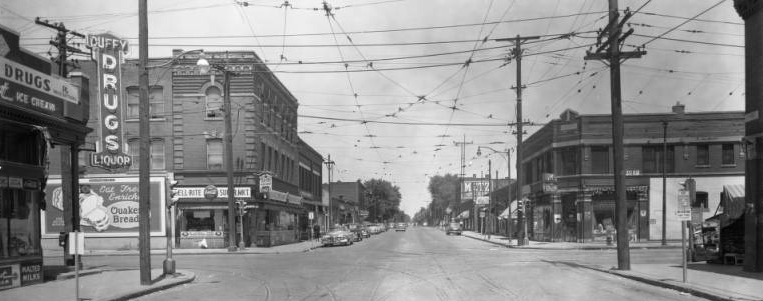
Outside these transactions, there were occasions, like live radio broadcasts of Joe Louis fights, when everyone came together to cheer. When Louis won, people flowed into the streets to party. Blacks led the parade.
“It was wonderful,” said Helen (Handler) Rifkin-Chorney, who grew up near North 24th and spent many an afternoon and evening there. “After a Joe Louis fight, when he was the champ, everybody was dressed in their Sunday finest and they were celebrating, too, because one of their own was the world champion. I used to think that was one of the greatest things in the whole world. It was wonderful.”
Then there was the pageantry of Easter Sunday, when Christian folks got decked out in all their fancy new finery.
“You never saw nothing until you saw Easter Sunday on 24th Street. Dressed to kill,” former North 24 denizen Nate Shukert said. “We used to go down just to watch,” ex-24er Gloria Friedman said. “It was beautiful. The parade of colors was amazing,” Rifkin-Chorney added.
“It was Omaha’s version of the Easter parade on Fifth Avenue in New York,” said Martha (Hall) Melton, who grew up just off the famous thoroughfare.
Community leaders hoping to revitalize the area look to recapture some of its rich, robust past. A past that saw an abundance of mom-and-pop grocery stores, butcher shops, fish markets, bakeries, cafes, delis. Hardware, appliance, clothing, shoe and department stores. Tailor shops, repair shops, pawn shops, barber shops, beauty shops. Ice houses, a junk yard, a lumber yard. Drug stores. Doctors offices. Laundries, cleaners. Dance halls, night clubs, bars, billiard parlors, movie theaters. Social halls, fraternal clubs, gyms. After-hours joints. Whore houses.
“We had everything out here,” said north Omaha native Vera (Mitchell) Johnson. “You name it, we had it. We really didn’t have to go out of the neighborhood for anything.” North 24th was, as fellow lifer Charles Carter said, “it’s own entity.”
Glass-fronted brick buildings spread the length of 24th, gleaming in the sun.
“When I was in the wholesale liquor business I made calls on 24th, and when I got there at 7 in the morning and the sun was shining, you’d think it was a sea out there…a sea of glass,” Irv Forbes recalled.
A whole social stratum of attire was on display. Grocers, butchers and bakers in aprons. Businessmen in fedoras and three-piece suits. Construction, packinghouse, railroad laborers in overalls. Domestic workers and porters in uniforms. Ladies in fine dresses and feathered hats. Religious in yarmulkes, prayer shawls and Sunday whites. Children in school clothes. Hep cats in zoot suits. Cops in blue.
Peddlers pushing carts and delivery men, driving horse-and-wagon outfits in the early days and trucks later on, sold everything from rags to milk to ice to produce.
Melton recalls a peddler who came by to sharpen knives. Shukert remembers one vendor, who wore a conductor’s cap and hung a lamp on his cart, hawking tamales with, “‘Get your hot tamales today, they’ll be gone tomorrow.’”
Street vendors shined shoes and sold newspapers. The blare of radio broadcasts, the melody of Yiddish, Hebrew, Italian and English voices, some Southern-tinged, others European-accented, the shrill of live chickens and crying babies and the clatter and roar of autos and streetcars created a kind of music. The yeasty, oven-fired aroma of fresh baked bread, rolls and bagels, the sweetness of pickled herring and watermelon rinds, the sour of pickles and the spice of corned beef blended with the smoky fragrance of barbecue and savory goodness of greens.
“When you hit this area, you smelled it,” Shukert said. “Whew, it would give you a smack, boy.”
This feast for the senses only added to the North 24th experience.
In an era when Jews and blacks were excluded from much of mainstream white society, the walls of segregation largely disappeared on this strip, where interracial commerce flourished. That’s not to say all was rosy, especially for blacks. Prior to the ‘60s entire sections of northeast Omaha, even portions of North 24, were closed off to blacks. Some establishments refused to serve or hire them. A few public schools were integrated, but most were divided along strict racial lines.
Forbes, whose father and uncles ran the commercial Forbes Bakery on 24th, recalls that as late as the ‘20s, even the ‘30s, Jews and blacks were still wary of the Klan, which was active in the state for decades.
Still, North 24th was an oasis, much as South 24th was, compared to wider Omaha.
Jews and blacks lived and worked in close proximity to each other and, by all accounts, coexisted in relative harmony. Despite obvious differences, people made this relationship work for the most practical of reasons — they had to. After all, each group relied on the other for survival. In a symbiotic relationship of mutual co-dependence, Jewish businesses provided essential goods and services to blacks, not to mention jobs, while blacks provided a major customer base for many Jewish merchants. Practicality made tolerance the order of the day.
“You have to understand this getting along wasn’t because there was this great big love affair, but it was a toleration. You tolerate me, I’ll tolerate you, and that’s the way we lived,” said Shukert, whose family’s meat market was a North 24th fixture. “We’re both here. You’re not going to leave, we’re not going to leave, so we might as well understand the situation and make the best out of it. We knew how to live with people. I don’t think color meant that much.”
“Well, we grew up with them — that’s the way it was,” said Friedman, whose father had a shoe store on 24th. “Right, if they were your next door neighbor, they were your next door neighbor,” Rifkin-Chorney said.
“You learned to tolerate” each other’s differences, Melton said. The way Shukert sees it, “We could have taught the world a lesson in how to be tolerant.”
Mort Glass said it was “a joining of two widely diverse people that really cohabited pretty much there for a long time.” Shukert said “the real miracle was that we all got along.” Charles Hall, whose soul food eatery the Fair Deal Cafe was a landmark there from 1953 to 2001, said the North 24th experience proves hatred is taught.
In purely economic terms, Shukert believes Jewish-owned grocery stores and suppliers of other perishable staples were most dependent on the black trade.
“Basically we got along with the Jews because they owned the grocery stores and all of the markets,” said John Butler, a North 24th veteran. Hall goes so far as to say, “It was a known fact that if you had a business and the blacks didn’t support you, you couldn’t make it.”
Shukert said blacks were not only vital customers but key laborers. “We hired them,” he said. “We didn’t care what their color was as long as they could work, and they liked to work.” “Most of the time the Jews would hire some blacks to do stocking, deliveries…They had a lot of blacks work for them,” Butler said.
Butler’s first jobs as a kid were shining shoes inside Pomidoro’s Shoe Repair shop and making deliveries, with a wagon he pulled behind him, for Hornstein’s Grocery. He said the Hornsteins “used to help me with my schoolwork.” Butler had a brother that worked at Tuchman’s Market. Hall worked several years at Frank Marks and Irv Rubinow’s Parker Street Market before opening his own business.
Dorothy (Stansberry) Freels-Smith earned the sobriquet “The Black Jew of 24th Street” after decades behind the counter at Reid’s Drug Store and as the first black butcherette at the Jewish-owned Sell-Rite supermart, where her boss was Sol Lincoln. “I knew all those Jews on 24th Street and I got to be very close to all of them,” she said. “Most all of them were very nice.”
Well-off Jews employing black domestic workers in their homes, Shukert said, understood their housekeepers struggled to get by and therefore often provided their “help” extra food and clothes. Butler, who grew up on 24th, said his mother, like many black women at the time, cleaned house for Jews in Dundee and confirmed it was common for domestics to get care packages from their employers.
Relationships formed between Jewish and black families.
“When I was a girl we had a black lady by the name of Lucille White who cleaned house for my family,” said Rifkin-Chorney, “and when a family member died she’d be the first one there. This woman would come if it was the middle of the night to be helpful and we felt the same way about her family. I mean, it was not a matter of color. It really and truly wasn’t.”
Rifkin-Chorney said family and community were at the core of Jewish and black life. In an era when extended families lived together or within walking distance, there were few strangers. Not just relatives, but neighbors, beat cops and merchants kept watch over kids. Butler said a trip to the market or to school was nothing like it is now. He’d encounter any number of figures, black and white, who knew him and inquired after him and his folks. “…the Jewish store owners knew all the kids in the neighborhood and they knew what family you belonged to,” he said. “Everybody knew everybody. It was almost like a family thing,”
It was a time when adults checked kids’ behavior, irregardless of race. Freels-Smith said she could tell any child, “You know better than to do that. I’ll tell your mom.”
Credit was extended to poor families, again irrespective of race.
“You’d run a tab and you didn’t have to pay until the end of the week when dad got paid. They would let us get all the groceries we’d want. Of course, they knew how much we could afford,” Butler said. Shukert said, “My dad never turned anybody down. He said, ‘Hey, look, people have got to eat.’”
Generosity between neighbors was common. Martha Melton, her brother Charles Hall and their family lived next door to the Shukerts, who kept a strict Orthodox home. Melton recalls her and her sister turning off the gas and lights at the Shukert home to keep them in compliance with the Sabbath.
The Halls’ other neighbors, the Levines, kept, sold and slaughtered live chickens and shared their bounty. “They would give us chickens and things,” Melton said. When some Jewish households served hallas, non-Jews would be invited to partake. Shukert said his mother would schmeer slices with butter and jelly as a treat for neighborhood kids — black and white — who came by.
More than once, Melton said, white friends aided her poor family. She said two Central High schoolmates, Nate Shukert and Nuncio Pomidoro, “knew our circumstances. Many a day I had no lunch money and they would pay for my lunch, which was a generous thing to do. They helped that way.”
“Poor blacks knew that without us a lot of them would have gone hungry. They had nothing to eat and they weren’t ashamed to take it,” Shukert said.

Gloria Friedman said her father supplied free shoes — as part of a city shoe fund — to Kellom School students, many of whose families were too poor to afford them.
Freels-Smith gave away food and other stores to poor kids, black or white, that stopped by Reid’s. “Color didn’t matter to me,” she said. She’d let them snatch penny candy. She’d make a batch of soup and dish it out to anyone who “wanted something warm” and she kept cold beers on ice for the beat cops.
Rifkin-Chorney surmises that good relations between Jews and blacks “had something to do with the fact we’re talking mostly about Depression times, when we were all poor.” “That’s why we all got along,” Shukert agreed, “because they had nothing and we had just a little bit more. So economically we were pretty much on the same plane, except we had a little bit more, so we could share it with you.” “Yeah…that’s the truth. Jewish folks had maybe a small store or something and they were just making a living,” Hall said. North 24th Jewish merchants were, Butler said, “working class people in business.”
Any angle or sideline was exploited to help make ends meet. “Everybody was doing what they could to make a living,” Melton said.
As a boy Butler helped his father sell fresh vegetables grown on three family gardens. His dad, a Cudahy packinghouse worker by day, also sold “real silk hosiery door to door.”
Not everything was legal. A black man who worked at Shukerts, Andrew “Babe” Bender, was also a pimp who ran brothels behind the store, Shukert said. “He was like the Duke of 24th Street. He made a lot of money.” From the back of the market Shukert could identify the johns frequenting these dens of inequity. “I was amazed by some of the people I would see going in there. People that I knew. Yeah, God’s chosen,” he said.
A few Jewish grocers were known to not play square by rigging the scales or ringing up bogus purchases. Some had open contempt for blacks. But in the main blacks were “treated well” by most Jewish merchants, Hall said.
Butler feels an important reason why Jews and blacks were simpatico is their shared legacy of struggle. “Well, you must remember they were segregated too at the time,” he said. “They knew how we felt and we knew how they felt.”
Rifkin-Chorney said there was an unspoken understanding that blacks and Jews shared a similar struggle as “minorities that are persecuted. It’s a common denominator.” By and large, she added, Jews recognized blacks have a much harder time. They can’t hide their color and so they are discriminated against.”
“That’s why they have to fight for themselves,” Shukert observed.
“And they have to go to more extremes,” Rifkin-Chorney said. “They’ve had to do their marches. We fought, too. We didn’t do it in the same way, because we didn’t have the numbers…”
“We did it by going to school…getting educated. We got smart enough to know how it was to change your life,” Shukert said. “The Jews bartered this, bought that, got a little property, saved their money and bought themselves into a better life.” “The black people have to take it on themselves to do the job,” Forbes said. “They’re never going to get it done unless they do it themselves.”
That sentiment is the theme of new black empowerment-covenant efforts underway in Omaha.
If there was ever a time when Jews and blacks were in sync, it was the height of the civil rights movement in the ‘50s and ‘60s. “There were probably as many Jews as there were blacks at some of those marches because we were marching really for a common cause. We had the same reason,” Rifkin-Chorney said. As Shukert said, “We were white, but we had the same reason.”
Joe Kirshenbaum, whose father delivered bread for Himmelbloom Bakery, said the north side had geographic boundaries for affluent and less affluent Jews.
“It seemed like the majority of Jews who were middle income and lower income lived in this particular area,” he said, referring to the North 24th corridor. “If you lived west of 30th Street you were pretty well off and if you lived in Dundee you were really pretty well off.”
As a boy Shukert dreamed of making it to the other side.
“I always wanted to make it across 30th Street,” he said, “because that’s when you had it made. You got to go around with all the big shot kids. I was home from the service and my folks told me we’d moved west.” Where did you move? he asked excitedly. The family’s new address — 2935 Nicholas — put him “right to the brink,” but still outside the promised land. “I never made it across to 30th.”
There was also the feeling that a high tide raises all boats.
Hall recalls something the wife of the grocer he worked for said. “She told me what the black man doesn’t realize is, every boost the black man gets in life is a boost for the Jews. It made sense because they were ostracized and picked on, too.”
A live-and-let-live attitude prevailed.

“I think things were extremely amicable…everyone got along,” Hall said. “It was a black-Jewish neighborhood and everyone went to their jobs and came back home and they went to 24th Street and different areas there to enjoy themselves.”
People in similar straits made the best of tough times.
“At that time it wasn’t a thing of black, white, Jew, Catholic, Protestant, it was just people,” Melton said. “See, if you give respect, you’ll get respect. They respected us and we respected them.”
When Rifkin-Chorney was newly married to her first husband, the late Ben Rifkin, the couple went to North 24th every weekend. Ben grew up there. His father and uncle were peddlers and then property owners. When she and Ben would walk down the Deuce Four she learned how thick Jewish-black relations ran.
“We passed at least half-a-dozen young black men and they all knew my husband. They all called him ‘Binny.’ I asked him, ‘How do you know everybody and how do they all know you?’ And he said, ‘They’re all my neighbors.’ Again, it was with great fondness and affection and he felt the same way towards them.”
Shukert said multi-racial fraternizing extended to recreation. Whether it was kick-the-can, pickup softball, baseball or football, Jews and blacks “played together” in the streets and the parks around 24th. Then-North Omaha YMCA director Marty Thomas, a giant black man who commanded awe, oversaw organized youth sports.
“We respected him so much. If he told you to do something, you did it,” Shukert said. “You talk about race, he was a man ahead of his time. He saw to it all the rules were the same, no matter who you were, black or white. He was the best.”
Mixed crowds danced at the Dreamland Ballroom to the swinging sounds of stellar black performers like Cab Calloway, Count Basie, Duke Ellington and Ella Fitzgerald.
A shared sense of community was lost when the Jewish exodus began in the late ‘40s. By the ’50s, most Jewish residents were gone, including Shukert, Friedman, Kirshenbaum and Rifkin-Chorney. Some Jewish businesses remained into the ‘60s, but Mort Glass said “it was dwindling…a pretty sharp decline.” While Jews were free to most anywhere, blacks were not, restricted by red lining-covenant practices that prohibited or discouraged the sell of property to “non-whites.”
“We were held back,” Hall said.
The final Jewish hurrah on North 24th came in the wake of late ‘60s public disturbances in which businesses were burned, damaged or looted. The disorder was an expression of black anger over inequality and injustice. The worst riot, in ‘69, was sparked by the fatal shooting of a black girl by a white police officer. Charles Hall, who still lives near 24th, recalls a white man asking him at the time, “‘What’s wrong — what do they want? “I said, ‘They want the same thing you want, and that’s an even chance to make money and to make a decent living.’”
Jewish businesses were largely spared, said John Butler, who patrolled North 24 during the ‘69 riot as part of a brigade of community-minded citizens. “Some of us stayed there and tried to protect them,” he said. “Some blacks stood in front of Jewish grocery stores and wouldn’t let the mob burn them down,” Kirshenbaum said. “One like that was Abe Schloff’s,” said Shukert. “They stood right in front of his store, with guns and said, ‘Don’t touch this man’s store.’ Because he always treated them straight.”
While most Jewish concerns survived unscathed, the psychological trauma of the riots spurred the last of North 24th’s Jewish merchants to leave.
“They all got afraid,” Smith said. “They moved out after that because things started getting different,” Butler said. “It wasn’t just them moving out. We began moving out then, too. It started a migration of both races.”
Butler moved north, to an area once off-limits to blacks. Melton and her late husband Billy moved a couple miles west. Smith also moved west.
Relatively few new businesses sprang up in the ensuing years to replace the Jewish-owned ones that left. With mom-and-pop operations a thing of the past, the area lost grocery stores, drug stores and many suppliers of basic items it was once rich in. Where other parts of town saw large chains come in to fill the gaps, North O does not. High crime stats don’t help. Existing businesses get squeezed by a dwindling economic base as middle income whites and blacks exit the inner city.
“It’s a matter of confidence. If you’re going to invest a couple hundred thousand dollars in something there you want to be reasonably assured it’s a safe investment,” Shukert said.
Two groups once close, grew apart. An innocence was lost. Perceptions put a new spin on things. For example, the Yiddish term for a black person, Shvartzer, was acceptable once, but as Rifkin-Chorney noted, this vernacular was deemed demeaning in the context of the civil rights-black power era.
“It wasn’t meant that way, but it could be determined as a derogatory way to speak about someone,” she said.
Shukert thinks it’s tragic that blacks became the object of fear. He said a white person walking down a street thinks nothing of an approaching group of whites, but gets alarmed at the sight of a group of blacks. “For some reason whites have always been afraid of blacks,” he said. “Why have we put that stigma on them?”

He and others are dismayed by the shootings that plague the north side these days. He knows it’s just a few “bad apples” causing the trouble, but it’s made him and old friends fearful of visiting North 24th for a nostalgic tour.
“It’s too bad you can’t, in 2007, feel free to go any place you want to, but that’s just the way it is,” he said.
Shukert and his contemporaries don’t understand why so many people resort to violence now as a means to resolve disputes or to gain respect. That’s not the way things were done in their day, when words or fist fights sufficed.
“We would never do anything to disgrace our neighborhood, our church, our family,” Martha Melton said. “It’s a shame young people don’t know the unity that there was. It does break my heart to see 24th the way it is now. It will never be the same. I have fond, fond memories of the way it was.”
All the changes and the population shifts have dislocated people from their roots. “It looks like we’re divided more now than ever,” Dorothy Freels-Smith said.
John Butler, who lives around 26th and Evans, sees hope in the new diversity emerging in northeast Omaha. “In my two-block area I’ve got whites, blacks, Hispanics living next door to each other or across from each other. Integration sometimes is good — if people get along, and I see they’re getting along.” What’s different, he said, is that people don’t know each other the way they used to.
Back in the day on 24th, diverse people mixed and mingled in close-knit quarters. “It made a better person out of me,” Butler said. Said Hall, “I got an education working down in the neighborhood.” “We knew people better then,” said Shukert.
Speculation about the future of North 24th centers on proposed mixed use developments for transforming the area into a model of urban gentrification. These discussions bring up new issues, such as the displacement of longtime residents and what stake blacks will have there. Old-timers like Shukert believe no matter how much the strip is built back up it will not be the melting pot marketplace he knew.
“It’s never going to be,” he said. “The memories are great. I never will forget the way it was. So many people don’t have memories like that of North 24th Street, because they didn’t live it. I can tell you story after story after story, but unless you lived it it’s just a story.”
Related Articles
- Black and Jewish, and Seeing No Contradiction (nytimes.com)
- Café Serves All, Lubavitch Style (online.wsj.com)
- Omaha Native Steve Marantz Looks Back at the City’s ’68 Racial Divide Through the Prism of Hoops in His New Book, ‘The Rhythm Boys of Omaha Central’ (leoadambiga.wordpress.com)
- TONI MORRISON: The Pain Of Being Black (time.com)
- Back in the Day, Native Omaha Days is Reunion, Homecoming, Heritage Celebration and Party All in One (leoadambiga.wordpress.com)
- Chef Mike Does a Rebirth at the Community Cafe (leoadambiga.wordpress.com)
- Big Bad Buddy Miles (leoadambiga.wordpress.com)
- Native Omaha Days: A Black is Beautiful Celebration, Now, and All the Days Gone By (leoadambiga.wordpress.com)
- Native Omahans Take Stock of the African-American Experience in Their Hometown (leoadambiga.wordpress.com)
- A Rich Music History Long Untold is Revealed and Celebrated at the Omaha Black Music Hall of Fame (leoadambiga.wordpress.com)
- Walking Behind to Freedom, A Musical Theater Examination of Race (leoadambiga.wordpress.com)
- Omowale Akintunde’s In-Your-Face Race Film for the New Millennium, ‘Wigger,’ Introduces America to a New Cinema Voice (leoadambiga.wordpress.com)
- Coming to America: The Immigrant-Refugee Mosaic Unfolds in New Ways and in Old Ways In Omaha (leoadambiga.wordpress.com)


 Leo Adam Biga's My Inside Stories