Archive
Slaying dragons: Author Richard Dooling’s sharp satire cuts deep and quick

Image via Wikipedia
Rick Dooling is yet another immensely talented Nebraska author, one who left here but came back and continues to reside here. His work exhibits great range, but at its core is a sharp wit and a facility for making complex subjects compelling and relatable. His books include White Man’s Grave, which was nominated for the National Book Award, Critical Care, Brain Storm, and his latest, Rapture for the Geeks. He’s also a great guy. This is the first of a few stories I’ve written about him, and it is by the far the most in-depth. It orignally appeared in The Reader (www.thereader.com). Look for more of my Dooling stories to be added to the site. I strongly recommend anything by Rick, who also writes essays on societal-cultural matters for the New York Times and other leading publications.
One of Rick’s books, Critical Care, was made into a feature film by the same title directed by Sidney Lumet. Rick was working with filmmaker Alan Pakula on another big screen adaptation when Pakula was killed in a freak highway accident. Since this article appeared, Rick has collaborated with Stephen King on the television series Kingdom Hospital and adapted King’s short story Dolan’s Cadillac for a feature film by the same name. He’s currently producing-writing a TV pilot.
Slaying dragons: Author Richard Dooling’s sharp satire cuts deep and quick
©by Leo Adam Biga
Originally appeared in The Reader (www.thereader.com)
Since 1992 Omaha native Richard Dooling has gone from being just another frustrated writer to a literary star, creating a body of work distinguished for its dizzying array of ideas, sharp satirical assault on cherished dogma and sheer mastery of language. In three acclaimed novels — Critical Care, White Man’s Grave, Brain Storm — this writer-provocateur skewers American mores, trends, fads and sacred cows, reserving his most cutting remarks for two fields he once worked in, the law and health care. Easy targets, yes, but Dooling doesn’t settle for tired old broadsides or cloying jokes worn thin. Instead, he uses the hubris and cynicism endemic in the law and medicine as a prism for critically examining issues and raising questions that vex us all.
Dooling, who would make a great teacher, doesn’t presume to provide answers so much as prod us to think about how once basic human yearnings and immutable beliefs are foiled in this world of modern ambiguity and conditional ethics. His work is funny, dramatic, analytical and literary. The attorney-cum-author uses his knack for research to glean telling details that, as in building a good case, lend added weight to his tales.
“I do a lot of research,” he says. “You’ve got to get your facts straight, and then you can do anything you want with them later.”
From 1987 to 1991 he was an associate (specializing in employment
discrimination law) with St. Louis’ largest firm, and before that a respiratory therapist in the intensive care unit at Clarkson Hospital. From working in the legal-medical arenas to holding odd jobs as a cab driver, house painter and psyche ward attendant (“to share some of those patients’ vivid delusional systems is an interesting experience”) to traveling across Europe and Africa, Dooling has a deep well of living to drawn on for his fiction. His stories feature naive white middle-class professionals, all animated extensions of himself, enmeshed in fever-pitch moral dilemmas not patently resolved by the end. Like a lawyer, he argues both sides of an issue in his narratives.
In addition to his novels he has penned a well-received volume of essays (Blue Streak) defending the use of offensive language and op-ed pieces for major publications that poke fun at the latest excesses on the social-cultural front, including a rip-roaring send-up of the President’s imbroglio with Miss Monica. He is currently writing screen adaptations of two of his novels for planned feature films.
In person, Dooling exhibits the same penetrating wit as his prose, although he seems too normal to be the voice behind the scathing black humor he relishes. Married with four children, he is a practicing Catholic. His wife, Kristin, is converting to the faith. The family drives from their southwest Omaha home to worship at a near north side church. Dooling writes from an office in the Indian Hills business district.

If ever a wolf, albeit an intellectual one, in sheep’s clothing it is the 44-year-old author. He has the jowly, post-cherubic face of an altar boy (he was one) flirting with middle-age debauchery. Look closely and his hail fellow-well met facade reveals a gleam in the eye and curl of the lip that betray the bemused, wry gaze of a born agitator who likes pricking the mendacity he sees all around him.
Why satire? “More than anything, I like to make people laugh,” he says. “I don’t want cheap laughs. I want you to discover something new about yourself you didn’t understand before. What interests me as a writer is people on the threshold struggling to organize the flawed parts of themselves into a good person.”
What sets him off on a satirical jag? “Hypocrisy. That’s probably the first thing that provokes me. Somebody saying one thing and doing something else,” he says. “When law and medicine pretend to be helping patients or clients and really it’s raw self-interest, than that’s satirical material. Medicine and law are perfect targets for satire just because they exercise so much control in our lives, and people resent it in a way. You want to bring down the high and mighty and make them just like everybody else. Satire is the great leveler.”
He especially likes deflating any pretensions litigation is a sedate reasoned process for resolving disputes. “It’s combat. It’s a contest and just because it’s essentially bloodless doesn’t make it any less violent. I’m not a big fan of litigation. I think it should be avoided at all costs.”
The looming monster of political correctness is among the trends raising Dooling’s hackles these days. “Because, again, it’s a hypocrisy of a kind,” he says. “The claim is you want diversity in everything, but the central paradox of political correctness is that proponents demand diversity in everything except thought. You have to think the same way as they do or else you’re the enemy. And also the notion you can control people’s thoughts by changing their language just repels me. As a writer, language is the most important thing in your life, and when people start telling you what you should say or not say, it makes you want to say exactly what they don’t want to hear. It makes you want to rebel.”
In a recent Wall Street Journal op-ed he ridiculed attempts at removing certain offensive words from Merriam-Webster dictionaries. One of those petitioning for the excision of hateful language, Kathryn Williams of Flint, Michigan, defended her position by saying, ‘If the word is not there, you can’t use it.” In response, Dooling wrote, “Following…Ms. Williams’s reasoning, we could also remedy the drug problem if we simply removed the words cocaine and heroin from our nation’s dictionaries, for then junkies would be unable to use them. How nice if ancient hatreds could be remedied with a little word surgery, a logos-ectomy to remove offensive words and the hateful thoughts lurking behind them.”
If it weren’t for his dead-on observations, Dooling could easily come off as a smart aleck who is clever with words but short on substance. He is, however, that rarest of commodities: A Swiftian satirist whose barbed, elegantly phrased comments are both funny and thought-provoking. Even when his points are made with dark humor, he avoids sounding contemptuous because he infuses his work with glints of his charming guile and frames his skepticism within a moral context. It makes perfect sense when you learn he grew up in a middle-class Catholic family of nine children and is the product of Jesuit educators. His father was an insurance claims adjustor. His mother, a nurse.
If nothing else, he’s proof “it’s possible to be Catholic and still be satirical,” he says, unloosing his hyena cackle laugh. Growing up in the Bemis Park area, he graduated from St. Cecilia Grade School and received his Jesuit “indoctrination” at Creighton Prep and later at St. Louis University, where he earned his bachelor’s in English and art history and his law degree. He credits the Jesuits for instilling in him “a disciplined approach to any field of knowledge.” Even a quick read of his work reveals both a complete grasp of a subject and a deft handling of it.
An avid reader since childhood, his love for writing began at Prep. There, a priest got him in the habit of keeping a vocabulary notebook, which he still maintains today. His ardor grew deeper in college, where he won a short story contest. “That was a big deal,” he says. “I just assumed I was going to be a writer by that time. That I was going to graduate and be getting published left and right.” It didn’t quite work out that way. He graduated, all right, supporting himself with day jobs while completing a novel and short stories, but “nothing was getting published.”
Frustrated, and desiring a change of scenery, he saved up for a year-long trip overseas. His 1982 travels across Europe and Africa served as the writer’s requisite expatriate adventure abroad. “I just had a feeling I wanted to see something besides this,” he says of America, “because this is an artificial world compared to the rest of the world.”
He wrote while away and returned with Critical Care partially completed and the idea for White Man’s Grave in embryo.
His seven-month stay in the West African nation of Sierra Leone, where he visited a friend working in the Peace Corps, “changed” Dooling and his take on America. “Somebody said, You don’t travel to see foreign countries, you travel to see your own country as a foreign country. That’s what I think a lot of writers have in the back of their minds when they travel. It just shakes everything up,” he says. “All of your assumptions about how life is lived are subverted. In the Third World people eat out of a bowl with their hands and squatting on a floor. No electricity, no running water. Everything you’ve arranged your life around back here is gone. It’s a valuable experience, especially for a young person. It’s very healthy.”
When he returned to the vulgar excess of the U.S. the dislocation was so intense that home seemed unreal, like a garish nightmare. He used his experience as the jumping-off point for a New Yorker-published short story, Bush Pigs. “Everything here looks obscene when you come back. It’s overpowering. Bush Pigs tells exactly what it’s like. It’s about a Peace Corps volunteer who comes back home after three years..and in the course of 24 hours has a psychotic breakdown, and it’s funny. It’s kind of a cult favorite among Peace Corps volunteers because they all feel a bit unsettled when they come home.”
In Dooling’s case he was unhinged, broke, and hungry for a new challenge, so he applied and was accepted to law school. Why the law?
“I knew that I liked to read and write and I thought if I went to law school I could at least make my living reading and writing.”
Preparing briefs and motions became his forte. Despite disparaging the law now, he says he enjoyed the profession and would return to it should his writing career falter. Fat chance.
Writing in his spare time, he finished Critical Care and, after years of trying to get somebody interested, finally sold it — to William Morrow — and upon its 1992 publication found himself both published and celebrated.
His long struggle should be a lesson in perseverance. “I always urge young writers to, as soon as they can, write a novel, even it it doesn’t get published, just so you get used to thinking that way. Send out a chapter with a query letter to 20 or 30 agents. You’ll get rejected, by all of them usually, but you might just get one or two who’ll say, ’Let me see the whole book.’ To be able to write a novel you have to have supreme self-confidence.”
His overstuffed office is evidence he saves “everything” he writes and will rummage through boxes and cabinets full of files to “plunder stuff.”
With the success of Critical Care he faced the decision of spending another four or five years shaping White Man’s Grave in between his law duties or quitting the practice to write full-time. He had a family. A mortgage. In the end he gave up a secure career for the mercurial world of writing, promptly moving his family from St. Louis to Omaha. “Realistically, I just didn’t feel I would be able to serve clients with all the time my writing career entailed, so I decided to take the plunge.” Besides, the compulsion to write was overwhelming. “I didn’t really have a choice. It’s not something I really have any control over. I don’t recommend people become writers unless they can’t help it.”
Similarly, he describes his penchant for satire as “an impulse” he cannot suppress, like being nervous or shy. “It’s not something I intentionally do. It just happens. I can start out writing seriously…and before I get half way through I start getting this risible impulse to tear down or make fun of, and it turns into satire.” If he can ascribe his inspiration to anything, it’s “the kindred spirits” he found reading such satirists as Joseph Heller, Tom Wolfe and Kurt Vonnegut in college.
But as anyone who writes seriously can attest, the process has less to do with heeding one’s muse than with tirelessly learning the craft. “When you’re young and read good writing you don’t realize why you like it better…you just do,” he notes. “But then the older you get, and especially if you’re growing as a writer, you come to realize that most really good writing is good because of the labor involved, not because of inspiration. It’s about taking out all the unnecessary words and making sure it’s in the active voice and all that, so that by the time the reader reads it they don’t even notice what happened or why it’s so appealing.”
That’s not to say he discounts the contributions of the unconscious: “It’s very important. I find when I am stuck on a bigger project it is because I’m not dreaming about it at night. I find when I’m really into a big project, like the end of a novel or the end of a screenplay, I pretty much dream about it all night and write about it all day.” When things are really flowing, and words just fill the page, he goes into “a kind of trance.” He says when ideas come to him in his sleep he’ll awaken and rush to get them down on paper, otherwise fearing “they won’t be there in the morning, they’ll be some ghost of what they were.”
Dooling, who composes on a computer, has no fixed writing routine. “Totally irregular. I’ll write for three weeks and then not write at all for two. When I am working, I might write 12 hours a day or I might get up in the middle of the night. You just live to be able to do it.” When stuck, he’ll move on to another project or occupy himself reading, e-mailing, filing, et cetera.
A fact of life for any published writer is working with editors. Dooling relies on editors to tell him “things you can’t tell yourself. A good editor kind of steers you. I couldn’t live without one.” If he can be faulted for anything, it’s losing the urgency of his stories amid too many ideas and too much word play. He admits a “weakness with plots.”
To date, his fiction has been informed by his experience and leavened with his imagination. He echoes what other authors have long been advising would-be scribes: Write about what you know.
“I always try to encourage young writers, especially, to try and personalize everything first and then hope that you take it up to the next level of art where it appeals to everyone. That’s what art is — when you take a particular experience and render it in such a way that other people read it and say, ‘Oh, I felt like that.’ You establish a relationship with your reader that way. I think the easiest way to get in trouble or to become cliche, and young writers do this a lot, is to base an emotional passage on some TV or movie image of emotion instead of an immediate thing from real life.”
Dooling mined the human misery he saw as a respiratory therapist, along with the savage humor he and his health care cohorts used as a coping strategy, as the basis for Critical Care . Its protagonist is Peter Werner Ernst, a young doctor stuck in a medical, legal, moral, ethical quagmire involving a dying man with two daughters warring over his life and will. Pressured from all sides, Ernst wavers whether to keep the man alive or allow him to die. Meanwhile, vegetative patients on the edge of hereafter confront the limbo of their life and eternal destiny.

Anyone that’s spent any time in a hospital will identify with this portrait of medical practitioners who view family as the enemy and regard patients as nicknames and numbers, like Orca, the Beached Female or, more cryptically, Bed Five.
The book’s opening passage sets the tone: “Dr. Peter Werner Ernst was the Internal Medicine Resident…presiding over the Ninth Floor Intensive Care Unit…Each pod in the octagonal Death Lab contained a naked, dying person…High in the corner of each pod, a color TV was mounted…The hanging televisions were obviously designed by an architect or a hospital administrator who knew almost nothing about ICU patients. When was the last time somebody had seen one of these stiffs sitting up in bed watching a ball game? Instead of their lives flashing before their eyes, these patients died slow deaths listening to American car commercials, the 2.9 percent financing, the unbelievable buyer protection plans.”
Sarcasm amidst mortality is hardly new. Dooling, though, elevates the death watch and end game of the ICU to new heights, cutting closer to the truth with humor than somber platitudes and hoary dramatics can do.
“What really fascinated me,” he says, “was the defense mechanism of dark humor. There’s this impulse you have to make the patient not human. Otherwise, you’re there all day long saying, ‘Oh, here’s a human being dying right in front of my eyes.’ Well, you can’t even function then, so there’s this tendency to make light of the situation, which enables you to carry on. It’s not an admirable thing, but it was fascinating to me how it works.”
As Ernst digs himself deeper and deeper in the mess, he begins doubting his own omniscience. At one point Dooling speculates on the question in the back of Ernst’s mind: Where is God in the midst of all this human suffering? Dooling’s wickedly funny answer begins:
“In college he (Ernst) had read that God was dead. In medical school, he learned that God was not dead. He was just very sick. God was probably pronounced dead prematurely. Instead of dying or being found murdered, God may have just slipped into a coma or had an attack of transient global amnesia (TGA), during which time He simply forgot He was God and left the universe to its own devices. Instead of announcing his debility to the world, maybe God just went into seclusion, the way ailing Russian premieres do…In the meantime, planet Earth fell apart. Things look bad for the world, but why jump to conclusions and pronounce God dead, when he probably just needs to be transferred to a crackerjack ICU equipped with the proper medical technology? Once God gets to feeling better He can go back to thinking of Himself as a doctor, in much the same way that doctors think of themselves as God.”
In White Man’s Grave Dooling draws on his African sojourn to explore the conflict arising when neurotic American culture meets mystical Sierra Leone culture. A character sums up the conflict with: “Back in America, demons inhabit the mind. Here, they inhabit the bush.” At first struck by the differences between the two worlds, Dooling became intrigued with the similarities after starting law school, particularly the parallels between the law and witchcraft.
“I encountered the phenomenon of bad medicine (hale) there, what we call witchcraft here. If you have an enemy and you want to seek revenge on him, but you can’t do it by, say, hitting him with a stick or something, then you go and you put a swear on him. If he hears about it, he’ll go and put a counterswear on you. Then you each have a witch person working on your behalf in the same way we hire lawyers here to resolve our intractable disputes. The impulse to litigate the lawsuit is to destroy the other person — not physically — but to destroy their life, to take all their money, to ruin their name. The same sort of thing with witchcraft. When I got a front row seat in the process called litigation I realized litigants hated each other every bit as much as villagers who decide to consult a witch.”
Like the ritual and gobbledygook that accompany a swear, he says, “the law is very much incantation. It really is.”
In Grave, an obsessive American lawyer, Randall Killigan, is a warrior-wizard whose fierce bearing and awesome power strike fear in opponents’ hearts. His well-ordered world unravels however when his son, Michael, a Peace Corps volunteer, goes missing in Sierra Leone and a totem-like bundle sent from Africa causes disturbing events/visions.
The novel, a 1994 National Book Award finalist, follows the dual odyssey of Randall, who battles combatants he can’t comprehend, and of Boone Westfall, a friend of Michael’s who goes to Africa in search of him. Michael’s disappearance, rumored to be linked to witches or rebels or both, brings the blundering Westfall in contact with things he can’t grasp. As the two disparate worlds merge, a surreal adventure unfolds that finds protagonists seeking remedies based in faith, myth, fact.
Like Westfall, Dooling arrived in Sierra Leone woefully ignorant of the place. Beset by violence in recent years, the nation was peaceful when Dooling visited but plagued by corruption and poverty. And like Westfall he was appalled by the sickness he found, dismayed by the stock villagers put in sorcery, weakened by malaria and dysentery and, yet, still charmed by the people’s unfailing generosity and the landscape’s stark beauty.
Grave offers many views of Sierra Leone, ranging from the cynical to the rapturous. In Aruna Sisay and Michael Killigan, Dooling gives us Westerners fluent in native languages and customs who upbraid Westfall, a typical poo-mui (white person) for his ethnocentrism. The model for Sisay and Killigan was Dooling’s friend, Michael O’Neill, who spoke like a native, owned the respect of village elders and disabused Dooling of his prejudices.
After the book’s publication, some real life events ended up mirroring fictionalized ones when O’Neill, like Killigan, was captured and held by rebels and was the target of apparent witchcraft.
While never branded a witch, as Westfall is in the book, Dooling did come under suspicion for breaking various taboos. “As a writer and reader I was used to spending time alone,” he says, “and anybody who keeps spending time alone is a little suspect because it’s such a social place. And the more I asked about bad medicine the more suspicious they became, like, ‘You must have a reason to be asking these questions. You must want to use some witchcraft.’ I was never accused of witchcraft — nothing close to it — but it was easy to imagine.”
Another form of black magic — brain research — next drew Dooling’s attention and resulted in his latest novel, Brain Storm, published last spring by Random House. Specifically, he became fascinated with how new insights are challenging “the assumption that something’s in control of your brain besides your brain. Everybody calls it something different,” he says. “In psychology, it’s ego. In the law, free will. In religion, the soul. But the more we learn about the brain the question becomes, Is your mind anything more than your brain? Is consciousness just cellular activity or do you have a soul? So then I started thinking about dramatizing this somehow.”
He investigated how the latest brain findings might color a basic tenet of the law — intent — in a criminal case. The possibilities intrigued him. “Let’s say you come home one night and suddenly, totally out of character, you start swearing and being violent to your mom or wife or whoever, and a week later you go on a rampage. And let’s say it’s found a huge tumor is pressing on the part of your brain that makes you violent. Think about that trial. How much are you responsible? It doesn’t seem like a very complicated question if you stay with the older technologies, but it does the more you use today’s enhanced measures of brain metabolism. If blood flow is reduced to certain parts of the brain — the frontal lobes for instance, which exercise self-control — it might explain why someone has such a terrible temper. Does he get punished the same as everyone else?
“Free will is a fundamental assumption in the law and if neuroscience keeps going in the direction that it’s going, they’re going to collide.”
That’s precisely what happens in Brain Storm . Set in the near future, the book follows attorney Joe Watson preparing his first criminal defense case. His defendant is a virulent white racist, James Whitlow, accused of murdering a black man and facing execution under a hate crime statute. In a Faustian bargain Watson teams with Rachel Palmquist, a neuroscientist temptress, to build a defense even he doesn’t believe that posits a cyst caused Whitlow’s hate-tinged violence. As Watson presses for a reduced count, Palmquist pursues surgically-repairing Whitlow’s hate-filled brain.
Palmquist sums up Whitlow with the chilling appraisal “he’s a big mouse with an advanced brain” that’s “malfunctioned” and needs repair. Short of repair, she disdains execution as “a waste of money” and instead advocates “vivisecting” him and his ilk “like guinea pigs, if necessary, to find out why they short-circuited. Killing only puts them out of their misery.”
Watson, a nerd more at home in cyberspace than a courtroom, is a conflicted Catholic in turmoil over: Defending a client he detests yet feels is being railroaded by hate-crime hysteria; his superior’s desire to have him plead Whitlow out; his partner’s specious ethics; and his own guilty attraction to Palmquist, who tests his marital fidelity and shakes his faith.
For the record, Dooling is, like Watson, “just trying to function in a world of science while believing that you have a soul and free will.” He says Brain Storm is in part a cautionary tale reminding us that perhaps the reach of brain scanning technology “exceeds our grasp” of what human consciousness is or is not when applied to the law, religion and the like.
Dooling’s caustic, rather cinematic novels are proving attractive to Hollywood. Critical Care was made into a feature by Sidney Lumet. Dooling was working on an adaptation of Brain Storm with noted producer-director Alan J. Pakula, but after the filmmaker’s recent death is unsure where it sits. He is adapting White Man’s Grave for Quentin Tarantino’s producing partner, Lawrence Bender. A newcomer to screenplay writing, Dooling says, “It’s harder than I expected. You’re constantly compressing, throwing things out…selecting crucial plot points from your book and visualizing them into short visual images. I’m just learning how to do it.”
He is undecided what his next project will be. “I have ideas and so on, but I’m not sure if I will do another novel, an original screenplay or what.” A dream project he’d like to see realized is the publication of his collected short stories. Meanwhile, what’s catching his satirist’s eye? “Genetics. Especially with the announcement they’re going to be growing human stem cells in cow eggs. Are we going to have cows with human heads or what? This is pretty scary stuff. That’s the fun part.”
Related Articles
- The Book Market Stares At Ubiquity (avc.com)
- Jack London: Not just the voice of the wild (independent.co.uk)
- Anis Shivani: Anis Shivani:17 Literary Journals That Might Survive The Internet (PHOTOS) (huffingtonpost.com)
- Books of The Times: Rick Moody’s ‘Four Fingers of Death’ Dips Into Absurd (nytimes.com)
Joan Micklin Silver: Shattering cinema’s glass ceiling

Image by snacktime2007 via Flickr
I’ve always been fascinated by the many film artists who have come out of my home state Nebraska to forge significant careers in and out of Hollywood. Almost from the very start of the film industry Nebraskans have played major roles in every facet of production. I mean, just consider this partial list of Nebraskans in film from the silent era through the present day:
Harold Lloyd, Darryl Zanuck, Ann Ronnell, Fred Astaire, Robert Taylor, Ward Bond, Henry Fonda, Dorothy McGuire, Montgomery Clift, Marlon Brando, Lynn Stalmaster, David Jansen, James Coburn, Sandy Dennis, William Dozier, Lew Hunter, Joan Micklin Silver, Nick Nolte, Swoosie Kurtz, Marg Helgenberger, Mike Hill, Monty Ross, Alexander Payne, Gabrielle Union, Patrick Coyle, Jon Bokenkamp, Nik Fackler.
Oscar winning cinematographer Mauro Fiore (Avatar) has made Nebraska his adopted state. Leading editor Tom Elkins, who will be directing a big budget horror film this fall, has made Omaha his adopted hometown.
I’ve never thought the state has done a good job of celebrating its film heritage. For example, few Nebraskans know that one of the most important filmmakers from the 1970s and ’80s – Joan Micklin Silver – grew up in Omaha and still has family here. Micklin Silver may not be a household name today, but her films Hester Street, Between the Lines, Chilly Scenes of Winter, and Crossing Delancey were among the best of that era and were all the more significant because she was the rare woman making features films then. Her work in the industry helped open doors traditionally closed to women.
She fought many battles to get as far as she did and took a hard, lonely path to get there as an independent. When Kathryn Bigelow won for Best Director at this year’s Oscars the first person I thought of was Joan. I called her and she expressed great admiration for Bigelow’s film and described it as a great moment for women in film and perhaps making it more possible for women to be viewed on equal terms with men in such a male-dominated field.
The following story appeared in The Reader (www.thereader.com) more than a decade ago and is my attempt at putting Joan’s career in proper perspective. This long piece appeared more or less as is in an era when newspapers and magazines were more prone to running stories of length like this. Today, it would be chopped by a third or in half. Look for more of my Joan Micklin Silver stories in future posts. My blog also includes a story on Peter Riegert and his fine feature directorial debut, King of the Corner, which he also stars in.
Joan Micklin Silver, Shattering cinema’s glass ceiling
©by Leo Adam Biga
Appeared in a 1999 edition of The Reader (www.thereader.com)
Aside from a brief golden time early this century and then again only until quite recently, the mere suggestion a woman might direct a motion picture was met with outright scorn by movie moguls. While Hollywood rewarded screen sirens and goddesses with huge fees and royal perks, it was loathe to share with women the reins of power men wielded behind the scenes.
It is only in the last two decades chauvinism softened enough for women to reemerge as a viable force behind the camera. Nora Ephron, Jane Campion, Martha Coolidge, Penny Marshall, Barbra Streisand, Jodie Foster, Mira Nair and Joan Micklin Silver are just a few of the directors shattering the cinema’s glass ceiling.
From the start women challenging the unwritten rule that directing is a man’s job were branded troublemakers or worse. How bad did it get? Just listen to writer-director Joan Micklin Silver, an Omaha native whose 1975 debut feature Hester Street, along with her later work, helped open doors for women in film:
“When I started, there were no women directing at all in the so-called industry. There were no women cinematographers. There were very few women producers, and the ones there were were usually partnered with a man. I actually had an executive say to me, ‘Feature films are expensive to make and expensive to market, and women directors are one more problem we don’t need.’ So, yes, it was that blatant. Unless you’re of a certain age you can’t quite believe it was that awful, but it was. I couldn’t get a job directing at all. At that time the only job I was suitable for in the industry was writing,” she said in a phone interview from her New York home.

The film history traditionally taught in schools has made it appear women played no significant part in the medium’s formative years. Not true. Sure, the one-time street peddlers-turned-dream merchants who transformed the flickers from mere storefront curiosities into must-see movie palace phenomena were men. And, like other industries, the movies operated as an Old Boys Network relegating females and racial minorities to narrowly defined roles on-screen and off.
But, it turns out, more than a few pioneers bucked the system.
Recent books, videos and CD-ROMs point to the vital contributions of such silent era women directors as Alice Guy Blache´, Nell Shipman and Lois Weber. Hardly household names, sure, but the point is, other than D.W. Griffith, Cecil B. De Mille, Charlie Chaplin, Buster Keaton and Erich von Stroheim what influential male silent Hollywood directors can you name?
The sound era introduced many lady trailblazers but perhaps none more potent than Mae West, who scripted wicked double-entendres and personified sexual liberation in pushing the boundaries of film content. In the 1920s and ‘30s, editor-turned-writer-turned-director Dorothy Arzner helmed a diverse mix of films (Working Girls) for major studios. In the 1950s, actress-turned-director Ida Lupino made several hard-edged independent films (The Hitchhiker) for her own company before settling in TV land. Despite this proven track record, the directing ranks soon became a men’s only club. What happened? Well, consider that Hollywood was a brash, anything-goes town and the medium itself a still developing mode of expression unrestricted by social convention. In such a climate, coinciding as it did with the Suffragist movement, women flourished behind the scenes.
But with the dawn of talkies the movies grew fatter and more conservative. By the advent of wide screen epics and blockbuster pics, the stakes got ever higher, and thus, the keys to the kingdom fell into fewer and fewer hands. What few women filmmakers there were were confined to directing underground, avant garde or experimental work.
Then, taking a cue from the cinema-verite, guerilla-style approach of John Cassavetes (Shadows, Faces) and the maverick model of Ida Lupino, women like Shirley Clarke (Jason’s Story), Barbara Loden (Wanda) and Elaine May (A New Leaf) made their voices heard. In classic independent fashion each worked outside the Hollywood mainstream to complete personal features that, if not commercial hits, proved once again women could persevere to get their vision on-screen despite filmmaking’s inherent obstacles, especially the low budget variety.
Another turning point came when Joan Micklin Silver’s Hester Street proved an unexpected but unqualified critical and commercial success. The film, scripted by Micklin Silver and produced by her husband Raphael (Ray) Silver, takes a gritty, witty look at the Jewish immigrant milieu of New York’s Lower East Side, circa 1896, and features a Best Actress Oscar-nominated performance by Carol Kane. Unlike some period pieces that content themselves with depicting history in dull, flat terms, Hester Street sharply evokes the lives of a transplanted people at a particular place in time. Fourteen years later the filmmaker revisited the Lower East Side for the winning Crossing Delancey, only this time focusing on contemporary Jewish life and its intersection with old world traditions.
 the
the


Hester Street
Informed by a strong feminist sensibility, Hester Street is really about the awakening of a meek, innocent emigre named Gitl (Kane) who, upon arriving in America, finds her husband an unfaithful scoundrel with no respect for her or their shared past. Torn between cherished old values and strange new ones, Gitl finds emancipation while remaining true to herself.
The idea of transforming one’s self without losing one’s identity is something Micklin Silver, 64, could readily relate to. “I’ve always loved film very much, and I wanted to make it in that field. I wanted to direct, but I didn’t want to be a man. I wanted to be a woman. I wanted to be myself,” she said.
Her deep love for the movies was first nurtured in Omaha.
“I grew up in the days when you’d take the streetcar downtown and see double-features for 35 cents. Those were still the days of stage shows (preceding the main movie bill). It was just marvelous entertainment. It really was. I remember those theaters in Omaha very well. The Brandeis. The Orpheum. I think I was probably most influenced by the traditional Hollywood films I saw as a kid.”
Among her favorite early moviegoing experiences were film noirs. “I remember very specifically a movie I saw then called Shadow of a Doubt. It’s a great Hitchcock film, and I can remember how terrified I was. I’ve always loved film noirs.” A genuine cinephile, she started collecting movies on videocassette in the ‘80s. “I still have a fantastic collection of them. I would say the best course in feature filmmaking is just watching films.”
Besides the movies, reading and writing held her interest. She attended Central High School (graduating in 1952) and Temple Israel Synagogue, writing sketches for school plays. Her departure from Omaha, at age 17, occurred right around the time her father died. She attended Sarah Lawrence College in New York State, met Silver, married, and moved with him to Cleveland, where he worked in real estate. She bore three daughters and in between raising a family continued haunting cinemas and began writing for local theater.
Inspired by what was happening in film at the time, including the exciting work of independents like Cassavetes and Clarke, Micklin Silver yearned to be part of this vital scene. But Cleveland offered little hope for launching a project.
“You need other people to make films with, and in those years there wasn’t much of a film community yet in Cleveland.”
Then fate intervened. She explains: “I was at a party for Carl Stokes, who was then a mayoral candidate in Cleveland. At that party I met Joan Ganz Cooney (a founder of the Children’s Television Workshop), who was writing the grant proposal for Sesame Street, and I talked to her about what I was interested in doing. She gave me some names, and one of those names was Linda Gottlieb (who went on to produce Dirty Dancing), then an executive with an educational film company. I met Linda and we hit it off. She gave me some freelance (script writing) work. Then I went to the head of the company and I said, “I want to direct as well as write’. He said, ‘Why, so you can make your mistakes on me?’ And I said, ‘Yes.’ He told me, ‘Go ahead,’ and thank goodness he did. I wrote and directed, and Linda produced, three short educational films. They were like little features.”
One short subject dealt with immigration, and in researching the piece Micklin Silver came across the novella, Yekl, she would later base Hester Street on.
“Later, Linda and I formed a production company of our own. The idea was that I would write and she would produce and I would eventually start directing.”
Meanwhile, the Silvers moved to New York. With Joan’s properties laying dormant and no directing jobs in the offing, she despaired. Then, one of her scripts, Limbo, an anti-war story about the oblivion wives of Vietnam POWs and MIAs faced, sold to Universal Pictures and the studio brought her out west.
“A director there by the name of Mark Robson (Champion) wanted to do the film but he had a very different take on it. He saw it as more of a women-without-men kind of thing when it was meant it be a gritty look at the difficulties these women faced and the fact they really couldn’t get a straight story from the military as to where their husbands were or when they were coming home. I went out there and I explained how I felt about the film, and when I got back to New York I was told I was going to be replaced,” she said.
Despite being taken off the picture, she found an unlikely ally in Robson.
“Although I didn’t like what he did with my script, he knew I wanted to be a director and he invited me to come and spend any amount of time I wanted on the set. I spent about 10 days there for my first exposure to the Hollywood moviemaking apparatus…with all the cranes and dolleys and budgets. It was very helpful.”
She said seeing the process up close “emboldened me to come back to New York and to make films right away. I said to my husband, ‘I don’t want anybody else to do that to a script of mine.’ And I always remember what he said: ‘Go ahead, jump in the water. If you can’t swim now, you won’t be able to swim 10 years from now. This is your chance to try and find out.’ If he had said, ‘Well, what do you know about it? Why don’t you apprentice at film school first?’ I would have probably said, ‘Oh, yeah, you’re right.’ But he didn’t. He gave me support and a sort of permission to try.”
The Silvers developed Hester Street under the banner of their Midwest Films. Besides the novella Yekl, the guts of the film grew out of Micklin Silver’s Omaha childhood and her beguilement with the tales her Russian-Jewish emigrant family told of their coming to America — their crossing, culture shock and assimilation. Joan and her older sister Renee (who still resides in Omaha) are the daughters of the late Maurice and Doris Micklin.
Their father founded Micklin Lumber Co. Joan said her father, who was 12 when he and his family arrived from Russia, “had very distinct memories of coming over and what it was like to be young, excited and terrified at having to learn a new language in a strange country…and he told those stories very vividly.” Her mother, only a toddler when she arrived, had no recall of the experience, but her older siblings did and Joan’s uncles and aunts shared their memories with her during visits to the family’s Yiddish-flavored home.
“So many families don’t want to talk about the experience of immigration,” Micklin Silver said. “It’s traumatic. They want to become Americans as soon as possible and they want to leave it all behind them. But my family was of the other variety — that loved to tell the tales. I was always fascinated by all the stories they told. Of the people that made it. The people that didn’t. The people that went crazy. The people that went back. I remember sitting around the dinner table and hearing stories that were very funny and enjoyable and strong and interesting and serious. So I was attracted to those stories in the first place.”
Her immersion in those tales not only gave her the subject matter for her first film, but later informed her direction of the acclaimed National Public Radio series Great Jewish Stories from Eastern Europe and Beyond. Although not a Jewish director per se, she has often explored her heritage on film, most recently in the 1997 Showtime movie, In the Presence of Mine Enemies. Based on a Rod Serling TV script originally produced live on Playhouse 90, the film stars Armin Mueller-Stahl as a rabbi trying to hold his community and family together in the Warsaw ghetto of World War II. Mine Enemies marked the first time she dealt overtly with the Holocaust in her work.
In 1995 the National Foundation for Jewish Culture (NFJC) honored Micklin Silver with a Jewish Cultural Achievement Award in the media arts category, which she accepted in memory of her parents. Her fellow honorees included Pulitzer Prize-winning playwright Arthur Miller.
Referring to Micklin Silver’s work, NFJC executive director Richard Siegel said, “In Hester Street and Crossing Delancey in particular she does something that very few other filmmakers have done, which is to look at the American-Jewish experience in some depth and with considerable insight, from the inside, as it were.” In her acceptance speech she explained how someone from such a goy hometown “could become so addicted to Jewish stories and characters.” She referred, of course, to the stories her family told “…dotted with a pungent Yiddish and much laughter at the human comedy of it all. Such were my introductions to the magnificent and terrifying history of the Jews. When I began making movies I was inevitably drawn to stories which had so much emotional weight for me as I grew up,” she said.
When, despite great reviews at festivals, Hester Street failed attracting a distributor, Ray Silver called Cassavetes for advice and was told: “Distribute it yourself.” Ray, who has described it as the “most significant call I’ve made in the film business,” released the film with help from Jeff Lipsky. Made for $400,000, it grossed more than $5 million — then-record earnings for an indie feature.
![Silver, Joan - still image [media]](https://i0.wp.com/jwa.org/sites/jwa.org/files/styles/scale_width_300px/public/mediaobjects/Silver-Joan.jpg)
She followed Hester Street with two decidedly non-ethnic features (Between the Lines and Chilly Scenes of Winter) that fared well with critics but less well with general audiences. In the past two decades she has directed numerous features as well as cable films for HBO, Showtime and Lifetime. She has worked inside and outside the Hollywood system. She’s also directed for the theater to great acclaim (A…My Name is Alice). Along the way, she’s become a leading figure in American indie circles and a guiding spirit for the vibrant new women’s cinema scene, serving on the advisory board of the New York Women’s Film Festival.
“I used to make it my business to go to every film directed by a woman, just as a kind of show of solidarity” she said, “but I could not possibly do that now because they’re all over the place. They’re making everything from music videos to television films to feature films.”
Often sought out for advice by new filmmakers — male and female alike — she’s gladly shares her wisdom. “Of course, I’m flattered by it. I enjoy meeting with filmmakers and talking to them and comparing notes. They’re looking for almost any kind of help they can get that might help them get projects off the ground.”
More than most, she appreciates the progress women have made in film. “Absolutely. It’s great. Women are definitely in a better place today. Talented women do get opportunities. It’s not nearly as bleak a picture as it was.”
She attributes this breakthrough as much to women pounding at the studio gates long and hard enough to finally gain entry as to any contribution she and peers like actress-director Lee Grant (Tell Me a Riddle) made. Whether due to inroads made by these modern pioneers or not, once closed doors have undeniably opened. To wit, her daughters, who grew up on their mother’s movie sets, boast film careers of their own. Marisa has directed features (License to Drive), although these days she’s raising a family. Dina is a producer. And Claudia is a director with an acclaimed new short film (Kalamazoo) out.
Of her daughters’ following her footsteps, Micklin Silver said: “I think they all felt at home with the process and I don’t think they had an unrealistically rosy view of it all. They’ve certainly been aware of the various things I’ve gone through, but they’ve seen for the most part that I’ve enjoyed it and am proud of what I’ve achieved and am still at and so on. So, I hope they’ve been encouraged by it.”
Ironically, it took the doggedness of Micklin Silver and others to finally position women back in film where they had been decades before. Yet, even after the success of Hester Street, she still could not get Hollywood backing for her next project, Between the Lines (1977), which examines an underground newspaper staff’s struggle to balance their revolutionary zeal with dollars-and-cents reality. With its large, talented ensemble cast (John Heard, Jeff Goldblum, Lindsey Crouse, Marilu Henner), gonzo sensibility and free-wheeling look at office and bedroom politics, the story accurately captures its time yet remains utterly fresh today.
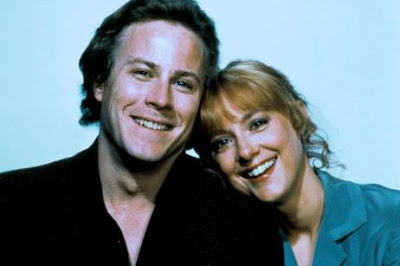
John Heard and Mary Beth Hurt from Chilly Scenes of Winter
A major studio, United Artists, did attach itself to her third project, Chilly Scenes of Winter, a 1979 film that steers clear of cliches in charting the ups and downs of a romantic relationship (the lovers are brilliantly played by John Heard and Mary Beth Hurt). Micklin Silver’s association with UA turned sour when, after completing the picture, the studio ordered a new ending (to a less ambiguous one) and a changed title (to the frivolous Head Over Heels) against her wishes. Apparently, execs deemed her achingly honest, funny and painful modern romance too offbeat despite the fact UA fully embraced Woody Allen’s “relationship” comedies Annie Hall and Manhattanand took a hands-off policy concerning them. Her critically praised film was a box office bust, but she ultimately prevailed when she got the UA Classics division to release her director’s cut in 1982.
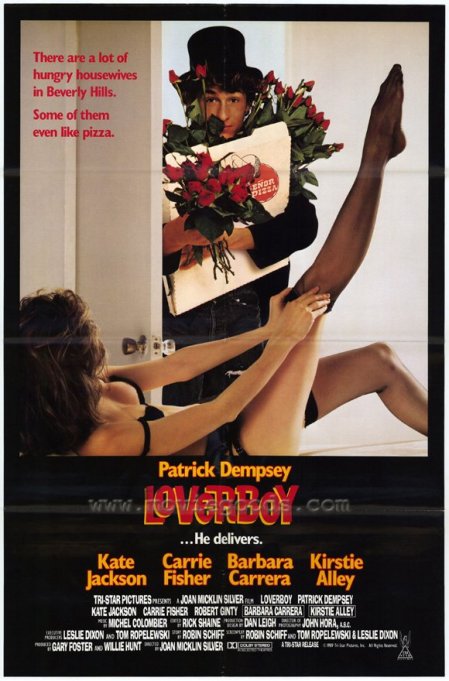
A decade removed from the UA debacle, she finally danced with the studios again when her Crossing Delancey (adapted from the Susan Sandler play) was picked-up by Warner Bros. and when she was brought in as a hired-gun to direct two screwball comedies, Loverboy (a 1989 Tri-Star release) and Big Girls Don’t Cry (a 1991 New Line release), which she did not originate. While she enjoyed doing the latter two projects, she far prefers generating her own material.
“In the end it’s more satisfying to me to be able to make films that I just feel more personally,” she said.
Her most recent work, Invisible Child, is a new original Lifetime movie drama starring Rita Wilson.
Along the way, there have been many unrealized projects. Not one to dwell much on what-might-have-beens, she feels an even playing field might have meant more chances but considers her career a validation of women’s gains, noting, “Well, you know, one always feels one could have done more. But I’ve managed to make films for many years now in a field that was extremely unfriendly to women and to make the films I wanted.” She is quick to add, however, filmmaking is a tough field “for everyone. It’s extraordinarily competitive. There are many, many, many more people who want to be in film than there are jobs.”
Besides her gender, she feels her own idiosyncratic vision has limited her options. “I think that my own bent has always been that I want to make certain kinds of films, and they aren’t necessarily the films that are seen as Hollywood-type films.” Long attracted to exploring the complex give-and-take of intimate male-female relationships, she has created a string of serio-comic pictures that compare favorably with the work of the best romantic comedy directors in history. The romantic partners in her films are far from perfectly happy and, indeed, often flounder in search of equilibrium if not bliss, as in her 1998 feature, A Fish in the Bathtub, starring Jerry Stiller and Anne Meara as a Queens couple, Sam and Molly, whose 40-year marriage finally goes on the fritz.
“It (A Fish) falls into a special category of film I like very much — human comedy,” Micklin Silver said. “It’s real, wrenching and strikes a chord.”
Unafraid to tackle the silly, messy, chaotic side of relationships, she probes issues like obsession, desire, infidelity, possessiveness, loneliness, rejection, regret. Like the smart repartee associated with Lubitsch, Wilder, Cukor or Hawks, she delights in verbal sparring matches that deflate gender myths and romantic idylls.
In Chilly Scenes the single Charles (Heard) is lovesick over the unhappily married Laura (Hurt), whom he can’t forget despite her breaking off their affair. While still attracted to Charles she feels guilty at having cheated as well as smothered by his aggressive wooing of her. She tells him, “You have this exalted view of me, and I hate it. I can’t live up to this thing you have about me.” He pleads, “Why would you choose someone who loves you too little over someone who loves you too much?” She replies, “Because it makes me feel less of a fraud.” Exasperated, he can only think to say what he feels, “Oh, I’m going to rape you.”
Micklin Silver’s men and women are equally strong-willed and neurotic. Despite their flaws, the men remain sympathetic figures for risking love in the first place and for staying true to themselves in the process. That is never more evident than in Crossing Delancey, where Sam (Peter Riegert), the pickle man, patiently waits for the upwardly mobile Izzy (Amy Irving) to come down off her high horse and finally see him for the decent if unflamboyant guy he really is. The story is also very much about the uneasy melding of old and new Jewish culture and the conflicting agendas of today’s sexual politics. Izzy is the career-minded modern woman. Sam is the tradition-mired male. Each pines for affection and attachment, but are unsure how to get it. In the end, a matchmaker and bubby bring them together.

Peter Riegert and Amy Irving in Crossing Delancey
About the male-female dynamic in her work, Micklin-Silver said, “That is something I’m quite interested in. Why? I have no idea, other than a life lived, I guess. In my own life experience I had a really wonderful father who was interested in me and paid attention to me and to my ideas, and all the rest of it. And God knows I have a wonderful, supportive husband whom I’ve had three great daughters with. I haven’t had the experience of abuse by men, so basically what I’ve done is more observe the differences (in the sexes) than the struggles.”
She and husband Ray (a producer and director in his own right) continue to partner on some projects and to pursue others separately. Their Silverfilm Production company is housed in offices on Park Avenue.
Although she rarely gets back to her home state anymore, she did come to accept the Mary Riepma Ross Award at the 1993 Great Plains Film Festival in Lincoln. On that visit, she drove across the state and was reminded just how “beautiful” the endless horizons of far western Nebraska are. “I Iove western Nebraska. It’s just so beautiful. I love a landscape that’s long and flat, and where there’s so little in the middle distance that your eye goes on and on.”
A landscape reminiscent of that is the backdrop for a project she’s developing called White Harvest, which is set on a sugarbeet farm in far northeastern Colorado. Based on a book called Second Hoeing, it is a period piece about a young girl wanting to escape her tyrannical immigrant father. “It has a great feeling for the place. It’s also a wonderful love story,” Micklin Silver said.
If the project ever flies, it would realize a long-held desire to capture the Midwest on film. “I’ve always wanted to shoot something in Nebraska. It still hasn’t happened but I want so much to come back to that world.” There’s also a film noir script she’s been honing and still hopes to make. Next spring she is slated to direct a film adaptation of the Paul Osborn play, Mornings at Seven, for Showtime.
Ideas are what feed her work and her passion. “I’m never without something I want to do. It’s your life. What you’re doing…what you’re thinking,” she said.
Meanwhile, she’s excited by the prospect of a more dynamic cinema emerging from the rich new talent pool of women and minority filmmakers.
“Yeah, it’s going to be a much richer stew, and something all of us can enjoy.”
Related Articles
- Paramount Projects Revealed: Kathryn Bigelow to Direct Will Smith?, Movement on Jason Reitman’s ‘Young Adult’, and More (slashfilm.com)
- All eyes on the prize (variety.com)
- John Farr: A Woman’s Touch: Ten Great Films From Female Directors (huffingtonpost.com)
- Actor Peter Riegert Makes Fine Feature Directorial Debut with ‘King of the Corner’ (leoadambiga.wordpress.com)
- Why I love Joan Micklin Silver (bookpod.wordpress.com)
- Yolonda Ross Takes It to the Limit (leoadambiga.wordpress.com)
Altman on Altman: A look at the late American auteur Robert Altman through the eyes of his grandson, indie Omaha filmmaker Dana Altman, and other cinephiles
first met and interviewed Omaha film producer-director Dana Altman some 15 or 20 years ago. I always knew he was related to the great American filmmaker Robert Altman but it was only a few years ago I decided to delve into his relationship with his grandfather, and then when that great lion of auteurs passed away, I wrote this piece based on what Dana and other Omaha cineastes had to say about the late great master. Of course, the story is mostly about a grandson who followed his grandfather in the business, growing up on and later apprenticing on some of Robert Altman’s pictures. It’s an offbeat story and another link in Nebraska’s rich film legacy.
The story appeared in a somewhat shortened version in The Reader (www.thereader.com). By the way, Dana Altman is a key figure in the indie film scene in Omaha, where his North Sea Films is based. As a producer and mentor, Altman was behind two seminal projects that energized the local indie film movement: the 1990s Omaha (the Movie) and 2010’s Lovely, Still; the former by writer-direcor Dan Mirvish proved that a no-budget feature made here could make a splash on the film festival and home video circuit; and the latter, starring Martin Landau and Ellen Burstyn and written-directed by Nik Fackler, may just be the film that puts Omaha and its emergent filmmaking community on the map.
Altman on Altman: A look at the late American auteur Robert Altman through the eyes of his grandson, indie Omaha filmmaker Dana Altman, and other cinephiles
©by Leo Adam Biga
Originally appeared in The Reader (www.thereader.com)
Since the November death of filmmaker Robert Altman, cinema’s mourned the loss of a model for buck-the-system nonconformity and get-your-film-made-no-matter-what resolve. For Omaha native Thomas Schatz, executive director of the University of Texas at Austin Film Institute, Altman’s the reason he got into film studies. “It was immediately after a screening of McCabe and Mrs. Miller (Altman’s ‘71 revisionist Western) in the Dundee Theater that I decided to go to ‘film school.’ True story.” For home grown filmmaker Dan Mirvish, the man behind Omaha (the movie) and the guru of Slamdance, the late director embodied the indie spirit.
In an IndieWire tribute, Mirvish wrote: “Robert Altman was a huge professional and personal inspiration to me. He really defined what it means to be an ‘independent’ filmmaker in the sense we know it today. No matter how much acclaim and experience he had, he always struggled to get financing and distribution, complained about his agents, loved to get a great cast, surrounded himself with his real and virtual family of crew, and had a hell of a lot of fun while making movies. And he just kept doing it.”
For Omaha filmmaker and Slamdance co-founder Dana Altman the appreciation runs deeper. The grandson of Robert Altman, he worked on three of his grandfather’s films – Popeye, Kansas City and Cookie’s Fortune – and saw the making of others. He shared privileged moments with him on set and at his Malibu, Calif. home. The experiences gave him an insider’s look at the process of a legendary artist whom Schatz said exerted “massive” influence on “generations of filmmakers.”
“He was the auteur’s auteur – an authentic original, a visionary filmmaker and an uncompromising individualist,” Schatz said in an e-mail. “Altman favored densely populated stories with multiple, interwoven plotlines. He worked with ensemble casts and relied heavily on his actors for improvisation and naturalistic performances. Visually, his restless, moving camera and tendency to compose ‘in depth’ kept his myriad plotlines constantly moving and made unprecedented demands on the viewer. The sound tracks in his films were equally complex and layered, with multi-track recording, overlapping dialogue, ambient sound and canny use of music providing a perfect complement to his visual and narrative design.”
Dana Altman viewed it all from a familial and film perspective. In addition to producing Mirvish’s Omaha (the movie), he’s crewed on such features as Alexander Payne’s Citizen Ruth, Election and About Schmidt. He’s the owner of his own local film production company, North Sea Films. He and his fellow Omahans admired how the elder Altman always marshaled on despite battles with studio executives and struggles to find financing. How his idiosyncratic vision never wavered, not after critical-commercial failures, not even after a heart transplant he kept secret from the public. Up till the end he was still scrapping, prepping a new film at age 81.
“It was always difficult for him to find financing. It was always difficult for him to make films. But he would make a film a year, sometimes two,” Altman said. “Certainly the maverick. the last thing he would do is compromise his take or his decision about what picture to make or how that picture was to be developed. He personally took them on. They were his pictures through and through. I mean, he developed the idea for Three Women from a dream that evoked the oddest visual palette for the film. It’s like one oil painting after another. Every frame of the film is just so obscure and unique and beautiful and disturbing at the same time.”
Schatz said the filmmaker was the “consummate independent, who always made films his own way and on his own terms – even if it meant making movies on 16mm or in Europe or doing cable TV series. And it was always about the art.”
The grandson echoes many others in saying that any appraisal of the late great artist must conclude that among American feature filmmakers “his struggle and fight” with the system set him apart. “Orson Welles may be the closest counterpart to that same path. But no one else,” Altman said.
Mirvish recalled an exchange with Robert Altman that taught him a lesson: “I once saw him and referred to myself as a director. He asked if I was directing anything now. ‘No,’ I sheepishly said. ‘Well, then you’re just a guy who HAS directed,’ or something to that effect. The point is, just make the next movie. It’s great advice to all of us. An Altman tactic was to set the start date, believe you’re making the movie and get the train rolling. And don’t stop…”
“It’s about doing it,” Dana Altman said.
Mirvish, also the director of Open House, considered Bob a generous mentor.
“I met him several times over the years through Dana. He was a big help on Omaha (the movie),” Mirvish described via e-mail. “The first place we screened it was in New York at what was then the Independent Feature Film Market. The night before our big screening, he (Robert Altman) asked if it would help or hurt us if he came to the screening. We’d already shown him a rough cut. We said definitely it would help. Back in those days filmmakers were lucky if they could get five people to their screening. But as soon as Bob walked into the complex, he was like the Pied Piper…everyone in the building just followed him…We wound up with a packed house. Dana and I sat right behind Bob and about two-thirds through, he got up and walked out. My heart sank. I was afraid all those people would walk out with him. Thankfully, he just had to go to the bathroom and came right back in. Even though we would go on to play in 35 festivals around the world…in terms of industry attention, that screening was really the high point for the film. We definitely became the buzz film of the market.
“His influence on me was very prevalent on Open House, too. There was one particular conversation we had with him in New York as we were finishing Omaha…that was all about how he would shoot musical scenes with the actors singing live on set. So when we decided to do Open House as a musical, we basically did it using the Altman method.”
Dana said his grandfather “very much enjoyed Dan’s work” and took a keen interest in his own work as well. “He was very proud of my accomplishments. He never would talk specifically about the work beyond, ‘That was good.’”
Mirvish recalled how Dana asked his famous grandfather for advice. “When we first came up with the notion of Slamdance back in the fall of ’94, Dana…called up Bob and asked if we should forge ahead at the risk of pissing off Sundance. ‘Sure. Fuck ’em,’ he said. And with that, Slamdance was born.” It wasn’t the last time Altman asked Bob, which is what he called his grandfather, for advice.
Dana was born in Calif. and raised in Fremont, Neb. His mother is Christine Altman Westphal, whose mother Lavonne Cubbison grew up in Fremont. It was just him and his single mom for a while, living as hippy-gypsies until settling down to small town life. He caught the cinema bug as a 15-year old props assistant on Popeye (1980), By the time he was transportation coordinator on Kansas City (1996) and props assistant on Cookie’s Fortune (1999), he was making features, TV spots and corporate image campaigns.
He’s not the only Altman who proved his cinema chops on Bob’s sets. Dana’s uncles, Bobby, Stephen and Matthew, served key camera, production design and art department roles on many of their father’s films. Aside from a few forays in her father’s early films, including a bit part in his first feature, The Delinquents, Dana said his mother “was never really in the machine of film” like her brothers were.
Although he bears the weighty name now, Altman broke into the business on his own, under his birth surname of Johnson, not by any association with his grandpa. He apprenticed as an editor at Universal Pictures in ‘89-‘90, helping cut such series as Columbo. Then, against Bob’s advice, he left L.A. for Nebraska, just a week short of getting his Editor’s Guild card. Why? Ironically, Dana said he was disgruntled with the old boys network that determined who advanced and who didn’t in Hollywood. He only changed his name to Altman after moving back to Nebraska and starting a family. He and his wife Deanna Lee Altman are the parents of six children.
He said leaving L.A. for Nebraska is “the best decision I’ve ever made.” He did heed his grandfather’s advice when Bob urged him to change his name.
“Bob and Kathryn called and said, ‘You should give your family some heritage.’ I fought it because it’s the same thing I hated about L.A. I was incredibly frustrated watching people come into the system based on who they were, not what they could do,” Altman said. “It’s about who you know and what your last name is, not how skilled you are. It was hard for me out there seeing how it operated and now people got in the game. That’s always been the fight…that I want to be good regardless of what my last name is. That’s the most important thing.”

Dana Altman
It’s not that he isn’t proud of the Altman tie. He just doesn’t want people to think it opened doors for him. “I mean, I enjoy it,” he said. “I don’t take anything away from it. But when people ask me — How’s your work influenced by Robert Altman? – I don’t know. I may be blood from my mother’s side, but does that make me a great artist? Does that make somebody talented? I don’t think so. I see kids that have no family heritage in the business, and they’re better than I am.”
In the end, Altman decided to claim the name, he said, “as a way of giving my kids some lineage, some heritage, some history.”
Besides Omaha (the movie), Altman’s produced the horror flick Kolobos and the comedy Out of Omaha. He’s directed one feature, The Private Public, and hopes to “get around” to another. One time he wished he’d followed Bob’s counsel was when he put his own money on the line for Private Public, something he was told never to do. The film failed to recoup his own and other investors’ capital.
In addition to doing work for clients like the Metropolitan Utilities District, he’s preparing to produce the much-anticipated feature debut of Omahan Nik Fackler, the wunderkind director of acclaimed dramatic shorts and music videos. Just as Bob took young filmmakers under his wing, Dana’s known to do the same. Altman’s uncles Bobby and Stephen may fill director of photography and production design roles, respectively, on Fackler’s film, entitled Lovely Still.
As a kid living in Fremont Altman never really harbored dreams of a life in cinema. It was all too far removed. Not that he hadn’t been exposed to that world. In the conference room of his spacious North Sea Films studios at 2626 Harney Street, Altman shows you a framed photograph taken on the set of M*A*S*H (1970), filmed in California. The outdoor image shows his grandfather, resplendent in big game hunter attire, signature beard and mustache intact, standing and holding him at age 3, his mother beside them and actor Michael Murphy, a regular Robert Altman stock player, beside her. A tent is visible in the background.
The first set he actually remembers being on is that of McCabe. The pervasive mud and miserable conditions of that Vancouver shoot are what he recalls, along with feeding goats and being repeatedly warned to stay off the rickety bridge where Keith Carradine meets his demise in the film.
But it wasn’t until a quirk of fate that Altman got his first real taste of film work. It was 1980 and his baby brother, Wesley Ivan Hurt, had been born with the umbilical cord wrapped around his neck, pinching a nerve that paralyzed the right side of his lip into a kind of whimsical scowl, making him the perfect choice to portray the infant Sweet Pea in Bob’s film version of the “Popeye” comic strip. That’s how it is Altman went with Wesley and Mom to Malta for the making of Popeye. Once there, Dana found himself enlisted in the ranks of crew supporting the sprawling shoot, “as there was always stuff to do. That’s how I got into props,” he said.
Admittedly, the Felliniesque Popeye marked “a weird one to step into” for a first film crew gig. “Yeah, a musical Popeye,” he said with a wry grin. For starters, “it was a really big, big shoot. It was really far away, in foreign territory, in the middle of the Mediterranean Sea,” he said. “Robin Williams, Shelley Duvall, Paul Dooley, Ray Walston and all these fantastic people. You were kind of transported to this weird little place isolated from the world. That’s all you’re exposed to the whole time. So for ten months, you know, you’re living the movie. We basically shot it all in this cove. Every single piece you see was constructed for the purpose of the movie. Not one item happened to be there. When we showed up it was a big rocky cove and when we left it was a city – a city of Popeye.”
He said he fell in love with the whole apparatus of filmmaking “once I was there and I saw the process…building the sets, sinking ships out in the cove, building ships that had boxing rings on the decks. I mean, it was just insane.”
Seeing it all come together under the attentive eye of Bob, the maestro and orchestrater of all this “controlled chaos,” captivated Altman.

Robert Altman
“How his discussions – hands pointing in all directions – in one brief moment could address lighting, movement, emotion, color, timing and whatever else needed to be addressed and corrected…” he said. “He would finish the next shot, go into another extraordinary litany of problems to be attended to. Over and over again this process would occur until his hands would fly into the air and he would yell, ‘That’s great…couldn’t be better.’ Watching, listening and trying to comprehend how this was possible is what initially got me thinking about filmmaking as a career.”
Fast forward 15 years, to Altman in his late 20s-early 30s and already a film veteran. He then sought out the opportunity to work with his grandfather. “I knew I wanted to work with him and so I just threw my name in the hat and said, ‘If there’s any task you can’t find the person for, then let me take a shot at it.’” His chance came onKansas City, Bob’s Great Depression-era, jazz-themed crime riff shot in Kansas City, Mo., where the director grew up the son of an insurance tycoon and got his start in industrial films. “Bob put me in charge of coordinating a $300,000 budget to maneuver and find and build all of the picture’s vehicles. I think we ended up with 250 pre-1934 vehicles. Sedans, taxis, police cars, ice trucks, motorcycles.”
He was given the same freedom his grandfather was known to give all collaborators.
“It was hands off. I loved that because it was truly a responsibility that was tasked to me and it was pass or fail, and failure was not an option,” Altman said. “So it was my opportunity. I would get it done and get it done well.”
His passing grade led him to Cookie’s Fortune, shot in Holly Springs, Miss., where he handled all the “personal effects” for characters, including finding an assortment of pipes, 60 in all, for the eccentric matriarch of the title played by Patricia Neal.
“It was my opportunity to learn what kinds of things were important to Bob from a creative standpoint of the scene and the surroundings that make up the characters,” he said. “Every item we were tasked to find and provide and have on set and in position in the scene meant something.”
As Altman found, any prop, even if unseen on screen, adds nuance to a shot. Without such details, he said, “something’s missing, something’s not right.”
Working on Kansas City and Cookie’s Fortune he watched with a more discerning eye how Bob directed. How he was “kind and cool, relaxed and confident, prepared to – explore.” Bob’s mastery of the set, the shot, the scene, never ceased to amaze him. His letting actors play and be the authors of the scenes. There were rehearsals, Altman said, but once cameras rolled Bob didn’t intrude. He respected actors and gave them great freedom to create.
“He would allow things to develop. He had a huge amount of confidence,” said Altman, who recalled how “Bob once said as were sitting next to the video assist, ‘I just let them (actors) do this part. My job’s over. I put all the pieces together. Now I just get to watch it unfold.’ He’d say, ‘Don’t act. Just be real.’ It’s like, Man, he has all this opportunity to really define what it is and that’s when he stood back to watch it unfold,” Yet there’s a reality to what ended up on screen, with the interplay of dialogue and people’s reactions and movements. I think that’s what amazes people. What he did in that string with The Player and Short Cuts, it freaked the system out how real it could be.”
Bob used his camera as an extension of his or the viewer’s eye, subtly scanning the action, letting shots plays out in extended takes. Dana said it was up to the camera operator to capture it all. It makes for a fluid, intimate style that can be uneasy for how invasive this sense of peering-in at private moments gets. “It’s very voyeuristic, that’s what it is,” Altman said. “It’s kind of like he lulls you in and allows you inside. And I think that’s exactly how it was for him when he sat in front of a monitor.”
For Dana, like many others, watching a Robert Altman film is akin to watching a play. “You always feel like the whole scene is right there in front of you,” he said. “He almost takes the shot exactly where my brain would want to go.”
Within this richly textured mis en scene, there’s the sense, as in life, anything or nothing at all may transpire. “In almost everybody else’s work you can kind of feel this structure – that there’s a written page somewhere and it’s either going to go here or here,” Altman said. “But with Bob I’ve never been able to guess what’s next. What the next line of dialogue or the next plot line is. You never get bored. Your brain’s on fire being a voyeur in this world. It’s life unscripted.”
When crewing, there were no long talks about theory or technique. “When I was working with him, it was work,” Altman said. “I was there to facilitate what he needed. Certainly he would define reasons why. Like our discussions about what type of vehicles or how many vehicles outside Union Station during Kansas City. He showed me photographs. ‘Here, look at these pictures, this is what I want to see.’”
Away from the set, conversations rarely turned to film. “We skipped over all that stuff,” he said. At moments like these it was a grandson and a grandfather talking about life, “just hanging out,” Altman said. “It was more personal.” Always, he said, Bob was easy to be around. “No matter what, he was accessible. I never found him to be this unattainable, untouchable great artist. I always saw him, you know, as grandpa.” It was the same way with “the great talents” he got to know on Bob’s sets, including Glenn Close and Julianne Moore — “the neatest lady I’ve ever met.” He said they didn’t talk shop, but about family. Or, in the case of Chris O’Donnell, they talked golf while Altman fruitlessly tried beating the actor on the links.
His grandfather’s sets were warm and personable. “He always created that environment where he was good to be around and you sensed the people he gathered were all together…like a family. They were cool. I’ve sensed that on Alexander’s (Payne) films as well. On other films I’ve been on it’s more of a job.”
Altman realizes he “was in a position other people would love to be in.” A part of him rues not talking more film with Bob. “It’s kind of like I missed out,” he said. “He was such a fantastic, world renowned figure who it’s rare to be in the company of.” But always, he said, duty and family trumped career or professional conceit.
One of the last times he saw Bob was in 2005, as the director wrapped A Prairie Home Companion in Vancouver, where 35 years earlier little Dana was sloshing through mud in galoshes on the set of McCabe. Altman’s wife and kids made the trip up north to visit grandpa on Prairie Home. Once again, family came first.
He said his grandfather was touched by the lifetime Oscar he accepted at the 2006 Academy Awards: “He told me he was very excited about getting an Oscar for the volume of his work rather than just one (film).” Altman was delighted the Academy saw fit to honor his grandfather “before it was too late.”
When news of his death reached him, Altman said there was little time to react as “it all happened quickly. No time really for a service. I took my wife and five of our six kids and it was just us family getting together for Thanksgiving at his house in Malibu right over the ocean. Some of us stood to speak our peace and say goodbye. I miss him already.”
NOTE: Dana Altman attended a February 20 memorial service for his grandfather at New York’s Majestic Theater. He plans to attend a second tribute on March 4 at the DGA Theater in Los Angeles. Robert Altman will be posthumously accorded a lifetime achievement award at the Spirit Awards on Feb. 24; in addition, the awards committee has created the Robert Altman Award, to be given out beginning next year to a film’s director and ensemble cast.
Related Articles
- ALTMAN’S “McCABE & MRS. MILLER” | TSY REQUIRED VIEWING (theselvedgeyard.wordpress.com)
- ReFramed No. 4: Robert Altman’s ‘California Split’ (Short Ends and Leader) (popmatters.com)
- Check it Out: Cookie’s Fortune (lawlibraryblog.seattleu.edu)
Nik Fackler, the Film Dude Establishes Himself a Major New Cinema Figure with “Lovely, Still”
My most recent article on emerging filmmaker Nik Fackler makes no bones about his establishing himself a major cinema figure on the strength of his first feature, Lovely, Still, an Omaha-shot indie feature starring Oscar winners Martin Landau and Ellen Burstyn. The pic is finally getting a general national release after having picked up a slew of admirers and awards at select screenings, most recently at the California Independent Film Festival. Watch for this film when it comes to a theater near you or plays on cable or wherever else you can find it, because it’s the work of an artist who will make his presence felt. As he prepares to make his next projects, I feel the same way about Fackler that I did about Alexander Payne when I saw his debut feature Citizen Ruth – that this is an important artist we will all be hearing much more from in the future. I look forward to charting his journey wherever it takes him.
Don’t be surprised if Landau and/or Burstyn net Oscar nominations for their superb performances. This piece originally appeared in The Reader (www.thereader.com). Omaha is home to some serious filmmaking talent. Payne and Fackler are at the leading edge of a homegrown cinema movement here, and more figures are sure to emerge.
©by Leo Adam Biga
Originally appeared in The Reader (www.thereader.com)
After what must seem an eternity, Omaha’s resident Film Dude, writer-director Nik Fackler, finally has the satisfaction of his first feature being theatrically screened. An advance one-week Omaha engagement of his Lovely, Still opens the new Marcus Midtown Cinema, Nov. 6-12.
The film’s box office legs won’t be known until its 2010 national release. Screenings for New York, L.A. and foreign press will give Lovely the qualifying runs it needs for Academy Awards consideration next year. It’d be a stretch for such a small film to net any nominations but the lead performances by Martin Landau and Ellen Burstyn are so full and finely honed they’re Oscar-worthy by any standard.
Both artists strip themselves emotionally bare in scenes utilizing all their Method gifts. Their work is: dynamic, never dull; natural, unforced. Their behaviors appropriate for the romantic, comedic, dramatic or just Being There moments.
Nods for writing, direction, cinematography, editing and music would be unlikely but not out-of-line for this gorgeous-looking, powerfully-rendered, well-modulated movie that hits few false notes. The film pops with energy and emotion despite a precious storyline of senior citizens rediscovering first love.
The local creative class is well represented by Tim Kasher’s “additional writing,” James Devney’s strong portrayal of Buck, a lush score by composers Mike Mogis and Nate Walcott and dreamy tunes by Conor Oberst and other Saddle Creek artists.
It’s at least as impressive a feature debut as Alexander Payne’s Citizen Ruth.
An indication of how much Landau believes in Lovely and how proud he is of his gutsy star-turn in what Fackler calls “a showcase role that’s very challenging” is the actor’s appearances at select screenings. That includes this Friday in Omaha, when he and Fackler do Q & As following the 6:15 and 9:15 p.m. shows at Midtown.
Fackler’s at ease with the film that’s emerged. “I am very content, although it has changed a lot,” he said, “but I welcome all changes. Film is an ever changing beast. You must embrace the artistic transformation. To not allow it, is to limit it.” Much hype attended the making of the 25-year-old’s debut feature, shot in his hometown in late 2007. It was the first movie-movie with a real budget and name stars made entirely in Nebraska since Payne’s About Schmidt in 2001.
Circumstances caused the film that generated serious buzz a couple years ago and then again at the Toronto Film Festival’s Discovery Program in 2008 to fall off the radar. Lovely producers turned down a distribution offer
They continue negotiations seeking the right release strategy-deal. Self-release is an option.

Nik Fackler
It’s been a long wait for Fackler to see his vision on screen – six years since writing it, five years since almost first making it in 2005, two years since completing principal photography and one year since reshoots and reediting.
“This has been the longest I’ve like worked on a single project for forever,” he said. “It’s really been a marathon.”
Anticipation is great, not just among the Nebraska film community that worked the pic. Whenever stars the caliber of Landau and Burstyn throw their weight behind a project as they’ve done with Lovely the industry takes note. That a 20-something self-taught filmmaker with only micro-budget shorts and music videos to his name landed Oscar-winning icons certainly got people’s attention. As did hanging his script’s sentimental story about two old people falling in love at Christmas on a subversive hook that turns this idyll into something dark, real, sad and bittersweet. Throw in some magic realism and you have a Tim Burtonesque holiday fable.
The two stars would never have gotten involved with a newcomer on an obscure indie project unless they believed in the script and its author-director. At the time Fackler lacked a single credit on his IMDB page. Who was this kid? In separate meetings with the artists he realized he was being sized up.
“It was really intimidating,” Fackler said of meeting Landau in a Studio City, Calif. cafe. “I was just super freaked out. I don’t know why. I’m usually never that way. But it was like I was about to meet with this legend actor to talk about the script and for him to kind of like feel me out — to see it he can trust me as a director, because I’m a young guy. We’re from such different generations.”
The two hit it off. Lovely producer Lars Knudson of New York said Fackler “aced” a similar test with Burstyn in Manhattan: “It’s a lot of pressure for a (then) 23-year-old to meet with someone like Ellen, who’s worked with the biggest and best directors in the world, but Nik blew her away. I think she called him a Renaissance Man.” Knudson said “it’s really impressive” Fackler won over two artists known for being ultra-selective. “They’re very critical. They’ve done this for so many years that they will only do something if they really believe it’s going to be good.”
Lovely producer Dana Altman of Omaha said the respect Fackler gave the actors earned him theirs.
Anyone reading the screenplay could see its potential. Besides A-list stars other top-notch pros signed on: director of photography Sean Kirby (Police Beat), production designer Stephen Altman (Gosford Park Oscar nominee) and editor Douglas Crise (Babel Oscar nominee).
But the history of films long on promise and short on execution is long. As Dana Altman said, any film is the collective effort of a team and Lovely’s team melded. On location Fackler expressed pleasure with how the crew – a mix from L.A. and Omaha – meshed. “Everyone’s on the same wavelength,” he said. Still, it was his first feature. DP Sean Kirby said, “Anytime you do something for the first time, like direct a feature film, there’s a learning curve, but I think he’s learned very quickly.” Fackler admitted to making “a bunch of mistakes” he “won’t make again.”
The subject matter made the film rife with traps. Take its tone. Handled badly, it could play as treacle or maudlin. Instead, it reads poignant and tragic, and that’s to everyone’s credit who worked on the film.
Then there’s Fackler’s penchant for going on fantastical jags in his work, routine in videos but risky in features. His loose approach, such as ditching the shot list to improvise, combined with the total creative freedom producers granted, meant he could play to his heart’s content, within reason. That can lead to self-indulgent filmmaking. Indeed, he fought and won the right to shoot trippy dream sequences that ended up on the cutting room floor. But some experimental lighting techniques to express tangled memories do make an effective motif in the final cut.
Following the mostly positive Toronto showing, the team reassembled for Omaha reshoots and New York pick ups. His leads supported the fixes and coverage.
“Martin and Ellen were behind it, they weren’t annoyed by it, they thought all the reshoots were going to make the film better,” said Fackler. “It wasn’t something that felt forced or anything like that. Everyone was on the same page.”
The young artist and his venerable stars established an early rapport built on trust. “We became friends,” he said. He readily accepted ideas from them that helped ripen the script and gave its young creator deeper insights into their characters.

“What’s great about Nik, especially at his age, is he’s willing to collaborate with people. It’s still his vision, but if it makes it better he’ll change it, he’s not afraid,” said Knudson, who said the script owes much to the input of Landau and Burstyn. “He’s very sort of ego-less.”
It’s all in line with Fackler’s predilection for creating a relaxed set where spot-on discipline coexists amid a way-cool, laidback sensibility that invites suggestions. On location for Lovely he exhibited the same playful, informal vibe he does on his videos: whether going “yeah, yeah” to indicate he likes something or pulling on a can of Moen between takes or doing a private, Joe Cocker dance watching scenes or saying to his DP setting up a shot, “Feelin’ good then? Then let’s kick ass!”
Fackler’s totally of his Generation Y culture, just don’t mistake his nonchalance for slacker mentality. He’s all about the work. He carved a career out-of-thin-air directing videos for Saddle Creek recording artists. His shorts netted the attention and backing of Altman. He cobbled together casts, crews and sets, often doing every job himself, before Lovely. He hung in there six years waiting for this moment, working at his family’s business, Shirley’s Diner, to pay the bills.
“If there’s ever a roadblock you can always get around it. It’s just a matter of taking the time…and not giving up. I wanted the roadblocks. I was like, Bring ‘em on, because I had a lot of ambition and I still do. I guess it’s just something that I always thought anything is possible. It’s like the naive child in me never left me. I love it. I try to get everyone else around me to feel the same way.”
It was in an L.A. editing room where the jumble of material he shot for Lovely finally came into focus.
“The film from script to screen went through a lot,” he said. “I tried every possible edit. That’s why we ended up editing two months more than we thought we were. But luckily, you know, everyone — producers and investors – were supportive of that process, They didn’t put that much pressure on me because they saw that the film was pretty good, they liked it, and so they allowed us to do it. I ended up throwing the dreams out all together because they weren’t working, and using the experimental lighting scenes because they ended up looking so good.
“I have no regret cutting things I shot. I love the film I have. I love cutting stuff. My philosophy while editing was to not be attached to anything. Once I lived by that rule, everything came free. What matters is making the best film possible, always.”
That mature-beyond-his-years attitude drew Altman to be his mentor. Altman, whose North Sea Films produced Lovely with Knudson and Jay Van Hoy’s Parts and Labor, credits Fackler for hanging in there and doing what’s best for the project, saying: “it’s taken a great deal of patience. Poor Nik, he really does want to see this get released.” Whatever happens, Fackler’s satisfied with what he’s wrought.
“I like to take children’s themes that anyone from any age can understand and then put them in these like really harsh realities of what life can be like. Lovely, Still is very much written to evoke some kind of feeling. It takes place during Christmas time and it deals with family and love. It’s multi-layered. For some people that may be a happy feeling and for others it may be depressing. Art is trying to create a new feeling you’ve never felt before. You watch a film and you leave the film feeling a new way. You may not have a name for the feeling, but it’s new.
“That’s all I can hope for.”
He recently collaborated with cult comic strip-graphic novel artist Tony Millionaire on a script adaptation of Millionaire’s Uncle Gabby. “I can’t wait to bring existentialism and poetry to the children’s film genre,” said Fackler. ”I’m also excited to work with puppetry. It will be like playing with toys! ALL DAY LONG!”
Altman, Knudson and Co. have informal first-look rights on Fackler projects.The same producers who’ve had his back on Lovely look forward to a long association. “Like Dana (Altman), we want to continue working with Nik and we want to create a family sort of, so he feels protected, so he can make the movies he wants to make for the rest of his career,” said Knudson. Radical, man.
Meanwhile, the Film Dude returns from the Sao Palo (Brazil) Film Festival in time for this weekend’s Lovely events. Then it’s back to imagining and waiting tables. Tickets for Friday’s event are $10 and available at www.marcustheatres.com or the cinema’s box office, 3201 Farnam St.
Related Articles
- Landau and Burstyn in Lovely, Still Trailer (screenhead.com)
- Film Fall Preview: Money, horses and death (ctv.ca)
- Spirit Awards 2011 predictions and Joel McHale comments (hollywoodnews.com)
- Winners Announced for 2011 Film Independent Spirit Awards (prnewswire.com)
- Canceled FX Boxing Show, ‘Lights Out,’ May Still Springboard Omahan Holt McCallany’s Career (leoadambiga.wordpress.com)
- Yolonda Ross Takes It to the Limit (leoadambiga.wordpress.com)
- Yolonda Ross is a Talent to Watch (leoadambiga.wordpress.com)
Filmmaker Nik Fackler’s magic realism reaches the big screen in “Lovely, Still”
This is the second of three articles I’ve written thus far on rising young filmmaker Nik Fackler, whose first feature film, Lovely, Still marks him a serious talent to be watched. I expect to be writing about him for years to come. The piece that follows, which appeared in The Reader (www.thereader.com), charts his film first making a bit of a splash at the Toronto Film Festival. New footage was actually shot after those screenings up north and the film reedited. It has since played a number of festivals in the U.S. and abroad, generally to quite warm reviews.
NOTE: Lovely, Still is having its national release in September and October. Look for it at a theater near you, and don’t be surprised if one or both of its stars, Martin Landau and Ellen Burstyn, nab Oscar nominations for their superb performances.
Filmmaker Nik Fackler’s magic realism reaches the big screen in “Lovely, Still”
©by Leo Adam Biga
Originally published in The Reader (www.thereader.com)
Lovely, Still’s selection for the Toronto Film Festival’s Discovery Program confirms the promise of its writer-director, Nik Fackler, is being fulfilled.
His romantic, melancholic debut feature shot last fall in Omaha culminates the young visionary’s coming-of-age ascent; one that began with his arresting short films and transitioned to cinematic music videos for Saddle Creek Records’ artists.
All signs pointed to this moment. Getting the support of veteran producer Dana Altman. Landing a William Morris agent before age 20. Doing his wunderkind thing with those ambitious, artful shorts/videos. Attracting interest from Hollywood royalty in his Lovely script, whose first draft he wrote in his teens; then having two Oscar-winning legends, Martin Landau and Ellen Burstyn, agree to play the leads.
It’s off-the-hook stuff for anyone, much less somebody launching a feature career out of Omaha. Then consider he’s 24, entirely self-taught and harbors dreamy, idealistic notions about making art and overturning a system he says is “dying.”
In truth, he’s now part of the movie apparatus. Oh, he’s an indie spirit alright, dancing to a downbeat all his own. He retained creative control of Lovely, whose editing he had a close hand in. But now that he’s in-play with a commercial feature boasting above-the-title stars making its world premiere at a prestige fest, where its likely to garner a theatrical distribution deal, he’s poised to be a hot property.
We’re not talking sell-out but getting drawn further into the Hollywood sphere. Offers for studio projects may come if the film finds an audience or not. Fackler may or may not follow up with “a winner.” He may choose to remain off-the-grid, continuing to make small indie films in his own backyard. You get the sense he doesn’t much care as long as he gets to keep making films. His way.

Making Lovely confirmed that. He recently looked back on the experience -with a mixture of wonder, appreciation, chagrin and recognition, the way any young man would after the whirlwind of his first great love subsides.
After living with this project for years – writing, rewriting, shooting, editing, morphing, and now making its public debut – what does he think about it?
“I’m very happy with the film. It’s an odd little gem in my eyes. It really has evolved, like any good project will, into something completely different than I expected. It’s the most satisfying part of the whole process – trusting in the magic of creativity and the movement of energy,” he said.
A strong visualist, he’s pleased with Lovely’s look. “The colors in the film all turned out the way we wanted,” said Fackler. “Sean Kirby (director of photography) is brilliant.” For months Fackler worked with editor Doug Criser (Babel) in L.A. Only recently the film was locked in Seattle for color corrections, titles-effects. Then sound mixing, additional dialogue recording and mastering was done in New York.
“I got to do some last minute cleanups and retouches, a rare opportunity I quickly jumped on. Nothing better then sitting with a film for months, being bugged to hell by a few problems, then given the chance to go fix those problems,” Fackler said.
Fackler, also a musician, thinks and talks about film in terms of beats. For him, it’s all about flow and pacing, improvising as he sees fit, yet never losing track of the whole composition. Much changed on set during the seven-week shoot.
“I’m a big changer of things, which will drive people crazy, but it has to happen sometimes because that’s the way art is. It becomes it’s own monster and then you just kind of gotta ride it. And once you change one thing it dominoes and you’ve got to change the way other things are shot.”
As Fackler found his rhythms, he said he often threw away the shot list, riffing new ones on the spot – both as a creative stimulus for himself and the project and as a practical solution to making his days.
“The first week was really following the shot list, blah, blah, and I was getting really bored and the next couple weeks was going off the shot list, doing stuff on the fly,” he said. “I mean, obviously some stuff I had planned out and didn’t want to go from. But with some of the dialogue scenes I shot them very loosely.”
He also indulged what he calls “special shots.” Hours spent setting up and filming highly “orchestrated” dollies meant cutting into the meat of the day, which forced him to resort to off-the-cuff, hand-held shots for other scenes. “I wouldn’t have enough time for anything nice.” Even though “it was pissing everybody off,” he said, “I wanted to get these special shots – they’re important. They describe me as a filmmaker and they’re right for the movie.”
Straying too far from an already short-production schedule makes crews nervous and he soon found himself reined-in by producer Lars Knudson. “He was like, ‘You’ve got to get back on the shot list because people don’t know what you’re shooting.’” Fackler complied but there were still times, by choice or necessity, when a single shot made do in place of multiple ones. An Old Market sequence slated for three days was truncated into one night. He needed more time.
Some of the biggest changes involved scenes where protagonist Robert Malone (Landau) slips off into fantasy or memory jags. Effects that were to have been achieved on a green screen were instead captured in the camera through imaginative lighting, art direction, camera moves, lens work and double exposures. “Old school stuff,” said Fackler. “I loved it.”
He said he made the call to nix much of the green screen work out of concern the film’s small budget would compromise the integrity of the effects. “It was too risky in my mind to do a big green screen shot that could end up looking like shit.”
An example of Fackler being open to discovery occurred when collaborators brought to his attention his obsession with doorways. That led him to using a door — built by the crew — as a symbolic portal that pops up throughout the film, in all sorts of settings, from the middle of a field to a street. whenever Robert’s mind flits in and out of reality. Those scenes appear in varied hues that key off colors in the door’s stained-glass window.
It went from being grand to simple – like how the film begins. “Now it’s a really gray, stark, static, quiet moment,” he said. Fackler said he tends to write in a big melodramatic style and then strips away or pulls back to get at the heart of things.
Part of this approach is staying in touch with the film’s internal rhythms.
“That’s what’s so fun about it,” he said. “That’s the magic. There’s a way the film wants to be made and you’ve got to listen to it. You just gotta go with it. If it needs to go in a certain way that’s completely different, I won’t deny it that. If I stuck locked into any one idea, that wouldn’t be fair. I wouldn’t be following the energy that’s leading me. I’m basically directing that energy. I follow it and then everyone follows me with it, and luckily everyone trusted me enough to do it.”
The experience of his first feature, he said, “was just a big learning curve. I’ve learned a huge part of it is adaptation. Adapting to the situation you’re given. There’s so many people involved and so little time that things have to change from the way they’re in your head. We coined the term ‘adapt and improve.’”
It’s also about embracing imperfections. “I love mistakes. I love when someone says the wrong line or a strange noise is made in the background. It makes the film more real to me. I tend to choose the takes that have mistakes in them,” he said. “It makes the film seem more human and not staged.”
Some gaffes can’t be kept. “You cut together a scene and say, ‘Shit! Why didn’t I a get a close up of that clock?’ We had a two-day reshoot up in New York to pick up some shots. All part of the process I suppose. Kinda fun. Something I don’t get to do as much in music videos.”
Editor Doug Criser worked alone in L.A. compiling an assembly before Fackler joined him in February. Fackler copped to secretly editing back in Omaha, saying, “Ideas come when I edit and I didn’t want to lose those ideas.” Together, the pair worked “scene by scene” through the film, making corrections and then Fackler finally got to watch the first cut. “Watching an assembly is just to hard,” he said.
A typical edit session went from 10:30 a.m. to 8 p.m., with Criser at the Avid and Fackler on a couch. Reviewing scenes Fackler said, “I would kind of conduct. We have a language we use with each other. ‘Hey, could you take some heads off that shot?’ (remove a few frames from the beginning). Or, ‘move it to the right (forward) or left (backward).’ Or, ‘We need to finesse that sequence (it moves too slow).’ To more detailed things like, ’We need to add a beat there to build some tension.’ What’s so fascinating about cutting is you’re adding moments that weren’t there.”
He reports that a preview screening for the cast went well. “They really loved it.”
After working with Landau and Burstyn he has a deeper respect for the actor’s craft. He knows now he can work with old Hollywood pros. But he’s still not comfortable with the business-trumps-art L.A. scene.
“I don’t agree with how art is turned into a product so much out here. It’s depressing.”
Plans for an Omaha screening are pending.
Related Articles
- Landau and Burstyn in Lovely, Still Trailer (screenhead.com)
- Film Fall Preview: Money, horses and death (ctv.ca)
- Yolonda Ross is a Talent to Watch (leoadambiga.wordpress.com)
- The Film Dude, Nik Fackler, Goes His Own Way Again, this Time to Nepal and Gabon (leoadambiga.wordpress.com)
- Omowale Akintunde’s In-Your-Face Race Film for the New Millennium, ‘Wigger,’ Introduces America to a New Cinema Voice (leoadambiga.wordpress.com)
Promising writer-director Nik Fackler embraces his first feature film experience
The following story is my attempt at portraying someone I am convinced will be one of the world’s leading film directors in a short time, if he isnt already. The story appeared in a truncated form in The Reader (www.thereader.com) as he was finishing production on Lovely, Still, his made in Omaha feature starring Oscar winners Martin Landau and Ellen Burstyn. The film had limited theatrical distribution in 2008-2009, but is finally get a general national release this year. Everywhere it’s played it’s gotten good reviews and been well received by audiences. I believe Fackler is well on his way to fulfilling the promise of greatness his work has shown almost from the start. And don’t be surprised if Landau and/or Burstyn pick up Oscar nominations for their superb performances.
Promising writer-director Nik Fackler embraces his first feature film experience
©by Leo Adam Biga
A shorter version of this story appeared in The Reader (www.thereader.com)
There’s something subversive about a 23-year-old coming out of the music video world to direct Oscar-winners Martin Landau and Ellen Burstyn in a serious indie drama about the passion an elderly couple feel. A postmodern It’s a Wonderful Life. As sweet as it is dark, Nik Fackler calls it “a fairy-tale, but told in the real world.”
Fackler is the most promising homegrown film talent Omaha’s produced since Alexander Payne. That’s a heavy comparison, but Fackler’s work has been turning heads for a half-dozen years. Whether his first feature is a fully-realized work or an unfulfilled promise remains to be seen. Will he have staying power? Nobody knows.
On the surface Lovely’s about dull, lonely, isolated Robert (Landau) finding love, for the first time, with worldly, vivacious Mary (Burstyn). She seemingly comes into his life from left field.
The subtext of the original story contains funny, hard, ironic realities dramatized in stark relief and in dreamlike scenes that remind one, on the page at least, of Tim Burton-Terry Gilliam phantasms. These light-dark interludes play off the confused mind of Robert, whose grasp of reality is fragile. The mystical montages will be shot inside and outside North Sea Films, an Omaha film-video production house.
North Sea founder/chairman Dana Altman, a Fackler mentor, is producing Lovely with 20-somethings Lars Knudson and Jay Van Hoy of New York-based Parts and Labor.
Lovely’s key crew – from director of photography Sean Kirby to production designer Stephen Altman – are Hollywood/indie veterans with the chops to pull off effects in-camera and on North Sea’s green screen.
The part of Robert demands Landau play a full gamut of emotions – love, desire, fear, anger, loneliness, confusion, joy, innocence, distrust, paranoia. Fackler said the “showcase role” is “very challenging.” Burstyn’s character must react to Robert’s wild swings; and her performance is tinged by the potent secret her character Mary keeps, and the delicate balance she maintains to preserve it.
Seldom have “seniors” been given such complex dimensions on film. Then there’s the much hushed-hushed hook or high concept the story turns on. This has to do with the secret, the well-intended ruse to preserve it, and ensuing fallout when the deception backfires with unforeseen consequences.
Now in its fourth week of production in and around his hometown, Lovely could be a coming out party for Fackler. He previously made waves only in indie music circles. This $1.2 million-budgeted project with high cachet actors in Oscar-friendly roles could put him on a fast track to a major filmmaking career.
“The great thing about Lovely, Still is that it is sort of under the radar,” Knudson said. “Because Nik is in Omaha, not in L.A. or New York, people don’t really know who he is yet and I think that’s going to be really good for this film. It’s going to come out and hopefully just blow people away.”
Even though Fackler’s barely in his 20s, Lovely’s a long time in the making. He first wrote it in his teens. It came close to shooting in 2005, but financing wasn’t secured until this past year through New York investors Knudson and Van Hoy have a history with. Fackler’s waited five years and there were, Altman said, “crying times.”
“A lot of independent films I’ve produced have taken four-five years and it’s frustrating, it’s difficult,” said Knudson, whose Old Joy did well on the indie circuit. “You just never give up and then one day you make it. But I think Nik’s glad he’s doing it now and not two years ago. I think he’s ready now. Going through all the bad times has actually made him that much stronger. The timing is right.”
On location in mid-November Fackler expressed satisfaction with how the crew – a mix from L.A. and Omaha – were meshing. “Everyone’s on the same wavelength – that’s why it’s turning out great,” he said. Still, it’s Fackler’s first feature. DP Sean Kirby said, “Anytime you do something for the first time, like direct a feature film, there’s a learning curve, but I think he’s learned very quickly…” Fackler said, “I made a bunch of mistakes the first day I won’t make again…”
Vision outweighs inexperience, Kirby said. “I think he’s a visualist,” said Kirby. “One of the great things about film is that it really is a kind of age-less art form. The vision is something that is outside of age, and he has a vision we’re all trying to support. That’s why we’re all here”
Fackler’s passion and vision sold Knudson and Van Hoy on him. It’s what sold Fackler to Saddle Creek Records artists, for whom he’s made music videos, and to the William Morris Agency, which represents him.
“Nik is one of those guys we fell in love with after seeing his stuff,” said Knudson, whose business partner, Van Hoy, is currently producing the feature Going Underground in New York. Altman, who long ago spotted Fackler’s talent, spent four years packaging Lovely before finding the right fit in Knudson and Van Hoy, who learned the business under Scott Rudin and now produce indie work by writer-directors with a strong personal vision. “Lars and Jay came at the perfect time. The film is set up now in the best possible scenario… because this is what independent film is,” Altman said. Fackler retains ultimate “creative control” on Lovely, said Knudson, adding, “that’s a rare thing.”
“The thing that’s cool about this is how much control I have over it and I think filmmaking should be that way,” Fackler said. “I think any artist should be in complete control of their project.”
Last winter Fackler expressed frustration when plans to shoot Lovely were again delayed. He even toyed with the idea of, in the interim, making a down-and-dirty thriller with a grindhouse gimmick, but then Lovely finally got the go-ahead. Even then, Lovely almost didn’t get made here. Nebraska’s lack of incentive earmarks for film production gave investors pause before they relented.
The fact it took some time before the film came together turned out to be a blessing in disguise. The script’s undergone many changes since Fackler first wrote it, reflecting his maturation from boy to man.
“I’ve been rewriting this script every year – driving people nuts with it – because I keep changing,” he said. ” I was a completely different person when I first wrote it at 18. I go back and read the first draft and I‚m like, ‘Oh, it’s sophomoric.’ You learn more, you experience more, you feel more – and you take advantage of that and then put that in your art. So it’s good it took five years to get this film made.”
Knudson said the script has been made stronger “with the help of a lot of different people.” Fackler said the final script does retain the fairy-tale quality he intended from the start: “I like to take children’s themes that anyone from any age can understand and then put them in these like really harsh realities of what life can be like.”
“It starts really dark, so it will be shot really dark,” Fackler said. “Lots of shadows and blues. And then as it gets happier I want to literally change the color of the film. Like even the same locations change brightness and color ˜ they become fairy-taley – just to set a different tone. Then it gets darker than it was before and then gets kind of happy again before it ends in the real world.”
As far back as the shorts Jack and Jill and Mynoot Loss he’s explored the dark side. “I don’t know why it is for me that it’s so much easier to be dark than it is to be happy,” he said. “I haven’t had any problems. I had a great childhood -that’s why I’m actually like stuck in it. It’s like I don’t want to be a dark person but it’s in there, so I have to get it out somehow, and it breaks out in my art. Maybe it’s because I had people kill themselves around me. That was part of growing up.”
He refers to his late friend Erin, to whom Jack and Jill is dedicated. “She took her own life and it kind of stuck with me. I was 17,” he said. He put down what he felt in words. “Whenever I’m feeling really angry I can write it out of me. I think it’s therapeutic. But also I use it as a creative tool. Like when I was writing Lovely, Still the emotions I was feeling in the relationship I was in I put into the characters.”
After years trying to get Lovely made, frustration nearly drove him to a big-budget studio deal to do a “creature feature” flick.
“I had the contract. I was seconds away from making money. Real money. Money I could buy a house with. But I had to follow my gut,” he said. “I had to stick to my guns. Just because I’m broke I can’t jeopardize the last four years. I owe it to myself.”
Another benefit of waiting was landing Burstyn and Landau. Burstyn, Best Actress Oscar-winner for Alice Doesn’t Live Here Anymore, has six Academy nominations. She co-directs the Actors Studio in New York. Landau, who goes back to the Studio’s heyday in the ’50s, when he and fellow student James Dean were fast friends, has taught acting for decades and directs the Actors Studio West. He won the Best Supporting Actor Oscar for Ed Wood, one of his three Oscar nominations.
We’re talking actors old enough to be Fackler’s grandparents. Actors who’ve worked with icons — Hitchcock, Mankiewicz, Bogdanavich, Friedkin, Coppola, Scorsese, Allen – Fackler only knows via Net Flix or dusty film books. But directing these 70-somethings doesn’t seem to phase him. That’s in keeping with his free spirit, one that won’t be shackled or censored, even around film royalty.
A Monday morning shoot at the French Cafe finds Fackler in sneakers, jeans, sweatshirt and whimsical Dr. Seuss stocking cap. He variously: grooves to some internal beat between takes on set, swaying his tall, lithe body like a snake charmed into dance; hums-sings some song lick; skips between the open spaces in the dolly track on the floor; and affects a ridiculous Italian accent with Landau, who takes it up in kind, adding a mob edge to his mock dialect.
Standing to watch a take unfold on a tiny monitor, Fackler rocks up and down, hands hung at his side, fingers twitching. As Landau-Burstyn complete the intimate dinner scene at the Cafe, a finely nuanced moment lit by candlelight and framed against a stained glass window, the filmmaker raises both arms overhead and, like a conductor, swoops his hands down with finality, declaring, “Cut!” He’s pleased.
The uninhibited, childlike quality of Fackler keeps his sets relatively loose.
“He’s very sort of ego-less,” Knudson said. “He’s just as excited talking to someone on the crew or to a random guy on the street as he is talking to Martin (Landau). He brings the same energy.”
There’s no mistaking how much is on the line with this project, however.
“Our budget is over a million dollars – that’s a lot of money to be giving a guy who just turned 23 and is directing his first feature,” Knudson said. “As a first-time director you have a lot against you already because you haven’t proven yourself at all. That’s a lot of pressure to put on him.”
Fackler doesn’t show it.
“If you’re going to be a good director you can’t ever be stressed out or ever be intimidated because you have like a whole crew and cast around you looking to you for what to do. You definitely can’t fold,” Fackler said.
That required exterior doesn’t rule out internal explosion, “which happens all the time,” he said.
He admits he was intimidated the first time he met Landau and Burstyn, who sized him up. When the actors first expressed interest in the script, each took a meeting with the artist without a single credit to his name on his IMDB page. Who is this guy?
“It was really intimidating,” Fackler said of his meeting with Landau in a Studio City, Calif. cafe. “I was just super freaked out. I don’t know why. I’m usually never that way. But it was like I was about to meet with this legend actor to talk about the script and for him to kind of like feel me out — to see if he can trust me as a director, because I’m a young guy. He’s got to respect me to do what I say and I’ve got to show him the respect he deserves. We’re from such different generations.”
The two hit it off. Knudson said Fackler “aced” a similar test with Burstyn in New York: “It’s a lot of pressure for a 23-year-old to meet with someone like Ellen, who’s worked with the biggest and best directors in the world, but Nik blew her away. I think she called him a Renaissance Man.” Knudson said “it’s really impressive” that Fackler won over two artists of such caliber. “They’re very critical. They’ve done this for so many years that they will only do something if they really believe it’s going to be good.”
The fact Fackler attracted these heavyweights is proof “the kid,” as Landau refers to him, has the right stuff. That two veterans liked the story and its young creator enough to entrust him with directing the piece and them in it tells you there’s substance behind his slacker’s facade. That Fackler has been, in Landau’s words, “amenable” to notes he and Burstyn feed him in order to smooth “the bumps” in the script, shows the kid is no fool.
“What’s great about Nik, especially at this age, is he’s willing to collaborate with people. It’s still his vision, but if it makes it better he’ll change it. He’s not afraid,” said Knudson, who confirmed the script owes much to the input of the lead actors.
Fackler said Landau made comments like, “‘I think this still sounds a little young in this area.’ And I was like, ‘Alright, let’s fix it.’ Definitely a collaborative effort. He was kind of a mentor for a month straight. He taught me stuff. I just took notes listening to him.”
The same with Burstyn, who honed in on “really simple, really small things,” Fackler said. “Like the opening line of the script got changed just a little bit because she thought it” contradicted the secret revealed near the end. “She wanted to make it even more obscure.”
With his long, cherubic face, piles of brown hair and pseudo-grunge wear, Fackler looks and sounds like the Generation Y child he is. One who became a filmmaker by just doing it. Gen Y is into affordable audio-video technologies that make music-film production accessible.
“Our generation is like the-do-it-yourself generation – you can do whatever you want,” he said. “Like, if you want to make a record, you can do that now where you couldn’t really do that years ago. The same with film. That’s the whole thing with digital, man. Anyone can make a film. Independent projects are so possible.”
Every project before Lovely was an exercise in stretching himself creatively.
“I kind of just kept setting goals. Each project had to be something completely different for me – a new experiment,” he said. “I get bored easily with stuff but filmmaking hasn’t got boring yet and that’s because there are infinite possibilities with what you can do. It’s an experimental art.
“There’s a solution to every problem that’s put in front of you, and if there’s ever a roadblock you can always get around it. It’s just a matter of taking the time…and not giving up. I wanted the roadblocks. I was like, Bring ‘em on, because I had a lot of ambition and I still do. I guess it’s just something that I always thought anything is possible. It’s like the naive child in me never left me. I love it. I try to get everyone else around me to feel the same way.”
His Lovely crew is comprised in part by friends who go back with him on his many shorts and videos. They’ve been through production wars together, meaning they’re comfortable solving problems.
Lovely came out of this desire to explore new ground.
“I did a lot of shorts about young people,” he said. “I didn’t want to get stuck being a young director doing films about young people.”
Enter Shirley’s Diner, a classic Millard eatery owned and operated by his artistically-inclined parents, Denise and Doug Fackler. It’s where Nik researched Lovely, hanging out with older patrons, getting a sense for “what it’s like to be a human at that age,” he said. “I talked with a lot of older people. That helped. I figured out a way he [Robert] words things. He’s based on a real person I talked to at the diner. He’s a bagger at a grocery store who doesn’t talk to anyone. Everyone kind of treats him like a kid. They all take care of him. That’s kind of Robert. He does’‚t have a lot of experience having feelings. He’s really awkward. He doesn’t like to talk to people. He’s scared of interaction. He’s not happy, he’s not sad – he’s kind of neutral.”

Shirley’s Diner
The diner Nik’s family owns and operates and that he often worked at and found inspiration at for his films
Creativity is a family thing with the Facklers. “Art was always just kind of around,” he said. “It was in front of me, it was normal, so I guess I just kind of fell into it that way.” When not immersed in video games, he wrote by himself or as part of a family activity. “That was just fun stuff we did. It would be like, ‘Let’s write a book tonight,’” he said. Acting, staging, later filming, his own scenarios became playtime.
Both his parents play music. Doug also makes photographs and Denise writes, including a book-in-progress that tells the stories of people who venture through the diner, where Nik worked as recently as last summer. “My mom’s under the firm belief, and I agree with her, that everyone has a story,” Nik said. “I mean, everyone’s interesting. That’s what’s cool about the diner – you have an unlimited amount of characters you can learn from.”
Fackler didn’t formally study cinema, or even attend college, although he landed admittance to the Los Angeles Film School at 16. He chose instead to forego commercial influences.
“That would have sucked, you know, directing Scary Movie V or something. Well, who knows what would have happened. All I know is I would have heard the same thing that a roomful of people would have learned. I don’t want to be taught an art. I want to like fall into an art and just let it happen. It’s an adventure, it’s an experience – each new thing.”
“I really want to try to be different. Every generation wants to do that and that’s why things change. So I just want to make sure I’m not rehashing the past.”
Fackler is intrigued with the idea of eliciting new emotions through his art. “Lovely, Still is very much written to evoke some kind of feeling. It takes place during Christmas time and it deals with family and love. It’s multi-layered. For some people that may be a happy feeling and for others it may be depressing. Art is trying to create a new feeling you’ve never felt before. You watch a film and you leave the film feeling a new way. You may not have a name for the feeling, but it’s new. That’s all I can hope for…”
Except for brief forays in L.A. Fackler developed his craft right here. He began making short films at Millard West, along the way finding a mentor in Altman. With Altman’s help, Fackler graduated from low-end to high-end film-video production and became a much-in-demand director for Saddle Creek artists, among them, Conor Oberst, who’s scoring Lovely.
About that comparison with Payne. They followed quite different paths to their first feature films. Payne graduated Stanford before going to film school at UCLA, where he directed a thesis project that got him a studio deal. Fackler’s thesis projects are the shorts/music videos he dreamed up and made.
Despite a development deal, nearly a decade passed before Payne put together his first feature, Citizen Ruth. In the interim he wrote and directed shorts for the Playboy Channel. By the time he made Ruth Payne was in his mid-30s. Fackler is that rare animal who’s gone right from homemade, no-budget work to a substantial indie feature with a dream cast. He’s arrived, by a self-made route, at the same point Payne reached with Ruth, only 12 years earlier.
As a filmmaker, Fackler emphasizes the influence of his background in music, as a writer and musician in Family Radio.
“Music creates images. It totally does. I’ve been at points where I made the characters argue just because a song I was playing started getting more intense,” Fackler said. “The music writes it for me. That’s the same with editing. When I’m editing I like to put a song down online and edit to it. Music is very, very important. Film has a rhythm it cuts to and falls to.”
Fackler wants to make more films in Omaha, and is avoiding the Hollywood glam machine. He wants to make his next film from a fantasy script he and Matt Brown co-wrote. “It’s going to be a bigger budget” show, so if Lovely, Still does well I think I can get a studio to trust me – if I want to go with a studio. I don’t really care either way as long as they let me do what I want.”
“I’m not very snobby about film,” he said. “Like I know how it works. It’s a business just like anything else. The thing is just doing it, and if you can manipulate the business and still keep it art, then go for it.”
He and a friend are pitching an animated television series to studios. There is high interest.
Meanwhile, the producers who have his back on Lovely, Still look forward to a long association. “Like Dana (Altman), we want to continue working with Nik and we want to create a family sort of, so he feels protected, so he can make the movies he wants to make for the rest of his career,” Knudson said.
Related Articles
- Landau and Burstyn in Lovely, Still Trailer (screenhead.com)
- Spirit Awards 2011 predictions and Joel McHale comments (hollywoodnews.com)
- Winners Announced for 2011 Film Independent Spirit Awards (prnewswire.com)
- Director Sidney Lumet dies at 86 (jta.org)
- Yolonda Ross Takes It to the Limit (leoadambiga.wordpress.com)
- Yolonda Ross is a Talent to Watch (leoadambiga.wordpress.com)
Dream catcher Lew Hunter: Screenwriting guru of the Great Plains

Image via Wikipedia
For years I was aware of Lew Hunter but it was only a couple years ago I first met him, and he turned out to be every bit as interesting as I had heard and read about. Lew is the kind of personality who overturns some common misperceptions about Nebraskans. Similarly, his long career in network television, his standing as a How-to script guru professor and author, and his pricey screenwriting colony in remote Superior, Neb. that draws aspirants from near and far all defy certain expectations about the people who populate this state and what they do.
Regarding that colony, I spent some time there one summer and the following story is the result. The piece originally appeared in The Reader (www.thereader.com).
Dream catcher Lew Hunter
Screenwriting guru of the Great Plains
©by Leo Adam Biga
Originally appeared in a 2008 edition of The Reader (www.thereader.com)
EDITOR’S NOTE: Writer Leo Adam Biga spent four days and three nights covering Lew Hunter’s most recent Superior Screenwriting Colony, which wrapped June 27.
Twice a year a fractured fairy tale unfolds in Nebraska’s Republican River Valley. Superior, a prosaic Nuckolls County border town of 2,055 in the state’s most far southern reaches, draws dreamers from near and far. They come, some half way across America, some across the globe, to learn at the feet of a professor whose laidback Socratic method is Aristotle meets Jimmy Buffett.
The wise man these acolytes seek out in this Margaritaville-on-the-Great Plains is screenwriting guru Lew Hunter, a favorite son of Superior, born and raised in nearby Guide Rock. He moved to Superior as a boy.
His warm, folksy manner belies his incisive mind and cosmo experience. In a Will Rogersesque way he’s both an innocent and a sophisticate, his humor part homespun cornpone and part sly wink. Yes, he’s a product of these agricultural backroads but he’s operated in the garish fast lane of L.A. as a network television executive and producer and as a screenwriter.
Gregarious and without an ounce of self-consciousness, Hunter bares all in front of guests — his surgically repaired knees, bulging midriff, failed first marriage, his foibles, successes, philosophies, his name-dropping anecdotes and fondness for quoting famous writers. He openly lavishes affection on his two dogs. He casually tells total strangers he and wife Pamela both suffer from ADHD.
“Oh, by the way, we’re first cousins,” he adds.
Too much information perhaps but the revelation and the relationship make sense upon meeting his earthy, instinctual, effusive wife. They’re soulmates.
“It’s wonderful because we know each other’s shit,” he said. “We figure out ways in which to handle it.”
Since 2001 the couple’s hosted a pair of two-week screenwriting colonies — one in June, another in September — in Superior, some of whose Victorian residences bear National Register of Historic Places merit. The Hunters, whose roots run deep there, own two turreted 19th century showplaces. They live in a two-story mansion, the former Beale House, they generously open to visitors.
Nearby is the former Day House, a three-story, 5,500 square foot grand dame. Two eccentric old maid sisters occupied it for decades. Their spirits may imbue it today. Pamela assures guests an Australian psychic’s reading, via phone, found a stream of energy flowing underneath. Pamela ascribes it to the Ogalalla Aquifer. Whatever the source, she calls it “a happy house” conducive to “creative people.”
The Colony House, as it’s referred to today, serves as home base for the workshop and as main quarters for registrants, who pay upwards of $2,500 to glean script basics from Hunter. His book, Screenwriting 434, now in its 12th printing, is a staple for aspiring scenarists. The title comes from the UCLA class he’s taught 29 years. The book’s a condensed version of the class, just as the colony’s a power form of it.
UCLA, where he’s been voted most popular teacher multiple times, has played a huge role in his life. He earned a second master’s degree there in 1959. His classmates included future cinema god Francis Ford Coppola. His appreciation of film was enhanced watching the latest “creative expressions” by Fellini, Antonioni, Truffaut, Godard, Bergman, Kurosawa, Ray at the famed Laemmle theater chain’s Los Feliz art cinema.
“That was a wonderful experience,” he said.
Lew holds court in T-shirt, shorts and bare feet, a Diet Dr. Pepper at the ready, a sharpened pencil behind one ear. He either motors between the two houses balanced on a scooter, resembling a circus bear atop a unicycle, or behind the wheel of his pea soup green Galaxy 500.

While professing he keeps near him a file folder bulging with years of lecture materials. He fishes out writerly quotes, excerpts or tidbits to share, referencing Tennessee Williams, William Faulkner, Joseph Campbell. He relates how as a Northwestern University grad student he asked guest lecturer John Steinbeck what to do to be a great writer. The legend’s response: “Write!”
Some sessions are just Lew talking off the top of his head. Unscripted. He doesn’t need a cheat sheet, he said, “because the structure is exactly the structure I do in a 10-week class.” At table readings he reads, aloud, students’ ideas or two-page outlines and offers verbal notes, inviting group feedback. He proffers precise analysis that constitute Lew’s Rules — nearly always delivered with a smile.
“Too little story.” “Too much story.” “What’s your story really about?” “Your imagination is the only restriction you have.” “Conflict, conflict, conflict.” “Story, story, story.” “Character, character, character.” “All comedy and all drama is based on the three-act structure.” “My paradigm is situation, consequences and conclusion.” “Don’t even think about writing down to the audience.”
His racing thoughts get ahead of his spoken words. An aside leads to a digression, then to a full-fledged anecdote. If Pamela interjects, he’s gone. Just as his original train of thought threatens to derail, he gets back on track, prompting one of his favorite Lewisms, “I interrupted myself.”
Colleagues from UCLA, Ohio University and other colleges help instruct. Pamela does the rest. She’s den mother, house keeper, cook, confessor, referee, cheerleader and friend. Like a sweet-sassy diner waitress she calls everyone “Hon” or “Sweetie.” The couple’s granddaughters and friends pitch in. But Pamela holds it all together on the homefront so Lew can do his thing. She makes a killer stew. There are pizza nights, picnics, to-die-for cinnamon rolls and libations aplenty.
The we’re-just-plain-folks couple set the tone for the kick-your-feet-back and have-a-few-brews colony. It’s as far removed from a stuffy academic setting as you can get. Lew tells his guests, almost as a mantra, “Great to have you here” or “So glad you’re here.” You get the feeling he means it, too. The first night he has all assembled introduce themselves. He welcomes each again, bragging about their work, which they’ve sent him, or about awards they’ve won.
First-time colonist Bill Schreiber from Florida won the CineQuest (San Jose, Calif.) screenwriting competition. The award generated enough buzz that his high concept thriller, Switchback, is being read by major studios. That may not have happened had Hunter not been at the fest and hooked him up with his ex-agent. Contacts. Networking. It’s how Hollywood works. How a screenwriter from nowhere’s-ville gets read.
“It’s a matter of getting read. But you’ve got to learn the craft before the art can come through,” Schreiber said, “because there is a structure to it and there is a pacing to it. It’s all about reaching people’s emotions. You handle them like a yo-yo, and that all has to do with structure.”
He came to Lew and Superior he said, “to learn from him and to just elevate what I do. This is all about helping people like me who aren’t in that mainstream. It’s a way in for a lot of us who may be very talented but just can’t get over the hump or can’t make that relationship. There’s a million ways in and it all starts with a great script. Everybody’s looking for that next great script.”
Unlike most attending the colony Schreiber once broke through the system, with his very first screenplay no less, produced as Captiva Island, starring Oscar-winner Ernest Borgnine. The film found international TV distribution. That instant success soon gave way to the industry’s vagaries, however.
“It was kind of a blessing and a curse because you don’t think you’re going to have to recreate the wheel each time,” he said. “I got my first one produced and I was like, OK, here I go. But it didn’t happen that way.”
His subsequent scripts didn’t sell and he spent the next several years running his own small media company. The itch to write movies burned. Winning a contest and getting his script into the right hands has him focused on his dream again.
“That gave me the confidence I needed to say, Hey, I can write something that’s going to get noticed. I have a window of opportunity here. I better jump through it and jump as hard as I can. So here I am still plugging away at it with Lew, eager to learn from one of the masters.”
Hunter advocates students submit to contests.
“Screenwriting competitions are very fair game and one of the best ways to get paid attention to. Bill (Schreiber) will probably tell you the best part of it is he got an agent,” said Hunter. Agents allow screenwriters to hurdle “the wall” between them and getting their work read. “The validation of an agent means something.”
Jim Christensen has a similar story as Schreiber’s. His This Old Porch won an Omaha Film Festival screenwriting award. His My Triple X Wife caught the eye of North Sea Films, the Omaha company whose president, Dana Altman, co-produced Nik Fackler’s Lovely, Still starring Oscar-winners Martin Landau and Ellen Burstyn. North Sea’s optioned Christensen’s script. He’s worked many jobs but now that one of his pieces has earned money he’s pursuing screenwriting full-time.
“I feel like I’m at the stage where I’m confident I’ve got a little game but I really just want to take it to the next level because I want a career. I’m not looking for a big score, although that’d be nice.”
Alan Chang came all the way from Taiwan. A business leadership consultant, he wants to return to his creative roots as an author-editor.
“I know I’m an artist so it’s time to be an artist before my dream dies,” he said. “My dream is I will be a J.K. Rowlings-plus-Ang Lee.”
Dr. Judy Butler, a family physician in Superior, has stories she’s dying to tell. New college grads Sam McCoy, Elayna Rice and Heather Williams are 20-somethings on the cusp of separate moves to L.A. to follow their screenwriting dreams.
Hunter well knows that hunger. “I identify so much with people who are dreamers,” he said. He was a well-heeled ABC executive when the urge or, more accurately, the obligation to be a writer overtook him.
“I had been for like four or five years telling writers how to write and never having made a living as a writer myself. It bothered me a lot because I really didn’t think I had the cachet. I mean, it’s very, very alarming to give notes to Paddy Chafesky, who I idolized, or Neil Simon.”
It was Ray Bradbury, whom he was working with on a project, who told Hunter he should try it. Hunter left ABC, making a pact with his first wife that if he didn’t make it in a year he’d find a job. Fifty-one weeks later none of the six screenplays he wrote had sold. Tapped out and with a family to support, he took a job as a body sitter at Forest Lawn cemetery. The ghoulish work entails sitting up with corpses and laying them down if they rise up from rigor mortis. He’d done it at an uncle’s funeral home in Guide Rock and again to pay his way through college.
The day before he was to start Aaron Spelling called saying he wanted to buy Hunter’s script, The Glass Hammer, which became If Tomorrow Comes. If it hadn’t sold at least Hunter knew he’d tried.
Giving up the dream is never really an option for someone bitten by the bug. “I’ve been pretty much a guy that ‘no’ is just a word on the way to ‘yes.’ If I really want something bad enough, I keep on it,” he said.
Growing up an only child, hearing ‘no’ was akin to issuing him “a challenge.” As far back as he can recall he was different. Bright beyond his years. His back story reads like something from a movie.
His classically-trained musician stage mother forced him into singing-dancing-music lessons. He could only watch MGM and Paramount musicals. He resisted. A domineering woman, Lew felt he had no one to turn to, especially after his farmer father suffered a debilitating stroke. A self-described “miscreant child,” Hunter acted out enough to land in a military academy, which he’d often slip away from to gamble with “the girls” in nearby brothels. More brothels figured in his life at Nebraska Wesleyan University.
He ached to be under the lights in New York or L.A. He studied drama as an undergrad, also immersing himself in radio-television work in Lincoln. He was a DJ, a floor manager, et cetera. He wished to study broadcasting at Northwestern but was rejected. Not taking no for an answer he garnered letters of support from Nebraska dignitaries and struck a bargain with officials to enroll on a probational basis. If he got all As, he stayed, if he got even one B, he’d leave. He stayed.
“That rebellious aspect of me is still part of me,” he said.
After learning his chops as a television director in Chicago, he packed up his Packard and headed west. He worked his way up the ranks at NBC, from the mail room to music licensing to promotion, then at ABC, where he broke into programming. Producing-writing followed. Hunter’s lived the dream and now he uses what he’s learned to make others feel they can realize theirs too.
“You’re all storytellers,” he says to students. “Stories, they’re all around you, and as writers it’s up to you to see them.”
The June colony was Jim Christensen’s first but he attended two OFF workshops Hunter gave. Count Christensen a disciple.
“His mind is so sharp,” he said of Hunter, “When he reads an idea…he’s like a butcher cutting away the fat. I think the advice is always right on.”
Before the colony he steeped himself in Hunter’s book. Required reading.
“His book lays out a process that I think is just perfect. I mean, I’ve read a lot of screenwriting books…I tried to do it everybody else’s way but Lew’s way is the way that worked best. It’s structured but there’s room to breathe. It’s not like that something has to happen on page 20. He has the benchmarks but otherwise it’s a more liberating way to go. It’s structured but loose, you know what I mean?”
Yes. It’s a lot like Lew — relaxed, intimate, positive. Like his UCLA class or colony.
“My own personality comes through in the book and I think that really connects with people,” Hunter said. “Everybody that reads it who knows me says, ‘God, it’s like being in your class, it is so informal.’”
He simply “put his class on paper.”
He believes it communicates his “love of the professing…love of writers. I love the writing fraternity and I’m very proud to be a writer. Writing for me is the most useful thing in the world on a spiritual and professional level. I really get so much out of it. I look at some of the writing I’ve done and I think, Well, that wasn’t me.”
Hunter likes to think of writers in terms of “divine inspiration” who act as “conduits for God. I really think that’s true. It’s a very spiritual thing.”

Not surprisingly, he doesn’t believe the writing process should be torture.
“I’m not a big fan at all of sitting in front of the keyboard until beads of blood pop out on your forehead. Most writers will tell you how hard it is…For me, hard is being on the end of a shovel helping build an irrigation canal. That’s hard. I mean, how much better does it get? — you get paid to dream. I think that joy of the whole thing really comes across. I want people to accept that and have that for themselves because what a wonderfully fulfilling life it can be. And you’re never out of a job, You may not be getting paid, but you always have stuff to do.”
His enthusiasm and encouragement are contagious.
“One thing I have a lot of is energy,” he said. “In pitch meetings I show my energy an awful lot and I think people pick up on the energy. As I say in my book, ‘I’ll do anything to help you to be better writers.’ That’s all I’m after.”
When Hunter, who never intended to teach, was first asked by UCLA to instruct in 1979, he said he took as his role models not the good teachers he had but “the professors I hated.” The lazy, indifferent, remote ones.
“I’m available 7-and-24. Just give me a call. If we can’t deal with it in a phone call then I’ll be happy to meet with you. Somebody that needs assurance, guidance, to bounce something off of…is really what it is.”
He follows the same pattern at his colony, holding one-on-ones with students as requested. After a group session they rush to schedule appointments with him. Hunter knows its “unusual” how far he puts himself out there.
“If you e-mail him or call him he’ll get right back to you,” Christensen said.
Hunter said he’s unusual, too, for being “one of the very few screenwriting professors that has made a living doing it,” making him an exception to Shaw’s dictum that “those who can, do, and those who can’t, teach.”
What else makes his approach different from fellow gurus out there?
“It tells you how to write a screenplay,” he said. “You can talk about it, you can talk around it but I remain the only writer who tells you how to. I think that’s the most distinguishing factor.”
Ah, Hollywood screenwriter.
The fact that Hunter is a genuine card-carrying Writers Guild of America member who’s made real money from his own scripts is reason enough for wannabes to flock to him like lemmings. This despite the fact you’ve likely never heard of a single picture he’s written. More to the point, though, as a veteran instructor at UCLA, a top feeder school for Hollywood, his ex-students include many successful writers-directors, Nebraska’s Oscar-winning Alexander Payne among them.
“Isn’t Lew Hunter a trip?” Payne said about his old prof.
Anytime anyone like Hunter — who’s done it and who remains well-connected to the industry — makes himself available to the great unwashed he/she is in high demand. He’s got what they want. And Hunter is nothing if not accessible. He travels the world giving workshops. He answers faxes, e-mails, letters and phone calls each day from writers looking for answers. He advises, he cajoles, he steers, often ending his responses with his trademark tag line — “Write on!”
Hunter’s leaving Hollywood for Superior eight years ago invariably meant bringing Hollywood with him. It also marked his life coming full circle. Back to where his own dreams of movie-movie magic were first fired. But “retiring” to Superior took some convincing. It was Pamela’s idea. Lew had other plans, namely Laguna Beach. Finally, the desire to “go back from where I came” won out.
“I knew I was going to wind up here anyway beside my folks in the Guide Rock cemetery. I really like that. It really feels good. It feels right.”
Besides, he said from his writer’s shack out back of the Hunter house, “thanks to this (computer) keyboard and fax here I’m in touch with the world. I can continue on. You can do anything you want to do in terms of writing being about anywhere. All we need is a space and paper and pencil.”
Pamela pressed him to replicate his workshops in the middle of nowhere, though Superior’s Chamber of Commerce prefers “the middle of everywhere.” “The colony was my wife’s fault or my wife’s inspiration. Synonymous in this case,” he said.
The more she prodded, the more Lew resisted. Workshops didn’t fit his envisioned idyll. He finally gave in. “Well, there’s a Talmudic saying, ‘Man plans and God laughs.’ Pamela got together with Linda Voorhees, a professor at UCLA and one of my ex-students, and they ganged up on me. That was really an insurmountable force. We started it and we’re still doing it seven years later. We have really wound up enjoying the colonies. The people are all dreamers who’ve wanted it for a long time. The camaraderie is so wonderful.”
An amateur psychologist might say the colonies are an antidote for the insecurity that Hunter, forever an only child, still feels today. It’s his world, done his way. He rarely if ever has to hear ‘no.’
Thus, this Hollywood expatriate and prodigal son has come home to roost. He’s the cock-of-the-walk who got up and out.
There’s not much to hold people there. Like many rural towns Superior struggles. When the cement plant and the creamery closed, jobs vanished. Social ills plague the area. But it stubbornly carries on.
Far from dilettantes, Lew and Pamela are actively engaged in the community and in their extended family. They’ve worked on a coalition to combat the meth scourge. They’ve helped raise grandchildren. They served as parade Grand Marshall during Superior’s annual Victorian Festival last May. Dr. Judy Butler said Lew’s “infamous or famous depending on what side his politics are on at town meetings.”
Lew proudly gives guests tours of the town. This last colony he didn’t get around to it until 10 one night. Hard as it was to see it was easy to sense the affection he feels for this place. He cruised through the couple square-blocks downtown district, pointed out the few eateries, slowed in front of the auditorium whose stage he acted on, and stopped in Evergreen Cemetery, divided by Highway 14. Glowing crosses illuminated one side.
He indicated two graves, one with a ceramic pig and another with a cow. The animal figures are desecrations to some and delights to others. You can guess which camp Lew belongs to. They’re talismans, much like the storyteller totems he collects on his travels and displays at the Colony House. He ritualistically described some the first night. Naturally, there’s a story behind each one.
We’re all storytellers but how many can weave tales that grip an audience? Yet everyone thinks they can write movies. The joke used to be everyone in L.A. — from valets to doctors — wrote scripts on the side. Now, everyone everywhere is in on the joke and the dream. Film schools, festivals and how-to books/workshops and the indie scene all give the rising creative class the notion they can do it, too.
Hunter’s an enabler. “There’s no mystery to screenwriting,” he says. Suggest writing can’t be taught and he’ll tell you, “Bullshit!,” before adding, “What I can’t teach you is talent…perseverance…the burn — the way to get it done.” But he can stroke your ego and stoke your fires.
“We’re all here to support each other,” he tells dreamers. “You have to get your chops…your legs…your foundation, and these two weeks are very much a big part of your foundation if you’re going to believe. I want to encourage you all to reach for the stars.”
The afflicted get their fix from Lew Hunter, the dream catcher.
Related Articles
- Using the 3 Act Structure in your D&D game from www. Newbie DM .com (newbiedm.com)
- Terry Zwigoff Receives Maverick Spirit Award at Cinequest 20 (eon.businesswire.com)
- The Business of Screenwriting: Don’t stand in water where you should be fishing (gointothestory.com)
- Screenwriter wannabe sues CAA and WME for $8M! (gointothestory.com)
- Screenwriting 101: Robert Benton (gointothestory.com)
- The Business of Screenwriting: Cynicism (gointothestory.com)
Master of light, Mauro Fiore, Oscar-winning director of photography for “Avatar”
When I discovered a couple years ago that world-class cinematographer Mauro Fiore was living quietly in Omaha I added him to my checklist of persons I must interview. I didn’t do anything about contacting him until I found out he shot the live action sequences for Avatar, which of course blew up to become the highest earning film in history. That gave me a sense of urgency and soon enough I made arrangements to meet and interview him.
He has a great story, and I tried to do it justice in the following piece, which appeared in The Reader (www.thereader.com) on the eve of the Oscars. He won an Academy Award and in his acceptance speech gave a shout out to his adopted hometown of Omaha.
Master of light, Mauro Fiore, Oscar-winning director of photography for “Avatar”
©by Leo Adam Biga
Published in a 2010 issue of The Reader (www.thereader.com)
As if being director of photography for the highest grossing movie ($2.4 billion and counting) in history were not enough, Nebraska resident Mauro Fiore is Oscar-nominated for his work on Avatar. Since only a third of the 3D, largely computer-generated movie entails live action, he wasn’t expecting recognition.
“I don’t think in those terms anyway,” he said. “I just do my work.”
But fame is finding him anyway in the wake of the Avatar phenomenon. That’s making Fiore more than the Average Joe down the street who travels for his job. Now neighbors know his business is lighting and photographing mega Hollywood movies in far-flung locales.
He just wrapped The A-Team for Joe Carnahan in Vancouver, British Columbia. He spent months in New Zealand on Avatar, weeks in the United Arab Emirates for The Kingdom and extensive time in Hawaii for Tears of the Sun. He’s worked with filmmakers James Cameron, Steven Spielberg and Michael Bay. He’s lit and shot such stars as Sigourney Weaver, Jamie Foxx, Bruce Willis, Liam Neeson, Jessica Biel, Denzel Washington and Ethan Hawke.
Busted. No more living under the radar for Fiore, who lives in Papillion with his wife Christine and their three young children. The couple will do the Hollywood thing at the Oscars, where they’ll be part of the Cameron-led Avatar contingent.
Meanwhile, across the Atlantic, Fiore’s southern Italy hometown of Marzi, Calabria is abuzz over one of its own enjoying such success. His parents, who moved the family to Chicago when Mauro was 7, recently moved back there. His folks keep him updated on the celebration the village, situated in a picturesque valley, is planning in his honor. Mauro, who often visits Italy, finds all the fuss very sweet.
“The mayor’s going to give me the keys to the town. He’s in contact with the president of the republic,” said Fiore. “For them, it’s amazing. It’s such a small town and seeing my name on the screen means so much to them — that somebody came from their town and is now a household name. I think it’s more important to them than me, but I think it’s great they feel that connection, that pride.”
He recalls the first time he and his family returned to Marzi after emigrating to the States. The entire village turned out to greet them in the town square.
“It was really crazy. The same thing happened when we left. Whole households of people saying goodbye, bringing us gifts, giving us cheese, to bring back. So my view of Italy always represents this wonderful place to be from.”
His connection was strengthened on summer sojourns he and his sister, who now lives in Italy, made there as kids. They stayed with relatives but everyone in Marzi was extended family anyway.
“Pretty much we spent our adolescence there. It was really a great place to be during those tricky times of being a teenager. In a small town you have complete freedom. I have quite a romantic view of my time in Italy. For me it was sort of like this technicolor landscape.”
He’s retained the language.
Emigrating to America made sense as Mauro’s mason father, Lorenzo, had two brothers who preceded him here.
“My parents felt like this was the place they wanted to come to for opportunity, more for us than anything else. It was really important we got proper education. They packed up four suitcases and sold off all our furniture. It felt like a great adventure to me.”
Growing up in suburban Chicago Mauro worked at his dad’s imported marble and tile store. An interest in still photography led him to study film at Columbia College. An immersion in art “created this passion for film,” he said, “not even thinking it was a possibility for me to make a career out of it.”
“After I graduated I took one of those trips to Europe you take after college –some kind of vision quest I suppose. It was wonderful. I think that trip really created a point of view for realizing the freedom and the passion and the possibility to choose what you really want to do in life.”
He was set to rejoin his father’s business when opportunity called in the form of friend and former Columbia classmate, Janusz Kaminski, who’d been hired on a Roger Corman ‘B” movie in L.A. Fiore leapt at the chance.
“I moved out there with a backpack and I ended up staying.”
The two bachelors became roommates. It was 1988. Within a decade Kaminski was an Oscar-winning DP and Fiore a promising cinematographer to watch.
Their first paying gig found Kaminski as gaffer and Fiore as dolly grip on Not of This Earth, featuring Traci Lords in her first legit acting role.
“We were so excited to be there, to be anywhere, it was unbelievable,” said Fiore. “We never talked about hours, we never talked about anybody taking advantage of us, we were just on cloud nine.”
A string of low budget exploitation pics followed, with Fiore and Kaminski joined at the hip as crewmates. When Kaminski’s career broke big, Fiore was right there beside him.
“When Janusz became a director of photography on projects I was his gaffer.”
A Lifetime movie they did, Wildflower, was noticed by Steven Spielberg, which got the pair hired for the Spielberg TV pilot, Class of ’61. The pilot never sold but it led to the friends getting Schindler’s List (1993). Kaminski’s black and white photography earned an Oscar. Fiore was the gaffer on that “grim, brutal” Auschwitz winter shoot that also afforded “a once-in-a-lifetime experience.”
“A filmmaker like Spielberg is always great to watch, great to work with because he’s always on top of it, listening, observing. He’s just really an amazing filmmaker. It was an incredible opportunity.”
That film’s prestige led to new opportunities and finally to Fiore becoming a DP. He feels indebted to Kaminski.
“Along with Janusz’s career mine sort of followed along. As he moved up I started my own films as a cameraman. It was important for me to be a director of photography. I felt pretty strong about it and Janusz was really supportive. He would always recommend me, He’s been a really great friend and mentor. The confidence he showed to be able to stand up for yourself and make decisions on your own, to instinctually create lighting and really stick by it, really influenced me.”
For Kaminski’s directorial debut, Lost Souls (2000), he tapped Fiore. “That propelled me to another budget level of films and slowly by word of mouth I started building my career.”
Even before that things began moving for Fiore when Michael Bay brought him in as an extra camera operator on The Rock (1996). What was to be a couple weeks work turned into months of additional photography — inserts, pickups, second unit shots. The same thing happened on Bay’s Armageddon (1998).
A major career disappointment then led to a milestone. He was asked by Ridley Scott to lens Blackhawk Down. However, Fiore’s wife, Christine Vollmer, was pregnant with their first child and he didn’t dare risk being away in Morocco when she gave birth. “It was very difficult to not take a Ridley Scott film,” said Fiore. “But there’s things in life that are more important. I resigned myself to this career train taking a little longer.”
He and Christine, who’s from Nebraska, met on the indie pic Love from Ground Zero (1998) shot near Omaha. He was the DP. She was costumer designer.

[Right] with dir Antoine Fuqua – “Training Day”
After turning down Blackhawk Fiore interviewed for Antoine Fuqua’s L.A.-based Training Day. Cinematographer Slawomir Idziak was already on board. But Fuqua and Fiore were tight from working together on Get Carter (2000). Fuqua and Scott were sympathetic to Fiore’s plight and “a kind of exchange” was made, whereby Idziak did Blackhawk and Fiore Training Day. It proved to be Fiore’s breakthrough film.
He said he still considers it “my strongest work to this day. I feel very strongly about the photography in that film. I was really able to capture something there I wasn’t aware of at the time, just the sense of the life of the street and of that underworld cop scene and the color of those neighborhoods, some of the psychological moments in that film. It was a great experience.
“One of the great things about that film, it was a project where I could stop by the lab every day before work and look at the dailies. Everything was done photochemically, there was no digital process at all, so I was able to hold a real tight control over the film, and I don’t even know if that’s possible anymore because of digital intermediate.”
Fiore then shot two films that led to Avatar. The first was Fuqua’s Tears of the Sun. After shooting a BMW commercial for Joe Carnahan, the director offered him Mission Impossible III. The deal blew up when two weeks before the start of production in Berlin Carnahan quit over creative differences with Tom Cruise. Just having been attached to MI III though was enough for Fiore to land The Island (2005).
The look of those two films caught the eye of James Cameron, whom he said particularly “liked how I treated the jungle” in Tears (Hawaii standing in for Africa). “It didn’t feel ever artificially lit, there was the tonality of all the different plants, people were lit with sky light and there was a mix of color on the faces. That was why he brought me in for an interview.”

By the time Fiore joined Avatar Cameron’s digital team had been prepping the project for years. The producer ran all their motion capture and 3D tests for Fiore, who wanted in on what he, Cameron and others clearly see as the future of filmmaking — motion capture, CG and perhaps 3D.
“We’ll still expose in film, but maybe eventually we’ll end up completely digital just because it’s easier for everybody to deal with all the information,” said Fiore. “It’s simply something I wanted to experiment with before it took over. It is inevitable and after working on one of the most technological films of this century I would say I’m pretty open to it. It’s here and we have to accept it.”
Avatar plunged Fiore down the rabbit hole. The new challenge excited him.
“Definitely,” he said. “I like the feeling of being completely overwhelmed on a project. That I’m going off and doing something I’ve never done before and know nothing about. It’s an interesting feeling. It’s almost like being lost when you’re traveling. The journey and finding your way is the most interesting part of that. But there’s things I can rely on of course with my lighting experience and spending all that time on sets observing things. Those things are invaluable and I think that’s the only thing you can bring to a director.”
It was one experiment after another with Avatar.
“We did various tests with the 3D camera with lights and tried to figure out what were the issues with the camera, how we were going to use it, and what would they have to modify to make it easier for me and my crew to use.”
Famous for his hands-on control, Cameron often operated the camera himself.
“Most of the time, yes,” Fiore confirmed. “Jim wants to be in there at all times. If he could do it all, he would.”
Cameron strived for a future thick with the residue of life.
“In the photography it was important we created an environment where you could feel life, atmosphere, grit, and that rougher texture of the cold steel. What was very important to Jim was to bring the two environments — of the Navi and the humans — together. The live action and the motion capture really had to meld together. If either stood aside as its own element it would be obvious. He wanted to make sure those two worlds were intertwined photographically and that you still felt they were in the same world. What we created in the live action was a platform for the motion capture, which hadn’t been rendered at that point.
“The use of a longer lens makes it feel like you’re looking through a microscope. It’s giving us Jake’s perspective, it’s told through his point of view. We didn’t use much crane or Steadicam. Most of the time we used hand-held.”
Being so immersed in the project meant Fiore couldn’t see the forest for the trees and therefore was unsure if the sum would be bigger than the parts.
“I didn’t really know from working on it if this was going to be the most amazing film anybody had ever seen or the biggest flop.”
When he finally saw the finished product he was rather in awe of what Cameron’s perfectionism and insistence wrought.
“It’s amazing to see the commitment to a vision, the imagination and the amount of discipline he put into that project every day. You can’t argue with it. It’s there in the film and it’s an amazing accomplishment. He’s really created another world there almost like Walt Disney. Yes, it’s predictable and, yes, we’ve seen these storylines before, but the experience of the film takes you away from all that. It’s tough to criticize. I mean, the entire planet is interested in this film. It’d be like criticizing the way Mickey Mouse is drawn — it’s history at this point.”
Mauro is forever part of that history now.
His next feature is Real Steel, a futuristic boxing drama in which human-like robots do battle. The Disney-Dreamworks project stars Hugh Jackman and shoots in Detroit. Fiore worries being typecast as an action cinematographer but is guided by how strongly he responds to a script. He said despite its set-up Real Steel tells “a really good, heartwarming story” about a father and son who bond through boxing.
If Fiore should win the Oscar his undercover life in Omaha will be over. But aside from travels for films and occasional TV commercials, he’s settled in Omaha. He’s even shot a spot for the Omaha Film Festival, where he’s been a panelist.
He finds it “pretty unbelievable” that he, Oscar-winning editor Mike Hill and Oscar-winning screenwriter Alexander Payne “all find ourselves here.” He said hopefuls should glean from that that film careers are “completely attainable” wherever one resides.
Related Articles
- Barry Ackroyd wins Best Cinematography Award (telegraph.co.uk)
- About those Oscar nominations… (timeoutny.com)
- Oscars: What won? (timeoutny.com)
- Cinematographer William Fraker dies (variety.com)
- American Cinematographers Chose the 50 Best-Shot Films of the Last 10 Years (anyclip.com)
- Real Steel Review: Babes in Mad Max Land (time.com)
- James Cameron Talks ‘Avatar 2′ & Sigourney Weaver’s Return (screenrant.com)

“Every day I’m not directing, I feel like I die a little,” – Alexander Payne: after a period largely producing-writing other people’s projects, the filmmaker sets his sights on his next feature

Image by greekadman via Flickr
“Every day I’m not directing, I feel like I die a little” – Alexander Payne:
After a period largely producing-writing other people’s projects, the filmmaker sets his sights on his next feature
©by Leo Adam Biga
Published in a 2006 issue of The Reader (www.thereader.com)
Appearing calmer than he did in 2005, when still in the exhausting grip of Sideways mania and the fallout of his divorce from Sandra Oh, a relaxed Alexander Payne was back in Omaha the past couple weeks, eager to resume work. For those curious about what’s he been up to since Sideways, he answers, “I got busy.” It’s why he’s been out of touch so long. “It’s not just a line, I’ve been busy,” he reiterates. True enough, but aside from a short film project he did in Paris he’s largely been embroiled in work not his own. And that drives him crazy.
He’s helped produce two feature films out this year. The Savages stars Philip Seymour Hoffman and Laura Linney. The King of California stars Michael Douglas and Evan Rachel Wood. Payne’s a close friend of the filmmakers. He’s an executive producer on Savages, written-directed by Tamara Jenkins (The Slums of Beverly Hills), the wife of Payne’s writing partner Jim Taylor. He’s a full producer on King, whose writer-director Michael Cahill was a film school buddy of Payne’s at UCLA.
Payne’s been collaborating on the script of Taylor’s first directing job, The Lost Cause. The pair also did a rewrite on I Now Pronounce You Chuck and Larry before Adam Sandler signed on opposite Kevin James and “brought in his own people” to, as Payne put it, “Sandlerize it and, quite frankly, dumb it up.”
The real news is the Omaha native has finally fixed on what his next film will be and it turns out it’ll bring him back home, perhaps by the fall of 2008. He won’t say much else other than he and Taylor are well along on the script, a first draft of which they hope to complete this year. The idea for it is one he’s kicked around a while but it was only last year he “began to think of it in a new way” that made it click. In the past he’s referred to the concept as a vehicle for expressing his dismay and disgust with American attitudes and policies. He won’t go as far to call it politically charged, but he gives the impression it will be a pointed satire.
“All I know is I hope it will be funny,” he said in what’s become his stock answer to queries about his works in progress. “The only thing I’ll tell you is what’s new about it for Jim and me is it has a little bit of a science fiction premise, which functions more as a metaphor than a…anyway, that’s all,” he said, catching himself in mid-teaser lest he reveal too much of the still fragile script.
Also new is that “Omaha figures a lot in this one,” he said. “As we have it currently configured about a third of the film would shoot here, but it’s a much longer film than any I’ve made before, so even a third of the film is a good hunk.” He would never consider covering Omaha somewhere else. “I believe in place,” he said.
Payne’s growing place in the industry, which avidly awaits his next film, was made tangible a couple years ago when he, Taylor and producer Jim Burke formed the production-development company Ad Hominem. In the process they struck a first-look deal with Fox Searchlight Pictures that gives the studio first dibs on any projects the filmmakers develop. A producer on Election, Burke was brought in to manage the Santa Monica-officed Hominem’s small staff. Taylor also has a support person in New York, where he lives. Fox Searchlight did such a good job handling Sideways that Payne inked the studio pact, a move he’d avoided doing until now.
“We’d been talking about it for a while,” Payne said, “but it wasn’t until after Sideways we decided to take the possibility more seriously. Actually, Jim (Taylor) is the one who kind of spearheaded it. I’ve never wanted to have one of these deals before because you never know whom you’re dealing with exactly and I’ve never had as harmonious a filmmaking experience as I had with Sideways and Fox Searchlight. We’d be happy to make another movie with them. They were great. Jim really thought it (the deal) would be a good idea and he was right.
“A first look deal is where a studio just kind of pays for some overhead and you have people working for you in an office and in exchange they (Fox) get first right of negotiation…first crack at anything we do. It doesn’t necessarily mean they’re going to make it, but they get a short window of time in which to decide if they want to do it and, if not, it’s in effect a free ball. And it just kind of formalizes good will and relationship between filmmakers and studio. Besides..the company allows Jim and me to have extra eyes and ears out there reading books or accepting scripts, taking phone calls. Otherwise, we’re doing it all ourselves and not getting our work done. It’s just sort of there to facilitate us.”
Hominem serves another purpose, one taking more and more of Payne’s time, namely to help nudge friends’ projects from limbo to realization. He said the company gives he and Taylor a framework to “on a very selective basis help, enable or foster…those films getting made. And we’ve done one so far, Tamara Jenkins’ The Savages…She was having a very hard time getting that film off the ground, even with the wonderful cast of Laura Linney and Philip Seymour Hoffman. So, finally our agreeing to come on as executive producers helped it reach the tipping point to getting it made.”
He said the resulting film, shot mainly in New York and a bit in Sun City, Az., is “ultimately funny and sad and real. Great performances. They’re very human.”
Sporting a Hydra-head of overflowing locks, Payne broke his long silence to sit down for an exclusive interview with The Reader at M’s Pub in the Old Market. It felt like catching up with someone returned from an odyssey. That’s how removed he’s been from the media these past several months. It’s not that he disappeared in the wake of Sideways, the little picture that blew up bigger than anyone expected and deservedly won Payne and Taylor Oscars for Best Adapted Screenplay. But after the barrage of press junkets, film festivals, awards shows and requests came at him faster and heavier than for any of his earlier films, he did retreat inward, largely avoiding any public life.
Two summers ago he spoke of “trying to get away from letting myself be trapped by the demands of others on my time.” This time, he said, “I’m trying to be a private citizen.” He’s managed to avoid the tabloids but he’s had mixed success with the bit about getting back to work.
YOU CAN READ THE REST OF THE STORY IN MY NEW BOOK-
Alexander Payne: His Journey in Film, A Reporter’s Perspective 1998-2012
A compilation of my articles about Payne and his work. Now available for pre-ordering.


Tamara Jenkins
Related Articles
- 31 reviews of Sideways (rateitall.com)
- New York to Compete With Paris Via Probably-Shitty Copycat Movie [The Cinema] (gawker.com)
- Sideways Director Alexander Payne Going To Nebraska (cinemablend.com)
- A Shameless Plug: Lit Coach Erin Reel Highlights this Site, leoadambiga.wordpress.com, aka Leo Adam Biga’s Blog, Among Her Picks for Blogs That Work (leoadambiga.wordpress.com)
- Alexander Payne’s THE DESCENDANTS Set for December 16th; ONE FOR THE MONEY Falls to January 27, 2012 (collider.com)
- Canceled FX Boxing Show, ‘Lights Out,’ May Still Springboard Omahan Holt McCallany’s Career (leoadambiga.wordpress.com)
- Omowale Akintunde’s In-Your-Face Race Film for the New Millennium, ‘Wigger,’ Introduces America to a New Cinema Voice (leoadambiga.wordpress.com)
Alexander Payne’s post-“Sideways” blues

Image via Wikipedia
Alexander Payne‘s post-“Sideways” blues
In the Wake of His Oscar-win the Filmmaker Draws Inward to Reflect on the New Status He Owns and What It May Mean
©by Leo Adam Biga
Excerpt from story published in a 2005 issue of The Reader (www.thereader.com)
Alexander Payne’s Oscar win for Sideways officially anointed him a member of American film royalty. His ascendancy to Hollywood’s ruling class, no matter how short-lived it proves, increased the already intense courting of him that began when the picture morphed from nice little adult comedy to big fat hit. With his coronation complete, everybody wants a piece of him, all of which makes the reflective Payne deliberate ever more carefully about his next move.
On a recent Omaha visit, the filmmaker looked tired describing the deluge of requests, deals, offers and scripts he gets these days. This followed an exhausting awards and festival season that saw him do extensive media. He presided over the A Certain Regard jury at Cannes. As the breakup of his marriage to actress Sandra Oh goes through the courts, he’s in the process of moving. With so much in the offing and at stake, grabbing at just anything would be a mistake.
After all, when the world is offered up on a silver platter, you don’t bite off more than you can chew. As Payne recently put it, “You eat too much birthday cake and you get sick.” With “a whole new level of having to deal with stuff coming at me,” he said, he’s taking a step back to “catch my breath” and to go into “life maintenance” mode before “getting back to work.”
“I’m just surrendering for about four more months. I’m really not doing anything for a feature film, other than thinking and reading some scripts that come in,” he said. “I’m getting a knee operation. I’m moving from one house to another. Dealing with the divorce. I’ve a little more travel to do. After I do this life stuff then I’ll start to think about what my next film is, because once you start a feature film you’re scuba diving under water for two years. The rest of your life goes away, which I prefer. I prefer to be scuba diving.”
He almost forgot to mention an international project he’s part of called Paris, I Love You. This anthology or omnibus film will interweave 20 commissioned shorts, each a rumination on Parisian culture, by some of world cinema’s leading artists, including Payne, into a feature-length tribute to the City of Light. He’ll shoot his five-minute segment there, specifically in the 14th Arrondisement, in September.
“From where I am in my life right now, the idea of making a short film in a distant city sounded appealing,” he said. “And part of the reason is precisely that I don’t know Paris well at all.”
Paris sojourn aside, he’s retreating for the moment to let things die down and sink in before taking the plunge again.
The eminence attending Oscar has vaulted Payne into rarefied company. It began as soon as he accepted his statuette. “People wanted to hold it. It was a little like handing over the ring in Lord of the Rings. Then, other people didn’t want to touch it thinking it would jinx their own chances of winning one day,” he said, “It’s too early to tell whether it has changed my own perception of my worth.” He expressed mixed feelings about what it all confers.
“On the one hand, I think, Oh, I guess I’m a ‘made guy’ now. On the other hand, I think, Oh, I’ve won an Oscar, mainstream seal of approval. What did I do wrong?”
The real question is where does he go from here and how does he remain true to himself amid all the swirl?
This is not entirely new territory for the writer-director. Even with only four features to his credit, he’s enjoyed an exulted position for some time now. He was a previous Academy Award nominee for Election. His About Schmidt was selected for the main competition at Cannes, closed the 2002 New York Film Festival and received several Oscar nominations in addition to grossing more than $100 million. Moreover, Schmidt proved to Hollywood insiders that Payne could shepherd a successful vehicle with a major star — Jack Nicholson — thereby making the filmmaker more packagable. As Payne said, “Anymore, I view success as a commodity to help get the next film made.”
Often overlooked in his rise up the industry ladder is the “sell-out” work he and writing collaborator Jim Taylor, the co-Oscar-winning scenarist of Sideways, do as script doctors. They did rewrites for mega-hits Meet the Parents and Jurassic Park III. They just finished their latest job-for-hire on Universal’s I Now Pronounce You Chuck and Larry, a comedy about a pair of Phillie firefighters who feign being a gay couple, all the way to the altar, to qualify for job health benefits unavailable to single straight men. “We want to rename it Flamers,” Payne said, smiling.
Then there’s what he calls the Sideways “tsunami.” Even though he went through the gauntlet on Schmidt, he was taken aback when Sideways hit. Its success, and all the attention it brought, he said, has been “the most disorienting” experience of his career. Before its general release, he perceived the project as “a nice little movie.” He politely turned down a request from the Cannes Film Festival to submit the pic for competition, explaining to officials, “I don’t think it’s big enough.’” His view was reinforced when it was “turned down for competition” in Venice. So, when the buzz ignited, he was naturally surprised.
“I was caught off guard for the amount of stuff coming at me. I don’t want to look a gift horse in the mouth, but it’s put me in a highly reactive rather than active mode. Like, much more of my time is spent answering inquiries about using me than doing my work. It’s meant a lot of travel. My number of e-mails has increased vastly. Also the number of requests I get to read scripts and to do things for charity. Don’t get me wrong, it’s been great. I’m grateful. I have interesting access to people nowadays. But nothing in life is clean cut. It’s all a mixed bag. Like all these people asking, ‘Will you read my script?’ I don’t even have time to go to the gym. If I say no to being on a charity’s board of directors, does it mean I’m an asshole? When Jim and I started we never hit anybody up for anything. It’s like, not cool.”
An example of the heat surrounding him, even pre-Oscar, came at a University of Nebraska at Omaha symposium he gave in December, when an overflow crowd of students, aspirants and acolytes energized the Eppley Auditorium, charging the air with adulation and fascination. Sure, that was on his home turf, but cut to a scene six months later at the prestigious Walker Art Center in Minneapolis for a June 3 program kicking off a week-long retrospective of his work. Los Angeles Times and National Public Radio film critic Kenneth Turan interviewed Payne on stage of the Walker cinema before a full crowd every bit as juiced as the one in Omaha. Yes, Payne’s a hot ticket wherever he goes these days.
As his fame grows Payne finds some see him differently. “They see me in a new context. Not everybody. Not close friends. That doesn’t change. But sometimes, I experience the perception of others change more than I change. I’m like, ‘Are you sure it’s me? I mean, I didn’t return your phone calls before.’”
YOU CAN READ THE REST OF THE STORY IN MY NEW BOOK-
Alexander Payne: His Journey in Film, A Reporter’s Perspective 1998-2012
A compilation of my articles about Payne and his work. Now available for pre-ordering.


Related Articles
- 31 reviews of Sideways (rateitall.com)
- New York to Compete With Paris Via Probably-Shitty Copycat Movie [The Cinema] (gawker.com)
- Boyle’s “Slumdog” follow-up could bow at Telluride (reuters.com)
- 40 Days of Screenplays, Day 25: “Sideways” (gointothestory.com)
- Sideways Director Alexander Payne Going To Nebraska (cinemablend.com)
- Alexander Payne To Direct NEBRASKA (geektyrant.com)
- A Shameless Plug: Lit Coach Erin Reel Highlights this Site, leoadambiga.wordpress.com, aka Leo Adam Biga’s Blog, Among Her Picks for Blogs That Work (leoadambiga.wordpress.com)
- Canceled FX Boxing Show, ‘Lights Out,’ May Still Springboard Omahan Holt McCallany’s Career (leoadambiga.wordpress.com)


 Leo Adam Biga's My Inside Stories