Archive
Art for Art’s Sake: Bemis Center for Contemporary Arts

Image via Wikipedia
This was one of three stories I did during my incredibly short-lived stint writing for Star City Blog (www.starcityblog.com). The subject of this piece is an anchor institution in the cultural hub of Omaha, the Old Market, the former wholesale produce center that’s been preserved and its century-old warehouse buildings repurposed as galleries, shops, eateries, apartments, and condos. The Bemis is housed in one of those warehouses. The Bemis always seems ahead of the curve when it comes to the art scene, and after a few wandering years it has rebounded stronger than ever. It’s a visionary place and in a very short article here I try to give a flavor for what makes it a dynamic space for artists and for visitors alike. I would like to write a more in-depth piece about it, perhaps next year when it celebrates its 30th anniversary.
Art for Art’s Sake: Bemis Center for Contemporary Arts
©by Leo Adam Biga
Originally posted on Star City Blog (www.starcityblog.com)
At the Bemis Center for Contemporary Arts in Omaha’s historic Old Market district, the phrase Artists Matter is reality, not slogan. Going on 30 years now, the Bemis has been Omaha’s conduit to the modern art world by nurturing exceptional global talent.
Its renowned International Artist Residency program brings diverse artists to live and work there each year. A busy exhibition schedule of 20-plus shows presents work across a wide range of media by visiting and local artists. Admission is free.
Progressive live music performances occur at the Bemis and its adjacent installation/work site, the Okada. Community art projects serve as catalysts for collaborations between artists and the public. Art talks promote artist-audience dialogues.
The Bemis Center is housed in the 19th century McCord-Brady building at 724 South 12th Street. The five-story, 110,000 square foot structure is among the Market’s many landmark red brick mercantile warehouses repurposed as a cultural facility.
The Bemis got its start in the nearby Bemis Bag Company building. Four artists formed the center in 1981, including internationally renowned ceramicist Jun Kaneko and Ree Schonlau, now Ree Kaneko.
The center’s hub is its coveted residency, which began as a summer artist-in-industry program. It was still a new concept then. By the mid-‘80s, the Bemis operated year-round. The last two decades has seen an “explosion” in artist colonies nationally, said Bemis executive director Mark Masuoka.

From then till now, the center’s hosted nearly 700 artists from 34 countries. At any given time six to eight artist fellows are in residence, each with a spacious live-work loft. Artists, who receive a $750 a month stipend, plus supplies, stay from a month to three months. New fellows as of August include painter Myung-Jin Song from Seoul, South Korea, photographer Cybele Lyle of Oakland, Calif. and interdisciplinary artist Michael Beitz from Buffalo. They joined artists from Florida and Philadelphia.
Former fellows who’ve made Omaha home include Christina Narwicz, Littleton Alston, Terry Rosenberg, Jim Hendrickson. Steve Joy, Therman Statom and Claudia Alvarez.
Masuoka said interest in the program keeps rising, with 1,000 applications for 24 available spots each year. The Honolulu native said a planned expansion will accommodate additional artists. He goes back with the Bemis to the ‘80s, as a Jun Kaneko assistant and artist-in-residence. That history, plus art management stints in Las Vegas and Denver, gives him a perspective on what makes the Bemis special.
“The Bemis continues to amaze me as an organization, not just because of what we’ve been able to accomplish but because we’ve stayed true to our mission,” he said. “The more we grow and mature as an organization what becomes evident is that we really understand what artists need and provide support for that activity.”
He said the Bemis is rare in granting artists the freedom to create or research or just be.
“It comes from our having been founded by artists. Because of that, we really understand what artists need and we’re prepared and willing to do whatever it takes as an organization to tell artists, yes,” said Masuoka. “I think many times in our society and within even the art field there are so many reasons not to pursue a project or not to support an individual artist. What we continue to strive for is to find ways to support artists. At the core of it is why the organization exists — to help artists realize or actualize their ideas. I think it makes Bemis unique not just in the country but in the world.”
Lincoln collector Robert Duncan is part of a star-studded board that includes the artist Christo.Residency program manager Heather Johnson said the Bemis provides “a gift to artists.” That includes the sanctuary of their second-floor live-work studios, usually off-limits to the public. “It’s meant to be a place for artists and their process. We don’t make any expectations or assumptions or judgments about their process and what that should look like or shouldn’t, so it’s very self-directed, and artists love us for that.”
“That gift of time and space we talk about is critical,” said Masuoka. “It advances careers, it advances ideas, and it sort of reinstills and reconfirms to artists that they’re important to our culture.”
Masuoka said the only requirements of fellows is to make a presentation and to donate a piece. Otherwise, the Bemis culture is hands-off.

Bemis curator Hesse McGraw, who’s worked at galleries in New York City and Kansas City, Mo., said, “What distinguishes the Bemis Center from other arts institutions is that what drives it is the activity of artists and the work they’re doing right now. We really try to think of it as a laboratory for artists. The residency program is focused on supporting an open process.”
McGraw, who curates shows in the center’s three main galleries, said, “The exhibition program tries to carry that sensibility through to the presentation of the work.” He said the Bemis encourages artists to do what they couldn’t do in a different context or setting. “We really try to find ways of supporting them, whether curatorially, logistically, financially, to build-out projects significant in their career and in their practice.”
All this creativity brings a dynamic energy to the space and to the community, challenging the status quo and thereby enriching viewers.
“It’s an expression of this attitude about finding new ways and having the ability to look at things differently,” Masouka said. “Artists see things differently, they look at possibilities other people don’t see, and through that you increase the imagination about what is possible. Programs like the Bemis Center support individual artists, nurture creativity, but also really showcase the value of what artists bring to our society.”
The Bemis is intentional in fostering artist-led discussion through events like its First Thursday ArtTalk lecture series and cutting-edge exhibitions.
“The exhibition program is an opportunity to have conversations and dialogue with the public about contemporary art and its relationship to anything in public life or the city or a myriad of social and cultural issues,” said McGraw.
The current Hopey Changey Things group show (through Sept. 4) is an ironic riff on American society as expressed in photographs, videos and installations. McGraw said pieces variously posit an apocalyptic vision for wiping the slate clean, an absurdist’s view of our current cultural moment and a radical pragmatism for reinventing places.
“I think things we’re particularly excited about now are artists working across disciplines and at some level of social engagement,” he said. “I feel like it empowers audiences to think about contemporary life.” Always, he said, the Bemis looks “at how can we utilize the projects to create a perpetual sense of surprise” within the “intensive introspection and ecstatic spectacle” of contemporary art.
A venue for doing that is the Bemis Underground, a subterranean but warm space connecting local and visiting artists with each other and with the community via exhibitions, talks, art trivia quizzes and even potluck suppers. “It sort of ties everything together,” said manager Brigitte McQueen. “It’s very welcoming down here. The openings have huge traffic.”
Together with the adjacent Kaneko – Open Space for Your Mind and nearby studios, galleries and theaters, the Bemis Center continues being a mainstay in the Old Market art scene.
The Bemis is open Tuesday through Saturday, 11 a.m. to 5 p.m. For exhibition and event details or to schedule tours, visit www.bemiscenter.org or call 402-341-7130.
Related Articles
- Current Motion, First New York Solo Exhibit of Hawaiian Artist, Carol Bennett Opens in Public Art Space in Manhattan (prweb.com)
- Artist-in-residence wraps up with exhibit (knoxnews.com)
- Redux seeking artists and artist wannabes (charlestoncitypaper.com)
- Omaha Arts-Culture Scene All Grown Up and Looking Fabulous (leoadambiga.wordpress.com)
A Passion for Fashion: Omaha Fashion Week emerges as major cultural happening

Image via Wikipedia
Omaha‘s emerging fashion scene just concluded its annual coming out party, Omaha Fashion Week. This story was a preview that appeared in Metro Magazine (www.spiritofomaha.com). Ironically, I’ve written extensively about Omaha Fashion Week without ever having attended it. I’ve interviewed most of the key players behind it, many of the designers featured in it, and I’ve viewed video excerpts from it, but I’ve never actually been there. Not because I haven’t wanted to, but circumstances just haven’t afforded me the opportunity. Besides, I’ve never been invited by organizers, this despite helping build a brand for it through my work. This year, I had expected to do some reporting on scene, but an assignment never materialized. Maybe next year. Everything I’ve learned about the event tells me that fashion is the next big thing to come out of the Omaha cultural stew pot that’s already nourished strong literary, theater, film, and music scenes. To see more of my writing about Omaha fashion, check out my post titled, My Omaha Fashion Magazine Work.” It features the articles I did for the new Omaha Fashion Magazine (www.omahafashionweek.com).
A Passion for Fashion: Omaha Fashion Week emerges as major cultural happening
©by Leo Adam Biga
Originally published in Metro Magazine (www.spiritofomaha.com)
More than an event, the September 13-18 Omaha Fashion Week is a networking asset for the local design community. In only three years, OFW has become a cultural mainstay and hot ticket on the city’s burgeoning creative scene.
British transplant Nick Hudson‘s passion for Omaha’s entrepreneurial and creative class led him to co-found OFW and the Halo Institute, both of which grew out of his Nomad Lounge in the Old Market. As chic Nomad evolved into a performance art, exhibition, fashion forum and social networking site, Hudson realized the creative-entrepreneurial set needed support. He, along with Nomad marketing and events director Rachel Richards and photographer/designer Dale Heise, launched OFW to coalesce Omaha’s energetic but then unfocused fashion design culture.

Nick Hudson
Similarly, Hudson and Creighton University College of Business officials formed Halo to connect entrepreneurs with targeted resources, strategies and counsel.
Halo and Nomad, located in adjoining early 20th century buildings, are each incubators for young, entrepreneurial talent.
Fashion Week links designers with stylists, make-up artists, models, photographers and boutiques, parties who previously lacked a formal hook-up. OFW and its week-long September event bring this fashion forward community together in a nurturing environment that serves as a springboard for collaboration and opportunity.
“There has been such a need for these designers, stylists, makeup artists, models to have a forum and I think Omaha Fashion Week provides that stage, that platform, that opportunity. It’s really filled a void,” said operations director Caroline Moore.
OFW’s small, indoor runway shows culminate in the grand, outdoor finale held in the urban canyon right outside Nomad.
Things began rather humbly. Hudson admits it was a struggle to find enough designers and models in year one. “We didn’t really get the word out very well. We sort of scraped it together. We couldn’t really get many sponsors. I just sort of wrote a check for the whole thing. We begged and borrowed equipment to make it happen on a budget the best we could.” Makeshift or not, he said the final product “looked really impressive. It was one of those magical things when you tap into something and it’s better than what you ever imagined.”
Last year saw everything double, in terms of budget, designers, models, volunteers and attendees. The scale has increased again in year three, with 37 designers slated to show collections, hundreds of models signed up to sashay down catwalks and upwards of 6,000 to 7,000 viewers expected to turn out the entire week. The weeknight runway shows are expanded and the weekend runway finale is primed to be bigger and glitzier than ever.
”We have been blessed with an overwhelming amount of talent this year,” said Richards, OFW event director. “From designers to models to sponsors to hairstylists to spectators, all of Omaha wants to be a part of this premiere event.”
“It’s definitely grown in scale, and the opportunities have been broadened for those who are participating,” said Moore. “There’s a lot of people excited about this momentum happening and wanting to get on board, even as volunteers, and that is just wonderful. We need all of those people on board to grow the event.” Moore said the breadth and depth of designer lines has increased: “There’s everything from extreme and unique couture-type pieces to marketable off-the-rack items.”
Richards broke fashion week down by the numbers: “Each night fashionistas and their friends can view between three to five designers Monday through Friday with a fundraiser for the Women’s Fund of Greater Omaha on Thursday. Local artists will be donating their time and talent to our Jane Doe project. Eight life size mannequins will be painted, sculpted, et cetera, and be on display throughout the entire week in Fifth Avenue-inspired windows designed by interior designer and vintage expert Melanie Gillis.”

Rachel Richards
Weeknight runway showsstart at 8pm. A cocktail reception precedes each show. Following the September 16th show, a DJ-hosted dance party is set for 10 p.m. at Nomad. Tickets are $5 at the door.
All of it is prelude to the September 18th bash.
“The runway finalewill be taking place between 9th and 11th and Jones Street on Saturday night,” said Richards. “The runway will grow from 130 to 260 feet with 75 VIP tables surrounding the catwalk. Over 150 models will walk the 260-foot runway as an expected audience of 5,000-plus watch the 15 designers’ designs pass before them.”
VIP ticket holdersare invited to an exclusive pre-party inside Nomad from 6 to 7:45 p.m. The big show kicks off outdoors at 8. A VIP ticket also nets red carpet access, front row seating, valet parking and a swag bag. VIP tickets start at $100. Reserved tickets are $40 and general admission $20. “We wanted to make it even more VIP and glam for these guests,” said Richards.
Moore said a local vendor area will be new this year. Organizing it all is a year-long process. But OFW is about more than a single week. It’s an ongoing initiative to support and highlight the design scene.
“What I see happening is Omaha Fashion Week becoming a voice and an expert in the Omaha community for fashion and a facilitator for fashion design and creative conversation in Omaha,” said Moore. “It’s also a way for designers to have a very low risk, high return opportunity to showcase their collections. Most fashion weeks charge designers to participate, but this is an open, no-cost opportunity.”
“There’s a lot of social media buzz, certainly,” said Moore. “People follow us on Facebook and Twitter. We get e-mails. Lately, people moving to Omaha have been contacting us saying they want to get involved.”
Designer Eliana Smith is a fresh new face in Omaha, by way of Salt Lake City, Utah and Argentina, who will show her fall collection during the September 16th runway show. She’s impressed with the support OFW provides.
“What an amazing programthis is that a designer can get so much help,” Smith said. “That is so rare. It’s like having a best friend holding your hand and helping you out. It really gives opportunity to new and upcoming talent, so what a great place to start out as a designer. They’re there for you, helping every step of the way. If you need photographers or models, they’re like, ‘We’re on it.’ What a treasure it is to have that.”
Native Omahan Emma Erickson is coming back to show her line for the runway finale. The Academy of Art University in San Francisco graduate will present her work mere days after showing her school’s textile collaboration at New York Fashion Week. Until now, Erickson said, Omaha hasn’t had much of a fashion scene, but OFW “is a really big opportunity for young designers who need some nourishment or feedback. It’s a huge thing, and it’s free.”
New this year are workshops leading up to Fashion Week. Presenters include experienced designers and entrepreneurs sharing tips with emerging designers on how to develop and market their brand and grow their business. Another new segue to Fashion Week is Vogue’s September 10 Fashions Night Out, a celebration of local-national design trends at select boutiques. The night culminates at Nomad with the unveiling of Metro Magazine’s Faces Model competition winner and the new SpiritofOmaha.com website.
The winner of OFW’s new Idol with Style competition will perform at intermission of the runway finale. Moore anticipates there will ultimately be an annual spring and fall fashion week. OFW held its first spring (preview) in March.
As a new vehicle to promote local fashion, OFW debuted Omaha Fashion Magazine over the summer. The free publication is distributed to metro salons, boutiques, specialty stores. The next issue is due out in March.
It’s all added momentum for what Hudson calls “the biggest Midwest fashion event by a sizable margin. The community should be proud of that. We’re really committed to keep growing Fashion Week, keep making it more professional, keep making it a better event.”
Related Articles
- Watching the Catwalk, and Clicking ‘Add to Cart’ (nytimes.com)
- Sukhinder Singh Cassidy: The Democratization of the Runway (huffingtonpost.com)
- Vivienne Westwood Red Label Spring 2011 – Runway Review (stylelist.com)
- It Runway: Alexandre Herchcovitch Spring 2011. (myitthings.com)
- Omaha Fashion Show: VIP Spring Runway Show (thebrunetteone.com)
- Boston Fashion Week (houseofbyson.wordpress.com)
- How Social Media is Changing the Face of Toronto’s Fashion Week (fashionjrn.wordpress.com)
My Omaha Fashion Magazine Work: Omaha Fashion Week may be showcase for the next big thing out of Omaha

Image by Mary P. from Pretty Good Things via Flickr
Anyone who knows me would raise their eyebrow or get a good laugh knowing that I wrote most of the articles for the inaugural issue of Omaha Fashion Magazine. That’s because I am so much like the Anne Hathaway character at the start of The Devil Wears Prada, which is to say I don’t think a lot about fashion and the way I dress and carry myself reflects that. After getting the fashion assignment for the new magazine I didn’t undergo anything like the transformation Hathaway’s character did, but I did gain a new appreciation for fashion as an aesthetic medium and as a pervasive industry. I am glad I got the assignment, as I interviewed a number of designers with real passion and talent, and even if I never write about fashion again, although I would very much like to, I will forever be more attuned to what is behind the garment that drapes the model strutting down the runway. As I found, designers are just like all the other artists and creatives I’ve interviewed and profiled, which is to say they are wonderfully afflicted with a magnificent obsession to create and to turn their visions into reality.
The magazine (www.omahafashionweek.com/magazine) is published by Omaha Fashion Week, the big player on the local fashion scene with its September 13-17 week of shows and events. I am presenting the stories as I submitted them, which is a bit different than the way they appeared in the print and online magazine.
My Omaha Fashion Magazine Work:
Omaha Fashion Week may be showcase for the next big thing out of Omaha
©by Leo Adam Biga
A version of the following was published in the inaugural issue of Omaha Fashion Magazine (www.omahafashionweek.com/magazine)
Staking Out a Scene
Not so long ago the idea Omaha could ever be synonymous with high fashion strained credulity. But like lots of things once considered outside the domain of this Midwestern burg, say a relevant music scene for instance, Omaha continues defying expectations by making a splash in the American cultural stream.
Just as Saddle Creek Records framed the indigenous indie music scene as a much heralded, widely traveled brand of original artists sharing Omaha as their home base, other creative stirrings here are making waves. Whether in film, photography, animation, theatre, music, literature, painting, sculpture, graphic design or software applications, Omaha is producing a veritable flood of creative activity. So much so, this fly-over city long in search of a marketable image is gaining a reputation as a well-spring of imaginative start-ups and endeavors that intersect art and business.
Wherever you look there is a dynamic creative class of individuals, institutions, organizations, businesses and venues pushing the envelope. As more opportunities arise in this social networking age, creatives and entrepreneurs are carving out distinct niches for themselves. These include a diverse community of fashion forward designers whose couture and ready-to-wear work is finding an appreciative audience.
Omaha Freelance writer Lindsey Baker, who covers the fashion beat, said, “the fashion scene has developed right alongside” the city’s other cultural scenes. “I think people’s openness to all of the other things has made an openness to fashion appear. People are receptive.”
“The fashion scene in Omaha today compared to five years ago is definitely more sophisticated. Omaha has its own community of fashionistas, and they aren’t just over-styled, super trendy and accessorized to death. They are knowledgeable and savvy about what is happening right now in the fashion industry,” said Agency 89 booking director Christie Kruger, whose agency provides models for fashion shows and shoots.
The nexus of art and business in Omaha fashion is Omaha Fashion Week, a fall showcase that has become a platform and network for local designers in less than three years. OFW, patterned after those more famous events in larger cites, is evolving to connect designers with patrons, boutique owners and buyers.
It’s a production of Nomad Lounge, which utilizes an urban valley Old Market setting as the meta style site for a runway finale. The evening gala is aglow with lights and alive with energy as killer fashions walk down the 140-foot runway on tricked-out models to pulsating music, oohs and ahhs and popping flashbulbs. Thousands attend this culmination of a week-long focus on fashion, a must-see on Omaha’s ever-expanding cultural to-do list.

“It’s something that’s on people’s calendar and we are very surprised it only took three years to do that,” said event director Rachel Richards.
“Our event has really got this huge following,” said Nomad owner Nick Hudson, who along with Richards and designer Dale Heise of Omaha co-founded OFW. “We are the biggest Midwest fashion event by a sizable margin, which is an amazing achievement. The community should be proud of that because they’re the ones who’ve done it, they’re the ones who’ve attended.”
Hudson said “it’s passion that’s driving this.” That’s true for the designers who make fashion, the models who bring it to life, the stylists and makeup artists who complete the look, the photographers who shoot it, the journalists who cover it and himself.
Tee’z Salon owner Thomas Sena, who directs the Week’s runway finale, said social media sites Facebook, YouTube and MySpace are “very important parts of marketing this and keeping the buzz alive.” With designers, stylists, models and photographers “posting photos and videos all year long,” he said, “the show doesn’t go away.””We’re starting to get noticed,” said Hudson. “The Convention and Visitors Bureau is hearing how wonderful it is. They’re bound to be interested in it because it’s helping put Omaha on the map. The Mayor‘s apparently got it on his radar that it’s a really positive, good event. We’re getting nothing but really good vibes about it.”
What OFW has done is to identify and coalesce a formerly fragmented design landscape into something nearer a cohesive community.
As Omaha fashion photographer Chris Machian puts it, “There was a scene before, but it wasn’t organized. Fashion Week helped organize it a bit by sort of giving it a calendar and a cycle.”
Along the way, a deeper talent pool than anyone imagined has been revealed. This comes on the heels of a once subterranean fashion scene moving above ground, into the light of day.
“At some point there becomes kind of a critical mass with the underground movement where there’s an eventual spilling over into mainstream, and I think we’re right in the middle of that happening now,” said Sena. “And I think it really culminated in Nick Hudson recognizing the raw talent in the design scene. He started putting all these pieces together and recognized it was ready for kind of prime time. I really have to give Nick credit for recognizing that it was valid and it was doable.”
All Dressed Up and Somewhere to Go
Creating fashion is one thing. Having some place to display it and appreciate it is another. As more and more Omaha designers emerge, the need for sufficient area outlets to get these artists’ work noticed, talked about, bought and sold. whether in stores or at shows, becomes paramount.
Omaha Fashion Week is a catalyst for local fashion finding homes.
“Omaha Fashion Week has noticed the growth and interest and created a larger and growing platform for the undiscovered talents in Omaha,” said Bellwether Boutique owner Jesse Latham, whose Old Market shop carries work by locals.
Rachel Richards
The work of many Omaha designers is turning heads and finding buyers. There’s enough now that Latham can afford to be selective. Not everything she sees she likes. “Yes, there are a lot of designers,” she said, “but I see lines or pieces that are totally uninspired and missing the meaning or idea that this IS an art form, not some shifty way to get attention.” Latham said those designers whose work she does embrace “do well” in sales. “They did better when I first opened five years ago but the economic climate wasn’t quite as dire. My customers love to support them and I love to tell newcomers about each designer as if they were my kids.”
What are the upper limits for an Omaha fashion designer?
At least one, Thakoon, has gone national, although he felt compelled to leave Omaha for New York to do that. The hope is that someday someone will go big here and stay here with a locally designed line that’s sold coast-to-coast, even worldwide.
Conor Oberst did it in music. Jun Kaneko in art. Alexander Payne in film. Richard Dooling in literature.
“I don’t see why the same thing couldn’t happen with the design scene. I can see these young designers being picked up. The quirky idea of this coming from Omaha will just give it added buzz. It’s a good story,” said Tee’z Salon’s Thomas Sena. “I think it’s going to take just one successful Omaha designer to get out there in front and be picked up on a national commercial basis — someone who really gets out and kills it.”
Some have caused ripples. Mary Anne Vaccaro makes much-in-demand evening wear gowns. Sabrina Jones has her own lines of bridal and evening wear. Alexia Thiele’s Autopilot Art label reaches a wide audience of 20-somethings. Megan Hunt, aka Princess Lasertron, has nationwide clients for her bridal accessories. She and Joi Mahon of Dress Forms Design are launching a line of bridal and party dresses.
Meanwhile, several high fashion shops have opened in recent years, such as Alice Kim’s Trocadero.
“She’s (Kim) successfully introduced people to things. Some of the places that have opened up downtown have been a really good indicator that people in Omaha are interested in having a more metropolitan attitude towards fashion,” said Omaha fashion writer Lindsey Baker.
Additionally, shops like the Bellwether and Retro Rocket feature local fashion.
“Jesse Latham is a huge proponent of the local designers,” said Omaha designer and fashion photographer Dale Heise.
Even national chains like Urban Outfitter and American Apparel have added a hip new aesthetic. Then there’s the out-of-the-closet factor of television reality shows like Project Runway bringing high fashion into people’s living rooms every day. “That show has done great things for fashion as a whole and Omaha has caught wind of that,” said Latham.
As Omaha designer Buf Reynolds sees it, the more exposure designers like herself have to a big fashion stage, the more realistic a career seems. “Everybody’s starting to understand that it’s something that’s real and it’s attainable at this point.”
Taken together, there’s a synergy around Omaha fashion as never before.
Nick Hudson
“I’ve been asked by the Chamber of Commerce what are the implications of fashion here,” said Nomad owner Nick Hudson. “It’s quite a hard question to answer. In terms of being on a big scale those things take time but certainly there’s the beginnings there of real potential. So what we’re doing is spending some time listening to the people involved about what can we do to help keep improving and nurture that. That’s why we put on an end of March show this year — to keep it a little bit alive, to keep the designers connected with people. It’s a smaller, more personal show where they can actually connect one-on-one with people who are interested in buying the garments.
“The other initiative is this magazine, which is going to live in hair salons and boutique stores and help in bringing this fashion community together.”

No one is pretending Omaha has anything like a sustainable fashion industry. Yet.
But those immersed in the nascent scene see the potential for a breakout phenomenon akin to what happened with indie music here.
“Omaha’s Saddle Creek indie music scene seemingly came out of nowhere,” said Heise. “All these musicians were just doing what they love in their basement and doing occasional shows. It basically took them taking their acts to New York and somebody seeing them, saying, ‘Oh, this is amazing.’ I think the same thing will happen with fashion in Omaha.”
If it does, Fashion Week will almost certainly be involved as a facilitator.
With the Help of Some Perspective
It’s not that there was no fashion scene before Omaha Fashion Week debuted in 2008 to surprisingly big crowds. Prior to OFW the scene amounted to local celebrity shows for charity with off-the-rack, mass-produced garments, or funky guerrilla alley or warehouse shows of original but extreme, avant-garde designs with limited appeal.
Omaha designer Buf Reynolds said, “About six-seven-eight years ago a fashion scene hardly existed. There were a few fashion shows here and there but they were not a whole lot to speak of. It’s come so far so fast. I’m pretty happy to be a part of it.”
“The success of Fashion Week is stimulating a lot of other fashion shows,” said Thomas Sena of Tee’z Salon.
Not that there weren’t interesting shows in the past. A legendary one organized by designer Dan Richters at the Medusa Project presaged the compelling original designer fashions that have since come to the fore.
“Dan is in some ways the grandfather of the modern (Omaha) fashion scene,” according to Omaha designer Dale Heise. “He put on this show of all local designers and all these people came out just to see fashion. It was very underground.”
“Slowly but surely there was kind of an alternative underground movement of originals that grew just like there was in music. Some of these underground parties started doing little showings of original clothing,” noted Sena, whose salon has sponsored its own annual runway show.
By and large though, said Heise, presentations of original local designs were mere interludes or diversions between band sets at live music clubs. Fashion was minimized as side show, add-on, after-thought, frill. It was not main attraction.
Heise, Reynolds and designer Julia Drazic wanted to change that by making fashion, what’s more local fashion, the spotlight, not the music or models or drinks. They began energizing the scene with shows at the Omaha Magic Theatre.
Then Heise met Nomad’s Nick Hudson, a transplanted Brit with a rich background in the fashion and beauty industries and a passion for entrepreneurism. Hudson was already impressed by Omaha’s arts community. Nomad began hosting shows and Hudson said when he saw the work of Heise and other local designers “it really caught my attention. I wasn’t really expecting to find fashion designers of any real note in Omaha.” But he did.
Hudson, Heise and Rachel Richards, who is Nomad’s general manager and marketing/events director, envisioned something grander and more glamourous than these small alternative shows with a handful of designers and 200-300 spectators.
“When I started conjuring the idea of Fashion Week I wanted it to be a larger outdoor show,” said Heise. “I wanted it to be accessible to the public, I wanted it to be seen from far off, I wanted it to be a spectacle.
“What we did at the Magic Theatre was very cool and artistic but anyone from Chicago or New York would have thought, Oh, that’s cute. I wanted something that said we’re really serious about this, we’re not trying to be cute.”
Photographer Chris Machian, who is part of Minor White Studios, finds the spectacle a blast to shoot.
“What I enjoy is seeing a mix of color and light coming down that runway,” he said. “The event uses dramatic stage lighting, and you can do a lot of different things with that. I rarely ever use a flash. I’ll play with it, I’ll go with a slower shutter at first, and then as the show goes along I’ll go in different artistic modes and do all silhouette or all panning shots. Then real detail shots on eyes and shoes and things like that. Crowd reactions. I don’t go in with all those things planned either. Then I’ll go backstage and have the models and designers coming out.”
He said the intimate access afforded by OFW is rare. “New York Fashion Week is all shot from the same spot because they cordon photographers off. There I wouldn’t have the access I have here. Here, they let me do my job, and it’s wonderful,” said Machian. If he wants to, he said, he can spend an all-nighter with a designer crashing to complete a line, just as he’s done with Dale Heise. He can also interpret that same designer’s creative process — from sketch to sewing to fitting to runway walk — as akin to the stages of a butterfly’s life.
Freelance writer Lindsey Baker said aside from minor quibbles she has with aspects of the event, Fashion Week has proven itself a bona fide happening that is building as opposed to plateauing.
“Obviously there’s something going on,” she said.
The 2,000 or so who turned out the first year doubled in 2009. “After last year. we realized it wasn’t a fluke,” said Hudson, who expects 6,000 to attend this year. The artists involved include hundreds of models, stylists, make-up artists. All volunteers.
“I think we were all just a little bitt shocked at quite how good it was and how’d we’d created this possibility,” said Hudson. “We begged and borrowed bits of equipment to make it happen on a budget the best we could, but it looked really impressive.”
Devoting an entire week exclusively to local design broke new ground here.

Thomas Sena
“Going with all original local designers was something completely new to Omaha, On that kind of a scale that had never been done before,” said Sena.
Taking Off
No one anticipated an Omaha fashion week would reel in so many participants. Twelve designers were part of Fashion Week I. Twice as many made lines for Fashion Week II. Heading into Year Three dozens are vying for the coveted main runway slots. As local designer Dale Heise put it, “designers are coming out of the woodwork.” Clearly, organizers tapped into a creative community that never had a dedicated showcase like this until now.
Buf Reynolds, owner of Retro Rocket, has been part of the scene for a decade. She’s stunned by how much growth there is in the number and quality of designers.
“Six years ago we couldn’t find 10 designers to do a show, where now there’s over 30 designers trying to get into a show. It’s pretty amazing,” she said. “The amount of talent out there is astounding. It’s really overwhelming to see all these people. It’s like, ‘Oh my God, is my stuff good enough?’ You have to wonder. And it’s great because it challenges you and pushes you forward. It’s really fun.”
“In total, Omaha has at least 50 designers, all at different stages, of course, but talented people doing original, creative things,” Heise said. “You’ve got such a spectrum of designers and diverse designs — from electric clash punk to formal bridal gowns to evening wear that looks like Armani to razor cut tuxedos with incredible lines.
“Then there’s Buf Reynolds with her modern twists on 1920s, 1930s-inspired dresses. Simple elegance. Very flowing. They’re not the most radical but they’re very interesting, and there’s a sold consistency from Buf. She’s a powerhouse who does several shows a year and designs several pieces for every show.”
Heise’s own work features monochrome panel dress designs that expose skin in a sultry peek-a-boo style.
In an e-mail Bellwether Botique’s Jessie Latham shared her take on other leading Omaha designers:
“Shannon Hopp will bring her work down, and call it ‘dumb,’ while I’m thinking she should make one in every color. She edits her pieces perfectly to make the beauties from the past look modern. Dan Richters is the example I would put in front of people when I tell them fashion is also art. Alexia Thiele is the queen of reconstruction. She makes unique, adorable pieces for the entire family.
“Jennie Mason is sweet as a GAP model only to throw you off with electric colors, spiked shoulders, computer carcasses, pink tutus and robots. She is the only designer who nailed the market on men’s wear. Amazing tailoring. Every time Jane Round brings me something new it blows my mind. She’s constantly growing as a designer, as much and often more than the ‘scene’ is.”
Before OFW, Heise said, few designers knew each other. “It’s been this magnet for, Oh, there’s somebody else doing it here, too — I’m not as crazy as I thought.”
“It’s also cultivating new talent,” said Tee’z Salon owner Thomas Sena, who echoed others in admiring the work of two teenage designers featured at last year’s Fashion Week. One was Jane Round and the other, Claire Landolt, who drew much attention with her playful paper dresses fashioned from newsprint and duct tape.
Before she got plugged into the scene courtesy the Bellwether’s Latham, Landolt said she had “no idea” there were local designers beside herself.
“I think it’s very important to make connection with the other designers,” said Landolt, an Omaha Roncalli junior who accessorizes her drab school uniform with high heels and sprays of fabric and color. “We’re not competitive with each other but it kind of makes us work harder. I know I want to be more creative and think of new ideas, so I’m not too similar to someone else. We all have our own distinct looks, but I think we kind of overlap in some areas — a lot us like the vintage-inspired clothing.”
In Latham, Landolt’s found a mentor who carries her Itchy line at Bellwether. “We’re really good friends. She just kind of nurtures me and supports me,” said Landolt. The teen was a spectator at the first Fashion Week and thanks to Latham got an insider’s look at the goings-on. “She took me backstage, just holding my hand and dragging me everywhere, so I got behind the scenes. It was crazy back stage.”

The environment whet the young designer’s appetite to be part of the next show. She was and she impressed many with ger creative talent. Thanks to Latham and the experience of Fashion Week the sweet, shy Landolt now counts several designers as friends. It’s just one less degree of separation for what otherwise can be an isolated art form. That feeling of being part of a design community has benefits. “It’s really great because you can actually sit down and talk with somebody who has a sympathetic ear and understands all the little daily things we have to go through,” Reynolds said.
Aside from a few exceptions, being an Omaha fashion designer means working solo rather than with a team of assistants. It means doing everything by hand one’s self. It means working a day job to support this passion and then pulling all-nighters to get lines ready for showing. Most designers have little time to actually market their brand.
Heise said, “Now we’ve kind of started this support group for fashion addicts in order to get us all moving in the right direction and thinking about it as a serious thing in terms of — how do you market yourself, how do you show your designs, how do you get in front of clients, how do you sell things?”
Nomad’s Nick Hudson confirmed that OFW is trying to provide more structure for designers. “We’re helping them with just simple things like business cards and Web sites — trying to help designers with some of the business basics.”
Top of the World
According to Omaha fashion professionals and observers taking the scene to the next level requires putting in place a support system that operates year-round, not just around Fashion Week. Said Nomad owner Nick Hudson, “One of the things the designers asked us to help them with is getting in more stores. I’d love there to be a store that stocked all the designers all the time, so that’s something we’re working on, trying to encourage more stores to stock the clothes.”
A more economically sustainable scene is the goal and that means finding ways to link more designers with buyers or investors. Designer and shop owner Buf Reynolds said Omaha lacks an infrastructure for designers. “You don’t have somebody who can take a one-of-a-kind garment and turn it into a pattern, then send it to somebody who can do a small scale production of it. If that happened in Omaha I think that would change everything pretty drastically.”
Lindsey Baker sees a need for Fashion Week to facilitate more interaction between designers and those interested in fashion, whether consumers, store buyers, or journalists like herself.
“I’d love for there to be a greater opportunity to mingle with the designers and say, ‘I really love that dress — how can I get it?’ I think it would be great if afterwards there were a couple additional days where the designers would be available in the location selling their work. I think that sort of thing would help.,” said Baker.
“I really like to see the work up close and to touch it if I can, to provide a better reference, because sometimes when a model is walking by you don’t necessarily see all of the excellent tailoring details. That sort of thing is lost up on the runway. ”
It’s why OFW held its first annual Spring Premier runway event at Nomad on March 31. The private showing of designs by up-and-coming artists is the intimate antithesis of the giant fall runway finale and part of Hudson’s strategy to better connect designers with the fashionista public.
If the fledgling Omaha fashion scene is to become an industry those kinds of relationships need a framework that encompasses all the players.
Designer Dale Heise said, “Part of the ball is now in Omaha’a hands in moving it to something where people are seeking out local designs and finding designers they become fans of and buying local. It’s a rough industry anywhere but in Omaha there’s no support network. We’ve got a design scene that’s far outpacing the market for it in Omaha right now.”
“It takes energy and it takes leadership at lots of different levels,” said Hudson.
Everyone agrees there is a bottom line practicality that needs addressing. “Money is energy and money will support the industry and support the people and make a difference here. It’s important for the community to support these artists and entrepreneurs in this way,” said Hudson, who acknowledges the need to expand beyond grassroots support to formal business models.
The nonprofit Halo Institute he co-founded with Creighton University nurtures entrepreneurial companies. Halo may be an incubator for future designers.
“Nomad is all about artists, Halo is all about entrepreneurs, and Omaha Fashion Week is where those two things come together,” said Hudson. “All artistry is a little bit of entrepreneurship. It just has a different mind set. But fashion in particular is very much a combination of art and entrepreneurship. Angel investing is perfectly possible with some designers in a few years. I think that’s the direction we’re going.
“It’d be great having a big line coming out of Omaha, and I’ve actually got a plan for that using a number of different designers. But I think it’s all about timing and it’s no good I’ve learned to launch things before they’re ready.”
Hudson senses Omaha fashion is near “a tipping point. I think it’s just strange enough and enough rumblings are going on that people are connecting the dots and realizing this great collection of activity going on here is pretty special.” He said fashion writers from national publications are taking notice and may cover this year’s Fashion Week.
Some designers, like Heise and Reynolds, are adamant the scene remain edgy in the face of growing pressures to have more mass appeal.

“It’s very fragile at this point and one wrong move could spoil it for a lot of people,” said Reynolds. “We have to keep doing things that are very independent and very creative. We have to keep pushing the bar, raising it, and not losing the really independent spirit that the fashion scene has right now.”
Tee’z Salon owner Thomas Sena said, “You could end up going too commercial too fast and just watering it down and losing what you had in the beginning. That could be a danger.”
Whatever direction it takes, the consensus is the artists should come first.
“It starts with support for the designers,” said Bellwether Botique owner Jessie Latham. “I see them put their entire lives into their work but they can’t sustain themselves on it. They give their all to a show and then that’s it, they pack up their garments and go home. It’s kind of a ‘way of life’ or political issue. If people could take their money out of the big box stores and put it back into the local economy, it would help all forms of art in Omaha thrive, not just fashion.”
Megan Hunt is bullish enough about fashion’s potential here she’s staking out a debut line of dresses she hopes to premier at Fashion Week. She believes Omaha’s entrepreneurial community will invest in fashion as a growth market. “I think we have the perfect storm here of community support and a culture of risk taking,” she said.
Hunt’s further demonstrated her commitment by moving her studio and office into the Mastercraft building, where creatives are taking up shop. She feels she’s onto the next big thing in NoDo, where Mastercraft, The Hot Shops, Slowdown, Film Streams, the new ballpark, the Qwest Center and the riverfront are shaping Omaha’s new image.
“We’re really lucky — I think we’re having our Roaring ’20s here in the 2000s.”
“All that is going on and happening is why I think Omaha is a really exciting place to be,” said Hudson. Fashion is just the latest expression of the city’s creative capital.
When Hudson goes to L.A., as he did during Oscar week to pitch celebrities his Excelsior Beauty line with the help of celebrities, he still gets skeptical looks when he mentions Omaha and fashion in the same breath. The difference now, he said, is that people know Omaha as a place where good art is coming from.
“Now we can say it with a wry smile,” he said.
Related Articles
- Asian-Americans Climb Fashion Ladder (nytimes.com)
- Getting IN: Life as a Fashion PR Intern at 5sPR (prcouture.com)
- Gritty glamour (guardian.co.uk)
- Fashion Week Can Be Yours – For a Price (blogs.forbes.com)
- Omaha Fashion Show: VIP Spring Runway Show (thebrunetteone.com)
- Boston Fashion Week (houseofbyson.wordpress.com)
- New York Fashion Week! (lorrinelle.wordpress.com)
- Omaha Arts-Culture Scene All Grown Up and Looking Fabulous (leoadambiga.wordpress.com)
- Nomad Lounge, An Oasis for Creative Class Nomads (leoadambiga.wordpress.com)
- Alice’s Wonderland, Former InStyle Accessories Editor Alice Kim Brings NYC Style Sense to Omaha’s Trocadero (leoadambiga.wordpress.com)
- Great Plains Theatre Conference Grows in New Directions (leoadambiga.wordpress.com)
- Native Omaha Days: A Black is Beautiful Celebration, Now, and All the Days Gone By (leoadambiga.wordpress.com)
- Shakespeare on the Green, A Summertime Staple in Omaha (leoadambiga.wordpress.com)
Related Articles
- Omaha Arts-Culture Scene All Grown Up and Looking Fabulous (leoadambiga.wordpress.com)
- Nomad Lounge, An Oasis for Creative Class Nomads (leoadambiga.wordpress.com)
- Alice’s Wonderland, Former InStyle Accessories Editor Alice Kim Brings NYC Style Sense to Omaha’s Trocadero (leoadambiga.wordpress.com)
- Great Plains Theatre Conference Grows in New Directions (leoadambiga.wordpress.com)
- Native Omaha Days: A Black is Beautiful Celebration, Now, and All the Days Gone By (leoadambiga.wordpress.com)
- Shakespeare on the Green, A Summertime Staple in Omaha (leoadambiga.wordpress.com)
Art Missionaries, Bob and Roberta Rogers and their Gallery 72

Image by Smithsonian Institution via Flickr
If you saw the odd little old couple on the street you would never guess they were serious art connoisseurs. But get them in their element, at a museum or at a gallery opening, and get them talking art, and then there would be no doubt that Bob and Roberta Rogers were much more than some stereotypical representation of narrow minded, buttoned down old fogies. Then you would see them for who they really were — savvy, sophisticated art collectors and dealers whose open minds saw them champion all sorts of edgy art. Together, they owned and operated perhaps the most respected private gallery in Omaha. They made their Gallery 72 a fixture on the local art scene. When Roberta died Bob carried on for a while on his own. Then his son John joined him. By the time Bob died, the gallery was fully in the hands of John, who moved the business to an emerging arts hub on Vinton Street in South Omaha. My story about the couple originally appeared in the New Horizons.
Art Missionaries, Bob and Roberta Rogers and their Gallery 72
©by Leo Adam Biga
Originally published in the New Horizons
For the longest time, Bob and Roberta Rogers of Omaha were models of conventionality. He did the 9 to 5 office routine. She stayed home to raise their two sons. Their lives revolved around work, family, home, church, school. Then, in middle age, a funny thing happened. The 1960s arrived with a bang and they found themselves drawn to the decade’s vital counter-culture movement.
Unlike most of their generation, who resisted the tumult, the Rogers embraced the era’s provocative art, film, music, literature. They were especially taken with the Pop Art scene and the groundbreaking work of artists like Andy Warhol. Their new found passion led to a whole new way of life. She began hanging out at Old Market head shops. He started breaking out of the corporate mold by opening a donut business. And although not artists themselves, they became ardent art admirers and collectors. So much so, they started their own gallery in 1972.
“We learned so much about art by just looking at it. We just got to looking. And we both got interested in doing something creative,” Roberta said in the sweet, meandering accent of her native Mississippi. “In both of our cases we were finally getting around to doing something we should have done when we were younger.”
Better late than never. Twenty-six years later their Gallery 72 at 2709 Leavenworth Street is a respected venue presenting and selling contemporary works by top American and foreign artists. They feel a life in art was somehow meant for them.
“I think this is to a certain extent something you almost get a calling for,” Roberta said. “What we wanted to do was to bring the kind of art people should be looking at and collecting in Omaha — really good contemporary art. That was our mission. I guess we wanted to be art missionaries, and any true missionary doesn’t think too much about the consequences or they wouldn’t become missionaries. It was awful tough getting started, but we survived through various ways and sundry miracles.”

Bob Rogers
Their mission has taken them far beyond their gallery walls. They have long been fixtures at local art shows. She has been a Joslyn Art Museum docent and a presenter of art educational programs at area schools. He has advised galleries, museums, corporations and private collectors. Their undying devotion to art has won them many admirers.
“A lot of people get into gallery work because they know a little bit about art and may have a good eye, but they still look on it as a business,” said Joslyn Art Museum registrar Penelope Smith. “Bob and Roberta look on it as a vocation. They really believe in the art they’re exhibiting and they really care about it.”
The couple has acquired a reputation as astute art appraisers, collectors and exhibitors as well as enthusiastic art lovers. Their contributions to the visual arts in Nebraska were recognized with the 1990 Governor’s Art Award.
“I don’t know of anybody within the state that has more personal passion for and commitment to art and artists,” said George Neubert, director of the Sheldon Memorial Art Gallery in Lincoln. Neubert, a sculptor, has shown at Gallery 72. “It’s a full range of support and nurturing they provide, whether it’s at one of their famous potlucks, where they gather together a wonderful strange mix of people interested in art, or whether it’s selling works to museums for their collections.”
Omaha painter Stephen Roberts notes the “very warm atmosphere” the Rogers extend to artists like himself and the fact “they show things they really love. I think sales are really secondary to them.”
Married 54 years, the Rogers are such stalwart partners in their life and vocation that you can’t think of one without the other. “I think it was fate that I met Bob,” Roberta said. “I’d had several young men that were interested, but they didn’t care for the same things that I liked. We just both liked the same things. We’ve always done nutty things.”
If nothing else, they prove appearances can be deceiving. A casual glance at their storefront gallery, across from St. Peter’s Catholic Church in downtown’s Park East area, suggests a curio shop. But on closer inspection it is a showplace whose spare neutral interior is a perfect backdrop for the paintings, drawings, prints and sculptures displayed there. The unassuming Rogers are Omaha’s mom and pop art missionaries all right, and so much more. These forever youthful codgers are full of surprises. She’s an effusive Southern sprite with a biting wit. He’s a gruff stoic curmudgeon with a stubborn free-spirit. Together, they’re quite a pair.
Their apartment above the gallery is a single-level New York-style loft whose tall windows overlook St. Peter’s. Nearly every available inch of space is covered by art from their extensive, eclectic personal collection. Book shelves bulge with volumes on art. A huge industrial cabinet and table double as a kitchen pantry and dining surface, respectively. Magazines and newspapers are strewn everywhere. Potted plants adorn one corner. It is a home resonating with the energy of lives lived well and fully.
Although slowed by age — he’s 79, she’s 83 — their intense feeling for art remains undiminished. To understand the depth of that feeling, one must return to when their lives were transformed. They credit their sons, John and Robert, with introducing them to the vital art scene emerging in the ‘60s. Robert attended the Kansas City Art Institute at the time.
“He came back and told us about all these exciting things going on,” Roberta said. “Those were the days when the modern old masters were struggling young artists.”
Innovative modern artists like Jasper Johns, Robert Rauschenberg, Claes Oldenburg and Frank Stella “changed the history of art forever,” Bob said in the low, flat rumble he speaks in. Adds Roberta, “When I found out about people like Stella and Oldenburg and great foreign movies by Francois Truffaut and Federico Fellini and music by Pete Seeger, Arlo Guthrie, and the Doors, it was like I was finally coming alive. It almost seemed like we were waiting for something to come along, and when we discovered all these wonderful things, we were ready. It seems like I had been just kind of existing up till then. As I tell people, I think I was really born in the ‘60s.”
Bob was equally inspired by the fervor of the times. “There was a tremendous amount of energy in America that we don’t have now,” he said. What many of their generation viewed as a threat, he and Roberta saw as an exciting new experience full of personal growth opportunities. Instead of rejecting youth, they followed their lead.
“In those days all the parents were screaming about ‘my children won’t talk to me,’ but I never felt we had that problem,” he said. “We never had a void in our relations. We let our sons educate us. They brought us into the 20th century.”
The Rogers, though, were hardly art neophytes. Each was brought up to appreciate the finer things. That mutual interest was a point of attraction when they met during World War II. But even after they married, circumstances left little time or money to pursue their shared passion.
She grew up in a series of Midwestern and Southern towns, moving with her family wherever her father’s civil engineering job with the Illinois Central Railroad took them. Her mother was an arts devotee and Roberta often accompanied her on cultural outings.

“My mother had friends who were artists, so I got a feeling for what they were trying to do. My mother recognized these things were necessary. She loved music. She loved the theater. And when we were in a place where we could go, why we went.”
Roberta’s many travels even brought her, as a teen, to Omaha, where she and her family lived during 1928-29. She attended Saunders School (since closed) and lived in the Austin Apartments near the Joslyn Castle. She recalls seeing Al Jolson in the first motion picture talkie, “The Jazz Singer,” at the Riviera Theater (now The Rose) and taking the streetcar to attend Saturday afternoon matinees as well as repertory plays at the now defunct Brandeis Theater.
Bob, an Iowa native, fed his artistic muse dabbling in theater at Northwestern University, where he majored in business administration to please his father, a sales manager at John Morrell meatpacking company.
“My father had a dream that I was supposed to carry on what he was doing,” he explains. “Well, he overlooked the fact that every human that’s born is different. His idea of what I should do in my life was 180 degrees from what I wanted to do, but you couldn’t tell your father that. If I could have kicked over the traces I would of got a job in the front-office of the Chicago Cubs baseball team. I was a baseball fanatic in those days. If that hadn’t of worked out I probably would have gone in the technical end of the theater in Chicago.”
But like a good son he followed his father’s wishes and obediently punched the clock at Morrell even though he felt stifled there. Then the war came and with it his active duty in the Army Quartermasters and eventually action in Europe. His stint in the service also led him to Roberta. It was while stationed at Camp Shelby in Hattiesburg, Miss. that their lives intersected in 1941.
“We were living in Gulfport at the time. My father had a little house up in the piney woods about 18 miles from the Gulf Coast. There was a place where soldiers with a weekend pass could get away from camp and swim and go to movies” Roberta recalls. “Every Saturday night the ladies in Gulfport had a dance at the community center. A band came over from Biloxi to play.
“They recruited all the young unmarried women in Gulfport to come. It was Labor Day weekend and most of the troops from Camp Shelby were over in Louisiana on maneuvers, and so it was one of the few times there were about as many men as there were women. And that’s how Bob and I got to talkin’ and all. I liked him. He was a nice quiet young man. As we got to know each other and visit more and all, why we just found out we had a lot of common interests.”
The only potential obstacle was their families’ diametrically opposed politics. Her people were staunch Democrats. His, dyed-in-the-wool Republicans. Fortunately, her father was a Northerner by birth and a Republican by nature. The match could go on.
After an 18-month engagement the couple married in 1943 in San Bernardino, Calif., near the training center Bob was assigned. After the war he resumed working for Morrell. It was around this time his father died, and as Bob says, “I really didn’t feel like I had to fulfill his dream anymore.”
He then went from job to job, searching for his niche, but always ending up frustrated. His job with a packaging services firm led the couple to Omaha in 1958. Soon he got fed up again and tried a drastic change.
“Bob was seeking. He felt getting into the donut business was really a creative kind of thing and so we started the Mr. Donut shops here in 1964. It took off pretty well but then after several years we began to have problems with getting good help,” she said. “Then Bob just asked one day, ‘What would you think of opening an art gallery?’ And I said, ‘I guess it would be okay.’ We both knew it was going to be an uphill battle with art in Omaha. But the boys were raised and we decided we could sink or swim or starve in an attic and start our own art gallery.”
Unlike today, galleries were rare then in Omaha. Still, there was no looking back. “Once the bug bites you, you’re bitten. That’s the way it is,” she said. They sacrificed everything for the project, opening in a strip mall on 72nd Street, hence the name.
“We pared our living expenses way down,” she said. “But it didn’t work out too well out there… and so we sold the house we were living in and we looked around for a building.”
They found the building they occupy now, formerly offices of the Association for the Blind, and after renovating it, re-opened the gallery in 1974. She said their mission has remained constant: “It was to show the best of contemporary art, because we live in a contemporary world. Another thing we felt was that the work had to be of museum quality. In all these years we’ve only had one show where everything in it was not of museum quality. And we’ve never gone into making a living off of crafts and jewelry. Just art. We felt like that would be lowering our standards.”
With the advent of area artist cooperatives, the gallery shows fewer local artists than in the past. The art market has also changed drastically since Gallery 72 opened. “Then you could get a good fine art print by the best artist for $150. Now that these artists have become so much better known their prints come out at $3000 or $4000 or $5000 each,” she said.
Three woodcuts the Rogers acquired years ago (by Francesco Clemente, William T. Wiley and Pat Steir) have risen in value many times over. “I sold a little bit of stock I had and with that and a few dollars Bob put in we got the three of them wholesale. They were real bargains. Any one of ‘em is way more valuable than the dividend would have been. And I feel like I’m getting a good dividend just because I look at ‘em all the time.”
Bob said the law of supply and demand accounts for such steep price increases. “There’s a limited amount of these things, and a ton of people who want it. People are always asking me, Do you think this will go up in value? Well, I never sell anybody art for an investment because there’s very little way you can tell for sure.”
Roberta said the true reward of art is not the money it brings, but the satisfaction it affords. “Art is something that when it gets in your blood, your mind, your being, it just adds so much to your life and how you feel about yourself. When you look at a piece of art you’ve got a relationship with this artist’s mind. It’s like a conversation. It says something to you, you say something back, and it becomes a visual dialogue.”
Bob, who makes all decisions concerning which artists to show, said too often people fret over the meaning of a work rather than just respond to it instinctually. “Don’t analyze anything,” he suggests. “If you went to the artist and asked him, he probably wouldn’t be able to tell you, or if he did, it’d be something he made up.”
For him, the best art provokes thoughts and feelings that broaden your mind. One’s likes or dislikes, he said, have “a lot to do with what you’re willing to accept” and what “you’ve been exposed” to. As far as his and Roberta’s preferences, they both like geometric abstraction. He prefers minimalist art more than she does. Although their tastes do diverge, they say they never argue over a piece or artist for the gallery.
To stay abreast of art and cultural trends, he reads art and news publications daily. He finds artists for the gallery in several ways. “
One of the best sources we have is the artists we work with,” he said. Seeing exhibitions is another. In May Bob attended the annual Navy Pier show in Chicago, featuring some 200 galleries from around the world. The couple used to make the rounds in New York, but can’t any longer due to physical/ financial constraints. Now, she said, “We bring the world to us. We’ve brought artists from Spain, Cuba, New York, Chicago, the West Coast. It’s made life very interesting.”
The Rogers know their gallery has limited appeal. That’s why they’ve tried developing their own market, largely through word-of-mouth. “And that’s difficult to do,” Bob said, “because the average run of people will buy a picture of a butterfly, but they would never buy a Claes Oldenburg painting or print of a clothespin sitting in the middle of Philadelphia. So we have to develop the kind of people that will relate to that.”
Many of their best customers are art-savvy residents who’ve moved here from either coast. The Rogers are known for hosting fun, informal potluck dinners, occasions they use to develop potential clients and to give guests a forum for “exchanging ideas.”
“People who don’t know each other, know each other when they leave. And so far we’ve never had a food fight,” Roberta said with a smile.
The couple has no plans to retire. “You don’t retire in art, you die in art,” she said. “It keeps us young.”
Besides, their mission continues.
“There’s so much to learn about art,’ said Roberta. “There’s so many different styles and types. And whether people come in and buy or not, we feel like our role is to educate them.”
Related Articles
- Art Dealers Re-up (observer.com)
- Now Showing | “Dennis Hopper Double Standard” (tmagazine.blogs.nytimes.com)
- A Collector of People Along With Art (nytimes.com)
- Fine Art Collector Magazine (castlegallerieschester.wordpress.com)
- Once More With Feeling, Loves Jazz & Arts Center Back from Hiatus (leoadambiga.wordpress.com)
A force of nature named Evie: Still a maverick social justice advocate at 100

Image via Wikipedia
Spend even a little while with Evie Zysman, as I did, and she will leave an impression on you with her intelligence and passion and commitment. I wrote this story for the New Horizons, a publication of the Eastern Nebraska Office on Aging. We profile dynamic seniors in its pages, and if there’s ever been anyone to overturn outmoded ideas of older individuals being out of touch or all used up, Evie is the one. She is more vital than most people half or a third her age. I believe you will be as struck by her and her story as I was, and as I continue to be.
A force of nature named Evie:
Still a maverick social justice advocate at 100
©by Leo Adam Biga
Originally published in the New Horizons
When 100-year-old maverick social activist, children’s advocate and force of nature Evelyn “Evie” Adler Zysman recalls her early years as a social worker back East, she remembers, “as if it were yesterday,” coming upon a foster care nightmare.
It was the 1930s, and the former Evie Adler was pursuing her graduate degree from Columbia University’s New York School of Social Work. As part of her training, Zysman, a Jew, handled Jewish family cases.
“I went to a very nice little home in Queens,” she said from her art-filled Dundee neighborhood residence. “A woman came to the door with a 6-year-old boy. She said, ‘Would you like to see his room?’ and I said, ‘I’d love to.’ We go in, and it’s a nice little room with no bed. Then the woman excuses herself for a minute, and the kid says to me, ‘Would you like to see where I sleep?’ I said, ‘Sure, honey.’ He took me to the head of the basement stairs. There was no light. We walked down in the dark and over in a corner was an old cot. He said, ‘This is where I sleep.’ Then he held out his hand and says, ‘A bee could sting me, and I wouldn’t cry.’
“I knew right then no child should be born into a living hell. We got him out of that house very fast and got her off the list of foster mothers. That was one of the experiences that said to me: Kids are important, their lives are important, they need our help.”
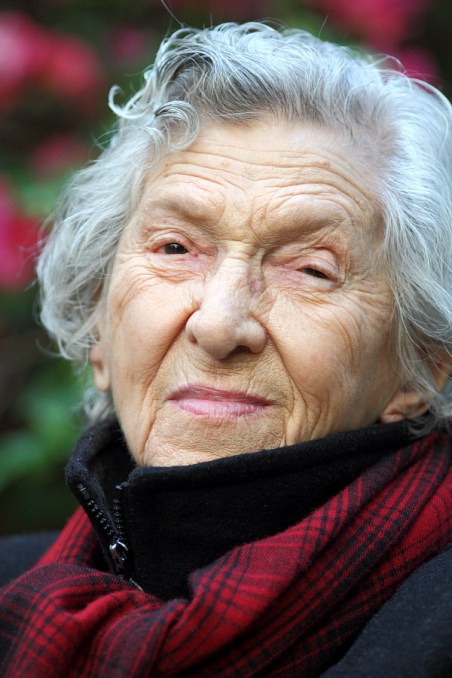
Evie Zysman
Imbued with an undying zeal to make a difference in people’s lives, especially children’s lives, Evie threw herself into her work. Even now, at an age when most of her contemporaries are dead or retired, she remains committed to doing good works and supporting good causes.
Consistent with her belief that children need protection, she spent much of her first 50 years as a licensed social worker, making the rounds among welfare, foster care and single-parent families. True to her conviction that all laborers deserve a decent wage and safe work spaces, she fought for workers’ rights as an organized union leader. Acting on her belief in early childhood education, she helped start a project that opened day care centers in low income areas long before Head Start got off the ground; and she co-founded, with her late husband, Jack Zysman, Playtime Equipment Co., which sold quality early childhood education supplies.
Evie developed her keen social consciousness during one of the greatest eras of need in this country — the Great Depression. The youngest of eight children born to Jacob and Lizzie Adler, she grew up in a caring family that encouraged her to heed her own mind and go her own way but to always have an open heart.
“Mama raised seven daughters as different as night and day and as close as you could possibly get,” she said. “Mama said to us, ‘Each of you is pretty good, but together you are much better. Remember girls: Shoulder to shoulder.’ That was our slogan. And then, to each one of us she would say, ‘Don’t look to your sister — be yourself.’ It was taken for granted each one of us would be ourselves and do something. We loved each other and accepted the fact each one of us had our own lives to live. That was great.”
Even though her European immigrant parents had limited formal education, they encouraged their offspring to appreciate the finer things, including music and reading.
“Papa was a scholar in the Talmud and the Torah. People would come and consult him. My mother couldn’t read or write English but she had a profound respect for education. She would put us girls on the streetcar to go to the library. How can you live without books? Our home was filled with music, too. My sister Bessie played the piano and played it very well. My sister Marie played the violin, something she did professionally at the Loyal Hotel. My sister Mamie sang. We would always be having these concerts in our house and my father would run around opening the windows so the neighbors could also enjoy.”
Then there was the example set by her parents. Jacob brought home crates filled with produce from the wholesale fruit and vegetable stand he ran in the Old Market and often shared the bounty with neighbors. One wintry day Lizzie was about to fetch Evie’s older siblings from school, lest they be lost in a mounting snowstorm, when, according to Evie, the family’s black maid intervened, saying, “You’re not going — you’re staying right here. I’ll bring the children.’ Mama said, ‘You can go, but my coat around you,’ and draped her coat over her. You see, we cared about things. We grew up in a home in which it was taken for granted you had a responsibility for the world around you. There was no question about it.”
Along with the avowed obligation she felt to make the world a better place, came a profound sense of citizenship. She proudly recalls the first time she was old enough to exercise her voting right.
“I will always remember walking into that booth and writing on the ballot and feeling like I am making a difference. If only kids today could have that feeling when it comes to voting,” said Evie, a lifelong Democrat who was an ardent supporter of FDR and his New Deal. When it comes to politics, she’s more than a bystander — she actively campaigns for candidates. She’ll be happy with either Obama or Clinton in the White House.
When it came time to choose a career path, young Evie simply assumed it would be in an arena helping people.
“I was supposed to, somehow,” is how she sums it up all these years later. “I believed, and I still believe, that to take responsibility as a citizen, you must give. You must be active.”
For her, it was inconceivable one would not be socially or politically active in an era filled with defining human events — from millions losing their savings and jobs in the wake of the stock market crash to World War I veterans marching in the streets for relief to unions agitating for workers’ rights to a resurgence of Ku Klux Klan terror to America’s growing isolationism to the stirrings of Fascism at home and abroad. All of this, she said, “got me interested in politics and in keeping my eyes open to what was going on around me. It was a very telling time.”
Unless you were there, it’s difficult to grasp just how devastating the Depression was to countless people’s pocketbooks and psyches.
“It’s so hard for you younger generations to understand” she told a young visitor to her house. “You have never lived in a time of need in this country.” Unfortunately, she added, the disparity “between rich and poor” in America only seems to widen as the years go by.
With her feisty I-want-to-change-the-world spirit, Evie, an Omaha Central High School graduate, would not be deterred from furthering her formal education and, despite meager finances, became the first member of her family to attend college. Because her family could not afford to send her there, she found other means of support via scholarships from the League of Women Voters and the University of Nebraska-Lincoln, where the Phi Betta Kappa earned her bachelor’s degree.

“I knew that for me to go to college, I had to find a way to go. I had to find work, I had to find scholarships. Nothing came easy economically.”
To help pay her own way, she held a job in the stocking department at Gold’s Department store in downtown Lincoln. An incident she overhead there brought into sharp relief for her the classism that divides America. “
One day, a woman with a little poodle under her arm came over to a water fountain in the back of the store and let her dog drink from it. Well, the floorwalker came running over and said, ‘Madam, that fountain is for people,’ and the woman said, ‘I’m so sorry, I thought it was for the employees.’ That’s an absolutely true story and it tells you where my politics come from and why I care about the world around me and I want to do something about it.”
Her undergraduate studies focused on economics. “I was concerned I should understand how to make a living,” she said. “That was important.” Her understanding of hard times was not just of the at-arms-length, ivory-tower variety. She got a taste of what it was like to struggle when, while still an undergrad, she was befriended by the Lincoln YWCA’s then-director who arranged for Evie to participate in internships that offered a glimpse into how “the other half lived.” Evie worked in blue collar jobs marked by hot, dark, close work spaces.
“She thought it was important for me to have these kind of experiences and so she got me to go do these projects. One, when I was a sophomore, took me in the summer to Chicago, where I worked as a folder in a laundry and lived in a working girls’ rooming house. There was no air conditioning in that factory. And then, between my junior and senior years, I went to New York City, where I worked in a garment factory. I was supposed to be the ‘do-it’ girl — get somebody coffee if they wanted it or give them thread if they needed it, and so forth.
“The workers in our factory were making some rich woman a beautiful dress. They asked me to get a certain thread. And being already socially conscious, I thought, ‘I’ll fix her,’ and I gave them the wrong thread,” a laughing Evie recalled, still delighted at the thought of tweaking the nose of that unknown social maven.
Upon graduating with honors from UNL she set her sights on a master’s degree. First, however, she confronted misogyny and bigotry in the figure of the economics department chairman.
“He said to me, ‘Well, Evelyn, you’re entitled to a graduate fellowship at Berkeley but, you know, you’re a woman and you are a Jew, so what would you possibly do with your graduate degree when you complete it?’ Well, today, you’d sue him if he ever dared say that.”
Instead of letting discrimination stop her, the indomitable Evie carried-on and searched for a fellowship from another source. She found it, too, from the Jewish School of Social Work in New York.
“It was a lot of money, so I took it,” she said. “I had my ethic courses with the Jewish School and my technical courses with Columbia,” where she completed her master’s in 1932.
As her thesis subject she chose the International Ladies Garment Workers Union, one of whose New York factories she worked in. There was a strike on at the time and she interviewed scores of unemployed union members who told her just how difficult it was feeding a family on the dole and how agonizing it was waking-up each morning only to wonder — How are we going to get by? and When am I ever going to work again?

As a social worker she saw many disturbing things — from bad working conditions to child endangerment cases to families struggling to survive on scarce resources. She witnessed enough misery, she said, “that I became free choice long before there was such a phrase.”
Her passion for the job was great but as she became “deeply involved” in the United Social Service Employees Union, she put her first career aside to assume the presidency of the New York chapter.
“I could do even more for people, like getting them decent wages, than I could in social work.” Among the union’s accomplishments during her tenure as president, she said, was helping “guarantee social workers were qualified and paid fairly. You had to pay enough in order to get qualified people. We felt if you, as social workers, were going to make decisions impacting people’s lives, you better be qualified to do it.”
Feeling she’d done all she could as union head, she returned to the social work field. While working for a Jewish Federation agency in New York, she was given the task of interviewing Jewish refugees who had escaped growing Nazi persecution in Germany and neighboring countries. Her job was to place new arrivals with the appropriate state social service departments that could best meet their needs. Her conversations with emigres revealed a sense of relief for having escaped but an even greater worry for their loved ones back home.
“They expressed deep, deep concern and deep, deep sadness and fear about what was going on over there,” she said, “and anxiety about what would happen to their family members that remained over there. They worried too about themselves — about how they would make it here in this country.”
A desire to help others was not the only passion stoked in Evie during those ”wonderful” New York years. She met her future husband there while still a grad student. Dashing Jack Zysman, an athletic New York native, had recently completed his master’s in American history from New York University. One day, Evie went to some office to retrieve data she needed on the International Ladies Garment Workers Union, when she met Jack, who was doing research in the very same office. Sharing similar interests and backgrounds, the two struck up a dialogue and before long they were chums.
The only hitch was that Evie was engaged to “a nice Jewish boy in Omaha.” During a break from her studies, she returned home to sort things out. One day, she was playing tennis at Miller Park when she looked across the green and there stood Jack. “He drove from New York to tell me I was definitely coming back and that I was not to marry anybody but him.” Swept off her feet, she broke off her engagement and promised Jack she would be his.
After their marriage, the couple worked and resided in New York, where she pursued union and social work activities and he taught and coached at a high school. Their only child, John, today a political science professor at Cal-Berkeley, was born in New York. Evie has two grandchildren by John and his wife.
Along the way, Evie became a New Yorker at heart. “I loved that city,” she said. Her small family “lived all over the place,” including the Village, Chelsea and Harlem. As painful as it was to leave, the Zysmans decided Omaha was better suited for raising John and, so, the family moved here shortly after World War II.
Soon the couple began Playtime Equipment, their early childhood education supply company. The genesis for Playtime grew out of Evie’s own curiosity and concern about the educational value of play materials she found at the day care John attended. When the day care’s staff asked her to “help us know what to do,” she rolled up her sleeves and went to work.
She called on experts in New York, including children’s authors, day care managers and educators. When she sought a play equipment manufacturer’s advice, she got a surprise when the rep said, “Why don’t you start a company and supply kids with the right stuff?” It was not what she planned, but she and Jack ran with the idea, forming and operating Playtime right from their home. The company distributed everything from books, games and puzzles to blocks and tinker toys to arts and crafts to playground apparatus to teaching aids. The Zysmans’ main customers were schools and day cares, but parents also sought them out.
“I helped raise half the kids in Omaha,” Evie said.
The Zysman residence became a magnet for state and public education officials, who came to rely on Evie as an early childhood education proponent and catalyst. She began forming coalitions among social service, education and legislative leaders to address the early childhood education gap. A major initiative in that effort was Project AID, a program she helped organize that set-up preschools at black churches in Omaha to boost impoverished children’s development. She said the success of the project helped convince state legislators to make kindergarten a legal requirement and played a role in Nebraska being selected as one of the first states to receive the federal government’s Head Start program.
Gay McTate, an Omaha social worker and close friend of Zysman’s, said, “Evie’s genius lay in her willingness to do something about problems and her capacity to bring together and inspire people who could make a difference.”
Evie immersed herself in many more efforts to improve the lives of children, including helping form the Council for Children’s Services and the Coordinated Childcare Project, clearinghouses geared to meeting at-risk children’s needs.
The welfare of children remains such a passion of hers that she still gets mad when she thinks about the “miserable salaries” early childhood educators make and how state budget cuts adversely impact kids’ programs.
“Everybody agrees today the future of our country depends on educating our children. So, what do we do about it? We cut the budgets. Don’t get me started…” she said, visibly upset at the idea.
Besides children, she has worked with such organizations as the United Way, the Urban League, the League of Women Voters, the Jewish Council of Women, Hadassah and the local social action group Omaha Together One Community.
In her nearly century of living, she’s seen America make “lots of progress” in the area of social justice, but feels “we have a long way to go. I worry about the future of this country.”
Calling herself “a good secular Jew,” she eschews attending services and instead trusts her conscience to “tell me what’s right and wrong. I don’t see how you can call yourself a good Jew and not be a social activist.” Even today, she continues working for a better community by participating in Benchmark, a National Council of Jewish Women initiative to raise awareness and discussion about court appointments and by organizing a Temple Israel Synagogue Mitzvah (Hebrew, for good deed) that staffs library summer reading programs with volunteers.
Her good deeds have won her numerous awards, most recently the D.J.’s Hero Award from the Salvation Army and Temple Israel’s Tikkun Olam (Hebrew, for repairing the world) Social Justice Award.
She’s outlived Jack and her siblings, yet her days remain rich in love and life. “I play bridge. I get my New York Times every day. I have my books (she is a regular at the Sorenson Library branch). I’ve got friends. I have my son and daughter-in-law. I have my grandchild. What else do you need? It’s been a very full life.”
As she nears a century of living Evie knows the fight for social justice is a never-ending struggle she can still shine a light on.
“How would I define social justice?” she said at an Omaha event honoring her. “You know, it’s silly to try to put a name to realizing that everybody should have the same rights as you. There is no name for it. It’s just being human…it’s being Jewish. There’s no name for it. Give a name to my mother who couldn’t read or write but thought that you should do for each other.”
Related Articles
- Alberta foster care system under scrutiny (calgaryherald.com)
- Leading article: The care system needs a drastic overhaul (independent.co.uk)
- Feds share blame for child welfare system ‘chaos’ (cbc.ca)
Extremities: As seen on TLC’s “Hoarding: Buried Alive” – Mary Thompson takes her life back one piece at a time

Image via Wikipedia
UPDATE: My friend Mary Thompson’s hoarding got her featured on TLC and since the story I wrote about her last year she’s made steady progress decluttering her home and her life. So much so that she’s been able to reclaim the furniture she had to move out to make room for her stuff and she’s thrown off the shackles of her old job for a new one. She proves one is really never too old to change.
The first time I went to Mary Thompson’s home to get my taxes done I knew I’d walked into a story. She is a hoarder with a compulsion to collect a seemingly endless number of things and an inability to throw anything away. For years neither she nor I made any comment about the condition of her place. But the mass of stuff everywhere, the difficulty moving around in her home, the fact that even the staircase was littered with things, plus the ever-present cats, all amounted to the 800-pound gorilla in the room that even though never acknowledged always weighed heavy on our meetings.
As Mary and I got to know each other better, and I shared some of my own eccentric, even addictive tendencies, we began to talk a bit more openly about ourselves. Then one day I flat out asked if I could profile her for an Omaha publication, making sure she understood that meant discussing her affliction with hoarding. She agreed. Nothing came of it until late 2009 when she called to tell me she was going to be profiled on a cable TV reality series about hoarders. So we chose that as the hook to hang my story about her on, as my editors might put it. The resulting piece appeared in The Reader (www.thereader.com), and I am pleased to report that Mary liked what I did with it, neither overdramatizing her story nor avoiding its extremities, the word I chose for the title or headline. Mary is much more yet than what I portray in the piece, but given the space limitations I had to work with I think I captured enough of her to satisfy both of us.
My story about Mary’s late mother, the equally eccentric Lucile Schaaf, can be found on this blog as well. It’s entitled. “Lucile’s Old Market Mother Hubbard Magnificent Obsession.”
Extremities: As seen on TLC’s “Hoarding: Buried Alive”
Mary Thompson takes her life back one piece at a time
©by Leo Adam Biga
Appeared in The Reader (www.thereader.com)
The front door to this Old Mother Hubbard house opens to reveal a small, vibrant woman who gingerly ushers you inside. The caution is a concession to the bursting-at-the-seams interior, where there’s but inches to spare in any direction due to a staggering assortment of things splayed out before you. Wherever you look, a pastiche of shapes, colors and masses catches your eye. A sprawling assemblage of grab-bag miscellany.
If this were a department store warehouse, the sheer volume of goods heaped about in piles, columns, stacks and bundles would rightfully be called inventory. Only this is retired IRS agent Mary Thompson’s home. All three floors over-brim this way. As do the basement and storage spaces under eaves and stairs.
So what does that make this snarl of odds and ends? Junk? Not unless you count Fifth Avenue designer hats junk. Not everything is so swank. But hoarders like Mary have strong emotional attachments to everything they own. Nothing is inconsequential to them.
Her affliction is profiled Sunday at 9 p.m. in the TLC series, Hoarding: Buried Alive. A crew twice visited her Little Italy home to chart her journey of surrender.
In a recent interview at her place, she said, “It’s become easier for me to disown things, to give up ownership.” A daughter, Becca, helps her sort through the maze for recycling or Goodwill donation. She said her mother’s tendency to ritualize the sorting draws out the process.
Yet, a second-floor den previously inaccessible is now an oasis or sanctuary amid the chaos. A spot where Mary can relax alone or entertain guests.
“I love it — the feeling that I get from having an empty place where I can come in, sit down, have a glass of wine, and visit,” she said. “I have a place that’s clear. I walk through this empty space and it feels so good.”
The rest of her home however is so constricted she barely has room to sleep on the floor. Her main furniture is “visiting” other homes for lack of anywhere to put it in her own. What’s there is buried under mounds of mishmash. The organized clutter represents her eclectic interests and fixations on display: hats and cashmere sweaters (hundreds each), dresses, costume jewelry, luggage, thousands of books, board games, silverware sets, catering equipment, tools, office supplies…
It’s not that she’s so possessive she won’t give anything away. Her daughter-in-law, Christy, said, “she’ill give you the shirt off her back. She’s very kind.” For all her generosity though, Christie said her mother-in-law can’t stand to part with anything if she doesn’t know what’s going to happen with it.
Suggest her possessions must represent a lifetime’s collecting and Mary says, “No, this accumulation is just from 1986.” The bungalow next door is hers, too — the basement stuffed; the garage between the two dwellings completely filled as well.
Then there’s the cats. Feral ones outside and domesticated ones indoors.
Big house items are packaged, bagged, boxed, loose. Mirrors and paintings adorn walls. Vases line mantels. Even the staircase is a makeshift storage conveyor.
“I’ve been collecting stuff forever,” said Mary, whose late mother, Lucille Schaaf, was an eccentric known for her acquisition of all things Christmas and of architectural remnants. Lucille was dubbed the Christmas Lady for the elaborate Xmas displays she mounted and the Lady in Orange for her penchant of dressing in orange from head to foot. She became one of the original Old Market denizens.
Mary, who does not argue she is an eccentric herself, is variously known as the Hat Lady, the Tax Lady and the Tax Witch.
“I’m what a lot of people refer to as a collector’s collector,” she said, “because if they’re looking for something specific they can call me, and if I don’t have it I know where I can find it. I probably use that to justify my junk shopping.”
Since the TLC shoot she said she’s only been to a thrift or pawn shop once. “In a sense it’s like withdrawal,” she said of dropping her old habit.
Her children long pestered her to clean house. It’s not like she was oblivious to its disarray. She acquired self-help books with the titles Simply Your Life, Organize from Within and Let It Go. “I’ve been trying,” she said. “That’s hard.” She appreciates the disconnect between intent and reality.
She’s paid a price for her home’s over-run condition, saying her children “didn’t even want my grandkids to come over because they feared for their safety. What does it take to admit you have a problem and you need some help?” In her case, she said, it took committing to the TLC program before admitting “I should probably do something about it.” She found TLC’s call for hoarders on Craig’s List and responded, never imagining she’d be selected.
“When she made the first step I knew she was going to make it work,” said Christy, whom producers flew in for the taping. “Others tried helping before but she wasn’t ready to do it. She’s come a long way.” “We’re really proud of her,” said Becca.
The show stipulated Mary work with a psychologist and professional organizer. Her family agreed to lend support. and Mary agreed to accept it. She said her family’s been “super” pitching in with the purge that proceeds ever so slowly.
When the crew arrived the first time in December, she said, “I had accepted it and I was ready for it.” She said the experience turned out to be “one of the funnest things I ever signed up for.” Her only worry was the crew “breaking something.” She said “they were gentle up to a point.” Only a couple mishaps, The consensus of the family is the crew were sensitive to Mary’s situation, not exploitive.
Producer Krys Kornmeier said, “I feel my job is to tell these people’s stories as honestly and genuinely as I can.” She said she hopes viewers come away aware there is no “quick-fix” for compulsive hoarding. “It’s an ongoing issue that needs ongoing support and I think Mary’s got a great family that’s supportive.”
Christy said Mary went through highs and lows during the filming but handled the intrusion and transparency well. “They were long days, but she was a trouper.”
Kornmeier added, “Mary was gracious and funny. She went along with it, but I’m sure she had moments. It’s really hard to ask for help when you’re as independent and competent as she is.” As for comparisons, she said some subjects “have less stuff, some have more stuff, but what they all have is too much stuff, and they’re all overwhelmed in some form or another by their stuff. Mary’s included in that.”
She said what Mary did to go from “goat trails” to clearing out a salon-like sitting room marked real progress. “She was as excited as I was to see it.”
Weeks after the shoot, hints of denial persist. For example, Mary said when she watches other hoarders on TLC she concludes, “I don’t think I’m as bad as a lot of them.” What she calls “my multitasking” and “hints of OCD (Obsessive Compulsive Disorder) and ADD (Attention Deficit Disorder)” interfere with her progress. “I sometimes get easily distracted,” she said. The incessant phone calls she takes from folks seeking tax advice interrupt the clean-up. She runs the local AARP office’s tax assistance program, one of many activities that keep her on the go.
“It’s frustrating, but I’m the one who has offered myself to everybody. I sometimes find I don’t understand the word or the concept no.”
Still, with the help of Becca and a handyman named Stanley, Mary’s feeling a sense of relief and hope she can reach her goal of having enough cleared away by her July 5 birthday to move her furniture back in. Others aren’t so optimistic but they note that at least she’s visualizing action steps.
“People say there’s even a difference in me, that I seem much lighter and freer, that I’m excited talking about getting this done,” said Mary. “Well, I am, I really am. I don’t regret it. It’s one of the most interesting experiences I’ve ever embarked on.”
If nothing else, she said, “I realize I’m not alone in this.”
As for having her story out there, she said, “when it’s going to be on television it’s not going to be pretty.” She expects people “might be embarrassed” for her. Some are sure to be shocked she lives like this. “I’ll get over it,” she said. “Everybody’s got some of those tendencies — what’s wrong with being truthful?”
The task ahead is daunting as she’s barely scratched the surface of what’s a multi-year project. The removal of an object or a bin-full can take days or weeks. as she must convince herself she can let it go. Becca said, “It’s baby steps. She recognizes that and we recognize that. If we were to get in there and really push and not have any respect for her emotions then we would lose her immediately. She has to make those decisions. I’m not going to deny her that.”
Mary’s self-aware enough to know she’s not there yet.
“I’m still working on it. It’s a work in progress. I’ve got a long way to go. But I made up my mind, I’m going to get it done, I am going to get it done, I will have it done.”
Related Articles
- In a Hoarder’s Home, Going All Out to Find the Floor (nytimes.com)
- Drowning in junk: Hoarding called a public health issue (cnn.com)
- Hoarding disorder can consume households (seattletimes.nwsource.com)
- Under the Clutter: The Psychology Behind Hoarding (foxnews.com)
- Hoarding: How Collecting Stuff Can Destroy Your Life (time.com)


 Leo Adam Biga's My Inside Stories