Archive
Artist-Author-Educator Faith Ringgold, A Faithful Conjurer of Stories, Dreams, Memories and History
I tried to get an interview with artist-author-educator Faith Ringgold before and during her visit to Omaha a few years ago but her tightly packed schedule just wouldn’t allow it. So, with an assignment due and no interview to draw on I made the best of it by planting myself at the lecture she gave here and liberally borrowing some of her comments to inform my story. I also viewed an exhibition of her work here. At the conclusion of her talk I unexpectedly heard my name intoned over the auditorium’s amplifier system. I was summoned to the stage to meet Ms. Ringgold, who apologized for not being able to speak with me earlier and offered me the opportunity to ride with her to the airport and interview her enroute. I declined because I was already rather time-pressed to get the story in but I thanked her for the offer. I thought that was a gracious and generous thing for her to do and it’s certainly not something most celebrities would think to do in the aftermath of a gig and heading out of town. Her art is sublime. She taps deep roots in her work, which is infused with images of yearning, hope, joy, and life, and some pain, too. You feel the images speaking to you. There is energy in those visuals. You sense life being lived. It’s easy to get lost in the ocean of feeling and memory she evokes.

Artist-Author-Educator Faith Ringgold, A Faithful Conjurer of Stories, Dreams, Memories and History
©by Leo Adam Biga
Originally published in The Reader (www.thereader.com)
Artist-author-educator Faith Ringgold spoke about the power of dreams during an October 8 lecture at Joslyn Art Museum’s Witherspoon Concert Hall, whose nearly filled to capacity auditorium testified to the popularity of her work. The official role of her Omaha appearance was to give the keynote address at the Nebraska Art Teachers Association’s fall conference. But her real mission was to deliver a message of hope and possibility, as expressed in the affirming, empowering tales of her painted story quilts, costumes, masks and children’s books and her life.
Her visit coincided with her 75th birthday, which organizers celebrated in a musical program that moved Ringgold to tears, as well as two area exhibitions of her work. Now through November 20 at the UNO Art Gallery is Art: Keeping the Faith (Ringgold), a selection of illustrations from her children’s book Aunt Harriet’s Underground Railroad in the Sky, along with examples of her story quilts, tankas and mixed media pieces. Now through December 23 at Love’s Jazz and Art Center is a selection of book art from Dinner at Aunt Connie’s House, along with two of her finest story quilts combining fabric, painting and narrative.
The Harlem native has broken many barriers as an African-American female artist with works in major collections, books on best-sellers’ lists and art embraced by culturally and racially diverse audiences of children and adults.
“My art has been a celebration of my life, my dreams and my struggles and how I learned from other people,” she said.
Much of her work, whether story quilts combining painted canvas on decorative fabric or book illustrations done in acrylic, depict the struggles and contributions of historical black figures. Many are in praise of the Harlem Renaissance artists she came to know, such as Alfred Jacob Lawrence. Many are about strong females like herself, ranging from underground railroad conductor Harriet Tubman to Civil Rights heroine Rosa Parks. She often creates series of works. Coming to Jones Road deals with the trains of refugees on the underground railroad. Her most recent is a jazz series called Mama Can Sing and Papa Can Blow.
“For the image of a people to be celebrated is an important thing for their creative identity,” she said.
Her books often show her child alter ego, Cassie, interacting with men and women of achievement, whose life lessons “of being resourceful, being creative and being strong” offer inspiration. In Ringgold’s award-winning Tar Beach, which began as a quilt, Cassie takes imaginative leaps of faith that enable her to fly over the world and, in so doing, own it. Flight represents the liberation that comes with dreaming.
“That’s what flying is — it’s a determination to do something that seems almost impossible,” Ringgold said. “Cassie is an expression of that feeling — Who said I can’t do it? Unless I say it, it doesn’t mean anything.”
As she reminded her Joslyn audience, many of them teachers, “Every good thing starts with a dream. Children growing up without dreams is really no growing up at all.” The “anyone can fly” and “if she can do it, anyone can” themes from Tar Beach are so closely associated with Ringgold, who also wrote a song entitled Anyone Can Fly , that they’ve become the catch phrases for her vision. After her Joslyn lecture, the Belvedere Bels choir from Belvedere Elementary School in Omaha serenaded Ringgold with a soulful rendition of Anyone Can Fly.
Related to her visit and showings here, Omaha Public Schools students this fall are studying her work, viewing her exhibits and creating their own story quilts.
Her favorite medium, the story quilt, is rooted in two African-American traditions — oral storytelling and quiltmaking — traced to slaves, who created images on quilts that recorded family history, symbolized events and revealed coded messages. She’s the latest in a long line of master quiltmakers in her own family, going all the way back to her great-great grandmother, a slave, and down through her great grandmother, grandmother and her later fashion designer mother, from whose hands she learned the craft and with whom she collaborated on her first quilts.
Beyond the familial and cultural connections, quilts appeal to Ringgold for their practicality and accessibility.
“It’s the most fantastic way of creating paintings. You have it become a quilt by piecing it together, so that it doesn’t have that fragility of one piece of paper or canvas. A quilt is really two-dimensional, but it’s also three-dimensional, and that’s why I really love it,” she said. “You can make it as big as you like it and it doesn’t have weight to it. You can roll it up and carry it around.”

She enjoys, too, the communal aspects of the form.
“Quilting is something a group of people can do. You can have a lot of people engaged in the activity, so that your art doesn’t become such a solitary thing.”
Her impetus for doing story quilts arose when editors balked at publishing her autobiography unless she changed her story to conform to what she considered a stereotypical black female portrayal. She refused and instead found an alternative form, the story quilt and performance art, for charting her life and for sharing her perspectives on the figures, events and issues affecting her and her people.
“It made me really angry to think that somebody else could decide what my story was supposed to be or decide my story’s not appropriate to me, an African American woman. So, I started writing these stories,” she said. “I used performance and story quilts to get my story out there. Writing it in the art, when the art was published in a program — the words would be to, unedited.”
When her work hangs in museums or galleries, her simple or elaborate but always eloquent words can be appreciated by viewers. Often splayed all around the borders, the text acts as a narrative frame that focuses the eye on the central image she paints in her palette of sure brushstrokes and bold colors.
The many influences on Ringgold, who studied at City College of New York and has traveled the world to soak up art, are apparent in her folk-style work, including her rich African-American heritage, the traditions of European masters, the abstract expressionists and Tibetan tankas. A professor of art at the University of California in San Diego, she lives in Englewood, NJ, where she has her studio.
She continues a busy schedule of creating art, lecturing and dreaming.
Related articles
- People who turned their dreams to reality (cnn.com)
- An Artist Ends Ties to Museum in Harlem (nytimes.com)
- Faith Ringgold Paper Quilts (rakarchives.wordpress.com)
Filmmaker Steve Lustgarten proves he can come home again
The first film story I ever had published was about an Omaha native filmmaker not named Alexander Payne. That may come as a surprise to those of you familiar with this blog and my work as a film journalist who has long covered the Oscar-winning writer-director. No, the profile subject of that first film piece was Steve Lustgarten, who left here a number of times going back to the 1970s, searching for his creative mojo outlet and finally finding it after several fits and starts as a largely L.A,-based indie producer-writer-director. I wrote this piece more than 20 years ago on the occasion of his coming back to shoot an action feature in his home state that had the working title of Homefires Burning but that eventually got released as Power Slide. Lustgarten had previously generated some buzz with his Student Academy Award-winning feature American Taboo. His returning to make Homefires/Power Slide was a big deal in 1989 because of the paucity of films made here, especially by homegrown filmmakers. This was some years yet before Payne began making movies in Omaha (Citizen Ruth, Election, About Schmidt). Interestingly, Lustgarten chose Plattsmouth, Neb., a small town in the far southeast corner of the state, to shoot in and that’s also where Sean Penn decided to film The Indian Runner just a couple years later. Lustgarten had a slate of films he wanted to make after Homefires/Power Slide but while he did direct again he largely transitioned into being a distributor of low budget films, ranging from festival art pics to exploitation genre pics, through his Leo Filns. It’s not surprising given the fact he came out of the Roger Corman school of filmmaking and never really worked in the mainstream Hollywood industry. My 1989 story made much of the fact that this wanderer and prodigal son had returned to film on his home turf and that the storyline of his picture centered on a protagonist who also returns home. In reality, as soon as the film was completed Lustgarten left Nebraska for L.A. again and pretty much stayed away until a few years ago, when he relocated Leo Films here. As soon as he moved here however the state of Iowa suspended the film incentives program that enticed him to relocate in the first place. He does corporate, commercial, and doumentary work while waiting for a feature project to materialize. He appears set to stay here this time and perhaps the Nebraska Legislature‘s recent passage of film incentives makes launching a film more practical than before.
You’ll find many more film stories on this blog.
In an interesting twist, Lustgarten’s running for the U.S. Democratic Senate seat that retiring Ben Nelson will be vacating and the political noivice is going up against contenders he surely has no chance against, including former Senator and Nebraska governor Bob Kerrey. Then again, Lustgarten’s been fighting the odds all along as a filmmaker and distributor and somehow making that work for him for the better part of 30 years.

Filmmaker Steve Lustgarten proves he can come home again
©by Leo Adam Biga
Originally appeared in the Omaha Metro Update
Wanderer.
It’s an apt description of Steve Lustgarten, an itinerant artist whose wanderlust has uprooted his native Omaha ties the past 20 years. While always returning here, Lustgarten invariably gravitates to the West Coast, where he makes films.
His most recent homecoming is causing quite a stir because this prodigal son has brought back a slice of Hollywood with him. The 38-year-old is the producer-writer-director of Homefires Burning, a feature-length dramatic film shot entirely in Nebraska this fall. Filming began October 13 and is wrapping up this week.
“I think this is one of the first indigenous movies to be made here,” he said. “We have all local actors and primarily a local crew.”
Besides keeping costs down by using local talent, he explained that filming in the state offered the scenic harvest landscapes the story required. “I think it’s a beautiful area in the fall and I always wanted to shoot here. I’m really into beautiful visuals.”
The principal filming location was in and and around Plattsmouth, Neb. “Plattsmouth is a truly old pace and that’s what drew me to it,” he said. “Everything we shot has a sense of time passing. The thematic part of the film is about history and time, and that area just resonates with it.”
Last week’s snow caused a delay in production, pushing the film over its six-week shooting schedule with three outdoor scenes left.
“We’ve been running around Plattsmouth trying to find one tree with leaves left on it because this is a fall picture.”
To avoid cost overruns on his less than $200,000 budget Lustgarten released most of the crew last week. He and a skeleton crew are filming what remains of the picture. Overall, he said he’s captured what he came here for. “We shot some great photography.”
Since any movie made in Nebraska is still a novelty Homefires and its native son creator have received much attention. For all the hoopla though Lustgarten seems unpretentious about the whole business. Perhaps he sees irony in coming home after a long absence to find himself lionized.
“It’s the first time I’ve been home for any length of time since 1978.”

Although he’s bounced up and down the West Coast he’s mostly lived and worked in Los Angeles the last five years. Since coming back last spring to raise money for Homefires he has lived with his parents at their northwest Omaha home.
His appropriately titled film concerns a man who after years away returns to his Nebraska roots only to find things changed – the past irretrievably lost. The protagonist is Kyle, a professonial race car driver who’s a celebrity in how small hometown for past exploits. He returns tired, down-and-out and no longer able to connect with old friends.
“Eighty percent of it’s about Kyle’s relationships with people he left behind, how they changed, and what it’s like to try and go back.”
Lustgarten said his own comings and goings from home have lent the film some autobiographical weight. “The most autobiographical element s the whole idea of my being away from Omaha and my home, coming back and seeing some of my old friends and not being able to fit in anymore. Because our relationships are based in the past, they aren’t the same anymore.”
He felt alienated after winning a 1983 Academy Award in the student film category for American Taboo. He produced, wrote and directed the feature-length film while at Portland State University in Oregon. His success came during a turbulent time in his personal life. Visitng Omaha some time later he noted an uneasy gap between his self-image and people’s inflated perceptions.

“People here might have thought it (the award) was a bigger deal than it really was. I ran into a certain, ‘Oh, yeah, we heard about you on ‘Entertainment Tonight,’ and, ‘Oh, it’s a success.’ That engendered an idea about this race car driver who had been on TV and was a small town hero to people back home but he knew his life was burned out.”
Lustgarten can relate to that. The Omaha Burke High School graduate has traveled a “circuitous” road to satisfy a restless creativity. In the early ’70s he attended Wayne State College (Wayne, Neb.) and the University of Nebraska at Omaha, where he studied English and journalism. He was a reporter for the Alliance (Neb.) Times-Herald, covering the Wounded Knee occupation. Then he sought adventure out West.
He learned how to use a motion picture camera doing commercial work for a local advertising agency. When the movie bug bit he said he itched to make his own films “but really wasn’t aware of how to do it myself,” adding, “So I just started making short, super 8 mm movies and pretty much picked it up on my own by reading a lot of books and going to a lot of cheap movies.”
He landed his first professional film job in 1976 with an L.A. production company. “I worked in Hollywood on a lot of little low budget movies,” he said. Eventually he became “burned out” in L.A. He came back to Omaha and then lived in Seattle and Portland. By the time he started at Portland State, which had a film program, he wanted to make a feature but lacked the necessary means. The opportunity arose through an unlikely chain of events worthy of any script.
“My grandfather died and left me about $10,000. I put $5,000 into a house. The $5,000 left over really wasn’t enough to do it, so I invested it in some highly specualtive stocks, which for some reason doubled over the course of a month. I was able to start the film and put it in the can with that money. Then I scrounged up some more to finish it.”
Perhaps it was poetic justice that his grandfather, Harry Lustgarten Sr., indirectly made the film possible. “He was a large booker of films in the Chicago area in the ’50s and early ’60s,” said Steve. “He gave a lot of the early Samuel Arkoff-American International pictures their break in that market. He was probably my first exposure to the movies as a kid.”
Made under Portland State’s auspices, Taboo is described by its creator as a “European-style art film.” He said, “It deals with a lonley photographer who’s hidden behind a camera lens all his life. He gets enamored with the girl next door, who confronts him with his sexual repression and brings him out of his shell. It creates some turbulence in his life that he isn’t prepared for.”
While the film “hasn’t seen much U.S. distribution,” he said, “it’s constantly marketed overseas.” He said Taboo’s limited theatrical release included showings in Minneapolis, Portland and L.A. despite good reviews Lustgarten said he “didn’t make any concerted effort to book it theatrically becauae it was just too difficult. I found a foreign distributor and it’s been shown all over Europe as well as in Asia, South America and Australia.”
He said low budget titles like Taboo and Homefires face steep odds breaking into the U.S. theatrical market. They must compete against studio-backed films that cost $15 million on average and that have robust multi-media marketing campaigns behind them. That’s why most films budgeted under $5 million, he said, are directly sold to the home video and cable television markets domestically and abroad, thus bypassing theatrical distribution altogether.
Before tackling Homefires Lustgarten worked as a production assistant at New Horizons, where the one-time King of Hollywood B movies, Roger Corman, reigns. Corman made his name producing, sometimes directing and releasing low budget exploitation genre movies that became popular fare at drive-ins and that today stock the shelves at video rental stores and fills late night cable TV schedules. Corman also gave many then obscure and now big name actors, writers, and directors their start in features.
A typical Lustgarten job under Corman was serving as production coordinator on Strip to Kill, a project the filmmaker sarcastically refers to as “a memorable experience.” When that schlock picture’s first-time director needed bailing out Lustgarten said he pitched in and “ended up doing the storyboards, shooting second-unit stuff and finding new locations. I was trying to stand-out and move up in the organization. But I never quite learned the just-do-your-job-and-shut-up routine. That is not my nature.”

However, he did learn some valuable lessons along the way, such as bringing productions in on budget and at a fraction of the major studios’ price, and weaving enough action into stories to make them marketable. He’s applied these lessons to Homefires, which is emphatically “not an art house film,” he said, but rather “commercially targeted for the home video and cable TV markets in the U.S. and theatrically overseas. It’s positioned as an action-oriented film. We’re going to market it in that fashion. There are car chases, explosions, gunfights, so it fits into that ilk. Hopefully, it also offers more of a story than the Ramboesque movies provide.”
The film’s action is triggered by a rural drug lord who bails out beleagurerd farmers with loans in exchange for harvesting marijuana on their land. His terror tactics keep the community silent until Kyle returns and discovers his brother has gotten in deep with the kingpin in an attempt to save the family farm. Kyle helps his brother do the right thing and smash the drug ring.
Before going independent Lustgarten tried to interest several producers in Homefires, one of six or seven screenplays he’s written and shopped around in Hollywood. In fact, deals for Homefires were struck, he said, but the financing always fell through.
“It was almost made once iin South Africa, once in Australia, once in Texas and somewhere else. It’s been around the block. At different times it was a $1 million to $6 million budget. It’s just a nightmare trying to raise major sums of money for movies.”
Lutsgarten began raising funds anew for Homefires in April. “I talked to bank presidents. lawyers, accountants, doctors, mechanics, anybody who had a glimmer of interest in film. It’s a lot of telephone calls and meetings. It’s really tough to try and sell a motion picture investment here because people don’t understand the movie business.”
The project remained on hold until “right down to the wire,” he said. “I pushed back shooting a month to raise money.” He ended up finding six Midwest investors, most from Nebraska. He’s put up a “big chunk” of the money himself. The film is a production of his own Lustgarten Entertainment Organization.
What pitch does he use to lure potential investors? “I tell them at this low of a budget you cannot lose money if you competently produce the picture because there is such a demand for the product. It’s very hard to make promises but I show comparative values of what other films have made overseas, which is the primary market for low budget films. About 70 percent of the money comes back from foreign distribution.” For example, he said a $100,000 sale to Japanese home video distributors is “not unusual.” He added, “I tell investors I would be surprised if we don’t break even. The top side becomes pie-in-the-sky. It could be three or 20 times your money.”
Homefires will come in under $200,000 – a budgeting feat considering its scope. “It’s a big, sprawling script with a lot of locations, actors and cars. There’s about 120 scenes,” he said. His decision to shoot in the less expensive 16 mm film stock, he said, was a cost conscious one as film and processing, each outsourced in L.A., are the two largest budget items. He also saved money by getting non-union actors to work on deferment, “meaning they’ll make money if the movie does.” And the only out-of-town crew ne brought in were the cinematographer and sound mixer, both imported from the coast. The entire cast and crew numbered about 50, well below industry standards.
The cast, which features about 30 speaking parts, is headed by Tim Vandeberghe as Kyle. Local community theater fans may be familiar with his stage work and that of such fellow cast members as Karen Kuger, Laura Marr, Earl Bates and John Durbin. For most, it was their first film role.
“I got real lucky,” said Lustgarten. “I found some really excellent actors. I think everybody was so excited about working on this that it overrode the inconveniences and lack of comforts.”
A major annoyance was the daily commute to Plattsmouth for Lustgarten and most of the Omaha-based cast and crew. The travel, on top of shooting schedules that lasted up to 18 hours a day, made for some very long days and nights. Low budget sets don’t have trailers where actors can escape the elements.
“We were out there on some pretty windy, cold days,” he said. Added to Lustgarten’s headaches were his multiple responsibilties. “The producing problems are so overwhelming that directing almost gets swamped by them.” Despite the distractions of wearing many hats he relishes the creative freedom each gives him. “I like to have control of my destiny rather than let someone else take over and not really know how to handle the material.”
He did seek help from Janet Traub of the Nebraska Film Office. She suggested film locations and arranged meetings with Plattsmouth officials to obtain permits and approvals.
What kind of reception did Lustgarten and his made-in-Nebraska film get from city fathers?
“Skepticism at first, but gradually they warmed to the idea that it was realistic and finally they gave us their full support.”
The shoot’s drawn its share of sight-seers. “People cruise up and down the main street,” said Lustgarten. “It all worked out real well. We got 100 percent cooperation.” He said the city definitely felt an economic impact from spending by cast and crew members. “They bought their everyday needs down here. They left a few bucks, which is always welcome.”
He noted the production also attracted the curious from nearby communities, further boosting the local coffers.
According to Traub the cast and crew many have “spent as much as $100,000 in the state.” She said the Department of Economic Development uses a multiplier of 2.7 to project the total trickle-down income generated from such activities as film productions. “Consequently it generated an estimated $270,000 of new money in the state.”
Lustgarten said it’s possible he’ll make future films in Nebraska but the site “depends on where the financing comes from” and what the story requires.
“The next project I’m looking at doing is a murder-mystery called Lady in the Dark, which I hope to start in late winter or early spring.”
Until then he’ll be busy editing Homefires, which he hopes to have ready by April for distributors. To finish his film the wanderer may be leaving home again. “It kind of depends on my personal life. Do I want to spend another two or three months here or go back to L.A., because when I do editing I also start the marketing-sales process that can only be done there.”
It sounds like the wayfarer is about to roam again. He did leave open the possibility of premiering the fim in Omaha and Plattsmouth next spring.
Until then, the home fires will be burning.
 |
Related articles
- Nebraska Legislature Once Again Wrestles with the Film Tax Incentives Question; Alexander Payne and John Beasley Press the Case Home (leoadambiga.wordpress.com)
- ‘Out of Omaha’ (‘California Dreaming’) Project Adds to Area’s Evolving Indie Filmmaking Scene (leoadambiga.wordpress.com)
- Tempting Fate: Patrick Coyle Film ‘Into Temptation’ Delivers Gritty Tale of a Working Girl and an Idealistic Priest in Search of Redemption (leoadambiga.wordpress.com)
- Omaha Film Festival Celebrates Seven Years of Growing the Local Film Culture (leoadambiga.wordpress.com)
- Payne Delivers Another Screen Gem with ‘The Descendants’ and Further Enhances His Cinema Standing (leoadambiga.wordpress.com)
- Joan Micklin Silver’s Classic ‘Hester Street’ Included in National Film Registry (leoadambiga.wordpress.com)
- Alexander Payne Delivers Graceful Oscar Tributes – The Winner for Best Adapted Screenplay Recognizes Clooney, Hemmings and His Mom (leoadambiga.wordpress.com)
- My Forthcoming Book, ‘Alexander Payne: His Journey in Film,’ Due for a Fall 2012 Release (leoadambiga.wordpress.com)
Alexander the Great’s Wrestling Dynasty – Champion Wrestler and Coach Curlee Alexander on Winning (from my Omaha Black Sports Legends series, Out to Win: The Roots of Greatness)
I first met up with Curlee Alexander for the following story, which appeared about eight years ago as part of my series on Omaha Black Sports Legends titled, Out to Win: The Roots of Greatness. Alexander was a top-flight collegiate wrestler for his hometown University of Nebraska at Omaha but he really made his mark as a high school coach, leading his teams to state championships at two different schools – his alma mater Technical (Tech) High School and North High School. He is inducted in multiple athletic hall of fames. Then, about three years ago I caught up with him again in working on a profile of his younger cousin Houston Alexander, a mixed martial arts fighter Curlee trains. You can find on this blog most every installment from the Out to Win series as well as that profile I did on Houston Alexander. More recently yet Curlee came to mind when I did a piece on the 1970 NAIA championship UNO wrestling team he helped coach as a graduate assistant and that he helped lay the foundation for as a wrestler under coach Don Benning. You’ll find that story and a profile of Benning, who is one of Alexander’s chief mentors, on this blog. The UNO wrestling program made a great impact on the sport locally, regionally, and nationally but sadly the program was eliminated a year and a half ago and now the legacy built by Alexander, Benning, and later Mike Denney and Co. can only found in record books and memories and news files. My story about the end of the program is also featured on this blog.
Alexander the Great’s Wrestling Dynasty – Champion Wrestler and Coach Curlee Alexander on Winning (from my Omaha Black Sports Legends series, Out to Win: The Roots of Greatness)
©by Leo Adam Biga
Originally published in The Reader (www.thereader.com)
Short in stature and sleek of build, Curlee Alexander still manages casting a huge shadow in Nebraska wrestling circles even though the largely retired educator is now a co-head coach. Seven times as head coach he led his prep teams to state championships, six at Omaha North and one at Omaha Tech. Twice, his North squads were state runners-up. Four more times his Vikings finished third. Dozens of his athletes won individual state titles, including three by his son Curlee Alexander Jr., and many had successful college careers on and off the mat.
In the wrestling room, Alexander’s word is law because his athletes know this former collegiate national champion wrestler once made the same sacrifice he asked of them. Following an undistinguished high school wrestling career at Omaha Tech, his persistence in the sport paid off when he blossomed into a four-time All-American for then-Omaha University. UNO wrestling’s rise to prominence under coach Don Benning was rewarded when the team won the 1970 NAIA team title and Alexander took the 115-pound individual title in the process.
Like most ex-wrestlers, Alexander’s keeps in tip-top shape and, even pushing 60, he still demonstrates some of his coaching points on the mat with his own wrestlers — going body to body with guys less than a third his age and often outweighing him. In the old days, he pushed guys to the limit and, in wrestling vernacular, “beat up on ‘em,” to see how they responded. It was all about testing their toughness and their heart. It’s the way he came up.
Proving himself has been the theme of Alexander’s life. He grew up in a north Omaha neighborhood, near the old Hilltop Projects, filled with fine athletes. Being a pint-sized after-thought who “was always trying to catch up” to the other guys in the hood, he searched for a sport he could shine in. “I was small and weak and slow. I had to start from scratch to develop my athletic skills,” he said. “Wrestling was about the only thing I could do and I was really not very good.” To begin with.
He learned the sport from Tech coach Milt Hearn. In classic apprentice fashion, he started at the bottom and worked his way up. “When he got me started wrestling, I was used as a doormat,” Alexander said. “All I was required to do was save the team points by not getting pinned. If I could do that, than I did my job. As a junior, I got beat out by two freshmen. I was always fighting an uphill battle. I could never let up. I could never be comfortable. I knew I had to work hard. I knew I had to work harder than most of ‘em just to be successful.” Despite this less than promising debut, Alexander said he “kept getting after it. I started buying a lot of weight training-body building books and started weight lifting. By the time I got to be a senior I didn’t wrestle anybody that was any stronger than me. I finished second in every tournament I entered my senior year. I never won a championship in high school. The first championship I won was when I reached college.”
Sparking his evolution from designated mop-up guy to legitimate contender was the motivation others gave him. “I had a lot of good role models, one of which was my father. He always preached athletics to us.” Where his father encouraged him, his brother dis’d him. “My brother was a much better athlete than I was, so I was always trying to do things, more or less, to impress him. I’d come home after losing and my brother would make comments like, ‘I knew you weren’t going to win,’ and so I picked up the I’m-going-to-show-you attitude. I was never the athlete he was, but I accomplished a lot more in the athletic arena than he ever dreamed of.”
Then there were the studs he grew up with in the hood, guys like Ron Boone, Dick Davis, Joe Orduna and Phil Wise, all of whom went onto college and pro sports careers. If that wasn’t motivation enough to hurry up and make his own mark, there were the reminders he got from friend and Omaha U. classmate Marlin Briscoe, who was making a name for himself in small college football. “I tried out for the wrestling team and there was a returning wrestler who beat me out. I saw Marlin at the student center and he asked, ‘How’d you do?’ I told him I got beat by this guy and he said, ‘Man, that guy’s no good…he got beat all the time last year.’” And that guy never beat me again. All I needed to hear were little things like that.”
Fast forward a few years later to Alexander’s national semi-final match in Superior, Wis. His opponent had him in a good lock and was preparing to turn him when Alexander recalled something former Tech High teammate, Ralph Crawford, told him about the winning edge. “He told me, with emphasis, ‘Give him nothing,’ and because of that little inspiration I knew I had a little extra to do, and it made a difference in my winning that match and going on to be a national champion.”
There was also the example set by his UNO teammates, Roy and Mel Washington, a pair of brothers who won five individual national titles (three by Roy and two by Mel) between them. “Probably the one I learned the most from, as far as determination, was the late Roy Washington,” who later changed his name to Dahfir Muhammad. He was just a great leader. Phenomenal. I watched him. Everything he did I tried to do and it made all the difference in the world. He knew how to work. He knew what it took. He just refused to get beat. He was real mentally tough,” Alexander said. “If you’re weak-minded, you can forget it.”
Finally, there’s Don Benning, whom Alexander credits for giving him the opportunity and direction to make something of himself. “He’s the reason I have a college degree and was able to go on and teach and coach for 30-odd years. He gave me a chance where I had no other chance,” he said. “He made you believe you could achieve. I wouldn’t have been able to achieve nearly as much success if I hadn’t been under his tutelage. As far as coaching, I basically followed his philosophy. Hard work. Refuse to lose. Being the best on your feet. I built on that foundation.”
Surrounded by superb tacticians, Alexander drew on this rich vein of knowledge, as well as his own from-the-bottom-to-the-top experience as a wrestler, to inform his coaching. “I took a little bit from everybody and applied it. In dealing with kids I tell them I know what it’s like to be weak and not have any athletic ability, and yet go to the top. I teach kids what they need to do in order to improve, to stay dedicated, to be successful and to be champions. What I strive to do as a coach is lead by example. I work out with them to show I’m not afraid to work.”
Much like Benning, whom he coached under as a graduate assistant, Alexander doesn’t try fitting athletes into a box. He lets them develop their own style. “If I’ve got a kid who’s got some decent ability I don’t tell him he’s got to wrestle this way or that way. We try to get what he’s got and improve on it and try to impress upon him to keep working until he understands what it takes to be a champion.”
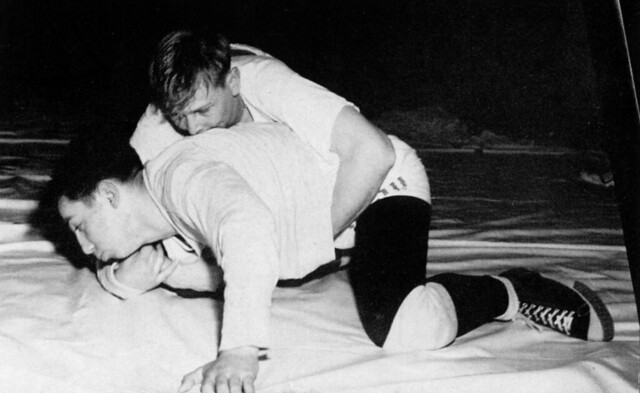

A young Curlee Alexander in his UNO wrestling singlet, ©UNO Criss Library
Champions. He’s coached numerous team and individual titlists. As satisfying as the team wins are, he said, they “don’t compare to the individual ones. The kids put so much effort into it.” He said a coach must be a master motivator to figure out what makes each individual tick. “All the time, I’m looking for angles to get into a kid’s head to get him to believe,” he said. “What separates a lot of coaches is getting those kids to believe your philosophy is correct. It boils down to being able to communicate and to have kids want to succeed for you and themselves.”
He makes clear he expects nothing less than champions. “I’ve got a lot of guys that have placed at state, but if they didn’t win a state championship, their picture does not go up on the wall in my office. That might be kind of harsh, but it’s reality. That’s what we’re trying to get our kids to strive for and win. Championships are what it’s all about.” He said his favorite moments come from kids who aren’t talented, yet get it done anyway and claim a championship that lasts a lifetime. North High heavyweight Brandon Johnson is an example. “He wasn’t really a good athlete. Overweight. He had to cut down to 275. But he was a hard worker and he had a big heart,” Alexander said. “And, boy, when he won state in 2001, I had tears in my eyes for the first time. I didn’t even cry when my son won, because it was understood he was going to win. But with this guy, it really wasn’t expected. It was just a culmination of all the hard work he gave.”
The hardest part of coaching is seeing “kids do all that hard work and then, when they get right there to the doorstep” of a championship, “they don’t win it.”
The heralded prep coach began as an assistant at Tech, whose wrestling program he took over in the mid’70s. He remained at Tech until it closed in 1984, when he went to North, where he’s remained until retiring from teaching full-time in 2002. The next year he stepped down as head coach to serve as associate head coach and lately he’s added Dean of Students to his duties. As co-head coach, he’s freed himself from all the red-tape to just work with the wrestlers. When his mentor, Don Benning, recently expressed surprise at how much passion Alexander still has for the sport, the former student replied, “I still enjoy it. I enjoy the strategy. I enjoy the competition. I enjoy working with the kids. They keep you young.” He said matching Xs and Os with coaches during a match never gets old. “I really think I’m very good at it and, boy, when I’m successful at it, it’s exhilarating.”
Alexander’s been a pioneer in much the same way Don Benning was at UNO in the ‘60s and Charles Bryant was at Abraham Lincoln High School (Council Bluffs) in the ‘70s. Each man became the first black head coach at their predominantly white schools, where they established wrestling dynasties. In more than 75 years of competition, Alexander is the only black head coach in Nebraska to lead his team to a state wrestling title (and he’s done it at two different schools). Along the way, he built a dynasty at North, which in all the years previous to his arrival had won but a single state wrestling championship. He had six as head coach. Through it all, he’s defied expectations and overturned stereotypes by doing it his way.

Related articles
- Closing Installment from My Series Out to Win: The Roots of Greatness, An Exploration of Omaha’s Black Sports Legends (leoadambiga.wordpress.com)
- From the series Out to Win: The Roots of Greatness – Black Women Make Their Mark in Athletics (leoadambiga.wordpress.com)
- Making the Case for a Nebraska Black Sports Hall of Fame (leoadambiga.wordpress.com)
- From My Series Out to Win: The Roots of Greatness, An Exploration of Omaha’s Black Sports Legends (leoadambiga.wordpress.com)
- Can Houston Alexander Break Gilbert Yvel? (mmaggregate.wordpress.com)
Carole Woods Harris Makes a Habit of Breaking Barriers for Black Women in Business and Politics
In the struggle African-Americans have waged to achieve equal footing in education, employment and housing as well as in leadership positions, elected or not, the progress made has not always made banner headlines. In fact many of the gains have happened quietly and largely under the radar. That’s certainly the case with Carole Woods Harris, who achieved one first after another for black women in Omaha, Neb., where she became a leader in business and in local-county government by persistently moving through the ranks, networking, proving herself just as capable as her male counterparts, and along the way gaining a reputation for being a methodical and savvy operator who never lost touch with her roots. This profile I wrote of Harris appeared about a decade ago.
Carole Woods Harris Makes a Habit of Breaking Barriers for Black Women in Business and Politics
©by Leo Adam Biga
Originally appeared in the New Horizons
When former US West executive and current Douglas County Commissioner Carole Woods Harris first applied at the phone company in the late 1950s, the then-Technical High School honors student eagerly sought one of Ma Bell’s long distance operator openings. It was an era when women, regardless of ability, were limited to narrow roles in the workplace. Any job at the fat phone company was prized. A job there meant a steady paycheck and, if one stayed put, the promise of a pension at the end of a long career. There was even the possibility of advancing into a better paying spot. In reality, few women actually did.
Although the precocious Carole, then known by her maiden name Anders, was told by company officials she more than qualified for the job, she was denied it and, instead, got offered an elevator operator slot. The snub was the first bitter taste of racism in this young black woman’s life. A proud Carole rejected the offer on the spot. However, with the Civil Rights Movement beginning to open doors for blacks, she soon found herself called back by the company, which did an abrupt about-face and tendered her the same position she wanted in the first place. She accepted this offer because, one, she deserved it and, two, her family badly needed the money. Carole was the oldest of three children in a single-parent family (her mother and father were separated) and the Anders barely scraped by on what her mother made working as a maid and what the family received in welfare assistance. “Bear in mind,” she said during a recent interview from her northwest Omaha home, “this is the best job that anybody in my family had ever had.”

The same young woman who had enough moxie to say “No thanks” when treated unfairly and enough good sense to say “Thank you” when opportunity knocked, made this bottom-rung job her entry into the business world, where she blazed a trail for other minorities in climbing the corporate ladder over a 30-year career with the communications giant, much of it spent in management.
High achievement is something Harris, a Kellom Grade School and Tech High graduate, was brought up to expect despite growing up in poverty. Her self-confidence and lofty expectations came from the many stalwart women in her life. Chief among them were her mother, Frances, and maternal grandmother, Elizabeth. “I was raised and influenced, you might say, by a number of strong black women. My mother was a very intelligent woman who finished high school with the skills to be a secretary, which was probably the top of the ladder for women at that time. But that was something in Omaha she was not able to do because of her race. Many of the parents of her generation had that experience. My mother could only find work as a house maid all the time I was growing up. She ended up being able to get into a decent job when she got on at the Post Office, which began hiring blacks. But what I got from my mother was the belief that things were going to get better for us. My mother instilled the attitude that I could do whatever I wanted and the importance of being prepared to do it. So, she instilled a lot of hope.”
In her grandmother Elizabeth, Harris found an example of how to persevere and stay true to core beliefs through trying times. “My mother’s mother was a widow who raised nine children. By the time she was in her 40s she lost her sight (due to glaucoma). Yet, she helped to raise her grandchildren. I often consider my grandmother as the most saintly person I’ve known. She had a very strong faith.” The family, led by grandma, regularly attended Morningstar Baptist Church. Today, Harris worships at Clair Memorial United Methodist Church.
While establishing herself as a player in business circles, Harris began making her presence known as a community volunteer and board member. She is the past chair of the Eastern Nebraska Human Services Board of Governors. She still serves on the boards of numerous health and human service agencies, including the United Way of the Midlands. More recently, she has emerged as a savvy politico giving voice to minority concerns. Along the way to becoming a community leader, she raised a family. The twice-divorced Harris has three children from her first husband — sons Vernon and Michael and daughter Kimberly. She is a grandmother of four. Her only regret, she said, is not finishing her college education, something she put on the back-burner to take care of business.
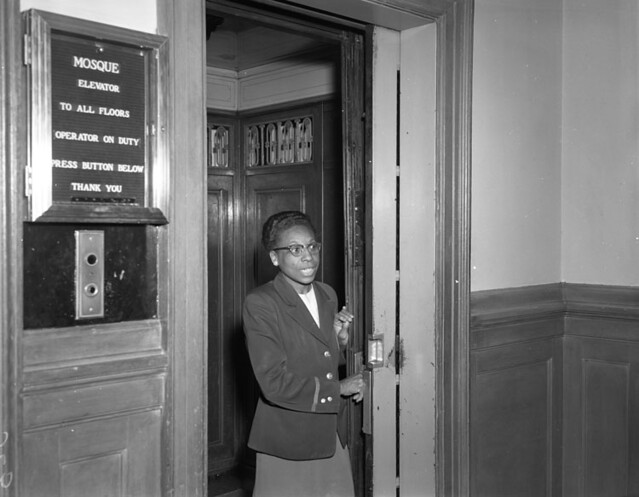
A black woman elevator operator in Virginia in the era Carole Woods Harris worked the same job in Omaha
Upon being the first black promoted into middle management from within then-Northwestern Bell in the 1970s, she became a figure of inspiration for a group of long-time employees who filled the very job the company tried steering her into more than a decade earlier. “There were several black women working as elevator operators then, and these beautiful, special women were so encouraging and supportive of me when I started. They mothered me. They just showed such a sense of pride in me,” she said, her voice breaking at the thought of how much she meant to them and how much they meant to her. Once she made her way into the halls of power, first as a district manager for directory publishing and eventually as director of strategic planning, she knew her double-minority status made her a closely watched symbol inside and outside the corporation. She knew there were those who suspected her rise into the management ranks was due to affirmative action quotas than her own merits. That others scrutinized her every move to see if she really belonged and carried her own weight. And that still others expected her presence to be a gateway for more blacks. All of which made her feel even more pressure then she already put on herself.
“It’s not unusual for people in that situation to always feel they’ve got to make an effort to be twice as good” as their white counterparts,” she said of the awkward position she was in. “So, I guess I pressured myself. I knew it was important that others have the opportunity to follow me, and if I didn’t do well it would adversely impact the opportunities for others and would be used as an excuse” to not hire more minorities. She acknowledges she did sometimes “wonder…if what was happening to me was because I’m black or because I’m a woman. I think my experiences were impacted by a combination of my race and my sex.”
In addition to having to prove herself, she faced the challenge of gaining access into the male-dominated executive suite, essentially a men’s club whose “suits” did a lot of business on the golf course or the local tavern, where women colleagues were unwelcome. “Well, I didn’t golf, so I started inviting myself to lunch with them,” she explained. “It hadn’t occurred to them. I looked for any ways to make myself part of the Old Boys Network.” By all measures, she succeeded, becoming a highly-admired manager who could stand her ground with the boys.
Frank Peterson, a former senior manager with US West, said her ascendancy at the company was “no window dressing,” adding: “She was no showcase. She was a very competent manager and a very well-respected leader that more than held her own in any position she was placed in, and I think that’s a real asset to her. The examples she set were excellent.”

For much of her time in management, Harris oversaw a group “responsible for publishing all of the directories for a five-state region.” She supervised staffs in Omaha, Des Moines and Minneapolis. Near the end of her career (she retired in 1990) her role as a strategic planner found her deeply involved in the merger of the so-called Baby Bells (Northwestern Bell, Pacific Bell and Mountain Bell) that created US West. That meant a lot of streamlining and downsizing to eliminate redundancies and to maximize efficiencies. “When you bring three companies together,” she said, “you have a lot of duplication. My job was basically working through that.” Her dedication to those cost-cutting measures was so complete she even phased-out her own role in the company. “As part of that process, one of the things I did was eliminate my own job. I was in a position to see it coming and as a result I was made less afraid of that change.”
She took early retirement at 50, leaving behind an accomplished legacy. Her old colleague, Peterson, said, “She brought a dignity to her role, whatever it was. She has the ability to say what’s necessary to be said, to say it well and to say it in an unemotional way. It’s a characteristic I witnessed many times. Also, she’s an excellent listener. As a team player she could adapt quickly to any situation. She could always see the big picture, not only her own responsibility, but that of the greater need. The telephone business was filled with a bunch of great people…and when you think about the people you cherished and the people you could count on, she ranks way up in that realm. Her path just leaves people feeling good.”
Once separated from the company she had come of age in, Harris made a frank self-assessment and, when the opportunity presented itself, pursued a life in public service. “If you’ve been with a company for 30 years that publishes directories and provides long distance service, it’s hard to see what value you have outside that context,” she said.”That started me to do a better job of identifying how the skills I gained were transferable to other venues.”
Her attraction to city-county government actually began several years before when, in the early 1980s, she was appointed by then-Mike Boyle to the Omaha Personnel Board. Her tenure on the Board coincided with a tumultuous turn of events when the incumbent Boyle, whom she serves with today on the Douglas County Board, was recalled, Councilman Steve Tomasek filled in as Acting Mayor and Councilman Bernie Simon was elected by the Council to serve out the deposed Mayor’s term. “I chaired one of those major hearings during all the turmoil,” she recalled. It was during that time she mentioned to fellow Democrats she “might be interested in serving in public office” and, sure enough, political operatives approached her a few years later about running against incumbent City Councilman Joe Friend. After some hesitation, she put her hat in the ring and challenged Friend in the 1989 election.
She lost, but valued the chance it gave her to surface issues, the primary one being “the need for the City and its elected officials to pay greater attention to all segments of the community. There were areas that were significantly under-served.” While she admits she “had a lot to learn” about the political process, she considered her failed bid “a very good experience.”
The call to service came again in 1992 when she ran for and was elected to the District 3 Douglas County Commissioner’s seat. Motivating her to seek office, she said, was her “interest in the health and human services areas the county is responsible for and an interest in understanding the budget process and being able to have that process be fair to all areas of the county being served.”
Her victory gave her the distinction of being the first black elected to the Douglas County Board. In a state that falls well behind the rest of the nation in funding services for disadvantaged populations, Harris has used her office as a forum for strengthening existing programs and creating “more community-based services for children-at-risk as well as for mental health and chemical dependency patients.” She sees many needs still going unmet. “In the youth area I see more need in the way of prevention-based services for at-risk youths and their families. We continue to be too heavily dependent on detention.” She also sees “huge gaps” in youth mental health services. “Because the slots aren’t available in Kearney (at the youth rehabilitation center there) and in other county facilities, we are sending too many young people out-of-state at a very high cost for services that we should be able to provide right here locally.” Harris chaired the Nebraska Juvenile Services Grant Committee and helped develop the county’s Community Juvenile Services Plan.
A black woman who shares much in common with Harris, former Omaha City Council member Brenda Council, admires the leadership qualities her friend embodies.
“I think she’s been not only a tremendous representative for her district, but for the county. She’s done a tremendous job on the County Board. Two words that describe her are — integrity and dignity. She makes decisions based on what she believes is right, but she does that after she considers everyone else’s opinion. She brings reason and rationality to her decisions. She’s just a calm-steady presence. That’s her style,” Council said.
Fellow Douglas County Commissioner Clare Duda echoed Council’s observations about Harris. “Carole has a calmness and common sense unlike anybody else I’ve had the pleasure of serving with,” he said. “I can always count on her to not let politics or sensationalism cloud her vision. She’s hard-working, she does her homework and she’s well-connected in the community. She sticks to her guns when she knows what’s in the best interest for her constituents. I have just the utmost respect for her.”
Council, the first black president of the Omaha School Board and the second black to serve on the City Council, also appreciates the example Harris sets: “Carole Woods Harris is certainly someone that young people should look to as a model. She’s paved a path that others can follow.”
As one of two Democrats currently on the seven-member Douglas County Board, Harris carefully selects her battles, preferring to work quietly behind-the-scenes to forge alliances on issues she feels strongly about. “I guess I see myself more as a catalyst or facilitator. The main game that’s played” with a policy-making body like this “is counting votes and sometimes, given the makeup of the Board, it’s more helpful to work out a coalition and have someone else take the lead. If it’s most helpful for me to be out there running in front about something I care about it, I will, but often it’s better just to be a vote and to be less concerned about who gets credit for it.” Harris has been on the other side, too. When she joined the Board she was part of a Democratic majority. “You operate one way if you’re one of five versus if you’re one of two. So, you need to be flexible.”
Her lone Democratic colleague on the Board, Mike Boyle, sees Harris as a steadying influence and as a simpatico voice for the underdog. “She’s able to bring-on discussion of relatively controversial subjects without any acrimony or heated discussion, but she sure gets the point across. She gets right to the core of the problem. She’s a woman of very high standards. Her ethics are uncompromising. There are some fundamental things she believes that she will not yield on. Yet, she’s very easy to get along with. Carole and I do not always vote the same way but we do share some values, including the basic belief in the need for county government to serve its primary purpose — and that is to serve people who really need help. In many cases, we are the government of last resort.”
With 10 years on the Board, Harris, along with Duda, are the County Board’s senior Commissioners. She considers her duties “a fascinating challenge.” The best thing about it, she said, “is the good feeling you can have when you succeed at making a difference.” Among the most “frustrating” things, she said, is how hard it is to reach an accord. “I describe this Board as being like a seven-headed executive. All these executive decisions are dependent upon these seven people agreeing.” Then, there’s the intrusion it brings in her personal life. “I’m an awfully private person to have run for public office, and so the worst thing is how much you give up in privacy.” Last winter found her uncharacteristically sharing her private life when she spoke to the World-Herald about a trip to South Africa she made as part of a women’s service organization she belongs to, Links Inc., which helped build 32 schools there. Harris and fellow Links members attended dedication ceremonies for the schools and ushered in a South African Links chapter.
In South Africa she found a nation struggling to overcome an oppressive legacy of apartheid that resonates with America’s own racist legacy. In her understated way, Harris expresses some passionate views about the issue of race. She feels predominantly black northeast Omaha is still largely alienated from the majority white culture.
“I think the community is much more separated and divided than it should be,” she said. “I’ve had too many experiences where individuals who live in the western part of the community are afraid or unwilling to venture into the eastern part of the community, where I live, as though it’s a war zone. It’s not what people perceive it to be. The power structure would like to think there are no (racial) problems and in that regard I think they have a head-in-the-sand attitude. There’s been slow progress in building good relationships with the police. At times, I’ve seen that go backwards. There are some real educational challenges. There are way too many children in the disadvantaged areas of the community who’ve been allowed to fall through the cracks.”
In a positive vein, she acknowledges progress has been made on the job and housing fronts and that her own success story offers proof of that.
Not one to look back, Harris looks forward to completing her Commissioner’s term and then moving onto some new challenges. Always looking to improve herself, Harris, a graduate of leadership and management programs, an avid reader and a world traveler, may go back to college for that long-deferred degree. Whatever she does, she will doubtlessly bring her quiet strength and grace to the task.
Related articles
- Black Women – We’re All We Have (theladiesfeed.wordpress.com)
- Honoring the Black Women (afroveg.wordpress.com)
- Black Women Still Battle ‘Mad Men’ (thedailybeast.com)
- Making the Case for a Nebraska Black Sports Hall of Fame (leoadambiga.wordpress.com)
- From the series Out to Win: The Roots of Greatness – Black Women Make Their Mark in Athletics (leoadambiga.wordpress.com)
- The Great Migration Comes Home: Deep South Exiles Living in Omaha Participated in the Movement Author Isabel Wilkerson Writes About in Her Book, ‘The Warmth of Other Suns’ (leoadambiga.wordpress.com)
- North Omaha Champion Frank Brown Fights the Good Fight (leoadambiga.wordpress.com)
The Last Hurrah for Hoops Wizard Darcy Stracke
Darcy Stracke was one of those small town wonders in the world of sports. By the end of her freshman year in high school she was already a legend in her hometown of Stuart, Neb. for her prodigous talent in volleyball, basketball, and track and she only added to the legend her last three years in high school in Chambers. Neb. By the time she graduated she held a batch of state scoring records in basketball. A playmaking and scoring guard in one, she spurned offers from big schools to play hoops at Division II University of Nebraska-Kearney, where she dominated once again. Then, in a move that upset her fan base, she transfered to the University of Nebraska at Omaha, and promptly made her mark in her only year there. In a strange twist she set the UNK single game scoring record of 43 points against her future teammates at UNO and then when playing for UNO she broke that school’s single game scroring mark with a matching 43 points against, you guessed it, her former teammates at UNK. She was a multiple all-state performer in high school and a three-time All-American in college. She’s in the athletic hall of fame of every school she competed for. I wrote this piece during her final college season in 2000.

The Last Hurrah for Hoops Wizard Darcy Stracke
©by Leo Adam Biga
Originally appeared in the Omaha Weekly
Scene One: Penetration is her game.
Wherever she is with the ball, her first instinct is to take it to the house. Using a crossover dribble, she first measures her opponent. Then, feinting with the ball, her head or both, she jump-stops inside, double-pumps and either banks a shot in off the glass, draws a foul or else dishes off to an open teammate for an assist. What sticks with you is her fearlessness inside and her uncanny knack for weaving through a tangle of bodies to make something happen.
Before some recent struggles, it seemed UNO’s fabulous hoops star, Darcy Stracke, could do no wrong. Time after time, she took over games, racking up points at will and disrupting opposing teams’ offenses. A case in point came in the Mavs’ mid-season 68-50 home win over NCC rival South Dakota. She scored 29 points on 12-of-16 shooting from the field and flashed a variety of take-your-breath-away passes, now-you-see-it-now you-don’t dribbles, pickpocket steals and whirling-dervish drives to the bucket. And all this in only 26 minutes of play.
Afterwards, she stopped by the north bleachers to chat with her star struck fans. There is a definite star quality about Stracke, a 5-foot-7 senior guard whose game intensity belies a quiet off-court demeanor and whose grace-under-pressure endures despite sweaty palms. Among her regular admirers (some sporting her jersey No. 34) are a group from her hometown of Stuart, Neb., including her parents, Marilyn and Del, who have made it to every game but one since her freshman year in high school. She is their small-town-girl-makes-good hoops diva.
That night, Stracke, still dressed in her damp uniform, lingered a long while with the crowd. She seems to savor these moments. Not because she enjoys the attention or adulation (In truth, she’d rather not have all this fuss made about her.), but because she knows the wondrous run she’s been on is finally drawing to a close. For this north-central Nebraska native has enjoyed a legendary athletic career matched by few other Nebraska female athletes. But soon her glory days will be over. The scoring feats, the fancy moves, the late-game heroics relegated to hazy memories or grainy video highlights.
For Stracke, steeped in athletics from an early age (she learned to walk with a basketball) and hooked on competition the way others are on drugs, the thought of not playing (notwithstanding a possible pro stint overseas) is daunting. How could it not be for someone who sleeps with a ball to get “in tune with it”?
“When I step on that court it’s like I’m in another world,” she said. “I get a feeling I can’t get anywhere else. I love that feeling. I don’t feel any aches or pains. It’s just like I’m in a zone. Basketball is probably in my head most of every 24 hours. I watch game films all the time. If basketball’s on TV, I’m going to watch it. If I can get a pick-up game, I’m going to play it. Basketball has always been an outlet for me, so if I’m having a bad day, I always look to basketball to get me out of that funk, even if it means going up to the gym at 10 o’clock at night and shooting. Once I start shooting, everything else is erased.”
More than anything, she’ll miss the competition when she walks away from the game. “I just love to compete.” Then there are the fans who have been there for her all this time. “I have my own little fan section. They expect me to come over and talk. I love the interaction with people after games. It’s those little things I’m going to remember.” Wherever she went the past eight years, her legion of fans followed. They were there at the start, when she led Stuart Public High to the Class D-2 state title as a 14-year-old freshman. Then, after transferring to nearby Chambers Public School, where she played for brother-in-law, John Miller, they saw her spark a 77-game winning streak en route to three more state titles and, in the process, she set the state’s all-time scoring record (boys or girls) with 2,752 points. Along the way she displayed a court savvy beyond her years, anticipating picks, screens and passing lanes for steals and assists and driving the lane for layups.
When she chose nearby Division II powerhouse University of Nebraska-Kearney over several Division I schools, fans kept right on trucking to see how she matched-up at the next level. Just fine, thank you. She broke the school’s single season scoring record (679 points), topped its career steals mark (292), twice led the Lopers’ into the post-season (three times if you count her injury-shortened junior year) and capped off 1998-99 by earning 1st Team All-America honors.
Then the soft-spoken Stracke, 21, surprised everyone last off-season by transferring from UNK (she politely declines discussing why) to UNO for her final year. While rehabbing an injured knee in Kearney over the summer Stracke was deluged with calls, letters and visits from boosters pressuring her to reconsider. The “trauma” all got to be too much. “A lot of people were disappointed I left. I kind of avoided people there for a while, but I stayed because that’s where my friends and family are,” she said. “It was just a better fit here (UNO) for me. I think people who care about me understand it’s something I did for my own happiness.”
Once this season began and the buzz around “the Darcy situation,” as it’s known in Kearney, died down, all was forgiven, and the Stracke bandwagon kept rolling down I-80 as before, only a little farther east, to cheer her on in Omaha, where all she’s done is lead the nation in scoring for much of the year (she is second now with an averages just under 23 points per game) and rejuvenate a program (UNO is 15-10) that had scuffled recently (11-16 last year and 10-17 the year before). Stracke paced the Mavs to a fast start (7-2) and the team held its own in the middle part of the year before slumping down the stretch. Last Saturday’s 74-58 road loss to Northern Colorado dropped the Mavs to 1-4 in their last five games and squashed any remaining hopes of an NCAA regional post-season berth. Stracke, who struggled some herself lately, enjoyed a strong outing with 23 points, 5 boards and 4 steals, although she did have 6 turnovers.
She and her Mavs will try to play spoiler in season-ending road games this weekend versus ranked league foes North Dakota and North Dakota State.
It is a shame her career will end without one last hurrah in the playoffs, especially after her banner junior year ended prematurely when she suffered a complete ACL tear in her right knee during the Rocky Mountain Athletic Conference tourney. And, yes, it seems unfair Omaha hoops fans have had her such a short time. Seeing her go will be tough. Just ask UNO Head Coach Paula Buscher, who took a chance signing her to play for a single year. It was strictly a one-shot deal. No encore season. No promise things might not fizzle for the scoring phenom (they haven’t). No assurance she would recover from her injury (she has). No guarantee her addition might not upset team chemistry (it hasn’t).
“That was the risk that was out there for herself as well as the people recruiting her when she was transferring with one year left,” Buscher said. “We obviously felt and still feel it was a great decision on our part. There was a risk involved, but we felt like with a player of her caliber and her stature, and with the work ethic she brings, that that was a risk we needed to take. Would I love to have her for another two or three years? Oh, heavens, yes. Unfortunately, that’s not the way it works. We knew that going in. A great player’s career always ends too short. I just feel fortunate to have had the opportunity to coach her for one year. I mean, let’s face it, the kid can play. She brings it every night. I think she’s helped develop a different mind-set (winning) and raise expectations with our program, and that’s something we’re looking to carry on.”

Buscher, like UNK Head Coach Amy Stephens before her, knew what she was getting in Stracke all right. She closely followed Stracke’s brilliant prep career and then, while coaching against her in college, saw her her light-up UNO twice, including a 43-point explosion last year. Still, once Buscher got a chance to watch Stracke at work, up close, every day in practice, she realized UNO had gained even more in the bargain than what first met the eye.
“Everyone was aware of her athletic ability and what she could do in games, but the bonus with Darcy was seeing how she trains. From the first day of preseason, all the way throughout every single practice, she’s the first one out there for every sprint, every drill, pushing all the time. Bottom line, she’s a competitor who wants to win. That, more than anything, is what makes her a great player,” Buscher said.
Scene II: Whatever it takes.
A perpetual motion machine on the floor, she never stops competing — regardless of the score. On defense, she creates havoc by hounding ball handlers into errant passes or by swiping lazy dribbles. On offense, she sets the tone by hustling down court, chasing after loose balls and constantly working to get open.
Not a great perimeter shooter, Stracke gets most of her points in or near the paint. Because defenses focus on her, she must often create shots where there are none. Her she-got-game greatness was never more evident than in three early season tests. First, she shook off jitters in a much-anticipated Dec. 1 contest against UNK, when, in a bit of perfect symmetry, she led UNO to an 86-71 victory and, in the process, burned her old mates for a school-record 43 points, the exact total she posted against UNO last year (UNK is having the last laugh, however, as the Lopers are rolling along with a 21-4 mark and high national ranking.).
“Actually, that’s probably the one game I didn’t want to play this year just because I still have a lot of friends on the team there,” Stracke said. “I did want to have a good game, though, because it was against the school I’d been at for three years. And I was a bit more nervous for that game than for others.”
Then, on consecutive nights in mid January, she did something she’s made a habit of during her playing career: hitting buzzer-beaters to defeat Minnesota State-Mankato and St. Cloud State amid a five-game stretch in which she averaged more than 30 points. Ask her what it’s like to have the ball in her hands when the game’s on the line, and how she’s able to deliver the goods, and she answers:
“When it comes down to making free throws at the end or making that game-winning shot, I think, ‘Darcy, you’ve done this tons of times before in the backyard. You can do it again.’ It’s not like I haven’t taken those last-minute shots before. So, I just shoot it with a lot of confidence and play with a lot of confidence. Plus, when I get in those situations I want to do well because I care about my teammates and I know I’d let them down if didn’t make that shot. The feeling after you make it is indescribable. It’s so exciting.”
She fees her success as a clutch performer and multi-faceted player (she leads UNO in scoring and steals and is second in assists) is largely due to all the hard work she’s put in honing her skills, including keeping the neighbors up while shooting past midnight in her backyard. “I may not have as much athletic talent as some players, but what’s been to my advantage is I do put a lot of hours in at the gym, and I think that’s what makes me a better basketball player and what gives me more confidence. I expect the best out of myself.”
In The World According to Darcy Stracke, effort breeds confidence which, in turn, breeds success. “Everything I’ve competed in (she was also a top volleyball, track and softball competitor) I always believed I could win. And, if I didn’t win, I’d go back and make adjustments or try to work on something that was my weakness, and the next time I was going into that competition I wasn’t going to lose.”
She further developed her game by routinely playing against the opposite sex and by challenging older, more experienced, players to one-on-one contests.
“I think it really helps playing against men and boys. It makes you adjust your game because if you don’t you’re going to get your shot blocked or get your pass stolen. Now, when I go against girls in college, I remember to use that extra fake.”
Since entering college she has experienced more losing than she ever did before, and even though it irks her, she long ago came to terms with that and the fact she can’t dominate every game like she did in high school.
“I just hate to lose. Even if its a card game or playing whiffle ball in the backyard. Then, after my teams went 77-0 my last three years in high school, I lost my very first college game. It was really hard because I wasn’t used to losing. But if I’ve learned anything it’s that you’re going to struggle sometimes at the college level. There are lots of ups and downs. The competition is so much better.”
Like many top athletes, she is somewhat obsessive-compulsive preparing for competition. She has game-day rituals she dares not break for fear of throwing her whole rhythm off.
“I have a routine for everything and, if I get out of synch, it just bothers the heck out of me. It ranges all the way from what I eat to when I step on the court to how long I drill in pregame warmups. I mean, it’s to the point where my routine is the same every single second, every single time.”
It’s that kind of attention to detail that’s made her settle for nothing less than being an all-around player. “If I don’t show up in every statistical area, from steals to assists to rebounding to even shooting percentage, I don’t feel like I had a good game. A lot of people look for me as a scorer, but I want to be a complete player because the only way our team is going to get better is if I can be consistent in every category.”
Despite the fact her new team has fallen far short of what her UNK clubs achieved (Kearney went 80-11 her three years there), she has no regrets about leaving such success behind for the mediocrity she found at Omaha. “I knew what I was coming into. I knew they’d (UNO) struggled. But I wanted to come to a program where I could make a difference. I think it’s worked out really well. My teammates have accepted me with open arms. I’m glad I’m here.”
All too aware the clock is fast running out on her playing career, Stracke acknowledges she has been pressing a bit, going a combined 22-of-79 from the field in a five-game stretch before regaining her touch last week (7-of-14 from the field and 8-of-8 from the line) against UNC. Heading into her final collegiate competition, she is poised to earn All-America honors again and owns combined career totals of 2,211 points, 422 rebounds, nearly 400 steals and 373 assists in 114 games.
Sadly, her last hurrah will come far from home. Local hoops fans who missed her in action are the real losers since the next time she (a K-12 physical education major) takes the court again in front of a crowd, will likely be as a coach.
“I love new challenges, If I don’t go over overseas to play ball I’m going to try and be a grad assistant somewhere to get my foot in the door in college coaching. I’m actually pretty excited to see basketball from a coaching standpoint.”
Still, coaching can never replace the thrill playing has given her.
“Basketball’s always been my first love. I’ve always played with a lot of passion. I’ve been struggling a little bit with the fact that I have less than a handful of games left, and then I’m done. I’ve been counting down the games. I’m just going to go out and play like every game is my last because pretty soon it will be.”
Scene III: In synch.
If there is any lasting image of her, it is her streaking down court in transition — her raised arms extended high overhead, her expectant hands just aching to touch the ball once more. You want to yell, ‘Give her the damn ball.’ Give it to her, indeed. The two were made for each other.
Related articles
- Omaha Hoops Legend John C. Johnson: Fierce Determination Tested by Repeated Run-Ins with the Law (leoadambiga.wordpress.com)
- From the series Out to Win: The Roots of Greatness – Black Women Make Their Mark in Athletics (leoadambiga.wordpress.com)
- Making the Case for a Nebraska Black Sports Hall of Fame (leoadambiga.wordpress.com)
Photojournalist Nobuko Oyabu’s own journey of recovery sheds light on survivors of rape and sexual abuse through her Project STAND
Photojournalist Nobuko Oyabu has dedicated herself to a lifetime project portraying the individual hunanity of persons who have suffered rape or sexual abuse. Her intent is to beyond the label of victim to show who these people are. The work is dear to her for many reasons, not the least of which is her own recovery from rape. She delivers a message to the world in her pictures and in her words that the hurt survivors feel is real and profound but that healing is possible. She lets survivors, their families and friends, and the public know that the assault or the abuse and its aftermath need not define women. She delivers this message through a support organization she formed, through photographs she takes of survivors, through educational presentations she gives, and through writing she does on the subject, including her autobiography (Stand, published in Japan). She has been much honored for her work. I wrote the following profile of Nobuko several years ago, when she still lived in Omaha, Neb., where she’d come to work for the Omaha World-Herald. She and her family have since moved on elsewhere but her work continues, as does the praise for her efforts.

Photojournalist Nobuko Oyabu’s own journey of recovery sheds light on survivors of rape and sexual abuse through her Project STAND
©by Leo Adam Biga
Originally appeared in the Omaha City Weekly
Omaha photojournalist Nobuko Oyabu’s work on rape and sexual abuse first made waves in the States. Now it’s stirring things up in her native Japan. On visits there in the last year she’s exhibited her intimate portraits of survivors and given talks about her own story and her subjects’ stories of survival.
She was raped in 1999.
She’s also returned to her homeland to promote her new book, Stand (Forest Press). Published in October, it’s made best seller lists there. The book reveals the trauma of sexual assault through the prism of her personal odyssey and of the men and women she’s chronicled. Her book’s title is drawn from a national project she launched in Omaha to document survivors from across America and in Canada.
Some survivors want to be photographed at the very site they were abused. It isn’t always possible. When it is, it’s an emotional scene. The survivor seeks to reclaim power and control lost in the attack. It’s about closure. In one image a man weeps in the cabin he was molested in as a boy. Some images reveal artifacts of human suffering. A woman shows scars from cuts she makes on herself. Oyabu said self-mutilation is common among survivors as a way of dealing with post-traumatic stress. Another holds a photo of herself as a child made-up as a whore by her abusive dad. Innocence lost. Others choose places and poses that represent their recovery.
Oyabu said Stand is an expression of “how I stood up to the tragedy that happened to me and also of the stands of other survivors. Part of the meaning as well is that sometimes you can’t do anything but just stand there and wait. You can’t always be brave or do something great.”
The fact she’s openly discussing such traditionally taboo subjects in Japan has made her something of a sensation there. Major media outlets in Tokyo, her hometown of Osaka and other cities have profiled her.
“I think I’m the very first person speaking out” on this issue there, she said. In Oyabu’s view Japan harbors, much like the U.S., dysfunctional attitudes about rape and sexual abuse rooted in denial.
“A lot of women tend to be very quiet about it and just suffer silently. It’s really hard for them to be open about it,” she said.
She said a Japanese columnist questioned in print whether she’s actually a survivor after one of her upbeat presentations. Yes, the subject is sober but that doesn’t mean she has to be.
“This particular writer thought that was not appropriate at all. He wrote, ‘I wonder if it really happened to her?’ I wasn’t what he thought a survivor should look like,” she said. “So how should I look? Do I always have to be depressed? I mean, c’mon, I have a daughter. I have a responsibility to make her happy. I can’t be depressed.”
Oyabu said, “It’s kind of hard to attach faces to the issue” amid such perceptions, “It’s kind of hard to see the reality and people don’t really want to see it. But it’s not like all survivors are in depression, stigmatized and bitter. I certainly don’t see myself that way. I’ve found a lot of people don’t see themselves that way.
“If you have a preconceived idea of how a survivor looks, you can never get the real person in the picture.”
Faces of Rape and Sexual Abuse


©photos of survivors by Nobuko Oyabu
Before her own attack, she said, “I admit I had the same attitude toward rape victims. I thought rape belongs to somebody else. I didn’t know there are so many different kinds of survivors until I met them.”
Oyabu’s black and white images express the full spectrum of survivors in terms of education, occupation, income, race, ethnicity, age, shape, size. She said, “I consciously selected these people” to represent they are not just one thing or another. Sexual assault does not discriminate along demographic lines. “It happens to everyone,” she said. Just as survivors are not all rich or poor, black or white, they are not all grim or mad. Many are content, confident, proud, defiant. Count Oyabu among these. Her self-portrait on her book’s cover shows an assertive, ever curious woman poised with camera in hand.
“My resistance was the key for me,” she said.
While large urban papers in Japan gave her positive coverage, reprinting some of her images, she said smaller rural papers displayed a more close-minded attitude and refused to run her pics. She found that “odd” considering her images are in no way graphic but merely portraits. She thinks such reluctance stems from outdated notions that survivors should not be seen or heard — a byproduct of a larger bias that fixes blame or shame on survivors.
“With sexual assault there’s so much gray area still,” she said. “Too many people think it’s the victim’s fault. In this country as well.”
That the blame game should persist in Japan, she said, is ironic given it “is the capital of pornography in the world. There’s so much human trafficking and child porn going on…and somehow the blame is shifted to the victims.” She said sex is right out front in Japan, as it is here, “and yet when it comes to sexual violence people don’t want to acknowledge it,” much less talk about it. Similarly, she said America and Japan don’t want to examine the implications of sex being so pervasive yet rarely discussed at home or school. “Not talking about it,” she said, results in high rates of sexual assault, sexually transmitted diseases, promiscuity, prostitution. This pregnant silence, she said, explains why most sexual assaults go unreported.
“A lot of people are in denial,” she said, “especially parents who grew up in a home where abuse took place. A lot of people have no idea what to say — they just don’t know how to talk about it. Survivors don’t know who to talk to or where to go.”

In lieu of information, she said, some people suffer abuse not realizing they’ve been victimized. She notes a disturbing trend among young people she speaks with who routinely tell her they’ve been molested or raped but pass it off “as no big deal” — as if it’s a rite of passage. “It’s really sad,” she said.
Then there’s the way rape is historically minimized by society, drawing light sentences for actions that have long lasting effects.
Oyabu noted, “One of the survivors put it like this: ‘The rapist gets three to five years, the victims get life.’ And that’s exactly it. It’s not just a one-time incident. For a lot of people it takes a lifetime to get over it. I find it disturbing that society doesn’t see rapists as high risk criminals.”
The reaction her work’s elicited in Japan is not unlike its reception in the U.S. Her STAND: Faces of Rape and Sexual Abuse Survivors Project has been a traveling exhibition across America. Her work with survivors and her personal identification with them and their trauma has made her a sought-after figure. She’s testified before Congress about the issue. She’s spoken to medical, health and law enforcement professionals. She’s presented at women’s and survivors conferences as well as colleges and universities. She’s served as visiting faculty at the Poynter Institute (Fla.) for a seminar on how the media reports rape. She and her work have been part of national awareness campaigns and a Lifetime documentary. She’s written articles for publications here and abroad.
In 2003 she received the Visionary Award from the DC Rape Crisis Center along with comedian Margaret Cho and poet Alix Olsen.
Still, her work is not always appreciated. She said while on staff at the Omaha World-Herald in 2000-2002 senior editors there nixed her doing a photo-essay series on sexual assault survivors. The material, she was told, was too intense for the paper. She said some journalists criticize her for crossing ethical lines as a reporter who documents fellow survivors like herself.
“But if you can use your personal experience to get an exclusive story,” she asks, “then why not use it as a tool?”
Although she defines herself a photojournalist rather than survivor or advocate, her work’s inextricably linked to her experience. Stand centers on the aftermath of her rape — the turmoil she felt and the healing she found. In this light, she said, the images she makes, the talks she delivers, the testimonies she shares serve an educational purpose. “The work of journalism is educating people,” she said. More than anything, she wishes to give survivors names and faces just like her own.

Oyabu was a young, single, up-and-coming photographer with the Moline (Ill.) Dispatch in 1999 when she was raped. She had come to the States only a few years before to pursue her post-secondary education. She wanted to write but found her niche with a camera at Columbia College in Chicago. She went on to shoot a diverse range of subjects for newspapers in the Quad Cities.
Her life and career were full of bright promise when she suffered the ultimate violation and everything grew dark. The rape occurred far from her family in Osaka, where her father pastors a Christian church and her mother teaches preschool. It would be six years before she told her parents what happened. She said, “I didn’t want to worry them too much…I didn’t have the courage to tell,” In the wake of her revelation, she said, “my family has been very supportive.”
The violent act took place at night in her own home. She was sleeping in the bedroom of her locked apartment when the male perpetrator, a former neighbor she didn’t know, broke in using a crowbar. The petite Oyabu never stood a chance. As soon as the stranger left she ran to neighbors and called 911. The cops that caught the case treated her with care on the scene and at the hospital ER they took her to. The medical staff respectfully collected what they needed for the “rape kit” that police and prosecutors use to help convict rapists.
While treated well, Oyabu said she did overhear a doctor ask a nurse, Why is she crying? As she’s since discovered, the law enforcement and medical communities are not always as sensitive as they could be. At a 2005 University of Nebraska Medical Center presentation she told doctors, nurses and students that most sexual assaults are committed by a relative, friend, acquaintance or colleague, meaning victims “take a huge risk even to come out to the ER. You are among the first to respond to these victims when they reach out for help,” she implored the audience, “so please be compassionate to these people.”
Care must be taken with victims, she said, as the trauma of rape is exacerbated by the trauma of examination and interrogation and the suggestion — intentional or not — that somehow the victim’s at fault.
Oyabu provided police a description of her assailant, who left behind the crowbar, his hand prints, hair and other incriminating details. He was caught after only three days. The fact her rapist was captured at all, much less so swiftly, is atypical, she said. The remainder of that year is a blur of counseling sessions, depositions, trial proceedings and attempts to get on with her life. Due to the overwhelming evidence she was spared having to testify. The repeat offender was given the maximum sentence by the judge — 20 years — and is currently serving his time in an Illinois state pen. Again, she said, that is not the norm.
Even with some closure, Oyabu endured flashbacks, nightmares, anxiety attacks and depression. She lived in fear. She rarely let her guard down around men.
The counselor she was referred to at a Quad Cities family services center helped Oyabu work through her emotions. “She made sure I understood that it (the rape) wasn’t my fault. That’s one of the biggest steps for healing.”
A counselor friend suggested she keep a journal. Oyabu said journaling provided a healthy release. Later, her entries proved a key resource for her book. That same friend asked Oyabu to participate in a project that had victims’ harsh self-portraits and words printed on T-shirts. “All I saw was shame and anger on them,” she said. “These T-shirts were faceless. I didn’t belong there — I have feeling and hope. I’m not just a statistic.” This picture of bitter fruit was not the image she had of herself or other survivors, a term she prefers to victims.
“Well, I don’t want to be bitter forever,” she said. “Survivors don’t want you to feel sorry for them or see them as some kind of damaged goods.”
She’d already discovered survivors could be anyone. After her rape several friends came forward with their own stories. “It was really a shock to me all these close friends from college were rape survivors. I didn’t know it,” she said. “I guess my friends didn’t know how to start the conversation about it. Once I was victimized they felt like they could talk now.”
Four of the five women she served on a panel with at the Poynter Institute turned out to be survivors. Smart, successful professionals like her. They’re everywhere.

Oyabu came to Omaha not just for a job but to escape the place where she was raped. “I couldn’t really stay in the same city,” she said. Also, Omaha had a lower incidence of sex crimes. The thought of it happening again plagued her. She wanted to feel safe. But that took time and work. It came with the help of Dee Miller, a fellow writer and survivor in Council Bluffs, and Pastor William Barlowe, pastor of Omaha’s Grace Apostolic Church, where she met her husband, IT specialist Patrick McNeal. The couple have a 2-year-old daughter, Ellica.
Another turning point came when she wrote a letter to her rapist. “As soon as I dropped the letter in the mailbox,” she said, “I felt a kind of joy I’d never experienced. I started to smile and laugh again. I felt like I was totally set free.” Forgiveness is a work in progress.
The next piece of her recovery was her faces of survivors work. When the Herald balked at doing anything she bolted in frustration and liberation. “I was like, Forget them, I’ll do it on my own. She did, too, largely self-funding what became the Stand project. Fees from speaking engagements and exhibits helped.
She said the project’s been “part of my healing, It’s been healthy for me.” She’s met some survivors who can’t move on or can’t find closure — still mired in their pain. “That’s totally understandable. I was there.” She’s met others who dedicate themselves to the cause — working to make a difference with survivors and first responders. Others lead fulfilling lives and careers outside the issue. She keeps in contact with many. For herself, she said, “sometimes I just can’t believe how far I’ve come and how much I’ve done the past six, seven years. I’m alive.”
The prospect of writing about her survival scared her until she found she could divorce herself from the emotion of that trauma. The process was cathartic. She’s now translating Stand for an English language edition to be published in the U.S. by year’s end. Her photo project lay dormant the past few years as she worked on the book and adjusted to motherhood. This year she may capture new images for the project on two trips she’s making to Japan, where survivors who surfaced after her last appearances there requested to be part of her archive. In the future she may revisit her original portrait subjects to further chart their journey of recovery.
Meanwhile, she’s contemplating her next project. Exploring sexual assault in Asian countries interests her. Whatever she does, she won’t be afraid to take a stand.
Resources:
NATIONAL SEXUAL VIOLENCE RESOURCE CENTER
Nobuko is a honorary board member of NSVRC. NSVRC serves as the nation’s principle information and resource center regarding all aspects of sexual violence.
Clothesline Project of Japan
a project of survivors and their remained families of sexual abuse express their thought in drawing on T-shrits.(in Japanese)
Parents United of the Midlands
a site whose mission to bring light to the darkness of sexual abuse
Advocate Web
free resource for victims and their families
Welcome to Barbados
a Tori Amos inspired website for rape and sexual abuse survivors
Related articles
- Supporting Survivors of Sexual Assault (healthyheels.wordpress.com)
- April Is Sexual Assault Awareness Month (SAAM) (kcareyinfante.com)
- The Medical Minute: Sexual abuse can have long-term effects (medicalxpress.com)
- Self-esteem, recovery from sexual abuse (gwizlearning.wordpress.com)
- 39 Million Survivors of Child Sexual Abuse (livingstonparentjournal.wordpress.com)
Closing installment from my series Out to Win: The Roots of Greatness, An appreciation of Omaha’s Black Sports Legends
Here is the closing installment from my 2004-2005 series, Out to Win: The Roots of Greatness, An Exploration of Omaha’s Black Sports Legends. In this and in the recently posted opening installment I try laying out the scope of achievements that distinguishes this group of athletes, the way that sports provided advancement opportunities for these individuals that may otherwise have eluded them, and the close-knit cultural and community bonds that enveloped the neighborhoods they grew up in. It was a pleasure doing the series and getting to meet legends Bob Gibson, Bob Boozer, Gale Sayers, Ron Boone, Marlin Briscoe, Johnny Rodgers, et cetera. I learned a lot working on the project, mostly an appreciation for these athletes’ individual and collective achievements. You’ll find most every installment from the series on this blog, including profiles of the athletes and coaches I interviewed for the project. The remaining installments not posted yet soon will be.
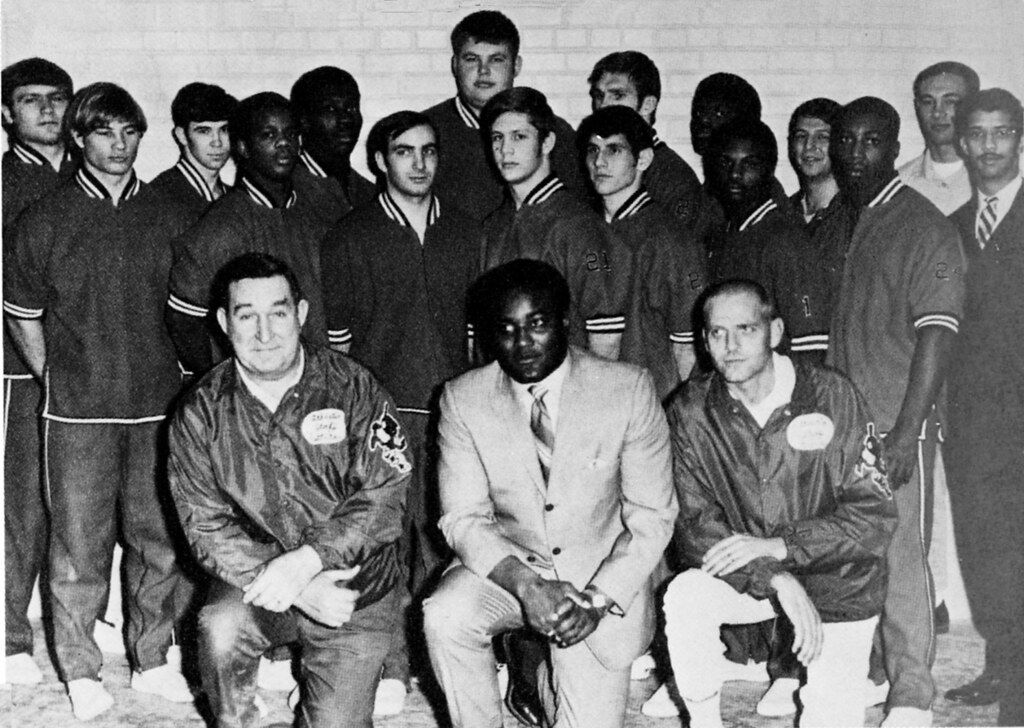
Closing installment from my series Out to Win: The Roots of Greatness,
An Appreciation of Omaha’s Black Sports Legends
©by Leo Adam Biga
Originally published in The Reader (www.thereader.com)
Any consideration of Omaha’s inner city athletic renaissance from the 1950s through the 1970s must address how so many accomplished sports figures, including some genuine legends, sprang from such a small place over so short a span of time and why seemingly fewer premier athletes come out of the hood today. As with African-American urban centers elsewhere, Omaha’s inner city core saw black athletes come to the fore, like other minority groups did before them, in using sports as an outlet for self-expression and as a gateway to more opportunity.
As part of an ongoing OWR series exploring Omaha’s Black Sports Legends, this installment looks at the conditions and attitudes that once gave rise to a singular culture of athletic achievement here that is less prevalent in the current feel-good, anything-goes environment of plenty and World Wide Web connectivity.
The legends and fellow ex-jocks interviewed for this series mostly agree on the reasons why smaller numbers of youths these days possess the right stuff. It’s not so much a lack of athletic ability, observers say, but a matter of fewer kids willing to pay the price in an age when sports is not the only option for advancement. The contention is that, on average, kids are neither prepared nor inclined to make the commitment and sacrifice necessary to realize, much less pursue, their athletic potential when less demanding avenues to success abound.
“Kids today are changed — their attitudes about authority and everything else,” says Major League Baseball Hall of Fame pitcher Bob Gibson, an Omaha Tech High grad who grew up in the late’40s-early ‘50s under the stern but steady hand of coaches like his older brother, Josh. “They’re like, I’m not going to let somebody tell me what to do, where we had no problem with that in our day.”

Gibson says coaches like Josh, a bona fide legend on the north side, used to be viewed as an extension of the family, serving, “first of all,” as “a father figure,” or as Clarence Mercer, a top Tech swimmer, puts it, as “a big brother,” providing discipline and direction to that era’s at-risk kids, many from broken homes.
Josh Gibson, along with other strong blacks working as coaches, physical education instructors and youth recreation directors in that era, including Marty Thomas, John Butler, Alice Wilson and Bob Rose, are recalled as superb leaders and builders of young people. All had a hand in shaping Omaha’s sports legends of the hood, but perhaps none more so than Gibson, who, from the 1940s until the 1960s, coached touring baseball-basketball teams out of the North Omaha Y. “Josh was instrumental in training most of these guys. He was into children, and into developing children. He carried a lot of respect. If you cursed or if you didn’t do what he wanted you to do or you didn’t make yourself a better person, than you couldn’t play for him,” says John Nared, a late ‘50s-early ’60s Central High-NU hoops star who played under Gibson on the High Y Monarchs and High Y Travelers. “He didn’t want you running around doing what bad kids did. When you came to the YMCA, you were darn near a model child because Josh knew your mother and father and he kept his finger on the pulse. When you got in trouble at the Y, you got in trouble at home.”
Old-timers note a sea change in the way youths are handled today, especially the lack of discipline that parents and coaches seem unwilling or unable to instill in kids. “You see young girls walking around with their stuff hanging out and boys bagging it with their pants around their ankles. In our time, there were certain things you had to do and it was enforced from your family right on down,” says Milton Moore, a track man at Central in the late ‘50s.
The biggest difference between then and now, says former three-sport Tech star and longtime North Omaha Boys Club coach Lonnie McIntosh, is the disconnected, permissive way youths grow up. Where, in the past, he says, kids could count on a parent or aunt or neighbor always being home, youths today are often on their own, in a latchkey home, isolated in their own little worlds of self-indulgence.
“What’s missing is a sense of family. People living on the same street may not even know each other. Parents may not know who their kids are running with. In our day, we all knew each other. We were a family. We would walk to school together. Although we competed hard against one another, we all pulled for one another. Our parents knew where we were,” McIntosh says.
“There were no discipline problems with young people in those days,” Mercer adds somewhat apocryphally.
Former Central athlete Jim Morrison says there isn’t the cohesion of the past. “The near north side was a community then. The word community means people are of one mind and one accord and they commune together.” “There’s no such thing as a black community anymore,” adds John Nared. “The black community is spread out. Kids are everywhere. Economics plays a part in this. A lot of mothers don’t have husbands and can’t afford to buy their kids the athletic shoes to play hoops or to send their kids to basketball camps. Some of the kids are selling drugs. They don’t want a future. We wanted to make something out of our lives because we didn’t want to disappoint our parents.”
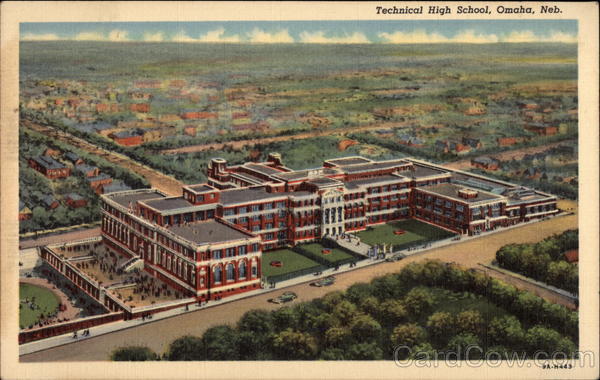

The close communion of days gone by, says Nared, played out in many ways. Young blacks were encouraged to stay on track by an extended, informal support system operating in the hood. “The near north side was a very small community then…so small that everybody knew each other.” In what was the epitome of the it-takes-a-village-to-raise-a-child concept, he says the hood was a community within a community where everybody looked out for everybody else and where, decades before the Million Man March, strong black men took a hand in steering young black males. He fondly recalls a gallery of mentors along North 24th Street.
“Oh, we had a bunch of role models. John Butler, who ran the YMCA. Josh Gibson. Bob Gibson. Bob Boozer. Curtis Evans, who ran the Tuxedo Pool Hall. Hardy “Beans” Meeks, who ran the shoe shine parlor. Mr. (Marcus “Mac”) McGee and Mr. (James) Bailey who ran the Tuxedo Barbershop. All of these guys had influence in my life. All of ‘em. And it wasn’t just about sports. It was about developing me. Mr. Meeks gave a lot of us guys jobs. In the morning, when I’d come around the corner to go to school, these gentlemen would holler out the door, ‘You better go up there and learn something today.’ or ‘When you get done with school, come see me.’
“Let me give you an example. Curtis Evans, who ran the pool hall, would tell me to come by after school. ‘So, I’d…come by, and he’d have a pair of shoes to go to the shoe shine parlor and some shirts to go to the laundry, and he’d give me two dollars. Mr. Bailey used to give me free haircuts…just to talk. ‘How ya doin’ in school? You got some money in your pocket?’ I didn’t realize what they were doing until I got older. They were keeping me out of trouble. Giving me some lunch money so I could go to school and make something of myself. It was about developing young men. They took the time.”
Beyond shopkeepers, wise counsel came from Charles Washington, a reporter-activist with a big heart, and Bobby Fromkin, a flashy lawyer with a taste for the high life. Each sports buff befriended many athletes. Washington opened his humble home, thin wallet and expansive mind to everyone from Ron Boone to Johnny Rodgers, who says he “learned a lot from him about helping the community.” In hanging with Fromkin, Rodgers says he picked-up his sense of “style” and “class.”

Super athletes like Nared got special attention from these wise men who, following the African-American tradition of — “each one, to teach one” — recognized that if these young pups got good grades their athletic talent could take them far — maybe to college. In this way, sports held the promise of rich rewards. “The reason why most blacks in that era played sports is that in school then the counselors talked about what jobs were available for you and they were saying, ‘You’ll be a janitor,’ or something like that. There weren’t too many job opportunities for blacks. And so you started thinking about playing sports as a way to get to college and get a better job,” Nared says.
Growing up at a time when blacks were denied equal rights and afforded few chances, Bob Gibson and his crew saw athletics as a means to an end. “Oh, yeah, because otherwise you didn’t really have a lot to look forward to after you got out of school,” he says. “The only black people you knew of that went anywhere were athletes like Joe Louis and Jackie Robinson or entertainers.” Bob had to look no further than his older brother, Josh, to see how doors were closed to minorities. The holder of a master’s degree in education as well as a sterling reputation as a coach, Josh could still not get on with the Omaha Public Schools as a high school teacher-coach due to prevailing hiring policies then.
“Back in the ‘50s and early ‘60s the racial climate was such we had nothing else to really look forward to except to excel as black athletes,” says Marlin Briscoe, the Omaha South High School grad who made small college All-America at then-Omaha University and went on to be the NFL’s first black quarterback. “We were told, ‘You can’t do anything with your life other than work in the packing house.’ We grew up seeing on TV black people getting hosed down and clubbed and bitten by dogs and not being able to go to school. So, sports became a way to better ourselves and hopefully bypass the packing house and go to college.”


Besides, Nared, says, it wasn’t like there was much else for black youths to do. “Back when we were coming up we didn’t have computers, we didn’t have this, we didn’t have that. The only joy we could have was beating somebody’s ass in sports. One basketball would entertain 10 people. One football would entertain 22 people. It was very competitive, too. In the neighborhood, everybody had talent. We played every day, too. So, you honed in on your talents when you did it every day. That’s why we produced great athletes.”
With the advent of so many more activities and advantages, Gibson says contemporary blacks inhabit a far richer playing ground than he and his buddies ever had, leaving sports only one of many options. “In our time, if you wanted to get ahead and to get away from the ghetto or the projects, you were going to be an athlete, but I don’t know if that’s been the same since then. I think kids’ interests are other places now. There’s all kinds of other stuff to think about and there’s all kinds of other problems they have that we never had. They can do a lot of things that we couldn’t do back then or didn’t even think of doing.”
Milton Moore adds, “It used to be you couldn’t be everything you were, but you could be a baseball player or you could be a football player. Now, you can be anything you want to be. Kids have more opportunities, along with distractions.”
Ron Boone, an Omaha Tech grad who went to become the iron man of pro hoops by playing in all 1,041 games of his combined 13-year ABA-NBA career, finds irony in the fact that with the proliferation of strength training programs and basketball camps “the opportunities to become very good players are better now than they were for us back then,” yet there are fewer guys today who can “flat out play.” He says this seeming contradiction may be explained by less intense competition now than what he experienced back in the day, when everyone with an ounce of game wanted to show their stuff and use it as a steppingstone.
If not for the athletic scholarships they received, many black sports stars of the past would simply not have gone on to college because they were too poor to even try. In the case of Bob Gibson, his talent on the diamond and on the basketball court landed him at Creighton University, where Josh did his graduate work.
By the time Briscoe and company came along in the early ‘60s, they made role models of figures like Gibson and fellow Tech hoops star Bob Boozer, who parlayed their athletic talent into college educations and pro sports careers. “When Boozer went to Kansas State and Gibson to Creighton, that next generation — my generation — started thinking, If I can get good enough…I can get a scholarship to college so I can take care of my mom. That’s the way all of us thought, and it just so happened some of us had the ability to go to the next level.”
Young athletes of the inner city still use sports as an entry to college. The talent pool may or may not be what it was in urban Omaha’s heyday but, if not, than it’s likely because many kids have more than just sports to latch onto now, not because they can’t play. At inner city schools, blacks continue to make up a disproportionately high percentage of the starters in the two major team sports — football and basketball. The one major team sport that’s seen a huge drop-off in participation by blacks is baseball, a near extinct sport in urban America the past few decades due to the high cost of equipment, the lack of playing fields and the perception of the game as a slow, uncool, old-fashioned, tradition-bound bore.
Carl Wright, a football-track athlete at Tech in the ‘50s and a veteran youth coach with the Boys Club and North High, sees good and bad in the kids he still works with today. “There’s a big change in these kids now. I’ll tell a kid, ‘Take a lap,’ and he’ll go, ‘I don’t want to take no lap,’ and he’ll go home and not look back. I’ve seen kids with talent that can never get to practice on time, so I kick them off the team and it doesn’t mean anything to them. They’ve got so much talent, but they don’t exploit it. They don’t use it, and it doesn’t seem to bother them.”
On the other hand, he says, most kids still respond to discipline when it’s applied. “I know one thing, you can tell a kid, no, and he’ll respect you. You just tell him that word, when everybody else is telling him, yes, and they get to feeling, Well, he cares about me, and they start falling into place. There’s really some good kids out there, but they just need guidance. Tough love.”
Tough love. That was the old-school way. A strict training regimen, a heavy dose of fundamentals, a my-way-or-the-highway credo and a close-knit community looking out for kids’ best interests. It worked, too. It still works today, only kids now have more than sports to use as their avenue to success.


Related articles
- Making the Case for a Nebraska Black Sports Hall of Fame (leoadambiga.wordpress.com)
- Omaha Hoops Legend John C. Johnson: Fierce Determination Tested by Repeated Run-Ins with the Law (leoadambiga.wordpress.com)
- From the series Out to Win: The Roots of Greatness – Black Women Make Their Mark in Athletics (leoadambiga.wordpress.com)
- One Peach of a Pitcher: Peaches James Leaves Enduring Legacy in the Circle as a Nebraska Softball Legend (leoadambiga.wordpress.com)
- The Great Migration Comes Home: Deep South Exiles Living in Omaha Participated in the Movement Author Isabel Wilkerson Writes About in Her Book, ‘The Warmth of Other Suns’ (leoadambiga.wordpress.com)
Opening installment from my series Out to Win: The Roots of Greatness, An exploration of Omaha’s Black Sports Legends
Here is the opening installment from my 2004-2005 series, Out to Win: The Roots of Greatness, An Exploration of Omaha’s Black Sports Legends. Look for the closing installment in a separate post. In these two pieces I try laying out the scope of achievements that distinguishes this group of athletes, the way that sports provided advancement opportunities for these individuals that may otherwise have eluded them, and the close-knit cultural and community bonds that enveloped the neighborhoods they grew up in. It was a pleasure doing the series and getting to meet legends Bob Gibson, Bob Boozer, Gale Sayers, Ron Boone, Marlin Briscoe, Johnny Rodgers, et cetera. I learned a lot working on the project, mostly an appreciation for these athletes’ individual and collective achievements. You’ll find most every installment from the series on this blog, including profiles of the athletes and coaches I interviewed for the project. The remaining installments not posted yet soon will be.

Opening installment from my series Out to Win: The Roots of Greatness,
An exploration of Omaha’s Black Sports Legends
©by Leo Adam Biga
Originally published in The Reader (www.thereader.com)
Omaha’s African American community has produced a heritage rich in achievement across many fields, but none more dramatic than in sports, Despite a comparatively small populace, black Omaha rightly claims a legacy of athletic excellence in the form of legends who’ve achieved greatness at many levels, in a variety of sports, over many eras.
These athletes aren’t simply neighborhood or college legends – their legacies loom large. Each is a compelling story in the grand tale of Omaha’s inner city, both north and south. The list includes: Bob Gibson, a major league baseball Hall of Famer. Bob Boozer, a member of Olympic gold medal and NBA championship teams. NFL Hall of Famer Gale Sayers. Marlin Briscoe, the NFL’s first black quarterback. Heisman Trophy winner Johnny Rodgers. Pro hoops “iron man” Ron Boone. Champion wrestling coach Don Benning
“Some phenomenal athletic accomplishments have come out of here, and no one’s ever really tied it all together. It’s a huge story. Not only did these athletes come out of here and play, they lasted a long time and they made significant contributions to a diversity of college and professional sports,” said Briscoe, a Southside product. “I mean, per capita, there’s probably never been this many quality athletes to come out of one neighborhood.”
An astounding concentration of athletic prowess emerged in a few square miles roughly bounded north to south, from Ames Avenue to Lake Street, and east to west from about 16th to 36th. Across town, in south Omaha, a smaller but no less distinguished group came of age.
“You just had a wealth of talent then,” said Lonnie McIntosh, a teammate of Gibson and Boozer at Tech High.
Many inner city athletes resided in public housing projects. Before school desegregation dispersed students citywide, blacks attended one of four public high schools – North, Tech, Central or South. It was a small world.
During a Golden Era from the end of World War II to the mid-1970s, all manner of brilliant talents, including future all-time greats, butted heads and rubbed shoulders on the same playing fields and courts of their youth, pushing each other to new heights. It was a time when youths competed in several sports instead of specializing in one.
“In those days, everybody did everything,” said McIntosh, who participated in football, basketball and track.

Many were friends, schoolmates and neighbors, often living within a few doors or blocks of each other. It was an insular, intense, tight-knit athletic community that formed a year-round training camp, proving ground and mutual admiration society all rolled into one.
“In the inner city, we basically marveled at each other’s abilities. There were a lot of great ballplayers. All the inner city athletes were always playing ball, all day long and all night long,” said Boozer, the best player not in the college hoops hall of fame. “Man, that was a breeding ground. We encouraged each other and rooted for each other. Some of the older athletes worked with young guys like me and showed us different techniques. It was all about making us better ballplayers.”
NFL legend Gale Sayers said, “No doubt about it, we fed off one another. We saw other people doing well and we wanted to do just as well.”
The older legends inspired legends-to-be like Briscoe.
“We’d hear great stories about these guys and their athletic abilities and as young players we wanted to step up to that level,” he said “They were older and successful, and as little kids we looked up to those guys and wanted to emulate them and be a part of the tradition and the reputation that goes with it.”
The impact of the older athletes on the youngsters was considerable.
“When Boozer went to Kansas State and Gibson to Creighton, that next generation – my generation – started thinking, ‘If I can get good enough, I can get a scholarship to college so I can take care of my mom‚’” Briscoe said. “That’s the way all of us thought, and it just so happened some of us had the ability to go to the next level.”

With that next level came a new sense of possibility for younger athletes.
“It got to the point where we didn’t think anything was impossible,” Johnny Rodgers said. “It was all possible. It was almost supposed to happen. We were like, If they did it, we can do it, too. We were all in this thing together.”
In the ’50s and ’60s, two storied tackle football games in the hood, the annual Turkey and Cold Bowls, were contested at Burdette Field over the Thanksgiving and Christmas holidays. Drawing players of all ages, they were no-pads, take-no-prisoners rumbles where adolescent prodigies like Gale Sayers and Johnny Rodgers competed against grown men in an athletic milieu rich with past, present and future stars.
“They let us play ball with them because we were good enough to play,” Rodgers said. “None of us were known nationally then. It really was gratifying as the years went on to see how guys went on and did something.”
When Rodgers gained national prominence, he sensed kids “got the same experience seeing me as I got seeing those legends.”

Among the early legends that Rodgers idolized was Bob Gibson. Gibson gives Omaha a special sports cachét. He’s the real thing — a major league baseball Hall of Famer, World Series hero and Cy Young Award winner. The former St. Louis Cardinal pitcher was among the most dominant hurlers, intense competitors and big game performers who ever played. Jim Morrison, a teammate on the High Y Monarchs coached by Bob’s brother, Josh, recalled how strong Gibson was.
“He threw so hard, we called it a radio ball. You couldn’t see it coming. You just heard it.”
Morrison said Gibson exhibited his famous ferocity early on.
“On the sideline, Bob could be sweet as honey, but when he got on the mound you were in big trouble. I don’t care who you were, you were in big trouble,” he said.
Gibson was also a gifted basketball player, as Boozer, a teammate for a short time at Tech and with the Travelers, attested.
“He was a finer basketball player than baseball player. He could play. He could get up and hang,” Boozer said.
Gibson starred on the court for the hometown Creighton University Bluejays, then played with the Harlem Globetrotters for a year, but it was only after being denied a chance with the NBA that he made baseball his life. Gibson’s all-around athleticism and fierce game face was aided and abetted by his older brother, Josh, a formidable man and coach who groomed many of Omaha’s top athletes from the inner city.
Bob Gibson may be The Man, but Josh was a legend in his own time as a coach of touring youth teams (the Monarchs and Travelers) out of North Omaha’s YMCA.
“He was a terrific coach. If you were anything in athletics, you played for those teams under Josh Gibson,” Boozer said.
Others agreed.
“Josh was the one that guys like myself looked up to,” said Ron Boone. Jim Morrison said Josh had “the ability to elicit the best out of young potential stars. He started with the head down, not the body up. He taught you how to compete by teaching the fundamentals. It’s obvious it worked because his brother went on to be a great, great athlete.”
Josh Gibson is part of a long line of mentors, black and white, who strongly affected inner city athletes. Others included Logan Fontenelle rec center director Marty Thomas, the North O Y’s John Butler, Woodson Center director Alice Wilson, Bryant Center director John Nared and coaches Bob Rose of Howard Kennedy School, Neal Mosser of Tech, Frank Smagacz of Central, Cornie Collin of South, Carl Wright and Lonnie McIntosh of the North O Boys Club, Richard Nared and Co. with the Midwest Striders track program, Forest Roper with the Hawkettes hoops program, Petie Allen with the Omaha Softball Association, and Joe Edmonson of the Exploradories Wrestling Club. Each commanded respect, instilled discipline and taught basics.
Mosser, Tech’s fiery head hoops coach for much of the ‘50s and ‘60s, coached Boozer and Gibson along with such notables as Fred Hare, whom Boone calls “one of the finest high school basketball players you’d ever want to see,” Bill King and Joe Williams. A hard but fair man, Mosser defied bigoted fans and biased officials to play black athletes ahead of whites.
“Neal Mosser fought a tremendous battle for a lot of us minority kids,” McIntosh said. “He and Cornie Collin. At that time, you never had five black kids on the basketball court at the same time.”
But they did, including a famous 1954 Tech-South game when all 10 kids on the court were black.
“Their jobs were on the line, too,” McIntosh said of the two coaches.
Wherever they live, athletes will always hear about a real comer to the local scene. Like when Josh Gibson’s little brother, Bob, began making a name for himself in hoops.
The buzz was, “This kid can really jump, man,” Lonnie McIntosh recalled. “He had to duck his head to dunk.” But nobody could hang like Marion Hudson, an almost mythic-like figure from The Hood who excelled in soccer, baseball, football, basketball and track and field. Former Central High athlete Richard Nared said, “Marion was only 6’0, but he’d jump center, and go up and get it every time. The ref would say, ‘You’re jumping too quick,’ and Marion would respond, ‘No, you need to throw the ball higher.'”
Admirers and challengers go to look over or call out the young studs. Back in the day, the proving grounds for such showcases and showdowns included Kountze Park, Burdette Field, the North O YMCA, the Logan Fontenelle rec center, the Kellom Center and the Woodson Center. Later, the Bryant Center on North 24th became the place to play for anyone with game, Boone said.
“I mean, the who’s-who was there. We had teams from out west come down there to play. There was a lot of competition.”
Black Omaha flourished as a hot bed of talent in football, basketball, baseball and track and field. At a time when blacks had few options other than a high school degree and a minimum-wage job, and even fewer leisure opportunities, athletics provided an escape, an activity, a gateway. In this highly charged arena, youths proved themselves not by gang violence but through athletic competition. Blacks gravitated to sports as a way out and step up. Athletics were even as a mode of rebellion against a system that shackled them. Athletic success allowed minority athletes to say, oh, yes, I can.
“Back in the ‘50s and early ‘60s the racial climate was such we had nothing else to really look forward to except to excel as black athletes,” said Briscoe. “In that era, we didn’t get into sports with that pipe dream of being a professional athlete. Mainly, it was a rite of passage to respect and manhood. We were told, ‘You can’t do anything with your life other than work in the packing house.’ We grew up seeing on TV black people getting hosed down and clubbed and bitten by dogs and not being able to go to school. So sports became a way to better ourselves and hopefully bypass the packing house and go to college.”

Richard Nared, a former track standout at Central, said speed was the main barometer by which athletic ability was gauged.
“Mostly, all the guys had speed. You were chosen that way to play. The guys that were the best and fastest were picked first,” he said.
Toughness counted for something, too, but speed was always the separating factor.
“You had to be able to fight a little bit, too. But, yeah, you had to be fast. You were a second class citizen if you couldn’t run,” Bob Gibson said.
And second class wasn’t good in such a highly competitive community.
“The competition was so strong Bob Boozer did not make the starting five on the freshman basketball team I played on at Tech,” Jim Morrison said.
It was so strong that Gale Sayers was neither the fastest athlete at Central nor at home, owing to older brother Roger, an elite American sprinter who once beat The Human Bullet, Bob Hayes. Their brother, Ron, who played for the NFL’s San Diego Chargers, may also have been faster than Gale.
The competition was so strong that Ron Boone, who went on to a storied college and pro hoops career could not crack Tech’s starting lineup until a senior.
Bob Boozer, remembered today as a sweet-shooting, high-scoring, big-rebounding All-America power forward at Kansas State and a solid journeyman in the NBA, did not start out a polished player. But he holds the rare distinction of winning both Olympic gold as a member of the U.S. squad at the 1960 Rome Games, and an NBA championship ring as 6th man for the 1971 Milwaukee Bucks.
Boozer showed little promise early on. After a prodigious growth spurt of some six inches between his sophomore and junior years in high school, Boozer was an ungainly, timid giant.
“I couldn’t walk, chew gum and cross the street at the same time without tripping,” he said.
Hoping to take advantage of his new height, Boozer enlisted John Nared, a friend and star at arch-rival Central, and Lonnie McIntosh, a teammate at Tech, to help his coordination, conditioning, skills and toughness catch up to his height.
“Lonnie was always a physical fitness buff. He would work me out as far as strength and agility drills,” Boozer recalled. “And John was probably one of the finest athletes to ever come out of Omaha. He was a pure basketball player. John and I would go one-on-one. He was 6’3. Strong as a bull. I couldn’t take him in the paint. I had to do everything from a forward position. And, man, we used to have some battles.”
Boozer dominated Nebraska prep ball the next two years and, in college, led the KSU Wildcats to national glory. When Boozer prepared to enter the NBA with the Cincinnati Royals, he again called-on Nared’s help and credits their one-on-one tussles with teaching him how to play against smaller, quicker foes. The work paid off, too, as Boozer became a 20-point per game scorer and all-star with the Chicago Bulls.
Around the time Boozer made a name for himself in the NBA, Don Benning took over then-Omaha U.’s lowly wrestling program. He was the first black head coach at a predominantly white university. Within a few years, Benning , a North High and UNO grad who competed in football and wrestling, built the program into the perennial power it remains today. He guided his 1969-70 squad to a national NAIA team championship, perhaps the first major team title won by a Nebraska college. His indomitable will led a diverse mix of student-athletes to success while his strong character steered them, in the face of racism, to a higher ground.
After turning down big-time coaching offers, Benning retired from athletics in his early 30s to embark on a career in educational administration with Omaha Public Schools, where he displayed the same leadership and integrity he did as a coach.
The Central High pipeline of prime-time running backs got its start with Roger and Gale Sayers. Of all the Eagle backs that followed, including Joe Orduna, Keith “End Zone” Jones, Leodis Flowers, Calvin Jones, Ahman Green and David Horne, none quite dazzled the way Gale Sayers did. He brandished unparalleled cutting ability as an All-American running back and kick returner at Kansas University and, later, for the Chicago Bears. As a pro, he earned Rookie of the Year, All-Pro and Hall of Fame honors.
Often overlooked was Gale’s older but smaller brother, Roger, perhaps the fastest man ever to come out of the state. For then-Omaha U. he was an explosive halfback-receiver-kick returner, setting several records that still stand, and a scorching sprinter on the track, winning national collegiate and international events. When injuries spoiled his Olympic bid and his size ruled out the NFL, he left athletics for a career in city government and business.

Ron Boone
Ron Boone went from being a short, skinny role player at Tech to a chiseled 6’2 star guard at Idaho State University, where his play brought him to the attention of pro scouts. Picking the brash, upstart ABA over the staid, traditional NBA, Boone established himself as an all-around gamer. He earned the title “iron man” for never missing a single contest in his combined 13-year ABA-NBA career that included a title with the Utah Stars. His endurance was no accident, either, but rather the result of an unprecedented work ethic he still takes great pride in.
Marlin Briscoe was already a pioneer when he made small college All-America as a black quarterback at mostly white Omaha U., but took his trailblazing to a new level as the NFL’s first black QB. Pulled from cornerback duty to assume the signal calling for the Denver Broncos in the last half of his 1968 rookie season, he played big. But the real story is how this consummate athlete responded when, after exhibiting the highly mobile, strong-armed style now standard for today’s black QBs, he never got another chance behind center. Traded to Buffalo, he made himself into a receiver and promptly made All-Pro. After a trade to Miami, he became a key contributor at wideout to the Dolphins two Super Bowl winning teams, including the perfect 17-0 club in 1972. His life after football has been a similar roller-coaster ride, but he’s adapted and survived.
Finally, there is the king of bling-bling, Johnny Rodgers, the flamboyant Nebraska All-American, Heisman Trophy winner and College Football Hall of Fame inductee. Voted Husker Player of the Century and still regarded as one of the most exciting, inventive broken field runners, Rodgers is seemingly all about style, not substance. Yet, in his quiet, private moments, he speaks humbly about the mysteries and burdens of his gift and the disappointment that injuries denied him a chance to strut his best stuff in the NFL.
Other, less famous sports figures had no less great an impact, from old-time football stars like Charles Bryant and Preston Love Jr., to more recent gridiron stars like Junior Bryant and Calvin Jones, right through Ahman Green. In 2003, Green, the former Nebraska All-American and current Green Bay Packers All-Pro, rushed for more yards, 1,883, in a single season, than all but a handful of backs in NFL history, shattering Packers rushing records along the way.
Hoops stars range from John Nared, Bill King, Fred Hare and Joe Williams in the ‘50s and ‘60s to Dennis Forrest, John C. Johnson, Kerry Trotter, Mike McGee, Ron Kellogg, Cedric Hunter, Erick Strickland, Andre Woolridge, Maurtice Ivy and Jessica Haynes in the ‘70s, ‘80s, and ‘90s. After torrid prep careers, King, Nared, Hare and Williams had some college success. The others starred for Division I programs, except for Forrest, who starred at Division II UNO. Ex-NU star Strickland made the NBA, where he’s still active.
The prolific McGee, who set Class A scoring marks at North and topped the University of Michigan’s career scoring chart, played on one of Magic Johnson’s-led Lakers title teams in the ‘80s. Ivy made the WBA. Others, like Woolridge, played in Europe.

Multi-sport greats have included Marion Hudson, Roger Sayers and Mike Green from the ‘60s and Larry Station from the ‘70s, all of whom excelled in football. A Central grad, Hudson attended Dana College in Blair, Neb. where he bloomed into the most honored athlete in school history. He was a hoops star, a record-setting halfback and a premier sprinter, long-jumper and javelin thrower, once outscoring the entire Big Seven at the prestigious Drake Relays.
He was the Lincoln Journal Star’s 1956 State College Athlete of the Year.
Among the best prep track athletes ever are former Central sprinter Terry Williams, Boys Town distance runner Barney Cotton, Holy Name sprinter Mike Thompson, Creighton Prep sprinter/hurdler Randy Brooks and Central’s Ivy.
The elite wrestlers are led by the Olivers. Brothers Archie Ray, Roye and Marshall were state champs at Tech and collegiate All-Americans. Roye was an alternate on the ’84 U.S. Olympic wrestling team. The latest in this family mat dynasty is Archie Ray‚s son Chris, a Creighton Prep senior, who closed out a brilliant career with an unbeaten record and four state individual titles.
Joe Edmonson developed top wrestlers and leaders at his Exploradories Wrestling Club, now the Edmonson Youth Outreach Center. Tech’s Curlee Alexander became a four-time All-American and one-time national champ at UNO and the coach of seven state team championships, including one at Tech, where he coached the Oliver brothers, and the last six at North. And Prep’s Brauman Creighton became a two-time national champ for UNO.
A few black boxers from Omaha made their mark nationally. Lightweight prizefighter Joey Parks once fought a draw with champ Joe Brown. A transplanted Nebraskan via the Air Force, Harley Cooper was a two-time national Golden Gloves champion out of Omaha, first as a heavyweight in 1963 and then as a light heavyweight in 1964. He was slated for the 1964 U.S. Olympic Team as light heavyweight at the Tokyo Games and sparred with the likes of Joe Frazier, when, just before leaving for Japan, a congenital kidney condition got him scratched. Despite offers to turn pro, including an overture from boxing legend Henry Armstrong, Cooper opted to stay in the military. Lamont Kirkland was a hard-hitting terror during a light heavyweight amateur and pro middleweight career in the ’80s.
With the advent of Title IX, girls-women’s athletics took-off in the ‘70s, and top local athletes emerged. Omaha’s black female sports stars have included: Central High and Midland Lutheran College great Cheryl Brooks; Central High and NU basketball legend Maurtice Ivy, a Kodak All-America, WBA MVP and the founder-director of her own 3-on-3 Tournament of Champions; Ivy’s teammate at Central, Jessica Haynes, an impact player at San Diego State and a stint in the WNBA; Maurtice’s little sister, Mallery Ivy Higgs, the most decorated track athlete in Nebraska prep history with 14 gold medals; Northwest High record-setting sprinter Mikaela Perry; Bryan High and University of Arizona hoops star Rashea Bristol, who played pro ball; and NU softball pitching ace Peaches James, a top draftee for a new pro fastpitch league starting play this summer.
The stories of Omaha’s black sports legends contribute to a vital culture and history that demand preservation. This ongoing, 12-part series of profiles is a celebration of an inner city athletic lore that is second to none, and still growing.
Related articles
- Making the Case for a Nebraska Black Sports Hall of Fame (leoadambiga.wordpress.com)
- Omaha Hoops Legend John C. Johnson: Fierce Determination Tested by Repeated Run-Ins with the Law (leoadambiga.wordpress.com)
- From the series Out to Win: The Roots of Greatness – Black Women Make Their Mark in Athletics (leoadambiga.wordpress.com)
- One Peach of a Pitcher: Peaches James Leaves Enduring Legacy in the Circle as a Nebraska Softball Legend (leoadambiga.wordpress.com)
One Peach of a Pitcher: Peaches James Leaves Enduring Legacy in the Circle as a Nebraska Softball Legend
I earlier posted a 2004 story about black women athletes of distinction in Nebraska, and that reminded me of another story I did that year on Peaches James, a hard-throwing softball pitcher whose dominance in the circle helped establish a dynasty at Papillion-La Vista High School and helped lead the University of Nebraska softball program to great success, though short of its ultimate goal of winning the women’s College World Series. James was a good to very good college pitcher her first three years in Lincoln but elevated her game her senior season to become nothing short of great as she earned all sorts of team, conference, and national accolades. My story appeared in The Reader (www.thereader.com) just as her collegiate career came to an end and just as she looked forward to playing professionally. Her pro career didn’t amount to much, but today she’s a fastpitch instructor with an elite sports academy in Illinois.
NOTE: While this story was not officially a part of my extensive 2004-2005 series on Omaha black sports legends, Out to Win: The Roots of Greatness, it appeared just before the start of that series, and so I count it in the mix. You can find most of the installments in that series on this blog, and I’ll soon be adding the remaining installments.
©by Leo Adam Biga
Originally appeared in The Reader (www.thereader.com)
Nebraska softball pitching whiz Peaches James is the epitome of cool on the diamond between her tight braids, sleek shades, silver bling-bling adorned ears and silky smooth delivery of blazing rise balls. She strides the circle with the calm confidence you expect from the ace of the staff. Intense, yet loose, and in complete command out there.
The record-setting James is among the latest African-American athletes from Omaha who’ve made an enduring contribution to the area’s fat sports heritage. But she’s done it in a sport that, at the collegiate level, has had traditionally few black faces.
It’s no coincidence the Top 15 Lady Huskers enjoyed their finest season in a long time in what was their ace’s best year. NU wrapped up the regular season Big 12 title with a pair of one-run wins pitched by James over Texas A & M in early May. Two weekends ago, she got on a roll in the Big 12 tourney. She pitched a 2-1 complete game victory over Texas that saw her strike out 13 Longhorns and then topped that with a perfect game 7-0 win over Oklahoma. On May 15, she was in the circle for a 10-1 win over Baylor and later that same day she threw a 1-0 shutout, with 16 strikeouts, against Missouri to clinch the Huskers’ tourney title. With her four-game performance, she added conference tourney MVP to her Big 12 Pitcher of the Year honors. Then, she led her Huskers to the NCAA Region 5 championship round, posting a 6-0, 12-strikeout win over Leigh and bracketing two wins over Creighton amid a 2-0 loss to top-seed California. NU was eliminated Sunday with another 2-0 loss to the Bears — falling two wins short of the College World Series.
Even with her NU career ended, Peaches has already secured more softball in her future. Last December, she was a second round pick in the inaugural senior draft of the newly formed National Pro Fastpitch league, the latest attempt to market women’s softball. Selected by the Houston Thunder, now known as the Texas Thunder, James will be competing this summer with a who’s-who roster of former college and Olympic stars. NCAA rules prohibited her from negotiating and signing a contract until the season ended. Now that it has, she’s eager to get started. “I’m really excited,” she said. “It will be great competition.”
Then there’s a possible try for the 2008 USA Olympic team. Just like the pros, making the Olympic squad would require taking her game to “a whole different level,” she said. “When you have pitchers like Lisa Fernandez and Jenny Finch, they’re your top, elite athletes. To compete at that level you’ve got to be at the top of your game every game.” Can she? “I’d like to think so.” Cool. Peachy keen.
History repeated itself with James. She was a solid, at times smothering, starting pitcher her first two years of prep ball before going off into the stratosphere her senior season, when she shut down and almost always shut out her foes. Similarly, for NU, she established herself as an outstanding performer her freshman, sophomore and junior seasons, pitching well enough to earn first-team All-Big 12 honors all three years and first-team All-Midwest Region as a junior. Entering the 2004 season, she’d already been on the national Softball Player of the Year watch list and an invitee to the Olympic training center and she ranked among NU’s all-time leaders in wins, shutouts, strikeouts and innings pitched.

But, just like she did before, she ratcheted her game up another notch or two for her swan song, lowering her ERA by nearly half her career average, to 0.70, throwing her second collegiate no-hitter and setting NU single season records for most shutouts (18) and strikeouts (more than 300). Her 37 wins (versus 9 losses) are among the program’s best single season totals. She’s also first in career strikeouts (with more than 900) and second in career wins (98).
“I do see a lot of mirroring from her high school career,” Revelle said. “It seemed like every year in high school she made strides and then she made a leap her senior year. And I feel the same thing in this senior year for her. She’s had a great career for us but this is definitely her signature season.”
James explains her senior success this time around to having been there before. “I think what’s helped me is the experience I’ve gained from my freshman year in college to my senior year now. It’s about building confidence. It’s getting comfortable being out there and playing with your teammates. It’s building trust. It’s all those mental things that make you a better player.”
She first started developing a name for herself at Papillion-La Vista High School, whose dynasty of a softball program she helped maintain. Her prep career came in the middle of the school’s record nine straight state championships, a run of excellence unequaled in Nebraska prep history. But what James did her senior season elevated her and her team’s dominance to new heights. Almost literally unhittable the entire 1999-2000 campaign, she posted a remarkable 0.04 earned run average. In the space of that same season, she pitched 11 no-hitters, including five perfect games. It was the culmination of an unparalled two-year run in which she set about a dozen state records, including marks for most consecutive: wins (31); shut-outs (19); shut-out innings (162 1/3) and no earned runs allowed (257 2/3).
Her brilliance is all the more remarkable given that only six years earlier Mike Govig, her future prep coach, saw her at an indoor clinic where her wild throws soared up to the ceiling while her mother patiently sat on a bucket waiting, in vain, to catch one of those errant tosses. “I did not get it (pitching) right away. Balls would be flying everywhere,” James said. Govig recalls thinking the girl was hopeless.
What he didn’t know then was the size of her heart and strength of her will. With a lot of hard work, James made herself a pitcher the Monarchs rode to titles her sophomore year on. Her progress into a consummate hurler was so advanced that at a summer Topeka, Kansas tournament prior to her senior year she threw seven games in one day, winning six, en route to capping team title-tourney MVP honors.
“The title game got over at two o’clock in the morning, and her last inning was probably her strongest inning of the whole day,” Govig said. “You talk about a workhorse. The legend grew.”
Her dominance and endurance carried through her senior season. As her reputation grew, Govig said frustrated batters often got themselves out. “People were not able to step in the box with a whole lot of confidence. Half the battle was already won. They’d already lost…You could see it their body language.”
James also blossomed into a fine athlete. She competed in volleyball and track. On the diamond, she displayed versatility by playing second base her freshman year and posing the Monarchs best base stealing threat all four years. Govig rates her as one of the best athletes he’s ever coached, while NU head softball coach Rhonda Revelle flat out says, “I’ve not coached a better all-around athlete in this program. She’s physically powerful. She has so many tools.” James holds the best all-sport vertical jump in NU women’s athletics history at 30.5 inches.
The coaches say there’s never been another home-grown softball pitcher who’s carried her dominance from high school into college as James has. “She definitely stands alone,” Govig said. “She’s set the bar very high.”
The work ethic it took to come so far, so quickly, was instilled in James by her parents and coaches, whose preachings about the importance of practice she faithfully followed. “As I got older I had enough discipline to go pitch on my own or go work out on my own,” she said. “It’s like I wanted to do it on my own because I wanted to get better and I wanted to get good.”
Govig, who’s followed James career at NU, said the right-hander has it all. “Some pitchers might just be dominant with a rise ball, but she can throw a drop, a curve, a rise, a change. She can get you out in a bunch of different ways. Her ball movement is very extraordinary.”
Embracing the role of every day starter didn’t come easily for the placid James, whose magnanimous personality made it hard for her to stand out. “It was hard for me at first when we’d play and then I’d find out I was pitching again the next day and the other pitchers were not getting the ball, because I am the type of person that wants everybody to succeed,” she said. Her survival-of-the-fittest showing in Topeka went a long way towards changing her attitude. “Before that I would never have thought I’d be able to pitch and win that many games in one day,” she said. “I guess when you’re put in that situation and you’re put to the test, you really find out what you’re made of and you find out what you can and what you can’t do. It defines who you are and if you’re going to be tough enough to step up to a challenge and succeed at it. I got to where if my coaches said, ‘You’re pitching today,’ then I got in that mindset and that’s the only thing I could worry about if I was going to do my best for the team.”
Despite a solid start to her college career — when she posted 16-7, 22-9 and 23-13 records her first three years — James lacked the fire top pitchers need. “I was like a nice competitor, you know. I would compete, but I wasn’t like gritting my teeth in a I-will-not-lose kind of way. My teammates would always say I was too nice out there. You can be nice off the field, but when you’re on the field that’s the time you need to compete fiercely. And I think I’ve grown more into that to where I’m like: For me to lose, you’re going to have to beat me…I’m not going to beat myself and I’m not going to give into you…you’re going to have to be better than me. Yeah, I think that’s more the demeanor I do have now, and it’s really helped.”
Coach Revelle noticed. “I’ve used the term warrior for Peaches this year,” she said, “as I really think she’s taken on a warrior’s mentality, where she’s virtually unfazed by what goes on around he and just sticks to her game plan.” That nonplussed attitude extended to those times racial slurs were directed her way and to the strange looks she got as one of college softball’s few black pitchers.
Her strong, poised presence in the circle sent a clear message. “Ever since I’ve been a pitcher I’ve known you have to set the tone out there and have that presence,” she said. “You’re like an automatic leader being a pitcher. As I’ve gotten older, I’ve grown more into being a leader out there. I have to set the tone for the rest of my teammates because how I act and how I respond and how I am on the mound is how they’re going to act and respond.”
She also formed a tight relationship with her regular battery mate, catcher Brittney Yolo. “My catcher and our coaches have talked a lot about going two against one. That it’s not just me out there going against the batter, it’s me and my catcher going against that batter. And that, mentally, has helped a lot because I don’t feel like I have to do it myself. I have someone back there that’s going to help me. Especially with her behind the plate, I feel like I do own the batter and I do own part of that batter’s box, and they’re going to have to beat both of us.”
If the Huskers were to go all the way, James would have been the horse her team rode. Prior to the regional, she felt fully capable of carrying the load. “Oh, definitely. I will not be satisfied until the season’s over and we’ve been to the tournament,” she said. “We haven’t been there since my sophomore year, so that’s definitely a goal of mine, and the only way to get there is to keep working and to keep getting better. I can’t be content with anything.” Her coach, too, envisioned Peaches bringing the team all the way home. “She’s been a thoroughbred for us, and we can ride her until the last out of the College World Series, if we make it that far. I think she’s strong enough mentally and physically to endure that,” Revelle said before the start of the regional.
After coming up short, James simply said, “It’s hard.” Although not hit hard by California in the regional losses that ended NU’s season, James, who threw nearly 40 innings in two days, said, “I think physically I wasn’t at my sharpest but…I was giving whatever I had.” Revelle said it’s that kind of gutsy effort that made working with James “a tremendous ride for this coach,” adding: “I’ve never had a pitcher trust me so much. She is a tremendous athlete in her own right, but when you can trust the pitches that are being called and work together like that…Well, if I never have that again, I know I’ve had it once.”
This Peach of a Pitcher is finished at NU, but her legend will long live on there.


Related articles
- In twist of fate, Texas pitcher ties softball’s second-best single game homer mark (sports.yahoo.com)
- USA Softball Says Goodbye To a Legend: Jennie Finch to Retire in August (bleacherreport.com)
Black Women Make Their Mark in Athletics (from my Omaha Black Sports Legends series, Out to Win: The Roots of Greatness)

Black Women Make Their Mark in Athletics (from my Omaha Black Sports Legends series, Out to Win: The Roots of Greatness)
©by Leo Adam Biga
Originally appeared in The Reader (www.thereader.com)
Gender equity got a major boost in 1972 when Congress passed Title IX legislation. Enacted in 1976, the law made it a crime for any educational institution receiving federal money to deny females the same rights as males, including in the field of athletic competition. The effects of Title IX have been far-reaching.
Since Title IX’s passage, female participation in interscholastic-intercollegiate sports has grown from a few hundred thousand annually to millions, U.S. Department of Education figures show. Once rare, female athletic scholarships are now proportionally the same as men’s. The amazing growth in female athletics — from the explosion of girls softball, soccer, swimming, track, volleyball and basketball programs to the birth of professional leagues to the capturing of Olympic gold medals — can be traced to Title IX. The legislation didn’t so much create great female athletes as legitimize them and provide an equal playing ground. It’s in this context Omaha’s black female athletes emerged on a broader stage than before.
Cheryl Brooks-Brown came along when fledgling athletic programs for girls were just evolving in the post-Title IX era. In local hoops circles, she was known for being a bona fide player. She got her game competing with boys on the courts near her home at 25th and Evans and with the Y-based Hawkettes, a select Amateur Athletic Union touring program for school-age girls founded and coached by the late Forrest Roper.
“I guess the ultimate complement for a girl is when you’re told, ‘You play like a guy,’ and I got that quite often,” she said. “I think I was a player that was before my time.” Wider recognition eluded her in an era of scant media exposure and awards for girls athletics. “That’s just the way it was,” she said.
For decades, Nebraska girls hoops was confined to intramural, club or AAU play. In the early ‘70s, the Hawkettes’ Audrey and Kay Boone, sisters of pro legend Ron Boone, were among the first local women to land athletic scholarships — to Federal City College in Washington, D.C. and John F. Kennedy College in Wahoo, Neb., respectively. When, in the mid-’70s, girls hoops was made a prep pilot program, Brooks got to compete her senior year (‘74-’75) for Omaha Central. In a nine-game season, she scored 20-plus points a game for the Eagles. It wasn’t until 1977 the Nebraska School Activities Association sanctioned full girls state championship play.
Brooks got two in-state offers — from UNO and Midland Lutheran College (Fremont, Neb.) She became the first black female to play at Midland, which competed then in the AIAW. Small college town life for a black woman in a sea of white faces presented “growing pains” for her, just as women’s athletics faced its own challenges. For example, she recalls the women’s team having to defer to the men’s team by practicing in the auxiliary gym. “Today, it’s much better, but athletics is still a male-dominated field. The battle’s still on,” she said.
An impact player ranking eighth all-time in scoring at Midland with 1,448 points, Brooks led the Warriors in nine individual categories as a sophomore and earned acclaim as one of the region’s best small college players as a junior. She led the Warriors to a 100-19 record over four years, including a berth in the ‘78 AIAW post-season tourney. She was selected to try out for a U.S. national Olympic qualifying team.
Her coach at Midland, Joanne Bracker, said the 5’9 guard’s “strength was her penetration to the basket. She was very offensive-minded. She had the ability to see the court extremely well. She was probably as good a passer as scorer. She would be competitive in today’s game because of her intense love and appreciation for the game and her understanding of the game. She’s a basketball junkie.”
After college, Brooks coached at Central, but her playing was strictly limited to recreational ball, as women’s pro hoops was still a decade away. The elementary ed grad has taught in the Omaha and Chicago public schools and was an adoption caseworker with the state of Illinois. She’s now back in Omaha, on disability leave, awaiting a kidney transplant. She’s done some recent coaching at the North Omaha Boys and Girls Club and continues working as a personal coach for a promising Omaha Benson player she hopes lands a scholarship, an easier task today than when she played.
“When I coach kids I tell them, ‘You don’t know how good you have it with all the opportunities you have.’ It’s unbelievable.”
By the time Brooks left Midland, a new crop of girl stars arrived, led by Central’s Maurtice Ivy and Jessica Haynes, both of whom were premiere prep and collegiate players. At the head of the class is Ivy, arguably the best female player ever to come out of Nebraska. Her credits include: vying for spots on the U.S. Olympic squad; leading the Nebraska women’s program out of the cellar en route to topping its all-time scoring charts; starring in pro ball in Europe and America; anchoring national title Hoop-It-Up teams; and directing her own 3-on-3 tourney.
For inspiration, Maurtice looked to Cheryl Brooks, whom she followed into the Hawkettes and at Central. A 5’9 swing player, Maurtice combined with Haynes, a 6’0 all-court flash, in leading the Hawkettes to high national age-group rankings and the Eagles to two straight state titles.

From more than 250 college scholarship offers, Ivy selected then-lowly NU. The high-scoring, tough-rebounding playmaker became the first Lady Husker to top 2,000 points while being named first-team all Big 8 her final three years. She closed out a stunning collegiate career with Kodak All-America and Conference Player of the Year honors. As a senior, in 1987-88, she capped NU’s turnaround by leading it to its first NCAA tournament appearance.
Great players are born and made. Ivy earned her chops going head-to-head with boys.
“They were the ones that pushed me. They were the ones that made me,” she said. Her proving grounds were the cement courts at Fontenelle Park, across the street from her childhood home. There, she hooped it up with boys her own age, but didn’t really arrive until the older guys acknowledged her.
“They wouldn’t let me play for years. I had something to prove to them. Then, eventually, as my game improved…I proved it. The fellas were yelling my name to come across the street to the park. Once I got respect from the fellas, I knew I was there.”
Off the playground, her hard court schooling came via two men — the Hawkettes’ Forrest Roper, whom she calls “by far the best coach that ever coached me,” and her father, Tom, a former jock and youth sports coach who coached her in football. “I played middle linebacker for five years with my dad’s Gate City Steelers team,” she said. “He didn’t start me. I had to earn everything I got.” When not on the sidelines, “Pops” was courtside or trackside giving her “pointers and tips.”
Despite also competing in softball and track, basketball was IT. “That’s all I did — from the crack of dawn till the street lights came on,” Maurtice said. “That’s when we had to be inside. That was our clock.” The court was the place she felt most complete. “That’s where I found my peace. I was happy when I was out there. That’s what, as a child, brought me joy,” she added.
Her prowess on the court made her a star but her low-key personality and workmanlike approach tamped down any raging ego or showboat persona.
“I may have expressed myself out there, but I never wanted to tear anybody down,” she said. “I’ve always been pretty grounded. I expressed myself as a fighter…a warrior…a winner…a competitor. I had a blue collar work ethic out there. I did whatever I needed to do to get the W.”
The fire to win that raged inside was stoked by the heat of competition she braved every day. “I grew up around a lot of competitive people and it just challenged me to want to be a complete basketball player. I had people challenging me all the time and, so, either you sink or swim.”
Steeled early-on in the rigors of top-flight competition, Maurtice blossomed into a hoops prodigy. So rapid was her development that, at only 15, she made the U.S. Olympics Festival team and, at 17, she was invited to the 1984 Olympics tryouts in Colorado Springs. She was again invited to the tryouts in ‘88. Although failing in both bids to make the Olympics squad, she regards it as “a wonderful experience.”
“Still hungry for the game” after college, she pursued pro ball, playing two years in Denmark before joining the WBA’s Nebraska Express. In a five-year WBA stint, she twice won league MVP honors and led the Express to the league title in 1996. While her pro career unfolded before the women’s game reached a new level with the WNBA, she’s proud of her career. “I do think I’ve been a pioneer for women’s basketball. I’m always flattered when they compare players coming up now to me.”
Since retiring from the game, Ivy’s remained involved in the community as a mentor, YMCA program director, Head Start administrator and director of her own 3-on-3 Tournament of Champions. She’s also pursuing her master’s degree.
The hoops journey of the former Jessica Haynes (now Jackson) mirrored that of Maurtice Ivy’s before some detours took her away from the game, only to have her make a dramatic comeback. From the time she began playing at age six, she often went to great lengths to play, whether walking through snow drifts to the YMCA or sneaking into the boys club.
“I can honestly say basketball was my first love,” she said. “I’d wake up and I couldn’t wait to get to the gym.”
Another product of the Hawkettes program, she got additional schooling in the game from the boys and men she played with in and out of her own hoops-rich family. Her cousins include former ABA-NBA star Ron Boone and his son Jaron, a former NU and European star.
She recalls her uncles toughening her up in pickup games in which they routinely knocked her down and elbowed her in the ribs, all part of “getting her ready” for the next level. She tagged along with Ivy to the parks, where they found respect from the fellas.
“When they would choose us over some of the other guys to play with them, that was an honor. We were kind of like the pioneers” for women’s hoops,” said Jackson, who dunked by her late teens, although never in a game. LIke Ivy, Jackson was considered among America’s elite women’s players and was selected along with her to compete in the Olympic Sports Festival.
Originally intending to join Ivy at NU, Jackson opted instead for San Diego State University, where she was a first-team all-conference pick in 1986-87. “My strengths were speed and quickness. I was a slasher. I loved to go to the cup,” she said. Haynes, who played at the top of the Aztecs’ 1-3-1 zone, was a ball-hawk defender and fierce rebounder. Despite playing only three seasons, she ranks among the school’s career leaders in points, rebounds, steals and blocks.
Her career was cut short, she said, when harassment allegations she made against a professor were ignored by her coach and, rather than stay in what she felt was an unsupportive atmosphere, she left. She moved with her then-boyfriend to Colorado Springs, where he was stationed in the Air Force.
After the couple married and started a family, any thoughts of using the one year of eligibility she had left faded. But her love for the game didn’t. She played recreational ball and then, in the mid-’90s, earned a late season roster spot with the Portland Power pro franchise of the ABL. That led to a tryout with the L.A. Sparks of the newly formed WNBA. She got cut, but soon landed with the league’s Utah Stars, for whom she wore the same number, 24, as her famous cousin, Ron Boone, who’d played with the Utah Jazz.
To her delight, her game hadn’t eroded in that long layoff from top competition. “It came right back.” When a groin injury sidelined her midseason, she ended up returning to her family. Her last fling with the game found her all set to go play for an Italian pro team. Only she’d have to leave her family behind.
“I was at the airport with my passport and visa. My bags were checked. The reservation agent was searching for a seat for me. And then I looked at my daughter, who had tears streaming down her face, and all of a sudden I said, ‘I can’t go.’ I didn’t. I’m very family-oriented and I really feel in my heart I made the right decision,” she said.
Today, Jackson is the youth sports director at the South Omaha YMCA, where she coaches her daughter’s team, and a voluntary assistant coach at Central High. She hopes to coach at the next level.
In the annals of Nebraska prep track athletes, one name stands alone — Mallery Ivy (Higgs). The younger sister of Maurtice Ivy, Mallery dominated the sprints in the early ‘90s, winning more all-class gold medals — 14 — than anyone else in state track meet history. Her run of success was only slowed when injuries befell her at powerhouse Tennesee. So dominant was Mallery that she never lost an individual high school race she entered. She set numerous invitational and state records. She holds the fastest time in Nebraska history in the 100. She ran on the 400-meter relay team that owns the state’s best mark. The Ivys form an amazing sister act.
“There’s not a lot of siblings that have done what we’ve done,” Mallery said.
“I think there was a mutual respect we had for one another. Mallery is one of the best track athletes to come out of this state,” Maurtice said. “I encouraged her. And the reason I got in track is that Mallery started having some success. I was like, Wow, she’s bringing in way more medals than I am in basketball. And she got in basketball because of me. We didn’t really compete one-on-one. I think we had a couple races, but, to be totally honest, she probably would have beat me, especially in the 100 and 200.”
Three years younger than her sister, Mallery used Maurtice as a measuring stick for her own progress.
“Well, I was the baby, so I always had to follow on behind her footsteps. She was somewhat my drive,” Mallery said, “because if she excelled, I had to excell. If she did it, I had to do it, and do it better. There was not like a rivalry with us. We always wanted each other to do the best we could. We always had each other’s back. But because she held track records, I still had to compete with her times…and I had to beat them.”
For extra incentive, Maurtice made challenge bets with Mallery to best her marks. One year, a steak dinner rode on the outcome. “I was down to my last race, the 400, and she held the record…and I broke that record,” Mallery said. “She still owes me that steak.”
As with Maurtice, Tom Ivy was there for Mallery. He challenged her to races and put her through her paces. She further refined her running with the Midwest Striders, a youth track program that’s turned out many award-winning athletes.
“He was the one who wouldn’t let us let up,” Mallery said of their father. “If he would show up at practice, he would make comments like, ‘You gotta dig down and fight,’ and that made you fight a little bit harder. We couldn’t perform until we heard that voice, and then we were fine. I remember at one of my state meets being in the blocks and thinking, Oh, my God, my daddy’s not here, and then literally hearing his voice, ‘Let’s go ladies,’ just before the start. And I was like, All right, I’m cool.”
Mallery dug the deepest her final two meets when, not long before districts she came down with chicken pox. Badly weakened after sitting out two weeks, she barely qualified for state. A grueling training schedule for state paid off when she gutted out four victories in winning four all-class gold medals.
The Ivy sisters fed off the motivation their family provided. “They always reinforced we could do anything we put our minds to,” Mallery said. “They knew that whatever anybody told us we couldn’t do, we would do it.”
Like her sister, Mallery is community-oriented, only in Atlanta, where she lives with her husband and their two children. She works in an Emory University health care program aimed at preventing HIV, STDS and unplanned pregnancies and contracts with the country to counsel at-risk youths. The owner of her own interior design business, she’s back in school going for an interior design degree.
Many more women athletes of note have made an impact. Just in track and field alone there’s been Juanita Orduna and Kim Sims as well as Angee Henry, the state record holder in the 200-meter dash (24.52 seconds) and Mikaela Perry, the state record holder in the 400-meter dash (55.36 seconds). In hoops, there’s been the Hawkettes’ Deborah Lee and Deborah Bristol and Bryan’s Rita Ramsey, Annie Neal, Marlene Clark and Gail Swanson. More recently, there’s Bryan’s Reshea Bristol and Niokia Toussaint.

Point guard Bristol starred at the University of Arizona. As an All-Pac 10 senior she averaged 15.6 points and 7.5 assists. She led the league in assists and was second in steals. She ranks among UA’s all-time leaders in 12 categories. Drafted by the WNBA’s Charlotte Sting, Bristol later played in Europe.
Now, there’s softball standout Peaches James. The former Papillion-La Vista pitching phenom just concluded her record-setting Husker career and brilliant season-ending senior run by leading NU within two wins of the College World Series. She’s now playing professionally for the Texas Thunder in the newly formed National Pro Fastpitch League.
UPDATE: Since this article appeared more than a decade ago many more black female athletes of distinction have emerged in Nebraska, including Yvonne Turner, Dominique Kelley, Dana Elsasser, Mayme Conroy, Chelsea Mason, Brianna Rollerson. When my article was published the Nebraska Black Sports Hall of Fame didn’t exist and now all of the women featured in the story are inductees there in addition to various school athletic halls of fame.
Related articles
- President Obama Talks Title IX (whitehouse.gov)
- From ESPN’s celebration of Title IX’s 40th: (womenshoopsblog.wordpress.com)
- Making the Case for a Nebraska Black Sports Hall of Fame (leoadambiga.wordpress.com)
- From My Series Out to Win: The Roots of Greatness, An Exploration of Omaha’s Black Sports Legends (leoadambiga.wordpress.com)
- Gender Equity in Sports Has Come a Long Way, Baby; Activists-Advocates Who Fought for Change See Progress and the Need for More (leoadambiga.wordpress.com)
- Lisa Leslie: The First Daughter of Title IX (huffingtonpost.com)
- As Title IX turns 40, legacy goes beyond numbers (cnsnews.com)


 Leo Adam Biga's My Inside Stories