

Money makes the world go round. It may not buy happiness, but it sure helps to have some when it’s most needed. All manner of causes and endeavors need a helping hand from those privileged enough to have a surplus and to have a generous nature in sharing those riches. It is the rare nonprofit in this or any town that can survive without the aid of benefactors and philanthropists. These charitable givers help keep the lights on, fund programs and services, and otherwise keep the organzations they support running and their staff employed. This cover spread I did for the December 2015 issue of The Reader (www.thereader.com) gives a brief run down on some of Omaha’s philanthropic heavyweights, including Michael and Gail Yanney, Todd and Betiana Simon, Paul and Annette Smith and that old lion of local philanthrophy, Dick Holland.
Philanthropy: For the greater good – Omaha’s legacy of giving continues in old and new hands
Michael and Gail Yanney
Todd and Betiana Simon
Paul and Annette Smith
Old Lion of giving Dick Holland promotes change and progress through philanthropy
Shining Light: News of Omaha Star publisher’s illness spurs admiration for her stewardship and interest in historic paper’s future
©by Leo Adam Biga
Appearing in the December 2015 issue of The Reader (www.thereader.com)
One of the things that makes North Omaha North Omaha is the Omaha Star, the historic black newspaper made famous by Mildred Brown. For the first time since Marguerita Washington took it over from her late aunt in 1989, the future of the 77-year-old newspaper is unclear as Washington battles cancer. But those close to the situation say under no circumstances will they let the paper fold because it means too much to the community it serves. Check out my Reader story about the legacy of the Star under Brown and Washington and how strongly people feel about it and what it’s meant to them. Read, too, about people’s admiration for what these black women did to give Black Omahans a voice.
AFRICA TALES
6 pm, Tuesday, Dec. 8 @ Church of the Resurrection
3004 Belvedere Blvd.
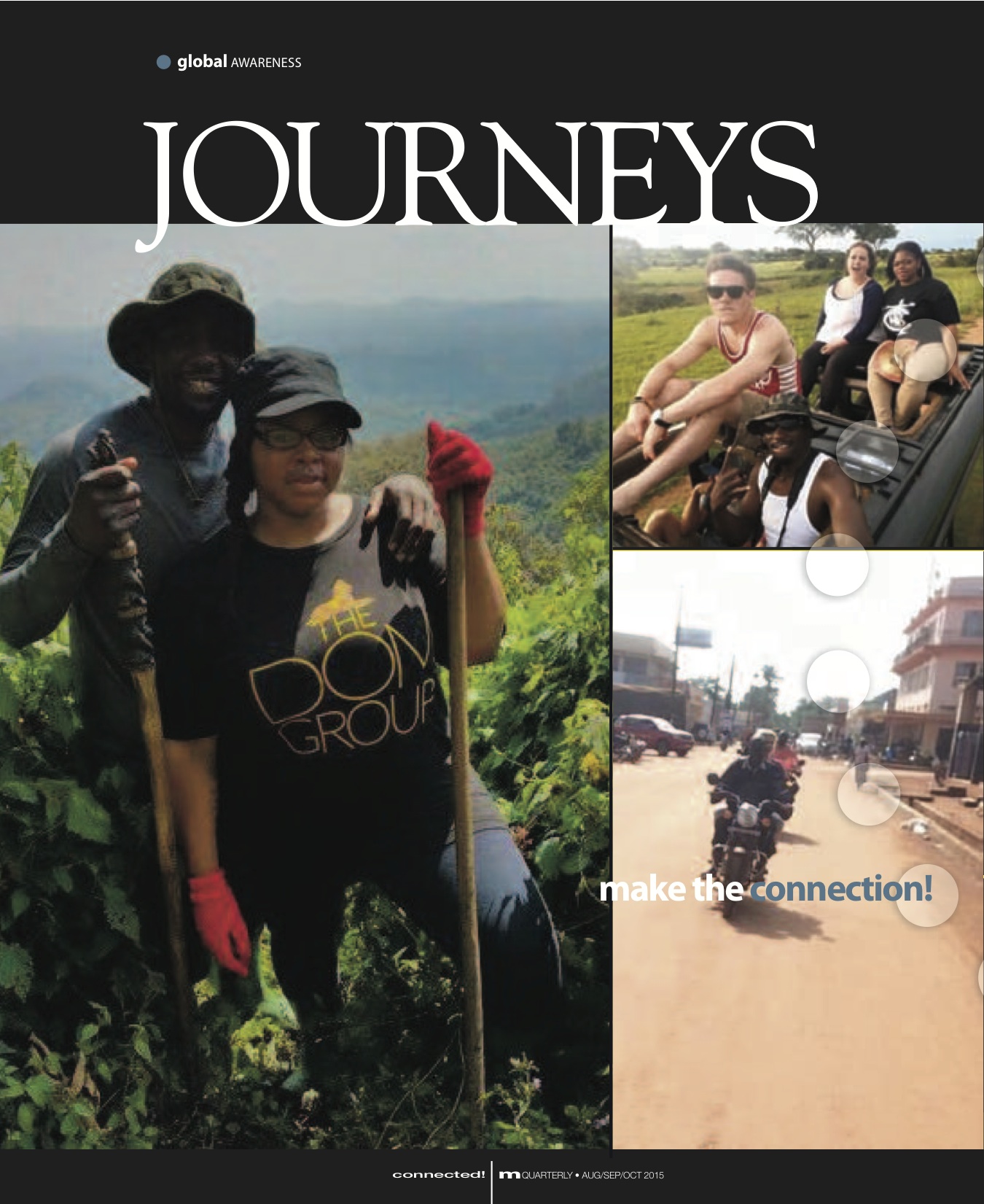
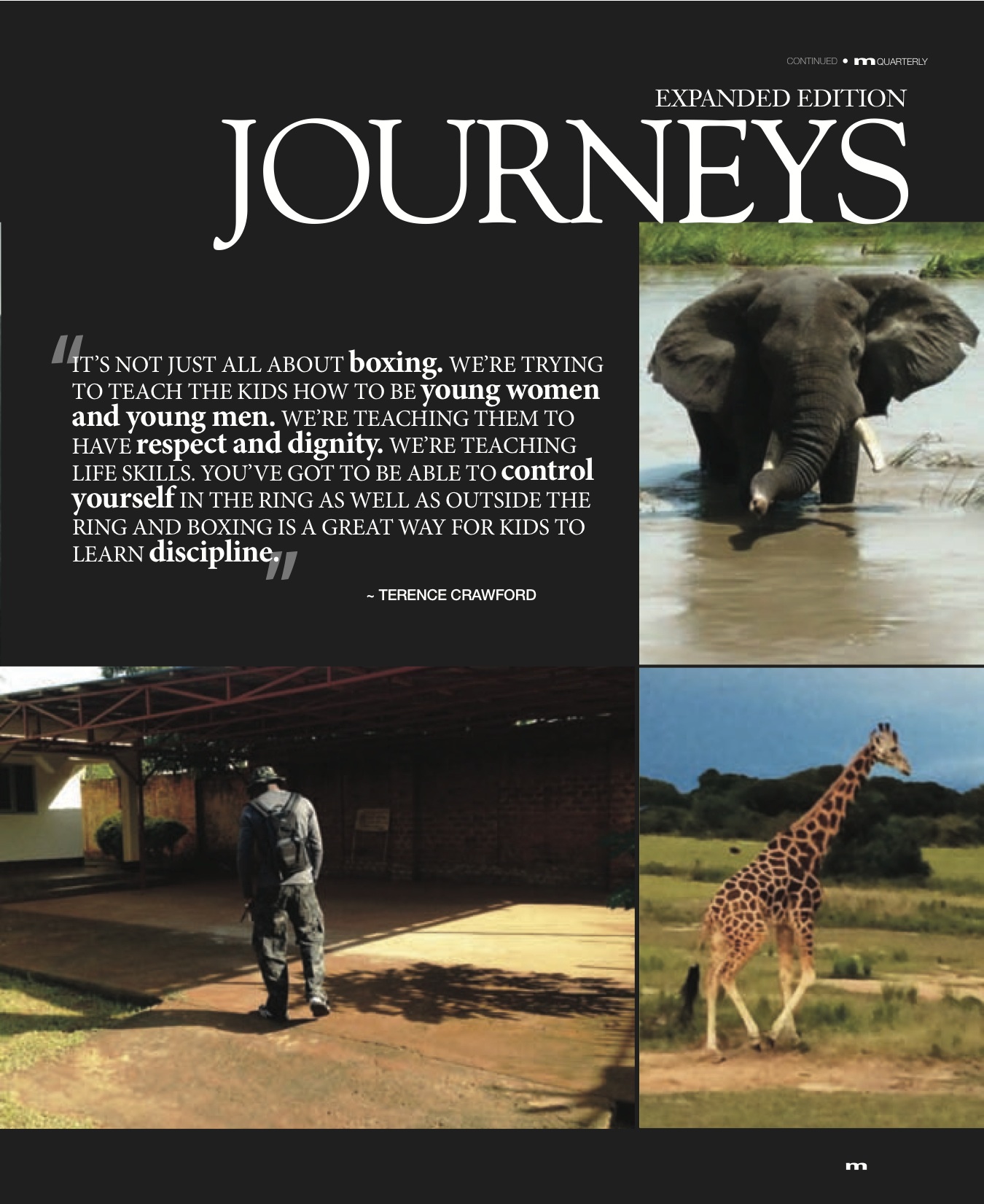
I will be presenting about the June reportng mission I made to Uganda and Rwanda, Africa that The Champ Terence Crawford was on and that his former teacher Jamie Fox Nollette led. I will share lots of pictures from the experience. All are welcome. Free.





North Omaha is more than a geographic district. It is a culture and a state of mind. That is particularly true of African-American North Omaha. For generations the voice of that community has been the Omaha Star, which started in 1938. Flamboyant Mildred Brown made the Star an institution as its publisher, managing editor and gudiing spirit. When she passed in 1989 her niece Marguerita Washington, who grew up around her bigger-than-life elder and the advocacy-minded paper, took it over. Washington’s kept the paper’s vital voice alive and relevant all these years, even as print publications have become endangered in the digital age. She’s reportedly put everything she has into keeping it afloat. Now though Washington is facing an end of life scenario that for the first time in her tenure as publisher – Washington never married and has no children – leaves the future of the Star in question. Phyllis Hicks has been acting publisher during Washington’s health crisis. But those close to the situation say there is no way the Star is going to fold if they have anything to do wth it. My story below for The Reader (www.thereader.com) assesses what the Star has meant and continues to mean to people and what may happen with it moving forward should certain events play out. I called on several folks for their perspective on the Star, past, present and future, and on the legacy of the two black women who have made it such a resource all this time. Some of the most interesting comments are from Cathy Hughes, the Radio One and TV One communications titan from Omaha who got her media start at the Star and at KOWH. This is at least the third time I’ve written about Washington, Brown and the Star and you can find the earlier stories on Leo Adam Biga’s My Inside Stories at leoadambiga.com.

News of Omaha Star publisher’s illness spurs admiration for her stewardship and interest in historic paper’s future
©by Leo Adam Biga
Appearing in the December 2015 issue of The Reader (www.thereader.com)
The Omaha Star has given African-Americans a voice for 77 years. The newspaper is not only a vital mouthpiece for locals, but a valued hometown connection for natives living elsewhere.
It became an institution under the late Mildred D. Brown, a force of nature who became an icon with her ever-present smile, carnation and salesmanship. She charmed and challenged movers and shakers, near and far, with her insistent calls for equality. Through the Great Depression, the Second World War, the Cold War, the late 1960s riots, it never missed an issue. Upon Brown’s 1989 death, niece Marguerita Washington, who worked at the paper as a young woman, took over the helm. She reportedly used her own money to pay off debt her aunt accumulated. Despite financial shortfalls, this grassroots, advocacy, activist, community-minded paper has never missed a beat. Not through the 2008 economic collapse or the decline of print and concurrent rise of online media. While circulation’s dropped and the Star’s now published bi-weekly instead of weekly, its social conscience, watchdog, give-voice-to-the-voiceless roles remain intact.
For the first time though since Brown’s death, the Star’s future is unclear because Washington, the woman who’s carried the torch lit by her aunt, is now terminally ill. The 80-year-old Washington was diagnosed earlier this year with lung cancer. The cancer spread to her brain. Meanwhile, there’s no direct heir to inherit the Star because she never married and has no children. When Brown passed she divvied up shares to Washington and other family members. Washington is the majority share holder and out-of-town relatives who’ve never taken an active hand in its operations own the other shares.
Star advertising and marketing director Phyllis Hicks has been acting managing editor and publisher during Washington’s health crisis. Hicks began at the Star in 2005 and grew to be Washington’s closest colleague.
“It was a growing relationship that became more of a personal one than a business one,” Hicks says.

Phyllis Hicks
The two formed the Mildred D. Brown Memorial Study Center as a vehicle for preserving the paper’ legacy and the Junior Journalists program to encourage youth to enter the field. The pair obtained historic status for the Star building at 2216 North 24th Street.
Brown’s brash, bigger-than-life style lent the paper panache and edge. By contrast, the quiet, unassuming Washington, an academic with a Ph.D., exhibits a “walk softly and carry a big stick” tone,” said Hicks, adding, “Marguerita is not one to be vocal and take the lead and sound off, but she’s going to support from the background to do what she can to make it happen.” For each woman, the Star became a labor of love. Washington’s never drawn a salary as publisher and maintainer of a historic line of female leadership that made it the longest continuously published black newspaper owned and operated by women.
“The role of the Omaha Star in the history of this community cannot be overstated,” says Gail Baker, dean of the School of Communication, Fine Arts and Media at the University of Nebraska at Omaha. “The Star, like other black papers, is key to developing and maintaining the community. Under both Mildred Brown and Marguerita Washington, the Star’s voice has been loud, clear and critical. Whether championing the rights of African Americans, calling the community to action, covering the stories others did not see fit to print or just shining a light on what is important to its readers, the Star is that beacon of light leading the way. Its place in Omaha is without parallel.”
Chicago Crusader editor-publisher Dorothy Leavell writes in an email about Washington, “I appreciate all of her support of things I hold dear. I love her loyalty, sense of humor and dedication to the Black Press as well as the fighting spirit of Mildred Brown that we shared memories of. I know she is putting up the good fight…”
Hicks, who shares power of attorney for Washington, has watched her friend endure radiation and chemotherapy to try and arrest the cancer. She and other friends of the paper are weighing what might happen to the Star in the absence of Washington. Discussions have grown more urgent as doctors recently discontinued treatment.
Washington, who suffers from dementia, is cared for at a northwest Omaha assisted living facility.
Hicks and others close to the situation have been selling off some of Washington’s possessions and are looking for a buyer for her home.
“We’re dealing with her business, we’re dealing with her and her doctors and we’re trying to sell her things and her home so we can have money for her care,” Hicks says. “I guess at one time she was quite wealthy but with all the money going into the Star and her never taking a salary her wealth has dwindled. My goal is trying to make sure she’s safe for the remainder of her life.”
A means to continue the paper, including finding a buyer-publisher, is also being discussed.
For folks of a certain age the Star is part of what makes North Omaha, North Omaha. It’s a touchstone for those who reside here and for natives who left here. More than any other institution it holds fast the community memory of a people and a district. Those who grew up with the publication are bound and determined to do whatever it takes to keep it alive even as its leader nears the end.
“It’s my goal and her goal as well the paper remain in North Omaha and remain black owned if we can sell it,” Hicks says. “Some mention female owned. That’d be nice but I don’t have any desire to own and run a paper. Lots of folks have approached me and asked what’s going to happen, and it’s not up to me to make that determination. I’m power of attorney with one of her nieces in Kansas City.”
Asked if she sees any scenario in which the paper would close, she says, “I’m hoping that with the amount of people expressing interest and working towards its survival that that won’t happen. It’s my hope that somebody or somebodies will come forth.
“The officers of the Study Center are working on coming up with a plan. We’re looking at avenues and ways. We’re even looking at if the nonprofit Study Center could own the paper as a for-profit arm.”
Omaha Economic Development Corporation executive director Michael Maroney says, “A lot of people want to see it survive, that’s for sure, There will be a solution found, we just don’t know what it is yet. I’m quite confident it will survive in some form or fashion.”
“Now is a pivotal moment for the Omaha Star and the Near North Side community,” says Amy Forss, author of the biography, Black Print with a White Carnation: Mildred Brown and the Omaha Star. “I am emphatically stressing the need for a successor because if the Omaha Star ceases to exist, then the longest-running record no longer exists and neither does the regularly published voice of the black community and that would be a piece of history you cannot replace.”
Omaha native Cathy Hughes, a national media czar through her Radio One and TV One companies, has credited Mildred Brown and the Star, for whom she worked, as a direct influence on her own entrepreneurial communications career. She says much as Ernie Chambers has been its militant voice in recent years through his column, the late Star reporter Charlie Washington once served that “rabble rouser” role.
“Charlie and the Omaha Star actually showed me the true power of the communications industry,” she recalls. “The Star took the mute button off of the voice of the black community in Omaha. It was more than just advocacy, it was a safety net. It has fostered and nurtured and promoted progress. It glorifies the success and accomplishments of Africa Americans in that community, which says to our young people, ‘You too can do it.’ It has been a vehicle for inspiration and motivation.
“I think that’s why it’s been able to successfully survive all these years and I pray that it will continue for many decades more.”
Hughes admires what Washington’s done.
“She could have done a lot of things with her life,” she says of the publisher, “but instead she came home because. It’s in her blood.”
“I believe it was commendable of Marguerita to take up the banner. I think she understood and saw the need of what it meant to the community and she also had the desire to continue her aunt’s legacy,” OEDC’s Maroney offers.
Retired photojournalist Rudy Smith says, “To her credit she continued the legacy, integrity and mission of the Omaha Star. Mildred Brown was a pioneer and a trailblazer and it’s hard to follow a pioneer but Marguerita was able to do that..”
 Marguerita Washington

Mildred Brown
According to community activist Preston Love Jr., who pens a column for the Star, “There was pretty much a transparent and no wrinkle transition from Mildred to Marguerita. It happened without much of a blip in terms of the paper being published. I think Marguerita’s played several roles. To some degree early she played a caretaker role. Then she emerged to take more of an editor-in-chief role and she has moved into the role of publisher. So while the paper’s made a transition she has, too. She’s made some tough editorial decisions as well. All of that is a testament to her stewardship.”
Like her aunt before her, Washington’s been much honored for her work, including last summer by the Urban League of Nebraska. More recently, the City of Omaha proclaimed Tuesday, December 1 Marguerita Washington Day for her “commitment to the community and issues that have impacted African-American people” and for “her great sense of social justice and social responsibility.”
Her empowering marginalized people continued a long, unbroken line.
“The paper has been a staple to me and the community for generations.,” Love says. “Other African American newspapers have come and gone here over the years but the Omaha Star endured. In my generation it’s something we all grew up with and hold in very strong endearment.”
Love sold the paper as a boy and was Mildred Brown’s driver summers during college. His late father, musician-educator-author Preston Love, sold advertising for the Star. The son says it’s been a link for blacks here and who’ve moved away “like no other link – you can’t overstate how important that link is.”
If the Star should close, he says, “what would be lost is part of the personality of North Omaha. Embedded in that is history and culture.”
Hicks says blacks would lose a valuable platform for “telling it like it is in the community without having to always be politically correct.”
The Star may not have the readership or pull it once did, but that’s a function of these times.
“When I was growing up in Omaha the Star was all that we had,” Hughes recalls. “Now everyone is in the black lane competing for that black consumer market. When my company went into the cable industry 10 years ago there were two choices for black folks watching cable – BET or TV One. Now every cable and broadcast television station has some type of black programming, which makes it that much more difficult for us to secure advertising dollars.
“Well, Marguerita has really had that problem with the Omaha Star. When her aunt was running it Mildred could candidly say to the head of the electric company, ‘The only way you’re going to reach these black folks is through me.’ Well, that no longer is true, they can reach ’em in social media, in a whole host of other ways.”
It may not be the presence it once was but Hughes leaves no doubt it’s meaning for her.
“When I was on the front page of the Omaha Star I called up and ordered two dozen copies – I was sending my Omaha Star out to everybody. And I laughed at myself and said, ‘Boy, that’s the little girl still in you.’ It was like hometown approval. It’s more than just the hometown newspaper to me, it’s the approval of the folks in Omaha, it’s the cheering, it’s the you-did-good, we’re-proud-of-you vehicle
“It inspired me then and it still does today.”
She says she hasn’t been formally approached about how she might assist the Star but would entertain ideas.
Preston Love says such deep sentiments about the Star are not just based on its rich past but its vibrant life today.
“The contribution the paper is making today should not be overlooked.
So it is not just historical but the present and the future. What it does to provide a platform for columnists, churches, businesses, community organizations and individual accomplishments is all right now.”
He says he and other concerned observers “will fight tooth and nail” any transition not deemed in the best interests of North Omaha.
Having arrived at this each-one-to-teach one and it-takes-a-village juncture, the Star’s fate is in the people’s hands as never before.
Rudy Smith says the fact the Star is both a historical treasure and a still relevant and resonant voice bodes well for it continuing.
“Marguerita put in building blocks that will allow the Star to continue even after she’s gone.Years ago Marguerita and I had talks about the future of the Star and she told me, ‘My goal is for the Star to live beyond me.’ I know for a fact there are things in place now that will allow the Star to continue. Marguerita started preparing the community to embrace the Star years ago.
“I think the community is rallying around the Star more than it ever has
because the Star is a community institution and if it dies part of the fabric of the community dies. The community will not let it die. I’m familiar with some of the things going on now (behind the scenes) to ensure its survival and I’m encouraged.”
Somewhere, Mildred Brown is smiling that people care so much about the fate of the paper she and her niece devoted their lives to.
Mildred Brown met many dignitaries


Nebraska has one of the highest per capita millionaire ratios in the nation and that stinking rich club includes a gallery of characters from all walks of life. One of the most colorful is Dick Holland. The Omahan’s penchant for unscripted, off-the-cuff, colloquial-style remarks is refreshing in this all too polished and canned age. Here is a new profile I did about him for The Reader (www.thereader.com). It’s part of a larger look at philanthropy and philanthropists in the December 2015 issue. Following this piece is a shorter one I did on some of his fellow charitable givers: Michael and Gail Yanney, Todd and Betiana Simon and Paul and Annette Smith. Like any town of any size, Omaha has a mix of old and new money and these philanthropists represent a nice blend of each.
Omaha’s old lion of philanthropy Dick Holland slowing down but still roaring and challenging the status quo
©by Leo Adam Biga
Appeared in the December 2015 issue of The Reader (www.thereader.com)

Omaha’s philanthropic heavyweights are generally male, old-monied Great White Fathers whose wealth and influence support health, human services, education and the arts.
A veteran of this deep-pocketed fraternity is Richard D. Holland. The Omaha native came from an upper middle class family that produced high achievers. Holland took over his father’s small advertising firm and built it into the metro’s second largest agency but his real fortune came from investing with Warren Buffett.
An entrepreneur from the jump, he ran an ice house that fronted for a bookie operation, he probed rail grain shipments, he sold Fuller brushes door to door, he cut lawns and he did janitorial work.
“I found out kind of early I didn’t want to work for somebody – I wanted to be my own boss,” he says.
He also served a stint in the Chemical Corps during World War II.
“It’s obvious I learned a lot as I went along.”
“There were disappointments in all the things I did,” he says, but it taught him the resilience he finds lacking in many today. He advises young people that “by trying out things regardless of what they are you begin to gain confidence.”
According to the occupational assessment inventory developed by his late star psychologist brother John “Jack” Holland, he’s an investigative, artistic, entrepreneurial type. Those traits, along with some luck, helped him amass wealth.
The Holland Foundation he and his late wife Mary Holland established reported assists of $150 million in 2014.
Like his first generation philanthropic cronies, Holland’s a Great Depression and Second World War product. While they largely operate behind the scenes on capital and building campaigns. Holland’s an outlier who speaks bluntly and publicly about things he’s passionate about. That’s in stark contrast to his peers, who parse words in carefully prepared press releases and sound bites devoid of personality and controversy.
Where others prefer uniformity, Holland, a science geek, favors chaos theory. He’s the rogue who says what’s on his mind not only behind closed doors but in interviews and letters to the editor and lets the chips fall where they may. He’s equally capable being a team player or going his own way. For example, when an organization he helped found and fund, Building Bright Futures, balked at doing lobbying and research he favored, he cut ties with it to form two organizations of his own – Holland Children’s Movement and Holland Children’s Institute – charged with those two priorities, respectively.
This Europhile’s opinionated critiques of what he deems American lapses can come off as the bluster of a crusty, crotchety old man. Like what he says or not, he puts his money where his mouth is.
The ultra progressive Holland is a robust Democratic Party political contributor. He proudly proclaims his liberal leanings and Unitarian beliefs by supporting humanistic public policies and rigorously questioning things. Unlike some fellow travelers, he favors giving the undeserved tools or means for success rather than hand-outs.
This blend of pragmatist and creative studied art at what’s now the University of Nebraska at Omaha and spent his salad days wooing ad clients. His agency devised campaigns for industrial clients, including Valmont, and political candidates.
His philosophy on giving is getting “results,” and “making ideas a reality.” “It’s always great to have ideas but somehow or other somebody has to pay, and pay big in order to get something done.” He does his homework before committing funds. “I’m not throwing money at it.” He says he makes his donations public because “I’ve learned I actually influence a few people. I’m sure if somebody hears I’m into anything big they say, ‘Well, he’s not just playing around.’ I hope it’s true.” He uses the same art of persuasion he practiced as a Mad Man trying to win others over to his way of thinking.
“Some of the great lessons I learned in advertising, like how to talk to people to try and convince them of an idea, have served me well.”
He adamantly endorses America providing free prenatal care and early childhood education for all at-risk families. He says the presence or absence of that care and education is often the difference between success and failure in school and later in life.
“Brain research indicates what happens to a child between 0 and 3 is far more important than anything else that happens to him in his life in terms of growing up and becoming a productive citizen. It’s a truth I’m trying to get across to the rest of society. Hell, yes, I’m trying to influence public opinion. ”
He considers his advocacy for early childhood ed the most important thing he’s ever supported. “Oh, absolutely.”
He envisions a large, central funding apparatus to support another passion, the arts, but rues it iall take someone younger to launch it.
“I see the future not being so much private but much more public,” says the man for whom the Holland Performing Arts Center is named. “I don’t see the enormous private fortunes coming along in Omaha where they can make $100 million gifts.”
Holland points out that some of the biggest local fortunes were made by early Warren Buffett investors like himself and by the heads of dynastic companies. Both groups are dying out and there isn’t necessarily new rich blood replacing them.

He says the more cosmopolitan Omaha that’s emerged was a long time coming as the city’s economic base transitioned from blue collar industrial to white collar professional and things like the arts became more valued quality of life measures
“We had a helluva time getting over the fact we were a cow town. That was Omaha’s original wealth. We had all the great packing plants. That whole thing just disappeared and a new system or class replaced it.”
Like his peers, Holland’s giving includes many education initiatives. He funded the Robert T. Reilly Professorship of Communications at UNO named in honor of his old advertising partner. Holland monies established the Cardiovascular Research Laboratories at the University of Nebraska Medical Center. He helped found the Nebraska Coalition for Lifesaving Cures. He backed the purchase of a supercomputer at the Peter Kiewit Institute in the Holland Computing Center.
He’s equally bullish in his arts philanthropy. “I suppose it really began in the mid-’80s and really got going in the late ’90s.” His lead donations enabled construction of the Holland Performing Arts Center and renovation of the Orpheum Theatre.
“I was on a symphony committee about building a new home and every time we had a meeting we had great ideas and no money. I got to talking to Sue Morris of Heritage Services because I knew about its work with the Joslyn and so on. That was Bob Dougherty and Walter Scott getting together the fat cats. Bob was after me on it and then it was the SAC museum. Coming home from some meeting he and Walter were talking and they said we ought to set up a permanent organization to take on some of these things important to the city,”
That something became Omaha Performing Arts and Holland says his two giving buddies “are greatly to be complimented because few cities have this.” He recalls a backstage inspection at the Orpheum revealed an antiquated theater ill-equipped to accommodate large touring shows. “It was just dismal. I think that viewing of the Orpheum opened some eyes to the need and things began to move after that.”
The Hollands made the biggest gift and later gave more but he credits others for actually making the Orpheum project happen.
“Without Heritage I don’t think we would have got it done then. Sue (Morris) is a wonderful gatherer. She also understands construction.”
Adapting the Orpheum from a vaudeville and movie house into “a full-blown theater” hosting Broadway shows before record crowds paid off.
“Hell, we have tours coming that take two weeks to load-in with eight over-the-road trailers. Elaborate damn things. That wouldn’t have been possible without that work. We reseated it, too. Cut out one aisle to make a better line-of-sight. We brightened it up. It’s a lovely place. If you had to duplicate it today you better start with $150 to $200 million.
Besides being home to the symphony, the Holland Center hosts dozens of shows a year across the live arts spectrum.
He’s proud of how generously Omaha supports its arts, as most recently evidenced by community giving that made the new Blue Barn Theatre possible. But he bemoans the way funding’s done.
“Our support of the arts leaves everybody gasping at the end of every year over a lack of funds. This to me we don’t see the arts is an economic engine for the whole damn society. Major donors tend to be heads of companies, corporations and generally they’re not artistics in the sense of having great artistic interests. The net is they dismiss the arts – there’s a lack of understanding of value.
“Nobody’s ever nailed down that value but I always think about European cities where they think nothing of putting up millions for operas and symphonies and privately and publicly support them because they recognize a major industry for Vienna or Berlin or Paris is the arts. And it’s not just the performing arts – it’s museums, galleries.”

Dick Holland is pictured in his Omaha home on Oct. 2, 2012.
He feels America must move away from its haphazard support to something more consistent and equitable but he concedes that sea change requires a new mindset.
“At the present time most of the arts struggle. Funding is dispersed, it’s spread around, there’s no leadership of it. That’s one of the reasons why I think a great coalition is needed.”
He says if the city can invest $150 million to build TD Ameritrade Park for the two-week College World Series there’s no reason it can’t invest similarly in arts that serve audiences year-round. It galls him that the public sector leaves the bulk of arts funding to the private sector.
He feels Omaha could capitalize more on its existing amenities and perhaps expand offerings to become a regional destination.
“It almost defies anybody saying the arts don’t amount to much because of all these things going on and the audiences that go there. In the 10 years since the opening of the Holland and the refurbishing of the Orpheum we’ve had millions of people pass through. Those people came from not just Omaha or the outlying districts. We’ve done studies which indicate that maybe 20 or 25 percent and once in a while as high as 40 percent come from beyond. It’s a support for the restaurants, hotels, parking garages-lots, shops and so on.
“I think there’s an enormous amount to be gained by making Omaha a Middle Western city that is well known for its arts.”
For him, it’s part of the calculus that makes a city livable and attractive.
“I think what’s greatly underestimated is why people come to Omaha and want to live here. One of the economic engines is the Med Center. I’ve talked to them about the arts and its effects and one of the things they point out is that when they want to bring in someone to head up a new initiative or an existing section they tell me the key is the wife. The first question she asks is, ‘What are the arts like?’ She’s the key because if she says no it’s no and it doesn’t make much difference how good the offer is. These decisions are made like that.
“The whole cultural scene is a big, big part of a community.”
He’s dismayed America forces presenting organizations to be perpetually on the beg and cuts arts ed in public schools.
“They cut out the arts in the schools at a time when they’re needed most,” he says about a nationwide patern. “They cut out the arts in a town when they have to balance budgets. This is nearsightedness.”
An area he feels Omaha has fallen much shorter in yet is handling its growing poverty population.
“It’s neglected its poor people badly. Omaha’s doing OK economically but it is has great difficulty educating poor kids. To me that’s the worst thing Omaha does.”
While he applauds the metro’s “highly developed educational system” he says too many children enter school unprepared to learn and too few programs address preparing them. Reading difficulties, for example, get magnified when kids become adults and don’t have the education or skills to get living wage or salaried jobs.
“I don’t see this so much as an intellectual problem but as a community problem. We have all kinds of government programs designed to grab these people as they fall off the cliff. The failure is to raise them so they can climb cliffs. There’s no question in my mind it’s going to be a major government project. It has to be.”
He insists universal early childhood education is the key to reversing the situation but claims legislators ignore the evidence.
“We are terribly ignorant in this country about early childhood. We just plain are dumb. We don’t understand how kids get educated even though it stares us in the face and we are not willing in many cases to turn around and fix this. The proof is all over the place, all you have to do is look at it. There’s no point sitting around speculating about it. If we do it, it will end the problem. It’s very clear. Hell, we can look at all kind of European education systems – you’ll see the same thing.”
He feels America may have missed an opportunity with Head Start. “If we had continued to develop Head Start we might have got there.”
New models have emerged that show promise. “We have something going on in Neb. headed by Susie Buffett, Educare, that’s a helluva good idea. It’s also expensive. But it is a proven thing now.”
“The Susan Thompson Buffett Foundation is one of the largest in the United States. What they’re attempting to do in education and the schools through Building Bright Futures is just monumental.”
He’s also encouraged by the Buffett Early Childhood Institute and the impact it’s making in raising awareness and standards.
The goal is creating holistic after school and daycare programs that are educational and developmentally based, not just caretakers.

Holland Performing Arts Center

Child Saving Institute
Holland, whose support of the Child Saving Institute is legendary, says, “I just decided to focus on this problem. It’s difficult because it’s costly. Trying to get the kind of money from the state and the nation to really look after these children is just plain expensive.”
He says even as Building Bright Futures, Partnership4Kids and other education efforts have scaled up their impact “is tiny in terms of the need,” “Five thousand-plus kids enter the Omaha Public Schools each year and half of them are probably not ready to learn, which indicates a serious problem,” he says. “Multiply that over some years and these kids are more likely to have problems becoming productive citizens. That describes in Omaha the size of the problem. It’s enormous.”
Mentoring is another thing he supports.
“It’s been shown that even after this bad beginning if we get a hold of a child and mentor him properly we can get him higher up in the education scale.”
Holland wants America do something overarching, like the New Deal or the Marshall Plan or the Great Society, to once again assert leadership that’s inspirational at home and abroad.
“We’re beginning to see we have to make some changes but the changes I’ve seen so far are not nearly as drastic as I think they should be. I’m more and more positive it’s going to take a revolution.”
The old ad man in him tells him “we haven’t really been able to sell the benefits of doing something like this even though it would be far better than the cost of not doing it.”
“We have more than two million people in prison in the United States, leading the world, and not realizing this is our own fault. We think they’re just bad people. They weren’t bad when they were born, I’ll guarantee you.”
He’s concerned the American Empire he came of age in is eroding.
“I’m worried about it terribly. I think our national government and even our state governments are not using their ability to think about the good of the country and to work together to improve it. Hell, everybody and his brother knows about it that pays any attention.”
Compounding the problem, he says, is America’s own policies.
“We have not reformed our immigration policy. We’re getting fewer immigrants as we make stupid requirements to get a person into this country anymore. That’s backwards because immigrants are highly motivated people who work hard to succeed..
“We don’t tax the wealthy or anything like that. We don’t seem to have any ability to take a look at a good country in Europe and realize that those people pay much higher taxes than in the United States but they’re better educated, they’re happier, they have decent transportation systems, they have universal health care.”
He’s not sure the country has the will to do what’s right.
“I used to think of the United States as infinity. In the post-World War II era we dominated the world. One of my great disappointments is that we’re not leading the world, we’re responding to problems.”
Better sooner than later for him that America take action.
“I want it to happen now. What the hell, I’m 94.”
_ _ _
Giving for the greater good
©by Leo Adam Biga
Appearing in the December 2015 issue of The Reader (www.thereader.com)
Omaha’s philanthropic community is known for its unusual generosity.
Some attribute this largess to the small town feel of a city where relationships still matter and where it’s possible to rally people around a good idea or cause. Others point to the concentration of several wildly successful companies grown here that give back. Then there’s the metro’s large number of wealthy families, some of whom acquired their fortunes through business and others through investments. The latter include those who’s trust in a young Warren Buffett to invest their money in Berkshire Hathaway was rewarded beyond belief.
Many landmarks and streets are named after early figures whose late 19th century and early 20th century philanthropy built Omaha. Joslyn.
Dodge. Kountze. Creighton. Hitchcock. Cudahy. Doorly. Kenefick.
As those early givers passed, new figures stepped up such as Leo A. Daly, Peter Kiewit, Walter Scott, Bob Dougherty, Mike Harper, Tom Nurnberger, Dick Holland, the Storzes, the Durhams, the Hawks, Alan Marcia Baer, the Blumkns-Batts. More recently, Susie Buffett, Bruce Lauritzen, Wally Weitz, John Gottschalk, David Sokol. Bill and Ruth Scott, Allan and Dianne Lozier, the Simons and the Smiths have emerged among Omaha’s new generation of major givers.
These movers and shakers underwrite some of Omaha’s great public-private places and endeavors. Holland Performing Arts Center. Orpheum Theatre. University of Nebraska Medical Center. UNO. Creighton. Film Streams. Bemis Center for Contemporary Arts. Durham Museum. Omaha Community Playhouse. Omaha Symphony. Opera Omaha. Great Plains Theatre Conference. Henry Doorly Zoo and Aquarium. And many others.
They have skin in the game, too, in things like the United Way and Building Bright Futures, whose greatest benefactor, Susie Buffett, is a notable female exception in what’s otherwise ostensibly a men’s club.
These charitable doyens not only give money but provide leadership on boards and committees and lend more informal advice and service.
Few donors are as colorful or irascible as Dick Holland (see main story). The 94-year-old represents a dying breed who tells it as he sees it, throwing political correctness out the window, but getting things done, too.

Michael and Gail Yanney
A bridge figure between Holland and today’s new generation philanthropists is Michael Yanney, 81, founder and chairman emeritus of The Burlington Capital Group.
Yanney, who came from poverty in small town Neb. to work his way up the ranks of commercial banking and commodities markets, found key mentors he tried emulating in his own leadership and philanthropy.
One was former Peter Kiewit Sons Construction head Walter Scott and another was former Northwestern Bell head Tom Nurnberger.
“Both of these people I trusted a lot. And my wife has probably been one of my best mentors.
Yanney and his wife Gail are a team when it comes to their giving.
“We really like to do things that will make a difference and we want to do them the best we can. Therefore you don’t pick a lot of projects, you pick very few and you make sure they’re outside of the box and you’re going to have to stretch to get there.”
He says giving decisions are not arrived at by accident but by due diligence. “It is something that comes as you see the demand and the opportunity to pick things up.”
Youth mentoring is a prime giving area for him. What’s known now as Partnership4Kids has grown from 20 to some 5,000 young people served. “It’s certainly a commitment and we feel it’s working and there’s very good leadership.” The program mentors at-risk kids from early elementary school through college to try and break the cycle of poverty many come from. “Anything we can do to eradicate poverty is going to make a long-term difference to the overall picture and happiness of our community,” Yanney says.
Health care, particularly UNMC, is another prime giving area. “We have an absolutely strong feeling that medical center is making a big difference to this region. Anything you can do to improve medical research, quality of patient care will make a huge difference.”
Yanney doesn’t see an end to the generosity that’s made “Omaha a very unique place,” adding, “I think there’s a very good chance it will continue as long as there’s very good leadership. The money is there but there’re not going to give if the quality of leadership isn’t there.” He says the leadership of Walter Scott, whom he calls “the chairman of the board of Omaha.” will be “very hard to replace” whenever he’s gone.
Still, Yanney says, “I’m very optimistic. We’ve really got some great young people moving into the leadership.”

Photo (L to R): Betiana Simon, Mia Simon, Todd Simon, Judith Helfand; Credit: Chris Callis © 2010
Todd and Betiana Simon
Todd Simon points to the fourth generation of his Omaha Steaks family empire, including his late father philanthropist Fred Simon, as “very inspirational to me personally.” He adds, “It was basically leading by example. That giving back to the community is just something you do both through financial support but also by being on boards, helping with capital campaigns, providing leadership where appropriate. I think it was my uncle Alan who said to me one time, ‘Community service is my hobby,’ and I think that really struck with me. It’s a great hobby to have when you can take something you’re really passionate about and turn it into something you really want to spend time on.”
He says the calculations he and his wife Betiana use in making giving decisions “starts with the heart” and follows with the head. “The question Betiana and I ask is. ‘How can we have the most positive impact on the project, whatever that project is, and on the community that project serves.’ We’ve made the choice to support the arts and human services and obviously those are both really big buckets. Within those we make the decision of how we’re going to support.
“We have been focused on doing programming support in the arts and making sure the institutions we’re supporting can do first class programming work. In health and human services we’re more focused on the mission of the organization and in those instances we’re happy to fund just direct operating support because we know so much of the work of these organizations goes right to their beneficiaries.”
In weighing an organization and its need, he says, “I try not to over-think it,” adding, “I think what it really comes down to is people give to people and so I look to the leadership of the organizations both from a staff and a board perspective and the question I ask is, Does this organization have the capacity to deliver on their mission? That’s usually a fairly easy determination to make and once I’m confident they can, then we’ll typically feel good about giving. I leave it up to the leadership of the organization to deliver on their programming and promises, which they almost always do.”
The Simons prefer going with sure things and sticking with them.
“What we tend to do is find organizations doing a terrific job and we stay with them, not only financially but also from a time commitment perspective. We join the board or participate in a committee or get involved in leadership in some way. That keeps us really connected.
“We kind of want to go deep rather than broad. We’re most effective in our philanthropy when it’s not just about writing a check.
“I think the most fulfilling thing is planting seeds and seeing them grow into the community.”
Paul and Annette Smith
Philanthropists sometimes partner on projects. The Simons joined forces with another new era power couple, Paul and Annette Smith, in founding The Impact Circle for Big Brothers, Big Sisters.
The Smiths, recipients of the 2015 Sower Award in the Humanities, have used others’ giving to guide their own.
“There are a host of great examples we’ve borrowed from,” says Paul Smith, a founding member of Tenaska Capital Management. “Our approach is probably an amalgam of different approaches we’ve seen with others.”
An early influence on them was Howard and Rhonda Hawks.
The Smiths divide their giving between youth serving organizations and the arts. In each case, their head and heart enter the equation.
“We try to focus on outcomes – on how much impact we’re really having,” Smith says. “I suppose that is the head part but we’re pretty passionate about both of these areas, so there’s a lot of heart in it, too. So it’s some of both for us.”
When it comes to young people they look to impact “underserved and disadvantaged youth, especially through avenues that enhance their educational and social opportunities,” Smith says. “What we look for is a real efficacy and real difference made sustainably over time in the lives of young people in our community.”
When it comes to the arts, he says, “we’re looking to create cultural assets in our community.” He says they prefer to support programming of the kind that Film Streams does that “serves to create a cultural connection around people and a dialogue around important issues – I think that’s true of all of the arts organizations we support.”
Annette Smith says such activities enrich the cultural landscape. “It makes our community a more vibrant place to live for everyone.”
Paul says they support any arts endeavor that promotes access and diversity “in creating community around art.”
Sometimes, their passions for youth and arts overlap, as in the examples of their investments in the Kent Bellows Institute and Omaha Conservatory of Music.
He says their giving reflects their belief the arts are integral to a well-rounded life and city.
“Imagining our city without these things – without a symphony, an opera, art museums and challenging places where new art is being created – imagines a less interesting, less connected, less enjoyable place to live. So that’s why we think of it as a form of investment when we invest in the arts.”
Smith says he and his wife remain “active in the dialogue that exists in our community broadly around these sorts of institutions, so we try to support them not only with contributions but with counsel and service. And sometimes that means a board seat and sometimes it doesn’t.”
Coming Attraction for 2016…
The new edition of my Alexander Payne book featuring a major redesign, more images and substantial new content that looks back at “Nebraska’ and that looks ahead to “Downsizing.”
Considering Alexander Payne’s ‘Nebraska’
Excerpt from an essay to appear in an upcoming new edition of my book Alexander Payne: His Journey in Film
Even though Alexander Payne demonstrates time and again that commercial considerations mean very little to him, following the breakaway success of The Descendants (2011) there was every reasonable expectation he might lean a bit more again in the direction of mainstream with his next film. I say again because I count The Descendants as a conventional, even mainstream work even though its protagonist rails against his comatose wife and sets out to wreck the life of the man she was cheating with, all the while trying not to lose it with his two grieving daughters in tow.
Payne soon quashed any notion of playing it safe when he announced the small, insular back roads comedy-drama Nebraska (2013) as his new feature project. It did not help its bottom line chances that the film is set in rural Nebraska, which for most filmgoers may as well be the dark side of the moon for its unfamiliarity, remoteness, and perceived barrenness. Indeed, if Nebraska conjures any image at all it is of endless cornfields, cows, and monotonously flat, uninspired scenery. When the story laid over such a setting features a confused, depressed old cuss alienated from family and friends and wandering around in a bleak wasteland made even bleaker by black and white photography and desolate late fall, post-harvest locations, it does not exactly engender excitement. The prospect of a dour, feel-bad experience devoid of life and color does not get tongues a-wagging to generate the all important buzz that sells tickets.
Of course, anyone who has seen Nebraska knows the film is not the downer it may appear to be from glimpsing a thirty-second trailer or hearing a fifteen-second sound bite, but that it is ultimately a sweet, deeply affecting film filled with familiar truths amid its very Nebraskaesque yet also quite universal archetypes.
Payne’s insistence on shooting in black and white was a completely legitimate aesthetic choice given the storyline and tone of this stark, autumnal mood piece about an old man having his last hurrah. But it also meant a definite disadvantage in appealing to average or general movie fans, many of whom automatically pass on any non-color film. Compounding the aversion that many moviegoers have with black and white is the fact that most studio executives, distributors, and theater bookers share this aversion, not on aesthetic grounds, but based on the long-held. much repeated argument that black and white films fare poorly at the box office. Of course, there is a self-fulfilling prophecy at work here that starts with studio resistance and reluctance to greenlight black and white features and even when a studio does approve the rare black and white entry executives seem to half-heartedly market and release these pics. It is almost as if the bean counters are out to perversely prove a point, even at the risk of injuring the chances of one of their own pictures at finding a sizable audience. Then when the picture lags, it gives the powerbrokers the platform to say, I told you so. No wonder then – and this is assuming the argument is true – most black and white flicks don’t perform well compared with their color counterparts. Except, how does one arrive at anything like a fair comparison of films based on color versus black and white? Even if the films under review are of the same genre and released in the same period, each is individually, intrinsically its own experience and any comparison inevitably ends up being a futile apples and oranges debate. Besides, there are exceptions to the supposed rule that all black and white films struggle. From the 1970s on The Last Picture Show, Paper Moon, Young Frankenstein,Manhattan, Raging Bull, Schindler’s List, Ed Wood and The Artist are among the black and white films to have found wide success. It is admittedly a short list but it does prove black and white need not be a death sentence.
To no one’s surprise Paramount did what practically any studio would have done in the same situation, which was to fight Payne on the black and white decision. In no uncertain terms Payne wanted to make Nebraska in black and white and just as adamantly the studio wanted no part of it. He pushed and they pushed back. He would not compromise his vision because from the moment he first read Bob Nelson’s screenplay he clearly saw in his mind’s eye the world of this story play out in in shades of black and white. It just fit. It fit the characters and the settings and the emotions and as far as he was concerned that was that. No questions asked. No concessions made.
I do not claim to know all the details of this protracted dispute or should I say discussion but I do know from what Payne and cinematographer Phedon Papamichael have told me that the issue became a point of some contention. I do not know if it ever reached an impasse where Payne more or less indicated by word or action he was prepared to walk and take the project with him (his own Ad Hominem production company brought the property to Paramount). It certainly wouldn’t surprise me that he let it be known, subtly or not, that he was willing to make the project with another studio if it came to that. It is a moot point now since Paramount eventually acceded to his wishes, though not insignificantly the studio did cut some of the picture’s already small budget as a kind of hedge I suppose against the small business they expected the film to do. The smaller the budget, and in this case it was $12 million, the smaller the risk of not recouping its cost.
Given Payne’s even temperament and gentility, I doubt if things reached the level of shouting or angry exchanges, though he undoubtedly expressed displeasure with their interference and pettiness. I have to think he wore the execs down with his patience and persistence to win the black and white battle but at the end of the day he was willing to give up a couple million dollars in exchange for realizing his vision. I know he says that losing a million dollars is a huge loss when it comes to small-budgeted films like this one and I understand that in order to get the film made within those constraints he and others worked for scale in return for some points on the back end, but I have to believe those “sacrifices” were completely worth it in the long run. I would even argue that having to work on a bare bones budget and a tight schedule worked in favor of getting this simple story right. It required cast and crew to live frugally like the characters and the frugal shoot placed a premium on efficiency, ingenuity, and everyone pulling together to make the most of what they had to work with. In truth this esprit de corps is evident on all of Payne’s projects anyway because of the tight, loyal stock company he works with from film to film to film. They are a family and a team dedicated to one purpose: getting the film made to his specifications.
I asked Payne if it ever seems like a studio plays this game in order to gauge just how strongly the filmmaker is invested in a choice or preference as well as to what extent the filmmaker can be manipulated. He seems to believe there is some truth in that. Perhaps it really is the studio’s way of testing how firm the filmmaker’s convictions are and how much the filmmaker is willing to give up or to stand fast in terms of creative control. As Paramount surely knew going in and if they somehow didn’t know they surely soon discovered in the process of setting up the film, Payne is no push over and he brooks no fools. That is true at every juncture in the process, from making the deal to pre-production to the shoot and on through post-production. It is his film and he will not be budged from any creative choices he feels are necessary, which is to say he will not be pressured into doing something for the sake of added commercial appeal.
Because Payne is not about burning bridges, except for his public displeasure over the way his first two films (Citizen Ruth and Election) were handled by the studios and releasing companies behind them, he is not saying on the record what he thinks about the way Paramount handled Nebraska. I have to think he is not pleased with the extremely limited release they gave it. At no time during its release did the film ever play more than 968 theaters according to the website Boxoffice Mojo. That is anywhere from two-thirds to a half to a third the number of theaters its main awards competitors played at during their runs. It is hard to understand why the film was not given more opportunities to find a wider audience given the outstanding reception it received from critics (making most Top Ten lists), the foreign press (five Golden Globe nominations) and the Academy (six nominations).
Hampered as it was by the limited release, Nebraska still pulled in more than $18 million domestically by this edition’s summer 2014 printing and I am sure when all the figures are added up from North America and overseas, where I predict the film will fare well, especially in Europe, its total gross will be in excess of $20 million. By the time all the home viewing rentals and purchases are taken into account a year from now, I wager the film will have done some $25 million in business, which would approximately double its production costs. That is quite a return on a small film that did not get much studio support beyond the bare basics.
Payne could have made things easier for himself and the studio by filming in color and securing a superstar. Nebraska marked quite a departure from the lush, color-filled canvas of Hawaii he captured in The Descendants and the equally verdant California wine country he committed to celluloid in Sideways. Never mind the fact the stories of those earlier films, despite the radical differences of their physical locations, actually share much in common tonally and thematically withNebraska. The dark comic tone and theme of Payne’s films can threaten to be overshadowed when a star the magnitude of Jack Nicholson (About Schmidt) or George Clooney (The Descendants) attaches himself to one of his projects. But as anyone who is familiar with the subdued star turns of those two actors in those particular films will tell you, Nicholson departed far from his trademark insouciance and braggadocio to totally inhabit his repressed, depressive title character in Schmidtjust as Clooney left behind much of his breezy, cocksure charm to essay his neurotic somewhat desperate character in Descendants. Each star was eager to shed his well-practiced, bigger-than-life persona in service of scripts and parts that called for them to play against type. Instead of their usual live-out-loud, testosterone-high roles, they play quiet, wounded, vulnerable men in trouble. For that matter, the men-children Paul Giamatti and Thomas Haden Church play in Sideways are seemingly complete opposites but in actuality are emotionally-stunted, damaged souls using oblivion, alcohol, and sex to medicate their pain and avoid reality. The beauty of the California and Hawaii locales work as contrast and counterpoint to the chaotic lives of these lost figures careening toward catharsis. In Schmidt Omaha is the perfect washed-out backdrop for a man undergoing a full-scale identity and spiritual crisis once he retires and his domineering wife dies.
That brings us to Woody Grant, the crotchety so-and-so at the center of Nebraska. When we meet him he is near the end of a largely misspent life. Facing his inevitable and nearing mortality he doesn’t much like what he sees when he reviews his life and where he has landed. He is dealing with many deficits in his old age. His body is falling apart. He walks stiffly, haltingly. His alcoholism has been unaddressed and it contributes to his foggy mind, mood swings, propensity to fall and hurt himself, and to utter hurtful things. He seems to derive no joy or satisfaction from his wife of many years and his two adult sons. He almost regards them as inconvenient reminders of his own failings as a husband and father. On top of all this, he is poor and in no position to leave his family anything like a tangible legacy.
This miserable wretch has seized upon what he believes to be his last chance at assuaging a deep well of shame, guilt, bitterness, and resentment. His mistaken belief there is a sweepstakes prize for him to redeem becomes a search for his own personal redemption or salvation. He desperately wants something, namely a truck, to leave his boys. The true meaning of the road trip he embarks on with his son David is only revealed to us and to his boy along the way and that gradual discovery adds layers of poignancy to the story.
When Woody arrives back in his hometown of Hawthorne, Nebraska word spreads he is on his way to collect a $i million sweepstakes prize. For a few moments he becomes a person of substance in the eyes of his extended family and the town’s other residents. Some family members and one old friend turn vultures and demand they get a share of his windfall as compensation for favors they did or loans they made that were never returned. But there is another side to that story. We find out Woody has a kind heart beneath his gruff exterior, so much so that he’s been known to do favors and to give money away without ever expecting repayment. That has led him to be taken advantage of over the years. Then when the truth gets out Woody has not won anything but has misinterpreted a marketing piece for a confirmation letter of his supposed million in winnings, he is publicly humiliated and made out to be a fool.
For Nebraska I Payne went one step further in distancing himself from commercial considerations by casting as his two leads Bruce Dern and Will Forte, who at first glance form an unlikely combination but in fact play wonderfully off each other. Dern’s acclaimed performance as Woody Grant earned him a Best Actor prize at Cannes and nominations from the Golden Globes and the Academy of Motion Picture Arts and Sciences. Saturday Night Live alumnus Forte is triumphant in his first dramatic role as the sympathetic son David. The next largest part belongs to June Squibb, who until this film was a somewhat familiar face if not a household name (she played Nicholson’s wife in Schmidt). Her stellar work in a colorful role as Woody’s piss-and-vinegar wife Kate has brought her the most attention she’s received in a very long and productive career. Arguably, the biggest name in the picture belongs to Stacy Keach, a veteran of film, television, and stage who has little screen time in the picture but makes the most of it in a powerfully indelible turn as the story’s heavy, Ed Pegram. As strong as these performances are Payne did not do his film any box office favors by choosing actors so far off the radar of moviegoers. That is not a criticism, it is simply a fact. At least a dozen more speaking parts are filled by no-name actors, nonprofessional actors, and nonactors, all of whom add great authenticity to the film but whose obscurity hurts rather than helps the marketing cause.
As you will read in the articles that follow Payne is most proud of the casting and locations inNebraska. These are elements he always takes great care with in any of his films but with this particular film he went the extra mile yet in order to realize the very specific world of the story. Many of the small speaking parts are filled by regular folks – retired farmers and such – who populate the very towns or ones just like them where he shot. He and casting director John Jackson searched long and hard for just the right faces and voices. Similarly, the weatherbeaten, seen-better-times found locations look and feel so right as the homes and pit-stops of the characters that these real locations rather than constructed sets add another layer of verisimilitude.
The choice to populate the film with zero star power ultimately is not the reason the film failed to pull in more of an audience because there are plenty of films that do well with little known, non A-list names, and nonactor finds. No, the real problem with how Nebraska fared had more to do with the perception the marketing campaign for the film imposed on it. The film’s trailers did not communicate the heart and soul of the picture. None of the warmth or depth or populist appeal at its core registered in those clips. Instead, the film was represented as a cold, mean, depressive, rather flimsy sketch concept blown up to fill two hours. Anyone who has seen and appreciatedNebraska will tell you it is far more than that. It is a work replete with deep currents of regret, disappointment, melancholia, rage, nostalgia. and love. Alongside that run streams of humor, sweetness, irony, and slapstick. Then there is the sheer poetic evocation of hauntingly beautiful visuals that turn the wide open flyover terrain, roadside stops, and played-out small towns of Montana, Wyoming, South Dakota, and Nebraska into haunting fields of dreams and symbols of neglect. Not to mention centers of quirky, silly, sometimes surreal goings-on.
Plenty of small indie films about similarly unglamorous subject matter have struck a responsive chord with the masses. So what kept Nebraska from resonating the way, say, Juno did or Little Miss Sunshine? No one really knows. If the creatives who make the films and the suits who finance and sell them did, if there was some sure-fire magic formula at their disposal, then every film would be packaged into a box office winner. The truth is some films catch the wave and most don’t and there doesn’t seem to be any reliable rhyme or reason for why some hit and others miss that elusive, always moving wave everyone is after.
It may take a while, but I am quite confident Nebraska will eventually find the large audience it deserves. In my opinion it will be a much viewed and discussed stand-the-test of-time film for its many cinema art merits. As good as Payne’s earlier films have been I believe this to be his finest work to date because it is in my view the fullest expression of his filmmaking talents. Visually, it is a tone poem of the first order and on that basis alone it is a film to be reckoned with. Payne and cinematographer Phedon Papamichael have achieved an expressive black and white palette whose hues perfectly articulate the heavy heart of the story. But Payne also found unobtrusive ways to position the camera and, with editor Kevin Tent, to cut scenes so as to amplify its many moments of humor without ever detracting from its elegiac, soulful mood. Mark Orton’s original music, plus the incidental music used here and there, add more nuances of mood. Payne artfully composed images for the wide screen format he shot in to glean added depth and meaning from the action. Within the same frame he intentionally juxtaposed characters with the stark landscapes, townscapes, and homes they inhabit. Many of these scenes emphasize sadness, stillness and desolation. Irony infuses it all. The result is an ongoing dialogue between people and their environments. Each informs the other and by consequence us.
The filmmaker’s economy of style has never been more evident. He has reached the point of communicating so much with simple brush strokes. Take for instance the way Woody’s harsh childhood experience is encapsulated when the old man and his family visit the abandoned farm house he grew up in. Payne has the camera fluidly glide over the detritus of this once proud home turned wreck and to peak into rooms that carry so much psychic-emotional pain for Woody, who was beaten as a boy. Payne clearly indicates this is a private, anguished, cathartic return for Woody, who has avoided this place and its memories for years.
Or consider that gathering of taciturn men in Woody’s family at his brother’s home in town. Payne arranges the uncles, brothers, sons, nephews, cousins in an American Gothic pose around the TV set, where the men engage in the almost wordless ritualistic viewing of a football game. It is at once a funny and powerful expression of their tribal, tight-lipped bond. A bond more about association by blood than affinity.
Then there are the almost incidental shots of boarded up buildings in town that symbolize and speak to the economic hard times to have befallen so many small towns like the fictional Hawthorne. In a short scene Payne conveys an important way in which the times have changed there and in towns like it when he has Woody visit the auto service station he used to own and he finds the new owners are Spanish-speaking Hispanics. Woody thus personally encounters a demographic shift that has altered the face of his hometown and much of rural Nebraska. No more is made of it then that simple reality and the brief exchange between Woody and the “newcomers,” but it is enough to say that times have moved on and the Hawthorne he knew has evolved in some ways and remained unchanged in others.

Perhaps the best example of Payne distilling things down to their simplest, purest, most elemental form is the end sequence when David and Woody are in the truck David has purchased and registered in his father’s name. David, who is at the wheel with Woody beside him, stops the truck on the edge of town and invites Woody to take the wheel and drive down main street in his new rig. What follows is one of the most moving denouements in contemporary American cinema. Woody is granted a rare gift when he accepts the invitation to take a celebratory ride down main street. As the truck slowly passes through town he wins more than any prize money could provide when four people from his past catch sight of him and look at him with a combination of awe, admiration, and surprise. It is a perfect moment in the sun vindication for a beleaguered, bedraggled man who suddenly brims with a sense of confidence and purpose. Woody leaves town on his own terms, his dignity and pride intact, at least for this short interval of time.
What makes that valedictory ride so special is that his sympathetic son David is there to grant him it and to bask in it with him. These two who began the road trip not really knowing each other and often at odds with each other have traveled a journey together that has brought them a measure of acceptance, healing, and peace. David has finally come to understand why his father is the way he is. His fondest desire is realized when he gives Woody that movie-movie opportunity to prove he is not the loser or fool this day. As Woody sits high in the cab of the truck, with David lovingly looking on from the floor, and drives past the artifacts of his past and the denizens of that town, he may as well be a cowboy sitting tall in the saddle of his horse riding into the sunset. He graciously accepts the congratulations of town chatterbox Bernie Bowen. He stares down his former friend Ed Pegram, who now looks the shamed fool. Woody’s heart stirs again for old flame Peg Nagy, whose wistful expression wonders might have been. As he heads out of town Woody says a fond goodbye to Albert, the Grant brother whose favorite pastime is siting beside the road waving at the occupants of passing cars.
Outside of town the truck stops at the bottom of a hill and Woody and David once again exchange places. Doing this out of the view of onlookers preserves Woody’s glorious farewell and signals Woody now accepts his limitations and David’s love for him. With David back behind the wheel and Woody beside him father and son drive off to meet an uncertain future together. Consistent with the way Payne ends all his films, Woody’s last ride reverie does not promise any great turnaround in his life. His problems are still his problems. The fact that that sequence plays out wordlessly and still conveys so much meaning is a testament to the work of Payne and his collaborators in extracting the essence of these scenes through beautifully executed shots that give full weight to glances gestures, postures, and backdrops.
NOTE: To read the rest you’ll have to wait for my new edition to come out.


 Leo Adam Biga's My Inside Stories