Archive

Archive for the ‘African-American’ Category

Atticus Finch-Barack Obama give way to Bob Ewell-Donald Trump in this post-“To Kill a Mockingbird” world

January 24, 2017 2 comments


Hot Movie Takes  Atticus Finch-Barack Obama give way to Bob Ewell-Donald Trump in this post-“To Kill a Mockingbird” world

©by Leo Adam Biga

Author of “Alexander Payne: His Journey in Film”


In this 57th anniversary year of the debut of Harper Lee’s 1960  novel “To Kill a Mockingbird” and the 55th anniversary of the 1962 film adaptation’s release, I reflect on some sobering truths taken from that classic, much beloved story. Truths reflective of today’s American civil-societal-political landscape.

The irony is that the story’s revered figure of Atticus Finch, a fictional white Southern lawyer who represents so many universally admired qualities, found his most direct expression in this nation’s first black president, Barack Obama. The comparison was obvious  and Obama’s admiration for what Atticus embodies was made evident when in his farewell address he quoted something that fictional character utters in the book and film. Obama said, “If our democracy is to work in this increasingly diverse nation,  each one of us needs to try to heed the advice of a great character in American fiction, Atticus Finch: ‘You never really understand a person until you consider things from his point of view. Until you climb into his skin and walk around in it.'”


Barack Obama farewell

Associated Press


Yes, Atticus turns out to have racist leanings in the long-delayed sequel “Go Set a Watchman” but that’s hardly surprising given the time and place he came from. None of us are free of sin or fault. Good principles and actions don’t require perfection. The revelation that Atticus attended KKK meetings and opposed integration while still defending a black man accused of a rape he didn’t commit is simply acknowledgement of how complex race is and how far as a nation we have to go in addressing it. In his farewell speech Obama told blacks to learn the struggles of other minority groups and he admonished whites to acknowledge the stain of this country’s earlier generations are not gone. When minority groups “voice discontent,” he said. “they’re not just engaging in reverse racism or practicing political correctness; that when they wage peaceful protest, they’re not demanding special treatment, but the equal treatment our Founders promised.”

Barack Obama gave Atticus Finch his good name back and naturally, literature fans on Twitter

During his two terms the diplomatic, gentlemanly Obama championed social justice and opposed infringements on freedom and equality. Like Atticus, he walked the walk of virtue and idealism, of fair play and public service, and he extended his hand to the equivalents of Boo Radley and Tom Robinson in our midst. Though Obama had considerable support within the Democratic party and even more broadly throughout the nation and world, he was repeatedly criticized and stonewalled by the Republican controlled Congress. Many of us surmised this was due to the gridlock of entrenched, unwieldy party politics grinding the tried and true American system of across-the-aisles idealogical compromise to a halt. Racism may have been the bigger issue in play. The recent election revealed how reviled Obama is by a sizable segment of the American populace whose elected representatives are some combination of Republican, conservative and fundamentalist. Not every Obama detractor and Trump supporter is an out and out racist but it’s true about enough of them to show a clear pattern.

Trump’s angry man campaign was filled with bigoted, misogynistic, nationalistic rhetoric that put big business and capitalism ahead of human rights, civil rights, women’s rights, social safety nets and environmental protections. He referred to harsh law and order crack downs on those deemed to be disloyal dissidents and enemies of the state. He threatened closing borders and deporting undocumented millions. He connoted militarism with nationalism, patriotism and Christian values. In his first few days in office he seems hell-bent on following through on his alarming agenda.

All of this has gave permission to white supremacists and other hate mongers to react violently against people of color and different origins, to disrespectfully treat women, to ignore clear and present danger realities such as global warming and to override the will of the people by renewing projects that history tells us will deface and pollute precious lands and waters.


Donald TrumpDonald Trump.getty


It is as if Barry Goldwater, George Wallace, Ross Perot and Rudy Giuliani have somehow been melded together in the amoral heart of Trump. Just when America needs an Atticus Finch in its top leadership position, we now have someone who seemingly speaks more to the Bob Ewells of the world than to those of us who believe in the better angels of a more perfect union.

Instead of a voice of calm reason, considered compassion, resolute peace and sincere unity, we have a strident, histrionic voice of acrimony and division who speaks for the supposed moral majority and special interests of privileged white males. In movie-movie terms, I am reminded of the Franklin Schaffner adaptation of Gore Vida’s “The Best Man.” where the choice for a presidential nominee came down to a reactionary opportunist played by Cliff Robertson and a thoughtful, progressive essayed by Henry Fonda. It is unfortunate that Trump did not face anyone like the statesmen Fonda portrayed in “Young Mr. Lincoln,” “Advise and Consent,” “The Best Man” and “Fail Safe” or the socially conscious Everymen he played in “The Grapes of Wrath,” “The Oxbow Incident” and “12 Angry Men.” Hillary Clinton embodied some of these same ideals, but America just wasn’t ready for her or for a woman like her as President.

How unfortunate, too, that there isn’t someone like the noble Atticus Finch or other figures of high character that Gregory Peck played (“Twelve O’Clock High,” “The Big Country,” “Captan Newman M.D.”) to lead us.


Then again, we had our Atticus Finch situated in the most powerful post in the world and a chunk of this nation rejected him and what he espoused. Obama even sounded a lot like Atticus when he called on people who want a more perfect union to not merely be bystanders but to be participants: “Show up, dive in, stay at it…Presuming a reservoir of goodness in others can be a risk, and there will be times when the process disappoints you. But for those of us fortunate enough to have been a part of this work, to see it up close, let me tell you, it can energize and inspire. And more often than not, your faith in America — and in Americans — will be confirmed.”

For all its enduring popularity, “To Kill a Mockingbird” still only speaks to those willing to learn its lessons. Too many Americans, I’m afraid, are still unprepared to accept The Other represented by Boo Radley and Tom Robinson. Even in 2017 the notion of embracing all people, regardless of color, ethnicity, religion, socioeconomic status, physical-mental capability, is still too radical for a whole lot of folks to follow. These are the very same things Christians are called to do by 2,000 year-old teachings. Yet many bristle at the core idea of loving their fellow man even though this is the basis and essence for the very organized religions they’re baptized in and purport to believe.


To Kill a Mockingbird. Atticus Finch, Scout, Boo Radley... Just riveting, these relationships, these people.:


All of which tells us we are one hot mess of a nation. There’s nothing new about that, it’s just that events of the past few years make it easier to see things for how they really are. The cloak of civility and cooperation has been lifted. Maybe it’s a good thing the hate is there for the viewing and not all concealed or dressed up as something else. Now that it’s out in the open, at least we know who and what we’re dealing with moving forward.

We need all the Atticus Finch’s and Harper Lees amongst us to stand up and be counted lest the Boo Radleys and Tom Robinsons continue to be oppressed. The conspiracy of hearts who love what “To Kill a Mockingbird” and works like it teach about tolerance and love need to raise their voices against injustice. If this book and film that have touched so many can lead to social action, then their collective impact will be far greater than all the sales, box-office receipts and rentals they’ve earned over these last six decades.


Poverty in Omaha: Breaking the cycle and the high cost of being poor

January 3, 2017 1 comment

Vicious Circle

Breaking the cycle of poverty in Omaha

The December 2016 issue of the Reader featured a cover package on Poverty in Omaha, The High Cost of Being Poor. There are three stories on poverty and I have two of them, including this lead piece titled Vicious Circle, Breaking the Cycle of Poverty in Omaha. My other piece is headlined The High Cost of Being Poor, Aggressive Creditors Exploit Nebraska Law. My blog, leoadambiga.com, features many other social justice stories I have written over the years.


Owing money makes the poor a vulnerable target

Predatory creditors stop at nothing to collect from impoversihed minority communities

Economic Justice


Marlin Briscoe: The Magician Finally Gets His Due

December 27, 2016 1 comment

Marlin Briscoe has a story straight out of Hollywood and so it’s only right that a major motion picture about his life is in the works. The Omaha native made history on the field by becoming the first black starting quarterback in the National Football League but he achieved an even greater feat off the field by recovering from a serious drug addiction he developed after retiring from the game. The title of the soon to start production film “The Magician” comes from the nickname Briscoe was given during his legend-in-the-making collegiate career at then-University of Omaha when he’d improvise plays in the broken field with his arm, legs and head for big gainers and touchdowns. He played much the same way the one and only year he was given a chance to play quarterback in the NFL. Undeterred when teams denied him the opportunity to play signalcaller again, he made himself into a top-notch wide receiver who won All-Pro honors with the Buffalo Bills and back to back Super Bowls with the Miami Dolphins. All through his NFL caereer he encountered obstacles and he took them all on and won, including an anti-trust lawsuit. But the biggest fight of his life lay ahead and he licked that, too. At the time Briscoe made history and overcame his demons, little was made of it, but in the ensuing years more and more recognition and love have come his way, includng induction in the College Football Hall of Fame. The movie should help cement his case for eventual inclusion in the Pro Football Hall of Fame. My new Omaha Magazine (http://omahamagazine.com/) story about Marlin touches on these and other threads of his life.

Link to more Marlin Briscoe stories I’ve written at–
https://leoadambiga.com/?s=marlin+briscoe+

Link to my Omaha Black Sports Legends series at–


briscoe-cover

Marlin Briscoe

The Magician Finally Gets His Due

December 22, 2016
©Photography by Contributed
Appearing in the Jan/Feb 2017 issue of Omaha Magazine (http://omahamagazine.com/)

Omaha native Marlin Briscoe made history in 1968 as the NFL’s first black starting quarterback. His success as a signal-caller carried huge symbolic and practical weight by disproving the then-popular misconception that blacks lacked the intelligence and leadership to play the position.

The same racist thinking not only applied to quarterbacks but to other so-called thinking-man positions on the field (center, safety, middle linebacker) and on the sidelines (head coach, general manager).

briscoe4Even in those racially fraught times, Briscoe’s myth-busting feat went largely unnoticed. So did the rest of the story. After overcoming resistance from coaches and management to even get the chance to play QB, he performed well at the spot during his rookie professional season, never to be given the opportunity to play it again. That hurt. But just as he overcame obstacles his whole life, he set about winning on his own terms by learning an entirely new position—wide receiver—in the space of a month and going on to a long, accomplished pro career. He made history a second time by being part of a suit that found the NFL guilty of anti-trust violations. The resulting ruling, in favor of players, ushered in the free agency era.

After retiring, Briscoe faced his biggest personal hurdle when a serious crack-cocaine addiction took him to the bottom of a downward spiral before he beat that demon, too.

Now, nearly a half-century since making history and a quarter-century since regaining sobriety, Briscoe’s story is finally getting its due. His 2002 autobiography spurred interest in his tale. Major media outlets have featured his story. Modern-day black quarterbacks have credited his pioneering path, and several lauded him in video tributes played at an event titled “An Evening with the Magician,” held in his honor in September at Omaha’s Baxter Arena. A life-size statue of his likeness was dedicated at the tribute event. Also in the fall of 2016, he received the Tom Osborne Leadership Award. In December he was enshrined in the College Football Hall of Fame.

Now, he’s preparing to watch actor Lyriq Bent portray him in a major motion picture about his life, The Magician, set to film this spring.

If the movie, produced by his old Omaha University teammate-turned-actor John Beasley, is a hit, it will bring Briscoe’s role as a civil rights soldier to a much wider audience than ever before. Now in his early 70s, Briscoe fully appreciates all that has led up to this moment. He has no doubt he’s ready for whatever may come. Growing up in South Omaha’s melting pot, no-nonsense mentors and peers steeled him for life’s vagaries. Fierce competition toughened him.

“The training I grew up with was the best training any young man or woman could have,” Briscoe says.

On playing fields and courts, in streets and classrooms, he found an inner resolve that served him well through life’s ups and downs.

“That’s where I learned resilience—from my mom, my sister, and all my mentors, and neighbors. They all had this type of mentality and grit. It rubbed off on me and some of the kids I grew up with. It prepared me for anything. If I had not learned core values from growing up where I did, the things I did, the obstacles I overcame would never have happened.”

His cousin Bob Rose and Baseball Hall of Fame pitcher Bob Gibson’s oldest brother Josh Gibson were among a cadre of local coaches who inspired youngsters of Briscoe’s generation. 

briscoe1

“You had to go through them if you wanted to do something wrong, and you didn’t want to go through them,” Briscoe says. “Our mentors were down at the Northside Y, at Kellom School, Kountze Park, St. Benedict’s. They cared about where we were going in life.”

When Briscoe was bullied as boy, Rose gave him a “magic box” filled with the tools of various sports—a baseball, football, basketball, and boxing gloves—with the admonition that if he mastered these, he wouldn’t be bothered. He did and wasn’t. The magic box became the gateway for the Magician to do his thing.

Briscoe grew up respecting adults, all adults, even winos, hustlers, and prostitutes.

“They told you to do something, you did it, and went on about your business,” he says.

He conducted himself in a way that in turn earned him respect as a young leader. Virtually all the athletic teams he played on growing up consisted primarily of white players, which meant his entire athletic life he was advancing diversity. Long before he found immortality with the Broncos, he was the first black quarterback on youth teams, at South High, and then at Omaha University (now known as UNO).

Though he lived in South Omaha, Briscoe made a point of going to the proving grounds of North Omaha, where there were even more great athletes and a particular endurance test and rite of passage.

“Off Bedford [Avenue] by Adams Park, there used to be The Hills. It was like the barrier and motivational place where top ballplayers like Gale Sayers and myself would go and work out. Sometimes, I would be up there early in the morning by myself running those hills. I always tell young people today, ‘It is what you do when nobody sees you that defines and determines your work ethic and how you will turn out.’

briscoe3

“There were plenty of guys with more ability than myself—who were bigger, stronger, faster—and while they worked hard when eyes were on them, they slacked off when they were alone. A lot of guys who never made it regretted not putting out the effort to match their ability.”

Briscoe might never have made history if not for some good fortune. He started at quarterback for Omaha University his sophomore and junior years, putting up good numbers and earning the nickname “Magician” for an uncanny ability to escape trouble and extend plays with highlight reel throws and runs. Just before what was supposed to be his senior year, 1966, he got undercut in an all-star basketball game at Bryant Center and took a hard spill. He went numb and was rushed to the hospital, where doctors decreed he was injury-free. He started the ’66 season football opener versus Idaho State with no ill effects. He had a monster game. Then, late in the contest, he took a hit that caused his neck to swell. When rushed to the ER this time, X-rays revealed a fractured vertebra. He’d competed with a broken neck.

Doctors told him his days playing contact sports were over. He accepted the harsh news and dived into his studies, ready to move on with life sans football. Then during a medical checkup, tests confirmed his bones recalcified, and he was cleared to play again. He got a medical hardship waiver from the NAIA and went on to have a huge senior season in 1967, earning small college All-American honors and getting picked in the 14th round of the NFL draft.

He’s convinced he wouldn’t have taken snaps in Denver, which drafted him as a defensive back, if he hadn’t negotiated his own contract to include a clause he be given a three-day tryout at quarterback. He so dazzled the media and the public during the open practices that once the season began and Denver QBs went down due to injury or were benched for poor play, he got his shot and ran with it.

Briscoe’s larger-than-himself magic enabled him to make history in a crucible year for America—a year of riots, anti-war protests, assassinations, and civil rights struggles.

“For some reason, divine intervention maybe, it just seemed the stars were aligned in 1968 for a black man to break the barrier at that position,” he says. “It just seems 1968 was the pivotal year for all African-Americans, for all Americans period. For me to do it in ’68 is just eerie, the way that happened.”

So much of his NFL experience, he says, involved fighting “injustices.” Released by Denver and denied playing quarterback again, he excelled at a new position. Blackballed by the league for challenging its power, he won a hard-fought battle for himself and fellow players.

He insists he was not resentful for being shortchanged at quarterback.

“I wasn’t bitter, I was disappointed,” he says. “When you’re bitter, you give up, you take all this stuff personally, and you quit. I tell young people, ‘You’re going to have disappointments, and you’re going to be treated unfairly, but you can’t be bitter about it.’ Instead, you roll up your sleeves and fight whatever negative things come your way. Plan A doesn’t work? You go to Plan B. Life is just that way.”

Only after walking away from the game to be a broker in Los Angeles did he meet a foe—crack cocaine—that got the better of him. Before his recovery, he lost everything: his home, his fortune, his family. 

briscoe5“Here I was on a park bench trying to get some sleep in the heart of L.A. after owning homes and property,” he says.

What was so maddening about it is that he had done everything right. “It was not like I left the game with nothing,” he says. “I left the game correctly, sitting on easy street. I had wise investments. I prepared to leave the game by going to school and getting additional degrees. I was not hurt. I was in perfect physical condition.”

But in the vacuum of his post-athletic life, without the daily disciplines of workouts and team dynamics, he slipped into an unhealthy lifestyle.

“I let my guard down. I wasn’t really prepared for the L.A. scene because my whole life was always about precision, being responsible,” he says. “Then, when I didn’t have to meet all these different obligations and being single, I wasn’t rooted in one direction—I was just partying. You know, bring it on.”

No one who knew Briscoe before could believe he was in the grip of something that controlled him so completely, least of all himself.

“I had been a player rep. I was the one they always came to just as I was when I was a kid. I was the one people always came to for sage advice. And I never did drugs in the NFL,” Briscoe says.

But there he was, enslaved to a habit he couldn’t kick. Through it all, even losing his Super Bowl rings as collateral for a bank loan, he never forgot who he was inside and what he had done. Though homeless, penniless, and stuck in a jail cell when Doug Williams became the first black quarterback to lead a team to an NFL title, Briscoe felt he shared in that victory, too.

“I felt proud on one hand, and disappointed in myself on the other hand,” he says.

He sank lower than he ever thought possible, but he came back to whip that challenge, too: “The thing is, I always knew I would let go of that descent. I always knew and prayed I’d get back to that person all Omaha knew as this accomplished individual who conquered the NFL and enjoyed all these triumphs. The people that knew me are so elated now I’ve overcome my post-career meltdown because I had been a champion for them, fighting the NFL. I was always fighting for them and fighting for myself. I put myself in positions as a player where my voice could be heard.”

Even though it was decades ago, he believes defying and defeating the NFL’s monied interests left a blemish on his career that got further stained when he was traded several times as persona non grata.

“I’m not bragging or anything, but if I had been any other player, I guarantee you, I’d have been in the NFL Hall of Fame a long time ago. Nobody had ever done it—making history as the first black starting quarterback. People don’t realize I was also the first black holder on extra points. Counting cornerback and wide receiver, I played four different positions in the NFL, and I’m not sure anybody did that before. Then you add in the fact I made All-Pro as a receiver within two years of switching positions and went on to win two Super Bowls.”

Efforts are underway to rectify his absence as a Canton inductee via a write-in campaign to the Hall’s Veterans Committee.

Just as Briscoe wasn’t bitter about being shut out from playing quarterback after his rookie year, he wasn’t bitter that other blacks followed him into the league at that position.

“If I had not succeeded in 1968, James Harris would not have gotten drafted by the Bills as a quarterback out of Grambling in 1969. If I would have failed, they would have brought James in as a tight end. But the fact I was a litmus test and succeeded, they could take a chance on a black quarterback, and James was drafted.

“Ironically, he and I ended up being roommates in Buffalo. We knew each other’s plight. We would have conversations after practice. I would tell him different things that were going to happen to him and to be prepared for them.”

While Briscoe is known as the first black starting QB, another black man, Willie Thrower, briefly got into two games as a QB with the Bears 15 years before Briscoe’s experience with the Broncos. High off his rookie year success, Briscoe had a chance meeting with Thrower in Chicago. The two men hit it off.

briscoe6Briscoe, Harris, Doug Williams, and Warren Moon have formed an organization called The Field General that uses the still-exclusive legacy of the black quarterback to educate and inspire young people. Blacks still comprise but a fraction of the professional QB ranks. The same is true of head coaches, coordinators, and general managers. That fact, combined with the journey each man had to make to get to those rarified places, reveals just how far the nation and league still have to go.

Never in his wildest dreams did Briscoe imagine his story would get so much attention this many years after he played.

“It just goes to show that, if you never give up, a lot of these things will come your way. Sometimes things come late, like this movie project about my life,” he says.

Briscoe says he only agreed to let his story be told in a movie if it stayed true to who he is and to what happened.

“It’s not for self-gratification,” he says. “It’s hopefully as an inspiration for others that you can overcome any obstacle if you really want it. I look back on my life and see what it can do for others. It’s not just a football movie. If it were, I probably wouldn’t be a part of that interpretation of my life. My life is a lot more than just football.”

He’s sure the movie’s message of “if you never give up, you’ve got a chance” will resonate with diverse audiences. He’s proud to be living proof that anything can happen when you keep fighting.

Visit marlinbriscoemovie.com for more information.


Camille Metoyer Moten: With a song in her heart

December 26, 2016 4 comments

Omaha has a corps of performing artists who command a level of admiration and respect that rises above the norm. These special entertainers have earned this status by the high craft and integrity they exhibit. When it comes to musical theater and singing, Camille Metoyer Moten is pretty much at the head of this class. She’s been captivating audiences for some four decades. She’s won all kinds of accolades and awards for her artistry. Not one to rest on her laurels, she’s as busy today as ever and she may just be in her prime now in her 60s. She’s as smooth and unruffled on stage as one can be, but don’t mistake her carefree manner for being untouched by trouble or pain. She’s seen plenty of both. Her from-the-gut performances draw on a lifetime of experiences, some of them tragic and traumatic, others joyous and blessed, and always informed by her deep faith, unflagging spirit and unflappable demeanor.

My New Horizons cover story on Camille appears in the January 2017 issue hitting stands and arriving in mailboxes the last week of 2016. My blog leoadambiga.com also features earlier stories I’ve done on Camille and other Omaha songstresses. Link to some of these stories at –

Omaha’s black sirens of song and spoken word

And here are links to yet more stories I’ve done on popular Omaha singers:

Mary Carrick

https://leoadambiga.com/?s=mary+carrick

Anne-Marie Kenny

https://leoadambiga.com/2011/05/28/life-is-a-cabaret-the-anne-marie-kenny-story-from-omaha-to-paris-to-prague-and-back-to-omaha-

Karrin Allyson

https://leoadambiga.com/?s=allyson

Quiana Smith

Quiana Smith’s dream time takes her to regional, off-Broadway and Great White Way theater success


Camille Metoyer Moten: With a song in her heart

©by Leo Adam Biga

Appearing in the January 2017 issue of the New Horizons


Lady sings the blues

Classy, sassy Camille Metoyer Moten has entertained with her cabaret singing and musical theater performances since the late 1970s. Besides being much beloved, she’s considered a real pro. Her much sought-after stagecraft has earned critical acclaim as well as Omaha Community Playhouse and Theatre Arts Guild awards.

The free, easy way she handles a song and wins over an audience belies the family tragedies and personal struggles she’s endured. Listen and look close enough and you’ll detect the wistful blue notes of the jazz vocalists she grew up listening to. Like them. she knows about pain. Her late parents were at the forefront of Omaha civil rights work before their lives were cruelly cut short. Her mother Lois died of brain cancer at age 43. Seven years later her father Ray was shot to death at the family barbecue joint at age 52.

Bigotry and bias have confronted her. Illness has attacked her.

A strong faith, a sure sense of self and a rock solid marriage to husband Michael Moten have helped Camille cope with loss and setbacks and thus avoid the pitfalls many of her idols suffered.

Music was all around her as a girl. She and her sister Lanette, also an award-winning musical theater artist, inherited their singing chops from their mom. Lois would harmonize, scat and sway to records she played in the family’s northeast Omaha home.

“She was a wonderful singer,” Camille recalled. “We grew up listening to lots of jazz albums. Dinah Washington. Billie Holiday. Sarah Vaughan. Nancy Wilson. That was her thing. She was so into it.”

Her mom oft-told the story how she auditioned for and was asked to tour either with the great Count Basie or Duke Ellington but turned the opportunity down. Though flattered by the offer, Lois was engaged to her future husband, Ray Metoyer, a serious Creighton University student not about to let his fiancee go on the road.

Camille began showing off her own pipes as a toddler.

“I wanted to sing but I didn’t know a song, so I would sing about the furniture and anything that came into my view.”

Encouraged by her mother, Camille learned lyrics to standards but was timid to have an audience around.

“She loved that I would sing but I was really shy to sing, so I would be like in the basement singing and if I’d hear somebody coming. I’d stop. I would always pretend there was a microphone.”

Her first time on stage came in the first grade at Sacred Heart School when she, Lanette and their brother Raymond sang “Do Re Mi.”

“I just remember being so scared but I wanted to do it so bad.

Everybody was like, ‘Oh, my gosh, this little girl with this big voice.’ I think my desire to perform really got reinforced then because people made a big deal of the fact my voice was fuller. The more I sang for school programs the more compliments and confidence I got.”


SWING!!


IMG_1622

A wide music repertoire

Even early on she drew on diverse musical influences.

“There were so many things I liked. I loved the jazz. I also loved the musical theater. And I also loved classical music.”

The same holds true today.

“It’s a mishmash of several things. A lot of it’s Barbra Streisand. I always liked the way Nancy Wilson presented herself. Lena Horne, too.

Just very classy. So I always want to at least appear classy on stage because I’m really kind of an awkward person. But when I’m on stage I feel like I have a little more finesse.”

She holds Barbra in special regard.

“I think her voice is amazing. I just got to see her in concert for the first time in August in Chicago. My children bought me a $500 ticket. It was so awesome to listen to her. She’s 74-years old but she can still soar up to those high notes.”

No wonder then Camillle’s stoked about a March 31 tribute concert she’s doing in honor of her idol. The “Bubbly with Barbra” show at the Playhouse is a fundraiser for the theater’s operations.

“I’m so excited about it because I’ve been worshiping her since I was 11-years-old,” Camille said.

Kathy Tyree, Dave Wingert and Jim Boggess will join her on select numbers.
 

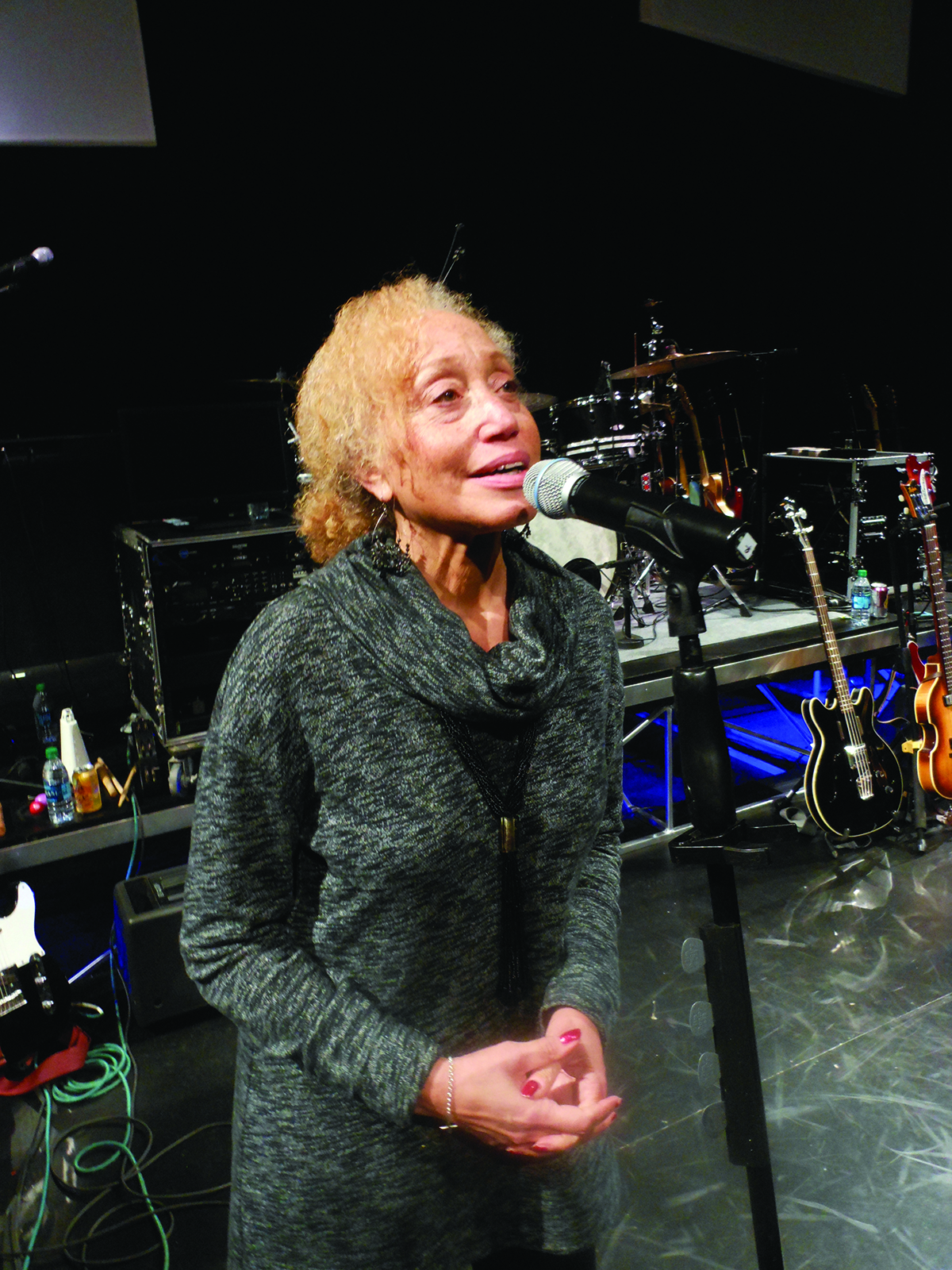
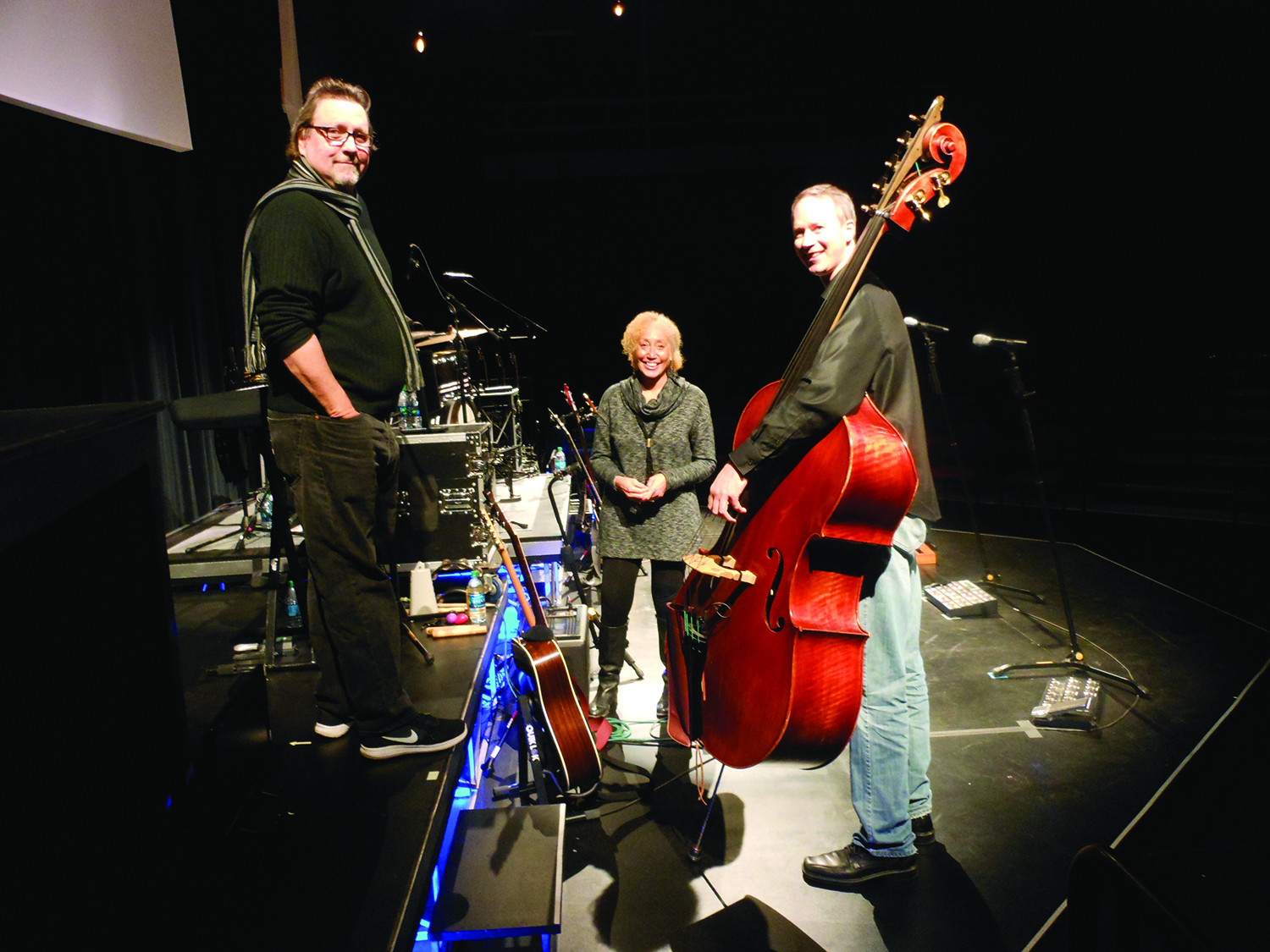
camille-ocp-reduced


IMG_1569


Race

The role of Fanny Brice in Funny Girl that Streisand made famous on stage and in film resonated strongly with Camille, who made playing the part a life-time ambition she realized in 1994.

“I related to that character so much. She’s this odd little duck that has talent that nobody could appreciate because of her package,” said Camille, whose light-complexion, blonde-hair and green-eyes made her conscious of her nontraditional African-American appearance.

“I got a lot of comments about my look.”

The many shades of black were inescapable, she said, because “my family’s all different colors and it’s something that really sticks out.” She added, “My father was very fair, my mother was pretty brown, so all of us came out different. I came out with all the recessive traits.”

Descendants on her father’s side are of mixed race Creole heritage. Both her paternal and maternal family trees owned property in the South. There’s quite a story behind her father’s family line in Louisiana. The first Metoyer there built a plantation and his son Claude Thomas Pierre Metoyer befriended a family that owned a slave, Marie Coincoin, with whom he became infatuated. He built a plantation for her and she lived in the house with him and they had children together. Threatened with excommunication by the Catholic Church, he built her a separate house in back. When he decided to have white heirs, he gave her her freedom and let her keep their children. She became a leading entrepreneur in the state, even building her own plantation. The black branch of the Metoyers lived as aristocrats.

Lanette and Camille dream of making a musical out of the story.

Their mother grew up in Mississippi and though their father was born in Omaha, thier grandfather Victor came from Louisiana. Victor worked as a railroad dining car waiter for Union Pacific. He and a fellow waiter opened a BBQ eatery. They alternated operating it based on their UP runs. When Victor was on his Omaha to California run, his partner manned the joint, and when his partner was on his Omaha to New York run, Victor handled things. Grandpa Victor also co-founded the adjacent Key Club. Eventually the Metoyer family owned the restaurant outright. Three generations ultimately ran it.

Camille’s father dropped out of Creighton just short of earning a degree in order to support his family. He worked many years as a Boys Town counselor. Camille and her siblings got to know some of the boys. One escorted Lanette to a homecoming dance. Raymond vacationed at Lake Okoboji with students his father brought to camp.

At night Ray Metoyer helped his father Victor run the family barbecue place. Ray’s eldest son Raymond, who became a television news reporter, partnered with his father and grandfather in the business.

Camille knew her dad caught flak the way she did.  “We looked alike, so he was very sensitive to making us understand that it doesn’t having anything to do with anything.”

Both parents made sure their kids knew that light or dark needn’t define them.

“They always impressed upon us that that didn’t make a difference,” Camille said. “That was their main thing with us – it doesn’t matter what you look like. Your blackness has nothing to do with your physical appearance.”

Civil rights

Camille’s parents were both active in local civil rights efforts. Her father was part of the social action group the De Porres Club whose boycotts in the late 1940s and early 1950s forced businesses to hire and serve blacks. He also headed the Urban League of Nebraska when it hosted Malcolm X and Jesse Jackson in separate events. Camille met both leaders and recalls Malcolm X as a very tall and tender man who mentioned that she reminded him of his daughter.

Her folks also participated in demonstrations by the 4CL or Citizens Coordinating Committee for Civil Liberties in the ’60s. The Metoyer kids got dragged along to organizing meetings at Zion Baptist Church.

“It seems like it was always in the summer. It was so hot and packed in, everybody sweatin’ on each other,” recalled Camille.

She and her siblings were young when the civil rights marches and speeches filled the airwaves.

“I don’t think we understood the whole significance nationally. I understood there needed to be change and it was going to make the world the way it should be. Our parents sort of instilled in us this is what it’s going to be, this is what we’re working for, this is where we’re going to get to. They were dedicated to lifting black people to the place that we deserve to be. That was their focus. That, and impressing upon us that you’re just as good as anybody, so there’s no reason feeling like you’re falling short.

“It was very important to them. Sadly, we’re not there all these years later. As I reflect back on it, I appreciate more or understand better the sacrifices they made to do the things they did.”

Social justice was discussed in the Metoyer home.

“We were the family that all sat down to dinner together and all the conversation was about what was going on.”

Once, Camille was with her folks and others at a protest when they were all arrested.

“We were protesting for open housing down at the City Council chambers. I was in the fourth grade and my parents decided it was important I participate. The police came and we all sat down. I sat on my dad’s lap and when the police picked us up they had to pick us up together. He was going to make this as difficult as he could for them.”

A press photographer snapped a pic that went national of cute little Camille in braids, tortoise shell frame eyeglasses and dress carried by her indignant but dignified father like a precious bundle.

“This picture of my dad carrying me out went out on the Associated Press all around the country.”

“I remember being excited because there was so much energy. I knew what we were doing was something very important about fighting for our rights as black people. I remember being just a little bit scared by the police but my dad was there so I felt very safe with him.”

The poignant photo got new life five decades later when Camille and Lanette appeared in Having Our Say, a play about the real-life Delany sisters living through generations of racism. The themes echoed things the Metoyers experienced themselves.

Doing the play brought Camille and Lanette, who’ve always been close, even closer together. The project also gave them a chance to honor figures like their parents who had the courage of their convictions to stand up and be counted.

“It’s like finally they’re having their say,” Camille said.
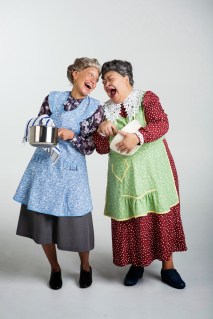
 

Camille and her sister Lanette in Having Our Say
Strong stock

Hardly a day goes by Camille doesn’t think of her parents.

“My dad was the epitome of a professional, educated man, although he could be very crazy as well. But I never heard him swear. But my mother on the other hand would come out with a few things if she got irritated enough. His thing was always about professional appearance and how you present yourself. My mom was concerned about that, too, but she was more of a gregarious, outgoing, earthy person. She was maybe a combination of what Lanette and I are now,”

Her parents’ fight for equal rights got personal when her family integrated all-white Maple Village in 1966.

Camille said, “My father wanted to have a closer commute to Boys Town and he felt the education we were getting in North Omaha schools was not equivalent to what west Omaha schools offered.”

Even aspirational couples with the desire and means to live outside segregated areas had to take special measures to get around red lining practices and restrictive housing covenants. The Metoyers had black realtor George Thomas secretly negotiate with NP Dodge to arrange for the family to purchase their new house.

“We had to go through the backdoor to get that house,” Camille said.

‘We surprised the neighborhood because they didn’t know a black family was coming.”

Lanette recalled, “It eventually was known blacks had purchased the house and therefore our dad, grandfather and several white male employees that worked for my dad would spend nights at the house until we moved in.”

Camille said, “We had a lot of backlash. It was crazy.”

A petition circulated to try and prevent them from moving in.

The family moved in late at night to avoid a scene but some neighbors gathered outside to glare.

For several nights. Camille’s father and grandfather stood armed guard inside. It reminded her mother of what she thought she’d left behind in Mississippi.

“We knew it was something kind of groundbreaking but we were prepared because all of our lives we’d been taught to be on the front-line,” said Lanette.

The siblings remember threatening phone calls, nails scattered in the driveway, strange cars pulling up at night to train headlights in the windows, tense looks, awkward exchanges. Once, the house got egged and shamed neighbors hosed off the mess.

At their various schools the kids encountered racism.

“If things happened at school we’d come home and talk about it. We always just knew how to handle it. Before we moved there, our parents anticipated there would be issues. They warned us. But they added we have every right to be where we want to be and don’t let anybody tell you anything different.”

Camille said her parents admonished she and her siblings to  “always address discrimination from an educational standpoint,” adding, “They were like, ‘Don’t get mad, just be enlightened.'”

Whatever the sitaution, like the family being refused service at King Fong’s downtown, it became a teachable moment.

“My mom explained how it was their loss and we would encounter people that would not like us without ever knowing us. I guess they always gave the impression there was something wrong with those people – there was nothing wrong with us. They told us when you come across people who are ignorant you educate them, you don’t argue or get angry, because they need help. To this day, if I have the opportunity to enlighten somebody, I will, as opposed to getting angry. That works with my whole Christian faith.”

Finding a foundation for her music and faith

The Metoyers found acceptance if not fairness. Auditioning for a role in Guys and Dolls at Burke High School, Camille said the music director opposed her being cast on account of her race. Camille had an ally in her drama teacher, who swore “she’d never let that happen again.”

Despite resistance, her passion for performing wouldn’st be denied. She planned going to California to pursue a singing-acting career but then her mother became ill. Losing her mother, she said, “really took me off my path.” She wasn’t sure what to do next when a friend of her father’s who ran the music department at Xavier University in New Orleans convinced her to give it a try.

“It sounded just great to get away. I went and auditioned and got a       scholarship. That’s how I ended up there. The great thing about Xavier is that I got classical training but I also sang with the jazz band,

so now I’m able to do all of that – which makes me marketable.”

Still bereft by her mother’s death and far away from home, she searched for answers and came of age as a young woman.

“I was really angry and I became kind of agnostic. I thought how could God take such an amazing person. I lived like that for awhile. I hooked up with Michael and we were into the fast scene.”

Getting high became her lifestyle. Then one day Michael had a born again experience.

“He was completely changed after that day. I was still getting high and just out there and suddenly we were incompatible because he didn’t want to do the things I wanted to do anymore. My own born again experience took a while. I refused to go to church with him and continued to party while in my heart and mind knowing I wanted what he had. I just didn’t want to give up me.

“Finally one evening he was going to church and he begged me to come with him and I said no. He was literally in tears. I found out later he was thinking that if I didn’t come this was to be the end of our relationship. After he left for church I felt bad, so I drove to the church. When they had the altar call he took me down but I didn’t want to go – I was not ready.”

Her willfulness wilted in the following days.

“God made Himself more and more real to me until finally one day I agreed to pray with Michael and some of his new friends from church.  That night as I prayed God took over my tongue and I spoke in a heavenly language which the Bible explains is God’s spirit dwelling in us. And by that spirit being in us we can now be saved.

“From that moment my life changed – no more getting high, no profanity. My view of mankind changed and my purpose changed. It was no longer about me but about Him.”

A new beginning from a terrible end

Her faith was soon put to a severe test when her father was murdered at the family restaurant on a late summer evening in 1979.

“A year before there was a woman that got hired at the restaurant. He caught her taking money and also soliciting the male clients and so he fired her and she didn’t like that. She would call the house and tell people she was her man. She harassed him for a year and it was getting more and more severe: a window broken out in the house;  showing up at his job and security escorting her off campus.”

On September 17 the woman went to the restaurant and confronted Metoyer with a small caliber gun. She fired it once and the bullet struck him in the neck and he bled out on the scene.

Not long before, Camille and Michael, who were by then married and raising their first child, interviewed to be family teachers at Boys Town and they were hired. They moved to Omaha to start their new life and career in the shadow of Ray Metoyer’s senseless death.

“The thing that was so difficult about it at the start was that it was two weeks after my father was murdered, so I was coming to the place where he worked. i heard over and over again how much they admired and respected him and what a loss it was, so I was constantly reminded of him.”

It was the most challenging period of her life until a bout with cancer 30-plus years later.

“I moved across country, I lost a loved one and I had a 2-year-old. I had all of those stressors. Today, Michael looks back and says, ‘How did you get through that?’ Through a lot of prayer and believing this is where God wanted us to be.”

The decision to be a family teacher continued her parents’ legacy.

“That’s how we were raised. It’s always about giving back, contributing, making a difference, helping however you can. Besides, once Michael and I  gave our lives over to Christ it seemed like a natural thing to do..

“We had the very first girls program. Boys Town had just started the family teaching model. We had an off-campus home at 35th and Davenport. Our girls were all local, so we were able to work with and counsel parents. Then we moved to campus, where we had a transitional living home for boys to learn to live independently.”

It took some adjusting for Camille and Michael, too.

“Initially, the greatest challenge if you have children is being able to divide your time in a way that everybody has a significant amount of you without sacrificing one for the other. A lot of family teacher couples are not successful with that. My kids became very close with a lot of those Boys Town kids.”

She said an important lesson she learned is “don’t take things personally and understand what’s happening.” She added, “There were some kids that can really get under your skin but you can’t let them get under your skin. I would always think, If only I could have had you as a baby. I would have loved to have given them what they should have had early in life. That always made me soften my anger.”

Feeling burned out after 16 years, Camille left Boys Town for a job at the YWCA coordinating programs that introduced girls to nontraditional careers. Then she applied her behavioral management skills to the former Western Electric plant then recently renamed Lucent Technologies, where her sister worked.
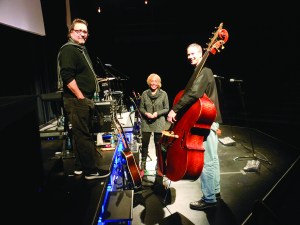
 

camille-murphy-haar-reduced


IMG_0985

A performing life

Meanwhile. Michael, an ordained minister, felt the call to form a church, One Way Ministry, in 1994, that he still pastors today. For years, Camille served as music director and only recently stepped down so that she can sing in the choir.

All the time she worked regular day jobs she rehearsed and performed musicals and concerts evenings and weekends. Her music career took off when she joined a cabaret troupe formed by old friend Becky Noble. They’ve long paired as Nebraska Arts Council touring artists. Camille’s performed with the Omaha Symphonic and Opera Omaha chorus and she’s toured with the Nelson Riddle Orchestra. She sang with Soli Dep Gloria Cantorum on a concert tour to Barcelona, Spain.

She’s enjoyed a long collaboration with Chuck Penington and his band. She also headlines her own band. Her keyboardist, David Murphy, offered his take on what makes Camille such an enduring favorite.

“The reason the community loves her is she’s authentic. She’s the real deal. She walks the walk and sings her heart out. It all comes from her soul. She intuitively manages to find the heart of any song,” including ones he’s penned. “It’s about the music and not about her. She consistently respects and enhances the material she tackles and still makes it her own. I absolutely believe she could’ve gone to either coast and had a brilliant career as a performer. Omaha is lucky to have her.”

When Camille’s two kids were small she dragged them to rehearsals. Even today, with her kids grown and out of the home, she’s busy booking, preparing and doing shows. Though her schedule can be draining, she said performing “fills you back up.”

Even though art should be color-blind, race can be an issue, as when she broke color barriers as Fanny Brice in Funny Girl and Eva Peron in Evita, and when her voice and repertoire aren’t what people expect.

“I don’t have a gospel voice. People expect that because I’m black. I was raised Catholic, so I didn’t have that whole gospel thing. Jazz and musical theater are my influences.”

She’s also a rather subdued performer.

“It’s the purity that I’m into and not all that other stuff and I think people eventually appreciate it.”

At the invitation of friend and sometime collaborator Kathy Tyree she sang at Salem Baptist Church last summer for a gospel program.

“I don’t have gospel arrangements, so I sang ‘Somewhere Over the Rainbow’ because I find that song very spiritual and they loved it. It was the most talked about song of the evening amidst all these amazing gospel songs. It was the purity of that that people related to.”

Her muted voice blended with Tyree’s big sound for a Divas By Design show they did at the Blue Barn Theatre last fall. The two go way back.

“Camille and I did our first show together 26 years ago: Sophisticated Ladies at the Playhouse,” said Tyree, “What I admired most about Camille back then is what I admire most about her now and that is her peaceful spirit and how beautifully and easily she shares her gifts. She’s not only an amazing artist but a beautiful person as well. Her unshakable faith in God keeps me in awe and her love for people is one of the many reasons I love her so much.”

Not long after Camille’s spiritual awakening in New Orleans and her resettling in Omaha, she landed the role of Mary Magdalene in a production of Jesus Christ Superstar at the Orpheum Theater. She went in to audition for a spot in the chorus but got the plum female part. Her performance won raves and established her as a bright new talent. But she was wary before the opening night curtain rose.

“I had never done anything other than high school-college shows. It was a big leap. I remember standing backstage looking out at that full house and my heart going ker-thump, ker-thump, ker-thump. I started saying a prayer and I heard God say, ‘What is wrong with you, this is your dream, I’m giving you one of the desires of your heart – would you please enjoy it.’ He made me think how trivial this really is compared to homelessness and sickness and that I should just go out and do what I do and entertain the audience.

“I don’t think I’ve gotten nervous-nervous like that again. It just calmed me right down.”

Whether doing a play or a concert, her approach is “very consistent.”

“Doing musical theater, whatever that character is, that’s who I am. Doing cabaret, each song is like its own little vignette, so every song is its own character. When I perform my purpose is to take whatever the composer and lyricist wrote and try to interpret it with whatever he or she had in mind and bring the audience into it. I want to be true to that.

“Somebody told me a long time ago it’s not only about a pretty voice. and it really isn’t it. If you think about all the successful entertainers it really in’t about their singing … but it’s what they do with a song, it’s the passion they bring out of a song. Once you know the song and once you understand what’s behind the song then that’s what happens.”

Her sister Lanette’s seen her on stage perhaps more than anyone and she marvels at Camille’s “persistence to step outside her comfort zone and create any character she tackles and make it believable.”

 587447Surviving health crisis and moving on

Everything was coming up roses for Camille personally and professionally when she got diagnosed with breast cancer in 2012. As a woman of faith, she sought healing through prayer. Heeding her Higher Power, she canceled a surgery and found a new doctor.

“She confirmed I still had the cancer. I told her my story and she revealed she is a woman of faith, too, Most doctors don’t talk about it.

She said, ‘First of all, I understand where you’re coming from spiritually and secondly you’ve had this cancer for a really long time – it is a slow growing cancer and if you’re not ready to have surgery then we don’t do the surgery because then you won’t heal.’ She had total respect for my belief. I knew God provided me her. He got me to the right team.”

Camille underwent radiation chemo treatments, hormone blocker regimens but in the end she required a mastectomy. She continued performing during most of the journey, even proudly displaying her bald head. She had reconstructive surgery in 2014 and 2015.

Not one to dwell on anything, she’s moved forward from the experience.

“The mindset I had at the time is my mindset and it goes along with my philosophy – that’s over, it was a little side step.”

She chose to share her cancer odyssey with the public via Facebook posts. She and her “prayer warriors” exchanged messages of hope about the challenges, indignities and joys of the journey. Her observations ranged from silly to sweet to sublime. Thousands followed her progress, including the inevitable ups and downs, and she later compiled her affirmations into a book.

“I just want to be able to make people understand that Jesus is our healer. We use medicine also but it doesn’t always work. He’s the plan and medicine is the backup plan. I think the more people understand that the better the outcome is.”

Camille’s as busy as ever these days. “I just think of it as this continuum that keeps going.” It’s not like she’s slowed down since realizing her dream of playing Fanny Brice. “That was a high, high point for me but then as things developed there’s been so many other high points.”

It always comes back to keeping it real and finding the root.

“Somebody told me not too long ago, ‘When you sing, you sing from here,’ putting her hand on her midsection. I said, ‘Oh, thank you very much,’ and she said, ‘I mean that, not everybody sings from there.’ And I think she meant from my core, from my heart. That’s what I strive for, that’s my intent.”

From her gut, springs all the glory.

Visit www.musicbycamille.com.

Read more of Leo Adam Biga’s work at leoadambiga.com.

Pot Liquor Love: Soul food eatery Omaha Rockets Kanteen conjures Negro Leagues past and pot liquor love menu

November 17, 2016 2 comments

Don Curry banks on his “healthy” version of soul food catching on at his niche Omaha Rockets Kanteen and Southern Pitch food truck. His niche concept is wed to a Negro Leagues baseball passion that permeates his brick and mortar and mobile eateries.  Follow my Pot Liquor Love food blogging at leoadambiga.com and on Facebook at My Inside Stories. And since food and movies are such a good pair, remember to follow my Hot Movie Takes on the same two social media platforms.

©by Leo Adam Biga

Appearing in November 2016 issue of The Reader

Pot Liquor Love:

Good Memories and Good Eats

Soul food eatery conjures Negro Leagues past and pot liquor love menu

IMG_9176.jpg

Small but mighty group proves harmony can be forged amidst differences

November 14, 2016 3 comments

Small but mighty group proves harmony can be forged amidst differences

This fall marks the 30th anniversary of an all black congregation and an all white congregation merging to form a new racially diverse house of worship in North Omaha called Church of the Resurrection, Omaha. That’s right, blacks and whites set aside their fears and differences for the greater good in one of the most segregated cities north of the old Mason Dixon Line in order to create just what its motto reads:

“We are a diverse family united in God’s love.”

Two episcopal churches on the North Side – all white St. John’s and all black St. Philip’s – found themselves struggling by the early 1980s. The writing was on the wall: find an infusion of new members or close. Neither church wanted to call it quits but going it alone offered little hope. Each had a dwindling membership dying off or moving away. That’s when the neighbor churches began exploring the possibility of combining congregations and founding a brand new Episcopal house of prayer that not only embraced diversity but that depended on it for survival.

This union didn’t happen overnight or without distrust and acrimony. To test the waters, the congregations shared some services and activities together. When those experiments in worshiping and doing fellowship together went over well, the two groups then proceeded to formalize the coupling under the new organization and name. As with any change in affiliation and leadership, there were some hurt feelings and defections. Traditions and practices from each former church had to be integrated into the new entity without favoring one or the other. Naturally, there were disagreements and compromises and not everybody who started with Church of the Resurrection remained there. But COR, as the church goes by for short, survived and even thrived through the transition. COR is still going strong three decades later. The small congregation is still mixed, though its black numbers have decreased due to attrition. But on any given Sunday should you visit you will see for yourself this, for Omaha, historic blending continues.

COR’s diversity is intentionally embedded and reinforced in its culture because the church’s very existence and ethos are predicated on folks of different persuasions doing praise and worship together and breaking bread together. In this time of division, fear and anger, much of it raclalized, Church of the Resurrection is a beacon of hope and light for the truth that differences can be overcome or surmounted where there is love, respect and willingness to meet your fellow man half-way. It takes a commitment to talk things through and to hear each other out. You may still not agree or see eye to eye on things, and you may not end up in the same pew on Sunday, but in making an authentic connection you will have humanized The Other and broken down another wall or barrier to understanding.

This has been happening at COR since 1986. Its tight church community is far from insular though and is in fact inclusive in the peace greeting that unfolds during service, in the fellowship that happens after service, in the Thanksgiving dinner, Soul Food Sunday, Annual Fish Fry, neighborhood block party, pantry, holiday meal and gift baskets and many other community outreach events, programs and services it provides. Everybody is always welcome.

I can speak from personal experience about COR because I have been semi-regularly attending there for about 15 years. My late life partner Joslen (Johnson) Shaw brought me to the church, She had grown up in St. Philips and she and her family stayed through the merger. Her mother Juanita Johnson is a deacon there today. My present life partner, Pamela Jo Berry, and I split our Sunday worship time between COR an her church, Trinity Lutheran. They are about two blocks apart on North 30th Street opposite Miller Park. Both churches are venues for the Arts Crawl that happens each August as part of Pam’s North Omaha Summer Arts.

Below is a link to a story I did several years ago about the formation of Church of the Resurrection and of another blended church in North Omaha, New Life Presbyterian, whose members include my dear friends Nola Jeanpierre and Carole Jeanpierre.

Both churches are filled with giving hearts and gentle spirits of people who are black and white, rich and poor, and where the only qualification for entrance is a desire to love and be loved.

LINK TO THE STORY HERE–

Two blended houses of worship desegregate Sunday: Episcopal Church of the Resurrection and New Life Presbyterian are houses undivided

OR READ IT RIGHT HERE–

This story is personal.  I occasionally attend an Episcopal church in north Omaha that was formed by a merger of two previous churches, one with an all-black congregation and one with an all-white congregation.  This blending had its ups and downs at first but the church has survived and a couple decades later it is a model of multicultural, interracial harmony. It’s called Church of the Resurrection.  A similar story resulted in the formation of New Life, a blending of two north Omaha Presbyterian congregations, one white and one black, and like Church of the Resurrection it remains an intact interracial house of worship.  The reason I attend Church of the Resurrection is that my girlfriend and her mother attend there.  The people are warm and welcoming to newcomers.  I am Catholic and I have never felt out of place there or pressured to be something I’m not.  When I discovered the history behind the church I knew I would one day want to write about how it came into being, and that’s what prompted the article here.  The piece originally appeared in The Reader (www.thereader.com).

Two Blended Houses of Worship Desegregate SundayEpiscopal Church of the Resurrection and New Life Presbyterian are Houses Undivided

©by Leo Adam Biga

Originally published in The Reader (www.thereader.com)


Martin Luther King Jr. scornfully observed that 11 o’clock Sunday morning “is the most segregated hour in this nation.” His indictment rings as true today in worship places as 50 years ago.

Organized, affiliated Christian churches are historically houses divided regardless of location or denomination. Witness Omaha, where defacto segregation is reinforced by geographic racial lines. With rare exceptions whites and blacks exclusively attend their own churches. That’s true even when a white congregation and black congregation of the same religious organizationare within close proximity.

The difficulty of achieving a racially mixed congregation is evident by the story of Augustana Lutheran Church in Omaha. The documentary A Time for Burning portrayed the upset that even timid attempts at interracial outreach caused within white Augustana in the mid-1960s. The film and a CBS news special about it elicited national discussion. The congregation underwent a self-study to examine their hearts. Augustana responsed to its neighborhood’s increasing African-American presence through outreach programs. Despite all this, the church has had little or no success in attracting black members. Why that should be so there and at many other churches is hard to answer without looking at the past.

Given America’s racial history, whites could always attend black churches without repercussions. Few did. Blacks attending white churches were made to feel unwelcome. Manifestations of this exclusion were designated inner-city Catholic, Episcopal, PresbyterianMethodistBaptist churches set aside for blacks.

Anymore, it’s not about being banned, barred or shunned. There’s more inclusion today. Chalk it up to enlightenment or political correctness. Of course, anything smacking of racism may generate a lawsuit or a YouTube-Facebook-Twitter campaign. Independent, nondenominational churches are most likely to be mixed. Without a compelling reason to integrate, most churches remain segregated because it’s easier to remain in their comfort zone.

Circumstances can lead two racially-defined, old-line churches to unite as one. It happens when they fall on hard times. Rather than move or close, they merge. Often, these unions fail. Even when they work, it’s by no means a smooth ride. Two successful Omaha inner-city blendings are Episcopal Church of the Resurrection, 3004 Belvedere Blvd., and New Life Presbyterian Church, 4060 Pratt Street.

Each was a marriage of convenience. When all white St. John’s and all black St. Philip the Deacon faced declining rolls in the ‘70s, members reviewed options and elected merger. It took effect in 1986 with Resurrection, housed in the former St. John’s building. The same scenario happened with Fairview and Calvin Memorial, only nominally white Fairview was already integrated and predominantly black Calvin resulted from a previous merger between black Hillside and white Bethany churches. New Life opened in 1991 in the former Fairview building. Calvin was one of two black churches that tried fellowship with Augustana.

By all accounts, New Life and Resurrection make multicultural diversity work. Challenges remain: each has only about 100 active members whose average is 60-plus; few members live in their church neighborhoods; the neighborhoods are rife with poverty and violence; physical plant needs persist; short budgets are stretched thin. But the journey of each church is a lesson in how we can heal the racial divide.

Sisters Johnice Orduna and Nola Jeanpierre share a unique perspective on both churches. Orduna, a licensed minister, attended Resurrection in the ‘90s and now serves as “a supply preacher” at New Life until a permanent pastor’s found. Jeanpierre grew up at Calvin, she experienced the birth of New Life, where she’s a member, and she’s now Resurrection’s choir director.

“I think the folks at New Life and Resurrection have made the decision, ‘We’re going to be here and we’re going to be together doing this regardless, and we’ll work through whatever it takes.’ If more congregations would do that then we wouldn’t have these rifts,” said Orduna. “We’ve gotta get past this business of Sunday being the most segregated day of the week. I think we have been convinced by society we can’t do it any differently, and it’s just not true. But we have to be intentional and we have to learn to respect that culturally we’re going to want to do some things differently, and that’s OK. I mean, it’s wonderful.”

Church of the Resurrection

A merger doesn’t just happen. “It’s a process,” said Orduna. “You have to be intentional, you have to be diligent, you have to commit.”

Member Pat Tooles said New Life “overturns the myth African-Americans and whites can’t worship together because they have two different worship styles.” Presbyterians, white or black, favor a sedate service light on emotional displays and heavy on orderly structure, although there’s some call-and-response at New Life.

Whether at the pulpit, in the pews, working on the building and grounds or breaking bread together, the people at New Life and Resurrection say they see how they are more alike than different. They view their differences as gifts not threats. They embrace their diversity as enriching, even branding their faith communities that way. Resurrection describes itself “…a culturally diverse family united in God’s love.” New Life’s mission statement begins, “We believe we are called to be a congregation of diverse backgrounds, ages and races…”

“I just think we have so much every day all the time to learn from each other,” said Orduna. “Sure, there are tiffs, but they’re not gamebreakers.”

Lesley Dean grew up in St. Philip’s at 26th and Binney. Her parents were active members. She moved away and once returned was “heartbroken” her beloved home parish was no more. In her absence the merger happened, She liked what she found at Resurrection.

“I immediately felt comfortable there. I felt like this was the next step of St. Philip’s, especially because of the blending of the two congregations. It just seemed natural. I think one of the things that made me be able to accept it and to go with the flow is because I lived in San Francisco for 20 years, so I had already experienced different cultures coming together and getting along. That wasn’t anything thing new to me. I thought it was great actually.”

She wasn’t there for the merger but knows it wasn’t all roses.

“I don’t think it was anything instantaneous,” she said. “That blending did not come along easily. It took a lot of work from my parents and all the other elders that came before me. They just worked very hard to build a sense of trust amongst the rest of the congregation. And I just think they all learned from that — from the bickering and whatever else was going on. When I came back it was just like, What was all that for? — let’s just start anew, we’re all human beings, we all deserve to be treated with respect and dignity. They just kind of formed that alliance. Then the generations that came after, like me, have just taken it a step further.”

Deacon Juanita Johnson was there. Coming from St. Philip’s, she confirmed Resurrection’s first years saw conflict. Disputes arose over the racial composition of lay leadership roles. Any hint of favoritism took on a racial slant.

“At that time it was very important to keep everything racially balanced because there were people from St. Philip’s that weren’t completely on board with the merger,” she said, adding the same was true with some from St. John’s.

There was also resentment from St. Philip folks over sacrificing their building for the move to St. John’s.

A black splinter group alleged racism against Resurrection’s first rector, Rev. John Nelson, who was white, and against the local Episcopal diocese’s all-white administration. A national consultant was brought in to get people talking. Some folks left — black and white — but the core remained. New membersof both races joined.

“The people that stayed wanted it to work,” said Johnson, whose experience told her it could. As a University of Nebraska-Lincoln student in the late ‘40s she and fellow black students were denied admittance to campus dormitories. They resided instead at International House, where they lived harmoniously with students from Europe, Asia, et cetera. She also did interracial outreach while a Fisk University student in Nashville, Tenn. with students from nearby white colleges.

“I had that background, so I knew it could work.”

Resurrection’s long past how many blacks-whites serve on the vestry. Those things work themselves out. St. Philip’s took a sense of ownership by incorporating elements from their old church, such as stained glass windows and candles, into the Resurrection sanctuary. A more vital music liturgy of gospel, spirituals, even jazz, was introduced. A popular fish fry St. Philip’s held was adopted.

Tim and Cheri Oelke got married at St. John’s. They left long before the merger.  Then they visited Resurrection and were hooked by the “inspirational” black hymns. The couple are the last St. John’s members left there. For Cheri, the spirit of the place is not an edifice, an icon or an event. “It’s not in the building as much as it is the people. I think the reason we want it to work now is that we all care about each other, and if we do it in this building or if we have to do it in another building we want to worship together. Bonds have been formed, friendships have been formed, and we feel like we’re all a family.”

Helping ease the transition were shared Lenten worship services and other events St John’s and St. Philip’s hosted prior to merging. Still, old habits die hard.

“For a long time it was just the two churches worshiping at the same time in the same building but still two identities,” said Resurrection’s new rector, Rev. Jason Emerson, who previously served as an intern and curate there. Tim Oelke said, “It’s the Church of the Resurrection now, it’s not St. John’s. St. John’s was certainly special but that’s in the past.”

New Life’s tribulations were similar. Former Fairview member Janet Decker recalls a meeting where Bernard Grice voiced Calvin’s concerns. “He got up and said he hoped we didn’t do the same thing the whites did at Bethany, which was disappear.” She said Fairview’s integrated ranks avoided that. “We had only one family who decided not to continue to come — absolutely everyone else stayed. We didn’t have this feeling of giving up a thing. We were gaining. We knew if we were going to survive we needed to merge. We’re very comfortable with each other.”

Change was more traumatic at Calvin, not due to race but turf. “There were a lot of hard feelings. It was like giving up our church,” said Nola Jeanpierre. Calvin members like she and Michael Maroney did abandon their beautiful building at 24th and Wirt. “It was not an easy or smooth transition inside Calvin. There was a lot of contention in terms of how Calvin was actually dissolved,” said Maroney. “In hindsight, it probably went the way it had to go.” Those wounds healed.

Just as Resurrection eased into things pre-merger, New Life did. Joint worship services and soup suppers were held at Calvin and other events at Fairview “so the two congregations could be together and people could kind of get to know each other,” said Rick Rudiger, who belonged to Fairview. “You kind of have that courtship time. If you try to force it, you’ll probably fail.”

Carolyn Grice, whose father Bernard was a leader at Calvin, served with Rudiger on the merger committee. “We met weekly to start ironing out stuff. It pretty much started from scratch — what is it we want to see and then how are we going to get there. We had lots of disagreements but we’re all friends now,” said Grice. Rudiger said people tended to draw lines along Fairview or Calvin. “You had to reinforce it all the time of who we are — we’re New Life now, so let’s move on. Change is hard for everybody. Some accept it. For some it’s very difficult. The way you have to deal with change is you do things a little at a time.”

Jeanpierre said it’s imperative to “come in open-minded and ready to work together and not to exclude anyone, not to remove anyone from a post or role. You’re talking about a marriage, about one family meeting the in-laws and basically trying to make everything work for both in-laws, so that the family as a whole and on both sides can come together and find a common ground.”

After a few interims New Life’s first full-time pastor helped solidify things. “We had a strong female minister who kind of got us turned around and really focused on becoming New Life,” said Rudiger. “I would say overall we really have grown strong. I don’t think there’s too much thought even of what Fairview used to do or what Calvin used to do — it’s what’s New Life’s doing.”

Decker said there’s appreciation for what each faith community contributed. “There’s a lot of things we do now because that’s what they brought with them (from Calvin).” That includes spirituals. On a more practical level, she said, “they brought the numbers (more members) and we had the place.”

Ruth York, who came over from Calvin, said “those of us that have seen it through have been through quite a bit, financially and so forth,  but we’ve stayed strong and stuck together like a family, and we’re stronger for it.”

Just as New Life is on its second generation, Resurrection is, too. Lesley Dean feels a legacy calling.

“I have really worked hard to make sure some of the traditions of St. Philip’s continue on, like our Black History month celebration and the fish fry named after my dad. Myself and some others have tried to make sure our African-American culture was not lost in the merger. We still needed an identity and the St. John’s people were willing to embrace that.”

Dean said sensitivity makes all the difference.

“That’s how people get along. Ignorance is I believe why we have so much discrimination and racism in society because people don’t take the time to learn about each other. I just really feel Church of the Resurrection is a family. We are accepting and welcoming of every one and there’s a genuineness to that acceptance — it’s not just for show or not just for money.”

Richard Artison and his wife were St. Philip’s members and then moved away for his career. Once back, they went church shopping before settling on Resurrection.

“We’ve been to some churches that were very cold and impersonal and you feel like a number and we’ve gone to churches where nobody would speak to us. Just got ignored. This church has a lot of warmth and a lot of love. We like it,” he said.

Emerson’s proud his church is so inviting.

“The least worry I ever have at this congregation is that somebody new will walk through the door and not get spoken to. That just does not happen. They’re going to get spoken to. They’re going to get greeted, they’re going to get welcomed and I don’t have to do anything to make that happen. Other congregations, you have to work at that, it’s not as ingrained in their nature. It’s a problem in Episcopal churches churchwide, and that’s not the case here.”

He said Resurrection’s open mat, Sunday social hour/lunch and ministries targeting the underserved — including an after-school program, an emergency pantry, a transitional living site — reflect the church’s origins.

“I firmly believe this congregation’s history has led them uniquely to a high level of hospitality and I don’t know mean they just put on a good food spread, which they do. That attitude, that desire, that passion for outreach and justice comes from the two churches melding and the level of hospitality they had to practice to each other to come together and become one parish.”

He said Resurrection’s reputation for tolerance is why it’s a player in the Tri-Faith Initiative for a shared Episcopal-Jewish-Muslim campus.

Dean senses Resurrection’s come a long way in the eyes of a diocese that’s been slow to accept it. “For the longest time we felt they looked down on us, they didn’t want to participate in any activities we were doing, basically because we’re in north Omaha and the media portrays north Omaha as this horrible place. Our congregation has fought really hard to change that image, and it’s working. Some of the other diocesan churches are now participating in some of our ministries, so that’s a good feeling. We’ve got a lot further to go, but it’s a beginning.”

New Life’s at-risk kids mentoring program continues the legacy of the two socially conscious churches preceding it. Fairview ran Head Start and Project Embrace prpgrams. Calvin was active in youth job/leadership training and civil rights.

Orduna said the unity embodied by New Life and Resurrection “has the possibility to create a strong, trustworthy identity that could really be powerful force in bringing this whole neighborhood back to God.” Artison said, “I think church is the one place where we should come together. I think we’re an example for others.” Decker said churches that resist diversity “don’t know what they’re missing.”


Diversity finally comes to the NU volleyball program

November 14, 2016 1 comment

Briana Holman
Photo Courtesy Stephanie Carpenter/Nebraska Communications


Diversity finally comes to the NU volleyball program

©by Leo Adam Biga
Kudos to the Nebraska volleyball program for finally joining the 21st century by building a diverse roster of student-athletes that includes African-Americans. Better late than never. For decades the Husker volleyball program has been elite but its rosters have been lily-white, with an occasional Asian-American player, but you would have to look long and hard to find a black girl on any of those teams going back to the early 2000s and even mid-to-late 1990s. That omission always seemed strange and awkward to me but became particulalry glaring the last decade or so as more and more of NU’s peer conference programs, going back to the Big 12 and now in the Big 10, as well as peer national programs featured rosters with one or two or three or more African-American players. I could never understand how a perennial NCAA title contending program that recruits nationally could find itself year after year devoid of even one black player. I mean, what are the odds of that? What if that happened in basketball or softball? Wouldn’t that be cause for concern or called out as something in need of redress or examination? But to my surprise I never heard or saw the situation broached by NU coaches, staff, players or by media covering the program or by fans supporting it. I am quite sure the situation would not have been tolerated or overlooked or pooh-poohed in a sport like basketball. So why was it different with the volleyball program? I expect because the program was so successful in continuing to vie for and win championships and to produce All-Americans and Olympians. Of course, there was a period of time where NU slipped competitively, not by much mind you, but fell behind its elite sister programs and experienced a title drought, clearly falling behind some programs that coincidentially or not did feature black players here and there. Then, out of the blue, LSU All American Briana Holman transferred to Nebraska, though she had to sit out a season, the very year NU returned to championship form. She was the first black player to my knowledge to play for the Huskers in at least 15 years. That same year a second African-American, Tiani Reeves, from Gothenburg, Neb. of all places, joined the team and sat out as a redshirt. As the Huskers look to defend their national title this year Holman has become, as expected, a key cog as a middle blocker and attacker. Reeves has seen only limited action but she possesses great promise for the future. Both players will take leadership spots next season as NU loses the dynamic and dominating Rolfzen twins. And now comes word that of NU’s 5 new signees for the 2017 recruitment class 2 are student-athletes of color and are in fact African-American: Jazz Sweet from Kansas and Chesney McClellan from Tennessee. (See the link below for info on these girls and the other signees).


Tiani Reeves 2243654

Tiani Reeves


Jazz Sweet
Jazz Sweet


This is a great if long overdue development for the program and for black girls playing volleyball in Nebraska and the greater Midwest. More and more African-Americans are playing the sport at a high level in club and high school programs and volleyball affords a great avenue and opportuity for college scholarships. The Omaha Starlings volleyball program has been a platform for several area girls, several black girls among them, to earn scholarships at mid-major colleges. Creighton has been ahead of this trend locally and has featured a number of black players the past few years, including a girl from Nebraska and another from Iowa. I can’t speak to why it took so long for black girls to find their way into the Husker program but I am glad it’s finally happened and has seemingly become a thing. I’m sure there wasn’t any intentional bias happening to not recruit black players but the perception from the outside looking in sort of made it seem that way when season after season the complexion of the team never changed to include a black face. That was a bad look for Nebraska. I’m just glad that the Huskers are now among the many teams embodying diversity and not just giving it lip service. You go, Briana and Tiani. You go girls. And can’t wait for Jazz and Cheesney to make a quartet where there used to be none.

Here’s the link to the story about the NU recruiting class that includes Jazz and Cheesney:
http://www.huskers.com/ViewArticle.dbml?DB_OEM_ID=100&ATCLID=211284120

Dope actress Yolonda Ross is nothing but versatile – from “The Get Down” to cinema cannibals to dog-eat-dog politics

October 18, 2016 2 comments

Dope actress Yolonda Ross from Omaha gave me some love for the new Reader (http://thereader.com)) article I wrote about her, her recurring role as a teacher in “The Get Down” and an inspirational teacher in her life–

“Hey Leo!! I saw The Reader. It looks great. Thanks for including the part about Mrs. Owens. She meant a lot to a lot of people. Thanks for the nice spread in The Reader.”

Just now featuring it on my blog, leoadambiga.com, where you can find several more pieces I’ve written about Yolonda as well as Gabrielle Union, John Beasley and dozens of other Omaha native screen and stage stars.

Love the photo of Yo going all glam. How about you? She’s that rare actress who can transform herself from role to role and go from high to low, serious to silly, hard to soft in a heartbeat.


Dope actress Yolonda Ross is nothing but versatile – from “The Get Down” to cinema cannibals to dog-eat-dog politics

©by Leo Adam Biga

Originally appeared in October 2016 issue of The Reader (http://thereader.com)

Thoughts on recent gathering of Omaha Black Sports Legends

September 29, 2016 1 comment


Thoughts on recent gathering of Omaha Black Sports Legends 

It is unlikely there will be another communion of Omaha Black Sports Legends like the one that happened on September 22 at Baxter Arena in Omaha. That’s because in a single room there were Omaha native greats of a certain age whose achievements in football, basketball and baseball saw them reach the pinnacles of their sports.

Just consider who was present:

Bob Gibson – Baseball Hall of Fame inductee, CY Young Award-winner, two-time World Series MVP and multiple All-Star with the St. Louis Cardinals

Roger Sayers – Elite sprinter and dynamic football player at the then-University of Omaha set school records in each sport

Marlin Briscoe – College Football Hall of Fame inductee, Small College All-American at Omaha University, NFL’s first black starting quarterback and member of two Super Bowl-winning teams

Ron Boone – Pro basketball “iron man” who led Utah to an ABA  title

Johnny Rodgers – College Football Hall of Fame inductee, Heisman Trophy Winner and member of two national championship teams at Nebraska

Who was not there:

Gale Sayers – College and Pro Football Hall of Fame inductee, All-American at Nebraska and All-Pro with the Chicago Bears

Mike McGee – All-American at Michigan and member of NBA title team with the Los Angeles Lakers

Don Benning – If not for illness that finds him living in a memory care facility, Benning,  the first African-American head coach at a predominantly white university, would have been there. Benning began the wrestling dynasty at UNO, where he was a mentor to many.

Bob Boozer – The late Boozer, who won both Olympic gold and an NBA title, would have fit right in with his fellow legends; as would have the late Marion Hudson, who not only integrated Dana College but set football and track and field records there that still stood six decades later.

And lest we forget, the late Fred Hare, the Omaha Technical High and University of Nebraska great, would have been right at home among his peers.


The fact that so many deserving figures were not there due to scheduling conflict, illness or death underscores the fact that these legends are leaving us and will continue leaving us as time marches on. Gibson, Sayers, Briscoe  Boone and Rodgers look great for their ages, but they are 80, 73, 70, 71 and 65, respectively. I mean, God grant them many more years but the fact is even these legends will eventually pass on to meet their eternal just reward. Yes, as unthinkable as it is, they will one day all be gone, too.

So, kudos to the committee that organized the An Evening with the Magician event for bringing all these gentlemen together for what could very well be the last time. Without this fitting tribute to one of their own, Marlin Briscoe, happening when it did it could have proved too late if left to some indeterminate time in the future.

That Omaha native film, TV, stage actor John Beasley served on the committee that made it happen was apt since he and Briscoe were teammates at then-Omaha U. and he is producing a major motion picture of Marlin’s life called The Magician.

What an experience it was to be in the presence of these guys who made history in their respective sports. All know and respect each other. Some grew up together. Some tested their abilities against each other. All learned lessons in the tight-knit  inner communities they grew up in that, as Briscoe said in his remarks that night, prepared them for the rigors of life. Their personal stories and life experiences have much to teach us. It was great that upwards of 200 Omaha Public Schools students were on hand to witness much of the evening. This is important local history they were exposed to.

More than a decade ago I had the distinct pleasure of interviewing these historic figures (minus McGee) and others for a series I wrote called Out to Win: The Roots of Greatness – Omaha’s Black Sports Legends. I personally look forward to catching up with the legends still living for a book I intend writing about their shared Omaha background and athletic success at the highest levels of their sports.

You can check out my series at–

OUT TO WIN – THE ROOTS OF GREATNESS: OMAHA’S BLACK SPORTS LEGENDS

Will the time come when more contemporary Omaha Black Sports Legends have the occasion to gather like their predecessors did Sept. 22? Will John C. Johnson, Larry Station, Randy Brooks, Kerry Trotter, Andre Woolridge, Ron Kellogg, Cedric Hunter, Keith Jones, Calvin Jones, Ahman Green, the Wrestling Olivers, Terence Crawford, Kenzo Cotton, and others find a reason to come together? Will they turn out to celebrate one of their own or to honor their shared roots? I don’t know. But here’s wishing they will – because they should. Not only for themselves, but for the community.

And what about the women? Maurtice Ivy, Mallery Ivy, Jessica Haynes, Angee Henry, Peaches James, Reshea Bristol, LaQue Moen-Davis, Brianna McGhee, Chloe Akin-Otiko and many more, have distinguished themselves through athletics. They deserve their due, too.

Thanks to Ernie Britt for being the driving force behind the Nebraska Black Sports Hall of Fame that does indeed recognize these figures and provide a forum for bringing them together.

Here’s hoping these celebrations continue happening. I would recommend that whenever possible sponsors be found to make these events free and open to the public so that more segments of the community can share in them. And wherever possible, students should be invited to these events. I also advocate that the stories of these and other high achieving African-Americans from Omaha and greater Nebraska be part of an ongoing curriculum in the Omaha Public Schools. Let’s not wait until these figures are gone, Tell these stories while these figures are still alive and cthey an visit classrooms and speak before school assemblies and be the suhject of programs like Making Invisible Histories Visible.

UPDATE TO: Marlin Briscoe finally getting his due

September 20, 2016 2 comments

UPDATE:  I was fortunate enough to attend the Thursday, Sept. 22 An Evening with the Magician event honoring Marlin Briscoe. It was a splendid affair. Omaha’s Black Sports Legends are out in force this week in a way that hasn’t been seen in years, if ever. A Who’s-Who was present for the Magician event at Baxter Arena. They’re back out at Baxter on Sept. 23 for the unveiling of a life-size statue of Marlin. And they’re together again before the kickoff of Omaha South High football game at Collin Field. Marlin is a proud UNO and South High alum. This rare gathering of luminaries is newsworthy and historic enough that it made the front page of the Omaha World-Herald.

It’s too bad that the late Bob Boozer, Fred Hare and Dwaine Dillard couldn’t be a part of the festivities. The same for Don Benning, who now resides in a Memory Care Center. But they were all there in spirit and in the case of Benning, who was a mentor of Marlin Briscoe’s, his son Damon Benning represented as the emcee for the Evening with The Magician event.

So much is happening this fall for Marlin Briscoe, who is finally getting his due. There is his induction in the high school and college football halls of fame. John Beasley, who was a teammate of Marlin’s, is producing a major motion picture, “The Magician,” about his life. This week’s love fest for Briscoe has seen so many of his contemporaries come out to honor him, including Bob Gibson, Gale Sayers, Roger Sayers, Ron Boone and Johnny Rodgers. Many athletes who came after Marlin and his generation are also showing their love and respect. Having all these sports greats in the same room together on Thursday night was a powerful reminder of what an extraordinary collection of athletic greats came out of this city in a short time span. Many of these living legends came out of the same neighborhood, even the same public housing project. They came up together, competed with and against each other, and influenced each other. They were part of a tight-knit community whose parents, grandparents, neighbors, entrepreneurs, teachers, rec center staffers and coaches all took a hand in nurturing, mentoring and molding these men into successful student-athletes and citizens. It’s a great story and it’s one I’ve told in a series called Out to Win: The Roots of Greatness – Omaha’s Black Sports Legends, I plan to turn the series into a book.

Check out the stories at–
https://leoadambiga.com/out-to-win-the-roots-of-greatness-…/


Marlin Briscoe finally getting his due

©by Leo Adam Biga


In the afterglow of the recent Rio Summer Olympics, I got to thinking about the athletic lineage of my home state, Nebraska. The Cornhusker state has produced its share of Olympic athletes. But my focus here is not on Olympians from Nebraska, rather on history making athletic figures from the state whose actions transcended their sport. One figure in particular being honored this week in his hometown of Omaha – Marlin Briscoe – shines above all of the rest of his Nebraska contemporaries.

Briscoe not only made history with the Denver Broncos as the first black starting quarterback in the NFL, he made one of the most dramatic transitions in league history when he converted from QB to wide receiver to become all-Pro with the Buffalo Bills. He later became a contributing wideout on back to back Super Bowl-winning teams in Miami. He also made history in the courtroom as a complainant in a suit he and other players brought against then-NFL Commissioner Pete Rozelle. The suit accused the league of illegal trust activities that infringed on players’ pursuit of fair market opportunities. When a judge ruled against the NFL, Briscoe and his fellow players in the suit won a settlement and the decision opened up the NFL free-agency market and the subsequent escalation in player salaries.

The legacy of Briscoe as a pioneer who broke the color barrier at quarterback has only recently been celebrated. His story took on even more dramatic import upon the publication of his autobiography, which detailed the serious drug addiction he developed after his NFL career ended and his long road back to recovery. Briscoe has devoted his latter years to serving youth and inspirational speaking. Many honors have come his way, including selection for induction in the high school and college football halls of fame. He has also been the subject of several major feature stories and national documentaries. His life story is being told in a new feature-length film starting production in the spring of 2017.

You can read my collection of stories about Briscoe and other Omaha’s Black Sports Legends at–

OUT TO WIN – THE ROOTS OF GREATNESS: OMAHA’S BLACK SPORTS LEGENDS

Briscoe’s tale is one of many great stories about Nebraska-born athletes. Considering what a small population state it is, Nebraska has given the world an overabundance of great athletes and some great coaches. too, The most high-achieving of these individuals are inducted in national sports halls of fame. Some made history for their competitive exploits on the field or court.

Golfer Johnny Goodman defeated living legend Bobby Jones in match play competition and became the last amateur to win the U.S. Open. Gridiron greats Nile Kinnick, Johnny Rodgers and Eric Crouch won college football’s most prestigious award – the Heisman Trophy. Pitcher Bob Gibson posted the lowest ERA for a season in the modern era of Major League Baseball. Bob Boozer won both an Olympic gold medal and an NBA championship ring. Ron Boone earned the distinction of “Iron Man” by setting the consecutive games played record in professional basketball. Gale Sayers became the youngest player ever inducted in the Pro Football Hall of Fame. Rulon Gardner defeated three-time Olympic gold medalist Alexander Karelin in the 2000 Sydney Games to record one of the greatest upsets in Games history.

Terence Crawford has won two world prizefighting titles and in the process single-handedly resurrected the sport of boxing in his hometown of Omaha, where he’s made three title defenses before overflow crowds. He also has a gym in the heart of the inner city he grew up in that serves as a sanctuary for youth and young adults from the mean streets.

Some Nebraskans have made history both for what they did athletically and for what the did away from the field of competition. For example, Marion Hudson integrated Dana College in the early 1950s in addition to being a multi-sport star whose school records in track and field and football still stood on the books decades when the college closed in 2010. Tom Osborne became the first person to be named both the high school and college state athlete of the year in Nebraska. He played three seasons in the NFL before becoming the top assistant to Bob Devaney at the University of Nebraska, where he succeeded Devaney and went to a College Football Hall of Fame coaching career that saw his teams win 250 games and three national titles. After leaving coaching he served as an elected U.S. House of Representatives member. The Teammates mentoring program he established decades ago continues today.

There are many more stories of Nebraska athletes doing good works during and after their playing days. Yet no one from the state has made more of an impact both on and off the playing field than Marlin Briscoe. He is arguably the most important athletic figure to ever come out of Nebraska because his accomplishments have great agency not only in the athletic arena but in terms of history, society and race as well. Growing up in the public housing projects of South Omaha in the late 1950s-early 1960s, Briscoe emerged as a phenom in football and basketball. His rise to local athletic stardom occurred during a Golden Era that saw several sports legends make names for themselves in the span of a decade. He wasn’t the biggest or fastest but he might have been the best overall athlete of this bunch that included future collegiate all-Americans and professional stars.

Right from the jump, Briscoe was an outlier in the sport he’s best remembered for today – football. On whatever youth teams he tried out for, he always competed for and won the starting quarterback position. He did the same at Omaha South High and the University of Omaha. This was at a time when predominantly white schools in the North rarely gave blacks the opportunity to play quarterback. The prevailing belief then by many white coaches was that blacks didn’t possess the intellectual or leadership capacity for the position. Furthermore, there was doubt whether white players would allow themselves to be led by a black player. Fortunately there were coaches who didn’t buy into these fallacies. Nurtured by coaches who recognized both his physical talent and his signal-calling and leadership skills, Briscoe excelled at South and OU.

His uncanny ability to elude trouble with his athleticism and smarts saw him make things happen downfield with his arm and in the open field with his legs, often turning busted plays into long gainers and touchdowns. He also led several comebacks. His improvisational knack led local media to dub him “Marlin the Magician.” The nickname stuck.

Marlin Briscoe Signed Photograph - #15 Qb 8x10

Autographed Marlin Briscoe Picture - 8x10

Briscoe played nine years in the NFL and thrived as a wide receiver, quarterback, holder and defensive back. He may be the most versatile player to ever play in the league.

He also made history as one of the players who brought suit against the NFL and its Rozelle Rule that barred players from pursuing free market opportunities. A judge ruled for the players and that decision helped usher in modern free agency and the rise in salaries for pro athletes.

His life after football began promisingly enough. He was a successful broker and invested well. He was married with kids and living a very comfortable life. Then the fast life in L.A, caught up with him and he eventually developed a serious drug habit. For a decade his life fell apart and he lost everything – his family. his home, his fortune, his health. His recovery began in jail and through resilience and faith he beat the addiction and began rebuilding his life. He headed a boys and girls club in L.A.

His autobiography told his powerful story of overcoming obstacles.

Contemporary black quarterbacks began expressing gratitude to him for being a pioneer and breaking down barriers.

Much national media attention has come his way, too. That attention is growing as a major motion picture about his life nears production. That film, “The Magician,” is being produced by his old teammate and friend John Beasley of Omaha. Beasley never lost faith in Briscoe and has been in his corner the whole way. He looks forward to adapting his inspirational story to the big screen. Briscoe, who often speaks to youth, wants his story of never giving up to reach as many people as possible because that’s a message he feels many people need to hear and see in their own lives, facing their own obstacles.

Briscoe is being inducted in the College Football Hall of Fame this fall. A night in his honor, to raise money for youth scholarships, is happening September 22 at UNO’s Baxter Arena. Video tributes from past and present NFL greats will be featured. The University of Nebraska at Omaha is also unveiling a life size statue of him on campus on September 23. That event is free and open to the public.

There is an effort under way to get the Veterans Committee of the Pro Football Hall of Fame to select Briscoe as an inductee and it’s probably only a matter of time before they do.

The fact that he succeeded in the NFL at three offensive positions – quarterback, wide receiver and holder for placekicks – should be enough to get him in alone. The cincher should be the history he made as the first black starting QB and the transition he made from that spot to receiver. His career statistics in the league are proof enough:


Passing

97 completions of 233 attempts for 1697 yards with 14 TDs and 14 INTs.

Rushing

49 attempts for 336 yards and 3 TDs

Receiving

224 catches for 3537 yards and 30 TDs


Remember, he came into the league as a defensive back, only got a chance to play QB for part of one season and then made himself into a receiver. He had everything working against him and only belief in himself working for him. That, natural ability and hard work helped him prove doubters wrong. His story illusrates why you should never let someone tell you you can’t do something. Dare, risk, dream. He did all that and more. Yes, he stumbled and fell, but he got back up better and stronger than before. Now his story is a testament and a lesson to us all.

The Marlin Briscoe story has more drama, substance and inspiration in it than practically anything you could make up. But it all really happened. And he is finally getting his due.