Archive
Nomad Lounge, An Oasis for Creative Class Nomads
Nick Hudson is one of several Omaha transplants who have come here from other places in recent years and energized the creative-cultural scene. One of his many ventures in Omaha is Nomad Lounge, which caters to the creative class through a forward-thinking aesthetic and entrepreneurial bent and schedule of events. This Metro Magazine (www.spiritofomaha.com) piece gives a flavor for Hudson and why Nomad is an apt name for him and his endeavor. Three spin-off ventures from Nomad that Hudson has a major hand in are Omaha Fashion Week, Omaha Fashion Magazine, and the Halo Institute. You can find some of my Omaha Fashion Week and Omaha Fashion Magazine writing on this blog. And look for more stories by me about Nick Hudson and his wife and fellow entrepreneur Brook Hudson.

Nomad Lounge, An Oasis for Creative Class Nomads
©by Leo Adam Biga
Originally published in Metro Magazine (www.spiritofomaha.com)
Another side of Omaha’s new cosmopolitan face can be found at Nomad Lounge, 1013 Jones St. in the historic Ford Warehouse Building. The chic, high-concept, community-oriented salon captures the creative class trade. Tucked under the Old Market’s 10th St. bridge, Nomad enjoys being a word-of-mouth hideaway in a shout-out culture. No overt signs tout it. The name’s stenciled in small letters in the windows and subtly integrated into the building’s stone and brick face.
The glow from decorative red lights at night are about the only tip-off for the lively goings-on inside. That, and the sounds of pulsating music, clanking glasses and buzzing voices leaking outdoors and the stream of people filing in and out.
Otherwise, you must be in-the-know about this proper gathering spot for sophisticated, well-traveled folks whose interests run to the eclectic. It’s all an expression of majority owner Nick Hudson, a trendy international entrepreneur and world citizen who divides his time between Omaha and France for his primary business, Excelsior Beauty. Nomad is, in fact, Hudson’s nickname and way of life. The Cambridge-educated native Brit landed in Omaha in 2005 in pursuit of a woman. While that whirlwind romance faded he fell in love with the town and stayed on. He’s impressed by what he’s found here.
“I’m blown away by what an amazingly creative, enterprising, interesting community Omaha is,” he said. He opened Excelsior here that same year — also maintaining a Paris office — and then launched his night spot in late 2006.
If you wonder why a beauty-fashion industry maven who’s been everywhere and seen everything would do start-up enterprises in middle America when he could base them in some exotic capital, you must understand that for Hudson the world is flat. Looking for an intersection where like-minded nomads from every direction can engage each other he opted for Omaha’s “great feeling, great energy.”
“We’re all nomadic, were all on this journey,” he said, “but there are times when nomads come together, bringing in different experiences to one central place and sharing ideas in that community. And that’s exactly what it is here. Nomad’s actually about a lifestyle brand and Nomad Lounge is just the event space and play space where that brand comes to life for the experimental things we do.”
He along with partners Charles Hull and Clint! Runge of Archrival, a hot Lincoln, Neb. branding-marketing firm, and Tom Allisma, a noted local architect who’s designed some of Omaha’s cutting-edge bars-eateries, view Nomad as a physical extension of today’s plugged-in, online social networking sites. Their laidback venture for the creative-interactive set is part bar, part art gallery, part live performance space, part small business incubator, part collaborative for facilitating meeting-brainstorming-partnering.
“That whole connecting people, networking piece is really exciting to us because it’s not just being an empty space for events, we’re actually playing an active role in helping the creative community continue to grow,” said Hudson.

Nick Hudson
Social entrepreneurship is a major focus. Nomad helps link individuals, groups and businesses together. “It’s a very interesting trend that’s going to be a big buzz word,” Hudson said. “Nomad is a social enterprise. It’s all about investing in and increasing the social capital of the community, creating networks, fostering creativity. My biggest source of passion is helping people achieve their potential.”
“He’s definitely done that for me,” said Nomad general manager-events planner Rachel Richards. “He’s seen my passion in event planning and he’s opened doors I never thought I’d get through.”
The Omaha native was first hired by Hudson to coordinate Nomad’s special events through her Rachel Richards Events business. She’s since come on board as a key staffer. With Hudson’s encouragement she organized Nomad’s inaugural Omaha Fashion Week last winter, a full-blown, first-class model runway show featuring works by dozens of local designers. “That was always a dream of mine,” she said.
Under the Nomad Collective banner, Hudson said, “the number of social entrepreneurs and small enterprises and venture capitalist things that are coming from this space from the networking here is just phenomenal. Increasingly that’s going beyond this space into start-up businesses and all sorts of things.” Nomad, he said, acts as “a greenhouse for ideas and businesses to expand and grow.”
Nomad encourages interplay. Massive cottonwood posts segment the gridded space into 15 semi-private cabanas whose leather chairs and sofas and built-in wood benches seat 8 to 20 guests. Velvet curtains drape the cabanas. It’s all conducive to relaxation and conversation. Two tiny galleries display works by local artists.
There’s a small stage and dance floor. The muted, well-stocked bar features international drink menus. Video screens and audio speakers hang here and there, adding techno touches that contrast with the worn wood floors, the rough-hewn brick walls and the exposed pipes, vents and tubes in the open rafters overhead. It all makes for an Old World meets New World mystique done over in earth tones.
Hudson embraces Nomad’s flexibility as it constantly evolves, reinventing itself. In accommodating everything from birthdays/bachelorettes to release/launch parties to big sit-down dinners to more intimate, casual gatherings to social enterprise fairs and presenting everything from sculptures and paintings to live bands and theater shows to video projection, it’s liable to look different every time you visit. Whatever the occasion, art, design, music and fashion are in vogue and celebrated.
Dressed-up or dressed-down, you’re in synch with Nomad’s positive, chic vibe.
“It’s this whole thing about being premium without being pretentious,” said Hudson. “Nomad is stylish, it’s trendy, it’s great quality. All our drinks are very carefully selected. But it’s still made affordable.”
In addition to staging five annual premiere events bearing the Nomad brand, the venue hosts another 90-100 events a year. Richards offers design ideas to organizations using the space and matches groups with artists and other creative types to help make doings more dynamic, more stand-alone, more happening.

Clearly, Nomad targets the Facebook generation but not exclusively. Indeed, Hudson and Richards say part of Nomad’s charm is the wide age range it attracts, from 20-somethings to middle-agers and beyond.
Nomad fits into the mosaic of the Old Market, where the heart of the creative community lives and works and where a diverse crowd mixes. Within a block of Nomad are The Kaneko, the Bemis Center for Contemporary Art, the Blue Barn Theatre and any number of galleries, artist studios, fine restaurants and posh shops. Nomad’s a port of call in the Market’s rich cultural scene.
“It’s such a great creative community. We want to help make our little contribution to that and keep building on all the great things going on,” said Hudson.
Besides being a destination for urban adventurers looking to do social networking or conducting business or celebrating a special occasion or just hanging out, Nomad’s a site for charitable fundraisers. Hudson and Richards want to do more of what he calls “positive interventions” with nonprofits like Siena/Francis House. Last year Nomad approached the shelter with the idea for Concrete Conscience, which placed cameras in the hands of dozens of homeless clients for them to document their lives. Professional photographers lent assistance. The resulting images were displayed and sold, with proceeds going to Siena/Francis.
New, on Wednesday nights, is Nomad University, which allows guests to learn crafts from experts, whether mixing cocktails or DJing or practically anything else. It’s a chance for instructors to market their skills and for students to try new things, all consistent with a philosophy Hudson and Richards ascribe to that characterizes the Nomad experience: Do what you love and do it with passion.
Related articles
- A Change is Gonna Come, the GBT Academy in Omaha Undergoes Revival in the Wake of Fire (leoadambiga.wordpress.com)
- Great Plains Theatre Conference Grows in New Directions (leoadambiga.wordpress.com)
- Where Hope Lives, Hope Center for Kids in North Omaha (leoadambiga.wordpress.com)
- Social Media Fashion PR: Geek Chic – Fashion Nomad App For Travelling Fashionistas (piercemattiepublicrelations.com)
- Alice’s Wonderland, Former InStyle Accessories Editor Alice Kim Brings NYC Style Sense to Omaha’s Trocadero (leoadambiga.wordpress.com)
- Native Omaha Days: A Black is Beautiful Celebration, Now, and All the Days Gone By (leoadambiga.wordpress.com)
- Back in the Day, Native Omaha Days is Reunion, Homecoming, Heritage Celebration and Party All in One (leoadambiga.wordpress.com)
- Separated Siblings from Puerto Rico Reunited in Omaha (leoadambiga.wordpress.com)
El Museo Latino opened as Midwest’s first Latino art and history museum-cultural center
Magdalena Garcia is one of those one-woman bands whose all consuming devotion to her passion, art, is so complete that one finds it hard to imagine how the museum she founded and directs, El Museo Latino in Omaha, would ever survive without her. She is hands-on involved in virtually every aspect of the place, which for its relatively small size presents a tremendous number of exhibitions and programs. The museum is a real jewel in the city and was one of the redevelopment anchors that signaled to others the promise of the South Omaha community it resides in. When she opened the museum 18 years ago South Omaha was in decline but she stuck it out, found a great new site in the heart of the South O business district and she’s seen the area around it transition from nearly a ghost town look and feel to a vibrant, bustling hub of largely Latino owned and operated businesses. I did the following story for The Reader (www.thereader.com) a few years ago. Maggie, as she’s known, had already grown the museum into a first-rate arts venue of high quality exhibits and programs by that time, and she’s taken it to even greater heights since then.
El Museo Latino opened as Midwest’s first Latino art and history museum-cultural center
©by Leo Adam Biga
Originally published in The Reader (www.thereader.com)
As preparations for Cinco De Mayo festivities continued earlier this month at El Museo Latino, founder and executive director Magdalena Garcia seemed to be everywhere at once in the sprawling brick building housing the museum at 4701 1/2 South 25th Street. Now in its eighth year, the museum is very much a one-woman show.
With a small staff and a meager budget its survival depends on Garcia, whose formidable drive brought it from concept to reality in five short weeks in early 1993. She does everything from unpacking crates to framing works to leading tours to presenting lectures to schmoozing at fundraisers to writing grants to giving dance lessons. She even locks up at night. It’s her baby. And, despite protests to the contrary, she would not have it any other way. Her work is her life’s mission.
“It’s definitely a passion. I’m totally immersed in it. It’s never, never boring. There’s always something new to do and learn, and that’s exciting,” said Garcia, a Mexico City native who has kept close to her heritage since emigrating with her family to Omaha in the early 1960s. Such devotion is typical for Garcia.
She had an epiphany serving as a Joslyn Art Museum Docent during a 1984 exhibition of art and artifacts from the Maximilian-Bodmer collection on permanent loan to Joslyn from her then employer, Northern Natural Gas, where she was human resources manager. Her experience then inspired a desire to dig deeper into that world and eventually led her to reorder her life around art, something she’d only dabbled in before.
“I remember thinking how wonderful it would be to be that close to real art every day. That was an exciting prospect to me. After the exhibit ended I stayed on as a volunteer in the Joslyn’s art library. Then I found myself taking vacations to see exhibits in Boston, Los Angeles, Europe. As I saw more art I found traveling to exhibitions a few days a year wasn’t enough anymore. I wanted to make art my profession. To work in a museum. I just didn’t know how I was going to get there.”
Changing Paths
Her first step on that journey was to switch her major from business to art history while a part-time University of Nebraska at Omaha student. The next step came when her company downsized in 1988 and she accepted a severance package. She used the money to enter graduate school at Syracuse University, where she embarked on a dual master’s program in art history and museum studies. After a fateful decision to change her focus from Renaissance to Latin American art, her research on Mexican muralists took her to New York, Los Angeles (where she completed an internship at the L.A. County Museum of Art) and Mexico City. “It really brought me full circle,” she said.
![Magdalena-Garcia[1]](https://sumuseumstudiesalumni.files.wordpress.com/2014/04/magdalena-garcia1.jpg)
When New York’s illustrious Guggenheim Museum courted her to head-up its Latin American Art Department it confirmed her marketability as a bilingual woman with art and business expertise. “That was an eye-opener,” she said. “It showed me I could be a tremendous resource to an institution wanting to reach the growing Hispanic population.” She turned the Guggenheim down, however, because she could not justify stopping short of completing the academic path she had worked so long and hard to follow.
Then, in the fall of 1992, something happened to derail her conventional museum track. While in Omaha for a one-day Hispanic Heritage program and exhibit she was struck by the “overwhelming” requests she received to speak to school and community groups and by the “need for a space where we could show art year-round.” That’s when she got the idea of starting an Omaha Hispanic museum.
Bringing a Vision to Life
Her plan from the outset was for a museum to be based in its cultural center — South Omaha. When her search for a space turned-up a former print shop in the basement of the Livestock Exchange Building, she negotiated a one-year lease with eight months free rent in lieu of her cleaning up the ink, grease and smoke-stained site.
Armed with pledges of donated supplies from individuals and businesses, work proceeded at a fever pitch, especially once Garcia and her board decided to open in a mere 34 days to kick-off that year’s Cinco De Mayo celebration. Volunteers worked day and night to convert the space, putting-on the finishing touches minutes before the doors opened at 4 p.m. on May 5, 1993. Only a few years later, with the museum having quickly outgrown its space and the future of the Livestock Exchange Building and surrounding stockyards in doubt, Garcia looked for a larger, more permanent site and found it in the former Polish Home at the corner of 25th & L, a fitting symbol for the changing makeup of South Omaha’s ethnic community. In Garcia’s mind it was providence that led her to the building, which, with its brick walls, red tile roof and U-shape design framing a courtyard, resembles a Spanish colonial structure. “It probably was meant to be,” she said.
She believes that when El Museo Latino opened in its new digs it became the first Latino art and history museum and cultural center in the Midwest.
The eclectic museum is a reflection of her wide interests in and deep feelings for Hispanic art. What it lacks in polish or panache it makes up for in serious presentations of textiles, pottery, carvings, paintings, drawings and photographs revealing the breadth and depth of a rich culture. “Hopefully, anyone who comes to the museum will get a little glimpse or flavor of how varied Latin American art is. It’s not one thing. It’s not just cactus and mariachi. It’s not just a Mexican thing. It’s a variety of periods, countries and styles,” she said. “The thing I’ve been most pleased with is sharing this diversity not just with our community, but with the rest of the community and sharing how WE see our culture rather than someone else translating it and telling us what our culture is.”
Finding a Niche
Garcia feels the museum is taking hold in the mostly Hispanic district. “I’ve noticed people taking more ownership. That this is ‘our museum’ versus, the first years, this is ‘Maggie’s museum,’ and that’s great. There’s more of a community embrace and it’s grown out of a collaborative effort. Our people look to see what’s happening here and the wider community looks to us to see what the Hispanic community is doing.”
With a broad mission of collecting and exhibiting Hispanic art from the Americas and developing education and outreach programs around all its displays, El Museo Latino has set ambitious goals. To date, it has acquired a small collection of textiles and objects and averaged eight exhibits per year. Garcia hopes to increase acquisitions and add more exhibits, but for now funds are earmarked for renovations to the turn-of-the-century building, including an overhaul of its outmoded electrical and plumbing systems, a major roof repair and the addition of an elevator and dock. Then attention will turn to fully conditioning the former social hall into museum quality classroom and gallery spaces.
To meet those needs and allow for the building’s purchase, the museum is three-quarters of the way to reaching a $1 million fund drive goal. Meanwhile, Garcia said museum-sponsored classes and workshops overflow with students learning paper cutting, weaving and mola-making. Traditional Mexican folk dancing classes are also popular. Garcia, a dancer herself, leads a youth performance dance troupe. Lectures and concerts draw well too. Combined attendance (for exhibits, classes, concerts, etc.) is also up — to 52,000 visitors last year from 17,000 three years ago.
While there is always a chance she will take one of those high-profile museum jobs she still gets offered, she’s not going anywhere soon. “I’ve made a commitment to see this museum take off and really get on solid ground. We’re still pretty new. There’s a lot of work yet to be done,” she said. Besides, she finds renewal in the endlessly rich veins of art she explores. “One of the things I find exciting is that there’s so much out there. It’s like, What do we want to exhibit this time? Every time we have something new it’s a learning process. That part keeps me fresh.”
El Museo Latino is currently presenting a traveling exhibition of Alebrijes, brightly colored wood carvings of fantastic animals from the Mexican state of Oaxaca. The show continues through August. For more information, visit http://www.elmuseolatino.org or call 731-1137.
Related articles
- OLLAS, the Office of Latino and Latin American Studies at the University of Nebraska at Omaha, A Melting Pot of Latino/Latin American Concerns (leoadambiga.wordpress.com)
- Back in the Day, Native Omaha Days is Reunion, Homecoming, Heritage Celebration and Party All in One (leoadambiga.wordpress.com)
- National Latino Museum Plan Faces Fight for a Place on the Mall (nytimes.com)
- Should We Have a National Latino Museum? (nytimes.com)
- Long Live Roberto Clemente, A New Exhibit Looks at this Late King of the Latin Ball Players and Human Rights Hero (leoadambiga.wordpress.com)
- Frederick Brown’s Journey Through Art is a Passage Across Form and a Passing On of Legacy (leoadambiga.wordpress.com)
- Native American Survival Strategies Shared Through Theater and Testimony (leoadambiga.wordpress.com)
- Eighty Years and Counting, History in the Making at the Durham Museum (leoadambiga.wordpress.com)
- Frederick Brown’s Journey Through Art is a Passage Across Form and a Passing On of Legacy (leoadambiga.wordpress.com)
- When a Building isn’t Just a Building (leoadambiga.wordpress.com)
- Turning Kids Away from Gangs and Toward Teams in South Omaha (leoadambiga.wordpress.com)
- Finding the Essence of Omaha in All the Right Places Leads You to Obvious and Obscure Sites (leoadambiga.wordpress.com)
- Home is Where the Heart Is for Activist Attorney Rita Melgares (leoadambiga.wordpress.com)
- El Puente: Attempting to Bridge the Divide Between Grassroots Community and The System (leoadambiga.wordpress.com)
- A South Omaha Renaissance (leoadambiga.wordpress.com)
- Omaha South High Buffett Outstanding Teacher Award Winner Maria Walinski-Peterson Follows Her Heart (leoadambiga.wordpress.com)
Adventurer-collector Kam-Ching Leung’s Indonesian art reveals spirits of the islands
An intriguing fellow I’d like to write more about is the subject of this story. His name is Kam-Ching Leung. The University of Nebraska-Lincoln educator is an astronomer by training. He’s also a serious collector of Indonesian tribal art and has embarked on many adventures in remote places to photograph and collect these treasures. The story I did about him for The Reader (www.thereader.com) was in conjunction with an exhibition of his Indonesia collection at the Loves Jazz & Arts Center, whose board Leung serves on. The unprepossessing Leung describes his passionate interests and remarkable travels in an almost off-handed manner that belies his deep feelings for them.

Adventurer-collector Kam-Ching Leung’s Indonesian art reveals spirits of the islands
©by Leo Adam Biga
Originally published in The Reader (www.thereader.com)
Astronomer Kam-Ching Leung’s interest in the stars has an earthly counterpart in his fascination with indigenous peoples and tribal cultures. Just as this University of Nebraska-Lincoln professor and Hong Kong native’s observations of celestial bodies surpass idle curiosity, his travels to remote civilizations go beyond tourist outings.
Leung, 72, is a serious collector of art and artifacts from Indonesia, China, Thailand and other distant spots. He also documents his cultural excursions via photographs that record the daily lives of natives. His extensive collections of tribal objects and of Asian ceramics and paintings, largely come from treks he made from the 1970s through the 1990s. His adventures, whether to headhunter-manned Amazon jungles or inaccessible Sumatran islands or Tibet, long ago led a graduate assistant to dub him “Indiana Kam,” a sobriquet Leung likes.
Not that he’s stopped going to the far corners in search of new finds. He recently returned from a trip to China, where exhibitions of his photos were held.
The largest exhibit to date of his tribal art can be seen March 23 through June 23 at the Loves Jazz & Arts Center. Islands of Spirits — Tribal Art of Indonesia displays some 200 objects and photos. The artifacts include wood, stone, shell and bone carvings and textiles. The LJAC may seem an unlikely venue for Indonesian materials, but its director Neville Murray is a longtime friend of Leung’s and the two share a desire to educate the public about vanishing tribal cultures. Leung said the general public should know, for instance, how “modern art stole from tribal art,” whose influences are wide-ranging.

Kam-Ching Leung
Leung’s chronicled his travels through images taken either with a Polaroid or his pricey Hasselblat Swedish camera outfit. Besides capturing a record of his visits, picture-making gains him acceptance, overcoming suspicions and language barriers.
In exhibit text Leung writes that “indigenous folks usually do not want to have their photographs taken. Often there is a fear or superstition involved, but just as often there is curiosity and interest. I have made it a practice to move slowly, never intrude, respect local customs and generally take the time to get acquainted with people before taking photographs. Sometimes just the ‘magic’ of a Polaroid camera and the instant picture has breached the barrier…”
He’s aware his outsider’s presence may distort any true picture of a culture, as certain practices or ceremonies may be altered for his consumption.
For years, he’s felt in a race with time to document tribal societies before they are compromised by encroaching development. “I do feel time is a key factor,” he said in a recent interview. “Some of the areas I go, five years is almost a lifetime. Some things may not be there anymore. As far as commercial development is concerned, once it goes in the whole area is changed. Lots of cultures get destroyed or buried. The melting pot phenomenon is a good thing, but quite often kills minority cultures. Major cultures tend to assimilate and assimilation means you destroy.”
Leung elaborates in exhibit text: “Through the passage of time, natural disasters, diseases, wars and religious conflicts have prevented the preservation of many tribes’ way of life. There is no way to prevent the development and even exploitation of places once isolated from outside influences…At present, many indigenous cultures…are fast disappearing,” having “vanished in front of our eyes.”
Besides photos, he’s tried documenting his adventures via audio and diary entries, but, he noted, “after hours of trekking through jungles, by the time evening comes you’re in no mood to even dictate, let alone write down something.”

Leung said what separates him from many collectors is that “I violate the principle collecting should be concentrated in either this or that, and that’s all,” whereas “I have such a broad interest in art.” Befitting his penchant for roads less traveled, he eschews African tribal art in favor of less popular, harder to find tribal forms.
The pieces on view in Omaha are ornately carved yet utilitarian items and sacred objects natives believe to be imbued with spirits of ancestors or from nature. “The most culturally advanced of these civilizations,” Leung said, “would turn the every day utensil into art. Art and utility, it’s all integrated.” He admires the respect tribal peoples have for their ancestors. In a neat parallel to his own astronomical interests, he said natives retrieved the nickel deposits used to create metal objects from asteroid remnants. He said, “Anything that fell on Earth is from the heavens, so it’s sacred stuff” to them.
Making these mostly wood artifacts rare is the fact climate and insects “take a toll” on them. “They don’t last long. There’s not much left,” he said. Many animistic objects were lost in the process of missionaries converting natives to Christianity.
Getting to the most isolated Indonesina islands or coursing down an Amazonian tributary from the Ecuadorian side entails hardships for even a seasoned adventurer as himself. “Going to those places is very, very difficult,” he said. “I don’t run into many people.” Wherever he goes, he wants “to go in” — to the farthest reaches. Maps are useless. Transportation unreliable. Provisions scarce. Illness rampant. Guides extort exorbinate rates. No matter “how much you prepare,” surprises await. He once made camp on a beach that proved to be a crocodile den. Armed natives once demanded safe passage fees in the form of his team’s precious petrol.
“In some places I do feel uneasy,” he said. “I never know what will happen.”
Collecting through auction houses is one thing, but can’t compare to, as he puts it, “seeing and knowing things first hand.” The journey and the experience are what grab him. He enjoys the “challenge” of not only getting to these far flung spots, using a relay of plane, bus, auto, dugout canoe and feet, but having the discerning eye to recognize real treasures from “junk.”
“You have to know how to look at the patina,” he said. “There’s no label or date. You only rely on your eye and your experience. It’s a test.”
His critical eye is so refined he “can tell just by looking at pieces which island they come from,” he said. “Each island is very distinct.” Not all tribal art is created equal. Only a few islands are renown for their artistry/craftsmanship. Mistakes come with the territory. “The mistakes you make you pay for,” he said. “There’s a term among collectors — ‘the tuition we pay.’”
Not all trips yield museum quality treasures like blow guns or a magic staff. “You don’t really plan on acquiring things, If you’re able to get a blow gun back, you win the sweepstakes,” he said. “It’s all accidental. It’s all luck.” Perhaps, but his many adventures are not. “That’s why people say I should write a book,” he said.
Related articles
- Cultural Festival in Lombok (mygiza.wordpress.com)
- Edmund Carpenter, Restless Scholar, Dies at 88 (nytimes.com)
Once More With Feeling: Loves Jazz & Arts Center back from hiatus

Once More With Feeling, Loves Jazz & Arts Center back from hiatus
©by Leo Adam Biga
Appeared in The Reader (www.thereader.com)
Rumors about the impending demise of a north Omaha cultural institution began flying last fall when Loves Jazz & Arts Center, 2510 N. 24th St., took an extended break from normal operations.
Even the hint of trouble alarmed the African American community and city-county officials, who view LJAC as a linchpin for an envisioned 24th and Lake revival. The North Omaha Development Project, the Empowerment Network and others target the area as a potential cultural-tourism district.
The reports, while dead wrong, were not unreasonable given that during a nine-month hiatus LJAC made no announcement concerning why it ceased exhibitions and programs. Or why it was open only by appointment and for rental. It turns out the inactivity was not due to financial crisis as some feared; rather, the staff and board undertook a funder-prompted and strategic planning and building process.
LJAC also underwent an audit, which board chair Ernest White says “came out clean.” The result of it all, White said, is a restructured and refocused organization whose makeover is in progress. For the first time in months LJAC is regularly open to the public, presenting gallery displays and live music events.
White could have quelled negative speculation by offering an explanation through traditional or social media. The American National Bank vice president chose silence, he says, to distance LJAC from the rumor mill that dogged the nearby Great Plains Black History Museum.
While questions went unanswered about its dormancy, LJAC participated with other nonprofits in the Omaha Community Foundation’s capacity-building initiative. White says the monthly sessions, led by OCF consultant Pete Tulipana, critically examined staffing, administration, memberships and programs.
White says no funding was withheld as a stick for LJAC to undergo the review, though some funds are “pending” its compliance with recommended changes. (The LJAC would not identify any specifics in terms of pending funds.)
Understaffed and under-funded since its 2005 opening, LJAC hurt itself, White says, by doing a poor job marketing, not signing up members, keeping inconsistent hours and, on at least two occasions, losing approved grant money by failing to file required paperwork.
“There were some things not done, there were some inefficiencies,” he says. “We need to do a better job, we need to be open when we say we’re going to be open, we need to be accessible, and those are things I think we’re already a long ways to fixing.”
Despite “great” exhibits and programs, White says few people knew of them.
The review process, he says, is “brutally honest — here’s your strengths, here’s your weaknesses. They make you do a 10-year plan. They challenge you.” The need for a seasoned administrator led White to ask Neville Murray, executive director since LJAC’s inception, to relinquish that role and remain as curator. When Murray declined, White appointed Omaha entrepreneur Tim Clark as interim executive director.
“This place needs money,” says Clark, “and every single board member has to step up and do their part. You can’t ask anybody else to help you if your board is not helping.”
The LJAC board continues to be in flux.
Efforts going forward, says Clark, revolve around “trying to retool, build the infrastructure for capacity, for sustainability long term.” He says, “The strategy now will be more looking at how do we build partnerships with school systems, getting more youth involved. We’ve brought on Janet Ashley as program director to help look at our Loves Art School and partnering with targeted elementary schools this summer.”
White says funders want the center to do more educational programming and stay on mission as an art gallery that celebrates black culture and jazz music.
“When people give us money,” says Clark, “we’ve got to give them a return on their investment. They can hold us accountable — we’ve just got to live up to expectations.”
He says LJAC’s securing sponsors and strategic partners to help it realize its potential as a public attraction.
“I think we have a product and a story to tell. We just have to be better at telling that story. We have to be more proactive. I think we’re positioned now to move forward. I’m excited about its future possibilities. I think if we’re successful it stimulates everything around us.
“Have we made some mistakes? Yes, we have. We have some challenges before us. It’s not going to be a cakewalk, but we’re going to roll up our sleeves and tackle them.”
Acknowledging the center’s transitional mode, Clark says, “We’re open for business, but we’re not making a big splash of that until we know we can sustain that. We want to do the work within first. We want to be whole.”
“We want to be viable,” adds White.
LJAC’s new Jazz Fridays series launches May 6, from 5 to 8 p.m., with For the Occasion. Two new exhibits are in the works. For more information, call 402-502-5291.
Related articles
- Frederick Brown’s Journey Through Art is a Passage Across Form and a Passing On of Legacy (leoadambiga.wordpress.com)
- Arno Lucas, Serious Sidekick (leoadambiga.wordpress.com)
- Enchantress “LadyMac” Gets Down (leoadambiga.wordpress.com)
- Adventurer/Collector Kam-Ching Leung’s Indonesian Art Reveals Spirits of the Islands (leoadambiga.wordpress.com)
- Luigi’s Legacy, The Late Omaha Jazz Artist Luigi Waites Fondly Remembered (leoadambiga.wordpress.com)
- Lit Fest Brings Author Carleen Brice Back Home Flush with the Success of Her First Novel, ‘Orange Mint and Honey’ (leoadambiga.wordpress.com)
- Back in the Day, Native Omaha Days is Reunion, Homecoming, Heritage Celebration and Party All in One (leoadambiga.wordpress.com)
- Native Omahans Take Stock of the African-American Experience in Their Hometown (leoadambiga.wordpress.com)
- A Rich Music History Long Untold is Revealed and Celebrated at the Omaha Black Music Hall of Fame (leoadambiga.wordpress.com)
- Omowale Akintunde’s In-Your-Face Race Film for the New Millennium, ‘Wigger,’ Introduces America to a New Cinema Voice (leoadambiga.wordpress.com)
- Tired of Being Tired Leads to a New Start at the John Beasley Theater (leoadambiga.wordpress.com)
- Vincent Alston’s Indie Film Debut, ‘For Love of Amy,’ is Black and White and Love All Over (leoadambiga.wordpress.com)
- Art as Revolution: Brigitte McQueen’s Union for Contemporary Art Reimagines What’s Possible in North Omaha (leoadambiga.wordpress.com)
Open Minds: “Portals” explores human longing in the digital age
Open Minds: “Portals” explores human longing in the digital age
©by Leo Adam Biga
As published in The Reader (www.thereader.com)
On April 21, KANEKO previews Portals, a multimedia event examining different modalities of creative expression.
When the finished production premiers in the fall, it means to seamlessly join live performers on stage with remote artists via video and the web to extend the limits of performance and the dynamics of human connection in the digital age.
The work of several national artists is featured, including a partita by acclaimed composer Philip Glass, verse by iconoclastic poet-songwriter Leonard Cohen, music by composers Aaron Jay Kernis (a Pulitzer Prize winner and Grammy nominated artist) and Nico Muhly (The Reader) and choreography by Benjamin Millepied (Black Swan). Then there’s the virtuoso violin playing of Tim Fain and the video stylings of filmmaker Kate Hackett.
Fain conceived Portals on tour with Book of Longing, a Glass song-cycle adapted from Cohen’s same-titled book, but says its themes long brewed in him. For Portals, Fain performs Glass’ new seven-movement partita for solo violin inspired by Cohen’s work.
Conceptually, Portals blends private moments with public gestures, improvisation with formality, virtual with reality. At various points Fain plays live on stage and in video vignettes recorded in New York City. Music by Glass accompanies dances choreographed and filmed by Millepied. Glass and other artists are seen in interactive, cinema verite profiles shot by Hackett, who’s also shooting concert-style footage. Fain and Hackett are filming at KANEKO and other Omaha locations. New York City shoots are set for May.
Portals’ creators want audiences to have an intimate glimpse of the creative-collaborative process and to experience communication-performance through these various channels in what Hackett calls some “dreamy metaphorical space.”
Ethereal mood pieces by Glass and Cohen articulate the longing at the heart of Portals. Fain calls the artists “kindred spirits,” adding, “There’s a real intensity and searching quality I’ve always felt in Cohen’s poetry and music and in Philip’s music.” About Glass, he says, “Even in his calmest textures it seems there’s almost always a real undercurrent of reaching or longing or wanting something more.” In the work of both men, he says, “that desire can become even ferocious at times.”
Fain feels a kinship with their work.
“When I perform I’m always looking for something new-different to say, to really explore emotionally what’s going on in a piece from the ground up. This searching quality, this desire to find meaning, to find beauty and power and conflict is something we share very much,” he says.
“My performing has often been described as incredibly communicative and perhaps a little bit dangerous — living on the edge and reaching for what are the boundaries and then pushing beyond that if possible, which is what I’m trying to do with this project. The overall idea behind Portals is to explore beyond the traditional confines of what a performance can be.”

Hackett, a veteran of multimedia works Ask Your Mama and 110 Project, says this co-mingling of forms “opens the audience up to experiencing live performance in a new way. I think that’s what’s really exciting about it.”
“There’s a very hopeful perspective in Portals, which is to connect all of the new forms of connection — the portals of today, with traditional art forms” says KANEKO executive director Hal France.
France says KANEKO’s “open space for your mind” makes a perfect marriage with the genre-bending Portals. “It is cross disciplinary, which is where we think the really revealing things about creativity happen, not that individual creativity isn’t incredible, but if it’s all self contained in one unit the opportunity for it to get out into the air so that others can understand it better is less. The more people there are, the greater the synergy possibilities.”
The project is presented as part of KANEKO’s experimental studio program, which France says supports “accomplished creative people who have an out-of-the-box idea or want to extend themselves into some new territory.”Portals, he says, fits KANEKO’s mission to “explore and illuminate creativity,” adding, “Our goal is to have people experience creativity but also see it in a different way that may be less mystical or at least more familiar, which hopefully makes it a richer experience.”
For the preview, Fain and Hackett will provide a sampling of Portals and engage the audience about its evolution.
“It’s a very important process,” Fain says. “I hope to come away having really learned something, possibly even something that will affect the course of the project.”
KANEKO, 1111 Jones St., welcomes dialogue.
“The mere fact you can come to a place and be part of an exchange of ideas is a good starting point,” says France. “It is the common thread we see with people coming here, and we see that growing.”
The Portals preview is Thursday, April 21, at 7 p.m. KANEKO, 1111 Jones St. Tickets are $10 in advance and $15 at the door. Call 402.341.3800 or visitthekaneko.org for more information.
Related Articles
- Concert for Japan, With Philip Glass and Lou Reed (avantmusicnews.com)
- Beyond the digital age (digitalways.net)
- Nomad Lounge, An Oasis for Creative Class Nomads (leoadambiga.wordpress.com)
- Camille Metoyer Moten, A Singer for All Seasons (leoadambiga.wordpress.com)
Omaha arts-culture scene all grown up and looking fabulous
Omaha arts-culture scene all grown up and looking fabulous
©by Leo Adam Biga
Originally published in Metro Magazine (www.spiritofomaha.com)
Twenty years ago Omahans grumbled about there not being enough to do here. For a city searching for an image in a flyover state straining to retain its best and brightest and attract new talent, it sounded an alarm.
Seemingly, Omaha arts-culture plateaued. Major players retrenched while smaller, newer ones tried finding their way. It appeared Omaha collectively lacked the vision or confidence to enhance its horizons. The status quo went stale.
Then, whether by design or coincidence, Omaha enjoyed a renaissance in the space of a single generation. This flowering shows no signs of slowing down.
“Over the last 20 years Omaha has grown up a lot and the arts have grown up with it,” said Todd Simon, an Omaha Steaks International executive and a major arts funder. “There’s certainly a lot more variety and a lot more choices for our community. Any night of the week you can open up the newspaper or go on the Web and you can find something of interest to you. Whether it’s music, art, film, live theater, there is something for everyone every night of the week in Omaha now.
“If you’re bored here it’s because you’re not breathing. If you can’t find something to do in Omaha right now, shame on you.”
Saddle Creek Records executive Jason Kulbel was among those bemoaning the lack of options. No more.
“Simply put, there’s more to do now,” he said. “There’s so many different things to pick and choose from. Whatever interests you, whatever your thing is, it’s here now. It’s really cool.”
He champions the live indie music scene now having more venues and he embraces the festivals that have cropped up, from MAHA to Playing with Fire to the newly announced Red Sky Music Festival.
Kulbel and SCR colleague Robb Nansel have added to the mix with their block-long North Downtown complex. It includes their company headquarters, the Slowdown bar-live music showplace and the Film Streams art cinema. Together with the new TD Ameritrade ballpark, Qwest Center Omaha, the Hot Shops Art Center and the Mastercraft art studios, anchors are in place for a dynamic arts-culture magnet akin to the Old Market.
From the opening of the downtown riverfront as a scenic cultural public space to the addition of major new venues like the Qwest and the Holland Performing Arts Center to the launching of new music, film and lit feasts to the opening of new presenting organizations, Omaha’s experienced a boon. Major concerts, athletic events and exhibits that bypassed Omaha now come here.
Artists like world-renowned Jun Kaneko put Omaha on the map as never before. The indie music scene broke big thanks to artists recording on the Saddle Creek label. Alexander Payne immortalized his hometown by filming three critically acclaimed feature films here. The Great Plains Theatre Conference brought Broadway luminaries in force.
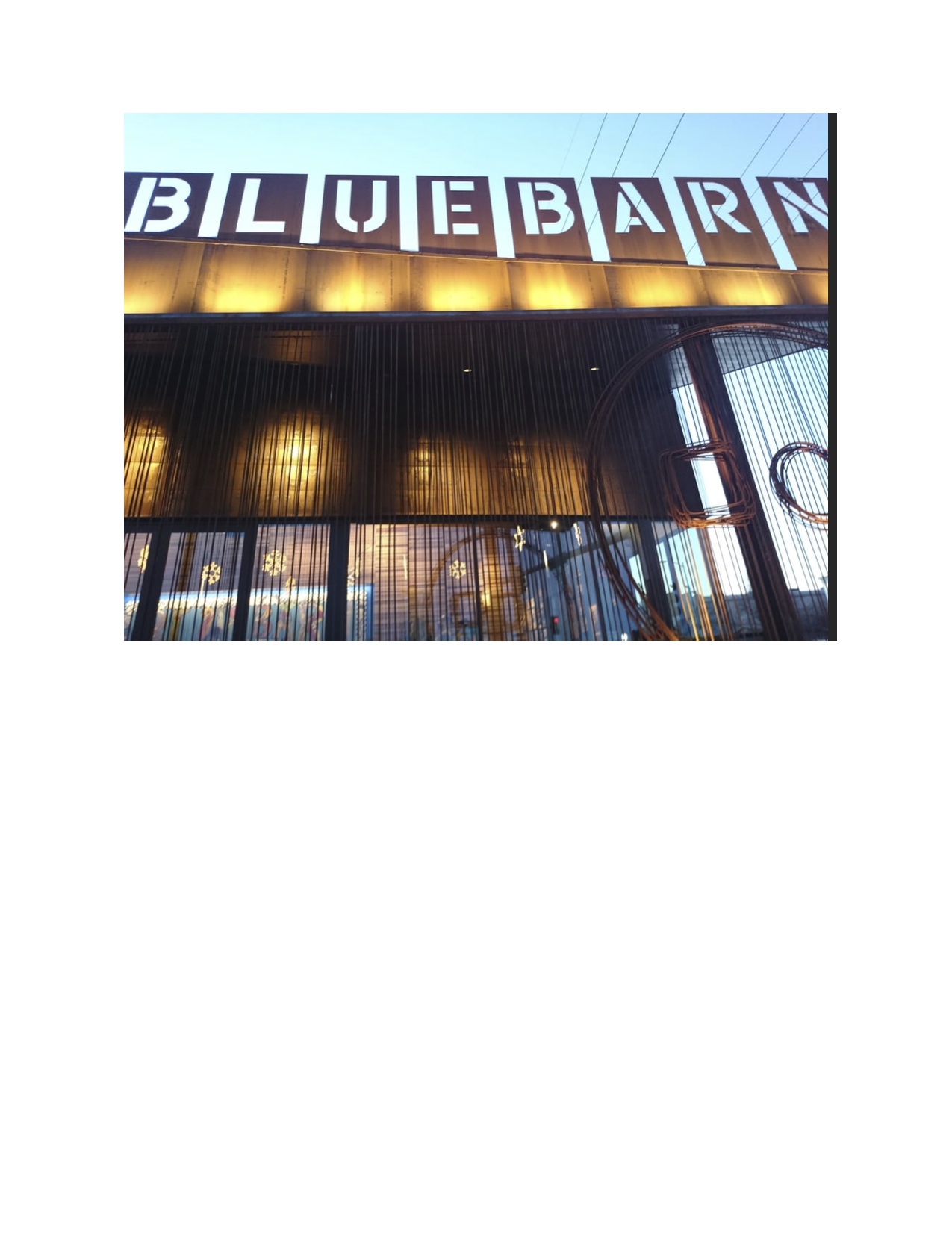
The Old Market solidified itself as a destination thanks to an array of restaurants, shops, galleries, theaters and creative spaces. The Bemis Center for Contemporary Arts, the Blue Barn Theatre and the Omaha Farmers Market became anchors there. Omaha Fashion Week and the Kaneko added new depth.

Omaha Performing Arts president Joan Squires said she’s seen “a huge change” since arriving eight-plus years ago from Phoenix to head the organization, which programs the Holland and the Orpheum Theater.
“The first time I drove in from the airport the Qwest Center didn’t exist, the Holland wasn’t here, a lot of the small groups weren’t around. If you were looking for things to do and it wasn’t the Orpheum or a few other places, it was limited. Now on any given night the breadth of what you can do is exciting. There’s a synergy about it that’s reaching all segments of the audience.”
Omaha native Rachel Jacobson left New York to launch Film Streams, one of several attractions that’s taken things to a new level.
Growing up here, she said, “there was a lot of good stuff to do but nothing really bringing people to town or being talked about in the national and international press, other than Chip Davis. Today, the Omaha arts community is strong, it’s alive, it’s visceral, it’s something we’re known for worldwide. Musicians continue to move here from other cities to make their home here because of Saddle Creek Records. Visual artists move here because of the Bemis and Jun and Ree Kaneko. New galleries are opening up all the time.
“It has really blown up in the best way.”
Established organizations have shown new life. Joslyn Art Museum built a huge addition designed by noted architect Sir Norman Foster. It’s since added a pair of sculpture gardens. The Durham Museum underwent a refurbishment and gained Smithsonian affiliation. The Omaha Children’s Museum found a new home and completed extensive renovations. The Omaha Community Playhouse redid its theater and lobby spaces. The Henry Doorly Zoo built the Lied Jungle, the Desert Dome, the Lozier IMAX Theater and other new attractions.
The Bemis expanded its gallery exhibition schedule and educational programming as well as added the Underground and the Okada. Now it’s poised for new growth.
Existing organizations found new digs.The Omaha Symphony made the Holland its home. The Emmy Gifford Children’s Theater moved into the old Astro (Paramount) movie house, renamed The Rose, and became the Omaha Theater Company.
Popular events drew ever larger crowds, such as Jazz on the Green, the Cathedral Flower Festival, the Summer Arts Festival and the CWS.

Photos Courtesy of Omaha Performing Arts
Even with all the new options, it didn’t appear as if Omaha reached a saturation point. Using the Holland and Orpheum as examples, Joan Squires said the presence of these two venues has only increased patronage.
“When you open a major facility and you bring in new arts offerings the community continues to lift up,” she said. “It broadens and really makes more things possible. In the last five years we’ve reached 1.7 million people. We’ve seen nights where both buildings sold out and there’s a lot of arts going on at other facilities all at the same time, and there’s an audience for everybody.
“We’ve got a growing and thriving arts community. I think it’s very encouraging.”
Funder Dick Holland describes the arts as “an economic engine” and “a big part of the community.”
Great Plains Theatre Conference artistic director Kevin Lawler, a Blue Barn founder, has seen a more adventurous scene develop.
“There are several new generations of artists making work in all genres and receiving support and interest from their peers and others,” he said. “This heralds the beginning of a new, vibrant era for arts and culture here. That small group of philanthropic leaders who have been supporting the arts in Omaha for years have enabled enough fertilization for this new blossoming to begin.
“When we began the Blue Barn there were almost no theaters willing to take on new, challenging work as a regular part of their seasons. Now, there are a number of groups that follow this path.”
Lawler notes there “is a new generation of artists staying in Omaha to make work because they feel there is enough energy in the community to support and respond to their work. I feel this trend reflected not only in theater, but all the arts.
“There are stages to the cultural life of a city. Omaha is in a blossoming stage. It is a rare and exciting time to be here.”
The linchpin behind this growth is private support. “Omaha has an exceptionally generous philanthropic community that understands the value of investing in its cultural institutions,” said Bemis director Mark Masuoka, adding that funders here appreciate the fact the arts “improve quality of life.”
He said the Bemis is close to reaching its $2.5 million capital building campaign goal “thanks to several generous gifts from local foundations and individuals.”
What losses there were sparked new opportunities. After years of struggle the Great Plains Black History Museum rebounded. When Ballet Omaha folded Omaha Performing Arts brought in top dance troupes and Ballet Nebraska soon formed. The Omaha Magic Theatre closed only to birth new ventures. The Indian Hills Theater was razed but Omaha movie houses multiplied. The Kent Bellows Studio and Center for Visual Arts arose after its namesake’s tragic death.
The recession impacted large and small organizations alike.
Todd Simon said, “Many not-for-profits have struggled and I think they’ll continue to struggle in these economic times, but I also think there is a dedicated group of supporters in our community who will step up to fill the gaps.” These lean times, he said, encouraged “many organizations to get smarter in how they use resources and how they collaborate with each other, where they leverage the talent and the resources they have. I think that trend will continue.”
Dick Holland said few cities can boast Omaha’s philanthropic might. He favors a public-private coalition to undergird and concentrate arts funding.
By any measure, it’s been an era of net growth for the creative community and leaders see more progress ahead thanks to a spirit of innovation and support.
“A strong legacy of investing in the arts here has been established and I believe it will continue to proliferate,” said Rachel Jacobson. “We’ll see new initiatives develop, especially arts in education and social-community development arts projects. There are a lot of high-energy, incredibly innovative people who have a huge heart for this city and will make a strong commitment.
“Just in the last month I’ve heard about wonderful projects in the works. I’m excited for the next 20 years.”
Related Articles
- Omaha Making Plans For Red Sky Music Festival (beatcrave.com)
- North Downtown Development, New Year Resolutions, 2011 YP Summit (theweeklygrindradio.com)
- Tyler Owen – Man of MAHA (leoadambiga.wordpress.com)
- A Magazine and a Mission Founded on a Spirit of Giving: Metro Magazine Publisher Andy Hoig Celebrates Philanthropy (leoadambiga.wordpress.com)
- Filmmaker Steven Soderbergh to Talk Shop at Film Streams Feature Event (leoadambiga.wordpress.com)
- Great Plains Theatre Conference Ushers in New Era of Omaha Theater (leoadambiga.wordpress.com)
- Great Plains Theatre Conference Grows in New Directions (leoadambiga.wordpress.com)
- The Indie-Rock Club Behind Omaha’s $100 Million Creative Boom (npr.org)
Rebecca Herskovitz forges an art family at Kent Bellows Studio and Center for Visual Arts
I did this story a couple years ago for the Jewish Press about Rebecca Herskovitz and her work as education coordinator at the Kent Bellows Studio and Center for Visual Arts in Omaha. She’s no longer with that organization but she’s still very much a part of the Omaha art scene, and the studio center where she did work is in the news because it recently had its grand opening and because work by its namesake, the late great American realist visual artist, Kent Bellows, is featured in an exhibition this fall at the Joslyn Art Museum. Check out my other articles about Bellows, his legacy, and the studio center on this blog site.

Rebecca Herskovitz forges an art family at Kent Bellows Studio and Center for Visual Arts
©by Leo Adam Biga
Originally published in the Jewish Press
If the art world has missionaries than Rebecca Herskovitz has found her calling as an art educator helping young people explore their creative potential.
She doesn’t look much older than the kids she works with at the new Kent Bellows Studio and Center for Visual Arts, 3303 Leavenworth St., where she’s education coordinator. She came to Omaha from San Francisco a year ago to fill the post and after months of planning she launched the center’s first after school classes in early September with 21 students.
Two 16-week semesters are offered per year.
The education program matches students from metro area high schools with professional working artists in classic apprentice-style mentoring relationships.
The center, whose classes are being held at the Bemis Center for Contemporary Arts in the Old Market until the center’s permanent home undergoes renovation, is named after the late Omaha realist Kent Bellows. The noted Bellows, the subject of a future Joslyn Art Museum retrospective, was well-known for supporting young artists. His studio space on Leavenworth serves as the administrative base for the Kent Bellows Foundation and mentorship program.
Omaha native Anne Meysenburg, a University of Nebraska at Omaha grad, is executive director of the Bellows foundation and the Studio/Center for Visual Arts.
The studio where the iconoclastic Bellows lived and worked will eventually host classes and gallery shows once the interior is renovated. Largely preserved the way the artist left it, the studio will also be an archive for scholars. For now, field trips bring the kids on site to the Bellows space,. Everything from his eclectic personal belongings to elaborate backdrops he made to sayings he scribbled on walls adorn the converted storefront studio. It’s sacred ground for communion/inspiration.
“You feel like this is a place where something very special has been happening,” Herskovitz said there recently, “and to emulate that place of creativity and to be inhabiting it is absolutely contagious. It will be exciting to teach classes upstairs where those installations are and where the shrine that Kent made is. You can just feel it’s a place where magic was taking place. For kids to walk in there every day will be an enchanting thing. I’m very excited about that.”
Meanwhile, Miss Becca, as she calls herself, leads her young charges in the bowels of the Bemis building at 724 So. 10th St. The basement’s formerly blank walls and exposed pipes-vents have been transformed into dynamic spaces for hanging art made by students and their mentors. She encourages students to make the environment their own — a living, evolving expression of themselves.
“I want them to take ownership over those spaces and I believe in the art space becoming to a certain extent an art piece itself over time. You just want a space that feels alive.”
With just the right amount of evangelical zeal, Herskovitz is the Pied Piper for this new arts program whose mission is to live up to the standards of its legendary namesake and his fierce creative independence. An independent thinker herself, the Bellows position allows her to design programs from scratch that give students outside-the-box opportunities for artistic growth.
“I think I was ready to do something a little bit different — that allowed me to write my own curriculum,” said Herskovitz, who was teaching visual art at a special ed school in San Mateo, Calif. and making her own art before arriving in Omaha.
“When I’m making art and when I’m teaching it’s kind of the same feeling. It’s the feeling of when you have a calling — when everything else kind of fades away and you feel excited and don’t want to think about anything else, almost to the extent where you forget to think about other things and two hours pass and you realize you haven’t moved from the same position.”
Prior to San Francisco, the Newton, Mass. native taught art at a public high school (in Worcester) while earning her master’s in education. When she read about the Bellows opportunity she knew it was the right niche for her.
“I really gravitated towards the mission, which is so linked to creativity, and that really fit with my own teaching philosophy,” she said. “And then I just really loved the idea of a new arts organization just getting started. It’s a really special thing to be part of making a place that you would have wanted to be in when you were in high school. I wish there had been a program like this for students interested in the visual arts. And as a teacher I wish I had been in an area where there was a program like this for me to recommend my students to.”
She said breaking away from the prescribed confines of public school educational approaches is what the Bellows project is all about. It’s liberating for Herskovitz and her students to not be driven by the kind of test score mentality and conventional thinking that she said results in “very limiting” curriculum in the public schools. Instead of “putting up obstacles to people having innovative thought,” she said, the Bellows model Is “founded on the idea of finding and nurturing those individual creative sparks in young people.”
Unlike a public school setting, where she said kids are apt to “get lost” in large classes, the small Bellows program ensures “individual attention.” “The student-teacher ratio is extremely close and that’s vital. That’s what’s going to allow us to give something to different to kids than what they can normally receive.”
The task of selling this new program to high school art teachers, who’ve become her best recruiters, proved difficult at first. Herskovitz received few replies to an e-mail she sent teachers over the summer announcing the program. She finally got the captive audience she craved when invited to make a presentation to teachers during an OPS professional development day.
“It took a little while to explain what we’re doing and it took teachers a little while to realize this is something really new and really different,” she said.
Before long, she was invited to classrooms to make her pitch directly to students, who she said quickly recognized the program’s benefits. More than 50 applied. She was prepared to start the program with 12, but, she said, “we had so many fantastic applicants that we’re above and beyond that with 21 kids.” A whole new class was conceived to accommodate the larger than expected numbers.
As anticipated, a large number of students are from Omaha Central, whose downtown location is mere blocks from both the Bemis and the Bellows studio. Other schools represented include Bryan, Burke, Westside, Duchesne and Council Bluffs Abraham Lincoln. She feels students will come from a wider geographic area once the program offers transportation.
A goal for a diverse student mix has been met.
“We wanted our program’s demographics to look like OPS’ demographics and we match up perfectly with that,” she said. “My vision of a really healthy classroom is one where there is a lot of heterogeneity of all things — in terms of learning styles, ethnicities, ages and the neighborhoods they come from.”
What does she look for in prospective students?
“We’re just looking for a creative energy and kind of a passion for trying new things and wanting to have a role in their own education. We’re not looking for past experience. We’re not looking for some particular skill-set.”
The selection process involves an essay and an interview. She makes a point of meeting applicants’ parents or guardians.
“I think parent support is a huge deal.”
She encourages parents to visit the site “to know where they’re kids are going to be hanging out.”
Herskovitz enjoys being on the ground floor of something different and she senses students and parents do, too.
“I think it’s a completely new take on arts education,” she said. “This is a place where you get to feel safe. This is your creative family, your artistic community. We’re continuing what Kent showed all of us — this very powerful form of teaching, which is the mentoring relationship. I hope our mentors push students to find their own footsteps.”
She believes the mentoring component is what distinguishes the Bellows program from other enrichment programs.
“It’s a program that takes place after school but it’s not a typical after school program,” she said. “Students are having the opportunity to work with professional artists in very close ratios one-on-one, where the emphasis in really on creative thinking and problem solving, and I think that focus is really different from a lot of other programs.
“I think the most powerful learning experiences happen when you’re able to have a mentor who stays with you and I think what allows teenagers to really open up is knowing that adult is going to be with them for as long as they want them to be. And our program is built so we can continue those relationships for as long as the student wants to be there participating in it.”
The art educator spent a fair share of her time in Omaha the past year steeping herself in the local art scene, casting her eye for potential mentors among the area’s deep pool of working artists. Her first crop of mentors represents a cross-section of Omaha’s best and brightest. There’s Mexico native Claudia Alvarez, a ceramicist, longtime art instructor and former Bemis resident artist. There’s Omaha native Bill Hoover, a painter, writer and musician who also works with kids at Liberty Elementary School. There’s Jeff King, a graffiti, street-inspired painter whose work incorporates text. King conducts art workshops with kids at Norris Junior High. And there’s painter Caolan O’Loughlin, an Irish emigre who’s done curatorial-consulting work for the Bellows and who has a teaching background.
Herskovitz completes the Bellows mentoring staff. Guest artists also make presentations-demonstrations. Bemis curator Hesse McGraw contributes to some classes. Herskovitz has students utilize the Bemis as a kind of living laboratory and resource center by studying-critiquing the art displayed in its galleries, poring over books in the well-stocked art library and visiting resident artists’ studios.
“The Bemis has been very generous,” she said in making its facilities available.
It may be a temporary home, but the Bemis couldn’t be a better fit. “It just matches up so well with our mission,” she said. “I can’t imagine a better set-up than to have art students immersed in a contemporary arts center where professional international artists are living and working.”
Even when the Bellows studio is in use she foresees the Bemis continuing to play a role in the program. It adds another layer of experience and can help the program accommodate more students in the future.
The historic Old Market and its rich social-cultural milieu becomes another venue for art stimuli. Mentors also bring students to their own studios and to the studios of other artists throughout the city and they make gallery visits together.
Herskovitz said she and her fellow mentors seek to deconstruct assumptions about education by finding teachable moments in all kinds of situations or settings.
“I think there’s a huge myth that you can’t teach art and I think it’s because of the way people think about teaching. They think of it as training or instilling this knowledge when really it’s more about facilitating thinking.”
What she’s in the process of trying to build is an environment where “young people become a learning community and bounce ideas off one another,” she said. “There’s a way to do that and with my curriculum that’s what we’re aiming to do. It’s structured within that to meet the individual needs of students.”
Sometimes, students work with mentors in workshop fashion on specific techniques or tasks, she said, and other times they break off to work on their own individual projects. Teachers move around the room, sharing observations and comments with students. Whenever possible, students interact with one another.
“Equal to what you see is what I hope you feel — that this is a place where these students feel really comfortable and can be themselves,” she said. “My goal is to create an art learning family. This is their chance, if they want to be someone different than they are in school, to be different when they’re here. If they need a different type of learning environment I hope this can provide that for them.”
She’s devised a sequence of programs/classes to engage students of varying abilities and interests.
“The artist-in-residence program is for older kids who are more advanced and are really ready to have more independent studio time and to meet one-on-one with a professional mentor. The studio thesis class is meant for 9th and 10th graders who feel themselves being pulled by the arts and are still kind of finding their voice. That’s more of a small group setting where kids can talk to each other and mentor each other along with the teacher.”
The gallery internship program provides students opportunities for organizing-curating-marketing student-mentor exhibitions. The program’s first exhibit, Versa Vice: Reflections of an Underground Society, opens Friday, Dec. 19 at the Bemis Underground. This showcase will reflect the work students have been making in class and the collaborative projects they’ve participated in with fellow students and mentors.
Ideally, Herskovitz said students will participate in several if not all of the program’s classes, progressing from beginner to advanced sessions, along the way getting exposed to different mentors and their varied philosophies, techniques, styles.
Although she didn’t have anything like the Bellows program in her upbringing, Herskovitz had her art-loving family.
“Both of my grandparents on my dad’s side were very involved in the arts community. Growing up I would be set free to make art projects,” she said.
It was in high school her own passion for art bloomed and that’s one reason why she enjoys working with that age group. “I got very involved and inspired. I just couldn’t stop doing it.” Her dual passion for teaching began about the same time when she taught in an after school program.
She said even though her therapist parents, younger brother and extended family “don’t always understand my art, they have been so supportive. I feel really lucky for that.”
Before accepting the Bellows job Herskovitz researched Omaha’s arts community and she came away impressed. Now that she’s here carrying the banner for an arts organization bearing the name of an Omaha art icon she has an even deeper appreciation for things.
“Now being part of it it’s really wonderful to know these different organizations and different figures. I think maybe because of Omaha’s size you really can know people in the arts community and you really can make relationships. In San Francisco that was much harder. There wasn’t that sense of a supportive community. It was still kind of strangers operating in their own spheres.”
Omaha’s small-town-in-the-big-city character is just what Herskovitz has been searching for in forming an art family away from home.
“I love being here.”
Applications and inquiries may be made by calling 707-3979 or emailing Rebecca@kentbellows.org. Check out the web site at www.kentbellows.org.
Related Articles
- Art Lesson plans for Gifted Students (brighthub.com)
- Debate rages over arts curriculum (theage.com.au)
- Omaha Arts-Culture Scene All Grown Up and Looking Fabulous (leoadambiga.wordpress.com)
Kent Bellows Legacy Lives On
The following article appeared a few years ago in The Reader (www.thereader.com) announcing plans for the Kent Bellows Studio and Center for Visual Arts named in honor of the late great American realist visual artist. That artist’s work is the focus of a current exhibition at the Joslyn Art Museum in Omaha, where Bellows made his home, and the studio center where Bellows created many of his pieces is now open to the public. As my article mentions, Bellows was known for his generosity towards young people with a passion for art, and the studio center pays forward the encouragement he provided young people by offering a mentoring program for high school students with a penchant for making art or pursuing art studies. Students are paired off with professional working artists in mentoring relationships that give young people an intimate, real-life experience in the art world. Students and their mentors collaborate on some projects and students work independently on others, and now that the studio center is complete, this creative community expresses itself in the very digs where Bellows himself worked and mentored. See more of my stories related to Bellows and the studio center on this blog site.

Kent Bellows Legacy Lives On
©by Leo Adam Biga
Originally published in The Reader (www.thereader.com)
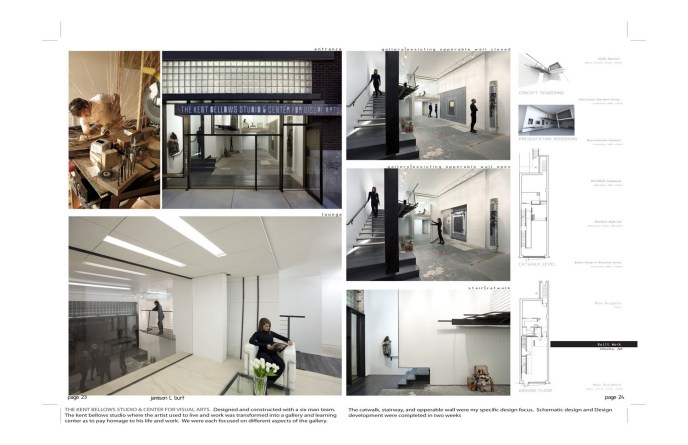
When renowned Omaha visual artist Kent Bellows died suddenly in 2005, his family didn’t know what to do with his studio, where remnants of his career and life were everywhere.
The studio was stuffed with his life: eclectic stashes of books and CDs, mosaics of cut-out images, wall scribbling, monster figures, art supplies and his signature parka hanging on a hook. After Bellows living and working there 16 years, the two-story studio, at 33rd and Leavenworth streets, became a multi-planed art piece in itself. It’s survived as tableaux of his stilled creativity, not unlike one of the wall sets he built for his hyper-realistic work.
Bellows’ family knew the circa-1915 brick building contained artifacts that should be preserved, not packed away or thrown out. The site, which used to be the Mermaid Lounge, was imbued with the legacy of someone who encouraged others, especially young visual artists and musicians. Family and friends deliberated how best to honor his memory.
Griess, her sister Debra Wesselmann and other Bellows family members formed The Kent Bellows Foundation in 2007 and envisioned the nonprofit as an arts education haven with a strong mentoring component. It will serve area youths, ages 14 to 18, grades 9 through 12, with artist-in-residence, studio thesis and gallery internship programs/classes. Board members include artist Keith Jacobshagen, designer Cedric Hartman, art educator Dan Siedell and composer Peter Buffett. Now, after two years of planning, the Leavenworth studio is due to become the Kent Bellows Studio and Center for Visual Arts. The Kent Bellows Foundation announced plans for the new arts organization on-site at a recent open house attended by friends of the late artist. If enough support is found, site renovations could begin this summer and the center could open by early 2009.
“We couldn’t make any rash decisions about it, it was just too important,” said his sister Robin Griess. “So fortunately we hesitated.”
$725,000 in renovations are needed to fix a leaky roof, replace mold-infested walls, make the structure handicap accessible, add a museum-grade HVAC system and construct multi-use gallery, studio, classroom and office spaces. The foundation is looking for public and private donors to help.
Working visual artists will act as mentors, offering students real life lessons on being a professional artist (did someone say this?) and helping them learn to create a studio space, network and market, build a portfolio and deal with galleries.
A close student-mentor ratio will ensure highly individualized instruction (who said this?). Bellows Education Coordinator Rebecca Herskovitz wants to create a comfortable, nurturing environment, she said, where students can be themselves and take ownership over these spaces.
“My goal is to create an art learning family,” Herskovitz said.
The Foundation has broad goals. Partnerships with local arts organizations will provide students more educational opportunities. Lesson plans and resources will be made available to art educators. A scholarship and stipend fund will assist students electing to study art in college.
“It’s a completely new take on arts education,” said Bellows Executive Director Anne Meysenburg.
Early on, the family determined art education as the focus. The specific mentoring mission evolved with input by Bluestem Interactive strategic planners. (We need some attribution in this paragraph, too. Who said these things?)
“When the mentorship idea came to us it made such sense because that’s who Kent was and to mesh that with his legacy and with this inspiring space was just the perfect idea,” Griess said. “We always kept in mind, ‘What would Kent want?'”
She said Bellows was “this wonderful big brother” to not only her and her sister but to many others.
“Whatever your thing was he would just celebrate it,” she said.
When he did break from his meticulous work, Griess said, the studio was a vibrant spot where he showed pieces, discussed ideas and jammed with musicians. Creativity was always in play. She hopes students can soon tap into the spirit bound there.
“To emulate that place of creativity and to inhabit it is absolutely contagious,” Herskovitz said. “You can just feel it’s a place where magic was happening. For kids to walk in there every day will be an enchanting thing.”
Randy Brown Architects’ design will alter and open up the studio, though portions will be preserved as Bellows left them; notably the south rear space where his easel still stands and his hand-sharpened pencils lay ready. The upper floor is home to undisturbed set pieces and backdrops. These expressions of Bellows will be conserved, pending funds, by the Ford Conservation Center in Omaha. (Who said this?)
“The ultimate goal,” Meysenburg said, “is to inspire and to ignite the creative spark in the artistic youth of this community.”
The job of documenting Bellows’ prolific original works continues. Researchers are working to create a comprehensive catalogue raisonne of Bellows’ work as Joslyn Art Museum prepares a fall 2009 Bellows retrospective.
Griess called the search a treasure hunt: some previously undiscovered works have turned up, and other notable pieces are still missing in action.
It’s all part of ensuring the Bellows legacy.
“We feel a heavy responsibility about doing this right,” Wesselmann said.
Mentoring programs start this September in yet-to-be-named art facilities, and the foundation has some potential site leads. The foundation is currently recruiting students and staff for its first 16-week semester.
Related Articles
- Debate rages over arts curriculum (theage.com.au)
- Getting Back to the Phantom Skill – NYTimes.com (opinionator.blogs.nytimes.com)
- Expressive Drawing Class for Youth offered at Lincoln Street Center for Arts and Education (thevalleyvoice.org)
Cinema iconoclast and vagabond Jon Jost

As filmmakers go, Jon Jost is off the grid. The uncompromising artist makes the films he wants to make, the way he wants to make them, and since his approach to story and technique is antithetical to mainstream feature filmmaking, he is pushed to the fringe, but that’s where this contrarian prefers to be anyway. In one sense, he’s actually far ahead of the cinema establishment in terms of working in video and exploring its expressive possibilities. He is a digital video guru who does a lot of presenting and teaching at universities. I caught up with him a couple years ago during a residency he did at the University of Nebraska-Lincoln. My story about Jost originally appeared in The Reader (www.thereader.com), and meeting him and writing about him and viewing some of his work confirmed me just how diverse the filmmaking community is.
Cinema iconoclast and vagabond Jon Jost
©by Leo Adam Biga
Originally appeared in The Reader (www.thereader.com)
Digital cinema guru Jon Jost wears his iconoclasm as a badge of honor. The itinerant artist inhabits the fringes of the indie moviemaking landscape. In truth, he prefers it there. He’s railed against the system from the time he tore up his draft card in the mid-1960s, an act of “resistance” that sent him into exile to do the expatriate thing in Europe and Mexico. Once back, he knew “full well” he’d be arrested. He was, too, earning a stretch in an Illinois federal reformatory.
He got busted again, in Chicago, in the weeks leading up to the ‘68 Democratic National Convention. He was filming at the time of his arrest and the fact he used a camera as a revolutionary tool sealed his fate as a rebel filmmaker.
Ever the outsider, the self-taught Jost disdains the established order in film. Anything smacking of studio or industry or commercial” is “artificial” to him.
“I’m an anarchist. I don’t believe in leaders. I have no interest in commercial film,” he said during a break from his artist-in-residency at the University of Nebraska-Lincoln. “My view is we’re in a very deep trough of corruption and the corruption runs from the White House down to your local theater and into your film festivals.”
His choice to work in DV or digital video is an expression of his dissent. He fell in love with it the first time he worked a Sony camera. From ‘97 on, celluloid’s been dead for him, something once unthinkable for a serious filmmaker as himself. He described DV as “such an endlessly more, in the positive sense, plastic medium. It’s more malleable. You can do more things with it and you can do it without having to break the bank. The movies I make now, if you made the equivalent in film, they’d cost hundreds of thousands of dollars. And for me they cost a hundred dollars.
The choice is not just about economics, but aesthetics.
“For years it was really like heresy to say, ‘No, I’m not just doing it because it’s cheaper, I’m doing it because it’s better, period.’ It doesn’t look like film, but it has other things…other qualities…that are much better than film.”
He knows his work is out of step with the suits and the masses. Even as Hollywood begins to test the digital waters, he said DV won’t really change anything.
“It depends on who uses it. If Hollywood uses it than the special effects will get zappier. They can blow things up more spectacularly. They’ll do 3D digital but what they say will be lowest common denominator romance-sex-kill. Conventional movies will remain a big business designed to take ten bucks out of your pockets,” he said.

Since January he’s conducted statewide DV workshops and a UNL seminar. He does workshops all over the world, preaching a credo of “don’t accept their media — make your own media.” He and his Italian wife/editor Marcella arrived in October. From a mausoleumesque stone building fast off a busy Lincoln intersection, the couple toil away like digital devils; the interior strewn with computers, musical instruments, books, DVDs, paint supplies. Few people will ever see their beautifully realized movies made on the cheap. Festivals turn a cold shoulder to his recent nonlinear, nonnarrative work. Even his last narrative feature, the anti-war Homecoming (2004), got snubbed. He feels it’s too political for these times.
The rejection dismays Jost, who’s enjoyed acclaim for his art films. His All the Vermeers in New York (1989) was a festival darling and aired on PBS.
Festival directors told him Homecoming was “too slow,” ironic, he said, as his previous films “were slow also and they loved” them. So slow is no longer fashionable?” he asked with rhetorical incredulity. On Homecoming he “deliberately” pulled back from his “inclinations and desires” to shoot in an “avant garde” style and still not a single American film festival would accept it.
“On one level that’s depressing,” he said, “and on another level it’s completely liberating because I can say, ‘Fuck it.’ Why should I move even this far to make it more accommodating when there’s nothing to accommodate? I know I’m going to get shut out. For the moment anyway there is no market whatsoever for what I do. So why should you torture yourself chasing this thing that absolutely doesn’t exist? So now I just make what I want to make the way I want to make it.”
He’s made other narrative films: Last Chant for a Slow Dance, Sure Fire, etc.. He’s shot in Panavision and 35 millimeter. Only his films don’t obey the rules with their lurches toward abstraction.
In his view, commercial filmmaking is a pastiche of old art. “It’s like, Didn’t you ever look at any art since 1650? Oh, so you can do Renaissance single and even double point perspective. So fucking what? They did it 500 years ago, alright,” he said.
“I’m a consumer, if not always liking it, of the arts. When I look at a movie I’m like, These people are so behind what visual language is available. With a computer you can make a completely credible visual representation you can go through of five-dimensional space, and they’re so pleased with managing to make a Renaissance picture,” he said, laughing with derision.
He enjoys dissing Hollywood and scoffs at the idea an Alexander Payne is an indie filmmaker. “No independent person would want to work with them (Hollywood),” Jost said. Even if Payne enjoys final cut, Jost asserts he’s a sell-out. “He’s already controlled because he makes films that are completely commercially palatable.”
“I find the limits of normal filmmaking false. Why can’t we have films that would be the filmic equivalent of Cubist painting?” Jost asked. “I have done some of that myself.” Using modern art devices, he superimposes scrims, images, text over the frame. He points the camera straight down at roads or out windows of moving vehicles, making subjects of the passing tableaux. In Vermeers a marble floor is the object of attention in a long tracking shot.
He eschews such tenets as establishing shots or cutting from one actor’s profile to the other in dialog scenes. He trusts “you’ll figure it out if you’re paying attention.” He prefers improvising to scripting. Natural light. With his new work, including the in-progress Swimming in Nebraska, he uses a digital software program to adorn and enliven a static frame. Slowly, rhythmically, geometric patterns filled with color and shape bleed in from the screen’s edges. These riffs, alone or in collage, correlate to the background’s fixed image, informing and enriching it.
Swimming profiles individuals engaged in various creative pursuits in the state. Jost said, “I’m trying in a very oblique, poetic way to show the creative process” and “to attack the general mentality people have of Nebraska or the Midwest” as a sterile place. “It’s full of interesting, lively things as much as anywhere else.”
He also completed a video installation while in Lincoln.
With his Nebraska stay near an end, Jost looks ahead to a university teaching gig in Seoul, South Korea. “It will be my first job. It’s not in the bag. If it doesn’t work out I’ll figure out something else to do,” he said. “I’ve never had a real job in my life. I’m 63, I don’t have a pension, I don’t have insurance, I’ve got nothing. I’m not going to worry about it now. One way or another, I’ll manage to survive.”
As he told the New York Times, “I’ve spent my life being left out. I’d like to stop, but it’s what I do.” Whatever happens, he’ll be “working, working, working.”
From May 20 through May 24 the Mary Riepma Ross Media Arts Center in Lincoln will host Jon Jost Presents, a sampler program of his work and work by regional DV artists. All screenings are free and open to the public. For details, call the MRRMAC at 402-472-9100 or visit www.TheRoss.org.
Related articles
- Making a Digital Video Portfolio DVD (brighthub.com)
- Pre-Production Tasks for the Digital Video Producer (brighthub.com)
- Your Take: Great News for Black Filmmakers (theroot.com)
- Martin Scorsese to abandon film to shoot movies digitally (independent.co.uk)
- Alexander Payne to Talk Cinema with Kindred Spirit Jane Fonda at Film Streams Feature Event in Omaha (leoadambiga.wordpress.com)
Art for Art’s Sake: Bemis Center for Contemporary Arts

Image via Wikipedia
This was one of three stories I did during my incredibly short-lived stint writing for Star City Blog (www.starcityblog.com). The subject of this piece is an anchor institution in the cultural hub of Omaha, the Old Market, the former wholesale produce center that’s been preserved and its century-old warehouse buildings repurposed as galleries, shops, eateries, apartments, and condos. The Bemis is housed in one of those warehouses. The Bemis always seems ahead of the curve when it comes to the art scene, and after a few wandering years it has rebounded stronger than ever. It’s a visionary place and in a very short article here I try to give a flavor for what makes it a dynamic space for artists and for visitors alike. I would like to write a more in-depth piece about it, perhaps next year when it celebrates its 30th anniversary.
Art for Art’s Sake: Bemis Center for Contemporary Arts
©by Leo Adam Biga
Originally posted on Star City Blog (www.starcityblog.com)
At the Bemis Center for Contemporary Arts in Omaha’s historic Old Market district, the phrase Artists Matter is reality, not slogan. Going on 30 years now, the Bemis has been Omaha’s conduit to the modern art world by nurturing exceptional global talent.
Its renowned International Artist Residency program brings diverse artists to live and work there each year. A busy exhibition schedule of 20-plus shows presents work across a wide range of media by visiting and local artists. Admission is free.
Progressive live music performances occur at the Bemis and its adjacent installation/work site, the Okada. Community art projects serve as catalysts for collaborations between artists and the public. Art talks promote artist-audience dialogues.
The Bemis Center is housed in the 19th century McCord-Brady building at 724 South 12th Street. The five-story, 110,000 square foot structure is among the Market’s many landmark red brick mercantile warehouses repurposed as a cultural facility.
The Bemis got its start in the nearby Bemis Bag Company building. Four artists formed the center in 1981, including internationally renowned ceramicist Jun Kaneko and Ree Schonlau, now Ree Kaneko.
The center’s hub is its coveted residency, which began as a summer artist-in-industry program. It was still a new concept then. By the mid-‘80s, the Bemis operated year-round. The last two decades has seen an “explosion” in artist colonies nationally, said Bemis executive director Mark Masuoka.

From then till now, the center’s hosted nearly 700 artists from 34 countries. At any given time six to eight artist fellows are in residence, each with a spacious live-work loft. Artists, who receive a $750 a month stipend, plus supplies, stay from a month to three months. New fellows as of August include painter Myung-Jin Song from Seoul, South Korea, photographer Cybele Lyle of Oakland, Calif. and interdisciplinary artist Michael Beitz from Buffalo. They joined artists from Florida and Philadelphia.
Former fellows who’ve made Omaha home include Christina Narwicz, Littleton Alston, Terry Rosenberg, Jim Hendrickson. Steve Joy, Therman Statom and Claudia Alvarez.
Masuoka said interest in the program keeps rising, with 1,000 applications for 24 available spots each year. The Honolulu native said a planned expansion will accommodate additional artists. He goes back with the Bemis to the ‘80s, as a Jun Kaneko assistant and artist-in-residence. That history, plus art management stints in Las Vegas and Denver, gives him a perspective on what makes the Bemis special.
“The Bemis continues to amaze me as an organization, not just because of what we’ve been able to accomplish but because we’ve stayed true to our mission,” he said. “The more we grow and mature as an organization what becomes evident is that we really understand what artists need and provide support for that activity.”
He said the Bemis is rare in granting artists the freedom to create or research or just be.
“It comes from our having been founded by artists. Because of that, we really understand what artists need and we’re prepared and willing to do whatever it takes as an organization to tell artists, yes,” said Masuoka. “I think many times in our society and within even the art field there are so many reasons not to pursue a project or not to support an individual artist. What we continue to strive for is to find ways to support artists. At the core of it is why the organization exists — to help artists realize or actualize their ideas. I think it makes Bemis unique not just in the country but in the world.”
Lincoln collector Robert Duncan is part of a star-studded board that includes the artist Christo.Residency program manager Heather Johnson said the Bemis provides “a gift to artists.” That includes the sanctuary of their second-floor live-work studios, usually off-limits to the public. “It’s meant to be a place for artists and their process. We don’t make any expectations or assumptions or judgments about their process and what that should look like or shouldn’t, so it’s very self-directed, and artists love us for that.”
“That gift of time and space we talk about is critical,” said Masuoka. “It advances careers, it advances ideas, and it sort of reinstills and reconfirms to artists that they’re important to our culture.”
Masuoka said the only requirements of fellows is to make a presentation and to donate a piece. Otherwise, the Bemis culture is hands-off.

Bemis curator Hesse McGraw, who’s worked at galleries in New York City and Kansas City, Mo., said, “What distinguishes the Bemis Center from other arts institutions is that what drives it is the activity of artists and the work they’re doing right now. We really try to think of it as a laboratory for artists. The residency program is focused on supporting an open process.”
McGraw, who curates shows in the center’s three main galleries, said, “The exhibition program tries to carry that sensibility through to the presentation of the work.” He said the Bemis encourages artists to do what they couldn’t do in a different context or setting. “We really try to find ways of supporting them, whether curatorially, logistically, financially, to build-out projects significant in their career and in their practice.”
All this creativity brings a dynamic energy to the space and to the community, challenging the status quo and thereby enriching viewers.
“It’s an expression of this attitude about finding new ways and having the ability to look at things differently,” Masouka said. “Artists see things differently, they look at possibilities other people don’t see, and through that you increase the imagination about what is possible. Programs like the Bemis Center support individual artists, nurture creativity, but also really showcase the value of what artists bring to our society.”
The Bemis is intentional in fostering artist-led discussion through events like its First Thursday ArtTalk lecture series and cutting-edge exhibitions.
“The exhibition program is an opportunity to have conversations and dialogue with the public about contemporary art and its relationship to anything in public life or the city or a myriad of social and cultural issues,” said McGraw.
The current Hopey Changey Things group show (through Sept. 4) is an ironic riff on American society as expressed in photographs, videos and installations. McGraw said pieces variously posit an apocalyptic vision for wiping the slate clean, an absurdist’s view of our current cultural moment and a radical pragmatism for reinventing places.
“I think things we’re particularly excited about now are artists working across disciplines and at some level of social engagement,” he said. “I feel like it empowers audiences to think about contemporary life.” Always, he said, the Bemis looks “at how can we utilize the projects to create a perpetual sense of surprise” within the “intensive introspection and ecstatic spectacle” of contemporary art.
A venue for doing that is the Bemis Underground, a subterranean but warm space connecting local and visiting artists with each other and with the community via exhibitions, talks, art trivia quizzes and even potluck suppers. “It sort of ties everything together,” said manager Brigitte McQueen. “It’s very welcoming down here. The openings have huge traffic.”
Together with the adjacent Kaneko – Open Space for Your Mind and nearby studios, galleries and theaters, the Bemis Center continues being a mainstay in the Old Market art scene.
The Bemis is open Tuesday through Saturday, 11 a.m. to 5 p.m. For exhibition and event details or to schedule tours, visit www.bemiscenter.org or call 402-341-7130.
Related Articles
- Current Motion, First New York Solo Exhibit of Hawaiian Artist, Carol Bennett Opens in Public Art Space in Manhattan (prweb.com)
- Artist-in-residence wraps up with exhibit (knoxnews.com)
- Redux seeking artists and artist wannabes (charlestoncitypaper.com)
- Omaha Arts-Culture Scene All Grown Up and Looking Fabulous (leoadambiga.wordpress.com)


 Leo Adam Biga's My Inside Stories