Archive
From the Archives: Photographer Monte Kruse works close to the edge
I’ve dipped into the archives again for this early profile I did of photographer Monte Kruse. The man has crazy talent. When I first met him 21 years ago the bulk of his work was as photojournalist but as the years have gone by h’s gravitated more and more to fine art photogtaphy, often shooting nudes. The first two images below are from fairly recent work he’s done of agrarian nudes – depicting the human form in the throes of doing farm work and showing the nuance and contours of bodies hardened and developed by that kind of labor intensive, close to the ground activity. This blog also features a later story I did on Monte titled “Photographer Monte Kruse Pushes Boundaries.” You’ll also find stories on the blog about Monte’s mentor, photographer Don Doll. The blog features yet more stories on other photographers, including Monte’s good friend Jim Hendrickson, as well as Larry Ferguson, Ken Jarecke, Rudy Smith, and Pat Drickey, superb imagemakers all. Look for a big feature on Jim Krantz in November. And if you’re a film fan, the blog has dozens of pieces on filmmakers and other film artists, including Alexander Payne, Nik Fackler, Joan Micklin Silver, Charles Fairbanks, and Gail Levin. Explore…enjoy.
From the Archives: Photographer Monte Kruse works close to the edge
©by Leo Adam Biga
Originally published in the Omaha Metro Update
Picture the hard but wild throwing pitcher Tim Robbins portrayed in Bull Durham. A tall, lean, free-spirited kid whose oversized ego hid an underlying naivete and vulnerability. That may be a pretty close take on what Monte Lee Kruse looked liked pitching for Creighton University in the mid-’70s, before he became a noted photographer. The 6’5, 200-plus pound left-handed power pitcher must have cut an intimidating figure on the mound.
Kruse was good enough to get drafted by the Chicago White Sox, but knee injuries prevented him from ever playing an inning in the professional ranks. But this is not a story about Kruse the athlete. He long ago traded in a ball and glove for a camera as his means of self-expression.
The point is that many who know Kruse today as a talented freelance photographer of gripping human scenes would be surprised to learn he played competitive sports at all. Kruse is too complex to pin down easily. Just when you feel you have a bead on him, his story throws you a curve.
Someone who knew him back when – former Creighton athletic director Dan Offenburger – recalls Kruse as a “quiet, kind of country kid. Intelligent. He kind of marched to the beat of a different drummer.”
At 35, Kruse still exudes a commanding presence that sets you a little on edge. His sheer size is daunting enough. Add to that the force of his mercurial personality, blunt manner of speaking and piercing eyes and your first impression of Kruse is that of the brooding artist. He admits he can be temperamental.
“I swear a lot and I can be a real pain in the ass to work with because I’m real nervous and I try to get everything just right. I really push people,” he said. “But when they see the end product…well, I haven’t had a client yet that’s been dissatisfied.”
After spending a little time with him though his big, overgrown kid’s mug and down-home informality put you at ease. Just beneath the rough-hewn exterior is the keen sensitivity and intelligence that characterize his work.
In the stark black and white tones of his photos you sense his nearly spiritual kinship with and empathy for the disenfranchised of society. You feel the sensualist’s appreciation for faces and bodies and his appetite for life.
“I’m out to experience life to its fullest extent,” he said almost as a motto.
The documentary, fine art and commercial photographer travels widely on assignment across America and abroad. Home for Kruse is not so much a place as a state of mind. That seems about right for someone who has lived out of his car in leaner times. Perhaps as a reminder of those times his tiny hatchback is loaded with personal possessions.
Home is often a room at the YMCA or a hotel. Omaha is as close to a permanent haven as he has, spending several months of the year here.
Much of his photojournalistic work documents the lives of people on the fringe of society, where Kruse has been himself.
Anyone seeing his gut-wrenching images of the mentally ill homeless or AIDS patients is struck by their strong emotionalism and stark, naked truth. His photos combine the best elements of art and reportage. They are at once interpratative and restrained, as enigmatic as life itself.
In 1987 he spent three weeks documenting a Chicago AIDS hospice called The House. The resulting photos have been published in several newspapers.
“It was awful. All the guys I photographed are dead now. You have to keep up kind of a wall. If you get too involved, you’re not going to be able to function. I do get choked up a little because I get to know these people real well. But you still have to get your f-stops right and the image right,” Kruse said. “You do that the best you can and then you leave. I’m not a doctor, I’m not a social worker. My job is to go in there and photograph these people and write about them. That’s how I can be a doctor or shaman. Then it’s up to the public to disseminate the information.”
Far from any cool, impassive detachment, however, his photos are clearly the work of a caring observer. In fact, Kruse pursued the AIDS story because a close friend of his, Gary H., was stricken with the disease.
“When you see somebody dying of AIDS you better feel something. You don’t have to spread it across the page. You have to have restraint and tell the information, but you better have a sense of compassion. Objectivity is for journalism class. When you get out in the real world you’re going to have a point of view and it’s going to come through.”
Many of the most telling shots depict a patient named Bill. In one, he writhes in pain while taking a bath. In another, he prays in his bed of despair. And in another he receives a nurse’s tender attention.
Most images snatch glimpses of hope, such as a patient and his friend embracing on a stoop or planning their future together on a walk.
A lingering portrait is that of Daryl, a patient with one finger pressed against his temple. The caption quotes Daryl saying, “If I had any guts I would take a gun to my head and get it over with, but you know what, I won’t do it because I believe a cure will be found somehow, someway. Maybe I am gutless, I don’t know.”
Kruse has known degrees of desperation himself. A string of carthetic events helped shape him and now informs his work.
By 1977 he had abandoned the sports and college scene altogether, only recently having discovered photography. A passion for the medium and life led him on a cross-country odyssey that eventually landed him in California, where he learned his craft and worked as a fine art photographer. He knew he’d found his life’s work.
“It’s the only thing I’ve ever done that can match the excitement of my sports career.”
In Calif. he photographed his first nudes, which he continues to shoot today. He also did landscapes until tiring of that genre. “It didn’t fit my temperament, so I started doing people – photojournalism. I was kind of shy to begin with and then I just gradually got used to it.”
He said it’s no accident his work focuses on people. “I think that’s just a reflection of me. I’ve always loved people. I’ve always loved talking to people, finding out what it’s all about. If I’m not around people I get real nervous. I have to be flooded by humanity.”
©Monte Kruse photography
He returned to Creighton a few years later to study under Rev. Don Doll, a Jesuit priest and world class photojournalist whose work Kruse greatly admires.
“I had a period where I was really spinning my wheels, caught between doing fine art work and photojournalism. One reason I came back to Creighton was Don Doll. He’s a great photographer. He’s inspiring to talk to. If I had a mentor it would probably have to be him. I also went back to Creighton because I have a lot of friends here. After I get back home from being gone three months I sometimes just like to come to Creighton and walk around the campus.”
Kruse graduated from the school in the late ’70s and later served a hitch in the U.S. Army. There was a trip to the Middle East, too. His life and vocation were turned upside down in a three-year span during the ’80s when both his parents died.
“My father died all of a sudden. I don’t know what happened but I had an explosion in my work where I got really intense.”
Then his mother became terminally ill with cancer and Kruse spent three months caring for her. “My mother died and I went through another metamorphosis.”
It was while working those tragedies with the help of his photography that Kruse found his unique visual style. He prefers a highly naturalistic style that employs available light for dramatic effect. He brands himself with the tag, “Found Light Photography.”
Like many young artists trying to establish themselves Kruse struggled making ends meet. He found it difficult getting his work published because so much of it graphically shows aspects of the human condition readers would rather not be reminded of.
“The toughest thing to do is docuementary work. There is not a market for it,” he said. “People don’t want to look at that stuff and they don’t want to be made aware of it.”
He suffered through some hard times before breaking through. “Two or three years ago I missed a lot of meals I was making so little money. When I was in really bad shape , yeah, I lived out of my car. If it hadn’t been for the support of people like my brother, Mark, I would have been a derelict in the streets. My brother actually kept me afloat for two or three years.” He said Mark, who lives near Omaha, is one reason why he remains here.
“I can’t survive without Mark. He’s the only person I have left out of my (immediate) family. He’s done so much for me. It’s kind of difficult to leave somebody who’s been that close to you for that long. We don’t see each other for two or three month periods, but on the other hand it doesn’t really matter. If you love somebody what’s the difference if you’re gone a year? I think it’s important for an artist and his work to have a center. If you don’t, what are you? You’re nothing.”

Creighton University
Kruse said his off-the-beaten-path lifestyle is distorted by some into bigger-than-life dimenstions. What some see as eccentric is really practical in his eyes.
“There’s kind of a mystique and romantic notion people have about me. But the YMCA is actually a nice place to live. If you’re in town for two weeks why should you pay $50 a night at a hotel when all you’re going to do is sleep there? I’m out to purchase my freedom, and if I had to live in a pig pen for the next three years I would do it.”
A crucial piece of Kruse’s freedom is being able to “do work that really matters.” He said, “I can’t really explain it, but it’s what keeps me going.” He discovered how to secure that freedom a few years ago by doing corporate photography, which pays far better than photojournalism. He snaps candid shots of CEOs and rank and file workers for annual reports, newsletters, brochures and other corporate publications. His local clients include Creighton University, the Catholic Health Corporation, the University of Nebraska-Lincoln and Ramsey Associates Inc.
“In an indirect way my corporate work finances my more humanistic work. For a lot of years it was rough and even now it can be rough, but I have nough people that back me today. That backing can go -it’s always tenuous. But I think my clients are my friends.”
A $3,000 or $4,000 corporate job can underwrite his taking riskier, lower paying assignments, such as his accompanying Rev. Ernesto Travieso and about 80 healthcare professionals and students to the Dominican Republic in 1988. The medical caravan went to the country under the auspices of Creighton’s Institute of Latin American Concern. Kruse documented caravan members delivering medical care and supplies to impoverished natives at rural clinics that took three to four hours to reach by backpack and mule.
“Monte came with us and had a good rapport with the people there,” said Travieso. “He made a documentary slide presentation on the project and it was really, really beautiful work.”
Kruse feels his own travails have helped him understand other people’s plight. “Sometimes I look back on when I was on my ass, with nothing to do, and how people looked at me. It wasn’t very pleasant. I learned never to make judgments upon people. You just accept them the way they are.”
Last year saw Kruse do several documentary projects. One brought him to Los Angeles’ skid row, where he photographed the mentally ill homeless for a national photo agency. “As I was leaving that shoot I was choked up. The homeless have rights, too. They’ve kind of chosen a different way of living, unless they’re mentally ill, but this is how they live, and it should be accorded them.”
After completing the AIDS and homeless shoots and having his mother die Kruse was drained. “I said, ‘Man, I’ve got to do something a little more upbeat.'” Fortunately a Kennedy Foundation project on mental retardation surfaced. He described the assignment as “very upbeat, very human.” For it he traveled all over the U.S., spending two weeks with each of his mentally retarded subjects. One was a girl living just outside Sheldon, Iowa, near his hometown of Little Rock. “This farm girl is an absolute angel. I photographed her taking care of sheep on her father’s farm. She sews, she does everything.”
Inspired by the film My Left Foot, Kruse returned to Sheldon last summer to record the daily lives of a married couple with cerebral palsy. The photos are running as a special feature in the Sheldon Iowa Review, a prestigious small town paper. He said the project is “something that I’ve really been invovled with. It’s taken a lot of my heart and soul, and now we’re having to go through the woes of trying to get it published.” Editor Jay Wagner confirms that while Kruse can be “a bit demanding, when you’re working with someone as talented as Monte I guess it doesn’t matter. He’s got a great eye.” Wagner calls the pictures “powerful.”
Kruse recently went to Fargo and Grafton, N.D. to profile developmentally disabled individuals there for the Catholic Health Corporation. He approaches the disabled like all his subjects.
“I just think that they’re people like you and I. On a certain level you can communicare with them and have a helluva good time, or a helluva bad time. You’ve got to let them be who they are.”
That philosophy underscores his general technique for getting people to be themselves before the camera. “You’ve got to observe people and if you stay with them long enough they’ll always fall into who they are and what they do. Then you can tell them to hold that. I only photograph people that want to be photographed and want to tell their story.”
He was in Chicago recently making arrangements to photograph some of the city’s cultural icons, including author Studs Terkel, columnist Mike Royko and blues musician Louie Meyer, for an American artists series he is shooting with the aid of a grant. He plans going to New York, L.A. and other locales for more artist portraits.
“There’s so many people I’d love to do – Eudora Welty, Jacob Lawrence, Sonny Rollins, Gregory Peck. I feel I have to do Gordon Parks, the filmmaker-photographer-writer. I’ve read about him and what he went through and it’s always kind of kept me going.”
His goal is to publish the photos in a book someday. with the help of corporate sponsors. It may sound crass but Kruse enjoys the business side of art. “A lot of it is just getting out there and pressing flesh. You’ve got to hustle.”
Now that he has tasted success, he isn’t about to let it slip away. He said that while he “didn’t mind being poor at the time, I could never go back to living like that. I’m into fine dining, I love fine wines, I love women. To hell with the starving artist bit. That’s a myth of the past.”
Related articles
- Photographer Larry Ferguson’s Work is a Meditation on the Nature of Views and Viewing, (leoadambiga.wordpress.com)
Omaha address by Cuban Archbishop Jaime Ortega sounds hopeful message that repression in Cuba is lifting
The vast majority of my journalism is accomplished far away from other media, but once in a while I end up as part of the pack when reporting a story, as was the case when I covered a May address by Cardinal Jaime Ortega of Havana, Cuba during a visit he made to Creighton University in Omaha. Actually, there was just one other journalist there to my knowledge, but he was representing the local daily and so I needed to be on my game with tape recorder rolling and notepad and pen at the ready capturing Ortega’s remarks. As the leader of the Catholic Church in that island nation, he has navigated an uneasy relationship with the Communist regime. In recent years he’s presided over a revival of the church there and entered a dialogue with the hard line government, which has considerably softened in what can only be called a reform movement that’s transforming Cuba into a freer nation. Critics of Ortega contend he hasn’t pressed Cuban officials enough, but the evidence suggests a major change is underway and basic human rights are being respected in ways not see before under the revolutionary banner. My story appeared in El Perico, a weekly Spanish-English newspaper published in South Omaha.
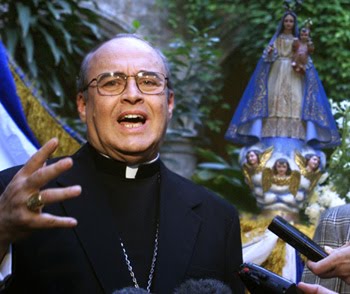
Omaha address by Cuban Archbishop Jaime Ortega sounds hopeful message that repression in Cuba is lifting
©by Leo Adam Biga
Originally published in El Perico
During a May 12 commencement address at Creighton University, Havana, Cuba archbishop Rev. Jaime Ortega described the uneasy journey the Catholic Church has navigated in the Communist island nation.
At a separate weekend event, Cardinal Ortega received an honorary law degree in recognition of his humanitarian work.
In introductory remarks last Thursday Creighton president Rev. John Schlegel, who’s visited Ortega in Cuba, praised the cardinal for “working relentlessly to mediate between the government of Raul Castro and the families of prisoners of conscience…Above all, Cardinal Ortega has proven to be a great pastor, a great leader, especially through challenging times, and a great priest.” Schlegel described Ortega as a “diplomat” seeking “the greater good, truth and justice.”
The estimated 125 attendees included Creighton faculty, Archdiocese of Omaha officials and members of Nebraska’s Cuban and greater Latino communities.
Speaking through a translator, Ortega charted the repression that followed the 1959 revolution that brought Fidel Castro to power. Ortega sounded hopeful about the new, freer Cuba emerging. He referred to frank, cooperative exchanges between the church and government authorities that recently brought the release of 52 political prisoners.
This avowed son of Cuba proudly declared, “I am a Cuban who lives in Cuba. I never wanted to live outside Cuba. It is a country I love with all my heart.”
He drew parallels between early Christian religious leaders serving their flocks amid oppression and clergy and pro-Democracy dissidents finding their voices suppressed under Fidel. He said rather than take a militant tack, the Cuban church followed a pastoral, passive approach.
“The Cuban bishops have tried to be shepherds in this way in Cuba,” he said. “Its role is not to confront the established powers.”
However, he says “the church is always asking for religious liberty, so that its followers can live their lives in peace.”
He outlined where the church and Cuba are today in comparison with the post-revolutionary period. “Initially,” he said, “there was a great acceptance of the revolution because of finding so many points of value with it.”
Within two years though, he said “very strong confrontation” and persecution distanced the church from the regime and the revolutionary fervor. He said priests were expelled from the country, Catholic schools closed, ministries and other expressions of religion curtailed and various “attacks” made on the church. He was among many young men in the church sent to labor camps.
The harsh measures, he said, “had a negative impact on the Catholic faithful” and “marked the memory” of older Cubans. He said, “This is a mark that is hard to erase.” While the bishops decried human rights violations, he said “the church as an organization was very diminished and had no means of communicating with its people.” He characterized the Cuban church then as “a church of silence,” adding, “The attitude of the church then was one of patience, perseverance, prudence.”
He said despite restrictions imposed on social, political, religious practices, fear of arrest and economic hardship, many Cuban Catholics remained faithful and risked much to speak out.
A turning point was a reflective, renewal process the Cuban Bishops Conference initiated in 1981, extending to every diocese, culminating with the 1986 National Ecclesial Encounter Cuba. “This constituted a very decisive moment for the history of the church in Cuba,” he said. It laid the groundwork for Pope John Paul II’s 1998 visit to Cuba. As a result, he said, “the church in Cuba let itself be known to the world and Cubans themselves realized there was in Cuba a church that was alive and dynamic.”
Since the conference and papal visit, he asserts the church has taken more of an active, public, missionary role and today is a church “that lives for its people,” rather than “wrapped up in itself,”” welcoming whoever comes to it.

Framing this empowerment, he said, is a new spirit of dialogue between the church and government, which he describes as “more fluid” under Raul Castro. In a Q & A after his address, Ortega said, “It has been much easier to find somebody with whom to dialogue. There seems to be a greater openness to changes.”
He’s encouraged by greater religious freedom, whose public manifestations include massive crowds for outdoor rites and a recently dedicated seminary.
On the activist front, he said an intentional process of “pastoral action” with authorities negotiated improved conditions for political prisoners, who were allowed to have contact with their families before finally gaining release. “Our humanitarian gesture was accepted,” Ortega said. He also alluded to recently announced Cuban social-political reforms.
With Cuba now thriving, he said its experience demonstrates “the human spirit should not be endangered or limited” and that liberation needs to come in both the spiritual and social life of people, adding, “It should never be necessary to negate God in order to enjoy human rights or to be active citizens.”
Ortega acknowledges that for victims of Cuban injustice “the baggage” and “suffering” remain. For “true reconciliation among all Cubans,” he said, there must be forgiveness and understanding — only then will the wounds inflicted under the old regime heal. Cuba, he insists, is moving on in acceptance and he suggests the rest of the world move on, too.
University of Nebraska at Omaha political science professor Jonathan Benjamin-Alvarado, who’s extensively studied Cuba, admires Ortega for “toeing the line for the purposes of advancing the church and its teachings and its ministry.”
Referring to criticism by some that Ortega’s been slow to press for more reforms, Benjamin-Alvarado says, “His approach perhaps wasn’t as quick as some would have liked, but the fact is it’s been successful. I think what he’s understood perhaps better than most was the limitations on what the church actually could do. He moved when he could and didn’t try to deal with issues he wasn’t able to have any answer or response to.”
Related articles
- Cuba Bids Farewell to Nuncio (onecatholicorg.wordpress.com)
- Cuban bishops: Country is slowly moving toward a democratic system (onecatholicorg.wordpress.com)
- Spain receive 37 more Cuban ex-political prisoners (foxnews.com)
Jesuit photojournalist Don Doll of Creighton University documents the global human condition – one person, one image at a time
Supremely talented photojournalist Don Doll, a Jesuit at Creighton University in Omaha, has been documenting the human condition around the world for five decades, shooting assignments for national magazines and for the Society of Jesus. He’s also a highly respected educator and benevolent mentor. The handful of times I have communicated with him over the years invariably finds him just returned from or prepping for his next jaunt to some faraway spot for his work. Now in his 70s, he has more than kept up with the technological revolution, he’s been on the leading edge of it in his own field, where he long ago went all digital and began practicing the much buzzed about convergence journalism that now routinely sees him file assignments in stills and video and for print, broadcast, and Web applications. The following story for The Reader (www.thereader.com) is from a few years ago and is one of a few pieces I’ve done on him and his work that I’m posting on this blog.

Jesuit photojournalist Don Doll of Creighton University documents the global human condition – one person, one image at a time
©by Leo Adam Biga
Originally published in The Reader (www.thereader.com)
When noted photojournalist Don Doll leaves Omaha on assignment, he generally goes to document the travails of poor indigenous peoples in some Third World nation and what his fellow Jesuits do to help alleviate their misery. The all-digital artist shoots both stills and video. Last spring the Creighton University journalism professor, named 2006 “Artist of the Year” (in Nebraska) by the Governor’s Arts Awards, reported on peasant conditions in Ecuador and Colombia with writer-photographer Brad Reynolds, whom he’s collaborated with for National Geographic stories.
Always the teacher, Doll will share his expertise in a Saturday Joslyn Art Museum class from 9 a.m to noon in conjunction with the Edward Weston exhibit. His work can currently be seen at: the Boone County Bank in Albion, Neb., where photos he shot along the historic Lewis & Clark trail are on display; and the Sioux City (Iowa) Lewis & Clark Interpretive Center, where his Vision Quest, 76 images of men, women and sacred sites of the Sioux Nation, shows now through August. His work is included in the permanent collection of the Joslyn, among other museums.
Many of the images he’s filed in recent years chronicle the work of the Jesuit Refugee Service, which ministers to exiles around the world. Doll’s traveled to many JRS sites. He’s captured the human toll exacted by land mines in Angola and Bosnia and the wrecked lives left behind by civil strife in Sri Lanka. He returned to Sri Lanka again last year to record the devastation of the tsunami and efforts by Jesuit Relief Service to aid families. He’s borne witness in Cambodia, Belize, the Dominican Republic, El Salvador and other remote locales. In 2005 he went to Uganda, where his words and photos revealed the “terrible” atrocities visited upon the Night Commuters of Gulu by the Lord’s Resistance Army. Doll estimates 15 million people are displaced from their homes by the war and the LRA. The human rights crisis there is but a small sample of a global problem.
“We don’t even know how many refugees there are in the world,” he said. “There’s probably 20 million internally displaced people and another 20 million who have been forced to leave their countries. I go to these terrible places in the world and try to tell the stories of people who have no other way to have their stories told.”
Making images of hard realities has “an effect” on him. “What does it do to you to photograph in these situations? I think it does something irreparable,” he said. “I mean, you carry those people inside all the time. It makes you aware of how poor people are and what awful things they go through.”

Even amid the horror of lost limbs and lives, hunger, torture, fear, there’s hope. He recalled an El Salvadorian woman who recounted how gunmen killed her daughter and four sons, yet declared, “‘I have to forgive them because I want God to forgive me.’ Well, the tears started coming down my eyes,” he said. “Here’s this poor, unlettered woman who lost five of her children in the El Salvador war and she’s saying, ‘I forgive them.’ Oh, my God, the insights the poor have.”
Balance for him comes in the form of the humanitarian work he sees Jesuits do.
“I try to tell what Jesuits are doing around the world in their work with the poorest of the poor. Not many people know this story of Jesuits in 50 different countries helping refugees. I’m so proud of being a Jesuit. I’m so impressed by these men,” said Doll, who celebrated 50 years as a Jesuit in 2005.

Two colleagues exemplify the order’s missionary work. One, Fr. Tony Wach, is the former rector at Omaha Creighton Prep. Wach aids refugees in Uganda, where he hopes to start a primary school and a secondary school and provide campus ministry for a nearby university. Doll tells his story in a new Jesuit Journeys magazine article titled “Fr. Tony’s Dream.” “He’s amazing,” Doll said.
The other priest, the late Fr. Jon Cortina, built the refugee town of Guarjila in El Salvador and began a program, Pro-Busqueda, to reunite war-displaced children with their families. Doll profiled his friend and ex-classmate on a “Nightline” special. Cortina educated many, even Archbishop Oscar Romero, to the plight of the poor. “Jon used to say, ‘We have the privilege of working with the poorest of the poor to help them.’ That’s what he loved about working up in Guarjila,” Doll said. “He loved those people and they loved him. He really lived the idea of liberation theology.”
Doll came to photography in the late 1950s-early 1960s as a young priest on the Rosebud (South Dakota) Sioux reservation, “where,” he said, “I discovered how to teach.” He said the experience of living and working with Native Americans, whom he made the subjects of two photo books, Crying for a Vision and Vision Quest, “changed my life. There’s something wonderful about being in another culture, being a minority and experiencing the values. It gives you a different perspective on your own culture because it enables you to see in a kind of bas relief your own cultural values and you can either recommit to them or reject them.”

The new values he’s assimilated give him a new understanding of family. “The whole kinship is a really beautiful thing about the Lakota people and how they hold one another in a very close relationship. That’s what you don’t see when you drive through ‘a rez,’ past a tar paper shack surrounded by cars that won’t run — you don’t see the powerful, beautiful relationships inside.”
Doll, who owns a tribal name given him by the Lakota Sioux, maintains ties with Native Americans, photographing an annual Red Cloud Indian School calendar featuring tribal children in traditional dress and mentoring students off ‘the rez’ at Creighton, where he’s proud of the school’s significant native population. He’s proud, too, of native students who’ve gone on to win major awards and jobs.
As much as he enjoys teaching, the pull of far away is always there. “I love to travel. My passion is to make pictures and to document visually what’s going on in the world,” he said. There are many places yet to visit. “I haven’t been to Russia, nor China, nor Australia, but I’ll get there.” His rich Jesuit journey continues.
Check out Doll’s work on his website magis.creighton.edu.
Related articles
- Spain indicts Salvadorans for 1989 Jesuit slayings (seattletimes.nwsource.com)
- Jesuit Block and Estancias of Córdoba (nty2010.wordpress.com)
- Omaha Address by Cuban Archbishop Jaime Ortega Sounds Hopeful Message that Repression in Cuba is Lifting (leoadambiga.wordpress.com)
- Documents Provide Key Evidence in Jesuit Case Arrest Warrant (nsarchive.wordpress.com)
Shakespeare on the Green: A summertime staple in Omaha
Before you get the idea that the only thing happening this summer in my hometown is the Omaha Black Music and Community Hall of Fame Awards and Native Omaha Days, here’s a heads-up for this year’s rendition of the annual Shakespeare on the Green festival. The popular event has been packing them in for performances of the Bard’s plays at Elmwood Park for 25 years. The following story for Omaha Magazine gives a brief primer for how the fest started and what to expect at it. This blog is full of stories about and links to Omaha cultural attractions. It used to be people complained there wasn’t enough to do here, but now it’s quite the opposite – there’s so much to do that it’s hard choosing among the bounty.

Shakespeare on the Green
A summertime staple in Omaha
©by Leo Adam Biga
Originally appeared in Omaha Magazine
When the annual Shakespeare on the Green festival returns this June and July, alternating two professional productions of the Bard’s work, it will mark the 25th season for one of Omaha‘s summer entertainment staples.
Over that time the free outdoor event has played to more than a half-million spectators in a tucked-away nook of Elmwood Park adjacent to the UNO campus.
The play’s certainly the thing at these relaxed evenings on the green and under the stars but the lively pre-show has its own attractions:
•food and souvenir booths
•interactive activities for youths
•live musical performances
•educational seminars to brush up your Shakespeare
•Two-Minute Shakespeare quizzes where the audience tries stumping the actors
•assorted jugglers, jesters and merrymakers.
On select nights Camp Shakespeare performances let school-age kids “speak the speech.” On June 26 Will’s Best Friend Contest invites dog owners to show off their pooches in Shakespearean splendor.
Co-founders Cindy Phaneuf and Alan Klem say the festival found a loyal following right from the start. The come-as-you-are ambience, bucolic site and free shows are hard to beat.
“We really woke up the space,” says Phaneuf. a University of Nebraska at Omaha theater professor.. “It’s a gorgeous location — 3.7 acres, naturally slanted, protected by trees, gobs of parking. Once you go down the hill it’s like you’re in a magical little world.”

Cindy Phaneuf
Whether a brooding tragedy or a lilting comedy an average of 2,000-plus folks flock to each performance. This year’s contrasting shows are A Midsummer Night’s Dream and Hamlet.
Phaneuf says some favorite memories are “the hushed silence of the crowd, the laughter that ripples from the front to back row and spontaneous standing ovations.” She likes that families make Shakespeare “part of their summer… part of their growing up.” Many fans return year after year to soak up the language, the outdoors and the communal spirit.
“It was always about the highest quality art we could possibly create but we also wanted an event where everyone felt comfortable,” says Phaneuf. “Shakespeare seems somewhat elitist but then we put it in an open environment, in a park, right in the middle of the city and it’s very inviting.
“The other thing that’s made it so lasting is we wanted everyone to feel they owned it — that it didn’t just belong to the board and to the people making the plays. If you cater only to a small faction it will not continue to grow and thrive, it will start to wither and die, and so that was really important to us.”
She says the festival alleviated a paucity of the Bard’s work performed locally and gave theatergoers a fix for for the usually dormant summer stage season.
“There was such a hunger and need for it,” she says. “There’s lots of theater in town but very little Shakespeare.”
While some theaters’ seasons now extend into summer the fest’s among Omaha’s only professional venues. Equity actors from across the nation headline their.

Alam Klem
Creighton University professor Alan Klem says the event not only presents good theater but supports and grows the local talent pool by hiring professional actors from the community and “bringing in students from Creighton and UNO who are working towards becoming actors.” Phaneuf says for many students it’s their first professional gig. Some, like Jill Anderson, earn Equity cards in the process.
“It just ups the ante and the expectation,” Phaneuf says. “It’s a great training ground.”
The festival’s only one element of the nonprofit Nebraska Shakespeare. Vincent Carlson-Brown and Sarah Carlson-Brown interned as UNO students, then worked through the ranks and today are associate artistic directors.
Besides being a learning lab and career springboard for emerging talent, thousands of high school students attend the Music Alive! collaboration with the Omaha Symphony. Nebraska Shakespeare also tours a fall production to schools throughout the state, complete with post-show discussions and workshops. Klem says these educational efforts are “as important as doing the plays out in the park,” adding that there are plans to expand the tours.

Klem and Phaneuf, who go back to their undergrad days together at Texas Christian University, say they knew they were onto something big when audiences turned out in droves year one. His experience founding Shakespeare in the Park in Fort Worth, Texas gave Shakespeare on the Green a head start. The Omaha fest has always been a collaboration between UNO and Creighton.
The two theater geeks served as co-artistic directors the first six years. Then Klem went onto other things — returning to act roles. Phaneuf continued in charge until resigning after the 2009 festival, when budget cuts resulted in one show rather than the usual two. The festival’s since rebounded. Klem’s back as artistic director and Phaneuf remains close to the organization.
Volunteers are critical to putting the event on. Phaneuf recalls once when high winds blew the set down during the day the stage crew and volunteers rebuilt it in time for that night’s show. She says that show-must-go-on dedication is what she appreciates most: “It’s people pulling together to make this happen. It’s a cooperative venture.” Klem marvels that the same spirit infusing the event 25 years ago still permeates it today.
Schedule-
A Midsummer Night’s Dream: June 23-26, July 6, 8, 10 and Hamlet: June 30, July 1-3, 7, 9
Performances start at 8 p.m. Booths open at 5:30. The pre-show starts at 7.
For more info., visit http://www.nebraskashakespeare.com/home.
Related articles
- Great Plains Theatre Conference Ushers in New Era of Omaha Theater (leoadambiga.wordpress.com)
- In the land of Shakespeare (everythinginflux.wordpress.com)
- Much Ado About Shakespeare (mfcartaya.wordpress.com)
Sam Cooper’s freedom road

Image by vaXzine via Flickr
I saw in the paper one weekend that someone I profiled a couple years ago passed away. Sam Cooper was a Douglas County Court judge in Nebraska. I believe my late mother, Gemma Pietramale, was a classmate of his at now defunct Mason Elementary School in Omaha. He was Jewish, my mom Italian, and the school a veritable melting pot of European ethnicities. A diminutive man in terms of height, his stature in local judiciary circles ranked high, as much for his fair, gentle manner as for his legal acumen. When I met with he and his wife it was clear to see he was on the fragile side physically, but his mind and spirit were sharp, and his abiding love for America and its freedom was evident in the way he spoke almost reverently about the opportunities this nation provide his immigrant family. My story on Cooper originally appeared in the Jewish Press, and I offer it here as a remembrance of this kind little man with a big heart.
Sam Cooper’s freedom road
©by Leo Adam Biga
Originally published in the Jewish Press
Retired Douglas County Court Judge Samuel V. Cooper’s immigrant parents always told him anything is possible in America. They were living proof. Sam, too. Like them, he came from “the old country,” and like they did he’s taken what America’s offered and made the most of it.
His success as a lawyer, as a Democratic Party operative and as a judge fulfilled the family’s dream of becoming productive American citizens. His life became the embodiment of the Great American Ideal he once wrote a prize-winning essay about. None of it would have happened without his family having the courage of their convictions and leaving totalitarian Europe for freedom in the United States.
He said his father, Martin Cooper, made his way here after escaping the turmoil of war-torn Europe. Martin (Mayer) was a Russian Army conscript in World War I and was taken prisoner by the Austrian-Hungarian Army. Once released, he yearned to follow his brother Harry to America. Harry ended up in Omaha, where he built his own successful construction company. His Cooper Construction Co. built the old Beth Israel and Beth El Synagogue buildings.
But before Martin made the leap he first settled in Chelm, Poland. That fateful move led to him meeting his future wife, Ida (Chaya), who operated a candy store. The couple married and began a family. Their two oldest children, Jack and Sam, were born in Chelm.
Memories of Chelm are still with Cooper. How, for instance, his family lived in an apartment complex with a central courtyard that contained a common well from which residents drew water.
Cooper said his father could no longer ignore the itch to find something better and, so, in 1924 he embarked on a new start for the family by going on ahead of them to America. In classic immigrant tradition he planned to establish himself in some trade and then send for his wife and kids to join him. No one could have imagined how long it would take for the family to be reunited.
Martin worked for a time with his brother in the construction company but found his niche in the grocery business, said Cooper. One of the stores Cooper’s father worked for was Tuchman Brothers. With $500 his father saved, Cooper said, the enterprising man opened his own grocery store at 21st and St. Mary’s Avenue. By 1929, nearly six years after leaving his family in Poland, Cooper’s father finally saved enough to buy passage for his wife and two sons.
The image of saying goodbye to friends and schoolmates at the seder he attended is still fresh in Cooper’s mind. He recalls sailing on the S.S. Leviathan, in steerage, and arriving in New York. After a few days there a train took him, Jack and their mother to Omaha. He recalls nobody was at Union Station to meet them. A taxi took them to the address Martin had sent. The reunited family was the subject of stories and photos in the Omaha World-Herald and the Omaha Bee News.
If they had stayed in Poland just a few more years they might well have become victims of the Holocaust. Family that remained behind were never heard from again.
Sam was 8 when he arrived in Omaha. He and his family lived in back of the store.
His parents had little formal education, he said, but were quite literate and well-informed. He said his “very well read” father “read The Forward religiously. The radio, of course, had news about world events and he was very up on that.” As his father “felt his foreignness,” he said his dad took pains to improve his English and thereby better assimilate. Growing up, Cooper worked in his father’s store.
He said his mother was “a simple woman” who had small aspirations for him — desiring only that he find some stable work, perhaps a store of his own. She spoke of nothing high falutin, such as the law. Besides, where would the money come from to study a profession in college?
Cooper was a good student at Mason Grade School, where he received special help with his English language skills. He got so proficient so fast he became editor of a mimeographed school newspaper. The oratory abilities that would help make him a lawyer and, later, a judge, found him serving as MC during the dedication for a school addition. But it was at Central High School where he really shined. Active in speech and debate, his coach encouraged Cooper to enter a national essay contest conducted by the Ladies Auxiliary of the Veterans of Foreign Wars.
His entry, entitled “The Benefits of Democracy,” swept local, regional and national honors, earning Cooper a $1,000 grand prize that he used to pay his way through Omaha University. He wrote the essay at a pivotal, anxious time in world history. It was 1940. Nazi Germany was on the march. Great Britain was under siege. The entire world would soon be at war. Most agonizingly for Cooper, Jews were being persecuted back in the country of his birth.
In a fervid paean to his adopted homeland, the young patriot expressed his love for America and its democratic ideals, contrasting the freedom he and his family enjoyed here with the tyranny they would have otherwise faced abroad.
“Democracy to me is not something abstract and far off. It is with me at home, on the street, at school…It is like the very air I breathe. We do not have to sit on a special bench, nor wear a certain type of clothing…None of us need fear that somebody will report us to a storm trooper. We can read any book, newspaper or magazine that is published and they are not censored. We can go to sleep at night and be assured that we will not be awakened and be dumped across a border. We can awake in the morning and hear footsteps and know it is the milkman, not the gestapo.”
Clearly, for Cooper, the unfolding tragedy in Europe was not an abstract or remote problem. Although his parents were not political, he said they, too, followed what happened. He said his father “did get involved with some of the newly arrived people. They met like on Saturdays and discussed things — the news especially. He also helped a lot of refugees after the Holocaust to get settled.”
Economics intrigued Cooper while at Omaha U. but the practical side of him ruled the field out when, he said, he discovered “you can’t make a living at it.” His studies were soon disrupted by the war. Drafted in the Army in 1943 he ended up in the Quartermaster Corps, serving in England and Belgium. After Germany’s defeat in early 1945 he and fellow servicemen were on a ship that sailed through the Panama Canal to the Philippines. They were en route to the South Pacific to supply troops for the planned invasion of Japan. When the atomic bombs were detonated over Hiroshima and Nagasaki, the world’s bloodiest war finally came to an end. A few months later Cooper headed home.
Inspired by a friend from his youth who became a lawyer Cooper used the GI Bill of Rights to study law at Creighton University, where he completed an accelerated program that saw him get his degree in two years. This Jew delighted in the Jesuit rigor he found at Creighton.
“I enjoyed the intellectual atmosphere. Most of the professors would stir up something in your mind.”
To this day he feels indebted to the framers of the GI Bill for giving him the opportunity to complete his higher education and enter a profession that became his career. He takes offense to any suggestion that, for example, the Social Security Act was the greatest legislation ever passed. “The GI Bill is a little bit above that,” he’ll tell you.
Upon passing the bar Cooper first practiced law with Joe Friedenberg. As the courts’ Referee in Bankruptcy Friedenberg appointed the young attorney Trustee, which meant Cooper dealt with creditors and collected assets from those filing bankruptcy, netting him $5 for each case he cleared. He applied his fee toward his office rental. Later, attorney Loyal Kaplan tabbed Cooper to join him in a practice dealing with interstate and intrastate commerce applications for truckers’ routes.
Cooper next joined Jack Mayer for “a whopping sum of $50 a month and office space.” He certainly wasn’t getting rich in law. Indeed, he was barely getting by. Things were tight, especially after he married the former Judith Steinhorn of Dallas, Texas and the couple started a family. Things weren’t much more lucrative after he, Norm Denenberg and Ed Mullery formed their own law firm.
Samuel Cooper
“I think we took any type of law business we could get, including divorces, filings for bankruptcy, drunk driving cases,” Cooper said.
He first entered politics in the mid-1950s. His abiding love for the democratic process and current events led him into that rarefied sphere.
“I got interested in politics,” is how he simply puts it.
Helping spur his interest were his struggles making ends meet as a lawyer. “I had time on my hands,” he said. “The law practice wasn’t going that great…” The opportunity was there to give back to America and he chose to take it.
“In the early years I ran for the original City Charter Convention that we’re operating under now in Omaha,” he said. “There must have been about 75 candidates running for 15 positions. The idea was to write up a modern charter. We met several times. We hired an expert that had done it in other places.
“One of the features, by the way, we placed in the charter was a provision requiring the mayor to appoint a review committee at least once every 10 years to assess if any alterations were needed in the charter. And I got appointed to two subsequent Omaha Charter Study Conventions.”
The first time around, in the ‘50s, he said, “I guess I was one of the younger members of the convention.” By his second time around, in the mid-’60s, he was a veteran politico who’d done his share of canvassing and campaigning.
“I worked for the Democratic Party on behalf of Adlai Stevenson, who was sort of a hero of mine. He sounded so well in his oratory.”
Cooper beat the bushes on voter registration drives and getting people out to vote for the Democratic ticket. Twice Stevenson opposed Dwight Eisenhower in the presidential general election and twice he lost. The egg head couldn’t defeat the war hero. Cooper said the dichotomy of the candidates then reminds him of the current presidential race that pits an intellectual dove in Democrat Barack Obama against a war hero hawk in Republican John McCain.
Election nights particularly appealed to Cooper. Whether his candidate won or lost, it was the culmination of the democratic process in action. Besides, he said, he enjoyed the party atmosphere on those electric nights full of anticipation and excitement. The hopes and efforts of weeks of work came to a head.
Omaha lawyer and political boss Bernie Boyle introduced Cooper to then-Nebraska Governor Ralph Brooks, who was responsible for Cooper becoming further entrenched in the political apparatus when he appointed the up-and-comer Douglas County Election Commissioner. “That was a fun job,” Cooper said. Again, he most fondly recalls the election night buzz that prevailed as ballot boxes came in and the results tallied. His wife made things homey by bringing in pans of baked chicken and all the fixings to tide Sam and his staff over as they worked into the wee hours.
Asked what he thinks of the ballot irregularities that have surfaced in recent U.S. general elections. he said, “We didn’t have any of those problems” under his watch at city hall. The controversy attending the disputed Florida results did not happen when Cooper presided over a recount here. When illness forced incumbent John Rosenblatt to retire in ‘61, the mayoral race came down to a dead heat between Jim Green and James Dworak. Green lost by a slim margin — a few hundred votes, Cooper recalled. The law required a recount. Cooper oversaw the process and he said the result “came pretty close to that same number.” End of story.
Cooper’s calm, cool demeanor and professionalism in that potentially volatile situation would become his trademark.
In 1964 Cooper once again took a leadership position within his party by serving as Douglas County Democratic Party Chairman, an experience he termed “great.” He said that year’s state convention “was one of the finest conventions we’ve seen here.” President John F. Kennedy had been assassinated the year before and as a memorial Cooper had printed “a sort of farewell” salute with photos and sayings of the slain leader of the free world.
By the fall of ‘68 the nation was reeling from the assassinations of three more leaders who inspired hope — Malcolm X, Martin Luther King Jr. and Robert Kennedy. Civil unrest plagued many big cities. Anti-war protests mounted. Amid this incendiary backdrop the rancorous Democratic National Convention unfolded in Chicago, where youth demonstrators were brutally dispersed by city boss Mayor Richard Daley’s thug police force outside the convention hall.
Cooper was there as an alternate delegate — not in the melee on the streets but inside the contentious, smoke-filled convention that finally nominated Hubert Humphrey. Chicago wasn’t his first national convention but it was his most memorable. While he didn’t witness any overt violence with his own eyes he said the wire mesh covering the windows of the bus that transported him and fellow delegates from the hotel to the hall was a stark symbol of the discord.
“We didn’t see much of the demonstrations going on,” he said. “We heard about it. Speakers talked about it.”
Reform legislation in the Nebraska Unicameral aimed at modernizing the county court system resulted in Cooper throwing his hat in the ring with other lawyers vying for a spot on the bench. Cooper won election in ’72 and later was retained. He said James Moylan was “very helpful in my election.”
Wearing the judge’s robe seemed a good fit for Cooper.
“When the opportunity came along,” he said, “it looked like steady money coming in and I thought I’d like the position. People said I had the temperament for it, and I think I did. I’d listen to both sides fairly and try to do the right thing in the case.
Did he enjoy the position as much as he thought he might? “Yes, very much so,” he said, adding he liked “the contact with lawyers and the contact with cases themselves.”
The country court’s “high volume” docket kept things humming. “I mean, we didn’t shy away from cases,” he said. “We had multiple jurisdictions. We had to get things done, which we did. We all kept busy. We had to be there at a certain time to start the court and to process the cases. On the other hand, we usually got through by 4:30 or something like that.”
He liked the variety of cases he presided over — from criminal to civil to probate matters. Another judgeship, perhaps in a higher court, never interested him. After 32 years on the bench he retired in 2005.
If his years on the bench taught him anything, he said, it’s that “it’s far more important to be fair than to be tough. It’s important not to lose patience, to listen and to give everybody a fair hearing.”
He still keeps his hand in the law by volunteering as a mediator with the Douglas County Prosecutor’s Office. In a non-binding atmosphere he meets with parties embroiled in legal disputes to discuss their case, putting his skills for communication and deliberation to work, sometimes getting the two sides to settle out of court or to drop the matter all together.
One of his four children, son Justin Cooper, followed him into the profession. “It’s nice to have another lawyer in the family,” the proud papa said.
Some time ago Sam Cooper wrote down reflections about his life. The gratitude he expressed in middle-age is of a man who’s never grown cynical or bitter about the state of the nation that he loves:
“In looking back over those years I consider myself a very lucky person. Lucky to have missed the Holocaust in Poland. Lucky to have come to America, a country of great opportunity, a country that has been very good to me. Lucky to have missed being injured or killed in my Army years. Lucky to have been educated as a lawyer under the GI Bill…Lucky to have become a judge, to have a loving wife, a happy marriage and four children who have grown into exceptional and successful adults and parents, and 11 grandchildren of whom I’m very proud to be my offspring.”
The man he’s become is very much what he imagined as a boy, when he wrote these words as a salute to the democratic ideals that offered him the opportunity to be whatever he wanted to be:
“Democracy is much more than the declaration of independence, the constitution and our laws…It is beyond paper and ink. There is something about the American people that continually seeks freedom. Perhaps it is our heritage and principles. Perhaps it is the ideals that have so long been embedded in our hearts. Perhaps it is the realization that men can live together in peace and happiness. Whatever it is I am glad I might take part in these benefits…I hope I can find my place in this American democracy.”
Sam Cooper found his place all right — as a dedicated public servant and defender of liberty and justice for all. At age 86 he lives the promise of America every day.
Related articles
- Back in the Day, Native Omaha Days is Reunion, Homecoming, Heritage Celebration and Party All in One (leoadambiga.wordpress.com)
- Sun Reflection, Revisiting the Omaha Sun’s Pulitzer-Prize Winning Expose on Boys Town (leoadambiga.wordpress.com)
- Dick Holland Responds to Far Reaching Needs in Omaha (leoadambiga.wordpress.com)
- A. Marino Grocery Closes: An Omaha Italian Landmark Calls It Quits (leoadambiga.wordpress.com)
- Community and Coffee at Omaha’s Perk Avenue Cafe (leoadambiga.wordpress.com)
Sacred Trust, Author Ron Hansen’s Fiction Explores Moral Struggles

Image by National Media Museum via Flickr
Word for word, phrase for phrase, thought for thought, there may be no better American writer of the last quarter century than Ron Hansen, an Omaha native whose body of work is impressive for its breadth and depth. He is perhaps best know for two of his earliest novels, The Assassination of Jesse James by the Coward Robert Ford and Mariette in Ecstasy. I’ve had the pleasure of reading those and other novels by Hansen, who has graciously given me a handful of interviews over the years. As time goes by I will post other Hansen stories I’ve written. This one appeared not long after the release of his Hitler’s Niece and while he was adapting an unproduced screenplay of his into a book, Isn’t it Romantic?. His sheer command of language is astounding. His research and detail overwhelming. He’s also a fine storyteller. Then when you add to this the spiritual themes and currents that occupy him in real life, and you have a rich reading experience.
My story appeared in the Omaha Weekly, one of at least three different publications that’s published my Hansen work.

Sacred Trust, Author Ron Hansen’s Fiction RExplores Moral Struggles
©by Leo Adam Biga
Originally published in the Omaha Weekly
Whether exploring the worlds of saints or sinners, real moral questions and struggles swirl at the heart of author Ron Hansen’s work, which reflects this devout Catholic’s abiding interest in faith. His novels are explorations in the ethical choices characters make and the consequences that ensue. In The Assassination of Jesse James by the Coward Robert Ford (Knopf, 1983) Hansen essayed the kinship and treachery of an outlaw family. In Mariette in Ecstasy (Harper-Collins, 1992) he chronicled a young novitiate’s ardent love for God growing so intense that it overwhelms her mind, her body and the convent she becomes a curiosity and outcast in.

In Atticus (Harper-Collins, 1996) he brooded on the legacy of a strained father-son relationship, the futility of ever fully knowing someone and the nature of forgiveness. In Hitler’s Niece (Harper-Collins, 1999) he examined the brewing evil of Hitler in the 1920s and early ‘30s through the prism of the only woman the despot ever loved — the fuhrer’s young and innocent niece Angelika “Geli” Raubal, who was destroyed by her uncle.
In his life and in his work, Hansen, an Omaha native, seeks the spark of some connection with the sacred and the ethereal. It gives him sustenance and constitutes his muse. “Some of my favorite moments are late nights with other people talking about miraculous experiences in their lives or times when they felt the hand of God or the solace of God and they learned more about themselves or about God’s benign mercy,” he said in an interview during a recent Omaha visit to deliver the William F. Kelley, S.J. Endowed Lecture at his alma mater, Creighton University. “Those things are kind of ways of inspiring you and bucking you up. It’s a way of becoming aware of another world that’s totally unseen.”
It was while struggling with Atticus that Hansen felt the healing presence of God.
“I’d been working on Atticus and it was going badly,” he said. “This was back in 1985. I’d written like 120 pages that were rotten. I was in Cancun — throwing rocks into the ocean late at night as the waves were crashing in. I was really angry about my book and about the hard time I was having finding a teaching job. I was feeling really awful. I was full of self-pity. And I thought, What’s going to become of me? And then I just had an incredible sense of God laughing. It was a sense of Him saying, If you knew what I know, you wouldn’t be so worried. And I realized it was all going to come out all right, but it wasn’t going to be immediate. I just had this feeling of calm. Almost everybody has the same experience when they have this kind of God moment. You just feel at ease about things. So, I put the book away and started other books.
“I went back to it and it was terrible still. And I just kept going back to it. And then, finally, when Mariette was published I had one book left on a two book contract and I said, ‘Oh, I’ll just go back to this one (Atticus).’ It took me a long time to rewrite it. I kept trying to use the words I used already. But it was almost like somebody else had written that. I was not that person anymore. I finally gave up on that and started writing totally new words, and then it worked fine. I found that sense of God smiling and saying — Take it easy, kid — made me take it easy.”
According to Hansen, the writing process itself is a somewhat mysterious and metaphysical experience that finds the writer drawing on resources he is not always fully aware of or in control of. “Writing well is a form of a waking dream,” he said. “It’s almost the same thing that happens when you’re in a dream state. Images start to occur. You don’t know where they come from. And you try and fit them together. Often, you have a mental picture of something and you see characters in relationship to each other, but you don’t know exactly what they’re going to say to each other. And sometimes that’s where the zest comes — when you hear something surprising and just right that comes from one of them. Part of it is because it’s really your subconscious that seems to be writing the novel at its best. It’s your conscious mind that revises it, but it’s the subconscious that supplies all the scintillating details — the colorations you could not have thought of yourself.”
Whether it’s the spirit or the subconscious moving him, Hansen said, it is no accident these voices speak to him because he is open to the possibility of such a communion happening in the first place. “Partly, I think it’s because I want these things to happen, and some people don’t want them to happen. They might get spooked by them. It’s part of the writer’s equipment to seek out those experiences and to live them fully. And other people are maybe more guarded and maybe necessarily so, so they can’t be as available to that sort of thing. I always describe a writer’s life as being different from others in that some people kind of have venetian blinds that are closed and the writer’s are open, so that everything can come in. And that’s what makes writers go crazy. That’s what makes them obsessive and everything else. But it’s also one of the things they need to do.”
If creative writing flows out of some deep well fed by intuitive streams, then it is easier to appreciate how something like a novel comes into being as a complex and coherent whole from a seemingly disparate and random collection of ideas, themes, issues, preoccupations, incidents, places and characters. The way Hansen sees it, a novel only reaches its final shape after the novelist has played a game of sleuth with himself and all the narrative threads dangling from his imagination. He said for most of the writing process the novelist is only aware of bits and pieces of what the book will eventually comprise — discovering the contents as he goes along. During that creative journey, the writer must be ready and willing to go in many directions and to follow many leads, some of which may be dead ends. It is only in searching out and sifting through the many loose story strands, that the nut of the novel is finally revealed and its elements tied together.
“Well, it’s as if an alphabet exists and you don’t know all the letters to the alphabet,” he said. “You might know A, J, L and Z, and with that foundation you then have to fill in all the rest. It’s like when scholars tried to translate the Egyptian hieroglyphics. They had a few words that they knew and then they’d go from there. I think the same thing is true with writing a novel. You know, for example, certain things about it and then you have questions about other things, and then the questions will reveal things as you write the novel. Knowing a few things gives you the confidence that you can actually lay it all out there.
“But you’re still kind of writing in the dark no matter how well you plan. There’s all kinds of spontaneity that comes into the novel. There’s all kinds of surprises and wrong turns that you can take. So, you have to be disciplined enough to kind of say, This is tangential or doesn’t belong, or, I did this badly, or, Maybe I don’t need this scene after all, or, This character doesn’t belong in this novel — he belongs somewhere else. All kinds of changes happen in the process of writing. It’s part of the fascination but part of the drudgery as well.”
Now that Hansen has created a fairly large body of work, he finds himself running up against the same dilemma a writer friend of his faced a while ago. “I don’t think it’s legal anymore, but a friend of mine got a tax write off by claiming his creative ideas were being diminished year by year. He was actually able to depreciate his intellectual capital. And, he was right. How many ideas can you have, you know? In my own writing, there’s all kind of metaphors I can’t use anymore because I’ve used them already. Characters I can’t have. Situations…Certainly, Stephen King has shown you can exhaust your own ideas.”
For Hansen, “part of the interest” and the challenge of writing is tapping his inner being to better understand himself and the world he inhabits and interprets. It is an ongoing search for answers — much akin to the spiritual journey that Hansen, who has a master’s degree in Spirituality, has taken. It is a journey, he said, that has no end. “Yeah, I don’t think anybody ever reaches a stopping point or, at least, they shouldn’t. I mean, God isn’t knowable but you learn a little bit more and more and you learn a little bit more about yourself. I guess I don’t really know myself very well. I think I know who I was 10 years ago and I can look back at the past and understand everything about myself, whereas in my present circumstances I’m just poking around like everybody else.”
As far as injecting himself into his work, he avoids drawing closely on his own life. “I’m not very good at autobiographical writing,” he said. “The only time I ever really write autobiographically is when I write nonfiction (as in his new book of essays, A Stay Against Confusion, Harper-Collins, 2001). I want to have my anima come through in my fiction rather than who I am right now or who I seem to be.” He also knows himself well enough to shy away from certain projects that are not a good fit. “In terms of my strengths and weaknesses, there are some types of writing I wouldn’t attempt and some kind I know I have a propensity toward. There’s certain novels that won’t ever suggest themselves to me because I know I’d do them badly. Among the genres I could never do are fantasy and science fiction because I just don’t have that yen to do them. On the other hand, I like historical writing.”
In much of his historical writing, which ranges from the misadventures of the Dalton gang in Desperados (Knopf, 1979) and the machinations of the James gang in Jesse James to the unholy union of Hitler and Geli Raubal in Hitler’s Niece, Hansen has been drawn to outlaw figures. He said a beguilement with practitioners of left-handed forms of human endeavor is a natural for writers, who share an outsider’s perspective with the lawless, the rebellious and the fringe dwellers of the world.
“Outlaws are in some way marginalized, but also they live outside the world of convention. I think most writers, too, feel marginalized in some way and they feel they live outside conventional rules and boundaries. It doesn’t mean they’re all breaking windows. I think what it means is that the way most people live their lives is unfamiliar to the writer because it has to be,” he said. “I think most writers begin wanting to be writers because they feel like, Oh, I’m different, and they feel somehow they don’t fit into the normal pattern of things, and so consequently they have a sympathy toward outlaws. There’s a tendency among writers to feel like these guys (outlaws) are just misguided writers. Also, I think a lot of outlaws are really control freaks in their own way. And I think writers are, too. They want to form their own world and have complete control over all the characters in it. That’s what happens to a lot of outlaws, and that’s why they keep running up against the law.”
In his literary sojourns Hansen plumbs the depths of his conflicted characters’ souls, whose shadows and secrets are revealed in a world come unhinged by sudden shifts in the terra firma. Hansen said his own world view has taken on certain fatalistic shadings as the result of dramatic losses and reversals he has observed in people’s lives. “A good of friend of mine was killed in a motorcycle accident when I was a kid and another friend was killed in a motorcycle accident when I was older,” he said. “And you realize it all can change in an instant.” He feels literature is fertile ground for playing out in the mind’s eye how one might react to such dire events in real life. “I think writing is a way of being precautionary,” he said. “It’s a way, like in dreams, where you kind of forecast a situation you wouldn’t want happen and see how you would respond to it. So, in some ways, it’s kind of a dress rehearsal for tragedy. You have some kind of preparation and a sense of calm at a point where you otherwise panic.”
In the case of writing Hitler’s Niece, Hansen was compelled not so much by a desire to imagine himself struggling in the web of evil but by a desire to weave an historically-based story that offered up a cautionary tale about the dangerous lure of evil. He explained how and why he came to devote months of his life to researching the book. “I was reading a biography of Hitler and in there the author said that Geli Raubal was the only woman Hitler ever loved or would ever consider marrying and that Eva Braun, who we know much more about, was just a kind of mistress he had sex with. Hitler used to say to his secretary that Eva was ‘a woman I have at my disposal.’ And, of course, it’s symptomatic of Hitler that he would commit suicide the day after his wedding.”
For Hansen, the real attraction to telling Geli’s story, which is also pre-war Germany’ story, was that she “knew Hitler when all his evil and his power was incipient — when he was just a failed politician and a guy who made his money from giving speeches, but did nothing else. That he was a person she really couldn’t imagine doing all the things he ended up doing was fascinating to me. And, also, it became a kind of moral lesson of how we get sucked in by evil. Of how a poor girl becomes a groupie, essentially, to her uncle. And how he sucks her in and imprisons her with blandishments and how for awhile she tries to turn away from the bad side of her uncle. But then she realizes that this isn’t just a cranky guy with terrible ideas about Jews, but that he’s crazy and dangerous and she tries to escape, and that’s how she dies.”
According to Hansen, part of what he tried to do with Hitler’s Niece was help readers understand “how Germany could fall for” Hitler’s repugnant diatribe and help turn his doctrine of hate into a nationalistic movement. He hopes that lesson gives us pause in considering our leaders today. “As a famous quotation goes, ‘The only reason to write history is to give lessons for the future,’” he said. “So, all we can do is identify those qualities in a political leader that could lead to a Hitler. I think people like Hitler make a deliberate choice for evil, but they disguise it as well as they can. So, Hitler would come across to most people who knew him as incredibly charming and suave. People get deluded. I think we have politicians today who are like that. If you met them you would say, Oh, what a wonderful guy, yet you know down deep there’s a kernel in there that in many ways is opposed to what is right.”
A moral universe filled with choices pervades Hansen’s thinking and writing. How his faith colors his work is something he frequently addresses in lectures and essays. In his April 7 talk at the Alpha Sigma Nu Dinner at Creighton University, he delivered a lecture entitled “Hotly in Pursuit of the Real — The Catholic Way,” part of whose title he took from a quote by another famous Catholic author, the late Flannery O’Connor, who said it is the obligation of a writer to be in hot pursuit of the real. On the eve of his talk, Hansen explained what he hoped to convey: “I’m trying to talk about not only how one finds one’s vocation as a writer, but how being a Catholic that might be somewhat different than it is if you were a Jewish writer or a Protestant writer. I’m trying to identify those kinds of characteristics. I talk about my faith and how it affected me. For instance, growing up with the Catholic liturgies, the reverence for saints, the sacramentality, the sense of God being imminent but being distant — all those things helped my formation as a writer.”
Outside his faith, among the strongest influences on his writing have been the teachers in his life. While attending the Writers Workshop at the University of Iowa, he came under the sphere of noted American author John Irving, with whom he lived. “I learned from him how to live the life of a writer,” Hansen said. “How to keep on producing books, how to be focused, how to be disciplined, how to manage a life while writing.” Over a period of four summers at a writers conference in Vermont, Hansen found a mentor in the late John Gardner. “I really liked him as a teacher. He was a very generous person with his time and with his intelligent reading of your manuscripts. I kind of modeled myself as a teacher after him.” And at Stanford University Hansen became a devoted student of John L’Hereaux’s, who years before as a fiction editor at Atlantic Monthly gave Hansen “the first sign I had that maybe I could do this (write professionally). He was the person who helped me with my first novel, Desperadoes.”
Teaching, which is how Hansen has supported his writing the last couple decades, enriches his work as well. “There’s that old saying, How will I know what I think until I see what I say. And teaching gives you all kinds of opportunities to say things that you might not normally address,” said Hansen, a tenured professor in the English Department at Santa Clara University. “Just as writing workshops allow students to see all the different ways a story can go wrong, which will help them avoid those mistakes, the same is true for the teacher. I’ve read thousands of stories in class, and so I’ve seen the ways stories go wrong — so I don’t make those mistakes.” He said for some writers teaching “can have a stultifying effect in that you expend so much of your energy addressing other people’s writing problems that you feel like you’ve written yourself and you don’t do a lot of writing. But that’s not true for me. I do all my work for school at school and all my own work at home, and I don’t let them infiltrate. And dealing with young people who are full of energy about the writing process can be energizing as well.”
Hansen, who never signs a contract until a book is done (“It gives me more freedom.”) is now adapting an unproduced screenplay he co-wrote into a book. “I don’t know if it’s a novella or a novel. I know the dialogue works and the situations are funny, but I don’t think the tone is exactly right. It’s about a French couple who have the bad idea of traveling through the United States as tourists on a bus. They get waylaid in a small town in Nebraska where they’re taken on as kind of mascots for the festival held there. It’s full of misunderstandings and sliding doors and French farce.” Nebraska has figured prominently in several Hanson short stories, most notably in the collection of stories published as Nebraska. He said having some distance from his roots helps him write about them. “I don’t think I could write about Nebraska while living in Nebraska. It’s easier when you’re away from home, partly because it becomes the Nebraska of your imagination, which is much more interesting than the real thing.”
Related Articles
- Never Reading Enough: A New York Affliction? (cityroom.blogs.nytimes.com)
- Surfin’ (benpeek.livejournal.com)
- Books of The Times: An Affair, a Murder, a Sensation (nytimes.com)
- ‘Guilty Passion’ Leads A Housewife To Homicide (npr.org)
- Surge of creativity sustains writer Ron Hansen (sfgate.com)
- Omaha Lit Fest: ‘People who like this sort of thing will find this the sort of thing they like’ (leoadambiga.wordpress.com)
Bob Gibson, A Stranger No More (from my Omaha Black Sports Legends series, Out to Win: The Roots of Greatness)
Omaha‘s produced many black sports legends, and I’ve had the privilege of meeting, interviewing, and profiling most of them. Arguably, the biggest name of this group is Bob Gibson, the Major League Baseball Hall of Fame pitcher. The following story for The Reader (www.thereader.com) introduced me to Gibson, who had agreed to an hour or so interview and thereupon shocked and delighted me when he ended up giving me almost five hours. The occasion for the interview and story was a charitable golf tournament he was starting up. He had no idea who I was and by rights I had no business getting that much of his time, but I believe he indulged me because, one, he was motivated to get the word out about his new event, and two, I had done my homework, which I assume he respected. Also, not long before the interview his second autobiography had come out, and so he was probably also interested in promoting that. He also had me and a photographer over his home for another couple hours. Whatever the reasons, I’m glad he did share himself with me so generously, as it led to this quite extensive piece and a few others. Look for more Gibson posts. There is a second Gibson story already on the site, entitled “My Brother’s Keeper,” which details the story of how his older brother Josh schooled him to become the great competitor he became. Another, titled “Master of the Mound,” goes into the dominance Bob Gibson displayed out on the field.

Bob Gibson, A Stranger No More
From my Omaha Black Sports Legends series, Out to Win: The Roots of Greatness
©by Leo Adam BIga
Originally published in The Reader (www.thereader.com)
Homegrown baseball icon Bob Gibson normally shuns the media spotlight. Even during a Hall of Fame pitching career with the St. Louis Cardinals (1959-1975), this sober, wary, intensely private man barely tolerated reporters’ intrusions.
But the Omaha native is letting his guard down now to promote the Bob Gibson All-Star Classic, a June 14 charitable golf tournament at the Quarry Oaks course near Mahoney State Park. The event will benefit two groups he’s long been involved with – the American Lung Association of Nebraska and the Baseball Assistance Team, an organization helping indigent ex-baseball personnel. He serves on BAT’s board of directors.
He will host an impressive array of sports figures and celebrities at Quarry Oaks, including fellow baseball Hall of Famers Willie Mays, Lou Brock, Sandy Koufax and Stan Musial, basketball Hall of Famer Oscar Robertson, actor Bill Murray and former NBC sportscaster and Today Show host Bryant Gumbel. He’ll also welcome some high-profile Omaha natives, including former NBA players Bob Boozer and Ron Boone, football Hall of Famer Gale Sayers and world-class investor Warren Buffett.
Gibson’s return to the public arena is apropos given this is the 50th anniversary of the late Jackie Robinson’s breaking of major league baseball’s color barrier. Growing up in Omaha’s Logan Fontenelle Housing Projects, Gibson idolized Robinson. “Oh man, he was a hero,” he told The Reader. “When Jackie broke in, I was just a kid. He means even more nowthan he did then, because I understand more about what he did” and endured. When Gibson was at the peak of his career, he met Robinson at a Washington, D.C. fund-raiser, and recalls feeling a deep sense of “respect.”
A baseball-basketball standout at Tech High and Creighton University, Gibson became, in 1957, a two sport pro athlete – playing hardball with the Cardinals’ Triple AAA club in Omaha and hoops with the famed Harlem Globetrotters. After making the St. Louis roster in ’59, he concentrated solely on baseball and within a few years became a premier pitcher.
Gibson was in the forefront of black athletes who, following Robinon’s lead, helped secure African-Americans’ foothold in professional sports. Like Robinson, he’s distinguished himself as a fiercely proud, highly principled man with, as author David Halberstam put it, a “samurai” sense of honor and duty.
“He has certain beliefs and he sticks with those. He doesn’t waver one way or another in his decision-making. I admired him as a young man and teammate, and I admire him as an individual to this day,” said Jerry Parks, a teammate of Gibson’s at Tech, who today is Omaha’s Parks, Recreation and Public Property Director.
“Not only as a baseball player, but as a man, he’s got a lot of dignity,” said Preston Love, Sr., an Omaha musician who’s known Gibson for years. “He’s really an exquisite man. An elegant man. A class act. is private life, during and after his years in baseball, has been just exemplary.”
Friends appreciate the fact that Gibson has never left the area or abandoned his roots. He and his wife, Wendy, and their 12-year-old son, Christopher, live in a spacious home in Bellevue’s Fontenelle Hills.
“He didn’t get big-headed and go away and hide somewhere,” said Parks. “He continues to stay in communication with all of his teammates.”
“What I admire about him most is that he’s very loyal to people he likes, and that’s priceless for me,” said Rodney Wead, a close friend. Wead, who grew up with Gibson and became a noted social services director, is president and CEO of Grace Hill Neighborhood Services in St. Louis.
In a recent interview at a mid-town Omaha eatery, Gibson spoke about Robinson’s legacy, about racism in and out of baseball and about his own pitching prowess. A trim, handsome man of 61, he arrived promptly, sans entourage, dressed in a sweater and slacks. At times he displayed the same no-nonsense, I don’t suffer fools gladly, bluntness of his 1994 autobiography, “Stranger to the Game,” and at other times revealed an engaging, shy congeniality that suits him well.
To Gibson’s dismay, media coverage of the Robinson anniversary has focused on the paucity of blacks filling managerial roles in baseball and not on the larger issue –- that 50 years later blacks continue facing widespread discrimination. He feels it’s hypocritical to make baseball a scapegoat for what’s a systemic problem.
“This is a perfect opportunity for anybody to cleanse their soul through baseball,” he said. “But the problem with racial prejudice goes far beyond baseball. And as soon as this Jackie Robinson thing wears off, everybody’s going right back to where they were before. That’s why when people talk about the lack of black managers and coaches, I just laugh, because we’re talking about a sport where we’re supposedly accepted. But you get into the business world, and we’re not accepted. We’re only able to go so high and then we’re limited to making some lateral movements.”

Gibson’s playing career coincided with the nation’s civil rights struggle, when change in baseball, as everywhere else, came slowly. When he joined the Cardinals the franchise adhered to custom at its spring training complex in St. Petersburg, Fla. by having black and white players stay in separate quarters. By the time Gibson firmly established himself in the early ‘60s, he and his black teammates had begun confronting even the hint of racism head-on, fostering a progressive, tolerant attitude throughout the organization that led the Cardinals to flaunt existing Jim Crow laws.
In his book Gibson describes the camaraderie on the club as “practically revolutionary in the way it cut across racial lines.” Perhaps the best testament to it is his friendship with former Cardinal catcher and present FOX network sportscaster Tim McCarver, a Southern-born and bred white, who credits Gibson with helping him move beyond his bigotry.
Gibson said the brotherhood the Cardinals forged then could be a model for America today, if we only let it: “Just like it happens in sports, it can happen in other aspects of our lives, but people won’t allow it to. They just won’t allow it. A couple of my best friends just happen to be white. Now, I don’t know if I hadn’t been playing baseball if that would be possible. It could be…I don’t know.” He adds the special feeling between him, McCarver and their old teammates “will always be there.”
His St. Louis experience wasn’t always blissful, however. He and his first wife, Charline (with whom he has two grown daughters), were discouraged from moving into predominately white areas during the ‘60s. They met similar resistance in Omaha.
He confronted blatant racism during a brief ‘57 stay with the Cardinal farm team in Columbus, Ga. “I was there for three weeks, but that was a lifetime,” he said. “I’ve tried to erase that, but I remember it like it was yesterday. It opened my eyes a little bit, yeah. You can see movies, you can hear things, but there’s nothing like experiencing it yourself.”
He acknowledges the progress made in and out of baseball, but sees room for improvement: “Some of the problems we faced when Jackie Robinson broke in and when I broke in 10 years later don’t exist, but then a lot of them still do. I think people are a little bit more sophisticated now in their bigotry, but they’re still bigots.”
He cautiously welcomes the recent pledge by acting baseball commissioner Bud Selig to hire more blacks in administrative roles. “I’m always encouraged by some statements like that, yeah. I’d just like to wait and see what happens. Saying it and doing is two different things.”
He’s encouraged too by golfer Tiger Woods’ recent Masters’ triumph. “What’s really great about him being black,” he said, “is that it seems to me white America is always looking for something that black Americans can’t do, and that’s one other thing they can scratch off their list.” Gibson’s All-Star Classic will be breaking down barriers too by bringing a racially mixed field into the exclusive circle of power and influence golf represents.
When the very private Gibson announced he was holding the very public event, it took many people aback. Gibson himself said at a press conference: “I have never done anything like this before.” “I was as surprised as anyone,” said Wead, “but so pleased. He has so much to offer.” Why then is he returning to the limelight? “The golf tournament is not to get back in the public eye,” Gibson elaborated for The Reader. “That’s not what it’s for.” The purpose is “to raise money” for two causes very close to him and do it via an event “unlike any Omaha’s ever seen before.” Efforts to treat and cure lung disease have personal meaning for Gibson, who’s a lifelong asthma sufferer. A past Lung Association board member, he often speaks before groups of young asthma patients.
“I’ve been going around talking to kids with asthma and trying to convince them that you can participate in sports even though you have asthma, as long as you have a doctor who’s on top of everything. The kids listen. They ask questions. They’re interested. A lot of them are frightened when they’re out running around and they get a little short of breath and don’t quite understand what it’s all about…when, a lot of times, all they need is a little TLC. I think it’s helpful to have somebody there that went through the same thing, and being an ex-baseball player, you get their attention.”
His involvement with BAT dates to its 1986 inception. The organization assists former big league and minor league players, mangers, front office professionals, and even umpires, who are in financial distress. “Unfortunately, most people think all ex-players are multimillionaires,” Gibson said. “Most are not. Through BAT we try to do what we can to help people of the baseball family.”
Gibson hopes the All-Star Classic raises half-a-million dollars. The event will feature, arguably, the greatest gathering of sports idols in Nebraska, something Gibson takes obvious pride in, but characteristically doesn’t dwell on. An indication of his standing in the sports world is that no one he contacted to participate turned him down, although some have since bowed out due to scheduling conflicts. It promises to be an event befitting a living legend like Gibson, even if he winces at being called one.
But living legend he is. His career marks support it: 251 wins, including 56 shutouts; 3,117 strikeouts; and a lifetime 2.91 ERA. The two-time Cy Young Award winner and perennial All-Star was also a superb fielding and hitting pitcher. His record-setting feats in three World Series earned the admiration, even the awe, of hard-bitten fans, sportswriters and players. He was named Series MVP in ‘64 and ‘67, each time leading the Cardinals to the title.

Then there’s Gibson’s legend-making 1968 season, when he won the Cy Young and MVP awards, threw 13 shutouts and posted the lowest ERA (1.12) in modern baseball history. Many observers consider it the greatest season ever by a pitcher and rank his performance alongside Joe DiMaggio’s 56-game hitting streak and Roger Maris’ swatting of 61 homers as an all-time standard. In that Year of the Pitcher, no one was more dominant than Gibson, and baseball’s rulesmakers responded by lowering the mound and shrinking the strike zone to level the playing field.
But statistics alone can’t capture his brilliance. What set him apart, beyond great stuff and superb control, was a fearsome burning intensity. He exuded a commanding presence on the field unlike anyone else’s. He simply gave no quarter. His competitiveness was reflected in an inscrutable game-face whose icy glare bore in on batters as ruthlessly as his searing fastballs. He pitched with an attitude. He messed with opponents’ minds.
His book is full of testimonials about the daunting figure he cut on the mound, including this one by Richie Ashburn, the Tilden, Neb.- native and former Philadelphia Phillies great: “…Gibson dominated…with a vengeance that savaged the batters….His fastball was equal to Koufax’s and Ryan’s, and his slider had no equal. And more’s the pity, Gibson was mean on the mound. He had a menacing, glowering intensity that more than occasionally deepened into a sneer. His intimidating demeanor, his lack of concern for the welfare of the hitter, combined with his almost-unhittable pitches, put Gibson in a class by himself.”
Gibson swears his bad-ass persona was not a facade he developed. “No, I didn’t cultivate that. That’s the way people perceived me. It was strictly business with me, and that’s the way it was. They (opponents) saw it some other way, which was fine, and I didn’t do anything to try and defuse it, but just leave it be. If I had known they felt that way, I would have been a lot worse than that. I would have really played the part,” he said, smiling.
His equally sharp, direct manner off the mound, especially with the press, got him saddled with a reputation for being “difficult.” Looking back, he feels he was “respected” by the press, “but not liked,” adding, “I wasn’t concerned whether they liked me or didn’t like me.”
He resents the public’s and media’s expectation that he explain or expose more of himself. It’s why he’s never been interested in managing.
“Well, I don’t think I need to be understood, and that’s the whole thing. Yes, they misunderstood what they saw, not that I was concerned about it. When you’re in the public eye people want to know all about you,…and I’m not so sure it’s their business. But that’s the only time they want to understand you. If you’re not in the public eye, they could care less.”
Wead said Gibson’s occasional aloofness and curtness stems, in part, from an innate reserve: “He’s shy. And therefore he protects himself by being sometimes abrupt…but’s it’s only that he’s always so focused.”
Gibson suspects he’s paid a price for being a black man who’s dared to speak his mind and go his own way. It’s why he chose “Stranger to the Game” as his book’s title. “I’ve found out that people don’t want you to be truthful about most things. People don’t like honesty. It hurts their feelings. But I don’t know any other way. I’ve been basically like that all my life – blunt. Definitely.”
It’s an apt description of the way he pitched too. He epitomized the hard-nosed style of his era, a style dictating whenever a batter cheated –- by leaning too far out over the plate – the pitcher felt obligated to throw inside. In classic brushback tradition, Gibson hummed a 95-plus mile per hour dart toward the batter’s ribs, sending the guy bailing out for cover. The idea then or now wasn’t to hit somebody, although a wild pitch occasionally did, but instead make him feel insecure up there. To plant a seed of doubt for the next swing, the next at-bat, the next game. To gain “an edge” in the confrontation with the batter.
“What you want him to think about is the ball inside,” Gibson said. “He can’t look for a ball inside and away at the same time. That’s why you throw in there…to make him think about it. You can actually see guys thinking. They give it away with their body language and everything.”

Gibson, who admits to having strong opinions “about everything,” dislikes the “kinder-gentler” version of baseball played today, when the brushback is frowned on. e said rulesmakers have essentially taken the purpose pitch away from today’s hurlers. To the point that when pitches sail too far inside, fights often ensue and umpires eject offending pitchers and their managers. He said the reason pitchers get lit up for more runs these days isn’t due to lack of talent, but to changes which penalize pitchers and favor hitters (the near ban on brushbacks, the lowered mound, the reduced strike zone, more tightly wound balls, the Designated Hitter, smaller parks).
“They’ve screwed with the game enough where it’s taken away a lot of the effectiveness of pitchers,” he said.
If it was up to him, he’d raise the mound and do away with the DH. Despite its changes, he still savors the game. He even dreams baseball: “Oh, I dream all the time about it,” he said. “It drives me crazy. I guess I’m going to do that the rest of my life.” After a certain restlessness, he said, he’s grown more “mellow” in retirement –- devoting his energy to hobbies and home improvement projects. He enjoys working with his hands.
Although he’s kept a hand in the game, he’s never found a permanent niche within the baseball establishment. In the ‘80s he served as pitching coach for the New York Mets and Atlanta Braves (each time under current Yankee skipper Joe Torre, a close friend and former teammate) and as an expert commentator for ABC and ESPN. He was a full-time coach with the Cardinals in ‘95, and the past two spring training camps has worked as a special instructor with the club’s pitching staff. During the season he performs PR duties at special club functions –- “schmoozing” with officials and VIP guests at Busch Stadium.
He also conducts baseball clinics, including one last fall at the Strike Zone, an indoor baseball academy in Omaha. Strike Zone general manager Joe Siwa said Gibson was a hit with participants: “He did a fabulous job working with the pitchers. The kids really enjoyed being around a Hall of Famer. He did a big autograph session afterwards.”
Whether working with Little Leaguers or professionals, Gibson stresses fundamentals. What made him such a successful pitcher? His velocity? Control? Intensity? “All of those things,” he said. “Ability doesn’t hurt. But I think it’s concentration, as much as anything. eing able to focus and block out everything else going on around you. I think you’re probably born with it. There’s a lot of guys with great ability –- with more ability than I had –- but they don’t master it because they can’t focus.“

It’s a quality others have noted in him off the field. Countryside Village owner Larry Myers, a partner of Gibson’s in a now closed bar-restaurant, said he often marveled at his “ability to focus on the task at hand and devote all his energy to that task. Mentally, he’s so disciplined.”
Parks recalls even as a youth Gibson demonstrated the qualities he later displayed as a pro. “Bob was very dedicated and conscientious. As far as that drive, he always did have that,” he said. “I know his brother Josh worked him real hard too.”
Gibson credits his late brother Josh, who was 15 years his senior, with instilling in him an indomitable will to win and a strong work ethic. Josh, a beloved YMCA coach in North Omaha, was father figure to his younger brother (their father died months before Bob was born). Josh coached and Bob starred on the Y Monarchs, a youth baseball squad that traveled to all-white Iowa burgs for games. Gibson recalls how whenever Josh felt the team was getting homered, his big brother would “walk out to the middle of the field and challenge to fight everybody there. He was very competitive. And we’d all be sittin’ there thinkin’ we’re going to get killed…You see enough of that, and that gets in back of your mind. You think, ‘Is this the way it’s supposed to be? Maybe you’re supposed to fight like that.’ Well, I had no problem fighting.”
Gibson’s fought “the racist thing” during his remarkable life‘s journey -– from the projects’ poverty to college privilege to minor league limbo to major league stardom. He’s never backed down, never given up. His tenaciousness has seen him through tough times, like his divorce from Charline, and the loss of his mother Victoria, brother Josh and close friend and former Cardinal teammate Curt Flood. It’s helped him endure various slights, like being denied a promised Anheuser-Busch beer distributorship by former Cardinals’ owner, the late August Busch. Or waiting 20 years before being brought back as a coach. Or finding employment-investment opportunities closed to him in his hometown and then seeing various business interests go sour. His book’s dedication sums it up: “To my son… May your life be as rewarding as mine, and, I hope, a little easier.”
If Gibson is sometimes standoffish, Wead said, it’s understandable: “He’s been hurt so many times, man. We’ve had some real, almost teary moments together when he’s reflected on some of the stuff he wished could of happened in Omaha and St. Louis.”
Publicly, Gibson’s borne the snubs and disappointments with characteristic stoicism. Through it all, he’s remained faithful to his hometown. “He’s helped a lot of charitable causes very quietly and without a lot of fanfare,” said Myers. “He likes helping people. He’s certainly given back to Omaha over the years. He’s very sincere.”
Some question Omaha’s commitment to him. The city threw a parade and day in his honor years ago, but there’s no lasting monument. “Omaha has never recognized him the way it should,” said Wead. “For instance, there’s no question the North Expressway should be the Bob Gibson Expressway.“ Efforts by Wead and others to name a park, street or facility after him have come up empty. If it happened, Gibson would undoubtedly be annoyed by all the fuss, but probably secretly cherish the sentiment.
Until then, the June 14 golf classic is Omaha’s chance to embrace one of its best and brightest. To let him know he’s a stranger no more.
Related Articles
- Gibson (joeposnanski.si.com)
- It’s finally the Year of the Pitcher again (denverpost.com)
- National League Treasures: The Best Players in Each Franchise’s History (bleacherreport.com)
- Book Review: Sixty Feet, Six Inches by Bob Gibson & Reggie Jackson (othemts.wordpress.com)
- Back in the Day, Native Omaha Days is Reunion, Homecoming, Heritage Celebration and Party All in One (leoadambiga.wordpress.com)
- The Ties that Bind, One Family’s Celebration of Native Omaha Days (leoadambiga.wordpress.com)
- Long Live Roberto Clemente, A New Exhibit Looks at this Late King of the Latin Ball Players and Human Rights Hero (leoadambiga.wordpress.com)
- Lifetime Friends, Native Sons, Entrepreneurs Michael Green and Dick Davis Lead Efforts to Revive North Omaha and to Empower its Black Citizenry (leoadambiga.wordpress.com)
A Contrary Path to Social Justice: The De Porres Club and the fight for equality in Omaha

Image via Wikipedia
This article is an example of my social justice writing. The publisher of The Reader (www.thereader.com) asked me to do the piece because of his own social justice bent. I am glad I did the story, which was originally published in The Reader. This is an expanded version of that story. It profiles two men, John Markoe and Denny Holland, some followers, and their fight for equal rights in a discriminatory, intolerant time.
A Contrary Path to Social Justice
The De Porres Club and the Fight for Equality in Omaha
©by Leo Adam Biga
Originally appeared in The Reader (www.thereader.com)
For a band of troublemakers, they were an unimposing lot. Yet, in an era when defacto segregation ruled, a small, racially mixed group of well-scrubbed, mostly college-age reformers — many with little experience beyond the classroom — rose up in the late 1940s to challenge the embedded discrimination and division that defined Omaha then. Along the way, they forced Omaha to confront some unpleasant truths and to make some long overdue changes.
Using fairly bold strategies and tactics in the fight against racism, ones duplicated later by more famous civil rights campaigns down south, the activists were viewed as militants. Staging non-violent sit-ins, marches and boycotts, they helped overturn unfair employment practices and opened public places to all. In the process, they took on powerbrokers and exposed inequality. They made enemies. They fell short of goals. They won small victories. More importantly, they broke down barriers and initiated changes whose reverberations are still being felt today.
These unlikely radicals formed the De Porres Club. Its patron namesake was Blessed Martin de Porres, a 16th century black friar who devoted his life to serving the disadvantaged. Led by a stubborn old priest, Fr. John Markoe, and his loyal young acolyte, Denny Holland, the Club worked in large and small ways to assist minorities. It helped some find jobs. It distributed food and clothes. It acted on individual complaints about discrimination. It studied “the race problem” by organizing forums and gathering data. It rallied support for wrongfully accused persons. It kept vigils when blacks moved into hostile white areas. It launched public pressure campaigns against companies that did business in north Omaha and yet refused hiring blacks.
“The problem was to get the damn wall knocked down that was holding and locking people, both physically and mentally, in this terrible system racism had built on Omaha’s near north side,” said the late Denny Holland in Camille Steed’s 1992 Nebraska Educational Television documentary A Street of Dreams. “And so we turned our efforts to what some, I suppose, would term more militant” means.

In one of his most famous denouncements of racism, the late John Markoe said, “Racism is a God Damned thing. And that’s two words — God Damned.” In an article he penned for the Interracial Review, he said, “…the race problem is a moral one.”
The first De Porres boycott targeted a dry cleaners. When that action prompted the firm to integrate its employee rolls, the Club moved on to other employers. Faced with pickets, leaflets, petitions and boycotts, the Coca Cola Bottling plant, Reed’s Ice Cream Co. and the Omaha Street Railway Co. gave-in to De Porres demands and hired blacks. The Club took on its biggest target in the local board of education, which didn’t hire blacks to teach at the secondary level and excluded them from teaching in white schools altogether. The years-long fight finally got the desired remedy. The Club also got such businesses as Dixon’s Restaurant, Crosstown Skating Rink and Peony Park to open their facilities to everyone.
Walking the Talk and Lighting the Torch
In an era when the Catholic Church discouraged blacks from its own congregations, Catholics Markoe and Holland lived their faith. “They walked and talked what they believed in. They were very brazen and unusual” for the time, said Omaha Star publisher and editor Marguerita Washington, a De Porres member in the late ‘50s.
During the Club’s 14-year life, volunteers came and went. When Holland stepped aside, Wilbur Phillips took up the mantle. Most regard the work as a defining moment in their lives. For white De Porres veterans Agnes (Wichita) Stark, Millie (Heifner) Barnet and Virginia (Frederick) Walsh it was an eye-opening experience that sparked a lifelong commitment to social causes. “It was kind of a social awakening,” said Stark, a Creighton student at the time. “I didn’t realize all the problems that existed for blacks. I felt the injustice of it all. That’s how I got interested.” Barnet recalled going to her first De Porres meeting “and just in that one evening, I felt my whole world turned around. It was like suddenly I saw how appalling things were. I was immediately put in touch. It made quite an impact on my life.” For Walsh, “It made college so much more meaningful. I learned we had to change what could be changed. I was just glad to be part of it.” All three women credit the De Porres experience with, as Walsh said, “lighting a torch” for their later involvement in the women’s and peace movements.
Then there’s the effect blacks felt. “We not only formed a family, we got along very wonderfully. We tried our best to bring people together,” said Irv Poindexter, one of the Club’s youngest members. “You know what? It was the best thing that ever happened to Omaha’s black community,” said Helen Jones Woods, a member along with her late husband, Alfred. She said De Porres contributed “to better jobs and better advantages for blacks” — she and her husband included. “Today, I would say because of the De Porres Club a lot of places that didn’t want us, do now, or at least they tolerate us,” Washington said. “A lot of things I am doing today I couldn’t do then. It started changing things. It helped in ending Jim Crow.”
-

-
Helen Jones Woods
A Renegade
Unless one lived then, it’s hard to understand just how separate and unequal Omaha was for racial minorities. “Omaha had a bad reputation among African Americans,” said Washington, who was born and raised in Kansas City, Mo., but often visited Omaha, where she attended UNO. “The segregation here was very bad,” said Woods, who grew up in segregationist Mississippi.
Choose any quality of life index and blacks lagged far behind whites. On average, they made less money, lived in subpar housing and had less formal education. Blacks were frozen out of a wide spectrum of jobs, restricted to living in certain areas and refused service or admittance at many establishments. They were denied basic rights as part of an insidious, institutional Jim Crow culture that made segregation the rule, if not the law. An unspoken state of apartheid existed in all but name.
It was amidst this pervasive oppression the De Porres Club was born. It took an outsider to do it. De Porres founder John Markoe was a strapping, charismatic Jesuit priest regarded as a renegade by peers and superiors at Creighton University. A few years before, he’d been booted out of St. Louis, where he’d agitated for similar changes to the status quo. He’d also made waves in Detroit and Denver. In his life, his ministry and his writings, he attacked “the heresy of racism.”
Running against the current was a way of life with Markoe, who left behind the comforts of privilege for a hardscrabble life. Before ever joining the priesthood, he was a railroad foreman, an athlete, a cavalry officer, a lumberjack and a derelict. Alcoholism plagued him for years. During a checkered military career he rode in campaigns against rebel Yaqui Indians and Mexican revolutionary Pancho Villa. Between his drunken brawls — that saw him break up more than one bar and spend more than one night in jail — and his penchant for standing up for minorities, he was always in hot water. He was nearly expelled from West Point and was leading a 10th cavalry regiment of black troops when court martialled and relieved of both his command and commission.
His rebel ways followed him into the Jesuit order, where he became an unpopular champion of civil rights before the cause had a name. In 1917, he, his priest brother William Markoe and a third priest made a covenant “to give and dedicate our whole lives…for the salvation of the Negroes in the United States.” As he later did here, Markoe heeded this calling by immersing himself in the black districts in and around St. Louis, where he set up community centers, chapels and programs. After helping integrate St. Louis University, he was sent packing to Omaha.
Soon after forming the De Porres Club at Creighton in 1947, the group was kicked off campus. The Club next operated from a storefront on North 24th Street. The Omaha De Porres Center began as a grassroots social service mission before finding a niche as a social action group. Early on, center staff maintained a library, held youth programs and rallies and gathered clothes and food for the needy. As part of its education/advocacy calling, the Club: held public forums on racism; organized a lecture series featuring such nationally renown speakers as NAACP general secretary Walter White and baroness Catherine de Hueck, the founder of havens for the poor known as Friendship House; presented such anti-discrimination plays as Trial By Fire; and pressed city, civic and business leaders, to little avail, for more progressive policies. These efforts did spur the creation of a city human relations committee.
Although too controversial to be sanctioned by any religious body, the Club did draw many members from St. Benedict’s the Moor Catholic Church, then a separate “mission” church reserved for blacks, who were unwelcome anywhere else. Markoe and St. Benedict’s pastor, John Killoren, both sought a change at St. Ben’s from its mission status — which condoned segregation — to standard territorial standing. Their different approaches to the issue left them at odds when solidarity, not friction, was needed. In the end, St. Ben’s was made a regular parish church.
Allies
Markoe’s staunchest ally was Mildred Brown, founder, publisher and editor of the Omaha Star, which she made the group’s crusading mouthpiece. The Star printed summaries of minutes from weekly Club meetings, featured stories charting the progress of De Porres actions and ran Club-penned editorials critical of racial bias. When the Club could no longer afford leasing space in its storefront site, Brown took in the orphaned group, who made the Star’s back rooms their offices.
As the Club became more entrenched, it allied itself with the local chapter of the NAACP, the Omaha Urban League and ministers of area black churches, who helped give the fledgling group credibility and spread word of its actions. A key De Porres supporter and advisor was Whitney Young, who left the directorship of the local Urban League to head the national organization. The Club also aligned itself with CORE, the national Congress for Racial Equality. De Porres chapters sprung up in Kansas City, Mo. and Denver, Co.
If Markoe was the De Porres Club’s conscience, then Denny Holland was its passion. Holland was a quiet Kansas World War II vet in whom Markoe saw a kindred contrariness. It was as a Creighton student Holland became a protege and confidante of Markoe’s and the Club’s original president. His social consciousness was peaked by a stint working at Chicago’s Friendship House. As he did there, he lived among the poor black residents he dedicated himself to, often boarding with families with whom he carried on the fight. Even after stepping away from the Club to work full-time as an insurance salesman and to raise a family of seven, he still kept watch and occasionally made waves.
Acting Against A Torrent of Disapproval
Markoe and Holland are gone now, but De Porres members well recall their guiding the struggle to get a resistant citizenry and leadership to do the right thing. Agnes Stark said Markoe was “a consummate leader” who “pushed us laggards along. Although a gentle man, he could get pretty angry.” Holland, meanwhile, was “very calm, always had the right words and was prepared. They worked very well together” in devising strategies, said Virginia Walsh.
The two men often began anti-discrimination campaigns by first appealing, either in person or by letter, to employers. De Porres delegations would meet with owners, managers or CEOs. If no corrective measure was taken, they organized more direct actions. They might hold a demonstration or distribute handbills. Or, in the case of the street-railway company, the public was urged to not ride streetcars and buses and, if they must, to wage a nuisance protest by paying the fare with 18 pennies.
They did all this in the face of criticism and opposition. Threats were made. Some suspected a snitch in the De Porres ranks. Holland’s suspicions that the phones were tapped, the mail monitored and certain members followed were more or less confirmed years later when his Freedom of Information/Privacy Act request netted a cache of FBI files that had been kept on he and the Club. Marguerita Washington said her aunt, Mildred Brown, was offered a top advertising post by a major Omaha employer on the condition she stop her civil rights advocacy in the Star.
“What we were doing was very much socially disapproved of,” said Walsh. She recalled soliciting signatures for a petition aimed at getting the transit system to hire black drivers. “People would say, emphatically, ‘No.’ They called us N…lovers. There was this confidence people had that God wanted it this way. I didn’t know religion could be used to justify a status quo so pernicious. Fr. Markoe was trying to reform the church at a time when it really didn’t want to be reformed.”
Early De Porres member Tessie Edwards said, “It was very scary, because the climate in Omaha was not ripe for” change. Markoe and Holland soldiered on despite having “doors slammed in their face. They had courage and commitment. And they convinced high-powered people this change was necessary,” she added.
In Street of Dreams, Holland described what it’s like pushing against stiff resistance. “It’s like you’re going up a mountain in a great big semi. All the tires are flat, and you’re the only one pushing and everybody that comes by says, Don’t go too fast. The problem isn’t going too fast, the problem is — can you move the damn thing? You soon see that what’s inferred by don’t go to fast is — don’t change anything.”
Markoe had seen it before elsewhere and anticipated Omaha’s opposition. He even welcomed it, writing it was evidence the Club had “at least done something.” to get people’s attention. He also wrote about his own precarious role: “The leader in the field of interracial relations is pretty much like an acrobat walking the tightrope of justice, supported by charity. His only safe course is a straight line. Let him lean too far towards either side, and he loses his balance and falls.”
The priest encouraged members to carry the fight with them wherever they went. For example, interracial groups would go to eateries and occupy a counter or table. “We would be told to go to the back…and we’d refuse to go,” Millie Barnet said. Sometimes, they were harassed. Once, Barnet said, a member flung a donut in disgust and was arrested on trumped-up assault charges. When his court hearing came up, a throng of De Porres supporters were in attendance. The case was thrown out. More often than not, Agnes Stark said, “we wouldn’t get waited on, but eventually they (eateries) came around” after a bit of discussion. If a proprietor didn’t comply, he was reminded of the law. If he still didn’t, a warrant was sworn out for his arrest. The Club rarely, if ever, lost a case.
Working on the front lines of racial justice often elicited raised eye brows and nasty remarks even among De Porres members’ friends and family. “I felt like an outcast,” Barnet said. “My parents looked askance at my involvement,” Stark said.
The Club’s interracial makeup was not for appearances sake. It was practical. Agitating for change was “fraught with hazards” for blacks, who were considered second class citizens, said Walsh. Besides, it was intimidating for anyone to go up against prevailing social mores and the entities that enforced them. “I was scared spitless when we were doing this work,” said Walsh, who was part of a De Porres delegation rebuffed by officials at old St. Catherine’s Hospital for questioning their segregation and hiring policies. “It was so frightening to buck social customs when the highest level of authority in organizations like the school board and the archdiocese approved of segregation.”

Filling the Void
A challenge made all the more daunting, Walsh said, as the city’s conservative daily newspaper, the Omaha World-Herald, imposed a veritable news “black out” on “all the things that would have contributed to social justice. Reading the Herald, you would have thought the civil rights movement never happened.” When her husband Tom Walsh met with a top Herald editor to discuss inequality, she said he was met with indifference. The same “don’t rock the boat” response came from the archbishop, say De Porres members. Walsh said that when her mother, Mary Frederick, asked Omaha Public Schools superintendent Harry Burke to assign black teachers to white schools, “he told her, ‘Over my dead body.’”
Years later, a federal court found the Omaha Public Schools guilty of a decades-long pattern of segregation and ordered the desegregation of its schools. Much of the evidence in the lawsuit brought against OPS was supplied by the De Porres Club’s own Denny Holland and Wilbur Phillips, who remained ever vigilant watchdogs.
De Porres actions didn’t always didn’t always get the intended results, but at least they tried to affect change when no one else dared or cared to act.
“What they did right was having a mixed group of dedicated, responsible people that followed through on their ideas and were unafraid to tell the truth and speak out, with concrete examples, of injustice,” Tessie Edwards said. Prior to Markoe, Holland and company, she said, “There was no one here to say, Let’s lift these people higher. There was no one asking, Do they all have to work service jobs? Do they all have to live in one segregated area? They educated Omaha on a level Omaha had not been educated on before. They raised the awareness of Omaha to the problems. So many people in Omaha had their head in the sand. They did not think there was a problem here. The De Porres Club really opened the doors.”
Agnes Stark said the De Porres Club was the impetus Omaha needed then. “It was moving things forward that were just at a standstill.”
By the 1960s, Markoe was ill and the Club on its way out. New voices were speaking out for change, including the Citizens Coordinating Committee for Civil Liberties, or 4CL, a religious-secular coalition led by black churches that staged large demonstrations for fair employment and housing policies.
The Men Behind the Mission
The driving force behind the Club was the enigmatic Markoe. He not only preferred working behind the scenes, but had to since he was persona non grata within official Catholic circles. Protest letters from the Club were signed by Holland but often written by Markoe. Even though Markoe kept a low profile, Tessie Edwards said his presence was always felt and his commitment never swayed.
“Father set the example,” Edwards said. “When he finished teaching for the day, he’d take off his Roman color and put on his nice Panama hat and walk North 24th Street. He’d be sitting on the steps of storefronts talking to people. He’d talk to bums and alcoholics. He visited the homes of poor people. He could see the need because he’d hit bottom himself. Part of the Jesuit philosophy is being a man for others. How can you be a man for others if you don’t know them and their hurt? He really did. He loved people. If you asked him a question, he gave you a straight answer. He didn’t just try to proselytize. He was tough. He said things to people at the bottom and at the top that the average person wouldn’t say.”
Virginia Walsh recalled the “very forceful” yet “gentle” and “completely persuasive” Markoe. Helen Jones Woods recalled Markoe as the man who arranged a loan for her to attend nursing school, encouraged her husband to pursue an accounting degree at Creighton and sponsored their daughter Cathy at Duschene Academy. “He did a lot for young people.” Marguerita Washington said Markoe stood tall: “As far as African Americans who were interested in the movement were concerned, he was a hero. As far as I was concerned, he was some type of saint.”
For much of his life, he was a contentious figure. Only later in life were he and his work recognized as righteous. The legacy of Markoe, like De Porres, lives on. Roger Bergman, director of Creighton’s Justice and Peace Studies Program, said that as Markoe’s been “rehabilitated” in Jesuit circles, he’s gained honored status within the order and the wider social justice-peace community. In ‘94, Bergman began the Markoe Lecture Series. “Ever since Fr. Markoe, Creighton has made it a major concern to reach out to the (black) community,” said Edwards. She and others also credit him with helping more widely integrate the campus. Markoe died in 1967.
Denny Holland also casts a long shadow. Before his death in 2003, he was honored with a humanitarian award by the organization formerly known as the National Conference for Christians and Jews. “He was a torch bearer. He was a remarkable gift to the city of Omaha,” Walsh said. In later life, Holland worked on human relations committees, aided a scholarship program for blacks, volunteered at Sacred Heart Parish and found a new crop of troublemakers with whom to stir things up in Omaha Together One Community. He also penned protest articles.
When the De Porres Club disbanded in the early ‘60s, civil rights laws were being shaped and the black power movement formed. De Porres veterans could see the fruit of their labors. Public places were integrated and blacks were employed in jobs and living in areas once off-limits to them. A foundation had been laid. A dialogue begun. The late ‘60s riots that torched black communities like Omaha’s were an expression of a people’s rage over continued oppression. “It kind of had to happen that way,” Holland said of the riots. “Change doesn’t come smoothly. Change only comes, it seems to me, with a threat or with a bit of violence.”
All these years later, the pro-active, interracial coalition that was the De Porres Club remains a model for achieving social justice and economic parity. As one black Omaha leader said, “It’s not so much what ‘they’re’ going to do for us, it’s more about a partnership of what we’re all going to do together — to affect change.”
Related Articles
- Political Memo: Where Dr. King Once Stood, Tea Party Claims His Mantle (nytimes.com)
- America is not post-racial yet (mysanantonio.com)
- Judy Lubin: The Right’s ‘Post-Racial’ War on Civil Rights (huffingtonpost.com)
- Social Justice Forum (uucifsocialjustice.wordpress.com)
- Omaha Native Steve Marantz Looks Back at the City’s ’68 Racial Divide Through the Prism of Hoops in His New Book, ‘The Rhythm Boys of Omaha Central’ (leoadambiga.wordpress.com)
- Letting 1,000 Flowers Bloom, The Black Scholar’s Robert Chrisman Looks Back at a Life in the Maelstrom (leoadambiga.wordpress.com)
- Once More With Feeling, Loves Jazz & Arts Center Back from Hiatus (leoadambiga.wordpress.com)
- Walking Behind to Freedom, A Musical Theater Examination of Race (leoadambiga.wordpress.com)
- Hey, You, Get Off of My Cloud! Doug Paterson – Acolyte of Theatre of the Oppressed Founder Augusto Boal and Advocate of Art as Social Action (leoadambiga.wordpress.com)
- Back in the Day, Native Omaha Days is Reunion, Homecoming, Heritage Celebration and Party All in One (leoadambiga.wordpress.com)
- Dick Holland Responds to Far Reaching Needs in Omaha (leoadambiga.wordpress.com)
- Omaha Schools Spend $130,000 In Stimulus Money To Buy 8,000 ‘Social Justice’ Diversity Manuals (thedaleygator.wordpress.com)
- Native Omaha Days: A Black is Beautiful Celebration, Now, and All the Days Gone By (leoadambiga.wordpress.com)
- Native Omahans Take Stock of the African-American Experience in Their Hometown (leoadambiga.wordpress.com)


 Leo Adam Biga's My Inside Stories