Leo Adam Biga's My Inside Stories

I write stories about people, their passions and their magnificent obsessions
  • Home
  • About Leo Adam Biga
  • Introducing Freelance Writing Academy Seminars with Instructor Leo Adam Biga: Book Biga Today
  • Seeking Sponsors and Collaborators
  • From the Archives…
  • Hire Me
  • Follow My Blog on Facebook, Networked Blogs, LinkedIn
  • Film Connections: How a 1968 convergence of future cinema greats in Ogallala, Neb. resulted in multiple films and enduring relationships
  • My Inside Stories, A Professional Writing Service by Omaha-Based Journalist, Author and Blogger Leo Adam Biga
  • Nebraska Screen Heritage Project
  • Going to Africa with The Champ
  • ‘Crossing Bridges: A Priest’s Uplifting Life Among the Downtrodden”
  • My Amazon Author’s Page
  • OUT TO WIN – THE ROOTS OF GREATNESS: OMAHA’S BLACK SPORTS LEGENDS
  • “Nebraska Methodist College at 125: Scaling New Heights”
  • Passion Project. Introducing the new – “Alexander Payne: His Journey in Film”

Archive

Archive for the ‘Entrepreneurial’ Category

In Memoriam: George Eisenberg

March 27, 2018 leoadambiga 2 comments

In Memoriam: George Eisenberg 

A man intimate with the Old Market’s origins is gone, but his legacy lives on.

©Story by Leo Adam Biga
©Photography by Nebraska Jewish Historical Society
Originally published in Omaha Magazine


The late George Eisenberg, 88, appreciated the historic Old Market the way few people do because of his many relationships to it. His experience encompassed the Market’s life as a wholesale produce center and eventual transformation into an arts-culture destination and trendy neighborhood.

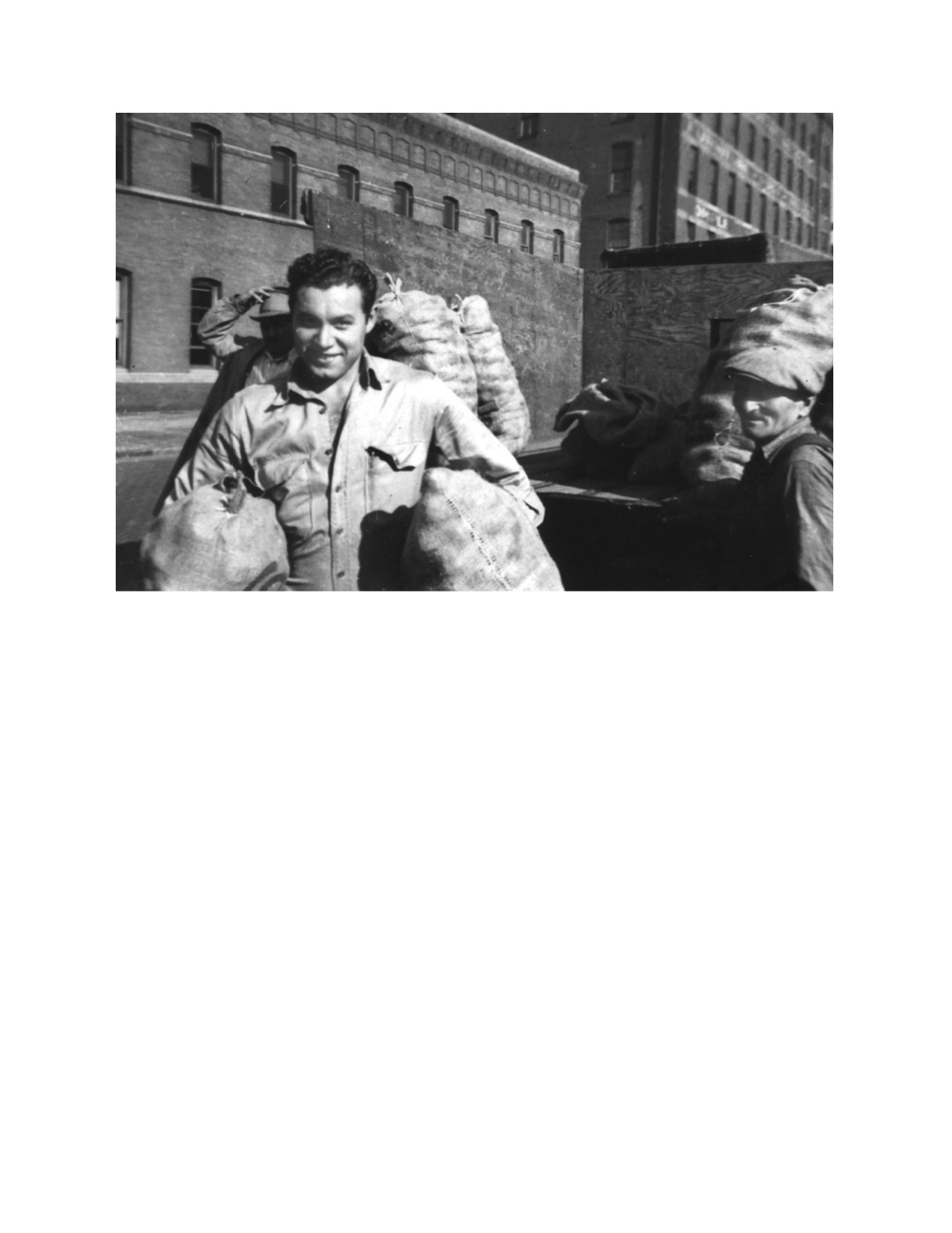
He began working in the Old Market as a peddler’s son, manning a fruit stall alongside his father, Ben, and brother, Hymie, in what was then the Omaha City Market. Later, he founded and ran a successful niche business with Hymie supplying national food manufacturers’ thrown-away bits of onions and potatoes. The brothers, known as “the potato and onion kings of the U.S.,” officed in adjoining warehouses their father kept for storage and distribution. Eisenberg held onto the building even after the produce market disbanded and the area fell into decline. As the area transitioned and property rates skyrocketed, he became a well-positioned landlord and active Old Market Business Association and Omaha Downtown Improvement District member.

“He went to the meetings and spoke his mind,” son Steve Eisenberg says. More than speak his mind, Eisenberg oversaw the careful renovation of his building and secured many of the lamp posts that adorn the Old Market.

The Eisenberg property at 414-418 South 10th Street housed many tenants over the years, and today is home to J.D. Tucker’s and Stadium View sports bars.

Eisenberg-on-truck-copy_2

Eisenberg was half of the wholesaler Eisenberg and Rothstein Co.

As the Old Market grew, he became one of its biggest advocates and enjoyed playing the role of unofficial historian. He’s remembered as a gentle lion who proudly shared the district’s past with business owners, visitors, media, and anyone interested in its history. He loved telling stories of what used to be a teeming Old World marketplace where Jewish, Italian, and other ethnic merchants dickered with customers over the price of fruit and vegetables.

“Something he really enjoyed doing, especially in his retirement, was going down there and letting people know where the Old Market came from and where it’s going. Up till his last days, he saw such a bright future for the Old Market and was very proud of what all was going on down there,” says Steve.

“George was just terrific, a real gentleman, also a wonderful character with a great sense of humor and compassion. He was revered as an ‘elder statesman,’” says Old Market Business Association member Angela Barry. “He was very sharp and knowledgeable about the neighborhood’s history. Even in his later years, he lovingly and passionately cared about the business of the Old Market.

“He really was something special. When I heard of his passing, it was a sad day.”

Nouvelle Eve owner Kat Moser will remember Eisenberg for his wise and generous business counsel.

Steve Eisenberg will remember his father as “a very hard worker who, even in retirement, kept busy promoting other people’s businesses and the Old Market area itself.”

The Eisenberg presence will live on there. “My siblings and I promised him we’re never selling the building,” says Steve. “It’s staying in the family, and we’re going to run it like he did.”

With Eisenberg’s passing and his peddler pal, Joe Vitale, preceding him in death a year earlier, the last sources with first-hand knowledge of the Omaha City Market are gone. But they leave behind an Old Market legacy not soon forgotten.

Share this: Leo Adam Biga's Blog

  • Click to email a link to a friend (Opens in new window) Email
  • Click to share on Facebook (Opens in new window) Facebook
  • Click to share on Pinterest (Opens in new window) Pinterest
  • Click to share on LinkedIn (Opens in new window) LinkedIn
  • Click to share on Reddit (Opens in new window) Reddit
  • Click to print (Opens in new window) Print
  • Click to share on X (Opens in new window) X
  • Click to share on Tumblr (Opens in new window) Tumblr
Like Loading...
Categories: Business, Entrepreneurial, George Eisenberg, History, Jewish Culture, Old Market, Omaha, Writing Tags: Business, Entrepreneur, George Eisenberg, History, Jewish Culture, Old Market, Omaha

Itzel Anahi Lopez: Young Latina on the rise

March 24, 2018 leoadambiga 2 comments

Itzel Anahi Lopez: Young Latina on the rise

©by Leo Adam Biga

Originally published in El Perico


Rising young Latina professional Itzel Anahi Lopez is making her mark.

This past spring the 20-something earned a bachelor’s degree in business administration from Bellevue University. Her studies included marketing and communication arts.

She wants to be a CEO, but she already successfully launched her family’s popular restaurant, Maria Bonita, 1921 Missouri Ave., a year ago in August.

According to Lopez the eatery attracts everyone from South Omaha residents to suburbanites to visitors from Mexico. Her mother Miriam is head chef and her father Miguel the jack-of-all-trades assistant. Both her sisters work there.

Lopez manages the busy catering operation that serves major community events, including the Latino Heritage Awards Banquet and Cumbre.

“What we offer is very unique, very personalized. We decorate our banquet tables. It’s all authentic, flavorful, colorful. We go above and beyond.”

The restaurant’s received high praise for its authentic, homestyle food, inspired by the cuisine from the family’s native state of Hidalgo, Mexico, and for its colorful, festive decor. The warm, floral greens, blues, purples, oranges and reds are on a mural adorning the west wall, on signs out front, and on the table tops inside. Miriam’s handmade arts and crafts hang on the walls. Homemade, hand-wrapped candies occupy a display case.

Even the menu and website (www.mariabonitaonline.com) continue the theme.

The distinctive look is a homage to the family’s homeland.

“Where we’re from. it’s just sun all year long,” said Lopez. “My grandparents owned a huge ranch, growing watermelons, papaya, you name it.”

She said her father would harvest the fruit and bring it to the local market, where the entrepreneurial family sold not only produce, but flowers, tacos and craft items.

“My grandmother used to garden. Lots of flowers. Very colorful. That was transmitted from my grandmother to my mother, our mother transmitted that to us. This is what we grew up with — colors, flowers, gardens. It was just all in our lives, So, when we opened this place, we wanted to transmit that in the color scheme. We admire our culture, we love our customs, we want our traditions to still be here.”

Wherever Lopez’s path leads, she said faith and family will be front and center in her life. Education, too. The Omaha South High graduate was the first in her family to attend college. A younger sister followed in her footsteps, just graduating from Creighton University. The sisters’ youngest sibling starts at Central High School in the fall.

Itzel was 14 when she came to America. After a year in ESL classes she was proficient enough in English to join regular classes at South, where she excelled academically and in extracurricular activities.

“I love South and South loves me. They have been very supportive of my restaurant and we support South any way we can.”

She earned South alumni scholarships and other financial support, opting for Bellevue University, where she said she “fell in love with the small class setting and personalized attention from teachers.” Gina Ponce was her mentor and advisor. Her biggest influence though is her mother:. “My mom’s definitely my role model. She’s done great things.”

She’s grateful her father’s dream of sending his girls to college is being fulfilled. “My dad’s dream came true, that’s quite nice,” she said. She’s humbled by how far her family’s come in America in only a decade.

“It’s very satisfying,” she said. “I’m very proud of my family.”

Studying for a master’s may be her next move on the path to “help minorities reach their goals. That’s my passion. That’s why I do all the things I do.” Her community service includes Cinco de Mayo coordination, South Omaha Arts Institute educational outreach and Community Learning Center site supervision (Castelar).

Related articles
  • Turning Kids Away from Gangs and Toward Teams in South Omaha (leoadambiga.wordpress.com)
  • Where Community, Neighborhood and Representative Democracy Meet (leoadambiga.wordpress.com)
  • A South Omaha Renaissance (leoadambiga.wordpress.com)
  • UNO/OLLAS Resident Expert on Cuban and Latino Matters Jonathan Benjamin-Alvarado (leoadambiga.wordpress.com)

Share this: Leo Adam Biga's Blog

  • Click to email a link to a friend (Opens in new window) Email
  • Click to share on Facebook (Opens in new window) Facebook
  • Click to share on Pinterest (Opens in new window) Pinterest
  • Click to share on LinkedIn (Opens in new window) LinkedIn
  • Click to share on Reddit (Opens in new window) Reddit
  • Click to print (Opens in new window) Print
  • Click to share on X (Opens in new window) X
  • Click to share on Tumblr (Opens in new window) Tumblr
Like Loading...
Categories: Education, Entrepreneurial, Food, Itzel Anahi Lopez, Latino/Hispanic, South Omaha, Writing

Marisol Rodriguez helps Hispanic businesses grow

March 23, 2018 leoadambiga Leave a comment

Marisol Rodriguez helps Hispanic businesses grow

©by Leo Adam Biga

Originally appeared in El Perico


With professional educators as parents, Marisol Rodriguez and her two siblings grew up in Colombia with the expectation of attending college and embarking on careers of their own.

“Education is a value my parents definitely gave to all three of us,” says Rodriguez, whose hometown is Cucuta, a commercial center bordering Venezuela.

Her work today as director of the Nebraska Business Development Center’s Lincoln (Neb.) Service Center is education-focused. The NBDC is a nonprofit resource for start-up and existing businesses. As service center director she consults with clients about all aspects of business — reviewing business plans, doing cash flow analysis, offering loan application assistance and developing financial projections. She partners with other organizations to present workshops.

NBDC services are free.

To further her professional growth she’s received certification in leadership and management from the NBDC and as an economic development finance professional from the National Development Council.

The bilingual Rodriguez specializes in assisting the Spanish-speaking community in and around Lincoln and Omaha, where she lives, through NBDC and her work as a board member with both El Centro de las Americas and Community Development Resources.

Her support of emerging small businesses led to her being named Heartland Latino Leadership Conference Business Award winner in 2010.

“For me, it’s recognition and commitment.” she says of the honor. “Recognition, because in Colombia I worked with the community and since coming to the United States I have been working with the Hispanic community. Commitment, because it doesn’t stop with winning the award. No, on the contrary it’s to continue working and trying to improve the quality of Hispanic businesses. I can contribute to that.”

She long ago set her sights on doing something in a public service capacity.

Intrigued by numbers, she earned a bachelor’s degree in accounting in her native Colombia. She worked as an accountant before moving to the United States about a decade ago. She and her husband settled in Omaha, where extended family members resided.

She then decided to broaden her skill set by earning an associate’s degree in management information systems at Metropolitan Community College (MCC).

To improve her prospects in the business field she obtained her master’s degree in economics at the University of Nebraska at Omaha. She began working with NBDC, a department in the UNO College of Business Administration, while in graduate school.

She says the center’s mission of “helping small businesses to become better” appeals to her. “I really enjoy meeting with clients — business owners or people who want to start small businesses. I really like to share information with them so they have more chances of being successful with their business.”

Since taking up residence in Nebraska she’s noted “the growing” Hispanic business sector here. She’s also noted that more Hispanic entrepreneurs “need to understand the importance of a business plan and the process of starting a business and maintaining a business.” Too often, she says, Hispanics miss out on larger marketplace opportunities by only appealing to Hispanic customers.

If Hispanics are to maximize their business potential, she says, “they must educate themselves,” and that’s where NBDC comes in.

She’s an advocate of entrepreneurs, Hispanic or not, taking advantage of the networking and professional and personal growth opportunities that forums like the Heartland Latino Leadership Conference afford.

Rodriguez, who recently gave birth to her first child, teaches Intro to Entrepreneurship at MCC and a zumba dance fitness class at the La Vista Community Center.

Related articles
  • Hispanic Training Center to Officially Launch first phase with its Leadership and Career Advancement Curriculum on August 6th (educationviews.org)
  • Pew Hispanic Center – Chronicling Latinos Diverse Experiences in a Changing America (policyabcs.wordpress.com)
  • Latinos Favor Tax Cuts for All, Including the Wealthy (heritage.org)

Share this: Leo Adam Biga's Blog

  • Click to email a link to a friend (Opens in new window) Email
  • Click to share on Facebook (Opens in new window) Facebook
  • Click to share on Pinterest (Opens in new window) Pinterest
  • Click to share on LinkedIn (Opens in new window) LinkedIn
  • Click to share on Reddit (Opens in new window) Reddit
  • Click to print (Opens in new window) Print
  • Click to share on X (Opens in new window) X
  • Click to share on Tumblr (Opens in new window) Tumblr
Like Loading...
Categories: Business, Education, Entrepreneurial, Latino/Hispanic, Marisol Roidriguez, Metropolitan Community College, UNO (University of Nebraska at Omaha), Writing Tags: Marisol Rodriguez, Nebraska Business Development Center

Tech maven LaShonna Dorsey pushes past stereotypes

January 8, 2018 leoadambiga 2 comments

Tech maven pushes past stereotypes

©by Leo Adam Biga

Originally appeared in the December 2017 issue of The Reader (www.thereader.com)

LaShonna Dorsey, 38, busts stereotypes. Start with this sunny disruptor launching and selling a successful technology organization in her hometown.

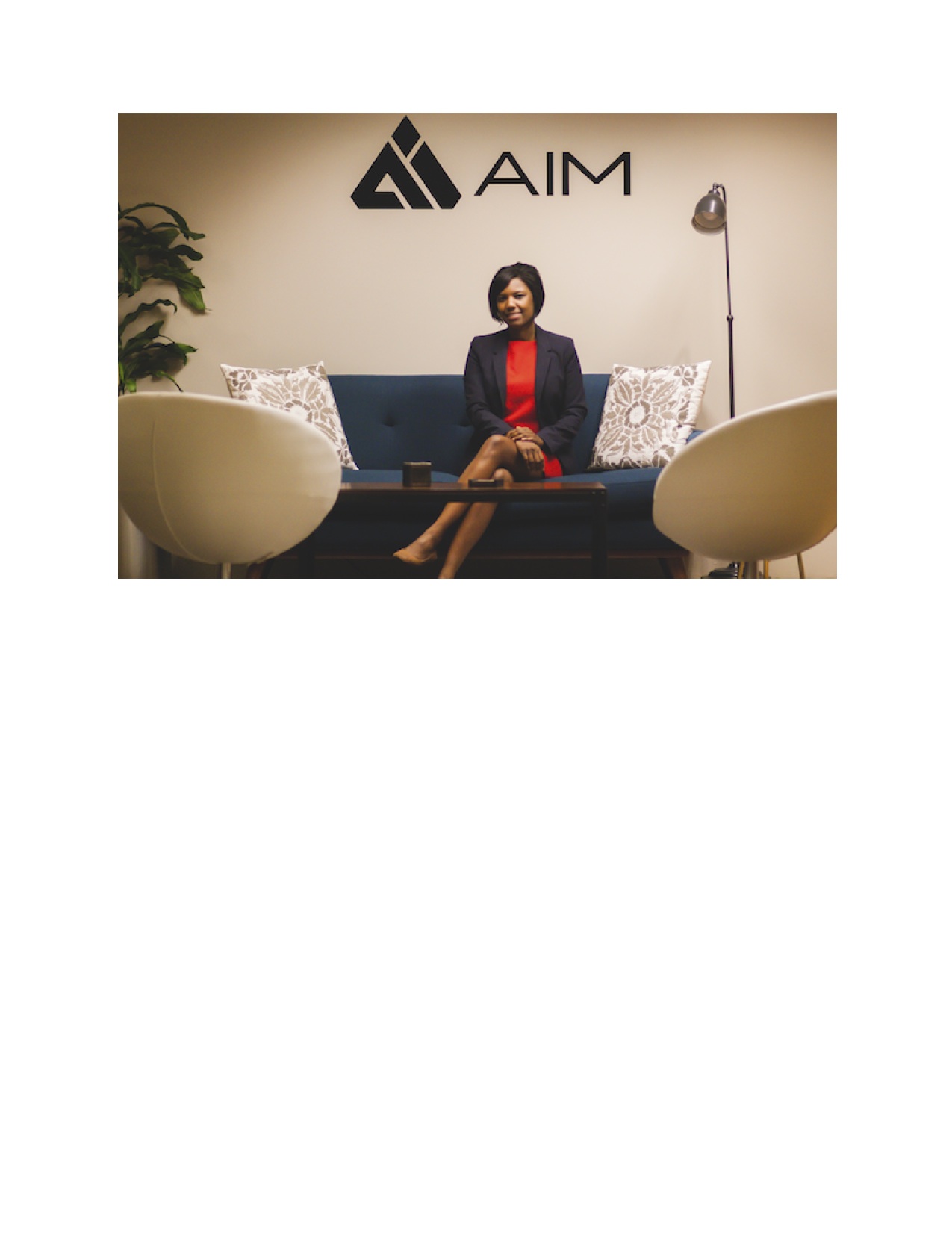
As an African-American entrepreneur, she bridged the digital divide with Interface Web School. Though now part of the AIM Institute, she still heads the coding school that’s won her and its work much recognition. Her AIM title is Vice President, Tech Education.

She’s bypassed the Omaha ceiling for young black professionals that finds many leaving for better advancement opportunities elsewhere.

She’s defied expectations by going public, rather than remain silent, about an assault she endured.

For this superstar doer who serves on multiple boards, AIM’s acquisition of Interface was strategic.

“Interface had really reached a point of capacity,” said Dorsey. “We were growing, which was great, but I just knew I couldn’t take on more classes without having more infrastructure and all that. AIM has the infrastructure, they’ve got the space, they’ve got human resources, accounting, marketing departments.”

AIM Interface solidifies and expands partnerships.

“We had really good relationships with the Nebraska Department of Labor and Heartland Workforce Solutions and still maintain those, but it’s a lot easier for us to partner with companies and other organizations because we’re AIM now.

“It fit right with where AIM and Interface wanted to go. They have the youth education side and professional development, but they didn’t have adult tech training. The cool thing is that Interface LLC was a for-profit and now we’re a program within a nonprofit and so we get to take advantage of having that 501 designation.”

Building Interface fulfilled a dream.

“I really thought I was a starter, and so it was good to see something through from idea to completion in a major way.”

She frequently shares her start-up story, warts and all.

“I felt like especially in the early days of Interface I often had to act like I had it altogether all the time because I was selling it, too. It’s kind of a challenging position to be in because you can’t be truly authentic.

“I was really grateful to have good friends and a really strong support system. That made a huge difference.”

She especially enjoys sharing her story with women.

“Women that have done a ton in their career appreciate how difficult it is to do something like this. Women just getting started are like, ‘How did you even do that?’ We have real conversations about what it’s like and the pitfalls – but also the rewards. Being in the middle myself, I am kind of still navigating that.

“I do feel I have a lot of value to add and information to share if people are ready to hear it. I tell people it wasn’t easy all the time, but the thing that kept me moving forward was that it was so rewarding. I have so many graduate stories of people whose lives were changed because of what they learned. It helped them get better jobs and buy homes. They’re still reaping the benefits. It’s still rippling. The culture of Interface is like that.”

She readily accepts being a role model and mentor to young black women.

Growing up in a single-parent family, Dorsey learned self-reliance skills. As a bright Goodrich scholar at the University of Nebraska at Omaha, she became a self-motivated high achiever. Early in her career, she proved a project management whiz.

“I like to just figure my way forward. I like problem solving. When things get a little too simple, then that is hard for me. Then I’m like, ‘Okay, what else can we do here?’ I’m not afraid of conflict, so I do lean into it, and I encourage people who work for me to do the same. If you really want to get the thing you want, you have to work through the hard stuff, too.”

Omaha’s limited horizons saw Dorsey leave in her 20s.

“But I came back. The thing that’s really tough here is that as you move up in your career, the leadership gets more white. Working in tech, you’re with a lot of white professionals and when I lived in west Omaha I’d go home, where it was all white, and I felt I had no community. It’s unfortunate and it felt uncomfortable.

“Living in a diverse community is important for me.”

Workplace inclusion requires more than new hires.

“You can hire a bunch of black and whatever programmers but that is not going to change the culture of organizations who might not be ready for it. You have to give people a space where they’re comfortable being themselves and not feeling like they have to fully assimilate in order to fit in.

“I cannot wait until we don’t have to have this conversation anymore and where it’s not special that I’m a black woman in tech. But it matters a lot to people and I have to talk about it.”

She feels she’s reached a personal breakthrough by reclaiming her given name, LaShonna, in place of Shonna and letting her hair go natural.

“Now, I feel like I can be more of myself.”

Dorsey embraces the new diversity in revitalized northeast Omaha, where African-American culture is being discovered by white millennials.

“Whenever you can create opportunities for people to have those experiences with people they don’t interact with on a daily basis, you start to change the narrative. That’s the only way were going to see change.”

Mindset to her is critical to create the transformation she and others hope to see there.

“I think we’re still many years out from seeing the fruits of it. There’s a lot of work to do because we can’t deny the fact poverty is the highest in those zip codes. That’s something to address and fix but people have to want it and see it even as an issue.”

She’s doing her part to equip adults with job-ready tech skills by bringing her code school to the Highlander Village purpose-built community on North 30th Street.

“Those economic improvement opportunities can make a big difference for people,” she said. “It will be awesome to see all of that come to life.”

Her career exploded two years ago, but few knew she was reeling from having barely survived an assault.

“Everything was still new at Interface and I still didn’t feel like I knew what I was doing all the time when I had this really difficult, tragic thing happen. There were many work days when I had to meet attorneys or go to court Turning those emotions on and off was really hard.”

It stemmed from someone she’d dated suddenly revealing a side he’d concealed before.

“It turned into a night where he took me from where I was without my permission. He strangled me three times, including once where I lost consciousness. He assaulted me in all sorts of ways in what was a five-hour ordeal.”

Fifteen months elapsed from when she pressed charges to her attacker’s sentencing.

“It was a really hard process. I totally understand why people don’t pursue that path because it is very difficult and as the victim you have to prove something happened. Typically, this kind of stuff happens one-on- one.”

Dorsey nearly didn’t report the incident for fear of how she’d be perceived.

“I remember thinking this is going to be so embarrassing and people are going to think I can’t do anything right. It’s irrational thinking, I know, but that was in my head. I decided to report it anyway.

“I try to do everything on my own all the time. But I did get some counseling and I did work through some of this with friends. Leaning into work helped a lot.”

Nature walks and karaoke nights helped, too.

Then she began dealing with it in public forums, including a poignant Facebook post.

“It was hard to carry around all the time. People were really supportive. They called me brave and things like that. I just felt it was relieving a burden for me.”

She posted soon after the last presidential election and urged people to walk through their fear and anger over the results as she had with her assault.

“Every time I talk about it publicly, more than one person will come up to me and say, ‘Me, too,’ or “My friend, my sister, my daughter.’ It’s so common. There’s a bunch of people who feel like they can’t talk about it, so I decided to share what happened to me.”

If nothing else, she said, her story reveals all is not what it seems on the path to success.

“People tend to look at the surface and just assume that because you’ve done a lot, it was without hardship.”

Visit Interfaceschool.com. Follow Dorsey on Facebook.

Read more of Leo Adam Biga’s work at leoadambiga.com.

Share this: Leo Adam Biga's Blog

  • Click to email a link to a friend (Opens in new window) Email
  • Click to share on Facebook (Opens in new window) Facebook
  • Click to share on Pinterest (Opens in new window) Pinterest
  • Click to share on LinkedIn (Opens in new window) LinkedIn
  • Click to share on Reddit (Opens in new window) Reddit
  • Click to print (Opens in new window) Print
  • Click to share on X (Opens in new window) X
  • Click to share on Tumblr (Opens in new window) Tumblr
Like Loading...
Categories: African-American, African-American Women, Education, Entrepreneurial, Entrepreneurs, Feminism, Interface Web School, Omaha, Shonna Dorsey, Technology, Writing Tags: African-American. Technology, Education, Entrepreneur, Feminism, Interface Web School, LaShonna Dorsey, Omaha

Omaha Small Business Network Empowers Entrepreneurs

August 22, 2017 leoadambiga 4 comments

If you’re an entrepreneur seeking to establish or take your start-up to the next level, then the Omaha Small Business Network may be the place for you. Julia Parker (pictured below) is the latest in a succession of women of color to head the OSBN. The OSBN is located at the historic 24th and Lake hub where a revitalization is happening. North Omaha entrepreneurs might want to look at working with the organization to help make their dreams come true and perhaps be a part of the North O revival. Read my B2B Omaha Magazine (http://omahamagazine.com/) feature about the services and programs the OSBN offers.

Omaha Small Business Network
Empowers Entrepreneurs

©By Leo Adam Biga
©Photography by Bill Sitzmann
Originally published in Jan-Feb 2017 issue of Omaha Magazine (http://omahamagazine.com/)

The Omaha Small Business Network is on its third female executive director since its 1982 launch. Julia Parker leads an all-female full-time staff that continues the nonprofit’s founding mandate to assist historically undercapitalized entrepreneurs achieve financial inclusion.

OSBN helps remove barriers that inhibit some women and racial minorities from realizing business ventures. Parker says clients lack access to capital and lines of credit and often have no formal business training. Lacking collateral, they’re rejected by lenders. “To be eligible for our micro-loans, the first qualification is you be turned down for traditional financing,” Parker says.
OSBN helps “un-bankable” clients do a financial makeover.

“What OSBN seeks to do is to initially bridge that gap between the bank and the consumer. But after receiving an OSBN loan, our desire is for you to become bankable. We really hope after that two- or three- or six-year loan you develop a relationship with a local banker, through strong payments and good credit history, and then take the leap into the traditional financial market,” she says. “That’s really where we want you to go and thrive.”

On The Edge Technology co-owner Rebecca Weitzel credits a $35,000 OSBN micro-loan, plus information gleaned from OSBN classes, and network opportunities with helping grow her firm and navigate the economics of doing business. She explored options at banks and credit unions before deciding OSBN was “the best choice for us.”

“Each opportunity with OSBN helped develop my confidence as a business owner. Now, I refer other people to OSBN that want to start or grow a business,” says Weitzel.

OSBN offers a three-pronged support system: micro-loans between $1,000 and $50,000 at low interest rates; free monthly professional development and small business training classes; and below-market-rate commercial office spaces at Omaha Business and Technology Center (2505 N. 24th St.) and two nearby buildings. Ken and Associates LLC is one of two dozen OSBN tenants benefiting from commercial office space renting for 80 percent less than market value.

OSBN has lent $2 million-plus in micro-loans to startups and existing businesses since it began micro-lending in 2010.

As of October 2016, OSBN had $500,000 in outstanding loans, with $300,000 in loan payoffs during the past calendar year.

Parker says, “Those are big numbers. Our clients are paying off their loans and going on their way as successful entrepreneurs. We’re pretty proud of that.”

Spencer Management LLC owner Justin Moore is another OSBN success story.

Since receiving a $35,000 micro-loan, Parker says his business expanded services, moved to a new, larger facility, paid off the loan in full, and exceeded $1 million in annual revenue.

As a micro-enterprise development entity, OSBN is funded by private donations from local philanthropists and banks.

Parker leverages her plugged-in experience in the nonprofit and business arenas. She served as director of operations and communications at Building Bright Futures from 2007 to 2013. She applies the skills she used there, along with lessons learned as a black female running a small business, to engage OSBN clients and partners. She owns her own communications consulting agency.

“I think there’s always a barrier for minorities in certain spaces in Omaha,” she says. “The key is to try and overcome those by having a strong work ethic and being on top of your game at all times. But I think across the city, no matter what sector you’re in, there are barriers to entry.”

She reports to a board whose members represent public and private interests. OSBN partners with leading Omaha giving institutions to even the playing field.

“With the support of the Sherwood Foundation,” she says, “we have created a loan pool specifically for minority contractors and suppliers because of the issues they face. And we’ve teamed up with Creighton’s Financial Hope Collaborative to put those contractors and suppliers through a 12-week training course to ensure they’re prepared to go out and bid on, win, and fulfill those contracts. We just completed our first cohort and started our second.”

Parker likes helping dreams be realized. It’s why she said yes when the board offered her the job in 2013.

“I took the position because I really believe in the mission of supporting low-to-moderate-income entrepreneurs. I also like the idea of micro-enterprise development and its very unique take on financial inclusion.”

She described that mission in testimony before the U.S. Senate Committee on Small Business and Entrepreneurship on Capitol Hill last August. She says OSBN is “dedicated to bringing underserved local small business owners, entrepreneurs, and nonprofits the tools needed to become successful and sustainable entities.” She added, “OSBN and like-minded, community-based micro-lenders…have the ability to become a catalyst for both community and economic development.”

She sees OSBN playing a role in increasing the dearth of black middle class residents and small business owners in northeast Omaha and stimulating economic revival there.

“Small business ownership has long been held as a path to financial inclusion. Owning your own business allows you to break that cycle of poverty. Often those businesses become generational. We would love to see the 24th Street corridor come alive again with small businesses.”

Besides, she says, small businesses have a positive ripple effect by creating jobs and paying taxes.
Visit osbnbtc.org for more information.

Share this: Leo Adam Biga's Blog

  • Click to email a link to a friend (Opens in new window) Email
  • Click to share on Facebook (Opens in new window) Facebook
  • Click to share on Pinterest (Opens in new window) Pinterest
  • Click to share on LinkedIn (Opens in new window) LinkedIn
  • Click to share on Reddit (Opens in new window) Reddit
  • Click to print (Opens in new window) Print
  • Click to share on X (Opens in new window) X
  • Click to share on Tumblr (Opens in new window) Tumblr
Like Loading...
Categories: Business, Empowerment, Entrepreneurial, Entrepreneurs, Julia Parker, North Omaha, Omaha, Omaha Small Business Network, Writing Tags: Business, Entrepreneurial, Entrepreneurs, Julia Parker, North Omaha, Omaha, Omaha Small Business Network

One plus one equals three for White Lotus Group

July 17, 2017 leoadambiga Leave a comment

One plus one equals three for White Lotus Group

by Leo Adam Biga
leoadam.biga@morningsky.com

White Lotus Group CEO Arun Agarwal likes to say his Omaha real estate development company has a simple business plan:

“One plus one equals three.”

This win-win-win, sum-greater-than-parts philosophy works for the vertically integrated firm that optimizes design, financing, implementation, delivery and operation of complex or re-purposed real estate assets.

The growing company does projects in various business segments, from the downtown signature hospitality project that is Hotel Deco to the Nebraska Realty’s corporate headquarters office at 17117 Burt Street. Its portfolio of mixed-used projects in five states focuses on value adds fulfilling social-community needs.

30 Metro Place is an example. The $20 million development on the former site of a beloved Omaha eatery, Mr. C’s, will serve the Metropolitan Community College Fort Omaha campus, where three new buildings have risen across the street. Together with MCC’s $90 million buildout and the $88 million Highlander Village taking shape a mile south, Metro Place is woven into the North O redevelopment fabric.

The five-story, 113,000-square-foot mixed-use Metro Place will feature 110 affordable apartment units, a retail space, a health and wellness component and connectivity hubs. The City of Omaha stamped its approval on $1 million in tax increment financing for the project.

“What we’ve really tried to do is make this consistent with the college,” Agarwal said. “It’s really meant to be a stakeholders building in the sense it should work for the college as the major anchor in the area, and of course, still be a site utilized by the rest of the community. So we wanted to blend it in as much as we possibly could.”

With a projected spring 2018 delivery, Metro Place’s rectangle box structure will pop once the “prominent exterior rainfall system” panels are installed. The multi-colored fiber cement panels are “a very expensive and forward thinking product,” Agarwal said. “It’s going to be a very complimentary look to what the college is doing. Partly because our building is so big and long, we didn’t want it to be very flat looking.”

White Lotus Group’s Brad Brooks did the conceptual plan. BVH Architecture implemented the full architectural and engineering. Ronco Construction is doing the hard hat.

Metro Place is among several North O projects for WLG. The $25 million, 16.5-acre mixed-use Sorenson Place is taking shape at 58th and Sorenson Parkway after unexpected delays from buried concrete debris.

“That’s a very challenging project,” Aragwal said. “It’s definitely taken a fair amount of time to kind of figure out what the best path is. We eventually came up with an idea to excavate the concrete, crush it onsite and then use it as base for sewer separation projects or other concrete road projects.

“The project’s infrastructure for the most part is in.”

The site will feature 120 senior apartments that could start construction by mid-October. An adjoining Family Dollar store and Armor Storage self-storage facility are both now under construction.

The final acre is out for development or sale, a slice of land that has piqued the interest of a national retail chain.

The senior living component responds to what Agarwal called “a dearth of affordable senior apartment living.

The site’s close proximity to Immanuel Communities and CHI Health Immanuel hospital provides “good complimentary services needed and available to us.”

For the affordable senior housing feature, he said, White Lotus is aiming at HUD (U.S. Housing and Urban Development) financing.

Fakler Architects and Ronco Construction are helping realize the project.

Three projects north of Sorenson Place along the Ames Ave. corridor further exemplify WLG’s approach.

The former Ames Plaza indoor mall has been given new life as a mixed commercial space.

“It’s a great example of a building that many expected to be thrown away, so to speak. The significance or success we find is seeing something that other people can’t see. When we came to the Plaza we saw the skeleton of a building we thought we could resurrect, repurpose and complete an adaptive reuse of.

“Sure enough, an 80,000-square-foot structure slated to be demolished is now not only repurposed, but 100 percent occupied. Heartland Workforce Solutions recently renewed for 10 years. They’re a fantastic community partner.”

Planet Fitness and Amor Storage are other tenants.

“We used tax increment financing on Ames Plaza. The city was the participant there,” Agarwal said.

WLG will next develop a vacant acre-and-a half parcel that came with the Plaza’s acquisition. Praxis and Quarter will develop 12 units of senior housing at 58th and Fowler in what’s dubbed the Ames Row Houses.

Affordable tax credits will be used.

Adjacent to the Plaza is another recent acquisition – the long vacant Ames Bowling center – envisioned as home to employers of 200 to 250 next generation jobs.

“We have a vision of creating the Googlesque Ames Innovation Center there. It’s 43,000 square feet on a single-story, on-grade site. We’ll cut open the ceiling, put an atrium in there and make it very bright. Brad Brooks in our office recently did a refacing or facade improvement plan so that we can do either call center or IT help technology positions. Neighboring Heartland Workforce Solutions would be a huge partner.”

It’s a $5 million development.

Projects like these, he said, have a better investment return than some others “because there’s a lot less competition and for that reason I think your margins are better,” adding, “But they take a lot longer and they’re a lot hairier, so the risk-reward is a different ratio.”

Beyond the financials, he said he’s motivated “to do social good; There’s a need for it.” He said, “You feel good doing it because you know you’re delivering something that is a need, and it’s good professionally from an economic standpoint because you know it’s meeting an unmet demand. So that’s just good business. But there’s such a social need as well. We’re really passionate about this Ames Innovation Center because we think we can create as many jobs as the Walmart on 50th and Ames.”

“I think we can create a state-of-the-art satellite facility in the North Omaha community that brings jobs there,” he said. “We’re working the Greater Omaha Chamber of Commerce to identify employers to provide the jobs. We’re working with Heartland and Metro Community College to provide the training.”

For the plan to work, it has to make business sense.

“Our construction team and design team is working really hard to make it cost effective so that it’s a compelling case for a West Omaha company to do business in North Omaha,” Agarwal said. “I don’t expect anyone to do us a favor by occupying the building. That doesn’t work to us – that’s bad business if we’re begging for somebody to come here.

“To me, if you have double-digit unemployment in North Omaha and you need help desk, customer service, call center, tech jobs that are trainable, then there’s no reason not to cultivate that there and make sure we have a mechanism to train for the jobs we need. It’s going to take a commitment by all parties.”

His company’s applied for Community Block Grant funding and may apply for TIF funds.

“I’m assuming we will apply for other programs as available and as appropriate.”

White Lotus likes working in the urban core space.

“It’s significant to us. Deals in the urban market are tougher to source because there’s a lot of prideful ownership, as there should be, so it’s really hard to assemble properties.”

Agarwal is a licensed real estate agent but works with local brokerage houses, like Investors Realty and The Lund Company, for their expertise.

The group’s Park Plaza conversion reignited a Midtown building and it’s nearing completion of the Turner Park Apartments east of there at 30th and Dodge Streets.

“We really like being adjacent to the Creighton campus. Any collegiate, really – 30 Metro Place being a prime example – we like. We do stuff around the University of Nebraska Medical Center. We’re partners with Green Slate Development and Clarity Development on projects in that UNMC-Blackstone area.”

Millennials are a coveted demographic.

“In the Old Market we’re working on a collaborative co-lab facility in a former Kraft Creamery at 1401 Jones Street,” he said.

The brick structure was among the last available warehouses in that historic district.

“Very few opportunities exist to be a part of downtown. We are excited our project will have a wide appeal taking the best of other Tier 1 cities into a new state-of-the-art model. I’m passionate about the look and feel and the architecture of these buildings. This one looks like its bland from the outside, but it’s actually quite beautiful. We will be pursuing historic tax credits.”

The $5 million project is envisioned as a 43,000-square-foot mixed-use, entrepreneurial shared space for new creativity and new companies, whether in tech, food, marketing or manufacturing.

“We would augment that creative environment with a test kitchen or a brewery. We just finished conceptual planning and are moving into schematic plans.”

WLG has a secret asset on-staff: painter-muralist-sculptor Justin Queal.

“Art is a huge component of our projects,” Agarwal said. “We add cultural art and custom art to all of our projects through installations, paintings, sculptures and custom furniture. We have our own wood shop.

Queal did extensive work for Hotel Deco, A mural he did for the historical J.F. Bloom Building in Omaha’s North Downtown (NoDo district) celebrating the College World Series was featured on ESPN.

Agarwal and his team also engage in suburban projects.

A $150 million 140-acre industrial park is slated for Sarpy County. A planned Northwest Omaha housing subdivision off of 180th and Fort would encompass 110 new homes.

“We have a lot going on. Our team is burning the midnight oil. I’m appreciative of their work.”

Experts weigh-in:

Brett Posten
Principal, Highline Partners
One of the biggest challenges facing a visionary developer like White Lotus Group is that big ideas tend to get lost, diluted and turned into mediocre projects as more and more organizations get involved.

Their vertically integrated model is one of the best ways to make sure everyone is aligned from start to finish. We need more developers who think this big and who can execute it to the end.

30 Metropolitan Place is a real stake in the ground.

Chris Nielsen
Associate Broker and Development, DP Management LLC
The senior living component is interesting as the baby boomers will start to fill in the existing projects. The gap in market rate and low income senior housing as well as regular housing will begin to stress existing supply. With the increase in the cost of construction and decrease in skilled labor, the emphasis the Governor has put on tech schools and Metro’s commitment to providing education will help rebuild this once thriving area by providing jobs, training and projects in North Omaha. Time will only tell as this area must commit to the catalyst and continue the progress.

Chris Nielsen
Associate Broker and Development, DP Management LLC
I think that if there are economic incentives such as TIF and HUD financing, projects like these can thrive. The state has been reviewing the use of TIF and it has it’s uses in metro areas as well as rural communities, both trying to drive economic growth in changing climates that the rest of the world left behind.

When states review the use of TIF, this use is different for urban versus rural, but should not discount developers trying to solve the same problem, bringing projects to the underserved while also trying to cover debt service so that these economic hubs don’t become a flash in the pan. White Lotus should be commended for its efforts as it’s easier to build something with a fresh canvas in the sprawling burbs, rather than work through the nuances of redevelopment and struggle to finance while finding investors with similar visions.

http://www.morningsky.com/

Share this: Leo Adam Biga's Blog

  • Click to email a link to a friend (Opens in new window) Email
  • Click to share on Facebook (Opens in new window) Facebook
  • Click to share on Pinterest (Opens in new window) Pinterest
  • Click to share on LinkedIn (Opens in new window) LinkedIn
  • Click to share on Reddit (Opens in new window) Reddit
  • Click to print (Opens in new window) Print
  • Click to share on X (Opens in new window) X
  • Click to share on Tumblr (Opens in new window) Tumblr
Like Loading...
Categories: Arun Agarwal, Business, Commercial Development, Community Redevelopment, Community/Neighborhoods, Economic Development, Entrepreneurial, Omaha, Real Estate, Redevelopment, White Lotus Group, Writing Tags: Arun Agarwal, Commerical Real Estate, Developer, Economic Development, Omaha, Redevelopment, White Lotus Group

The Motivator – Willy Theisen

May 6, 2017 leoadambiga Leave a comment

Serial food entrepreneur Willy Theisen of Omaha has a methodology for success in life and business that he likes sharing with others. When he’s not making deals or overseeing his various moneymaking ventures, he’s speaking to groups of aspiring and established entrepreneurs about some guiding principles he follows that he feels can help people achieve their dreams.  Many of his most attentive audiences are high school and college students who were not born when he had his breakout success with Godfather’s Pizza. He’s had many successes after selling Godfather’s and he’ll be stategizing and pitchng until his dying breath but he’s not just about accumulating weath and possessions these days, he’s also about giving back, and he views passing his wisdom and experience on to others, whether as a speaker or mentor, as a form of public service. My new profile of Theisen in the May-June-July 2017 issue of Metro Magazine (https://issuu.com/metmago/docs/thegivingguideandeventbook2017) delineates some of the key tenets he lives and works by and that he gladly shares with others.


The Motivator.

Willy Theisen

©BY LEO ADAM BIGA
Appears in the May-June-July 2017 issue of Metro Magazine (https://issuu.com/metmago/docs/thegivingguideandeventbook2017)

Photo by Jim Scholz

“We Don’t Coast!”

The Greater Omaha Chamber ads say it. Nebraska is motivated and motivational. So is one of her most inspiring success stories, Willy Theisen. This serial entrepreneur who first made a name for himself as founder, chairman and CEO of Godfather’s Pizza Corporation is anything but idle at 71. He still puts in 70 hours a week between his business pursuits and community endeavors.

After selling the brilliantly branded Godfather’s chain he grew to 500-plus franchises, he went on to new hospitality industry adventures. He returned to his roots with Pitch Coal-Fire Pizzeria but doing more refined pies than Godfather’s. With Pitch a hit in Omaha’s prime Dundee neighborhood, he’s opened a new eatery there, Paragon, featuring a completely different concept.

Theisen’s come a long way from his brash rise to fast-food fame and fortune that found him making news for his lavish lifestyle – once renting a Concorde supersonic passenger jet to take him and birthday celebrators to London and back. Over time, he’s devoted considerable energy to civic service work, including serving on the Omaha Airport Authority and Creighton University boards. More recently, he’s been appointed to the Center for Innovation, Entrepreneurship & Franchising at the University of Nebraska Omaha. He’s also been appointed chairman of the Omaha Convention and Visitors Bureau Advisory Board and named a Creighton University Business Ethics Alliance Trustee.

With Nebraska feeling the pinch of persistent brain drain, massive state budget deficits and the loss of major corporate players, this serial entrepreneur is viewed as an economic stimulus expert.

At a recent presentation before Skutt Catholic High School business students and members of Future Business Leaders of America, he said, “Who creates jobs? Entrepreneurs create jobs.” He shared how he was taken aback to learn that in its 44-year history, Godfather’s has created more than half a million jobs.

His proven business savvy is well recognized per his induction in the Omaha Restaurant Association Hospitality, Omaha Chamber of Commerce and Nebraska Business & Commerce Halls of Fame.

Because of his-real world expertise and experience as a self-made man, he’s often asked to present before audiences ranging from professionals to high school and college students. He especially looks forward to interacting with young people because he believes in cultivating and supporting emerging entrepreneurs.

“I really think these people who produce new ideas and share those ideas and have them nurtured is our future job growth in this state,” Theisen said. “I think it’s a must that we identify and nurture them as early as possible.”

He told Skutt students: “Entrepreneurs are people that can see things other people don’t see.”

Theisen and Gallup Global Channel Leader of Entrepreneurship and Job Creation Todd Johnson share a passion for finding and coaching young entrepreneurs. In June, a group of area youth identified through Gallup assessment profiles as high potential entrepreneurs will attend the Omaha Builders Internship at Gallup, and Johnson’s already secured Theisen’s help.

Life Lessons.

“I called Willy and said, ‘I’m going to have the next generation of you here at Gallup for a month, will you engage?’ and he said yes. So he’ll mentor, coach and present to them.”

Johnson said the idea is to be more systematic, scientific and intentional in the early identification and development of entrepreneurial talent.

“Willy and I have really bonded on that project. We’ve socialized it and, I dare say, evangelized it and we’re going to set-up Omaha as a best-practice mecca. Gallup sees Willy right in the middle of the mentoring and coaching of this next generation of entrepreneurs.”

In recent Gallup testing he scored highly in eight of the ten metrics associated with greatly successful entrepreneurs, including knowledge-seeker.

Anthony Hendrickson, dean and professor of Business Intelligence & Analytics at Creighton University’s Heider College of Business, said he admires Theisen’s curiosity about what makes things work.

“He came to the Harper Center to speak to a group of students. I took him on a quick tour of the building, including the food-service kitchens. Willy wanted to walk through those facilities and see what was being prepared, how, by whom, the menus and processes. Willy was just trying to learn if there was anything he might have missed as a restauranteur. Ever the student of business and life.”

Theisen’s public speaking is part of a philanthropic thank-you to the city that supported his big idea.

Van Deeb, a national real estate speaker, author and coach, said, “Willy is spending the majority of his time giving back to the community that made him so successful. We spend a lot of time together and I see it and I feel it. He’s wanting to give to youth hope, direction, inspiration.”

Theisen said, “I make time now. Before, I probably cared just about things more than the impact I could make. I was always too busy working, opening restaurants all over the country. I don’t want to go all over the country. We’ve got a lot of stuff to do right here and it’s not all about restaurants – it’s about people.

“A lot of people are busy all their life and they don’t want to be part of anything. They just let things happen. I don’t want to let things happen – I want to make things happen. When I get done with a project I want it to be better off with my involvement than without it.”

Beverly Kracher, a Creighton business professor and CEO-executive director of the Business Ethics Alliance, said, “Willy is smart enough to see he has power. He’s also a man of character enough to use that power to take care of our community and to act responsibly.”

Johnson said he admires Theisen’s commitment to the Business Ethics Alliance they serve on together.

“We have events across the city throughout the year and you can always find Willy. He’s known as a man that shows up and I think that’s a real important insight into who he is. I can’t think of a time when I asked for Willy’s help and he said no. I sure hope I’m as generous with my time, talent and treasure in 20 years as he is. He’s such a good role model.”

Theisen said his focus on “giving back and paying forward” is something that “comes with age and from involvement in the community,” adding, “It just evolves into this and it becomes more important than not.”

When presenting he eschews prepared notes for a conversational, freestyle delivery that invites talk-back. His message emphasizes certain principles he lives and works by as well as certain truths he believes. One is the importance of first-time jobs and what they teach.

“First-time jobs give young people confidence. They direct you to come in on time, say ‘please’ and ‘thank you.’ It gives you confidence in the things you need to be set up in to succeed. At Godfather’s it just happened that about 80 percent of the 545,000 jobs created during the company’s history have been filled by first-job seekers.

“Working at Godfather’s was a starting point for many young individuals. What’s most fulfilling to me is that they have gone on and bought houses and automobiles, raised children, contributed to society, and that first job was a part of their foundation.”

Growing up, Theisen’s parents modeled and he adopted a work ethic and earning-your-own-way mentality.

“I always had a job. I painted house numbers on curbs, I caddied, I worked in a pool hall, I flipped burgers, I cut lawns, I bagged and carried groceries at Eddie’s Market, I killed chickens in the market’s basement.

“I did a lot of stuff – and all of it matters. All of it got me here today.”

At Skutt he stressed that from humble origins great things can spring forth. Students young enough to be his great-grandchildren listened intently.

“My best audiences are young people,” he said. “I think they’re looking for a direction and I talk right to them, I don’t talk down to them. I relate to them. I want to be something they can count on. I’ve worked with young people in business all my life.”

Dale Eesley, an associate professor in UNO’s College of Business Administration, said, “Willy doesn’t lecture students. He tells them stories from his career and encourages them to look for the best in themselves. He emphasizes hard work – something anyone can do if they set their mind to it.”

Theisen knows any group includes entrepreneurs.

“There’s a handful of them in every audience. They’re there, we’ve just got to find them and show them the opportunity. Hopefully, I can inspire them to maybe have the courage to take it one step further.”

Eesley considers Theisen “a true mentor” figure for youth. “Many times I have arranged for students to seek advice from Willy. On several occasions he has hosted ‘Dinner with an Entrepreneur,’ where four to six students from the Collegiate Entrepreneurs Organization join him at Pitch and get to know him personally as well as professionally. Students all say it’s the highlight of their school year.”

Creighton’s Hendrickson said, “Willy is a tremendous resource for young people, especially aspiring entrepreneurs. He takes time to visit with students individually, listen to them intently and provide encouragement and wisdom about their ideas. He is quick to share the positive potential he sees in their thoughts and plans but equally quick to provide the kernels of truth they need to hear about the challenges they will face. I have referred many students to him.”

Until recently, Theisen said, what few entrepreneurial classes local schools offered were only for graduating seniors or graduate students.

“It’s too late. We can’t wait until they’re seniors to identify them as entrepreneurs. We’ve got to have entry-level. Now schools have departments and programs for entrepreneurship. This is where these ideas come from. They only need one and from one you can take it and make something out of it, and our schools now nurture that out of people.”

Theisen tells students none of this support existed when he was their age. “The word ‘entrepreneur’ wasn’t even used. We were called futzers or daydreamers.”

So much of what forms us, he tells audiences, is our habits. His checklist of positive habits to follow includes “showing up on time, being a person of character and being credible.” He encourages those working first jobs to foster traits that develop good lifetime habits that connote trust. “Be dependable, come in early, stay late. Make the boss look great. That’s how you advance.”

He said along with doing things right “comes confidence, then ethics and then trust,” adding, “I want to get people to where somebody can look at them and say, ‘I trust you, I can count on you, because you’re here on time, ready to work.’ I tell young people you gotta be ready to work when the opportunity is there. Don’t say, ‘Can I get back to you on this?’ Someone else will do it.”

He said the trust that flows from being ethical in business is not a legal requirement but “it sure helps to be a person of your word.” Besides, he said, “It is the right thing to do and the relationships are so much better when you’re ethical. No hidden agendas, no backroom deals, no going around in an underhanded way.”

He built his first business empire on trust.

“From 1977 through 1979 I opened 450 Godfather’s Pizzas in 36 months. You couldn’t have done it if you didn’t trust each other, if you weren’t ethical, if you picked the wrong partner to go into these things with. None of it would have happened.

“Some of the first franchise deals we had back in 1974, we didn’t have written agreements. You know what we had? You grabbed a person’s hand and you looked at them right in the eye and took them at their word.”


metroMAGAZINE/mQUARTERLY MAY/JUN/JUL 2017


Long before franchising became an option, Theisen had to sell a banker on a dream.

“Something life-changing for me happened in late 1972. I went over to Southwest Bank to get a small business loan. I was nervous. The lending manager I met with, Joe Sullivan, said, ‘What’s your idea?’ ‘Well, what I’m going to do is I’m going make a big, thick pizza with a bunch of toppings on it and I’m going to put my store right in the middle of Thomasville Apartments. There’s 500 or 600 people living there and everyone’s going to come there; nobody’s going to cook.’”

Theisen, who worked for a real estate developer then, had no real collateral other than his vision and belief.

“All I had was a rough ballpoint-ink outline of the building on a cocktail napkin. Joe looked at me and said, ‘Where’s the rest of your business plan?’ ‘That’s it.’ He stared at me, and said, ‘I like it, it’s simple, I understand it.’ He gave me Small Business Administration loan papers. He guessed I wasn’t good at filling out forms and said, ‘I’ve got a guy.’ He asked, ‘Do you work at night?’ ‘Yeah, I work at night,’ ‘Will you start tonight?’ ‘Yeah, I’ll start tonight.’ His accountant and I got those forms filled out and I got the loan. You know what Joe made that day? He made a character loan. He made me a loan. That’s what I call the Sullivan Effect.”

Additionally, Sullivan offered some sound advice via an admonition. “He said, ‘When you open your place, I want to see you there.’ I asked my business partner at that time, Greg Johnson, ‘What do you think that means?’ ‘It means you’ve got to be there all the time.’ I was there all the time. That’s the Sullivan Effect, too.”

Business Ethics Alliance activities have given Theisen fresh insights into lifelong practices.

“I thought I was always doing the right thing but now I know I’m doing the right thing, and I get a little more satisfaction out of it.”

Of his fellow Alliance trustees he said, “It’s evolved into quite a good list of individuals. It’s not a coincidence most of them are leaders. They got there being that.”

Creighton’s Kracher said Theisen brings credibility to advising about jobs since he’s created so many.

“He grooms young people to help them understand what it means to work hard, to show up on time, to be accountable, to be trusted – all those character traits that matter if you are going to be a business person.

“He takes the time to educate students that half of life is about showing up and in his fundamental belief that business and life is based on trust.”

She said his charisma plays equally well with students and seasoned business professionals.

“You can’t help enjoy hearing him speak and then afterwards telling five people what you heard.”

Theisen stresses to audiences the building blocks of success must be cultivated. “This just doesn’t happen,” he said. “You don’t wake up one morning and get this when you’re 69 years old. This is the fabric and core of who you are and how you treat and greet others.”

As a veteran restauranteur he knows how key quality control is. It’s why he shows up to observe and listen. He always checks the restrooms to ensure they’re clean. He stops to ask diners about their experience. He follows orders from the kitchen to the table to see if they’re coming out right.

One night at Pitch he followed an onion rings order from the kitchen to a table where two young women sat sipping cocktails. He regaled them with what makes the rings so fresh and special when one woman interrupted to say, “Willy, we trust you.” “And it kind of took me,” he said. “It’s all I’ve ever worked for. It’s the core and fabric of what I am. Everything I am is to be trusted.”

Built on Trust.

“Trust”, he told Skutt students, “means everything to me. It doesn’t come quick, it doesn’t come easy. You’ve got to earn it every day. That’s one of your strengths.”

No detail’s too small for his attention. Nothing gets overlooked, ignored or abandoned.

“I try to talk to young folks about solving small problems. I’m a master at solving small problems. I try to have big ideas sometimes, but I want to solve small problems. If you’re driving to an appointment and you cut yourself short on time, you make yourself late and thus less credible, and I try to teach people how important that is,” he said.

“I generally ask, ‘How many of you made your bed this morning?’ I make the point it’s the first achievement of the day. There’s research showing you’ll be happier several percentage points by doing that one thing. Your day flows from there because it’s done. Then you clean up, get dressed. It organizes you and gets you set to take on things.”

Kracher said, “He’s a perfectionist and that perfectionism has driven him to the successes he’s had. He looks at every single detail over and over, down to the toilet paper in his restaurants’ restrooms.”

Theisen’s never without a to-do list.

“This is my to-do list,” he said, holding a small sheet of memo paper filled with entries. “I’m going to finish it and then I’ll have another list for tomorrow. But you have to finish things. You can’t leave everything half-assed, half-done. That’s what I tell people. You have to show up, you have to be prepared and you have to finish things.

“That’s who I am, that’s how I live my life. Successful people are finishers. If you’re a finisher, you’re going to be successful.”

In his talks, he said, “I really provoke thought. They remember me when I leave. That’s my job. That’s one of the reasons I’m there. I give them points to think about and I present in an untraditional way.” In a given session, he said he and students get around to discussing “food and beverage, hospitality, politics, education. Omaha’s generous philanthropic community and the philosophy of giving back and paying forward. We talk about a lot of things. It’s fun for me and them.”

Theisen doesn’t just engage with audiences of privilege. Through his work with UNO he visits inner-city schools to interact with diverse students, many of whom come from trying circumstances.

“This past summer my friend Van Deeb and I visited several inner-city high schools together – Blackburn, Central, South and Benson – to let them know UNO is an option to help people be entrepreneurs if they want to be entrepreneurs. It’s not for everybody.”

He said, “Something eye-opening happened at Benson. I was miked up, walking back and forth on stage, chatting, when I looked down in the front row and this young man was sound asleep. I looked over at the guy next to him and said, ‘Wake ‘Junior’ up, would you?’ So he gave him a shot and ‘Junior’ sat up.

“When I got done I was getting my things together on stage to join the students for Godfather’s pizza when I saw ‘Junior’ approaching me stage left. He’s a big guy. I thought, ‘This can go either way.’ He towers over me and I look up and he says, ‘Mr. Theisen, I want to apologize for falling asleep.’ I asked, ‘Who told you to come up here?’ ‘Nobody, I come on my own. After I did get with it, I heard you have to man up and take ownership for everything you do. That it’s not a blame game.’ So he shook my hand and as we walked off stage he put his arm around my shoulder, and I think I changed him for only a minute. He changed me.

“It was humbling. I’m up there to teach some takeaways, positive direction, leadership skills as sort of a life coach, and when he came up it tore at me because he heard enough that it changed him. It reminded me how fortunate I am to be in front of those students. He took my words to heart and that made my day and made it well worthwhile going there and sharing. I know I made an effect on one person for sure and hopefully many more. I take away so much more then these kids get. I’m the beneficiary of this when I get done with one of these groups. I love it.”

He’s well aware many of the urban kids he addresses face challenges their suburban peers do not.

“I was at Blackburn and this girl was asleep when I walked in the room. This was a group of students that had left school and were coming back to graduate. They were a little bit older and they were on a mission. I said to her, ‘You probably need a little more sleep,’ and she said, ‘Yeah, I do, because I’m pregnant.’ I said. ‘Well, you know, others have been where you are and you’ll get through it. By coming here you’re going to get a high school degree and things will get better.’”

Connecting.

“They have tough lives. Listening to them, having empathy for them and encouraging them are among the things I try to give back. They don’t want me to sit up there and bark at them for an hour. I talk to them and I draw out of them things. They must trust me or they wouldn’t tell me.”

Todd Johnson said Theisen instinctively reacts to his audience and adapts as needed.

“No matter the setting or audience, Willy manages to engage. He figures out a way. And if you think about entrepreneurs, they always figure out a way. They see or hit an obstacle and they go over it, around it, under it and I think that applies to his community involvement and communication.

“He can read a room and adjust on the fly if he has to. He’s pretty good at that and he keeps it snappy.”

Van Deeb said he’s impressed by Theisen’s ability to reach people.

“I truly admire how he connects with youth. He relates to them. He commands the room. You can hear a pin drop. They listen to every word he says and he’s not just talking about being successful in business. He’s talking about how to be successful in life. Treat people well, do what you say you’re going to do, be on time. He never brings up his financial success. It’s never about making money, it’s about being a good person, and it’s refreshing.

“What I see in Willy is he cares about people. He wants to be significant in people’s lives. When I look at these students’ faces, it’s clear they’re learning from him.”

Far from the public eye, Theisen also personally intervenes in the lives of young people in crisis or at crossroads.

“Some people come into my life that are on the wrong track and need help getting over humps. I get gratification from seeing somebody get on that right track and do well. As a respected friend of the family I can often come in and talk to kids better than the parents can. I go in pretty straight-forward – here’s what we gotta do, no nonsense, no excuses.

“Many a time I get their attention when everything else has failed. We agree one-on-one what we need to get done. It’s better that way. I make the young woman or man responsible and we get on a timeline and we start. I don’t want to get disappointed and I don’t want to disappoint them. so we’ve both got to do X to get to where we’re going.”

Theisen didn’t come from money and he’s worked for everything he’s gotten. He’s had his own setbacks, both personal and business. He faced a serious health issue several years ago. He knows what it’s like to struggle and fail, though he likes to think of those misfortunes as “things that just didn’t work out.”

All of it’s given him a heart “for the little guy.”

“I’m a guy for second chances, I really am,” he said. “I don’t give beatdowns. It used to be one-and-done with me. As I’ve gotten older, I feel it’s more important to give second chances. I’ve seen people that have tried really hard to live up and they can’t do it the first chance and so I give them another. I know when somebody’s really trying and they just need a little more time.”

Whether for kids or adults, his how-tos are the same.

“There are steps I want people to take. To be formidable, competitive, resilient. To be mindful. To have empathy. To take and have ownership. To be a person of your word, I want people to know I walk the talk. I’m somebody you can count on.

“These are just words but there’s true meaning behind every one. My epitaph, if I do have one, would read: ‘He was a good guy who tried right some wrongs over the course of his life.’ That’s a big deal to me.”

Theisen doesn’t dwell on his mortality, not with a granddaughter to dote on, projects to work on and commitments to keep. But he’s aware each passing year brings him closer to the end.

“What I’m not going to do is waste one day.”

He’s never been more content or grateful knowing his purpose in life as a builder and creator is never really done and may even outlive him.

“I have good health and good fortune. I try to eat right. I hit the gym. I get enough sleep. Yeah, I’m very happy. I’ve not been any happier. I look forward to tomorrow and the next day. I don’t look back much. I want to move forward. I’ve got so many things to get done. I have to solve small things in each of them. They need me.”


“My epitaph, if i do have one, would read: ‘He was a good guy who tried to right some wrongs over the course of his life.’ That’s a big deal to me.”

~ WILLY THEISEN

Read more, including what young entrepreneurs have to say about Willy Theisen’s motivational impact on their lives, in our DIGITAL EDITION.


Share this: Leo Adam Biga's Blog
  • Click to email a link to a friend (Opens in new window) Email
  • Click to share on Facebook (Opens in new window) Facebook
  • Click to share on Pinterest (Opens in new window) Pinterest
  • Click to share on LinkedIn (Opens in new window) LinkedIn
  • Click to share on Reddit (Opens in new window) Reddit
  • Click to print (Opens in new window) Print
  • Click to share on X (Opens in new window) X
  • Click to share on Tumblr (Opens in new window) Tumblr
Like Loading...
Categories: Business, Entrepreneurial, Entrepreneurs, Food, Godfather's Pizza, Omaha, Restaurants, Willy Theisen, Writing Tags: Business, Entrepreneur, Food, Godfathers's Pizza, Omaha, Restaurateur, Willy Theisen

My Small Business Story

November 2, 2016 leoadambiga Leave a comment

My Small Business Story
As someone who writes stories about people, their passions and their magnificent obsessions, I plug into what makes people tick and share their personal brand with the world. My work as an author-journalist-blogger introduces me to remarkable individuals whose stories I tell in books, articles and posts. Just as I find inspiration in these subjects, so do my readers. How do I know? Nearly every day I get to speak with or write about fascinating people whose stories affect me in some way. Readers tell me they are variously moved or stimulated by what I write.
 
Indeed, my mission as a writer is to inform, educate and entertain. If I can make readers feel and think, to learn and grow, to break away from the mundane, then I have done my job.
 
It has been my privilege to write about topics that affect my community, including issues having to do with race. On those occasions I believe my work does make a difference by giving voice to the voiceless and providing context for complex subjects. I have also had the opportunity to travel for my work, including reporting assignments in Africa, Washington DC, Hollywood, North Dakota and the greater Midwest.
 
There is an old saying that everyone has a story and I wholeheartedly believe that. Each of us has something to say and to offer. It is my great pleasure to give people a platform in which they can be heard.
 
I have entered the LinkedIn ProFinder Small Business Contest. Should I win, I would leverage LinkedIn and LinkedIn ProFinder to find new stories to tell, collaborators to work with for telling these stories across different channels and sponsors to support these projects. LinkedIn and LinkedIn ProFinder could also afford new opportunities for me to travel inside and outside Nebraska in search of stories and to conduct research. These tools would also enable me to hire an expert to enhance and coordinate my social media.
 
Additionally, I would leverage LinkedIn and LinkedIn ProFinder to help realize two dream passion projects of mine:
•the multi-media Nebraska Screen Heritage project
•the multi-media Omaha Black Sports Legends project
 
LinkedIn and LinkedIn ProFinder are wonderful tools for engagement and connectivity among thought-leaders, service providers and professionals from diverse disciplines. These tools can help bring stories to larger audiences and thus allow this work to make an even bigger impact.
 
We are all experts in our own fields and specialties but nobody knows it all. Therefore, I am eager to strategically use LinkedIn and LinkedIn ProFinder as tools for exploring collaborative partnerships. It will facilitate sharing stories across broader canvases in some cases and within niche segments in other cases. It is all about finding the right audience for a particular message or story.
 
Storytelling is my craft, my trade, my livelihood, my calling. Consider this post a call for likeminded individuals to work with me in telling compelling stories about people, their passions and their magnificent obsessions.


Share this: Leo Adam Biga's Blog

  • Click to email a link to a friend (Opens in new window) Email
  • Click to share on Facebook (Opens in new window) Facebook
  • Click to share on Pinterest (Opens in new window) Pinterest
  • Click to share on LinkedIn (Opens in new window) LinkedIn
  • Click to share on Reddit (Opens in new window) Reddit
  • Click to print (Opens in new window) Print
  • Click to share on X (Opens in new window) X
  • Click to share on Tumblr (Opens in new window) Tumblr
Like Loading...
Categories: Author-Journalist-Blogger, Books, Business, Entrepreneurial, Entrepreneurs, Journalism, Journalist, Leo Adam Biga, Leo Adam BIga's Blog, Leo Adam Biga's My Inside Stories, leoadambiga.com, LinkedIn, Writer, Writing

Pot Liquor Love: Passing the torch at the Dundee Dell

August 29, 2016 leoadambiga Leave a comment

I have always been partial to the fish and chips served up at the Dundee Dell. The old line Omaha pub has a loyal following for its grub and spirits and for its ultra casual vibe. There’s something traditional and classic about the way it looks and feels and does things. So when I got the assignment from Food & Spirits Magazine (http://fsmomaha.com/) to do this piece on the recent ownership change at the Dell I was more than happy to accept because I was curious to meet the man who’s headed the place for the last three decades, Pat Goebel, as well as the man he’s passed the torch to, Greg Lindberg. Both gentlemen have years of experience in the food business. Goebel inherited a legacy in the Dell. Lindberg made his name and success as the entrepeneur who brought fresh seafood to Omaha to a whole new level through his Absolutely Fresh Seafood markest and Bailey’s and Shucks restaurants. Selling the Dell to someone as experienced as Lindberg eases Goebel’s mind that he’s leaving it in good hands and Lindberg is respectful enough of what Goebel created there that he’s asked Goebel to help smooth the transition. Goebel’s pleased to do just that. It’s been a spell since I’ve dined and hung out at the Dell and after meeting the men and learning how passionate they are about the place what it means to them I’m eager to renew my own relationship with it. You can bet I’ll order the fish and chips and even though I really don’t imbibe I may break down  just to sample one of those aged Scotches the joint takes pride in. Oh, and on some other visit I have to try the hot pastrami sandwich that both Goebel and Lindberg recommended.

Follow my Pot Liquor Love food blogging at leoadambiga.com and on Facebook at My Inside Stories. And since food and movies are such a good pair, remember to follow my Hot Movie Takes on the same two social media platforms.


The fish and chips at Dundee Dell are crisp and delicious.


Pot Liquor Love:

Passing the torch at the Dundee Dell

©by Leo Adam Biga

Appeared in the August 2016 issue of Food & Spirits Magazine (http://fsmomaha.com/)


In the wake of Piccolo’s closing, leaving Omaha one less signature Italian steakhouse, the Bohemian Cafe announced it would serve its last Czech specialties in September. So when rumors surfaced Pat Goebel was selling the city’s oldest pub, the Dundee Dell, local diners and imbibers alike quaked at the thought of some dillitante swooping in and ruining a good thing.

Fears were allayed when news got out the Dell was purchased by veteran Omaha restauranteur and wholesale food maven Greg Lindberg. The midtown landmark has joined his Absolutely Fresh Seafood, Shucks Fish House and Oyster Bar and Baileys family of businesses.

Since taking over last spring, with Goebel staying on to ease the transition at Lindberg’s request, the new owner’s made it known to devotees the magic that makes the Dell won’t change.

Lindberg, who often bent an elbow at its old 50th and Dodge location and followed it to its current 50th and Underwood site, appreciates what he’s inherited when he calls the homey  establishment an “icon and institution.”

“The pressure I feel is to not screw it up, because it is the Dundee Dell,” Lindberg said. “My witnesses or judges are the loyal customers and employees.”

He said being the steward of a legacy that goes back to 1934, when it started as a Jewish delicatessen, then went through a steakhouse phase, before tuning pub, is a “labor of love.” He’s also quick to add, “I believe I can make money with this. I think I can make it a good business and a fun place for me to be. I’m doing this because I want to do this.” There’s also a deeper reason that motivated him to buy the Dell – he didn’t want to see it shuttered the way so many historic restaurants have and chance a franchise opening in its place.

“I believe in small business,” he said. That belief goes back to his father who championed buying on main street as publisher of newspapers in Sergeant and West Point, Nebraska.

By the time Lindberg operated his own ventures, he saw too many mom-and-pops go under.

“I was selling fish to all these restaurants owned by hard working people trying to feed their families. The chains kept moving in and kicking these people out. That sucked, that is not the way I want my town to be, so I fight back.”


Photo of Greg Lindberg

Greg Lindberg


Lindberg admires that Goebel enjoyed a long run (he bought it in 1989) and “kept the vibe, the spirit” while giving it “a breath of fresh air” upon moving to its new digs in 2000. Lindberg’s added new systems, fresh carpeting and other overdue updates to provide “new energy” and “get it shiny,” but he’s kept most everything else the same. That includes the famous fish and chips and the hot pastrami sandwich. Holdover executive chef Mary Tomes is introducing new seafood and traditional English pub items. The Dell’s epic collection of Scotch varietals is being curated to further brand the Dell as a niche neighborhood joint where you can get certain scotches you can’t anywhere else.

Lindberg said his familiarity with Scotch was limited to drinking it, but he’s learning from Goebel, a bonafide connoisseur. Goebel’s vast store of spirits knowledge is not the only reason Lindberg asked he remain in-house awhile.

“A lot of the Dell is between his ears, quite frankly. Plus, he’s the face of the Dell.”

Lindberg’s getting ample face time with Dundee regulars. “Whatever the politically correct term is for people with money and education, well, they’re here,” he said, “and that’s cool, I like it.” The Dell can appeal to an upscale clientele looking for a relaxed setting, but looking at Dundee’s mostly gourmet eateries, it fills the inexpensive pub niche otherwise missing.

He’s learned things since starting his first business in 1979.

“A lot of times in my life it’s been knowing what not to do. I have ideas from here to the Interstate. single-spaced. I’m a list guy.

I’ve kept my last two phones and computers because they have so many lists and they don’t talk to each other. There’s some good ideas in there, but you can’t do everything.”

Many eateries go awry, he said, by “trying to be all things to all people – too many things on the menu.” “Ideally,” he said, “I’d shave off a third of any menu.”

He believes the front and back of the house are only as good as the people working them. He was impressed enough by Goebel’s tight-knit corps that he’s kept the entire staff intact.

“We haven’t gotten rid of anybody.”

“I could not be more pleased,” Goebel said. “It really is family.

So many of our staff have been here 10 years-plus. We take care of our people, we support each other. If somebody’s having a rough spot, we gather around and help them through it. If there’s a wedding or a new baby’s born, we all celebrate.”

Lindberg isn’t messing with a good thing. “Everybody talks about their place is family,” he said. “This is the real deal. There’s a lot of amazing stories about what Pat’s done for these people. If you’ve got good people, you can do anything, – I believe that in my soul. I’ve done my best to surround myself with talented, hard working people. I actually like ’em and they tend to like me.” Yes, running a business comes with hassles, but “good people take most of those away from you,” he said.

Goebel feels he’s leaving his people and place in good hands.

“Greg and I really see eye-to-eye on things. I wanted to find       somebody who’s vested in the legacy, in the tradition, in the Dundee Dell, and wanted to maintain that going forward, and I found that in Greg. I wouldn’t have done it any other way. I’m very invested emotionally here. I will always be. But it’s time for me to pass the torch.

“This thing needs to be respected and honored and cherished. It’s not just another part of a large operation. I mean, do we really need another Applebees? Does it make Omaha better? The Dundee Dell does make Omaha better.”


IMG_2479


Lindberg said the timing was right. The Dell took a hit from extended street construction a few years ago that made accessing it a pain. Business further  lagged this last year. When he heard Goebel was seeking a buyer, he contacted him to discuss terms and discovered the depths of the struggles.

“It got rough. It was spiraling down. Staff were a little beat down over lack of money to fix things. The way I saw it,” Lindberg said, “if I didn’t do it, this thing was going to fall. It was close.”

Besides not wanting the Dell be another Omaha eatery casualty, taking on a new challenge is just what he needed.

“I’ve just been having a good time with Shucks and Bailey’s and Absolutely Fresh for decades. It wasn’t always fun, but it has been for quite some time. This has reenergized me. I don’t have to work, but I like it. I’m 61-years old, I’ve been doing this for 37 years. I’ve been saving money – not for the first 12 or so – but I’ve been saving money ever since. I’d be fine. I could retire.

“But then what?”


The Dundee Dell is one of the oldest and most recognizable establishments in Omaha's famous Dundee neighborhood


Ever the entrepreneur, Lindberg needs the rush that comes with business risk and reward. Then there’s the symmetry of it.

“I bought it from Pat, who had it for 27 years. He bought it from Neil Everett, who had it for 27 years. That’s Haley’s comet weird.”

Lindberg’s not sure he’ll make it  27 years himself, which would be 2043, but he’s happy to settle for another milestone.

“It will be a hundred years old in 2034. I can make it that long.”

Visit http://www.dundeedell.com.

Share this: Leo Adam Biga's Blog

  • Click to email a link to a friend (Opens in new window) Email
  • Click to share on Facebook (Opens in new window) Facebook
  • Click to share on Pinterest (Opens in new window) Pinterest
  • Click to share on LinkedIn (Opens in new window) LinkedIn
  • Click to share on Reddit (Opens in new window) Reddit
  • Click to print (Opens in new window) Print
  • Click to share on X (Opens in new window) X
  • Click to share on Tumblr (Opens in new window) Tumblr
Like Loading...
Categories: Business, Culinary/Cuisine, Dundee Dell, Entrepreneurial, Food, Greg Lindberg, Omaha, Pat Goebel, Pot Liquor Love, Restaurants, Writing Tags: Dining, Dundee Dell, Fish and Chips, Food, Greg Lindberg, Omaha, Pat Goebel, Pot Liquor Love, Pub, Restaurant, Single Malt Scotch

Dick Holland: Builder of Omaha’s Arts, Culture and Human Services Landscape (1921-2016)

August 25, 2016 leoadambiga 1 comment

Dick Holland: Builder of Omaha’s Arts, Culture and Human Services Landscape (1921-2016)

©by Leo Adam Biga

Appearing in the September 2016 issue of The Reader (www.thereader.com)


A force of nature named Dick Holland died at 95 on August 9. The philanthropist’s passing triggered warm, appreciative tributes from leaders of organizations he supported as well as individuals who worked with him or just admired his frank manner and good heart.

Many say this plain-talking old lion of charitable giving changed the face of Omaha by funding major brick-and-mortar projects, some bearing the Holland name. Before the term social entrepreneurship came in vogue, he applied his wealth to humanistic causes in his hometown reflecting his broad interests.

Fellow Omaha philanthropist Todd Simon said, “Dick was a builder. He helped build and then supported many cultural, arts and human services organizations we take for granted today. He and my father (the late Fred Simon) had a kind of cultural brain-trust. As a kid, I remember going over to the Hollands’ house with my dad. They made plans to support the opera or symphony while listening to their favorite records. Today, I realize the seeds that grew into the foundation of Omaha’s cultural scene were planted in Dick Holland’s living room.”

As an adult, Simon said, “I learned so much about tenacity and determination from Dick, who accomplished so much in such an informal way. He was easy to approach and generous with his time – for seven decades.”

The accessible philanthropist kept a publicly listed phone number and often fielded calls himself from people seeking help. After listening to a plea, he’d tell personal assistant Deb Love, “We need to find a way to help them.” He usually did.


Holland’s various youthful escapades – Fuller Brush salesman, ice house laborer, drover, bookie – didn’t hint at his future except for his brass and hustle. The Omaha Central High graduate and World War II veteran found his calling at his father’s advertising agency. He then made his own way partnering in the Holland, Dreves, Reilly agency (later Swanson, Rollheiser, Holland) in the Mad Men era – its wild success rivaled only by Bozell and Jacobs. The devoted husband and father was all business but kew how to have fun, too. Valmont Industries became a breakthrough client that made him a player in the business-civic community.

In an interview, Holland said, “Some of the great lessons I learned in advertising, like how to talk to people to try and convince them of an idea, have served me well.”

He did things on his own terms. He once said, “I found out kind of early I didn’t want to work for somebody – I wanted to be my own boss.” He said a personality test developed by his brother Jack Holland pegged him “investigative, artistic and entrepreneurial.” His independent, outlier sensibilities found harbor in the Unitarian Church. Achieving wealth provided autonomy to follow his passions. He wealth came as an early investor in friend Warren Buffett’s Berkshire Hathaway. He took credit for introducing Buffett to BH’s No. 2 man, Charlie Munger.

His real entry into circles of influence came after he and wife Mary formed a foundation that was the conduit for their giving the rest of their lives together. She died in 2006 (he earlier lost a son). He went right on giving and in his last decade he sought ever more opportunities to make a difference and leave a mark.

In a typical year, 2014, the Holland Foundation reported total giving as $19 million and total assets as $158 million.

His largesse can be seen downtown and midtown in the Holland Performing Arts Center, the Child Saving Institute and University of Nebraska Medical Center. In North Omaha his helping hand is seen at North Star Foundation and Jesuit Middle School. After breaking with Building Bright Futures, he formed the Holland Children’s Movement and Holland Children’s Institute to prepare and support at-risk youth for success from birth through college.

Virtually every Omaha arts organization of size benefited from his generosity and belief the arts enrich a community and attract new talent and business.

“The whole cultural scene is a big, big part of a community,” he told a reporter.

Arts leaders were present at a private celebration of his life held August 15 at the Holland Center – a favorite venue where he was a familiar presence. Members of the Omaha Symphony Orchestra accompanied singers performing operatic selections.

Omaha Performing Arts president Joan Squires said, “He well understood the impact the arts have on all of us. In the Holland Center’s 10th Anniversary video, he said  ‘I don’t know of anything I’ve done that satisfies me more. We made a difference for the happiness of the people of the town. We opened the door to new feelings of all kinds of beauty.’ That was Dick. I know it’s not ever going to be the same without hearing Dick’s bird calls at the conclusion of a performance.”

Holland was a Omaha University graduate who became a mega contributor to his alma mater. He made key gifts to the University of Nebraska at Omaha’s Holland Computing Center and the Baxter Arena, whose Community Ice Center is dedicated to him. His support of UNMC played a significant role in that institution’s physical growth, including the Durham Research Centers, the Fred & Pamela Buffett Cancer Center and the College of Public Health.


Richard Holland
 COURTESY

Omaha philanthropist Dick Holland. (Courtesy photo)

The self-described “liberal Democrat” used the platform his fortune and status afforded by voicing opinions about social causes, railing against policies he opposed and throwing his weight behind bills and candidates he supported. He decried local, state, federal government not working together for the country’s betterment. He criticized Omaha’s failure to uplift a large segment of its minority population who experience poverty. “To me, that’s the worst thing Omaha does,” he said. Though he felt Omaha did public education well from elementary school through college, he bemoaned early childhood gaps and disparities between what inner city children receive and what suburban kids receive.

“I don’t see this so much as an intellectual problem but as a community problem,” he said. “We have all kinds of government programs designed to grab these people as they fall off the cliff. The failure is to raise them so they can climb cliffs.”

Someone privy to his most intimate deliberations was Deb Love, his personal assistant and a Holland Foundation staffer.

Love recalled the many op eds he submitted to the Omaha World-Herald and New York Times. “Sometimes his words were so frank, I would cringe and ask if maybe we should soften them a bit. He usually didn’t take my advice. He would stand up for what he believed.”

She said Holland was the same in private and public when speaking his mind, asking probing questions and seeking ways to remedy problems or meet needs.

“We worked side-by-side in his small home office,” she said, “and I heard every phone conversation, every meeting plan, every decision – personal and business. He would share his innermost feelings and thoughts and would ask my opinion. There are so many things I will miss about Dick: his humor, his advice, his wealth of knowledge. But most of all I will miss our private conversations. He was not only a boss, but a mentor, friend and father-figure.”

Similarly, Joan Squires of Omaha Performing Arts developed a fondness for Holland.

“Each of us has a chance to meet a few very special people in our lives. People that touch us and who we feel privileged to know. For me, one of those people was Dick Holland. He was so much more than a board member and donor – he was one of my closest friends.,” Squires said. “He was so widely read and intelligent, you found yourself scrambling to keep up. He was fun, he was funny and most of all, he cared for others.”

Love said despite grants totaling many millions of dollars over the foundation’s life, Holland never felt he did enough.

“He always wanted to help people in any way he could, whether financially, helping find a job or giving moral support. He was a man of such generosity and humor and very observant of people’s needs. Not long before he passed, he said, ‘I wish I was a magician and had more money to give to all Omaha organizations.’ His joy of giving was contagious. He always said there was nothing that made him feel better than helping someone else. He believed if you have the means, you should share with those who don’t.”

Love said she marveled at his magnanimous spirit.

“Dick treated everyone with the utmost respect. He thoroughly loved children and watching them learn and giving them opportunities to do so. When in public, he would always talk to children. He enjoyed giving his time and money to organizations that help underprivileged children. He wanted them to be able to experience Omaha as any other child would. Some of his donations provide educational opportunities as well as transportation to events at the Holland Center.”

His contributions were well recognized in his lifetime, including by the national Horatio Alger Association. But even someone so accomplished needed assurance in what he’d leave behind.

“He told me he didn’t want to be forgotten after he passed and wanted his foundation and legacy to go on for many years,” Love said. “I am so thankful I will continue to work for the Holland Foundation to carry on Dick’s legacy.”

Holland’s survivors include three daughters, five grandchildren and a great-grandchild.

A public memorial for Holland is pending.


Share this: Leo Adam Biga's Blog

  • Click to email a link to a friend (Opens in new window) Email
  • Click to share on Facebook (Opens in new window) Facebook
  • Click to share on Pinterest (Opens in new window) Pinterest
  • Click to share on LinkedIn (Opens in new window) LinkedIn
  • Click to share on Reddit (Opens in new window) Reddit
  • Click to print (Opens in new window) Print
  • Click to share on X (Opens in new window) X
  • Click to share on Tumblr (Opens in new window) Tumblr
Like Loading...
Categories: Arts-Entertainment-Culture, Dick Holland, Entrepreneurial, Entrepreneurs, Holland Performing Arts Center, Omaha, Omaha Performing Arts, Philanthropy/Charitable, Writing Tags: Dick Holland, Entrepreneur, Holland Foundation, Holland Performing Arts Center, Omaha, Omaha Charitable Giving, Omaha Performing Arts, Philanthropist, Philanthropy
Newer Entries Older Entries
RSS feed
  • Google
  • Youdao
  • Xian Guo
  • Zhua Xia
  • My Yahoo!
  • newsgator
  • Bloglines
  • iNezha

Alexander Payne: His Journey in Film

Check out my brand new Facebook page & Like it–
Alexander Payne: His Journey in Film
https://www.facebook.com/AlexanderPayneExpert/

The work-in-progress page is devoted to my acclaimed book about the Oscar-winning filmmaker and his work.

“This is without question the single best study of Alexander Payne’s films, as well as the filmmaker himself and his filmmaking process. In charting the first two decades of Payne’s remarkable career, Leo Adam Biga pieces together an indelible portrait of an independent American artist, and one that’s conveyed largely in the filmmaker’s own words. This is an invaluable contribution to film history and criticism – and a sheer pleasure to read as well.” –Thomas Schatz, Film scholar and author (The Genius of the System)

The book sells for $25.95.

Available through Barnes & Noble, on Amazon, for Kindle and at other bookstores and gift shops nationwide.

Purchase it at–https://www.amazon.com/dp/B01MRORX1U?ref_=k4w_oembed_c1Anr6bJdAagnj&tag=kpembed-20&linkCode=kpd

You can also order signed copies by emailing the author at leo32158@cox.net.

Mini-Profile

leoadambiga

leoadambiga

Author-journalist-blogger Leo Adam Biga resides in his hometown of Omaha, Nebraska. He writes newspaper-magazine stories about people, their passions, and their magnificent obsessions. He's the author of the books "Crossing Bridges: A Priest's Uplifting Life Among the Downtrodden," "Alexander Payne: His Journey in Film" (a compilation of his journalism about the acclaimed filmmaker) "Open Wide" a biography of Mark Manhart. Biga co-edited "Memories of the Jewish Midwest: Mom and Pop Grocery Stores." His popular blog, Leo Adam Biga's My Inside Stories at leoadambiga.com, is an online gallery of his work. The blog feeds into his Facebook page, My Inside Stories, as well as his Twitter, Google, LinkedIn, Tumblr, About.Me and other social media platform pages.

View Full Profile →

Twitter Updates

Tweets by leoadambiga

Like Me on Facebook

Like Me on Facebook

My Favorite Tags

African-American African-American Culture African-American Empowerment Network African Ameican Culture African American Alexander Payne Alexander Payne: His Journey in Film Art Arts Athletics Author Authors Authors/Books/Literature Books Boxing Business Cinema Civil Rights Community Creighton University Education Entertainment Entrepreneur Entrepreneurial Family Film Film Books Film Streams Food Great Plains Theatre Conference History Hollywood Holocaust Hot Movie Takes Jazz Jewish Culture Journalism Latino/Hispanic Leo Adam Biga Media Metropolitan Community College Military Movies Music Nebraska Nebraska Black Sports Hall of Fame Nebraskans in Film North Omaha North Omaha Nebraska North Omaha Summer Arts Omaha Omaha Community Playhouse Omaha Nebraska Omaha Public Schools Pamela Jo Berry Photography Playwright Politics Pop Culture Pot Liquor Love Race Screenwriting Social Justice South Omaha Sports Television Terence "Bud" Crawford Terence Crawford Theater United States University of Nebraska at Omaha UNO (University of Nebraska at Omaha) World War II Writing Youth

My Favorite Categories

African-American African-American Culture Alexander Payne Alexander Payne: His Journey in Film Art Arts-Entertainment-Culture Athletics Authors/Literature Books Boxing Business Cinema Civil Rights Community/Neighborhoods Education Entertainment Entrepreneurial Family Film Food Health/Wellness History Hollywood Jewish Culture Journalism Latino/Hispanic Leo Adam Biga Media Movies Music Nebraska Nebraskans in Film North Omaha Omaha Personalities-Characters Playwright Politics Pop culture Race Screenwriting Social Justice South Omaha Sports Television Theater Uncategorized UNO (University of Nebraska at Omaha) War Writing Youth

Enter your email address to subscribe to this blog and receive notifications of new posts by email.

Join 6,164 other subscribers

Calendar of Blog Posts

January 2026
M T W T F S S
 1234
567891011
12131415161718
19202122232425
262728293031  
« Aug    

Categories from A to Z and # of Posts

Subjects/Themes

My Community

  • Miles's avatar
  • Unknown's avatar
  • webinarstarterblueprint's avatar
  • Unknown's avatar
  • Chaz's avatar
  • Erica's avatar
  • Unknown's avatar
  • Unknown's avatar
  • Unknown's avatar
  • Unknown's avatar
  • Unknown's avatar
  • Unknown's avatar
  • Unknown's avatar
  • Unknown's avatar
  • Unknown's avatar
  • wealth4evey1's avatar
  • Unknown's avatar
  • Unknown's avatar
  • Unknown's avatar
  • Unknown's avatar
  • Unknown's avatar
  • Unknown's avatar
  • Please Travel's avatar
  • Unknown's avatar
  • Unknown's avatar
  • Unknown's avatar
  • Unknown's avatar
  • Unknown's avatar
  • Unknown's avatar
  • joannaleflore's avatar
  • Maya's avatar
  • Unknown's avatar
  • Unknown's avatar
  • Unknown's avatar
  • Mark Arnold's avatar
  • Unknown's avatar
  • Simplified By Me's avatar
  • Unknown's avatar
  • Unknown's avatar
  • Unknown's avatar
  • Shannon's avatar
  • Kajal's avatar
  • jazmynebl's avatar
  • Unknown's avatar
  • nat7x's avatar
  • Unknown's avatar
  • Unknown's avatar
  • Unknown's avatar
  • Unknown's avatar
  • vipeculiar's avatar

RSS Links

  • RSS - Posts
  • RSS - Comments

Top Posts

  • Omaha's Own American Gangster, Clyde Waller
  • Paul Williams: Alive and well, sober and serene, making memorable music again
  • About Leo Adam Biga
  • From the Archives: An Ode to the Omaha Stockyards
  • Requiem for a Dynasty: UNO Wrestling
  • The Last Hurrah for Hoops Wizard Darcy Stracke
  • A Long Way from Home: Two Kosovo Albanian families escape hell to start over in America
  • Academy Award-nominated documentary "A Time for Burning" captured church and community struggle with racism
  • Wanda Ewing Exhibit: Bougie is as Bougie Does
  • The Brandeis Story: Great Plains family-owned department store empire

Recent Posts

  • Paul Giamatti and Alexander Payne play catch up 15 years after ‘Sideways’
  • Native Omaha Days Story Compilation
  • Kindred spirits Giamatti and Payne to revisit the triumph of ‘Sideways’ and the art of finding truth and profundity in the holy ordinary
  • Women still calling the shots at the Omaha Star after 81 years
  • Street prophets and poets depict ‘A Day in the Life’ of the homeless in new play by Portia Love
  • Duncans turn passion for art into major collection; In their pursuits, the couple master the art of living
  • North Omaha Summer Arts (NOSA) presents An Arts Crawl 8
  • The fringe of it all: Omaha Fringe Festival fulfills founder Tamar Neumann’s dream
  • Orsi’s: Historic Italian bakery-pizzeria reaches 100
  • Jazz to the Future – The Revitalization of a Scene
  • On cusp of stardom, Omaha singer-songwriter Jocelyn follows to thine own self be true path
  • Omaha native Phil Kenny a player among Broadway co-producers and investors 

Blog Stats

  • 1,073,169 hits

Top Clicks

  • s3.amazonaws.com/bncore/w…
  • maps.google.com/maps?ll=4…
  • maps.google.com/maps?ll=4…
  • en.wikipedia.org/wiki/Ima…
  • en.wikipedia.org/wiki/Ced…
  • myspace.com/everything/ar…
  • maps.google.com/maps?ll=4…

Blogroll

  • (downtown) Omaha Lit Fest
  • Abbott Sisters Project
  • Arguably the best African American blog
  • Artist Therman Statom
  • Author and Playwright Rachel Shukert
  • Author and Radio Personality Otis XII
  • Author Joy Castro
  • Author Kurt Andersen
  • Author Richard Dooling
  • Author Timothy Schaffert
  • Bemis Center for Contemporary Arts
  • Best of the Web Blogs
  • Big Mama's Kitchen & Catering
  • Billy McGuigan
  • BLOG HINTS
  • BlogCatalog
  • Bloggapedia
  • Bloggernity
  • BlogTopSites
  • Blue Barn Theatre
  • Boys Town
  • Brigit Saint Brigit Theatre Company
  • David P. Murphy, Author/Songwriter
  • Durham Museum
  • Empower Omaha
  • Expedoodle
  • Facebook
  • Film Streams
  • Filmmaker/photographer Charles Fairbanks
  • Girlfriends Book Club
  • Google
  • Great Plains Theatre Conference
  • Heart Ministry Center
  • How to Party with an Infant
  • I Love Black History
  • Institute for Holocaust Education
  • Jewish Press
  • Joslyn Art Museum
  • KANEKO
  • Kent Bellows Studio & Center for Visual Arts
  • KVNO News
  • Laura Love
  • Lazy-i
  • LinkedIn
  • Loves Jazz & Arts Center
  • MAHA Music Festival
  • Malcolm X Memorial Foundation
  • Metro Magazine
  • Nebraska Black Sports Hall of Fame
  • Nebraska Center for Writers
  • Nebraska Coast Connection
  • Nebraska Independent Film Projects
  • Nebraska On Film
  • Nebraska StatePaper.com
  • New Horizons
  • Nomad Lounge
  • Omaha Community Playhouse
  • Omaha Fashion Week
  • Omaha Film Event
  • Omaha Film Festival
  • Omaha Performing Arts
  • Omaha Public Library
  • Omaha Publications
  • Omaha Symphony
  • Omaha World-Herald
  • Omaha.Net
  • OmahaHype
  • OnToplist.com
  • Opera Omaha
  • Planet USA Search Engine
  • Playwright, Director and Actor Kevin Lawler
  • Playwright, Journalist, Blogger, Digital Filmmaker Max Sparber
  • Postcards from Omaha
  • Princess Lasertron
  • Project Interfaith
  • Radio One
  • Rebel Interactive
  • Sacred Heart Parish
  • SheWrites
  • Silicon Prairie News
  • Spirit of Omaha
  • Stadium Views
  • Stonehouse Publishing
  • The Best Damn Creative Writing Blog
  • The Black Scholar
  • The Lit Coach's Guide to The Writer's Life
  • The Pajama Gardener
  • The Reader
  • ThisCan'tBeHappening.net
  • Topix Local News Omaha, NE
  • Trocadero
  • Turner Classic Movies
  • Underground Omaha
  • University of Nebraska at Omaha
  • UNO Department of Black Studies
  • UNO Magazine
  • UNO Wrestling
  • Waking Past Innocence
  • White Readers Meet Black Authors
  • Winners Circle

My Pages

  • “Nebraska Methodist College at 125: Scaling New Heights”
  • ‘Crossing Bridges: A Priest’s Uplifting Life Among the Downtrodden”
  • About Leo Adam Biga
  • Film Connections: How a 1968 convergence of future cinema greats in Ogallala, Neb. resulted in multiple films and enduring relationships
  • Follow My Blog on Facebook, Networked Blogs, LinkedIn
  • From the Archives…
  • Going to Africa with The Champ
  • Hire Me
  • Introducing Freelance Writing Academy Seminars with Instructor Leo Adam Biga: Book Biga Today
  • My Amazon Author’s Page
  • My Inside Stories, A Professional Writing Service by Omaha-Based Journalist, Author and Blogger Leo Adam Biga
  • Nebraska Screen Heritage Project
  • OUT TO WIN – THE ROOTS OF GREATNESS: OMAHA’S BLACK SPORTS LEGENDS
  • Seeking Sponsors and Collaborators
  • Passion Project. Introducing the new – “Alexander Payne: His Journey in Film”

Goodreads

Upcoming Events

No upcoming events

Top
Create a free website or blog at WordPress.com.
Leo Adam Biga's My Inside Stories
Blog at WordPress.com.
Privacy & Cookies: This site uses cookies. By continuing to use this website, you agree to their use.
To find out more, including how to control cookies, see here: Cookie Policy
  • Subscribe Subscribed
    • Leo Adam Biga's My Inside Stories
    • Join 1,151 other subscribers
    • Already have a WordPress.com account? Log in now.
    • Leo Adam Biga's My Inside Stories
    • Subscribe Subscribed
    • Sign up
    • Log in
    • Report this content
    • View site in Reader
    • Manage subscriptions
    • Collapse this bar
 

Loading Comments...
 

    %d