Archive
Jane Fonda comes home
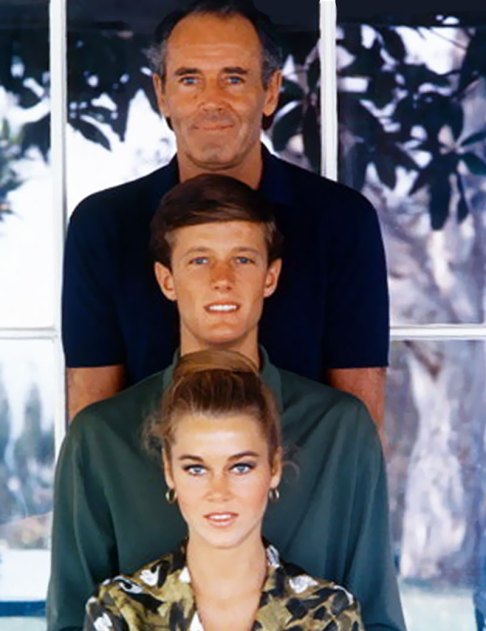
LATEST UPDATE: Jane Fonda shares her thoughts about her weekend in Omaha on her blog site-
Jane Fonda Official Site
ANOTHER UPDATE: The Film Streams Feature Event presenting Jane Fonda in conversation with Alexander Payne reminded me of the 1981 Omaha Community Playhouse event, An Evening with Mister Fonda. The earlier event was a pull-out-all-the-stops tribute to Jane’s father, the late iconic actor Henry Fonda. His Hollywood press agent and close personal friend John Springer, a biographer of the Fondas, interviewed the actor on stage at the Playhouse. Much like the Jane Fonda event last night, which had Alexander Payne interview her, film clips were screened to break up the talk. Coincidentally, I was programming a film series at the University of Nebraska at Omaha in the early 1980s and so I made sure to schedule a Henry Fonda-Dorothy McGuire film festival that showed around the same time as the Playhouse tribute. Film Streams’ repertory series of Jane Fonda films continues. What goes around comes around, and so the circle is completed.
UPDATE: I forgot to mention that one of my favorite parts of the Jane Fonda in Conversation with Alexander Payne event was the surprise appearance by Laura Dern. The actress has maintained a friendship with Payne since she starred in his first feature, Citizen Ruth, which was filmed in and around Omaha. Her loyalty to and affection for Payne was demonstrated when she was the guest star for the inaugural Film Streams Feature Event that featured her in conversation with the filmmaker. I got to interview her in advance of that event and an excerpt from my resulting story, When Laura Met Alex, can be found on this blog. It turns out she came to Omaha for the Fonda event because, not surprisingly, she’s an admirer of the older actress and in fact met her when her father Bruce Dern worked with Fonda on Coming Home. Dern described how that meeting and her opprotunity to closely observe her at work helped inspire her to pursue acting with the same unvarnished honesty as Fonda. Both of Dern’s actor parents, her father Bruce Derna and mother Diane Ladd, worked with Fonda and as fate would have it her father is about to star in Payne’s new film, Nebraska. How’s that for synchronicity?
I wouldn’t be surprised if Payne ends up working with Dern again and somehow finds a role for Fonda in one of his future projects.
As expected, Jane Fonda came and captured the hearts of those attending the Film Streams Feature Event IV last night (July 22) at the Holland Performing Arts Center in Omaha. Understandably, it was not only an emotional evening for her but an emotion-packed weekend, much of which she spent touring old family haunts, including the Omaha Communithy Playhouse that her late father, she, and her brother Peter all acted in. Spoken and unspoken, her father’s legacy looms large over her and she must particularly feel his presence when she’s back where so much Fonda lore is present. Omaha is where her iconic father Henry Fonda was raised, learned his social consciousnesses, and began acting. One of the new things I learned from the conversation she engaged in with Alexander Payne live on the Holland stage is that she did some of her growing up here as well. I knew that her father’s sister Harriet lived in the Dundee neighborhood where he grew up and that he came back to visit her and I knew that Peter had attended Brownell-Talbot School and the University of Omaha here but I always assumed Jane had little contact herself with the extended family in their communal hometown. But it turns out she visted more than occasionally during her youth, even spending chunks of the summer in town during breaks from the elite boarding schools she attended. She even says it was in Omaha where she came of age as an adolescent in the 1950s, which became her own personal Amercian Graffiti stomping grounds for cruising in cars up and down the main drag, Dodge Street, for taking-in drive-in movies, and for participating in sock-hops, and all the rest. She told Payne and us that her aunt Harriett arranged for girls her age from the neighborhood to meet her and made she she was invited to parties and such. She also indicated that Warren Buffett and family, who also called Dundee home, have been friends with the Fondas over the years.
I didn’t get to interview her or meet her as I had hoped, but I’m happy that Film Streams has reenaged her with Omaha and Nebraska after her being away a long time. She was apparently last here in the late ’90s with her then-husband Ted Turner, who has ranching interests in the state. Before that, she accompanied On Golden Pond to its Midwest premiere at the Orpheum Theatre. She’s pledged to continue her relationship with this place and with Payne, who serves on the Film Streams board and is the one responsible for bringing her back into the fold so to speak. Now it’s time the same be done with Peter Fonda. And the same with other Nebraskans in Film, including Joan Micklin Silver, Nick Nolte, Swoosie Kurtz, Gabrielle Union, Yolonda Ross, Gail Levin, Lynn Stalmaster, Monty Ross, et cetera. For too long Nebraska has ignored its film heritage. It should be celebrated and I’m glad to say that Payne and Film Streams are motivated to do that.

Related articles
- Film Streams at Five: Art Cinema Contributes to a Transformed Omaha Through Community Focus on Film and Discussion (leoadambiga.wordpress.com)
- Alexander Payne to Talk Cinema with Kindred Spirit Jane Fonda at Film Streams Feature Event in Omaha (leoadambiga.wordpress.com)
- Jane Fonda Takes Center Stage at Film Streams, Where Her Life in Film is Celebrated this Summer (leoadambiga.wordpress.com)
Film Streams at Five: Art cinema contributes to transformed Omaha through community focus on film and discussion
The Film Streams art cinema in Omaha gets more than its share of attention and deservedly so. It operates at a world-class level under the leadership of Rachel Jacobson. It has the likes of filmmaker Alexander Payne and novelist Kurt Andersen as board members and advisers, not to mention guest curators and hosts. Its visiting artists have included Steven Soderbergh, Debra Winger, Laura Dern. And to help celebrate its fifth anniversary and raise funds for the organization it’s bringing Jane Fonda in for a July 22 on-stage conversation with Payne. The following story I wrote, soon to appear in The Reader (www.thereader.com), examines the organization’s strong community orientation and considers Fonda’s legendaric status.
Film Streams at Five: Art cinema contributes to transformed Omaha through community focus on film and discussion
©by Leo Adam Biga
Soon to appear in The Reader (www.thereader.com)
Just as Omaha’s come of age with performing arts venues, nightlife attractions, community events and public spaces, so it’s matured in cinema.
This maturation first bloomed when Alexander Payne made features here. Then the local indie filmmaking scene organized. Subsequently the Omaha Film Festival’s provided an annual juried focus on movies.
But the real growth came when Film Streams launched in 2008, thus giving north downtown a vital new anchor and the metro its first year-round dedicated art cinema. Another amenity in the transformed Omaha.
More than a showcase Film Streams is viewed as a cultural center that invites discussions around movies and their themes.
“I love that there is a place to talk about complex and difficult issues and where I am learning about and appreciating film in a whole new way,” says board member Katie Weitz White.
Board member Paul Smith says “films that would never be seen in Omaha but for the existence of Film Streams are shown and provoke a discussion amongst a diverse community of people who attend those showings, and I think it’s very healthy and enriching to our community.”
He mentions the documentaries Food Inc. and A Time for Burning as films whose subjects, the nation’s food supply and racial discrimination, respectively, became talking points following screenings.
The nonprofit is part of the new community engagement model championed by young professionals here. Perhaps no one embodies that aesthetic more than Film Streams founder-director Rachel Jacobson.

The Omaha native long harbored the vision for an art cinema. She enlisted artists, entrepreneurs, community leaders and business experts to help realize it. A classic networker, Jacobson’s built an enviable, pro-active board of directors and advisory board filled with heavy hitters, influencers and tastemakers.
Two celebrity players from Omaha, Payne and Kurt Andersen, are more than window-dressing names associated with it. They guest curate series and host the annual fund raiser, Feature Event. The July 22 Feature Event IV pairs Payne in conversation with Jane Fonda. Past Features brought Steven Soderbergh, Debra Winger and Laura Dern. It’s no secret Payne reels in these major cinema figures.
“That’s really all about Alexander,” says Jacobson. “We wouldn’t be able to do that without him and we are so fortunate because Feature Event provides 15 to 20 percent of the annual budget. So that’s a huge deal for us as an institution.”
The gala’s evolution reflects how Film Streams capitalizes on relationships.
“It’s been a collaboration between us and the Holland and each of the different chairs of the gala. The first chairs were Betiana and Todd Simon, the second chairs were Paul and Annette Smith. Last year it was Katie Weitz White and her husband Watie White and the Weitz family. This year’s chair is Susie Buffett.
“All the different chairs and gala committees have helped shape the event and make it into this interesting thing. Alexander’s been involved. It’s not the kind of fund raiser where we’re auctioning off stuff. We’re not talking about fund raising at the event. We raise the money up front. That way the event gets to be about our mission.”
It’s only one night but in that small window Film Streams coalesces everything it stands for by giving film-as-art a big fat community forum.
“It’s become this signature thing that’s perfect for us. The fact that we get to bring these world renowned actors and directors to town is absolutely thrilling and the conversations have been I think really meaningful and one-of-a-kind,” she says.
Similarly, the whole community development piece of Film Streams has been shaped by many participants. Jacobson says the one-page prospectus she devised “of what Film Streams was going to be,” which amounted to her version of Charles Foster Kane‘s declaration of principles in Citizen Kane, “is very similar to what the organization has become. But the way that everything’s been created has been very collaborative with the staff and the board and with everyone engaged with the organization. Even though it matches what was inside my head it really is outside of me now. It’s something that a lot more people have a hand in authoring.”


Among those varied authors is her father David Jacobson (Kutack Rock), who chairs the board of directors. The board of directors includes members of old-line art philanthropist families.
Jason Kulbel and Robb Nansel of Saddle Creek Records and Lyn Wallin Ziegenbein with the Peter Kiewit Foundation are advisory members from different generations, each exerting pull in different segments.
The broad-based support Film Streams has received from donors, granters and box office patrons has allowed it to become a vested fixture on the arts-culture landscape in a short time.
“What Film Streams has achieved in only five years in being one of the jewels in the crown of the Omaha arts scene, together with the symphony and the zoo and The Rose and the College World Series and the Bemis, is an amazing achievement as far as I’m concerned,” says Payne. “I go to other cities and they don’t have Film Streams.”
Paul and Annette Smith support the organization monetarily and as advocates. The couple sponsored Feature Event II with Debra Winger.
“We’ve been a vocal proponent of Film Streams and we do that really because we believe it plays a critical role in the community,” says Smith a Taneska Capital Management. “The way I think about this is it’s an investment of time, talent, some treasure in an organization which is a cultural asset.”
For film buffs like Sam Walker, “Film Streams has been a dream come true.” Before it the University of Nebraska at Omaha emeritus professor of criminal justice made do with scattershot screenings of art and classic films at commercial theaters and other venues. Documentaries rarely showed. Visits by guest film artists were almost nonexistent. Forget about any discussion or education.
The situation worsened when local universities and museums abandoned curated alternative film series. As cineplexes became slaves to blockbusters and sequels, the metro starved for an art film fix. Enter Film Streams. It’s already presented more than 200 first-run premieres and 400-plus classics, shown films from 43 nations and welcomed 222,000 patrons to 700-plus programs at its Ruth Sokolof Theater.
Forty-some visiting filmmakers and guests have spoken there. Dozens of panels and Q&As have followed screenings.
Payne sums up the seascape change with, “Omahans now take it for granted they can go see great movies, and that is an amazing development.”

Guest filmmakers sing its praises too.
Louder Than a Bomb documentary producer-director Greg Jacobs says Film Streams “really was one of the favorite stops” on its theatrical tour. “It’s an amazing facility and program. i just got the sense it’s a creative hub.” Jacobs notes what many observers do – that the organization takes its role as catalyst seriously.
Just as it occurs wherever the film plays some Omaha viewers “came up afterwards interested in Louder Than a Bomb as an event,” he says. “But what makes Film Streams stand out,” he adds, “is that Rachel Jacobson helped connect us with poet Matt Mason (Nebraska Writers Collective), which ultimately led to the creation of Louder Than a Bomb Omaha. I think it’s something very special when people take interest not just in the film but in the outreach activities around it. The folks there were involved enough to see the film could have an impact beyond its screening.”
“I get the sense Rachel’s innately a connector,” says Jacobs. “That’s the kind of role she plays. There’s a real desire to not just have people there but then to see what other things she can help create from that.”
“I’ve always loved the social action element of film and how it can convey ideas about issues and spark important conversations,” says Jacobson. “You can maximize the power of film by having discussions around them.”
Film Streams screened the documentaries Restrepo and To Hell and Back and hosted ensuing discussions by veterans and heath care workers about PTSD. It screened the doc The Last Survivor and hosted discussions about genocide.
“These are tough conversations to have and I love that we’re able to provide a safe place to have that kind of dialogue. That wasn’t really the initial vision, but seeing that happen has been exciting.”
She considers Omaha conducive to doing community outreach.
“I think a lot of it’s due to the nature of Omaha and how things operate, how everyone is kind of interconnected in 12 different ways. So we just have these opportunities to link to so many different organizations and individuals who in turn are willing to collaborate.
“That aspect has been really surprising. I didn’t realize how wide ranging it could be. I never really imagined how many different interest groups and demographics would be able to engage with it. It just kind of happened.”


The 100-some partners Film Streams has cultivated run the gamut from arts groups to community organizations and social service agencies to school districts and universities. One partner is the Office of Latino and Latin American Studies at UNO. OLLAS-Film Streams present a biennial Cinemateca series. It returns August 12.
“The partnership became an instant expression of these two organizations’ mutual commitment to community engagement and to the broadening of learning opportunities beyond traditional spaces,” says OLLAS executive director Lourdes Gouevia. “We continue to explore ways to encourage the Latino and non-Latino community to experience this great theater and the beauty of Spanish and Portuguese foreign films.
“This year’s Cinemateca will include food, music and audience forums guided by OLLAS faculty as well as an invited film expert from the University of Pittsburgh. The series brings in El Museo Latino as a partner.”
All that engagement has a practical side, too. “It has to be that way in order to be sustainable,” says Jacobson, who bends the ear of top business executives.
“It’s very common to find compelling nonprofits that aren’t very well run and Film Streams is a very well run organization,” says Paul Smith. “I spend a good deal of time helping Rachel with organizing the financial management of her business and she’s a very sharp person, a very quick study, and is an effective business manager. It’s great to work with somebody like that.”
Smith says while the business end is not the sexy part of Film Streams, “it’s the infrastructure everything else hangs on. You need to have a good financial infrastructure. Without that you can’t do the fun stuff.”
Payne says the best is yet to come. “Wait till you see all the other outreach programs Film Streams is going to try to do in the next five years.”

Jane Fonda: A Legend Considered
©by Leo Adam Biga
Soon to appear in The Reader (www.thereader.com)
Jane Fonda. Love her or hate her, she’s a lightning rod figure like few others in film.
When the actress appears at the July 22 Film Streams Feature Event she’ll not only carry the impressive legacy of her personal filmography but that of her iconic family. Alexander Payne will undoubtedly cover the Fonda family acting tree when he converses with her live on stage at the Holland Performing Arts Center.
“To have such a remarkable star and actress and icon, and with the Omaha connection, well, it’s in my dreams,” says Payne.
The Fondas became a noted thespian clan when Jane and brother Peter followed their father, Henry Fonda, into the family business. Papa got his start at the Omaha Community Playhouse, where the siblings did their earliest acting.
In a life and career filled with makeovers and causes, she’s been sex symbol, counterculture rebel, traitor, feminist, artist, power player and fitness guru. Today, she’s best known as a healthy aging advocate and author.
Her early career rested more on her famous name and fashion model good looks than acting ability. But she remade herself from sex kitten ingenue in mostly forgettable Hollywood and European romps (the latter directed by her Svengali-like filmmaking partner Roger Vadim) to serious actress and wannabe activist. Her commitment to challenging projects and roles set her apart from her peers.
At the dawn of the New Hollywood she was perhaps the most powerful woman in the industry, often developing-producing her own material, and usually choosing a smart balance of commercial and art properties.
She turned entrepreneur in the 1980s when she tapped the nascent fitness craze with home workout videos that went viral. Her marriage to politico Tom Hayden ended in 1989. She then married rogue media czar Ted Turner in 1991 and abruptly retired from acting.
Her 2005 autobiography made peace with her deceased father. That same year she returned to acting. The Omaha event comes just as she’s reemerging as a screen presence. Her persona’s come full circle too – from coquette to neurotic to career woman to unreconstructed yippie.
A repertory series of her work shows now through August 30 at Film Streams.
The series:
Cat Ballou
She’s the fetching, spirited title character who hires gunman Kid Shelleen to meet out justice against Tim Strawn (both played by Lee Marvin) for the murder of her father. She holds her own with Marvin in this whimsical Western comedy with heart.
Barbarella
Fonda’s an eye candy fantasy figure in this surreal, pan-sexual trip. She and the film’s director, her then-husband Roger Vadim, push the boundaries of sexual expression and liberation on screen that he earlier exploited with Brigitte Bardot.
They Shoot Horses Don’t They?
It’s a harder, jaded Fonda stripped of any glamour in a bleak story of Depression-era dance marathoners intent on oblivion. The guile, vulnerability and yearning she revealed here became her signature face.
Klute
Fonda consolidated her new serious image with this post-modern take on the prostitute-with-a-heart-of-gold convention. She’s both savvy and brittle as Bree Daniels, a New York call girl entangled with a small town detective (Donald Sutherland) investigating a disappearance in the big city. Her first Oscar win.
Julia
As playwright Lillian Hellman she juggles writerly insecurities and triumphs, a tumultuous relationship with Dashiell Hammett (Jason Robards) and danger aiding a friend, Julia (Vanessa Redgrave) caught in the web of anti-Nazi intrigue.
Coming Home
Perhaps her most defining role came as a socially conscious war bride who has an affair with a paraplegic anti-war vet (Jon Voight). Her army officer husband (Bruce Dern) returns from ‘Nam a shattered man and becomes unhinged when he discovers her infidelity, Her second Oscar win.
The China Syndrome
Fonda makes spunk sexy in the part of an ambitious TV reporter who stumbles upon a nuclear reactor accident story. She finds just the right chemistry with cool Michael Douglas and manic Jack Lemmon in this prescient cautionary tale.
Nine to Five
Buttoned-down Jane joins Lily Tomlin and Dolly Parton in taking extreme measures against their oppressive boss (Dabney Coleman) and his misogynistic ways in this proto-feminist comedy. She plays it straight and gets laughs.
On Golden Pond
This career grace note paired her with Henry for the only time on screen in a story deeply resonant with their own real-life father-daughter dynamics. Henry disliked her Method style. The cathartic project also teamed her with Katharine Hepburn. Jane came to the Orpheum for the film’s gilded Midwest premiere and later accepted her father’s Best Actor statuette at the Oscars.
At Film Streams’ invitation Fonda’s selected two favorite films – 12 Angry Men starring her father and the 1941 Preston Sturges comedy classic Sullivan’s Travels.
Tickets for the 6:30 p.m. Feature event are $35. For pre and post-event party tickets and screening dates-times, visit http://www.filmstreams.org.
Related articles
- Jane Fonda Takes Center Stage at Film Streams, Where Her Life in Film is Celebrated this Summer (leoadambiga.wordpress.com)
- Alexander Payne to Talk Cinema with Kindred Spirit Jane Fonda at Film Streams Feature Event in Omaha (leoadambiga.wordpress.com)
- For Love of Art and Cinema, Danny Lee Ladely Follows His Muse (leoadambiga.wordpress.com)
- Dena Krupinski Makes Her Hollywood Dreams a Reality as a Turner Classic Movies Producer (leoadambiga.wordpress.com)
- Film Connections, An In-Progress Story of How a 1968 Convergence of Future Cinema Greats in Ogallala, Neb. Resulted in Multiple Films and Enduring Relationships; From the Melting Pot of Coppola, Lucas, Knight, Duvall, Caan and two Ranch-Rodeo Families Cam (leoadambiga.wordpress.com)
- Litniks Unite! The Downtown Omaha Lit Fest Brings Writers, Artists and Readers Together in Celebration of the Written Word (leoadambiga.wordpress.com)
George Payne and the Virginia Cafe: Restauranter Family Legacy of Filmmaker Alexander Payne
NOTE: The primary source of this story, George Payne, the father of filmmaker Alexander Payne, died May 27, 2014. I’m reposting this in Mr. Payne’s memory.
As many of you know the filmmaker Alexander Payne is a Greek American with a fairly unpronouncable given name and he regards his heritage as much more than an aside. It’s a core aspect of his life. Hisv ery Greek family ran a popular, long gone eatery in downtown Omaha and some years ago I sat down with his father George to recall the life and times of their Virginia Cafe. Alexander, who has some fairly distinct childhood memories of the place, lent a few tidbits as well. Perhaps Payne’s most public display or acknoweldgment of his family and heritage came when he accepted the Oscar for Beast Adapted Screenplay last February and used the occasion to thank his date, who happend to be his mother Peggy, for enabling his early cinephile stirrings, even saying “I love you” in Greek before the worldwide audience. If you happen to be a Payne fan then this blog is for you. I’ve covered him for 15 years and counting and you’ll find the fruit of that work here.
©by Leo Adam Biga
Originally published in The Reader (www.thereader.com)
It’s nearly 40 years since Alexander Payne‘s family owned and operated the Virginia Cafe, a restaurant that for generations held a niche in the city’s downtown dining market. Recently, the filmmaker’s father, George Payne, shared some history and memories of the place and the family with The Reader.
George’s immigrant father, Nicholas (Papadopoulos) Payne, was founder and proprietor of the Virginia. Nick, as the patriarch was called, came to America in 1910, learning the confectionery trade from an uncle, John Birbilis, who helped Nick and brother Peter open the Palace of Sweets in Council Bluffs. In 1920 Nick, with cousin Fred Schizas and two other partners, bought the Calumet, a large, busy, around-the-clock food joint at 1413 Douglas Street that dated back to 1893. They remodeled it, renamed it the Virginia and kept it one of Omaha’s few 24-7 operations, George said. The other partners eventually dropped out.
According to George the Virginia served strictly American fare — steaks, chops, sandwiches, salads, a full breakfast line, daily lunch and dinner specials and traditional holiday favorites. The cafe housed its own bakery, had its own butcher and stocked a freezer with eight kinds of ice cream.
At its peak, he said, the popular cafe kept a payroll of 85 employees on three different shifts and served up to 3,000 diners a day.
George joined his father in the family business in the early ’50s. An Omaha Central High, Dartmouth and Northwestern University grad, George is a World War II vet who worked on the war production board in Washington D.C., where he met his wife, Peggy. He and Peggy settled in Omaha, where the youngest of their three sons, Alexander, fell in love with movies.
The future filmmaker was only 9 when a fire destroyed the Virginia but he has fond memories of the cafe.
“People loved that place,” Alexander Payne said by phone. “There was no key to the front door. They didn’t need one — they never closed. I used to like to go back to the kitchen and watch the chefs work. I remember all the wait staff and cashiers were so nice to me because, of course, I was the owner’s son. Our family ritual was dinner there every Thursday night.”
The Paynes ordered right off the menu.
While no Greek food was on the menu, the restaurant embodied Nick Payne’s classic immigrant made-good success story. Like many newcomers he went out of his way to be a super patriot. He sold millions of dollars worth of government Liberty Bonds during the Second World War, said George Payne, who added his father landed “quite a coup” when he inked a contract to feed all area military enlistees. From WWII through Vietnam, the Virginia served “last meals” to wide-eyed recruits en route to basic training.
“They came in and took over our business,” said George, who remembers the first guardsmen tromping in with their boots and packs and hanging their rifles on coat hooks attached to the fine mahogany wainscoting, which sent his father into a fit. From that point on the soldiers stacked their weapons safely out of harm’s way.
The Virginia was justly proud of its decor. Its glorious neon signage, plate glass windows, decorative tile-fronted exterior and rich mahogany interior with white table cloth covered tables and booths were straight out of an Edward Hopper painting. Distinctive murals of the American landscape and fine renderings of all 50 state seals adorned the lounge and dining room and the massive cross-section of a redwood tree was mounted in the party room.
“There wasn’t a restaurant in town that had that kind of atmosphere at all,” George said. “It was very well done. My dad had vision.”
This eclectic design reflected the diverse customers the Virginia catered to — professionals, office workers, politicos, housewives, clerks, stock boys, cabbies, crack-of-dawn delivery men, night owls and bar crawlers.
Up front, right at the door greeting customers, was Nick, trademark cigar in hand, dressed impeccably in a suit and tie and kibitzing with the line of people that formed at lunchtime. If anyone tired of the wait and started to leave George said Nick would coax them to stay with, “‘Don’t go. You know you’ll be back in five minutes. Where you going to go?’ He had a way with people.”
The cafe enjoyed a brisk trade before it went up in flames in 1969. Neither Nick nor George were there when the fire broke out on a Sunday night. They were awakened with the news and came down to see a burned out shell. After two full days of being hosed down, George said, the building collapsed in on itself. It was a total loss. George salvaged a few mementos and artifacts. There was talk of reopening at another spot but the family opted to walk away. The site of the Virginia was sold to the city, which built the W. Dale Clark Library there.
“I really didn’t quite know what I was going to do…” George said. He wound up with the Sheraton Hotels group and then the U.S. Department of Commerce’s International Trade Administration — posts that took him around the world.
Nick Payne left a rich legacy that George has carried on. The elder Payne helped found the Omaha Restaurant Association, which his son presided over as president, as he did the Nebraska Restaurant Association. In 1956 American Restaurant Association Magazine inducted Nick into its Hall of Fame. The father was heavily involved with St. John Greek Orthodox Church. Nick Payne died in 1989. George Payne, now 92, has continued, with Peggy, his father’s support. The family, who’s made periodic trips to their ancestral homeland, retains close ties to Greece, where Alexander Payne intends to one day shoot a film.
Related articles
- Alexander Payne to Talk Cinema with Kindred Spirit Jane Fonda at Film Streams Feature Event in Omaha (leoadambiga.wordpress.com)
Alexander Payne talks cinema with kindred spirit Jane Fonda at Film Streams Feature Event in Omaha
One of the world’s leading writer-directors and a legendary actress he admires from America’s last golden age of film may just be made for each other, artistically speaking that is, which makes the “tete-a-tete” they will engage in July 22 at the Film Streams Feature Event in Omaha all the more interesting. The filmmaker is Alexander Payne and the leading lady is Jane Fonda and they will undoubtedly spend a fair amount of time discussing American cinema from the late 1960s through the late 1970s, a period that Payne adores and that saw Fonda do her best work. There’s also the Fonda Family legacy to be considered, one with deep resonance to Nebraska because her famous father, the late stage and screen star Henry Fonda, was born and raised in Nebraska and began acting at the Omaha Community Playhouse. That’s where Jane and her brother Peter made their stage debuts. When the lone picture she made with her father, On Golden Pond, premiered she accompanied the movie to Omaha for a red carpet extravaganza at the Orpheum Theatre. Now she’s back 30 years later to talk shop with a native Nebraska filmmaker. Full circle.
I have a companion story on the blog that gives details about the Jane Fonda repertory series at Film Streams to run from late June through August 30. She also selected two favorite films that will be getting screened, her father’s personal favorite among his own films, 12 Angry Men, and the great Preston Sturges social satire, Sullivan’s Travels, which is also one of the most scathing looks ever at the corrupt Hollywood ethos. Film Streams is also screening Peace, Love & Misunderstanding, which features Jane’s most recent film acting performance.
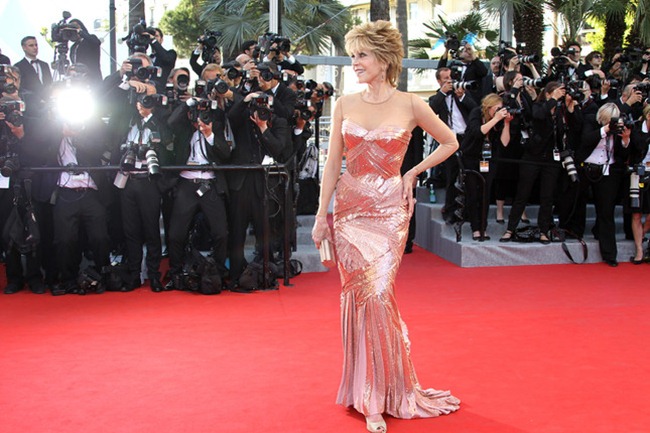

Alexander Payne talks cinema with kindred spirit Jane Fonda at Film Streams Feature Event in Omaha
©by Leo Adam Biga
To appear in the July issue of Metro Magazine
When Omaha’s own Alexander Payne talks cinema with Jane Fonda at the July Film Streams Feature Event he won’t be at a loss for material.
He’ll converse with an intelligent artist he admires and whose best work came in his favorite decade of American movies, the ’70s. Then there’s all the noted directors and actors she’s worked with and the legacy of her famous father and brother to discuss.
It’s apropos that a renowned filmmaker from Omaha will review Fonda’s own legendary career before an audience of Nebraskans since her family is so tied to this place. Her adored father Henry remains an enduring native son. The loyalty the late stage and screen star showed to the state is not lost on Jane or Peter, who are adopted Nebraskans.
The threesome’s cinema paths rarely crossed. Just as Henry’s career waned, Jane’s and Peter’s took off. But there was a golden moment when they all converged. As the Old Hollywood studio system died out a brash new group of creatives crashed the gates to usher in the New Hollywood in the late 1960s. In that emerging space of permissiveness and artistic freedom depictions of sex and violence reached new extremes, more humanistic stories came in vogue, locations gained favor over sound stages and stylistic devices, like flash cuts, took hold. Amid this liberated landscape the Fondas made films that forever changed things.
Jane paradoxically struck a blow for both misogyny and feminism in Roger Vadim’s sexually bold adaptation of the adult comic strip Barbarella. Henry went rouge playing completely against type as a sadistic killer in the Sergio Leone Western Once Upon a Time in the West. Peter became a counterculture hero in the hippie, Harley, drug-fueled road picture classic Easy Rider.
Then, in a dramatic career transformation, Jane went from frothy sex symbol to first-rate dramatic actress of social conviction, winning Oscars for her risk-taking work in Klute and Coming Home. Later, she found the project that became her ailing father’s cinema swan song and their only film together, On Golden Pond. Fast forward a generation and Peter channeled his father in his Oscar-nominated lead role in Ulee’s Gold.
While the Fondas contributed to the unrestrained new cinema a young Alexander Payne cut his teeth on ’70s films as an audience member at the Dundee and Indian Hills Theatres. As Payne acknowledged in accepting his Oscar for The Descendants last February, his mother Peggy was his most devoted filmgoing companion.
He was an intellectually precocious youth with a preternatural appetite for adult art fare. He made his own short films with an 8 mm camera his restauranteur father, George, received as a bonus from Kraft Foods for customer loyalty.
Payne, a Creighton Prep graduate, considered studying journalism but fixed on history and Spanish literature at Stanford University. He didn’t formally study film until he entered UCLA, where his thesis project, The Passion of Martin, played festivals and netted him a production deal from Universal Studios.
By the time he made features in his hometown in the mid-1990s and early 2000s, repeatedly shooting in the same Dundee neighborhood where he and Henry Fonda grew up, Jane was already retired from movies.
For Citizen Ruth Payne cast a strong, socially committed woman not unlike Fonda in Laura Dern to play the title character of Ruth Stoops. Interested in making uncompromising films akin to those he fell in love with during the ’70s, Payne unflinchingly took on the abortion debate in the picture.
His next movie, Election, placed Reese Witherspoon in the kind of catty vixen part a young Jane would have been just right for.
Payne’s subsequent male-dominated films co-star women in roles that put men in their place. In About Schmidt Connie Ray is a trailer park wife sympathetic to Jack Nicholson recently losing his wife until he makes a pass at her and she throws him out. One can imagine Fonda in that part. In Sideways Sandra Oh is the cool wine pourer babe who goes ballistic when she discovers Thomas Haden Church has been lying to her and Virginia Madsen is the cool Earth Mother who sees past Paul Giamatti’s shortcomings. Fonda’s played similar characters.
As a good woman wronged in The Descendants Judy Greer finds the right balance of tenderness and rage Fonda delivered as Cat Ballou, Bree Daniels (Klute), Lillian Hellman (Julia) and Kimberly Wells (The China Syndrome).
No doubt Payne would have loved to work with Fonda in her prime. Who knows, now that she’s acting again perhaps they’ll be a part for her in one of his future projects. Just not his next one, Nebraska, a road movie that follows an embittered Nebraskan (Bruce Dern) living in Montana hell-bent on claiming a sweepstakes prize his estranged son (Will Forte) knows doesn’t exist. The son is sure his father will come to his senses long before they reach their destination of Lincoln, Neb. The journey revisits the old man’s dispiriting past and en route the sympathetic son decides to give his fool of a father the gift of saving face.
Payne’s angling to shoot the project in Nebraska this fall. He and casting director John Jackson are hard at work trying to find authentic Nebraska types as extras.
Related articles
- Jane Fonda Takes Center Stage at Film Streams, Where Her Life in Film is Celebrated this Summer (leoadambiga.wordpress.com)
- At 74, Jane Fonda learned how to be a hippie (todayentertainment.today.msnbc.msn.com)
- Dena Krupinski Makes Her Hollywood Dreams a Reality as a Turner Classic Movies Producer (leoadambiga.wordpress.com)
- Film Streams at Five: Art Cinema Contributes to a Transformed Omaha Through Community Focus on Film and Discussion (leoadambiga.wordpress.com)
- Jane Fonda Comes Home (leoadambiga.wordpress.com)
Jane Fonda Takes Center Stage at Film Streams, Where Her Life in Film is Celebrated this Summer
The Omaha art cinema Film Streams is making a habit of saluting prominent American screen actresses. The way it works is a guest star comes for a special evening in which Film Streams board member and world acclaimed filmmaker Alexander Payne interviews her live on stage, ala Inside the Actors Studio. A repertory series of her work is part of the deal. Laura Dern got the treatment the first time. Debra Winger came next. Jane Fonda is this year’s feted subject. Depending on your age or aesthetic or political affiliation Fonda means different things to different people. For some, she’s an enduring star. For others, a faded one. Depending on your tastes, she boasts an impressive body of stand-the-test-of-time work or else a decidedly uneven euvre outside a few notable exceptions. Many still find unforgivable her anti-war protests and vilify her every move. Many more feel affectionate and nostalgic about her as the daughter of Henry Fonda and as one of the 1960s and 1970s biggest stars. She’s prettty much done it all as a cinema diva – from ingenue to sex symbol to serious Method actress, the star of box office hits and critically acclaimed prestige pics, gobs of Golden Globe and Oscar nominations, two Academy Award wins for Best Actress, an Emmy for Best Lead Actress. Retiring from the screen at age 50 and making a comeback at nearly 70. Now, of course, as a woman of a certain age (74) she’s a supporting player or character actress who brings a rich persona and background to any role she takes. Part of the context of Jane Fonda today is that her adventurous personal life informs her work. Her boarding school and debutant upbringing. Her early modeling career. Studying under Lee Strasberg. Her marriages to Roger Vadim, Tom Hayden, and Ted Turner. Her activist years. Becoming a Hollywood Player as a producer. Making herself a fitness guru. Her forever strained relationship with her famous father. And her identity today as a healthy aging advocate and author. You’ll find plenty of film stories by me on this blog. Many happy cinema returns.
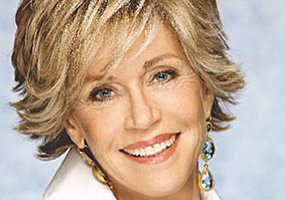
Jane Fonda Takes Center Stage at Film Streams, Where Her Life in Film is Celebrated this Summer
Appeared in the July issue of Metro Magazine
The Fonda Legacy
This summer Film Streams celebrates the many faces of actress Jane Fonda.
She and one of her biggest fans, Alexander Payne, converse live on stage July 22 at the Holland Performing Arts Center for Feature Event IV, the art cinema’s annual fundraiser. A Fonda repertory series runs through August 30.
The Fonda legacy in Nebraska looms large. Her late iconic father Henry Fonda was born here. He started acting at the Omaha Community Playhouse, where Jane and brother Peter trod the boards. Henry retained deep ties to the state and the Playhouse. He once brought the entire production of his Broadway triumph Mister Roberts to town. In 1955 he, fellow Playhouse alum Dorothy McGuire and 17-year-old Jane appeared in a benefit production of The Country Girl directed by Joshua Logan.
Peter, who attended the University of Omaha, occasionally visits the Playhouse.
When the only film pairing the famous father and daughter, On Golden Pond, made its Midwest premiere at the Orpheum she came.
Unlike her father’s beloved public persona, Jane’s is complex.
Incarnations
For much of the 1960s she was a spirited ingenue and sometime vixen plying her cover girl looks and wiles more than her acting chops in cinema trifles. Her comedic work in Cat Ballou and Barefoot in the Park hinted at star potential.
Film Streams founder-director Rachel Jacobson, an admirer, says Fonda “always had a deeper, more introspective quality even when playing the lighter roles.”
When Fonda’s French filmmaker husband Roger Vadim exploited her sex symbol status in Barbarella she could have been typecast. Instead, she did a makeover from vapid party girl and blonde bimbo to social activist and serious actress.
She earned acclaim for her dramatic turns in They Shoot Horses Don’t They? (1969) and Klute (1971), the latter earning her the Best Actress Oscar. That’s when “she came out from behind the shadow of both her father and brother” (Peter made it big with Easy Rider), says film historian Bruce Crawford of Omaha.
She also drew ire for her anti-war comments and protests. By the time she divorced Vadim and married activist Tom Hayden she was branded “political.” Fonda made socially conscious projects in Julia (1977), Coming Home (1978) (another Best Actress Oscar) and The China Syndrome (1979).
Her career peaked in the late ’70s-early ’80’s with Nine to Five, On Golden Pond and her Emmy-winning performance in TV’s The Dollmaker (1984). By then she’d morphed into a home workout video diva. After divorcing Hayden she surprised many by marrying media tycoon Ted Turner and promptly retiring from the screen at age 50. Her recent return to movies comes on the heels of her best-selling memoirs and healthy aging advocacy.
“She’s continually reinvented herself and her image,” says Jacobson. “She’s just very deliberate about how she thinks about herself and her own evolution. She’s a fascinating person.”
Payne curates the Feature Event and in Fonda, 74, he’s once more chosen a dynamic figure to talk cinema shop, following Steven Soderbergh, Debra Winger and Laura Dern. Jacobson says, “The people he’s interested in having conversations with are really strong artists with great careers.” She says Payne won Fonda over by saying her appearance would support the arts in Omaha. “That’s why she’s coming.”


The series:
Cat Ballou
She hits all the right notes as an aspiring schoolmarm turned outlaw seeking to avenge her father’s death. Lee Marvin steals the show in the dual roles of killer Tim Strawn and gunman Kid Shelleen.
Barbarella
She fearlessly plays an over-the-top sex object in highly suggestive scenes bordering on soft-core porn in this tripped-out fantasy directed by Vadim.
They Shoot Horses Don’t They?
Her transformation began with this unadorned portrayal of a desperate, ill-fated dance marathoner under the direction of Sydney Pollack.
Klute
As high end call girl Bree Daniels she’s a raw-nerved neurotic mixed up in a dangerous liaison with small town detective Donald Sutherland in the big city.
Julia
Fonda plays the kind of strong woman, Lillian Hellman, she clearly emulates. Her playwright character embarks on a dangerous mission abroad for a friend, Julia (Vanessa Redgrave), opposing the Nazis.
Coming Home
She makes believable the evolution from naive war bride to anti-war sympathizer who falls for paraplegic activist vet Jon Voight. The fictional awakening reverberates with Fonda’s own coming-of-age.
The China Syndrome
Playing an ambitious TV reporter fighting to cover a nuclear reactor accident the authorities want suppressed Fonda is in her element. Her subdued conviction is a welcome contrast to high-strung Jack Lemmon and Michael Douglas.
Nine to Five
Sardonic Lily Tomlin and sassy Dolly Parton are long-suffering office workers harassed by womanizing boss Dabney Coleman. Pert Jane is the innocent newbie. The women execute a militant plan to turn the tables in this feminist farce.
On Golden Pond
Jane plays out real life issues with her dad in this tale of an estranged daughter starving for affection from a father who has trouble giving it. Katharine Hepburn co-stars in the poignant drama.
Tickets for the 6:30 p.m. Feature Event are $35. For pre and post-event party tickets and for series screening dates-times, visit www.filmstreams.org.
Related articles
- Photos: Jane Fonda Wows at Cannes (abcnews.go.com)
- Regina Weinreich: Jane Fonda: More Than the Sum of her Parts (huffingtonpost.com)
Alexander Payne delivers graceful Oscar tributes – Winner for Best Adapted Screenplay recognizes Clooney, Hemmings and his mom
Alexander Payne‘s love affair with the movies began when he was a child in his hometown of Omaha. The nascent cinephile’s frequent filmgoing companion then was his mother, Peggy Payne, who recognized her prodigy of a son expressed far more interest in grown-up films than children’s fare, and she indulged his serious passion by taking him to screenings of art movies. Decades later the world-class filmmaker told the world how much he appreciates what she did for him when he dedicated his Oscar for Best Adapted Screenplay for The Descendants to her. In doing so he said “I love you” in Greek, thus acknowledging his family’s heritage, which he’s extremely proud of. He also singled out one of his producing partner’s, Jim Burke, star George Clooney, and author Kaui Hart Hemmings, whose novel he and fellow Oscar winners Nat Faxon and Jim Rash adapted.
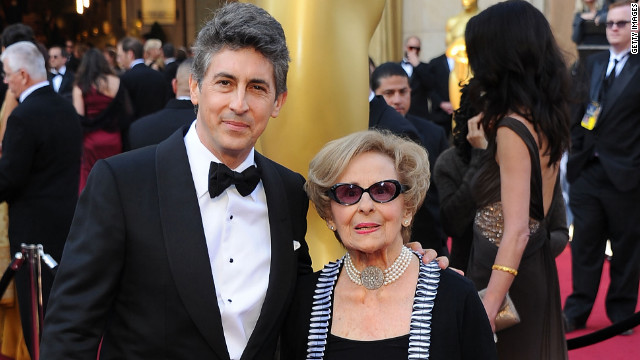
Alexander Payne delivers graceful Oscar tributes – Winner for Best Adapted Screenplay recognizes Clooney, Hemmings and his mom
©by Leo Adam Biga
Published in The Reader (www.thereader.com)
The obvious and not so obvious came into focus when native son Alexander Payne accepted his second Oscar in front of a live audience of his peers and a television viewing audience estimated at 1.2 billion during Sunday’s Academy Awards.
He shared Best Adapted Screenplay for The Descendants with Nat Faxon and Jim Rash, whose mimicking of presenter Angelina Jolie‘s power pose seemingly distracted and peeved Payne as he tried beating the clock with his thank-yous. Always the pro though, he quickly collected himself and offered one of the evening’s best grace notes with this tribute:
“We share this with George Clooney and the rest of the cast for interpreting our screenplay so generously and we also share it in particular with Kaui Hart Hemmings, our beautiful Hawaiian flower, for her novel.”
A radiant Hemmings sat next to the debonair Payne and his date for the evening, his well-coiffed mother Peggy, and it was to her and their shared Greek heritage he made the most moving gesture.
“And on a brief personal note if I may, my mother is here with me from Omaha, hold the applause, and after watching the show a few years ago she made me promise that if I ever won another Oscar I had to dedicate it to her just like Javier Bardem did with his mother (eliciting laughter). So, Mom, this one’s for you. Se agapao poly. (Greek for “I love you very much.”). And thanks for letting me skip nursery school so we could go to the movies. Thanks a lot.”
Payne has sometimes mentioned his mother and father both indulged his early childhood fascination with film, but it was she who took him to see the cutting-edge grown-up movies he preferred over children’s fare.
He could have quipped about her insisting that only her Countryside Village hair stylist attend to her tresses, which meant he had to fly the hairdresser out to L.A.
He could have used the stage to poke Nebraska legislators, as he did six weeks ago in Lincoln, for leverage in trying to get film industry tax credits passed here, lest he have to take his planned Nebraska project to, say, Kansas. He could have tweaked the noses of Paramount suits who gave him a hard time about his insistence in wanting to shoot Nebraska in black-and-white.
That he didn’t show anyone up speaks to his respect for the industry and his desire to not burn bridges. Besides, as he recently told a reporter, “I like the Oscars.” It’s obvious the Oscars like him. The only question is when he when he will take home Best Picture and Best Director awards.
Related articles
- Alexander Payne and Kaui Hart Hemmings on the Symbiosis Behind His Film and Her Novel ‘The Descendants’ and Her Role in Helping Him Get Hawaii Right (leoadambiga.wordpress.com)
- Payne Delivers Another Screen Gem with ‘The Descendants’ and Further Enhances His Cinema Standing (leoadambiga.wordpress.com)
- My Forthcoming Book, ‘Alexander Payne: His Journey in Film,’ Due for a Fall 2012 Release (leoadambiga.wordpress.com)
My Forthcoming Book, ‘Alexander Payne: His Journey in Film, A Reporter’s Perspective, 1998-2012,’ Due for a Fall 2012 Release
My Forthcoming Book, ‘Alexander Payne: His Journey in Film, A Reporter’s Perspective, 1998-2012′ Due for a Fall 2012 Release
As of February 23, 2012, I have entered into a contract with Concierge Marketing of Omaha to help me realize my book, Alexander Payne: His Journey in Film, A Reporter’s Perspective, 1998-2012. The book is a compilation of stories I have written about the celebrated winning writer-director of Citizen Ruth, Election, About Schmidt, Sideways, and The Descendants. It hopefully bodes well for the book now that he is a two-time Oscar winner after sharing the 2012 Best Adapted Screenplay Academy Award for The Descendants with Nat Faxon and Jim Rash. Payne previously won in the same category for Sideways, sharing that award with Jim Taylor, one of his producing partners on The Descendants.
I have covered Payne for 15 years, doing dozens of interviews with him and his collaborators in that time, even watching him direct on set for a week’s time, thus making me something of an authority on his work.
Payne is the subject of much media coverage but a collection of stories about him has never been published. That will change with my book. This compilation of my articles about Payne charts the arc of the writer-director’s feature career. For the first time, film fans and scholars can follow his cinematic journey from promising upstart to celebrated international artist and along the way learn in-depth his creative process.
The Oscar-winner long ago became the object of intense interest. My rare access to Payne has put me in the unique position of sharing an entire body of work about the filmmaker in a single volume. In story after story, I lay out the progression of the filmmaker’s journey, liberally quoting Payne talking about his own work and methodologies. There are also ample insights by some of Payne’s closest collaborators. Introducing each set of stories is my own cogent analysis and behind-the-scenes context. I bring to the project not only a personal archive of Payne interviews, observations, and stories but a lifelong cinema passion. As a film buff I have not only seen lots of movies and read scores of film books, but for several years I served as a film programmer for various art cinema series.
Bringing this deep knowledge and long insider access to bear, I provide the most comprehensive look to date at Payne. Readers will come away from the book with a fuller understanding of Payne and his movies. Because I write for general audiences, my articles and analyses are eminently readable and free of any academic jargon that could otherwise stand in the way of appreciating the filmmaker and his films. I explore Payne’s journey from cheeky provocateur to master cinema satirist, noting all the pertinent way-stops and detours along the way and speculating on where he might be headed next.
Related articles
- Payne Delivers Another Screen Gem with ‘The Descendants’ and Further Enhances His Cinema Standing (leoadambiga.wordpress.com)
- Alexander Payne and Kaui Hart Hemmings on the Symbiosis Behind His Film and Her Novel ‘The Descendants’ and Her Role in Helping Him Get Hawaii Right (leoadambiga.wordpress.com)
- Alexander Payne Achieves New Heights in ‘The Descendants’ (leoadambiga.wordpress.com)
- From the Archives: Alexander Payne Discusses His New Feature ‘About Schmidt’ Starring Jack Nicholson, Working with the Star, Past Projects and Future Plans (leoadambiga.wordpress.com)
- From the Archives: About ‘About Schmidt’: The Shoot, Editing, Working with Jack and the Film After the Cutting Room Floor (leoadambiga.wordpress.com)
- About Payne: Alexander Payne on ‘About Schmidt,’ Jack Nicholson and the Comedy of Deep Focus (leoadambiga.wordpress.com)
- Jim Taylor, the Other Half of Hollywood’s Top Screenwriting Team, Talks About His Work with Alexander Payne (leoadambiga.wordpress.com)
Nebraska Legislature once again wrestles with film tax incentives question: Alexander Payne and John Beasley press the case home

Here we go again. Nebraska media reported in mid-January that homegrown film stalwarts Alexander Payne and John Beasley appeared before the state legislature cajoling elected officials to adopt tax incentives for the film industry. Nebraska is one of only 10 states without any film tax credits, which helps explain why so few features of any size or consequence are shot here. Outside of Payne’s first three features made here, you can count on one two hands the number of feature-length, medium budget films shot in Nebraska since the mid-1990s. The state actually used to see more features, TV movies, and mini-series work before because Nebraska’s right-to-work status gave it an advantage, but that advantage has been lost in the high stakes incentives market. It’s not the first time prominent Nebraskans in Film have tried impressing upon legislators the fact that Nebraska is losing a potential income stream to other states, including neighboring states. Three years ago Payne made obstensibly the same appeal he made four weeks ago. Then, as now, he used his planned film Nebraska as a leverage point in telling state senators, “Gee, wouldn’t it be a shame if I had to make a film called Nebraska in Oklahoma.” Only now he’s saying he might have to take the production to Kansas. It’s not just politics either. He reportedly told senators, “I’m being pressured to shoot in Kansas instead of Nebraska and I’m hard-pressed to offer resistance. What do our counterparts in Kansas see that we don’t see?” Even conservative Kansas, he noted, has adopted a 30 percent film tax credit program, whereas he added, “We have zilch. That goes over like a lead balloon. We Nebraskans now enjoy sensational cultural opportunities in opera, symphony, ballet, theater and art. Film remains the missing element. It’s crucial to have something in place here – even something modest – or filmmaking both from outside and home-grown has no chance in Nebraska.”
Beasley laid out a similar scenario, saying that the $12.5 million film he’s developing on Omaha native son Marlin Briscoe may also shoot in Kansas instead of Nebraska for the same reasons. “The investors in question,” he said, “want to see their money to go as far as it can go.”
I wrote the following story more than two years ago, when the tax incentives push last had this kind of star power buzz behind it. Nothing happened then in the way of credits being adopted. I assume something will happen this time. My story by the way was published in truncated form, and here I present it for the first time in its entirety. The piece tries to get at why this has been such a tough nut to crack in Nebraska and lays out a vision for how it might finally happen. It appears now as if the groundwork laid down then may be finally paying off.

Nebraska Legislature once again wrestles with film tax incentives question:
Alexander Payne and John Beasley press the case home
©by Leo Adam Biga
A much shorter version of this story appeared in The Reader (www.thereader.com)
Over the years Nebraska lawmakers have steadfastly refused to entertain adopting incentives for the film industry, leaving the state among only a handful not offering them.
Nebraska film incentives proponents are mounting their argument in what may be the worst possible climate for garnering political traction on the issue. That’s because many look at incentives as giveaways, not exactly what a group of mostly conservative legislators want to enact amidst a lingering recession, a mammoth deficit and the likely chilling effect of Iowa’s mismanaged, now suspended film incentives program right next door.
Incentivising other industries in Nebraska, meanwhile, is fairly common. Since going into effect in 1988, LB 775, later retooled under the Nebraska Advantage Act, has been a business incentives engine for many industries in the state. Nebraska Department of Economic Development director Richard Baier said the state targets certain industries with incentives, including Information Technology, data centers, insurance, transportation-logistics and advanced manufacturing.
Historically, lawmakers’ resistance to film incentives has centered around why filmmakers should be given special tax credits for products that are risky investments. State funding for the arts is not new, but America has a tradition of private arts funding. The murky thing with film is that it is both a business and an art. The vast majority of projects of any size are purely commercial enterprises, including feature films, documentaries, made-for-TV movies, episodic TV series, reality shows, music videos, commercials and industrials.
Then there are the micro-budget films that are so small they add little to the economy, much less stand any real chance of getting seen.
Skeptics wonder if film incentives are a revenue neutral or net gain proposition or whether states stand to lose money. The mismanagement of Iowa’s overly broad film incentives program, whose lack of restraints and oversights saw up to 50 percent in tax credits awarded some projects and some producers purchasing luxury vehicles on the state’s dime, recently led Gov. Chet Culver to suspend the program pending investigations. The Iowa fiasco illustrates states can give out more than they get back. Earlier, Michigan and Louisiana confronted their own incentives program failures that forced reviews and reorganizations, but Iowa’s problems resonate more as they’re more recent and closer to home.
Some ask why states would even put themselves in the position of being taken advantage of by film sharks. Other simply ask why shouldn’t filmmakers and their investors pay their own way and bear all their own risks.
There’s also a suggestion that a film incubator be created that coalesces film artists, crafts people, technicians and investors in a collaborative space that also provides training classes or workshops, all in the spirit of nurturing film activity.
The real debate centers around whether or not film production would generate enough economic development to justify the state offering a stimulus package. Even a leader in the pro-incentives movement here, Mark Hoeger, puts it this way: “The question is, is this a business Nebraska wants to attract here, and that’s not a simple answer.” Hoeger, a veteran Omaha filmmaker and co-president of Oberon Entertainment, heads the Nebraska Film Association. A nonprofit advocacy group formed earlier this year, the NFA includes representatives from segments with the most to gain from incentives — area producers, directors, Teamsters, et cetera.
 Under Hoeger, the NFA’s retained former Nebraska Department of Economic Development deputy officer Stu Miller to research the incentives issue. A well circulated report by Miller suggests a film tax credit formula of 20 percent will return a dollar eight cents on every dollar the state spends on incentives. He used the budgeted expenditures on Hoeger’s film, Full Ride, in devising his figures.
Proponents like Hoeger say that incentives would grow — from within and from without — the state’s nascent, somewhat scatter shot film community as it’s currently comprised into a sustainable industry.
Trouble is, no one really knows how many Nebraska residents work in film. There are some small production companies for whom filmmaking is their stock-in-trade. They range from one-person operations to minimal staffs. Rather than features, however, they produce TV commercials, industrials and documentaries. With the exception of those businesses and the documentary film units at Nebraska Educational Television and UNO Television, almost everyone that works in film in Nebraska does it as part-time, independent contractors. On film projects these freelancers fill such roles as grips, gaffers, makeup artists, costumers, set dressers, assistant directors and production assistants.
Then there are small firms that offer as an adjunct of their business film services, including casting agencies and sound recording studios.
As far as how many gainfully employed folks there are now and how many there might be, said Baier, “that’s not a number I can give you a feel for. That’s been part of our discussion with the film industry — and this is where it gets very complicated.” He said with a Pay Pal operation, for example, “you’re able to measure and quantify all of those things. In the film industry it’s much looser and much more difficult to get your arms around actual numbers.”
State Sen. Abbie Cornett, a film incentives advocate, chairs the Legislature’s Revenue Committee. She said “the film industry’s like any other industry that we incentivise in the state of Nebraska and that’s what we have to start looking at it as, as an industry, not as a one time event. We incentivised Yahoo to come here. It’s incentives, it’s giving a business reasons to locate here.” She concedes it will take “a long educational process” to cultivate the needed support for a film incentives measure to pass.
Baier said that what makes film incentives a tough sell here is that film is in fact unlike any other industry. When it comes to gauging hard economic impact, a brick and mortar call center is one thing, he said, and the traveling circus that blows into town with a film is another.
A call center has x number of employees earning salaries and wages. Those workers pay income tax and buy homes and everything else. The business pays property tax, purchases supplies, maybe invests in expansion and perhaps becomes a good corporate neighbor who gives charitably to community organizations.
The impact a film has when it comes to injecting new capital or creating jobs is debatable. That’s because there’s a wide spectrum of filmmaking in terms of budget, length of shooting schedule, cast-crew size, et cetera. Film budgets run the gamut from millions to thousands, production schedules vary from a few days to several weeks, cast-crew members number from a dozen to several dozen.
Only a portion of any budget is spent in any given locale. Payouts to on-screen talent, principal crew or department heads and to producers/directors/writers may or may not trickle to the local economy depending on where these individuals reside. Cast-crew size and the percentage of residents and nonresidents varies greatly and is a huge factor in determining how much lodging, eating, purchasing taxable dollars a film generates in-state. Even when shot principally or entirely in Nebraska, post-production aspects may be done elsewhere.
Said Baier, “The challenge with in-state crews is that many of them already have other kinds of film activities working with ad agencies and such, and so are you really creating new jobs or are you simply giving them more activity? Those are the kinds of things you would have to balance in that debate. If you’ve got somebody already doing it, should you give him an incentive to do one more project a year? That really lessens the economic benefit because from an economics perspective those folks already live here, they’re already working here, they’re already paying taxes here, all you’re doing is simply putting some icing on top of the cake.”
All these considerations go into the incentives deliberation.
“There would have to be a lot of thought into how do we measure the long-term economic impact of the film industry to our state,” said Baier. “Are we creating jobs? Are we keeping people here? Are we raising the salaries? Are we creating capital investment and wealth in our state? We have to evaluate to make sure that we are providing an appropriate level of incentives to stimulate behavior without having a race to the bottom in terms of incentive policy from a state perspective. I would argue some of this has happened in other states, where the thinking became, Well, state x is doing this so we have to do what they’re doing, plus more, and that cycle continues until there’s no economic benefit to the state.
“And so as you look at these incentives programs there’s a real delicate balance between how do you impact behavior without giving away the store? We do that ongoing with all of our incentives and we’re very careful about how we administer our programs in Nebraska to make sure they are performance-based, which basically means we’ve gotta have jobs creation, significant capital investment, and if and only then if you do those things do you get any kind of incentive.”
Indeed, the state does recapture incentives from companies that do not meet performance goals. Those companies either forfeit or refund any incentives not earned. Some states with film inventives only cut checks to filmmakers once the project is complete and it’s been verified that the stipulated goals have been met.
The latest Nebraska legislator among a tiny but vocal contingent to take up the incentives bandwagon is District 5 representative, Sen. Heath Mello, who introduced LB 282 earlier this year with a proposed tax credit of up to 25 percent tied to Nebraska film crew hires. The bill, which didn’t reach the legislature’s floor for debate, also proposed a fiscal note or financial guarantee that is a major sticking point for opponents.
Mello, along with colleagues Cornett and Tom White, argue that incentives will equate to jobs and careers in a burgeoning industry.
Doubters express what might be termed a parochial attitude that says, Hey, this is Nebraska, who do we think we are to try and get Hollywood to come? The truth is, as incentives supporters point out, for years now states just like Nebraska, notably Iowa, have attracted scores of film projects, large and small, studio and indie, while Nebraska’s settled for the crumbs.
Cornett said, “If we do anything here we’re looking at something that would just make Nebraska competitive to draw some films here, we’re not trying to open our flood gates and say Hollwood come to Nebraska. But if you’re making a film set in Nebraska we’d sure like it to be filmed here.”
There is the occasional mid-major film by native sons: Alexander Payne (Citizen Ruth, Election, About Schmidt); Andrew Robinson (April Showers); Nik Fackler (Lovely, Still). But their made-in-Nebraska works might be considered exceptions as these filmmakers have a special motivation to shoot here, incentives or not. There’s no question though that these artists’ indigenous projects do add to the area film culture, infrastructure and industry. Just as the Omaha Film Festival, the Nebraska Independent Film Project, the Mary Riepma Ross Media Arts Center, Film Streams and the University of Nebraska School of Theatre, Film and Television do.
Some proponents of incentives point to Omaha’s nationally prominent indie music scene as a model for the kind of industry-generating, image enhancement benefits a vibrant film scene might foster. They don’t mention that the major catalyst behind Omaha’s music indie phenomena, Saddle Creek Records, has energized things through entirely private means, without any props from tax credits.

So why should film be treated differently than music? Proponents cite that film production costs generally far outstrip those for music and the number of artists and technicians attached to films generally exceed those on music projects. But what we’re really talking about is a feel-good, cool-quotient cultural amenity.
“Film is sexy,” said Hoeger. “Film is the kind of thing that is about glamour and excitement and all those intangible benefits that are greater than the direct economic benefits, and you know that’s not nothing. When you look at why Iowa’s justified doing what they have they saw one of their biggest challenges, as Nebraska’s is, is an aged population and trouble retaining young labor, especially talented, creative young labor.”
He said filmmaking would be another draw to keep people here and to attract new people here in the same way the Qwest Center, the new downtown ballpark, the Old Market, Lauritzen Gardens and the Henry Doorly Zoo do. It’s just that films are ephemeral things. They come, they go, the gypsies that work on them move on.
The idea of offering incentives to generate film production is nothing new. The allure of a film made in your own backyard has long been a powerful enticement. Filmmakers have long taken advantage of this vanity element to cut sweetheart deals with local-state government agencies, businesses and others eager to bask in the Hollywood limelight.
Several trends led filmmakers to ask for and get preferential treatment from state governments. Feature film production became increasingly untethered from its Hollywood base in the 1980s, in large part due to skyrocketing production costs. Filmmakers motivated to keep costs down headed to places like Canada, North Carolina and Texas, where film infrastructures took root. Once states realized the production pie was up for grabs, they began scrambling to offer more incentives. Bidding wars ensued. Together with these trends, independent cinema became the new model in the 1990s, leading to films being made wherever artists and investors could package financing and get the most bang for their buck.
The tech revolutions of cable and satellite television, VCRs, DVDs, personal computers cell phones, iPods, along with the phenomena of film festivals, social networking sites and services like Netflix, created new platforms for film/video viewing that expanded the demand for movies. A parallel revolution in home camcorders and digital editing put the tools of cinema production within the grasp of anyone, leading to an explosion in filmmaking. The age of garage films is upon us.
Even with all that, making the case for film incentives in Nebraska won’t be easy when elected officials must make hard social program cuts that affect people’s lives. On top of the budget woes, there’s the specter of Iowa’s film incentives scandal. The pro-incentives coalition acknowledges the Iowa situation hurts their chances to convince reluctant Nebraska lawmakers. Cornett called what happened in Iowa “a debacle” and “ridiculous.” “It’s going to negatively impact anything we do,” she said. “That’s something we’ll be battling.”
Hoeger and other incentives supporters believe Nebraska can learn from where Iowa and other states went wrong. One thing he and Cornett recommends is a deliberate program that ramps up slowly and carefully.
“If you’re just going to say, Here, come take whatever you want, we don’t care, then you’ll just be a sucker,” said Hoeger. “But if there’s a real strategy that says, Here’s what we’re trying to achieve and here’s what we’re willing to pay to get it, then I think it would be a smart move. Proper oversights are really important but I don’t think they’re the whole question either, although they’re an essential.
“The hope is and we shouldn’t proceed unless it’s more than a hope that you can show that we wrote a check for 20 percent but we’re going to get back 25 percent, so you’re left with a net positive rather than a net negative out of this process. But if you can’t come up with a system that nets a return and achieves you’re objectives, then you walk away.”
He said any incentives would need to be tied to specific benchmarks, such as a minimum percentage of local crew used.
Iowa left the administration of an ever expanding and loophole-filled multi-million dollar incentives program in the hands of one overwhelmed film office employee. Nebraska Department of Economic Development director Richard Baier said Nebraska already has in place “a dedicated system” to administer incentives programs and this would be the logical mechanism to oversee film incentives.
“The Department of Revenue administers the actual auditing of our tax incentives programs for the State of Nebraska, which is great because that sort of puts a wall between what I would consider the sales team and the audit team,” he said. “Nebraska’s been very diligent and judicious about building a process in place to ensure compliance.”
Hoeger favors making any incentives program as transparent as possible, including a model like New Mexico’s that publishes on-line each film’s itemized budget.
Even though the Nebraska Film Office, which falls under Baier’s purview, would likely be only a liaison in the incentives process, it’s possible the office could be expanded. Presently, Lori Richards fills the film officer role on a contractural basis.
The Iowa program’s suspension has put several film projects in jeopardy or limbo, leading some producers to pull up stakes to shoot elsewhere. Nebraskans are prominently behind two of the affected projects. Writer-director-producer Steve Lustgarten’s feature My Own Blood was set to start shooting in Council Bluffs this fall when the plug was pulled on the Iowa program, forcing him to postpone the project, at least until the dust settles.
Alexander Payne is producing a film that was ready to roll when things blew up. Said Payne, “I’m involved in producing a film right now called Cedar Rapids, and where do you think that should be shooting? But its shooting in Michigan. We were all set to go in Des Moines and the incentives fell through, so we immediately high tailed it up to Michigan. There was something like a two or three million dollar difference” with Michigan incentives versus no incentives. The comedy starring Ed Helms (The Office) and John C. Reilly is directed by Miguel Arteta and is the first production of Payne’s company, Ad Hominem, which is also producing Payne’s adaptation of The Descendants, which begins shooting in February in Hawaii.
“As for my project,” said Lustgarten, “I’ll lose 100% of the funding without the Iowa deal. Will I sue? Wouldn’t want to tip my hand, though the Iowa attorney general says the state does have legal liability in regard to the contracts, so they’ll clearly be in breach.”
Incentives appear to be a Pandora’s Box that can’t be closed. They’re part of the film landscape now and all the wishful thinking or head-buried-in-the-sand grumbling will neither bring more films to Nebraska nor make incentives go away
Recently, Payne’s lent his clout to the NFA’s efforts. His public endorsement’s long been sought by advocates. This is the first time the writer-director of Sideways has participated. Where past film incentives efforts were reactionary, ad hoc blips, there’s now an ongoing apparatus to keep pressing home the message. All this made the filmmaker comfortable to put his name and his viewpoint out there.
“I think now they have a more concerted effort with a group and money behind it,” Payne said, referring to the NFA. Its president, Mark Hoeger, said the current pro-incentives camp is “by far” the most organized he’s seen it — “to the point that we’ve retained professional lobbyists to help us with getting organized and taking us through the (legislative) process.”
Rich Lombardi is one of two lobbyists with Lincoln-based American Communications Group Inc. working with the NFA on what he calls “an uphill battle” in trying to persuade a majority of Nebraska legislators that film incentives are a good thing for the state. A longtime Nebraska legislature lobbyist, Lombardi said the question of film incentives “has been up and down the flag pole” before in the Unicameral and gotten nowhere. But he agrees with Hoeger that its supporters “never had this level of organization” in the past, adding they never “had a guy of Payne’s stature become like the unofficial cheerleader” for the cause.
On Oct. 12 Payne offered his perspective in meetings with Gov. Dave Heineman and other state lawmakers and policymakers. He also did a meet-and-greet with the film community at the elegant home of Thompson Rogers, a local film investor.
Admittedly “a show pony” in this effort, Payne neither exaggerates nor underestimates the value of his input. His pitch to the gov was short and sweet.
“I’m not a numbers guy, I’m not a film financier, I’m not a state economic development officer. I’m an artist,” said Payne. “So, Mark Hoeger was there to make part of the nuts and bolts case and lobbyist Rich Lombardi was also there to buttress the case and make points of his own, and I was there just to basically say two things: ‘I make films in Nebraska, my next film after my Hawaii film is called Nebraska and I’m already getting pressured not to shoot it in Nebraska because there are no incentives here, and I would hate to have to retitle that film Iowa or Missouri or Kansas.”
Predictably, Nebraska incentives backers got a cool reception from Heineman, a fiscal conservative facing a huge state budget deficit in a tough economic climate.
“The governor has a lot on his plate and did not seem very interested at this point in pursuing it because it involves a certain degree of out of pocket expenses with the promise of some returned revenue in the future,” said Payne. “He just now can’t seem to justify anything out of pocket. But I’m confident and hopeful that he’ll start to understand more and not just the economic but the cultural benefits of doing such a thing.”
Payne said his argument for incentives is the same whoever he’s talking to.
“Look, I’m just there to say, I don’t know all the numbers but we have on our hands in Omaha, Neb. a blossoming cultural capital. It’s a world class city in miniature and fomenting film culture through such an act would be a super cool thing to do. I mean, the governor tends to look at just the numbers, which is his prerogative, but there are a whole host of cultural benefits to be had by doing such a thing. Sideways continues to unfurl millions of dollars into Santa Barbara county tourism. Granted that’s a very, very special case, but the economic benefits were not quantifiable at the time and they’ve been kind of infinite since then.”
Others use as examples Northern Exposure, Dances with Wolves, Field of Dreams and The Bridges of Madison County as shooting sites whose iconic locations have become popular tourist sites in states not generally thought of as meccas.
Hoeger said film “is the forum in which the world finds out who you are.” The inestimatable value of a state’s name or landmarks being featured in a film is something Stu Miller is trying to attach an advertising dollar equivalent to. Cornett calls it “a ripple effect.”
It should be noted Payne also got pressure not to shoot in Nebraska on his first three features but each time he managed to get his way. The state’s lack of financial incentives didn’t prevent those projects from being made here but he said a more competitive environment to attract the film industry has changed all the rules, and that’s another reason for him now speaking out.
“Yeah, it was different then, there weren’t that many (incentives programs). One of the only reasons I got to shoot Citizen Ruth here back in ‘95 was that it was a right to work state. That was the goal back then, there weren’t as many states with tax incentives back then, so back then you would think about Texas and North Carolina, they were states with some crew base where also you could shoot nonunion. Then it changed in the last eight years or so with these incentive programs that caught on.”
Hoeger conceded even without incentives Nebraska still “has some advantages and they’re some significant ones. For example, permits is a huge thing and Nebraska, permit-wise, scores highly. It’s very easy to get permission to shoot almost anywhere except Memorial Stadium. Even working with the highway patrol to close stretches of road or shooting in public places, you get a lot of cooperation.”
But, Hoeger added, “you can get a lot of that in places like Oklahoma and Iowa and get incentives, too, so if Nebraska wants to be in this game then it needs to do something, and if it doesn’t, if we cant put together a package that makes sense, then who cares, we just won’t have films get made here.” He said his own company, Oberon, is close to securing financing on two features, neither of which will be made here, in part because of a lack of incentives.
The fact is, films do continue to get made here. It’s just a question of how much is enough to stimulate something like a sustainable industry. Hoeger said where Payne “was able to get his Nebraska projects through on the labor part of it,” via largely nonunion shoots that kept the price down,” the trouble is now that, for better or worse, the incentives world has gotten so much more competitive that those advantages alone can’t get you over the hump.”
That’s not to say Payne still won’t or can’t make Nebraska here sans incentives. If he held out to shoot here, chances are someone with his standing — he’s an Oscar-winner, a critical darling and, most compellingly, a proven moneymaker — would get his way. He’s one of only a few filmmakers to enjoy final cut privileges.
It’s also important to note that in addition to or in lieu of tax credits, filmmakers use other ways to hold down costs, including getting talent to work for scale, eliminating perks and devising ultra tight shooting schedules. Also, producers routinely negotiate deals, such as reduced group rates at motels for cast-crew and volume discounts on transportation-equipment rental, supply purchases, catering services and other budget items.
But these are relatively nickel and dime considerations in comparison with the large savings, rebates, exemptions, even equity stakes, that filmmakers seek and get from taxpayer-fed, government-run incentives programs.
“There’s a lot of ways to bring the film industry here besides giving money and those I’m particularly researching,” said Cornett.
If and when Nebraska decides to enter the film incentives world, observers say you can expect a moderate, play-it-safe program that focuses on homegrown projects.
Related articles
- Payne Delivers Another Screen Gem with ‘The Descendants’ and Further Enhances His Cinema Standing (leoadambiga.wordpress.com)
- Alexander Payne Achieves New Heights in ‘The Descendants’ (leoadambiga.wordpress.com)
- Alexander Payne and Kaui Hart Hemmings on the Symbiosis Behind His Film and Her Novel ‘The Descendants’ and Her Role in Helping Him Get Hawaii Right (leoadambiga.wordpress.com)
- Cinematographer Phedon Papamichael, Producer Jim Burke and Actress Shailene Woodley Discuss Working with Alexander Payne on ‘The Descendants’ and Kaui Hart Hemmings Comments on the Adaptation of Her Novel (leoadambiga.wordpress.com)
- From the Archives: Alexander Payne Discusses His New Feature ‘About Schmidt’ Starring Jack Nicholson, Working with the Star, Past Projects and Future Plans (leoadambiga.wordpress.com)
- About Payne: Alexander Payne on ‘About Schmidt,’ Jack Nicholson and the Comedy of Deep Focus (leoadambiga.wordpress.com)
- From the Archives: About ‘About Schmidt’: The Shoot, Editing, Working with Jack and the Film After the Cutting Room Floor (leoadambiga.wordpress.com)
- When Laura Met Alex: Laura Dern & Alexander Payne Get Deep About Collaborating on ‘Citizen Ruth’ and Their Shared Cinema Sensibilities (leoadambiga.wordpress.com)
- Screenwriting Adventures of Nebraska Native Jon Bokenkamp (leoadambiga.wordpress.com)
- ‘Out of Omaha’ (‘California Dreaming’) Project Adds to Area’s Evolving Indie Filmmaking Scene (leoadambiga.wordpress.com)
- Omaha Film Festival Celebrates Seven Years of Growing the Local Film Culture (leoadambiga.wordpress.com)
- Vincent Alston’s Indie Film Debut, ‘For Love of Amy,’ is Black and White and Love All Over (leoadambiga.wordpress.com)
- Omaha’s Film Reckoning Arrives in the Form of Film Streams, the City’s First Full-Fledged Art Cinema (leoadambiga.wordpress.com)
- From the Archives: Conquering Cannes, Alexander Payne’s Triumphant Cannes Film Festival Debut with ‘About Schmidt’ (leoadambiga.wordpress.com)
- Colorado Lawmakers Push For Better Film Incentives (denver.cbslocal.com)
Two-time Oscar-winner Alexander Payne delivers another screen gem with “The Descendants” and further enhances his cinema standing
UPDATE: Alexander Payne has added to his growing legendaric status by picking up his second Oscar for Best Adapted Screenplay. He, Nat Faxon, and Jim Rash shared the Academy Award for their work on The Descendants. Payne shared the same award with Jim Taylor for their Sideways script. It seems only a matter of time before Payne is recognized with a Best Director Oscar.
Here’s a capsule take on Alexander Payne and The Descendants, the latest in the filmmaker’s seriocomic forays into the existential angst, folly, fragility, and yearning of the human condition. If you’re a fan of Payne, the film, or of cinema in general, then check out the batch of stories on this blog about about him, this picture, his other movies, and a slew of other films and filmmakers from cinema’s past and present.

Two-yime Oscar-winner Alexander Payne delivers another screen gem with “The Descendants” and further enhances his cinema standing
©by Leo Adam Biga
Appeared in Omaha Magazine
Until The Descendants opened to golden reviews last fall, seven years elapsed between feature films for its celebrated writer-director Alexander Payne.
The Omaha native and Creighton Prep grad came of age as a film buff here. He made his first three features (Citizen Ruth, Election, About Schmidt) in his hometown, each moving him up the ranks of elite moviemakers. His surprise 2004 hit, Sideways, took him to Southern California’s wine country. The combination road-buddy picture and unconventional love story confirmed Payne as a film industry leading light, earning him a Best Adapted Screenplay Oscar.
He then busied himself writing-producing films for other directors. When he couldn’t find financing for his own pet project, Downsizing, he made The Descendants. Before shooting it in late 2010 the only directing he did in this period was a segment of Paris, I Love You and the pilot for HBO’s Hung.
The Golden Globes won by Descendants star George Clooney for best dramatic actor and by Payne and producing partners Jim Burke and Jim Taylor for best drama harbors well heading into the Oscars, where the film will be well-represented with five nominations (for Best Picture, Best Director, Best Adapted Screenplay, Best Editing and Best Actor). The three friends share their own production company, Ad Hominem Enterprises, which produced the picture for Fox Searchlight, with whom Ad Hominem has a first-look deal. The pic’s strong showing with critics and award shows is reminiscent of Sideways. Like that film, this one took Payne far from the Midwest – to Hawaii. A decade after working with iconic Jack Nicholson on About Schmidt, Payne teamed with another icon, Clooney.
As land baron attorney Matt King, Clooney is a man in crisis. His wife Liz lies in a coma after a boating accident. After years of indifferent parenting he’s suddenly in charge of his two girls. He’s burdened, too, by the valuable land entrusted to his care by ancestors. When his older daughter Alexandra (Shailene Woodley) reveals her mother’s infidelity, Matt sets off on a journey that begins in retribution but ends in forgiveness. Payne says “two acts of love” are what drew him to adapt the Kaui Hart Hemmings novel.
The story shares in common with Schmidt and Sideways and Payne’s forthcoming Nebraska a beleaguered protagonist trying to mend an unraveling life.
“It’s just the comic archetype Jim Taylor (his producing partner and former co-writer) and I came up with and I’m continuing of the middle-aged guy who’s really unconscious and has a bunch of anguish and frustration in life,” says Payne. “It’s a guy with good intentions but who’s bought the wrong package. I think it’s funny.”
Extracting equal amounts pathos and humor from human folly is what Payne does.
“I’m just always drawn to material that remains human. You don’t need guns and spaceships and great contrivance to have a movie and a meaningful one. I don’t think those elements are necessarily bad – I like movies of every genre, but what I’m drawn to is trying to somehow explore and express and mock the human heart.”
Descendants is being called Payne’s most fully realized work. “I hope so,” he says, adding that any new maturity reflects his more accrued life experience at age 50 and his evolving film craft. Some observers note he seems more comfortable letting tender emotions play out on screen.”Well, that’s what this story called for,” he says. “I mean, it could be a new vein of filmmaking in me or could just be I was serving this particular story as a professional, workman-like director. I have no idea.”
Staying true to his Omaha roots, he attended the movie’s local premiere at Film Streams, where Descendants smashed box office records. Payne enjoys sharing his work at the art cinema whose board he serves on. Before an appreciative crowd of friends and supporters he announced the film was among the highest grossers nationally its first week. By early February its domestic take stands at $66 million-plus, makeing it the top indie flick released in 2011.
Exuding grace and humility, Payne personally greeted audience members before and after the opening night screenings here. In accepting his Golden Globe, Payne deflected praise to cast and crew, to the people of Hawaii and to Hemmings, whose “beautiful gift” of a novel he made his own.
He’s conquered Cannes, Toronto, New York, Hollywood, but he proves he can come home again. Payne, who keeps a condo here, plans shooting the father-son road pic Nebraska in various Panhandle locales come spring. Home is where the heart is and he’s always happy to return where his cinema dreams were first fired.
Related articles
- Alexander Payne Achieves New Heights in ‘The Descendants’ (leoadambiga.wordpress.com)
- Alexander Payne and Kaui Hart Hemmings on the Symbiosis Behind His Film and Her Novel ‘The Descendants’ and Her Role in Helping Him Get Hawaii Right (leoadambiga.wordpress.com)
- Cinematographer Phedon Papamichael, Producer Jim Burke and Actress Shailene Woodley Discuss Working with Alexander Payne on ‘The Descendants’ and Kaui Hart Hemmings Comments on the Adaptation of Her Novel (leoadambiga.wordpress.com)
- From the Archives: Alexander Payne, an Exclusive Interview Following the Success of ‘Sideways’ (leoadambiga.wordpress.com)
- About Payne: Alexander Payne on ‘About Schmidt,’ Jack Nicholson and the Comedy of Deep Focus (leoadambiga.wordpress.com)
- Jim Taylor, the Other Half of Hollywood’s Top Screenwriting Team, Talks About His Work with Alexander Payne (leoadambiga.wordpress.com)
- From the Archives: About ‘About Schmidt’: The Shoot, Editing, Working with Jack and the Film After the Cutting Room Floor (leoadambiga.wordpress.com)
- Payne named filmmaker of the year (bbc.co.uk)
- From the Archives: Conquering Cannes, Alexander Payne’s Triumphant Cannes Film Festival Debut with ‘About Schmidt’ (leoadambiga.wordpress.com)
- From the Archives: Alexander Payne Discusses His New Feature ‘About Schmidt’ Starring Jack Nicholson, Working with the Star, Past Projects and Future Plans (leoadambiga.wordpress.com)
- When Laura Met Alex: Laura Dern & Alexander Payne Get Deep About Collaborating on ‘Citizen Ruth’ and Their Shared Cinema Sensibilities (leoadambiga.wordpress.com)
- Living the Dream: Cinema Maven Rachel Jacobson – the Woman Behind Film Streams (leoadambiga.wordpress.com)
- Joan Micklin Silver’s Classic ‘Hester Street’ Included in National Film Registry (leoadambiga.wordpress.com)
- My Forthcoming Book, ‘Alexander Payne: His Journey in Film,’ Due for a Fall 2012 Release (leoadambiga.wordpress.com)
Living the dream: Cinema maven Rachel Jacobson – the woman behind Film Streams
Since its late 2007 start Film Streams has given Omaha a much-needed and celebrated infusion of art cinema. This still young nonprofit theater already enjoys a strong following and a national reputation. Film Streams is the vision of founder and director Rachel Jacobson, an Omaha native who left here only to come back with a mission of giving her hometown its first full-fledged art cinema. Until she came back from New York City with her dream of forming a center devoted to film as art this metro area of more than 800,000 never had a theater dedicated to screening the best of old and new cinema and to presenting educational programs around the films. Thanks to her, Omaha finally has a film home befitting its large population. She’s not only made her dream a reality but she’s made this Midwest theater nationally known thanks to first-rate screenings and programming and the involvement of board member Alexander Payne, whose clout has allowed Film Streams to nab some major guests, including Laura Dern, Debra Winger, and Steven Soderberg. 2012 will make the biggest splash yet when this year’s special guest is revealed. A true film icon. My short profile of Rachel is the cover story in the new issue of Metro Magazine.

Living the dream: Cinema maven Rachel Jacobson – the woman behind Film Streams
©by Leo Adam Biga
The cover story in the February 2012 Metro Magazine (http://issuu.com/metmago/docs/metromagazine-february-2012)
Film Streams is coming off its fourth and most successful year yet, capped by the record-breaking, exclusive run of Alexander Payne‘s The Descendants. With the art cinema riding high, it’s easy overlooking the determination founder-director Rachel Jacobson, 33, showed in turning her dream into reality.
Film buff in the making
The success has made her a respected leader among the young creatives and professionals set that’s helping transform Omaha’s once amorphous culture into an identifiably cool scene.
The Omaha Central High graduate left here to attend the University of Illinois at Urbana-Champaign and to get her professional start but her plan always included coming back to her hometown. When she returned in 2005 the then-20something set about selling philanthropists on the idea of a film center in the barrens of North Downtown.
Most embraced her vision. Some expressed reservations. But anyone who dealt with her soon fell under the sway of her informed passion to support the project.
Before coming back to pursue her dream, she laid the groundwork for it back East. She immersed herself in an intensive arts administration course at New York University and made a study of art cinemas, all to formulate the nonprofit public film model Film Streams follows. She strategically worked at a SoHo art gallery, Miramax Films and WNYC public radio to learn lessons for making her Omaha cinematheque sustainable.
“It was sort of grad school without having to pay for it,” she says.
She never intended going to New York City. Chicago was her choice out of college. But once there, she says, “I just fell in love with the city.”
She often describes an epiphany she had in college as the defining moment when she abandoned law school plans to pursue being a film curator-exhibitor. Her cinephile leanings began long before that, as a girl, when she accompanied her parents to see movies at the Indian Hills Theatre. “It was such a beautiful theater. It felt like this grand experience,” she says. The Dundee Theatre and then-AMC Westroads 8 became frequent haunts. As a college English and political science major she fell ever more under cinema’s spell via film studies courses and art movie house screenings.

A public film theater model
Her film education continued in New York, where she devised the core principals behind her Omaha cinema. True to her vision she’s made it “a mission-based” showcase for film as art. With support from memberships, grants, donations and other contributed revenue almost equal to box office-concession revenue, she’s freed Film Streams from commercial pressure and compromise.
“A big part of why I wanted to work in film is I wanted to figure out ways to get beyond the fact that film is seen as a product. Yyou need to have a way to fight against that commodity perspective,” she says.
Her serving on a National Endowment for the Arts grants panel has helped Film Streams win NEA and Academy of Motion Picture Arts and Sciences funding.
Not having to turn a profit or pack the house means Jacobson can schedule the kind of limited appeal movies cineplexes rarely play: first-run American independent and foreign features, repertory classics, documentaries and shorts. Unlike mainstream theaters, Film Streams presents panel discussions, educational programs and extras, often in partnership with community organizations.
She strives for a schedule reflecting world cinema. “An important part of our mission is to be a platform for those under-heard voices,” she says.
Early 2012 season highlights reflect this diversity. There’s a 10-film repertory series of international masterworks on restored 35 millimeter prints. Partnership screenings-panels are scheduled around documentaries about urban planning, education, women’s self-image and developmental disabilities. First-run narrative features include Pariah and We Need to Talk About Kevin, both by women directors on tough subjects.
There’s also the annual Oscar-winning shorts series.
As for the remainder of the year, she’s working on bringing prominent filmmakers and eying a possible film noir series. Ingmar Bergman may be the focus of the next Great Directors series. The biennial Cinemateca of Spanish-language films is slated for September. The 2012 gala promises a film-pop culture icon in August. Past guests of honor have been Laura Dern, Debra Winger and Steven Soderbergh. Board member Alexander Payne gives Film Streams pull in attracting major names.

Growing a film community
Just as Jacobson’s cultivated a close relationship with Payne and other celebs, she’s nurtured a growing audience at Film Streams, where ticket sales climbed to 54,000 last year. Memberships have held steady at nearly 2,000.
“I feel really great about where we are as far as audience. Hopefully it indicates more people are seeing the kinds of films we’re showing than would have if we didn’t exist.
“The interesting thing about what we’ve become that I didn’t imagine is that I feel like people perceive us as not just a place for cinephiles but also as a community space because of the discussions and the partnerships we do. I feel like that’s what makes us distinctive because that helps us reach new, wider audiences that may not otherwise come. Those connections help us serve the entire community.”
She strikes a balance serving both hardcore film buffs and casual movie fans. Along the way, she hopes general audiences sample more challenging fare.
Film Streams has also expanded its administrative staff and budget. “It’s over a million dollars now,” she says. “We’ve just kind of grown incrementally every year.”
She’s perhaps most pleased by how Omaha has gotten behind Film Streams. There’s a sense of ownership in it, and that’s precisely what she wants.
“We’re all sort of stakeholders in it – Omaha, our members, the board.”
A creative life and career
The island that Film Streams, Slowdown and Saddle Creek Records anchors is gaining a foothold in North Downtown along with Creighton University, Tip Top, Hot Shops, the Mastercraft and TD Ameritrade Park. She sees development there as a mixed-bag but the entrepreneurial spirit and energy on display make her optimistic.
She feels young creative class professionals like herself and her friends are more and more being heard. She likes the vibrant Omaha that emerged while she was away and that continues spinning off creative new ventures. She’s a big advocate of Omaha’s indie music scene.
“There’s something distinctive about what people are creating and there’s a strong community around it,” she says.
Film Streams gives her a little slice of the Big Apple in Omaha, where her life and work revolve around art, beauty, creativity, rock music, friends, donors and social entrepreneurs. “This job is that,” she says. Best of all, she gets to share her film passion. “I love that experience so much. It’s a way to connect with people. It feels really great to show someone something they appreciate. Man, I love that.”
Visit http://www.filmstreams.org.
Related articles
- Omaha’s Film Reckoning Arrives in the Form of Film Streams, the City’s First Full-Fledged Art Cinema (leoadambiga.wordpress.com)
- From the Archives: Alexander Payne – Portrait of a Young Filmmaker (leoadambiga.wordpress.com)
- From the Archives: About ‘About Schmidt’: The Shoot, Editing, Working with Jack and the Film After the Cutting Room Floor (leoadambiga.wordpress.com)
- About Payne: Alexander Payne on ‘About Schmidt,’ Jack Nicholson and the Comedy of Deep Focus (leoadambiga.wordpress.com)
- From the Archives: Conquering Cannes, Alexander Payne’s Triumphant Cannes Film Festival Debut with ‘About Schmidt’ (leoadambiga.wordpress.com)
- From the Archives: Alexander Payne Discusses His New Feature ‘About Schmidt’ Starring Jack Nicholson, Working with the Star, Past Projects and Future Plans (leoadambiga.wordpress.com)
- From the Archives: Alexander Payne, an Exclusive Interview Following the Success of ‘Sideways’ (leoadambiga.wordpress.com)
- When Laura Met Alex: Laura Dern & Alexander Payne Get Deep About Collaborating on ‘Citizen Ruth’ and Their Shared Cinema Sensibilities (leoadambiga.wordpress.com)
- Alexander Payne Achieves New Heights in ‘The Descendants’ (leoadambiga.wordpress.com)
- Alexander Payne and Kaui Hart Hemmings on the Symbiosis Behind His Film and Her Novel ‘The Descendants’ and Her Role in Helping Him Get Hawaii Right (leoadambiga.wordpress.com)
- Omaha Film Festival Celebrates Seven Years of Growing the Local Film Culture (leoadambiga.wordpress.com)
- Bringing Back Classic Movies and the Old-Time Ballyhoo, Bruce Crawford Shows ‘King Kong’ the Red Carpet Treatment (leoadambiga.wordpress.com)


 Leo Adam Biga's My Inside Stories