Archive
What’s in a brand? For Rebel Interactive, everything

Image via Wikipedia
This is a story about a pair of accomplished women who are partners in life and in work and who have branded themselves and their company as Rebel. M.J. McBride and Caroline Wilson form a dynamic couple. Their passion for what they do and how they do it attracted me to them and their story, and I believe this article for the City Weekly (www.omahacityweekly,com), which ran a shorter version of the piece, does them justice. I think you’ll like them as much as I do.
What’s in a brand? For Rebel Interactive, everything
©by Leo Adam Biga
A shorter version of this story appeared in the City Weekly (www.omahacityweekly.com)
When you’re audacious enough to go by Rebel, you better live up to the name. It turns out M.J. McBride and Caroline Wilson, owners of Omaha branding agency Rebel Interactive, are mavericks in most everything they do.
For starters, consider that these women left corporate careers to go in business for themselves. The move was also a commitment to their personal relationship, as they’re partners in both business and in life. The couple enjoy an openly gay relationship in conservative Nebraska, a state notoriously unfriendly to same sex unions. Imagine the risk McBride and Wilson take in being up front about who they are in social/business circles that undoubtedly include some homophobes.
The couple’s quite comfortable sharing their life status with people they meet for the first time, which is certainly rebel in these parts. That’s the point. McBride and Wilson are comfortable enough in their own skins to declare their love, to have it published, without fear of repercussion. Why? Because they’re all about being true to themselves. The truth will set you free. That, as much as Rebel, is the credo behind their own personal-professional brand.
“A powerful aspect of the Rebel brand is being authentic,” said McBride. “This applies to all aspects of our lives, and our business is a big part of our lives. Caroline and I believe that being open and real is our opportunity to educate, create possibility and make a difference in the world we live in.”
Living out loud is nothing new to this pair. “We’ve lived more than half of our lives ‘out,’ so it’s common to us,” said McBride. “What I recall is being in a much more powerful place when I was open and willing to educate people who needed more understanding. The other principle I always remembered — and this goes for anything — is your silence will not protect you.”
Far from silent, the couple’s chosen, especially McBride, to publicly advocate for gay rights. She’s past president of Citizens for Equal Protection (CFEP).
“What’s important to us today is letting people know that same sex couples need the same rights and responsibilities as married couples. Caroline and I are at an extreme disadvantage legally,” McBride said. “Most are shocked when we explain that when either of us dies we will pay a 48 percent-plus tax to pass assets to each other. Nebraska has (among) the highest combined taxes. And I believe it is our responsibility to bring about the change we want to see in the world. Working with organizations like CFEP is a great way to do this.
“Educational activism is Rebel.”
Ah, there it is again, the “r” word. Since this is a story about business/life partners who brand themselves and their company as Rebel, it’s important to note McBride and Wilson are far more than the sum of their parts. To just say they’re rebel is as superficial as calling them Lesbian Ad Babes or using some other misogynistic, gay-bashing label. By itself, rebel doesn’t represent what the partners and their company, a full-service marketing, advertising, Internet agency, are all about, which is designing innovative, interactive experiences that connect clients to customers.
The desired result: commerce. Selling clients’ brands/products in the marketplace.

M.J. McBride
McBride and Wilson work the way corporate consultants do. They interview client management/staff, review current marketing efforts, gauge customer attitudes, discover what makes a company tick, what distinguishes its products or services. Rebel figures out what works, what doesn’t, what needs tweaking or overhauling. Rebel also operates like industrial psychologists in determining a client’s values, personality, character. Where its healthy, where its dysfunctional, where what it promises to provide fails to match what it delivers.
Gaps between perception and reality are identified, addressed. Think of it as image inventory. Brainstorming occurs in Discovery Workshops, Ignite Sessions and the Rebel Think Tank. It’s all part of the proprietary branding process that’s become Rebel’s M.O. Before Rebel externally launches a brand, McBride said, the brand must be understood, embraced internally, among owners, managers, employees. Only then does it go live. Among Rebel’s promises is “bringing brands to life.”
“We talk about being your brand, in all levels, all layers, in every single thing you do and say — your hiring practices, how you pay people, the choices you make, the partnerships you make, the vendor relationships you make and definitely the customer relationships you have and the products you build,” McBride said. “It’s either all brand-enhancing or brand-damaging.”
Visit Rebel’s web site, rebel-interactive.com, or its offices at 1217 So. 13th St., or view any of its self-promotion print pieces, from business cards to letterhead, and you’ll see a consistently sleek, spare red-white-black design and color scheme.
“It’s our colors,” McBride said. She calls this coordinated, integrated strategy “environmental branding.” It can be accessorized, too, to fit any occasion. “It’s about making everything rhyme, wardrobing your brand basically. The concept is it’s an inclusive wardrobe that is YOU, whether you’re at a cocktail party or the pool or the office.” Thus, Rebel has its tuxedo and its casual outfits. Wilson’s collectible red Honda 450 motorcycle is often parked in the client lounge.

Caroline Wilson
The Rebel Gals, as they’re sometimes referred to, practice their own principles. McBride, who can sound preachy at times, even goes by “The Brand Evangelist.” She’s the author of a book, Small Business Brand Plan, a motivational seminar, “Access to Personal Brand Power,” and s workshop, “Be Your Brand Technology.”
Internalizing this whole brand thing is not just about tags or slogans or mantras for McBride-Wilson, it’s the way they do business, it’s the way they interact with the world. It’s their lifestyle. They embody what it is to be your brand.
“It shows up in family, at home, at work, in our professional affiliations, in the pro bono work we do and in the other communities we participate in,” said McBride.
Sharing the same brand helps them successfully live and work together.
“When you have two people that are really passionate about what they do and each other,” McBride said, “it just becomes your life. It’s all a part of your life. We’re the perfect yin-yang balance. I have global brand-managing experience. I know brands inside and out. I know what’s going to work for our clients. I am extremely comfortable consulting any size client any time of day. Caroline brings banking and operations and what we call razor sharp creative and then client research. She’s just an encyclopedia of information.”
Both love people. McBride enjoys developing staff, Wilson doing customer relations.
Rebel gets clients to see branding as a 24/7 proposition. “The fastest way to get them to understand that is to talk about what it costs them to not be their brand or to have a brand that is fragmented. It exponentially costs more to have a confused brand,” said McBride. “When you have clarity with your brand and everybody understands it then you’re just prone to have more brand enhancing activity going on and therefore you’re having an exponential result, which is what we train our customers to think about — exponential results on brand value.”
McBride offered classic examples: Coca Cola’s “the real thing,” Nike’s “just do it” or YouTube’s “broadcast yourself” campaigns. Simple, clear, enduring, identifiable messages that encapsulate each company, its culture, its product, its image.
Rebel-designed brands include “Edgeworthy” for Fringes Salon, “Progressive Christian thinking” for Augustana Lutheran Church and “The Benson Beat” for the Benson/Ames Alliance. Clients range from small businesses and nonprofits to large corporations and organizations to neighborhoods and communities. All need a hook.
“A tag line is a perfect tool for clarity when it comes to a brand,” McBride said, “so if a company has a tag line that actually is relevant to internal and external audiences then we are excited about bringing it to life. If it doesn’t relate, if it’s generic, if it doesn’t present any competitive advantage or create an experience, then it’s really just some words. What we want to do is create a cohesive, clear message. The more clear your brand is then the easier it is to break through all the noise, all the clutter and actually deliver that message.”
Said Wilson, “Brand alliteration may stand the test of time, like BMW — ‘the ultimate driving machine.’ You still see that, they still use that, and they’ve used that as a campaign for at least 25 years. I like to use cars because cars are an excellent example of big brands, big advertising dollars, big names, global reach. Chevy, ‘like a rock.’ Like a rock stood a long time, people still relate to that. It’s still part of their brand and it really illuminates Chevrolet and who they are. So it can start as a tag line and be a powerful alliteration and then it can just take on a life of its own.”
Tag lines are just one tactic, McBride emphasized. “Not all companies are going to use that tactic but sometimes they’ll use that and then other tactics,” she said.
An effective branding campaign, she added, is an expression of “how we experience the brand through our senses. To the degree you can have a hook into those different areas and build on those, the more relevant your brand becomes. Then you can create brand loyalty and then develop new products, extend your brand and grow your business with a lot less effort.”
“A great example is Rebel,” said Wilson. “Exponential Results was our brand. It was under everything, it was on everything, and that was our promise, that was our brand. Now that lives on, that’s still our promise, but its really the experience now people have” that brands the agency. “Everything we do at Rebel in terms of branding — the thinking, the methodology, how we start here and just keep pushing it up — that’s what we give our clients,” she said.
“What makes them rebel is they’re not afraid to get out there. They’re very bold, they have very cutting-edge, fresh ideas, they’re very fun,” said Bluestone Development’s Christian Christensen. “We’ve been very impressed with what they do. And they’re just fun to be around.”

The agency’s name grew out of Rebel Graphics, which Wilson opened in ‘99. M.J. joined her and their boutique agency took off in ‘05. They now employ six people.
“We had the opportunity when we started the company to call it Wilson-McBride, McBride-Wilson and Associates, which is fine, but then we started looking at other ways to name the company and Rebel was it because we knew we were rebel for all these reasons,” said Wilson. “We wanted to start our own company, which isn’t something everybody does every day. We left great jobs, great companies to do that, and everyone thought we were nuts. We just said, ‘This is going to work, this is something we want to do, we’re going to make a difference.’”
A catchy, provocative name by itself is not enough, McBride pointed out. “A name and a logo is not a brand. We’re talking about much, much bigger than that.” So, what is a brand? “Well, it’s everything,” Wilson said.
Using Rebel as a case study, McBride said the two of them asked themselves, “What are we really passionate about?” The answer: “We’re passionate about what’s possible,” said McBride. “When clients come in here and they start talking to us about what they need to accomplish we’re interested in what is possible. What is possible means you haven’t thought of it yet. It’s like a breakthrough concept. We are passionately driven by what’s possible for us, for our employees, for our community, for our clients, for our planet. That’s what we’re excited about.”
The way Rebel applies that passion, McBride said, is by “giving our clients what they want, so really listening to them and laying our expertise on top of that and then making that a reality. We exist to help our clients have exponential results, exponential growth and profitability. If it’s not about money then it’s about prosperity.” Thus, the Rebel brand states, “brand, interact, profit.”
Getting people to buy into the whole brand concept is easy today, the partners said, but was a real stretch when they first opened shop. Mention branding then, McBride said, and people asked, “Are you talking about branding cattle?” Wilson said, “Yes, people literally said, ‘What do you mean by branding?’ So we were talking about it before most people, at least in Omaha for sure.”
McBride said while her evangelizing helped sell the concept here, Omaha finally caught on to the branding movement. “Other parts of the world are experts at branding and they got the concept a long time ago,” she said. “Now it’s a very strategic way to manage a business and it’s caught on and it’s here to stay.”
The current economic crisis would seem to be a bad environment for advertisers and advertising. Yet McBride said Rebel business has never been better. “We always say the best business to be in is branding, marketing and advertising or alcohol in these kinds of times,” she said, smiling. Skittish consumers, she added, are more apt to buy a strong, well-defined, easy-to-see brand.
“Customers are looking for stability and they want to go with winners,” she said, “and if you’re going to market during these times you’re going to be viewed differently than those dropping out of the market or not visible.”
Pulling ads sends the wrong message, she said. “People are going to assume you’re not doing well and you’re not a viable solution for whatever they want to be. Everything cycles and right now there’s less clutter, less noise in the market, so if you’re willing, like some of our ‘A’ clients are, to be in the game promoting your brand, you’re going to be way ahead when the cycle comes back to normal. Everybody else may be catching up or trying to reestablish or reinvent,” she said.
McBride said feel-good appeals lack traction right now.
“In these times it’s no longer about what people want or want to associate with, it’s about what they need,” she said. “We’re doing workshops on recession branding, working with clients on how to tailor their brand strategy for this kind of an environment. There’s lots of different strategies you can employ right now and really it’s about working with branding experts like us and then looking at what it is your brand is up against and finding creative, breakthrough solutions.”
Increasingly, Rebel’s designing wired, social connectivity campaigns for clients.
“There’s always a new opportunity to build their brand and to be in front of their customers,” McBride said, “and right now we’re developing a lot of social media packages for clients who already have a terrific online presence. We’re using all the applications Google has available, integration with Facebook, Twitter and all the popular social media outlets. We do eblasts or text messages that go directly to people’s phones. This is not random, it’s solicited, so it’s very powerful. All of a sudden our clients have a whole new universe of customers.
“Traditional marketing is very passive, whereas social media is right on target with authentic branding because it’s not passive, it’s participatory. It’s a one-on-one relationship and it’s very intimate.”“That’s exciting,” said Wilson.
A social consciousness attends Rebel’s popular social networking events. Its Rebel Yells and Rebelation Keynotes are forums for smart ways of doing business and for discussing community issues. Rebel taps its vast data base to get things done.
“Officially or unofficially we have a rebel network of extraordinary people we deal with as part of doing business,” said McBride. “For example, we sent out an appeal one Thanksgiving to help a family and in three minutes we had thousands of dollars donated. That got us thinking about the generosity of our clients.” That led to the Rebel Women’s Fund, a nascent micro-lending program “to support people who have an entrepreneurial spirit, just like Rebel, and want to really create something of value for their community and need the money to do it.”
McBride said a new, trademarked online donations product by Rebel is helping nonprofits across the nation raise money to support various women’s causes.
Wilson’s a driving force behind the South 13th Street Community, an association of area business-property owners and residents. She and McBride not only office in the neighborhood just south of the Old Market, they live there, sharing a Rose at SoMa residence. Wilson said the district has “a lot of potential, a lot of activity. It’s a great corridor into downtown. A lot of people are coming back into this area. Thirteenth St. was just designated an area of community importance or an ACI. That’s pretty much establishing a baseline for everything going forward there needing to map onto a specific code of design, so that’s exciting.”
The partners serve as “a conduit” for community development. It’s part of being good neighbors and social entrepreneurs. How very Rebel of them.
Related Articles
- Brand Image: You Are What Your Followers Say You Are (socialmediatoday.com)
- Nostalgia brands – what to do if you spot one (adliterate.com)
- Someone has to hate your brand (drewsmarketingminute.com)
- Everything Matters – Part II (keithiveymarcomm.wordpress.com)
- WikiLeaks: The outlaw brand turns to spin and merchandising to cement its rebel status (daveibsen.typepad.com)
Magical mystery tour of Omaha’s Magic Theatre, a Megan Terry and Jo Ann Schmidman production

Image via Wikipedia
UPDATE: Ah, it’s spring again, and that means it’s time for the Great Plains Theatre Conference in Omaha, where many established and emerging playwrights and other theater professionals from the far corners of the U.S. gather their collected energies for the theater arts. As a journalist who interviews some of the guest artists for the conference, which this year is May 28-June 4, I enjoy dropping the name Megan Terry and mentioning that she lives in Omaha. It never fails to elicit a response: first, affection and admiration for the work of Terry, a great American playwright; and then surprise and delight that she lives in the host city for the conference. What follows below is an article I did five or six years ago on Terry and how and why she came to resettle in Omaha from New York and what she did here.
I only attended a couple productions by the Omaha Magic Theatre, an avant garde, experimental stage company led by two women who against all odds made their ground-breaking theater a success in Omaha, Neb. One of the partners, Jo Ann Schmidman was from here and made her reputation here with the theater. The other, Megan Terry, made a name for herself in New York long before joining Schmidman in Omaha at the Magic Theatre. They closed their theater some years ago and the two women who created such a distinct niche for themselves seemed in danger of fading into obscurity when I caught up with them and wrote the following story, which appeared in The Reader (www.thereader.com). Basically, I wanted to capture in print just how extraordinary what they did was and just how compelling they are as individuals and as partners.
Magical mystery tour of Omaha’s Magic Theatre, a Megan Terry and Jo Ann Schmidman production
©by Leo Adam Biga
Originally appeared in The Reader (www.thereader.com)
Even in the counter-cultural maelstrom of the late 1960s, the idea conservative Omaha could support an experimental theater with a strong feminist, gay/lesbian bent defied logic.
Well, that’s the point, isn’t it?
When native Jo Ann Schmidman founded the Omaha Magic Theatre in 1968 as a center for avant garde expression in the Old Market, she followed her muse. The fact she was barely out of her teens, between her sophomore and junior years as a Boston University theater major, only added to what many must have regarded as folly. That’s not how she saw it though.
Instead of resistance, “what we discovered was quite the opposite…open-minded people with a work ethic,” said Schmidman, an Omaha Central grad weaned on local children’s theater, the work of an adventurous wing of the Omaha Community Playhouse and a summer studying in Northwestern University’s prestigious theater program.
“The pioneering spirit and the quest to work with your own hand, out of your own soul, is an Omaha, a Midwestern trait and that’s exactly the kind of theater I was interested in doing. It didn’t have anything to do with being radical, it had to do with being homemade and what is inside of people,” she said at a Great Plains Theater Conference (GPTC) panel. “It wasn’t about shocking people, it was about giving them a vehicle to reflect, a way to understand one’s self better, to go on a spiritual journey.
“I knew it was a perfect place to start an alternative, experimental theater…there was nothing like it and to date there is not another alternative theater in town. It’s either realism or naturalism.”
In a 1996 Theatre Quarterly interview she said the very qualities of this place that isolate it from the theater mainstream allow for exploration: “There is something incredibly expansive about this area and about the people that live here. The extremes of temperature, I believe, allow extremes of creation.”
She originally opened OMT as a summer enterprise. Grad students from Boston U. rounded out the company. The first season was heavy with plays by European absurdists Genet and Brecht. American works came later, including The Tommy Allen Show by Megan Terry.
The paths of Schmidman and Terry first crossed years earlier.
A Mount Vernon, Wa. native, Terry has lived a life in theater. She was “brought up” in the Seattle Repertory Playhouse, mere blocks from the home of her pioneer grandma. “I just scratched at the door until they let me in,” she said of Playhouse founders Burton and Florence James. After completing her theater studies in the Pacific Northwest Terry tried for an acting career in New York, all the while journaling. “Pretty soon, I thought my own dialogue was better than the stuff I had to perform. Little by little I started writing.”
“At this same time were all the protest movements, the marches. There was a huge political-social-cultural revolution. The new music, the new art, the Action painters and Abstract Expressionists, were at their zenith. All these things were converging,” Terry remembered. “I’d go to Washington Square and hear Bob Dylan and Joan Baez before they were famous. There were about 35 marvelous playwrights all working in New York City and we could all walk to each other’s theaters, so it was like, Can you top this? We just played off of each other.
“I mean, it was all there. I see theater really as a conservative art, where it takes from everything else and I think American jazz had to do what it did and American painting had to do what it did before our kind of theater could happen, because the other arts feed you.”
Terry churned out plays at an amazing clip, at one point having a new one produced every month. Edward Albee co-produced a double bill that included her Ex-Miss Copper Queen On a Set of Pills at the Cherry Lane Theatre. She was a founder of the legendary Open Theatre, an experimental company that produced her work, eventouring it nationally. Other Terry plays were performed at the chic La Mama. Another at the Circle Rep. Still another at the Actor’s Studio.
Along with Sam Shepard, a fellow founder of the Open Theatre, she was identified as one of America’s most promising new playwrights.

“At a point I worked with very strong men in the ‘60s. Joe Chaikin, Tom O’Morgan, Peter Feldman,” said Terry, who developed Viet Rock in a Saturday Open Theatre workshop that also produced Hair. Rock was perhaps the first major work of art to deal with the Vietnam War. When Chaikin and Feldman “took it (the play) away from me,” she said, “a big confrontation” ensued.
Aptly, Terry’s and Schmidman‘s paths crossed in theatrical fashion.
“I met her [Schmidman} in Boston when I was asked to come to write the bicentennial celebration for Boston University’s theater school” Terry said. While in Bean Town she joined the throng gathered for a protest on the Boston Common. Out of the crowd Terry estimates approached a million people, the two found each other.
“I don’t go to rallies but I went to an anti-war rally where I met her by mistake, doing guerrilla theater,” Schmidman said. “I found her to fix my tin foil mask.” “Her mask had come off and I helped her with it. It’s just absolutely true,” Terry said.
Schmidman admired Terry’s work. Indeed, she said, “I had the top of my head blown off” by the work of Terry and her cohorts. The two got to know each other when Terry later went to Boston U. to workshop her Approaching Simone. Terry cast BU theater students. None of the perky, blonde, blue-eyed, well made-up girls fit what she wanted. So, “I designed an improvisation where one person had to stand off all of the rest of the kids in the school,” she recalled, “and Jo Ann had the power to stand them off. I said, ‘Ah ha, I can write this play around her. There’s the power I’m looking for.’’ Jo Ann WAS Simone. The play ran off-Broadway at Cafe La Mama, becoming the first student-cast production to win an Obie.
Their relationship grew when Schmidman toured with the Open Theatre, “It was a magic, perfect fit,” said Schmidman. Terry visited Omaha in 1970 to see Schmidman’s production of the Tommy Allen Show.
“It was a better production then I had done out in Los Angeles. I had to admit it,” said Terry. “I said, ‘This is really good.’ I mean, she was showing me things about this play I didn’t know were there.”
With some prodding, Terry set her sights on this place, moving here in 1974.
“When the Open Theatre closed and I saw what Jo Ann was building here,” Terry said, “I could easily make that transition. She’s a great director.” Still, it was a huge leap of faith. “She was leaving where one made it in the theater. Plenty would not leave New York City, period. But for Megan I never heard a second thought,” Schmidman said.
The difference being in Omaha Terry didn’t have to take a back seat to anyone. It’s why leaving the center of the theater world was not such a hard move. “I always felt like I was camping out in New York as it was,” Terry said. “I always felt like it was temporary. The feminist movement freed me from being stuck in New York and being in that life.” She said she ended up being far more productive here.
Schmidman said since Terry’s “ego was not at stake,” Omaha made sense, as here she could “work every day within a viable company” that would produce her plays. “Megan is the kind of playwright that writes for a company of people, which is how I lured her out here.”
As Schmidman did before her, Terry found the possibilities for theater here “wide open.” Terry’s presence lent OMT instant credibility. Her career hardly suffered for the move. Her prodigious output (60 plays) continued. Her work has been taught or performed across North America, Europe, South America and beyond.
The theater became a year-round venue for the most mind-altering work. It changed locations a few times before settling at its present downtown site on 16th street in a former department store next to King Fong’s.
More than two decades before the Blue Barn Theatre opened, these women were doing Witching Hour work that made electric cool aid acid trips seem tame.
Terry and Schmidman recently sat down for interviews at the theater, an open, tiled space with a stripped-down ‘50s-vibe. They are a study in contrasts. Terry has the pale, soft, rounded features and sweet, doe-eyed look of an ingenue turned mature matron. Schmidman is a slim, dark-featured, hard-angled figure whose severe face and brooding demeanor signal intensity. Little Bo-Peep and Gothic Queen. Both exude a manic fervor on low simmer. They listen intently. They laugh easily. Each interrupts the other to complete a sentence, the way longtime companions do.
The two ceased producing at OMT a decade ago. A new group of artists use the space and the name today, inspired by what the two women did to push theater’s boundaries. Terry and Schmidman long intended handing over the OMT to a new troupe. Groups came and went. None stuck. In 2004, fashion designer Julia Drazic and a coterie of designers, visual artists and musicians hit it off with the women and took over the space. The resulting multi-media, multi-layered shows defy categorization. Sound familiar?
Schmidman, who advises the group, calls Drazic “a natural born producer.”
Drazic and Co. realize the heavy legacy they carry with the OMT name.
The Growth of the Magic Theatre
A generation apart, Terry and Schmidman each studied and rejected old theater concepts in favor of a freer model unbound by, in their minds, rigid constraints and assumptions. While Schmidman’s a militant adherent of independence and a harsh critic of conventionality, Terry’s more politic.
With Schmidman as artistic director and Terry as resident playwright, OMT showcased works by playwrights thick in the canon of the American avant garde: Ron Tavel (Kitchenette), a collaborator with Andy Warhol on the Pop artist’s early narrative films; Paula Vogel (Baby Makes Seven), whose play How I Learned to Drive won a Pulitzer; and Obie and Pulitzer winner Sam Shepard (Chicago). Guest directors helmed some shows. Visiting playwrights-directors did workshops. It was all about change and challenging the status quo, even the very definition of theater.
Schmidman was well-suited to the task said New York playwright Susan Yankowitz: “Jo Ann has flung herself into roles, as actor-as director, with unusual courage and confidence, qualities that make her especially friendly to risk.”
Everyone contributed ideas to a play’s development. Everyone participated in its performance. Devoid of the usual barriers, like a proscenium stage, audiences, actors, stage hands, words, sets, music, costumes, sculptures, movements and projected images became equal elements in total, multi-media, sensory immersions.
Terry’s transformational style, in which actors interchange parts or morph into objects, was aided by soft sculptural costumes. Crew handled lights, music and sets not behind a curtain or in shadow, but out in the open, for all to see. Same way with actors changing costumes. It was part of the experience, as in the spirit of the ‘60s New York “happenings” Terry witnessed.
The experience, Omaha theater director Jim Eisenhardt said, could be formidable. “Oh, absolutely, it was intimidating, but it was a great shared experience, too.”
“In those days our object was to push previously established ideas of what theater was in new directions,” said Schmidman. “To create absolutely contemporary theater…in other words, to create theater that had to do with our lives, living and working in Omaha, Nebraska, because that’s what we were doing. So it was a pretty lofty task we set for ourselves. It was to reinvent what does theater look like, what does it sound like, what is it.
“And certainly there were plenty of roots in people before us. This was the end of the ‘60s, so we had Cafe La Mama, Cafe Chino, the Open Theatre” as models to follow.”
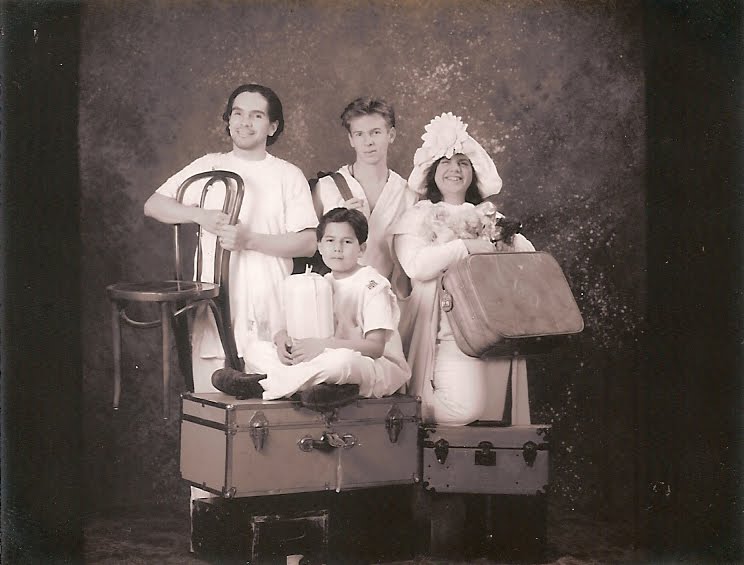
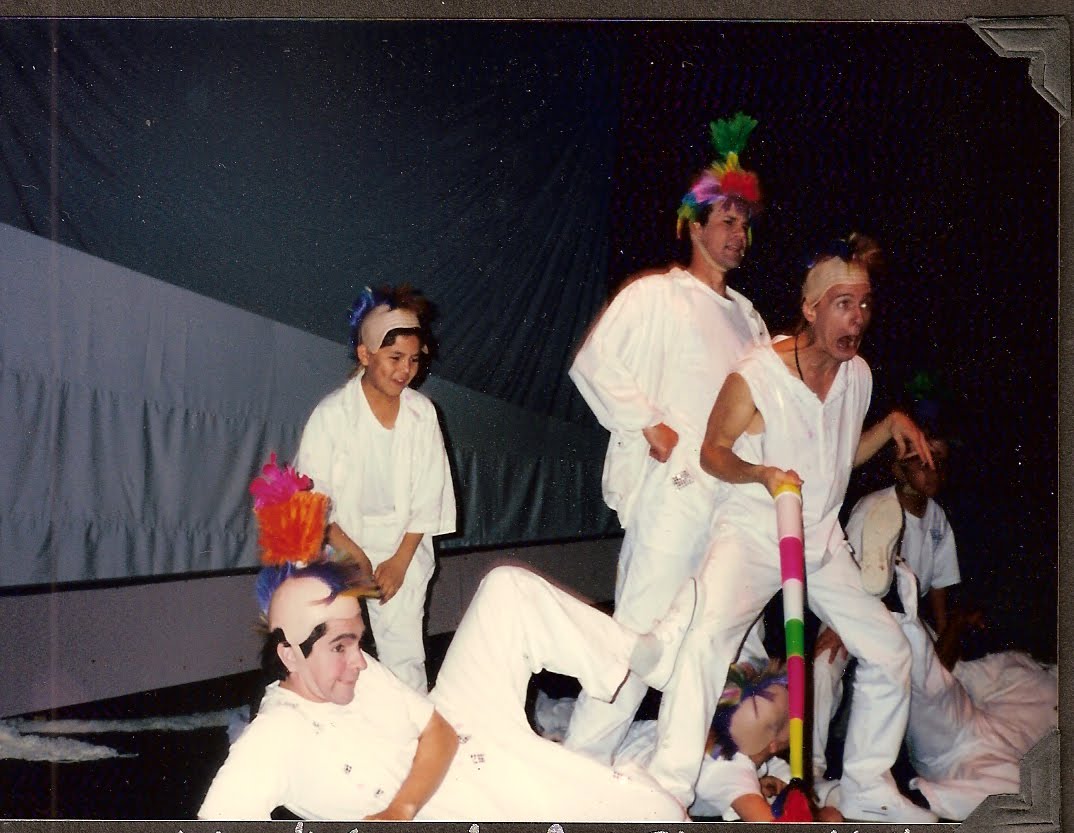
OMT fit in well with the Old Market’s head shops and art galleries. It had the entire building that contains the Passageway. The company lived communally there and in a loft across the street, with Terry cooking big stews from French Cafe refuse. The theater became a self-supporting operation. Members did not need to take second jobs. By taking risks rather than playing it safe the women made OMT a successful, recognized home for contemporary theater.
“We were producing this fine theater that commanded national grants and international respect at a time when it wasn’t being given to the opera or the symphony,” Schmidman said. “This tiny little theater was getting direct National Endowment for the Arts support in ever escalating amounts because the work was good. They (the NEA) came out each year to see the work.”
The two women’s imprint is undeniable.
As if being an experimental theater were not enough, OMT dared to be a “‘gay,’ ‘radical feminist,’ ‘lesbian’ theater‘” on top of it, said Rose Theatre artistic director James Larson. “None of that existed in Omaha before.” Given that, he said, “it is extraordinary the Magic Theatre could survive for 30 years.” He added it’s “impressive” OMT could command large grants and he admires how “resourceful” Schmidman and Terry were in replenishing the company over time.
OMT built loyal followings for experimental work that proved accessible. “Once the people saw the work, whether they knew what they were seeing or not, they responded to it,” Schmidman said. One reason may be the extensive research Terry did for “the big community pieces” OMT did, like her Kegger, that dealt with under age drinking. Once they had a hit, they kept it in front of audiences for a steady cash stream. OMT toured Kegger for three years, nearly surviving on its proceeds alone.
“Touring is what kept us going,” Terry said. “It helped enable us to keep doing what we were doing, reaching out to all of the communities, getting to know people at different universities and arts councils.”
Q & As usually followed shows. Often, the theater invited scholars or experts to lead discussions related to the themes/issues raised. Audiences weighed in, some testifying, as in church, to how the plays resonated with their lives.
Terry and Schmidman set a high standard.
Larson, a playwright whose doctoral thesis is on Terry, worked with OMT for 15 years. He said, “There was a time in the ’60’s and ’70’s when Megan was considered one of the top three female playwrights in the history of American Theater” along with Lillian Hellman and Susan Glaspell. “Then more female playwrights emerged, and Megan is still remembered as the leading political/feminist playwright.”
Noted New York playwright and poet Rochelle Owens said, “Megan Terry’s plays explore the boundaries of American culture…Her use of ‘transformation’ marked her as one of the most original dramatists of the experimental theater of the 20th century.” Owens said Schmidman is a “brilliant artistic director” who, along with Terry, is “an inspiration to theater artists.”
OMT was an island unto itself, isolated, by choice and by perception, from the larger theater community due to the work it did and the single-minded focus, some might say zealousness, the women displayed. “We didn’t play the local theater game,” Terry said. “Or socialize,” Schmidman interjected. “We were too busy working.”
Its 30-year run only ended, in 1998, when Schmidman and Terry, partners in life and in the theater, reached a point of exhaustion. The two share a house together in south O. The theater’s old touring van is parked on the street. The house is obscured by the van and an overgrown garden in front that seems an apt metaphor for two artists whose wild, creative vines are intertwined.
“When we closed we were playing to full houses every night,” Schmidman said. Even if she and Terry were weary, why walk away from such a good thing? “It’s just, there are other things to life. There are other art forms, like living,” Schmidman said. Besides, she said, it just never got any easier, especially the struggle to win grant money. All the late nights of preparing mountains of paperwork for grant applications and then waiting on pins and needles for a yes or no wore on them.
“The audiences were great, the work was great, but getting the damn money was as miserable as ever,” Terry said.
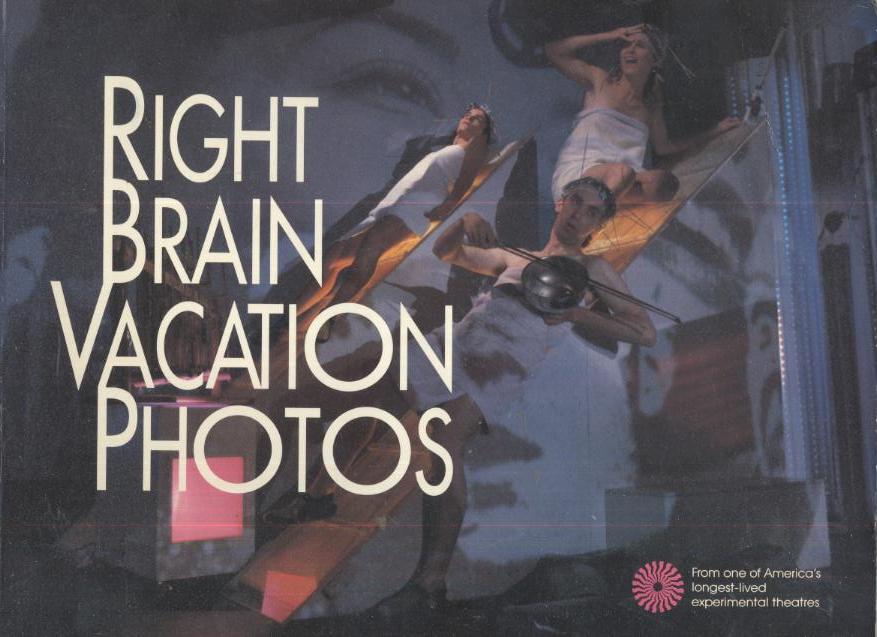
They closed shop to archive OMT’s and Terry’s remarkable bodies of work, all of which is housed in the Bancroft Library at the University of California at Berkeley.
Thirty years of original, groundbreaking work unseen before here, some seen for the first time outside NY. Tours across Nebraska, Iowa. All “musicals,” not with familiar show tunes, either, but original, contemporary, music.
“The biggest myth of the American theater is people will only go to a show if they can leave the theater humming the tunes or they’ll only go to something that sounds like something else. That has not been our experience,” Schmidman said.
The Magic made its mark far beyond Omaha, too. Terry and Schmidman collaborated on the lyrics and book, respectively, for Running Gag, staged as an official selection of the 1980 Winter Olympic Games in Lake Placid, NY.
In 1996 the Magic represented America in the Suwon Castle International Theatre festival in Suwon, South Korea, just south of Seoul. Terry, Schmidman and Co. performed Star Path Moon Stop outdoors before a crowd of some 5,000 squatting spectators.
“It was fabulous,” Schmidman said. “They come from a shamanistic tradition, so they really got into our kind of theater,” Terry said. “They embraced it because it’s quite like their traditional, very broad, emotional, spectacle theater,” Schmidman elaborated. “Yes, their theater is very episodical and relies on fabulous stage effects,” Terry added. The festival appearance followed workshops OMT did the year before in Seoul. The theater traveled abroad once before, when they toured Body Leaks at a women’s fest in Canada.
From OMT’s inception, Schmidman surrounded herself with collaborators drawn from many disciplines/backgrounds. Rarely did anyone have formal theater training. There were painters, musicians, poets, hippies and freaks. Among the noted artists to work with OMT were painter Bill Farmer, musicians Jamel Mohamed and Luigi Waites and composer John Sheehan. Sora Kimberlain arrived as a visual artist and ended up doing set design, acting, writing and directing.
“The bottom line was if theater reflects life and if we’re creating a brand new way of performing, well, you sure don’t need to go to school for it,” Schmidman said. “You need to open your heart, open your soul, give yourself over to the work and do what it tells you.”
EDITOR’S NOTES: While Schmidman and Terry closed the original OMT a decade ago, they’re hardly inactive. Terry still writes, accepting commissions from theaters like The Rose in Omaha. Schmidman no longer directs but she consults/mentors the new OMT and other young theater artists.
In 1992 the Magic Theatre produced a book, Right Brain Vacation Photos, that serves as a great OMT primer, the American avante garde and experimental theater. Look for it at your local library or on Amazon.com.
Related Articles
- A day in the life of a theatre (thestar.com)
- Take in Some Indie Theater at This Year’s Spark Showcase (phillyist.com)
- Gotham goes for a ‘Ride’ (variety.com)
- Omaha Arts-Culture Scene All Grown Up and Looking Fabulous (leoadambiga.wordpress.com)
- Jo Ann McDowell’s Theater Passion Leads Her on the Adventure of Her Life: Friend, Confidante, Champion of Leading Playwrights, Directors, Actors and Organizer of Major Theater Festivals and Conferences (leoadambiga.wordpress.com)
- All Trussed Up with Somewhere to Go, Metropolitan Community College’s Institute for Culinary Arts Takes Another Leap Forward with its New Building on the Fort Omaha Campus (leoadambiga.wordpress.com)
- Great Plains Theatre Conference Ushers in New Era of Omaha Theater (leoadambiga.wordpress.com)
- A Q & A with Edward Albee: His Thoughts on the Great Plains Theatre Conference, Jo Ann McDowell, Omaha and Preparing a New Generation of Playwrights (leoadambiga.wordpress.com)
- Great Plains Theatre Conference Grows in New Directions (leoadambiga.wordpress.com)
- Playwright John Guare Talks Shop on Omaha Visit Celebrating His Acclaimed ‘Six Degrees of Separation’ (leoadambiga.wordpress.com)
- A Q & A with Theater Director Marshall Mason, Who Discusses the Process of Creating Life on Stage (leoadambiga.wordpress.com)


 Leo Adam Biga's My Inside Stories