Archive

Archive for the ‘History’ Category

North Omaha: Where for art thou?


North Omaha: Where for art thou?

©by Leo Adam Biga


Our fair city has a curious case of tunnel vision when it comes to North Omaha.

What constitutes North Omaha is different depending on who you talk to. Officially or technically speaking, it is one of four geographic quadrants. North O itself is made up of a diverse number of neighborhoods, many of which are not generally considered part of it. For example. most of us don’t include the Dundee business district and surrounding neighborhood around Underwood Avenue as North O when in fact it is. The same for Happy Hollow, Country Club, Benson, Cathedral, Gold Coast, Florence and many others well north of Dodge that have their own stand-alone names, designations, associations and identities. When North O is referenced by many individuals and organizations, what they’re really referring to is Northeast Omaha. For many, North O has come to mean one narrow set of characteristics and conditions when in reality it is much more diverse geographically, socio-economically, racially and every other way than any tunnel vision prism does justice to. Why does this happen so persistently to North O? Well, there are many agendas at work when defining or designating North O as one thing or another. When viewed in a racialized way, North O is suddenly a black-centric district. When viewed as prime development territory. North O’s either a distressed area or a great investment opportunit. When viewed in historical terms, North O’s variously a military outpost, a Mormon encampment, a bustling Street of Dreams or the site of riots and urban renewal disruption and the downward spiral that followed. When measured statistically and comparatively, North O often comes out as the epicenter of poverty, underemployment, educational disparity, STDs, gang violence and other disproportionately occuring ills when in fact in totality, taking into account all its neighborhoods, North O is doing well. When viewed in redevelopment terms, North O is s collection of revitalized commercial and residential areas and of pockets still in need of redos. How you see it doing and where you see it going, what you count as part it or not, the amount of monies that flow in or out and the types of projects, initatives and developments that happen and dont have to do with what people are predisposed to think about it and expect from it. When it comes to North O, your perception of it and engagement with it conforms to your own ideas, attitudes, beliefs, visions, plans, experiences. For some, it represents an avenue of opportunity and for others a plaee of stagnation. Some see it and treat it as a social services mission district, while others see it as a wellspring of commerce, entrepreneurship and possibility. People living there surely have very different takes on it as a community, even on what makes North O, North O. Certainly, people living outside the area have very different takes on it than the people residing there. If there is an essential North O identity it is one of diversity and aspiration, hard work, no frills and pride. North O never has been and never will be just one thing or another. You can reduce to it a tag or a headline and to a segment or a section if you want but that will never reflect the large, complex mosaic of cultures and influences, assets and resources that comprise it. North O ha for too long been stereotyped and compartmentalized, stigmatized and marginalized. It has too long been misunderstood. Instead of only seeing it in its parts, what if we began looking at it as a whole? Maybe if we started thinking in terms of how everything that happens in one neighborhood affects everything else, then perhaps future quality of life development can be more organic and inclusive.


St. Cecilia Cathedral - breath taking - 701 N. 40th St. - wonderful concerts held here including the annual Omaha Symphonic Chorus' Christmas in the Cathedral early to mid December.:


Image result for dundee omaha, ne
Image result for benson omaha
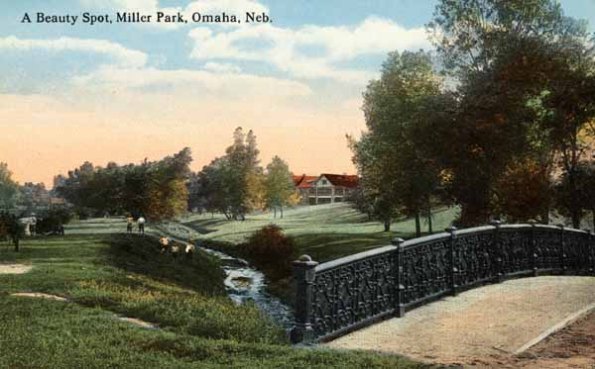
"A Beauty Spot, Miller Park, Omaha, Neb."


North Omaha contains some of the metro’s oldest, most compelling history. Long established neighborhoods, parks, boulevards, buildings and other public spaces have roots in diverse peoples and events that helped shape the city. Despite this rich heritage, mass media depictions tend to emphasize a narrow, negative view of North O as a problematic place of despair and neglect.

Problems exist, but North O has been a place of great aspirations and successes. One of its historic main drags, North 24th Street, has inspired many names. Jews called it the Miracle Mile. African-Americans dubbed it the Street of Dreams. More informally, it went by the Deuce or the Deuce Four. Other districts within North O, such as Florence, Benson and Dundee, each have their own vibrant histories. These neighborhoods, along with the North 24th and North 30th Street corridors, are undergoing major revivals.

North O’s history extends way back:

A  Great Plains army installation, Fort Omaha, was the site of an historic ruling about the nature of man was rendered in the Trial of Chief Standing Bear. The fort’s grounds are now the main campus for Omaha’s fastest growing higher education institution, Metropolitan Community College, and for the Great Plains Theatre Conference. An annual pow wow is held there.


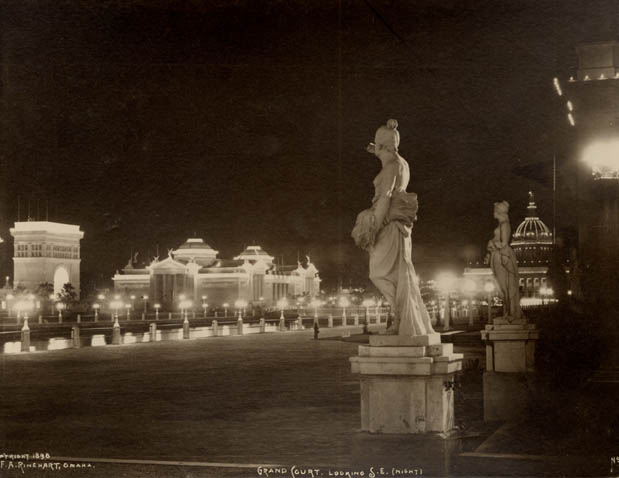
The Trans-Mississippi and International Exposition brought the nation and world to this once frontier outpost turned fledgling city. The Trans-Miss site is where Kountze Park and many stately homes stand.

Pioneering Mormon families trekked to and encamped in what is now North O. They later disembarked there for far western travels to the Great Salt Lake. Area Mormon artifacts and historic sites abound.

Diversity may not be the first thing you think of when it comes to North O, but it is a blend of many different peoples and places. A wide range of immigrants and migrants have settled there over time. Jews, Italians, Germans, Irish, Africa-Americans, Africans, Asians, Hispanics.


Its strong faith community includes a wide variety of Christian churches, Some of the churches have rich histories dating back to the early 20th century. Many older worship places have undergone restoration. Several buildings in North O own national historic preservation status, including the Webster Telephone Exchange that later saw use as a community center and the home of Greater Omaha Community Action until James and Bertha Calloway used grant money to convert it into the Great Plains Black History Museum.

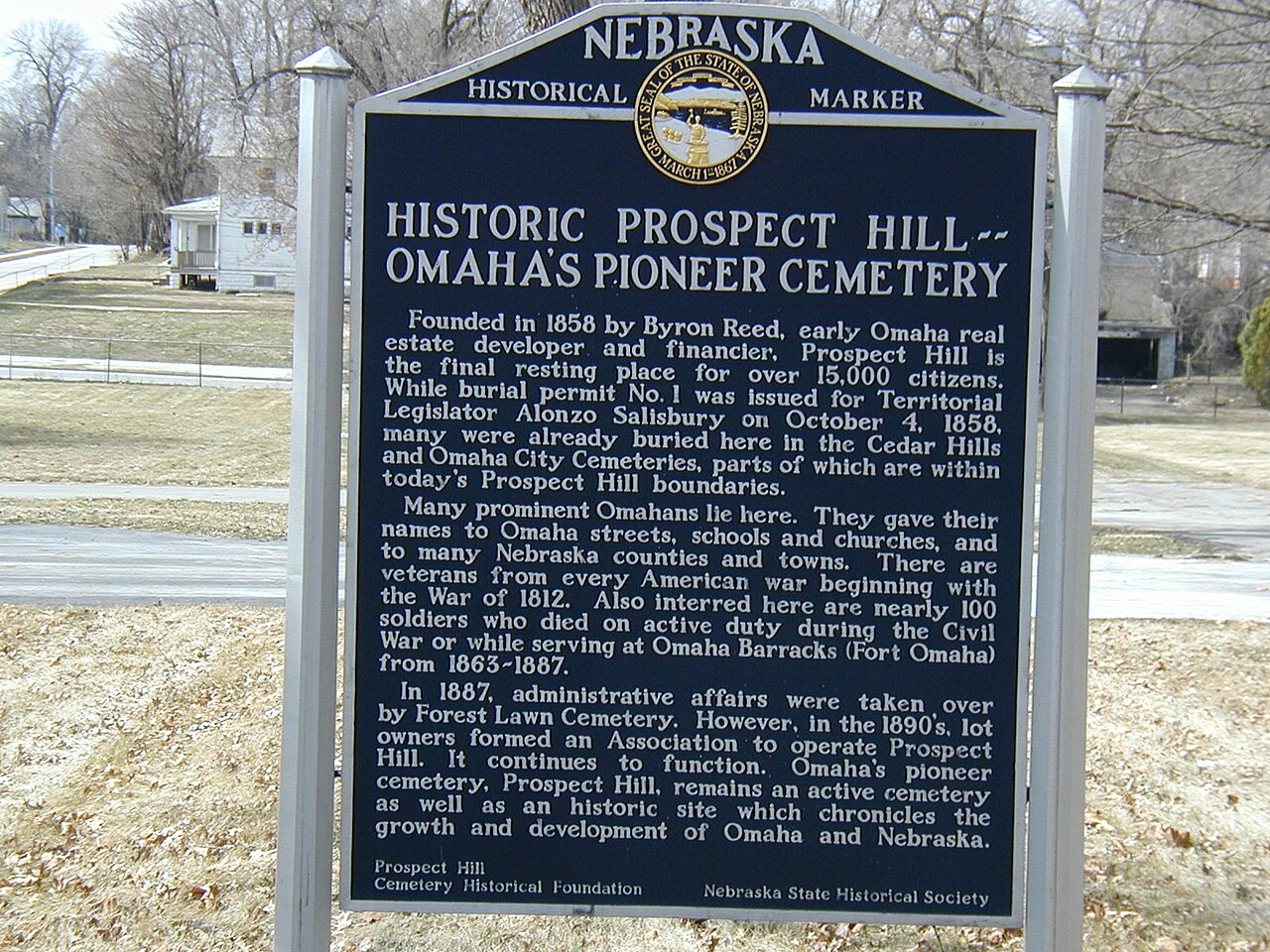
Among the historic spots to visit in North O are Prospect Hill Cemetery where many city founders are buried, and the Malcolm X Memorial Birthsite where slain social activist Malcolm X was born Malcolm Little.

African-Americans built a strong community through their toil as railroad porters and packinghouse workers and through their education in all black schools. North O encompassed a leading vocational school, Technical High. The district continues to support quality public and private elementary schools and public secondary schools. It is home to one of the Midwest’s top post-secondary institutions in Creighton University and to a thriving community college in Metro.


North O is also home to some of the city’s oldest, most distinguished neighborhoods, including Dundee, Benson, Bemis, Gold Coast, Cathedral, Walnut Hill, Kountze Place, Minne Lusa and Florence. Blacks were denied the opportunity to live in many of those neighborhoods until discriminatory housing practices ended.

Bounded by the Missouri River on the east. 72nd Street on the west, Cuming-Dodge Streets on the south and Interstate 680 on the north, North O is a varied landscape of attractive flatlands, hills, woods, parks and tree-lined boulevards. There are promontories and overlooks with stunning views of the bluffs across the river and of downtown.

The area’s fertile soil has produced notables in film (Monty Ross), television (Gabrielle Union), theater (John Beasley), music (Buddy Miles), literature (Wallace Thurman, Tillie Olsen), media (Cathy Hughes), sports (Bob Gibson), finance (Warren Buffett), politics (George Wells Parker) and social activism (Malcolm X). It is where the interracial social action organization the De Porres Club made equality stands a decade before the civil rights movement. Black plaintiffs later forced school integration in the public schools.

North O hosts long-lived and proud chapters of the NAACP and the Urban League as well as dynamic local affiliates of the Boys and Girls Club, YMCA, Campfire and Girl Inc.

The area does have high poverty pockets but it’s home to hard-working people, many with higher education and vocational training. It encompasses blue collar and white collar professionals, laborers, entrepreneurs and grassroots activists. It is a community of families, neighborhoods, small businesses and major manufacturers.


The ties that bind run deep there. For decades Native Omaha Days has brought together thousands from around the country for a week-long slate of events reuniting former and current residents who share North O as their birthplace and coming of age place.

The infrastructure of this inner city does have its challenges. There is still a disproportionate number of substandard houses, abandoned homes. vacant lots and food deserts. But an influx of projects is adding new residential units and commercial properties that are putting in place stable, sustainable improved quality of life features.

North O is the wellspring and nexus of strong community revitalization efforts such as those of the Empowerment Network, Omaha Economic Development Corporation, Family Housing Advisory Services and Omaha Small Business Network working to strengthen the community.

Redevelopment underway in northeast Omaha is in direct response to decades of economic inertia that set in after civil disturbances laid waste to the historic North 24th Street.hub. Urban renewal also severed the community, thus disrupting neighborhoods, creating isolated segments and diverting commercial development.


There was a time when North O possessed all the amenities it needed. Back in the day the dynamic entertainment scene acted as a launching pad for talented local musicians and a stopover for top touring artists. It was a destination place with its clubs, bars and restaurants featuring live music. Some of that same spirit and activity is being recaptured again. Harder to get back might be all the professional services that could be had within a few blocks but as more people move back to North O and set up shop, that could change, too.

Today’s revitalized North 24th mirrors similar community building endeavors on North 30th, North 16th, the Radial Highway, Ames Avenue, Hamilton Street, Lake Street, Maple Street and elsewhere. Business thoroughfares and residential blocks pockmarked by neglect are starting to sprout new roots and roofs.

An anchor through it all has been the Omaha Star. It continues a long legacy as a black woman owned and operated newspaper that gives African-Americans a platform for calling out wrongdoers in the face of injustice and celebrating positive events.

Decades before the Black Lives Matter movement, vital voices for self-determination were raised by North O leaders, including Mildred Brown, Whitney Young, Charlie Washington, Ray Metoyer, Dorothy Eure and Ernie Chambers. No one’s spoken out against injustice more than Chambers. He’s been a constant force in his role as a legislator and enduring watchdog for the underdog. His mantel is being taken up by dynamic new leaders such as Sharif Liwaru and Ean Mikale.


Fair Deal Village MarketPlace, N. 24th and Burdette Streets, North Omaha, Nebraska

Hot Movie Takes: Forty-five years later and ‘The Godfather’ still haunts us

February 8, 2017 Leave a comment

Hot Movie Takes:

Forty-five years later and ‘The Godfather’ still haunts us

©by Leo Adam Biga

Author of “Alexander Payne: His Journey in Film”


Forty-five years ago “The Godfather” first hit screens and it immediately became embedded in American pop culture consciousness. Its enduring impact has defined the parameters of an entire genre, the mob movie, with its satisfying blend of old and new filmmaking. It’s also come to be regarded as the apogee of the New Hollywood even though it was very much made in the old studio system manner. The difference being that Coppola was in the vanguard of the brash New Hollywood directors. He would go on to direct in many different styles, but with “The Godfather” he chose a formalistic, though decidely not formulaic, approach in keeping with the work of old masters like William Wyler and Elia Kazan but also reflective of the New Waves in cinema from around the world.

I actually think his “The Conversation” and “Apocalypse Now” are better films than “The Godfather” and “The Godfather II” because he had even more creative control on them and didn’t have the studios breathing down his neck the way he did on the first “Godfather” film.

But there is no doubt that with “The Godfather” and its sequel he and his creative collaborators gave us indelible images. enduring lines, memorable characters, impressive set pieces and total immersion in a shadowy world hitherto unknown to us.

'The Godfather' Trilogy's Greatest Quotes for Entrepreneurs

Image credit: Silver Screen Collection | Getty Images


I think it’s safe to say that while any number of filmmakers could have made a passable adaptation of the Maria Puzo novel then, only Francis Ford Coppola could have given it such a rich, deeply textured look and feel. He found a way into telling this intimate exploration of a crime family pursing its own version of the American Dream that was at once completely specific to the characters but also totally universal. Their personal, familial journey as mobsters, though foreign to us, became our shared journey because the layered details of their daily lives, aspirations and struggles mirrored in many ways our own.

In many ways “The Godfather” saga is the classic tale of The Other, in this case an immigrant patriarch who uses his guile and force of personality to find extra legal ways of serving the interests of his people, his family and the public.

Coppola was ideally suited to make the project more than just another genre movie or mere surface depiction of a colorful subculture because he straddled multiple worlds that gave him great insights into theater, literature, cinema, culture, history, this nation and the Italian-American experience. Growing up in 1940s-1950s New York, Coppola was both fully integrated into the mainstream as a second generation Italian-American and apart from it in an era when ethnic identity was a huge thing.

The filmmaker’s most essential skill is as a writer and with “The Godfather” he took material that in lesser hands could have been reduced to stereotypes and elevated it to mythic, Shakespearean dimensions without ever sacrificing reality. That’s a difficult feat. He did the same with “Patton,” the 1970 film he wrote but that Franklin Schaffner helmed.

Of course, what Coppola does in the sequel to “The Godfather” is truly extraordinary because he goes deeper, more epic yet and still never loses the personal stories and characterizations that anchor the whole thing. In “The Godfather II,” which is partly also a prequel, he establishes the incidents, rhythms and motivations that made Don Corleone who he was when we meet him in the first film. Of course, Coppola subsequently reedited “Godfather I and II” to create a seamless, single narrative that covers the genesis and arc of the Corleone empire in America and its roots in Italy.

“Godfather III” does not work nearly as well as the first two films and seems a forced or contrived rather than organic continuation and culmination of the saga.

The best directors will tell you that casting, next to the script and the editing process, is the most important part of filmmaking and with the first two “Godfather” films, which are hard to separate because they are so intertwined, Coppola mixed and matched a great stew of Method and non-Method actors to create a great ensemble.

The depth of acting talent and pitch perfect performances are staggering: Brando, Pacino, Caan, Cazale, Duvall, Conte, Hayden, Keaton, Castellano, Marley, Lettieri, Vigoda, Shire, Spradlin, Rocco, De Niro. Strasberg, Kirby, “Godfather I and II” arguably the best cast films of all time, from top to bottom. One of the best portrayals is by an actor none of us have ever heard of – Gastone Moschin. He memorably plays the infamous Fanucci in Part II. And there are many other Italian and American actors whose names are obscure but whose work in those films is brilliant. Coppola is a great director of actors and he beautifully blends and modulates these performances by very different players.


   The Godfather - enough said.
<a class="pintag searchlink" data-query="%23Al" data-type="hashtag" href="/search/?q=%23Al&rs=hashtag" rel="nofollow" title="#Al search Pinterest">#Al</a> Pacino <a class="pintag searchlink" data-query="%23The" data-type="hashtag" href="/search/?q=%23The&rs=hashtag" rel="nofollow" title="#The search Pinterest">#The</a> GodfatherThe Godfather, 1972
Al Pacino, The Godfather.  Betrayal hurts
"The Godfather." The movie "views the Mafia from the inside. That is its secret, its charm, its spell; in a way, it has shaped the public perception of the Mafia ever since." (<a href="http://rogerebert.com" rel="nofollow" target="_blank">rogerebert.com</a>)  March 15, 1972: The Godfather opens On this day in 1972, Francis Ford Coppola’s The Godfather — a three-hour epic chronicling the lives of the Corleones, an Italian-American crime family led by the powerful Vito Corleone (Marlon Brando) is released in theaters. Photo: Talia Shire (Talia Rose Coppola) and Marlon Brando dance in the wedding scene. (Mondadori Portfolio by Getty)

Coppola’s great way into the story was making it a dark rumination on the American Dream. He saw the dramatic potential of examining the mafia as a culture and community that can exist outside the law by exploiting the fear, avarice and greed of people and working within the corruption of the system to gain power and influence. Personally, I’ve always thought of the films as variations of vampire tales because these dark, brooding characters operate within a very old, secret, closed society full of ritual. They also prey on the weak and do their most ignominious work at night, under the cover of darkness. drawing the blood of the innocent and not so innocent alike. While these mob creatures do not literally feast on blood, they do extract blood money and they do willfully spill blood, even from colleagues, friends and family. No one is safe while they inhabit the streets. Alongside the danger they present, there is also something seductive, even romantic about mobsters operating outside the law/ And there is also the allure of the power they have and the fear they incite.

“The Godfather” set the standard for crime films from there on out. It’s been imitated but never equaled by those who’ve tried. Sergio Leone took his own singular approach to the subject matter in “Once Upon a Time in America” and may have actually surpassed what Coppola did. Michael Mann came close  in “Heat.” But Coppola got there first and 45 years since the release of “The Godfather” it has not only stood the test of time but perhaps even become more admired than before, if that’s even possible. That film and its sequel continue to haunt us because they speak so truthfully, powerfully and personally to the family-societal-cultural-political dynamics they navigate. For all their venal acts, we care about the characters because they follow a code and we can see ourselves in them. We are equally repelled and attracted to them because they embody the very worst and best in us. And for those reasons these films will always be among the most watched and admired of all time.

Marlin Briscoe: The Magician Finally Gets His Due

December 27, 2016 1 comment

Marlin Briscoe has a story straight out of Hollywood and so it’s only right that a major motion picture about his life is in the works. The Omaha native made history on the field by becoming the first black starting quarterback in the National Football League but he achieved an even greater feat off the field by recovering from a serious drug addiction he developed after retiring from the game. The title of the soon to start production film “The Magician” comes from the nickname Briscoe was given during his legend-in-the-making collegiate career at then-University of Omaha when he’d improvise plays in the broken field with his arm, legs and head for big gainers and touchdowns. He played much the same way the one and only year he was given a chance to play quarterback in the NFL. Undeterred when teams denied him the opportunity to play signalcaller again, he made himself into a top-notch wide receiver who won All-Pro honors with the Buffalo Bills and back to back Super Bowls with the Miami Dolphins. All through his NFL caereer he encountered obstacles and he took them all on and won, including an anti-trust lawsuit. But the biggest fight of his life lay ahead and he licked that, too. At the time Briscoe made history and overcame his demons, little was made of it, but in the ensuing years more and more recognition and love have come his way, includng induction in the College Football Hall of Fame. The movie should help cement his case for eventual inclusion in the Pro Football Hall of Fame. My new Omaha Magazine (http://omahamagazine.com/) story about Marlin touches on these and other threads of his life.

Link to more Marlin Briscoe stories I’ve written at–
https://leoadambiga.com/?s=marlin+briscoe+

Link to my Omaha Black Sports Legends series at–


briscoe-cover

Marlin Briscoe

The Magician Finally Gets His Due

December 22, 2016
©Photography by Contributed
Appearing in the Jan/Feb 2017 issue of Omaha Magazine (http://omahamagazine.com/)

Omaha native Marlin Briscoe made history in 1968 as the NFL’s first black starting quarterback. His success as a signal-caller carried huge symbolic and practical weight by disproving the then-popular misconception that blacks lacked the intelligence and leadership to play the position.

The same racist thinking not only applied to quarterbacks but to other so-called thinking-man positions on the field (center, safety, middle linebacker) and on the sidelines (head coach, general manager).

briscoe4Even in those racially fraught times, Briscoe’s myth-busting feat went largely unnoticed. So did the rest of the story. After overcoming resistance from coaches and management to even get the chance to play QB, he performed well at the spot during his rookie professional season, never to be given the opportunity to play it again. That hurt. But just as he overcame obstacles his whole life, he set about winning on his own terms by learning an entirely new position—wide receiver—in the space of a month and going on to a long, accomplished pro career. He made history a second time by being part of a suit that found the NFL guilty of anti-trust violations. The resulting ruling, in favor of players, ushered in the free agency era.

After retiring, Briscoe faced his biggest personal hurdle when a serious crack-cocaine addiction took him to the bottom of a downward spiral before he beat that demon, too.

Now, nearly a half-century since making history and a quarter-century since regaining sobriety, Briscoe’s story is finally getting its due. His 2002 autobiography spurred interest in his tale. Major media outlets have featured his story. Modern-day black quarterbacks have credited his pioneering path, and several lauded him in video tributes played at an event titled “An Evening with the Magician,” held in his honor in September at Omaha’s Baxter Arena. A life-size statue of his likeness was dedicated at the tribute event. Also in the fall of 2016, he received the Tom Osborne Leadership Award. In December he was enshrined in the College Football Hall of Fame.

Now, he’s preparing to watch actor Lyriq Bent portray him in a major motion picture about his life, The Magician, set to film this spring.

If the movie, produced by his old Omaha University teammate-turned-actor John Beasley, is a hit, it will bring Briscoe’s role as a civil rights soldier to a much wider audience than ever before. Now in his early 70s, Briscoe fully appreciates all that has led up to this moment. He has no doubt he’s ready for whatever may come. Growing up in South Omaha’s melting pot, no-nonsense mentors and peers steeled him for life’s vagaries. Fierce competition toughened him.

“The training I grew up with was the best training any young man or woman could have,” Briscoe says.

On playing fields and courts, in streets and classrooms, he found an inner resolve that served him well through life’s ups and downs.

“That’s where I learned resilience—from my mom, my sister, and all my mentors, and neighbors. They all had this type of mentality and grit. It rubbed off on me and some of the kids I grew up with. It prepared me for anything. If I had not learned core values from growing up where I did, the things I did, the obstacles I overcame would never have happened.”

His cousin Bob Rose and Baseball Hall of Fame pitcher Bob Gibson’s oldest brother Josh Gibson were among a cadre of local coaches who inspired youngsters of Briscoe’s generation. 

briscoe1

“You had to go through them if you wanted to do something wrong, and you didn’t want to go through them,” Briscoe says. “Our mentors were down at the Northside Y, at Kellom School, Kountze Park, St. Benedict’s. They cared about where we were going in life.”

When Briscoe was bullied as boy, Rose gave him a “magic box” filled with the tools of various sports—a baseball, football, basketball, and boxing gloves—with the admonition that if he mastered these, he wouldn’t be bothered. He did and wasn’t. The magic box became the gateway for the Magician to do his thing.

Briscoe grew up respecting adults, all adults, even winos, hustlers, and prostitutes.

“They told you to do something, you did it, and went on about your business,” he says.

He conducted himself in a way that in turn earned him respect as a young leader. Virtually all the athletic teams he played on growing up consisted primarily of white players, which meant his entire athletic life he was advancing diversity. Long before he found immortality with the Broncos, he was the first black quarterback on youth teams, at South High, and then at Omaha University (now known as UNO).

Though he lived in South Omaha, Briscoe made a point of going to the proving grounds of North Omaha, where there were even more great athletes and a particular endurance test and rite of passage.

“Off Bedford [Avenue] by Adams Park, there used to be The Hills. It was like the barrier and motivational place where top ballplayers like Gale Sayers and myself would go and work out. Sometimes, I would be up there early in the morning by myself running those hills. I always tell young people today, ‘It is what you do when nobody sees you that defines and determines your work ethic and how you will turn out.’

briscoe3

“There were plenty of guys with more ability than myself—who were bigger, stronger, faster—and while they worked hard when eyes were on them, they slacked off when they were alone. A lot of guys who never made it regretted not putting out the effort to match their ability.”

Briscoe might never have made history if not for some good fortune. He started at quarterback for Omaha University his sophomore and junior years, putting up good numbers and earning the nickname “Magician” for an uncanny ability to escape trouble and extend plays with highlight reel throws and runs. Just before what was supposed to be his senior year, 1966, he got undercut in an all-star basketball game at Bryant Center and took a hard spill. He went numb and was rushed to the hospital, where doctors decreed he was injury-free. He started the ’66 season football opener versus Idaho State with no ill effects. He had a monster game. Then, late in the contest, he took a hit that caused his neck to swell. When rushed to the ER this time, X-rays revealed a fractured vertebra. He’d competed with a broken neck.

Doctors told him his days playing contact sports were over. He accepted the harsh news and dived into his studies, ready to move on with life sans football. Then during a medical checkup, tests confirmed his bones recalcified, and he was cleared to play again. He got a medical hardship waiver from the NAIA and went on to have a huge senior season in 1967, earning small college All-American honors and getting picked in the 14th round of the NFL draft.

He’s convinced he wouldn’t have taken snaps in Denver, which drafted him as a defensive back, if he hadn’t negotiated his own contract to include a clause he be given a three-day tryout at quarterback. He so dazzled the media and the public during the open practices that once the season began and Denver QBs went down due to injury or were benched for poor play, he got his shot and ran with it.

Briscoe’s larger-than-himself magic enabled him to make history in a crucible year for America—a year of riots, anti-war protests, assassinations, and civil rights struggles.

“For some reason, divine intervention maybe, it just seemed the stars were aligned in 1968 for a black man to break the barrier at that position,” he says. “It just seems 1968 was the pivotal year for all African-Americans, for all Americans period. For me to do it in ’68 is just eerie, the way that happened.”

So much of his NFL experience, he says, involved fighting “injustices.” Released by Denver and denied playing quarterback again, he excelled at a new position. Blackballed by the league for challenging its power, he won a hard-fought battle for himself and fellow players.

He insists he was not resentful for being shortchanged at quarterback.

“I wasn’t bitter, I was disappointed,” he says. “When you’re bitter, you give up, you take all this stuff personally, and you quit. I tell young people, ‘You’re going to have disappointments, and you’re going to be treated unfairly, but you can’t be bitter about it.’ Instead, you roll up your sleeves and fight whatever negative things come your way. Plan A doesn’t work? You go to Plan B. Life is just that way.”

Only after walking away from the game to be a broker in Los Angeles did he meet a foe—crack cocaine—that got the better of him. Before his recovery, he lost everything: his home, his fortune, his family. 

briscoe5“Here I was on a park bench trying to get some sleep in the heart of L.A. after owning homes and property,” he says.

What was so maddening about it is that he had done everything right. “It was not like I left the game with nothing,” he says. “I left the game correctly, sitting on easy street. I had wise investments. I prepared to leave the game by going to school and getting additional degrees. I was not hurt. I was in perfect physical condition.”

But in the vacuum of his post-athletic life, without the daily disciplines of workouts and team dynamics, he slipped into an unhealthy lifestyle.

“I let my guard down. I wasn’t really prepared for the L.A. scene because my whole life was always about precision, being responsible,” he says. “Then, when I didn’t have to meet all these different obligations and being single, I wasn’t rooted in one direction—I was just partying. You know, bring it on.”

No one who knew Briscoe before could believe he was in the grip of something that controlled him so completely, least of all himself.

“I had been a player rep. I was the one they always came to just as I was when I was a kid. I was the one people always came to for sage advice. And I never did drugs in the NFL,” Briscoe says.

But there he was, enslaved to a habit he couldn’t kick. Through it all, even losing his Super Bowl rings as collateral for a bank loan, he never forgot who he was inside and what he had done. Though homeless, penniless, and stuck in a jail cell when Doug Williams became the first black quarterback to lead a team to an NFL title, Briscoe felt he shared in that victory, too.

“I felt proud on one hand, and disappointed in myself on the other hand,” he says.

He sank lower than he ever thought possible, but he came back to whip that challenge, too: “The thing is, I always knew I would let go of that descent. I always knew and prayed I’d get back to that person all Omaha knew as this accomplished individual who conquered the NFL and enjoyed all these triumphs. The people that knew me are so elated now I’ve overcome my post-career meltdown because I had been a champion for them, fighting the NFL. I was always fighting for them and fighting for myself. I put myself in positions as a player where my voice could be heard.”

Even though it was decades ago, he believes defying and defeating the NFL’s monied interests left a blemish on his career that got further stained when he was traded several times as persona non grata.

“I’m not bragging or anything, but if I had been any other player, I guarantee you, I’d have been in the NFL Hall of Fame a long time ago. Nobody had ever done it—making history as the first black starting quarterback. People don’t realize I was also the first black holder on extra points. Counting cornerback and wide receiver, I played four different positions in the NFL, and I’m not sure anybody did that before. Then you add in the fact I made All-Pro as a receiver within two years of switching positions and went on to win two Super Bowls.”

Efforts are underway to rectify his absence as a Canton inductee via a write-in campaign to the Hall’s Veterans Committee.

Just as Briscoe wasn’t bitter about being shut out from playing quarterback after his rookie year, he wasn’t bitter that other blacks followed him into the league at that position.

“If I had not succeeded in 1968, James Harris would not have gotten drafted by the Bills as a quarterback out of Grambling in 1969. If I would have failed, they would have brought James in as a tight end. But the fact I was a litmus test and succeeded, they could take a chance on a black quarterback, and James was drafted.

“Ironically, he and I ended up being roommates in Buffalo. We knew each other’s plight. We would have conversations after practice. I would tell him different things that were going to happen to him and to be prepared for them.”

While Briscoe is known as the first black starting QB, another black man, Willie Thrower, briefly got into two games as a QB with the Bears 15 years before Briscoe’s experience with the Broncos. High off his rookie year success, Briscoe had a chance meeting with Thrower in Chicago. The two men hit it off.

briscoe6Briscoe, Harris, Doug Williams, and Warren Moon have formed an organization called The Field General that uses the still-exclusive legacy of the black quarterback to educate and inspire young people. Blacks still comprise but a fraction of the professional QB ranks. The same is true of head coaches, coordinators, and general managers. That fact, combined with the journey each man had to make to get to those rarified places, reveals just how far the nation and league still have to go.

Never in his wildest dreams did Briscoe imagine his story would get so much attention this many years after he played.

“It just goes to show that, if you never give up, a lot of these things will come your way. Sometimes things come late, like this movie project about my life,” he says.

Briscoe says he only agreed to let his story be told in a movie if it stayed true to who he is and to what happened.

“It’s not for self-gratification,” he says. “It’s hopefully as an inspiration for others that you can overcome any obstacle if you really want it. I look back on my life and see what it can do for others. It’s not just a football movie. If it were, I probably wouldn’t be a part of that interpretation of my life. My life is a lot more than just football.”

He’s sure the movie’s message of “if you never give up, you’ve got a chance” will resonate with diverse audiences. He’s proud to be living proof that anything can happen when you keep fighting.

Visit marlinbriscoemovie.com for more information.


UPDATE TO: Marlin Briscoe finally getting his due

September 20, 2016 2 comments

UPDATE:  I was fortunate enough to attend the Thursday, Sept. 22 An Evening with the Magician event honoring Marlin Briscoe. It was a splendid affair. Omaha’s Black Sports Legends are out in force this week in a way that hasn’t been seen in years, if ever. A Who’s-Who was present for the Magician event at Baxter Arena. They’re back out at Baxter on Sept. 23 for the unveiling of a life-size statue of Marlin. And they’re together again before the kickoff of Omaha South High football game at Collin Field. Marlin is a proud UNO and South High alum. This rare gathering of luminaries is newsworthy and historic enough that it made the front page of the Omaha World-Herald.

It’s too bad that the late Bob Boozer, Fred Hare and Dwaine Dillard couldn’t be a part of the festivities. The same for Don Benning, who now resides in a Memory Care Center. But they were all there in spirit and in the case of Benning, who was a mentor of Marlin Briscoe’s, his son Damon Benning represented as the emcee for the Evening with The Magician event.

So much is happening this fall for Marlin Briscoe, who is finally getting his due. There is his induction in the high school and college football halls of fame. John Beasley, who was a teammate of Marlin’s, is producing a major motion picture, “The Magician,” about his life. This week’s love fest for Briscoe has seen so many of his contemporaries come out to honor him, including Bob Gibson, Gale Sayers, Roger Sayers, Ron Boone and Johnny Rodgers. Many athletes who came after Marlin and his generation are also showing their love and respect. Having all these sports greats in the same room together on Thursday night was a powerful reminder of what an extraordinary collection of athletic greats came out of this city in a short time span. Many of these living legends came out of the same neighborhood, even the same public housing project. They came up together, competed with and against each other, and influenced each other. They were part of a tight-knit community whose parents, grandparents, neighbors, entrepreneurs, teachers, rec center staffers and coaches all took a hand in nurturing, mentoring and molding these men into successful student-athletes and citizens. It’s a great story and it’s one I’ve told in a series called Out to Win: The Roots of Greatness – Omaha’s Black Sports Legends, I plan to turn the series into a book.

Check out the stories at–
https://leoadambiga.com/out-to-win-the-roots-of-greatness-…/


Marlin Briscoe finally getting his due

©by Leo Adam Biga


In the afterglow of the recent Rio Summer Olympics, I got to thinking about the athletic lineage of my home state, Nebraska. The Cornhusker state has produced its share of Olympic athletes. But my focus here is not on Olympians from Nebraska, rather on history making athletic figures from the state whose actions transcended their sport. One figure in particular being honored this week in his hometown of Omaha – Marlin Briscoe – shines above all of the rest of his Nebraska contemporaries.

Briscoe not only made history with the Denver Broncos as the first black starting quarterback in the NFL, he made one of the most dramatic transitions in league history when he converted from QB to wide receiver to become all-Pro with the Buffalo Bills. He later became a contributing wideout on back to back Super Bowl-winning teams in Miami. He also made history in the courtroom as a complainant in a suit he and other players brought against then-NFL Commissioner Pete Rozelle. The suit accused the league of illegal trust activities that infringed on players’ pursuit of fair market opportunities. When a judge ruled against the NFL, Briscoe and his fellow players in the suit won a settlement and the decision opened up the NFL free-agency market and the subsequent escalation in player salaries.

The legacy of Briscoe as a pioneer who broke the color barrier at quarterback has only recently been celebrated. His story took on even more dramatic import upon the publication of his autobiography, which detailed the serious drug addiction he developed after his NFL career ended and his long road back to recovery. Briscoe has devoted his latter years to serving youth and inspirational speaking. Many honors have come his way, including selection for induction in the high school and college football halls of fame. He has also been the subject of several major feature stories and national documentaries. His life story is being told in a new feature-length film starting production in the spring of 2017.

You can read my collection of stories about Briscoe and other Omaha’s Black Sports Legends at–

OUT TO WIN – THE ROOTS OF GREATNESS: OMAHA’S BLACK SPORTS LEGENDS

Briscoe’s tale is one of many great stories about Nebraska-born athletes. Considering what a small population state it is, Nebraska has given the world an overabundance of great athletes and some great coaches. too, The most high-achieving of these individuals are inducted in national sports halls of fame. Some made history for their competitive exploits on the field or court.

Golfer Johnny Goodman defeated living legend Bobby Jones in match play competition and became the last amateur to win the U.S. Open. Gridiron greats Nile Kinnick, Johnny Rodgers and Eric Crouch won college football’s most prestigious award – the Heisman Trophy. Pitcher Bob Gibson posted the lowest ERA for a season in the modern era of Major League Baseball. Bob Boozer won both an Olympic gold medal and an NBA championship ring. Ron Boone earned the distinction of “Iron Man” by setting the consecutive games played record in professional basketball. Gale Sayers became the youngest player ever inducted in the Pro Football Hall of Fame. Rulon Gardner defeated three-time Olympic gold medalist Alexander Karelin in the 2000 Sydney Games to record one of the greatest upsets in Games history.

Terence Crawford has won two world prizefighting titles and in the process single-handedly resurrected the sport of boxing in his hometown of Omaha, where he’s made three title defenses before overflow crowds. He also has a gym in the heart of the inner city he grew up in that serves as a sanctuary for youth and young adults from the mean streets.

Some Nebraskans have made history both for what they did athletically and for what the did away from the field of competition. For example, Marion Hudson integrated Dana College in the early 1950s in addition to being a multi-sport star whose school records in track and field and football still stood on the books decades when the college closed in 2010. Tom Osborne became the first person to be named both the high school and college state athlete of the year in Nebraska. He played three seasons in the NFL before becoming the top assistant to Bob Devaney at the University of Nebraska, where he succeeded Devaney and went to a College Football Hall of Fame coaching career that saw his teams win 250 games and three national titles. After leaving coaching he served as an elected U.S. House of Representatives member. The Teammates mentoring program he established decades ago continues today.

There are many more stories of Nebraska athletes doing good works during and after their playing days. Yet no one from the state has made more of an impact both on and off the playing field than Marlin Briscoe. He is arguably the most important athletic figure to ever come out of Nebraska because his accomplishments have great agency not only in the athletic arena but in terms of history, society and race as well. Growing up in the public housing projects of South Omaha in the late 1950s-early 1960s, Briscoe emerged as a phenom in football and basketball. His rise to local athletic stardom occurred during a Golden Era that saw several sports legends make names for themselves in the span of a decade. He wasn’t the biggest or fastest but he might have been the best overall athlete of this bunch that included future collegiate all-Americans and professional stars.

Right from the jump, Briscoe was an outlier in the sport he’s best remembered for today – football. On whatever youth teams he tried out for, he always competed for and won the starting quarterback position. He did the same at Omaha South High and the University of Omaha. This was at a time when predominantly white schools in the North rarely gave blacks the opportunity to play quarterback. The prevailing belief then by many white coaches was that blacks didn’t possess the intellectual or leadership capacity for the position. Furthermore, there was doubt whether white players would allow themselves to be led by a black player. Fortunately there were coaches who didn’t buy into these fallacies. Nurtured by coaches who recognized both his physical talent and his signal-calling and leadership skills, Briscoe excelled at South and OU.

His uncanny ability to elude trouble with his athleticism and smarts saw him make things happen downfield with his arm and in the open field with his legs, often turning busted plays into long gainers and touchdowns. He also led several comebacks. His improvisational knack led local media to dub him “Marlin the Magician.” The nickname stuck.

Marlin Briscoe Signed Photograph - #15 Qb 8x10

Autographed Marlin Briscoe Picture - 8x10

Briscoe played nine years in the NFL and thrived as a wide receiver, quarterback, holder and defensive back. He may be the most versatile player to ever play in the league.

He also made history as one of the players who brought suit against the NFL and its Rozelle Rule that barred players from pursuing free market opportunities. A judge ruled for the players and that decision helped usher in modern free agency and the rise in salaries for pro athletes.

His life after football began promisingly enough. He was a successful broker and invested well. He was married with kids and living a very comfortable life. Then the fast life in L.A, caught up with him and he eventually developed a serious drug habit. For a decade his life fell apart and he lost everything – his family. his home, his fortune, his health. His recovery began in jail and through resilience and faith he beat the addiction and began rebuilding his life. He headed a boys and girls club in L.A.

His autobiography told his powerful story of overcoming obstacles.

Contemporary black quarterbacks began expressing gratitude to him for being a pioneer and breaking down barriers.

Much national media attention has come his way, too. That attention is growing as a major motion picture about his life nears production. That film, “The Magician,” is being produced by his old teammate and friend John Beasley of Omaha. Beasley never lost faith in Briscoe and has been in his corner the whole way. He looks forward to adapting his inspirational story to the big screen. Briscoe, who often speaks to youth, wants his story of never giving up to reach as many people as possible because that’s a message he feels many people need to hear and see in their own lives, facing their own obstacles.

Briscoe is being inducted in the College Football Hall of Fame this fall. A night in his honor, to raise money for youth scholarships, is happening September 22 at UNO’s Baxter Arena. Video tributes from past and present NFL greats will be featured. The University of Nebraska at Omaha is also unveiling a life size statue of him on campus on September 23. That event is free and open to the public.

There is an effort under way to get the Veterans Committee of the Pro Football Hall of Fame to select Briscoe as an inductee and it’s probably only a matter of time before they do.

The fact that he succeeded in the NFL at three offensive positions – quarterback, wide receiver and holder for placekicks – should be enough to get him in alone. The cincher should be the history he made as the first black starting QB and the transition he made from that spot to receiver. His career statistics in the league are proof enough:


Passing

97 completions of 233 attempts for 1697 yards with 14 TDs and 14 INTs.

Rushing

49 attempts for 336 yards and 3 TDs

Receiving

224 catches for 3537 yards and 30 TDs


Remember, he came into the league as a defensive back, only got a chance to play QB for part of one season and then made himself into a receiver. He had everything working against him and only belief in himself working for him. That, natural ability and hard work helped him prove doubters wrong. His story illusrates why you should never let someone tell you you can’t do something. Dare, risk, dream. He did all that and more. Yes, he stumbled and fell, but he got back up better and stronger than before. Now his story is a testament and a lesson to us all.

The Marlin Briscoe story has more drama, substance and inspiration in it than practically anything you could make up. But it all really happened. And he is finally getting his due.

“Nebraska Methodist College at 125: Scaling New Heights”

September 15, 2016 1 comment

UPDATE:
The evening of Friday, October 21, 2016  Pam and I attended the Nebraska Methodist College Reunion Dinner at the DC Center. It was my great honor to accept NMCs Honorary Alumnus Award in recognition of my work on the college’s just published history book “Nebraska Methodist College at 125: Scaling New Heights.” I co-authored the book with NMC President and CEO Dennis Joslin. It was a great project to be a part of and I am most grateful to everyone who contributed to it. Thst growing nursing and allied health college celebrates 125 years in 2016. NMC is known for its caring culture and I can attest to the fact that it is a community of warm, welcoming, nurturing faculty and staff deeply committed to educating, growing and mentoring health professionals. I came to the project with no healthcare or educational background and everyone I interacted with for the book went out of their way to make me feel at home and to catch me up to speed. That the college thought enough of my efforts to give me their highest award tells you something about how they practice mindfulness. The video that Peter Soby produced on me for the award presentation was very well done. The comments that Dennis Joslin made in introducing me were flattering. The whole evening was beautifully put together by Alumni Engagement Director Angela Heesacker Smith. Thanks to NMC marketing pros Elizabeth Billington and Marc Costanzo for their expert work on the book and for the great book display they set up in the lobby. The entire alumni reunion dinner felt like a family reunion. Indeed, I am told that an NMC Honory Alum is automatically a part of the college’s family for life. I am thrilled to have been adopted by this loving family and I look forward to many more reunions to come.

Happy to report that I have a new book being published this fall–

“Nebraska Methodist College at 125: Scaling New Heights”

It is the history of this highly respected and fast growing private college of nursing and allied heatlh located in Omaha. The book was written by NMC president and CEO Dennis Joslin and myself. We are proud to have told the story of the school’s remarkable ascent in a hardbound volume that we hope appeals not only to NMC alums, faculty, staff and donors but to the wider Methodist and Nebraska healthcare community as well.

The NMC story is one of vision, commitment, resiliency, courage amd innovation. Known for most of its history as Nebraska Methodist School of Nursing, the instution established itself early on as a leader in nursing education. From the start, its graduates have been highly sought-after. But as healthcare underwent great changes, schools of nursing conferring diplomas were losing standing and colleges of nursing granting degree were becoming the preferred model. The institution’s crucible test came in the 1980s. Many private nursing schools were closing their doors, either unable or unwilling to transition into colleges. NMC looked past the challenges of small enrollment, less than ideal facilities and the task of going from a school to a college to embark on the first of many ascents. The new heights scaled these past few decades have dramatically grown the student body, added many programs and degrees, built a new campus and positioned NMC as a leader in community engagement.


book-cover-large


Now, a century and a quarter after its founding, NMC has arrived at an historical peak that affords a grand view of the college’s rich past, dynamic present and  promising future. “Nebraska Methodist College at 125” charts the course of this persistent journey in excellence. Just as its partner Nebraska Methodist Hospital delivers the meaning of care, Nebraska Methodist College teaches the meaning of care. NMC graduates practice their nursing and allied health professions near, far amd wide. They are part of a rich legacy of students, facult, staff and alums who have contributed to the college’s success. Their voices and stories comprise a good share of the book.

To order “Nebraska Methodist College at 125,” contact:

Angela Heesacker Smith
Director of Alumni Engagement, Nebraska Methodist college
402-354-7256 or Angela.HeesackerSmith@methodistcollege.edu>


You know, it’s a funny thing about writing. There was a time when I could never have imagined myself writing books – this despite the fact that for many years I was one of the principal practitioners of long form journalism in this town. As I have come to find out, if you can write a compelling narrative in a 4000 to 6000 word newspaper or magazine article, then it’s really not much of a stretch to do the same in a 75,000 to 100,000 word manuscript.

Book projects are an increasing part of my writing life and career. The book projects I have done thus far have come to me in a variety of ways. I have colleague David Bristow to thank for recommending me to NMC for what became “Nebraska Methodist College at 125.” Some of my other books came as a result of journalism assignments I did.

“Nebraska Methodist College at 125” marks my fifth book. The others are:

“Open Wide: Dr. Mark Manhart’s Journey in Dentistry, Theatre, Education, Family, and Life”

“Memories of the Jewish Midwest: Mom and Pop Grocery Stores”

“Alexander Payne: His Journey in Film”

“Crossing Bridges: A Priest’s Uplifting Life Among the Downtrodden”

I have a new edition of the Alexander Payne book out right now.

Visit my Amazon author’s page at:
https://www.amazon.com/Leo-Adam-Biga/e/B00E6HE46E

If there is a nonfiction book you want written about yourself, your family, your business, your creative work, then drop me a line here or via email at leo32158@cox.net or by calling 402-445-4666.

Mural project celebrates mosaic of South Omaha culture

July 19, 2016 2 comments

Historically, South Omaha is the city’s receiving community for new immigrants and refugees, though North Omaha plays some of that role, too. Blue collar jobs in the commerical, industrial labor sector have provided the livelihood for succeeding waves and generations of ethnic groups to have settled there. South O once had and to some extent still does have neighborhoods with distinct concentrations of ethnic groups. Traditionally, these ethnic enclaves become communities within the larger community. At one time, there were neighborhoods where Poles, Czechs, Lithuanians, Croats and other peoples of Eastern European origin established their own enclaves. There were also strong Italian, Irish and Mexican contingents. And the Great Migration brought many African Americans from the Deep South here as well. The railroads and packing houses were the main employers for many of these new arrivals. World War II-era manufacturing jobs were lures as well. The residents living in the various ethnic neighborhoods that took shape were bound by their shared birthplace, language, customs, religious affiliation and so on. They had their own churches and  community centers that reinfoced their tight-knit connections. Festivals celebrated their hertiage and traditions. Having long ago assimilated and with second-third generation descendants moving to other other sections of the city and with the wartime, railroad and packing house jobs disappearing, those once ethnic-centric areas in South Omaha became more homogenized over time. Today, only trace elements of their once ethnic identities remain. The last three decades have seen the emergence of new emigrees from Latin and Central America, Asia and Africa, thus repeating the patterns that happened with earlier groups in the late 19th century through the late 1920s. All of this is context for an art project now underway in South Omaha that celebrates the different heritages that have made it such a melting pot over time. The South Omaha Mural Project is creating a mural for each of the major ethnic groups that have populated the area. A future mural may also commemorate the stockyards-packing plant epoch that dominated the South Omaha landscape for decades with that industry’s acres of buildings and structures that emplpyed thousands of people and with all the ancilliary businesses that served those workers.


Mural project celebrates mosaic of South Omaha culture

©by Leo Adam Biga

Appearing in El Perico


What began as a one-off neighborhood mural by Richard Harrison and his daughter Rebecca Van Ornam has morphed into a project with several artists depicting historical South Omaha ethnic groups and landmarks.

When historian Gary Kastrick saw the South 13th Street mural Harrison and Van Ornam did illustrating the area’s Czech heritage, it sparked an idea for a mural culture series celebrating South Omaha’s role as a gateway for ethnic immigrant and refugee assimilation.

More murals followed through the help of the South Omaha Business Association (SOBA), who secured grants for a history mural at the Metropolitan Community College south campus and a Magic City Mural at 24th and N. Thus, the South Omaha Mural Project was born.

Artist Hugo Zamorano joined the team for a Lithuanian mural on the Lithuanian Bakery at 5217 South 33rd Avenue. A Mexican mural in the Plaza de la Raza was unveiled July 10. New murals are planned for the Polish, Irish, Croatian, Italian, Jewish, African-American ethnic enclaves that traditionally called South Omaha home. The more recently arrived Honduran, Guatemalan and El Salvadoran communities will get murals, too. There’s talk of one celebrating South O’s stockyards-meatpacking legacy as well.

The Polish mural will adorn a wall of Dinker’s Bar at 2368 South 29th Street. The Irish mural will grace another popular hangout, Donohue’s Pub, at 3232 L Street.

“We’re looking for walls that have good visibility in relationship to the neighborhood,” Harrison said. “Size is a good thing.”

Every wall poses its own challenges.

“When a wall is rough and covered with obstacles like water meters and things we are coming up with solutions of putting up profile cut sign boards with characters and symbols on them, so the wall has sort of a pop-up book, three-dimensional feeling to it,” Harrison said.

Project funding comes from SOBA, the Nebraska Arts Council, the Mayor’s Neighborhood Grants Program, the City of Omaha’s Historical Grant initiative and various community sources.

David Catalan served as SOBA president when the organization decided to support the mural project. He said the project aligns well with SOBA’s mission of “preserving the diversity and heritage of South Omaha.”

Some ethnic organizations hold fundraisers to help underwrite their individual murals. The South Omaha Neighborhood Alliance is a new partner.

Harrison is a project facilitator and a supporting artist. Michael Giron and Zamorano trade-off as lead artist. Kastrick serves as the history consultant. Catalan is an advisor and liaison.


This labor of love entails extensive community engagement and input for each mural. Multiple public meetings elicit information and ideas. The public can view the final sketch projected on a wall and can join community paint days.

“We are connecting with a lot of people in each successive community we focus on,” Harrison said. “We’re happy how fast this connects with people and how much it matters to them. They come to the meetings and share their stories and memories. Everybody we talk to finds it meaningful to them.”

He believes the community taking ownership of the murals explains why none have suffered graffiti.

After the communal paint days, Harrison, Giron, Zamorano and other artists paint for a month or two – working in acrylics to sharpen images and to apply shading and highlights. A clear protective sealer is added at the end.

When a mural’s finished, a public celebration is held.

This community-based approach is much more involved than the private commissions Harrison does under his A Midsummer’s Mural business but he said it’s all worth it.

“What’s really special is bringing the community together to talk about what’s important to them and what memories they have.”

Kastrick, a retired Omaha South High history teacher who leads South Omaha history tours, hopes the murals educate and entertain about South O’s long, unfolding melting pot story.

“It’s about rekindling South Omaha roots in people who moved away and reestablishing those roots with their children and grandchildren. I envision people coming to see the murals and talking about the people and the history they see on them.”

He and Harrison believe the murals can be destination attraction urban maps for residents and visitors wanting to learn about the area’s cultural history.

None of the primary artists working on the project are originally from Omaha and for these transplants each mural is an education.

“There is a lot that I did not know before this project and still more to learn.,” said Zamorano.

The Mexican mural he took the lead on is a perfect example.

“Almost everything I learned was new information to me. I learned about some of the different waves of Mexicans that moved to Omaha, why they moved, and where they came from.  I never knew how much the Catholic church and Lutheran church were involved in the community helping people move forward in education and empowerment. The list goes on. I never knew how much history there is in South Omaha alone.”

Fostering appreciation for place is what the project team wants every mural to encourage. Zamorano said Mexican mural images represent “topics and themes about unity, struggle, education, work, identity, education and celebration.” A working couple eats dinner with their family. A “Dreamer” graduates high school. Community anchors, such as the American GI Forum and Chicano Awareness Center, loom large. “In the center,” he said “an ancient Aztec god and two children share a history book to symbolize the past and future.”

Follow the project’s progress at http://www.amidsummersmural.com/for-communities/south-omaha-mural-project/.

Welcome to Leo Adam Biga’s My Inside Stories @ leoadambiga.com


File:A typewriter (10995863465).jpg


Welcome to Leo Adam Biga’s My Inside Stories @ leoadambiga.com, where–

I write stories about people, their passions and their magnificent obsessions

Here are some cover story images associated with my blog posts. The stories represented by these images, like every post on the blog, are written by me. You can click on some of the covers to access the stories.

I invite you to visit the site, take a little or a lot of time, explore and enjoy the ride. Be sure to bookmark favorites and share links with family and friends.

I invite you to join thousands of others in following the blog. You can get email or Facebook updates whenever I post.

The blog by the way feeds into my Facebook page, My Inside Stories, as well as into my Twitter, LinkedIn, Google, Tumblr, AboutMe and Amazon pages.

Hope to see you here again @ leoadambiga.com

The site for My Inside Stories about people’s passions & magnificent obsessions

A compendium of Arts, Entertainment, Culture, Lifestyle, Sports, Style, Fashion, History, Society, Issues, Personalities, Creatives, Entrepreneurs and More

AS YOU CAN SEE, DIVERSITY IS THE NAME OF MY GAME


The Reader Sept. 29 - Oct. 5, 2011The Reader 1-13-2011
The Reader Nov. 3, 2011
Iraq War Veteran Jacob Hausman Battles PTSD and Finds Peace | Leo Adam Biga's Blog:
 El Perico February 12, 2015
HV_04.10_covernoupc
magazine
 
 
The Reader Dec. 11-17, 2014The Reader Feb. 13-19, 2014
The Reader Sept. 18 - 24, 2014The Reader Aug. 21-28, 2014
The Reader July 10 - 16, 2014The Reader Sept. 25 - Oct. 1, 2014
The Reader Jan. 9, 2014The Reader July 17-23, 2014
The Reader May 24 - 30, 2014The Reader Feb. 27 - March 5, 2014
The ReaderThe Reader Jan. 30 - Feb. 5, 2014
The Reader Dec. 4 - 10, 2014The Reader Oct. 16 - 22, 2014
The Reader Oct. 30 - Nov. 5, 2014The Reader March 3, 2011
The Reader Aug. 28-Sept. 3, 2014The Reader Aug. 14-20, 2014
The Reader March 20 - 26, 2014The Reader
The Reader Oct. 13, 2013The Reader Oct. 3, 2013

The Reader 2-10-2011

New Horizons Newspaper's photo.

 New Horizons Newspaper's photo.

New Horizons Newspaper's photo.

The series and the stadium: CWS and Rosenblatt are home to the Boys of Summer

June 25, 2016 1 comment

The College World Series has me all nostalgic for the way things were and by that I mean the CWS and Rosenblatt Stadium enjoying a long-lived marriage as the home to the Boys of Summer. It was a pairing that seemed destined to last decades more. My story here from 1998 appeared at the peak of CWS glory at The Blatt. It was coming on 50 years for this event and venue. But within a decade all the platitudes uttered by the NCAA and others about this match made in heaven began to erode and the business interests and metrics that control big-time college athletics erased any sentiment and moved forward with cold, calculated speed to a new CWS era. The powers that be abandoned Rosenblatt and made plans to develope the new TD Ameritrade ballpark in order to keep the series in Omaha because the Grand Old Lady, as Jack Payne refers to the vintage Blatt, was showing its age and could not accommodate fans in the manner the NCAA demanded. Of course, Omaha had already put put tens of millions of dollars into updating Rosenblatt to keep the series here. The city then spent much more than that again to build a new park to keep the series here. Those who said The Blatt had to go called it a relic and anachronism in an age of expansive stadiums with unobstructed views and wide concourses. There is no doubt that Rosenblatt’s guts were cramped, claustrophobic-inducing and offered limited or nonexistent views of the field from the concourse. Defenders cited the history, legacy, tradition and character of the old park that would be sacrificed, lost and irreplacable in a new venue. We all know what happened. But for a glorious run of more than half a century, The Blatt reigned supreme.


The series and the stadium: CWS and Rosenblatt are home to the Boys of Summer

©by Leo Adam Biga

Originally appeared in The Reader (www.thereader.com)


Take me out to the ball game,
Take me out with the crowd;
Buy me some peanuts and Cracker Jack,
I don’t care if I never get back.
Let me root, root, root for the home team,
If they don’t win, it’s a shame.
For it’s one, two, three strikes, you’re out,
At the old ball game.

It’s baseball season again, and The Boys of Summer are haunting diamonds across the land to play this quintessentially American game. One rooted in the past, yet forever new. As a fan put it recently, “With baseball, it’s the same thing all over again, but it isn’t. Do you know what I mean?”

Yes, there’s a timelessness about baseball’s unhurried rhythm, classic symmetry and simple charm. The game is steeped in rules and rituals almost unchanged since the turn of the century. It’s an expression of the American character, both immutable and enigmatic.

Within baseball’s rigid standards, idoosyncracy blooms. A nine-inning contest is decided when 27 outs are recorded and one team is ahead, but getting there can take anywhere from two to four hours or more. All sorts of factors, including weather delays, offensive explosions and multiple pitching changes, can extend a game. An extra inning game results when the two teams are tied after nine stanzas. The number of extra innings is limitless until one team outscores the other after both clubs have had their requisite turns at the plate. There are countless games on record that have gone 10, 11, 12 or more innings, sometimes upwards of 15 to 18 innings and some have even gone beyond these outlier limits to 20 or more innings,  when they become true marathon contests of will for players and fans alike. The hours and plays can add up to the point that you can’t remember all the action you just sat through and witnessed.

Stadiums may appear uniform but each has its own personality – with distinctive outfield, dimensions, wind patterns, sight lines, nooks and crannies. Balls play differently and carry differently in each park. The way the infield grass and dirt are maintained differs from park to park.  The way the pitcher’s mound and batter’s box are aligned differs, too.

Look in any almost American town and you’ll find a ballpark with deep ties to the sport and its barnstorming, sandlot origins. A shrine, if you will, for serious fans who savor old-time values and traditions. The real thing. Such a place is as near as Omaha’s Johnny Rosenblatt Stadium, the site the past 49 years of the annual College World Series.

The city and the stadium have become synonomous with the NCAA Division I national collegiate baseball championship. No other single location has hosted a major NCAA tournament for so long. More than 4 million fans have attended the event in Omaha since 1950.

This year’s CWS is scheduled for May 29-June 6.


Rosenblatt Stadium
Rosenblatt Stadium - 2004 College World Series
The exterior of Rosenblatt Stadium
Approaching Rosenblatt Stadium on 13th Street


The innocence and the memories

In what has been a troubled era for organized ball, Rosenblatt reaffirms what is good about the game. There, far away from the distraction of Major League free-agency squabbles, the threat of player and umpire strikes, and the posturing of superstars, baseball, in its purest form, takes center stage. Hungry players still hustle and display enthusiasm without making a show of it. Sportsmanship still abounds. Booing is almost never heard during the CWS. Fights are practically taboo.

The action unwinds with lesiurely grace. The”friendly confines” offer the down home appeal of a state fair. Where else but Omaha can the PA announcer ask fans to “scooch in a hair more” and be obliged?

Undoubtedly, the series has been the stadium’s anchor and catalyst. In recent years, thanks in part to ESPN-CBS television coverage, the CWS has become a hugely popular event, regularly setting single game and series attendance records. The undeniable appeal, besides the determination of the players, is a chance to glimpse the game’s upcoming stars. Fans at Rosenblatt have seen scores of future big league greats perform in the tourney, including Mike Schmidt, Dave Winfield, Fred Lynn, Paul Molitor, Jimmy Key, Roger Clemens, Will Clark, Rafael Palmeiro, Albert Belle, Barry Bonds and Barry Larkin.

The stadium on the hill turns 50 this year. As large as the CWS looms in its history, it’s just one part of an impressive baseball lineage. For example, Rosenblatt co-hosted the Japan-USA Collegiate Baseball Championship Series in the ’70s and ’80s, an event that fostered goodwill by matching all-star collegians from each country.

Countless high school and college games have been contested between its lines and still are on occasion.

Pro baseball has played a key role in the stadium’s history as well.

Negro Leagues clubs passed through in its early years. The legendary Satchel Paige pitched there for the Kansas City Monarchs. Major League teams played exhibitions at Rosenblatt in the ’50s and ’60s. St. Louis Cardinals Hall of Famer Stan Musial “killed one” during an exhibition contest.

For all but eight of its 50 years Rosenblatt has hosted a minor league franchise. The Cardinals and Dodgers once based farm clubs there. Native son Hall of Famer Bob Gibson got his start with the Omaha Cardinals in ’57. Since ’69 Rosenblatt’s been home to the Class AAA Omaha Royals, the top farm team of the parent Kansas City Royals. More than 7 million fans have attended Omaha Royals home games. George Brett, Frank White and Willie Wilson apprenticed at the ballpark.

With its rich baseball heritage, Rosenblatt has the imprint of nostalgia all over it. Anyone who’s seen a game there has a favorite memory. The CWS has provided many. For Steve Rosenblatt, whose late father Johnny led the drive to construct the stadium that now bears his name, the early years held special meaning. “The first two years of the series another boy and I had the privilege of being the first bat boys. We did all the games. That was a great thrill because it was the beginning of the series, and to see how it’s grown today is incredible. They draw more people today in one session than they drew for the entire series in its first year or two.”

For Jack Payne, the series’ PA announcer since ’64, “the dominant event took place just a couple years ago when Warren Morris’ two-run homer in the bottom of the ninth won the championship for LSU in ’96. He hit a slider over the right field wall into the bleachers. That was dramatic. Paul Carey of Stanford unloaded a grand slam into the same bleacher area back in ’87 to spark Stanford’s run to the title.”


Jack Payne


Terry Forsberg


Payne, a veteran sports broadcaster who began covering the Rosenblatt beat in ’51, added, “There’s been some great coaching duels out there. Dick Siebert at Minnesota and Rod Dedeaux at USC had a great rivalry. They played chess games out there. As far as players, Dave Winfield was probably the greatest athlete I ever saw in the series. He pitched. He played outfield. He did it all.”

Terry Forsbeg, the former Omaha city events manager under whose watch Rosenblatt was revamped, said, “Part of the appeal of the series is to see a young Dave Winfield or Roger Clemens . Players like that just stick out, and you know they’re going to go somewhere.” For Forsberg, the Creighton Bluejays’ Cinderella-run in the ’91 CWS stands out. “That was a reall thrill, particularly when they won a couple games. You couldn’t ask for anything more.” The Creighton-Wichita State game that series, a breathtaking but ultimately heartbreaking 3-2 loss in 12 innings suffered by CU, is considered an all-time classic.

Creighton’s CWS appearance, the first and only by an in-state school, ignited the Omaha crowd. Scott Sorenson, a right-handed pitcher on that Bluejays squad, will never forget the electric atmosphere. “It was absolutely amazing to be on a hometown team in an event like that and to have an entire city pulling for you,” he said. “I played in a lot of ballparks across the nation, but I never saw anything like I did at Rosenblatt. I still get that tingling feeling whenever I’m back there.”

A game that’s always mentioned is the ’73 USC comeback over Minnesota. The Gophers’ Winfield was overpowering on the mound that night, striking out 15 and hurling a shutout into the ninth with his team ahead 7-0. But a spent Winfield was chased from the mound and the Trojans completed a storybook eight-run last inning rally to win 8-7.

Poignant moments aboud as well. Like the ’64 ceremony renaming the former Municpal Stadium for Johnny Rosenblatt in recognition of his efforts to get the stadium built and bring the CWS to Omaha. A popular ex-mayor. Rosenblatt was forced to resign from office after developing Parkinson’s disease and already suffered from its effects at the rededication. He died in ’79. Another emotional moment came in ’94 when cancer-ridden Arizona State coach Jim Brock died only 10 days after making his final CWS appearance. “That got to me,” Payne said.

Like many others, Payne feels the stadium and tourney are made for each other. “It’s always been a tremendous place to have a tournament, and fortunately there was room to grow. I don’t think you could have picked a finer facility at a better location, centrally located like it is, than Rosenblatt. It’s up high. The field’s big. The stadium’s spacious. It’s just gorgeous. And the people have just kept coming.”

Due to its storied link to the CWS the stadium’s become the unofficial home of collegiate baseball. So much so that CWS boosters like Steve Rosenblatt and legendary ex-USC coach Rod Dedeaux would like to see a college baseball-CWS hall of fame established there.

Baseball is, in fact, why the stadium was built. The lack of a suitable ballpark sparked the formation of a citizens committee in ’44 that pushed for the stadium’s construction. The committee was an earlier version of the recently disbanded Sokol Commission that led the drive for a new convention center-arena. With the goal of putting the issue to a citywide vote, committee members campaigned hard for the stadium at public meetings and in smoke-filled back rooms. Backers got their wish when, in ’45, voters approved by a 3 to 1 margin a $480,000 bond to finance the project.

Unlike the controversy surrounding the site for a convention center-arena today, the 40-acre tract chosen for the stadium was widely endorsed. The weed-strewn hill overlooking Riverview Park (the Henry Doorly Zoo today) was located in a relatively undeveloped area and lay unused itself except as prime rabbit hunting territory. Streetcars ran nearby just as trolleys may in the near future. The site was also dirt cheap. The property had been purchased by the city a few years earlier for $17 at a tax foreclosure sale. Back taxes on the land were soon retired.

Dogged by high bids, rising costs and material delays, the stadium was finished in ’48 only after design features were scaled back and a second bond issue passed. The final cost exceeded $1 million.

Baseball launched the stadium at its October 17, 1948 inaugural when a group of all-stars featuring native Nebraskan big leaguers beat a local Storz Brewery team 11-3 before a packed house of 10,000 fans.

Baseball has continued to be the main drawing card. The growth of the CWS prompted the stadium’s renovation and expansion, which began in earnest in the early ’90s and is ongoing today.


Rosenblatt Stadium main scoreboardA new look

Rosenblatt is at once a throwback to a bygone era – with its steel-girded grandstand and concrete concourse – and a testament to New Age theme park design with its Royal Blue molded facade, interlaced metal truss, fancy press box and luxury View Club. The theme park analogy is accentuated by its close proximity to the Henry Doorly Zoo.

Some have suggested the new bigness and brashness have stolen the simple charm from the place.

“Maybe some of that charm’s gone now,” Terry Forsberg said, “but we had to accommodate more people as the CWS got popular. But we still play on real grass under the stars. The setting is still absolutely beautiful. You can still look out over the fences and see what mid-America is all about.”

Jack Payne agrees. “I don’t think it’s taken away from any of the atmosphere or ambience,” he said. “If anything, I think it’s perpetuated it. The Grand Old Lady, as I call it, has weathered many a historical moment. She’s withstood the battle of time. And then in the ’90s she got a facelift, so she’s paid her dues in 50 years. Very much so.”

Perched atop a hill overlooking the Missouri River and the tree-lined zoo, Rosenblatt hearkens back to baseball’s, and by extension, America’s idealized past. It reminds us of our own youthful romps in wide open spaces. Even with the stadium expansion, anywhere you sit gives you the sense you can reach out and touch its field of dreams.

NCAA officials, who’ve practically drawn the blueprint for the new look Rosenblatt, know they have a gem here.

“I think part of the reason why the College World Series will, in 1999, celebrate its 50th year in Omaha is because of the stadium we play in, and the fact that it is a state-of-the-art facility,” said Jim Wright, NCAA director of statistics and media coordinator for the CWS the past 20 years.

Wright believes there is a casual quality that distinguishes the event.


The press box at Omaha's Rosenblatt StadiumA feeling

“Almost without exception writers coming to this event really do become taken with the city, with the stadium and with the laidback way the championship unfolds,” he said. “It has a little bit different feel to it, and certainly part of that is because we’re in Omaha, which has a lot of the big city advantages without having too many of the disadvantages.”

For Dedeaux, who led the Trojans to 10 national titles and still travels from his home in Southern California to attend the series, the marriage of the stadium-city-event makes for a one-of-a-kind experience.

“I love the feeling of it. The intimacy. Whenever I’m there I think of all the ball games but also the fans and the people associated with the tournament, and the real hospitable feeling they’ve always had. I think it’s touched the lives of a lot of people,” he said.

Fans have their own take on what makes baseball and Rosenblatt such a good fit. Among the tribes of fans who throw tailgate parties in the stadium’s south lot is Harold Webster, an Omaha tailored clothing salesman. While he concedes the renovation is “nice,” he notes, “The city didn’t have to make any improvements for me. I was here when it wasn’t so nice. I just love being at the ballpark. I’m here for the game.” Not the frills, he might have added.

For Webster and fans like him, baseball’s a perennial rite of summer. “To me, it’s the greatest thing in the world. I don’t buy season tickets to anything else – just baseball.”

Mark Eveloff, an associate judge in Council Bluffs, comes with his family. “We always have fun because we sit in a large group of people we all know. You get to see a lot of your friends at the game and you get to see some good baseball. I’ve been coming to games here since I was a kid in the late ’50s, when the Omaha Cardinals played. And from then to now, it’s come a long way. Every year it looks better.”

Ginny Tworek is another fan for life. “I’ve been coming out here since I was 8 years-old,” the Baby Boomer said. “My dad used to drop me and my two older brothers off at the ballpark. I just fell in love with the game. It’s a relaxing atmosphere.”

There is a Zen quality to baseball. With its sweet, meandering pace you sometimes swear things are moving in slow motion. It provides an antidote to the hectic pace outside.

Baseball isn’t the whole story at Rosenblatt. Through the ’70s it hosted high school (as Creighton Prep’s home field), college (Omaha University-University of Nebraska at Omaha) and pro football (Omaha Mustangs and NFL exhibition) games as well as pro wrestling cards, boxing matches and soccer contests. Concerts filled the bill, too, including major shows by the Beach Boys in ’64 and ’79. But that’s not all. It accommodated everything from the Ringling Brothers Circus to tractor pulls to political rallies to revival meetings. More recently, Fourth of July fireworks displays have been staged there. Except for the annual fireworks show, the city now reserves the park for none but its one true calling, baseball, as a means of protecting its multimillion dollar investment.


The Desert Dome looms behind Rosenblatt StadiumMaintaining excellence

“We made a commitment to the Omaha Royals and to the College World Series and the NCAA that the stadium would be maintained at a Major League level. The new field is farily sensitive. We don’t want to hurt the integrity of the field, so we made the decision to just play baseball there,” Omaha public events manager Larry Lahaie said.

A new $700,000 field was installed in 1991-92, complete with drainage and irrigation systems. Maintaining the field requires a groundskeeping crew whose size rivals that of some big league clubs.

Omaha’s desire to keep the CSW has made the stadium a priority. As the series begain consistenly drawing large crowds in the ’80s, the stadium experienced severe growing pains. Parking was at a premium. Traffic snarls drew loud complaints. To cope with overflow crowds, officials placed fans on the field’s cinder warning track. The growing media corps suffered inside a hot, cramped, outdated press box. With the arrival of national TV coverage in the ’80s, the NCAA began fielding bids from other cities wanting to host the CWS.

In the late ’80s Omaha faced a decision – improve Rosenblatt or lose the CWS. There was also the question of whether the city would retain the Royals. In the ’90s the club’s then owner, Irving “Gus” Cherry, was shopping the franchise around. There was no guarantee a buyer would be found locally, or if one was, whether the franchise would stay. To the rescue came an unlikely troika of Union Pacific Railroad, billionaire investor Warren Buffett and Peter Kiewit Son’s Inc. chairman Walter Scott Jr. , who together purchased the Royals in 1991.

Urged on by local organizers, such as Jack Diesing Sr. and Jr., and emboldened by the Royals new ownership the city anteed-up and started pouring money into Rosenblatt to rehab it according to NCAA specifications. The city has financed the improvements through private donations and from revenue derived from a $2 hotel-motel occupancy tax enacted in ’91.


The Beach Boys in concert at Rosenblatt Stadium in Omaha. RUDY SMITH/THE WORLD-HERALD:

The Beach Boys in concert at Rosenblatt Stadium in Omaha. RUDY SMITH/THE WORLD-HERALD


A carnival or fair atmposphere

The makeover has transformed what was a quaint but antiquated facility into a modern baseball palace. By the time the latest work (to the player clubhouses, public restrooms  and south pavilion) is completed next year, more than $20 million will have been spent on improvements.

The stadium itself is now an attraction. The retro exterior is highlighted by an Erector Set-style center truss whose interlocking, cantilevered steel beams, girders and columns jig-jag five stories high.

Then there’s the huge mock baseball mounted on one wall, the decorative blue-white skirt around the facade, the slick script lettering welcoming you there and the fancy View Club perched atop the right-field stands. The coup de grace is the spacious, thatched-roof press box spanning the truss.

Rosenblatt today is a chic symbol of stability and progress in the blue collar South Omaha neighborhood it occupies. It is also a hub of activity that energizes the area. On game days lawn picnics proceed outside homes along 13th Street and tailgate parties unwind in the RV and minivan-choked lots. The aroma of grilled sausage, bratwurst and roasted peanuts fills the air. A line invariably forms at nearby Zesto’s, an eatery famous for its quick comfort food.

There’s a carnival atmosphere inside the stadium. The scoreboard above the left-field stands is like a giant arcade game with its flashing lights, blaring horns, dizzying video displays and fireworks. Music cascades over the crowd – from prerecorded cuts of Queen’s “We Will Rock You” and the Village People’s “YMCA” to organist Lambert Bartak’s live renditions of “Sioux City Sioux” and “Spanish Eyes.” Casey the Mascot dances atop the dugouts. Vendors hawk an assortment of food, drink and souvenirs. Freshly-scrubbed ushers guide you to your seat.

The addition that’s most altered the stadium is the sleek , shiny, glass-enclosed View Club. It boasts a bar, a restaurant, a south deck, a baseball memorabilia collection, cozy chairs and, naturally, a great catbird’s seat for watching the game from any of its three tiered-seating levels.

But you won’t catch serious fans there very long. The hermetically-sealed, soundproof interior sucks the life right out of the game, leaving you a remote voyeur. Removed from the din of the crowd, the ballyhoo of the scoreboard, the enticing scent of fresh air and the sound of a ball connecting with leather, wood or aluminum, you’re cut off from the visceral current running through the grandstand. You miss its goosebump thrills. “That’s the bad thing about it,” Tworek said. “You can’t hear the crack of the bat. You don’t pay as close attention to the game there.”


When Rosenblatt was Municipal Stadium. At the first game, from left:  Steve Rosenblatt; Rex Barney; Bob Hall, owner of the Omaha Cardinals; Duce Belford, Brooklyn Dodgers scout and Creighton athletic director; Richie Ashburn, a native of Tilden, Neb.; Johnny Rosenblatt; and Johnny Hopp of Hastings, Neb.:

©Omaha World-Herald

When Rosenblatt was Municipal Stadium. At the first game, from left: Steve Rosenblatt; Rex Barney; Bob Hall, owner of the Omaha Cardinals; Duce Belford, Brooklyn Dodgers scout and Creighton athletic director; Richie Ashburn, a native of Tilden, Neb.; Johnny Rosenblatt; and Johnny Hopp of Hastings, Neb.


Baseball’s internal rhythms bring fans back

Even with all the bells and whistles, baseball still remains the main attraction. The refurbished Rosenblatt has seen CWS crowds go through the roof, reaching an all-time single series high of 204,000 last year. The Royals, bolstered by more aggressive marketing, have drawn 400,000-plus fans every year but one since ’92. Fans have come regardless of the won-loss record. The top single season attendance 447,079 came in ’94, when the club finished eight games under .500 and in 6th place.

Why? Fans come for the game’s inherent elegance, grace and drama. To see a well-turned double play, a masterful pitching performance or a majestic home run. For the chance of snaring a foul ball. For the traditional playing of the national anthem and throwing out of the first pitch. For singing along to you-know-what during the seventh inning stretch.

They come too for the kick back convivality of the park, where getting a tan, watching the sun set or making new friends is part of the bargain. There is a communal spirit to the game and its parks. Larry Hook, a retired firefighter, counts Tworek among his “baseball family,” a group of fans he and his grandson Nick have gotten acquainted with at the Blatt. “It’s become a regular meeting place for us guys and gals,” he said. “We talk a little baseball and watch a little baseball. Once the game’s over everybody goes their separate ways and we say, ‘See ya next home stand.'”

The season’s end brings withdrawl pains. “About the first couple months, I’m lost,” Hook said. “There’s nothing to look forward to.” Except the start of next season.

As dusk fell at Rosenblatt once recent night, Charles and Stephanie Martinez , a father and daughter from Omaha, shared their baseball credo with a visitor to their sanctuary above the third-base dugout. “I can never remember not loving baseball,” said Charles, a retired cop. “I enjoy the competition, the players and the company of the people I’m surrounded by.”

Serious fans like these stay until the final out. “Because anything can happen,” Stephanie said. “I like it because it’s just so relaxed sitting out on a summer day. There’s such an ease to it. Part of it’s also the friends you make at the ballpark. It doesn’t matter where you go – if you sit down with another baseball fan, you can be friends in an instant.”

That familiar welcoming feeling may be baseball’s essential appeal.

Coming to the ballpark, any ballpark, is like a homecoming. Its sense of reunion and renewal, palpable. Rosenblatt only accentuates that feeling.

Like a family inheritance, baseball is passed from one generation to the next. It gets in your blood.

So, take me out to the ball game, take me out to the crowd…


It was a different breed then: Omaha Stockyards remembered

June 24, 2016 6 comments

I have been meaning to post this story for some time and only now got around to it. It’s a Reader (www.thereader.com) cover story from 1999 that takes a look back at the Omaha Stockyards only months before the whole works closed and was razed. Its demise, after years of decline following decades of booming business, ended a big brawny empire that at its peak was a major economic engine and a dominant part of the South Omaha landscape. I interviewed several men and one woman whose lives were bound up in the place and they paint a picture of a city within a city about which they felt great pride and nostalgia. The Stockyards was its own culture. These stockmen and this stockwoman were sad seeing it all go away, as if it was never there. Around that same time, I wrote a second depth story about the Stockyards for the New Horizons that gave even more of a feel for the scale of operation it once maintained. Here is a link to that story–

From the Archives: An Ode to the Omaha Stockyards


It was a different breed then: Omaha Stockyards remembered

©by Leo Adam Biga

Originally appeared in The Reader (www.thereader.com)


Unfolding a stone’s thrown away from a South Omaha strip mall is a scene straight out of the Old West. A sturdy codger called B.J. drives a dozen burnt orange cows through a mosaic of wooden pens and metal gates. As he flogs the recalcitrant beasts with a whip, his sing-song voice calls to them in a lingo only wranglers know.

“Hey, hey, hey, hey, hey…yeh, yeh, yeh…Whoa! Get up there. Whoa! Yeh, yeh, yeh…Go, get up there. High, high, high, high. Whoa. Gip, gip, gip, gip…High, high, high, high…Yeh, yeh, yeh, yeh…C’mon, babies. C’mon, sweethearts. C’mon, darlings. Get up there.”

Welcome to the Omaha Stockyards, a once immense marketplace and meatpacking center which, owing to changing marketing trends and public attitudes, has gone to rack and ruin. Since 1997, when Mayor Hal Daub announced a city-led plan to buy the site, raze nearly the entire complex and redevelop it, the Omaha Livestock Market, which operates the yards, has been marking time. In March, market staff and traders vacated offices in the Livestock Exchange Building and have since taken up makeshift quarters in a nearby cinder-block structure. The yards are expected to close early this fall, possibly by October, and the market will move from the site it has operated at for 116 years and re-open in Red Oak, Iowa. Just as the Stockyards will soon disappear, its halcyon days are now distant memories.

But for survivors of those times, like Bernie J. McCoy, the past is very much alive. As painful as the impending end is for them, they revel in the spirit of the people who worked there and their special way of doing business. To the hard physical labor performed, the injuries incurred, the grueling dawn to dusk schedule and harsh elements endured.

“You had to want to be here and work those long hours. It was a different breed then,” McCoy says.

Yes, the fat times are long gone, never to return, but their legacy lives on in the work McCoy and others still do there. They retrace the very paths taken by countless others before them, forging a direct link to the area’s frontier past. In the yards’ cavernous, skeleton-like environs, McCoy’s voice blends with the sound of bawling calves, squealing hogs and creaking gates to resonate like the mourning, wailing echo of restless souls from long ago. Requiem for the Stockyards.

Recently, McCoy and some fellow Stockyards veterans recounted for The Reader the good old days at this soon to be vanished landmark. Their memories unveil a rich, vibrant, muscular chapter of Omaha’s working life well worth preseving. Their words celebrate an enterprise that dominated the landscape and shaped the city unlike no other. Where the once overbrimming yards pulsed with the lifeblood of Omaha’s economy, it is now a relic condemned to the scrap heap – a decript place largely given over to pigeons and rats. Blocks of abandoned, weed-strewn pens stand empty. Crumbling, sagging buildings blight the landscape. Where it took hundreds of men many hours to drive, feed, water, sort, weigh, trade and load livestock daily, now all activity unfolds in an hour or two amid a dozen pens holding perhaps a hundred cattle, a few hands putting them through their paces.

The traffic whooshing past on L Street overhead is a metaphor for how this forsaken former juggernaut has been passed by in the wake of progress, leaving it an anachronism in a city grown intolerant. Yet, it lingers still – a ghostly visage of another era.

By the close of 1999 only tracts of of dilapidated pens and barren livestock barns will remain. Soon even these meager traces will vanish when the city levels the whole works in a year or two. leaving only the looming presence of the massive Exchange Building  – for decades the focal point and symbol of the sprawling , booming market. Even its future is not secure, hinging on if if developers find  financing for its pricey renovation.

We helped build this city

Today, from atop the weather-beaten wooden high walk spanning the grounds, it’s hard imagining when the yards teemed with enough acitivty to make it the largest livestock market/meatpacking center in the nation. Oh, animals still arrive at market every week but comprise only a trickle of the mighty stream that once flowed around the clock.

Unless you’re pushing middle age, you never saw the Stockyards at its peak. When tens of thousands of cattle, hogs and sheep arrived daily by rail and truck. Millions of animals a year. All transactions, each worth many thousands of dollars, were consummated by word of mouth alone. Trading generated millions of dollars a day, perhaps billions over time.

Livestock were sold primarily to the big four packing plants and the many smaller independent plants then dotting the yards’ perimeter. Stock were also shipped to other parts of the country, even overseas. The place was once so big, its impact so vast, that the Omaha market helped set the prices for the industry nationwide and ran its own radio station and newspaper. As a center of commerce, the Stockyards ruled. At their peak, the packing plants employed more than 10,000 laborers. The Stockyards company itself employed hundreds, including office staff to manage the business as well as outdoor crews to handle animals, maintain pens, chutes and barns and run its own railroad line. Hundreds more did business there as livestock commission salesmen, order-buyers, inspectors, et cetera. The people converging there on any trading today ranged from frugal farmers to rough-hewn truckers to smooth-talking traders to well-heeled bankers.

Besides being THE meeting place for anyone who was anybody in the agriculture industry, the Exchange Building offered an oasis of comfort with its cafeteria, dining room, ballroom, bar, soda fountain, cigar stand and barbershop. Basement showers let you wash the stink off but somehow you always knew when a hog man was around. Nearby watering holes, eateries, stores and hotels catered to the stock trade’s every pleasure. The aroma of sweat, blood, manure, hay, grain, cologne, whiskey and tobacco created what Omaha historian Jean Dunbar calls, “The smell of money.”

“Fifty years ago the Stockyards and packing plants were the hub of Omaha, Nebraska. Nowadays, young people don’t appreciate what the Union Stockyards Company did for Omaha. We helped build this city. Everyone wanted to work here. You don’t know the pride we had. Come November, there will be nothing left to remember we were ever here or even existed. Nothing,” declares McCoy, 69, a livestock dealer who’s worked at the Omaha Stockyards for 54 years.


  • Aerial stockyards, circa 1950. Photo provided by the Douglas County Historical Society.
  • Chicken plant. Photo provided by the Douglas County Historical Society.
  • Meat inspectors. Photo provided by the Douglas County Historical Society.
  • Omaha: World’s largest livestock and meat-packing center. Photo provided by the Douglas County Historical Society.
  • Ak-Sar-Ben stockyard judging pens. Photo provided by the Douglas County Historical Society.
  • Stockyard view of the pens, circa 1927. Photo provided by the Douglas County Historical Society.
  • Trucks backed up to chutes, circa 1926. Photo provided by the Douglas County Historical Society.
  • Wentworth stockyards. Photo provided by the Douglas County Historical Society.


It was the people

From 1934 to 1969 Doris Wellman, 83, was one of the few women executives in the livestock trading business. Her ties to the place run deep. Her grandfather and father worked there, as did her late husband Ralph and his grandfather and father before him. Incidentally, she never minded the stench because she never forgot “that was my bread and butter.” Above all, the genuineness and the esprit de corps of the people there impressed her. “Every man at that Stockyards was a gentleman as far as I’m concerned. Everybody was always very cordial to you. Everybody spoke to everybody else. There was nothing phony about it. We had our own little community there. That camraderie you will never find anyplace else.”

“When someone was in the least anount of distress,” she adds, “a collection was taken up.” McCoy says, “One trip through the Exchange Building might net  10 or 15,000 dollars,” like the time enough funds were raised to stop foreclosure on Carl “Swede” Anderson’s house.

“Of course, it was the people that made the Stockyards. They took care of their own. That’s what I miss more than anything about it,” says Jim Egan, 66, whose memory of the place goes back before World War II, when as a boy he hung around his father, a livestock order-buyer. Egan later became a livestock dealer himself. “I kind of grew up there as a little kid. I looked up to the head cattle buyers for the big packers, but they were as common as could be. They didn’t look down at anybody. There was never any airs put on. Absolutely not.”

Not that there wasn’t a caste system owing to one’s position and seniority. “There was kind of a pecking order,” Egan says. The more experienced men bought and sold the prime, top-dollar beef, while the green ones learned the trade from the bottom up. Those who carried the most weight and the longest length of service, he says, earned a wider berth, a choicer selection and a primer office location. “Back in the ’50s the head cattle buyers with Armour. Swift and Wilson all wore suits and ties. They had on boots, too, in those days. If you wanted to sell one some cattle you didn’t call him by his first name – it was Mister,” says Ron Ryhisky, 63, a packer-buyer now in his 46th year at the yards. “They thought they were God,” says cattle seller Art Stolinski, who adds that cattle buyers were made even more intimidating by working on horseback.

Men only advanced after an apprenticeship learning breeds, grades, weights. “I drove cattle 10 years for Omaha Packing Co. before I got a chance to buy a few cows, Ryhisky says. Stolinski, now in his 61st year, adds, “I came to work as a yardman for my father. I was a gofer – I cleaned pens, I shook hay, I drove cattle. That’s how you came up the ladder.”

Doing business

Haggling in the yards got heated. Bidding became a pitched battle. Harsh words exchanged between buyers and sellers were soon forgotten though because everyone understood being an S.O.B was just part of doing business. “That was the other guy’s way of trying to beat you,” Ryhisky says. “Sure, the guys argued and everything, but as soon as the trade was done, it was done. Nobody stayed mad,” Egan notes. He adds that men cursing each other over the price of bulls played cards or shared a meal and some drinks a few hours later.

Egan found no “softies” among buyers. “The only time they’d be a soft touch is if they were really desperate for cattle.” Stolinski says some shippers made for tough customers. “Some guys were just hard to sell for. They’d go, ‘Well, that ain’t enough. Get more. Them cattle are worth more than that.’ So you didn’t sell them cattle and then risked not getting them sold for what they were bid, and getting set.”

Like any other traded commodity, livestock were subject to supply and demand dynamics. As Egan explains, “The buyer was trying to buy the cattle for as cheap as he could. The salesman was trying to get as much as he could for his customer. Both knew pretty close where those cattle were going to sell. When it got right down to the nitty-gritty, if the buyer had another load of cattle he thought he could get, then he probably had a little leverage. If he didn’t, then the man selling the cattle had the leverage. That knowledge moved around the yards fairly quick.”

One way the latest market updates and bid orders reached buyers and sellers was by runners. “The packer might decide to take off 50 cents or a dollar (per hundred pounds) and the only way to tell those buyers was to send a runner, usually some kid, who’d run around that high walk trying to get the word to the cow buyers, the heifer buyers, the steer buyers. That kid was running, too,” Stolinski says. “When you saw that kid running fast, you knew he had something to tell the packer-buyer.” Later, radio transmitters replaced runners.

Ball-busting tactics aside, the yards brooked no dirty deeds. As soon as a swindler got exposed for “welshing on a deal,” Egan says, the word spread and he was banned. “You’d never get another animal.”

“If you were a cheat,” Ryhisky adds, “you never came back in.”

Badmouthing a competitor was strictly taboo. Wellman explains, “I can remember whenever my husband Ralph hired a cattle salesman the first thing he told him was, ‘When you go to the country to solicit business, don’t knock any of your opponents. Every knock is a boost. I never want to hear you maligned another commission man on the road.’ We trained people like that and they grew up knowing that’s the way to do business.”

A sense of trust and fair play permeated the yards. It’s what allowed trading to unfold entirely by spoken word – with no written contracts. A man’s word or handshake was enough. It’s still done that way.

“The uniqueness of the way business was conducted,” distinguished the stockyards industry,” Egan says. “Everything was done by word of mouth. It was an honor system you adhered to. It’s just the way it was.”

“Integrity is a word that comes to mind. Anyone that was here any time at all had it. There was nothing signed,” Stolinski says, adding sarcastically, “Now, you go buy a necktie and you gotta make three copies.”

As Wellman put it, “Do you of another business where you can transact millions of dollars worth of business everyday without signing a paper? Where you word is your bond, and if it isn’t, you won’t last?”

According to Gene Miller, a long-time commission man, any livestock deal was the sole province of the buyer and seller. The shipper or producer who consigned his livestock for sell to a commission firm was usually present but only participated if the salesman conferred on the bid. Rare disputes were mediated before a board of livestock exchange officials. “It was up to the buyer and seller to settle. If they couldn’t settle then they went before the Livestock Exchange Board. At any rate, your word had to be all of it or otherwise you had no market.”

Consistent with its open market concept, the Stockyards brought many buyers and sellers together in one spot to arrive at the fairest market price. A single load of cattle might be shown to and bid on by any number of buyers. To prevent a free-for-all, rules governed the bidding process.

If a buyer looked at a load of cattle and made a bid that the salesman accepted, the buyer was bound to take them. However, if  the buyer left the salesman’s alley before the bid was accepted, the buyer was not obligated.  Similarly, Egan explains, “If a guy was buying, say, steers and another order-buyer or packer-buyer came along, he had to wait outside the alley until the salesman got through showing that first buyer. If the salesman got the price, he might sell a load of cattle to the first guy that looked at ’em. But that buyer wouldn’t sit on a load of cattle and let everybody in the Stockyards look at ’em because he’s got the pressure of the second buyer breathing down his neck.”

Once cattle arrived at the yards, they were usually bedded down a night before traded. The idea was to feed and water stock in order to put weight back on lost (shrinkage) during shipping. While the market didn’t open until 8 or 8:30 a.m., commission men started their workday by 4:30 or 5 in order to get the cattled consigned to them out of holding pens and driven to their firms’ alleys and pens. As the cattle were locked up, sales agents had to find a “key man” at the yards to unlock the pens. Each saleman hustled to get his cattle released ahead of the others.

Stolinski says tempers often flared over who was first in line. “If he happened to be bigger than you, you wouldn’t argue, but some of that happened, too.”

The volume of livestock being traded was so thick that men often had to wait hours in line to get their bunch released or weighed. Each time cattled were moved they were counted, a serious business too given the sheer numbers of animals and the hefty dollar values they represented. A paper trail of receipts and weigh bills followed each load.

Livestock being led to a local packinghouse were driven through an underground tunnel. To help track each load chalk marks were applied to animals. Aptly named Judas goats were used to lead the packs, mostly sheep, placidly through. Steers were run through to chase out the foot-long rats. To control fighting bulls cows were often mixed in. Even with this confluence of activity – trucks and trains arriving and departing and assorted livestock being sorted and driven through a mazework of pens – the stockmen agree there were few major screwups. “It was amazing to me that with the thousands and thousands of livestock that moved through here, we kept them straight,” says Carl Hatcher, a 44-year veteran of the yards and today manager of the Omaha Livestock Market.

“It was amazing how few miscounts we had,” Stolinski says.

More amazing still because despite the paper trail dealers kept most of the figures in their head. “When I went to work for my dad I came out with a tab and pencil and started writing stuff down, and he said, ‘Throw that away. If you have to start writing everything down, forget it. Learn to remember.’ You did,” Stolinski recalls. “You developed your memory that way. Even now, I can remember cattle I sold a couple weeks ago – what they were, what they brought, what they weighed. A lot of buyers could just look at cattle and remember, too.”


In this January 1942 photo, a line of cattle trucks extended 4 miles at the Omaha Stockyards. THE WORLD-HERALD

In this January 1942 photo, a line of cattle trucks extended 4 miles at the Omaha Stockyards. THE WORLD-HERALD


Out of harm’s way

As smoothly as it all ran, some things could still foul up the works, like one of the 11 scales breaking or an animal going down and not being able to get back up. Then there were close calls with ornery animals. Some broke containment, leaping fences and escaping into surrounding streets, where crews shooed them into the yards or cowboys roped and dragged them back. The wildest ones were shot dead. A mean animal in an alley or a pen sent men scurrying for the fences; the lucky ones clambered atop unscathed; the less fortunate ones got pinned, stomped or gored. Every man can tell you about his close calls and rough scrapes. Harold Hunter, a 78 year old cattle delaer who’s been hit by a heifer and rolled by a bull, among other things since his 1944 start, recalls, “I’d only been here two weeks when I was holding a gate while my boss was on a horse sortin’ these steers. They were probably 3 and 4 year-olds, weighing 1,250, and they moved fast. Two of ’em went by me just like that. My boss said, ‘Kid, they ain’t going to hurt you, just stop ’em.’ Well, the next one went right through the gate and broke it down. Those western range cattle had never seen a man on foot, They respected a horse, but not a man on foot.”

It paid knowing how to stay out of harm’s way. “If you had the gate,” Stolinski says, “you didn’t get behind it to hold ’em back because they’d hit that gate and you’d go with it. You always had to have that gate on the side of you, so when they hit it the gate went and you climbed up the fence…maybe.”

Hatcher, who saw plenty of busted noses and broken bones from swinging gates, says you were well advised “to have your escape route” planned. “Like when we unloaded cattle off the box cars, the way the railroad set the cars , they wouldn’t match up with the opening into the chute. Well, when you’d open a box car door and flop a board in for them to come out, you hoped you could shout and move ’em into the chute opening. But sometimes they’d get upset seeing the fences and turn the wrong way and go down the dock where you were standing. One night a fellow named Dale Castor was there with our night foreman, Orlin Emley, when some old western wild cows came out and turned down the dock, Emley already had the escape route figured. He was climbing the fence when Castor, who hadn’t figured his out, grabbed a hold of Emley and tried to crawl right up his back. Emley was shouting, ‘Get off me, find your own goddamn fence.’ That happened a lot.

“The sound of a gate slamming or people yelling can cause soome animals to run over or through everything they can fin. A wild or mean one like that won’t stop no matter how much you yell or wave a stick or whip or cane or anything else. You know which ones are comin’ out lookin’ for you. you can’t top ’em. You look for your spot on the fence and keep your distance. You gotta know what your doin’ and pay attention.”

Egan says hard to handle animals were often red-flagged on the paperwork accompanying them to give men a heads-up warning.

The risk of injury never goes away. Only two years ago Bernie McCoy had a run-in with a heifer that left him with three cracked ribs. There’s no end of hazards either. Try negotiating a narrow, icy, wind-swept high walk in winter. Or lashing a cow with a whip and a piece of leather tearing off into your face or leg. “It’s like getting shot with a pellet gun,” says Stolinski.

Bulls, because of their size and disposition, pose real trouble. As Stolinski says, “If a bull hits you, he don’t (sic) let you fall to the ground. He just keeps hittin’ you into the fence. Gettin’ kicked would hobble you most because you either got it in the knee or hip.”

But other animals could hurt you, too. Stolinski recalls a yardman named Dale Lovitt who had a leg ripped open by a boar in the hog yards and, true to the stockmen’s macho creed, got stitched and returned for a snort.

“They took him to the hospital, sewed him up, and he got back here and went rght to the bar and had a shot.”

Hatcher witnessed the grit of yardman Hubert Clatterbuck, who took a nasty spill “when the wild horse he was training reared up. causing him to lose his balance. He went right over the back of the horse and fell right on the concrete in the alley…landing on his shoulders and head. Hell, I thought sure he was dead. I called a rescue unit but, shoot, he just shook it off.”


You gotta have it in you

“The hours got terrible with the commission firms, let me tell you,” says Gene Miller. “Today, you couldn’t pay any man enough to work the way we did, and those hours, 5 a.m. to 9 p.m. The hours were too long . The work was too hard. It was seven days a week.” Yet, to a man, they say they don’t regret any of it. Not one hour or day.

And Bernie McCoy adds, “You were always moving,” whether fetching cattle from the hill (the west yards stretching clear to 36th Street) or driving them to the hole (the sloping southwestern yards). “I don’t how many miles we walked a day,” Ryhisky adds. The work went on regardless of the weather. “Sometiimes the conditions were just just rotten,” Stolinski notes. “Standing out there weighing cattle when it was rainy and sloppy like hell. The cattle snapped their hoofs in a puddle and it would splash all over you. We didn’t have rain suits in those days. You had a jacket and you just got wet. You had to keep just working. There wasn’t time to go in and change because those cattle had to be weighed in so many minutes.”

Away from the yards, commission men traveled weekends soliciting business from farmers and ranchers. It was not uncommon for a salesman to put 40,000 miles a year on his car. Since the advent of direct selling in the ’60s. packer-buyers like Ryhisky now solicit customers.

Yardmen have always had it the roughest, facing the same risks from animals and the same dismal weather conditions while building and repairing pens, throwing bales of hay, cleaning alleys and chutes, et cetera. “You gotta have it in you,” Stolinski says. Plenty haven’t. Hatcher saw many men quit after a day or two slogging through muck and shoveling manure. He says the worst jobs included clearing snow atop the auto park, aka, Hurricane Deck, in the winter and picking up animal dumps and hauling them away in the summer.
 

Stockmen's and farmers' and truckers' hotel near Union Stockyards. South Omaha, Nebraska

Stockmen’s and farmers’ and truckers’ hotel near Union Stockyards. South Omaha


They played hard

After a hard day’s work or big sell, men unwound bending an elbow at nearby gin joints. A few braced themselves before punching in each morning, like notable imbiber Claude Dunning, who is said to have drained a half-pint daily before the market even opened. “Some of the old guys would walk in the front of the building, make a left turn into the bar and get a drink of whiskey, then change clothes and off they’d go,” Stolinski says. “Most of the commission men had charge accounts in the bar. If you were a regular, they’d give you a second shot free.”

Fights inevitably broke out.

“They played hard,” Hatcher says, so much so the yard company cracked down. Still, there were ways, like riding in the caboose of a train shipping bulls to Chicago. Two men went along to see the bulls go watered and got tanked themselves on a case of beer. “We had fun,” Ryhisky says.

Other diversions ranged from regular craps and gin rummy games to sports betting. Once, the Stockyards took up a collection to bankroll local gin rummey king Art Jensen, a livestock trader, for a Las Vegas tournament. “They bought shares in him,” Jim Egan says. “He lost.” A good friend of Jensen’s was future Nevada gambling maven Jackie Gaughan, then a bookmaker, who allegedly used a livestock trading office as a bookie front. “You could get a lot of bets laid down there,” recounts Egan. Legend has it local stockmen sold cattle on a cash-only basis to one shady character back east who reputedly once brought a suitcase with $250,000. It’s said the fellow eventually ran afoul of the mob and was killed.

Francis “Doc” Stejskal, a former livestock commission salesman and later a packer-buyer, says people at the yards were not necessarily the raucous bunch many outsiders assumed. “I think a lot of folks thought it was rough and rowdy. That when business was over we all went down to some South Omaha cathouse. It wasn’t that way.”

Doris Wellman adds, “It was the wrong interpretation completely.” That’s not to say there weren’t establishments where women of ill repute rendered certain illicit services. “The dollies were in the Miller Hotel. The guys would take care of things there,” Harold Hunter says. “Big Irene” is said to have been a favorite among johns frequenting the whorehouses and clip joints comprising South O’s red light district.

Those who could not control their appetites were brought down. “Wine, whiskey and women ruined quite a few guys out here,” Ron Ryhisky contends. “I’d hate to have seen the casinos here back in the ’50s. We would have had a lot of broke men.” Adds Stolinski, “A lot of money was made and a lot of good men were lost to high living.”

But for most a big night on the town meant downing a few drinks and eating a hearty meal at Johnny’s Cafe, where stockmen had carte blanche. Many a farmer came to market with his family. While his stock was traded his family waited in the Exchange Building and later, fat check in hand, they went for a shopping spree. Philip’s Department Store was a favorite stop. In an industry that was a crossroads for people from nearly every strata of society – rural-urban, rich-poor – the Stockyards saw its share of memorable characters. Take Gilley Swanson, for instance. The stockmen say Swanson, a farmer, had such utter disregard for his own hygeine that he was infested with lice and slept in the yards’ hay manger. It got so bad, they say, that he was barred from the Exchange Building and people steered clear of his approach. Then there was Bernard Pauley, a mammoth shipper who overwhelmed his bib overalls and had a habit of stepping right from the feedyard into his latest Cadillac, soiling the interior. Forbidden from drinking at home by his wife, he went on benders in the big city, buying endless rounds for himself and his cronies.

Looks could be deceiving. A rancher might pass for a ripe vagrant after traveling by rail with his cattle, yet could pocket enough from one sale to pay cash for a new car and still have ample money left over. Eastern dudes passing through often didn’t know one end of a cow from the other, but knew balance sheets and some say the New York-based Kay Corp., which bought the ailing ards in 1973, simply wrote it off.

These are Stockyards people

Then, as now, money talked. For decades the Stockyards pumped the fuel powering Omaha’s economic engine. Sotuh Omaha owed its existence to the place. The Stockyards wielded power and commanded respect via the jobs it provided, the charitable works its 400 Club performed, the goodwill tours its members made and the boards its executives served on. This far-reaching impact is why stockmen feel such pride even today. “More than you’ll ever know,” says Ryhisky. As business there steadily declined the last 25 years the Stockyards saw its influence wane, operations shrink and grounds deteriorate. Now, with the City of Omaha practically running the Stockyards out of town and erasing any remnant of the past (although, as bound by law, the city is paying the relocation costs and commissioning a historic recordation of the site), it’s no wonder survivors feel forgotten and belittled.

Doris Wellman tells a story about Johnny’s Cafe founder Frank Kawa that sums up how stockmen were once regarded and would like to be remembered. “A group of us were having dinner at Johnny’s one evening years ago and the people nest to us thought we were a little too noisy, so they complained to Mr. Kawa. He told them. ‘If you don’t like it, get up and leave. These are Stockyards people. They built this place.'”

Omaha’s Old Market: History, stories, places, personalities, characters

June 19, 2016 6 comments

Omaha’s Old Market: History, stories, places, personalities, characters

©by Leo Adam Biga


The Old Market represents different things to different people but it is undeniably one of the few go-to destinations Omaha has to offer. It is a concentrated mish-mash of local culture, though still predominantly a white-bread, precious experience. It could use a healthy dose of diversity and grit, which is to say it could use some broader community representation that brings in some fresh entrepreneurial and cultural experiences and perspectives. But however you feel about it or view it, the Old Market holds some of the richest history in this city and it has been home to a fascinating mix of places, personalities and characters. Here is a compilation of some of my Old Market stories featuring some of that history and some of those venues and figures.

One of the biggest champions of Omaha’s Old Market and the history of the place has died.  George Eisenberg devoted much of his life to the historic warehouse district.  As boys and young men he and his brother Hymie worked alongside their father, Benjamin, manning a fruit and vegetable stand when the area was home to the Omaha Wholesale Produce Market.  Later, the brothers revolutionized the family business to become niche suppliers of potatoes and onions to major food processors, operating out of offices in the commercial center.  When the wholesale district declined and largely disbanded altogether the area was transformed into an arts-culture haven and George, who never left and owned substantial property there, became a landlord and an active Old Market Association member.  In his later years he was advocate and amateur historian for the Old Market and proudly led an effort to get decorative street lamps installed and other improvements made. He contributed some anecdotes to a section I wrote on the history of the Old Market for a recent book, Memories of the Jewish Midwest: Mom and Pop Grocery Stores published by the Nebraska Jewish Historical Society.  An excerpt with that section can be found on this blog.  George was one of the last of the go-to sources who personally worked in the Omaha City Market.  He enjoyed reliving that history and as he saw it educating the public about a way of commerce and life that is largely no more.  His enthusiasm for the subject will be missed.  I did the following short profile of George about five years ago for Omaha Magazine and now as fate would have it I will soon be writing an in-memoriam piece about him for the same publication.  That rememberance will join one I wrote about another Old Market legend who died recently, Joe Vitale.  You can find the Vitale story on this blog.

George Eisenberg’s Love for Omaha‘s Old Market Never Grows Old

@by Leo Adam Biga

Originally appeared in Omaha Magazine


Old Market icon George Eisenberg has more than the usual attachment to the historic warehouse district that once was the area’s nexus for produce dealers, buyers and transporters. His late father Benjamin was a peddler in what used to be called the City Market. As boys Eisenberg and his brother Hymie worked alongside their dad in the leased open air sidewalk stalls whose overhead metal canopies still adorn many of the 19th century-era buildings preserved there. Once home to wholesellers and outfitters, the brick structures now house the Old Market’s mix of condos, restaurants, shops, artist studios and galleries.

After serving in the U.S. Army in World War II Eisenberg rejoined his father, delivering items by truck, and by the early ‘60s he’d modernized and expanded the enterprise and bought out papa. In 1972 his brother Hymie partnered with him. Innovations gave the company such a competitive advantage that the brothers were dubbed “the potato and onion kings of the United States” supplying millions of pounds a week to commercial customers across America and into Canada. They made their fortune and retired in 1983. Hymie died in ‘91.

The 83-year-old is proud to be a peddler’s son. He’s also proud of his continuing relationship with the district. He’s a property owner and an active volunteer with the Old Market Business Association and Downtown Omaha Inc.. Eisenberg secured the authentic lamp posts that lend such a distinctive design element to the 10th Street Bridge. He played a key role, too, in making the 11th and Jackson Street parking garage a reality. Downtown Omaha Inc. honored him with its 2007 Economic Development Award.

He’s a model landlord for the tasteful restoration he’s done and solid tenants he’s brought to his 414-418 South 10th Street buildings, properties originally owned by his father for wholesale storage, distribution and offices.

Generous with advice, he’s given counsel to many Old Market entrepreneurs, including Nouvelle Eve/Jackson Artworks owner Kat Moser.

As much as he’s involved in the “new” Old Market’s destination place identity and as much as he supports the emerging SoMa and NoDo developments, he enjoys looking back to the Market’s past. Back when ethnic blue collar produce vendors pitched their wares in the ancient tradition of the open air market. When pockets took the place of cash registers and vendors took a break from 14-hour days by reclining on bales of hay or overturned crates. It was a boisterous, press-the-flesh carnival of men, women and children using sing-song chants to hawk fresh fruits, vegetables, flowers and plants. Shoppers hailed from all walks of life.

A chorus of Eisenberg shouting, “Get your watermelon — red, ripe and sweet watermelon,” blended with the pitch, dicker and banter of hundreds of merchants-customers. Accents were common among the mostly Jewish, Italian and Syrian vendors. “English was the primary language spoken,” he said, but many foreign-born merchants, like his Russian immigrant father, “conversed among themselves in their native tongues. Every ethnic group was represented in one way or another.”

All those peddlers packed in a small space shouting to get customers’ attention created quite a racket. “Our advertisement was our voice,” he said. “It was noisy, yeah.” But that noise was sweet “music.”” Besides, he said, the ruckus and color “were part of the charm of the market.”

Hawking’s not for wallflowers. “If you’re shy you don’t belong in marketing,” he said. Things only quieted down, he said, after a warning from the market master, whose job was to collect monthly fees from vendors and mediate disputes among them. Once gone, the din began again. It was a special time and place.

“It was fun,” Eisenberg said. “There was excitement.”

He said his father steeped him in the market’s history. Ben Eisenberg got into the trade through his father-in-law Solomon Silverman, whose daughter Elsie became Ben’s wife and George and Hymie’s mother. Just as Silverman began as a door-to-door peddler with a horse and wagon, Ben followed suit. Just as Solomon leased stalls in the market, so did Ben. In the early 1900s, Eisenberg learned, a bidding process divvied up the stalls. Some locations were better than others. Getting outbid caused sore feelings and fistfights broke out. The bidding system was disbanded, he said, and exisiting stalls grandfathered in. Ben had four choice spots at the northeast corner of 11th and Jackson as well as his own wholesale house.

In an era before “Thanks for shopping…come again,” he said many vendors lacked good customer relation skills. His dad, though, had a gift with people.

“My dad was a really good salesman and he separated himself from everybody else because he was very polite, businesslike, and his word was his bond. If my dad said, ‘You got it,’ you didn’t need a contract — that’s it.” Eisenberg said.

He said his father “bought and sold in big quantities,” a practice Eisenberg continued. Many of Ben’s grocery-supermarket customers were former peddlers like himself. “My dad knew all the peddlers, so when he got in the wholesale business all the peddlers came to do business with dad. They knew he was going to give them the right price and not insult them.”

Like his father before him, Eisenberg served as vice president of the Omaha Wholesale Fruit Dealers Association, a predecessor of the Old Market Business Association. In some ways he’s still hawking, still looking after the best interests of his beloved Old Market. “I love business. I love marketing. I welcome anybody who wants to hang up their shingle and start their business.” He embraces the growing community there. “That’s the district’s salvation — it’s a neighborhood now.”

_____________________________________________


photo

Oh, for the days when there was almost literally a grocery store on every corner and a movie theater in every neighborhood.  I only know those days through articles, books, movies, photographs, and reminiscences and I am sure the reality did not match my romanticism about them.  As fate would have it, the Mom and Pop grocery phenomenon I only got a glimmer of during my childhood became the subject of an assignment I was offered and gladly accepted: as co-editor and lead writer for a NebraskaJewish Historical Society book project that commemmorates and documents the Mom and Pop Jewish grocery stores that operated in and around the Omaha metropolitan area from approximately the beginning of the 20th century through the 1960s-1970s.  But it was Ben Nachman, along with Renee Ratner-Corcoran, who I worked with on the project, that truly realized the book .  Ben’s vision and energy got it started and Renee’s commitment and persistence saw it through.  I just helped pick up the pieces once Ben passed away a year or so into the project.  Ultimately, the book belongs to all the families and individuals who contributed anecdotes, stories, essays, photos, and ads about their grocery stores.

Immediately below is Jewish Press story about the project, followed by an excerpt from the book.

The book is dedicated to the man who inaugurated the project, the late Ben Nachman, who was responsible for starting what is now my long association with both the Jewish Press and the Nebraska Jewish Historical Society.  Ben led me to many Holocaust survivor and rescuer stories I ended up writing, many of which can be found on this blog.  My stories about Ben and his work as an amatuer but highy dedicated historian can also be found here.  I also collaborated with Ben and Renee, as the writer to their producder-roles, on a documentary film about the Brandeis Department Store empire of Nebraska.  A very long two-part story I did for the Jewish Press on the Brandeis family and their empire served as the basis for the script I wrote.  You can find that story on this blog.

Historical Society publishes grocery store history

by Rita Shelley

11.11.11 issue, Jewish Press

Freshly arrived from Europe a century ago, thousands of men and women found work in South Omaha’s packinghouse and stockyards.

South 24th Street grocer Witte Fried, also a first generation American and a widow with children from ages 2 to 7, knew something of her neighbors’ struggles to survive and prosper. She also knew they needed to eat. According to her descendants, Fried took care to mark prices on the merchandise in her store in several languages. She wanted her customers, regardless of their German, Irish, Italian, Russian, Polish, Greek, Czech or other origins, to have an easier transition into their new world.

Fried’s story is one of many featured in Memories of the Jewish Midwest: Mom and Pop Grocery Stores. Scheduled to be published in November by the Nebraska Jewish Historical Society (NJHS), the book includes recollections of Jewish grocers and members of the families who operated stores throughout Omaha, Lincoln, Council Bluffs and surrounding areas from the early 1900s to the present.

photo

“A history of Jewish owned stores is also a history of the grocery business,” Renee Ratner-Corcoran, NJHS executive director, said. “Beginning with peddlers who traveled from farm to farm to trade their wares for farm produce to sell in the cities, through one-room Mom and Pop stores with adjoining living quarters, to the first large self-service grocery stores, to today’s discount stores that sell housewares and groceries under the same roof, the Jewish community played a vital role in the grocery industry.The book was a dream of Dr. Ben Nachman, an NJHS volunteer whose father owned a small store on North 27th Street. Dr. Nachman died in 2010; publication of the book is dedicated to his memory.

Children of early Jewish grocers who were interviewed for the book or submitted recollections recall the hustle and bustle of buying produce from open air stalls downtown (today’s Old Market) as early as 4 a.m. to stay ahead of the competition. Before there were automobiles, grocers’ children were responsible for the care of the horses that pulled delivery buggies. Mixing the flour and water paste to use for painting prices of the week’s specials on the front window was also the responsibility of children. So were dividing 100-pound sacks of potatoes into five- and 10-pound packages, grinding and bagging coffee, and feeding the chickens. (A kerosene barrel and a chicken coop were located side-by-side in at least one family’s store.).

photo

The book’s publication was underwritten by the Herbert Goldsten Trust, the Special Donor Advised Fund of the Jewish Federation of Omaha Foundation, the Milton S. & Corinne N. Livingston Foundation, Inc., the Murray H. and Sharee C. Newman Supporting Foundation, Doris and Bill Alloy, Sheila and John Anderson, Edith Toby Fellman, Doris Raduziner Marks, In honor of Larry Roffman’s 80th Birthday, and Stanley and Norma Silverman.Increasing prosperity meant housewives had more money to spend. Innovations in transportation and refrigeration also brought changes to the grocery industry, and Jewish grocers were among the first to embrace those changes. More recently, Jewish Nebraskans “invented” some of the country’s first discount chains and wholesale distribution networks, as well as the data processing innovations that made them profitable.

For additional information, contact Renee Ratner-Corcoran by e-mail at rcorcoran@jewishomaha.org or by phone at 402.334.6442.

Excerpts from the book-

©by Leo Adam Biga

Memories of the Jewish Midwest: Mom and Pop Grocery Stores                                                                                Omaha, Lincoln, Greater Nebraska and Southwest Iowa

photo

Jews have a proud history as entrepreneurs and merchants. When Jewish immigrants began coming to America in greater and greater numbers during the late 19th century and early 20th century, many gravitated to the food industry, some as peddlers and fresh produce market stall hawkers, others as wholesalers, and still others as grocers.

Most Jews who settled in Nebraska came from Russia and Poland, with smaller segments from Hungary, Germany, and other central and Eastern European nations. They were variously escaping pogroms, revolution, war, and poverty. The prospect of freedom and opportunity motivated Jews, just as it did other peoples, to flock here.

At a time when Jews were restricted from entering certain fields, the food business was relatively wide open and affordable to enter. There was a time when for a few hundred dollars one could put a down payment on a small store. That was still a considerable amount of money before 1960, but it was not out of reach of most working men who scrimped and put away a little every week. And that was a good thing too because obtaining capital to launch a store was difficult. Most banks would not lend credit to Jews and other minorities until after World War II.

The most likely route that Jews took to becoming grocers was first working as a peddler, selling feed, selling produce by horse and wagon or truck, or apprenticing in someone else’s store. Some came to the grocery business from other endeavors or industries. The goal was the same – to save enough to buy or open a store of their own. By whatever means Jews found to enter the grocery business, enough did that during the height of this self-made era, from roughly the 1920s through the 1950s, there may have been a hundred or more Jewish-owned and operated grocery stores in the metro area at any given time.

Jewish grocers almost always started out modestly, owning and operating small Mom and Pop neighborhood stores that catered to residents in the immediate area. By custom and convenience, most Jewish grocer families lived above or behind the store, although the more prosperous were able to buy or build their own free-standing home.

Since most customers in Nebraska and Iowa were non-Jewish, store inventories reflected that fact, thus featuring mostly mainstream food and nonfood items, with only limited Jewish items and even fewer kosher goods. The exception to that rule was during Passover and other Jewish high holidays, when traditional Jewish fare was highlighted.

Business could never be taken for granted. In lean times it could be a real struggle. Because the margin between making it and not making was often quite slim many Jewish grocers stayed open from early morning to early evening, seven days a week, even during the Sabbath, although some stores were closed a half-day on the weekend. Jewish stores that did close for the Sabbath were open on Sunday.

Jewish grocery stores almost always became multi-generation family affairs. The classic story was for a husband and wife to open a store and for their children to “grow up” in it. In some families there was a definite expectation for the children to follow and succeed their parents in the business. But there were as many variations on this story as families themselves. In some cases, the founder, almost always a male, was joined in the business by a brother or brothers or perhaps a brother in law. Therefore, a child born into a grocer family might have one or both parents and some combination of uncles, aunts, siblings, and cousins working there, too.

Of course, not every child followed his folks into the family business. Because most early Jewish grocers did not have much in the way of a formal education, the family business was viewed as a springboard for their children to complete an education, even to go onto college. It was a means by which the next generation could advance farther than their parents had, whether in the family grocery business or in a professional field far removed from stocking shelves and bagging groceries.

Some Jewish grocers went in and out of business in a short time, but many enjoyed long runs, extending over generations. Some proprietors stayed small, with never more than a single store, while others added more stores to form chains (the Tuchman brothers) and others (like the Bakers and the Newmans) graduated from Mom and Pop shops to supermarkets. Some owners made their success as grocers only to leave that segment of the food business behind to become wholesale suppliers and distributors (Floyd Kulkin), even food manufacturers (Louis Albert).

Whatever path Jewish grocers took, the core goal was the same, namely to provide for their families and to stake out a place of their own that offered continued prosperity. For a Jewish family, especially an immigrant Jewish family, owning a store meant self-sufficiency and independence. It was a means to an end in terms of assimilation and acceptance. It was a real, tangible sign that a family had arrived and made it. Most Jewish grocers didn’t get rich, but most managed to purchase their own homes and send their kids to college. It was a legitimate, honorable gateway to achieving the American Dream, and one well within reach of people of modest means.

For much of the last century Jewish grocery stores could be found all over the area, in rural as well as in urban locales, doing business where there were no other Jews and where there was a concentration of Jews. In Nebraska and Western Iowa there have historically been few Jewish enclaves, meaning that Jewish grocers depended upon Gentiles for the bulk of their business. Dealing with a diverse clientele was a necessity.

In some instances, Jewish grocers and their fellow Jewish business owners catered to distinct ethnic groups. For example, from the 1920s through the 1960s the North 24th Street business district in Omaha was the commercial hub for the area’s largely African-American community. During that period the preponderance of business owners along and around that strip were Jewish, including several grocers, some of whom lived in the neighborhood. These circumstances meant that Jews and blacks in Omaha were mutually dependent on each other in a manner that didn’t exist before and hasn’t existed since. When the last in a series of civil disturbances in the district did significant damage there, the last of the Jewish merchants moved out. Only a few Jewish owned grocery stores remained in what was the Near Northside.

Until mechanical refrigeration became standard, customers had to shop daily or at least every other day to buy fresh products to replenish their ice boxes and pantries. Having to shop so frequently at a small, family-run neighborhood store meant that customers and grocers developed closer, more personal relationships than they generally do today. Grocers not only knew their regular customers by name but knew their buying patterns so well that they could fill an order without even looking at a list.

Home delivery was a standard service offered by most grocers back in the day. Some stores were mainly cash and carry operations and others primarily charge and delivery endeavors. Taking grocery orders by phone was commonplace.

Most grocers extended credit to existing customers, even carrying them during rough times. It was simply the way business was conducted then. A person’s word was their bond.

Fridays were generally the busiest day in the grocery business because it’s when most laborers got paid and it’s when families stocked up for the big weekend meal most households prepared.

Jewish grocers were among the founders and directors of cooperatives, such as the United Associated Grocers Co-op or United AG and the Lincoln Grocers Association, that gave grocers increased buying power on the open market.

With only a few exceptions today, the intimate, family neighborhood stores are a thing of the past. As automobiles and highways changed the landscape to accommodate the burgeoning suburbs, newer, larger chain stores and supermarkets emerged whose buying and selling power the Mom and Pops could not compete with on anything like an even basis. Thus, the Mom and Pop stores, Jewish and non-Jewish alike, began fading away.

Because Jewish grocers were such familiar, even ubiquitous fixtures in the community, the majority population gave little thought to the fact that Omaha Jewish merchants like the Bakers (Baker’s Supermarkets) or the Newmans (Hinky Dinky), who began with Mom and Pop stores, led the transition to supermarket chains. For much of the metro’s history then, Jews controlled a large share of the grocery market, helping streamline and modernize the way in which grocers did business and consumers shopped.

It is true the one-to-one bond between grocer and consumer may have all but disappeared with the advent of the supermarket and discount store phenomenon. The days of grocers filling each customer order individually went by the wayside in the new age of self-service.

One thing that’s never changed is the fact that everybody has to eat and Jews have been at the forefront of fulfilling that basic human need for time immemorial. The Jewish grocer was an extension of the friendly neighborhood bubbe or zayde or mensch in making sure his or her customers always had enough to eat.