Archive
War and Peace: Bosnian refugees purge war’s horrors in song and dance that make plea for harmony
Here is a story I did in 1996 in the flood of refugees coming to America from war-ravaged Bosnia and Serbia. I tell the story of two families from Saravejo whose lives were turned upside down when the city fell under siege. Rusmir and Hari stayed behind to fight, as their wives and children narrowly escaped, eventually to the West. The men were eventually reunited with their families and ended up starting new lives in America. In my hometown of Omaha no less. I came across this story when I learned about a music and dance performance that a local choreographer organized as a way of commemorating the experience of these Bosnian refugees. The cathartic performance served as a bridge between the war that changed everything and the peace they had to flee their homeland to find.
 |
Bosnian refugees purge war’s horror’s in song and dance that make plea for harmony
©by Leo Adam Biga
Originally published in The Reader (www.thereader.com)
Even with United States peacekeeping troops stationed in Bosnia-Hercegovina, the war-ravaged nation and troubled Balkan region remain a shrouded mystery to many Americans.
But on two successive nights in October, audiences packing a Creighton University theater came face-to-face with the tragic, ultimately triumphant odyssey of Omaha’s Bosnian war refugees.
The forum for this unusual intersection of cultures was the finale of an October 25-26 Omaha Modern Dance Collective concert. The closing piece, “Day of Forgiveness,” featured a melting pot of dancers and musicians, but most poignantly, local Bosnian refugees performing as a five-piece band
The work incorporated vigorous Bosnian folk dances and songs symbolizing the relative harmony in Bosnia before the war and the healing so sorely needed there now. Ironically, a dance whose context was an ethnic war, joined Croats, Muslims and Serbs in a unifying celebration.
The refugees are among a growing, diverse Bosnian colony that has sprung up in Omaha since 1993. They say the Bosnia they knew was free of ethnic and religious strife until Serb nationalism began rearing its ugly head. Many are natives of Sarajevo, where they enjoyed an upscale, Western European lifestyle. Since escaping the carnage to start over in America, they’ve forged a tranquil Little Sarajevo in Omaha.
“Bosnia was like a small United States, where many different cultures, many different religions lived together,” says the band’s lead vocalist and guitarist, Rusmir Hadzisulejmanovic, 41, formerly a marketing manager with a Sarajevo publishing firm. Today, he works as a handy man and attends Metropolitan Community College. “We prepared a good life in our country. We had nice jobs. We made good money. But somebody from outside tried to destroy that. And we lost everything in one day.”
Fellow refugee and musician Muharem “Hari” Sakic, 39, a friend of Rusmir’s from before the war, was an import-export executive and now works odd jobs while attending Metro. Hari says, “In Sarajevo we never cared what religion you were. And none of us care about that now. It doesn’t matter. We only care what kind of person you are.”
Both men are Muslim. Rusmir’s wife is Serb; Hari’s, Croation-Catholic. They say mixed marriages such as theirs were typical.
The two men fought side-by-side defending their beloved Sarajevo, the besieged Bosnian capital devastated by Serb aggressors. Talking with Rusmir and Hari today, surrounded by loved ones in their safe, comfortable southwest Omaha apartments, it’s hard to imagine them as fierce soldiers engaged in a life and death struggle with forces who outnumbered and outgunned them. But then Rusmir passes around snapshots of he and Hari in camouflage fatigues, armed to the teeth, outside the burned-out shell of a train station. A later photo shows Rusmir, usually a burly 240 pounds, looking pale, drawn and shrunken from the near-starvation war diet.
War Hits Home
Although Serbia invaded Croatia by late 1990, beginning the pattern of pogroms and atrocities it repeated elsewhere in the former Yugoslav Republic, most Bosnians never suspected the conflict would affect them. But it did, beginning, shockingly and viciously at noon, April 4, 1992, when Serb artillery units dug in atop the hills overlooking Saravejo launched an unprovoked, indiscriminate attack on the city’s homes, streets and businesses.
Rusmir was eating lunch in a cafeteria when the first explosions rocked the city. He was trapped there until morning. “I saw many, many damaged houses and cars and dead people in the streets. It was the first time in my life I saw something like that,” he recalls. It was the start of a three-year siege that killed thousands of civilians and soldiers.

At the family’s apartment he found his wife Zorana, 39, and their children Ida and Igor, then ages 8 and 2, respectively, unharmed, but “very scared.” He immediately set about finding a safe way out for them. Escape was essential, since Ida suffers from a serious kidney disease requiring frequent medical treatment, and his family’s Muslim surname made them targets for invading Serbs. As for himself, he had no choice but to stay – and fight.
The roads and fields leading out of town were killing zones, manned by roaming Serb militia. Air service was disrupted. With the help of Jewish friends he finally got his family approved for a flight to Belgrade, Serbia several days later. On the day of departure Zorana and the kids boarded a bus for the tense ride to the Serbian-held airport. As it was too dangerous to be seen together, Rusmir followed behind in a car.
The scene at the airport was chaotic. Hundreds of people milled about the tarmac, frantic not to be left behind. When a mad dash for the plane began, Zorana, carrying Igor in one arm, felt Ida being pulled away by the surging crowd. She grabbed hold of her daughter and hung on until they were aboard.
From a distance Rusmir watched the plane lift off safely, carrying his family to an uncertain fate. It was the last flight out for many months. Three-and-a-half years passed before he saw his family again.
While in Belgrade, Zorana and the kids stayed at a hotel. Zorana made Ida promise (Igor was too young) never to say their Muslim name aloud, but only her Serb maiden name, Vojnovic. Zorana says she felt “shame” at denying her true identity and “guilty” for what some Serbs were doing to Muslims. “It was very hard.”
“You had to say some Serb name to save your life,” notes Hari, whose family took similar precautions. Like Rusmir and Zorana, Hari and his wife Marina were desperate to get their daughter Lana out, as she has a kidney condition similar to Ida’s. Marina and Sakic’s kids eventually fled to Croatia.
In Belgrade Zorana often confronted Serb enmity, such as when a hospital denied Ida treatment fate learning her real name. From Belgrade, they fled to norther Croatia, staying with relatives and friends.
Life in Croatia had a semblance of normality until Croat-Muslim hostilities erupted. Then Zorana was denied work and Ida expelled from school and refused care. A human rights organization did fly Zorana and the kids to London, where her brother lived, but they were denied residency and returned to Croatia. Growing more desperate, she pleaded her family’s case at every embassy, to no avail.
With few resources and options left she heard about the International Organization for Migration (IOM), a humanitarian agency offering visas based on medical need. After her first entreaties were rejected she went to IOM’s offices “every morning for three months,” before finally getting the visa that eventually brought them to Omaha in October, 1993. Zorana was among the first group of Bosnian and Croatian refugees to arrive here.
Omaha – A New Home, A New Life
Why Omaha? Dr. Linda Ford, a local physician affiliated with IOM, was matched with the family as a medical caseworker and mentor. Zorana says Ford was her “main moral support” when she first arrived. “She showed me how to live on my own. She was a great help.”
Ford arranged for the family to live at the home of Dr. Dan Halm and at her urging Zorana, an attorney in Saravejo, earned a para-legal degree at UNO while working part-time jobs. Zorana now works full-time at Mutual of Omaha. Ford says the contacts Zorana made here as a result of her own refugee experience have aided other Bosnians in settling here, including Rusmir’s sister and brother-in-law. Since moving her family to the Woodcreek Apartments, Zorana has guided 12 other refugee families there.
Barbarism, Heroism and Sacrifice
Meanwhile, Rusmir, who as a young man served in the Yugoslav equivalent of the CIA, had joined Hari and others in mobilizing the local Bosnian Army, It was a civilian army comprised of Muslims, Croats and Serbs, They lacked even the most basic supplies. Uniforms were improvised from sleeping bags. Many soldiers fought in athletic shoes. Shelling and sniper fire continued day and night. The streets and outlying areas were a grim no-man’s land. The only respite was an occasional cease-fire or relief convoy.

As the siege progressed conditions worsened. Rusmir’s and Hari’s homes were destroyed. But life went on. “In war it’s not possible to keep a normal life, but we tried,” says Rusmir. For example, school-age kids who remained behind still attended classes, and Hari’s wife Marina gave birth to their son, Adi, on May 22, 1992.
“At that time the situation was terrible, especially for babies. No food, no water, no electricity , no nothing,” Hari recalls.
Somehow, they hung on. Marina and their two children got out as part of a Red Cross convoy that fall.
Hari and Rusmir fought in a special unit that took them behind enemy lines to wreak havoc, do reconnaissance, collect intelligence and capture prisoners. Miraculously, neither was wounded.
“I was many times in a very dangerous position,” says Rusmir. “I know how to use a gun and a knife. That helped me to survive. I’m lucky, you know? I survived.”
Two of his best friends did not – Dragan Postic and Zelicko Filipovic.
Rusmir witnessed acts of barbarism, heroism and sacrifice, An artillery shell landed amidst a group of school kids during recess, killing and maiming dozens. “That was very awful.” In the heat of battle, a comrade jumped on an enemy tank and dropped hand grenades inside the open turret, killing himself and the tank’s crew. Despite overwhelming odds and losses the city held. “We stopped them…we survived,” Rusmir says.
By the time a United States-brokered and NATO-enforced peace halted the war in 1995, Rusmir, who’d stayed gallantly (“Stubbornly,”says Zorana) on to protect his homeland and care for his ill father, felt very alone. Except for his father, there was nothing left – no home, no job, no family, no future. Hari was gone, too, escaping on 1994 on foot via a tunnel dug under the Saravejo airport, and then over the mountains into Croatia, where after a long search he was reunited with his family.
The Sakics emigrated here in January, 1995.
Music – Celebration and Mourning
Every refugee has a story. The Bosnians’ story is of suddenly being cast as warriors and wanderers in an ethnically-cleansed netherworld where borders and names suddenly meant the difference between freedom or imprisonment, between living or dying.

It all happened before – to their parents and grandparents in World War II. It’s a story burned in their memories and hearts and told in stirring words, music and dance.
Their music inspired choreographer Josie Metal-Corbin to create “Day of Forgiveness.” The professor of dance at the University of Nebraska at Omaha first heard the music when a former student and Bosnian emigre brought the band to her class. They played about 10 minutes and right away I knew I had to do something with this music,” Metal-Corbin recalls. “I was very taken by it, I’m part Italian and part Slovak, and this music really spoke to me. It’s very passionate.”
After months of working with the musicians and UNO’s resident dance troupe she directs, the Moving Company, Metal-Corbin grew close to the refugees and their families, particularly Rusmir, Zorana and their children, now ages 12 and 6. Zorana acted as the project’s interpreter and cultural guide.
During the Creighton concert, which marked the dance’s premiere, Rusmir and the other, all-male musicians exuberantly accompanied the rousing dance from a rear corner of the stage.
Rusmir, who grew up singing and playing the romantic tunes that accompanied the dance, says, “I feel the songs in my heart, in my soul, in my blood.” Song and dance are a big part of Bosnian celebrations, which can last from evening through dawn.
A Gypsy song – “Djurdjevdan” (“Day of the Flowers”) – was chosen by Metal-Corbin to give the dance its thematic design. The song, like the dance she adapted from it, tells of a holiday when people go to a river to cleanse themselves with water and flowers as an act of atonement and plea for forgiveness. According to Rusmir, the song and dance reflect Bosnians’ forgiving nature.
 The executive council building burns after being hit by artillery fire in Sarajevo May 1992; Ratko Mladić with Army of Republika Srpska officers; a Norwegian UN soldier in Sarajevo. |
“What is very hard about the war is that we lost so many friends. We lost neighbors. We lost family members. And for what? Really for nothing. We tried to keep Bosnia in Bosnian borders. But I can forgive,” Rusmir says, “because my wife and kids are alive. My father is alive. It’s time for forgiveness, for one reason – the war must stop, always, I cannot live with hate. My people are not like that. You can kick me, you can beat me…I will always find a reason to forgive you. That is the Bosnian soul.”
Hari, though, cannot so easily let go of the memory of Marina and their two children barely escaping a direct artillery hit on their Sarajevo apartment. “Forgive, yes, but forget, no,” he says. “I must try never to forget.” Even now, the whine of a siren and the clap of thunder are nervous reminders of incoming artillery rounds. “That is the kind of sound you can never forget,” Hari says.
He still wakes up in a cold sweat at the thought of the three-finger sign used by Chetnik Serbs in carrying out their terror campaigns. “When they started to use that sign,” he says, “the poison came. It meant. ‘You are not with us.’ Then the killing started.”
As a haunting reminder of what the dance was about, an enlarged news photo in the background pictured the tearful reunion of a Bosnian refugee family. The image had special meaning for Rusmir and Hari, who had only recently reunited with their own families. For them, the dance was their own personal commemoration of loss, celebration of survival, offering of thanks and granting of forgiveness.
Adding further resonance, virtually the entire local Bosnian refugee colony attended out of a deep communal sense of pride in their rich culture, one they’re eager to share with the wider Omaha community they’ve felt so welcomed by.
©photo by Quinn M. Corbin
Josie Metal-Corbin and her husband David Corbin
Zorana was there. “I was real proud, but at the same time I was kind of sad,” she says. “It was the music of our country – but in a different country. I was real touched when I saw Americans feel the same we do. I wanted to cry.”
Zorana, whose journey with her children across the war-torn region took a year before she found safe passage to America, adds that forgiveness must never come at the price of wisdom. “I would not let anybody to that to us again. Yo can trick us one time, but just one time.”
Yes, these Bosnians, are remarkably free of bitterness, but they do feel betrayed by the European community’s delayed, timid intervention. Zorana says, “You cannot wait so long and be so passive. You cannot say, ‘Oh, this is not my war. I don’t want to be bothered – they’re not killing me.’ Because tomorrow they may come to your house and try to kill you.” Hari says, “All the time we waited for a miracle.”
Rusmir decries the Serbs’ targeting of civilians. Hari hopes “world justice catches the war criminals, so that they will never sleep good again.”
New Pioneers
With the aid of Neb.Republican U.S. House of Representatives member John Christensen, Rusmir finally got permission to immigrate and was reunited with his family last November. Once here there were many adjustments to make. Igor didn’t remember him. Ida was slow to warm to a father she hadn’t seen for so long. Rusmir spoke no English. The family barely got by. But in classic immigrant tradition they’ve adapted and now call Omaha – a city they’d never heard of before – their home.
“It is hard. But step by step, day by day, we make connections, we make new friends we make a good life, too. We feel like Bosnian pioneers in Omaha and Nebraska,” says Rusmir, who hopes to start a construction business with Hari.

The Bosnians like America and feel sure they’ll thrive here. Their children already have, with many earning top grades in school. Ida and Lana are both healthy and doing fine. The Bosnians are deeply grateful to America, which Hari calls “a dream country” for its warm reception.
Hari says, “In America I can once again live like a normal person. There’s no fear that somebody will knock on my door and ask, ‘Who are you?’ and say, ‘You’re guilty.’ We are safe here. Many Americans have helped to give us a chance. Thanks America. We are sure that we will be a success.”
Zorana downplays their heroic struggle, saying, “You need to go on if you think ou have some tomorrow. You need to believe in yourself. Then nothing is impossible.”
America is, after all, the land of opportunity.
“You give me a chance to be equal,” she says. “To work. To be a citizen. I wanted my children to be Bosnian, but now I want them to be American. Here, you can be proud of your last name. You don’t have to feel ashamed.”
Related articles
- A Long Way from Home (leoadambiga.wordpress.com)
- Mladic could face two trials for alleged Bosnian war crimes (cnn.com)
- Serbia alert over Mladic protests (bbc.co.uk)
- Bosnia tensions live on despite Mladic capture (seattletimes.nwsource.com)
- Key dates and events in the Bosnia war (zokstersomething.wordpress.com)
- No closure (bbc.co.uk)
A Long Way from Home: Two Kosovo Albanian families escape hell to start over in America
This story from a decade ago or so is one of two I have done that try to paint a human, intimate portrait of the late 20th century European wars that erupted in the aftermath of the end of Communist rule, when generations of long-simmering ethnic hatred spilled over in the power grabs that ensued. The following story for The Reader (www.thereader.com) portrays the journey of two Kosovo Albanian families escaping the chaos and horror of war in their homeland to starting new lives in America. The second story along these lines, which I will be posting soon, tells a similar journey, only of a Bosnian family. There were numerous atrocities to go around in these wars, and on both sides, but the sad truth of the matter is that every day men, women, and children like the people I write about got caught up in the carnage. The result: untold hundreds of thousands dead and injured; broken societies and families; hatred that perpetuates from one generation to the next; retaliation attacks; refugee cultures; and the recipe for ongoing tensions that will only continue flaring until there is true reconciliation. The related articles below indicate the region is still a cauldron of unrest.

A Long Way from Home: Two Kosovo Albanian families escape hell to start over in America
©by Leo Adam Biga
Originally appeared in The Reader (www.thereader.com)
Uprooted
Among the mass exodus of ethnic Albanians fleeing their embattled native Kosovo last year were two young couples who met in a refugee camp and ended up starting new lives together in Omaha. Gazmend and Fortesa Ademi and Basri and Valbona Jashari left Kosovo during the March-May 1999 NATO bombing campaign targeting Serbian military strongholds.
With Serb troops ousted and NATO peacekeepers in their place, many refugees returned to the ravaged province. The couples, however, opted for asylum in America. After arriving here July 1 under the auspices of a humanitarian agency, they lived five weeks with their Bellevue sponsors, the Theresa and Richard Guinan family, whose parish — St. Bernadette Catholic Church — lent aid. The Kosovars, who today share a unit in the Applewood Pointe Apartments near 96th & Q Streets, are now first-time parents: the Ademis of a 5-month-old boy, Eduard, and the Jasharis of a 3-month-old girl, Elita.
Last August, Basri Jashari’s sister, Elfeti, her husband and their five children moved to Omaha (sponsored by Kountze Memorial Church). Another 59 Kosovars settled in Lincoln. The U.S. State Department reports some 14,000 Kosovars found asylum in America. Of the more than 800,000 refugees who fled the province, most have gone home, including some who came to Nebraska.
War may have been the catalyst for Kosovo Albanians’ leaving their homeland, but the events prompting their expulsion are rooted in long-standing ethnic conflict. During a recent interview at their apartment, Gazmend Ademi and Basri Jashari told, in broken English, their personal odyssey into exile. As the men spoke, sometimes animatedly, their wives listened while tending to their babies.
Only in their early 20s, the Kosovars exhibit a heavy, world-weary demeanor beyond their years. They carry the burden of any refugee: being apart from the people and culture they love. With a patriotic Albanian song playing in the background (“the music, it gives us power to live…to go on,” Ademi said) and defiance burning in their eyes, the men lamented all they have lost and left behind and expressed enmity for Serb aggressors who threw their lives into turmoil.
“We never wanted what happened. We never wanted this. THEY wanted the war. It’s like old Albanian men used to say, ‘Don’t ever trust the Serbs. They don’t keep their word,’” Ademi said. Do the refugees hate the Serbs? “No, I just don’t like them,” Jashari said, adding, “I know not every Serbian was guilty. But I still hate the cops.”

Aside from bitterness, sadness consumes them. Ademi said, “Sometimes I stop and think, Why do I have to go through all these things? It’s just too much. I miss my family. I miss my friends. I miss everything in Kosovo. That’s why I’ll go back. But, for now, things are still bad there. Many people have no work, no homes. What the Serbs couldn’t take they destroyed. When I speak to my friends by phone they all tell me to stay where I am.” Or, as Jashari simply put it, “It’s better here.”
Watch Out for the Dark
Conflicts between ethnic Albanians and Serbs were part of the uneasy landscape Ademi and Jashari grew up in. Born and raised in southeastern Kosovo cities 40 kilometers apart, the two came of age in the late 1980s and early 1990s, when the ugly rhetoric of Slobodan Milosevic’s Serb nationalism turned openly hostile. Serb aggression in Bosnia erupted into full-scale war that United Nations forces helped quell. Although ethnic Albanians comprised the vast majority of Kosovo, Serbs controlled key institutions, most tellingly the police and military, which became oppressive occupying forces.
Ademi and Jashari say police routinely interrogated and arrested people without cause, extorting payment in return for safe passage or release. The harassment didn’t always end there. “For just a little thing they could arrest you or beat you or kill you. If they stopped you and demanded money, and you didn’t pay, your car was gone or you were gone,” Jashari said. “You had to pay,” Ademi said.
As Milosevic pressed for a Greater Serbia, life became more restrictive for ethnic Albanians (schools were closed and the display and teaching of Albanian heritage banned), whose Muslim culture contrasted with Serb Orthodox Christianity. The Ademis and Jasharis received much of their education in makeshift schools housed in basements and cellars. When young ethnic Albanians began fleeing Kosovo to avoid military service in the raging Balkans War, a moratorium on passports was enacted. Freedom could be bought, with a bribe, but most Kosovars could not afford it. Ademi, a bartender, and Jashari, a university student, faced bleak prospects. Jobs were scarce and those available paid low wages, yet prices for goods and services remained high. Bartering and blackmarket trading prevailed.
The start of the Kosovo War is generally agreed upon as March 23, 1998, when a Serb police action ended in the massacre of some 50 civilians and ignited the Kosovo Liberation Army (KLA) to escalate its armed resistance. However, for rank and file ethnic Albanians “the war started much earlier,” Jashari said. As early as 1989 the Serb political-military machine tightened its noose around Kosovo. Ademi and Jashari say they witnessed friends beaten by cops. Ademi said a cousin was held and tortured for days in a police station without legal counsel.
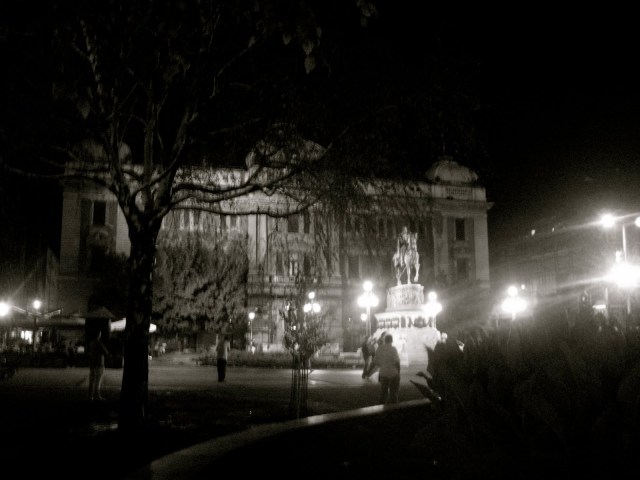
At mass demonstrations he recalls police firing tear-gas, even bullets, into crowds. Once, he said, a cop guarding a train load of tanks drew his weapon on he and some friends taking a short cut through a rail yard. In such a climate, once carefree days spent playing soccer or shopping in open air markets were replaced by caution. Nights were most ominous, with the Black Hand, a secret police/paramilitary force, roaming the streets. “After the dark would come, people who were out on the streets were taken away. Many were killed. Everybody was afraid from here,” Ademi said, clutching his chest. “Walking home every night I was afraid what might happen. I didn’t know if I was going to make it back. If you saw a car coming you turned back into the road and stayed until it passed. When they passed, you were like, ‘Whew, I made it okay.’”
Amid brutal police tactics and outright terrorist acts, the KLA began striking back with savage retaliatory attacks of its own, which led to Serb reprisals. When entreaties and threats by the U.N., the European Union and the West failed to get Milosevic to back down, a controversial U.S.-led NATO military response followed.
A Taste of Freedom
The night of the first air strikes prompted celebrations.
“We were very happy. We were waiting for this day,” Jashari said. “Some people started to shout, “NATO, NATO” and “Clinton, Clinton.” Everybody was cheering and shaking hands.” Any sign of air power brought hope, even though the concussion from bombs and missiles shook and even shattered windows. “Every time I saw the planes in the air I could feel myself a little bit more…free,” Ademi said. “I prayed for the noise of those planes.”
The revelry soon gave way to dread.
“The Serbs were really mad. They didn’t know what else to do, so they started to burn out everything,” said Ademi, referring to the systematic ethnic cleansing that ensued.
The Ademis and Jasharis joined a flood of refugees streaming into villages, where they presumed it was safe. They were wrong. The villages, some housing KLA bases, were burned or pillaged. Houses that once served as quarters for OSCE (Organization for Security and Cooperation in Europe) monitors were torched or trashed. Pundits criticized the fact that, for a time, the air strikes only intensified the Serb raids and further destabilized the region. While Ademi and Jashari confirm “that’s how it was,” they contend what happened “was not NATO’s fault,” As Jashari said, “We didn’t flee because of NATO bombs. We fled because the Serbs started to attack us.”
With no where to hide, ethnic Albanians became a displaced people, moving from village to village and house to house in a desperate bid to stay ahead of marauding Serb troops. The Jasharis managed to remain at home until Serb forces closed in. Once a house was vacated, a next wave of refugees moved in and consumed whatever stores were left. “
People didn’t know where to go,” Ademi said. “They would stay a couple days and move again, helping themselves to food. People would take from all over just to stay alive.”
Ademi’s family found long-term shelter at the home of an uncle in a nearby village. Soon, they were joined by a caravan of refugees from a ransacked village, their dead and injured carted on tractors and trucks. “I carried in a young woman who was wounded in the leg. An old woman who’d been shot died later,” said Ademi, whose family took in dozens of new arrivals, swelling the house’s occupants to 50.
When, weeks into the bombing, there seemed no end in sight to the war, the Albanian Kosovars decided to cross the border into Macedonia. “Everything was going bad. Supplies were low. We thought it better to move because maybe later we could not get out. If Milosevic won, we could not live in Kosovo,” Jashari said.
While there was little choice but to flee, leaving was hard. The refugees brought only bread and the clothes on their back, “My family cried. They knew that maybe we were not coming back,” said Jashari, who left with Valbona and his family in May and made it across the border in a motorized convoy. Weeks earlier, the Ademis set-off, in two groups, for the border. Gazmend and a younger brother went ahead first, traveling on foot with a band of young men along a mountain road. A guide helped them skirt Serb patrols and checkpoints.

The men crossed the border after a 15-hour hike. Two days later Fortesa got out with Ademi’s family, enduring rain and snow on a trek along the same path. Upon reaching northern Macedonia the refugees were housed and fed by ethnic Albanians who led them to a camp, Stenkovec #2. It was there the Ademis and Jasharis, who were still single, married as insurance against being separated later. The couples befriended each other and after six weeks sleeping 10 to 20 to a tent, their applications for asylum were granted. Their shared destination: Omaha. Neither couple had American relatives.
Starting Over
Meanwhile, half-a-world away in Bellevue, Theresa and Richard Guinan followed the unfolding refugee odyssey via media reports. Moved by what they saw, the couple contacted Sen. Chuck Hagel’s office and were put in touch with Heartland Refugee Resettlement, an affiliate of the ecumenical Church World Service. The Guinans volunteered as a host family and the Ademis and Jasharis were matched with them.
Why agree to take in a four refugees? “We wanted to do more than just send money. That’s too easy. We have so much to offer here (in America) and this was our way to help,” Theresa Guinan said. After an 18-hour journey (by plane from Macedonia to Greece to New York to St. Louis to Omaha), the refugees arrived here exhausted. Fortesa Ademi, then pregnant, was sick for much of the trip. They were overwhelmed by the greeting party awaiting them at the Eppley Airfield terminal, including the Guinans, members of their church and reporters.
|
Many Kosovan refugees ended up in a refugee camp in Kukes, Albania
|

Within a week Richard Guinan found jobs for the men, as cold storage construction laborers, and they’ve been employed ever since. “They’re hard workers and their employers love them,” Theresa Guinan said. Living under one roof, the Americans and Kosovars forged deep bonds that remain strong a year later. “We love them like our own. We call them ‘our kids,’” Theresa Guinan said.
Ademi said, “Our sponsors helped us a lot. They made us feel like we were in our own home. Everything was just perfect. We call Theresa and Dick our American parents.” Still, adjusting to American life has posed many challenges, not the least of which is Omaha’s nearly non-existent Albanian community, which Ademi said has left he and the others feeling isolated. “We really haven’t had a chance to make any friends. We don’t go out too much. When we came here we meant to stay five or six years, but now I don’t how we’re going to make it. It’s really hard.” He and the others would like to meet members of the ethnic Albanian refugee colony in Lincoln.
Should the Ademis and Jasharis return to Kosovo any time soon, they know what awaits them: few prospects, a devastated infrastructure and a region littered with land mines and ethnic tensions. As efforts to form a new democracy proceed under NATO’s Joint Interim Administration, the men dream of an independent Kosovo. “That’s the best way to be. That’s what we deserve,” Ademi said.
In the wake of human rights investigations confirming Serb atrocities and of international tribunals naming Serb war criminals, the split between ethnic Albanians and their adversaries is greater than ever. Ironically and tragically, some ethnic Albanians have been engaging in ethnic cleansing reprisals against average Serb citizens. As the cycle of bigotry and violence winds on, the possibility of peaceful co-existence seems remote. Jashari described the gulf this way, “Albanian and Serbian culture is very different. That’s why the conflict is so deep.” Ademi said blood will continue to be shed “until the Serbs are out of Kosovo.” After all that has happened, he said, an ethnic Albanian like himself cannot abide living, drinking or working beside a Serb: “He’s going to be in my way. I’m going to be in his way. There’s no escaping that.”
Like the lyrics of the song playing that night at the apartment, Ademi said one thing is clear. “If you are Albanian, you are my friend. We want the same thing. If you are Serbian, then living together is too hard.” And the jingoistic beat goes on.
Related articles
- New trial for Kosovo ex-premier (bbc.co.uk)
- Kosovo: Nato sends in reinforcements (independent.co.uk)
- New Violence in Kosovo Could Pose a Quandary for an Overstretched NATO (globalspin.blogs.time.com)
- Unlikely matchup: Albanian women wed Serbs (seattletimes.nwsource.com)
- Kosovo launches Serbia border crossings take over (seattletimes.nwsource.com)
- Violence in north Kosovo draws EU warning – Reuters (news.google.com)
- NATO Takes Control at Kosovo Borders (nytimes.com)
- Fear and exodus: ethnic Serbs squeezed out of Kosovo (rt.com)
- War and Peace (leoadambiga.wordpress.com)
Old partnership takes new turn: UNO-Kabul University renew ties with journalism program

Image via Wikipedia
The article below is the latest of several I have written over the last decade or so about the Center for Afghanistan Studies at the University of Nebraska at Omaha. This story concerns a UNO-Kabul University journalism collaborative or partnership being overseen by the center, which received a $1.3 million grant to fund the endeavor. The center is a nearly 40 year-old institution dedicated , just as it name states, to Afghanistan studies and as such it is a unique operation and certainly one you would not expect to find in the Midwest. Its director, Thomas Gouttierre, has been a profile subject of mine (you’ll find my piece on hin on this blog). He and his assistant Raheem Yaseer and their UNO colleague John Shroder are among America’s foremost experts on Afghanistan. The center has been involved in all manner of training and support there and its expertise is often tapped by U.S. government sources. Much of the center’s efforts have been directed at helping train Afghan nationals in order to rebuild that nation’s infrastructure. My new article for The Reader (www.thereader.com) lays out the recently formed journalism partnership program involving faculty exchanges and Afghan journalism educators and students coming here to shadow their American counterparts as well as working journalists. I hope to be one of those journalists they meet with and follow around. Look for more of my work covering this unfolding story in the months ahead.
Old partnership takes new turn: UNO-Kabul University renew Ttes with journalism program
©by Leo Adam Biga
Appeared in The Reader (www.thereader.com)
UNO communication professor Chris Allen recently returned from a two-week needs assessment trip to Afghanistan. His journey was part of a federally-funded journalism faculty-student development program between the University of Nebraska at Omaha and Kabul University.
As Afghanistan attempts normalization in this post-Taliban era, the nation’s indigenous media uneasily co-exist with Islamic law and government ambivalence. Yet, flush with freedom and peace for the first time in decades. Allen says “a surprisingly vigorous and developing media system” exists there.
Consider two vastly different television shows: the incendiary Niqab has masked women detail abuse they’ve suffered; the popular Afghan Star is an American Idol riff.
Training the next generation of Afghan journalists requires access to resources and modern practices. That’s why UNO and Kabul University are connecting aspiring and working journalists in academic, professional and cultural exchanges. Funded by a $1.3 million grant from the U.S. State Department‘s Fulbright program, this three-year partnership renews old ties between the two institutions and is the latest example of UNO’s decades-long work with Afghanistan.
UNO’s School of Communication and its Center for Afghanistan Studies are collaborating on the program. Allen was accompanied by CAS director and dean of International Studies and Programs Tom Gouttierre and CAS assistant director Raheem Yaseer.
The university’s relationship with the nation goes back to 1972, when two campus geography professors began research collaboratives. A donated collection of Afghanistan materials has grown to 12,000-plus items. In 1975 a linkage with Kabul University began.
To date, the center’s received some $60 million in grants and contracts for technical assistance programs, training and educational exchanges. Hundreds of Afghans have come to UNO for training to help rebuild their nation’s infrastructure. Hundreds of Americans come here to train as liaisons in reconstruction efforts.
The center maintains a Kabul field office and Team House, where Allen stayed. It also operates the UNO Education Press, which printed the new Afghan constitution and the ballots for the first democratic elections there in decades.
Even during the Soviet occupation and war, the Taliban reign of terror and the U.S.-led invasion to oust terrorists, Gouttierre says the center remained in contact with various education and government officials in Afghanistan or in exile in Pakistan.
He says a model for this new collaborative is the center’s 2002-2005 teacher education project, which brought Afghan women educators for an immersion experience as part of reopening the nation’s schools. Just as those visitors did, Afghan journalists will stay with Nebraska host families.
Plans call for a group of Afghan professors to arrive in late spring, with additional contingents of faculty and some students arriving later this year. More UNO School of Communication faculty are to visit Afghanistan in the coming months. Program visitors on each side will observe best practices and shadow their peers.

Chris Allen, second from left, with Kabul journalism faculty
Because UNO’s Chris Allen was in Kabul during finals week he didn’t observe classes, but he did speak with faculty.
“I really didn’t know anything about them and they really didn’t know anything about me and to sort of start off on an even footing was a really good thing,” he says. “I didn’t want to go in with preconceived notions that might prejudice the questions I would ask. I could ask really naive questions, and I did that, and I think that served as an ice breaker to say, I need to understand what you guys are doing and what your media are doing as much as you need to understand what we’re doing.
“It enabled me to go in and do a needs assessment from the ground up.”
Allen says the Afghans expressed a need for assistance on both teaching and practical levels. He says many expressed a desire to improve teaching techniques by moving away from lecture-oriented approaches to more hands-on student participation. He says Afghan educators are hampered by limited facilities and resources, such as teaching television without a studio or cameras or editing equipment. However, he says a new media center is in the works.
The most glaring need Allen saw was for more classroom computers. He says the basic reporting class has 10 computers serving 50 students.
“I’m not sure how they’re getting that done.”
He also marvels at how working media, faculty and students brave forbidding conditions, including security and transportation issues.
He’s told that journalism graduates readily find jobs in the Afghan media, which many call “a growth industry.”
Admittedly, he says, his lack of Persian language skills limited him but it didn’t prevent his noting some arcane story structure problems in print and broadcast reports. Despite shortcomings, he and Gouttierre say the media is a vital presence. Dozens of independent print publications have launched. Saad Mohseni, chairman of the largest independent media company there, MOBY Group, is Afghanistan’s first media mogul. The government-run media enterprise RTA is ubiquitous. Radio is the most pervasive medium, says Allen, because it’s accessible and doesn’t require high literacy.
Gouttierre says the UNO-KU project comes at a transformational time.
“Now we have this situation for UNO faculty and students to be engaged right up close with a country’s media that is trying to leap frog in a sense. It kind of reminds me of when I first went to Afghanistan in the early ‘60s as a Peace Corps volunteer and the country was just emerging as a constitutional, parliamentary democratic process. The press was becoming independent at that same time.”
He anticipates each side will learn much from the other, though he suspects Americans may have the most to gain.
“It’s surprising how far Afghans have taken themselves with few resources and how much we can learn from their creativity and initiative in very trying circumstances. its shocking to see how much they’ve accomplished with so many obstacles.”
Related Articles
- You: Kidnapped professors from Kabul University released in Khyber Agency (nation.com.pk)
- Graffiti art brightens war-torn Afghan capital (reuters.com)
- Behind the mask: Afghan TV program exposes the horror of abuse against women (nationalpost.com)
- More Afghan Eagles depart Kabul for America (waronterrornews.typepad.com)
A Peace Corps Retrospective

Image via Wikipedia
Another anniversary story. It was the 40th anniversary of the Peace Corps and I just happened to know a few veterans of that renowned service program, and so after they agreed to share their stories with me, those experiences formed the backbone of what I wrote. One of the individuals I profiled served in Afghanistan and the other three in India. All of them were deeply affected by what they saw and did and at some level that experience has informed everything they’ve done since then. My story originally appeared in the New Horizons. On this same blog you can find my profile of one of these Peace Corps veterans – Thomas Gouttierre, and his affinity for and work with Afghanistan.
A Peace Corps Retrospective
©by Leo Adam Biga
Originally published in the New Horizons
Forty years ago, the first wave of Peace Corps volunteers landed in Ghana and Tanzania, Africa. The young, bright-eyed Americans were a new kind of emissary. Neither diplomats nor missionaries, they arrived in far-flung destinations with the appointed task of helping Third World peoples learn skills and develop resources for overcoming tyranny, poverty and disease.
Trained in various service assignments, ranging from education to health to agriculture, the volunteers embodied the idealism and vigor of America’s young, energetic President, John F. Kennedy, who had announced his vision for the Peace Corps in an October 14, 1960 campaign speech at the University of Michigan in which he challenged the nation’s youth to aid the developing world. Once elected, Kennedy reiterated the plan for an international volunteer corps during his January 20, 1961 inaugural address, asking a new generation of Americans to join “a grand and global alliance” to aid the dispossessed and pledging “our best efforts to help them help themselves.”
Kennedy’s clarion call was answered by thousands, including several Nebraskans. By September ‘61 Congress approved legislation formally authorizing Peace Corps and by the end of that year the first contingent of volunteers left for their host countries. Within five years, more than 15,000 volunteers from around the U.S. were implementing Peace Corps projects in the field. As of 2001, 163,000 volunteers have served in 135 countries.
Among those heeding the call during that heady first decade were Tom and Marylu Gouttiere, Peter Tomsen, Beth Furlong and Ron Psota, five transplanted Omahans who were then fresh-from-college graduates looking for a way to make a difference and to find an adventure. Peace Corps duty proved a defining experience for each, indelibly changing the pattern, direction and focus of their lives. For each, it was a time of personal growth and broadened perspectives. They would never look at the world or its diverse people the same way again. For proof, each returned Peace Corps volunteer has given his or her life over to working with people and each has become a world citizen with deep, personal ties to the international arena.
Tom Gouttierre was either headed for a career as a master baker just like his father or as a manager with General Motors just like his friends when Kennedy’s call to service got him thinking beyond the parochial borders of his Maumee, Ohio hometown. “He was an inspiring guy. When he spoke I was just kind of taken by his message of going outside what we normally do,” said Gouttierre, who today directs the Center for Afghanistan Studies and heads the International Studies and Programs Department at the University of Nebraska at Omaha.

Tom Gouttierre
From the time he was a child Gouttierre had been curious about the wider world and longed for journeys that would open up its vast horizons to him, only he lacked a way to make it happen. By his early 20s he was studying liberal arts at Bowling Green State University, but remained frustrated in his efforts to break from the mold. That’s when he and his wife, Marylu, decided to throw caution to the wind and enter the Peace Corps. After training in Vermont, the couple was assigned to Afghanistan, a remote, forbidding country that would figure prominently in the rest of their lives. During their 1965-1967 tour, the couple was based in the capital city of Kabul. He worked as an English-as-a-foreign language instructor and basketball coach at Lycee Habibia high school and she as a physical education instructor at Kabul University and a business instructor at all-girls schools.
“We were one of the few married couples,” said Marylu, an Oriental rug retailer. “It was an unknown experience. We had no idea what to expect, whether our language skills would help us or where we would live. There was no telephone. No television. No communication. It was a really exciting experience, a really scary experience, but also a very rewarding experience, and after awhile we just both fell in love with the culture and the people. It’s good to give some of your own services to others, but when you do that you gain so much also.”
Especially in the early 1960s, countries viewed Peace Corps volunteers “as a kind of feather in their cap,” Tom Gouttierre said, and much of that enthusiasm had to do with foreign peoples’ admiration of Americans. “The students I worked with tried to take everything out of me that they could. They were curious as hell. They were always wanting me to do something with them or for them. It was flattering that your skills were that attractive to this group of people. Before Vietnam really got kind of overbearing, Americans, largely because of the impact of Kennedy, had a real appeal for the younger generation. I can’t tell you how many times some Afghan came up to me to express their sorrow at the death of Kennedy. ‘He was a great man,’ they would say. That was a great asset for any Peace Corps volunteer. You had this icon who helped elevate your own position in their eyes. Today, America is viewed a little differently and for that reason it’s probably more difficult to be a Peace Corps volunteer now, even though living conditions are better.”
Tom Gouttierre’s Peace Corps service set the stage for a distinguished professional life with deep ties to Afghanistan. He and Marylu returned there in 1969 when he studied abroad as a Fulbright Scholar and they remained there the next six years as he headed the Fulbright Foundation and coached the national basketball team. The Gouttierre’s oldest child, Adam, was born in Afghanistan. During his UNO tenure he’s built a massive archive on Afghanistan, supervised education programs there, participated in United Nations fact-finding junkets there and appeared before Congress addressing issues relating to Afghanistan.
Since leaving, he’s watched with a heavy heart as the nation crumbled under the strain of successive crises — from a war with the former Soviet Union to civil strife to the oppressive Taliban regime to the current specter of American-Allied retaliation for harboring terrorist Osama Bin Laden. Many of his former students have been lost. “I’ve seen what one my call the end of innocence in Afghanistan,” he said. “To see the destruction and to learn of the deaths and disappearances of so many friends and associates is very, very sad.”
His thoughts of Afghanistan are bittersweet.
“It’s the place where I kind of grew to a mature person. I was a flower waiting for the sun to rise and it just unfolded parts of me that never would have been unfolded if I had not done that. I learned how to live in very challenging circumstances. It opened everything else up for me. I was naive, but the Peace Corps showed me the world. It gave me the opportunity to learn well another language, culture and people. I love Afghanistan. Its people are very hospitable. They have great self-assurance and pride. Today, however, they have such despair about the future of the country. They are fed up with war. They want things to return to the way they were. And I guess what keeps me at this work is that I am ever hopeful that somehow, some way, those admirable qualities of Afghan culture I came to love so much will to some degree be restored. So, I keep pursuing that.”
Peter Tomsen was a student at Wittenberg University in Ohio when Kennedy’s appeal to America’s youth hooked him. “I can remember, even today, him asking us, ‘How many of you would be willing to study Urdu and go to Pakistan and serve?’ There was an explosion of enthusiasm built around the novelty of the idea — of going off to help others — but also the charism of President Kennedy. He moved us. He moved a whole generation,” said Tomsen, ambassador-in-residence in the UNO International Studies and Programs department. “There was a rush to join up. There were many more volunteers then there were slots. We were extremely idealistic. Many of us, including me, had never even left our country much less our state. And that element — of an unseen adventure — was there, too.”
In a case of it truly being a small world, Tomsen and Gouttierre, both the same year, grew up within 35 miles of each other in northwest Ohio, came to a similar epiphany regarding the Peace Corps at nearly the same time and embarked on international careers that eventually led them to being UNO colleagues. Assigned to Nepal, Tomsen first underwent extensive language and culture training in Washington, D.C. and hard physical training in Hawaii (to steel him for the rigors of trekking through the Himalayas). Upon his arrival in Nepal, he taught social sciences at a college constructed of stone, bamboo and thatch, but before his two years were up he was charged with the new mission of opening a vocational school for Tibetan refugee children.

Being transported from the plenty of America’s Breadbasket to the subsistence-level conditions in Nepal exposed Tomsen to a side of the world he could not have imagined. “Outside of the capital, there was no electricity in Nepal,” he said. “There was only one road. It was a very poor area with very little to eat. We ended up just having rice twice a day with vegetables and sometimes with meat. Often, we slept on mats on the ground. We didn’t have newspapers or television. We could only get the BBC on transistor radio. We were really isolated. There was a high illiteracy rate. Peoples’ interests didn’t go much beyond survival. But, faced with a situation like that, you soon realize how little you need, especially when you have friends. We had extremely close friendships with the people and they had it with each other too. The people were proud and led a fulfilling life.”
After his 1963-1965 Peace Corps tour, Tomsen returned to the U.S. to teach at St. Cloud State University before landing a diplomatic post in the U.S. State Department, where he enjoyed a 33-year career that culminated with him serving as ambassador to Armenia. Wherever he’s worked, he’s carried with him core values from the Peace Corps, including “interpersonal and intercultural abilities” and greater “tolerance, patience and sensitivity.” He said. “After living in a village environment in Nepal for two years I was at home and comfortable the rest of my life every time I met a foreigner.”
Beth Furlong had rarely traveled outside the confines of Davenport, Iowa, where she was a hospital nurse, when she opted to stop playing it safe and to push herself beyond her comfort zone by entering the Peace Corps. Following training in New England, her assignment was teaching public health education to adult men and women, including students at an all-women’s teacher training institute in East Mysore, India. It was about as far afield from her rural Midwestern upbringing as she could get and the dichotomy led her to change her outlook on things.
“I led a restricted life before I entered,” said Furlong, an associate professor in the School of Nursing and a faculty associate in the Center for Health Policy and Ethics at Creighton University. “It made me a mobile-international citizen. It helped me look beyond my ethnocentrism. It gave me a new concern about poverty and justice. And, also, it gave me an appreciation for the fact there’s no one right way to do anything. The area I lived in was predominantly Hindu and Muslim and so I learned there are many ways to worship. I learned that washing myself didn’t have to mean bathing, but could mean pouring water over myself. It was a wonderful lived experience of getting outside America and seeing how other people live.”
Back in the U.S., Furlong switched her career track from hospital nursing to community health nursing as a direct result of her Peace Corps service, which opened her eyes to the need for more and better preventive — rather than reactive — public health policy in addressing such things as nutrition, safe drinking water, immunizations, family planning and maternal-child care. At home, she has involved herself in scores of organizations dedicated to the justice, anti-poverty and peace movement, including Omaha Together One Community (OTOC) and Nebraskans for Peace. She has taught ethics at international conferences in Eastern Europe, most recently under the auspices of the Albert Schweitzer Institute and the American International Health Alliance.
Today, she is planning her first trip back to India since she left 33 years ago and is eager to return to the villages she volunteered in to see what progress time has wrought. All these years later, Furlong fondly looks back at her India tour of duty and appreciates how it helped her move beyond the “constricted view” of things she arrived with to develop a greater, more encompassing understanding of other cultures. As Furlong discovered, Peace Corps volunteers do not merely observe the cultures they serve from some ivory tower distance, but rather wade right in to live and work among the people.

Beth Furlong
In her case, that meant eating spare meals, doing without electricity, using an outhouse, bicycling from town to town and being the object of curiosity wherever she traveled. It meant being treated to a level of hospitality that humbled her, as peasants shared meager food supplies with her, a perfect stranger, when such provisions should really have gone to their malnourished children. It also meant finding out, first hand, what peoples’ needs were and devising responses to meet those needs.
When she and her Peace Corps partner, Alice, identified a need for sanitary food preparation and bathroom facilities, they took the initiative and worked with CARE volunteers to build kitchen sheds and latrines in dozens of villages. She’s hoping that when she visits these villages, the sheds and latrines still stand. She said she could not have gotten as intimate with Indian culture as she did without the Peace Corps placing her smack dab in the middle of things. That sentiment is shared by fellow Peace Corps veterans.
“Peace Corps volunteers get closer to the quick of society than do anybody else, whether its foreign service officers or scholars or anyone else,” Gouttierre said. “The Peace Corps is probably the best people-to-people experience ever devised. In that regard, it’s as important as it ever was and I think it’s still the best kind of foreign assistance and foreign exchange of any kind.”
Ron Psota had long ago decided not to be a dairy farmer like his parents, who owned and operated a spread near Ord, Nebraska. No, he wanted to see the world and to explore other possibilities. So, he became a liberal arts major at the University of Nebraska-Lincoln, where he earned an architecture degree he hoped one day to use in the Peace Corps, whose foreign service appealed to his sense of curiosity. Ironically, once in the Peace Corps he did not end up designing low cost housing as imagined but instead found himself on familiar ground by assisting farmers in India with their agricultural needs. Still, the Peace Corps offered him the chance to live out a dream and to carve out a new life.
“I’d always been interested in other cultures. That was a strong pull. That and the fact maybe you could do some good and maybe have a helluva good adventure too,” said Psota, International Students Coordinator at Bellevue University. “I think if I had not done that my life would be quite a bit different. It was sort of a defining moment. It changed my world view. It changed the way I work and what I do and everything else.”

Ron Psota, left, with foreign exchange students
Perhaps the biggest change it made in the lives of Psota and his wife, Eileen Wirth, has been in their serving as hosts for hundreds of foreign students over the years. First, at UNO, and more recently at Bellevue University, Psota has been a liaison for international students, many of whom have lived with the couple at their Bemis Park area home, which is filled with artifacts and photographs from their many travels and exchanges. Psota has maintained contact all these years with the village he served and has returned to India four times.
The couple are adoptive parents to two children, now grown, who are foreign-born nationals. Their son, Raj, came from Mother Theresa’s orphanage in New Delhi and their daughter, Shanti, came from an orphan agency in Thailand. He said his reaching out to international youths is his way of repaying a debt he feels he owes those villagers who welcomed him 30-odd years ago. “A lot of this is sort of pay back. The world needs to be more welcoming to each other.” Psota’s wife, Eileen, said she knew as soon as Ron came back from his Peace Corps stint that “I was going to share him with India for the rest of our lives. And, of course, India then became Vietnam, Cambodia, Thailand…”
Psota was part of a Peace Corps team working to increase village level food production.
“We were sort of county agents charged with introducing new hybrids, fertilization, land leveling and crop protection measures. We were half that and half snake oil salesmen in a lot of ways,” he said. “We were supposed to get farmers to change. At times it was sort of, ‘God, are they ever going to change?’ We were probably bringing on the future and one of the things we were concerned about was ensuring the future had a human face.”
Despite some resistance and skepticism, Psota said farmers soon saw the benefits of improved methods. “The Indians were like farmers anyplace in the world. They may not have been able to read and write, but they all could count. When they counted the number of bags of rice that came off some of our hybrid areas versus what they got off their own plots, they were going to plant them. The yield was that much greater.” Psota and his team also modernized farming practices by starting a tractor cooperative that brought mechanized plowing and harvesting to the area.
A lasting impression for Psota is how much a spectacle he and his Peace Corps mates were. “We were the best show in town in a lot of ways. We were curiosities. I always felt I was on display. The first month or so after my arrival I lived in a school house with windows on all sides, usually complete with little kids looking in at all hours of the day and night. The villagers were just always there. You’d open your door at 6:30 in the morning to go do your duty in the mulu bushes and four people would fall in on you. You soon learned to play to the crowd.” In his travels back to India he’s found the people “much more in tune with what’s going on and a little more in control over their own lives.”
Peace Corps veterans comprise a special fraternity or, as Peter Tomsen, put it, “a family,” built on shared service abroad. Ron Psota often organizes reunions of returned Peace Corps volunteers. To a man and woman, they describe their volunteering as the most seminal experience in their lives.
Gouttierre said, “My whole life is the product of the Peace Corps. I’m more proud of being a Peace Corps volunteer than of anything else I’ve done. When I find out somebody is a returned Peace Corps volunteer it automatically raises their estimation in my eyes. It still is a very profound experience in terms of what it does to crystallize one’s inner dimensions.”
Tomsen, whose daughter followed him into the Peace Corps, said, “It was the most formative experience I ever had. Do I think I made a difference? Yes, but I think I got more back than the villagers.” Furlong, who was planning to attend the Peace Corp’s 40th anniversary celebration in Washington D.C. until it was postponed in the wake of the recent terrorist attack, simply said, “It changed me.” Finally, Psota said, the Peace Corps opened up “the wonder of the world for me. Now, I’ve got friends all over the world to see. Yeah, I got a lot out of it.”
Related Articles
- Dealing with reverse culture shock (cnn.com)
- Erica Burman: Celebrate the Peace Corps 50th Anniversary on YouTube (huffingtonpost.com)
- Reader Story: I Quit My Job and Joined the Peace Corps (getrichslowly.org)
- After 50 years, Peace Corps mission remains the same (nj.com)
Thomas Gouttierre: In Search of a Lost Dream, An American’s Afghan Odyssey

Image via Wikipedia
Thomas Gouttierre’s work with Afghanistan has drawn praise and criticism, moreso the latter as of late given what’s happened there with the war and some of that nation’s top leadership having been befriended and trained by Gouttierre’s Center for Afghanistan Studies at the University of Nebraska at Omaha. The following profile I did on Gouttierre appeared in 1998, long before U.S. involvement there escalated into full military intervention. Regardless of what’s happened since I wrote the piece, the essential core of the story, which is that of Gouttierre’s magnificent obsession with that country and its people, remains the same.
The story originally appeared in The Reader (www.thereader.com).
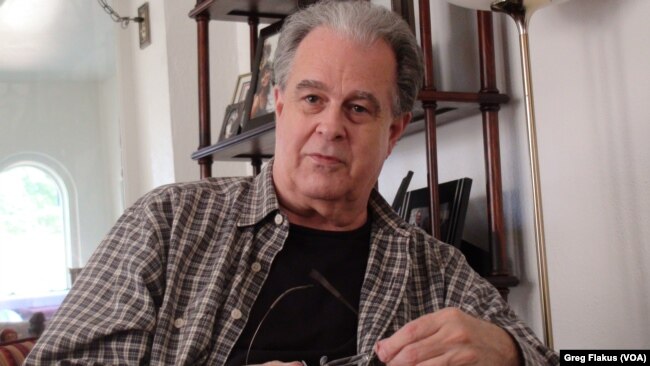
Thomas Gouttierre: In Search of a Lost Dream, An American’s Afghan Odyssey
©by Leo Adam Biga
Originally appeared in The Reader (www.thereader.com)
Like a latter-day Lawrence of Arabia, Omahan Thomas Gouttierre fell under the spell of an enigmatic desert nation as a young man and has been captivated by its Kiplingesque charms ever since.
The enchanting nation is Afghanistan and his rapture with it began while working and living there from 1965 to 1974, first as a Peace Corps volunteer teaching English as a second language, then as a Fulbright fellow and later as executive director of the country’s Fulbright Foundation. His duties included preparing and placing Afghan scholars for graduate studies abroad. During his 10 years there, Gouttierre also coached the Afghan national basketball team. Sharing the adventure with him was his wife and fellow Peace Corps volunteer Marylu. The eldest of the couple’s three sons, Adam, was born there in 1971.
Before his desert sojourn, the Ohio native was a naive, idealistic college graduate with a burning desire to serve his fellow man. When he got his chance half-a-world away, it proved a life transforming experience.
“It’s the place where I kind of grew to a mature person,” he said. “I was there from age 24 to 34 and I learned so much about myself and the rest of the world. It gave me an opportunity to learn well another language, culture and people. I love Afghanistan. It’s people are so admirable. So unique. They have a great sense of humor. They’re very hospitable. They have a great self-assurance and pride.”
But the Afghanistan of his youth is barely recognizable now following 19 years of near uninterrupted carnage resulting from a protracted war with the former Soviet Union and an ongoing civil war. Today, the Muslim state lies in shambles, its institutions in disarray. The bitter irony of it all is that the Afghans themselves have turned the heroic triumph of their victory over the vaunted Soviet military machine into a fratricidal tragedy.
Over the years millions of refugees have fled the country into neighboring Pakistan and Iran or been displaced from their homes and interred in camps across Afghanistan. An entire generation has come to maturity never setting foot in their homeland or never having known peace.
The nation’s downward spiral has left Gouttierre, 57, mourning the loss of the Afghanistan he knew and loved. “In a sense I’ve seen what one might call the end of innocence in Afghanistan,” he said, “because for all its deficiencies, Afghan society – when I was living there – was really a very pleasant place to be. It was a quite stable, secure society. A place where people, despite few resources and trying circumstances, still treated each other with a sense of decency and civility. It was a fantastic country. I loved functioning in that Afghanistan. I really miss that environment. Not to be able to go back to that culture is a real loss.”
Through it all, Gouttierre’s kept intact his ties to the beleaguered Asian nation. In his heart, he’s never really left. The job that took him away in 1974 and that he still holds today – as director of the Center for Afghanistan Studies at the University of Nebraska at Omaha – has kept him in close contact with the country and sent him on fact-finding trips there. He was there only last May, completing a tour of duty as a senior political affairs officer with the United Nations Special Mission to Afghanistan. It was his first trip back since 1993 (before the civil strife began), and what he saw shook him.
“To see the destruction and to learn of the deaths and disappearances of so many friends and associates was very, very sad,” he said from his office on the UNO campus, where he’s also dean of the Office of International Studies and Programs. “Much of the country looks like Berlin and Dresden did after the Second World War, with bombed-out villages and cities. Devastation to the point where almost no family is left unaffected.
“Going back for me was very bittersweet. With every Afghan I met there was such despair about the future of the country. The people are fed up with the war…they so want to return to the way things were. People cried. It was very emotional for me too.”
Everywhere he went he met old friends, who invariably greeted him as “Mr. Tom,” the endearing name he’d earned years before. “In every place I visited I wound up seeing people that I have known for most of my adult life. Individuals that have been here at the University of Nebraska at Omaha – in programs that we’ve sponsored – or people I coached in basketball or people I was instrumental in sending to the U.S. under Fulbright programs or people who taught me Persian and other languages of Afghanistan. So, you know, there’s kind of an extended network there. In fact, it was kind of overwhelming at times.”
Colleague Raheem Yaseer, coordinator of international exchange programs in UNO’s Office of International Studies and Programs, said, “I think he’s received better than any ambassador or any foreign delegation official. He’s in good standing wherever he goes in Afghanistan.”
Yaseer, who supervised Gouttierre in Afghanistan, came to America in 1988 at the urging of Gouttierre, for whom he now works. A political exile, Yaseer is part of a small cohesive Afghan community in Nebraska whose hub is UNO’s Center for Afghanistan Studies. The center, which houses the largest collection of materials on Afghanistan in the Western Hemisphere, provides a link to the Afghans’ shared homeland.
Aside from his fluency in native dialects, his knowledge of Islamic traditions and sensitivity to Afghan culture, Gouttierre also knows many of the principals involved in the current war. It’s the kind of background that gives him instant access and credibility.
“I don’t think there’s any question about that,” Gouttierre said. “The Afghans have a phrase that translates, ‘The first time you meet, you’re friends. The second time you meet, you’re brothers.’ And Afghans really live by that – unless you poison that relationship.”

According to Yaseer, Gouttierre’s “developed a skill for penetrating deep into the culture and traditions of the people and places he visits. He’s able to put everything in a cultural context, which is rare.”
It’s what enables Gouttierre to see the subtle shadings of Afghanistan under its fabled veil of bravado. “When people around the world wonder why the Afghans are still fighting, they don’t realize that a society’s social infrastructure and fabric is very fragile,” said Gouttierre. “They don’t realize what it means to go through a war as devastating as that which the Afghans experienced with the Soviet Union – when well over a million people were killed and much of the traditional resources and strengths of the country were destroyed. When the Soviets left, the Afghans tried to cobble together any kind of government and they were unsuccessful.
“Now they’re trying to put this social-political Humpty-Dumpty back together again, and its just very difficult.”
Under Gouttierre’s leadership the center has been a linchpin in U.S.-U.N. efforts to stabilize and rebuild Afghanistan and has served as a vital conduit between Afghans living inside and outside the country and agencies working on the myriad problems facing it. With nearby Peshawar, Pakistan as a base, the center has operated training and education programs in the embattled country, including a new program training adults in skills needed to work on planned oil and gas pipelines.
Gouttierre himself is a key adviser to the U.S. and world diplomatic community on Afghan matters. He’s served as the American specialist on Afghanistan, Tajikistan and South Asia at meetings of the U.S.-Russian Task Force (Dartmouth Conference) on Regional Conflicts. He’s made presentations on Afghan issues at Congressional hearings and before committees of the British Parliament and the French National Assembly.
And last year he was nominated by the U.S. State Department to serve as the American representative on the U.N. Mission to Afghanistan. “It was quite an honor,” said Gouttierre. “And for me to go back and work among the people again was very appealing and very rewarding.”
The aim of the U.N. mission, whose work continues today, is to engage the combating parties in negotiations toward a just peace settlement. German Norbert Holl, a special representative of the U.N. secretary general to Afghanistan, heads the mission, whose other members are from Russia, Japan, England and France.
On two separate month-long trips to Afghanistan, Gouttierre met with representatives of the various factions and visited strategic sites – all in an effort to help the team assess the political situation. His extensive travels took him the length and breadth of the country and into Pakistan, headquarters for the mission. He talked with people in their homes and offices, he visited bazaars, he viewed dams, irrigation projects and opium fields and traversed deserts and mountains.

Marylu Gouttierre said her husband’s involvement with Afghanistan and commitment to its future stems, in part, from a genuine sense of debt he feels. “He feels a responsibility. It is his second home and those are his people. He’s not only given his heart, but his soul to the country.”
He explains it this way: “Afghanistan has a special place in my professional and personal life and it has had a tremendous impact on my career. It’s been so much an instrument in what I’ve done.”
To fully appreciate his Afghan odyssey, one must review how the once proud, peaceful land he first came to has turned into a despairing, chaotic killing field. The horror began in 1978, when Soviet military forces occupied it to quell uprisings against the puppet socialist regime the USSR had installed in the capital city of Kabul. The Soviets, however, met with stiff resistance from rebel Mujaahideen freedom fighters aligned with various native warlords. Against all odds, the Afghans waged a successful jihad or holy war that eventually ousted the Soviets in 1989, reclaimed their independence and reinforced their image as fierce warriors.
The Afghans, whose history is replete with legendary struggles against invaders, never considered surrender. Said Gouttierre, “The Afghans felt they were going to win from the start. They felt they could stick with it forever. They had a strong belief in their own myth of invincibility…and to everyone’s surprise but their own, they did force the Soviets to leave.”
But the fragile alliance that had held among rival factions during the conflict fell apart amid the instability of the post-war period. “The Soviets left someone in charge who had been their ally in power. That was Najeebullah. His government fell in 1992. That only helped exacerbate things. The cycle of fighting continued as the Afghans who had fought against the Soviet army continued their fight against Najeebullah, who was captured, tried and executed by the Taliban (an Islamic faction) in September of 1996 for his crimes against the Afghans, which were considerable.” Gouttierre knew Najeebullah in very different circumstances before the war, when the future despot was a student of his in a class he taught at a native high school.
After Najeebullah’s fall, a mad scramble for power ensued among the Mujaahideen groups. As Gouttierre explains, “The leaders of these groups had become warlords in their own regions. They kind of got delusions of grandeur about who should be in control of the whole country and they began to struggle against each other.”

In the subsequent fighting, one dominant group emerged – the Taliban, a strict Islamic movement whose forces now command three-quarters of the country, including the capital of Kabul – with all its symbolic and strategic importance. A loose alliance of factions oppose the Taliban.
“As the Taliban (Seekers of Islam) grew in strength, they began intimidating and even fighting some of the minor Mujaahideen commando groups, and to a lot of people’s surprise, they were successful,” said
Gouttierre, whose U.N. assignment included profiling the Taliban. “They are very provincial, very rural – and in their own minds – very traditional Muslims and Afghans. They’re not that philosophically sophisticated in terms of their own religion, but they are very sophisticated in terms of what they understand they want for their society, and they’re able to argue and discourse on it at length without giving any quarter. And they’re willing to go to war over it.
“Each region where they’ve gone, they’ve been aided by the fact that the people living there were disenchanted with those in control. Most of the other groups, unfortunately, lost any credibility they had because of their failure to bring about peace, stability, security and reconstruction. The people were willing to support almost anything that came along.”
The Taliban has drawn wide criticism, internally and externally, for its application of extreme Islamic practices in occupied areas, particularly for placing severe restrictions on women’s education and employment and for imposing harsh penalties on criminals. Gouttierre said while such actions elicit grave concerns from the U.N. and represent major stumbling blocks in the Taliban’s quest for full recognition, the movement has effectively restored order in areas it controls.
“I have to say that in the areas of Afghanistan I traveled to which they control, the Taliban had confiscated all the weapons, removed all the checkpoints people had to pass through, eliminated the extortion that was part of the checkpoints and instilled security and stability,” said Gouttierre. “You could travel anywhere in Kabul without having to be in any way concerned, except for the mines that haven’t been cleared yet.”
Conversely, he said, the Taliban has exhibited brutal politics of intimidation and blatant human rights violations, although other factions have as well. “It’s not a question of who’s good and who’s bad,” he adds. “There’s plenty of blame and credit to be shared on all sides.”


He found the Taliban a compelling bunch. “One of the things I was impressed with is that all of the leaders I met were in some ways victims of the war with the Soviet Union. They all exhibited wounds, and they acquired these wounds heroically carrying out the struggle against the Soviet Union, and I respect them for that. That needs to be taken into account.”
In addition to pushing for a ceasefire between the Taliban and its adversaries, Gouttierre said the U.N. mission consistently makes clear that in order to gain credentialing from the U.N. and support from key institutions like the World Bank, the Taliban must do a better job of protecting basic human rights and ensuring gender equity.
He said the main barrier to reaching a cease fire accord is the Taliban’s nearly unassailable military position, which gives them little reason to make concessions or accept conditions. Another impediment to the peace process is the nation’s rich opium industry, whose interests diverge from those of the U.N. And a major complicating factor is the support being provided the warring factions by competing nations. For example, Pakistan and certain Persian Gulf states are major suppliers of the Taliban, while Iran and Russia are major suppliers of the opposition alliance.
Taliban and opposition leaders did meet together at several U.N. sponsored negotiation sessions. The representatives arrived for the talks accompanied by armed bodyguards, who remained outside during the discussions. The tenor of the meetings surprised Gouttierre. “It was far more cordial than I had anticipated. These men got along remarkably well, in part because they all know each other. That’s not to say there weren’t disagreements. When offended, Afghans can be exceedingly formidable to deal with.”
At Gouttierre’s urging, the mission began holding intimate gatherings at which representatives of the warring parties met informally with U.N. officials over food and drinks and “where translators were not the main medium for communication and where everybody wasn’t on guard all the time.” He hosted several such luncheons and dinners, including ones in Kandahar, Baamiyaan and Kabul. The idea was to create a comfortable mood that encouraged talk and built trust. It worked.
“In diplomatic enterprises often the most effective periods are at the breaks or the receptions, because you’re sometimes able to get people off to the side, where they’re able to say off the record what they can’t say officially. And that’s exactly what happened. Those of us in the U.N. mission got a better sense of who the Taliban are. They’re not irrational. They do have a sense of humor. And they got a better sense of who we are – that we’re not just officials, but that we also have a long-term interest in Afghanistan.”
Gouttierre said the mission has overcome “high skepticism” on the part of Afghans, who recall the U.N. granted Najeebulah asylum despite his being a war criminal. He said the Afghans’ estimation of the mission has moved from distrust to acceptance. And he feels one reason for that is that the present mission has “more clout and recognition than any previous mission to Afghanistan.” Supplying that essential leverage, he said, is the “unstinting support of influential countries like the U.S., France, England, Russia and Japan.”
Despite recent news stories of military inroads made by opposition forces, especially around Kabul, the Taliban remain firmly entrenched. Gouttierre believes that unless a major reversal occurs to change the balance of power, the Taliban will continue calling the shots. If the Taliban eventually consolidate their power and conquer the whole nation, as most observers believe is inevitable, the hope then is that the movement’s leaders will feel more secure in acceding to U.N. pressure.
Gouttierre said that despite the failure to gain a ceasefire thus far, “the fact remains the two sides are meeting with each other, and that’s the first step in any peace process. We don’t have agreements on anything yet, but at least the channels for continuing dialogue have been opened.”
As Gouitterre well knows, the process of binding a nation’s wounds can be frustrating and exhausting. He stays the course though because he wants desperately to recapture the magical Afghanistan that first bewitched him. “I guess one of the things that keeps me at this is that I am ever hopeful that somehow, some way those admirable qualities of Afghan culture which I came to love so much will to some degree be restored. So I keep pursuing that.”
Related Articles
- Afghan president criticizes timeline for U.S. withdrawal (seattletimes.nwsource.com)
- Market bombing in northern Afghanistan town kills 3 police, 2 civilians, wounds 15 (foxnews.com)
- The Challenge of Training Afghan Troops, Police (cbsnews.com)
- An Old Partnership Takes a New Turn: UNO-Kabul University Renew Ties with Journalism Program (leoadambiga.wordpress.com)
- Afghanistan: U.S. Intelligence Failures Led To Civilian Casualties (huffingtonpost.com)
Three old wise men of journalism – Hlavacek, Michaels and Desfor – recall their foreign correspondent careers and reflect on the world today

Image via Wikipedia
As a kid I watched John Hlavacek on a local network television affiliate’s newscasts and documentaries, and as a young man I was aware of him serving on the Omaha City Council, and operating his own travel agency. I vaguely knew that he had been a foreign correspondent. It was only a few years ago though that I met him for the first time and got to know more of his story. He and his late wife Pegge were both reporters in the Golden Age of American journalism. Their life stories of living and working around the world are as amazing as those of the historical events and figures they covered. In the last few years John has had published several books authored by himself and Pegge that recount their adventures. I have also posted the story I wrote about John and Pegge and their adventures, but the following piece is about John and two old reporter friends of his from back in the day. The three men hadn’t seen each other in decades until John arranged for their meeting in Omaha for a panel discussion. I covered the event and wrote this story for The Reader (www.thereader.com).
Three old wise men of journalism – Hlavacek, Michaels and Desfor – recall their foreign correspondent careers and reflect on the world today
©by Leo Adam Biga
Originally appeared in The Reader (www.thereader.com)
They were three young lions of American journalism when they met far from home, a long time ago. John Hlavacek of Carleton College (Minn.) and Jim Michaels of Harvard were green United Press foreign correspondents based in post-World War II India. In wartime Hlavacek trucked medical supplies over the Burma Road for the International Red Cross. Michaels drove an American Field Service ambulance. Each was imprisoned there: Hlavacek for days; Michaels for months. New Yorker Max Desfor covered the war in the South Pacific as an Associated Press photographer.
The paths of these three men crossed in 1946, when their lives-careers intersected with India’s historic bid for independence from British colonial rule. Last spring, they came together for the first time in 60 years with the publication of a book, United Press Invades India, by Hlavacek, an Omaha resident who invited his colleagues to participate in public forums about their intrepid reporting days. The men shared stories and observations during two panel discussions in Omaha.
After being out of touch all that time Hlavacek began the process of reestablishing contact with his old colleagues while working on his memoir. Facts needed checking and where Hlavacek’s memory faltered, he relied on Desfor and Michaels to fill in the blanks. By the time the book was completed, Hlavacek suggested he and his comrades reunite. The men still correspond today.
John Hlavacek
The book that helped bring the old colleagues together was Hlavacek’s second volume of memoirs based on his overseas adventures in India and China, where he taught English in an American mission school in Fenyang as part of the Carleton in China exchange program. Hlavacek now has a third volume of memoirs out, Freelancing in Paradise, that recounts the years he and his wife Pegge, a fellow journalist he met and married in India, filed stories from the Caribbean for national media outlets. He’s also published two books authored by Pegge about her own far flung news career and the couple’s remarkable feat of raising five children while working in India, New York, Jamaica and Omaha.
For Hlavacek and Michaels, now in their late 80s, India began long, distinguished careers in journalism. As bureau chief in Bombay, Hlavacek built up UP’s presence there and under his aegis the news service proved a formidable rival to their bitter rival, the AP. He won what’s now called the Edward R. Murrow Fellowship for study at Columbia University, he covered the Caribbean and after moving with his family in the early 1960s to Omaha, where he was a television news correspondent/commentator, he filed a series of reports from Vietnam on area residents serving in the war.
Michaels got the scoop of a lifetime when he broke the story of Mahatma Gandhi’s assassination in 1948. He joined Forbes Magazine in 1954, was made editor in 1961, a post he held until 1999. He’s credited with turning Forbes into one of the world’s most read financial pubs. A VP today, he can be seen Sundays on Forbes On Fox.
Before India, Desfor already made memorable images: of the Enola Gay crew upon their return from the mission that dropped the atom bomb on Hiroshima; and of the Japanese surrender to the allies on the USS Missouri. Soon after his arrival in India in 1946, he snapped a famous picture of Gandhi and India’s first prime minister, Jawaharlal Nehru, in an unguarded moment of friendship. “You see the interchange, the compatibility, the simpatico. It’s just an enormous moment,” he said. The iconic pic was used as the basis for a popular Indian postage stamp.
Desfor won a Pulitzer Prize for news photos for his work in the Korean War. In all, he shot five wars, many conflicts and much civil strife. He later served as an AP photo executive/editor before retiring in 1979. That same year though he joined US News and World Report as director of photos. He made his 1984 retirement permanent, but he’s till snapping pics, only now with a digital camera. He’s 93.

Max Desfor posed in front of picture taken of himself during the Korean War
These young lions turned wise old men of journalism reunited for panel discussions in Omaha in 2006. They took to their role as pundits well. They spoke about the momentous events they reported on, the way the news biz has changed and how the India and China of today differ from the developing nations they knew then.
Hlavacek said the troika may be the only surviving American journalists to have met Gandhi. While his colleagues minimize Gandhi’s ultimate influence, Desfor said “he had a moral effect” of lasting import. Michaels said by the end Gandhi was “almost irrelevant” for opposing “industrialization or modernity. Had Gandhi lived, he said, “he would have been loved but nobody would have paid attention to his views.”
The ascetic led a huge movement yet was quite approachable. Unlike today’s restrictive climate, the press had unfettered access to major public figures then.
“A journalist’s access to events in those days was so much more intimate than it is today,” Michaels said. “Gandhi was a world figure, yet he had these prayer meetings when he was in Delhi that the public could come to. If you got there early you could sit right up in front and ask him questions. Or, as John (Hlavacek) did, you could go right up to him and ask for an interview. Today, you wouldn’t be able to get through the masses of hired guards, spin meisters, the whole lot.”
“Once, I wanted to interview the number two man in the cabinet of Independent India, Vallabhbhai Patel, a very important figure in Indian independence,” Michaels said. “So, I drove up in my little car to his place, knocked on the door, a servant answers and says, ‘What do you want?’ I say, ‘I’m from the United Press of America — I’d like to interview Vallabhbhai Patel’ He says, ‘Wait a minute,’ takes my card and five minutes later ushers me into the garden, where Patel and I had tea together and I had an interview. That kind of immediacy today simply does not exist.”
When Hlavacek wanted to interview Mohammed Ali Jinnah, a Muslim leader in the free India movement, he simply stopped by his flat. He had similar access to presidents (Nehru, Indira Gandhi), religious leaders (the Dalai Lama), royalty (Aga Kahn) and dictators (Juan Peron of Argentina, Zaldivar Batista of Cuba).
“There are many great stories I had the opportunity to cover,” Hlavacek said. “It was interesting. I had a lot of fun. I had a lot of worries from time to time, too. And you were always in competition. You were always trying to beat someone.”
“It was a wonderful era for being a correspondent,” said Desfor, who with his Speed Graphic made pictures of great personalities that “will live forever in history books. This is what gives me such great pleasure,” he said.
When Michaels arrived at the scene of the estate where Gandhi lay fatally shot, he was among the first there. The grounds were open and he could move freely about to ask questions and make observations. After sending off his first dispatches at a nearby cable office, he returned to find the area cordoned-off by police and a large group of reporters and peasants gathered outside the closed and guarded front gates. The reporters there earlier with him were now inside.
“I thought, Oh, my God, I’m going to get beat on this story. I better do something,” Michaels said. “So I went around the back. I knew the area pretty well. And I climbed through the hedges and, wow, staring me right in the face was an Indian constable. I desperately searched in my wallet for my old Geneva card, which I carried as an ambulance driver during the second world war. I flashed this card, which was very impressive, and he said, ‘OK, sahab.’ So I got in. I saw as they brought Gandhi’s body out on the balcony for the people to see. I saw a famous woman photographer (and correspondent) for Life Magazine, Margaret Bourke-White, thrown out physically when she refused to stop taking pictures.
“I saw all these great Indian leaders sitting around crying. I witnessed Nehru, the first prime minister of India, get up on the wall with tears streaming down his face declaring, ‘The father of our country is dead.’ I witnessed all these scenes.”
The phalanx of competing news groups was far smaller then, too, compared to the unwieldy mobs that descend on news events today.
“The independence of India was one of the great events of the century. It was huge news. Yet it was covered by less than 100 journalists,” Michaels said. “When Hong Kong became independent less than a decade ago, there were 8,000 journalists covering it and the ones that got there had to cover it by watching it on TV. Today, everything is staged. Access to events is tightly controlled.”
In the process, Michaels said, “something is lost between what you read and what happens. The whole nature of the profession has changed — I don’t think necessarily for the better. The news business today belongs more to presenters.” “You have to be an actor,” Hlavacek interjected.” “You have to be a performer,” Michaels agreed, “and what you get is filtered through these presenters.”
Another major difference between then and now is the rate at which news is disseminated. Filing stories from the field in Third World nations once meant getting the news out via mail or cable or teletype, all of which took time. Sometimes just getting from a news event to a dispatch office could take hours of travel. Now, stories can be filed from the most remote or dangerous regions, even war zones, almost instantaneously due to satellite phone lines and the Internet.
“The speed of communication is what’s really changed,” said Hlavacek, who adds “the 24-hour circuit” of news coverage puts hard copy newspapers in a tough spot. “You used to break a story in a special edition. It’s too late now.” Michaels believes the ever growing online info world “is killing newspapers.” To those who worry a point-and-click universe prevents analysis, Hlavacek said, “No, it doesn’t, but this is spot news and it never did. Analysis can come later.” He marvels at “the emergence of the Internet” and is encouraged that “there’s so much information out there. I don’t think you can control it. At least I don’t see that you can.”
The dynamic economies and rising technocracies of India and China have caught the men’s notice. Michaels often goes back to India, where he’s interviewed current prime minister Manmohan Singh. Michaels said India’s ascendancy “is one of the great unheralded revolutions of our time.” He said the planned socialist state under Nehru and his successors resulted in an India that “stagnated from the time of independence right through 1989.” Michaels, who calls Singh “a very impressive man,” credits him with engineering “a revolution from the top” that urged Indian leadership to abandon the old system in favor of “a free enterprise model.” The result, he said, is a “booming” economy. While India prospers, its caste system’s inequities still pervade the society, said Hlavacek, who’s also been back. The India-Pakistan divide, they agree, is one born of religious-political differences.
Last fall Hlavacek visited the mission school in Fenyang, China he taught at under Japanese occupation. On his 10-day China trip he was most impressed by all “the change,” he said. “That’s the difference.” He said while China is still “ostensibly a Communist country, they’re the greatest capitalists in the world.” “They call themselves Communists,” said Michaels, who’s been there, “but everybody winks and nobody really believes that.” The journalists believe China and India will grow as trading partners with each other and with the U.S. as their economies continue to grow. As the world changes at an ever faster rate, Hlavacek said journalism remains “a higher calling.”
For three old men, a lifetime of curiosity has not waned. The world is still their oyster. The news, their metier.
Related Articles
- Journalism veteran Daniel Schorr dies at 93 (cbc.ca)
- ‘Great Soul’: Joseph Lelyveld tells Mahatma Gandhi’s larger-than-life story (seattletimes.nwsource.com)
- Jesuit Photojournalist Don Doll of Creighton University Documents the Global Human Condition One Person, One Image at a Time (leoadambiga.wordpress.com)
- Omaha Address by Cuban Archbishop Jaime Ortega Sounds Hopeful Message that Repression in Cuba is Lifting (leoadambiga.wordpress.com)
- Returning To Society: New community collaboration, research and federal funding fight to hold the costs of criminal recidivism down (leoadambiga.wordpress.com)


 Leo Adam Biga's My Inside Stories