
Archive
Archive for the ‘Jewish Culture’ Category
Memories of the Jewish Midwest: Mom and Pop Grocery Stores, Omaha, Lincoln, Greater Nebraska and Southwest Iowa
November 14, 2011
9 comments

Oh, for the days when there was almost literally a grocery store on every corner and a movie theater in every neighborhood. I only know those days through articles, books, movies, photographs, and reminiscences and I am sure the reality did not match my romanticism about them. As fate would have it, the Mom and Pop grocery phenomenon I only got a glimmer of during my childhood became the subject of an assignment I was offered and gladly accepted: as co-editor and lead writer for a Nebraska Jewish Historical Society book project that commemmorates and documents the Mom and Pop Jewish grocery stores that operated in and around the Omaha metropolitan area from approximately the beginning of the 20th century through the 1960s-1970s. But it was Ben Nachman, along with Renee Ratner-Corcoran, who I worked with on the project, that truly realized the book . Ben’s vision and energy got it started and Renee’s commitment and persistence saw it through. I just helped pick up the pieces once Ben passed away a year or so into the project. Ultimately, the book belongs to all the families and individuals who contributed anecdotes, stories, essays, photos, and ads about their grocery stores.
Immediately below is Jewish Press story about the project, followed by an excerpt from the book.
The book is dedicated to the man who inaugurated the project, the late Ben Nachman, who was responsible for starting what is now my long association with both the Jewish Press and the Nebraska Jewish Historical Society. Ben led me to many Holocaust survivor and rescuer stories I ended up writing, many of which can be found on this blog. My stories about Ben and his work as an amatuer but highy dedicated historian can also be found here. I also collaborated with Ben and Renee, as the writer to their producder-roles, on a documentary film about the Brandeis Department Store empire of Nebraska. A very long two-part story I did for the Jewish Press on the Brandeis family and their empire served as the basis for the script I wrote. You can find that story on this blog.
Historical Society publishes grocery store history
by Rita Shelley
11.11.11 issue, Jewish Press
Freshly arrived from Europe a century ago, thousands of men and women found work in South Omaha’s packinghouse and stockyards.
South 24th Street grocer Witte Fried, also a first generation American and a widow with children from ages 2 to 7, knew something of her neighbors’ struggles to survive and prosper. She also knew they needed to eat. According to her descendants, Fried took care to mark prices on the merchandise in her store in several languages. She wanted her customers, regardless of their German, Irish, Italian, Russian, Polish, Greek, Czech or other origins, to have an easier transition into their new world.
Fried’s story is one of many featured in Memories of the Jewish Midwest: Mom and Pop Grocery Stores. Scheduled to be published in November by the Nebraska Jewish Historical Society (NJHS), the book includes recollections of Jewish grocers and members of the families who operated stores throughout Omaha, Lincoln, Council Bluffs and surrounding areas from the early 1900s to the present.

“A history of Jewish owned stores is also a history of the grocery business,” Renee Ratner-Corcoran, NJHS executive director, said. “Beginning with peddlers who traveled from farm to farm to trade their wares for farm produce to sell in the cities, through one-room Mom and Pop stores with adjoining living quarters, to the first large self-service grocery stores, to today’s discount stores that sell housewares and groceries under the same roof, the Jewish community played a vital role in the grocery industry.The book was a dream of Dr. Ben Nachman, an NJHS volunteer whose father owned a small store on North 27th Street. Dr. Nachman died in 2010; publication of the book is dedicated to his memory.
Children of early Jewish grocers who were interviewed for the book or submitted recollections recall the hustle and bustle of buying produce from open air stalls downtown (today’s Old Market) as early as 4 a.m. to stay ahead of the competition. Before there were automobiles, grocers’ children were responsible for the care of the horses that pulled delivery buggies. Mixing the flour and water paste to use for painting prices of the week’s specials on the front window was also the responsibility of children. So were dividing 100-pound sacks of potatoes into five- and 10-pound packages, grinding and bagging coffee, and feeding the chickens. (A kerosene barrel and a chicken coop were located side-by-side in at least one family’s store.).
The book’s publication was underwritten by the Herbert Goldsten Trust, the Special Donor Advised Fund of the Jewish Federation of Omaha Foundation, the Milton S. & Corinne N. Livingston Foundation, Inc., the Murray H. and Sharee C. Newman Supporting Foundation, Doris and Bill Alloy, Sheila and John Anderson, Edith Toby Fellman, Doris Raduziner Marks, In honor of Larry Roffman’s 80th Birthday, and Stanley and Norma Silverman.Increasing prosperity meant housewives had more money to spend. Innovations in transportation and refrigeration also brought changes to the grocery industry, and Jewish grocers were among the first to embrace those changes. More recently, Jewish Nebraskans “invented” some of the country’s first discount chains and wholesale distribution networks, as well as the data processing innovations that made them profitable.
For additional information, contact Renee Ratner-Corcoran by e-mail at rcorcoran@jewishomaha.org or by phone at 402.334.6442.
Excerpts from the book-
©by Leo Adam Biga
Memories of the Jewish Midwest: Mom and Pop Grocery Stores Omaha, Lincoln, Greater Nebraska and Southwest Iowa

Jews have a proud history as entrepreneurs and merchants. When Jewish immigrants began coming to America in greater and greater numbers during the late 19th century and early 20th century, many gravitated to the food industry, some as peddlers and fresh produce market stall hawkers, others as wholesalers, and still others as grocers.
Most Jews who settled in Nebraska came from Russia and Poland, with smaller segments from Hungary, Germany, and other central and Eastern European nations. They were variously escaping pogroms, revolution, war, and poverty. The prospect of freedom and opportunity motivated Jews, just as it did other peoples, to flock here.
At a time when Jews were restricted from entering certain fields, the food business was relatively wide open and affordable to enter. There was a time when for a few hundred dollars one could put a down payment on a small store. That was still a considerable amount of money before 1960, but it was not out of reach of most working men who scrimped and put away a little every week. And that was a good thing too because obtaining capital to launch a store was difficult. Most banks would not lend credit to Jews and other minorities until after World War II.
The most likely route that Jews took to becoming grocers was first working as a peddler, selling feed, selling produce by horse and wagon or truck, or apprenticing in someone else’s store. Some came to the grocery business from other endeavors or industries. The goal was the same – to save enough to buy or open a store of their own. By whatever means Jews found to enter the grocery business, enough did that during the height of this self-made era, from roughly the 1920s through the 1950s, there may have been a hundred or more Jewish-owned and operated grocery stores in the metro area at any given time.
Jewish grocers almost always started out modestly, owning and operating small Mom and Pop neighborhood stores that catered to residents in the immediate area. By custom and convenience, most Jewish grocer families lived above or behind the store, although the more prosperous were able to buy or build their own free-standing home.
Since most customers in Nebraska and Iowa were non-Jewish, store inventories reflected that fact, thus featuring mostly mainstream food and nonfood items, with only limited Jewish items and even fewer kosher goods. The exception to that rule was during Passover and other Jewish high holidays, when traditional Jewish fare was highlighted.
Business could never be taken for granted. In lean times it could be a real struggle. Because the margin between making it and not making was often quite slim many Jewish grocers stayed open from early morning to early evening, seven days a week, even during the Sabbath, although some stores were closed a half-day on the weekend. Jewish stores that did close for the Sabbath were open on Sunday.
Jewish grocery stores almost always became multi-generation family affairs. The classic story was for a husband and wife to open a store and for their children to “grow up” in it. In some families there was a definite expectation for the children to follow and succeed their parents in the business. But there were as many variations on this story as families themselves. In some cases, the founder, almost always a male, was joined in the business by a brother or brothers or perhaps a brother in law. Therefore, a child born into a grocer family might have one or both parents and some combination of uncles, aunts, siblings, and cousins working there, too.
Of course, not every child followed his folks into the family business. Because most early Jewish grocers did not have much in the way of a formal education, the family business was viewed as a springboard for their children to complete an education, even to go onto college. It was a means by which the next generation could advance farther than their parents had, whether in the family grocery business or in a professional field far removed from stocking shelves and bagging groceries.
Some Jewish grocers went in and out of business in a short time, but many enjoyed long runs, extending over generations. Some proprietors stayed small, with never more than a single store, while others added more stores to form chains (the Tuchman brothers) and others (like the Bakers and the Newmans) graduated from Mom and Pop shops to supermarkets. Some owners made their success as grocers only to leave that segment of the food business behind to become wholesale suppliers and distributors (Floyd Kulkin), even food manufacturers (Louis Albert).
Whatever path Jewish grocers took, the core goal was the same, namely to provide for their families and to stake out a place of their own that offered continued prosperity. For a Jewish family, especially an immigrant Jewish family, owning a store meant self-sufficiency and independence. It was a means to an end in terms of assimilation and acceptance. It was a real, tangible sign that a family had arrived and made it. Most Jewish grocers didn’t get rich, but most managed to purchase their own homes and send their kids to college. It was a legitimate, honorable gateway to achieving the American Dream, and one well within reach of people of modest means.
For much of the last century Jewish grocery stores could be found all over the area, in rural as well as in urban locales, doing business where there were no other Jews and where there was a concentration of Jews. In Nebraska and Western Iowa there have historically been few Jewish enclaves, meaning that Jewish grocers depended upon Gentiles for the bulk of their business. Dealing with a diverse clientele was a necessity.
In some instances, Jewish grocers and their fellow Jewish business owners catered to distinct ethnic groups. For example, from the 1920s through the 1960s the North 24th Street business district in Omaha was the commercial hub for the area’s largely African-American community. During that period the preponderance of business owners along and around that strip were Jewish, including several grocers, some of whom lived in the neighborhood. These circumstances meant that Jews and blacks in Omaha were mutually dependent on each other in a manner that didn’t exist before and hasn’t existed since. When the last in a series of civil disturbances in the district did significant damage there, the last of the Jewish merchants moved out. Only a few Jewish owned grocery stores remained in what was the Near Northside.
Until mechanical refrigeration became standard, customers had to shop daily or at least every other day to buy fresh products to replenish their ice boxes and pantries. Having to shop so frequently at a small, family-run neighborhood store meant that customers and grocers developed closer, more personal relationships than they generally do today. Grocers not only knew their regular customers by name but knew their buying patterns so well that they could fill an order without even looking at a list.
Home delivery was a standard service offered by most grocers back in the day. Some stores were mainly cash and carry operations and others primarily charge and delivery endeavors. Taking grocery orders by phone was commonplace.
Most grocers extended credit to existing customers, even carrying them during rough times. It was simply the way business was conducted then. A person’s word was their bond.
Fridays were generally the busiest day in the grocery business because it’s when most laborers got paid and it’s when families stocked up for the big weekend meal most households prepared.
Jewish grocers were among the founders and directors of cooperatives, such as the United Associated Grocers Co-op or United AG and the Lincoln Grocers Association, that gave grocers increased buying power on the open market.
With only a few exceptions today, the intimate, family neighborhood stores are a thing of the past. As automobiles and highways changed the landscape to accommodate the burgeoning suburbs, newer, larger chain stores and supermarkets emerged whose buying and selling power the Mom and Pops could not compete with on anything like an even basis. Thus, the Mom and Pop stores, Jewish and non-Jewish alike, began fading away.
Because Jewish grocers were such familiar, even ubiquitous fixtures in the community, the majority population gave little thought to the fact that Omaha Jewish merchants like the Bakers (Baker’s Supermarkets) or the Newmans (Hinky Dinky), who began with Mom and Pop stores, led the transition to supermarket chains. For much of the metro’s history then, Jews controlled a large share of the grocery market, helping streamline and modernize the way in which grocers did business and consumers shopped.
It is true the one-to-one bond between grocer and consumer may have all but disappeared with the advent of the supermarket and discount store phenomenon. The days of grocers filling each customer order individually went by the wayside in the new age of self-service.
One thing that’s never changed is the fact that everybody has to eat and Jews have been at the forefront of fulfilling that basic human need for time immemorial. The Jewish grocer was an extension of the friendly neighborhood bubbe or zayde or mensch in making sure his or her customers always had enough to eat.


Categories: Ben Nachman, Books, Business, Entrepreneurial, History, Jewish Culture, Leo Adam Biga, Nebraska Jewish Historical Society, Omaha, Writing
Jewish Mom and Pop Grocery Stores, Memories of the Jewish Midwest: Mom and Pop Grocery Stores, Mom and Pop Grocery Stores, Nebraska Jewish Historical Society
Retired Omaha World-Herald military affairs newsman Howard Silber: War veteran, reporter, raconteur, bon vi vant, globetrotter
October 6, 2011
6 comments
I have done my fair share of stories about journalists by now, and my favorites are generally those profiling venerable figures like the subject of this story, Howard Silber, who epitomized the intrepid spirit of the profession. Howard, though long retired, still has the heart and the head of a newsman. It’s an instinct that never fully leaves one. His rich career intersected with major events and figures of teh 20th century, as did his life before becoming a reporter. I think you’ll respond as I did to his story in the following profile I wrote about Howard for the New Horizons.
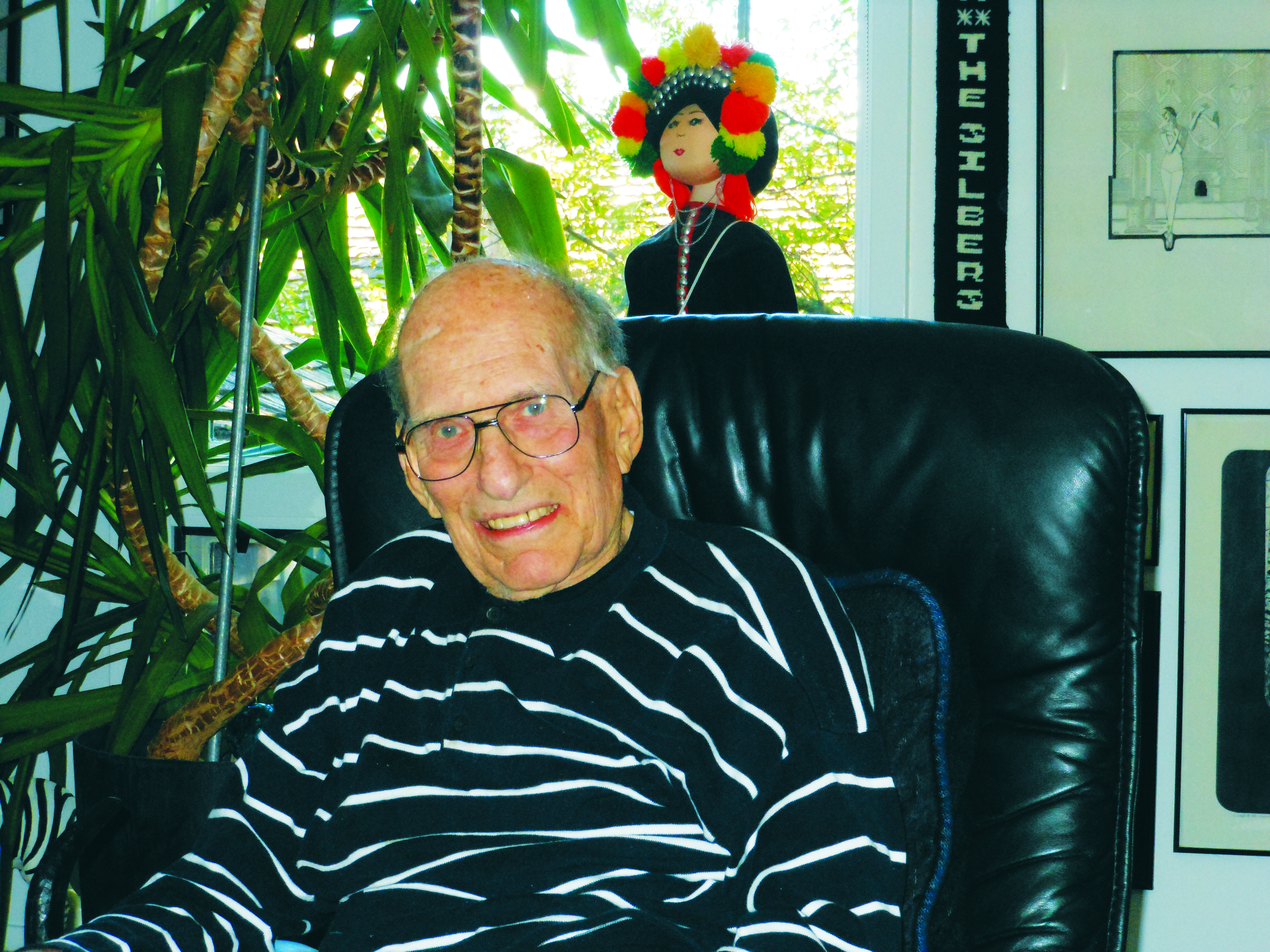
Howard Silber
Retired Omaha World-Herald military affairs newsman Howard Silber:
War veteran, reporter, raconteur, bon vi vant, globetrotter
©by Leo Adam Biga
Oriignally published in the New Horizons
It’s hard not viewing retired Omaha World-Herald military affairs editor Howard Silber’s life in romantic terms. Like a dashing fictional adventurer he’s spent the better part of his 90 years gallivanting about the world to feed his wanderlust.
A Band of Brothers World War II U.S. Army veteran, Silber was wounded in combat preceding the Battle of the Bulge. Soon after his convalescence he embarked on a distinguished journalism career.
As a reporter, the Omaha Press Club Hall of Fame inductee covered most everything. He ventured to the South Pole. He went to Vietnam multiple times to report on the war. He interviewed four sitting U.S. Presidents, even more Secretary of States and countless military brass.
He counted as sources Pentagon wonks and Beltway politicos.
Perhaps the biggest scoop of his career was obtaining an interview with Caril Ann Fugate shortly after she and Charles Starkweather were taken into custody following the couple’s 1958 killing spree.
A decade later Silber caught the first wave of Go Big Red fever when he co-wrote a pair of Husker football books.
As Veteran of Foreign Wars publicity chairman he went to China with an American contingent of retired servicemen.
Even when he stopped chasing stories following his 1988 retirement, he kept right on going, taking cruises with his wife Sissy to ports of call around the globe. More than 60 by now they reckon. They’ve even gone on safaris in Kenya and South Africa. Their Fontenelle Hills home is adorned with artifacts from their travels.
In truth, Silber’s been on the move since he was a young man, when this New York City native left the fast-paced, rough and tumble North for the slower rhythms and time-worn traditions of the South. His itch to get out and see new places may have been inherited from his Austro-Hungarian Jewish immigrant parents.
Growing up on the Upper West Side of Manhattan, Silber learned many survival lessons. HIs earliest years were spent in a well-to-do Jewish enclave. But when the Depression hit and his fur manufacturer father lost his business, the small family — it was just Howard, his younger sister and parents — were forced to move to “a less attractive neighborhood” and one where Jews were scarce.
As the new kid on the block Silber soon found himself tested.
“Fighting became a way of life. It was a case of fighting or running and I decided to fight,” he said. “I had to fight my way to school a few times and had to protect my sister, but after three or four of those fracases why they left me alone.”
Sports became another proving ground for Silber. He excelled in football at Stuyvesant High School, a noted public school whose team captured the city championship during his playing days. An equally good student, he set his sights high when he attempted to enroll at hallowed Columbia University.
“I wanted to go to Columbia as a student, not as an athlete,” he said. “They turned me down. I had all the grades but in those days most of the Ivy League and other prestigious schools had a quota on so many Jews they would admit per year.”
Columbia head football coach Lou Cannon offered Silber a partial football scholarship. The proud young student-athlete “turned it down.” The way Silber saw it, “If they wouldn’t take me as a student I didn’t want to go there as an athlete.'”
He said when the University of Alabama in Tuscaloosa recruited several teammates he opted to join them. The school’s gridiron program under then head coach Frank Thomas was already a national power. Silber enrolled there in 1939.
At Alabama his path intersected that of two unknowns who became iconic figures — one famously, the other infamously.
“Paul “Bear” Bryant was my freshman football coach. I thought he was a great guy. He did a lot for me,” Silber said of the gravely voiced future coaching legend.

Paul “Bear” Bryant
The Bear left UA after Silber’s freshman year for Vanderbilt. It was several coaching stops later before Bryant returned to his alma mater to lead the Crimson Tide as head coach, overseeing a dynasty that faced off with Nebraska in three New Year’s bowl games. Bryant’s Alabama teams won six national titles and he earned a place in the College Football Hall of Fame.
Silber makes no bones about his own insignificant place in ‘Bama football annals.
“I was almost a full-time bench warmer,” he said. “The talent level was higher than mine.” He played pulling guard at 170 pounds sopping wet.
His mother wanted him to be a doctor and like a good son he began pre-med studies. He wasn’t far along on that track when the medical school dean redirected Silber elsewhere owing to color blindness. Medicine’s loss was journalism’s gain.
Why did he fix on being a newspaperman?
“I always had an interest in it. My environment had been New York and jobs were hard to get in those days and it just never occurred to me I would try for one. I was more interested in radio as a career. Actually, my degree is partly radio arts. I interned at WAPI in Birmingham and after three weeks I quit and went to work as a summer intern for the old Birmingham Post, a Scripps Howard paper, because it paid four bucks a week more. That’s how I got into print journalism.”
Silber became well acquainted with someone who became the face of the Jim Crow South — George Wallace. When he first met him though Wallace was just another enterprising Alabama native son looking to make his mark.
“George Wallace and I shared an apartment over a garage one summer school session,” recalled Silber. “I had known him a little bit before then. We became pretty good friends. There was no sign of bigotry at that time, and in fact I’m convinced to this day that his bigotry was put on for political purposes.
“He (Wallace) ran at one point for the (Alabama state) judiciary and his opponent was Jim Folsom, who later became governor, and he lost, and he made the comment, ‘I’m never going to be out-niggered again.'”

George Wallace
Years before Wallace uttered that comment Silber witnessed another side of him.
“We had our laundry done by black women in town. Their sons would come around the campus, even the athletic dorms, to pick up laundry. Tony, a big lineman from West Virginia, was always hazing them and finally George, who was on the boxing team, wouldn’t take it anymore and he went up to Tony ready to fight him, saying, ‘We don’t treat our people down here that way.’ I wouldn’t have wanted to get into a fight with him. He was a tough little baby.”
In 1968 the one-time roommates’ paths crossed again. By then Silber was a veteran Herald reporter and Wallace a lightening rod Alabama governor and divisive American Independent Party presidential candidate on a campaign speaking tour stop in Omaha. Wallace’s abrasive style and segregationist stands made him a polarizing figure.
“Wallace’s advance man Bill Jones was a mutual friend and because of Bill I was invited into Wallace’s plane as it was sitting on the ground and George answered some local questions. He seemed familiar with local politics and the local situation and he was interested in agriculture. We talked for a good 15 or 20 minutes.”
That evening at the Omaha Civic Auditorium Wallace’s inflammatory speech excited supporters and agitated opponents. A melee inside the arena spilled out onto the streets and in the ensuing confrontations between police and citizens a young woman, Vivian Strong, was shot and killed by an officer, setting off a civil disturbance that caused serious property damage and looting in Northeast Omaha.
In some ways Northeast Omaha has never recovered from those and other disturbances that burned out or drove away business. It’s just the kind of story Silber liked to sink his teeth into. Before ever working as a professional journalist Silber found himself, likes millions of others, caught up in momentous events that forever altered the course of things.
He was an undergraduate when Japan attacked Pearl Harbor on December 7th, 1941. The call to arms meant a call to duty for Silber and so many of the Greatest Generation. Boys and men interrupted their lives, leaving behind home-family-career for uncertain fates in a worldwide conflict with no guarantee of Allied victory.
“The day after Pearl Harbor hundreds of students went to the recruiting offices in Tuscaloosa, the university town. The lines were terrible and finally several days later I got in. I wanted to become a Navy pilot but I was rejected because I was partly color blind. So I just entered the Army.”
He was 21. He went off to war in 1942, his studies delayed button forgotten.
“The university had a program where if you finished the spring semester and had so many hours you could enter the armed services and finish your degree by correspondence,” said Silber, who did just that.
His military odyssey began at Fortress Monroe, Va. with the Sea Coast Artillery. “We had big guns to intercept (enemy) ships,” he explained. “Because I had some college I was put in the master gunner section where with slide rules we calculated the azimuth and range of the cannon to zero in on the enemy ships that might approach. The Sea Coast Artillery was deemed obsolete by the emergence of the U.S. Air Force as a reliable deterrent force.
“I was transferred to Fort Bliss in El Paso, Texas, an anti-aircraft training center (and a part of the country’s coastal defense network). “I loved it down in El Paso. It was a good post.”
From there, he said, “I went into a glider unit and once in action we were supposed to glide in behind enemy lines to set up for anti-aircraft. Well, the glider unit was broken up. So I had some choices and I just transferred to the infantry. I went to Camp Howze (Texas), a temporary Army post, and became a member of company A, 411th Infantry Regiment, 103rd division. We did some pretty heavy training there,” said Silber.
“We went by train to Camp Shanks, New York — a port of embarkation. One morning with very little notice we were put aboard trains and transferred to a ferry stop in New Jersey and ferried across New York harbor to the Brooklyn Army Base,” he recounted. “There we boarded a ship that, believe it or not, was called the Santa Maria. We sailed to Southern France. It took about two weeks in a convoy strung out for quite a distance.”
Silber, whose descriptions of his wartime experiences retain the precision and color of his journalistic training, continued:
“We landed in Southern France (post-D-Day, 1944). We were equipped to go into combat but we were diverted to the Port of Marseilles. The French stevedores, who were supposed to be unloading ships of ammunition and such, went on strike. So we spent about two weeks unloading ammunition from ships to go up to the front.
“We were encamped on a plateau above Marseille. It was a happy situation. We’d be able to go in the city and enjoy ourselves.”
The idyll of Marseille was welcome but, as Silber said, “it ended soon enough. Part of the division went by truck and my regiment went by freight train with straw on the floor to a town called Epinal in Eastern France. From there we went into combat. The first day of combat eight members of my platoon were killed. A baptism by fire.”
That initial action, he said, “was in, oddly enough, a churchyard in which most of the graves were occupied by World War I German soldiers. I didn’t learn that until later.” Many years after the war Silber and his old comrades paid for a monument to be erected to the eight GIs lost there. He and Sissy have visited the site of that deadly encounter to pay their respects.
“It’s become kind of a shrine to guys from my old outfit,” he said.
The next phases of his combat duty exposed him to even more harrowing action.
Although wars historically shut down in winter or prove the undoing of armies ill-equipped to deal with the conditions, the record winter of ’44 in Europe ultimately did little to slow down either side. In the case of the advancing American and Allied forces, the treacherous mix of snow and cold only added to the miseries. When Silber and his fellow soldiers were ordered to cross a mountain range, the dangers of altitude, deadly passes and avalanches were added to the challenge.
“We fought our way through the Vosges Mountains in Alsace,” he said, adding cryptically, “We had a couple of situations…
“We were the first sizable military unit to cross the Vosges in winter. We had snow for which we were not equipped really. It turned out to be the worst in the history of that part of Europe. We didn’t have any white camouflage gear or anything like that that the Germans had. We met some pretty heavy combat in the mountains for a time. It was an SS outfit, but we managed to fight our way through.”

If any soldier is honest he admits he fears engaging in hand-to-hand combat because he doesn’t know how he’ll perform in that life or death struggle. In the Vosges campaign Silber confronted the ultimate test in battle when he came face to face with a German.
“I’ll tell you what happened,” is how Silber begins relating the incident. “We went out on patrol at night trying to contact the enemy and pick up a couple prisoners for intelligence purposes. By that time I had become a second lieutenant, courtesy a battlefield commission. I didn’t really want to become too attractive a target for the Germans, so I pretended I was still an enlisted man in dress and in emblem, and I carried around an M-1 rifle instead of a carbine.
“What often happened was the Germans might send out a patrol at the same time just by coincidence and we would kind of startle each other at the same moment and ignore each other purposely. That happened a lot and we thought it was going to happen this time, but they opened fire on us.”
In the close quarters chaos of the fire fight, he said, “I jumped into a roadside ditch with my M-1 and it was knocked out of my hand by the guy I killed. Had to. I had a trench knife in my boot and I attacked him with that and fortunately I beat him, or he would have beaten me.” Only one man was coming out alive and Silber lived to tell the tale. He does so without boast or pleasure but a it-was-him-or-me soberness.
A desperate Germany was sending almost anyone it could find to the front, including boys. The SS troop Silber dispatched was an adult, therefore, he said, “I didn’t have that to worry about on my conscience.”
“After that most of the units we encountered were made up either of young conscripts, and I mean below the age of 18, or middle aged men, as almost a last gasp. I saw German soldiers who couldn’t have been more than 12 or 13 years old. I also saw men in their 40s and 50s.”
This last gasp “was a hopeful sign” Germany was through, but he added, “We didn’t feel very comfortable fighting against 14 year olds. I mean, if we had to do it, we did it because they were trying to kill us. We lived with it, that’s all.”
Finally breaking out of the mountains onto the Rhine Plain was a great relief. For the first time since the start of the campaign, he said, “we got to sleep in an intact house. We proceeded around Strausberg. We were in the U.S. 7th Army and integrated into our army corps was the French 1st Army and they were made up mostly of North Africans. Most of them were Moroccans, Algerians and Tunisians, I guess. They had come across the Mediterranean with de Gaulle. We saw them from time to time. They had a reputation of being good fighters.
“We headed north paralleling the Rhine River and we were approaching the Maginot Line (the elaborate French fortification system Germany outflanked during its blitz into France). On December 14, 1944 we had orders to break through it. The Germans had artillery, some troops and some tanks zeroed in and ready to go.”
All hell then broke loose.
“We woke up one morning to the sound of artillery high above us, exploding in the trees,” recalled Silber. “We were on the side of a ravine through which a road had been cut and on that road was a tank destroyer outfit — using World War I leftover anti-tank guns. They were a platoon of African-Americans. The bravery those guys exhibited was unbelievable. When I think of it I become emotional because they were shot up to hell and kept fighting.”

His second close brush with death then occurred.
“The artillery action slowed down and we began to advance into the Maginot Line,” he said. “The Germans had some tanks positioned between fixed fortresses. We encountered off in the distance a tank — 400 or 500 yards away. It was very slowly approaching us. The tank destroyer outfit had been so decimated they were pretty much out of action, so we had bazookas. Our bazooka team in my platoon was knocked out. By that time I was the platoon leader. I picked up the bazooka, knelt and loaded it, fired once and missed. It was quite a distance still.
“The last thing I can remember is that tank lowering its beastly 88 millimeter cannon in my direction…I woke up the next day in an Army field hospital. Apparently the shell was a dud but its impact half buried me in my foxhole. Our platoon medic dug me out of the collapsed foxhole and got me out of the way. I was unconscious. Both my arms were broken and my left rib cage was pretty well beat up. I woke up December 16 and that was the day the Battle of the Bulge erupted about a hundred kilometers north of us.”
Silber spent the remainder of the war healing.
“The next day the field hospital was emptied out of patients and it moved north to take care of casualties from the Bulge,” he said. “I was shipped along with other patients by ambulance to the U.S. 23rd General Hospital at Vittel, France, a spa town. It had been a resort. It had a racetrack and a casino. We wound up in the grand hotel.
“Even though my arms were in casts by then I enjoyed being there, believe me.”
Ending up sidelined from the action, banged up but without any life threatening injury, reminded him of something he and his buddies often joked about to help pass the time.
“Especially when I was an enlisted man we used to sit and talk in our foxholes, usually at night when things were quiet, smoking a cigarette under a tarpaulin or something, about the ‘million dollar wound.’ We’d speculate on what it would take to get us back to the States without getting really hurt.
“Well, maybe I should be ashamed of this, but that was one of the things I thought of in the hospital — that I had kind of one of those (wounds). Except I was hurt a little more than I would have chosen.”
Back home, he continued mending at Rhodes General Hospital in Utica, New York. A restless Silber completed his college studies by correspondence and volunteered in the public relations office. He penned the script for a weekly radio show written, produced and acted by patients, mostly on war experiences, that the hospital sponsored. Silber shared in a George Foster Peabody Award for public service a show segment won. “It wasn’t my brilliant writing or anything,” he said, “but I was part of the process.”
He was still hospitalized when VJ Day sparked celebrations over the war’s end.
One of his PR tasks was delivering copy to the local Utica Daily Press, where he secured a job upon his discharge. “I took my swearing out ceremony as we called it at 10 o’clock in the morning and by two o’clock I was down there working for a salary, not much of a salary — $38 a week. I still have a soft spot in my heart for Utica. I actually was stationed in a bureau in Rome, New York 15 miles away.”
From there he returned to his old stomping grounds in the Big Apple, where he worked for the New York Sun. A plum early assignment put him in the company of Harry Truman, “the VIP who really impressed me most,” said Silber. “I rode his (1948) campaign train. I was pretty raw material then, a real cub reporter, but I got the assignment and I ran with it. I even got to kibbutz his (Truman’s) poker game.”
Silber recalls Truman as “very kind, although he’d pick on guys for fun,” adding, “He was just a pretty decent man but he had shall we say a frothy tongue.”
When the Sun folded in 1950 Silber got on with “a blue ribbon” PR firm, but as he once put it, “I just had the romance of daily journalism in my blood.” Thus he began searching for a newspaper job. His choice came down to a Kansas City paper and the Omaha World-Herald, and $5 more a week brought him here in 1955.
He started out on the rewrite desk.
The Herald had a team of reporters out covering the Charles Starkweather story but Silber was familiar with the mounting murders and resulting manhunt around the upper Midwest from rewriting field reports. Then, as things often happen in a newsroom, Silber found himself enlisted to cover a major development.
“When the Starkweather case broke, our chief photographer Larry Robinson, who was versed in aviation and friendly to some of the operators out at the air base, chartered a good airplane on standby. So when we got the word in the newsroom about Starkweather being captured in Douglas, Wyo., city editor Lou Gerdes pointed to me and said, ‘Go!,’ and I went with Robby and John Savage.”
“We got there ahead of anybody else outside the immediate area and because of that we were able to have a lot of informality that wouldn’t exist today. We got friendly with the sheriff, Earl Heflin, and his wife, the jail matron. We got some good stories.”

Charles Starkweather in custody
Minus a wire to transmit photos, Robinson flew back with the negatives, while Silber and Savage stayed behind to cultivate more stories.
That night, a keyed up Silber, unable to sleep, walked from the hotel to the courthouse where the captured fugitives were held.
“The sheriff was answering telephone calls from all over the world with his wife’s help, and he was dead tired, so I said, ‘Why don’t you get some sleep while I sit in for you?’ He took advantage of that, and I took advantage of it, too.”
The story was a sensation everywhere it headlined.
“There weren’t that many serial murders in those days for one thing,” said Silber, “and it seemed to have all the elements — a teen with his girlfriend going around shooting people, not at random but for one reason or another, and it just caught on. Besides that, we were feeding a lot of stuff to the Associated Press and United Press. I was a stringer for Reuters and they were getting plenty of it. I was also stringing for the New York Daily News and at that time it was the largest circulation newspaper in the country.
“It just captured the imagination of readers.”
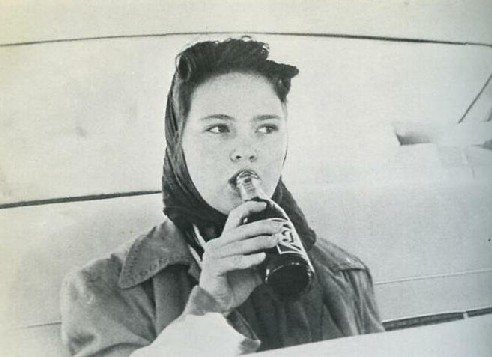
Caril Ann Fugate
So Silber wasn’t going to miss an opportunity to further play the story when one presented itself. Having relieved the sheriff, Silber then convinced Heflin’s wife to let him interview Caril Ann Fugate when Mrs. Heflin went to check on her. He ended up doing interviews with Fugate and Starkweather, separately, while Savage snapped photos — getting exclusive stories and pictures in the process.
Regarding Fugate, Silber said, “I had mixed feelings about her at the time, and then over a period of several weeks when more and more reports were coming in about her I became convinced she was not innocent. She was goading him to shoot people.” He said Starkweather struck him as “the upper end of juvenile delinquency, because he was 17 when he was captured. He was inarticulate. He couldn’t give a straight answer.”
Silber’s most far-flung assignment took him to the South Pole in 1962 as part of the press pool on a military junket with dignitaries Gen. Jimmy Doolittle, radio-newsreel commentator Lowell Thomas and Notre Dame president Fr. Theodore Hesburgh. “We staged out of Christchurch, New Zealand,” he said. “It’s a long ride down there in a prop plane.” En route, everyone geared up with layers of thermal clothing.

U.S. South Pole station
“We landed at (Amundsen-Scott) Pole Station — the actual landing strip they carved out of the ice about a mile or so from the pole. When we got there the temperature was 60 something below zero. They made heated track vehicles available, but Gen. Doolittle, Lowell Thomas and Fr. Hesburgh said no, They walked. So as a result we in the press pool had to walk, too (much to their curse-laden dismay).
“The actual stay on the ice as we called it was 2 1/2 weeks. We took day trips to scientific-research stations and historical places where early explorers had froze or starved to death.”
Flying to the pole station in a C-130 a tired Silber clambered atop crates lashed in the aisle and when he awoke a fellow member of the Fifth Estate said, “You know where you’ve been sleeping?” A clueless Silber shrugged, no. “On cases of dynamite,” his colleague gleefully informed him.
Among the most unforgettable characters Silber knew was bombastic Gen. Curtis LeMay, the first commander of the Strategic Air Command. “He was tough but he was a patriot through and through,” he said. “I admired him but it was tough to get along with him.” An enduring LeMay anecdote Silber attests is true found the general lighting a cigar near a refueling plane. When an aide mentioned the danger of the plane blowing up, LeMay blustered, “It wouldn’t dare to.”

Gen. Curtis LeMay
Silber and Sissy attended many a lavish black-tie officers’ party at Offutt.
There wasn’t much posh about reporting in Vietnam, where Silber covered the war as early as 1964. On a later visit there he ran into Omaha television reporter John Hlavacek, a former print foreign correspondent for whom Silber has high regard.
In 1970 Silber and other press accompanied Ross Perot on a chartered trip the billionaire organized ostensibly to deliver supplies to U.S airmen held as prisoners of war in North Vietnam. The hopskotch trip, which Henry Kissinger was behind, failed to deliver any supplies but did raise awareness of the POWs’ plight.
Upon reflection, Silber said his military reporting, which earned him numerous awards, “was satisfying — very much so. It was a high point.”
Back home, Silber claims credit for thinking of the Husker football books he and colleagues Jim Denney and Hollis Limprecht collaborated on, the second of which was a biography of Bob Devaney. Silber thought highly of Devaney.
“I loved the man. He was just a hell-raiser. A down-to-earth guy. A man’s-man.”
Over the years Silber wrote pieces for Readers Digest, Esquire and other national publications. He was a Reuters stringer for 20 years.
“I could never be satisfied with just working 8 hours a day. I had to be doing other things, too. I had a little office set up at home and I would do what I could.”
He means to resume his memoirs — for his grandkids — now that he’s cancer free for the first time in years. Long ago divorced from his first wife and the mother of his two daughters, Silber and Sissy have been partners 36 years now. Her warm, bigger-than-life personality complements his own hail-fellow-well-met charm.
Each retired comfortably from divergent careers. While he never became rich as a reporter he did well as a World-Herald stock holder. When Sissy’s father left behind his Katelman’s hardware supply store she and her mother took it over and ran it till 1981, when the Kanesville Highway went in.
Howard and Sissy met as a result of, what else?, a story Silber was working on. They’ve been inseparable since marrying in 1975.
Summing up his eventful life and career, Silber said, “There’s not too many things I’d change.”
A not-so-average Joe tells his Holocaust story of survival
September 8, 2011
9 comments
Another of my Holocaust stories is featured here. Joe Boin tells his story of defiance and survival.
A not-so-average Joe tells his Holocaust story of survival
©by Leo Adam Biga
Originally published in the Jewish Press
It’s not as if Joe Boin hadn’t spoken about his Holocaust survivor tale before. He shared his story for the Shoah Visual History Project. He’s told it to school groups. He helped form Nebraska Survivors of the Holocaust to raise awareness and to commission public memorials as reminders of what happened.
But until now the Berlin, Germany native never laid out his story for publication. The time seemed right. The 87-year-old widower resides at the Rose Blumkin Home, where he scoots around in his motorized wheelchair with aplomb, American and Go Big Red flags affixed to the back. The amiable man makes friends easily and lives a credo of looking ahead, not back, but the searing memories never dim. Alone with his thoughts, his odyssey is always near.
His wife Lilly, a fellow survivor he met and married after the war, passed away 14 years ago. A Vienna, Austria native, she told her survivor tale in her 1989 book, My Story. Everyone close to her died in the Shoah.
Remarkably, Joe’s entire immediate family made it out alive. His parents are long gone and his only two siblings live in Israel. Palestine is where Joe, Lilly, his sisters and eventually his folks migrated after the war. Joe and Lilly’s two children, Heni Alice and Gustav Daniel, were born and raised in Israel. Joe suffered wounds in the fight for Israel’s independence. The couple’s children preceded them to America and Joe and Lilly followed in 1966.
After hopskotching the country to be near their children, Joe and Lilly made it to Nebraska in the late-1970s, residing first in Lincoln before settling in Omaha.
Today, Joe lives for his children, grandchildren and great-grandchildren. He sees them when he can but they all live out of state. He’s spending Hanukkah and New Year in Phoenix with his daughter and her family.
Joe insists his story is nothing special. “I’m not too interesting,” he says through his thick accent. “I’m not important.” But Joe knows better. He knows that while every survivor story shares certain commonalities, each is its own wonder, even miracle, of fortitude and fate. He knows, too, it’s his obligation to bear witness.
Born Joachim Boin, he was the only son of Arthur and Bianca Boin, an educated Orthodox Jewish couple whose roots were in Germany and Poland, respectively. Joe’s father was a World War I veteran who fought in the German Army. He had his own accounting firm. Joe’s younger sisters, Ruth and Gisela, soon followed.
The family lived in a mixed district of Berlin where Jews and Christians lived and did business together. Next door was a Christian family, the Kruegers, who were old friends. They took an active hand in helping the Boins once the Nazi’s anti-Jewish laws took effect. They even ended up hiding Gisela during the war.
Before the rein of terror, Joe’s early childhood was idyllic. “It didn’t last long but it gave me a taste of what life could be or can be,” he said. “I had dreams but it became impossible for me to even follow them after Hitler came — that all went.”
Growing up in Berlin, Joe witnessed the fascist fervor in its huge rallies and parades that kindled the worst kind of nationalism. The mass public displays included virulent anti-Semetic screeds, all meant to sway the Aryan citizenry, to inflame hatred, to intimidate Jews and other supposed enemies of the state. The Nazi regime tapped the fears of a shaken people by offering security and scapegoats.
“Like everywhere in the world Germany was in a very deep depression, people were out of work and they had big families,” noted Joe, “and so Hitler came and said, ‘Well, if you elect me as your leader I will put bread on your table and I will make sure you have enough money to pay your bills and rent.’ Of course, everybody went for it.”
To the Christian majority Hitler appealed to widespread prejudice in blaming the Jews for Germany’s decline since World War I. For most Jews, the rhetoric and restrictions aimed at them seemed nothing they hadn’t seen or heard before.
“In the very beginning when he was elected he organized the political police and then when people found out what really was going to happen it was too late, they couldn’t do much about it,” said Joe.
A strapping, athletic young man, Joe competed as an elite Maccabi club tennis player, boxer and gymnast, yet Jews like him were ostracized from German national teams and games by the Nazi regime’s racial policies. This exclusion was a bitter pill to swallow for Jewish athletes when Berlin hosted the 1936 Olympics.
“It was pretty painful, I’ll tell you that.”
Amid unprecedented propaganda and pageantry the Nazis attempted to gloss over their campaign of hate against Jews and while some observers saw through the facade most of the world did not. As far back as the Berlin Olympics, Joe’s family was warned of the impending danger facing them.
“In 1936 my mother’s brother, who lived in Berlin, too, came to my dad and said, ‘Arthur, now is the time to leave this country.’ My dad looked at him and said, ‘I was in World War I, I pay my taxes, I have a legitimate business, why should I leave?’ If anybody had any idea what was going to happen, they would have left,” said Joe, but the Boins like most people could not conceive that what seemed another pogrom would become the systematic genocide known as The Final Solution.
Until the fall of 1938 things were tolerable. Jews couldn’t go where and when they pleased as easily as they once could, owing to growing restrictions on their movements and activities, but they didn’t fear for their safety. Clearly, though, life was far from normal and things were getting more tense. Roving gangs of Nazi Brown Shirts were becoming a menace and the mere fact of being a Jew, identified by a Yellow Star, made you a target of these thugs.
The Kruegers, the Christian family who lived next door to the Boins, became a lifeline. “Our neighbors were very nice people and they supplied us with some food and so on, sometimes without taking payment, so that we could live a little,” said Joe.
When he was 15 he and his family moved to a town, Cottbus, where Joe’s father felt they would be more insulated from the Nazi grip. They did find there some kind Christians who lent aid just as the Kruegers had.
“Like everywhere else there were wonderful people that were kind to Jews, that tried to help,” said Joe.
But there ultimately was no escaping the threat. Things took a turn for the worse on Kristallnacht, Nov. 9, 1938. Nazi goons came to the Boin home to take Joe and his father away to the town square where other Jewish residents had been rounded up and their homes and businesses vandalized.
“They took us to a marketplace where they had us surrounded by Nazis and by private citizens and they put dogs on one side and they gave us a spoon and we had to pick up the crap. We got beaten pretty bad. A lot of people got killed there, too. They put bodies in the synagogue and afterwards they burned it.”
For Joe, the nightmarish incident marked the end of his boyhood innocence and the start of a cruel new reality based on instinct, chance and survival.
“My life as a child (ended). I had two years of high school before Hitler kicked us out.” From then on out, life was a harrowing affair. “We were treated like animals, not as human beings, we had to walk on the street, we couldn’t walk on the sidewalks, we couldn’t go into certain stores.”
More and more, Jews found themselves targeted, isolated, marginalized. Then, in 1939, the year Germany invaded Poland and Czechoslovakia and instigated World War II, the family was forcibly split up. A band of Nazis came to the Boin home, this time demanding only Joe come with them. He described what happened:
“At midnight they knocked on our door, shouting, ‘We want your boy Joachim.’ I came to the door and asked, ‘What do you want?’ ‘We have come for you,’ they said, and they grabbed me and hit me and put me on a truck. ‘Where are we going; do I have to take something?’ ‘No, where we’re going you don’t need nothing.’”
The ominous reply presaged the unfolding horror of the next six years, a black time when he and his family were separated from everything they knew, including each other, as each endured his or her own survival odyssey. Joe, his father, his mother and his sister Ruth all ended up in either labor or death camps.
Only his baby sister Gisela was spared. She was hidden by the Kruegers in the Christian family’s Berlin home, where for three-and-a-half years she passed a secreted-away life that if discovered would have meant certain death for her and her benefactors.
“My dad always said to them (the Kruegers), ‘You know, if the authorities find out they’re going to kill you too,’ and they said, ‘We are responsible to God, not to him (Hitler), and we feel if there’s any way to help somebody and to do something that prevents anybody from getting killed, we do it.’”
This courageous attitude struck a chord in Joe, who has tried living up to the kindnesses people bestowed on him and his family.
“It’s amazing in a situation like this that you find people that have a different way of thinking and they feel it’s immoral for others to be killed or whatever just because they’re Jewish. People helped even though they knew if they got caught they would get shot. Despite the risk, they said, ‘No, we have a responsibility to God, but not to Mr. Hitler, and whatever happens, happens,’ and that’s why quite a few Jewish people had a chance to live.”
From the time Joe was taken away in the middle of the night to the war’s end, six years passed before he was reunited with his family. He would survive six camps in four countries, counting the displaced persons and refugee camps he ended up in after the war, before the ordeal was over.
“The first camp I was in was Sachsenhausen — it was a concentration camp close to Berlin where all kinds of political prisoners, religious people were together, gypsies too. Just a very, very interesting group of people, and then from there they distributed them to the other camps.”
He didn’t know anyone at Sachsenhausen.
“I didn’t want to know anybody because in a situation like this it’s very difficult to trust people you don’t know. Sometimes you had to, but unfortunately you had a lot of Jewish people who tried to inform the Nazis of what was going on, hoping they might have a better life, which didn’t happen.”
Upon his arrival, Joe was consumed with anger over the injustice of it all.
“I was 17-years-old and the only crime I’d committed was I was born to a Jewish mother. That’s why I could never understand why I had to go through all this. I wasn’t thinking about anything else but why I’m here. I didn’t steal anything, I didn’t murder anyone — why am I here, what’s the reason? Why couldn’t I get my education so I could become somebody and get further on in life later? Why? — because I was Jewish. I could not get over that.”
Then some things happened those first 24 hours in camp to change his outlook.
“I was so mad that when we came in the barracks in the evening I said, ‘I think if I ever by any chance come out of this place I will kill every German that comes in my way.’ Somebody tapped me on my shoulder and said, ‘No my son, if you do this you’re not any better than the Nazis.’” It started him thinking.
“The next morning we had to stand in a roll call and an elderly man fell down and, of course, I bent down trying to help him and one soldier came and shoved this rifle in my back and so I fell down, too. We were carried into the barracks and the older prisoners told me, ‘If you want to stay alive you don’t see anything around you.’ Well I was a person that wanted to see what life was all about and I was trying to live a little longer if I could, and so I followed this advice.”
Joe was also befriended by an elderly Catholic priest whose selfless example made a big impact on him. When the meager bread ration was given out, Joe said, the old priest gave away his portion to Joe and other young people. “He told us, ‘You need it more than I do, I have nothing to look forward to, it’s God’s will.’ It taught me there are people who really care for other people.”
After two years at Sachsenhausen Joe was transported to Buchenwald in 1941.
“Buchenwald was horrible for me because I was delegated to be on the railroad platform as trains came in from Holland and Belgium. I would pick up the suitcases and possessions people carried. The hardest thing for me was seeing women come with little children in their arms and the children, some not even a year old, were taken away and thrown on the platform. Some guards did much more worse — they used them as target practice. I still have nightmares about this.”
It took all of Joe’s self-discipline to not respond, not intervene, not retaliate.
“I was strong enough I could probably have killed some guards but that wouldn’t do me any good because two minutes later people would be shot on the spot. It doesn’t help me or nobody else either. It was a hard decision to make but unfortunately that’s the way it worked.”
Living conditions were abysmal in every concentration camp, but he said the treatment by the Buchenwald guards was particularly harsh.
“The guys that watched us were much more brutal in Buchenwald than they were in Sachsenhausen. They got a bottle of whiskey in the morning to drink to get them in the mood of tormenting us. They were specially trained, they had only one thing in mind, make sure the people don’t get out of here alive.”
As part of the Nazi program of humiliating prisoners, he said, inmates were given absurd tasks meant to break their mind and spirit.
“We had to do idiotic things, like they had a room that needed to be cleaned and they give us a toothbrush to clean the walls. It made you feel degraded. This is the evil of the world — to not treat us like human beings. They didn’t want you to feel as a human being anymore — well, they didn’t have any luck with me.”
Death, hunger, toil and beatings became every day occurrences.
“In our barracks we had bunk beds, with maybe four or five people laying there in a clump, and very often when you woke up in the morning somebody was dead. It took me a long time to get over those deaths,” he said.
Hardening himself to his reality became a necessary thing.
“I always thought a little bit different — that I’m in a situation where I have to do certain things and I’m looking for a loophole maybe somewhere to improve my situation. Sometimes it worked and sometimes it didn’t. I was able to be pretty open with the people that were surrounding me in trying to explain how important it was for our little group here to hold together and not go to the Nazis, that we had to stick together and try to improve our lives — that was the only way to make it happen. Some of them did and some of them didn’t.
“Some didn’t have the will (to live) anymore. One guy told me, ‘What difference does it make?’ Some people had a little bit of sense left. I had the will to live. I prayed to God, ‘I know if you want you will give me the strength to fight back in a way to keep my mouth shut when I should,’ instead of saying something that would give them the opportunity to beat me or to restrict food from me.”
That resolve and restraint, he said, “was not very easy because when you work hard 10-12 hours a day with nothing to eat your mind is mush. I tried to get rest as much as I could because I knew that’s what I needed. Somehow I still kept on going.”
He kept alert for work details that might provide a scrap more food or be out of harm’s way. “If somebody was really weak I jumped in and told them, ‘I’ll do it.’” That may have saved his life when he got to Auschwitz-Birkenau in late ’44.
“I ended up in Auschwitz,” whose dark reputation, he said, preceded it — “somehow it went from camp to camp what happened there. I knew if I would stay there that would be it. My strength was down, we were beaten every day, we had no good food, we had to work. I wasn’t Superman, I just was a simple human being who can take only so much. I was lucky to get out of there.”
It just so happened a work detail was formed and Joe was in the right place at the right time to be assigned it. “I was there three weeks and then some officer came and he saw me and put me to work in the stone quarries on the Polish-German border, near Hindenburg. There was a big forest around us. We slept in tents.”
In early 1945 the quarry camp came under bombardment from advancing Russian forces and Joe and some fellow prisoners used the cover of chaos to flee.
“There were about 10 of us and we said, ‘Let’s go, no matter what.’ We escaped in the big forest there. Some of us were pretty weak. We were afraid the guards might set their dogs on us, so we tried to put as much distance between us and them, but most of the guards had fled — they didn’t want to get in the Russians’ hands.”
After foraging on the road for six or seven days Joe and his mates were liberated by Russian Army troops. “We were lucky,” he said, “there was a Jewish major in their ranks who spoke Yiddish and he warned us not to eat the uncooked bacon the Russians spread out to feed us. He said after what we’d been through it would kill us.”
The major didn’t warn about the bottled drinks the Russians offered.
“It looked like water to me, I was so thirsty, so I drank and I almost died — it was 100 percent vodka,” said Joe, who can smile about it now.
Joe weighed 82 pounds when rescued. He spent two months in a Russian military hospital. Once he regained his strength, he made his way to Holland, mostly by hitching rides with G.I. transports. His family had agreed to meet there if they were ever separated during the war. His mother’s brother had fled there. He hoped his family had survived but he had no real expectation of seeing them again.
Amazingly, he said, “we all came out of it. We were lucky. Slowly but surely everybody made their way to Holland.” His mother had survived as a laundress for the German military, his father escaped a camp before being pressed into duty making military roads, Ruth worked in a labor munitions camp and Gisela remained hidden.
The Boins spent the next year in a D.P. camp, where Joe met the woman who became his wife, the former Lilly Engelmann Margulies. She was a survivor of Theresienstadt (Terezin). Having lost her husband, parents and siblings, Lilly was all alone and the Boins became her protectors and friends. There was a considerable age difference between Joe and Lilly but the attraction was mutual.
“We liked each other. Then, of course, I asked her one day ‘will you marry me?’ and she looked at me and said, ‘no,’ and I didn’t take no for an answer, I wanted an explanation. So she told me, ‘Well, I’m 14 years older than you,’ and I said, ‘So what?’ So we got married in Amsterdam and we were married 50 years.”
With no prospects or permits for starting a new life in war-ravaged Europe, the couple, along with Ruth and Gisela, embarked on an epic journey to reach the promised land of Palestine. Traveling with no visas, they made their way to France and Belgium.
Out on the Mediterranean Sea they risked being turned back by authorities or being turned in by mercenaries, but enough angels helped their cause. Making the trip more hazardous was Lilly’s pregnancy. They arrived in Haifa on a Turkish coal boat in 1946. Among the early Holocaust survivors in Palestine, their testimony of the genocide they witnessed fell on deaf ears at first.
“When we first went to Israel, our own people didn’t believe us. They said, ‘Oh you just want sympathy,’ until some of their relatives came and told them. It’s something people couldn’t imagine, that human beings can do this to other human beings, and to children.”
Like many survivors Joe was angry the world largely turned a blind eye to the plight of millions. He said while some lost their faith, he did not.
“Many people said, ‘Where was God? I don’t believe in God anymore.’ That’s your privilege, but let me tell you something, it had nothing to do with God — people are the ones who did it, you can’t blame everything on God. What happened, happened, I cannot repair it, I have to go with what I have now. You have to live with it and you have to make the best you can to keep on living.”
He joined the Israeli Army and was shot in the stomach during a rescue mission. A doctor told Lilly he wouldn’t make it.
“Here I am,” said Joe, the perpetual survivor. He worked odd jobs overseas. In the U.S. he was a botanical gardens curator before going into business as a locksmith. His picks can open anything but safes.
His wife Lilly died in 1995 after a long illness that saw him care for her at home. “I thought my life came to an end,” he said, “but there’s a reason for everything. I never want anybody to feel sorry for me. I’m grateful for what I have.”
He’s dismayed atrocities still go on around the world. “People killing in the name of I don’t know what. How is that possible? Why didn’t people learn and see what comes out of this? You have to sit down with people and talk to them — there always is a way if you have the will to do it.”
A supporter of Omaha’s TriFaith Initiative, Joe counts Christians and Muslims among his friends and he believes the more interfaith, multicultural dialogue there is, the less likely it is genocide will occur. He does not allow his survivor past to define him but instead uses the experience to practice and preach tolerance.
“You know, the memories are fading away, but this is something that’s inside you. I will never forget what happened, but I am a person that looks forward, I don’t want to look back. I learned not to hate anymore. It gives me more of a reason to try to see that other people are treated like human beings,” he said.
“Try to help whoever you can because you never know – someday you might need help and they will help you. I love life, I love people. I believe in live-and-let-live. Enjoy life as much as you can and do good as much as you can. If you’re a good person and trying to live in the world you have to respect other people’s beliefs, and I try to do that.”
The Kripke Library’s copy of Lilly’s book contains an inscription Joe could have written hmself: “Experience is a hard teacher because she gives the test first, the lesson afterwards.”
He’s written his own Holocaust reflections, including a prayer:
“I am thankful that I could see life from every angle. I learned how to be rich and how to be poor, how to give orders and how to take orders, how to live in a big family with a lot of friends and how it is to be completely alone. I learned to appreciate health, so I could endure pain. I met the ugly, so I was able to enjoy the beauty. I know how to live in a mansion, but be content to live in a bathroom … to own a Mercedes and to walk barefoot the dusty, stony road. When I was in prison I realized the value of freedom …
“I have met people who found consolation. In helping those who could not help themselves they had put their own life in danger…I saw goodness at its best and bestiality at its worst … I got the taste of almost unbearable disaster and I was blessed to have again a wonderful family, who brought so much happiness into my life … Thank you God … for all the experiences I had in two ways of life.”
Related articles
- Holocaust exhibit opens in Kiev (sfgate.com)
- In Ukraine the Holocaust is still being denied | Tom Gross (guardian.co.uk)
- Israeli Holocaust survivor leader Noach Flug dies (seattletimes.nwsource.com)
- What groups did the Nazi target during the holocaust (wiki.answers.com)
- Today In History, the Nazi’s Invaded Poland: Naomi Wolf ” they did this in Germany…” (pornalysis.wordpress.com)
The life and times of scientist, soldier and Zionist Sol Bloom
September 6, 2011
2 comments
I love proving the enduring truth that everyone has a story, especially when it comes to older individuals. It’s all too easy to dismiss an old man like Sol Bloom if you only choose to look at his wrinkled features and his stooped posture and don’t take the time or interest to learn something about the life he’s lived. Sol’s lived an unusually full blooded life that, among other things, saw him work as a scientist, soldier, and Zionist in the independence of Palestine. He’s a wonderful racanteur and writer who related his story to me in a series of interviews he gave me at his home and through several written reminiscences he shared. My profile of Sol, who was still going strong when I wrote the piece about three years ago, appeared in the Jewish Press.

The life and times of scientist, soldier and Zionist Sol Bloom
©by Leo Adam Biga
Originally appeared in the Jewish Press
The Omaha resident is equally sure a higher power saved him from almost certain death on at least three occasions; once, when scratched from an armed patrol whose entire ranks were decimated by an Arab ambush in the Judean Valley.Sol Bloom doesn’t believe in accidents. It’s why he’s sure he was destined to make his way to Palestine as a young, idealistic Zionist 62 years ago. Inflamed with passion to help secure a Jewish state, he left America for service in the Haganah militia.
He’s convinced something beyond mere circumstance has guided his five-decade career as a dairy nutritionist, leading him to work with fellow Jews in a field where Jews are a rarity. He’ll tell you his parents’ brave immigrant journey from Romania and a cousin’s pioneer efforts settling Palestine inspired him to beat his own adventurous path — to Israel, Puerto Rico, Nigeria, Zambia and the Philippines.
For Bloom, rhyme and reason attend everything.
The scientist in him methodically studies things to identify patterns and processes. The believer in him finds the hand of fate or God behind incidents he can’t ascribe to mere chance. He’s always been curious about the grand design at work. An ever inquisitive hunger drives his lifelong search for order, meaning and variation. He appreciates life’s richness. It’s no coincidence then he’s sought out foreign posts and immersed himself in indigenous cultures.
At age 84 he still savors life’s simple wonders, whether a Brahms symphony, a good book, a bountiful crop, a cow producing milk from rough silage, his family, his daily prayers, his research, his travels, his memories. A good batch of fu-fu.
Far from an unexamined life, Bloom’s charted his times in voluminous journals. Both the good and bad. He writes-talks with pride about his parents making a comfortable life for the family in America. He grew up in West New York and Palisade, N.J., a pair of bedroom communities outside New York City.
His reminiscences refer to a “dominant” and “disciplinarian” father pushing him and his two brothers. Despite little formal education Sam Bloom kept a complete set of Harvard classics and a Webster’s unabridged dictionary at home. On Sundays Papa Bloom held court in bed, where he regaled the boys with the florid prose of advertisements. He instilled a love of learning in Sol, Norman and Jack.
The patriarch also made sure his sons were exposed to, as Sol puts it, “the finer things.” He made them take music lessons — Sol plays the fiddle — and attend Jewish school. He took the family to Central Park for band concerts, Second Avenue for vaudeville shows and Yiddish theater productions, Coney Island for the amusement park rides and the Catskills for Borscht Belt retreats.
It was at Esther Manor near Monticello, N.Y., where the family vacationed summers, that Sol, the city boy, got his first exposure to farming. The hotel owner kept dairy cows out back to supply guests with fresh milk and Bloom made it a habit to help bring the herd in from pasture. He didn’t know it then but fattening calves and boosting milk cows’ production would take up a large part of his adult life.

Sol sees divine intervention in the Bloom boys coming from such humble roots to achieve professional heights. Besides his own exploits as an animal nutritionist, Norman became a biochemist and Jack a rabbi and psychologist.
He candidly describes a history of mental illness in his family. His late older brother Norman descended into schizophrenia, believing he was the second coming of Christ. Bloom said his younger brother Jack sought psychiatric help for a time. Their mother received electric shock treatments. Bloom himself has had problems. Jesse now struggles with his own brainstorms.The stories of old times roll off Bloom’s tongue. The words precise and poetic. The recall uncanny. He expresses disappointment, not regret, about his failed first marriage, ended when his oldest children were already grown. He acknowledges a weakness for the flesh led him to take a mistress in Nigeria and that the romantic in him led to a love affair in Manila with a woman who became his second wife, Erlinda. He and Elinda share a home together in Millard with their son Jesse.
Then there’s Bloom’s once sturdy body, now severely stooped, wracked by various maladies. It doesn’t stop the former competitive swimmer from taking daily laps in the Jewish Community Center pool.
No hint of judgment or bitterness in Bloom. He accepts what life gives, both the sweet and the sour. He awakes each morning eager to meet the day, ready to make some new connection or association or insight. Whether it’s a laboratory with four walls or the larger lab of living, he approaches life as a much anticipated experiment. Discovery always just around the corner.
His brother Norman would get in manic, obsessive moods trying to prove God’s existence in numerical coincidences. He caught the attention of the late astronomer and popular science writer, Carl Sagan, whose book Broca’s Brain devotes an entire section to Norman’s belief that he was a messenger of God.
Sol isn’t his brother but when considering certain matters, such as the proposition Jews are God’s chosen people, he assumes a slightly messianic manner himself.
Speaking as a scientist, he told a guest at his home: “I don’t know if God actually exists.” However, Bloom suggests Jews’ disproportionate impact on everything from world religion to art to politics to moral tenets is a testament to some divine plan.
“So when I go back to the fact that a good part of the western world goes by Isaac’s basis” for righteous living, “and what the Jews presented to humanity, maybe even though I’m a scientist there’s something in there that is not just completely random,” he said. “The eternal thread of Jewish survival over 3,000 years is a strong thread. That thread’s metaphorically wrapped itself around historical periods and around the throats of Egyptian, Persian, Asyrian, Greek and Roman empires and left them all lifeless — as the Jews moved on small but strong to the present day. It’s a very thin fiber, but it’s so.
“If little people like we have been able to maintain these basic moral foundations to the whole world and still exist when all these empires have gone down, then even though I’m a scientist and I have to go by hypotheses, I don’t think it’s just random. I’ll leave it at that.”
Sol Bloom just leave it at that? Impossible. Invariably, one theory begets another.
“When I lived in the Philippines (1970-’81) Manilla already was a city of 7-8 million. In Israel maybe you had at that time 2 1/2 million. And how many times did you read about that big city of Manilla in the newspaper? Maybe when there’s a typhoon or maybe when they found all those shoes in Imelda’s closet. But how many times was there something to do with that tiny fragment of humanity in Israel?
“Today, you have 6 to 7 billion people on the face of the earth while the whole population of Jews in the world is about 16 million. It works out to be about .018 percent of the total population. And yet there’s always something going on about them. Mexico City alone has 16 million. How often do you hear about Mexico City? But you will hear about the Jews being in this, doing that — out of all proportion to their numbers. That tiny fleck of humanity in six billion.
“Why for such a long time are we always hearing something about them? Isn’t that interesting?”
He’s confident the weight of evidence demonstrates Jews hold a special, even anointed place in the scheme of things. “That’s one of the things that sort of helps me maintain my faith,” he said.
All this musing leads Bloom to his own variation on the law of attraction.
For Sol, it’s more than coincidence he and Silver found each other. “Random, or as we say in my Yiddish, betokhn (faith)? Isn’t that interesting?”“The first (formal) agricultural experience in my life was with a Jew. I started at 21 with my father’s cousin, Ephraim Katz, in Palestine. And now at this point, 60 years later, I’m working with a fellow by the name of Steven Silver, who owns International Nutrition in Omaha. He’s from the same tribe as I am. Now, imagine this, OK? How many Jews are in American agriculture? Not many. How many are in the professional feed milling business? Even fewer. How many Jews do you find in the feed business in the north central area — Minnesota, Wisconsin, the Dakotas, Nebraska, Kansas, Missouri? One. Do you follow me?”
Like Bloom’s parents, Katz, the pioneer in the family, was a Romanian emigre. Unlike them Katz felt the call to Palestine strongly enough that he became a settler there, raising a family and farming. Katz, an academic by training but a man of the soil by inclination, appealed to Bloom’s sense of wanderlust and earthiness. Tales of Katz’s contributions to the aspiring nation state fed Bloom’s imagination.
“My cousin in Palestine is growing wheat and has oranges and pears and apples. He’s growing oil seed crops for the factories in Haifa,” is what Bloom recalls thinking about this man he admired. “I mean, at that time Ephraim Katz was the leading light of our entire family. He was the one doing it.
“When he was in Bucharest, Romania he was a professor of English. Because he was a Jew he was still considered an alien and he couldn’t have citizenship, so he left and farmed in Israel, in the northern part of Haifa, near the port. He planted crops. He had wheat, sorghum, citrus.”
There were hardships and tragedies, too.
“In 1929 there were bad riots by the Arabs and they burnt his wheat and cut down all his citrus. His first wife, Sabena, died from typhus. He went into depression.”
The neighborhood where Katz’s place was located was named for Sabena. But Katz and his farm and the settlement that grew up around it survived. He remarried and raised a second family there.
Letters from Katz to Bloom’s father “about all of these adventures in Palestine” were much anticipated. When his father read the letters aloud it sparked in the “impressionable” Sol a burning desire to emulate Cousin Katz and thereby break from the prescribed roles many Jews filled then. Sol’s aptitude for science already had him thinking about medicine. Katz’s example gave him a new motivation.
“Since I was already a socialist — I was going to a Jewish socialist school — I thought, I’m going to break this Jewish commitment to being a merchant. I am going into agriculture. I am going to bring right out from the earth. So that was my raison detre.”
The promise of helping forge a new nation enthralled Bloom. “I was struck by the idealism of these people in Palestine struggling building a new frontier.”
However, at the urging of his parents, who feared for his safety in conflict-strewn Palestine, Bloom enrolled at Franklin and Marshall College in Lancaster, Pa. He was still a premed major. America was at war by then and in ‘43 his draft number came up. He wound up in the 99th Infantry Division but when the unit began preparations to join the fight in Europe his poor eyesight and flat feet got him transferred to guard duty at a stateside disciplinary barracks. As it turned out, the 99th’s ranks were decimated in the Battle of the Bulge.
Providential? Sol believes so. “Perhaps something else was meant for me,” he said.
After the war he worked as a counselor at a summer camp, where he met Helen, a nice Jewish girl from the East Bronx. He once again set his sights on Palestine when he learned he could study agriculture at the Hebrew University in Jerusalem under the GI Bill of Rights. He went first in 1946 and Helen followed six months later.
Cousin Katz greeted Bloom in Haifa. For Sol, it meant finally meeting the hero whose spirited example led him to make the long voyage. Katz took Sol to the rural compound of houses he’d built and to the fields he’d planted.
“He brought in new ways, new machinery, new breeds from America and he built this pioneer-type house of rough-hewn blocks and iron bars on the windows,” said Bloom, “and that’s where Helen and I were married in 1947.”
The kibbutz Sol and Helen were assigned, Gvat, “was a completely communal settlement. You never saw any money,” he said. “It had begun in 1925 with Jews from Poland and Russia. There were about 400 members and about 300 ‘illegals’ from displaced persons camps (in war-ravaged Europe). Bloom began training at the kibbutz ahead of Helen’s arrival. He worked the corn and wheat fields and the vegetable gardens. He helped harvest the fruit crops. Mucking out the poultry house and cattle pens convinced him cows were preferable to hens.
“The first silage I made was on the kibbutz — a combination of cow pee and citrus rinds-peels. It was a pit silo, layered with silage we packed down with a tractor. If you want it to ferment properly you have to extrude all the oxygen,” he said. “I fed it out (to cattle) and I’m telling you it was nice stuff, but the flies…” Oi vay!
The fertile country impressed Bloom.
“I remember the secretariat showing me the place. They were in a valley with the richest soil in all of Israel,” akin to Iowa’s rich black earth, Bloom said. “When they got there in ‘25 there were some swamps, a few cows. The settlers erected tents. If you ever want to know what Palestine looked like before the Jews started coming back in, get Mark Twain’s Innocents Abroad, and you’ll understand the transformation that came about. It’s completely described there. Dismal, desolate.

“By the time I got there they’d built concrete barracks with manicured lawns. It was a mixed farm of dairy, poultry, a vegetable garden, a fruit orchard, a vineyard, forage crops for cattle and sheep, eucalyptus and field crops — sorghum, wheat, corn. They’d done all that in 20 years. It was a lovely place.”
Even then, he said, the region “produced beautiful oranges exported to Europe.”
Bloom reveled in the daily routine of kibbutz life.
“You got up about 5:30. You got your coffee and milk. I would go to work in the vegetable garden. Then about 8 o’clock you’d come into the communal dining hall, with its big bowls of porridge, and there’d be sour cream, yogurt, cottage cheese, vegetables, thick baked bread. You had a choice of a hard egg or a soft egg.
“After breakfast I’d go back and work. I was called in Hebrew a bakbok — cork. In other words, you’re used wherever you’re needed. I’d come back for lunch — a cold fruit soup made from harvested plums, apples, grapes. It’s hot in the summertime, so we would rest until about 1:30. When the heat would break we’d go back and finish our work. About 4:30 you’d shower and change your clothes. You had a set of khakis to work in and a set of khakis for the evening.
“We stopped working about noon on Friday for the Sabbath, whose observance lasted till Sunday morning. You had two weeks vacation.”
The enterprise of reclaiming an ancestral homeland moved Sol, who witnessed the settlement’s first high school graduation ceremony. He liked being part of a glorious historic tide. He couldn’t help but get caught up in what he called “that sense of purpose of destiny — of recreating something that had been hibernating for 1,800 years.”
“There was something completely mystical about it,” he said. “The land I was working on, the plums I was harvesting, they were planted by Jews, tended by Jews, plucked by Jews. The Jews had been persecuted, separated, driven from place to place for 1,900 years and here they’d gone back to the same place from which they were driven. Here they were graduating their first set of kids back on the lands where ancient Israelis had plowed and enjoyed the fruits of that land. Back in the land of Joshua and the prophets and all the greats of Israel,
“These pilgrims’ kids were training to begin life there again. You have to have a pretty strong memory in order to do that. To have lived a year in that type of community among these people who had settled, built the place, who knew why they were there, what they were doing and where they were going” was everything Bloom had hoped for and more.
He left before Israel’s formation in mid-‘48 but was there when the United Nations declared Palestine would be partitioned to allow a Jewish state amid Arab neighbors. “This was the first time in history a group made the decision that Jews, after being dispersed all over the world in ghettos, would have a place of their own,” he said. Photos he snapped then picture jubilant crowds in Jerusalem. He and Helen joined the celebration. “We danced, we sang, we drank. It was something very uplifting, something quite marvelous.”
Israel’s independence was not won without a fight and Bloom volunteered to do his share there, too. He and other Americans studying abroad joined the Haganah. Unlike most of the green recruits, who lacked any military experience, Bloom was a U.S. Army veteran familiar with weapons. But he’d never seen combat. Outside Jerusalem he went through training with fellow enlisters under the command of Haganah officers. They made simulated night patrols in the hilly terrain.

His training complete, he went on recon missions to gauge the location-strength of guerrilla Arab units. Assigned to a unit guarding the perimeter of a Jewish enclave, he wrote, “we kept guard during cold nights and moved weapons secretly by taxi cab.” He and his mates quartered in residents’ homes, staying out of sight of British peacekeepers and hostile Arab forces by day and manning rooftops at night.
He was selected for a strike force of 35 soldiers tasked with engaging the Arab Legion laying siege to the Jewish settlement of Ramat Rachel. At the last minute, he said, an officer scratched him from the operation due to his marital status. A bachelor friend and fellow American, Moshe Pearlstein, replaced him. Moshe and his comrades were cut down in an ambush. There were no survivors. Bloom’s journal commented:
“I will always remember how formidable — yes, how heroic — the ‘35’ appeared in all their battle gear as they assembled on the edge of Beit Hakarem. They were the Yishuv’s best…” Their loss, he wrote, “was a terrible blow to the Haganah…The sweet soul Moshe became, as far as I know, one of the first Americans to fall in the war of independence for Israel. His sacrifice has given me a long and eventful life.”
His life was spared another time there when a bus he and Helen were on took sniper fire. Only the vehicle’s side armor plating shielded him from the rounds.
With the couple’s parents pressing for their return they came back to the U.S. While studying at Iowa State University Bloom met Israeli emissaries who were visiting American ag colleges “to talk enthusiastic ideas to young Jewish fellows like me” he said. It was a recruitment tour designed to attract Zionists in serving the newly formed Jewish nation. Bloom was ripe for the picking. “I knew one thing — I wanted to study a profession that I could go back to use in Israel.”
He asked the visitors, “What should l study to help the State? Should I become a veterinarian?” “We need nutritionists,” he was told. That’s all he needed to hear. Besides, he said, “I liked very much working with cattle when I was on the kibbutz.” From ‘50 to ‘55 he earned his bachelor’s degree from Iowa State, his master’s from Penn State and his Ph.D. from ISU. All in dairy applications.
His scientific inquiries in that period proved fruitful. At PSU, he said, “the first feed grade antibiotics were in use. I worked with oromycin — I got beautiful gains. I got the sense of how powerful biological (compounds) are.” Of how 20 grams “of this yellow powder in a ton of feed” could increase milk production. Magic dust. He went back to ISU, he said, “where this line of study was more advanced. I worked with very good people. The work I did gave off papers in three different fields. I was elected to Sigma Xi, a scientific honorary society. I won the Borden Award.”
Longing to apply his expertise in Israel he was frustrated when no position was immediately available. Thus, in ‘56 he followed his nose for adventure to Puerto Rico, where he worked on dairy cattle feeding trials and introduced high molasses rations for swine. When a post finally opened in Israel the next year to conduct a Ford Foundation study at a research station, the Suez Canal crisis erupted. The U.S. government issued stiff warnings to Americans to avoid travel there but a little war wasn’t going to stop Bloom “I went anyway,” he said. “They (the American consulate) called me in and slapped my wrists.”
These were heady times for Bloom.
“It was exciting. In the Suez campaign all the agronomists had gone into the Sinai Peninsula and had just come back, so the first seminars I heard were all about their findings in that area. When I did my research the agronomists there wanted us to use more pasture. We didn’t have that much. Security was a problem.”
The study compared cows feeding in pastures to those feeding off silage in enclosures. The herds “were then hit by foot and mouth disease,” he said, “which cut off some of the work I did over there.”
He was just happy to be back in a flourishing, independent Israel. He was, in many ways, home again.
“There’s a deep Jewish cultural connection,” he said. Not to mention “the beauty of living as part of the majority. There’s a certain sweetness, a certain pleasure in that that even today with our liberal (tolerant) attitudes you don’t quite have here (in the U.S.).”
He and Erlinda traveled to Israel in 2003. He hadn’t been there since 1962 and he marveled at how a once dreary stretch of road outside Tel Aviv “was green all the way to Jerusalem. That is my road. It’s built by Jews.” The whole country’s transformation from dusty outpost to verdant oasis satisfied him. “Israel’s a beautiful place, and it means so much,” he said. “There’s a personal connection.”

His much-traveled life-career has taken intriguing turns outside Israel. For example, in 1964 he was hired by the Albert Einstein Medical Center in Philadelphia. He said it marked “the only time in my life I worked in the medical profession. I worked with many oncologists and cardiologists in helping them design their studies. In the building there were about 30 prima donna medical and biological researchers and I learned how to get things done” in terms of landing research grants.
He did well but was frustrated. “My marriage was on the brink of breaking down,” he said, “and I was looking to get back into my field. The only opportunity I had to get back was in Nigeria as a swine nutritionist” with the U.S. Agency for International Development in 1967. He introduced adaptive feeding-breeding techniques for the swine industry, advised the government and Peace Corps, lectured, conducted feeding trials and penned extension bulletins for livestock producers. Helen did not accompany him.
Nigeria was in the throes of a civil war, making difficult living conditions even harder. Bloom was largely untouched by the conflict. “The only way USAID people felt this war was in the many checkpoints on the roads, the frequent searches of our vehicles and the presence of troops in training,” he wrote.
A memorable experience was leading a convoy of trucks loaded with 15 tons of seed corn across Nigeria to impoverished Biafran farmers. Despite bad roads, devastated villages, chaotic assundry delays, the delivery was made.
Bloom spent four conflicted years there. The affair he carried on with his housekeeper, Rose, came in the wake of “the powerful loneliness” he felt so many miles from home. “Combined with my own mental anxieties,” he wrote, “it endangered my ability to function, and so it was to the journal I turned to record daily activities to maintain sanity and stability.” To numb the pain there was plenty of Star Beer and dancing under the starlight to the sound of talking drums.
In 1970 the USAID sent him to Zambia to advise/study the local swine industry. He wrote, “Mind you, you find Jews almost anywhere in the world, but I didn’t expect to find any in Zambia.” But he did in the Shapiro family, who adopted him. “I have found Jews in the most exotic places,” he wrote in his African memoirs.He took an extended R & R in Spain, where the bull fights both intrigued and repulsed him. Like most in the crowd he rooted for “the majestic creature.”

That same year he began his longest overseas idyll, in the Philippines, where he stayed through 1981. He went in the employ of the USAID but eventually became a free agent. He was a nutrition consultant for swine operations and feed mills, he created and marketed his own Rose-N-Bloom brand livestock feeds with another American expatriate and worked for the American Soybean Association and corporate giants Cynamid and Monsanto.
He became close with an American ranch family, the Murrays. Bloom loved riding out on their high grass tropical range. Pastures gave way to jungle. The ranch was accessible only by boat or plane. Getting the steers to market was a big operation.
The Philippines is also where Bloom met and married Erlinda, “my Oriental package.” They started a family together there.
“I came back from the Philippines in ‘81 — to Richmond, Ind. Erlinda had a cousin living-working there. God took me to a place, the Midwest, with corn, soy, cattle, pigs, where I could begin my work again,” he said,

Over the next dozen years his work necessitated more moves. Vigortone Ag Products in Marion, Ohio. Dawes Laboratories in Chicago. At Dawes he developed vitamin-mineral fortifiers for animal industry species. Omaha-based I.M.S. Inc. brought him to Omaha in 1989 as its senior nutritionist.
He stayed here after hooking up with Steve Silver’s Omaha-based International Nutrition in 1990. Meeting up with another Jew in the goy ag field only confirmed Bloom’s belief that far from “purely chance” it was “supposed to happen.” At least he chooses to believe so. The very thought, he said, “is a comfort to me.”
Silver said Bloom brought “a wealth of experience. He worked in helping develop products for use in our overseas markets.” Though mostly retired now, Bloom said, “I’m still working a little bit. “I’m doing something on the co-product or residue from ethanol production and how to make it more amenable for pigs and poultry and so forth and so on. It’s interesting”
Away from work Bloom enjoys “the little pleasures of the day.” Listening to his beloved Brahms. Praying/socializing at the synagogue. Doing mind exercises.
When reviewing his life, he said, “Sometimes I think, Did I do all these things? It’s hard to imagine.”
Related articles
- Why and when was the nation of Israel created (wiki.answers.com)
- The Zionist Story (alhittin.wordpress.com)
Shirley Goldstein: Cream of the Crop – one woman’s remarkable journey in the Free Soviet Jewry movement
September 5, 2011
Leave a comment
In this extended, two-part Jewish Press story, I tell the remarkable journey of Omahan Shirley Goldstein in the Free Soviet Jewry movement and how this historic campaign changed her life and is remembered today. In Part One: The Education of Shirley Goldstein, the story of how this “typical” housewife became politicized and educated in the movement is explored. In, Part II: Activist, Humanitarian, Philanthropist, discover the lengths Goldstein went to in her human rights activist work and the generosity displayed, then and now, by her and her husband, Leonard “Buddy” Goldstein.
Shirley Goldstein: Cream of the Crop – One woman’s remarkable journey in the Free Soviet Jewry movement
Part I: The Education of Shirley Goldstein
©by Leo Adam Biga

Housewives and Students and…
They were housewives and students and teachers…They called America and many other Western nations home. Galvanized by the plight of Soviet Jews, this army of everyday citizens, together with activists inside the former Soviet Union, formed a grassroots human rights movement that began modestly enough but grew in force. Activists within the movement wanted nothing less than to make the USSR stop its systematic persecution of oppressed minorities. What made the task so daunting is that the target of this action was an authoritarian super power engaged in an ideological Cold War with the West. Nothing suggested this intractable juggernaut would ever bend.
But bend it did. Some say the freedom movement even contributed to the Soviet state’s eventual collapse. It’s one of the great triumphs over tyranny in human history. And Omaha’s own Shirley Goldstein played a part in this epoch. But she could only do it after she transformed herself from causalobserver to in-the-trenches activist. In a remarkable journey, she went from zero political involvement to fervent militant. Once caught up in themovement, she devoted much of her time to it, as she has to other causes since then. The experience changed her life.
“It opened up a whole new world,” Goldstein said.
Her diverse work on behalf of Soviet Jews found her, variously: meeting refuseniks and dissidents in Russian apartments or hotel suites; lobbying U.S. government leaders back home to voice criticism of Soviet human rights violations; discussing conditions and strategies with world statesmen and fellow activists at conferences in Washington, D.C. and overseas; and picketing on the streets, almost anywhere, the latest Soviet transgressions.
She saw and did so many things in the course of her involvement that her story provides a useful insider’s look at how the movement evolved and operated.
Like many who got involved in the fight, she found in it a higher purpose. As she put it recently, “What does one do with their life?” Serving others became a calling. “And I’ve loved every minute of it,” she said.
Her politicalization and activism mirrored that of others who came to the cause.
“Shirley was typical of the middle class women who normally would not take any part in politics as such. They were really concerned to do something to help the Soviet Jews. They felt it very deeply. I have a great deal of admiration for Shirley Goldstein. She was a leading light for giving morale and financial assistance to refuseniks and for helping them get out, and she did a great deal for those who managed to get out to resettle in Nebraska,” said Michael Sherbourne, a London-based activist who fed Goldstein information from his contacts in the Soviet Union.
 No Place to Be a Jew
Life behind the Iron Curtain was harsh for the mainstream populace, but even more intolerable for racial, ethnic and religious minorities. Long the target of anti-Semitic pogroms and policies, Soviet Jews were routinely denied such basic rights as the practice of their faith, employment in certain jobs, free travel within the country and emigration outside the USSR. An internal passport all Soviets carried was used to target Jews, whose documents, and whose documents alone, denoted their religion. Jews and sympathizers protesting such discriminatory practices could be arrested, interrogated, harassed or imprisoned.
By the mid-1960s the pleas of a few Jewish dissidents were heard — enough to coalesce the Free Soviet Jewry Movement. But much of the world remained unaware of or apathetic to just how bad things were and just how many Jews wanted out. Compared to the trickle allowed to leave each year, millions more wished to go but were refused. Once a visa was denied, the applicant was branded and blacklisted. Refuseniks automatically lost their jobs and what few privileges they enjoyed. Even more than before, they became outcasts in their own society.
From the mid-’60s through the early ‘90s, the movement — both within the Soviet Union and outside it — forged ahead despite political setbacks. Free Soviet Jewry committees organized. Under Goldstein’s leadership, Omaha had a particularly active one. Agitators like her from the West, both Jews and non-Jews, made pilgrimages to the Soviet Union to meet with refuseniks and dissidents and activists. She and other Western visitors smuggled in banned materials, such as Judaica, along with items like Levi jeans and Marlboro cigarettes, which brought much on the black market. They also made audio recordings of individuals, whose messages — testifying to the tough conditions and rallying support for freedom — were snuck out and then disseminated to Western media outlets.
Defying initial opposition from the Jewish establishment and the Israeli government and flying in the face of official U.S.-Soviet diplomatic channels, the campaign eventually gained widespread support. The pressure applied by the campaign and by detente succeeded in doing exactly what it set out to. Faced with sanctions and growing world condemnations, the stubborn Soviets finally ended reprisals and eased restrictions. The sweeping changes ushered in by Mikhail Gorbachev under Glasnost and the eventual dissolvement of the Soviet state, opened the borders for a flood of people to legally emigrate. In the end, 1.5 million Jews left, most for the U.S. and Israel. Some 200 families resettled in Omaha.

Becoming an Activist
Shirley Goldstein (formerly Gershun) seemed an unlikely candidate to make history. The Council Bluffs, Iowa native did part of her growing up in Schuyler, Neb., where her family moved, before returning to the Bluffs to complete her schooling. Upon graduation from Abraham Lincoln High School she did what any good Jewish girl did then — she worked (at the Martin bomber plant), got married, bore kids (four) and stayed home raising them. Her husband, Leonard “Buddy” Goldstein, had his own transportation business.
An “ordinary” housewife, mother and grandmother, she only became politicized in middle-age. It was the early ‘70s when the Free Soviet Jewry movement overtook her and she morphed into an impassioned advocate. There was a precedent in her past. Her merchant father, Ben Gershun, led the Council Bluffs resettlement of Jewish refugees from post-World War II Europe. She recalls refugees at his general store and at her parents’ home. Much like she’s embraced diversity in her own home, her family’s home was “always open to everybody.”
She feels she may also have been prepared for her activist role by the many years she and Buddy hosted international students and dignitaries, many from Asia, at their place. The couple even sponsored a Cambodian refugee family. She said, “I’ve always been interested in other peoples and cultures.”
Not content with merely educating herself on the subject, she went to the USSR seven times, meeting with leaders and rank and file Jews alike. She took chances, brazenly ignoring U.S. State Department warnings and Soviet orders to steer clear of “troublemakers.” Indeed, she became a familiar figure to refuseniks in Moscow, Leningrad, Kiev, Odessa and other cities. A benevolent angel from the West bearing contraband gifts. A tiny rebel with the brass of a cat burglar. She recorded testimonies and snapped pictures, concealing cassette tapes and film cartridges under her clothes. She sneaked things in and out with a kind of mischievous glee. A true believer unafraid to upset the Politburo or defy the KGB, who knew of her and tried discouraging her, she carried on anyway. She was on a mission.
“The world had to know what was happening. It was a priority. I would have rather done this than anything else,” she said.
As her involvement deepened, she made more contacts and increased the scope of her activities. She organized Omaha’s Free Soviet Jewry Committee and served on the board of the national Union of Councils for Soviet Jews. She led demonstrations (including ones outside the Orpheum Theatre and Joslyn Art Museum, using the appearances of Russian performing artists as the pretext or stage to protest Soviet policies), she walked in marches and she participated in vigils. She called on members of Congress. She attended meetings in Washington, D.C. and in Madrid, Spain (for the Helsinki Accords). She raised awareness and funds.
When not educating elected leaders herself, she recruited new blood, such as the late Ally Milder, to do so. In her role as an aide to U.S. Sen. Charles Grassley (D-Iowa), Milder brought him on board with the movement. Goldstein also spearheaded letter writing campaigns that sent morale-boosting notes to refuseniks and that made appeals for support to public officials. She organized relief drives that collected goods and shipped them to families in the USSR.
“In the big picture of the Soviet Jewry movement, Shirley was a really great foot soldier and the leaders knew that,” said former Omahan Stephanie Howard (Seldin), co-producer of Let My People Go, a new documentary on the movement. “Shirley’s is a great story because she rallied a whole Jewish community and they did great things, and they’re recognized for it. You talk to people in New York or San Francisco or Chicago who were in the movement and everybody knows Shirley.”
Goldstein never strayed from the fight. When Soviet Jews began coming, she picked up the mantle again and immersed herself in all facets of the resettlement program.
Through it all, Buddy Goldstein, was by her side, just as he remains today. He didn’t always accompany her on her far-flung travels, but he supported her and underwrote her activism, sharing her concerns and encouraging her efforts, even when some friends questioned if she was going too far. In a recent interview at their home, the couple recounted her remarkable journey from uniformed innocent to well-traveled activist.
It all started when the two returned from a 1972 trip to the USSR frustrated by the limited access they’d had to the Jewish proletariat and their daily lives. “I’d been doing a lot of reading. I was interested. But I wasn’t able to see anybody — I didn’t know how to do it. Being tourists, it was all surface. It was definitely controlled. We only saw what the government wanted us to see,” she said. She itched for a way to bypass approved itineraries in order to connect, on a human level, with Jews and learn first-hand their struggles.
“I wanted to see the real Russia and visit with some refusenik families.”
Enter Glenn Richter. A veteran of the civil rights movement and a founder of the Student Struggle for Soviet Jews, Richter is a brother-in-law of Goldstein’s. He’s married to her cousin Lenore. The couple live in New York.
“Glenn and Lenore had been to Omaha (on a cross-country speaking tour) not too much before we took our trip talking about a lot of the things that were going on in the Soviet Union,” she recalled. “After we got back, I called Glenn and said, ‘I want to know more about what’s happening.’ But first I registered for a couple courses on Russia at the university (then Omaha U.-now UNO). The courses culminated in a 1973 trip to the USSR led by chancellor Ron Roskens. I decided I wanted to go. I called Glenn and said, ‘I want to know how to meet these people, by which I meant refuseniks. We spoke every Sunday morning for weeks. Then he outlined it all for me on a sheet of yellow paper (now in the archives of Remember and Save, an Israeli-based initiative documenting the Jewish Aliya Movement of the USSR). Glenn told me what to do, what items to take, who to visit, what things to tell them and what information to bring back. He gave very good directions.”
“Without Glenn’s help I never would have gotten into this as I did,” she said. “I did exactly as he told me and it was very successful. I met many people. Each time I went it made me hungry to learn more. And that was the beginning of it.”
Richter recalled Goldstein being an avid student.
“We were dealing at that time with what was largely a hardly-understood situation, with few appeals coming out from the USSR, relying basically on facts known to us at that point, rather than the personal contacts which we all developed. Shirley was quite interested. She’s a good listener — and a good questioner,” he said.
He added she and Buddy were well-positioned to serve the cause.
“One of the great strengths of Jews in smaller Jewish communities, such as Omaha or Denver, is the long-term friendships they may have with people who get into political power. Shirley and Buddy were excellent examples. Their Congressmen and Senators became their advocates. Shirley knew which political buttons to press, and did so on behalf of individual refuseniks and prisoners and of the Jackson-Vanik Amendment — the landmark legislation linking Jewish emigration with trade credits for the USSR.”
He admired her dedication.
“Dogged, committed, focused, interested would be understatements when it came to Shirley’s advocacy for Soviet Jews,” he said. “I see the same traits in my wife Lenore. Perhaps it’s family genes.”
Goldstein’s involvement in the movement came just as it was picking up steam. Or, as she likes to put it, “When I came into it, everything was already going on.”
“I don’t think anyone of us in the early 1970s knew where the Soviet Jewry movement would take us,” Richter said. “By ‘73-’74 we were in the big leagues, utilizing Congress to take on the Kremlin head-to-head over the Jackson-Vanik Amendment. Shirley was in the thick of things, using all the political connections she developed (with Sen. Jim Exxon, Rep. John Cavanaugh, etc.). It was crucial for Congress to see pressure not only from the traditionally large areas of Jewish population, but from a wide swath of communities with smaller Jewish populations, as in Nebraska, Iowa, Minnesota and Colorado. Politicians will stick their necks out only if they believe their constituents are with them, and Shirley and her colleagues made sure of that.”
Richter said the famous Soviet dissident, Anatoly (now Natan) Sharansky, “often tells the story that his KGB interrogators tried to torment him by telling him he was only supported by Western ‘students and housewives.’ But that was the strength of the Soviet Jewry movement. We utterly believed in what we were doing. We didn’t let considerations that would sidetrack a ‘professional’ get in the way. From what I saw, Shirley was absolutely typical of the Jewish housewife who devoted the same focus and energy to Soviet Jews thousands of miles away as she did to her own family because, indeed, these Soviet Jews, became our family. I’d sit at meetings of the Union of Councils in Washington, DC and marvel at the truly diverse dozens of women and men who, for whatever personal reasons, simply decided that they had to get involved, and became heroines and heroes of the movement.”
“Most people watch history go by. Shirley and her colleagues simply decided, each on her/his own, that they were going to shape history. The core group of activists, like Shirley, seemed to utilize every waking hour to create new ways of advocating on behalf of our friends trapped in the USSR and to keep their spirits up,” he said.

To Russia with Love
By the time she made that ‘73 UNO trip to the USSR, accompanied by her daughter Gail Raznick, she was well-read on the Soviet Jewry issue. She’d been briefed by Glenn Richter and other Union of Councils members and been given contact names.
But her real education began abroad, meeting Russian Jews whose lives were filled with hardships in the totalitarian and anti-Semitic regime. She met them in their homes or in her hotel suites. She visited their synagogues and schools. Despite little hope for change, Soviet Jews yearned and struggled for freedom. That’s when it all hit home. That’s when the cause got in her blood. Until then, the problems faced by Soviet Jews were still abstract and far removed.
“Then you meet people, like I did, who can’t get out and, well…Once I met this young family — Aba and Ida Taratuta — I became totally committed, not only to work for Soviet Jews but people in all the Iron Curtain countries.”
In an interview she gave during the height of the movement, Goldstein explained why she threw herself into the fray: “These people cannot speak out for themselves, so other people must do it for them. I feel like what I am doing is something important. It’s hard for people in the U.S. to grasp what all they have to give up just for wanting to leave and how much support they need just to survive. Seeing all they endure makes you want to help just one more case. You get hooked. It’s like an addiction.”
She and Buddy were also alarmed by how the world kept relatively silent as the repression went unchecked. It was an ugly reminder of what happened during the Holocaust. “People didn’t speak out then about the oppression,” he said. “Those were atrocities,” she interjected. “Atrocities, yes, but a lot of people felt anything could happen” in the Soviet Union. “That’s right,” she added, “because people were disappearing in Russia. They’d just be taken off the street…for no reason. And we thought if they can do that, they can do anything.”
Then there was the outrageous situation of a government holding hostage, in effect, some of its own people, preventing them from practicing their professions and thus depriving the country of their talents — all as punishment for wanting to leave. “I never understood why,” Shirley said. “The Soviets weren’t using them. It wasn’t as if the refuseniks kept their jobs and were still vital to the economy. They weren’t. They lost their jobs. They were having a hard time. They were wasting their lives sitting around waiting to get out.”
She was also dismayed by the travel strictures and identity tags foisted on Jews.
Refuseniks she met expressed their despair. Sensing she was someone they could trust to get the truth out, they confided in her. The fact-finding and reporting she and others did there helped the movement gain momentum. Through networking and communication, the Free Soviet Jewry issue was kept alive. Getting information out meant taking risks.
 Testing the Limits, Courting Danger
Just how far Goldstein was prepared to go would be tested on that ‘73 trip and on later trips. Refuseniks Aba and Ida Taratuta, whom she met in Leningrad, witnessed her resolve. She’d been given their names by Glenn Richter. They were soon impressed by her sincerity and tenacity.
“She was interested in our life, financial situation, the possibility to leave the country and what to do and how to help,” Aba Taratuta said. “She was ready to do everything to help us. And from that visit there was just a constant contact between our families. She wrote a lot of letters describing what she did to help us and other refuseniks. She became very active in the struggle on our behalf.”
Goldstein came bearing gifts.
“Shirley brought many items — books, records, tape recorders — that helped us in studying Hebrew or in supporting Zionist activities. The same with cameras, watches and jeans, which we sold. And every time she would bring something personally for us, for our family,” Aba Taratuta said.
Let My People Go producer Stephanie Howard said Ida Taratuta recounted how once Shirley “came with a suitcase full of embroidered towels, fine soaps and things, and Ida told her, ‘I can’t accept this,’ to which Shirley said, ‘But for a twist of fate, I could have been in your place and you could have been in mine. Wouldn’t you do the same for me?’ And Ida replied, ‘How can I argue with that? Of course’”
But the little Jewish woman from Omaha came with an agenda far beyond trinkets.
“Shirley visited us in Leningrad several times and she was interested in seeing more people, more refuseniks. And for a foreigner in Russia it was not so easy to do,” Aba Taratuta said. “So we tried to gather as many people in our apartment as possible. She was interested in every one and taped the story of everyone and smuggled the tapes out on her person. And it was really dangerous.”
In turn, Goldstein said Aba “was one of the main figures in Leningrad. Gail and I were the first Americans to ever visit him, but he was already well known in the West.” She said he’d “have so many activists come to his apartment…they crowded to get into the rooms. I kept coming back to hear their stories. I made tapes.”
The couple were classic refuseniks-turned-activists. Their situation symbolized the problem, Goldstein said.
“They’d applied to emigrate and were released from their jobs. They were well-educated people. Both spoke good English. He had been a professor. She was a translator. He was reduced to being a caretaker where they lived. She was doing some translating on the side. Their son was taunted at school. I think maybe they were receiving some packages from the West and selling things on the black market. Mail and phone service was compromised. That’s the way it was.”
Goldstein’s good friend, Miriam Simon accompanied Shirley and her daughter on the ‘73 trip. Simon well recalls what it was like as Shirley went off to attend “clandestine meetings late at night.” “She took a lot of risks. We didn’t know for sure, but we thought everything was bugged. We were very careful what we said to each other,” said Simon. When Goldstein made later trips to the Soviet Union, Simon added, “We always worried if she would come back. They (Soviet authorities) got to know her and didn’t like her.”
“Shirley often did dangerous things,” Aba Taratuta confirmed. “For example, on her first visit to us, she and her daughter Gail brought some very important books and hid them in Gail’s boots. These visits were very important for us refuseniks. We felt, ‘We are not forgotten…there are people who care and want to help.’ We felt If we were known abroad, it was our best defense from the Soviet government. Then they could not do with us what they wanted.”
Below, in Part II of Shirley Goldstein: Cream of the Crop, One Woman’s Remarkable Journey in the Free Soviet Jewry Movement, you will read about how just far this Activist, Humanitarian, Philanthropist has gone for the cause of human rights.
____________________________________________________________________
Shirley Goldstein: Cream of the Crop, One Woman’s Remarkable Journey in the Free Soviet Jewry Movement
Part II: Activist, Humanitarian, Philanthropist
©by Leo Adam Biga

Testing Limits, Courting Danger Continued: Contacts, Safe Houses and Spy Games
Once swept up in the Free Soviet Jewry movement, Shirley Goldstein set about indoctrinating herself in the tactics of an underground activist. She read, she discussed, she kavetched. She formed Omaha’s Free Soviet Jewry Committee and joined the Union of Council for Soviet Jews. She became a part of an international network whose advocacy and activism sought relief and release for Soviet Jews denied basic human rights. She learned who to contact among refusenkiks, activists and dissidents in the former Soviet Union. She learned where and when it was safe to meet them. In short, she became a secret operative there, much the way a spy is, sneaking information and materials in and out of that oppressive regime.
Back home, she made calls, wrote letters, collected and shipped goods, appealed to politicians, etc., all in an attempt to ease the burden and secure the freedom of Soviet Jews. For the few refugees who made it out at first and then for the flood that followed, she helped their resettlement here.
But nothing she did compares to the missions she conducted in the USSR under the guise of “tourist.” This little Jewish lady carried on her work there despite becoming a person of interest to the KGB. When they tried scaring her off, she simply snubbed her nose at the mighty Soviet state. On a 1973 trip there, Shirley and her daughter Gail Raznick went as part of a UNO-sponsored tour. As Part I explored, Leningrad residents Aba and Ida Taratuta were among the first refuseniks she met. The Taratutas opened their lives and their hearts to her, using their apartment as a meeting place for fellow refuseniks to come and share their stories with Shirley, who faithfully documented it all via tape recorder. These meetings built her circle of contacts and added to the testimonies she collected.
Another key early contact she made, Edward Sorokin, was not a refusenik at all, but sympathetic to Soviet Jews’ plight and to her humanitarian mission. Shirley and Gail met Sorokin by accident in Leningrad. For Goldstein, such contacts were invaluable as she didn’t speak Russian and didn’t yet know her way around.
“He wasn’t even Jewish,” Goldstein said. “Edward and I became very good friends. He helped me on all my trips during the next 15-20 years. He made sure I got places. He was a big source for me. He became friendly with some of my other friends there…helping me if something went wrong. He made phone calls for me. When I got home, I’d send packages and he would see to it they got delivered.”
In Moscow, Shirley and Gail were unsuccessful locating the prominent dissident Vladimir Slepak, but they did meet an English-speaking couple, Galina and Victor Faermark, who soon put them in touch with all the leading Moscow refuseniks and activists. Among these were Benjamin Levich, for whom Victor Faermark served as translator. Levich had been one of the USSR’s most highly decorated scientists before he applied to leave, whereupon he was dismissed from his position and stripped of his medals. “One of Levich’s boys had been kidnapped off the streets in Moscow and sent to Siberia, just for being Levich’s son,” Goldstein said. “We became very good friends with Levich. While we were in Moscow he kept giving my name out and it became known, and before I knew it we were meeting Vladimir Slepak. All of them were intertwined. While we were at Slepak’s, people came in and out, including a woman who was a legend, Ida Nudel.”
Once back home, Goldstein acceded to a request by Levich. She prepared and shipped care packages, filled with dried foods, for his imprisoned son. She also returned to the states with lists of names of other Soviet Jews in need of various things. She enlisted the help of Russian emigres in Omaha to box the goods “We shipped out a lot of supplies,” she said. The Goldsteins’ home became a storehouse for hot ticket items, especially, jeans, large quantities of which she got donated from suppliers she appealed to.
Her return home from that ‘73 UNO tour of the USSR was nearly delayed, however, when she was detained at customs in Leningrad. Authorities objected to some posters she carried. It was one of many attempts made to hassle her and discourage her actions. They soon discovered she couldn’t be intimidated.
“I had visited a Jewish day school, whose children made drawings for me to bring back to children here in Omaha. As I went through customs, I carried the posters under my arm when the agents said, ‘Hand it over — you’re taking out important artwork.’ And I said, ‘No, it’s children’s artwork.’ And they said, ‘No, you can’t take them out.’ I argued, ‘But it isn’t anything…’ They wanted my purse, and I said, ‘No,’ and I just held onto those things under my arm. I was angry with them.
“Well, the other people in the tour group were saying, ‘Just give it to them…’ But I said, ‘No, it’s not theirs. It has no monetary value. Nothing.’ Well, the Russians still wanted it. The plane was held up and I could see either the group was going to leave without me or be stuck there with me, so I said, ‘OK, here it is, and I unrolled the posters and tore them up, piece by piece, right in front of the agents. I said, ‘If I can’t have it, you can’t have it.’ And they said, ‘Pick it up,’ and I walked right by them. When I got on the plane, everybody clapped. ”
“She was defiant,” her daughter Gail said.
Ask Shirley Goldstein if she was afraid, and she tells you, “I was never afraid of them because I knew they wouldn’t touch me. They didn’t want an incident.” “They could harass you though,” Buddy said. To which Shirley adds, “Yeah, they wanted you to know they had the upper hand. But I really felt in command. I really did. Besides, it was ridiculous. All that fuss over nothing.”
Ask Buddy if Shirley’s someone not to trifle with, and he says, “Oh, boy…”
Still, it took some negotiating before she could board the plane with her American tour party. She said Roskens and company flashed enough money and threw around enough names to secure her release. “Roskens could talk his way out of almost anything,” she said. That’s the way things worked there. “All the way along, if you had the bribes, you could do anything. I’m convinced of that,” she added. “I took cartons of cigarettes with me. You could show a cab driver a pack and go any place. I learned lots of little tricks…”
To avoid hassles, she carried official credentials and letters of recommendation.
“Before leaving for the USSR each time, I’d go to my Congressmen and have them write letters of referral for the authorities that said I was seeing people I knew and that the U.S. government would appreciate it if I were not bothered. When KGB or customs agents wanted to see my papers, those letters always came out first.”
To the end, it was a war of wills between her and the apparatchiks. When Goldstein made her last visit to the Soviet Union in 1989 she went with her friend Ruth Potash and then Jewish Press editor Morris Maline. Potash recalled how customs agents confiscated Shirley’s wedgies, even unscrewing the bottoms “to make sure she wasn’t smuggling any tapes in the heels of her shoes. She was on their list. But she was fearless.”
Gail said she and her mother often got crank phone calls in the middle of the night. That didn’t stop Shirley from slipping out of hotels after midnight to meet people.
“It was very spy-like. It was like you knew you were being watched but you couldn’t see anybody. I’m amazed by how courageous she was,” Gail said.
“She’s a gutsy lady,” Buddy said of his wife.
In Odessa, another attempt to scare off Goldstein at first angered her and then only emboldened her, but not before she had a good laugh at her own expense.
“I was asleep in my hotel room when I woke up to find a strange man standing inside the door, looking at me. He didn’t say a word. He just wanted me to know somebody was there. Harassing me. I told him to get the hell out. He did. After that, every time I went out of the room I walked backwards and sprinkled baby powder on the floor so I’d know if anybody came in. And, you know what? I was the first person to walk in and mark my own tracks,” she said, laughing at the memory.
Her chutzpah could be inspiring, Laura Bialis, the director of a new documentary film about the movement, Let My People Go, said: “David Selikowitz tells a great story about that. In the ‘70s he was a young American living in Paris who’d come to Moscow to drop off some stuff for refuseniks. He and a friend got to the apartment building, but he was scared by all the KGB cars lining the street. He said, ‘I can’t do this.’ The friend said, ‘Well, we’ve come this far, let’s try it.’ So, they go inside and find the apartment, and there is Shirley Goldstein with Ally Milder…schlepping in all these contraband items.
“And David said to himself, ‘Oh my God, here’s this housewife-grandmother from Omaha, and if she’s not afraid, why should I be?’ She encouraged him to start a French arm of the movement, which he did, and he ended up sending all kinds of people into the Soviet Union. It’s a great image of Shirley,” Bialis said, “because she’s so unassuming and so modest, and yet she did such incredibly brave things.”
Goldstein’s most historic trip to the Soviet Union came in 1975. It was an Omaha World-Herald sponsored tour that, as usual, she used as cover for her activist work or, as she called it, “doing my own thing.” The tour’s hosts were Herald reporter Wally Provost and his wife Irene. Shirley informed Wally what she planned doing and he agreed to tag along with her to a meeting of refuseniks.
“Well, he came with me the first night in Moscow and after that he said, ‘Every time you go see somebody, I want to go.’” Provost found enough material to write a series of articles, one titled Shirley Goldstein Goes to Russia, about the movement and how tough life was for Soviet Jews. “Wally’s series brought the issue to the forefront. It made a lot of difference. I got lots of calls and letters from that. And he and Irene really became dedicated Soviet Jewry activists.”
Another journalist she brought to the movement is former Jewish Press editor Morris Maline, who traveled with her to the USSR. Under his watch, the Press closely covered the Soviet Jewry struggle and local efforts to address it. She even filed occasional reports for the Press from some of her travels.
Also in her own role as a reporter for the movement, she took still pictures of an incident outside a synagogue in which a gathering of Jews were rousted by police. “It opened your eyes as to how they took care of affairs they didn’t want shown to the general public,” she said. Her pics were published around the world.

Sharansky
On that same ‘75 trip she was interviewing refuseniks one morning outside a Moscow synagogue closely watched by the KGB when someone asked her, Have you met Sharansky?
“And I answered with the now famous words, ‘Sharansky, who’s he? Never heard of him.’ Well, Anatoly Sharansky was the voice, really, of all the refuseniks. I don’t know why I didn’t recognize his name. I wasn’t into it deep enough yet I guess. Slepak said, ‘We will be at your hotel at one o’clock. I’ll bring Sharansky.’ So, a group of them came. There must have been 15-16 people in the room. And there was Sharansky. He was a young guy. Very vocal in meeting with people. I said to him. ‘I want the names at the top of the list for being refused and what’s happening to these people.’ And he went in the bathroom with my tape recorder, closed the door and made a recording. That became the famous ‘bathroom tape.’ He named people, how long they’d been held back and many of the details that weren’t well known in the West.”
Naming names, she said, helped ensure refuseniks were afforded better treatment. “If your name became known, Soviet officials knew the West was watching out for you, and so you were likely to have you mail and phone calls go through.”
Sharansky’s words, widely circulated thanks to Goldstein secreting out the tape, were a kind state-of-the-union address and call to action for the movement’s followers. Despite painting a bleak picture of the fate of Soviet Jews who dared assert their rights, his message was somehow optimistic and appealed to the international community to apply pressure on the USSR to do the right thing. Goldstein’s proud to have helped made his voice heard.
“I was the first person to bring a tape by Sharansky out. When I returned home, I sent the tape to the Union of Councils headquarters. I didn’t even think to make a copy of it. Look how I trusted the U.S. mail. When it got out I’d carried the tape, I got phone calls from all over.”
By her third trip, she was an expert at bringing banned articles in and out. She knew which American items brought the most on the blackmarket. While she knew a pair of jeans could be sold for enough rubles or bartered for enough food to last a family weeks, she didn’t realize just how vital that exchange was for survival.
“A few years ago a gentleman called us from Canada saying he’s coming through Omaha. He wanted to see Shirley, whom he’d met in Russia,” Buddy said. “We met him and he said to Shirley, ‘I was at your hotel and you gave me two pair of jeans and those two pair of jeans helped me survive for three years.”
The chance to impact a person’s life this way is why she continued to help.
“Well, you never want to hear of people suffering. And then seeing them and seeing how it was…and finding out what to do to help them and then doing those things — it was satisfying. When you look back on it, it was a lot of fun.”

The Fruits of Her Labor
Her last visit to the USSR came in 1989. She planned going once more, but by then she’d become such “a nuisance” to the Soviets they revoked her visa. Undaunted, she tried going in with a group of Catholic nuns before being rebuffed.
But by then the process she’d been part of to influence Soviet human rights reforms had merged with sweeping changes inside the USSR. “It was public pressure,” she said. “The Soviets hated a bad image and they had one.” She said when the U.S. and its allies tied future trade deals with the Soviets to their making human rights concessions, the USSR capitulated. For a time. Then tensions mounted and the borders re-closed. Pressure was applied again as Western leaders decried the USSR’s hard line. In the era of Glasnost, the Soviets finally relented. In the face of government and media denouncements, much of it fed by the movement, the borders reopened and Jews streamed out to stake their freedom.
Shirley Goldstein helped make it possible. She’s considered a hero in the struggle.So say her fellow activists in the movement and so say refugees whose freedom they feel is, at least in part, due to her work.
Glenn Richter, founder of the Student Struggle for Soviet Jews, considers her “the cream of the cream. We all marveled at her energy, devotion, focus and creativity. God gave her an opportunity to make up for American Jewry’s relative silence during the Holocaust. Shirley proved one didn’t need to be a political big shot, Hollywood star or billionaire to move mountains. She kept and kept at it — the mountains moved, and the Kremlin walls fell.”
“I love Shirley. I’m proud of her and I’m proud I’m among one of her friends. She’s an absolutely exceptional person. She did very much, not only for our family, but for every family wanting to come here. Shirley met with refuseniks and activists like us, people who believed in the right to be free. That’s why we fought for this. And finally, with her help, we won,” said Lydia Linde, who emigrated in 1990 with her husband Eugene thanks to the Goldsteins sponsoring them.
“If you think of the things she was able to do, she definitely could be considered a hero, because she was risking her well-being doing these things and getting the attention of people around the world to what was going on in Russia. Her work definitely helped people in Russia who wanted to be free. It rose a tremendous amount of awareness of how to help, how to fight, how to push governments to change their views,” said Anna Yuz-Mosenkis, who came to the U.S. with her husband Igor and their two children in 1991.
The story of the movement’s success endures in the lives and in the accounts of people like Richter, Goldstein, Linde and Yuz-Mosenkis. With each passing year, however, the number of surviving activists and refuseniks declines. Thus, there’s an urgency to recording this story for posterity. That’s what drives the makers of Let My People Go, the new film that tells the story of the movement through the experience of Goldstein and others. It’s also what drives the organizers of an archive, Remember and Save, dedicated to preserving the history of the movement with materials from activists like Goldstein.

Exodus and Resettlement
Waging the campaign for the release of Soviet Jews was one thing. Helping sponsor refugees once they came here to start a new life was quite another. Yet Goldstein aided Miriam Simon in leading the Omaha resettlement effort.
From 1971 to 1980, the USSR let tens of thousands of Jews emigrate each year. When tensions with the West increased, the USSR made people pawns by closing emigration to Jews. It wasn’t until the fall of the Soviet Union a decade later that a mass exodus happened. During the migration of the ‘70s, when cities across the U.S. were accepting refugees, Goldstein said she and Simon decided, “If we’re going to get them out, we ought to get some here. Miriam was the organizer. I was the instigator. We were like the mothers of the thing.”
The two women secured the support of the Jewish Federation. Jewish Family Service pitched in. Private donations from individuals and businesses like Nebraska Furniture Mart and Borsheims helped. The first families came here in 1975.
“As many families as we said we could take, HIAS would send,” Simon said. “In the beginning, the families that came had no relatives here. They didn’t know a soul. They couldn’t find us on a map. Before they came, we got them furnished housing. We met each family at the airport with flowers, gifts and welcome signs. Once settled, we helped them get jobs and arranged for them to learn English. We did all the things you have to do to bring someone from a totally different culture and make them American. It was a very exciting time, and Shirley helped with all that. Then, as families made lives for themselves, they started bringing over relatives.”
“Anytime somebody came or anytime there was a problem, we had it. We did everything we could for them. We really worked hard. It was an exciting time. The Federation’s done a great job resettling them, too” Goldstein said. “We’ve had such good rapport with refugees. I’ve been to their weddings and funerals and birthdays and graduations…So many have been successful in their careers and in the community, and now their kids are winning scholarships. It’s been great.”
Simon said refuseniks hold Goldstein in high regard because she not only worked to free them but was always there for them after they arrived. She’s been called “an angel” to Omaha’s Soviet Jews. “Whatever happened to anybody here, Shirley came to help,” said Lydia Linde. “She was very good and friendly and helped us a lot,” said Anna Yuz-Mosenkis. Well known for doing special things, Shirley’s donated money for the Kripke Library’s Russian-language section that Linde heads and she ensured pianist Yuz-Mosenkis got a piano of her own after she and her family came.
“They needed help and she responded,” said Simon. “She was committed to doing what she believed was the right thing to do. She never got tired of doing it. She didn’t give up. She didn’t abandon it and go onto the next thing. And she’s that way with everything. If it’s important, well then it’s important. This became her life. At times some of her friends thought she got carried away, and she really didn’t give a darn what they thought.”
As more refugees began leaving the USSR, the resettlement effort needed more funding and the Operation Exodus drive led by Tom Fellman and Jay Lerner raised more than a million dollars.

Giving Nature
Friends note Shirley and Buddy have continued taking up what Simon calls “wonderful causes,” adding, “She and Buddy are always sponsoring something.”
In 1999 the couple endowed the Shirley and Leonard Goldstein Lecture on Human Rights series at UNO, which annually features presentations on emerging human rights issues. They provided seed money for the documentary Let My People Go. They’ve supported Israeli resettlement efforts. They support the Jewish Historical Society, the Kripke Library and countless other things.
Their contributions have been recognized. In the 1980s Shirley won the Jewish Federation’s Humanitarian of the Year Award. In 1996 she received an honorary doctor of humane letters from UNO “for her timeless efforts on behalf of Soviet Jewry and the cause of human rights worldwide, for her conviction and example that one person can make a difference in the lives of others, and for her ability to inspire compassion and humanity, both near and far.” She’s also been honored by the Union of Councils for Soviet Jewry and the National Conference of Christians and Jews. In 2005 the couple received the My Brother’s Keeper Award from Chabad of Nebraska.
“If you know somebody who needs help, you call Shirley and she figures out ways to help,” said Ruth Potash. “I teach English as a second language to adult immigrants. I called her with a problem one of my students was having trying to get his wife here from Syria. I asked Shirley, ‘What can I do?’ She said, ‘We’ll go see Congressman Lee Terry (R-Neb.)’ She’s willing to help with anything. She has all these contacts. And she’s very direct…She tells you exactly what’s on her mind and what she wants done. And she accomplishes it. She’s not namby-pamby. I think Buddy deserves a lot of praise, too. He supports her. They’re definitely a team.”
Goldstein acknowledges she couldn’t do all she’s done without the support of her husband Buddy and children. “It wasn’t just me doing this alone. I had a good family that stayed behind me. They’ve always been there for me.”
Her work for the movement and for other causes has been all about the journey.
“I’ve made wonderful friends I still have today,” she said. “It’s been a great period of my life. Everybody’s got their thing. This is my thing. I’m not a card player. I’m not a golfer. I’ve had a great time.”
Like any giver, her life’s been enriched for her generosity.
“I’ve traveled places I never would have gone to. I’ve seen how Washington works. I’ve seen how Israeli politics work. I have friends in Europe and Israel and here in the States I never would have otherwise. I can go anywhere in the world and see friends. I’ve seen the families brought in. I’ve seen them resettled. I’ve seen their children grow and their accomplishments. It’s been a wonderful part of my life and I can’t imagine having done anything else. I’m pleased I was a part of the movement and that I did not sit by and not do anything about it. I hope it doesn’t happen again to the Jewish people.”
She reminds us anyone can make a difference. It starts with taking an interest and then acting on it.
“Anybody that does any reading can always find something good to work on.”

The Shirley and Leonard Goldstein Lecture on Human Rights series at the University of Nebraska at Omaha features talks by leading scholars, humanitarians and activists
Related articles
- Russian rights activist Yelena Bonner dead at 88 (ctv.ca)
- 20th Anniversary of the Soviet Fall (jenx67.com)

Being Jack Moskovitz: Grizzled former civil servant and DJ, now actor and fiction author, still waiting to be discovered
September 5, 2011
5 comments
Writer Jack Moskovitz is like the comic strip character with a dark cloud over him wherever he goes, always seemingly in a blue mood no matter the situation. I first laid eyes on him as he kvetched from his writer panelist perch at the Omaha Lit Fest. He looked and sounded like a character from gritty crime or hard-boiled fiction. I sought out some of his own work as an author, and not surprisingly his short fiction reads on the page much like the man reads in life. That is to say it’s thick with gloomy irony but make not mistake about it, the man can write. The following profile I did of Jack for the Jewish Press takes an unvarnished look at the man and his peccadillos and idiosyncrancies, moods and laments.
Being Jack Moskovitz:
Grizzled former civil servant and DJ, now actor and fiction author, still waiting to be discovered
©by Leo Adam Biga
Originally published in the Jewish Press
Jack Moskovitz long ago concluded his writing, like his acting or DJing, wouldn’t put him on Easy Street. That’s OK, you tell him. The mere fact you do write and write well is something to be proud of. He points out he’s only published by small vanity presses. That his book sells and royalty checks amount to little or nothing. Not important, you explain. Talent is talent, and you’ve got it, Jack. Thanks, he says, before launching into a riff about still being an obscure author after 60 years and how he’s destined to remain unknown.
Like the world-weary souls who schlep through his hard-boiled fiction, the Omaha native takes a cynic’s view of life. He reminds you of Rodney Dangerfield with his deadpan “I don’t get no respect” gripes and self-deprecating cracks about “my hunched back, my wide feminine hips and my flabby body.” The retired civil servant bends your ear about supposed failures and slights — unpublished manuscripts, lost parts and so on. He doesn’t mention his well-reviewed novellas, short stories and plays or that he’s been an invited reader and panelist at the (downtown) Omaha Lit Fest. He does acknowledge the event’s founder/director, renowned author Timothy Schaffert (Devils in the Sugar Shop), “has been in my corner.”
Instead of enjoying his inclusion among Omaha’s literati, Jack talks about “not being in their class.” “I’m the kind of guy that’s whistling in the dark and I’ve always been that way,” he said. “Just like I thought I could have a career as a writer just because I loved to write. But it’s like a steer wanting to sire off-spring: the desire might be there but because of certain limitations the steer can’t.”
“Every time I feel sorry for myself it comes out in my writing,” he said.
He also takes a bleak view of his work as a character actor in local community theater, this despite working with some of Omaha’s finest players and directors since the mid-1950s. He still bristles with resentment over the late Charles Jones’s refusal to cast him at the Omaha Community Playhouse. But as recently as last spring he played four parts — a judge, a reporter, a physicist and a tourist — in the Playhouse’s Give ‘Em Hell Harry, one of dozens of plays he’s acted in there and on other stages. As soon as Harry closed he went into rehearsals for the Blue Barn Theatre’s Six Degrees of Separation, in which he did a funny turn as a doorman.
He’s had on-screen bits as well, including as “featured atmosphere” in Alexander Payne’s Citizen Ruth and a scene-stealing cameo as a cross-dressing grandfather in Jeremy Lerman’s Nebraska Supersonic. But to hear Moskovitz tell it his film work doesn’t amount to much. He says the same thing about his decades-long career in radio, a field that saw him work as an announcer-DJ for stations in Omaha and Lincoln. He was good enough to work for some of this market’s top call letters — KOIL, WOW — yet he ruminates over lost chances.
Acerbic and neurotic in an Oscar Levant sort of way, Moskovitz, 72, compulsively sells himself short and finds a dark cloud in every silver lining. He speculates his depressive nature is “in-born, and all it takes is just a little push.” He suggests he’s never really gotten over losing his father as a teenager. The death, he says, devastated his mother, who “had a complete physical collapse” and depended on Jack to help her out. When she passed, the last semblance of family went with her, as he and his two brothers suffered a falling out that never mended.
“The dissolution of a family is exactly what happened,” he said. “I went through four years of depression, which writing helped alleviate to a degree.”
In truth, he said, the fissures in his family were always present. He felt apart, not just from them but from society. “I am estranged from just about every unit or community I tried to be part of. I’m always on the outside,” he said. “There’s a panoramic photograph from a family picnic back in the late 1940s and, stage right, who’s this guy standing all by himself? Me.”
His radio work offered a sanctuary. “Radio was kind of like the glue that held everything together. It got me out of the house,” he said.
It’s only after you spend some time with him you understand his bitter jags are just Jack being Jack. He kvetches not so much to wallow in self-pity or elicit sympathy, as to frame the world for his sardonic stories. His terse style is inspired by pulp fiction and its tradition of gritty action and gloomy sensibilities. His titles, The Tuxedo Square Job and Feast of the Purple Beast, are in keeping with the genre. Jack himself is the model for his cranky, Guy Noirish protagonists. Like him, they’re wise-cracking figures with a chip on their shoulder and a thankless task to perform.
His hand-to-mouth characters are habitues of flophouses, dive bars, diners, after- hours joints and dead-end jobs, all of which he’s familiar with from personal experience. Once a heavy drinker, he knows the despair of the bottle. He’s had his share of women, too, and therefore is on intimate terms with the emptiness of one night stands and the loneliness of mornings after. The hard road he’s traveled has given him insight into what it means to hustle, scrape by and see dreams fade away.
That’s not to say Jack or his work is all dour. Indeed, he and his characters engage in the kind of witty, edgy repartee Dorothy Parker and her vicious set went in for, only his verbal sparring matches unfold at the corner cafe, not the Algonquin. In the last decade he’s found a measure of calm with his companion Johnnie Mae Hawkins, a voracious reader like him. She’s also a writer. Besides their shared love of words, the two are fellow travelers in another way — as outsiders.
He’s Jewish, she’s African-American. He confronted anti-Semitism here, she endured racism down South, where the Arkansas native was of the last generation to pick cotton in the fields. She sharecropped alongside her folks, doing backbreaking labor unfit for man or beast. Based on her recollections of those times he wrote a poignant poem called The Voiding Tree.
Late in life these two seemingly disparate people found each other as kindred spirits do and they’re not about to let each other go now.
“The best thing that ever happened to me was meeting her,” he said. “She’s a very sweet-natured woman. Very understanding, very considerate, very helpful, even in my writing. Dependable, loyal. You know, everything I never found in a woman.”
His recent books feature the dedication: “To Johnnie Mae Hawkins, who likes thrift shops, kittens, and me.”
Until she came along, he admits his taste in women left much to be desired. “They weren’t the kind of women you brought home to mother,” he said. “In my glory days it was the beginning of the sexual revolution where you locked your valuables in your car and carried just enough money for the night. It was just like Frank Sinatra sang, ‘Strangers in the Night,’ and still strangers the next day.”
One relationship, with an actress, ended badly. “I fell for her. I really fell for her,” he said. But then he learned her declarations of “I love you, I need you” were mere lines she practiced on him in order to seduce the man she was really after. “It was just really bad melodrama…bad soap opera.”
After years of abusing alcohol, he long ago cleaned up his act.
“I haven’t had a drink in, what is it, 45-50 years. I was getting to the point where I was looking forward to losing myself in…things like Screwdrivers and Vodka Collins. I used to drink when I was really feeling kind of happy, but then I found myself drinking more when I wasn’t happy, which was most of the time. That’s when I stopped. I changed jobs and dropped the lady I was seeing at the time and kind of got some other things taken care of. I just had no more need for it. “
Growing up, he often felt things spinning out of control and the solitary pursuits of reading-writing-acting were escapes into worlds of his own dominion.
“When you’re the only Jews in a Catholic neighborhood, that’s really tough,” he said. “Back then, there wasn’t this liberal bent. These blue collar guys living here didn’t have any use for Jews or any minorities. If you weren’t Catholic, forget about it. If you were Protestant, that was almost as bad as being a Jew. So it was very unpleasant…the Jew bashing.
“When you have the insularity of a family you get a sense of security, even though you know when you walk out the door somebody’s going to throw something at you. In fact, a good day for me…was not having hard objects hurled at me. A good day was when all that was hurled at me was invective.‘Jew boy.’ Geez, I don’t know how the hell I survived that, but I did.”

The sense of injury Moskovitz carries around with him was exacerbated when he saw his father, a restaurant fixture sales manager, get demoted and take a pay cut.
“We were in a helluva fix,” Jack said.
His father later partnered with others to start their own supply house, but soon thereafter Bert Moskovitz fell ill. “The cancer got him,” is how Jack puts it. Rabbi Myer Kripke officiated at his father’s and mother’s funerals at old Beth El Synagogue, just as he did at Jack and his brothers’ bar mitzvahs.
Jack was 14 when his father died and to help make ends meet he went to work for one grocery store after another, cleaning, stocking, bagging, delivering, whatever needed doing. His mother worked at Hayden’s Department Store.
With few friends, Jack slipped increasingly into his interior life. He’s never married. He has no kids. “It’s been a lonely life,” he said. His imagination was fired by the stories that transfixed him on radio, the stage, in the movies and in books.
Moskovitz was fated to be a writer when, as a child, he steeped himself in the “beautiful library” his immigrant grandparents kept at home. The library contained the complete works of Dickens, O Henry, Sir Walter Scott, et cetera. There were full-length play scripts. He read it all.
“That’s where I would do my reading,” he said. “It was something I looked forward to doing.”
His creative side was nurtured by his mother, who played violin “beautifully,” he said. She’d trained on the instrument and could read music. He still has her violin and the original case for it and displays them on the dining room table. Also, his older brother, Mayer, brought him to plays. Jack adored musical theater. Mere blocks from where he grew up was the original Omaha Community Playhouse site at 40th and Davenport, where he saw many productions
But, always, there were books. Piles of books surround he and Johnnie Mae today.
As a young man he devoured coming-of-age classics like the Signet edition of Catcher in the Rye and the Studs Lonigan trilogy and he found his niche in the spare, masculine style of Ernest Hemingway, Mickey Spillane, James Jones, Leon Uris, Richard Prather, John MacDonald, Vin Packer and others. His work betrays the influence, too, of realists Raymond Carver, John Fante and Charles Bukowski.
“They all wrote in a fast-paced, very terse style and each word was carefully chosen,” he said. “It whips along.”
He strives for the same efficiency of language.
“I write the flabby prose on the first draft and then I go take each sentence and try to telescope it. I weed out chunks.”
He began writing stories and plays way back at Saunders Elementary School, just up the block from the stucco house he grew up in and occupies today in the Cathedral neighborhood. His love for theater sparked his interest in writing. Cast as the lead in a school play, he heeded the ham in him when a castmate got a bad case of stage fright and missed her cue and he covered for her by ad-libbing. That’s when he fell for acting and got it in his head that maybe he could craft his own dramas. “That’s what I started doing,” he said.
As a boy he began sending out his work, even play scripts, to publishers, once getting a reply from the famed play publishing company, Samuel French. “I got back what I thought was a personal letter from Mr. French himself and, of course, it was your standard rejection slip,” he said.
He was serious enough about acting that he began auditioning at the Playhouse right out of high school and soon landed a role in its production of Secret Service, which was part of Omaha’s centennial celebration. He averaged about a play a year at the OCP until Charles Jones arrived in the ‘70s.
Jack also went to the west coast with the idea of trying to break into Hollywood. He had the cockeyed notion of being “the Semitic Troy Donahue,” but was dissuaded by family friend, Lynn Stalmaster, already a casting director scion, who warned him of the struggles and heartbreak ahead. Jack appreciated the straight talk. “What a mensch he was,” he said.
Even with the intoxicating scent of Jasmine in the air, all that gorgeous sun, the ubiquitous palm trees, meeting stars and limited prospects back home, Jack heeded the advice. He’s not sorry he did.
“I’ve never looked back,” he said.
With “no marketable skills,” he returned to doing “stoop labor,” content to act and write on the side. Besides the Jewish grocers he worked for, he was a grunt in an appliance warehouse and washed and bused dishes at a restaurant. When he worked at Shaver’s market on 40th Street, between Dodge and Farnam, he hit upon an after-work routine to indulge his passions for good eats and good stories.
“I’d get me a bowl of chili and I’d buy a Gold Medal paperback for 25 cents. I was reading Westerns written by Vin Parker. They were real hard-boiled, lusty, action-packed plots that Gold Medal was famous for. Then I’d go across the street to the Admiral Theater and see whatever was on there. Then I’d walk over to the West Dodge Pharmacy and get me a Lime Ricky at the soda fountain.”
Another favorite pastime was sitting in front of the radio to hear the world come into his home. He and his old brother Mayer loved listening to network radio broadcasts like The Shadow, The Bell Telephone Hour and Stella Dallas. They were so crazy about radio they wormed their way into the studios at KFAB and WOW as audience members for live shows whose formats ran the gamut from quiz to music.
He said it was heady stuff for a boy with a flair for the dramatic. “Wow, this is kind of fun,” Jack recalls thinking. “The announcers would be personalities. What kind of clinched it for me was when I met a neighbor who was in radio. That’s when I thought, Maybe I ought to try radio, too.”
By 1956, at age 21, he was on the air in Denison, Iowa, learning the ropes for no pay at tiny KDSN. A year later he got his first paying on-air gig at KLMS in Lincoln. Then he went over to the capitol city’s KLIN. When he lived in Lincoln he stayed at the Sam Lawrence Hotel, a low rent roomer that often shows up in his stories. He and his radio cronies bent a few at after-hours hangouts like Hamp’s.
One night he was going to help a KLIN staffer celebrate the birth of his first child when an urgent phone call came in. Moskovitz said the new father took the call, “turned to me, and said, ‘Jack, there’s not going to be any celebration tonight. We’ve got a triple homicide.’ Well, that was the beginning of the Starkweather spree.” Moskovitz covered the morning police briefings from the start of the manhunt to the suspects’ capture and arrest.
This was the start of his itinerant, he’d call it checkered, radio career — from the dawn of rock ‘n’ roll and DJ’s spinning records on turntables to the age of talk radio and automation. He worked for KOIL and at WOW with such local legends as Ray Olson, Dale Munson, Ray Stevens and Jim Murphy. What he lacked in the “basso profundo” voice department of his colleagues, he made up for with personality.
He did stints at KOWH, KEMO, KBON and KCRO, “a holy station where four people worked and nobody got along. Can you imagine that? It wasn’t very brotherhoodish, that’s for sure.” His last radio job was with “easy listening” KESY in 1989.
In the ‘60s he pulled an Army Reserves hitch. He also worked a year as a reporter-photographer for the Council Bluffs Nonpareil.
As much as radio and the theater fascinated him, his true heart was in writing.
By the time he graduated from Central High School, where he appeared in some plays, he disciplined himself to write every day. It’s a practice and ritual he follows to this day. Now that he’s retired, it’s no problem applying himself to his craft. But when he worked steady, it was tough.
“It was hard working some of these crappy jobs I had and then coming home and trying to get the energy to sit down and write something that was possibly commercial,” he said. “As tired as I was, I turned out some stuff…”
His last regular job was working for “the fed” as a Grade 3 clerk-typist at Douglas County Veterans Hospital, OSHA and the U.S. Attorney’s Office. He wasn’t crazy about the work, “but by God I liked the security, that paycheck, the benefits,” he said. A back problem forced him to take early retirement in 1985.
Moskovitz was in good company when it came to toiling at a 9 to 5 job and still maintaining a writing life. Former U.S. Poet Laureate Ted Kooser of Garland, Neb. held an insurance post for decades while churning out his award-winning verses.
Jack doesn’t go to a job anymore, but old habits are hard to break and so he still bangs out copy on his Olivetti typewriter. He prefers it to chancing his work on a computer, which he professes to be “illiterate” at. Call him old school or old fashioned, he doesn’t mind. Another example of how he and Johnnie Mae lead a simple life, is their lack of a car. They walk or ride the bus most everywhere.
Unlike his brothers, who graduated college to become professionals, Jack went his own way, did his own thing. He studied radio broadcasting at then-Omaha University, but didn’t get a degree. As the family’s black sheep, he said, he felt his brothers’ contempt for squandering a life to pursue this writing dream. When you hear enough disparaging remarks, he said, “you get to kind of believe it.”
Where his brothers may have had the edge in book smarts, Jack has native intelligence. His instinct for thinking on his feet goes back to childhood, like the time he saved the school play by ad-libbing when his co-star went AWOL.

Fast forward five decades to Jack at the Playhouse. The actor was on stage one night in Over the River when he once again found himself playing for time. Unbeknownst to him, a fellow actor banged his head against a heavy picture frame back stage. “I throw a cue for him to enter and he staggers on stage, holding his eye,” Jack recalls. “I could tell something was wrong. I said, ‘Are you alright?’ and he said, ‘Yeah…no, and then he walks off. I said to the actress playing my wife, ‘Ida, go see what’s wrong with him,’ and she went off and so did the other two actors on stage, and I’m standing there by myself.”
Seizing the moment, a resourceful Jack filled the silence the best way he knew how — by talking. The audience thought his improv was part of the show.
“In the story I’m supposed to be learning to play the mandolin and I’m standing there with this out-of-tune mandolin I wouldn’t know how to play even it was in tune,” he said. “So I start ad-libbing, telling a few jokes. Like, ‘Why does it take two actors to change a light bulb? One to do the work, one to point and say, Hey, that should be me up there.’ Or, ‘The hottest day of the year this old rummy staggers into a bar and says, Whaddya got that’s tall and cold? The bartender says, Have you met my wife?’ You know, doing these little Henny Youngman routines.
“Then I started singing show tunes of the 1920s and ‘30s. ‘42nd Street, ‘I Only Have Eyes for You’… I did that because in always auditioning for musicals at the Playhouse and never even getting picked for the chorus, I didn’t know if I’d ever have a chance to sing there again.”
What gives him the moxie to make up bits out of thin air? “The same chuztpah that got me interested in theater at Saunders when I was 10,” he said. Moments like these, he said, give him “such a sense of empowerment, because I’m controlling this thing.” Much like the mastery of events reading and writing provides.
Words have always offered solace for the turmoil inside him. “After all these emotional setbacks — the deaths, the betrayals, the antipathy, and so on — what I would do just to get away from the house is walk down to the library.” Alone with his prose, he found peace. Writing and DJing gave him a satisfaction he misses.
“It really heightened my life. It provided the toots and whistles for an otherwise monotone existence.”
He talks about this being the end of the line. About his window of opportunity having passed. How he’s done putting himself through the “pain” of rejection. “I’ve pretty much given up any possibility of getting anything produced or published. I took the pledge to quite wasting my life on that,” he said. But he still plugs away. Only last year he finished a new novel, Brothers and Sisters. It’s with a publisher now. He’s even learning to write Haiku. He still scans the trades seeking outlets for his work. He also continues to audition and win parts in plays. If a radio gig were offered tomorrow, he’d jump at it. If a publisher called, he’d dance a jig.
When the phone rings at his place, his sense of anticipation is palpable. He interrupts a conversation with a guest — “Hang on a minute” — to ask Johnnie Mae, “Is that a call from a publisher?” He’s ever hopeful his writing will find an appreciative audience. Having a major publisher discover his work would be his legacy, which is much on his mind given he’s the last of the Moskovitz line. He’s already achieved a legacy of sorts. Several volumes of his work are carried by the Omaha Public Library.
Do Jack a favor and check his work out. You won’t be disappointed. And he’ll be glad you cared enough to read some of what he’ll leave behind.
Related articles
- Author Rachel Shukert, A Nice Jewish Girl Gone Wild and Other Regrettable Stories (leoadambiga.wordpress.com)
- Short Story Writer James Reed, At Work in the Literary Fields of the Imagination (leoadambiga.wordpress.com)
- The Many Worlds of Science Fiction Author Robert Reed (leoadambiga.wordpress.com)
- The Worth of Things Explored by Sean Doolittle in his New Crime Novel ‘The Cleanup’ (leoadambiga.wordpress.com)
- Rachel Shukert’s Anything But a Travel Agent’s Recommended Guide to a European Grand Tour (leoadambiga.wordpress.com)
- When Safe Isn’t Safe at All, Author Sean Doolittle Spins a Home Security Cautionary Tale (leoadambiga.wordpress.com)
- Louder Than a Bomb Omaha: Stand, Deliver and Be Heard (leoadambiga.wordpress.com)
Women’s and indie feature film pioneer Joan Micklin Silver’s journey in cinema
September 5, 2011
Leave a comment
To date, I have written a handful of extensive pieces on filmmaker Joan Micklin Silver, a seminal figure among women’s and independent feature filmmakers in America. This is one of those stories and the others can also be found on this blog. Sooner or later I will add a couple much shorter pieces I’ve written about her and her work and her thoughts on women directors in Hollywood. When Kathryn Bigelow made history by becoming the first woman to win the Oscar for Best Director (for The Hurt Locker), the first person I thought of was Joan, whom I called to get her to weigh in on what that breakthrough meant to her and to the other women filmmakers. Joan, who began making a lot of television movies in the 1990s, hasn’t made a feature in going on a decade or more, but she has been developing two feature-length documentaries – one on the Catskills and great Jewish women comedians and the other on the history of the bagel in America. I look forward to her completing the projects.
![Silver, Joan - still image [media]](https://i0.wp.com/jwa.org/sites/jwa.org/files/styles/scale_width_300px/public/mediaobjects/Silver-Joan.jpg)
Joan Micklin Silver on the set
Women’s and indie feature film pioneer Joan Micklin Silver’s journey in cinema
©by Leo Adam Biga
Originally published in the Jewish Press
When Omaha native Joan Micklin Silver’s directorial feature film debut, Hester Street, proved an unexpected but unqualified critical and commercial success in 1975, women gained a stronger foothold behind the camera in American cinema. The breakthrough independent film, scripted by Micklin Silver and produced by her husband Raphael Silver, paved the way for more women to call the shots in the chauvinistic playground of moviemaking.
Twenty-five years later Micklin Silver has seen women go from being ignored to tolerated to, finally, respected.
“When I started, there were no women directing at all in the so-called industry. I actually had an executive say to me, ‘Feature films are expensive to make and expensive to market, and women directors are one more problem we don’t need.’ So, yes, it was that blatant. I couldn’t get a job directing at all. At that time the only job I was suitable for in the industry was writing,” she said by phone from her New York home. “But women are definitely in a better place today. Talented women do get opportunities. It’s not nearly as bleak a picture as it was.”
Informed by a strong feminist sensibility, Hester Street takes a gritty, witty look at the Jewish immigrant milieu of New York’s Lower East Side, circa 1896, and features a Best Actress Oscar-nominated performance by Carol Kane. It is really about the awakening of a meek, innocent emigre named Gitl (Kane) who, upon arriving in America, finds her husband an unfaithful scoundrel with no respect for her or their shared past. Torn between cherished old values and strange new ones, Gitl finds emancipation while remaining true to herself.
The idea of transforming one’s self without losing one’s identity is something Micklin Silver could readily relate to. “I’ve always loved film very much, and I wanted to make it in that field. I wanted to direct, but I didn’t want to be a man. I wanted to be a woman. I wanted to be myself,” she said. Her deep love for the movies was first nurtured in Omaha.
“I grew up in the days when you’d take the streetcar downtown and see double-features for 35 cents. Those were still the days of stage shows (preceding the main movie bill). It was just marvelous entertainment. It really was. I remember those theaters in Omaha very well. The Brandeis. The Orpheum. I think I was probably most influenced by the traditional Hollywood films I saw as a kid.”
Besides the movies, reading and writing held her interest. She attended Central High School (graduating in 1952) and Temple Israel Synagogue, writing sketches for school plays. Her departure from Omaha, at age 17, to attend Sarah Lawrence College in New York State occurred right around the time her father died. Later, she met Silver, married, and moved with him to Cleveland, where he worked in real estate. She bore three daughters and in between raising a family continued haunting cinemas and began writing for local theater.

Inspired by what was happening in film at the time, including the exciting work of independents John Cassavetes and Shirley Clarke, Micklin Silver yearned to be part of this vital scene. But Cleveland offered little hope for launching a project. Then fate intervened. At a party she met Joan Ganz Cooney, a founder of the Children’s Television workshop, who put her in touch with Linda Gotlieb, then an executive with an educational film company. Gotlieb fed her freelance script writing work and when Micklin Silver told the company head she wanted to direct as well, she got her wish — writing and directing three short educational films.
One short subject dealt with immigration, and in researching the piece Micklin Silver came across the novella, Yekl, she would later base Hester Street on.
Later, she and Gotlieb formed their own production company. Meanwhile, the Silvers moved to New York. With Joan’s properties lying dormant and no directing jobs in the offing, she despaired. Then, one of her scripts, Limbo, an anti-war story about the oblivion wives of Vietnam POWs and MIAs faced, sold to Universal Pictures and the studio brought her out west.
“A director there by the name of Mark Robson (Champion) wanted to do the film but he had a very different take on it. He saw it as more of a women-without-men kind of thing when it was meant it be a gritty look at the difficulties these women faced and the fact they really couldn’t get a straight story from the military as to where their husbands were or when they were coming home. I went out there and I explained how I felt about the film, and when I got back to New York I was told I was going to be replaced,” Micklin Silver said.
Despite being taken off the picture, she found an unlikely ally in Robson.
“Although I didn’t like what he did with my script, he knew I wanted to be a director and he invited me to come and spend any amount of time I wanted on the set. I spent about 10 days there for my first exposure to the Hollywood moviemaking apparatus…with all the cranes and dolleys and budgets and cast and crew. It was very helpful.”
Getting that close to a major motion picture further wet her appetite for directing. “It emboldened me to come back to New York and to make films right away. I said to my husband, ‘I don’t want anybody else to do that to a script of mine.’ And I always remember what he said: ‘Go ahead, jump in the water. If you can’t swim now, you won’t be able to swim 10 years from now. This is your chance to try and find out.’ If he had said, ‘Well, what do you know about it? Why don’t you apprentice at film school first?’ I would have probably said, ‘Oh, yeah, you’re right.’ But he didn’t. He gave me support and a sort of permission to try.”
That’s when she and her husband took matters in their own hands and developed Hester Street themselves (under the Midwest Film banner). Besides the novella Yekl, the guts of the movie grew out of Micklin Silver’s Omaha childhood and her beguilement with the tales her Russian-Jewish emigrant family told of their coming to America — their crossing, culture shock and assimilation.
Joan and her older sister Renee (who still resides in Omaha) are the daughters of the late Maurice and Doris Micklin. Their father founded Micklin Lumber Co. Joan said her father, who was 12 when he and his family arrived from Russia, “had very distinct memories of coming over and what it was like to be young, excited and terrified at having to learn a new language in a strange country…and he told those stories very vividly.”
Her mother, who was only a toddler when she arrived, had no recall of the experience, but her older siblings did and Joan’s uncles and aunts shared their memories with her during visits to the family’s Yiddish-flavored home.
“So many families don’t want to talk about the experience of immigration,” Micklin Silver said. “It’s traumatic. They want to become Americans as soon as possible and they want to leave it all behind them. But my family was of the other variety — that loved to tell the tales. I was always fascinated by all the stories they told. Of the people that made it. The people that didn’t. The people that went crazy. The people that went back. I remember sitting around the dinner table and hearing stories that were very funny and enjoyable and strong and interesting and serious. So I was attracted to those stories in the first place.”
Her immersion in those tales not only gave her the subject matter for her first film, but later informed her direction of the acclaimed National Public Radio series Great Jewish Stories from Eastern Europe and Beyond.

Joan Micklin Silver
Although not a Jewish director per se, she has often explored her heritage on film (14 years after Hester Street she revisted the Lower East Side to explore the intersection of old and new Jewish life in Crossing Delancey), most recently in the 1997 Showtime movie, In the Presence of Mine Enemies. Based on a Rod Serling TV script produced live on Playhouse 90, the made-for-cable film stars Armin Mueller-Stahl as a rabbi trying to hold his community and family together in the Warsaw ghetto of World War II. Mine Enemies marked the first time she dealt overtly with the Holocaust in her work.
In 1995 the National Foundation for Jewish Culture (NFJC) honored Micklin Silver with a Jewish Cultural Achievement Award in the media arts category, which she accepted in memory of her parents. Her fellow honorees included Pulitzer Prize-winning playwright Arthur Miller.
Referring to Micklin Silver’s work, NFJC executive director Richard Siegel said, “In Hester Street and Crossing Delancey in particular she does something that very few other filmmakers have done, which is to look at the American-Jewish experience in some depth and with considerable insight, from the inside, as it were.”
In her acceptance speech the filmmaker explained how someone from such a goy hometown “could become so addicted to Jewish stories and characters.” She referred, of course, to the stories her family told “…dotted with a pungent Yiddish and much laughter at the human comedy of it all. Such were my introductions to the magnificent and terrifying history of the Jews. When I began making movies I was inevitably drawn to stories which had so much emotional weight for me as I grew up.” But, she added, “making movies about the Jewish experience is a dangerous prospect. Every other Jew has an opinion. You can never satisfy everyone. I learned this after an early screening of Hester Street.”
When, despite great reviews at festivals, Hester Street failed attracting a distributor, Ray Silver called John Cassavetes for advice and was told: “Distribute it yourself.” Ray, who has described it as the “most significant call I’ve made in the film business,” released the film with help from Jeff Lipsky. Made for $400,000, it grossed more than $5 million — then-record earnings for an indie feature.
She followed Hester Street with two decidedly non-ethnic features (Between the Lines and Chilly Scenes of Winter) that fared well with critics but less well with general audiences. In the past two decades she has directed numerous features as well as films for cable (including A Private Matter for HBO). She has worked inside and outside the Hollywood system. She’s also directed for the theater to great acclaim (A…My Name is Alice). Along the way, she’s become a leading figure in American indie circles and a guiding spirit for the vibrant new women’s cinema scene, serving on the advisory board of the New York Women’s Film Festival.
![Film U.S. 5 - still image [media]](http://jwa.org/sites/jwa.org/files/mediaobjects/Film-U.S-5.jpg)
From Crossing Delancey
“I used to make it my business to go to every film directed by a woman, just as a kind of show of solidarity” she said, “but I could not possibly do that now because they’re all over the place. They’re making everything from music videos to television films to feature films.”
Often sought out for advice by new filmmakers — male and female alike — she’s glad to share her wisdom. “Of course, I’m flattered by it. I enjoy meeting with filmmakers and talking to them and comparing notes. They’re looking for almost any kind of help they can get that might help them get projects off the ground.”
More than most, she appreciates the progress women have made in film.
“Absolutely. It’s great.” She attributes this breakthrough as much to women pounding at the gates of opportunity long and hard enough to finally gain entry as to any contribution she and peers like actress-director Lee Grant (Tell Me a Riddle) made. Whether due to inroads made by these modern pioneers or not, once closed doors have undeniably opened. To wit, her daughters, who grew up on their mother’s movie sets, boast film careers of their own. Marisa has directed feature films (License to Drive), although these days she’s raising a family. Dina is a producer. And Claudia is a director with a new short film (Kalamazoo) out.
Of her daughters’ following her footsteps, Micklin Silver said: “I think they all felt at home with the process and I don’t think they had an unrealistically rosy view of it all. They’ve certainly been aware of the various things I’ve gone through, but they’ve seen for the most part that I’ve enjoyed it and am proud of what I’ve achieved and am still at and so on. So, I hope they’ve been encouraged by it.”
Yet, even after the success of Hester Street, she still could not get Hollywood backing for her next project, Between the Lines (1977), which examines an underground newspaper staff’s struggles to balance their revolutionary zeal with dollars-and-cents reality.
A major studio, United Artists, did attach itself to her third project, Chilly Scenes of Winter, a 1979 film that steers clear of cliches in charting the ups and downs of a romantic relationship. Micklin Silver’s association with UA turned sour when the studio ordered a new ending (to a less ambiguous one) and a changed title (to the frivolous Head Over Heels) against her wishes. Her critically praised film was a box office bust, but she ultimately prevailed when she got the UA Classics division to release her director’s cut in 1982.
A decade removed from the UA debacle, she finally danced with the studios again when her Crossing Delancey (adapted from the Susan Sandler play) was picked-up by Warner Bros. and when she was brought in as a hired-gun to direct two screwball comedies, Loverboy (a 1989 Tri-Star release) and Big Girls Don’t Cry (a 1991 New Line release), she did not originate. While she enjoyed doing the latter two projects, she prefers generating her own material. “In the end it’s more satisfying to me to be able to make films that I just feel more personally,” she said.
Her most recent work, Invisible Child, is a new Lifetime original movie drama starring Rita Wilson.
Along the way, there have been many unrealized projects. Not one to dwell much on what-might-have-beens, she feels an even playing field might have meant more chances but considers her career a validation of women’s gains, noting, “Well, you know, one always feels one could have done more. But I’ve managed to make films for many years now in a field that was extremely unfriendly to women and to make the films I wanted.”
She is quick to add, however, filmmaking is a tough field “for everyone. It’s extraordinarily competitive.” Besides her gender, she feels her own idiosyncratic vision has limited her options. Long attracted to exploring the complex give-and-take of intimate male-female relationships, the romantic partners in her films are far from perfectly happy and, indeed, often flounder in search of equilibrium if not bliss.
Her 1998 feature, A Fish in the Bathtub, illustrates the point. Jerry Stiller and Anne Meara star as a Queens couple, Sam and Molly, whose 40-year marriage finally goes on the fritz. “It (A Fish) falls into a special category of film I like very much — human comedy,” Micklin Silver said. “It’s real, wrenching and strikes a chord.”

Peter Riegert and Amy Irving from Crossing Delancey
Unafraid to tackle the silly, messy, chaotic side of relationships, she probes issues like obsession, desire, infidelity, possessiveness, loneliness, rejection, regret. Like the smart repartee associated with Lubitsch, Wilder, Cukor or Hawks, her films delight in verbal sparring matches that deflate gender myths and romantic idylls.
Micklin Silver’s men and women are equally strong-willed and neurotic. That is never more evident than in Crossing Delancey, where Sam (Peter Riegert), the pickle man, patiently waits for the upwardly mobile Izzy (Amy Irving) to come down off her high horse and finally see him for the decent if unflamboyant guy he really is. The story is also very much about the uneasy melding of old and new Jewish culture and the conflicting agendas of today’s sexual politics. Izzy is the career-minded modern woman. Sam is the tradition-mired male. Each pines for affection and attachment, but are unsure how to get it. In the end, a matchmaker and bubby bring them together.
About the male-female dynamic in her work, Micklin-Silver said, “That is something I’m quite interested in. Why? I have no idea, other than a life lived, I guess. In my own life experience I had a really wonderful father who was interested in me and paid attention to me and to my ideas… and God knows I have a wonderful, supportive husband whom I’ve had three great daughters with. I haven’t had the experience of abuse by men, so basically what I’ve done is more observe the differences (in the sexes) than the struggles.”
She and husband Ray (a producer and director in his own right) continue partnering on some projects and pursuing others separately. Their Silverfilm Production company is housed in offices on Park Avenue.
While rarely returning to her home state anymore, she did accept the Mary Riepma Ross Award at the 1993 Great Plains Film Festival in Lincoln. On that visit, she drove across state and admired the unbroken prairie.
“I Iove western Nebraska. It’s just so beautiful. I love a landscape that’s long and flat, and where there’s so little in the middle distance that your eye goes on and on.”
A landscape reminiscent of that is the backdrop for a hoped-for future project called White Harvest, a period piece set on a sugarbeet farm in far northeastern Colorado. “It has a great feeling for place. It’s also a wonderful love story,” she said. If the project ever flies, it would realize a long-held desire to capture the Midwest on film. “I’ve always wanted to shoot something in Nebraska. I want so much to come back to that world.” There’s also a film noir script she’s tinkering with.
Next spring she is slated to direct a film adaptation of a Paul Osborn play, Mornings at Seven, for Showtime.
Ideas are what feed her work and her passion. “I’m never without something I want to do. It’s your life. What you’re doing…what you’re thinking.” Meanwhile, she’s excited by the prospect of a more dynamic cinema emerging from the rich new talent pool of women and minority filmmakers. “Yeah, it’s going to be a much richer stew, and something all of us can enjoy.”
Related articles
- John Beasley and Sons Make Acting a Family Thing at the John Beasley Theater & Workshop and Beyond (leoadambiga.wordpress.com)
- Yolonda Ross is a Talent to Watch (leoadambiga.wordpress.com)
- Yolonda Ross Takes It to the Limit (leoadambiga.wordpress.com)
- Author Rachel Shukert, A Nice Jewish Girl Gone Wild and Other Regrettable Stories (leoadambiga.wordpress.com)
Rachel Shukert’s anything but a travel agent’s recommended guide to a European grand tour
September 5, 2011
3 comments
Here is the latest story I’ve done on author Rachel Shukert, this one about her second book, Everything Is Going to Be Great, An Underfunded and Overexposed European Grand Tour. If you don’t know her work, make a point to discover it. If you do, well, then, I’m preaching to the choir.

Rachel Shukert
Rachel Shukert’s anything but a travel agent‘s recommended guide to a European grand tour
©by Leo Adam Biga
Originally published in The Reader (www.thereader.coom)
Playwright, essayist, blogger and author Rachel Shukert (Have You No Shame?) mines “the ruins” of her life again in her new Harper Perennial memoir, Everything Is Going to Be Great. Its subtitle, An Underfunded and Overexposed European Grand Tour, gets to the heart of her expatriate experience.
In her early-20s the Omaha native did what many aspiring writers do: go off on a a finding-one’s-self spree. A theater gig landed her in Amsterdam, where the meta self-indulgence of her new book takes place. The surreal life that ensued provides the arc of her sardonic, self-deprecating narrative. This borderline debauched interval abroad served as her coming-of-age and rude awakening.
While her first book consisted of short stories, this one, she said by phone from her New York City home, is “more traditionally a memoir, but I think of it like a true novel.” She said even in the midst of this “fairly action-packed” interlude, it felt like “living in a novel.” The book’s characters are emblematic of that time.
The book charts her penchant for falling into weird, risky situations. She said, “I’ve always been sort of an adventurer. I’ve always gone looking for that stuff, but I also have always been a magnet for that kind of thing. When I was younger I hadn’t quite figured out where my boundaries were just yet. I think a lot of that has fallen away as I’ve gotten older and my life has gotten more settled.”
Getting away from it all was an act of emancipation from parental purse strings. Her new found independence allowed her to get lost in a way not so easy to do today.
“The particular couple of years when this story happened was kind of the very last gasp of that ability to not be connected to everyone you know all the time. It was before Facebook and Twitter. There wasn’t WiFi everywhere yet. No one had a Blackberry really. I didn’t have a cell phone. There wasn’t Internet banking. It would have been really different if this had happened just two or three years later.”

She also found herself as a writer there.
“There’s something about being removed from the mainstream culture that makes you retreat into yourself in a way that’s really productive,” she said. “You don’t get as distracted the way you do here, you just don’t have as many options for procrastination. And you also need to keep yourself company a little bit. Even if you know some people and have friends it’s still a bit of a lonely state of being, and writing alleviates that.
“For the first time I was really enjoying writing. I’d always written, I knew I was sort of good at it, but I didn’t like it and was really resistant to it. I discovered writing could be really satisfying and joyful. I think that’s the most important thing that happened there as far as me being able to eventually write books.”
It wasn’t until back stateside, regaling friends with stories of her mishaps, she said she realized she had material for a book. “Some of the deeper, more painful stuff I never really talked about until I wrote this book,” she said. “I feel like the reason is I needed enough distance to really excavate it.”
Shukert feels she took away as much as she gave up from her grand tour.
“I think it was an even trade. I left behind a lot of illusions which are both beautiful and harmful. I left behind a lot of self-destructive tendencies. I think I proved to myself I was maybe more self-sufficient and resilient than I thought. That I could get along in relatively difficult circumstances. I mean, I didn’t survive the Holocaust or anything, I just didn’t have a credit card.
“I feel like i did a lot of growing up while I was there.”
Through it all, her high-low humor resounds.
“For me when something is spinning out of control, and I think this is a very Jewish thing, if I make a joke of it it, it doesn’t seem so big and scary, and you can ultimately not be destroyed by it. A lot of my sense of humor and the humor of my work comes from that juxtaposition of using sort of very high prose to describe a situation that is really terrible or even vulgar.”
She just sold a three-book young adult series. She has a new play opening in New York and she’s working on an adult novel.
Visit her website at www.rachelshukert.com.
Related articles
- Short Story Writer James Reed, At Work in the Literary Fields of the Imagination (leoadambiga.wordpress.com)
- Lit Fest Brings Author Carleen Brice Back Home Flush with the Success of Her First Novel, ‘Orange Mint and Honey’ (leoadambiga.wordpress.com)
- When Safe Isn’t Safe at All, Author Sean Doolittle Spins a Home Security Cautionary Tale (leoadambiga.wordpress.com)
- The Worth of Things Explored by Sean Doolittle in his New Crime Novel ‘The Cleanup’ (leoadambiga.wordpress.com)
Author Rachel Shukert: A nice Jewish girl gone wild and other regrettable stories
September 5, 2011
4 comments
Author Rachel Shukert is every bit as entertaining to interview as her books are to read. For being quite youbg she has a remarkably developed sense of style and a satiric voice that is hers and hers alone. What follows are two short pieces I wrote about her and her first book, Have You No Shame? And Other Regrettable Stories, one for the Jewish Press and the other for The Reader. I look forward to chatting with her again and to reading more of her work. In a separate post, you’ll find a third story I did about Shukert, this one about her seconod book, Everything is Going to be Great, An Underfunded and Overexposed European Grand Tour.

Author Rachel Shukert: A nice Jewish girl gone wild and other regrettable stories
©by Leo Adam Biga
Originally published in the Jewish Press
Omaha native Rachel Shukert is coming home to face the music after the publication of her first book, the nonfiction Have You No Shame? And Other Regrettable Stories (Villard). In it, the New York-based writer applies her unsparing satire to growing up a rebel and Jew here.
She’s appearing at two local events to promote her book: Thursday, June 26 at 7:30 p.m. in the Kripke Jewish Federation Library at the Jewish Community Center; and Saturday, June 28 at 1 p.m. at The Bookworm in Countryside Village.
For a long time she was hell-bent on being a sassy stage/screen actress for the X-Y-Z Generation. In New York she grew disillusioned by the business of acting. She turned inward, where she’s most comfortable anyway, and funneled her imagination into writing. The words poured out. Fast forward a few years later and the late-twentysomething is now enjoying her new status as a produced playwright, published journalist and acclaimed author.
Shukert, who enjoyed writing English themes at Central High and sporadic diary entries at home, thought like a writer before becoming one.
“I certainly always made up stories in my head. I would sit in my room for hours and talk to myself and they were very much like constructed stories with these perfect sentences…but I just never really wrote them down.”
Despite a love of words, she said, “I actually did not begin to write seriously until college.” Writing reinvigorated her artistically and healed her emotionally.
“I had a pretty bad eating disorder for a time while I was in college,” said Shukert, whose book humorously recounts such struggles. “And it was at that time when I retreated into this shell — my own world. It was really kind of writing that brought me back to life from being sick because I suddenly felt I have this thing to say. It’s not dependent on all these things in the way acting is — like how you look. Then I wrote my first play when I was about 19 or 20, which was performed, and everyone was like, ‘We had no idea you did this.’”
After graduating New York University with a theater degree her writing superseded her fledgling thespian career.
“My writing seemed to have momentum,” she said. “…people were really responding and suddenly I felt like I had this path to follow. I kept writing plays and plays turned into stories. It all sort of snowballed.”
On the heels of getting her plays staged and essays published in Nerve, Heeb, McSweeney’s and Salon, her agent struck a deal for the book. Its irreverent stories focus her withering wit on everyone and everything, especially herself.
“I think you can’t really try to skewer other people unless you’re willing to turn the same eye to yourself, otherwise you’re just a bully. Right?”
The stories express the dissatisfaction she felt growing up a brilliant, defiant free spirit. “When I was younger I was extremely rebellious,” she said, “and really pretty unhappy. I mean, that was very much just me. I don’t think it had anything to do with my surroundings. But I certainly felt limited and under a microscope.”
She refers to Omaha as “the little shetel on the prairie.”
“I have kind of a contrary nature. It’s like whatever’s popular, whoever’s in charge, I always want to do the other things. It’s almost compulsive, like even when there’s no reason to be at odds with something I have a certain sort of combativeness.
“I think that’s mellowed a bit as I’ve gotten older but I always do kind of find myself, no matter what situation I’m in, feeling like I’m the kid in the back of the room making wisecracks about how ridiculous it all is.”
Shukert’s now outlining her next book and working on a new play. She’s also co-starring with friend, actress and comedian Julie Klausner in a serial soap parody they wrote, WASP Cove, that finds them playing Dynasty’s Linda Evans’ and Joan Collins’ characters, respectively.

Rachel Shukert Gets Personal with Her Satiric First Book
©by Leo Adam Biga
Originally published in The Reader (www.thereader.com)
For a long time playwright/author Rachel Shukert saw herself not as a young literary lioness but as a sassy stage/screen actress for the X-Y-Z Generation. Picture a Jewish Marisa Tomei. Then reality hit. In New York the Omaha native grew disillusioned by the business of acting — making the rounds, et cetera.
Unable to find monologue material to suit her satiric bordering-on-absurdist tastes and suffering from anorexia, she turned inward, where she’s most comfortable anyway, and funneled her imagination into writing. The words poured out. Fast forward a few years later and the late-twentysomething is now enjoying her new status as a produced playwright, published journalist and acclaimed author.
Her first book, the nonfiction Have You No Shame? And Other Regrettable Stories (Villard), is lauded for its collection of unsparing satire. Shukert will schlep through town for two book events: Thursday, June 26 at 7:30 p.m. in the Kripke Jewish Federation Library at the JCC; and Saturday, June 28 at 1 p.m. at The Bookworm in Countryside Village.
Reinventing herself as a writer both liberated and tested her.
“I was having a hard time as an actor in New York,” she said by phone from the L.A. Book Fair. “I’m not particularly castable and I also really dislike the process and the dues you have to pay as an actor. All of the things actors have to do to get started I found completely anathema to my way of being. I’m a total narcissist but I’m not a narcissist in the right way.
“I have a really hard time sending photographs of myself to people and constantly being up and being really hungry for roles I have absolutely no interest in. I hate going to the gym. I hate doing hair and teeth and skin. The actual day-to-day grind of being a professional actor did not sit very well with me.”
Shukert, who enjoyed writing English themes at Central High and sporadic diary entries at home, thought like a writer before becoming one.
“I certainly always made up stories in my head. I would sit in my room for hours and talk to myself and they were very much like constructed stories with these perfect sentences that I would repeat over and over again but I just never really wrote them down.”
She’s always been an attentive reader. She counts Phillip Roth, Isaac Bashevis Singer, Jonathan Franzen, David Sedaris, Truman Capote, Kingsely Amos and F. Scott Fitzgerald among her favorite authors.
“I’ve always been very turned on by very elegant writing — people who are really wonderful stylists.”
Despite a love of words, she said, “I actually did not begin to write seriously until college.” Writing reinvigorated her artistically and healed her emotionally.
“I had a pretty bad eating disorder for a time while I was in college,” said Shukert, whose book humorously recounts such struggles. “And it was at that time when I retreated into this shell — my own world. When you’re imprisoned by your anorexia there’s not a lot else you can do. You don’t want to go out and eat or drink with people. So to keep my self company almost through this I started to write a lot.
“It was really kind of writing that brought me back to life from being sick because I suddenly felt I have this thing to say. It’s not dependent on all these things in the way acting is — like how you look. Then I wrote my first play when I was about 19 or 20, which was performed, and everyone was like, ‘We had no idea you did this.’”
After graduating New York University with a theater degree her writing eventually superseded her fledgling thespian career.
“My writing seemed to have momentum,” she said. “I was moving forward at a rate I never had for the two years I was trying to be an actor. I felt like I was getting all this traction, things were moving really fast and people were really responding. And suddenly I felt like I had this path to follow.”
One thing led to another. “I kept writing plays and plays turned into stories. It all sort of snowballed,” she said. “
Her theater influences include Tennessee Williams, Tom Stoppard, Charles Ludlam, Cecil B. DeMille’s The Ten Commandments and Lerner and Lowe’s My Fair Lady.
With her plays getting staged and assignments flowing in from online magazines Nerve, Heeb, McSweeney’s and, more recently, Salon and Jewcy, she said she decided, “Well, maybe this is what I should be doing instead of struggling at this thing I don’t really like and that doesn’t really do it for me creatively. But I definitely had like a mourning period for my acting, just because it had been like who I thought I was going to be for so much of my life – from the time I was 7 or 8. But now I really haven’t looked back.”
The transition’s not all roses.
“I’m not a writer that finds writing particularly easy. It can be pretty torturous, like extracting teeth or driving needles into my hand. So I have to give myself a lot of time. I’ve never been able to just knock it out.”
The book produced a breakthrough.
“This is a project where I think I really figured out a lot about my writing style and rhythms because I never had…such a protracted process before. What’s been kind of a nice surprise is that writing is a lot easier than it was at the beginning. I’m a pretty good editor of my own work. I have a pretty sharp eye. I’m pretty down with cutting things and getting rid of things that don’t work.
“I write every day. I’m pretty disciplined about that and I won’t stop until I have something. When I was writing the book I really tried to do about a thousand words a day. I’m pretty good about punishing myself. If I slacked off and didn’t write a thousand words then I wrote two thousand words the next day.
“I remember there’s one section I wrote after I woke up in the middle of the night. I wrote 15 pages in like four hours and that’s one of the sections of the books that’s the most unedited and unchanged.”
That section, about the bacchanal of a Jewish youth convention she attended, elicited negative feedback when a shorter, harsher version of it appeared online.
“That was one of the very first pieces I wrote as a freelance assignment,” she said. “I think I was still like trying to make a splash. I mean, I still think it’s a good piece and I totally stand by it but I’m glad I got to do it over again and give it a little bit more perspective and space. The chapter in its extended form is a lot gentler…”
The book’s irreverent stories focus her withering wit on everyone and everything, especially herself.
“I think you can’t really try to skewer other people unless you’re willing to turn the same eye to yourself, otherwise you’re just a bully. Right? While obviously that kind of satire is part of my work and it’s sort of the way I see the world and the way I write, it’s very important to me to not be unnecessarily cruel or hurtful…And I find turning that critical gaze on myself sort of tempers that.”
Her book’s partly an expression of the dissatisfaction she felt growing up as a brilliant, defiant free spirit.
“When I was younger I was extremely rebellious,” she said, “and really pretty unhappy. I mean, that was very much just me. I don’t think it had anything to do with my surroundings. But I certainly felt limited and under a microscope.”
She refers to Omaha as “the little shetel on the prairie.”
“I have kind of a contrary nature. It’s like whatever’s popular, whoever’s in charge, I always want to do the other things. It’s almost compulsive, like even when there’s no reason to be at odds with something I have a certain sort of combativeness.
“I think that’s mellowed a bit as I’ve gotten older but I always do kind of find myself, no matter what situation I’m in, feeling like I’m the kid in the back of the room making wisecracks about how ridiculous it all is.”
A maddening thing about the Midwest she still can’t shake is how one’s Jewishness is made an issue here by gentiles. “Like they need to point it out. It’s very weird.” It’s one reason why she prefers New York. She and her husband Ben, an advertising creative director, reside in Manhattan on the Upper East Side.
All of the pieces in the book long simmered in her.
“I think I’ve sort of been writing them in my head for most of my life. I mean, it’s funny how a lot of my close friends have been reading this book and they’re like, ‘I know about this. This is the way you always told this story.’”
Her stories invariably throw in stark relief our shared human frailties. Life’s comedy and tragedy exposed side by side.
“That’s kind of my thing. I try to combine the two,” she said. “I want them to be hilariously funny and you only realize how serious they are afterward.”
The title chapter ends the book on a warm, funny, sad, graceful note describing the final days of her beloved grandmother. Shukert’s love for family shines through.
An autobiographical work is a rite-of-passage for first-time authors. “It’s almost like you have to get it out of your system before you can do something else,” she said. “Like you have to tell your own story before you can tell other people’s.”
Today, she’s busy writing essays and cultural criticism for online mags and, increasingly, for print publications. “I really like journalism,” she said. “It’s a chance to exercise your craft without having to like think it all up yourself, which can be intimidating. It’s nice to have that jumping off point, even if it’s something editorial like a movie review or a blog post. At least you have that information to analyze. I really like analyzing everything.”
Her penchant for picking things apart may be a function of being the daughter of a psychologist mother and urban planner father. Shukert’s now outlining her next book and working on a new play. She’s also co-starring with friend, actress and comedian Julie Klausner in a serial soap parody they wrote, WASP Cove, that finds them playing Dynasty’s Linda Evans’ and Joan Collins’ characters, respectively.
Related articles
- Short Story Writer James Reed, At Work in the Literary Fields of the Imagination (leoadambiga.wordpress.com)
- A Journey in Freelance Writing – A Seminar with Leo Adam Biga (leoadambiga.wordpress.com)
- A Young Artist Steps Out of the Shadows of a Towering Presence in His Life (leoadambiga.wordpress.com)
- Jeff Slobotski and Silicon Prairie News Create a Niche by Charting Innovation (leoadambiga.wordpress.com)
Song girl Ann Ronell
August 19, 2011
4 comments
I understand that a long overdue honor will be accorded Ann Ronell when she is posthumously inducted into the Omaha Central High School hall of fame. The recognition should draw new attention here to one of the most accomplished popular music composers of the 20th century, male or female, and shed light on groundbreaking work she did in Tin Pan Alley and in Hollywood when she was one of very few female composers. Her career intersected with that of many legendary musical artists, some of whom she collaborated with. I came across her story as the result of my association with the Nebraska Jewish Historical Society, whose director, Renee Corcoran, alerted me to the fact the author of a new book about Ronell had done research about the artist in the Society’s archives. The following story for The Reader (www.thereader.com) details some highlights about Ronell and her remarkable career and includes comments about her by the book’s author, Tighe Zimmers.

Ann Ronell
Song girl Ann Ronell
©by Leo Adam Biga
Originally appeared in The Reader (www.thereader.com)
Native Omahan Ann Ronell was a swing era flapper whose songwriting skills made her a Tin Pan Alley, Broadway and Hollywood name in the male-dominated field of composing. Her versatility extended to writing English adaptations of classic operas.
Her collaborators and friends included such legendary figures as George Gershwin, Lotte Lenye, Kurt Weill and Leonard Bernstein. She’d already worked with the Walt Disney studio when she met Hollywood producer Lester Cowan in 1935. She went on to contribute music to several features produced by her husband.
Before she was through she made history as the first woman to: compose scores for Hollywood feature films (Algiers, 1939, One Touch of Venus, 1948); write both words and music for a Broadway musical (Count Me In, 1942); and earn Oscar nominations for best song (“Linda”) and best score (The Story of G.I. Joe, 1945). She wrote songs for films as diverse as Jean Renoir’s The River and the John Wayne Western, Hondo. She’s best known for the bluesy standard tune, “Willow Weep for Me,” and the novelty song, “Who’s Afraid of the Big Bad Wolf?”
Her success is chronicled in the new book, Tin Pan Alley Girl, A Biography of Ann Ronell (McFarland), by American popular song buff Tighe Zimmers, an ER physician at West Suburban Medical Center in Oak Park, Illinois. He got hooked on the great American songbook at Highland Park’s Ravinia Festival. He collected autographs of jazz greats. The idea for the book came after he purchased a collection of Ronell papers in 1999. The 24 boxes of materials underscored an unusual career that saw Ronell straddle the worlds of low brow and high brow music.
Zimmers found most “impressive” her eclectic interests and ability to work in different genres with diverse artists. “I think it speaks to her talent, intelligence and charm. People liked working with her.” She could also be what a Ronell relative described as “a steel fist in a velvet glove.” Ronell attributed her success to “perseverance and stick-to-it-iveness.” Said Zimmers, “I think that’s what she had and I think in some situations she had to really push to stay in that world.”

A few years ago Zimmers’ research brought him to Omaha to sift through the small Ronell collection maintained by the Nebraska Jewish Historical Society. Those holdings will soon grow as Zimmers is donating his entire Ronell collection to the NJHS. In addition to handing over the materials, he’s coming to speak about Ronell’s legacy for a 7 p.m. program on July 15 at the Jewish Community Center. Tuffy Epstein and Emily Meyer of Omaha will perform selections of Ronell’s music. Ronell memorabilia, including personal music sheets and photos, will be on display. A book signing and reception will follow. The event is free and open to the public.
“Ronell’s life and music is still very attached to Omaha. She still has friends and family here. It should be a wonderful night filled with memories and music,” said NJHS executive director Renee Corcoran.

Born Ann Rosenblatt in 1905, Ronell was a dancing, songwriting prodigy. She composed the class song for her 1923 Omaha Central High School graduation. She performed on a local radio variety show broadcast on WNAL. After a stint at Wheaton College she transferred to Radcliffe, where she bloomed. A meeting with George Gershwin led to her becoming his assistant and protege and some say lover.
Her early work was performed and recorded by many top swing era bands and vocalists, including the Paul Whiteman Orchestra, Ruth Etting and Billie Holiday. She wrote special material for an amazing roster of singers and artists, ranging from Eddie Cantor to Louis Armstrong to Ella Fitzgerald to Judy Garland to Andy Williams.
She’s in the National Association of Popular Music/Songwriters Hall of Fame. On one of her few visits to Omaha after making it she performed a concert of her own songs at the Paramount Theatre in 1934. She died in 1993 at age 88 in Manhattan.
“I think she just had an absolute universal love of music and dance and it shows up in her career in many things,” said Zimmers.
Related articles
- Life is a Cabaret, the Anne Marie Kenny Story: From Omaha to Paris to Prague and Back to Omaha, with Love (leoadambiga.wordpress.com)
- Camille Metoyer Moten, A Singer for All Seasons (leoadambiga.wordpress.com)
- Crazy For You – review (guardian.co.uk)
- Baby Name of the Day: Linda (appellationmountain.net)
- Arno Lucas, Serious Sidekick (leoadambiga.wordpress.com)
- Get Crackin’ (leoadambiga.wordpress.com)
- Home Girl Karrin Allyson Gets Her Jazz Thing On (leoadambiga.wordpress.com)


 Leo Adam Biga's My Inside Stories