Archive

Archive for the ‘Latino/Hispanic’ Category

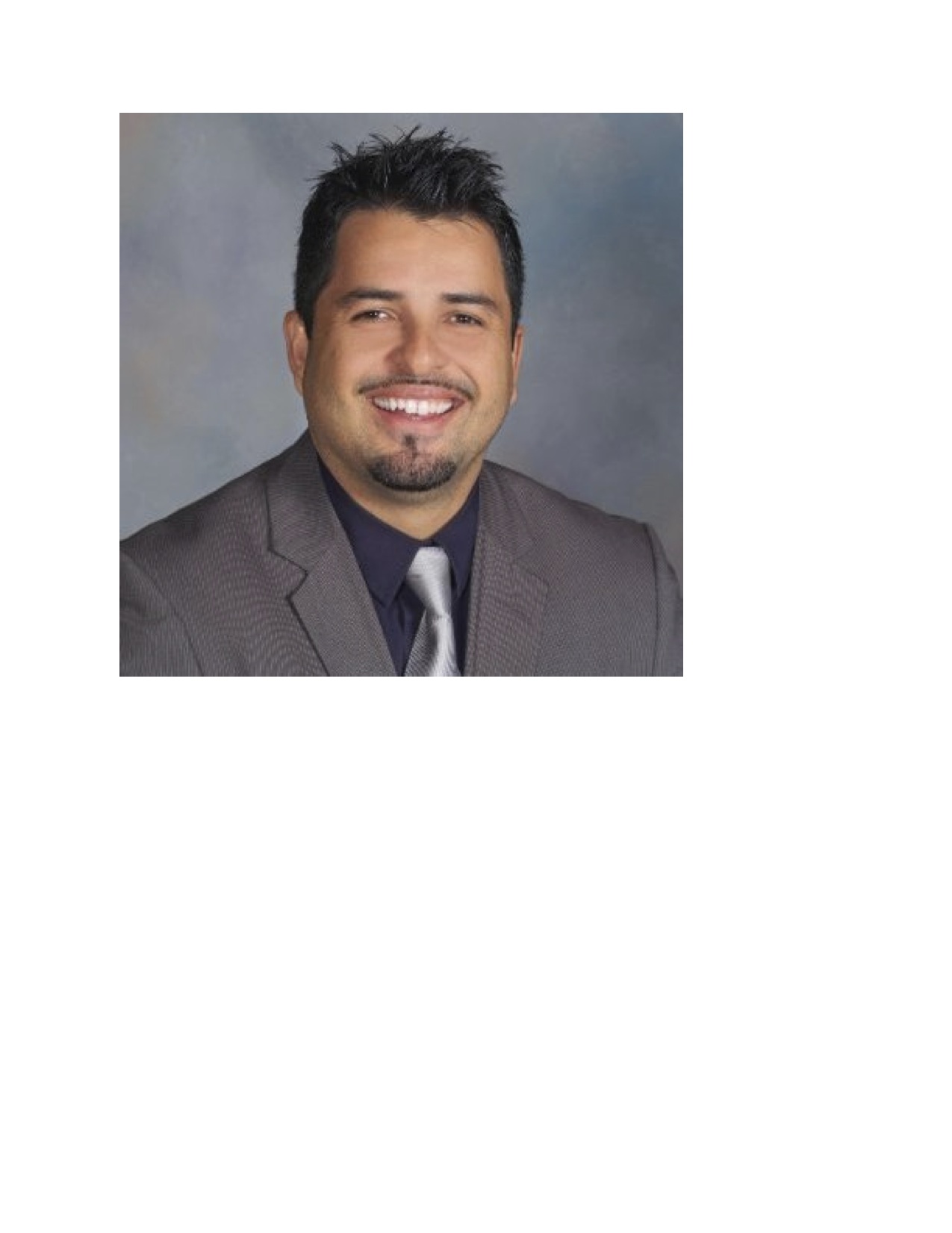
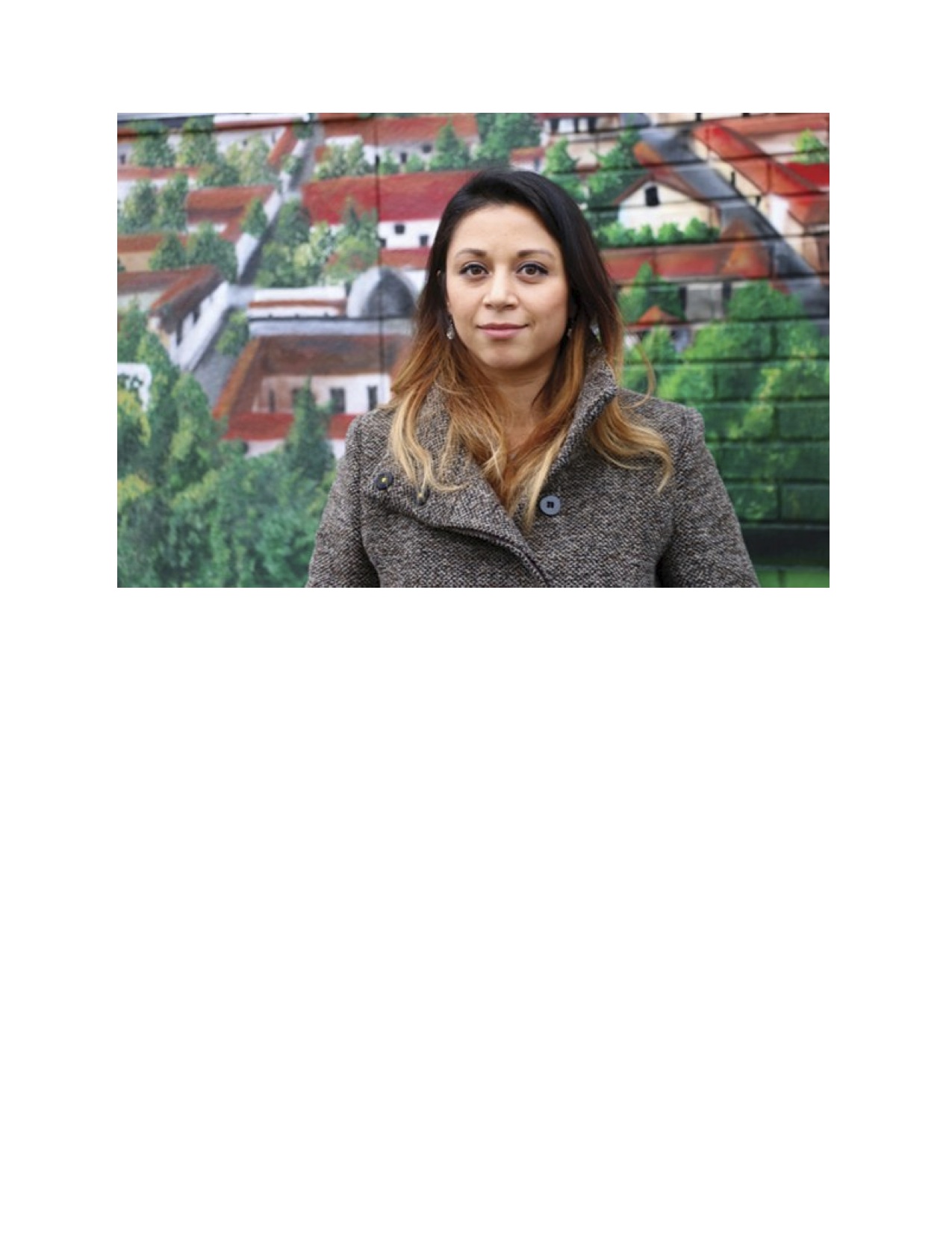
Marisol Rodriguez helps Hispanic businesses grow

March 23, 2018 Leave a comment

Marisol Rodriguez helps Hispanic businesses grow

©by Leo Adam Biga

Originally appeared in El Perico


With professional educators as parents, Marisol Rodriguez and her two siblings grew up in Colombia with the expectation of attending college and embarking on careers of their own.

“Education is a value my parents definitely gave to all three of us,” says Rodriguez, whose hometown is Cucuta, a commercial center bordering Venezuela.

Her work today as director of the Nebraska Business Development Center’s Lincoln (Neb.) Service Center is education-focused. The NBDC is a nonprofit resource for start-up and existing businesses. As service center director she consults with clients about all aspects of business — reviewing business plans, doing cash flow analysis, offering loan application assistance and developing financial projections. She partners with other organizations to present workshops.

NBDC services are free.

To further her professional growth she’s received certification in leadership and management from the NBDC and as an economic development finance professional from the National Development Council.

The bilingual Rodriguez specializes in assisting the Spanish-speaking community in and around Lincoln and Omaha, where she lives, through NBDC and her work as a board member with both El Centro de las Americas and Community Development Resources.

Her support of emerging small businesses led to her being named Heartland Latino Leadership Conference Business Award winner in 2010.

“For me, it’s recognition and commitment.” she says of the honor. “Recognition, because in Colombia I worked with the community and since coming to the United States I have been working with the Hispanic community. Commitment, because it doesn’t stop with winning the award. No, on the contrary it’s to continue working and trying to improve the quality of Hispanic businesses. I can contribute to that.”

She long ago set her sights on doing something in a public service capacity.

Intrigued by numbers, she earned a bachelor’s degree in accounting in her native Colombia. She worked as an accountant before moving to the United States about a decade ago. She and her husband settled in Omaha, where extended family members resided.

She then decided to broaden her skill set by earning an associate’s degree in management information systems at Metropolitan Community College (MCC).

To improve her prospects in the business field she obtained her master’s degree in economics at the University of Nebraska at Omaha. She began working with NBDC, a department in the UNO College of Business Administration, while in graduate school.

She says the center’s mission of “helping small businesses to become better” appeals to her. “I really enjoy meeting with clients — business owners or people who want to start small businesses. I really like to share information with them so they have more chances of being successful with their business.”

Since taking up residence in Nebraska she’s noted “the growing” Hispanic business sector here. She’s also noted that more Hispanic entrepreneurs “need to understand the importance of a business plan and the process of starting a business and maintaining a business.” Too often, she says, Hispanics miss out on larger marketplace opportunities by only appealing to Hispanic customers.

If Hispanics are to maximize their business potential, she says, “they must educate themselves,” and that’s where NBDC comes in.

She’s an advocate of entrepreneurs, Hispanic or not, taking advantage of the networking and professional and personal growth opportunities that forums like the Heartland Latino Leadership Conference afford.

Rodriguez, who recently gave birth to her first child, teaches Intro to Entrepreneurship at MCC and a zumba dance fitness class at the La Vista Community Center.

Gabriela Martinez: A heart for humanity and justice for all

March 8, 2018 2 comments

Gabriela Martinez: A heart for humanity and justice for all

©by Leo Adam Biga

Originally appeared in a February 2018 issue of El Perico ( http://el-perico.com/ )


Like many young Omaha professionals, Gabriela Martinez is torn between staying and spreading her wings elsewhere.

The 2015 Creighton University social work graduate recently left her position at Inclusive Communities to embark on an as yet undefined new path. This daughter of El Salvadoran immigrants once considered becoming an immigration lawyer and crafting new immigration policy. She still might pursue that ambition, but for now she’s looking to continue the diversity and inclusion work she’s already devoted much of her life to.

Unlike most 24-year-olds. Martinez has been a social justice advocate and activist since childhood. She grew up watching her parents assist the Salvadoran community, first in New York, where her family lived, and for the last two decades in Omaha.

Her parents escaped their native country’s repressive regime for the promise of America. They were inspired by the liberation theology of archbishop Oscar Romero, who was killed for speaking out against injustice. Once her folks settled in America, she said, they saw a need to help Salvadoran emigres and refugees,

“That’s why they got involved. They wanted to make some changes, to try to make it easier for future generations and to make it easier for new immigrants coming into this country.”

She recalls attending marches and helping out at information fairs.

In Omaha, her folks founded Asociación Cívica Salvadoreña de Nebraska, which works with Salvadoran consulates and partners with the Legal immigrant Center (formerly Justice for Our Neighbors). A recent workshop covered preparing for TPS (Temporary Protected Status) ending in 2019.

“They work on getting people passports, putting people in communication with Salvadoran officials. If someone is incarcerated, they make sure they know their rights and they’re getting access to who they need to talk to.”

Martinez still helps with her parents’ efforts, which align closely with her own heart.

“I’m very proud of my roots,” she said. “My parents opened so many doors for me. They got me involved. They instilled some values in me that stuck with me. Seeing how hard they work makes me think I’m not doing enough. so I’m always striving to do more and to be the best version of myself that I can be because that’s what they’ve worked their entire lives for.”

Martinez has visited family in El Salvador, where living conditions and cultural norms are in stark contrast to the States.

She attended an Inclusive Communities camp at 15, then became a delegate and an intern, before being hired as a facilitator for the nonprofit’s Table Talk series around issues of racism and inequity. She enjoyed “planting seeds for future conversations” and “giving a voice to people who think they don’t have one.”

Inclusive Communities fostered personal growth.

“People I went to camp with are now on their way to becoming doctors and lawyers and now they’re giving back to the community. I’m most proud of the youth I got to work with because they taught me as much as I taught them and now I see them out doing the work and doing it a thousand times better than I do.

“I love seeing how far they’ve come. Individuals who were quiet when I first met them are now letting their voices be heard.”

Martinez feels she’s made a difference.

“I love seeing the impact I left on the community – how many individuals I got to facilitate in front of and programs I got to develop.”

She’s worked on Native American reservations, participated in social justice immersion trips and conferences and supported rallies.

“I’m most proud when I see other Latinos doing the work and how passionate they are in being true to themselves and what’s important to them. There’s a lot of strong women who have taken the time to invest in me. Someone I really look up to for her work in politics is Marta Nieves (Nebraska Democratic Party Latino Caucus Chair). I really appreciate Marta’s history working in this arena.”

Martinez is encouraged that Omaha-transplant Tony Vargas has made political inroads, first on the Omaha School Board, and now in the Nebraska Legislature.

As for her own plans, she said, “I’m being very intentional about making sure my next step is a good fit and that i’m wanting to do the work not because of the money but because it’s for a greater good.”

Though her immediate family is in Omaha, friends have pursued opportunities outside Nebraska and she may one day leave to do the same.

“I’d like to see what I can accomplish in Omaha, but I need a bigger city and I need to be around more diversity and people from different backgrounds and cultures that I can learn from. I think Omaha is too segregated.”

Like many millennials, she feels there are too many barriers to advancement for people of color here.

“This community is still heavily dominated by non-people of color.”

Wherever she resides, she said “empowering and advocating” for underserved people “to be heard in different spaces”.will be core to her work.

Despite gains made in diversity and inclusion, she feels America still has a long way to go. She’s seen too many workplaces let racism-sexism slide and too many environments where individuals reporting discrimination  are told they’re “overreacting” or “too ‘PC.'” That kind of dismissive attitude, she said, cannot stand and she intends to be a voice for those would be silenced.

Finding home: David Catalan finds community service niche in adopted hometown of Omaha

February 1, 2018 3 comments

Finding home: David Catalan finds community service niche in adopted hometown of Omaha

©by Leo Adam Biga

Soon appearing in El Perico

David Catalan long searched for a place to call home before finding it in Omaha four decades ago.

Born in San Diego, Calif. and raised in Arizona, the former business executive turned consultant has served on many nonprofit boards. It’s hard to imagine this sophisticate who is so adroit in corporate and art circles once labored in the migrant fields with his Mexican immigrant parents. It’s surprising, too, someone so involved in community affairs once lived a rootless life.

“My whole life had been like a gypsy. I was a vagabond because traveling from place to place and never really having a fixed home – until I came to Omaha with Union Pacific in 1980.. I chose to stay even after I left U.P. because I really felt at home here and still do after all those years wandering around.”

Vagabundo, a book of his own free-style verse, describes his coming-of-age.

Catalan, 76, grew up in a Tucson barrio immediately after World War II. His father worked in the copper mines. When Catalan was about 13, his family began making the migrant worker circuit, leaving each spring-summer for Calif, to pick tomatoes, figs, peaches and grapes and then returning home for the fall-winter.

“I didn’t really feel I wanted to get stuck in that kind of a destiny,” he said. “Maybe escape is too rough a word, but I had to get away from that environment if I was going to do anything differently, and so I left and went to live with a sister in the Merced (Calif.) area.”

He finished high school there and received a scholarship to UCLA,

“I was the only one in the family that actually completed high school, let alone college.”

He’d long before fallen in love with books.

“That led me to realize there was more I could accomplish.”

While at UCLA, a U.S. Army recruiter sensed his wanderlust and got him to enlist. He served in Germany and France. He stayed-on two years in Paris, where an American couple introduced him to the arts.

“It was a big awakening for me,” he said.

Back in the U.S., he settled in Salt Lake City, where he was briefly married. Then he joined U.P., which paid for his MBA  studies at Pepperdine University. Then U.P. transferred him from Los Angeles to Omaha.

“I never had a sense of knowing my neighbors, having some continuity in terms of schools and experiences, so I felt like I had missed out by not having had that identity with place and community. When I came to Omaha, I loved it, and U.P. really promoted employees getting involved in community service.

“Doing community service, being on nonprofit boards  became an identity for myself.”

Upon taking early retirement, he worked at Metropolitan Community College, in the cabinet of Mayor Hal Daub and as executive director of the Omaha Press Club and the Nonprofit Association of the Midlands.

“I threw myself into the nonprofit world.”

He’s served on the Opera Omaha, Omaha Symphony and Nebraska Arts Council boards.

He cofounded SNAP! Productions, a small but mighty theater company originally formed to support the Nebraska AIDS Project.

“Omaha was the first place I saw a couple friends die of AIDS and that was a real revelation for me. That got me working to do some fundraising.”

SNAP! emerged from that work.

“I was the producer for almost every production the first few seasons. The audience base for SNAP! is a very accepting part of the community. It was gratifying. It’s been very successful.”

His interests led him to South Omaha, where he helped found El Museo Latino. More recently, he helped get the South Omaha Museum started. He also served as president of the South Omaha Business Association.

“I got involved with a lot of economic development.”

He wrote and published Rule of Thumb: A Guide to Small Business Marketing.

He’s “very proud” both SNAP! and El Museo Latino, whose vision of Magdalena Garcia he caught, “are still going strong and still serving the community.”

Each time he gets involved, he said, “it isn’t planned – the need arises and I’m there willing to help work to make it happen.”

“Doing all this work helps me feel I am a part of a dynamic community. That’s what really drives me, motivates me and makes me feel very positive.”

He’s involved in a new project that dreams of building a 300-foot tall Nebraska landmark destination to be called “Tower of Courage” at the intersection of 13th and I-80 across from the Henry Doorly Zoo.

“We’re in the process of trying to acquire the land. It’ll be a place for culture-history exhibits all focused on the rich cultural and historical history of Neb. and the region.”

Meanwhile Catalan has his own consulting company helping nonprofit and small business clients with strategic planning and grant-writing.

He’s also active in the Optimist Club.

“I’ve lived a full life. I’ve met so many wonderful people. I can navigate around many communities because of the the work I’ve done and the people I’ve met.”

He’s doing research for what may be his third book: weaving the story of a pioneering Jesuit priest from the same Sonora. Mexico hometown Catalan’s mother was born in and near where his father was from, with the history of area Indian tribes and his own family.

He’s traveling this winter to Sonora – not to escape his roots but to discover more about them.

He’s written about his family in Vagabundo and in poems published in the literary journal, Fine Lines.

“I think I’m creating a David Catalan space of my own I never had growing up.”

Maria Teresa Kumar and Voto Latino dig down on civic engagement

November 16, 2017 2 comments

Voto Latino founding director Maria Teresa Kumar is a national advocate for Latino empowerment. She was recently in Omaha as the keynote speaker for the annual Milagro Dinner held by One World Community Health Centers. She also participated in a roundtable with local leaders that discussed avenues and barriers to increasing Latino engagement and having Latino voices heard. She’s very passionate about the work she does. Read my El Perico story about her here.

Maria Teresa Kumar and Voto Latino dig down on civic engagement

©by Leo Adam Biga

Appearing in El Perico newspaper


With millions of young Latinos now voting or soon reaching voting age, national nonprofit Voto Latino (VL) works to help Generation Zs and millennials assert their voice and stake their hold in America. VL president and CEO Maria Teresa Kumar was in Omaha Nov. 2 for a roundtable discussion with community leaders and to deliver the keynote address at One World Community Health Centers’ annual Milagro dinner.

Kumar, 41, joined VL soon after its 2004 founding by actress and activist Rosario Dawson. It is noted for using new media to activate young people. Kumar, a blogger, thought leader, MSNBC contributor and analyst, is passionate about the influence young Latinos can wield in this dawning majority minority nation.

Hispanic Business and Hispanic Executive named her among America’s most influential Latinos. The wife and mother of two is well-traveled.

Born in Colombia, she came to the U.S. at 4 and was naturalized at 9. She was raised in Sonoma, Calif. by a single mom.

“I often say how idyllic a place it is,” Kumar said of rural Sonoma, “and it is because my family contributed greatly to it from picking grapes to mowing lawns  taking care of the elderly and children.”

Even as a child, she saw America as a land of opportunity and discrepancy for minorities.

“”I’ve translated two cultures all my life. I was the first person in my family to go to college (Harvard’s Kennedy School and the University of California at Davis), but at the same time some of my male cousins got lost in the system. There’s a lot they had to encounter they shouldn’t have. It was an awakening that while America has a lot of potential, not all of us are allowed to excel in our potential because of institutional racism.

“I believe deeply in fairness.”

The demographic shifts transforming America present identity, self-determination and opportunity challenges.

“Right now, we’re going through growing pains with the changes happening,” she said. “We still have a lot of work to do. I’m a big believer our institutions are strong, but I don’t necessarily agree with occupying institutions, so our job is to prepare the next generation to use those institutions to promote equity and fairness.”

In the 1990s, Kumar worked as a legislative aide for then-U.S. Democratic Congressional caucus chair Vic Fazio (Calif.). The experience affirmed her belief Latinos must take social action to get the change they need.

“It’s not enough to work hard every single day without being civically engaged,” she said, “because otherwise the politics come after you, as we’re seeing now.”

VL uses text messaging and apps to organize–mobilize large numbers of Latinos to march for civil rights, register to vote and cast ballots at the polls, thus dispelling myths this population segment doesn’t care.

She said voting’s “a key way to show our community’s strength.” In support of that belief, VL helped found National Voter Registration Day.

its Power Summit Conference brings young people together with key leaders and provides resources to budding entrepreneurs and innovators.

She said for young people to participate in civic affairs “we have to meet them where they are,” adding, “We can’t expect them to come to the Democratic or Republican congressional committee – that is not how they organize, that is not how they speak. We have to actively find them and invite them online or at the movies, saying, ‘You’re welcomed into the conversation.’ We have to do it now because it’s very urgent.

“We are about to experience a tsunami of Latinos hitting the voting rolls who are at the brunt of terrible (federal) policies. They are vulnerable only because they’re brown. We need to make sure we are investing and standing up for them and creating the space where they can determine the next 10 to 15 years of this country.”

Kumar said the Latino agenda will be marginalized until the community speaks with its votes.

“We are not building the infrastructure our community needs to really maximize and flex our political power. We often times get the spare change. We are not core to anything. And that is one of the things we need to really figure out quickly.

“We have to start investing in each other.”

She said tense minority-immigrant issues, new tech workforce challenges and national infrastructure failures mirror where America was a century ago.

“We gave people jobs in a real, solid middle class. We built roads and libraries. We provided pathways to upward mobility. And that was by design and purposeful. Our challenge now is are we going to do the exact same thing for our country that looks completely different?

“I think America is built for this moment. We’ve been through this. We enjoy so many diverse cultures united by the American belief of being an entrepreneur.”

Her “accidental advocate” voice has become more intentional in the age of Donald Trump.

“What he is stirring up is the antithesis of our American identity. We fought wars against what he’s trying to promote. My family came from Colombia and we know what the erosion of media and the courts and judicial institutions will look like if you’re not diligent – and we have to be diligent.”

The antidote to hate and fear, she said, is “giving young people the tools so they can really speak for themselves and understand the country they’re living in and navigate that country with information and power.”

In Omaha, she laid out ways for locals “to connect to a national conversation.”

“Not surprisingly, I think Omaha right now is a microcosm for what we’re seeing in the country when it come to demographic explosion. What was really nice to see is that there’s a lot of collaboration across sectors and this idea that they are part of a larger community.”

Rony Ortega follows path serving more students in OPS

October 22, 2017 1 comment

To be a public schools advocate, one doesn’t have to be a public education institution graduate. Nor does one need to be a professional public schools educator or administrator, But in Rony Ortega’s case, he checks yes to all three and he feels that background, plus a strong work ethic and desire to serve students, gives him the right experience for his new post as a district executive director in the Omaha Public Schools. He supervises and guides principals at 16 schools and he loves the opportunity of impacting more students than he ever could as a classroom teacher, counselor, assistant principal and principal. He also feels his own story of educational attainment (two master’s degreees and a doctorate) and career acheivement (a senior administrative position by his late 30s) despite a rough start in school and coming from a working-class family whose parents had little formal education is a testament to how far public education can carry someone if they work hard enough and want it bad enough. Read my profile of Rony Ortega in El Perico.


Rony Ortega follows path serving more students in OPS

©by Leo Adam Biga

Originally appeared in El Perico

Rony Ortega has gone far in his 15-year career as an educator. He worked in suburban school districts in Elkhorn and Papillion before recruited to the Omaha Pubic Schools by former OPS staffer and veteran South Omaha community activist, Jim Ramirez.

Ortega. who’s married with three daughters, all of whom attend OPS, has moved from classroom teacher and high school counselor to assistant principal at South High to principal of Buffett Middle School. Earlier this year, he was hired as a district executive director tasked with supporting and supervising principals of 16 schools.

The Southern California native traces his educational and professional achievement to his family’s move to Nebraska. Negative experiences in Los Angles public schools in the 1980s-1990s – gang threats, no running water, rampant dropouts – fueled his desire to be a positive change agent in education. In Schuyler, where his immigrant parents worked the packing plants, he was introduced to new possibilities.

“I’m thankful my parents had the courage to move us out of a bad environment. Really, it wasn’t until I got here I met some key people that really changed the trajectory of my life. I met the middle class family I never knew growing up. They really took me under their wing. We had conversations at their dinner table about college-careers – all those conversations that happen in middle class homes that never happened in my home until I met that family.

“That was really transformational for me because it wasn’t until then I realized my future could be different and I didn’t have to work at a meatpacking plant and live in poverty. I really credit that with putting me on a different path.”

He began his higher education pursuits at Central Community College (CCC) in Columbus.

“I went there because, honestly, it was my only option. I was not the smartest or sharpest kid coming out of high school. Just last year, I was given the outstanding alumnus award and was their commencement speaker. I was humbled. Public speaking is not something I really enjoy, but I did it because if I could influence somebody in that crowd to continue their education, it was worth it. And I owed it to the college. That was the beginning of my new life essentially.”

He noted that, just as at his old school in Schuyler, CCC-Columbus is now a Hispanic-serving institution where before Latinos were a rarity. His message to students: education improves your social mobility.

“No one can take away your education regardless of who you are, where you go, what you do.”

He completed his undergraduate studies at the University of Nebraska-Lincoln and went on to earn two master’s and a doctorate at the University of Nebraska at Omaha.

“I’m really the first in my family to have more of an educational professional background,” Ortega said, “I don’t think my parents quite yet grasp what I do for a living or what all my education means, so there’s some of that struggle where you’re kind of living in two worlds.”

He expects to keep advancing as an administrator.

“I have a lot of drive in me, I have a lot of desire to keep learning. I do know I want to keep impacting more and more kids and to have even a broader reach, and that is something that will drive my goals going forward.

“It’s very gratifying to see your influence and the impact you make on other people. There’s no better feeling than that.”

He’s still figuring out what it means to be an executive director over 16 principals and schools.

“For now, I’m focusing on building relationships with my principals, getting to know their schools, their challenges, observing what’s happening. So right now I’m just doing a lot of leading through learning. It’s quite the challenge with not only the schools being elementary, middle and high schools but being all over town. Every school has challenges and opportunities – they just look different. I’m trying to learn them.

“When I was a principal, I had teachers who needed me more than others. I’m learning the same thing is true with principals – some need you more because they’re new to the position or perhaps are in schools that have a few more challenges.”

Having done the job himself, he knows principals have a complex, often lonely responsibility. That’s where he comes in as support-coach-guide.

“We’re expecting principals to be instructional leaders but principals have a litany of other things to also do. Our theory of action is if we develop our principals’ capacity, they will in turn develop teachers’ capacity and then student outcomes will improve.”

He knows the difference a helping hand can make.

“No matter where I’ve been, there’s always been at least one person instrumental in influencing me. The research shows all it takes is one person to be in somebody’s corner to help them, and there’ve been people who’ve seen value in me and really invested in me.”

His educational career, he said, “is my way of giving back and paying it forward.”

“It’s so gratifying to wake up every day knowing you’re doing it for those reasons. That’s really powerful stuff.”

He purposely left the burbs for more diverse OPS.

“I kept thinking I’ve got to meet my heart. I wanted to do more to impact kids probably more like me.”

He’s proud that a district serving a large immigrant and refugee population is seeing student achievement gains and graduation increases, with more grads continuing education beyond high school.

As he reminds students, if he could do it, they can, too.

New OLLAS director Cristián Doña-Reveco eager to engage community

September 1, 2017 1 comment

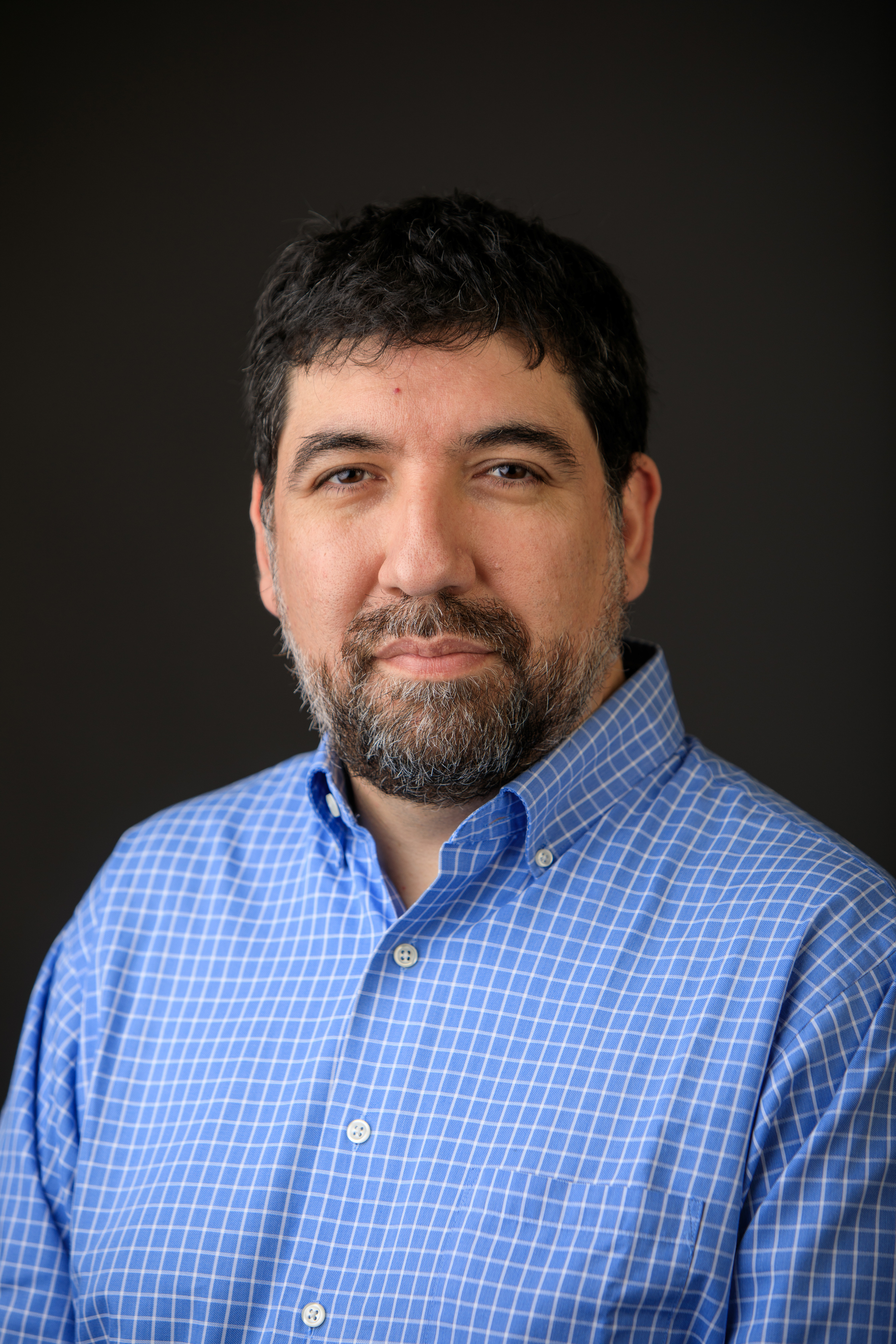
Chile native Cristián Doña-Reveco, the new director of OLLAS (Office of Latino and Latin American Studies) at the University of Nebraska at Omaha, is looking to broaden the center’s engagement across borders. Read my profile of him for El Perico newspaper.

OLLAS Director Dr. Doña-Reveco
Aug. 09, 2017

New OLLAS director Cristián Doña-Reveco eager to engage community
©by Leo Adam Biga
Originally appeared in El Perico

Cristián Doña-Reveco knows the challenge of succeeding Lourdes Gouveia as director of OLLAS at the University of Nebraska at Omaha. He’s long been an admirer of the Office of Latino and Latin American Studies she founded and is director emerita of today.

“Lourdes Gouveia is a hard act to follow,” he said. “OLLAS is what it is today because of her work and the collaboration of her colleagues. I am not here to redo what Lourdes did, but to expand from her work. I am very lucky to have her support and guidance as well as that of Jonathan (Benjamin-Alvarado) and Juan Casas, interim directors the last two years. I also know OLLAS has a wonderful and engaged faculty very interested in participating in this second stage.”

Doña-Reveco attended a 2007 OLLAS conference and then followed the center’s work from afar. The native of Chile didn’t hesitate applying for the directorship.

“I really liked what they were doing, so it was an easy decision for me to apply,” he said. “This is a great place to be. I wanted to be here.”

His scholarly focus on migration is a good fit.

“His work is centered on issues so dear to OLLAS’ heart, such as international migration, social inequality and the differential access by the poor to public goods,” said Gouveia. “He is passionate about the things we study and about social justice.”

Doña-Reveco, also an associate professor in the Sociology-Anthropology Department, finds attractive that OLLAS “comprises in one place Latino studies, Latin American studies as academic research centers, while also teaching at the graduate and undergraduate level and doing advocacy and outreach.”

“In other places, including Michigan State, where I did my Ph.D. work,” he said, “those things are in different centers. They usually don’t even talk to each other. Here, we do it all together and that is very important and very interesting. That’s one of the reasons I wanted to come here.

“I see my own work and academic life through an interdisciplinary lens. I need to work, for example, with people in public administration, the social sciences, the humanities.”

His work resonates in Nebraska, where immigrants, refugees and migrants abound.

“We cannot understand today’s world without dealing with the issue of migration. This has been the topic of discussion in elections in the U.S., France, the U.K., Argentina, Brazil, and in my own country of Chile. The discussion about the effects, possibilities and fears of migration are in the public debate and a center like this has a huge role in creating knowledge about migration.

“Migration flows, experiences, patterns come to the forefront when there is a political discussion about it and there is a political discussion about it today.”

He conducts interviews to capture migrant stories: why and when they move and how they’re received by host countries and countries of origin.

He said OLLAS can provide facts to counter stereotypes and myths about migrants.

“A center like this has as a public role to fight against that ignorance, to show people what migrants create in the community,. So, it’s not only about migration of people but the mobility of ideas throughout the Americas and how Latino populations are key to understanding that connection between Latin America, particularly Mexico, and the U.S., and also to show that Latin America is more than Mexico and Central America. We have 30-plus countries in the Americas that share a Latino-Latin American culture. It’s important to recognize and incorporate that into the views of the U.S.”

Jonathan Benjamin-Alvarado, UNO assistant vice chancellor for Student Affairs, said, “Dr. Dona-Reveco brings a new perspective on OLLAS’ central role as a community-engaged research and service arm of UNO’s overall mission. His vision and experience makes him an ideal leader to continue the OLLAS legacy. It is an exciting time for OLLAS and UNO.”

Doña-Reveco. wants OLLAS to share its work with other Latino-Latin American study centers and the community-at-large.

“One of the things I want to contribute to here is to encourage faculty to make all the research they produce have at least a component of public engagement.”

Similarly, he wants OLLAS to be a vital source of expertise in framing issues for policymakers, stakeholders and reporters.

“One of the goals I’ve set for myself is to make the center more visible internationally, but I cannot do that without first making the center for visible nationally.”

He also wants to parlay his worldwide connections and networks to help “internationalize OLLAS.”

“I would like to set up a study abroad in Chile. I’m still connected to the school I was working at before in Santiago that participates in a consortium of four large research universities in Chile on topics of social conflict and social cohesion. My goal is to connect OLLAS to that center in a meaningful way either through exchange of faculty or research. There is also work I want to do with networks I have in Europe

“There’s a lot to do.”

He and his wife, a native of Colombia working on her master’s in veterinary science, have three children.

Follow the center’s work at https://www.unomaha.edu/college-of-arts-and-sciences/ollas/index.php.

A book a day keeps the blues aways for avid reader and writer Ashley Xiques

March 3, 2017 1 comment

If you’re like me, sitting down with a good book is a distinct pleasure and there have been times in my life when I would plow through a fair number of books in the course of a year. It’s been a long time since that was true. As a writer, I’m not proud of that. But even at the height of my reading habit I was never into books the way Ashley Xiques is. She’s not sure how many she’s read but she’s virtually never without without a new book to read, which means as soon as she finishes one, she’s onto another. She’s into young adult fantasy and other genres of fiction. She just can’t get enough. It’s been like this for her since her early teens. I wouldn’t be surprised that at age 20 she’s already surpassed my lifetime account of books read. Like most good readers she’s also a good writer. She’s shared her writng online via different platforms, including Odyssey. The twin passions of reading and writng merged a couple years ago when as an Elkhorn South student she won the national Letters About Literature contest for Nebraska for the letter she penned to author Leigh Bardugo. She’s now a sophomore at UNO. Since she works and attends school full-time, she doesn’t have much time to write these days, but she always makes time for reading. Still undecided on a major, she doesn’t plan to study writng but she does expect to write a novel one day. I don’t doubt she will and if she does I will add her work to my long neglected reading list.


Image result for Ashley Xiques odyssey

Ashley Xiques

Self-described “full-time book addict” who’s “overly enthusiastic about fictional people.”


A book a day keeps the blues aways for avid reader and writer

©by Leo Adam Biga

Originally appeared in El Perico


There are book lovers and then there’s Ashley Xiques, an Elkhorn South graduate and UNO sophomore.

The 20-year-old caught the bug after being swept away by a Young Readers fantasy series in her early teens. Countless books later, she’s now a self-described “full-time book addict.”

“I can’t go like even two days without reading a book – it drives me crazy,” she said.

Her habit’s filled several book shelves at home and finds her often hunting new reads at bookstores and in online reading communities.

“I go around taking pictures of books and post them and I talk to other people about books online. I’ve found so many recommendations on Goodreads through people from all across the United States and the world. It’s just a way of connecting through books.”

Her Facebook timeline, Pinterest page and Instagram page brim with book chatter.

“There’s so many ways of finding good books. I’m on those sites. too, for inspiration about characters and stories. Whenever I read new books I want other people to find out about them, especially if they’re not popular. I want people to find them so we can talk about them together.”

She’s also shares her literary musings with fellow bibliophiles on Odyssey.


The Perfect Books To Read This Fall


Her admiration for the Grisha series by New York Times best-selling author Leigh Bardugo led Xiques to enter the national Letters About Literature contest through a high school creative writing class. Ashley’s letter won her age category in Nebraska.

As soon as she came across her first Bardugo book, she was hooked.

“It was one of the very first fantasy books I read. Fantasy’s still my favorite genre.”

She calls herself “a fantasy nerd” online.

The Grisha trilogy captured her imagination.

“It was very addictive. Leigh’s a really good author. I like her writing style and her storytelling.”

Ashley’s letter draws parallels between themes in the series and her own life. For sample. the series deals with what it’s like to feel adrift. She related to that as her large family – she’s one of eight siblings – moved several times following her now retired Air Force father’s military base assignments.

“We moved around a lot. We moved all around Texas (where she was born), then to Virginia, back to Texas and then to Nebraska eight or nine years ago. I don’t mind moving – it’s nice to see new things and meet new people. But, yeah, it’s nice to be settled, stable and have a set group of friends and not have to leave them.

“Sometimes it’s difficult to readjust your life again.”

I need a home. Not a house, I’ve known a plethora of those.

-from Ashley’s letter

Like a series character, she doesn’t like being labeled things she’s not. She took offense at being called spoiled and selfish by other kids.

“I’ve never been like that. I’ve never been someone that things are just given to. I’ve always been a person who’s worked for what I want. My parents don’t buy me everything. I work for myself, I work for my grades, I work for my money. But people want to put labels and stereotypes on you. People judge before they understand the situation and the person and who they actually are.”

Before anyone actually knew the person I was, society had already placed a label on my shoulders. Time to prove them wrong. 

I could. I would. I did.

-from Ashely’s letter

Xiques also identified with an outsider character because she sometimes felt like the odd sibling out as the third oldest sibling and then having to try and fit in as the new kid on the block.

Writing the letter helped her express things she couldn’t always verbalize. She went through several drafts. Two days before the deadline, she rewrote it in a single sitting.

“I do good under pressure. I didn’t edit it or anything. I just said, ‘OK, this is what I’m feeling and that’s what it’s going to be.’ That’s why I was kind of shocked when it won. It’s cool though.

Ashley soon after winning the Letters About Literature contest

She’s an old hand at writing: reviews, essays, poems. She once started her own spy novel. Fifty thousand words worth. She sent friends each new chapter. Then she decided it wasn’t good enough and abandoned the project. She laid out the plot and characters for a new book before putting it aside, too, but she’s hatched new ideas for it.

“I’ve spinned the original idea into something completely different. If I were to do it now, I’d be torn between writing a fantasy book or a realistic modern fiction book. I think I will eventually write a book if I come up with a good (enough) idea.”

It will have to wait though. She’s too busy now working a job and carrying 17 credit hours at the University of Nebraska at Omaha. At her parents urging Xiques long ago set her sights on college. She credits reading with her excelling in school. She made the UNO Dean’s List.

“I know reading helped a lot with that. It boosted my comprehension skills in all different subjects.”

To The Book I'll Never Forget


As glad as she is to be settled, she anticipates one day returning to  Texas to live. Wherever she ends up, books will be part of her life.

Meanwhile, she’s cultivating new readers in her family.

“My two younger brothers like to read. They go with me to bookstores when I’m out looking for new titles. They view it as an adventure.”

Follow Ashley’s literary adventures at http://www.theodysseyonline.com/@ashleyxiques.


Of Dreamers and doers, and one nation indivisible under…

February 21, 2017 3 comments

Of Dreamers and doers, and one nation indivisible under…
DACA youth and supporters hope protections are retained

©by Leo Adam Biga
Originally appeared in The Reader (wwwthereader.com)
With immigration reform caught in the gap of a divided U.S. Congress, the long-proposed DREAM Act never got passed. In 2012 President Barack Obama issued an executive order creating the Deferred Action for Childhood Arrivals (DACA) program as a temporary stop-gap giving young students who grew up here protections against removal and permits to work, allowing many to obtain drivers licenses and other basic privileges.

Conservative Nebraska officially opposed DACA. Then-Gov.Dave Heineman blocked issuing drivers licenses (Nebraska was the only state), welfare or other public benefits to DACA-eligible youth. Gov. Pete Ricketts continued the stand. But a broad coalition of rural and urban Nebraskans spanning party lines and ages, along with faith, law enforcement and business leaders – the Bible, Badge and Business coalition – along with such organizations as Justice for Our Neighbors Nebraska, Heartland Workers Center and Nebraska Appleseed, successfully advocated for legislation granting DREAMers drivers licenses and professional-commercial licenses.

The state legislature twice overturned governor vetoes to preserve these bills as law.

While never a panacea, DACA provided DREAMers and supporters hope that real, permanent immigration reform might follow. However, President Donald Trump made campaign promises to repeal DACA and crack down on undocumented immigrants. With his administration only weeks old, no one knows if or when he’ll end DACA and thus undo everything attained.

DREAMer Alejandra Ayotitla Cortez, a senior psychology student at the University of Nebraska-Lincoln, is one of about 3,275 DACA recipients in Nebraska. As more young people age into DACA, that number will grow as long as the program continues, She echoes other recipients in saying, “Right now we are facing a lot of uncertainty. As much as I wish I knew what was going to happen with the program, it’s very hard to predict, and that’s what makes it harder. We’re in this limbo place. Obviously, if it does end, that would have a lot of negative consequences. Right now we are trying to focus on working with our representatives at the federal level to try to draft legislation that would protect the program.”

She was part of a contingent of DREAMers who met with Nebraska Congressional leaders in the nation’s capitol in January.

A coalition of Nebraska supporters signed a public letter to Nebraska members of Congress urging them to endorse DACA’s continuation on the grounds it allows aspirational young people like Alejandra the ability to reach their potential. The argument is that the work they do, the commerce they create, the taxes they pay strengthen, not deplete America. Recently proposed federal legislation called the BRIDGE Act would provide some safeguards in the event DACA isn’t renewed or until more lasting immigration reform emerges.

Nebraska Restaurant Association executive director Jim Partington said at a recent press conference in Lincoln announcing the letter, “There is no logical objection to anything about supporting these youths who were brought here at a very young age, have been educated in our school systems, and are now ready to go out into the work force and contribute to our economy and our society.”

Ayotitla Cortez also spoke at the conference. She previously testified before state senators.

“It’s important for us to share our stories so that we can show that DREAMers are here, we’re contributing, we’re doing the best we can to serve our communities,” she said.

Former DREAMer Lucy Aguilar, a University of Nebraska at Omaha student, advocated for DREAMers’ rights through Young Nebraskans in Action (YNA), a program of Heartland Workers Center (HWC).

She’s since gained permanent residency status. She stands by what she said two years ago: “I don’t think DACA-recipients should be tied to immigration policies or immigration terminology because we’re a much different thing. I know my status and it’s definitely not breaking the law in any sense. I’m here just like everybody else trying to make something out of my life, trying to accomplish goals — in my case trying to open a business and be successful in that.”

She supports DREAMers retaining their DACA protections.

HWC Senior Organizer Lucia Pedroza, who supervises YNA, said the issue’s catalyzed young people to participate and raise their collective voice and take collective action. Coalescing support for the bills that gave DREAMers licenses was a case in point.

“Young people started organizing themselves after coming to meetings and learning more about the legislative process and the issues in their community,” Pedroza said. “They knew what they had to do. They started organizing students and teachers at South High School. They were able to speak up for the bills and proposals.

“I’ve seen some who were afraid to speak up and share their own stories a few years ago now speaking their truth and working with us at the center. I’ve seen them grow and want to share their interest and passion with other young people. It’s a cool thing. They’re not just wanting to stay on the sidelines and complain, they want to do something more. They understand it’s not going to be just about them, they can’t do it alone, they need to have community support.”

Pedroza said YNA’s grassroots work “impacted the effort statewide in support of DACA.”

She and others make a pragmatic, do-the-right-thing, make-good-policy case for DREAMers being given pathways to full participation. Ayotitla Cortez uses herself as an example of how DACA impacts lives.

“As soon as I enrolled at UNL I started working at a daycare center at the university thanks to the work permit DACA provides. That was the first job I ever had. It helped me to support myself and paid for my living expenses and some of my school expenses. That was a great opportunity. Then my sophomore year I got the opportunity to work as a service assistant in the Nebraska Center for Research on Children, Youth, Families and Schools.

“Now I work at El Centro de las Americas — a non-profit that serves mainly the Latino Community. I’m the coordinator of the Adult Education Program. Helping my community is my main way of giving back some of what has been given to me.”

She wishes opponents would look past fears and stereotypes.

“I guess some people have a hard time seeing the human side or the social contributions DACA has provided. We’re working and putting money into city, state, federal revenues.”

Then there are myths that need overturning.

“As DACA-recipients we have to pay $485 every two years to renew our work permit, so it is something we are paying for, we’re not just getting it for free. If you multiply that by the nation’s 700,000 DACA-recipients, then that is bringing in money and helping the economy of every state. It’s creating jobs because we’re working, spending and some of us are even starting businesses.”

Pedroza said, “It’s about families and the well-being of human beings and giving opportunities to people who work hard and contribute as equally as citizens of the United States.”

Justice for Our Neighbors (JFON) Executive Director Emiliano Lerda feels the issue found enough support to buck the governor in the “very diverse coalition pushing for these changes,” adding, “you had strong, traditionally conservative and Republican-leaning organizations advocating side by side with what are traditionally known as more progressive organizations. This truly is a bipartisan issue that unfortunately has been utilized by politicians to galvanize a certain segment of the population for political support. But the vast aspects of this issue affect people across the aisles equally and the solutions will come from across the aisles from people who understand the economic impact and benefits of immigrants and the economic disaster we could face if we don’t have access to immigrant labor.”

Charles Shane Ellison, JFON deputy executive director-legal director, said it’s a win-win for everyone as employers benefit from DREAMers’ labor and DREAMers’ income boosts the economy. Then there’s the advanced degrees DREAMers earn, the expertise they practice, the services they provide, the products they produce, et cetera.

For Ellison, it’s also an issue of fairness and of undoing an overly broad application of law.

“Many of my clients who qualify for DACA came as babies. They don’t know any other country other than the United States. The law’s very unforgiving. It doesn’t make allowances for the fact they didn’t have any control over entering the country without status. These kids found themselves growing up blocked out of any opportunities to obtain work, to achieve dreams, so DACA was huge because it was this breakthrough, finally saying you can come out of the shadow and participate in the workforce towards your dreams in the only country you’ve known.

“Though inadequate and imperfect, it’s difficult to overstate the importance of what DACA’s meant to these young people.”

For St. Paul United Methodist Church (Lincoln) senior pastor David Lux, embracing DREAMers is about social justice.

“They live here and are part of our communities and have been for years. This is their home. Regardless of legal documentation they’re human beings worthy of fairness and a chance. They also contribute a lot to our communities and add to their richness.”

Besides, Pedroza said, with small population Nebraska struggling to retain young talent and America ever aging, the state and nation can’t afford to lose its best and brightest of child-rearing age.

Not everyone eligible for DACA applies for it.

Ellison said, “Nationally, 700,000 have been granted DACA since the program’s inception, I believe initial estimates of those eligible were well over a million. There’s a number of factors why only 700,000 applied. Some people are very risk averse, other people are not. Those who are risk averse, [do they] feel like paying fees to apply for a program soon to be done away with or potentially done away with, in addition to giving the government your private information they would need to apprehend you and seek your removal, [that] is not a very good bargain. So they’re not interested or willing to apply for it even if they qualify.

“A lot depends on the individual facts of the case. If a person’s already on immigration’s radar, they’re not really giving up much by applying.

“If they’re not on immigration’s radar, by applying with the potential the program will be done away with, they are taking some risk.

“I’ve actually been surprised by how many people want to apply, even post-election, who say, ‘I still want to renew my application because I feel like it’s worth a shot. If I don’t apply, I know I won’t get it. If I do apply, maybe President Trump will change his mind or something else will happen.’ It just shows how desperate folks were before DACA.”

Ellison added, “Certainly among my greatest concerns is that DACA will be done away and not be replaced with any kind of protection … that in addition to lack of compassion in immigration enforcement that tears families apart and disrupts communities.”

JFON urges recipients to prepare for DACA’s demise.

“We want folks to get plugged in with counsel so they can analyze what are their rights in any defenses they may have,” Ellison said. “If DACA is done away with, that’s going to be really important. We want people to know there are certain constitutional legal protections they may have and other forms of relief they may pursue that exist in law as opposed to policy. While the President can change immigration policy by doing away with the program, which is just an executive memoranda, he does not have the authority to unilaterally undue the law.

“There may be legal protections that exist for some DACA youth they don’t know about until they consult with an attorney. We provide referrals for the Nebraska Legal Immigration assistance hotline.”

Meanwhile, Pedroza, a Guatemalan immigrant, finds solace in the confederacy of common interests around the issue, such as the Bible, Badge and Business coalition that’s championed DACA. These coalitions signal to her America may not be as divided as the media portrays, but she concedes more consensus building is needed.

“What keeps me motivated is knowing for a fact we can do better to be a more welcoming community, state and nation and that we can work together to improve the quality of life for underserved people. Not everyone will see the same things I see, but we don’t have to have one way of doing things. The more collective and different perspectives we can add to the larger vision, the more impact we can have.”

With DACA up in the air and the path of immigration reform anybody’s guess, Pedroza hopes for bridges to dreams, not walls to exclusion.

“I have two children and I really care about their future. I want them to know there is something that can be done when you work with community members and elected officials. We can have dialogue. We don’t have to be on the defensive or offensive all the time. We need to have that space to negotiate in, and it’s possible. I think the national rhetoric doesn’t help. A lot of times, not everybody is open-minded or familiar with the other side of the story. That’s something we have to deal with. We’re not going to convince everybody. Not everybody’s going to see the issue the same way. But we can’t give up. We have to work with what we have and to do what we can do.”

She senses however things play out, DREAMers and supporters have started a movement that won’t go away.

“One thing we can do is help people empower themselves, so that they can continue to work for those solutions and look for other options. A lot of times as immigrant communities we feel powerless and so we don’t try to be a part of that change for our community.

“But that collective power really makes people feel they can do something. It can be like a domino effect where one thing leads to something bigger or we inspire people to get involved.”

Being seen and heard is a start.

Visit jfon-ne.org, http://www.heartlandworkerscenter.org, neappleseed.org.

EDITOR’S NOTE: The new administration issued its first immigration orders as we went to press. Local groups, especially the ones mentioned in this story, are organizing now to respond to changes in enforcement priorities that threaten to tear apart families and lives without any review process while diverting resources away from deporting the worst criminals. Stay tuned to them at the links at the end of this story and follow-up coverage in our sister publication El Perico and online at TheReader.com.

Read more of Leo Adam Biga’s work at leoadambiga.com.

Poverty in Omaha: Breaking the cycle and the high cost of being poor

January 3, 2017 1 comment

Vicious Circle

Breaking the cycle of poverty in Omaha

The December 2016 issue of the Reader featured a cover package on Poverty in Omaha, The High Cost of Being Poor. There are three stories on poverty and I have two of them, including this lead piece titled Vicious Circle, Breaking the Cycle of Poverty in Omaha. My other piece is headlined The High Cost of Being Poor, Aggressive Creditors Exploit Nebraska Law. My blog, leoadambiga.com, features many other social justice stories I have written over the years.


Owing money makes the poor a vulnerable target

Predatory creditors stop at nothing to collect from impoversihed minority communities

Economic Justice


Film is both a heart and a head thing for Diana Martinez

December 11, 2016 1 comment

I recently posted about the influence that a high school teacher had on my twin passions of writing and film and now I’m glad to report that a similar thing happened to the subject of this story, Diana Martinez. She grew up a film buff in California and it was in college that a professor turned her onto the idea of film studies as a career. She is serving in the newly created position of education director at Film Streams in Omaha. Like me, she often writes about film. But unlike following the film programming path I took, she became a film educator, although I’ve always felt like my writing and exhibiting have been educational expressions in themselves. Diana is a great addition to the local film culture and the fact that Film Streams has taken things in this direction is another expression of how that art cinema is serious about enhancing the community’s appreciation of great, engaging filmmaking. My profile of Diana appears in El Perico.


Diana Martinez

Diana Martinez


Film is both a heart and a head thing for Diana Martinez

©by Leo Adam Biga

Author of Alexander Payne: His Journey in Film

Originally appeared in El Perico


Cinema’s been formational for Film Streams education director Diana Martinez since childhood. Growing up in Southern California, her El Salvadoran parents watched diverse movies to learn English and she watched right alongside.

Inheriting her ironworker father’s eclectic tastes, she’s steeped in Hollywood fare, independent film and world cinema. Her early screen stirrings ranged from Woody Allen to Quentin Tarantino to Alfred Hitchcock to telenovela-inspired shows.

She embarked on English literature studies at Cal-State San Bernadino before doing doctoral work in film and television at the University of Oregon. She taught writing and film-media courses there. Her thesis is titled “Funny Business: Women Comedians and the Political Economy of Hollywood Sexism.”

It wasn’t until college she realized movies and media could be more than entertainment but an educational avenue and a career. She shares her take on pop culture in articles she writes for Slate, The Atlantic, Indiewire and Dilettante Arny and in courses she teaches.

“While an undergrad I was first exposed to film criticism and film analysis as a thing scholars did. That’s what I wanted to bring to my students when i taught at Oregon, and now that’s what I do in the education program here.”

She said film-media are portals to limitless topics and she enjoys giving people the tools to examine things .

“Kids are rarely asked to engage with film critically. What I really love about our program is that it looks at film in the way I always wanted to and thought about even when I was young. Kids are actually really savvy watchers of movies and other media and if they’re just pushed on that you can transfer their skills to being really critical-thinkers, to finding ins to literature, to looking at our political situation and what’s happening on social media through a critical lens.

“Film engages so many more of your senses than a lot of other mediums and can help you be a better thinker overall. Students can take lessons and apply them to whatever they like.”

She said writing and teaching about film allows her to express ideas more quickly than she could as an academician.

“I can go see a film and immediately read all the reviews and posts about it and participate in that conversation. That’s not how academia works. I wanted to be part of a larger, in-the-moment cultural conversation.”

Her articles have considered the Netflix series Narcos, the CW show Jane the Virgin and indie feature writer-director Lisa Dunham and show-runner work for HBO’s Girls.

Martinez said she wasn’t overly conscious of being Latino in multicultural Southern California, but that changed in Oregon.

“My identity became really important and something I felt i had to take ownership over as like a political gesture.”

She felt a responsibility to the few Latino students she taught.

“They needed somebody they felt understood their experience. That’s when my work took a different turn. It became more identity-based. I became more interested in cultural politics, talking about women filmmakers. I think it’s really helped me contextualize all the experiences I’ve had.”

She’s adapted well to Omaha since arriving last summer.

“People are so welcoming. I’ve been told, ‘We’re really glad you’re here because of who you are.’ I keenly felt that. I realized I have this other point of view people really value, and that’s important when teaching kids how to analyze things critically. Writing about film and television from a different perspective is important.”

She’s already put her bilingual skills to use.

“In our education program we have some students come who don’t speak English and I’m able to do discussions in Spanish and English.”

She loves being immersed in a salon-like atmosphere.

“I’ve always been chasing the feeling of being in a creative space with likeminded people who really care about art. I’ve been lucky enough to find friends and coworkers who do make that their life. The education director position is uniquely suited to what I do. It uses everything I learned in grad school.”

Martinez enjoys enriching people’s cinema experience and empowering them to believe analysis isn’t something only scholars do.

“I love teaching. I love talking to students – I think they’re so smart. I love being that person who gives them that boost of confidence. Anyone can have really great analysis into art and film. Just because it’s in a textbook doesn’t mean it’s the be-all or end-all. Just because one scholar says this is how you interpret this theme doesn’t mean there isn’t room for other interpretations. That’s real valuable and I don’t think teachers do that enough.

“That’s what I love about our program because we’re not this elite institution – we’re a community movie theater where people feel safe to explore their ideas.”

Explorations occur via courses, screen chats and panel discussions she leads. Offerings will increase when Film Streams reopens the Dundee Theater. She’s happy to be part of this expanding cinema home.

“There should definitely be more of these places. It’s necessary because film is not just The Avengers or Captain America, it’s Moonlight, Denial and Certain Women. If you want a vibrant community, you need places that allow people to experience art because that stirs the collective creative juices.”

Vvisit http://www.filmstreams.org.