Archive

Archive for the ‘Philanthropy/Charitable’ Category

Omaha couple unofficial ambassadors for Ghana, West Africa

October 13, 2015 3 comments

image-6

sam and martine ghana independence 2015

Omaha couple unofficial ambassadors for Ghana, West Africa

©by Leo Adam Biga

Now appearing in the Omaha Star

Omaha couple Martine and Sam Quartey’s passion for Ghana finds them promoting aspects of that West African nation through various cultural, commercial and charitable activities. One of their activities is an every-other-year group trip they lead to Ghana, where Sam was born and raised. They organize the trip via their own S&M Tours. The next tour is scheduled December 20-31. Reservations are closed.

They call their tours Back to Our Roots – A Journey to the Motherland. This time around the couple will take a travel party of eight to see various sights in and around the capital city of Accra and the country’s next largest city Kumasi. Among the historical spots they will visit are some of Ghana’s coastal slave castles where thousands of Africans were detained against their will bound for slave trade ships making The Passage to the Americas and the Caribbean.

Sam Quartey, who works as an automotive mechanic, said it’s not unusual to see visitors cry upon touring the slave castles. “It’s a big story and very emotional,” he said.

Martine Quartey said she found herself “overwhelmed” by the experience.

With its southern border situated on the Atlantic Ocean, Ghana today is a tourist magnet with stunning beachside resorts and history-laden landscapes. Rich in mineral deposits and in cocoa production, the country is more developed than many first time visitors expect.

The December tour will be the fourth the couple’s led to Ghana. They enjoy introducing travelers to a continent and a nation they feel has much more to offer than many realize.

“There’s a lot to see – the beautiful scenery, the vivid colors and bold patterns of the clothing, the entrepreneurial spirit of the people, the bustling markets, the highly developed cities,” Martine said. “There’s also the painful history of slavery and colonization and the successful bid for independence.

“We invite people to take the journey with us, to cross those bridges and cultural boundaries to experience something they don’t expect to find.”

 
accra beach - sam and martine

Ghana, like all of Africa, is known for the warm hospitality of its people. Americans are well-received, Martine said, but for African-Americans it truly is a heritage homecoming with deep currents.

“Because we are of our ancestors, we are returning in a sense and Ghanians greets us by saying, ‘Welcome back my sister, welcome back my brother.’ It’s so beautiful to hear that because finally you feel like you’re at home.”

Ever since she met Sam she has been fascinated with his homeland and she has developed an appreciation for its food and fashion, among other things. She and Sam often dress in Ghana attire and he cooks many traditional dishes. He is president of the Ghana Friendship Association of Nebraska (http://www.ghanafan.org/). The organization holds events that keep alive traditional culture for Ghanians living here, it helps new arrivals from Ghana adjust to American life and it supports schools and clinics in Ghana.

Martine made her first trip to Ghana in 2011, a year after the couple married. Whenever the couple go they bring back authentic garments and accessories as well as natural bath and beauty products because they and Omaha’s resident African community crave such hard to find items here. There is also high demand by local African-Americans for Ghana-ware and incidentals.

Requests for these goods got so frequent the Quarteys saw a business opportunity. Thus, they opened their S&M African Boutique in August. The small store at 6058 Ames Ave. features a surprisingly large array of fashion, bags, jewelry, art, fragrances, oils and shea butter products.

“The boutique is kind of birthed out of feedback we were getting from friends and family” to have these things year-round,” Martine said.

S&M African Boutique is open only on Saturdays from 10 a.m. to 5 p.m. Visit https://www.facebook.com/SandMAfricanBoutique.

The Quarteys have also formed the Pokuase Promise Project Initiative to support a school they adopted in the village of Pokuase. Sam’s grandfather settled the village. Sam’s father and uncle followed as village leaders. In a spirit of giving back, the couple collect donated supplies (books, computers, markers) they variously ship or personally deliver to the school serviing elementary through senior high students.

To consolidate their school assistance efforts, the couple are building an International Headquarters house in nearby Accra. It will have ground floor storage bays for supplies and a second story private residence. When in Ghana the Quarteys will stay and operate the Pokuase Project from there. They hope to have someone run the Project in country when they are back in the States.

The International House also represents Sam fulfilling a commitment he made to his late mother. The family owns the land the house is being constructed on and Sam’s mother made him promise to do something of substance on it.

“I told my wife about it and she said, ‘Yeah, let’s honor her wishes,’ so we started the project,” Sam said.
His dream is to build a library for the school and dedicate it to the man responsible for him coming to America, the late Bishop William Henry Foeman, who was a much revered and recognized foreign missionary. Sam and his oldest son lived for a time with Foeman, who came to Omaha to pastor Mount Calvary Community Church, where Sam is still a member today.

Working with the school is meaningful to Martine, an education professional. She is an administrative assistant in the Omaha Public Schools’ superintendent’s office and a part-time adult education instructor at Metropolitan Community College.

The Quarteys’ Ghana work is borne of a love that keeps expanding.

“It’s a beautiful thing because it’s blossomed,” Martine said, “and it’s all connected. We have our trips, we have our boutique and we have the school.”

There is also the blog she writes, “Follow My Braids, I Love Ghana, West Africa” at https://followmybraids.wordpress.com/.

The couple are available to speak about Ghana to media and groups.

They will soon be taking reservations for a late fall 2017 trip to Ghana.

For more information, call 402-972-0557.

144
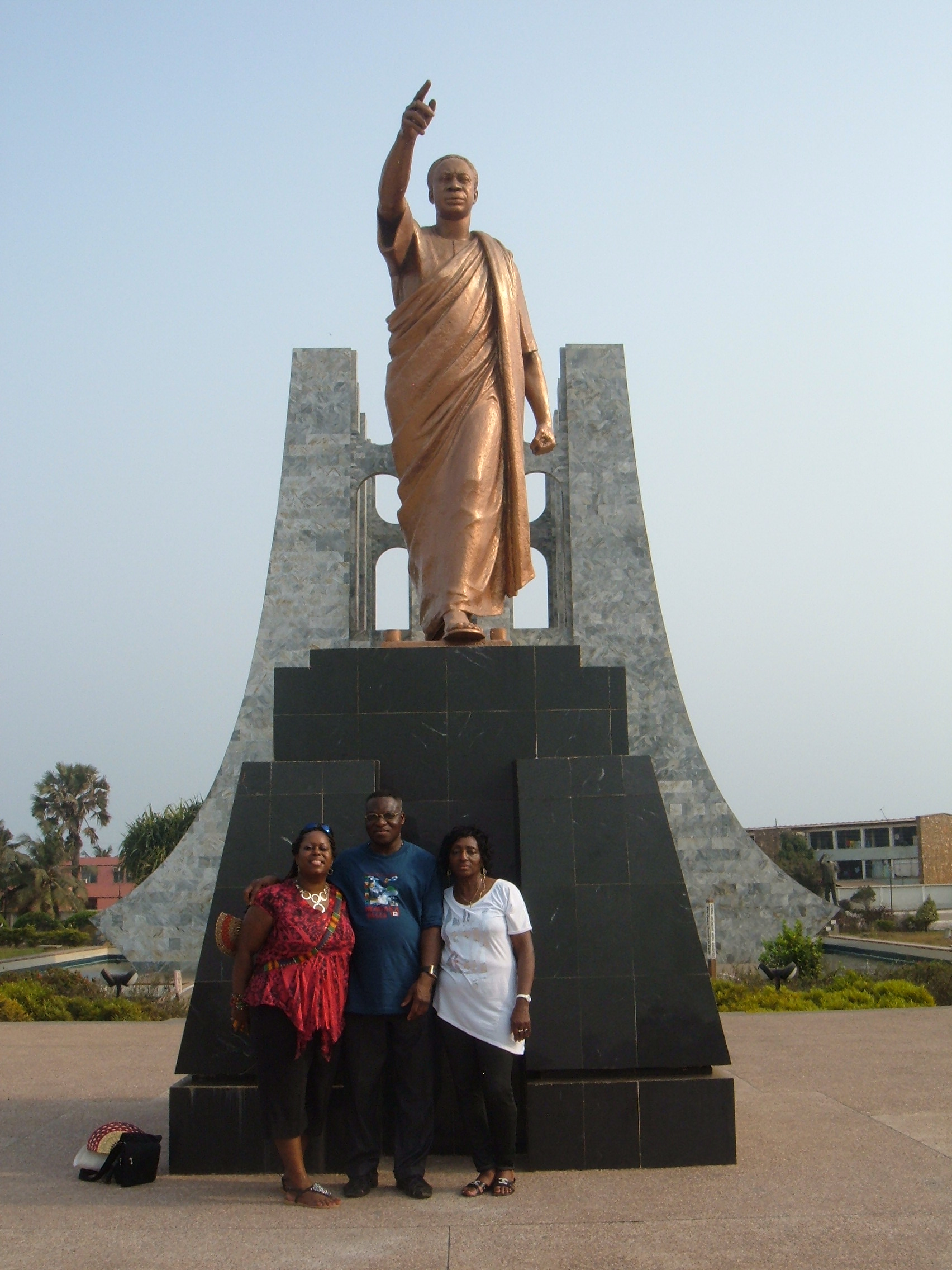
Kwame Nkrumah Memorial Park & Mausoleum (1st president of Ghana)
046
   Independence Square (contains monuments such as the arch, Black Star Gate, and the Liberation Day Monument)
047   Independence Arch (a part of the Independence Square – represents Ghana’s struggle for independence from Great Britain)

Arts Patron and Philanthropist Anne Thorne Weaver Gives Where Her Heart is


This is the second time I’ve profiled Omaha arts patron and philanthropist Anne Thorne Weaver, who makes a habit of giving to things she enjoys.  This piece for Omaha Magazine (omahamagazine.com) tries to convey in very few words her lifetime of giving back to what feeds her heart and soul. After my first profile of her appeared she sent me a beautiful card with a hand-written note expressing her appreciation for what I had written. I certainly don’t expect another card, though I would love one, but I mention what she did as an example of how caring and generous she is.


20141119_bs_8943

Anne Thorne Weaver

Arts Patron and Philanthropist Anne Thorne Weaver Gives Where Her Heart is

©Photography by Bill Sitzmann
Originally appeared in the January/February issue of Omaha Magazine


National Society of Colonial Dames diva Anne Thorne Weaver is at an age when she says and does what she wants. Fortunately for Omaha, this patron puts her MONEY where her mouth is in supporting the arts.

When the new Blue Barn Theater opens this spring, the box office will be named in her honor for a major gift she made to the company. She admires the Blue Barn’s edgy work.

“I’m just very impressed with what they do,” says Weaver. “There’s something about the intimacy of the smaller theater. I think they’ve done some wonderful productions. I think their new facility will be wonderful, and there won’t be any bats,” she adds in referring to a past production when an winged intruder darted overhead.

“I thought, that’s an interesting prop,” she quips, “and then realized it was a bat.Suddenly there was this thundering of shoes coming down in a mass exodus.”

Weaver likes that the theater’s new site on South 10th Street will be more visible than its Old Market digs. “I think it’s an exciting move and one of the things that’s really going to add to the Omaha scene.”

Her gift to Omaha Performing Arts made possible the Orpheum Theater’s Anne Thorne Weaver Lounge. The dedicated private space is a chic oasis for post-show receptions.

“I think it really puts a little wow into Omaha,” says its namesake, “and really adds a lot to any attraction you’re doing in the Orpheum.”

Outside the metro, her generosity’s recognized in the gift shop named after her at the Museum of Nebraska Art (MONA) in Kearney and the lobby gallery named for her at the Lake Art Center in Okoboji, Iowa. She also donated the center’s stained glass ceiling created by Bogenrief Studios.

She not only gives money but time to venues she believes in, serving on boards for Opera Omaha, the Omaha Symphony, the Omaha Community Playhouse, and MONA. She served on the Western Heritage Museum (now Durham Museum) board and was active in the Joslyn Women’s Association.

Weaver, whose civic volunteering includes the Nebraska Humane Society and the Junior League of Omaha, only gives to things she enjoys. “Life is too short, so why fuss around with something I don’t enjoy or work with people I don’t like. When you give, everything is given back.”

She traces her aesthetic appreciation to her late artist grandmother, Narcissa Niblack Thorne, renowned for her miniature rooms, dioramas, and shadow boxes. Some of her grandmother’s handiwork is displayed in framed cases hanging on the walls of Weaver’s exquisitely designed home, whose expansive sun room features two Bogenrief WINDOWS.

Surrounding herself with beauty comes naturally to Weaver, who grew up in the historic Terrace Hill home in Des Moines. The restored structure is now the Iowa governor’s mansion.

The well-traveled Weaver considers the vibrant arts scene here a cultural and economic asset that makes the city a more attractive place to live and visit. She takes pleasure helping the arts thrive and sampling all the region’s offerings.

“We all need music and art in our lives,” Weaver says.

20141119_bs_8943


To Tanzania with Love: Mary Williams to Make Documentary on Alegent Creighton Health Mission in Africa Led by Bob Kasworm

January 3, 2014 1 comment

Good works come in many forms.  So do life transformations.  Former Omaha, Neb. resident Bob Kasworm has always tried doing the right thing.  This devoted family man has been a model employee and he’s also faithfully served his church and his community.  But he took things to a whole other level when after several mission and fact finding trips toTanzania he decided to live and work in that African nation.  He made a life-changing  commitment to Alegent Creighton Health and its onging initiatives in Tanzania in collaboration with the Evangelical Lutheran Church of America to improve the health and medcal care, living conditions, and opportunties for residents there.  As the point person for the organizaton’s work in Tanzania, Kasworm will be featured in a documentary that former Omaha television reporter-anchor Mary Williams will be making with videographer Pete Soby.  The reporter-videographer team will be traveling to Tanzania in early 2014 to document the project’s efforts.  My Omaha Magazine story about the mission in Tanzania and the planned film follows.


To Tanzania with Love: Mary Williams to Make Documentary on Alegent Creighton Health Mission in Africa Led By Bob Kasworm 

©by Leo Adam Biga

Originally appeared in  Omaha Magazine


Bob Kasworm


Life-changing work by Alegent Creighton Health in Tanzania, Africa is the focus of a forthcoming documentary from a one-time Omaha television news personality. When former KMTV anchor-reporter Mary Williams and videographer Pete Soby travel to Tanzania in February their main point of contact will be ACH’s man on the job there, Bob Kasworm. whose life has been transformed by the calling he follows in that distant land.

Kasworm, a biomedical engineer and devout Christian, combines career and faith in Tanzania, his home the last 10 years.

“This was never in my plans. I really wasn’t thinking I would ever go to Africa or have a life of service,” he says.

He first visited in 2001 on a Nebraska Synod of the Evangelical Lutheran Church of America sponsored trip. He went to evaluate the potential of Alegent assisting hospitals. dispensaries and public health programs there.

The pull of Africa began then.

“From the very first trip there was never a day and rarely an hour when Africa was not on my mind. Yes, it was the poverty and the need, but it was more than that. Somehow Africa just got into my blood.”

He made a dozen or so additional visits in a three-year span as Alegent committed itself to working with the evangelical church and various health and civic partners in Machame, Tanzania. He cultivated and coordinated the growing relationship between the partners and implemented various initiatives.

The organization’s efforts there include training medical staff at Machame Hospital, developing Machame Nursing School, providing nursing scholarships and delivering medical equipment and supplies. Kasworm leads the Homes for Health program that uses local laborers to build new, cleaner, safer homes for residents.


A Homes for Health project


At the end of 2004 Kasworm decided to live in Tanzania full-time. He says it was then his wife “realized that what she thought was just a temporary ‘mid-life crisis’ was something I was powerless to resist.”

He’s since learned Swahili well enough to speak it fluently.

Machame Lutheran Hospital, founded some 110 years ago by German missionaries, is at the center of much of Alegent’s work there.

“We have the hospital with about 120 inpatients and many outpatients and clinics. We also have a Clinical Officer Training school and now the nursing school. There are about 20 homes for staff,” says Kasworm.


Neema, the first graduate of Machame Lutheran Hospital  Nursing School


The campus is on a rare paved road. There’s running water (“usually”), electricity (“much of the time”) and Internet access – though slow.

Progress is plodding but satisfying.

“The most satisfying thing is that in many cases if not for our efforts and involvement many would simply not get help. A child with a club foot would become an adult with a club foot. The nursing student would not have had a chance to study. It is not like you can just go down the street to an alternative. There is no safety net. We do it or it won’t happen. We can now point to a number of successes.

“There is such a shortage of trained healthcare workers that our efforts in education may well be our biggest legacy. If you educate one nurse they will care for thousands over their career.”


Machame Hospital


Williams, who interviewed Kasworm on one of his periodic visits to Omaha, describes him as a “strong, driven” man who “sees opportunities where others don’t.”

ACH mission integration consultant Lisa Kelly says. “He’s so embedded in that culture now it’s amazing. He’s definitely a problem solver, which is huge in that country. Everything from unloading containers of things we send to fixing machines to keeping a water source going or getting an Internet connection set up, you name it, Bob is the guy who figures out how to do it.

“He has to navigate what’s possible in the developed world with what’s possible there in that culture and that setting. So you have to think of medicine in a whole new way and what he has been able to do is to bridge that gap.”

Williams and Soby are eager to tell this story from a grassroots perspective.

“You can’t really tell the story without talking to the people on the ground who are being helped and that would start with the patients coming through the door,” says Williams. “You cannot tell the story without talking to all the players – the patients, the nurses, the young women who have a fighting chance now.

“We can’t tell the story unless we go past the borders and see how exactly the people live and the challenges they face every day. We’re going to experience that first hand. It doesn’t get any better than that.”


Mary Williams


Pete Soby


When Williams left KM3 in 2009 and launched her own marketing and media production company she set her sights on telling stories that engage people’s hearts and minds. From reporting medical news she knew Alegent had compelling stories to be told and she wanted to be the storyteller that shared them.

There wouldn’t be a Tanzania story without Kasworm, whose year-round presence in that county makes the Alegent Creighton mission model unique. Much emphasis is placed on building relationships and making connections through ministry and medical mission trips organized by ACH and the Nebraska Synod of the ELCA.

For Williams, who’s only previous overseas assignment was covering local airmen serving in Desert Storm, this is an opportunity she couldn’t pass up.

“I’m sure it’s going to be a life changing experience.”

She and Soby expect to complete the 30-minute documentary in the spring.

Kasworm sees the project as another vehicle to foster awareness between Tanzanians and Americans.

“Our experience lets us serve as a bridge between the cultures and reduce misunderstandings. It seems much of our important work has not come from analysis or needs assessment – the work has just found us. I am sure more will present itself.

“As long as the doors keep opening and my health stays good, I hope to continue.”

Joseph Dumba and his Healing Kadi Foundation make medical mission trips to South Sudan

January 3, 2014 3 comments

Westerners have a long history of aiding developing nations through mission work.  Sometimes though the assistance that Americans or others from the Western world provide can appear to be coming from a colonial mind space and consequently the recipients can be made to feel less than.  That’s why what Dr. Joseph Dumba does through his Healing Kadi Foundation’e medical mission trips to South Sudan is different.  Dumba lives in the States, with his wife and children in Omaha, Neb., where he practices family medicine, but he is a native of the very South Sudan area that his medical mission trips serve.  He was and will always be a Sudanese and he infuses the work that he and his teams do there with cultural sensitivity.  In the following Metro Magazine piece I profile Dumba and the work of his foundation.


Journeys

Healing Kadi Foundation

©Milton Kleinberg: Omaha resident who survived little-known chapter of Holocaust history releases new edition of memoir_BY LEO ADAM BIGA
Originally published in Metro Magazine

Joseph Dumba and his Healing Kadi Foundation Make Medical Mission Trips to South Sudan

A U.S. doctor brings relief to his African homeland

When Dr. Joseph Dumba leads medical mission trips to South Sudan through his Omaha-based Healing Kadi Foundation, it’s personal. The Methodist Physicians Clinic doctor grew up in the same deprived, war-rabaged area, Kajo Keji County, his mission teams serve. His father, siblings and their families still live there.

His parents were subsistence farmers. As the oldest child he worked the fields before school. He grew up in a mud hut with no electricity or running water. Despite the struggles his folks paid for his and his siblings’ education. Life was interrupted when hostilities between government and rebel forces reached deep into southern Sudan.

Dumba fought in the civil war that forced his family into a Uganda refugee camp. He ended up in a Kenya camp. The war still raged.

When peace came in 2005 refugees returning home found conditions little improved from when they left. Dumba’s persistence to make a better life brought him to America in 1990, where he followed his dream to become a physician. He initially resettled in Tacoma, Wash., where he put himself through college and medical school.

He and his wife, Sabina, a fellow South Sudan native and advanced practice registered nurse, began a family on the west coast. The couple have three children.

Dumba came to the Midwest for his residency. After completing graduate training Alegent Health hired him in 2004 and then Methodist in 2010. The Omaha church he joined soon after moving here, Covenant Presbyterian, did mission trips to Nicaragua he went on. In 2007 he led his first South Sudan mercy mission through Covenant.

He’d long wanted to aid his countrymen. “I was looking for that opportunity,” he says. His resolve grew after his mother fell ill and died in the bush. No doctor was around to treat her. He vowed to help prevent such tragedies. He has by providing care to thousands via the Healing Kadi Foundation he formed in 2009. Its South Sudan clinic opened in 2013.

Last spring, KETV reporter Julie Cornell and photojournalist Andrew Ozaki accompanied Dumba for a documentary, Mission to Africa, profiling the foundation’s work serving what Dumba calls “the poorest of the poor.” The film shows the arduous life of residents who line up to receive care at mobile clinics conducted by Dumba’s team in remote villages. Most patients have never been seen by a doctor before. Women, many widowed from the war and raising children alone, present chronic illnesses from their backbreaking work.

“I think the documentary really did bring some light to how things are,” says Dumba. “It’s had tremendous impact, especially in bringing some awareness.”

He says donations to Healing Kadi are up since the doc aired last year.

The film doesn’t skirt showing how tough things are. Cornell was struck by the contrasts of a country rich in beauty yet beset by suffering and hardship. She says Dumba’s “spirit, calm and sense of purpose” impressed her, adding, “It’s clear that faith guides and directs his life.”

Dumba says everything’s in short supply in South Sudan, even things taken for granted in the States, such as medical syringes and gloves. What’s disposable here is reused there. Nothing’s wasted.

“We’re so far from being able to provide the most comprehensive care but at least we’re there to provide some of the most basic things they don’t have.”

The foundation’s set up a permanent clinic containing everything from x-ray machines to a surgical room. Thousands of dollars in medicines are brought over each trip, much donated by Omaha families and organizations.

In addition to doctors, nurses and pharmacists, the team includes prayer ministry members, mental health professionals, educators, water purification specialists and financial literacy experts.

All the foundation’s work depends upon donated time, expertise, money and supplies. Everyone pays their own way.

“All of us doing this do it on a volunteer basis,” says Dumba.

Healing Kadi hopes to build a roof atop its open-air clinic to better shield patients from the elements. Dumba says the foundation also hopes to construct a patient admitting structure and a hydration station. A longer term goal is building an acute care hospital. Dumba says there isn’t a single intensive care unit in all of South Sudan. The sickest patients must go to hospitals in more developed border nations.

In late March Dumba will lead a seventh mission trip. He and his team. including colleagues from Methodist, will put in grueling hours.

“We work for five days, very intensively, Monday through Friday. They’re long days. We work from sunrise to sundown until we can’t see anything. Then we go back to where we base and there we find patients also needing care, so sometimes we work until 10 or 11 pm. Then we just go to sleep and wake up and start all over again.”

Sometimes I think what did I get myself into because you think you’re making progress and you hit a standstill. But then God opens the door and you move forward.

~ Dr. Joseph Dumba

As the film details, Dumba is welcomed as a hero and his team  accorded great respect. Expressions of gratitude abound.

Dumba says his greatest satisfaction is “people coming to the clinic and saying, ‘Thank you for being here.’ The clinic is delivering care to thousands who wouldn’t have had any care at all. They don’t have anywhere else to go.” He knows the missions are making a difference as more and more people come for treatment.

“The last trip we saw about 10,000 patients, averaging about 2,000 a day, and even with that we’re not able to see everybody.”

Patients are required to pay a small fee or to barter, he says, in order to “empower” the people to be self-sufficient in the future.

He arrives in advance of his team to arrange logistics. As a well-placed South Sudan native, he’s able to cut through red tape.

“I know most of the leaders in the country. It makes things a lot easier. When my team arrives at South Sudan airport the appropriate authorities have already been informed and all the proper paperwork has already been sent ahead so that my team can quickly pass through to start work.”

He says his country’s “very slow” rebuilding can be frustrating.

“Sometimes I think what did I get myself into because you think you’re making progress and you hit a standstill. But then God opens the door and you move forward.”

It’s then he’s reminded how far South Sudan and Healing Kadi have come in a short time. He and Sabina have helped put all but one of his siblings through college and all are productive citizens today.

He’a also reminded how simple health care can be.

“It’s like a relief. You don’t have paperwork there, you don’t have computers, all you do is just take care of patients. You talk to the patient, examine the patient, find out what it is, write down the diagnosis and medicine, that’s it.”

As the film depicts, physically touching patients is a big part of the healing delivered. Dr Jim Steier, who’s been on several mission trips, says, “It’s not only the medicine…it’s the people” that stand out.

Dumba says everyone who goes is affected.

“The doctors who go with me come back with a different perspective.”

Trip veterans return humbled by the experience and grateful for what they have. They think twice before throwing something away or complaining.

Julie Cornell was impacted, too. She senses the film she made affects viewers the same way. She says she finds “intensely satisfying” the film’s “ability to move people, open their minds and call them to action.”
Dumba likes that it paints a vivid but hopeful picture of his homeland’s struggles and of his foundation’s efforts to address some of the needs.

To get involved with the foundation’s work or to make a donation, visit http://healingkadi.org or email info@healingkadi.org.

Omaha Community Foundation: A Giving Connection Serving Those Who Serve

September 30, 2013 1 comment

Omaha is regarded as being an especially giving community.  The corporate and foundation sectors here are known to be particulalry generous.  As my cover story in Metro Magazine (http://www.spiritofomaha.com/) points out, the Omaha Community Foundation is a facilitator and catalyst for philanthropy in the city and the giving that happens through it touches many organizations and lives.


Giving Connection

Serving Those Who Serve

©BY LEO ADAM BIGA
Originally appeared in Metro Magazine (http://www.spiritofomaha.com/)


OCF is bringing a collective of donors together to make more impact

Since its 1982 inception the low profile but high impact Omaha Community Foundation has been a facilitator and catalyst for philanthropy that improves quality of life and helps local nonprofits best use resources.

Making a dent

Over a 31-year history the foundation has made cumulative gifts of $1.2 billion, including $906 million in grants. More than 1,200 active donors support 3,000-plus nonprofits. Nationally, OCF is in the Philanthropy 400 despite a totally local focus compared to many peer foundations with national giving models.

OCF granted a record $125 million last year and has $654 million in assets. It has ranked as high as fourth in per capita giving among U.S. foundations.

If you’re wondering how an organization that does this much has so little name recognition it’s because new president and CEO Sara Boyd says “we’ve been pretty quiet about how we’ve done our work.” That changed somewhat in 2013 with the May 22 Omaha Gives campaign that brought the foundation into the millennial age. The 24-hour online charitable challenge raised more than $3 million, attracted in excess of 10,000 donors, many of them first-time givers, and benefited 100 percent of the 318 participating nonprofits.

The campaign’s success has other cities inquiring how Omaha did it.


Growing philanthropy

Boyd says Omaha Gives coalesced the foundation’s mission “to increase giving and its impact when we come together as a community.” OCF has three main ways of fulfilling that mission.

“We are here to strengthen the nonprofit community. We’re here to bring people together around issues of importance so that there’s some collective movement as a community towards progress. And then we’re here to grow the resources available for our community in the charitable arena,” says Boyd. “Omaha Gives is one of those unique things that actually touches on all of those.

“We can’t do any of that without our donors and the partnerships we have with the nonprofit community because they’re the ones on the ground pursuing missions to actually make the change happen. We’re an amalgamation of lots of different people. We’re a participatory organization. We don’t exist on our own without the 1,200 or so individuals, families, companies making donations in our community to make it better. When we focus together on different efforts that’s where the ultimate benefit to our community is that much greater.”


A new approach

Omaha Gives provided an accelerated community donor platform.

“The idea was we can come together in one concentrated period of time as a community and really do some pretty amazing things,” says Boyd. “And by coming out in that visible way we can reinforce and demonstrate what it means to participate in a bigger universe of community.”

OCF board member Jennifer Hamann, who championed and helped organize Omaha Gives, says, “It wasn’t about necessarily bringing donors to us, it was really about bringing people to philanthropy.”

Boyd says, “It’s an easy, accessible, low-entry way to support organizations that align with donors’ interests. They learn about more opportunities to give and ways to plug-into the community. The long term goal is that people get more involved, not even monetarily but through volunteerism.”

Part of the appeal the effort held is what Omaha Steaks senior vice president Todd Simon calls “the gamification” aspects that included a time limit, a countdown and prizes. He’s says the fun ways Omaha Gives could engage people “captured our imagination.” It’s why Omaha Steaks provided a $1,000 match to individual donations picked hourly at random for a grand total of $24,000 in matching donations by the company during the 24-hour challenge.

Similarly, American National Bank supported participation prizes to small and large nonprofits netting the most unique donors.

“We wanted to encourage further and deeper giving and saw this as an opportunity to do that,” says American National Bank executive chairman John Kotouc. “This seemed like an exciting way to encourage giving, especially encouraging smaller gifts to bolster the charitable framework we rely on in this community.”


Omaha Gives generates buzz

Boyd says the excitement around Omaha Gives events that many nonprofits held was palpable: “The energy and enthusiasm made me feel like it was bringing the community together in a way I haven’t seen for awhile.”

That excitement extended to The Literacy Center, whose executive director Kirsten Case describes Omaha Gives as “a powerful fundraising tool” to increase visibility and connect with new donors. As with many participating groups, the Center exceeded fundraising expectations.

“Our goal was to raise $2,500,” says Case. “We raised a total of $7,551, three times our original goal. Two thirds was raised through small individual donations  The remaining amount consists of matching dollars as well as a participation prize of $1,000 for the number of unique donors that participated. The funds raised are supporting our growing GED program where we are helping adult students move towards self-sufficiency.”

Nebraska Humane Society development and communications specialist Elizabeth Hilpipre says Omaha Gives aligned well with the organization’s heavy online and social media presence. The nonprofit raised $72,000 during the campaign, including a $10,000 participation prize for having the most unique donors among large organizations.

“We are already using those donor dollars to provide medical treatment and care for animals in our facility,” says Hilpipre.

Kotouc says Omaha Gives is just the latest expression of OCF “applying themselves in a creative way to bringing together those who want to give money to those nonprofits with needs. That day stimulated a lot of interest and it spurred others on to make donations.”


Strengthening nonprofits

Boyd notes that OCF is far more than a transactional organization funnellng monies. Its Capacity Building program, for example, is designed to enhance and strengthen participating nonprofits.

“We take on about 10 organizations a year. Our leadership does a 12-month assessment of where the organization is and what it needs to take it to the next level. It’s a pretty intense, deep, time-intensive program. A lot of analysis goes into it. An organization has to be in the right space for that to work well.”

She says capacity building “is increasingly focused on strategic planning as a way to focus the energies of organizational leadership. If we have organizations that have some longer term thinking behind where they’re headed and a more focused resource allocation attention then we’re going to be better able to help them meet their missions. They in turn will be more effective and the outcome for the community will be greater, So, it’s really an investment in those organizations.”

Additionally, OCF offers fiscal sponsorship, account management services, including planned giving support, and some turnkey marketing assistance.

“Nonprofits are always welcome to call us with questions if they get in a spot or better want to understand an opportunity.”


Responding to community needs

To better meet pressing and emerging community needs OCF is partnering with the United Way of the Midlands and the Iowa West Foundation in doing a needs assessment through Wilder Research.

“It really came out of our strategic planning dialogue,” says Boyd. “We asked ourselves, If we’re bringing people together around specific issues how do we prioritize what the issues are? What we thought we were lacking was the voice of the community. We did a survey and we went out and had conversations in different pockets of the community.

“The best value we add in our community is as a lever. By having the Omaha Community foundation involved in philanthropy in Omaha we’re able to increase what we’re able to accomplish as a community on the back end. That means the kid that needs a flashlight from Youth Emergency Services or the homeless person that needs assistance finding housing stability or somebody hungry not only finding food but meeting with prevention specialists. If we’re doing our job well more of that is happening across the community. We’re part of a chain of organizations trying to affect that positive change.”

Boyd says the success of Omaha Gives is further evidence of the metro’s generosity and suggests “there’s a lot of energy and support around the idea of giving that we can still do more with.”

Learn about giving opportunities at omahafoundation.org.

______________________________________________________

“It’s an easy, accessible, low-entry way to support organizations that align with donors’ interests. They learn about more opportunities to give and ways to plug-into the community. The long term goal is that people get more involved, not even monetarily but through volunteerism.”

~ SARA BOYD, PRESIDENT, CEO | OMAHA COMMUNITY FOUNDATION

Show a Little Tenderness; For Her 40th Birthday Kirsten Case Asked Friends to Perform Acts of Kindness

December 14, 2012 Leave a comment

Here’s a feel good story for you.  Kirsten Case, or as some of you may know her, Kirsten Romero Case, is a serial do-gooder in Omaha with a lifetime of community outreach work behind her.  She recently decided she would celebrate her 40th birthday by asking people in her life to perform acts of kindness.  They did and the story of why she put out this sweet intention and the ensuing good works that followed is detailed in this piece I wrote for Metro Magazine.  She heads the Literacy Center in Omaha and before that she worked for the Greater Omaha Chamber of Commerce and for various nonprofit human services organizations.  It’s quite clear that whaterver she does from this point forward will involve doing for others.


Show a Little Tenderness; For Her 40th Birthday Kirsten Case Asked Friends to Perform Acts of Kindness

©by Leo Adam Biga

Originally published in Metro Magazine


As her 40th birthday approached last fall Kirsten Case decided to celebrate the milestone in a most unusual way. The Literacy Center executive director used her personal blog to encourage friends and strangers alike to perform 40 Acts of Kindness in 40 days and to share these “simple, thoughtful” acts online.

Just like Kirsten

Case, a longtime Omaha transplant from Denver, has devoted her life to nonprofit human services work that delivers tender mercies to people in need. Wendy Hamilton and Angie Schendt are among those who granted Case’s birthday wish. They say the project fit her to a tee.

“It felt so natural that this idea came from her, and I was excited to participate,” says Hamilton, whose act of kindness involved reaching out to a young woman she didn’t know but who looked like she could use some friendly advice.

“Kirsten does have a big heart and it wasn’t surprising to me at all that she came up with this idea,” says Schendt, who honored Case’s request by organizing workmates to present a $500 check to a retiree who’d lost everything in a fire.

Shannon Smith, another friend who joined this mini-movement, says, “I’ve come to admire Kirsten both personally and professionally. She is one of the kindest people you will ever meet, always putting the needs of others before herself. When I first read her blog, I thought ‘of course.’  Of course Kirsten would come up with something compelling to motivate others to give back. Of course she would be selfless on her big day. Of course she would think big. The birthday request is everything that Kirsten is about.”

One way Smith fulfilled Case’s request was by befriending a female co-worker who rubbed her the wrong way.

“I could tell she needed a pick-me-up so I took her to lunch. We had a great chat, and I’m glad we did because I now have a greater understanding of where she’s coming from.”

Other acts people checked in ranged from reporting graffiti to giving someone a ride to donating unused clothes to a career closet to giving up a seat on a plane (twice) to making dinner for a sick friend to helping a dog owner find her lost pet in a park. Comforting words. Helpful advice. Lending a hand. Opening one’s heart.

Then there was the Saturday when Case and her daughter were in the family car in a ATM drive-thru when a man approached, speaking in broken Spanish. The bilingual Case made out he needed to deposit money and she assisted him. She says she drove off before realizing he could benefit from the Literacy Center, “and so I drove back and talked to him about it. It would have been easy to ignore him and been scared of him and to assume certain things but he was just a hard working guy that needed help.

A helping hand

Case says doing unto others is “the easiest and most inexpensive way we can improve the condition of somebody else’s life and our own. I mean, being kind or helpful to others isn’t just about them, it impacts our own life in a positive way, so it’s sort of a win-win.”

“The reality is any of us could be in a situation that could cause us to have to lean on a support network,” she says. “We’re all a heartbeat away from being in somebody else’s shoes. Besides, we’re always leaning on each other and so that’s why it really shouldn’t be a foreign concept to reach out and do something.”

She simply decided to be a conduit to help it happen.

“I just put stuff out there and hoped that maybe somebody noticed it. I really wanted to do something fun and special for my birthday. I have friends who’ve had big blow out parties and that didn’t feel comfortable. I spend a lot of my life trying to get other people to get involved in the community and do nice things for people and so it made perfect sense that way.”

She didn’t know who might respond and what they might do but as her birthday drew near she stumbled upon a Facebook event a friend created and to her delight she discovered plenty of folks heeded her request.

“It was the best birthday I’ve ever had. I was so excited to hear about things people were doing. It just brought me a lot of joy, it made me really happy to know they’d done things. I didn’t really know if people would do anything at all. I mean, how do you really ask people to do stuff? And I’m surrounded by people that are very giving and very involved, so how do you ask those people to do more?”

But more they did.

She says even though she and her friends already give-back to the community “a lot of us are working on a level where we’re not connected one-on-one, so it’s easy to get disconnected from the human side of the work that we’re doing.”

Paying it forward

She’s surprised her project’s elicited so much interest, saying, “A lot of people have talked to me about it,” and though the project  ended Oct. 17, she adds, “Even now people still email me wanting to go to lunch because they want to talk about this. That part’s been fun – that people are still talking about it and telling me about things and wanting to do it themselves.”

Case says she doesn’t know how many acts of kindness overall resulted from her appeal because she hasn’t counted but she likes to think its ripple effect is ongoing. “My hope is that there’s a lot more that happened or that might happen that I don’t know about, although I do like hearing about it because it makes me happy.”

Encouraging kindness may just become her new birthday tradition.

“I do think I’ll have to do this every year now. Honestly, it really was my favorite        birthday, hands-down. I feel like the people that did it did it because they do care about me and in fulfilling this request they cared about doing something. It was just so meaningful to me that somebody would honor a request like that.”

Generosity at Core of Anne Thorne Weaver’s Life, Giving Back to the Community Comes Second Nature to Omaha Woman Whose Live-out-loud Personality is Tempered by Compassion and Service

April 21, 2012 4 comments

Omaha, a city with a very high capita rate of millionaires, is known for its unusually generous philanthropic community and while the names of a dozen or more major philanthropists here are quite familiar to anyone who keeps up with local news there are hundreds, perhaps thousands of other donors in the metro whose name recognition is far less despite the fact their support is every bit as significant as their more publicized counterparts.  Until assigned to do the following story on Anne Thorne Weaver I admit I never heard of her, which is understandable since I neither regularly travel in or report on the blue blood circles of Omaha.  It turns out she’s someone I and a lot of other Omahans should know about since she does a lot to support some of the very institutions that contribute to the quality of life here.  If her only claim to fame was signing checks, that would be one thing.  But it turns out she’s a vital, interesting person quite apart from her giving.
Anne Thorne Weaver


Generosity at Core of Anne Thorne Weaver’s Life, Giving Back to the Community Comes Second Nature to Omaha Woman Whose Live-out-loud Personality is Tempered by Compassion and Service

©by Leo Adam Biga

Soon to appear in Metro Magazine


Anne Thorne Weaver has known privilege and pain but like a real-life Auntie Mame she views the world as a banquet to be sampled.

A giving heart

The adventurous traveler and enthusiastic hostess says, “I’ve had a really a good life. I’m one of these few people that would go back to the beginning and live it all over again.” The generous Weaver has spent her adult life volunteering with local service clubs and nonprofits in order to better her adopted hometown.

When most persons her age defer to the next generation, she’s still an active board member and patron with various organizations, including the Salvation Army, the Museum of Nebraska Art and the Nebraska Methodist Hospital Foundation. Her work on behalf of causes earned her the 2011 Junior League of Omaha Distinguished Sustainer Award and community service awards from the WCA and Methodist Hospital Foundation. On June 5 the Women’s Center for Advancement’s 25th Tribute to Women recognizes her community philanthropic efforts.

“It came as a big surprise to have been selected,” she says.

She’ll arrive at the program from her summer sanctuary in Okoboj, Iowa. As soon as the evening’s over, she’ll head straight back to her beloved lakeshore cottage. It takes a lot to get her to leave the retreat, where she’s known to throw a party or two. Not even weddings or funerals can pry her away, unless it’s a close friend or family member, “For this though I’m leaving Okoboji, that’s how honored I am,” she says.


An Okoboji sunrise, ©edithmyrant,blogspot.com


Plaudits are not why she helps others but if her example can spur others to follow her lead then she’s glad to be in the spotlight. By responding to needs she gets something in return more meaningful than any accolades. “When you give, everything is given back,” she says Besides, she adds, “I enjoy the people with whom I work a lot, I really do. I’m not going to do something if I don’t enjoy it. I only work on it when it’s going to be fun.”

Some of her favorite things

Knowing first-hand the critical difference volunteers make in fulfilling the mission of nonprofits, she says, “just imagine what this town would be like without volunteers. I mean, everything would be closed – the libraries, the hospitals…” She credits the Junior League for its volunteer training and placement activities.

Refined in many ways, she’s also never outgrown her tomboy nature and love of nature. “My big passion is the Humane Society,” she says. Still an “Iowa girl” at heart, she enjoys the simple pleasures of the state fair.

Her appreciation for both fauna and the finer things is seen in her Loveland neighborhood home, where art objects share space with pets. She’s devoted countless hours to supporting the arts. “I am on the opera board and the symphony board and I love them both,” she proclaims. A relative newcomer to the Omaha Community Playhouse board, she says, “I’m finding it really interesting.”

She previously volunteered with the Joslyn Women’s Association and the Durham Museum, whose original board she served on.

“Another one of my great loves is the art center up there,” she says, referring to Pearson Lakes Art Center in Okoboj, where she supports several things close to her heart. Nearby Spirit Lake is home to a favorite worship place, St. Alban’s Episcopal Church. “I really love that little church,” she says. Weaver belongs to Trinity Episcopal Cathedral in Omaha.

An inveterate seeker with a burning curiosity, Weaver’s extensive travels have taken her to Timbuktu, New Guinea, the Galapagos Islands and the Grand Canyon.

A helping hand

She likes aiding people get where they want to go, too. In her work with the Patriotic Committee of the National Society of Colonial Dames she helps award scholarships to Native American nurses serving reservations and helps send an essay contest winners to a Congressional Seminar in Washington D.C. “It’s a wonderful opportunity and a life changing experience for these kids,” she says.

She chaired the volunteer bureau Junior League Omaha once co-sponsored. For JLO’s Call to Action program she served on a team of ombudsmen. “We had to learn where everything was in Omaha that could assist people. If somebody had trouble or a dispute, we would tell them where to go to get it resolved.”

Her giving back is an expression of the saying that to whom much is given, much is expected. Born into a Mayflower family of self-made and inherited fortunes in Des Moines and Chicago, she harbors deep respect for American history and ideals.

Formative years

As a child she was immersed in history living at Terrace Hill, a circa 1860s mansion  with 90-foot tower overlooking downtown Des Moines. The home was once the residence of the Hubbell family, whose late tycoon patriarch, F.M. Hubbell, is her great-grandfather. The National Historic Place home is now the Iowa governor’s residence. She’s pleased it’s well preserved. “They’ve done a beautiful job on the restoration. It never looked that good when we lived there. It was just home.”

Terrace Hill


After her folks split she was shuffled between two sets of grandparents. “They were two totally different worlds,” she says. “In Des Moines I could wear blue jeans and men’s shirts. But in Chicago I couldn’t leave the house without wearing a hat and gloves and having my nose powdered.”

Her grandparents set a model for philanthropy she’s followed.

Despite being an only child, she recalls Terrace Hill as anything but lonely. She had the run of the place and its extensive grounds. Adventure was everywhere.

“It was just a wonderful home to grow up in. My cousin Patty and I spent a lot of time together. We’d run up in the tower and hop out on the roof. We just jumped all over the place. We spent quite a bit of our time in the pool. We were like fish.”

For company there were also the servants, “and I loved them,” says Weaver. “Two couples had been there 40 years, so they were my family. I’d take my meals with them in the dining room.”

A life well lived

Not everything’s been rosy. Growing up, her parents were largely absent. Her only marriage ended in divorce, though she and her ex remained friends. One of the couple’s four children took his own life at age 21.

Today, she’s alone but hardly lonely. She entertains at home. She attends social and civic engagements galore. There’s her volunteer activities. Breakfast with the girls. Doting on her pets. She goes on excursions whenever she feels like.

“I don’t know where the time goes,” she says.

Her bucket list includes touring the American West’s national parks and Ireland.

A matriarch in age if not spirit, she recently celebrated her Almost 80 birthday bash with friends in Des Moines. The progressive party moved from the botanical gardens to an art center to a country club to Terrace Hill.

“The joy to me is, they say you can’t go home again, but I can.”

As part of an unbroken lineage of service she feels responsible “to prepare whoever follows you to do an even better job than you have done.”

For Tribute to Women tickets  call 402-345-6555 or visit http://www.wcaomaha.org.

A Story of Inspiration and Transformation: Though Living on the Margins, Aisha Okudi Gives Back, and She Nurtures Big Dreams for Her Esha Jewelfire Mission Serving Africa

December 11, 2011 4 comments


Aisha Okudi with Dell Gines at North O Cultural & Arts Expo

Life is what you make of it, the saying goes.  Attitude is everything, goes another.  Aisha Okudi is living proof  that when these aphroisms are put into action life can take on a whole new meaning and direction.  By being intentional about how she apprehends the world, Okudi is no longer living the self-centered life that led to ruinous consequences.  Her life today is focused on positive self-empowerment through service to others.  That doesn’t mean hard things don’t still happen to her. But she’s much better equipped to handle what the world deals her in healthy ways rather than the destructive ways she used before.  Her inspirational story of transformation and recovery is beginning to get her noticed.  That has a lot to do with her charming personality, high-energy, and humanitarian vision.  She has very little in the way of monetary means or material goods, yet she’s embarked on an international mission that she seems destined to fulfill.  She’s not likely to let anything stand in her way either.  You go, girl!

A Story of Inspiration and Transformation: Though Living on the Margins, Aisha Okudi Gives Back, and She Nurtures Big Dreams for Her Esha Jewelfire Mission Serving Africa

©by Leo Adam Biga

When buoyant, self-made social entrepreneur, visionary and humanitarianAisha Chemmine Mure Okudi reviews how far she’s come in only a few years she can hardly believe it herself. It’s not so much that her three-year old Shea Luminous by Esha Jewelfire line of organic shea butter bodycare products is such a thriving success. It’s more to do with her business being an expression of her ongoing recovery from unfortunate life choices and setbacks as well as a conduit for her African missionary work.

At the base of her products is butter extracted from the shea nut, a natural plant indigenous to the very rural West African provinces she serves.

After years helping poor African children from long-distance by sending supplies and donations, she visited Niger, West Africa for the first time last spring through the auspices of the international NGO, Children in Christ. She engaged children in arts and crafts and games and she enlisted the support of tribal leaders, church-based volunteers, Nigerian government representatives and American embassy officials. She purchased a missionary house to accommodate more evangelists.

She says she’s tried getting local churches on board with her missionary work but has been rebuked. She suspects being a woman of little means and not having a church or a title explains it. Undaunted, she works closely with CIC Niger national director, Festus Haba, who calls her work “a blessing.”

She intends returning to Africa in May. Her long-range plan is to move to Niger. She envisions growing her business enough to employ Africans and to open holistic herbal health clinics. She’s studying to be a holistic health practitioner.

Aisha Okudi

Contrast this with the desperate young woman she was in 2004. The dissolute life she led then found her crying in an Iowa jail cell after her second Operating While Intoxicated offense. Her arrest came after she left the strip club where she performed, bombed out of her head.

“I had to get drunk so I could let these men touch me all night,” says Okudi, who ended up driving her car atop a railroad embankment, straddling the tracks and poised to head for a drop-off that led straight into a river.

The Des Moines native had been heading for a fall a long time. Growing up, her family often moved. Finances were always tight. She was a head-strong girl who didn’t listen to her restless mother and alcoholic father.

“There were issues at home. I was always told no coming up and I got sick of hearing that. I felt I was a burden, so I was like, ‘I’m going to get out and get my own stuff.'”

At 15 she left home and began stripping. A year later she got pregnant. She gave birth to the first of her four children at 17.

“I found myself moving around a lot. I really didn’t know what stability was. I never had stability, whether having a stable home or just being stable, period, in life. I was young and doing my thing. My dad walked in the club where I was stripping. My sister told on me.”

The confrontation that ensued only drew her and her parents farther apart.

“I was trying to live that life. I wanted to have whatever I wanted to have. My mom and dad struggled and we didn’t get everything I thought we needed, so I did my own thing. I danced, I sold my body and I made lots of money from it. I did it for about 12 years. I wanted to have it all, but it was not the right way.”

She got caught up in the alcohol and drug abuse that accompany this sordid life. Stealing, too.

“I was in and out of prison a lot. I used to steal to make money. I was in and out of trouble and the streets.”

She served a one year sentence for theft by receiving stolen property.

That night in jail seven years ago is when it all came to a head. “I just sat there and I thought about my kids and what I just did,” she says.

She felt sure she’d messed up one too many times and was going to lose her children and any chance of salvaging her life, “I was crying out and begging to God. I had begged before but this time it was a beg of mercy. I was at my bottom. I surrendered fully.”

To her great surprise and relief the judge didn’t give her jail time. “I told the judge, ‘I will never do this.’ He said, ‘If I ever see you in my courtroom again it will be the last time.’ I burnt my strip clothes when I got out, and I didn’t turn back. I got myself into treatment.” She’d been in treatment before but “this time,” she says, “it was serious. It wasn’t a game because it used to be a game to me. I enrolled in school.”

Seven years later she has her own business and a higher calling and, she says, “I ain’t doin’ no jail time, I’ve paid all my fines, I never looked back, I kept going. I’m so proud that I write the judge and tell him how I’m doing.” She’s learned how to live a healthy lifestyle and not surround herself with negative influences and enablers.

Her life has turned many more times yet since getting straight and sober.

In 2006 she seemingly found her soulmate in George Okudi, an ordained Ugandan minister and award winning gospel artist.  They began a new life in Washington DC and had two children together. Then she discovered he was still married to another woman in Africa. The couple is separated, awaiting a divorce.

“He didn’t treat me right — the way he should have,” she says. “Facing that really hurts. God, I wasted these years with this man. But my kids are a blessing. I love them. They’ve really kept me focused. I try not to be bitter, I’ve forgiven him. I’m friends with him. We do have kids”

If there’s one thing she’s learned in her own recovery journey, she says, “You’ve really got to forgive, forget and let God, and He will move you in ways you can’t even believe.”

But she’s only human, therefore doubt and self-pity still creep in when she considers her sundry “trials and tribulations.” Even though she’s forgiven her husband, the betrayal still stings. “I’m going through that, too,” she says.

“Even though I’ve grown,” she says, “sometimes it feels like, When is it going to end?’ But to much is given, much is required. You’ve just gotta consistently stay on track. No matter what it is, stay focused.”

The last three years have been equal measures triumphs and tests. The difference this time around is that when good times happen or adversity strikes she doesn’t get too high or too low, she doesn’t feel entitled to act out.

She claims she experienced an epiphany in which God spoke to her and set her on her Esha Jewelfire mission.

“When I had that vision and dream I was pregnant with my youngest son. I was living with my grandmother (in Des Moines). I was newly separated from my husband. I said to my grandmother, ‘I don’t know if I’m going crazy or what, but the Lord said I will build like King Solomon and go and help my people in Africa.'”

 niger, africa, hut, home, house, mud, straw, village
 A typical rural Niger village mud hut

Since childhood Okudi’s cultivated a fascination with all things African, including a desire to help alleviate poverty and hunger there. Her visit to Niger last spring and the overwhelming reception she received confirmed she’s meant to serve there.

“It was immediate. I was able to blend in wherever I went. I’m a true African and I know that’s where my calling is. It’s natural. I cook African, my children are African, my friends are African. It’s just a natural thing for me.”

She even speaks some of the native dialects.

She’s long made a habit of sending clothes and other needed items to Africa. But a call to build was something else again.

“Where am I going to get the money from to help these people in Africa?” she asked her grandma. “I didn’t know.”

Then by accident or fate or divine providence a friend introduced her to shea butter, an oil extracted from the shea nut that grows in West Africa and is used in countless bath and beauty products. “And that’s how the idea for my business came up,” Okudi says.

shea nuts Stock Photo - 8442686


Shea nuts

In its gritty, foul-smelling natural state, sheer butter held no interest for her. But, she says, “I researched it and found that it moisturizes, it cleanses, it refreshens, it brightens, it just makes you shine. So figured out what I needed to do with it.”

She experimented with the substance and developed organically sweet shea butter products and began marketing them under the name, Esha Jewelfire, which means to empower, serve and honor the almighty.

She gets the raw shea in big blocks she breaks down by chopping and melting. She incorporates into her handmade products natural oats and grains as well as fruit and herb oils to lend pleasing textures and scents. She presses the fresh fruit and herbs herself. Nothing’s processed. “All this stuff comes from God’s green earth — oils and spices and herbs, organic cane sugar,” she says. Nothing’s written down either. “I have it all in my head. I know every ingredient in everything I make. Everything is made fresh to order and customized. I hand-package everything, too.”

Esha Jewelfire Products

Selling at networking events, trade shows, house parties, off the Internet, the small business “started really growing and taking off for me,” she says. “It was prophesied to me I will have a warehouse and be a millionaire one day and I believe that. Getting prepared is all I’ve been doing.”

Her business has been based at various sites, including the Omaha Small Business Network. Production unfolds in her mother’s kitchen, in a friend’s attic or wherever she can find usable space. She’s placed her products in several small stores but having a store of her own is attractive, too. Earlier this year “an angel” came into her life in the form of Robert Wolsmann, who within short order of meeting Okudi wrote her a check for $10,000 — as a loan — to help her open her own shop.

Wolsmann of Omaha is not in the habit of lending such amounts to near total strangers but something in Okudi struck him. Besides, he says, “I could see she needed help. She showed me what she made and I was so impressed that I presented her with that money. I couldn’t resist investing.”

“He’s an awesome person,” Aisha says of Wolsmann. “We’ve become great friends.”

She says her dynamic personality has always attracted people to her. She feels what Wolsmann did is evidence that “things work in mysterious ways — you don’t know what’s going to happen, you’ve just got to be prepared.”

Her Organically Sweet Shea Butter Body Butter Store at 3019 Pinkney St. opened last spring after she returned from Africa. It was a labor of love but it proved a star-crossed venture when after two months her landlord evicted her.

Her reaction was to ask, “What is going on God and why does this keep happening to me? I didn’t have nowhere to go. I was seeing myself back living from place to place like I’ve always been, still trying to take care of my kids and do my business.”

Stripping’s fast money tempted her before she rejected the idea. Then she found a haven at Restored Hope, a downtown transitional housing program for women and kids.

“Restored Hope has been stability for me. It’s a year program. It keeps me focused on my mission. I’ve been called to be that missionary, so I’m not so upset anymore about why I’ve been bounced around or why things have happened the way they have. There’s a way bigger purpose. If you just be really humble and wait and be patient to see what God’s doing, He’ll turn things around.”

A Restored Hope residence

It’s why she doesn’t dwell on the past or worry about what she doesn’t have right now.

“Nothing matters when it comes to material things. The only thing that matters to me is my health and just doing what I know is right in my heart to do. Even though I live the way I live, basically homeless, I realize I am very blessed. And I’m grateful.”

She’s aware her ability to stay positive and keep moving forward amid myriad struggles inspires others. She says some of her fellow Restored Hope residents tell her as much,

“It reminds me who I am and that when I don’t think people are watching me they are. I’ve always been a happy person. Even when I’m going through something, I pick myself up. I’ve always been a giving, loving person. Even my father said, ‘Because of you my life’s changed. I’ve seen where God has taken you through and you still hang on. If you can be changed from where you came from, I know there’s a God.’ Now he’s stopped drinking. He’s reborn.”

Her own rebirth would be hard for some to believe. “People who knew me in my past might say, ‘Oh no, not Aisha, with what she used to do?'” She doesn’t let skepticism or criticism get her down.

“I just get up knowing I gotta do what I gotta do, and I live one day at a time. I don’t let my financial and emotional path haunt me. I’m not in control, God’s in control. There’s nothing you can do but do what you need to do every day and be a part of hope.

“Too many people are hopeless. You can see it in their facial expressions and the way they do things. There’s no light in them. I’m not about that, I’m about life and living to the fullest and being happy with what I have and where I’m at because I know greatness will come some day for me. I’m a very favored woman in all things I do.”

She suspects she’s always had it in her to be the “apostolic entrepreneur” she brands herself today. “Sometimes you don’t discover it until things happen to you. I think I had it but I didn’t embrace it then. I heard so much negative in my life coming up that it turned me away…I said, ‘I’ll show you,’ and I made wrong decisions. What the devil meant for bad, God turned it for good.

“I’m a natural born hustler but I hustle in the right way now.”

View Aisha’s entire product line and read about how you can help her African mission at eshajewelfirellc.homestead.com.


www.youtube.com

Aisha Okudi shares the mission of Esha Jewelfire


Louise Abrahamson’s legacy of giving finds perfect fit at The Clothesline, the Boys Town thrift store the octogenarian founded and still runs

December 5, 2011 2 comments

Even though I know better, I sometimes find myself making assumptions about people based solely on their appearance.  Pint-sized octogenarian Louise Abrahamson didn’t look like my idea of a dynamo not to be trifled with when I first laid eyes on her but as I soon discovered that’s exactly what she is.  This sweet little old Jewish lady has been running, variously with an iron fist and a velvet glove, a thrift shop at the Catholic run Boys Town for decades now and she shows no signs of slowing down.  This story of a Jew deeply embedded at Boys Town reminded me of the deep relationship that Boys Town founder Father Edward Flanagan enjoyed with Jewish attorney Henry Monsky – a story I wrote about and that you can find on this blog.  While Monsky’s contributions were more advisory, legal, and monetary, Louise’s are more cultural, charitable, and practical.  My story about Louise that follows originally appeared in the Jewish Press.

Louise Abrahamson’s legacy of giving finds perfect fit at The Clothesline, the Boys Town thrift store the ocotgenarian founded and still runs

©by Leo Adam Biga

Originally appeared in the Jewish Press


Eighty-nine years ago, Omaha Jewish leader Henry Monsky befriended an Irish Catholic priest with whom he shared a dream of creating a safe haven for troubled youths. The priest found a site, but lacked funds. Monsky, a successful attorney and inveterate do-gooder, lent Rev. Edward Flanagan $90 for the first month’s rent on the original Boys Town building in downtown Omaha. Besides serving, pro bono, as attorney for both the home and the late Fr. Flanagan, Monsky was a member of the Boys Town board of directors from its 1917 inception until his death in 1947. His support of Fr. Flanagan and the youth care program got other civic-business leaders to follow suit. The rest is history. As Boys Town’s approach to serving at-risk children caught on, donations poured in and the organization expanded. Now, it’s become a much replicated national model and the names Fr. Flanagan and Boys Town are synonymous with youth care worldwide.

The role Monsky played in the then-fledging institution’s founding is even portrayed in the 1938 Oscar-winning film Boys Town.

Twenty-six years ago, an Omaha Jewish woman named Louise Abrahamson, a former legal stenographer, small business owner, retailer, grant writer, fundraiser and political advisor, got the idea of starting a thrift shop to outfit children at the home with new clothes and things. At the time, she was a secretary and much more at Boys Town. Struck by how little new arrivals had in the way of clothes or other possessions, she took it upon herself to solicit donations from clothing and sundry manufacturers. Donated goods began arriving at her home and were stored in her garage. She distributed the gifts to Boys Town residents and to other organizations helping families and children. Before long, the operation outgrew her garage and moved to new quarters on campus.

Today, she operates out of a retail store-like setting called The Clothesline. The volume of goods that comes in year-round is enough to keep the store’s neatly dressed shelves, bins and racks filled and to take up floor-to-ceiling sections of a warehouse storage area. At any given time the inventory — a typical shipment contains hundreds or thousands of items — includes everything from apparel to accessories to toiletries to toys. Each box must be unpacked, sorted and labeled. In 2005 alone she collected merchandise worth a combined commercial value of $1.3 million, a record year. And that’s only counting donations of $1,000 or more.

There, she applies her well-practiced people skills and business acumen — “I’ve done a lot of things in my life” — to sweet talk corporations out of in-kind gifts and to ease the transition displaced kids face miles away from home. All her considerable time on the project is given as a volunteer.

More than just a place where children get a new set of duds, The Clothesline is where kids find a friend in Abrahamson they can always confide in.

“She is so wonderful to all these kids. When they come in they get a hug and kiss,” said Betty Rubin, a friend and fellow volunteer at the store. “This is what makes it tick — the warmth of it. I mean, it’s very personal to her.”

“Louise is one of those rare people who flourishes by helping others,” said Fr. Val Peter, recently stepped down as executive director of Girls and Boys Town. “Her joy is in giving to others. She is an expert at human relations. She can talk major manufacturing reps into helping us and she has a way with the kids, too. She is an enormously happy person, and to be that happy you have to work at it.”

“This is my life,” Louise said by way of explaining why, at age 86, she still works at the store four days a week. “I get a lot of pleasure out of this. It’s just kind of a challenge to see if people remember me and send me stuff I ask for for the kids.”

Besides, the need that inspired her to start the store in the first place, is still there. Then, like now, newcomers arrive with few possessions and little trust. If anything, she said, kids today present “a lot more problems than when I first came here. I have just taken it into my heart to care about the kids. Generally, when they come in, I don’t settle for a handshake. I have a hug. I want them to know I truly care what happens to them. That, to me, is what sets the pace for a youngster. Rather than have them feel like a stranger or a truant, I want them to feel welcome,” said the former Louise Miller, an Omaha native and Central High graduate. “That’s why I tell them, ‘We want you here. It’s a great place to be. Make the most of it. If you take advantage of what we offer, we’ll never let you down.’ I love that about Boys Town. I like what we do for children.”

“Louise is a great ambassador for those kids,” Girls and Boys Town Public Relations Director John Melingagio said. “She manages to take some of the fear and anxiety away for them.”

On a typical day at the store, the pint-sized Abrahamson, crisply-attired in a pants and sweater suit and her hair nicely coiffured, is seated at her command center at the front of the shop, her phone, computer and files within easy reach. An adult man saunters in with a teenage boy trying hard to suppress his unease. The man’s a campus family teacher and the youth a newbie in need of threads to replace the banned gang clothes he’s come with.

She greets the teen. “Good morning. How are you?” He says, “What’s up?” “And you are?” “Tavonne,” he tells her. “Where you from?” “Baltimore.” “Baltimore, well you know cold weather then. You just pick out what you want, bring it up here and we’ll check it out. That’s all there is to it,” she explains.

A few minutes later, after trying on some pants, shirts and shoes, Tavonne’s back. Louise asks him, “Did you find what you’re looking for?” “Yeah.” “So now you’re all fixed up with dress clothes, right?” “Yeah.” “That’s good. How long have you been here?” “This is my second day.” “Second day, you’re an old-timer.” He smiles shyly. “Probably by the end of next week you’ll be sworn in as a Boys Towner. We’re glad to have you here.” The boy, warming to her, replies, “Thank you.” She tells him, “We hope you do well. It’s a great place to be. Now, I have these…if you want a watch,” she says, pushing a basket filled with nice men’s watches near him. He fishes through the bunch and finds one he wants. “I like this one.” “It’s yours.” “Thank you, I appreciate it.” “You’re very welcome. I want to wish you a merry Christmas.” “Same to you.” “And I hope things work out for you, dear.” “Thanks.”

It’s this kind of human exchange that keeps Abrahamson coming back day after day. “Yeah, that tells a story,” she said. “We get a lot of new kids in this time of year. Family teachers will come in with new children, most of them with little or no clothes other than what they have on their back. All our clothes are new and appropriate to wear at church and school. The kids pick out what they want.”

She said her empathy for them extends back to her own childhood. “I knew my folks loved me, but they were busy making a living and really didn’t have much time for me. I was lonesome. I needed somebody I thought cared. And I think that’s why I feel a special need to help children,” she said.

It was while working as a secretary in Boys Town’s Youth Care program she saw first hand the want and conceived the idea of a free clothing center. She got it up and running out of her home in no time.

“I’d see these unhappy youngsters come in carrying a grocery sack and I’d say, ‘Where’s your luggage?’ They’d say, ‘This is it.’ My husband and I used to be in retail — we had a shoes and clothing store — and I wondered if I called on our old dealers, would they help and send me what they have. So, those were the first people I wrote to. They were very giving and began sending merchandise to me.”

With the chutzpah all doers possess, she just thought it up and went ahead. “I did this strictly on my own. I didn’t ask anybody’s permission. I just started doing it,” she said. “Once I’d get the merchandise in, I’d open up the boxes and I’d send out a memo and invite the family teachers and the kids to come over my house.”

By then, Louise and her late husband of 58 years, Norman Abrahamson, lived alone. Their two sons, Hugh and Steve, were grown. She credits Norman for her success. “He taught me everything I know. He taught me how to greet people. He taught me how to go for the product. He taught me that being kind is unusual. He was very supportive. He encouraged me. He said, ‘Go for it, honey. You can do it.’ He was there when I asked for advice and when I faltered.” A former Edison Brothers shoe salesman, he opened his own retail men’s apparel and shoe stores, Hugh’s. He later became a real estate builder-developer.


Louise Abrahamson, second from left, and family


Soon, the amount of donations was too much for the couple’s garage. “My husband said, ‘Don’t you think Boys Town would give you a spot?’ So, I went to Fr. Hupp (the late former executive director of Boys Town), who knew I was inviting the teachers and kids over to my house to get clothes, and he said, ‘We’ve got space down in the boiler room (of the Youth Care building). Can you hack that?’ ’Any place would be good,’’ I said. So, we had our stuff delivered there, and this is pretty much the way it started.”

She wore a mask to protect against fumes in the cramped boiler room. It was under Fr. Peter’s watch the operation moved from that dank place to its pleasant environs today — in the building that houses the U.S. postal station on campus.

“When Fr. Peter came aboard, we just went on from there. He and I worked very closely, especially at Christmas-time. The store grew and grew, as did the demand.”

She’s done it almost entirely on her own, too, running things the way she sees fit. “There’s nobody that’s been put here to watch me.”

Generations removed from Henry Monsky helping make the dream of Boys Town a reality, fellow Jew Louise Abrahamson is helping Boys Town fulfill its nonsectarian mission of providing a caring environment to homeless and abused children of all faiths and creeds. She’s familiar with Monsky’s legacy, too, as she helped organize a touring Nebraska Jewish Historical Society exhibit on him in collaboration with Boys Town. Fr. Peter said that if Monsky is the grandfather of Boys Town, then Abrahamson is “the grandmother. She is loved and appreciated here.”

Playing the role of matriarch to kids with severed family relationships appeals to her. “While they’re here, I am like their grandmother,” she said. “A lot of the young people come in and tell me their problems, and I’ll listen very carefully. They’re welcome to come in anytime. They don’t have to make an appointment.”

Louise and her family

Her contact with the children often extends well past their graduation and departure from the home. “Even two or three years later,” she said, “kids can have hard luck. I’ll get a call that says, ‘Louise, so and so is going out on a job interview and doesn’t have a thing to wear.’ And I’ll say, ‘Send ‘em over.’ Now, where else can you go and get that kind of a feeling that you’re needed and wanted?”

The ties go well beyond that. Her desk at the front of the store displays photos sent by former Boys Town students, many pictured with families they’ve begun. She exchanges cards and letters, just like any good grandma does. “I keep in touch with a lot of the children after they leave,” she said.

Just don’t assume her kindly ways and diminutive stature mark her as a pushover.

“Louise is a very pleasantly, disarmingly assertive little old lady,” said Dan Daly, Girls and Boys Town’s Vice President and Director of Youth Care. “You see this pleasant looking, smiling, tiny person and pretty soon she’s got her hand in your right back pocket. That’s how Boys Town was founded. Her and Fr. Peter, made a very, very potent tandem. He knew what kind of talent she has at doing this sort of thing and he was very supportive of her. It’s grown and proliferated because of her personality and her keen business sense.”

So savvy is this nice little old Jewish lady in sizing up people, Daly said, that he and other Boys Town officials would steer family teacher candidates by her desk, so she could observe them. Her assessment factored into new hires. Her counsel was also sought ought off-campus by candidates for mayor, governor and senator. She even wrote a booklet to help prospective candidates weigh bids for public office.

Using her political skills, she routinely contacts corporate giants like Target, Wal-Mart, Dillards, Lands-End, Johnson & Johnson and Colgate, and gets them to donate surplus items. Her personal appeals, scripted herself, are laced with tug-on-your-heart pathos and practical let’s-do-business talk. She tells them, “We have so many young boys and girls who…desperately need clothing…I am asking for your help. If you have any donation department of your discontinued styles, over-stocks, irregulars or out-of-season merchandise, could I ask that you place us on your recipient list? Any merchandise sent can be a tax write-off…Thank you. I hope you will share in Boys Town’s grand mission.”

She doesn’t stop there, either. She follows up with phone calls and letters, always gently reminding potential donors of the need. Her persistence often pays off. “I’m after them all the time. I don’t take no for an answer. I keep pitching, and pitching kindly.” Every donor receives a personal thank you note from her.


Melingagio said the donations she brings in help Boys Town “leverage our dollars. Those in-kind gifts she gets from corporations allow the monies we get to go to things that help the kids get better.”

When she approached Fr. Peter with her concept for the store, he embraced it. “I knew that if we let Louise loose at The Clothesline, that it would become very big,” he said. “The best thing to do is to let Louise do her work. She does it better than anyone else.” He said the store’s proved a winning venture. “Oh, yes, it’s a great idea. We needed it badly. It helps everybody. The best ideas come from people like Louise who have talent and a willingness to make their ideas successful.”

He added there’s never been any thought of taking it out of her hands. “It has been Louise’s baby from the get-go. What we do here is we give people a job and say, You’re in charge of making it a success, and she’s made it a success. We’re all proud of her.” He confirmed there’s also been no talk of what will happen once she’s gone. “We don’t want to think about that. We tell her, Take your vitamins. Stay healthy. We need you for years to come. She’s it.”

Before she came on the scene with her business-like practices, Daly said, the home didn’t have a formal apparatus for processing donated goods: “There was a day when, without Louise, you would have walked in and seen just big piles of stuff, and Louise moved the organization away from that way of handling donations to a very effective, modern way where things are very attractively displayed to the kids and to the adults.”

Daly said Abrahamson is quite adept at “networking with family teachers. She alerts people when new stuff comes in. She’s always pushing the product, so to speak. Louise has her favorites. If she gets something in that she knows one little girl would like, she makes sure that little girl gets the first crack at it.” He said it’s not only the 500-some kids on campus who benefit from the fruits of her labor. Another 200 or so in foster care settings also have dibs on what she collects. When supplies or shipments exceed the Boys Town demand, she places the extra goods with places like The St. Francis House and the Salvation Army.

Her office is also the base for a whole other category of gifts she acquires for children. Daly said she manages to get kids passes to movies, concerts, athletic events, skating rinks and many other activities. She gets donated food for parties. She ensures every Boys Town resident has gifts at Christmas and graduation. “It’s a lot bigger than just The Clothesline,” he said.

Service to others is a lifelong habit. Whether advising politicos such as Kay Orr and Hal Daub, or helping run their campaigns for public office or volunteering with the American Red Cross, the Arthritis Foundation, the March of Dimes, Hadassah, the Special Olympics and the United Way or serving as a member of the credit committee of the Boys Town Federal Credit Union or as president of the Nebraska Jewish Historical Society, she gives her time in many ways.

Then there are the two years she devoted to caring for her son Steve after he was left a paraplegic as the result of an auto accident. He now lives independently. She became a vocal advocate for the rights and abilities of the handicapped. She was also careprovider for her husband after he contracted cancer.

Her good works have been recognized. Under her watch the Nebraska Jewish Historical Society won the Federation’s Achievement Award. She was nominated for  the National Council of Jewish Women’s Humanitarian Award for “her great compassion for the needs of others.”

Nothing slows her down, either. A bad back that laid her up last year only kept her away from the store a few months, during which time she did all her business from home. The flow of merchandise never stopped. But she knows she can’t do it forever. That’s why she’d like to work out a plan for a successor — ideally someone like herself who, as Melingagio put it, “goes the extra mile.”

“I worry what’s going to happen to this place when I no longer can do it,” she said. “My hope is that there is somebody who has pretty much the idea that I have. That they’re caring and want so much for the kids that they know how to express that caring. Because that’s the bottomline. That’s what it’s all about.”

Dick Holland responds to far-reaching needs in Omaha

June 4, 2011 6 comments

Dick Holland is the proverbial fat cat with a heart of gold. The avuncular Omaha philanthropist has been a major player on the local philanthropic scene for a few decades now. He was already a highly successful advertising executive when he heeded Warren Buffett’s advice and invested in Berkshire Hathaway. Holland and his late wife Mary became part of that circle of local investors who could trace their incredible wealth to that fateful decision to ride the Buffett-Berkshire snowball that made millionaires out of dozens of ordinary investors. Unlike some donors who prefer to remain silent, Holland is not shy about expressing his opinions about most anything. This classic liberal makes no bones about where he stands on social issues, and you have to give him credit – he really does put his money where his mouth is. The causes that he and Mary put their energies and dollars behind have helped shape the social, cultural, aesthetic landscape in Omaha.


Holland Performing Arts Center


Dick Holland responds to far-reaching needs in Omaha

©by Leo Adam Biga

Originally published in the New Horizons


When it comes to big time philanthropy in Omaha, a few individuals and organizations stand out. Richard Holland has become synonymous with king-sized generosity through the Holland Foundation he and his late wife Mary started.

If the 88 year-old retired advertising executive is not making some large financial gift he’s being feted for his achievements or contributions. In April he was honored in Washington, D.C. with the Horatio Alger Award “for his personal and professional success despite humble and challenging beginnings.” While his success is indisputable, how much adversity he faced is debatable. Closer to home Holland was presented the Grace Abbott Award by the Nebraska Children and Families Foundation “for his work in creating positive change for children through community.” No one questions his devotion to helping children and families, causes that legendary social worker Grace Abbott of Nebraska championed.

Several area buildings bear the Holland name in recognition of gifts the couple made, including the Holland Performing Arts Center in downtown Omaha and the Child Saving Institute in midtown. Mary was a CSI volunteer and benefactor. Her passion for its mission of improving the lives of at-risk children was shared by Dick once he saw for himself the pains that staff and volunteers go to in “restoring” broken children.

The couple made sharing their wealth, specifically giving back to their hometown, a major priority through the establishment of their foundation in 1997. Since Mary’s death in 2006 Dick, as he goes by, has continued using the foundation’s sizable assets, $60 million today and expected to be much more when he’s gone, to support a wide range of educational, art, health, human service and community projects.

True to his social justice leanings, Holland is a mover and shaker in Building Bright Futures. The birth-through-college education initiative provides an infrastructure of tutoring, mentoring, career advice and scholarship support for disadvantaged youth.

Like many mega donors he prefers deflecting publicity from himself to the organizations he supports. He makes some notable exceptions to that rule, however. For one thing, he vociferously advocates people of means like himself give for the greater good. For another, he believes in speaking his mind about issues he cares about and isn’t afraid to ruffle feathers along the way, even if those feathers belong to a political kingpin.

Just last March Holland took the occasion of accepting the NEBRASKAlander Award from Gov. Dave Heineman to criticize a stance by the conservative Republican leader.  Heineman publicly opposes renewal of government-funded prenatal services for low income immigrant women in America illegally. Holland, who supports the care, used the evening’s platform to editorialize.

“No one should be denied prenatal care in Nebraska,” he bluntly told the black tie audience and the governor. His comments were viewed as ungracious or inappropriate by some and as a strategic use of the bully pulpit by others.

Consistent with his Depression-era roots, Holland is not rigidly bound by the constraints of political correctness and so he doesn’t mince words or tip-toe around controversy when he talks. Neither does he hide his political allegiance.

“I’m a liberal Democrat and I underline that,” said Holland, a Unitarian who also prides himself on his free-thinking ethos.


Dick Holland


He recently sat down for an interview at his home, where he readily shared his frank, colorful, unparsed, unapologetic impressions on the state of America in this prolonged recession. Critics may say someone as rich as Holland can afford to be opinionated because he’s already made his fortune and therefore nothing short of a mismanaged investment portfolio can hurt his standing. Besides, dozens of organizations and institutions rely on his goodwill and they’re not about to object to his pronouncements.

Those who know him understand that Holland’s just being himself when he says it like it is, or at least the way he sees it. Most would concede he’s earned the right to say his piece because unlike some fat cats, he worked for a living. His proverbial ship came in only after he’d launched a highly successful business. It was after that he followed his gut and his head and became an early Berkshire Hathaway investor. The millions he accrued made him a Player, but he first made a name for himself as a partner in one of Omaha’s premier advertising agencies, Holland, Dreves and Reilly, which later merged with a Lincoln agency to become Swanson, Rollheiser, Holland, Inc.

All along the way, from young-man-in-a-hurry to middle-aged entrepreneur to mature tycoon, he’s been speaking his mind, only when you carry the clout and bankroll he does, and make the kind of donations he makes, people are more apt to listen.

The Omaha Central High graduate came from an enterprising family. His father Lewis Holland emigrated to the States from London, by way of Canada, where a summer working the wheat fields convinced him his hands were better suited for illustration than harvesting. Lewis settled in Omaha and rose to advertising director for Orchard and Wilhelm Furniture. He later opened his own ad agency, where Dick eventually joined him and succeeded him.

Before Dick became a bona fide Mad Man in the ad game, he began studies at Omaha University. Then the Second World War intervened and after seeing service in the chemical corps he returned home to finish school, with no plans other than to make it in business and study art. Indeed, he was all set to go to New York when he met Mary. Their courtship kept him here, where he found the ad world fed his creative, intellectual, entrepreneurial instincts. He built Holland, Dreves, Reilly into the second biggest agency in the state, behind only Bozell and Jacobs.

He was certainly a well-connected, self-made man, but by no means rich. That is until he started investing with fellow Central High grad Warren Buffett, who is 10 years his junior. Much like Buffett, he’s careful about where he invests and donates his money. When Holland sees a problem or a need he can help with, he does his homework before committing any funds.

“I’m not throwing money at it,” he said, adding that the best thing about giving is getting “results.” He said, “It’s always great to have ideas but somehow or other somebody has to pay, and pay big, in order to get something done.”

The socially-conscious Holland is keenly aware that in these financially unstable times the gap between the haves and have-nots has only widened, something he finds unforgivable in what is held out to be a land of plenty for all

“What has happened in the United States over the past 40 years has been to make a helluva lot of people poor and less wealthy and to make a few people much richer, and we’ve done that by taxation, by trade policies, by not controlling health insurance costs,” he said. “We increased poverty during this period by at least 35 or 40 percent, but the worst thing that’s happened is the middle class itself, which was coming along after World War II very well, suddenly starting making no gain, particularly when inflation’s  taken into account.”

He said the great promise of the middle class, that repository of the American Dream, has actually lost ground. The prospects of poor folks attaining middle class status and the-home-with-a-white-picket-fence dream that goes along with it seems unreachable for many given the gulf between minimum wage earnings and home mortgage rates

“It’s almost ridiculous,” he said. “We might as well say we’ve screwed ’em. I mean, it’s a really sad thing because this country is supposed to be a liberal democracy. The general idea is to provide an equal opportunity and life for almost everyone you possibly can. It sure as hell isn’t having huge groups of impoverished people going to prison and posing all kinds of social problems. All these things should be brought under control by education. It is not supposed to be a South American republic with wealth at the top and a whole vast lower class at the bottom, and we’re headed in that direction unless we make some serious changes in the way we approach this subject.”

When Holland considers the deregulated environment that led to unchecked corporate greed, the Wall Street bust, the home mortgage collapse and the shrinking safety net for the disadvantaged, he sees a recipe for disaster.

“We began to deregulate everything, thinking that regulations made things worse and deregulation would make everything better, and the truth is there are a lot of things that need to be regulated, including human behavior in the marketplace,” he said. “We just ignored that. In fact, it’s almost like saying our social system is every man for himself, and that’s crazy. It’s not every man for himself, we’re interdependent on one another on everything we do. This whole thing is wrong. We’re beginning to see we have to make some changes, but the changes I’ve seen so far are not nearly as drastic as I think they should be.

“I guess I sound like a doomsday guy, but I really believe unless we correct some of these things the United States risks its future.”

The health care reform debate brought into stark relief for Holland how far apart Americans are on basic remedies to cure social ills.

“Why can’t we get together more on this?” he asked rhetorically. “I have a hunch that part of it is misunderstanding, a growing ignorance among a large body of the populace, not recognizing just exactly what has happened. Talking about health care reform, poor people or middle class people objecting to it don’t seem to understand all the benefits they’re going to gain from it, they’re worried their health care won’t be as good as it was when it’ll be just as good,”

He said health care reform will help the self-employed and small business employees get the coverage they need but couldn’t afford before and will allow persons with preexisting conditions to qualify without being denied. Someone who will benefit from reform is right under his own roof.

“I have a helper who looks after the house. She has a preexisting condition. I pay her insurance, and it’s just over $1,300 a month,” an amount the woman couldn’t possibly afford on her own. “It’s absolutely wrong,” he said.He said the ever rising cost of health care under a present system of excess and waste drains the nation of vital resources that could be applied elsewhere.

“There’s no question in my mind that a nation as wealthy as the United States having to pay 17 percent of its gross national product for health care versus every other advanced country in the world sticking around 10 or 11 is just leaving several hundred billion dollars on the table that should be available for education, which at the primary level is in terrible shape.”Education has become the main focus of Holland’s philanthropy. Years ago he began seeing the adverse effects of inadequate education. He and Mary became involved in two local programs, Winners Circle and All Our Kids, that assist underachieving schools and students in at-risk neighborhoods. The couple saw the difference that extra resources make in getting kids to do better academically.


Dick and Mary Holland portrait by Debra Joy Groesser


He views education as the key to addressing many of the endemic problems impacting America’s inner cities, including Omaha’s. He wasn’t surprised by what a 2007 Omaha World-Herald series revealed in terms of African-American disparity. Blacks here experience some of the worst poverty in the nation and lag far behind the majority population in employment and education. He said he and other local philanthropists, such as Susan Buffett, were already looking into the issue and formulating Building Bright Futures as a means to close ever widening achievement gaps.

“I think one of the things we don’t really understand really well about cause is the effect of abject poverty,” said Holland. “Most people who have a decent life don’t understand that having no money, no transportation, not having an adequate diet or health care or stimulating opportunities for children in a very poor family is a straight line to prison and social problems. Those children, more than half of them, enter kindergarten not ready at all, with limited vocabularies of 400 words when they should have 1,200 to 1,500, and you can just go from there and it just all goes down hill.”

He said those critical of the job teachers do miss the point that too many kids enter school not ready to learn.

“That’s not because a bunch of teachers are dumb, that’s because there’s a bunch of kids that have not been looked after properly from the beginning. You can blame teachers until the cows come home, but I just say to you, How is a teacher going to teach a child who is that far behind? It’s almost impossible, and that’s the first great neglect. If we had been doing that differently, we would avoid an awful lot of this. In fact, we’d avoid most of it.”

When students enter school unprepared to learn, he said, there’s little that can be done.

“After they get into the grades, there again, there’s no family, no money, no reading, no looking after, no stimulation, no going places, and the net result is the child goes from 1st through 4th grade not catching up and instead starting to diminish. By the 7th and 8th grades they find out they can’t hack it and they get awfully damn tired of being regarded as dumb, and the net effect of that is dropping out.

“It’s as plain as the nose on your face this is what goes on and this is what we don’t do anything about. It’s a tragedy and one of the great national disasters.”

Things get more complicated for children who enter the foster care or juvenile justice systems. Teen pregnancy and truancy add more challenges. The entrenched gang activity and gun violence in Omaha, he said, has at its source poverty, broken homes, school drop outs, lack of job skills and few sustainable employment options.

He said the fact the majority of Omaha Public Schools students come from households whose income is so low they qualify for the free/reduced lunch program indicates how widespread the problem is. “When a child has to have a free lunch all you can say is something is terribly wrong,” he said.

To those who would indict an entire school district he points out OPS students attending schools in middle and upper middle class neighborhoods do as well or better than students in the Westside and Millard districts. He said the real disparity exists between students from affluent environments and those from impoverished environments.

“The way I sometimes put it to people is, ‘The kids make the school.’ It’s a funny thing how we don’t understand this. It’s very obvious to me,” he said, that on average children from “reasonable affluence” do better than children from poverty. He said Winners Circle and All Our Kids, two programs under the Building Bright Futures umbrella, are full of success stories, as is another effort he and Bright Futures endorses, Educare. Through these and other programs Bright Futures is very intentional in putting in place the support students need from early childhood on.

“We’re going to have a thousand kids this year in early childhood programs. We have organizations that are working in something like 12 or 14 schools. We’ve got five hundred volunteers of all kinds. And we actually have cases. From the very beginning it’s been shown that if we get a hold of a child, even after this bad beginning, and mentor him properly we can get him higher up in the education scale.  In All Our Kids we have 40 kids in college, 50 that have graduated, several with master’s degrees, and every one of those kids was a kid at risk. So we know what to do if we work hard enough on it. What we have to overcome is the kid who doesn’t think he’s so hot. At home an impoverished child often gets put down, diminishing his ego. We have to overcome that, and that’s one of the things we really try to do.”

Mary Holland recognized there must be a continuum of support in place all through a student’s development. Dick said that’s why she encouraged the merger between Winners Circle, whose focus is on elementary school students, and All Our Kids, whose focus is on junior high and high school students.
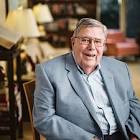
 

Image result for dick holland omaha


“We’re trying to take those kids all the way through the 11th grade, taking them every where and teaching them what college requires, what businesses are like, exposing them to the world,” he said. “Bright Futures is not a five or six year program, it’s a 15-year program. It’s gotta be done like that.”

The idea is to get kids on the right track and keep them there. Getting kids to believe in themselves is a big part of it. “If you don’t have a lot of self-confidence you don’t try things, and we try to overcome that. With some kids it works. Some find out, I’m better than I thought, I can do that.”

The goal is qualifying students for college and their attaining a higher education degree. Towards that end, Bright Futures works with students from 12th grade through college.

“We follow you there,” said Holland. “We’ve set up things in universities to help people. We’re still trying to bring it all together. It’s an effort to refresh, restore, make them understand what they have to achieve in order to do anything in life.”

Enough funding is in place that cost is not an issue for Bright Futures students.

“We have adequate scholarship money for thousands, we don’t even have to worry about that, and yet we don’t have enough people to take them that qualify. Just because you graduate from high school doesn’t mean you’re ready for college. Sometimes I think they (schools) get ‘em out of high school just to get ‘em out of high school.”

Holland has a better appreciation than most for the barriers that make all this difficult in practice. He and Mary mentored some young people through All Our Kids and they experienced first-hand how things that most of us take for granted can be stumbling blocks for others. He recounted the time he and Mary mentored a young single mother. Things started out promisingly enough but then a familiar pattern set in that unraveled the whole scenario. He said the young woman got a job, her employer liked her and her performance, but she stopped coming to work and she got fired. The same thing happened at another job. And then another. Each time, he said, the challenge of affording child care, getting health problems addressed and finding reliable transportation sabotaged both the young mother’s and the Hollands’ best efforts.

“She couldn’t hold a job, and we gave up,” he said. It’s not something he’s proud of, but he’s honest about the frustration these situations can produce. Other mentoring experiences ended more positively but still highlighted the challenges people face.

“You find out an awful lot about how tough this is because they don’t have the same kind of get up and go confidence like my daughters, who think that nothing is beyond them. You try to instill that, and when you see a little bit of it happening it’s worth the price of admission.”

He acknowledges that despite government cutbacks there’s still plenty of public aid to help catch people who fall through the cracks. But he feels strongly that a different emphasis is required — one that helps people become self-sufficient contributors.

“We have all kinds of government programs designed to grab these people as they fall off the cliff. The failure is to raise them so they can climb cliffs. There’s no question in my mind sooner or later it’s going to be a major government project. It has to be.”

Policies also need to change in terms of guaranteeing people a living wage, he said.

“Let me give you an idea of how we look at things,” said Holland. “We had a $2 (hourly) minimum wage in 1975 and that was adequate to get people out of poverty, it really was. But since the ‘80s the minimum wage has not kept pace with the cost of living and inflation. It’s kept people in poverty. The Congress of the United States, Republicans and Democrats alike, failed to really go after that. They failed to understand it.”

He said despite the minimum wage having increased to $7.25 in Nebraska and higher in other states, “it ought to be $10 or $11” to give families a chance of not just getting by but getting ahead. “We’re not looking at this problem the right way, we’re just creating it. There’s a dismissal of the problem by people that don’t have it.”

Similarly, he said early childhood programs must be learning centers not babysitting or recreational centers, that address the entire needs of children.

“We have a fractional help system. Somebody helps them after school, somebody sets up a club, somebody sets up something else over here. Some of those after school things make you feel better, they’re fun to go to, they’ve got cookies, but that doesn’t focus on their actual intellectual needs. There’s a lot of that that goes on.”

Holland calls for systemic change that comprehensively affects lives.

“I’m more and more positive it’s going to take a revolution. We’re going to have to stop what we’re doing and start doing something along the lines I’ve talked about. At various times there’s been various suggestions about poverty, but one thing that will help alleviate poverty a helluva lot is money, there’s no getting around it. If it takes 5 or 10 percent of the gross national product it will be a benefit over time because once you have a little money you begin to be able to do a few things, and then you begin to learn a few things, and your children do the same.”

A model approach in his eyes is Educare’s holistic early childhood education. “We’re (surrogate) parents there, that’s what we are,” he said, “and the people that bring their children there know what’s happening, they know that suddenly the whole world is opening for that child. When those kids enter kindergarten they’re ready, they’ve got these big vocabularies. We know it can be done, but we also know the price.”

To those who might balk at the $12,000-$13,000 annual cost of caring for a child in a state-of-the-art center, he said it’s but a fraction of what it costs to incarcerate someone or to navigate someone through the justice system or the foster care system.

Agree or disagree with him, you can be sure Dick Holland will continue putting his money where his mouth is and where his heart is.