Archive
Rev. Everett Reynolds Gave Voice to the Voiceless
Another Omaha elder leader has passed. The Rev. Everett Reynolds spent the better part of his life fighting the good fight against injustice. The following in memoriam piece I wrote appeared in The Reader (www.thereader.com).
Rev. Everett Reynolds Gave Voice to the Voiceless
©by Leo Adam Biga
Originally published in The Reader (www.thereader.com)
Rev. Everett Reynolds was not from Nebraska but he’s remembered as someone who made a significant mark here.
The St. Louis, Mo. native passed earlier this week in Omaha at age 83.
As a United Methodist minister and community leader he led congregations, worked with parolees, headed the local chapter of the NAACP, founded Cox Cable television channel CTI-22 and advocated for civil rights.
His work followed that of his father and grandfather, who were preachers. But for a long time Reynolds resisted The Call.
As a youth, he moved with his family to Lincoln, Neb., where his father pastored a church. After his father took over at Clair Memorial United Methodist Church in Omaha, Reynolds attended Technical High School.
But school and church were far from his mind. He heeded another calling, music, to become a professional musician in touring dance bands. He sang ballads and blues and played bass violin. He sat in with such legends as Count Basie and Lionel Hampton. He also played for top Omaha Midwest touring bands led by Lloyd Hunter and Earl Graves.
It was a heady time, but as the years went by he got caught up in the night life. Women. Booze. His alcoholism made him a liability. Once, after a week-long bender, he woke up in Houston, unable to remember what happened. Exiled from the band, this Prodigal Son finally returned home.
In a 2004 interview he said after failing to kick his drinking habit, he asked for divine help, and this time he stayed dry. In 1950, he rejoined the church and married. He and his wife Shirley celebrated their 61st wedding anniversary last year. His fall from grace and his subsequent recovery and rebirth, he said, gave his ministry “a message” for anyone straying from The Word. “For I have been there.”
 He made his ministry an extension of his work as a Nebraska parole officer. In his duals roles he said he often shared with youth his own experiences.
Reynolds, who held a theology degree and a doctorate, eventually took over his father’s pulpit at Clair Methodist. A consistent theme he delivered as a preacher is that “we’re all created equal in the sight of God. One blood are we.” Black or white, he said, shouldn’t matter. “When we reduce our faith to race, we’ve reduced our faith. Each time we make an advance, it’s for all people, not one.”
“My father was against any kind of inequitable treatment of people, of any people,” says Trip Reynolds, one of the late pastor’s three sons. “That’s his hallmark. Some people talk it — my dad was frequently acknowledged for practicing what he preached.”
Rev. Reynolds went on to pastor Lefler United Methodist Church. During his tenure, he assumed leadership of the Omaha NAACP. It was a tough time for the organization, locally and nationally, with declining memberships and a flagging mission.
As a NAACP spokesman he made his voice heard on hot button incidents like alleged police brutality. He raised awareness. He advocated dialogue. He organized protests. He called press conferences. The cable channel he founded, which originated as Religious Telecast Inc. before changing names to Community Telecast Inc., was created as a forum for minority voices to be heard. Trip Reynolds ran the channel with his father and today is general manager.
The late minister is remembered as the conscience of a community.
“He was very strong and intense in what he believed in,” says Metropolitan Community College liaison Tommie Wilson.”Powerful, intelligent. He knew civil rights backwards and forwards, and he stepped out there and he did it — fighting for justice for everybody. He was a fine man and quite a leader.”
“He took on some really difficult and sometime controversial cases, and he did that knowing what the consequences were and being unafraid to address those consequences,” says Omaha City Councilman Ben Gray. “He also helped create alternative programming and an opportunity for different voices.”
Along the way, Reynolds made clear the NAACP’s watchdog mission is still relevant. “Our struggle continues. People are still hurting because of inequities in such areas as education, employment, voting and the criminal justice system,” he once told a reporter.
When Reynolds stepped down as Omaha NAACP president in 2004, he recommended Tommie Wilson succeed him.
“I feel Dr Reynolds is responsible for me appreciating my history and me wanting to follow those big shoes he wore,” says Wilson. “When he asked me to take over it intensified in me my desire to do all I could to do to make a difference.”
Clair United Methodist Church, 5544 Ames Ave., is hosting a Friday wake service from 6 to 8 p.m., and a Saturday funeral service at noon.
Related articles
- The Ties that Bind, One Family’s Celebration of Native Omaha Days (leoadambiga.wordpress.com)
- Walking Behind to Freedom, A Musical Theater Examination of Race (leoadambiga.wordpress.com)
- An Omaha Legacy Ends, Wesley House Shutters after 139 Years – New Use for Site Unknown (leoadambiga.wordpress.com)
- North Omaha Champion Frank Brown Fights the Good Fight (leoadambiga.wordpress.com)
“Walking Behind to Freedom” – A musical theater examination of race
I don’t see a huge amount of live theater, but I attend more than enough shows to give me a good feel for what’s out there. My hometown of Omaha has a strong theater scene and one of the more dynamic works I’ve seen here in recent years came and went without the attention I felt it deserved. It was called Walking Behind to Freedom, and it deal head-on with many persistent aspects of racism that tend to be trivialized or distorted. The fact that a fairly serious piece of theater dared to tackle the issue of race in a city that has long been divided along racial lines took courage and vision. Playwright Max Sparber, a former colleague and editor of mine at The Reader (www.thereader.com) based the play, which unfolds in a series of vignettes, on interviews he did with folks from all races around the community. He asked people to share experiences they’ve had with racism and how these encounters affected them. A local musical group called Nu Beginning wrote songs and music that expressed yet more layers of insight and emotion behind the dramatized experiences. A diverse group of cast and crew collaborated on a rousing, moving, thought-provoking night of musical theater. I had a personal investment in the show, too, in that my partner in life played a couple different speaking parts. She was quite good. My story about the show appeared in The Reader.
“Walking Behind to Freedom” – A musical theater examination of race
©by Leo Adam Biga
Originally published in The Reader (www.thereader.com)
The subject of race is like the elephant in the room. Everybody notices it, yet nobody breathes a word. The longer the silence, the more damage is done. Seen in another light, race is the label comprising the assumptions and perceptions others project on us, soley based on the shade of our skin or sound of our name. Seeing beyond labels sparks dialogue. Stopping there erects barriers to communication.
Race is as uncomfortable to discuss as sex. Yet, attitudes about race, like sex, permeate life. It’s right there, in your face, every day. You’re reminded of it whenever someone different from you enters your space or you’re the odd one out in a crowd or issues of profiling, preferences and quotas hit close to home.
It often seems Omaha’s predominantly white population wishes the topic would go away in a weary — Oh, didn’t-we-solve-racism-already? tone — or else makes limp liberal gestures toward more inclusion. Then there’s the majority reaction that pretends it’s not a problem. Take the Keystone neighborhood residents now opposing the Omaha Housing Authority’s planned Crown Creek public housing development. Opponents never mention race per se, but it’s implicit in their expressed concerns over property values being adversely affected by public housing whose occupants will include blacks. Nothing like rolling out the old welcome wagon for people trying to get ahead.
On the other side of the fence, militant minority views claim that race impacts everything, as well it might, but such sweeping indictments alienate people and chill discussion. How much an issue race is depends on who you are. If you have power, it’s not on your radar, unless it’s expedient to be. If you’re poor, it’s a factor you must account for because someone’s sure to make you aware of it.
If you doubt Omaha is beset by wide rifts along racial lines, you only need look at: its pronounced geographic segregation; its mainly white police presence in largely Latino south Omaha and African-American north Omaha; its rarely more than symbolic multicultural diversity at public-private gatherings; its few minority corporate heads and even fewer minority elected public officials. Then there’s the insidious every day racism that, intentionally or not, insults, demeans, excludes.
It’s in this climate that, last fall, Omaha Together One Community (OTOC) said: We need to talk. A faith-based community organizing group focusing on social justice issues, OTOC commissioned an original musical play, Walking Behind to Freedom, as a benefit forum for addressing the often ignored racial divide in Omaha and the need for more unity. It’s the second year in a row OTOC’s staged a play to frame issues and raise funds. In 2003, it presented a production of Working, the Broadway play based on the book of the same name by Studs Terkel.
With a book by Omaha playwright Max Sparber and music by the local quartet Nu Beginning, Walking Behind to Freedom premieres May 7 and 8 at First United Methodist Church. Performances run 7:30 p.m. each night at the church, 69th and Cass Street. Free-will donations of $10-plus are suggested. Proceeds go to underwrite OTOC operational expenses.
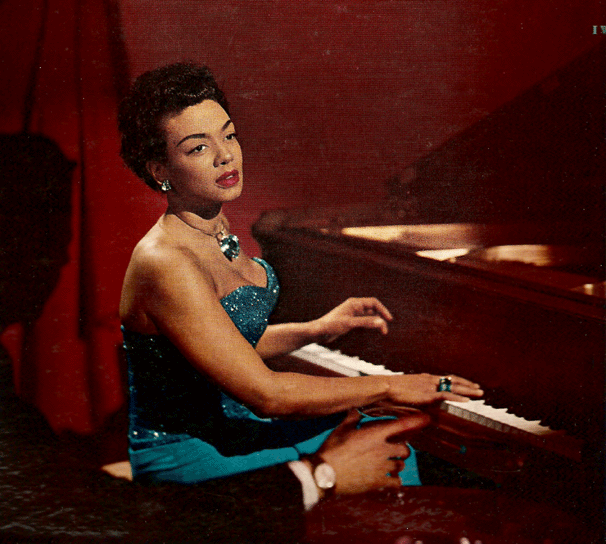
The play’s title is lifted from a famous quote by the late entertainer and Civil Rights activist, Hazel Scott, who posited, “Who ever walked behind anyone to freedom? If we can’t go hand in hand, I don’t want to go.” The show coincides with the 40th anniversary of Congress passing landmark Civil Rights legislation in 1964.

Max Sparber
As a foundation for the play, OTOC did what it does best: organize “house meetings” where citizens shared their anecdotes and perspectives on racial division. Sparber and Nu Beginning attended the meetings, held at OTOC-member churches city-wide, and the ensuing conversations informed the non-narrative play, which is structured as a series of thematic monologues, dialogues and songs.
“I built my script based on some of these interviews, along with some broader themes,” said Sparber, whose Minstrel Show dealt with an actual lynching in early Omaha. “We got some great stories out of it. The people who came to the meetings were very interested in the subject and I certainly got some stories that were invaluable. More than anything, we wanted this play to be specific to Omaha, and therefore we wanted its origins to be within Omahans’ own experiences.”
Surfacing prominently in those sessions was the theme of division and how by going unspoken it only deepens the divide. “This is a town that’s very separated geographically. The majority of blacks live in north Omaha. The majority of Latinos live in south Omaha. The majority of whites live in west Omaha. And, as a result, there’s not a lot of crossover,” Sparber said. “It’s really sad how closed up Omaha is,” said the play’s director, Don Nguyen, lately of the Shelterbelt Theater.
“Along with that, race is quickly becoming an undiscussed element in Omaha,” added Sparber. “I think a lot of whites believe we live in a post-racism world and, therefore, it’s not a subject that needs to be addressed. Whereas, black people experience this as not being a post-racism world at all and are kind of startled by this other viewpoint. So, there’s this disconnection based on understanding.”
 |
Two lines in the play comment on this dichotomy: “I think a lot of white people feel that racism ended in the Sixties, with Martin Luther King. The only thing about racism that ended in the Sixties WAS Martin Luther King.”
Any impression all the work is done alarms Betty Tipler, an OTOC leader. “A lot of us are in our comfortable spaces. We go inside our houses with our two garages and we think things are okay. Things are not okay. The issue of race has not been cured and, if we’re not careful, things will go backward,” she said. Despite the illusion all’s well, she added, the play reminds us people of color still contend with bias/discrimination in jobs, housing, policing. “We may as well face it.”
According to OTOC leader Margaret Gilmore, the process the play sprang from is at the core of how the organization works. “We’re about bringing different people in conversation with each other to talk about what’s in their hearts and minds,” she said. “It’s a process of learning to talk to each other and listen to each other and then seeing what we have in common to work together for change.” She said the meetings that laid the play’s groundwork crystallized the racial gulf that exists and the need to discuss it. “We don’t talk about this stuff enough. We don’t talk about it on a personal level and how it affects us, which is what I think this play gets to. When we ask the right questions and we’re willing to listen, then the experiences that people tell in their own words are dramatic and provocative.”
“It’s very important we listen to real people’s stories. The only way you can come up with the truth is to go to the people. We haven’t watered down or changed their stories, but literally portrayed them,” said OTOC’s Tipler, administrator at Mount Nebo Missionary Baptist Church, which hosted some of the house meetings.
Indeed, the vignettes carry the ring of reportorial truth to them. Most compelling are the monologues, which unfold in a rap-like stream-of-consciousness that is one part slam-poet-soliloquy and one part from-the-street-rant. Some stories resemble the bared soul testimony of people bearing witness, yet without ever droning on into didactic, pedantic sermons, lectures or diatribes. The language sounds like the real conversations you have inside your head or that spontaneously spring up among friends over a few drinks. Often, there’s a sense you’re listening in on the privileged, private exchanges of people from another culture as they describe what’s it like to be them, which is to say, apart from you.
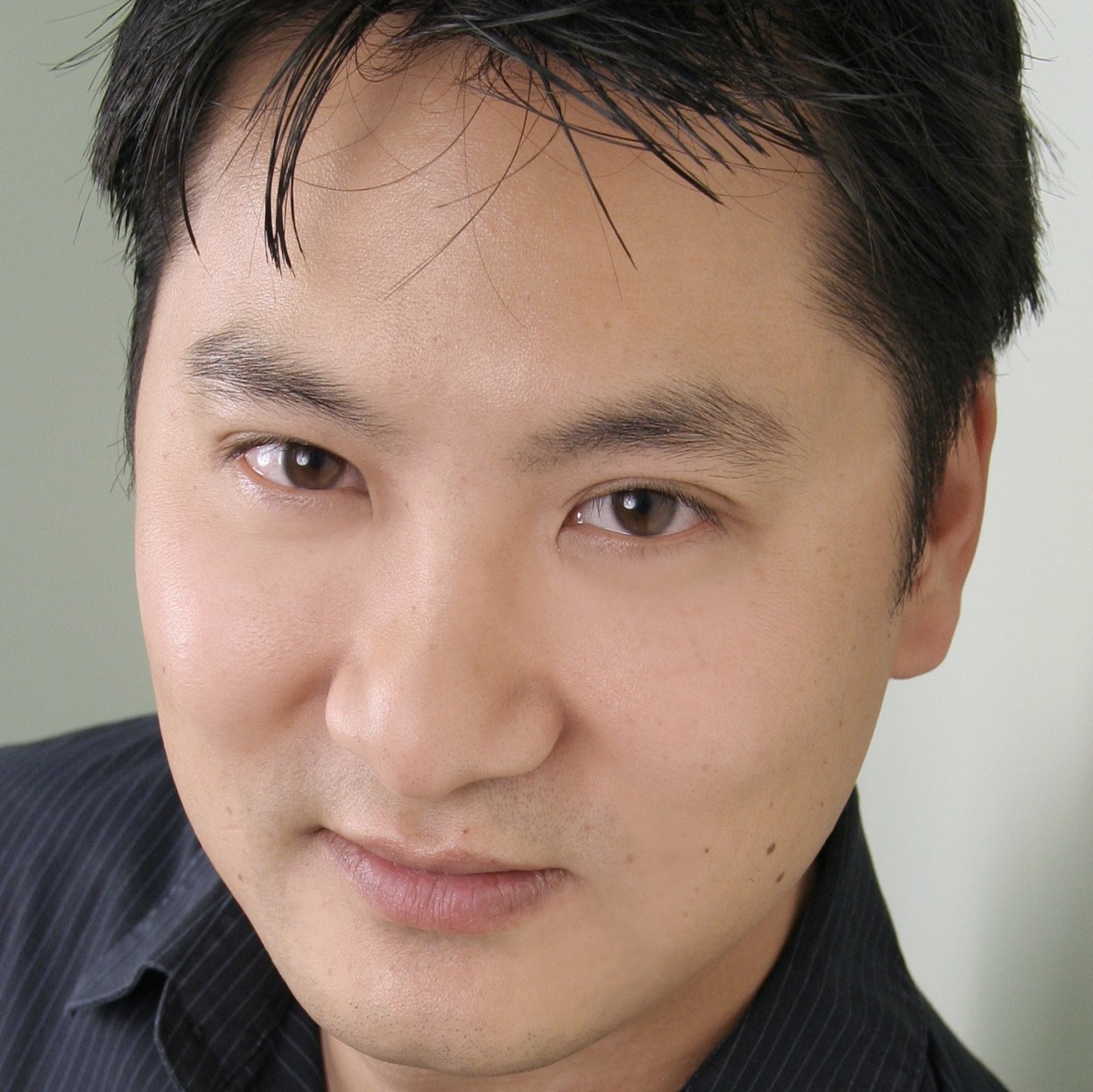
Don Nguyen
For director Nguyen, the “real life testimonies” add a layer of truth that elevates the material to a “more powerful” plane. “I think it will definitely work for us that people know this is real. It’s not an overall work of fiction. This is real stuff.”
The misconceptions people have of each other are voiced throughout the work, often with satire. You’ve heard them before and perhaps been guilty yourself assigning these to people. You know, you see an Asian-American, like Nguyen, and you reflexively think he’s fluent in Vietmanese or expert in martial arts, some assumptions he’s endured himself. “Oh, yeah, my personal experiences definitely help me to relate,” he said. “Growing up in Lincoln I got in fights all the time. People making fun of me. Thinking I knew kung-fu or I only spoke Vietmanese, which is not true. But it’s not just the blatant racism. It’s the underlying stuff, too. Sometimes it’s not even intentional, but it’s just there. And it’s that gray stuff I think these pieces capture pretty well and that people need to hear more of.”
In the vignette Tricky, some women lay out the subtle nature of racism in Omaha. “…it’s like a fox. It’s tricky. It’s sly. You’ll be standing in line at a store, and the cashiers will be helping everybody except you…and you’re the only black person in line…and because it’s so sly, I think white people don’t notice it at all.”
The play also looks at racism from different angles. One has a guilt-ridden realtor rationalizing the unethical practice of steering, which is another form of red lining. The other has a new generation bigot defending his right to espouse white pride in response to black heritage celebrations. The concept of reverse racism is explored in the real life case of students protesting their school’s special recognition of black achievers at the expense of other minorities. And the wider fallout of racism is examined in the confession offered by an insurance agent, who reveals rates for car-house coverage are higher for residents of largely black north Omaha, including whites, because of the district’s perceived high crime rate.
The vignettes touch on ways race factors into every day life, whether its the unwanted attention a black couple attracts while out shopping or the hassle African-American men face when driving while black, or DWB, which is all it takes to be stopped by the cops. The shopping piece uses humor to highlight the absurd fears that prompt people to act out racist views. Music is used as heightened counterpoint to the boiling frustration of the DWB victim, whose cries of injustice are accompanied by the soulful strains of doo-wop singers.
Bridging the play’s series of one-acts are songs by Nu Beginning, whose music is a melange of hip-hop, R & B, soul, pop and gospel. A little edgy and a lot inspirational, the music drives home the unity message with its uplifting melodies, which are sung by choruses comprised of diverse singers.
Some pieces are heavier or angrier than others. Some are downright funny. And some, like Mirrors, speak eloquently and wittily to the concept of how, despite our apparent differences, we are all reflections of each other. Here, Nguyen employs a diverse roster of performers to represent the mirror symbol. Perhaps the most telling piece is Function. This beautifully-rendered and thought-provoking discourse is delivered by an architect, who suggests racism has survived as both an ornament of the past, akin to a Roman column on a modern house, and as a still-functional device for those in power, as when a politician plays the race card.
Whatever the context, there’s no dancing around the race card, which is just how Nguyen likes it, although when he first read the script he was surprised by how brazenly it took on taboo material, such as its use of the N-word.
“Typically, a script or show sugarcoats the issue of race. It’s a very cautious topic. You don’t want to offend or patronize people by saying the wrong stuff. But this piece is much different. All of its pretty much in your face,” Nguyen said. “What I mean is, it’s very direct. Max (Sparber) makes no bones what he’s writing about, which is great. It’s a big risk to take as a writer, but essentially it’s the most interesting path to take, too. And I’m all for stirring up trouble. I’m fine with that.”
OTOC’s Betty Tipler feels racial division is too important an issue to be coy about. “We’ve got to come out of the closet, so to speak, and talk about racism and differences” she said. “We tend to shy away from talking about it, but it won’t go away. We have got to come together, put it on the table, take a look at it and deal with it — no matter how much it hurts me or how much it hurts you. But before we can do that, we’ve gotta put it out there. We won’t get anywhere until we do. And I believe this play is a step toward doing that.”
Christy Woods, a singer/songwriter with Nu Beginning, said the play is about hope. “I believe if people are open to change, we can go hand-in-hand to freedom. Just because I’m this and you’re that, doesn’t mean I have to be one step behind you. Why can’t we go together? We want people to feel inspired to go out and make a change. We want to touch, but also to teach, and I believe this musical does that.”
Nguyen hopes the play attracts a mixed audience receptive to seeing race through the prism of different experiences. “That’s where I’m trying to aim the show. As we go through these vignettes, I want some people to identify with them and some people to be like, ‘Oh, I didn’t know that.’ That’s what I want to create.”
Related articles
- Back in the Day, Native Omaha Days is Reunion, Homecoming, Heritage Celebration and Party All in One (leoadambiga.wordpress.com)
- Kevyn Morrow’s Homecoming (leoadambiga.wordpress.com)
- The Ties that Bind, One Family’s Celebration of Native Omaha Days (leoadambiga.wordpress.com)
- Omaha Native Steve Marantz Looks Back at the City’s ’68 Racial Divide Through the Prism of Hoops in His New Book, ‘The Rhythm Boys of Omaha Central’ (leoadambiga.wordpress.com)
- Hey, You, Get Off of My Cloud! Doug Paterson – Acolyte of Theatre of the Oppressed Founder Augusto Boal and Advocate of Art as Social Action (leoadambiga.wordpress.com)
- Omaha Theater as Insurrection, Social Commentary and Corporate Training Tool (leoadambiga.wordpress.com)
- Polishing Gem: Behind the Scenes of the Beasley Theater & Workshop’s Staging of August Wilson’s ‘Gem of the Ocean ‘ (leoadambiga.wordpress.com)
- Arno Lucas, Serious Sidekick (leoadambiga.wordpress.com)
- Native Omahans Take Stock of the African-American Experience in Their Hometown (leoadambiga.wordpress.com)
- Native Omaha Days: A Black is Beautiful Celebration, Now, and All the Days Gone By (leoadambiga.wordpress.com)
- Luigi’s Legacy, The Late Omaha Jazz Artist Luigi Waites Fondly Remembered (leoadambiga.wordpress.com)
Back in the Day: Native Omaha Days is reunion, homecoming, heritage celebration and party all in one
Even though I grew up in North Omaha and lived there until age 43 or so, I didn’t experience my first Native Omaha Days until I had moved out of the area, and by then I was 45, and the only reason I did intersect with The Days then, and subsequently have since, is because I was reporting on it. The fact that I didn’t connect with it before is not unusual because it is essentially though by no means exclusively an African American celebration, and as you can see by my picture I am a white guy. Then there’s the fact it is a highly social affair and I am anything but social, that is unless prevailed upon to be by circumstance or assignment. But I was aware of the event, admittedly vaguely so most of my life, and I eventually did press my editors at The Reader (www.thereader.com) to let me cover it. And so over the past eight years I have filed several stories related to Native Omaha Days, most of which you can now find on this blog in the run up to this year’s festival, which is July 27-August 1. The story below is my most extensive in terms of trying to capture the spirit and the tradition of The Days, which encompasses many activities and brings back thousands of native Omahans – nobody’s really sure how many – for a week or more of catching up family, friends, old haunts.
NOTE: The parade that is a highlight of The Days was traditionally held on North 24th Street but has more recently been moved to North 30th Street, where the parade pictures below were taken by Cyclops-Optic, Jack David Hubbell.
My blog also features many other stories related to Omaha’s African American community, past and present. Check out the stories, as I’m sure you’ll find several things that interest you, just as I have in pursuing these stories the last 12 years or so.

Vera Johnson,a Native Omahans Club founder, (Photo by Robyn Wisch)
Back in the Day: Native Omaha Days is reunion, homecoming, heritage celebration and party all in one
©by Leo Adam Biga
Originally published in The Reader (www.thereader.com)
A homecoming. That’s what Native Omaha Days, a warm, rousing, week-long black heritage reunion, means to the thousands of native sons and daughters coming back in town for this biennial summer celebration. Although the spree, which unfolded July 30 through August 4 this year, features an official itinerary of activities, including a gospel night, a drill team competition, a parade, a dance and a picnic, a far larger slate of underground doings goes on between the many family and class reunions, live concerts and parties that fill out the Days. Some revelers arrive before the merriment begins, others join the fun in progress and a few stay over well after it’s done. A revival and carnival in one, the Days is a refreshing, relaxing antidote to mainstream Omaha’s uptight ways.
North Omaha bars, clubs and restaurants bustle with the influx of out-of-towners mixing with family and old friends. North 24th Street is a river of traffic as people drive the drag to see old sites and relive old times. Neighborhoods jump to the beat of hip-hop, R&B and soul resounding from house parties and family gatherings under way. Even staid Joslyn Art Museum and its stodgy Jazz on the Green take on a new earthy, urban vibe from the added black presence. As one member of the sponsoring Native Omahans Club said of the festival, “this is our Mardi Gras.”
Shirley Stapleton-Odems is typical of those making the pilgrimage. Born and raised in Omaha — a graduate of Howard Kennedy Elementary School and Technical High School — Stapleton-Odems is a small business owner in Milwaukee who wouldn’t miss the Days for anything. “Every two years I come back…and it’s hard sometimes for me to do, but no matter what I make it happen,” she said. “I have friends who come from all over the country to this, and I see some people I haven’t seen in years. We all meet here. We’re so happy to see each other. It’s a reunion thing. It’s like no matter how long you’re gone, this is still home to us.”
As Omaha jazz-blues guru Preston Love, a former Basie sideman and Motown band leader and the author of the acclaimed book A Thousand Honey Creeks Later, observed, “Omahans are clannish” by nature. “There’s a certain kindredness. Once you’re Omaha, you’re Omaha.” Or, as David Deal, whose Skeets Ribs & Chicken has been a fixture on 24th Street since 1952, puts it, “People that moved away, they’re not out-of-towners, they’re still Omahans — they just live someplace else.” Deal sees many benefits from the summer migration. “It’s an opportunity for people to come back to see who’s still here and who’s passed on. It’s an economic boost to businesses in North Omaha.”
Homecoming returnees like Stapleton-Odems feel as if they are taking part in something unique. She said, “I don’t know of any place in the country where they have something like this where so many people over so many generations come together.” Ironically, the fest’ was inspired by long-standing Los Angeles and Chicago galas where transplanted black Nebraskans celebrate their roots. Locals who’ve attended the L.A. gig say it doesn’t compare with Omaha’s, which goes to the hilt in welcoming back natives.

Perhaps the most symbolic event of the week is the mammoth Saturday parade that courses down historic North 24th Street. It is an impressionistic scene of commerce and culture straight out of a Spike Lee film. On a hot August day, thousands of spectators line either side of the street, everyone insinuating their bodies into whatever patch of shade they can find. Hand-held fans provide the only breeze.
Vendors, selling everything from paintings to CDs to jewelry to hot foods and cold beverages to fresh fruits and vegetables, pitch their products under tents staked out in parking lots and grassy knolls. Grills and smokers work overtime, wafting the hickory-scented aroma of barbecue through the air. Interspersed at regular intervals between the caravan of decorated floats festooned with signs hawking various local car dealerships, beauty shops, fraternal associations and family trees are the funky drill teams, whose dancers shake their booties and grind their hips to the precise, rhythmic snaring of whirling dervish drummers. Paraders variously hand-out or toss everything from beads to suckers to grab-bags full of goodies.
A miked DJ “narrates” the action from an abandoned gas station, at one point mimicking the staccato sound of the drilling. A man bedecked in Civil War-era Union garb marches with a giant placard held overhead emblazoned with freedom slogans, barking into a bullhorn his diatribe against war mongers. A woman hands out spiritual messages.

Long the crux of the black community, 24th Street or “Deuce Four” as denizens know it, is where spectators not only take in the parade as it passes familiar landmarks but where they greet familiar figures with How ya’ all doin’? embraces and engage in free-flowing reminiscences about days gone by. Everywhere, a reunion of some sort unfolds around you. Love is in the air.
The parade had a celebrity this time — Omaha native actress Gabrielle Union (Deliver Us From Eva). Looking fabulous in a cap, blouse and shorts, she sat atop the back seat of a convertible sedan sponsored by her father’s family, the Abrams, whose reunion concided with the fest’. “This is just all about the people of north Omaha showing pride for the community and reaching out to each other and committing to a sense of togetherness,” said Union, also a member of the Bryant-Fisher family, which has a large stake in and presence at the Days. “It’s basically like a renewal. Each generation comes down and everyone sits around and talks. It’s like a passing of oral history, which is…a staple of our community and our culture. It’s kind of cool being part of it.”
She said being back in the hood evokes many memories. “It’s funny because I see the same faces I used to hang out with here, so a lot of mischievous memories are coming back. It’s like, Do you remember the time? So, a lot of good times. A lot of times we probably shouldn’t of been having as young kids. But basically it’s just a lot of good memories and a lot of lessons learned right here on 24th.”
The three-mile parade is aptly launched at 24th and Burdette. There, Charles Hall’s now closed Fair Deal Cafe, once called “the black city hall,” provided a forum for community leaders to debate pressing issues and to map-out social action plans. Back in the day, Hall was known to give away food during the parade, which ends at Kountze Park, long a popular gathering spot in north Omaha. Across the street is Skeets, one of many soul food eateries in the area. Just down the road a piece is the Omaha Star, where legendary publisher Mildred Brown held court from the offices of her crusading black newspaper. Across the street is the Jewell Building, where James Jewell’s Dreamland Ballroom hosted black music greats from Armstrong to Basie to Ellington to Holiday, and a little further north, at 24th and Lake, is where hep cat juke joints like the M & M Lounge and McGill’s Blue Room made hay, hosting red hot jam sessions.

Recalling when, as one brother put it, “it was real,” is part and parcel of the Days. It’s all about “remembering how 24th and Lake was…the hot spot for the black community,” said Native Omahans Club member Ann Ventry. “We had everything out here,” added NOC member Vera Johnson, who along with Bettie McDonald is credited with forming the club and originating the festival. “We had cleaners, barber shops, beauty parlors, bakeries, grocery stores, ice cream stores, restaurants, theaters, clothing stores, taxi companies, doctors’ offices. You name it, we had it. We really didn’t have to go out of the neighborhood for anything,” Johnson said. Many businesses were black-owned, too. North O was, as lifelong resident Charles Carter describes it, “it’s own entity. That was the lifestyle.”
For James Wightman, a 1973 North High and 1978 UNL grad, the homecoming is more than a chance to rejoin old friends, it’s a matter of paying homage to a legacy. “Another reason we come back and go down 24th Street is to honor where we grew up. I grew up at the Omaha Boys Club and I played ball at the Bryant Center. There was so much to do down on the north side and your parents let you walk there. Kids can’t do that anymore.” Noting its rich history of jazz and athletics, Wightman alluded to some of the notables produced by north Omaha, including major league baseball Hall of Famer Bob Gibson, Heisman winner Johnny Rodgers, jazzman Preston Love, social activist Malcolm X, actor John Beasley and Radio One founder and CEO Catherine Liggins Hughes.
For Helen McMillan Caraway, an Omaha native living in Los Angeles, sauntering down 24th Street brings back memories of the music lessons she took from Florentine Kingston, whose apartment was above a bakery on the strip. “After my music lesson I’d go downstairs and get a brownie or something,” she said. “I had to steer clear of the other side of the street, where there was a bar called McGill’s that my father, Dr. Aaron McMillan, told me, ‘Don’t go near.’” Being in Omaha again makes the Central High graduate think of “the good times we used to have at Carter Lake and all the football games. I loved that. I had a good time growing up here.”
For native Omahan Terry Goodwin Miller, now residing in Dallas, being back on 24th Street or “out on the stem,” as natives refer to it, means remembering where she and her best girlfriend from Omaha, Jonice Houston Isom, also of Dallas, got their first hair cut. It was at the old Tuxedo Barbershop, whose nattily attired proprietors, Marcus “Mac” McGee and James Bailey, ran a tight ship in the street level shop they ran in the Jewell Building, right next to a pool hall and directly below the Dreamland. Being in Omaha means stopping at favorite haunts, like Time Out Foods, Joe Tess Place and Bronco’s or having a last drink at the now closed Backstreet Lounge. It means, Goodwin Miller said, “renewing friendships…and talking about our lives and seeing family.” It means dressing to the nines and flashing bling-bling at the big dance and, when it’s over, feeling like “we don’t want to go home and grabbing something to eat and coming back to 24th Street to sit around and wait for people to come by that we know.”

Goodwin Miller said the allure of renewing Omaha relationships is so strong that despite the fact she and Houston Isom live in Dallas now, “we don’t see each other there, but when we come here we’re together the whole time.”
Skeets’ David Deal knows the territory well. From his restaurant, which serves till 2 a.m., he sees native Omahans drawn, at all hours, to their old stomping grounds. He’s no different. “We’re just coming down here to have a good time and seeing people we haven’t seen in years.” Sometimes, it’s as simple as “sitting around and watching the cars go by, just like we used to back in the good old days.”
North Omaha. More than a geographic sector, it is the traditional, cultural heart of the local black community encompassing the social-historical reality of the African-American experience. Despite four decades of federally-mandated civil rights, equal opportunity, fair housing and affirmative action measures the black community here is still a largely separate, unequal minority in both economic and political terms and suffers a lingering perception problem — born out of racism — that unfairly paints the entire near northside as a crime and poverty-ridden ghetto. Pockets of despair do exist, but in fact north Omaha is a mostly stable area undergoing regentrification. There is the 24-square block Miami Heights housing-commercial development going up between 30th and 36th Streets and Miami and Lake Streets, near the new Salem Baptist Church. There is the now under construction North Omaha Love’s Jazz, Cultural Arts and Humanities Complex, named for Preston Love, on the northwest corner of 24th and Lake. The same sense of community infusing Native Omaha Days seems to be driving this latest surge of progress, which finds black professionals like attorney Brenda Council moving back to their roots.
Former NU football player James Wightman (1975-1978) has been coming back for the Days the past eight years, first from Seattle and now L.A., and he said, “I’m pretty pleased with what’s going on now in terms of the development. When I lived here there was a stampede of everybody getting out of Omaha because there weren’t as many opportunities. I look at Omaha’s growth and I see we’re a rich, thriving community now.” During the Days he stays, as many do, with family and hooks up with ex-jocks like Dennis Forrest (Central High) and Bobby Bass (Omaha Benson) to just kick it around. “We’re spread out in different locations now but we all come back and it’s like we never missed a beat.” The idea of a black pride week generating goodwill and dollars in the black community appeals to Wightman, who said, “I came to spend my money on the north side. And I’ll be back in two years.”
Wightman feels the Days can serve as a beacon of hope to today’s disenfranchised inner city youth. “I think it sends a message to the youth that there are good things happening. That people still come back because they feel a sense of family, friendship and connection that a lot of young people don’t have today. All my friends are in town for their school-family reunions and we all love each other. There’s none of this rival Bloods-Crips stuff. We talk about making a difference. It’s not just about a party, it’s a statement that we can all get along with each other.”

“It just shows there’s a lot of good around here,” said Omaha City Councilman Frank Brown, who represents largely black District 2, “but unfortunately it’s not told by the news media.” Scanning the jam-packed parade route, a beaming Brown said, “This is a four-hour event and there’s thousands of people of all ages here and they’re smiling and enjoying themselves and there’s no problems. When you walk around you see people hugging each other. There’s tears in some of their eyes because they haven’t seen their friends, who’ve become their family.”
Family is a recurring theme of the Days. “My family all lives here.” said John Welchen, a 1973 Tech High grad now living in Inglewood, Calif. For him, the event also “means family” in the larger sense. “To me, all of the friends I grew up with and everyone I’ve become acquainted with over the years is my extended family. It’s getting a chance to just see some great friends from the past and hear a lot of old stories and enjoy a lot of laughter.”
Native Omahans living in the rush-rush-rush of impersonal big cities look forward to getting back to the slower pace and gentler ways of the Midwest. “From the time I get off the plane here I notice a difference,” said Houston Odems, who flies into Omaha from Dallas. “People are polite…kind. To me, you just can’t beat it. I tell people all the time it’s a wonderful place to have grown-up. I mean, I still know the people who sold me my first car and the people who dry-cleaned my clothes.”
Although the Days traces its start back to 1977, when the Native Omahans Club threw the first event, celebrations commemorating the ties that bind black Omahans go back well before then. As a young girl in the ‘50s, Stapleton-Odems was a majorette in an Elks drill team that strutted their stuff during 24th Street parades. “It’s a gathering that’s been gong on since I can remember,” she said.
Old-timers say the first few Native Omaha Days featured more of a 24/7, open-air, street-party atmosphere. “We were out in the middle of the street all night long just enjoying each other,” said Billy Melton, a lifelong Omahan and self-styled authority on the north side. “There was live entertainment — bands playing — every six blocks. Guys set up tents in the parks to just get with liquor. After the dances let out people would go up and down the streets till six in the morning. Everybody dressed. Everybody looking like a star. It was a party town and we knew how to party. It was something to see. No crime…nothing. Oh, yeah…there was a time when we were like that, and I’m glad to have lived in that era.”
According to Melton, an original member of the Native Omahans Club, “some people would come a week early to start bar hopping. They didn’t wait for Native Omaha Days. If certain people didn’t come here, there was no party.”
Charles Carter is no old-timer, but he recalls the stroll down memory lane that was part of past fests. “They used to have a walk with a continuous stream of people on either side of the street. What they were doing was reenacting the old days when at nighttime 24th Street was alive. There were so many people you couldn’t find a place to walk, much less park. It was unbelievable. A lot of people are like me and hold onto the thought this is the way north Omaha was at one time and it’s unfortunate our children can’t see it because there’s so much rich history there.”
Then there was the huge bash Billy Melton and his wife Martha threw at their house. “It started early in the morning and lasted all night. It was quite a thing. Music, liquor, all kinds of food. It was a big affair,” Melton said. “I had my jukebox in the backyard and we’d have dancing on the basketball court. Endless conversations. That’s what it’s all about.”
Since the emergence of gang street violence in the mid-80s, observers like Melton and Carter say the fest is more subdued, with nighttime doings confined to formal, scheduled events like the gospel night at Salem and the dance at Mancuso Hall and the 24th Street rag relegated to the North Omahans Club or other indoor venues.
A reunion ultimately means saying goodbye, hence the close of the Days is dubbed Blue Monday. Most out-of-towners have left by then, but the few stalwarts that remain mix with die-hard residents for a final round or two at various drinking holes, toasting fat times together and getting high to make the parting less painful. After a week of carousing, out-of-town revelers wear their exhaustion like a badge of honor. “You’re supposed to be tired from all this,” Houston Isom said. “There’s no such thing as sleeping during this week. I can’t even take a nap because I’ll be worried I might be missing something.” Goodwin Miller builds in recovery time, saying, “When I go home I take a day off before I go back to work.” She and the others can’t wait to do it all over again two years from now.
Related articles
- Omaha Native Steve Marantz Looks Back at the City’s ’68 Racial Divide Through the Prism of Hoops in His New Book, ‘The Rhythm Boys of Omaha Central’ (leoadambiga.wordpress.com)
- Where Hope Lives, Hope Center for Kids in North Omaha (leoadambiga.wordpress.com)
- Big Mama’s Keeps It Real, A Soul Food Sanctuary in Omaha: As Seen on ‘Diners, Drive-ins and Dives’ (leoadambiga.wordpress.com)
- Community and Coffee at Omaha’s Perk Avenue Cafe (leoadambiga.wordpress.com)
- Once More With Feeling, Loves Jazz & Arts Center Back from Hiatus (leoadambiga.wordpress.com)
- The Ties that Bind, One Family’s Celebration of Native Omaha Days (leoadambiga.wordpress.com)
- Enchantress “LadyMac” Gets Down (leoadambiga.wordpress.com)
- Get Crackin’ (leoadambiga.wordpress.com)
- Arno Lucas, Serious Sidekick (leoadambiga.wordpress.com)
- Back in the Day, Native Omaha Days is Reunion, Homecoming, Heritage Celebration and Party All in One (leoadambiga.wordpress.com)
- Native Omaha Days: A Black is Beautiful Celebration, Now, and All the Days Gone By (leoadambiga.wordpress.com)
- Native Omahans Take Stock of the African-American Experience in Their Hometown (leoadambiga.wordpress.com)
- A Rich Music History Long Untold is Revealed and Celebrated at the Omaha Black Music Hall of Fame (leoadambiga.wordpress.com)
- Luigi’s Legacy, The Late Omaha Jazz Artist Luigi Waites Fondly Remembered (leoadambiga.wordpress.com)
- Big Bad Buddy Miles (leoadambiga.wordpress.com)
- An Inner City Exhibition Tells a Wide Range of Stories (leoadambiga.wordpress.com)
- Soon Come: Neville Murray’s Passion for the Loves Jazz & Arts Center and its Role in Rebirthing North Omaha (leoadambiga.wordpress.com)
- Soul on Ice – Man on Fire: The Charles Bryant Story (from my Omaha Black Sports Legends series, Out to Win: The Roots of Greatness) (leoadambiga.wordpress.com)
- Lifetime Friends, Native Sons, Entrepreneurs Michael Green and Dick Davis Lead Efforts to Revive North Omaha and to Empower its Black Citizenry (leoadambiga.wordpress.com)
The Ties that Bind: One family’s celebration of Native Omaha Days
One of my favorite events to write about is something called Native Omaha Days, which is really a bunch of events over the course of a week or two in mid to late summer, held every two years and in essence serving as a great big celebration of Omaha‘s African American culture and heritage. There’s a public parade and picnic and a whole string of concerts, dances, and other activities, but at the root of it all is the dozens, perhaps hundreds of family and school reunions and various get togethers, large and small, that happen all over the city, but most especially in the traditional heart of the black community here – North Omaha. I’ve done a number of stories over the years about the Native Omaha Days itself or riffing off it to explore different aspects of Omaha’s black community. The story below for The Reader (www.thereader.comI is from a few years ago and focuses on one extended family’s celebration of The Days. as I like to refer to the event, via a reunion party they throw.
As the 2011 Native Omaha Days approaches (July 27-August 1) I am posting my stories about The Days over the past decade or so. You’ll also find on this blog a great array of other stories related to African American life in Omaha, past and present. Hope you enjoy.
©by Leo Adam Biga
Originally published in The Reader (www.thereader.com)
The warm, communal homecoming known as Native Omaha Days expresses the deep ties that bind the city’s African-American community. It’s a time when natives long moved away return to roll with family and friends.
Beyond the cultural activities marking the festival, which officially concluded this week with the traditional “Blue Monday” farewells at northside watering holes, it’s an occasion when many families and high schools hold reunions. Whether visiting or residing here, it’s not unusual for someone to attend multiple public and private gatherings in the space of a week. The reunions embody the theme of reconnecting folks, separated by miles and years, that permeates The Days, whose activities began well before the prescribed Aug. 3 start and end well past the Aug. 8 close.
No singular experience can fully capture the flavor of this biennial love-in, but the Evergreen Family Reunion — a rendezvous of many families in one — comes close. Evergreen’s not the name of a people, but of the rural Alabama hamlet where families sharing a common origin/lineage, including the Nareds, Likelys, Olivers, Unions, Holts, Butlers, Turners and Ammons, can trace their roots.
For older kin reared there, Evergreen holds bitter memories as an inhospitable place for blacks. Those who got out, said Evergreen-born and Omaha-raised Richard Nared, were forced to leave. “Most of us came here because we had to,” he said. “A lot of my relatives had to leave the South in the middle of the night. I was little, but I did see some of the things we were confronted with, like the Ku Klux Klan.” The Nareds migrated north, as countless others did, to escape oppression and to find, as New York-raised Clinton Nared said, “a new freedom” and “a better life.”
Celebrating a fresh start and keeping track of an ever-expanding legacy is what compelled the family to start the reunion in the first place, said Rev. Robert Holt, who came in for the affair from California. The reunion can be traced to Moses Union and Georgia Ewing, who, in around 1928, “decided they would bring the family together so there would be no intermarriage. It started out with about 10 people and it grew. We’ve had as many as 2,000 attend. I don’t care where it is, I go.”
As Rev. Frank Likely of Gethsemane Church of God in Christ said in his invocation before the family fish fry on Friday, the reunion is, in part, a forum for discovering “family members we didn’t even know we had.” Then there’s “the chance to meet people I haven’t seen in 40 or 50 years,” said Rev. E.C. Oliver, pastor of Eden Baptist Church. “That’s what it means to me. A lot of them, I’ve wondered, ‘Were they still alive? What were they doing?’ It’s a good time for catching up and for fellowship,” said Oliver, who arrived from Evergreen without “a dime in my pocket.”
Clinton Nared‘s taken it upon himself to chart the family tree. Reunions, he said, reveal much. “Each year I come, I get more information and I meet people I never met before,” he said. “There’s so much history here.” Niece and fellow New Yorker Heather Nared said, “Every year I find out something different about the family.”
Of Richard Nared’s three daughters — Debra, Dina and Dawn — Dina’s been inspired to delve into the family’s past. “I needed to meet my people and to know our history,” she said. “I’ve been to more reunions than the rest of them. I even went to Evergreen. I thought it was beautiful. I loved the South. Before my oldest relatives died off, I got to sit and talk to them. It was fun. We had a good time.”
Over generations the family line spread, and offshoots can be found today across the U.S. and the world. But in the South, where some relatives remain, the multi-branched tree first sprouted in America. “We live all over. Now and then we come back together,” Richard Nared said. “But Evegreen’s where it all began. They used to call it Big Meeting.”
Gabrielle Union
Held variously in Detroit, Nashville, Evergreen and other locales, the reunion enjoys a run nearly rivaling that of the Bryant-Fisher clan, an old, noted area black family related by marriage to an Evergreen branch, the Unions, whose profile has increased due to the fame of one of its own, film/TV actress Gabrielle Union. A native Omahan hot off The Honeymooners remake and an Ebony cover and co-star of the upcoming ABC drama Night Stalker, she made the rounds at The Days and reunion, causing a stir wherever she went — “You seen Gabrielle? Is she here yet? We’re so proud of her.”
A display of how interconnected Omaha’s black community remains were the hundreds that greeted the star at Adams Park on Friday afternoon, when a public ceremony naming the park pond after her turned into — what else? — a reunion. Her mother, Theresa Union, said of the appreciative throng, “Most of these people, believe it or not, are her relatives, either on my side or on her father’s side. We are a very big part of North Omaha’s population.” Gabrielle’s father, Sylvester Union, said his famous daughter comes to the family galas for the same reason everyone does: “It’s a legacy we’re trying to keep going,” he said. “It’s an opportunity to communicate and share and stay in touch. To me, that’s what it’s about — bonding and rebonding.”
The actress wasn’t the only celebrity around, either. Pro football Hall of Famer Gale Sayers and Radio One founder Catherine Liggins Hughes were out and about, meeting and greeting, giving props to their hometown, family and fellow natives. This tight black community is small enough that Sayers and Hughes grew up with the Unions, the Nareds and many other families taking part. They were among a mix of current and former Omahans who gave it up for the good vibes and careers of 40 musicians inducted into the Omaha Black Music Hall of Fame at an Aug. 4 banquet. The Days is all about paying homage to Omaha’s great black heritage. As Sayers said, “People in Chicago and different places I go ask me where I’m from and when I say, ‘Omaha, Neb.,’ they look at me like I’m crazy. ‘You mean there’s blacks in Omaha?’ I explain how there’s a very rich tradition of African-Americans here, how we helped develop the city, how there’s a lot of talent that’s come out of here, and how proud of the fact I am to be from Omaha, Neb.”

Gale Sayers
This outpouring of pride and affection links not only individual families, but an entire community. “Family ties is one of the most powerful things in black history. It runs deep with us,” Richard Nared said. During The Days, everyone is a brother and a sister. “We’re all one big family,” Omahan John Butler said.
Helping host the 2005 Evergreen affair were the Nareds, whose sprawling Pee Wee’s Palace daycare at 3650 Crown Point Avenue served as the reunion registration center and fish-fry/social-mixer site. Born in Evergreen with his two brothers, William and John, Richard Nared is patriarch of a family that’s a pillar in the local black community. The Nareds were instrumental in starting the Bryant Center, once Omaha’s premier outdoor basketball facility now enjoying a revival. Richard helped form and run the Midwest Striders track club. William was a cop. John, a rec center director. Richard’s sister-in-law, Bernice Nared, is Northwest High’s principal. Daughter-in-law Sherrie Nared is Douglas County’s HIV Prevention Specialist.
The Friday fry event broke the ice with help from the jamming funk band R-Style. Some 300 souls boogied the night away. “More than we expected,” Debra Nared said. About 50 folks were still living it up on the edge of dawn. As adults conversed, danced and played cards, kids tumbled on the playground.
The family made its presence known in the Native O parade the next morning with a mini-caravan consisting of a bus and two caddies, adorned with banners flying the family colors. T-shirts proclaimed the family’s Evergreen roots. A soul-food picnic that afternoon at Fontenelle Park offered more chances for fellowship. Gabrielle and her entourage showed up to press the flesh and partake in ribs, beans, potato salad and peach cobbler. She posed for pictures with aunties, uncles, cousins. A weekend limo tour showed out-of-towners the sights. A coterie of relatives strutted their stuff at the big dance at Omaha’s Qwest Center that night. A Sunday church service and dinner at Pilgrim’s Baptist, whose founders were family members from Evergreen, brought the story full circle.
Heard repeatedly during the reunion: “Hey, cuz, how ya’ doin’?” and “You my cuz, too?” and “Is that my cuz over there?”
Annette Nared said, “There’s a lot of people here I don’t know, but by the time the night’s over, I’ll meet a whole lot of new relatives.” Looking around at all the family surrounding her, wide-eyed Dawn Nared said, “I didn’t know I had this many cousins. It’s interesting.” Omahan Sharon Turner, who married into the family, summed up the weekend by saying, it’s “lots of camaraderie. It’s a real good time to reconnect and find out what other folks are doing.”
For Richard Nared, it’s all about continuity. “Young people don’t know the family tree. They don’t know their family history unless someone old enlightens them,” he said. “Kids need to know about their history. If they don’t know their history, they’re lost anyway.”
It’s why he called out a challenge to the young bloods to keep it going. “This is a family affair,” he said. “I want the young people here to carry things on. Let’s come together. Let’s make this something special from now on.”
Related articles
- Big Mama’s Keeps It Real, A Soul Food Sanctuary in Omaha: As Seen on ‘Diners, Drive-ins and Dives’ (leoadambiga.wordpress.com)
- Where Hope Lives, Hope Center for Kids in North Omaha (leoadambiga.wordpress.com)
- Omaha Native Steve Marantz Looks Back at the City’s ’68 Racial Divide Through the Prism of Hoops in His New Book, ‘The Rhythm Boys of Omaha Central’ (leoadambiga.wordpress.com)
- Back in the Day, Native Omaha Days is Reunion, Homecoming, Heritage Celebration and Party All in One (leoadambiga.wordpress.com)
- Arno Lucas, Serious Sidekick (leoadambiga.wordpress.com)
- Get Crackin’ (leoadambiga.wordpress.com)
- Enchantress “LadyMac” Gets Down (leoadambiga.wordpress.com)
- A Rich Music History Long Untold is Revealed and Celebrated at the Omaha Black Music Hall of Fame (leoadambiga.wordpress.com)
- Native Omaha Days: A Black is Beautiful Celebration, Now, and All the Days Gone By (leoadambiga.wordpress.com)
- Native Omahans Take Stock of the African-American Experience in Their Hometown (leoadambiga.wordpress.com)
- Luigi’s Legacy, The Late Omaha Jazz Artist Luigi Waites Fondly Remembered (leoadambiga.wordpress.com)
- An Inner City Exhibition Tells a Wide Range of Stories (leoadambiga.wordpress.com)
- Miss Leola Says Goodbye (leoadambiga.wordpress.com)
- Soul on Ice – Man on Fire: The Charles Bryant Story (from my Omaha Black Sports Legends series, Out to Win: The Roots of Greatness) (leoadambiga.wordpress.com)
- Art as Revolution: Brigitte McQueen’s Union for Contemporary Art Reimagines What’s Possible in North Omaha (leoadambiga.wordpress.com)
- Soon Come: Neville Murray’s Passion for the Loves Jazz & Arts Center and its Role in Rebirthing North Omaha (leoadambiga.wordpress.com)

Polishing Gem: Behind the scenes of John Beasley Theater & Workshop’s staging of August Wilson’s “Gem of the Ocean”
My concept for the following story I did for The Reader (www.thereader.como) was deceptively simple – embed myself with a community theater group as they rehearsed and mounted a play over the course of several weeks. Practical realities dictated that I be there off and on, for a few hours there or few minutes here, in observing and reporting the experience, but I think I managed a compelling behind the scenes glimpse at some of what goes into the development of a theater production from first table reading to opening night. My theater of choice was the John Beasley Theater & Workshop in Omaha. The theater’s namesake, John Beasley, is a fine stage, film, and television actor and his small theater is a good showcase for African American-themed stagework, particularly the work of August Wilson. And it was a Wilson play, Gem of the Ocean, that the theater prepared and performed during my time covering the company. On this blog you’ll find more of my stories about John Beasley and his theater, including many more pieces related to other Omaha theaters and theater figures, as well as authors, artists, musicians, filmmakers. I am posting lots of of my theater stories now to coincide with the May 28-June 4 Great Plains Theatre Conference, and you’ll find several of my stories about that event and some of its leading participants.
Polishing Gem: Behind the scenes of John Beasley Theater & Workshop’s staging of August Wilson’s “Gem of the Ocean “
©by Leo Adam Biga
Originally published in The Reader (www.thereader.com)

Gem of the Ocean (Photo credit: Wikipedia)
Mounting a production has its own dynamic. Discoveries happen incrementally over weeks. This creative process occurs not before a paid house but among a theater family in the privileged moments of readings-rehearsals.
It means late nights, running lines, working scenes. Over and over. Until truth emerges. Developing a play is by turns grueling, moving, satisfying. It’s all about exposing and confronting your fears — in service of emotionally honest expression.
It’s not all inspiration. More like a grind. Adrenalin feeds anxiety. Caffeine fights exhaustion. An edge cuts the air. Making a fool of yourself is a distinct possibility. Doubts creep in. Anticipation awaits resolution. Tension seeks release.
The process unfolds hundreds of times each theater season. In big state-of-the-art facilities, in intimate black box spaces, in church basements. Fully realized performances spring from coaching, encouragement, cajoling, berating, freaking, experimentation, work and prayer.
Over several nights at the John Beasley Theater & Workshop a fly on the wall observed this company developing their production of August Wilson’s Gem of the Ocean. The two-act drama is part of Wilson’s 10-play cycle chronicling the African-American experience. The JBT’s produced seven works in the cycle. Set amidst 1904 Pittsburgh’s Hill District, Gem’s a story of redemption.
Like most community theaters the JBT uses largely unpaid, untrained people who fit the work around busy lives-careers. There’s scant time to get things right. Much can go wrong. Chronic tardiness, family crises. Recasting a major part 10 days before opening. As a veteran JBT actor put it, “It seems there’s always something but in the end it all comes together.” Until opening night, the process, not the play, is the thing. In classic show-must-go-on tradition the troupe pulled Gem off. Getting there was heaven and hell.
Jan. 7 – “It’s a lot of work”
The first reading convenes. It’s like Bible study. Actors explore the sacred text — the script — under director Tyrone Beasley’s sober guidance. Hallejuah!
John Beasley, journeyman film-TV-stage character actor, headlines as Solly Two Kings, a loquacious drifter and former underground railroad conductor-turned- pure (dog manure) merchant. John arrives late, brimming with excitement about a new gig — acting in an August Wilson festival at the Kennedy Center in D.C.
Joining him in Gem are three regular JBT ensemble players. Retired electrician Charles Galloway is Eli, gatekeeper for Aunt Ester, a sage and spiritual adviser. Eli, also an ex-freedom fighter, is Solly’s best bud.
Andre McGraw, owner of Red Hot Barbershop, is Citizen Barlow, a fugitive come far to get his soul washed by Ester. Carl Brooks, Union Pacific systems analyst, is Caesar, a big, belligerent cop enforcing the white man’s law. Carl has an excused absence tonight. Ty reads his part.
JBT newcomers fill out the cast. Lovely Lakeisha Cox, grad student, plays Black Mary, Caesar’s sister and Ester’s successor-in-grooming. Tom Pensabene, dean of information technology and e-learning at Metropolitan Community College, debuts as Selig, slave finder-turned-slave runner-turned-peddler. Enigmatic Yvette Coleman is Ester. She’s a no-show. Stage manager Cheryl Bowles reads her part.
Everyone’s seated around a wooden table on the bare stage. The auditorium floor is stripped to the studs, awaiting new carpet-seats. Cast-crew wear street clothes. Introductions are made. When it comes his turn Andre jokes, “I’m born and raised in the John Beasley Theater.” Its namesake discusses the play’s musical language.
“It’s tough at first picking up the rhythm August writes in. I think August gives you enough that you won’t have to try to force it. It’ll be there.”
John commands respect. It’s he, as much as Ty, the ranks look to please.
Ty shares a JBT philosophy:
“We believe acting is behaving truthfully in imaginary circumstances. Being yourself is the first thing we’re looking for. Being in the moment. Being present.”
He suggests the players use personal experiences to make their characters extensions of themselves. “Be as specific as possible.” All to better ground one in the reality of the situation. That’s what “brings a character to life.”
He assigns homework. Actors are to flesh out character objectives, backgrounds and relationships, plus research facets of early Pittsburgh.
Ty impresses upon the cast what’s expected. “It’s a lot of work. It’s important to be here on time. It’s a long play and there’s relatively little time to do it in. If you’re here, you should always be working.”
“Let’s get started.”
The reading, opened scripts in hand, proceeds. Even dry, the drama’s inherent power is felt. In-character John tests Lakeisha by making direct eye contact with her. She rises to the occasion, By reading’s end the energy lags and lines suffer. John officially welcomes newbies Keisha and Tom with hugs and handshakes. He and Ty discuss a Plan B should their Ester prove unreliable.
Jan. 8 – “We’ll turn Omaha on its head”
Before rehearsal John covers a pivotal Act II scene with Andre. Ester puts Citizen in a trance that transports him to the City of Bones. Citizen imagines himself in a boat at sea. John says Andre must visualize it.
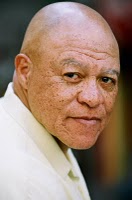
John Beasley
“You’re going to have to take us to the City of Bones. We see it through your eyes. If you do this right, we’ll turn Omaha on its head –and we’re going to do it right.”
Citizen’s killed a man and the death of another haunts him. He needs to make himself right with the Lord. His inward journey to be justified drives the story.
This night’s about working the prologue, when the agitated Citizen appears at Ester’s house demanding his soul be washed. There’s many takes of a tussle he has with Eli (Charles). The commotion awakens Ester, whose serene bearing calms Citizen. The movements, pacing, blocking require much attention.
“Take it again,” Ty repeats. “Good work,” he says after another.
Our missing Ester’s here. Yvette strains finding the right beat. Ty wants her moving slowly, not feebly. Exuding an aura. He contextualizes Ester in the Wilson canon.
“Aunt Ester is someone that’s talked about in several of August Wilson’s plays. She’s a powerful, spiritual woman and her power comes from her faith. This is the first time she’s seen…People are anticipating her, so when you come out there has to be a powerful, spiritual presence.”
After false starts, Yvette hits her stride.
For the reading actors have underlined or highlighted their lines in their scripts.
Ty demands more from his players. “What I want you guys to do is look each other in the eye as you’re saying your lines. Try to lift the words off the page and really talk to the person…Really communicate. Really work on seeing the images.”
“Let’s take it from the top.”
He looks and listens hard as they work. Cheryl gives stage directions, feeding lines as needed. Ty has comments for everyone. Keisha needs to find Mary’s stubbornness, Charles must avoid indicating his actions, et cetera.
“Good, that’s better, let’s do it again,” Ty says. After a bit he declares, “OK, good, let’s get this on its feet.”
Before walking through the scene he takes Keisha aside, reminding her the words she speaks must be anchored in thoughts-images.
Minimal props are introduced. Blocking addressed. The scene plays disjointed, stilted, lifeless. Ty has actors try different things. “See how that feels,” he says.
Jan. 10 – “Let the words do it”
Scene one pits Solly and Mary in a dispute over the pure he peddles. Ty’s been on Keisha to be ornery: “Black Mary has an attitude.” Keisha shoots back, “You want some real attitude? Put some real pure in there.” Laughter.
The action’s fuller, tighter than two nights ago. When Ester enters she asks Mary for the pure. Yvette, realizing what Ester’s supposed to examine, asks, “So that’s what I’m looking at? Is it real dog poop?” She’s teased. “It’s going to be dry. All you gotta do is break it up,” John quips, trading smirks with Ty. They begin again, but Yvette’s still thrown by the doo-doo.

While not the director per se John freely instructs, careful not to overstep Ty’s bounds. John goes over movements with Charles, who, as Eli, responds to loud knocking at Ester’s door. “The urgency will determine how fast you walk,” John says. He shows him. “Does that make sense?”
“OK, let’s sit at the table,” Ty says. All the principals gather round. They read scene three. It flows well. The intensity builds. The volume so high John gestures for them to tamp it down. Carl’s feeling Caesar. In a long speech his bellowing voice rises in anger. After he’s done John comments, “You don’t really have to be that forceful. You’re a big man. It’s all there in the words. Let the words do it.” Carl says, “Yeah, I don’t have to make him a caricature.”
“OK, top of the scene,” Ty says. They read it again. Carl’s quieter yet still formidable. John can be overpowering, too. It’s why he works hard “to bring everybody up to my level of energy.”
John confers with Andre, who’s concerned about finding the right note for Citizen. “He’s a full man. He’s carrying that burden with him,” John says. “You working it. Don’t be afraid to try anything because Tyrone will pull you back.”
Jan. 14 – “Being here, being now”
John helps Keisha modulate her delivery. Her thin voice pitches up to make statements into questions. “Try it again,” he says. “Down on the inflection. Keep going…One more time…Better.” “I’ll work on it” she promises.
The Gem set, which Tyrone builds by day, is more filled out. It’s basically a kitchen, dining room, parlor and staircase.
Ty and John discuss replacing Yvette. She’s missed rehearsals. She’s late for this one. “If she’s not here tonight,” John says, “then that’s it.”
John puts the cast through warm ups. “Get yourself loose. Focus on the breath. Slowly breath in and slowly breath out. It relaxes you. It keeps you focused in the moment and that’s what we need. Being here, being now.”
“One of the worst enemies of an actor is tension,” Ty says. He works with Keisha on a yoga position. He’s cast her and the others for qualities they share with their characters. Expressing that means letting go. “She has the power of Black Mary, but she’s shy to let it out on stage.”
Yvette finally arrives. She flounders with her lines.
John and Ty work with the actors on their characters’ motivations.
Jan. 15 – “It’s gotta be in your voice”
Yvette and John work one-on-one. He presses her to make it real.
“You don’t believe me?” she asks him. “Talk to me,” he says. “Make me hear it. Make me hear what you have to say. It’s gotta be in your voice because I don’t believe those other voices.” She tries again. “There it is. Did you feel the difference?”
Jan. 18 – “I want to get my soul washed”
The set’s now dressed with furniture-fixtures. The stage speckled with paint and sawdust. Ladders lean against walls, electrical cord snakes across the floor.
Per usual Carl’s arrived early to work his lines. He studies at a chair in the lobby. Others find sanctuary in the overstuffed theater tech booth or back stage amid the flats, costumes and props or in the cramped wings. Tonight, Carl and Keisha animatedly share the back stories they’ve concocted.
As actors straggle in, they run lines, scrounge for eats or just kick it. Charles is distracted. His Navy Lt. Commander son has gotten orders for Iraq.
Ty asks Andre why, as Citizen, he’s timid with Ester. “I’m feeling her out. I’m kind of like hesitant because I don’t know her. I’ve got this picture of her that’s she’s a scary looking lady,” he explains. “No, she’s not,” Ty says. “Why are you in her house?” “Because I want to get my soul washed.”
“Just remember you know that she’s the reason you’re there.”
“Lights up.”
Jan. 25 – “Come take the circle”
Nitty-gritty time. The Beasleys grow more direct. Ty announces, “Come take the circle,” a cue for players to form a tight circle in chairs. “Remember the exercise,” he says. Working in close quarters the actors call each other out on whatever rings false. Ty makes sure no one gets away with anything. In this intimate, in-your-face interaction there’s no where to hide. The extreme scrutiny bares all. It’s a living tableaux of pure concentration and naked emotion.
“I don’t believe you,” Ty tells Keisha, who’s plays opposite Carl. “Do you believe her?” he asks Carl, who nods no. “Then why are you letting her go?” “I’m just asking you to believe what you’re saying,” Ty tells all. Keisha goes again, but stops in frustration, saying, “I didn’t feel it.” Ty chastises her for breaking character.
Keisha’s under extra strain these days as her mother and aunt battle illnesses. She says the play provides a needed vehicle to channel her feelings.
Yvette’s AWOL again. And so it goes…
Jan. 29 – “We’ve all got to be in this”
There’s a new Ester. JBT favorite TammyRa Jackson has replaced Yvette with the opening less than two weeks off. A cosmetologist and mother of five, she concedes she’s anxious joining the cast so late but is warmed by how supported she’s made to feel. John won’t push back the run — not with the house sold out opening night. Besides, he’s confident his new Ester will “put the work in.”
“We brought TammyRa in because we felt she was the only that could do this in this short of time. She’s a tremendous talent. As she commits the words she’s bringing a lot of new stuff to the table, which I figured she would.”

Fresh carpet’s been laid down. A noxious chemical smell permeates the auditorium.
With “C’mon y’all” John beckons cast to work the crucial City of Bones scene at the table. The scene’s not jelled. The time’s short, the stakes high, the nerves raw. Music director Leon Adams hovers over the group to consult on song verses.
“We need to find this thing,” John tells the pensive cast, “so I need you to do as much work as you can.”
They begin. “Feel it, feel it,” he says. “See the stars, Andre,” who rocks in Citizen’s trance. TammyRa’s spot-on with the sing-song spell that puts Citizen under. John and Charles take up the chant. When Keisha and Cheryl speak out of character the chant’s broken, making John upset.
“Wait a minute, what’s going on there? Don’t talk during the exercise. You’ve got to stay in this, Keisha. We’ve all got to be in this. This is a very difficult scene. You’ve got to stay focused…This is a chant, and if you focus in on this you can feel a rhythm come up…If you find that, we’ll be half-way home.”
She’s taken aback. He holds her hand to show he’s not mad.
Next he turns to Andre to say he’s unconvinced by Citizen’s born-again epiphany.
“You’re still acting, Andre. You’re not there yet. You gotta go deeper, man. You gotta believe it. Just like in any ritual, any spiritual thing, you gotta be listening and open…in order for it to really take over, and I think you’ll find it in the rhythm. You’ll feel it. You’ll hook up into it.”
They take it again and again. Leo advises more “embellishment” here, more “swung” there. John reminds TammyRa to “keep the contemporary” out of her voice. She asks lots of questions. A good sign. Her young daughter Nadia hangs by her side as she guides Citizen on his way. John’s pleased after another take. “Just paint those beautiful pictures with those beautiful words. That’s nice, nice work.” He wants TammyRa to do more with the title line and cautions Keisha “not to throw away” a strong line about Satan.
A work in progress.
Feb. 6 – “I think we’ll be ready for Friday”
It’s tech week and 48 hours until show time. The stress shows on people’s faces. The tense actors get costumed.
The seats are in. So are Ty’s notes from the staged run through two nights before.
The company lost yesterday to a snowstorm. “I was confident enough to give them that time to study their script and do their work,” John tells a visitor. “They’re finding their characters. We’ve come a long ways. I think we’ll be ready for Friday.”
A key player’s missing, however. Carl’s father died a few days earlier and he’s still in his native St. Louis for the services. Ty’s assumes the role tonight and may open in it Friday. He’s told Carl to take as much time as he needs.
As cast filter in crew clean up the freshly painted set.
“Actors to the stage please,” Ty says. They gather round and he reads aloud their notes — hand-written critiques, refinements. As is his penchant he works from general to specific. He directs packing Caesar’s gun in a waist holster.
“Overall, it was low energy…The audience is not going to be feeling the show. So keep your energy up everybody.”
His individual notes cover stage positions, cues, intonations, intentions. He demonstrates various actions. His most telling comments concern Andre. “If you don’t have that urgency of why you’re there…then it’s a tough show.”
Before the run-through John reiterates “it’s important we keep up the energy. Just keep the story moving along…”
They work late into the night. No preview tomorrow. Another rehearsal. Then it’s on with the show the next night.
Feb. 8 – “It’s finally here”
Opening night.
6:30. An hour to curtain and jitters abound. On stage John runs lines with Carl, who got back last night. John presses him to emphasize each subject. Ty, unhappy the way Carl handles a speech to win over Mary, gets up in his face with, “You got to try to get her on your side. That’s what you’re trying to do here.” “Let me start over,” Carl says. He nails it. “Good, good,” John says.

Carl, hours removed from his dad’s funeral, never considered not performing. He says the play’s “a pretty good distraction.” He frets having “missed some valuable time” but is risking it anyway. “Something’s going to happen — stick around.”
John, wife Judy, Ty, Cheryl and production staff scurry to place props. Tom and Charles, already costumed, work lines backstage. The other actors get made up and change in the dressing room.
Past 7 the lobby fills with patrons. “We’re getting ready to open the house,” John announces. “Hold on, man, I need two minutes,” says Mark O’Leary, who hangs a picture and touches up a faucet. “You got it.”
Andre runs over lines to himself in the wings, pacing in a circle. He and Keisha share a tender moment. “A lot of different emotions,” Keisha says. “It’s finally here, so no matter what you’ve just got to go out there and have fun at this point.”
As insurance, TammyRa’s wearing an earpiece that Cheryl will feed lines into.
The house opens and folks stream in, unaware of the activity on set moments before and the beehive backstage.
Cast members squeeze into the small dressing room. They flit in and out. John, bandana wrapped around his head and big ass walking stick held in his hand, offers final notes to Charles and Keisha. There’s the usual “break-a-leg” well-wishes.
“What’s our time like?” Charles asks. “Not much — like five minutes,” says John, who asks Cheryl to round up the others. All the players cram inside. They clasp hands as Cheryl leads a fervent prayer. She refers to how “we’ve come up against everything” on this show. “We thank you God for this time we’ve been able to work together and join hearts and become friends and even family. We thank you for John Beasley and all of his hard work…He struggles to keep this going…but he hangs in there because he believes in us. He could walk away, but he doesn’t.”
“We pray you God that you will give us victory. Amen.”
A chorus of Amens goes up. John cracks, “Anybody got a collection plate here?”
The full house gets their money’s worth. The rich, naturalistic performances the JBT’s noted for are evident. TammyRa’s imbued with Aunt Ester’s old soul spirit. Keisha’s found Black Mary’s stubborn streak. Andre’s got Citizen’s raw yearning down pat. Carl strikes the right balance as Caesar. John shines as Solly. Charles and Tom believably inhabit their parts. Aside from a few awkward pauses, it’s fine theater. Few glitches or flubs. All the hard work’s paid off.
“I was proud of them.” Ty says afterwards.
Just another opening, another show.
Gem continues through March 2.
Related articles
- A Q & A with Edward Albee: His Thoughts on the Great Plains Theatre Conference, Jo Ann McDowell, Omaha and Preparing a New Generation of Playwrights (leoadambiga.wordpress.com)
- Great Plains Theatre Conference Ushers in New Era of Omaha Theater (leoadambiga.wordpress.com)
- Winners chosen in regional August Wilson competition (seattletimes.nwsource.com)
- Attention Must Be Paid: Arthur Kopit Invokes Arthur Miller to Describe Great Plains Theater Conference Focus on Playwrights and Their Work (leoadambiga.wordpress.com)
- Great Plains Theatre Conference Grows in New Directions (leoadambiga.wordpress.com)
- Featured Great Plains Theatre Conference Playwright Caridad Svich Explore Bicultural Themes (leoadambiga.wordpress.com)
- Jo Ann McDowell’s Theater Passion Leads Her on the Adventure of Her Life: Friend, Confidante, Champion of Leading Playwrights, Directors, Actors and Organizer of Major Theater Festivals and Conferences (leoadambiga.wordpress.com)
- Anthony Chisholm is in the House at the John Beasley Theater in Omaha (leoadambiga.wordpress.com)
- What Happens to a Dream Deferred? Beasley Theater Revisits Lorraine Hansberry’s ‘A Raisin in the Sun’ (leoadambiga.wordpress.com)
- Crowns: Black Women and Their Hats (leoadambiga.wordpress.com)
- Walking Behind to Freedom, A Musical Theater Examination of Race (leoadambiga.wordpress.com)
- Kevyn Morrow’s Homecoming (leoadambiga.wordpress.com)
- Shakespeare on the Green, A Summertime Staple in Omaha (leoadambiga.wordpress.com)
- John Beasley Has it All Going On with a New TV Series, a Feature in Development, Plans for a New Theater and a Possible New York Stage Debut in the Works; He Co-stars with Cedric the Entertainer and Niecy Nash in TVLand’s ‘The Soul Man’ (leoadambiga.wordpress.com)
- A Synergy in North Omaha Harkens a New Arts-Culture District for the City (leoadambiga.wordpress.com)
- Omaha’s Malcolm X Memorial Foundation Comes into its Own, As the Nonprofit Eyes Grand Plans it Weighs How Much Support Exists to Realize Them (leoadambiga.wordpress.com)
Featured Great Plains Theatre Conference playwright Caridad Svich explores bicultural themes
UPDATE: I attended a production of playwright Caridad Svich’s Alchemy of Desire/Dead Man’s Blues at the University of Nebraska at Omaha Theater as part of the ongoing Great Plains Theatre Conference, and the performance did what any good theater should do – it transported me to another place emotionally, psychologically, spiritually. It’s a strong work with deeply resonant themes of loss, grief, war, dislocation, transformation, community, and many more touchstones. Because it is so rich on the page, it would be hard not to mount a production that engages and moves audiences, but I thought director Cindy Melby Phaneuf and her UNO production team, combined with a dynamic cast of actors-singers and two excellent musicians, conceived and executed a visually and aurally stirring dramatic experience that would have captured any audience, anywhere. It was the kind of night out at the theater that makes me hunger for more live theater. I will definitely see Svich’s Twelve Ophelias when UNO produces it in the fall, eager to experience more of her multi-layered work. I will definitely catch at least one more play in the Great Plains conference, which runs through June 4. And, who knows, this just might be the motivational or inspirational spark I needed to tackle a serious rewrite of the play I wrote a few years ago and that I’ve left languishing in the proverbial drawer despite some helpful notes and encouraging words from a local theater professional whose opinion I respect.
Continuing my posts in celebration of the Great Plains Theater Conference, here is a very recent piece I wrote for El Perico, a dual English-Spanish language newspaper published in South Omaha, about Caridad Svich, a featured playwright at the 2011 conference. I did a very long phone interview with Svich and had enough material for a full blown feature profile of her, but my assignment called for a short 700-word piece and that’s what I delivered. I still think I managed to get some sense for who she is and how she views things in the article, though I would have preferred to have more space in order to flesh some points out and to include other elements of her life and story.

Caridad Svich
Featured Great Plains Theatre Conference playwright Caridad Svich explores bicultural themes
©by Leo Adam Biga
Originally published in El Perico
Caridad Svich, a leading figure of the American stage, is a featured playwright at the May 28-June 4 Great Plains Theatre Conference hosted by Metropolitan Community College.
As a playwright, songwriter, editor and translator, Svich explores themes of wanderlust, biculturalism and dislocation. Her experience as the American-born child of an itinerant Argentine father and Cuban mother informs her work.
Her journey as an artist has paralleled her identification with “being a first generation American, trying to sort that out, and living bilingually,” she said by phone from her home in New York City.
“It took me a long time to come to terms with any sense of Latinidad. I think that’s something that came rather late for me, especially as an artist. I really didn’t write my first play that had anything remotely to do with Latino or Latina characters until my last year of graduate school.”
It was only then, she says, she acknowledged “I need to start figuring this out for myself.” Where before she viewed it as something to wrestle with privately, she realized it was permissible, even necessary to explore her identity crisis on the page and the stage. Nudging her in this direction were plays she read by Hispanics. It’s then, she says, she recognized “this is a world I’m attracted to and is a part of me…and I feel a kinship with.”
Participating in the first Latino playwriting workshop of the formidable Maria Irene Fornes (Saritia) became a turning point.
“I wanted to be part of a community of writing that could help me sort that out,” Svich says, adding it helped being around bilingual writers with their own hybrid identities.
Fornes became her “primary mentor.”
Though Svich doesn’t go out of her way to write Latino plays, those cultural themes are inescapably part of her.
“Ultimately I’m a writer, and when I look at the page I don’t prescribe what’s going to happen. I feel like a landscape, a story, a voice, a character will come to me and I’ll follow it wherever it leads, and whether the characters are Latino or not I sort of just take the story where it goes.
“But I feel the fact I am Latino. I am a first generation American that lives with the memories my parents brought with them from their home countries.”
Her work is known, among other things, for its critique of the American Dream.
“Because I am a child of immigrants I’ve always had this double point of view — I see what my parents went through not being from here, subtle levels of discrimination. Even though I was born here, I was treated sometimes as an immigrant myself.
“I feel like there’s always embedded in the work what is the promise that America as a concept holds and what is the reality. I have a couple plays that deal specifically with immigrant characters, but I also have plays that deal with characters who are elsewhere, in unnamed countries outside the U.S., who are thinking about what their America is and the image of America that’s exported to them.”

Svich says her critiques are meant to be constructive. Besides, she says, critical examination is “part of the job,” adding, “Part of the position of being an artist is to stand outside — it’s your duty to be able to reflect back.”
She also takes seriously her role as an established playwright. At the Great Plains conference she’ll be lending her expertise to emerging playwrights at panel discussions and workshops.
One of her plays, Alchemy of Desire/Dead Man’s Blues, will be performed May 29 at 7:30 p.m. in the Weber Fine Arts Building on the University of Nebraska at Omaha’s main campus.
She describes this early, bluesy work as “still a touchstone play for me.” Set in the bayou, it’s about a woman mourning the loss of her military husband in a desert war. Haunted by the ghost of her man, the young widow is befriended by a community of women who try helping her through this passage of life.
It’s a love story with songs, influenced by the blues and call-and-response traditions.
A later Svich play, Twelve Ophelias, will be performed in the fall by UNO Theater. She calls this bluegrass oratorio an elemental play set in a primal landscape with the resurrected Ophelia visiting the ghosts of her past for some reckoning.
“I wanted to free her from her destiny in the original Shakespeare and give her new life by like getting over a really bad love affair and moving on.”
For conference schedule, artist and ticket information, call 402-457-2618 or visit theatreconference@mccneb.edu.
Related articles
- Great Plains Theatre Conference Ushers in New Era of Omaha Theater (leoadambiga.wordpress.com)
- Great Plains Theatre Conference Grows in New Directions (leoadambiga.wordpress.com)
- Jo Ann McDowell’s Theater Passion Leads Her on the Adventure of Her Life: Friend, Confidante, Champion of Leading Playwrights, Directors, Actors and Organizer of Major Theater Festivals and Conferences (leoadambiga.wordpress.com)
- OLLAS, the Office of Latino and Latin American Studies at the University of Nebraska at Omaha, A Melting Pot of Latino/Latin American Concerns (leoadambiga.wordpress.com)
- A Q & A with Playwright Caridad Svich, a Featured Artist at the Great Plains Theatre Conference (leoadambiga.wordpress.com)
- Attention Must Be Paid: Arthur Kopit Invokes Arthur Miller to Describe Great Plains Theater Conference Focus on Playwrights and Their Work (leoadambiga.wordpress.com)
- Playwright/Director Glyn O’Malley, Measuring the Heartbeat of the American Theater (leoadambiga.wordpress.com)
- Playwright John Guare Talks Shop on Omaha Visit Celebrating His Acclaimed ‘Six Degrees of Separation’ (leoadambiga.wordpress.com)
- A Q & A with Edward Albee: His Thoughts on the Great Plains Theatre Conference, Jo Ann McDowell, Omaha and Preparing a New Generation of Playwrights (leoadambiga.wordpress.com)
Writers Joy Castro and Amelia Maria de la Luz Montes explore being women of color who go from poverty to privilege

Joy Castro
Writers Joy Castro and Amelia Maria de la Luz Montes explore being women of color who go from poverty to privilege
©by Leo Adam Biga
Originally published in El Perico
Two University of Nebraska-Lincoln scholars and authors, one Mexican-American, the other Cuban-American, contributed pieces to a new anthology of essays by women, An Angle of Vision (University of Michigan Press).
The book derives its title from the essay by Joy Castro, an associate professor in the Department of English at UNL and the author of a 2005 memoir, The Truth Book (Arcade Press). Her colleague, Amelia Maria de la Luz Montes, is an associate professor of English and Ethnic Studies and director of UNL’s Institute for Ethnic Studies. Montes penned the essay “Queen for a Day.” She’s also edited a new edition of a 19th century novel written by a Mexican-American woman. The book, Who Would Have Thought It? (Penguin Classics), is a satiric look at New England through the eyes of a teenage Latina.
All the authors in Angle of Vision hail from poor, working-class backgrounds, a counterpoint to the privileged lives they lead today in academia and publishing. As Castro said, “when you see from a different angle, you notice different things.” The authors use the past and present as a prism for examining class, gender, ethnicity and identity. Each navigates realities that come with their own expectations and assumptions, making these women ever mindful of the borders they cross.
Montes and Castro are intentional about not diminishing their roots but celebrating them in the various worlds they traverse — higher education, literature and family.
Said Castro, “Getting out of poverty, through effort and luck, has never felt like permission to say, ‘Whew! Now I can kick back and enjoy myself.’ Acknowledging my background means that much of my work, whether it’s the short stories and essays I write or the working-class women’s literature I teach, focuses on bringing attention to economic injustice as well as racism and sexism.
“Latinidad is hugely important to me, and it is definitely connected with class and gender. Because of the great wave of well-to-do Cuban immigrants who came to the USA when Fidel Castro took power, many people assume all Cuban-Americans are wealthy, right-leaning, and so on. That wasn’t the case for my family, who had been in Key West since the 1800s and were working-class and lefty-liberal. In a forthcoming essay, ‘Island of Bones,’ I explore that little-known history.”
Castro embraces the many dimensions of her ethnicity.
“Mostly, my Latinidad has been a source of strength, comfort and great beauty throughout my life. It means food, music, love, literature, home. I’m proud to belong to a rich, strong, vibrant culture, and I love teaching my students about the varied accomplishments and ongoing struggles of our people.”
Being a person of color in America though means confronting some hard things. She said her father’s experience with racism and police abuse caused him to assimilate at any price. “For my brother Tony and me our father’s life is a cautionary tale about the costs of shame and of trying to erase who you are.”
By contrast, she said, “We raised our children to be proud of their heritage. My son is fluent in Spanish, which my father refused to speak at home.”
Complicating Castro’s journey has been the aftermath of the abusive childhood she endured, a facet of her past she long sought to suppress.
The past was also obscured in the Montes home. Her Mexican immigrant mother endured a bad first marriage. Amelia didn’t find out about her struggles until age 25. It took another 25 years before she felt mature enough to write about it.
“I do think the experience of coming from a working class family and being a minority we have certain pressures in society,” said Montes. “In order to be successful or in order to assimilate as my mother worked hard to do you had to not let on the oppressions infringing on your own spaces. You processed them in other ways, but outside of the house or outside your own private sphere you made sure you’re presenting a suitable facade.
“It is a survival mechanism. At the same time one must be careful because if you let it encompass you, then the facade overtakes you and you lose who you are.”
Being a lesbian on top of being a Latina presents its own challenges. Montes said in fundamentalist Christian or conservative Catholic Latino communities her sexual identity poses a problem. She’s weary of being categorized but said, “Labels are always necessary when there’s inequality. If there wasn’t inequality we wouldn’t need these labels, but we need them in order to be present and to have people understand. I always tell my students that just because I’m Latina does not mean I represent all Latinas or all Latinos, and that goes for lesbians as well.”
For Montes, with every “border fence” crossed there’s reward and price.
“There’s success, there’s achievement,” she said, “but there’s also loss because once you cross a fence that means you’re leaving something behind. There is a celebration in knowing my mother is very happy I have succeeded as a first generation Latina. I will never forget where my mother came from and who she is, even the sufferings and difficult times she journeyed through.”

Montes is now writing a memoir to reconcile her own self. “In looking back I’m processing what happened in order to better understand it and to also claim where I come from, so that I don’t hide I come from a working class background, or I don’t only speak English, but make sure I continue to practice my Spanish.”
Castro found writing her memoir liberated her from the veil of secrecy she wore.
“Having my story out there in the world helped me let go of the impulse to hide the truth of my life. I’m still pretty shy, perhaps by nature, but disclosing my story helped me let go of shame. And I was hired at UNL ‘because’ of my book, so everyone knew in advance exactly what kind of person they were getting. What a relief. It’s easier to live in the world when you can be free and open about who you are and where you come from. You can breathe. You’re not anxious. You’re not trying to perform something you’re not.”
She said the project helped her appreciate just how far she’s come.
“Laying it all out in book form, I came to respect the difficulty of what I’d had to navigate. In some ways, my journey was as challenging as moving from one country, one culture, to another. All the new customs have to be learned. Also, another great benefit was that writing it down…shaping it into a coherent narrative for readers helped me gain objectivity and distance on the material. It became simply content in a book, rather than a terrible weight I carried around inside me.”
Castro said her experience made her sensitive to what people endure.
“We never know what other people are carrying. In fact, sometimes they’re going to great lengths to conceal their burdens, to pass as normal and okay. Remembering that simple truth can help us be gentle with each other.”
Castro and Montes know the emotional weight women bear in having to be many different things to many different individuals, often at the cost of denying themselves . Each writer applies a feminist perspective to women’s roles.
“I’m glad to say things are changing, but despite many advances in women’s rights, Latinas are often pushed, even today, to put men first, to have babies, to love the church without question, to be submissive and obedient to authority,” said Castro.” “It took me a long time to crawl out from under the expectations I was raised with.”
“It seems to me in the early 20th century there was a big push, a big advancement, then we fell off the mountain in the ’40s, ’50s, 60s, then came back in the ’70s and ’80s. and right now I think we’re retreating backwards again,” said Montes. “The vast majority of people out of work and homeless are women and children. I’m heartsick about what’s going on in Calif. and other parts of the country concerning education and how more and more the doors of education are closing to working class people and to out-of-work minorities because of the hikes in tuition, et cetera.”
Montes concedes there’s “a lot of advances, too,” but added, “I’m always wanting us to keep going forward.”
Castro feels obligated to use her odyssey as a tool of enlightenment and empowerment. “I’m lucky and grateful to be someone who has made it out of poverty, abuse and voicelessness, who has made it to a position where I have a voice. It’s an important responsibility. My own published fiction, nonfiction and poetry all concern issues of poverty. I make a point of teaching literature by poor people in the university classroom, where most of my students are middle-class.”
She’s taught free classes for the disadvantaged at public libraries and through Clemente College. For two years now she’s mentored a young Latina-Lakota girl born in poverty. “In choosing to mentor, I wanted to keep a strong, personal, meaningful connection to what it means to be young and female and poor. I wanted to be the kind of adult friend I wished for when I was a girl,” said Castro.
Both authors were delighted to be represented in Angle of Vision. “It was a surprise and a great compliment,” said Castro. “It’s such a good book with so many wonderful writers.” “The resilience and strength of these writers in navigating through difficult childhoods really comes out. It’s amazing,” said Montes. Both have high praise for editor Lorraine Lopez. The fact that a pair of UNL friends and colleagues ended up being published together makes it all the sweeter.
To find more works by them visit their web sites: joycastro.com and ameliamontes.com.
OLLAS: A melting pot of Latino/Latin American concerns
As Nebraska‘s Hispanic population has grown significantly the past two decades there’s an academic-research-community based organization, OLLAS or Office of Latino and Latin American Studies, at the University of Nebraska at Omaha that’s taken a lead role in engaging policymakers and stakeholders in Latino issues and trends impacting the state. I’ve had a chance the past two years to get to know some of the people who make OLLAS tick and to sample some of their work, and the level of scholarship and dedication on display is quite impressive. The following story for El Perico gives a kind of primer on what OLLAS does. Increasingly, my blog site will contain posts that repurpose articles I’ve written for El Perico, a dual English-Spanish language newspaper in Omaha and a sister publication of The Reader (www.thereader.com). These pieces cover a wide range of subjects, issues, programs, organization, and individuals within the Latino community. It has been my privilege to get to know better Omaha’s and greater Nebraska’s Latino population, though in truth I’ve only barely dipped my feet into those waters. But it’s much the same enriching experience I’ve enjoyed covering Omaha’s African-American and Jewish communities.
OLLAS:
A melting pot of Latino/Latin American concerns
©by Leo Adam Biga
Originally published in El Perico
Despite an ivory tower setting, the Office of Latino/Latin American Studies at the University of Nebraska at Omaha is engaged in community from-the-grassroots-to-the-grasstops through teaching, research and service.
The far reach of OLLAS, established in 2003, is as multifaceted as Latino-Latin American cultures and the entities who traverse them.
“We work very hard to bring to the table the different voices and stakeholders that seldom come together but that must be part of the same conversations. We do that very well,” said director and UNO sociology professor Lourdes Gouveia.
“We’ve been able to construct a program around this very out-of-the-box idea” that academia doesn’t happen in isolation of community engagement and vice-versa. Instead, she said these currents occur together, feeding each other.
“The impetus for creating this center was driven by what informs everything in my life, which is intellectual interest right along with an interest in addressing issues of inequality and social justice and making a difference wherever I am. So, for me, OLLAS was a logical project we needed to undertake.”
At the time of its formation Gouveia was researching immigration’s impact in Lexington, Neb. “It was clear to those of us witnessing all the changes going on we needed a space in the university that addressed those changes with kind of freshened perspectives very different from the old models of ethnic studies.”
Assistant director and UNO political science professor Jonathan Benjamin-Alvarado said, “We very intentionally created something that would have a community base and not talk down to it, but try to make it a part of what we do. We wanted our work to be not only politically but socially relevant and that has been the basis for the outreach projects we’ve undertaken. OLLAS has been central to helping me live out what I do in my community.”
OLLAS produces reports on matters affecting Latino-Latin American segments in Nebraska, including the economic impact of immigrants, voter mobilization results and demographic trends. Gouevia said the office takes pains to distinguish the Guatamalan experience from the Mexican experience and so on. She said it can be daunting for Individuals and organizations to navigate the rapid social-political-cultural streams running through this diverse landscape of highly mobile populations and fluid issues. OLLAS serves as an island of calm in the storm.
“I think people take solace in the fact that when things get too muddled and when things are going too fast ,” she said, “they can turn to us, whether as an organization or as individuals, and say, What do you think of this?”
“We’re a resource for the community. When it needs perhaps more academic analysis of something, they look to OLLAS for that,” said Benjamin-Alvarado. “I think one of the other things people see us as is a real resolute voice — not that we’re going to go out and be the advocates — but when they’re involved and things get crazy, they’ll call us here and say, ‘Are we doing the right thing?’ People look to us for guidance and support as they’re trying to build a foundation.”
Helping build capacity within Latino-Latin American communities is a major thrust of OLLAS. No one at OLLAS pretends to have all the answers.
“We recognize that while we may be able to provide some reflection, we’re not the complete experts about what goes on in this community. We learn an enormous from our community work,” Gouveia said. “We engage on a very egalitarian basis with community organizations and treat them with the respect they deserve as the fonts of knowledge they bring to the realities.”
“We’re actually very intentional about not assuming we know everything and that we have to lead everything,” said Benjamin-Alvarado. “For example, we often don’t lead the community meetings, we sit in the back of the room and let others assume those roles of leadership because they have been leading. I think the fact we treat others as equal and we’re willing to listen to them has engendered genuine partnerships in the community.’
One of those strong partnerships is with the Heartland Workers Center, an Omaha nonprofit that helps immigrant laborers deal with the challenges they face. The center teaches workers their rights and responsibilities.
Benjamin-Alvarado said far from the patriarchal, missionary approach others have traditionally taken with minority communities, OLLAS looks to genuinely engage citizens and organizations in ongoing, reciprocal relationships.
“We don’t go in and bless the community and come back, Oh look how good we have done, because that would be the wrong message. That has been the model that’s been utilized in the past by a lot of academic institutions in response to these types of communities, and they resent it greatly. They’ve been burned so many times in the past. We make sure what we do is interactive and iterative, and so it’s not a one-off. It’s something we continue to go back to all the time. It’s this constant back and forth, give and take.”
He said he and Gouveia recognize “there are other people in the community with immense knowledge who can articulate the issues in a way that resonates with the community more than we as academics could ever do.”
OLLAS also reaches far beyond the local-regional sphere to broader audiences.
“Something I think people are surprised about is how globally connected we are,” said Benjamin-Alvarado. “We are one of the major nodes of a global network on migration development both as scholars and ambassadors of the university. We’re all over the planet. It’s a demonstration of just how deeply connected we are.”
Gouveia said the May 14-15 Cumbre Summit of the Great Plains, which OLLAS organizes and hosts, “fits very well” the transnational focus of OLLAS. The event is expected to draw hundreds of participants to address, in both macro and micro terms, the theme of human mobility and the promise of development and political engagement. Presenters are slated to come from The Philipines, Ecuador, Mexico, Ireland, South Africa and India as well as from the University of Chicago and the Brookings Institution in the U.S.
A community organizations workshop will examine gender, migration and civic engagement. Representatives from social service agencies, the faith community, education, government and other sectors are expected to attend the summit, which is free and open to the public.
“We work with all these publics very carefully so that the community feels really invited as co-participants in these discussions, not simply as spectators or a passive public,” said Gouveia, who added the programs are interactive in nature.
“We put local people with the sacred cows, we mix and match, and the panels take on a life of their own,” said Benjamin-Alvarado. “An academic will be talking about something and a local will say, ‘Thats’ not the way it happens,’ and to me that’s music to my ears.”
Another example of the international scope of OLLAS is the summer service learning program that takes UNO students to Peru. Benjamin-Alvarado said the experience offers participants “an interesting perspective on urban Latin America. All of them come back completely motivated and transformed by what they learn and how they utilize their classroom lessons. These are not summer fun trips. the students work the whole time in a shantytown in Lima.”
This summer he’ll be a International Service Volunteers program faculty adviser/coordinator in either Ecuador or the Dominican Republic. He said the research and engagement he and Gouveia do abroad and at national conferences increases their knowledge and understanding, informing the analysis and teaching they do.
“Our college has said we’re a prime example of what’s now called the leadership of engagement,” said Gouveia. She added that the broad perspective they offer is why everyone from educators to elected officials to the Chamber of Commerce look to them for advice. “I’m very proud of how many people contact us. It’s a great feeling to know that we do fill a major void in this whole region to do this very unique combination of things,” she said.
Opening new spaces for learning is another mission objective of OLLAS. It has sponsored a cinemateca series at Film Streams featuring award-winning movies from Spanish-speaking countries. It’s involved in an outreach program at the Douglas Country Correctional Center, where UNO faculty provide continuing education to immigrant inmates. Gouveia and Benjamin-Alvarado said it’s about bringing compassion and humanity to powerless, voiceless people whose only crime may be being undocumented and using falsified records.
The scholars are satisfied that anyone who spends any time with OLLAS comes away with a deeper appreciation of Latino-Latin American cultures, history, issues. Benjamin-Alvarado said OLLAS grads are today teaching in classrooms, leading social service agencies, working in the public sector, attending law school. He fully expects some to hold key elected offices in the next 10 years. He and Gouevia feel that a more nuanced perspective of the Latino/Latin American experience can only benefit policymakers and citizens.
- Latino Voters Key to 2012 Florida Win (politics.blogs.foxnews.com)
- Latino Voices are Crucial in the Wake of Government Shutdown (prnewswire.com)
- Latinos Have Become The Largest Minority in The U.s (socyberty.com)
- Omaha’s St. Peter Catholic Church Revival Based on Restoring the Sacred (leoadambiga.wordpress.com)
- El Museo Latino in Omaha Opened as the First Latino Art and History Museum and Cultural Center in the Midwest (leoadambiga.wordpress.com)
- Omaha Address by Cuban Archbishop Jaime Ortega Sounds Hopeful Message that Repression in Cuba is Lifting (leoadambiga.wordpress.com)
- Featured Great Plains Theatre Conference Playwright Caridad Svich Explore Bicultural Themes (leoadambiga.wordpress.com)
- Long Live Roberto Clemente, A New Exhibit Looks at this Late King of the Latin Ball Players and Human Rights Hero (leoadambiga.wordpress.com)
Related articles
- El Museo Latino in Omaha Opened as the First Latino Art and History Museum and Cultural Center in the Midwest (leoadambiga.wordpress.com)
- Omaha Address by Cuban Archbishop Jaime Ortega Sounds Hopeful Message that Repression in Cuba is Lifting (leoadambiga.wordpress.com)
- Featured Great Plains Theatre Conference Playwright Caridad Svich Explore Bicultural Themes (leoadambiga.wordpress.com)
- Long Live Roberto Clemente, A New Exhibit Looks at this Late King of the Latin Ball Players and Human Rights Hero (leoadambiga.wordpress.com)
Omaha native Steve Marantz looks back at city’s ’68 racial divide through prism of hoops in new book, “The Rhythm Boys of Omaha Central”
Omaha native Steve Marantz looks back at city’s ’68 racial divide through prism of hoops in new book, “The Rhythm Boys of Omaha Central”
©by Leo Adam Biga
Originally appeared in The Reader (www.thereader.com)
America’s social fabric came asunder in 1968. Vietnam. Civil rights. Rock ‘n’ roll. Free love. Illegal drugs. Black power. Campus protests. Urban riots.
Omaha was a pressure cooker of racial tension. African-Americans demanded redress from poverty, discrimination, segregation, police misconduct.
Then, like now, Central High School was a cultural bridge by virtue of its downtown location — within a couple miles radius of ethnic enclaves: the Near Northside (black), Bagel (Jewish), Little Italy, Little Bohemia. A diverse student population has enriched the school’s high academic offerings.
Steve Marantz was a 16-year-old Central sophomore that pivotal year when a confluence of social-cultural-racial-political streams converged and a flood of emotions spilled out, forever changing those involved.
Marantz became a reporter for Kansas City and Boston papers. Busy with life and career, the ’68 events receded into memory. Then on a golf outing with classmates the conversation turned to that watershed and he knew he had to write about it.
“It just became so obvious there’s a story there and it needs to be told,” he says.
The result is his new book The Rhythm Boys of Omaha Central: High School Basketball and the ’68 Racial Divide (University of Nebraska Press).
Speaking by phone from his home near Boston, Marantz says, “It appealed to me because of the elements in it that I think make for a good story — it had a compact time frame, there was a climatic event, and it had strong characters.” Besides, he says sports is a prime “vehicle for examining social issues.”
Conflict, baby. Caught up in the maelstrom was the fabulous ’68 Central basketball team, whose all-black starting five earned the sobriquet, The Rhythm Boys. Their enigmatic star, Dwaine Dillard, was a 6-7 big-time college hoops recruit. As if the stress of such expectations wasn’t enough, he lived on the edge.
At a time when it was taboo, he and some fellow blacks dated white girls at the school. Vikki Dollis was involved with Dillard’s teammate, Willie Frazier. In his book Marantz includes excerpts from a diary she kept. Marantz says her “genuine,” “honest,” angst-filled entries “opened a very personal window” that “changed the whole perspective” of events for him. “I just knew the vague outlines of it. The details didn’t really begin to emerge until I did the reporting.”
Functionally illiterate, Dillard barely got by in class. A product of a broken home, he had little adult supervision. Running the streets. he was an enigma easily swayed.
Things came to a head when the polarizing Alabama segregationist George Wallace came to speak at Omaha’s Civic Auditorium. Disturbances broke out, with fires set and windows broken along the Deuce Four (North 24th Street.) A young man caught looting was shot and killed by police.
Dillard became a lightning rod symbol for discontent when he was among a group of young men arrested for possession of rocks and incendiary materials. This was only days before the state tournament. Though quickly released and the charges dropped, he was branded a malcontent and worse.
White-black relations at Central grew strained, erupting into fights. Black students staged protests. Marantz says then-emerging community leader Ernie Chambers made his “loud…powerful…influential” voice heard.
The school’s aristocratic principal, J. Arthur Nelson, was befuddled by the generation gap that rejected authority. “I think change overtook him,” says Marantz. “He was of an earlier era, his moment had come and gone.”
Dillard was among the troublemakers and his coach, Warren Marquiss, suspended him for the first round tourney game. Security was extra tight in Lincoln, where predominantly black Omaha teams often got the shaft from white officials. In Marantz’s view the basketball court became a microcosm of what went on outside athletics, where “negative stereotypes” prevailed.
Central advanced to the semis without Dillard. With him back in the lineup the Eagles made it to the finals but lost to Lincoln Northeast. Another bitter disappointment. There was no violence, however.
The star-crossed Dillard went to play ball at Eastern Michigan but dropped out. He later made the Harlem Globetrotters and, briefly, the ABA. Marantz interviewed Dillard three weeks before his death. “I didn’t know he was that sick,” he says.
Marantz says he’s satisfied the book’s “touched a chord” with classmates by examining “one of those coming of age moments” that mark, even scar, lives.
An independent consultant for ESPN’s E: 60, he’s rhe author of the 2008 book Sorcery at Caesars about Sugar Ray Leonard‘s upset win over Marvin Hagler and is working on new a book about Fenway High School.
Marantz was recently back in Omaha to catch up with old Central classmates and to sign copies of Rhythm Boys at The Bookworm.
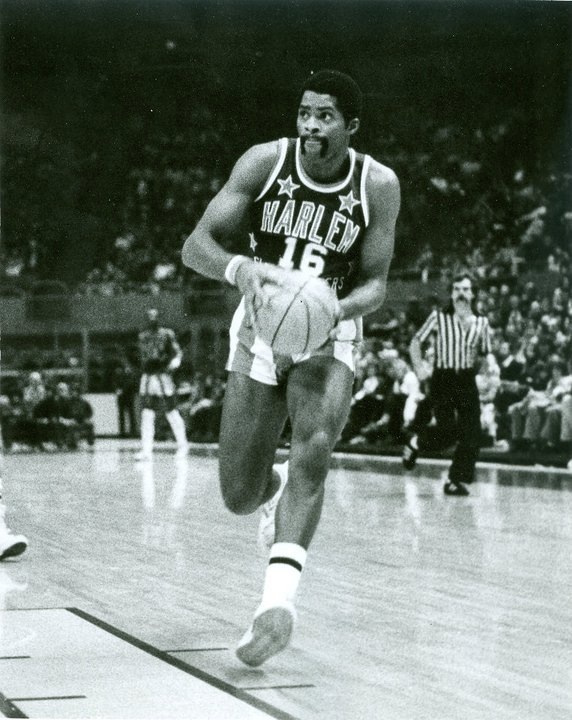 |
 |
 |
Related articles
- Walking Behind to Freedom, A Musical Theater Examination of Race (leoadambiga.wordpress.com)
- Back in the Day, Native Omaha Days is Reunion, Homecoming, Heritage Celebration and Party All in One (leoadambiga.wordpress.com)
- Big Bad Buddy Miles (leoadambiga.wordpress.com)
- Arno Lucas, Serious Sidekick (leoadambiga.wordpress.com)
- Omowale Akintunde’s In-Your-Face Race Film for the New Millennium, ‘Wigger,’ Introduces America to a New Cinema Voice (leoadambiga.wordpress.com)
- Native Omaha Days: A Black is Beautiful Celebration, Now, and All the Days Gone By (leoadambiga.wordpress.com)
- Native Omahans Take Stock of the African-American Experience in Their Hometown (leoadambiga.wordpress.com)
UNO wrestling dynasty built on tide of social change
In my view, one of the most underreported stories coming out of Omaha the last 50 years was what Don Benning achieved as a young black man at the University of Nebraska at Omaha. At a time and in a place when blacks were denied opportunity, he was given a chance as an educator and a coach and he made the most of the situation. The following story, a version of which appeared in a March 2010 issue of The Reader (www.thereader.com), charted his accomplishments on the 40th anniversary of making some history that has not gotten the attention it deserves. He made history at then-Omaha University as the nation’s first black coach of a major team sport at a predominantly white institution of higher education. I believe he was also the first black coach to lead a team at a predominantly white high education institution to a national championship. He laid the groundwork for the UNO wrestling dynasty that followed some years later under the leadership of Mike Denney, who always credited Don with getting the whole thing started.
In leading his team to the 1970 NAIA national title, when they roundly beat teams from from larger schools, he gathered around him a diverse group of student-athletes at a time when this was not the norm. A team coached by a young black man and comprised of whites, blacks and Latinos traveled to some inhospitable places where race baiting occured but he and his student-athletes never lost their cool. They let their actions speak for them.
One of the pleasures in doing this story was getting to know Don Benning, a man of high character who took me into his confidence. I shall always be grateful.
As the March 12-13 Division II national wrestling championships get underway at the University of Nebraska at Omaha, it’s good to remember wrestling, not hockey, is the school’s true marquee sport
Host UNO has been a dominant fixture on the D-II wrestling scene for decades. Its No. 1-ranked team is the defending national champs and is expected to finish on top again under Mike Denney, the coach for five of UNO’s six national wrestling titles. The first came 40 years ago amid currents of change.
Every dynasty has a beginning and a narrative. UNO’s is rooted in historic firsts that intersect racial-social-political happenings. The events helped give a school with little going for it much-needed cachet and established a tradition of excellence unbroken now since the mid-1960s.
It all began with then-Omaha University president Milo Bail hiring the school’s first African-American associate professor, Don Benning. The UNO grad had competed in football and wrestling for the OU Indians and was an assistant football coach there when Bail selected him to lead the fledgling wrestling program in 1963. The hire made Benning the first black head coach of a varsity sport (in the modern era) at a predominantly white college or university in America. It was a bold move for a nondescript, white-bread, then-municipal university in a racially divided city not known for progressive stances. It was especially audacious given that Benning was but 26 and had never held a head coaching position before.
Ebony Magazine celebrated the achievement in a March 1964 spread headlined, “Coach Cracks Color Barrier.” Benning had been on the job only a year. By 1970 he led UNO to its first wrestling national title. He developed a powerful program in part by recruiting top black wrestlers. None ever had a black coach before.
Omaha photographer Rudy Smith was a black activist at UNO then. He said what Benning and his wrestlers did “was an extension of the civil rights activity of the ’60s. Don’s team addressed inequality, racism, injustice on the college campus. He recruited people accustomed to challenges and obstacles. They were fearless. Their success was a source of pride because it proved blacks could achieve. It opened the door for other advancements at UNO by blacks. It was a monumental step and milestone in the history of UNO.”
Indeed, a few years after Benning’s arrival, UNO became the site of more black inroads. The first of these sawMarlin Briscoe star at quarterback there, which overturned the myth blacks could not master the cerebral position. Briscoe went on to be the first black starting QB in the NFL. Benning said he played a hand in persuading UNO football coach Al Caniglia to start Briscoe. Benning publicly supported efforts to create a black studies program at UNO at a time when black history and culture were marginalized. The campaign succeeded. UNO established one of the nation’s first departments of Black Studies. It continues today.
Once given his opportunity, Benning capitalized on it. From 1966 to 1971 his racially and ethnically diverse teams went 65-6-4 in duals, developing a reputation for taking on all comers and holding their own. Five of his wrestlers won a combined eight individual national championships. A dozen earned All-America status.
That championship season one of Benning’s two graduate assistant coaches was fellow African-American Curlee Alexander. The Omaha native was a four-time All-American and one-time national champ under Benning. He went on to be one of the winningest wrestling coaches in Nebraska prep history at Tech and North.
Benning’s best wrestlers were working-class kids like he and Alexander had been:
Wendell Hakanson, Omaha Home for Boys graduateRoy and
Mel Washington, black brothers from New York by way of cracker GeorgiaBruce “Mouse” Strauss, a “character” and mensch from back East
Paul and Tony Martinez, Latino south Omaha brothers who saw combat in Vietnam
Louie Rotella Jr., son of a prep wrestling legend and popular Italian bakery family
Gary Kipfmiller, a gentle giant who died young
Bernie Hospokda, Dennis Cozad, Rich Emsick, products of south Omaha’s Eastern European enclaves.
Jordan Smith and Landy Waller, prized black recruits from Iowa
|
Half the starters were recent high school grads and half nontraditional students in their 20s; some, married with kids. Everyone worked a job.
|
The team’s multicultural makeup was “pretty unique” then, said Benning. In most cases he said his wrestlers had “never had any meaningful relationships” with people of other races before and yet “they bonded tight as family.” He feels the way his diverse team came together in a time of racial tension deserves analysis. “It’s tough enough to develop to such a high skill level that you win a national championship with no other factors in the equation. But if you have in the equation prejudice and discrimination that you and the team have to face then that makes it even more difficult. But those things turned into a rallying point for the team. The kids came to understand they had more commonalities than differences. It was a social laboratory for life.”
“We were a mixed bag, and from the outside you would think we would have a lot of issues because of cultural differences, but we really didn’t,” said Hospodka, a Czech- American who never knew a black until UNO. “We were a real, real tight group. We had a lot of fun, we played hard, we teased each other. Probably some of it today would be considered inappropriate. But we were so close that we treated each other like brothers. We pushed buttons nobody else better push.”
“We didn’t have no problems. It was a big family,” said Mel Washington, who with his late brother Roy, a black Muslim who changed his name to Dhafir Muhammad, became the most decorated wrestlers in UNO history up to then. “You looked around the wrestling room and you had your Italian, your whites, your blacks, Chicanos, Jew, we all got together. If everybody would have looked at our wrestling team and seen this one big family the world would have been a better place.”
If there was one thing beyond wrestling they shared in common, said Hospodka, it was coming from hardscrabble backgrounds.
“Some of the kids came from situations where you had to be pretty tough to survive,” said Benning, who came up that way himself in a North O neighborhood where his was the only black family.
The Washington brothers were among 11 siblings in a sharecropping tribe that moved to Rochester, N.Y. The pair toughened themselves working the fields, doing odd-jobs and “street wrestling.”
Dhafir was the team’s acknowledged leader. Mel also a standout football lineman, wasn’t far behind. Benning said Dhafir’s teammates would “follow him to the end of the Earth.” “If he said we’re all running a mile, we all ran a mile,” said Hospodka.
Having a strong black man as coach meant the world to Mel and Dhafir. “Something I always wanted to do was wrestle for a black coach. It was about time for me to wrestle for my own race,” said Mel. The brothers had seen the Ebony profile on Benning, whom they regarded as “a living legend” before they ever got to UNO. Hospodka said Benning’s race was never an issue with him or other whites on the team.
Mel and Dhafir set the unrelenting pace in the tiny, cramped wrestling room that Benning sealed to create sauna-like conditions. Practicing in rubber suits disallowed today Hospodka said a thermostat once recorded the temperature inside at 110 degrees and climbing. Guys struggled for air. The intense workouts tested physical and mental toughness. Endurance. Nobody gave an inch. Tempers flared.
Gary Kipfmiller staked out a corner no one dared invade. Except for Benning, then a rock solid 205 pounds, who made the passive Kipfmiller, tipping the scales at 350-plus, a special project. “I rode him unmercifully,” said Benning. “He’d whine like a baby and I’d go, ‘Then do something about i!.” Benning said he sometimes feared that in a fit of anger Kipfmiller would drop all his weight on him and crush him.
Washington and Hospodka went at it with ferocity. Any bad blood was left in the room.
“As we were a team on the mat, off the mat we watched out for each other. Even though we were at each other’s throats on the wrestling mat, whatever happened on the outside, we were there. If somebody needed something, we were there,” said Paul Martinez, who grew up with his brother Tony, the team’s student trainer-manager, in the South O projects. The competition and camaraderie helped heal psychological wounds Paul carried from Vietnam, where he was an Army infantry platoon leader.
An emotional Martinez told Benning at a mini-reunion in January, “You were like a platoon leader for us — you guided us and protected us. Coming from a broken family, I not only looked at you as a coach but as a father.” Benning’s eyes moistened.
Joining them there were other integral members of UNO’s 1970 NAIA championship team, including Washington and Hospodka. The squad capped a perfect 14-0 dual season by winning the tough Rocky Mountain Athletic Conference tournament in Gunnison, Colo. and the nationals in Superior, Wis. It was the first national championship won by a scholarship team at the school and the first in any major sport by a Nebraska college or university.
Another milestone was that Benning became the first black coach to win an integrated national championship in wrestling and one of the first to do so in any sport at any level. He earned NAIA national coach of the year honors in 1969.
University of Washington scholar John C. Walter devotes a chapter to Benning’s historymaker legacy in a soon-to-be-published book, Better Than the Best. Walter said Benning’s “career and situation was a unique one” The mere fact Benning got the opportunity he did, said Walter, “was extraordinary,” not to mention that the mostly white student-athletes he taught and coached accepted him without incident. Somewhere else, he said, things might have been different.
“He was working in a state not known for civil rights, that’s for sure,” said Walter. “But Don was fortunate he was at a place that had a president who acted as a catalyst. It was a most unusual confluence. I think the reason why it happened is the president realized here’s a man with great abilities regardless of the color of his skin, and for me that is profound. UNO was willing to recognize and assist a young black man trying hard to distinguish himself and make a name for his university. That’s very important.”
Walter said it was the coach’s discipline and determination to achieve against all odds that prepared him to succeed.
Benning’s legacy can only be fully appreciated in the context of the time and place in which he and his student-athletes competed. For example, he was set to leave his hometown after being denied a teaching post with the Omaha Public Schools, part of endemic exclusionary practices here that restricted blacks from obtaining certain jobs and living in many neighborhoods. He only stayed when Bail chose him to break the color line, though they never talked about it in those terms.
“It always puzzled me why he did that knowing the climate at the university and in K-12 education and in the community pointed in a different direction. Segregation was a way of life here in Omaha. It took a tremendous amount of intestinal fortitude of doing what’s right, of being ready to step out on that limb when no other schools or institutions would touch African-Americans,” said Benning. He can only surmise Bail “thought that was the right thing to do and that I was the right person to do it.”
In assuming the burden of being the first, Benning took the flak that came with it.
“I flat out couldn’t fail because I would be failing my people. African-American history would show that had I failed it would have set things back. I was very aware of Jackie Robinson and what he endured. That was in my mind a lot. He had to take a lot and not say anything about it. It was no different for me. I had tremendous pressure on me because of being African-American. A lot of things I held to myself.”
Washington said though Benning hid what he had to contend with, some of it was blatant, such as snubs or slights on and off the mat. His white wrestlers recall many instances on the road when they or the team’s white trainer or equipment manager would be addressed as “coach” or be given the bill at a restaurant when it should have been obvious the well-dressed, no-nonsense Benning was in charge.
Hospodka said at restaurants “they just assumed the black guy couldn’t pay. They hesitated to serve us or they ignored us or they hoped we would go away.”
Washington could relate, saying, “I had a feeling what he was going through — the prejudice. They looked down on him. That’s why I put out even more for him because I wanted to see him on top. A lot of people would have said the heck with this, but he’s a man who stood there and took the heat and took it in stride.”
“He did it in a quiet way. He always thought his character and actions would speak for him. He went about his business in a dignified way,” said Hospodka.
UNO wrestlers didn’t escape ugliness. At the 1971 nationals in Boone, N.C., Washington was the object of a hate crime — an effigy hung in the stands. Its intended effect backfired. Said Washington, “That didn’t bother me. You know why? I was used to it. That just made me want to go out there more and really show ’em up.” He did, too.
“We were booed a lot when we were on the road,” Hospodka said. “Don always said that was the highest form of flattery. We thrived on it, it didn’t bother us, we never took it personal, we just went out and did our thing. You might say it (the booing) was because we were beating the snot out of them. I couldn’t help think having a black coach and four or five black wrestlers had something to do with it.”
Hospodka said wherever UNO went the team was a walking social statement. “When you went into a lot of small towns in the ’60s with four or five black wrestlers and a black coach you stuck out. It’s like, Why are these people together?” “There were some places that were awfully uncomfortable, like in the Carolinas,” said Benning. “You know there were places where they’d never seen an African-American.”
At least not a black authority figure with a group of white men answering to him.
The worst scene came at the Naval Academy, where the cold reception UNO got while holed up three days there was nothing compared to the boos, hisses, catcalls and pennies hurled at them during the dual. In a wild display of unsportsmanlike conduct Benning said thousands of Midshipmen left the stands to surround the mat for the crucial final match, which Kipfmiller won by decision to give UNO a tie.
The white wrestling infrastructure also went out of its way to make Benning and his team unwelcome.
“I think there were times when they seeded other wrestlers ahead of our wrestlers, one, because we were good and, two, because they didn’t look at it strictly from a wrestling standpoint, I think there was a little of the good old boy network there to try and make our road as tough as possible,” said Hospodka. “I think race played into that. It was a lot of subtle things. Maybe it wasn’t so subtle. Don probably saw it more because of the bureaucracy he had to deal with.”
“Some individuals weren’t too happy with me being an African-American,” said Benning. “I served on a selection committee that looked at different places to host the national tournament,. UNO hosted it in ’69, which was really very unusual, it broke a barrier, they’d never had a national championship where the host school had an African-American coach. That was pretty strange for them.”
He said the committee chairman exhibited outright disdain for him. Benning believes the ’71 championship site was awarded to Boone rather than Omaha, where the nationals were a big success, as a way to put him in his place. “The committee came up with Appalachian State, which just started wrestling. I swear to this day the only reason that happened was because of me and my team,” he said.
He and his wrestlers believe officials had it in for them. “There was one national tournament where there’s no question we just flat out got cheated,” said Benning. “It was criminal. I’m talking about the difference between winning the whole thing and second.” Refs’ judgements at the ’69 tourney in Omaha cost UNO vital points. “It was really hard to take,” said Benning. UNO had three individual champs to zero for Adams State, but came up short, 98-84. One or two disputed calls swung the balance.
Despite all the obstacles, Benning and his “kids” succeeded in putting UNO on the map. The small, white institution best known for its Bootstrapper program went from obscurity to prominence by making athletics the vehicle for social action. In a decade defined by what Benning termed “a social revolution,” the placid campus was the last place to expect a historic color line being broken.
The UNO program came of age with its dynamic black coach and mixed team when African-American unrest flared into riots across the country, including Omaha. A north side riot occurred that championship season. UNO’s black wrestlers, who could not find accommodations near the UNO campus, lived in the epicenter of the storm. Black Panthers were neighbors. Mel Washington, his brother Dhafir and other teammates watched North 24th St. burn. Though sympathetic to the outrage, they navigated a delicate line to steer clear of trouble but still prove their blackness.
A uniformed police cadet then, Washington said he was threatened once by the Panthers, who called him “a pig” and set off a cherry bomb outside the apartment he shared with his wife and daughter.
“I found those guys and said, ‘Anybody ever do that to my family again, and you or I won’t be living,’ and from then on I didn’t have no more problems. See, not only was I getting it from whites, but from blacks, too.”
Benning, too, found himself walking a tightrope of “too black or not black enough.” After black U.S. Olympians raised gloved fists in protest of the national anthem, UNO’s black wrestlers wanted to follow suit. Benning considered it, but balked. In ’69 Roy Washington converted to Islam. He told Benning his allegiance to Black Muslim leader Honorable Elijah Muhammad superseded any team allegiance. Benning released him from the squad. Roy’s brother Mel earlier rejected the separatist dogma the Black Muslims preached. Their differences caused no riff.
Dhafir (Roy) rejoined the team in December after agreeing to abide by the rules. He won the 150-pound title en route to UNO capturing the team title over Adams, 86-58. Hospodka said Dharfir still expressed his beliefs, but with “no animosity, just pride that black-is-beautiful. Dharfir’s finals opponent, James Tannehill, was a black man married to a white woman. Hospodka said it was all the reason Dharfir needed to tell Tannehill, “God told me to punish you.” He delivered good on his vow.
It was also an era when UNO carried the “West Dodge High” label. Its academic and athletic facilities left much to be desired. “The university didn’t have that many things to feel proud of,” said Benning. Wrestling’s success lifted a campus suffering an inferiority complex to the University of Nebraska-Lincoln. Wrestling was one area where UNO could best NU, whose NCAA wrestling program paled by comparison.
“Coach Benning and his wrestling teams elevated UNO right to the top, shoulder-to-shoulder with its big brother’s football team down the road,” said UNO grad Mary Jochim, part of a wrestling spirit club in 69-’70. “They gave everyone at the school a big boost of pride. The rafters would shake at those matches.”
“You’d have to say it was the coming-together of several factors that brought about a genuine excitement about wrestling at UNO in the late 1960s,” said former UNO Sports Information Director Gary Anderson. He was sports editor of the school paper, The Gateway, that championship season. “There were some outstanding athletes who were enthusiastic and colorful to watch, a very good coach, and UNO won a lot of matches. UNO had the market cornered. Creighton had no team and Nebraska’s team wasn’t as dominant as UNO. It created a perfect storm.”
Benning said, “It was more important we had the best wrestling team in the state than winning the national championship. Everybody took pride in being No. 1.” Anderson said small schools like UNO “could compete more evenly” then with big schools in non-revenue producing sports like wrestling, which weren’t fully funded. He said as UNO “wrestled and defeated ‘name’ schools it added luster to the team’s mystique.
NU was among the NCAA schools UNO beat during Benning’s tenure, along with Wyoming, Arizona, Wisconsin, Kansas and Cornell. UNO tied a strong Navy team at the Naval Academy in what Hospodka called “the most hostile environment I ever wrestled in.” UNO crowned the most champions at the Iowa Invitational, where if team points had been kept UNO would have outdistanced the big school field.
“We didn’t care who you were — if you were Division I or NAIA or NCAA, it just didn’t matter to us,” said Hospodka, who pinned his way to the 190-pound title in 1970. The confidence to go head-to-head with anybody was something Benning looked for in his wrestlers and constantly reinforced.
Said Hospodka,”Don always felt like we could compete against anybody. He knew he had talent in the room. He didn’t think we had to take a back seat to anybody when it came to our abilities. He had a confidence about him that was contagious.”
The sport’s bible, Amateur Wrestling News, proclaimed UNO one of the best teams in the nation, regardless of division. UNO’s five-years of dominance, resulting in one national championship, two runner-up finishes, a third-place finish and an eighth place showing, regularly made the front page of the Omaha World-Herald sports section.
The grapplers also wrestled with an aggression and a flair that made for crowd-pleasing action. Benning said his guys were “exceptional on their feet and exceptional pinners.” It wasn’t unusual for UNO to record four or five falls per dual. Washington said it was UNO’s version of “showtime.” He and his teammates competed against each other for the most stylish or quickest pin.
Hospodka said “the bitter disappointment” of the team title being snatched away in ’69 fueled UNO’s championship run the next season, when UNO won its 14 duals by an average score of 32-6. It works out to taking 8 of every 10 matches. UNO posted three shut outs and allowed single digits in seven other duals. No one scored more than 14 points on them all year. The team won every tournament it competed in.

Everything fell into place. “Nobody at our level came even close to competing with us,” said Hospodka. “The only close match we had was Athletes in Action, and those were all ex-Big 8 wrestlers training for the World Games or the Olympics. They were loaded and we still managed to pull out a victory (19-14).” At nationals, he said, “we never had a doubt. We had a very solid lineup the whole way, everybody was at the top of their game. We wrapped up the title before the finals even started.” Afterwards, Benning told the Gateway, “It was the greatest team effort I have ever been acquainted with and certainly the greatest I’ve ever seen.”
Muhammad won his third individual national title and Hospodka his only one. Five Mavs earned All-America status.
The foundation for it all, Hospodka said, was laid in a wrestling room a fraction the size of today’s UNO practice facility. “I’ve been in bigger living rooms,” he said. But it was the work the team put in there that made the difference. “It was a tough room, and if you could handle the room then matches were a breeze. The easy part of your week was when you got to wrestle somebody else. There were very few people I wrestled that I felt would survive our wrestling room.”
“It was great competition,” said Jordan Smith. “One thing I learned after my first practice was that I was no longer the toughest guy in the room. There were some recruits who came into that room and practiced with us for a few days and we never saw them again. I was part of something that really was special. It was a phenomenal feeling.”
This band of brothers is well represented in the Maverick Wrestling and UNO Halls of Fame. The championship team was inducted by UNO and by the Rocky Mountain Athletic Conference. Benning, Mel Washington, Dhafir Muhammad and Curlee Alexander are in the Nebraska Black Sports Hall of Fame. But when UNO went from NAIA to NCAA Division II in ’73 it seemed the athletic department didn’t value the past. Tony Martinez said he rescued the team’s numerous plaques and trophies from a campus dumpster. Years later he reluctantly returned them to the school, where some can be viewed in the Sapp Fieldhouse lobby.
UNO’s current Hall of Fame coach, Mike Denney, knows the program owes much to what Benning and his wrestlers did. The two go way back.
Benning left coaching in ’71 for an educational administration career with OPS. Mike Palmisano inherited the program for eight years, but it regressed.
When Denney took over in ’79 he said “my thing was to try to find a way to get back to the level Don had them at and carry on the tradition he built.” Denney plans having Benning back as grand marshall for the March of All-Americans at this weekend’s finals. “I have great respect for him.” Benning admires what Denney’s done with the program, which has risen to even greater heights. “He’s done an outstanding job”
As for the old coach, he feels the real testament to what he achieved is how close his diverse team remains. They don’t get together like they once did. When they do, the bonds forged in sweat and blood reduce them to tears. Their ranks are thinned due to death and relocation. They’re fathers and grandfathers now, yet they still have each other’s backs. Benning’s boys still follow his lead. Hospokda said he often asks himself, “What would Don want me to do?”
At a recent reunion Washington told Benning, “I’m telling you now in front of everyone — thank you for bringing the family together.”
Related Articles
- U. of Neb.-Omaha plans to move to Division I (seattletimes.nwsource.com)
- Nebraska at Omaha to join D-I’s Summit League (sports.espn.go.com)
- UNC Greensboro cuts wrestling program (seattletimes.nwsource.com)
- Dean Blais Has UNO Hockey Dreaming Big (leoadambiga.wordpress.com)
- UNO Wrestling Dynasty Built on a Tide of Social Change (leoadambiga.wordpress.com)


 Leo Adam Biga's My Inside Stories