Archive
Letting 1,000 Flowers Bloom: The Black Scholar’s Robert Chrisman Looks Back at a Life in the Maelstrom
Six years ago a formidable figure in arts and letters, Robert Chrisman, chaired the Department of Black Studies at the University of Nebraska at Omaha. The mere fact he was heading up this department was symbolic and surprising. Squarely in the vanguard of the modern black intelligentsia scene that has its base on the coasts and in the South, yet here he was staking out ground in the Midwest. The mere fact that black studies took root at UNO, a predominantly white university in a city where outsiders are sometimes amazed to learn there is a sizable black population, is a story in itself. It neither happened overnight, nor without struggle. He came to UNO at a time when the university was on a progressive track but left after only a couple years when it became clear to him his ambitions for the academic unit would not be realized under the then administration. Since his departure the department had a number of interim chairs before new leadership in the chancellor’s office and in the College of Arts and Sciences set the stage for UNO Black Studies to hire perhaps its most dynamic chair yet, Omowale Akintunde (see my stories about Akintunde and his work as a filmmaker on this blog). But back to Chrisman. I happened to meet up with him when he was in a particularly reflective mood. The interview and resulting story happened a few years after 9/11 and a few years before Obama, just as America was going Red and retrenching from some of its liberal leanings. He has the perspective and voice of both a poet and an academic in distilling the meaning of events, trends, and attitudes. My story originally appeared in The Reader (www.thereader.com) and was generously republished by Chrisman in The Black Scholar, the noted journal of black studies for which he serves as editor-in-chief and publisher. It was a privilege to have my story appear in a publication that has published works by Pulitzer winners and major literary figures.

Robert Chrisman
Letting 1,000 Flowers Bloom: The Black Scholar’s Robert Chrisman Looks Back at a Life in the Maelstrom
©by Leo Adam Biga
Originally published in The Reader (www.thereader.com) and republished with permission by The Black Scholar (www.theblackscholar.org)
America was at a crossroads in the late 1960s. Using nonviolent resistance actions, the civil rights movement spurred legal changes that finally made African Americans equal citizens under the law. If not in practice. Meanwhile the rising black power movement used militant tactics and rhetoric to demand equal rights — now.
The conciliatory old guard clashed with the confrontational new order. The assassinations of John F. Kennedy, Malcolm X, Martin Luther King, Jr. and Robert Kennedy seemed to wipe away the progress made. Anger spewed. Voices shouted. People marched. Riots erupted. Activists and intellectuals of all ideologies debated Black America’s course. Would peaceful means ever overcome racism? Or, would it take a by-any-means-necessary doctrine? What did being black in America mean and what did the new “freedom” promise?
Amid this tumult, a politically-tinged journal called The Black Scholar emerged to give expression to the diverse voices of the time. Its young co-founder and editor, Robert Chrisman, was already a leading intellectual, educator and poet. Today he’s the chair of the University of Nebraska at Omaha (UNO) Department of Black Studies. The well-connected Chrisman is on intimate terms with artists and political figures. His work appears in top scholarly-literary publications and he edits anthologies and collections. Now in its 36th year of publication, The Black Scholar is still edited by Chrisman, who contributes an introduction each issue and an occasional essay in others, and it remains a vital meditation on the black experience. Among the literati whose work has appeared in its pages are Maya Angelou and Alice Walker.
From its inception, Chrisman said, the journal’s been about uniting the intellectuals in the street. “We were aware there were a lot of street activists-intellectuals as well as academicians who had different sets of training, information and skills,” he said. “And the idea was to have a journal where they could meet. By combining the information and initiative you might have effective social programs. That was part of the goal.”

Another goal was to take on the core issues and topics impacting African Americans and thereby chart and broker the national dialogue in the black community.
“We were aware there was a tremendous national debate going on within the black community and also within the contra-white community and Third World community on the forward movement not only of black people in the United States but also globally and, for that matter, of white people. And so we felt we wanted to register the ongoing debates of the times with emphasis upon social justice, economic justice, racism and sexism.
“And then, finally, we wanted to create an interdisciplinary approach to look at black culture and European-Western culture. Because one of the traditions of the imperialist university is to create specialization and balkanization in intellectuals, rather than synthesis and synergy. We felt it would be contrary to black interests to be specialists, but instead to be generalists. And so we encouraged and supported the interdisciplinary essay. We also felt critique was important. You know, a long recitation of a batch of facts and a few timid conclusions doesn’t really advance the cause of people much. But if you can take an energetic, sinewy idea and then wrap it and weave it with information and build a persuasive argument, then you have, I think, made a contribution.”
No matter the topic or the era, the Scholar’s writing and discourse remain lively and diverse. In the ’60s, it often reflected a call for radical change. In the 1970s, there were forums on the exigencies of Black Nationalism versus Marxism. In the ’80s, a celebration of new black literary voices. In the ’90s, the Clarence Thomas-Anita Hill imbroglio. The most recent editions offer rumination on the Brown versus Board of Education decision and a discussion on the state of black politics.
“From the start, we believed every contributor should have her own style,” Chrisman said. “We felt the black studies and new black power movement was yet to build its own language, its own terminology, its own style. So, we said, ‘let a thousand flowers bloom. Let’s have a lot of different styles.’”
But Chrisman makes clear not everything’s dialectically up for grabs. “Sometimes, there aren’t two sides to a question. Period. Some things are not right. Waging genocidal war is not a subject of debate.”
The Meaning of Things
In an essay refuting David Horowitz’s treatise against reparations for African Americans, Chrisman and Ernest Allen, Jr. articulate how “the legacy of slavery continues to inform institutional as well as individual behavior in the U.S. to this day.” He said the great open wound of racism won’t be healed until America confronts its shameful part in the Diaspora and the slave trade. Reparations are a start. Until things are made right, blacks are at a social-economic disadvantage that fosters a kind of psychic trauma and crisis of confidence. In the shadow of slavery, there is a struggle for development and empowerment and identity, he said.
“Blacks produce some of the most powerful culture in the U.S. and in the world. We don’t control enough of it. We don’t profit enough from it. We don’t plow back enough to nurture our children,” he said. “Part of that, I think, is an issue of consciousness. The idea that if you’re on your own as a black person, you aren’t going to make it and another black person can’t help you. That’s kind of like going up to bat with two strikes. You choke up. You get afraid. Richard Wright has a folk verse he quotes, ‘Must I shoot the white man dead to kill the nigger in his head?’ And you could turn that around to say, ‘Must I shoot the black man dead to kill the white man in his head?’ The difference is that the white man has more power (at his disposal) to deal with this black demon that’s obsessing him.”
In the eyes of Chrisman, who came of age as an artist and intellectual reading Frederick Douglass, W. E. B. Du Bois, Langston Hughes, Richard Wright, Robert Hayden, James Baldwin, Lorraine Hansberry, Vladimir Lenin, Karl Marx, Che Guevara, Pablo Neruda, Mao Tse-tung and the Beat Generation, the struggle continues.
“The same conditions exist now as existed then, sadly. In 1965 the Voting Rights Act was passed precisely to protect people from the rip off of their votes that occurred in Florida in 2000 and in Ohio in 2004. Furthermore, with full cognizance, not a single U.S. senator had the courage to even support the challenge that the Congressional Black Caucus made [to the 2000 Presidential electoral process].”Raging at the system only does so much and only lasts so long. In looking at these things, one makes a distinction between anger and ideology,” he said.
“There were a number of people in the 1960s who were tremendously angry, and rightfully so. Once the anger was assuaged … then people became much much status quo. A kind of paretic example is Nikki Giovanni, who in the late ’60s was one of those murder mouth poets. ‘Nigguh can you kill. Nigguh can you kill. Nigguh can you kill a honky …’ At the end of the ’70s, she gets an Essence award on television and she sings God Bless America. On the other hand, you take a fellow like Ray Charles, who always maintained a musical resistance, which was blues. And so when Ray Charles decides to sing — ‘Oh beautiful, for spacious skies …’ — all of the irony of black persecution, black endurance, black faith in America runs through that song like a piece of iron. ‘God shed His grace on thee’ speaks then both to God’s blessing of America and to, Please, God — look out for this nation.”
Chrisman said being a minority in America doesn’t have to mean defeat or disenfranchisement. “I think we are the franchise. Black people, people with a just cause and just issues are the franchise. It’s the alienated, confused, hostile Americans that vote against their own interests [that are disenfranchised],” he said. “Frederick Douglass put it another way: ‘The man who is right is a majority.’”
Just as it did then, Chrisman’s own penetrating work coalesces a deep appreciation for African American history, sociology art and culture with a keen understanding of the contemporary black scene to create provocative essays and poems. Back when he and Nathan Hare began The Black Scholar in ’69, Chrisman was based on the west coast. It’s where he grew up, attended school, taught and helped run the nation’s first black studies department at San Francisco State College. “There was a lot of ferment, so it was a good place to be,” he said. He immersed himself in that maelstrom of ideas and causes to form his own philosophy and identity.
“The main voices were my contemporaries. A Stokley Carmichael speech or a Huey Newton rally. A Richard Wright story or a James Baldwin essay. Leaflets. Demonstrations. This was all education on the spot. I mean, they were not always in harmony with each other, but one got a tremendous education just from observing the civil rights and black power movements because, for one thing, many of the activists were very well educated and very bright and very well read,” Chrisman explained. “So you were constantly getting not only the power of their ideas and so on, but reading behind them or, sometimes, reading ahead of them. And not simply black activists, either. There was the hippy movement, the Haight Ashbury scene, the SDS [Students for a Democratic Society]. You name it.”
When he arrived at San Francisco State in 1968, he walked into a firestorm of controversy over students’ demands for a college black studies department.
“The situation was very tense in terms of continued negotiations between students and administrators for a black studies program,” Chrisman said. “Then in November of 1968, everybody went out on strike to get the black studies program. The students called the strike. Black teachers supported the strike. In January of 1969 the AFL-CIO, American Federation of Teachers, Local 1352, went out also. I was active in the strike all that time as one of the vice presidents of the teachers union. And I don’t think the strike was actually settled until March or April. It’s still one of the longest, if not the longest, in the history of American universities.”

The protesters achieved their desired result when a black studies program was added. But at a price. “I was reinstated, but on a non-tenured track — as punishment or discipline for demonstrating against the administration. Nathan (Hare) was fired,” Chrisman said. “Out of all that, Nathan and I developed an idea for The Black Scholar. Volume One, Number One came out November of 1969. So, we were persistent.”
Voicing a Generation
Chrisman didn’t know it then, but the example he set and the ideas he spread inspired UNO student activists in their own fight to get a black studies department. Rudy Smith, now an Omaha World-Herald photojournalist, led the fight as an NAACP Youth Council leader and UNO student senate member.“We knew The Black Scholar. It was written by people in touch with things. We read it. We discussed it,” Smith said. “They sowed the seeds for our focus as a black people in a white society. It kept us sane. He has to take some of the credit for the existence of UNO’s black studies program.” Formed in 1971, it was one of the first such programs.
The poet and academics’ long, distinguished journey in black arts and letters led him to UNO in 2001. Soon after coming, concerns were raised that the program, long a target of cuts, was in danger of being downsized or eliminated. Chrisman and community leaders, including then-Omaha NAACP president Rev. Everett Reynolds, sought and received assurances from Chancellor Nancy Belck about UNO’s commitment to black studies, and the department has been left relatively unscathed.
Chrisman said the opposition black studies still faces in some quarters is an argument for its purpose and need. “A major function of black studies is to provide a critique of Western and American white society — for all kinds of reasons. One is to apprise people of the reality of the society in the hope that constructive ways will be developed to improve it. Some people say racism doesn’t exist anymore. Well, of course it exists,” he said. “What was struck down were the dejure forms of racism, but not defacto racism.” As an example, he points to America’s public schools, where segregation is illegal but still in place as whites flee to the more prosperous suburbs while poor, urban neighborhoods and schools languish.
“If you look at the expansion of Omaha, you have this huge flow of capital heading west and you have this huge sucking sound in the east, which is the black, Hispanic working-class community that gets nothing. This is a form of structural racism and its consequences, and the ruling class refuses to see it.”


He said integration by itself is not the answer.
“People sometimes confuse integration with equality. Equality is always desirable, but it’s not always achieved with integration.” He said a black studies perspective provides a new way of viewing things. “A function of black studies has always been cultural enrichment, not only for blacks, but also for whites, which is why some of our black studies are required. It also gives people practical information about the nature of black people and institutions. It can be almost like a think-tank of information about the characteristics of a black population that can be put to use by policy makers.”
A new black power movement is unlikely in the current climate of fear and apathy. Chrisman said the public is baffled and brainwashed by the conglomerate media and its choreographed reporting of information that promulgates multi-national global capitalist ideologies. Then there’s the Bush administration’s hard line against detractors.
“This is the most intimidated I’ve seen the American people since the ’50s. People are afraid of being called leftist or disloyal in wartime,” Chrisman said. “Hegemony’s been surrendered to the white establishment. If a movement develops, it will have to be a different movement … and on its own terms. What people need to do is organize at the local level on fundamental local issues and, if necessary, have a coalition or interest group or party which can act as issues come up.”
Related Articles
- Clarence B. Jones: Remembering Ten Black Christian Leaders (huffingtonpost.com)
- The Mecca of Black America (online.wsj.com)
- 14 African American Game Changers That Started as Rhodes Scholars (bossip.com)
- What Happens to a Dream Deferred? Beasley Theater Revisits Lorraine Hansberry’s ‘A Raisin in the Sun’ (leoadambiga.wordpress.com)
Omaha Symphony Maestro Thomas Wilkins and His Ever-Seeking Musical Journey
This is a cover-length story for The Reader (www.thereader.com) that profiles Omaha Symphony Orchestra music director Thomas Wilkins, who is also a conductor with the Hollywood Bowl Orchestra and recently ended a decade-long tenure with the Detroit Symphony Orchestra. Wilkins is a poised, still, yet passionate presence at the podium. Away from the stage, he’s a gentle, sensitive soul with a ready smile and an authentic interest in communicating his love of music. I very much enjoyed meeting him and consider it a privilege tell some of his journey through life and music.

Omaha Symphony Maestro Thomas Wilkins and His Ever-Seeking Musical Journey
©by Leo Adam Biga
Published in The Reader (www.thereader.com)
Omaha Symphony Orchestra music director Thomas Wilkins was first inspired to be a conductor at age 8 during a Virginia Symphony Orchestra pops performance in his hometown of Norfolk (Va.). Right from the opening rendition of “The Star Spangled Banner” he was mesmerized by how the conductor shaped the music.
“I came home that day and I don’t know who I said it to, maybe to my mother, but certainly to myself, and certainly during the concert: ‘That’s what I want to do when I grow up.’ It’s interesting that that was before I had really started an instrument.”
Raised by a single mom on welfare in the projects of the Jim Crow South, the concert marked Wilkins’ introduction to something outside the gospel, blues and jazz he was steeped in. His mother played organ at storefront black churches. Black music filled the air where he lived. Even though classical music spoke to him at some inner core level, he remained immersed in his roots. He jammed with cats, black and white, from different musical strains. Some, like the Wooten brothers, went on to make their marks in the business just as he did.
“We all grew up together and hung out together. Many of my friends were not involved in classical music but they were still serious musicians. I was blessed with a little bit of talent as a young kid and so those players tend to gravitate towards each other,” he says. “We would share music on the weekends with each other. I would play for them Tchaikovsky and they would play for me Miles Davis, so all of our worlds were being expanded together.”
For Wilkins, classical music became a gateway to a new life, opening unimagined vistas, such as completing graduate studies at the prestigious New England Conservatory (NEC) in Boston, Mass.
Today, he’s one of perhaps 10 African-American conductors of major orchestras in the country. In addition to his Omaha post, he’s principal guest conductor of the Hollywood Bowl Orchestra. High in demand as a guest conductor, he’s led the Dallas Symphony, the Houston Symphony, the Cleveland Orchestra, the Philadelphia Orchestra, the Boston Symphony, the National Symphony (D.C.) and the Atlanta Symphony.
He was the Detroit Symphony’s resident conductor for a decade.
Among the mentors in his life is the renowned James DePreist, director of conducting and orchestral studies at the Juilliard School and laureate music director of the Oregon Symphony. Wilkins attended a conducting seminar that DePriest, the preeminent African-American conductor, taught in Oregon.
“It was great to be able to see him because he looked like me,” says Wilkins, “but then when I got to meet him and I really got the chance to see him and his life with the orchestra, his relationship with the orchestra, it really sort of informed a lot of my own music directorship — how to treat musicians, how to be involved in the community. I mean, we walked into a restaurant one day and the patrons applauded him. Here was a guy totally involved in the life of his community, and I thought, Man, that’s a big thing.”
Richard Pittman is another influential figure. Then teacher of orchestra conducting at NEC, Pittman challenged the budding maestro to get by on more than a winning personality and conducting flair, qualities the artist has always possessed. A crossroads for Wilkins occurred when he auditioned for graduate school.
“I came to my graduate school audition with a lot of arm waving experience and being a leader of people. I had the great fortune of being a student conductor of every ensemble I was in since junior high school. What I hadn’t worked on were really important ear training skills. When I went to take my conducting portion of the audition the orchestra applauded. I was pleasant, I could wave my arms, I was very coordinated, very clear. But when it came to the musical skills test on piano, et cetera — my mother couldn’t afford piano lessons — all of that stuff was just horrible.”
Wilkins found his chance at earning a coveted appointment in jeopardy.
In the interview portion with Pittman, Wilkins says, “He told me, ‘You’re very charming. I believe you could get any orchestra to do anything you wanted them to do.’ But then he held up my skills test and just shook his head and said, ‘I don’t know if I’m going to take you or not. If I were to judge you based on your conducting alone I know I would save one of these three spots for you without even seeing the others. But I’m going to have to think about it.’”
Wilkins then recalls hearing “the words that changed my life” when told: “‘If I do take you you’re going to have work your butt off because if you don’t I will not hesitate to kick you out. I don’t want you to be a charlatan, I want you to be a person of musical and intellectual integrity.’” In short, Wilkins says, Pittman “demanded I be more than charming.”
It was a rude awakening for a charismatic young man who wanted nothing else but to conduct since childhood. Here he was, he says, “standing on the doorstep of one of the world’s great music conservatories only to be told, “You have not worked hard enough.” Pittman did accept Wilkins into the program and by his second year the protege was Pittman’s graduate assistant. He worked hard.
“Every morning I was at the front door of New England Conservatory at 7 o’clock, two hours of piano, ear training, solfege.”
He credits Pittman with pushing him at that crucial time in his life.
“He basically shaped my musical integrity, my hunger to learn, really in a sense my moral integrity, how I treat human beings, how I treat orchestra players. So much of that was crafted by him.”
The experience confirmed for Wilkins that he would not be deterred or discouraged. He would not give into what colleague Wynton Marsalis calls the “inner competitor” — that doubting voice within. Wilkins made a conscious decision to quell it.
“And you know what, you have to make that decision every day,” he says.
The poised, restrained presence Wilkins strikes at the podium today is one he’s arrived at after years deconstructing his conducting technique. Less is more. After stints with the Richmond (Va.) Symphony and Florida (Tampa Bay) Orchestra, he joined the Detroit Symphony in 2000 and the Omaha Symphony in 2005.

The fact he’s come so far in a realm so far removed from the cultural norm of a poor Southern black is never lost on him. It’s why he states unequivocally, “Music saved my life as a young boy.” He says part of the blessed mystery of music is that it’s “both life changing and life affirming.” He offers himself as exhibit A: “It’s that mystery of why it can affect a young boy born to a single mother on welfare in a housing project in Norfolk Va. It’s the mystery of why that could completely alter the course of my life.”
Too often, he feels, categories segment people along racial-cultural lines, thereby making some music unavailable to certain populations. It’s why he’s taken an active role as a music mentor and educator. Whether advising young black conductors and composers seeking his counsel or leading concerts for minority children or seniors, he enjoys expanding the classical stream.
“Fortunately I had the power of music as a driving force in my life,” he says, “but it’s still important I think to see people who look like you. And it doesn’t mean we have to create any sort of artificial vehicle or route to get there, it just means there has to be access.”
Before new audiences are invested in the music, they must be invited to participate.
“They have to know this is our music, too,” he says, “because it’s everybody’s music. Black people have always been involved in classical music. There were a few blacks from Europe during slavery times who were free and wealthy, they traveled the world, they were huge opera buffs, and in some cases they owned slaves. It was not unusual to see slaves at opera performances or to hear them walk into a booth singing arias.
“It’s just silly to believe we only live in the jazz world or in the rap world.”
Wilkins, who taught music at North Park University in Chicago, where he met his wife, Sheri-Lee, says it’s important students learn the classical canon extends beyond Western Europe.
“One of the great things about music education is that it really gives kids of all races a broader perspective of what the world looks like because the music that we’re involved with comes from so many different places and so many different cultures,” he says.
Wilkins adores American music. He champions the work of, among others, William Grant Still, a pioneering African-American composer and conductor. Pieces by Still and fellow American composers Samuel Barber, Leonard Bernstein and Andre Previn will be featured in Omaha Symphony masterworks concerts, American Beauty, Wilkins conducts Jan. 21-22 at the Holland Performing Arts Center.
“I have long held the belief in this country that in classical music we (America) operate sort of with some weird unfounded second-class citizenship. So the minute we start to bring Americanism into the classical scene we get all weird about it, like it’s cute or it’s catchy or it’s just something for now, when in reality Western European composers always brought their culture into their classical music because they wanted their music to have mass appeal.
“There’s a whole school of nationalism in classical music, with composers writing music of their soil and their people, so they brought folk music and folk dances into their classical music. Yet in this country we considered that high art and people like Bernstein and Gershwin and Copland as not.”
He’s unapologetic about embracing American classical works.
“You know if jazz or rock ‘n’ roll find its way into classical compositions we have to come up with some fancy word to say, ‘Oh, its just a synthesis of American jazz.’ Well, OK, fine. It’s still great music. I am as excited about the classical music of Duke Ellington as I am about the classical music of Beethoven.”
Wilkins notes that Still, whose Symphony No. 1 (Afro-American) will be performed in American Beauty, is an “easy go-to” for conductors looking to feature black composers since the number of black classical composers is comparatively small. He says Still deserves more than obligatory emblem status.
“The more I got to know about William Grant Still the more he became an inspiration. He had a very distinguished career when you factor in the time period in which he operated and being the first black composer to have a symphony both commissioned and performed by a major orchestra and the first black music director to conduct a major orchestra. He also worked in Hollywood. He always found a way of making a living in this business, to have some sort of artistic output and creative outlet.”
What Wilkins most admires about Still is that he wrote about the American experience.
“He’s writing music about his culture, both black culture and American culture, and doing it early. At a time when others were writing essentially European music, Still’s writing contemporary American music, and so I come to Still with great respect because I am a huge proponent of American orchestras being American orchestras. Certainly we have this great Western European tradition we want to uphold and keep, but there’s also this very American music by American composers.”
Wilkins designed the American Beauty program to reflect this rich indigenous stew, ranging from Still’s symphony with its homage to blues, spirituals and gospel to Bernstein’s gritty On the Waterfront Symphonic Suite.
“That’s one of my favorite programs of the season,” Wilkins says, “because of its Americanism and because it covers the gamut of both the European tradition and the American tradition.”
He calls Previn’s Honey and Rue “stunning.” He’s particularly struck by a gospel-like a cappella movement with text by Toni Morrison.
Barber’s Knoxville, Summer 1915 is evocative of Americana. The soaring music accompanies prose by James Agee that has a woman recounting a summer idyll. The great soprano Leontyne Price once said about the piece: “As a Southerner it expresses everything I know about my roots and about my mama and father and my hometown. You can smell the South.” As a native Southerner himself, Wilkins concurs, yet he sees more universal truths in it as well, saying the pictures the music and words paint run through “the text of experiences we all have.” He says the setting doesn’t have to be the South, but that the work does take him back to lazy summer nights laying on a blanket in the backyard, wondering about the grown up word just beyond his reach.
Guest soprano Kisma Jordan will interpret this sweet remembrance of things past.
Wilkins says, “There’s this one line at the end about all these grownups who’ve been in her life nurturing her, but she says they did not nor will not ever tell me who I am.” Wilkins says the work took on new meaning for him after he became a father. He and Sheri-Lee are parents of twin, musically-gifted daughters, Nicole and Erica.
“I thought about the significance and the poignancy of us growing our children up so we can launch them,” says Wilkins, “but allowing them to be both an extension of us and who they discover they are. But they have to discover who they are themselves, themselves. One of our rites of passage in life is getting to a stage of finally figuring out who we are.
“I think about myself growing up a BOW (born-out-of-wedlock) kid and not knowing the whole family,” he says, “and how even to this day I’m envious of sons who’ve had great relationships with their fathers because I never really had that. I don’t even know who taught me how to tie a tie, and that saddens me, and yet in my life I want to give my children all the things I didn’t have. Every parent says that, but the thing I want to give them foremost is a father who loves their mother. That sort of explains why that text in the Barber for me personally is so poignant.”

Wilkins insists that despite always being an oddity as a black classical conductor “it’s never ever disheartening.” He adds, “Someone asked me once about obstacles and I said, ‘You know when you join the army the first thing you do is go through the obstacle course. The purpose of the obstacle course is not to make you weaker, it’s to make you stronger, so I think I never really considered obstacles to be obstacles to success, only opportunities for me to grow more.”
A key to his makeup, he says, is that “I have always been interested in what I don’t know. I am a natural born learner. My wife makes fun of my because I am probably the only person in the world who keeps a highlighter in the bathroom. I just love learning — that’s kind of been my thing the whole time.”
All of which leads back to music’s enigmatic nature.
“I think part of my journey is, I get the how about music and it’s impact, but I don’t understand the why, and I think I am constantly trying to figure out the why. I understand the whole notion of the Harmony of the Spheres. The soothing tones or various harmonies we learn in our culture mean a certain thing. A major harmony as opposed to a minor harmony evokes a certain emotion in us. I get all of that, but I don’t know why. I mean, other than the fact I think it’s a gift from God.
“Someone asked James Taylor where his inspiration comes from and he said, ‘I don’t think I ever make up songs, I think I’m just the first guy that gets to hear them.’ So I think all of it is a gift.”
Wilkins is reminded of a quote attributed to Beethoven whose meaning roughly translates to: “Music knows us, though we know it not.”

Success has not made Wilkins any less eager to learn or any less appreciative of his privileged gift. He’s wise enough now to realize what he doesn’t know. Staying humble and vulnerable helps keep him grounded.
“About once every six weeks I still feel like I’m a failure and I’m confronted with the amount of stuff I don’t know. The response can be, OK, I am 54, I’ll just coast for another 15 years. Or the response can be, This is a golden opportunity to get stronger in an area where you’re possibly weak.”
His yearning and hunger continue driving him.
“Thankfully it doesn’t go away,” he says, “and I think that’s called the essence of life — always doing battle with your inner competitor.”
He says his role as music director is “first and foremost about the music,” adding, “But I also want to walk away having left the orchestra and audience as better human beings.” Yes, he wants his orchestra to reach greater musical heights, but he also wants his players to conduct themselves as “artists and servants to the music” and to “appreciate the greatness of this music and how fortunate we are to be a part of this music.”
Part of the process is connecting with the community.
“I also want us to never lose contact with the lives of every day people. I want us to come alongside that single mother raising a kid and grab the kid by the other hand and say, ‘We’re going to help you walk through this.’ All we’ve got is music but it’s music that inspires. That’ll end up translating into many other things.
“When I do a children’s concert I’m not trying to grow future musicians, I’m trying to grow people that want to change the world, so my education concerts are less about music and more about life.”
His next family concert is Wild About Nature at 2 p.m. on Jan. 16 at the Holland. Wilkins will lead the symphony in “kid-friendly classics” as images by nature photographer Thomas Mangelsen are projected on a big screen.
Pre-concert lobby activities include an instrument petting zoo and a homemade instrument workshop. Children can also create instruments at a Jan. 15 Omaha Children’s Museum event. At the conclusion of Sunday’s concert, Wilkins will invite children to bring their creations on stage and he will then conduct this homemade instrument band.
For tickets to this program and to American Beauty, call 342-3560 or visit http://www.omahasymphony.org.
Related Articles
- Detroit Symphony Orchestra reports $8.8M deficit (pbpulse.com)
- Critic’s Notebook: Orchestra Arrives on Big Screen (nytimes.com)
- At the Symphony: pre-Classical classics, and a rising violin star (seattletimes.nwsource.com)
- Classical music news: How much do top symphony orchestra CEO’s get paid? Is ASCAP biased in favor of describing member composers as “adventurous”? The New York Philharmonic cancels summer parks concerts. And how do you write down sounds? (welltempered.wordpress.com)
The Two Wars of Ben Kuroki: New book out about Nebraskan who defied prejudice to become a war hero

Image via Wikipedia
I am reposting this article because the person profiled in it is the subject of a new young reader’s book, Lucky Ears: The True Story of Ben Kuroki, World War II Hero. Author Jean Lukesh’s biography tells the inspirational story of how Kuroki, a Nebraska-born, Japanese-American, fought two wars — one against prejudice and one against the Axis Powers. I told the same story in a series of articles I wrote about Kuroki a few years ago, when he was receiving various honors for his wartime and lifetime contributions to his country and when a documentary about him was premiering on PBS.
Ben Kuroki, who grew up in Hershey, Neb., was one of 10 children and did not experience discrimination until he and his brother tried to join the Army right after the Japanese raid on Pearl Harbor. Ben was Nisei – an American born of Japanese parents. Kuroki had to fight like hell for the right to fight for his own country.
Finally allowed to become a gunner on a B-24 and flew his first mission in December of 1942. Life expectancy for a bomb crew member was ten missions. Kuroki flew 58 missions — and became the only American during WWII to fly for four separate Air Forces — and the only Japanese American to fly over Japan in combat in WWII.
As Kuroki friend Scott Stewart reported to me and other friends, on Nov. 10 in Washington D.C. Kuroki received the prestigious Audie Murphy Award — named after the most decorated American veteran in WWII. The American Veterans Center’s will present the award to Ben Kuroki at their annual conference gala.
Kuroki received little official recognition for his war efforts during his time in the service, but since 2005 the flood gates opened and the honors started flowing.
*Distinguished Service Medal — the Army’s third highest award in 2005 at a ceremony in Lincoln followed by the Nebraska Press Association’s highest honor, the President’s Award and the University of Nebraska honorary Doctorate of Humane Letters.
*Black Tie State Dinner at the White House with Japanese Prime Minister Junichiro Koizumi in 2006
*2007, Lincoln hosted the world premier showing of the PBS documentary on the Kuroki war story Most Honorable Son.
*Presidential Citation from President George W. Bush in May 2008
*Smithsonian dedicated a permanent display on Ben war record, May 2008
At his acceptance speech on Saturday Kuroki will say “words are inadequate to thank my friends who went to bat for me and bestowed incredible honors decades later. Without their support, my war record would not have amounted to a hill of beans. Their dedication is the real story of Americanism and democracy at its very best. I now feel fully vindicated in my fight against surreal odds and ugly discrimination.
As I mentioned above, this article is one of several I wrote about Kuroki around the time the documentary about him, Most Honorable Son, was premiering on PBS. I am glad to share the article with first time or repeat visitors to this site.

The Two Wars of Ben Kuroki:
New book out about Nebraskan who defied prejudice to become a war hero
Honors keep rolling in for much decorated veteran
After Pearl Harbor, Ben Kuroki wanted to fight for his country. But as a Japanese-American, he first had to fight against the prejudice and fear of his fellow Americans. The young sergeant from Hershey, Neb., proved equal to the task.
©by Leo Adam Biga
Originally published in Nebraska Life Magazine.
“I had to fight like hell just for the right to fight for my own country,” said Hershey, Neb., native Ben Kuroki. During World War II, he became one of only a handful of Japanese-Americans to see air combat, and was America’s only Nisei (child of Japanese immigrant parents) to see duty over mainland Japan.
For Kuroki, just being in the U.S. Army Air Corps was an anomaly. At the outset of war, Japanese-American servicemen were kicked out. Young men wanting to enlist encountered roadblocks. Those who enlisted later were mustered out or denied combat assignments. But Kuroki was desperate to prove his loyalty to America, and persisted in the face of racism and red tape. As an aerial gunner, he logged 58 combined missions, 30 on B-24s over Europe (including the legendary Ploesti raid) and 28 more on B-29s over the Pacific.
Between his European and Pacific tours, the war department put Kuroki on a speaking tour. He visited internment campswhere many of his fellow Japanese-Americans were being held. He spoke to civic groups, and one of his speeches is said to have turned the tide of West Coast opinion about Japanese-Americans.
Few have faced as much to risk their life for an ungrateful nation. Even now, the 90-year-old retired newspaper editor asks, “Why the hell did I do it? I mean, why did I go to that extent? I was just young. I had no family – no children or wife or anything like that. I was all gung-ho to prove my loyalty.”
A new documentary film about Kuroki, “Most Honorable Son,” premiered in Lincoln in August and will be broadcast on PBS in September. For filmmaker Bill Kubota, who grew up hearing his father tell of Kuroki’s visit to the camp at which he was interned, Kuroki’s story is unique.
“It’s very rare you find one person that can carry a lot of different themes of the war with their own personal experience,” Kubota said. “He saw so many different things… It’s a remarkable story no matter who it is, but throw in the fact he’s basically the first Japanese-American war hero and you have even more of a story. He’s more than a footnote in Japanese-American history. One that needs to be better understood and more heard from. It’s a unique, different story that not only Asian Americans can relate to, but all Americans. That’s why I like this story.”

For years after the war he kept silent about his exploits. The humble Kuroki, like most of his generation, did not want a fuss made about events long past. He married, raised a family and worked as a newspaper publisher-editor, first with the York (Neb.) Republican and then the Williamston (Mich.) Enterprise. He later moved to Calif. where he worked as an editor with the Ventura Star-Free Press.
His story resurfaced with WWII 50th anniversary observances in the 1990s. At the invitation of the Nebraska State Historical Society he cut the ribbon for a new war exhibit. On the anniversary of Pearl Harbor he was the subject of a glowing New York Times editorial. More recently, he’s been feted with honors by the Nebraska Press Association and his alma mater, the University of Nebraska-Lincoln. As a result of all the new-found attention Kuroki and Shige have been invited guests to the White House on several occasions, most recently in May.
One key to what Kuroki calls his “all guts no brains” loyalty is his upbringing. His parents “pounded it into their children to never bring shame to yourself or your family,” he says in the film. “I hated the fact I was born Japanese. I wanted to try and avenge what they (Japan) had done for causing what we considered shame.”
From his home in Camarillo, Calif., where he lives with his wife, Shige, Kuroki added, “But I think in the long run I have to thank my Nebraska upbringing, my Nebraska roots for playing a real credible role in giving me a solid foundation for patriotism. It really was a way of life. Freedom was always something really I had the best of.”
Kuroki came from a poor family of 10 children. His parents emigrated from Japan with scant schooling and speaking no English. His father, Sam, arrived in San Francisco and worked his way west on Union Pacific section crews. The sight of fertile Nebraska land was enough to make the former sash salesman stay and become a farmer.
A small Japanese enclave formed in western Nebraska. Times were hard during the Great Depression and the years of drought, but Ben enjoyed a bucolic American youth, playing sports, hunting with friends and trucking potatoes down south and returning with fresh citrus.
Though accepted by the white majority, the newcomers were always aware they were different. “But at the same time,” Kuroki said, “I never encountered racial prejudice until after Pearl Harbor.”
On December 7, 1941, he was in a North Platte church basement for a meeting of the Japanese American Citizens League, a patriotic group fighting for equality at a time of heightened tensions with Japan. Mike Masaoka from the JACL national office was chairing the meeting when two men entered the hall and, without explanation, said something to Masaoka and led him out.
“Just like that, he was gone. We were just baffled,” Kuroki said, “so we just sort of scattered and by the time we got outside the church someone had a radio and said, ‘My God, Pearl Harbor has been bombed by the Japanese.’ That was a helluva experience for us the way we found out… It really was a traumatic day.”
They soon learned that Masaoka had been arrested by the FBI and jailed in North Platte. “I guess all suspects, so to speak, were taken into custody,” Kuroki said. Masaoka was soon released, but his arrest presaged the restrictive measures soon imposed on all Japanese-Americans. As part of the crackdown, their assets – including bank accounts – were frozen. As hysteria built on the West Coast, Executive Order 9066 forced the evacuation and relocation of individuals and entire families. Homes and jobs were lost, lives disrupted. As the Kurokis lived in the Midwest, they were spared internment.
Soon after Pearl Harbor, Kuroki and his younger brother Fred were surprised when their father urged them to volunteer for the armed services. As Kuroki recalls in the film, their father said, “This is your country, go ahead and fight for it.”
They went to the induction center in North Platte. They passed all the tests but kept waiting for their names to be called. “We knew we were getting the runaround then because all our friends in Hershey were going in right and left,” Kuroki said. The brothers left in frustration. “It was about two weeks later I heard this radio broadcast that the Air Corps was taking enlistments in Grand Island and so I immediately got on the phone and asked the recruiting sergeant if our nationality was any problem, and he said, ‘Hell, no, I get two bucks for everybody I sign up. C’mon down.’ So we drove 150 miles and gave our pledge of allegiance.”
The Omaha World-Herald ran a picture of the two brothers taking their loyalty oaths.
While on the train to Sheppard Field, Texas, for recruit training, the brothers got a taste of things to come. Kuroki recalled how “some smart aleck said, ‘What the hell are those damn Japs doing in the Army?’ That was the first shocker.”
Things were tense in the barracks as well. “I’ll never forget this one loudmouth yelled out, ‘I’m going to kill myself some goddamned Japs.’ I didn’t know whether he was talking about me or the enemy and I just felt like I wanted to crawl in a damn hole and hide.”
But at least the brothers had each other’s back. Then, without warning, Fred was transferred to a ditch-digging engineers outfit.
“My God, I feared for my life then,” Kuroki said.
As Kuroki learned, it was the rare Japanese-American who got in or stuck with the Air Corps – almost all served in the segregated 442nd Infantry Regiment that earned distinction. The brothers corresponded a few times during the war. Fred ended up seeing action in the Battle of the Bulge.
From Sheppard Field, Kuroki went to a clerical school in Fort Logan, Colo., and then to Barksdale Field (La.) where the 93rd Bomber Group, made up of B-24s, was being formed. As a clerk, he got stuck on KP several days and nights.
“I knew damn well they were giving me the shaft,” he said. “But I wasn’t about to complain because I was afraid if I did, the same thing would happen to me that happened to my brother – that I’d get kicked out of the Air Corps in a hurry.”
He took extra precautions. “I wouldn’t dare go near one (a B-24 bomber) because I was afraid somebody would think I’m going to do sabotage. That’s the way it was for me for a whole year. I walked on egg shells worried if I made one wrong move, if I was right or wrong, that would be the end of my career,” he said.
Then his worst fear came to pass. Orders were cut for him to transfer out, which would ground him before he ever got over enemy skies. That’s when he made the first of his pleas for a chance to serve his country in combat. He got a reprieve and went with his unit down to Fort Myers, Fla. – the last stop before England. But after three months training, he once again faced a transfer.
“I figured if I didn’t go with them then I’d be doing KP for the rest of my Army life,” he said. “And so I went in and begged with tears in my eyes to my squadron adjutant, Lt. Charles Brannan, and he said, ‘Kuroki, you’re going with us, and that’s that.’ All these decades later I’m forever grateful… because if it wasn’t for him I probably would never have gotten overseas.”
He made it to England – the great Allied staging area for the war in Europe – but he was still a long ways from getting to fly. He was still a clerk. But after the first bombing missions suffered heavy losses, there were many openings on bomber crews for gunners. Not leaving it to chance, he took his cause directly to his officers.
“I begged them for a chance to become an aerial gunner and they sent me to a two-week English gunnery school. I didn’t even fire a round of ammunition.”
In late ’42, Kuroki got word his outfit was headed to North Africa… and he was going with it. It took beseeching the 93rd’s commander, Ted Timberlake, whose unit came to be called The Flying Circus, before Kuroki got the final go-ahead. He was delighted, even though he had “practically no training.” As he would later tell an audience, “I really learned to shoot the hard way – in combat.”
Training or not, he finally felt the embrace of brother airmen around him.
“Once I got into flying missions with a regular crew and I was with my own guys, the whole world changed,” he said. “On my first mission I was just terrified by the enemy gunfire but I suddenly found peace. I mean, for the first time I felt like I belonged. And by God we flew together as a family after that. It was just unbelievable, the rapport. Of course we all knew we’re risking our lives together and fighting to save each others’ lives.”
One of his crewmates dubbed Kuroki “The Most Honorable Son.” It became the nickname of their B-24.
At the same time, Kuroki was reading accounts of extremists calling for all Japanese-Americans to be confined to concentration camps. Some nativists even suggested Japanese-Americans should be deported to Japan after the war.
But by then, Kuroki’s own battles were more with the enemy than with the military apparatus. His first action came on missions targeting the shipping lines of the “Desert Fox,” Erwin Rommel, whose Panzer tank divisions had caused havoc in North Africa. Kuroki was on missions that hit multiple locations in North Africa and Italy.
Kuroki and his crewmates made it through more than a dozen missions without incident. Then, on a return flight in ’43, their plane ran out of fuel and made an emergency landing in Spanish Morocco. Armed Arab horsemen converged on them. They feared for their lives, but Spanish cavalry rode to their rescue. The Spanish held the crew more as reluctant guests than as prisoners. But Kuroki tried to escape.
“I just had to prove my loyalty,” he says in the film. He was caught.
What ensued next was a limbo of bureaucratic haggling over what to do with the captured airmen. They were taken to Spain, where they were told they might sit out the rest of the war. For a time, it was welcome news for the crew, who stayed in luxurious quarters. But soon they felt they were missing out on the most momentous events of their lifetime.
Finally, the way was cleared for them to rejoin the 93rd, which soon moved to England for missions over Europe. Of all those bombing runs, the August 1, 1943 raid on Ploesti, Rumania, is forever burned in Kuroki’s memory. In a daylight mission, 177 B-24s came in at treetop level against heavily-fortified oil refineries deep in enemy territory. Nearly a third of the bombers failed to return. Hundreds of American lives were lost.
The legend of Kuroki grew when he reached the 25-mission rotation limit and volunteered to fly five more. His closest call came on his 30th trip, over Munster, when flak shattered the top of his plexiglass turret just as he ducked.
On an official leave home in early 1944, Kuroki was put to work winning hearts and minds. At a Santa Monica, Calif., rest/rehab center, he gave interviews and met celebrities. Stories about him appeared in Time magazine and the New York Times.

Then he was invited to speak at San Francisco’s Commonwealth Club. In preparation for the talk, Sgt. Bob Evans asked him to outline his experiences on paper, which Evans translated into the moving speech Kuroki gave. “He did a terrific job,” Kuroki said.
But before making the speech, Kuroki tried getting out of it. He was intimidated by the prospect of speaking before white dignitaries, and feared a hostile reception. A newspaper headline announced his appearance as “Jap to Address S.F. Club,” and the story ran next to others condemning Japanese atrocities during the Bataan Death March. Even the officer escorting Kuroki worried how the audience would react. Kuroki was the first Japanese-American to return to the West Coast since the mass evacuation.
“I realized I had a helluva responsibility,” Kuroki said.
Kuroki’s speech was broadcast on radio throughout California, and received wide news coverage.
“I learned more about democracy, for one thing, than you’ll find in all the books, because I saw it in action,” Kuroki told the audience. “When you live with men under combat conditions for 15 months you begin to understand what brotherhood, equality, tolerance and unselfishness really mean. They’re no longer just words…”
He went on to recount how a crewmate caught a piece of flak in his head on a mission. The co-pilot came back to give him a morphine injection, but Kuroki waved him off, remembering training that taught morphine could be fatal to head injuries at high altitude. The wounded airman recovered.
“What difference did it make” what a man’s ancestry was? “We had a job to do and we did it with a kind of comradeship that was the finest thing…”
He described his “nearly continuous struggle” to be assigned a flight crew. How he “wanted to get into combat more than anything in the world, so I kept after it.” How he was “waging two battles – one against the Axis and one against intolerance of my fellow Americans.” The prejudice he felt in basic training was so bad, he said, “I would rather go through my bombing missions again than face” it.
Reports refer to men crying and to a standing ovation that lasted 10 minutes. Kuroki confirmed this. Even his escort was in tears.
The reaction stunned Kuroki. He didn’t realize what it all meant until a letter from Club doyen Monroe Deutsch, University of California at Berkeley vice president, reached him overseas and reported what a difference the address made in tempering anti-Japanese sentiment.
Filmmaker Bill Kubota’s research convinces him that the address brought the matter “back to the forefront around the time it needed to be.” It helped people realize that “this is an issue they should think about and deal with.” Kubota said the speech is little known to most Japanese-American scholars because the JA community was prevented from hearing the talk; vital evidence for its profound effect is in Kuroki’s own files, not in public archives.
Before Kuroki went back overseas he appeared at internment camps in Idaho, where his visits drew mixed responses – enthusiasm from idealistic young Nisei wanting his autograph, but hostility from bitter older factions.
Kuroki’s ardent American patriotism and virulent anti-Japan rhetoric elicited “hissing and booing from some of those dissidents,” he said. “Some started calling me dirty names. This one leader called me a bullshitter. It got pretty bad. I didn’t take it too well. I figured I’d risked my life for the good of Japanese-Americans.”
Among the young Nisei who idolized Kuroki was Kubota’s father, a teenager who was impressed with the dashing, highly-decorated aerial gunner.
“My dad regards him as a hero, which is how pre-draft age Japanese-Americans saw him,” Kubota said. Because of the personal tie, the film “means more to me because it means more to my father than I had earlier realized.”
Liked or not, Kuroki said of his public relations work that he “felt very much used and I wasn’t cut out for that sort of thing. I got my belly full of it. I wanted to quit.”
Once back overseas, his bid for Pacific air duty was soon stalled. When Monroe Deutsch learned that a regulation stood in Kuroki’s way, he and others pressured top military brass to make an exception. Secretary of War Henry Stimson wrote a letter granting permission.
“They certainly were unusual people to go to bat for me at that time when war hysteria was so bad,” Kuroki said.
Even with his clearance, Kuroki still encountered resistance. Twice federal agents tried to keep him from going on flights – once at Kearney (Neb.) Air Base, and then again at Murtha Field (Calif.), where the agents carried sidearms. Each time he had to dig in his barracks bag to produce the Stimson letter.
“My pilot and bombardier were so damn mad because by this time they figured we were just getting harassed for nothing,” he said.
His B-29 crew flew out of Tinian Island, where their bomber was parked next to Enola Gay, the B-29 that would soon drop the first atomic bomb. Meanwhile, the fire bombings of Japanese cities left a horrible imprint.
While on Tinian, Kuroki could move safely about only in daylight, and then only flanked by crewmates, as “trigger-happy” sentries were liable to shoot anyone resembling the enemy. And after completing 58 missions unscathed, Kuroki was nearly murdered by a fellow American. When a drunken G.I. called Kuroki “a dirty Jap,” Kuroki started for him, but was waylaid by a knife to the head. The severe cut landed him in the hospital for the war’s duration.
“Just a fraction of an inch deeper and I wouldn’t be here talking today,” he said. “And it probably would never have happened if he hadn’t called me a Jap.”
As he says in the film, “That’s what my whole war was about – I didn’t want to be called a Jap.” Not “after all I had been through… the insults and all the things that hurt all the way back even in recruiting days.”
The irony that a fellow American, not the enemy, came closest to killing him was a bitter pill. Yet Kuroki has no regrets about serving his country. As Kubota said, “I think he knows what he did is the right thing and he’s proud he did it.”
“My parents were very proud, especially my father,” said Kuroki, who earned two Distinguished Flying Crosses during the war. “I know my dad was always bragging about me.” Kuroki presented his parents with a portrait of himself by Joseph Cummings Chase, whom the Smithsonian commissioned to do a separate portrait. When he was awarded the Distinguished Service Medal in 2005, Kuroki accepted it in his father’s honor.
Outside of Audie Murphy, Kuroki may have ended the war as the best known enlisted man to have served. Newspapers-magazine told his story during the war and a 1946 book, Boy From Nebraska, by Ralph Martin, told his story in-depth. When the war ended, Kuroki’s battles were finally over. He shipped home.
“For three or four months I did what I considered my ‘59th mission’ – I spoke to various groups under the auspices of the East and West Association, which was financed by (Nobel Prize-winning author) Pearl Buck. I spoke to high schools and Rotary clubs and that sort of thing and I got my fill of that. So I came home to relax and to forget about things.”
Kuroki didn’t know what he was going to do next, only that “I didn’t want to go back to farming. I was just kind of kicking around. Then I got inspired to go see Cal (former O’Neill, Neb., newspaperman Carroll Stewart) and that was the beginning of a new chapter in my life.”
Stewart, who as an Army PR man met Kuroki during the war, inspired Kuroki to study journalism at the University of Nebraska at Lincoln. After a brief stint with a newspaper, Kuroki bought the York Republican, a legal newspaper with a loyal following but hindered by ancient equipment.
He was held in such high esteem that Stewart joined veteran Nebraska newspapermen Emil Reutzel and Jim Cornwell to help Kuroki produce a 48-page first edition called “Operation Democracy.” The man from whom Kuroki purchased the newspaper said he’d never seen competitors band together to aid a rival like that.
“Considering Ben’s triumphs over wartime odds,” Stewart said, the newspapermen put competition aside and “gathered round to aid him.” What also drew people to Kuroki and still does, Stewart said, was “his humility, eagerness and commitment. Kuroki was sincere and modestly consistent to a fault. He placed everyone’s interests above his own.”
Years later, those same men, led by Stewart, spearheaded the push to get Kuroki the Distinguished Service Medal. Stewart also published a booklet, The Most Honorable Son. Kuroki nixed efforts to nominate him for the Medal of Honor, saying, “I didn’t deserve it.”
“That’s the miracle of the thing,” Kuroki said. “Those same people are still going to bat for me and pulling off all these things. It’s really heartwarming. That’s what makes this country so great. Where in the world would that sort of thing happen?”
Related Articles
- Frank Emi, Defiant World War II Internee, Dies at 94 (nytimes.com)
- Ansel Adams’ Japanese American Internment Camp Photos At MoMA. Shhh! (greg.org)
- A search for truth for Japanese-American internees (seattletimes.nwsource.com)
Academy Award-nominated documentary “A Time for Burning” captured church and community struggle with racism

Cover of A Time for Burning
Rarely has a film, fiction or nonfiction, captured a moment in time as tellingly as did A Time for Burning, the acclaimed 1967 documentary that exposed racism in Omaha, Neb. through the prism of a church and a community’s struggle with issues of integration at a juncture when the nation as a whole struggled with the race issue. The film really is a microcosm for the attitudes that made racial dialogue such a painful experience then. In truth, when it comes to race not as much has changed as we would like to think. It is still America’s great open wound and it will likely remain so for the foreseeable future. The following two articles appeared, as Part I and Part II, of a two-part series exploring the context for the film and the impact it had here and nationwide. The stories appeared in The Reader (www.thereader.com) around the time of the film’s 40th anniversary. If you’ve never seen the documentary, then by all means seek out a DVD copy or a screening. It’s a powerful piece of work that will provoke much thought and discussion. In fact, from the time the film was first released to this very day it is used by educators and activists and others as an authentic glimpse at what lies beneath the racial divide.
“A Time for Burning”
Part I
Academy Award-nominated documentary captured church and community struggle with racism
What Would Jesus Do Today?
©by Leo Adam Biga
Originally appeared in The Reader (www.thereader.com)
On the eve of the 1968 Oscars, a nominee for best documentary feature, filmed in Omaha, foretold the violence that was ripping America apart. Martin Luther King, Jr.’s assassination six days earlier in Memphis was the match that lit the fire. The riots that followed spread to more than 100 cities.
About once every generation a seminal film takes an unblinking look at race in America. Crash took the incendiary subject head-on in the 2000s. Spike Lee’s Do the Right Thing hit all the hot buttons in the 80s. Roots offered a hard history lesson in the 70s. A Time for Burning arguably made the most righteous contribution to the topic in the 60s.
The movie took a heavy toll locally, splitting Omaha’s largest and most established Lutheran congregation on the year of its 100th anniversary.
Produced at the height of the civil rights movement, Burning captures honest, in-the-moment exchanges about race. Shot here in 1965 and released in late ‘66, Burning’s candid, unadorned style was revolutionary then and remains cutting-edge today.
Turned down by the three major networks, it premiered on PBS to national acclaim. Burning earned an Oscar nomination and became a staple of school social studies curricula and workplace diversity programs. Selected for the National Film Registry in 2005 to be preserved by the Library of Congress, the picture may be viewed in a new DVD release.
Burning holds special significance for Omaha. The film that was a litmus test for racism then and is a prism for measuring progress today. Then the mood was rapidly turning acidic. The black frustration expressed in the film first erupted in violent protest mere months after production wrapped. The race riots of the late 60s tore apart the North Omaha community as the promise of a better future was dashed against new injustices piled on a century of oppression.
The film came at a crossroads moment in Omaha history. At a time when racism was on the table for discussion, the opportunity to address it was lost.
Burning follows self-described “liberal Lutheran” pastor Rev. Bill Youngdahl, on a quest for his all-white congregation at Augustana Lutheran Church to do some fellowship with black Christians living “less than three blocks away.” The son of a popular former Minnesota governor, Youngdahl had recently come from a Lutheran Church of America post in New York, where he led the national church body’s social justice ministry. He marched with the Rev. Martin Luther King Jr. in Washington, D.C. He traveled the country working for the passage of the 1964 Civil Rights Act and 1965 Voting Rights Act.
All of which led director Bill Jersey and producer Bob Lee to seek him out when he came to minister in that most typical American city — Omaha.
His “inclusive ministry” posed problems from the start of his arrival at Augustana. Church elders earlier made it clear he should steer clear of the homes of black families when evangelizing in the neighborhood. “I said, ‘I can’t do that. I won’t do that.’” The film project brought everything to a head.
“After filming began, some people began to question what was being documented. ‘Why aren’t they filming the smorgasbord and the choir?’ So, that became an issue,” Youngdahl said. “I had to call those two (Jersey and Lee) back from New York to appear before the council. We talked several hours and finally affirmed going ahead with the film as Bill wanted to do it.”
Members of the church council try to get this brash upstart to tone down calls for diversity. Caught in the fray is member Ray Christensen, who goes from the timid ranks of “we’re moving too fast” to vocal advocate of outreach.
Militant sage Ernie Chambers, pre-state senator days, dissects it all. Chambers held court then in Dan Goodwin’s Spencer Street Barbershop, where he cut heads and blew minds with his razor sharp activist ideology. A famous scene finds Chambers lecturing Youngdahl, who’s come to the shop to float his idea for interracial fellowship. The pastor sweats as Chambers, wary of this do-gooder’s intentions, critically analyzes him and foretells his fate.
As the film plays out, the black Christians stand ready to break bread and talk straight with whites, most of whom repeat the mantra “the time is not right.” Youngdahl asks his bishop, “If not now, when?”
Cinema Verite
Unseen but felt throughout is the guiding hand of Jersey — one of America’ most noted and honored documentarians. His projects range from the Renaissance to the Jim Crow era to a recent film on propaganda in modern society. He applied cinema verite techniques with his hand-held camera and available lighting. The approach registers an intimate naturalism. Point-of-view narration and jump cuts heighten the conflict. He was assisted on the shoot by the late Barbara Connell, who also cut the film.
“Nobody in that film appears because a filmmaker dragged them in,” said Jersey. “Everyone appears because they were in some way directly involved with what was going on in that community. I feel that is, in fact, its strength — it’s a story of individuals who faced one another and confronted one another. No one was ever set up to expose their prejudice.”
Jersey admits he influenced situations to further the story, suggesting a couples exchange to Youngdahl, sensing it would stir up trouble.
The climax comes when Youngdahl proposes the exchange with ten volunteer couples from Augustana meeting with ten couples at nearby black churches Calvin Memorial Presbyterian Church and Hope Lutheran Church. The mere idea of meeting for fellowship in each others’ homes polarized the Augustana congregation. The adult visits never come off, but a youth exchange does, setting off a firestorm.
Former Calvin member Wilda Stephenson helped escort the youths to Augustana. The retired Omaha educator recalled “the people in the congregation became very upset that they were there and participating, especially in their communion service. That bothered me. I wouldn’t have gone if I had thought we weren’t going to be received well that Sunday.”
The visit followed a warmly received visit by white Augustana youths to Calvin.
“We were really glad to see that happen and welcomed them,” Stephenson said. “And that was the situation whenever any white people attended our church. We just always made them feel welcome. For our youths to have been treated otherwise, I was really shocked about that.”
The Calvin youths who went to Augustana that Sunday included Central High students Johnice (Pierce) Orduna and Francine Redick. Orduna said they were not made to feel “unwelcome” by anything overtly said or done. Such is the “insidious face of racism.” They only learned of the upset their visit caused when Jersey, who always stirred the pot, told them what his cameras and mikes caught. He gathered the students for an on-camera forum in which they pour out their disappointment.
“There was a fair amount of anger, certainly some frustration, but I would say outrage and real surprise that Christians we thought had similar ideas about humanity and how to live lives would behave that way,” Redick said. “The visit seemed like such a small thing. I mean, it’s not like we wanted to marry their children. It was people worshiping together. At one point in the film I utter something like, ‘How can people who profess to be Christians and Christian ministers respond in this way?’ Even today that seems outrageous to me.”
“I’m sure whatever Bill preached was not that radical,” then-Calvin pastor Rev. James Hargleroad said. “The whole gist of the film is how such a minor thing could lead to such a momentous result when racism is rampant in a community. The civil rights movement was well under way then, but it was a little late getting to Omaha.”
Burning documents the fallout, including rounds of frank discussion that expose people’s naked fears and prompt serious soul searching, as the divisive climate increasingly makes Youngdahl’s position untenable.
Commissioned by Lutheran Film Associates to show a positive portrayal of the church engaged in racial ministry, Jersey made a film tacitly critical of its efforts.
“It didn’t spark conflict, it sparked dialogue,” Jersey said. “We didn’t do a film about Omaha. We didn’t really even do a film about a church. We did a film about individuals in a church structure struggling with the issue of race in a way that I think represented how America was dealing with race at the time,” he said. “Not the crazies in the South who were using fire hoses and attack dogs. Not the urbanites who were frustrated for many other reasons and setting fires to the banks. But average people being who they are authentically.
What Would Jesus Do Today?
The figure who most poignantly grapples onscreen with his own views is Christensen. His crisis of conscience marks some of Burning’s most human moments. At one point, he said, he wanted to quit the project. Everything was topsy-turvy. The placid church that once comforted him had turned battleground. Jersey convinced him the film was too important for him to abandon it.

“This was scary. I wanted to bail out. I was unsure. We were all unprepared,” Christensen said.
“The church was a retreat where you go to recharge your batteries and sing beautiful hymns — it’s not where you go to be disturbed and bothered. And then Bill (Youngdahl) wakes you up. Waking up is bothersome.”
But Christensen stayed the course, one that got even rougher when he and his late wife June were ostracized by old friends in the church. A moving scene depicts the couple in a state of emotional exhaustion. A tearful June says, “I just can’t do it anymore.” She appears opposed to going forward. The unseen back story is that she was sick with cancer. The rebuffs she and Ray endured took a further toll.
Far from disagreeing, he said, “We were totally together. As a matter of fact, we had agreed that whatever Bill said, we’d support. That’s how unified we were. It’s too bad the film implies otherwise. When she says she’s tired, she’s tired of the radiation treatments, the phone calls, the cold shoulders, the loss of her friends. She’d founded the altar guild and the acolyte guild and now she’s on the outside.”
“She’s crying for the people of the church,” he says in the DVD.
As Jersey explains in the DVD, “There’s a universal important lesson in the film — that change is hard. That change can be costly, but that resistance to change is a killer. It makes even the simplest efforts impossible.”
Youngdahl said the film is an accurate snapshot of where America and the church were then with regard to race. “Our country had not advanced very far.” Churches included. At its core, Jersey said Burning examines the human tendency for one group to distrust “the other.” “It’s fear that immobilizes people,” he said.
All along Jersey meant to “find a situation where there’s a potential conflict” but never intended showing the church turning its back on racial accord.
“I offered Lutheran Church officials the option to cancel the project and to take the footage, but I wasn’t going to change a thing. And to their ever lasting credit, they said, ‘No, this is the story. It’s an honest film — keep making it.’”
Still, “this isn’t what the church wanted to say about itself,” he said.
Reaction by local church officials was not as positive. Nebraska Lutheran leaders filed a protest with the national executive council, branding the film “a disgrace to the church.”
Soon after its original PBS airing, the film ignited national discourse in reviews and essays. Jersey, Lee, Youngdahl and Chambers were much quoted. The earnest pastor and militant barber even made a joint speaking appearance. Their association with the film made them public figures. But Youngdahl was too embroiled in healing the divided house of his church to care. In the end, he couldn’t square his beliefs with the rancor and resistance at Augustana.
For Johnice Orduna, Burning still has the power to illuminate racism. “The film is a gift in that it reminds us we’re not there yet. It’s not a short war. I’m not going to see it ended in my lifetime,” she said. Racism, she said, is “still there, just a little more hidden, a little better couched. But it’s still burning. We still need to put some heat under it.”
Orduna’s done mission development work for the Lutheran church to promote integration, including anti-racist training workshops. She said, “I find the movie itself is a wonderful microcosm of the time. Watching can be a real wonderful remembrance, but it’s also a real frustration. I’m still dealing with the same frustration of, Why don’t they get it?”
Some years ago she consulted Augustana on blended worship services and found resistance still alive. She said bruised feelings remain among old-liners.
“They’re angry over the film. They feel they got set up. That it showed them at their very worst,” she said. “But that would have been any (white) congregation in this city 40 years ago. The fact it was them is sad for them. I think at their core they’re good people.”
She said few Omaha churches are integrated today. New Life Presbyterian Church — a merger of Calvin and Fairview — is an exception. She said Burning reminds us how far we have to go. “I think it’s wonderful it’s still making people itch…because the things that make us uncomfortable force us to change.”
“A Time for Burning “
Part II
©by Leo Adam Biga
Originally appeared in The Reader (www.thereader.com)
Forty-two years have not cooled the incendiary 1966 documentary A Time for Burning. Its portrayal of a failed social experiment in interracial outreach at Omaha’s Augustana Lutheran Church, 3647 Lafayette Ave., still burns, still illuminates.
What members were led to believe was a paean to the all-white congregation’s attempts at fellowship with the surrounding African American community turned into a de facto critique.
As pastor William Youngdahl and others pushed “civil rights” at the church, things were stirred up at Augustana. When a group of black high school students worshiped there one Sunday in 1965 — returning a visit white youths made to Calvin Memorial Presbyterian Church — it caused a ripple. When white couples considered hosting black couples in their homes it made waves. Burning captured the wake. The fallout led to a rift within the church’s leadership that resulted in Youngdahl’s ouster. Hundreds of members eventually left.
Augustana faced its biggest crisis on the 100th anniversary of its founding.
The film, shot hand-held style, immediately became a sensation for the naked emotions and stark black-and-white imagery that framed the problem of racism against the backdrop of the church. The dark-suited, male-centric piece has a chic Mad Men look today that belies the angst of its real-life, as-it-happened drama.
Near the end of the film the late Reuben Swanson, the church’s former pastor, asks how people can be persuaded “to change their hearts? This is the burning question … ”
Augustana’s remaining members could have closed their hearts and minds to introspection, growth, renewal. Instead, they pursued the more difficult path of facing and overcoming their bias.
“It wasn’t all a political thing, it was a spiritual struggle for people, and a very deep one,” said Vic Schoonover, who helped heal and guide the church in Burning’s aftermath. “This was a struggle for one’s soul and what they really believed.”
Omaha and New York City
This Friday, Oct. 17, the UNL College of Journalism will screen Burning at 1 p.m. with a Q & A to follow with Director Bill Jersey. On Saturday, Oct. 18. Film Streams will again screen Burning, at 2 p.m., with a panel discussion to follow, moderated by current Augustana Pastor Susan Butler . Jersey will participate, along with two key figures in the film. Ray Christensen is the Augustana member who had a change of heart — moving from opponent to timid supporter, and then to outspoken witness for change. Johnice Orduna is one of the teenagers from Calvin Memorial Presbyterian, who speaks out strongly against the response her youth group’s visit evokes at Augustana. On Sunday, Augustana Lutheran will be hosting an interfaith service at 10:30 a.m.
Similar programs are happening the following Monday in New York, where the Academy of Motion Picture Arts and Sciences is sponsoring a screening of Burning and panel discussion. Longtime Nebraska state Sen. Ernie Chambers, who plays a prominent “role” in the film, is appearing with filmmaker Bill Jersey.
‘Stirred people to their bones’
Today, Augustana is a beacon for an inclusiveness, crossing racial/ethnic lines, to sexual preference/identity. Butler said that as the only Reconciling Church in Christ congregation in the Nebraska Synod of the Evangelical Lutheran Church in America, Augustana “is welcoming, affirming and supporting of gay, lesbian, bisexual and transgendered believers.”
What transpired at Augustana wasn’t unprecedented. Ministers often get people’s backs up for taking unpopular stances. Tensions rise, disputes erupt. Members of First United Methodist Church in Omaha have endured their own schism, only over same sex marriage, not race.
What set Augustana apart is that its wrestling with controversy and discord was caught on film and aired nationwide. One could argue the parish might never have come to brand itself “a progressive, thinking, Christian church,” as it does today, without Burning as a backdrop for discussion, examination, inspiration and transformation. Longtime member Janice Stiles said the film initially “created a lot of hard feelings” within the church.
“I felt and most of the people felt they only picked out the bad parts,” she said.
Her perspective changed because, wherever she traveled, she met people familiar with the film, and they wanted to discuss it.
“I was really astounded. It gave me another outlook you might say; that maybe it did something good. Much more than we thought. It really was a blessing that we did that,” she said. “It really brought up the feelings and the discussion out into the open, and it needed to be done very much.”
Since the film’s release, the parish has fielded inquiries from around the world. People ask:
“How’s Augustana doing?” It still sparks discussion wherever it’s played. That is what Lutheran Film Associates intended when Burning was commissioned.
“Some of these memories are going to be brought back up again, for better or worse,” Augustana member Mark Hoeger told a recent gathering of church members who watched the film as part of adult forums he led there. The forums were meant to generate discussion and they succeeded, Hoeger said. He also screened a 1967 CBS special on the impact of Burning.
Butler views the programs at Augustana and at Film Streams as educational opportunities.
“My intention is to use this reunion weekend as a time to revisit a particular part of Augustana’s history,” she said. “I think it is always productive to review one’s story from time to time in order to see where we have come from, where we are now and where we are going.”
Butler said reviewing church history can only be healthy.
“I don’t think there is any healing that needs to be done at Augustana. I think we have moved on quite healthily,” she said.
The CBS News special about the aftermath of Burning was entitled A Time for Building.
Moderator Charles Kuralt, Burning co-director Bill Jersey, executive producer Bob Lee and Lutheran pastor Philip A. Johnson discussed reaction to the film.
For the special, Jersey had traveled nationwide and captured audience reactions, including church congregations.
The program ended with members of all-white Our Redeemer Lutheran Church in Seaford, N.Y. deciding to proceed with an interracial exchange. Pastor Bob Benke’s benediction offered thanks “for the willingness of the Augustana congregation to let themselves be seen; for we are well aware of the fact that we have problems here, too.”
Forty years later, Benke is in Portland, Ore., a town Youngdahl also calls home, though the two have not met. Our Redeemer did follow through with interracial youth fellowship, but Benke confirmed the attempt was not well received within his church.
Willing or not, Augustana members found their weaknesses laid bare on screen. for all to see, becoming a mirror for others to do their own inventories and ministries. Introducing the program, Kuralt described the buzz Burning had generated: “It is a film that has stirred people to their bones … “
-
 Augustana Lutheran Church
‘A social tide’
The Hoeger-led forums at Augustana were attended by dozens of parishioners. Most had seen Burning. Few had seen Building. There were lots of questions. For newer members, the most obvious was “What happened next?” The answer is best informed by the context of the film’s troublesome times. The mid-’60s marked the height of the civil rights movement. A great social tide was moving forward and an old-line, inner-city Swedish-American congregation in the Midwest like Augustana felt threatened by change that might disrupt its homogeneous traditions.
More blacks were moving into the area. Cries for black power, equal rights and change by any means necessary (as the late Malcolm X famously put it) disturbed many. Black discontent is well expressed in the film by a young Ernie Chambers as well as Earl Person, Rev. R.F. Jenkins and students from Central High/Calvin Memorial Presbyterian Church.
The exclusion blacks felt was tangible. Omaha’s pronounced geographic and social segregation meant whites and blacks lived parallel lives, separate and unequal. The era of white flight saw scores of Augustana members move to The ‘Burbs, a pattern that played out in inner cities across America. The tinderbox of racial tension exploded in riots here and elsewhere during the late ’60s.
Schoonover said those who left Augustana in the decade following the film did so for many reasons, “but the rapidity and the intensity of it I directly attribute to A Time for Burning.” Now a retired minister, he’s an active member of Augustana.
White-black interaction was so thoroughly circumscribed that the mere suggestion of interracial exchange concerned enough Augustana members that the proposal was defeated and Youngdahl forced to resign.
Heated discussions ensued, prejudices surfaced, conflict escalated and resistance held fast. Filmmakers Jersey and Barbara Connell captured fears and doubts that usually remain hidden or silent. The film is a prism for viewing all people’s struggles with race.
Burning uncovered racism among otherwise decent, churchgoers. Unfortunately, Augustana took the fall for the bigotry, cowardice and hypocrisy of the larger white Christian church and society. Its members scarred with the celluloid scarlet letter, when virtually any white congregation would have looked that way under the same scrutiny.
“I think A Time for Burning was a slice of the American church wherever you would have cut it in those days,” Schoonover said. “There was racial tension all over the city and the country. White congregations were not really ready to face the whole racism issue. They wanted it to go away.”
He said the film resonated with audiences everywhere.
“If people across the country hadn’t identified with that on a personal level as well as a just oh-my-gosh level, it would never had had the popularity that it did. It hit chords in people,” Schoonover said.
Hoeger agreed, saying “ … this was not the story of a single congregation, it was the story of our society, our community in general. People could see in this bunch of white Lutherans themselves.”
But for Augustana members, a stigma was attached to their church that made it/them a symbol or scapegoat for prejudice.
“To a certain extent the congregation was sacrificed for a greater good and in that sense probably deserves some credit,” Hoeger said. “The pain and suffering they went through as an institution led to a larger, better good. And frankly, we think, it’s a better congregation than if it had not gone through that experience.”
Indeed, as Building brought out, people admired Augustana for initiating steps to deal with race. Hoeger and Schoonover said they elected to worship there because of the church’s role in the film, not in spite of it.
Hoeger first saw Burning in grad school, where it was held up as the pinnacle of American cinema verite. He recalls being struck this searing drama set in his native Nebraska. When he and his wife moved to Omaha in 1980 their “church shopping” brought them to Augustana without realizing its connection to the film. The day they went there, Schoonover led the congregation in confessing their sexism, typical of the radical liberal sermons he delivered.
It was only then, Hoeger said, “it clicked in my head this was THAT church” from the film.
He was hooked. He was also intrigued by how Augustana had so drastically changed in 15 years. Hoeger discovered it had been a process led by Schoonover, fellow pastors and a lay leadership willing to “embrace change.” The groundwork for that change can be traced to Burning.
In 1969 Schoonover accepted a call to lead Lutheran Metropolitan Ministries in his hometown of Omaha. His social justice mission tasked him with confronting racism in the Lutheran Church and wider community. Following Youngdahl’s exodus Augustana had a “quiet-things-down, not-rock-the-boat” pastor in Merton Lundquist who, to his and his lay leadership’s credit, began doing more minority outreach, Stiles said.
Schoonover joined Augustana and within a decade was asked to pastor there. He shepherded to completion a year-long self-study begun by Lundquist at the church on its future. Ironically, the church that drove off Youngdahl got a bigger troublemaker in Schoonover.

Vic Schoonover today
‘Hit square in the jaw’
When Schoonover began preaching he sounded-off on integration, police-community relations, poverty, prejudice — both from the pulpit and in his work with the activist group COUP — Concerned Organized for Urban Progress. He quoted Stokeley Carmichael. He once called America “a structured racist prison.”
COUP’s overtures to and advocacy for the black community made Schoonover a target. “I had to move my family into a motel because we had anonymous threats of doing harm to us and to our property,” he said.
His less militant stands led him to co-found a handful of social service programs still active today, including the Omaha Food Bank, Together Inc. and One World Health.
Schoonover was attracted by what he found at Augustana. “I thought, here was a congregation that at the very least was forced to begin to look at the issues and maybe had made some progress,” he said.
The people were, he said, “in any other circumstance some of the most generous people I’ve ever known.”
“They would do anything for you. Really good-hearted. But on that issue (race) it was a blind spot,” Schoonover said. “It’s a dichotomy. But that’s what they were taught. Because I don’t think it’s possible for any white person to be raised in our country without being raised a racist and a sexist. I just think it’s in the air you breathe and in the systems you get socialized in.
That’s the milieu in which you live and — that’s what you absorb.”
Janice Stiles acknowledged the blind spot she had in those days. She recalled her feelings when blacks moved in.
“All I could think of was the price of my house going down,” she said.
She recalls when her son Mark became friends with a black schoolmate. At first, she was bothered by it. She gradually changed.
“I started looking at people and seeing what’s on the inside instead of the outside. I’m glad I got to know black people as people.”
Schoonover was also the product of a myopic vision. He grew up on Omaha’s north side, where his family kept moving, in white flight mode, as neighborhoods were integrated. His own “baptism” or “awakening” came as a young minister in Kansas City, where he “took a class taught by black clergy called Black Power for White Churchmen,” he said. “It cleared my eyes open to some of the problems.”
After interacting with Augustana members, he said, he “really became aware of their anguish” over the film and how it held them back.
Some felt it unfairly made them an example. Some accused the filmmakers of betraying their trust. Others believed the film presented a gross distortion of them and their church. After all, much of the conflict in the film went on behind the scenes, in private, in the inner circle of the church council. That’s why most members who went to the Omaha premiere were shocked by the friction Burning depicted.
“They all traipsed to the world premiere at the Joslyn in their best bib-and-tucker and got hit square in the jaw,” Schoonover said.

As if being exposed in that way were not enough, the film became a phenomenon — the subject of untold screenings, reviews, essays, articles, public programs, debates.
Burning aired coast to coast, prompting the CBS special. The film earned an Oscar nomination. It’s been used in film/social studies programs and diversity training. In 2005 it was selected for the National Film Registry.
Thirty-odd years ago the wounds were still fresh enough that Schoonover discovered members didn’t want to relive the film. Understandably, they didn’t appreciate being a whipping post, as they saw it, for a national dialogue on race. When he became co-pastor there in 1976, he decided to bring it out of the closet.
“It wasn’t mentioned, it wasn’t something talked about, it was something avoided in the congregation,” he said. “They were traumatized. They felt totally betrayed, misled. I knew we could never get healthy without confronting it, so we bought a copy of the film and began showing it. The young people were especially interested.”
Thus, Burning became a conscience or barometer for the parish to measure itself. Older members may not have realized it, but outside its walls Burning wasn’t viewed as an indictment or condemnation of Augustana, but as a challenge for America to confront the nation’s racial divide. That’s why the film endures beyond being a mere artifact of ’60s racial tension. Instead, this document of a congregation struggling with its worse nature was the impetus for that same congregation, and presumably others, to realize their better angels.
‘You’re already dead’
At the end of Augustana’s year-long self-study, the congregation was faced with several options. Stay and expand the ministry, merge/relocate, close or continue as is. The parish council recommended remaining and expanding its inner-city ministry. Put to a vote of the general membership, a majority opted for the council’s recommendation.
“It was a test for the parish and to their credit they said, yes, and we did,” Schoonover said.
His sermons helped sway the congregation to stay its new course. He cautioned against being mired in old ways, old attitudes.
“The past cannot be brought back,” he told them, “and the way things were is irretrievable.”
Janice Stiles said his preaching exerted much influence.
“Oh, yes, he opened our eyes to so many things,” she said. Rather than criticism she said “it was more like a challenge.”
Despite empathy for his flock’s distress, Schoonover didn’t let them off the hook or allow them to rationalize or minimize their reluctance to accept diversity.
“I told them, ‘Look, I understand your pain, but what the black people have felt far surpasses any pain you have felt.’ I was extremely blunt about what they faced and what it meant and what it would require of them. I said, ‘If you don’t do this, you’re already dead. You’ve got to change. You don’t have any choice.’”
One of his sermons put it this way: “ … There is no place you and I can go to hide from change. We might wish things would leave us alone but this will not be … Organized religion has often been in the conservative role of resisting change. This has often been at the cost of truth and integrity. A congregation can lose touch if it is static and immovable. It’ll become irrelevant … ”
From that crucible, Augustana evolved into the progressive place it is today. The rupture that divided the church allowed Augustana to reinvent itself.
“By splitting the church and creating this schism,” Hoeger said, “those who were left were the core of folks who were more socially aware, concerned, interested in embracing change then the folks that were upset … There are still some people here who I would consider very conservative, but what differentiates them is they were willing to stick with it.”
The film that created this house divided also helped repair the breach.
“In the end run I think whether they realize it or not the film was worth it … It certainly changed the direction of that congregation, that’s for sure,” said Schoonover.
It’s meant Augustana engaging in urban, interfaith service-mission ministries.
For example, the church is active in the ecumenical social action group Omaha Together One Community, OTOC offices there. Augustana’s Cornerstone Foundation addresses the inner city’s shortage of affordable-livable housing by buying-fixing up homes for low-price resale, or refurbishing residences that owners don’t have the means to renovate.
In the late ’60s Augustana and nearby Lowe Avenue Presbyterian Church launched Project Embrace, a summer youth enrichment program for minority kids. At one time, Embrace included an after-school tutoring program serving thousands of kids at six churches. It has dwindled to a summer-only program at Augustana and two other churches. The integrated Danner day care operated for years at Augustana.
Schoonover carried those relationships over to the larger black community through Augustana, where he performed weddings, funerals and confirmations for blacks. Some blacks began attending the church. A few became members. As did Hispanics. Several Laotians, whose immigration the church sponsored, joined Augustana. He said those experiences “helped win the congregation over.” Stiles was among them.
“It was our occasion of getting to know a different race,” she said.
Even as barriers at Augustana have vanished, blacks still comprise only a small fraction of the parish rolls.
Vic Schoonover would say Janice Stiles is representative of the changed hearts that can move institutions forward. He acknowledged much work remains to be done.
“I go from hope to despair on the whole racial issue,” he said. “From thinking, ‘Yeah, we have made some progress, to thinking, Geez, we’re not any further along. We’ve just become more subtle, more guarded about it. Not much has changed.’”
As Bill Jersey said in Building: “Until the individual is willing to say what I can do, we’re going to continue with all this pious dialogue and get nowhere.”
The tragedy in that, everybody agrees, is that as the beat goes on, the flames still burn. Who will put out the fire? And what will heaven say if we had the chance but didn’t act?
Related Articles
- Faith in Memphis: Color-blind church an audacious experiment (commercialappeal.com)
- Sunday morning remains segregated (religion.blogs.cnn.com)
- Reverend: If Heaven is integrated, why not churches? (cnn.com)
- Get On the Bus, An Inauguration Diary: My Story is a Companion Piece to New Documentary Charting An Inaugural Ride to Freedom (leoadambiga.wordpress.com)
- Today’s Exploration: Omaha’s History of Racial Tension (theprideofnebraska.blogspot.com)
- Walking Behind to Freedom, A Musical Theater Examination of Race (leoadambiga.wordpress.com)
- The Ties that Bind, One Family’s Celebration of Native Omaha Days (leoadambiga.wordpress.com)
- Omowale Akintunde’s In-Your-Face Race Film for the New Millennium, ‘Wigger,’ Introduces America to a New Cinema Voice (leoadambiga.wordpress.com)
- Everyone’s Welcome at Table Talk, Where Food for Thought and Sustainable Race Relations Happen Over Breaking Bread Together (leoadambiga.wordpress.com)
- Overarching Plan for North Omaha Development Now in Place, Disinvested Community Hopeful Long Promised Change Follows (leoadambiga.wordpress.com)
- North Omaha Champion Frank Brown Fights the Good Fight (leoadambiga.wordpress.com)
Burden of Dreams: The trials of Omaha’s Black Museum

For more than a decade now I have been writing about the travails of the Great Plains Black History Museum in Omaha. The following story for The Reader (www.thereader.com) appeared in an abridged version in 2006. You will find two other major stories I’ve mine about the museum on this blog. One is from 1996 and it profiles the museum’s founder, Bertha Calloway. I called the piece, Bertha’s Battle. The other piece appeared in early 2010 and documented some of the past problems the organization has endured and broke news about some new, promising developments concerning the organization. I will soon be writing new stories about the museum based on even more recent developments and so look for new posts related to this subject in the coming weeks.
Burden of Dreams: The trials of Omaha’s Black Museum
©by Leo Adam Biga
This is the story about the rise and fall of a once proud institution.
It began in 1975 with great promise. The Great Plains Black History Museum in Omaha set itself apart as an African-American cultural institution devoted to revealing the rich past of black settlers and soldiers and sojourners in the Midwest. Through displays and lectures it taught a history long withheld from blacks and whites alike. One largely suppressed or omitted or ignored in schools. By making black history a cause for affirmation and revision, the museum staged its own semi-militant Black Power movement. With its insistent black heritage focus, the museum gave anyone who passed through its doors or saw its touring exhibitions and presentations, a history lesson unlike any other. It was a revelation.
There was always the hope the museum could serve as an anchor and destination stop in the historic North 24th Street district.
But over time the museum’s devolved into a troubled place beset by all manner of problems. Many revolve around embattled interim director Jim Calloway, whose strident ways make him persona non grata with potential funders. Ultimately, though, the museum’s suffered from the lack of a consistent revenue stream, a well-connected, well-heeled board and inadequate record keeping.
A solution to some problems may be in the works via a proposed new partnership between the museum and the University of Nebraska at Omaha.
Grand visions for the museum have surfaced before only never to be realized. It’s a familiar story to Calloway’s ailing mother, Omaha civil rights activist and black history buff Bertha Calloway, who forged the museum from her own imagination and and determination. She’s seen and heard it all. Plans. Promises. Proposals. Proclamations. Architectural renderings for a refurbished museum never got past the conceptual stage. What should have been a shining moment — a book co-authored by her and historian Alonzo Smith about Nebraska’s black history, featuring images and data drawn from the museum’s collection — turned debacle. There was a dispute with the publisher and with a pair of corporate sponsors. The museum did not accept the publication, which is full of errors. Most of the books went unsold and sit in the office of an Omaha attorney. Questions linger over how the museum spent the corporate dollars dedicated to the project.
She harbored a dream for an an archives and interpretive center on the city’s north side that chronicled the seldom told story of black pioneers. With help from her late husband James T. Calloway and fellow members of the Negro Historical Society she founded, the GPBHM was born in 1975 as an incorporated non-profit. The museum opened in 1976 at its present site, the three-story Webster Telephone Exchange building, at 2213 Lake Street. The once slated-for-condemnation structure was saved from the rubble heap when the couple purchased it for a song. The 1906 brick structure designed by famed architect Thomas Kimball was home to the Nebraska Telephone Company and, later, an Urban League community center, before being converted into apartments. After some revamping, it became, under Bertha Calloway’s watch, a storehouse and source of black pride.

Bertha Calloway
The Calloways got it listed on the National Register of Historic Places. Behind the building’s impressive facade, however, lies a dilapidated structure, its distressed condition a mirror of the turmoil that’s characterized the museum’s governance the past decade. Poor health long ago forced Bertha Calloway to give up the reins to her son. She now resides in a north Omaha nursing home, her mind in and out of the mental fog that 1993 brain surgery left her in. Chronic seizures grip her.
For a long time now the museum itself has existed in limbo, not formally dissolved but floundering, its business conducted in shadows, its affairs in disarray, its displays rarely seen and its board comprised of a few old family friends, but no one with real money or influence. Over the past decade the GPBHM’s been closed more than it’s been open. From about 1998 to 2005, access to the museum and its collection was “by appointment only.” In 2003 the holdings — artifacts, photos, books and documents — were mostly emptied out of the century-old building and put in storage to protect them from water damage and other environmental hazards.
Occasional selections from the collection could be viewed in temporary/touring displays at off-site locations. For a long time, the Blue Lion Center at 24th and Lake reserved space for museum exhibits. When Nebraska Workforce Development located its headquarters there a few years ago, the museum was left homeless. For the past two years the collection’s largely been invisible, even to students and scholars. Since June, when the GPBHM hosted its last exhibit in the Webster building, the museum’s doors have been shut to all visitors, the gas and water turned off and the phone disconnected. This in lieu of badly needed repairs and the result of a then-pending lawsuit over who should retain possession of the building.
From GPBHM collection
For a time last summer a banner hung outside the front entrance read, Temporarily Closed for Renovation, although anyone with knowledge of the situation, then and now, understands the museum’s broke and no renovations are on the horizon.
To keep the museum viable and to care for his mother, Jim Calloway’s sacrificed his career as a business manager and exhausted his savings. He’s a nomad these days, working odd jobs to supplement his social security, staying in rental units, traveling by bus or bumming rides, scrounging for favors and loans.
“There were a couple years I paid myself a salary, but for the last couple years I haven’t got anything. On occasion, if we get a donation, I get a small portion of it to help me pay my bills. I’ve been evicted from two places. I just run around with my backpack and spend a lot of time down here,” he said sitting at a reference desk in the W. Dale Clark public library, where he’s a familiar figure. “I’ve basically gone broke trying to make sure everything’s stable. It’s just part of the deal.”
Today, the museum’s regarded as more symbol than reality. Rumors abound about not only the condition of the collection, but its disposition and whereabouts. There’s even talk holdings were sold on E-Bay or at auction. Calloway said nothing’s been sold online but some artifacts were sold at a Dino’s Storage auction held to recoup unpaid storage fees. He said he bought back most of the museum items on sale. The few he didn’t purchase, he added, “weren’t really of any great historical significance. They’re things that can be replaced.” He said the museum’s most prized possessions — photos, plus research documents prepared or compiled by his mother and others — remain untouched. He said there’s little monetary value to the photos and data, but much historical value.
“We have the most information of any museum on early blacks in this part of the country, including the homesteaders,” he said. “Every effort has been made to protect these important historical documents and photos.”
With the museum in crisis mode for so long now, the questions arising about it have undercut people’s faith in Calloway and in the institution. While he acknowledges mistakes, he said much of the doubt is unfounded speculation. “There’s so many misconceptions about what’s going on,” he said. “Maybe because we’re not open on a regular basis, that’s where those perceptions come from.” UNO Black Studies professor Larry Menyweather-Woods, a closer observer of the museum, said the public has “taken this so much without facts they don’t know what to believe.” Former Douglas County Board member Carole Woods-Harris said, “Very few people know what’s going on.”
Calloway tried laying to rest some of those concerns when, in early March, he showed a pair of visitors the holdings at two storage sites. One, situated on a patch of ground directly west of the museum building, is a 48-foot long metal storage trailer jammed with stuff. He owes thousands of dollars for the trailer’s use but he said the owner’s been “patient with me” thus far. Ironically, amid all the talk about the holdings — they’ve sat, albeit unseen and locked away, next to the museum “this whole time” The other site, a warehouse owned by a family supermarket chain, is a vast space leased to the museum for storing shelves, lights, signage, et cetera. The lease officially ended some time ago and the location’s continued use by the museum is on “a month by month basis,” although Calloway’s been told he may need to clear out the holdings by the end of May. He’s looking for a new spot.
Along nearly the entire length of one side of the trailer, stacked from floor to ceiling, are columns of cardboard conservation boxes containing documents on various topics of black culture and history. To illustrate the contents, Calloway removed two boxes, one labeled Black Cowboys and the other, Bob Gibson, each filled with articles, essays and notes on their subjects. The little known role of black cowboys is a major emphasis of the museum. Bertha Calloway’s own grandfather, George “Dotey Pa” Pigford was a cattle hand. The feats of black icons with local ties, like major league baseball hall of famer Bob Gibson, publisher Mildred Brown, black nationalist Malcolm X and civil rights activist John Markoe, are also museum staples.
If a proposed agreement with UNO to provide professional support is finalized, then Calloway said the museum’s holdings can, for the first time, be completely indexed or inventoried. “It’s mainly identifying what’s in these 200-plus boxes. It’s going to take a big effort by a lot of people and it’s going to take a lot of time,” he said.
Despite a recent court decision that found the GPBHM operates as a functional museum, public perception says something else. There’s a widespread assumption it is, in fact, a closed, failed institution with no clear future in sight. Calloway sees it differently. “The case we made before the judge” is that we’re an organization that’s struggling but that’s still trying to keep afloat. No, we’re not open right now, but we’re in the process of making a partnership” to stabilize and reopen it.
Perception can beget reality, however, as when funding approved for the beleaguered museum was pulled by the Omaha City Council and the Douglas County Board, when elected officials expressed concerns about its shaky financial house and its slow response or non-compliance in producing mandatory reports for review. Douglas County Board Chairman Mike Boyle said the museum failed to show how it spent past appropriations from that elected body. “When you’re getting funds from a government agency, you have to account for them. You have to show you spent it for the purposes for which it was given. That’s basic-101 stuff.” Boyle said. “If you don’t account for the funds, we’re certainly not going to give you any additional money, that’s for sure. That was his (Calloway’s) problem.”
Calloway concedes the museum’s record-keeping is inadequate. He said finding documents is complicated by the volume of items he must sift through in storage.
He said officials have tacitly given him the impression his leaving the museum is a condition of funding allocations. Officials contacted for this story deny any such stipulations. Calloway, though, fears he’s burned too many bridges along the way. He hopes his past isn’t held against the museum.
Little else but hope has kept the museum alive. That, and Calloway’s devotion to his mother’s dream, a devotion he’s perhaps carried to a fault by refusing to relinquish control, even during the 10 years when he cared for his mother in her home.
“I’ve always been very dedicated to her and, you know, I made a commitment to her that I’d keep her at home as long as possible,” he said. “But it did put the purpose of the museum behind 10 years. There may have been some times when I dropped the ball on things I should have been doing as far as progressing the museum forward. I probably should have allocated some authority to other individuals. I may have tried to take on too much at one time. But I didn’t know any other way. And I had a certain responsibility as a full-time caregiver. I wish I could have had that time to really dedicate to the museum because I think, to be honest with you, things wouldn’t be as bad off as they are now. But there wasn’t anyone else I had total confidence in that I could just give the key to and say, ‘Here…’
From GPBHM collection
If anything, Omaha photojournalist and longtime family friend Rudy Smith said, Calloway’s carried his devotion too far.
“He is not the bad guy. Jim’s being true to his mother’s wishes and desires. Everything Jim’s done has been to maintain the legacy his mother established. He’s not in it for the money. He’s not in it for glory or fame. The problem’s been with him giving it up. He would do anything and everything to keep it, and he has, from borrowing money from people knowing he couldn’t pay it back to pay bills, to going without eating to working part-time jobs, whatever it took. All because of his love for his mother and her dream. He came into this thing when the museum had no money, no followers, no members, no board of directors and virtually none of the records that Bert kept. Who knows where they are? He inherited a lot of things he had no control over. He’s been in this by himself.”
In recent years, Smith and others agree that Calloway’s miscalculations have left his own and the museum’s reputation tarnished to the point that all public funding for the GPBHM has been denied. Calloway admits making “a big mistake” when he twice turned down city Community Development Block Grant funding, once, in 2001, for $50,000 he rejected as too little to address infrastructure needs and again, in 2002, when he balked at an amended offer of $100,000 as also insufficient.
Calloway accused Omaha City Councilman Frank Brown of having museum funds diverted to the Love’s Jazz and Arts Center, a pet project of Brown’s. Brown denies it. Upon withdrawing the funds, the city offered Calloway this official explanation in a March 24, 2004 letter signed by James Thele, housing and community development manager: “As there will be further delays in the project, the City of Omaha will reallocate the FY 2001 Community Block Grant funds to other projects that have an immediate need.” The letter references “past due real estate taxes and special assessments” and “unpaid debts owed by” the museum and requests “a release allowing the City of Omaha to obtain a credit check” on it. “I encourage you to continue to resolve all financial and other issues.”
An April 13, 2004 letter gave the museum an extra 30 days to satisfy the city’s requests, only by then the city was asking for more extensive documentation. When Calloway didn’t respond, the funds went elsewhere.
“I gambled and lost. I take responsibility because I could have acted on it sooner,” Calloway said. “A hundred thousand dollars is a hundred thousand dollars. If I had it all to do over again I would probably have taken the money and got part of the work done and then lobbied for the rest. But at the time I felt they were throwing us carrots. They’ve got millions of dollars they’re spending on a lot of other projects and here we need at least $230,000 and they’re only throwing out $100,000. Just enough to get us in trouble.”
In a recent interview Thele said, “We had asked for information from the Great Plains Black Museum. They never provided it. That’s the problem. No matter who we work with we have certain documentation required by the federal government as well as by the City Law department in some cases. We have guidelines regarding how long we can keep letting that money sit. We’d certainly be glad to work with them again if they’d like to submit again.” He added the door’s not been closed on the museum. “Oh, no, not at all, it’s a wonderful building. We’d like to see the building preserved. It’s part of the history of north Omaha.”
Calloway feels whatever animosity he’s generated at City Hall stems from his fierce opposition to city-led redevelopment along North 24th Street. At the very time he held out for more money he led the Committee for the Preservation of Historic North Omaha Sites, which criticized, via letters, opinion pieces, fliers and demonstrations, city plans for North 24th Street as disrespectful of black heritage.
“I truly believe city politics are connected to the demise of the museum. Because of my continued opposition…we got the shaft. I pointed fingers. There’s no secret there’s no good blood between Frank Brown and I. Those kinds of issues, I’ve learned in a very hard way, you can’t put out there when asking people for money. My lesson is, in order to really play the game, you’ve got to kiss The Man’s butt every once in awhile. That politics is a nasty game and I’m not suited for it. I’m not a diplomat in that regard at all. I get pretty hard-headed sometimes. I find a lot of times that stubbornness about me gets me in trouble. I just don’t tolerate a bunch of bull. Even my mother continues to be defiant…She frequently tells me not to be ‘a sell-out to the bourgeois martini set.’”
UNO Black Studies professor Larry Menyweather-Woods said Calloway’s “made bad decisions” along the way. He’s said he’s even told Calloway straight up what others have said — “they don’t trust you and they tell me I’m a dang fool to trust you.”
One thing everybody agrees on is that if the museum is to have a future, Calloway must divorce himself from it — even though he’s invested more than a decade in it.
“With all the controversy that surrounds the museum and me, I know it’s in the best interests of the museum for me to step aside as soon as possible,” Calloway said. “My character has been assassinated to the point where, right now, it doesn’t do me any good to even think about continuing to try” and remain. “There’s so many questions swirling around that I’d be a detriment. I know that. It used to bother me quite a bit. It doesn’t bother me anymore because I know I’ve done the right thing by my mother and by other individuals who started this thing, and that’s to protect the holdings at all cost, and that’s what I’ve done. And so, I’m comfortable with it.”
A February 22 Douglas County Court ruling may clear the way for a working relationship between the museum and the UNO Department of Black Studies, which could give the GPBHM a whole new image. Calloway and UNO officials have been conferring for months now. Brokering the deal is Larry Menyweather-Woods, who approached Calloway about the university working with the museum. Terms of a formal agreement are under review. The partnership is contingent on Calloway cutting official ties to the museum, although he would act as a consultant.
UNO would provide professional and student services to help: catalog the collection; identify funding sources and apply for grant monies; and advise on the formation of a new board of advisors and board of directors and on staff hires.
Menyweather-Woods said partnerships between black studies departments and black museums exist across the country. He and UNO College of Arts and Sciences Dean Sheldon Hendricks say such an arrangement only makes sense here given the scholarship the university can apply to the research trove the museum possesses. “Those are natural collaborations,” Hendricks said. In no way, Menyweather-Woods said, will UNO take over the museum. It’s more about guiding it. “It’s about the black studies department being intrinsically involved in helping reestablish the museum as a viable research center,” he said.
Calloway said any new leadership is likely to “fit more easily and comfortably into that atmosphere” of public-private politics and hoop-jumping he loathes so much.
Historian Alonzo Smith, a former consultant with the museum, embraces any help the museum can get. “They have all this material, but they really need a different institution…a different organization…” to maintain it. “A lot of the collection’s never really been cataloged. I remember going through all these photographs that were in boxes and they had no names or labels on them. Things were not done in a professional manner. It’s time to take it out of their (the Calloways’) hands, so somebody else can pick up with it. It would be great if that could happen.”
Rudy Smith said whatever happens, the museum needs “a new direction, new leadership, an infusion of money and a five or ten year plan. It does need to be turned over to an organization or a group that can help revive it, restore its integrity and do something with it. It needs someone with a big vision…a big vision beyond Omaha. It has to have some linkage to the national black museums association. It’s going to take a lot of work, a lot of money.”
Just how much money depends on who you talk to. Building repairs and retrofitting estimates vary from a few hundred thousand dollars to address the most pressing needs to a few million dollars to completely overhaul the building. There’s also been talk of a new structure adjacent or connected to the existing museum.
While a UNO association would give the GPBHM more credibility, many issues remain, the most basic being a need for sizable resources, and UNO is adamant about not committing money to the project. Besides repairs-renovations, funds must be secured for an operating budget and to cover salaries for a professional staff that curates and preserves the collection and manages the museum.
A lack of dollars has always plagued the institution. The Calloways didn’t have much of their own and they’ve resisted, as Jim Calloway put it, aligning themselves with “the fat cats” who can do the most good, but want the most say.
Whatever happened to the Great Plains Black History Museum in Omaha is a question on many people’s minds in the black community. This once celebrated institution at 2213 Lake Street carved a niche for itself as a center for illuminating a history otherwise unseen or untold. Opened in 1976, the museum’s archives and displays highlighted the role blacks played in shaping and settling Nebraska and chronicled the many triumphs and tribulations they experienced here.
The museum is often referred to in the past tense these days because of a complex set of circumstances and series of events that have, in effect, locked away all that history from public view for much of the past decade. Even though a recent court ruling denied a title claim that asserted the museum corporation no longer operates as a museum in the building at 2213 Lake, the reality is that the building has been closed since last June. The official reason given for the closure was pending renovations, but unofficially the museum shut everything down, just as it earlier pulled everything out, in the midst of the lawsuit and assorted financial problems, including debts and liens.
The interior of the split-level building, which sits mostly empty, is in disrepair. Both roofs leak and one’s in danger of collapsing. When the museum was still open on a semi-regular or by-appointment-only basis, the back of the structure was closed-off out of liability concerns. Building engineers have decreed much of the building unsafe for public tours. Three years ago, the museum holdings were hurriedly put in storage, where they remain, to protect them from water damage.
It’s not what founder and director emeritus Bertha Calloway had in mind. She devoted herself to the museum and its mission with the same fervor she gave to the civil rights cause. She explained why in a 1996 Reader interview: “People must see black history in order for the images they have of black people to change. That’s what our museum is all about,” she said, “It’s about revealing a history that’s been withheld.” She was driven in part to start the museum so that she could correct the one-sided history taught in schools. “The history I was forced to learn and hated just consisted of white history. I knew there had to some other kind where black people fit in other than slavery. Even when my children were growing up there wasn’t anything in the public schools about African-Americans.” She vowed then “that my children, grandchildren and great-grandchildren know that African-Americans were involved in the settlement of this country and the settlement of the West in particular. That’s important because it makes you feel like you belong.”
Malcolm X Birthsite Foundation board member and former Omaha Public Library staffer Vicky Parks said the woman behind the museum did great things for her community.
“Mrs. Calloway gave me and people of my generation a sense of our history and a sense of our culture…Kwanza, Black History Month, Juneteenth, the black cowboys, the black homesteaders, the Tuskegee Airmen…She gave all that to me and more. Notice I say SHE gave all those gifts, not the Omaha Public Schools, not the university. I had a black studies minor in college, but that was just a refresher compared to what she gave me.”
The way Parks sees it, the museum could bridge “the disconnect between the younger and older people right now. When you see the dispersal and the fragmentation of the black community, I think African-American children need a sense of self more than ever, and the museum provided that. In our youth today there’s not the sense of black pride and black nationalism my generation had, and it shows in our voting patterns and in our living patterns and in what things we’re committed to. The community needs the museum more than ever now.”
What began with great fanfare as a cultural landmark in those early years has unraveled over time into a private and public battleground to secure support and fend off critics and creditors. No clear solution or resolution has emerged even though there’s great interest in seeing it return to glory.
“I just think it’s a valuable asset to the community and we need to do what we can to preserve it,” said attorney and former Omaha City Councilman Brenda Council.
From the very start, the GPBHM operated on a too-small budget for the scope of Bertha Calloway’s big dreams. She and others always felt the museum’s been slighted in the funding it receives compared to other area museums.
“She does not get the respect and the support she deserves. I’m truly saddened that we have not as a community chosen to provide the financial resources to institutionalize that museum,” said Parks. “I hope the museum does become an institution…in every sense of the word. Institutions are perpetual. They last from generation to generation. They don’t fold because of one person. Look at the results of the museum not being supported by the total community. I think it’s sad the whole community hasn’t seen the value in continuing her legacy. When black people come from other places they want to see what black people are accomplishing here. They want to see the contributions and the struggles and the sacrifices of our people. What is it that they get to see?”
For years the museum did at least enjoy the support of some major funding bodies, such as the now defunct United Arts Omaha, and received tourist revenue allocations from the city and county. Its 1976 start-up was facilitated by a $101,000 federal Bicentennial Commission grant. About the time the corporate giving climate tightened, leaving the museum without a steady source of monies for operating expenses, much less repairs, she suffered a setback when she underwent brain surgery for what turned out to be a benign tumor. Her memory impaired, she gave more and more responsibility to her son.
That’s when things began to get away from her and the small coterie of confidantes she trusted, most notably her son, who moved from Lincoln back to Omaha to assist his mother. As her faculties diminished, Jim Calloway assumed the museum’s day to day operations. Eventually, she was declared mentally incompetent to handle her own affairs and in 1997 a court-appointed attorney, Karen Tibbs, was installed as her guardian-conservator.
Perpetually short of funds, the museum’s typically put off overdue repairs or gerrymandered fixes in place of serious rehab. A second-story false floor and the L-shaped, split-level building’s two roofs — a flat tar roof in back and a gabled tile roof in front — have deteriorated to such an extent that they must be replaced. Additionally, new windows, tuck-pointing and other weatherproofing/climate-control improvements are needed. There are also plumbing, heating/cooling and electrical upgrades needed.
Then, when the museum was in line for Community Development Block Grant funding to pay for some of the outstanding repair work, Jim Calloway refused a 2001 city allocation of $50,000 as inadequate and even after the allocation was increased to $100,000 in 2003 he stalled, and in a fit of pride, held out for more. When stipulations, in the way of financial accountings, were placed on the museum getting the funds, Calloway did not comply and the money offer was rescinded. When, around the same time, he similarly did not satisfy Douglas County Board requests for financial records, county appropriations were withheld.
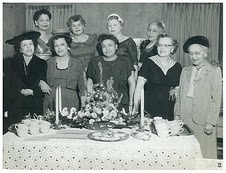
From GPBHM collection
Calloway’s exchanged harsh words with public officials, one of whom refers to him as “a negative person.” Those kinds of missteps by Calloway have cost he and the museum dearly. No public funds have been forthcoming since then. He is either unwilling or unable to provide the financial statements in question. There’s talk that some public officials and some private individual have made it known they will not fund/back the museum unless Calloway’s gone or until he satisfies demands for full, accurate accountings.
One financial crisis after another’s dogged the museum. There are some $10,000 in unpaid bills. There are outstanding tax liens. In recent years Calloway’s failed to file for the museum’s tax exempt status, which found him scrambling to scrape up the cash. He raised what was owed before, but he’s well behind on the most recent taxes due — $3,750 and counting in tax and interest.
“My fault. There’s no question about that,” he said, adding the building’s tax certificate is held by an investor who has no designs on the property itself except to collect interest on the taxes owed. Menyweather-Woods has negotiated a payment plan with the investor.
Squabbles, accusations and allegations, both inside and outside the family, have further eroded confidence in the museum. Calloway and his sister Bonita are at odds over who owns the museum holdings. She asserts they’re the property of the family. He maintains they belong to the museum corporation and the community.
Museum advocate Larry Menyweather-Woods, an ordained minister and a professor in the Department of Black Studies at the University of Nebraska at Omaha, summed up the contentiousness and controversy by saying, “There’s enough mess to go around. This is a vicious game being played, OK? I’m so tired of this conniving, back-stabbing when it ain’t necessary.”
It doesn’t stop there, Calloway’s embroiled in legal disputes with Tibbs, who had him evicted from one of his mother’s properties. A March 25 Probate Court hearing before Judge Samuel Caniglia considered his motion to remove her as his mother’s guardian-conservator. “Her performance as guardian-conservator has been subpar all the way,” Calloway said. “This whole business with the museum was not necessary. One of the problems with her is she shoots from the hip a lot. She doesn’t do her research.”
Tibbs challenged the deed to the museum building, contending a clause in the title Bertha and James Calloway signed over to the non-profit Great Plains Black Museum Archives and Interpretive Center, Inc. requires the structure revert back to Bertha Calloway’s ownership should it stop being used as a museum. In her brief, Tibbs asserted the building no longer filled that function. Jim Calloway contested her arguments in a brief filed by his attorney William Gallup. In a January 17 trial in Douglas County District Court, Judge Robert Burkhard heard testimony from witnesses on both sides. His decision found that while the institution “may have been somewhat loosely operated as a corporation…the building and the property…had always been used as a museum…possibly somewhat sporadically at times…but that does not mean that it ceased to be used as a museum.”
According to Tibbs, who said she represents the best interests of her client, “The decision is that the museum is an operational museum, so maybe it is, but nobody else in the community knows that. The building’s not been open. I can’t get in. Nobody can. You cannot go to that place, open the door and go inside to see an exhibit, and you haven’t been able to do that for some time. Ask anybody.” Tibbs said she’s not sure what her next move, if any, will be. “I do know it is unfortunate that it all came down to this. I think Jim (Calloway) is trying to do the best he can with what he has, but he just won’t let it go. Maybe I just won’t let it go.”
Even if Tibbs’ challenge had been upheld, Calloway said his mother’s Medicaid nursing home credit, which limits personal assets, may have forced the sale of the building. Whoever retains title to it, he said, would be stuck with huge liabilities. Meanwhile, Tibbs said she had investors lined up to purchase the building and/or pay for repairs in the event she gained control of it.
Calloway sees the decision as opening the door for the museum to have a fresh start in the building he and his mother fought so hard to save. “I’m happy with the way things turned out,” he said, noting its loss “would break my mother’s heart. She’s got a lot of sentimental attachment to the building. It does have a lot of historical significance.”
That fresh start may come in the form of a partnership with the UNO Department of Black Studies, where professor Larry Menyweather-Woods is brokering an association between the university and the museum for UNO to provide professional and student services. He feels “the uniqueness” of the museum and its emphasis on blacks in the Midwest affords scholars like himself and his colleagues a research boon and their expertise, in turn, can benefit the museum.
“We have a great deal of interest in being able to work with that museum,” said UNO College of Arts and Sciences Dean Sheldon Hendricks. “Many of the materials in their archives have not been cataloged or otherwise gone over for historical value. Our historians are particularly interested in getting a look at it. And we also see it as a great opportunity for our students to have both a service learning experience and an experience working directly with historically significant artifacts.”
Calloway, too, sees it as a win-win proposition. He welcomes the chance to put the collection in “responsible hands” and he embraces UNO’s “passion for history.”
“I hope the museum can get back on its feet and become something we can be proud of,” Vicky Parks said.
Tibbs said where “nobody’s” been willing to work with Calloway in light of the museum’s problems, “maybe they will now. I don’t know. UNO’s name would lend more credibility. Clearly, that would lead the community to feel comfortable.”
None of this changes the fact there’s still no money for repairs to the museum’s century-old building. UNO is adamant about not committing any funds to the museum. Menyweather-Woods said UNO’s involvement is not tied to the museum continuing to be housed in the building, adding there are plenty of “campuses that would be excited to have it.” Even Calloway suggests the structure is not a must for the museum’s future, saying it could just as easily “continue on” elsewhere and that “other locations might be more suitable” and “make better business sense.”
While Calloway said engineers’ reports confirm the structure “is salvageable and worth saving,” he also fears the city may condemn it if something isn’t done soon.
Others view the recent court decision as validation that Calloway’s remained, as Omaha photojournalist and museum supporter Rudy Smith put it, “true to his mother” by keeping the museum alive, if even on little more than a wish and a prayer. “It should be seen as a redeeming part of his integrity,” Menyweather-Woods said. “He’s always argued the same position. He’s always insisted it was operating as a museum. So, I think that says a lot right there.”
The saga of the museum’s plight, from lawsuits to funding woes to mismanaged assets, sends the wrong message to funders, who see an irresponsible institution that’s “out of control,” said Rudy Smith.
The Calloways have in some ways been their own worst enemies by publicly calling out Omaha for its stingy support and by rashly announcing makeovers, expansions, capital campaigns and board reorganizations without firm plans and follow through. Nothing’s ever come of these pronouncements except mistrust and acrimony.
The museum’s 30-year life has always been one of struggle. Part of the struggle stems from the Calloways’ wary, insular, defensive posture that’s valued protecting their independence above all else. They simply will not cow-tow to or play ball with the big shots. Admirable as that maverick streak may be, it’s also alienated the museum and cost it valuable allies. Taken together with its lack of a professional staff and its incomplete accountings, questions and suspicions are bound arise.
It’s no wonder then, as Jim Calloway noted, “There’s always been some sort of conflict with the city on funding.” His mother managed all aspects of the museum’s business, including the books, and since her illness there’s been no one to pick up the slack. Few outsiders have been brought into this inner circle.
“She’s always been very leery of having certain types of individuals involved in the operation. She’s never been one who goes out to cocktail parties or fancy dinners. That’s not who she is and that’s not who I am, either. She’s always been more interested in getting grassroots individuals involved. Unfortunately, the powers that be like to see some substantial, high profile figures on your board. They want you to change to their ways, so she’s steered clear of them,” Calloway said.
According to Rudy Smith, “She did not want the museum to fall into the hands of the corporate community. She was concerned if other people took it over the black community would lose treasures and no longer have access to their own history. It could be rewritten, retold, sold and maligned. Bert’s always felt that way. She told me she always wanted it in the hands of black people.” He added that the resources required for restoring the museum may necessitate bringing on board “people outside the black community that can do that.”
Bertha Calloway turned inward when she felt “betrayed” by a series of dealings with the suit-and-tie set who reneged on promises, said Rudy Smith. A fiasco with a book she co-authored on African-American history in Nebraska, along with other imbroglios, embittered her. “That’s why she became somewhat of a recluse and hermit and would not let anybody close to her. A lot of opportunities were lost because of betrayal and lack of trust and stubbornness.” Menyweather-Woods said she rejected proposals that not only could have financed a new facility, unburdening the museum of its albatross of a building, but strengthened the board, supplementing or replacing the current roster of cronies.
Alonzo Smith, a former consultant to the museum, said both the strength and weakness of the GPBHM is the grassroots mentality Bertha Calloway instilled and that Jim Calloway perpetuated.
“She’s not a museum professional. She’s not a curator. She’s not an archivist. She’s not an arts administrator. She’s not a historian. But she has a love on a subject and she has a love for people in the community,” said Alonzo Smith, who collaborated with her on the 1998 book An Illustrated History of African-Americans in Nebraska. “She really took it and made it into a community institution. It was a wonderful community institution. But she’s a strong-minded lady who found it difficult to work with other people. She would listen and say, ‘Thank you very much, but I’m going to go ahead and do what I’m going to do.’” I even put her in touch with a group called the African-American Museums Association. They do a needs assessment, which she really could have used to really get some big time grant money, but she didn’t want to relinquish financial and administrative control to a board.”

Alonzo Smith
He said a reluctance to form alliances or share governance “is not just an African-American thing. It happens with community-family museums all over the country.” While Smith admires Jim Calloway’s loyalty to “his mom in trying to take care of her and the museum,” he says, “it’s beyond his capacity. He can’t handle it. It’s a sad story. That museum was her life’s work and to see it decline the way it has…”
Rudy Smith doesn’t blame Jim Calloway for spoiling his mother’s dream. He faults a larger culprit, saying, “The community failed her.”
Despite all the headaches and bad feelings, Jim Calloway doesn’t regret his museum odyssey. “The experience of being with my mother during that 10 years is something I would never trade. I just wouldn’t. Because we got to know each other so well during that period of time, it was worth it to me,” he said.
He looks forward to the day when the museum is back on course. With UNO as a potential steward, he expects to oversee a transition that will ensure: the collection is cataloged; the research materials are accessible; the displays refurbished and open year-round for viewing; and the museum’s good name restored. “After everything gets in place with the university, we’re going to lobby real hard and it’s going to be for a lot more than $100,000. We’ve got a lot of time to make up for. With different people steering it, I’m sure they’re going to have some progress. The city knows how important that museum is to the community.”
One thing there’s consensus on about the museum is that its founder, Bertha Calloway, is a community pillar whose dream should be fulfilled.
“We have no intention of forgetting Bertha Calloway and the members of the Negro Historical Society who put that place like it was,” said Menyweather-Woods.
As the antagonist in all this, attorney Karen Tibbs said, “At the end of the day my responsibility is that her dream and her money be realized. Bertha Calloway’s. Not Bonita Calloway’s. Not Jim Calloway’s. I’m not going away.”
No one knows more than Jim Calloway what the burden of that dream has cost. “More than a dream, really, it’s a mandate from my mother.”
Related Articles
- Long and Winding Saga of the Great Plains Black History Museum Takes a New Turn (leoadambiga.wordpress.com)
- Gary Kastrick’s Project OMAHA Loses its Home Base (leoadambiga.wordpress.com)
- Finding Forefathers: Lincoln Motion Picture Company Film Festival Gives Nod to Past and Offers Glimpse of Future (leoadambiga.wordpress.com)
- Great Plains Black History Museum Asks for Public Input on its Latest Evolution (leoadambiga.wordpress.com)
- Omaha Arts-Culture Scene All Grown Up and Looking Fabulous (leoadambiga.wordpress.com)
- Once More With Feeling, Loves Jazz & Arts Center Back from Hiatus (leoadambiga.wordpress.com)
- Back in the Day, Native Omaha Days is Reunion, Homecoming, Heritage Celebration and Party All in One (leoadambiga.wordpress.com)
- Arno Lucas, Serious Sidekick (leoadambiga.wordpress.com)
- Big Bad Buddy Miles (leoadambiga.wordpress.com)
- Enchantress “LadyMac” Gets Down (leoadambiga.wordpress.com)
Long and winding saga of Great Plains Black History Museum takes new turn
In some ways, the Great Plains Black History Museum in Omaha,Neb. is a symbol for the African-American experience in this place. African-Americans have had a presence in Omaha for generations now and their accomplishments are legion. Unfortunately, a disproportionate number of African-Americans here, as in the America overall, live in poverty and are unemployed or underemployed and struggle with all manner of health issues. The museum owns a much shorter history but it too can point to a fine record of accomplishment that unfortunately is blemished by a long litany of issues that have kept if from fully reaching its potential. The following story appeared in an abridged version in The Reader (www.thereader.com) in early 2010, but I am posting here in its entirety. Four years before I wrote a similarly epic piece about the museum and its travails for the same newspaper. I will be posting that earlier story soon. In the coming months I will also be writing anew about the museum, whose story of struggles and aspirations continues.
NOTE: My blog also features a story I did in 1996 on the museum’s founder, Bertha Calloway. I called it, Bertha’s Battle.
Long and winding saga of Great Plains Black History Museum takes new turn
©by Leo Adam Biga
A version of this story appeared in The Reader (www.thereader.com)
In a tumultous decade for the Great Plains Black History Museum, its doors closed and its funding ceased. After years of turmoil, however, the organization may be taking tentative steps toward a sustainable future.
Its leaky, unsound, 103-year-old building at 2213 Lake St. has been off-limits to the public. Even before city code inspectors deemed it uninhabitable, executive director Jim Calloway moved the museum collections into storage to avoid damage. The Reader confirmed boxed archives have been in a rented metal storage container in back of the building, with artifacts and display items in remote warehouses.
The son of founder Bertha Calloway, he’s struggled keeping the family nonprofit afloat after illness forced his mother to step down some eight years ago. With few exceptions, the museum’s estimated 100,000 documents and hundreds of artifacts and educational materials have been unavailable to scholars and the public. The fallout of all this? The museum has lost face in the community and a building of architectural-historical significance has further deteriorated through inaction.
Bertha Calloway
This once proud organization has become the object of disappointment and skepticism, its National Register of Historic Places home reduced to a shell and its mission unrealized. The archival collection comprising it’s greatest glory — the seldom seen black history Bertha Calloway compiled — has languished under benign neglect.
Yet recent developments are providing new hope for the beleagured museum and its endangered holdings. The building’s and the archives’ ultimate fate remain clouded, but a clear vision may be coming into focus. The question is how to attain it.
On February 23, 180-plus archival boxes containing voluminous research documents, letters, photographs and other materials were removed from the storage bin and onto a truck for transport to the Nebraska State Historical Society in Lincoln. The transfer’s part of a one-year custodial agreement between the society and museum. The NSHS will provide a secure, environmentally-regulated space for inventorying and indexing the archives. Some minimal conservation work will be done as well.
There’s more. Representatives of Heritage Nebraska and the National Trust for Historic Preservation toured the Lake St. building March 5.
“We conducted a site visit of the property,” said Laurie Richards, Eastern Field Representative with Heritage Nebraska, an affiliate of the Trust. “The building is in immediate need of stabilization. We are interested in the historical significance of the Thomas Kimball building — a very significant building for the neighborhood and entire community of Omaha. There may be some funding through the Trust to assist with some of the organization’s needs, but we have to do further research. We will also help them explore other possible avenues of financial assistance.”
Earlier, a team of Omaha architects and engineers led by Michael Alley did an extensive analysis of the building’s most pressing needs. A master plan for renovation and new construction is on the drawing board.
Additionally, the museum has reorganized what’s widely been considered an ineffectual board to include new blood from the African-American and majority communities. “Some of the names are very influential people and they will do a great job. We also have a new board of advisers,” said Jim Calloway. “The next step to get things rolling,” he said, is a capital campaign.
“I feel better right now about things than I have in a long time,” he said. “The thing I’m most happy about is when senior officials from the State Historical Society pulled out a few of those archival boxes and were just blown away by what was in there. They were extremely impressed and pleased to see everything was still intact, because rumors of its disappearance had floated throughout the community. They were a bit surprised, too, at the condition of everything considering it wasn’t in a climate-controlled environment.”
For Calloway, it’s vindication of sorts. “I think it’s a good time to get straight with the public because rumors were floating that things were sold on eBay. It’s given me a little relief, too, because I’ve had to walk around for five or six years with this thing hanging over my head about me selling off the collection. It hasn’t been comfortable at all.”
With the building and collections inaccessible, speculation ran rampant about the state of the historical archives. One-of-kind memoirs and letters, for example, relate to black homesteading families. Historian Tekla Agbala “Ali” Johnson of Lincoln, Neb. is working with the collection in association with the NSHS. She said it is a prized cache.
“Strictly dealing with the history of African-Americans in the West, the collection is the largest dedicated to African-American people, period, I’ve worked with. Just in terms of size, it’s important,” said Johnson. “This is a fabulous and valuable collection and it has the potential to be a world-class archive.”
Johnson, an Omaha native who was an intern under Bertha Calloway, is impressed by how many families “came forward and deposited” personal remnants of history with Bertha. “Overwhelmingly she had their trust and people gave her things they wouldn’t give anybody else. She collected very,very private stories, oral histories, all the way to documenting the African-American cowboys in her own family. I cannot tell you how thrilled and honored I am to be able to process this collection.”
She said the “extremely well-documented” archives hold the potential for new insights into many aspects of African-American life in Omaha and greater Nebraska.
In terms of relevance, she said, “It has implications for a deeper understanding of the civil rights movement, the black music industry and black social clubs and organizations in the Midwest.” Johnson, who’s combed through but a fraction of the boxes, said she makes discoveries each work session. “In the very near future we’ll know exactly what we have. I’m making very good progress.” “I’m sure we’re going to come across a lot of really good information we didn’t have, so it’s very exciting from that standpoint,” said NSHS associate director of library archives, Andrea Faling.

Tekla Ali Johnson
Although Bertha was not a degreed historian, Johnson said she was nonetheless a “scholar and researcher. She truly put her life’s work in this. It is truly amazing.”
The archives were gotten to just in time. “They were beginning to erode,” said Johnson. More than 200 archival boxes, many overstuffed and broken, were stacked like cord wood in the container. Not everything was taken by the NSHS.
Calloway tried assuring the public of the collections’ integrity, but many questioned if they’d been compromised. Fueling the fires were assertions made by his sister and an attorney, who sought to wrest control of the building and collections from him.
With the archives now in the temporary care of a reputable organization, concerns about the materials may be alleviated. Faling said on a scale of 1 to 10 the mostly paper materials are in “slightly below average” condition — “maybe in the 4 to 5 range, but that’s just a subjective appraisal.” She said the lack of climate controls resulted in detrimental, not devastating temperature and humidity fluctuations and some mold. “I have definitely seen worse,” she said. “We’ve been in places where there were things that were not salvageable — I didn’t see anything like that, where we just have to get rid of stuff. That’s a good sign.”

Nebraska State Historical Society
Materials are variously being reboxed and treated for mold. She said the container housing the archives was free of other problems. “We didn’t really see evidence of animals, which is a good thing. We’ve run into conditions where we had to wear masks, so this wasn’t as bad as something like that.”
Calloway said “the collection is in absolutely the best of hands with the State Historical Society. I feel very comfortable with it being there. It’s in a safe environment with its own professional support staff and a historian on board.” Not everything’s quite sewn up with the NSHS and the archives. Faling said state law prohibits the agency from spending money on an outside collection. Thus, the museum, perhaps with the Society’s aid, must find dollars to underwrite the work and any needed archival-conservation supplies.
The archives ended up in Lincoln via a circutious route. Calloway spoke with several different entities to take them on. An agreement brokered with the University of Nebraska at Omaha’s College of Arts and Sciences and Department of Black Studies eventually fell through. More recently, he considered granting the Hastings, Neb.-based African-American Preservation Organization trusteeship over the collection. Independent scholar Rick Wallace, a longtime friend of the Calloways, heads the group. He’s also on the Heritage Nebraska board and a State Historical Society associate.
Word of the archives needing a safe home reached the Society. Its president, Michael Smith, said upon visiting the museum site and inspecting the archives in storage he and his staff determined there was a need they could fill.
“It’s simply a matter of being of service,” he said. “As a state archives we have people that are knowledgable in archival management and we have space to house the collection for Dr. Johnson to do an inventory of what’s there.”
“We’ve agree to provide custodial care so the materials would not get further damaged,” said Faling. “We want it to have the best home possible ultimately. We’re not making claim to this. We want to make clear we don’t own this collection. We’ve offered to house it for a year until the Great Plains board figures out what to do”
She said the archives in Lincoln will, at least for now, be accessible only by the Calloways, the museum board and persons so designated. “Were not trying to restrict this in anyway,” she said, “but we have work to do to it and to get it organized.”
An inventory alone would be major progress for the museum given its recent history. The low point may have been when City of Omaha code inspectors pronounced the Lake St. building uninhabitable in 2006, effectively making the museum homeless. The building’s been closed more than it’s been open during Jim Calloway’s tenure. Besides a temporary display at the Blue Lion Centre, the collections have been out of sight.
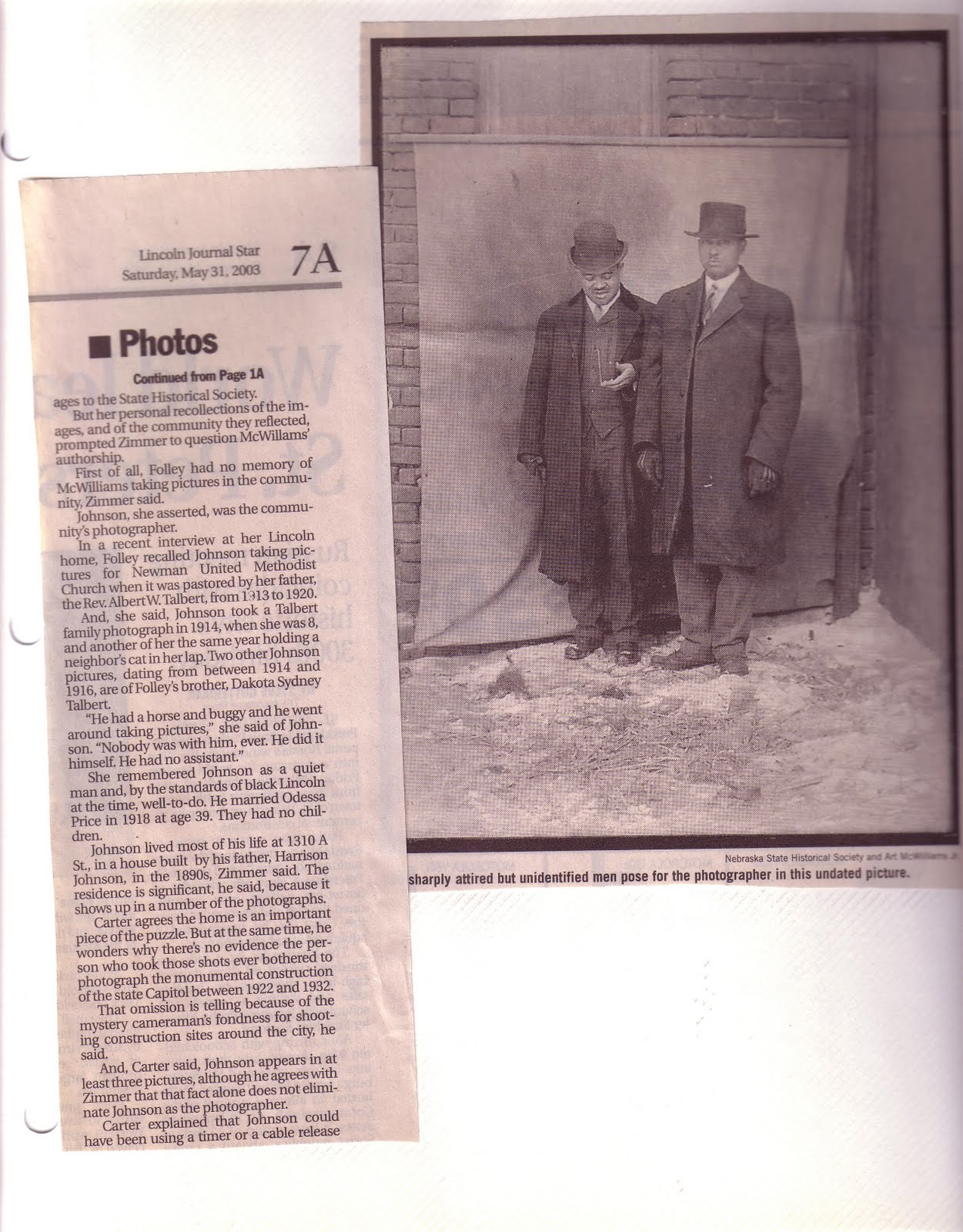
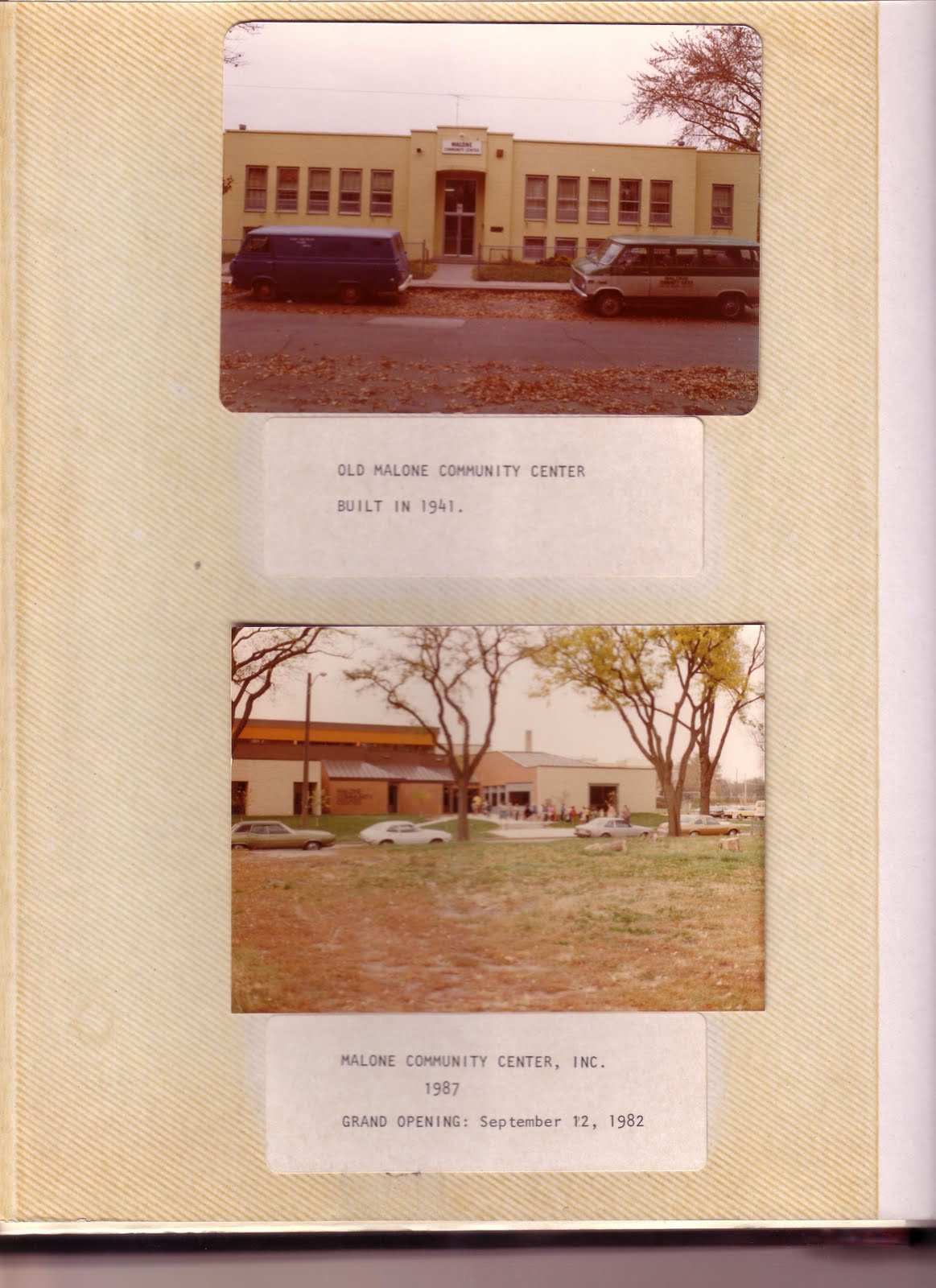
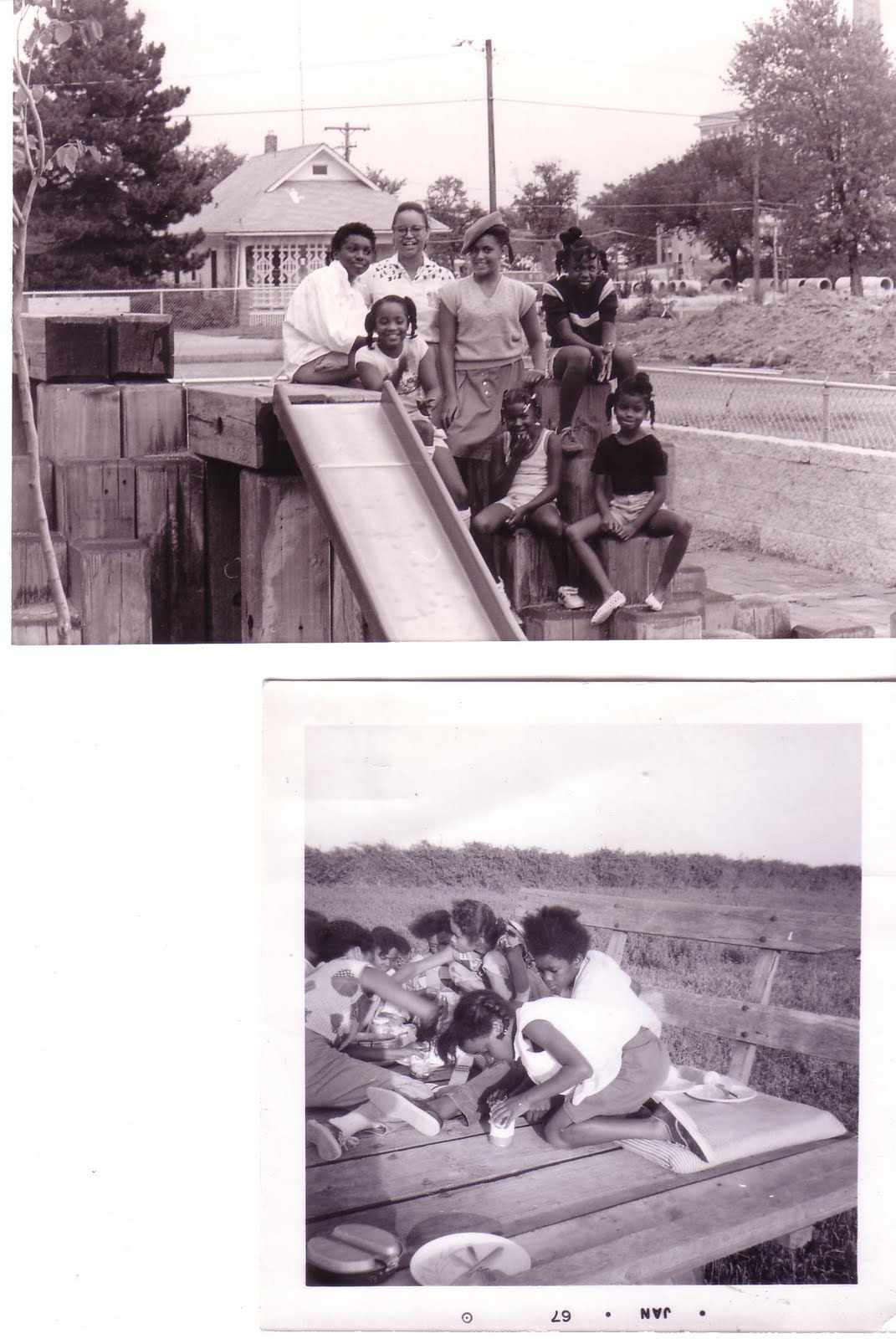
Calloway said the museum has debts of about $5,000 for outstanding storage fees, taxes and assorted other claims and liens. He said the Lake St. building’s utilities are turned off by choice. The museum has maintained its 501c3 status.
Board member Alice Station goes back to the 1950s with Bertha Calloway and the Negro Historical Society that preceded the museum. She collected photos and other materials related to the Buffalo Soldiers. She said it’s pained her to see the museum lay dormant and the archives unused. In a 2001 move that upset Station and brought criticism of Calloway, he rejected a $50,000 city allocation for roof repairs as inadequate. Even after the allocation was increased in 2003 to $100,000 he held out for more. When funding was made contingent on Calloway providing financial accountings he did not comply and the monies were withdrawn. The museum went from a guaranteed $50,000 to a probable $100,000 to nothing.
Similar noncompliance led Douglas County to withdraw allocations. The events may explain the GPBHM’s recent inability to obtain funds. “I admit I made a mistake,” said Calloway. “Work that needs doing now could have been fixed. Where I feel like I’ve accomplished my goal of saving the archives, I’ve failed to preserve the building.”
It didn’t help matters that Calloway and former Omaha City Councilman Frank Brown fueded. Bertha had her own run-ins with movers-and-shakers in the past. Intractability isolated the museum from funding sources. “It was always a survival mode really for them, and Mrs. Calloway was very, very protective of the collection,” said Loves Jazz & Arts Center executive director Neville Murray. “She thought it was important that as an African-American museum African-Americans should be running it. She was suspicious of folks from outside the community and their motives.”
Jim Calloway said neither he nor his mother have any use for “high falutin” folks.
Tekla Johnson offers another point of view. “People have complained in the past Ms. Calloway was a bit controlling, but she didn’t know who to trust and she tried to protect it.” Bottomline, said Andre Faling, “you have to say the Calloways did a great service to the community to have all this stuff. If they hadn’t been doing this, this history would not be there. They do deserve some thanks for sure.”
The museum seemed at an impasse until the recent turn of events. Now the archives are squared away, funding sources for the building’s renovation may be surfacing and a new board offers the potential for new ideas and energy. But what happens after the one-year custodial agreement concludes? Where do the archives go then? And what role, if any, will the Lake St. building play in the future?
Calloway said he’s exploring options to accomodate the archives beyond the one-year term. A refurbished Lake St. building is part of his vision. “The research documents have been the priority, but I don’t want to forget about the building,” he said. “That’s the next big venture.” He anticipates board members leading fund raising efforts for its rehab. Little more than bandaid fixes have been done. The result is that a Thomas Kimball-designed Jacobethan Revival Style edifice that survived the 1913 Easter tornado and housed the Webster Telephone Exchange and the Nebraska Urban League, sits vacant, vulnerable to the ravages of time and the elements.
Michael Alley of Alley Poyner Macchietto Architecture PC, echoes the sentiments of many in viewing the structure as an important piece of architecture and history.
“That’s such a significant building on so many different levels — because of Thomas Kimball and the tornado it survived. It was the nerve center for rescue-cleanup efforts in the wake of the deadly storm. When we lose buildings like this we really lose a sense of place. These physical markers reference points in our community’s history, so the loss isn’t just a building but it really is a loss of history. That’s why it’s so critical to protect these assets.
“All the work I’ve done has been pro bono, just purely out of a passion and a desire to see this thing protected and ultimately restored. Our firm has done many, many projects in north Omaha and we just care deeply about the community. It’s a building I drive by and it just grieves me to see it in that condition.”
He said in a district like north Omaha that’s seen much of its historic building and housing stock razed, the loss would be compounded. If the building were restored, he added, it could anchor North 24th revitalization. North Omaha Development Project plans for aHeritage District mention an African-American museum. African-American Empowerment Network leaders also have the museum on their radar as the network-led North Omaha Arts Alliance takes shape.
For now though, the building’s a worn symbol of what once was. Even when it housed a fully operational institution from 1976 through the late ‘90s, the structure was in various states of disrepair. Years removed from any real work being done beyond roof patch jobs and broken window mends, the building is in dire straits.
The 2008 Alley-led needs analysis underlined the need for swift action. Conditions are worse two years later. “With the heavy snows we’ve had it’s honestly hanging on a razor’s edge,” Alley said. “The way that roof is framed, particularly the low pitched roof, the trusses are embedded into the wall, so if the roof does cave in or give way it will probably pull the walls in with it. I’ve talked to structural engineers and a contractor about putting temporary shoring underneath the roof structure. You’d have to start in the basement and go up through the floors, and put in some posts that would at least keep it from a catastrophic roof collapse.
“The other particularly precarious thing is an old brick flue or chimney in desperate need of tuck pointing. It needs to be dissembled and saved because that’s an important historic element we’d need to rebuild. But if that falls over in a big windstorm or somebody sneezes wrong it could take the whole thing in, too.”
Sub-zero temperatures take their own toll. Minus any heat inside the building, he said, “the freeze-thaw cycle just destroys buildings.”
Stabilizing the “most desperate needs,” Alley said, would take $19,000 to cover: temporary shoring floors and roofs; applying plywood on windows; installing and maintaining temporary heat and cooling; removing the flue stack. In his 2008 report he estimated $44,300 to more comprehensively address “immediate needs.” Much more would be required to retrofit the entire building’s mechanical, electrical systems and bring the structure up to code.
Daunting as it may be, Alley said the building is far from a lost cause, though time is not on its side. “I have no anxiety about the ability to restore the building, protect it and renovate it into a wonderful facility that will outlast our lifetimes. So, it’s not too far gone.” He said his firm’s salvaged buildings “in this bad of shape or worse,” including Omaha’s old Hill Hotel, now the Kensington Tower, and Astro Theater, now The Rose. “We’ve had some real tough projects,” he said. “The difference with this one is that unless the failure that’s occurring right now is dealt with, it will pull the whole building in on itself and there won’t be anything left to save.”
While he said historic status does not protect the site from potential razing it does open opportunities for historic preservation tax credits to facilitate renovation.
He said as beloved as the building is in preservation-architectural circles, certain things must happen before folks pony-up. “I know a bunch of people who would love to jump in on this project if the situation was right. I do think there’s a lack of confidence in the leadership or ownership…a great deal of anxiety about uses of funds and things like that. That’s what I keep running into.”If such concerns could be overcome, he said, “many methods could be used to restore the building.”

Jim Calloway is aware of people’s caution. “I can understand certain individuals reluctance to get involved because of the past issues,” he said. “I can understand people not wanting to really jump in and get involved because of questions and rumors that have been raised in the past, and I think that’s been a stumbling block.”
Some suggest that as long as Calloway is involved the museum will find no backing because his track record makes him too much a lightning rod figure. As a small community organization the museum’s always been controlled by a Calloway and a nominal board whose members have typically been elderly peers of Bertha Calloway’s. Age, illness and death have winnowed their ranks. At various times Jim Calloway’s been unable or unwilling to provide a museum board roster. A formally constituted, working board did not appear to be in place until the reorganization. Recent budgets, financial records and board meeting minutes are unavailable.
City officials and others have expressed concerns about not having a full understanding of who is responsible for the museum. From 2006 through 2008 Calloway installed two interim executive directors, first Matthew Stelly and then Kennan Wright. Each conducted business and made announcements on behalf of the museum, whose governance has been called into question many times.
Neb. State Sen. Brenda Council has said, “People don’t know who’s in charge and who’s going to be accountable. It’s very problematic. Believe me, they have an awful long way to go.” Omaha City Councilman Ben Gray said until the museum has a fully functional board it stands little chance of getting stakeholders to buy in. Upon news of the museum installing a new board, Gray said, “It’s a positive move,” but he withheld further comment until seeing who it’s members are.
Gray, Council and Douglas County Board Commissioner Chris Rodgers form a committee allocating turnback tax dollars for North O cultural projects. Gray and Council say loosely structured organizations like the museum must follow best practices if they expect funding. The GPBHM was denied turnback dollars in 2009.
“We have to establish the necessary boards for some of these organizations to be viable,” Gray said. “Their boards have to adhere to certain rules and regulations that all other boards have to adhere to. In order to bring the museum back the way it needs to be brought back — and it’s not impossible to do — there has to be a credible board, there has to be a credible curator, there has to be a credible building that is in fact a museum. As a community we’ve got to do that and if we don’t do that then we’re just kind of whistling in the wind because you know nobody with means or resources is going to support an organization if those standards have not been met.”
Then there’s the impediment of Jim Calloway himself. Wright found objections in the community to his presence and feels the time has come for him to relinquish control.
“A lot of people have tried and failed to work with Mr. Calloway as far as restoring the building,” said Wright. “One of the first things to come out of people’s mouths is, ‘If Mr. Calloway is going to be involved with the museum then I’m not going to be involved with it.’ The museum building needs to be totally disconnected from the Calloway family. A lot of people support the project but it needs to be separated on its own and not be babysitted or controlled by anybody from the Calloway family.”
Calloway said it’s no surprise some condition their participation on “my being out of the way. I know I’m kind of an obstacle.” He insists he’s “stepped aside” before and is willing to do so again.
Just as the long list of building needs is nothing new, the lack of money to tackle them is an old story. In the museum’s heyday enough grants and donations came in to mount exhibits, hire part-time staff and operate five or six days a week. Still, as far back as the late ‘90s, Bertha Calloway fretted over creditors and outstanding repairs.
Ever since she and her late husband James acquired the building in 1974 little more than piecemeal fixes have been made. Her son Jim Calloway said his frustration with partial mends is what motivated him to reject city funding.
Repairs may ultimately be a moot point. In October 2006 the city filed a 32-page Notice of Violations document against the museum, detailing dozens of serious code infractions encompassing the entire structure. The museum was given two months to cure the problems under threat of demolition. A lack of funds and liability insurance stymied any remedies. Following the city’s next inspection, a ticket may be issued. The misdemeanor criminal citation is punishable by a judge-determined fine or jail time. The citation could be appealed. The next city action after a ticket could be a demolition order, although Chief City Inspector Kevin Denker said the building is low on his department’s priority list given the property’s “historical relevance.”
Calloway said the city is “being patient with us, they really are. They understand the significance and the importance of the building and how much it means to the community, but these code violations have to be addressed very soon. It is definitely not an open-ended situation.”
Another sticking point is possession. Wright said people he approached to serve on a reorganized board expressed concerns about the building’s and the archives’ ownership. “They’re confused about the ownership of the building — who owns the building, does it belong to the Calloway family or does it belong to the museum?”
Ownership came into question in a case decided in the Douglas Country District Court Jim Calloway defended the museum’s viability against claims it was defunct. He found himself embattled with his late sister, Bonita, over control of the museum’s assets. The late Karen Tibbs represented her. Tibbs also represented the interests of Bertha Calloway’s estate. Tibbs was named conservator after a court found Bertha Calloway incompetent. Tibbs contended the museum’s assets are family property while Jim Calloway argued the line he said his mother always maintained — that the building and contents belong to the 501c3 Great Plains Black Museum and Interpretive Center, Inc. the museum is chartered under and the building is deeded under.
Citing a clause in the deed that states the building reverts back to Bertha should the GPBHM cease operating as a museum, Tibbs claimed the museum was no longer a functioning museum. But in a 2006 ruling Judge Robert Burkhard declared the GPBHM never stopped operating as a museum. Tibbs appealed the ruling to no avail.
Wright said potential funders are afraid renovations could be made only to have the museum move elsewhere. Would a newly refurbished building then revert back to the Calloway family’s ownership? Would the archives and artifacts revert back as well? Wright said until the clause is removed the museum will face uneasy scrutiny. People who’d like to get involved, he said, await some definitive resolution.
The way Jim Calloway sees it the “dispute has been settled once and for all, and as far as I’m concerned,” he said, “that’s opened the door, paved the way for progress. That had always been a problem — it impeded a lot of what could have taken place during that time. Everything was on hold.” As for the clause, he said he understands people’s concerns but insists if the building did revert back to the family it’d go to the state to cover his destitute mother’s nursing home bills.
Wright said he found great interest within the African-American community and the larger community in reopening the museum, if not in its original Lake St. home than somewhere nearby. But restoring the building for any use would take upwards of $1.5 million according to figures put together by Alley. Restoring to stringent historic landmark specs and meeting strict museum-quality climate control standards would be costly. That’s why Alley, Calloway, Wright and others say it may be more practical to restore the building as the museum’s administrative headquarters and either renovate an existing structure or construct a new one to serve as the public museum site. A second building would mean another steep price tag. Then there would need to be funds for an operating budget to see the museum through its first few years.

English: Picture of Bertha Calloway (Photo credit: Wikipedia)
At Calloway’s behest Wright applied for 40-plus grants for the museum in 2008-2009. None were awarded.
“During this difficult economic time a lot of organizations were opting to donate funds to already running programs rather than capital projects,” said Wright, “which the museum project would be because the building is in such bad condition and needs a lot of work before we could even reopen.”
In an application for Community Block Grant monies Wright and Calloway asked for the improbable sum of $1.5 million, which was denied. City of Omaha community block grant administrator James Thele said among the things he and his staff weigh is “what other money can you bring to the table,” noting the program’s meant to fill funding gaps, not be a primary source. He said Calloway’s past refusal of city funding “would not prejudice” consideration of new grant requests by the museum. “However,” he said, “knowing an organization has had problems in the past, we’re going to ask certain questions and do some research of our own.”
Wright said the resistance he encountered had to do with the museum’s shadow board. “Without a strong board of directors no foundation is going to want to donate money with the financial problems the museum’s had. When you apply for grants one of the first things a funder does is vet your board of directors. If your board is weak then you might as well forget it, it’s not going to happen,” he said.
Regardless of past or current problems, there’s great interest in a reborn museum.
Said Council, “I don’t think you could talk to anyone in the community who doesn’t want to see that institution restored. But at what cost? And when I say at what cost I mean putting money someplace where you know it’s going to have a return in terms of providing the programs, i.e. the museum, on a regular, consistent basis and there’s measures and steps taken to preserve the collection and to build the collection.” As for the building, she said, “the consensus in the community is that it’s unquestionably a historic landmark we’d like to see restored, but it’s a long way from being at a point where people feel comfortable or confident that will occur.”
Nothing short of a public-private rescue seems likely to change things. In the community block grant application Wright outlined a detailed vision for what the resurrected museum might look like. It’s a beautiful vision complete with a restored building, a research center, a library/archives, meeting rooms, offices, educational programs, special events, outreach activities, guided tours, a professional staff.
Wright suggests it’s the city’s obligation to save the building and institutionalize the museum as community assets in service of education, preservation, history, culture and tourism. He believe once the city steps up, others will follow.
Ben Gray agrees the public-private sectors have an obligation, but he feels the African American community must first demonstrate commitment. “We have to put up something, too. We have to have some skin in the game, whether it be sweat equity, whether it be whatever meager resources we have to bring to the table, we’ve gotta bring that,” he said. “And then we’ve got to say to the broader community, This is the part we can do, these are the things we have done, these are the mechanisms we have put in place, these are the commitments we are willing to make, what are you all going to do now?’”
Doing the right thing aside, Gray said unless the museum has a solid infrastructure in place no one’s going to sink dollars “into a black hole” that lacks the leadership and the tools to succeed over the long haul.
As the politics play out, Calloway does what he can to protect the building, whose interior is covered in tarps to collect water let in by the leaky roof. He suctions out the water as best he can. He’s also exploring options to display portions of the collection somewhere. Ben Gray may have a line on a site.
Meanwhile, Tekla Johnson continues discovering gems in the treasure trove spread out before her. From tidbits about the Stone Soul Picnic to the history of the Eure family to the exploits of Buffalo Soldiers, she said the archives promise to shed a whole new light on the African-American experience in Nebraska.
Related Articles
- Black history catalogued at new Univ. of Chicago website (teleread.com)
- Gary Kastrick’s Project OMAHA Loses its Home Base (leoadambiga.wordpress.com)
- Great Plains Black History Museum Asks for Public Input on its Latest Evolution (leoadambiga.wordpress.com)
- Omaha Arts-Culture Scene All Grown Up and Looking Fabulous (leoadambiga.wordpress.com)
- Once More With Feeling, Loves Jazz & Arts Center Back from Hiatus (leoadambiga.wordpress.com)
- Back in the Day, Native Omaha Days is Reunion, Homecoming, Heritage Celebration and Party All in One (leoadambiga.wordpress.com)
- The Ties that Bind, One Family’s Celebration of Native Omaha Days (leoadambiga.wordpress.com)
- Arno Lucas, Serious Sidekick (leoadambiga.wordpress.com)
- A Stitch in Time Builds A World Class Quilt Collection and Center-Museum (leoadambiga.wordpress.com)
- Negro Leagues Baseball Museum Exhibits on Display for the College World Series; In Bringing the Shows to Omaha the Great Plains Black History Museum Announces it’s Back (leoadambiga.wordpress.com)
- A Brief History of Omaha’s Civil Rights Struggle Distilled in Black and White By Photographer Rudy Smith (leoadambiga.wordpress.com)
- A Synergy in North Omaha Harkens a New Arts-Culture District for the City (leoadambiga.wordpress.com)
Finding Forefathers: Lincoln Motion Picture Company Film Festival gives nod to past and offers glimpse of future

Image via Wikipedia
I am always on the lookout for a good film story. This one came to me out of left field, and I am grateful did. My hometown of Omaha, Neb. is slow to pick up trends, which makes sense since it sits smack dab in the middle of the country. While indigenous indie filmmaking caught on just about everywhere else 15 or 20 years ago, it’s only in the last decade really that the city has had anything like a filmmaking scene, and it’s still a small, sporadic community of filmmakers compared with, say, Austin, Texas. What’s lagged even more behind is the development of an African-American film community here, although events in the last three years indicate that might finally be changing. For Love of Amy and Wigger are two features shot here in 2008 and 2010, respectively. John Beasley is planning a film on the life of Marlin Briscoe. Robert Franklin is a documentary filmmaker with a new project near completion about the 1919 lynching of Will Brown. Vikki White is a promising new filmmaker. And then the story that came my way recently announced a new film festival whose title is drawn from the nation’s first black filmmaking enterprise, the Lincoln Motion Picture Company, which got its start in Omaha, of all places, in the silent era. Brothers Noble and George Johnson were the founders and operators behind Lincoln, whose run was short but historic. Videographer Jim Nelson of Omaha was inspired by the example of the Johnsons and has launched a film festival showing the wares of aspiring filmmakers he mentors. My story for The Reader (www.thereader.com) previewed the fest ,which unreeled Nov. 19. He and I and the filmmakers showing their work hope it’s the start of something big.
Finding Forefathers: Lincoln Motion Picture Company Film Festival gives nod to past and offers glimpse of future
©by Leo Adam Biga
Published in The Reader (www.thereader.com)
The first annual Lincoln Motion Picture Company Film Festival, Nov. 19, is inspired by a historic Nebraska-based business that scholars call the nation’s first African-American film production company.
Brothers Noble and George Johnson founded the company in 1916 in Omaha and later opened a Los Angeles office. They produced five pictures. Their work actually predated that of the great black film pioneer Oscar Micheaux, who had contact with the Johnsons before launching his own film endeavors.
When Omaha television and video production veteran Jim Nelson learned of the Johnsons’ legacy, it hit him like a revelation. As an African-American videographer, he’s a rarity in the local industry. From the time the Lincoln company folded in 1921 until recently, black filmmaking largely lay dormant here. Discovering that black Omaha filmmakers made and owned their own images nearly a century ago moved Nelson.
“I thought, damn, I do come from someplace. It gives me a connection. You always hear about standing on the shoulders of giants, well, now I know whose they are,” says Nelson, who began his career at now defunct Omaha black owned and operated radio station KOWH.
“I say to people,’ Do you know the significance of this?'”
He says he’s sure many in Omaha’s African-American community don’t know this history, which he sees as part of a larger problem of not enough being done to promote achievements by black Nebraskans.
“The idea is there are people who grew up here who made contributions,” he says. “It’s about valuing not only what you have or had but using that value to help you grow,” he says. “People need to feel they are worth something.”
Nelson’s nonprofit Video Kool Skool and Sable Accent Media Experience are training grounds for minority youths and adults to learn the necessary skills to tell their stories in images. The programs, along with his for-profit Jim Nelson Media Services, are based at the Omaha Business & Technology Center, 2505 North 24th Street., where he has ample studio and production space.
With a bow to the Lincoln Company’s heritage, Nelson hit upon the idea of a showcase for aspiring black filmmakers. Making himself and his facilities available, he worked with newbies on five short films, all featuring aspects of the black experience. The collaborative projects include one Nelson directed, Rockin’ the Deuce Four, an appreciation of the jazz scene that once flourished in and around North 24th Street.
“This is about a community that has not had its story told on any regular basis,” he says. “Now there’s a platform (the festival). I want to catch these new voices when they’re small. They have to be encouraged, they have to be nurtured, they have to know there’s a place where, even on a part time basis, they can pursue it.
“What’s my role? Well this has always been a dream of mine because I never had a mentor. I didn’t get it, I wasn’t supposed to get it, I was supposed to help others get it. I find myself being more a catalyst I guess for those who really want to do it.”
In this “each one, teach one” capacity he worked with three adults — all students of his at Metro Community College, where he’s an adjunct broadcast media instructor. Their work comprises the festival.
Danye Echtinaw, an Army reservist who served a tour in Iraq, says her film If the Hair Ain’t Tight, Ain’t Nothin’ Right expresses “a very adamant attitude of reaffirmation” about black women” and their “crown of glory.” Eris Lamont Mackey, who made an anti-gang film that placed at the NAACP’s national ACT-SO competition, reflects on the importance of families sharing meals and conversations together in Left at the Table. Lisa Washington, who attended Grambling State University, examines African-American icons in The Beginning of a Positive Image.
Nelson doesn’t pretend there’s a budding Spike Lee or Kasi Lemmons in the queue…yet. He views the event and his mentoring as “a spark to ignite others.” He feels as more participate, it’s only a matter of time before a significant filmmaker emerges.
“The participation of minorities in the industry has always been a struggle. With today’s technology, the opportunity to make films is there,” he says. “There’s a wealth of stories, but we need storytellers. Just seeing yourself in that position is empowering. Once you learn to do it, it can’t be taken away. It’s just a matter of getting the tools to do it.”
The fest unreels from 6 to 8:30 p.m. at the Omaha Public Schools‘ TAC Building auditorium, 3015 Cuming Street. Admission is $10. Call 614-8202 for ticket locations.
Related Articles
- Long and Winding Saga of the Great Plains Black History Museum Takes a New Turn (leoadambiga.wordpress.com)
- Monty Ross Talks About Making History with Spike Lee, the Star Filmmaker He’s Collaborated with Since 1981 (leoadambiga.wordpress.com)
- Ben Gray – Man on Fire (leoadambiga.wordpress.com)
- Omaha Native Steve Marantz Looks Back at the City’s ’68 Racial Divide Through the Prism of Hoops in His New Book, ‘The Rhythm Boys of Omaha Central’ (leoadambiga.wordpress.com)
Freedom Riders: A get on the bus inauguration journey diary
My work as a reporter intersected with history when I embedded myself with a group of Omahans traveling by motorcoach to witness the presidential inauguration of Barack Obama in January 2009. The University of Nebraska at Omaha‘s Department of Black Studies organized the trip and kindly invited me along and The Reader (www.thereader.com) newspaper generously picked up my tab. It was a once-in-a-lifetime opportunity that I am glad I had. My diary or journal like story appeared in truncated form in The Reader.
All a journalist like me can hope to do in a situation like the frenzy around the inauguration is to try and get the facts straight and to make sense of a bigger-than-life event. I believe I succeeded.
NOTE: You can see photos from my trip and even spot me (I’m in a light blue-grey ski jacket with a blue stocking cap and I have eyeglasses on) at the following site: http://www.unomaha.edu/blst/
SPECIAL SCREENING: UNO Department of Black Studies chair Omowale Akintunde led the trip. Akintunde, who is also a filmmaker (see my story “Deconstructing What Race Means in a Faux Post-Racial World” about his feature debut, Wigger) directed an Emmy Award-winning documentary about the trip, An Inaugural Ride to Freedom. The doc has shown at festivals and a special screening of the film is scheduled for October 26 at 7 p.m. at Film Streams, 1340 Mike Fahey Street. A post show Q & A with Akintunde will follow.
Because the film has generated some buzz, I am reposting my inauguration journey story here. In this light, my story is a kind of companion piece to the documentary.
Freedom Riders: A get on the bus inauguration journey diary
©by Leo Adam Biga
The story originally appeared in The Reader (www.thereader.com) and El Perico (el-perico.com)
Fifty of us from the metro area signed up to intersect with history. The chance to be at Barack Obama’s inauguration came via a special bus trip organized by the University of Nebraska at Omaha’s Department of Black Studies and sponsored by UNO’s College of Arts and Sciences.
Dubbed An Inaugural Ride to Freedom: The Legacy of a People, a Movement and a Mission, the trip’s mode of transportation, a Navigator charter bus, was both practical and symbolic. Buses figured heavily in marshaling foot soldiers for the civil rights movement and addressing segregation in public schools.
The UNO trip’s “freedom riders” included folks with direct ties to the movement, including older African Americans for whom this journey held deep meaning. Some are retired now and others still engaged in the struggle. Edwardene Armstrong is a UNO Black Studies adjunct faculty member. Her husband Bob Armstrong, former Omaha Housing Authority director, consults with public housing officials across America and the globe. James Freeman directs UNO’s multicultural affairs office.
Leading the university figures along for the ride was charismatic UNO Black Studies Chair Omowale Akintunde. Several UNO students joined us. One high school student was on board as well: Omaha North senior Seth Quartey. Most students were sponsored by UNO.
Community members, such as activist Katrina Adams, Youngblood’s Barber Shop owner Clyde Deshazer and gospel playwright Janette Jones, had no direct ties to UNO but strong convictions about our mission. Friends, couples and families made the trip. The youngest rider, 10-year-old Carter Culvert, traveled with his mother, Jackie Culvert. A few folks went on their own, including this journalist. All but a few made our first D.C. visit on this ride. What a time to go.
Precursor – Get to Know Each Other
A Jan. 7 briefing at UNO’s Milo Bail Student Center ballroom brings participants together for the first time. The group’s diversity is soon evident. Blacks, whites, Hispanics. Young, middle-aged, seniors. Students, working stiffs, professionals.
From the start it’s obvious Akintunde, a tall, lithe man with a brass band voice and a bigger-than-life presence, is in charge. Also a filmmaker, he’s chronicling the trip in a documentary. We all sign releases for our comments and images to be used.
(NOTE: The film premiered at UNO’s Malcolm X Festival in April 2009.)
As things develop the shooting threatens turning the trip into a tail-wags-the-dog scenario with all its set-ups and interviews. Some students serve as crew, holding the boom, operating lights/sound, carrying supplies. DP Andrew Koch flew in from the west coast for the gig. PA Stephanie Hearn did much of the prep work.
I leave the briefing with these thoughts: this will be a once-in-a-lifetime experience that sweeps us along on the tide of history; and we “tourists” constitute a microcosm of the broad-based support that made Obama’s election possible.
What follows are snapshots of our group’s four-day, 100-hour, 3,000-plus mile odyssey to embrace change and to participate in history.
Sunday, Jan. 18
Rolling Out – Get on the Bus
Lot C in UNO’s South Campus is our departure point. I arrive about 7:30 in the cold dim daylight. The bus is there, its engine idling, the lower baggage compartment opened. Some early arrivals have already loaded gear and settled in seats. I choose a mid-section spot befitting my middle-of-the-road nature. Over the next 75 minutes the bus fills out and the rituals of finding a place to sit, stowing away carry-ons in overhead bins and meeting-greeting fellow passengers ensues.
Obamamania appears low key for now. Only a few folks wear anything with Obama images or slogans. One woman climbing aboard is overheard telling another, “He’s not the chosen one.” The mood is a mix of sober expectancy and fan-filled ardor.
There are the usual stragglers and late arrivals. Some of us catch Zs, others chit chat. We’re finally all together and push off on time at 9. A 28-hour grind awaits us before we reach our hotel in Chestertown, MD, about 90 minutes from D.C.
All but a few seats are filled in what are cramped accommodations. For the biggest bodies the bus will mean contortions squeezing into narrow seats and relieving pressure on sore, stiff joints. Leg room is almost nonexistent. Everyone carves out a few inches of sanctuary in the tight quarters.
By the time we cruise I-80 in western Iowa, passing brown-white splotched fields sprouting hundreds of sculptural wind turbines, Akintunde’s filming is in full swing. He captures folks slumbering, reading, cell phoning, text messaging, you name it.
Reminders of this being a Soul Bus trip are the black themed movies that light up the tiny screens suspended overhead. By trip’s end we’ll have seen blockbusters like Ray to little gems like The Secret Life of Bees to old favs like Claudine to a Tyler Perry flick to a fresh bootlegged copy of Seven Pounds.
Some of us begin our own chronicles, snapping pics and journaling. One woman strides down the aisle, clicking away on her camera as she declares, “I’m going to get me some pictures right here.” In the case of this old-school reporter, notes are jotted on a pad and interviews committed to a micro cassette recorder.
We certainly all have our own story for being here. For retirees James and Jackie Hart it’s about bearing witness to the fulfillment of MLK’s vision.
“I can’t even describe how excited I am that we’re going to have a new black president,” Jim says. “I hope I’m around to see his eight years.”
“I Wanted to See It for Myself”
For Denise Howard, a wife, mother and student, it’s about being “part of change. I wanted to see it for myself, I wanted to feel the atmosphere. It was a must.”
For UNO public administration masters student Joe Schaaf it’s about being present at “a wound healing event, not only racially but politically. This is a huge breath of fresh air. There’s a momentum to change Washington. I view it as one of the top five moments in our country’s history.”
For Keisha Holloway the trip’s a homage to her late sister, Deanna Rochelle, who died only a week before. The two shared a passion for Obama. They voted together. “To kind of keep her legacy going I’m going for me and her,” says Keisha.
Bob Armstrong’s reasons are complex.
“My family’s life has been lived trying to fight for civil rights, especially for black people. Many of the civil rights leaders had been to my house to meet during the late ‘50s and early ‘60s, including Dr. King,” says Armstrong, who was in D.C. for King’s ‘63 address. At the time, he said, “we didn’t know it was history. It became historic. It’s a different setting though (with Obama). This time we’re going knowing that history is being made and so here we are 45 years later for the culmination of all those activities with the election of a black president.”
The way Edwardene Armstrong sees it, Obama’s achievement is only possible because of the work done by many others before him. Freeman agrees. He was on the front lines of the civil rights movement at Tuskegee University, and he said Obama stands on the shoulders of countless freedom fighters.
“It means so much to me because we’ve gone through so much getting to this point,” Freeman says. “We’re not where we ought to be but we’ve come a long, long way. It wasn’t only black folks. During that time there was a sense of commitment and frankly I haven’t seen that until this campaign. Back when we used to march there were so many people of all colors, of all nationalities, and then you saw that this (past) year. Just an affirmation that now I see that vision come to pass. It makes you want to cry. I wish my dad and mom could have been here.”
Edwardene can’t help be struck by the fact the new president has a similar biracial background as her great-grandfather, the son of a black slave mother and white slave master. A black president seemed inconceivable to her.
 Linda Walker of Bay Shore, New York lifts her hand in prayer as President Barack Obama is sworn in as 44th president of the United States in Washington on Tuesday Jan. 20, 2009. (AP Photo/ St. Petersburg Times, Martha Rial) ** TAMPA OUT. USA TODAY OUT. HERNANDO TODAY OUT. CITRUS COUNTY CHRONICLE OUT **
 Crowds gather on the National Mall in Washington for the swearing-in ceremony of President-elect Barack Obama on Tuesday, Jan. 20, 2009. (AP Photo/Ron Edmonds)
Bob Armstrong never thought it would happen, period. “It’s such a historic moment I felt we had to be there,” he says. “It doesn’t mean all our problems are solved but it means it certainly gives black people the aspirations that they can do pretty much what they want to do if they’re willing to sacrifice and get themselves educated and do those things necessary to become successful. It’s an emotional time. You’re going to see a lot of tears shed when he takes the oath. Tears of happiness, tears of joy, tears of pride, tears of wonderment of thinking could this really be happening…”
The stories go on all day and into the night. We drive through light snow showers in Illinois and Indiana. We cross the gray-slated, ice-strewn Mississippi River. We skirt south of Chicago and Indianapolis. We pass through Columbus, Ohio. By the time we hit Maryland more snow showers appear.
Sleep is fitful for most. A blessed few sleep through anything: the racket/motion of the bus; the sound from the DVDs; the din from up front, where Akintunde and his self-described “big mouth” holds court, and in the back, where there’s often a conversation or card game going on. Laughter sporadically breaks out.
Call it a lesson in multiculturalism but the “soft music” we’re promised late at night turns out to be hardcore Hot Country, courtesy Rebel 105.9. The driver’s choice. Quite a contrast from Marvin Gaye. Rumblings of a mutiny go up. Most take it in good-humored stride. Thankfully, that driver’s relieved, as previously scheduled, in New Paris, Ohio. The drivers repeat the process on the return trip. The music goes off and order’s restored with an Earth, Wind and Fire concert DVD.
Monday, Jan. 19
The Day Before – Get Off the Bus
We roll across Maryland on I-70, traversing forested ridges. Fog hangs in the depressions. Mills line the riverways. Colonial-style brick homes predominate.
At a Shoney’s I’m treated to a spirited discussion by three UNO students. They embody the youth Obama ignited. Brandon Henderson says Obama’s message of unlimited possibilities “resonated for us. It brought that a lot closer. He’s not just a black candidate. All kind of people are going to be at this thing. It took everybody to get him to where he is right now — to elect him as president. I just want to be part of the atmosphere of Everything Obama.”
Joshua Tolliver-Humpal says Obama “did a great job tapping into that youthful idealism. The youth vote really came out strong. I just have to be there to see the most captivating figure in American politics get inaugurated.”
“Really this is the first significant, world-changing event in my lifetime,” Joseph Lamar says. “Everybody’s going to remember where they were at this particular time and I can say, ‘Hey, I was there.’”
Upon reboarding the bus after bathroom/food breaks Akintunde takes to saying, “Is anybody here that wasn’t here before?,’ or, ‘Is anybody not here that you saw before?’ It’s the ghetto roll check,” he explains.
We never lose anyone, but we do gain two members our second night. They’re Nigel Neary and Tom Manion, whose public housing corporation in Manchester, England Bob Armstrong consults. They “crash” our trip at his invitation. Their addition lends our trip an international perspective.
A sign of the times finds many wired to their cells, Ipods, Blackberries. A few break out lap tops, too. The result is a running commentary or living blog about this trip.
We cross the massive Chesapeake Bay Bridge, the fog shrouded ocean spread out before us and make it into Chestertown by mid-afternoon, where we’ll encamp overnight at a Comfort Suites. There’s a snafu with some room assignments but we manage checking in and freshening up for an evening sightseeing tour of D.C. Signs leading in and out of the capital warn of major delays tomorrow.
“I’m Going to Take My Foot”
In response to a Fox News report that space on the Mall will be constricted to one square foot per person, Clyde Deshazer says, “I’m going to take my foot.” Given the congestion no one’s sure what we’ll actually see tomorrow. “Whatever there is to see,” Deshazer says, “I want to see it. I haven’t seen any part of history.”
Like many elders on the trip Deshazer grew up in the South. He’s struck by how a fractious nation moves toward solidarity at Obama’s lead. “I am so glad all races are coming together and focusing in one direction. The people coming together for one common purpose — that’s what gets me. That’s a soft spot in my life.”
“It’s a beautiful thing,” adds Henderson.
For tonight’s jaunt into D.C. we’re joined by Willistine Harris, a former student of Akintunde’s who lives and works in the area. She’s the trip’s consultant.We spot our first vendors. Once in the thick of the government district we get an on-the-scene sense for the immensity of it all. Streets are choked with vehicles, including buses like ours. Tourists overrun the sidewalks. We sneak peaks of monolithic buildings and famous monuments. But we don’t leave the bus until on the waterfront, where we take in the harbor and an open-air seafood market. Dinner’s an everything-you-can-eat buffet at Phillips, which Akintunde selected “so you will see some flavor” of D.C., where he once taught.
On the bus back to the hotel Sharif and Gabriel Liwaru say what they most look forward to is being amid masses who crave the positive social change Obama advocates. They see his inauguration as a catalyst for themselves and thousands like them to go back home and inaugurate change in their communities. Sharif is president of the Malcolm X Memorial Foundation.
At the hotel it’s soon lights out as we have an ungodly early-to-rise call. We’re slated to leave by 4:30 to beat the rush to the Mall.
Tuesday, Jan. 20
Inauguration Day – Get on the Mall
We’re psyched for the siege ahead. Braced for swarms of people. Schooled on the Metro rail system’s dos and donts. We’re to stay as one group. Harris has secured us Smart Cards to expedite our way through the stations. We pack all the necessities — sandwiches, snacks, drinks, maps. Layered clothing means double pants or thermal underwear for what will be hours in the frigid cold
As we gear up Akintunde tells me our diversity reflects the Obama phenomenon.
“What Barack Obama says is true. That despite our differences what really bonds us as a people is our commonality as Americans. And when we can get beyond the pettiness of racial divisiveness, difference of religious opinion, and start to think of ourselves as a collective unit, we can become a more powerful, more resolute people who can achieve anything we set our minds to.”
He’s pleased how smoothly the trip’s went thus far. “I mean, this could have gone so many different ways,” he says.
On the bus we’re sleep-deprived adventurers eager to grab some rest before the main leg of the journey unfolds. Janette Jones says our tiredness will soon seem trivial once “we see the fruit of our labor,” meaning the inauguration. “We’ve gone through the wilderness and we’re stepping over into the promised land now.”
“It’s worth it,” adds Andrew Gaines.
Nearing D.C. we get stuck in a traffic snarl on the Capital Beltway. Many others headed out early, too. Some folks abandon their vehicles and walk to the New Carrollton station. We inch along and after an hour or so finally make the station exit. Akintunde emphasizes, “Don’t panic…be vigilant…stay together… We’ll be cool.” We’re let out a couple blocks from the station. Parking’s at a premium. We break into small groups, huddling near for warmth. Prayers are offered. My group’s leader, Sharif, looking sharp in his dreds, says:
“Lord, we ask you this day to bless us on our journey, to keep us safe and to keep us warm, that we may enjoy this opportunity and that we may utilize this in our lives and in our communities when we get home, and to take the energy we’ve gathered here and use it to do good. Amen.” Amen.
Moving in formation, we come upon an ever-growing line outside the station that eventually stretches for blocks. Akintunde’s plea, “No gaps,” becomes our tongue-in-cheek clarion call. It’s easier said than done in what Deshazer calls “belly press” tight conditions. Our difficulty closing the gaps prompts Miletsky to crack, “Our civil rights marching is a little rusty — we haven’t had a movement in awhile.”
“Gracious and Great”
Everyone’s in a good mood. The positive energy visceral. You can’t help observe and feel it. A woman behind me sums up the vibe with, “This is how I feel — I’m feeling gracious and great today.” Perfect gratitude.
Zebulon Miletsky, UNO Black Studies’ resident historian, puts the situation in context. “It’s just a beautiful moment to be here, to document it, and that’s what we’re all doing — we’re all documenting this history for ourselves, and to me that’s the highest form of history. That’s our history as African Americans — oral tradition. To pass that oral history along to each generation And this story will be passed down and it will be written about. It’s already being written about. And so many times our history has been written by other people. Here we are as a people witnessing and documenting our own history and serving as the primary source.”
Gaines says he feels “so blessed” to be here with family — daughters Frelima Gaines and Gabriel Liwaru and son-in-law Sharif Liwaru — “and to experience this with so many diverse people. We’ve all come together for this historic moment I think in hope and great expectation for that better part of us that’s being expressed today,” he says. “It’s an excellent feeling. Indescribably great.”
Katrina Adams rode the Obama Express to this place as a grassroots supporter. She prays this is not the end. “This is one of those moments when I stepped up and felt like I could do something — to open the lines of communication, to let people know that regardless of what stance you’re taking you can always do more. You can speak your voice and let that be heard,” she says. “I just hope that feeling we started off with when Obama announced his candidacy replenishes itself and that people are not only touched and inspired but they’re called into action.”
Her fondest wish is that as her son “grows up as a biracial child he’ll understand there’s no limit to himself.”
Speaking of mothers and sons, Jackie Culvert brought 10-year-old Carter “so he will be able to see the change for America and be able to remember this moment.”
Every few minutes cheers go up as trains arrive and depart, moving us nearer the station. Security helicopters hover above. At 8:45 we finally make it inside. There, the crowd packs in even tighter. No shoving though. We’re connected to some living, breathing organism that moves in fits and starts. We’re one.
Akintunde says, “I don’t know why I’m not getting angry, I’m just getting more excited.” “More energized,” a woman says.
Terri Jackson-Miller marvels how “everybody’s in the same spirit…very cooperative. No one’s pushing or throwing attitudes, and I just think that’s all part of what’s out there right now, what’s happening today. Truly a blessed day. This breaks ground. The unknown is now known. It’s going to be a life changing experience.”
Between the magnanimity of the people and the cool-headed actions of cops and Metro workers, who closely monitor traffic flow, thousands safely snake through the station. Only a certain number are allowed on the platform. Once out of the crowd’s grip it’s a release and relief. Amazingly, the entire UNO contingent makes it through intact, amid hoops and hollers, all boarding the same Orange Line train. The empty cars fill in no time. It’s 10:30.
Our prearranged stop: Foggy Bottom. A half-hour ride. From there, a 20-minute walk to the Lincoln Memorial, our target area for watching the big event.
Jackson-Miller says the teeming crowds who’ve come from everywhere “really show the magnitude of this whole thing.” Confirmation is as near as the woman sitting beside me. She’s with the Red Rose Sisters from Miami, Fla. She “just had to be part of history.” Later, a man from Ireland joins me. He says Obama’s election night victory speech inspired him to cross the pond for this moment.
Akintunde announces our Foggy Bottom stop and we’re off, charging into daylight on the George Washington University campus. Vendors galore greet us, hawking Obama caps, buttons, key chains, T-shirts — “My President is Black” reads one. Food trucks do a brisk business. As Akintunde promised, “Everybody and their mamas’ selling things.” The cordoned-off district funnels a constant stream of people into the street, onto the sidewalks. A few on bikes. One atop a skateboard. We move in unison. So much activity, yet so quiet, so still. We’re like a great flock of believers bound for church. Serene. Sharing a sense of purpose and faith in a new era. A placards reads, “We Have Overcome — A New Age of Freedom.”
National Guard troops patrol select intersections.
We reach the base of the Lincoln Memorial at 11:15 and soon find the monument overrun with spectators. We make our way down to a grass field lining the reflecting pool, where thousands gather to watch a jumbo screen. We’re a mile from the Capitol, the whole of the National Mall spread out before us. It’s a grand sight with all the people, the flags, the monuments, the pageantry. Magisterial.
So many families are here. Indeed, it’s like a giant family reunion picnic. You don’t know most of the faces but you’re all linked. It’s our Woodstock.
“This is It, This is It”
Though removed from the pomp, circumstance and fanfare we’re still participants in this ritual and reverie. We angle within 25 yards of the screen, our eyes fixed on the ceremony. The mood, upbeat and solemn. Respectful. Swells of cheers and muffled applause rise as Michelle Obama and Joe Biden are intro’d. Aretha Franklin’s soulful “My Country, Tis of Thee” sets it off again. Biden’s oath of office elicits a big response. Rick Warren’s invocation is well-received. The buzz for Obama’s oath grows. When a classical musical interlude ends the crowd senses what’s next. “This is it, this is it,” a mother tells her girl, holding her tightly. The swearing-in rates a huge response, chants of “O-ba-ma, O-ba-ma, O-ba-ma” lifted up. Many folks hold cameras aloft to steal away what they can for posterity. Others share the moment with friends and loved ones on their cells. Tears well up in Katrina Adams’ eyes. Mine, too. Hugs and kisses.
The love-in’s repeated again upon Obama introduced as the 44th President of the United States. People’s faces betray awe, joy, pride. His address merits rapt attention. He hits all the right notes with his call for resolve, common purpose and a new era of responsibility, moving the crowd to shout out approval.
At “Thank you and God bless you” another crescendo, more words invoked, the Star Spangled Banner, and then it’s over. In the afterglow people don’t quite know what to do. Many, including our troupe, tour the Lincoln Memorial, lingering to soak in the panorama. One more tangible link to this moment. Much picture-taking. We do the same at the Vietnam War Memorial. The procession out of the Mall an orderly exodus. Even two hours after the inauguration the people file by.
Some of us get separated in the human stream. After the long walk back getting inside the Foggy Bottom stop takes an hour due to the logjam of people. We’re exhausted, chilled, overladen with souvenirs but still of good cheer.
Impressions from our members:
Janette Jones: “It was exhilarating. It was not so much the fact of him being black, it’s just the point America has come together for the first time in unity, and that’s what his message was all about — unity. It was very inclusive.”
Daryl Hunt“I feel like I’ve made it to the top of the mountain. It’s an awesome feeling.”James Freeman“It gives everybody hope because the door has been opened and so now we can come in.”
Katrina Adams: “It’s confirmed, it’s done, he’s safe, his family’s safe, and we’re going to be OK. I can’t feel my fingers but I’m happy.”
Andrew Gaines: “I’m ecstatic. I feel very hopeful we’re going to experience a new resolve as a country — to reenergize, refurbish, redevelop, reexplore…to make this American Dream we have more of a reality. I’m excited for the future. I’m engaged now.”
Omowale Akintunde: “Wasn’t it beautiful? We actually have a black president. It means we’ve evolved as a nation. You can literally feel the weight lifted. I’m amazed.”
Seth Quartey: “I feel real proud. I know with this change everything’s going to be alright.”
We all make it back to the Carrollton station and bus. Akintunde leads us in singing the Black National Anthem, “Lift Every Voice and Sing”, and the “Star Spangled Banner.” Linda Briggs offers a prayer thanking God for seeing us through. At dinner that night the event-filled day’s relived over and over. It’s a blur. Sleep comes easy.

Jan. 21-22
The Day After – Get on Home
The enthusiasm’s waned some. We’re still recovering, still digesting. The trip home is long but we have the satisfaction of achieving our mission. James Hart gives thanks for our being delivered back where we started. The bus empties, the cameras record. Goodbyes said.
Postscript
Joining the enormous throng for this slice of Americana gave each of us a personal stake in history, in something far greater than ourselves. Whether riding the human waves on the Mall, milling about the masses on monument row or navigating the gridlock in the Metro, we found ourselves literally and figuratively carried away. No matter how small, we played our parts in this celebration, culmination, commemoration. We made this more perfect union and fervent prayer sing. Hallelujah!
Related Articles
- Dan Beckmann: So Where Did All the Hope and Change Go? (huffingtonpost.com)
- Obama: ‘Much work to be done’ (politico.com)
- Letters: Why Is the Seat Next to Me Empty? (nytimes.com)
- Greenest Inauguration in American History (envtalengg.wordpress.com)
- Obama’s Second Inaugural Address (themoderatevoice.com)
- Letting 1,000 Flowers Bloom, The Black Scholar’s Robert Chrisman Looks Back at a Life in the Maelstrom (leoadambiga.wordpress.com)
Man on fire: Activist Ben Gray’s flame burns bright

Image via Wikipedia
Much has changed and not changed since I did this story for The Reader (www.thereader.com) profiling Ben Gray, who at the time was a television journalist in his adopted hometown of Omaha, Neb. Gray was an unabashed advocacy journalist who used the forum of a public affairs program he produced and hosted to confront social-political issues on him mind. He’s always been an advocate and activist in the local African-American community, and since my story’s publication he’s immersed himself in those roles even more deeply, having left his career in TV to get himself elected an Omaha City Council member representing largely African-American District 2 and becoming a key player in the African-American Empowerment Network (see my stories about the Network on this blog site). This article alludes to the growing tension between Gray and one of his heroes and mentors, former Nebraska State Sen. Ernie Chambers, a relationship that’s become more strained over time. Gray was not born in Omaha, and he didn’t grow up here. The U.S. Air Force brought him here and he has devoted most of his adult life to serving the community and to improving conditions here for its most vulnerable residents.
Man on fire: Activist Ben Gray’s flame burns bright
©by Leo Adam Biga
Originally published in The Reader (www.thereader.com)
Ben Gray finds himself in “an uncomfortable position” these days for his vehement opposition to the Nebraska Legislature’s recently enacted schools reorganization plan. The law mandates a new learning community and the severing of the Omaha Public Schools into three racially identifiable districts. As co-chair of the community-based African American Achievement Council, Gray is a plaintiff in an NAACP-led civil rights lawsuit that challenges the action.
He’s secure with his denouncement of the school makeover plan as bad policy and, as the lawsuit contends, unconstitutional legislation that sanctions segregation. However, he’s uneasy his stance casts him as an adversary to a man he admires above all others — State Sen. Ernie Chambers — who crafted the key amendment to restructure OPS, a district Gray is adamant about preserving.
The venerable senator is regarded as “a great man” by Gray, veteran KETV Channel 7 photojournalist and host/producer of Kaleidoscope, the longest continuously aired public affairs program in Omaha television history.
It may surprise people to learn Gray, who’s fronted the show since 1979, didn’t originate it. He traces its start to 1969 or 1970 as a response to the riots in north Omaha and to general black discontent in the wake of Malcolm X and Martin Luther King, Jr.’s assassinations and the slow progress of the War on Poverty and the Civil Rights Movement. Kaleidoscope featured rotating hosts until Gray found his niche.
He said public affairs programs like it emerged from the tumult of “constructive dialogue and confrontation from folks like Charlie Washington, Ernie Chambers, Welcome Bryant, Bertha Calloway, Dorothy Eure. They deserve the credit.” Once the show was his, he decided troublemakers like these “needed a forum so their ideas could be presented in their entirety rather than in sound bites. A lot of people were very angry at me because I gave Sen. Chambers that forum.”
More than once, he said management’s alleged he or Chambers handled subjects unfairly, but never proved their claims. For 27 years Gray’s dealt straight-up, in his direct, eloquent, informed approach, based on his vast reading of American and African-American history, with tough stories. From police shootings to racial profiling cases, he’s called it like it is and he asserts, “Not a single person, not any of the police chiefs I’ve had on, can ever tell you they were treated unfairly on my show. Now, they were asked hard questions…but when you come to my television show it’s like coming to my living room and in my living room you are my guest and my guests don’t get treated disrespectfully. Now, they may get asked hard questions…” The show goes beyond local matters to discuss national-world affairs.
He’s patterned his on-air demeanor after three men: Charlie Washington, the late Omaha journalist-activist and host of Omaha Can We Do and To Be Equal; Gil Noble, host of New York’s Like It Is; and Tony Brown, of the syndicated Tony Brown’s Journal. “Charlie didn’t let you off the hook for anything. Charlie argued and debated with you. Charlie adopted that style and never deviated from it. Gil Noble never deviated. Tony Brown never deviated. Those are the guys I admire and respect. I modeled my confrontational style after theirs. Charlie and Tony were great friends I got to know very well. Gil was intimately involved with Malcolm X and he’s shared some of his Malcolm materials with me,” Gray said.
Unlike most of his colleagues Gray’s unapologetic to be both news reporter and news maker. He often takes public stands on the very issues he covers. He wishes more black journalists followed suit. But no issue’s drawn him so far out into the line of fire over such an extended time as the schools debate. The national media’s focus on the controversy as the poster case for the larger resegregation underway in American public schools, has made him a much sought-after quote. His characterization in the New York Times of LB 1024 and the amendment to break up the Omaha Public Schools as “a disaster” has been oft-repeated.
He’s sure with his choice to be an advocacy journalist.
“You have a choice of one of two things when you’re a professional journalist. That you’re going to satisfy yourself personally, i.e. move up the ladder and try and make network and make the big bucks, or to make a difference,” he said. “So, the question becomes, do I satisfy personal goals or do what others before me have done — and that is sacrifice for the greater good, for the greatest number? And that’s what’s driven my decisions.”
He invites trouble by bucking the-powers-that-be in pursuit of doing what he thinks right. His relationship with general managers at KETV, where he’s worked since 1973 after an Air Force stint brought him to Offutt, has often been strained; never more than in 1976 when he and others filed a complaint against Ch. 7 with the Federal Communications Commission. Dubbed by media as “the black coalition,” Gray said the group’s fight went beyond color to gender and equity issues.
“What we were complaining about,” he said, “was that at the time Kaleidoscope and some other public affairs shows on Ch. 7 were only on very early in the morning or very late at night and there were no African-Americans on the air in prime time and had not been for a considerable period of time and there had never been a woman main anchor in Omaha.
“We filed against the station’s license, which employees very seldom do. It was the only avenue we saw because we had a news director at that time who felt like he was going to put an end to what he thought were affirmative action hires. In other words, he didn’t care much for black folks or women” in television.
“Now, you want to talk about tense when we filed that complaint. All sorts of wild rumors went through the station — that black people were trying to take over Ch. 7, that black people were trying to get rid of white people there. I look back and I laugh now, but, man, those were some pretty contentious times. I mean, people were really pissed at us for doing that. Although it was highly unlikely, the possibility the station wouldn’t get its license (renewed) was there. Ch. 7 operated with a temporary license for almost two years as a result of our action.”
Gray and his fellow complainants lost the battle but won the war.
“The FCC finally dismissed our complaint (in 1977) but with this caveat: They said they found merit in our argument about public affairs programming and so they issued a ruling, that comes from us, that no public affairs programming can only be contiguous with early morning or late night hours. Ch. 7 changed the times of several of the programs” to reflect the ruling’s spirit.
Dissatisfied with what they saw as a window dressing remedy, the group contemplated a federal lawsuit when, Gray said, “I got a call from a very high-up person in Pulitzer Broadcasting who said, ‘Before you do anything like file a legal action, give us a month, and if you don’t like what you see…go ahead and file your suit.’ Well, Ch. 7 soon hired the first female anchor in prime time in Omaha with Marsha Ladendorf and then a whole slew of minorities followed after that. Carol Schrader and Michael Scott were two of the beneficiaries. The fact of the matter is we kicked in the door and it happened, and we’re proud of that.”
Along with a more diverse staff on and off camera, programs like Kaleidoscope were accorded more respect. That doesn’t mean he hasn’t had to fight to keep the show relevant, much less alive. “I’ve had so many battles,” he said. Current GM Joel Vilmenay has been “by far the biggest supporter because everybody else was trying to get it off the air or were indifferent about it,” he said. Having someone from management in his corner is such a new experience to Gray it took him aback.
“For awhile I didn’t know how to take somebody giving me advice and challenging me and chastising me all at the same time. What I like about Joel is he’s a tough taskmaster. Joel knows what he wants and his standards are high and that’s who you want to work for. When you’re challenged you either fall apart or rise to the occasion. Well, Kaleidoscope has been my baby for far too long for me not to rise to the occasion.”
Vilmenay encouraged his switch a few years ago from a Tony Brown-type discourse to the present This Week-panel format. Each week Gray “facilitates” a panel of talking heads — Brenda Council, Lee Terry Sr. and Jim Fogarty — offering liberal, conservative and moderate perspectives, respectively, on topical issues. Gray only occasionally weighs in with his left of center views, though not nearly as often as “some people want me to.” The show’s tackled the schools divide and what some see as Chambers’ betrayal of his ideals.
By opting to defy his longtime hero, Gray’s put himself on the hot seat. “I’ve chosen a course that’s not necessarily comfortable in opposing Sen. Chambers, but it’s right,” he said. “Again, when you have the kind of respect I have for him, it’s difficult to do, but at the same time when I think you’re wrong I have to call you on it. That’s just the way it is. I don’t think anybody should be above being questioned. And if that puts me on the opposite side of people who are friends or great associates or whatever the case may be, then that’s what it will have to be.”
Ironically, Gray’s doing what he admires in Chambers — raising a dissident voice for the marginalized. It’s not hard to imagine why Gray looks to him, the lone wolf black legislator who champions the underdog, as someone to emulate. Gray measures himself as a strong, outspoken, incisive African-American community activist in the context of the firebrand figure his mentor cuts.
“We don’t have enough men in our community who are willing to stand up and be men and take on issues in spite of the obstacles, in spite of the odds, in spite of who’s for you and who’s against you,” Gray said. “We don’t have enough men who say what really this is and lay everything on the table and keep their ethics and their integrity and their honesty intact. When you see that kind of nobleness in an individual you want to gravitate to that.
“Sen. Chambers does that and I’ve done everything I could to try and come close, because nobody can be Ernie, but at least come close to exemplify his willingness to put it all on the line…to be honest…to stand up against oppression and racism.”
When revealed last week that several Omaha North High School teachers staged racially offensive parodies, with some remarks targeting not only Chambers but students of color, the senator condemned their actions and asked that they be removed from their duties. Gray showed his solidarity by sending a highly critical letter to OPS and the media.
Gray considers Chambers the second most influential person in his life behind his older sister Mary Thompson, who raised Ben and his younger brother Doug in their hometown of Cleveland, Ohio after both parents died of cancer in the same year.
“I was 13-years-old and we were very poor. When your parents die and you’re a young person, grief comes later. What happens first is fear. Because you don’t know what’s going to happen. You don’t know if some other relative is going to take you in. You don’t know if you’re going to go to a foster home. You don’t know what tomorrow is going to be like,” he said.
“I had an older sister who took us in and she took us when she already had five other children. She raised me and I was not the best of children — by a long shot. But she hung in there. She stuck with me. She’s the person I consider to be my greatest role model. I consider her my guardian angel. To say I love her wouldn’t do her service because she’s been everything to me and continues to be.
“And the other significant influence has been Sen. Chambers.”
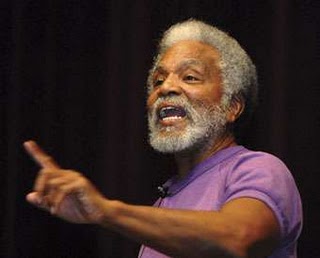
“I think when you’re going to do something as delicate as this, when you’re talking about our children, you go slowly, you don’t go real fast. I think that’s where the mistakes were made.
“What really galls me more than anything is that the African American Achievement Council, the Latino Achievement Council, the Native American Achievement Council, the Ministerial Alliance and various groups that participated in the political process were not consulted. We did what legislators, the governor and other elected officials hoped we’d do. We engaged in the process. We went to Lincoln. We lobbied. We fought. We cajoled. We testified. We did all this.”
Yet, he said, “nobody came to us to find out what we do or what changes we have made in the district, which are numerous and ongoing and many of which are starting to bear serious fruit. To negate or dismiss all of the work done by plain citizens who just want to help is a travesty and a crime quite frankly. And then you do this (pass the new law) and you lock us out? You didn’t even ask us what we thought — those of us who are engaged?
“And all these folks now running around saying, ‘Yeah, this is a good idea and Ernie’s right,’ and so forth and so on, none of ‘em are engaged. None. Zero.”
Gray, who said he’s carefully read the new law, cites many things not accounted for in the bill’s language, including such basics as funding and hiring mechanisms, classroom assignments, grant stipulations, program operations and oversight responsibilities. He fears too many details have been ignored, too many consequences unaddressed, leaving in limbo and perhaps in jeopardy educators’ jobs and district programs hinging on grants or contracts.
“I don’t know if people realize, for example, the Omaha Public School District has about $30 million in grant programs that somehow have to get reapportioned or reapplied for. What’s going to happen to these programs? Who writes the grants? Who gets the grants now? There’s a teachers union contract that runs over into 2008 — what happens to it? Who’s going to negotiate a new contract? What happens to those teachers? How do we pick and choose which teachers and principals we keep and don’t keep? Who decides?
“What’s going to happen to the district’s Triple A bond rating? What about levee limits and bond rates? With our low property tax base, what kind of bonds can black and Latino districts float? What about insurance — with each new district being much smaller than OPS what kind of group rates will they qualify for? There’s a myriad of things I don’t think anybody thought about.”
He’s not so pessimistic he discounts a framework can be found that answers such questions. “Oh, there’s always a possibility,” he said. His point is that a huge education ball was put in motion without due diligence or foresight. “It should have been worked out before and not after the bill. Normally, when there’s a merger or an acquisition or a break up, the answers have all been worked out and in this instance nothing has been worked out. There’s just too many things we don’t know.” In the interim, some things, like a planned South Omaha Educare center, are on hold until there’s more clarity.
He distrusts and derides the hallmark of Chambers’ provision — local control. He sees little assurance of it when the board overseeing the new learning community will be appointees, not elected officials, installed by other appointees. He points out the suburban districts will have a majority on the board and thus a voting bloc over inner city districts. He contends creating black-Latino districts will isolate them and make them easy targets for unequal shares of the revenue pie.
He also cautions that local control failed the local Head Start program.
“We’ve lost parts of enough generations to not run the risk of doing something as foolish as this and risk damaging a school district or harming children for the sake of this fanciful notion of local control. I call it foolish because we haven’t thought about it, we haven’t talked about it,” he said.

Omaha City Council President Ben Gray began serving his two-year term in June. (Photo by Ryan Robertson KVNO News)
Gray devotes much of his public-private life to education reform. He reveres educators and hopes his work, which sounds more like lecture than rant, rises to that higher calling. The African American Achievement Council he co-chairs with his wife Freddie J. Gray works in concert with OPS on initiatives to bring the performance of minority children in line with that of whites. Under his aegis the Council’s made textbook-curriculum changes infused with black history. He helped launch the Greeter program that brings black men into schools as role models. He gives frequent talks to students of color, mentors individuals, assists black scholarship programs, etc.
He helped frame the OPS argument for its One City – One School District school boundaries effort aimed at swallowing up suburban districts. Along with superintendent John Mackiel, Gray’s made himself a visible, audible point person in support of One City, One School at public forums. One reason Gray’s left caution behind is to defend Mackiel, whom he feels is falsely maligned by critics.
“I didn’t want to be involved in the One City, One School District fight, but I just could not see a white man the caliber of John Mackiel, with the dignity I think he has, fighting for all children out there on the stump by himself. It’s about fairness and doing the right thing with me and what was happening to him was unfair when I know what he was doing was the right thing.”
Gray’s position in forums is that black-Latino inner city schools suffer in comparison to white suburban schools due to an inequitable distribution of resources. He says race, class and white privilege enable the segregated housing and unequal employment patterns that breed segregation.
“We have to address the bedrock that is white privilege. First of all we have to name it. Whites are not going to accept it from me. They’re going to accept it from somebody who lives in their neighborhood and who looks like they do, That’s who’s going to drive this discussion — the Jonathan Kozols and other white authors who call the educational system in this country apartheid.
“And that discussion has to occur because if it doesn’t this country is not going to be long for existence. Joseph Lowry, the former president of the Southern Christian Leadership Conference said it best, ‘We may have come over here on different ships — we are on the same boat now. We better figure out how to fix this boat.’ I have to be optimistic.”
If nothing else, he said, the discord shows what happens in the absence of dialogue about the underlying issues. He sees people “slowly venturing into this uncharted territory,” adding his message is welcome in some parts of town and not others.
While he has “great faith the lawsuit is going to be successful,” he added, “I don’t put all my eggs in one basket. You just don’t sit back and wait. You do other things on the legislative and social justice end. There are already rumblings the legislature next year is going to do some fine tuning. I’m looking for legislative solutions. I hope we find dialogue somewhere, so that we don’t have to go to court.” He’s wary what decision a court might render. “You know, courts can do anything — from rule against us to rule for us. They have wide latitude. I think we all need to be concerned about what a judge will do.”
Students, parents and taxpayers face the surreal reality that once the new schools plan is implemented in 2008, every legislator that shaped or passed it will be out of office due to term limits. In this void, Gray said, “I don’t know who to talk to. I don’t know who’s going to be elected.” Chambers is among those whose term will expire. Before then, Gray hopes to get him to look deeper at the questions the plan poses. “I have to do a better job convincing him because Ernie has very strong convictions, very strong beliefs and you have to prove yourself to Ernie over and over again, and that’s not bad. It keeps you focused and it keeps you strong.”
No sweat for Gray, who shares with Ernie a passion for pumping iron, and carries with him two values from his military days, “discipline and completing the mission,” that ensure the schools plan “will not go unchallenged” by him. He vows it.
Related Articles
- Still striving for equality in American life | Nicolaus Mills (guardian.co.uk)
- Clarence B. Jones: King’s ‘Dream’ Message Survives the Latest in 47 Years of Flawed Messengers (huffingtonpost.com)
- Harold Dow Broke Barriers, Landed Exclusives (cbsnews.com)
- Political Memo: Where Dr. King Once Stood, Tea Party Claims His Mantle (nytimes.com)
- Today’s Exploration: Omaha’s History of Racial Tension (theprideofnebraska.blogspot.com)
- Omaha Native Steve Marantz Looks Back at the City’s ’68 Racial Divide Through the Prism of Hoops in His New Book, ‘The Rhythm Boys of Omaha Central’ (leoadambiga.wordpress.com)
- Back in the Day, Native Omaha Days is Reunion, Homecoming, Heritage Celebration and Party All in One (leoadambiga.wordpress.com)
- Hey, You, Get Off of My Cloud! Doug Paterson – Acolyte of Theatre of the Oppressed Founder Augusto Boal and Advocate of Art as Social Action (leoadambiga.wordpress.com)
- A Brief History of Omaha’s Civil Rights Struggle Distilled in Black and White By Photographer Rudy Smith (leoadambiga.wordpress.com)
- Omaha’s Malcolm X Memorial Foundation Comes into its Own, As the Nonprofit Eyes Grand Plans it Weighs How Much Support Exists to Realize Them (leoadambiga.wordpress.com)
- Blacks of Distinction II (leoadambiga.wordpress.com)
- From My Series Out to Win: The Roots of Greatness – Neal Mosser, A Straight-Shooting Son-of-a-Gun (leoadambiga.wordpress.com)
- Making the Case for a Nebraska Black Sports Hall of Fame (leoadambiga.wordpress.com)
- The Great Migration Comes Home: Deep South Exiles Living in Omaha Participated in the Movement Author Isabel Wilkerson Writes About in Her Book, ‘The Warmth of Other Suns’ (leoadambiga.wordpress.com)
Two blended houses of worship desegregate Sunday: Episcopal Church of the Resurrection and New Life Presbyterian are houses undivided
©by Leo Adam Biga
Originally published in The Reader (www.thereader.com)
Martin Luther King Jr. scornfully observed that 11 o’clock Sunday morning “is the most segregated hour in this nation.” His indictment rings as true today in worship places as 50 years ago.
Organized, affiliated Christian churches are historically houses divided regardless of location or denomination. Witness Omaha, where defacto segregation is reinforced by geographic racial lines. With rare exceptions whites and blacks exclusively attend their own churches. That’s true even when a white congregation and black congregation of the same religious organizationare within close proximity.
The difficulty of achieving a racially mixed congregation is evident by the story of Augustana Lutheran Church in Omaha. The documentary A Time for Burning portrayed the upset that even timid attempts at interracial outreach caused within white Augustana in the mid-1960s. The film and a CBS news special about it elicited national discussion. The congregation underwent a self-study to examine their hearts. Augustana responsed to its neighborhood’s increasing African-American presence through outreach programs. Despite all this, the church has had little or no success in attracting black members. Why that should be so there and at many other churches is hard to answer without looking at the past.
Given America’s racial history, whites could always attend black churches without repercussions. Few did. Blacks attending white churches were made to feel unwelcome. Manifestations of this exclusion were designated inner-city Catholic, Episcopal, Presbyterian, Methodist, Baptist churches set aside for blacks.
Anymore, it’s not about being banned, barred or shunned. There’s more inclusion today. Chalk it up to enlightenment or political correctness. Of course, anything smacking of racism may generate a lawsuit or a YouTube-Facebook-Twitter campaign. Independent, nondenominational churches are most likely to be mixed. Without a compelling reason to integrate, most churches remain segregated because it’s easier to remain in their comfort zone.
Circumstances can lead two racially-defined, old-line churches to unite as one. It happens when they fall on hard times. Rather than move or close, they merge. Often, these unions fail. Even when they work, it’s by no means a smooth ride. Two successful Omaha inner-city blendings are Episcopal Church of the Resurrection, 3004 Belvedere Blvd., and New Life Presbyterian Church, 4060 Pratt Street.
Each was a marriage of convenience. When all white St. John’s and all black St. Philip the Deacon faced declining rolls in the ‘70s, members reviewed options and elected merger. It took effect in 1986 with Resurrection, housed in the former St. John’s building. The same scenario happened with Fairview and Calvin Memorial, only nominally white Fairview was already integrated and predominantly black Calvin resulted from a previous merger between black Hillside and white Bethany churches. New Life opened in 1991 in the former Fairview building. Calvin was one of two black churches that tried fellowship with Augustana.
By all accounts, New Life and Resurrection make multicultural diversity work. Challenges remain: each has only about 100 active members whose average is 60-plus; few members live in their church neighborhoods; the neighborhoods are rife with poverty and violence; physical plant needs persist; short budgets are stretched thin. But the journey of each church is a lesson in how we can heal the racial divide.
Sisters Johnice Orduna and Nola Jeanpierre share a unique perspective on both churches. Orduna, a licensed minister, attended Resurrection in the ‘90s and now serves as “a supply preacher” at New Life until a permanent pastor’s found. Jeanpierre grew up at Calvin, she experienced the birth of New Life, where she’s a member, and she’s now Resurrection’s choir director.
“I think the folks at New Life and Resurrection have made the decision, ‘We’re going to be here and we’re going to be together doing this regardless, and we’ll work through whatever it takes.’ If more congregations would do that then we wouldn’t have these rifts,” said Orduna. “We’ve gotta get past this business of Sunday being the most segregated day of the week. I think we have been convinced by society we can’t do it any differently, and it’s just not true. But we have to be intentional and we have to learn to respect that culturally we’re going to want to do some things differently, and that’s OK. I mean, it’s wonderful.”

Church of the Resurrection
A merger doesn’t just happen. “It’s a process,” said Orduna. “You have to be intentional, you have to be diligent, you have to commit.”
Member Pat Tooles said New Life “overturns the myth African-Americans and whites can’t worship together because they have two different worship styles.” Presbyterians, white or black, favor a sedate service light on emotional displays and heavy on orderly structure, although there’s some call-and-response at New Life.
Whether at the pulpit, in the pews, working on the building and grounds or breaking bread together, the people at New Life and Resurrection say they see how they are more alike than different. They view their differences as gifts not threats. They embrace their diversity as enriching, even branding their faith communities that way. Resurrection describes itself “…a culturally diverse family united in God’s love.” New Life’s mission statement begins, “We believe we are called to be a congregation of diverse backgrounds, ages and races…”
“I just think we have so much every day all the time to learn from each other,” said Orduna. “Sure, there are tiffs, but they’re not gamebreakers.”
Lesley Dean grew up in St. Philip’s at 26th and Binney. Her parents were active members. She moved away and once returned was “heartbroken” her beloved home parish was no more. In her absence the merger happened, She liked what she found at Resurrection.
“I immediately felt comfortable there. I felt like this was the next step of St. Philip’s, especially because of the blending of the two congregations. It just seemed natural. I think one of the things that made me be able to accept it and to go with the flow is because I lived in San Francisco for 20 years, so I had already experienced different cultures coming together and getting along. That wasn’t anything thing new to me. I thought it was great actually.”
She wasn’t there for the merger but knows it wasn’t all roses.
“I don’t think it was anything instantaneous,” she said. “That blending did not come along easily. It took a lot of work from my parents and all the other elders that came before me. They just worked very hard to build a sense of trust amongst the rest of the congregation. And I just think they all learned from that — from the bickering and whatever else was going on. When I came back it was just like, What was all that for? — let’s just start anew, we’re all human beings, we all deserve to be treated with respect and dignity. They just kind of formed that alliance. Then the generations that came after, like me, have just taken it a step further.”
Deacon Juanita Johnson was there. Coming from St. Philip’s, she confirmed Resurrection’s first years saw conflict. Disputes arose over the racial composition of lay leadership roles. Any hint of favoritism took on a racial slant.
“At that time it was very important to keep everything racially balanced because there were people from St. Philip’s that weren’t completely on board with the merger,” she said, adding the same was true with some from St. John’s.

There was also resentment from St. Philip folks over sacrificing their building for the move to St. John’s.
A black splinter group alleged racism against Resurrection’s first rector, Rev. John Nelson, who was white, and against the local Episcopal diocese’s all-white administration. A national consultant was brought in to get people talking. Some folks left — black and white — but the core remained. New membersof both races joined.
“The people that stayed wanted it to work,” said Johnson, whose experience told her it could. As a University of Nebraska-Lincoln student in the late ‘40s she and fellow black students were denied admittance to campus dormitories. They resided instead at International House, where they lived harmoniously with students from Europe, Asia, et cetera. She also did interracial outreach while a Fisk University student in Nashville, Tenn. with students from nearby white colleges.
“I had that background, so I knew it could work.”
Resurrection’s long past how many blacks-whites serve on the vestry. Those things work themselves out. St. Philip’s took a sense of ownership by incorporating elements from their old church, such as stained glass windows and candles, into the Resurrection sanctuary. A more vital music liturgy of gospel, spirituals, even jazz, was introduced. A popular fish fry St. Philip’s held was adopted.
Tim and Cheri Oelke got married at St. John’s. They left long before the merger. Then they visited Resurrection and were hooked by the “inspirational” black hymns. The couple are the last St. John’s members left there. For Cheri, the spirit of the place is not an edifice, an icon or an event. “It’s not in the building as much as it is the people. I think the reason we want it to work now is that we all care about each other, and if we do it in this building or if we have to do it in another building we want to worship together. Bonds have been formed, friendships have been formed, and we feel like we’re all a family.”
Helping ease the transition were shared Lenten worship services and other events St John’s and St. Philip’s hosted prior to merging. Still, old habits die hard.
“For a long time it was just the two churches worshiping at the same time in the same building but still two identities,” said Resurrection’s new rector, Rev. Jason Emerson, who previously served as an intern and curate there. Tim Oelke said, “It’s the Church of the Resurrection now, it’s not St. John’s. St. John’s was certainly special but that’s in the past.”
New Life’s tribulations were similar. Former Fairview member Janet Decker recalls a meeting where Bernard Grice voiced Calvin’s concerns. “He got up and said he hoped we didn’t do the same thing the whites did at Bethany, which was disappear.” She said Fairview’s integrated ranks avoided that. “We had only one family who decided not to continue to come — absolutely everyone else stayed. We didn’t have this feeling of giving up a thing. We were gaining. We knew if we were going to survive we needed to merge. We’re very comfortable with each other.”
Change was more traumatic at Calvin, not due to race but turf. “There were a lot of hard feelings. It was like giving up our church,” said Nola Jeanpierre. Calvin members like she and Michael Maroney did abandon their beautiful building at 24th and Wirt. “It was not an easy or smooth transition inside Calvin. There was a lot of contention in terms of how Calvin was actually dissolved,” said Maroney. “In hindsight, it probably went the way it had to go.” Those wounds healed.
Just as Resurrection eased into things pre-merger, New Life did. Joint worship services and soup suppers were held at Calvin and other events at Fairview “so the two congregations could be together and people could kind of get to know each other,” said Rick Rudiger, who belonged to Fairview. “You kind of have that courtship time. If you try to force it, you’ll probably fail.”
Carolyn Grice, whose father Bernard was a leader at Calvin, served with Rudiger on the merger committee. “We met weekly to start ironing out stuff. It pretty much started from scratch — what is it we want to see and then how are we going to get there. We had lots of disagreements but we’re all friends now,” said Grice. Rudiger said people tended to draw lines along Fairview or Calvin. “You had to reinforce it all the time of who we are — we’re New Life now, so let’s move on. Change is hard for everybody. Some accept it. For some it’s very difficult. The way you have to deal with change is you do things a little at a time.”
Jeanpierre said it’s imperative to “come in open-minded and ready to work together and not to exclude anyone, not to remove anyone from a post or role. You’re talking about a marriage, about one family meeting the in-laws and basically trying to make everything work for both in-laws, so that the family as a whole and on both sides can come together and find a common ground.”
After a few interims New Life’s first full-time pastor helped solidify things. “We had a strong female minister who kind of got us turned around and really focused on becoming New Life,” said Rudiger. “I would say overall we really have grown strong. I don’t think there’s too much thought even of what Fairview used to do or what Calvin used to do — it’s what’s New Life’s doing.”
Decker said there’s appreciation for what each faith community contributed. “There’s a lot of things we do now because that’s what they brought with them (from Calvin).” That includes spirituals. On a more practical level, she said, “they brought the numbers (more members) and we had the place.”
Ruth York, who came over from Calvin, said “those of us that have seen it through have been through quite a bit, financially and so forth, but we’ve stayed strong and stuck together like a family, and we’re stronger for it.”
Just as New Life is on its second generation, Resurrection is, too. Lesley Dean feels a legacy calling.
“I have really worked hard to make sure some of the traditions of St. Philip’s continue on, like our Black History month celebration and the fish fry named after my dad. Myself and some others have tried to make sure our African-American culture was not lost in the merger. We still needed an identity and the St. John’s people were willing to embrace that.”
Dean said sensitivity makes all the difference.
“That’s how people get along. Ignorance is I believe why we have so much discrimination and racism in society because people don’t take the time to learn about each other. I just really feel Church of the Resurrection is a family. We are accepting and welcoming of every one and there’s a genuineness to that acceptance — it’s not just for show or not just for money.”
Richard Artison and his wife were St. Philip’s members and then moved away for his career. Once back, they went church shopping before settling on Resurrection.
“We’ve been to some churches that were very cold and impersonal and you feel like a number and we’ve gone to churches where nobody would speak to us. Just got ignored. This church has a lot of warmth and a lot of love. We like it,” he said.
Emerson’s proud his church is so inviting.
“The least worry I ever have at this congregation is that somebody new will walk through the door and not get spoken to. That just does not happen. They’re going to get spoken to. They’re going to get greeted, they’re going to get welcomed and I don’t have to do anything to make that happen. Other congregations, you have to work at that, it’s not as ingrained in their nature. It’s a problem in Episcopal churches churchwide, and that’s not the case here.”
He said Resurrection’s open mat, Sunday social hour/lunch and ministries targeting the underserved — including an after-school program, an emergency pantry, a transitional living site — reflect the church’s origins.
“I firmly believe this congregation’s history has led them uniquely to a high level of hospitality and I don’t know mean they just put on a good food spread, which they do. That attitude, that desire, that passion for outreach and justice comes from the two churches melding and the level of hospitality they had to practice to each other to come together and become one parish.”
He said Resurrection’s reputation for tolerance is why it’s a player in the Tri-Faith Initiative for a shared Episcopal-Jewish-Muslim campus.
Dean senses Resurrection’s come a long way in the eyes of a diocese that’s been slow to accept it. “For the longest time we felt they looked down on us, they didn’t want to participate in any activities we were doing, basically because we’re in north Omaha and the media portrays north Omaha as this horrible place. Our congregation has fought really hard to change that image, and it’s working. Some of the other diocesan churches are now participating in some of our ministries, so that’s a good feeling. We’ve got a lot further to go, but it’s a beginning.”
New Life’s at-risk kids mentoring program continues the legacy of the two socially conscious churches preceding it. Fairview ran Head Start and Project Embrace prpgrams. Calvin was active in youth job/leadership training and civil rights.
Orduna said the unity embodied by New Life and Resurrection “has the possibility to create a strong, trustworthy identity that could really be powerful force in bringing this whole neighborhood back to God.” Artison said, “I think church is the one place where we should come together. I think we’re an example for others.” Decker said churches that resist diversity “don’t know what they’re missing.”
Related Articles
- A ‘giving away’ congregation (theglobeandmail.com)
- Last Hymn For Harlem Churches? (harlemworldblog.wordpress.com)
- Two Cedar Rapids churches cross paths after the 2008 floods (gazetteonline.com)
- What Are the Barriers to Interracial Friendships? (race.change.org)
- Unified rainbow nation? Not yet, but World Cup displays SAfrica’s improving race relations (foxnews.com)


 Leo Adam Biga's My Inside Stories