Archive
Nancy Kirk: Arts maven, author, communicator, entrepreneur, interfaith champion
There are people who talk about doing things and people who do things. Nancy Kirk is the latter. That’s not to say she finishes everything she starts. Like those unfinished manuscripts of hers she’d like to get to one day. But lots of us can say that. She’s also a model of reinvention – of following one path in life and then finding a new direction and then another to feed her ever-searching sensibility. In truth, all of her paths have followed a similar humanistic and cultural track. She began her career in the arts, then went entrepreneurial in the antique quilt and fabrics world, and more recently has taken up interfaith work as executive director of an initiative whose ultimate aim is to bring together a synagouge, a church, and a mosque on the same campus in Omaha, Neb. The following profile I wrote about this intriguing woman will be the November cover story in the New Horizons. Read it here first.

Nancy Kirk: Arts maven, author, communicator, entrepreneur, interfaith champion
©by Leo Adam Biga
Originally appeared in the New Horizons

Long before becoming executive director of the Tri-Faith Initiative, the Omaha collaborative that finds Jews, Christians and Muslims building a shared worship campus, Nancy (Timmins) Kirk made a name for herself in the quilting world. Only not as a quilter, she’s quick to point out, but rather as a designer and aficionado.
It’s only natural to assume she’s a quiltmaker since she and her late husband owned The Kirk Collection, an antique fabrics supply, restoration and appraisal business that gained an international reputation and clientele. Nancy still carries on aspects of the business by conducting workshops, making presentations and producing DVDs and CDs on antique quilt restoration.
“I still love the teaching and the writing and the speaking,” she said. But the grind of multi-day conferences takes more of a toll these days on Kirk, who has survived a heart attack and open heart surgery.
Much like her work with the nonprofit Tri-Faith, whose groundbreaking plan for a synagogue, church and mosque on adjoining property is drawing worldwide interest, Kirk came to quilting an inveterate seeker always curious to know more. She’s learned enough to speak with not only passion but authority about quilting as art, craft and healing process and quilts as potent, touchstone objects of utility, aesthetics and humanity.
“Quilting serves many different purposes,” she said. “For some people it’s a craft activity, a stress reliever. Studies have shown the activity of quilting changes the brain’s alpha waves. For other people it’s an art medium, a very expressive way for a designer to work. For others it becomes very therapeutic.”
Quilts evoke intimate feelings tied to memories, rituals and relationships.
“For the viewer or the recipient, quilts exist for people at an emotional level that is really very primitive,” she said. “People respond with a part of their brain that usually has no language. Quilts represent people’s deep emotional connections with home, with comfort, with safety, with love. You see people wrapping up in quilts or touching quilts and being reminded of parents and grandparents and places they used to live. And you start hearing these wonderful stories.”
The way Kirk sees it, every quilt has a story to tell.
“All you have to do is plant yourself near a quilt, particularly an older quilt, at a quilt show and by the end of the day you’ll hear dozens of stories from people because they’re so evocative, especially in this part of the country, where people grew up with quilts. They’re very powerful objects.”
Before The Kirk Collection became a mail order source of antique fabrics for quilters the business made its name as a supplier to Hollywood film and television studio designers and costumers in need of period materials. Nancy and Bill Kirk provided fabrics that ended up in costumes of such major motion pictures as Titanic, Forest Gump and Wyatt Earp and network shows like Brooklyn Bridge and Homefront.
The couple ran the business out of their Bemis Park home before opening a store at 45th and Military Ave. Their customer roster extended to Europe and Asia.
Before she got into quilting, Kirk worked in the arts, where her aesthetic sensibilities were honed to give her a deep appreciation for not only the fine and performing arts but antiques, including textiles and fabrics.
The daughter of university professor parents who divorced when she and her sister were young, Kirk grew up in her native New York City and a variety of other locales.
She absorbed a classic liberal arts education at Antioch (Ohio) college, where she studied social sciences and journalism. She’s put her writing skill set to good use over the years as an arts administrator and public relations professional. Her unplanned fascination with arts management was fired when she spent two years with an Antioch theater project in Baltimore, MD.
“At this funny little free theater we brought in very experimental theater and dance companies from all over the world — The Medicine Show, Pilobolus. It was the out of town try-out place for experimental theater and dance. I became absolutely in love with experimental theater and dance and I was exposed to some of the best in the world. We were always at odds with the state and local arts councils because we were doing and promoting this work that was very outside the mainstream.”
By the time she earned her master’s in arts management from the University of Illinois and moved to Omaha to work a paid internship with the Nebraska Arts Council, she found herself in the midst of a cutting edge arts movement here. She arrived only a week after the devastating 1975 tornado and neither its widespread damage nor the paralyzing blizzard of ’75 that followed that winter could scare her away. Neither did the relative uproar over the Bicentennial I-80 sculpture project, edgy stagework by the Omaha Magic Theatre and the counterculture head shops, avant garde films and art happenings in the then-fledgling Old Market.
Indeed, she was won over by how open-minded Nebraskans were to new ideas.
“In all the time I worked for the state arts council and then 11 more years for the local arts council there was no one who said we shouldn’t have art.”
She recalled an I-80 sculptures forum in some backwater Neb. town where “an old man in coveralls got up and said, ‘I sure don’t understand this stuff, but I want to make sure my grandchildren have a chance to see it,’ and that was the attitude pretty much for anything.” One of her roles with the state arts council was traveling to rural hamlets and educating the local populace about the touring programs coming their way.
She said resistance or suspicion to unfamiliar art disappeared when she framed the needs of artists “in terms that (rural) audiences could understand from their own perspective,” adding, “That was a big part of my job.” Like the time she went to a small town in advance of a touring opera program. She laid to rest concerns singers were divas for requiring humidifiers in their rooms by explaining that the artists needed the devices to keep their throat and voice supple in the same way farm tractors or threshers need routine maintenance to run right. Once she put things in practical terms, she said, humidifiers were readily volunteered.
“I came to have a real appreciation of what arts councils were doing in terms of opening up the doors to the arts in a lot of communities where there had really been nothing outside the high school play. A lot of them shied away from cutting edge kind of work.”
The arts councils that sprung up in the ’60s and ’70s, she said, “were bringing the arts out of the urban areas and into the rest of the country.” For example, she said the Omaha Community Playhouse formed the Nebraska Theatre Caravan “and took theater into towns that had never had professional theater and Opera Omaha organized small touring evenings of opera.”
Visual artists, dancers, authors, poets and others began criss-crossing the state to present before general audiences or to do residencies in schools. Her focus on bringing the arts to underserved populations extended to a visual art program in the state penitentiary, where even death row inmates were provided art supplies for their self-expression. Her work introduced her to the man who became her husband, Bill Kirk, who was a theater actor-director and kindred spirit.
She authored an award-winning book, Lobbying for the Arts, used all over the country.
An advantage Omaha owns when it comes to supporting the arts and other things, she said, is that it’s still small and accommodating enough to provide ready “access to power,” unlike other cities she’s lived where access is limited to few. “Here, all you had to do was pick up the phone and ask for an audience with Willis Strauss or Peter Kiewit or Leo Daly or John Bookout. You could be heard. They might not agree with you, they might not end up supporting your cause, but you could make your case. I think it’s very much the same attitude that created Ak-Sar-Ben. It’s this place of kind of infinite possibility and egalitarianism.”

Nancy Kirk discussing quilt restoration
She said Omaha’s can-do spirit is what sold her on this place and has kept her put.
“This is the kind of city I wanted to live in. I think this same spirit of civic work still exists now. It’s an attitude that makes the most extraordinary things possible.”
“Tri-Faith is another example of it,” she said of the initiative whose partners are Temple Israel, the Episcopal Diocese of Nebraska and the American Institute of Islamic Studies and Culture, “Not only was there no significant opposition to it, there was a kind of, Well, I don’t quite understand it, but what can we do to help? attitude. When it came to raise money for the land four foundations stepped up.”
The intended Tri-Faith campus is on the grounds of the former Highland Country Club, which Jews formed decades ago when denied admittance to goy clubs. The campus plan is part of the Sterling Ridge mixed-use development in southwest Omaha that’s presently undergoing site preparation work. Plans call for three worship centers — one for each participating faith group — and a shared interfaith education center Kirk refers to as “the meeting place.”
Support for the project, which launched in 2006, has come together quickly from large though as yet undisclosed donors.
“Basically the donations have been made because it’s good for the city,” said Kirk. “They see this vision that this makes Omaha a better place to live for everybody.”
Tri-Faith was conceived in response to a seemingly mundane dilemma.
“The genesis is parking lots. This is a project about parking lots — very seriously,” Kirk said.
Temple Israel synagogue has long been in need of a new site, having outgrown its current building and plot just east of 72nd and Cass. With its congregation largely residing now in suburbia, a move west only made sense. When synagogue leaders began contemplating what they’d like in a new site, said Kirk, they were “very intentional about finding good neighbors” like the ones they have today in the Omaha Community Playhouse and First United Methodist Church.
She said when Temple heard that the Institute was planning to build a new mosque in west Omaha synagogue member Bob Freeman, Rabbi Aryeh Azriel and others contacted AISC president and co-founder Dr. Syed Mohiuddin, “to discuss looking for land together to share parking lots.”

Consistent with hospitality being “such a central concept to all the Abrahamic faith traditions,” she said, representatives from each group came bearing mounds of food for the meeting. That first confab led to more. She said, “When they eventually began talking matters of faith rather than concrete it occurred to them they had two of the three major Abrahamic traditions represented.” As a potential Christian partner the parties approached the Catholic archdiocese of Omaha, whose then-archbishop, Rev. Elden Curtiss, declined. They next made overtures to the Episcopal Diocese of Nebraska, whose then-leader, Rev. Joe Burnett, accepted.
In 2006 Tri-Faith was incorporated as a 501c3 and since then the organization has presented several interfaith events to promote understanding, all while working toward a common goal of a shared campus. The endeavor has made headlines around the world at a time when religious and cultural differences continue to be serious dividing points. Building bridges is an appealing idea as the globe grows ever flatter and more interconnected thanks to online social networking and to grassroots movements like those of the Arab Spring and Occupy Wall Street.
“It turns out the parking lots are such a metaphor for what’s going on in the world because the fact is we all have to share this earth. — it’s how do we live together,” said Kirk.
Her Tri-Faith involvement began in 2008, when it might be said her decades-long quest for spiritual fulfillment reached a new plane. In some ways, she acknowledges, she’s a most unlikely director of an interfaith project because for the first 35 years of her life she struggled with matters of faith. Then again, her uneasy journey steeled her for leading an initiative about celebrating differences.
“My father was a fallen-away Catholic, my mother was a fallen-away Unitarian, so I was brought up with no particular religion, in a household that wavered somewhere between agnosticism and atheism. But both parents allowed us to be exposed to some variety of religions. There was no objection if we went to church with friends.”

On some level, Kirk’s faith odyssey echoed that of her divining rod maternal grandmother, Sophia Lyon Fahs, who was ordained a Unitarian minister at 80 and wrote dozens of religious education books. Her last book, The Church Across the Street, was a comparative religions study. The liberal, progressive themes of inclusion and tolerance her grandmother advocated are in line with those of Kirk and the Tri-Faith Initiative.
Kirk comes from a long line of matriarchal figures and accomplished professionals. Her great-grandmother wrote books about her Presbyterian missionary work in China.
So it wasn’t as if Kirk didn’t have ready examples of faith to follow. In fact, she said, “I envied people who had great faith but I didn’t understand the experience and didn’t expect to ever have it. I was never anti-religious, I just was not religious.”
Then, in the midst of building her arts career, what she least expected happened.
“I was one of those bolt of lightening people. Literally in the course of a 24-hour period I came to a very deep belief in the existence of God. I was at home and all of a sudden I felt this incredible sense of certainty. It was so different than the kind of rational approach I’d always had to life. That’s when I started searching and doing a lot of reading. I didn’t talk to anyone about it really for a very long time.”
Before becoming a couple Nancy and Bill Kirk were friends. On a long road trip for an arts program she told him about her spiritual awakening and “how confusing it all felt” because it didn’t necessarily jive with what organized religion prescribed.
“And he said something very helpful — that the personal experience you feel is faith and all the stuff you hear in church and in the bible and other sources is belief, and belief is what happens in your head and faith is what happens in your heart …and that both are OK. The part that is faith is intended to be a questioning process throughout your life. Your responsibility as a human being is to continue to explore and try to understand and to go through periods of disbelief.”
“The deeper you explore that abyss that you’re always afraid you’ll fall into and never come out of,” she said, “the more you discover there are those dark nights of the soul when you feel faith has deserted you. But usually it’s the belief that’s deserted you, and the faith part can lead you back away from the edge of the precipice. And then you rebuild the belief.”

After being stricken with the spirit, Kirk tried on a number of faiths but it was only four years ago she “came to the Episcopal Church.” She’s a member of St. Andrew’s. She was finally swayed to the denomination, which she’d flirted with before, after seeing the church’s presiding bishop in the U.S., Most Rev. Katharine Jefferts Schori on CBS. “I said, ‘I would follow that woman anywhere,’ so when it came to look for a new church I looked for an Episcopal church.”
Coming from where she did to where she is today, Kirk said, has informed and shaped the spiritual life she enjoys today and her work with Tri-Faith.
“So this rather eclectic religious background of growing up outside any one particular faith tradition and not necessarily having a particular belief in any of them for the larger part of my life in some ways really helped prepare me for what I’m doing now. Because I came to the habit of questioning, researching, listening hard and trying to understand other people’s faith journeys as part of my own.”
The discernment she does by opening herself to other beliefs enriches her life and her faith. “I find it fascinating and each of those encounters helps me refine my own faith and without any denial of my own tradition as I have adopted it now.”
Kirk felt drawn to engage in the Tri-Faith experiment after taking an inventory of her life a few years ago and deciding to embark on a new path she felt called to follow.
“When I turned 60 (she’s 64 today ) I made a 44-year life plan. I’ve always made long range plans. Women in my family thankfully tend to be long-lived. My grandmother died at 103. My mother died at 94. Both were active until the end. So it seemed like 104 was a good age to shoot for. I had become really fascinated with the changing role of religion in a pluralistic society. The Kirk Collection was kind of winding down, I’d closed our retail store. I didn’t want to cut another piece of fabric ever again in my life. After about 25 years in the quilt world I was ready for a change. My husband had died. It was time to reinvent myself again.”
She didn’t tell anyone (at first) about her new life plan. Then, she said, she “finally got up the nerve” to tell her business coach and much to her relief “he didn’t laugh.” “Once I said it out loud it was like, ‘Yeah, that’s what I want to do — some kind of ministry.’ Lay or ordained, it didn’t matter, but this is the subject area I wanted to be in.”
She felt compelled to give back.
“Sixty is a great place to start because chances are you’ve done pretty much what you intended to do professionally and getting your kids raised up. It’s not really like a bucket list but there’s still a chance to contribute meaningfully to the world. We want to make sure by the end of our life we know our life had meaning and this is a great age at which to be doing it. We don’t have a lot of the distractions we had before of raising kids and building career. Sixty to 100 there’s a chance to do things that really change the world and getting it done is more important than getting credit.”
The philosophy reminds her of her college’s motto: “Be ashamed to die until you’ve won some victory for humanity.”
Fatefully, a group of Tri-Faith board members made a presentation at St. Andrew one Sunday. Until then, she’d not even heard of the venture but she was immediately and powerfully attracted to its vision of three faiths partnering together.
“This is what I’m supposed to be doing,” is what she said she thought to herself. It wasn’t long before she offered her services to help spread Tri-Faith’s message and dream. When she learned the group was seeking an executive director she made a proposal and was hired. She saw the mission as a perfect fit for many reasons, not the least of which is her considerable PR experience and expertise.
In a world full of noise and mixed messages, she said she aims to keep Tri-Faith on point with its mission of “celebrating the diversity of our religious traditions.” “It’s beyond tolerance and acceptance and respect, it’s really about building relationships among people and celebrating those differences,” she said.
“As one of our board members, Rev. Ernesto Medina said, ‘The reason we know it’s working is we know the names of each others children,’ and that’s what it’s all about. It’s building those relationships.”

A Tri-Faith Initiative event
She said in this increasingly global space we inhabit “I think the world is having to live into a new definition of who is our neighbor. I think we’re called on to be really aware of our neighbors and getting to know them.”
Through events like Abraham’s Tent and the Tri-Faith Picnic, she said Jewish, Christian and Islamic rites are celebrated and people learn what to say or do during worship services and ceremonies. As distinct as each tradition is, Tri-Faith reminds participants “there’s so much the faiths share — we all greet each other with peace, we’re all talking about and praying to the same God.”
She said learning how to offer peace in each faith tradition can be a profound thing, whether saying “peace be with you” or “shabbat shalom” or “as-salamu alaykum.” “Just those few simple words,” she said, “and all of a sudden you feel very comfortable. It’s those little things that take the strangeness out of it.”
Then there is the exploration Tri-Faith inspires.
“A great thing that happens with the Tri-Faith is that as you engage in interfaith work and discussions you feel compelled to learn more about your own faith. You begin to explore your own tradition. You either question or affirm or study why you believe what you do and universally you end up more attached and committed to your own faith.”
She’s impressed by how the Tri-Faith board, composed of both lay and religious, doesn’t stray from its mission.
“I’ve worked with many nonprofit boards over the years and this is truly unlike any other board I have ever worked with. They expect that everything is possible, they have committed themselves to one another to make things possible. There are really no internal politics, there’s no jockeying for position. There’s a spirit that infuses their discussions that they’re really there to do God’s work and that it’s going to happen. There’s such a certainty it’s going to happen. There’s a spirit of peace in the room that is extraordinary.”
She said internal politics don’t surface though she concedes “politics sometimes intrudes from the outside.”
She said the fallout of 9/11 played a part in Tri-Faith’s formation “in the sense that we’re all in this together and we’re the ones that have to find a solution to this, and focusing on the division is not the way.”
It’s not the first time the city’s faith groups have banded together. She said several joined forces to help feed and house Chief Standing Bear’s supporters during the great Indian leader’s Fort Omaha trial. Many were active in the civil rights struggle. A number formed Together Inc. after the ‘75 tornado. More recently, faith groups have united in calling for an end to urban violence. But the Tri-Faith Initiative is something else again. She said Rev. Medina, pastor of St. Martha’s Church in Papillion, may have best summed up the miracle of the initiative with, “This was beyond the imagination of many people but not beyond the imagination of God.”
It hasn’t all been perfect.
“There have been bumps in the road,” Kirk acknowledged, “and people who’ve gotten their noses out of joint over this or that, but for the most part even those who were a little suspicious at first have often ended up as the biggest cheerleaders.”
She’s proud of many things she’s done in her life, from her work in the arts to her entrepreneurial success to her raising two adopted children, but she’s pretty certain Tri-Faith will be her most impactful legacy, at least in terms of sheer magnitude.
She can’t imagine making a greater contribution than bringing people together.
“I think the most meaningful part of the work is when I see people come to the table and sit with people of other faiths with excitement and anticipation instead of fear. If we’ve done our job and created a safe place, a place of trust where people feel they can be authentically themselves and authentically interested in the other, that is a real place of grace.”
If heredity’s any guide, then Kirk has miles to go before she sleeps. Reflecting upon her life, her diverse pursuits have “felt to me as a continuum,” she said, adding, “They all enrich people’s lives in important ways and all involve starting something new, whether new types of arts programs, a new small business or a one-of-a-kind religious development. I like being in on the start of things…”
Related articles
- John Sorensen’s Decades-Long Magnificent Obsession with the Abbott Sisters Bears Fruit in a Slew of New Works, Including ‘The Quilted Conscience’ Documentary at Film Streams (leoadambiga.wordpress.com)
- Soon Come: Neville Murray’s Passion for the Loves Jazz & Arts Center and its Role in Rebirthing North Omaha (leoadambiga.wordpress.com)
- Why Quilts Matter (uofllibraries.wordpress.com)
- Sharing Some Quilt Blogs (devotedtoquilting.wordpress.com)
- Antique Quilt Pieces from Fort at #4 (quilterinmotion.wordpress.com)
- A Stitch in Time Builds A World Class Quilt Collection and Center-Museum (leoadambiga.wordpress.com)
- Omaha Tri-Faith Pioneers Seeing the Fruits of Their Interfaith Collaborative Take Shape (leoadambiga.wordpress.com)
Artist Bernard Stanley Hoyes explores the lamentations and celebrations of Jamaican revival worship
This is one of many stories I have filed over the years related to the Loves Jazz & Arts Center in Omaha and various programs and exhibitions there. The subject of this story from a few years ago for The Reader (www.thereader.com) is the artist Bernard Stanley Hoyes and an exhibiiton of his work then showing at the LJAC. I am not an art reviewer, and thus the pieces I do from time to time about painters and sculptors and photographers are written more from a profile perspective than anything else. The center has presented many excellent exhibitions over the years that I have had the chance to see and cover, and in some cases I’ve interviewed the featured artists. Hoyes included. On this same blog you’ll find more LJAC art stories, including one on Frederick Brown and another on collector/explorer Kam-Ching Leung. You’ll also find stories about the center’s namesake, the late jazz musician Preston Love.

Sanctified Joy, ©Bernard Stanley Hoyes
Artist Bernard Stanley Hoyes explores the lamentations and celebrations of Jamaican revival worship
©by Leo Adam Biga
Originally published in The Reader (www.thereader.com)
Spiritual rapture is captured in artist Bernard Stanley Hoyes’s Revival Series. The exhibition Lamentations & Celebrations on display now through March 10 at the Loves Jazz & Arts Center features oil paintings, lithographs and etchings from the series, in which the Los Angeles-based artist explores the Revival worship services of his native Jamaica. He spent a week in Omaha doing school residencies.
Hoyes uses lustrous colors, seductive swirls and overwrought figures to evoke the “spirit at that moment of crescendo.” A cathartic moment when light, sound, music, rhythm and emotion reach a fever pitch of illumination or exaltation, said Hoyes, standing amid his iridescent work on the walls at the LJAC. When he began the series 25 years ago he chose a clean color palette and lyrical line pattern for his dynamic series. “In order for me to attain spirit and spirituality in my pictures,” he said, “my colors had to be pure. I went about by using colors without really muddling or mixing or tapering them. It’s like a sequence of motion and I’m capturing the motion at different points, but at the peak of each sequence.”
His images of incantation, reverie and ritual take place in outdoor, night time gatherings brightened by the glow of candle light and supernatural incandescence, where worshipers commune with their higher power in scenes at once solemn, joyful and eerie. There’s a power to the writhing figures caught in the spirit’s sway. The congregants worship en mass, buoyed by the communal beat of The Call.
He said, “The intention is to show where we gather our strength in all the trials and tribulations we have to endure. The strength comes from the commonality of our spiritual seeking. That’s one of the reasons I group the figures together and put them kind of like solid. They feel like one. You need all these bodies together to evoke the strength of what it takes to have a spiritual community.”

Flow with the Rhythm, ©Bernard Stanley Hoyes
His own experience of Revivalism, an amalgam of Afro-Caribbean–Christian traditions, goes back to his Jamaican youth. His great aunt was a priestess and elder whose backyard was the site for many services. He witnessed the songs, chants, dances, drums, processions, channeling of spirits, ecstatic revelations. The sacred, the mystical, the strange. It frightened and fascinated him. It was inevitable his art would explore these altered states and this mediation of ethereal and terrestrial.
Long after he left the island for America, he returned to Jamaica to observe with the eyes of a mature artist the Poccomanian and Zion strains of Revivalism. In rediscovering his roots, he found an intuitive grasp of it all. “I started to realize I had an innate sensibility about these ceremonies. I knew them,” he said. “It’s like knowing Mass. You know the consecutive ceremonies and where they go. You know the hymns. You can recognize what that special ritual and special consecration is all about without being told. As I started investigating it I saw there were some things being lost over the years. Certain sentiments in the religion. The way there was pressure to get a formal church building, where before worship was conducted in holy sites throughout the countryside or in certain blessed yards.”
He noted, too, the introduction of technology, by means of electrical amplification, to what were all acoustic rites. The changes, he said, gave him an urgency to document a rapidly disappearing heritage.

Bernard Stanley Hoyes
Hoyes views his art as an expression of the spirit and the spirit of art. As a veteran of inner city life in Kingston and L.A., he knows the soul killing poverty and crime people of color face. He creates work for nontraditional spaces as offerings of peace and unity amid troubled tribes and times, like his murals and his installations of altars and tables in riot-ravaged neighborhoods.
“We have to move beyond those manic rages,” he said through “spiritual cleansing. We can then start anew, afresh. That’s why I think we’ve seen the pervasive Born Again rituals-religions in America. People see the need for that cleansing. We have to look for the rituals where we find them. Until we do that we become captive to the oppressive nature of urban violence and all the other manic depressive things that go on in our community.”

Moonlight Spiritual S/N, ©Bernard Stanley Hoyes
Art, he said, can be part of “the healing process. It has to be about something that’s pervasive, that everybody can link their spirit to.” His Revival Series, informed by Jamaican and African American rites, is a resplendent multi-faith expression of praise and worship, call and response testifying. “It covers the whole gamut of Western Christianity with the African influence in it,” he said. Ever since his series struck a chord” a few years ago, his work has been collected by celebs like Oprah Winfrey, bringing thousands of dollars for originals and hundreds for prints. Why? “I think for the first time people with spiritual longing and spiritual connection see that part in it. They see the passion and the emotion of worship that is in the DNA of anybody that’s been to a Pentecostal or Baptist service.”
It’s about getting caught up in and overcome by the spirit. It’s what moved him when he began the series in a flourish of productivity. The spirit dictated “the style and motif and energy…the drive. One painting would beget the other — suggest the idea for the next,” he said, until he’d done 40 paintings in five weeks. “While I’m painting it becomes unconscious. It’s a classic inspired-work. That’s what it is.” He’s quit the series, but has always returned to it, finding the “inexhaustible” subject lends itself to “variations on a theme ” It numbers 500 to 600 works now. He means to retire the series with this exhibit, but suspects he’ll be drawn back to it again.
The LJAC, 2510 North 24th Street, is open Tuesday through Saturday from 11 a.m. to 5 p.m. Call 502-5315 or visit www.lovesjazzartcenter.org for more details.
Related articles
- Frederick Brown’s Journey Through Art is a Passage Across Form and a Passing On of Legacy (leoadambiga.wordpress.com)
Manifest Beauty: Christian Bro. William Woeger devotes his life to Church as artist and creative-cultural-liturgical expert
Omaha’s cultural scene is stronger thanks to Christian Brother William Woeger. He heads the Archdiocese of Omaha‘s Office for Divine Worship but is best known as founder and director of the Cathedral Arts Project based at St. Cecilia Cathedral. The project sponsors many performing and fine arts presentations throughout the year, including a flower festival that draws tens of thousands over a single weekend. He oversaw a major restoration project at the magnificent cathedral a few years ago. Adjacent to the cathedral is an impressive visitors-cultural center that was developed under his leadership. The following story for The Reader (www.thereader.com) apepared while the restoration was still underway. Something I discovered about Woeger in doing the story is that in addition to being a highly respected liturgy expert and arts administrator, he is also a nationally renowned icon artist.

Triptych designed and painted by Bro. William Woeger
Manifest Beauty: Christian Bro. William Woeger devotes life to Church as artist and creative-cultural-liturgical expert
©by Leo Adam Biga
Originally published in The Reader (www.thereader.com)
If not traveling to confer on a church renovation or to install one of his commissioned art works, national liturgical design consultant and icon painter Brother William Woeger can be found working the phone from his tidy office in the Archdiocese of Omaha chancery. From there, the fastidious Woeger juggles a busy schedule as head of the Office for Divine Worship and as executive director and founder of the popular Cathedral Arts Project. For good measure, the 54-year-old visionary — one of the early driving forces behind Omaha’s compassionate response to the AIDS epidemic — is director of liturgy at St. Cecilia Cathedral, whose $3 million restoration he is shepherding toward completion.
Gaze Upon My Soul
When the demands of his career and vocation get to be too much for the admittedly “driven” Woeger, a 36-year veteran of the Christian Brothers teaching order founded in 1864 by French cleric John Baptist de la Salle, he retreats to the solace of his painting. In keeping with tradition, Woeger’s iconic figures (mostly of Christ) are bathed in an aura of gold light suggestive of the Holy Spirit. His acrylic paint-on-wood works adorn churches in Omaha and around the nation. He recently completed and shipped the last in a set of 15 icons for a new church he helped design in Maryland. Word-of-mouth alone keeps him immersed in new projects. “I don’t advertise. I don’t submit drawings and designs. I don’t do committees,’ he said. Working from a basement studio, he enters a nearly transcendental meditative state amid the solitude and the golden reflected gaze of the icon he is rendering.
“When I am in the act of painting it actually creates a space in my life when I’m not tied into anything else. Aside from the sound of the furnace kicking-on, it’s a very contemplative experience,” he said. “And it’s very interactive in the sense that you begin manipulating the materials and then, at a certain moment — and sometimes it’s quite identifiable — the dynamics flip around and suddenly It’s doing it’s thing to you rather than you doing something to it, and it kind of finishes itself. That most often has to do with the face and the eyes — when the image starts looking back at you — which is at the heart of icons as a focus for prayer.
“The whole notion is very non-Western. The icon becomes a window, if you will, through which you contemplate the divine. Even if the image is not one of Christ but rather one of the saints, the whole metaphor with the gold hue in the background is that the source of the light is not the person — it’s beyond the person — and that is God being mediated through the figure in the painting, which is very incarnation-oriented.”

Bro. William Woeger
Upon This Rock
Born and raised in a south St. Louis German-Catholic family, Woeger felt an affinity for the arts and a calling to religious life as a youth and has combined these passions ever since. He entered the Christian Brothers at 18 and pronounced his perpetual vows at 25. While studying art, theology and philosophy in the ‘60s he developed a social conscience. He began a formal teaching career in 1967 when assigned to Omaha’s Rummel High (now Roncalli), whose art department he established. He later taught at the College of St. Mary. In 1981 he joined the archdiocesan staff, where his focus evolves “depending on what I see around me.”
Through his archdiocesan post he coordinates area liturgical celebrations. As a freelance liturgical designer he integrates music, art, ritual and architecture in churches nationwide. Striving to make each place of worship a “sermon without words,” he goes about “shaping the building around the liturgical action,” adding, “I see what I do as educational. I help clients take liturgical principles and use those as a stepping off point to create a house for the church and the community in which to worship and praise God.” Since each parish has its own distinct personality, he must balance unique cultural characteristics (ethnic, socioeconomic, charismatic, conservative, etc.) with Roman Catholic doctrine and tradition. “There can be a tension there, but it can be a creative thing,” he said.
His services range from all-encompassing design schemes to specific features. “Sometimes I’m involved from the very beginning all the way to the end, including designing the furniture, working with the architect, being a go-between with artists doing windows or sculptures and holding workshops with local liturgical ministers. It’s a helluva package. Other times, I just come in and help with the programming. End of story. Or, other times, I just design furniture or do an icon. It’s much easier to do a brand new building than it is a restoration because it’s no-holds-barred, at least conceptually. Sometimes I work on buildings that have a historic reference where we borrow the architecture vocabulary from another period. St. Vincent DePaul Church in Omaha is like that. It’s a contemporary building but definitely has a Gothic reference.”
Whatever the assignment, he tries making each church a metaphorical emblem of the Catholic faith and its people. “The definition of a symbol is something that points to a reality beyond itself, and church architecture has tremendous potential to do that,” he said. He feels much of modern church design “fails” in this regard by opting for flimsy rather than solid values. “I’m not knocking modern architecture in comparison with classical it-looks-like-a-church architecture. I’m talking about the whole American phenomenon of suburban architecture — the here-today-gone tomorrow strip-mall transitory approach to things as opposed to an approach that establishes a sense of place and an air of permanence. Especially if you buy into the idea church buildings are places where key moments in peoples’ lives are celebrated or sanctified, than the building-as-place becomes a touchstone for their memory and, so, the walls speak.”
Imbuing a church with indelible substance requires rigorous attention to detail. It starts with a philosophy. He said, “It’s about believing in things getting better as they get older. It’s about using quality materials, which isn’t necessarily the most expensive, but ones which the community feels invested in as ‘The best we have to put forward.’ It’s about the materials and design being appropriate. It’s about integrity and all these things bearing the mark of the maker and not appearing to be mass-produced but rather created for sacred purposes. And, in the final analysis, the building should be capable of bearing the weight of mystery. The weight of mystery is what gets you in touch with the presence of God and gives you the sense this is holy space. Using strip mall approaches doesn’t cut it. It can’t carry the profundity. This is God-stuff we’re talking about. It’s pretty heavy, and so there’s no room for the trite, the silly, the mundane, the pedestrian, the pop.”

Makeovers and New Directions
This same philosophy has underpinned the restoration of Omaha landmark St. Cecilia Cathedral, the Thomas Rogers Kimball-designed Spanish renaissance revival building begun in 1905 and completed in 1958. Except that, after Kimball’s death in 1934, the building was never quite finished and the famed Omaha architect’s plans never fully carried-out. Much of the Spanish flavor Kimball intended was ignored or altered. According to Woeger, Kimball’s design drew on the buoyant monastery palace complex of Spanish ruler Philip II. To recapture that model, Woeger selected Evergreene Painting Studios Inc. of New York, to execute the restoration, and Omaha architectural firm Bahr Vermeer Haecker to oversee the project.
Recent interior work done to the Cathedral, including extensive surface cleaning, the use of bold Iberian stencil patterns in the ceiling and nave, the addition of several large murals and various lighting enhancements, has appreciably brightened the building to provide a warmer, more vibrant, more visceral space in which one’s eyes invariably look up to the heavens. The idea was to create a vital ambience for public worship and celebration in which “the whole assembly is praying with one mind, one heart, one voice.” Woeger adds, “We had an opportunity to bring a much more exuberant Spanish renaissance style feeling to the interior finishes. Now, you have the sense the building is bigger and higher. It definitely evokes wonder and awe, and that architecture’s supposed to do that. Now, you can just watch people look up when they walk in. They didn’t use to do that because you really couldn’t quite take it all in it was so dark.”
Making the Cathedral an inspirational community gathering place is something Woeger had in mind when starting Cathedral Arts Project, an autonomous presenting organization sponsoring concerts, art exhibits and an annual flower show. His other impulse was putting St. Cecilia’s squarely in-line with the historic mission of cathedrals as a center of the humanities. “All of the spiritual reality that building stands for is an appropriate context for that which is spiritual about the arts,” he said. “It broadens the scope of the people who enter the life of the Cathedral. And, historically, cathedrals were the center of learning, the center of the arts, the center of humanity, the center of theology and spirituality.”

For Woeger, an “off-the-charts control person” who lost his father at age 9, the AIDS crisis presented a special challenge. “I spent a lot of time with people while they were dying and early on it was sort of making me crazy. I had to learn I couldn’t do anything about this. That the best thing I could do was simply be there for them.”
With the death-sentence urgency of the AIDS crisis largely passed and the Cathedral restoration drawing to a close, Woeger is looking for new challenges. “I’m the kind of person who reinvents himself about every six to eight years. I have to have some new stimuli in order to keep my creative juices flowing. It doesn’t have to be a radical change, but some kind of shift so that things sort of come apart and come back together again in a new configuration.”
Not surprisingly, his renewed focus is on upcoming projects at the Cathedral. First, life-sized statues (of saints) carved in Italy will be installed on exterior niches perched above the main entrance and a side entrance. The niches have sat empty the entire life of the Cathedral. Next, an ambitious organ restoration is on tap. And, once funds are secured, work will begin on a visitors/cultural center that will tell the story of the Cathedral and the legacy of Kimball in a museum to be housed in the former Cathedral High School building. Through such efforts he hopes the Cathedral remains a beacon for generations to come.
Related articles
- Omaha Address by Cuban Archbishop Jaime Ortega Sounds Hopeful Message that Repression in Cuba is Lifting (leoadambiga.wordpress.com)
- A Change is Gonna Come, the GBT Academy in Omaha Undergoes Revival in the Wake of Fire (leoadambiga.wordpress.com)
- Luigi’s Legacy, The Late Omaha Jazz Artist Luigi Waites Fondly Remembered (leoadambiga.wordpress.com)
- Nancy Kirk: Arts Maven, Author, Communicator, Entrepreneur, Interfaith Champion (leoadambiga.wordpress.com)
Good Shepherds of North Omaha: Ministers and churches making a difference in area of great need
If you have visited the site a few times in the last week or two then you’ve probably noticed I’ve been changing things up even more than normal by posting stories that cover an unusually broad range of topics. That diversity of content is one of the things that I think distinguishes this site from a lot of others. The following long story is actually a package of profiles I did for The Reader (www.thereader) of ministers and churches serving predominantly African American northeast Omaha. These good shepherds are in some cases at the forefront of large community-based initiatives attempting to engineer a turnaround of the area, which has great needs, and in other cases leading smaller grassroots efforts focused on changing one block, one neighborhood at a time. The story tries to convey the role of black ministers and churches today and yesterday and where they fit into the fabric of community engagement and redevelopment.

Good Shepherds of North Omaha: Ministers and churches making a difference in area of great need
©by Leo Adam Biga
A shorter version of the story appeared in The Reader (www.thereader.com)
Church is universally the tie that binds and the salve that heals. Its significance in the black community is even more profound given African Americans’ historical disenfranchisement.
“Faith has always been the element that motivated us and allowed us to continue forward in perilous times,” says Salem Baptist Church pastor Selwyn Bachus. “When we didn’t have anything else the one thing we did have was faith and the one institution we had and still have is the African American church. Every major movement in the history of African Americans has been founded on faith and out of the church. It’s the primary thing and everything else kind of grows out of that.
“You can use the visual of a bicycle wheel. Faith is that hub and the other efforts are really spokes out of that hub, which is the thing that holds it together.”
He says church remains central but its “interaction with congregants is not as intense as it once was.” As blacks’ living patterns have grown more dispersed, many no longer live in the immediate area their church occupies. Bachus says Salem members come from all over. He reminds, however, Omaha remains segregated, thus blacks still predominately live on the north side of the inner city, where most black churches are located.
With worshipers’ lives more mobile, their time more pressed, the family structure more fractured and people’s needs more acute, he says church ministries have evolved to focus on youths, couples, families, seniors. Everything from financial to computer literacy to life skills training is offered. The church is meeting place, mobilization center, sanctuary, conscience, healer, forum, refuge. It’s where fellowship’s found, tradition preserved and ritual celebrated — where the cycle of life plays out.
The black minister is shepherd, counselor, confessor, educator, orator, leader, role model and, depending on who wears the collar and what the times call for, agitator, protester, witness, critic, community organizer and social activist.
Five preachers pastoring North O churches are profiled here. Each discusses ministering to their people in times that, if not perilous, are challenging.
Apostle Vanessa Ward, Afresh Anointing Church, 4757 No. 24th St.
From the front porch of her northeast Omaha home, Apostle Vanessa Ward describes the transformation her block’s undergone in a decade. Situated in an area called Death Valley for its frequent, sometimes fatal gun violence, the Omaha native no sooner states, “This is a high risk neighborhood,” when the crackle of gunfire interrupts the mid-summer afternoon quiet.
“We gotta pray. That was not good,” Ward says solemnly, head bowed in prayer.

An ugly reminder gang bangers still menace these streets. But not on her block. Not anymore. Not since this wife and mother of four began ministering right where she lives — not just from the Sunday isolation of the pulpit at the 75-member Afresh Anointing Church (Body of Christ) she pastors. She admits she was like everyone else. Too apathetic and afraid to do anything about the chaos around her.
“This neighborhood used to be so bad there was no way you and I could be sitting outside like this,” she says to a visitor, “without filth in the street, loud music, prostitution, corner boys, as we call them, selling drugs on every corner. Oh, 10 years ago, you never would have been able to do what we’re doing now.
“I remember watching a 7-year-old in the back of my house selling drugs.”
She remembers consoling the mother of a young man killed in a driveby right in front of her house.
A large, now abandoned home she points to just up the block was a gang den.
“They would sit right there and throw dice in the daytime. Shoot, argue or do whatever they want because when the neighborhood’s disconnected nobody cares as long as it doesn’t hit my house or affect my child. And that’s a mistake.”
She says she was part of the culture of silence that prevails in North O, where “the rules of this kind of community are, don’t get involved, don’t call the law, mind your own business, pull the shade down.” Her own blind eye to it all bothered her. It led her to do some serious soul searching.
“I was praying. My main question was this: How can I be so powerful in my pulpit and powerless on my block? Why isn’t anything changing around me? Because it first had to change within me.” That revelation, she says, “took me on a journey.” She charts that journey in her new book, Somebody Do Something.
She felt called to organize a block party with food, music, information booths set up by community agencies, a police presence. It meant talking to gang members.
“The rules for a block party are that everybody on the block has to give their consent, so that forced me to have to go and approach what most would call undesirables. It took a lot of courage. It took a lot of stamina. But I just knew it needed to be done.”
She asked them to abide by three rules — no drugs, no alcohol, no weapons — and “they agreed.” From that first party in 1996 through the most recent one last July, she says, not a single incident’s occurred.
“No violence, no drug charges, nothing at any of these events that get as big as 600 people,” she says with pride and thanksgiving.
Apostle Vanessa Ward
The parties became the impetus for broader, long-term change or “healing.” She began doing cleanups — picking up litter. Others followed her lead. Pretty soon, homeowners were fixing up their properties and looking out for each other. It continues today. The negative elements faded away once residents interacted as concerned neighbors taking a collective stand in reclaiming their block.
“The neighbors started buying in,” she says “and now these neighbors do their own. The example was set.”
For Ward, being able to “bring a neighborhood together” is an expression of “signs and wonders” at work. That success, she says, validates what citizens can do “on a small ghetto block” and, she hopes, offers a model for doing it on a wider scale.
There’s much to emulate. Her leadership’s helped make the area’s Central Park Neighborhood Association a proactive force for positive change.
Neighbors maintain two community gardens on the block. The Peace Garden grows vegetables “that everybody in the neighborhood can glean,” she says, and the Hope Garden is a budding fruit-flower bed on one side of her house.
Ward envisions turning portions of the Hope Garden into a playground as well as a space for arts-craft activities, mentoring and job/trade training. She dreams of converting the vacant, former drug house into “a community center” for GED training, drug rehab and other services. She sees the home she now occupies one day being a mission house for those wishing to serve the neighborhood’s needs.
It’s all part of her belief that efforts to overturn social ills must be community-based, like her own “trench ministry.” Says Ward, “A lot of times if you don’t work it from the inside out what tends to happen is it doesn’t have longevity.” She realizes she needs to be right at ground zero to make the most impact. “The people need it,” she says. “They don’t know neighborhood, they don’t know community. We preach about it and we talk about it but people need to see a true evidence that Jesus is still alive. They need to touch it, it needs to be tangible.”
Just as Christ “met people where they were,” so does Ward, a highly visible figure in The Hood. Engaging people where they live, she says, requires change agents rid themselves of prejudices and resentments. She had to herself. Where before she wanted to tune out and cut off after a long day, she makes herself available 24/7. Her door always open — to anyone. She’s the block’s eyes, ears, voice, heart, soul.
“If you’re really looking to make a difference in people’s lives you’ve got to start with yourself,” she says. It’s about being authentic. “People can tell it. The street knows the street. They know if you’re faking, if you’re shaking, if you’re only going so far, if you don’t approve. It’s all over you.”
If we expect kids to leave gang life behind, she says, we need “to offer a better way.” Better options. Like real jobs. “That kind of encouragement is inclusive, it’s not exclusive.” She leads several youth ministries that attempt to do just that. The Omaha-based African American Empowerment Network she’s a part of has been working with gang members to get them to leave that life and placed in jobs. She co-chairs the Network’s crime prevention covenant with John Ewing.
Her outspoken Apostleship, she says, makes her “controversial.” Being a female minister, she says, makes her “unwelcome in some pulpits.” None of that stops her from proselytizing her concepts for building community as a speaker, panelist, trainer, facilitator and organizer. Her message is always the same: “Don’t just talk about it, don’t just preach about it, don’t just teach about it. Do something.”
Rev. Portia Cavitt, Clair Memorial United Methodist Church, 5544 Ames Ave.
Newly installed Clair Memorial United Methodist Church pastor Rev. Portia Cavitt is still getting a feel for North Omaha. She was previously at Allen Chapel AME Church on the south side. She grew up in St. Louis and moved to Omaha for the first time in 2004 to pastor Allen. That followed years as “an itinerant Elder” serving churches in San Francisco, Seattle, St. Louis and Hutchinson, Kan.
When Clair called on her this year, it meant changing denominations and geographic locales. She continues serving Allen until it finds a new pastor.

Pastor Portia Cavitt
She sees similarities between the two inner city sectors in terms of segregation, poverty, gang violence and education gaps. The needs in North O, she realizes, are even more pronounced. The STD-HIV/AIDS epidemic among African Americans is much on her mind. She’s active in efforts to raise awareness, promote testing and advocate safe sex. The high jobless rate found her asking employers at a Clair job fair tough questions — namely, why employers offer black applicants mostly entry level customer service-telemarketing posts that don’t pay a living wage.
Her first priority at Clair, an old-line church of 200 members atop an Ames Avenue hill, is getting to know her flock, one that’s old and weary. Members have drifted away. Her mantra to bring folks back is, “come get your hillside experience.” She wants Clair to be a “beacon of light” for an area beset by despair.
She wants believers to “come and hear a word that will encourage them, that will empower them to go out and make a difference.” That will give them a voice “to speak up and declare what is it that your community needs. I mean, is there a Neighborhood Association that would help you take pride back in your block, your home, your property, your community? That’s what I’m hoping to offer.”
For Clair or for any church to prosper, she says, there must be a multi-generational membership that includes intact families. The broken family syndrome in black culture puts a strain on community and church. Historically, she says, the black church has been an extension of the family.
Cavitt feels the black church is still the inspiration and anchor it’s always been but that as times have changed new leadership needs to emerge alongside the church.
“The people still hold their pastors in high esteem as a community leader, as a spokesman for them,” she says. “But I think people today have lost their own voice and need to find their voice. Back in the ‘60s, during the civil rights movement, yes, the black church was deemed being the center. That’s where the meetings or rallies were. The pastors spoke. But there were also community leaders. And they locked hands together and the people followed and participated.
“Now I think the people have gotten quiet and they want the leaders to do the leading. But I want my congregation to realize, yes, I might be your leader but I can only do so much as we lock hands together and go together. I’m not the only spokesperson. Some of you are more equipped and knowledgeable and outspoken than I am on some issues. We need to stand and support each other on all issues.”

Clair Memorial United Methodist Church
If the disparities are to be rectified, she believes the black church will be involved — if for no other reason than that’s where the majority of African Americans gather. It’s where pledges are made and coalitions built. “Because we still view the church as that power source,” she says. “On Sundays or during mid-week service I know the people are listening and you have an opportunity to encourage them. We try to address our violence and our unemployment issues. We’ve got to. The Bible speaks to all of that and so I have to make that come alive.”
The black church is where hope springs eternal. It’s where, she says, people “have an opportunity to band together to make a difference — as long as people can see that change is on the way. Sometimes change is slow. But as long as you’re working toward a goal, it doesn’t matter how long it takes you to get to it.”
Cavitt, like her friend Apostle Vanessa Ward, sees black churches beginning to work more collaboratively but still having a ways to go. “It can get better,” Cavitt says. “We are not as cohesive as we can be.”
Again, like Ward, she feels being a strong female minister poses problems for some — making unity difficult. “We have to embrace each other and respect each other regardless if I’m a female or not. I don’t have time to play games. I won’t take a back seat to anyone. I mean, you don’t have to respect me for my sex but you should respect me for what I represent. I’m in a main line denomination at a major church. I can be a radical at times but after all of these years I have so much to offer that I can’t go backwards, I can only continue to move forward.”
The fact that Clair, which had a female minister once before, chose her is all the validation she needs. “For this church to lift my name and desire to have me says a lot about my ministry here in Omaha. They wanted a pastor like me.”
The single and childless Cavitt says “it would be nice to come home to someone who takes care of me but I don’t need that because my members are my family.”
Rev. Jeremiah McGhee, Mt. Sinai Church, 4504 Bedford Ave.
The core needs of Omaha’s black community have changed little since the civil rights era. The black church has been there for the whole ride. Since the ‘70s Rev. Jeremiah McGhee’s worked the front lines to address inequities. He says churches play a vital role in this work but have their limitations. He notes, pastors can’t be experts in everything and seldom can a problem be tackled in isolation from others.
Thus, any serious discussion of community needs must encompass multiple factors from a broad range of informed perspectives.
“We gotta find jobs, we gotta help people get better educated, we gotta help people with their health problems, we gotta help right down the line,” he says.
Mt. Sinai’s typical of most churches today in providing things like an after-school program, a computer lab, a pantry or a homeless ministry, et cetera. It’s not like it was when he grew up, when “we were one big family — the neighborhood, the village. Because of that brokenness today, a lot more has fallen on the church.”
He says strengthening families is a must. He also says churches can be relieved of responses better suited to others as more community-based solutions develop.
“That makes it easy for us,” says McGhee, who’s married and a father of 10, “because we don’t have to be everything to everybody anymore.”
McGhee’s led Mt. Sinai to do “extensive outreach to the homeless.” It began with church volunteers feeding the homeless downtown. It expanded to sheltering people, first in members’ homes, then at the Colonial Hotel. It grew into New Creations, a five-building, 28-apartment complex converted to transitional housing for homeless men, women and families. New Creations operated from 1996 until earlier this year, when Mt. Sinai’s partnership with another non-profit failed. McGhee’s looking to restructure and reopen New Creations.
All along, he says, black churches “gave attention” to the very concerns the Empowerment Network focuses on “but we lacked experience, we lacked expertise.” Then there’s the question of time and resources and pastors spreading themselves or their churches too thin. Not to mention the resistance some put up to anything smacking of religion.
He says the black church’s traditional social justice mission has never wavered but is perhaps less visible or recognized now because its emissary may not wear a collar. “The church is there, it’s just not the pastor — it’s a member of the congregation that’s there,” he says. “As pastors we’re encouraging our people to get involved in politics, education, economics. We’ve got sophisticated, educated members of our congregations that go do those things.”
Wherever McGhee is involved he makes no bones where he’s coming from.
“We don’t want to be Bible-thumpers,” he says, “but I’m going to live my faith. You can’t expect me not to be who I am or to act the way I believe just because I’ve got a lot of people around me who maybe believe different or don’t believe at all.”
In the end, any coalition must put aside competing egos, agendas and philosophies and attend to what needs doing.
“The street’s dirty, let’s sweep. We need houses built, let’s build ‘em. We’ve got kids that are undereducated, what are going to do about that? And so as we approach those things in that way across the board we’re finding a greater acceptance,” McGhee says.
He said he and pastors of different faiths are getting better at “building relationships.” Fewer turf wars. More cooperation. More compromise.
“They listen to me, I listen to them, and we manage to work at it a lot stronger and to keep focused on the prize.”
He says it’s no accident the Network, for example, made faith the first of its 13 covenants or that members work hard at building alliances. Many steering committee-leadership team members “are very strong in faith,” he says. “They’re believers.” Some are clergy, some are not.
“We have decided we will be solutions-oriented. I have never been more impressed with African Americans that have come together who want to work together, who like each other,” he says.
All this partnering is bringing black churches in closer contact. His church was one of several on the north side to collaborate on a summer youth program at Adams Park Recreation Center. McGhee heads the Interdenominational Ministerial Alliance (IMA) and says that group and other black faith-based groups are increasingly “coming together. We’re talking about things regularly. We’re keeping each other informed. We’ve got good relationships and out of those grow commitments. Now when we hear anything about what’s going on, we’re connecting.”
“Before we’d seem to come together and we’d kind of spin our wheels awhile and in the end a little got done but not as hard-hitting as today,” he says. “We’re determined. This group of pastors is working together. We share the same interests. We live in the same community. We’re pastoring the same class of folk — that are struggling. Divided we fall. We can’t make it if we don’t begin to put our heads together and work smart and that’s what we’re doing now.”
He says it’s vital churches fulfill their historical leadership mission. If churches are to lead by example, he says, they must be open. The same with the IMA, which he acknowledges has been resistant to women members.
“We’re learning to get past that,” he says, because a welcoming church excludes no one. “It’s men, it’s women, it’s interracial, its intergenerational, its interdenominational. As pastors we need to lead the way. We need the congregations and the community to see us leading and taking charge in that.”
Rev. LeRoy Adams, Morning Star Baptist Church, 2019 Burdette St.
Morning Star Baptist Church represents the dichotomy of Omaha’s black community. Its magnificent, multi-million dollar facility bespeaks a place of worship that’s well attended and supported. With 1,500 members and growing, Morning Star is a success story. Its pastor, Rev. LeRoy Adams, a rising star in the Baptist Church nationally, in demand as an inspirational speaker and leader.
The 83-year-old institution’s a neighborhood anchor flanked by two more community stalwarts — Conestoga Magnet Center and the Hope Center. Nice new homes on North 20th Street are nearby.

Morning Star Baptist Church
Like most of North O, the area’s basically safe. The normal rhythms of daily life unwind in well-kept neighborhoods with families, businesses, schools, churches. It’s also true that routine is interrupted at times by gun violence. An illicit drug-sex trade operates openly. The perception from the outside looking in is that all of North O’s a war zone or wasteland. Not so. However, the reality is that gun violence and other social ills are persistent problems. While not unique to that area they are predominantly centered there due to a high concentration of conditions — poverty, unemployment, gang activity — that cultivate them.
Adams, a Buffalo, N.Y. native who’s married with two kids, dislikes how the media disproportionately highlights problems over success stories in his community.
“Sometimes I get very perturbed about that because we know what’s happening here. There’s the good and there’s the bad. But we get this stereotypical negative view that North Omaha is a place of reproach. That it’s a mission field for the churches in West Omaha to come. There’s no balance. There’s no appreciation for this being a very large area that’s also doing great things.”
Like it or not, shootings on the north side get reported. He and his church hardly ignore the violence there. He’s made the issue a priority of Concerned Clergy of North Omaha, which he heads. He advises Mayor Mike Fahey on ways to intervene in the gun culture. Morning Star provides youths positive alternatives to street life. His church organized the summer sleepover program at the Adams Park rec center. The rev leads prayer marches and vigils. It’s through efforts like these black churches act as stabilizing forces every day — a fact he feels gets overlooked.
As he’s well aware, solidarity and indignation only go so far. Public-private responses that give kids alternatives to gang-street life are needed.
He agrees with friend and fellow clergyman Rev. Jeremiah McGhee that the black church has much help in the social justice struggle today. “That particular burden is not just upon us anymore,” says Adams, “it is shared by many.” Rather than diminish the church, he contends sharing the load with other institutions enhances the church’s work and increases its reach.
He says collaboration’s healthy as long as “we don’t forget and ignore the influence of the church. Our history will remind us our church has always been the foundation of change in America.” Whether a local effort like the Empowerment Network or a national one, he adds, “it comes right back to the church. Our history has always been the church. Our hope has been inspired by the church.”
An institution the size of Morning Star can also afford to extend its reach in ways little imagined in the past. For example, Adams says his church is planning to build a family life or wellness center with a range of programs, activities and services for black seniors. Additionally, he says, Morning Star’s looking “to be a little bit more entrepreneurial by creating jobs in our community” through such church-owned businesses as a book store, a restaurant and a beauty/barbershop.
This kind of economic reinvestment in the community, he says, “provides us a foothold beyond the norm” for Omaha but common among large churches in other cities. “That’s kind of where we want to lead our congregation, so that we can be a dominant presence in our community. I’m kind of excited about it.”
Adams sees the black church enjoying a renaissance today. “Not only are we growing numerically but we’re seeing this diversity,” he says. Morning Star, which he describes as “progressive,” is an illustration of these trends. It’s more than doubled its rolls since he arrived nine years ago and attracts a mixed house of worshipers by race, ethnicity, income, affiliation — from a wide geographic area.
The black church is also a model for other faith groups.
“We’re seeing many other denominations taking some of our culture” — gospel music, praise and worship, call-and-response — “and adopting it to their style of worship, and that’s gratifying to see that,” says Adams.
Omaha has many black churches but he feels the bigger ones like Morning Star and Salem Baptist Church too often overshadow their smaller counterparts.
“There are several others that are doing a great job. Every church and every minister that serves in some capacity is important.”
Unlike McGhee, he sees Omaha churches “yet divided” denominationally and geographically. “There is a splinterization that exists in many ways, in many forms, in many fashions and Omaha is too small of a city to be that way,” he says. “Whether it has to do with race, reconciliation or dealing with poverty we have the persons and resources here to invest in making Omaha what she can be.” Now it’s just a matter of getting those stakeholders “involved in changing Omaha.”
Selwyn Bachus, Salem Baptist Church, 3131 Lake St.
Salem Baptist Church is a rock in northeast Omaha. The landmark owns the largest membership, more than 3,000, and most glorious worship center of any black church in the state. In a metaphorical sense African American leaders here hope to build upon its solid foundation and that of other institutions and organizations in the area by implementing strategies that, if successful there, will revive an area smack dab in the heart of the black community.
Rev. Selwyn Bachus has pastored Salem only since 2005 but he owns a long history with the 86-year-old church dating back to his childhood in Kansas City, Mo., where his minister father was a friend of then-Salem pastor J.C. Wade. Bachus accompanied his parents on visits to Omaha and Salem, which became like a second home. That background gives Bachus, who’s married with two children, a deep appreciation for Salem’s legacy.

Pastor Selwyn Bachus
He came here after stints in Virginia and Ohio. The challenges and opportunities posed by Omaha’s inner city are similar to those of urban black communities elsewhere. When the head of Omaha’s most prosperous, influential black institution talks, people listen, and what Bachus says bodes well for a community that’s struggled to find sustainable economic development. Decades of instability have marked the area since the late ‘60s. But Bachus sees a turnaround in the offing and attributes the promise of better times ahead to a confluence of shared interests.
“I’ve lived in four different cities for fairly significant periods of time and have never been able to see the community unified in such a way. And so that excites me to see that people can bring to the table their efforts and say clearly that we want to do what’s best for the community as a whole.”
He refers to Omaha’s African American Empowerment Network and to parallel initiatives underway here whose leaders “bring expertise and experience” to focused efforts aimed at raising the black community.
Bachus is active in the Network, whose Empower Omaha covenants encompass everything from improving educational achievement to spurring economic development to creating affordable homes to supporting black businesses. The Network looks to apply all 13 covenants to the area Salem resides in.
That section is slated as a target or test site because there are anchors in place in Salem and in the neighboring Urban League of Nebraska, Charles Drew Health Center, Salem Village senior residential community and Aframerican Book Store, among others, and in the stately Miami Heights homes. A planned redevelopment of the Pleasantview projects is on the drawing board.
Even with these stabilizers, residents experience poverty, unemployment, violence, health issues and a myriad of other problems in disproportionate numbers. The Network seeks to use existing anchors as building blocks to strengthen the area overall and impact those specific inequities. Success there could be replicated throughout the community to realize the larger revival of North O envisioned.
Salem’s already made huge commitments. In 2000 its $7.5 million worship-education center opened and that’s spurred added redevelopment in the neighborhood. Its multiple ministries reach out to people across the board. It’s planning a community development center. Still only in the conceptual stages, the facility may include an early childhood development program, a gym, a stage, classrooms and a pantry. Bachus is encouraged that fellow stakeholders in the community have expressed support for the center and the various programs and activities it can host.
The synergy Bachus sees is not a moment too soon in his opinion.
“African Americans in Omaha are at a crisis point,” he says. “We’re at a crossroads. There’s extreme possibilities. There’s great possibility for greatness in our community but we have to do it now.”
The World-Herald’s reporting on the extent of poverty in Omaha’s black community, he says, “gave us a dose of reality that was not very palatable. I think it really awakened something within us.” For Bachus it’s unconscionable “a city as wealthy as Omaha” can allow the hypocrisy of “five Fortune 500 companies almost literally within a stone’s throw of a poverty stricken community.”
He expresses dismay “at seeing some of the progress made over the past 40 years begin to erode.” He says that loss, too, has been a wake up call to action. “If not now, never,” is the mantra. The time for rhetoric, he says, is over. It’s time to act.
“No longer will we talk about the problem without seeking to alleviate the problem,” he says. “If we don’t fix the problem we’re a part of the problem itself. Don’t just talk about it, be about it. Don’t protest or criticize if you’re not part of the solution.”

Salem Baptist Church
Bachus says coming out of the civil rights experience blacks “looked for a leader to motivate us and give us a vision,” ala a King or Jackson, “and I think what we’ve come to realize is there’s no one leader at this point that’s going to be able to do that. And so as a result we’ve seen the effectiveness of collaborating as leaders.”
Barack Obama may prove a catalyst for sweeping change but there’s a sense African Americans are more diffused politically-socially-religiously than assumed. Even someone as dynamic as Obama may only get the support of a segment of blacks when it comes to social policies or programs.
The days when a single figure, elected or unelected, can marshal a nationwide movement may be over. The days when the black church can be out front leading the charge may be past. But Bachus echoes his colleagues in saying the church is still a bastion of black culture, it just operates in a more collegial, cooperative, community-oriented way. That’s why Bachus and his fellow ministers now partner with a broad coalition of public and private sector figures and entities.\par
“It’s a collaborative effort that brings persons and expertise to the table to allow us to do what we do even more effectively.”
He’s optimistic about progress being made behind the scenes by the Empowerment Network and other efforts. He says the strength of these approaches is that clergy, activists and social service professionals are working with strategically-placed public-private lay leaders in key indicators like education, employment, economic development, housing. The church is not taking a back seat but walking hand in hand with change agents, many of whom are leaders at their churches.
Clergy or not, Bachus says the blacks taking the lead in Omaha “have a sense of calling, a sense of direction. It doesn’t come from the world, it comes from God.”
If the black community is to arise, he’s sure it will be a faith-inspired resurrection.
More Shepherds for the Faith and the Cause
©by Leo Adam Biga
Fr. Ken Vavrina, St. Benedict the Moor Catholic Church, 2423 Grant St.
African American Catholics comprise a minority within a minority. Historically. Omaha’s home base for this small but persistent segment has been St. Benedict the Moor Catholic Church, whose black namesake and gospel music-infused services reflect black culture.
After decades serving the poorest of the poor on Native American reservations, in India and in Africa, Father Ken Vavrina ministers to Omaha’s most disadvantaged residents as St. Benedict’s pastor. He knows The Hood well. He pastored at Sacred Heart Catholic Church in the late ‘60s-early ‘70s. He knew Black Panthers. He was on Nprth 24th Street when it burned during the riots.
“It has not come back since then,” he says.
After serving St. Richard Church he took over St. Ben’s in 2007 at his request. Before him, assigned priests lived off-site for years, leaving a void and disconnect with parishioners and neighbors. Vavrina, a Clarkson, Neb. native, insisted he reside at the rectory. “You gotta live here. You gotta live in your community,” he says.
His small parish today is at “ground zero.” Yes, there are pockets of stability and revitalization but this zone’s depressed by poverty, prostitution, drugs, gangs, gun violence and scant economic development. Within view of his rectory is an open market for crack cocaine and human trafficking. On one side you buy dope. On the other, sex. Whatever your fix, suppliers stand ready. Walking a visitor outside, Vavrina points to “the girls” working the streets down the block. Parish members counsel some of these young women in the hope they’ll make better choices.
“A lot of our young boys and some girls are being sucked into the street, and they’re good kids,” he says, “but they have to develop the discipline to make short-term sacrifices for long-term benefits. We need to be able to help these kids have that discipline.”
He’s sending a message that we “won’t be intimidated by the violence” and he’s putting in place mentoring programs that impact young people where they live.
An Adopt-a-Family program matches at-risk families headed by single mothers with volunteers from metro area churches. With the right advice and support, the goal is to turn clients’ lives around. The program grew out of St. Ben’s ongoing support of a neighborhood family impacted by gun violence. The church has also rededicated the Bryant Center, a once popular recreation facility on its grounds whose outdoor basketball courts had grown largely dormant and run down until recent efforts to refurbish them. A new summer/fall hoops league with coaches, referees, strict supervision and police security has taken off.
For projects like these to work Vavrina knows ecumenical partnerships are needed and therefore he’s formed broad alliances across the public-private-Christian spectrum. For example, he often works with clergy from area Protestant churches.
Fr. Tom Fangman, Sacred Heart Catholic Church, 2207 Wirt St.
The Sacred Heart Catholic Church congregation is marked by racial, ethnic, socioeconomic diversity. Like St. Ben’s, Sacred Heart embraces gospel music and black religious iconography to reflect the predominant culture it inhabits.
The church operates one of a dwindling number of inner city private schools. Sacred Heart Elementary School serves African American students from largely low income families. Few of the students are Catholic but their parents prize “a faith-based education,” says church pastor and school president Father Tom Fangman. The school’s much-copied Life Skills, Building Blocks for Success Program aims to prepare students for real world experiences.
Support comes from CUES or Christian Urban Education Services, a nonprofit whose board members of different races and faiths endorse the school’s mission and track record. Fangman says 98 percent of Sacred Heart grads complete high school compared to 72 percent of students on average from other area schools.

Sacred Heart Church
The church also serves the community via its Heart Ministry Center, which provides needy residents with clothes, household goods and food. Its pantry allows clients to self-select their own groceries. Education programs are also offered. Youth-adult ed classes cover everything from nutrition to early pregnancy to literacy.
“It’s a hub for outreach,” Fangman says. “I mean, things are just constantly happening there. We’re forming all these great relationships with the community. I would put this up with just about any social service agency in North Omaha.”
Partnerships abound, including cooperative ventures with other churches, Creighton University and the University of Nebraska Medical Center.
Fangman says Sacred Heart provides a consistent presence in a neighborhood sorely lacking stability. “I believe we’re an anchor,” he says. “We’ve been here a long time and so we have a history. And the people in the community know the school’s making a big difference in lots of kids’ lives, which I think brings hope.”
The Omaha native’s exactly where he wants to be. “I always wanted to do inner city ministry,” he says. “It’s a ministry I find fulfilling every day.”
Rev. Johnice Orduna, New Life Presbyterian Church, 4060 Pratt St.
“I’m one of those born-and-bred called-to people, because I never knew anything but the church,” says Rev. Johnice Orduna, an Omaha native whose life’s been one long faith journey.
Orduna, a licensed/certified missionary, started out a Baptist. She’s ministered in Episcopal, Lutheran, Presbyterian churches on the north side. One of her Nebraska Synod assignments was at Omaha’s Augustana Lutheran Church, where she brought the perspective of “a crusader” and the reputation of “a dangerous black woman” to a congregation once resistant to interracial fellowship. She did formal anti-racism training for the Lutheran Church.
As a mission developer she formed a congregation that became Fontenelle Community Church. Her ministry reached out to youths and families in crisis.
Semi-retired today, she’s now filling a temporary post at New Life Presbyterian Church, which lost its pastor. She’s doing “supply preaching” until a new pastor’s found. New Life’s a blending of the former Calvin and Fairview Presbyterian Churches, whose congregations were all-black and all-white, respectively. When the inner city parishes faced closure due to declining membership they merged, and a mixed race church was born.
Racial diversity in the pews is a rarity. She says, “We gotta get past this business of Sunday being the most segregated day of the year. If we can put our barriers down and not operate in our little heresies that say, ‘My way’s the only way to get to God,’ then we really could enrich each other.
“We haven’t gotten there. It’s too safe to do it the other way.”

New Life Presbyterian Church
She admires New Life, saying it’s a congregation “where people just come in and be who they are. I mean, they have their tiffs. We all do. But it’s never a gamebreaker. These folks have made a decision — We’re going to be here and we’re going to be together doing this, regardless, and we’ll work through whatever it takes. If more congregations would do that then we wouldn’t have these rifts. There would be so much that we could empower ourselves to do.”
In her opinion, churches get bogged down in a survival mode of maintaining the status quo. She advocates getting outside the four walls to do evangelization.
“Our neighborhoods are lost. We’ve got kids killing each other in the street who have no clue what the inside of a church looks like,” she says. “That’s where you have to be — literally out on the streets. There’s a fearlessness required. You can’t go in your house and lock the door and keep yourself safe. You gotta be willing to go to the 7-Eleven parking lot where the kids are and greet them with dignity and respect and then begin to let them know who you are and who Jesus is.
“I think Jesus is as transforming as ever but it’s how you deliver the message. You cannot assume anymore that kids are going to have heard any of that.”
Orduna rues the loss of intimacy that once permeated the black community. She believes the black church is not as unified as it was in the civil rights struggle but remains critical for instilling or restoring a “sense of community” in neighborhoods.
Related articles
- Back in the Day, Native Omaha Days is Reunion, Homecoming, Heritage Celebration and Party All in One (leoadambiga.wordpress.com)
- Native Omahans Take Stock of the African-American Experience in Their Hometown (leoadambiga.wordpress.com)
- Native Omaha Days: A Black is Beautiful Celebration, Now, and All the Days Gone By (leoadambiga.wordpress.com)
- Walking Behind to Freedom, A Musical Theater Examination of Race (leoadambiga.wordpress.com)
- The Ties that Bind, One Family’s Celebration of Native Omaha Days (leoadambiga.wordpress.com)
- Rev. Everett Reynolds Gave Voice to the Voiceless (leoadambiga.wordpress.com)
- Where Hope Lives, Hope Center for Kids in North Omaha (leoadambiga.wordpress.com)
- Omowale Akintunde’s In-Your-Face Race Film for the New Millennium, ‘Wigger,’ Introduces America to a New Cinema Voice (leoadambiga.wordpress.com)
- Omaha Address by Cuban Archbishop Jaime Ortega Sounds Hopeful Message that Repression in Cuba is Lifting (leoadambiga.wordpress.com)
- Overarching Plan for North Omaha Development Now in Place, Disinvested Community Hopeful Long Promised Change Follows (leoadambiga.wordpress.com)
- Soon Come: Neville Murray’s Passion for the Loves Jazz & Arts Center and its Role in Rebirthing North Omaha (leoadambiga.wordpress.com)
- Lifetime Friends, Native Sons, Entrepreneurs Michael Green and Dick Davis Lead Efforts to Revive North Omaha and to Empower its Black Citizenry (leoadambiga.wordpress.com)
- A Decent House for Everyone, Jesuit Brother Mike Wilmot Builds Affordable Homes for the Working Poor Through Gesu Housing (leoadambiga.wordpress.com)
- Everyone’s Welcome at Table Talk, Where Food for Thought and Sustainable Race Relations Happen Over Breaking Bread Together (leoadambiga.wordpress.com)
- North Omaha Champion Frank Brown Fights the Good Fight (leoadambiga.wordpress.com)
- Making the Case for a Nebraska Black Sports Hall of Fame (leoadambiga.wordpress.com)
- The Great Migration Comes Home: Deep South Exiles Living in Omaha Participated in the Movement Author Isabel Wilkerson Writes About in Her Book, ‘The Warmth of Other Suns’ (leoadambiga.wordpress.com)
- Blacks of Distinction II (leoadambiga.wordpress.com)
- A Synergy in North Omaha Harkens a New Arts-Culture District for the City (leoadambiga.wordpress.com)
- A Brief History of Omaha’s Civil Rights Struggle Distilled in Black and White By Photographer Rudy Smith (leoadambiga.wordpress.com)
- Omaha’s Malcolm X Memorial Foundation Comes into its Own, As the Nonprofit Eyes Grand Plans it Weighs How Much Support Exists to Realize Them (leoadambiga.wordpress.com)
- Negro Leagues Baseball Museum Exhibits on Display for the College World Series; In Bringing the Shows to Omaha the Great Plains Black History Museum Announces it’s Back (leoadambiga.wordpress.com)
- Gray Matters: Ben and Freddie Gray Fight the Good Fight Helping Young Men and Women Find Pathways to Success (leoadambiga.wordpress.com)
- Omaha Tri-Faith Pioneers Seeing the Fruits of Their Interfaith Collaborative Take Shape (leoadambiga.wordpress.com)
Omaha address by Cuban Archbishop Jaime Ortega sounds hopeful message that repression in Cuba is lifting
The vast majority of my journalism is accomplished far away from other media, but once in a while I end up as part of the pack when reporting a story, as was the case when I covered a May address by Cardinal Jaime Ortega of Havana, Cuba during a visit he made to Creighton University in Omaha. Actually, there was just one other journalist there to my knowledge, but he was representing the local daily and so I needed to be on my game with tape recorder rolling and notepad and pen at the ready capturing Ortega’s remarks. As the leader of the Catholic Church in that island nation, he has navigated an uneasy relationship with the Communist regime. In recent years he’s presided over a revival of the church there and entered a dialogue with the hard line government, which has considerably softened in what can only be called a reform movement that’s transforming Cuba into a freer nation. Critics of Ortega contend he hasn’t pressed Cuban officials enough, but the evidence suggests a major change is underway and basic human rights are being respected in ways not see before under the revolutionary banner. My story appeared in El Perico, a weekly Spanish-English newspaper published in South Omaha.
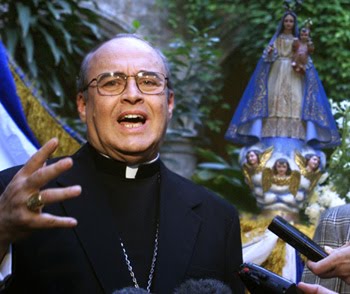
Omaha address by Cuban Archbishop Jaime Ortega sounds hopeful message that repression in Cuba is lifting
©by Leo Adam Biga
Originally published in El Perico
During a May 12 commencement address at Creighton University, Havana, Cuba archbishop Rev. Jaime Ortega described the uneasy journey the Catholic Church has navigated in the Communist island nation.
At a separate weekend event, Cardinal Ortega received an honorary law degree in recognition of his humanitarian work.
In introductory remarks last Thursday Creighton president Rev. John Schlegel, who’s visited Ortega in Cuba, praised the cardinal for “working relentlessly to mediate between the government of Raul Castro and the families of prisoners of conscience…Above all, Cardinal Ortega has proven to be a great pastor, a great leader, especially through challenging times, and a great priest.” Schlegel described Ortega as a “diplomat” seeking “the greater good, truth and justice.”
The estimated 125 attendees included Creighton faculty, Archdiocese of Omaha officials and members of Nebraska’s Cuban and greater Latino communities.
Speaking through a translator, Ortega charted the repression that followed the 1959 revolution that brought Fidel Castro to power. Ortega sounded hopeful about the new, freer Cuba emerging. He referred to frank, cooperative exchanges between the church and government authorities that recently brought the release of 52 political prisoners.
This avowed son of Cuba proudly declared, “I am a Cuban who lives in Cuba. I never wanted to live outside Cuba. It is a country I love with all my heart.”
He drew parallels between early Christian religious leaders serving their flocks amid oppression and clergy and pro-Democracy dissidents finding their voices suppressed under Fidel. He said rather than take a militant tack, the Cuban church followed a pastoral, passive approach.
“The Cuban bishops have tried to be shepherds in this way in Cuba,” he said. “Its role is not to confront the established powers.”
However, he says “the church is always asking for religious liberty, so that its followers can live their lives in peace.”
He outlined where the church and Cuba are today in comparison with the post-revolutionary period. “Initially,” he said, “there was a great acceptance of the revolution because of finding so many points of value with it.”
Within two years though, he said “very strong confrontation” and persecution distanced the church from the regime and the revolutionary fervor. He said priests were expelled from the country, Catholic schools closed, ministries and other expressions of religion curtailed and various “attacks” made on the church. He was among many young men in the church sent to labor camps.
The harsh measures, he said, “had a negative impact on the Catholic faithful” and “marked the memory” of older Cubans. He said, “This is a mark that is hard to erase.” While the bishops decried human rights violations, he said “the church as an organization was very diminished and had no means of communicating with its people.” He characterized the Cuban church then as “a church of silence,” adding, “The attitude of the church then was one of patience, perseverance, prudence.”
He said despite restrictions imposed on social, political, religious practices, fear of arrest and economic hardship, many Cuban Catholics remained faithful and risked much to speak out.
A turning point was a reflective, renewal process the Cuban Bishops Conference initiated in 1981, extending to every diocese, culminating with the 1986 National Ecclesial Encounter Cuba. “This constituted a very decisive moment for the history of the church in Cuba,” he said. It laid the groundwork for Pope John Paul II’s 1998 visit to Cuba. As a result, he said, “the church in Cuba let itself be known to the world and Cubans themselves realized there was in Cuba a church that was alive and dynamic.”
Since the conference and papal visit, he asserts the church has taken more of an active, public, missionary role and today is a church “that lives for its people,” rather than “wrapped up in itself,”” welcoming whoever comes to it.

Framing this empowerment, he said, is a new spirit of dialogue between the church and government, which he describes as “more fluid” under Raul Castro. In a Q & A after his address, Ortega said, “It has been much easier to find somebody with whom to dialogue. There seems to be a greater openness to changes.”
He’s encouraged by greater religious freedom, whose public manifestations include massive crowds for outdoor rites and a recently dedicated seminary.
On the activist front, he said an intentional process of “pastoral action” with authorities negotiated improved conditions for political prisoners, who were allowed to have contact with their families before finally gaining release. “Our humanitarian gesture was accepted,” Ortega said. He also alluded to recently announced Cuban social-political reforms.
With Cuba now thriving, he said its experience demonstrates “the human spirit should not be endangered or limited” and that liberation needs to come in both the spiritual and social life of people, adding, “It should never be necessary to negate God in order to enjoy human rights or to be active citizens.”
Ortega acknowledges that for victims of Cuban injustice “the baggage” and “suffering” remain. For “true reconciliation among all Cubans,” he said, there must be forgiveness and understanding — only then will the wounds inflicted under the old regime heal. Cuba, he insists, is moving on in acceptance and he suggests the rest of the world move on, too.
University of Nebraska at Omaha political science professor Jonathan Benjamin-Alvarado, who’s extensively studied Cuba, admires Ortega for “toeing the line for the purposes of advancing the church and its teachings and its ministry.”
Referring to criticism by some that Ortega’s been slow to press for more reforms, Benjamin-Alvarado says, “His approach perhaps wasn’t as quick as some would have liked, but the fact is it’s been successful. I think what he’s understood perhaps better than most was the limitations on what the church actually could do. He moved when he could and didn’t try to deal with issues he wasn’t able to have any answer or response to.”
Related articles
- Cuba Bids Farewell to Nuncio (onecatholicorg.wordpress.com)
- Cuban bishops: Country is slowly moving toward a democratic system (onecatholicorg.wordpress.com)
- Spain receive 37 more Cuban ex-political prisoners (foxnews.com)
Community and coffee at Omaha’s Perk Avenue Cafe
It’s fun to do stories that try to place an establishment, in this case a cafe, with a neighborhood, in this case a near downtown urban swath on the edge of of rebirth and oblivion. The Perk Avenue Cafe in Omaha opened as a humanitarian mission and community building experiment for activist owners John and Jennifer Cleveland and it was my pleasure to try and convey that within the context of the couple’s own personal experiences and beliefs as born-again Christians. They minister to the neighborhood through the food and coffee they serve, the cozy gathering spot they create, and the warm welcome they extend to everyone who comes in. The story appeared in the Omaha City Weekly, a newspaper that is no more. To be honest, I’m not sure the cafe is still open.
©by Leo Adam Biga
Originally published in the Omaha City Weekly
Perk Avenue Cafe fits the road-less-traveled crowd coursing Park Avenue, an off-the-beaten-track artery linking immigrant south Omaha with transitional midtown with mainstream downtown. From its modest 1107 Park Avenue digs in a mixed use district ranging from stately old homes to shoddy rentals and open air drug-sex deals to revitalization efforts, the cafe’s that rare spot where urban families, adventurers and fringe dwellers all feel welcome. Beyond its free-trade coffee, made-from-scratch pies and home-style breakfast-lunch menu, Perk’s real mission is as a community center — an extension of proprietors John and Jennifer Cleveland’s well-practiced beliefs.
Neighborhood activists residing in the area, the married couple opened Perk Avenue in the fall of 2003. The brick building was home to a vending business before sitting vacant. The property, like other nearby lots, was plagued by addicts and prostitutes. Veterans of missionary work abroad and social service work in Omaha, the couple bought the site and then surveyed neighbors about what should be done with it. When the consensus said it should be made-over into a community gathering spot, the husband and wife team renovated it for that purpose.
By day, Perk Avenue is the prototypical laidback coffeehouse/diner whose counter-hugging patrons warm up over coffee and conversation. The Clevelands, a mellow combo whether dishing out their low-priced food or their well-articulated social advocacy, are a main attraction along with their four chatty children. “Our children are a big part of this,” Jennifer said.
Tim Siragusa, an actor and waiter who walks to Perk Avenue for his “pre-yoga double-shot of espresso” said, “I’ve just been charmed by the owners. John and Jennifer brought a nice communal space into this part of town that wasn’t here before. And I think one of the things that keeps neighborhoods vital is a coffee shop. A place where everybody can come in the morning and get their coffee and chat over the paper. And their delightful children have no problem speaking with the customers.” Or joining in with artists who variously perform music and give readings there. For an Omaha Public Library Program, Siragusa read Farenhite 451 at the Perk.
With time, the couple’s vision for Perk Avenue has broadened. For example, on some nights the Clevelands, in concert with Mosaic Community Development, hold Spanish and English classes as “a bridge builder” to bring together the neighborhood’s disparate peoples.
On Friday nights, the joint jumps to live music by folk musicians or grunge bands. Other nights, it becomes a venue for parties and receptions. The commercial kitchen is an incubator for food entrepreneurs like Bob and Mary Brown, who use the premises to sling up half the cafe’s menu in addition to their own catering business dishes. Whether hosting meetings of the Ford Birthsite Neighborhood Association, which John Cleveland has headed, or reaching out to street denizens, the couple use the Perk Avenue as a base for their “holistic approach” in addressing the social, economic, political and spiritual concerns of an area Cleveland said is “on the edge — it could go either way.”
Being change agents is an intensely personal thing for the couple, born-again Christians whose own lives bear witness to the transforming power of faith and love. The product of a broken home, John was “a self-styled Satanist” and “chief sinner” waging a one-man war against God before his conversion in 1986 at Trinity Lutheran Church in Omaha. He describes being taken into the fold as an “adoption,” adding, “It was a family, it was a place of purpose and belonging.”
“I hated God, and that He could somehow reach into my heart and make that kind of life change in me,” said Cleveland, “it made me believe there was nobody on this planet beyond His reach or His help. I felt a real deep conviction and compulsion, and a real called mission, to do something.”
He met Jennifer there. After attending bible college together they made an early 1990s Christ in the City International missionary tour — first, to Costa Rica to learn Spanish, and then to Medellin, Colombia to work. Arriving in drug warlord Pablo Escobar’s last year in power, the couple started their family in the poor, violent land, where John ran a program training Colombian youth to help orphans, drug addicts and AIDS victims. It was a fulfilling but trying experience.
“It was hard on our family. There were bombings and kidnappings. Like a war zone. My second day there, a 10-year old prostitute approached me. She didn’t want my help. Nothing they taught in bible school prepared me for that. It was like hell on earth for some. We were in constant danger. It was terrifying at times,” he said.
John recalled one hairy confrontation with armed guerrillas. “We were coming back from the coast with a team of Colombians. We had a ton of people in the Toyota car I was driving. We pulled into this military checkpoint and we knew something was wrong because there was nobody there. It was a ghost town. So, we kept going and at the crest of the next hill we were stopped by two guerrillas. Apparently they’d come down out of the hills and done an operation and were now retreating. This one came up to my window and started asking questions. What had we seen? Where were we going? Who were we with? Where were we from? His questions started getting more specific to my being an American.”
This was in a time and place, Cleveland said, when if it was assumed “you had any value, they would kidnap you and hold you for ransom. Well, we’re at that point when, all of a sudden, the guy can’t talk. He’s choking on his words. The other guy is freaking out because it’s taking too long. They’re exposed. And the guy who can’t talk finally gets so mad he just waves us off, like, Get out of here. So, we tear off and everybody in the car is like, Oh, my God, it’s a miracle. On the other hand, I’m hyperventilating, going, I just about died — God, what were you thinking?”
Of their time in Colombia, he said, “We were so young. Freshly married. A new family. There were a lot of things we should have done differently, but that’s OK. We made it through and learned a lot from it.” Once back in Omaha, John tried working in the for-profit arena, but was “miserable.” He said, “I love people and I felt we could apply some of the principles of community development we learned in a foreign land to what we do here locally.” He joined the local office of Christ for the City, heading a program for Lutheran Family Services called Strong Urban Neighborhoods. He now works at Turning Point, a youth-centered organization.
The Clevelands were drawn to the area bounded by Park Avenue, the Ford Birthsite and Field Club for “its cultural diversity.” Immigrants from Latin America and Africa settle there for its affordable housing.

Plus, John said, “We wanted to use our Spanish. We felt a real affection for the Hispanic community. And we wanted to live in a community we felt we could contribute to, and this neighborhood was perfect. My big emphasis in ministry has always been community development. Getting community ownership, finding community solutions to problems and sustainable solutions locally.” And “breaking down barriers,” like in the language classes offered at Perk Avenue that help diffuse differences. Participants range from immigrants trying to master English to city inspectors and landlords needing to communicate with Spanish-speaking business owners and tenants to teachers from nearby Liberty Elementary School, where three of the couple’s kids attend, looking to breach the divide with newcomer pupils. In the process, he said, “perceptions change and dialogues start, and I don’t know where else that would happen.”
With so much diversity intersecting the area, Cleveland wants Perk Avenue viewed as a safe haven for everyone, even the late night street walkers he shoos away but also assists when they appear battered or cold or disoriented. “We want a place where people from Field Club can rub shoulders with people from down here and where everybody thinks it’s theirs. We’ve tried to make this a melting pot.”
On a recent morning, customers included a middle-aged contractor, a thirtysomething Hispanic laborer, a senior couple, actor Tim Siragusa and young artist Leslie Iwai, who discussed bible passages with companion Jonathan Starkey. Iwai welcomes what the Clevelands are doing. “I think it’s a light in a dark place. It brings order to a location that’s had a lot of oppression. It’s establishing something here — like grass growing through a crack in the sidewalk. We didn’t need another bar.” Starkey agreed, adding, “It’s good to see a healthy establishment.”
Cleveland said the neighborhood seems to be turning the corner. He’s helped lead efforts to combat dealers, addicts, pimps and hookers. “It’s frustrating, because you want to extend help and you want to see life change, but in the meantime I’ll settle for relocation. There’s a sense of righteous indignation of — you know what? — this has got to stop. There’s enough people in this neighborhood who are to that point that it’s starting to make a difference.” He’s also encouraged by a new development that’s renovating a former illicit drug-sex den into Boston row houses.
The couple hope Perk remains a community resource long after they’re gone. “It’s not ours. It’s not about us. It’s about the destiny of this neighborhood. It’s just a matter of time, I believe, before people start owning it. There’s great potential here,” Jennifer said.
Related articles
- An Omaha Legacy Ends, Wesley House Shutters after 139 Years – New Use for Site Unknown (leoadambiga.wordpress.com)
- Omaha’s St. Peter Catholic Church Revival Based on Restoring the Sacred (leoadambiga.wordpress.com)
- Omaha Theater as Insurrection, Social Commentary and Corporate Training Tool (leoadambiga.wordpress.com)
- Hey, You, Get Off of My Cloud! Doug Paterson – Acolyte of Theatre of the Oppressed Founder Augusto Boal and Advocate of Art as Social Action (leoadambiga.wordpress.com)
- The Ties that Bind, One Family’s Celebration of Native Omaha Days (leoadambiga.wordpress.com)
- Where Hope Lives, Hope Center for Kids in North Omaha (leoadambiga.wordpress.com)
- A Change is Gonna Come, the GBT Academy in Omaha Undergoes Revival in the Wake of Fire (leoadambiga.wordpress.com)
- Walking Behind to Freedom, A Musical Theater Examination of Race (leoadambiga.wordpress.com)
- Overarching Plan for North Omaha Development Now in Place, Disinvested Community Hopeful Long Promised Change Follows (leoadambiga.wordpress.com)
- Jeff Slobotski and Silicon Prairie News Create a Niche by Charting Innovation (leoadambiga.wordpress.com)
Omaha St. Peter Catholic Church revival based on restoring the sacred
If a potential client of mine had not referred me to a revival going on at a once proud Catholic church in Omaha that had fallen on hard times but is now undergoing a revitalization, I wouldn’t have known about it. This despite the fact I often drove past this church. The story I wrote about the transformation going on at St. Peter Catholic Church in Omaha originally appeared in El Perico. I applaud what the pastor there, Rev. Damien Cook, and his staff and parishioners are doing to infuse new life into the church by going back to the future in a sense and restoring the sacred to celebrations that had been stripped of solemnity and pageantry in the post-Vatican II world. On this same blog you can find my story titled, “Devotees Hold Fast to the Latin Rite,” and other Catholic-themed stories, particularly two dealing with the recently closed St, Peter Claver Cristo Rey High School and several dealing with Sacred Heart Catholic Church, including one focusing on the church’s inclusive spirt and another on its Heart Ministry Center.
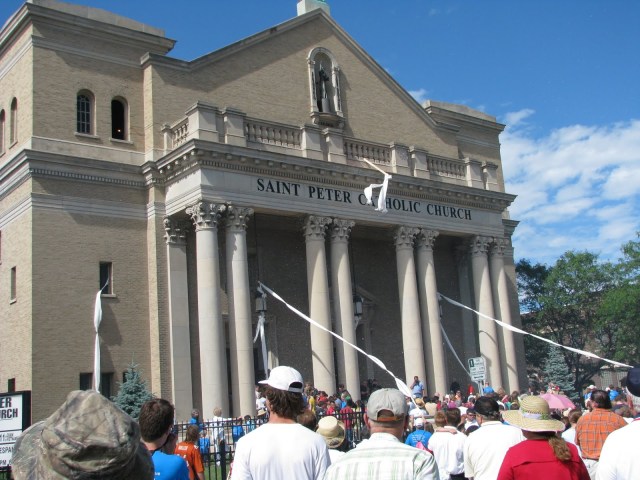
Omaha St. Peter Catholic Church revival based on restoring the sacred
©by Leo Adam Biga
Originally published in El Perico
Just east above a stretch of I-480 stands St. Peter Catholic Church at 27th and Leavenworth. Its classical Greco-Roman facade is unlike anything in that sketchy near downtown Omaha district. Amid ramshackle urban surroundings the stone edifice is a solid, substantial front door for a poor, working class area made up of transients, bars, liquor stores and social service agencies as well as light industrial businesses, eateries, artist studios, apartments and homes.
When St. Peter’s pastor Rev. Damien Cook arrived in 2004 the church teetered on its last legs.
“It was a dying parish,” he says flatly.
He says before the Interstate came in the parish thrived but when homes were razed for the road-overpass construction, parishioners scattered to the far winds, leaving a psychological scar and physical barrier that isolated the parish.
From the pulpit Fr. Cook saw few pews filled in a sanctuary seating 800. The membership rolls counted only a small if dedicated cadre. With the school long closed and most old-line parishioners long gone, things looked bleak.
Seven years later, however, St Peter is enjoying a revival– “the numbers have vastly gone up” — that has its roots in demographics and faith. As the parish celebrates its 125th anniversary this spring and makes plans for an extensive interior church restoration there’s a resurgence afoot that belies the forlorn neighborhood.
“It’s a big year for us,” Cook says.
Always a mixed ethnic district, the Hispanic population was growing when Cook came, but has spiked since then. Many more began attending after St. Anne‘s closed. Now the church is predominantly Hispanic, though there’s a sizable non-Hispanic base as well.
Several Spanish Masses are offered each week. Quinceanera ceremonies occur there. A Spanish school of evangelization holds retreats in the old school building.
Where the congregation was decidedly aged before, it now over-brims with families, many with young children. Catechism classes serve more than 300 youths.
Perhaps most impressive, Cook says, is that the majority coming to St. Peter today don’t live within the parish boundaries but drive-in from all across the metro, making it a true “commuter parish.”
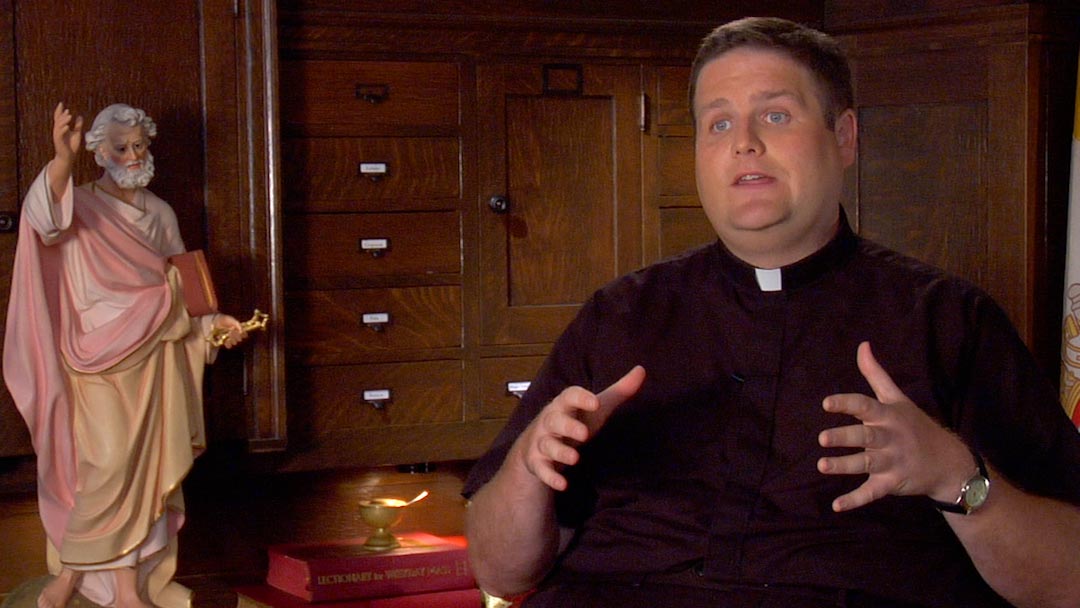
Fr. Damien Cook
Why are folks flocking there?
It seems Cook has struck a chord in the effort to, he says, “restore the sacred at the church.” It trends with a national movement aimed at returning to a more traditional liturgy that expresses the awe, majesty, splendor and reverence of communal worship. He says many people tell him they were missing what St. Peter provides.
At St. Peter restoring the sacred means:
• integrating Latin into elements of every Mass, both English and Spanish
• performing traditional sacred music and chant
• using incense
• worshipers receiving communion at the altar rail
• multiple clergy and altar boys participating
Additionally, St. Peter offers daily confession and chanted vespers. Each spring it conducts a festive Corpus Christi procession that follows a 1.4 mile route. As a canopy covered vessel containing the Eucharist is carried, children strew the path with flower petals, music plays and prayers are recited aloud. It all culminates in fireworks, song, food and thanksgiving outside the church.
Cook says parishioners embrace these rites and share their enthusiasm with others, which in turn helps St. Peter grow attendance and membership.
“I just feel really blessed,” he says. “There’s always been faith here, and I inherited that from the priests who went before me. Even if the congregation was smaller the people here were really receptive to the whole evangelization process — of going out and telling their friends, ‘You should come down to St. Peter’s for Mass. Just try it once.’ And once people do they get kind of hooked.
“So the people themselves are the greatest gift to me. They really want to know more about the faith, they really do want the sacred and are excited about restoring the sacred.”
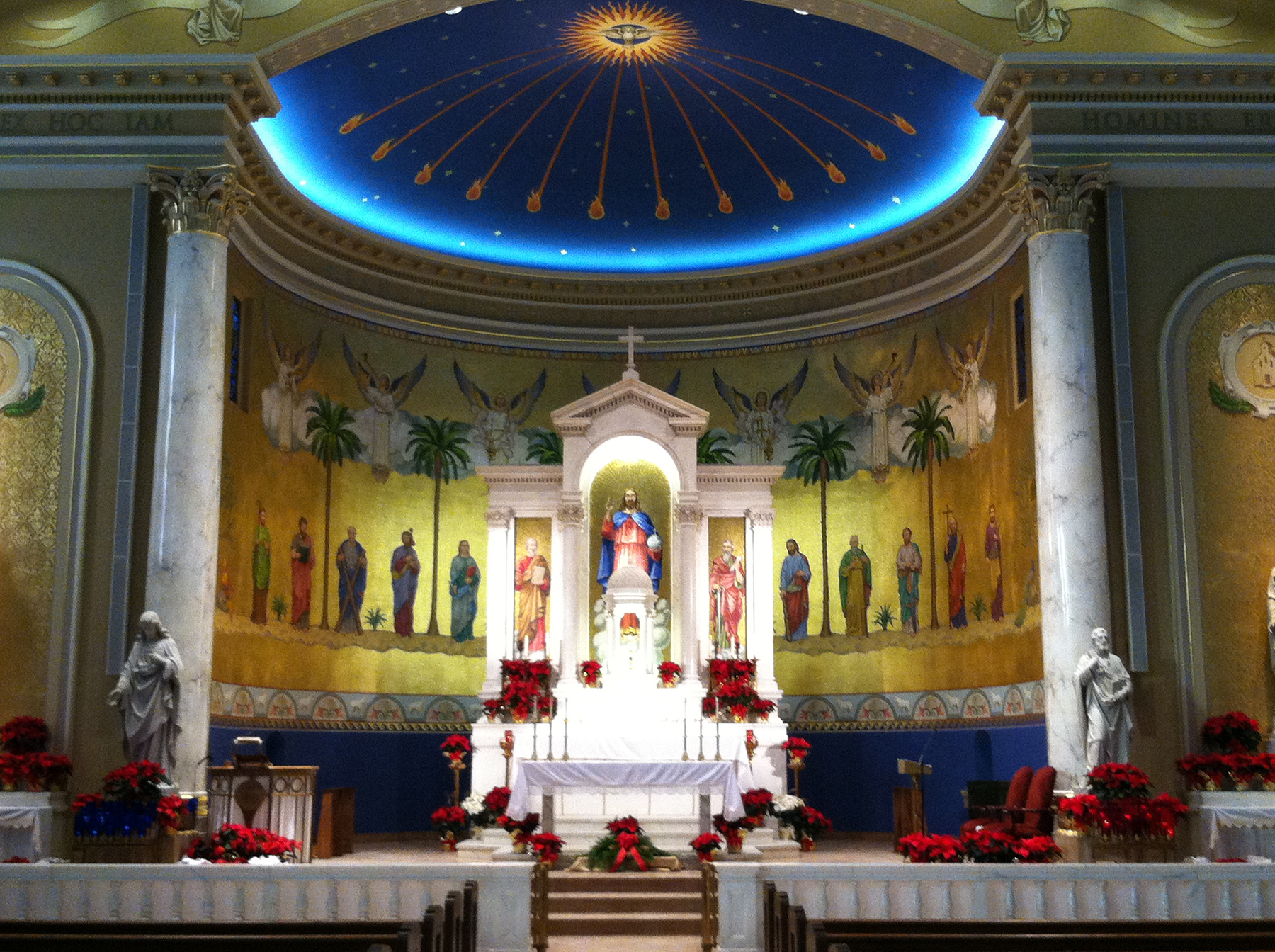
He says his congregation’s thirst for solemnity and spiritual nourishment is part of a universal yearning.
“If you look at every culture and religion in the world there’s a desire for the transcendent, for the sacred,” he says.
Challenges remain. Cook wants St. Peter to better link its English and Spanish-speaking parishioners.
“I don’t sense any hostility between the two different cultures. We come together on various parish projects, but it’s still been very difficult. I’m still trying to learn the magic, the grace, the appropriate way to unite the two, because I don’t want there to be two different parishes. We’re one family of God. But the language difference is a reality. It’s just natural people feel more accustomed among their own.
“I sense unity here. but if we could only find the bridge for the Spanish and English-speaking segments to create that one parish.”
He also wants St. Peter to minister more to its distressed neighbors.
“We have everything from prostitutes at night on the corner to really inebriated people to aggressive panhandlers to shootings near us. We’re proud to be here as an anchor to the community. We’re privileged to serve the poor. We really do need to be out doing more evangelization because we have a whole neighborhood of people, Catholic and non-Catholic, to be invited.”
He hopes redevelopment happens for “the sake of more security, safety and opportunity” for residents. He firmly believes the area’s rich with potential, saying,
“It just needs people to realize that.”
Related articles
- Saving sacred sounds (life.nationalpost.com)
- US Catholics win rare victories on church closures (seattletimes.nwsource.com)
- On The Latin Mass (acatholicdad.wordpress.com)
Open Invitation: Rev. Tom Fangman engages all who seek or need at Sacred Heart Catholic Church
In an era when Catholic priests are too often in the news for the wrong reasons it’s a pleasure to write about one who is highly respected by the church and by the community. The following article for Metro Magazine (www.spiritofomaha.com) about Rev. Tom Fangman is not the first I’ve written about this priest or the parish he pastors, Sacred Heart, in a largely African-American neighborhood in Omaha, Neb. But while those earlier pieces, which can be found on this blog by the way, deal with the rip-roaring Sunday service he presides over, complete with a gospel choir and band, and the multi-million dollar restoration of the church, this latest story focuses on him and his calling as a priest. He’s a sweet, gentle man who has managed the difficult task of not only keeping his parish church, school, and social service center alive but thriving in a district beset by profound poverty and high crime and an area hit harder than most by the recession. His winning ways with people from all walks of life, whether CEOs or parents just struggling to get by, is what makes him so good at what he does.

Open Invitation: Rev. Tom Fangman engages all who seek or need at Sacred Heart Catholic Church
©by Leo Adam Biga
Originally published in Metro Magazine (www.spiritofomaha.com)
When Rev. Tom Fangman arrived as pastor at Sacred Heart Catholic Church in 1998, the northeast Omaha parish was already known for its humanitarian embrace.
If anything, though, this hometown cleric with a gentle, jovial demeanor has broadened and deepened the caring community he guides there by forever reaching out to others. Gladly receiving all, he asks people to give, aware that service to others heeds our better angels.
“I’ve always been a people-person,” he said from the cozy living room of the rectory he resides in behind the church. “I find so much joy being around people. I’ve just been blessed with good people in my life. Before I came here Sacred Heart was known as a very welcoming community, a place where people of all different backgrounds could go and feel a part of, a place where they feel they belonged. I am most proud that we’ve carried on in that same spirit. I know it’s a community, I know it’s a community that cares. We’ve maintained that charism.
“We’ve also been a parish that has always had a strong conviction towards social justice and serving the needs of others and providing for the poor. We are that place and we are a place that I know for certain impacts the community. We’re helping lots of young people. I’m really proud of what what we’ve maintained in continuing to do for kids.”
On a frigid Saturday morning in November, there was Fr. Tom doling out donuts, muffins and thank-yous to delivery drivers picking up Thanksgiving gift pouches for the parish’s twice-annual holiday food distribution. A record 330-some families in need received a turkey, plus all the fixings, for Thanksgiving. The operation, which runs with friendly, relaxed precision out of the parish’s Heart Ministry Center (HMC), is repeated for Christmas.
For the weekend chiller, the affable padre stood outside, bundled from head to foot, meeting and greeting volunteers, an easy conviviality and respect between the priest and his flock. Typically, he downplays his part, instead praising the large team that makes this compassionate response a reality.
“Being the pastor here is just kind of like orchestrating,” he said. “It’s recognizing people’s goodness and gifts and inviting them to offer themselves. If people are offered an invitation, they’re going to go with it. The things that happen here are because there are lots of really good people. They’re willing to get involved and to give of themselves.
“There’s lots of things I love about being a priest but one of the most exciting is when people become aware of God’s presence in their life, and no two stories are ever the same. Every person has their own journey and own ways that are revealed to them.”

He said he’s come to view his ministry as inviting people to give, whether their time, talent or treasure, in order to be of service to others. He said he’s often teased that he has a way about him that makes it impossible for anyone to say no.
“Well, there are people who have said no to me, but I’ve just kind of learned that shouldn’t stop you,” he said. “You go to the next place, you find the next person. I believe in the goodness of people. I also have high expectations of what people can do, and sometimes they really need that invitation to show that.”
Located at 2218 Binney Street, Sacred Heart serves the most poverty stricken area of the city through three nonprofit arms Fangman oversees. The most visible of these is the church, which originally opened at another site clear back in 1890.
The present stone, late-Gothic Revival church that stands today opened in 1902. Through Fangman’s leadership the parish was able to find the funds and in-kind contributions necessary for the building to undergo a $3.3 million restoration in 2009. He announced the capital campaign to fund the project in 2008. After making the case, folks responded, and within a year all pledges were secured.
More than a picture-postcard Old World edifice made new again, the church is a well-attended gathering place that draws worshipers, just as Sacred Heart counts parishioners, from all over the metro. The hospitality there is evident in the way newcomers are greeted. The Sunday 10:30 a.m. Mass is famous for its spirited celebration, complete with a rousing gospel choir and band. The animated “sign of peace” ritual includes hand shakes, salutations, hugs, kisses, as many folks circulate from pew to pew engaging each other. The fellowship resumes after Mass ends.
As a parish priest, Fangman is more than a spiritual figurehead. He’s a flesh-and-blood confessor, advisor, counselor, confidante, friend, leader, fundraiser and CEO. He serves his flock in macro and micro ways. He’s there at the most public and private, joyous and sad occasions. Hundreds of photographs of people in his life adorn every smooth surface in his kitchen, a reflection of how many he impacts and how many touch him.
“Being a parish priest lets you be involved in lots of peoples lives, from womb to tomb,” he said. “People say to me, ‘How can you be around so much sadness and death?’ I don’t know how to answer that but one thing I do know is that holiness is there in the midst of it, because that’s where love is.”
He fills multiple roles in the course of any given week: saying several Masses; hearing confessions; presiding, on average, over at least one wedding or funeral; visiting the sick; preparing couples for marriage; attending board meetings; calling on donors; and crafting his homilies.
He feels good about a lot of things that go on at Sacred Heart.
“I feel like we have a really great thing to sell, and I’m sold, I believe in what we’re doing and I’ll talk to anybody about that,” he said.
A shining example he never tires of touting is Sacred Heart Elementary School, a K-8 institution serving a predominantly African-American, non-Catholic student population. The school’s financial sustainability and operations are supported by the nonprofit CUES or Christian Urban Education Service, comprised of an “established board” of Omaha movers and shakers. Fangman is its executive director.
He said students at the small private school consistently test above average and that faculty and staff rigorously prepare students to succeed, adding that 98 percent graduate high school within four years. Mentors are assigned every student, all of whom receive work and life skills training.
Whether it’s the school, the church, or the center, he said, Sacred Heart is concerned with “addressing the whole person — body, mind and spirit.” Nothing satisfies him more than seeing the results come-full-circle in an each one, teach one way: “I get to see the goodness of people who want to make a difference, and then I get to see who receives from that goodness, and then what they do with that. Ultimately our goal is to give people opportunities. Sacred Heart is about opportunities.”
He said, “This young lady came up to me to say she grew up down the street from Sacred Heart, attended school here nine years, went to Duchesne Academy, then St. Louis University. She worked at First National Bank and she wanted to be a mentor here. To me that spoke pretty loudly about what we’re able to do, which is giving kids the opportunity to make it in life, to grow and discover what they have to offer. I want to see that continue on. I want to see those opportunities always given.”
The parish responds to social service/ human needs through Heart Ministry Center, home to the area’s only self-select pantry. Thousands receive free food, clothing, health care and other services from HMC each year. In 2002 Fangman consolidated its services on campus, raising $650,000 to build a new building.
Sacred Heart’s mission requires big money. The center operates on a $360,000 budget. The school budget is $1.3 million. Running the church/parish costs $500,000.
“That’s $2 million you have to somehow come up with,” said Fangman, adding that to secure that kind of commitment requires reaching into all areas of Omaha.
Three major fundraisers are held yearly. Holy Smokes is a pre-Labor Day bash benefiting HMC. It features barbecue, refreshments and live music. The Gathering is a sit-down dinner in support of the school. The Sacred Heart Open is a croquet tournament, battle-of-the-bands and barbecue to assist the church/parish. Two of the events began under Fangman’s watch and all three, he said, are well supported.
Thirteen years into his post, Fangman’s overdue for a transfer, but he doesn’t sense his work at Sacred Heart is finished yet.
“If I felt like we had done everything we were supposed to do, then I would feel like it’s probably time to try something new and different, but I feel like we’re on the verge of some really vital things happening.”
Whatever happens, he said, “I want to feel like I know I tried to make this a better place. I want to continue trying to get the right people in the right spots.”
To do the right thing.
Related Articles
- Social Change Chicago Style (Guest Voice) (themoderatevoice.com)
- A mission to promote health and wellness (seattletimes.nwsource.com)
- Omaha’s St. Peter Catholic Church Revival Based on Restoring the Sacred (leoadambiga.wordpress.com)
Academy Award-nominated documentary “A Time for Burning” captured church and community struggle with racism

Cover of A Time for Burning
Rarely has a film, fiction or nonfiction, captured a moment in time as tellingly as did A Time for Burning, the acclaimed 1967 documentary that exposed racism in Omaha, Neb. through the prism of a church and a community’s struggle with issues of integration at a juncture when the nation as a whole struggled with the race issue. The film really is a microcosm for the attitudes that made racial dialogue such a painful experience then. In truth, when it comes to race not as much has changed as we would like to think. It is still America’s great open wound and it will likely remain so for the foreseeable future. The following two articles appeared, as Part I and Part II, of a two-part series exploring the context for the film and the impact it had here and nationwide. The stories appeared in The Reader (www.thereader.com) around the time of the film’s 40th anniversary. If you’ve never seen the documentary, then by all means seek out a DVD copy or a screening. It’s a powerful piece of work that will provoke much thought and discussion. In fact, from the time the film was first released to this very day it is used by educators and activists and others as an authentic glimpse at what lies beneath the racial divide.
“A Time for Burning”
Part I
Academy Award-nominated documentary captured church and community struggle with racism
What Would Jesus Do Today?
©by Leo Adam Biga
Originally appeared in The Reader (www.thereader.com)
On the eve of the 1968 Oscars, a nominee for best documentary feature, filmed in Omaha, foretold the violence that was ripping America apart. Martin Luther King, Jr.’s assassination six days earlier in Memphis was the match that lit the fire. The riots that followed spread to more than 100 cities.
About once every generation a seminal film takes an unblinking look at race in America. Crash took the incendiary subject head-on in the 2000s. Spike Lee’s Do the Right Thing hit all the hot buttons in the 80s. Roots offered a hard history lesson in the 70s. A Time for Burning arguably made the most righteous contribution to the topic in the 60s.
The movie took a heavy toll locally, splitting Omaha’s largest and most established Lutheran congregation on the year of its 100th anniversary.
Produced at the height of the civil rights movement, Burning captures honest, in-the-moment exchanges about race. Shot here in 1965 and released in late ‘66, Burning’s candid, unadorned style was revolutionary then and remains cutting-edge today.
Turned down by the three major networks, it premiered on PBS to national acclaim. Burning earned an Oscar nomination and became a staple of school social studies curricula and workplace diversity programs. Selected for the National Film Registry in 2005 to be preserved by the Library of Congress, the picture may be viewed in a new DVD release.
Burning holds special significance for Omaha. The film that was a litmus test for racism then and is a prism for measuring progress today. Then the mood was rapidly turning acidic. The black frustration expressed in the film first erupted in violent protest mere months after production wrapped. The race riots of the late 60s tore apart the North Omaha community as the promise of a better future was dashed against new injustices piled on a century of oppression.
The film came at a crossroads moment in Omaha history. At a time when racism was on the table for discussion, the opportunity to address it was lost.
Burning follows self-described “liberal Lutheran” pastor Rev. Bill Youngdahl, on a quest for his all-white congregation at Augustana Lutheran Church to do some fellowship with black Christians living “less than three blocks away.” The son of a popular former Minnesota governor, Youngdahl had recently come from a Lutheran Church of America post in New York, where he led the national church body’s social justice ministry. He marched with the Rev. Martin Luther King Jr. in Washington, D.C. He traveled the country working for the passage of the 1964 Civil Rights Act and 1965 Voting Rights Act.
All of which led director Bill Jersey and producer Bob Lee to seek him out when he came to minister in that most typical American city — Omaha.
His “inclusive ministry” posed problems from the start of his arrival at Augustana. Church elders earlier made it clear he should steer clear of the homes of black families when evangelizing in the neighborhood. “I said, ‘I can’t do that. I won’t do that.’” The film project brought everything to a head.
“After filming began, some people began to question what was being documented. ‘Why aren’t they filming the smorgasbord and the choir?’ So, that became an issue,” Youngdahl said. “I had to call those two (Jersey and Lee) back from New York to appear before the council. We talked several hours and finally affirmed going ahead with the film as Bill wanted to do it.”
Members of the church council try to get this brash upstart to tone down calls for diversity. Caught in the fray is member Ray Christensen, who goes from the timid ranks of “we’re moving too fast” to vocal advocate of outreach.
Militant sage Ernie Chambers, pre-state senator days, dissects it all. Chambers held court then in Dan Goodwin’s Spencer Street Barbershop, where he cut heads and blew minds with his razor sharp activist ideology. A famous scene finds Chambers lecturing Youngdahl, who’s come to the shop to float his idea for interracial fellowship. The pastor sweats as Chambers, wary of this do-gooder’s intentions, critically analyzes him and foretells his fate.
As the film plays out, the black Christians stand ready to break bread and talk straight with whites, most of whom repeat the mantra “the time is not right.” Youngdahl asks his bishop, “If not now, when?”
Cinema Verite
Unseen but felt throughout is the guiding hand of Jersey — one of America’ most noted and honored documentarians. His projects range from the Renaissance to the Jim Crow era to a recent film on propaganda in modern society. He applied cinema verite techniques with his hand-held camera and available lighting. The approach registers an intimate naturalism. Point-of-view narration and jump cuts heighten the conflict. He was assisted on the shoot by the late Barbara Connell, who also cut the film.
“Nobody in that film appears because a filmmaker dragged them in,” said Jersey. “Everyone appears because they were in some way directly involved with what was going on in that community. I feel that is, in fact, its strength — it’s a story of individuals who faced one another and confronted one another. No one was ever set up to expose their prejudice.”
Jersey admits he influenced situations to further the story, suggesting a couples exchange to Youngdahl, sensing it would stir up trouble.
The climax comes when Youngdahl proposes the exchange with ten volunteer couples from Augustana meeting with ten couples at nearby black churches Calvin Memorial Presbyterian Church and Hope Lutheran Church. The mere idea of meeting for fellowship in each others’ homes polarized the Augustana congregation. The adult visits never come off, but a youth exchange does, setting off a firestorm.
Former Calvin member Wilda Stephenson helped escort the youths to Augustana. The retired Omaha educator recalled “the people in the congregation became very upset that they were there and participating, especially in their communion service. That bothered me. I wouldn’t have gone if I had thought we weren’t going to be received well that Sunday.”
The visit followed a warmly received visit by white Augustana youths to Calvin.
“We were really glad to see that happen and welcomed them,” Stephenson said. “And that was the situation whenever any white people attended our church. We just always made them feel welcome. For our youths to have been treated otherwise, I was really shocked about that.”
The Calvin youths who went to Augustana that Sunday included Central High students Johnice (Pierce) Orduna and Francine Redick. Orduna said they were not made to feel “unwelcome” by anything overtly said or done. Such is the “insidious face of racism.” They only learned of the upset their visit caused when Jersey, who always stirred the pot, told them what his cameras and mikes caught. He gathered the students for an on-camera forum in which they pour out their disappointment.
“There was a fair amount of anger, certainly some frustration, but I would say outrage and real surprise that Christians we thought had similar ideas about humanity and how to live lives would behave that way,” Redick said. “The visit seemed like such a small thing. I mean, it’s not like we wanted to marry their children. It was people worshiping together. At one point in the film I utter something like, ‘How can people who profess to be Christians and Christian ministers respond in this way?’ Even today that seems outrageous to me.”
“I’m sure whatever Bill preached was not that radical,” then-Calvin pastor Rev. James Hargleroad said. “The whole gist of the film is how such a minor thing could lead to such a momentous result when racism is rampant in a community. The civil rights movement was well under way then, but it was a little late getting to Omaha.”
Burning documents the fallout, including rounds of frank discussion that expose people’s naked fears and prompt serious soul searching, as the divisive climate increasingly makes Youngdahl’s position untenable.
Commissioned by Lutheran Film Associates to show a positive portrayal of the church engaged in racial ministry, Jersey made a film tacitly critical of its efforts.
“It didn’t spark conflict, it sparked dialogue,” Jersey said. “We didn’t do a film about Omaha. We didn’t really even do a film about a church. We did a film about individuals in a church structure struggling with the issue of race in a way that I think represented how America was dealing with race at the time,” he said. “Not the crazies in the South who were using fire hoses and attack dogs. Not the urbanites who were frustrated for many other reasons and setting fires to the banks. But average people being who they are authentically.
What Would Jesus Do Today?
The figure who most poignantly grapples onscreen with his own views is Christensen. His crisis of conscience marks some of Burning’s most human moments. At one point, he said, he wanted to quit the project. Everything was topsy-turvy. The placid church that once comforted him had turned battleground. Jersey convinced him the film was too important for him to abandon it.

“This was scary. I wanted to bail out. I was unsure. We were all unprepared,” Christensen said.
“The church was a retreat where you go to recharge your batteries and sing beautiful hymns — it’s not where you go to be disturbed and bothered. And then Bill (Youngdahl) wakes you up. Waking up is bothersome.”
But Christensen stayed the course, one that got even rougher when he and his late wife June were ostracized by old friends in the church. A moving scene depicts the couple in a state of emotional exhaustion. A tearful June says, “I just can’t do it anymore.” She appears opposed to going forward. The unseen back story is that she was sick with cancer. The rebuffs she and Ray endured took a further toll.
Far from disagreeing, he said, “We were totally together. As a matter of fact, we had agreed that whatever Bill said, we’d support. That’s how unified we were. It’s too bad the film implies otherwise. When she says she’s tired, she’s tired of the radiation treatments, the phone calls, the cold shoulders, the loss of her friends. She’d founded the altar guild and the acolyte guild and now she’s on the outside.”
“She’s crying for the people of the church,” he says in the DVD.
As Jersey explains in the DVD, “There’s a universal important lesson in the film — that change is hard. That change can be costly, but that resistance to change is a killer. It makes even the simplest efforts impossible.”
Youngdahl said the film is an accurate snapshot of where America and the church were then with regard to race. “Our country had not advanced very far.” Churches included. At its core, Jersey said Burning examines the human tendency for one group to distrust “the other.” “It’s fear that immobilizes people,” he said.
All along Jersey meant to “find a situation where there’s a potential conflict” but never intended showing the church turning its back on racial accord.
“I offered Lutheran Church officials the option to cancel the project and to take the footage, but I wasn’t going to change a thing. And to their ever lasting credit, they said, ‘No, this is the story. It’s an honest film — keep making it.’”
Still, “this isn’t what the church wanted to say about itself,” he said.
Reaction by local church officials was not as positive. Nebraska Lutheran leaders filed a protest with the national executive council, branding the film “a disgrace to the church.”
Soon after its original PBS airing, the film ignited national discourse in reviews and essays. Jersey, Lee, Youngdahl and Chambers were much quoted. The earnest pastor and militant barber even made a joint speaking appearance. Their association with the film made them public figures. But Youngdahl was too embroiled in healing the divided house of his church to care. In the end, he couldn’t square his beliefs with the rancor and resistance at Augustana.
For Johnice Orduna, Burning still has the power to illuminate racism. “The film is a gift in that it reminds us we’re not there yet. It’s not a short war. I’m not going to see it ended in my lifetime,” she said. Racism, she said, is “still there, just a little more hidden, a little better couched. But it’s still burning. We still need to put some heat under it.”
Orduna’s done mission development work for the Lutheran church to promote integration, including anti-racist training workshops. She said, “I find the movie itself is a wonderful microcosm of the time. Watching can be a real wonderful remembrance, but it’s also a real frustration. I’m still dealing with the same frustration of, Why don’t they get it?”
Some years ago she consulted Augustana on blended worship services and found resistance still alive. She said bruised feelings remain among old-liners.
“They’re angry over the film. They feel they got set up. That it showed them at their very worst,” she said. “But that would have been any (white) congregation in this city 40 years ago. The fact it was them is sad for them. I think at their core they’re good people.”
She said few Omaha churches are integrated today. New Life Presbyterian Church — a merger of Calvin and Fairview — is an exception. She said Burning reminds us how far we have to go. “I think it’s wonderful it’s still making people itch…because the things that make us uncomfortable force us to change.”
“A Time for Burning “
Part II
©by Leo Adam Biga
Originally appeared in The Reader (www.thereader.com)
Forty-two years have not cooled the incendiary 1966 documentary A Time for Burning. Its portrayal of a failed social experiment in interracial outreach at Omaha’s Augustana Lutheran Church, 3647 Lafayette Ave., still burns, still illuminates.
What members were led to believe was a paean to the all-white congregation’s attempts at fellowship with the surrounding African American community turned into a de facto critique.
As pastor William Youngdahl and others pushed “civil rights” at the church, things were stirred up at Augustana. When a group of black high school students worshiped there one Sunday in 1965 — returning a visit white youths made to Calvin Memorial Presbyterian Church — it caused a ripple. When white couples considered hosting black couples in their homes it made waves. Burning captured the wake. The fallout led to a rift within the church’s leadership that resulted in Youngdahl’s ouster. Hundreds of members eventually left.
Augustana faced its biggest crisis on the 100th anniversary of its founding.
The film, shot hand-held style, immediately became a sensation for the naked emotions and stark black-and-white imagery that framed the problem of racism against the backdrop of the church. The dark-suited, male-centric piece has a chic Mad Men look today that belies the angst of its real-life, as-it-happened drama.
Near the end of the film the late Reuben Swanson, the church’s former pastor, asks how people can be persuaded “to change their hearts? This is the burning question … ”
Augustana’s remaining members could have closed their hearts and minds to introspection, growth, renewal. Instead, they pursued the more difficult path of facing and overcoming their bias.
“It wasn’t all a political thing, it was a spiritual struggle for people, and a very deep one,” said Vic Schoonover, who helped heal and guide the church in Burning’s aftermath. “This was a struggle for one’s soul and what they really believed.”
Omaha and New York City
This Friday, Oct. 17, the UNL College of Journalism will screen Burning at 1 p.m. with a Q & A to follow with Director Bill Jersey. On Saturday, Oct. 18. Film Streams will again screen Burning, at 2 p.m., with a panel discussion to follow, moderated by current Augustana Pastor Susan Butler . Jersey will participate, along with two key figures in the film. Ray Christensen is the Augustana member who had a change of heart — moving from opponent to timid supporter, and then to outspoken witness for change. Johnice Orduna is one of the teenagers from Calvin Memorial Presbyterian, who speaks out strongly against the response her youth group’s visit evokes at Augustana. On Sunday, Augustana Lutheran will be hosting an interfaith service at 10:30 a.m.
Similar programs are happening the following Monday in New York, where the Academy of Motion Picture Arts and Sciences is sponsoring a screening of Burning and panel discussion. Longtime Nebraska state Sen. Ernie Chambers, who plays a prominent “role” in the film, is appearing with filmmaker Bill Jersey.
‘Stirred people to their bones’
Today, Augustana is a beacon for an inclusiveness, crossing racial/ethnic lines, to sexual preference/identity. Butler said that as the only Reconciling Church in Christ congregation in the Nebraska Synod of the Evangelical Lutheran Church in America, Augustana “is welcoming, affirming and supporting of gay, lesbian, bisexual and transgendered believers.”
What transpired at Augustana wasn’t unprecedented. Ministers often get people’s backs up for taking unpopular stances. Tensions rise, disputes erupt. Members of First United Methodist Church in Omaha have endured their own schism, only over same sex marriage, not race.
What set Augustana apart is that its wrestling with controversy and discord was caught on film and aired nationwide. One could argue the parish might never have come to brand itself “a progressive, thinking, Christian church,” as it does today, without Burning as a backdrop for discussion, examination, inspiration and transformation. Longtime member Janice Stiles said the film initially “created a lot of hard feelings” within the church.
“I felt and most of the people felt they only picked out the bad parts,” she said.
Her perspective changed because, wherever she traveled, she met people familiar with the film, and they wanted to discuss it.
“I was really astounded. It gave me another outlook you might say; that maybe it did something good. Much more than we thought. It really was a blessing that we did that,” she said. “It really brought up the feelings and the discussion out into the open, and it needed to be done very much.”
Since the film’s release, the parish has fielded inquiries from around the world. People ask:
“How’s Augustana doing?” It still sparks discussion wherever it’s played. That is what Lutheran Film Associates intended when Burning was commissioned.
“Some of these memories are going to be brought back up again, for better or worse,” Augustana member Mark Hoeger told a recent gathering of church members who watched the film as part of adult forums he led there. The forums were meant to generate discussion and they succeeded, Hoeger said. He also screened a 1967 CBS special on the impact of Burning.
Butler views the programs at Augustana and at Film Streams as educational opportunities.
“My intention is to use this reunion weekend as a time to revisit a particular part of Augustana’s history,” she said. “I think it is always productive to review one’s story from time to time in order to see where we have come from, where we are now and where we are going.”
Butler said reviewing church history can only be healthy.
“I don’t think there is any healing that needs to be done at Augustana. I think we have moved on quite healthily,” she said.
The CBS News special about the aftermath of Burning was entitled A Time for Building.
Moderator Charles Kuralt, Burning co-director Bill Jersey, executive producer Bob Lee and Lutheran pastor Philip A. Johnson discussed reaction to the film.
For the special, Jersey had traveled nationwide and captured audience reactions, including church congregations.
The program ended with members of all-white Our Redeemer Lutheran Church in Seaford, N.Y. deciding to proceed with an interracial exchange. Pastor Bob Benke’s benediction offered thanks “for the willingness of the Augustana congregation to let themselves be seen; for we are well aware of the fact that we have problems here, too.”
Forty years later, Benke is in Portland, Ore., a town Youngdahl also calls home, though the two have not met. Our Redeemer did follow through with interracial youth fellowship, but Benke confirmed the attempt was not well received within his church.
Willing or not, Augustana members found their weaknesses laid bare on screen. for all to see, becoming a mirror for others to do their own inventories and ministries. Introducing the program, Kuralt described the buzz Burning had generated: “It is a film that has stirred people to their bones … “
-
 Augustana Lutheran Church
‘A social tide’
The Hoeger-led forums at Augustana were attended by dozens of parishioners. Most had seen Burning. Few had seen Building. There were lots of questions. For newer members, the most obvious was “What happened next?” The answer is best informed by the context of the film’s troublesome times. The mid-’60s marked the height of the civil rights movement. A great social tide was moving forward and an old-line, inner-city Swedish-American congregation in the Midwest like Augustana felt threatened by change that might disrupt its homogeneous traditions.
More blacks were moving into the area. Cries for black power, equal rights and change by any means necessary (as the late Malcolm X famously put it) disturbed many. Black discontent is well expressed in the film by a young Ernie Chambers as well as Earl Person, Rev. R.F. Jenkins and students from Central High/Calvin Memorial Presbyterian Church.
The exclusion blacks felt was tangible. Omaha’s pronounced geographic and social segregation meant whites and blacks lived parallel lives, separate and unequal. The era of white flight saw scores of Augustana members move to The ‘Burbs, a pattern that played out in inner cities across America. The tinderbox of racial tension exploded in riots here and elsewhere during the late ’60s.
Schoonover said those who left Augustana in the decade following the film did so for many reasons, “but the rapidity and the intensity of it I directly attribute to A Time for Burning.” Now a retired minister, he’s an active member of Augustana.
White-black interaction was so thoroughly circumscribed that the mere suggestion of interracial exchange concerned enough Augustana members that the proposal was defeated and Youngdahl forced to resign.
Heated discussions ensued, prejudices surfaced, conflict escalated and resistance held fast. Filmmakers Jersey and Barbara Connell captured fears and doubts that usually remain hidden or silent. The film is a prism for viewing all people’s struggles with race.
Burning uncovered racism among otherwise decent, churchgoers. Unfortunately, Augustana took the fall for the bigotry, cowardice and hypocrisy of the larger white Christian church and society. Its members scarred with the celluloid scarlet letter, when virtually any white congregation would have looked that way under the same scrutiny.
“I think A Time for Burning was a slice of the American church wherever you would have cut it in those days,” Schoonover said. “There was racial tension all over the city and the country. White congregations were not really ready to face the whole racism issue. They wanted it to go away.”
He said the film resonated with audiences everywhere.
“If people across the country hadn’t identified with that on a personal level as well as a just oh-my-gosh level, it would never had had the popularity that it did. It hit chords in people,” Schoonover said.
Hoeger agreed, saying “ … this was not the story of a single congregation, it was the story of our society, our community in general. People could see in this bunch of white Lutherans themselves.”
But for Augustana members, a stigma was attached to their church that made it/them a symbol or scapegoat for prejudice.
“To a certain extent the congregation was sacrificed for a greater good and in that sense probably deserves some credit,” Hoeger said. “The pain and suffering they went through as an institution led to a larger, better good. And frankly, we think, it’s a better congregation than if it had not gone through that experience.”
Indeed, as Building brought out, people admired Augustana for initiating steps to deal with race. Hoeger and Schoonover said they elected to worship there because of the church’s role in the film, not in spite of it.
Hoeger first saw Burning in grad school, where it was held up as the pinnacle of American cinema verite. He recalls being struck this searing drama set in his native Nebraska. When he and his wife moved to Omaha in 1980 their “church shopping” brought them to Augustana without realizing its connection to the film. The day they went there, Schoonover led the congregation in confessing their sexism, typical of the radical liberal sermons he delivered.
It was only then, Hoeger said, “it clicked in my head this was THAT church” from the film.
He was hooked. He was also intrigued by how Augustana had so drastically changed in 15 years. Hoeger discovered it had been a process led by Schoonover, fellow pastors and a lay leadership willing to “embrace change.” The groundwork for that change can be traced to Burning.
In 1969 Schoonover accepted a call to lead Lutheran Metropolitan Ministries in his hometown of Omaha. His social justice mission tasked him with confronting racism in the Lutheran Church and wider community. Following Youngdahl’s exodus Augustana had a “quiet-things-down, not-rock-the-boat” pastor in Merton Lundquist who, to his and his lay leadership’s credit, began doing more minority outreach, Stiles said.
Schoonover joined Augustana and within a decade was asked to pastor there. He shepherded to completion a year-long self-study begun by Lundquist at the church on its future. Ironically, the church that drove off Youngdahl got a bigger troublemaker in Schoonover.

Vic Schoonover today
‘Hit square in the jaw’
When Schoonover began preaching he sounded-off on integration, police-community relations, poverty, prejudice — both from the pulpit and in his work with the activist group COUP — Concerned Organized for Urban Progress. He quoted Stokeley Carmichael. He once called America “a structured racist prison.”
COUP’s overtures to and advocacy for the black community made Schoonover a target. “I had to move my family into a motel because we had anonymous threats of doing harm to us and to our property,” he said.
His less militant stands led him to co-found a handful of social service programs still active today, including the Omaha Food Bank, Together Inc. and One World Health.
Schoonover was attracted by what he found at Augustana. “I thought, here was a congregation that at the very least was forced to begin to look at the issues and maybe had made some progress,” he said.
The people were, he said, “in any other circumstance some of the most generous people I’ve ever known.”
“They would do anything for you. Really good-hearted. But on that issue (race) it was a blind spot,” Schoonover said. “It’s a dichotomy. But that’s what they were taught. Because I don’t think it’s possible for any white person to be raised in our country without being raised a racist and a sexist. I just think it’s in the air you breathe and in the systems you get socialized in.
That’s the milieu in which you live and — that’s what you absorb.”
Janice Stiles acknowledged the blind spot she had in those days. She recalled her feelings when blacks moved in.
“All I could think of was the price of my house going down,” she said.
She recalls when her son Mark became friends with a black schoolmate. At first, she was bothered by it. She gradually changed.
“I started looking at people and seeing what’s on the inside instead of the outside. I’m glad I got to know black people as people.”
Schoonover was also the product of a myopic vision. He grew up on Omaha’s north side, where his family kept moving, in white flight mode, as neighborhoods were integrated. His own “baptism” or “awakening” came as a young minister in Kansas City, where he “took a class taught by black clergy called Black Power for White Churchmen,” he said. “It cleared my eyes open to some of the problems.”
After interacting with Augustana members, he said, he “really became aware of their anguish” over the film and how it held them back.
Some felt it unfairly made them an example. Some accused the filmmakers of betraying their trust. Others believed the film presented a gross distortion of them and their church. After all, much of the conflict in the film went on behind the scenes, in private, in the inner circle of the church council. That’s why most members who went to the Omaha premiere were shocked by the friction Burning depicted.
“They all traipsed to the world premiere at the Joslyn in their best bib-and-tucker and got hit square in the jaw,” Schoonover said.

As if being exposed in that way were not enough, the film became a phenomenon — the subject of untold screenings, reviews, essays, articles, public programs, debates.
Burning aired coast to coast, prompting the CBS special. The film earned an Oscar nomination. It’s been used in film/social studies programs and diversity training. In 2005 it was selected for the National Film Registry.
Thirty-odd years ago the wounds were still fresh enough that Schoonover discovered members didn’t want to relive the film. Understandably, they didn’t appreciate being a whipping post, as they saw it, for a national dialogue on race. When he became co-pastor there in 1976, he decided to bring it out of the closet.
“It wasn’t mentioned, it wasn’t something talked about, it was something avoided in the congregation,” he said. “They were traumatized. They felt totally betrayed, misled. I knew we could never get healthy without confronting it, so we bought a copy of the film and began showing it. The young people were especially interested.”
Thus, Burning became a conscience or barometer for the parish to measure itself. Older members may not have realized it, but outside its walls Burning wasn’t viewed as an indictment or condemnation of Augustana, but as a challenge for America to confront the nation’s racial divide. That’s why the film endures beyond being a mere artifact of ’60s racial tension. Instead, this document of a congregation struggling with its worse nature was the impetus for that same congregation, and presumably others, to realize their better angels.
‘You’re already dead’
At the end of Augustana’s year-long self-study, the congregation was faced with several options. Stay and expand the ministry, merge/relocate, close or continue as is. The parish council recommended remaining and expanding its inner-city ministry. Put to a vote of the general membership, a majority opted for the council’s recommendation.
“It was a test for the parish and to their credit they said, yes, and we did,” Schoonover said.
His sermons helped sway the congregation to stay its new course. He cautioned against being mired in old ways, old attitudes.
“The past cannot be brought back,” he told them, “and the way things were is irretrievable.”
Janice Stiles said his preaching exerted much influence.
“Oh, yes, he opened our eyes to so many things,” she said. Rather than criticism she said “it was more like a challenge.”
Despite empathy for his flock’s distress, Schoonover didn’t let them off the hook or allow them to rationalize or minimize their reluctance to accept diversity.
“I told them, ‘Look, I understand your pain, but what the black people have felt far surpasses any pain you have felt.’ I was extremely blunt about what they faced and what it meant and what it would require of them. I said, ‘If you don’t do this, you’re already dead. You’ve got to change. You don’t have any choice.’”
One of his sermons put it this way: “ … There is no place you and I can go to hide from change. We might wish things would leave us alone but this will not be … Organized religion has often been in the conservative role of resisting change. This has often been at the cost of truth and integrity. A congregation can lose touch if it is static and immovable. It’ll become irrelevant … ”
From that crucible, Augustana evolved into the progressive place it is today. The rupture that divided the church allowed Augustana to reinvent itself.
“By splitting the church and creating this schism,” Hoeger said, “those who were left were the core of folks who were more socially aware, concerned, interested in embracing change then the folks that were upset … There are still some people here who I would consider very conservative, but what differentiates them is they were willing to stick with it.”
The film that created this house divided also helped repair the breach.
“In the end run I think whether they realize it or not the film was worth it … It certainly changed the direction of that congregation, that’s for sure,” said Schoonover.
It’s meant Augustana engaging in urban, interfaith service-mission ministries.
For example, the church is active in the ecumenical social action group Omaha Together One Community, OTOC offices there. Augustana’s Cornerstone Foundation addresses the inner city’s shortage of affordable-livable housing by buying-fixing up homes for low-price resale, or refurbishing residences that owners don’t have the means to renovate.
In the late ’60s Augustana and nearby Lowe Avenue Presbyterian Church launched Project Embrace, a summer youth enrichment program for minority kids. At one time, Embrace included an after-school tutoring program serving thousands of kids at six churches. It has dwindled to a summer-only program at Augustana and two other churches. The integrated Danner day care operated for years at Augustana.
Schoonover carried those relationships over to the larger black community through Augustana, where he performed weddings, funerals and confirmations for blacks. Some blacks began attending the church. A few became members. As did Hispanics. Several Laotians, whose immigration the church sponsored, joined Augustana. He said those experiences “helped win the congregation over.” Stiles was among them.
“It was our occasion of getting to know a different race,” she said.
Even as barriers at Augustana have vanished, blacks still comprise only a small fraction of the parish rolls.
Vic Schoonover would say Janice Stiles is representative of the changed hearts that can move institutions forward. He acknowledged much work remains to be done.
“I go from hope to despair on the whole racial issue,” he said. “From thinking, ‘Yeah, we have made some progress, to thinking, Geez, we’re not any further along. We’ve just become more subtle, more guarded about it. Not much has changed.’”
As Bill Jersey said in Building: “Until the individual is willing to say what I can do, we’re going to continue with all this pious dialogue and get nowhere.”
The tragedy in that, everybody agrees, is that as the beat goes on, the flames still burn. Who will put out the fire? And what will heaven say if we had the chance but didn’t act?
Related Articles
- Faith in Memphis: Color-blind church an audacious experiment (commercialappeal.com)
- Sunday morning remains segregated (religion.blogs.cnn.com)
- Reverend: If Heaven is integrated, why not churches? (cnn.com)
- Get On the Bus, An Inauguration Diary: My Story is a Companion Piece to New Documentary Charting An Inaugural Ride to Freedom (leoadambiga.wordpress.com)
- Today’s Exploration: Omaha’s History of Racial Tension (theprideofnebraska.blogspot.com)
- Walking Behind to Freedom, A Musical Theater Examination of Race (leoadambiga.wordpress.com)
- The Ties that Bind, One Family’s Celebration of Native Omaha Days (leoadambiga.wordpress.com)
- Omowale Akintunde’s In-Your-Face Race Film for the New Millennium, ‘Wigger,’ Introduces America to a New Cinema Voice (leoadambiga.wordpress.com)
- Everyone’s Welcome at Table Talk, Where Food for Thought and Sustainable Race Relations Happen Over Breaking Bread Together (leoadambiga.wordpress.com)
- Overarching Plan for North Omaha Development Now in Place, Disinvested Community Hopeful Long Promised Change Follows (leoadambiga.wordpress.com)
- North Omaha Champion Frank Brown Fights the Good Fight (leoadambiga.wordpress.com)
Two blended houses of worship desegregate Sunday: Episcopal Church of the Resurrection and New Life Presbyterian are houses undivided
©by Leo Adam Biga
Originally published in The Reader (www.thereader.com)
Martin Luther King Jr. scornfully observed that 11 o’clock Sunday morning “is the most segregated hour in this nation.” His indictment rings as true today in worship places as 50 years ago.
Organized, affiliated Christian churches are historically houses divided regardless of location or denomination. Witness Omaha, where defacto segregation is reinforced by geographic racial lines. With rare exceptions whites and blacks exclusively attend their own churches. That’s true even when a white congregation and black congregation of the same religious organizationare within close proximity.
The difficulty of achieving a racially mixed congregation is evident by the story of Augustana Lutheran Church in Omaha. The documentary A Time for Burning portrayed the upset that even timid attempts at interracial outreach caused within white Augustana in the mid-1960s. The film and a CBS news special about it elicited national discussion. The congregation underwent a self-study to examine their hearts. Augustana responsed to its neighborhood’s increasing African-American presence through outreach programs. Despite all this, the church has had little or no success in attracting black members. Why that should be so there and at many other churches is hard to answer without looking at the past.
Given America’s racial history, whites could always attend black churches without repercussions. Few did. Blacks attending white churches were made to feel unwelcome. Manifestations of this exclusion were designated inner-city Catholic, Episcopal, Presbyterian, Methodist, Baptist churches set aside for blacks.
Anymore, it’s not about being banned, barred or shunned. There’s more inclusion today. Chalk it up to enlightenment or political correctness. Of course, anything smacking of racism may generate a lawsuit or a YouTube-Facebook-Twitter campaign. Independent, nondenominational churches are most likely to be mixed. Without a compelling reason to integrate, most churches remain segregated because it’s easier to remain in their comfort zone.
Circumstances can lead two racially-defined, old-line churches to unite as one. It happens when they fall on hard times. Rather than move or close, they merge. Often, these unions fail. Even when they work, it’s by no means a smooth ride. Two successful Omaha inner-city blendings are Episcopal Church of the Resurrection, 3004 Belvedere Blvd., and New Life Presbyterian Church, 4060 Pratt Street.
Each was a marriage of convenience. When all white St. John’s and all black St. Philip the Deacon faced declining rolls in the ‘70s, members reviewed options and elected merger. It took effect in 1986 with Resurrection, housed in the former St. John’s building. The same scenario happened with Fairview and Calvin Memorial, only nominally white Fairview was already integrated and predominantly black Calvin resulted from a previous merger between black Hillside and white Bethany churches. New Life opened in 1991 in the former Fairview building. Calvin was one of two black churches that tried fellowship with Augustana.
By all accounts, New Life and Resurrection make multicultural diversity work. Challenges remain: each has only about 100 active members whose average is 60-plus; few members live in their church neighborhoods; the neighborhoods are rife with poverty and violence; physical plant needs persist; short budgets are stretched thin. But the journey of each church is a lesson in how we can heal the racial divide.
Sisters Johnice Orduna and Nola Jeanpierre share a unique perspective on both churches. Orduna, a licensed minister, attended Resurrection in the ‘90s and now serves as “a supply preacher” at New Life until a permanent pastor’s found. Jeanpierre grew up at Calvin, she experienced the birth of New Life, where she’s a member, and she’s now Resurrection’s choir director.
“I think the folks at New Life and Resurrection have made the decision, ‘We’re going to be here and we’re going to be together doing this regardless, and we’ll work through whatever it takes.’ If more congregations would do that then we wouldn’t have these rifts,” said Orduna. “We’ve gotta get past this business of Sunday being the most segregated day of the week. I think we have been convinced by society we can’t do it any differently, and it’s just not true. But we have to be intentional and we have to learn to respect that culturally we’re going to want to do some things differently, and that’s OK. I mean, it’s wonderful.”

Church of the Resurrection
A merger doesn’t just happen. “It’s a process,” said Orduna. “You have to be intentional, you have to be diligent, you have to commit.”
Member Pat Tooles said New Life “overturns the myth African-Americans and whites can’t worship together because they have two different worship styles.” Presbyterians, white or black, favor a sedate service light on emotional displays and heavy on orderly structure, although there’s some call-and-response at New Life.
Whether at the pulpit, in the pews, working on the building and grounds or breaking bread together, the people at New Life and Resurrection say they see how they are more alike than different. They view their differences as gifts not threats. They embrace their diversity as enriching, even branding their faith communities that way. Resurrection describes itself “…a culturally diverse family united in God’s love.” New Life’s mission statement begins, “We believe we are called to be a congregation of diverse backgrounds, ages and races…”
“I just think we have so much every day all the time to learn from each other,” said Orduna. “Sure, there are tiffs, but they’re not gamebreakers.”
Lesley Dean grew up in St. Philip’s at 26th and Binney. Her parents were active members. She moved away and once returned was “heartbroken” her beloved home parish was no more. In her absence the merger happened, She liked what she found at Resurrection.
“I immediately felt comfortable there. I felt like this was the next step of St. Philip’s, especially because of the blending of the two congregations. It just seemed natural. I think one of the things that made me be able to accept it and to go with the flow is because I lived in San Francisco for 20 years, so I had already experienced different cultures coming together and getting along. That wasn’t anything thing new to me. I thought it was great actually.”
She wasn’t there for the merger but knows it wasn’t all roses.
“I don’t think it was anything instantaneous,” she said. “That blending did not come along easily. It took a lot of work from my parents and all the other elders that came before me. They just worked very hard to build a sense of trust amongst the rest of the congregation. And I just think they all learned from that — from the bickering and whatever else was going on. When I came back it was just like, What was all that for? — let’s just start anew, we’re all human beings, we all deserve to be treated with respect and dignity. They just kind of formed that alliance. Then the generations that came after, like me, have just taken it a step further.”
Deacon Juanita Johnson was there. Coming from St. Philip’s, she confirmed Resurrection’s first years saw conflict. Disputes arose over the racial composition of lay leadership roles. Any hint of favoritism took on a racial slant.
“At that time it was very important to keep everything racially balanced because there were people from St. Philip’s that weren’t completely on board with the merger,” she said, adding the same was true with some from St. John’s.

There was also resentment from St. Philip folks over sacrificing their building for the move to St. John’s.
A black splinter group alleged racism against Resurrection’s first rector, Rev. John Nelson, who was white, and against the local Episcopal diocese’s all-white administration. A national consultant was brought in to get people talking. Some folks left — black and white — but the core remained. New membersof both races joined.
“The people that stayed wanted it to work,” said Johnson, whose experience told her it could. As a University of Nebraska-Lincoln student in the late ‘40s she and fellow black students were denied admittance to campus dormitories. They resided instead at International House, where they lived harmoniously with students from Europe, Asia, et cetera. She also did interracial outreach while a Fisk University student in Nashville, Tenn. with students from nearby white colleges.
“I had that background, so I knew it could work.”
Resurrection’s long past how many blacks-whites serve on the vestry. Those things work themselves out. St. Philip’s took a sense of ownership by incorporating elements from their old church, such as stained glass windows and candles, into the Resurrection sanctuary. A more vital music liturgy of gospel, spirituals, even jazz, was introduced. A popular fish fry St. Philip’s held was adopted.
Tim and Cheri Oelke got married at St. John’s. They left long before the merger. Then they visited Resurrection and were hooked by the “inspirational” black hymns. The couple are the last St. John’s members left there. For Cheri, the spirit of the place is not an edifice, an icon or an event. “It’s not in the building as much as it is the people. I think the reason we want it to work now is that we all care about each other, and if we do it in this building or if we have to do it in another building we want to worship together. Bonds have been formed, friendships have been formed, and we feel like we’re all a family.”
Helping ease the transition were shared Lenten worship services and other events St John’s and St. Philip’s hosted prior to merging. Still, old habits die hard.
“For a long time it was just the two churches worshiping at the same time in the same building but still two identities,” said Resurrection’s new rector, Rev. Jason Emerson, who previously served as an intern and curate there. Tim Oelke said, “It’s the Church of the Resurrection now, it’s not St. John’s. St. John’s was certainly special but that’s in the past.”
New Life’s tribulations were similar. Former Fairview member Janet Decker recalls a meeting where Bernard Grice voiced Calvin’s concerns. “He got up and said he hoped we didn’t do the same thing the whites did at Bethany, which was disappear.” She said Fairview’s integrated ranks avoided that. “We had only one family who decided not to continue to come — absolutely everyone else stayed. We didn’t have this feeling of giving up a thing. We were gaining. We knew if we were going to survive we needed to merge. We’re very comfortable with each other.”
Change was more traumatic at Calvin, not due to race but turf. “There were a lot of hard feelings. It was like giving up our church,” said Nola Jeanpierre. Calvin members like she and Michael Maroney did abandon their beautiful building at 24th and Wirt. “It was not an easy or smooth transition inside Calvin. There was a lot of contention in terms of how Calvin was actually dissolved,” said Maroney. “In hindsight, it probably went the way it had to go.” Those wounds healed.
Just as Resurrection eased into things pre-merger, New Life did. Joint worship services and soup suppers were held at Calvin and other events at Fairview “so the two congregations could be together and people could kind of get to know each other,” said Rick Rudiger, who belonged to Fairview. “You kind of have that courtship time. If you try to force it, you’ll probably fail.”
Carolyn Grice, whose father Bernard was a leader at Calvin, served with Rudiger on the merger committee. “We met weekly to start ironing out stuff. It pretty much started from scratch — what is it we want to see and then how are we going to get there. We had lots of disagreements but we’re all friends now,” said Grice. Rudiger said people tended to draw lines along Fairview or Calvin. “You had to reinforce it all the time of who we are — we’re New Life now, so let’s move on. Change is hard for everybody. Some accept it. For some it’s very difficult. The way you have to deal with change is you do things a little at a time.”
Jeanpierre said it’s imperative to “come in open-minded and ready to work together and not to exclude anyone, not to remove anyone from a post or role. You’re talking about a marriage, about one family meeting the in-laws and basically trying to make everything work for both in-laws, so that the family as a whole and on both sides can come together and find a common ground.”
After a few interims New Life’s first full-time pastor helped solidify things. “We had a strong female minister who kind of got us turned around and really focused on becoming New Life,” said Rudiger. “I would say overall we really have grown strong. I don’t think there’s too much thought even of what Fairview used to do or what Calvin used to do — it’s what’s New Life’s doing.”
Decker said there’s appreciation for what each faith community contributed. “There’s a lot of things we do now because that’s what they brought with them (from Calvin).” That includes spirituals. On a more practical level, she said, “they brought the numbers (more members) and we had the place.”
Ruth York, who came over from Calvin, said “those of us that have seen it through have been through quite a bit, financially and so forth, but we’ve stayed strong and stuck together like a family, and we’re stronger for it.”
Just as New Life is on its second generation, Resurrection is, too. Lesley Dean feels a legacy calling.
“I have really worked hard to make sure some of the traditions of St. Philip’s continue on, like our Black History month celebration and the fish fry named after my dad. Myself and some others have tried to make sure our African-American culture was not lost in the merger. We still needed an identity and the St. John’s people were willing to embrace that.”
Dean said sensitivity makes all the difference.
“That’s how people get along. Ignorance is I believe why we have so much discrimination and racism in society because people don’t take the time to learn about each other. I just really feel Church of the Resurrection is a family. We are accepting and welcoming of every one and there’s a genuineness to that acceptance — it’s not just for show or not just for money.”
Richard Artison and his wife were St. Philip’s members and then moved away for his career. Once back, they went church shopping before settling on Resurrection.
“We’ve been to some churches that were very cold and impersonal and you feel like a number and we’ve gone to churches where nobody would speak to us. Just got ignored. This church has a lot of warmth and a lot of love. We like it,” he said.
Emerson’s proud his church is so inviting.
“The least worry I ever have at this congregation is that somebody new will walk through the door and not get spoken to. That just does not happen. They’re going to get spoken to. They’re going to get greeted, they’re going to get welcomed and I don’t have to do anything to make that happen. Other congregations, you have to work at that, it’s not as ingrained in their nature. It’s a problem in Episcopal churches churchwide, and that’s not the case here.”
He said Resurrection’s open mat, Sunday social hour/lunch and ministries targeting the underserved — including an after-school program, an emergency pantry, a transitional living site — reflect the church’s origins.
“I firmly believe this congregation’s history has led them uniquely to a high level of hospitality and I don’t know mean they just put on a good food spread, which they do. That attitude, that desire, that passion for outreach and justice comes from the two churches melding and the level of hospitality they had to practice to each other to come together and become one parish.”
He said Resurrection’s reputation for tolerance is why it’s a player in the Tri-Faith Initiative for a shared Episcopal-Jewish-Muslim campus.
Dean senses Resurrection’s come a long way in the eyes of a diocese that’s been slow to accept it. “For the longest time we felt they looked down on us, they didn’t want to participate in any activities we were doing, basically because we’re in north Omaha and the media portrays north Omaha as this horrible place. Our congregation has fought really hard to change that image, and it’s working. Some of the other diocesan churches are now participating in some of our ministries, so that’s a good feeling. We’ve got a lot further to go, but it’s a beginning.”
New Life’s at-risk kids mentoring program continues the legacy of the two socially conscious churches preceding it. Fairview ran Head Start and Project Embrace prpgrams. Calvin was active in youth job/leadership training and civil rights.
Orduna said the unity embodied by New Life and Resurrection “has the possibility to create a strong, trustworthy identity that could really be powerful force in bringing this whole neighborhood back to God.” Artison said, “I think church is the one place where we should come together. I think we’re an example for others.” Decker said churches that resist diversity “don’t know what they’re missing.”
Related Articles
- A ‘giving away’ congregation (theglobeandmail.com)
- Last Hymn For Harlem Churches? (harlemworldblog.wordpress.com)
- Two Cedar Rapids churches cross paths after the 2008 floods (gazetteonline.com)
- What Are the Barriers to Interracial Friendships? (race.change.org)
- Unified rainbow nation? Not yet, but World Cup displays SAfrica’s improving race relations (foxnews.com)


 Leo Adam Biga's My Inside Stories