Archive
He knows it when he sees it: Journalist-social critic Robert Jensen finds patriarchy and white supremacy in porn
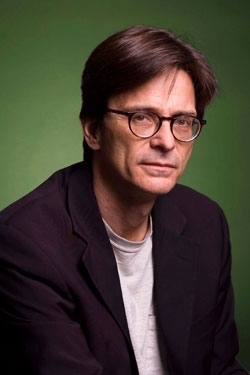
Robert Jensen is one of those writers who challenges preconceived ideas we all have about things we think we already have figured out. Among the many subjects he trains his keen intellect on are race, politics, misogny, and white supremacy and things really get interesting when he analyzes America’s and the world’s penchant for porn through the prism of those constructs. I interviewed him a couple years ago on these matters in advance of a talk he gave in Omaha, and the following story for The Reader (www.thereader.com) is the result.
He knows it when he sees it: Journalist-social critic Robert Jensen finds patriarchy and white supremacy in porn
©by Leo Adam Biga
Originally appeared in The Reader (www.thereader.com)
Journalist-political activist-social critic Robert Jensen is the prickly conscience for a narcissistic Addict Nation that lusts after ever more. More resources. More power. More money. More toys. More sex. The tenured University of Texas at Austin associate professor organizes, agitates, reports, gives talks, writes. Oh, does he write.
He’s the prolific author of books-articles challenging the status quo of privileged white males, of which he’s one. He believes white patriarchal systems of power and predatory capitalism do injury to minorities through racist, sexist, often violent attitudes and actions. His critiques point out the injustice of a white male domination matrix that dehumanizes black men and objectifies-subordinates women.
We’re talking serious oppression here.
As an academic trained in critical thinking and radical feminism, his work rings with polemical fervor but refrains from wild rant or didactic manifesto. Agree or not, it’s hard not to admire his precise, well-reasoned arguments that persuasively connect the dots of an elite ruling class and its assumed supremacy.
He’s presenting the keynote address at a Sept. 22 Center for Human Diversity workshop in Omaha. His topic, “The Pornographic Mirror: Facing the Ugly Realities of Patriarchy and White Supremacy,” is one he often takes up in print and at the podium. His analysis, he said, is based on years studying the porn industry, whose misogynistic, racist products express “men’s contempt and hatred of women.”
Porn, he said, routinely depicts such stereotypes as “the hot-blooded Latina, the demure Asian geisha girl, the animalistic black woman and the hypersexualized black male.” Racially-charged code words — ebony, ivory, nubian, booty, jungle, ghetto, mama, chica, spicy, exotic — market these materials.
He said most interracial porn features black men having sex with white women, which he considers odd given that historically the majority culture’s posited black males as threats to the purity of white women. Why then would an “overwhelmingly white” audience want to view these portrayals?
Jensen suggests what’s at work is an “intensification” of “the core dynamic of male domination and female subordination.” Thus, he said, “by ‘forcing’ white women to have sex with black men, the ultimate sort of demonized man in this culture, it’s intensifying the misogyny and racism” behind it all. “That’s why I talk about these two things together, and why pornography is an important cultural phenomenon to study. It tells us something about the world we live in that is very important.”
The mainstreaming of porn as legitimate pop culture is a trend he finds disturbing. The industry, not counting the corollary sex trade, is estimated at $10 billion annually, comparable to other major entertainment industries such as television, film and sports. Jensen said his own students’ acceptance of porn as “just part of the cultural landscape” reflects a generational shift. Porn’s gone from taboo, scandalous, underground to casual lifestyle choice easily accessed via print, video, TV and the Web, where adult fare’s limitless and its content increasingly extreme.
Strip joints, adult book stores, chat lines, hook-up clubs, escort services, porn sites and X-rated channels abound. Sex tourism is a booming business in Third World Nations, where white men exploit women of color. Homemade porn is on the rise. Porn star Jenna Jameson owns cultural capital. Reality TV, cable programs, movies and advertising are, in his estimation, increasingly pornographic. Although careful not to link porn use to behavior, Jensen sees dangers. Sex addiction is a widely recognized disorder whose various forms have porn as a component.
Recreational choice or addictive fix, end point or gateway to overt, criminal acting- out, Jensen makes the case it’s all fodder for an already dysfunctional society.
“This is helping shape a culture which is increasingly cruel and degrading to women, which we should be concerned about,” he said. “If we’re honest with ourselves, even those who want to defend the pornography industry or who use pornography, I think we have to acknowledge the patterns we’re seeing are cause for concern. I can’t imagine how anyone could come to any other conclusion.”
He said it’s an open question how much more pornographers can push the limits before the culture says a collective, “Enough.” Any outcry’s not likely to come as a see-the-light epiphany, he said, but rather in the course of a long-term public education and public policy campaign. Anti-obscenity legal restraints, he said, are difficult now due to vague, weak state and federal laws, The exception is child porn, where strict laws are easily enforced, he said.
He opposes censorship, insisting, “I’m a strong advocate of the First Amendment and Free Speech,” adding current laws could be enforced with sufficient mandate.
“Much of the material were talking about clearly could be prosecuted yet it isn’t,” he said, “which I think reflects that level of cultural acceptance.”
He suggests enough male stakeholders consume, condone or profit from porn/illicit sex that this old boys network gives winking approval behind faux condemnation.
Jensen supports strict local ordinances and aggressive civil actions against adult porn similar to what feminists proposed in the ‘80s. He feels with modifications this approach, which failed legal challenges then, could prove a useful vehicle.
As Jensen notes, concurrent with this-anything-goes era of on-demand porn and sex-for-hire are the repressive strains of Puritanical America that discourage sex ed and open discussion of sex issues. He’d argue that silence on these subjects in a patriarchal, misogynistic society contributes to America’s high incidence of rape, sexual assault, prostitution, STDs, HIV/AIDS and teen pregnancy.
Overturning these trends, he said, begins with public critiques and forums. The Center for Diversity workshop at the Omaha Home for Boys is just such a forum. The 8 a.m. to 4:30 p.m. event features a wide-range of presenters on how to “Stay Alive” under the pervasive assault of sexism, racism, economic destabilization, domestic violence and pornography. The workshop’s recommended for health care professionals, therapists and social workers.
Check out Jensen’s work on the web site http://uts.cc.utexas.edu/-rjensen/index.html.
Gender equity in sports has come a long way, baby; Title IX activists-advocates who fought for change see much progress and the need for more
Title IX. This often contentious 1972 federal education act is getting more attention then usual these days because the media is taking a reflective look back on the impact it’s had over its 40 year lifespan. I’m doing the same with this article, which will soon appear in The Reader (www.thereader.com). Because I reside in Omaha, Neb. and The Reader is an Omaha news weekly my story looks at the implications of Title IX and the context that brought it into being from a local perspective, though I certainly address the nationwide effect the legislation’s had. The real interest for me in doing this story was to try and impress upong readers of a certain age that what is easily taken for granted today in terms of the ubiquitious presence of girls and women’s athletics obscures the fact that things were quite different not so very long ago. Younger readers may be surprised to learn that schools, colleges, and universities had to be compelled to cease discrimination on the basis of sex and to give females the same opportunties as males. What seems natural and common sense today wasn’t viewed in that light just a few decades ago. I end my story with a rhetorical question asked by one of my sources, former coach and athletic director Don Leahy, who said, “Why was it ever different?” My story attempts in a small way to explain why and to describe what the journey for women trying to gain equal opportunity in sports looked like.

Gender equity in sports has come a long way, baby;
Title IX activists-advocates who fought for change see much Progress and the need for more
©by Leo Adam Biga
Originally appeared in The Reader (www.thereader.com)
Participants in girls and women’s sports today should be forgiven if they take for granted the bounty of athletic scholarships, competitive opportunities, training facilities and playing venues afforded them.
After all, they’ve never known anything else.
Their predecessors from two generations ago or more, however, faced a much leaner landscape. One where athletic scholarships were unheard of or totaled hundreds, not thousands of dollars. A handful of games once comprised a season. Facilities-venues were shared, borrowed or makeshift.
Until 1972 federal Title IX legislation banned discrimination on the basis of sex, educational institutions offered nothing resembling today’s well-funded athletic programs for females. Schools devoted a fraction of the resources, if anything at all, to girls and women’s sports that they earmarked for boys and men’s sports.
Second class citizen treatment prevailed.
Nebraska women’s basketball coach Connie Yori made her mark at Creighton University, where she played and coached at some 11 different “home” sites because the program didn’t have its own dedicated facility.
“We were gypsies in some ways. We just had to figure out places to play,” she says, adding, “That wasn’t that long ago either.”

The gulf between then and are now is vast.
“I mean everything was different,” she says. “The way we traveled – the coaches and student athletes were driving the vans to the games. We as coaches had to regularly clean the facilities we practiced in. That was the norm, there wasn’t anyone else to do it. There’s countless examples. Opportunities to play, scholarship money, modes of travel, recruiting budgets, operations budgets, staff salaries, you name it, it’s escalated. But college men’s athletics has escalated too, so it’s not just the women.
“When I played college basketball there would maybe be 50 to 100 fans in the stands and now I’m coaching games where there’s sell-outs and ticket scalping is going on, and who would have thought that?”
Creighton, Nebraska and UNO have their own women’s hoops and volleyball facilities.
“That’s just kind of what’s happened across the board in women’s athletics in that institutions are more committed to equity, and as well they should be,” says Yori.
Gaps remain. Salaries for women coaches lag behind those for men. And where men routinely coach female athletes, it’s rare that women coach male athletes.
Still, things are far advanced from when women’s athletics got dismissed or marginalized and the very notion of female student-athletes was anathema to all but a few enlightened administrators and athletics officials.
In that proto-feminist era the so-called “weaker sex” was discouraged from athletics. Girls and women were considered too delicate to play certain, read: male, sports. Besides, it wasn’t feminine or ladylike to compete. Schools routinely said they could not justify women’s programs because they’d never pay for themselves. Consequently, the idea of giving females the same chances as males was met with paternalistic, patronizing objections. This despite the fact virtually all men’s programs lose money and only survive thanks to donations and to subsidies from student fees and revenue producing major sports.
Former Creighton softball coach Mary Higgins bought the rationale until realizing the contradiction
“I just remember thinking, ‘Well of course we don’t have women’s athletics, we can’t make any money, no one will come.’ And then it was like the light went on – ‘Well, wait a minute, the baseball team doesn’t make any money, they don’t have any people in the stands, then how come they have it and we don’t?'”

When people like Higgins began questioning tired old assumptions and asking for their fair share of amenities there was push back, including from men’s coaches protecting their turf.
“Well, you start with the fact that people don’t like change, period,” says former University of Nebraska at Omaha chancellor Del Weber.
With institutional support virtually nonexistent at the collegiate level, the Association for Intercollegiate Athletics for Women evolved into the main national governing-sanctioning body. Meanwhile, the NCAA actively ignored, then opposed inroads made by women. When school presidents and NCAA officials saw the hand writing on the wall and, some argue, the profits to be made from championship events, women’s athletics fell under the NCAA’s aegis in the early 1980s.
The real impetus for change may simply have been demographic. As women became the majority population, more entered college. Today, women account for the majority enrollment at Creighton and UNO.
Where the benefits of athletic competition (improved self-esteem, leadership skills development, higher graduation rates, et cetera) were once anecdotal, they eventually became measurable.
As far as defining moments, says Higgins, “the linchpin for our programs to grow was getting scholarships. Once we had scholarships we could go get the players.” That’s when the real gains occurred.
“The AIAW got things launched and then I think we got more sophisticated with the NCAA and a lot more money became available. It was a positive thing for growth but that was a painful transition.”
UNO associate athletic director Connie Claussen began women’s athletics there in 1969 as volunteer softball coach. She soon added volleyball and basketball. “I didn’t ask anyone, I just did it,” she recalls. All three sports shared the same set of uniforms. The teams practiced and played in a quonset hut. The equipment room was the trunk of her car. There was no budget, only donations scrounged from sympathetic boosters. Similar limitations applied at Creighton. Nebraska enjoyed a decided facilities advantage. For a time small schools could hang with big schools as everyone started from scratch and had no scholarships available.
Even after Title IX passed, says Claussen “it took several years for it really to have an effect on most athletic programs,” and then only with some prodding. In the case of UNO the Chancellor’s and Mayor’s Commissions on the Status of Women brought pressure. Even the U.S. Office of Civil Rights got involved at the behest of parents Mary Ellen Drickey and Howard Rudloff.
“What sticks out in my mind is that in our old gym they had hours set aside for when the women could come in,” says Higgins. “You think about that now and it just sounds ludicrous but that’s just what it was. The women could come in I believe Sunday and Wednesday nights because God forbid they sweat or show any effort.”
Peru State College basketball coach Maurtice Ivy excelled at the high school, collegiate and pro levels but when she was learning the game as a youth in the 1970s there was no exposure to girls or women’s hoops.
“I didn’t really see women playing, and so the person I watched play and I kind of emulated my game after was Dr. J.”

As an Omaha youth Ivy and other inner city girls developed their skills as Hawkettes, the state’s first select basketball team run by the late Forrest Roper. Richard Nared’s Midwest Striders track program impacted generations of girls, including Ivy and her younger sister Mallery, who set several state records. The sisters’ father was among the first local coaches to offer girls the opportunity to play football.
Fastpitch whiz Ron Osborn organized a statewide club softball association as a forum for girls to play in and as a showcase to convince schools they should start their own softball teams.
Today, girls club teams are everywhere.
Grassroots pioneers worked independently of Title IX to bring about change. Ivy thinks of them and graduates like herself as “soldiers” in the women’s athletics movement.
But there’s no mistaking Title IX, whose enforcement has been upheld in countless legal findings, is the bedrock equal opportunity protection upon which girls and women’s athletics rests. By compelling schools receiving federal assistance to uphold gender equity it’s propelled the explosion of women going to college and the exponential growth of girls and women’s athletics. It’s meant a dramatic increase in the infrastructures supporting female student-athletes and a proportionate increase in the number of participants.
“You went from nothing to everything,” is how former UNO and Creighton athletic director and now UNO associate athletic director Don Leahy describes its impact.

“To me, it standardized and normalized athletics,” says Higgins. “Now it’s just expected.”
Institutions found not complying with Title IX are forced to take corrective action under penalty of court-ordered monetary damages.
Nebraska’s been a battleground for some notable Title IX actions, including a 1995 lawsuit brought by Naomi Friston against the Minden Public School District for scheduling girls games at off times compared to boys’ games. Creighton University graduate Kristen Galles, who successfully represented the Friston case, is now one of the nation’s leading Title IX and gender equity attorneys.
Some school districts, colleges, universities and states were more progressive than others early on. For example, where Iowa embraced girls high school athletics decades before Title IX neighboring Nebraska dragged its feet.
Yori, an Iowa girls athletics legend, says, “I feel like I grew up in almost the perfect place during my era to be a female athlete because Iowa was ahead of its time in regards to the support of girls athletics.” She says the late Iowa Girls Athletics Association president, E. Wayne Cooley, “found ways to place girl athletes on a pedestal.”
Not so much in Nebraska.
“When I crossed the river from Iowa to Nebraska during the early 1980s,” Yori says, “I saw a really different climate for girls athletics here. There was definitely a difference in the commitment level. I mean, there just weren’t opportunities. It’s been great to see how much progress we’ve made in Nebraska and now the two states are on level playing fields in my mind.”
At the collegiate level some Nebraska institutions did take the lead, including John F. Kennedy College in Wahoo and Midland University in Fremont, both of which built dominant women’s athletic programs in the ’70s. Recently retired Midland basketball coach Joanne Bracker was an inaugural member of the Women’s Basketball Hall of Fame.
Under Claussen UNO won the 1975 AIAW Women’s College World Series, one of several national titles won by UNO women’s teams. Claussen and CU’s Higgins helped grow college softball, serving on AIAW and NCAA committees and leading their respective schools in hosting more than a dozen CWS championships, which Higgins says was “huge” in legitimizing women’s sports here and beyond.
The late Omaha Softball Association guru Carl Kelly and College World Series Inc. chairman Jack Diesing Sr., along with corporate donors, helped sponsor the women’s tournament.
The start of the 1980s saw NU women’s sports emerge. The volleyball program began its run of excellence under Terry Pettit. Gary Pepin’s track program shined with superstar Merlene Ottey. Angela Beck’s basketball program reached new heights with Maurtice Ivy. NU softball began making noise.

By the early ’90s, a full complement of women’s sports was in place wherever you looked, whether big public schools like NU, smaller private schools like CU or then-Division II UNO.
None of it would have happened without activists pressing the cause of female student athletes. Along the way Title IX and its supporters met resistance, including court challenges.
“I think there’s a lot of women and men who made a huge difference for the young women of this generation,” says Yori. “Connie Claussen and Mary Higgins were very much advocates for change. There were a lot of battles fought – in offices, in meeting rooms, and even legally in courtrooms. There were people that got fired for voicing their opinions and became the sacrificial lambs because of that. There were a lot of people who didn’t want change and didn’t want to give women the opportunity they are now being given.
“You know, we still need to fight for it, but there’s not such a gap as there was.”
Higgins says the trailblazers of modern women’s athletics were “people who just had a burning passion to make this happen. It consumed me, I know it consumed my colleagues. It’s like, ‘We’ll do whatever it takes. We’ll figure it out, we’ll find a way.”
Parents played roles, too, as coaches, administrators, boosters.
“I do think dads and their concern for their daughters had a major impact, and that was absolutely the case at Creighton,” says Higgins. “It wasn’t Title IX telling Creighton they had to do it. Title IX was happening at the same time but our then-assistant athletic director, the late Dan Offenburger, kind of led the charge. He coached our very first softball team. He didn’t have time to do it, we didn’t have any money, we didn’t even have a shoestring. But he got it going because it was the right thing to do. Plus, he had three daughters and he was motivated to create opportunities for them.
“I’m sure there are stories like that all over.”
As near as UNO, where Don Leahy says he supported women’s athletics not only because “I thought it had to be done” but because “I had a daughter who played sports.” There were also a wife and mother to answer to at home.
Leahy says the coaches he worked with at UNO and Creighton “fought diligently for their programs but at the same time they maintained a common sense that made it possible for this thing to develop. We talked and we gradually worked through these things and I think that made a big difference.”
“This stuff did not come easy,” says Del Weber, who approved the early road map for women’s athletics at UNO laid out by Leahy and Claussen and the gender equity program that they and former athletic director Bob Danenhauer devised.
Ramping up meant serious dollars. Leahy says when it became clear accommodating women’s athletics was a new reality “the first thing that came up was – how are we going to pay for this?”

Current Creighton athletic director Bruce Rasmussen, who coached CU’s women’s basketball team, recalls, “We didn’t have enough resources to properly compete just with our mens’ programs and now we had the burden of essentially doubling our athletic department. It was, ‘How do we balance what we can do with what we should do?’ And there was a lot of stress across the country. Women’s athletics completely changed the dynamics of universities and how were they going to support a full athletic department. So there was a lot of tension and trauma going on.”
“And funding it is not just a matter of we’re going to give them x number of dollars,” says Rasmussen, “but it’s facilities, it’s staffing, it’s scholarships, recruiting, traveling, equipment…”
At Creighton as anywhere, says Rasmussen, “we’re asked to provide not only an athletic program but also to be fiscally responsible as a department and as a program. So when it comes to asking for more money, especially when you’re running at a deficit, there’s certainly friction. I think factions of the faculty felt every dollar that went to athletics was a dollar out of their pocket.”
By the ’90s, girls and women’s sports were a given. By the 2000s, they’re as much a part of the culture as boys and men’s sports. Some professional women’s sports leagues flourish. Icons have even emerged: Pat Summit, Lisa Leslie, Florence Griffith-Joyner, the Williams sisters, Jackie Joyner-Kersee, Brittney Griner.
“To turn that around was a seismic shift,” says Higgins.
“In a short time things really have come a long way,” says Claussen, who hastens to add, “But it took a long time to get” the opportunity.
Once spare media coverage has increased to the point that it’s commonplace if still a trickle of what males get.
“Hopefully we’ll continue getting more and more and that’s where the NCAA plays a big part in getting those television contracts,” says Claussen. “All that’s going to help increase the interest.”
The sustainability of athletic programs is an increasingly difficult proposition for schools struggling to keep pace with peers in a competitive arena of ever rising costs.
“At some point women’s athletics has to generate enough money to pay for itself because until it does we’re not going to get where we need to be,” says Rasmussen. “In men’s basketball we wouldn’t have the budget or spend the money on salaries we do if weren’t generating that, and we’ve got to move to the point where on the women’s side we’re generating realistic revenues. And the key to that is having generations of females who played sports, understand the value of sports and are willing to make a commitment to those sports.
“We don’t exist as an athletic department without people making a commitment to us.”
Creighton’s state-of-the-art athletic center and arena for volleyball and women’s basketball resulted from multi-million dollar gifts by donors Wayne and Eileen Ryan and David Sokol. Rasmussen says having coached women’s sports helps him effectively make the case for them when he asks for support.
In 1986 Claussen inaugurated the UNO Women’s Walk, now the Claussen-Leahy Run/Walk, which has raised $4 million-plus for women’s athletics.
NU’s men’s and women programs have some of the best facilities in the U.S. thanks to mega donations.
The strong sisterhood of girls and women’s sports that exists today is built on decades of sacrifice and perseverance. Ivy wants her athletes to know the history. It’s why she says she tells them about “who paved some of the way and the different struggles people had to endure so that we can have.” Yori does the same with her players because she wants them to know “where we come from as a sport.”
“There were groundbreakers and pioneers before us who made a huge impact on the opportunities young people have today,” Yori says. “Women of previous generations were not given opportunities and so it’s neat to see when they are given opportunities how much they can take advantage of that.”
“Why was it ever different?” asked Leahy. Why indeed.
Related articles
- From the series Out to Win: The Roots of Greatness – Black Women Make Their Mark in Athletics (leoadambiga.wordpress.com)
- Sports of The Times: Title IX Has Not Given Black Female Athletes Equal Opportunity (nytimes.com)
- From ESPN’s celebration of Title IX’s 40th: (womenshoopsblog.wordpress.com)
- Don’t call us tomboys anymore (nbcsports.msnbc.com)
- Title IX turns 40 (dailykos.com)
Omaha’s Malcolm X Memorial Foundation Comes into its Own, As the Nonprofit Eyes Grand Plans it Weighs How Much Support Exists to Realize Them
African-Americans from the town where I live, Omaha, Neb., are often amused when they travel outside the state, especially to the coasts, and people they first meet discover where they are from and invariably express surprise that black people live in this Great Plains state. Yes, black people do live here, thank you very much. They have for as long as Nebraska’s been a state and Omaha’s been a city, and their presence extends back even before that, to when Nebraska was a territory and Omaha a settlement. Much more, some famous black Americans hail from here, including musicians Wynonie Harris, Buddy Miles, Preston Love Sr. and Laura Love, Hall of Fame pitcher Bob Gibson, Hall of Fame running back Gale Sayers, Heisman Trophy winner Johnny Rodgers, the NFL’s first black quarterback Marlin Briscoe, actress Gabrielle Union, actor John Beasley, producer Monty Ross, Radio One-TV One magnate Cathy Hughes, and, wrap your mind around this one, Malcolm X. That’s right, one of the most controversial figures of the 20th century is from this placid, arch conservative and, yes, overwhelmingly white Midwestern city. He was a small child when his family moved away but the circumstances that propelled them to leave here inform the story of his experience with intolerance and bigotry and help explain his eventual path to enlightenment and civic engagement in the fight to resist inequality and injustice. Though the man who was born Malcolm Little and remade himself as Malcolm X had little to do with his birthplace after leaving here and going on to become a national and international presence because of his writings, speeches, and philosophies, some in Omaha have naturally made an effort to claim him as our own and to perpetuate his legacy and teachings. Much of that commemorative and educational effort is centered in the work of the Malcolm X Memorial Foundation based at the North Omaha birthsite of the slain civil rights activist. The following story, soon to appear in The Reader (www.thereader.com), gives an overview of the Foundation and recent progress it’s made. Rowena Moore of Omaha had a dream to honor Malcolm X and she led the way acquiring and securing the birthsite and ensuring it was granted historic status. After her death a number of elders maintained what she established. Under Sharif Liwaru’s dynamic leadership the last eight years or so the organization has made serious strides in plugging MXMF into the mainstream and despite much more work to be done and money to be raised my guess is that it will someday realize its grand plans, and perhaps sooner than we think.

Omaha’s Malcolm X Memorial Foundation Comes into its Own, As the Nonprofit Eyes Grand Plans it Weighs How Much Support Exists to Realize Them
©by Leo Adam Biga
Soon to appear in The Reader (www.thereader.com)
Self-determination by any means necessary.
The notorious sentiment is by Malcolm X, whose incongruous beginnings were in this conservative, white-bread city. Not where you’d expect a revolutionary to originate. Then again, his narrative would be incomplete if he didn’t come from oppression.
Born Malcolm Little, his family escaped persecution here when he was a child. His incendiary intellect and enlightenment were forged on a transformative path from hustler to Muslim to militant to husband, father and humanist black power leader.
As it does annually, the Omaha-based Malcolm X Memorial Foundation commemorates his birthday May 17-19. Thursday features a special Verbal Gumbo spoken word open mic at 7 p.m. hosted by Felicia Webster and Michelle Troxclair at the House of Loom.
Things then move to the Malcolm X Center and birthsite. Friday presents by the acclaimed spoken word artist and author Basheer Jones, plus The Wordsmiths, at 7 p.m.
On Saturday the African Renaissance Festival unfolds noon to 5 p.m. with drummers, native attire, storytelling, face painting and Malcolm X reflections. Artifacts from the recently discovered Malcolm “Shorty” Jarvis collection of Malcolm X materials will be displayed. The late musician was a friend and criminal partner of Malcolm Little’s before the latter’s incarceration and conversion to Islam.
It’s a full weekend but hardly the kind of community-wide celebration, much less holiday, devoted to Martin Luther King Jr.
“I tell people, you may still not like Malcolm X, you may have a problem with a revolutionary. Martin was a revolutionary and maybe you came to love him. But I do want you to know brother Malcolm’s whole story and where he came from,” says MXMF president Sharif Liwaru.
“A big portion of what we do is about the legacy of Malcolm X. We go into communities, schools and other speaking environments and we educate people about Malcolm X, what he meant, what his impact was on society. Sometimes people walk away with a different level of respect for him. Sometimes they walk away having a better understanding.”

Using the tenets of Malcolm X, the foundation promotes civic engagement as a means foster social justice.
Nearly a half-century since Malcolm X’s 1965 assassination, he remains controversial. The Nebraska State Historical Society Commission has denied adding him to the Nebraska Hall of Fame despite petition campaigns nominating him. Few schools have curricula about the slain civil rights activist.
From its 1971 start MXMF has struggled overcoming the rhetoric around its namesake. The late activist Rowena Moore founded the grassroots nonprofit as a labor of love. She secured the North O lot where the razed Little home stood and where she once lived. Fueled by her dream to build a cultural-community center, MXMF acquired property around the birthplace. The site totals some 11 acres.


By the time she passed in 1998 the piecemeal effort had little to show save for a state historical marker. Later, a parking lot, walkway and plaza were added. Other than clearing the land of overgrowth and debris, the property was long on promise and short on fruition, awaiting funds to catch up with vision.
Without a building of its own, MXMF events were held alfresco on-site from spring through fall and at rotating venues in the winter. “We felt a little homeless,” says Liwaru. “We were very creative and did a whole lot without a building but we didn’t have a place to showcase and share that.” All those years of making do and staying the course have begun paying off. Hundreds of thousands of dollars in public-private grant monies have been awarded MXMF since 2009. Other support’s come from the Douglas County Visitors Improvement Fund, the Iowa West Foundation, the Sherwood Foundation, the Nebraska Arts Council and the Nebraska Humanities Council.
 Most notably a $200,000 North Omaha Historical grant allowed MXMF to acquire its first permanent indoor facility, an adjacent former Jehovah’s Witness Kingdom Hall at 3463 Evans Street, in 2010. Now renamed the Malcolm X Center, it hosts everything from lectures, films, plays, community forums, receptions and fundraisers to a weekly Zumba class to a twice monthly social-cultural-history class. Annual Juneteenth and Kwanzaa celebrations occur there.
MXMF conducts some longstanding programs, including Camp Akili, a residential summer leadership program for youth ages 14-19, and Harambee African Cultural Organization, an outreach initiative for citizens returning to society from prison.
The center is a community gathering spot and bridge to the wider community. Liwaru says it gives the birth site a “public face” and “front door” it lacked before, thus attracting more visitors. Besides hosting MXMF activities the center’s also used by outside groups. For example, Bannister’s Leadership Academy classes and Sudanese cultural events are held there.
“We’re very proud to be a community resource. It legitimizes us as an organization to have that space available. It makes a difference with the confidence of the volunteers involved.””

A recent site development that’s proved popular is the Shabazz Community Garden, where a summer garden youth program operates.
The surge of support is not by accident. The birthsite’s pegged as an anchor-magnet in North Omaha Revitalization Village plans and Liwaru says, “We definitely see ourselves as a viable part of it.” North Omaha Development Project director Ed Cochran, Douglas County Commissioner Chris Rodgers and Omaha City Councilman Ben Gray have helped steer resources its way.
Attitudes about Malcolm X have softened to the point even the prestigious Omaha Community Foundation awarded a $20,000 capacity building grant. Despite working on the margins, Liwaru says “investors could see our mission and work ethic and they supported that.”
Since obtaining its own facility, Liwaru says, “I find more people speaking as if our long-range plans are possible.” Those plans call for an amphitheater and a combined conference-cultural center.
For most of its life MXMF’s subsisted on small donations. When the building grant stipulated $50,000 in matching funds, says Liwaru, “”it was really the culmination of a lot of little gifts that made it happen.”
The all-volunteer organization depends on contributions of time, talent and treasure from rank-and-file supporters.
“We believe a little bit of money from a lot of people is beneficial,” says Liwaru. “Sometimes that meant we were probably working harder than the next organization that may be able to go to one or two people to get their funds, but it certainly makes us accountable to more people. We’re ultimately responsible to our community because we have so many community members contribute.
“Our organization belongs to the community. The people get the say.”
In tangible, brick-and-mortar terms, the foundation hasn’t come far in 40 years, but all things considered Liwaru’s pleased where it’s at.
“We’ve made a lot of progress. One of the things that makes me confident we’ve turned this corner is there’s still this strong commitment, there’s still passionate people involved.”

Veteran board members and community elders Marshall Taylor and Charles Parks Jr., among others, have carried the torch for decades. “They bring experience and wisdom,” says Liwaru. He adds, “We’ve added strong young people to our board like Kevin Lytle (aka Self Expression), and Lizabet Arellano, who bring a lot of new ideas and a passion for carrying out change in this urban environment.”
However, if MXMF is to become a major attraction a giant leap forward is necessary and Liwaru’s unsure if the support’s there right now.
“Everybody wants sustainability in terms of stable funding and revenue. We put out a lot of funding proposals at the end of last year. Few were approved. We got a lot of nos. Most funders don’t say why. We don’t know if it’s because they’re not wanting to be affiliated with Malcolm X or if it’s not understanding what we do as an organization or if they don’t think we can see projects through to the end.”
He can’t imagine it’s the latter, saying, “Anybody who knows us knows we’re persistent and that what we talk we follow through with.”
His gut tells him the organization still encounters patriarchal, political barriers.
“We always feel we have to come in proving ourselves. I always come in and explain we’re not a terrorist organization or a splinter cell. Most of what we get is a lot of encouragement but it’s a pat on the back and ‘I hope that you guys do really well with that’ versus, ‘I can help.’ I think one of the challenging things is we’re not sure what people think of us. There are many who aren’t sure which Malcolm we’re celebrating.
“If an organization is just completely not interested in covering anything related to Malcolm X it’d be nice to know. So the question from me to philanthropists out there is, ‘What do you think about the Malcolm X foundation and what we do? Do you see it as a worthy cause? What are we missing?”

Answers are important as MXMF is S100,000 away from finishing its planning phase and millions away from realizing the site’s full build-out. It could all take years. None of this seems to discourage MXMF stalwarts.
“We are willing to sacrifice and work diligently for however long it takes,” says Lizabet Arellano. Fellow young blood board member Kevin Lytle takes hope from the momentum he sees. “There’s more and more people at events and rallies and different things we do. People are finally starting to recognize and take pride in the fact Malcolm X was born here,” he says. “We have to start somewhere, and that’s a start. People know that we’re here and that we’re representing something beneficial to the community.”
Liwaru sees a future when major donors ouside Nebraska help the MXMF site grow into a regional, national, even international mecca for anyone interested in Malcolm X.
Besides a House of Loom cover charge, the weekend MXMF events are free. For details, visit http://www.malcolmxfoundation.org or the foundation’s Facebook page.
Related articles
- A Brief History of Omaha’s Civil Rights Struggle Distilled in Black and White By Photographer Rudy Smith (leoadambiga.wordpress.com)
- Malcolm X bio doubts activist was served justice (cbsnews.com)
- Malcolm X artifacts unearthed: Police docs and more found among belongs of ‘Shorty’ Jarvis (thegrio.com)
- Blacks of Distinction II (leoadambiga.wordpress.com)
- Making the Case for a Nebraska Black Sports Hall of Fame (leoadambiga.wordpress.com)
- A Synergy in North Omaha Harkens a New Arts-Culture District for the City (leoadambiga.wordpress.com)
Carolina Quezada leading rebound of Latino Center of the Midlands
The organizations that make a difference in a community of any size are legion and I am always struck by how little I know about the nonprofits impacting people’s lives in my own city. I often find myself assigned to do a story on such organizations and by the time I’m done I feel I have a little better grasp then I had before of what goes on day in and day out in organizations large and small that serve people’s social service and social justice needs. One such institution is the Latino Center of the Midlands, which I profile here along with its executive director Carolina Quezada, who came on board last year in the midst of a tough time for the former Chicano Awareness Center. She and I are happy to report the organization is back on track and that’s good news for the community it serves.
©by Leo Adam Biga
Originally appeared in El Perico
Carolina Quezada took the reins of the Latino Center of the Midlands last August in the wake of its substance abuse program losing funding, executive director Rebecca Valdez resigning and the annual fund raiser being canceled. Despite the travails, Quezada found a resilient organization.
Overcoming obstacles has been par for the course since community organizers started the former Chicano Awareness Center in 1971 to address the needs of underserved peoples. Its story reminds her of the community initiatives she worked for in her native East Los Angeles. She never intended leaving Calif. until going to work for the Iowa West Foundation in 2009. Once here, she found similar challenges and opportunities as she did back home.
“I’ve come full circle. I see so much of what I encountered growing up in L.A. which is parents with very low levels of education wanting their kids to succeed, graduate high school and go to college but often no plan to get them there.,” she says.
“South Omaha is like this microcosm of East L.A. The moment I drove down 24th Street the first time I thought, This is like Whittier Blvd. I felt an instant connection. There’s so much overlap. This sense of close relationship with the grassroots, the sense of community, and how the organization has its beginnings in activism, in that voice of the community. It’s so indicative of how nonprofits in Latino communities have their base in the grassroots voice and in services and issues having to do with social justice.”
Forged as the center was in the ferment of unrest, she’s hardly surprised it’s persevered.
“I am pretty struck by how the agency continues to respond,. It’s always been responsive to what that emerging need is. I think it’s just an inherent part of its DNA.”
She acknowledges the center was rocked by instability in 2011.
“Currently we are in the process of trying to strengthen that stability. Last year was a very difficult year for the agency. There was a transition in leadership, there was funding lost. The agency was still operating but in a very low key way, and I give credit to the board members and staff in making sure the doors remained open. Their passion continues to drive what we do every day.
“One of our greatest core competencies is that love for community and that connection to our people. When people come through our doors they are greeted by people who look like them and speak their language. It’s their culture. I’m very proud the Latino Center keeps that piece very close to its heart.”

She says in this era of escalating costs and competition for scarcer resources, nonprofits like hers must be adaptable, collaborative and creative “to survive.
“There is much more a need to be strategic. It’s not just about being a charity. Now it’s about being an institution that takes on a lot more of the business model and looks at diversifying funding sources.”
In her view Nebraska offers some advantages.
“Because the economy is better here the environment for nonprofits is a little better. You have funders who are strong, engaged, committed and very informed. I think a lot of it has to do with the strength of their foundations and the culture of the Midwest. People really care about getting involved and building community.
“Last year was very tough. Not having the annual fundraiser really hurt the agency. But there’s been some renewed investment in the organization from funders. There is a very strong interest in collaborating with Latino Center of the Midlands from other organizations and funders and community leaders.”
Omaha’s come to expect the agency being there.
“Because of our 40-plus year history people know to come to us. We get a lot of walk-ins. We convene large groups of people here on a regular basis because of the wide array of classes we offer. We are still making an impact in parent engagement and basic adult education. We work with parents having a difficult time getting their kids to attend school on a regular basis.
“But we also deal with all sorts of other issues that come through our doors. We get requests for assistance with immigration, other legal issues, social services. We do referrals for all sorts of things. We’ve also started inviting partners to come offer their services here – WCA, OneWorld Community Health, UNMC’s Center for Health Disparities, Planned Parenthood. So we become a very attractive partner to other organizations that want to partner in the Latino community.
“We cannot do our work well if we’re not building strong partnerships with others.”
She says she and her board “are formulating some specific directions we want to take the organization in” with help from the Omaha Community Foundation‘s capacity building collaborative. “We have to look at those support networks for how we build capacity and we’re very fortunate to count on the support of the Community Foundation. We’re working with their consultants to look at our strategic initiatives, fund raising, board recruitment, programs and projects. We’re looking at where our impact has been and what the needs are in the community.”
She feels the center is well poised for the future.
“We realize we have a lot of work to do but there’s a lot of optimism and energy about where the agency could go.”
Best of all, the annual fund raiser returns July 23. “I’m so happy it’s going to be back,” says Quezada. Check for details on that and ongoing programs-services at http://www.latinocenterofthemidlands.org.
Related articles
- Evangelina “Gigi” Brignoni Immerses Herself in Community Affairs (leoadambiga.wordpress.com)
- Jose and Linda Garcia Find a New Outlet for their Magnificent Obsession in the Mexican American Historical Society of the Midlands (leoadambiga.wordpress.com)
- “Paco” Proves You Can Come Home Again (leoadambiga.wordpress.com)
- African Presence in Spanish America Explored in Three Presentations (leoadambiga.wordpress.com)
- PBS WIll Air New Documentary On Latinos (huffingtonpost.com)
A brief history of Omaha’s civil rights struggle distilled in black and white by photographer Rudy Smith
Rudy Smith was a lot of places where breaking news happened. That was his job as an Omaha World-Herald photojournalist. Early in his career he was there when riots broke out on the Near Northside, the largely African-American community he came from and lived in. He was there too when any number of civil rights events and figures came through town. Smith himself was active in social justice causes as a young man and sometimes the very events he covered he had an intimate connection with in his private life. The following story keys off an exhibition of his work from a few years ago that featured his civil rights-social protest photography from the 1960s. You’ll find more stories about Rudy, his wife Llana, and their daughter Quiana on this blog.

A brief history of Omaha’s civil rights struggle distilled in black and white by photographer Rudy Smith
©by Leo Adam Biga
Originally appeared in The Reader (www.thereader.com)
Coursing down North 24th Street in his car one recent afternoon, Rudy Smith retraced the path of the 1969 summer riots that erupted on Omaha’s near northside. Smith was a young Omaha World-Herald photographer then.
The disturbance he was sent to cover was a reaction to pent up discontent among black residents. Earlier riots, in 1966 and 1968, set the stage. The flash point for the 1969 unrest was the fatal shooting of teenager Vivian Strong by Omaha police officer James Loder in the Logan Fontenelle Housing projects. As word of the incident spread, a crowd gathered and mob violence broke out.
Windows were broken and fires set in dozens of commercial buildings on and off Omaha’s 24th Street strip. The riot leapfrogged east to west, from 23rd to 24th Streets, and south to north, from Clark to Lake. Looting followed. Officials declared a state of martial law. Nebraska National Guardsmen were called in to help restore order. Some structures suffered minor damage but others went up entirely in flames, leaving only gutted shells whose charred remains smoldered for days.
Smith arrived at the scene of the breaking story with more than the usual journalistic curiosity. The politically aware African-American grew up in the black area ablaze around him. As an NAACP Youth and College Chapter leader, he’d toured the devastation of Watts, trained in nonviolent resistance and advocated for the formation of a black studies program at the University of Nebraska at Omaha, where he was a student activist. But this was different. This was home.
On the night of July 1 he found his community under siege by some of its own. The places torched belonged to people he knew. At the corner of 23rd and Clark he came upon a fire consuming the wood frame St. Paul Baptist Church, once the site of Paradise Baptist, where he’d worshiped. As he snapped pics with his Nikon 35 millimeter camera, a pair of white National Guard troops spotted him, rifles drawn. In the unfolding chaos, he said, the troopers discussed offing him and began to escort him at gun point to around the back before others intervened.
Just as he was “transformed” by the wreckage of Watts, his eyes were “opened” by the crucible of witnessing his beloved neighborhood going up in flames and then coming close to his own demise. Aspects of his maturation, disillusionment and spirituality are evident in his work. A photo depicts the illuminated church inferno in the background as firemen and guardsmen stand silhouetted in the foreground.
The stark black and white ultrachrome prints Smith made of this and other burning moments from Omaha’s civil rights struggle are displayed in the exhibition Freedom Journeynow through December 23 at Loves Jazz & Arts Center, 2512 North 24th Street. His photos of the incendiary riots and their bleak aftermath, of large marches and rallies, of vigilant Black Panthers, a fiery Ernie Chambers and a vibrant Robert F. Kennedy depict the city’s bumpy, still unfinished road to equality.
The Smith image promoting the exhibit is of a 1968 march down the center of North 24th. Omaha Star publisher and civil rights champion Mildred Brown is in the well-dressed contingent whose demeanor bears funereal solemnity and proud defiance. A man at the head of the procession holds aloft an American flag. For Smith, an image such as this one “portrays possibilities” in the “great solidarity among young, old, white, black, clergy, lay people, radicals and moderates” who marched as one,” he said. “They all represented Omaha or what potentially could be really good about Omaha. When I look at that I think, Why couldn’t the city of Omaha be like a march? All races, creeds, socioeconomic backgrounds together going in one direction for a common cause. I see all that in the picture.”
Images from the OWH archives and other sources reveal snatches of Omaha’s early civil rights experience, including actions by the Ministerial Alliance, Citizens Coordinating Committee for Civil Liberties, De Porres Club, NAACP and Urban League. Polaroids by Pat Brown capture Rev. Martin Luther King, Jr. on his only visit to Omaha, in 1958, for a conference. He’s seen relaxing at the Omaha home of Ed and Bertha Moore. Already a national figure as organizer of the Birmingham (Ala.) bus boycott and the Southern Christian Leadership Conference, he’s the image of an ambitious young man with much ahead of him. Rev. Ralph David Abernathy, Jr. joined him. Ten years later Smith photographed Robert F. Kennedy stumping for the 1968 Democratic presidential bid amid an adoring crowd at 24th and Erskine. Two weeks later RFK was shot and killed, joining MLK as a martyr for The Cause.
Omaha’s civil rights history is explored side by side with the nation’s in words and images that recreate the panels adorning the MLK Bridge on Omaha’s downtown riverfront. The exhibit is a powerful account of how Omaha was connected to and shaped by this Freedom Journey. How the demonstrations and sit-ins down south had their parallel here. So, too, the riots in places like Watts and Detroit.
Acts of arson and vandalism raged over four nights in Omaha the summer of ‘69. The monetary damage was high. The loss of hope higher. Glimpses of the fall out are seen in Smith’s images of damaged buildings like Ideal Hardware and Carter’s Cafe. On his recent drive-thru the riot’s path, he recited a long list of casualties — cleaners, grocery stores, gas stations, et cetera — on either side of 24th. Among the few unscathed spots was the Omaha Star, where Brown had a trio of Panthers, including David Poindexter, stand guard outside. Smith made a portrait of them in their berets, one, Eddie Bolden, cradling a rifle, a band of ammunition slung across his chest. “They served a valuable community service that night,” he said.
Most owners, black and white, never reopened there. Their handsome brick buildings had been home to businesses for decades. Their destruction left a physical and spiritual void. “It just kind of took the heart out of the community,” Smith said. “Nobody was going to come back here. I heard young people say so many times, ‘I can’t wait to get out of here.’ Many went away to college and never came back. That brain drain hurt. It took a toll on me watching that.”
Boarded-up ruins became a common site for blocks. For years, they stood as sad reminders of what had been lost. Only in the last decade did the city raze the last of these, often leaving only vacant lots and harsh memories in their place. “Some buildings stood like sentinels for years showing the devastation,” Smith said.
His portrait of Ernie Chambers shows an engaged leader who, in the post-riot wake, addresses a crowd begging to know, as Smith said, “Where do we go from here?’
Smith’s photos chart a community still searching for answers four decades later and provide a narrative for its scarred landscape. For him, documenting this history is all about answering questions about “the history of north Omaha and what really happened here. What was on these empty lots? Why are there no buildings there today? Who occupied them?” Minus this context, he said, “it’d be almost as if your history was whitewashed. If we’re left without our history, we perish and we’re doomed to repeat” past ills. “Those images challenge us. That was my whole purpose for shooting them…to challenge people, educate people so their history won’t be forgotten. I want these images to live beyond me to tell their own story, so that some day young people can be proud of what they see good out here because they know from whence it came.”
An in-progress oral history component of the exhibit will include Smith’s personal accounts of the civil rights struggle.
Related articles
- Carole Woods Harris Makes a Habit of Breaking Barriers for Black Women in Business and Politics (leoadambiga.wordpress.com)
- Blacks of Distinction II (leoadambiga.wordpress.com)
- The Great Migration Comes Home: Deep South Exiles Living in Omaha Participated in the Movement Author Isabel Wilkerson Writes About in Her Book, ‘The Warmth of Other Suns’ (leoadambiga.wordpress.com)
- Making the Case for a Nebraska Black Sports Hall of Fame (leoadambiga.wordpress.com)
- Part I of a Four-Part Q & A with Pulitzer-Winner Isabel Wilkerson On Her Book, ‘The Warmth of Other Suns: The Epic Story of America’s Great Migration’ (leoadambiga.wordpress.com)
- Part II of a Four-Part Series with Pulitzer-Winner Isabel Wilkerson, Author of ‘The Warmth of Other Suns: The Epic Story of America’s Great Migration’ (leoadambiga.wordpress.com)
- Part III of a Four-Part Q & A with Pulitzer-Winner Isabel Wilkerson on Her Book, ‘The Warmth of Other Suns: The Epic Story of America’s Great Migration’ (leoadambiga.wordpress.com)
- Part IV of a Four-Part Q & A with Pulitzer-Winner Isabel Wilkerson on Her Book, ‘The Warmth of Other Suns: The Epic Story of America’s Great Migration’ (leoadambiga.wordpress.com)
- Photojournalist Nobuko Oyabu’s Own Journey of Recovery Sheds Light on Survivors of Rape and Sexual Abuse (leoadambiga.wordpress.com)
Abe Sass: A mensch for all seasons
The following profile I did on Abe Sass reminds me that extraordinary individuals are all around us. He’s married to a dynamo named Rivkah Sass, one of the most honored public librarians in the nation and because of her much feted work in that field she is obstensibly the star of this couple. But as I found out and as I hopefully succeed in sharing with readers like you Abe has a story worth knowing and celebrating too. He’s packed a lot of living into his life and because he’s pursued such a wide range of interests and experiences he’s brushed up against all sorts of historic people and places and events that I trust you will find as compelling as I did.

Abe Sass: A mensch for all seasons
©by Leo Adam Biga
Originally appeared in the Jewish Press
When your wife is a force of nature named Rivkah Sass, a recent national librarian of the year honoree and a much-in-demand public speaker, it could be easy to get overshadowed. The Omaha Public Library director’s dynamic personality can take over a room. Abe Sass doesn’t mind. In fact, he loves the attention Rivkah gets. You see, he’s not only her husband, but her biggest fan.
“Rivkah has an incredibly difficult job and I really believe she’s already changed the world in Omaha. She is committed,” he said.
There’s no real chance of him being lost in her limelight though. He’s every bit as accomplished as she and cuts a larger-than-life figure in his own right. A veteran psychiatric social worker, Sass has worked in several hospitals, he’s consulted school districts and he’s maintained his own private practice. No longer a full-time therapist, he volunteers his services to clients these days.
Sensitive and empathic as he may be, he’s no shrinking violet. He’s a charismatic presence at library activities and events with his warm smile, quick wit, hearty laugh and earthy demeanor. His six-foot-plus height and full beard help him stand out from the crowd, as does his animated demeanor, which flashes from dramatic whisper to basso profundo boom, all spiced with expletives and dollops of Yiddish.
This son of militant, immigrant garment workers in New York grew up a progressive thinker and activist. He was a rank-and-file soldier in the civil rights movement of the 1950s-1960s. He was at the historic march on Washington, D.C. in 1963 when Martin Luther King. Jr. articulated his dream for universal brotherhood. He was a member of CORE, the Congress of Racial Equality. He took part in his share of demonstrations on behalf of equality and justice.
He’s never lost his social conscience or political fervor, either. He’s remained engaged wherever he roosts, from the tenements of lower Manhattan to the halls of academia to the psychiatric wards at hospitals in California, Washington and Oregon. In Omaha he’s a familiar figure wherever ideas are exchanged, whether a community forum or a book reading or an art opening.
He often conducts therapy sessions in the mid-town home he and Rivkah inhabit. The couple’s place is an expression of their passions. They’re both lovers of literature, art and discussion. They place high value on friends and family. They do puppetry. They tell stories. They champion the underdog. They support causes. They entertain guests. Fittingly, their home is adorned with books, paintings, sculptures, drawings, prints, puppets, photographs of loved ones, mementos, keepsakes and campaign buttons emblazoned with liberal slogans, such as “Fight Racism” and “Swords and Plowshares.”
“Everything we do and have done is on our walls,” said Sass, gesturing to the overflow of objects about him in his living room.
He noted a small figurine of a black girl holding a book in one hand and a globe in the other, “which really fits who Rivkah is and who I am,” he said. The figurine is perched at the edge of a table atop which are also an old camera, a pair of cut-outs from artist Wanda Ewing’s black pin-up series and a button that reads “Black Power.” Sometimes there’s a button with a black hand, a brown hand and a white hand coming together that says “Let Us All Be Good Neighbors.” Taken together, he said, the display “is almost like a snapshot of a world that is and a world we could have. In many ways that represents to me where we need to go and, unfortunately, where we haven’t always been.”
Sass traces his humanist bent to his growing up poor in the Chelsea slums of New York City. He never knew his father, an artist, a presser, and Communist Party member who a year after Abe was born in 1938, went to Europe to try and rescue family only to be “swallowed up in the Holocaust.” His mother, Sylvia, endured “a miserable working life,” but sought much more for herself and her only child.
“All of her contemporaries were militant Jewish garment workers and wherever there was a rally there we were. I was just a kid, but everything they did made crystalline sense to me. It’s through her I met Pete Seeger and Paul Robeson. We would go to places where they were singing. We had a dear friend who was a wonderful militant woman. My mom and I would go with her to like a fraternal gathering place, where they would have speakers, singers. Seeger would come. Robeson would come. It was really cool. One of the major moments for me is when Robeson shook my hand and I felt, wow.”
He said he gained an awareness beyond his years “when we marched in the May Day Parade for working people and we’d get hit by rotten eggs and cabbages and comments like, ‘Go back to Russia’ or Dirty Commie.’” If all the protests he’s been a part of — from fair housing to sane nuclear policy to immigration reform– have taught him anything, he said, it’s that “there are people in this world that just don’t get it. I’m not a pessimist but I believe many people just don’t see there’s a big picture, and I believe one of the things we suffer from — all of us — is we only focus on ‘me.’ It’s dangerous…Unless we really see and feel connections we wind up with a perspective that’s very constricted and myopic.”
Action, not apathy. “We have to reach out and do something for people who need an assist up. It’s like that powerful saying, When they came for him, I didn’t say anything, when they came for her I didn’t say anything, and then when they came for me, nobody said anything. It’s still the same. It hasn’t changed,” he said.

The “cruddy” area he came from offered some valuable lessons on human relations and social conditions. Being the only Jewish kid on his block gave him a sense for what minority really mean.
“We lived in a terrible apartment building on West 18th Street,” now the trendy art neighborhood of New York, he said. “It was a little, dinky three-room apartment. I lived there through my 20s. It was tense and tight and loud and crazy. When you’re Jewish and you grow up in an Irish-Catholic neighborhood you’re an oddball by definition. I was more of an oddball because my aura was a softer aura and the softness not only came from enjoying the sanctuary of the orthodox synagogue I grew up in, but also” from being a reader and an art lover among street kids.
“The kids I was desperately trying to fit into I really had a hard time with, because they were busy kicking other people’s asses and that really was not something I felt comfortable with. And when it came to like stick ball and football and all that shit, nuh-uh, it was like, ‘Oh, get out of here, Abe.’ I was totally useless.”
To survive, he had to find his own schtick.
“Everybody had their thing on the block. You gotta have something to get a rep, OK? My rep was on Sunday nights, when we’d gather on a stoop and I would tell stories to these same kids…just make ‘em up out of my head…and I had them, because I could weave a tale, and I loved it. I shined in that moment.”
At PS 11 Elementary School and at Charles Evans Hughes High School he mixed with Jews, Irish, Italians, African-Americans, Greeks, Asians and practically every other nationality-ethnicity. “It was a potpourri of people,” he said. “You talk about a spectrum, it was all there.”
He fondly recalls the summer camps for “underprivileged children” he attended, and later was a counselor at. They further exposed him to a multi-cultural stew.
“My best friends were always Puerto Rican kids, black kids, Asian kids. I used to drive my poor mother crazy because every summer I’d come home from camp talking like I’m a kid from Harlem. She would say, ‘What kind of talking is this?’”
Counselors at camp, he said, “were usually (university) psychology or social work students. They were there because they had a desire to be there to help kids. Every summer I looked forward to it. When I became a counselor it was a joy for me to help a kid who was going through shit clear out and get away from it and say, Bye-bye shit, I don’t need you anymore. I knew I wanted to do this.”
He credits a camp director with giving him sound career advice. At the time, Sass was weighing what to do after high school. Though he felt called to be a teacher-counselor, he felt stymied by his lack of funds.
“He said, ‘Abe, you’ve got it. If you want it, go for it. The money will show itself. Don’t hold back ‘cause you don’t have the money.’ I totally trusted him and he was right. He was absolutely right. I was lucky enough to go to City College, which didn’t have tuition, and then Columbia University gave me a full tuition scholarship.”
Going from the lower Manhattan ghetto to elite Columbia was quite a leap.
“I was a lucky guy. I was just so happy. I was in fat cat city. That was the best training I could of had and it has helped me right through till now. There just happened to be a confluence of forces that brought these dynamite people to Columbia during those years.”
For him, the core of where the therapeutic focus needs to be was brought home by a case study of a subject with “a mouthful of rotten teeth.” Sass posited, “What would it be like walking around day after day with a pain in your head? Is that going to throw you off balance? Yeah. So, we were like back to Abraham Maslow. Basics, man. I have met a lot of people who have spun their wheels with a lot of therapists and they still haven’t dealt with the basics, and it’s sad.”
University life also fed his activist and culturist sensibilities. The Cold War was at its peak. Vietnam was just getting hot. The civil rights movement already underway.
“In college I hung out with The Beats and we were all counterculture,” he said. “We didn’t see the way it was going as the way it needed to go. We felt there was a world out there of creativity, art, exciting ideas and some of that meant taking a stand and a lot of that meant looking at the fact there are a lot of people who are not free, who have less opportunities than we do. So I started into that and my mother, of course, was very proud of that.”
He participated in sit-ins, some to show support for the activists down south “getting their heads plunked.” He was tempted to be a freedom fighter himself in Jim Crow country, and once “I was all but on my way,” before something came up.
He and a friend did go to the nation’s capital for the famous MLK-led ‘63 mass March on Washington for Jobs and Freedom.
“We both felt this would be an important thing to do,” he said. “Several of our friends were going…We drove there. It was wild because all these cars were on the road and people were waving at each other. I mean, we all knew where we were going. It was an amazing experience.
“We first gathered at the Washington Monument, where there were singers and all kinds of speakers, and then we walked to the Lincoln Memorial. It was a hot day and…every once in awhile somebody would pass out, but we were all so tight the person would be lifted up with hands and gently moved to the outer perimeter, where medics and assundry volunteers were set-up. It was like pre-mosh pit.”
The impact of the huge, unified crowd, estimated at 250,000, and of the speakers, capped by King’s rousing “I Have a Dream” oration, was “very, very powerful.”

Last month Abe accompanied Rivkah to D.C. for the American Library Association Conference. He retraced the march he made as part of that great procession 44 years earlier. By the end, he had a Mr. Sass Goes to Washington experience.
“I wound up one late afternoon walking the exact same path. It was hot. I went straight to the Washington Monument. It was very spiritual. Half-way between it and the Lincoln Memorial there’s ‘a Kodak moment’ spot where there’s a little display with a photo of the wading pool that day in ‘63 with all those people.
“I continued on to the Lincoln Memorial. I went up where his Gettysburg Address is engraved on one wall and I don’t know what possessed me, but I started saying it out loud. I know it pretty much by heart. And this group of tourists came over and we’re all looking at it together as I’m reading it out loud and they’re like, right there with me, and I just kept on going.”
He’d had some practice with the speech. Back at PS 11 he was selected to portray Lincoln for a school assembly. On his nostalgia trip back to D.C. all those years later, he didn’t stop with “Four Score and Seven Years Ago…”
“When I was done, I turned and I walked to the wall where his second inaugural address is engraved, and this same group of people followed, and I read that out loud. They were right there with me again. The greatest thing was I called our daughter and I told her where I was and I told her how much I loved her.”
Sass said when his daughter Ilana was a young girl she’d have friends over the house and invariably get down from a shelf the book, The Negro Since Emancipation. The back cover has an image of demonstrators in the ‘63 march and there’s the young Sass towering above the throng. His daughter would proudly proclaim to her pals, “That’s my dad.” “It was very special,” Sass said.
The melting pot experiences Sass had the first half of his life gave him an enriched perspective he carries with him to this day.
“I love my roots, I really do. I treasure them. I feel really good about having been introduced to so many wonderful ways of thinking. The weird thing is, even though there were many aspects of it that were very, very uncomfortable, I’m so glad it happened that way. Because thinking about who I am now I really feel like I viscerally can feel, for example, what people in parts of Omaha feel when they’re talking about the kind of shitty conditions they’re living in and have been living in for years and there’s no f___ing excuse for it. There really isn’t.”
Not long after moving with Rivkah to Omaha about four years ago, he attended a north Omaha town hall meeting at which Mayor Mike Fahey and his cabinet responded to issues confronting the inner city. Sass said an older woman pointedly asked how it is the cracked streets and backed-up sewers area residents like her knew as kids are still in disrepair decades later, and, how come residents out west don’t have these problems. No real answers were forthcoming. The gap between black Omaha and white suburbia apparent in the void.
“It’s hard to even try to say what I was feeling as I sat there,” Sass said. “Here we are in 2007 and there’s all this stuff about segregation…The struggle goes on, and you can’t be blind to it. You really can’t be blind to it.”
The poor, old working-class woman kvetching about inequality reminded him of his mother, each asymbol of the proletariat struggling to get by.
“She would go the shop and sit behind a sewing machine all day long busting her chops,” he said of his mom. “And she worked and worked and worked, and when she was 62-years-old she was wasted. It’s very, very sad.”
He was reminded, too, of when he went to California in the mid-’60s, fresh from Columbia, and found an unfriendly climate. En route, he stopped for gas at a roadside filling station, where, he said, “this guy and I got to talking.” When Sass mentioned he was heading for Napa, he recalled “the man saying, ‘Oh, you’re going to love it, there are no niggers in Napa.’ Holy shit, I just about fell down. Could not believe it. That’s one of the things that propelled me to join CORE.”
Once there he was dismayed to discover a form of red-lining being practiced whereby “realtors in the area were knocking on doors and saying, ‘There’s a black family moving in down the street from you — you might want to sell your house now because its value is going to diminish.’ That was going on when I got there,” he said, “so I got involved in the opposite campaign.”
He threw himself into resisting city plans for razing an established residential neighborhood built during the war for shipyards workers and their families and building high-priced condos in its place.
“A lot of the people who lived there were going to get displaced,” he said. “We (CORE) got involved in a big campaign to stop that. We had rallies, marches.
“Also, we started a freedom school in a storefront and kids would come in and we’d help them with whatever their issue was. Helping people connect with their community is very powerful.”
Wherever he saw discrimination he tried meeting it head-on.
“Not too long after I got to Napa I went for lunch with my friend Frank, a black psychiatrist. We were in this local-yokel place. We ordered and we waited. People came in after us and were served while we’re still sitting there. We asked what’s going on and the wait staff said, ‘We’re out of what you ordered.’ So we said, How about such and such? And they said, ‘We’re out of anything you’ll order.’ We really got pissed off and like two days later a shit load of us showed up, black as black can be, man. I was one of the few white guys in the group.
“We were sitting there and we weren’t moving until we got served. We said, ‘If you don’t have it today, we’re coming back tomorrow.’ They just shit in their pants. And the name of the game was they changed their policy. But not because they’re kind-hearted. It’s the pocket book. It’s money.”
He noted another incident that happened when he lived in an apartment complex. Black friends of his from CORE came over and went for a swim in the pool. When they jumped in, the whites jumped out. The next day, Sass said, he found his car’s tires slashed. He had to insist the police treat the matter as a hate crime.
“It’s sad and it’s funny and crazy and pathetic and angry…all that stuff,” he said.
He knows how hard it is for people to change attitudes and behaviors. He’s spent the better part of his life helping people try to do just that. “When somebody is going through a terrible emotional crisis my job is to help them create a revolution within themselves because what they’ve been doing is not working for them. If the revolution is successful they move on and it’s like a different world.”
Abe and Rivkah have endured their own crises, including the loss of a son.
In order to grow and to conquer our fears, he said, we must take chances. “So frequently what we do — all of us — is let ourselves be preoccupied with the fear of what will happen. It holds us all back….A piece of what I do is to help people see that right now is what we have,” he said. “I think my gift somehow is to guide people through hard times. It’s an art. I think you’re either born with this gift or not of allowing someone into your skin and your getting into their skin, safely, without being made to feel violated.”
When he was In California he worked with his share of people whose substance and lifestyle excesses caused them to “freak out.” He’s done his own experimenting and, he said, “it’s given me a better understanding of what people go through.”
Since coming to Omaha he’s worked with individuals, couples and families on a pro bono basis. He and Rivkah volunteered as puppeteers, storytellers and Sunday school teachers in the Pacific Northwest. He’s performed at synagogues. He, Rivkah and a mutual friend formed the Rosebud Puppet Theater. He does much the same today at local day cares. The puppet characters are drawn from Jewish folklore and include Schlemiel and Lyzer the Miser.
As it takes a mensch to know one, he’s hooked up with some of Omaha’s most righteous folks, including Holocaust survivor Rachel Rosenberg, Rabbi Aryeh Azriel, community watchdog Ben Gray and early childhood education pioneer Evie Zysman.
“There are people here that are very committed to justice and to fairness and equality. I just wish there were more of them and they had more clout and money,” he said.

He and Zysman, a former social worker, both hold degrees from Columbia’s School of Social Work. He adores her. “Hey, if I can be like Evie Zysman when I get to be her age, I’m home free. She’s a pistol, an absolute pistol. Formidable, incisive, cutting, sharp.” These kindred spirits don’t go in for the superficial chatter of the cocktail circuit. They prefer “Intense and meaningful dialogue,” he said.
He and Rivkah also count among their friends such local artists as author Timothy Schaffert, painter Wanda Ewing and sculptor Littleton Alston.
Like always, his friends are a rainbow coalition. Whatever one’s race or religion, he said, differences melt away “when you do things together. You become kind of like each other,” he said. Welcome to the wonderful world of Abe Sass.
Outward Bound Omaha uses experiential education to challenge and inspire youth
After seeing some high school students navigate the high ropes challenge course at the Outward Bound Omaha center site I understand why youths and adults, really anyone physically able to access and maneuver on the apparatus, could benefit from testing onself on it. I woulnd’t mind trying it myself. I know I would be better for the challenge. The following story for a coming issue of Metro Magazine gives a sense for what Outward Bound Omaha tries to do and how it fits into the mission of the sponsoring North Star Foundation, which is bringing this and other community engagement and personal enrichment resources to northeast Omaha to address the crisis of disenfranchised youth there. The idea is to get kids out of their comfort zone through challenges that reveal their inner strength and capability. If they can complete a ropes course or canoeing expedition or rock climbing challenge, then they may be more inclined to think they can finish high school or go to college, after all. You get the idea.
©by Leo Adam Biga
Originally published in Metro Magazine
The North Star Foundation formed in 2007 to address Omaha‘s disenfranchised African-American youth. The organization sought a way of engaging and inspiring young people to keep them on track academically so they finish school and become productive citizens.
With board members such as Dick Holland and Susie Buffett, North Star arrived on the scene with heavy hitters deeply committed to improving outcomes of underserved youth. Too many kids underachieve in North Omaha, where there’s a dearth of quality opportunities to learn trust, gain confidence, be a teammate and discover capabilities. North Star looked to the national experiential and expedition education model Outward Bound as an answer.
North Star executive director Scott Hazelrigg knows the effectiveness of Outward Bound programs because he participated in them as a student and contracted them as a youth services director. After an exhaustive needs assessment by the University of Nebraska at Omaha and discussions with Outward Bound officials North Star launched Outward Bound Omaha in 2010. The Hitchcock High Ropes Challenge Course, where youths and adults test themselves in safe, supervised exercises, is tucked into the folds of the rolling Omaha Home for Boys campus, easily visible to surrounding apartments and single family homes.
The course site is both practical and symbolic. A half-block north is the foundation’s office in the Ames Avenue strip mall where a new Walmart will go in next year. A couple blocks east is the abandoned Park Crest Apartments, a former crime-ridden complex North Star purchased and partly demolished to make way for a neighborhood reclamation project. The land the razed units sat on is now home to the Sahler Street Community Garden. Big Muddy Garden will farm a half-acre there this summer. North Star is weighing a for-profit urban farm to employ local youth. It’s all part of efforts to turn blight into sustainable, healthy community resources.

Hazelrigg says, “We wanted to get rid of that negative and put positive assets in that space.”
The neighborhood is home to many youths and families OB Omaha seeks to serve. A high percentage of northeast Omaha residents live in poverty and underachieve in education and employment. North Star and initiatives like Building Bright Futures attempt to address such systemic problems at the grassroots level.
Hazelrigg says North Star’s tasked with “a critical challenge to changing the safety, security, trajectory and economy of this community.” One way to lower truancy and dropout rates and raise graduation rates, he says, is to get kids on target academically and to keep them there.
Students completing a ropes or expedition course, he notes, can come away knowing they successfully met a challenge they might have thought insurmountable. If they do that, than working to solve a math problem or completing high school may not seem so daunting. “They feel more empowered or better able to face a challenge and to overcome that challenge because they have more in the toolbox,” says Hazelrigg.
OB Omaha is more than a ropes course. It also offers peer leadership expeditions. A pilot excursion the first year saw North O youths do a canoeing and camping trip in Ely, Minn. Most adventures happen closer to home but they’re no less challenging for urban kids without prior wilderness experience.


Among the benefits of experiential ed, Hazelrigg says, is it “gives kids an opportunity to fail in a safe space and to challenge themselves to see more in themselves than they knew was there.”
“The transformative power it has is that it gives you permission to discover who you might really be and it gives you a road map to figure out how to actualize that,” says OB Omaha director of Community Partnerships Liz Cornish. “What we do is create a challenge, an adventure and uncomfortable situations. Outward Bound instructors facilitate people to step outside of their comfort zone and to dig deep and discover what lies within.”
Each graduate receives a pin in a ceremony celebrating completion of the course. “It’s the student’s choice whether or not they take that with them, whether they feel they’ve earned that yet,” Cornish says. “It’s about how committed are you to certain values Outward Bound promotes and how far you have come on your journey to incorporating those into your every day life. if you take the pin you have to talk about why you’re taking it.”
She says courses are designed to teach “the core values of inclusion and diversity, compassion, integrity and excellence.” To complete a course, she says students must practice “positive communication, conflict resolution and the qualities of a good leader.” When they get to the end, there’s a real feeling of accomplishment. “A lot of it’s about confidence and how they see themselves and how they value themselves. Our programs are really about instilling self worth so that they can start to see themselves as whatever it is they want to be.”
No wonder then many schools and youth serving organizations elect to have students participate. Hazelrigg and Cornish say care is taken to ensure OB Omaha can deliver what teachers and program directors want to accomplish. Not every class or group is the right fit. But enough are that thousands of students have graduated by now.
She says the center’s worked with everyone from the South High football team to incoming Benson High students in the 8th to 9th grade transition program to Monroe middle school students to Girls Inc. members. On a cool April morning students from Westside High School‘s Future Problem Solving club crossed from one tower platform to another by navigating ropes and poles. Instructors and teammates provided encouragement. For each harnessed, helmeted participant the progressive tests presented their own challenges and rewards.
“When I’m going to school principals and talking about why they need to have Outward Bound in their schools,” says Cornish, “I tell them that as an Outward Bound center we have the luxury of teaching your students what you no longer have time to do in the context of a school day.”
The Omaha Public Schools, Westside Community Schools, Millard Public Schools and some private schools regularly send students to do Outward Bound programs.

“We also offer open enrollment opportunities during the summer,” Cornish says. “Parents and families are looking for ways to give their child a high quality leadership experience and we’re able to offer a quality and intense experience right here.”
Outward Bound isn’t just for kids either. Adults participate through employer team-building and leadership programs.
“We believe Outward Bound is for everyone and so we offer programs that do that full transformative leadership experience to lots of different groups, including corporate clients,” says Cornish. “We’ve worked with management teams at nonprofits, even sales teams at for-profit businesses. We do educator training as well.”
Courses run all year. The outdoor April through November courses are weather dependent but the center also provides indoor programming.
Cornish says staff instructors “come from all different paths but the common factor is mostly a passion for the students we serve.”
Hazelrigg aims to make programs recurring experiences at “deeper levels for target youth.
For course and program details, call 402-614-6360 or visit http://www.outwardboundomaha.org.
Related articles
- Grassroots Leadership Development Program Provides Opportunities for Students (leoadambiga.wordpress.com)
- Diversity in the Outdoors (naeeuk.wordpress.com)
Photojournalist Nobuko Oyabu’s own journey of recovery sheds light on survivors of rape and sexual abuse through her Project STAND
Photojournalist Nobuko Oyabu has dedicated herself to a lifetime project portraying the individual hunanity of persons who have suffered rape or sexual abuse. Her intent is to beyond the label of victim to show who these people are. The work is dear to her for many reasons, not the least of which is her own recovery from rape. She delivers a message to the world in her pictures and in her words that the hurt survivors feel is real and profound but that healing is possible. She lets survivors, their families and friends, and the public know that the assault or the abuse and its aftermath need not define women. She delivers this message through a support organization she formed, through photographs she takes of survivors, through educational presentations she gives, and through writing she does on the subject, including her autobiography (Stand, published in Japan). She has been much honored for her work. I wrote the following profile of Nobuko several years ago, when she still lived in Omaha, Neb., where she’d come to work for the Omaha World-Herald. She and her family have since moved on elsewhere but her work continues, as does the praise for her efforts.

Photojournalist Nobuko Oyabu’s own journey of recovery sheds light on survivors of rape and sexual abuse through her Project STAND
©by Leo Adam Biga
Originally appeared in the Omaha City Weekly
Omaha photojournalist Nobuko Oyabu’s work on rape and sexual abuse first made waves in the States. Now it’s stirring things up in her native Japan. On visits there in the last year she’s exhibited her intimate portraits of survivors and given talks about her own story and her subjects’ stories of survival.
She was raped in 1999.
She’s also returned to her homeland to promote her new book, Stand (Forest Press). Published in October, it’s made best seller lists there. The book reveals the trauma of sexual assault through the prism of her personal odyssey and of the men and women she’s chronicled. Her book’s title is drawn from a national project she launched in Omaha to document survivors from across America and in Canada.
Some survivors want to be photographed at the very site they were abused. It isn’t always possible. When it is, it’s an emotional scene. The survivor seeks to reclaim power and control lost in the attack. It’s about closure. In one image a man weeps in the cabin he was molested in as a boy. Some images reveal artifacts of human suffering. A woman shows scars from cuts she makes on herself. Oyabu said self-mutilation is common among survivors as a way of dealing with post-traumatic stress. Another holds a photo of herself as a child made-up as a whore by her abusive dad. Innocence lost. Others choose places and poses that represent their recovery.
Oyabu said Stand is an expression of “how I stood up to the tragedy that happened to me and also of the stands of other survivors. Part of the meaning as well is that sometimes you can’t do anything but just stand there and wait. You can’t always be brave or do something great.”
The fact she’s openly discussing such traditionally taboo subjects in Japan has made her something of a sensation there. Major media outlets in Tokyo, her hometown of Osaka and other cities have profiled her.
“I think I’m the very first person speaking out” on this issue there, she said. In Oyabu’s view Japan harbors, much like the U.S., dysfunctional attitudes about rape and sexual abuse rooted in denial.
“A lot of women tend to be very quiet about it and just suffer silently. It’s really hard for them to be open about it,” she said.
She said a Japanese columnist questioned in print whether she’s actually a survivor after one of her upbeat presentations. Yes, the subject is sober but that doesn’t mean she has to be.
“This particular writer thought that was not appropriate at all. He wrote, ‘I wonder if it really happened to her?’ I wasn’t what he thought a survivor should look like,” she said. “So how should I look? Do I always have to be depressed? I mean, c’mon, I have a daughter. I have a responsibility to make her happy. I can’t be depressed.”
Oyabu said, “It’s kind of hard to attach faces to the issue” amid such perceptions, “It’s kind of hard to see the reality and people don’t really want to see it. But it’s not like all survivors are in depression, stigmatized and bitter. I certainly don’t see myself that way. I’ve found a lot of people don’t see themselves that way.
“If you have a preconceived idea of how a survivor looks, you can never get the real person in the picture.”
Faces of Rape and Sexual Abuse


©photos of survivors by Nobuko Oyabu
Before her own attack, she said, “I admit I had the same attitude toward rape victims. I thought rape belongs to somebody else. I didn’t know there are so many different kinds of survivors until I met them.”
Oyabu’s black and white images express the full spectrum of survivors in terms of education, occupation, income, race, ethnicity, age, shape, size. She said, “I consciously selected these people” to represent they are not just one thing or another. Sexual assault does not discriminate along demographic lines. “It happens to everyone,” she said. Just as survivors are not all rich or poor, black or white, they are not all grim or mad. Many are content, confident, proud, defiant. Count Oyabu among these. Her self-portrait on her book’s cover shows an assertive, ever curious woman poised with camera in hand.
“My resistance was the key for me,” she said.
While large urban papers in Japan gave her positive coverage, reprinting some of her images, she said smaller rural papers displayed a more close-minded attitude and refused to run her pics. She found that “odd” considering her images are in no way graphic but merely portraits. She thinks such reluctance stems from outdated notions that survivors should not be seen or heard — a byproduct of a larger bias that fixes blame or shame on survivors.
“With sexual assault there’s so much gray area still,” she said. “Too many people think it’s the victim’s fault. In this country as well.”
That the blame game should persist in Japan, she said, is ironic given it “is the capital of pornography in the world. There’s so much human trafficking and child porn going on…and somehow the blame is shifted to the victims.” She said sex is right out front in Japan, as it is here, “and yet when it comes to sexual violence people don’t want to acknowledge it,” much less talk about it. Similarly, she said America and Japan don’t want to examine the implications of sex being so pervasive yet rarely discussed at home or school. “Not talking about it,” she said, results in high rates of sexual assault, sexually transmitted diseases, promiscuity, prostitution. This pregnant silence, she said, explains why most sexual assaults go unreported.
“A lot of people are in denial,” she said, “especially parents who grew up in a home where abuse took place. A lot of people have no idea what to say — they just don’t know how to talk about it. Survivors don’t know who to talk to or where to go.”

In lieu of information, she said, some people suffer abuse not realizing they’ve been victimized. She notes a disturbing trend among young people she speaks with who routinely tell her they’ve been molested or raped but pass it off “as no big deal” — as if it’s a rite of passage. “It’s really sad,” she said.
Then there’s the way rape is historically minimized by society, drawing light sentences for actions that have long lasting effects.
Oyabu noted, “One of the survivors put it like this: ‘The rapist gets three to five years, the victims get life.’ And that’s exactly it. It’s not just a one-time incident. For a lot of people it takes a lifetime to get over it. I find it disturbing that society doesn’t see rapists as high risk criminals.”
The reaction her work’s elicited in Japan is not unlike its reception in the U.S. Her STAND: Faces of Rape and Sexual Abuse Survivors Project has been a traveling exhibition across America. Her work with survivors and her personal identification with them and their trauma has made her a sought-after figure. She’s testified before Congress about the issue. She’s spoken to medical, health and law enforcement professionals. She’s presented at women’s and survivors conferences as well as colleges and universities. She’s served as visiting faculty at the Poynter Institute (Fla.) for a seminar on how the media reports rape. She and her work have been part of national awareness campaigns and a Lifetime documentary. She’s written articles for publications here and abroad.
In 2003 she received the Visionary Award from the DC Rape Crisis Center along with comedian Margaret Cho and poet Alix Olsen.
Still, her work is not always appreciated. She said while on staff at the Omaha World-Herald in 2000-2002 senior editors there nixed her doing a photo-essay series on sexual assault survivors. The material, she was told, was too intense for the paper. She said some journalists criticize her for crossing ethical lines as a reporter who documents fellow survivors like herself.
“But if you can use your personal experience to get an exclusive story,” she asks, “then why not use it as a tool?”
Although she defines herself a photojournalist rather than survivor or advocate, her work’s inextricably linked to her experience. Stand centers on the aftermath of her rape — the turmoil she felt and the healing she found. In this light, she said, the images she makes, the talks she delivers, the testimonies she shares serve an educational purpose. “The work of journalism is educating people,” she said. More than anything, she wishes to give survivors names and faces just like her own.

Oyabu was a young, single, up-and-coming photographer with the Moline (Ill.) Dispatch in 1999 when she was raped. She had come to the States only a few years before to pursue her post-secondary education. She wanted to write but found her niche with a camera at Columbia College in Chicago. She went on to shoot a diverse range of subjects for newspapers in the Quad Cities.
Her life and career were full of bright promise when she suffered the ultimate violation and everything grew dark. The rape occurred far from her family in Osaka, where her father pastors a Christian church and her mother teaches preschool. It would be six years before she told her parents what happened. She said, “I didn’t want to worry them too much…I didn’t have the courage to tell,” In the wake of her revelation, she said, “my family has been very supportive.”
The violent act took place at night in her own home. She was sleeping in the bedroom of her locked apartment when the male perpetrator, a former neighbor she didn’t know, broke in using a crowbar. The petite Oyabu never stood a chance. As soon as the stranger left she ran to neighbors and called 911. The cops that caught the case treated her with care on the scene and at the hospital ER they took her to. The medical staff respectfully collected what they needed for the “rape kit” that police and prosecutors use to help convict rapists.
While treated well, Oyabu said she did overhear a doctor ask a nurse, Why is she crying? As she’s since discovered, the law enforcement and medical communities are not always as sensitive as they could be. At a 2005 University of Nebraska Medical Center presentation she told doctors, nurses and students that most sexual assaults are committed by a relative, friend, acquaintance or colleague, meaning victims “take a huge risk even to come out to the ER. You are among the first to respond to these victims when they reach out for help,” she implored the audience, “so please be compassionate to these people.”
Care must be taken with victims, she said, as the trauma of rape is exacerbated by the trauma of examination and interrogation and the suggestion — intentional or not — that somehow the victim’s at fault.
Oyabu provided police a description of her assailant, who left behind the crowbar, his hand prints, hair and other incriminating details. He was caught after only three days. The fact her rapist was captured at all, much less so swiftly, is atypical, she said. The remainder of that year is a blur of counseling sessions, depositions, trial proceedings and attempts to get on with her life. Due to the overwhelming evidence she was spared having to testify. The repeat offender was given the maximum sentence by the judge — 20 years — and is currently serving his time in an Illinois state pen. Again, she said, that is not the norm.
Even with some closure, Oyabu endured flashbacks, nightmares, anxiety attacks and depression. She lived in fear. She rarely let her guard down around men.
The counselor she was referred to at a Quad Cities family services center helped Oyabu work through her emotions. “She made sure I understood that it (the rape) wasn’t my fault. That’s one of the biggest steps for healing.”
A counselor friend suggested she keep a journal. Oyabu said journaling provided a healthy release. Later, her entries proved a key resource for her book. That same friend asked Oyabu to participate in a project that had victims’ harsh self-portraits and words printed on T-shirts. “All I saw was shame and anger on them,” she said. “These T-shirts were faceless. I didn’t belong there — I have feeling and hope. I’m not just a statistic.” This picture of bitter fruit was not the image she had of herself or other survivors, a term she prefers to victims.
“Well, I don’t want to be bitter forever,” she said. “Survivors don’t want you to feel sorry for them or see them as some kind of damaged goods.”
She’d already discovered survivors could be anyone. After her rape several friends came forward with their own stories. “It was really a shock to me all these close friends from college were rape survivors. I didn’t know it,” she said. “I guess my friends didn’t know how to start the conversation about it. Once I was victimized they felt like they could talk now.”
Four of the five women she served on a panel with at the Poynter Institute turned out to be survivors. Smart, successful professionals like her. They’re everywhere.

Oyabu came to Omaha not just for a job but to escape the place where she was raped. “I couldn’t really stay in the same city,” she said. Also, Omaha had a lower incidence of sex crimes. The thought of it happening again plagued her. She wanted to feel safe. But that took time and work. It came with the help of Dee Miller, a fellow writer and survivor in Council Bluffs, and Pastor William Barlowe, pastor of Omaha’s Grace Apostolic Church, where she met her husband, IT specialist Patrick McNeal. The couple have a 2-year-old daughter, Ellica.
Another turning point came when she wrote a letter to her rapist. “As soon as I dropped the letter in the mailbox,” she said, “I felt a kind of joy I’d never experienced. I started to smile and laugh again. I felt like I was totally set free.” Forgiveness is a work in progress.
The next piece of her recovery was her faces of survivors work. When the Herald balked at doing anything she bolted in frustration and liberation. “I was like, Forget them, I’ll do it on my own. She did, too, largely self-funding what became the Stand project. Fees from speaking engagements and exhibits helped.
She said the project’s been “part of my healing, It’s been healthy for me.” She’s met some survivors who can’t move on or can’t find closure — still mired in their pain. “That’s totally understandable. I was there.” She’s met others who dedicate themselves to the cause — working to make a difference with survivors and first responders. Others lead fulfilling lives and careers outside the issue. She keeps in contact with many. For herself, she said, “sometimes I just can’t believe how far I’ve come and how much I’ve done the past six, seven years. I’m alive.”
The prospect of writing about her survival scared her until she found she could divorce herself from the emotion of that trauma. The process was cathartic. She’s now translating Stand for an English language edition to be published in the U.S. by year’s end. Her photo project lay dormant the past few years as she worked on the book and adjusted to motherhood. This year she may capture new images for the project on two trips she’s making to Japan, where survivors who surfaced after her last appearances there requested to be part of her archive. In the future she may revisit her original portrait subjects to further chart their journey of recovery.
Meanwhile, she’s contemplating her next project. Exploring sexual assault in Asian countries interests her. Whatever she does, she won’t be afraid to take a stand.
Resources:
NATIONAL SEXUAL VIOLENCE RESOURCE CENTER
Nobuko is a honorary board member of NSVRC. NSVRC serves as the nation’s principle information and resource center regarding all aspects of sexual violence.
Clothesline Project of Japan
a project of survivors and their remained families of sexual abuse express their thought in drawing on T-shrits.(in Japanese)
Parents United of the Midlands
a site whose mission to bring light to the darkness of sexual abuse
Advocate Web
free resource for victims and their families
Welcome to Barbados
a Tori Amos inspired website for rape and sexual abuse survivors
Related articles
- Supporting Survivors of Sexual Assault (healthyheels.wordpress.com)
- April Is Sexual Assault Awareness Month (SAAM) (kcareyinfante.com)
- The Medical Minute: Sexual abuse can have long-term effects (medicalxpress.com)
- Self-esteem, recovery from sexual abuse (gwizlearning.wordpress.com)
- 39 Million Survivors of Child Sexual Abuse (livingstonparentjournal.wordpress.com)
Black Women Make Their Mark in Athletics (from my Omaha Black Sports Legends series, Out to Win: The Roots of Greatness)

Black Women Make Their Mark in Athletics (from my Omaha Black Sports Legends series, Out to Win: The Roots of Greatness)
©by Leo Adam Biga
Originally appeared in The Reader (www.thereader.com)
Gender equity got a major boost in 1972 when Congress passed Title IX legislation. Enacted in 1976, the law made it a crime for any educational institution receiving federal money to deny females the same rights as males, including in the field of athletic competition. The effects of Title IX have been far-reaching.
Since Title IX’s passage, female participation in interscholastic-intercollegiate sports has grown from a few hundred thousand annually to millions, U.S. Department of Education figures show. Once rare, female athletic scholarships are now proportionally the same as men’s. The amazing growth in female athletics — from the explosion of girls softball, soccer, swimming, track, volleyball and basketball programs to the birth of professional leagues to the capturing of Olympic gold medals — can be traced to Title IX. The legislation didn’t so much create great female athletes as legitimize them and provide an equal playing ground. It’s in this context Omaha’s black female athletes emerged on a broader stage than before.
Cheryl Brooks-Brown came along when fledgling athletic programs for girls were just evolving in the post-Title IX era. In local hoops circles, she was known for being a bona fide player. She got her game competing with boys on the courts near her home at 25th and Evans and with the Y-based Hawkettes, a select Amateur Athletic Union touring program for school-age girls founded and coached by the late Forrest Roper.
“I guess the ultimate complement for a girl is when you’re told, ‘You play like a guy,’ and I got that quite often,” she said. “I think I was a player that was before my time.” Wider recognition eluded her in an era of scant media exposure and awards for girls athletics. “That’s just the way it was,” she said.
For decades, Nebraska girls hoops was confined to intramural, club or AAU play. In the early ‘70s, the Hawkettes’ Audrey and Kay Boone, sisters of pro legend Ron Boone, were among the first local women to land athletic scholarships — to Federal City College in Washington, D.C. and John F. Kennedy College in Wahoo, Neb., respectively. When, in the mid-’70s, girls hoops was made a prep pilot program, Brooks got to compete her senior year (‘74-’75) for Omaha Central. In a nine-game season, she scored 20-plus points a game for the Eagles. It wasn’t until 1977 the Nebraska School Activities Association sanctioned full girls state championship play.
Brooks got two in-state offers — from UNO and Midland Lutheran College (Fremont, Neb.) She became the first black female to play at Midland, which competed then in the AIAW. Small college town life for a black woman in a sea of white faces presented “growing pains” for her, just as women’s athletics faced its own challenges. For example, she recalls the women’s team having to defer to the men’s team by practicing in the auxiliary gym. “Today, it’s much better, but athletics is still a male-dominated field. The battle’s still on,” she said.
An impact player ranking eighth all-time in scoring at Midland with 1,448 points, Brooks led the Warriors in nine individual categories as a sophomore and earned acclaim as one of the region’s best small college players as a junior. She led the Warriors to a 100-19 record over four years, including a berth in the ‘78 AIAW post-season tourney. She was selected to try out for a U.S. national Olympic qualifying team.
Her coach at Midland, Joanne Bracker, said the 5’9 guard’s “strength was her penetration to the basket. She was very offensive-minded. She had the ability to see the court extremely well. She was probably as good a passer as scorer. She would be competitive in today’s game because of her intense love and appreciation for the game and her understanding of the game. She’s a basketball junkie.”
After college, Brooks coached at Central, but her playing was strictly limited to recreational ball, as women’s pro hoops was still a decade away. The elementary ed grad has taught in the Omaha and Chicago public schools and was an adoption caseworker with the state of Illinois. She’s now back in Omaha, on disability leave, awaiting a kidney transplant. She’s done some recent coaching at the North Omaha Boys and Girls Club and continues working as a personal coach for a promising Omaha Benson player she hopes lands a scholarship, an easier task today than when she played.
“When I coach kids I tell them, ‘You don’t know how good you have it with all the opportunities you have.’ It’s unbelievable.”
By the time Brooks left Midland, a new crop of girl stars arrived, led by Central’s Maurtice Ivy and Jessica Haynes, both of whom were premiere prep and collegiate players. At the head of the class is Ivy, arguably the best female player ever to come out of Nebraska. Her credits include: vying for spots on the U.S. Olympic squad; leading the Nebraska women’s program out of the cellar en route to topping its all-time scoring charts; starring in pro ball in Europe and America; anchoring national title Hoop-It-Up teams; and directing her own 3-on-3 tourney.
For inspiration, Maurtice looked to Cheryl Brooks, whom she followed into the Hawkettes and at Central. A 5’9 swing player, Maurtice combined with Haynes, a 6’0 all-court flash, in leading the Hawkettes to high national age-group rankings and the Eagles to two straight state titles.

From more than 250 college scholarship offers, Ivy selected then-lowly NU. The high-scoring, tough-rebounding playmaker became the first Lady Husker to top 2,000 points while being named first-team all Big 8 her final three years. She closed out a stunning collegiate career with Kodak All-America and Conference Player of the Year honors. As a senior, in 1987-88, she capped NU’s turnaround by leading it to its first NCAA tournament appearance.
Great players are born and made. Ivy earned her chops going head-to-head with boys.
“They were the ones that pushed me. They were the ones that made me,” she said. Her proving grounds were the cement courts at Fontenelle Park, across the street from her childhood home. There, she hooped it up with boys her own age, but didn’t really arrive until the older guys acknowledged her.
“They wouldn’t let me play for years. I had something to prove to them. Then, eventually, as my game improved…I proved it. The fellas were yelling my name to come across the street to the park. Once I got respect from the fellas, I knew I was there.”
Off the playground, her hard court schooling came via two men — the Hawkettes’ Forrest Roper, whom she calls “by far the best coach that ever coached me,” and her father, Tom, a former jock and youth sports coach who coached her in football. “I played middle linebacker for five years with my dad’s Gate City Steelers team,” she said. “He didn’t start me. I had to earn everything I got.” When not on the sidelines, “Pops” was courtside or trackside giving her “pointers and tips.”
Despite also competing in softball and track, basketball was IT. “That’s all I did — from the crack of dawn till the street lights came on,” Maurtice said. “That’s when we had to be inside. That was our clock.” The court was the place she felt most complete. “That’s where I found my peace. I was happy when I was out there. That’s what, as a child, brought me joy,” she added.
Her prowess on the court made her a star but her low-key personality and workmanlike approach tamped down any raging ego or showboat persona.
“I may have expressed myself out there, but I never wanted to tear anybody down,” she said. “I’ve always been pretty grounded. I expressed myself as a fighter…a warrior…a winner…a competitor. I had a blue collar work ethic out there. I did whatever I needed to do to get the W.”
The fire to win that raged inside was stoked by the heat of competition she braved every day. “I grew up around a lot of competitive people and it just challenged me to want to be a complete basketball player. I had people challenging me all the time and, so, either you sink or swim.”
Steeled early-on in the rigors of top-flight competition, Maurtice blossomed into a hoops prodigy. So rapid was her development that, at only 15, she made the U.S. Olympics Festival team and, at 17, she was invited to the 1984 Olympics tryouts in Colorado Springs. She was again invited to the tryouts in ‘88. Although failing in both bids to make the Olympics squad, she regards it as “a wonderful experience.”
“Still hungry for the game” after college, she pursued pro ball, playing two years in Denmark before joining the WBA’s Nebraska Express. In a five-year WBA stint, she twice won league MVP honors and led the Express to the league title in 1996. While her pro career unfolded before the women’s game reached a new level with the WNBA, she’s proud of her career. “I do think I’ve been a pioneer for women’s basketball. I’m always flattered when they compare players coming up now to me.”
Since retiring from the game, Ivy’s remained involved in the community as a mentor, YMCA program director, Head Start administrator and director of her own 3-on-3 Tournament of Champions. She’s also pursuing her master’s degree.
The hoops journey of the former Jessica Haynes (now Jackson) mirrored that of Maurtice Ivy’s before some detours took her away from the game, only to have her make a dramatic comeback. From the time she began playing at age six, she often went to great lengths to play, whether walking through snow drifts to the YMCA or sneaking into the boys club.
“I can honestly say basketball was my first love,” she said. “I’d wake up and I couldn’t wait to get to the gym.”
Another product of the Hawkettes program, she got additional schooling in the game from the boys and men she played with in and out of her own hoops-rich family. Her cousins include former ABA-NBA star Ron Boone and his son Jaron, a former NU and European star.
She recalls her uncles toughening her up in pickup games in which they routinely knocked her down and elbowed her in the ribs, all part of “getting her ready” for the next level. She tagged along with Ivy to the parks, where they found respect from the fellas.
“When they would choose us over some of the other guys to play with them, that was an honor. We were kind of like the pioneers” for women’s hoops,” said Jackson, who dunked by her late teens, although never in a game. LIke Ivy, Jackson was considered among America’s elite women’s players and was selected along with her to compete in the Olympic Sports Festival.
Originally intending to join Ivy at NU, Jackson opted instead for San Diego State University, where she was a first-team all-conference pick in 1986-87. “My strengths were speed and quickness. I was a slasher. I loved to go to the cup,” she said. Haynes, who played at the top of the Aztecs’ 1-3-1 zone, was a ball-hawk defender and fierce rebounder. Despite playing only three seasons, she ranks among the school’s career leaders in points, rebounds, steals and blocks.
Her career was cut short, she said, when harassment allegations she made against a professor were ignored by her coach and, rather than stay in what she felt was an unsupportive atmosphere, she left. She moved with her then-boyfriend to Colorado Springs, where he was stationed in the Air Force.
After the couple married and started a family, any thoughts of using the one year of eligibility she had left faded. But her love for the game didn’t. She played recreational ball and then, in the mid-’90s, earned a late season roster spot with the Portland Power pro franchise of the ABL. That led to a tryout with the L.A. Sparks of the newly formed WNBA. She got cut, but soon landed with the league’s Utah Stars, for whom she wore the same number, 24, as her famous cousin, Ron Boone, who’d played with the Utah Jazz.
To her delight, her game hadn’t eroded in that long layoff from top competition. “It came right back.” When a groin injury sidelined her midseason, she ended up returning to her family. Her last fling with the game found her all set to go play for an Italian pro team. Only she’d have to leave her family behind.
“I was at the airport with my passport and visa. My bags were checked. The reservation agent was searching for a seat for me. And then I looked at my daughter, who had tears streaming down her face, and all of a sudden I said, ‘I can’t go.’ I didn’t. I’m very family-oriented and I really feel in my heart I made the right decision,” she said.
Today, Jackson is the youth sports director at the South Omaha YMCA, where she coaches her daughter’s team, and a voluntary assistant coach at Central High. She hopes to coach at the next level.
In the annals of Nebraska prep track athletes, one name stands alone — Mallery Ivy (Higgs). The younger sister of Maurtice Ivy, Mallery dominated the sprints in the early ‘90s, winning more all-class gold medals — 14 — than anyone else in state track meet history. Her run of success was only slowed when injuries befell her at powerhouse Tennesee. So dominant was Mallery that she never lost an individual high school race she entered. She set numerous invitational and state records. She holds the fastest time in Nebraska history in the 100. She ran on the 400-meter relay team that owns the state’s best mark. The Ivys form an amazing sister act.
“There’s not a lot of siblings that have done what we’ve done,” Mallery said.
“I think there was a mutual respect we had for one another. Mallery is one of the best track athletes to come out of this state,” Maurtice said. “I encouraged her. And the reason I got in track is that Mallery started having some success. I was like, Wow, she’s bringing in way more medals than I am in basketball. And she got in basketball because of me. We didn’t really compete one-on-one. I think we had a couple races, but, to be totally honest, she probably would have beat me, especially in the 100 and 200.”
Three years younger than her sister, Mallery used Maurtice as a measuring stick for her own progress.
“Well, I was the baby, so I always had to follow on behind her footsteps. She was somewhat my drive,” Mallery said, “because if she excelled, I had to excell. If she did it, I had to do it, and do it better. There was not like a rivalry with us. We always wanted each other to do the best we could. We always had each other’s back. But because she held track records, I still had to compete with her times…and I had to beat them.”
For extra incentive, Maurtice made challenge bets with Mallery to best her marks. One year, a steak dinner rode on the outcome. “I was down to my last race, the 400, and she held the record…and I broke that record,” Mallery said. “She still owes me that steak.”
As with Maurtice, Tom Ivy was there for Mallery. He challenged her to races and put her through her paces. She further refined her running with the Midwest Striders, a youth track program that’s turned out many award-winning athletes.
“He was the one who wouldn’t let us let up,” Mallery said of their father. “If he would show up at practice, he would make comments like, ‘You gotta dig down and fight,’ and that made you fight a little bit harder. We couldn’t perform until we heard that voice, and then we were fine. I remember at one of my state meets being in the blocks and thinking, Oh, my God, my daddy’s not here, and then literally hearing his voice, ‘Let’s go ladies,’ just before the start. And I was like, All right, I’m cool.”
Mallery dug the deepest her final two meets when, not long before districts she came down with chicken pox. Badly weakened after sitting out two weeks, she barely qualified for state. A grueling training schedule for state paid off when she gutted out four victories in winning four all-class gold medals.
The Ivy sisters fed off the motivation their family provided. “They always reinforced we could do anything we put our minds to,” Mallery said. “They knew that whatever anybody told us we couldn’t do, we would do it.”
Like her sister, Mallery is community-oriented, only in Atlanta, where she lives with her husband and their two children. She works in an Emory University health care program aimed at preventing HIV, STDS and unplanned pregnancies and contracts with the country to counsel at-risk youths. The owner of her own interior design business, she’s back in school going for an interior design degree.
Many more women athletes of note have made an impact. Just in track and field alone there’s been Juanita Orduna and Kim Sims as well as Angee Henry, the state record holder in the 200-meter dash (24.52 seconds) and Mikaela Perry, the state record holder in the 400-meter dash (55.36 seconds). In hoops, there’s been the Hawkettes’ Deborah Lee and Deborah Bristol and Bryan’s Rita Ramsey, Annie Neal, Marlene Clark and Gail Swanson. More recently, there’s Bryan’s Reshea Bristol and Niokia Toussaint.


Point guard Bristol starred at the University of Arizona. As an All-Pac 10 senior she averaged 15.6 points and 7.5 assists. She led the league in assists and was second in steals. She ranks among UA’s all-time leaders in 12 categories. Drafted by the WNBA’s Charlotte Sting, Bristol later played in Europe.
Now, there’s softball standout Peaches James. The former Papillion-La Vista pitching phenom just concluded her record-setting Husker career and brilliant season-ending senior run by leading NU within two wins of the College World Series. She’s now playing professionally for the Texas Thunder in the newly formed National Pro Fastpitch League.
UPDATE: Since this article appeared more than a decade ago many more black female athletes of distinction have emerged in Nebraska, including Yvonne Turner, Dominique Kelley, Dana Elsasser, Mayme Conroy, Chelsea Mason, Brianna Rollerson. When my article was published the Nebraska Black Sports Hall of Fame didn’t exist and now all of the women featured in the story are inductees there in addition to various school athletic halls of fame.
Related articles
- President Obama Talks Title IX (whitehouse.gov)
- From ESPN’s celebration of Title IX’s 40th: (womenshoopsblog.wordpress.com)
- Making the Case for a Nebraska Black Sports Hall of Fame (leoadambiga.wordpress.com)
- From My Series Out to Win: The Roots of Greatness, An Exploration of Omaha’s Black Sports Legends (leoadambiga.wordpress.com)
- Gender Equity in Sports Has Come a Long Way, Baby; Activists-Advocates Who Fought for Change See Progress and the Need for More (leoadambiga.wordpress.com)
- Lisa Leslie: The First Daughter of Title IX (huffingtonpost.com)
- As Title IX turns 40, legacy goes beyond numbers (cnsnews.com)
“Paco” proves you can come home again
The real stalwarts of any community are those unsung toilers who do the right thing day in and day out in jobs that most of us take for granted will get done. Francisco “Paco” Fuentes is a laborer in the youth services field in my hometown of Omaha and in an era when parents entrust more and more of their children’s time to teachers, coaches, and volunteers it’s vital that the people working with our youth are dependable and effective, and as a former master sergeant Paco is someone who runs a tight ship at the South Omaha Boys & Girls Club he leads, ensuring that his staff has the best interests of children at heart just as he does.
“Paco” proves you can come home again
©by Leo Adam Biga
Originally appeared in El Perico
South Omaha Boys & Girls Club unit director Francisco “Paco” Fuentes has won numerous awards for his youth development work, but he never gave a thought to serving kids until he returned home from the U.S. Air Force in 1998.
During a 20-year military career the South High grad moved often. He rose to the rank of master sergeant. His first civilian job after getting out was at the Omaha World-Herald, where he was a quality control technician. He had no complaints about how he was treated or paid there, but he couldn’t imagine making it a career.
“I call it my groundhog job. It was the same thing every day,” he said.
Then one Sunday Paco’s friend Alberto Gonzales mentioned the South O Boys & Girls Club was to undergo an extensive renovation. Fuentes was glad the club he devotedly attended as a boy was getting a serious makeover. Then when his friend told him the club was seeking a Spanish-speaking director with management experience, his interest piqued. He liked the idea of leading a facility that featured lots of programs and activities and involved multitasking.
Gonzales put in a good word for him to Boys & Girls Clubs of the Midlands head Tom Kunkel that night and the next day Paco found himself interviewing with Kunkel at the club. Being there for the first time since he was a kid released a flood of nostalgia in Fuentes.
“I was just overwhelmed with feeling. It was like, I remember this place. I had so many good memories from this club. Walking through it again it was like, Wow, this is home. By the time we finished I really, really wanted this job.”
He got it of course and 10 years later he’s never once regretted the decision.
“I love this job. I get up and I can’t wait to come to work. I think about this job all the time. It’s just a perfect fit for me because it’s a challenge. Every day is different. I can’t predict the next five minutes in this job and I guess I kind of like that.”
The depth of his feelings for the place and for the organization can best be understood by his own childhood experience. Born in Leon, Guanajuato, Mexico, he came to America with his family as a toddler in 1960. He and his three siblings grew up in “humble” circumstances. He struggled in school with reading and writing, he said, in part because his parents had practically no grasp of English.
He credits the Boys & Girls Club for supplementing the education he didn’t get at home or school and for providing a safe, nurturing haven for him to realize his potential. In classic pay-it-forward style, he and his staff do the same for kids today.
“Starting at age 8 I came every day. That first year I had a routine, I would go to all the different areas, including a small library,” he said. “I would open up one of the big picture books, look through it, then run off. One day I was about to run off and the librarian, Miss Pat, stopped me and said, ‘Excuse me, but is your name Francisco? Boy, you come in every day, you must love to read. Could you read for me?’ I didn’t say anything. ‘Well, how about I read for you?’
“I came in every day after that. She would stop whatever she was doing and read to me, and that grew into us reading together. Of course, she guessed right away I could barely read. She would help me with my words. More and more I started to read to her. Well, after awhile she got me to enter this weekly spelling bee. She gave me encouragement and I finally won. I’ll never forget : she pinned a first place ribbon on my chest and got on the intercom to congratulate me. I could hear kids clapping all through the club. I was just so happy.
“Miss Pat not only literally taught me to read but she gave me a love of words. The lessons I learned here have served me my entire life, so I love this club, I love the mission. I can see myself in a lot of these kids. It just is really gratifying work.”
The mission of the Boys & Girls Clubs is “to inspire and enable all young people, especially those who need us most, to realize their full potential as productive, responsible, healthy and caring citizens.”
Fuentes said given the dangers that exist now that didn’t when he was young, the need for clubs like this may be greater than ever. In response to that new, harsher reality, he said, his friend Alberto Gonzales teaches the Street Smart program at the South O club. The program addresses things like peer pressure, bullying, tobacco cessation, drug awareness and gang prevention.
“When you look at what’s going on, ” Fuentes said, referring to the rash of youth and young adult homicides in Omaha, “I truly think prevention is always better than intervention and suppression. If we can get to these kids at a young age and help them with moral values, skill sets, education — that can only be a good thing.”
Rather than think of other youth-community facilities or agencies, like the new Kroc Center for example, as competitors, he said, “they are our allies. We want to work with them. We do work with them. Our competitors are the gangs and anybody else that would want our kids to go in a negative direction.”
He said his club saw steady growth between 2000 and 2008 but that membership and attendance has flattened out some since. Blame the economy.
When he took the job a decade ago, he said, “I knew I had my work cut out. Our clientele was predominantly Latino, Spanish-speaking, but that didn’t necessarily reflect in the staff, so through attrition I made sure we had bilingual staff in all of the areas, especially the front office. Very basic stuff. I don’t want our kids to be tolerated, I want them to be celebrated, so I wanted staff that reflects our clientele.”
He said personnel changes, programming innovations (his club won a national award for programming in 2006), the $2.5 million renovation and networking helped make the club a more attractive option for kids and families.
“There was a lot of outreach, a lot of partnership,” he said. “I went to a lot of meetings, I joined a lot of committees and from that a lot of dynamics, give-and- take and working with the community came about.”
He said peak time at the club might find 25 separate activities happening at once, running the gamut from Homework Help lessons to art classes to DJing to board games to career development sessions to basketball, football, soccer and softball. He said the 30,000 square foot center gets lots of use.
Still, his club could serve more. “I wish we were at capacity. I wish there were more facilities,” he said. More kids will likely come through the doors this summer if the indoor pool, which has been closed a year for renovation, reopens as planned.
Fuentes, whose bright, toy-bedecked office is nothing like the spartan quarters he kept in the Air Force, enjoys being a role model to kids and a mentor to staff. Most of his staff are young enough to be his children. A husband and father of one, he never had an “inkling” he’d wind up in youth services, but he’s content to make this his last job if it should work out that way. His open-door policy has kids streaming in and out of his office all day.
As different as the 2000s are from the 1960s, some things have never changed at the club and he intends to keep it that way.
“The main thing I loved growing up here is that all of the kids were the same, whatever happened in this building was accessible to every single kid. It was all free, too. That still holds true. Kids from all walks of life, once they pass through those doors, they’re all the same. This is the great equalizer.”
Related articles
- Grassroots Leadership Development Program Provides Opportunities for Students (leoadambiga.wordpress.com)
- Making the Case for a Nebraska Black Sports Hall of Fame (leoadambiga.wordpress.com)


 Leo Adam Biga's My Inside Stories