Archive
Archive for the ‘Social Justice’ Category
Beaty’s one-man dramatization of the diaspora considers what freedom looks like for African Americans
February 8, 2013
1 comment
In the theater few artists have what it takes to pull off a one-man or one-woman show that requires creating multiple characters of all different ages and persuasions and that are both believable and compelling. Daniel Beaty is such a rare artist. He’s performing his one-man show Emergency Feb. 15 at the Holland Performing Arts Center in Omaha and it’s a must-see for its thought-provoking and entertaining take on what freedom means to African Americans in the context of the specter of slavery amidst the land of liberty. My story will soon be appearing in The Reader (www.thereader.com).

Beaty’s one-man dramatization of the diaspora considers what freedom looks like for African Americans
©by Leo Adam Biga
Soon to appear in The Reader (www.thereader.com)
When writer-actor-composer Daniel Beaty conjures the 25-plus characters he portrays in his provocative one-man show, Emergency, it’s well to remember his riffs on the African-American experience are informed by his own life.
His award-winning play, which he performs Friday at 7:30 p.m. at the Holland Performing Arts Center, is a bold meditation on freedom. It imagines a slave ship rising out of the Hudson River in front of the Statue of Liberty in present-day New York City. When this worst symbol of slavery rears its ugly head before our greatest symbol of freedom it throws into relief the inconvenient truth that liberty still eludes many African Americans.
“This is a metaphor for what stands in front of our freedom,” Beaty says. “Emergency is an exploration of what it means to be free – free to love, free to have hope, free to find one’s purpose and to live a life that’s bold and fully expressed.”
He says the ideas behind the show come from his own growing up as well as observations he made as a former New York City public schools arts educator, where every day reality contradicted America’s promise of equal opportunity.
“Because of my own personal upbringing and life story I really saw myself reflected in the lives of so many of these young people dealing with similar issues of parents battling incarceration or addiction or poverty,” he says. “It really clarified my purpose as a writer and performer to ask the questions, Why are we here? How can things be better? What world are we leaving for our children? It became clear to me the unhealed legacy of slavery is still impacting the hearts and minds of so many people. It goes back to the breakdown of the family that happened during slavery and our children not being told the story of our history in this country and not understanding the roots of economic disparity.”
For Beaty, the cyclical, generational problems that hold many blacks back have their origins in the psychic shackles of slavery.
“Why do you think there are more black people who are poor and in prison than any other group? Because we’re inferior? No. The ghetto is a modern-day plantation. And don’t get it twisted, I’m not just talking about poor people. You can have a six-figure income, a Ph.D., and still be a slave in your mind.
“I don’t believe in telling the story as excuse-making. People overcome and do the extraordinary every day. But I do believe in telling the story for the sake of context and saying, ‘You may have been born in the ghetto and your mom and your grandmother may have been in the ghetto and there’s a root for this economic disparity. But the same way there’s a root for that disparity there is a story of tremendous overcoming and possibility that can also inspire you to be greater than your circumstances may cause you to believe you can be.”
Beaty’s a case in point. The Dayton, Ohio native’s father became a career criminal and heroin addict. With his father in and out of prison Beaty and his older brother were raised by their social worker mother, Shirley Magee.
“My mother is a phenomenal woman. She grew up very poor in a small North Carolina town. She and her family participated in boycotts and sit-ins. She saw the becoming and the challenges of that period in our history. She’s just a fighter by nature, so in the midst of my father’s incarceration and addiction she made sure we were provided for at the expense of her own rest. She worked long hours and took care of her children.”

Daniel’s prodigious writing and speaking skills set him on a path to higher education. The Yale University and American Conservatory Theater graduate has written a string of solo (Through the Night) and ensemble (Resurrection) plays that have garnered acclaim.
Dedicated to being an “artist activist,” he says his activism is “rooted in everything I write anyway but I’m more and more being asked to participate in causes, in conversations around social issues. I personally believe that with a platform of fame or celebrity comes the responsibility to be a participant in the social discourse. With the privilege of people saying we listen to you, we want to hear from you comes a responsibility to give voice to those who don’t have that voice. That’s a big lesson I was taught by some of my mentors like Ruby Dee and Ossie Davis and Bill Cosby, who used the platform of their celebrity or performance to talk about important issues.”
He feels there’s also a healing and bridging his work offers audiences.

“One of the main reasons I choose to perform and write solo plays is because I believe inherent in seeing one person portray dozens of characters in a truthful, three-dimensional manner is the message that we are all connected. I sincerely believe our greatest problems as a world are rooted in the illusion we are separate from one another and different from one another. Certainly there are points of difference but I sincerely believe we are more alike than we are unalike,” he says.
“I think it’s in the space of understanding our shared humanity that we have the best possibility of healing the social economic disparities and ending the violence that plague societies. We are responsible to each other and for each other.”
He says his work falls in line with the African-American oral tradition and its contemporary spoken word off-shoots.
“One of the framing devices of the play is a nationally televised competition of slam poets called ‘America’s Next Top Poet,’ It’s a riff on the reality TV talent competitions we have today and a platform for various characters in the show who are thematically responding to the various things happening in the play.
“I look at slam poetry as having its roots in the black arts movement of the 1960s and while I certainly have respect for certain hip hop artists and particularly the roots of hip hop the slam poetry I endeavor to write is poetry about uplift, and investigating a social-political human scene in need of urgent, passionate exploration. I don’t write about things I would consider every day, mundane or not in support of us becoming our best selves as human beings. I write about things I feel are very urgent, like the state of our young people, the state of our families.”
Outside the New York theater scene he’s perhaps best known for having been a Def Poetry Jam regular. His performance there of the poem “Knock, Knock,” taken from his own Emergency, became a YouTube sensation. He uses slam poetry and spoken word as testimonies that comment on the incendiary events of his plays. He likes what can be expressed through the slam style.

“I actually call the moments of heightened poetic expression in my shows soul arias. They’re moments of direct address that are these passionate two to three minute explosions of poetic expression that crystalize not only an idea or theme but an emotional feeling in a powerful, poignant way that can parallel the aria in opera or the soliloquy in Shakespeare.
“‘Knock, Knock’ is a perfect example.”
The searing poem affirms that parents’ bad decisions need not define their children’s lives.
Knock knock for me.
For as long as you are free,
These prison gates cannot contain my spirit.
The best of me still lives in you.
Knock knock with the knowledge that you are my son,
But you are not my choices.
Yes, we are our fathers’ sons and daughters,
But we are not their choices.
For despite their absences,
We are still here,
Still alive,
Still breathing,
With the power to change this world
One little boy and girl at a time.
Knock knock,
Who’s there?
We are.

“Ultimately what I discovered is that no matter where we come from or where we are in terms of challenges or difficulties we have the power to create our lives,” Beaty says. “My deepest pain was the path to my highest purpose. By really dealing with the challenges of my past and looking at them straight in the face I discovered I have a story to tell. I’m able to create the kind of life I want out of clarity of who I’m choosing to be, not out of fear of who I could be based on my past.”
It’s a message he’ll share with youths during his Sherwood Foundation-sponsored Omaha visit in workshops at North, South and Central high schools and with the Young, Gifted & Black teen troupe at The Rose Theater.
For updates about the artist visit http://www.danielbeaty.com.
For tickets to Emergency, visit TicketOmaha.com.
Related articles
- Kelly: Yale grad bringing show – a ‘powerful’ statement on race – to Omaha (omaha.com)
- Def Jam Poetry: Daniel Beaty’s “Knock Knock”…Oldie, but a goodie! (komplexkulture.wordpress.com)
Anti-Drug War manifesto documentary frames discussion: Cost of criminalizing nonviolent offenders comes home
February 1, 2013
2 comments
Until the documentary The House I Live In the best film I’d seen about drugs was the Steven Soderbergh drama, Traffic. The director of the doc, Eugene Jarecki, does something very much akin to what Soderbergh did by taking a multi-perspective look at the insidious grip the illegal drug culture and the so-called War on Durgs exerts upon every one caught up in this human chain of destruction. My story below for The Reader is based on a recent screening and panel discussion of the film in Omaha.
Anti-Drug War manifesto documentary frames discussion:
Cost of criminalizing nonviolent offenders comes home
©by Leo Adam Biga
Appeared in The Reader (www.thereader.com)
The much-feted 2012 documentary The House I Live In provokes dialogue wherever it plays for its critique of America‘s domestic War on Drugs. Following a January 22 Film Streams screening before a full house a local panel discussed the film’s potent themes.
Director Eugene Jarecki’s (Why We Fight?) film indicts the war as failed public policy that’s wasteful, unjust and morally bankrupt for targeting nonviolent minority offenders. He suggests its true cost lies not only in the vast expenditures for arrest, prosecution and incarceration but in the disruption caused to families and communities. Every drug case has a spiral of consequences that can span generations.
The consensus of the experts and persons directly engaged in the war whom Jarecki enlists to comment on camera is that blacks are disproportionally targeted and punished. He explains he came to tackle the issue upon inquiring why a black family he knew from childhood struggled with poverty and crime. Its matriarch, Nannie Jeter, blames drugs for taking her late son James and leading other members down destructive paths.The film tells story after story of families impacted by addiction and imprisonment.

Eugene Jarecki
One observer notes, “We are engaged in a great experiment. What happens when you take large numbers of people, remove them from their neighborhoods, their families. What does this do to the broader community?”
Everyone from author Michelle Alexander (The New Jim Crow) to a prison chief of security agree the prison industrial complex has superseded prevention-intervention by incentivizing arrest, conviction and confinement and thus making it a big business prone to corruption that puts profit before humanity.
David Simon, creator of The Wire and a former journalist who covered the drug war, says, “Think about all the money spent on drug enforcement, on prisons and probation officers, on judges, on narcotics agents, on interdiction and everything else. But to what end? We’re the jailingest nation on Earth, yet drugs are purer than ever before, they’re more available.”
America’s draconian approach, he said. doesn’t work.
During the panel Impact One Community Connection founder Jannette Taylor reiterated a theme in the film that the war is actually a campaign to “marginalize people” that leaves havoc in its wake. “We need to look at the broader picture of the collateral damage from this fake war on drugs,” she said. “We need to be more realistic about what this fake war on drugs really is and how it affects poor communities and the people in it.”
She knows first-hand the personal fallout. The father of her daughter has served 17 1/2 years on drug charges. “My daughter has never had her father in her life. He was out only a short period of time before he resorted back to selling drugs and got caught up again and it’s basically because you become so marginalized. You can’t get a job, you can’t find a place to live, so you resort back to what you know – you resort to the economy that pays you.”
Jarecki introduces us to individuals for whom using and dealing were all they saw growing up. Naturally, they followed suit. Picking up a point Simon makes in the film, Taylor said the drug trade may be “the only flourishing economy” in some inner city neighborhoods and “given the limited opportunities poor inner city residents have it’s a rational decision to deal drugs.” Similarly, she said drugs become a way to medicate “if you’re living in a constant state of poverty, in depressed living conditions.”
Taylor said despite never using, dealing or serving time “I’m dealing with the same things, just from a different perspective. My daughter is caught up in this drug war because she doesn’t have a dad, so she’s being raised by a single mom. It was very hard. Once somebody gets sentenced into the system because of drugs their family’s affected. It’s like a crazy avalanche. The kids no longer have both parents, the other parent is pressured into making more money and that takes them away…It’s a domino effect. It’s a cycle and it never ends.”
Scholar Richard Lawrence Miller draws comparisons in the film between the war and “the chain of destruction” he says the ruling class historically applies to minorities in order to target, control, demonize and isolate them. He and others point to profiling, mass incarceration and mandatory minimum sentences as its manifestations.
Simon terms the drug war “a Holocaust in slow motion.”
“This is basically slavery in a new form,” said Taylor, who with others cautions, “If someone else’s rights can be compromised and violated then yours can too.”
Panelist Rodney Prince, who served a federal drug sentence, said, “I believe this war on drugs is a means, a guise to deal with a segment of the population no longer needed in this transforming economy. The intention for me doesn’t really matter, this thing is happening to people.”
Taylor and others advocate America recast the war as a public health issue that gives nonviolent addict offenders treatment rather than jail time.
Prince said, “This is an economic issue. If we know our economy can’t absorb everyone now then we have to push our elected officials and business leaders to act responsibly and to make more room for people in the economy.”
Douglas County District Court Judge Marlon Polk said education is the best deterrent to being caught up in the drug culture. Nebraska Corrections Youth Facility director Marilyn Asher and other panelists suggest we all have a stake in giving people the support and skills they need to prosper.
Saving one kid at a time is Beto’s life work
January 24, 2013
1 comment
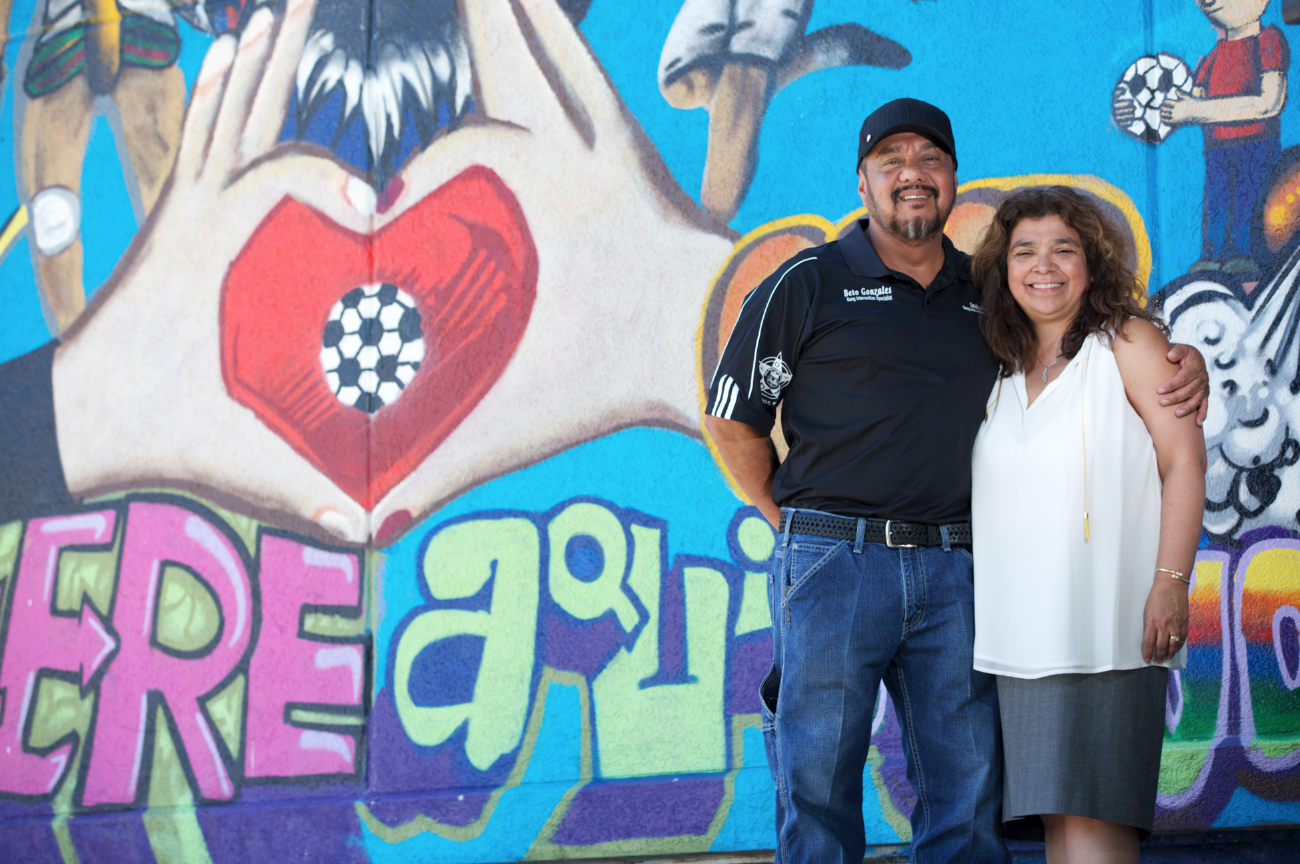
He goes by Beto. Though middle-aged now Alberto “Beto” Gonzales can relate to the hard circumstances youths face at home and in the barrio because he faced difficulties at home and on the streets when he was their age. He knows what’s behind kids skipping school or getting in trouble at school because he did the same thing to cover his pain when he was a teen. He can talk straight to gang members because he ran with gangs back in the day. He knows what addiction looks and feels like because he’s a recovering addict himself. His work for the Chicano Awareness Center, the Boys and Girls Clubs of the Midlands, and other organizations has netted him many honors, including a recent Martin Luther King Jr. Legacy Award from Creighton University. Beto is a South Omaha legend for the dedication he shows to saving one kid at a time. My profile of him for El Perico tells something about the personal journey of transformation he followed to turn his life around to become a guiding light for others.
Here is a link to a more recent story I did about Beto-https://leoadambiga.com/category/alberto-beto-gonzales/

Alberto “Beto” Gonzales
Saving one kid at a time is Beto’s life work
©by Leo Adam Biga
Appeared in El Perico
Alberto “Beto” Gonzales believes working one-on-one with youths is the best way to reach them. His work as a mentor and gang prevention-intervention specialist has earned him much recognition, most recently the Martin Luther King Jr. Legacy Award from Creighton University.
Gonzales grew up in the South Omaha barrio he serves today as a Boys and Girls Clubs of the Midlands counselor. He does outreach with truants, many of whom come from dysfunctional homes. He knows their stories well. He grew up in a troubled home himself and acted out through gangs, alcohol and drugs. He skipped school. He only turned things around through faith and caring individuals.
“I was just an angry kid,” says Gonzales, who witnessed his father verbally abuse his mother. Betro’s internalized turmoil sometimes exploded.
“At 17 I almost went to prison for 30 years for assault and battery with the intent to commit murder. Then I got hooked on some real heavy drugs.”
“My mother prayed over me all the time and I think it’s her prayers that really helped me get out of this. I just decided to give my life to the Lord. ”
When he’d finally had enough he completed his education at South High at 20.
The Chicano Awareness Center changed his life’s course. A social worker there saw potential in him he didn’t see in himself. Then he was introduced to a nun, Sister Joyce Englert, who worked as a chemical dependency counselor.
“She heard me out,” he says. “I talked to her about my drug addiction, how I couldn’t keep a relationship and all kinds of crap going on. What’s cool about that is she asked me if I would go talk to kids about the dangers of drugs and alcohol even though she knew I was an abuser. She said, ‘I think it’s important kids hear your story.’ I found myself crying right along with the kids as I shared it.
“She told me I had a passion for this and asked what I thought about becoming a counselor. Well, I’ve done a lot crazy, dangerous things in my life but the most frightening and hardest thing was to tell the truth that I couldn’t read or write that well.”
Sister Joyce didn’t let him make excuses.
“With her help I got a chemical dependency associates degree from Metropolitan Community College, which led me into working in the schools with adolescents dealing with addiction issues, and I loved it, I just loved it.”
He also got sober. He has 33 years in recovery now.

Beto reaching out to kids, ©d2center.org
Then he responded to a new challenge.
“When the gangs started surfacing I changed my career to working with gang kids,” he says. “That’s been my passion.”
He worked for the center until 2003, when he joined the Boys and Girls Clubs.
Having walked in the shoes of his clients, he commands respect. He uses his story of transformation to inspire.
“I had a faith my mother blessed me with, then I met a woman of faith in Sister Joyce who gave me my direction, and my job now is to give kids faith, to give them hope.”
He says it comes down to being there, whether attending court hearings, visiting probation officers, providing rides, helping out with money or just listening.
“It really takes a lot of consistency in staying on top of them. All that small stuff really means a lot to a kid who’s not getting it from the people that are supposed to be doing it for them, like mom and dad.
“Gangs ain’t never going to go away. The only thing we can do as a society is to find the monies to hire the people that can do the job of saving one life at a time. That’s what Jesus did. He then trained his disciples to go out and share his word, his knowledge, and they saved one life at a time. That’s all I’ve been doing, and I’ve lost some and I’ve won some.”
His job today doesn’t allow him to work the streets the way he used to with the hardcore kids.
“I’m not out there like I used to be.”
However, kids in his Noble Youth group are court-referred hard cases he gets to open up about the trauma, often abuse, they’ve endured. Talking about it is where change begins.
In a high burn-out field Gonzales is still at it, he says, because “I love what I do.” It hasn’t been easy. His first marriage ended over his job. Then tragedy struck home.
“There was a time in South Omaha when we were losing kids right and left and one of the kids killed was my cousin Rodolfo. It’s painful to see other people suffer but when it’s in your own family it’s a different story. Rodolfo was a good kid, I loved him, but he was deep in some stuff. When he got killed I lost it. That was a struggle. I told my employer, ‘I can’t do this anymore.’ I took a sabbatical, I just had to get away. I did a lot of meditation and praying and it only made me stronger.”
He’s not wavered since.
“I’ve got my faith and I’ve learned you’ve got to hand everything over to God, Don’t try to handle it yourself because you will crumble.”
Related articles
- Drugs, gangs blamed for Okla. City homicide spike (sfgate.com)
- Child grows into woman before abuser is sentenced (omaha.com)
- Alleged gang leader arrested at Garfield High School (q13fox.com)
- Finding Her Voice: Tunette Powell Comes Out of the Dark and into the Spotlight (leoadambiga.wordpress.com)
When New Horizons dawned for African-Americans seeking homes in Omaha
January 17, 2013
12 comments
The following story explores one of the first intentional interracial housing developments in Omaha and perhaps anywhere in the Midwest or the nation as a whole. The suburban New Horizons addition was created in the 1960s as a sanctuary free of the red lining practices and restrictive housing covenants that relegated blacks to specific, designated, and confining areas to live. Blacks found no barriers to build or rent or move into New Horizons, where their neighbors might be black or white. This social action or experiment largely worked, too, though decades later the neighborhood has lost the diversity it once had and is now mostly white. This story is very personal to me. You see, my late life partner, Joslen Johnson Shaw, grew up in New Horizons. She was African American, Her parents, George and Juanita Johnson, built there in 1969 and were among the first residents in the neighborhood, black or white. The Johnsons were barrier breakers in more ways than this. They didn’t let racism or discrimination stand in the way of their aspirations. Before moving to New Horizons Joslen accoompanied her folks to open houses and saw with her own eyes as realtors and homeowners shunned and ignored them. As Joslen’s mother, Juanita, put it, “It was if we were invisible.” My primary source for the story is Juanita, who still lives in New Horizons. Joslen and I bought a home of our own in New Horizons several years ago. It’s just around the corner from Juanita’s place. I’m sitting in my office in that home as I type and post this. The other main source is Joslen’s brother, Marty. I wrote the story for them and in memory of Joslen and her late father, George.
When New Horizons dawned for African-Americans seeking homes in Omaha
For The Reader (www.thereader.com)
©by Leo Adam Biga
It took the civil rights movement to bring segregation in the United States into sharp relief. The South was the epicenter of the racial equality battle but American-style apartheid as well as attempts to dismantle it were everywhere, including Nebraska.
Omaha prides itself on hospitality yet African Americans here could not always live or or work or play or attend school where they wanted through the 1960s. In response to housing and work discrimination, for example, protest marches, sit-ins and other advocacy efforts organized.
With homeowners, realtors and banks discouraging blacks from white neighborhoods, it took extraordinary measures for blacks to integrate some sections of the city. One remedy was the creation of a new subdivision, appropriately named New Horizons, located on the then-western outskirts of the city, just off 108th Street between Dodge and Blondo and just north of Old Mill. The backs of the western-most homes abut 108th Street and the easternmost residences face 105th Street. Homes also extend from Nicholas Street on the north to Burt Street on the south. The interracial developers designed the new addition as an integrated neighborhood open to all. By all accounts their vision was fulfilled.
Situated in what was then-countryside New Horizons was established in 1965 and the first houses were built soon after on the tiered land. Corn fields stretched south, west and east of this built-from-the-ground-up neighborhood only a stone’s throw away from small working farms and stables. The two major east-west thoroughfares in the area, Dodge and Blondo, were two lanes each then.
New Horizons neighborhood
This story chronicles the experiences of some past and present residents of this mixed race community, including what precipitated their moving there. They don’t necessarily view New Horizons as having been a social action or social experiment but that’s exactly what it was. It was revolutionary for the time, especially by Omaha standards, where even hometown icon and Major League Baseball Hall of Famer Bob Gibson was frustrated in his attempts to move into the neighborhood of his choice. If he couldn’t find satisfaction, then every day people like George and Juanita Johnson stood little chance.
In the mid-1960s the Johnsons were a college-educated, two-income married couple on an upwardly mobile track, but neither their names nor their positions gave them any influence to change that era’s prevailing discrimination. He was a Benson High art teacher. She was a North High math instructor and guidance counselor. They’d recently started a family and next sought buying a new, larger home near a park and good schools.
The North Omaha residents had built a house at 38th and Bedford but having outgrown it they set their sights on moving to wherever they could find their dream home. As African Americans, however, their aspirational pursuits, like those of countless other persons of color, were blocked.
It was a time when blacks were routinely subjected to unfair housing practices, some subtle, others blatant, that effectively confined them to living in a small geographic area. Regardless of means, if you were black in Omaha then you had little choice but to live, as the Johnsons did, in the area bounded by Cuming Street on the south, Ames Avenue on the north, 40th Street on the west and 16th Street on the east. The northeast inner city became the black “ghetto.” Getting out of it required a migration not alike that of blacks migrating from the Deep South.
In many ways Omaha’s de facto segregation was as pernicious and long lasting as any on the books in the South, resulting in a divided city that clearly demarcated the Near Northside as Black Omaha. Red lining real estate tactics, discriminatory banking practices, restrictive housing covenants and unfair hiring standards made it difficult if not impossible for blacks to live and work in many parts of their own city, denied and discouraged simply due to the color of their skin.
Though blacks live everywhere in the metro today, Omaha’s geographic segregation persists – with most blacks in Omaha still residing in North Omaha – in part due to the lasting imprint of the housing discrimination that once ruled the day.
Better opportunities in education, employment and housing slowly emerged in response to equal rights pleas, marches, mandates, laws and court rulings.
“Things were just beginning to open up with schools and jobs and activities in Omaha but you had to look for them. You know, you would see pictures in the paper of things happening, of activities that should have been open to everyone, but because of restrictive housing they really weren’t,” says Juanita Johnson.
She says an entire apparatus or conspiracy of bigoted hearts kept white areas off limits to blacks. Realtors and others acted as overseers in steering blacks to all black enclaves or to undesirable neighborhoods deemed ready for integration.
“We contacted some realtors and they showed us some places north. They told us we could be blockbusters and open up some new neighborhoods,” Johnson recalls. “The realtors decided which areas were going to integrate and which areas weren’t. They would watch the housing trends and determine, ‘We’ll let this block go now.” But the neighborhoods they were offering to us didn’t show much potential, they didn’t look like they were going to stay good working neighborhoods, they didn’t look like they were stable. There were several for rent signs on properties.”

Juanita Johnson today
She’s sure some realtors she and her late husband George dealt with were merely “going through the motions” to placate them. “They just showed us places that we would not have been interested in anyway – houses that were too small for what we wanted. We didn’t want a place that would have other houses six feet on either side. We wanted to find a house or build a house on a good-sized lot that had room for yard and play space for kids.”
Even though the Johnsons were eager and prepared to buy, it was as if their money was no good and their wishes didn’t matter. The more they looked for a home and were turned away the more incredulous they grew.
“We went to several open houses and at some of them it was as if we were invisible,” Johnson says. “I mean, they would greet people in front of us, they would greet people that were coming in behind us and it was just as if we weren’t there. I really can’t say there was anything (racial) said, it was more or less as if we were invisible walking through the places. We just thought they were stupid to behave in this way and we laughed at them.”
The Johnsons experienced the same frustration in their desire for a better life that the fictional Younger family encountered in Lorraine Hansberry‘s A Raisin in the Sun. Though the Youngers meet much resistance in the story, they eventually fulfill their goal of moving out of the inner city tenement they rent into a suburban home of their own. That play’s powerful dramatization, later adapted to the screen, made quite an impact on blacks facing the same issues in real life.
“I think that helped to motivate a lot of us in that it appeared to be possible and that this could happen to us as individuals,” says Johnson.
But there were societal-cultural roadblocks to achieving that dream. Being shunned, ignored and disrespected the way the Johnsons and so many of their black peers were elicited hard feelings in some, discouraged others and in the case of the Johnsons, motivated them even more.
The fact that we had been looking for a place and were just tired of running into barriers,” Johnson says, is what made the prospect of building a home in New Horizons “so attractive.” She says New Horizons represented a balancing-the-scales effort at “an integrated community of middle to upscale housing that was out far enough from the main part of the city that people wouldn’t say we were living in the ghetto – that we were in a suburban house just like anyone else.”
Moving to a racially blended suburb also promised a diversity fast disappearing in northeast Omaha, where white flight left the area predominantly African American. The suburbs also meant access to better performing schools.
“We wanted to be in a situation where we could have the best for our children, the best opportunities, and we wanted them to be exposed to the cultural advantages I knew other children were being exposed to,” she says. “We wanted our kids to have the opportunities to participate in whatever they were really interested in doing and not be kept out or let in because they were black. We knew we wanted an opportunity for the kids to have a really integrated education.”

Juanita, Joslen and George Johnson a few years before moving to New Horizons
Enter New Horizons. Its late developers were prominent Omaha veterinarian, Dr. A.B. Pittman, architect Golden Zenon and architect-civil engineer J.Z. Jizba. Pittman and Zenon were African American and Jizba was white.
For Pittman, New Horizons was an expression of a commitment to helping his own people realize their dreams and to bridging the divide between people of different races and creeds. He was president of the Omaha branches of the National Urban League and the National Council of Christians and Jews.
“My father was always concerned about getting people better housing,” says his daughter Antoinette “Toni” Pittman. “He was on the board of the Urban League Housing Foundation (now Family Housing Advisory Services), the Omaha Planning Board and the Omaha Housing Authority. Even before New Horizons he was involved in a housing development around 27th and Hamilton that the North Freeway took out. He was just concerned with people bettering themselves. He just did it, he didn’t talk about it.”
Pittman struck a personal blow for equal housing by buying a home at 97th and Dodge. In order to avoid potential obstacles or opposition he had a proxy buy it for him and then hand over the deed, explains his daughter, who grew up there. She says hers was the only black family there and fortunately they met no resistance.

Dr. A.B. Pittman
The Johnsons were friends with the Pittmans through the northeast Omaha Episcopal church they both attended, St. Philip’s.
“Probably George and A.B. and Zinnon had been talking about this and it just seemed it was available at the right time and we were in the right position to make that decision and build there. We were looking at getting settled before any more time went by,” says Johnson.
The Johnsons moved into their newly built split-level home in the spring of 1969. Their late daughter, Joslen Johnson Shaw, was 9 at the time and their son Marty 4.
She says finally getting into the house they’d so long sought brought a mix of feelings, including relief.
“We were just real anxious to get settled in what we knew was going to be our permanent home.”
Another black family there with the same surname, though no relation, felt the same sense of accomplishment.
“I remember the day we moved in there my father standing in front of the house and being so proud,” says Glenda Johnson Moore, whose parents Walter and Bernice Johnson had weathered the same frustrations George and Juanita did in seeking a new home. “Who would have ever thought my father would have moved in that neighborhood? That was unheard of. It was great. I mean, it was a big thing.”
It was enough of a newsworthy event that the Omaha World-Herald did a story.
For the most part, New Horizons lived up to its promise, with a nearly 50-50 split of blacks and whites at the start. A Hispanic family also became early residents there.
“It worked out fine,” says Juanita Johnson, who adds that the neighborhood association and occasional neighborhood picnics enjoyed nearly even black and white participation. Her best friends there were black and white. She suspects most if not all the whites who moved into New Horizons were not looking to make any kind of social statement about diversity.
“I think they were people that really didn’t care, they were just looking for housing.”
That was true of Corinne Murphy and her late husband William, who built their home in 1970 directly north of George and Juanita’s. Though the Murphys knew about the open integration policy it didn’t factor one way or the other in their decision. “We were just looking for a place where they were building houses and this happened to be one of the places they were building them,” says Corrine. “I just liked the neighborhood. It had a nice park. There weren’t too many people yet.”
She says the idea of living in a racially mixed neighborhood “didn’t bother us” and that, if anything, she admired her new black neighbors, most of whom were professionals. “They were a lot smarter and better off than I was. They all had good paying jobs and were well educated. I got along with them all.”
She says her five kids became fast friends with the black kids in the neighborhood.
“Marty Johnson and my son Rory were very good friends. There was a time when they were walking home from school and kids were picking on Marty and my Rory just got right in the middle of that argument with those kids and made sure he got home OK. Yeah, they were best friends, they really liked each other. They still do.”
Marty says neither the white kids he befriended there nor their parents ever betrayed any hint of racism.
“I was always up at their houses playing and their parents were always very friendly and welcoming to me, and they’d always come down and play at our house.”
Whatever sport was in season, he says, neighborhood kids would join in playing it, older kids, young kids, black kids, white kids.
“Looking back on it now somebody driving by having no idea what this neighborhood was about would probably be really surprised to see all these kids of different colors playing together. It was probably very unique. I look back at it and I think, ‘Oh wow,’ it was probably pretty groundbreaking.”
Lee Valley, an adjacent neighborhood built around the same time as New Horizons, stood in sharp contrast because it lacked any diversity. The Horizons kids would occasionally challenge the Valley kids to a game of football or baseball and the marked difference in their makeup was hard to ignore.
“We were this totally mixed group of kids playing these white kids,” Marty says.
The area school Marty and Joslen attended, Edison, was all white until the Johnson siblings and some of their fellow black Horizons neighbors attended there. Marty says he never ran into racism in the neighborhood but did at school.
Glenda Johnson Moore also had a hard time adjusting to otherwise all white schools but her Horizons experience wasn’t all peaches and cream.
“The people that lived across the street from us were extremely racist,” she says. “We were called names. It got better eventually but you felt it, you absolutely you felt it. It was uncomfortable for a long time.”
Overall, she’s grateful to have grown up there.
“I’m glad I had the diversity. It’s made me a stronger person, it’s made me who I am today. I can communicate to anybody. It was a good place, it was a good thing.”
Juanita Johnson says she wanted her kids to have the enrichment that comes from diverse experiences because her “progressive” parents wanted the same for her. Her father Saybert Hanger was one of the area’s first black attorneys and a federal meat inspector. Her mother Ione Hanger was an elementary school teacher in the Omaha Public Schools and later taught at Creighton University. Johnson says her parents wanted full opportunities for all kids “and I was fortunate enough that they pushed and encouraged me to break barriers.”
At Omaha Central High, circa 1945, Juanita was the only black student on the year book and school newspaper staffs. She received her master’s from Creighton University at a time when few blacks attended there. At the University of Nebraska-Lincoln’s International House she resided with students from around the world and she attended interracial camps that attracted students from the four corners.
Similarly, her husband cultivated black and white friends growing up in Marshalltown, Iowa and he integrated Wayne State (Neb.) College.
It’s not coincidental both Marty and Joslen involved themselves in activities, including her showing horses, that meant interacting mainly with whites. Joslen integrated Brownell-Talbot School. Many of their friends were white. Each ended up with a white life partner.
Marty says, “I think my well-rounded life is because my parents were always exposing me to different things. They really were pioneers in a lot of different things. This was the pattern of their life – breaking barriers. If there was a barrier they certainly eliminated it. They were groundbreaking and cool and somewhat courageous, too.”
His mother says all of it was meant to foster a time when “I didn’t want my children to have to look at the things they were doing as being barrier breakers. If they wanted to try out for something they could just go ahead and try and either be good enough to be accepted that every other child was accepted or refused because they weren’t good enough, but not because of their color.”
Juanita and George were also intentional about keeping their family’s ties to Omaha’s traditional African American community alive. For example, they continued attending their home parish, St. Philips, whose congregation was entirely black. Marty took music lessons from an instructor in northeast Omaha. Joslen was active in Jack and Jill, a social club designed to reconnect young blacks dispersed when their families moved from the Near Northside.
Marty says he appreciates “all that my parents exposed us to and always giving us opportunities. I feel very fortunate they made the choices they made. It’s pretty amazing to me how forward thinking they were.”
Juanita Johnson still lives in New Horizons and her next door neighbor is still Corinne Murphy. The neighborhood is not nearly as diverse as it once was and the homes show their age, but it’s held its own. Many old-line black residents have moved or died off and few new blacks have moved in. Johnson attributes the paucity of blacks there to the fact they have so many more options today. That was the whole point of New Horizons anyway – freedom to live where you want.
Now the metro’s replete with diverse neighborhoods just like New Horizons used to be and may be again.
Related articles
- Carver Building Rebirthed as Arts-culture Haven; Theaster Gates, Rebuild and Bemis Reimagine North Omaha (leoadambiga.wordpress.com)
- Parenting the Second Time Around Holds Challenges and Delights for Senior Kinship Caregiver Theresa Glass Union, Who Always Puts Family First (leoadambiga.wordpress.com)
- Free Radical Ernie Chambers the Subject of New Biography by Author Tekla Agbala Ali Johnson (leoadambiga.wordpress.com)
- American adoptee’s discovery of his birth parents reveals a story of interrupted romance and regal ancestry (leoadambiga.wordpress.com)
Free Radical Ernie Chambers subject of new biography by author Tekla Agbala Ali Johnson
December 5, 2012
4 comments
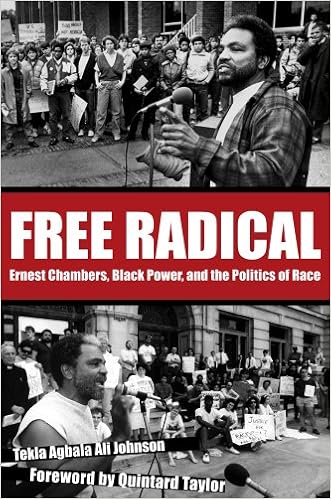
Ernie Chambers. His name variously polarizes, raises blood pressure, inspires, confounds, sparks discussion and debate, and generally elicits some kind of response . If you’re a Nebraskan, past or present, than you not only know the name but the context for why the mere mention makes it virtually impossible to take a neutral stand about this vociferous, independent, lone wolf figure who is an open book in some ways and an enigma in other ways. His name’s traveled widely outside Nebraska as well. He first gained local and national noteriety back in the 1960s for his stirring presence in the documentary A Time for Burning. He parlayed the stage that gave him and his grassroots work as activist, advocate, guardian, and spokesperson for Omaha’s African-American community to win election to the Nebraska Legislature. He served as that body’s only black representative for 38 years, finally leaving office because of term limits, but he’s just returned to his old District 11 seat after defeating incumbant Brenda Council in the Nov. 6 general election. When he was in office before he took many controversial and brave stands and he never, ever backed down from a fight, often employing his sharp wit and procedural mastery to humble opponents and win concessions. He’s back alright, armed with much the same rhetoric he’s used since the height of the black power and civil rights movements, which begs the question: What does the 75-year-old social justice warhorse have to offer his district in an era when many of his constituents need more education, relevant job skills, living wage jobs, and transportation solutions and want economic development in North Omaha that includes them, not excludes them? Is he in touch with younger generation and professional blacks who perhaps see things differently than he does and want specific, tangible progress now? This story doesn’t address those things but a future story I write just might. Instead, the following piece for an upcoming issue of The Reader (www.thereader.com) looks at a new political biography about Chambers by Tekla Agbala Ali Johnson, who offers some insights and opinions about the man she’s long admired. The book is aptly titled, Free Radical: Ermest Chambers, Black Power and the Politics of Race.

Ernie Chambers, ©photo courtesy the Nebraska Legislature
Free Radical Ernie Chambers subject of new biography by author Tekla Agbala Ali Johnson
©by Leo Adam Biga
Originally apepared in The Reader (www.thereader.com)
It’s fitting a new book taking the measure of Nebraska politico legend Ernie Chambers is out just as this old social justice warhorse has proven he still owns the people’s will.
In the Nov. 6 general election the 75-year-old Chambers demonstrated the pull he still maintains by decisively beating incumbent Brenda Council to regain his old state legislative seat. Public disclosure of Council’s misuse of campaign funds to support a gambling addiction undoubtedly hurt her. But she would likely have found Chambers a formidable opponent anyway.
Amid the struggle for racial equality in the 1960s, Chambers emerged as a black activist straight out of central casting. The longtime state senator was everything the white establishment feared or loathed: a young, brash, angry black man with an imposing physique, a rare eloquence, a brilliant mind, a devoted following and a dogged commitment. His goatee and muscle shirt effectively said, Fuck off.
When he saw a wrong he felt needed remedy he would not give in or remain silent, even in the face of surveillance, threat and arrest.
The Omaha native was forged from centuries of oppression and the black nationalist militancy of his times yet remained fiercely independent. He paid allegiance only to his grassroots, working poor base in northeast Omaha, whose District 11 residents elected him to nine terms in office. He stayed real cutting hair and holding court at Goodwin’s Spencer Street Barbershop for many years. He was forced out of office in 2009 only because of term limits, a petition effort widely seen as targeting him specifically.
At a Nov. 3 Community Day rally in North Omaha Chambers said:
“I don’t come to these kind of gatherings regularly. It’s not easy for me, even though I enjoy being around my brothers and sisters. But I’m a solitary person. Basically, I am a loner, and experience has created that persona for me because I’m in situations where bad things can happen and if I’m relying on somebody else and they don’t come through – I know what I would do but I don’t know what somebody else would do. I can’t depend on anybody else.
“So if I see an issue that needs to be addressed it’s for me to address it. I don’t go to committees, I don’t go to organizations, I don’t ask anybody for anything, and it’s not that I’m ungrateful or unappreciative. I just have to survive and my survival depends ultimately on me. So that’s why I do what I do.”
Author Tekla Agbala Ali Johnson well captures his enigmatic essence in the main title of her political biography, Free Radical, as he’s been a singularly reactive yet stable force these many decades. The subtitle, Ernest Chambers, Black Power and the Politics of Race, refers to the context of his public service role.
Chambers was not the first black leader in Nebraska. Nor was he the first to hold public office. But he was the first to command wide respect and wield real power. During a 38-year run in the legislature that made him the longest-serving state senator in Unicameral history he mastered the art of statecraft. Trained as an attorney and possessing a facile mind even his critics admired, he adeptly manipulated legislative rules and procedures. Though he represented a small, poor constituency and uttered divisive rhetoric, fellow senators needed his support if they wanted their bills advanced. He couldn’t be ignored.
The arc of his political career is a major focus of Johnson, who at one point was in charge of his personal papers.
“She had access to information that other people didn’t have access to,” he says of his biographer.
Overall, he’s pleased with the final product and its depiction of his career.
“I don’t have any objection to what she did.”
In terms of fairly and accurately capturing his work as an elected official, he says it’s right on “as far as it went,” adding, “Many articles have been written that go into more depth on some things than Tekla wrote about in her book.” He says he understands “there are things someone will emphasize that I wouldn’t and there are things I would emphasize that they wouldn’t. But that’s the way it goes. No two people see a complex issue the same way. Even people called historians are really interpreters. They can’t write everything about everything, so they select what they think is important in order to convey the message they have in mind.”
He says he had little input into the manuscript.
“There may have been something when she got through that she sent and I dealt primarily with grammar and inconsequential things. I didn’t try to change the thrust of it or tell her what to write.”
Johnson confirms the same, saying she only sought his opinion on certain matters and even then they sometimes disagreed. In order to maintain her scholarly freedom she says she only began writing the book after she left his employ and then had little contact with him during the writing process.
In the end, he’s flattered his political life has been documented.
“I appreciate the fact that somebody thought enough of the work that I’ve done to compile material between two covers of a book and make that available to whomever may choose to read it.”
He says he’s doing interviews in support of the book “mainly because of Tekla, the amount of time and effort she put into the work, and I don’t want to say or do anything that would diminish in any respect what she has done or the value that I place on it.”
Perhaps the most telling vantage point of Chambers she gained came when she worked as his legislative aide.
“I actually got to see the day to day process,” she says of the experience.

Tekla Agbala Ali Johnson
The book began as Johnson’s history thesis at the University of Nebraska-Lincoln. She served as a consultant to the Great Plains Black History Museum in Omaha and helped catalog its collection. Today, she’s an assistant professor of history at Salem College (N.C.). Her Texas Tech University Press published book is available wherever books are sold.
Johnson says when she hit upon the idea of making Chambers her thesis study a professor told her, “That’d be great, except he won’t let you. He won’t let anybody that close to him.” She found a way in, however. “I decided to go to his office. I didn’t actually ask him. I talked to his legislative aide, Cynthia Grandberry, and said, ‘Look, I want to write my dissertation on Sen. Chambers,’ and she said, ‘Sure, if you help me clean up the office.'”
This was 2001.
“He produced such enormous volumes of materials that despite an excellent filing system he literally had overrun the file cabinets many years before. I actually spent the first two years of the project processing his papers,” says Johnson.
The project was a labor of love about a figure she idolized as a girl.
“I grew up knowing about Sen. Chambers. I’m from North Omaha and he was always sort of somewhere there in the background. As a young woman I would occasionally see him speaking at an event, especially if there was something dire that had happened in the community.”
Immersing herself in his vast collection she says she acquired a new appreciation for his advocacy and for how her own coming-of-age intersected with his work.
“One of the things I first noticed in working on the collection is that almost a third, but a full fourth for sure, of his papers are about police violence and killings, police harassment, complaints from citizens in North Omaha. It took up a large section of one of the four rooms his papers are housed in. It was enormous.
“I also found I traced back to myself. I came across police incidents that happened when I was young that I remembered Sen. Chambers speaking out against. One of those was when I was 10 years old and living in Lincoln (Neb.). On our corner Sherdell Lewis was shot (and killed). We knew him. My sister and I were his papergirls. He was shot on his doorway by Lincoln police. Shortly after the shooting the black community came to my mother’s house because they needed a place nearby (to mourn and vent).”
Johnson says many questioned whether the shooting was justified.
“I had totally forgotten about that. There’s a picture in the book of Sen. Chambers leading a protest march along with the victim’s mother.”
Similarly, she says Chambers was a vocal critic of the shooting of Vivian Strong that sparked urban unrest in Omaha in 1969 and of other cases where excessive force was used.
She says any understanding of him must start with “the deep dedication of North Omahans to Sen. Chambers because even at his own expense he would not back down when he felt like the community was endangered or when he felt there was no respect for the lives and the civil rights and human rights of people in the community.” She says coming from a bi-racial home (her father’s African American and her mother’s Caucasian) she “sort of got to peek” at how blacks and whites viewed Chambers from different lenses. She also got to know how he understood that his rails against police brutality played differently to different audiences.
“He knew it was hard to believe for whites who lived in west Omaha or small towns. because those things were so far out of their experiences.”

She admires how he never let go of what he deemed important. His response to allegations of extreme police misconduct is illustrative, she says.
“In most cases when there was a police killing in the community he would request an investigation by the city. If that wasn’t done, if it was deemed a no-fault killing, if nobody were to be held accountable, then he went to other authorities. There are several (incidents) documented in the book where he filed for federal investigations into killings with the Department of Justice.”
She says one of his lasting achievements was sponsoring and winning passage of legislation requiring a grand jury be convened and an investigation be done anytime someone dies in police custody or in jail.
“I remember him having said, “We’re tired of our people being killed.’ So this is definitely an important part of the book to me. What he says happened in North Omaha I know it happened. It was real.”
Bad things continue happening. He grieves for the gun violence plaguing his community today, much of it black on black. In too many cases innocent folks are caught in the crossfire.
“I can’t tell you all what it does to me when I see something horrible happen to a young person, to anybody, but the helpless ones, the trusting ones, the ones who are trying for something better from us…they need help and we’re not there to offer it,” he said at the Nov. 3 rally.
In a public setting like the Community Day rally, the preacher’s son comes out in Chambers. the presumed agnostic, whose elocution has the melodic flair of the late jazz musician-radio host-lecturer Preston Love Sr. He holds an audience through his impassioned delivery and sheer magnetic presence. He sprinkles in metaphors and allegories from the Bible. It’s in settings like these the affinity between Chambers and the people becomes clear.
“He’s really in step with them. While Sen. Chambers didn’t form a group or join a group his ongoing dialogue with the community is the reason he maintained their trust and respect and why he actually was a liberating figure,” Johnson says. “To do that he insisted on passage of legislation that legislators could get collect calls, so he was able to get calls from all of his constituency. He also kept his job at the barbershop for years, in the summers and on the weekend, so people would have a place to come and talk with him personally.”

Ernie cutting heads and broadening minds in A Time for Burnng
Chambers himself says that even when he lost his legislative seat he was still the person District 11 residents turned to for help, not black elected officials. That doesn’t surprise Johnson, who says he long ago earned people’s trust.
“He wasn’t the first person to take the role of leader in the community. Charlie Washington was a point person before him community members would go to.
But Sen. Chambers, because of his unusual ability intellectually, rhetorically, in terms of statecraft and the law and just his down to earth nature, earned an enormous following.”
Another of his greatest achievements, say Johnson and others, was getting district elections for the Omaha City Council, the Omaha School Board and the Douglas County Board of Commissioners. It’s resulted in many black elected officials for North Omaha. His open disdain for many of those representatives, whom he considers stooges for the white power structure, has distanced him from portions of the black elite class. Chambers being Chambers, he doesn’t much care.
“I think what has happened is they have been absorbed by the Democratic party and he chose to remain independent and I think that is probably the biggest divide,” says Johnson. “He was and is utterly completely free.”
Johnson believes he arrived at a point where he realized that as the lone black representative in the legislature representing a poor black constituency, the most he could do was to be their voice.
“All the legislators have to list their occupation and for a number of years he listed barber, but I think when he changed his written vocation to ‘Defender of the Downtrodden,’ it actually marked a change and a decision on his part that sort of is fatalistic. He decided that because of the politics and power lobbying that go on within the formal political parties and because of his own independence and insistence on speaking for the most disenfranchised, the poorest, and insisting government should haven in place support for their needs, he got to the point when he thought he would not be able to change the way that government in Neb. functions with respect to low income people.
“I think it was also the point when he was refused chairmanship again and again of the judiciary committee.”
In terms of legacy, she says, “he was at once respected but feared and unpopular among some of the senators. He would stop their bills if he didn’t get some of what he wanted and what he wanted was legislation or concessions that protected his people, that didn’t allow, for example, the Omaha Housing Authority to go into closed session and make decisions without public input. He did all kinds of things like that. He fought tooth and nail legislation to reduce allocations to people on aid to families with dependent children. He really fought those battles.”
“He’d get so frustrated, saying, ‘Y’all don’t know what it takes to make it on $320.’ Yes, it was rhetoric but it was heartfelt. He’s seen people struggling and he felt it was within the power of the state legislature to provide some relief. He felt at times they didn’t do it because of petty politics, because of western Neb. versus eastern Neb., because of racism, because of just indifference, and that made him angry.”

Ernie holding court at the barbershop today, ©danielj-v.tumblr.com
She says even though he often stood alone, he knew how to play politics.
“He never compromised his principles but he is a politician. He would come in on the weekends during the summer when session was out – this is what I gained from being able to actually observe – because he wanted to read up on all the other bills. He read up on what the interests of the other senators were. He knew their backgrounds, he knew everything about them. It’s not just the rules he employed, he played politics in terms of, ‘Look, if you want something from me, if you don’t want me to stop your bill or to filibuster, then you’re going to have to provide some concessions to things my constituents need.'”
Johnson says, “I don’t think he could have been more effective by doing it any other way. They dubbed him Dean of the Legislature because he was maximum effective for that base. I think the only way he could have been more effective is if those other senators had read as much about him and learned as much about the community he served and actually taken an interest, and I’m not saying a few didn’t, in how do we raise the standard for everybody in the state. If they had taken that position and cooperated with him more then he could have been more effective.”
Chambers operated much like his black peers in other states.
“African-American legislators across the country tended to be fairly effective just like Sen. Chambers in stopping legislation and not as effective at passing legislation. The ones who tend to be the most effective in working for the community tended to be on the out with the majority because they were battling all the time and they were always having to stand firm.”
Johnson wishes Chambers prepared the way for a successor.
“I do have a critique of him and it’s something I’ve openly talked to him about. He didn’t groom anybody (to replace him). It’s something I wish would have happened.”
As far as legacy, she feels his efforts in making Neb. the first state to pass any resolution for divestment of state funds from South Africa in protest of its apartheid practices “may be the thing he’s remembered for.”
Though serving 38 years in the legislature involved “self-sacrifice” on his part, she says it clearly hurt him when he could not run in 2008.
“I think he was not just disappointed because he had to leave for four years but the subtext for his career, besides trying to end police violence and confronting racism, was to gain political power for his constituency relative to other legislative districts in the state. His having to leave office made him feel that what he’d worked for had gone backwards because he felt the will of the people was being overridden by term limits. His constituency couldn’t elect him if they wanted to.”
She notes he ran unopposed several times and that he kept running because “I don’t think he saw anybody else as talented as he was who could really do the job as well as he did. That and the fact people let him know they wanted him to run again.” Now that he’s returning to the legislature she’s fascinated by how he and his new colleagues will work together.
“The body has changed because of term limits. The expertise that was there is no longer there. It hasn’t necessarily served Neb. well to have a constantly revolving, often times very young body at the helm. Who knows, maybe they’ll be more open to working with him. Maybe they’ll be less entrenched.”
An obvious advantage he’ll have, she says, is his vast experience.
Remarking on what people can expect from him, Chambers says, “For better or worse people have to see what it is that I am. They have to know what they’re getting if they come this way, and if they don’t like what it is I’m not the least offended. I probably wouldn’t like somebody like me. I would respect somebody like me. But likability is not an anything I cultivate because it doesn’t mean anything, it doesn’t achieve anything.”
He simply promises to be the same person he’s always been, which is to say someone “who never yields, never wavers, never accepts handouts from anybody, and whose only loyalty to a group is to this community.”
Related articles
- Ernie Chambers, Brenda Council sharpen their barbs (omaha.com)
- Chambers returns to Legislature (omaha.com)
- Heineman welcomes Ernie back to the Chambers (AUDIO) (nebraskaradionetwork.com)
- Carver Building Rebirthed as Arts-culture Haven; Theaster Gates, Rebuild and Bemis Reimagine North Omaha (leoadambiga.wordpress.com)
- 5 things to watch as the Nebraska legislative session begins (omaha.com)
Categories: African-American Culture, Authors/Literature, Books, Civil Rights, Ernie Chambers, North Omaha, Politics, Race, Social Justice, Tekla Agbala Ali Johnson, Writing
Authors, Black Power and the Politics of Race, Books, Ernie Chambers, Free Radical: Ernest Chambers, Political Biography, Tekla Agbala Ali Johnson
Project Improve aims to make best of bad situation with illegal immigrant detainees
July 24, 2012
2 comments
No matter how you feel about the issue of illegal immigration in the U.S. you have to sympathize with parents whose only crime is living here without proper documentation who have the misfortune of being arrested and then detained in jail, all while awaiting deportation, and in the meantime finding themselves separated from family, including children. We’re not talking about identity theives. We’re talking about people holding down jobs and raising families and abiding by laws except for that murky no-man’s land called a border they breeched. For years the nation looked the other way at what was essentially an open border but now it’s intent on closing that border and throwing back over it anyone who’s managed to cross it illegally, even those who’ve made productive lives for themselves and their families in America. It’s cruel and unusual punishment that only adds to social disruption and incurs extra costs without really solving anything. It’s purely a power play by the haves against the have-nots. This is a story about a small program through the Office of Latino and Latin American Studies at the University of Nebraska at Omaha that offers Spanish-speaking detainees some educational support services during their incarceration and that tries to provide a platform for parents to connect with their children.
Project Improve aims to make best of bad situation with illegal immigrant detainees
©by Leo Adam Biga
Originally appeared in El Perico
With immigration enforcement a national priority, jails are filled with individuals whose only crime is being in the U.S. illegally.
Out of sight, out of mind behind bars these civil offenders risk being lumped in with the habitually criminalized. Advocates say it’s all too easy to forget many detainees have been law-abiding, gainfully-employed residents. Many are parents. Once arrested and jailed they face separation from loved ones and home.
Being severed from family while the legal process drags on poses challenges the criminal justice and penal system are not necessarily well prepared to address without expert intervention.
With no programs serving its growing population of Spanish-speaking detainees, Douglas County Department of Correction officials asked the Office of Latino and Latin American Studies at the University of Nebraska at Omaha for help in early 2009. OLLAS met with staff and detainees as a first step in creating a detainee-centered program.
Claudia Garcia, a UNO assistant professor of foreign languages, says she and university colleagues attended jail orientation and conducted two focus-groups with detainees in spring 2009 in order to assess concerns and needs.
“The situation of women, many terribly depressed because of being separated from their young children, was especially pressing for some jail authorities, who were sympathetic to these detainees’ situation,” says Garcia.
Beginning in the summer of 2009 OLLAS faculty launched Project Improve as a community service initiative at the Douglas County Correctional Center, 710 South 17th Street. The effort is focused on helping detainees discuss their predicament, connect with family and become empowered through education. The intent is to provide clients a non-punitive advocacy and support outlet.
Faculty engage detainees in writing, reading and discussion activities designed to promote introspection and self-expression. Garcia says on average 16 men and 11 women participate per session.
“Personally, what strikes me the most about the Latino detainees, especially the women, is their strength and good attitude, and also their ability to give each other support,” Garcia says. “I think we provide a space that allows them to reflect, process and articulate their personal journeys.”
OLLAS director Lourdes Gouevia says, “The inmates express their stories through various media and record messages and stories for their children.” UNO assistant professor of education Evangelina “Gigi” Brignoni says participants appreciate the opportunity to respectfully own their own experience: “This is a time for them to have an avenue to be themselves. They’ve told us we treat them with dignity, we treat them like human beings, we don’t look at them like they’re incarcerated.”
The experience has made an impression on the academics.
“It’s been a very intense and enriching learning process,” says Garcia, adding that it’s “one thing is to have an intellectual knowledge” of these issues “but it’s very different to talk, interact and become emotionally affected by the individuals going through these hard times. For me, the big eye-opener is the definition of criminal. Many detainees we work with have violated immigration law, but they are certainly not dangerous criminals. Most are just mothers and fathers who have tried their best to give their families a better life, and have been working without proper documentation.
“Most who come to our sessions are really engaged in a process of self-growth, using this time in jail to re-visit their own lives. They appreciate the opportunity to learn and be better people when they get out. It’s really a very moving experience.”
Brignoni says “it saddens us” that most of the detainees are presumably awaiting deportation. “We get a new group all the time because they don’t stay there.”
After a prolonged break, the project is presuming monthly sessions in December,
Garcia is impressed by DCDC’s embrace of Project Improve.
“It’s been a very welcoming institution. DCDC understands the importance of educational and support programs for their detainee population, and are very proud to have a diversity of volunteers go there and share time and knowledge with the detainees. The officers in charge of educational programs are very helpful and very clear.”
Related articles
- Hundreds Attend OLLAS Conference Cumbre to Give and Get Diverse Perspectives on Migration Issues (leoadambiga.wordpress.com)
- UNO/OLLAS Resident Expert on Cuban and Latino Matters Jonathan Benjamin-Alvarado (leoadambiga.wordpress.com)
- New Sentencing Project report highlights for-profit detention in the federal system (sentencing.typepad.com)
- A Spiteful New Policy at Guantánamo Bay (nytimes.com)
- ACLU Sues ICE for Shackling Immigrants in Court (newamericamedia.org)
- Federal Government Increases Use of Private Detention Centers, Group Finds (acslaw.org)
Categories: Crime, Education, Immigration, Latino/Hispanic, OLLAS (Office of Latino and Latin American Studies), Social Justice, UNO (University of Nebraska at Omaha), Writing
Claudia Garcia, Douglas County Correctional Center, Douglas County Department of Corrections, Lourdes Gouveia, OLLAS (Office of Latino and Latin American Studies, OLLAS Project Improve, UNO (University of Nebraska at Omaha)
Justice for Our Neighbors: Treating the immigrant as neighbor
July 22, 2012
Leave a comment
As long as immigrants are viewed as The Other and thus seen as apart from rather than as a part of there will be a need for programs like Justice for Our Neighbors, a faith-based response to the extra challenges immigrants face in a nation that’s not always immigrant-friendly despite being built by immigrants. This is a story about some of the efforts of the Justice for Our Neighbors-Nebraska office led by Emiliano Lerda.

©tulipanagroup.com
Justice for Our Neighbors: Treating the immigrant as neighbor
©by Leo Adam Biga
Originally published iin El Perico
Welcoming the stranger in our midst is the mandate of Justice for Our Neighbors-Nebraska, a small nonprofit that holds monthly clinics for low income immigrants in need of legal counsel. The organization’s largely new staff held a March 25 open house.
The clinics, offered in both Omaha and Columbus Neb., provide a friendly, safe haven for individuals, couples and families stressed by uncertain legal status. For some, it may be their only recourse to try and avoid deportation. Potential complications are many. Cases can drag on for years.
Situations in which there’s abuse, illness, or poverty present, for example, make the need for action more urgent.
JFON staff offer free legal services, education and advocacy to help guide clients through the complex immigration maze. Its in-house attorney and legal assistants provide consultation. Referrals are made to community service providers as needed to address health care or employment or economic issues, for example.
Volunteers facilitate the clinics and extend the welcome mat by variously conducting the intake process, acting as interpreters, supervising children and serving food.
The agency’s part of the national Justice for Our Neighbors network the United Methodist Church on Relief Committee launched in 1999 in response to ever more complicated and stringent immigration laws. JFON clinics operate cooperatively with local churches. The Omaha clinic’s held at Grace United Methodist Church, 2418 E St., next door to the JFON-Nebraska office, 2414 E St.
The Nebraska chapter’s recently undergone a major turnover. Emiliano Lerda came on as JFON-Nebraska executive director in January. Charles “Shane” Ellison joined as lead attorney in February. The other two full-time staffers are also relatively new — office manager/legal assistant Darling Handlos and paralegal Shaun Downey.
Originally from Argentina, Lerda, 30, knows the immigrant experience first-hand. Now a U.S, citizen, he was drawn to America’s Midwest because its agricultural environment reminded him of his native Cordoba province. At the University of Northern Iowa he became the first international student elected student body president. After obtaining his law degree from Drake Law School he worked as government relations manager for the Iowa Corn Growers Association.
“When I got here what really grabbed me is the fact this community here has very similar values to the community I grew up in,” he says. “I love working with farmers and I hope at some point in the future I will have the chance again to work with farmers.”
He says JFON-Nebraska allows him to remain in the Midwest while serving the community of newcomers he feels a deep connection to.
“I’m an immigrant myself. I went through the process. I know how difficult it is. I received a lot in life through people that helped me without any self-interest. For years now I have been passionate about giving back to the community. I could not ignore the needs of people that are here in similar shoes that I wore, that are new to this community, that are far away from their family and friends.
“God gave me the talents and skills and the background, and so I thought it was a great fit for me to continue to make a difference by helping people that want to be a part of this community, that want to contribute to this community but cannot because their illegal status is stopping them.”

Emiliano Lerda
At its core the JFON-Nebraska mission is to help undocumented immigrants comply with the law and become legal residents, says Lerda.
“Some people may be living in constant fear because their status is not legal,” he says.
Many are separated from family members.
Not everyone has a case though, Lerda stresses.
“Immigration provides very few doors for people to come through, and if you don’t fit within those doors, I don’t care how hard a worker you are or how much you want to do the right thing, you’re just not going to be able to.”
Limited staffing restricts the number of clients served per clinic to 10. Clients are seen on an appointment-only basis.
Lerda’s frustrated that the demand for immigration legal services far outstrips JFON resources. However, JFON does refer to two sister agencies — Catholic Charities and Lutheran Family Services — that provide similar services at a nominal fee.
He says his agency is currently cleaning out a large backlog of old cases to better focus on new cases. JFON annually handles 300 cases. By year’s end he hopes to pass the bar or receive accreditation as an immigration law attorney.
The polarizing issue of immigration, he says, is best addressed by education, including JFON-Nebraska workshops for service providers and others in the community. To him, educating people about the benefits of being legal is both practical and neighborly.
“If we don’t help people that can be helped to be here legally, so they can go to school and they can make a contribution economically or civically, then I think I’m failing to do my part. That’s why I feel like God gave me this opportunity and I have to do it.”
For a clinic appointment, call 402-898-1349 the first day of the month.
Related articles
- Hundreds Attend OLLAS Conference Cumbre to Give and Get Diverse Perspectives on Migration Issues (leoadambiga.wordpress.com)
- Turning Kids Away from Gangs and Toward Teams in South Omaha (leoadambiga.wordpress.com)
- Fast Times at Omaha’s Liberty Elementary: The Evolution of a School (leoadambiga.wordpress.com)
- Methodist conference puts focus on immigration (reporternews.com)
- Jose Antonio Vargas: What Does It Mean To Be An American? (huffingtonpost.com)
- Omaha Tri-Faith Pioneers Seeing the Fruits of Their Interfaith Collaborative Take Shape (leoadambiga.wordpress.com)
Categories: Immigration, Justice for Our Neighbors, Latino/Hispanic, Law, Omaha Grace United Methodist Church, Social Justice, South Omaha, Writing
Emiliano Lerda, Immigration, Justice for Our Neighbors, Justice for Our Neighbors-Nebraska, Omaha Grace United Methodist Church, United Methodist Church
El Puente: Attempting to bridge divide between grassroots community and the system
July 22, 2012
5 comments
When people refer to “the grassroots” in communities they are generally describing average men women busy living their lives, working jobs, raising families, and thus mostly disconnected from the official city apparatus, such as law enforcement, in place to protect and serve them. This is especially true of inner city neighborhoods with a high proportion of residents for whom English is a second language. There’s often a built-in distrust of The System. One attempt to bridge he divide in South Omaha’s barrios is El Puente, a joint effort by a local minister, Rev. Alberto Silva, and a local journalist, Ben Salazar, with deep ties to the Latino community there. This is their story.

Grace United Methodist Church, ©photo by The Bouncing Czech
El Puente: Attempting to bridge dvide between grassroots community and the system
©by Leo Adam Biga
Originally published in El Perico
Experience has taught two longtime South Omaha community activists that a gulf exists between some residents and those assigned to protect and serve them.
Nuestro Mundo publisher Ben Salazar and Grace United Methodist Church pastor Alberto Silva recognize the need for a confidential, community-based advisory service that operates independently of police or government.
“It doesn’t take a genius to figure out there is this fear on the part of many immigrants and Spanish speakers to come forward and speak to the police when an issue arises, so we know there’s a void there that we hope to bridge,” said Salazar.
That reality led Salazar and Rev. Silva to form El Puente or The Bridge as a conduit that links community members with professionals. A March 29 press conference at Grace announced the nonprofit, a companion project to the church’s Latino empowerment outreach program, La Casa Del Pueblo. Both are based at the church, 2418 E Street.
The men say many things explain why individuals remain silent rather than contact officials: a person’s illegal or undocumented status; fear/distrust of authority; language barriers; and unfamiliarity with the social service, law enforcement, justice systems.
Salazar and Silva say they and other volunteers staffing El Puente can directly assist inquirers or refer them to experts.
Already, Silva said El Puente’s fielded complaints of racial profiling, discrimination and domestic violence. Tips about criminal activity are welcome. Whenever possible, a person’s identity is kept private. As necessary, information is passed onto authorities or agencies. In many cases El Puente connects people to social and/or legal services.

Rev. Alberto Silva
Journalists and ministers don’t often work together, but this newsman and preacher saw they could do more together than apart.
“Since we both worked almost exclusively with the Latino community in different ways we knew that if we merged our experiences together in this effort it would be beneficial to the community because we know the void exists,” said Salazar.
Both want the community and police to view each other as allies, not adversaries.
“The whole thing for me is I want to see collaboration between the police and the Latino community,” said Silva. “The domestic violence issue is very prevalent right now, but there’s such a fear.”
As illustration, he said a young Latina at the press conference testified she did not report her former partner’s domestic violence against her because he was a U.S. citizen and she was not. Rather than jeopardize her residency status, her abuse went unspoken. Silva said the woman went on to say she and others in such predicaments would welcome a resource like El Puente.
Silva has a sense there’s a big problem out there. “I have been dealing with a lot of domestic violence cases. People keep calling with these types of issues, especially immigrant women,” he said. Ideally, he said, El Puente can link men or women or families to counseling or shelters or other assistance they need.
The need for a discreet sounding board may be greater than ever because the anti-immigrant climate imposes a chilling effect on people volunteering or reporting things, say Salazar and Silva. They feel the recent “green card” incident targeting South High athletes and fans was a symptom of racist fervor that “gives license” to prejudice.
“My opinion is that discrimination has been holding on fast like Jim Crow for years, maybe just not as blatantly as now,” said Salazar.
“It just went underground for a little bit,” said Silva. “It wasn’t socially acceptable to display it or talk about it like it is now again.”
Silva said soon after El Puente’s launch, several people reported loved ones being detained after traffic stops. Those kinds of incidents, he and Salazar say, diminish trust and discourage some Latinos from expressing their concerns or asserting their rights.
“How are they going to have that trust to come forward when they hear that people are getting stopped on the Interstate and being taken directly to the ICE (Immigration and Customs Enforcement) office and held for deportation?” Silva asked. “People are disgusted with the graffiti problem. They would love to come forward but how are they going to go to the police when you have this immigration enforcement mentality permeating the thought of the immigrant community?”
The absence of an Omaha police auditor office is a barrier to people reporting possible law enforcement misconduct, say El Puente leaders.
Southeast precinct captain Kathy Gonzalez acknowledges that “sometimes people don’t feel comfortable coming directly to the police department.” She endorses El Puente, terming its bridge or mediator role “a huge asset” and “a working partnership between the police and the community. She added, “Sometimes people don’t know where to turn…so it’s just one more step that can assist us with community outreach and it’s one more place they can go to get connected to resources.”
Retired Omaha Police Department officer Virgil Patlan sees El Puente, which he volunteers with, as “an extension” of the community policing efforts of the Nebraska Latino Peace Officers Association he headed up. “We can work with people in ways the police can’t,” he said. “It’s just better to have someone not in uniform that the community may feel more comfortable with. He frees up the police also.”
Patlan, Silva and Salazar say they have ample street credibility but “building trust” is an ongoing process. Silva said it’s critical people know what they say will be held in strictest confidence. Patlan said he and his El Puente compadres each bring something unique to the task: “We’re not from the same mold and yet we all complement each other in certain ways. We just love the community, there’s no doubt about that.” Each boasts extensive community connections.
Despite not being immigrants themselves, Salazar said they don’t feel “completely removed” “because our parents and grandparents were a part of that experience. And it’s not purely an immigrant experience per se we’re responding to. It is a Latino experience of living in this country. Discrimination is not limited to legal status. Often times even Latinos who are second-third generation born here are treated as outsiders, as immigrants, as not fully a part of the Anglo society.”
El Puente contact numbers are: (Silva) 650-0848, (Salazar) 731-6210 and (La Casa) 614-2820.
Related articles
- Turning Kids Away from Gangs and Toward Teams in South Omaha (leoadambiga.wordpress.com)
- Trailblazing Grassroots Advocate for Latino Journalists CCNMA To Be Inducted Into the Hall of Fame (nahj.org)
- School sprouts from rundown nightclub (jsonline.com)
- Push to Transform Brooklyn Armories to Health Centers (theepochtimes.com)
- Latino Leaders Gather in Chicago Before NATO (chicagotalks.org)
Peter Buffett completes circle of life furthering Kent Bellows legacy
July 21, 2012
4 comments
The Buffetts are to Omaha what the Vanderbilts and the Rockefellers and the Fords were to their home cities only the Buffetts don’t build brick and mortar edifices as expressions of their wealth they way those other mega-rich families did. No, the Buffetts are creatives, not industrialists, and therefore the contributions they make are in ledger books and programs and services and, in the case of Peter Buffett, in compositions. This is a story I did a few years ago for Metro Magazine about Peter and his passions for music, art, youth, and social justice. It also goes into the encouragement he received from his late mentor, the artist Kent Bellows of Omaha and his support for the Kent Bellows Studio and Center for Visual Arts in Omaha.
-
 Peter Buffett
Peter Buffett completes circle of life furthering Kent Bellows legacy
©by Leo Adam Biga
Originally published in Metro Magazine
The sudden death in 2005 of American Realism master Kent Bellows reverberated throughout the art world. Among those affected by his passing was musician Peter Buffett, an Omaha native and youngest son of billionaire investor Warren Buffett.
Decades earlier Peter was befriended by Bellows, eight years his senior, when his parents became the artist’s patrons. Bellows, who had an affinity for young people, mentored Peter. Over time, the two remained close, a relationship that lasted until the artist’s death at age 56 from natural causes at his mid-town studio.
In the back of that studio, whose loft contained Bellows’ living quarters, the artist held court with a coterie of friends, creatives all. Buffett was a frequent visitor.
“I just really found his intellectual curiosity, coupled with his creativity, infectious,” Buffett said by phone from his New York City home. “He was just a very warm, open, likable person. He also played piano. I loved to hear him play. He had a very unique style.”
The widely collected and exhibited Bellows lived and worked in a century old structure overbrimming with the toils of his discipline. The building’s now home to the Kent Bellows Studio and Center for Visual Arts, 3303 Leavenworth St., where his tools, ephemera and backdrops are preserved the way he left them. The result is a tableaux-like, three-dimensional still life of the creative process.
The center, whose mission is to “ignite the create spark” in individuals and encourage their “potential through self-expression in the visual arts,” conducts a mentoring program pairing professional artists with area high school students.
Fulfilling potential is a theme of Buffett’s new book, Life is What You Make It (Harmony Books), a part memoir, part inspirational primer.

Kent Bellows Studio and Center for Visual Arts
On April 30 he presented Life is What You Make It, A Concert and Conversation benefit for the nonprofit center. Performing before a packed house at Joslyn Art Museum‘s Witherspoon Concert Hall, he sang and spoke about finding one’s bliss.
“I think self-reflection and responsibility is sometimes the missing piece for people. They’re not really willing to take a hard look at their own actions,” he said. “It’s much easier to blame something or someone else.”
He believes “a lot of people short change themselves. Our own minds can wreak havoc on our dreams for sure. It is too bad we get trapped by our own thinking that we’re not good enough.” He said he held himself back musically for years because of self-doubt. In his book he discusses some of his failures or missed opportunities. Recognizing those moments can help us seize the next day, he says.
He credits encouragement from his parents and from mentor figures like Bellows for preparing him to fulfill his own potential.
Event proceeds also supported a Bellows exhibition opening September 25 at Joslyn, the first major retrospective of the artist’s work since his death. A young Bellows studied masterworks in Joslyn’s galleries and some of his own early work showed there.
The Bellows center and exhibition are close to Buffett’s heart because they perpetuate the spirt of a man whose loss is still fresh for him and they complete the circle of life.
-
 Kent Bellows
“Kent’s somebody I think about very often,” said Buffett. “When you know anybody well there’s certain things about them you remember. He had a great laugh, he had a great quality to his voice. So, viscerally you can feel and hear his presence. He’s definitely still around.”
Buffett’s built a life embodying the Bellows mantra of following one’s passion. Buffett’s parents modeled a similar philosophy: his father Warren as entrepreneur and philanthropist; his late mother Susie as community activist and singer. Peter suspects Susie saw Bellows as a kindred spirit who would nurture and guide him .
Bellows center executive director Anne Meysenburg said of Peter, “He’s a product of Kent’s mentoring.” Buffett agrees and often references the influence of his departed friend. As Kent did, Buffett’s carved out a creative niche for himself that expresses his deepest feelings. As a Kent Bellows Foundation founder and board member, he’s keenly aware of carrying on the generosity Bellows was famous for.
“As Kent was to me, the foundation is to the kids it’s mentoring and supporting. That was the brilliance I think of Kent’s sisters and Anne (Meysenburg) really saying, What was Kent’s role in the lives of the people he touched and how can that be extended to what the foundation does? They’ve really hit it, too. It really is that supporting, mentoring role.”
“The center gets to give that back to young people in perpetuity,” said Meysenburg.
In turn, mentors and students engage the communit in positive social action through public art projects. Meysenburg said Buffett is “a guiding force. He’s got a very holistic view. He comes from a funder’s perspective but he also understands the plight of the nonprofit. He provides a lot of insight. He has incredible passion for the organization. Peter is very focused on the two sides of our mission, which are honoring Kent’s legacy and creative development in the community.”
Giving back is a dimension of Buffett’s humanist ideals. He and his wife Jennifer’s NoVo Foundation works to empower girls in developing nations. He said this focus is predicated on the belief societies need to move “from domination and exploitation to collaboration and partnership” by valuing the disenfranchised.
“We talk about that in the context of girls and women because they’re certainly wildly misrepresented in the world compared to their numbers,” he said.
He believes supporting girls and women has a ripple effect through families and communities.
“The bottom-line for me is that only a girl will be the mother of every child and because of that if you can support, educate, provide health care and a livelihood to a girl she’s going to be a different kind of mother, and therefore everyone will be better off. It’s not unlike my father’s investment philosophy — you find something undervalued in the marketplace, you recognize its true value, you invest in it, support it, and wait until the market catches up and your investment pays off. And to me that’s a girl, she’s undervalued. That’s where we want to put our money.”
He said there’s no substitute for visiting a country to understand its challenges. “It’s invaluable to do. My line is, ‘You won’t know if you don’t go.'” Jennifer was recently in Uganda for the foundation. The couple log many miles together. The Uganda visit was the first major foundation trip he’s not been on.
Not long ago Buffett was best known as a composer-producer of New Age-style projects, but he’s fast-gained notoriety for personal recordings, some political, featuring his singing voice. The first social justice awakening in his music came with his Native American work (Spirit – The Seventh Fire) and a collaboration with Chief Hawk Pope. He’s lately collaborated with R&B artist/rapper Akon and Afropop artist Angelique Kidjo. He and Akon performed in the United Nations General Assembly in remembrance of slave trade victims.
He said his ever evolving career “is a testament to following what you love” as opposed to a rigid goal. “I’m much more into being than doing because I’m finding the more I follow this thing that’s inside of me I’m able to put these interior feelings in the music in a way that people respond to.” He never imagined himself a singer but he believes events opened him to the possibility.
“Kent’s death was a big piece of that, as was my mom dying the year before. Jennifer and I went through a very difficult time, so songs started coming out, and I really just wrote them for myself and my relationship. I was surprised by the fact they sounded OK. I still don’t think of myself as a singer. I’m still getting used to it frankly. But when you’re sitting in the General Assembly of the U.N. and Akon is singing with you and Nile Rodgers is backing you up on guitar, you think, How the hell did this happen? How cool is this?”
Buffett is the only male to perform on stage for V-Day, a movement to stamp out violence against females. By using music to speak out against social ills, such as his songs “Can We Love?” and “Bought and Sold,” he’s fulfilling a long-held desire. He said, “I always wanted the music to do something — to serve a higher purpose.”
In an era of diminishing resources and widening inequities, he’s a proponent of people in developed countries making do with less.
“We’re stuck in this world that tells us we need things to feel whole,” he said. “I think you can never fill whatever inside you that feels empty with stuff. Some brilliant ad man a long time ago figured out that you can make people think that they can. Now we’ve built an economy on it, and when it collapses what will we have? We won’t have the sense of community and connections we’ll need to really survive.”

Peter Buffett with children in Liberia
He appreciates the irony of someone from privilege raising the question, “How much is enough?,” but points out that for all the Buffett’s riches they live frugally and do give back. His father’s famously earmarked his fortune to charitable causes, including foundations run by Peter and his siblings that address social problems.
Peter advocates social networking as a means to promote social justice and supports efforts like the social action web site, IsThereSomethingICanDo.com.
Meysenburg said the Bellows center’s community engagement piece aligns closely with Buffett’s interests. Students and mentors will participate in a graffiti abatement program this summer with juvenile offenders. Buffet’s involvement in the Bellows Foundation is a big reason why Meysenburg said the start-up’s grown quickly and formed multiple partnerships. His April concert was the second fund-raising gig he’s performed on its behalf.
Peter visits the Bellows center whenever in town. He enjoys seeing the student-mentor dynamic at work. He cannot help but think back to when he and Bellows filled those roles. It’s an interaction he finds almost sacred beauty in.
He’s seen the progress made in transforming the old Bellows work space into a contemporary gallery, offices, education wing and artistic playground. Work continues as funds allow. Renovations have necessitated the center’s classes meeting in the Bemis Underground in the Old Market. The Bemis Center for Contemporary Arts is a major partner of the Bellows program.
Buffett said he and fellow Bellows Foundation members are conscious of living up to the legacy of the man whose life exuded the nurturing, creative spark. He’s satisfied they’re on the right track.
“It makes us all feel good we’re doing something we know he would love. None of us forget that.”
Related articles
- Life Lessons from “Life Is What You Make It” (heybudblogger.wordpress.com)
- Jane Fonda Comes Home (leoadambiga.wordpress.com)
Community trumps gang in Fr. Greg Boyle’s Homeboy model
July 21, 2012
3 comments
Gang prevention-intervention efforts run the gamut. One that’s drawn lots of attention is Homeboy Industries, an East L.A. program founded and directed by Rev. Greg Boyle, a Jesuit priest who has serious cred on the mean streets there for helping gangbangers find pathways to employability. I wrote this article in advance of a talk Boyle gave in Omaha a couple years ago. His experiences working with gang members and getting many to give up that life are told in his book, Tattoos on the Heart: The Power of Boundless Compassion.
-
 Fr. Greg Boyle with some of the Homeboys
Community trumps gang in Fr. Greg Boyle’s Homeboy model
©by Leo Adam Biga
Originally appeared in El Perico
The gang intervention efforts of a Jesuit priest in East Los Angeles have grown into Homeboy Industries, which provides mostly Latino participants work and life skills training, counseling and, most importantly, opportunity for hope.
The much profiled program has many communities, including Omaha, looking to its founder, Rev. Greg Boyle, for guidance in dealing with their own gang issues. Boyle, an acknowledged expert in the field, will be in Omaha Feb. 24 to discuss the successful therapeutic and employability approach his nonprofit takes and how it may be a model for Omaha.
From 1 to 4 p.m. at Creighton University‘s Harper Center Boyle will consult with community leaders engaged in gang intervention, prevention and workforce development efforts. At 5 p.m. he meets with Mayor Jim Suttle and Omaha City Council members. At 7 Boyle will deliver a public lecture and sign copies of his book, Tattoos on the Heart: The Power of Boundless Compassion, at Metropolitan Community College‘s South Omaha campus, in Room 120 of the Industrial Training Center, 27th and Q Streets.
Rev. Howard Dotson, pastor of Westminster Presbyterian Church in Omaha, invited Boyle after hearing him speak last year in L.A., where Dotson also did gang intervention work. One thing Boyle says he’s learned from 20-plus years dealing with gang bangers is that “just like recovery in alcohol and drugs,” where “it takes what it takes to finally stop getting high,” it’s the same for gang members leaving The Life. “It can be the death of a friend, the birth of a son, a long stretch in prison. Like in recovery you don’t have to hit bottom, but maybe it will take that.”
He says gangs are not a crime issue but a community health issue like other social dilemmas (homelessness, addictions, prostitution).To address the complex problems gang members present he says Homeboy offers mental health services, along with employment opportunities, life coaching, “plus every imaginable curricular thing, from anger management to parenting — you name it, we have it.”
The program operates businesses that employ gang members, including a bakery, a cafe, a silkscreen shop, a merchandise store and a maintenance service. More than a job Boyle says Homeboy provides an avenue for “healing to take place.” Enemy gang members work side by side to break down barriers.
“Once they have a real palpable experience of community then it will shine light on the dark corners of gang life,” he says. “They realize how empty and hollow all that had been in the past. The community trumps gang.”
He says suspicion and animosity dwindle amid shared goals and cooperation.
“Their common interest is that they want to work. Before too long they become fast, wonderful friends. It’s one of those things you can actually take to the bank — it’s going to happen. They’re going to bond in a way they’ve never known in their family and they’ve never known in their gang certainly.”
Boyle says the comprehensiveness and effectiveness of Homeboy is why cities like Seattle and Wichita adopt some of its methods. Some observers credit Homeboy and community policing with helping dramatically reduce L.A.’s homicide rate.
“No nonprofit in L.A. County has a greater impact on the public safety than this place because we engage so many gang members,” says Boyle, who estimates “all 1,100 known gangs in the county have had somebody walk in here at some time or another.”
“I would say what makes us unique is this therapeutic model — attachment repair and a secure base is what we call it. We try to help people engage in their own healing so they can re-identify who they are in the world. Then they can go out in the world and the world will throw at them what it will but it won’t topple them because they’ve had this palpable experience of community and the chance to figure out who they are. It works.”
Dotson’s convinced Boyle and Homeboy have something to offer Omaha.
“To get jobs and to get rehabilitation for kids coming out of correction is the best way to stop the bullet.,” says Dotson. “You need to invest in these kids. If you give them a sense of hope and a sense of agency and some of that unconditional love many of them never got, then you reduce the gang problem.
“As church and community we have to meet people where they’re at and Fr. Greg and the people who support Homeboy understand that.”
South Omaha Boys and Girls Clubs gang prevention specialist Alberto Gonzales says the need for a Homeboy model here is greater than ever in light of recent cuts. Funding for anti-gang work he did in local schools has been eliminated. The Latino Center of the Midlands has disbanded its substance abuse counseling program.
“Where’s the Latino community going to turn to?” says Gonzales. “People need a place they can go to where they can cry out, ‘This is who I am, this is what I’ve done, I need help.’ These programs are definitely a must.”
Related articles
- Turning Kids Away from Gangs and Toward Teams in South Omaha (leoadambiga.wordpress.com)
- Ex-gang members work to stop gang violence in L.A. (cbsnews.com)
- Tomas Mournian: HOMEBOYS: Cholos, BiLatinMen, & Gay Gang Bangers @ OUTFest 2012 (huffingtonpost.com)
- Boundless Compassion (ehflaw.typepad.com)
- Gang members give warning signs, solutions to keep kids out (wcnc.com)


 Leo Adam Biga's My Inside Stories