Archive
More than Buddy: Billy McGuigan expands on Buddy Holly shtick to collaborate with his brothers and band in Beatles tribute

Image via Wikipedia
Billy McGuigan is an example of someone who always had talent to burn but for the longest time had little to show for it as a minor community theater performer and as a struggling garage band front man. But when his big break presented itself, he was prepared to take the opportunity and run with it, and a decade later he’s running to ever greater heights. His niche has been to parlay the continuing fascination with and popularity of rock icons Buddy Holly and The Beatles into successful shows he produces and stars in. I have been reading about Billy and his shows for years now and I finally had the chance to meet and interview him for the following story, though I have yet to see him perform. I will make sure to do that this year, as I want to write about him again. There’s more to his story than I was able to fit into the space allotted me and I look forward to going deeper next time. But the story posted here, which I did for Omaha Magazine, will still give you a sense for this young man and his passion and for the concerted journey he’s on to pay forward the musical legacy his later father left he and his brothers.

More than Buddy: Billy McGuigan expands on Buddy Holly shtick to collaborate with his brothers and band in Beatles tribute
©by Leo Adam Biga
Originally published in Omaha Magazine (omahapublications.com/magazines/omaha-magazine)
After years of performing as Buddy Hollly, Billy McGuigan proves he’s no one-show wonder with his act paying tribute to the Beatles.
Undertaking a Beatles tribute show is no small order. Besides the task of replicating the sound of the most popular band of all time, there’s the matter of mastering the Beatles’ catalog – all 230 songs worth.
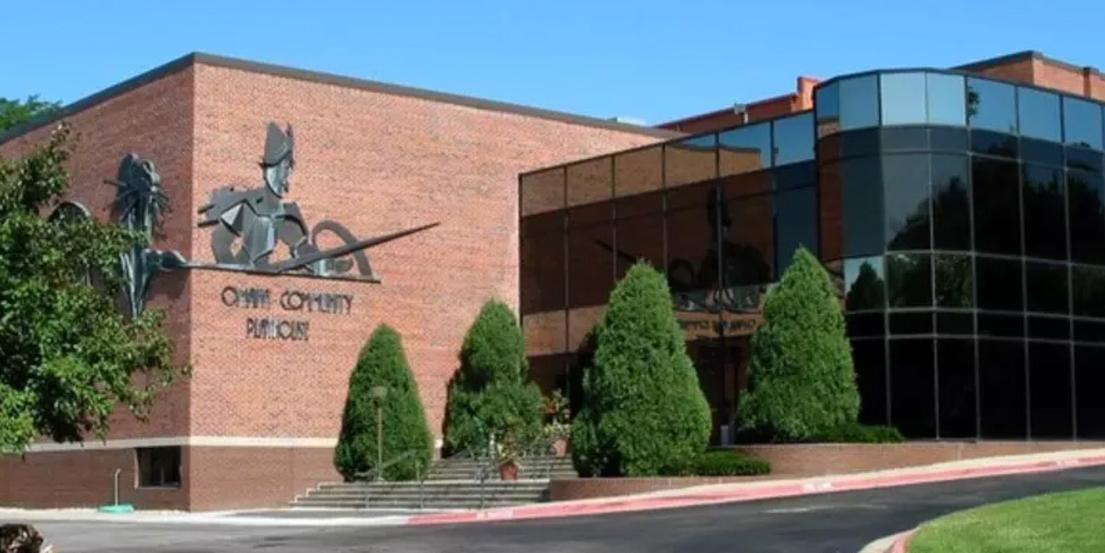
“It took us six months,” says Billy McGuigan, creator of Yesterday and Today, a Beatles tribute show he performs with two of his brothers. Yesterday and Today completed a triumphant third year at the Omaha Community Playhouse in January to prove the show’s staying power.
Yesterday and Today consists mainly of the band fielding requests from the audience and performing them. McGuigan and the band don’t wear wigs or attempt accents. He doesn’t want anything getting in the way of pure music immersion.
And thanks to their comprehensive preparation, the band is ready for any request that comes their way. Those who know McGuigan know he’d never settle for anything less.
“What I find remarkable about Billy is not only his talent and ability to sing and play just about anything,” says Playhouse music director Jim Boggess, “but his single-minded dedication to be true to whatever music he is playing. He will not rest until it is right.”
That same dedication, preparation and passion is what made Rave On, McGuigan’s renowned Buddy Holly act, the success it was, and Rave On paved the way for McGuigan’s Beatles’ tribute.
It’s no coincidence the Beatles were also favorites of McGuigan’s father, Bill, who passed on a musical legacy to his three sons.
Growing up a military brat, home was wherever his U.S. Air Force-indentured father got stationed, Having a dad who played guitar and dug the Beatles immersed Billy in all things Fab Four, especially Paul McCartney.
“All we did was sit and listen to music,” McGuigan said. “I remember McCartney’s ‘Tug of War’ came out and my dad going, ‘OK, you gotta listen to this. This is your first new McCartney album.’ He stuck headphones on me. I hear those songs now and l’m just like, ‘Ahhh, yeah.’ I mean, that was music for me. It was always there.”
The elder McGuigan died of leukemia in 1996.
“It was awful,” Billy said. “I was just starting out in life and we had that moment where we’d become friends. He was proud of what I was doing.”
Before the untimely death, the bonding forged through music continued in Omaha, where the family moved in 1990. McGuigan didn’t set out to pay forward his father’s music bequest, but he has. After dabbling in theater and fronting his own band, he found his niche with Rave On.
Replicating that success with Yesterday and Today meant getting his siblings to sign on, which took some doing. It meant leaving regular jobs for the uncertainty of show biz and being away from wives for weeks. Then there was McGuigan’s ambitious idea of learning the entire Beatles’ canon. Every time a new player joins the band it’s a crash course all over again, he says.
What distinguishes the show from similar acts is that McGuigan fields audience requests and asks folks to explain why the songs are special to them. Then his improv skills take over. McGuigan and his brothers also share their connection to the music and often reference their father on stage.
“Completely, because what we found out is it’s really a tribute to him,” says Billy. “This is the music he taught us. We would sit around and play these songs all the time. He created it. This is the inheritance we got.”
McGuigan’s road to becoming a rock star came after some less successful efforts at finding his voice. Colleen Quinn, general manager of Funny Bone, is McGuigan’s manager and business partner. She’s witnessed his progression from early days, which included attempts at improv comedy, bartending and fronting a cover band.
It was through Buddy Holly, Quinn says, that McGuigan finally found his niche.
“Billy connects with all people. That’s what makes him a charismatic presence,” she says. “He thoroughly loves performing Buddy and Beatles songs and it shows. He relishes hearing people’s requests and reasons for loving the music as he does.”
The Buddy role came after serendipity intervened for McGuigan while vacationing in London, where he and his wife caught a West End production of The Buddy Holly Story. He saw his future on stage.
“I thought, If I ever got the chance to do that I think that’s something I could do because he sings, he plays guitar and he gets to be a rock star. Thinking, never in a million years…”
Only a couple months later, he got a call from Boggess asking him to be their Buddy. He didn’t need to think twice.
But first there was the matter of an audition. McGuigan invited Boggess and artistic director Carl Beck to catch his band at a Benson biker bar. He recalled that night:
“So there we were, 10 people, all in leather, and then Carl and Jim and the band. We started playing ‘Ain’t No Sunshine’ and they (the Playhouse duo) left probably half way through, and I was like, This was my shot and I just lost this gig. I called Jim the next day and he said, ‘No, you got the job, you’re the right guy, we knew it right away.’”
Life hasn’t been the same since.
“Everything at that point changed,” said McGuigan, “and I don’t know why. It was like something clicked in me, and I’m going to take this role seriously — I’m not going to pull the typical Billy. I learned the script two days after I got it, learned all the music, went and got guitar lessons, which I’d never done before. I went to the gym before rehearsals even started. I lost 40 pounds. I was fit.”
He steeped himself in Buddy ephemera, reading books, studying films. Watching one documentary, The Real Buddy Holly Story, became a daily ritual.
“…that’s what I absorbed, that’s where my Buddy came from — that and whatever I could bring to it.”
He next appears in Rave On on Feb. 3-4, at Harrah’s casino. A summer amphitheater gig is in the works and the Beatles show returns to the Playhouse in December.
McGuigan is looking to hand-off Rave On to someone else so he can focus more on Yesterday and Today. He expects to direct The Buddy Holly Story sometime and to one day maybe take a leading role in a show like Jesus Christ Superstar.
Beyond that, it’s more touring. Quinn hints McGuigan may even be bound for Europe and Australia.
For now, McGuigan’s says the Beatles show has given him the time of his life.
“Every aspect of that show turns me on. When it works, there’s nothing like it. The music is great, it’s what I’ve always wanted to sing. Then you look over and there are your brothers, and then there’s your friends who have gone on this journey with you, and you have an audience getting (into it). How can it get better than that?”
Related Articles
- The Beatles: 50 years since that first time at the Cavern (gerryco23.wordpress.com)
- Buddy Holly Remembered On The Day The Music Died (beatcrave.com)
- Beatles Win Historic GRAMMY Award (wdok.radio.com)
- Rave On Buddy Holly: tribute album streaming now (boingboing.net)
- The Beatles First Gig At the Cavern (retrorambling.wordpress.com)
Quiana Smith’s dream time takes her to regional, off-Broadway and Great White Way theater success
NOTE: I am reposting the following article because its subject, Quiana Smith, who goes by Q. Smith professionally, is back in our shared hometown of Omaha, Neb. with the national Broadway touring production of Mary Poppins. Quiana, recently promoted to the part of Miss Andrew, will perform as part of a 23-show run at the Orpheum Theater in Omaha, where loads of family and friends will be sure to cheer her on. This isn’t the first time she’s made a splash: she’s made waves off-Broadway (Fame) and on Broadway (Les Miserables) and in many regional theater productions. But this time she’s come home as part of a Broadway show. Sweet.
Quiana is a daughter of my good acquaintances Rudy and Llana Smith. She’s inherited their talent and drive and gone them one further by pursuing and realizing her dream of a musical theater career in New York. This profile of Quiana for The Reader (www.thereader.com) expresses this dynamic young woman’s heart and passion. It’s been a few years since I’ve spoken with her, and I’m eager to find out what she’s been up to lately, and how she and her father are coming along on a book project about African-American stage divas. Quiana is to write it and Rudy, a professional photographer, is to shoot it. Her mother, Llana, is a theater person, too — writing and directing gospel plays. My story on Llana Smith is posted on this site and I will soon be adding a story I did on Rudy Smith. They are a remarkable family.

Quiana Smith, aka Q. Smith in Mary Poppins
Quiana Smith’s dream time takes her to regional, off-Broadway and Great White Way theater success
©by Leo Adam Biga
Originally published in The Reader (www.thereader.com)
Once the dream took hold, Quiana Smith never let go. Coming up on Omaha’s north side she discovered a flair for dramatics and a talent for singing she hoped would lead to a musical theater career. On Broadway. After a steady climb up the ladder her dream comes true tomorrow when a revival of Les Miserables open at the Broadhurst Theatre in New York. Q. Smith, as her stage name reads, is listed right there in the program, as a swing covering five parts, a testament to her versatility.
Before Les Miz is over Smith will no doubt get a chance to display her big, bold, brassy, bodacious self, complete with her shaved head, soaring voice, infectious laugh and broad smile. Her Broadway debut follows featured roles in the off-Broadway Fame On 42nd Street at NY‘s Little Shubert Theater in 2004 and Abyssinia at the North Shore Theater (Connecticut) in 2005. Those shows followed years on the road touring with musical theater companies or doing regional theater.
Fame’s story about young performers’ big dreams resonated for Smith and her own Broadway-bound aspirations. As Mabel, an oversized dancer seeking name-in-lights glory, she inhabited a part close to her ample self, projecting a passion akin to her own bright spirit and radiating a faith not unlike her deep spirituality. In an Act II scene she belted out a gospel-inspired tune, Mabel’s Prayer, that highlighted her multi-octave voice, impassioned vibrato and sweet, sassy, soulful personality. In the throes of a sacred song like this, Smith retreats to a place inside herself she calls “my secret little box,” where she sings only “to God and to myself. It’s very, very personal.” Whether or not she gets on stage this weekend in Les Miz you can be sure the 28-year-old will be offering praise and thanksgiving to her higher power.
It all began for her at Salem Baptist Church, where her grandmother and mother, have written and directed gospel plays for the dramatic ministry program. At her mother Llana’s urging, Smith and her brothers sang and acted as children. “My brothers got really tired of it, but I loved the attention, so I stuck with it,” said Smith, who began making a name for herself singing gospel hymns, performing skits and reciting poetry at Salem and other venues. She got attention at home, too, where she’d crack open the bathroom window and wail away so loud and finethat neighborhood kids would gather outside and proclaim, “You sure can sing, Quiana” “We were just a real creative house,” said Quiana’s mother.
Quiana further honed her craft in classes at the then-Emmy Gifford Children’s Theatre and, later, at North High School, where music/drama teacher Patrick Ribar recalls the impression Smith made on her. “The first thing I noticed about Quiana was her spark and flair for the stage. She was so creative…so diverse. She would do little things to make a part her own. I was amazed. She could hold an audience right away. She has such a warmth and she’s so fun that it’s hard not to like her.”
Still, performing was more a recreational activity than anything else. “Back then, I never knew I wanted to do this as a career,” Smith said. “I just liked doing it and I liked the great response I seemed to get from the audience. But as far as a career, I thought I was going to be an archaeologist.”
She was 15, and a junior at North, when her first brush with stardom came at the old Center Stage Theatre. She saw an audition notice and showed up, only to find no part for a black girl. She auditioned anyway, impressing executive directorLinda Runice enough to be invited back to tryout for a production of Dreamgirls. The pony-tailed hopeful arrived, in jeans and sweatshirt, sans any prepared music, yet director Michael Runice (Linda’s husband) cast her as an ensemble member.
Then, in classic a-star-is-born fashion, the leading lady phoned-in just before rehearsal the night before opening night to say she was bowing out due to a death-in-the-family. That’s when Mike Runice followed his instinct and plucked Smith from the obscurity of the chorus into a lead role she had less than 24 hours to master.
“It was like in a movie,” Smith said. “The director turned around and said to me, ‘It’s up to you, kid.’ I don’t know why he gave it to me to this day. You should have seen the cast. It was full of talented women. I was the youngest.” And greenest. Linda Runice said Smith got it because “she was so talented. She had been strongly considered for the role anyway, but she was so young and it’s such a demanding role. But she was one of those rare packages who could do it all. You saw the potential when she hit the stage, and she just blew them out of the theater.”
What began as a lark and segued into a misadventure, turned into a pressure-packed, once-in-a-lifetime opportunity. Not only did an already excited and scared Smith have precious little time to steel herself for the rigorous part and for the burden of carrying a show on her young shoulders, there was still school to think about, including finals, not to mention her turning sweet 16.
“The director wrote me a note to let me out of school early and he came to pick me up and take me to the theater. From 12 to 8, I was getting fitted for all the costumes, I was learning all the choreography, I was going over all the line readings, I was singing all the songs, and it was just crazy. A crash course.”
Smith pushed so hard, so fast to nail the demanding music in time for the show that she, just as the Runices feared, strained her untrained voice, forcing her to speak many of the songs on stage. That opening night is one she both savors and abhors. “That was the best and the worst thing that ever happened to me,” she said. “It was the best thing because if it wasn’t for that experience I’d probably be digging up fossils somewhere, which isn’t bad, but I wouldn’t be fulfilled. And it was the worst because I was so embarrassed.”
In true trouper tradition, Smith and the show went on. “What a responsiblity she carried for someone so young, and she carried it off with all the dignity and aplomb anyone could ever want,” Linda Runice said. Smith even kept the role the entire run. The confidence she gained via this baptism-by-fire fueled her ambition. “I told myself, If I can do this, I can do anything,” Smith said. Runice remembers her “as this bubbly, fresh teenager who was going to set the world on fire, and she has.”

Quiana Smith
To make her Broadway debut in Les Miz is poetic justice, as that show first inspired Smith’s stage aspirations. She heard songs from it in a North High music class and was really bit after seeing a Broadway touring production of it at the Orpheum.
“It was my introduction to musical theater. I fell in love with it,” she said. “I already had a double cassette of the cast album and I would listen to this song called ‘I Dreamed a Dream’ over and over. It was sung by Patti Lapone. I tried to teach myself to sing like that. When I finally met her last year I told her the story. That song is still in my audition book.”
Smith dreamed of doing Lez Miz in New York. Ribar recalls her telling him soon after they met, “‘One day I’m going to be on Broadway…’ She was bound and determined. Nothing was going to stop her. So, she goes there, and the next thing you know…she’s on Broadway. With her determination and talent, you just knew she was right on the edge of really brilliant things in her life. I brag about her to the kids as someone who’s pursued her dream,” he said. Stardom, he’s sure, isn’t far off. “Once the right role shows up, it’s a done deal.”
A scholarship led her to UNO, where she studied drama two years. All the while, she applied to prestigious theater arts programs back east to be closer to New York. Her plans nearly took a major detour when, after an audition in Chicago, she was accepted, on the spot, by the Mountview Conservatory in London to study opera. Possessing a fine mezzo soprano voice, her rendition of an Italian aria knocked school officials out. She visited the staid old institution, fell in love with London, but ultimately decided against it. “The opera world, to me, isn’t as exciting and as free as the musical theater world is,” she said. “Besides, it was a two or three-year conservatory program, and I really wanted the whole college experience to make me a whole person.”
 |
Quiana Smith, ©photo by David Wells
Her musical theater track resumed with a scholarship to Ithaca (NY) College, where she and a classmate became the first black female grads of the school’s small theater arts program. She also took private voice and speech training. At Ithaca, she ran into racial stereotyping. “When I first got there everybody expected you to sing gospel or things from black musicals,” she said. “Everything was black or white. And I was like, It doesn’t have to be like that. I can do more than gospel. I can do more than R&B. I can do legit. I really had to work hard to prove myself.”
Her experience inspired an idea for a book she and her father, Omaha World-Herald photographer Rudy Smith, are collaborating on. She interviews black female musical theater actresses to reveal how these women overturn biases, break down barriers and open doors. “We’re rare,” she said of this sisterhood. “These women are an inspiration to me. They don’t take anything from anybody. They’re divas, honey. Back in the day, you would take any part that came to you because it was a job, but this is a new age and we are allowed to say, No. In college, I would have loved to have been able to read about what contemporary black females are doing in musical theater.” Her father photographs the profile subjects.
She’s had few doubts about performing being her destiny. One time her certainty did falter was when she kept applying for and getting rejected by college theater arts programs. She sought her dad’s counsel. “I said, ‘Dad…how do I know this is for me?’ He was like, ‘Sweetheart, it’s what you breath, right?’ It’s what you go to bed and wake up in the morning thinking about, right?’ I was like, ‘Yeah…’ ‘OK, then, that’s what you should be doing.’ And, so, I never gave up. I kept on auditioning and I finally got accepted to Ithaca.”
Smith has worked steadily since moving to the Big Apple. Her credits include speaking-singing parts in productions of Hair at the Zachary Scott Theatre and The Who’s Tommy at the Greenwich St. Theatre and performing gigs in five touring road shows. Those road trips taught her a lot about her profession and about herself. On a months-long winter tour through Germany with the Black Gospel Singers, which often found her and her robed choir mates performing in magnificent but unheated cathedrals, she got in touch with her musical-cultural heritage. “Gospel is my roots and being part of the gospel singers just brought my roots back,” she said.

New York is clearly where Smith belongs. “I just feel like I’ve always known New York. I always dreamed about it. It was so easy and comfortable when I first came here,” she said. “Walking the streets alone at 1 a.m., I felt at home, like it was meant to be. It’s in my blood or something.”
Until Fame and now Les Miz, New York was where she lived between tours. Her first of two cross-country stints in Smokey Joe’s Cafe proved personally and professionally rewarding. She understudied roles that called for her to play up in age, not a stretch for “an old soul” like Smith. She also learned lessons from the show’s star, Gladys Knight. “She was definitely someone who gave it 100 percent every night, no matter if she was hoarse or sick, and she demanded that from us as well,” Smith said, “and I appreciated that. The nights I didn’t go on, I would go out into the audience and watch her numbers and she just blew the house down every single night. And I was like, I want to be just like that. I learned…about perseverance and about dedication to the gift God has given you.”
For a second Smokey stint, starring Rita Coolidge, Q. was a regular cast member. Then, she twice ventured to Central America with the revues Music of Andrew Lloyd Weber andBlues in the Night. “That’s an experience I’ll never forget,” she said. “We went to a lot of poor areas in Guatemala and El Salvador. People walk around barefoot. Cows are in the road. Guns are all around. We performed in ruins from the civil wars. And there we were, singing our hearts out for people who are hungry, and they just loved it. It was a life-changing experience.”
She loves travel but loves performing more in New York, where she thinks she’s on the cusp of something big. “It’s a dream come true and I truly believe this is just the beginning,” said Smith, who believes a higher power is at work. “I know it’s not me that’s doing all this stuff and opening all these doors so quickly, because it’s taken some people years and years to get to this point. It’s nothing but the Lord. I have so much faith. That’s what keeps me in New York pursuing this dream.”

Connecting with long time friend Jia Taylor
While not a headliner with her name emblazoned on marquees just yet, she’s sure she has what it takes to be a leading lady, something she feels is intrinsic in her, just waiting for the chance to bust on out. “I’m a leading lady now. I’m a leading lady every day. Yes, I say that with confidence, and not because I’m so talented,” she said. “It’s not about having a great voice. It’s not about being a star. It’s about how you carry yourself and connect with people. It’s about having a great aura and spirit and outlook on life… and I think I’ve got that”
Her busy career gives Smith few chances to get back home, where she said she enjoys “chilling with my family and eating all the good food,” but she makes a point of it when she can. She was back in September, doing a workshop for aspiring young performers at the Hope Center, an inner city non-profit close to her heart. She also sang for a cousin’s wedding at Salem. On some breaks, she finds time to perform here, as when featured in her mother’s Easter passion play at Salem in 2004. She’d like one day to start a school for performing arts on the north side, giving children of color a chance to follow their own dreams.
Occasionally, a regional theater commitment will bring her close to home, as when she appeared in a summer 2005 production of Joseph and the Amazing Technicolor Dream Coatin Wichita. Despite lean times between acting-singing gigs, when she works with aspiring youth performers for the Camp Broadway company, Smith keeps auditioning and hoping for the break that lands her a lead or featured part on Broadway, in film or on television. She’s not shy about putting herself out there, either. She went up for a role opposite Beyonce in the film adaptation of Dreamgirls, the other show she dreams of doing on Broadway. She can see it now. “Q. Smith starring in…” She wants it all, a Tony, an Oscar, an Emmy. A career acting, singing, writing, directing, teaching and yes, even performing opera.
Smith’s contracted for the six-month run of Les Miz. Should it be extended, she may face a choice: stay with it or join the national touring company of The Color Purple, which she may be in line for after nearly being cast in the Broadway show.
That said, Smith is pursuing film/TV work in L.A. after the positive experience of her first screen work, a co-starring role in the Black Entertainment Network’s BETJ mini-series, A Royal Birthday. The Kim Fields-directed project, also being packaged as a film, has aired recently on BET and its Jazz off-shoot. A kind of romantic comedy infomercial for Royal Caribbean Cruise Lines, the project also features Gary Dourdan from CSI and gospel artist David Hollister.
The Royal Birthday shoot, unfolding on two separate Caribbean cruises, whet her appetite for more screen work and revealed she has much to learn. “It was absolutely beautiful. We went horseback riding, para-sailing, jet-skiing. I had never done any of those things,” she said. “I learned a lot about acting for the camera, too. I’m very theatrical, very animated in it. It doesn’t need to be that big.”
Should fame allude her on screen or on stage, she’s fine with that, too, she said, because “I’m doing something I truly love.” Besides, she can always find solace in that “little secret box” inside her, where it’s just her and God listening to the power of her voice lifted on high. Sing in exaltation.
Related articles
- Kevyn Morrow’s Homecoming (leoadambiga.wordpress.com)
- Choosing a theater camp (rakstagemom.wordpress.com)
- From the Archives: Golden Boy Dick Mueller of Omaha Leads Firehouse Theatre Revival (leoadambiga.wordpress.com)
Radio DJ-actor-singer Dave Wingert, in the spotlight

Image by kjeik via Flickr
UPDATE I: I have been noticing a major uptick in views of this Dave Wingert profile and I think at one point I even Googled his name to see if he was in the news, but I didn’t find anything. But the views kept right on aggregating. I just happened to email him Oct. 17 about something totally unrelated to this and he informed me he has been summarily let go by KGOR. Obviously a lot of you out there who listened to him knew about the situation. Apparently the dust-up had to do with an FCC violation – a listener calling-in unloosed a forbidden expletive on air that seems pretty tame to me and my ears, “bullshit,” and Wingy let it through and tried covering his ass just as you or I might do — and after serving a suspension he got canned for his trouble. Please explain how the many obscenities (and I don’t just mean words) of reality TV and shock-jock radio are acceptable, even in prime time, and yet its producers, writers, and hosts only seem to get richer, but a stray “bullshit” said over the radio is grounds for termination? He tells me he was fired without severance, only a goodbye and good luck. He wants to stay put and continue doing his radio gigging in Omaha. He and his agent are busily testing the waters. I hope he gets his wish and perhaps a measure of revenge against the station that dismissed him by killing them in the ratings.
UPDATE II: The story finally made the news, though the reports have him uttering the expletive. Does it really matter? I find it interesting that I broke the story via my blog Monday morning and yet that there was no mention by the Omaha World-Herald or other media of getting a lead on this news from this source and/or from readers of this blog, but I assume that’s precisely what happened.
UPDATE III: After fielding dozens of comments and questions about Wingert’s firing, I am happy to report what some of you probably already know – he’s landed at a new radio home in Omaha, KOOO-FM, 101.9, where he will be the morning host beginning Monday, Jan. 30. The station plays hits from the 1970s through today and targets a 25-54 demographic. Does this mean his loyal listeners from KGOR, many of them upset by the way he was let go, will follow him to the new station and boost its ratings? I wonder how many listeners spurned KGOR in the aftermath of his firing? Oh, well, all water under the bridge now. He’s back in the saddle again and if his fans want to hear him they know where to find him.
In my 52 years in Omaha, Neb. I am aware of only a few entertainers and personalities who can compare with Dave Wingert, a multi-talented gentleman who makes whatever medium he’s working in, whether radio or television or theater or cabaret, appear effortless. Those of us who have been around the block a time or two know from experience that things only appear effortless from the outside looking in, and that that apparent ease is only arrived after tremendous study and work. After admiring Wingert from afar for so many years it was a delight to finally meet him and get to know him a bit. I trust you will like the man I portray in this article for The Reader (www.thereader.com) as much as I do.
Radio DJ-actor-singerDave Wingert, in the spotlight
©by Leo Adam Biga
Originally published in The Reader (www.thereader.com)
The words fearless and morning radio personality don’t usually jive but they do in the case of Clear Channel KGOR 99.9-FM wake-up man Dave Wingert. Far from the madding crowd of shock jocks the veteran broadcaster and stage actor is brave enough to simply be himself on air. Enervating, effusive, empathetic, effeminate.
He’s gallant enough to have accepted the fact his biological father no sooner saw him as a newborn infant than went home and killed himself. His mother laid that messed-up heritage on him when he was a teenager.
“What do you with that?” Wingert asked rhetorically in an interview. What he did was learn all he could about his father, a man who was the love of his mother’s life but who also suffered from manic depression. The revelation of how he died came just as Wingert began pursuing radio and theater at Ohio University. That’s when he discovered his father had worked in those same fields in New York. Weird.
Wingert’s resilient enough to have survived a bullet to the chest in Omaha’s most famous shooting spree until the Van Maur tragedy. In 1977 he and Larry Williams had just begun their cabaret act before a packed house at now defunct Club 89 when Ulysses Cribbs opened fire with a 12-gauge shotgun. In a few seconds rampage that seemed to last forever the gunman killed one and injured 26, including Wingert, who luckily had the round deflect off his chest.
Superman went on the air the next day helping a city heal. He did the same after the Van Maur shootings. The earlier experience was a lesson in how precious life is. “Since that day I try not to take that for granted,” he said. A recent stalking incident made him relive some of that chaos. “Mr. Crazy” made veiled threats before being arrested. Wingert never missed a show.
A triple-threat actor/singer/dancer, he’s daring enough to take on demanding roles requiring huge commitments of time and energy. “I’m drawn to material, content,” he said. Recent roles in Six Degrees of Separation, Urinetown and The Goat fit the bill. Blue Barn Theatre artistic director Susan Clement Toberer, who directed him in Six Degrees andGoat, said, “His work ethic is purely professional yet he is very willing to try anything at least once. I love working with actors like Dave who are fearless and willing to jump off a ledge and not worry if they look the fool.”

Dave Wingert
He’s courageous enough to be an openly gay announcer in Omaha. Not in a flaming, militant way but with a breezy, emotive patter and Jewish motherly demeanor. By addressing, on-air, overtly heterosexual newsman Rich Dennison with, “Oh, honey!,” or female callers with, “Dahling.” He doesn’t use the show as a coming out platform but rather as context for being true to who he is.
“I have come out — if you listen for it. But it comes out in conversation. I haven’t made it a banner,” he said.
Three years ago Wingert showed the courage of his convictions by abandoning his dream for large market radio fame, which had led him from Omaha to the west coast, to venture back here in search of a permanent home to call his own.
More recently, Wingert proved he has the guts to leave a prime gig as a protest. In a show of solidarity with Omaha Community Playhouse artists who’d earlier resigned he and two fellow cast members deserted a production of Moonlight and Magnolias days before its scheduled opening last month. He, Ben Burkholtz and Connie Lee refused to go on in response to a dispute at the theater that led to the temporary departures of Playhouse artistic director Carl Beck, who directed Moonlight, and associate Susan Baer Collins. When Wingert and Co. exited, the show was canceled and Billy McGuigan booked as a fill-in.
Beck appreciated the gesture.
“I was terribly surprised and terribly moved. It received a lot of varied reaction around the city. Some people very much horrified actors would do that. Others, understanding what motivated the actors. I know those actors were taking an uncomfortable positiion and so I admire them seeing it through the way they have.”
Some may view what Wingert did as a grandstanding ploy that undermined the theater. Others, as the loyal action of a man guided by integrity. Either way, Wingert didn’t sit idly by while Rome burned.
Prompting this soap opera was a blunt force effort by executive director Tim Schmad and board president Mark Laughlin to bridge a budget shortfall. The pair reportedly told Beck and Collins their duties and salaries would be reduced. Beck and Collins balked and submitted their resignations. Insiders say it was a classic case of bean counters versus artists.
Once the story broke angry theater supporters deluged the Playhouse with calls and emails. Schmad and Laughlin faced the music at an April 16 open forum that announced the restoration of Beck and Collins to their original posts.
Wingert attended the session, which saw people rant against OCP administrators for what many viewed as their insensitivity, but the actor remained silent. Aside from a comment to a television reporter about Schmad’s well-publicized and much-derided lack of arts experience, Wingert let his actions speak for him.
“What’s really behind this is I keep a list of what I want to be here and do here and one is to make a difference, and this made such a huge difference as it played out,” said Wingert. “I think of that. I guess you could call it a protest. It was saying, ‘You can’t treat my friends this way, this is wrong, you can’t do this.’ It was all about people for me,” said Wingert, who’d worked with Beck before.

Wingert at a script reading
What impact the Wingert-led walkout made in causing Playhouse leaders to rethink their decision no one knows. While Beck and Collins are back on the job Moonlight never made it to curtain, unless you count the fully-dressed and lit but empty set that served as backdrop for the rancorous public forum. A fitting symbol for a show that would not go on in a house divided. Wingert equates what happened to a dysfunctional family airing out some issues.
“I think it’s much like a family having a blowup.”
He said “going to the brink” may have been just the “cathartic” awakening the complacent theater, which has lost much of its membership, needed in order to get both the business and art sides on the same page.
“I see this as all really good for the Playhouse, I really do,” said Wingert. “If this is a situation that has been brewing for some time than the place deserves to implode, it needs to get its shit together. Only time will tell.”
He feels the events that led to Moonlight being canceled sent a message to the Playhouse administration.
“It was more important not to do this show for the reasons we didn’t do it than to get on stage,” said Wingert, who refused overtures from management he reconsider his walkout. “Maybe it wasn’t meant to live.”
Still, he rues losing Moonlight. The play looks at a frantic few days in the making of Gone with the Wind. Wingert went after the plum role of screenwriter Ben Hecht, whose biography’s telling of these true-to-life events inspired the stage comedy. There’s discussion of finding new play dates for Moonlight but that may be difficult given the theater’s tight schedule. Wingert can hope though.
“I would love to play that part,” he said. “It’s so rich and fun.” Wingert said he initially had trouble finding Hecht’s voice, the instrument the actor relies on for fixing in on his characters. Once he did, he said, he “nailed the part.” What he hit upon, he said, was a wry, Woody Allenish, New Yorker smarty pants whine. “That voice had never come out of my mouth before.”

He projects a vaugely Jewish vibe, too, as the friendly mensch who says, “let’s check the morning schlep,” or, “love to schmooze with you.”
Filling time between playing what KGOR tags “the super hits of the the ‘60s and ‘70s” he indulges in canned jokes provided by a syndicator of prefab material. Most commercial stations subscribe to such services. The bits, mostly satiric pot shots at headline grabbers like OctaMom, stand on their own but work best when a host can riff on them. If nothing else, Wingert’s an extemporaneous whiz whose decades of live radio and theater experience make improvisation second nature to him.
It’s why he does his show, not from a chair but standing up, moving around, much the way he works on stage.
“I do my show standing up because I think best on my feet. It gives me more more energy.
Related Articles
- Omaha Arts-Culture Scene All Grown Up and Looking Fabulous (leoadambiga.wordpress.com)
- Camille Metoyer Moten, A Singer for All Seasons (leoadambiga.wordpress.com)
- Kevyn Morrow’s Homecoming (leoadambiga.wordpress.com)
- Playwright John Guare Talks Shop on Omaha Visit Celebrating His Acclaimed ‘Six Degrees of Separation’ (leoadambiga.wordpress.com)
- Lit Fest Brings Author Carleen Brice Back Home Flush with the Success of Her First Novel, ‘Orange Mint and Honey’ (leoadambiga.wordpress.com)
- Nomad Lounge, An Oasis for Creative Class Nomads (leoadambiga.wordpress.com)
- Great Plains Theatre Conference Ushers in New Era of Omaha Theater (leoadambiga.wordpress.com)
- Radio Day, ‘Michael Feldman’s Whad’Ya Know?’ Live from Omaha (leoadambiga.wordpress.com)
- John Beasley and Sons Make Acting a Family Thing at the John Beasley Theater & Workshop and Beyond (leoadambiga.wordpress.com)
- Tired of Being Tired Leads to a New Start at the John Beasley Theater (leoadambiga.wordpress.com)
- Home Boy Nicholas D’Agosto Makes Good on the Start ‘Election’ Gave Him; Nails Small But Showy Part in New Indie Flick ‘Dirty Girl’ (leoadambiga.wordpress.com)
- Miss Leola Says Goodbye (leoadambiga.wordpress.com)

Quiana Smith’s Dream Time
My good acquaintances Rudy and Llana Smith have a daughter named Quiana who has inherited their talent and drive and gone them one further by pursuing and realizing her dream of a musical theater career in New York. This profile of Quiana for The Reader (www.thereader.com) expresses this dynamic young woman’s heart and passion. It’s been a few years since I’ve spoken with her, and I’m eager to find out what she’s been up to lately, and how she and her father are coming along on a book project about African-American stage divas. Quiana is to write it and Rudy, a professional photographer, is to shoot it. Her mother, Llana, is a theater person, too — writing and directing gospel plays. My story on Llana Smith is posted on this site and I will soon be adding a story I did on Rudy Smith. They are a remarkable family.
|
| ©photo by David Wells |
Quiana Smith’s Dream Time
©by Leo Adam Biga
Originally published in The Reader (www.thereader.com)
Once the dream took hold, Quiana Smith never let go. Coming up on Omaha’s north side she discovered a flair for dramatics and a talent for singing she hoped would lead to a musical theater career. On Broadway. After a steady climb up the ladder her dream comes true tomorrow when a revival of Les Miserables open at the Broadhurst Theatre in New York. Q. Smith, as her stage name reads, is listed right there in the program, as a swing covering five parts, a testament to her versatility.
Before Les Miz is over Smith will no doubt get a chance to display her big, bold, brassy, bodacious self, complete with her shaved head, soaring voice, infectious laugh and broad smile. Her Broadway debut follows featured roles in the off-Broadway Fame On 42nd Street at NY‘s Little Shubert Theater in 2004 and Abyssinia at the North Shore Theater (Connecticut) in 2005. Those shows followed years on the road touring with musical theater companies or doing regional theater.
Fame’s story about young performers’ big dreams resonated for Smith and her own Broadway-bound aspirations. As Mabel, an oversized dancer seeking name-in-lights glory, she inhabited a part close to her ample self, projecting a passion akin to her own bright spirit and radiating a faith not unlike her deep spirituality. In an Act II scene she belted out a gospel-inspired tune, Mabel’s Prayer, that highlighted her multi-octave voice, impassioned vibrato and sweet, sassy, soulful personality. In the throes of a sacred song like this, Smith retreats to a place inside herself she calls “my secret little box,” where she sings only “to God and to myself. It’s very, very personal.” Whether or not she gets on stage this weekend in Les Miz you can be sure the 28-year-old will be offering praise and thanksgiving to her higher power.
It all began for her at Salem Baptist Church, where her grandmother and mother, have written and directed gospel plays for the dramatic ministry program. At her mother Llana’s urging, Smith and her brothers sang and acted as children. “My brothers got really tired of it, but I loved the attention, so I stuck with it,” said Smith, who began making a name for herself singing gospel hymns, performing skits and reciting poetry at Salem and other venues. She got attention at home, too, where she’d crack open the bathroom window and wail away so loud and finethat neighborhood kids would gather outside and proclaim, “You sure can sing, Quiana” “We were just a real creative house,” said Quiana’s mother.
Quiana further honed her craft in classes at the then-Emmy Gifford Children’s Theatre and, later, at North High School, where music/drama teacher Patrick Ribar recalls the impression Smith made on her. “The first thing I noticed about Quiana was her spark and flair for the stage. She was so creative…so diverse. She would do little things to make a part her own. I was amazed. She could hold an audience right away. She has such a warmth and she’s so fun that it’s hard not to like her.”
Still, performing was more a recreational activity than anything else. “Back then, I never knew I wanted to do this as a career,” Smith said. “I just liked doing it and I liked the great response I seemed to get from the audience. But as far as a career, I thought I was going to be an archaeologist.”
She was 15, and a junior at North, when her first brush with stardom came at the old Center Stage Theatre. She saw an audition notice and showed up, only to find no part for a black girl. She auditioned anyway, impressing executive director Linda Runice enough to be invited back to tryout for a production of Dreamgirls. The pony-tailed hopeful arrived, in jeans and sweatshirt, sans any prepared music, yet director Michael Runice (Linda’s husband) cast her as an ensemble member.
Then, in classic a-star-is-born fashion, the leading lady phoned-in just before rehearsal the night before opening night to say she was bowing out due to a death-in-the-family. That’s when Mike Runice followed his instinct and plucked Smith from the obscurity of the chorus into a lead role she had less than 24 hours to master.
“It was like in a movie,” Smith said. “The director turned around and said to me, ‘It’s up to you, kid.’ I don’t know why he gave it to me to this day. You should have seen the cast. It was full of talented women. I was the youngest.” And greenest. Linda Runice said Smith got it because “she was so talented. She had been strongly considered for the role anyway, but she was so young and it’s such a demanding role. But she was one of those rare packages who could do it all. You saw the potential when she hit the stage, and she just blew them out of the theater.”
What began as a lark and segued into a misadventure, turned into a pressure-packed, once-in-a-lifetime opportunity. Not only did an already excited and scared Smith have precious little time to steel herself for the rigorous part and for the burden of carrying a show on her young shoulders, there was still school to think about, including finals, not to mention her turning sweet 16.
“The director wrote me a note to let me out of school early and he came to pick me up and take me to the theater. From 12 to 8, I was getting fitted for all the costumes, I was learning all the choreography, I was going over all the line readings, I was singing all the songs, and it was just crazy. A crash course.”
Smith pushed so hard, so fast to nail the demanding music in time for the show that she, just as the Runices feared, strained her untrained voice, forcing her to speak many of the songs on stage. That opening night is one she both savors and abhors. “That was the best and the worst thing that ever happened to me,” she said. “It was the best thing because if it wasn’t for that experience I’d probably be digging up fossils somewhere, which isn’t bad, but I wouldn’t be fulfilled. And it was the worst because I was so embarrassed.”
In true trouper tradition, Smith and the show went on. “What a responsiblity she carried for someone so young, and she carried it off with all the dignity and aplomb anyone could ever want,” Linda Runice said. Smith even kept the role the entire run. The confidence she gained via this baptism-by-fire fueled her ambition. “I told myself, If I can do this, I can do anything,” Smith said. Runice remembers her “as this bubbly, fresh teenager who was going to set the world on fire, and she has.”
To make her Broadway debut in Les Miz is poetic justice, as that show first inspired Smith’s stage aspirations. She heard songs from it in a North High music class and was really bit after seeing a Broadway touring production of it at the Orpheum.
“It was my introduction to musical theater. I fell in love with it,” she said. “I already had a double cassette of the cast album and I would listen to this song called ‘I Dreamed a Dream’ over and over. It was sung by Patti Lapone. I tried to teach myself to sing like that. When I finally met her last year I told her the story. That song is still in my audition book.”
Smith dreamed of doing Lez Miz in New York. Ribar recalls her telling him soon after they met, “‘One day I’m going to be on Broadway…’ She was bound and determined. Nothing was going to stop her. So, she goes there, and the next thing you know…she’s on Broadway. With her determination and talent, you just knew she was right on the edge of really brilliant things in her life. I brag about her to the kids as someone who’s pursued her dream,” he said. Stardom, he’s sure, isn’t far off. “Once the right role shows up, it’s a done deal.”
A scholarship led her to UNO, where she studied drama two years. All the while, she applied to prestigious theater arts programs back east to be closer to New York. Her plans nearly took a major detour when, after an audition in Chicago, she was accepted, on the spot, by the Mountview Conservatory in London to study opera. Possessing a fine mezzo soprano voice, her rendition of an Italian aria knocked school officials out. She visited the staid old institution, fell in love with London, but ultimately decided against it. “The opera world, to me, isn’t as exciting and as free as the musical theater world is,” she said. “Besides, it was a two or three-year conservatory program, and I really wanted the whole college experience to make me a whole person.”
Her musical theater track resumed with a scholarship to Ithaca (NY) College, where she and a classmate became the first black female grads of the school’s small theater arts program. She also took private voice and speech training. At Ithaca, she ran into racial stereotyping. “When I first got there everybody expected you to sing gospel or things from black musicals,” she said. “Everything was black or white. And I was like, It doesn’t have to be like that. I can do more than gospel. I can do more than R&B. I can do legit. I really had to work hard to prove myself.”
Her experience inspired an idea for a book she and her father, Omaha World-Herald photographer Rudy Smith, are collaborating on. She interviews black female musical theater actresses to reveal how these women overturn biases, break down barriers and open doors. “We’re rare,” she said of this sisterhood. “These women are an inspiration to me. They don’t take anything from anybody. They’re divas, honey. Back in the day, you would take any part that came to you because it was a job, but this is a new age and we are allowed to say, No. In college, I would have loved to have been able to read about what contemporary black females are doing in musical theater.” Her father photographs the profile subjects.
She’s had few doubts about performing being her destiny. One time her certainty did falter was when she kept applying for and getting rejected by college theater arts programs. She sought her dad’s counsel. “I said, ‘Dad…how do I know this is for me?’ He was like, ‘Sweetheart, it’s what you breath, right?’ It’s what you go to bed and wake up in the morning thinking about, right?’ I was like, ‘Yeah…’ ‘OK, then, that’s what you should be doing.’ And, so, I never gave up. I kept on auditioning and I finally got accepted to Ithaca.”

Smith has worked steadily since moving to the Big Apple. Her credits include speaking-singing parts in productions of Hair at the Zachary Scott Theatre and The Who’s Tommy at the Greenwich St. Theatre and performing gigs in five touring road shows. Those road trips taught her a lot about her profession and about herself. On a months-long winter tour through Germany with the Black Gospel Singers, which often found her and her robed choir mates performing in magnificent but unheated cathedrals, she got in touch with her musical-cultural heritage. “Gospel is my roots and being part of the gospel singers just brought my roots back,” she said.
New York is clearly where Smith belongs. “I just feel like I’ve always known New York. I always dreamed about it. It was so easy and comfortable when I first came here,” she said. “Walking the streets alone at 1 a.m., I felt at home, like it was meant to be. It’s in my blood or something.”
Until Fame and now Les Miz, New York was where she lived between tours. Her first of two cross-country stints in Smokey Joe’s Cafe proved personally and professionally rewarding. She understudied roles that called for her to play up in age, not a stretch for “an old soul” like Smith. She also learned lessons from the show’s star, Gladys Knight. “She was definitely someone who gave it 100 percent every night, no matter if she was hoarse or sick, and she demanded that from us as well,” Smith said, “and I appreciated that. The nights I didn’t go on, I would go out into the audience and watch her numbers and she just blew the house down every single night. And I was like, I want to be just like that. I learned…about perseverance and about dedication to the gift God has given you.”
For a second Smokey stint, starring Rita Coolidge, Q. was a regular cast member. Then, she twice ventured to Central America with the revues Music of Andrew Lloyd Weber andBlues in the Night. “That’s an experience I’ll never forget,” she said. “We went to a lot of poor areas in Guatemala and El Salvador. People walk around barefoot. Cows are in the road. Guns are all around. We performed in ruins from the civil wars. And there we were, singing our hearts out for people who are hungry, and they just loved it. It was a life-changing experience.”
She loves travel but loves performing more in New York, where she thinks she’s on the cusp of something big. “It’s a dream come true and I truly believe this is just the beginning,” said Smith, who believes a higher power is at work. “I know it’s not me that’s doing all this stuff and opening all these doors so quickly, because it’s taken some people years and years to get to this point. It’s nothing but the Lord. I have so much faith. That’s what keeps me in New York pursuing this dream.”
While not a headliner with her name emblazoned on marquees just yet, she’s sure she has what it takes to be a leading lady, something she feels is intrinsic in her, just waiting for the chance to bust on out. “I’m a leading lady now. I’m a leading lady every day. Yes, I say that with confidence, and not because I’m so talented,” she said. “It’s not about having a great voice. It’s not about being a star. It’s about how you carry yourself and connect with people. It’s about having a great aura and spirit and outlook on life… and I think I’ve got that”
Her busy career gives Smith few chances to get back home, where she said she enjoys “chilling with my family and eating all the good food,” but she makes a point of it when she can. She was back in September, doing a workshop for aspiring young performers at the Hope Center, an inner city non-profit close to her heart. She also sang for a cousin’s wedding at Salem. On some breaks, she finds time to perform here, as when featured in her mother’s Easter passion play at Salem in 2004. She’d like one day to start a school for performing arts on the north side, giving children of color a chance to follow their own dreams.
Occasionally, a regional theater commitment will bring her close to home, as when she appeared in a summer 2005 production of Joseph and the Amazing Technicolor Dream Coatin Wichita. Despite lean times between acting-singing gigs, when she works with aspiring youth performers for the Camp Broadway company, Smith keeps auditioning and hoping for the break that lands her a lead or featured part on Broadway, in film or on television. She’s not shy about putting herself out there, either. She went up for a role opposite Beyonce in the film adaptation of Dreamgirls, the other show she dreams of doing on Broadway. She can see it now. “Q. Smith starring in…” She wants it all, a Tony, an Oscar, an Emmy. A career acting, singing, writing, directing, teaching and yes, even performing opera.
Smith’s contracted for the six-month run of Les Miz. Should it be extended, she may face a choice: stay with it or join the national touring company of The Color Purple, which she may be in line for after nearly being cast in the Broadway show.
That said, Smith is pursuing film/TV work in L.A. after the positive experience of her first screen work, a co-starring role in the Black Entertainment Network’s BETJ mini-series, A Royal Birthday. The Kim Fields-directed project, also being packaged as a film, has aired recently on BET and its Jazz off-shoot. A kind of romantic comedy infomercial for Royal Caribbean Cruise Lines, the project also features Gary Dourdan from CSI and gospel artist David Hollister.
The Royal Birthday shoot, unfolding on two separate Caribbean cruises, whet her appetite for more screen work and revealed she has much to learn. “It was absolutely beautiful. We went horseback riding, para-sailing, jet-skiing. I had never done any of those things,” she said. “I learned a lot about acting for the camera, too. I’m very theatrical, very animated in it. It doesn’t need to be that big.”
Should fame allude her on screen or on stage, she’s fine with that, too, she said, because “I’m doing something I truly love.” Besides, she can always find solace in that “little secret box” inside her, where it’s just her and God listening to the power of her voice lifted on high. Sing in exaltation.
Related Articles
- A reawakening for ‘Dreamgirls’ (sfgate.com)
- Phylicia Rashad, Anna Deavere Smith to Star in Washington Productions (artsbeat.blogs.nytimes.com)
- Great Plains Theatre Conference Ushers in New Era of Omaha Theater (leoadambiga.wordpress.com)
- Great Plains Theatre Conference Grows in New Directions (leoadambiga.wordpress.com)
- Kevyn Morrow’s Homecoming (leoadambiga.wordpress.com)
- Walking Behind to Freedom, A Musical Theater Examination of Race (leoadambiga.wordpress.com)
Theater-Fashion Maven Elaine Jabenis

©Photo by Bill Sitzmann
Cities the size of Omaha or smaller have their local theater legends. Omaha claims many, including at least two figures, in Henry Fonda and Dorothy McGuire, who became legends on a much larger stage. One of the local legends who stayed local but whose talent might have played well beyond these confines had she sought to try is the subject of this New Horizons story. As I was growing up, Elaine Jabenis epitomized glamour by the way she carried herself in theater, in fashion, in television, and at community events. She was a queen and a diva without the baggage. She seemed apart from yet wholly approachable. When I finally met her seven years ago I found she is still that charming mix of Grande Dame and down-to-earth hometown girl. She’s still full of vitality and curiosity. I must admit that I’ve never seen her perform in the theater, the domain where she perhaps made her biggest impact. But I saw enough of her on television to appreciate her expressive talents. And even interviewing her at her home I was captured by her magnetic charm. She gives off a positive energy that you can’t help but be energized by yourself.
As if I needed proof, not long after my story appeared Elaine appeared with Michal Simpson in the SNAP! Productions staging of Richard Alfieri’s Six Dance Lessons in Six Weeks, earning as usual rave reviews. She’s gone on to win a series of lifetime achievement awards. Look for a new story about Elaine and her unaging passion in a coming post.
Theater-Fashion Maven Elaine Jabenis
©by Leo Adam Biga
Originally published in the New Horizons

Elaine Jabenis
When considering her charmed life, Elaine Jabenis, that pert, pretty, petite bundle of energy Omahans have come to know as a well-versed radio-television personality, veteran stage actress, longtime fashion maven, seasoned author and perennial woman of style, has to admit it reads like “a storybook.”
Take the time she was waiting out a rain storm in the Times Building as a young newlywed in 1944 New York, where her husband Mace, a Kansas City native, was stationed as a flight crew member aboard Army Air Transport Command missions over the Atlantic, when she decided, on a whim, to put in an application at that bastion of American newspapering — the New York Times.
Mind you, she’d never worked on anything but the Omaha Central High School Register staff and had only taken a few courses at Northwestern University’s prestigious Medill School of Journalism before her money ran out. But, showing the penchant for imagination that would define her life, she bent the truth a little, well, a lot, by inventing from whole cloth a high-gloss work background, including a fictitious World-Herald reporting stint. What gave her the chutzpah to pull such a cheeky stunt?
“I was really doing it as a kind of lark,” she said. “I exaggerated, never in the world expecting to get a job. I was just playing this silly little game. This was the sense of drama in me” coming out, a vivacious Jabenis said in an interview from the home she shares with hubby Mace in Omaha’s exclusive Loveland neighborhood. The rich, tasteful decor of the home, featuring art objects from the couple’s wide travels to China and elsewhere, is a reflection of Jabenis, whose well-coiffured hair, stylish ensembles and trim figure, still make her every inch the fashionable lady.
After all, there wasn’t a chance in hell she’d get on at the venerable Times, right? Wrong. In a case of being at the right place at the right time, she was on her way out the building when a certain Mr. Tootle flagged her down and, much to her disbelief, offered her, on the spot, a temporary job filling-in for a secretary taken ill that day. She accepted and in typical Jabenis fashion she displayed such poise, industry and charm that at the end of her term she was kept on as an assistant in the high-octane city room. Thus, what began as a lark turned into a three-year whirlwind that provided invaluable experience and exposed her to the high-end creative world she would make her life’s work. “That application was probably the best piece of fiction I ever wrote,” is how she sums up the episode today.
Despite the frivolous attitude she adopted when applying at the Times and the fortuitous manner in which she got hired there, she really did have a hankering to write. Growing up one of three children of Sol and Ida Lagman, Russian immigrant grocers whose Laggie’s Market was a north Omaha fixture, she said, “I always had a pencil and pad under my pillow and I was always writing poems and stories.” At Central, she was encouraged to pursue writing by journalism department head Anne L. Savidge, who persuaded her to continue her studies at Northwestern.

At the Times Jabenis was first assigned to the Town Hall page and later as an aid to several experienced journalists under whose doting tutelage she learned a thing or two about writing, working under deadlines and trusting her muse. As a young reporter-in-training, she did a little of everything, from fielding phone calls to fixing copy, and sometimes accompanied beat writers on assignment, once to the first meeting of the United Nations security council.
One of her mentors was education editor Benjamin Fine, who advised Jabenis on her ambition to be a serious writer with this admonition: ‘Go home and write a million words and then tell me you’re a writer. The only way to be a writer is to write all the time.’” And, like a good pupil, she took his sage advice years later when, writing “every single day,” she authored a suspense novel, The Burning of Georgia, set amidst the fashion world, an arena she knows well from her years as fashion guru for J.L. Brandeis & Sons Department Stores. In the early 1970s she penned the first of her two long-in-print fashion merchandising college texts published by John Wiley & Sons. She’s also written the book for two musical plays. Her Generation to Generation, with music and songs by composer and producer Karen Sokolof Javitch, is “a celebration of life” about a dying Jewish woman passing on her legacy to the grandchild she won’t live to see. Generation won the best new script award from the Theater Arts Guild.
Two other Times staffers she worked for, drama critic Brooks Atkinson and film reviewer Bosley Crowther, were living legends whose printed words carried much weight, but none more so than those of Atkinson whom Jabenis describes as “the most feared theater critic of all time. I mean, if Brooks Atkinson put his thumb down on a show, it could close tomorrow. He didn’t pull any punches.”
Looking back on her Times experience, she said, “It was a wonderful training ground. I gained so much while I was there. I was like a sponge just soaking up all that knowledge.” Her association with Atkinson afforded privileged access, via her Times press pass, to stars, including rubbing shoulders with Rex Harrison at the swank Stork Club, and taking in scores of Broadway opening nights for such classics as Oklahoma and Moon for the Misbegotten. Her total Broadway immersion prompted her own passion for theater, until she knew her place was not in the audience anymore but on stage. “I began to think — I don’t want to be down here, I want to be up there. I just began to love it. It was always there, that desire to act or to perform. If that basic temperament is there, it only needs cultivation to bloom.”
With a hoped-for life in theater or journalism before her, Jabenis was in an envious position, but reality has a way of tempering dreams. It was, after all, wartime and she had more pressing concerns than what professional path she should take. She explains, “My husband was crossing the Atlantic on ATC missions and my mind was more on, Is he coming home safely this trip? than on what I would do” for a career.
A life in the theater did indeed come to fruition for Jabenis, only in her hometown of Omaha, where she and Mace moved a year after the war ended, not in New York, where she longed to study at the famed Actors Studio but never found the time and where she ached to trod the boards but never took the plunge. As she would soon discover, her destiny as an actress lay on the Omaha Community Playhouse stage, not on Broadway. But before launching her six-decade run of success with the Playhouse, which in July honored her with its Dick Boyd Award for lifetime achievement, she had an unexpected brush with Hollywood.
About the same time her thespian ambitions flowered in New York, she said, she was offered a screen test by a major Hollywood studio, she thinks Paramount, a heady thing to have happen to “a country girl” with stars in her eyes and greasepaint in her veins. Flattered and flummoxed by the offer, Jabenis sought the counsel of one of her Times mentors, Crowther, whose resulting bromide may have dramatically changed her life. “
He said, ‘Elaine, don’t do it.’ And I said, ‘Why, because you don’t think I have the talent or the warmth or something?’ He said, ‘No, you probably have both, but you don’t have a killer instinct and without a killer instinct they’ll destroy you. You don’t want to be a part of that world and those ruthless people.’” A deflated Jabenis heeded the warning, even though “it was very hard to hear,” at the time, she said. “He just decided I was a nice Midwestern girl” unsuited to the cruel vagaries of Hollywood or New York. “Later, I was so grateful because after I got back here (Omaha) I had the best of both worlds. Not only could I have theater as an avocation, I had New York through my fashion career and I was able to raise my children and have a decent life.”
In Omaha Jabenis wasted little time embarking on her entertainment career. “Almost immediately I got a job as a continuity writer at WOW Radio,” then aligned with WOW-TV. “I wrote commercials and copy for on-the-air people,” she said. Then, one day an unlikely chain of events propelled her into the performing spotlight.
As Jabenis recalls, “Shaver’s Food Mart wanted a commercial tailor-made for them” and she obliged with one, which the general manager had her put on tape. “I went in the announcer’s booth of a little studio and recorded it and they took it over for Mr. Shaver to hear and he liked the concept really well and bought the package.” Then, the story goes, when Shaver was told, “We’ll get you an announcer” to cut the spot, he balked, saying, “No, I want the voice I heard on that tape.” When pointed out to him the voice belonged to a writer, he persisted, “I don’t care, I like what she said and the way she said it.” Acceding to “the customer is always right” credo, WOW put Jabenis on the air and, she said, “before I knew it I had a show of my own” — Saturday’s Scrapbook — and a star was born.
Saturday’s Scrapbook, which Jabenis co-hosted with Ray Olson, was what she calls “a forerunner of the talk show.” She added, “We talked back and forth. We had music and special topics. We did it quite loosely, but I think that’s what made it work.”
The program was recognized by Billboard Magazine as one of the best of its kind. Soon, she joined the television side of WOW, serving as spokes-model for commercials on evening newscasts, as featured guest on local morning programs and as host of prime time special event broadcasts, such as the Ak-Sar-Ben ball. It was all live, too. “There was no such thing as teleprompters or idiot boards. You just got up there and talked. It was very stimulating,” she said of those halcyon days. “Back then, television was just coming in and none of us knew what we were doing. We just did it. It was, Let’s try this, let’s try that.”
Among the talents at WOW she worked with was a young fire brand named Johnny Carson. At the time he was hosting his Squirrel Cage TV show and one day she came on to read some prepared copy when Carson, already known for his free-spirited, anything-goes ad-libbing, forced her to improvise as she joined him on set.
“I came in scripted and he knew I was going to want to look at those notes and he just tore up the script and cleared off the desk, sending stuff flying across the studio, and he said, ‘OK, Lainie, what did you want to tell me?’ That taught me.” From then on, she said, she knew to be ready to just wing it. Lainie is what Carson always called her and the nickname, which no one else but her mother used, endeared him to her. “It was such fun. He was always doing silly things. We always had a good time together. We were good friends. I like him a lot.”
The rapport they enjoyed is evident in a 1966 interview he gave her during one of his rare Nebraska visits. On the tape, the two engage in the easy, intimate banter and horse play of old chums, as she playfully slaps him and they embrace like schoolkids. “It’s so funny to be in this position of interviewing you,” she tells him.
She and Carson stayed in touch over the years. Once, returning from the West Coast after having given himself a year to make it out there, he tried coaxing Jabenis to join him in L.A., where he predicted great things for her. But she declined. By then, she and Mace had started a family and well, just like the Hollywood opportunity before, who’s to say whether she really would have succeeded or not and whether it was right for her or not? “I wasn’t that adventurous to pack up and move my family and risk everything on that chance.” Mace was in business then with his brother Eli as owners of Travelware Luggage.
In her career Jabenis has had the privilege of working with major talents. There was Carson, who forever put his stamp on the late-night talk format as host of The Tonight Show, and, more recently, there was John Beasley, a top character actor in movies (The Apostle) and television (Everwood). “Absolutely. I have found that when you’re around very talented people it just brings your level up,” she said. “I know when I played opposite an actor of the caliber of John Beasley in Driving Miss Daisy at the Playhouse it was a thrill because John is such a perfectionist and a professional. He really brought me to places where I never knew I could go.”

Jabenis got so busy working as a freelance commercial talent with Bozell and Jacobs and its stable of clients that some nights found her hurrying from station to station to pitch products on the evening newscasts.
“I would be booked into a commercial at Channel 3 for Peter Pan Bread, which I’d have to commit to memory and do live, and then I’d get in the car with the script for another spot beside me and as I drove up to WOW I’d be reviewing the lines I had to do for MUD and its new gas ranges. And then I’d go over to host a late-night movie show on Channel 7 and do the live cut-ins.” The excitement was intoxicating. “You just had to really move. But, boy, that really taught you to think fast on your feet. I loved the action. I loved the electricity of all those personalities and how ideas bounced off of each other. You began to pick up the pace of that kind of life. It was really wonderful.”
While her TV career flourished, she pursued a parallel career in drama.
“There was that pull to go into the theater,” she said.
So strong was the pull that in 1952, six weeks after giving birth to her second child, she played the ingenue in Father of the Bride at the Playhouse, then at 39th and Davenport. Years of award-winning lead and character roles followed, the most recent a 2001 supporting turn in My Fair Lady. Like a true calling found, the theater became her second home. “Yeah, I really loved it. I could just hardly wait to get into the next play, but it was very hard at first because I was raising our two children. I kept watching to see what was coming up next that had a good part for me.” Her passion extended to all aspects of theater. “There were times I worked backstage…props, costumes…I would do just about anything because I wanted to be in the environment of the thing I loved.” She could only pull it all off, she said, with “the support of Mace.”
Whether as a radio-TV personality or theater actor, Jabenis proved a natural. Without any formal training, she simply took to it.
“I had an aptitude for it, I guess,” is how she explains it. “Nobody had to tell me. I just think it’s something you do and you know. I think it’s in here,” she said, patting her heart. Natural or not, Jabenis still battled stage fright. “I was terrified every time I went on camera, but the minute the light went on I was fine. That’s the same way it was with the theater. I’d stand back in the wings and feel like I was going to have a heart attack before the curtain went up, but once on the stage I forgot about Elaine and became whatever I had to become.”
Her absorption in her craft is complete. Take her approach to acting.
“What I think is important is to have a moment of truth with the audience…to give an honest interpretation of the author’s words. It’s exciting when it happens. It really is,” she said. Now, forget the glamour of the theater and consider the grind of working a full-time job, as she did 23 years at Brandeis, then coming home to shower and catch a bite to eat before spending hours in rehearsal or performance. “Once I got involved with the Playhouse it was totally consuming,” she said. “You have to be up every night.” Her devotion is such that one night during the run of Wingless Victory the trouper went on despite a high fever. “I was just going on sheer guts,” she recalls. “I just had to do it.” After her final exit she was delirious in the wings. “I didn’t know where I was. I was really sick. I was in bed the next two days.”
Broadcasting and acting success led Jabenis into another creative field — fashion. It happened this way. Having covered the Ak-Sar-Ben ball, Jabenis “got very well acquainted with the buyers and presidents of the stores furnishing gowns for the event. Brandeis invited me to be a guest commentator for fashion shows and this and that. Then, one day I got a call from Dick Einstein of Brandeis asking if I’d like to make it a permanent arrangement.”
As Brandeis fashion coordinator and, later, fashion merchandising director, she canvassed the designer market by reading the industry trades and by frequently visiting New York, Los Angeles and Europe to catch the biggest shows and identify the hottest trends. She met the top name designers — from de la Renta to Cardin — and worked with celebrities — from Irene Dunn to Vanna White. She recommended entire lines and styles of clothing for the store to purchase and pitched those fashions via all size and manner of shows.
“I was probably the first one to introduce theatrical pieces into fashion shows here when I started adding singers and dancers and that kind of thing,” she said, adding that she drew on her theatrical acumen in staging events. After Brandeis was sold she formed her own fashion production company and dished-out fashion advice as a TV and print commentator. Her biggest fashion forum has become the Woman of the Year Gala she created as a benefit for the Arthritis Foundation. As she said, “All stops are pulled,” for the extravaganzas. “That’s right up my alley.”
Reticent about revealing her age for professional reasons, it’s safe to say Jabenis is years removed from traditional retirement age, but she does not concede anything to mere numbers. “I haven’t retired from anything, honey,” she told a visitor to her home. “I don’t believe in that. I’m not going to let chronological years interrupt what I want to do.” What she wants to do is continue traveling, writing and acting. She’s already planning her next novel and she’s awaiting the next prime part to come her way.
“I’ve always felt there’s some kind of little angel sitting on my shoulder guiding me and taking care of me. I feel like I’ve led a charmed life.”
Related Articles
- Elaine Stritch and Other Matrons of ‘Night Music’ (nytimes.com)
- Theater Talkback: The Replacements’ Greatest Hits (artsbeat.blogs.nytimes.com)
- Omaha Arts-Culture Scene All Grown Up and Looking Fabulous (leoadambiga.wordpress.com)
- Canceled FX Boxing Show, ‘Lights Out,’ May Still Springboard Omahan Holt McCallany’s Career (leoadambiga.wordpress.com)
- Omaha Fashion Show: VIP Spring Runway Show (thebrunetteone.com)
- Quiana Smith’s Dream Time (leoadambiga.wordpress.com)
- Great Plains Theatre Conference Ushers in New Era of Omaha Theater (leoadambiga.wordpress.com)
- Kevyn Morrow’s Homecoming (leoadambiga.wordpress.com)
- Walking Behind to Freedom, A Musical Theater Examination of Race (leoadambiga.wordpress.com)
- A Q & A with Edward Albee: His Thoughts on the Great Plains Theatre Conference, Jo Ann McDowell, Omaha and Preparing a New Generation of Playwrights (leoadambiga.wordpress.com)
- Playwright/Director Glyn O’Malley, Measuring the Heartbeat of the American Theater (leoadambiga.wordpress.com)
Show goes on at Omaha Community Playhouse, where Henry Fonda and Dorothy McGuire got their start

Image via Wikipedia
I wrote this New Horizons story during the 75th anniversary season of the Omaha Community Playhouse, a not so ordinary community theater where stage and film legends Henry Fonda and Dorothy McGuire both got their start in acting. The Playhouse is a genuine institution in my hometown. It’s rich history is interesting enough, but the theater’s success over all these years is the passion of the people who make its productions possible. That love of theater is the same today as it was decades ago, only the names and faces, casts and crews, most all volunteers, have changed. After a rocky couple years, the Playhouse has regained its bearings and the tradition, just like the old theater credo about the show going on, continues.
Show goes an at Omaha Community Playhouse, where Henry Fonda and Dorothy McGuire got their start
©by Leo Adam Biga
Originally published in the New Horizons
For 75 years now, just about anyone with a bit of ham in them has been afforded the chance to trod the boards or rig the lights or erect the sets at the largest community theater in America — the Omaha Community Playhouse. Because it is first and foremost a volunteer theater, where no professionals need apply, countless people, from all walks of life, have left their 9-to-5 jobs behind at the door for its magical world of greasepaint. For a chance to go on with the show. And for the chance to launch a Broadway or Hollywood career, as some Playhouse alums have done, most notably Nebraska natives Henry Fonda and Dorothy McGuire.
On April 7, another opening night found an electric current running through the crowd, cast and crew for The Last Night of Ballyhoo, a bittersweet comedy. No matter what the show, it never gets old, this thrilling adventure in live performance. There is a palpable excitement among the playmakers, whose craft brings a make-believe world to life, and among audience members, who willingly surrender to the spell the players cast. Then there’s the unpredictability of live theater, where anything is liable to occur. Only the night before, a mechanical wagon smashed into wooden flats that did not fly out in time and, amid the sound of splintering wood, everything came to a screeching halt.
“No matter how many plays you’ve done, it’s absolutely a live experience and anything can happen. You never get too smug because you’re always perfectly capable of having your pants pulled down around your ankles. It’s truly putting yourself out on a limb,” Playhouse Artistic Director Carl Beck said. “And being a community theater we have varying degrees of experience. It runs the gamut from veteran actors and actresses to some doing their very first show.”
Adding to the charm is the fact just plain folks — friends, neighbors, relatives, co-workers — are the ones putting on the show as performers or technicians.
With the main stage auditorium still empty that April night, the crew trussed-up the Ballyhoo set while lead actor Jeffrey Taxman paced-off nervous energy with his character’s (Uncle Adolph) ever-present stogie in his mouth. Backstage, director Judy Hart encouraged her players to “break a leg.” The show, opening in mere minutes, was out of her hands by then. According to Beck, at that late stage the director, any director, is “the most useless person in the world. There’s absolutely nothing you can do by the time opening night rolls around, except stay out of the way and keep your fingers crossed.”
In a dressing room, four female cast members animatedly chattered while applying makeup, adjusting wigs and squeezing into costumes. A stagehand knocked at the door to ask, “Hey, how’s it going?” and the actresses replied, “Just fine, honey,” mimicking the southern Belles they portray. Even as an overhead voice announced, “Ten minutes to the top of Act One,” the girls of Ballyhoo continued nonchalantly getting ready for the curtain rising on this opening night, only their steady jabbering betraying their butterflies.
Out in the lobby, arriving theatergoers buzzed with anticipation. Among them was Omahan Lisa Jensen and her family. For Jensen, the appeal of live theater is “the excitement of seeing real people up there portraying a show, a story, a song. You get a different interaction than you feel watching a movie or a TV program. You’re clapping for people who are up there performing for you, and that’s exciting. And I think you get a little different excitement on opening night you don’t get as the play progresses. The actors are more breathless, the jitters more pronounced.”
As the near-capacity crowd filed in the auditorium and settled in their seats, the sound of eager voices rippled throughout. A darkened set, meant to represent a richly-appointed Southern parlor, only hinted at what lay ahead. Then, as the lights dimmed, a hush fell over the theater and the stage was illuminated by the glare of spots and warmed by the spark of actors breathing dramatic life into a space that only moments before was cold, static, dead. For the the next two-and-half hours 400 people suspended their sense of disbelief at the unfolding story before their eyes. As in all good theater, a visceral exchange occurred between stage and spectator, until only the play became the thing. Until the lines between fantasy and reality blurred. Another show begun. Another journey into imagination joined.
Whimsy alone is not enough to make a theater succeed. It also takes guts, vision, labor, love and money. With that kind of dogged spirit behind it, the Playhouse has enjoyed 75 uninterrupted performance seasons — weathering wars, a depression, a tornado and changing times along the way. This spirit of “the show must go on” has been translated into unparalleled support for the theater, which boasts a season membership base of 9,800, a volunteer corps of 2,000 to 4,000 and a large, plush physical plant including two theaters, many rehearsal halls and bustling costume and scenic shops (The theater is unique among community theaters in building its own own costumes and sets rather than renting them.).
What accounts for the community’s deep embrace of the theater? Longtime volunteer Florence Young, who appeared in the very first play there in 1925, said, “There’s a feeling that it is OUR theater, and that makes it seem very close to us and very special to us. That we’re really a part of it. We love it.” She said community support for it mirrors the support Omahans show the Henry Doorly Zoo and the College World Series. “We really get behind things in Omaha. We don’t do things half-way. People really pitch-in, and that’s been the story of the Playhouse…of so many people contributing to it. One person’s enthusiasm for it draws another person to it, and they become enthused too. It’s an inspiration.”
Perhaps Henry Fonda summed it up best when he said once, “The Omaha Community Playhouse isn’t a mere building. It’s the spirit that has been put into the Playhouse by thousands of volunteers over the past many years.”
And true to its grassroots community origins, the theater’s artistic staff work hand-in-hand with amateur casts and crews to achieve productions of professional caliber. “Prior to most people’s first visit to the Playhouse they have certain expectations of what a community theater will be — a group of amateurs getting together to do a show of not so high caliber quality — but after they see the work of the Playhouse their perceptions of community theater are generally completely altered. It is the mission of the Playhouse to bring the quality of performances and production values to their highest possible end,” Beck said. Over the years its work has shined outside Omaha as select casts have participated in regional, national and international (Bulgaria and the former Soviet Union) theater festivals and through annual touring shows of its A Christmas Carol production.
The Playhouse presents 10 to 12 diverse productions each season. There is no sure formula for finding the right mix of plays that will please young, old, conservative and adventurous theatergoers alike. Said Beck, “There are people who have been members of the Playhouse for 20 and 30 and 40 years. These same people will support you but will also let you know very quickly when artistically you’re falling short. You see it directly in box office and membership sales. As a staff we try to live up to the heritage and continuity of the Playhouse by finding a balance of plays that challenge both the audience and the performer and that live up to the mission of a community theater, which is a varied and diverse season.”
The Playhouse also has an educational component via theater arts classes and workshops for all ages. It also offers an accredited apprenticeship program in technical theater. As part of an educational outreach effort to make theater available to everyone in the state the Playhouse formed a professional touring wing, the Nebraska Theater Caravan, in 1976. Since then the Caravan has taken to the road each year performing plays in smaller communities across Nebraska, Iowa and the greater Midwest. The Caravan annually mounts three productions of A Christmas Carol for audiences coast to coast. The Caravan, which recruits performers and technicians at regional auditions, has become an internal talent pool for the Playhouse. Beck, a Caravan veteran himself, said, “We have at least a dozen persons on staff who began as Caravan personnel. Together, we bring a professional strength and continuity to this community theater that is exciting.”
From the first opening night in 1925, when The Enchanted Cottage premiered, to this 75th anniversary season’s finale production of My Fair Lady, closing June 18, thousands of volunteers have supported the theater through long rehearsal hours, generous contribution dollars and annual season memberships. The story of the Playhouse is the story of the arts in Omaha. Of visionary figures (including early Playhouse stalwart Dorothy Brando, the mother of Marlon) pursuing a dream. Of a community pitching-in to realize that dream. Of supporters not letting hurdles stand in the way of grand designs. With The Roaring Twenties in full swing, the idea of creating a playhouse in Omaha was a natural. The city was fast transitioning from a frontier outpost into an urban center where all the amenities of modern life could be enjoyed. Movie and vaudeville theaters flourished. Why not a playhouse then? A group of civic and arts-minded citizens took up the challenge. By the fall of 1924 a board of directors was elected and by the following spring the Playhouse, aided by proceeds from fundraising events, was incorporated — with $10 shares issued to hundreds of stockholders. Now, it only needed a performing space.
A temporary home was found in the Cooper Dance Studio at 40th and Farnam. It was there The Enchanted Cottage, with Dorothy Brando and Jayne Fonda (a sister of Henry’s) in the cast, was performed. Within months a shy, gangly young man named Henry Fonda made his stage debut there, and, well, the rest is history. The Cooper remained the Playhouse’s home for two and a half seasons but when it was unceremoniously converted into a chicken restaurant in 1928, the theater finished its third season at the Benson High School Auditorium. In need of new quarters, the board set their sights on five nearby lots purchased a few years earlier from Sarah Joslyn, the widow of printing-publishing magnate George Joslyn. The story goes the lots, on the corner of 40th and Davenport, served as pasture land for Dame Joslyn’s cow. The fertile ground proved a rich spot for the new Playhouse, erected in only 28 days, to grow. The theater, variously described as “an old barn” and “an ungainly thing,” was meant to be a temporary facility but instead saw service for 31 years. Casts and crews made do with the structure’s shortcomings, including backstage space so cramped actors exiting stage left had to dash outside, exposed to the elements, to enter stage right.

A defining moment for the theater came in May of 1975, when a killer tornado ripped the roof off the building, blew -out the windows and doors and scattered costumes and props to the winds. A Rebuild the Playhouse campaign fund drive promptly began and by that fall the structure was repaired and a lavish 50th anniversary production, The Golden Follies, dazzled audiences. According to Charles Jones, the disaster made the community realize how much they valued the Playhouse and how fragile its continued existence was without their support, and people’s quick and generous response to its plight was the springboard for a new era of dramatic growth — in terms of memberships, contributions and additions.
Major renovations and expansions in the mid-1980s saw the refurbishing of the plush lobby, the addition of a second, more intimate, performing space (the Howard Drew Theater) and the creation of a newer and bigger scene shop. Later improvements have included a state of the art computerized lighting console. But now, some 15 years later, the Playhouse has once again outgrown its digs and is pursuing a new, grander vision: namely, to become a regional theater on par with the fabled Guthrie.
To bring that ambitious vision to life the theater is embarking on an $11 million dollar fund drive to support a new renovation project and to supplement its endowment. To stage today’s large-scale musicals, plans call for enlarging the main stage proscenium to allow for soaring two-story sets. To update the physical plant, old heating and cooling systems are to be replaced. To house the growing staff, who share quarters now, more office space is on the drawing board. To meet the growing demand for acting, dancing, singing classes, additional classrooms are in the works.
Big dreams indeed. Then again, the world of theater is all about making dreams come true. Will the Playhouse meet these lofty goals? Only time will tell, but if longtime supporter Dee Owen’s recent donation of the former Chermot Ballroom building (to provide more storage space for the theater’s $3 million worth of costumes) to the Playhouse is any indication, than Omahans will once again heed the call.
Just ask season subscribers Steve and Cindy Hutchinson of Omaha. According to Cindy, she and her husband value the Playhouse for the “consistent high quality of its marvelous productions” and “the continuity” it offers from year to year. Steve said they feel they have “an investment” in the Playhouse: “Because it’s a community playhouse the community stars in it. It’s a real expression of how much people here appreciate the arts.” Season subscriber Lisa Jensen of Omaha added, “It’s a little piece of Omaha culture at its best, and something we should all take advantage of.”
Bravo, Omaha. Now, let’s go on with the show.
Related Articles
- La Jolla Playhouse Wins Big with Memphis at the Tony Awards; Opens 2010 Season (prweb.com)
- Why the show must go on — and off — for local theater groups (commercialappeal.com)
- Pasadena Playhouse Emerges From Bankruptcy (artsbeat.blogs.nytimes.com)
- Kevyn Morrow’s Homecoming (leoadambiga.wordpress.com)
- Camille Metoyer Moten, A Singer for All Seasons (leoadambiga.wordpress.com)
- Great Plains Theatre Conference Ushers in New Era of Omaha Theater (leoadambiga.wordpress.com)
Charles Jones: Looking Homeward

Image via Wikipedia
One of my favorite pieces from the past decade is this New Horizons profile of the late Charles Jones, a theater director who made quite an impression on the Omaha Community Playhouse and the city. Jones was in the autumn of his life when I met him, confined to a wheelchair as the result of a stroke, but his mind and spirit were still impetuous, his personality still charming. He was no longer directing shows at the Playhouse, the historic theater where Henry Fonda and Dorothy McGuire got their acting starts and where he turned his adaptation of A Christmas Carol into a phenomenon. Rather, he was working at small theaters and loving every minute of it because he was getting to work on things dear to his heart. A Southerner through and through, Jones was a sweet gentleman. His abiding warm memories and piquant descriptions of his childhood Southern home and haunts made me want to turn the story into a nostalgic, vivid , and by-turns irreverent remembrance of things past , sort of in the vein of Truman Capote or Flannery O’Connor.
Charles Jones: Looking Homeward
©by Leo Adam Biga
Originally published in the New Horizons
Former Omaha Community Playhouse director Charles Jones, a rake and raconteur of giant appetites, traces his deeply inquisitive nature to a childhood memory. Picture a Christmas-decorated parlor, circa 1941, at the Columbus, Ga. homestead of his maternal grandmother, Stella “Dovey” Trussell, a matriarchal Belle with an artistic bent. Charlie Jim peers over the edge of a table on tip-toes, a chubby 3-year-old teetering with wide-eyed wonder at his grammy’s handmade snow scene.
“Somehow, I think that memory of peeking over the edge of that big table to see what grandmother Trussell had done has influenced my whole life. I don’t know exactly how to explain that, except I’ve always been curious about things,” Jones said in his lilting native Georgia accent in an interview at the art-decorated home he shares with his wife Eleanor. From his warm wood-paneled den, the 61-year-old Jones, confined to a wheelchair since suffering a massive stroke in 1991, thinks a lot about the past these days. His nostalgia is due not to inactivity — he is busy writing, directing and volunteering — but to the richness of growing-up years filled with individuals and incidents as eccentric as any in a Southern Gothic novel.
His own first novel, The Sweet Breath of Cows, which he is writing with his younger sister Bunny (June), examines a way of life peculiar to the Deep South. One where the pious and profane, coarse and quaint, co-exist. Of his Southernism, he said, “I am so much a part of it. I am so much a product of the people” Yet, for one so steeped in the South, Jones feels at home in Nebraska. “There’s a wonderful attitude here that lets people live their lives.” His book charts gritty times on the family dairy farm and notorious exploits of a black sheep uncle, Louie, who left home to make his way in Prohibition-era Phenix City. Ala., then a wide-open town. “Here was a place that deliberately tried to create itself in the image of the devil. They loved the idea they were wicked. They took a certain bizarre pride in being the Sin City of America and in being able to maneuver around all the laws of the world. Bodies of soldiers were found every day floating in the Chattahoochee River. It was almost past belief a Southern town could have been like this, but my historical research has proven it true,” Jones said.
Louie’s equally improbable personal tale is true. Jones swears it. It seems after leaving home Louie was befriended by both a Sin City madam and a mother superior whose brothel and convent, respectively, did business in adjoining antebellum mansions. For Jones, “the juxtaposition of those sisters of love working next door to each other is amazing, and much of what the novel is about is the juxtaposition of life. I’m intrigued by the question, Is making love making God? It fascinates me.”
Charles Jones, center
While not all his relations were as colorful as Louie (a paratrooper in war and paramour in civilian life) Jones has only to look homeward to find ample inspiration for his work. Nearby Ft. Benning gave him a front row seat for the unfolding drama of the nation’s war mobilization. “Ft. Benning affected our lives from the time I was a child,” he said. “Columbus was only 38,000 people when the Second World War began. Then Benning was made the largest infantry training base and parachute school and suddenly there were 100,000 men there. It just mushroomed. And, of course, the soldiers’ families would come through too. So the war was very much a presence with us. And the fact Franklin Roosevelt had his Little White House retreat in Warm Springs, only 30 miles from our home, made his death, for us and for a lot of Georgians, an extremely personal experience.”
The Jones home, like many in the area, put-up military boarders during the conflict. Jones did his own part for the war effort when he used his gregarious verve to win a city-wide competition selling war bonds, earning the youngster a live on-air appearance on a local radio station. “Of course, I was so puffed-up, I was like a tiny little peacock just about to bust,” he said.
It was not his first brush with performing, however. From the time he could talk, he displayed an outgoing nature and impressive oratorical skills. He recalls standing on the steps of his family’s Baptist church and, like a preacher, greeting every churchgoer by name. He began exhibiting a vivid imagination at his paternal grandparents dairy farm in Smith Station, Ala., where he and his aunt Alice, only a few years his senior, devised and enacted 10-gallon plays, so named because the sketches lasted as long as it took for the cows’ milk to fill 10-gallon cans. Soon, nephew and aunt, more like brother and sister, began polishing their plays and performing them, complete with makeup, costumes, sets, outside the big farm house on Saturday nights. Their audiences, sprawled on the front porch or on the lawn, were mostly comprised of sympathetic kin but also included black tenant farming families whom the young thespians coaxed into attending. The plays became a family ritual for years. By all accounts, Charlie Jim (his legal name) was a big brash boy with a booming voice and captivating stage presence.
Far from genteel, Jones insists his family was a “dirt poor” lot that, if not as common as the folks in God’s Little Acre, were close cousins. “Our lives as children were visceral. We lived in a bare-footed world with mules and horses and manure. It was not up-town. It was not clean and nice.” But they knew how to have a good time. Weekends at the farm found the clan entertaining homesick GIs at picnics and parties full of Southern hospitality. “Many of the soldiers were farm kids who, stuck way out in the boonies, missed home,” he said. “Coming to Smith Station reminded them of home. It was very emotional for some of them. They’d even queue up to milk cows.”
Sunday dinners brought relations from all around. A preacher was often a feted guest but, man of God or not, he was subject to the same earthy treatment as everyone else. Jones explained: “One Sunday we had a preacher who was going on and on and on and just blessing everything. Finally, my little sister Julia, who was 2 at the time, said, ‘Oh, for Chris sakes, amen,’ and grabbed a chicken leg. Now, my aunts and uncles were the types who had a wonderful sense of humor and so they were just falling on the floor with laughter. And I’m sure Alice and I were laughing too. But my grandmother Jones was probably trying to spank all of us at one time.”
Down home religion offered Jones more grist for the mill. His mother’s family were ardent Methodists and his father’s devout Baptists. Jones found the country services at Smith Station Baptist Church “entertaining,” especially with cousin Samuel Jones present. “Sam was a brilliant man but became a religious fanatic at one time — growing this long beard — and as he took literally the Bible admonition for women to hold their tongues silent Sam would stomp out –clomp, clomp, clomp — in these big old farm boots whenever a woman stood up to testify. People thought his behavior stupid, but it was hysterical to me.”

Image via Wikipedia
He credits his family’s keen appreciation for the absurd for why he found “terribly funny” what others found incredulous. “I suppose it’s because my daddy and grand daddy had a real sense of theater in life. They were entertained by things, and so was I.” His passion for drama was fed whenever his father, Harry Jones, a packing house laborer turned food services magnate, returned from business trips to Chicago or New York and recounted the big stage shows he’d seen. For a boy in Columbus it was a link to far-off places and glamorous goings-on. “Daddy would come back from every trip and describe whatever play he had seen. He would act it out for me. Oh, the magic and imagination of it.”
His imagination was further fired by movies and books and by a local librarian, Miss Loretta Chapel, “a beautiful little bird of a woman” who read stories to he and his school chums. “Miss Loretta would sit in a huge casement window with us children at her feet and she would read, and as she read everything came totally to life. I saw it all acted out in my mind’s eye. It was just amazing. We worshiped her.”
Mad about make-believe, Charlie Jim knew the world of greasepaint was for him long before seeing his first legitimate play — a touring production of Kiss Me Kate — at age 13. He “loved” performing in his first school production, although he claims he was “dreadful.” By 16 he was a bright overweight lad ill at ease among his peers and struggling at school. Then, as if by fate, he was selected with 13 other “misfits” to complete his high school education in an experimental program at Emory University in Atlanta. There, under the tutelage of PhDs determined to teach students in an innovative way, new horizons opened for him and he flourished.
“Our textbooks were the original works of the Greek and Roman playwrights and philosophers. I was just wild about them. Our studies covered the Hebrew tradition, the Middle Ages, Chaucer, Shakespeare, Kierkegaard and so on. What these professors had in mind was to give us the heritage of Western thought and literature and civilization. It was really demanding and interesting. I didn’t appreciate it then but I realize now I had an extraordinary opportunity to read a body of literature that has stayed with me. It was very important to my life.”
Jones said something he read then motivated him to take a big bite out of life: “It was Plato’s statement about cave people living in a shadow world and never having the strength and courage to go through that threshold into the light — into the real world. I was so devastated by that. I thought, ‘That’s not what my life is going to be. I’m not going to allow myself to sit in a cave and not participate. I am going to go out there and try things.’ And I have. I’ve really been a participant.” His tendency to overindulge led to a lifelong battle with obesity, which he blames for the stroke that left him paralyzed on his right side. It’s a battle he’s lately won.
It was at La Grange College, a small Methodist school in La Grange, Ga., he devoted himself body and soul to the theater. He feels indebted to its “fabulous tyrant” of a dramatic arts teacher — Miss Irene Arnett. “She had a strict moral code. To her, we were all sinners going straight to hell. But, man, could she teach Tennessee Williams. Carnality was something she really understood.” After graduating in 1960 Jones promptly landed an acting job in Kentucky, where he enjoyed “the most decadent summer of my life.” When not sowing his wild oats, he did some directing in Columbus before getting his big break as an Equity Actor with the prestigious Barter Theater of Virginia, whose famous alumni include Jessica Tandy, Hume Cronyn and Ned Beatty, whom Jones replaced.
At the Barter Jones found a mentor in its founder and director, Robert Porterfield. “Once you were inside the Barter family then Bob just looked after you and would do anything for you. Bob was a role model for me in leading the Omaha Community Playhouse,” Jones said.
When his Barter Theater tour ended Jones found himself back home — out of work. At the invitation of friends he attended a performance of Tea and Sympathy and was taken with “a beautiful red-haired woman on stage,” Eleanor Brodie, a University of Alabama theater major. He recalled, “She had on a tight turquoise dress with one shoulder bare. She was the most gorgeous and provocative thing I’d ever seen. I was absolutely wild to meet her and I went backstage feeling like the cock-of-the-walk.” When she promptly put him down a peg or two with her sardonic wit, he was even more smitten. He arranged meeting her again through one of her friends and the two married three months later. Partners in life for 38 years now, Eleanor and Charles have two grown sons, Jonathan and Geoffrey, and one grand-daughter, Kathryn.
Of Eleanor, Jones said, “We both made such a total commitment to one another. She has been the most important person in my life. She has pulled me through more things than you can imagine. She’s a fierce lady and our relationship has not always been peaches and cream, but she believes in me. I’m just so damn lucky.”
Like many young actors the pair set their sights on New York, investing everything for their Big Apple fling. Jones found work, even understudying Zero Mostel on Broadway, but after three months of scraping by and enduring rejections he and Eleanor did some soul searching and decided their hearts were back home. “I was a big showy actor, but not nearly as good as many others. It was not ever going to be satisfactory,” he said. “We wanted to go home where we would have a chance to use our very expensive educations as teachers and theater directors. Fortunately, my hometown gave us the opportunity to do that.” He oversaw the restoration and reopening of the historic Springer Opera House, now the state theater of Georgia.
His success as a theater director/manager there prompted the Omaha Community Playhouse to hire him away in 1974. He soon sparked a rebirth of the venerable facility, severely damaged in the May 1975 tornado, by raising funds for its repair and, later, for an ambitious expansion. He launched its professional touring wing — the Nebraska Theater Caravan. His sumptuous adaptation of Dickens’ A Christmas Carol became an annual tradition. His musical extravaganzas dazzled audiences. Season memberships soared. Through it all, he felt the support of his father, who lived to see him grow the Playhouse into the nation’s largest community theater.
Jones finds his thoughts drifting more and more to his late father. “I realize now he was my strongest supporter. He really was.” He fondly recalls the time his father broke into the slated-for-demolition Springer Opera House to plead its case to reporters. The father’s dramatic stunt worked and the theater was saved for the son to guide. One early memory of his father lingers still. It was a Sunday afternoon on the farm. The extended family had finished dinner. Four-year-old Charlie Jim and grandfather Jones were feeding long sugar cane stalks into a mule-drawn mill to be ground into pulp for molasses. Jones tells what happened next: “I shoved a stalk in too far and my right hand got stuck, and the grinder clipped off the ends of all the fingers. I bled like a stuck pig. I can remember the women screaming and even my grandfather panicking. But the one in control was my daddy. He picked me up and he ran with me. All the while, my uncles were running alongside my father, a rather small man, telling him I was too heavy for him to carry, but my daddy would not give me away. He was determined to get me to a doctor, and he did too.”
“That memory of my daddy not giving me away is very powerful and it’s affected my whole life,” a sobbing Jones said, holding up nubby, scarred fingertips. “I wish I could tell him, ‘Thank you.’”
Today, Jones is drawing more and more on his past for his work. Sweet and sour Southern memories abound in his novel as well as in the nostalgic Papa’s Angels, a musical play written by North Carolinian Collin Wilcox Paxton in collaboration with Jones. The play had its premiere last winter with the Grand Olde Players and will be reprised this year. Currently, he is directing The Best Little Whorehouse in Texas for the Dundee Dinner Theater (it runs through May 6). Directing is still his passion: “I love putting the thing together. I love the process of rehearsing a play. That one-on-one with the cast and that working out how we’re going to do it is the fun for me,” he said. But directing is just one of many things he has immersed himself in since leaving the Playhouse due to health reasons in 1998. His work today includes serving on the board of directors for Theaters of the Midlands, a new non-profit corporation designed to support small community theaters in the area.
He is perhaps most excited working with Creighton University occupational therapy students to help them learn about stroke patients like himself. “If I have to endure this at least I can be purposeful by letting students work with me and ask me questions,” he said. “Maybe this will give them some knowledge they can’t get from a textbook and maybe that’s going to help somebody else who has this problem.” His ongoing post-stroke rehab includes aquatic therapy twice a week at Immanuel Rehabilitation Center, which honored him with its Victories Award for his dedication to “soar past limitations with determination, commitment and hope.” For a sensualist like Jones, any debilitation is a curse. Aside from the physical challenges he’s faced, including suffering severe falls and medical complications, his condition has extracted a heavy emotional toll. He credits Eleanor for his recovery. “She was just determined the stroke would not stop me, and it’s amazing how much creative work I’ve done since then.”
On his darkest days he recalls his father’s cheery nature. “He was the most optimistic person I’ve ever known and I feel blessed to have been born with his same optimism. I can be as low as a human being can get. I can think there’s no reason to go on living and then, it’s so incredible, I’ll wake up the next morning and feel, ‘Wow, let’s go.!’ I think one of the reasons I want to keep going is because I am so damn curious about things,” he said. “Part of my curiosity is to know how other people feel about life and what they have to deal with. Do we see things the same way? Do we feel things the same way? To me, that’s fascinating.”
Related Articles
- Stanley E. Williams left major mark in theater (sfgate.com)
- Theatre Building Chicago building theater without a building (timeoutny.com)
- Why the show must go on — and off — for local theater groups (commercialappeal.com)
In her 101 years, ex-vaudeville dancer Maude Wangberg has lived a whirl of splendor

Image via Wikipedia
With the passage of time the chances of meeting an ex-vaudeville performer diminish. A few years ago I got the chance to meet a veteran of the vaudeville stage, and while she was never a star or a household name, she shared with me and I shared with readers her experience in one of the great American forms of entertainment. Like most people around today, I never got to witness a vaudeville show. My only reference for it is movie and book depictions of it. But after meeting and profiling Maude Wangberg, who was part of a vaudeville dance act, I feel a bit closer to that enchanting chapter of the American popular stage. My story appeared in the New Horizons when Maude was 101. I don’t know if she’s still living. but I’m glad I got to her when I did, and when her recall was still quite sharp.
In her 101 years, ex-vaudeville dancer Maude Wangberg has lived a whirl of splendor
©by Leo Adam Biga
Originally published in the New Horizons
Vaudeville once ruled the American live entertainment scene. For mere peanuts, an entire family could enjoy a show in an ornate theater on whose stage artists of all kinds took turns performing their well-honed acts. Acrobats, jugglers, comedians, singers, dancers, magicians, orators, trained animals and precocious kids filled the bill. Everything from gymnastics to pratfalls to pirouettes were seen. Everything from hot jazz licks to Shakespearean soliloquies to operatic arias to punch lines were heard. House musicians in the orchestra pit cued the action on stage.
From the late 19th century through the 1910s, vaudeville was king. With the advent of motion pictures and radio, two mediums that stole many of vaudeville’s best talents, this American art form went the way of variety and burlesque. Vaudeville hung on until the 1930s before finally succumbing to the movies. Vaudeville’s wide-ranging impact extended to the slapstick-screwball-sketch comedy routines and variety show formats that ex-vaudevillians brought to radio, film and television.
Omaha’s own Maude Wangberg, age 101, is proud to count herself a veteran of vaudeville, a distinction few can claim today, as most of its artists are long gone now. If not for acting on a whim and studying dance as a girl Maude might have become a nun. Two of her classmates at Mount St. Mary, the forerunner to today’s Mercy High School, did. Maude grew up in a strict Catholic home at a time when a girl’s options were pretty much limited to marriage and motherhood, religious vocation, nursing, teaching or secretarial work. She chose dancing.
Still cutting the trim figure of a dancer, the New Cassel Retirement Center resident defied convention to become a show girl in a vaudeville act called The Whirl of Splendor. The show took its name from the revolving stage that performers made entrances and exits on. She was part of an all-girl dance act that closed the show. In between dance numbers singers performed. Preceding Maude and the other chorines a couple did an adagio. Sharing the bill with The Whirl were all manner of acts. Presented by New York City-based producer Meyer Golden, the popular show toured widely. Maude performed with the act from 1925 to 1930, a stretch that saw her mature into a woman.
The Whirl followed the vaudeville circuit, playing Orpheum Theatres in and around New York, across Canada, down the west coast, the middle of America and then back east, but mostly playing the big Loews Theatres along the East Coast. The act appeared at all the top vaudeville sites. Maude and company sometimes shared the bill with established stars like Sophie Tucker or legends-to-be like Edgar Bergen.
Touring meant a hectic schedule spent in hotels, theatres and rehearsal halls, on trains and two shows a day or more on stage, seven days a week. “You played every place of any size. The bigger the city the more performances you had to do,” she said. Some audiences were livelier than others. “In Pennsylvania we played a lot of smaller places like Redding because the big steel mills were working then and the young men employed there had to have entertainment,” she said. “They would stomp their feet and whistle. It was fun then.”

Young men, naturally, have a thing for pretty young girls in skimpy outfits, but she said there were never any problems with “stage door Johnnies, as they used to call them, but somehow or other we met a lot of them. In Providence, R.I. we met a lot of fellas from Brown University. They came down to the hotel — a whole bunch of ‘em. They were nice. I mean, they didn’t get rough or rowdy or anything. I guess they wanted to say they’d been with show girls.”
Advances were common from not only fans but other performers on the bill. If Maude were ever singled out for special attention from stage struck paramours it’s no wonder because her classical-training earned her featured parts in two of the troupe’s dance numbers. Of the six chorines, she shined brightest.
“I always had a little special part. See, I had more training than the other girls did and I had much better training too. I had ballet, tap and toe dancing where they just had ballroom. I was a better dancer alright. You could tell the difference.”
She well recalls the dance numbers she performed in.
“The first act we clanked hand-held cymbals as we danced around in little Grecian costumes. The costume was a pink cotton under thing with a filmy deal over it. Real short. I would dance around and take a big leap off the stage,” she said. “The second act was an Italian folk dance. I had the lead along with another girl who did some turns. I was dressed as a boy. I had black velvet shorts on and a big red sash around my waist with long streamers and a red bandana on my head with streamers too. We had tambourines. I was supposed to kind of romance her and then she would spurn me and I would dance off and then do this Italian folk dance.
“Then the last one was a jazz number. Our costumes were one-piece silver tops and shorts with fringe all over. We danced to Black Bottom, a real popular tune that was THE song then. That ended the act.”
Although a lifetime ago now, once Maude gets to reminiscing it seems like only yesterday she cavorted on stage at New York’s Palace Theatre or the Hippodrome, two of vaudeville’s finest venues. Those years gave her the time of her life.
“It was just a lot of fun. I liked it. I just liked being on the stage and wearing a costume and, oh, hearing the applause and everything. It’s just very enticing when you hear your music come on. You’re ready. You get keyed up. You know what’s coming exactly because you’ve been rehearsed and rehearsed. It’s nice to get out there and see a big audience in front of you and to wait for the applause, and then when you get the applause you enjoy that,” she said.
There were other benefits too.
“I loved traveling and seeing all those different places,” she said. “I loved New York. We were there during the Prohibition Era and there were speakeasies on almost every corner. We were in Washington, D.C. when the cherry blossoms were in bloom. New Orleans, I think that’s the most interesting city in the United States. I love the French Quarter. I used to stroll through there all the time. Just a wonderful place. Sorry about the flood. I would name San Francisco second (most interesting) because of the Wharf district…Chinatown..and all they have there.”
Dancing opened up a world of splendor to Maude, who learned under the tutelage of a petite, attractive Omaha woman named Adelaide Fogg. An intimate of hoofers Fred and Adelle Astaire, the Omaha brother-sister act that became the toast of Broadway before Fred achieved fame in Hollywood, Fogg might have been a star herself if she’d desired it. “She could have been in any New York show she wanted to be in,” Maude said. “She was that good.”
In a century of living Maude’s pretty much seen and done it all. Show biz accounted for a brief period in her life, but no matter how short her time in vaudeville it provided fond memories and linked her to a great tradition of which she’s one of the few survivors. Hers is the classic tale of a starry-eyed girl who ran away from the stodgy Midwest to see the bright lights of the big city and to dance amid the footlights and spot lights of the stage. She gleefully recalls how it is a gal from a convent school ended up a chorus girl.
Fogg’s dance studio was in the ballroom of the ritzy Blackstone Hotel. She had a reputation as “the leading dancing teacher here,” according to Maude. “She went to New York every summer to get the latest dancing steps for her classes.” Maude was about 15 when she heard about Fogg from some neighbor girls who studied with her and she pestered her mother to let her join the dance school too.
“I insisted on it. Even though I started kind of late — most kids start in grade school — I enjoyed it. It was just a lot of fun. I danced and danced. I practiced at home too. I got so that I took two private lessons a week.”
She proved a natural. “I don’t really know, it’s just that I loved moving around like that and learning new things. It wasn’t that hard to conquer the steps.” The by-then dance crazy young lady sought out dancing wherever she could find it.
“I never missed any dancers that came. I saw Anna Pavlova (great Russian ballerina) dance The Dying Swan at the Brandeis Theatre. That was really something.”
Never dreaming she’d one day be on stage, she “went every chance I got” to Saturday matinee vaudeville shows at the Orpheum and Gaiety Theatres. Maude attended Duschene College for a time but the pull of dance made her leave.
Saturday nights were reserved for Peony Park, where she and her future husband, John Wangberg, “would dance the night away” to the swing tunes of a live orchestra in the ballroom. But weekdays meant practice. Lots of practice. It wasn’t long before Maude was a star pupil of Fogg’s. She even conducted classes in Omaha when Fogg was away teaching in outstate Nebraska and in Iowa. At her mentor’s urging, Maude left home at age 20 to pursue a dancing career back East. Her father disapproved, suggesting she’d only come running back home disappointed, but her mother encouraged her. It was the chance of a lifetime.
“When Adelaide Fogg’s dancing master in New York wanted to form a dancing act he asked her to bring any of her dancers that would be interested to New York for him to see,” Maude said. “She asked several of us to go with her. Her mother always went with her in those days. They rented an apartment with two bedrooms. We girls had one bedroom, with all four of us jammed up in it, and she and her mother had the other bedroom. You could see the Hudson River from there.”
Of the four girls from Omaha who went East, only Maude stayed, the others either getting married or soon tiring of The Life. Maude stuck with it. There were lots of good times. She and her roommate for most of those years in vaudeville, Edie, became fast friends. There were also some tough times. Maude and Edie and the rest of the girls did a lot of growing up far from home and family.
“You were on your own. Well, see, I was a convent girl and the other girls were just out of high school. Totally unsophisticated — that’s what we were. Totally new to everything. That’s the way it was.”
Maude finally got “sick” of the $55 a week road grind and retired from the stage at 25. She resettled in Omaha, taking up with her old beau, John Wangberg, an RKO Pictures salesman. Much happened in between the time Maude went from girl next door to show girl and much more happened after she hung up her dancing shoes.
The former Maude Fodrea was born in Grand Island, Neb. on May 16, 1905 to Pennington Parker Fodrea and Blanche Watson. She was the youngest of three sisters. Her parents met and married in Grand Island. When her father, a manager with the Burlington Northern Railroad got a promotion, the family moved to Chicago. Blanche returned home to Grand Island to have her babies. When Maude was about 5, the family moved back to Grand Island after her father lost his job and her mother suffered a nervous breakdown. After her mother recovered, the family moved to Omaha, where her father got work, first as a reporter with the Omaha Bee, and then as advertising-sales manager for the Iten Biscuit Company.
Maude grew up near downtown, in a home at 2869 California Street long since gone in the wake of Creighton University campus expansion. She’s seen Omaha’s skyline rise and fall and rise again, just as she’s seen the city’s boundaries expand ever westward. She witnessed one mark to its landscape she’d rather forget — the devastation left behind by the 1913 Easter Sunday tornado.
“Oh, yes. My family and I were out in Benson visiting my grandmother. Towards the middle of Sunday afternoon there was such a strange light in the sky and then it got real dark after awhile,” she said. “So my father and mother decided it just wasn’t safe to go out. No, it just didn’t look right. There was something wrong. So we stayed there all night and then the next morning we left. The streetcars were running. Nothing moving but them. No automobiles. No people. It was just very quiet. Just dead silence. On our way home we saw clothes hanging up in trees and trees down and, oh, things like that. We didn’t know if anything happened to our house or not. But everything was OK in that section of Omaha. There wasn’t anything bothered at all. That’s about all I remember of it. It was soon forgotten.”

Streetcar lines once crisscrossed Omaha and that’s how Maude, her family and her friends got around town. “We took the streetcar every place — downtown, to high school and back. It was a nice ride, you know. I think it was a nickel.”
One of her streetcar rides brought her smack dab in the middle of a violent mob. It was September 28, 1919, a day of infamy in Omaha history. Only a few days before a black man named William Brown was arrested and charged with the rape of a white woman. Serious questions were raised even then about his guilt, but racist fervor made for a tense situation. An attempt to lynch Brown the day of his arrest failed. Calm seemed to prevail but on the 28th passions reignited and an angry crowd bent on vigil ante justice gathered outside the Douglas County Courthouse in the afternoon. Word spread that Brown would be taken by force and hanged.
Maude, then a 14-year-old schoolgirl, was in a group of girls who heard news of the trouble and she and the others went downtown “out of curiosity.” What they found scared and sickened them. Brown, protected by a cordon of police far too small for the growing crowd, fled under guard to the balcony level of the courthouse, which people began laying siege to.
“My sister and I and another girl and her sister went down on the streetcar to the courthouse and we stood across the street. There was just a mob of people all over,” she said. “The man who was going to be lynched was up there on the steps higher up where you could see part of him. It just was awful, that’s all I can say. It was terrible and you wished that it wouldn’t be. It was just an eerie feeling. It was very unpleasant. We stayed awhile just looking and wandering around and then we went home. We never saw the actual lynching. We didn’t want to really. I remember that very, very well. I won’t forget it.”
A mix of memories — good and bad — abound for Maude. Like sharing the bill with a young Milton Berle, whose mother traveled with him and “would go down into the audience when it was time for his act and start the laughing. We could tell her laugh standing back there in the wings.” Watching performers from the wings Maude and the other girls sometimes got “silly” and caused a ruckus, whereupon a flustered stage manager would shoo them away. It was a kind of game.
Her last year on tour she got to perform at home, on the Orpheum stage. Friends and family saw her strut her stuff there and feted her at a banquet her dad put on.
Twice, Maude was offered chances at stardom and twice she declined, once to lead a Paris revue and again to head a new vaudeville act. The prospect of Paris came soon after arriving in New York, she said, and “it scared me to death.” She wasn’t ready for such an opportunity so early in her career. Besides she said, “I didn’t have any ambitions, so I didn’t really envision myself as a big dancer all by myself. I never really thought about that.” The chance to be a vaudeville headliner came after she already decided she’d had enough. “I don’t know what came over me, but I kept telling myself, You don’t want to do this anymore — you need to go home.” So home she went. On the very next train.
Like many a star-struck girl she fancied a fling at Hollywood but never could work up the courage to go try her luck there.
Following her abrupt departure from the stage she opened her own dance school at the Elks Club. Just as Adelaide Fogg did for her, Maude did for young girls. Hard times came with the Great Depression. “My father lost a lot of his money. Things were just pretty sad for awhile there around home,” she said. Given this reversal of fortune, Maude and John opted for a small wedding. His job took them to Kansas City. He rose through the RKO ranks to become regional manager. When his job required relocating to the South, the couple lived out of hotels in various cities and states. They returned to Kansas City, visiting their folks in Omaha on weekends.
With John on the road a lot, a “lonely” Maude began adoption proceedings for their only child, Lorraine. It was 1946. When little Lorraine was old enough, Maude gave her ballet lessons. Lorraine Boyd became a Creighton University grad and is now a reporter with The Daily Record in Omaha.
In Kansas City Maude volunteered for several Catholic causes and groups and played lots of bridge. “I was active. I really enjoyed Kansas City. I call that my home,” said Maude, who has a big framed poster of the night-time K.C. skyline above her bed. Except for that stint down South, she lived there until 1988, when she and John moved back here to be near their daughter. After nearly 60 years of marriage, Maude lost John in the early 1990s.
Today, she keeps active working crossword puzzles (in ink), reading, watching TV and going to mass. If there’s a ballet on she might give it a look but not so much anymore as her favorite artists, like Mikhail Baryshnikov, no longer perform. Yet her love for dance is always near and it doesn’t take much prodding for her to recall her days on stage. Even though Maude claims her passion for it’s all in the past, her daughter says her octogenarian mother is “always up for dancing at parties,” where she’ll demonstrate a few steps to anyone interested. At 101 she’s still gotta dance!
Related Articles
- Burlesque and Tribal Fusion Belly Dance (teachstreet.com)
- Burlesque Boom Goes Uptown (online.wsj.com)
- The Dolly Sisters (retrorambling.wordpress.com)
- Treasures: Valuing a handwritten note from TV great Imogene Coca (seattletimes.nwsource.com)
Omaha’s Grand Old Lady, The Orpheum Theater
Most cities of any size that have at least some semblance of sensitivity for historic preservation still have an Orpheum Theater. My hometown of Omaha, Neb. is one such city, although the Orpheum here came perilously close to being razed at one point. Omaha’s track record for historic preservation is rather spotty, although it’s gotten somewhat better over time. I wrote the following article shortly after the local Orpheum was renovated for the second or third time and had come under new management. I will soon post a second piece I did around this same time, for another publication, that takes a different angle at the Orpheum and its opulent place among the city’s entertainment venues. For the first half of my life I only knew the Orpheum by catching occasional glimpses of its exterior during downtown shopping excursions with my mom or dad. Mainly though I heard about it through reminiscences by my mother and aunts, who frequented the theater as girls and young women, when it was still a movie palace. They made it sound so grand and special that I was always enthralled by their descriptions. I was actually well into my 20s before I first stepped foot inside. Right out of college my first job, albeit it a part-time gig, was as a gofer for a now defunct arts presentation group, whose programs were held at the Orpheum. I was supposed to be doing PR work but all I ever seemed to do, much to my frustration, was to fetch coffee for the haute woman in charge, or pick up poster orders or transport visiting artists, et cetera. But there were perks, particularly getting to see a string of world class performances, including Marcel Marceau, Twyla Tharpe, and the Guthrie Theatre. I’ve gone on to catch dozens of programs there — touring Broadway shows, operas, ballets, movies, you name it. I try to convey some of that wide-eyed excitement in my story, which originally appeared in the New Horizons.
Omaha’s Grand Old Lady, The Orpheum Theater
©by Leo Adam Biga
Originally appeared in The Reader (www.thereader.com)
More stars than there are in the heavens.
That’s how the great lion of Hollywood movie studios, Metro-Goldwyn-Mayer, described the galaxy of stars under contact to MGM during cinema’s Golden Age. Omaha may be far removed from the bright lights of Tinseltown but for 75 years now one enchanted place — the Orpheum Theater — has been a magnet for some of the brightest stars of the big screen, Broadway, the concert circuit and the recording industry.
This grand old lady, fresh from a $10 million facelift applied last summer, opened in 1927 to a varied program featuring comedian Phil Silvers, violinist Babe Egan and her Hollywood Redheads and the silent film, The Fighting Eagle, starring matinee idol Rod La Rocque. From the start, the opulent Orpheum has seduced us with its eclectic attractions and extravagant motifs. The French Renaissance Revival style theater is a monument to Old World craftsmanship in such decorative flourishes as gold leaf glazings, marble finishes, velvet coverings, framed mirrors, crystal chandeliers and ornate Venetian brocatelle and damask-adorned chairs. The grand foyer is dominated by a circular French Travertine marble stairway that winds its way to the mezzanine and balcony levels.
The City of Omaha-owned theater, saved from an uncertain future in the early 1970s before undergoing a major overhaul, is now under the purview of the Omaha Performing Arts Society, a non-profit headed by Omaha World-Herald publisher John Gottschalk. The society, which will also manage the Omaha Performing Arts Center to be built across from the Gene Leahy Mall, has signed a 50-year lease with the city for the Orpheum’s use and will share, with the city, in any operating losses the next 10 years. Money for this most recent renovation came from private donations culled together by Heritage Services, a fundraising organization headed by Walter Scott, Jr. and other corporate heavyweights. These new developments are the latest efforts to reinvent the Orpheum over the past 107 years.
The present theater is actually forged from the facade and foundation of an earlier building on the very same spot. What began as the Creighton Theater in 1895 became the Creighton Orpheum Theater when it joined the famed Orpheum Theater Circuit in 1898. The original Orpheum operated until 1925. Then, when Orpheum officials decided a grander edifice was needed to support a growing Omaha, $2 million was spent extensively enlarging, altering and gentrifying the site.
Matching the Orpheum’s lavish decor, is a rich lineage of legendary performers who have appeared there, including many identifiable by only one name. From Crosby to Sinatra, crooners have made fans swoon and sway there. From Ella to Leontyne, divas have held court there. From Channing to Goulet, luminaries from the Great White Way have made grand entrances there. From Lucy and Dezi to Hope and Benny to Cosby and Carlin, comedians have made audiences titter with laughter. Magicians, from Blackstone to Henning to Copperfield, have bedazzled patrons with their wizardry. Classical musicians, from Stern to Pehrlman, have moved crowds with their sublime playing. Big band leaders, from Kaye and Kayser to Dorsey and James, have got the place jumping.
The Orpheum has been the home to the symphony, opera and ballet, the place where Broadway touring productions play and the eclectic venue-of-choice for everything from school graduations to Berkshire Hathaway stockholder meetings to movie premieres to appearances by top orchestras, renowned repertory theater companies and elite dance troupes.
The plush theater has been adaptable to changing tastes, beginning as a vaudeville house, evolving into a movie palace and lately functioning as a performing arts hall. During the Depression and war years theaters like the Orpheum were great escapes for people just wanting a break from the real world or just to find relief from extreme weather. In the vaudeville era several shows played daily, from noon to midnight.
When movies lit up the marquee, a typical program included a line of girls, a pit band, a newsreel and a first-run feature film. The theater’s Wurlitzer organ was a staple for sing-a-longs and silent movie accompaniment. When the big band craze hit, live music moved from the pit to the stage. If a hot band packed the house, it became the main attraction. If a big movie drew long lines at the box office, it took center stage. Trying a little something of everything, the Orpheum even ran closed circuit TV broadcasts of championship fights.
In its heyday its flamboyant manager, Bill Miskell, was known as “a show doctor” and “master of ballyhoo” whose advice could help a sick act get well and turn a sow’s ear into silk. Under Miskell, the Orpheum ran grandiose promotions — like the time the lobby was dressed as a railroad station for the 1939 world premiere of Cecil B. De Mille’s epic Union Pacific. In 1953, it became the first Midwest theater to project a Cinemascope picture — the religious extravaganza The Robe. From the 1950s through the ‘60s, the theater operated almost solely as a movie house.
Ruth Fox, a veteran usher and backstage volunteer, said the theater has a one-of-a-kind appeal. “It’s elegant. It commands dressing up. It makes you feel like putting on a long gown. What could be more regal?” Patron Mark Brown said, “I’m amazed by the splendor of the grand architecture and the acoustics. I don’t think it can be matched today.” Al Brown, a former on-site Orpheum manager, calls it “the crown jewel of the Midwest. It’s majestic.”
Former Omaha Public Events Manager Terry Forsberg, goes even further by describing it as “the cathedral of the performing arts as far as Omaha is concerned.” Indeed, the sheer grandeur of the place sets it apart.
Impresario Dick Walter, presenter of hundreds of shows there over the years, said, “Visually and mentally, you have to be moved when you see the size of the lobby and the theater. It takes your breath away a little. It’s like going into any of those grand palaces in London or Vienna or Berlin. And there’s an aura when you walk in the same space that so many scores of great performers of the past performed in. It’s the implicit tradition and the magic of the theater with its history. I don’t want to sound religious, but it’s semi-sacred.”
The Orpheum evokes many memories. Omaha musician Preston Love recalls getting his groove on there to the swinging sounds of jazz greats Louis Armstrong, Duke Ellington and Cab Calloway, all idols for the then-aspiring sideman. “All the big names who toured theaters played the Orpheum,” he said. “Suffice to say…the Orpheum was top stuff, man. It was unbelievable.” He saw Count Basie there in ‘43, and three weeks later he auditioned for and won a seat in the band and ended up playing the Orpheum with Basie in ‘45 and ‘46, as family and friends cheered this favorite son’s every lick on the saxophone. He noted that a rolling stage utilized then carried featured acts to the lip of the stage. If it was a band, like Basie’s, those jamming cats really cut loose when they made it out front. “Boy, you started rolling down in front and that band would just be on fire,” Love said.

Dick Walter has a long relationship with the theater, first as a child lapping-up the antics of vintage comedy teams like Olsen and Johnson, than as a young man spellbound by big name entertainers and later as a presenter of performing arts programs, including everything from Camelot to The National Chinese Opera Theater. “When I was going to Omaha University I enjoyed cutting the Friday afternoon class to go down and see the first show of that week’s vaudeville show,” Walter said. Among the performers he caught then was the magician The Great Blackstone.
Decades later, in a “remarkable” bit of fate, Walter found himself presenting the famed illusionist’s son, Harry Blackstone, Jr., a great illusionist in his own right, in performance at the Orpheum. From the 1970s through the ‘90s, this local showman brought a diverse array of acts to the Orpheum, including scores of Broadway road shows. “Although I made a lot of money and I had great pleasure in presenting big-time musicals with big-time stars, I also enjoyed bringing the off-beat. I had some successes I certainly didn’t deserve and I had some failures I certainly didn’t deserve. Fortunately, I guessed right most of the time.” Although officially retired, he still dabbles in show business by presenting his long-running travel film series at Joslyn Art Museum and bringing occasional shows, such as “A Celebration of World Dance” and the Russian State Chorus, to Joslyn this fall.
As Walter can attest, show business is a series of highs and lows. For all the standing ovations and packed houses, he can’t forget the times when things went a cropper. “The biggest glitch ever was when I was presenting Hello Dolly with Carol Channing,” he said. “We had played a week when about a half-hour before the Saturday matinee show the entire electrical system went out. The emergency system came on, but it was too dim to do a show. It was a sold-out house, all of which had to be refunded. Miss Channing was really upset because she had never missed a performance. I said, ‘What are you worried about? This performance is missing you — you’re not missing it.’”
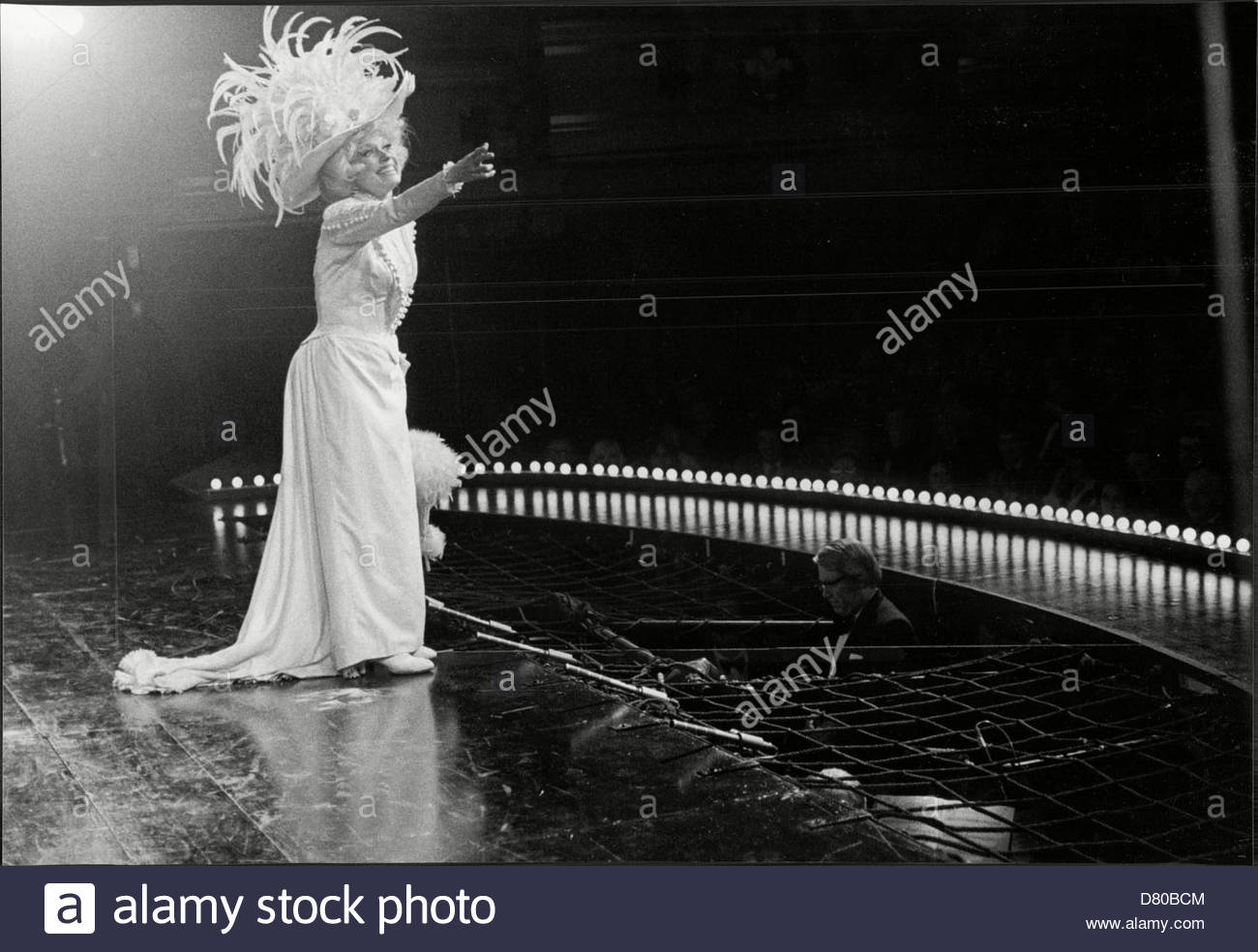
Carol Channing
With Channing mollified and the power restored, the second show went on without a hitch. In his many dealings with stars, Walter has found most to be generous. However, as “they’re pestered a lot,” he said, “all of the big people build a wall around them. They have no private life. Now, when you brought some of them in a few times, the wall broke down and the next thing you knew you were out eating dinner together after the show. A lot of them were wonderful with people coming up to them for autographs…and they should be — that’s part of their job. On the other hand, if people were a little pushy, they didn’t like that.” Among his favorites, he said, were comic musician Victor Borge, conductor Arthur Fielder, band leader Fred Waring and actor Hans Conried. “These people were special.”
Regarding Waring, Walter recalls, “The last time I had him was his ‘Eighth Annual Farewell Tour.’ I used to kid him about that. He just kept going on as long as he could. That last time we had him he gave a wonderful show and, when he came off, he was literally so exhausted he just fell into my wife’s arms backstage, catching his breath. But seconds later he was back on stage thanking everyone. That’s show business. That makes a performer.” When it came to Conried, who headlined a straight dramatic play for Walter, the actor so enjoyed a repast at the Bohemian Cafe that whenever he hit the road again “he’d drive up, give me a ring and say, ‘Let’s go to the Bohemian.’ He thought this was heaven.”
Ruth Fox recalls going as a little girl with her mother to the Orpheum and being awe-struck by the great hall. “I was so impressed with the mirrors and the chandeliers.” she said. “Oh, that was something to behold.” A lifelong theater-lover, Fox began ushering and working backstage at the Orpheum in the 1970s. “I started to usher for the symphony, the opera, Broadway touring productions and whatever else came.” It’s something she continues today. She enjoys being around theater people and the hubbub surrounding them.
“I find it thrilling.” As an opera guild member, she joins other ladies running a backstage concession for cast and crew. “We fix homemade food. Matzo balls, deviled eggs. You name it, we have it. We have a real thing going. We spend time with the performers. We take care of their needs…and they’re so nice to us. Once in a while you get a stinker, but most are wonderful.” She takes great pride in her role as an usher, too. “We, who usher, really are ambassadors to the city. There are so many people who come from out of town who have never been to the Orpheum before. It’s their introduction, you might say, to Omaha…and we have to make a good impression.”
Despite the theater’s prominence, its future was once uncertain. By the end of the ‘60’s it languished amidst a dying downtown. Ownership changed hands — from the Orpheum Circuit to several movie theater chains. As business declined, the theater fell into disrepair and, following an April 29, 1971 screening of Disney’s The Barefoot Executive that played to a nearly empty house, the place closed. At first, there was no guarantee the theater would not follow the fate of another prominent building in Omaha, the old post office, and be razed. Its prospects improved when the Knights of Ak-Sar-Ben bought the theater and donated it to the city, which agreed to steward it.
The city formed the Omaha Performing Arts Society Corp. (no relation to the current management group) for raising revenue bonds to underwrite a renovation. Local barons of commerce contributed more dollars. Everything was on the fast-track to preservation until the city learned it had inherited a $1,000 a month lease for use of the lobby from the City National Bank Building, which the Orpheum abuts. With the rental issue gumming-up the works, the theater — then lacking any protective historic status — became a white elephant and, some say, a likely candidate for the wrecking ball. It was saved when the Omaha Symphony bought out the lease and deeded the lobby to the city.
A multi-million dollar renovation ensued — removing years of grime, repairing damage caused by a leaky roof and restoring deteriorated plaster and paint — before the Orpheum reopened as Omaha’s performing arts center in 1975, with Red Skelton headlining a glitzy gala. Later, it was designated an Omaha landmark and a National Register of Historic Places site. Over the next 27 years, the theater thrived but not without complaints about acoustics, amenities and overbookings. The theater also operated at a loss for many years.
Two men who know every inch of the theater and have spent more time there than perhaps anyone else are Al and Jeff Brown, a father and son who have made managing the Orpheum a family enterprise. Al, a tattooed Korean war vet, was on-site manager there from 1974 to 1996, during which time he saw the theater enjoy a renaissance. When Al retired, his son Jeff, who worked at the Orpheum as a stagehand like his dad before him, followed in his footsteps to assume responsibility for the day-to-day operation and maintenance of this heavily-used old building in need of faithful attention.
The hours on the job can be so long that Jeff, like Al did, sometimes sleeps overnight on a cot in the office. Jeff feels the work done to the theater this past summer, which tackled some longstanding problems, will be appreciated by performers and patrons alike. “The big thing is to keep both of them happy,” he said. “I feel with this renovation we’re going to better realize that goal because of the areas we’ve addressed…improved seating, enlarged and added dressing rooms, added women’s restrooms, a new heating-air conditioning system. Before, we did the best we could with what we had, but now it’s going to be much more user-friendly.” Keeping show people happy, whether local arts matrons or visiting world-class artists, means making sure everything behind-the-scenes “has to be the way they want it,” Al said. “Touring performers come into town and they’re tired. It’s a drag. Anything you can do to alleviate some of that, they appreciate it.”
He said temperamental stars become pussycats if a manager and crew are prepared and have gone the extra mile. Echoing his father, Jeff added. “If you do your homework before the show and you make sure that everything is clean and you have everything they ask for, they’re very pleasant to work with.” Something Jeff learned from his old man is “treating every show the same — it doesn’t matter whether it’s a school graduation or a dance recital or a big Broadway show. We do whatever we can to make sure they have the best show they can have.”
Jeff said the theater’s new management structure bodes well for the facility. “I feel it’s better because our budget isn’t affected by what happens at Rosenblatt or at the Auditorium. We’re our own separate entity now. We’re on our own and we know we have to make it on our own. It will be a challenge, but I think it will be good.”
The Orpheum, saddled with recent annual operating losses in the half-million dollar range, will more aggressively seek and promote high stature events and market the theater as a destination place. An Orpheum web site is in the works. It also means Orpheum performance seasons — complete with public subscriptions — may be in the offing. It’s all been tried before. But the performing arts society may be in a better position to pull it off than financially-strapped city government.
Terry Forsberg said, “Now that you have a private group and the financial backing of the business community, it can be done. The question will be how much of a profit they will have to show in order to keep it operating.” According to John Gottschalk, “The Orpheum will have an endowment, but we’re certainly in no position to absorb half-million dollar losses every year. So, we’ll need to operate effectively and efficiently. The best way to end the…losses is to have a diversity of performances and to have bigger houses more frequently…and we will be heavily employed to make sure this place is full and active.”
Everyone, it seems, holds the Orpheum in high esteem. For Gottschalk, its rich legacy makes it a vital touchstone. “In the first place, it’s an incredibly old symbol,” he said. “There’s been an Orpheum Theater here since the turn of the century. Its longevity is what makes it such an integral part of the fabric of the community.”
Showman Walter said “it’s great to be part of this theater and it’s wonderful heritage.” Omaha Performing Arts Society president Joan Squires calls it a real treasure for the city.” Theatergoer Marjorie Schuck describes it as “a very big asset for Omaha culturally,” adding, “It’s a highlight coming to the Orpheum…it’s been here a long time, it’s still here, it’s still going, and we expect it to continue.”
Perhaps thinking of the effect the planned downtown performing arts center may have on the Orpheum, volunteer Ruth Fox said, “I just pray they will not tear it down or change it.”
Pray not, indeed, for that would be too much to bear. As a program for the Orpheum’s 1927 opening noted, the theater “is a continuation not only of a place of amusement, but also a veritable civic institution.”
Related Articles
- Ghost Hunting at the Orpheum (tdhurst.com)
- Musical Theatre Shows in Chicago (north-american-musical-theatre.suite101.com)
- Omaha Arts-Culture Scene All Grown Up and Looking Fabulous (leoadambiga.wordpress.com)
- Quiana Smith’s Dream Time (leoadambiga.wordpress.com)
- Re:Take: The Orpheum Will Rise Again (seattlest.com)
- Great Plains Theatre Conference Grows in New Directions (leoadambiga.wordpress.com)
- Kevyn Morrow’s Homecoming (leoadambiga.wordpress.com)
- Shakespeare on the Green, A Summertime Staple in Omaha (leoadambiga.wordpress.com)
- Great Plains Theatre Conference Ushers in New Era of Omaha Theater (leoadambiga.wordpress.com)
Nancy Duncan: Storyteller

Image by National Media Museum via Flickr
I wrote several articles about the late storyteller Nancy Duncan. Eventually they will all find their way onto this site. There is one other currently on the blog. That piece is entitled “Her Final Story,” and was written when a quite weak Duncan faced her final days with terminal cancer. From the time she was diagnosed with cancer and on through the many rounds of treatments and surgeries she endured over years, she used storytelling as a means of coping with and making sense of her experience. The story offered here was written when she was a breast cancer survivor and still full of energy. Through it all though, she never lost her warmth or spirit or her passion, and that is what I always tried to convey about her when I profiled her. The other thing she inspired me to do was to try and find the right words to describe the art of storytelling and to explain why it was and remains a primal form of communication that we all need for our nourishment. My search for those words made me a better writer. Being around Nancy made me a better person.

©by Leo Adam Biga
This article originally appeared in the New Horizons
WANTED: Storyteller. Must possess engaging personality, commanding voice, malleable face and ability to relate well with people of all ages. Active imagination a plus. Large repertoire of stories advised. Previous storytelling experience preferred, but not required. Some traveling involved. Hours and fees negotiable.
No, the ad is not real, but the description is true enough. For proof, just catch Omaha storyteller Nancy Duncan in action. That is if you can find her before she hits the road again with her bag full of tales. A seasoned performer, Duncan inhabits a story in such a way that it spills out in animated spasms of sound, expression, posture and gesture. She is as quiet as a whisper or as loud as a shout. As still as a mountain or as antsy as a mouse. Her rubber face bends. Her supple body contorts. Her attentive eyes dart. Her sonic voice booms. She is whatever the story calls for: firebrand pioneer, wily coyote, grizzled witch, fearsome wind, bubbling brook, puff of smoke or, more and more, simply herself.
Duncan left a successful theater career behind to join the professional storyteller ranks in 1987. Since devoting herself full time to spinning yarns, she has developed a kind of fervor for her calling only true converts possess. For her, storytelling is more than a trade, it is a way of being and a means of sorting out the world. As she will tell you, this ancient oral tradition still has the power to hold us enthralled amid today’s digital revolution. Using only the force of her voice and her charisma, she tells stories that variously amuse, inform, heal and enlighten. Since beginning a battle with breast cancer in March, Duncan, 63, has made storytelling part of her therapeutic regimen and survival strategy.
While she did not discover storytelling as a personal artistic medium until the mid-1980s, she says, “I’ve been a storyteller all my life. I was a huge liar as a kid.” From the very start, the former Nancy Kimmel was immersed in stories told by her father, Harley, and maternal grandmother, Emma. “My grandmother shared a bedroom with me from the time I was 5 until I was 16. She was great. She’d smoke a pipe and tell stories. She loved the B’rer Rabbitt stories and could do them with a great dialect. And my father was a great storyteller. He liked to perform the story.”
When she moved with her family from the suburbs of Illinois to the backwoods of Georgia (Buford), she found a ripe landscape for her fertile imagination and boundless energy. She and her playmates organized “safaris” where they roughed-it like natives in the wild. Their only close-call came when moonshiners ran them off. As an imaginative child, she wore different identities like so many hats. “I was a leopard woman for a whole summer. My friend and I made ourselves leopard suits and claws. We would hide in bushes and jump out and scare our friends,” she recalled. She was a fine athlete too, whether scaling hills or playing hoops. Despite her dramatic gifts, when forced to choose between acting in school plays or competing on the school team, she opted for the court over the stage.
With the intent of curbing Nancy’s rambunctious ways and turning her into a proper young lady, her mother sent her to private art and elocution lessons. But Nancy chafed at any attempts to make her a debutante. She would much rather have been tomboying it outdoors with friends. By the time she graduated high school her father had fallen ill and she reluctantly left home to attend Agnes Scott College, a private women’s school in Atlanta. Not long after completing her first year there, her father died. She missed his stories. After grieving, she blossomed in college, majoring in English and minoring in art and theater. She then embarked on being a writer, even completing a fellowship at the famed University of Iowa Writers Workshop, before turning her attention to the theater and earning a master of fine arts degree in Iowa City.
It was there she fell in love with one Harry Duncan, a renowned fine book printer and instructor 20 years her senior. She learned typography from him. She also fell in love with him. And he with her. Student and teacher married in 1960. Despite skepticism from family and friends about their marriage surviving such an age difference, the union worked. The couple enjoyed 37 years as husband and wife and raised three children together. Harry died in 1997 from the effects of leukemia and colon cancer.

Harry Duncan
What made the relationship click? “The secret of our marriage and our lives is that we both found ways to do what we loved to do and would have done anyway if we didn’t have to work. It had to do with living our dream and not letting anything get in the way of that. Harry was a master printer, poet, editor, designer. He was devoted to his work. We sometimes had to drag him away to go on a vacation.”
After leaving academia behind, Nancy taught theater and directed stage productions at a small Iowa Quaker School. Then, in 1973, she joined the Omaha Community Playhouse staff as associate director. She left the Playhouse in 1976 to serve as artistic director and later as executive director of the Omaha Children’s Theater (now the Omaha Theater Co. for Young People), which she helped grow into one of the nation’s largest and most respected arts organizations of its kind. Burned-out by the demands of keeping a theater afloat, she turned to storytelling, a medium she had dabbled with a few years, as her new vocation.
Drawing on her theater background, her early storytelling was character-based and performance-driven. Her large catalog of stories — some original and some borrowed — include the collections Why the Chicken Crossed the Road, Good Old Crunchy Stories and Nebraska ‘49, which chronicles the true-life adventures of pioneer women. Her most popular incarnation, Baba Yaga, is a grouch of a witch with a golden heart. The old hag has become a sensation with school-age audiences, although some fundamentalist Christian groups concerned about the character have boycotted Duncan and even banned her from performing.
Since becoming a storyteller Duncan has often worked as an artist-in-residence in schools via the Nebraska Arts Council. She is currently one of only 225 artists participating in the national arts residency initiative of the Mid-Atlantic Arts Foundation. Her telling takes her on wide-ranging tours across the country (she recently returned from performing at the National Storytelling Conference in Kingsport, Tenn.). In 1999 the National Storytelling Network presented her with a Leadership Award for her work promoting the art in the North-Central region. She is also a board member with OOPS, the Omaha Organization for Professional Storytelling, a storytelling instructor at various colleges and universities the coordinator of the annual Nebraska Storytelling Festival.
She has seen the 15-year-old Nebraska festival grow amid a general storytelling revival in America inspired by the National Storytelling Festival in Jonesborough, Tenn. Duncan said there is a demand for these public storytelling forums because people hunger to hear stories. “We all love stories. We seem to be wired to the narrative form. It used to be everybody told stories. Today, people miss the stories in their lives. It may be they grew up when we didn’t have all these machines do our work and we didn’t have television sap up our time and instead we gathered on our big front porches in the evening to tell stories. Some people never had it in their lives and miss it because they know television is not giving them the stories they want to hear. They want to be present in the story — to recognize themselves — because stories celebrate who we are. They validate us. It’s like identity maintenance.”
As a creative artist, she naturally feels compelled to explore and express in her work whatever is going on in her life. Lately, that has meant examining her cancer. At a recent telling before a group of prospective medical students she struck up a quick rapport with the audience through her open, honest demeanor and her disarmingly whimsical humor. More than a creative outlet, her cancer stories function both as a coping mechanism for herself and as a forum for others about the risks of the disease and the forbearance of patients like herself. In a recent interview at her handsome, sun-drenched home in central Omaha, Duncan described how her experience with cancer is changing her.
“Breast cancer is transformational. I can feel already changes happening in me because of this, and it’s all based in community. There’s a huge community of people out there who’ve had cancer and because they’ve lived through this they have a relationship other people don’t have,” said Duncan, who, once she was diagnosed, informed friends around the world about her illness and, in turn, received supportive messages about their survival or the survival of their friends and loved ones. “That’s a pretty amazing group of people.” Duncan plans on joining a cancer support group as soon as her summer touring season ends. “I plan to get in one because I believe in efficacy within your own community — of people healing themselves and healing each other through their communications.”
According to Duncan, confronting problems through stories can be curative: “It’s a very healing process because as we turn our own experiences, including very negative ones, into stories and share those with other people, they share back and their comments shape the way we feel about our lives and a community is created. As we story, we heal the situation or solve the problem. It’s very healthy.”
She feels sharing the details of her story, including the mastectomy she underwent March 21 and the loss of hair she has endured during chemotherapy treatments, is her way of fighting the sense of denial and defeat still accorded subjects like cancer. “We need not to hide the fact this is happening. If we hide the fact we have cancer in order to be normal again we’re denying who we are. We’re also making it easier for others to get it because we’re doing nothing to prevent it. That’s why I have decided I’m not going to wear a wig and I’m not going to wear a prosthesis. Part of who I am is going to be a person who’s had breast cancer and who wants to tell stories about it. I hope my actions draw attention to the fact there is breast cancer in the world and that we need to do something to cure it. Moreover, we need to prevent it. Hiding it, to me, says the opposite. That it doesn’t exist. Instead, we need to let women know, You have a job to do.”
She said her anecdotal research reveals many women still do not do not know how to self-examine themselves or are afraid to. Why? “They don’t want to know. It’s maddening. They’re cutting their own throat.” She admits she has become something of a militant in the war on cancer. “There is an epidemic of cancer. Over and over again I keep hear people saying, ‘Well, we don’t know what causes it.’ I don’t believe that. I think we do know — we’re just denying that too — and so we’re writing death sentences for ourselves and for our children. It makes me kind of fiery.” Her decision to go wigless and to refuse surgical and/or cosmetic measures takes some people aback. “It’s threatening. That’s problematic for me because I don’t want to knock anybody’s choices. Women have the right to make their own choices. But at the same time I think denial is a dangerous habit of women. Too often, we deny the depth of what’s happening in our lives and ignore ways to change things for the better.”
In the process of describing her journey with cancer, her mission is to get people to look at the illness in a new way and thereby keep it from being a taboo subject shrouded in fear and morbidity. It is why she uses humor to discuss it and to defuse certain attitudes about it. “I want my stories to be very funny. When you have cancer there are all sorts of tricks your body plays on you. Losing a breast is tragic, but it’s also very funny. For example, without having any breast on my right side I realized that anything I tried eating that missed my mouth had a straight shot to the floor. Before, it didn’t. I always wondered before why there were more crumbs under my husband’s chair than mine. Guys have been keeping that a secret for a long time,” she said with her big wide smile and full-throttle laugh.
“And being able to wash your hair with a washrag is really wonderful,” she added, her hand sweeping back the few brown wisps on her head. “I’m not sure I’m ever going to let my hair grow long again. Also, the whole notion it might come back in red is very appealing to me. These are just little ways of looking at things that make them fun, rather than threatening.
She said storytelling is a perfect means for the teller and audience to explore together personal issues that are universally identifiable. Unlike a lecture where the speaker imparts a rigid message to a passive audience, storytelling is an organic, communal, interactive form of communication. And unlike reading from a text, storytelling springs from the recesses of the teller. Said Duncan, “If you’re holding up a book and reading from it you are not present in the same way you are telling a story. You’re just processing words and your personality doesn’t come through in the same way it does in storytelling, where who the teller is and how they feel at any moment is in what they’re telling. You can’t separate the teller from the story. That’s why there’s such a wide variety of tellers.” Storytelling works best, she said, when a spellbinding teller invites rapt listeners to shape the story to their own ends. It then becomes an individual and shared experience in one.
“You don’t tell stories into the wind. You tell stories to people,” she said. “Because storytelling is a live process, a story is not frozen. It’s like jazz — it’s still living and being shaped — and the storyteller navigates the story with the audience and changes it depending on what they get back from that audience. The audience makes the story in their minds. They create all the pictures to go with the words, and they get those pictures from their own lives. So, by the end of the evening you have as many different versions of the story as you do people in the room because each person has co-made their own part of the story. And when that happens, it’s very powerful and bonding. It’s like going on a journey together to a different place. It’s sometimes deliciously entertaining and funny. It’s sometimes spiritually intriguing and challenging. It’s sometimes moving and bereft with all the memories that get brought to the story.”
When a teller connects with an audience, she said, it is hypnotic. “There are certain stories that take you so deep into an emotion or an event that they are trance-inducing. The audience goes off with you. You can see it in the way the story flows across their faces. Their eyes lock-in and their jaws go slack. It’s as though they are dreaming.”
Duncan said the more emotionally honest a story, the more resonance it carries. For a residency in a Fremont alternative school last year she asked a group of wary students to listen to personal stories told by adult mentors. To their surprise, she said, “the kids were wiped out by the stories.” Students then had to tell the stories back and find a personal link to their own lives. “This time, the adults were in tears. The kids and adults realized they had a real human connection. They wanted to know each other better,” she said.
This Pied Piper for storytelling has encouraged several other tellers. Among them is her daughter, Lucy, a professional storyteller in her own right, and granddaughters, Louise and Beatrice, with whom Nancy regularly swaps tales. “My grandkids are always asking for stories. They’re steeped already in the personal stories and in the more fanciful stories. I have a story I’m working on now that is all about them and their relationship with me. It’s kind of a grandmother story.” Duncan hopes many of the stories she values will be taken-up by her grandkids and told by them.
“My goal is that one of them will be telling those stories at a festival somewhere. I’m trying to pass that love of story onto them.” She feels senior citizens have an obligation to be storytellers, but finds too many isolated from this traditional familial-societal role. “It’s a great loss to our society when seniors are separated and devalued. They have a responsibility to pass on knowledge and they have a need to be validated,” she said. Whether told at a fireside, a bedside or a festival, she said stories tap a deep well of shared human experience. “Storytelling is the best-kept secret in the world. It’s not just for children. It’s for anyone. We all have valuable stories to share.”
So far, Duncan has not allowed her illness to limit her busy, independent lifestyle. She said friends and family urge her to take it easy.
“They keep saying, ‘You need to slow down, to stop, to rest’ I haven’t quite accepted that yet. I tend to listen more to what the holistic medicine people say, which is — do what you want to do…do what makes you happy.” At a recent telling about her cancer, she said, “Now, this story…doesn’t have an ending. Not yet. I don’t know if I’ll truly know the meaning of this experience. But I have learned many things. One of them is, you cannot lose something without getting something else back. You don’t get back the same thing you lost, but you get back something that might be better. For example, I may not be a grandmother with a great shelf of busom, but there are other kinds of shelves. There’s the comforting shelf of story.”
Related Articles
- Healing with Story: Healing the Storyteller (health-psychology.suite101.com)
- Creating a Youth Storytelling Community One Kid at a Time (storytellingadventures.blogspot.com)
- Storytelling (aztecexploration.wordpress.com)
- The Importance of Telling Kids Stories (prathambooks.org)


 Leo Adam Biga's My Inside Stories