Enchantress “LadyMac” Gets Down
Another example of a talented creative artist from Omaha is Yolonda Ross, a superb actress who left her hometown years ago for New York City, and she’s carved out a very nice career in film and television. The following profile for The Reader (www.thereader.com) gives a good sense for this adventurous actress, who also writes and directs. This story appeared in advance of her role in the controversial film Shortbus, one of my provocative projects she’s participated in. I am posting other pieces I’ve done on Yolonda as well.
NOTE: More recently, Yolonda’s had a recurring role as Dana Lyndsey on the acclaimed HBO drama Treme. Another Omaha actor of note, John Beasley, just nabbed a recurring role on the same series. Small world.
Some of the many faces and looks of Yolonda Ross:
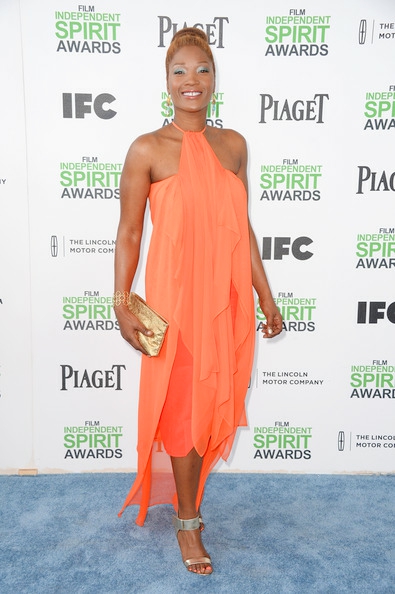
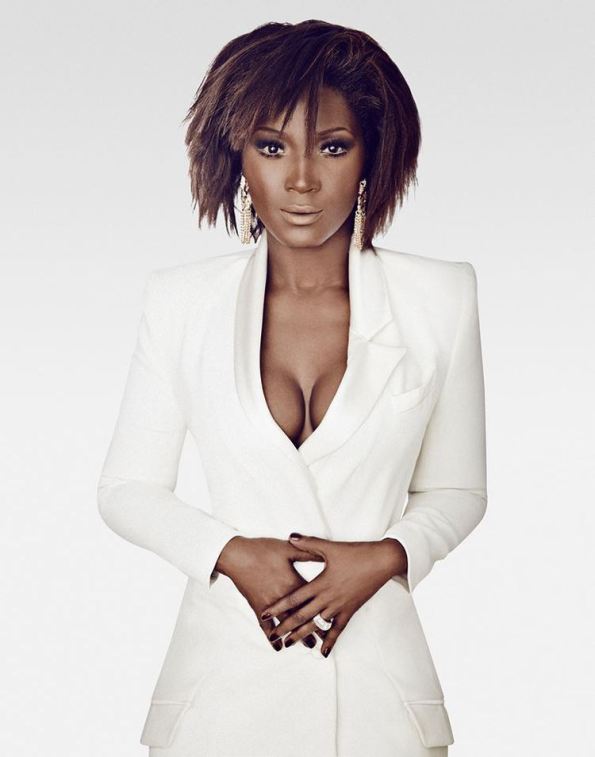
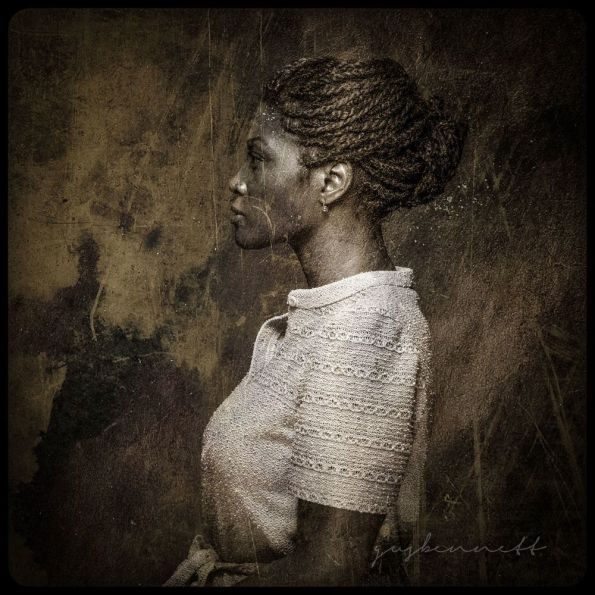
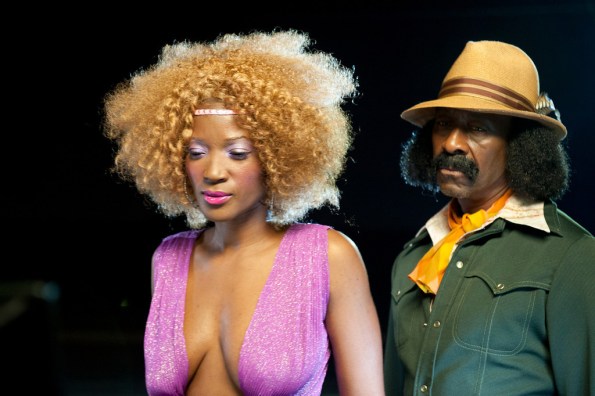
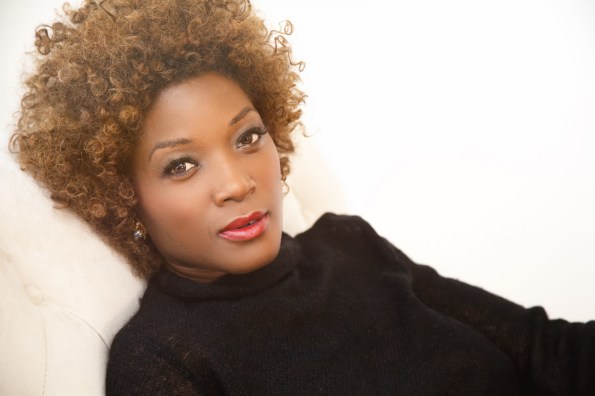
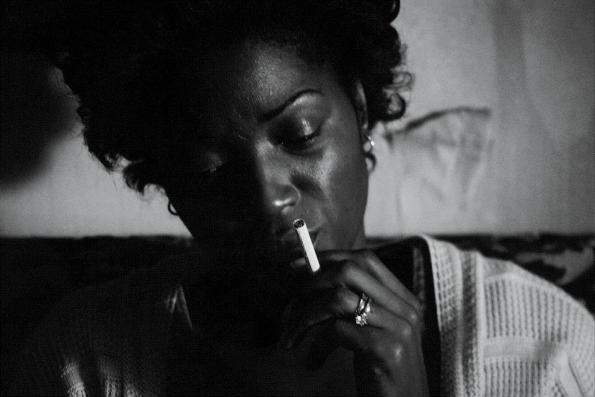
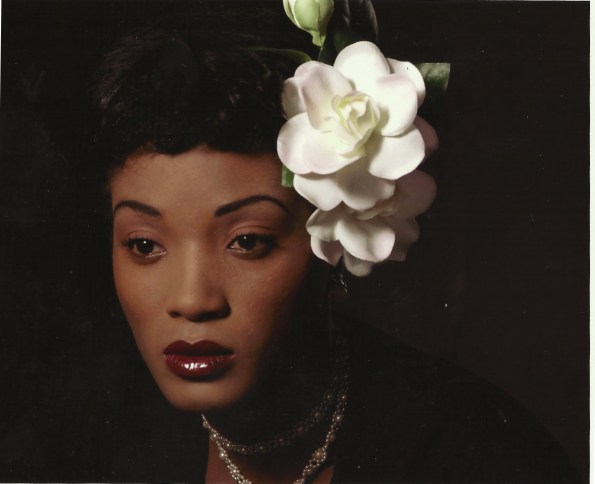
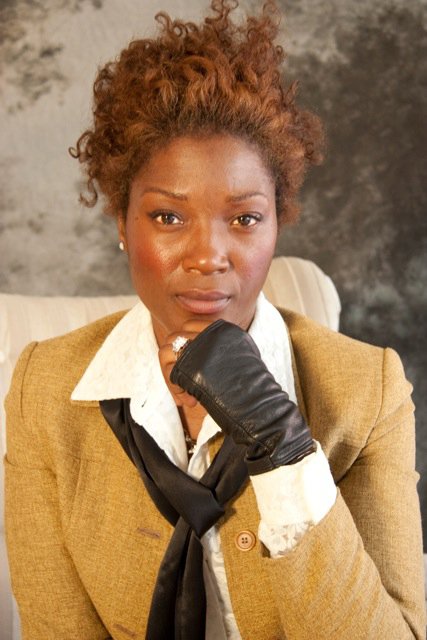
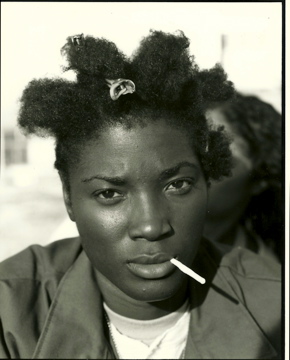
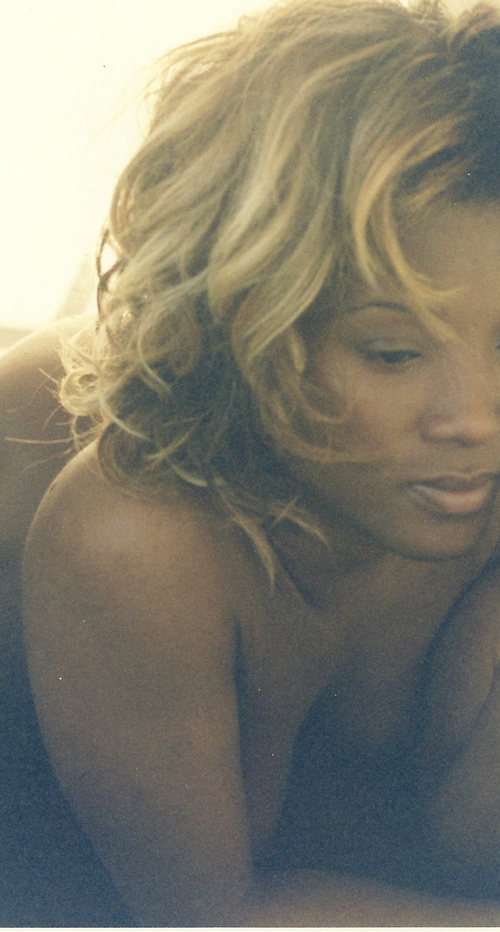
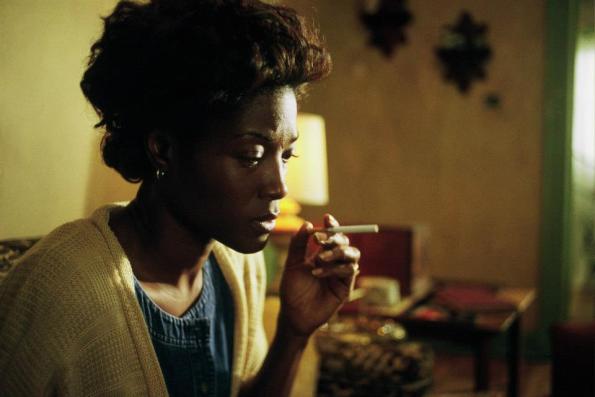
Daring actress Yolonda Ross takes it to the limit
©by Leo Adam Biga
Originally published in The Reader (www.thereader.com)
Gabrielle Union gets all the pub, but another film/television actress from Omaha, the righteous Yolonda Ross, consistently does edgy material far afield from Bad Boys II and The Honeymooners. Ross has played everything from a wannabe gangsta desperate for love to a string of lesbian characters to a child molester to a porn actress. She’s worked with everyone from Woody Allen (Celebrity) to Denzel Washington (Antwone Fisher) to Don Cheadle (The United States of Leland) to Vanessa Williams (Dense and Allergic to Nuts).
Last fall, she worked on a Leonardo DiCaprio-produced film, The Gardener of Eden, and has been in discussions with such A-list artists as Cheadle for other parts. But it’s a project she wrapped last summer, Shortbus, that should grab her some attention. The notorious new feature by John Cameron Mitchell (Hedwig and the Angry Inch), a maker of queer cinema, deals with transient artists looking to connect through sex in the malaise of a post-9/11 Manhattan languishing from ever-present anxiety, commerce, inflation and exhibitionism.
Whether Shortbus ever makes it to Omaha is anyone’s guess. Most of Ross’s film work, which includes several shorts, doesn’t make it here. An exception is Dani and Alice, a 2005 short directed by Roberta Marie Munroe that’s screening at the Omaha Film Festival. The film deals with the rarely discussed problem of woman-on-woman partner abuse. Ross plays the femme victim Alice to butch lover Dani in an abusive relationship in its last hours. Dani and Alice shows March 25 at the Joslyn Art Museum’s Abbott Lecture Hall in the fest’s 9 p.m. short film block and Ross plans to attend and participate in an after-show Q & A. For details, check the event website at www.omahafilmfestival.org.
Difficult subjects are the Ross metier, which keeps her work from being widely seen. Her Shortbus director, John Cameron Mitchell, had trouble financing that pic because of his insistence on lensing non-simulated sex scenes.
“Yeah, that’s true, the not-simulated part,” Ross said. “That’s why it’s taken him so long to get money for the movie. People were scared to put money into it.”
Ross was originally put off by the idea of “doing it” on screen and perhaps jeopardizing her career by blurring the line between adult and mainstream cinema. Then, she changed her mind, and was even prepared to partner up again with an old flame for some celluloid enflagrante.
“At first, I was like, I’ll work on it, but I won’t do the sex part. Then, a year later, when John still didn’t have money for it I told him me and my ex-boyfriend would do it — because he needed couples. At that point I was like, If Chloe Sevigny could suck off Vincent Gallo (in The Brown Bunny), then I’m sure I could do it with my ex in a movie. Right?! I said I would do that based on my complete faith that John knew what he was doing and would do something amazing with it, and not use it in a disgraceful way.” As things turned out, Ross didn’t have to get down and dirty for the sake of her art. “Everything turned out cool. The actual couples are still in it. But when somebody fell out of another part, I was re-cast in a role that does not require me to have sex on camera,” she said.
In a film full of non-actors, she plays opposite JD (Samson) of Le Tigre and Suk Chin of Canadian News. She’s not telling who does what on screen. “Dude, you’ll have to watch the movie to know who does and who doesn’t have sex,” she said, laughing.
In the film, she’s the lesbian rocker, Faustus. She attends a women’s support group whose members talk through the politics and emotions of being gay in a straight world. Shortbus is the name of the fictional salon where the insecurities and idiosyncrasies of the characters, including Faustus, intersect. Some go for readings or performances. Others, for therapy. Still others, to engage in public sex. The salon culture portrayed in the film, where sex is a ritualistic and nihilistic acting out mechanism, is based on actual Manhattan salons.
Mitchell and Ross had wanted to collaborate for some time and the two actually hooked up last winter for a Bright Eyes video he directed and she appeared in.
“It’s really a nice thing working with John. He’s so good with people, whether they’re actors or non-actors. He’s great at bringing out the most in them,” she said. “He’s really good at making people feel confident and at ease, while staying on track with what he wants. I think he’s ridiculously talented.”
Ross follows her own clear vision in trying to elevate her career to the next level. She’s well aware, however, of Hollywood’s feckless ways. It’s why she’s taking matters in her own hands and pitching scripts she’s penned in the hope one sells and provides her with a tailor-made part. One of those scripts is serving as her directorial debut, for the comedy short Safe Sex she plans shooting. The story explores how sexual preferences, once exposed, tend to define people.
“Sex fascinates me. It makes people do really stupid things and act in ways they probably never do otherwise. It’s about a lot of mind stuff and what we see as wrong with sex. People have their fetishes or what have you, but you can’t really judge a person by what they get off to. Different things turn different people on.”

Bold themes and choices mark her work. In her best known role, as lesbian inmate Treasure Lee in Cheryl Dunye’s 2001 HBO original film, Stranger Inside, she endures the humiliation of a strip search early on and, in a later love scene, enjoys being pleasured by an inmate going down on her off-camera. In the comic fable Hung, she’s among several gay women to grow a penis. Each owner of the new appendage has her own ideas what to do with it.
In the feature Slippery Slope, pegged for a fall release, she’s a porn star named Ginger who initially struggles adjusting to the higher expectations of a legit director slumming in the world of skin flicks. “Ginger’s been in the business a little while,” Ross said of her character. “She’s a bit set in her ways. She kind of only knows one way to act. She resists learning something new and then she kind of embraces it. She gets into it, actually — the idea of making better pictures. And she starts making her own pictures. It’s nice that she’s not a one note character.”
With Shortbus, Ross once again pushes the envelope as one in a gallery of exotics. Exposing herself emotionally and physically in a part doesn’t intimidate her.
“I have no problem with being a taboo character or doing taboo things or anything like that,” she said. “As long as I can physically do them, I’m going to get up there and do it. I want you to forget it’s me. I want you to be lost in that character.”
Because Ross wants even fringe characters grounded in reality, she underplays what could be camp or superficial. “I like working subtly. The stuff that gets me is what happens behind the scenes and what people are really going through. Good, strong female characters that are real people,” she said. Not big on research, she relies instead on instinct and script preparation. “Know what you need to know, and then Iet the acting take over. I think what you need to be dead-on with are the emotions. That’s what makes me work better. If I know what my character thinks or feels in a situation, then that’s what makes me react in the right way.”
Her expressing the right emotion of a line is akin to when she sings jazz or blues, something she does purely for pleasure these days, but that she once did professionally in New York clubs. Music, she said, opened her up to acting, and she still uses it today to find the right notes and beats for her characters.
“When I started singing is when I understood the key of emotion. With every major character I’ve done there’s been music behind each one. From singing, I know there’s certain notes I hit or tones I make that, when I hear them, make me cry or make me feel some other way. Music can change my whole body and how I carry myself. If I’m listening to Ella, I’m not going to walk the same way I do as when I’m listening to Ray Charles. When I was doing Stranger Inside, there was a Marvin Gaye song, Distant Lover, in my head. OnShortbus, it was The Tindersticks’ Trouble Every Day soundtrack. Music keeps me relaxed or tense or whatever I need to be.”

In her early-30s, Ross is at a place in her career where she does a nice balance of little and big screen gigs capitalizing on her street smart persona, which finds her getting cast as beleaguered mothers, strung-out junkies, intense cops and bohemian types in episodic TV. But anyone who’s seen her work, such as her riveting turn in Stranger, knows she can play a full palette of colors and be everything from a hard-core case to a sweet, neurotic, vulnerable woman-child.
There’s a sense if she can just land one juicy part, she’ll be a major presence. Even if that doesn’t happen, she keeps adding to an already impressive body of work. Among her TV credits, are sketch comedy on Saturday Night Live, and high drama guest shots on 24, ER and Third Watch.
Part of why Ross hasn’t broken out big time in front of the camera, despite some heady props for Stranger and Fisher, has to do with the unsympathetic or peripheral roles she gets and the small indie projects she plays them in. One could argue that until now, while Gabrielle Union’s enjoyed the more successful commercial career, Ross’s has been more interesting. To be fair, though, Union has three films in the can that finally go beyond purely popcorn storylines and that for once hold out the promise of stretching her dramatic abilities.
But the point is Ross, an African-American contemporary of Union’s, has explored provocative subject matter for some time now without a fat pay-off. Union and Ross, who incidentally are fans of each other’s work, offer an interesting comparison. Each has defied the odds to carve out a nice career on screen. A key difference is perception. Union’s classic, wholesome beauty, with her smooth, soft features, put her up for positive roles and land her well-placed Neutrogena TV spots and endless glamour photo spreads in national mags. She comes across as sexy, brainy, full of attitude, but in purely non-threatening terms — as the love interest, friend or rival — and in widely accessible pictures, too.
By contrast, Ross’s unconventional but no less intriguing radiance has harder features, leaving her out of luck when it comes to girl-next-door or, for that matter, seductress roles. Spend any time with Ross, and it’s obvious she can play it all. She even does her share of glam, including a recent Bicardi Big Apple event in which she modeled an Escada gown. She’s a regular at New York premieres and other photo-op bashes. But in a town where they only know you by, What have you done lately? — perception, not reality, rules. Her performance in Stranger, a film/portrayal that became a cause celeb at feminist/lesbian festivals, was so on the mark, she’s been typecast ever since as a low down sista. In fact, she’s in high demand by women directors, whom she often works with.
Women confront stereotypes in the business, but Ross said black women must overcome even more. She said if you look closely, you’ll see that actresses with darker skin tones play “bad” while those with lighter skin shadings play “good.”
“Darker women are the cops, the crack heads, the hard asses. The darker the skin, the harder you’re going to be, the tougher you’re going to be. It’s very difficult for me to be seen as the cute girl next door or the nice mother or the love interest. I mean, it’s the craziest thing. Gabrielle’s about the same color I am, but she’s somewhat busted through,” said Ross, who surmises Union’s straight hair translates into less urban or ghetto in the minds’ of casting directors. “It’s about looks and name and face recognition. That’s what sells. Halle Berry can make bad movie after bad movie and have a Revlon contract. But why is it Angela Bassett isn’t working?”
Good women’s roles are hard to find, period, and even harder if you’re black. “Most scripts I read aren’t that good,” she said. “The characters don’t evolve.” Then there’s color-conscious casting that denies Ross, and even Union, a chance at roles deemed white or, God forbid, being part of an interracial romantic pairing.
That’s why Ross, who’s developed a working friendship with famed screenwriter Joan Tewksbury (Nashville) — “my second mother” — and Dani and Alice co-star Guinivere Turner, is trying to make something happen with projects she’s written alone or in collaboration. She despairs sometimes how fickle and slow the business is. “It drives me crazy. But I have to remember all the stories about other people where it took like 10-15 years to get something done. I know that the stories I have will have an affect on people. So, I keep that in mind.”
Until something breaks there, she’s waiting for start dates on two more features she’s cast in. Pearl City is a modern-day film noir set in Hawaii that lets Ross play sly as one of many potential suspects in a homicide investigation. Then there’s a new religious-themed film by Boaz Yakim (A Price Above Rubies).
Meanwhile, slated for a spring release is The Gardener of Eden. Directed by Kevin Connolly, the film co-stars Ross as one of many people crossing paths with a man so addicted to the props that come with being hailed a hero that he manipulates events to rescue others. The film also features Lukas Haas and Giovanni Ribisi.
Whatever comes next, Ross will take it to the limit.

Another of my stories focusing attention on Omaha black artists and other high achievers follows with this feature on the rock-blues group Crackin’, whose reunion back here a few years ago was the impetus for the piece. It’s one of several stories I’ve done that profile African Americans from here who have made major impacts in their fields of endeavor. This blog contains many of those stories, and so I invite you to stroll through the gallery of work here and discover them. It’s all part of the build up to the 2011 Omaha Black Music and Community Hall of Fame Awards on July 29 at Slowdown and the July 27-August Native Omaha Days.
:format(jpeg):mode_rgb():quality(40)/discogs-images/A-277559-1326667345.jpeg.jpg)
©by Leo Adam Biga
Originally published in The Reader (www.thereader.com)
The Hood is replete with stories of musicians who should have made it, if only…
Crackin’, a smoking 1970s multi-racial rock-blues band from Omaha, did get its shot at fame. After a promising start and recordings on major labels, things fizzled and the band disbanded in ‘78. But “within the business people knew who we were and really loved our music,” said Crackin’s Arno Lucas. That rep and the talent to back it up made members in high demand. All have enjoyed serious music careers.
Three decades after splitting up, these stray cats are coming home for August 4-5 reunion concerts at the Omaha Healing Arts Center, 1216 Howard Street. Show times are 8 p.m. Saturday and 7:30 p.m. Sunday. The reunion coincides with Crackin’s induction in the Omaha Black Music Hall of Fame. Some players also performed with fellow band-inductee L.A. Carnival.
Headed up by Lester Abrams, Crackin’ was invited to Woodstock, NY to work with idol-maker producer Albert Grossman. Then they went to L.A. to record on the Polydor label before signing with Warners, for whom they released three albums in 1977-78. The band’s lineup changed from Omaha to NY to L.A..
When the group went defunct, guys began doing their own thing.
Keyboardist/vocalist/composer Abrams co-wrote two songs on Michael McDonald’s Grammy-honored album “Minute by Minute.” He’s collaborated with B.B. King, Stevie Wonder, Peabo Bryson, Quincy Jones, The Average White Band and The Doobie Brothers. He’s composed for television and film.
Percussionist/vocalist Lucas has been an A-list sideman with Al Jarreau, Luther Vandross, Bette Midler, Jackson Browne, Bonnie Raitt, Don Henley, Michael Jackson, Burt Bacharach, Randy Newman, Rickie Lee Jones, Chaka Kahn and Gladys Knight. He’s written songs with Jarreau and for Dionne Warrick.
Bassist Rick Chudacoff and drummer Peter Bunetta own credits as co-producers/co-composers for Patti LaBelle, The Temptations, Smokey Robinson, Kenny G, and Michael Bolton. They’ve written for the screen, including the Beverly Hills Cop franchise, and have a new stage musical out called City Kids.
Guitarist Brian Ray has collaborated with Etta James, Peter Frampton and Rita Coolidge and his scorching licks now back Paul McCartney. He also penned Smokey Robinson’s lone Grammy-winning tune, One Heartbeat.
Vocalist Leslie Smith is a first-call session artist in L.A.. Guitarist and blues journeyman Bob Bordy has played with a Who’s Who of hitmakers.
An early Crackin’ member was blues legend Bugsy Maugh.
For Lucas, the reunion celebrates a shared legacy and longevity. “When we walked in a room we just basically took it over. So many great personalities stood out. This thing we’re about to do is…a coming together of a group of gifted artists and great friends who truly love each other. We’ve remained friends. Everyone’s maintained a high level of musicianship. It’s going to be worth seeing.”
He was motivated to organize the reunion when he saw friends passing away. “I told the guys, ‘If we don’t get together and do this now, I don’t know the next time …we can…’” It’s an appreciation for the fact “life’s been good to us. We’re lucky to still be doing what we lov — what feeds the soul. And it’s a chance to see some of the people who supported Crackin’ in Omaha.”
Robbie Dupree and Neal Davis are among the special guest artists expected to jam.
This is one in a batch of posts I am making in the lead-up to the 2011 Omaha Black Music and Community Hall of Fame on July 29 at the Slowdown. The late Buddy Miles is one in a long list of musicians from Omaha to find stardom or at least solid success in the upper reaches of the music industry. Miles is one of those who became a legend in his own time and since his untimely death in 2008 his legend is only growing. I did this story for The Reader (www.thereader.com) on the occasion of his induction in the Omaha Black Music Hall of Fame, which after a hiatus is back this year in conjunction with Native Omaha Days. My blog is thick with stories I’ve done about famous African American figures from Omaha who’ve enjoyed breakout success in the arts, athletics, and many other fields. You’ll also find stories about many other aspects of African American culture and life in these parts. Hope you enjoy the pieces as much as I enjoyed writing them.

©by Leo Adam Biga
Originally published in The Reader
Famed blues-rock drummer and singer Buddy Miles is coming home to accept the Omaha Star Award at the August 3 Omaha Black Music Hall of Fame ceremony, where he’ll also perform. The 2005 inductee is using the occasion to deliver a message about the needless waste of young people to violence.
Having grown up in the ‘50-’60s heyday of the hep North 24th Street music scene, he rues the loss of what used to be.
“Back in the day 24th Street is where all the clubs were. It certainly is nothing like it was then. It’s like a ghost town down there now…there’s nothing for kids to do,” he said. “That’s why there’s so much havoc and trouble in Omaha and…in every major city…People don’t know how to go and party anymore. There’s too many senseless shooting.s The time has come that we must band together as one….”
The lifetime train enthusiast hopes to convince Union Pacific Railroad to sponsor a nationwide tour, tracing the railroad’s lines, for him to educate young people “about how important their lives are.” His new CD, The Centennial, is named after the famous U.P. diesel engine at Kenefick Park.
He dreamed of being a train engineer. Instead he “followed in the footsteps” of his father, George A. Miles, Sr., who played upright bass with Ellington, Basie, Parker, Gordon. Buddy began playing drums at age 8. “I’ve been a musician all my life,” he said. “I’ve done nothing else.”
As a teen he gigged with his father’s band, the Bebops, and with Preston Love, Sr. and Lester Abrams. He first made it in New York, hooking up with Wilson Pickett. He jammed in the Village with Eric Clapton. His big break came when Michael Bloomfield plucked him for the Electric Flag, a blues-rock band Miles still considers the best he ever played in. He toured-recorded widely, opening for Cream and the Jimi Hendrix Experience, and playing on albums by Hendrix and Muddy Waters. More Hendrix collaborations followed. Jimi produced an album by the Buddy Miles Express. Miles played on Hendrix’s Electric Ladyland. Miles formed with Hendrix and Billy Cox the trio, Band of Gypsys, which released one album before Jimi’s death.


Buddy with Jimi Hendrix

Miles recorded hits and played with such artists as Carlos Santana, Stevie Wonder and David Bowie. His greatest commercial success came with his version of “I Heard It Through the Grapevine” for a California Raisins commercial. The gig made the classic song big again and spawned three Miles albums.
A 2005 stroke has not slowed Miles, who lives in Austin, Texas. He’s even throwing down a challenge to Motley Crew bad boy drummer Tommy Lee and the rocker’s MTV Husker bit. “I’ll have a duel with that dude anytime he wants…We can do it at a Nebraska football game, too,” Miles said, “because I’ll drum him a new ass.”
With the 2011 Omaha Black Music and Community Hall of Fame Awards coming up July 29 at the Slowdown, as part of Native Omaha Days, I am posting articles of mine from the last decade that celebrate various African-American figures from the area. The following story for The Reader (www.thereader.com) is about Lois “LadyMac” McMorris, one of many black musical artists who have come out of Omaha to forge successful careers in the music biz. I did a phone interview with her on the eve of her induction in the Hall of Fame, which returns this year after a few years absence. My blog is full of stories about high black achievers from Omaha.


Enchantress “LadyMac” Gets Down
©by Leo Adam Biga
Originally published in The Reader (www.thereader.com)
Casual music fans may not know Lois “LadyMac” McMorris, but this blues-jazz-rock guitarist from Omaha is paid homages by legends like B.B. King — “The girl is super bad.” After a hot solo Prince saw her play in Kansas City, where she lives, LadyMac said, “He came up to me and asked, ‘May I touch your guitar?’ I felt so honored. For my peers to recognize me is an amazing thing. That’s like a validation.”
More validation comes at the August 3 Omaha Black Music Hall of Fame ceremony. The 2005 inductee is the Jewel Award recipient for her lifetime achievements.
She grew up on the north side making art and music. Today she’s a gallery showing sculptor, painter and drawer and a still active headliner-sidewoman.
Inspired by guitar riffs on radio-television she taught herself to play as a young girl. “It touched me so deeply,” she said. She loved working on her chords and “learned lick for lick” famous solos. She first played publicly at 17, when she joined Joe Leslie and the Impacts. She had to prove to the cats she had the chops to play with them. Her baptism of fire came at Paul Allen’s Showcase on North 24th Street.
“Allen’s Showcase had been the premiere club since my parents’ time,” she said. “There were so many stellar African-American entertainers that would come through from Chicago, Des Moines, Kansas City…there was a kernel core of musicians…and the famous jam sessions and the things that ensued are just something to be written about.
“If you didn’t make it in that jam session either you were going to go home and woodshed and come back or you were going to stop, because it was intense.”
It was even hotter for her as the guys scrutinized her every move with skeptical eyes and sexist remarks. It was the same everywhere she went.
“The gender bigotry was just amazing,” she said. “Denigrated. Put down. Unappreciated. I ran into and still have to fight so much discrimination. It’s gotten a bit better, just as racism has eased a bit. It would go from things that are subtle to overt. Like I’d be told, ‘You can’t do that.’ I mean, over and over again. Please, let’s get real. It just made me more determined to express myself and to play and not be held back by that sort of thing. I cannot abide injustice.”
She made the mark at the Showcase, blowing the house away with her virtuosity and energy.
“For myself, when I finally performed there, it was the pinnacle…” said McMorris. She took those cats by surprise, having honed her gift off by herself, at home, where she’d incessantly listen and practice. “I did not develop my music around them. It was on my own. I just immersed myself in chords. What I hear I can play and I can play it fairly quickly, and then I can write it down as well. I can read, I can write charts. I do arrangements. It’s just in me. ”
What sets her apart, besides her sizzling solos, sultry fly looks and spiritual- inspirational vibe is her ability to both “dig in and just play” and to “express a showtime sensibility” in the way she moves, dresses and strokes.
Besides the Impacts, she played locally with the Persuaders, Seventh House and Poverty Movement and artists Andre Lewis and Preston Love, Sr.. Hanging with top musicians convinced her “larger vistas” awaited. Love advised her to seek new ops. “He told me, ‘You won’t grow your playing here. If you’re going to do something with it, leave.’” She lit out for L.A., where she soon landed a recording session gig with Love’s friend, blues guitarist Johnny Otis”
LadyMac was on her way, her dynamic musicianship-showmanship: sharing the stage with Tower of Power, Earl Klugh, Linda Hopkins; Cooilio, opening for Al Jarreau and Howard Hewitt and headlining the Playboy Jazz Festival. From L.A., she traveled the nation and the world to perform, only recently moving to K.C. to be near family. She’s fronted her own band, LadyMac Attack, and recorded. Her new CD is 500.
Her career mirrors that of many black musicians from Omaha — high caliber players with great creds, but few props outside the industry. She agrees with OBMHOF founder/director Vaughn Chatman that Omaha’s black music legacy is a great untold story, one, she said, people “should know about.”
“A lot of genius players came from Omaha’s near northside,” she said. “It’s a group of multi-talented musicians who can play many instruments, and that’s what’s so rare. Another thing — we’re cross-genre. We’re not just in one pocket. The straight-ahead cats can get busy and play the funk. They can play all those things. Also this sensibility of playing and coming with a show. It’s almost as if everyone incarnated around a certain time” to create “an Omaha sound…this flavor…”
Acknowledgement of groundbreaking black Omaha musicians has been slow to come, making the peer-based Hall award all the sweeter.
“Very often the people that are the vanguard are not always recognized while they’re doing it and that’s a hurtful thing,” she said. “But it’s not too late.”
I don’t see a huge amount of live theater, but I attend more than enough shows to give me a good feel for what’s out there. My hometown of Omaha has a strong theater scene and one of the more dynamic works I’ve seen here in recent years came and went without the attention I felt it deserved. It was called Walking Behind to Freedom, and it deal head-on with many persistent aspects of racism that tend to be trivialized or distorted. The fact that a fairly serious piece of theater dared to tackle the issue of race in a city that has long been divided along racial lines took courage and vision. Playwright Max Sparber, a former colleague and editor of mine at The Reader (www.thereader.com) based the play, which unfolds in a series of vignettes, on interviews he did with folks from all races around the community. He asked people to share experiences they’ve had with racism and how these encounters affected them. A local musical group called Nu Beginning wrote songs and music that expressed yet more layers of insight and emotion behind the dramatized experiences. A diverse group of cast and crew collaborated on a rousing, moving, thought-provoking night of musical theater. I had a personal investment in the show, too, in that my partner in life played a couple different speaking parts. She was quite good. My story about the show appeared in The Reader.
“Walking Behind to Freedom” – A musical theater examination of race
©by Leo Adam Biga
Originally published in The Reader (www.thereader.com)
The subject of race is like the elephant in the room. Everybody notices it, yet nobody breathes a word. The longer the silence, the more damage is done. Seen in another light, race is the label comprising the assumptions and perceptions others project on us, soley based on the shade of our skin or sound of our name. Seeing beyond labels sparks dialogue. Stopping there erects barriers to communication.
Race is as uncomfortable to discuss as sex. Yet, attitudes about race, like sex, permeate life. It’s right there, in your face, every day. You’re reminded of it whenever someone different from you enters your space or you’re the odd one out in a crowd or issues of profiling, preferences and quotas hit close to home.
It often seems Omaha’s predominantly white population wishes the topic would go away in a weary — Oh, didn’t-we-solve-racism-already? tone — or else makes limp liberal gestures toward more inclusion. Then there’s the majority reaction that pretends it’s not a problem. Take the Keystone neighborhood residents now opposing the Omaha Housing Authority’s planned Crown Creek public housing development. Opponents never mention race per se, but it’s implicit in their expressed concerns over property values being adversely affected by public housing whose occupants will include blacks. Nothing like rolling out the old welcome wagon for people trying to get ahead.
On the other side of the fence, militant minority views claim that race impacts everything, as well it might, but such sweeping indictments alienate people and chill discussion. How much an issue race is depends on who you are. If you have power, it’s not on your radar, unless it’s expedient to be. If you’re poor, it’s a factor you must account for because someone’s sure to make you aware of it.
If you doubt Omaha is beset by wide rifts along racial lines, you only need look at: its pronounced geographic segregation; its mainly white police presence in largely Latino south Omaha and African-American north Omaha; its rarely more than symbolic multicultural diversity at public-private gatherings; its few minority corporate heads and even fewer minority elected public officials. Then there’s the insidious every day racism that, intentionally or not, insults, demeans, excludes.
It’s in this climate that, last fall, Omaha Together One Community (OTOC) said: We need to talk. A faith-based community organizing group focusing on social justice issues, OTOC commissioned an original musical play, Walking Behind to Freedom, as a benefit forum for addressing the often ignored racial divide in Omaha and the need for more unity. It’s the second year in a row OTOC’s staged a play to frame issues and raise funds. In 2003, it presented a production of Working, the Broadway play based on the book of the same name by Studs Terkel.
With a book by Omaha playwright Max Sparber and music by the local quartet Nu Beginning, Walking Behind to Freedom premieres May 7 and 8 at First United Methodist Church. Performances run 7:30 p.m. each night at the church, 69th and Cass Street. Free-will donations of $10-plus are suggested. Proceeds go to underwrite OTOC operational expenses.
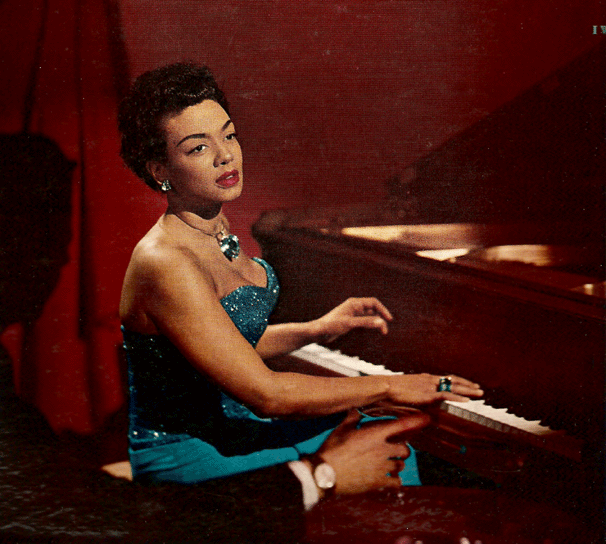
The play’s title is lifted from a famous quote by the late entertainer and Civil Rights activist, Hazel Scott, who posited, “Who ever walked behind anyone to freedom? If we can’t go hand in hand, I don’t want to go.” The show coincides with the 40th anniversary of Congress passing landmark Civil Rights legislation in 1964.

Max Sparber
As a foundation for the play, OTOC did what it does best: organize “house meetings” where citizens shared their anecdotes and perspectives on racial division. Sparber and Nu Beginning attended the meetings, held at OTOC-member churches city-wide, and the ensuing conversations informed the non-narrative play, which is structured as a series of thematic monologues, dialogues and songs.
“I built my script based on some of these interviews, along with some broader themes,” said Sparber, whose Minstrel Show dealt with an actual lynching in early Omaha. “We got some great stories out of it. The people who came to the meetings were very interested in the subject and I certainly got some stories that were invaluable. More than anything, we wanted this play to be specific to Omaha, and therefore we wanted its origins to be within Omahans’ own experiences.”
Surfacing prominently in those sessions was the theme of division and how by going unspoken it only deepens the divide. “This is a town that’s very separated geographically. The majority of blacks live in north Omaha. The majority of Latinos live in south Omaha. The majority of whites live in west Omaha. And, as a result, there’s not a lot of crossover,” Sparber said. “It’s really sad how closed up Omaha is,” said the play’s director, Don Nguyen, lately of the Shelterbelt Theater.
“Along with that, race is quickly becoming an undiscussed element in Omaha,” added Sparber. “I think a lot of whites believe we live in a post-racism world and, therefore, it’s not a subject that needs to be addressed. Whereas, black people experience this as not being a post-racism world at all and are kind of startled by this other viewpoint. So, there’s this disconnection based on understanding.”
 |
Two lines in the play comment on this dichotomy: “I think a lot of white people feel that racism ended in the Sixties, with Martin Luther King. The only thing about racism that ended in the Sixties WAS Martin Luther King.”
Any impression all the work is done alarms Betty Tipler, an OTOC leader. “A lot of us are in our comfortable spaces. We go inside our houses with our two garages and we think things are okay. Things are not okay. The issue of race has not been cured and, if we’re not careful, things will go backward,” she said. Despite the illusion all’s well, she added, the play reminds us people of color still contend with bias/discrimination in jobs, housing, policing. “We may as well face it.”
According to OTOC leader Margaret Gilmore, the process the play sprang from is at the core of how the organization works. “We’re about bringing different people in conversation with each other to talk about what’s in their hearts and minds,” she said. “It’s a process of learning to talk to each other and listen to each other and then seeing what we have in common to work together for change.” She said the meetings that laid the play’s groundwork crystallized the racial gulf that exists and the need to discuss it. “We don’t talk about this stuff enough. We don’t talk about it on a personal level and how it affects us, which is what I think this play gets to. When we ask the right questions and we’re willing to listen, then the experiences that people tell in their own words are dramatic and provocative.”
“It’s very important we listen to real people’s stories. The only way you can come up with the truth is to go to the people. We haven’t watered down or changed their stories, but literally portrayed them,” said OTOC’s Tipler, administrator at Mount Nebo Missionary Baptist Church, which hosted some of the house meetings.
Indeed, the vignettes carry the ring of reportorial truth to them. Most compelling are the monologues, which unfold in a rap-like stream-of-consciousness that is one part slam-poet-soliloquy and one part from-the-street-rant. Some stories resemble the bared soul testimony of people bearing witness, yet without ever droning on into didactic, pedantic sermons, lectures or diatribes. The language sounds like the real conversations you have inside your head or that spontaneously spring up among friends over a few drinks. Often, there’s a sense you’re listening in on the privileged, private exchanges of people from another culture as they describe what’s it like to be them, which is to say, apart from you.
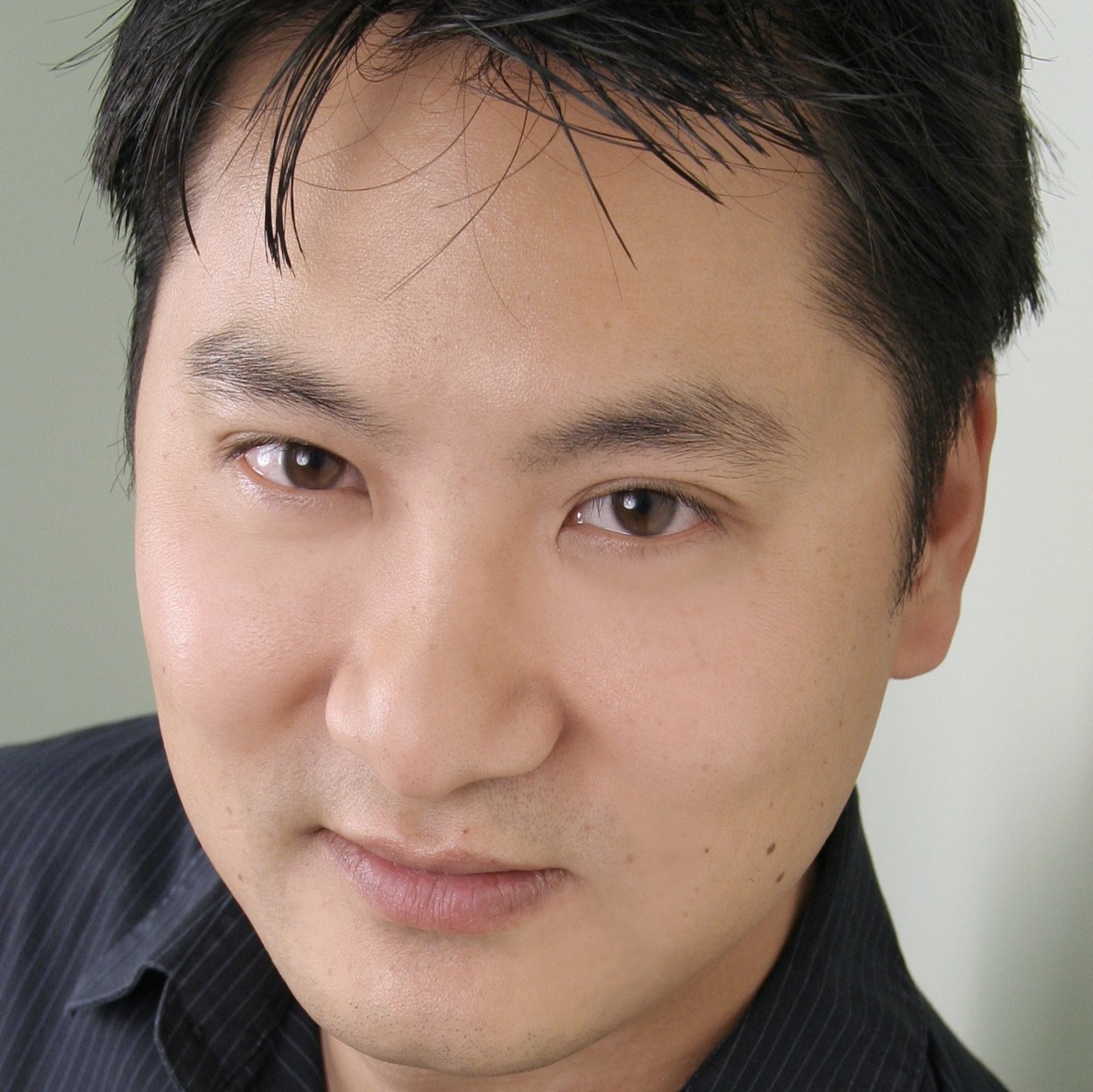
Don Nguyen
For director Nguyen, the “real life testimonies” add a layer of truth that elevates the material to a “more powerful” plane. “I think it will definitely work for us that people know this is real. It’s not an overall work of fiction. This is real stuff.”
The misconceptions people have of each other are voiced throughout the work, often with satire. You’ve heard them before and perhaps been guilty yourself assigning these to people. You know, you see an Asian-American, like Nguyen, and you reflexively think he’s fluent in Vietmanese or expert in martial arts, some assumptions he’s endured himself. “Oh, yeah, my personal experiences definitely help me to relate,” he said. “Growing up in Lincoln I got in fights all the time. People making fun of me. Thinking I knew kung-fu or I only spoke Vietmanese, which is not true. But it’s not just the blatant racism. It’s the underlying stuff, too. Sometimes it’s not even intentional, but it’s just there. And it’s that gray stuff I think these pieces capture pretty well and that people need to hear more of.”
In the vignette Tricky, some women lay out the subtle nature of racism in Omaha. “…it’s like a fox. It’s tricky. It’s sly. You’ll be standing in line at a store, and the cashiers will be helping everybody except you…and you’re the only black person in line…and because it’s so sly, I think white people don’t notice it at all.”
The play also looks at racism from different angles. One has a guilt-ridden realtor rationalizing the unethical practice of steering, which is another form of red lining. The other has a new generation bigot defending his right to espouse white pride in response to black heritage celebrations. The concept of reverse racism is explored in the real life case of students protesting their school’s special recognition of black achievers at the expense of other minorities. And the wider fallout of racism is examined in the confession offered by an insurance agent, who reveals rates for car-house coverage are higher for residents of largely black north Omaha, including whites, because of the district’s perceived high crime rate.
The vignettes touch on ways race factors into every day life, whether its the unwanted attention a black couple attracts while out shopping or the hassle African-American men face when driving while black, or DWB, which is all it takes to be stopped by the cops. The shopping piece uses humor to highlight the absurd fears that prompt people to act out racist views. Music is used as heightened counterpoint to the boiling frustration of the DWB victim, whose cries of injustice are accompanied by the soulful strains of doo-wop singers.
Bridging the play’s series of one-acts are songs by Nu Beginning, whose music is a melange of hip-hop, R & B, soul, pop and gospel. A little edgy and a lot inspirational, the music drives home the unity message with its uplifting melodies, which are sung by choruses comprised of diverse singers.
Some pieces are heavier or angrier than others. Some are downright funny. And some, like Mirrors, speak eloquently and wittily to the concept of how, despite our apparent differences, we are all reflections of each other. Here, Nguyen employs a diverse roster of performers to represent the mirror symbol. Perhaps the most telling piece is Function. This beautifully-rendered and thought-provoking discourse is delivered by an architect, who suggests racism has survived as both an ornament of the past, akin to a Roman column on a modern house, and as a still-functional device for those in power, as when a politician plays the race card.
Whatever the context, there’s no dancing around the race card, which is just how Nguyen likes it, although when he first read the script he was surprised by how brazenly it took on taboo material, such as its use of the N-word.
“Typically, a script or show sugarcoats the issue of race. It’s a very cautious topic. You don’t want to offend or patronize people by saying the wrong stuff. But this piece is much different. All of its pretty much in your face,” Nguyen said. “What I mean is, it’s very direct. Max (Sparber) makes no bones what he’s writing about, which is great. It’s a big risk to take as a writer, but essentially it’s the most interesting path to take, too. And I’m all for stirring up trouble. I’m fine with that.”
OTOC’s Betty Tipler feels racial division is too important an issue to be coy about. “We’ve got to come out of the closet, so to speak, and talk about racism and differences” she said. “We tend to shy away from talking about it, but it won’t go away. We have got to come together, put it on the table, take a look at it and deal with it — no matter how much it hurts me or how much it hurts you. But before we can do that, we’ve gotta put it out there. We won’t get anywhere until we do. And I believe this play is a step toward doing that.”
Christy Woods, a singer/songwriter with Nu Beginning, said the play is about hope. “I believe if people are open to change, we can go hand-in-hand to freedom. Just because I’m this and you’re that, doesn’t mean I have to be one step behind you. Why can’t we go together? We want people to feel inspired to go out and make a change. We want to touch, but also to teach, and I believe this musical does that.”
Nguyen hopes the play attracts a mixed audience receptive to seeing race through the prism of different experiences. “That’s where I’m trying to aim the show. As we go through these vignettes, I want some people to identify with them and some people to be like, ‘Oh, I didn’t know that.’ That’s what I want to create.”

Mary Goodwin-Clinkscale
One of my favorite personalities from the last few years is Dr. Mary Goodwin-Clinkscale, who applies her passion for the Lord, for youth, and for the arts in a dynamic educational program she runs called the GBT Academy. She is its heart and soul, but she has a lot of help by a lot of people who believe in her and her mission, which is really a ministry. I spent some time with her and her staff and some of the young people they work with as the academy prepped for a fund raiser performance to help restore the auditorium that a vandal-set fire partially destroyed. I first became aware of the academy at a program that featured their recreation of a famous incident in late 1960s Omaha. The sheer energy and conviction the performers brought to the performance made me take notice. Then, a year or two later when I read in the paper about the fire and the academy’s intention to go on, I decided it was time I wrote about the program. I still hadn’t met Dr. Clinkscale or Dr. C as she’s called, but no sooner than I did then I realized she needed to be the focus of my story. Her commitment to the program is unwavering. I still want to tell an expanded story about her one day. But for now my piece below for The Reader (www.thereader.com) will have to do.
GBT Academy in Omaha undergoes revival in wake of fire
©by Leo Adam Biga
Originally published in The Reader (www.thereader.com)
Mary J. Goodwin-Clinkscale considers herself “a survivor.” That’s why when a June 29, 2008 arson fire destroyed the auditorium of the Greater Beth-El Temple, the black Apostolic church that sponsors her nonprofit GBT (Growing and Building Together) Academy of the Arts at 1502 No. 52nd St., she and fellow church officials resolved to rebuild. Proceeds from GBT’s July 2 7 p.m. Through the Fire program at the UNO Strauss Performing Arts Center will help refurbish the auditorium, now just a shell awaiting a new floor, ceiling and stage, plus seating.
The fire deferred the dream of turning the former Beth Israel Synagogue into the church’s new sanctuary and GBT’s new home. Services unfold at the church’s old 25th and Erskine site in the interim. Greater Beth-El purchased the abandoned 52nd St. property in 2004 in the largely white Country Club neighborhood. The church runs the academy along with after-school and day-care programs from the mid-town campus. The church’s extensive landscaping has transformed what was an eyesore into a showplace. Interior work to the pale brick building converted offices into classrooms and updated HVAC systems. Volunteers donate all the work.
Academy executive director Goodwin-Clinkscale — Dr. C — has built a dynamic, multi-media, Christian-based curriculum serving at-risk, school-age youths. Her staff conducts music, dance, drama, speech, creative writing, art classes. GBT members are known for their poise and enthusiasm. They really know how to project. Life skills are integrated into lessons. She coined the Academy’s mantra, “Through the performing stage to the stage of life,” and its mission “to equip youth with the character values of respect, discipline, teamwork, perseverance and leadership through diverse forms of artistic expression.” She said, “We’re trying to instill things that will take these children where they want to go.”
The neighborhood teens who set the fire aided the clean-up as part of their community service work. Dr. C said, “I really believe the kids are sorry for what they did.” GBT will dramatize the story of the fire and its consequences at UNO. “We’re trying to show that if there were more places like this, then youths would have a place to go after school,” she said. “Our plea is, Help us to help them. That’s what this is all about. We’re trying to offer a place of safety, of refuge.”
Assistant Ella “Pat” Tisdel said GBT provides avenues for kids to express themselves “in constructive rather than destructive ways. We’re seeing that if we can pull that creativity out of children it helps them to feel better about themselves and they actually do better in school.”
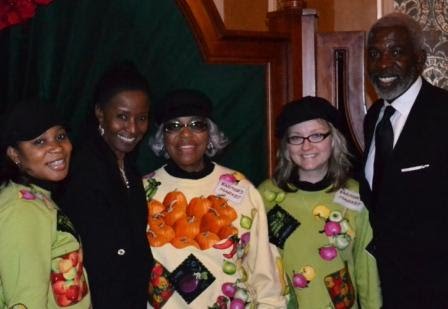
Mary Goodwin Clinkscale in the center
The Academy was incorporated in 2000 but Dr. C’s used the arts as empowering tools since ‘78. She produces/directs its energetic performances. Adults and kids collaborate on script, choreography, music, set design, costumes. African-American themed programs, some secular, others predominate. Performers as young as 6 share the stage with 20-somethings. Her five sons are GBT grads, including veteran television actor Randy Goodwin (Girlfriends). He’ll be back for the show along with special guest, stage/film/TV actor Obba Babatunde (Dreamgirls original cast).
Dr. C’s showcased GBT’s diverse talents at such high-profile gigs as the Holiday Lights Festival, Omaha Entertainment Awards and Omaha Black Music Hall of Fame. In 2006 her troupe performed a Tuskegee Airmen tribute in Milwaukee, Wis.
For this proud matriarch, the UNO show’s title refers not only to GBT rising-from-the-ashes and the arsonists finding redemption but to her own crucible. She was a high school drop-out and married teenage mother before turning her life around. A daughter of Arkansas sharecroppers, she worked the fields in the Jim Crow South, picking 300 pounds of cotton per day at age 10. “It takes a lot of cotton to weigh 300 pounds,” she said. She endured the back-breaking labor. Anything that doesn’t kill you makes you stronger, she believes.
She survived segregation and poverty. “I’ve always wanted more in life because we had nothing,” she said. She survived a fire to her family’s home. She was living with her grandmother then — her mother and uncles having gone to Omaha to work packinghouse jobs. After the fire Dr. C’s late mother brought her here, where she grew up in the Spencer Projects. She learned tough lessons from her Big Mama, a cook at the old Paxton Hotel downtown. “I got my work ethic from her.”
Dr. C earned her GED at Metropolitan Community College, where she won a scholarship for continuing education. “I went from there and started doing things.” Doctorates in theology and organizational administration from the International Apostolic University of Grace and Truth in Columbus, Ohio followed.
Her academic and youth ministry achievements only came after a born-again experience at Greater Beth-El in 1974. She was adrift then, without a church. “I just didn’t know what direction to go and the Lord led me to these people here,” she said. “I’d been looking for a church that offered something more than fashion or just a place to go hang out. I wanted truth.” She found it. “Before, my life didn’t have any meaning. There was no purpose until I came to the church. That’s when my life really began.” After being baptized she assumed lay leadership roles.
She was inspired “to implement” the teachings of her pastor in skits that engaged youth. “When I see a need, I go after it,” she said. Despite no formal arts background she said she felt prepared because “I’ve always been attracted to beauty. Raising my kids, decorating my home, making a garden, all that to me is an artistic expression. In everything you do there’s an art form to it. You just don’t throw things together. All my life I’ve been able to take a little something and make a lot out of it. I always strive for the best.” Two-hundred plus performances worth.
A perfectionist and task-master who describes herself as “hard but fair,” she views next week’s benefit as GBT’s coming-out party. “We started in January putting this together and we have worked our fingers to the bones on this production. It’s showcasing all the different facets of our talents. We want people to see there is something going on in this big historic building we can all be proud of.”
Her work with GBT has been recognized by the YWCA, UNO, Woodmen of the World, et cetera. GBT just received its first Nebraska Arts Council grant. She believes big things are ahead. She keeps meaning to step aside but, she said, “I never leave a job undone. I have to complete it.” As the soul song goes, “A Change is Gonna Come,” and she wants to be there to see her vision through the fire.
It’s only in the last few years I finally saw both a stage production and a television production of the classic play A Raisin in the Sun, and while I found each impressive, the thing that really turned me onto the work was reading Lorraine Hansberry’s famous work. Its intensity and truth burn on the page. After reading the play I knew I had to see a performance of it, and that motivation is what led me to write the following piece for The Reader (www.thereader.com). When I was still in the good graces of Omaha’s Beasley Theater’s I watched part of a rehearsal there and then saw a performance of the play in its entirety. Not too far removed from that experience I caught the TV version with Phylicia Rashad, Sanaa Lathan, Audra McDonald, and Sean Combs. The themes of Raisin resonate with me on many levels, but it is its dramatic interpretation of the Langston Hughes line, “What happens to a dream deferred?” within the context of a man and family struggling to get their small piece of the American Dream that deeply affects and disturbs me.

Ruby Dee and Sidney Poitier from the 1961 film adaptation of Hansberry’s play
What happens to a dream deferred? John Beasley Theater revisits Lorraine Hansberry‘s “A Raisin in the Sun”
©by Leo Adam Biga
Originally published in The Reader (www.thereader.com)
After its 1959 opening at the Ethel Barrymore Theatre in New York, A Raisin in the Sun was the talk of Broadway and the play’s 28-year-old author, the late Lorraine Hansberry, was the toast of the theater world. Hansberry became the first black whose work was honored with the New York Drama Critics Circle’s best play award.
The Youngers, a poor, aspiring black Chicago tenement family, are the prism through which she looks at the experience of oppression in segregated USA. Her modern story of assimilationist pressures and deferred dreams offers a realistic slice of black life unseen till then. The politically-aware Hansberry, who studied under W.E.B. DuBois and wrote for Paul Roberson’s Freedom magazine, took the play’s title from a Langston Hughes poem that asks: “What happens to a dream deferred. Does it dry up, like a raisin in the sun? Or fester like a sore…Or does it explode?”
Lena is the stalwart, widowed matriarch holding her family intact. Ruth, the eldest daughter, is the beleaguered wife of Walter, a bitter chauffeur striving to move up in the world. Beneatha, Ruth’s younger sister, is a collegian who rejects God and embraces Africa. Her hopeful beau, George Murchison, is the bourgeois American counterpoint to her sweet-on admirer, Joseph Asagai, a politically-minded Nigerian.
When the prospects of a fat insurance check threaten tearing the family apart, Lena acts rashly and buys a house in a restricted white neighborhood. Then, just as Walter’s dreams of owning a business are crushed, the alarmed residents offer the Youngers a buy-out. What Walter will do next is at the crux of the family crisis.
With its successful Broadway revival in 2003-04, Raisin proves its themes are still relevant today and that’s one reason why the John Beasley Theater is staging it now through October 10. While not revolutionary, Raisin reveals some hard truths.
“What we have for the first time with Hansberry in the ‘50s is a dignified, realistic portrayal of the complexities of black life,” said poet and essayist Robert Chrisman, chair of the Department of Black Studies at the University of Nebraska at Omaha and founding editor of The Black Scholar. “With Walter, you have the young black man who wants his chance. Mama (Lena) represents the stolid, powerful, tenacious will of black people to keep on keeping on. She is the moral center of the play. These are all realistic, engaging portraitures of black people. You don’t have any stereotyped servants. I think dignity is key in Raisin because it’s finally to assert his fundamental human dignity Walter turns down the buy out.”
For Chrisman, “the single strongest theme in Raisin is the tenet that if you have your dignity, you have the potential for everything and if you do not maintain and courageously uphold your dignity and freedom as a human being, you have nothing. And I think all of that was new in the portraiture of blacks in white theater. What preceded it up to the 1950s was usually something based on the minstrel-entertainment genre — the shuffling chauffeur, the maid, the bell hop, the clown. In black theater you had legitimate efforts at portraying blacks, but I think it’s with Hansberry you get the breakthrough. She sets the stage for the subsequent work of August Wilson and Charles Fuller, who deal with issues of generations, dreams and career aspirations and frustrations. In a way, she did for modern black drama the same thing that Richard Wright did for the modern black novel.”
Directing the Beasley production is UNO dramatics arts professor Doug Paterson, who said the play “became the springboard for black theater” in the latter half of the 20th century. “Black theater exploded in all kinds of directions,” he said. He added that the militant dramatists who followed Hansberry, such as Amiri Baraka, were critical of her “drawing room kind of drama” when they “felt what was necessary was to be bold…different…experimental.” However, Chrisman reminds, “Baraka was writing at the cusp of the ‘60s and the movement of this more militant vision forward. I think what Hansberry is saying is that whether Walter goes down as a freedom rider or starts a riot is immaterial. Asserting his dignity is what matters.”
Although it stops short of radical redresses to racism and inequality, her work is full of red hot anger and indignation. Paterson said, “She revealed so much. She anticipated sort of everything that happened in civil rights, black power and integration.” He said the original production was also influential in terms of the contributions to American theater and film that its cast and crew have made. Among the lead actors, Sydney Poitier, Ruby Dee, Claudia McNeil, Ivan Dixon and Louis Gossett are household names. Douglas Turner Ward is a co-founder of the Negro Ensemble Theater. Lonne Elder III is a major playwright. Director Lloyd Richards is perhaps Broadway’s most acclaimed dramatic interpreter. “It’s an extraordinary play for what it did historically. That’s why we study it,” said Paterson, who’s taught it for years. “I always wanted to give it a shot” directorially.
Chrisman well recalls the impact of the 1961 film version, whose adaptation Hansberry wrote. “There was a tremendous surge of pride and dignity in audiences,” especially black audiences, at the time. The concerns of Raisin, he said, still reverberate today. “I think in some ways it’s still very contemporary because you still have the same kind of interest in the African experience that Beneatha had in young folks today. And you still have, perhaps even more desperately, the need of the young black man to start a business of his own.”
The play ends with the Youngers deciding to move where they’ll clearly be unwelcome, but it doesn’t show the struggle of blacks living in a white enclave organized to oust them. As Chrisman said, “There should be a sequel to it, because it ends on the affirmative note…You could have another play that shows the ostracism, harassment, graffiti, coldness and so on that have been reported by first-generation integrating blacks.” And that’s ironic, as the playwright’s own family underwent that very trial by fire when she was a young girl. Her educated parents were social activists in Chicago and when their move into a white section met with resistance, they fought the injustice all the way to the Supreme Court.
For her next play, The Sign in Sidney Brustein’s Window, Hansberry disappointed some by telling a Jewish story. She died of cancer, at age 34, the day that play closed on Broadway. Other works were posthumously adapted into books and plays by her former husband, Robert Nemiroff, a writer and composer. In 1973, Nemiroff and Charlotte Zaltzberg adapted her first play into the Tony-winning musical Raisin.
For a six-seven year period I devoted much time and energy to reporting on Omaha native John Beasley, a respected film, television, and stage actor and the director of his own namesake theater in his hometown. You’ll find on this blog several of the stories I did about John and his theater, including productions mounted there, and various guest artists who performed there. The following story for The Reader (www.thereader,com) is about one of those guest artists, actor Anthony Chisholm. My reporting about Beasley and his theater came to an abrupt end a few years ago when he took such strong exception to a review I wrote of one of his productions that it spoiled that particular beat for me. For all I know, he’s forgotten about the incident. But the verbal excoriation he gave me was so unsettling that I haven’t had the urge or the guts to contact him again, much less set foot in his theater. I did right by John and his theater for years, and he knows it, and so I do hope we can be friends again in the sense of my covering his work. The ironic thing is that that review was the only review I ever wrote – everything else was a feature or profile, and he never had any problem with those. Can’t we all just get along?
By the way, he’s picked up a recurring part in the HBO drama Treme and he hopes to have his recurring role in the NBC serio-comic series Harry’s Law continue. He continues to develop a feature film on Marlin Briscoe, the NFL’s first black quarterback.
Anthony Chisholm is in the house at the john Beasley Theater in Omaha
©by Leo Adam Biga
Originally published in The Reader (www.thereader.com)
Actor Anthony Chisholm, a great interpreter of the late August Wilson’s work, is in Omaha for the second time in three years at the invitation of the John Beasley Theater. Chisholm’s originated roles in several Wilson plays about the African-American experience. He was a close friend of the playwright.
Chisholm once played opposite JBT founder John Beasley in a regional theater production of Wilson’s Two Trains Running. A friendship was born. In 2004 Chisholm came here to be part of the ensemble cast for Wilson’s Jitney at the JBT. Now, fresh off a Tony nomination for his featured role in Wilson’s Radio Golf, Chisholm is back at the JBT in Athol Fugard’s Master Harold…and the Boys. The show opens October 26 and runs through November 18.
This marks the first time that Chisholm, a veteran of regional theater, off-Broadway, Broadway, television and film, has worked in a piece by the South African Fugard. Chisholm met Fugard through the late director and drama instructor Lloyd Richards, a key figure in each man’s life. Chisholm studied under Richards, who brought Fugard’s work to the States at the Yale School of Drama and on Broadway.
Chisholm, a resident of Montclair, N.J., was destined to be an actor from the time his mother, an unpublished poet and novelist, encouraged him to recite prose and verse as a child in his hometown of Cleveland, Ohio. A young Chisholm wowed family, friends and fellow congregants at East Mount Zion Baptist Church with his resonant bass voice and perfect diction.
“I remember my uncle Pete telling me that was my ‘calling.’ He said it in such a deep and placed way that that stuck somewhere back in me,” Chisholm said.
One of Chisholm’s favorite childhood haunts was the Karamu House, a social settlement offering arts and crafts, dance and theater. The Karamu House Theatre, whose notables have included Langston Hughes, Ruby Dee, Brock Peters, Ivan Dixon and Halle Berry, gained fame for its integrated productions.
Intent on an architectural career, Chisholm entered Case Western Reserve University. He waited tables at a posh Washington, D.C. nightclub, the Junkanoo, to earn enough so he could continue his studies. This was the mid-1960s. As the Vietnam War grew hotter and the draft loomed larger, Chisholm’s number came up and he landed in the U.S. Army. His commanding presence found him a drill sergeant — barking orders to a regiment of 1,500 old-timers.
While in uniform he won a dramatic reading contest that earned him a scholarship to Yale. He never used it. On a leave home he visited the Karamu and found himself shanghaied into a reading of Douglas Turner Ward’s A Day of Absence. Cast on the spot, he had to beg off due to his military commitment. But Chisholm recalled the director encouraging him by saying, “’When you get out of the Army you come back here — we’re going to get you started.’ And so it was.”
Not before Chisholm got his orders for Nam. He served as an M-60 gunner on an armored personnel carrier with the 4th Armored Calvary, 1st Infantry Division. He saw his share of firefights. He survived the shit and just six months after returning home he began doing rep at the Karamu. Things happened fast. Paramount Pictures came to Cleveland to shoot a feature, Up Tight!, and he was cast alongside Roscoe Lee Browne and Raymond St. Jacques. Seven more film roles came in short order, including a pair of cult classics — Putney Swope and Where’s Poppa?.
He’s continued to act on the small and big screen, including parts in Beloved and in the new Adam Sandler-Don Cheadle film, Reign Over Me, playing opposite Cicely Tyson. He’s also done many guest shots on episodic TV and played a recurring character, Burr Redding, in the acclaimed HBO series Oz. But he’s mainly a stage actor. As a young man he hooked up with the Negro Ensemble Company, where he studied under Richards in a master class. He’s gone on to act with such leading theaters as the Goodman and Steppenwolf in Chicago, the Mark Taper Forum in Los Angeles and the Seattle Repertory. Then there’s his association with August Wilson, whom he first met in 1990. He considers himself a disciple of Wilson’s.
“There was something very holy about him. He was a prophet-philosopher. He was just this very unusual individual. If you read his writing so many of the things he says in storyline, as characters speaking, are so philosophical and deep,” Chisholm said. Doing Wilson, he added, “has made me a beter actor without a doubt because working with well-written material brings out the best in you.”
An actor’s journey is all about discovery — about one’s self, one’s craft. It’s very much a life-long, self-taught process. “You teach yourself and you borrow from observation and every now and then you’re informed of something — an eye-opener,” Chisholm said. “So, yes, it’s always continuous.”
Arriving at the truth is the goal. It means being vulnerable and letting go.
“I know my own truth serum,” he said, “and if I don’t believe it, nobody else is going to believe it. Each role, as I move along, gets more truthful. You have to listen. I’ve been working on listening more. I don’t even think when I go out on stage or in front of the camera. I just throw myself out there. That’s a conditioning I’ve got to at this point, where I try to keep my head clear — a blank slate.
“I don’t care if I have a million lines, I don’t think about those words. As I observe and I feel, when it’s time to respond, it vomits out. The words will be there because I know the words back and forth. And that’s the way we are as people. Stuff comes out of us as we bounce things off one another.”
Even though I grew up in North Omaha and lived there until age 43 or so, I didn’t experience my first Native Omaha Days until I had moved out of the area, and by then I was 45, and the only reason I did intersect with The Days then, and subsequently have since, is because I was reporting on it. The fact that I didn’t connect with it before is not unusual because it is essentially though by no means exclusively an African American celebration, and as you can see by my picture I am a white guy. Then there’s the fact it is a highly social affair and I am anything but social, that is unless prevailed upon to be by circumstance or assignment. But I was aware of the event, admittedly vaguely so most of my life, and I eventually did press my editors at The Reader (www.thereader.com) to let me cover it. And so over the past eight years I have filed several stories related to Native Omaha Days, most of which you can now find on this blog in the run up to this year’s festival, which is July 27-August 1. The story below is my most extensive in terms of trying to capture the spirit and the tradition of The Days, which encompasses many activities and brings back thousands of native Omahans – nobody’s really sure how many – for a week or more of catching up family, friends, old haunts.
NOTE: The parade that is a highlight of The Days was traditionally held on North 24th Street but has more recently been moved to North 30th Street, where the parade pictures below were taken by Cyclops-Optic, Jack David Hubbell.
My blog also features many other stories related to Omaha’s African American community, past and present. Check out the stories, as I’m sure you’ll find several things that interest you, just as I have in pursuing these stories the last 12 years or so.

Vera Johnson,a Native Omahans Club founder, (Photo by Robyn Wisch)
Back in the Day: Native Omaha Days is reunion, homecoming, heritage celebration and party all in one
©by Leo Adam Biga
Originally published in The Reader (www.thereader.com)
A homecoming. That’s what Native Omaha Days, a warm, rousing, week-long black heritage reunion, means to the thousands of native sons and daughters coming back in town for this biennial summer celebration. Although the spree, which unfolded July 30 through August 4 this year, features an official itinerary of activities, including a gospel night, a drill team competition, a parade, a dance and a picnic, a far larger slate of underground doings goes on between the many family and class reunions, live concerts and parties that fill out the Days. Some revelers arrive before the merriment begins, others join the fun in progress and a few stay over well after it’s done. A revival and carnival in one, the Days is a refreshing, relaxing antidote to mainstream Omaha’s uptight ways.
North Omaha bars, clubs and restaurants bustle with the influx of out-of-towners mixing with family and old friends. North 24th Street is a river of traffic as people drive the drag to see old sites and relive old times. Neighborhoods jump to the beat of hip-hop, R&B and soul resounding from house parties and family gatherings under way. Even staid Joslyn Art Museum and its stodgy Jazz on the Green take on a new earthy, urban vibe from the added black presence. As one member of the sponsoring Native Omahans Club said of the festival, “this is our Mardi Gras.”
Shirley Stapleton-Odems is typical of those making the pilgrimage. Born and raised in Omaha — a graduate of Howard Kennedy Elementary School and Technical High School — Stapleton-Odems is a small business owner in Milwaukee who wouldn’t miss the Days for anything. “Every two years I come back…and it’s hard sometimes for me to do, but no matter what I make it happen,” she said. “I have friends who come from all over the country to this, and I see some people I haven’t seen in years. We all meet here. We’re so happy to see each other. It’s a reunion thing. It’s like no matter how long you’re gone, this is still home to us.”
As Omaha jazz-blues guru Preston Love, a former Basie sideman and Motown band leader and the author of the acclaimed book A Thousand Honey Creeks Later, observed, “Omahans are clannish” by nature. “There’s a certain kindredness. Once you’re Omaha, you’re Omaha.” Or, as David Deal, whose Skeets Ribs & Chicken has been a fixture on 24th Street since 1952, puts it, “People that moved away, they’re not out-of-towners, they’re still Omahans — they just live someplace else.” Deal sees many benefits from the summer migration. “It’s an opportunity for people to come back to see who’s still here and who’s passed on. It’s an economic boost to businesses in North Omaha.”
Homecoming returnees like Stapleton-Odems feel as if they are taking part in something unique. She said, “I don’t know of any place in the country where they have something like this where so many people over so many generations come together.” Ironically, the fest’ was inspired by long-standing Los Angeles and Chicago galas where transplanted black Nebraskans celebrate their roots. Locals who’ve attended the L.A. gig say it doesn’t compare with Omaha’s, which goes to the hilt in welcoming back natives.

Perhaps the most symbolic event of the week is the mammoth Saturday parade that courses down historic North 24th Street. It is an impressionistic scene of commerce and culture straight out of a Spike Lee film. On a hot August day, thousands of spectators line either side of the street, everyone insinuating their bodies into whatever patch of shade they can find. Hand-held fans provide the only breeze.
Vendors, selling everything from paintings to CDs to jewelry to hot foods and cold beverages to fresh fruits and vegetables, pitch their products under tents staked out in parking lots and grassy knolls. Grills and smokers work overtime, wafting the hickory-scented aroma of barbecue through the air. Interspersed at regular intervals between the caravan of decorated floats festooned with signs hawking various local car dealerships, beauty shops, fraternal associations and family trees are the funky drill teams, whose dancers shake their booties and grind their hips to the precise, rhythmic snaring of whirling dervish drummers. Paraders variously hand-out or toss everything from beads to suckers to grab-bags full of goodies.
A miked DJ “narrates” the action from an abandoned gas station, at one point mimicking the staccato sound of the drilling. A man bedecked in Civil War-era Union garb marches with a giant placard held overhead emblazoned with freedom slogans, barking into a bullhorn his diatribe against war mongers. A woman hands out spiritual messages.

Long the crux of the black community, 24th Street or “Deuce Four” as denizens know it, is where spectators not only take in the parade as it passes familiar landmarks but where they greet familiar figures with How ya’ all doin’? embraces and engage in free-flowing reminiscences about days gone by. Everywhere, a reunion of some sort unfolds around you. Love is in the air.
The parade had a celebrity this time — Omaha native actress Gabrielle Union (Deliver Us From Eva). Looking fabulous in a cap, blouse and shorts, she sat atop the back seat of a convertible sedan sponsored by her father’s family, the Abrams, whose reunion concided with the fest’. “This is just all about the people of north Omaha showing pride for the community and reaching out to each other and committing to a sense of togetherness,” said Union, also a member of the Bryant-Fisher family, which has a large stake in and presence at the Days. “It’s basically like a renewal. Each generation comes down and everyone sits around and talks. It’s like a passing of oral history, which is…a staple of our community and our culture. It’s kind of cool being part of it.”
She said being back in the hood evokes many memories. “It’s funny because I see the same faces I used to hang out with here, so a lot of mischievous memories are coming back. It’s like, Do you remember the time? So, a lot of good times. A lot of times we probably shouldn’t of been having as young kids. But basically it’s just a lot of good memories and a lot of lessons learned right here on 24th.”
The three-mile parade is aptly launched at 24th and Burdette. There, Charles Hall’s now closed Fair Deal Cafe, once called “the black city hall,” provided a forum for community leaders to debate pressing issues and to map-out social action plans. Back in the day, Hall was known to give away food during the parade, which ends at Kountze Park, long a popular gathering spot in north Omaha. Across the street is Skeets, one of many soul food eateries in the area. Just down the road a piece is the Omaha Star, where legendary publisher Mildred Brown held court from the offices of her crusading black newspaper. Across the street is the Jewell Building, where James Jewell’s Dreamland Ballroom hosted black music greats from Armstrong to Basie to Ellington to Holiday, and a little further north, at 24th and Lake, is where hep cat juke joints like the M & M Lounge and McGill’s Blue Room made hay, hosting red hot jam sessions.

Recalling when, as one brother put it, “it was real,” is part and parcel of the Days. It’s all about “remembering how 24th and Lake was…the hot spot for the black community,” said Native Omahans Club member Ann Ventry. “We had everything out here,” added NOC member Vera Johnson, who along with Bettie McDonald is credited with forming the club and originating the festival. “We had cleaners, barber shops, beauty parlors, bakeries, grocery stores, ice cream stores, restaurants, theaters, clothing stores, taxi companies, doctors’ offices. You name it, we had it. We really didn’t have to go out of the neighborhood for anything,” Johnson said. Many businesses were black-owned, too. North O was, as lifelong resident Charles Carter describes it, “it’s own entity. That was the lifestyle.”
For James Wightman, a 1973 North High and 1978 UNL grad, the homecoming is more than a chance to rejoin old friends, it’s a matter of paying homage to a legacy. “Another reason we come back and go down 24th Street is to honor where we grew up. I grew up at the Omaha Boys Club and I played ball at the Bryant Center. There was so much to do down on the north side and your parents let you walk there. Kids can’t do that anymore.” Noting its rich history of jazz and athletics, Wightman alluded to some of the notables produced by north Omaha, including major league baseball Hall of Famer Bob Gibson, Heisman winner Johnny Rodgers, jazzman Preston Love, social activist Malcolm X, actor John Beasley and Radio One founder and CEO Catherine Liggins Hughes.
For Helen McMillan Caraway, an Omaha native living in Los Angeles, sauntering down 24th Street brings back memories of the music lessons she took from Florentine Kingston, whose apartment was above a bakery on the strip. “After my music lesson I’d go downstairs and get a brownie or something,” she said. “I had to steer clear of the other side of the street, where there was a bar called McGill’s that my father, Dr. Aaron McMillan, told me, ‘Don’t go near.’” Being in Omaha again makes the Central High graduate think of “the good times we used to have at Carter Lake and all the football games. I loved that. I had a good time growing up here.”
For native Omahan Terry Goodwin Miller, now residing in Dallas, being back on 24th Street or “out on the stem,” as natives refer to it, means remembering where she and her best girlfriend from Omaha, Jonice Houston Isom, also of Dallas, got their first hair cut. It was at the old Tuxedo Barbershop, whose nattily attired proprietors, Marcus “Mac” McGee and James Bailey, ran a tight ship in the street level shop they ran in the Jewell Building, right next to a pool hall and directly below the Dreamland. Being in Omaha means stopping at favorite haunts, like Time Out Foods, Joe Tess Place and Bronco’s or having a last drink at the now closed Backstreet Lounge. It means, Goodwin Miller said, “renewing friendships…and talking about our lives and seeing family.” It means dressing to the nines and flashing bling-bling at the big dance and, when it’s over, feeling like “we don’t want to go home and grabbing something to eat and coming back to 24th Street to sit around and wait for people to come by that we know.”

Goodwin Miller said the allure of renewing Omaha relationships is so strong that despite the fact she and Houston Isom live in Dallas now, “we don’t see each other there, but when we come here we’re together the whole time.”
Skeets’ David Deal knows the territory well. From his restaurant, which serves till 2 a.m., he sees native Omahans drawn, at all hours, to their old stomping grounds. He’s no different. “We’re just coming down here to have a good time and seeing people we haven’t seen in years.” Sometimes, it’s as simple as “sitting around and watching the cars go by, just like we used to back in the good old days.”
North Omaha. More than a geographic sector, it is the traditional, cultural heart of the local black community encompassing the social-historical reality of the African-American experience. Despite four decades of federally-mandated civil rights, equal opportunity, fair housing and affirmative action measures the black community here is still a largely separate, unequal minority in both economic and political terms and suffers a lingering perception problem — born out of racism — that unfairly paints the entire near northside as a crime and poverty-ridden ghetto. Pockets of despair do exist, but in fact north Omaha is a mostly stable area undergoing regentrification. There is the 24-square block Miami Heights housing-commercial development going up between 30th and 36th Streets and Miami and Lake Streets, near the new Salem Baptist Church. There is the now under construction North Omaha Love’s Jazz, Cultural Arts and Humanities Complex, named for Preston Love, on the northwest corner of 24th and Lake. The same sense of community infusing Native Omaha Days seems to be driving this latest surge of progress, which finds black professionals like attorney Brenda Council moving back to their roots.
Former NU football player James Wightman (1975-1978) has been coming back for the Days the past eight years, first from Seattle and now L.A., and he said, “I’m pretty pleased with what’s going on now in terms of the development. When I lived here there was a stampede of everybody getting out of Omaha because there weren’t as many opportunities. I look at Omaha’s growth and I see we’re a rich, thriving community now.” During the Days he stays, as many do, with family and hooks up with ex-jocks like Dennis Forrest (Central High) and Bobby Bass (Omaha Benson) to just kick it around. “We’re spread out in different locations now but we all come back and it’s like we never missed a beat.” The idea of a black pride week generating goodwill and dollars in the black community appeals to Wightman, who said, “I came to spend my money on the north side. And I’ll be back in two years.”
Wightman feels the Days can serve as a beacon of hope to today’s disenfranchised inner city youth. “I think it sends a message to the youth that there are good things happening. That people still come back because they feel a sense of family, friendship and connection that a lot of young people don’t have today. All my friends are in town for their school-family reunions and we all love each other. There’s none of this rival Bloods-Crips stuff. We talk about making a difference. It’s not just about a party, it’s a statement that we can all get along with each other.”

“It just shows there’s a lot of good around here,” said Omaha City Councilman Frank Brown, who represents largely black District 2, “but unfortunately it’s not told by the news media.” Scanning the jam-packed parade route, a beaming Brown said, “This is a four-hour event and there’s thousands of people of all ages here and they’re smiling and enjoying themselves and there’s no problems. When you walk around you see people hugging each other. There’s tears in some of their eyes because they haven’t seen their friends, who’ve become their family.”
Family is a recurring theme of the Days. “My family all lives here.” said John Welchen, a 1973 Tech High grad now living in Inglewood, Calif. For him, the event also “means family” in the larger sense. “To me, all of the friends I grew up with and everyone I’ve become acquainted with over the years is my extended family. It’s getting a chance to just see some great friends from the past and hear a lot of old stories and enjoy a lot of laughter.”
Native Omahans living in the rush-rush-rush of impersonal big cities look forward to getting back to the slower pace and gentler ways of the Midwest. “From the time I get off the plane here I notice a difference,” said Houston Odems, who flies into Omaha from Dallas. “People are polite…kind. To me, you just can’t beat it. I tell people all the time it’s a wonderful place to have grown-up. I mean, I still know the people who sold me my first car and the people who dry-cleaned my clothes.”
Although the Days traces its start back to 1977, when the Native Omahans Club threw the first event, celebrations commemorating the ties that bind black Omahans go back well before then. As a young girl in the ‘50s, Stapleton-Odems was a majorette in an Elks drill team that strutted their stuff during 24th Street parades. “It’s a gathering that’s been gong on since I can remember,” she said.
Old-timers say the first few Native Omaha Days featured more of a 24/7, open-air, street-party atmosphere. “We were out in the middle of the street all night long just enjoying each other,” said Billy Melton, a lifelong Omahan and self-styled authority on the north side. “There was live entertainment — bands playing — every six blocks. Guys set up tents in the parks to just get with liquor. After the dances let out people would go up and down the streets till six in the morning. Everybody dressed. Everybody looking like a star. It was a party town and we knew how to party. It was something to see. No crime…nothing. Oh, yeah…there was a time when we were like that, and I’m glad to have lived in that era.”
According to Melton, an original member of the Native Omahans Club, “some people would come a week early to start bar hopping. They didn’t wait for Native Omaha Days. If certain people didn’t come here, there was no party.”
Charles Carter is no old-timer, but he recalls the stroll down memory lane that was part of past fests. “They used to have a walk with a continuous stream of people on either side of the street. What they were doing was reenacting the old days when at nighttime 24th Street was alive. There were so many people you couldn’t find a place to walk, much less park. It was unbelievable. A lot of people are like me and hold onto the thought this is the way north Omaha was at one time and it’s unfortunate our children can’t see it because there’s so much rich history there.”
Then there was the huge bash Billy Melton and his wife Martha threw at their house. “It started early in the morning and lasted all night. It was quite a thing. Music, liquor, all kinds of food. It was a big affair,” Melton said. “I had my jukebox in the backyard and we’d have dancing on the basketball court. Endless conversations. That’s what it’s all about.”
Since the emergence of gang street violence in the mid-80s, observers like Melton and Carter say the fest is more subdued, with nighttime doings confined to formal, scheduled events like the gospel night at Salem and the dance at Mancuso Hall and the 24th Street rag relegated to the North Omahans Club or other indoor venues.
A reunion ultimately means saying goodbye, hence the close of the Days is dubbed Blue Monday. Most out-of-towners have left by then, but the few stalwarts that remain mix with die-hard residents for a final round or two at various drinking holes, toasting fat times together and getting high to make the parting less painful. After a week of carousing, out-of-town revelers wear their exhaustion like a badge of honor. “You’re supposed to be tired from all this,” Houston Isom said. “There’s no such thing as sleeping during this week. I can’t even take a nap because I’ll be worried I might be missing something.” Goodwin Miller builds in recovery time, saying, “When I go home I take a day off before I go back to work.” She and the others can’t wait to do it all over again two years from now.
One of my favorite events to write about is something called Native Omaha Days, which is really a bunch of events over the course of a week or two in mid to late summer, held every two years and in essence serving as a great big celebration of Omaha‘s African American culture and heritage. There’s a public parade and picnic and a whole string of concerts, dances, and other activities, but at the root of it all is the dozens, perhaps hundreds of family and school reunions and various get togethers, large and small, that happen all over the city, but most especially in the traditional heart of the black community here – North Omaha. I’ve done a number of stories over the years about the Native Omaha Days itself or riffing off it to explore different aspects of Omaha’s black community. The story below for The Reader (www.thereader.comI is from a few years ago and focuses on one extended family’s celebration of The Days. as I like to refer to the event, via a reunion party they throw.
As the 2011 Native Omaha Days approaches (July 27-August 1) I am posting my stories about The Days over the past decade or so. You’ll also find on this blog a great array of other stories related to African American life in Omaha, past and present. Hope you enjoy.
©by Leo Adam Biga
Originally published in The Reader (www.thereader.com)
The warm, communal homecoming known as Native Omaha Days expresses the deep ties that bind the city’s African-American community. It’s a time when natives long moved away return to roll with family and friends.
Beyond the cultural activities marking the festival, which officially concluded this week with the traditional “Blue Monday” farewells at northside watering holes, it’s an occasion when many families and high schools hold reunions. Whether visiting or residing here, it’s not unusual for someone to attend multiple public and private gatherings in the space of a week. The reunions embody the theme of reconnecting folks, separated by miles and years, that permeates The Days, whose activities began well before the prescribed Aug. 3 start and end well past the Aug. 8 close.
No singular experience can fully capture the flavor of this biennial love-in, but the Evergreen Family Reunion — a rendezvous of many families in one — comes close. Evergreen’s not the name of a people, but of the rural Alabama hamlet where families sharing a common origin/lineage, including the Nareds, Likelys, Olivers, Unions, Holts, Butlers, Turners and Ammons, can trace their roots.
For older kin reared there, Evergreen holds bitter memories as an inhospitable place for blacks. Those who got out, said Evergreen-born and Omaha-raised Richard Nared, were forced to leave. “Most of us came here because we had to,” he said. “A lot of my relatives had to leave the South in the middle of the night. I was little, but I did see some of the things we were confronted with, like the Ku Klux Klan.” The Nareds migrated north, as countless others did, to escape oppression and to find, as New York-raised Clinton Nared said, “a new freedom” and “a better life.”
Celebrating a fresh start and keeping track of an ever-expanding legacy is what compelled the family to start the reunion in the first place, said Rev. Robert Holt, who came in for the affair from California. The reunion can be traced to Moses Union and Georgia Ewing, who, in around 1928, “decided they would bring the family together so there would be no intermarriage. It started out with about 10 people and it grew. We’ve had as many as 2,000 attend. I don’t care where it is, I go.”
As Rev. Frank Likely of Gethsemane Church of God in Christ said in his invocation before the family fish fry on Friday, the reunion is, in part, a forum for discovering “family members we didn’t even know we had.” Then there’s “the chance to meet people I haven’t seen in 40 or 50 years,” said Rev. E.C. Oliver, pastor of Eden Baptist Church. “That’s what it means to me. A lot of them, I’ve wondered, ‘Were they still alive? What were they doing?’ It’s a good time for catching up and for fellowship,” said Oliver, who arrived from Evergreen without “a dime in my pocket.”
Clinton Nared‘s taken it upon himself to chart the family tree. Reunions, he said, reveal much. “Each year I come, I get more information and I meet people I never met before,” he said. “There’s so much history here.” Niece and fellow New Yorker Heather Nared said, “Every year I find out something different about the family.”
Of Richard Nared’s three daughters — Debra, Dina and Dawn — Dina’s been inspired to delve into the family’s past. “I needed to meet my people and to know our history,” she said. “I’ve been to more reunions than the rest of them. I even went to Evergreen. I thought it was beautiful. I loved the South. Before my oldest relatives died off, I got to sit and talk to them. It was fun. We had a good time.”
Over generations the family line spread, and offshoots can be found today across the U.S. and the world. But in the South, where some relatives remain, the multi-branched tree first sprouted in America. “We live all over. Now and then we come back together,” Richard Nared said. “But Evegreen’s where it all began. They used to call it Big Meeting.”
Gabrielle Union
Held variously in Detroit, Nashville, Evergreen and other locales, the reunion enjoys a run nearly rivaling that of the Bryant-Fisher clan, an old, noted area black family related by marriage to an Evergreen branch, the Unions, whose profile has increased due to the fame of one of its own, film/TV actress Gabrielle Union. A native Omahan hot off The Honeymooners remake and an Ebony cover and co-star of the upcoming ABC drama Night Stalker, she made the rounds at The Days and reunion, causing a stir wherever she went — “You seen Gabrielle? Is she here yet? We’re so proud of her.”
A display of how interconnected Omaha’s black community remains were the hundreds that greeted the star at Adams Park on Friday afternoon, when a public ceremony naming the park pond after her turned into — what else? — a reunion. Her mother, Theresa Union, said of the appreciative throng, “Most of these people, believe it or not, are her relatives, either on my side or on her father’s side. We are a very big part of North Omaha’s population.” Gabrielle’s father, Sylvester Union, said his famous daughter comes to the family galas for the same reason everyone does: “It’s a legacy we’re trying to keep going,” he said. “It’s an opportunity to communicate and share and stay in touch. To me, that’s what it’s about — bonding and rebonding.”
The actress wasn’t the only celebrity around, either. Pro football Hall of Famer Gale Sayers and Radio One founder Catherine Liggins Hughes were out and about, meeting and greeting, giving props to their hometown, family and fellow natives. This tight black community is small enough that Sayers and Hughes grew up with the Unions, the Nareds and many other families taking part. They were among a mix of current and former Omahans who gave it up for the good vibes and careers of 40 musicians inducted into the Omaha Black Music Hall of Fame at an Aug. 4 banquet. The Days is all about paying homage to Omaha’s great black heritage. As Sayers said, “People in Chicago and different places I go ask me where I’m from and when I say, ‘Omaha, Neb.,’ they look at me like I’m crazy. ‘You mean there’s blacks in Omaha?’ I explain how there’s a very rich tradition of African-Americans here, how we helped develop the city, how there’s a lot of talent that’s come out of here, and how proud of the fact I am to be from Omaha, Neb.”

Gale Sayers
This outpouring of pride and affection links not only individual families, but an entire community. “Family ties is one of the most powerful things in black history. It runs deep with us,” Richard Nared said. During The Days, everyone is a brother and a sister. “We’re all one big family,” Omahan John Butler said.
Helping host the 2005 Evergreen affair were the Nareds, whose sprawling Pee Wee’s Palace daycare at 3650 Crown Point Avenue served as the reunion registration center and fish-fry/social-mixer site. Born in Evergreen with his two brothers, William and John, Richard Nared is patriarch of a family that’s a pillar in the local black community. The Nareds were instrumental in starting the Bryant Center, once Omaha’s premier outdoor basketball facility now enjoying a revival. Richard helped form and run the Midwest Striders track club. William was a cop. John, a rec center director. Richard’s sister-in-law, Bernice Nared, is Northwest High’s principal. Daughter-in-law Sherrie Nared is Douglas County’s HIV Prevention Specialist.
The Friday fry event broke the ice with help from the jamming funk band R-Style. Some 300 souls boogied the night away. “More than we expected,” Debra Nared said. About 50 folks were still living it up on the edge of dawn. As adults conversed, danced and played cards, kids tumbled on the playground.
The family made its presence known in the Native O parade the next morning with a mini-caravan consisting of a bus and two caddies, adorned with banners flying the family colors. T-shirts proclaimed the family’s Evergreen roots. A soul-food picnic that afternoon at Fontenelle Park offered more chances for fellowship. Gabrielle and her entourage showed up to press the flesh and partake in ribs, beans, potato salad and peach cobbler. She posed for pictures with aunties, uncles, cousins. A weekend limo tour showed out-of-towners the sights. A coterie of relatives strutted their stuff at the big dance at Omaha’s Qwest Center that night. A Sunday church service and dinner at Pilgrim’s Baptist, whose founders were family members from Evergreen, brought the story full circle.
Heard repeatedly during the reunion: “Hey, cuz, how ya’ doin’?” and “You my cuz, too?” and “Is that my cuz over there?”
Annette Nared said, “There’s a lot of people here I don’t know, but by the time the night’s over, I’ll meet a whole lot of new relatives.” Looking around at all the family surrounding her, wide-eyed Dawn Nared said, “I didn’t know I had this many cousins. It’s interesting.” Omahan Sharon Turner, who married into the family, summed up the weekend by saying, it’s “lots of camaraderie. It’s a real good time to reconnect and find out what other folks are doing.”
For Richard Nared, it’s all about continuity. “Young people don’t know the family tree. They don’t know their family history unless someone old enlightens them,” he said. “Kids need to know about their history. If they don’t know their history, they’re lost anyway.”
It’s why he called out a challenge to the young bloods to keep it going. “This is a family affair,” he said. “I want the young people here to carry things on. Let’s come together. Let’s make this something special from now on.”


 Leo Adam Biga's My Inside Stories