Archive

Posts Tagged ‘Books’

Come to Alexander Payne expert Leo Adam Biga’s Sept. 21 book talk-signing “Alexander Payne: His Journey in Film”

September 12, 2016 Leave a comment

Come to Alexander Payne expert Leo Adam Biga’s Sept. 21 book talk-signing: “Alexander Payne: His Journey in Film” at KANEKO-UNO Creativity Library

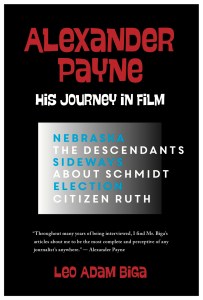
Come to this relaxed book talk and signing by your friendly neighborhood Alexander Payne expert, Leo Adam Biga, the author of “Alexander Payne: His Journey in Film.” My passion project and labor of love is a must-read for movie buffs and fans. I will be selling and signing copies of the new edition before and after my 7 p.m. talk at the KANEKO-UNO Creativity Library, 12th and Jones Streets, in the Old Market, on Wednesday, September 21.

The book sells for $25.95, plus tax. Available via Amazon, Barnes and Noble, Kindle and at select book stores and gift shops.

My informal presentation will offer insights into the Oscar-winning writer-director’s creative process gleaned from 20 years of interviewing and covering the filmmaker. The book is a collection of my extensive journalism about Payne and his work. I will also take questions from the audience.

Strong praise for “Alexander Payne: His Journey in Film”–

“This is without question the single best study of Alexander Payne’s films, as well as the filmmaker himself and his filmmaking process. In charting the first two decades of Payne’s remarkable career, Leo Adam Biga pieces together an indelible portrait of an independent American artist, and one that’s conveyed largely in the filmmaker’s own words. This is an invaluable contribution to film history and criticism – and a sheer pleasure to read as well.” – Thomas Schatz, Film scholar and author (“The Genius of the System”)

As many of you know, I am an Omaha author-journalist-blogger who often writes about film. In 2012 I turned my in-depth reporting about the celebrated filmmaker from Omaha into “His Journey in Film.”It is the most comprehensive study of Payne’s cinema career and work anywhere. Its collection of articles and essays is based on interviews I conducted with Payne and with many of his key collaborators. The new edition is releasing this fall through River Junction Press in Omaha and features expanded and enhanced content, including a Discussion Guide with Index. It makes a great resource for film buffs, critics, filmmakers, educators and students as well as more casual film fans who want a handy Payne primer and trivia goldmine.


FINAL FRONT COVER 6-28-16

The book is updated and current through Payne’s “Nebraska” and “Downsizing” projects.

“Downsizing’s” (2017) epic, tragicomic tale tackles big ideas having to do with pressing world crises and universal human conflicts. The story’s imagined solution to ever depleted world resources is downsizing human beings to a fraction of normal size, thus decreasing mankind’s footprint on planet Earth. Only the reduction experience doesn’t quite go the way that Paul, the Everyman hero played by Matt Damon, envisioned. We go down the rabbit hole of this dark wonderland with Matt into a mind-blowing, soul-stirring, heart-breaking and ultimately inspiring odyssey that traverses everything from geo-political intrigue to classism and racism to human trafficking to love.

The adventure immerses us into new worlds that may represent the new dawn of man. Payne and his collaborators have traveled the globe to make an ambitious film shooting in multiple countries and starring an international cast. It promises to be a cinematic experience filled with spectacle, pathos and satire, yet never losing touch with human intimacy. Every Payne film is about a physical, emotional, intellectual journey. The stakes for the journey Paul takes in “Downsizing” are high because, unbeknownst to Paul, humanity’s future rests on his actions.

Payne and his film should get lots of attention when it releases next year.

“His Journey in Film” takes you deep inside the creative process of this world cinema artist and follows the arc of his filmmaking journey over a 20-year span, when he went from brash indie newcomer to mature, consummate veteran. Along the way, he’s made a handful of the best reviewed American films of the past two decades and his movies have garnered many top honors at festivals and at the Independent Spirit Awards, the Golden Globes and the Academy Awards.

This is a must-get book for Nebraskans who want to know how this native son has arrived at rarefied heights and in the company of legends. Nebraskans love the fact that through all of Payne’s remarkable success, he has remained rooted to this place. There is much more to come from him and much more to be said about his work. But for now “Alexander Payne: His Journey in Film” is the definitive word on his journey and output.

Look for announcements about future Biga book talks-signings at:

https://leoadambiga.com/

https://www.facebook.com/LeoAdamBiga/

https://www.facebook.com/AlexanderPayneExpert/?fref=ts

Literary star Ron Hansen revisits the Old West in new novel “The Kid”

August 25, 2016 2 comments

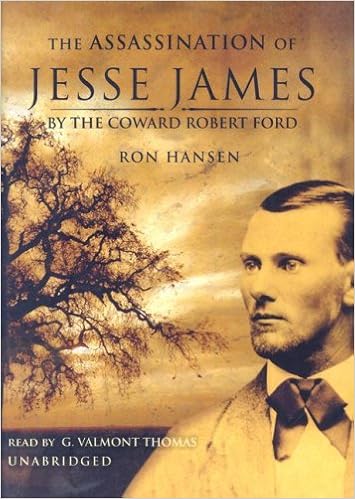
Once upon a time, it was possible to be assigned depth stories about authors, artists and musicians by various Nebraska newspapers and magazines. Alas, those days are long gone in this age of byte size, SEO-rich content that favors style and graphics over substance and text. One of the few print sanctuaries for long-form features left in the state is the New Horizons newspaper published by the Eastern Nebraska Office on Aging. This monthly may not be on your reading list or radar but it should be, I dare say, for the long form features that Nick Schinker, Jeff Reinhardt and I do for the publication. If you like to dig into a subject, then you will have your fill and then some, especially when it comes to my New Horizons stories, which are four or five times the length of today’s average feature. A perfect example is my new profile of author Ron Hansen in the September 2016 issue. That Hansen profile is featured in this post. The Omaha native is a highly respected novelist, short story writer and essayist. He is a true literary star on the national scene and yet in his hometown he and his work are not well known outside perhaps the most informed literary circles or the Creighton Prep and Creighton University communities – he is a graduate of each school. I did a fair amount of writing about Hansen in years past but it had been awhile since the last piece. It’s been good to re-engage with him and to once again share his work with others. My new story about Hansen largely focuses on his new historical novel “The Kid” about Western outlaw Billy the Kid. The well-reviewed book is being released this fall by Scribner. The Old West and its outlaws have been subjects of two previous Hansen novels: “Desperados” and “The Assassination of Jesse James by the Coward Robert Ford.” The latter was made into a fne film starring Brad Pitt and Casey Affleck.

For this new story Ron generously sat down with me for a long interview, just as he’s done in the past, and he later answered several more questions via email. I am grateful to New Horizons editor Jeff Reinhardt for giving me the space I need to explore subjects as rich and complex as Hansen and his meticulously researched work. The September 2016 New Horizons with my cover story on Ron Hansen will be hitting the stands and arriving in mailboxes the end of August. Make sure to pick up a copy or two. You can subscribe to the paper for free. My extensive profiles of fascinating Nebraskans have appeared in its pages for 20-plus years and represent some of my favorite work about some of the most unforgettable people I’ve ever met. You can find many of those stories on my blog.


Brad Pitt and Casey Affleck as the title characters, Jesse James and Robert Ford, respectively, in the film adaptation of Ron Hansen’s novel The Assassination of Jesse James by the Coward Robert Ford


Literary star Ron Hansen revisits the Old West in new novel “The Kid”

©by Leo Adam Biga

Appeared in the September 2016 issue of the New Horizons


Ron Hansen, the author of such esteemed novels as Mariette in Ecstasy (1991) and Atticus (1996), long ago joined the ranks of Nebraska literary greats such as Willa Cather, Mari Sandoz, Wright Morris and Loren Eiseley.

The Omaha native is also a among Creighton Prep graduates to have made their mark in arts and letters, including Alexander Payne, Richard Dooling and Conor Oberst. Hansen’s Jesuit education continued at Creighton University. The 1970 graduate went on to study at the Iowa Writers Workshop, where he was a student of American novelist John Irving (The World According to Garp), and Stanford University.

Hansen is a devout Catholic and permanent deacon in the church. His work is funneled through the prism of faith and morality. Even though he writes about deeply flawed souls who are sometimes psychopaths and murderers, he doesn’t caricature them. Instead, he creates multi-dimensional characters through careful observation rooted in context and circumstance and tinged by occasions of grace. He has a historian’s penchant for the truth rather than some convenient approximation to satisfy the story.

Writing is his vocation for not only expressing his Christianity but his boundless curiosity and creativity.

His humanism and Catholicism are most evident in some of his essays: Hearing the Cry of the Poor: The Jesuit Martyrs of El Salvado; Affliction and Grace: and The Pilgrim: Saint Ignatius of Loyola. Yet there’s nothing overtly religious about his fiction with the exception of Mariette and even it’s framed in spiritual, psycho-social, emotional terms, not religious.

Hansen lives in Northern California with his wife, novelist Bo Caldwell, and teaches at Santa Clara University.

He’s the author of acclaimed collections of essays (Stay Against Confusion) and short stories (Nebraska Stories) and historical fiction books across wide subject matter and eras. Atticus was a finalist for the National Book Award and the PEN/Faulkner Award. The Assassination of Jesse James by the Coward Robert Ford was also a PEN/Faulkner finalist .

His novels often draw on historical figures and incidents. One that does not, Mariette in Ecstasy, details the intense inner journey a postulate faces when the stigmata appear on her body and the experience causes a crisis of faith in her and in her convent. Hitler’s Niece imagines the romance the dictator may have engaged in with a niece with whom he was infatuated. Exiles explores what made a tragic ship wreck the inspiration for a famous poem. A Wild Surge of Guilty Passion examines what led illicit lovers to plan and commit murder in a real-life case that inspired Double Indemnity.

Hansen’s particularly fond of the 19th century, owing partly to his late grandfather being a conduit to its Old West legacy. His latest novel, The Kid, is in his estimation the most accurate portrayal of legendary outlaw Billy the Kid yet produced.

“All the events in it are true,” Hansen said.. “In some ways they’re my interpretation of what occurred. I think there’s a lot of newness to what I did with this book as opposed to all of the other accounts. For one thing, this is the only time you see him with a sweetheart. None of the other treatments have had him speaking Spanish.”

A Publishers Weekly review called it  “entertaining and lively,” adding, “Hansen’s colorful description of the New Mexico Territory as a lawless land of lying politicians and thieving businessmen is historically accurate, resulting in an excellent, transportive read.”


The life and times of William H. Bonney have inspired many writers and filmmakers but they usually ignore facts for sensationalism. Disregard for history rankles Hansen, who takes great pains hanging his story on actual incidents. He authentically recreatsd the way people spoke and dressed then. Like all great storytellers, he immerses you in that world.

The Kid completes Hansen’s western trilogy that began with  Desperadoes (1979) – his take on the Dalton gang. He continued the outlaw theme with Jesse James  (1983) – another subject oft-interpreted in print and film. The latter book was closely adapted by Andrew Domink into a 2007 film starring Brad Pitt as James and Casey Affleck as his assassin Bob Ford. Though a critical success. the film struggled at the box office. Hansen was delighted with the adaptation. Dominik consulted Hansen during the writing process and had him on set the entire shoot in Canada. The script is so close to the book that many passages from the novel are spoken verbatim in the film as voice-over narration or dialogue. Hansen was on hand to ensure costumes, sets, lines were historically correct.

He also enjoyed being an extra in a scene where he played a frontier dude reporter.

It wasn’t the first time a Hansen novel made it to the big screen. He adapted Mariette himself for a 1996 film directed by noted cinematographer.John Bailey. Hansen said he admired Bailey’s original vision but the film was taken out of his hands and “mangled by higher-ups.”  The book’s also been adapted to the stage, including an award-winning theatrical play in Chicago.

On a spring visit to Omaha for his Prep 50th class reunion, Hansen spoke at length about his work. He especially focused on The Kid, for which he has great hopes.

“I’m hoping at least it becomes a miniseries because there’s so much story to tell. I couldn’t imagine how to turn it into two hours. It could easily be six hours.”

He also touched on other projects, some realized, some not, and what we can expect in the future.
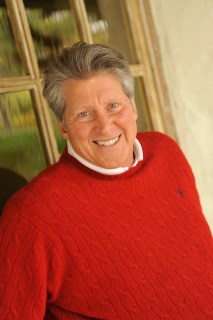
 

Ron Hansen


Billy: The Man and the Myth

To belong.

To be liked.

To be famous.

To be feared.

Hansen has Billy say those four things to a trail mate who asks The Kid what he wants. They’re the aspirations of a mercurial man-child who lived fitfully and died violently at 21.

“In the movies especially he’s often portrayed as illiterate and a psychopath and when you read memoirs of other people they never say that about him,” Hansen said of Billy. “They say he was really smart, loved to read and was always very pleasant to be around. Billy obviously was very intelligent because even with very little schooling you can see in his letters he was very literate. He wrote a lot of letters actually. Maybe six have survived, mostly because they were letters he sent to the territory’s governor, Lew Wallace.”

Billy, like other outlaws, also enjoyed reading stories about himself to see where fact left off and fiction took flight.

“He once wrote an editor after reading an article about himself and said, ‘Whoever wrote that had a very vivid imagination because I didn’t do all those things,'” Hansen noted. “But he could have been denying what he really did do, too. That’s the way criminals act.”

For a lover of words like Hansen, it’s important he capture the richness of language people used then,

“There was a kind of grandeur to speech. Most of the time in Westerns people talk very simply, not very interestingly, but reading these accounts you realize people were very literate and very self-conscious about the way they wrote. They took time with things. For a lot of cowboys, their literature was basically the Bible and so there was an ancient sound to a lot of their language because that’s the only thing they’d read or heard. It was a different kind of education then and maybe a reverence for the written word that caused people to be careful how they spoke and wrote.”

Saying the wrong thing to Billy could be fatal, Hansen said, if The Kid’s “dark side” erupted after Insult or injury.

“That complexity naturally draws a novelist to show the shadings and not try to explain it really, just experience it.”

He said like other famous figures “Billy is basically everybody’s wild invention.” “Nobody can pin him down. It’s like Jesse James – everybody has an attitude about him. For some, he’s still a hero and they name their kid after him. And I think the same thing is true of Billy the Kid. He was very charming in real life. Everybody talked about what a nice smile he always had, so it makes him more likable than a lot of the outlaws.”

“So you have the possibility of two faces – the angry killer and the sweet guy all the women loved and liked to dance with. He learned Spanish somehow and the Hispanic people liked that  he would speak to them in Spanish and that he knew the Old World customs, so they protected him,” Hansen said. They thought what the authorities said was all untrue. In fact, it was trumped up a lot of the time. The newspaper accounts show how the description of Billy changes. He has black hair when they make him a negative figure and he has blonde hair when they make him positive. The journalistic slant is so clear. He starts out as this viper, really awful man. and then as accounts go on and people start having a yearning or romantic feeling about the Old West, he starts to take on a different coloring.”

The Kid’s legendary status was secured as soon as he died at the hands of sheriff Pat Garret.

“Almost immediately after his death there were five books about Billy the Kid and he was largely a figment of people’s imaginations even then,” Hansen said. “Then he faded from memory until Walter Noble Burns wrote The Saga of Billy the Kid. It became an immediate best seller. A movie followed that. There’s been something like 30 movies about Billy the Kid.”

Hansen said the Burns book makes The Kid “this very romantic hero – like a knight-errant,” adding Burns had the advantage of starting “on the research when a lot of the people were still alive, so he actually had first-hand accounts.”

Hansen read all he could find about The Kid, including the Burns book. Another resource he used to get a handle on him was the Enneagram of Personality Types. Applying what he knew about The Kid, he determined he fit the melancholic type.

“I sprinkled those aspects throughout the book,” he said.

Part of that type is wanting to be noticed and Hansen said that fits with a studio photograph of Billy dressed shabbily – a direct contradiction to how folks garbed for special occasions. Hansen has someone ask Billy, “You want to be photographed in that?” and The Kid replies, “I don’t want to be ordinary.”

Another trait of the melancholic, Hansen said, is having one hurt in life that can’t be assuaged. For Billy, he said, it was the loss of his mother, to whom he was devoted. The more Hansen dug into his subject the more he discovered what a complicated figure his protagonist was and how bereft he felt after losing her.

“He never really had a father and then she married this other guy who he didn’t get along with. The guy made him change his name from William to Henry. He never had much connection with his brother either. So, Billy basically had his mother and then she died and so he felt like an orphan.”

Hansen believes the fires raging inside Billy were fueled by abandonment and rejection. Billy also caught much grief for his slight build and fancy, fussy ways. When bullied, assaulted or cornered, he could be deadly. The great conflict within him was a desire to be accepted, even respected, and an urge to rebel.

“It was a real hot and cold thing going on with him,” Hansen said. “I think I have Paulita Maxwell, who was almost certainly his girlfriend, toward the end telling him he attracts people and repels them at the same time. They never know where they stand and they make him more and more anxious to please him. That’s why he became the leader of almost any group he was in – nobody could quite figure him out because of those contrary aspects of his personality.”

Given his charms, it’s no wonder The Kid won over a dandy land baron in the New Mexico Territory named John Tunstall, whose high breeding did not prevent their hitting it off. Tunstall became his boss and benefactor, remarking to others his admiration for The Kid’s wit and guile. When Tunstall was killed by arch enemies, Billy swore revenge and got it,


Western stirrings

There’s no telling if Hansen would have developed his same interest in the Old West without the influence of his grandfather. But there’s no doubt that crusty old man and his tales stirred something in him.

“My grandfather Frank Salvador had a ranch in eastern Colorado. He was from Spain originally. He and his mother and father seem to have sailed from France to America and settled in Utica, New York, where his mother died, then his father — in a gruesome mining accident.”

As a child Salvador was put on an orphan train bound for Iowa.

“Orphan trains began conveying children from the East — mostly New York City — in the early 19th century and didn’t stop until after World War I.,” Hansen said via email  “The idea was to get orphans out of the slums and into better living conditions of the wide open spaces farther west. Unfortunately, children sometimes became indentured servants to farm owners, as was the case with my grandfather on the farm near Adair (Iowa).”

While there, his grandfather swore he had a close encounter with an infamous outlaw.

“My grandfather told the story of when he was really young a group of guys rode up to the farm to water their horses. Then they heard galloping in the distance – it was a posse after them – and they jumped on their horses and ran off. He thought that was Jesse James. Jesse James actually robbed a train in Adair. It could have been another outlaw gang. But he was convinced of it and he had a reputation for being really honest.”

Salvador settled a score, peacefully, before lighting out for the West to make his own way.

“When he was in his late teens, my grandfather filed suit against the farm owner who’d misused him and never paid for his labor. The court ruled in his favor and he left Iowa for eastern Colorado where he bought land with his court settlement and called the ranch ‘Wages.’ He was a real interesting character because he was a 19th century man essentially. He would go someplace and nobody would see him there again for a year and they’d still remember him because he was so charismatic. He chewed tobacco and always carried around this coffee can he’d spit tobacco juice into, and I was charmed by this. Once I got a bee sting and he put a wad of chewing tobacco on it to take the hurt away and maybe it was a child’s imagination but I thought it really did work. The sting went away after he applied that poultice.”

The impressionable Hansen loved hearing the old man’s yarns and perhaps inherited some storytelling prowess from him.

“He would tell me stories – how some hands still wore their Civil War overcoats. He must have worked on horseback for a good while because it was only when he became prosperous he bought the first tractor in the county. He was also the first rancher (there) with indoor plumbing. He still had a bunkhouse that must have held at least 12 men. It was remarkable to visit there and think what a different life that was back then. So I felt like I had contact with the 19th century just through him.”

Naturally, once a writer Hansen drew on his grandfather – making him the subject of the essay A Nineteenth-Century Man. He’s the model for the title character in Atticus. Hansen said, “Some of his attitudes survive in Jesse James and all my Westerns have some element of my grandfather.”

There were other Western models in his life, too.

“There were a lot of farmers in my family and I remember visiting them and hearing them talk and they had a completely different vocabulary than the people I knew in Omaha. I think even being in Omaha you have a sense for the past you don’t have in other cities. Like where I am, the city of Cupertino, California, it didn’t exist really until 1970 and so there’s such a newness about it, whereas here (Omaha) you can still see houses and buildings from the 19th century. It would only take me about five minutes from West O to be in cornfields.”

He said growing up in Omaha in the 1950s, “the West was very much alive” because open country was just beyond the then city limits of 72nd Street. Plus, the stockyards in South Omaha found ranchers bringing livestock to market in epic volumes.

Hansen also saw his share of Western movies as a kid. Though steeped in images, artifacts and stories, he didn’t burn to write about the West until poverty sparked inspiration.

“I was really poor and I thought what can I think I can sell to a magazine, and I ran across this book about the Dalton gang. I knew they weren’t well known. They were a violent gang. I was charmed by the fact they tried to rob two banks at the same time in their hometown where everybody knew them. I thought that’d be a great story. I was writing it as a short story and then I realized I had like 30 pages and I hadn’t even touched the whole story, and so I decided I’ll write this as a novel.”

That story became Desperadoes.

“The same thing happened with Jesse James,” he said, when a short story he started morphed into his novel about the outlaw.

Much as he came to be with Billy the Kid, he said, “I was entranced by the differing opinions about Jesse James – how the newspapers thought he was the worst guy possible and then you saw memoirs where people said how gentle and fun he was and that he was very witty. Those kinds of complexities of character draw me to writing about these characters.”


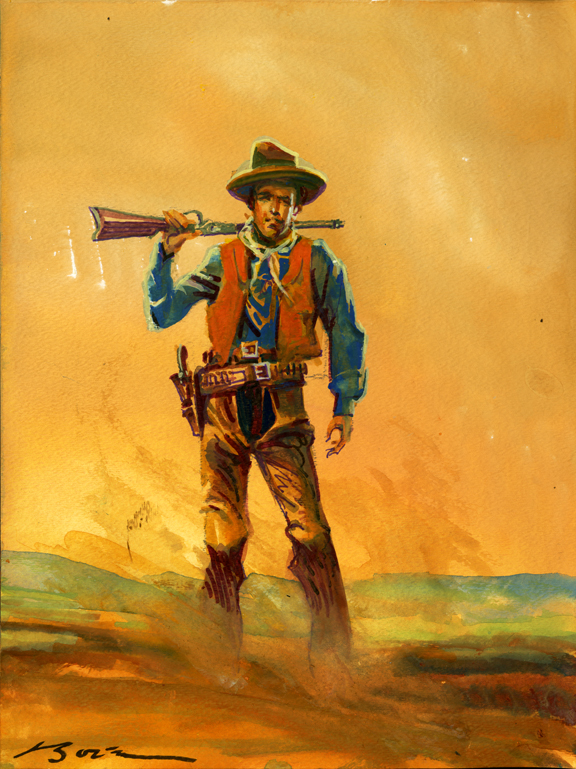
Billy the Kid’s West

That rascals and varmints inhabited the West and that deadly conflicts happened with alarming frequency is not surprising given the conditions of that wild place.

As Hansen explained, “The area of Lincoln County (New Mexico) was the size of the state of Connecticut. It had one lawyer and one sheriff to cover all that, so people had to make do on their own basically. They had to be the law themselves. This was open range with no fences, Cattle would run away all the time – mavericks they called them.”

People claimed, worked and defended land they had no clear title to. When questioned or challenged, disputes arose, and with no practical legal remedy in sight, opponents often settled things with a gun. The same held for disputes over cattle, cards and any number of other things. If you killed someone in a conflict, you invoked the Code of the West, which roughly translated to, “He left me no choice.” Billy used that one himself.

Men protected their honor by any means necessary. Feuds often resulted in bloodshed. A wanted outlaw might take his chances with the Army, a sheriff or a posse. Hired guns targeted anyone, wanted or not, their employers wanted “regulated.” Frontier justice could mean death by assassination or lynching. On the run, dangers included Indians and bandits. At one time or another, Billy was on every side of these fights and pursuits.

“New Mexico residents thought of the government as being in Washington and they were their own government, so in some ways it was almost like the secession the South did with the North. They were rebels against this government that was being imposed on them,” Hansen said. “There weren’t telephone lines, there weren’t fences, there weren’t roads. There were trails, so it was really open country. The Apaches and the Comanches were still on the warpath and you constantly heard about people losing their lives. It affected Billy, too. He was attacked by Apaches and they stole his horse once. I don’t know how he got away with his life but he did.”

Billy specialized in stealing cattle and Army horses. Hansen said neither practice was uncommon. “A lot of people did it back then,” he said. “What’s ironic is that when Pat Garrett started his own herd of cattle, they were all stolen.”

Then there were the big ranchers who acquired their holdings by various expedient and questionable means. Hansen said, “Billy saw all that and thought, Why can’t I do that, too?”

Hansen makes no apologies for Billy’s crimes but insists he “kept getting blamed” for things he didn’t do. “Anytime he was around he got blamed for the murder when in fact many times he didn’t fire his gun. Partly that’s why he became so famous – that round up the usual suspects. He was always one of them.”

Not all outlaws are created equal.

“Jesse James was far more of a psychopath than Billy the Kid,” Hansen said, “because Jesse James was very violent – and intentionally that way. When we were shooting the movie Andrew (Dominik) and I both agreed it’s not really a Western, it’s really a gangster story. Typical of the gangster movie, a guy has accumulated wealth and power and all that stuff but then he gets paranoid and he starts killing off all the guys who made him famous. That’s what was happening with Jesse James. He was looking up all the guys and killing them.

“Yet he had these kids he loved and his wife loved him and all that. But at the same time he was capable of murder and robbing banks and trains. His wife must have known what he was doing but she pretended he was a cattleman and made money in the stock market.”

Hansen said though “Billy the Kid was like that, it was more impetuousness, especially when all these people were out to get him. He was constantly facing mobs and a lot of times they didn’t have warrants, and so in some cases it’s justifiable homicide. He was not as vicious as Jesse James. I have that scene where Jesse James meets him and Jesse gets vicious with him and then he finally gives up and walks away and Billy thinks, ‘If that’s an outlaw, I’m not an outlaw.’ Sure he was stealing cattle to make a living but so did almost everybody. That was the way people started their herds. That was the natural way of doing things back then.

“Billy’s crimes were never against people unless they shot at him or were trying to kill him, and then he shot back. He had lots of reasons for killing Bob Olinger, who was really nasty to Billy. Plus, Bob killed one of Billy’s best friends. He didn’t really want to kill Jim Bell but he felt forced to because they were going to hang him. So there were all these mixed motives going on.”

Billy’s death wasn’t accepted by everyone even though he clearly did die at the hands of Garrett.

Hansen said, “All these people who knew Billy were on this committee or jury that Pat Garrett urged be put together to say that the body was that of Billy the Kid and he did get killed by Pat Garrett – but it was justifiable homicide.”

Further evidence The Kid’s life ended then, Hansen said, was that his flame, Paulita, never saw Billy again.

The author finds Paulita an intriguing figure. Despite coming from a respectable family, she fell for this brash miscreant and after he was gone she denied being his girl.

“She thought of all the reputation Billy was carrying with him,” Hansen said. “In the Walter Noble Burns book she comes off as a woman wrongfully accused of being Billy’s sweetheart. She said she liked him very much and if they had been sweethearts she would have run off with him. So I actually have her say some of the things in the book she said to Burns. I don’t think she realized because of the book and the movies how famous she was going to be. She kind of hid out for the rest of her life.”

Years later. people claimed to be Billy under assumed names.

The same claims attended Jesse James after his death. “Officials finally did do a DNA sample and found out Jesse really was in that grave in Missouri,” Hansen said, “but I always knew he was in that grave because he was well known as a good family man and yet he left his wife destitute and it’s very unlikely he would have allowed that to happen.

“People just don’t want these legends to die.”


Projects

Just as no two outlaws are alike, no two writing projects are either. One constant of the craft is that it’s hard work. But some projects are more enjoyable than others. Though it took much research and imagination, The Kid was a relative breeze.

Hansen said, “I had more fun writing this than almost any other book I’ve done just because there’s such a variety of activity – so many different things are described. He’s a fascinating character. My wife was kind of irritated because I was writing in earnest for one year and she’s been on her book for four years. But it just came quickly to me.”

Not all his books perform as well as he’d like, including his 2011 historical novel A Wild Surge of Guilty Passion drawn from a real life “case of the century” that saw a tryst lead to a 1927 murder. The culprits, Ruth Snyder and her lover Judd Gray, were both executed at Sing Sing in 1928 after being found guilty of killing Ruth’s husband Albert Snyder.

Hansen happened upon the case and couldn’t shake it. There was a wealth of material about the crime and the trial. Gray even wrote a memoir about it while awaiting execution.

“Judd Gray was a corset salesman who had dropped out of high school,” Hansen said, “and yet at the trial the judge said, ‘We can see what a well-educated man you are.’ While in prison, to make money for his daughter, he wrote a very literate memoir about how he ended up killing Albert Snyder.”

Hansen’s own book about the case “didn’t do very well at all,” he said, which he attributes to early negative reviews in trade publications that outweighed later positive reviews. “I thought it was going to be a movie and it didn’t become a movie but people who have read it liked it. I like it.”

He had been with Harper Collins before parting ways and going to Scribner, which published Wild Surge. “Then Scribner published my book of stories She Loves Me Not  (2012). I wanted them do a paperback of it and they said we won’t until you give us a novel, so I decided to write The Kid.”

Then there was the feature film script he co-wrote with good friend and fellow novelist-short story writer Jim Shepard (The Book of Aron). Their script Lie Down with Me, which tells another 19th century story, though this one in the East, was written for Casey Affleck to produce and direct for Relativity Media. Everything was a go before things fell apart.

“Casey Affleck was counting on doing this as a labor of love and in the same week we were expecting our writing checks in the mail, Relativity declared bankruptcy.”

Hansen said Affleck still wants to get the movie made and is trying to secure a name actress in the key role of Abigale.

“It’s set in farm country in upstate New York in the 1850s. He wants it filmed in all four seasons, so he would get people on the set for one week and let them go home and get them for another week, and so on. It’s much voice-over. He wants it to be basically a diary of Abigale, who’s telling all these things that happened. It has very ornate language because she’s concentrating hard when she’s writing her diary, but when she’s talking it’s very plain language.

“A female actress would really be intrigued by this project just because it’s so much her (Abigale). Virtually every page is her and there aren’t many big parts like that for women.”

Asked why he’s so drawn to the past, Hansen said, “Some of my fascination as a fiction writer is the requirement to imagine so much more than if I were writing about a contemporary world or from autobiographical experience. I have to take on unfamiliar roles in unfamiliar settings, so I feel more creative. Even the spoken language is different. And it’s intellectually satisfying that there’s so much learning that needs to go on in order to persuade the reader that a scene must have happened pretty much as I present it.”

As for a next project, he said, “I want to do a sequel to Mariette in Ecstasy. Mariette would be like 80 years-old and she will have moved from upstate New York to Big Sur, California, but I don’t know anything else about the plot. The idea for a sequel just came to me. People like Mariette in Ecstasy a lot and wouldn’t it be nice to see what she’s up to. That was a book I liked writing. I had kind of a ready-made plot with that and I don’t have a plot with this.”

It’s a chance for his imagination to take full flight with one of his favorite characters whose life details he gets to fill in. Sounds like a state of bliss for the author.

Read more of Leo Adam Biga’s work at leoadambiga.com.


NEWS FLASH: “Alexander Payne: His Journey in Film” now available through Barnes & Noble

August 20, 2016 Leave a comment

NEWS FLASH: “Alexander Payne: His Journey in Film”

Now available through Barnes & Noble. $25.95.

Passion Project. Introducing the new – “Alexander Payne: His Journey in Film”

https://www.facebook.com/AlexanderPayneExpert/?fref=ts

The book’s a must-read for film buffs, critics, filmmakers, educators and students as well as more casual film fans who want a handy Payne primer and trivia goldmine.

“This is without question the single best study of Alexander Payne’s films, as well as the filmmaker himself and his filmmaking process. In charting the first two decades of Payne’s remarkable career, Leo Adam Biga pieces together an indelible portrait of an independent American artist, and one that’s conveyed largely in the filmmaker’s own words. This is an invaluable contribution to film history and criticism – and a sheer pleasure to read as well.” – Thomas Schatz, Film scholar and author (“The Genius of the System”)


FINAL FRONT COVER 6-28-16


FROM YOUR ALEXANDER PAYNE EXPERT

Leo Adam Biga–

I am an Omaha-based author-journalist-blogger who often writes about film and in 2012 I turned my in-depth reporting about Oscar-winning writer-director Alexander Payne into a book entitled “Alexander Payne: His Journey in Film”. It is the most comprehensive study of his cinema career and work to be found anywhere. My collection of articles and essays is based on interviews I conducted with Payne and with many of his key collaborators. I have a new edition of the book releasing September 1 through a boutique press here called River Junction Press. This new edition features expanded and enhanced content, including a Discussion Guide with Index.

The book is updated and current through his “Nebraska” and “Downsizing” projects. I am quite proud of it. It’s received a wonderful endorsement from film scholar and author Thomas Schatz (see above).

“Alexander Payne: His Journey in Film” takes you deep inside the creative process of one of the world’s leading cinema artists and follows the arc of his filmmaking journey over a 20-year span, when he went from brash indie newcomer to mature, consummate veteran. Along the way, he’s made a handful of the best reviewed American films of the past two decades and his movies have garnered many top honors at festivals and at the Independent Spirit Awards, the Golden Globes and the Academy Awards.

The book has a staged release this fall, beginning September 1, 2016 through year’s end and well beyond, from River Junction Press in Omaha and sells for $25.95.

Available soon on Amazon, for Kindle and at select bookstores and gift shops. You can also order copies through my blogleoadambiga.com or via http://www.facebook.com/LeoAdamBiga or by emailing me at leo32158@cox.net.

More strong praise for”Alexander Payne: His Journey in Film”

“Alexander is a master. Many say the art of filmmaking comes from experience and grows with age and wisdom but, in truth, he was a master on day one of his first feature. Leo Biga has beautifully captured Alexander’s incredible journey in film for us all to savor.” – Laura Dern, actress, star of “Citizen Ruth”

“Last night I finished your wonderful new book and I enjoyed it so much! Alexander Payne is such a terrific director and I loved reading about his films in detail. Congratulations.” – Joan Micklin Silver, filmmaker (“Hester Street” and “Crossing Delancey”)

“Alexander Payne is one of American cinema’s leading lights. How fortunate we are that Leo Biga has chronicled his rise to success so thoroughly.” – Leonard Maltin, film critic and best-selling author

“I’d be an Alexander Payne fan even if we didn’t share a Nebraska upbringing: he is a masterly, menschy, singular storyteller whose movies are both serious and unpretentious, delightfully funny and deeply moving. And he’s fortunate indeed to have such a thoughtful and insightful chronicler as Leo Biga.” – Kurt Andersen, novelist (“True Believers”) and Studio 360 host

“Alexander Payne richly deserves this astute book about his work by Leo Biga. I say this as a fan of both of theirs; and would be one even if I weren’t from Nebraska.” – Dick Cavett, TV legend

“Leo Biga brings us a fascinating, comprehensive, insightful portrait of the work and artistry of Alexander Payne. Mr. Biga’s collection of essays document the evolution and growth of this significant American filmmaker and he includes relevant historical context of the old Hollywood and the new. His keen reporter’s eye gives the reader an exciting journey into the art of telling stories on film.” – Ron Hull, Nebraska Educational Television legend, University of Nebraska emeritus professor of broadcasting, author of “Backstage”

“Perhaps the most intriguing feature of the book is Biga’s success at getting Payne to speak candidly about every step in the filmmaking process. These detailed insights include the challenges of developing material from conception to script, finding financing, moderating the mayhem of shooting a movie, and undertaking the slow, monk-like work of editing.” – Brent Spencer, educator and author (“The Lost Son”)

“This book became a primer for me, and introduced me to filmmaking in a way that I had never experienced in my years at film school. The intimacy and honesty in Biga’s writing, reporting and interviewing– and Payne’s unparalleled knowledge of cinema introduced me to filmmaking and film history from someone I quickly came to respect: Mr. Payne.” – Bryan Reisberg, filmmaker (“Big Significant Things”)

Passion Project – Introducing the new “Alexander Payne: His Journey in Film”

July 29, 2016 2 comments

Passion Project 

Introducing the new –

“Alexander Payne: His Journey in Film”

Very pleased to announce the new edition of my book “Alexander Payne: His Journey in Film” releases September 1. The book is a passion project of mine that I am happy to share with the world. If you are a cinema lover and a Payne fan, then this is a must-read.

“Alexander Payne: His Journey in Film” charts the Oscar-winning filmmaker’s rise to the elite ranks of world cinema. Articles and essays take you deep inside the artist’s creative process. It is the most comprehensive look at Payne and his work to be found anywhere. This new edition features significant new content related to “Nebraska” and “Downsizing.” We have also added a Discussion Guide with Index for you film buffs, critics, filmmakers, educators and students. The book is also a great resource for more casual film fans who want a handy Payne primer and trivia goldmine.

The book releases September 1 from River Junction Press and sells for $25.95.

For inquiries and pre-orders, contact: leo32158@cox.net.

FINAL FRONT COVER 6-28-16    

As an author-journalist-blogger, I write about people, their passions and their magnificent obsessions, and no one more epitomizes that profile than Alexander Payne. I mean, he waited 10 years to finally make his in-progress new feature “Downsizing.” That’s passion, that’s commitment, that’s holding onto a magnificent obsession until realized.

Payne is one of the most passionate people I know. Besides talent, his driving, all-consuming passion explains why he’s been able to make the uncompromising films he’s made in spite of the myriad pitfalls and challenges that confront any motion picture project. I have covered his filmmaking journey almost from the start. In 2012 I turned my in-depth reporting about him into “Alexander Payne: His Journey in Film.” It is a passion project for me.

Follow my work at–
http://www.leaoadambiga.com and http://www.facebook.com/LeoAdamBiga.


Though I am a generalist who writes about anything and everything, there are a few subjects I keep returning to again and again. Some of these are societal and cultural in nature, others historical. But there is one particular individual who occupies special emphasis among all my writing and reporting: Alexander Payne. The filmmaker, who has given us such works as “Election,” “About Schmidt,” “Sideways,” “The Descendants” and “Nebraska,” is actually part of a larger interest in film I have cultivated for decades. I got hooked on movies as a teen. I did film programming for a decade-and-a-half. Since the mid-1990s I have written hundreds of stories as a film journalist. Many of my film interviews and profiles focus on Nebraskans in film. I am developing the Nebraska Film Heritage Project as a print, online, lecture and curriculum vehicle for documenting and celebrating the achievements of Nebraskans in film, past and present, both in front of the camera and behind the camera.

Payne is the epitome of the passionate creatives I interview and profile. His magnificent obsession with film ranges from an encyclopedic knowledge of world cinema to support of film preservation and education efforts to pursuit of great film projects. From his very first feature, “Citizen Ruth,” on through his last completed film, “Nebraska,” he has satirically, thoughtfully explored a wide expanse of the human heart and soul. He’s paid particular attention to relationships, but he’s also touched on abortion, politics, mid-life crisis, loneliness, identity issues, addiction, depression, love, romance, infidelity, death, family, alienation, old age. The film he’s making now, “Downsizing,” which releases in late 2017, will offer up his most expansive take yet on the world with the satire this time revolving around themes of depleted world resources, sustainability, technology, geo-political tensions, terrorism, corruption, exploitation, discrimination and civilization. He and co-writer Jim Taylor are exploring the very nature of what it means to be human and how we create society. Where his previous films have been more intimate in scale, he is working on an epic canvas here, though the ideas are distilled into the closely observed personal story of one character, Paul (played by Matt Damon), whose life is the prism through which all these intersecting storylines and themes are played out. In terms of ideas, it may be the most ambitious American film since “Apocalypse Now” or “The Deer Hunter” or at least since Avatar.

My extensive coverage of the acclaimed writer-director has resulted in a deep body of work about him and his films that I have put into book form. The new edition of tha book now available this summer features expanded and enhanced content that brings you right up to date with his latest project.

If you are in Nebraska, you have an early bird opportunity to buy the book at KANEKO, 1111 Jones Street, in Omaha’s Old Market. It will be available for purchase during the remainder of the Storytelling Series run (through August 27) at this venue that is “an open space for open minds…”

The book will be available at other venues, including bookstores and gift shops, during the course of the summer and fall. It will also be available on Amazon and for Kindle.

Strong praise for”Alexander Payne: His Journey in Film”–
“This is without question the single best study of Alexander Payne’s films, as well as the filmmaker himself and his filmmaking process. In charting the first two decades of Payne’s remarkable career, Leo Adam Biga pieces together an indelible portrait of an independent American artist, and one that’s conveyed largely in the filmmaker’s own words. This is an invaluable contribution to film history and criticism – and a sheer pleasure to read as well.” –Thomas Schatz, Film scholar and author (“The Genius of the System”)

“Alexander is a master. Many say the art of filmmaking comes from experience and grows with age and wisdom but, in truth, he was a master on day one of his first feature. Leo Biga has beautifully captured Alexander’s incredible journey in film for us all to savor.” – Laura Dern, actress, star of “Citizen Ruth”

“Last night I finished your wonderful new book and I enjoyed it so much! Alexander Payne is such a terrific director and I loved reading about his films in detail. Congratulations.” – Joan Micklin Silver, filmmaker (“Hester Street,” “Crossing Delancey”)

“Alexander Payne is one of American cinema’s leading lights. How fortunate we are that Leo Biga has chronicled his rise to success so thoroughly.” – Leonard Maltin, film critic and best-selling author

“I’d be an Alexander Payne fan even if we didn’t share a Nebraska upbringing: he is a masterly, menschy, singular storyteller whose movies are both serious and unpretentious, delightfully funny and deeply moving. And he’s fortunate indeed to have such a thoughtful and insightful chronicler as Leo Biga.” – Kurt Andersen, novelist (“True Believers”) and Studio 360 host

“Alexander Payne richly deserves this astute book about his work by Leo Biga. I say this as a fan of both of theirs; and would be one even if I weren’t from Nebraska.” – Dick Cavett, TV legend

“Leo Biga brings us a fascinating, comprehensive, insightful portrait of the work and artistry of Alexander Payne. Mr. Biga’s collection of essays document the evolution and growth of this significant American filmmaker and he includes relevant historical context of the old Hollywood and the new. His keen reporter’s eye gives the reader an exciting journey into the art of telling stories on film.” – Ron Hull, Nebraska Educational Television legend, University of Nebraska emeritus professor of broadcasting, author of “Backstage”

“Perhaps the most intriguing feature of the book is Biga’s success at getting Payne to speak candidly about every step in the filmmaking process. These detailed insights include the challenges of developing material from conception to script, finding financing, moderating the mayhem of shooting a movie, and undertaking the slow, monk-like work of editing.” – Brent Spencer, educator and author (“The Lost Son”)

“This book became a primer for me, and introduced me to filmmaking in a way that I had never experienced in my years at film school. The intimacy and honesty in Biga’s writing, reporting and interviewing– and Payne’s unparalleled knowledge of cinema introduced me to filmmaking and film history from someone I quickly came to respect: Mr. Payne.” – Bryan Reisberg, filmmaker (“Big Significant Things”)

Pot Liquor Love: Summer Miller’s book depicts area whole foods culture in stories, recipes, pics

July 1, 2016 1 comment

“New Prairie Kitchen: Stories and Seasonal Recipes from Chefs, Farmers, and Artisans of the Great Plains”

I am very happy for my colleague and former editor at The Reader, Summer Miller, for the success she is having with her first book, New Prairie Kitchen. She has poured her passion for food and for the emerging Great Plains food culture that Omaha is on the leading edge of into her labor of love book. She has lovingly rendered the stories of chefs, growers and artisans involved in this movement as a way of life. She connected her passion with theirs and the result is a book of personal profiles and original recipes, all beautifully illustrated by Dana Damewood’s photography. My story about Summer and her book appears in the July 2016 issue of The Reader (www.thereader.com).  Follow my Pot Liquor Love food blogging at leoadambiga.com and on Facebook at My Inside Stories. And since food and movies are such a good pair, remember to follow my Hot Movie Takes on the same two social media platforms.


Pot Liquor Love:

Cover of

Book depicts area whole foods culture in stories, recipes, pics

Summer Miller mines the new prairie culinary landscape

©by Leo Adam Biga

©Photos by Dana Damewood

Appeared in the July 2016 issue of The Reader (www.thereader.com)


Omaha author Summer Miller came to write her Gourmand World Cookbook Awards finalist New Prairie Kitchen in the midst of a life reset.

More than a recipe book, Miller profiles 25 chefs, growers and artisans involved in creating “the new Midwestern table” and its clean-healthy- fresh food credo. Each subject’s represented by signature dishes they provided and by photo portraits Dana Damewood made.

“I knew I wanted to tell stories,” Miller said.

She specifically wanted to share stories of this loose community of creatives she met while researching the book.

“I was passionate about this. I really believed in showcasing Nebraska and these people. I felt it was an act of service to them and to the region and to the whole idea of it. This book for me was always about promoting the people. What I find inspiring about them is their willingness to work against the grain and twice as hard because they believe in what they’re doing. They just don’t do it easy, they do it right. That reinsured me to do that with my own craft.

“I learned so much from the people in it. It was such a growth experience  – both the writing process and the human connections.”

She views the project as a collaborative. Her “thorough’ process entailed multiple interviews. When it came to recipes, there was “back and forth – tweaking, changing, conversation. My name is on the book but it was a major collective effort.”

Miller chose profile subjects – from Omaha Grey Plum chef-owner Clayton Chapman to Hastings Back Alley Bakery owners John and Charlotte Hamburger – who represent “people coming together to try and elevate our food culture.” “You didn’t have to be a James Beard-nominated chef to be in the book. I didn’t care if you had training or not. I cared that you used local products. That was the only filter. If we do something well here, we should use it and support it. They’re our neighbors.” Her subjects extend into Iowa and South Dakota.

Damewood’s photographic approach fit Miller’s vision.

“I needed somebody who could let people be who they were, who could work as a photojournalist and not have to have a studio set for everything, who would handle whatever came to us in the field.”

Miller worked closely with chefs “simplifying and making recipes more functional for the home cook,” adding, “I didn’t expect to become as involved in the food as I did.”


The project came into focus for the veteran Omaha journalist only after  she left reporting-editing for a corporate job and then got accepted to graduate school, When a chronic back problem required surgery and Miller found herself pregnant, grad school got scuttled. Between post-op recovery, new motherhood and unemployment – she’d quit her job – her old identity no longer fit. The book transformed her. It began with this avid gardener and home cook meshing her food interest with her storytelling instinct. She filed freelance food articles and penned a weekly seasonal eating column. All informed by the emerging farm-to-table movement she felt drawn to. Through Emerging Terrain dinners and other collaboratives, she saw chefs and growers partnering.

“We have this amazing pool of chefs and when they work with producers who understand how to grow something beautifully and at what point the sugar content of this vegetable is just perfect and at what point these greens reach their spiciest peak and the best time to pick them, that really excites these talented people to be creative. That in turn provides us as consumers with really good food.”

The more she surveyed the scene, the more of a local whole foods activist she became. She said, “Being able to eat well and to eat good food can come at the fine dining level and it can also come at the casual level.” Even living in the country and knowing growers, she said “it’s still hard for me to source local food.” That’s why the back of her book includes a directory of local whole food chefs and growers.

Thus, the book and its themes grew out of Miller’s own life.

“I grew up working in gardens. Once I had a family food became even more of a counterpoint in my own personal life. I think the rest of the world is kind of coming along to that, too. This has been going on for years, but it’s just really now hitting the new wave of local food. I really care about home cooking, I care that people do it and I care that people understand you can do it and it doesn’t have to kill you. I really believe families want to eat better,” said Miller, who teaches cooking classes.

Then there are food’s social-emotional dynamics.

“Feeding people has always been a way to comfort others. It lets them know they’re tended to. It’s not new to show people you love them through food. That’s what we do when we don’t know what else to do.”

She rues the family dinner’s become “vilified” in a foodie culture that makes chefs celebrities and eating out the norm.

“I think it’s too bad food today has become elitist. That’s so sad. I don’t think food is an art. It’s a medium and a vehicle and like any medium you need to respect it but you also don’t make it more than what it is. It’s a way to feed people, it’s a way to connect people, it’s a way to nourish ourselves, our souls, our bodies, our families, our relationships, and we need to find our back to that. I’m a home cook advocate – I’m like a defender of dinner.

“I don’t honestly like the word foodie because it puts the emphasis on the food and I believe the emphasis should be on how food brings us together. These things are big to me. Being able to make something nice and to serve my family a meaningful, memorable meal, especially around the holidays, is how I show love.”


She said the pendulum’s swung too far.

“I think it’s great we know what arugula is now, but I think we have to be careful not to elevate food above the people eating it because it’s a means with which to share our humanity with one another and to show love and compassion.”

New Prairie Kitchen’s message has resonated enough that the book went into a second printing within months of its May 2015 release by Chicago-based publisher Agate.

Miller did an extensive book tour last summer. People came out “in droves” to see her and some of the chefs, growers, artisans she had appear with her at several stops.

“I was gone almost every weekend. I was pretty drained by the end of that. I was definitely ready to be home with my family.”

The book brought her to the attention of EatingWell magazine, whom she now contributes to.

She’s delighted some fans use the book as a travel guide to visit featured venues.

This expert author likens the local food culture to where recycling was decades ago. “It wasn’t yet integrated into life but now we all do it. I think whole food will become that as well – it will become what we do.”

“The best thing coming out of this is people learning what food should taste like after decades of having flavors dumbed down. Once you have a truly well-made hamburger and you learn just enough to do it better yourself at home, then you will not waste the time, energy, environmental resources to go spend $8 on a combo meal

“Learning what food is supposed to taste like in its most unadulterated form is the first step in healing ourselves and our families. You have to be able to eat well every day, and you can.”

Follow her at http://www.scaldedmilk.com/about-summer-miller/.

Paul Johnsgard: A birder’s road less traveled

June 24, 2016 3 comments

Paul Johnsgard is an unassuming Great Plains genius whose writing, lecturing, illustrating and photographing of birds and the natural world have earned him and his work high distinction. He is also renowned for his wood carvings of waterfowl. His impressive skill set has resulted in him being called a Renaissance Man by some and a rare bird or a bird of a different feather by others. The best way I found into his story was to frame his deep passion for nature as an extension of the imprinting process that goes on with birds. Everything about where he grew up and how he grew up immersed him in nature and reinforced his fascination with birds and wild things until it became embedded or imprinted in him. He is one of the latest in that ever growing gallery of my profile subjects whose life and work epitomize what I highlight in my writing – “stories about people, their passions and their magnificent obsessions.” Johnsgard’s regard for birds and the lengths he goes to observe, study, describe, illustrate, photograph than and to represent them in art are all about passion and magnificent obsession.

My profile of Johnsgard is the cover story in the July 2016 New Horizons that should be hitting stands and arrving in mailboxes by the end of June.

As an aside, whenever I do one of my new Horizons profiles I am reminded that the people of a certain age I profile in its pages are consistently the most complex, interesting subjects I write about. These people live rich, full lives marked by intellectual rigor, unbound curiosity, joyful work and play and a sense of adventure. They know themselves well enough by age 60 or 70 or 80 or 90 or whenever I get around to them to be comfortable in their own skin and to not much give a damn what anyone else thinks. They are well past pretense and posturing. They are al about living. They own every inch of their humanity, gifts and warts and all. It’s a refreshing and instructive lesson to live large and love hard.


2006 (Esquire image)

Paul Johnsgard in 2006 (Esquire image)


Paul Johnsgard: A birder’s road less traveled

©by Leo Adam Biga

Appeared in the July 2016 issue of New Horizons


A birder’s beginnings

World-renowned ornithologist Paul Johnsgard, 85, ascribes his passion for birds to something akin to the imprinting process that occurs with the winged creatures he’s made his life’s work.

For the University of Nebraska-Lincoln emeritus professor and author of 82 books, many illustrated with his own drawings and photos, this road-less-traveled life all began as a lad in North Dakota. His earliest memories are of birds and other natural things that captured his imagination while growing up on the edge of prairie country.

“The railroad track went through town and that was probably important because I could walk the railroad track and not get lost, and see birds and flowers,” he recalled. “I was unbelievably lucky I think.”

This Depression-era baby got exposed to the surrounding natural habitats of the Red River and of Lake Lida in Minnesota, where his family summered in a cottage. Those summer idylls gave him free range of unspoiled woods.

He loved the forests, grasslands, flowers, birds. But feather and fowl most fascinated him. Why?

“I don’t know,” he said, pausing a moment. “It’s their sense of freedom – they can fly anywhere and do anything. They have incredible grace. They’re wild. I’m not interested in domestic birds – turkeys and chickens and so on.”

Ah, the wild. From that Arcadian childhood through his adult field work, wild places and things have most captivated him. His appreciation for birds has ever deepened the more he’s observed them. Among other things, he admires their acuity.

Wonderful world of birds

Johnsgard wrote, “I’m absolutely convinced that there is a lot more to what they know and perceive than what humans observe. I honestly think that we are underestimating birds, and certainly other mammals, when we avoid anthropomorphism too rigorously.”

He told the New Horizons, “I even more believe that today. We’re learning things about bird intelligence that were not only unknown but unbelievable just a few years ago, such as their solving fairly complicated problems of putting things together to get at food and things like that that really require some kind of logic. The first person I think that really began to realize that was Irene Pepperberg (Brandeis University professor and Harvard University lecturer), who taught her parrot 300 or 400 words in English and the bird would put them together in not quite sentences but use them in that kind of a logical combination. I think that was one of the first major insights into how smart birds can be. They are remarkably aware of their environment and of any alterations in it, which is a measure of their intelligence.”

He has special admiration for one species – the crane – that has ancient roots and that mates for life. He’s so taken with the Sandhill Crane he’s devoted more words to its study than any other bird.  For decades he’s made a pilgrimage to see and record the annual Sandhill Crane migration in central Nebraska’s Platte River Valley,

“More than any bird I know,” he said, “they are amazingly aware of what’s going on. You don’t want to go anywhere near a crane nest because even if the female’s gone if she sees it has been disturbed she will abandon the nest. The only way you can do it safely is to wait until the nest is hatching – then she will stay there and protect it.”

His favorite bird has varied over time. “I think I was probably first enamored by Wood Ducks, which are so beautiful.  Then I became interested in swans, especially the Trumpeter Swan, and now, of course, cranes. Even though the Whooping Crane is bigger and more beautiful, I think I’m more attracted to the Sandhill Crane. I’ve spent so much time with them. I’ve probably not spent more than 10 hours looking at Whooping Cranes. They’re so rare. The chances of seeing them in Nebraska are remote at best.  But there’s a plethora of Sandhills.”


Thousands of greater sandhill cranes lift off from their island roosts at dawn along the North Platte River downstream from Oshkosh, Neb.

Thousands of greater sandhill cranes lift off from their island roosts at dawn along the North Platte River downstream from Oshkosh, Neb. (Courtesy/Stephen Jones


Sandhill Crane

Photo: usfws


The great migration

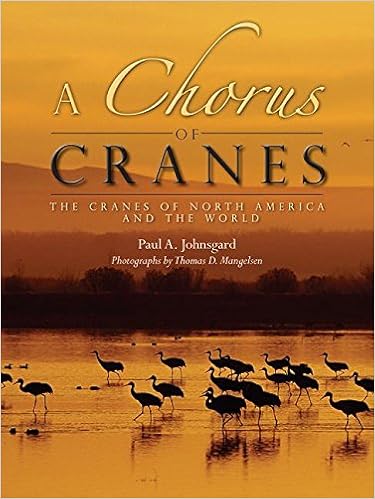
He has a special perch from which to watch the Sandhill Crane migration unfold courtesy of a cabin owned by internationally known wildlife photographer, Tom Mangelsen. The two men go way back. Mangelsen, a Grand Island native who did part of his growing up in Omaha, was a student and field assistant under Johnsgard, who mentored him in the 1970s. These friends and colleagues have collaborated on several projects, including a documentary Mangelsen shot and Johnsgard wrote about the Sandhill Cranes and for a new book A Chorus of Cranes.

Johnsgard is among the ranks who feel the spring migration is one of the greatest shows on Earth. It is a sensory experience to behold between the massive numbers on the ground and in the air and the swell of their trumpeting call.

“It’s a combination of place and sight and sound, all of which are unique,” he said. “To have 50,000 cranes overhead is quite something. Cranes are among the loudest birds in the world, so it just about blows your eardrums out when they’re all screaming. And to have a sunset or a sunrise, as the case may be, and to have this beautiful river flowing in front of you – it just all makes for a unique site in the world. It’s all those things coming together.”

Johnsgard’s prose is usually straightforward but there are times he uses a more literary style if it fits the subject, and he can’t think of anything more deserving than cranes,

“In my book Crane Music there’s a section on the cranes returning to the Platte in the spring that I wrote in the style of a kind of prayer: ‘There’s a season in the heart of Nebraska and there’s a bird in the heart of Nebraska and there’s a place in the heart of Nebraska…’ So those three paragraphs come together and then I wrote – ‘There’s a magical time when the bird and the season and the place all come together.'”

In a CBS Sunday Morning report on the migration Johnsgard described the amplified cacophony made by that many cranes  “as the sounds of a chorus of angels, none of whom could sing on key, but all trying as hard as they can.” The naturalist also described what these majestic birds remind him of. “It’s almost like watching ballet in slow motion, because the wing beats are slow and they move in such an elegant way.”

Johnsgard explained to the New Horizons why the area around Kearney, Nebraska is the epicenter for this mass gathering that goes back before recorded time. An ancestral imperative has  brought the birds yearly through millennia and the presence of humans has not yet disrupted this hard-wired pattern.

“Well, Kearney didn’t do anything to attract it, but the Platte River had become increasingly crowded with vegetation, both upstream and downstream, so all these wonderful sandbars were disappearing and the area around Kearney was one of the last places where the Platte was something like its original form. Lots of bars and islands and not too much disturbance. The birds from the whole upper Platte and even the North Platte were being crowded more and more together and so now you have over 500,000 in an area of no more than 50 miles.

“If it were normal conditions, then in those same 50 miles you might have 40,000 or 50,000.”

The cranes that arrive in March and April, he said, “are not getting as much food as they should be getting, so they’re having to leave the Platte due to food competition before they really have as much fat on them as they should.”

He said conservation measures help by controlling dam water releases and diversions for irrigation, recreation and other uses and therefore keeping steady water levels through the year. The shallow Platte and its surrounding vegetation is a fragile ecosystem that requires monitoring and intervention. The Platte has benefited from a river management agreement between Colorado, Wyoming and Nebraska to share the water and maintain enough flow for Whooping Cranes and other  endangered species. The Sandhill Cranes are not endangered.

He expects the compact to be renewed before it expires, but it will require the governors of all three states to re-up. He feels the measures are adequate to protect the cranes and other wildlife that make the migration a wonder of the world.

Even though he’s been going to catch that great display of plumage for years now, it never ceases to enthrall him.

“It just about gives me chills,” he said. “I call it nirvana. It pretty much is like a state of bliss.”

That feeling is shared by many. When Johnsgard took noted nature writer David Quammen out to the Platte for the migration he wasn’t sure what this much-traveled adventurer would make of it since “he’s been everywhere to see the natural world,” said Johnsgard. “I took him out to a blind one late afternoon at the Crane Trust and everything happened perfectly and he said, ‘You know, of all the places I’ve been and all the things I’ve seen this is probably the best time I’ve ever had watching birds.’ He did say there’s a bird sanctuary in India where storks come in in a somewhat similar way but that it’s the only thing that could possibly match what we saw.”

Acclaimed conservationist and chimp expert Jane Goodall has been joining Johnsgard and Mangelsen for crane watching expeditions since about 2000. Even though she’s seen so much of the natural world she told CBS’s Dean Reynolds, “I wasn’t quite prepared for the absolutely unbelievable, glorious spectacle of all these thousands of birds coming in. It’s just unbeatable, and it’s really peaceful.”


2007, Spring Creek

2007, Spring Creek


A confluence of interest

None of this would have happened for Johnsgard – from hanging out in blinds with celebs to his words reaching general audiences – if not for a string of things that transpired in his youth. His call to be a birder started just as he entered school.

“When I was 5 or 6 I asked Mother for the salt shaker so I could go out and put salt on a Robin’s tail. Do you know that story?” he asked a visitor at his UNL office. “Well, it goes that if you put salt on a bird’s tail it becomes tame, and I wanted to have a tame Robin. I spent a lot of time trying to do that. I wanted to touch them.”

He made his first drawings of birds then, too. But the real origin of his imprinting may be traced to an experience in first grade.

“My first-grade teacher, Hazel Bilstead, had a mounted male Red-winged Blackbird in a glass Victorian bell jar. She lifted the glass and let me touch it and that really captured my attention. I’d never seen anything that beautiful that close. I’ve never forgotten it. I remember it as well as I did that very day. I think that my need to see live birds in detail began at that time. I later dedicated one of my books to Miss Bilstead’s memory.”

His passion got further fed when a camera (Baby Brownie Special) first came into his life at 7 or 8. He’s not been without a camera since. He’s gone through the whole evolution of 35 millimeter models. He shoots digital images today. On one of his office computers alone he estimates he has more than 20,000 archived photographs.

He supports high tech image capture projects like one by the Crane Trust that has camouflaged game cameras programmed to take pictures every half hour or when motion is detected.

“These six weeks or so the birds spend in the Platte Valley are critically important for them to acquire the amount of fat — energy — they need for the rest of their spring and summer activities. So it really is important to get this kind of data,” he told a reporter.

Even though he grew up hunting – it was simply part of the culture he was raised in – he eventually gave up the gun for the camera. “It increasingly bothered me to kill things that I spent hours watching,” he wrote.

The sanctity of nature became more and more impressed upon him the more time he spent in it. Having the sanctuary of those woods near the family lake cottage nourished him.

“I’d wander around there with my dog and chase skunks and get chased by skunks, look for bears. I’d heard there were some. I developed a little wildflower garden from the flowers in the woods and tended it until we finally sold the cottage in 2005. It was still thriving then.”

Many people played a role in nurturing his Thoreau-like rapture.

“My mother’s cousin Bud Morgan was a game warden and by the time I was 12 he realized I really loved birds, so he’d take me along and we’d count ducks and just talk about birds. That really helped a lot actually in directing my studying waterfowl. He taught me how to identify waterfowl.”

Thirsty to know everything he could about birds, Johnsgard practically memorized what books on the subject his town library held. One he used to particularly “delight in” is T.S. Roberts’ two-volume The Birds of Minnesota.

“I thought it remarkable that a little town library carried it because it was an expensive book for the time. It was a wonderful book. Still is.”

As it was readily apparent that young Paul was crazy about birds, his parents and others happily indulged his curiosity by gifting him with books that any birder would be proud to own. As a result, he possess today several first editions of classics,  including Aldo Leopold’s A Sand County Almanac and  F.H. Kortright’s Ducks, Geese, and Swans of North America. He has a later edition of John James Audubon’s The Birds of America.

He got his first field guide in college.

Until recently brought to his attention, Johnsgard said he didn’t realize how so many early life elements reinforced his interest in nature and birds. That background set him off on his odyssey as naturalist, wildlife biologist, birder, author and more.


Johnsgard smiling


Renaissance man

Tom Mangelsen (Images of Nature), who knows Johnsgard as well as anyone, said of him, “He’s a wonderful man and really inspirational. Nobody’s done that many books on birds. He’s remarkably prolific and a major intellect. It’s been a long, wonderful journey for me. We are dear friends.”

Mangelsen said Johnsgard likes to tell people that while he was not his best student he is his most famous former pupil. The two also enjoy sharing the fact that Johnsgard accepted him as a graduate student not based on his grades, which were poor, but on the family cabin Mangelsen offered him access to.

As far as Mangelsen’s concerned, Johnsgard is a real “Renaissance Man.” Indeed, in addition to being a scientist, educator, author, illustrator and photographer, Johnsgard’s a highly regarded artist. Several of his drawings and wood bird sculptures are in private collections or museums. For his line drawings he works from photo composites and specimens.

“Having photographs makes it possible to draw them accurately. A photograph though won’t give you much more than just an outline so you really need to be able to look at the thing from the front, from the sides, from the top to get a sense for its shape. So I like to have a specimen if I can. Most of the time I’ve been here I’ve had access to a reasonably good collection of stuffed birds. If that doesn’t do it, I can go over to the state museum and look at things.”

This stickler for details notices when people take artistic license or just don’t get it right.

“When I was in London at the National Gallery there was a painting by Rembrandt of a dead black grouse upside down ready to be plucked. It had the wrong number of primary feathers on the wing, so he wasn’t a birder.”

Johnsgard’s waterfowl carvings are much admired. He is self-taught. “I’ve been at it since I was a Boy Scout,” he said. One of his carvings is in the permanent collection of the Sheldon Memorial Art Gallery in Lincoln. “It’s a full-sized Trumpeter Swan preening. Up until then it was by far the biggest carving I’d done. It weighed about 50 pounds.”  He based it on a photo he saw in National Geographic. He didn’t know what to do with the carving when he finished it.

“It was so big that the only place I could put it at home was on top of the damn refrigerator. It was gathering dust up there. Sheldon’s then-director, George Neubert, asked if I could loan him some of my decoys for a folk art show, so I put that thing down there and after it was over he asked me if I’d consider selling it. He told me later he thought it was one of the 10 best acquisitions he got during his time as director.

“Audrey Kauders, director of MONA (Museum of Nebraska Art), has been after me for years to give them a carving. Every time I see her, she says, ‘You promised me a carving.’ I’ve gotta do it.”

He is that rare scientist to have crossed over from academia to the mainstream. Some of that attention has come from the prolific number of nature books he’s written. A book he did with his daughter Karin Johnsgard, Dragons and Unicorns: A Natural History, is an allegorical-metaphorical work that’s never been out of print from St. Martin’s Press. Some of his straight nature books have been popular with the general public. His essays and articles in NebraskalandNebraska Life and Prairie Fire have enjoyed wide readership. Then there’s the public speaking he does and the media interviews he gives.

“Anyone who has made a trip west to see the Sandhill Cranes is familiar with Paul Johnsgard,” said Julie Masters of Omaha. “His books, lectures and interviews on the subject inspire. To experience the cranes through his eyes is a great gift.”

Masters recently developed a friendship with him that’s enriched her appreciation for nature.

“I happened to be on the UNL campus in January and saw him out walking. We struck up a conversation and have been meeting every few weeks to discuss cranes and all sorts of other birds. It is a great privilege to learn about bird behavior from this highly regarded ornithologist ”


Johnsgard and Mangelsen B & W

Paul Johnsgard and Tom Mangelsen, ©Sue Cedarholm


Reverence for nature

While Johnsgard appreciates having his work recognized and enjoyed, he could do without the fuss or fame, such as a recent Esquire magazine piece he was part of that featured “Men of Style” from different walks of life. He would much rather commune with wild things than reporters. He’s most at home sitting patiently in a blind watching birds or marveling at the array of wildlife drawn to a water hole on the Serengeti or contemplating the flora and fauna of the High Rockies. These are mystical spots and interludes for him.

“If I had a religion, it would be nature,” he said, “I think watching birds is the most spiritually rewarding thing I do.”

He realizes the notion runs counter to science but doesn’t much care, though he’s quick to point out, “I don’t believe in any god per se, but I have a reverence for what I see in nature, I don’t think those things were created by a god, but they’re god-like aspects of the world, Without wild things and wild places in the world it’d be a pretty dreary place, so I have that maybe Eisley (Loren)-like or Neihardt (John)-like idea of the world.”

Reading Neihardt’s Black Elk Speaks “mesmerized” Johnsgard, particularly the appearance of Snow Geese in several of Black Elk’s visions. Johnsgard, who was already considering a book on Snow Geese. felt compelled to respond in a new work that counterpointed what he knew about the biology of that bird with Native American views of it.

“I couldn’t sleep, so I started scribbling the outlines of what became Song of the North Wind. I went to the library and found all I could on the beliefs of the Plains Indians and also the Inuit.

I finally decided I had enough to write a book. I went up to the nesting grounds in Western Hudson Bay before I finished it.”

Rhapsodizing about the sacredness of nature is one thing, just don’t preach to Johnsgard about thou shalt dos and do-nots.

“I don’t go to church and I get pretty upset with people who are overly religious. I have been a member of the Unitarian Church. I went mostly for the good music and the important issues they talked about, but I haven’t been back in a long time. I prefer to spend my Sunday doing other things.”

The concept of a Higher Power, he said, is “something so amorphous it’s hard to put into objective words,” adding, “I think for everybody it’s a pretty personal thing.”

Questions big and small still consume Johnsgard, who juggles three book projects at any given time. In June he submitted the page proofs for his latest, The North American Grouse, Their Biology and Behavior. Now that the retired scholar is freed from teaching, he does whatever books come to mind these days but especially on subjects that he fills a void in.

Having reached the point where he doesn’t care about royalties anymore, he puts his work in the public domain via Digital Commons, where anyone can download his books for free.


Johnsgard at brick wall (for Leo)


As the bird flies 

Not surprising for an octogenarian of arts and letters, his two-room office on the Lincoln campus is crammed with books as well as art and artifacts from his many travels studying birds across North America, Europe, Africa, South America, Australia. His extensive collection extends to his home.

A prized birding site he’s never been to is in the Himalayas, where the Black Necked Crane resides. “It never comes below 8,000 feet. It’s the last crane in the world I haven’t seen. There’s very few in captivity. I did see a pair at the International Crane Foundation. But the ultimate in birding is to go to the Himalayas to see this incredibly rare bird. I don’t think I’ll make it because my heart isn’t up to those altitudes anymore.

“There’s still four species of waterfowl in the world I haven’t seen and I don’t think I ever will. They’re in places like Madagascar and the East Indies – hard to get to and probably not worth the time and expense and effort to try to do it. But it’s still fun to think about what might be special about them.”

Most of his birding adventures are uneventful but he’s had close calls. A harrowing incident occurred in the Andes. “A guide and I were coming down off an 11,000 foot volcano in a jeep I’d rented when it suddenly lost its brakes on a one-way narrow road looking down on a canyon probably 3,000 feet deep. The road was lined with bushes and I thought the only way I could possibly stop was if I drove into the bushes and used them to slow us down. They finally did and we got the jeep stopped. We looked at the brake connection and where there should have been a bolt there was a leather shoe lace somebody used as a temporary measure. We retied the leather and made it down.”

On other excursions, he said, “I’ve been in really life threatening situations where I should have never gone. The worst place was Oaxaca, Mexico.” Drug cartel-fueled killings and kidnappings happen there. “The biologist who was there before me was macheted to death. I was advised to carry a pistol, so I got one at a pawnshop in Lincoln and as soon as I got home I took it back.” Johnsgard never had reason to use it.

During that same trip he realized as his departure drew near he lacked permits for the birds he’d captured. They were supposed to be quarantined, but he didn’t have the time. “So I thought I’d take a chance,” he said. Wishing to avoid a customs snag, he waited till midnight to access a remote border crossing point. When an inquisitive guard asked what he was carrying in back of the van he was driving Johnsgard acknowledged the birds but left out the part about restrictions on import. The guard then asked “What else you got back there?” and Johnsgard replied, “Well, that’s about it and it’s fine if you check back there, but look out for the snake – he might have escaped,” whereupon the guard whisked him through with, “Go on, get out of here.”

Paul Johnsgard – born smuggler.

He delivered his birds back to Lincoln and got a paper out of it.

A splendid place for birding without any drama is the Waterfowl Trust in England, where Johnsgard studied two years in the 1960s. It holds special meaning because he was befriended by its founder, the late Sir Peter Scott, who became a key figure in his life. Scott was the son of legendary British explorer Robert Falcon Scott, whose second Antarctic expedition ended in tragedy when he and his men died on the return trek after reaching the South Pole.

“Peter was 2 years old at the time,” Johnsgard explains. “The last thing Robert Scott wrote to his wife read, ‘Make the boy interested in natural history” So, growing up, it was sort of incumbent on Peter to become a biologist.”

He did. He also became a renowned wildlife artist. “The art work is what made him famous,” Johnsgard said. “He was a wonderful artist.” Just like his father before him, Peter Scott became a national hero. “He was involved in the Dunkirk extraction of  British troops during World War II, Then he put together this great collection of birds. At the time I went to study at the Wildlife Trust it was the best in the world, Every species has its own unique aspects and that’s part of the fun of studying this. When I had 120 species of waterfowl in England it was like opening 120 gift boxes because they’re all a little different and its fun trying to describe how they are different.”

Scott helped start the World Wildlife Fund.

“He was a great symbol to me I guess of what you could do in art and conservation.”

Johnsgard said his time at the Wildfowl Trust “was incredibly important – it gave me the experience to write books and a world view. I met some of the most famous biologists of the day there.” The Nebraska transplant thought enough of his British counterpart that he and his wife named one of their sons after him. “I dedicated one of my books to him as well. He did a painting as a favor to me for one of my big books. I have all of his big books and he inscribed each one with a watercolor on the title page. He was a very kind and wonderful person. I had the highest possible regard for him.”

Scott pursued his interests up until his death at age 79 in 1989.


A cradle to the grave creative 

Though officially retired, Johnsgard shows no signs of slowing down at 85. He wakes up most days at 4 a.m. and he either reads or writes at home before going to the office. He’s as busy as ever researching and writing about birds and habitats. Before he ever gets around to writing a book he assembles references. Hundreds of them. Once he starts writing, he’s fast. He admits that his work is “a compulsion.”

He feels his rare triple threat skills to not only write but illustrate and photograph books makes his projects more palatable to publishers. He said mastering things comes with repetition. “I think talent is largely what you put into it in terms of practice.”

He’s been producing things since he was small and he fully expects to continue creating until he dies.

His new friend Julie Masters, professor and chair of the Department of Gerontology at the University of Nebraska at Omaha, views him as a model for health aging.

“As the population ages, we need people who show us that creativity can and does increase with age,” she said. “Paul Johnsgard is someone who serves as an ideal role model for us all. His passion and enthusiasm for life and the beauty of nature allow those of us who are less learned a glimpse into a world that is made even more awesome through his instruction.”

Johnsgard is just grateful he found his calling and stayed true to the road-less-traveled. “I don’t know anybody I’d trade my life with. I’ve been very lucky.”

Read more of Leo Adam Biga’s work at leoadambiga.com.

Let my writing cut through the clutter to make you shine


Image is everything in doing business, so let my writing cut through the clutter to make you shine.


Behind every organization is a story about people. Let me tell the human story of your company or nonprofit through whatever platform you desire: Website content, blog post, press release, newsletter, brochure, article, white paper, script, book. I am skilled in each medium. I will get to the heart of the matter because of my interviewing and storytelling expertise.

My tagline of “I write stories about people, their passions and their magnificent obsessions” is more than a handle, it is what I do and deliver. Story after story, project after project. Long form or short form. Online or in print.

People and what makes them tick are always at the center of the stories I tell. Let me showcase your people. Each one of them. Their passion and personality, their dreams and ambitions, their achivements and awards, their lessons learned, their risks taken. Let me describe how their innovations and successes have moved the organization forward. I will illustrate their administrative, managerial, entrepreneurial, creative, collaborative and team leadership and team building skills. When I get through featuring them, your people will shine like the experts, professionals and rock stars they are. Most importantly, your organization’s story will be framed against the compelling personal profiles of your most important assets and resources – your people. Because, as you know, your organization is only as good as its people.

Let me bring to light everyone and everything that makes your organization special. It will be my privilege to help raise awareness and appreciation for all that your people do and for all that your organization does.

If you are looking for a new and traditional media campaign to highlight your organization or event, I can help with that, too. I bring years of experience as a media expert and liaison as well as thousands of followers across different social media platforms.


Testimonials:
“I’ve long admired Leo Biga’s journalism and prose portraiture for its honesty, thoughtfulness, and accuracy. On a personal note, throughout many years of being interviewed, I find Mr. Biga’s articles about me to be the most complete and perceptive of any journalist’s anywhere. They ring true to me — even in critique — in a way that reveals the depth of his talent in observation, understanding, and expression.” –Alexander Payne, filmmaker (Citizen Ruth, Election, About Schmidt, Sideways, The Descendants, Nebraska)

“Leo Adam Biga portrays his subjects with both precision and generosity, practicing a literary journalism that is enlightening, honest, and immensely readable. His writing is eloquent and provocative, and quite often moving.” –Timothy Schaffert, novelist/educator (The Swan Gondola)

“Leo Adam Biga is an astute, conscientious journalist whose interviews and articles have been widely admired for their accuracy, generosity, depth, and perceptiveness. I would position him among the finest of our national reporters on the arts and culture.” –Ron Hansen, novelist/educator (The Assassination of Jesse James by the Coward Robert Ford)

“Leo Biga personifies one of H.L. Mencken’s more memorable observations: ‘There are no dull subjects. There are only dull writers.’ Biga consistently teaches and delights, not with showy vocabulary or flashy syntax, but by placing his prodigious talents in the service of his subject and his readers.” –Richard Dooling, author/educator (White Man’s Grave and Brain Storm)

“Leo is one of the best prepared and most thorough writers I’ve ever worked with. With painstaking detail he builds well-crafted, well-researched stories that are a pleasure to read. Leo is truly one of the finest wordsmiths around.” –John Heaston, Publisher, The Reader

“Leo is a talented writer who handles each assignment with passion, style, and a commitment to quality.” –Jeff Reinhardt, Editor, New Horizons

“Leo is one of those inquisitive writers who knows just what probing questions to ask in order to get a fascinating story. He provides the Jewish Press with a behind-the-scenes look at people doing extraordinary things in their lives.”–Carol Katzman, Former Editor, Jewish Press

Recommendations:

“I’ve been fond of Leo’s writing for years. Lucky enough to sit down with him a year or so ago, I got to meet the talented and versatile writer behind those well-chosen words. Recently, we worked together on a story about the Heartland Latino Leadership Conference. As a public relations professional, it was a pleasure to coordinate the article’s interviews with his prompt and thorough communication.”–Marjorie Maas, Director, Community Engagement at Blue Cross and Blue Shield of Nebraska

“While I was at Opera Omaha, Leo wrote several features about the work the company was doing – both mainstage and community service. He listened well and we had a couple of very enjoyable conversations. The pieces, as published, were balanced and thorough – I was very happy to have him as a colleague.”–John Wehrle, Assistant Director of Development, Western Division

“Leo Biga is one of the most talented writers in Omaha. He has covered many of our community festivals and events for “The Reader” and I have always been impressed by his professionalism as well as his ability to write thorough, fair and most of all, interesting stories. I would recommend Leo as a writer and journalist without hesitation.”–Vic Gutman, President, Vic Gutman & Associates


Let’s talk

I am available on a per project or by retainer basis.

Sample my work at leoadambiga.com.

Send your project specs to me at leo32158@cox.net.

Looking forward to being the lightning rod that activates, animates and illuminates a whole new level of engagement with your organization. With my help, the story of who you are and what you do will shine bright.

–Leo Adam Biga, Author-Journalist-Blogger, Omaha, Nebraska

Book about Alexander Payne a must for film buffs, film critics, film students, film instructors, film programmers, filmmakers


Book about Alexander Payne a must for film buffs, film critics, film students, film instructors, film programmers, filmmakers

New edition of ‘Alexander Payne: His Journey in Film’ to feature Discussion Guide and Index


From the world’s foremost expert on the Oscar-winning Payne

Releasing September 1 from River Junction Press


Alexander Payne cover new version 3

The new edition of my book “Alexander Payne: His Journey in Film” will include significant content additions related to “Nebraska” and “Downsizing” as well as more photos. a redesigned cover and a comprehensive Discussion Guide with Index. Below are the topics that will guide readers in finding key insights into and quotes by and about this world-acclaimed filmmaker. The new edition releases September 1.
The Guide and Index greatly enhance the educational value of what is already a must-have book for film buffs, film critics, film students, film instructors, film programmers and filmmakers.
Discussion Guide with Index topics–
1. Getting Started and Family
2. Sense of Place
3. Realism and Humanism
4. Comic/Tragic
5. Meaning and Morality
6. Characters
7. Personal Films/Filmmaking
8. Directing
9. Editing and Sound
10. Writing
11. Jim Taylor, Writing Partner
12. Photography
13. Casting and Auditions
14. Actors and Acting
15. Producers and Production Company
16. Film Team
17. Audiences and Film Festivals
18. Work for Hire and Work for Friends
19. Studios, Financing, Budgets
20. Films and Filmmakers Payne Admires


Alesia Lester: A Conversation in the Gossip Salon

March 9, 2016 4 comments

Alesia Lester is the epitome of dope style.  It’s in the way she dresses, makes herself up, moves, speaks, and handles herself.  The owner of Gossip Salon in North Omaha has a loyal clientele for her stylist chops and good counsel.  She enjoys a big following on social media for her real talk affirmations and observations. She is a woman transformed and hard earned life lessons are the subject of a forthcoming book she’s authored titled Life Behind the Chair.  Her blossoming into a “concrete rose” is sure to resonate wth many women and men for that matter. I trust that my Omaha Magazine profile of Alesia will make you want to know more of her story.

Alesia Lester: A Conversation in the Gossip Salon

©by Leo Adam Biga

Originally appeared in the March-April 2016 issue of Omaha Magazine (http://omahamagazine.com/)


Seeing the confidence Gossip Salon owner Alesia Lester, 35, projects, it’s hard to believe she once only felt whole behind the stylist chair.

This master of the weave, the bump, the blowout, the twist and the wrap developed her chops as a teen. The single mother possesses a gift for not only getting clients’ hair right but their head and heart right, too. Women open up, knowing what they say there, stays there.

Located in the former Leola’s Records & Tapes building at 5625 Ames Ave., Gossip is a five-chair, sleek urban hair and works haven. Lester, an Omaha Fashion Week stylist. is the presiding mistress of glam.

“Each year it’s gotten bigger and better, so I must be doing something right, honey,” the slender, suave Lester says over soul tracks.

She’s built a loyal clientele for the way she wields a comb and flat iron as well as doles out straight talk and tough love.

“She’ll tell you just how it is – good, bad or ugly,” client Bonita Stennis declares. “I’m way older than her but I appreciate the conversations we have because you can always be taught. She has wisdom, old-age wisdom.”

Another client, Makayla McMorris says, “She is definitely honest and keeps it one hundred percent real with anybody. She’s not guarded whatsoever and that’s a hard quality to find. People look up to her and want to be like her.”

“Just to be able to have those one-on-one personal conversations with people, that’s what I like,” Lester says. “I want to know they are OK, I just do, and they want know I’m OK. It makes me feel good.”

Young ladies in crisis ask her advice. They know Lester’s been there herself.

“My phone rings all the time. Sometimes in the middle of the night they want to talk to somebody. I get lots of in-boxes on Facebook. I take women that don’t feel good about themselves and make them feel great about themselves. I just try to meet them right where they are.”


Young men seek her counsel as well.

“I try to find different things and different ways to try to help them. It’s just how I’m built. I love people. It’s like a blessing and a curse. I do feel like it’s my purpose.”

She’s come to this point after much trial and transformation. She shares life lessons learned along the way.

“Her life is an open book,” Stennis says. “She has no secrets. She doesn’t portray to be nothing she isn’t. She tells you just how it is and how she would do it and how she wouldn’t do it.”

Lester’s knack for connecting finds her invited to speak before youth audiences. Extemporaneous riffs flow from her. Whether addressing students or clients, she’s alternately sassy and subdued, serious and funny as confidante, confessor, life coach, motivational cheerleader.

“I’m a therapist. I’m a sister to people who don’t have sisters, I’m a mother to those who don’t have mothers, I’m a friend to those that need a friend. I become all of these things.”

Now add author. Her new book Life Behind the Chair is part memoir and part self-help manual. It reads like a testimony about the power of making better choices, healing old wounds, practicing forgiveness, finding purpose and taking ownership. She writes from experience.

Abandoned by her drug addicted biological mother and raised by a sharp tongued-aunt, Lester acted out the hurt inside. At 15 she gave birth to her son DaJuan, whom she raised herself. She masked her chaos in promiscuity. Two unwanted pregnancies ended in abortion. Plagued by doubt, regret and feelings of inadequacy, she attempted suicide.

When told she was beautiful or sexy, she heard “tramp, nasty, dirty.”

Her saving grace was her fighting spirit and abiding faith. At every new low or challenge – such as a 2007 cervical cancer diagnosis –  she rallied. Radical self-improvement only came after hitting bottom.

“It’s like I always say – you have your own level of enough and I reached my level of enough. Nothing was making sense in my life. The only way on was up. I realized I had to let go of everything. If I didn’t, I would just continue to feel bad about myself and I didn’t want that.

“Forgiveness is important. There’s so many people in the book I had to forgive, including myself. It’s the only way you’re able to live.”

The book’s epilogue and subtitle Journey of a Concrete Rose, offer an apt analogy.

“Someone I refer to in the book as My Friday Client, said, ‘You remind me of a concrete rose – this beautiful thing that’s busted through all these different layers, problems, issues. Baby, you’ve done it, and now you’ve blossomed.’ It was a perfect way to describe me. So damn dope.”

The back cover depicts a red rose blooming from the colorless street.

The book celebrates her inside finally matching her outside. Beautiful.

After many failed short-term flings, she’s in a committed, supportive relationship today.

Doing the project was a catharsis.

“I have all these people that pour into me but at the end of the day I don’t have anybody I can pour into. That’s why I started writing.”

She feels called to share her inspiring journey with others.

“I think everything I’ve ever been through was to help someone else.”

Some suggest what she does is a ministry. She says she can’t claim that because “I swear like a sailor.”

Her mentor, Omaha native Paul Bryant, liked her colorful Facebook posts and encouraged her to craft her real life stories in a book.

Bonita Stennis speaks for the Gossip gang in saying she can’t wait for Lester’s life-affirming tale in print because “she can really touch your soul and it’s coming truly from her heart.”

Follow Lester on Facebook at https://www.facebook.com/alesia.lester.


One of Alesia’s Facebook posts:

I absolutely did not…

Ask to be born.
Expect my biological MOTHER to leave.
Ask to be dark.
Expect low self-esteem.
Plan a pregnancy at 15.
Plan to do it alone.
Mean to disappoint my MOMMA. (My world)
Want to admit I didn’t graduate.
Intentionally seek the wrong men.
Know I’d lose everything.
Know God would give it all back to me!!
Know I’d beat cervical cancer.
Expect to be a top stylist.
Expect to open my own salon.
Know I’d be in a position to give jobs in my community.
Realize I’d make people smile the way I do.
Expect my son to graduate.
Know I’d be the dopest mom.
Have any idea I’d write a book.
Take my clientele for granted.
Know I’d meet the best man 💋
Ever feel sorry for myself.
Know that life could be this peaceful…👌🏾

I absolutely did not know that all of those things would shape me into the person going down your timeline right now…

See how my life started off low, and God took me to new heights? Had I not gone through those things, I’d never have a story to tell you all…‪#‎LifeBehindTheChair‬#ComingSoon


A big thank you to Mike Kelly for his fine column on Father Ken Vavrina

December 23, 2015 Leave a comment

A big thank you to Mike Kelly for his fine column on Father Ken Vavrina

In the Omaha World-Herald issue dated today (Wednesday, December 23, 2015), columnist Mike Kelly finds the heart of Father Ken Vavrina and of the book I did with him, “Crossing Bridges: A Priest’s Uplifting Life Among the Downtrodden.”  Mike was aware that Father Ken got to know Mother Teresa quite well during his missionary years overseas.  At Mike’s urging, he, Father and myself took in a screening together of the new dramatic feature film about Mother Teresa, “The Letters,” since Father alone among us could provide first-hand impressions of what Mother was really like.  Mike took notes as Father reacted to various things depicted in the film.  After the film, Mike interviewed us.  Mike’s resulting fine column takes the full measure of the humble humanitarian and servant that is Father Ken.  It is Father’s ardent wish that each of us cross our own bridges to experience other cultures and serve diverse peoples.  This is how we grow and this is how we make the world a better place to live.

BOOK EVENT:

Sunday, January 3rd

Father Ken will be signing his book starting at 10:30 a.m. at St. Benedict the Moor Catholic Church (in the social hall in the basement of the church), 2423 Grant Street. Refreshments will be served.

_ _ _

BUY THE BOOK:

“Crossing Bridges” is available on Amazon and BarnesandNoble.com. You can also access it on your Kindle. You can also order the book at- http://www.upliftingpublishing.com/#!book/c24jx

The only two local bookstores carrying “Crossing Bridges” are The Bookworm at 2501 South 90th Street and Hudson Booksellers at Eppley Airfield.

_ _ _

EXCERPT FROM KELLY’S COLUMN:


At the new movie about Mother Teresa of Calcutta, an Omaha priest occasionally leaned over and whispered about the saintly Nobel Peace Prize laureate he knew well.

“Sadness took a toll on her,” Father Ken Vavrina said at one point. At another: “Tough lady.”

At the Aksarben Cinema for a showing of “The Letters,” the 80-year-old priest, who himself worked with lepers, admired the actress’s portrayal: “Mother walked stooped, just like that.”

Through letters Mother Teresa wrote over 40 years, the biopic tells of her work amid the slums — and her crisis of faith, never feeling she did enough for God.

Father Ken knew nothing about the letters she wrote to her spiritual adviser, but he knew Mother, who died in 1997. He tells about her in a new autobiography with Omaha writer Leo Adam Biga, “Crossing Bridges: A Priest’s Uplifting Life Among the Downtrodden.”

As we left the theater and walked into afternoon light, the cleric remembered the nun, who died in 1997, as an inspiration.

“We meshed well together,” he said. “She contributed so much to my life and was a great influence in the way she was so humble. She reached out to help people without expecting anything in return.”

The last time I interviewed Father Vavrina was 1998, not long after he returned from 19 years of missionary work overseas. He’d just been assigned to troubled St. Richard Catholic Church at 43rd and Fort Streets, where the former pastor was Daniel Herek, convicted of child pornography and sexual assault.

Vavrina, who had worked in poor, sad situations for most of his priesthood, proclaimed that the parish and elementary school would turn the “negative publicity” around. Always optimistic, he predicted: “This school will still be here in 25 years.”

He tried. But because of declining attendance and enrollment, the church and school closed 11 years later.

Vavrina later served as pastor of St. Benedict the Moor parish in north Omaha. He eventually stated from the pulpit that, against his wishes, Archbishop George Lucas was forcing him to retire at 75.

The priest, who since has survived cancer, now looks at the situation differently. “The archbishop was right, and I was wrong. It was time.”

In retirement, Father Ken can look back on a lifetime of helping the poor — and, as a missionary, assisting “the poorest of the poor.”

He grew up in Clarkson, Nebraska, and was 9 when his father died after a fall from a ladder. As a teen, Ken dated and looked forward to a possible law degree.

But he felt a calling and was ordained in 1962. He worked on the Winnebago and Omaha Indian Reservations in Nebraska and later took medical supplies to members of the American Indian Movement during a 1973 protest in Wounded Knee, South Dakota.

He also served inner-city Omaha parishes, taking part in the civil rights movement.

In 1976, Mother Teresa came to Omaha and received an award at Boys Town. (Its official address today is Father Flanagan’s Boys’ Home, 14086 Mother Teresa Lane, Boys Town, NE 68010.)

Vavrina had long been inspired by her work, and in 1977, he received a leave of absence from the Omaha archdiocese.

In Rome, he met Mother, asking if he could help.

“She threw her hands up in her typical way when she was excited,” he recalled. “She said, ‘Father, I need a priest in Yemen to help the sisters working with lepers.’ ”

And so he went, staying five and a half years. He lived in a dirt-floor hut, scraped dead skin from lepers and witnessed amputations. He called it taxing but fulfilling work, “the best job I ever had.”

He contracted malaria, but not leprosy. Eventually, he was arrested and jailed for two weeks, suspected of spying for the CIA. (He says he was not.) The U.S. Embassy arranged his release.

Catholic Relief Services hired him to manage a rebuilding effort after an earthquake, and then to supervise aid in India. As he says in his book:

I will never forget my first night in Calcutta. I said to the driver, “What are in these sacks we keep passing by?”
“Those are people.”

Hundreds upon thousands of people made their beds and homes alongside the road. It was a scale of homelessness I could not fathom.

Father Ken was reunited with Mother Teresa, noting the admiration she received wherever she went. When he left Calcutta in 1991, he wept. He said Mother teared up, too.

He next went to Liberia during civil war, supervising Catholic Relief Services aid and dealing with ruthless dictator Charles Taylor, whom the priest calls “a paranoid egomaniac.”


Father Ken hadn’t planned to write a book, but so many people urged him to do so that he agreed, hoping his story might inspire readers.

He contacted Biga, a freelance writer whose work includes a book about director-screenwriter Alexander Payne. Biga also has traveled to Uganda and Rwanda to write about relief work by world champion boxer Terence Crawford of Omaha.

For the rest of the story, visit-http://www.omaha.com/columnists/kelly-from-mother-teresa-to-a-liberian-dictator-nebraskan-priest/article