Enchantress “LadyMac” Gets Down
With the 2011 Omaha Black Music and Community Hall of Fame Awards coming up July 29 at the Slowdown, as part of Native Omaha Days, I am posting articles of mine from the last decade that celebrate various African-American figures from the area. The following story for The Reader (www.thereader.com) is about Lois “LadyMac” McMorris, one of many black musical artists who have come out of Omaha to forge successful careers in the music biz. I did a phone interview with her on the eve of her induction in the Hall of Fame, which returns this year after a few years absence. My blog is full of stories about high black achievers from Omaha.


Enchantress “LadyMac” Gets Down
©by Leo Adam Biga
Originally published in The Reader (www.thereader.com)
Casual music fans may not know Lois “LadyMac” McMorris, but this blues-jazz-rock guitarist from Omaha is paid homages by legends like B.B. King — “The girl is super bad.” After a hot solo Prince saw her play in Kansas City, where she lives, LadyMac said, “He came up to me and asked, ‘May I touch your guitar?’ I felt so honored. For my peers to recognize me is an amazing thing. That’s like a validation.”
More validation comes at the August 3 Omaha Black Music Hall of Fame ceremony. The 2005 inductee is the Jewel Award recipient for her lifetime achievements.
She grew up on the north side making art and music. Today she’s a gallery showing sculptor, painter and drawer and a still active headliner-sidewoman.
Inspired by guitar riffs on radio-television she taught herself to play as a young girl. “It touched me so deeply,” she said. She loved working on her chords and “learned lick for lick” famous solos. She first played publicly at 17, when she joined Joe Leslie and the Impacts. She had to prove to the cats she had the chops to play with them. Her baptism of fire came at Paul Allen’s Showcase on North 24th Street.
“Allen’s Showcase had been the premiere club since my parents’ time,” she said. “There were so many stellar African-American entertainers that would come through from Chicago, Des Moines, Kansas City…there was a kernel core of musicians…and the famous jam sessions and the things that ensued are just something to be written about.
“If you didn’t make it in that jam session either you were going to go home and woodshed and come back or you were going to stop, because it was intense.”
It was even hotter for her as the guys scrutinized her every move with skeptical eyes and sexist remarks. It was the same everywhere she went.
“The gender bigotry was just amazing,” she said. “Denigrated. Put down. Unappreciated. I ran into and still have to fight so much discrimination. It’s gotten a bit better, just as racism has eased a bit. It would go from things that are subtle to overt. Like I’d be told, ‘You can’t do that.’ I mean, over and over again. Please, let’s get real. It just made me more determined to express myself and to play and not be held back by that sort of thing. I cannot abide injustice.”
She made the mark at the Showcase, blowing the house away with her virtuosity and energy.
“For myself, when I finally performed there, it was the pinnacle…” said McMorris. She took those cats by surprise, having honed her gift off by herself, at home, where she’d incessantly listen and practice. “I did not develop my music around them. It was on my own. I just immersed myself in chords. What I hear I can play and I can play it fairly quickly, and then I can write it down as well. I can read, I can write charts. I do arrangements. It’s just in me. ”
What sets her apart, besides her sizzling solos, sultry fly looks and spiritual- inspirational vibe is her ability to both “dig in and just play” and to “express a showtime sensibility” in the way she moves, dresses and strokes.
Besides the Impacts, she played locally with the Persuaders, Seventh House and Poverty Movement and artists Andre Lewis and Preston Love, Sr.. Hanging with top musicians convinced her “larger vistas” awaited. Love advised her to seek new ops. “He told me, ‘You won’t grow your playing here. If you’re going to do something with it, leave.’” She lit out for L.A., where she soon landed a recording session gig with Love’s friend, blues guitarist Johnny Otis”
LadyMac was on her way, her dynamic musicianship-showmanship: sharing the stage with Tower of Power, Earl Klugh, Linda Hopkins; Cooilio, opening for Al Jarreau and Howard Hewitt and headlining the Playboy Jazz Festival. From L.A., she traveled the nation and the world to perform, only recently moving to K.C. to be near family. She’s fronted her own band, LadyMac Attack, and recorded. Her new CD is 500.
Her career mirrors that of many black musicians from Omaha — high caliber players with great creds, but few props outside the industry. She agrees with OBMHOF founder/director Vaughn Chatman that Omaha’s black music legacy is a great untold story, one, she said, people “should know about.”
“A lot of genius players came from Omaha’s near northside,” she said. “It’s a group of multi-talented musicians who can play many instruments, and that’s what’s so rare. Another thing — we’re cross-genre. We’re not just in one pocket. The straight-ahead cats can get busy and play the funk. They can play all those things. Also this sensibility of playing and coming with a show. It’s almost as if everyone incarnated around a certain time” to create “an Omaha sound…this flavor…”
Acknowledgement of groundbreaking black Omaha musicians has been slow to come, making the peer-based Hall award all the sweeter.
“Very often the people that are the vanguard are not always recognized while they’re doing it and that’s a hurtful thing,” she said. “But it’s not too late.”
I don’t see a huge amount of live theater, but I attend more than enough shows to give me a good feel for what’s out there. My hometown of Omaha has a strong theater scene and one of the more dynamic works I’ve seen here in recent years came and went without the attention I felt it deserved. It was called Walking Behind to Freedom, and it deal head-on with many persistent aspects of racism that tend to be trivialized or distorted. The fact that a fairly serious piece of theater dared to tackle the issue of race in a city that has long been divided along racial lines took courage and vision. Playwright Max Sparber, a former colleague and editor of mine at The Reader (www.thereader.com) based the play, which unfolds in a series of vignettes, on interviews he did with folks from all races around the community. He asked people to share experiences they’ve had with racism and how these encounters affected them. A local musical group called Nu Beginning wrote songs and music that expressed yet more layers of insight and emotion behind the dramatized experiences. A diverse group of cast and crew collaborated on a rousing, moving, thought-provoking night of musical theater. I had a personal investment in the show, too, in that my partner in life played a couple different speaking parts. She was quite good. My story about the show appeared in The Reader.
“Walking Behind to Freedom” – A musical theater examination of race
©by Leo Adam Biga
Originally published in The Reader (www.thereader.com)
The subject of race is like the elephant in the room. Everybody notices it, yet nobody breathes a word. The longer the silence, the more damage is done. Seen in another light, race is the label comprising the assumptions and perceptions others project on us, soley based on the shade of our skin or sound of our name. Seeing beyond labels sparks dialogue. Stopping there erects barriers to communication.
Race is as uncomfortable to discuss as sex. Yet, attitudes about race, like sex, permeate life. It’s right there, in your face, every day. You’re reminded of it whenever someone different from you enters your space or you’re the odd one out in a crowd or issues of profiling, preferences and quotas hit close to home.
It often seems Omaha’s predominantly white population wishes the topic would go away in a weary — Oh, didn’t-we-solve-racism-already? tone — or else makes limp liberal gestures toward more inclusion. Then there’s the majority reaction that pretends it’s not a problem. Take the Keystone neighborhood residents now opposing the Omaha Housing Authority’s planned Crown Creek public housing development. Opponents never mention race per se, but it’s implicit in their expressed concerns over property values being adversely affected by public housing whose occupants will include blacks. Nothing like rolling out the old welcome wagon for people trying to get ahead.
On the other side of the fence, militant minority views claim that race impacts everything, as well it might, but such sweeping indictments alienate people and chill discussion. How much an issue race is depends on who you are. If you have power, it’s not on your radar, unless it’s expedient to be. If you’re poor, it’s a factor you must account for because someone’s sure to make you aware of it.
If you doubt Omaha is beset by wide rifts along racial lines, you only need look at: its pronounced geographic segregation; its mainly white police presence in largely Latino south Omaha and African-American north Omaha; its rarely more than symbolic multicultural diversity at public-private gatherings; its few minority corporate heads and even fewer minority elected public officials. Then there’s the insidious every day racism that, intentionally or not, insults, demeans, excludes.
It’s in this climate that, last fall, Omaha Together One Community (OTOC) said: We need to talk. A faith-based community organizing group focusing on social justice issues, OTOC commissioned an original musical play, Walking Behind to Freedom, as a benefit forum for addressing the often ignored racial divide in Omaha and the need for more unity. It’s the second year in a row OTOC’s staged a play to frame issues and raise funds. In 2003, it presented a production of Working, the Broadway play based on the book of the same name by Studs Terkel.
With a book by Omaha playwright Max Sparber and music by the local quartet Nu Beginning, Walking Behind to Freedom premieres May 7 and 8 at First United Methodist Church. Performances run 7:30 p.m. each night at the church, 69th and Cass Street. Free-will donations of $10-plus are suggested. Proceeds go to underwrite OTOC operational expenses.
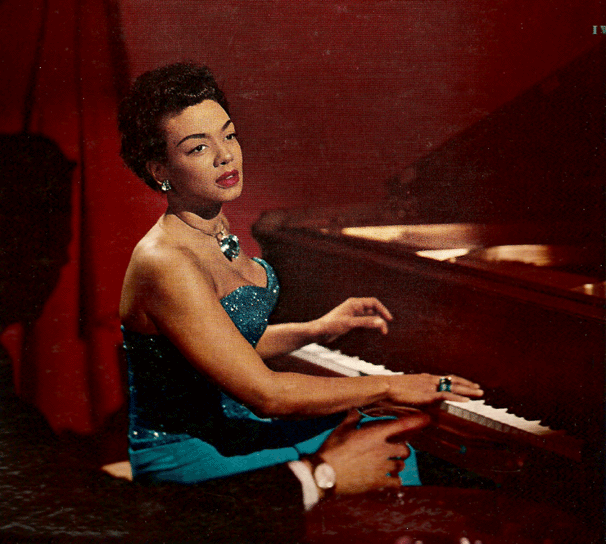
The play’s title is lifted from a famous quote by the late entertainer and Civil Rights activist, Hazel Scott, who posited, “Who ever walked behind anyone to freedom? If we can’t go hand in hand, I don’t want to go.” The show coincides with the 40th anniversary of Congress passing landmark Civil Rights legislation in 1964.

Max Sparber
As a foundation for the play, OTOC did what it does best: organize “house meetings” where citizens shared their anecdotes and perspectives on racial division. Sparber and Nu Beginning attended the meetings, held at OTOC-member churches city-wide, and the ensuing conversations informed the non-narrative play, which is structured as a series of thematic monologues, dialogues and songs.
“I built my script based on some of these interviews, along with some broader themes,” said Sparber, whose Minstrel Show dealt with an actual lynching in early Omaha. “We got some great stories out of it. The people who came to the meetings were very interested in the subject and I certainly got some stories that were invaluable. More than anything, we wanted this play to be specific to Omaha, and therefore we wanted its origins to be within Omahans’ own experiences.”
Surfacing prominently in those sessions was the theme of division and how by going unspoken it only deepens the divide. “This is a town that’s very separated geographically. The majority of blacks live in north Omaha. The majority of Latinos live in south Omaha. The majority of whites live in west Omaha. And, as a result, there’s not a lot of crossover,” Sparber said. “It’s really sad how closed up Omaha is,” said the play’s director, Don Nguyen, lately of the Shelterbelt Theater.
“Along with that, race is quickly becoming an undiscussed element in Omaha,” added Sparber. “I think a lot of whites believe we live in a post-racism world and, therefore, it’s not a subject that needs to be addressed. Whereas, black people experience this as not being a post-racism world at all and are kind of startled by this other viewpoint. So, there’s this disconnection based on understanding.”
 |
Two lines in the play comment on this dichotomy: “I think a lot of white people feel that racism ended in the Sixties, with Martin Luther King. The only thing about racism that ended in the Sixties WAS Martin Luther King.”
Any impression all the work is done alarms Betty Tipler, an OTOC leader. “A lot of us are in our comfortable spaces. We go inside our houses with our two garages and we think things are okay. Things are not okay. The issue of race has not been cured and, if we’re not careful, things will go backward,” she said. Despite the illusion all’s well, she added, the play reminds us people of color still contend with bias/discrimination in jobs, housing, policing. “We may as well face it.”
According to OTOC leader Margaret Gilmore, the process the play sprang from is at the core of how the organization works. “We’re about bringing different people in conversation with each other to talk about what’s in their hearts and minds,” she said. “It’s a process of learning to talk to each other and listen to each other and then seeing what we have in common to work together for change.” She said the meetings that laid the play’s groundwork crystallized the racial gulf that exists and the need to discuss it. “We don’t talk about this stuff enough. We don’t talk about it on a personal level and how it affects us, which is what I think this play gets to. When we ask the right questions and we’re willing to listen, then the experiences that people tell in their own words are dramatic and provocative.”
“It’s very important we listen to real people’s stories. The only way you can come up with the truth is to go to the people. We haven’t watered down or changed their stories, but literally portrayed them,” said OTOC’s Tipler, administrator at Mount Nebo Missionary Baptist Church, which hosted some of the house meetings.
Indeed, the vignettes carry the ring of reportorial truth to them. Most compelling are the monologues, which unfold in a rap-like stream-of-consciousness that is one part slam-poet-soliloquy and one part from-the-street-rant. Some stories resemble the bared soul testimony of people bearing witness, yet without ever droning on into didactic, pedantic sermons, lectures or diatribes. The language sounds like the real conversations you have inside your head or that spontaneously spring up among friends over a few drinks. Often, there’s a sense you’re listening in on the privileged, private exchanges of people from another culture as they describe what’s it like to be them, which is to say, apart from you.
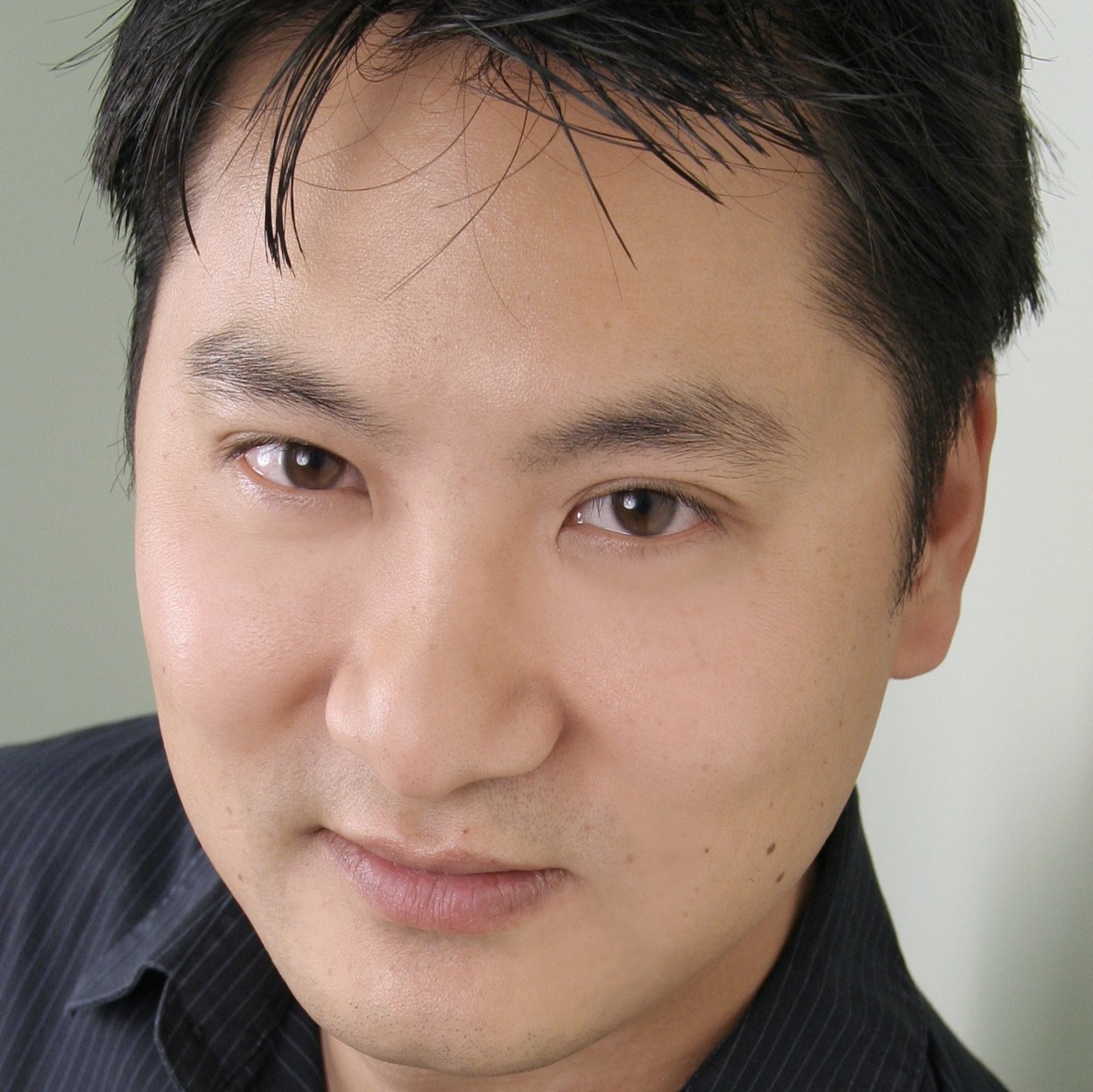
Don Nguyen
For director Nguyen, the “real life testimonies” add a layer of truth that elevates the material to a “more powerful” plane. “I think it will definitely work for us that people know this is real. It’s not an overall work of fiction. This is real stuff.”
The misconceptions people have of each other are voiced throughout the work, often with satire. You’ve heard them before and perhaps been guilty yourself assigning these to people. You know, you see an Asian-American, like Nguyen, and you reflexively think he’s fluent in Vietmanese or expert in martial arts, some assumptions he’s endured himself. “Oh, yeah, my personal experiences definitely help me to relate,” he said. “Growing up in Lincoln I got in fights all the time. People making fun of me. Thinking I knew kung-fu or I only spoke Vietmanese, which is not true. But it’s not just the blatant racism. It’s the underlying stuff, too. Sometimes it’s not even intentional, but it’s just there. And it’s that gray stuff I think these pieces capture pretty well and that people need to hear more of.”
In the vignette Tricky, some women lay out the subtle nature of racism in Omaha. “…it’s like a fox. It’s tricky. It’s sly. You’ll be standing in line at a store, and the cashiers will be helping everybody except you…and you’re the only black person in line…and because it’s so sly, I think white people don’t notice it at all.”
The play also looks at racism from different angles. One has a guilt-ridden realtor rationalizing the unethical practice of steering, which is another form of red lining. The other has a new generation bigot defending his right to espouse white pride in response to black heritage celebrations. The concept of reverse racism is explored in the real life case of students protesting their school’s special recognition of black achievers at the expense of other minorities. And the wider fallout of racism is examined in the confession offered by an insurance agent, who reveals rates for car-house coverage are higher for residents of largely black north Omaha, including whites, because of the district’s perceived high crime rate.
The vignettes touch on ways race factors into every day life, whether its the unwanted attention a black couple attracts while out shopping or the hassle African-American men face when driving while black, or DWB, which is all it takes to be stopped by the cops. The shopping piece uses humor to highlight the absurd fears that prompt people to act out racist views. Music is used as heightened counterpoint to the boiling frustration of the DWB victim, whose cries of injustice are accompanied by the soulful strains of doo-wop singers.
Bridging the play’s series of one-acts are songs by Nu Beginning, whose music is a melange of hip-hop, R & B, soul, pop and gospel. A little edgy and a lot inspirational, the music drives home the unity message with its uplifting melodies, which are sung by choruses comprised of diverse singers.
Some pieces are heavier or angrier than others. Some are downright funny. And some, like Mirrors, speak eloquently and wittily to the concept of how, despite our apparent differences, we are all reflections of each other. Here, Nguyen employs a diverse roster of performers to represent the mirror symbol. Perhaps the most telling piece is Function. This beautifully-rendered and thought-provoking discourse is delivered by an architect, who suggests racism has survived as both an ornament of the past, akin to a Roman column on a modern house, and as a still-functional device for those in power, as when a politician plays the race card.
Whatever the context, there’s no dancing around the race card, which is just how Nguyen likes it, although when he first read the script he was surprised by how brazenly it took on taboo material, such as its use of the N-word.
“Typically, a script or show sugarcoats the issue of race. It’s a very cautious topic. You don’t want to offend or patronize people by saying the wrong stuff. But this piece is much different. All of its pretty much in your face,” Nguyen said. “What I mean is, it’s very direct. Max (Sparber) makes no bones what he’s writing about, which is great. It’s a big risk to take as a writer, but essentially it’s the most interesting path to take, too. And I’m all for stirring up trouble. I’m fine with that.”
OTOC’s Betty Tipler feels racial division is too important an issue to be coy about. “We’ve got to come out of the closet, so to speak, and talk about racism and differences” she said. “We tend to shy away from talking about it, but it won’t go away. We have got to come together, put it on the table, take a look at it and deal with it — no matter how much it hurts me or how much it hurts you. But before we can do that, we’ve gotta put it out there. We won’t get anywhere until we do. And I believe this play is a step toward doing that.”
Christy Woods, a singer/songwriter with Nu Beginning, said the play is about hope. “I believe if people are open to change, we can go hand-in-hand to freedom. Just because I’m this and you’re that, doesn’t mean I have to be one step behind you. Why can’t we go together? We want people to feel inspired to go out and make a change. We want to touch, but also to teach, and I believe this musical does that.”
Nguyen hopes the play attracts a mixed audience receptive to seeing race through the prism of different experiences. “That’s where I’m trying to aim the show. As we go through these vignettes, I want some people to identify with them and some people to be like, ‘Oh, I didn’t know that.’ That’s what I want to create.”
My writing brand focus is “telling stories about people, their passions, and their magnificent obsessions” and the following New Horizons profile I wrote about cabaret singer Anne Marie Kenny is an almost perfect match of writer and subject. She is a multi-talented woman whose love of music and adventure has driven much of her life. She is one of those bright spirits I feel drawn to, and I think you will too reading her story. She comes from a long line of Omaha women who have made careers as cabaret or torch or big band singers – from Anna Mae Winburn to Julie Wilson to Richetta Wilson to Camille Metoyer Moten to Karrin Allyson. These chanteuses all share in common at art and craft of interpreting a song. Indeed, they all feel a kinship with one another, and Kenny is quick to acknowledge that she adores Julie Wilson’s work. Much like Wilson had to once take an extended leave from the performing world she loves so, Kenny did as well. My story charts some of the ups and downs, twists and turns, and various adventures of her life in and out of music.

©by Leo Adam Biga
As appeared in the New Horizons
“What good is sitting alone in your room? Come hear the music play. Life is a cabaret old chum, come to the cabaret…”
Singer Anne Marie Kenny’s life is a cabaret alright. The story of how she left Omaha to follow her dream in Paris is storybook stuff. It only gets better when you learn she came back home to find true love in dashing advertising executive, John Bull. Then she left for Paris again, only this time with her man. The two lived an enchanted life as expatriates abroad. She sang, he painted…
But then like the tragic-romantic songs this chanteuse sings in clubs and concert halls, their fortunes changed. They struggled financially and then John fell ill. She gave up music to go into business, reinventing herself as an entrepreneur in the newly liberated Czech Republic. Just as her company took off and a new life dawned in Prague, John’s condition worsened. He later died.
That was 15 years ago. Since then Kenny’s reinvented herself again. She remarried, though this second union didn’t last long. She has no children of her own but is involved in the lives of her step-children.
After selling her company she resettled in Omaha, now the base for her intercultural consulting and training business. She’s fluent in French, Italian and Czech, Along the way she earned a master’s degree in organizational leadership from the College of Saint Mary..
Today, this vivacious world citizen, businesswoman, vocal coach, choir leader and cabaret singer still lives her performing dream. She looks forward to whatever life holds, certain she’s prepared to take the bitter with the sweet.
Growing up, Kenny’s musical family met tragedy when her father, attorney Dan Kenny, drowned at 35. While on a fishing trip with buddies his motorboat capsized. Everyone ended up in the chilly waters that fateful day. He was a good swimmer but between the cold, the heavy clothing he wore and his head likely hitting the motor, he didn’t survive.
Anne was not quite 3. She, her four older sisters, a brother and their mother, Veronica Janda Kenny, were on their own. Until the initial shock wore off, their Field Club home, usually filled with the sound of music, was silent except for weeping.
“My father played instruments, saxophone, a little bit of piano. My mother played the piano. My father had a great singing voice, so did my mother. They loved music — it was a big part of their lives,” said Kenny.
All the kids took piano lessons.
Soon, music took its rightful place again in the Kenny home, serving as healing therapy for the still grieving Irish (her father’s side) and Czech (her mother’s side) clan.
“I think the music redeemed whatever loss we had.”
This was the mid-1950s, long before professional counseling became de rigueur for children touched by trauma.
“In those days, no, you just forged ahead,” Kenny said. “I think the music was a godsend for us. I don’t know what we would have done if we had not had it. I think life might have been a little bit harder, but music was our outlet, and we harmonized.”
When old enough, Anne joined her sisters in the four-part harmony group, the Kenny Sisters. They performed at Show Wagons, service clubs, receptions and various other events. All her siblings have remained musical into adulthood.
Not all was peaches and cream. Anne’s mother, formerly a traditional stay-at-home mom, suddenly had to be the breadwinner.
“I can look back now and I realize what an amazing mother we had because she made sure she provided for us, there was no thought of welfare or anything for Mom,” said Kenny. “She had to go to work and she found a way. She worked hard. She started as a secretary in my dad’s old law firm.
“Then she moved to Creighton University, in the career placement office. Even though I’m sure we had very little money, we always looked good because Mother sewed all of our clothes. She made sure we had a parochial education.”
Anne attended St. Peter Elementary and Mercy High Shool.
Everyone pitched in to make ends meet. Mother Kenny made sure of it.
“She made us start working at a very early age, so that we helped with the finances,” recalls Anne, who with her sisters worked at St. James Orphanage. “I remember having to go get a work permit at age 13 or 14 to be a child care worker. I would pick up babies and feed them three nights a week.”
Meanwhile, Anne blossomed into a beauty with an angelic voice and a fetching personality. She couldn’t go to a party without being prevailed upon to sing. Her late ’60s repertoire included folksongs, Beatles hits, show tunes, et cetera.
“I didn’t know what I wanted to be when I was in high school, all I know is that everybody loved my music. I could play the guitar, I could sing, I could play the piano a little bit. I got the leads in the plays — the musicals, even the nonmusicals.
“When my mother asked me what I wanted to be, I said I wanted to be an actress, so I was thinking along those lines in those early days. And singing is acting, because you’re selling a song, you’re becoming the character of whatever the song is.”
It would be a few years yet before Anne became a polished vocalist but right from the start she understood the importance of breathing heart and soul into a song and winning over an audience.
“I learned early on, when I first started singing professionally at 21, that you have to lose yourself in the song, and that’s what you do when you’re acting. You have to lose the nerves, you have to lose the everybody’s-looking-at-me mentality and get into the music, interpret that music, let it take you away.”
That expressiveness, she said, only comes “after you do your homework and learn the words and learn the song, and learn some technique and how to deliver it.” It only comes, she said, “after you have really concentrated on studying it.”
One of Kenny’s musical idols is fellow Omaha native Julie Wilson, the legendary singer. Wilson’s a revered figure in New York City cabaret circles and is still going strong at 86. Kenny said no one does cabaret better than Wilson.
“Julie is a master at that. She really sells the song. You’ve heard that Rodgers and Hammerstein song a hundred times, yet you hear Julie Wilson sing it and it’s like you’ve never heard it before. It’s her phrasing and the color and tone she brings to it. And her diction is impeccable. I am a huge fan of Julie Wilson.”

She said unlike some singers who bore after awhile, Wilson holds you spellbound.
“Never do you feel you want it to get over. You’re hoping there’s another verse. She’s completely into it. I would say I am too when I sing but I don’t know if I get it across as well as Julie.”
Kenny said while Wilson’s voice is limited in range now, age has also ripened it. “She delivers it with such intensity and emotion,” said Kenny. “She just has it.”
All this insight was was still ahead of Kenny in 1973. Music then was an avocation, not a career. She tried office work for a time, but felt her creative impulses stymied.
“I knew it wasn’t for me, and that’s when I decided to move from Omaha. I was 21, I couldn’t figure out where I wanted to go, I just knew I needed to spread my wings.”
“Put down the knitting, the book and the broom, time for a holiday…”
In truth, Kenny knew exactly where she was headed: France. She studied French in school and became a Francophile. At 18 she made her first trip to Europe, to then-West Germany, where a sister and her military husband lived. Even though Anne didn’t make it to Paris that time, she said, “That trip did tell me I’m coming back to Europe and I always knew someday I was getting to France.”
That day came sooner than expected when she finally threw caution to the wind and booked passage there.
“It was just welling up in me and I still feel this way today — I cannot not do my art. If I don’t, I’m not healthy.”
Still, the idea of going off to Paris alone was daunting. Yes, she was adventurous but also insecure enough that she kept her plans secret. She was even too timid to tell herself she was pursuing a singing career.
“I didn’t dare tell anybody I was going to Paris. I didn’t know anyone there, I didn’t know anything, except I knew some French. So I sold my little Volkswagen Beetle, all my possessions. I knew I couldn’t tell anybody who would naysay. I’ve held that principle all my life — don’t talk about any big plans to anybody who cant help you or isn’t going to be encouraging. I knew my mother would talk me out of it, but I was old enough to do this, so I did.”
She found a great deal and made the voyage on a luxurious Italian oceanliner.
“That was an education in itself — this Omaha girl on a ship,” she said.
She disembarked in Marseilles, where she caught a train bound for Paris. En route, she said, a French passenger asked what her plans were, “and I don’t know why but I said, ‘I’m a singer, I’m going to sing,’ and that’s the first time I admitted that to myself. I remember being surprised to hear that come out of my mouth.”
Once in Paris the romance and reality of the City of Light set in.
“When I first moved there by myself I didn’t know a soul, but the minute I hit Paris I felt like I was home. Paris is about beauty and art all around you. That’s how I see it.”
That electric energy aside, there was still the matter of supporting herself.
“I only had like $2,000 to my name to last me — I had to start earning money. I did get a job as an au pair, so I at least had a secure place to live, and the family was just wonderful. It was a great job. I’m still friends with these people today.”
But how does an unknown young American break into the Paris music scene? In Kenny’s case, by pluck and luck.
“I put this sign up at a place called the Centra Americain that read, ‘Singer looking for musicians.’ I don’t know how I had the guts to do this by the way. And lo and behold a couple days later a phone call — this deep resonant voice on the other end. The person spoke French but I could tell it wasn’t a Frenchman. He was a guitarist named Carlos. He’d worked with a lot of singers.”
It was attraction at first sight. He, the tall, dark Argentine virtuoso. She, the lithe, lovely American song stylist.
“We didn’t even talk much. He started playing, and he just played with such purity and exactness. He’s the best guitarist I have ever heard. Anything I knew, he knew. We were very good together musically. After we had about 10-12 songs under our belt, he said, ‘I think we’re ready to perform in the streets.’ I said, ‘No way,’ but he talked me into it.
“He felt we should go to the Champs Elysees, the busiest street in Paris. We had crowds all around us listening. I passed a long glove. We made pretty good money.”
 Her first big break happened only days later when a talent scout discovered them.
“Somebody came along from ORTF radio and asked if we would come for an audition, and we did, and we got a job on the radio.”
She and Carlos appeared on the popular Le Petit Conservatoire de Mireille, a showcase for emerging talents.
“The French loved the show,” said Kenny. “We were on almost every week, and we got paid — not a whole lot, but enough to get me ‘off the streets’ so to speak.”
The duo also appeared on the show’s television spinoff. More offers poured in.
“It got me an agent, who was also a songwriter. He wrote songs that kind of fit my voice. He got me gigs in theaters around Paris.”
All this after being in Paris only weeks. She chalks it up as “meant to be,” adding, “I just think things do fall into place, and if they don’t maybe they’re not meant to be.” Plus, she sad, “I was determined.”
She and her Argentine dream boat were more than musical partners, they were lovers. But their romance and collaboration didn’t last. Se la vie, as the French say.
After a year living her dream, she ran short of funds. After all, singing is at best sporadic work. Besides, it was time to return home.
“No use permitting some prophet of doom, to wipe every smile away, come hear the music play…”
Kenny took her first formal voice lessons from teachers Diana Morrison and Mary Fitzsimmons Massie. After she performed Edith Piaf and Jaques Brel songs at an Omaha Alliance Francaise concert, the late Morrison offered to work with her.
“She got me started in a whole new world of learning the technique of singing,” said Kenny. “Now, before that, I had a good natural voice, but she got me into classical music. I must say I love it. But I love the Great American Songbook, too. With good technique you should be able to do it all, you should be able to sing operatic but then when you sing a pop song not sing it in the operatic style, but switch those gears.
“I don’t think there’s many people who have a cache of different voices to use.”
With training, she said, she’s learned to “try on different voices” to suit the song, the mood, the venue, the audience. Therefore, she can project, in a belting voice, in all the registers, but can also “pull it way back” to a soft, intimate purr. She likes leading off her opening set with a “wow” song, then throttling down a few notches, before closing with her favorite, “La vie en rose,” or saving that emotional number for her encore.
She’s further honed her instrument in master classes at Juilliard, Peabody and Ecole Normale de Musique de Paris. She’s fluent in the full French and Italian repertoire.
It was the late ’70s in the Old Market when Kenny became a hot item singing at M’s Pub, V Mertz and the French Cafe. Meanwhile, she’d met her future husband, John, socially. He was a Mad Man ad whiz from Chicago come to work at Bozell and Jacobs. His big account was Mutual of Omaha. Sparks flew when the two met and their mutual attraction developed into a full-blown courtship.
“Every time I performed, he was there. He clearly was interested in me.”
They married in 1980, honeymooning — where else? — in France.
Back in the States she sometimes traveled with him cross-country as he made syndication deals for Mutual of Omaha’s Wild Kingdom. Then one day he surprised her by announcing he’d quit his job and they were moving to Paris.
“We had talked about one day wouldn’t that be wonderful. He wanted to live his dream too — of painting. Talk about a risk taker. But it was a shared dream. So off we went to live our dream.”
They started their new life together in Paris in 1983.
“We lived the life. We were two artists in Paris. It was a beautiful life. We had a lot of fun, contact with other artists. We had musical parties. I would sing at his art shows, He was always so supportive of my music.
“We just blended so well. I heard life, he saw life. We would go places and he would notice things I would never even see. Likewise, I’d pick up on other things.”
The couple lived in an idyllic setting, too, in an apartment on the Iie Saint-Louis, an island in the River Sienne, right in the heart of Paris.
Whenever she visits Paris that’s where she heads — to that arrondissement or district where she still knows the butcher, the baker, the candlestick maker, as well as all the neighborhood cafe proprietors.
Her next big leap as a singer came under the formidable vocal coach Janine Reiss, who’s worked with world class artists Maria Callas, Luciana Pavarotti and Placido Domingo. Kenny knew it was a long shot that Reiss would take her on as a student but she no sooner phrased a few verses at an informal audition then Reiss agreed.
“I was shocked.”

Janine Reiss
They worked intensively together and are friends to this day.
“She was meticulous, you could not get by with anything,” said Kenny, who appreciates how much Reiss pushed her to improve, saying, “She took me deeper into my art.”
The student-teacher relationship “is way more than just the singing,” said Kenny. “Invariably you need to talk about what is this song saying and where do you find that emotion within yourself. It’s like method acting. You end up having very intimate conversations. You need to be very vulnerable with your teacher, and Janine would share as much about herself.”
Kenny applied her finely honed technique and artistry at some posh venues, such as the Oak Room at the Paris Ritz Hotel. “Probably one of my favorite gigs of all time,” she said, “They treated me so well and they’re real connoisseurs. Sophisticated.”

Anne-Marie Kenny
She found time, too, for the part of Miss Moneypenny in three feature films shot on the Riviera and principal roles in plays and operettas.
“Come taste the wine, come hear the band, come blow your horn, start celebrating…”
Life was grand, and then the bottom fell out. The American dollar took a dive and the unsteady income from her singing and John’s painting no longer allowed them to live in the manner to which they’d become accustomed. It meant downsizing and moving to the South of France, where things were less expensive.
“I sang a lot in the South of France, but they weren’t the same opportunities I had in Paris,” she said, “so I wasn’t as happy.”
When John fell ill, things became even harder.
Then something straight out of one of the sentimental songs she sings occurred. It was late fall 1989 and the Iron Curtain was falling in Eastern Europe. The Velvet Revolution in the Czech Republic was capturing people’s hearts and imagination. The new president, Vaclav Havel, a poet and playwright once imprisoned for his dissident views, took office in a bloodless regime change from communist to democratic rule.
Watching on TV Kenny was enthralled by the charismatic Havel, a fellow artist, at the head of this movement. She was moved too by his writings.
“He was the moral voice of the people,” she said. “If you read anything he’s written you would be inspired, too. He’s the Nelson Mandela of the former Soviet bloc countries.”
Amid the nationalistic fervor, she took new pride in her Czech heritage.
“I’m half Czech, so I felt extra connected. I hoped to go one day.”
Caught up in the spirit of it all, she did something rash.
“That was one of those moments when I think I had too much champagne,” she said. “We had just seen on TV the celebrations in the street and I went over to the piano and I wrote some English words for the Czech people to Jacques Brel’s song “If We Only Have Love” and I sent them to President Havel with a congratulatory note that said how moved we were to watch this happen.
“And by gosh I got a letter back on behalf of President Havel inviting me to sing that song at the Reduta Jazz Club.”
That Prague club is a national landmark and playing it is considered a high honor, so naturally she accepted the offer. Her performance there marked the beginning of her own Czech Spring, as she witnessed first-hand the opportunities being afforded by the country’s new found freedom. With John sick and the couple needing a stable income, she began looking at making a major life-career change.
“I knew we had to do something and I was ready to make a break with music.”
With the Wild Wild East wide open to economic development, Kenny learned that companies struggled finding enough employable talent. That’s when she hatched the idea of a training and staffing firm. There was little competition at the time.
“Everything was new, laws were changing and it was the best time to go in. It was just a great place to be. I was very inspired there. I also realized I would have to throw myself completely into it if I was going to start this business.”
But could she really walk away from music to become a CEO? It’s then that she recalled a meeting with her idol, Julie Wilson, years earlier at New York’s Algonquin Hotel. Kenny was there to see Wilson perform. The two had never met.
“Julie walked into the room and I was alone sitting at one of those wonderful round booths, and as she came by I said, ‘By the way, I’m from Omaha and I’m a singer, too, and I’m so excited to hear you.’ Julie said, ‘Do you have time for dinner afterwards?’ ‘Why, yes,” I stumbled. ‘Good, I’ll catch you after the show.’ And we just had a great talk over dinner.”
As Kenny weighed her options in Prague years later she thought back to something Wilson told her that night — how this queen of the stage and the cabaret set had to quit when her marriage failed and she needed to attend to her trouble-prone sons in Omaha.
“She told me right out there came a time in her career she had to stop and give up what she loved doing the most to work a regular job to support her kids. I was so touched by her story. I thought, That’s what I have to do, I have to give up music. And it wasn’t a huge hardship. I’d been doing it professionally 20 years. But it was different.”
Kenny said she also identified with and took solace in something else Wilson told her: that once an artist, always an artist, “even if life takes you away from it.” And as Wilson proved, you can always go back to it. It’s never too late.
All of Kenny’s deliberation was rewarded when her company flourished, becoming Easter Europe’s go-to staffing and training service for multinationals.
“I knew I could do it. I just wont accept failure. Once you stand up at the Oak Room of the Paris Ritz Hotel and sing to that clientele, you can sell yourself.”
She ended up living 10 years in Prague.
Just as Julie Wilson resumed her singing career, Kenny’s performing again. She works gigs in Omaha, in Florida, in the South of France, all around her busy business schedule. Her intercultural work is ever more in demand in this flat world, digital age, global economy, where cross-cultural competency is vital.
She also enjoys passing on her expertise to vocal performance students she trains at her Dundee home. A new passion is leading the Siena Francis House Singers, a spirited choral group comprised of that shelter’s homeless residents.
Kenny looks forward to whatever new adventures await.
“I don’t know what my future is, but I don’t expect it to be any less exciting than what my life has been so far.”
There is one dream she pines to fulfill: “I would love to do a cabaret show with Julie Wilson. The two of us back in Omaha. I just know we’d pack ‘em in.”
“Start by admitting, from cradle to tomb, isn’t that long a stay, life is a cabaret old chum, only a cabaret old chum, and I love a cabaret!”
No, my usually eclectic blog has not suddenly changed focus to become a theater blog – it just seems that way because of the Great Plains Theatre Conference happening in my proverbial backyard, Omaha, and my wanting to emphasize a theater theme during at least the initial run of the event, which goes on May 28-June 4. Therefore, in the span of a few days here I am posting various articles I’ve written about the conference and about other theater goings on and figures here. My blog is replete with stagecraft stories, along with stories about filmmakers, musicians, artists, authors, and other creatives, The article below is from a couple years ago and charts a somewhat new course for the conference, then entering its fourth year and now in its sixth, and new leadership for the event.
Great Plains Theatre Conference grows in new directions
©by Leo Adam Biga
Originally published in Metro Magazine
Year four of the Great Plains Theatre Conference, May 23-30, is less about the past and more about the present and future.
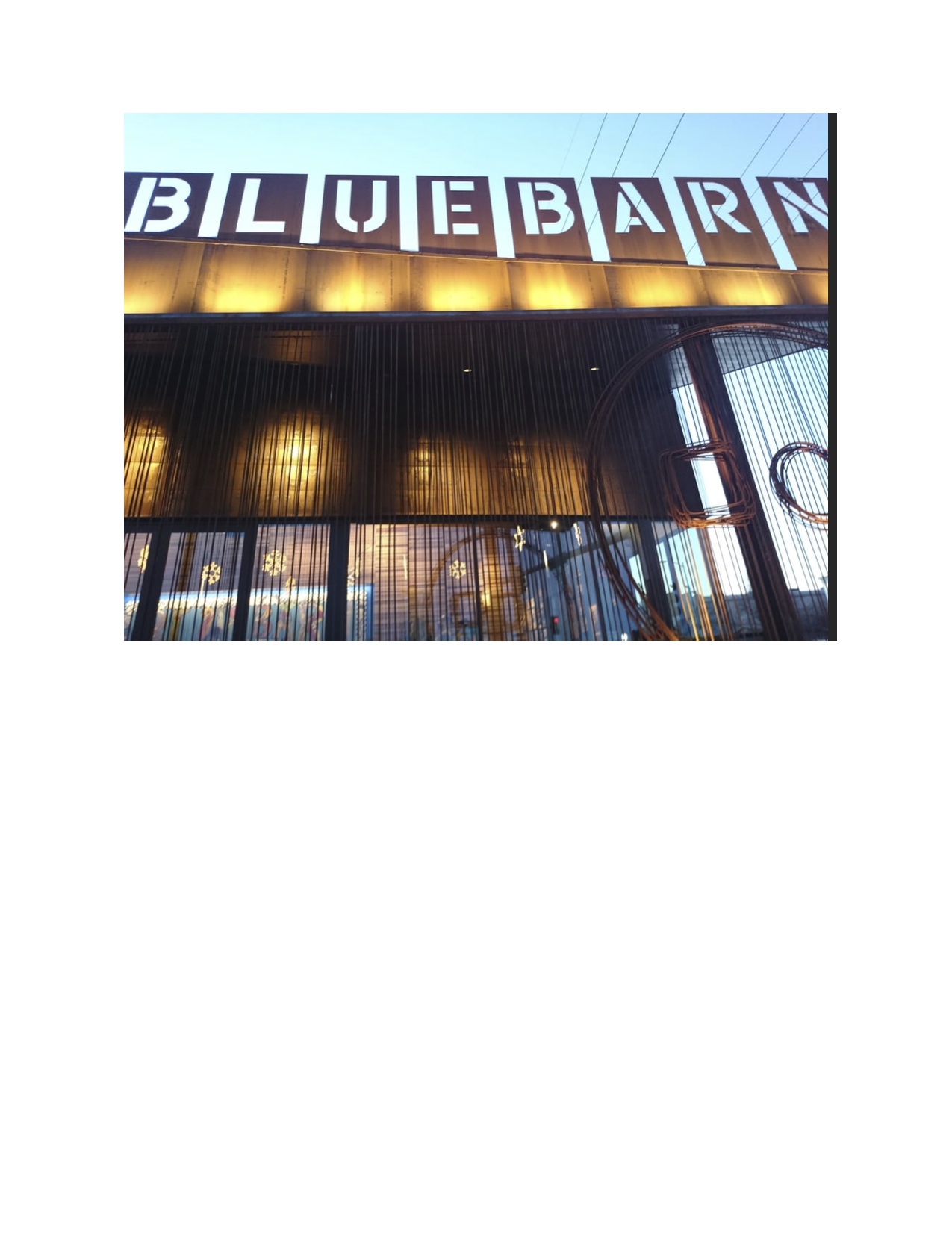
This tweaked emphasis comes from two leading Omaha theater figures, Kevin Lawler and Scott Working, new to the GPTC staff since last summer. Each is a playwright and director who’s started theaters from scratch. Lawler helped launch the Blue Barn Theatre. Working birthed the Shelterbelt. They’ve been artistic directors.
GPTC founder Jo Ann McDowell enlisted them for their new roles. The former Metropolitan Community College president oversees special projects for Metro, host of the city-wide event since its 2006 inception. The conference is still her baby. Looking for fresh ideas and more sustainability she brought in Lawler and Working as creative director and Writer’s Workshop coordinator, respectively.
“They founded two of the most important theater companies in Omaha and have great respect from the local arts community,” McDowell said. “Their involvement with local theater goes back many years, which has been very valuable to the conference. Scott and Kevin have moved the play selection and labs to a new level. Their professionalism and theater knowledge is a huge asset.”
Lawler’s a Minneapolis resident who considers Omaha his second home. Working is Metro’s theater program coordinator and a full-time faculty member. The pair worked the conference before in more limited capacities. Already sold on it as a vehicle for theater synergy, they embraced the idea of taking on expanded duties.

Kevin Lawler
The mission of celebrating playwrights has shifted from what Working calls “an old boy network” of name-above-the-title scribes to “emerging” artists.” Witness 2009 honored playwright Theresa Rebeck, a Pulitzer finalist with widely performed work. Accomplished, yes, but theater grunts can more easily identify with her than past honoree gods Edward Albee, Arthur Kopit, John Guare.
“What makes this conference unique is that it caters or appeals to several tiers of playwrights at different stages of their career — master playwrights with well-established careers, emerging playwrights in mid-career and beginners who’ve only written one or two scripts,” said Working. “The interaction, networking and fellowship between those tiers is really valuable and educational.”
The Masters Performance Series features productions of works by Rebeck and fellow bigger-than-life playwrights Constance Congdon and Mac Wellman. New this year is the Mainstage Series, a competitive showcase for more life-sized artists. The series presents five finalist scripts in staged readings by local directors-casts that master playwrights respond to. The winning author earns $1,000. Lawler credits the series with more than doubling script submissions (170 to 423). He said the large script pool (from several states) made “a huge difference” in the overall quality of work. A criticism of past conferences was the dearth of quality scripts.
“We definitely always want to have space for the beginning playwrights, so there’s always going to be plays that aren’t ready for Broadway or off-Broadway, and that’s OK,” said Lawler. “But the great addition is we’re bringing this group of people in who are just about to break into the big time. They’ve been writing for awhile, they’ve had a number of productions, they’re getting very skilled at their craft.”
McDowell said the Mainstage Series “adds a new dimension.” “There’s a big local side to this, too,” said Lawler, “which is that our local theater companies get to meet these playwrights, to work with them on scripts, to become friends.”
Master playwrights also work with less experienced counterparts in workshop sessions covering various craft issues. Besides exposing Omaha theater talents and audiences to new artists and works, there’s no telling where relationships developed here may lead. For example, Lawler said, “there’s a number of scripts this year that very well may get New York productions in the coming years.” He said a play with Omaha ties breaking big in NYC would have ripple effects here.
“The hope is that if one or two of these scripts worked on here go big in a large market that will bring just much more energy back to the conference for people to get involved, and that becomes sort of a centrifugal force itself. That kind of synergy is really great for the local Omaha theater community, too.”
“That’s already really starting to happen. We’ve had major playwrights work with our local companies putting on their productions,” he said.
Lawler envisions a playwright mounting a locally produced show that a national producer then stages with that same Omaha talent. “Imagine that happening for Brigit Saint Brigit or the Blue Barn or Baby D (Productions) or for one of our local playwrights,” said Lawler.

Scott Working
Working said the young conference continues “evolving” its niche. Lawler agrees, saying, “The conference in a sense is in its infancy still. There’s a growth process it’s going through.” Lawler knows where he’d like to take the event. “I think the conference should be benefiting local playwrights, actors, directors and theater companies — artistically, financially and also with their connection to the national theater scene — and will be much more exponentially each year.”
Lawler said outreach with the local theater community, who volunteer to direct and act in conference labs and staged readings, is improving. “At a couple sessions we just sat down with them and said, ‘Alright, tell us what can we do better — how can we change things?,’ and we got some great feedback on things,” said Lawler, who hopes one day the conference can reimburse local artists for their time.
For Lawler, the GPTC is a microcosm of Omaha theater.
“Nobody’s doing theater here for money, for fame or anything like that,” he said. “Everybody’s doing it because they actually love doing it and they love the other people involved with it, which is the essence of any good theater. It was illustrated beautifully by the community meeting that happened when the Omaha (Community) Playhouse went through its troubles. That (passion) makes this theater scene one of the most vibrant, exciting. It’s why I keep coming back.”
Where can the GPTC go from here? He points to the Humana theater festival in Louisville, KY that runs several weeks, does full stage productions of major new works and draws huge audiences. It’s a world-class theater happening.
“Maybe we don’t get as big as the Humana but maybe our focus gets stronger and it still brings in this great energy to the city that totally invigorates the theater scene. I think we can eventually create that.”
For registration, ticket, schedule details visit theatreconference@mccneb.edu or call 457-2618.

Once More With Feeling, Loves Jazz & Arts Center back from hiatus
©by Leo Adam Biga
Appeared in The Reader (www.thereader.com)
Rumors about the impending demise of a north Omaha cultural institution began flying last fall when Loves Jazz & Arts Center, 2510 N. 24th St., took an extended break from normal operations.
Even the hint of trouble alarmed the African American community and city-county officials, who view LJAC as a linchpin for an envisioned 24th and Lake revival. The North Omaha Development Project, the Empowerment Network and others target the area as a potential cultural-tourism district.
The reports, while dead wrong, were not unreasonable given that during a nine-month hiatus LJAC made no announcement concerning why it ceased exhibitions and programs. Or why it was open only by appointment and for rental. It turns out the inactivity was not due to financial crisis as some feared; rather, the staff and board undertook a funder-prompted and strategic planning and building process.
LJAC also underwent an audit, which board chair Ernest White says “came out clean.” The result of it all, White said, is a restructured and refocused organization whose makeover is in progress. For the first time in months LJAC is regularly open to the public, presenting gallery displays and live music events.
White could have quelled negative speculation by offering an explanation through traditional or social media. The American National Bank vice president chose silence, he says, to distance LJAC from the rumor mill that dogged the nearby Great Plains Black History Museum.
While questions went unanswered about its dormancy, LJAC participated with other nonprofits in the Omaha Community Foundation’s capacity-building initiative. White says the monthly sessions, led by OCF consultant Pete Tulipana, critically examined staffing, administration, memberships and programs.
White says no funding was withheld as a stick for LJAC to undergo the review, though some funds are “pending” its compliance with recommended changes. (The LJAC would not identify any specifics in terms of pending funds.)
Understaffed and under-funded since its 2005 opening, LJAC hurt itself, White says, by doing a poor job marketing, not signing up members, keeping inconsistent hours and, on at least two occasions, losing approved grant money by failing to file required paperwork.
“There were some things not done, there were some inefficiencies,” he says. “We need to do a better job, we need to be open when we say we’re going to be open, we need to be accessible, and those are things I think we’re already a long ways to fixing.”
Despite “great” exhibits and programs, White says few people knew of them.
The review process, he says, is “brutally honest — here’s your strengths, here’s your weaknesses. They make you do a 10-year plan. They challenge you.” The need for a seasoned administrator led White to ask Neville Murray, executive director since LJAC’s inception, to relinquish that role and remain as curator. When Murray declined, White appointed Omaha entrepreneur Tim Clark as interim executive director.
“This place needs money,” says Clark, “and every single board member has to step up and do their part. You can’t ask anybody else to help you if your board is not helping.”
The LJAC board continues to be in flux.
Efforts going forward, says Clark, revolve around “trying to retool, build the infrastructure for capacity, for sustainability long term.” He says, “The strategy now will be more looking at how do we build partnerships with school systems, getting more youth involved. We’ve brought on Janet Ashley as program director to help look at our Loves Art School and partnering with targeted elementary schools this summer.”
White says funders want the center to do more educational programming and stay on mission as an art gallery that celebrates black culture and jazz music.
“When people give us money,” says Clark, “we’ve got to give them a return on their investment. They can hold us accountable — we’ve just got to live up to expectations.”
He says LJAC’s securing sponsors and strategic partners to help it realize its potential as a public attraction.
“I think we have a product and a story to tell. We just have to be better at telling that story. We have to be more proactive. I think we’re positioned now to move forward. I’m excited about its future possibilities. I think if we’re successful it stimulates everything around us.
“Have we made some mistakes? Yes, we have. We have some challenges before us. It’s not going to be a cakewalk, but we’re going to roll up our sleeves and tackle them.”
Acknowledging the center’s transitional mode, Clark says, “We’re open for business, but we’re not making a big splash of that until we know we can sustain that. We want to do the work within first. We want to be whole.”
“We want to be viable,” adds White.
LJAC’s new Jazz Fridays series launches May 6, from 5 to 8 p.m., with For the Occasion. Two new exhibits are in the works. For more information, call 402-502-5291.
Open Minds: “Portals” explores human longing in the digital age
©by Leo Adam Biga
As published in The Reader (www.thereader.com)
On April 21, KANEKO previews Portals, a multimedia event examining different modalities of creative expression.
When the finished production premiers in the fall, it means to seamlessly join live performers on stage with remote artists via video and the web to extend the limits of performance and the dynamics of human connection in the digital age.
The work of several national artists is featured, including a partita by acclaimed composer Philip Glass, verse by iconoclastic poet-songwriter Leonard Cohen, music by composers Aaron Jay Kernis (a Pulitzer Prize winner and Grammy nominated artist) and Nico Muhly (The Reader) and choreography by Benjamin Millepied (Black Swan). Then there’s the virtuoso violin playing of Tim Fain and the video stylings of filmmaker Kate Hackett.
Fain conceived Portals on tour with Book of Longing, a Glass song-cycle adapted from Cohen’s same-titled book, but says its themes long brewed in him. For Portals, Fain performs Glass’ new seven-movement partita for solo violin inspired by Cohen’s work.
Conceptually, Portals blends private moments with public gestures, improvisation with formality, virtual with reality. At various points Fain plays live on stage and in video vignettes recorded in New York City. Music by Glass accompanies dances choreographed and filmed by Millepied. Glass and other artists are seen in interactive, cinema verite profiles shot by Hackett, who’s also shooting concert-style footage. Fain and Hackett are filming at KANEKO and other Omaha locations. New York City shoots are set for May.
Portals’ creators want audiences to have an intimate glimpse of the creative-collaborative process and to experience communication-performance through these various channels in what Hackett calls some “dreamy metaphorical space.”
Ethereal mood pieces by Glass and Cohen articulate the longing at the heart of Portals. Fain calls the artists “kindred spirits,” adding, “There’s a real intensity and searching quality I’ve always felt in Cohen’s poetry and music and in Philip’s music.” About Glass, he says, “Even in his calmest textures it seems there’s almost always a real undercurrent of reaching or longing or wanting something more.” In the work of both men, he says, “that desire can become even ferocious at times.”
Fain feels a kinship with their work.
“When I perform I’m always looking for something new-different to say, to really explore emotionally what’s going on in a piece from the ground up. This searching quality, this desire to find meaning, to find beauty and power and conflict is something we share very much,” he says.
“My performing has often been described as incredibly communicative and perhaps a little bit dangerous — living on the edge and reaching for what are the boundaries and then pushing beyond that if possible, which is what I’m trying to do with this project. The overall idea behind Portals is to explore beyond the traditional confines of what a performance can be.”

Hackett, a veteran of multimedia works Ask Your Mama and 110 Project, says this co-mingling of forms “opens the audience up to experiencing live performance in a new way. I think that’s what’s really exciting about it.”
“There’s a very hopeful perspective in Portals, which is to connect all of the new forms of connection — the portals of today, with traditional art forms” says KANEKO executive director Hal France.
France says KANEKO’s “open space for your mind” makes a perfect marriage with the genre-bending Portals. “It is cross disciplinary, which is where we think the really revealing things about creativity happen, not that individual creativity isn’t incredible, but if it’s all self contained in one unit the opportunity for it to get out into the air so that others can understand it better is less. The more people there are, the greater the synergy possibilities.”
The project is presented as part of KANEKO’s experimental studio program, which France says supports “accomplished creative people who have an out-of-the-box idea or want to extend themselves into some new territory.”Portals, he says, fits KANEKO’s mission to “explore and illuminate creativity,” adding, “Our goal is to have people experience creativity but also see it in a different way that may be less mystical or at least more familiar, which hopefully makes it a richer experience.”
For the preview, Fain and Hackett will provide a sampling of Portals and engage the audience about its evolution.
“It’s a very important process,” Fain says. “I hope to come away having really learned something, possibly even something that will affect the course of the project.”
KANEKO, 1111 Jones St., welcomes dialogue.
“The mere fact you can come to a place and be part of an exchange of ideas is a good starting point,” says France. “It is the common thread we see with people coming here, and we see that growing.”
The Portals preview is Thursday, April 21, at 7 p.m. KANEKO, 1111 Jones St. Tickets are $10 in advance and $15 at the door. Call 402.341.3800 or visitthekaneko.org for more information.
As noted here before, storytellers are drawn to boxing for the rich drama and conflict inherent in the sport. So when I learned that Holt McCallany, star of the new FX series, Lights Out, spent a formative part of his youth in my hometown of Omaha and that his mother is singer Julie Wilson, a native Omahan, I naturally went after an interview with the actor, and setting it up proved unusually easy. In wake of the series’ cancellation, I know why. Producers and publicists were desperate to get the show all the good press they could but even though the show was almost universally praised by small and big media alike it never found enough of an audience to satisfy advertisers or the network. Because I enjoy charting the careers of Nebraskans who make their mark in the arts, particularly in cinema, I expect I will be writing more about McCallanay, who is a great interview, in the future. In addition to his television work, which between episodic dramas and made-for-TV movies is extensive, he has a fine tack record in features as well. I am also planning a piece on his mother, the noted cabaret artist Julie Wilson.
©By Leo Adam Biga
As published in The Reader (www.thereader.com)
Storytellers drawn to boxing’s inherent drama invariably find redemption at its soul and conflict as its heart.
Ring tales are on a roll thanks to Mark Wahlberg’s Oscar-winning film The Fighter and FX’s series, “Lights Out,” (the series finale airs next Tuesday, April 5 at 9 p.m.). Although FX recently announced it has decided not to renew the show for a second season, the show received favorable reviews from critics while generating more than usual interest locally, as it stars former home boy Holt McCallany in the breakout role of the fictitious Patrick “Lights” Leary, an ex-heavyweight champ attempting a comeback.
McCallany grew up in Omaha, the eldest of two rambunctious sons of Omaha native and legendary New York musical theater actress and cabaret singer Julie Wilson, and the late Irish American actor/producer Michael McAloney.
Like his hard knocks character, McCallany was truant and quick to fight. He was expelled from Creighton Prep. He says most of the “unsavory crew” he ran with outside school “wound up in jail.” At 14, he ran away from home — flush with the winnings from a poker game — to try to make it as an actor in Los Angeles.
“I was a very rebellious and a very ambitious kid,” he says.
In the spirit of second chances linking real life to fiction, he got some tough love at a boarding school in Ireland and returned to graduate from Prep in 1981, a year behind Alexander Payne, whom he hopes to work with in the future. McCallany, who’s returning to Omaha for his class’s 30th reunion in July, appreciates the school not giving up on him.
“I got kicked out but they eventually took me back, and they didn’t have to do that. Near my graduation I said to one of the priests, ‘Why did you guys take me back?’ and he said, ‘Because we believe in your talent, Holt. We see a lot of boys come through here and we believe you can be one of the first millionaires out of your class and a good alumnus.’ When you’re a kid you take that stuff to heart and it kind of stays with you, and if you believe it, other people will believe it about you, too.”
Tragedy struck when his troubled kid brother died at 26 in search of another fix. It’s a path Holt might have taken if not for finding his passion in acting.
“I felt like I had a calling. My brother didn’t have that, and my brother’s dead now, and I can tell you a lot of the pain and suffering he went through is related to this subject. When you don’t know what it is you want to be and you’re lost and you’re floundering and you’re going from job to job and kicking around and nothing really works out, it’s a very dispiriting place to be. It can lead to substance abuse and a lot of negative things.”
In the show, Leary’s a devoted husband and father trying to rise above boxing’s dirty compromises, but he and his younger brother get sullied in the process.
McCallany, who infuses Lights with his own mix of macho and sensitivity, is the proverbial “overnight sensation.” He’s spent 25 years as a journeyman working actor in film (Three Kings) and TV (Law & Order), mostly as a supporting player, all the while honing his craft — preparing for when opportunity knocked.
Everyone from co-star Stacy Keach, as his trainer-father, to series executive producer Warren Leight to McCallany himself says this is a part he was born to play. Why? Start with his passion for The Sweet Science.

“Boxing was my first love, and way back when I was a teenage boy in Omaha. My brother won the Golden Gloves. We had an explosive sort of relationship, he and I. We would often get into fistfights and all of a sudden he was getting really good.”
As for himself, McCallany’s a gym rat. He’s logged countless hours sparring — “sometimes those turn into real wars” — and training with pros. He appeared in the boxing pics Fight Club and Tyson. He’s steeped in boxing lore. He brought in his friend, world-class trainer Teddy Atlas, as technical adviser on Lights Out.
The pains taken to get things right have won the show high praise. The only critics who matter to McCallany are pugilists. “The response from the boxing community has been really positive,” he says.
“There are a lot of similarities I find between boxing and acting,” he says. “In the theater the curtain goes up at 8 and the audience is in their seats and you’ve got to come out and give a performance, and it’s similar in boxing — there’s an appointed day and appointed time when you know people are going to be there ringside and it’s time for you to come out and perform.”
In both arenas, nerves must be harnessed.
“The anxiety is your friend,” he says. “That’s what’s going to ensure you’re going to do what you’re trained to do and, as Ernest Hemingway said, ‘remain graceful under pressure,’ which is really what it’s about.”
As much as he admires great boxing films he says “Lights Out” is not constrained by the limits of biography or a two-hour framework.
“We have all of this time to explore in rich detail a boxer’s life and his relationships and his psychology,” he says. “With this character the writers and I have the freedom to really create and really see where this journey is going to take us, and that’s very exciting. I can’t tell you exactly what’s going to happen in season two because I’m not sure, and I promise you they’re not sure either. That’s what’s different.”
While they’ll be no second season now, McCallany’s up for a part in the nextBatman installment and has a script in play with


Image by ruralocity via Flickr
UPDATE: The 2011 MAHA Music Festival lineup has just been announced and the headliners for the August 13 event are major indie artists: Guided by Voices; Matisyahu; and Cursive. The subject of my story below, Tyler Owen, is one of the founders and driving forces of this emerging Omaha festival.
One of the best parts of my job is getting to meet people who are making things happen in my community, the proverbial movers and shakers we all read about but rarely ever encounter. Well, as a cultural journalist in my hometown of Omaha, Neb. I consistently get the chance to meet all manner of individuals who are making a difference here and elsewhere. My assignments interviewing and profiling these figures allows me the opportunity and privilege of sharing their stories and activities with not only the Omaha community but with the larger community that the Web makes possible. The following story is about one of Omaha’s young professionals, Tyler Owen, now making his mark on the scene in business, the arts, community service, and leadership. As Omaha’s Old Guard begins to fade away Owen and others from his generation are poised to take over the reins, much as he’s done in his own family’s business. I look forward to Owen and his peers in the 30 and 40-something age group to continue the growth and momentum that’s helped Omaha come out of its shell the last decade to become one of the great urban success stories in America. My story appears in the March issue of Metro Magazine (www.spiritofomaha.com/Metro-Magazine/March-2011/Tyler-Owen-Cover-Story/).
Tyler Owen: Man of MAHA
©by Leo Adam Biga
Originally published in Metro Magazine (www.spiritofomaha.com/Metro-Magazine/March-2011/Tyler-Owen-Cover-Story)
Tyler Owen hails from an Omaha legacy family who has made a fortune in the steel industry and who spreads their wealth around. The Owen Foundation funds higher education, cultural programs, social agencies and the Henry Doorly Zoo. While he may not have a big red “S” printed across his chest, this fourth generation homegrown entrepreneur/philanthropist has already staked his claim as (okay, not METROPOLIS’ but MAHA’s) “man of steel”.
As a young professional, Tyler Owen carries on his family’s legacy of giving back. He’s also staked out his own territory as a volunteer with various creative and community endeavors close to his heart.
BREAKING THE MOLD
He doesn’t fit the mold of a steel executive. For starters, he’s a one-time actor and a lifelong rocker. Growing up, the Westside High graduate spent far more time practicing the piano and playing the guitar than he did grooming to be a titan of industry. He fronted his own garage band, The Bottom Line.
After graduating from the University of Colorado he pursued acting and music careers on the west coast. He parlayed his good looks, easy charm and modest talent into screen extra gigs– his credits include a minor speaking part in a Murder She Wrote– and releases of original recordings with his group, The Eye. He headed his own small record label. Along the way he wrote an unpublished novel and learned to fly.
Throughout this period of finding himself his family encouraged him.
“My parents were incredibly supportive,” he said. “They were like, ‘You’ve gotta go do whatever you want to do and you’ve got to come back to this (the family business) on your terms– not stay here on our terms.’ It’s great because I don’t have a single ounce of resentment about being in the business. If anything, it was worth leaving and maturing to the point where I accepted it, rather than being thrust [into] it.”
UP FROM THE ROOTS
Tyler and his wife Lisa returned to Omaha for good in 2001 to start a family. Following tradition, he began at the bottom of Paxton & Vierling Steel, a steel processor, in order to learn the operation from the ground up.
Today, the 38 year-old is the fourth generation of his family at Owen Industries, of which the Carter Lake, Iowa-based P & V is one of several divisions. He heads day to day operations at Lincoln Structural Solutions, a Lincoln, Neb. supplier of nuclear grade construction materials. Playing to his creative strengths, he handles marketing and branding for Owen Industries. P & V’s “iron is in our blood” tag is his.
As businessman, husband and father of four, Owen’s not so much abandoned his free-spirited ways as settled down to focus on a few key passions.
In 2009 he helped found the local MAHA Music Festival, a one-day phantasmagorical immersion in rock. The free, nonprofit event takes place at the Lewis & Clark Landing on the downtown riverfront. The fest’s expressed aim is “community building.” MAHA 2011 is set for August 13th.
He served two terms on the City of Omaha’s Human Rights and Relations Board. His tenure coincided with the public flap over the police auditor office. He fought hard to retain the auditor but in the end the post was eliminated by the city.
The self-described “bibliophile” is in his fifth year on the Omaha Public Library Foundation Board, a period that’s included the resignation of library director Rivkah Sass, the hiring of her successor, Gary Wasdin, and staving off budget cuts.
Owen’s steeped in the local philanthropic community through his and his family’s long involvement in Ak-Sar-Ben, which he calls “a great organization.” He and Lisa have also helped organize major fundraisers for the Omaha Boys and Girls Club.
The example of being a good steward has always been there as expectation and obligation. Whether donating time or money, he learned it’s the right thing to do.
THE SPIRIT OF OMAHA
“There seems to be an overwhelming sense of giving back in this community and of our being greater than the sum of our parts. There’s this kind of bonding together into making something bigger,” Owen said. “I think that comes back to an Omaha thing. I don’t think people in Omaha suffer a lot of grandiose, inflated egos, so there is this spirit of– let’s actually create something, rather than bluster about something.”
The Omaha work ethic of getting things done is one his family’s exemplified. Now that he’s in a position to lead, he finds few things as satisfying as giving back.
“I think any time you serve something outside of yourself it’s a satisfying experience. People may quibble with where donor dollars go, but in the end,” he said, “it’s not important how you give, it’s only important that you give.”
An advantage Omaha offers, he said, is that it’s still small enough for an individual or an organization or a small group of philanthropists to make a big difference. “One person can change the world from here,” he said.
Social media is only helping Owen (and others like him who want to make a difference) in their efforts to communicate and collaborate. “People are more connected and more aware of what other people are doing,” he said, “and so that offers more opportunities for overlap.”
THE SOCIAL NETWORK
MAHA’s an example of a few kindred spirits joining forces to launch an event that depends on social media for its traction. Owen, together with Tre Brashear, Mike App and Mike Toohey, made MAHA happen after years of kicking around the idea.
Owen’s smart enough to pull in some veteran live music promoters, including Jeff Davis the first two years (and now Marc Leibowitz) to lend their expertise. “I’m surrounded by incredibly bright guys,” he said. A team of volunteers stages and manages the event, with sponsors underwriting and promoting it.
All that help and experience, he said, has helped MAHA go off without any major hitches. Attendance grew from year one to year two. The goal is to evolve it into a multi-day fest with various arts offerings. Festival planning goes on all year.
MULIT-DIMENSIONAL
For Owen, there’s no conflict jumping from his music thing (he still writes, plays and releases his own music and he’s reunited with his band from high school) to his corporate thing.
“I’m pretty balanced between left and right brain, so I have this ability to switch back and forth. I don’t really see them separately.”
Whether rocking in his basement or strategizing a P & V campaign or designing MAHA T-shirts or playing with his kids, he’s feeding that same seeking spirit that drives him. “Life is about taking advantage of opportunity,” he said.
Tyler Owen may not follow his old mantra of “you’ve got to try everything once,” but he’s still burning to make his mark on the world.
Omaha arts-culture scene all grown up and looking fabulous
©by Leo Adam Biga
Originally published in Metro Magazine (www.spiritofomaha.com)
Twenty years ago Omahans grumbled about there not being enough to do here. For a city searching for an image in a flyover state straining to retain its best and brightest and attract new talent, it sounded an alarm.
Seemingly, Omaha arts-culture plateaued. Major players retrenched while smaller, newer ones tried finding their way. It appeared Omaha collectively lacked the vision or confidence to enhance its horizons. The status quo went stale.
Then, whether by design or coincidence, Omaha enjoyed a renaissance in the space of a single generation. This flowering shows no signs of slowing down.
“Over the last 20 years Omaha has grown up a lot and the arts have grown up with it,” said Todd Simon, an Omaha Steaks International executive and a major arts funder. “There’s certainly a lot more variety and a lot more choices for our community. Any night of the week you can open up the newspaper or go on the Web and you can find something of interest to you. Whether it’s music, art, film, live theater, there is something for everyone every night of the week in Omaha now.
“If you’re bored here it’s because you’re not breathing. If you can’t find something to do in Omaha right now, shame on you.”
Saddle Creek Records executive Jason Kulbel was among those bemoaning the lack of options. No more.
“Simply put, there’s more to do now,” he said. “There’s so many different things to pick and choose from. Whatever interests you, whatever your thing is, it’s here now. It’s really cool.”
He champions the live indie music scene now having more venues and he embraces the festivals that have cropped up, from MAHA to Playing with Fire to the newly announced Red Sky Music Festival.
Kulbel and SCR colleague Robb Nansel have added to the mix with their block-long North Downtown complex. It includes their company headquarters, the Slowdown bar-live music showplace and the Film Streams art cinema. Together with the new TD Ameritrade ballpark, Qwest Center Omaha, the Hot Shops Art Center and the Mastercraft art studios, anchors are in place for a dynamic arts-culture magnet akin to the Old Market.
From the opening of the downtown riverfront as a scenic cultural public space to the addition of major new venues like the Qwest and the Holland Performing Arts Center to the launching of new music, film and lit feasts to the opening of new presenting organizations, Omaha’s experienced a boon. Major concerts, athletic events and exhibits that bypassed Omaha now come here.
Artists like world-renowned Jun Kaneko put Omaha on the map as never before. The indie music scene broke big thanks to artists recording on the Saddle Creek label. Alexander Payne immortalized his hometown by filming three critically acclaimed feature films here. The Great Plains Theatre Conference brought Broadway luminaries in force.
The Old Market solidified itself as a destination thanks to an array of restaurants, shops, galleries, theaters and creative spaces. The Bemis Center for Contemporary Arts, the Blue Barn Theatre and the Omaha Farmers Market became anchors there. Omaha Fashion Week and the Kaneko added new depth.

Omaha Performing Arts president Joan Squires said she’s seen “a huge change” since arriving eight-plus years ago from Phoenix to head the organization, which programs the Holland and the Orpheum Theater.
“The first time I drove in from the airport the Qwest Center didn’t exist, the Holland wasn’t here, a lot of the small groups weren’t around. If you were looking for things to do and it wasn’t the Orpheum or a few other places, it was limited. Now on any given night the breadth of what you can do is exciting. There’s a synergy about it that’s reaching all segments of the audience.”
Omaha native Rachel Jacobson left New York to launch Film Streams, one of several attractions that’s taken things to a new level.
Growing up here, she said, “there was a lot of good stuff to do but nothing really bringing people to town or being talked about in the national and international press, other than Chip Davis. Today, the Omaha arts community is strong, it’s alive, it’s visceral, it’s something we’re known for worldwide. Musicians continue to move here from other cities to make their home here because of Saddle Creek Records. Visual artists move here because of the Bemis and Jun and Ree Kaneko. New galleries are opening up all the time.
“It has really blown up in the best way.”
Established organizations have shown new life. Joslyn Art Museum built a huge addition designed by noted architect Sir Norman Foster. It’s since added a pair of sculpture gardens. The Durham Museum underwent a refurbishment and gained Smithsonian affiliation. The Omaha Children’s Museum found a new home and completed extensive renovations. The Omaha Community Playhouse redid its theater and lobby spaces. The Henry Doorly Zoo built the Lied Jungle, the Desert Dome, the Lozier IMAX Theater and other new attractions.
The Bemis expanded its gallery exhibition schedule and educational programming as well as added the Underground and the Okada. Now it’s poised for new growth.
Existing organizations found new digs.The Omaha Symphony made the Holland its home. The Emmy Gifford Children’s Theater moved into the old Astro (Paramount) movie house, renamed The Rose, and became the Omaha Theater Company.
Popular events drew ever larger crowds, such as Jazz on the Green, the Cathedral Flower Festival, the Summer Arts Festival and the CWS.

Photos Courtesy of Omaha Performing Arts
Even with all the new options, it didn’t appear as if Omaha reached a saturation point. Using the Holland and Orpheum as examples, Joan Squires said the presence of these two venues has only increased patronage.
“When you open a major facility and you bring in new arts offerings the community continues to lift up,” she said. “It broadens and really makes more things possible. In the last five years we’ve reached 1.7 million people. We’ve seen nights where both buildings sold out and there’s a lot of arts going on at other facilities all at the same time, and there’s an audience for everybody.
“We’ve got a growing and thriving arts community. I think it’s very encouraging.”
Funder Dick Holland describes the arts as “an economic engine” and “a big part of the community.”
Great Plains Theatre Conference artistic director Kevin Lawler, a Blue Barn founder, has seen a more adventurous scene develop.
“There are several new generations of artists making work in all genres and receiving support and interest from their peers and others,” he said. “This heralds the beginning of a new, vibrant era for arts and culture here. That small group of philanthropic leaders who have been supporting the arts in Omaha for years have enabled enough fertilization for this new blossoming to begin.
“When we began the Blue Barn there were almost no theaters willing to take on new, challenging work as a regular part of their seasons. Now, there are a number of groups that follow this path.”
Lawler notes there “is a new generation of artists staying in Omaha to make work because they feel there is enough energy in the community to support and respond to their work. I feel this trend reflected not only in theater, but all the arts.
“There are stages to the cultural life of a city. Omaha is in a blossoming stage. It is a rare and exciting time to be here.”
The linchpin behind this growth is private support. “Omaha has an exceptionally generous philanthropic community that understands the value of investing in its cultural institutions,” said Bemis director Mark Masuoka, adding that funders here appreciate the fact the arts “improve quality of life.”
He said the Bemis is close to reaching its $2.5 million capital building campaign goal “thanks to several generous gifts from local foundations and individuals.”
What losses there were sparked new opportunities. After years of struggle the Great Plains Black History Museum rebounded. When Ballet Omaha folded Omaha Performing Arts brought in top dance troupes and Ballet Nebraska soon formed. The Omaha Magic Theatre closed only to birth new ventures. The Indian Hills Theater was razed but Omaha movie houses multiplied. The Kent Bellows Studio and Center for Visual Arts arose after its namesake’s tragic death.
The recession impacted large and small organizations alike.
Todd Simon said, “Many not-for-profits have struggled and I think they’ll continue to struggle in these economic times, but I also think there is a dedicated group of supporters in our community who will step up to fill the gaps.” These lean times, he said, encouraged “many organizations to get smarter in how they use resources and how they collaborate with each other, where they leverage the talent and the resources they have. I think that trend will continue.”
Dick Holland said few cities can boast Omaha’s philanthropic might. He favors a public-private coalition to undergird and concentrate arts funding.
By any measure, it’s been an era of net growth for the creative community and leaders see more progress ahead thanks to a spirit of innovation and support.
“A strong legacy of investing in the arts here has been established and I believe it will continue to proliferate,” said Rachel Jacobson. “We’ll see new initiatives develop, especially arts in education and social-community development arts projects. There are a lot of high-energy, incredibly innovative people who have a huge heart for this city and will make a strong commitment.
“Just in the last month I’ve heard about wonderful projects in the works. I’m excited for the next 20 years.”

Image via Wikipedia
Billy McGuigan is an example of someone who always had talent to burn but for the longest time had little to show for it as a minor community theater performer and as a struggling garage band front man. But when his big break presented itself, he was prepared to take the opportunity and run with it, and a decade later he’s running to ever greater heights. His niche has been to parlay the continuing fascination with and popularity of rock icons Buddy Holly and The Beatles into successful shows he produces and stars in. I have been reading about Billy and his shows for years now and I finally had the chance to meet and interview him for the following story, though I have yet to see him perform. I will make sure to do that this year, as I want to write about him again. There’s more to his story than I was able to fit into the space allotted me and I look forward to going deeper next time. But the story posted here, which I did for Omaha Magazine, will still give you a sense for this young man and his passion and for the concerted journey he’s on to pay forward the musical legacy his later father left he and his brothers.

More than Buddy: Billy McGuigan expands on Buddy Holly shtick to collaborate with his brothers and band in Beatles tribute
©by Leo Adam Biga
Originally published in Omaha Magazine (omahapublications.com/magazines/omaha-magazine)
After years of performing as Buddy Hollly, Billy McGuigan proves he’s no one-show wonder with his act paying tribute to the Beatles.
Undertaking a Beatles tribute show is no small order. Besides the task of replicating the sound of the most popular band of all time, there’s the matter of mastering the Beatles’ catalog – all 230 songs worth.
“It took us six months,” says Billy McGuigan, creator of Yesterday and Today, a Beatles tribute show he performs with two of his brothers. Yesterday and Today completed a triumphant third year at the Omaha Community Playhouse in January to prove the show’s staying power.
Yesterday and Today consists mainly of the band fielding requests from the audience and performing them. McGuigan and the band don’t wear wigs or attempt accents. He doesn’t want anything getting in the way of pure music immersion.
And thanks to their comprehensive preparation, the band is ready for any request that comes their way. Those who know McGuigan know he’d never settle for anything less.
“What I find remarkable about Billy is not only his talent and ability to sing and play just about anything,” says Playhouse music director Jim Boggess, “but his single-minded dedication to be true to whatever music he is playing. He will not rest until it is right.”
That same dedication, preparation and passion is what made Rave On, McGuigan’s renowned Buddy Holly act, the success it was, and Rave On paved the way for McGuigan’s Beatles’ tribute.
It’s no coincidence the Beatles were also favorites of McGuigan’s father, Bill, who passed on a musical legacy to his three sons.
Growing up a military brat, home was wherever his U.S. Air Force-indentured father got stationed, Having a dad who played guitar and dug the Beatles immersed Billy in all things Fab Four, especially Paul McCartney.
“All we did was sit and listen to music,” McGuigan said. “I remember McCartney’s ‘Tug of War’ came out and my dad going, ‘OK, you gotta listen to this. This is your first new McCartney album.’ He stuck headphones on me. I hear those songs now and l’m just like, ‘Ahhh, yeah.’ I mean, that was music for me. It was always there.”
The elder McGuigan died of leukemia in 1996.
“It was awful,” Billy said. “I was just starting out in life and we had that moment where we’d become friends. He was proud of what I was doing.”
Before the untimely death, the bonding forged through music continued in Omaha, where the family moved in 1990. McGuigan didn’t set out to pay forward his father’s music bequest, but he has. After dabbling in theater and fronting his own band, he found his niche with Rave On.
Replicating that success with Yesterday and Today meant getting his siblings to sign on, which took some doing. It meant leaving regular jobs for the uncertainty of show biz and being away from wives for weeks. Then there was McGuigan’s ambitious idea of learning the entire Beatles’ canon. Every time a new player joins the band it’s a crash course all over again, he says.
What distinguishes the show from similar acts is that McGuigan fields audience requests and asks folks to explain why the songs are special to them. Then his improv skills take over. McGuigan and his brothers also share their connection to the music and often reference their father on stage.
“Completely, because what we found out is it’s really a tribute to him,” says Billy. “This is the music he taught us. We would sit around and play these songs all the time. He created it. This is the inheritance we got.”
McGuigan’s road to becoming a rock star came after some less successful efforts at finding his voice. Colleen Quinn, general manager of Funny Bone, is McGuigan’s manager and business partner. She’s witnessed his progression from early days, which included attempts at improv comedy, bartending and fronting a cover band.
It was through Buddy Holly, Quinn says, that McGuigan finally found his niche.
“Billy connects with all people. That’s what makes him a charismatic presence,” she says. “He thoroughly loves performing Buddy and Beatles songs and it shows. He relishes hearing people’s requests and reasons for loving the music as he does.”
The Buddy role came after serendipity intervened for McGuigan while vacationing in London, where he and his wife caught a West End production of The Buddy Holly Story. He saw his future on stage.
“I thought, If I ever got the chance to do that I think that’s something I could do because he sings, he plays guitar and he gets to be a rock star. Thinking, never in a million years…”
Only a couple months later, he got a call from Boggess asking him to be their Buddy. He didn’t need to think twice.
But first there was the matter of an audition. McGuigan invited Boggess and artistic director Carl Beck to catch his band at a Benson biker bar. He recalled that night:
“So there we were, 10 people, all in leather, and then Carl and Jim and the band. We started playing ‘Ain’t No Sunshine’ and they (the Playhouse duo) left probably half way through, and I was like, This was my shot and I just lost this gig. I called Jim the next day and he said, ‘No, you got the job, you’re the right guy, we knew it right away.’”
Life hasn’t been the same since.
“Everything at that point changed,” said McGuigan, “and I don’t know why. It was like something clicked in me, and I’m going to take this role seriously — I’m not going to pull the typical Billy. I learned the script two days after I got it, learned all the music, went and got guitar lessons, which I’d never done before. I went to the gym before rehearsals even started. I lost 40 pounds. I was fit.”
He steeped himself in Buddy ephemera, reading books, studying films. Watching one documentary, The Real Buddy Holly Story, became a daily ritual.
“…that’s what I absorbed, that’s where my Buddy came from — that and whatever I could bring to it.”
He next appears in Rave On on Feb. 3-4, at Harrah’s casino. A summer amphitheater gig is in the works and the Beatles show returns to the Playhouse in December.
McGuigan is looking to hand-off Rave On to someone else so he can focus more on Yesterday and Today. He expects to direct The Buddy Holly Story sometime and to one day maybe take a leading role in a show like Jesus Christ Superstar.
Beyond that, it’s more touring. Quinn hints McGuigan may even be bound for Europe and Australia.
For now, McGuigan’s says the Beatles show has given him the time of his life.
“Every aspect of that show turns me on. When it works, there’s nothing like it. The music is great, it’s what I’ve always wanted to sing. Then you look over and there are your brothers, and then there’s your friends who have gone on this journey with you, and you have an audience getting (into it). How can it get better than that?”



 Leo Adam Biga's My Inside Stories